Birds using salt blocks

In the past, I have put out salt blocks for the deer to use in winter, but then I learned that other animals will use them as well. I have seen squirrels and rabbits licking at the blocks and chipmunks in their vicinity, but I was most surprised when I first saw purple finches (Haemorhous purpureus) pecking away at them.

squirrel at salt block IMG_5209 ©Maria de Bruynsigned resrabbit at salt block IMG_6254©Maria de Bruynsigned

At first, I thought this was abnormal or unusual but a specialist with the Audubon Society/North Carolina wildlife department told me that finches and other bird species will do this regularly to obtain salt when it is lacking from their diet. They also use the salt to help clean out their gizzards (an organ behind the stomach that helps break down seeds and food so that the bird can digest it more easily).

male and female purple finch at salt block IMG_7614©Maria de Bruynsignedresmale and female purple finch at salt block IMG_2733© Maria de Bruynsigned res

Apparently, mourning doves, sparrows, grosbeaks, pine siskins, goldfinches, house finches (Haemorhous mexicanus) and purple finches (like those in the photos) will all peck at salt blocks. So far, I have only seen the purple and house finches doing it.

Sometimes, they have had mini-gatherings there, making the salt block a place for socializing!

purple finches at salt block IMG_7605©Maria de Bruynsignedrespurple finches gathering at salt block IMG_4244©Maria de Bruynsignedres

Balancing on the block can also involve some acrobatics.

house finch IMG_9840©Maria de Bruynreshouse finch IMG_9841©Maria de Bruynres

It’s nice to have something to offer them besides suet, bird seed and bird baths.

Next week’s blog: acrobatic squirrels

Deer antlers – a sometimes impressive sight!

After living in apartments for many decades, it was a thrill for me when I was able to live in a house surrounded by a yard on all sides. It was even cooler when I discovered my neighborhood was home to a variety of birds and animals, undoubtedly helped by the fact that there are woods, a creek and a pond nearby. One of my greatest delights has been the white-tailed deer (Odocoileus virginianus), that visit – even though some neighbors loathe them and chase them from their yards. I’ve found that a home-made deer repellant, as well as a store-bought one, work well to keep these visitors from eating the plants I want to keep. The veggies are in a narrow, fenced garden that they cannot enter so no problems there either.
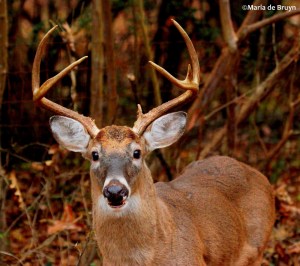
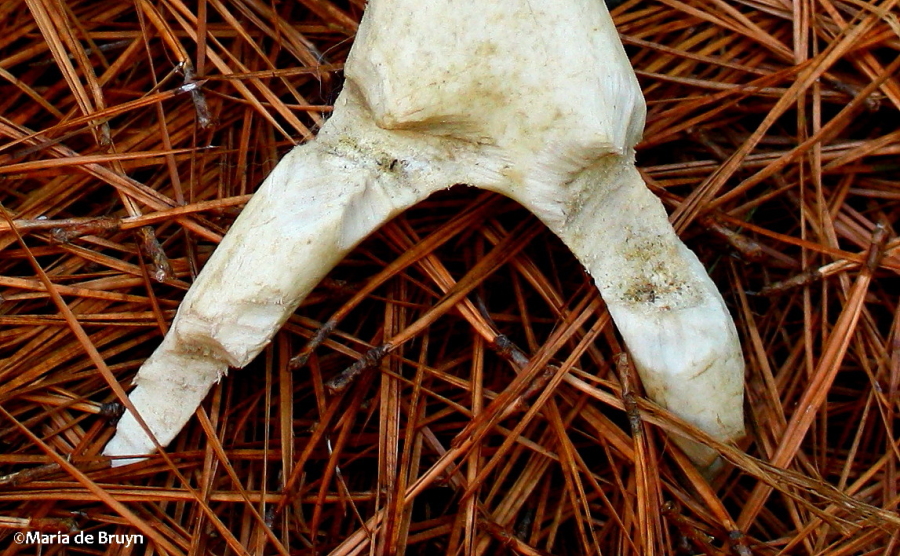
deer antler IMG_5122©Maria de Bruynsignedres

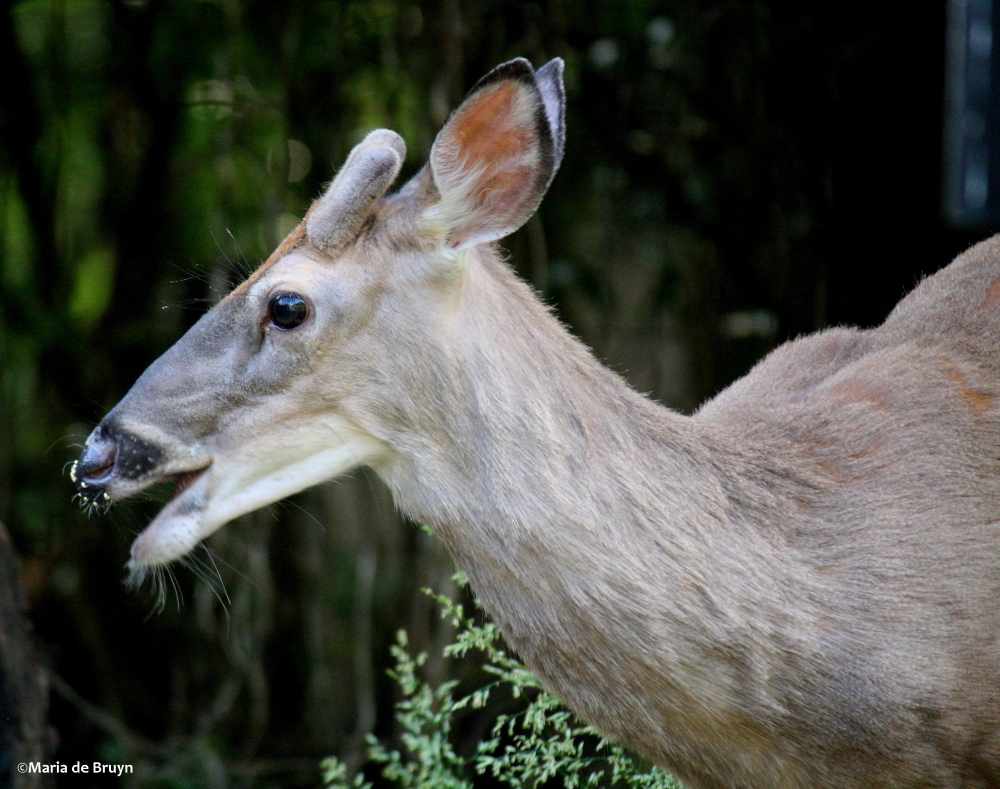
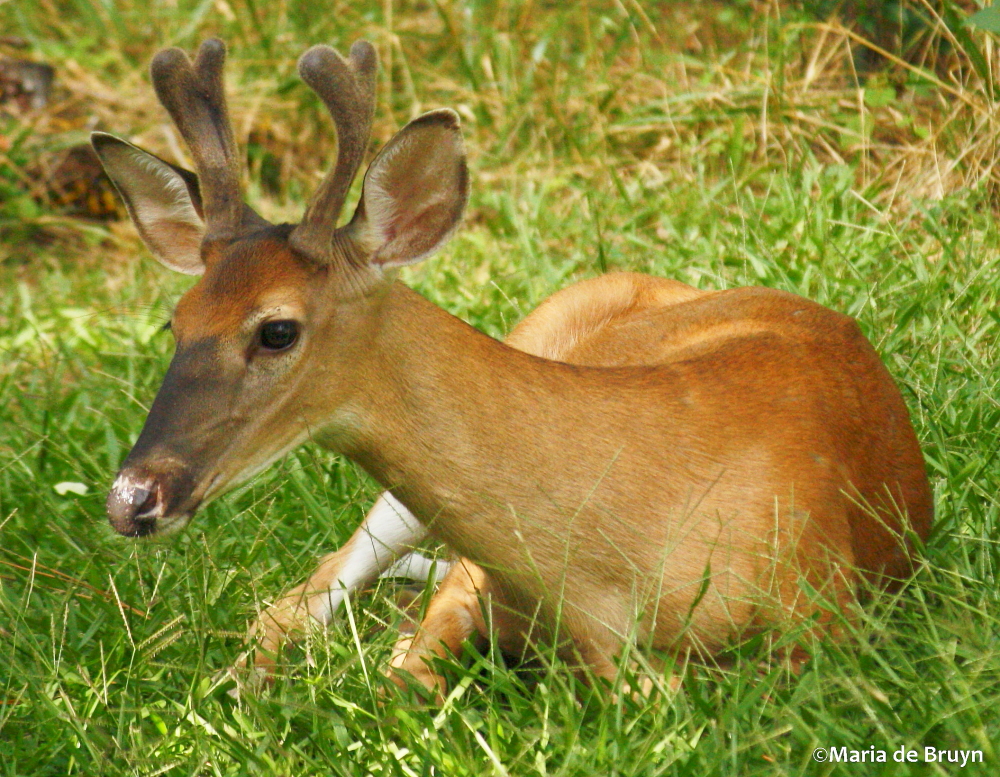
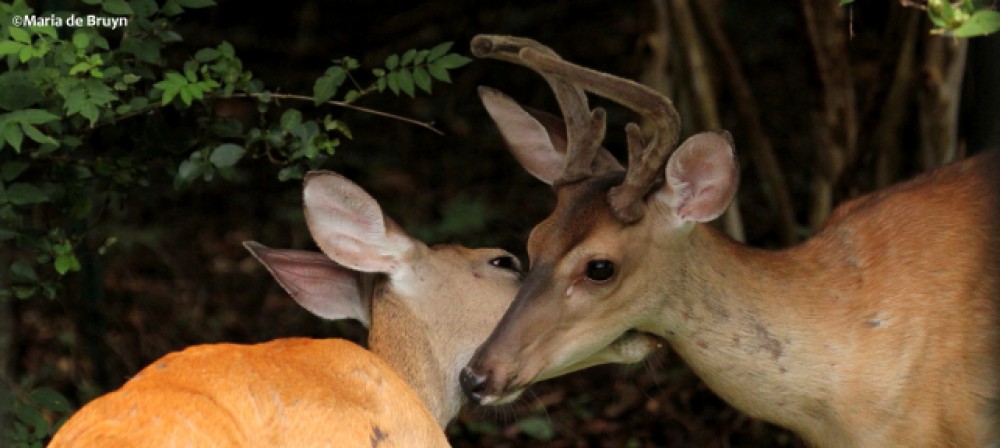
While does and fawns are the main passersby, a variety of male deer visit, too. Some have been the offspring of local does, while others have come in during mating season.The buck above was kind enough to drop one antler in my yard and I found the other in the woods. Learning about their antlers has been interesting and showing the antlers to kids that I have mentored and visitors is fun, too.  So what process leads to these impressive growths?

Male fawns that are 6-9 months old during their first winter (fawns are born in the spring) are called “button bucks” because they have nobs on their heads that are covered with skin. In their second year, their antlers become longer but are still rather short.
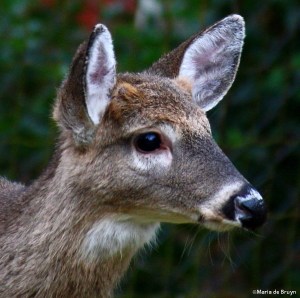
button buck IMG_4770©Maria de Bruynsigned2nd year buck IMG_5975©Maria de Bruynsignedres

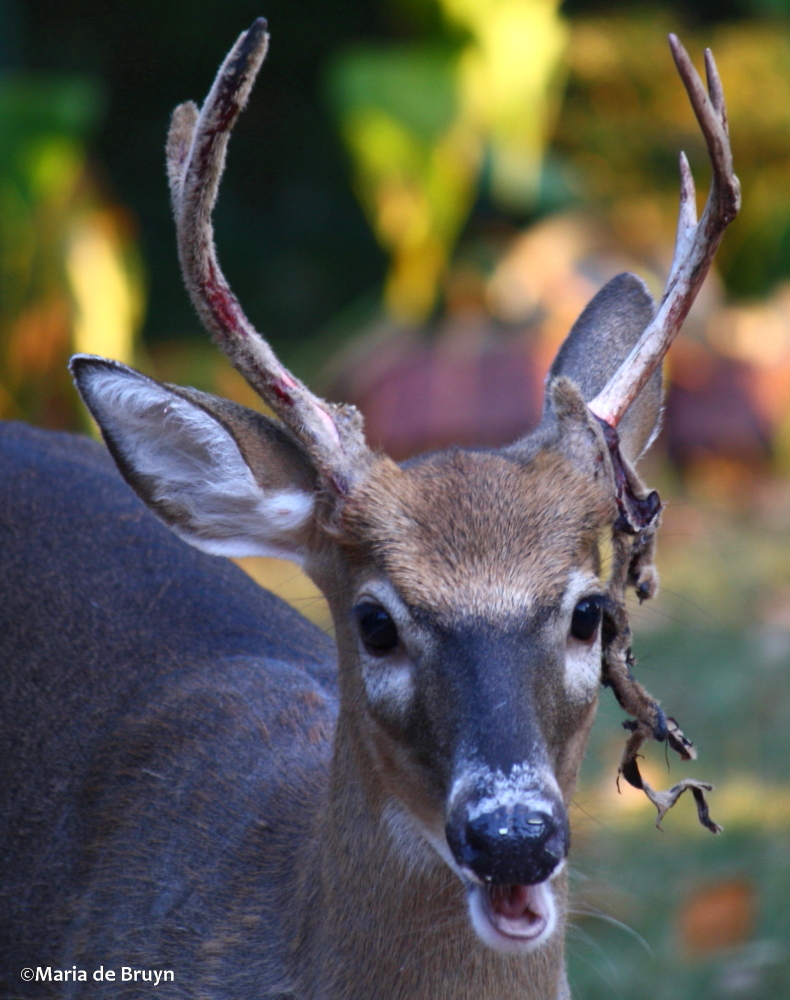
The males grow new antlers every year; they are the fastest growing bone in mammals. They start growing in late spring and are at first covered with a fuzzy skin, called velvet, which provides nutrients and oxygen to the growing bone. The velvet has blood vessels and when the deer rub it off, for example, against tree branches, you can see traces of blood. When the velvet has been shed, the antler becomes dead bone and it doesn’t hurt when the antler is shed.

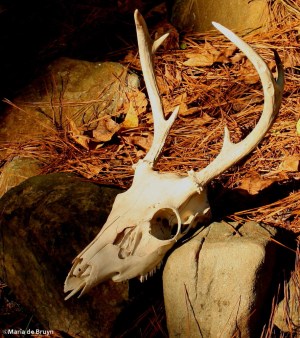
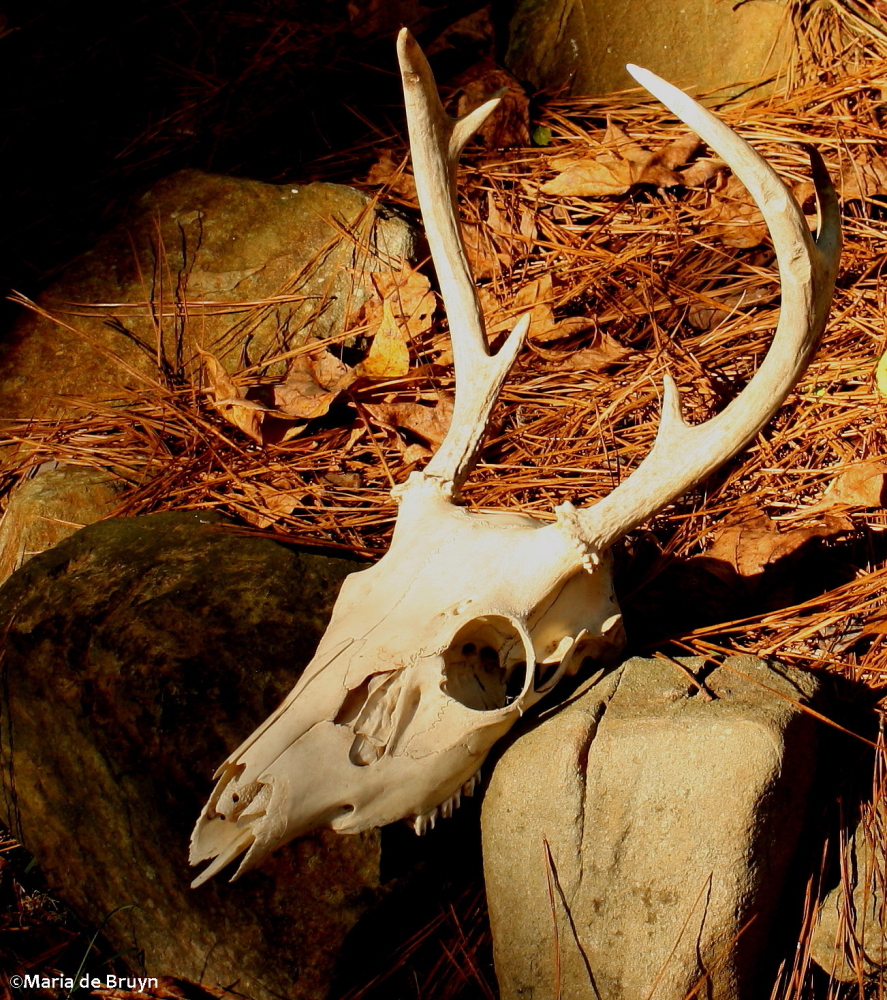
antler velvet shedding IMG_6077©Maria de Bruynsignedresdeer skull IMG_1388©Maria de Bruynsignedres

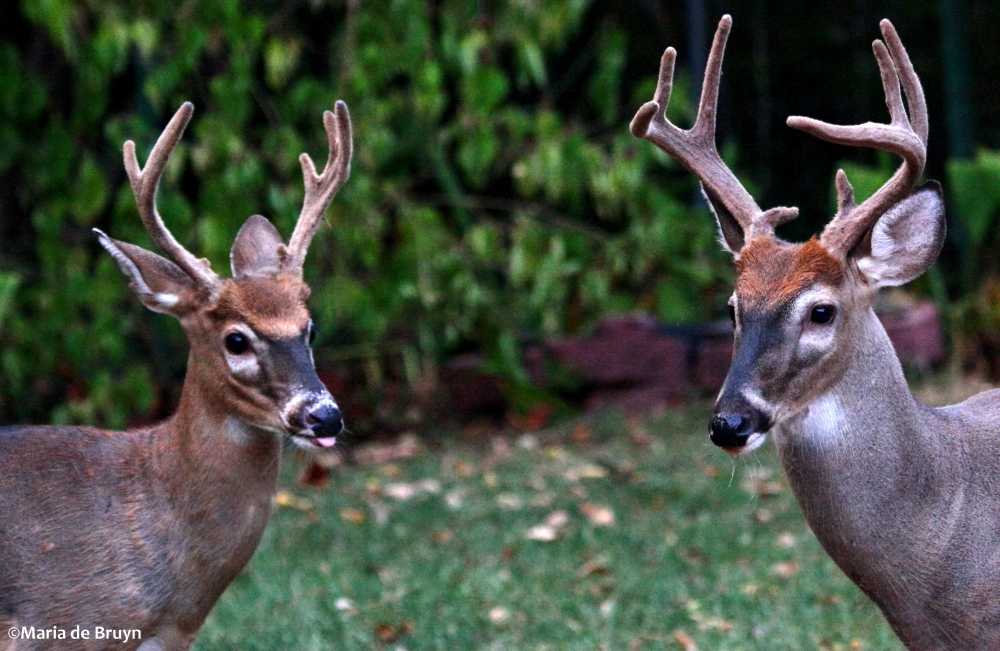
The way that the antlers grow is influenced by the deer’s nutrition, age and genetic background. Some have simple spikes, which may become branched antlers as the deer grows older. Some “racks” (the pair of antlers) will have many branches.

deer antlers IMG_5414©Maria de Bruynsignedres

The bucks lose their antlers at the end of winter and you can find them on the ground if the squirrels don’t get to them first! I had left some antlers outdoors as garden decorations until one day I found a couple had been gnawed by the squirrels. The squirrels eat them to help wear down their front teeth (which are always growing) and to obtain minerals such as calcium.
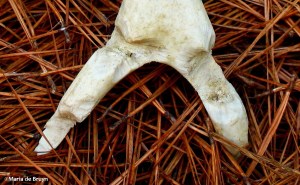
gnawed antler IMG_1402©Maria de Bruynsignedres

As long as the does are around, the bucks will come, which makes me happy. They may not be as comfortable staying in the yard as this member of Schatje’s family, but their brief visits will remain a source of pleasure and learning!
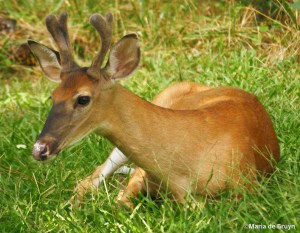
Schatje's son Topa IMG_7560©Maria de Bruyn signedres

Thanks to Kevin Hinkle for letting me photograph the skull.

Next blog: birds at salt blocks
Wonderful woodpeckers

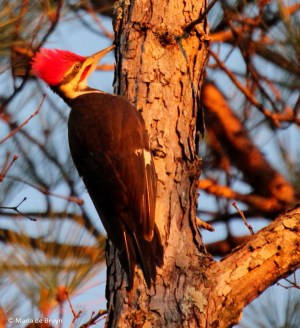
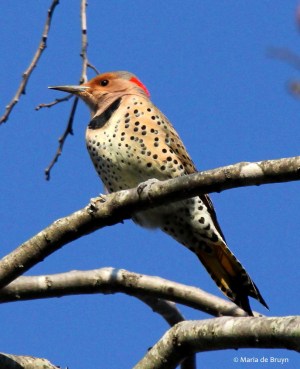
For my first posting, I’d like to focus on woodpeckers. These birds live in many areas of the world and there are several species that I’ve been lucky to see in my yard and on my travels. Many of those I’ve seen have bits of red or a hint of yellow color, like the pileated woodpecker ((Dryocopus pileatus, below left). Some are occasional visitors, like the Northern flicker (Colaptes auratus, below right) that was perched on my persimmon tree.

Pileated woodpecker (Dryocopus pileatus) seen in the woodsNorthern flicker (Colaptes auratus) on my persimmon tree

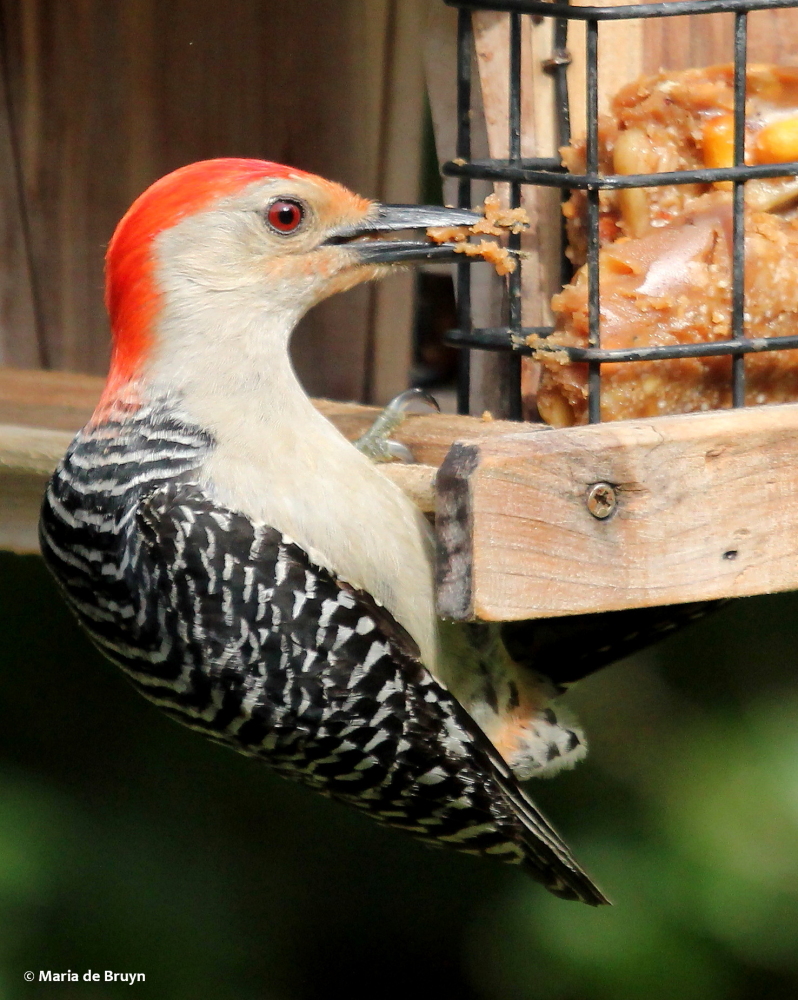
The downy woodpeckers (Picoides pubescens), like the male on the left below, and the red-bellied woodpeckers (Melanerpes carolinus), such as this male to his right, come to my feeders every day.

Downy woodpecker MdB signedred-bellied IMG_8847

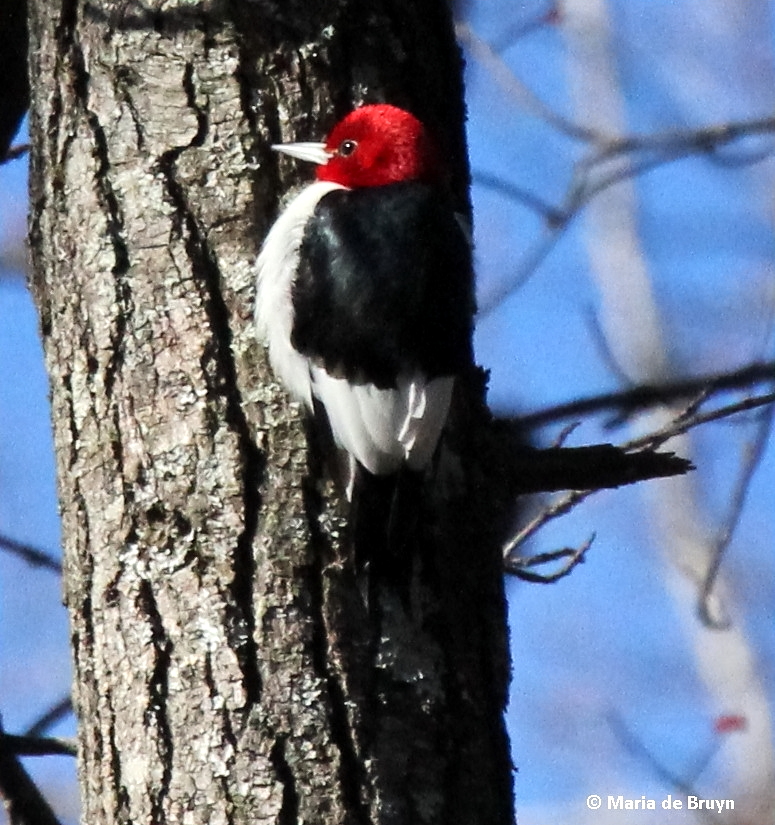
Some of these birds are difficult to photograph, like the beautiful red-headed woodpeckers (Melanerpes erythrocephalus) that sometimes frustrate me because they go behind leaves or stay at a really far distance so that getting a good shot of them is very hard!

Red-headed woodpecker IMG_9884© Maria de Bruyn

What’s really interesting about woodpeckers is that these birds have adapted over time to protect their brains from damage when they repeatedly peck away at wood, trees, utility poles, trash cans — or my rain gutters, making a VERY loud sound as they try to attract mates! Woodpeckers can tap up to 8,000-12,000 times a day (22 times per second)! So how do they protect themselves from this jarring activity?

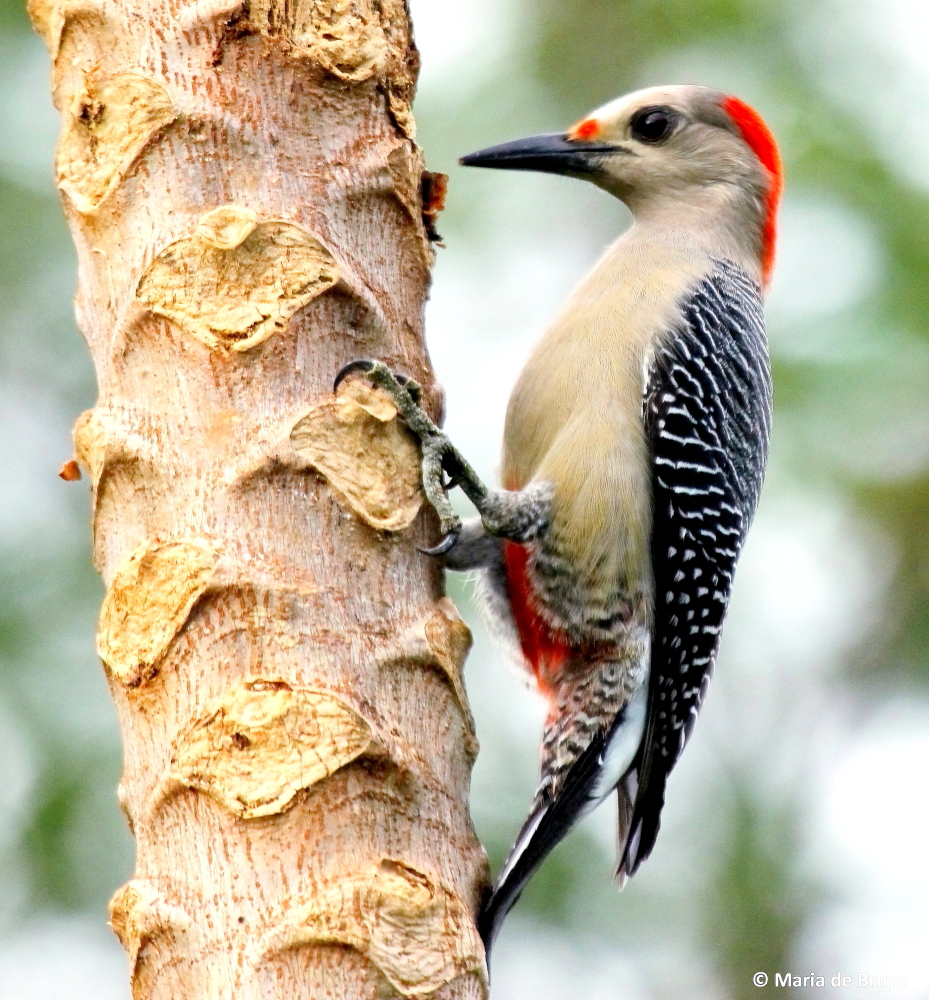
Their brains are protected within their skulls and they only make contact with an object for a very short time with each peck. Just before they peck on wood, they close a thick eyelid (called the nictitating membrane) to protect their eyes from wood chips and special feathers protect their nostrils. They also have strong muscles at the base of their beaks that act as shock absorbers to lessen the impact of the hard pecking. In fact, In fact, scientists used studies of the golden-fronted woodpecker ‘s head and neck when they designed a shock absorption system to protect microelectronics!

Golden-fronted woodpecker IMG_0357 MdB

Golden-fronted woodpecker (Melanerpes aurifrons) that I saw in Mexico

Woodpeckers are important in nature because they help control insect populations. Their nest cavities are also used by birds and animals (deer mice, raccoons, flying squirrels) that cannot create cavities themselves. A few species will use nest boxes. A downy woodpecker used a bluebird box in my yard as its night-time refuge over the past winter.

downy woodpecker IMG_0299 MdB

Next blog: deer antlers!