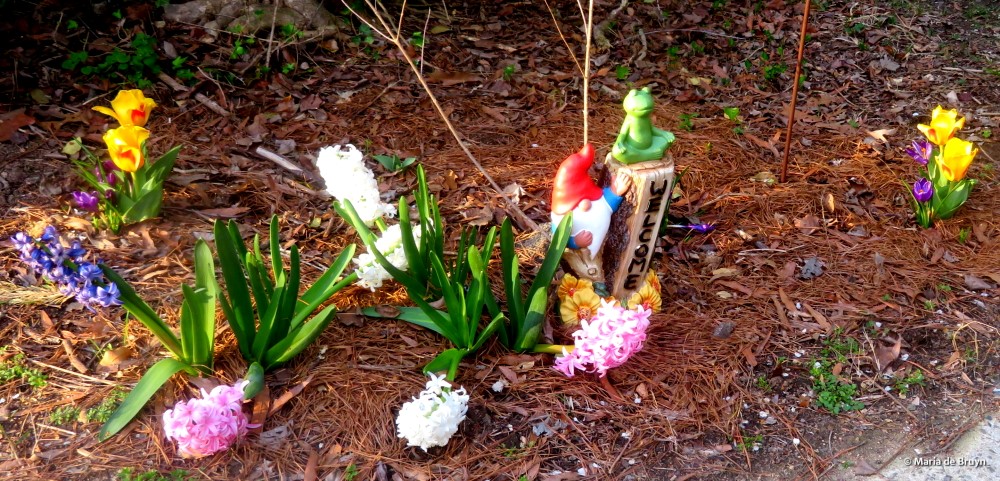
 Before going back to Yellowstone National Park to view some more thermals (in a blog), I’d like to share a few moments that brought me delight during some recent difficult days. Even when I’m not feeling well or needing to deal with unexpected troubles, I always try to make time to go out for a walk as being in nature usually brings some calm and joy.
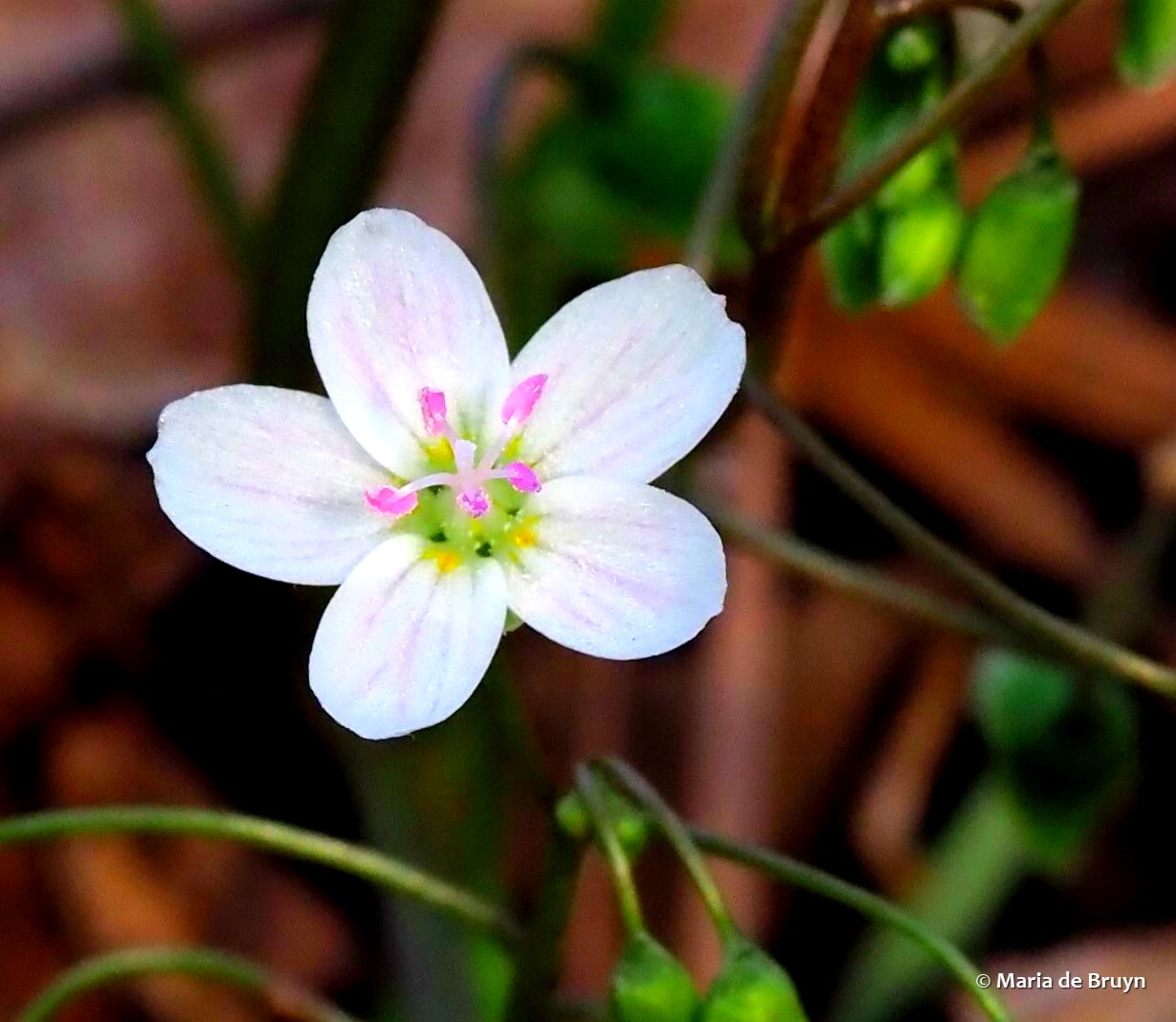 Although our area is currently having some cooler winter weather, we had quite a few days of unseasonably warm temperatures the past weeks and spring has sprung at least a couple weeks early. Emerging blooms have made for some happy sightings, both in my garden and out in natural areas. Daffodils were among the first to appear. Spring beauties (Claytonia virginica) are appearing in many places.
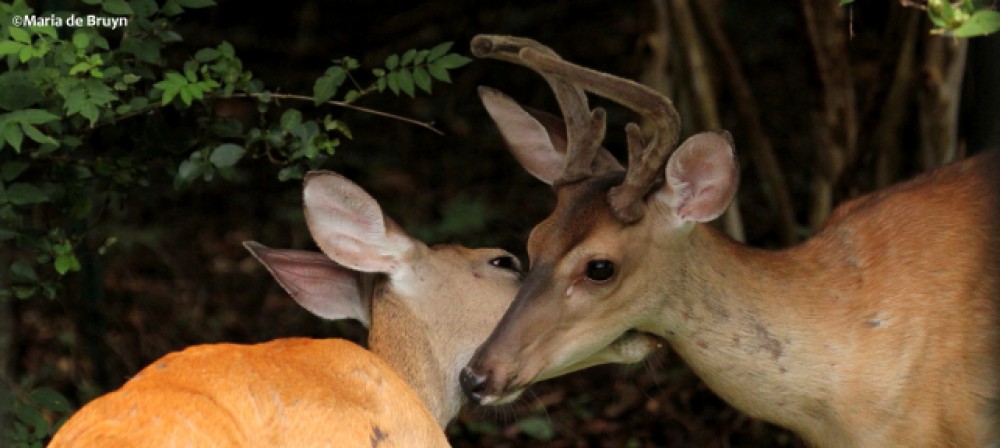
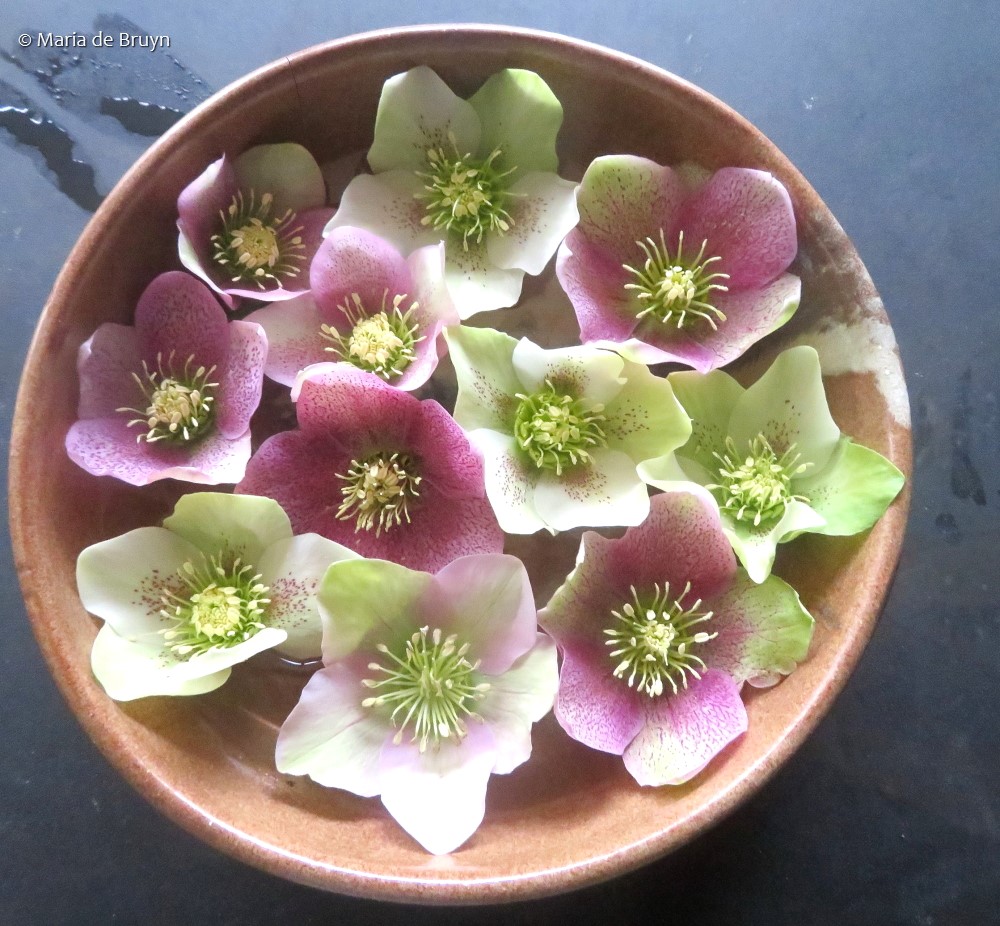
Hellebores (also known as lenten roses) were also very early bloomers and they are still going strong. A neighborhood white-tailed deer family (Odocoileus virginianus) enjoys resting among them in the back garden. Because the blooms droop, putting some in a bowl of water brings a better view of their beauty — and my cats are tempted to drink from the new water container.

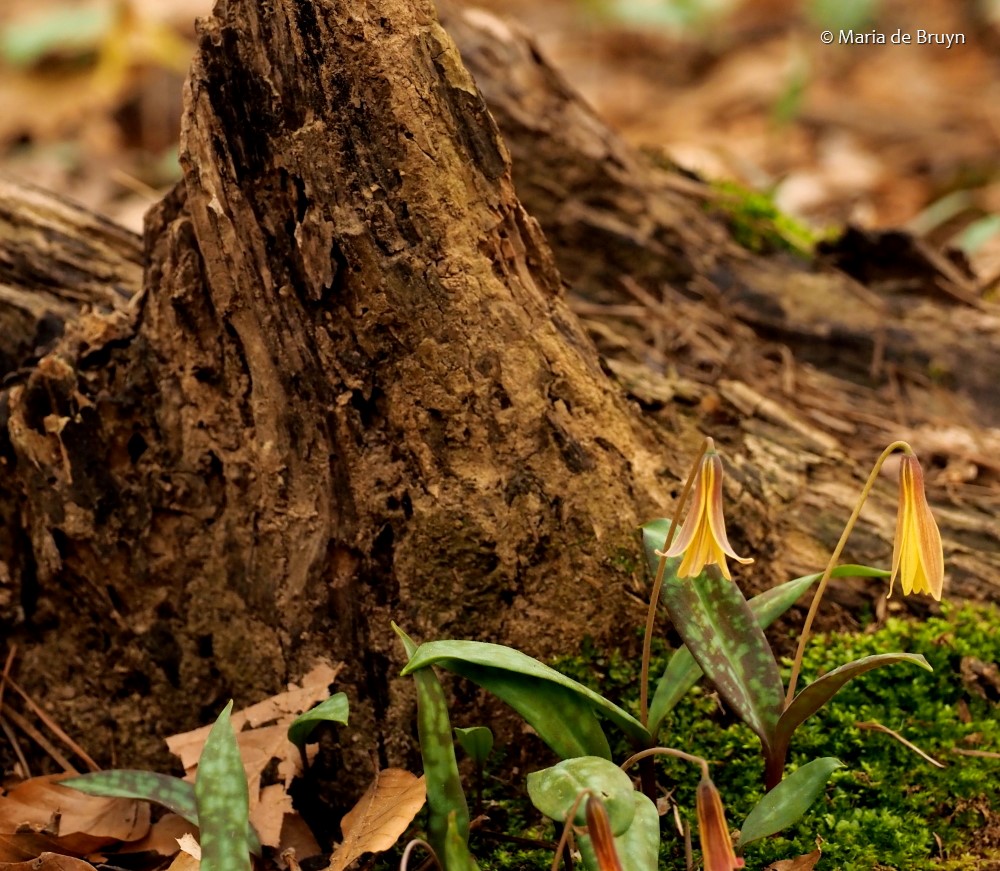 Trout lilies (Erythronium americanum, right) seem to be popping up alongside all the trails that I walk. Often they are growing near trees or stumps left behind by fallen trees.
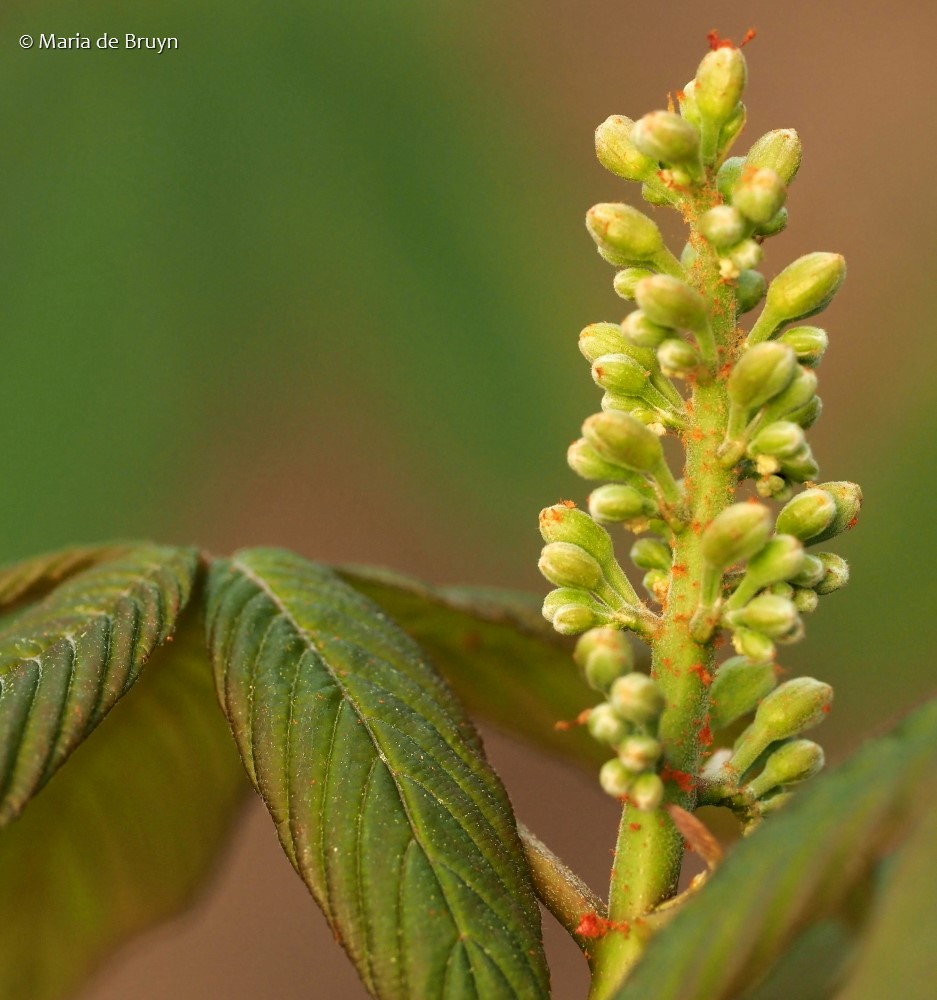
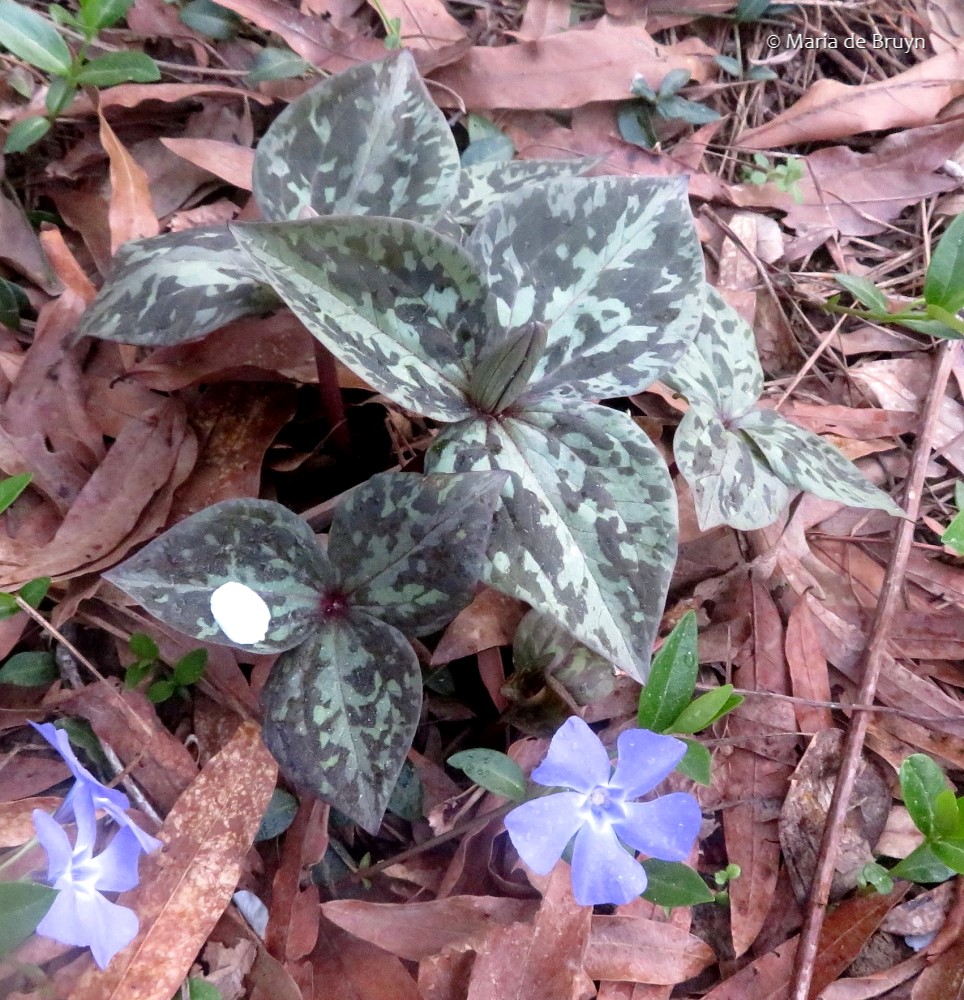
In my yard, I transplanted a red buckeye (Aesculus pavia) and it is doing well in its new spot. My yellow buckeye (Aesculus flava) isn’t blooming, but there was one in the woods that was covered with small insects (below left). I was quite pleased to see a trillium (below right) getting ready to bloom for the first time in my front garden,
The other day when I looked out my front window to see if any new plants had appeared, I was surprised to see an unexpected visitor sitting on a plant pot on the porch. It was the resident Cooper’s hawk (Accipiter cooperii), who comes by often to see if she can pick off one of the feeder birds for a meal. (The bird is quite large, which leads me to think it is a female.)
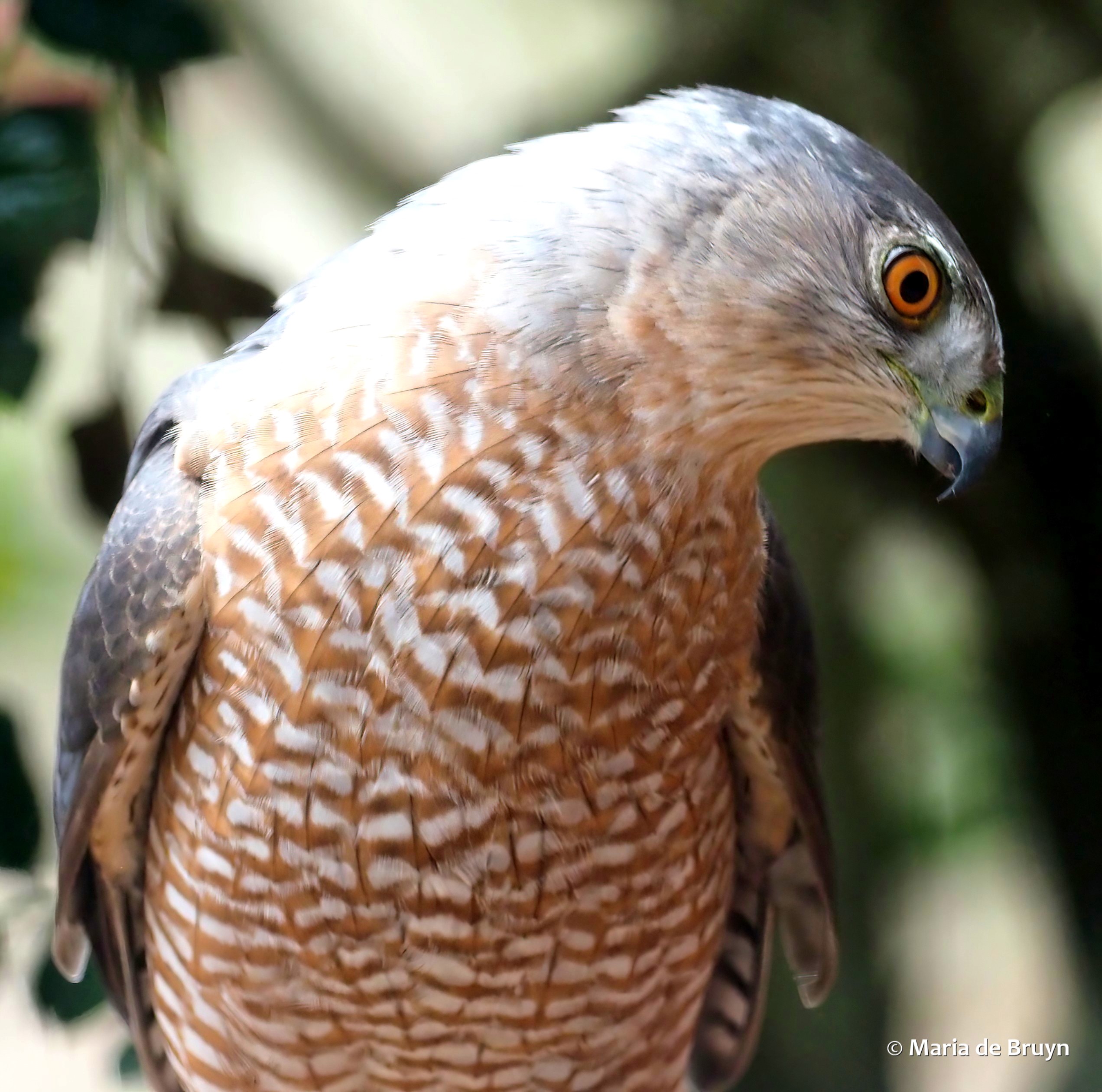
A favored hunting technique is to drive another bird into the front porch window in order to pick up the stunned prey before it recovers and flies away. She apparently thought that she had managed to accomplish this maneuver and was looking for her meal.
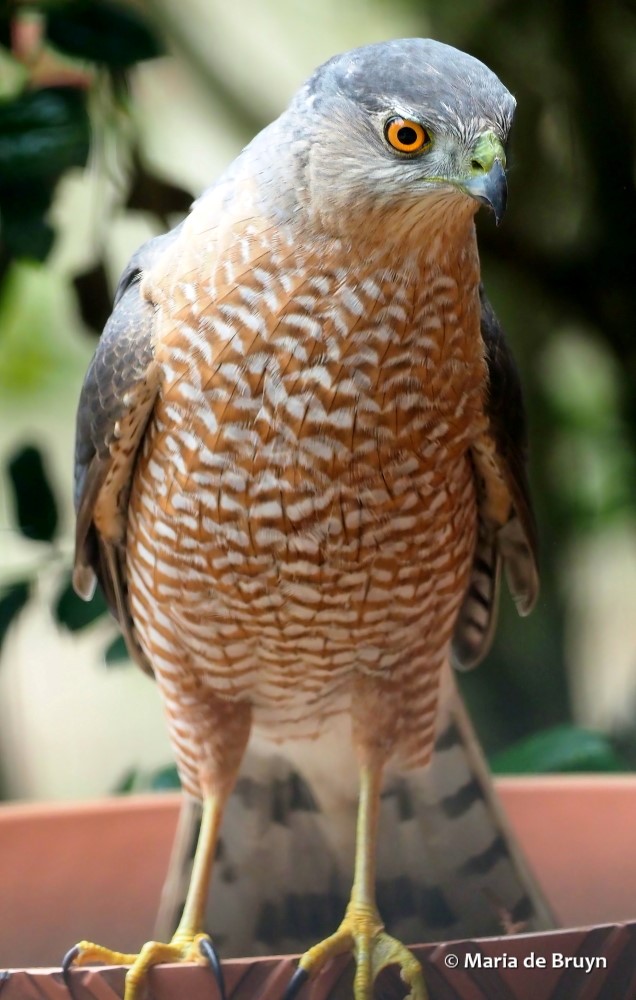
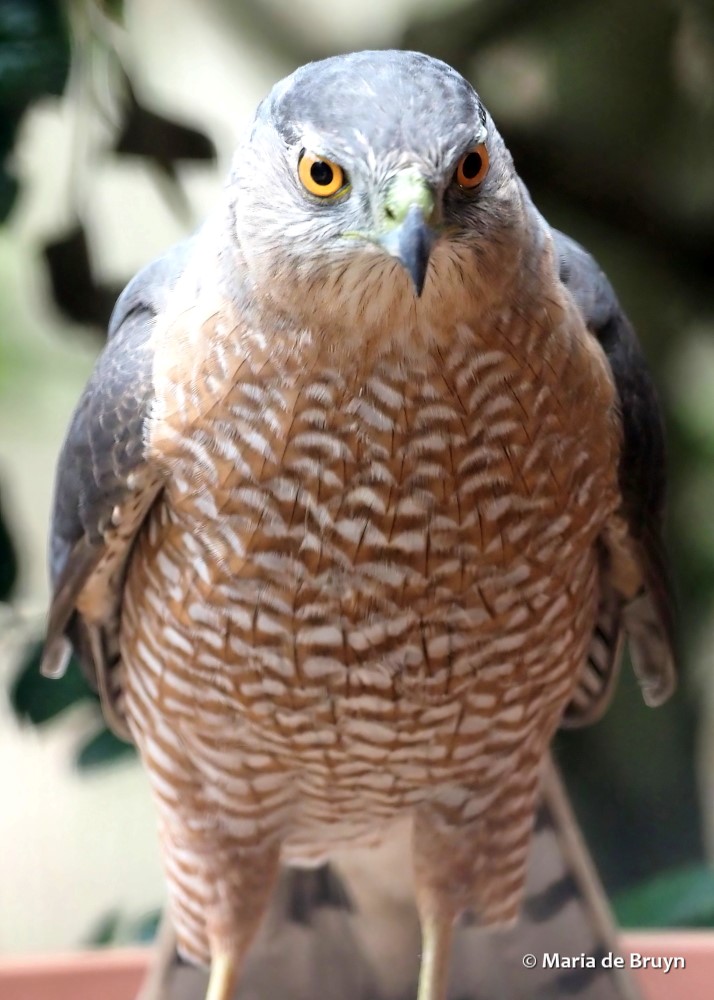
Perhaps she also was looking for a chipmunk, however, as they often come up onto the porch. After seeing me staring at her, she decided to leave.
My most interesting recent encounter was with another bird of prey. After walking through a park for more than an hour, I set off on a new trail and encountered a bench there. I had decided to sit for 5 minutes and just look around when I suddenly heard a loud call quite near behind me.
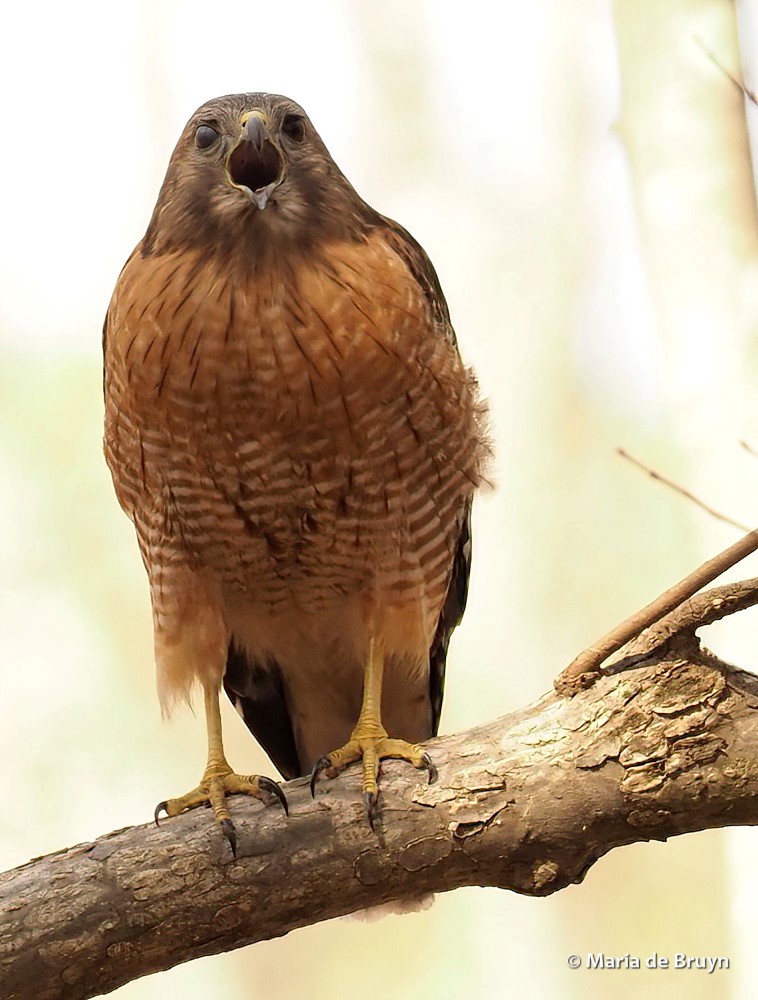
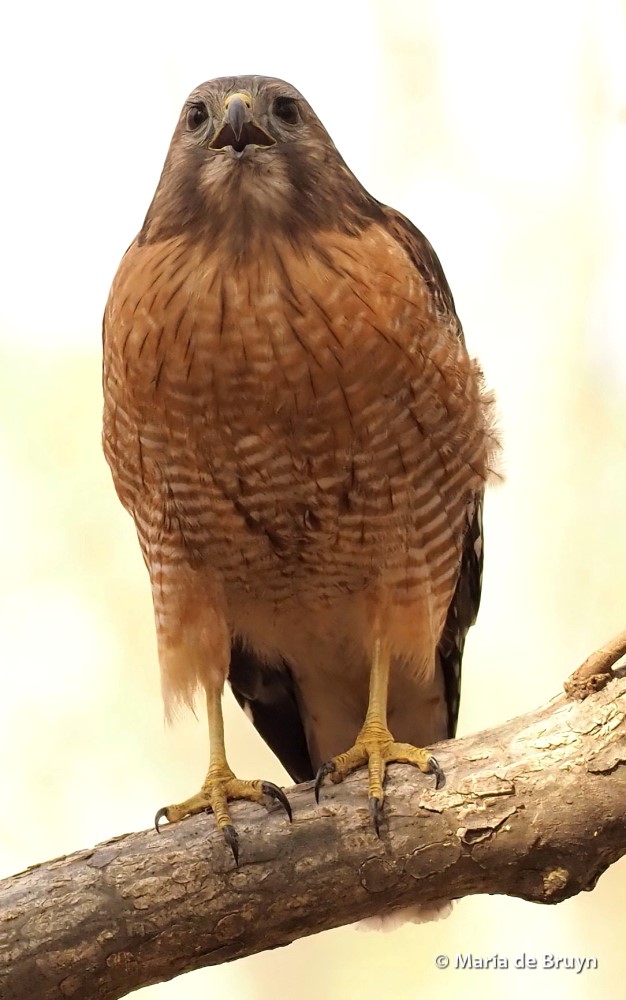
When I turned, there was a gorgeous red-shouldered hawk (Buteo lineatus) sitting on a low branch about 15 feet (4.5 m) from me. I took a couple photos without moving from my place and the hawk just gazed at me.
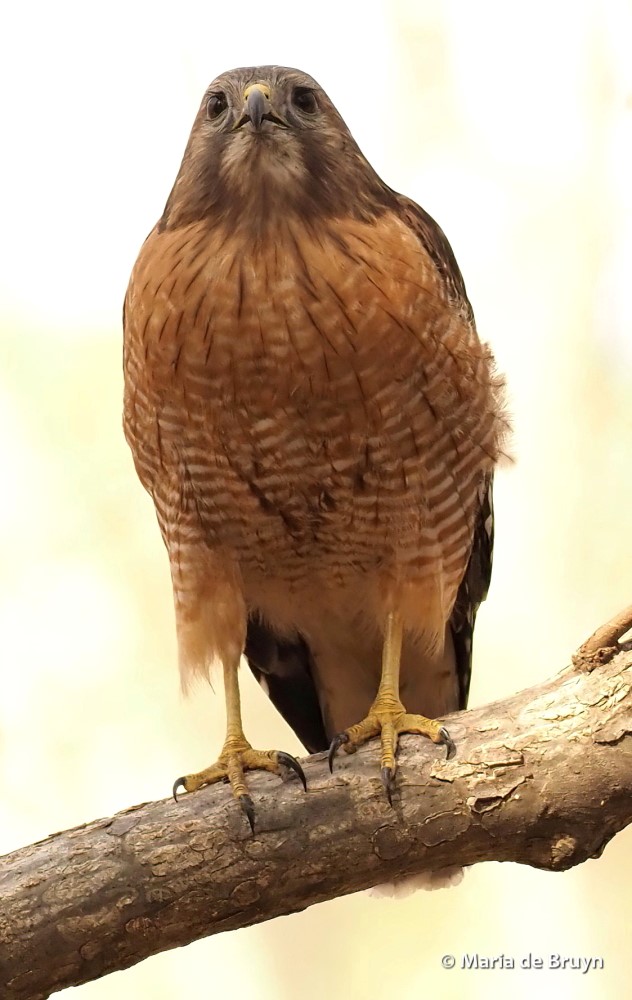

This bird was so beautiful that I just admired it for a while before taking some more photos. And then my avian neighbor began calling again.
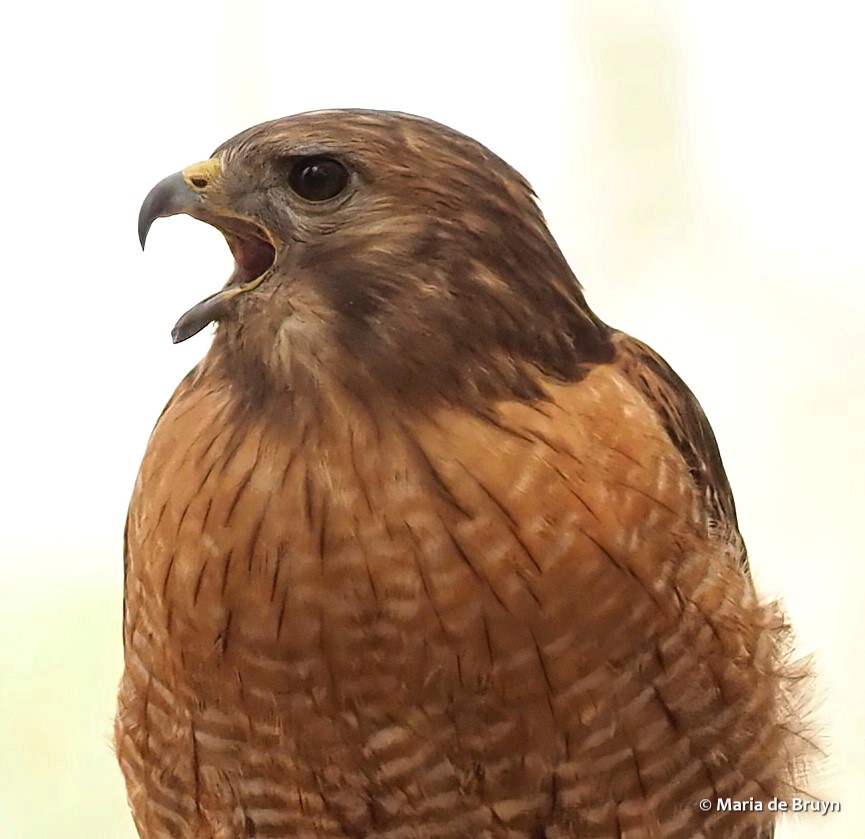
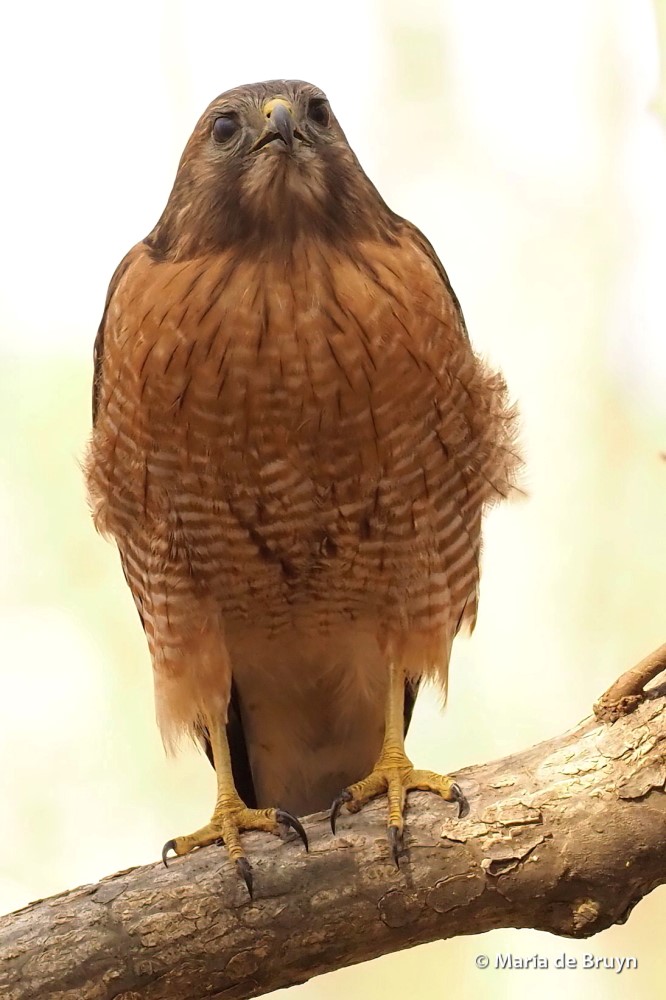
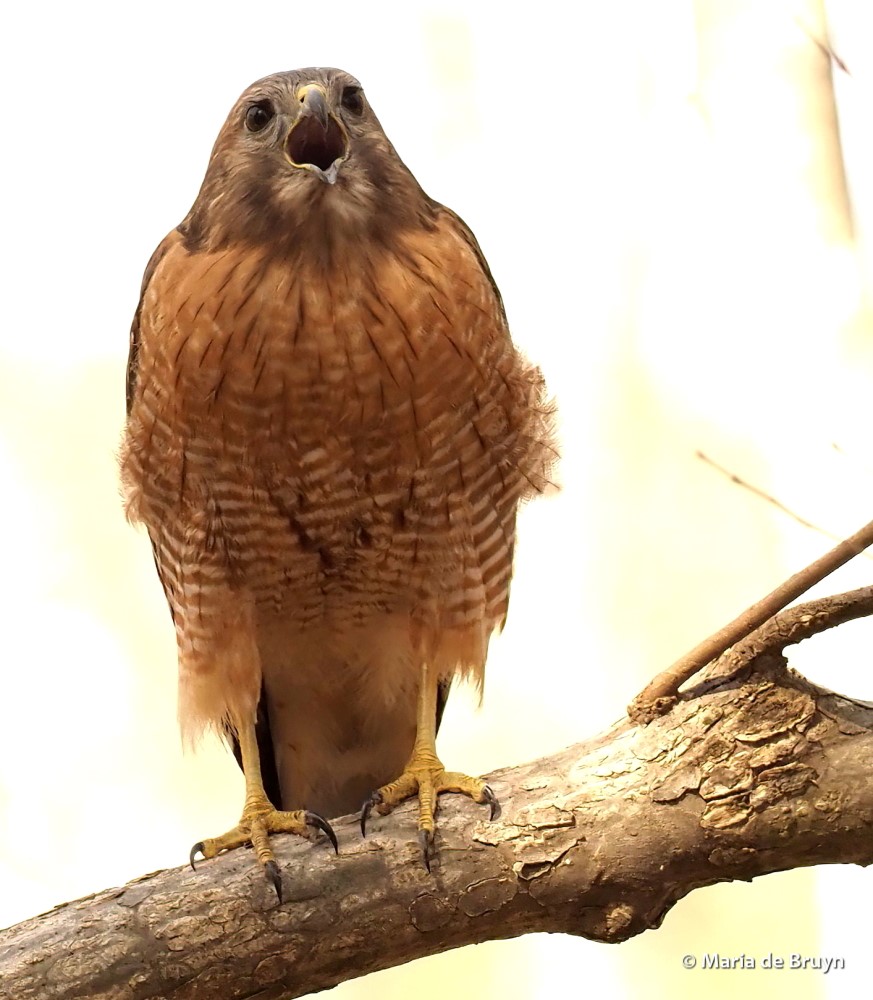
These periods of calling and looking around silently went on for a while and I was really curious about how long the bird would stay there. It seemed like a really long time, perhaps because we were both so engrossed with looking at one another. (In reality, the time on my camera showed that our encounter lasted about 10 minutes or so.)
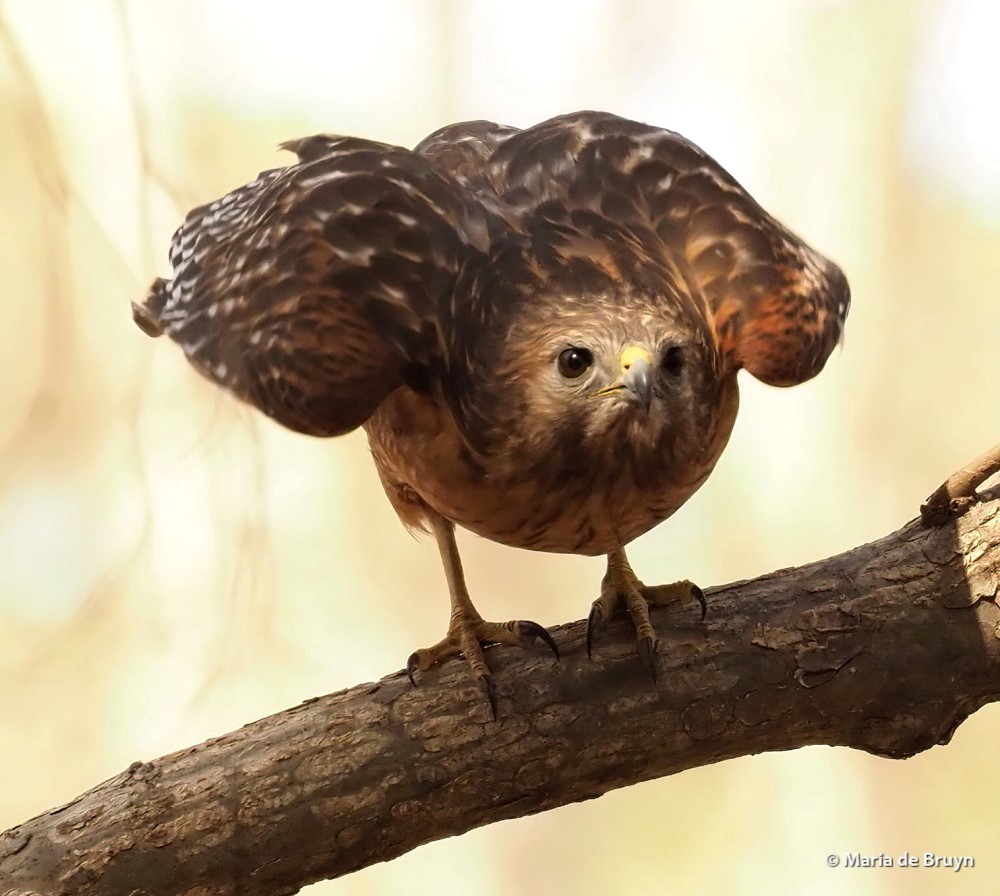
After a while, my calling companion decided to take off and I figured that would be the end of our visit.
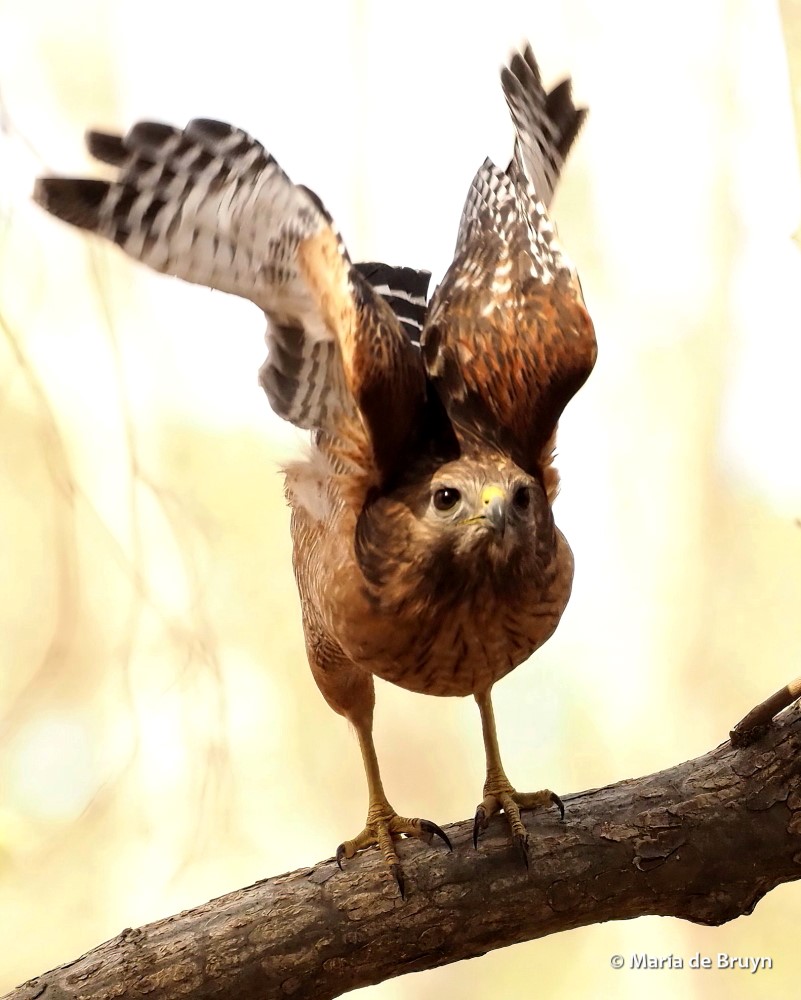
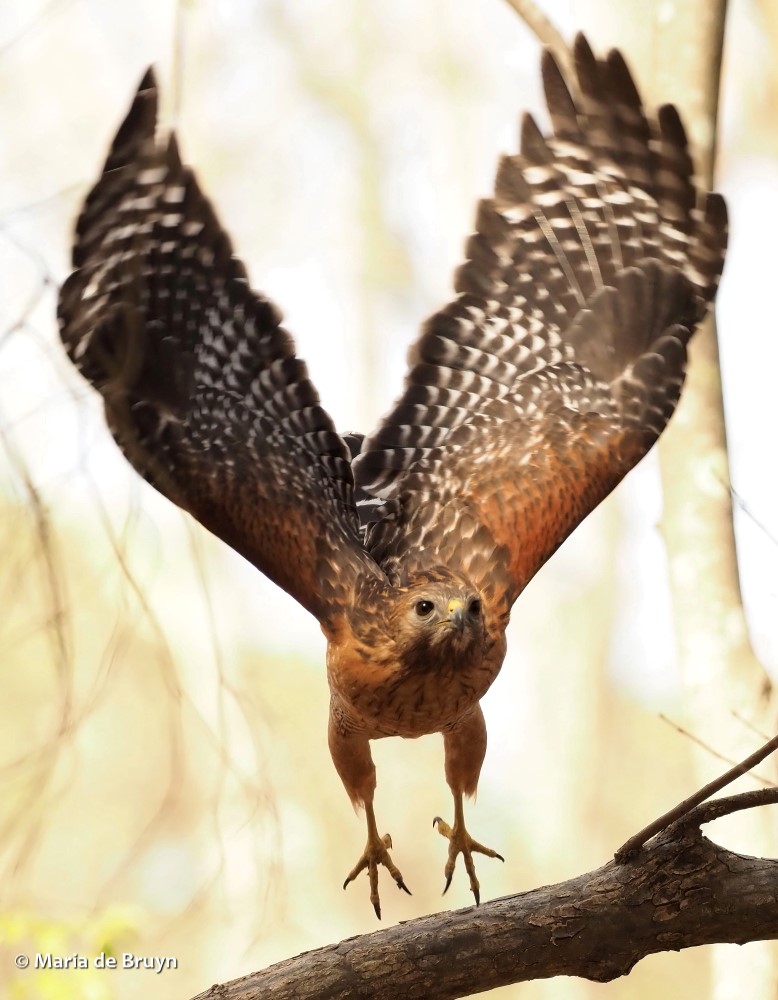
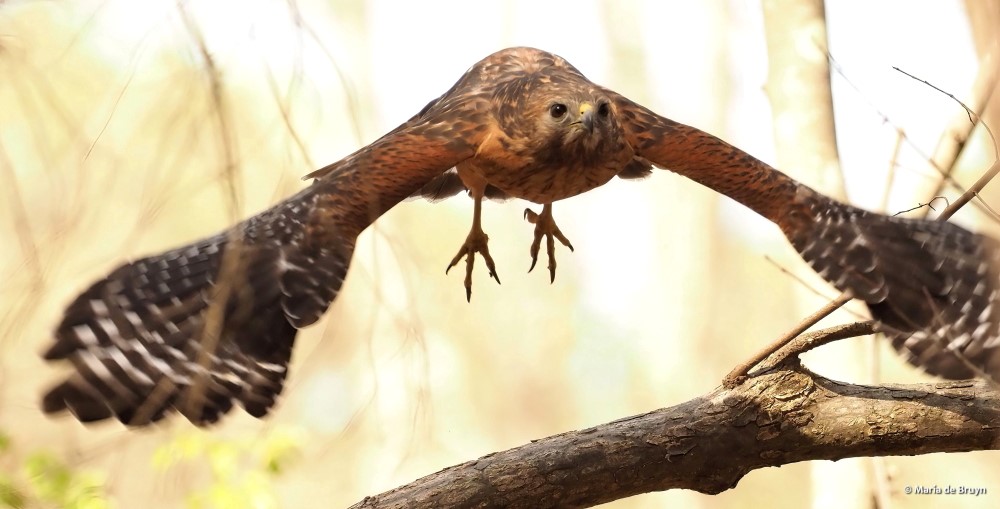
I wondered where the hawk would go.
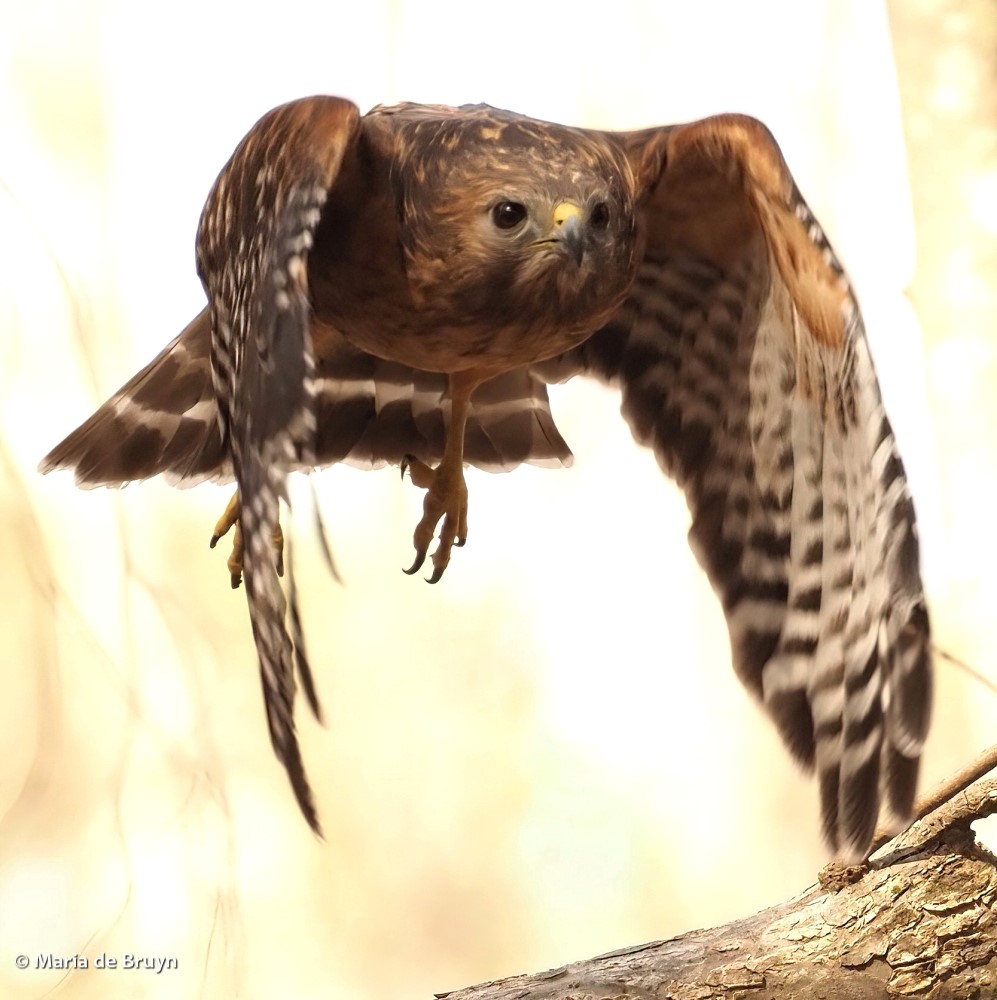
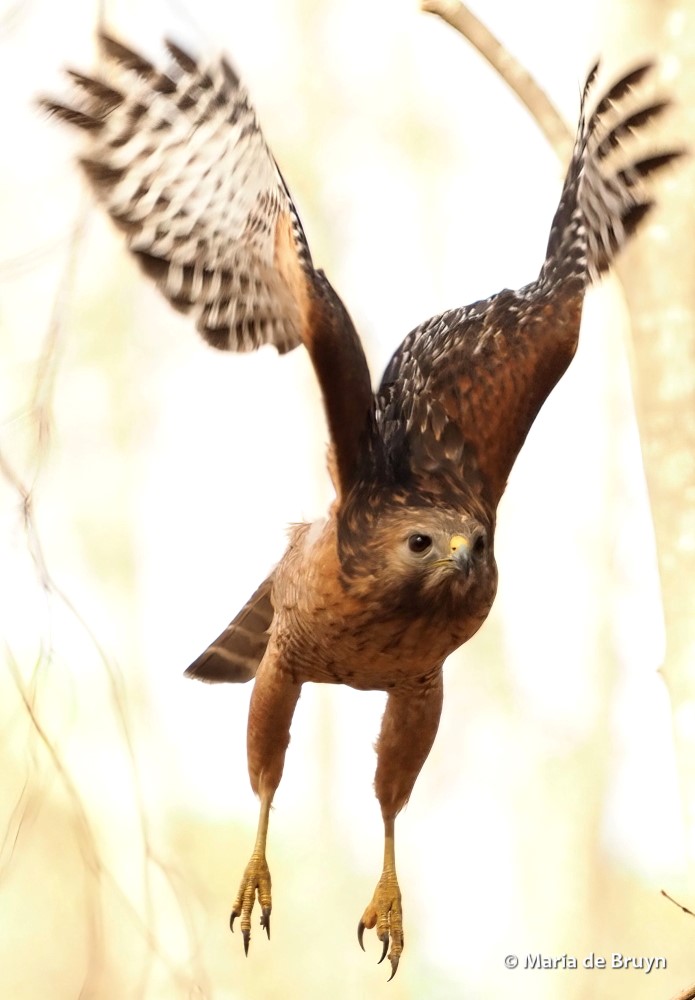
It turned out to be to a branch a little further away and higher up where there would be a better overview of what was moving around the forest. I watched the stunning raptor for a little while longer and then left it to get on with its surveying in peace. After that, I saw a few more interesting wildlife encounters, but it was that mutual observation session with the bird of prey that made the biggest impression on me that day.
Hope you have had a nice time outdoors, too!


 My beautiful world