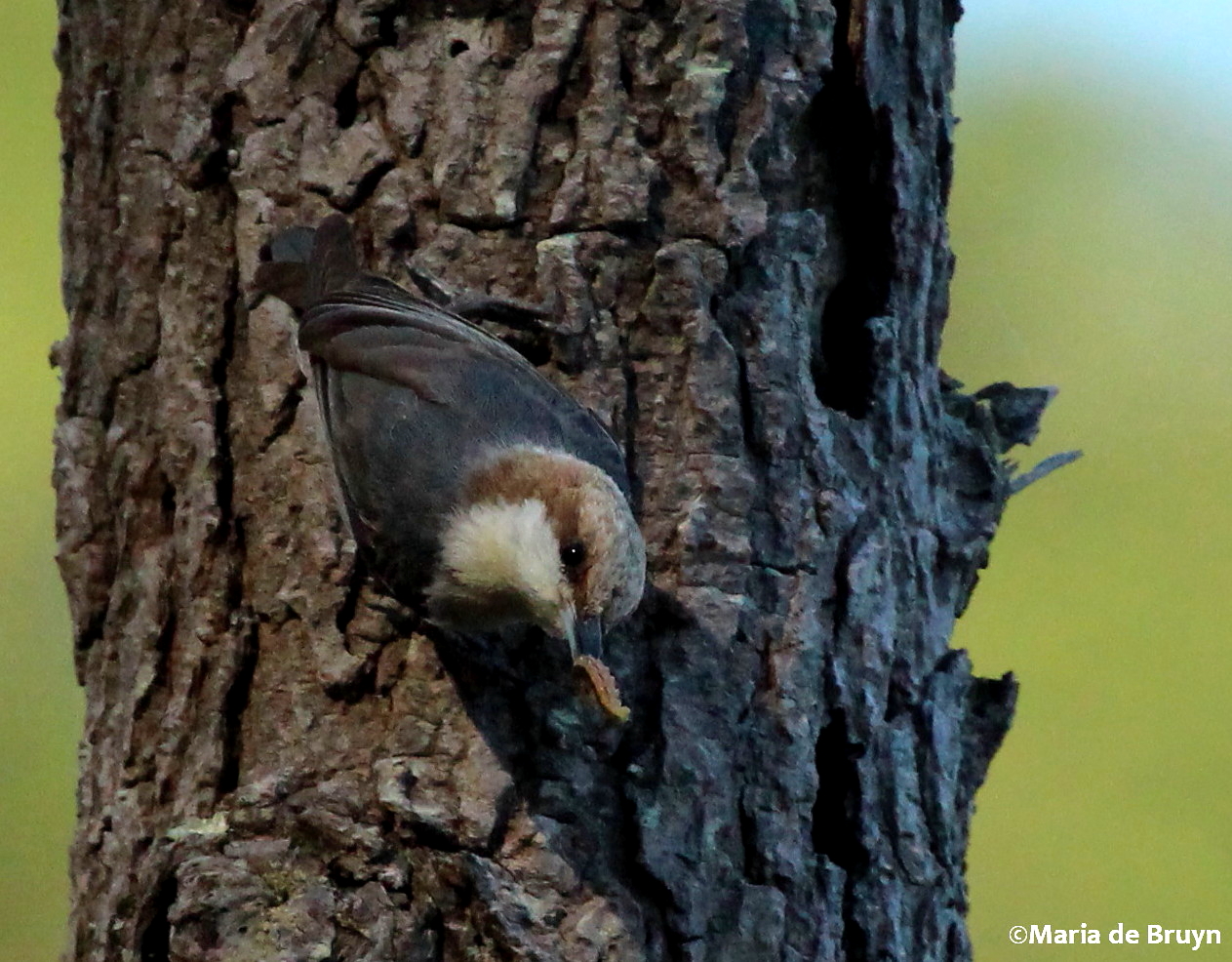
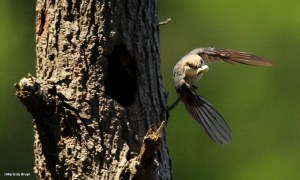
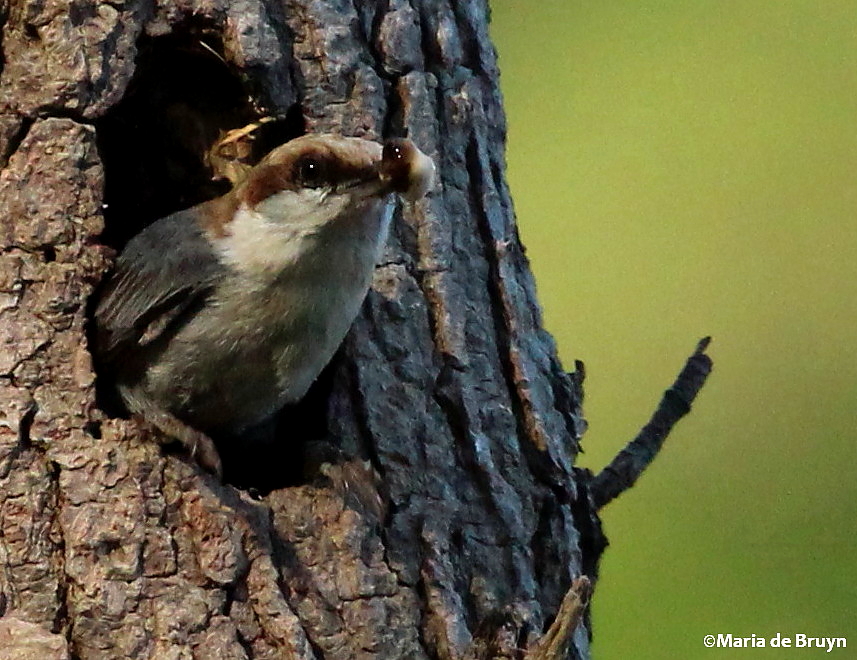
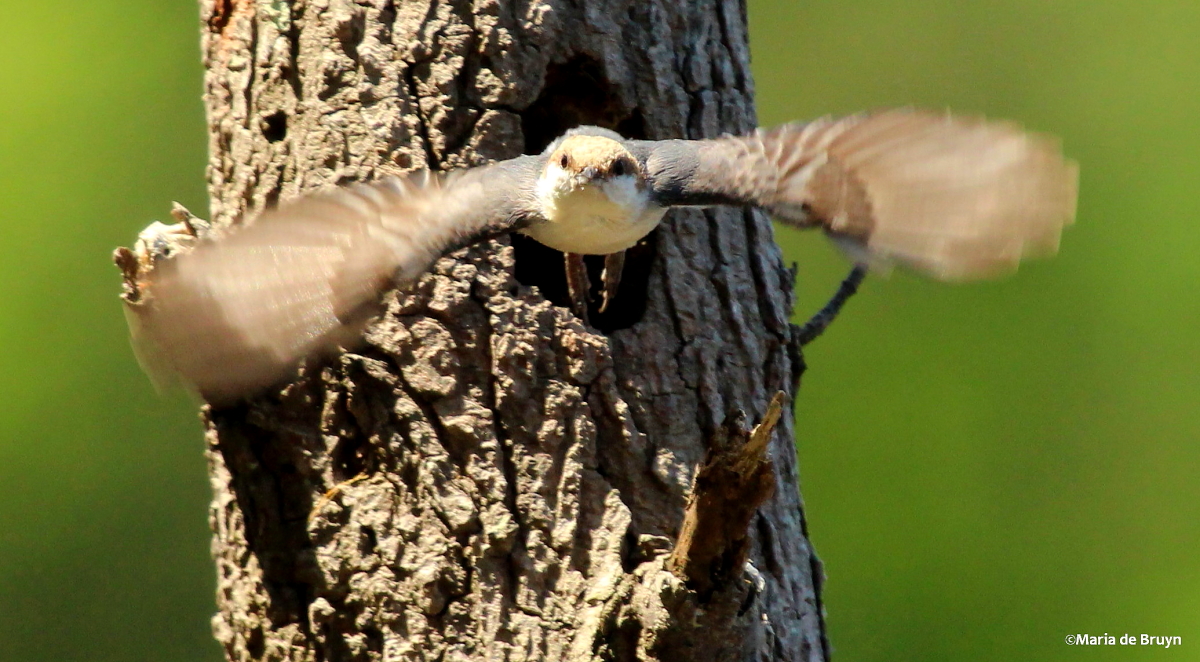
 Last weekend, when walking the woods along Jordan Lake in order to write a blog for the NC Audubon Society, I happened upon a thin dead tree standing in the water at the shore’s edge. Just then as I was looking it up and down, a brown-headed nuthatch (Sitta pusilla) flew up and made its way down the trunk to a hole where it obviously had a nest. That was a treat and I watched the mom and dad fly to and fro with provisions for the brood.
Yesterday, I decided to return and see if the industrious pair was still working on meals for their brood. They were indeed and I watched for quite a long time, wondering how they could see anything down in the nest where it has to be pretty dark.
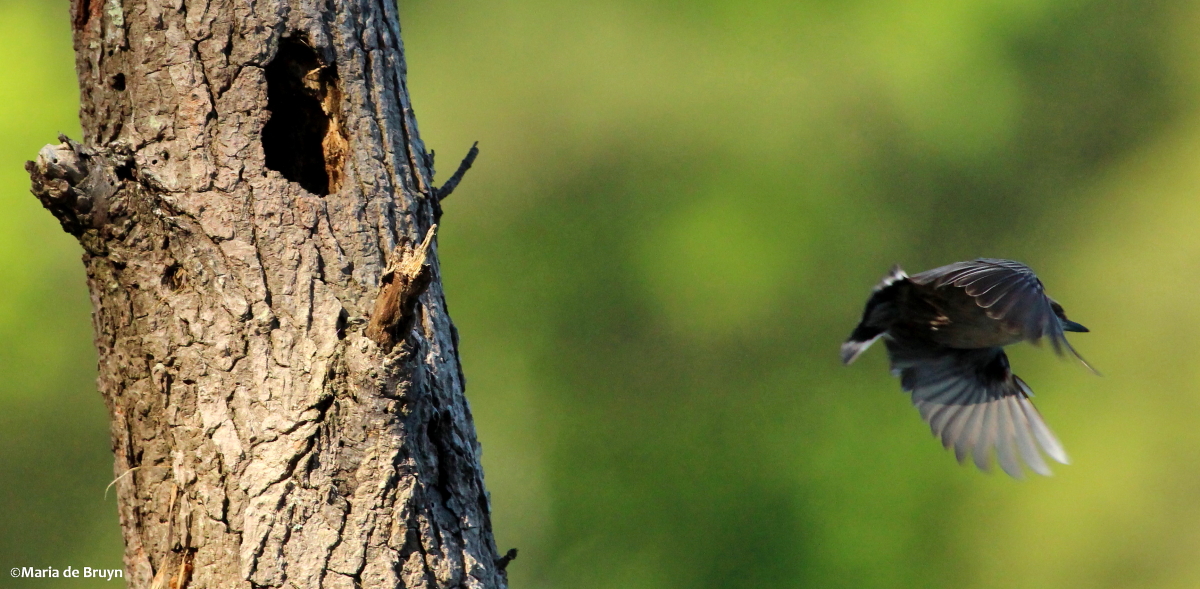 These lovely little birds are native to the Southeastern US and there is a small population in the Bahamas; they don’t live in any other countries so they really are kind of special. In addition, since 1966, the population has declined by 45% because they are losing nesting habitats (dead and pine trees) to deforestation and urbanization.
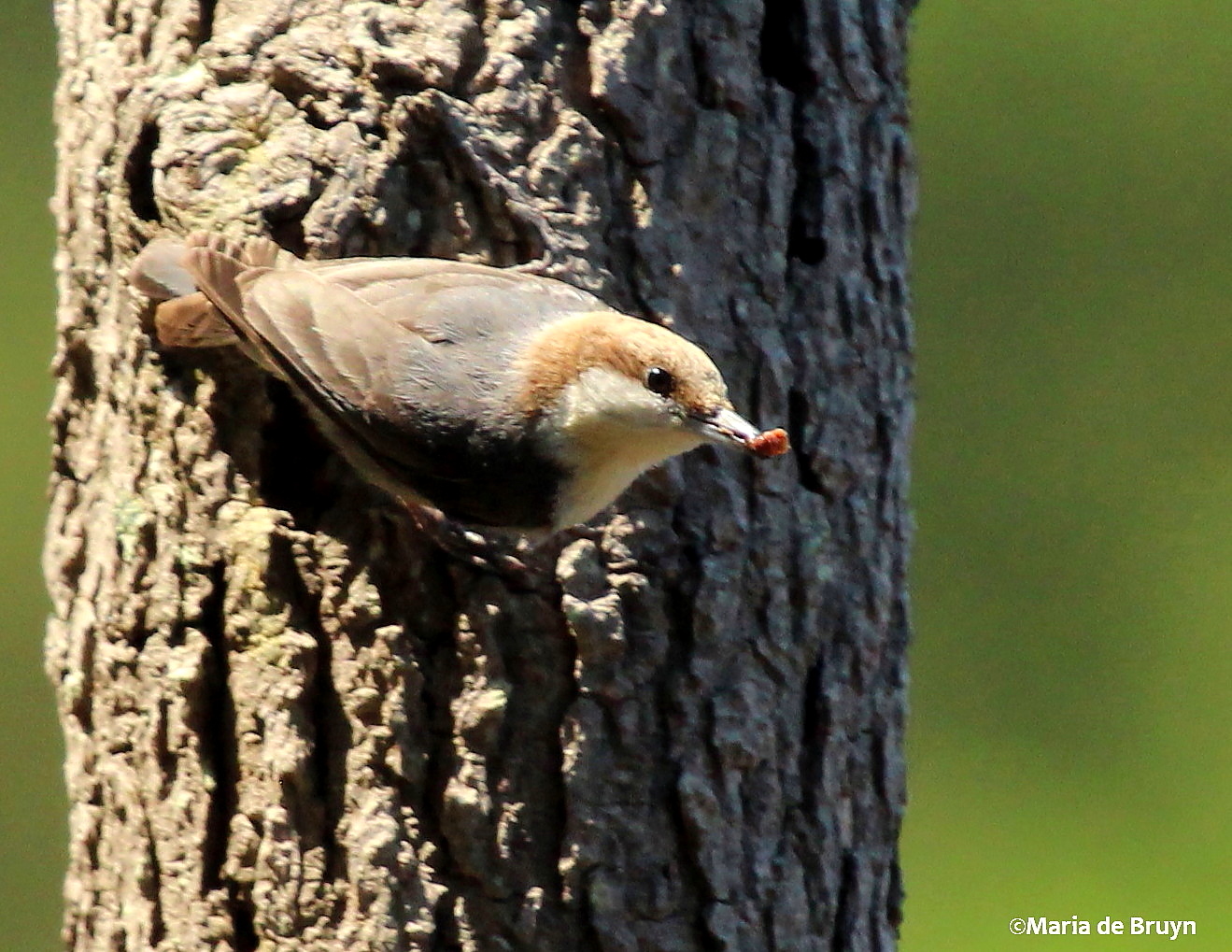
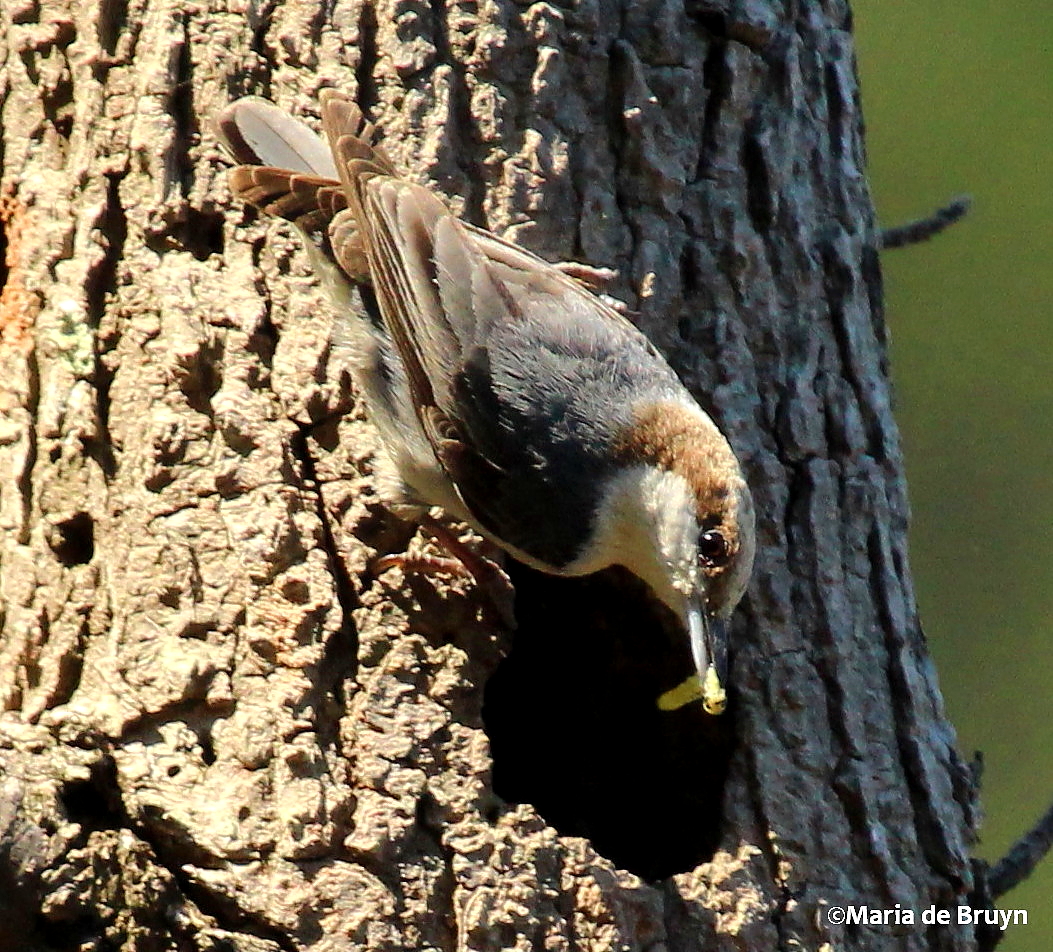
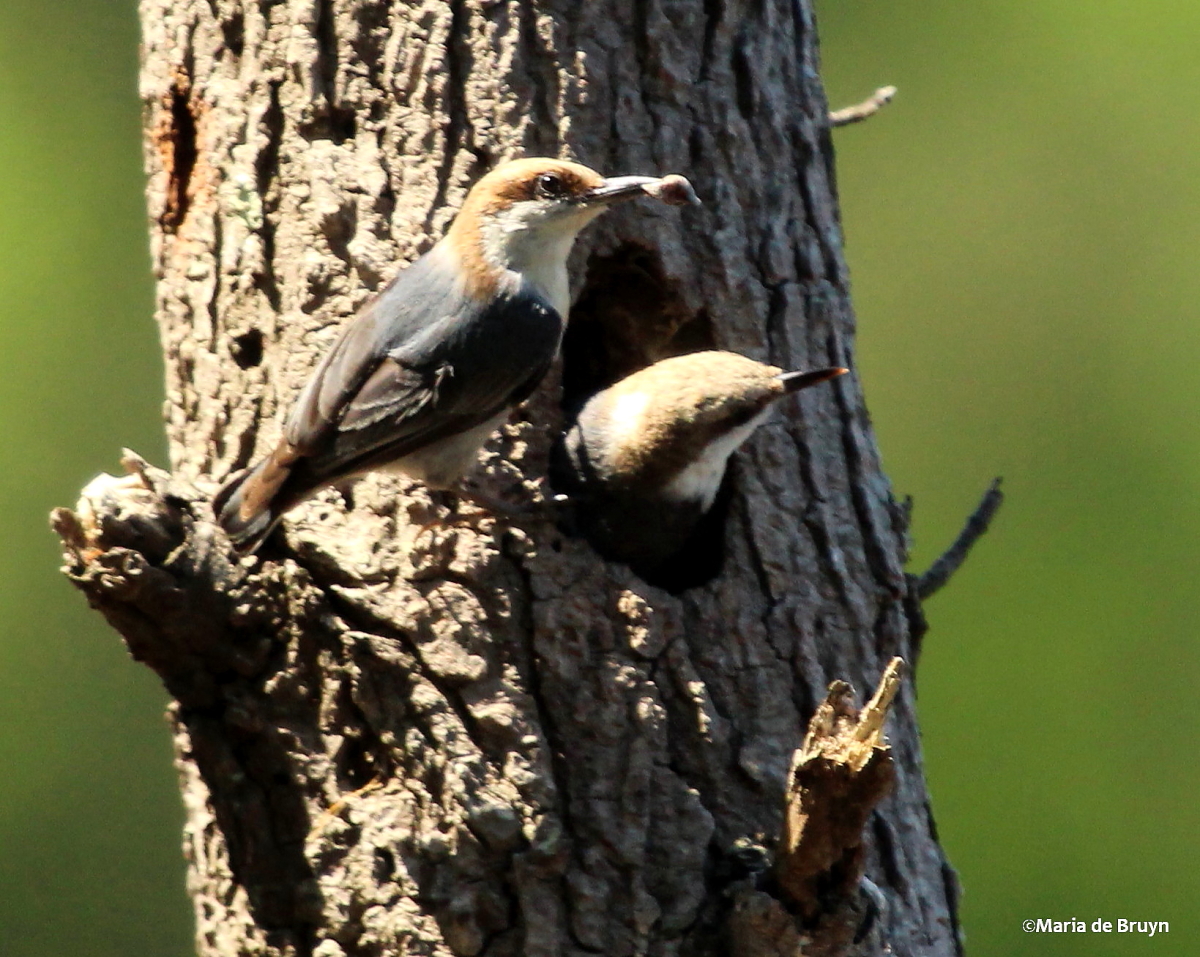
The parents were most often alternating their meal runs, but occasionally they would arrive simultaneously or very close in time. They would usually alight on the trunk above the nest hole and then work their way down – they can descend head-first, which is a handy trait.
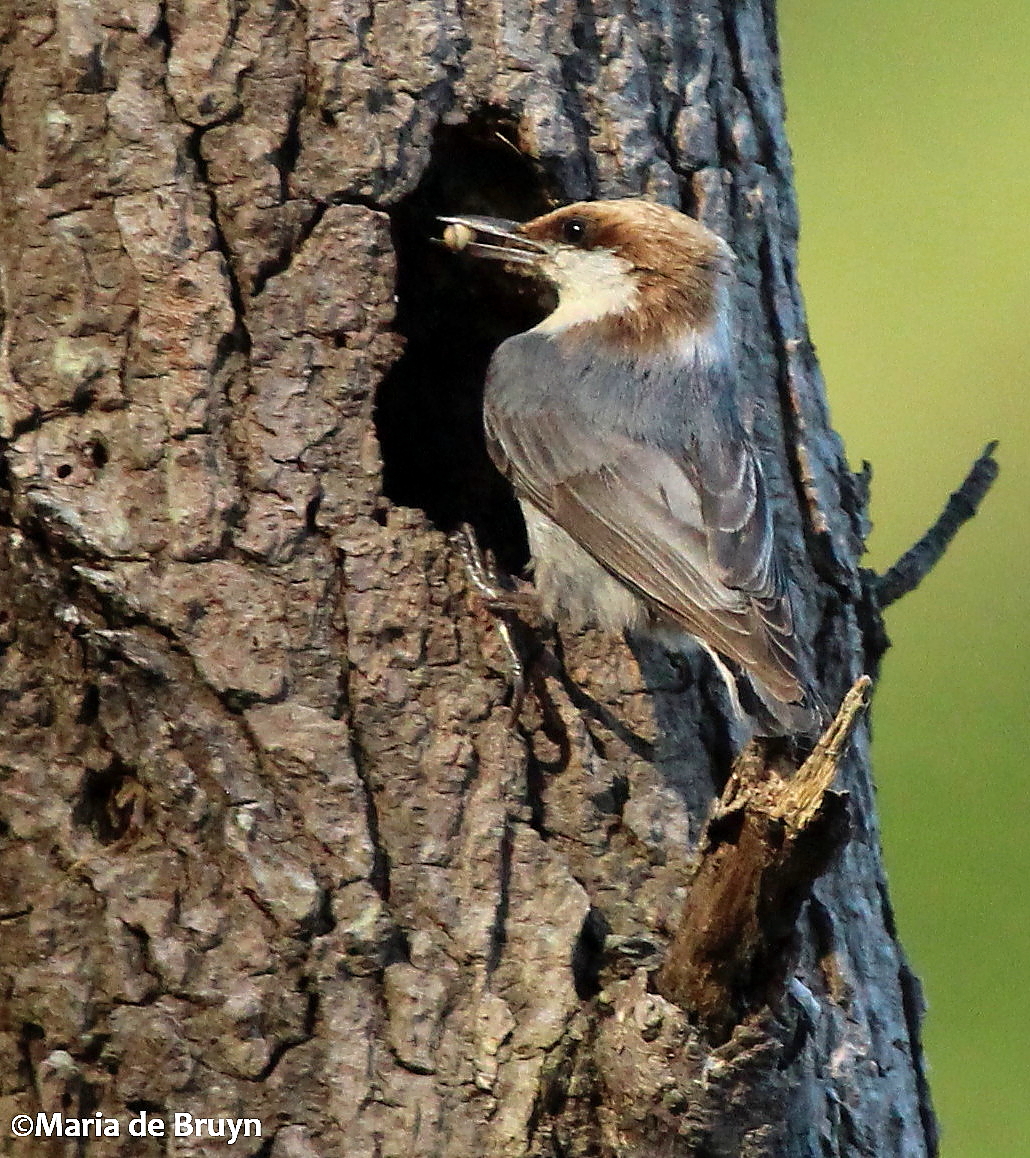
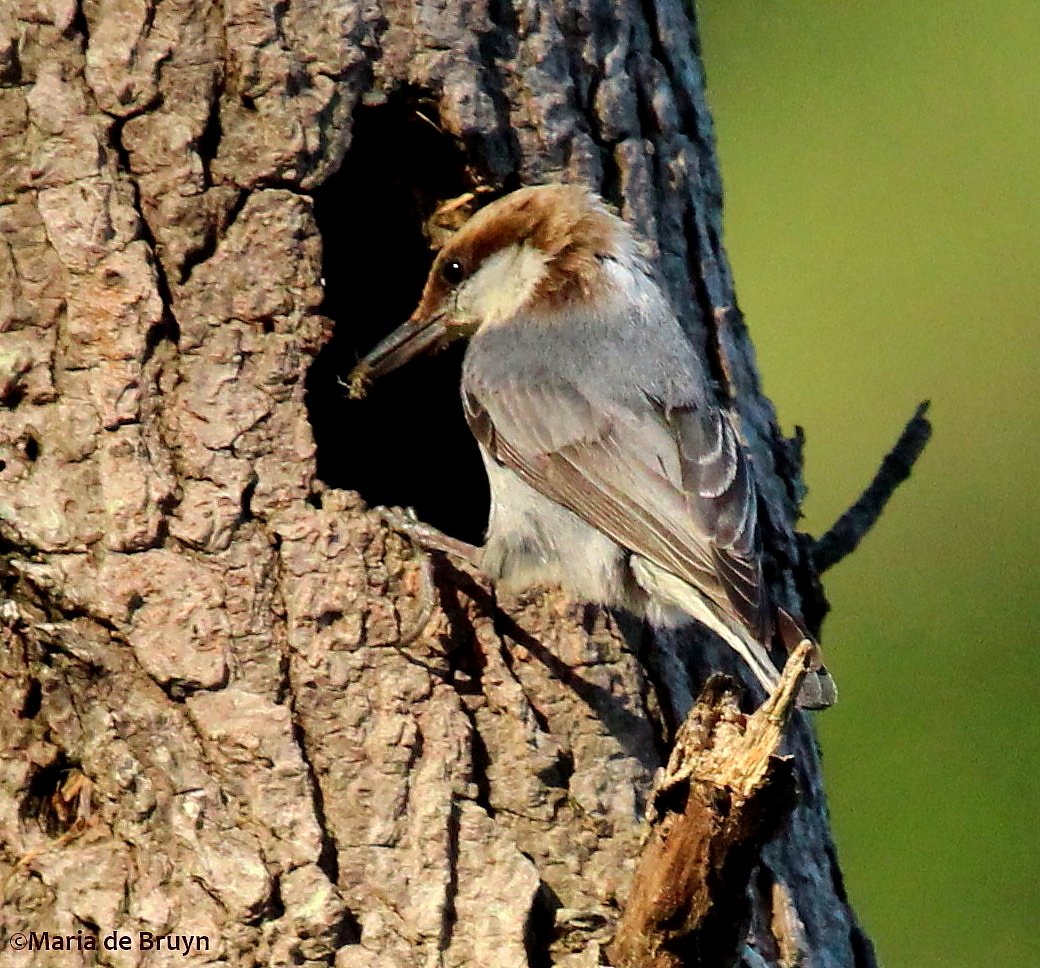
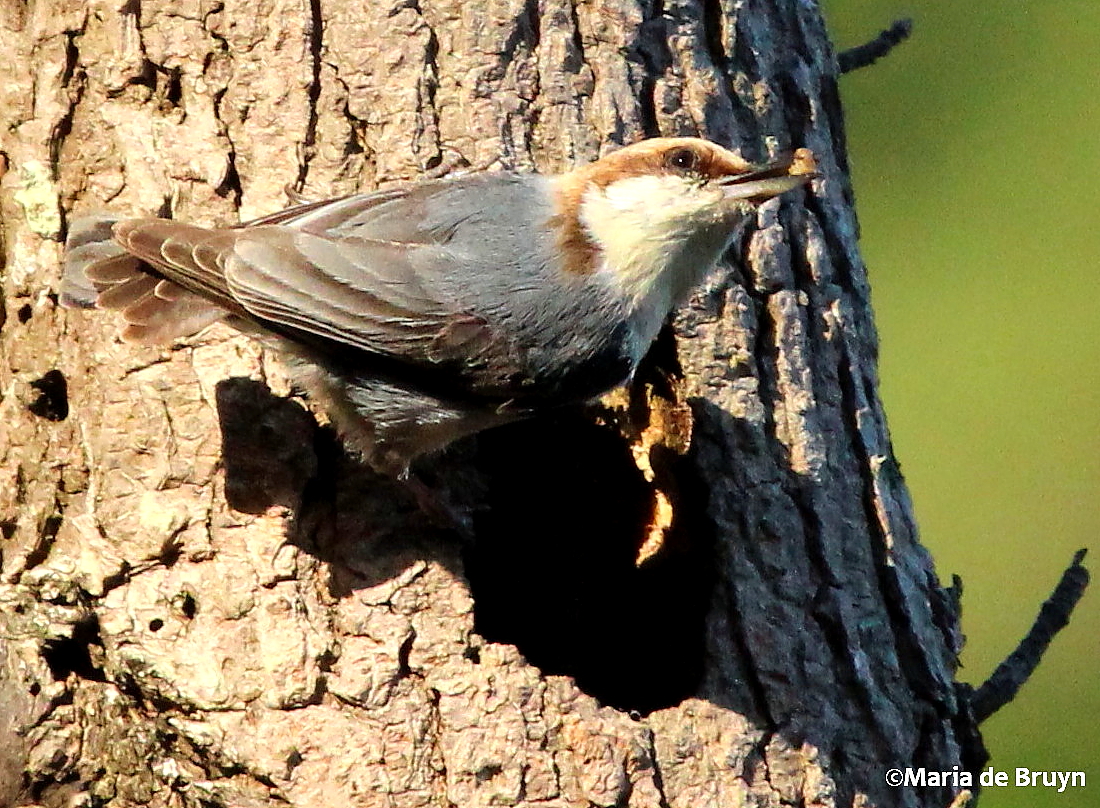
Occasionally, though, they would alight right by the hole or work their way upwards from a little further down the tree trunk. They seemed very concentrated on their task but I learned that they were definitely keeping an eye on me because when I took up a position a bit closer to the tree for some better shots, they just hopped about in other trees waiting for me to step back again. Which I did, of course.
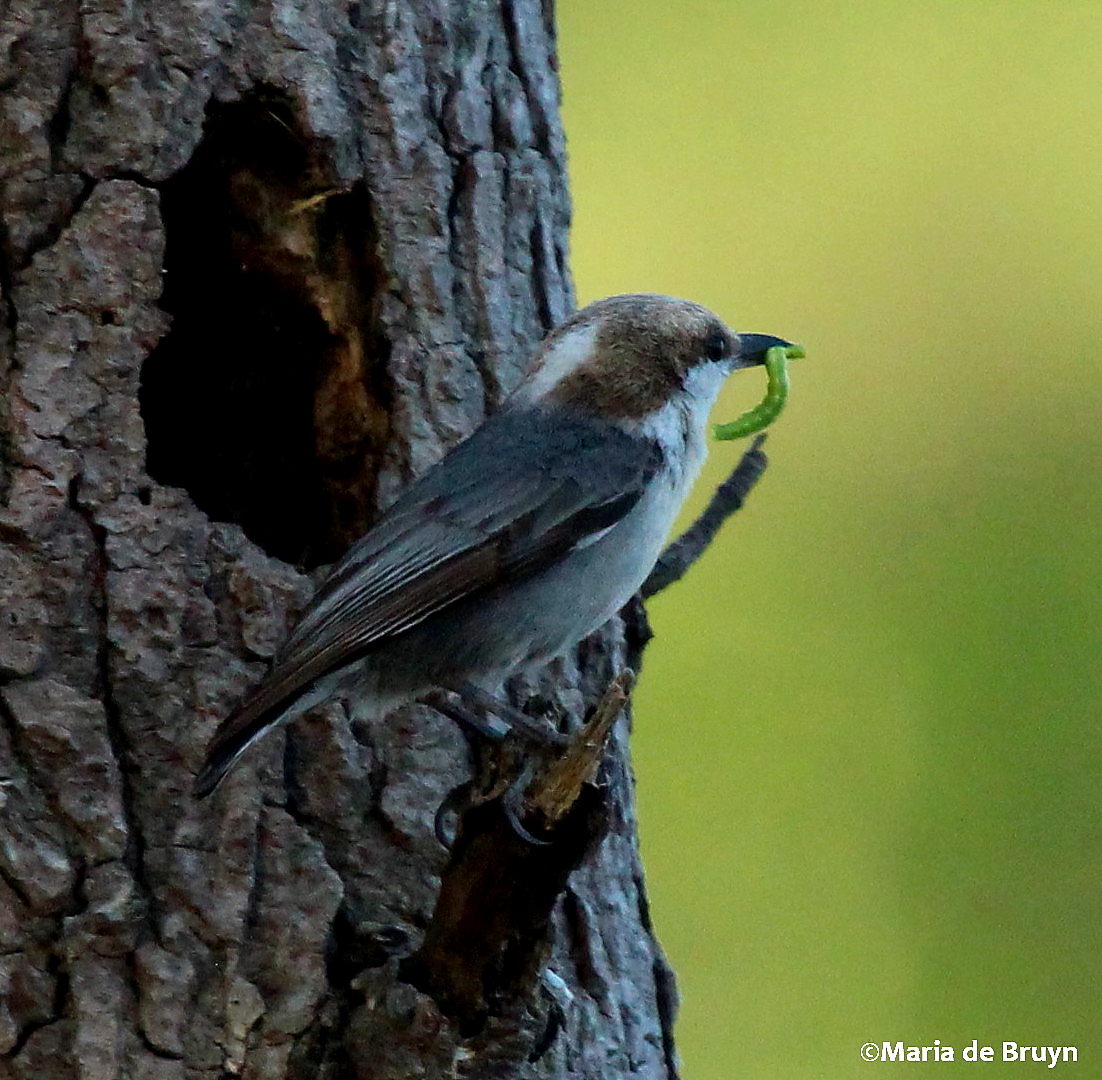
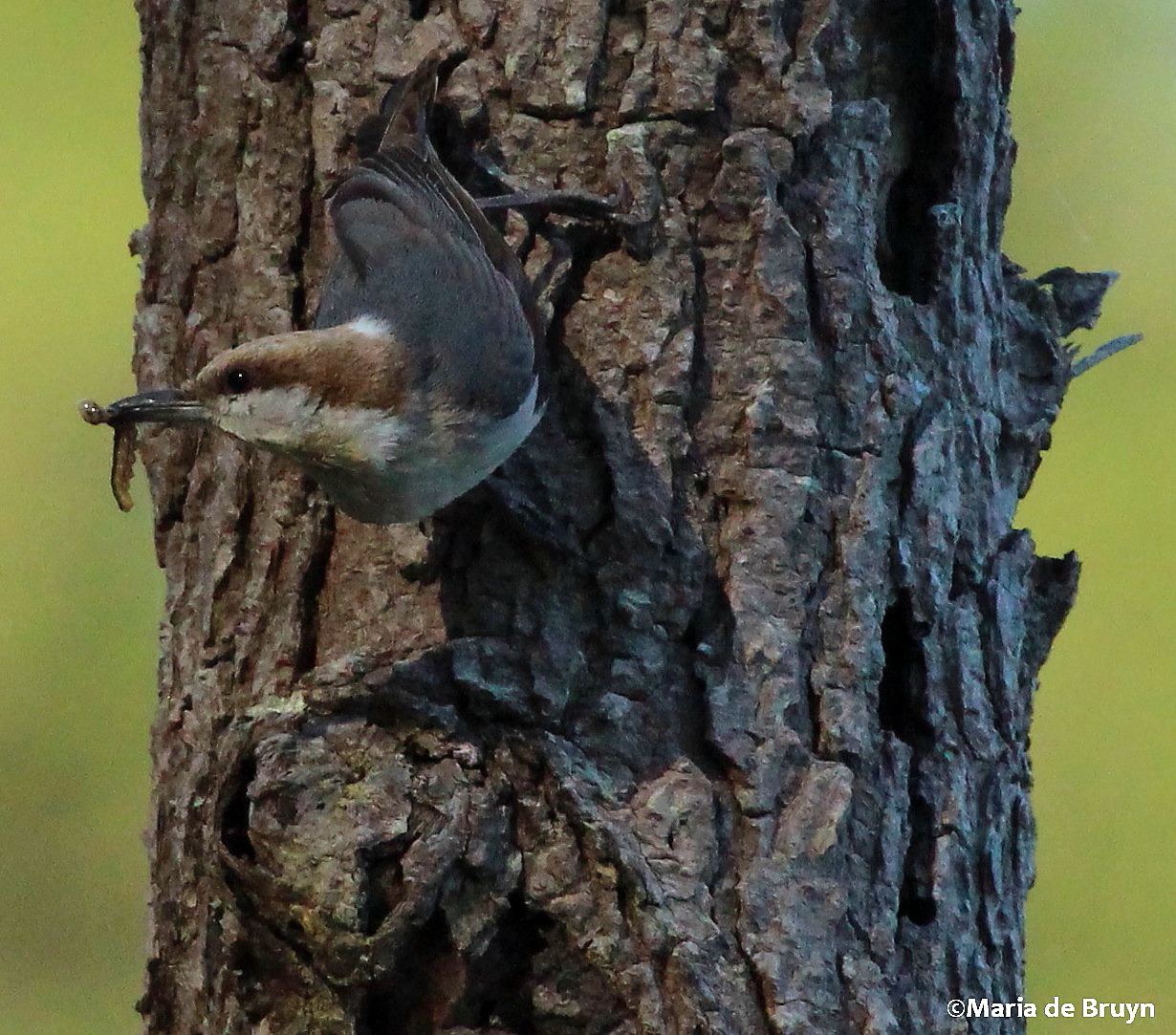
Though I didn’t witness it, these small birds are tool-users, sometimes using a piece of bark to pry up tree bark in search of insects; they may even carry the tool with them. They certainly were bringing their babies varied meals, including moth caterpillars and insects of various kinds.
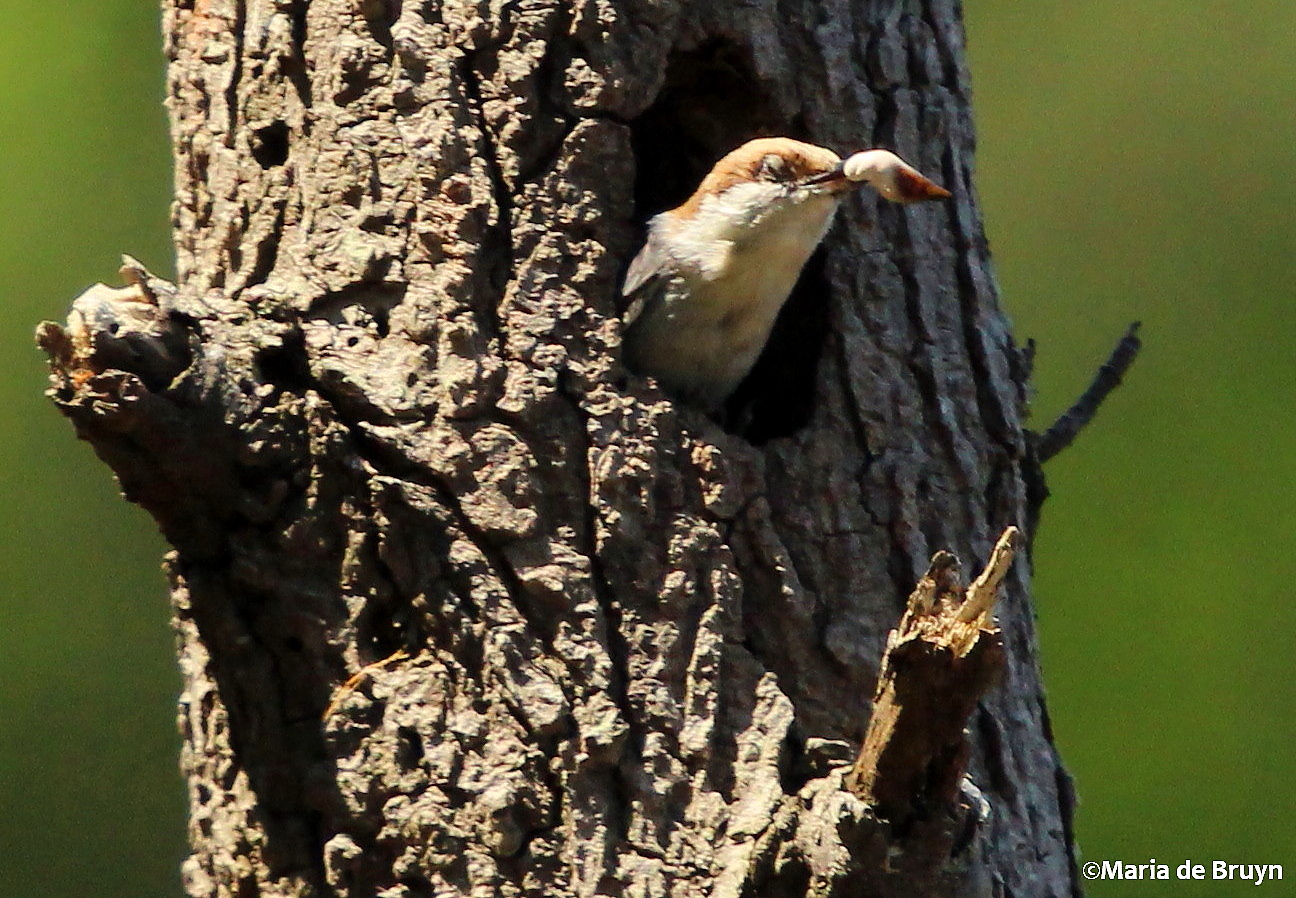 These parents were fastidious, too, removing fecal sacs from the nest with some regularity. I had hoped to see these birds in action when using a nuthatch box I put up in my yard, but a pair of Carolina chickadees (Poecile carolinensis) are currently raising a brood there.
The nestlings fledge after about 18 days so I may be too late to see anything when I return sometime this coming week, but it sure would be cool to see them leave the nest!
So, you may ask – what happened to the blog on springtime creatures I announced last time? Well, the various birds species are working so hard and demonstrating their parenting skills so nicely right now, I decided to focus on that for a little while! Next time – those squatter Chickadees in my yard!


 My beautiful world