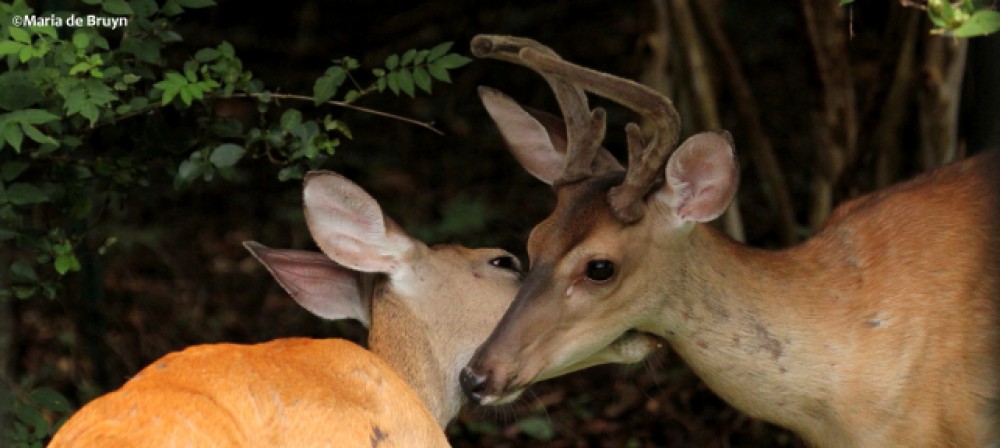
Flying rays of sunshine, spirits on the wing – part 2

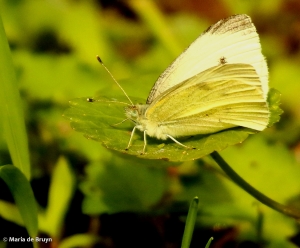
Cabbage white butterfly DK7A2287© Maria de Bruyn resWhen a butterfly like the cabbage white (Pieris rapae) alights on a flower or leaf, we sometimes have a little time to see them more clearly and appreciate their beauty; capturing a photo for leisurely viewing gives us the chance to focus on details. And those details are important if we want to determine their correct scientific names since entomologists have differentiated many species and sub-species, sometimes on the basis of factors such as the shape of their spots.

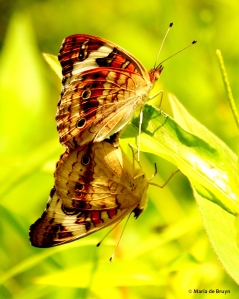
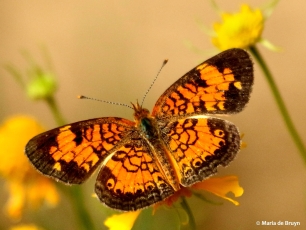
One butterfly pair that can be puzzling are the silvery checkerspot (Chlosyne nycteis, top), with a small white center to one of its spots in the lower row, and the pearl crescent (Phyciodes tharos), which was abundant this year.
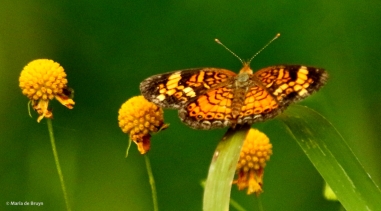
silvery checkerspot DK7A1405© Maria de Bruyn res

pearl crescent DK7A1469© Maria de Bruyn res pearl crescent DK7A4689© Maria de Bruyn res

The Eastern comma (Polygonia comma) and question mark (Polygonia interrogationis) look really similar, too. Perhaps the difference in their distinguishing underside marking is really apparent to proofreaders.
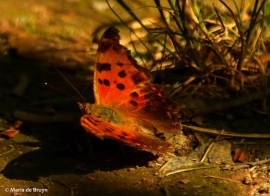
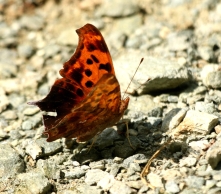
Eastern comma DK7A5636© Maria de Bruyn resQuestion mark DK7A3181© Maria de Bruyn res

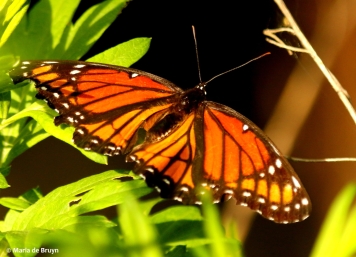
The easiest way to distinguish the endangered monarch (Danaus plexippus) and the viceroy (Limenitis archippus) is that the viceroy has a black stripe running horizontally across its lower wings.
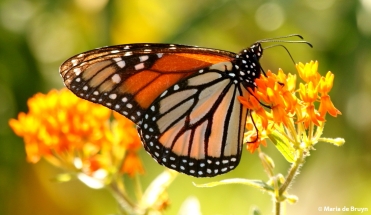
monarch DK7A7941© Maria de Bruyn res

viceroy DK7A5128© Maria de Bruyn res

Eastern tiger swallowtail DK7A2096© Maria de Bruyn res

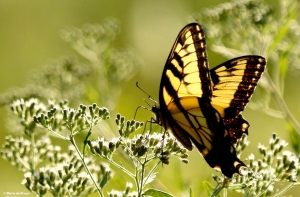
The swallowtails are always a favorite, including the Eastern tiger swallowtail (Papilio glaucus) with differently colored males (yellow) and females (yellow and also blue).

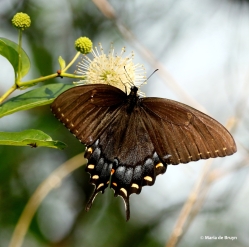
 

Eastern tiger swallowtail DK7A7768© Maria de Bruyn res Eastern tiger swallowtail DK7A0256© Maria de Bruyn res

Zebra swallowtail DK7A0046© Maria de Bruyn res

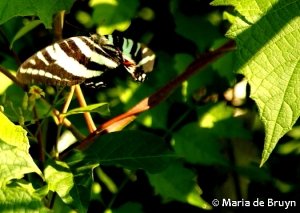
The zebra swallowtail (Protographium marcellus) really catches your eye as it flutters about, while the pipevine swallowtail (Battus philenor) is a little more subdued.
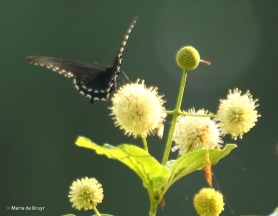
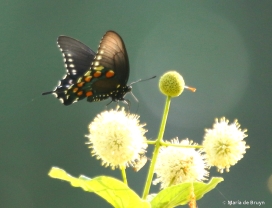
 

Pipevine swallowtail DK7A9681© Maria de Bruyn res Pipevine swallowtail DK7A9691© Maria de Bruyn

The red spotted purples (Limenitis arthemis) come in different variations; this one enjoyed the hummingbird nectar this summer.
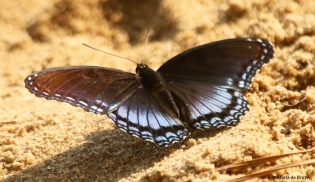
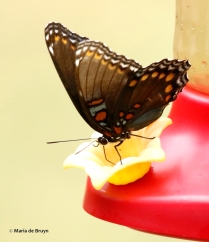
Red-spotted purple DK7A0518© Maria de Bruyn res Red-spotted purple DK7A0998© Maria de Bruyn res

Another new butterfly for me this year was the great spangled fritillary (Speyeria cybele), which I enjoyed seeing as they enjoyed common milkweed (Asclepias syriaca) at the Horton Grove Nature Reserve.
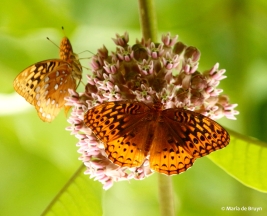
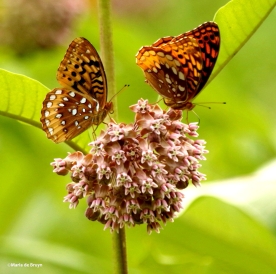
great spangled fritillary DK7A5377© Maria de Bruyn res Great spangled fritillary DK7A5052© Maria de Bruyn res

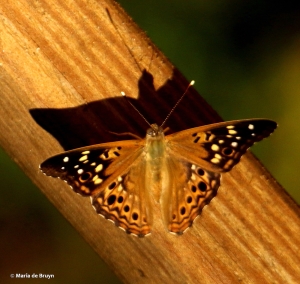
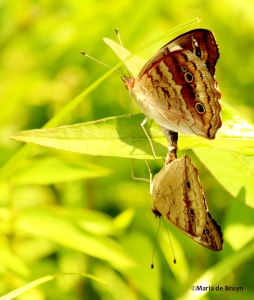
Hackberry emperor DK7A6150© Maria de Bruyn resThe hackberry emperor (Asterocampa celtis) turned up at Jordan Lake, while the common buckeye (Junonia coenia) – whose beauty is anything but common! – was in my yard and various nature reserves. I also observed a pair getting ready to propagate the next generation.
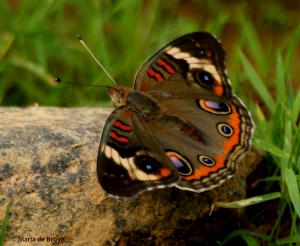
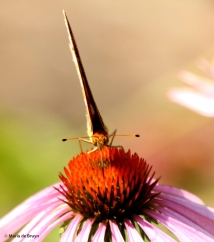


common buckeye DK7A1181© Maria de Bruyn common buckeye DK7A8729© Maria de Bruyn res common buckeye IMG_9470© Maria de Bruyn res common buckeye IMG_9538© Maria de Bruyn res

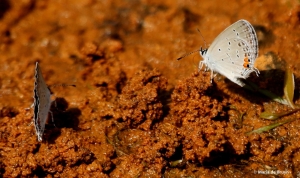
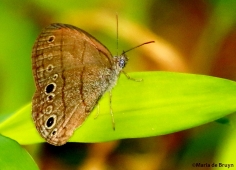
Some of the tinier butterflies are delicate beauties, like the Summer azure (Celastrina neglecta), the gray hairstreak – which can look brown (Strymon melinus), the Eastern tailed-blue (Cupido comyntas) and the Carolina satyr (Hermeuptychia sosybius).
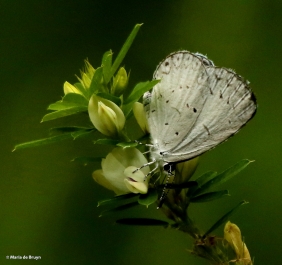
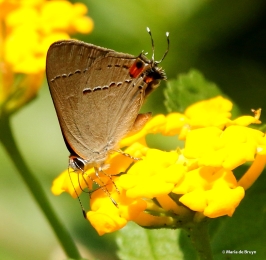
Summer azure DK7A5424© Maria de BruynGray hairstreak DK7A4495© Maria de Bruyn

Eastern tailed-blue DK7A1141© Maria de Bruyn resCarolina Satyr DK7A5279 © Maria de Bruyn res2

To end, here are two more beauties that I had the privilege to see this year. I hope  seeing these butterflies and those in my previous blog brightened your day, especially if you have been dealing with sorrow as I have while this year approaches its end.
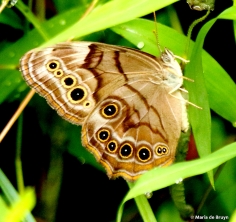
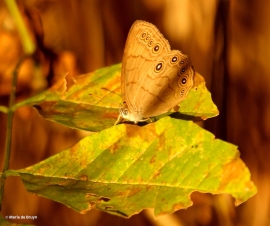
Southern pearly eye DK7A9953© Maria de Bruyn resNorthern pearly-eye DK7A7752©Maria de Bruyn res

Southern pearly eye (Lethe portlandia) and Northern pearly-eye (Enodia anthedon)


Flying rays of sunshine, spirits on the wing – part 1

Fiery and dun skippers IMG_7262© Maria de Bruyn resIt is now early December and late autumn in the Northern hemisphere, so why a blog about butterflies? When I was writing this on the last day of November, I had still seen a few of these beauties a couple days previously, and in the Southern hemisphere it is late spring, so it seems fine as a topic for a nature blog. Also, three weeks ago, my mother passed away, while in two weeks the anniversary of my father’s death comes again — I like to think of butterflies as nature’s emissaries for spirits on the wing. They allow me to think of my parents in somewhat lighter terms than the sadness that predominated during their dying processes. Because there are so many butterflies to highlight, this will be a two-part blog.

This past spring, summer and fall gifted me with a large variety of butterflies – a boon compared to last year when there seemed to be a dearth of them. I had some new butterflies to my garden, like the tawny emperor (Asterocampa clyton clyton), which I also saw at the Mason Farm Biological Reserve when one landed on my arm.

Tawny emperor DK7A2536© Maria de Bruyn resTawny emperor IMG_4926© Maria de Bruyn (2)

juniper hairstreak DK7A1677© Maria de BruynThe juniper hairstreak (Callophrys gryneus) was another new visitor that at first made me think it was covered in pollen.

A second-time visitor to my yard was the American snout (Libytheana carinenta), which looks quite distinctive with the long protrusion from its face.

American snout butterfly IMG_0257© Maria de Bruyn res

It was a good year for the little skipper butterflies, of which there are many. Quite a few look similar to one another and pose difficulties in identification; fortunately, BugGuide helps me figure out which ones I have been seeing.


Common checkered skipper DK7A8473©Maria de BruynCommon checkered skipper DK7A8483©Maria de Bruyn

Common checkered skipper (Pyrgus communis)

silver-spotted skipper IMG_0885© Maria de Bruyn Fiery skipper DK7A3463© Maria de Bruyn

Silver-spotted skipper (Epargyreus clarus) & Fiery skipper (Hylephila phyleus)

Zabulon skipper female DK7A8091© Maria de Bruyn Zabulon skipper DK7A2945© Maria de Bruyn res

Zabulon skipper (Poanes zabulon), female on the left and male on the right

sachem skipper DK7A6355© Maria de BruynSachem skipper male DK7A7657©Maria de Bruyn res Sachem skipper DK7A1271© Maria de Bruyn bg

The Sachem skipper (Atalopedes campestris) also illustrates how males (top) and females can differ.

A few skippers were new for me this year, like the little glassywing skipper (Pompeius verna) and the somewhat drabber dun skipper (Euphyes vestris) and Ocola skipper (Panoquina ocola).

Little glassywing skipper DK7A2843© Maria de Bruyn  Dun skipper DK7A3364© Maria de BruynOcola skipper IMG_4247©Maria de Bruyn

Even though dark in color, the Horace’s duskywing (Erynnis horatius) and the Juvenal’s duskywing (Erynnis juvenalis) have beautiful dorsal patterns.

Horace's duskywing DK7A3695© Maria de Bruyn

Juvenal's duskywing DK7A9907© Maria de Bruyn res

It’s always fascinating to see how different the butterflies’ color patterns can be on the upper and undersides of their wings, as shown here by the American lady (Vanessa virginiensis).

American Lady DK7A2242© Maria de Bruyn res American Lady DK7A2292© Maria de Bruyn res

The red admiral (Vanessa atalanta) is a gorgeous butterfly; a somewhat tattered individual rode along on me and my camera for a while at Mason Farm.

Red Admiral DK7A6667©Maria de Bruyn (2) res

red admiral IMG_4769© Maria de Bruyn red admiral IMG_4767© Maria de Bruyn res

A group that can sometimes be challenging to identify are the sulphurs. Distinguishing the sleepy orange (Abaeis nicippe, top) and the orange sulphur (Colias eurytheme) is no easy task. Both are quite lovely and a delight in flight when they reveal their brightly colored dorsal pattern.
Sleepy orange DK7A8367© Maria de Bruyn Sleepy orange DK7A8263© Maria de Bruyn

Orange sulphur DK7A0410© Maria de Bruyn resOrange sulphur DK7A0476© Maria de Bruyn res

Cloudless sulphur DK7A2774© Maria de Bruyn res

The larger yellow butterflies like the cloudless sulphur (Phoebis sennae) are great to see, especially when they frequent the brightly colored blooms such as the red cardinal flower (Lobelia cardinalis).
cloudless sulphur DK7A8466©Maria de Bruyn resCloudless sulphur DK7A0063© Maria de Bruyn res

Clouded sulphur DK7A0269© Maria de Bruyn

The clouded sulphur (Colias philodice) may be a bit harder to see when it feeds on clover in the grass.

Stay tuned for more butterflies to admire in part 2 of this blog!


Hummers haranguing – feistiness in small packages!

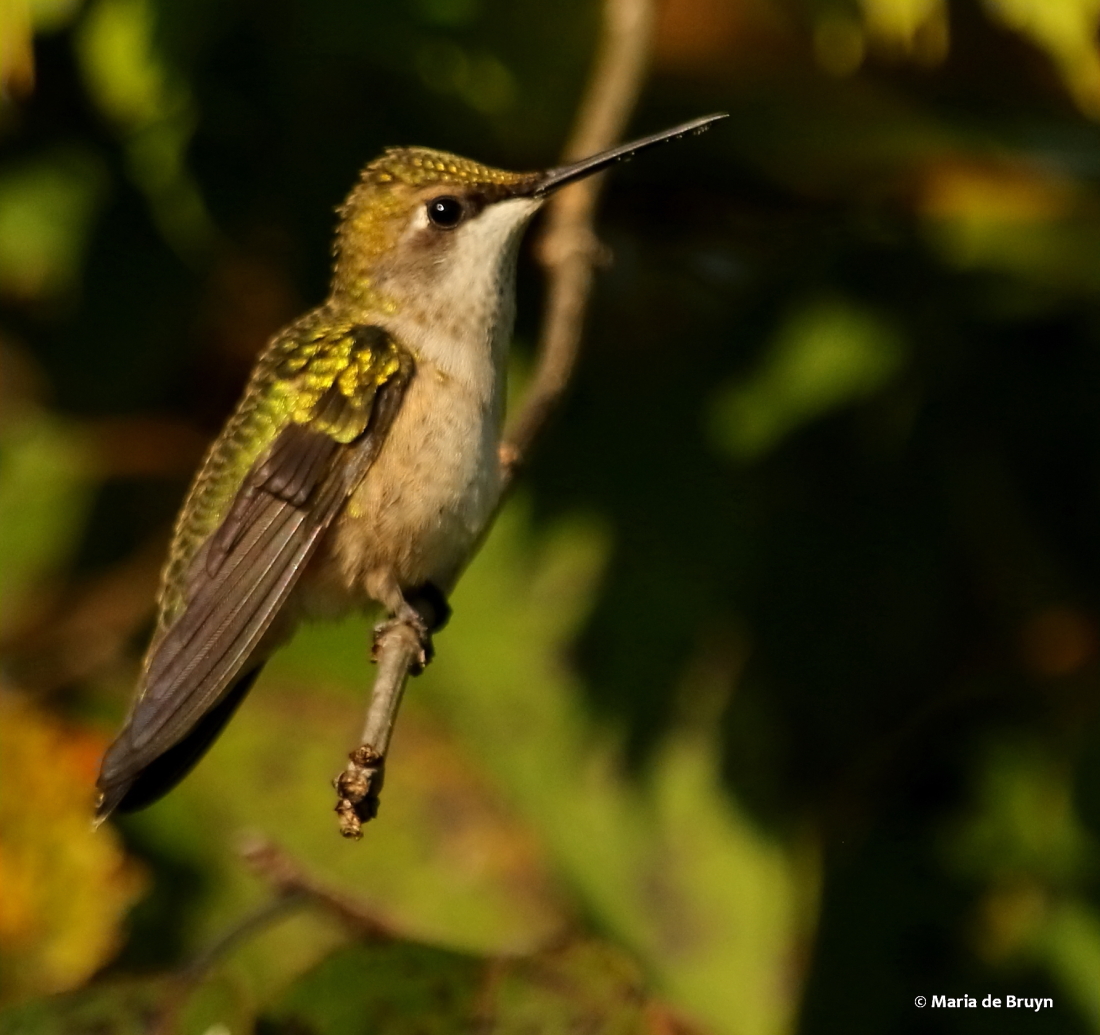
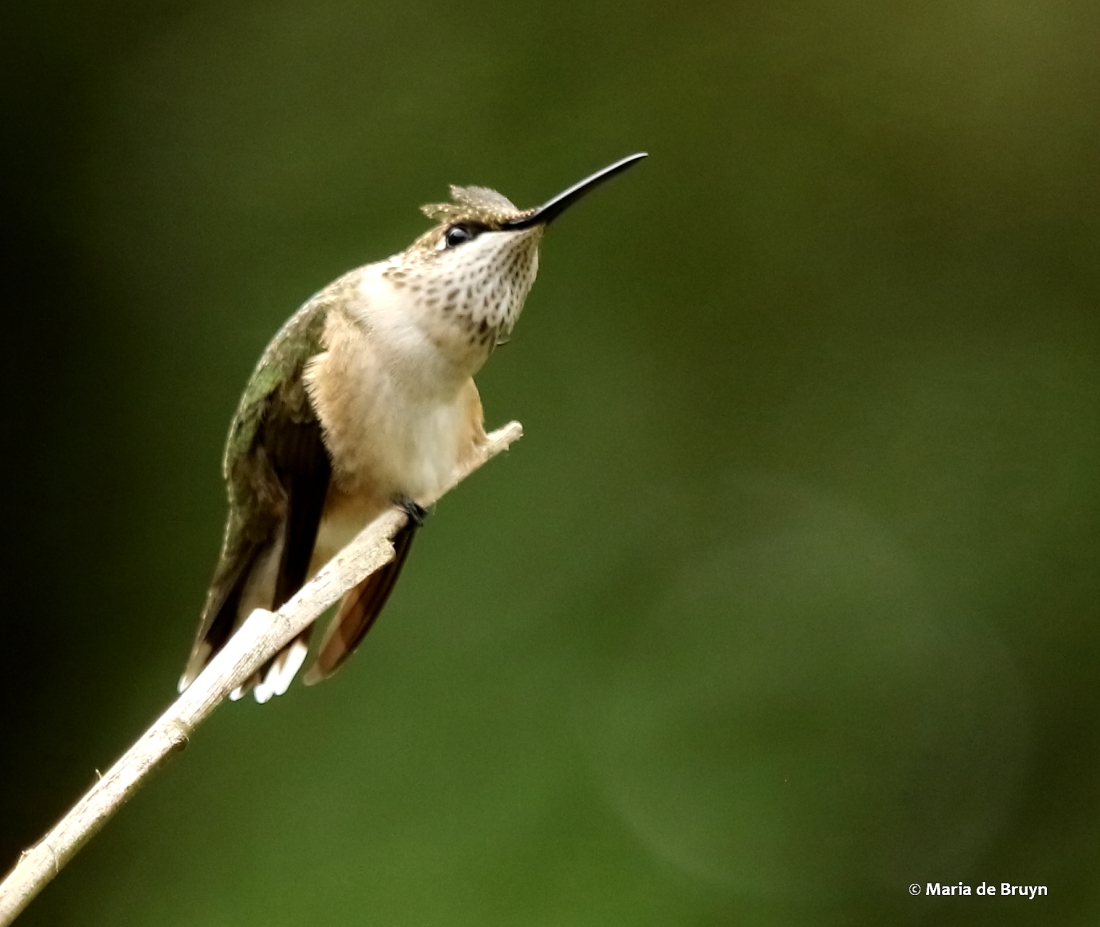
ruby-throated hummingbird DK7A0498© Maria de Bruyn (2) resAt times, we may see on Facebook or the Internet a photo or video of hummingbird nectar feeders surrounded by at least 6 and sometimes dozens of these small birds, sharing space as they take turns at imbibing some of the sweet water. Here in my part of North Carolina, however, it seems that the ruby-throated hummingbirds (Archilochus colubris) are just NOT interested in having their territory host family members or neighbors. This species is known for being territorial and those in my vicinity live up to that reputation for sure.

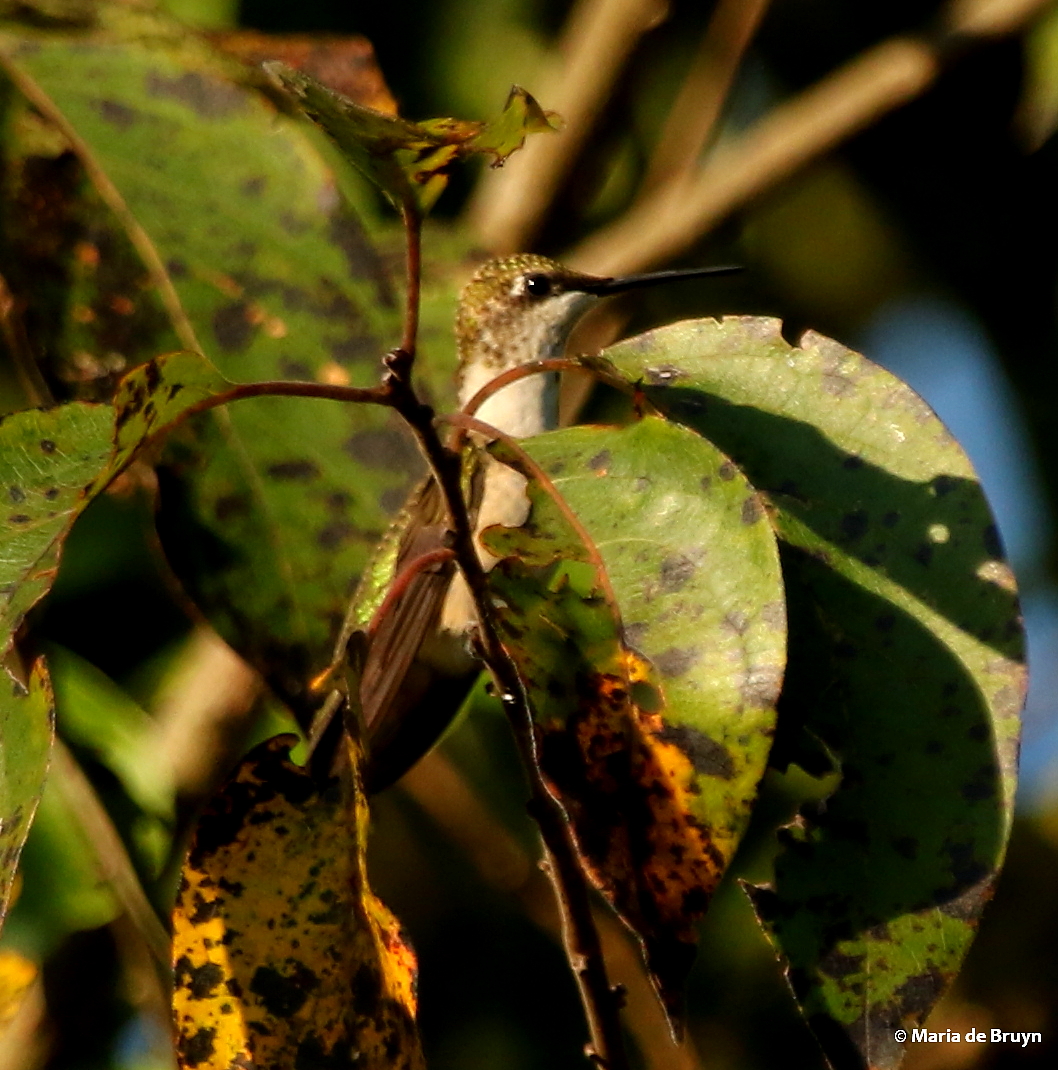
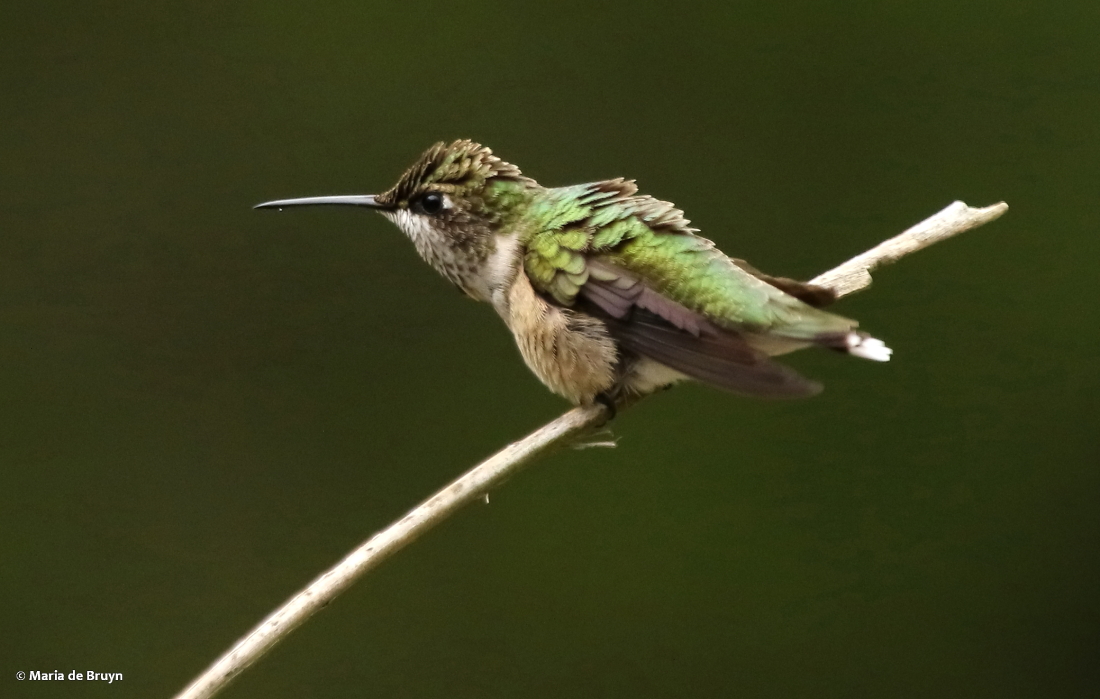
Both at home and in nature reserves, I’ve watched these tiny birds stake out a claim to a feeder or some choice blooms. They drink a little and then will take up a post on a vantage point where they can keep an eye out for other birds. Occasionally, the waiting spot is out in the open and often it is in a nearby shrub or tree.

ruby-throated hummingbird DK7A2402© Maria de Bruyn res ruby-throated hummingbird DK7A2298© Maria de Bruyn

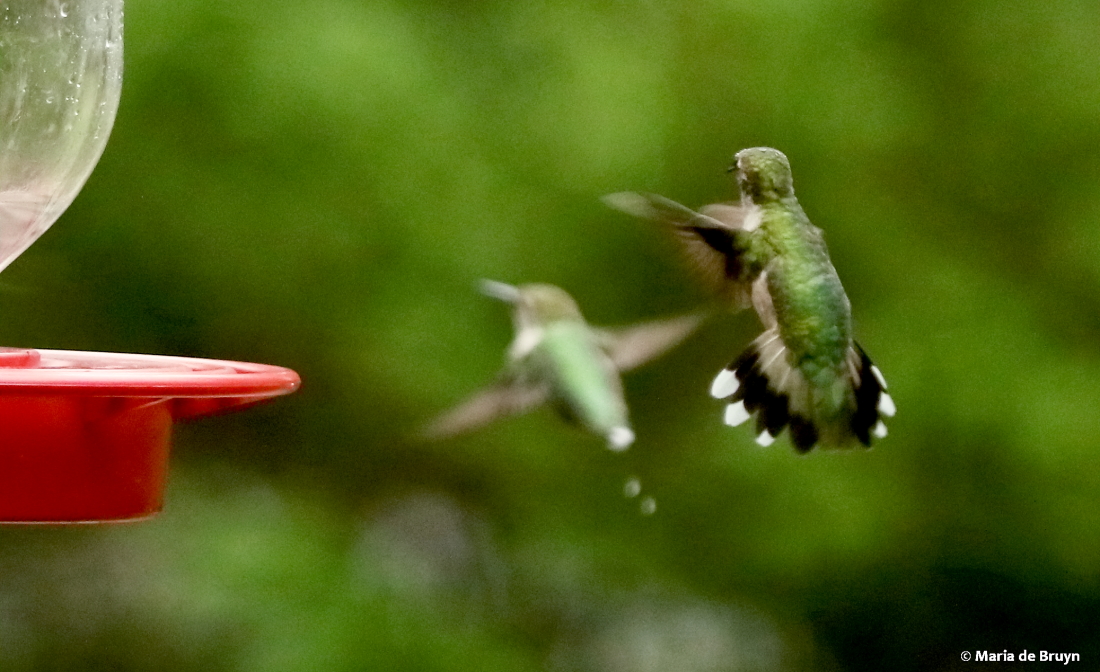
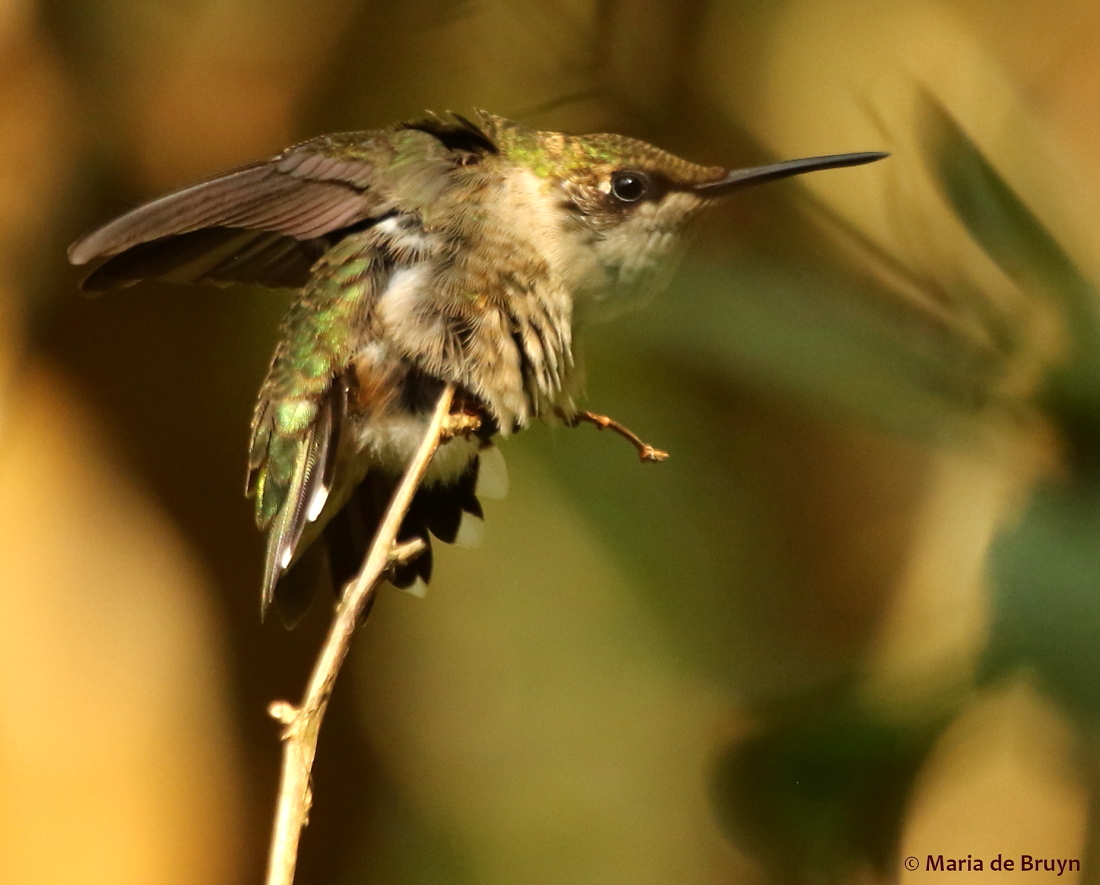
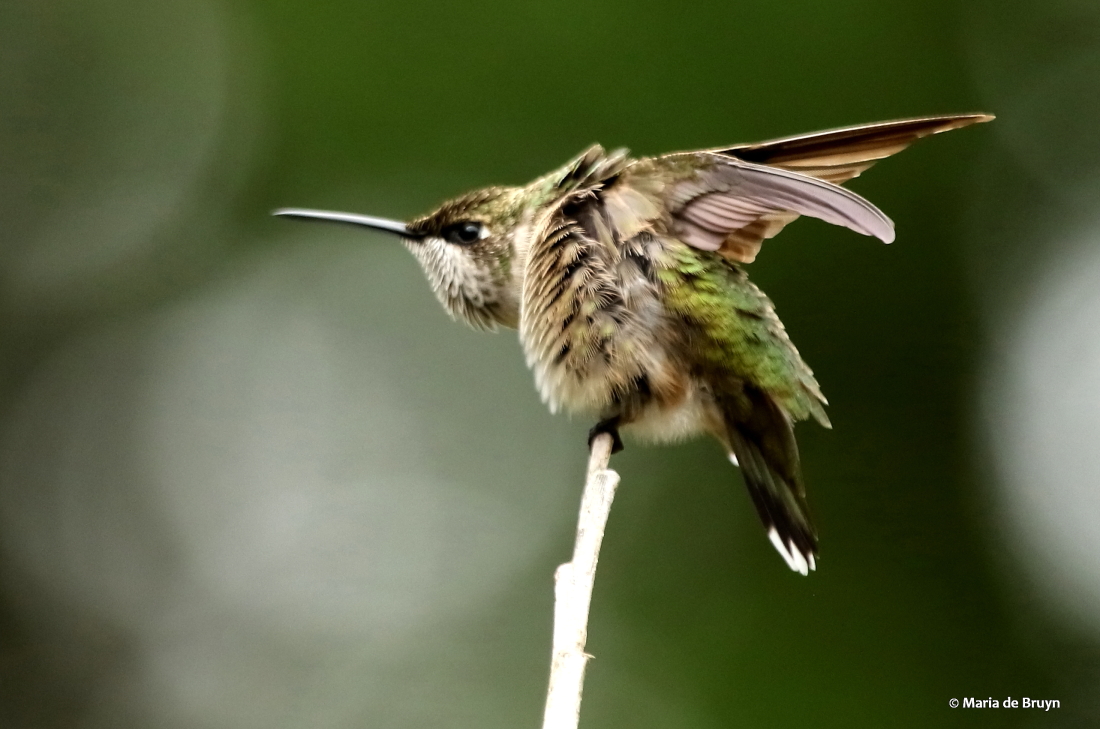
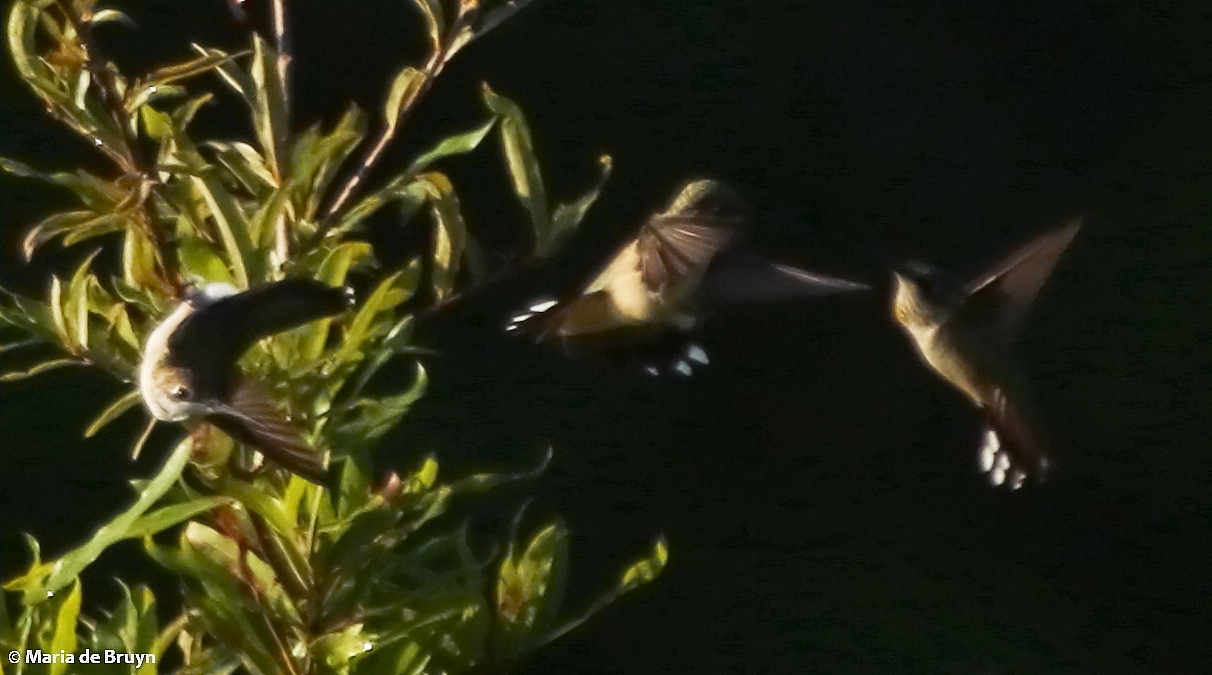
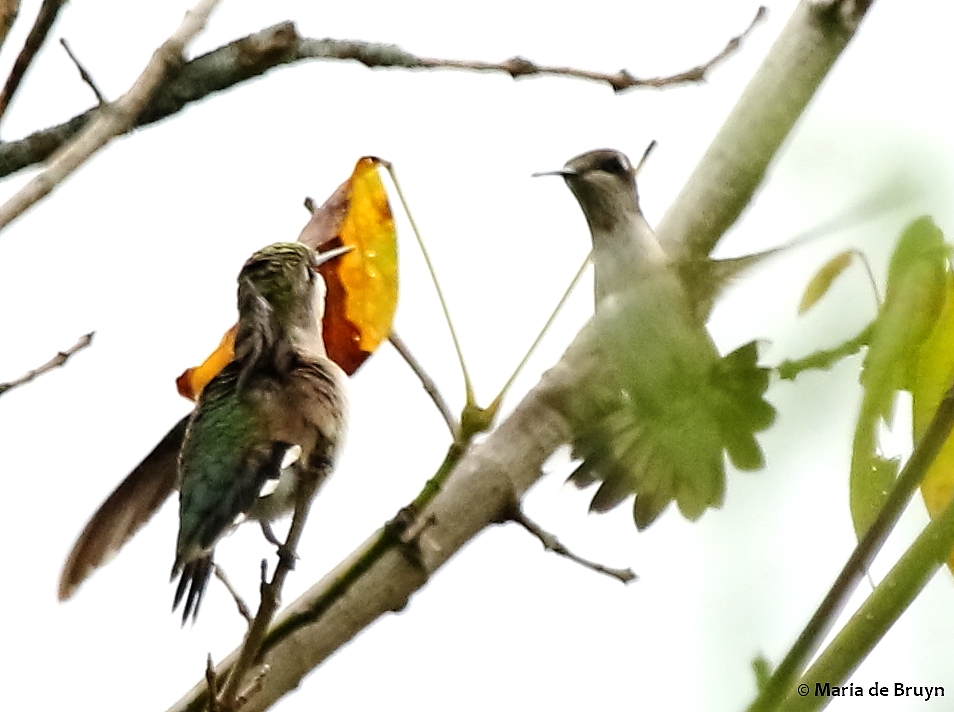
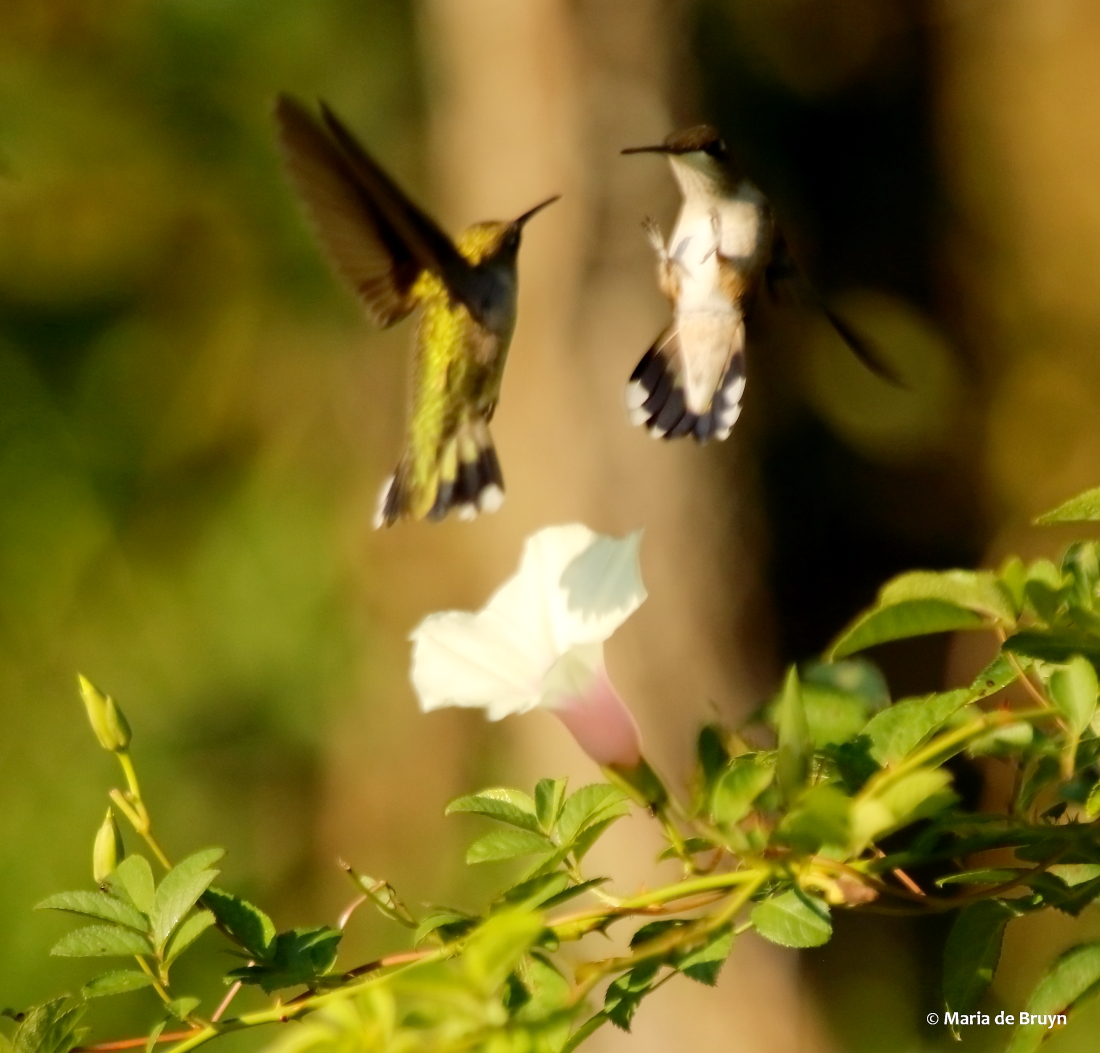
When they spot a rival approaching the food source, they may either immediately give chase or first engage in a threat display.

ruby-throated hummingbird DK7A2376© Maria de Bruyn resruby-throated hummingbird DK7A1568© Maria de Bruyn res

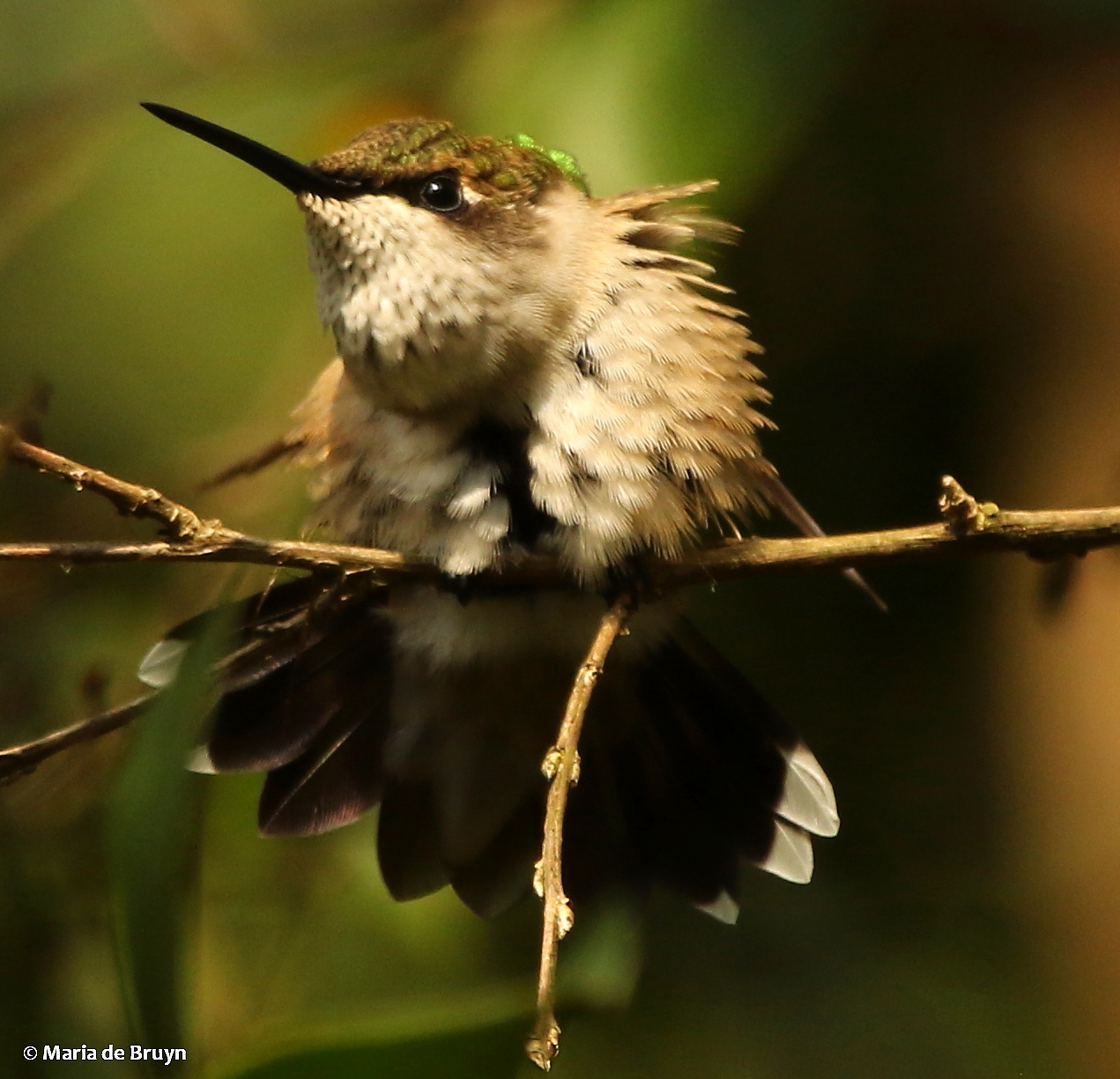
Their displays include both posturing and sound. To warn off other birds, they may chirp both quickly and loudly. Their threat postures aim to frighten away intruders by displaying size and strength and include pointing their long bills at the other bird(s), puffing up their throats, spreading and raising their wings, and flaring their tail feathers, .

ruby-throated hummingbird DK7A0712© Maria de Bruyn resruby-throated hummingbird DK7A0492© Maria de Bruyn res


ruby-throated hummingbird DK7A7307© Maria de Bruyn resruby-throated hummingbird DK7A0499© Maria de Bruyn res

ruby-throated hummingbird DK7A7353© Maria de Bruyn resruby-throated hummingbird DK7A7928© Maria de Bruyn

ruby-throated hummingbird DK7A2247© Maria de Bruyn resThey don’t really use their bills to battle as they need to protect this body part but they can fly into each other. On one occasion, in my front yard, I heard a loud thump when the two birds actually collided during a high-speed chase.

The drive to protect territory is not for lack of food. My yard has three nectar feeders out back and one in the front and three of them have at least four feeding holes. This year, a brightly colored male laid claim to the yard while the female was caring for her brood. When the female and young birds began coming to the feeders, “Red” was not pleased. Later, the young males also vied with one another.

ruby-throated hummingbird DK7A1562© Maria de Bruyn res

Chittering loudly, they sweep in to make the other birds take off; occasionally they do get a chance to have a short drink before another hummer shows up. At my house, the birds can feed because they have to patrol both the front and back yards and can’t be in two places at once.

ruby-throated hummingbird IMG_0379© Maria de Bruynruby-throated hummingbird DK7A0866© Maria de Bruyn res

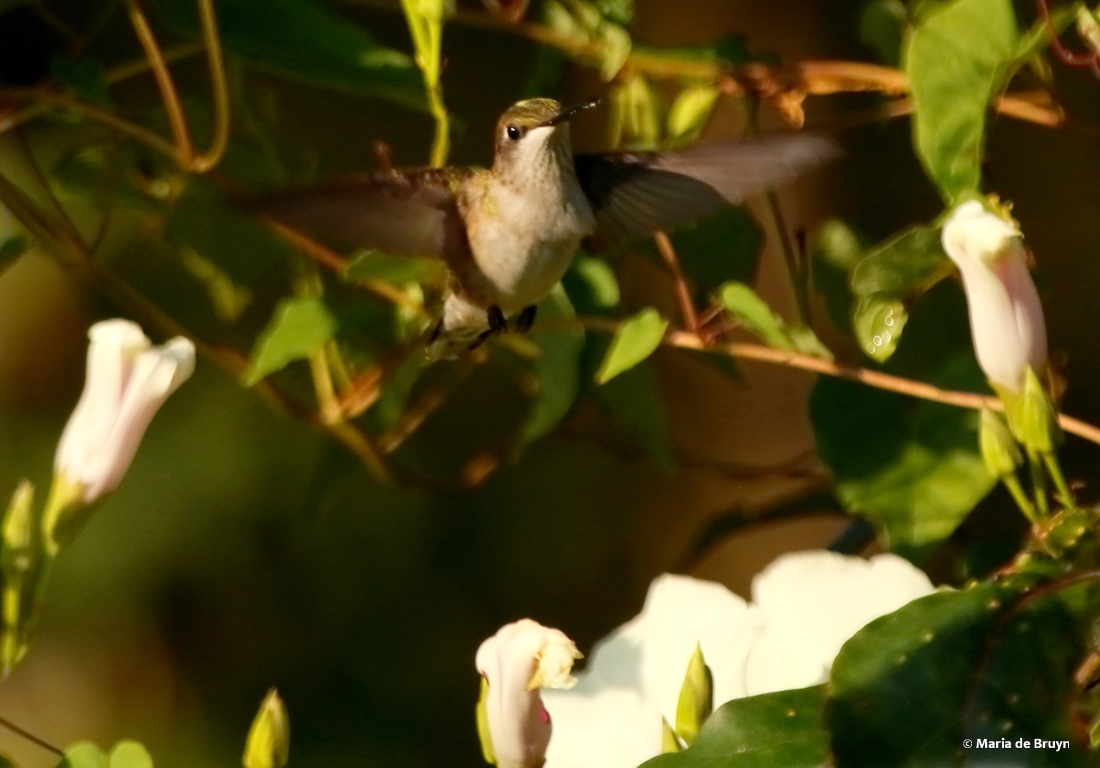
I witnessed a similar scenario at the Mason Farm Biological Reserve. There was a spot with plenty of blooming trumpet vines (Campsis radicans) and morning glories (Ipomoea pandurata), which were attracting a variety of pollinators. Three hummingbirds were also visiting and, again, chasing one another from the site as soon as they caught sight of their rivals.

ruby-throated hummingbird DK7A2117© Maria de Bruyn

ruby-throated hummingbird DK7A2116© Maria de Bruyn

In an area near the Haw River where many wildflowers bloom, a similar scenario took place.

ruby-throated hummingbird DK7A9401© Maria de Bruynruby-throated hummingbird DK7A9403© Maria de Bruyn

This is the time of year when the ruby-throated hummingbirds undertake their migration to Central America, a distance of at least 1000 miles. They need to store energy for this and may double their body mass while feeding during the preparatory phase. However, it seems to me that chasing away other birds from their preferred feeding sites must take an enormous amount of energy and it seems to be an endless activity. In my yard, it goes on all day long!

ruby-throated hummingbird DK7A1828© Maria de Bruyn resThese birds’ flight muscles take up 25% of their weight; when they rest, their hearts beat at a rate of 250 beats per minute but during flight, their hearts speed up to 1220, so the zipping back and forth and up and down in hot pursuits must use lots of calories and energy. They also may hover mid-air for a while rather than sitting on an outpost twig; the other day, one of Red’s rivals spent a quarter minute suspended about 18 inches from my face, looking me over until Red dive-bombed him.

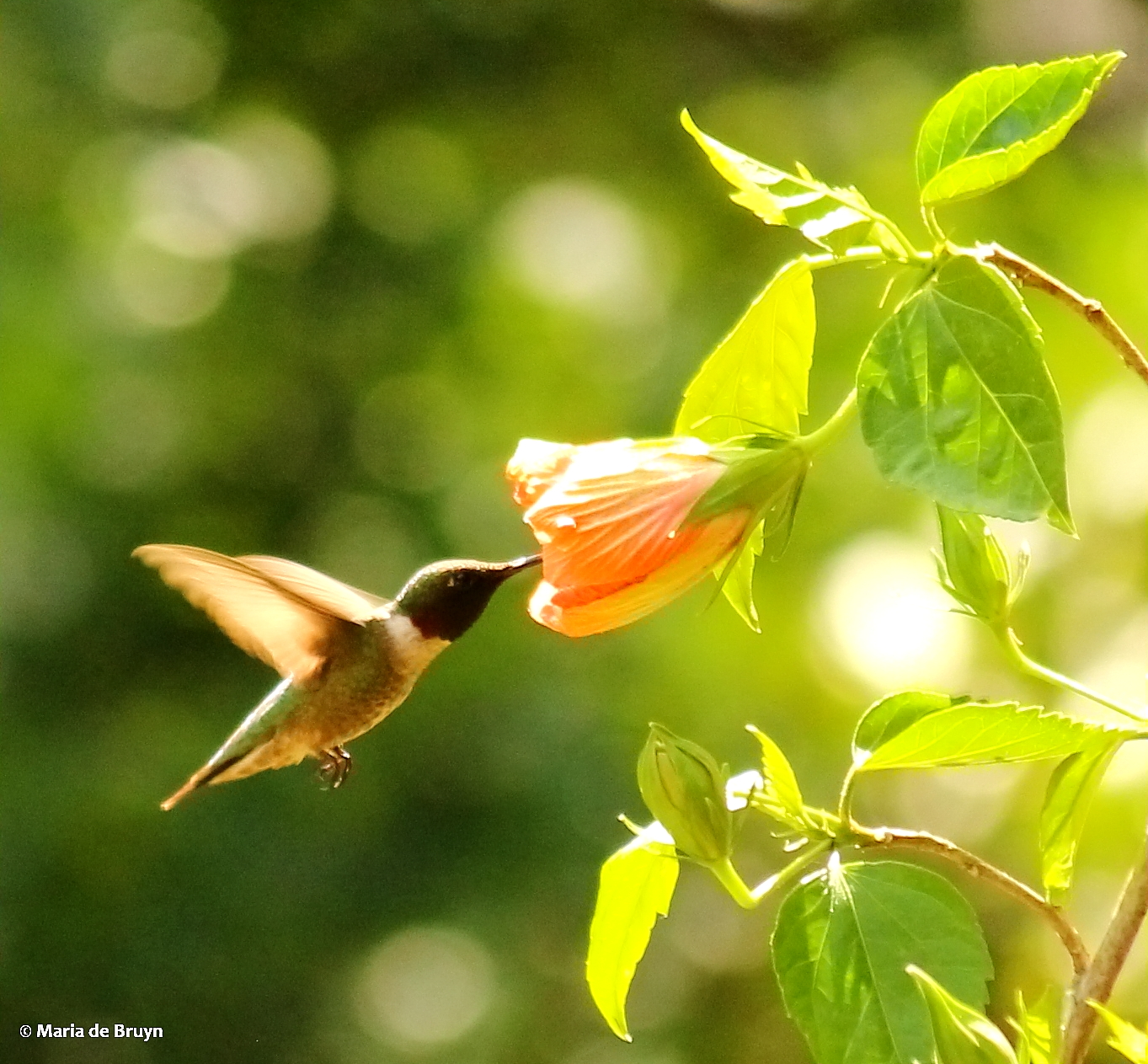
ruby-throated hummingbird DK7A2213© Maria de Bruyn resThis summer I’ve been lucky to see the hummers in several places, including Sandy Creek Park, near the Haw River and a farm cultivated by refugees from Myanmar. In all cases, the birds appeared unwilling to share their dining areas. Once in a while, though, one would have the space to him- or herself for a while and I could watch them feed, afterwards flicking out their long tongues.


ruby-throated hummingbird DK7A7940© Maria de Bruyn resruby-throated hummingbird DK7A0181© Maria de Bruyn res

When they return next year, I hope to learn more about these wonderful little birds through daily observation in my garden habitat.

ruby-throated hummingbird DK7A1673© Maria de Bruyn (2) res

More interesting information on ruby-throated hummingbirds can be found here:

http://www.rubythroat.org/rthufactsmain.html

http://www.allaboutbirds.org/guide/ruby-throated_hummingbird/lifehistory

http://www.worldofhummingbirds.com/behavior.php

Yearning and burning for biological diversity

Burn 18 March 2015 DK7A1575© Maria de Bruyn resOn 18 March, a controlled burn again took place on 18 March at the Mason Farm Biological Reserve as part of the management strategy to promote the biological diversity of native plants at this nature refuge. During a controlled understory burn, the undergrowth of a defined area is set afire in a simulation of the wildfires that have historically been a part of meadow and forest ecology.

Burn 18 March 2015 IMG_1047© Maria de Bruyn resThe area to be burned is prepared by clearing a broad border of flammable materials such as leaves and twigs. If there are trees or plants that should remain but that could catch fire, for example because there are vines going up their trunks, the area around them can be raked clear or sprayed with water, creating a firebreak.


Burn 18 March 2015 IMG_1107© Maria de Bruyn resA controlled burn requires permission from safety authorities and is monitored by a team of people, some of whom will ignite the fire and others who will patrol the perimeters and help ensure that the fire is quenched before leaving for the day. Duties are assigned during pre-burn briefings and team members have copies of maps showing which sections of the designated burn area are their responsibility. They carry out a radio check before the burn begins to ensure they can be in communication when needed.

Burn 18 March 2015 IMG_1076© Maria de Bruyn resBurn 18 March 2015 IMG_1078© Maria de Bruyn res

Burn 18 March 2015 IMG_1157© Maria de Bruyn resdrip torch IMG_1156© Maria de Bruyn resAt Mason Farm, the fires were ignited in lines through the use of a drip torch, which allows the person wielding it to direct a stream of flaming fuel to the area to be burned.


Burn 18 March 2015 DK7A1407© Maria de Bruyn res Burn 18 March 2015 DK7A1393© Maria de Bruyn res

Perimeter and interior monitors use implements such as shovels, rakes, “fire flappers” (long-handled instruments with flexible ends to swat down flames and embers) and portable water sprayers to contain the burn within its boundaries.

Burn 18 March 2015 IMG_1117© Maria de Bruyn resBurn 18 March 2015 DK7A1460© Maria de Bruyn res

The burn at Mason Farm was ignited first in a small patch so that the team could observe the speed with which the fire spread and burned the ground vegetation.

Burn 18 March 2015 DK7A1421© Maria de Bruyn res Burn 18 March 2015 IMG_1080© Maria de Bruyn res

Burn 18 March 2015 IMG_1090© Maria de Bruyn resBurn 18 March 2015 IMG_1119© Maria de Bruyn resThey also paid careful attention to the wind direction, which could transport embers and bits of burned debris away from the burn site.

Burn 18 March 2015 DK7A1427© Maria de Bruyn res Burn 18 March 2015 DK7A1446© Maria de Bruyn res

Controlled burns are important in eradicating invasive plants (e.g., Microstegium vimineum, commonly known as Japanese stiltgrass) and enabling native plants to thrive. Some plants are fire-resistant and suffer little damage during a burn. A variety of grasses, flowers and trees need fire for their seeds to germinate, while other plants may need less dense areas as prime growth habitat. Some of the minerals contained in slowly decaying plant matter become soluble and more available in ash, contributing to quicker rejuvenation of the soil.

Burn 18 March 2015 IMG_1120© Maria de Bruyn resBurn 18 March 2015 DK7A1520© Maria de Bruyn res

Some areas of the work area burned quickly and turned into smoldering ash that occasionally flared up with a rise or turn of the wind. During this burn, some patches did not catch fire; others at first appeared immune to the fire only to burst into flame after some time.

Burn 18 March 2015 IMG_1154© Maria de Bruyn resThe flames could be quite beautiful and even mesmerizing as they flickered and flashed.

Burn 18 March 2015 DK7A1627© Maria de Bruyn res Burn 18 March 2015 DK7A1577© Maria de Bruyn res

At times the wind turned and brought smoke in our direction, obscuring the view but then the wind shifted again and we could see the crackling, shifting fire on logs and stumps.

Burn 18 March 2015 DK7A1496© Maria de Bruyn res Burn 18 March 2015 DK7A1498© Maria de Bruyn res

Burn 18 March 2015 DK7A1573© Maria de Bruyn resA concern for wildlife lovers is the possible demise of animals during a burn. Birds may lose nests but if the burn takes place outside the breeding season, the majority of birds can fly to safety. Many mammals can flee to other areas, while some reptiles and amphibians can burrow into the ground and survive. Occasionally, some animals may perish such as slow-moving turtles and arthropods (e.g., spiders) and insects. That is certainly a sad and regrettable outcome but team members sometimes can help rescue fleeing wildlife. During this burn, the marbled salamander larvae (Ambystoma opacum) continued to swim about placidly in a vernal pool in the woods across from the fire.

Marbled salamander DK7A1338© Maria de Bruyn resOverall, promoting a healthy environment for native plants not only helps restore the natural environment but is also important for wildlife species that depend on the fire-dependent plants for sustenance and habitat. Watching a burn can be an interesting and educational experience. People who want to participate in controlled burns can volunteer for this with the managers of preserved natural areas.