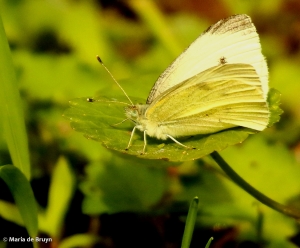
 When a butterfly like the cabbage white (Pieris rapae) alights on a flower or leaf, we sometimes have a little time to see them more clearly and appreciate their beauty; capturing a photo for leisurely viewing gives us the chance to focus on details. And those details are important if we want to determine their correct scientific names since entomologists have differentiated many species and sub-species, sometimes on the basis of factors such as the shape of their spots.
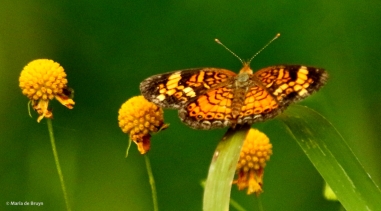
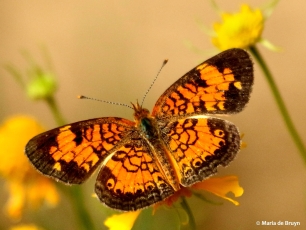
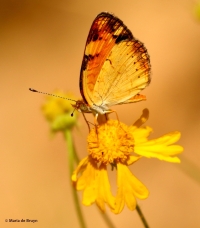
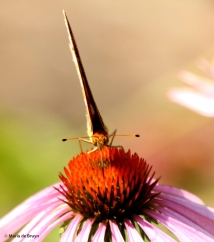
One butterfly pair that can be puzzling are the silvery checkerspot (Chlosyne nycteis, top), with a small white center to one of its spots in the lower row, and the pearl crescent (Phyciodes tharos), which was abundant this year.
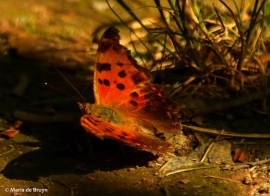
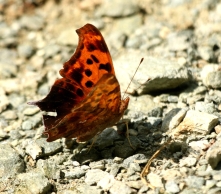
The Eastern comma (Polygonia comma) and question mark (Polygonia interrogationis) look really similar, too. Perhaps the difference in their distinguishing underside marking is really apparent to proofreaders.
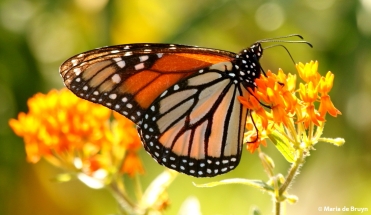
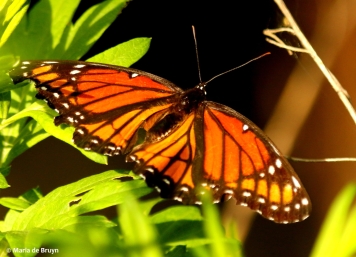
The easiest way to distinguish the endangered monarch (Danaus plexippus) and the viceroy (Limenitis archippus) is that the viceroy has a black stripe running horizontally across its lower wings.
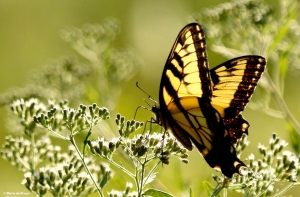
The swallowtails are always a favorite, including the Eastern tiger swallowtail (Papilio glaucus) with differently colored males (yellow) and females (yellow and also blue).

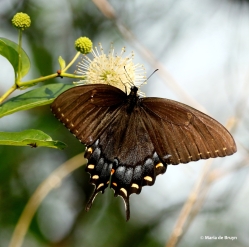
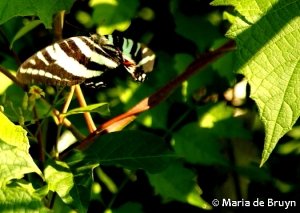
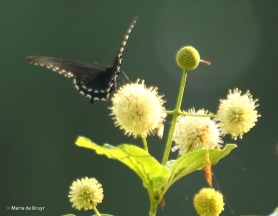
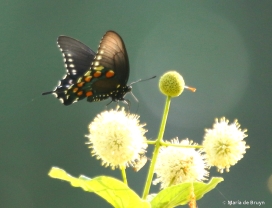
The zebra swallowtail (Protographium marcellus) really catches your eye as it flutters about, while the pipevine swallowtail (Battus philenor) is a little more subdued.
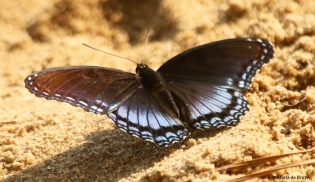
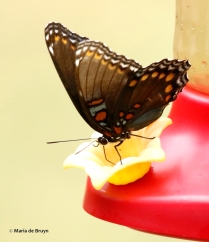
The red spotted purples (Limenitis arthemis) come in different variations; this one enjoyed the hummingbird nectar this summer.
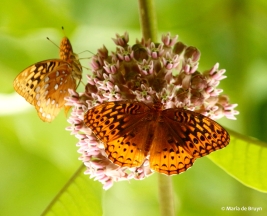
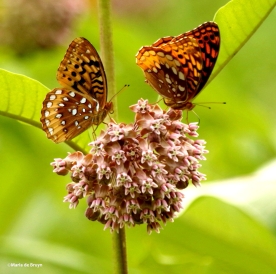
Another new butterfly for me this year was the great spangled fritillary (Speyeria cybele), which I enjoyed seeing as they enjoyed common milkweed (Asclepias syriaca) at the Horton Grove Nature Reserve.
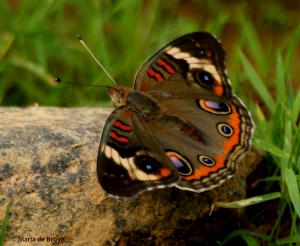
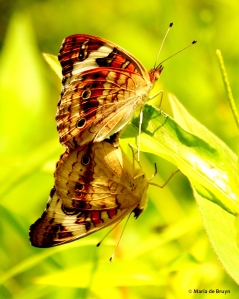
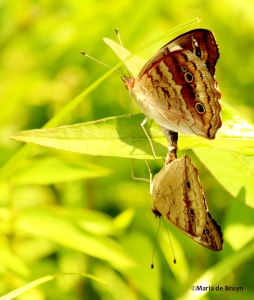
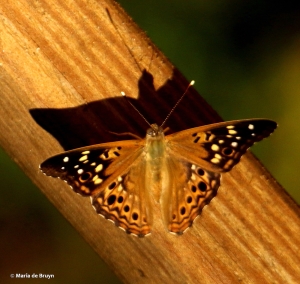 The hackberry emperor (Asterocampa celtis) turned up at Jordan Lake, while the common buckeye (Junonia coenia) – whose beauty is anything but common! – was in my yard and various nature reserves. I also observed a pair getting ready to propagate the next generation.
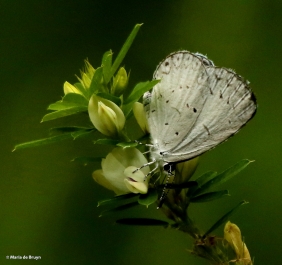
Some of the tinier butterflies are delicate beauties, like the Summer azure (Celastrina neglecta), the gray hairstreak – which can look brown (Strymon melinus), the Eastern tailed-blue (Cupido comyntas) and the Carolina satyr (Hermeuptychia sosybius).
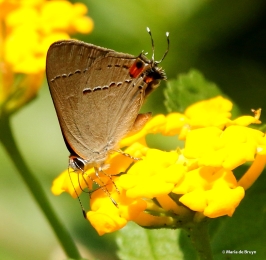
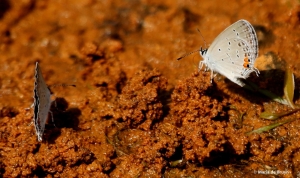
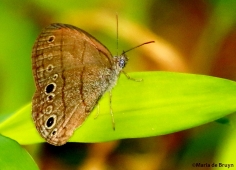
To end, here are two more beauties that I had the privilege to see this year. I hope seeing these butterflies and those in my previous blog brightened your day, especially if you have been dealing with sorrow as I have while this year approaches its end.
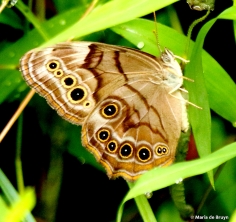
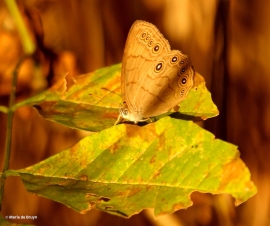
Southern pearly eye (Lethe portlandia) and Northern pearly-eye (Enodia anthedon)
 It is now early December and late autumn in the Northern hemisphere, so why a blog about butterflies? When I was writing this on the last day of November, I had still seen a few of these beauties a couple days previously, and in the Southern hemisphere it is late spring, so it seems fine as a topic for a nature blog. Also, three weeks ago, my mother passed away, while in two weeks the anniversary of my father’s death comes again — I like to think of butterflies as nature’s emissaries for spirits on the wing. They allow me to think of my parents in somewhat lighter terms than the sadness that predominated during their dying processes. Because there are so many butterflies to highlight, this will be a two-part blog.

 The juniper hairstreak (Callophrys gryneus) was another new visitor that at first made me think it was covered in pollen.


 My original interest in wildlife often centered around mammals; as a child, I was especially fascinated by the larger ones I saw at the zoo like lions, giraffes and bears. Eventually, in my later adult life, I became a birder and then

 The iridescent beetle, which measures less than a half inch and lives 6-8 weeks in summer, feeds on the dogbane as well as milkweed plants. The insects’ wings are blue-green in color and have a gorgeous shimmery shine that looks like metallic copper; depending on the light, the highlights can also look golden or crimson in color.


 These damselflies are not strong fliers, often fluttering – even when resting on a leaf. Females will also rapidly open and close their wings if they are receptive to a courting male. If they reject the male, they will keep their wings open.
 The male will raise his abdomen as part of his courting display.
 My beautiful world