Acrobatic squirrels

The Eastern gray squirrel (Sciurus carolinensis) is a well-known – and sometimes quite annoying! – visitor to our yards in North Carolina. One way in which they earn themselves a reputation as a pest is when they get into attics, where they could end up chewing on wires. This happened to me, so I had to have a pest control agent come to trap them humanely (rather than poison them). Unfortunately, I found out later that when they are released outside their home territory, it’s tough going for them as other squirrels see them as invaders. I hope they made it.

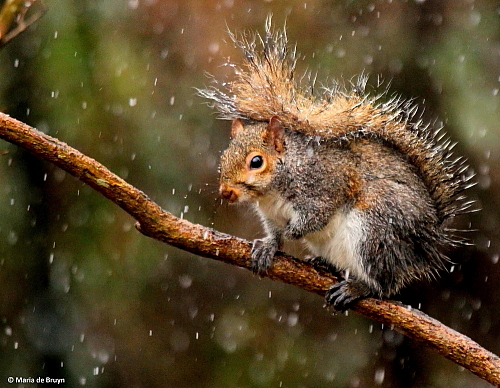
Squirrel IMG_0820©Maria de Bruynres2 Eastern gray squirrel IMG_2144©Maria de Bruynres2

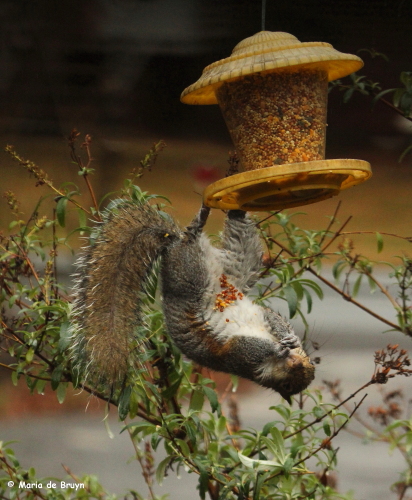
The second way in which they can be a nuisance is when they go to extreme lengths to get at the food in bird feeders. My yard squirrels and I have had an ongoing game of wits over the years, with them doing all they can to get to the feeders and me taking new measures to prevent them from doing so.
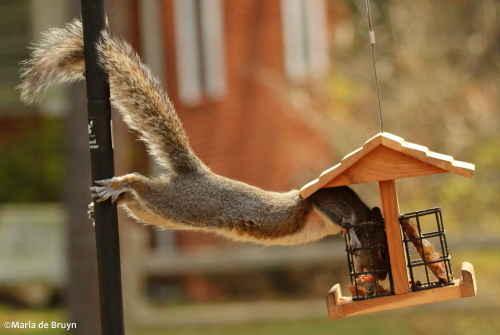
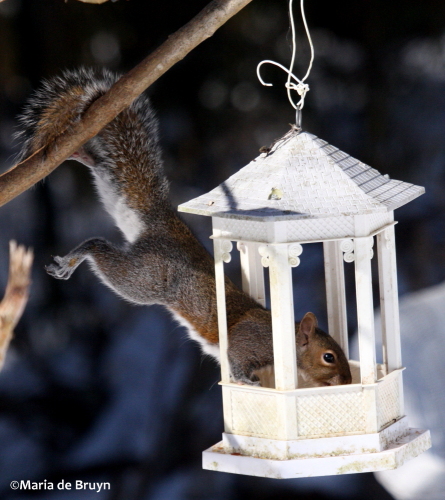
Squirrel IMG_8869©Maria de Bruynres2squirrel IMG_1232©Maria de Bruynres2

The gray squirrels mainly eat plants and seeds, including acorns and pine cones, but they also like a variety of other foods, including fruit, seeds and suet. Fortunately, I haven’t had the same experience as my neighbors, who had squirrels chew through the screen on their back porch to get to a bag of seed left there. These agile little mammals have posed a challenge to me, however, in situating my feeders in places that they can’t get to them.

Squirrel IMG_8418©Maria de Bruynres2squirrel IMG_0120© Maria de Bruynres

If the feeder is within a few feet of something they can use as a launching pad (a bush, pole, etc.), they will manage to jump the distance in their ever-present quest for food. Various attempts to prevent this, by moving feeder poles and using combinations of squirrel and raccoon baffles have – sometimes! – proved useful.

squirrel 115©Maria de Bruynres2

However, if the baffles are too low or near a tree, they jump over the baffle to land on top so they can enjoy a meal at their leisure (or until I see them and chase them away).

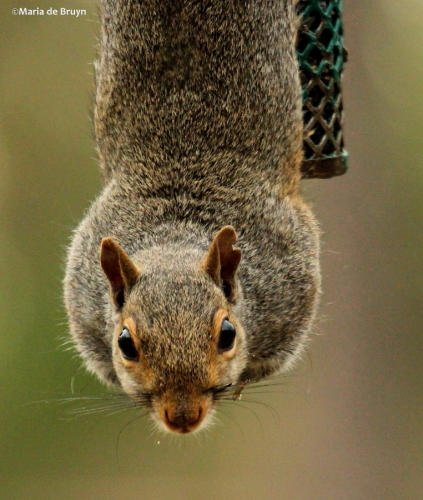
squirrel IMG_2084©Maria de Bruynres2squirrel IMG_2473©Maria de Bruynres2squirrel IMG_3618 ©Maria de Bruynres2

I must admit, though, that they are a source of entertainment, too; watching their antics and persistence in thinking about how to overcome the barriers can be very amusing. And it’s not like I don’t give them a treat now and then!

Next blog: how ticks get around

Birds using salt blocks

In the past, I have put out salt blocks for the deer to use in winter, but then I learned that other animals will use them as well. I have seen squirrels and rabbits licking at the blocks and chipmunks in their vicinity, but I was most surprised when I first saw purple finches (Haemorhous purpureus) pecking away at them.

squirrel at salt block IMG_5209 ©Maria de Bruynsigned resrabbit at salt block IMG_6254©Maria de Bruynsigned

At first, I thought this was abnormal or unusual but a specialist with the Audubon Society/North Carolina wildlife department told me that finches and other bird species will do this regularly to obtain salt when it is lacking from their diet. They also use the salt to help clean out their gizzards (an organ behind the stomach that helps break down seeds and food so that the bird can digest it more easily).

male and female purple finch at salt block IMG_7614©Maria de Bruynsignedresmale and female purple finch at salt block IMG_2733© Maria de Bruynsigned res

Apparently, mourning doves, sparrows, grosbeaks, pine siskins, goldfinches, house finches (Haemorhous mexicanus) and purple finches (like those in the photos) will all peck at salt blocks. So far, I have only seen the purple and house finches doing it.

Sometimes, they have had mini-gatherings there, making the salt block a place for socializing!

purple finches at salt block IMG_7605©Maria de Bruynsignedrespurple finches gathering at salt block IMG_4244©Maria de Bruynsignedres

Balancing on the block can also involve some acrobatics.

house finch IMG_9840©Maria de Bruynreshouse finch IMG_9841©Maria de Bruynres

It’s nice to have something to offer them besides suet, bird seed and bird baths.

Next week’s blog: acrobatic squirrels

Wonderful woodpeckers

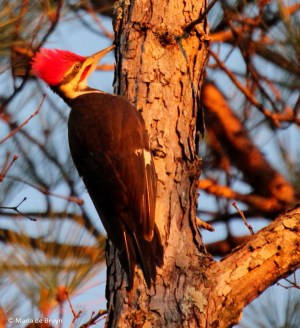
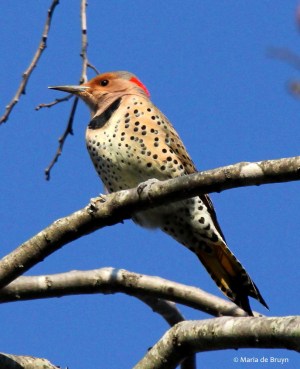
For my first posting, I’d like to focus on woodpeckers. These birds live in many areas of the world and there are several species that I’ve been lucky to see in my yard and on my travels. Many of those I’ve seen have bits of red or a hint of yellow color, like the pileated woodpecker ((Dryocopus pileatus, below left). Some are occasional visitors, like the Northern flicker (Colaptes auratus, below right) that was perched on my persimmon tree.

Pileated woodpecker (Dryocopus pileatus) seen in the woodsNorthern flicker (Colaptes auratus) on my persimmon tree

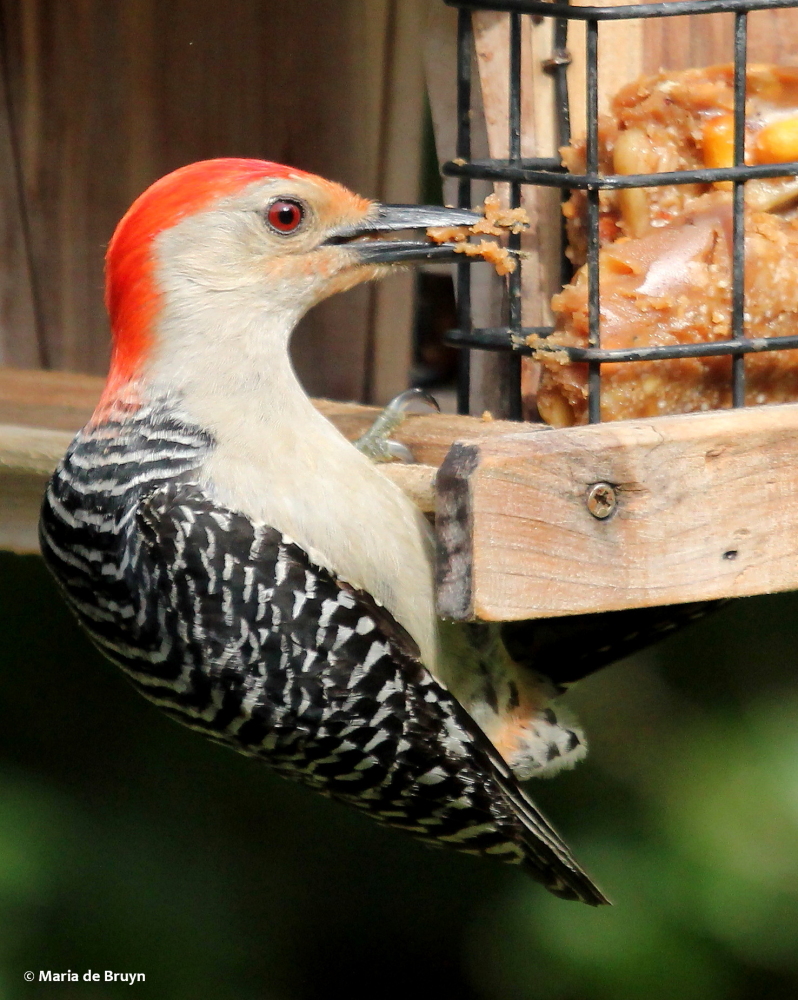
The downy woodpeckers (Picoides pubescens), like the male on the left below, and the red-bellied woodpeckers (Melanerpes carolinus), such as this male to his right, come to my feeders every day.

Downy woodpecker MdB signedred-bellied IMG_8847

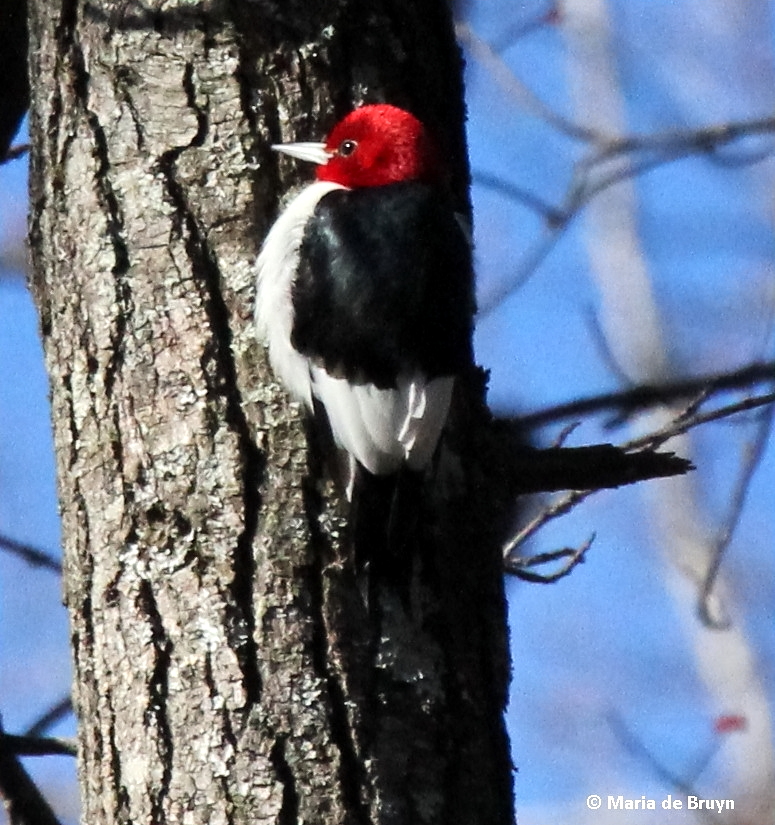
Some of these birds are difficult to photograph, like the beautiful red-headed woodpeckers (Melanerpes erythrocephalus) that sometimes frustrate me because they go behind leaves or stay at a really far distance so that getting a good shot of them is very hard!

Red-headed woodpecker IMG_9884© Maria de Bruyn

What’s really interesting about woodpeckers is that these birds have adapted over time to protect their brains from damage when they repeatedly peck away at wood, trees, utility poles, trash cans — or my rain gutters, making a VERY loud sound as they try to attract mates! Woodpeckers can tap up to 8,000-12,000 times a day (22 times per second)! So how do they protect themselves from this jarring activity?

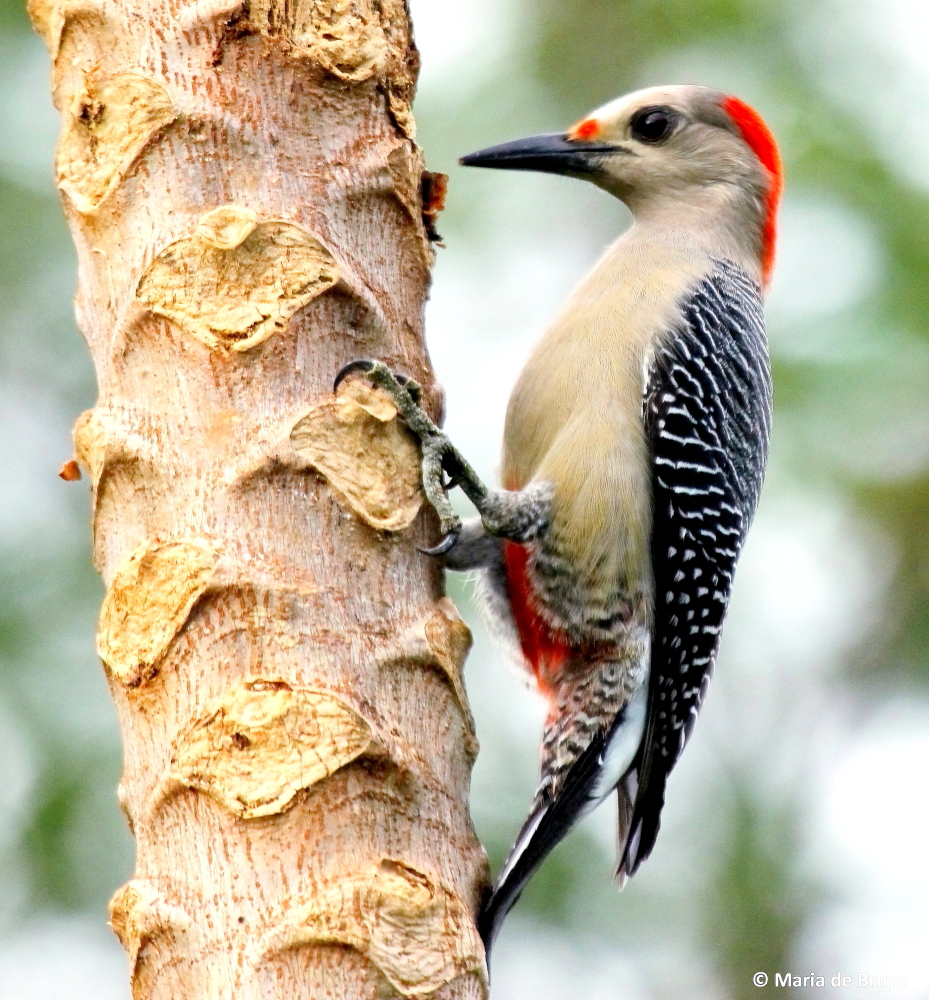
Their brains are protected within their skulls and they only make contact with an object for a very short time with each peck. Just before they peck on wood, they close a thick eyelid (called the nictitating membrane) to protect their eyes from wood chips and special feathers protect their nostrils. They also have strong muscles at the base of their beaks that act as shock absorbers to lessen the impact of the hard pecking. In fact, In fact, scientists used studies of the golden-fronted woodpecker ‘s head and neck when they designed a shock absorption system to protect microelectronics!

Golden-fronted woodpecker IMG_0357 MdB

Golden-fronted woodpecker (Melanerpes aurifrons) that I saw in Mexico

Woodpeckers are important in nature because they help control insect populations. Their nest cavities are also used by birds and animals (deer mice, raccoons, flying squirrels) that cannot create cavities themselves. A few species will use nest boxes. A downy woodpecker used a bluebird box in my yard as its night-time refuge over the past winter.

downy woodpecker IMG_0299 MdB

Next blog: deer antlers!