The tragedies being faced in the Caribbean islands after hurricanes Maria, Jose and Irma are horrible and other than donate cash to help alleviate the needs, I’m not in a position to offer more assistance. I’m grateful for all those who can and hope government assistance will be forthcoming to help all the people in those nations recover.
 The effects of the hurricanes also will be noticeable for the wildlife. Many of those living on land will drown or die of hunger; some birds may be a little luckier – able to shelter against the winds if they are native to a place or able to change their migratory pattern (e.g., delay arrival on wintering grounds) for a time. But when the effects of the storms are immense with lots of habitat destruction, the birds, too, will lack places to shelter and not have sufficient food supplies to survive.
It’s thought that some birds endemic to the islands may be severely endangered as a species. On 22 September, birders were happy to hear that eight Barbuda warblers (Setophaga subita) had been spotted on that island; not a lot but they may help ensure this tiny bird doesn’t become extinct. At the time of writing this blog, the fate of some other bird species was still unknown. I hope that all the Caribbean bird species survive and will be thinking of them as I share this series with you on how birds take measures to ensure future generations. (It might seem odd to write this series now, but some birds are still feeding their young here.)

So, the process begins with courtship. Some birds mate for life, or at least form long-term (multiple-year) bonded relationships. They include bald eagles, black vultures, blue jays, Canada geese, white-breasted nuthatches, brown-headed nuthatches, Northern cardinals, Carolina chickadees, American crows, pileated woodpeckers and my favorite raptor shown above, the osprey (Pandion haliaetus).

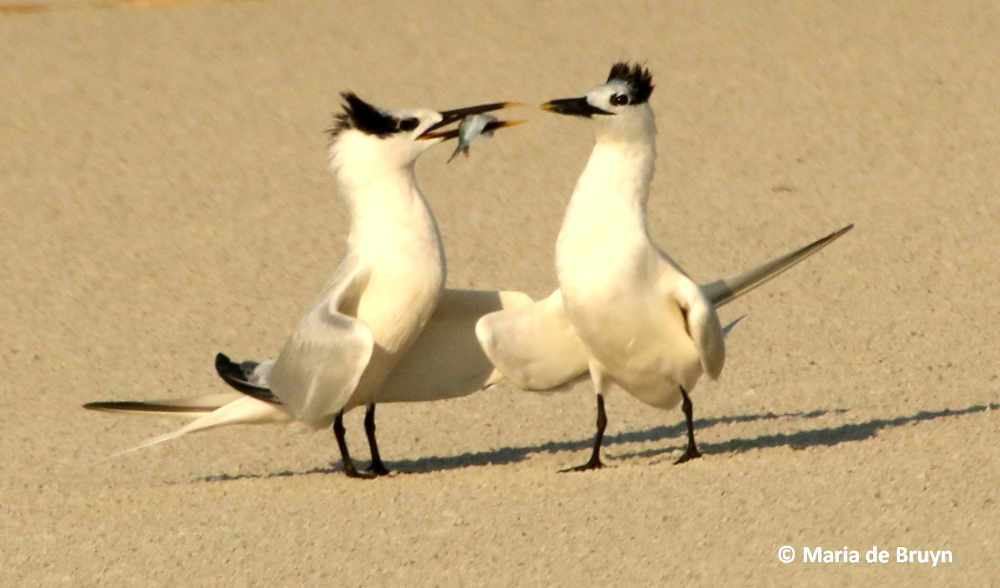
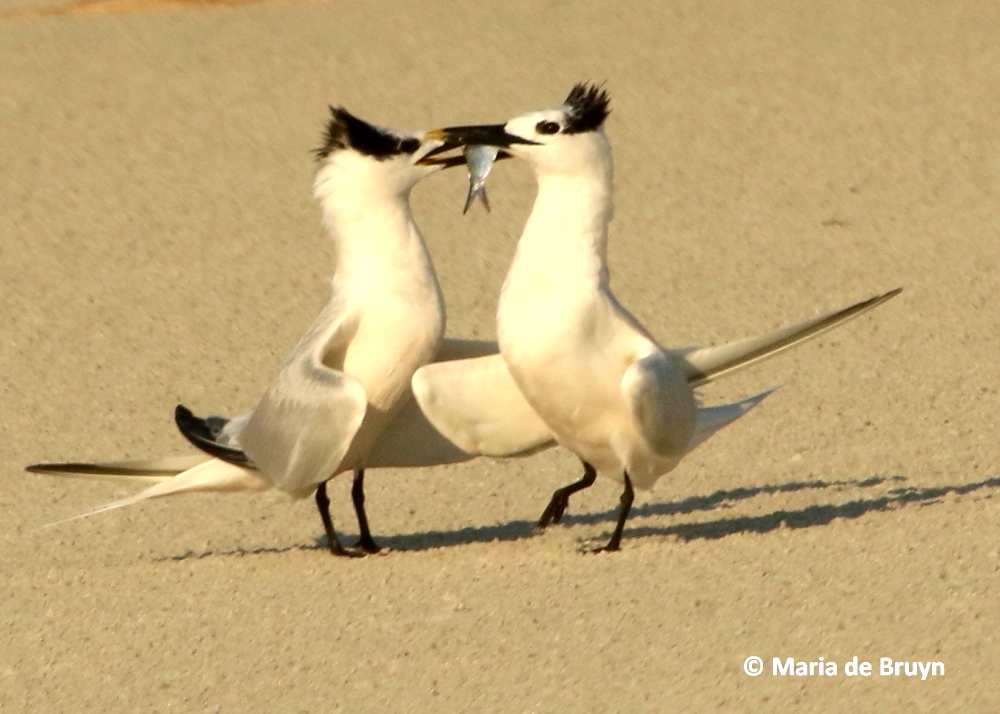
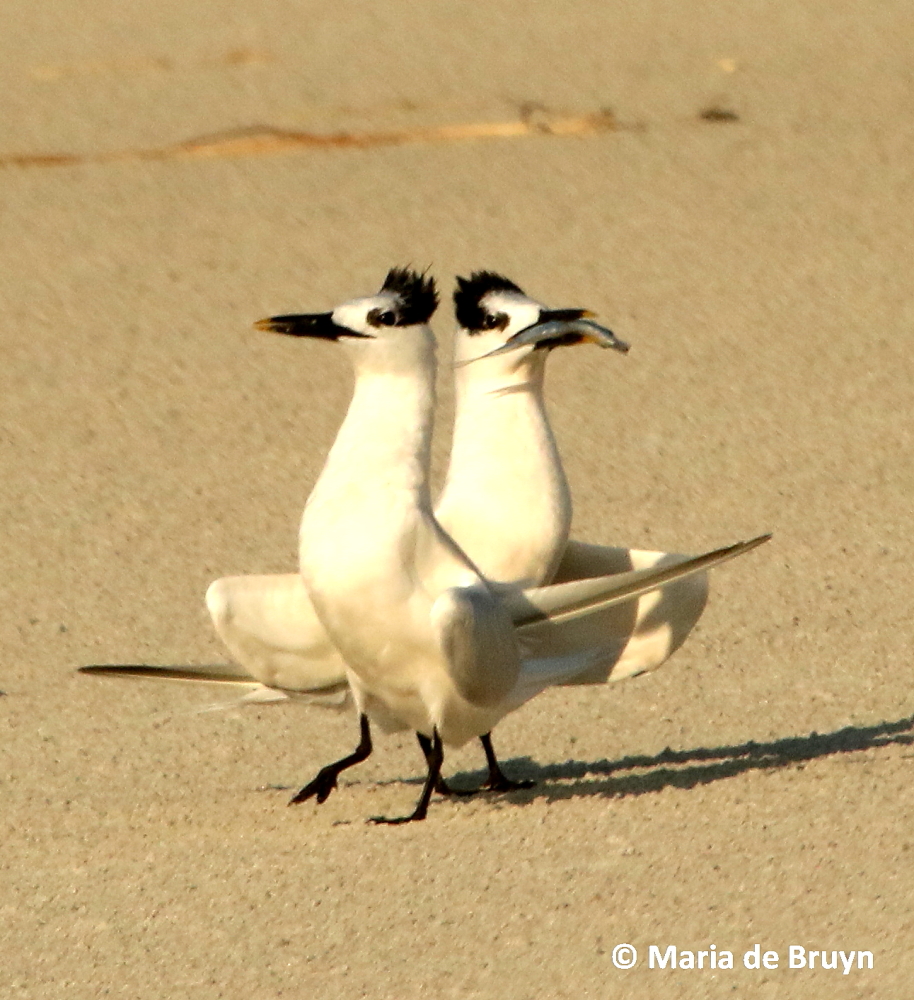
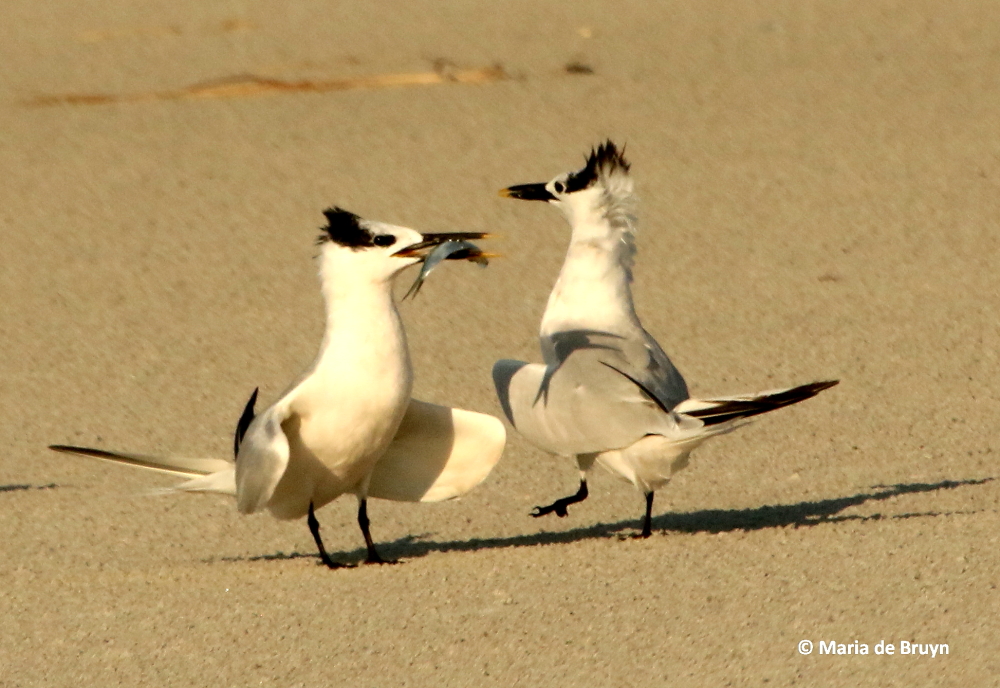
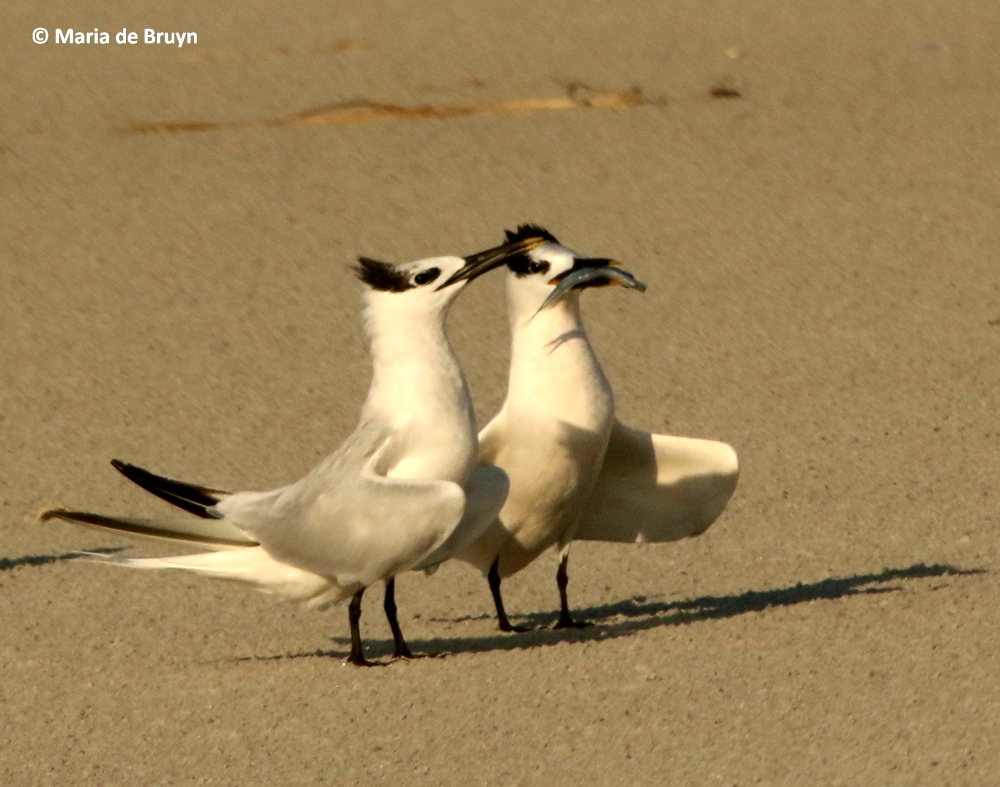
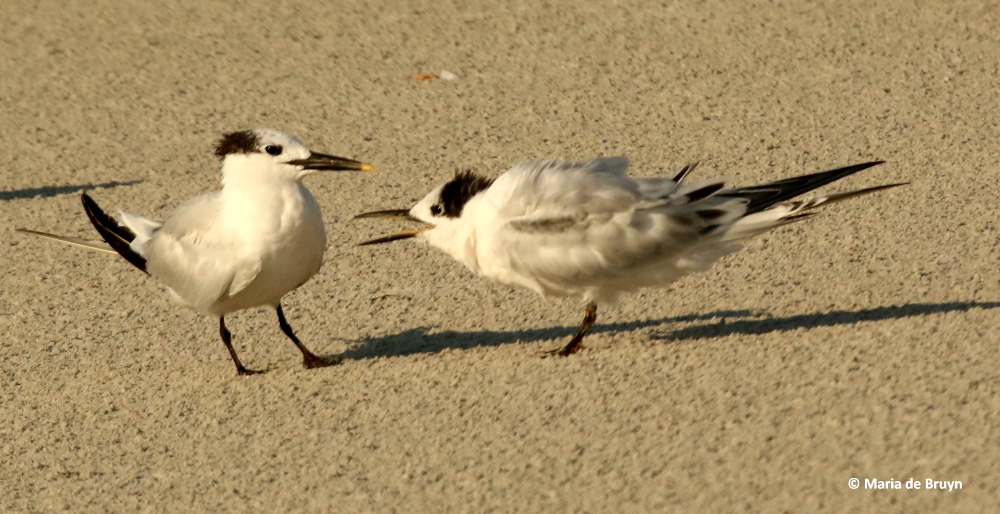
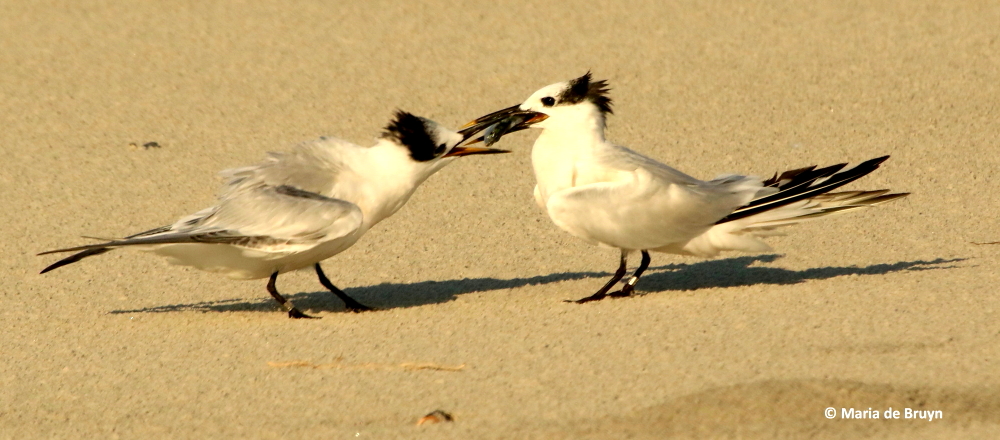
 Those who form ongoing bonds may have a courtship period that consists of the male bringing the female some food to indicate it’s time to get ready for nest-building. This was the case for these lovely Northern cardinals (Cardinalis cardinalis).
The American crow (Corvus brachyrhynchos) has a similar behavior; in my yard, I sometimes throw out bits of apple or bread for them in the spring as these seem to be considered real treats. The female will sit on a branch overhead calling until the male brings her some – and sometimes almost shoves it down her throat!

The Northern mockingbird (Mimus polyglottos) males will sing their repertoire in the spring to entice female mates – often they perch on the top of trees and fly up and down with spread wings in a beautiful display while singing.


 The yellow-billed cuckoo (Coccyzus americanus) seeks new mates each year but has an interesting courtship behavior described by All About Birds: “A receptive female perches with its head up, pumping its tail slowly up and down…Just prior to mating, the male Yellow-Billed Cuckoo snaps off a short twig that he presents to the female as he perches on her back and leans over her shoulder. Both birds then grasp the twig as they copulate.”


The downy woodpecker (Picoides pubescens) females and males may both flutter between trees with slow wingbeats. Two females may also compete for the attention of a single male, a behavior I observed this past spring and which surprised me.


The male brown-headed cowbird (Molothrus ater) will vocalize for the female while spreading his wings in a display.
The killdeer (Charadrius vociferus) has a somewhat prettier courtship dance, bending forward and spreading its tail feathers to show off the colorful underside.


Next year, I hope to see more of the birds courting as it gives me a happy feeling.
The next step for the birds is nest-building. We don’t have the bowerbirds in North Carolina, who build elaborate nests as part of their courtship. But the species we have do spend a good deal of time on their nests and I’ll share some of their efforts in the next part of the series. (But one or two blogs on another topic will come first.)









 My beautiful world