Costa Rican rambles 3 – Parque Nacional Los Quetzales and Miriam’s restaurant

Our usual daily trip routine in Costa Rica began on the first day: coffee and tea at 5:45 a.m. (except the last day when we had it at 4:30 a.m.!) – birding – breakfast around 7 a.m. – travel & birding – lunch around noon-1 p.m. – travel and birding – dinner/supper around 7 p.m. And on two nights we went owling after supper. One of our group members tracked our steps – over 8 days, we walked and hiked a bit more than 50 miles. This meant that although I ate more than usual, I didn’t gain any weight, which was an added bonus!

On the first day, we set off for the National Park Los Quetzales, passing small settlements and villages along the way. Between them, we saw the rolling hills and mountains covered with lots of vegetation – this was the end of the dry season, so when the rainy season begins the scenery must be even much more lush.


We were going to see several species of birds which are endemic only to parts of Costa Rica and Panama, which was a treat for the birders who keep life lists counting how many species of birds they have seen.

The day had an overcast start, which made photographing the birds at Los Quetzales a bit challenging. Sometimes they blended in really well with the vegetation in which they perched and discerning them was a bit of a feat (especially if you don’t have binoculars). One of the first birds we found was the slaty flowerpiercer (Diglossa plumbea). The male has a rich blue-gray color while the female is a much drabber olive gray – it was her upturned beak that helps her pierce the base of flowers for nectar that helped me ID her in the photos.


The black-capped flycatcher (Empidonax atriceps) gave me some issues, too, until one finally alighted atop a plant – giving me a chance for a quick, backlit photo before he flew off.

There were many flowering bushes and shrubs and bees were buzzing among them. A timberline wren hopped around these bushes, but I was unable to get a photo of her. I did succeed in getting some shots of a couple volcano hummingbirds (Selasphorus flammula), who were very active – challenging one another and hunting insects. These very small hummingbirds only breed in the mountains of Costa Rica and Panama; they are only 3 inches (7.5 cm cm) long and very quick flyers. One ended up posing for a while!


A sooty-capped bush tanager – also called a sooty-capped chlorospingus (Chlorospingus pileatus) was scurrying about the same bushes. At first, I couldn’t get any photos of him, but finally he emerged from behind some leaves. At our lunch stop, I was able to get a close-up photo of this species.


A large-footed finch (Pezopetes capitalis) made its arrival known as s/he perched in a nearby tree branch; a few hours later, I was able to get a closer photo of this bird, too. This is one of the larger birds we saw, almost reaching 8 inches (20.3 cm) in length.


Another larger bird, the sooty thrush (Turdus nigrescens) posed prettily atop a tree. These 10-inch long (24 cm) birds behave similarly to American robins, rooting around in leaves for insects and spiders.

The flame-throated warbler (Oreothlypis gutturalis) showed up nicely against the green foliage.


In some flowering bushes nearby, a fiery-throated hummingbird (Panterpe insignis) put in an appearance. These hummers are larger than the small volcano hummingbirds.  Like other hummers, their brilliant colors may only show up when the light rays hit their feathers at just the right angle. My only shot demonstrating a bit of their fiery beauty was unfortunately a bit blurry.


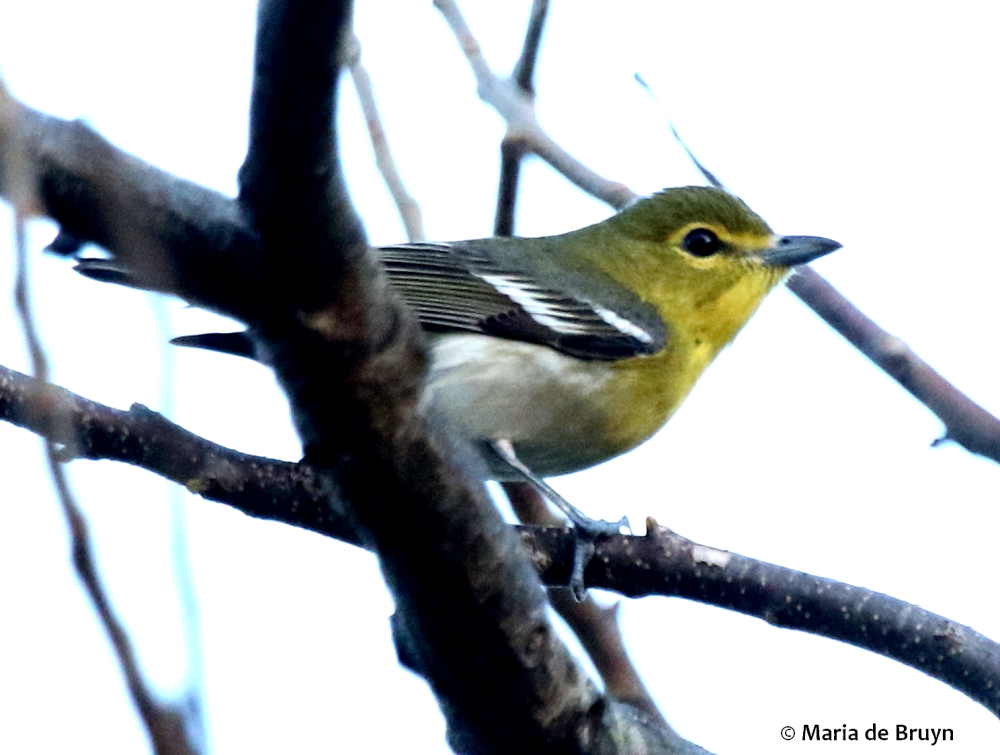
A black and yellow silky flycatcher (Phainoptila melanoxantha, below) was hopping around in a distant leafy tree and then finally emerged for a couple minutes before flying off to another leafy abode. In contrast to many of the other birds who dine on insects, these birds favor berries and plant materials. A yellow-winged vireo (Vireo carmioli, right) emerged briefly, rounding out our endemic species sightings.


Before leaving the park, I was lucky to see a forest forager (otherwise known as a branch bird) and some lichens growing on the ground. 😉

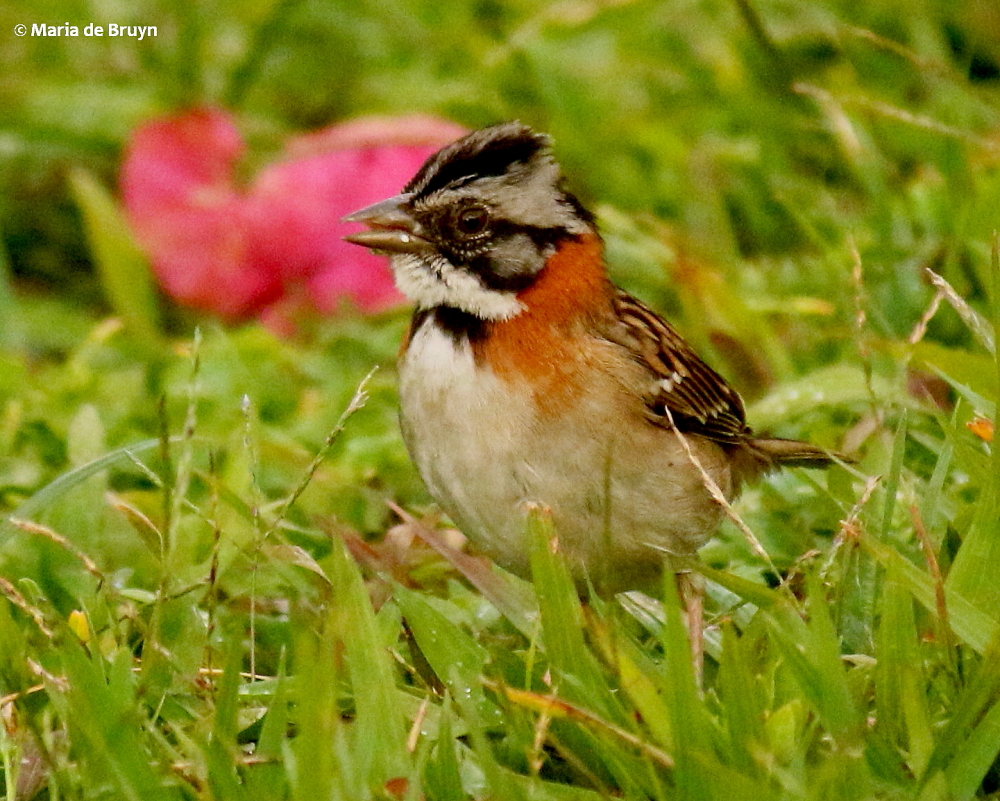
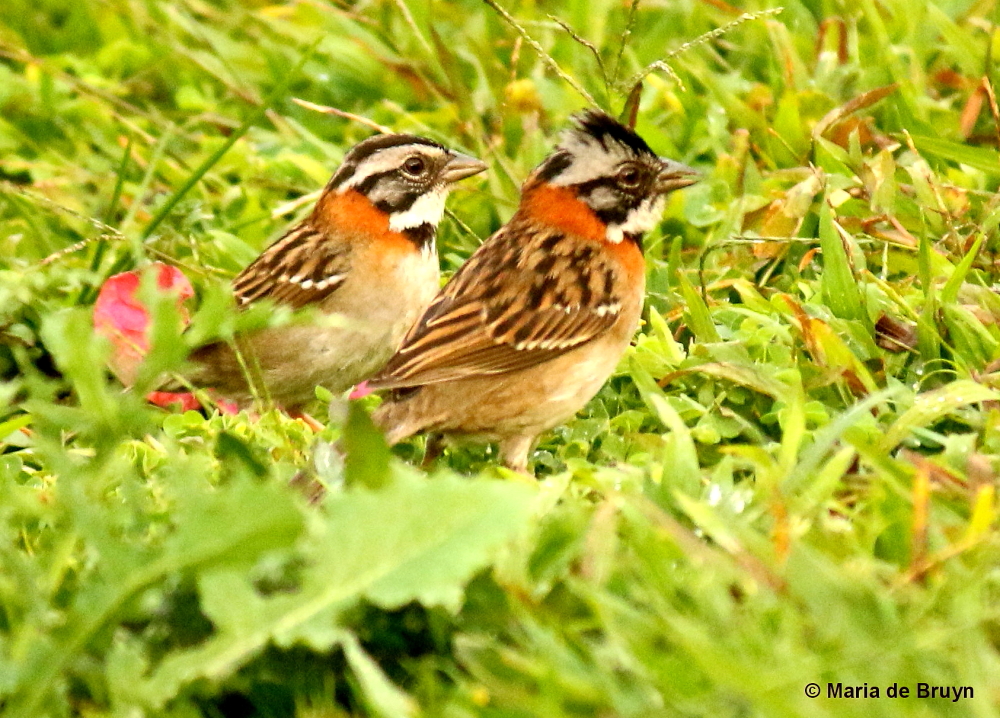
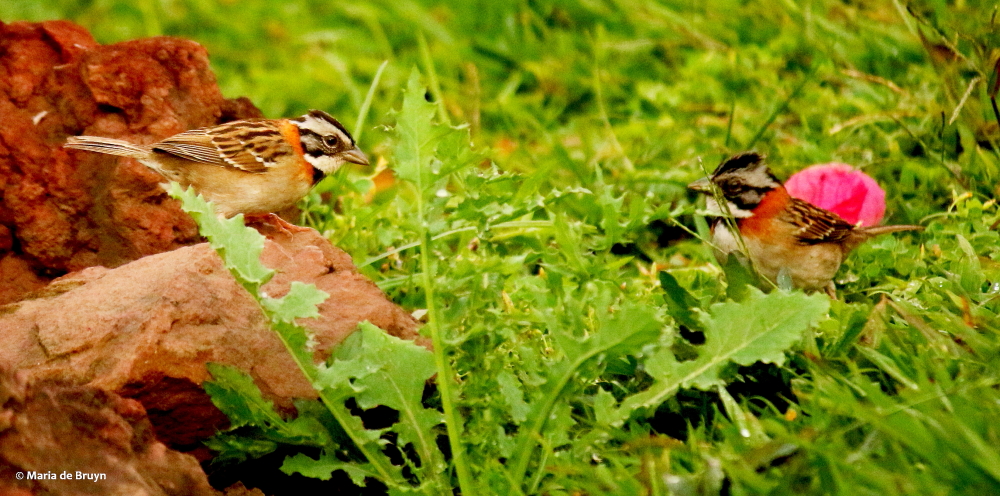
For lunch, we stopped at Miriam’s restaurant, a well-known birding station in the San Gerardo de Dota area. In addition to a very nice lunch menu, there are nectar and fruit feeders behind the eatery, which attracted a large number of birds when we first visited (a return visit a few days later had very few birds – perhaps they were all busy with nests and insect feeding by then). Besides the rufous-collared sparrows (Zonotrichia capensis), there were gorgeous flame-colored tanagers (Piranga bidentata) – both males and females/immature males.


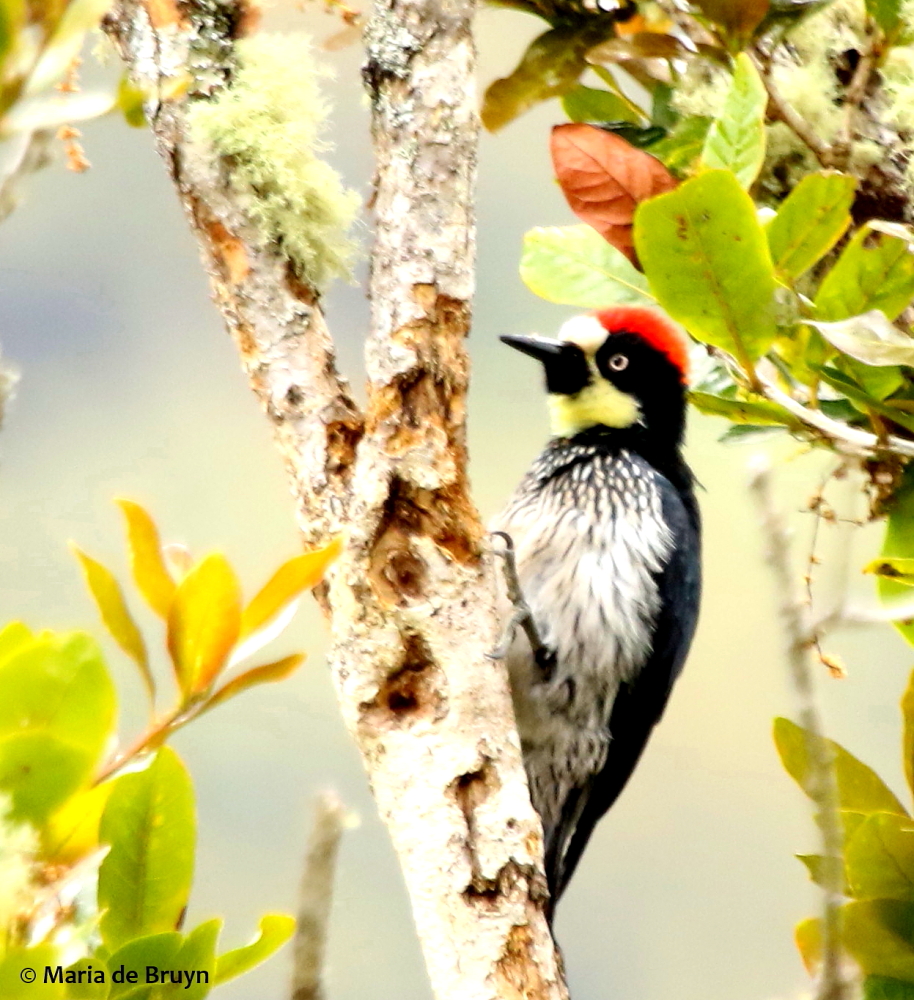
A group of five acorn woodpeckers (Melanerpes formicivorus) came to enjoy the fruit, perfectly willing to share the space with the other birds. These birds, which are also seen in the Western USA, do eat lots of different nuts but insects and fruit are obviously also desired meals.

 

There were three main species of hummingbirds at the nectar feeders. According to some bird websites, the white-throated mountain gem is only found in Panama, while the very similar gray-tailed mountain gem (Lampornis cinereicauda) is seen in southern Costa Rica. They are beautiful birds, with the females sporting a cinnamon-colored breast and the males a blue-purple crown when the light hits their feathers just right.


The Talamanca hummingbird males (Eugenes spectabilis) have a brilliant gorget and forehead when the lighting is right. The females of this large hummer species lack this coloring but also have a prominent white spot behind their eyes.


My favorite hummingbird at this stop was the lesser violetear (Colibri cyanotus). They have a subtle violet color underneath their eyes and pretty bands of blue in different shades on their tails.


Next up – our visit to the Bosque del Tolomuco!

** Thanks to Janet Kurz for the group photo
Costa Rican rambles 2 – exploring the fauna of the hotel botanical garden

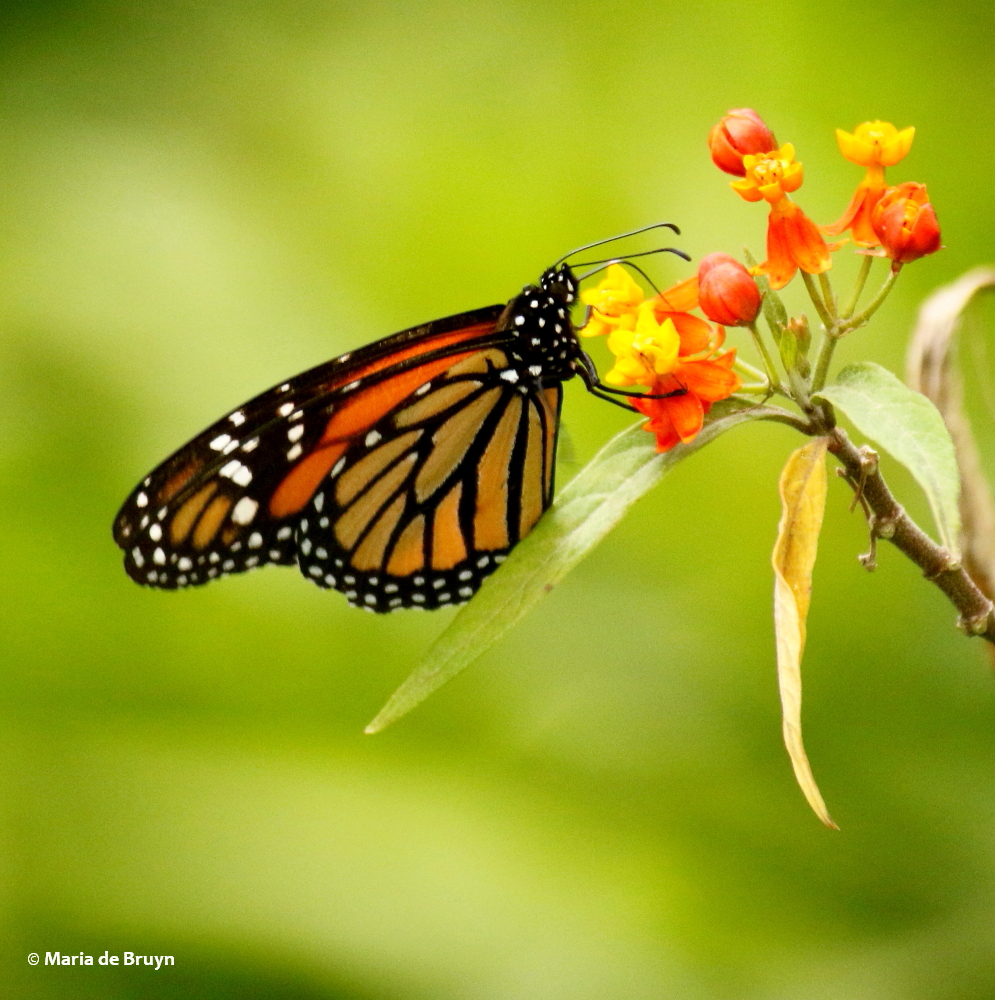
My first close-up spotting of wildlife in Costa Rica was a butterfly familiar to me from North Carolina – a beautiful monarch (Danaus plexippus). Lots of little flies were buzzing about but they were a bit too quick for photos.

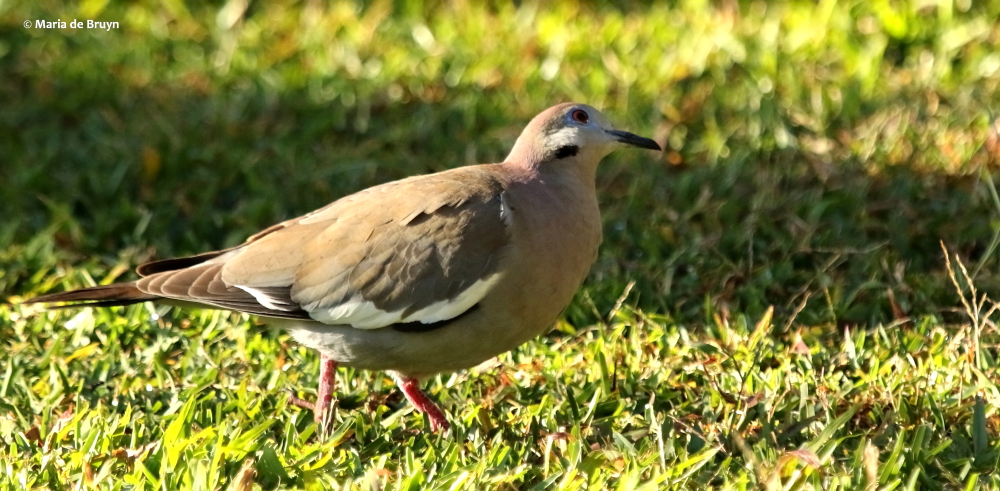
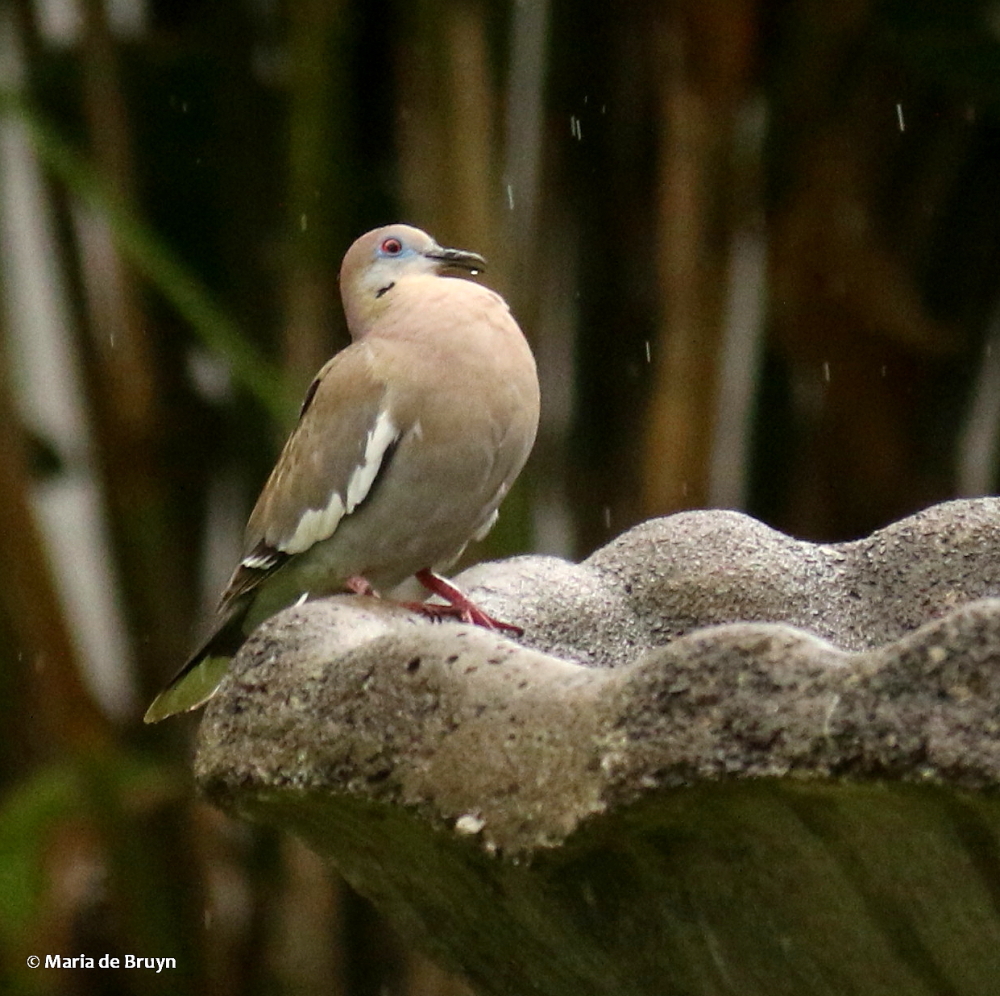
I wasn’t familiar with the first bird I saw, but after running into fellow traveler Dave, he kindly identified it for me as a white-winged dove (Zenaida asiatica).


Later and the next morning, I saw several wandering about the grounds and at the birdbath.


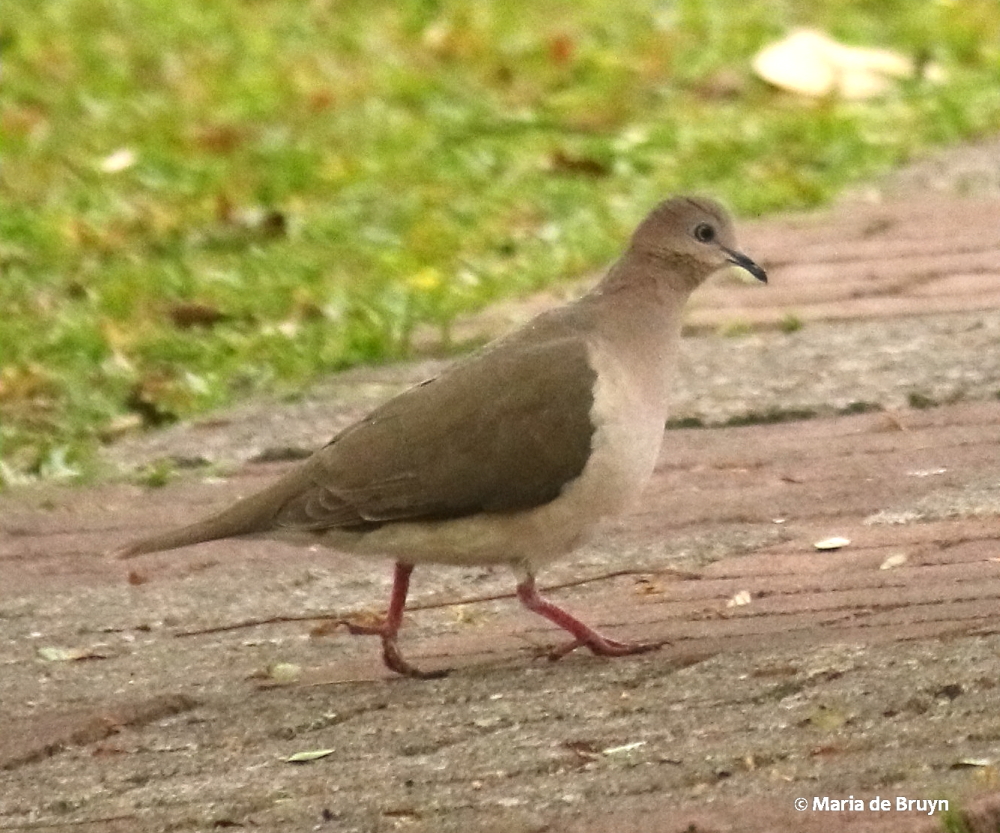
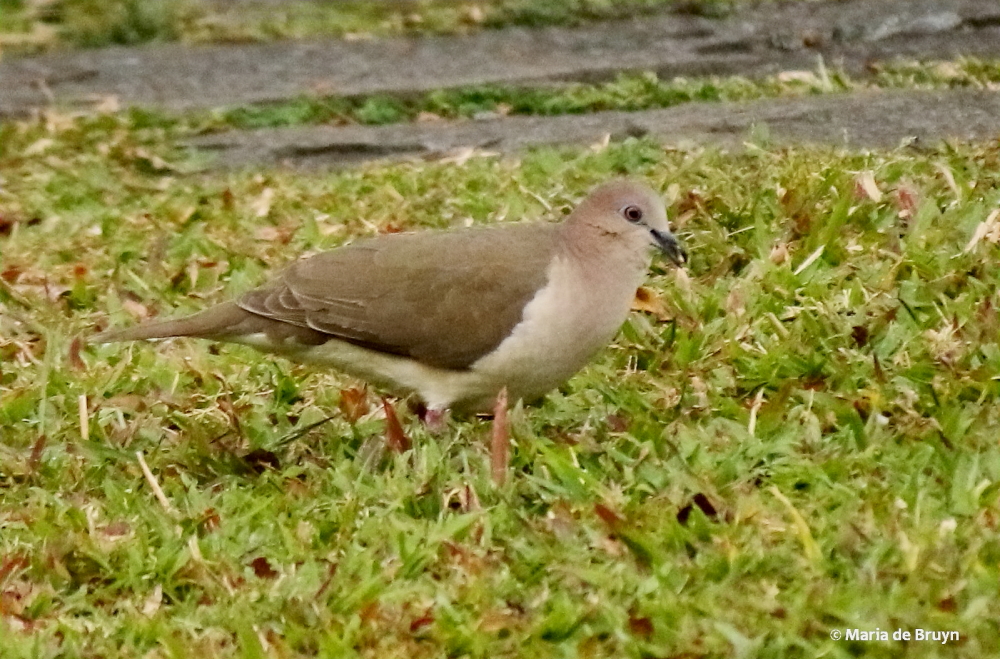
Another common dove was the white-tipped one (Leptotila verreauxi).


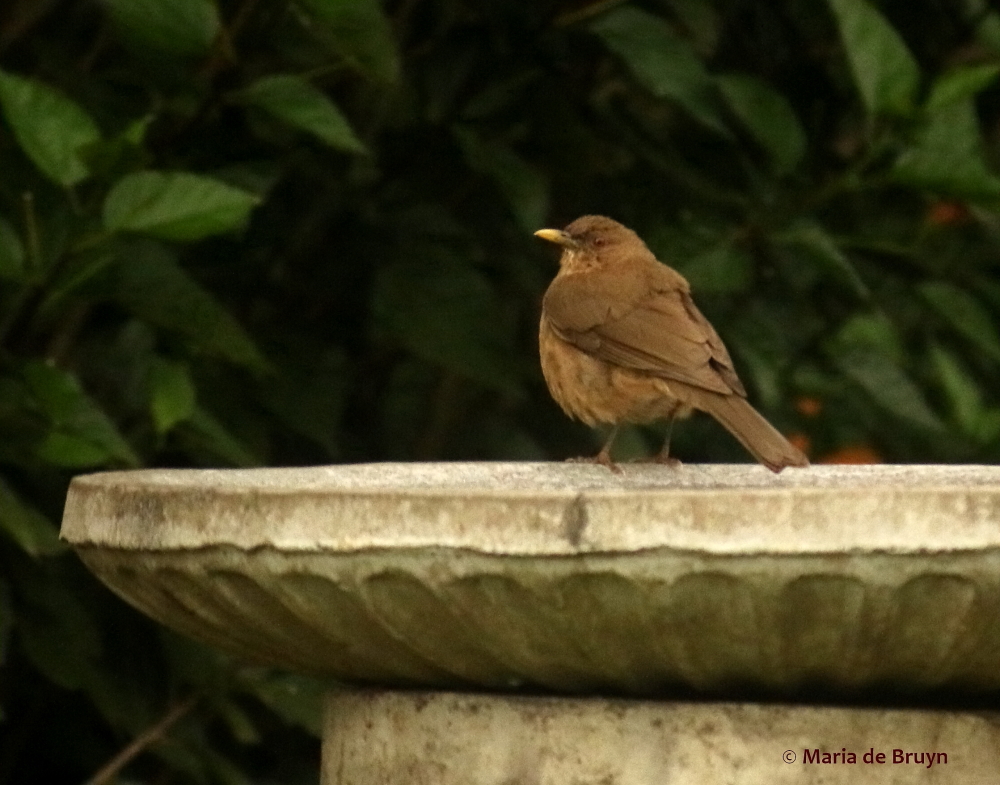
While roaming around, I ran into two more fellow travelers, Joy and Janet; together with Dave, we climbed a wonderful lookout tower placed in a strategic spot for birders. It looked down on a pond in one direction and a birdbath in another, where I saw the clay-colored thrush (Turdus grayi) – Costa Rica’s national bird, known locally as the yigüirro.  Its beautiful song is said to welcome the green rainy seasons and these birds were abundant in this garden and the other sites we would be visiting.


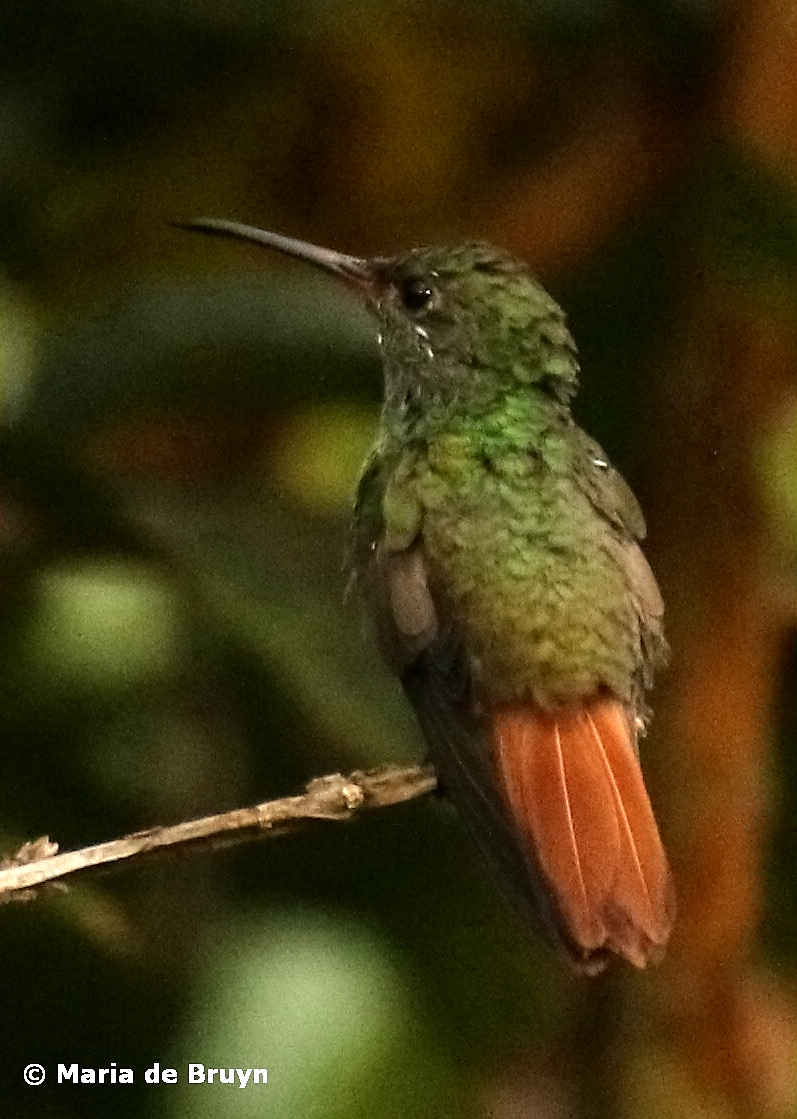
A couple species of hummingbirds appeared but I was only able to photograph the rufous-tailed hummer (Amazilia tzacatl).


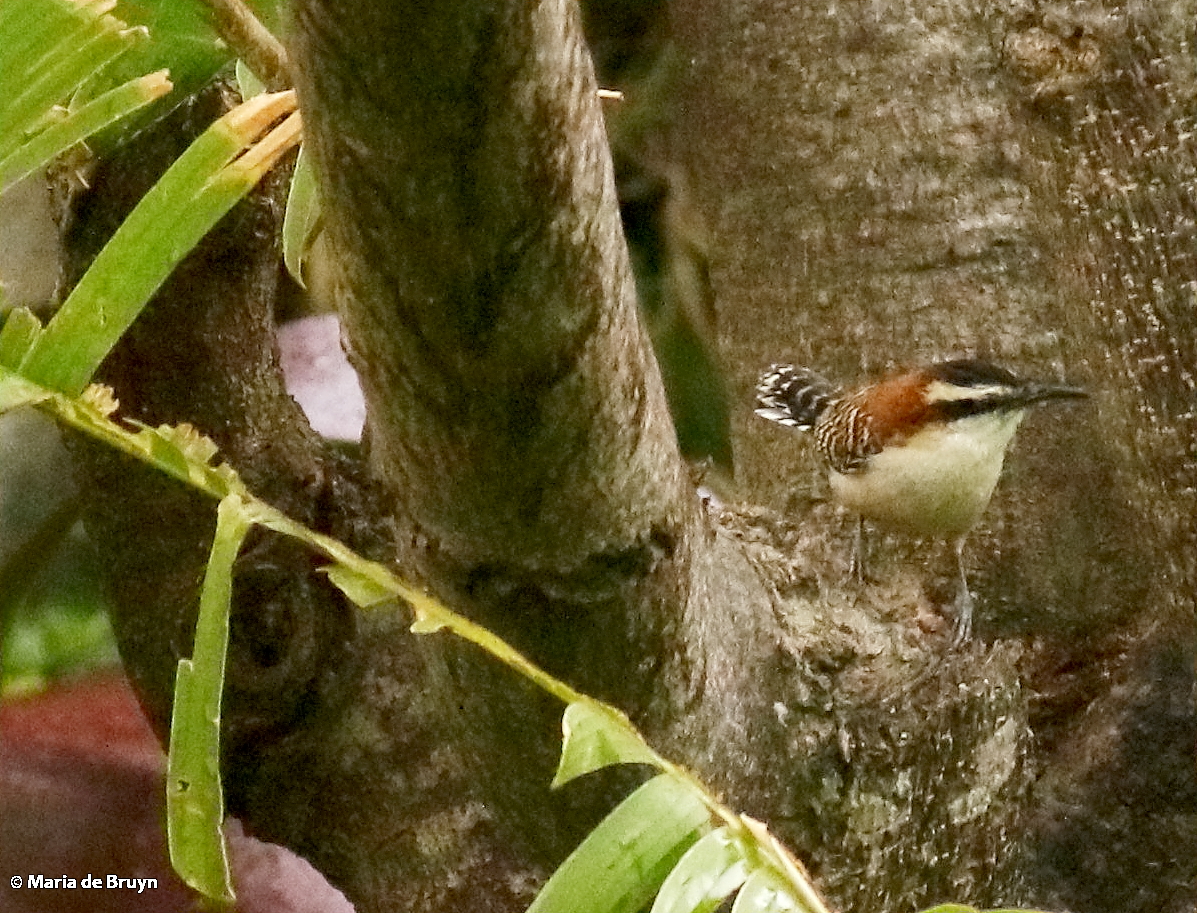
While looking for it, I spotted what was to become one of my favorite Costa Rican birds, the rufous-naped wren (Campylorhynchus rufinuch).


I just fell in love with its brown speckled appearance and followed a pair flitting about the flower-laden bushes in the area.


Some “Northern migrants” put in appearances, including a Baltimore oriole (Icterus galbula) and some yellow-throated vireos (Vireo flavifrons).


Birds flitting in the treetops further included a few yellow warblers (Setophaga petechia) and Tennessee warblers (Leiothlypis peregrina), which I had not yet seen in the USA.


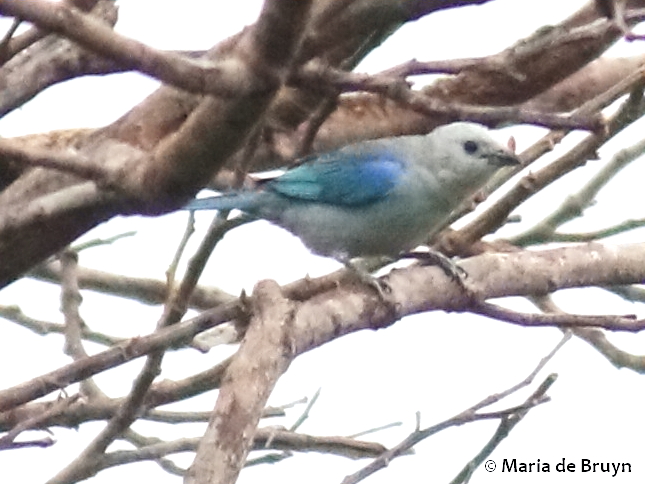
A beautiful blue-gray tanager (Thraupis episcopus) flew by and I saw my first male Cherrie’s tanager, for which I’ll post a better photo in a later blog. 

The high perch which we birders had offered me a first spotting of the variegated squirrel (Sciurus variegatoides), which lives up to its name with individuals showing very different coloring on their bodies.


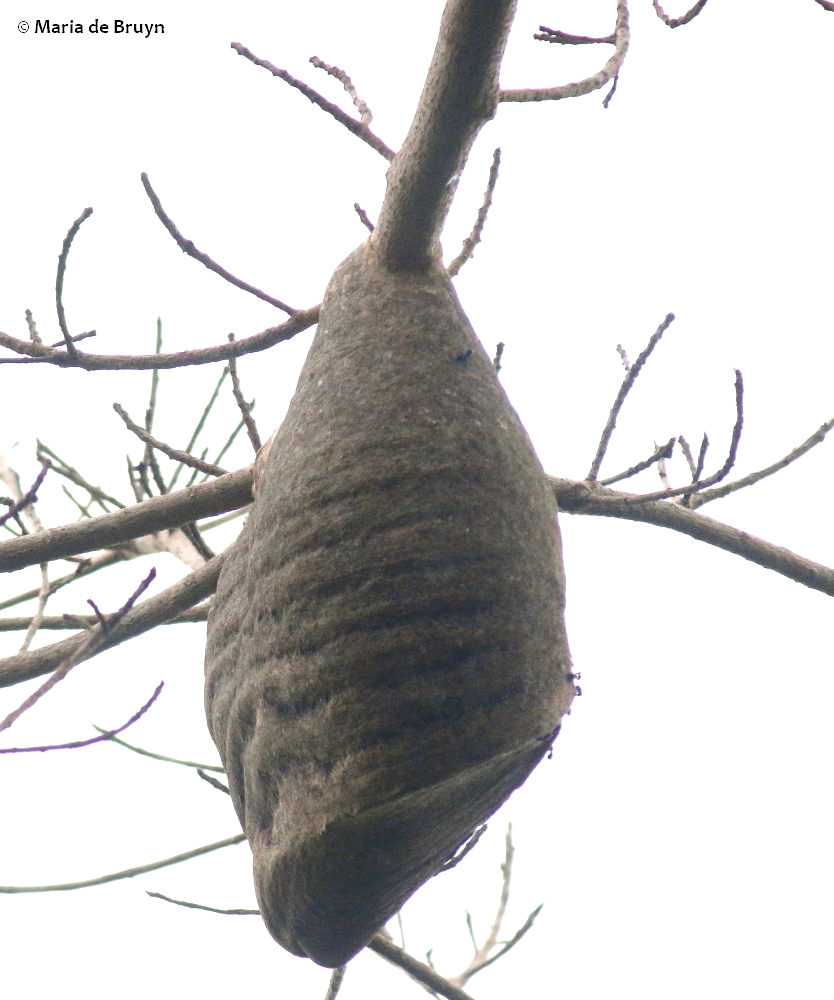
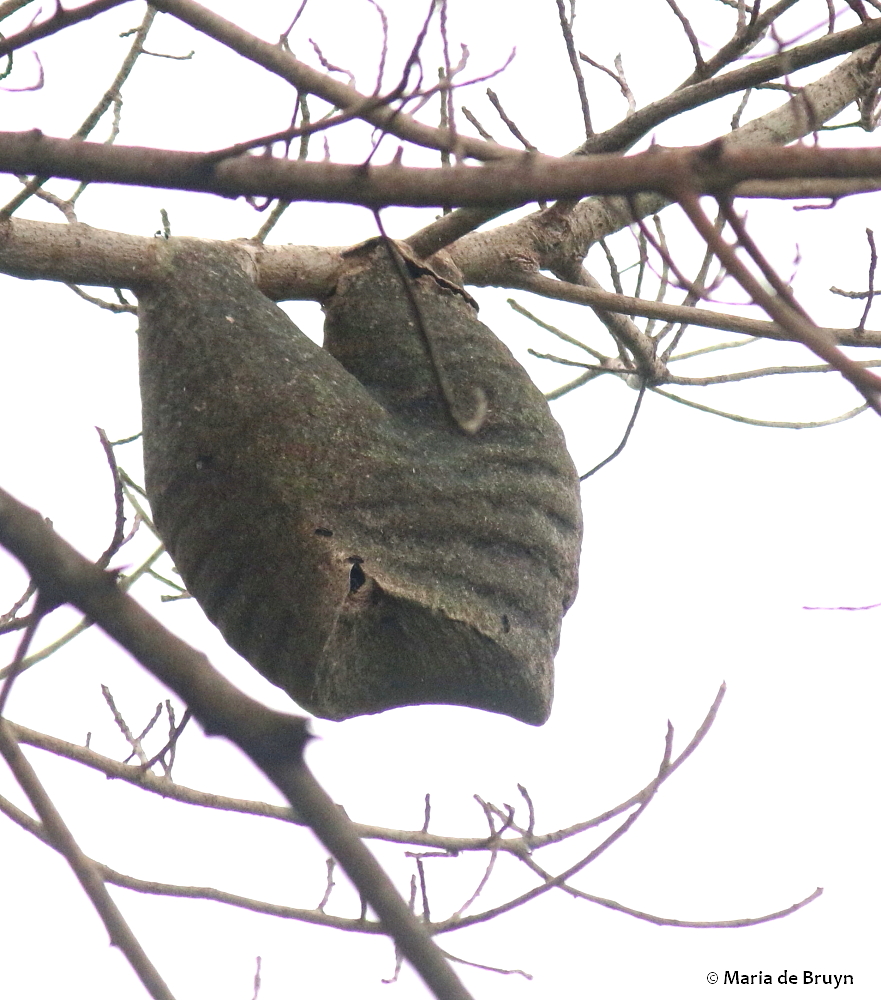
I left the lookout tower to investigate more of the 10-acre garden and as it began raining, found a spectacular wasp or hornet nest. It looked quite different from varied perspectives, the underneath view making it look like a pair of pants hung from the tree by its legs.


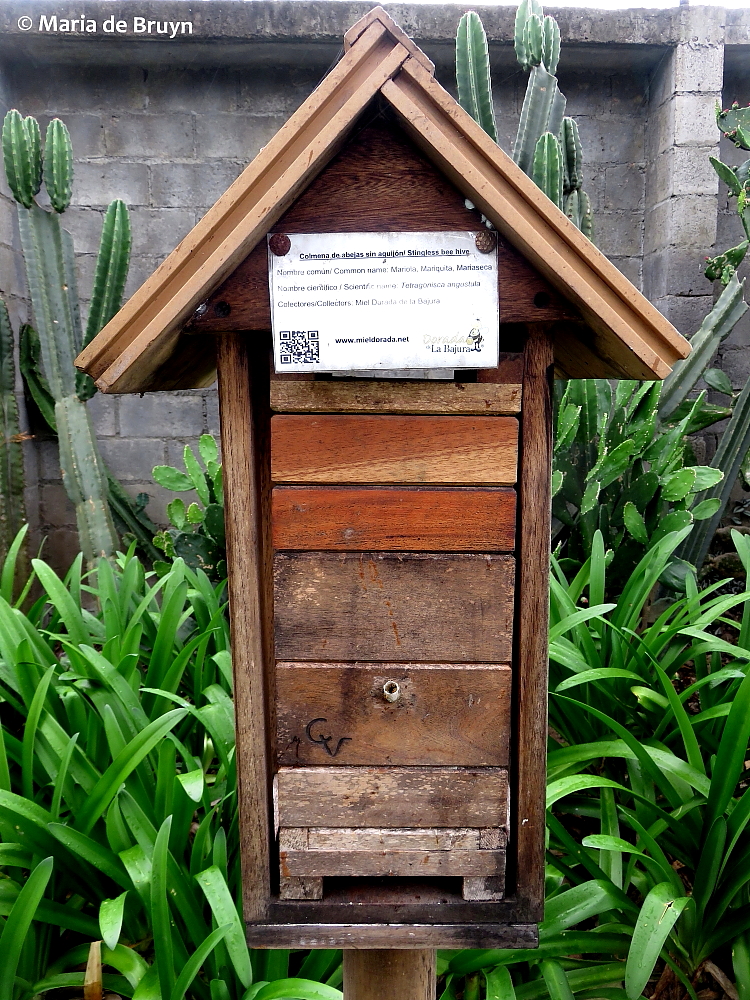
The garden featured several man-made hives for stingless bees (Tetragonisca angustula); I didn’t see any buzzing about but perhaps they preferred to stay indoors during the rain.

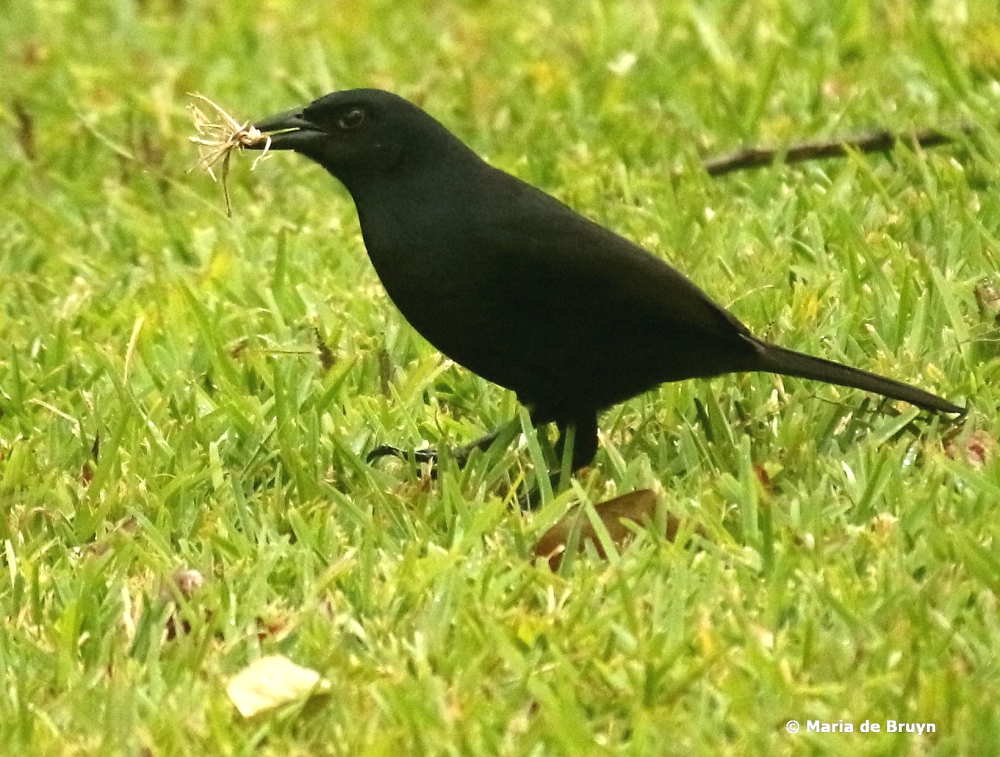
Back near the lookout tower, I began hearing a pair of birds calling to one another with beautiful songs and notes. I was looking around for some small songbird but suddenly realized the concert was being offered by a pair of large melodious blackbirds (Dives dives), who really deserve their common name!


A somewhat more raucous set of cries alerted me to the arrival of a group of brown jays (Psilorhinus morio). They are much larger than the blue jays I see in my own garden and certainly seemed more social; they tend to move around in flocks. At first sight, they seemed a bit drab but a closer look shows they have a pretty muted appearance.


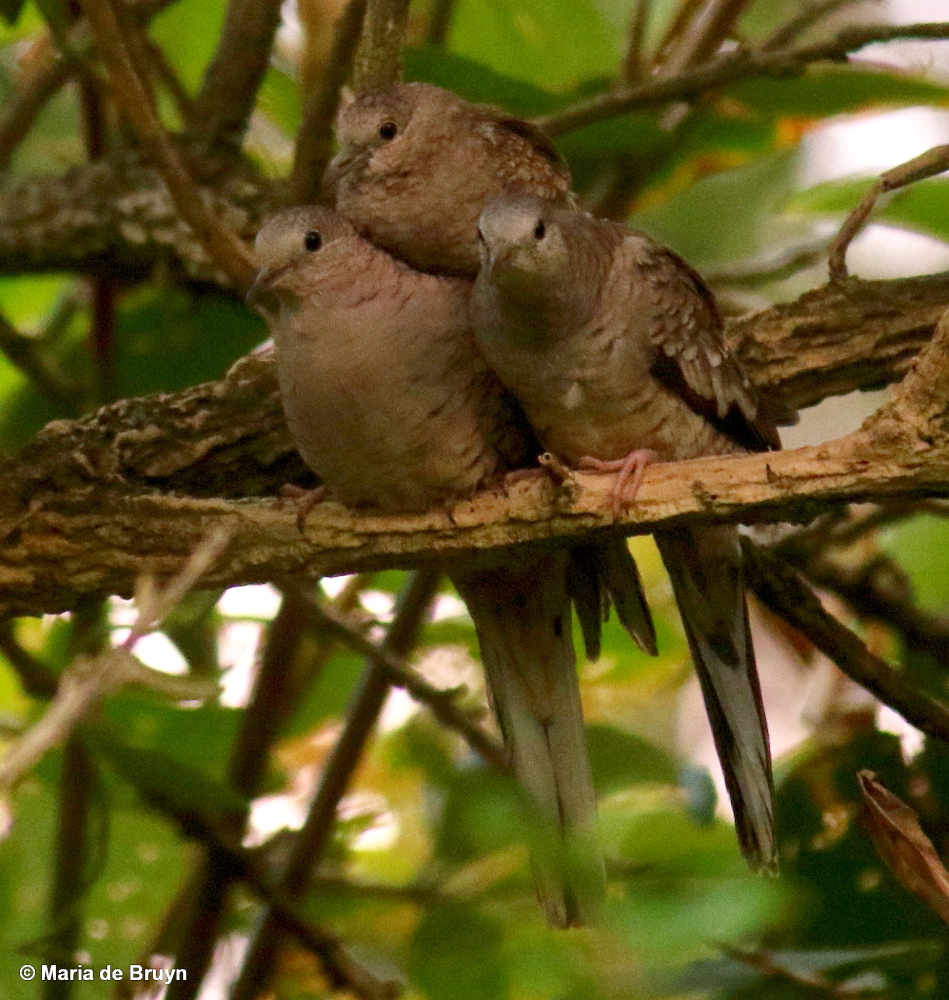
As I began following a hummingbird in an effort to get a close-up, Janet and Joy alerted me to a trio of Inca doves (Columbina inca) who were smushing together in a compact group for the night. It was almost dark and I had to adjust my camera settings a lot to be able to photograph them; they were becoming barely visible in the vegetation but oh so cute. Occasionally, one would leave the line and sit atop the other two but those below always got the third one to come down to the branch again.

Seeing some very cute rufous-collared sparrows (Zonotrichia capensis) foraging in the grass.

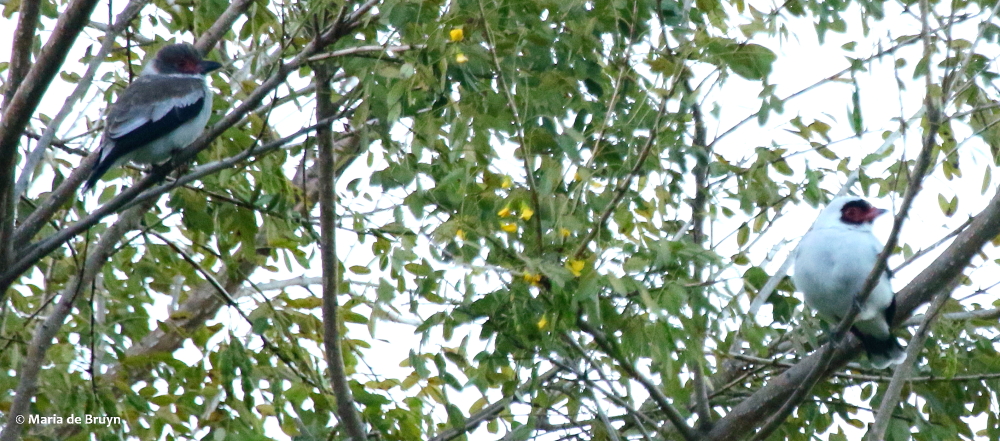
The next morning began with a spotting of a pair of masked tityras (Tityra semifasciata), who were difficult to photograph in the early dawn light.

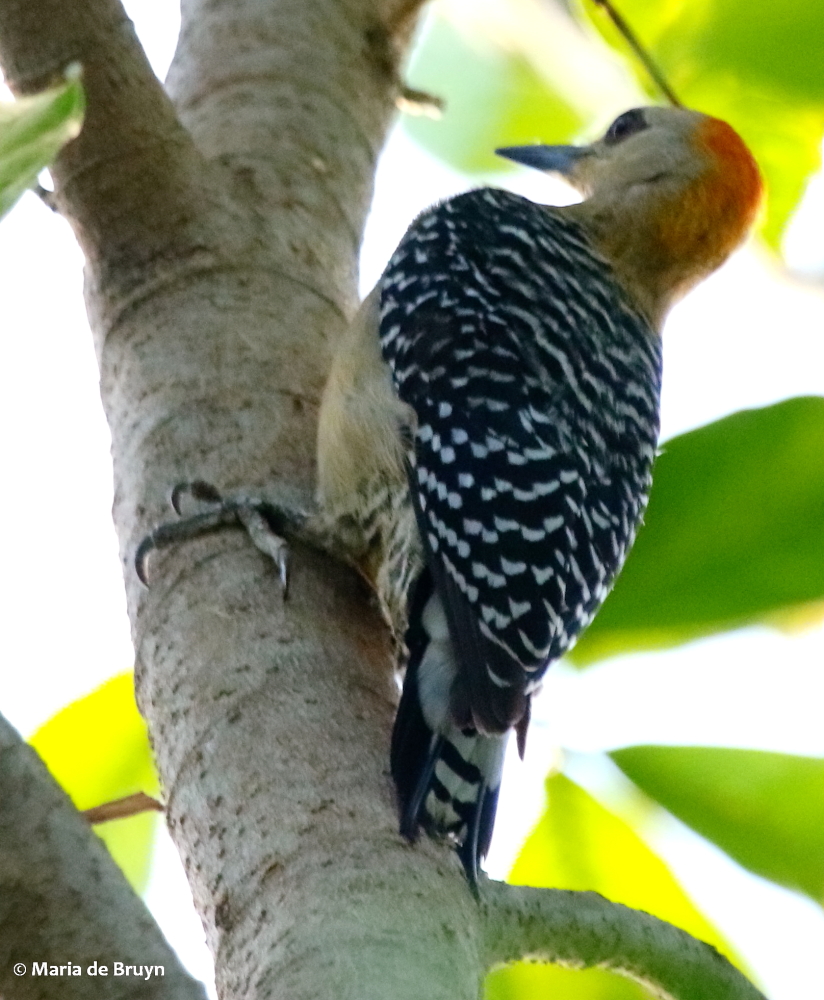
A Hoffman’s woodpecker (Melanerpes hoffmannii, right) came by briefly and as the day started to brighten, a tropical kingbird (Tyrannus melancholicus) alighted on a branch.


It was after that sighting that I discovered a new bird (for me) – the social flycatcher (Myiozetetes similis); I had been calling all birds that looked like these great kiskadees – and they do look very similar to be sure!  And if readers see I have identified a bird incorrectly, please let me know!


My first evening and morning in Costa Rica taught me that the bird photography could be challenging; the lush vegetation meant that the birds are often in between dark leaves and shadows. This meant that I was shooting at high ISOs much of the time, with somewhat grainy photos as a result. I guess perhaps I should finally look into getting a photo editing program!
 

All about Ollie – barred owls at Mason Farm Biological Reserve

The end of winter and start of spring is a good time to look for some of the birds that you don’t see so often. They are not hidden by foliage and may come out more to hunt for a meal as they prepare to cope with the rigors of upcoming parenthood. That has proved to be a boon for me during visits to Mason Farm Biological Reserve where there are several pairs of barred owls (Strix varia) in residence. While these birds usually hunt at night, they have recently been seen out and about much more often in the daytime, perhaps getting ready for nesting and brooding in March and April.
These beautiful raptors sit quite still and often make no sound at all as they turn their heads scanning the ground or a creek nearby for small rodents, crayfish, fish, insects, amphibians and reptiles.


Their brown and white mottled feathers are a perfect camouflage to help them blend in with the bare gray and brown tree trunks and branches of winter. To spot them, you learn to scan trees in the distance looking for a “lump” which your binoculars or long camera lens can then help distinguish as an owl.

These owls tend to stay in one area; a study of 158 banded birds showed that none of them had ventured further away than 6 miles from the spot where they were first seen. At Mason Farm, we tend to hear the owls in specific areas – along a creek, near a couple of open fields and near a bog. These are likely different pairs who can live there for decades – the oldest known barred owl was 24 years old.

After hearing that friend Mary had been seeing one particular owl daily, I began going there more often to catch a glimpse of him/her. I nicknamed the bird Ollie – short for Oliver or Olivia. It turned out that I was fortunate enough to see both Ollies; the pair has become fairly tolerant of people nearby, sometimes perching in trees right next to the walking path.

One mid-afternoon, I was searching the fields for Ollie, noting some of the other birds who were easier to spot because of their movement, like the red-bellied woodpeckers and song sparrows. I was looking into the mid- and long-distance and then glanced up at a small tree next to the path – there was Ollie staring back at me! I had never been within about 5 feet of a wild barred owl before and was able to see him/her really well – what a beautiful bird!

To get some photos, I actually had to back up as I had a long-distance lens on the camera. Some runners came by and saw that I was focused on something, but they never looked up to notice that they were passing couple feet underneath this large raptor. Ollie just watched silently as they ran by and then returned to scanning the ground for prey.

Another day, Mary and I were following an owl from one field to the next. The hunting pattern appears to be: perch in a tree and look intently at the ground around for 10-20 minutes or longer, fly some 20 or more feet away to scan another patch. It appeared that the owl and caught something and s/he flew to a tree branch at the other side of the field. I happened to glance away in time to see the second Ollie flying toward and past us in the field on the other side of the path.  The owls fly completely silently so you have to be lucky to spot them.

Although I’ve seen the pair fairly often now, I continue to find them really beautiful.


When they spot some prey, the owls drop quietly but swiftly down to pounce on the animal. Sometimes they sit there for a minute or two, presumably swallowing the entire animal if it is small. If it is larger, they will carry it off to have their meal in a tree.

On one of our walks, Mary’s sharp eyes spotted an owl pellet and friend Lucretia and I dissected it. The pellets can contain the remains of several meals and we thought that a couple small animals’ remains were contained in the fur-covered mass. A tiny skull and pair of jaw bones with minuscule teeth could be distinguished – perhaps a vole or baby mole.

On one of my most recent spottings of Ollie, s/he was spending time taking little power naps in between ground scans. On other days, the owls had brief snoozing periods, too. The feathers on their eyelids are very cool! When a pair calls to one another, you can distinguish the male and female. The male’s call ends abruptly while the female adds a little trill to the end of her call.


On my last foray to the reserve to see owls, I was following Ollie’s progress along the field when another birder spotted me taking photos. After a while, about six or seven walkers were watching and Ollie finally flew to the top of a pine tree not far from the path so they could all admire him/her.

The one predator that goes after the large barred owls is the even larger great horned owl (Bubo virginianus).


When people go too close to a barred owl’s nest, the owls will become agitated, so we should keep that in mind and not bother them there. Oliver and Olivia seem not to mind people too much right now, since they will fly to perch near a path where people are passing. I do try to limit how much time I spend following them, though, even though they can fly away. Just like us, the owls do want to be able to go about their business in peace!


Winter wonderland – the bigger and colorful birds

In this second-to-last blog of the snowstorm series, I’d like to feature the bigger and colorful birds who demonstrated how they adapted their feeding habits to the prevailing weather. The Northern cardinals (Cardinalis cardinalis) actually didn’t change their behavior that much – they looked on the ground for fallen seeds and spent plenty of time at the feeders.

They spent some time in the snow-laden trees looking lovely, too.


The Eastern towhees (Pipilo erythrophthalmus) usually spend their time foraging underneath the feeders in search of fallen seed and they continued that behavior during the snowstorm. Unfortunately, the female was carrying a tick; I had already seen a robin and a junco with ticks on their faces – this may mean that the coming spring and summer will be an especially bad tick seasonal period for us.


The beautiful brown thrasher (Toxostoma rufum) looked both on the ground and at the feeders for his meals. Despite his size, s/he never bullied any other bird.


The remaining juniper berries on the red cedar trees (Juniperus virginiana) attracted the blue jays (Cyanocitta cristata).

The Northern mockingbird (Mimus polyglottos) was also seeking food there.


The cedar waxwings (Bombycilla cedrorum) and American robins (Turdus migratorius) had already been eating the juniper berries in the autumn; the waxwings had been by about a week earlier but now the robins were all over the trees, shaking off accumulated snow to get at the remaining fruit.


One robin looked as if s/he might have lost some outer feathers but it didn’t seem to affect her balance or flight. Occasionally, a robin also visited the meal worm feeder.


On the days following the big snowfall, as the snow melted more and more, the robins began eating it. During a previous snow event, they had joined the cedar waxwings on the roof of my house to get their drinks that way; now they were taking the snow from the trees.

They weren’t the only ones taking advantage of the opportunity. The Northern flicker (Colaptes auratus), who did not visit the feeder, spent a lot of time in an oak tree near the feeders eating snow.


There were a few birds that visit my yard who didn’t show up during the snow. They included the American crows and the hawks who often make the birds scatter from the feeders: the Cooper’s, sharp-shinned, red-tailed and red-shouldered hawks. They must have been looking for food elsewhere.

Some birds may have also avoided the feeders because of the large number of competitors who showed up, a feature of the next and last blog in this series.

Winter wonderland – the smaller and medium-sized birds

Oddly, during our January snowstorm, the brown-headed and white-breasted nuthatches did not visit my bird feeders – that was unexpected as they really do like the sunflower and other seeds, as well as the home-made suet. Other smaller birds did appear, however, and they filled up on the provided food since finding insects was almost impossible during those days.

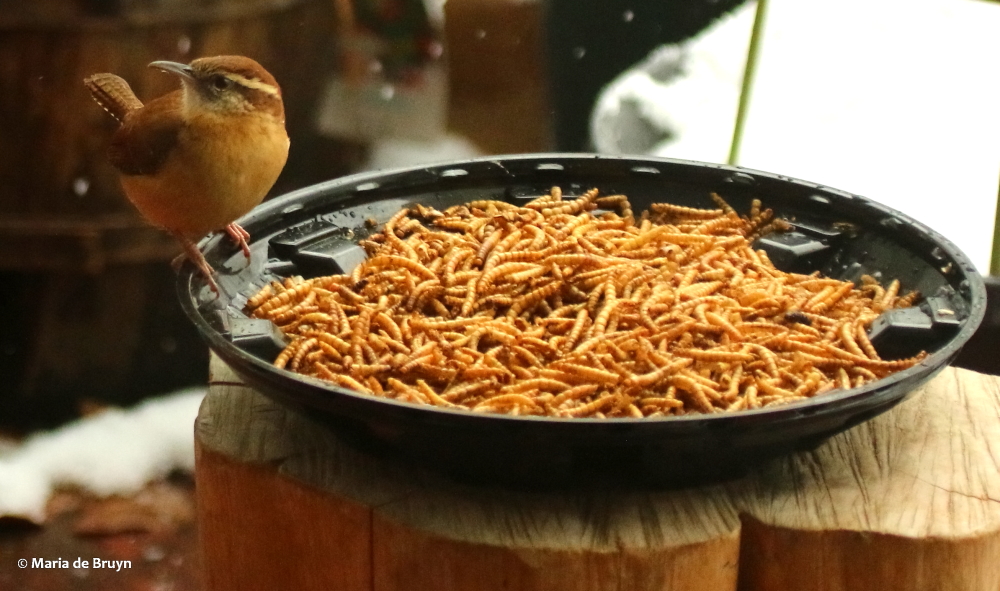
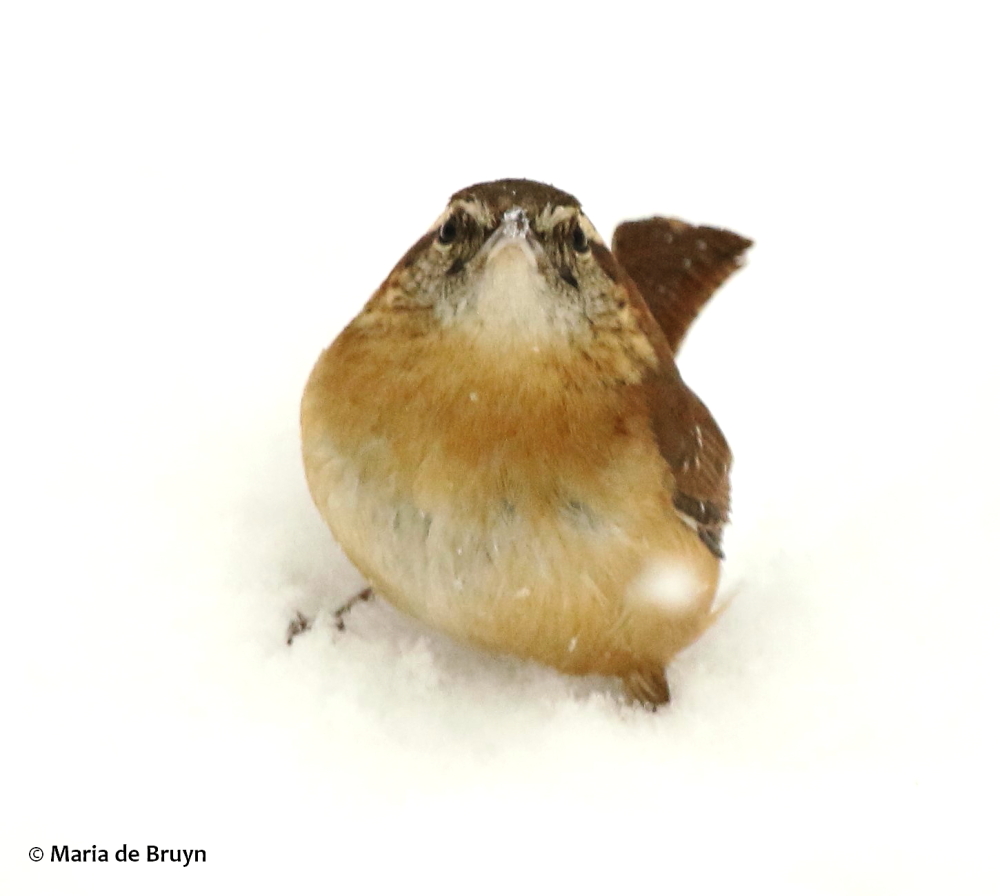
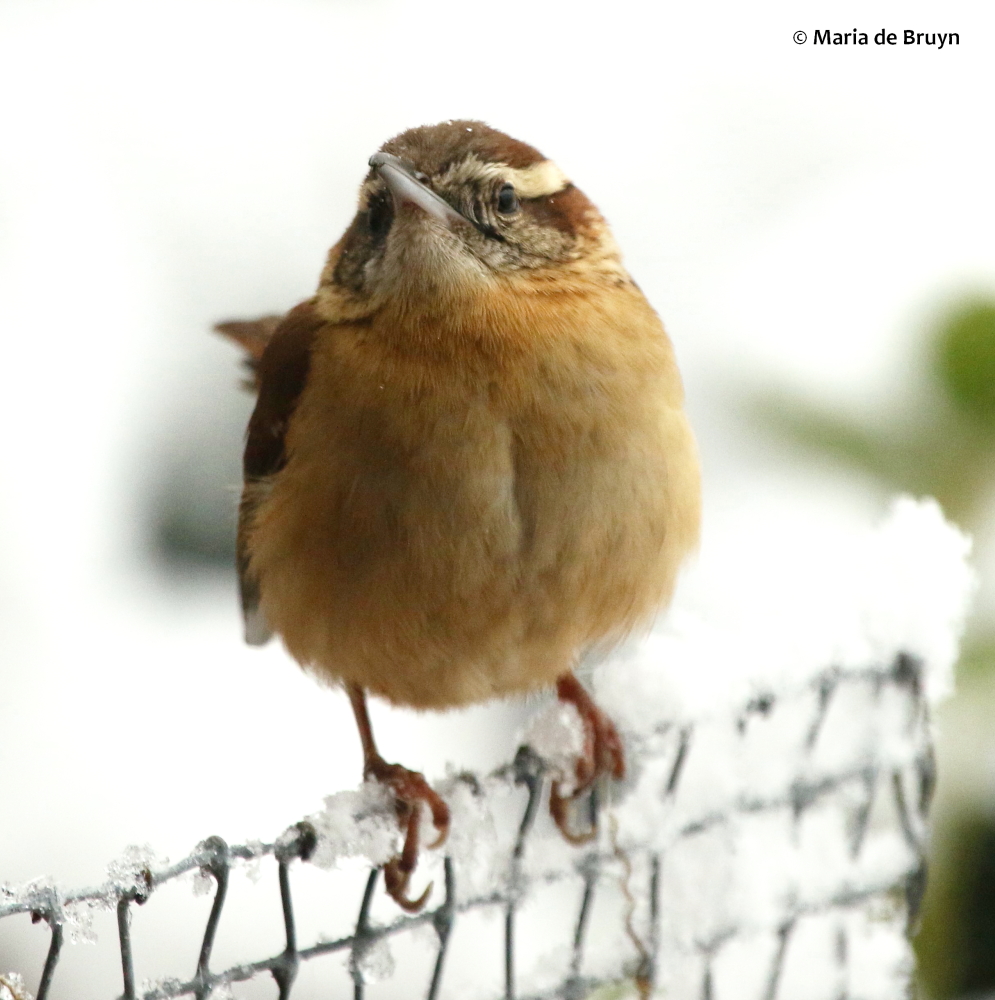
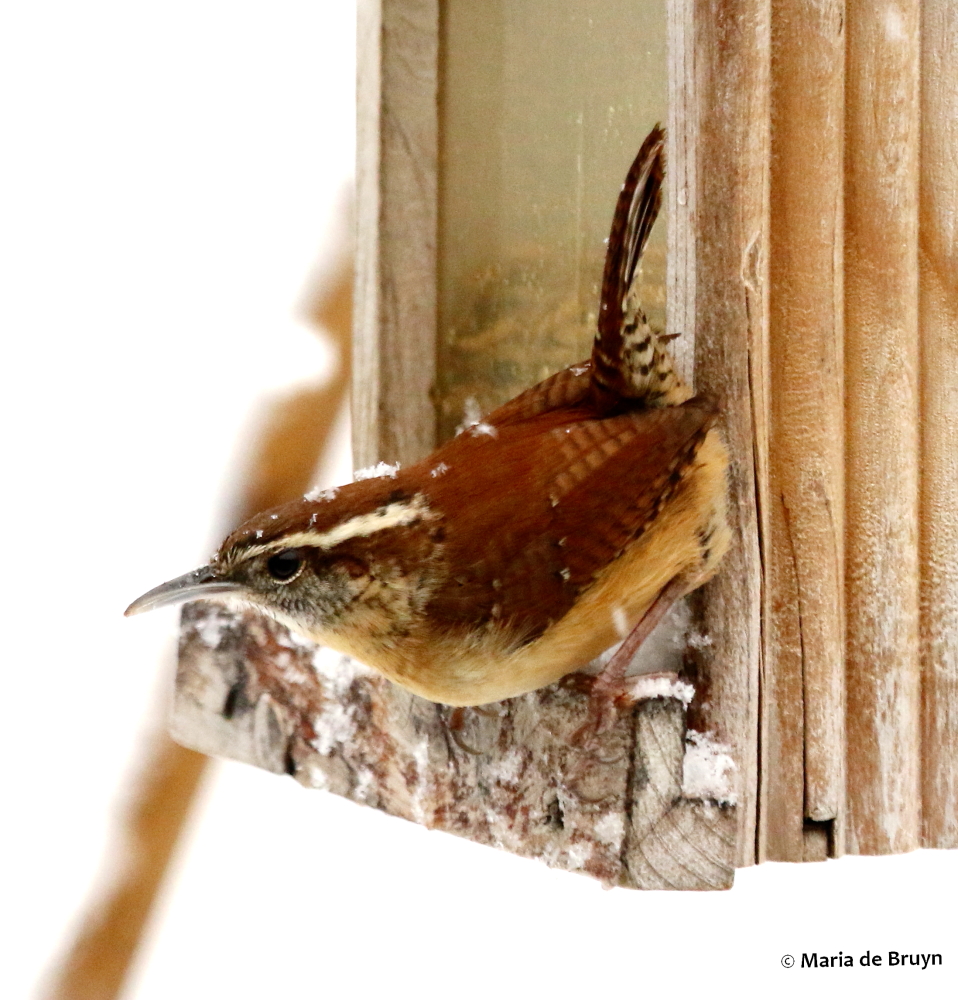
The Carolina wrens (Thryothorus ludovicianus) were fans of the dried meal worms and at one point, I put out an extra tray of these treats on the dry front porch. Other birds are more reluctant to come onto the porch so they had a nice quiet feeding area, although they also spent time perched on the snowy bushes and feeders.


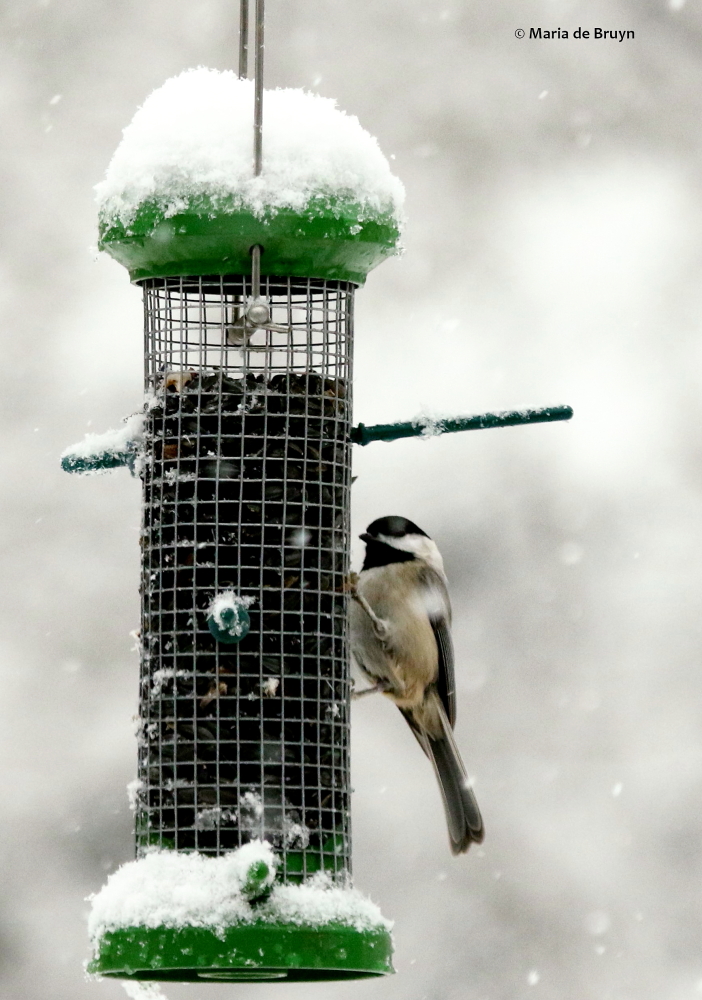
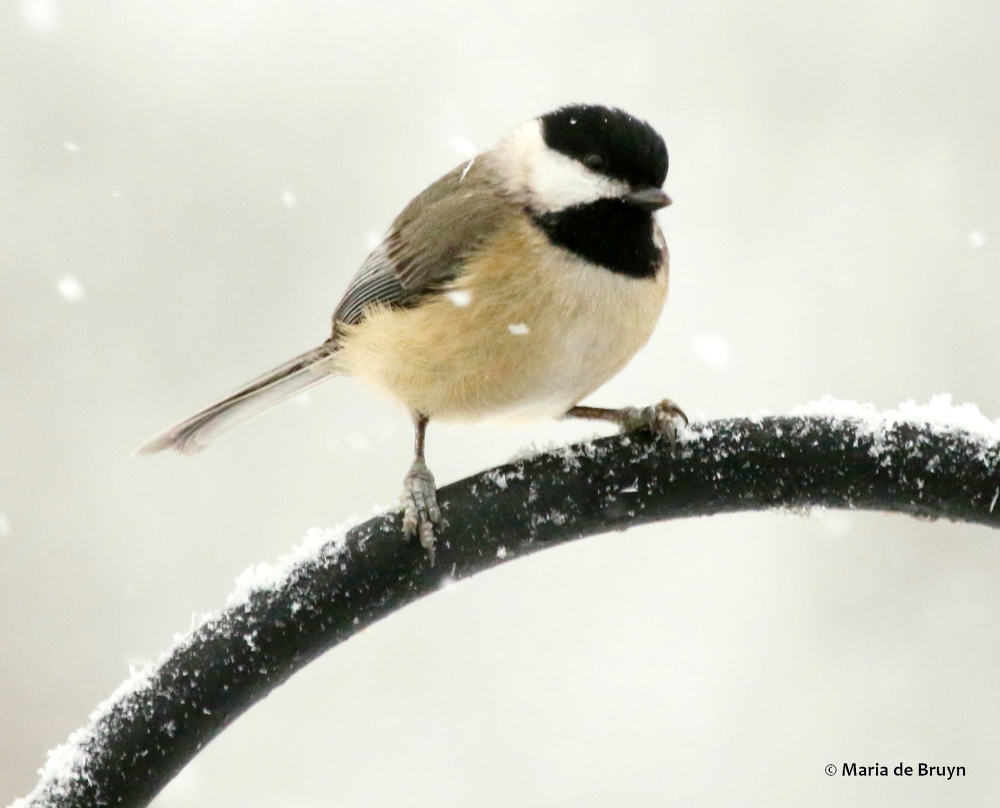
The Carolina chickadees (Poecile carolinensis) worked their way in between the other birds to reach the feeders, sometimes waiting patiently on a feeder pole for their turn.

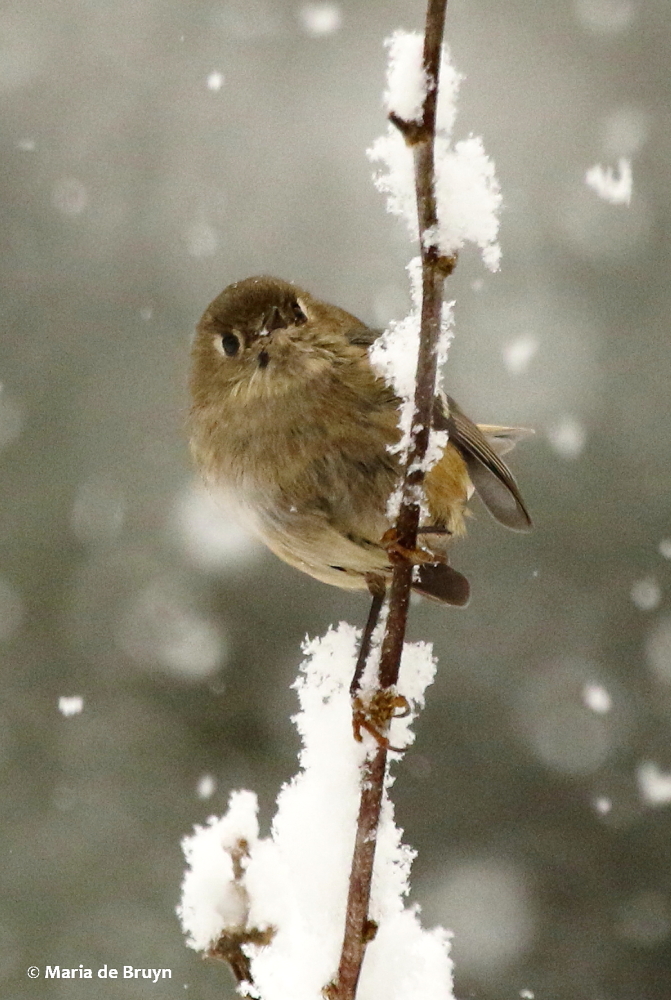
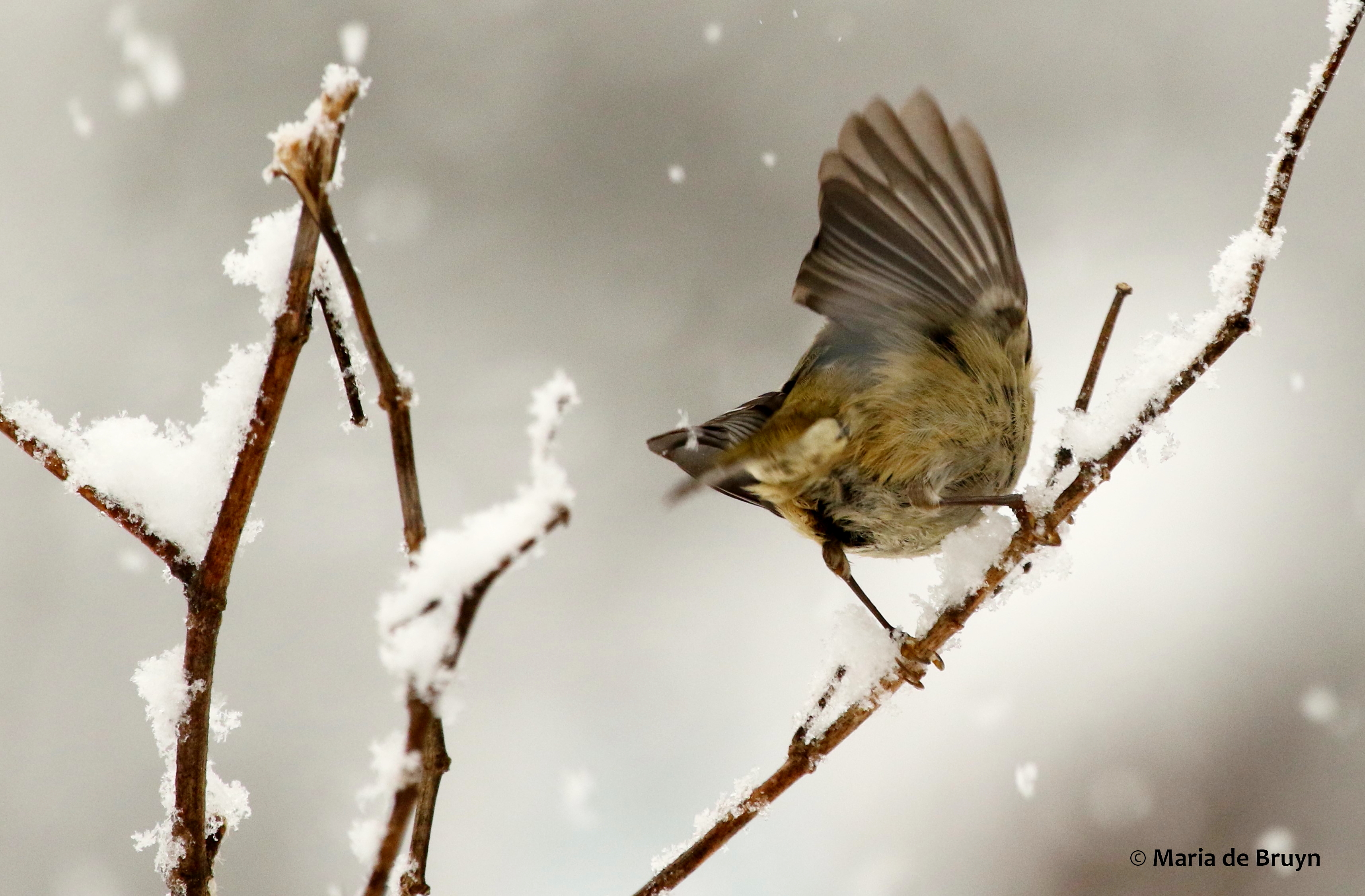
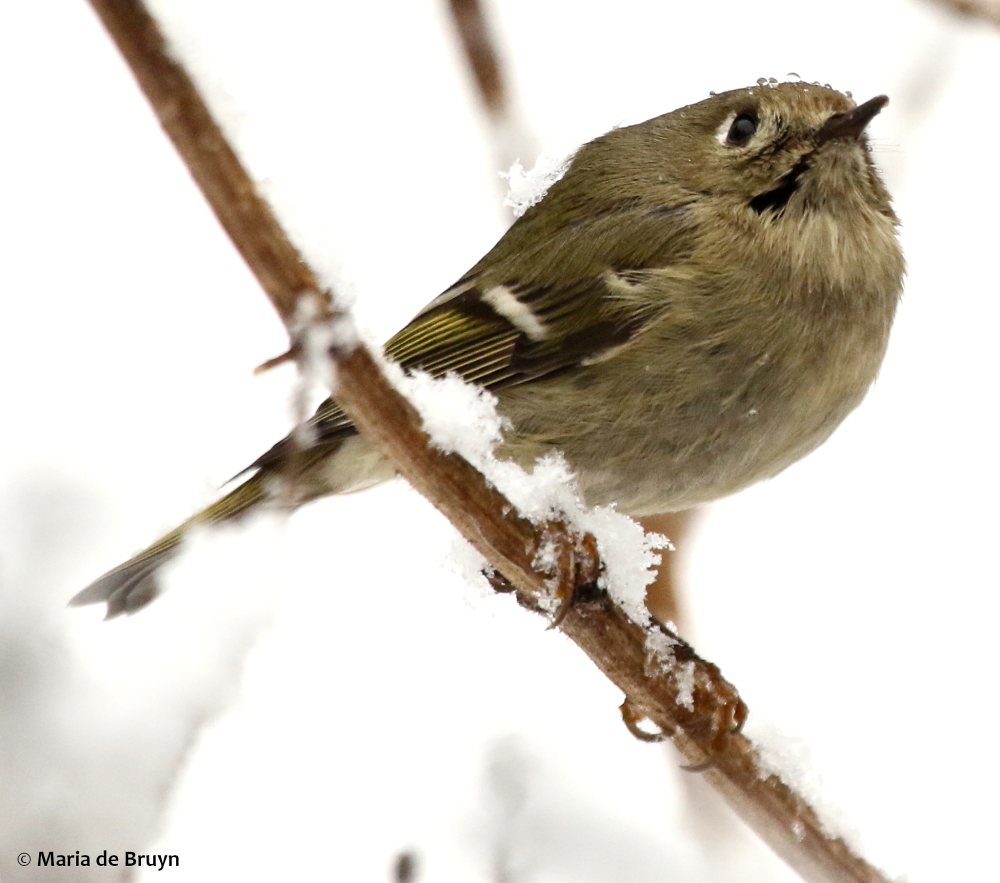
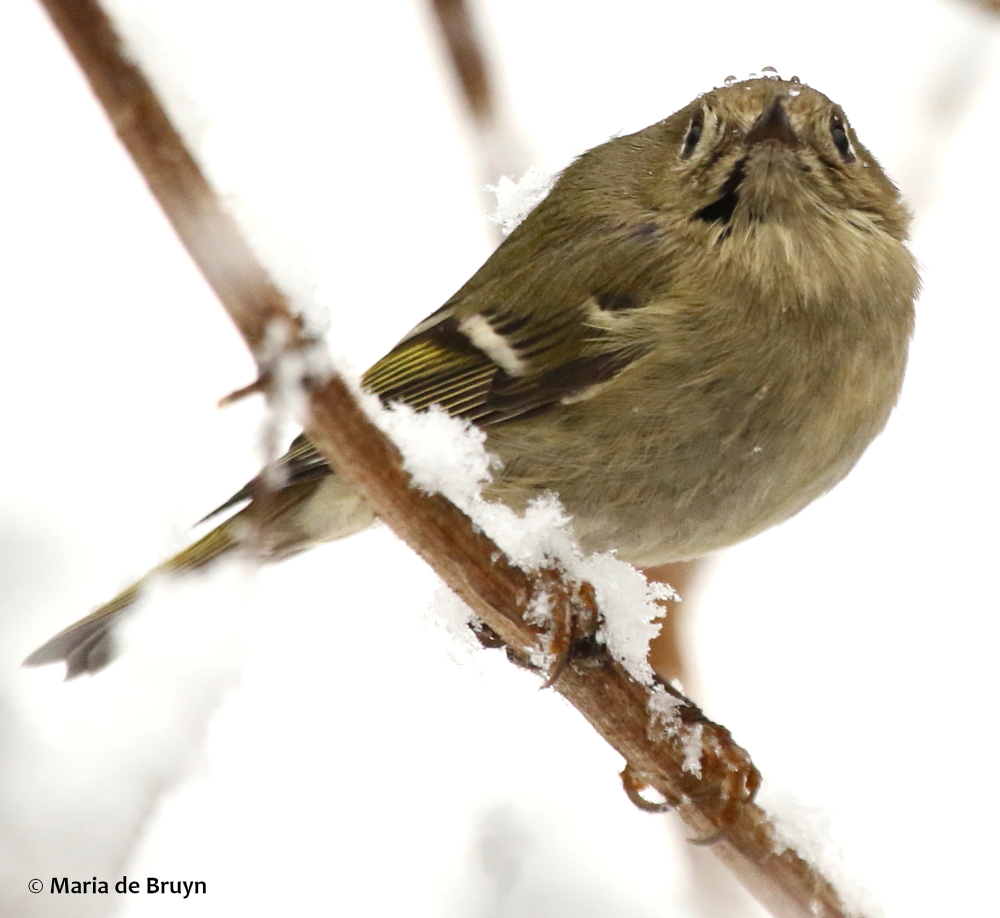
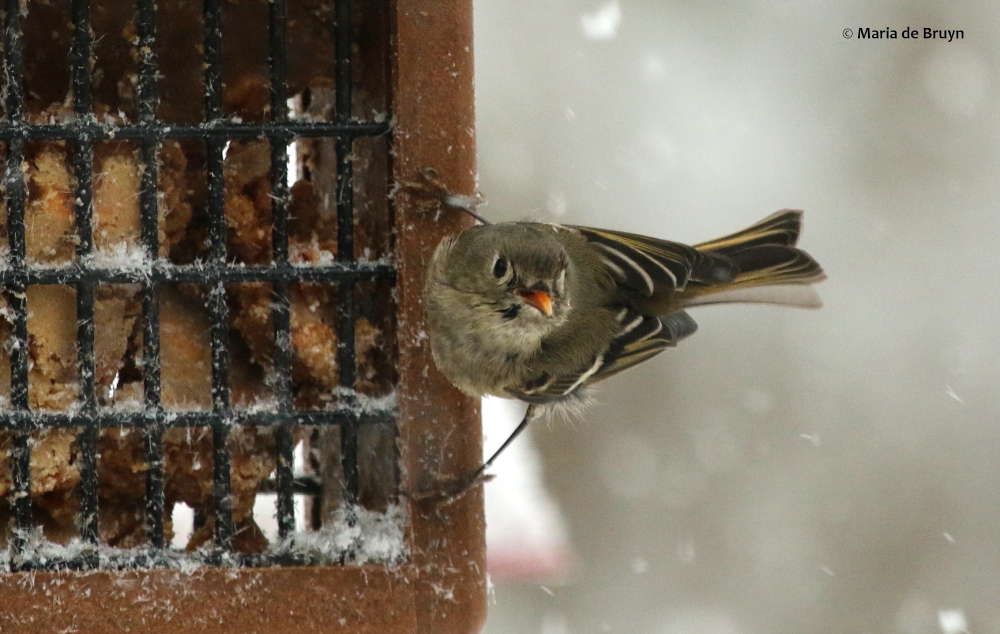
The ruby-crowned kinglets (Regulus calendula), of which I have two visiting the feeders, were happy with the home-made suet. Occasionally, I smeared a bit of suet on dried flower stalks and they would perch there to snag a bite to eat. Other times, they just waited on a twig until the yellow-rumped warblers had vacated the area so they could eat in peace.


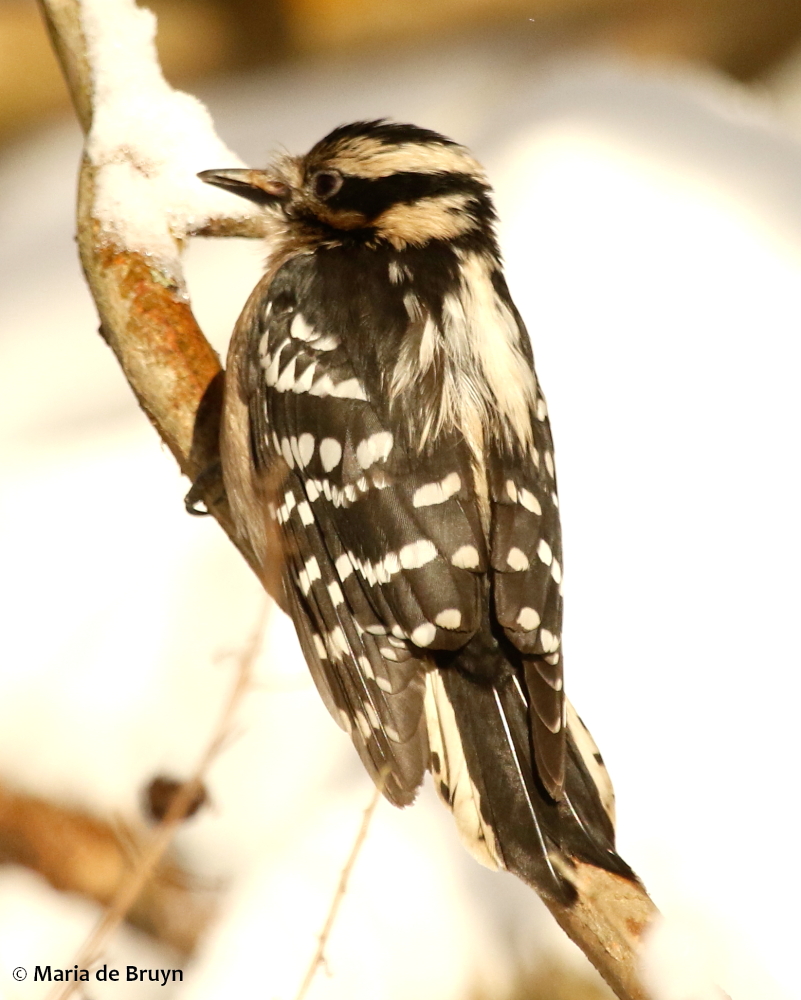
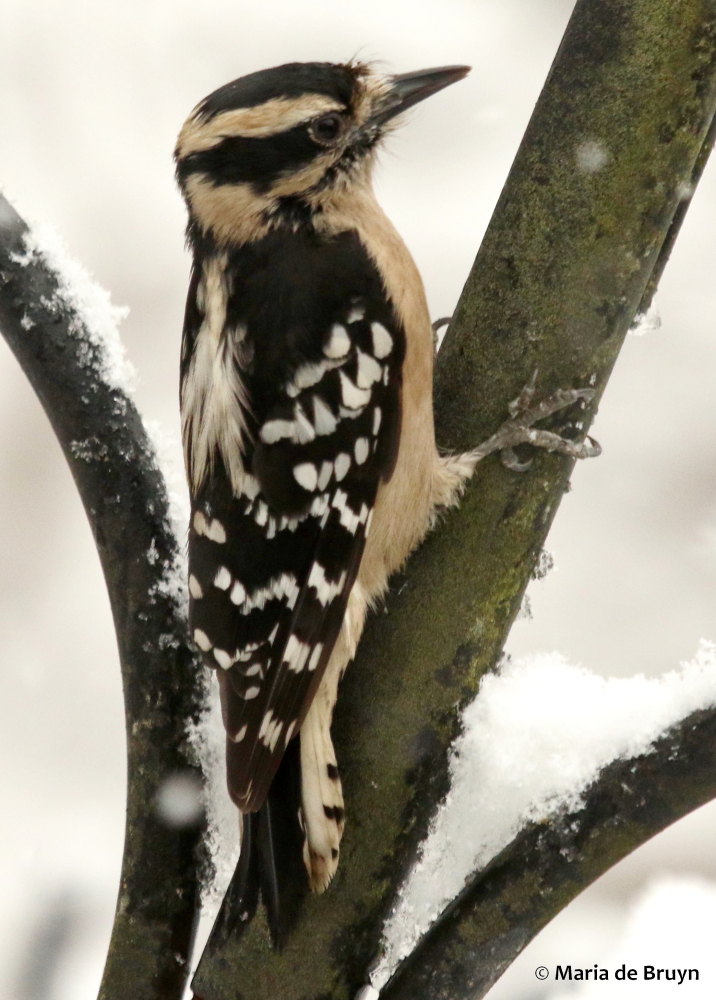
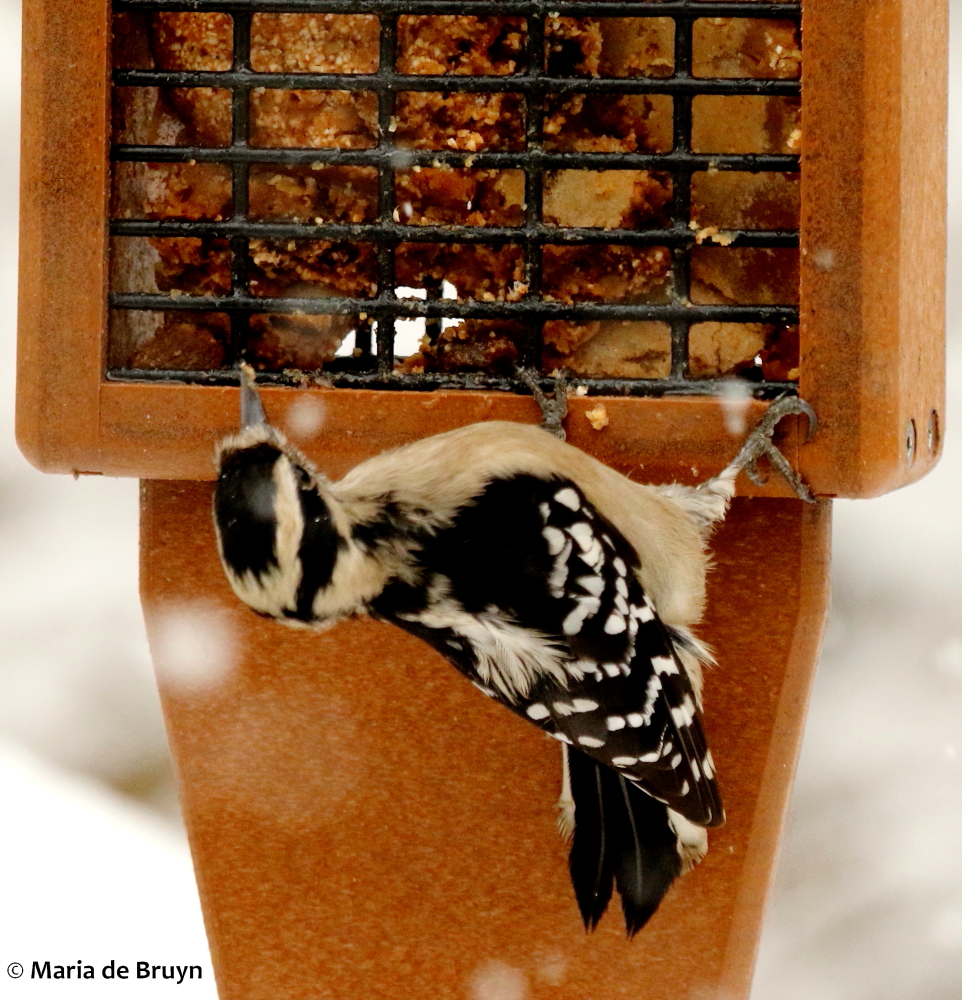
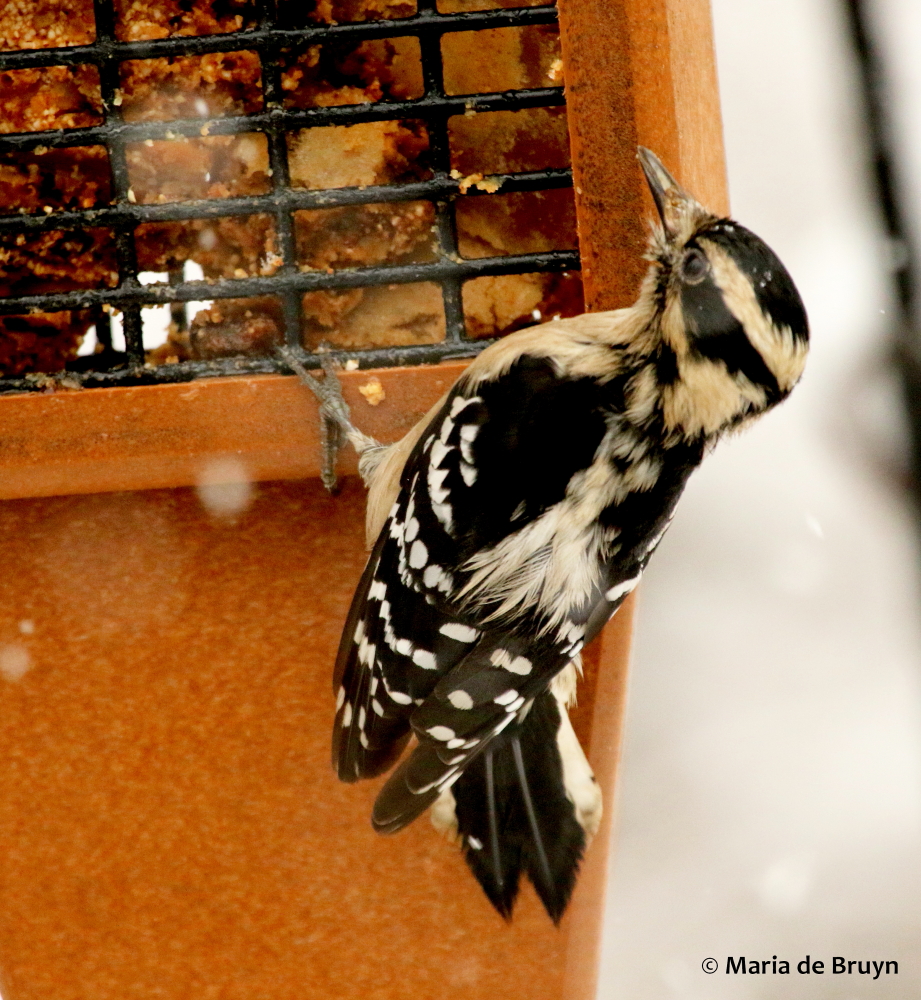
While the downy woodpecker (Picoides pubescens) is slightly larger, they are like the small birds in being somewhat hesitant to approach feeders if there is a crowd. Once on a feeder, they will feed and then hang on to take a look around.


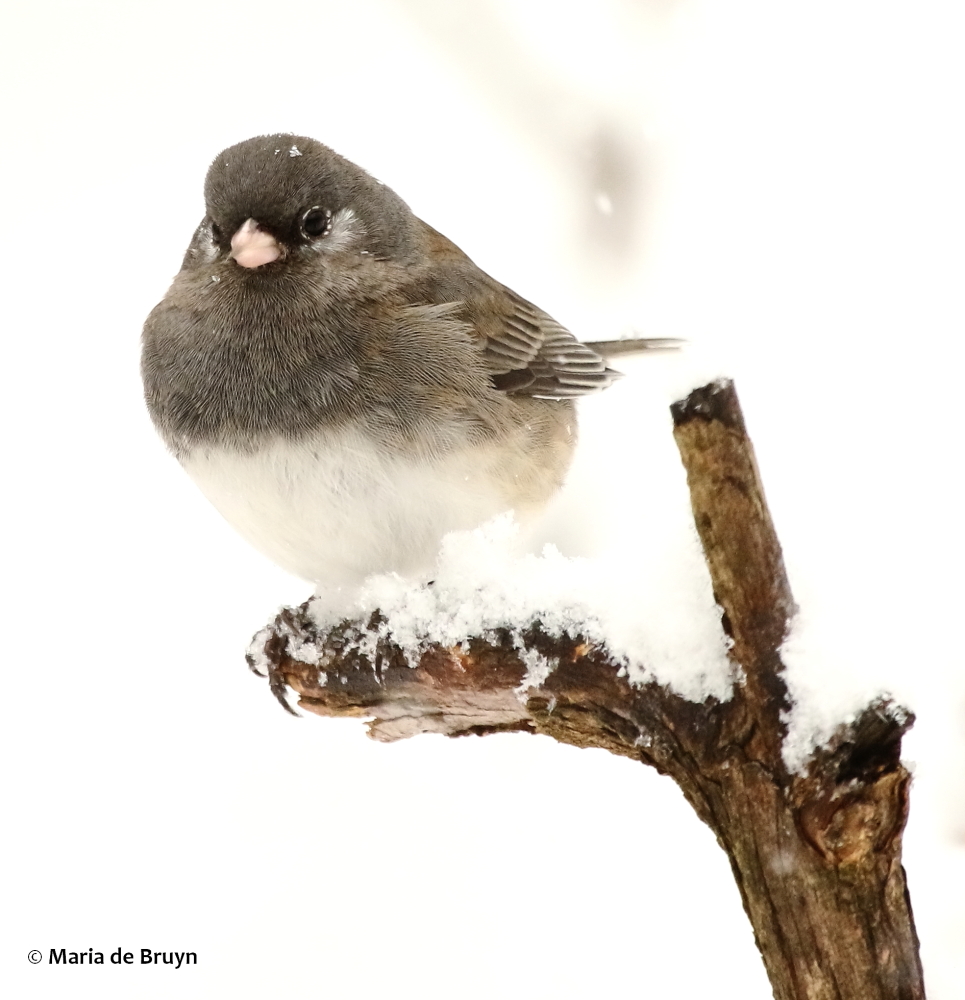
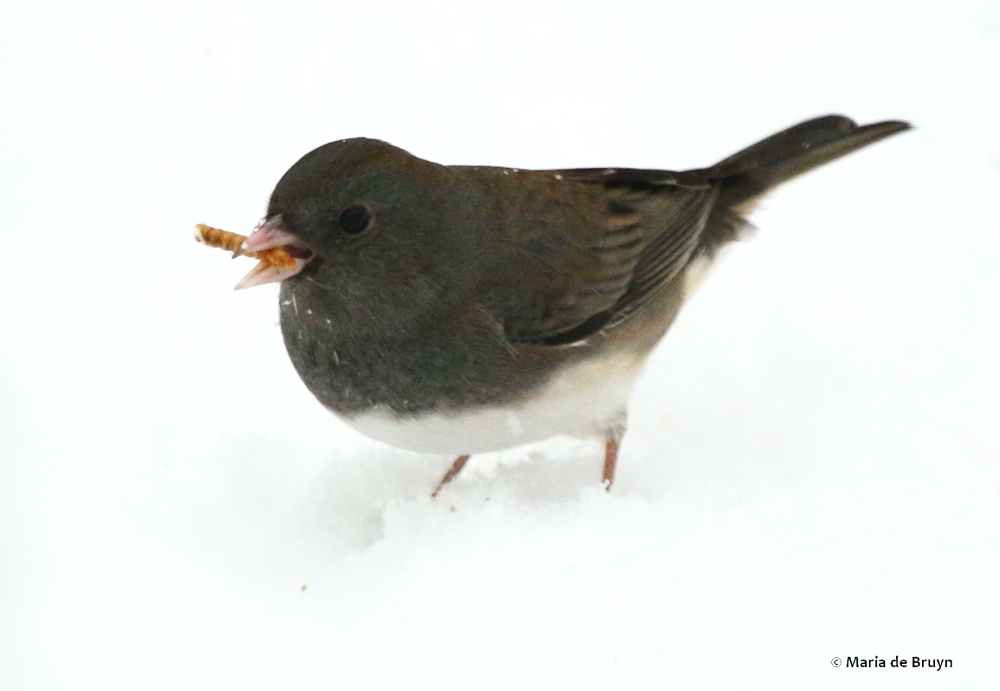
The dark-eyed juncos (Junco hyemalis), who have an understated quiet beauty, were looking for meal worms.


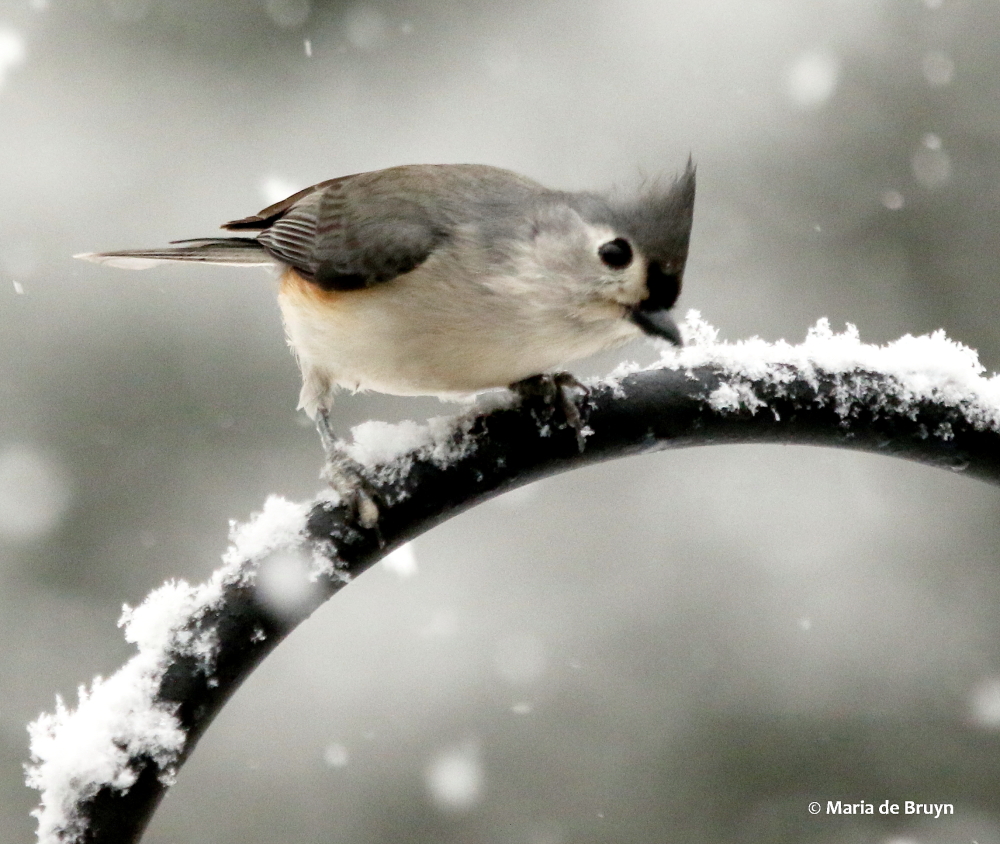
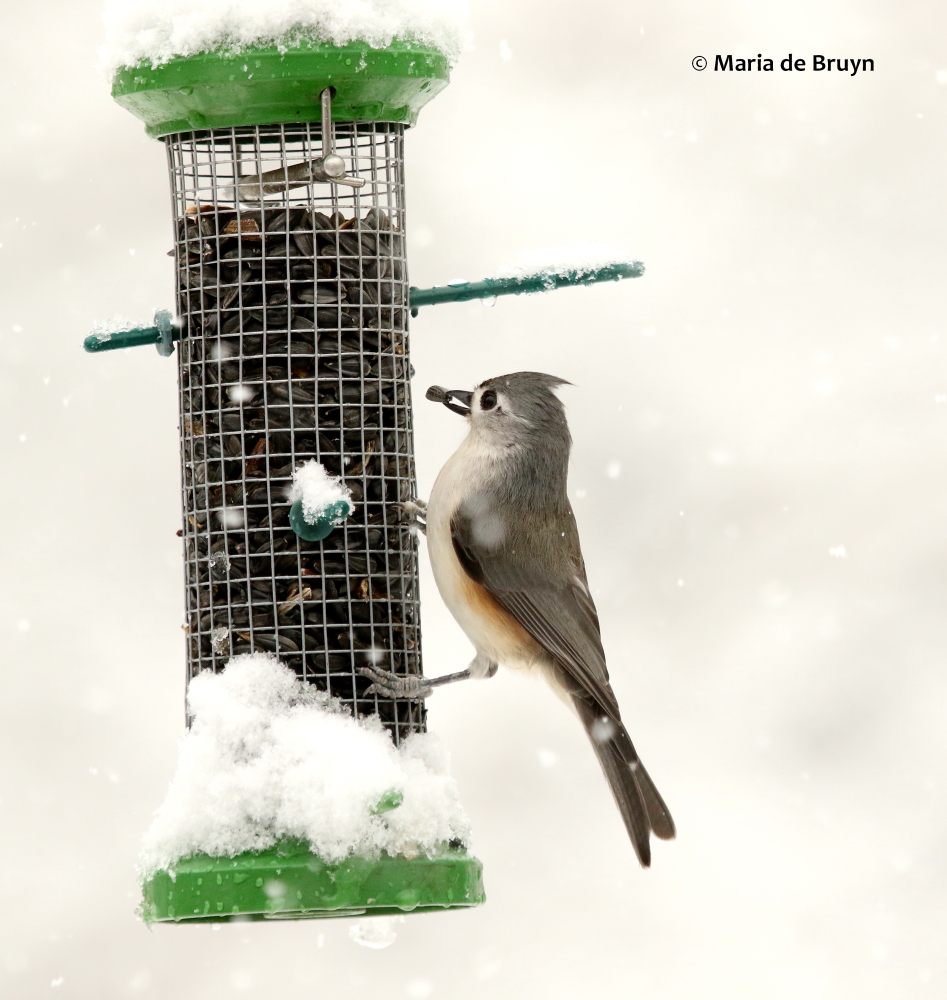
The similarly colored tufted titmouse (Baeoloophus bicolor) often zoomed in on its target of the fruit and nut feeder without taking time to perch first.

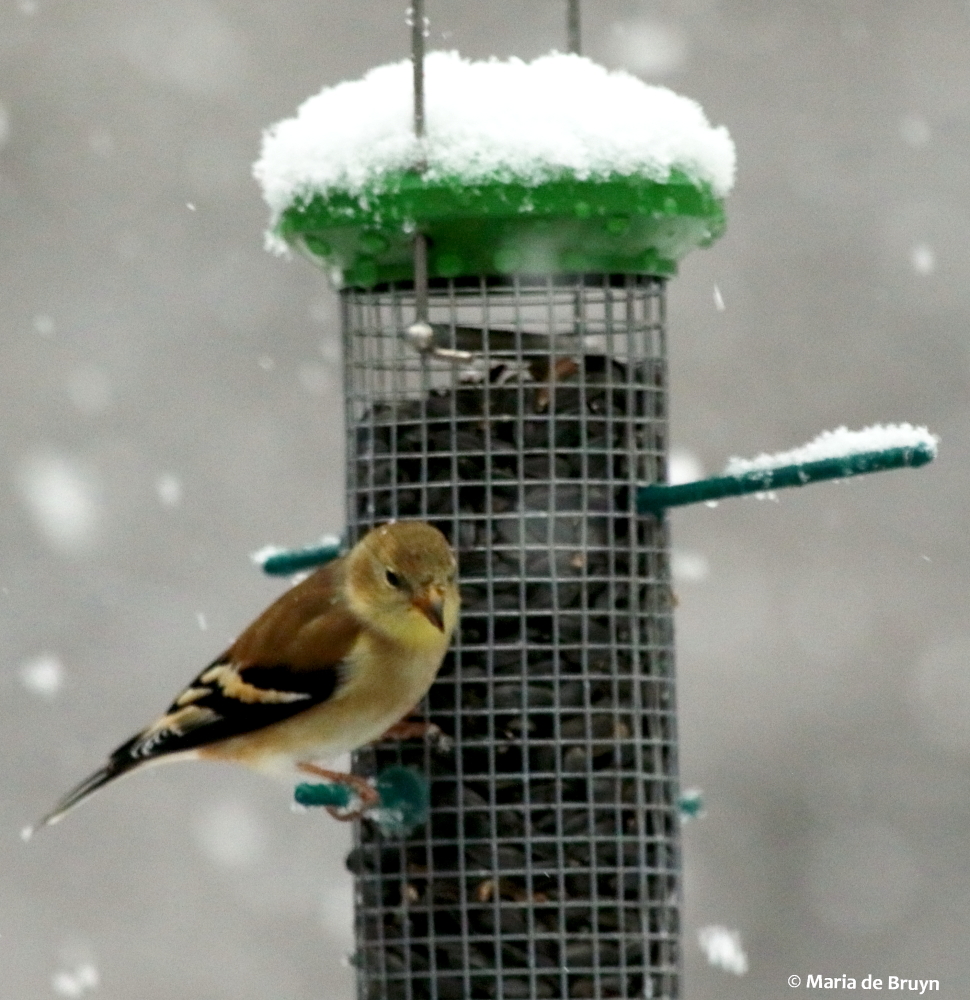
The American goldfinches (Spinus tristis) didn’t come round very much, only snacking on some sunflower seeds. Since they often feed on the crepe myrtle tree seeds, they were likely finding enough food there.

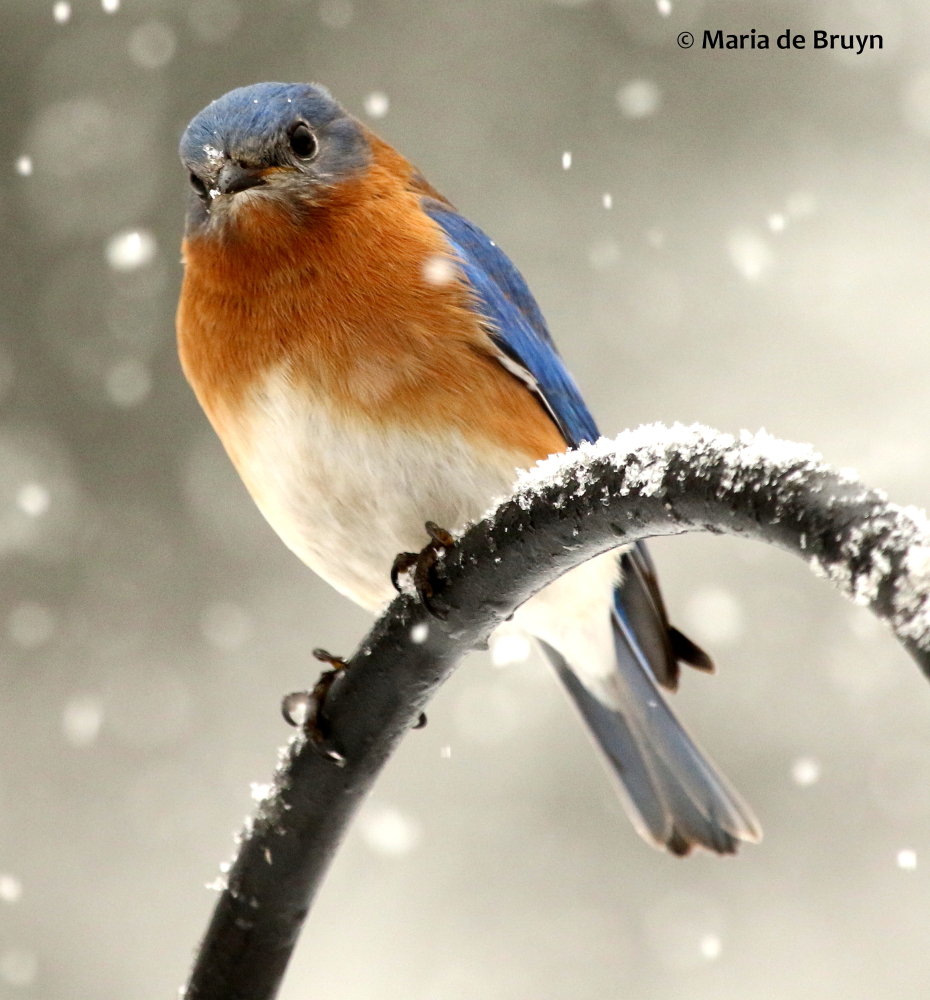
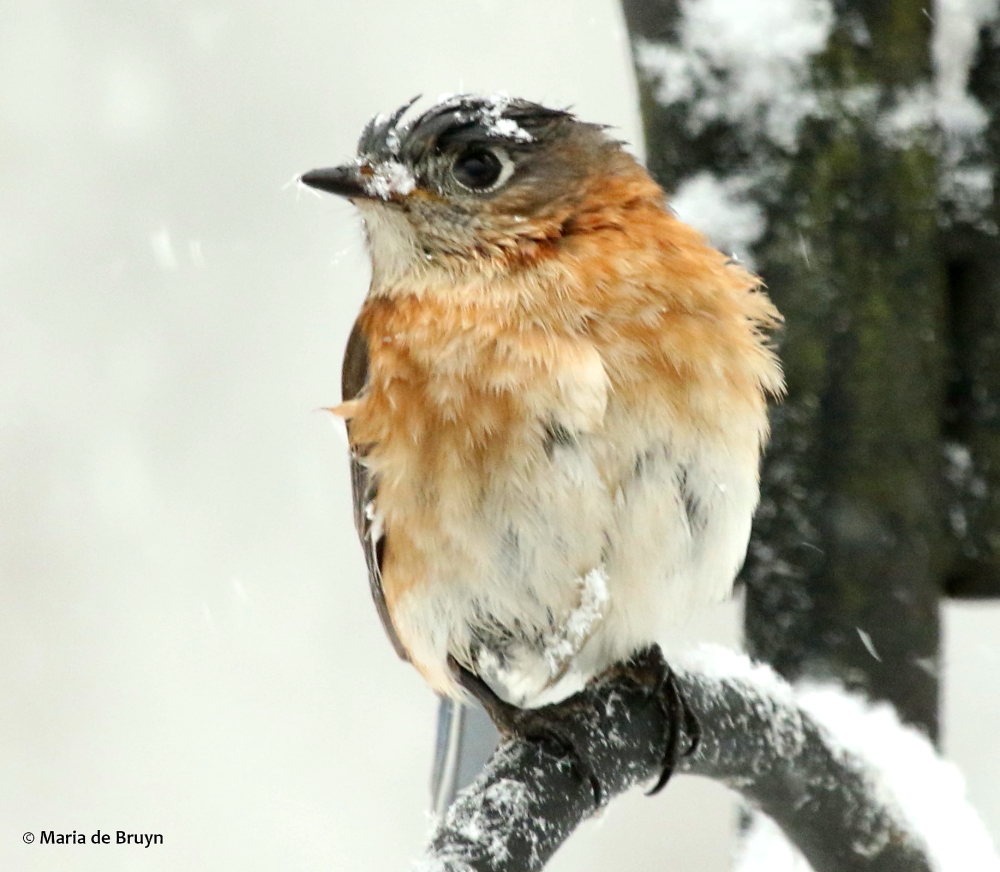
The Eastern bluebirds (Sialia sialis) came in spurts of activity. They always look rather bedraggled when they get wet with snow or rain and perhaps prefer to stay drier under branches until there is a break in the falling moisture. Even wet, though, they are still attractive to me.

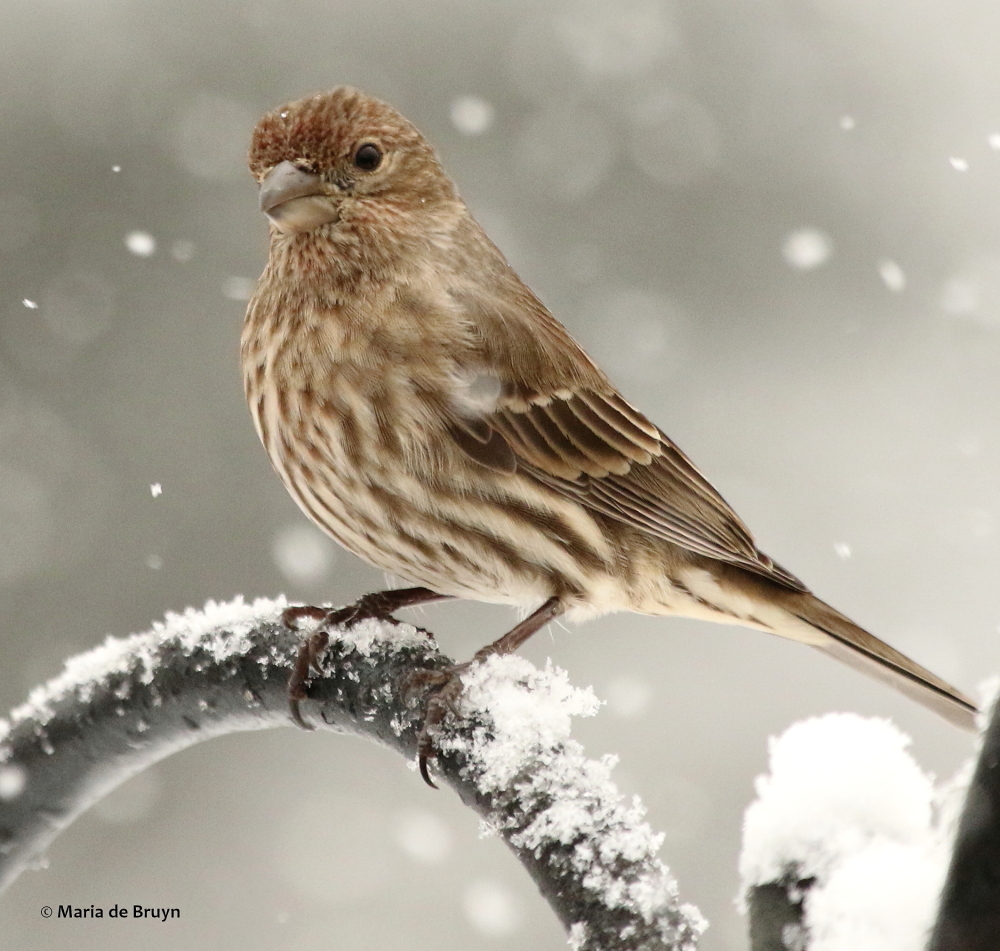
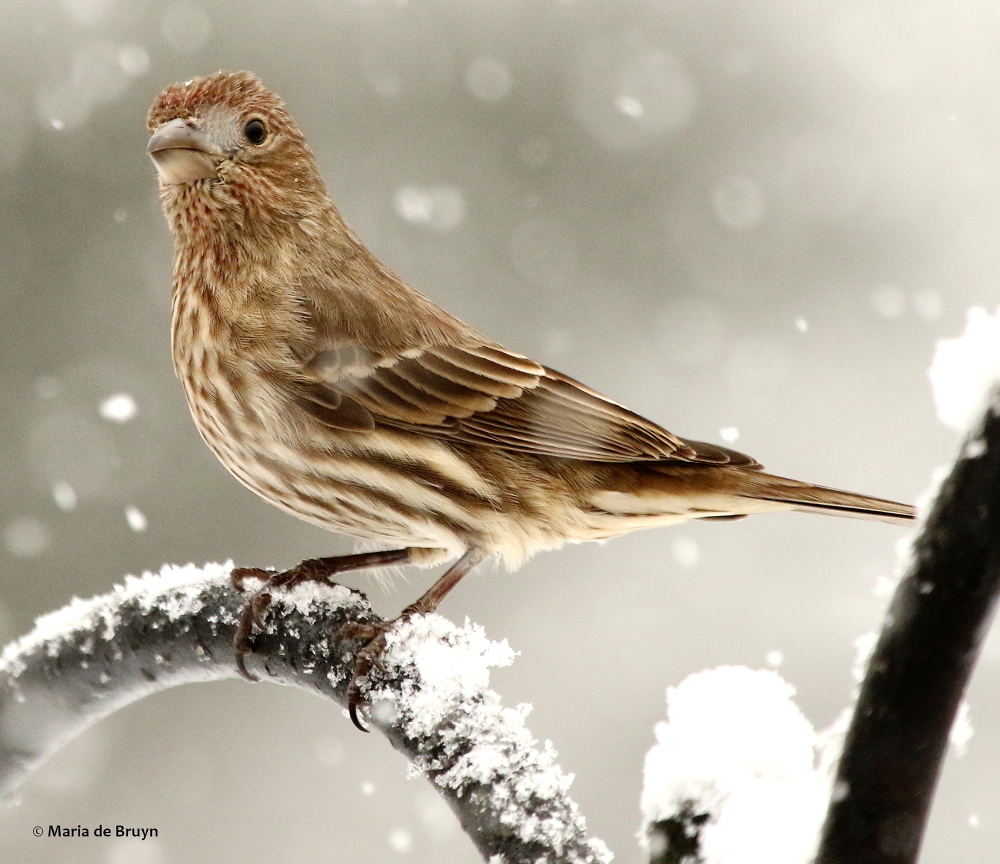
The smaller/medium bird group was rounded off by the house finches (Haemorhous mexicanus). The females were looking especially nice. The finches never have spats with anyone and are among the most peaceful feeder birds. Not everyone was like that, however, and the next blog looks at the rowdy ones.