Winter wonderland – the smaller and medium-sized birds

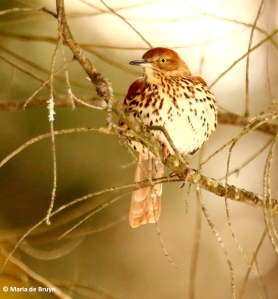
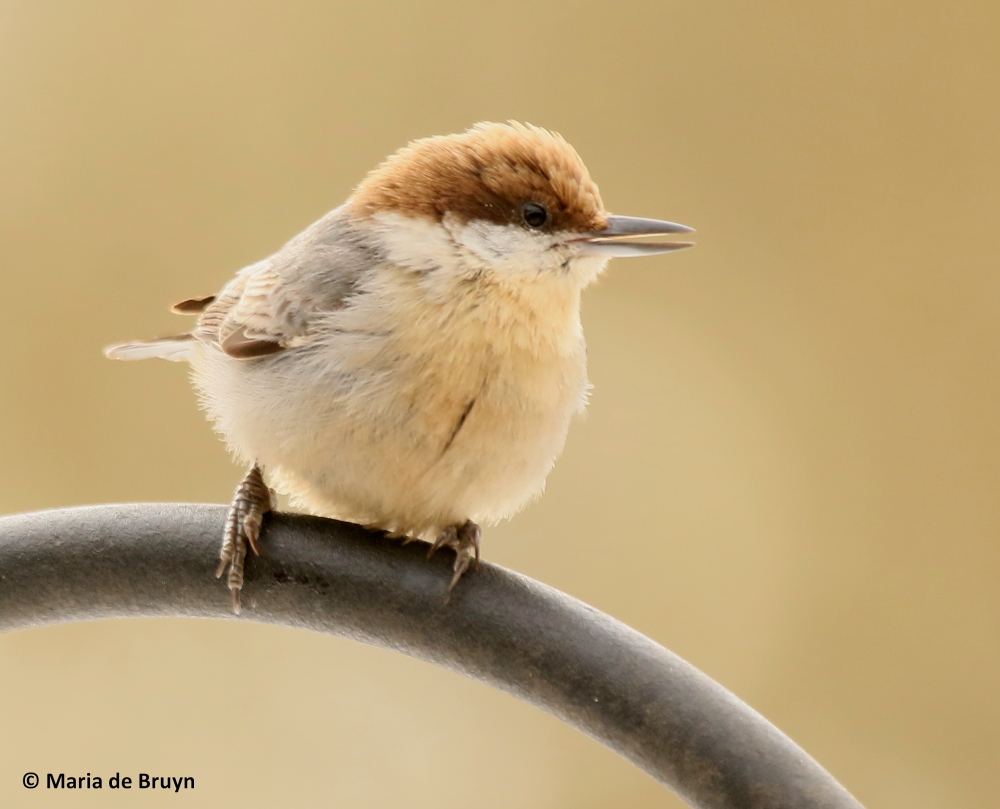
Oddly, during our January snowstorm, the brown-headed and white-breasted nuthatches did not visit my bird feeders – that was unexpected as they really do like the sunflower and other seeds, as well as the home-made suet. Other smaller birds did appear, however, and they filled up on the provided food since finding insects was almost impossible during those days.

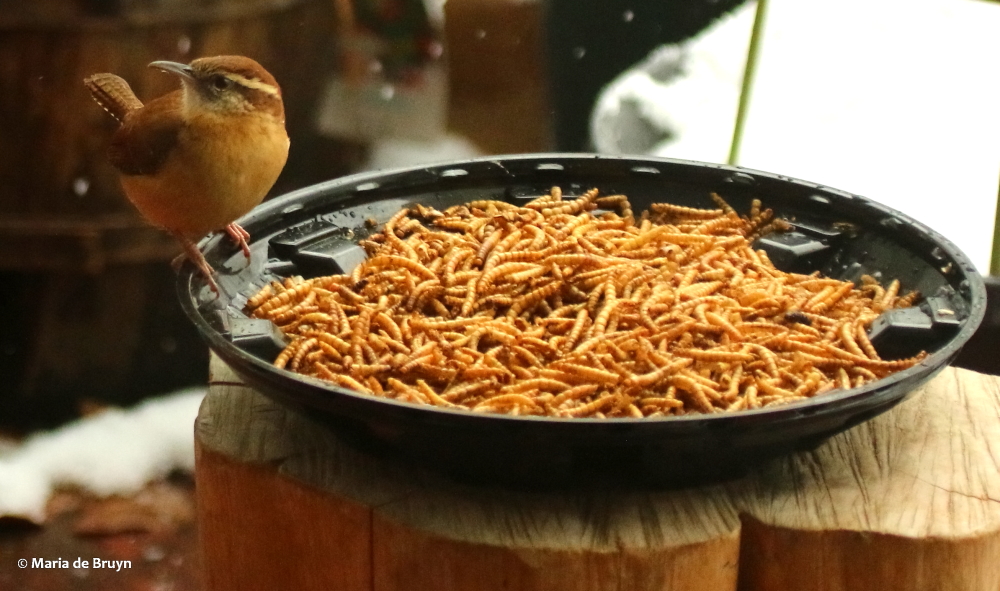
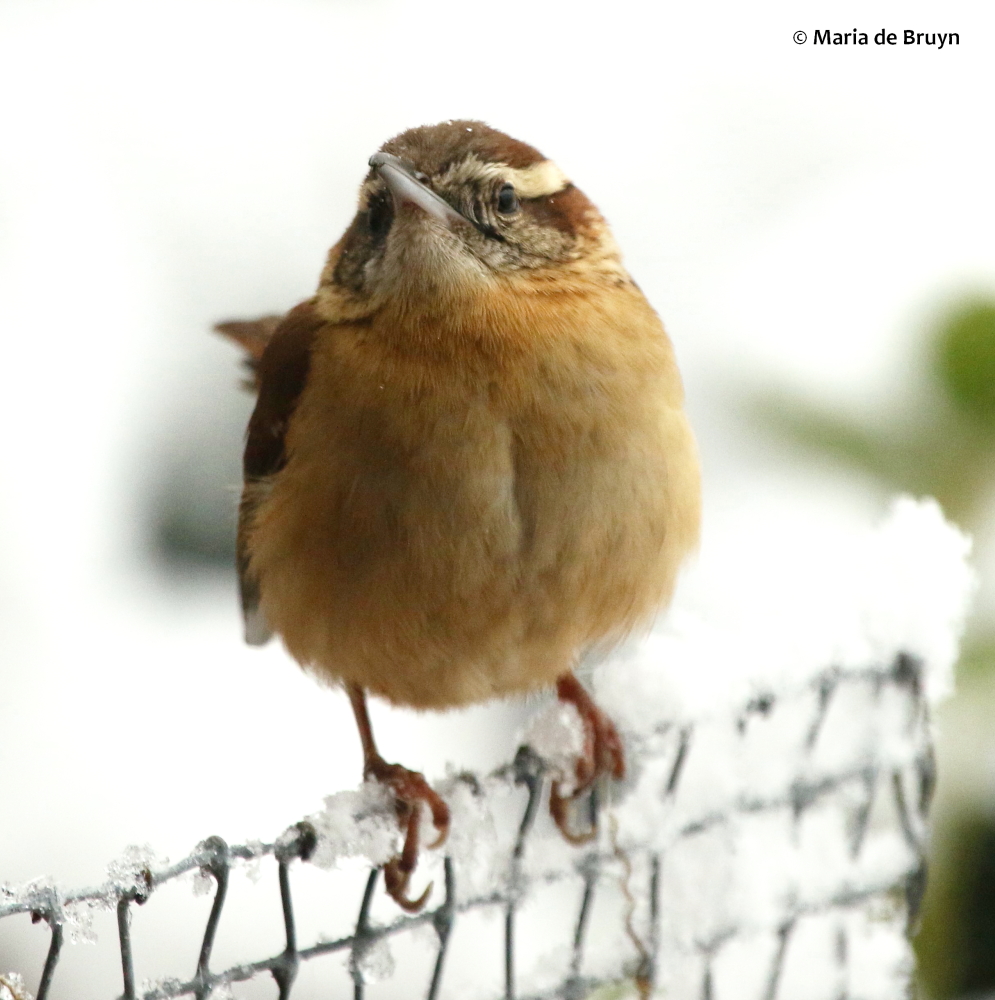
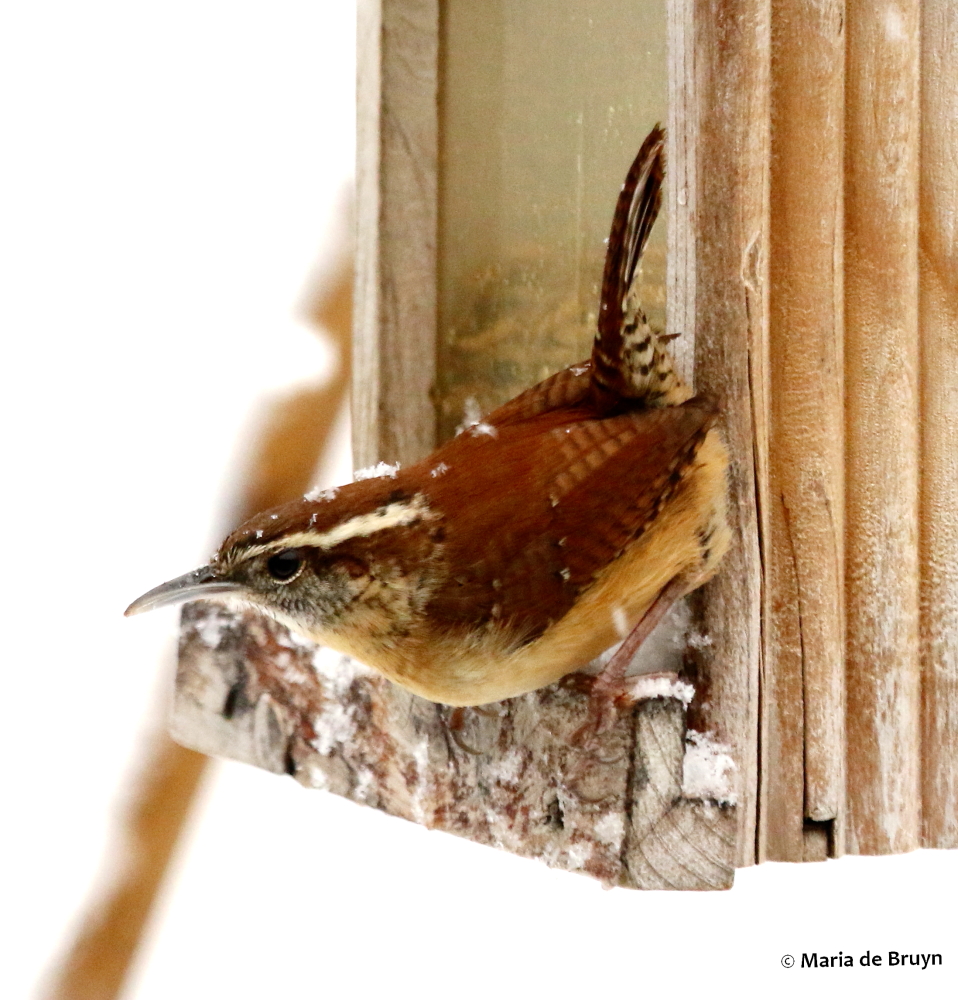
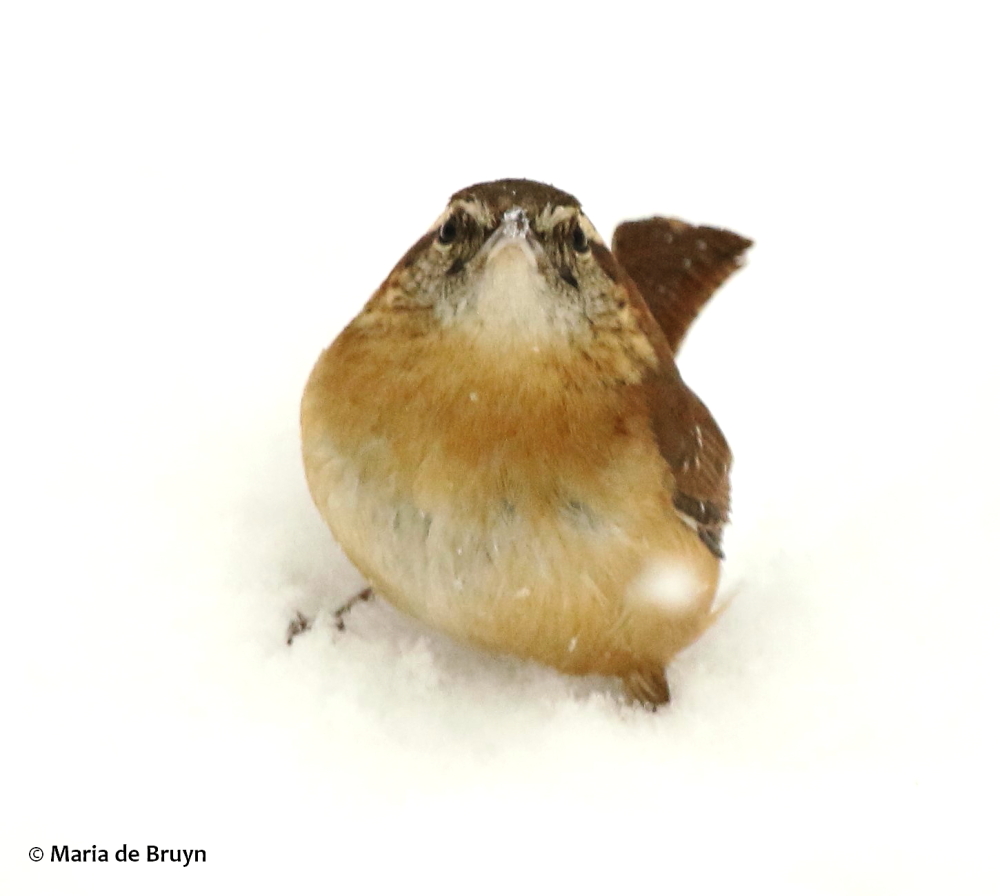
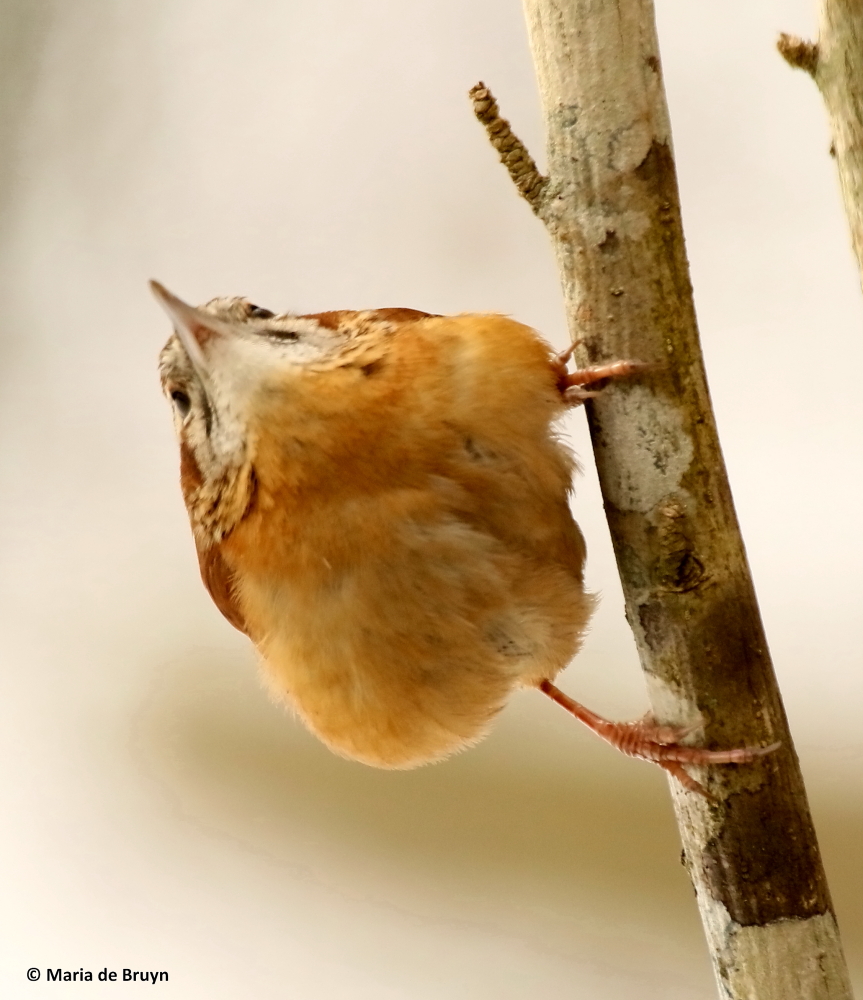
The Carolina wrens (Thryothorus ludovicianus) were fans of the dried meal worms and at one point, I put out an extra tray of these treats on the dry front porch. Other birds are more reluctant to come onto the porch so they had a nice quiet feeding area, although they also spent time perched on the snowy bushes and feeders.


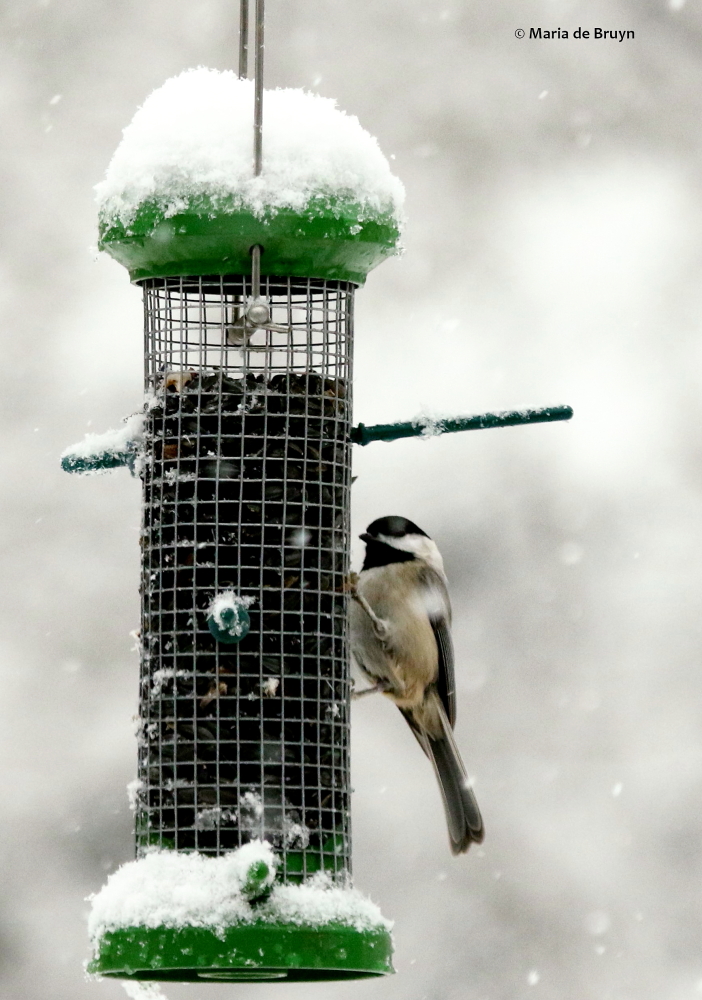
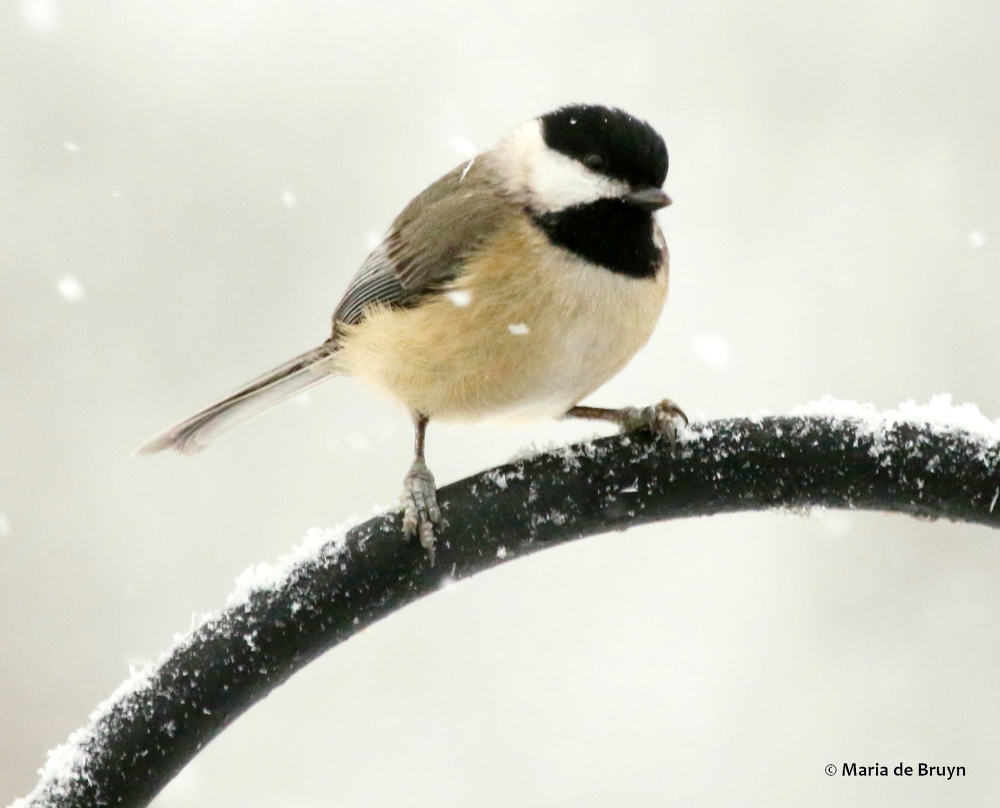
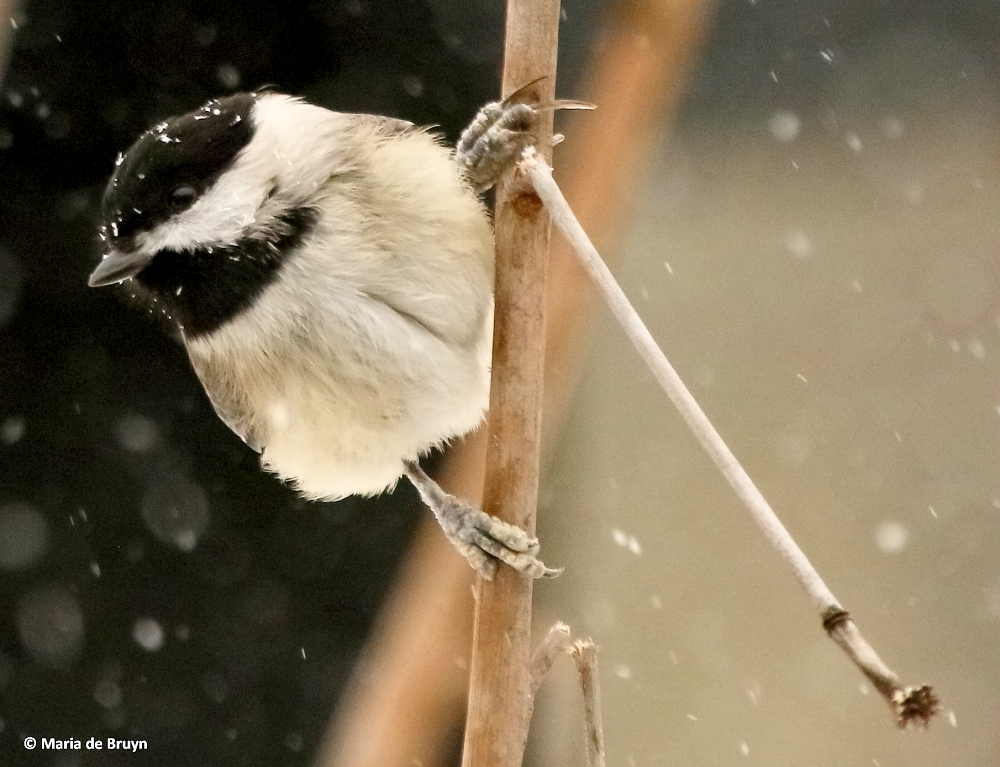
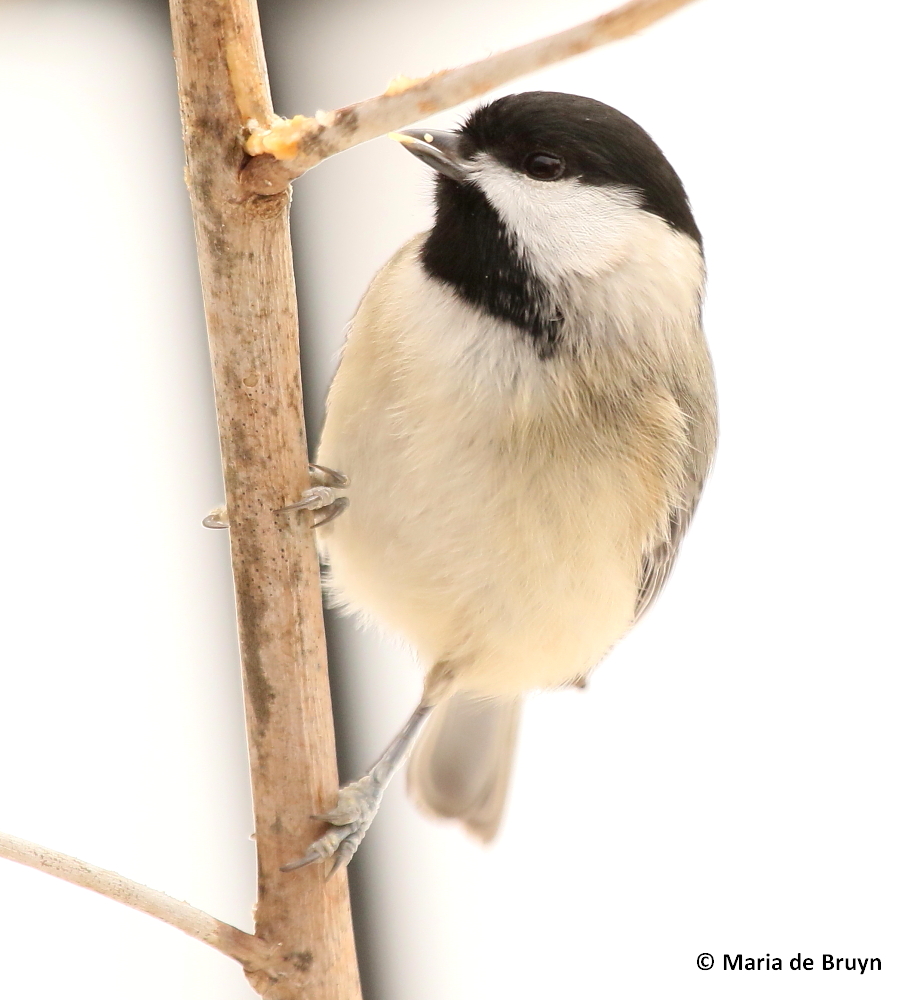
The Carolina chickadees (Poecile carolinensis) worked their way in between the other birds to reach the feeders, sometimes waiting patiently on a feeder pole for their turn.

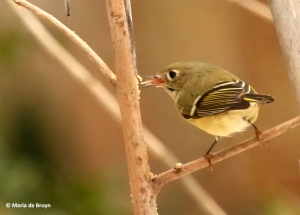
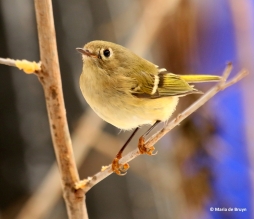
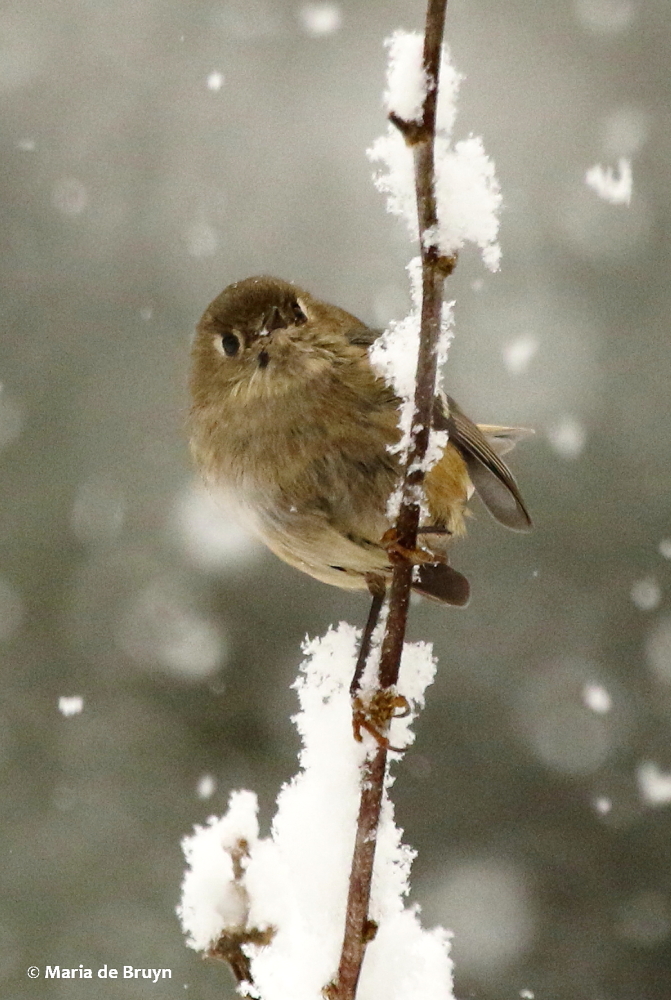
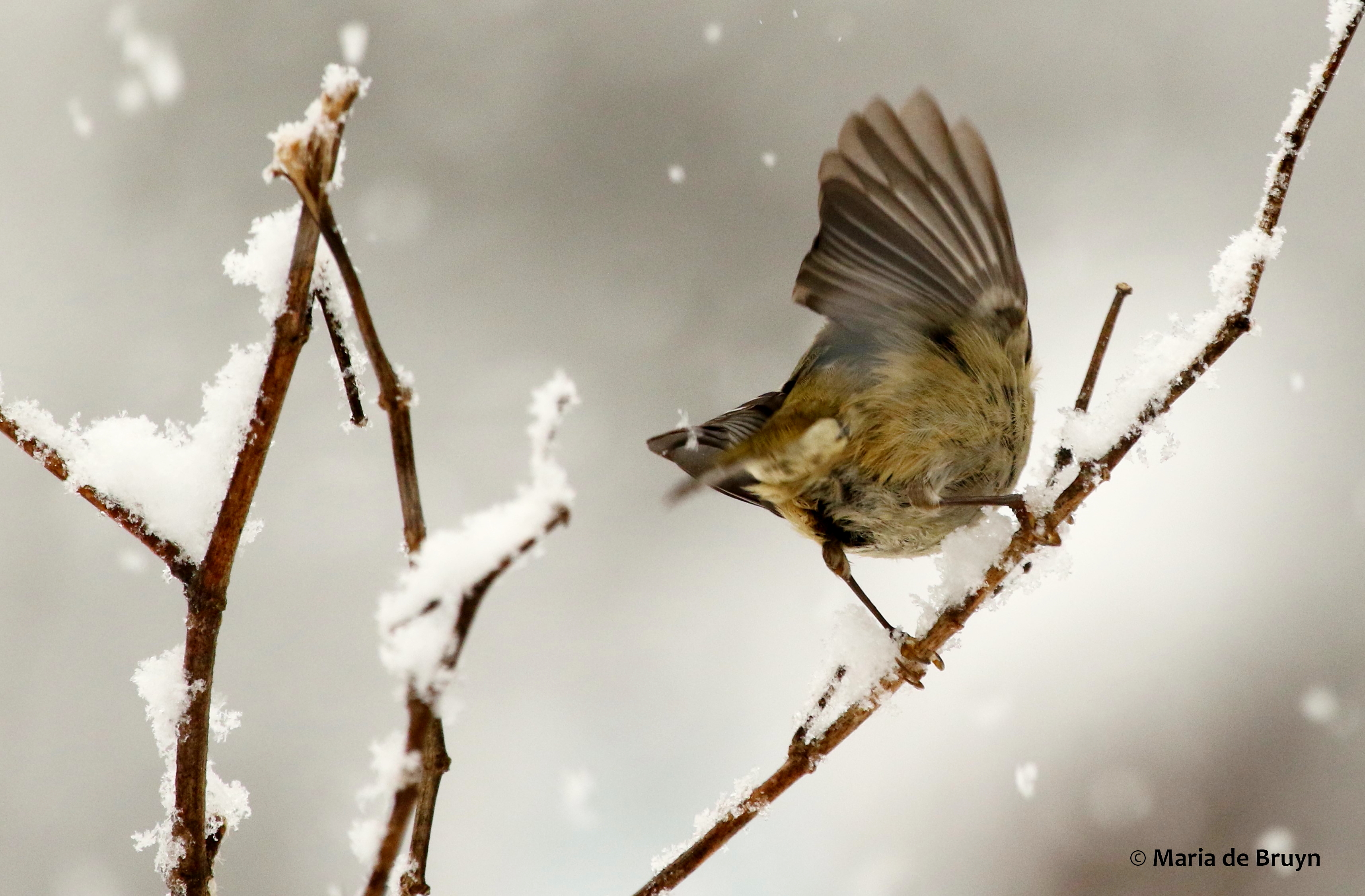
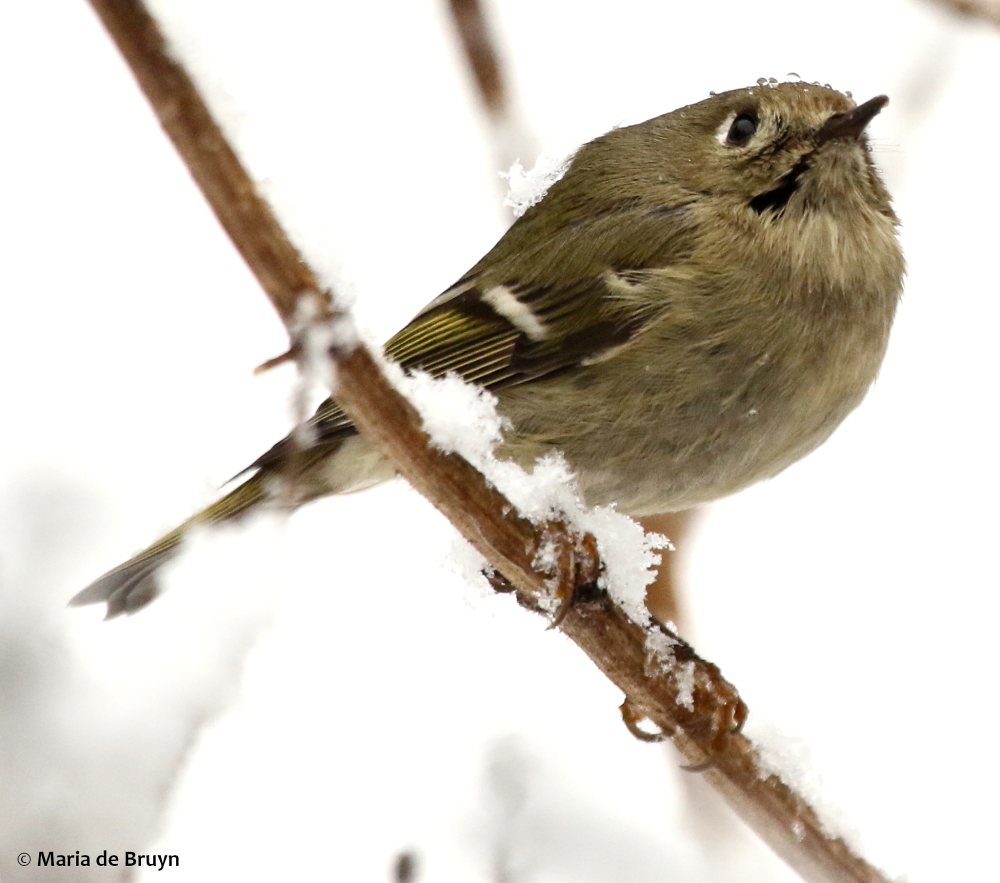
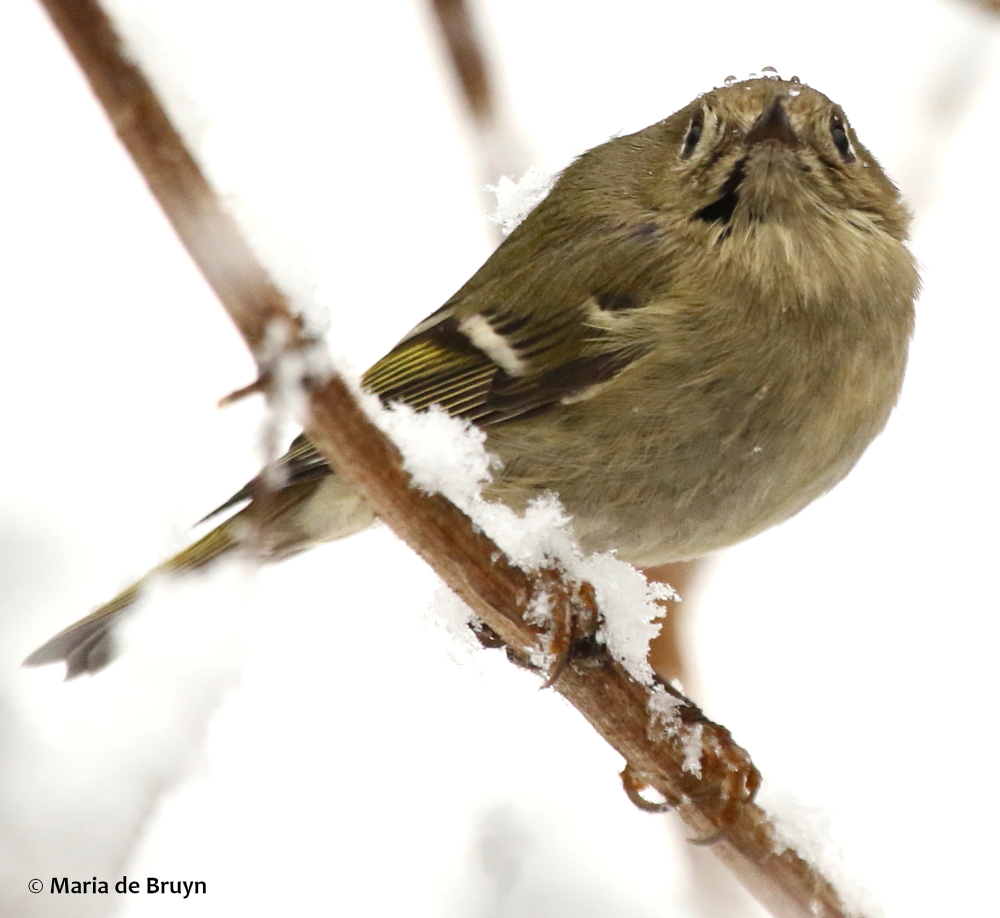
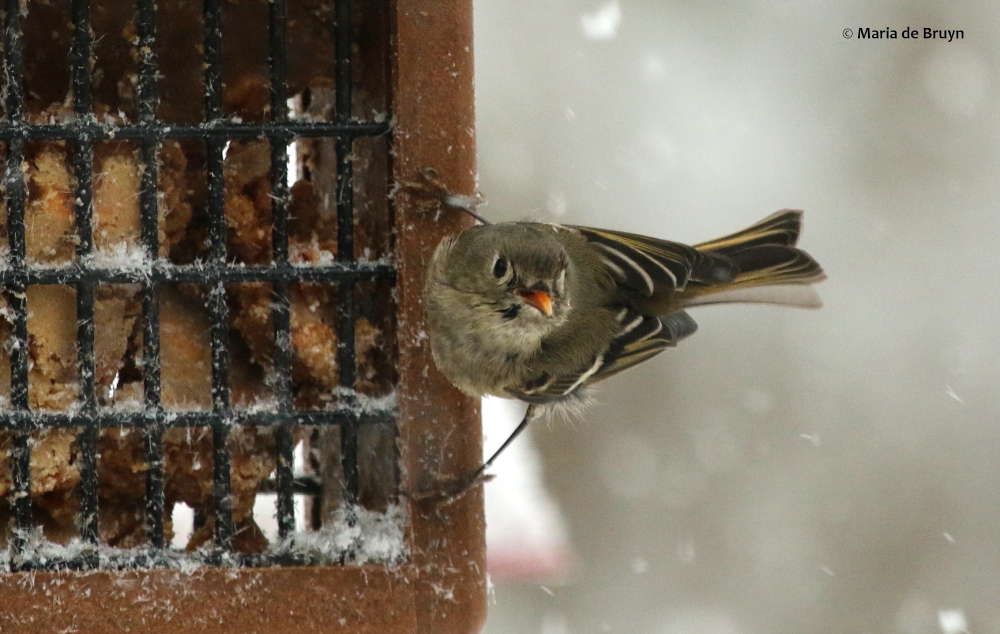
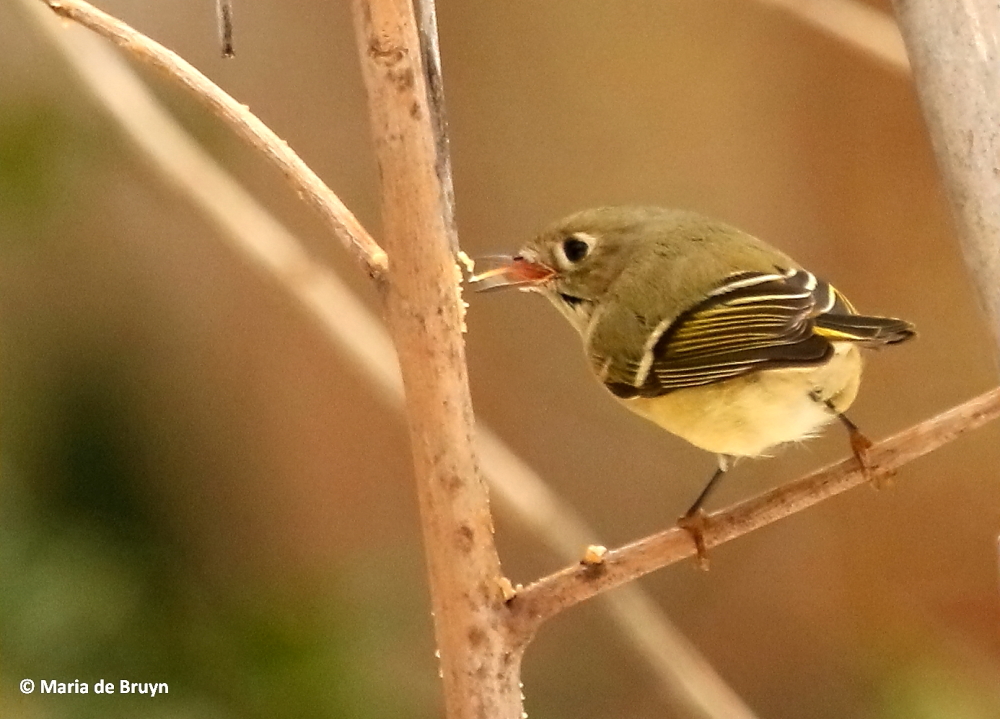
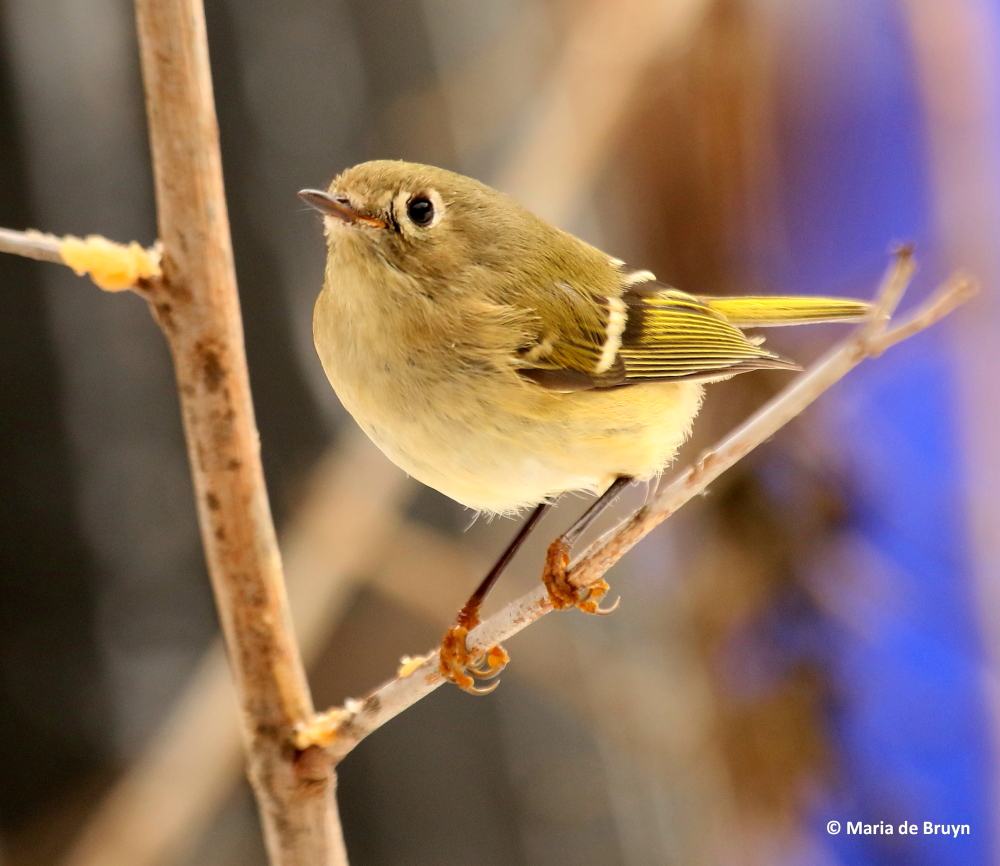
The ruby-crowned kinglets (Regulus calendula), of which I have two visiting the feeders, were happy with the home-made suet. Occasionally, I smeared a bit of suet on dried flower stalks and they would perch there to snag a bite to eat. Other times, they just waited on a twig until the yellow-rumped warblers had vacated the area so they could eat in peace.


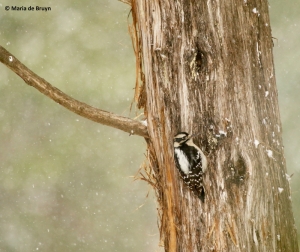
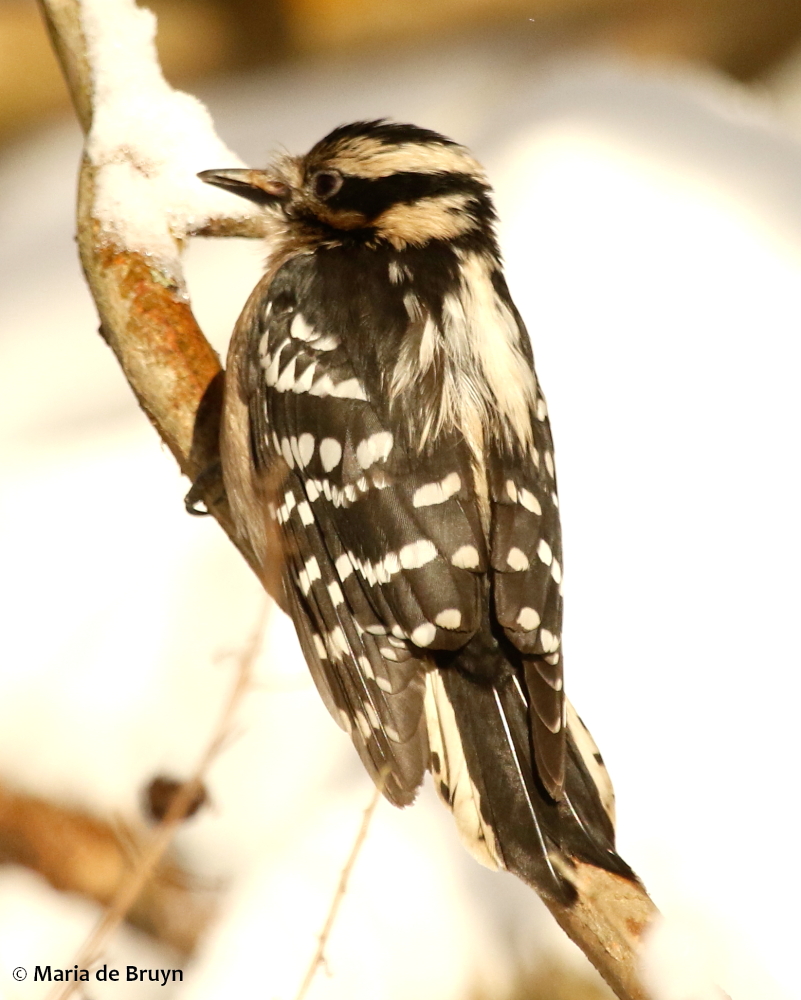
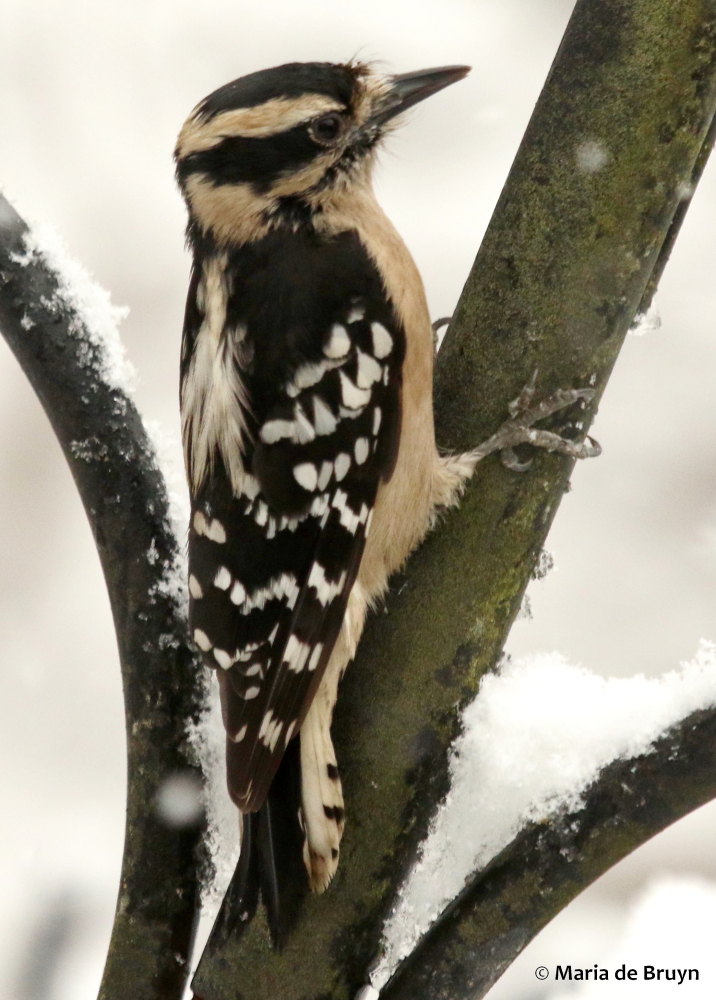
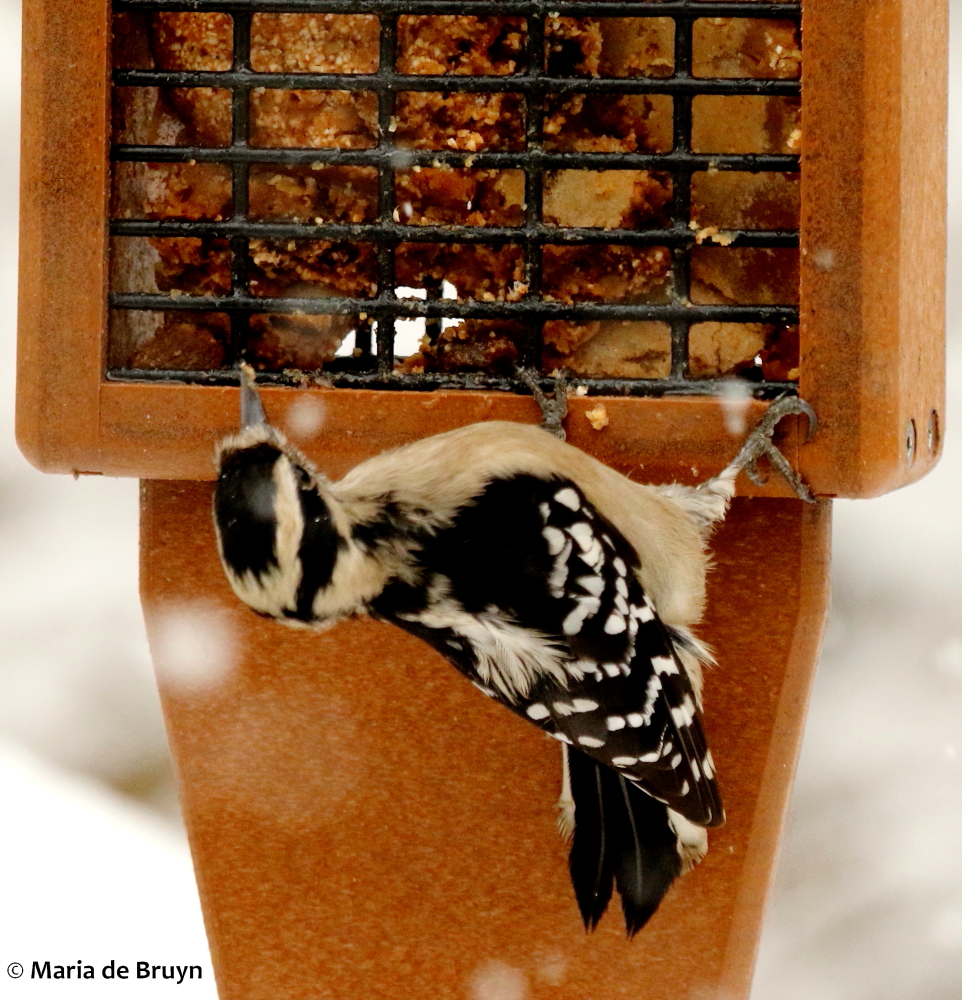
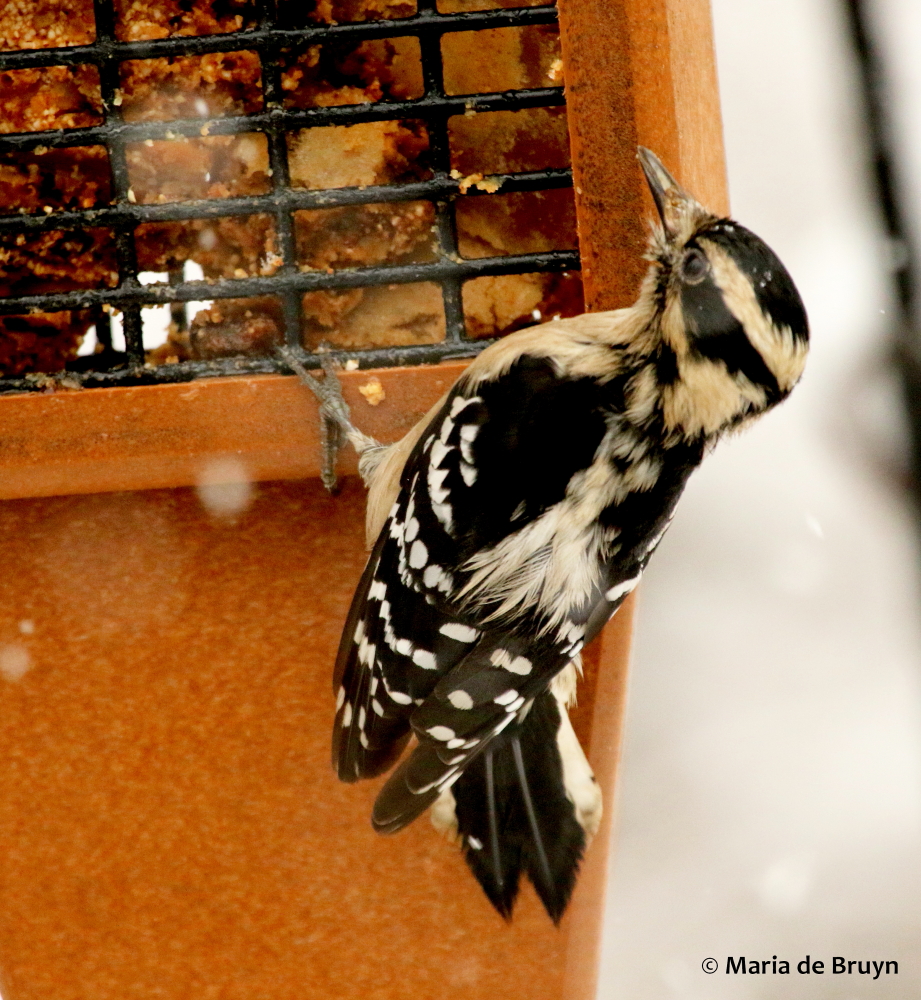
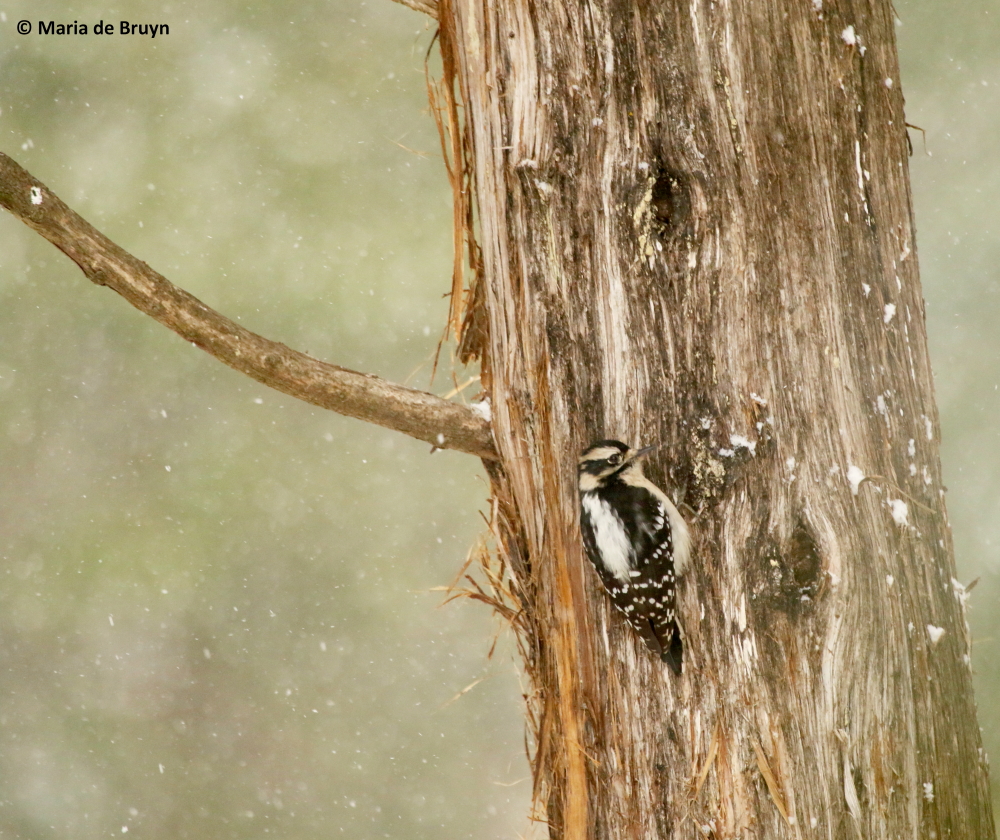
While the downy woodpecker (Picoides pubescens) is slightly larger, they are like the small birds in being somewhat hesitant to approach feeders if there is a crowd. Once on a feeder, they will feed and then hang on to take a look around.


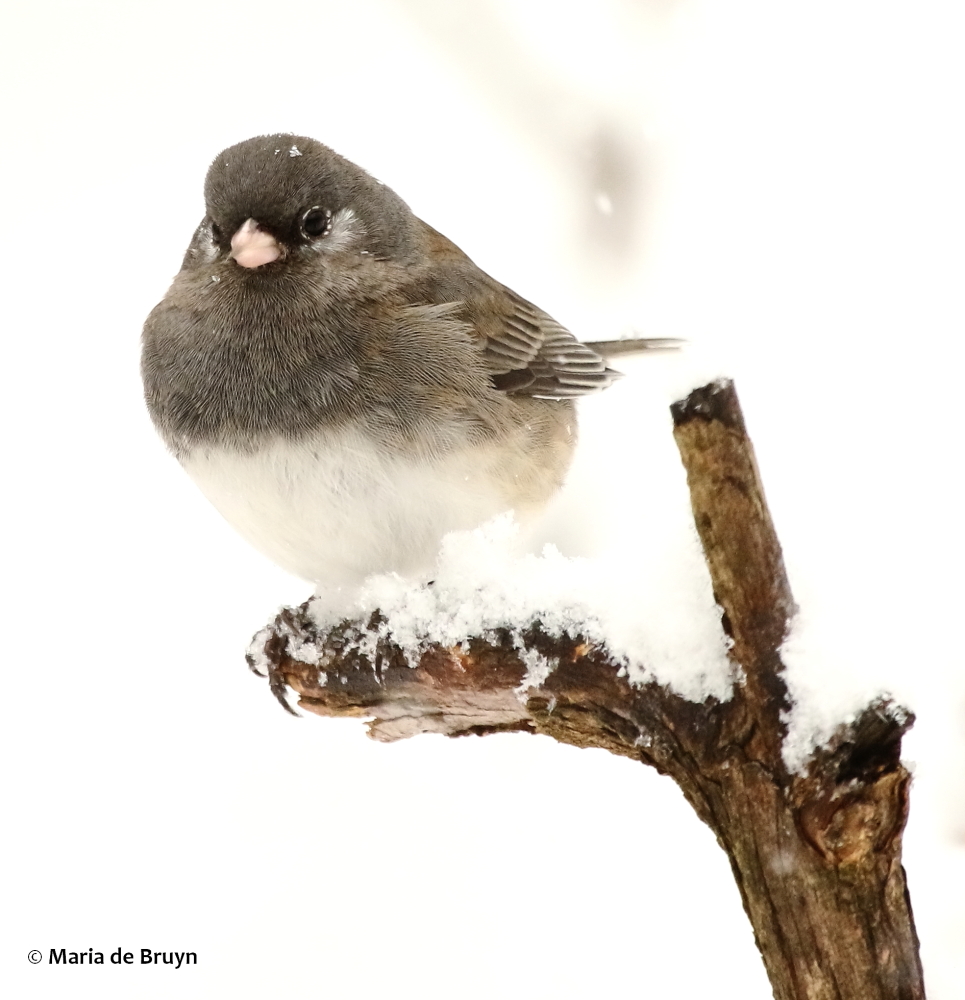
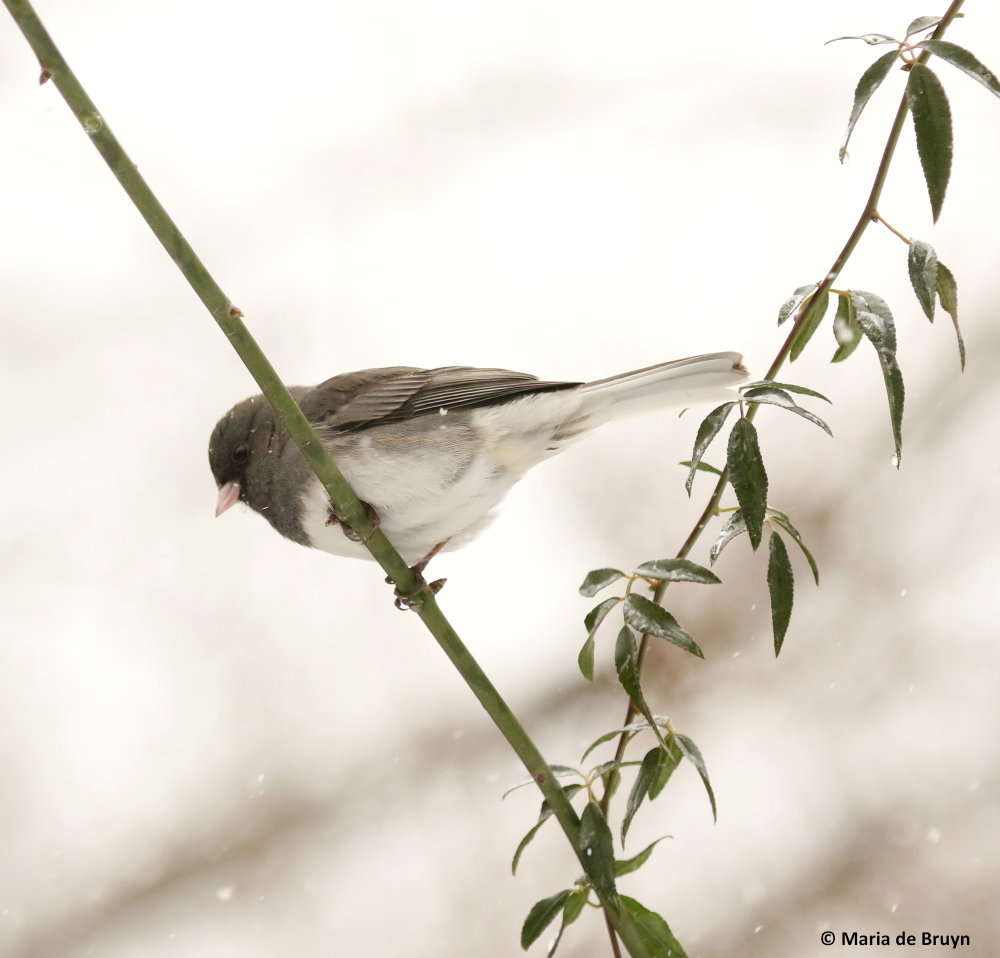
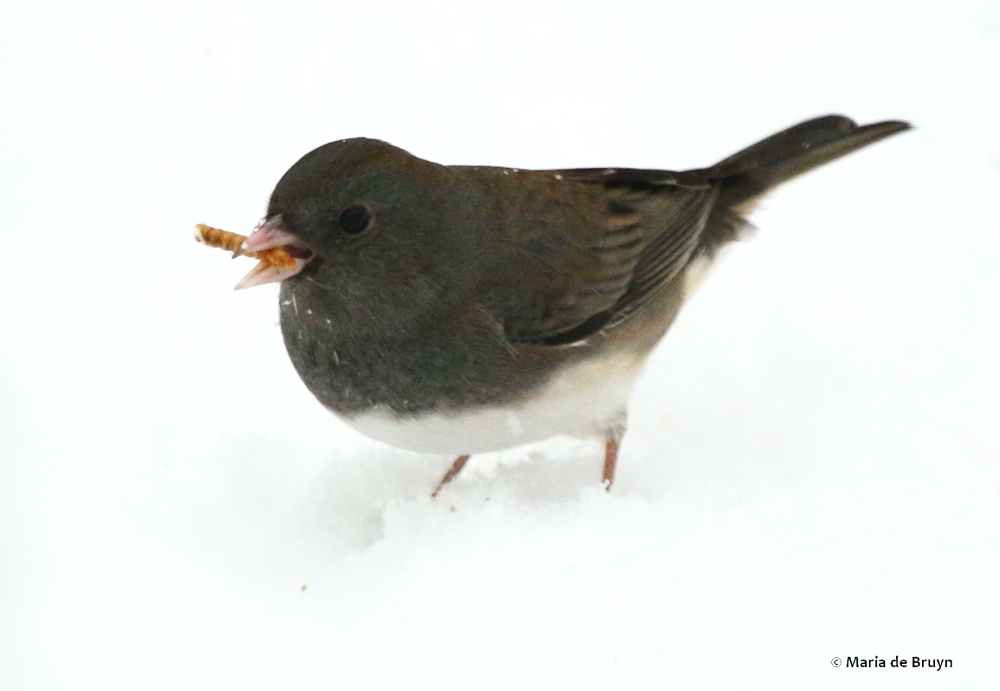
The dark-eyed juncos (Junco hyemalis), who have an understated quiet beauty, were looking for meal worms.


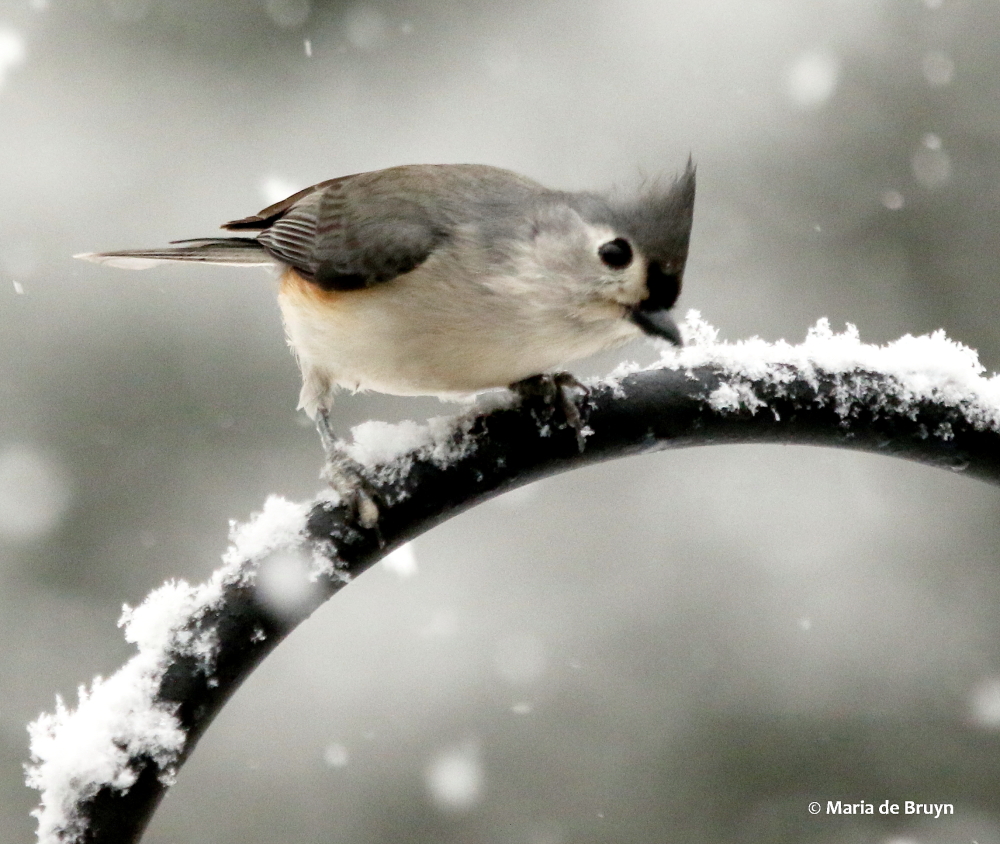
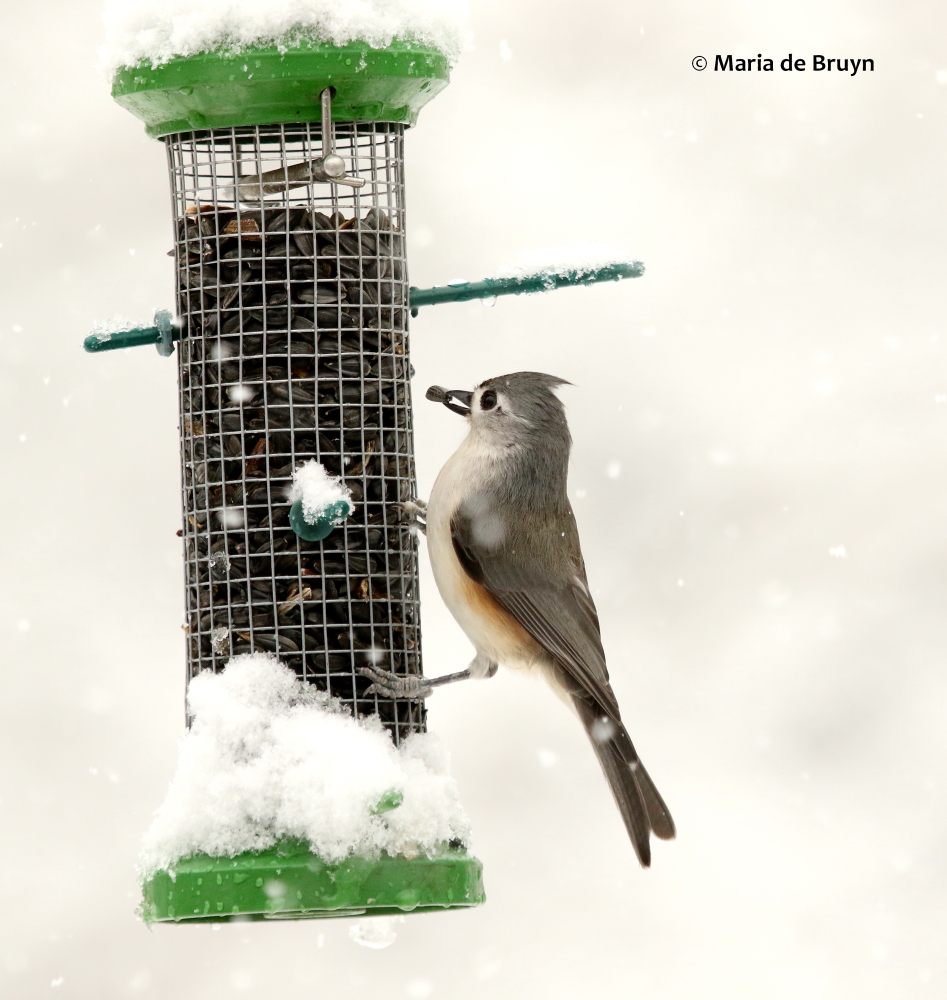
The similarly colored tufted titmouse (Baeoloophus bicolor) often zoomed in on its target of the fruit and nut feeder without taking time to perch first.

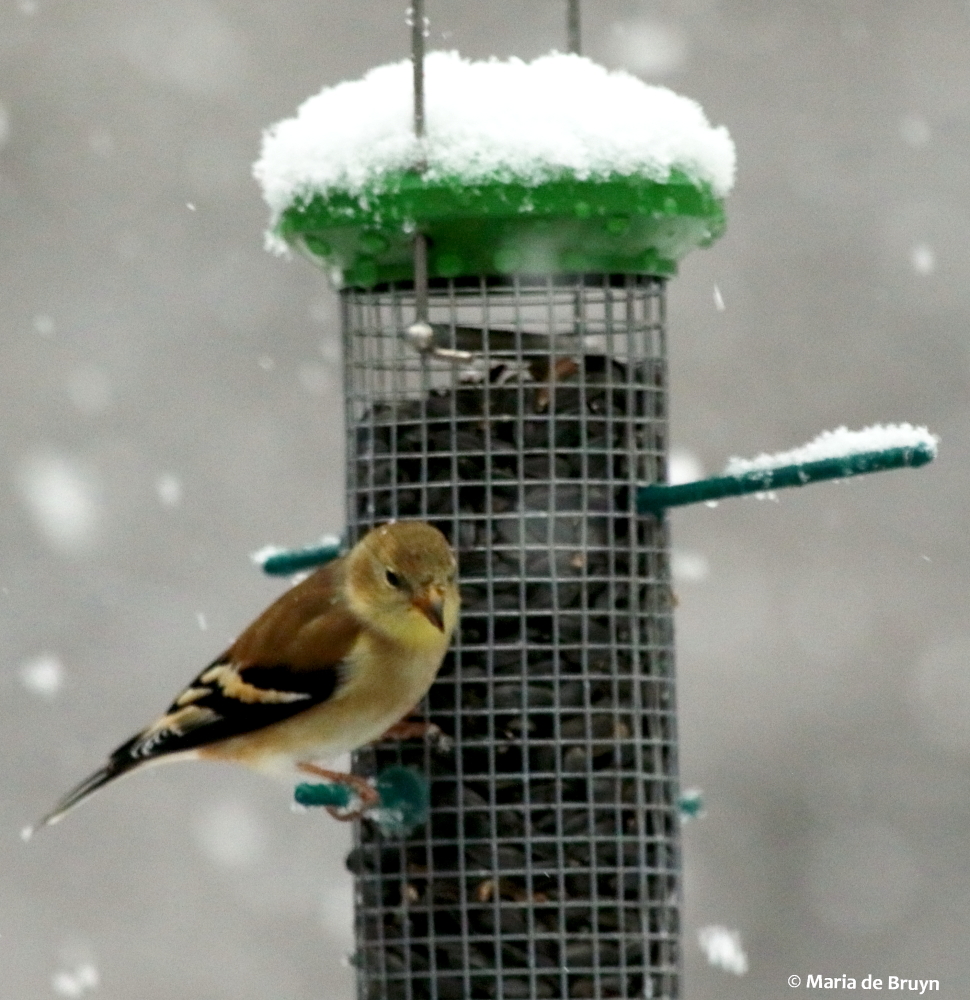
The American goldfinches (Spinus tristis) didn’t come round very much, only snacking on some sunflower seeds. Since they often feed on the crepe myrtle tree seeds, they were likely finding enough food there.

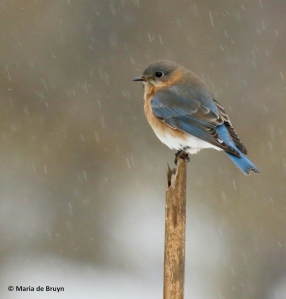
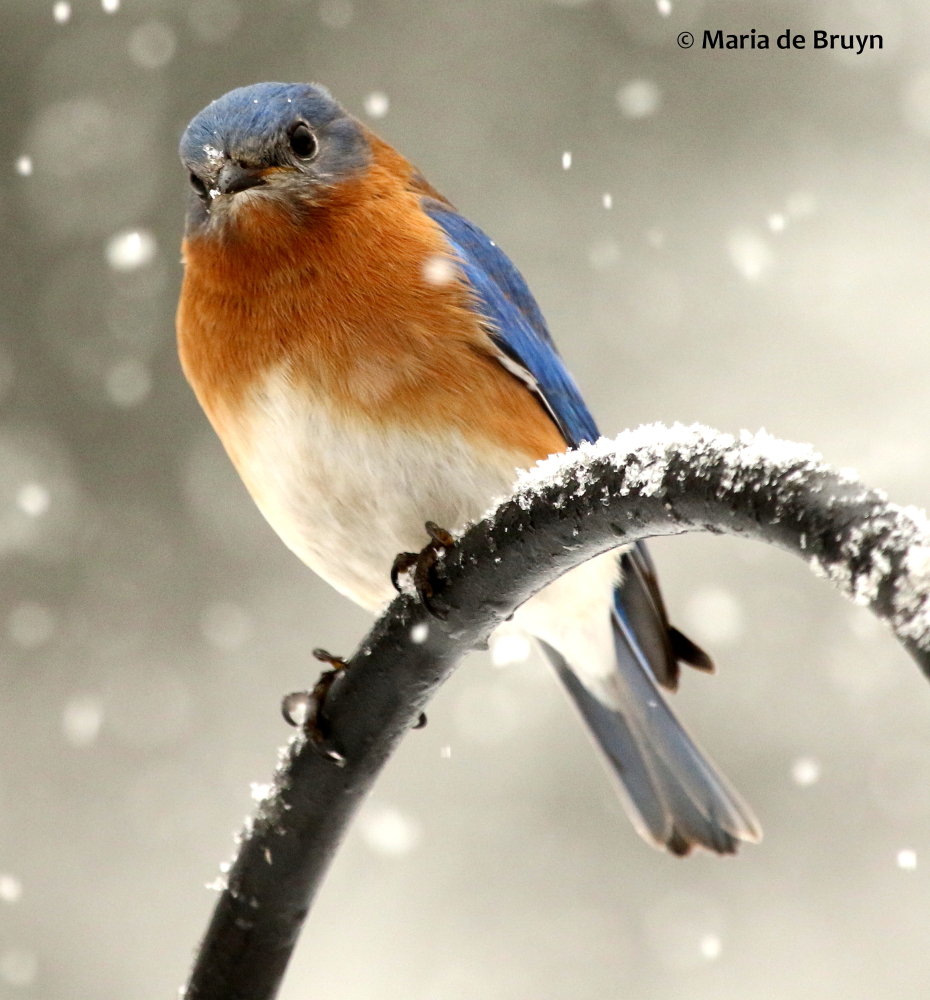
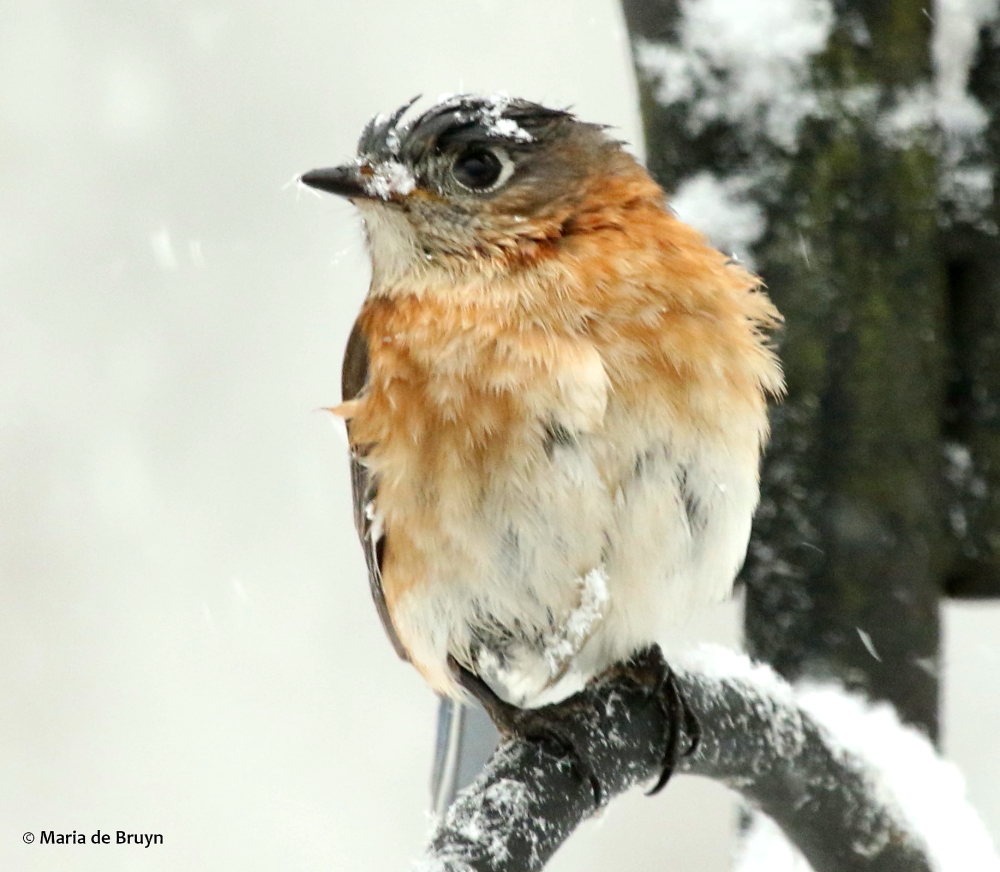
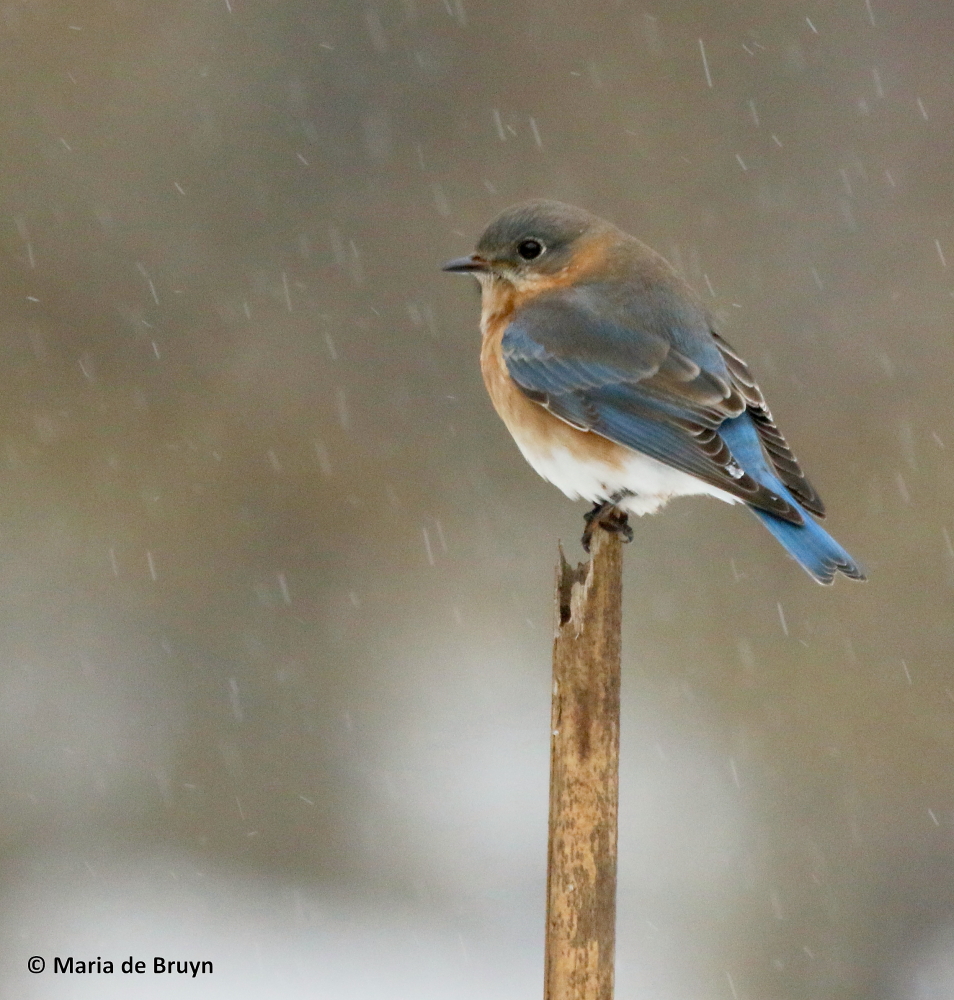
The Eastern bluebirds (Sialia sialis) came in spurts of activity. They always look rather bedraggled when they get wet with snow or rain and perhaps prefer to stay drier under branches until there is a break in the falling moisture. Even wet, though, they are still attractive to me.

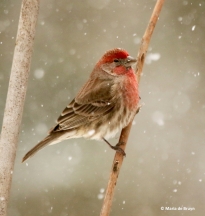
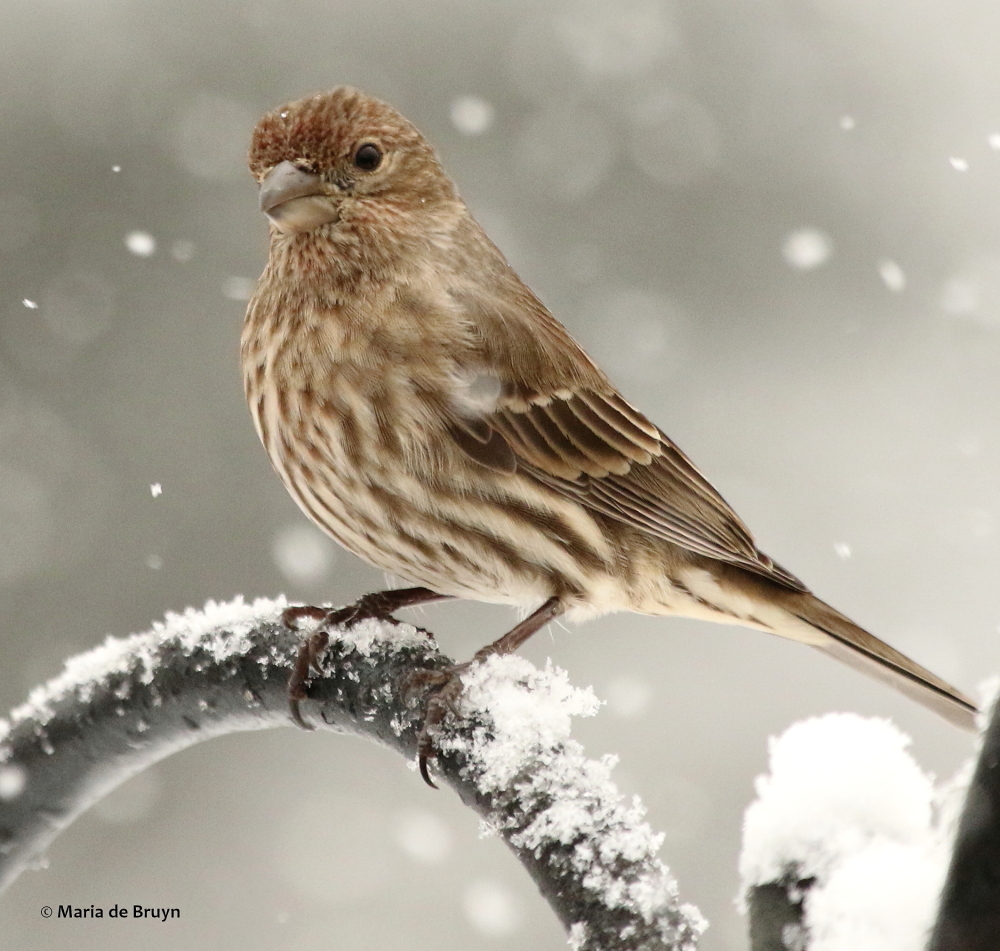
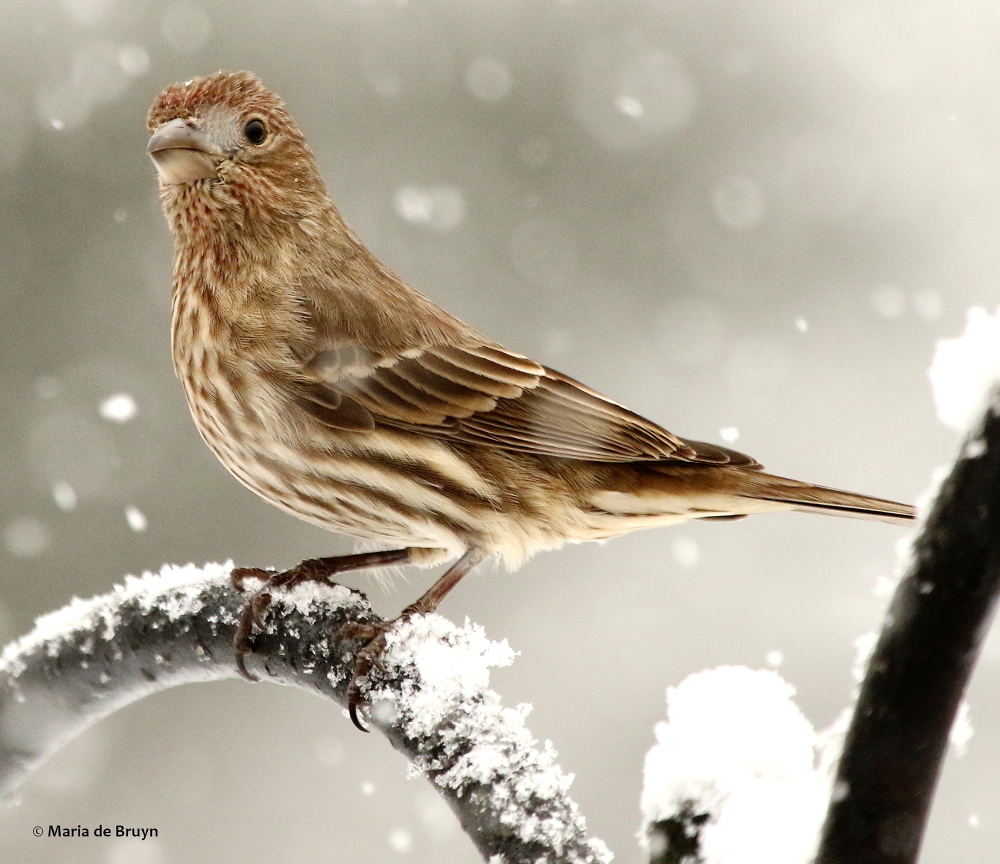
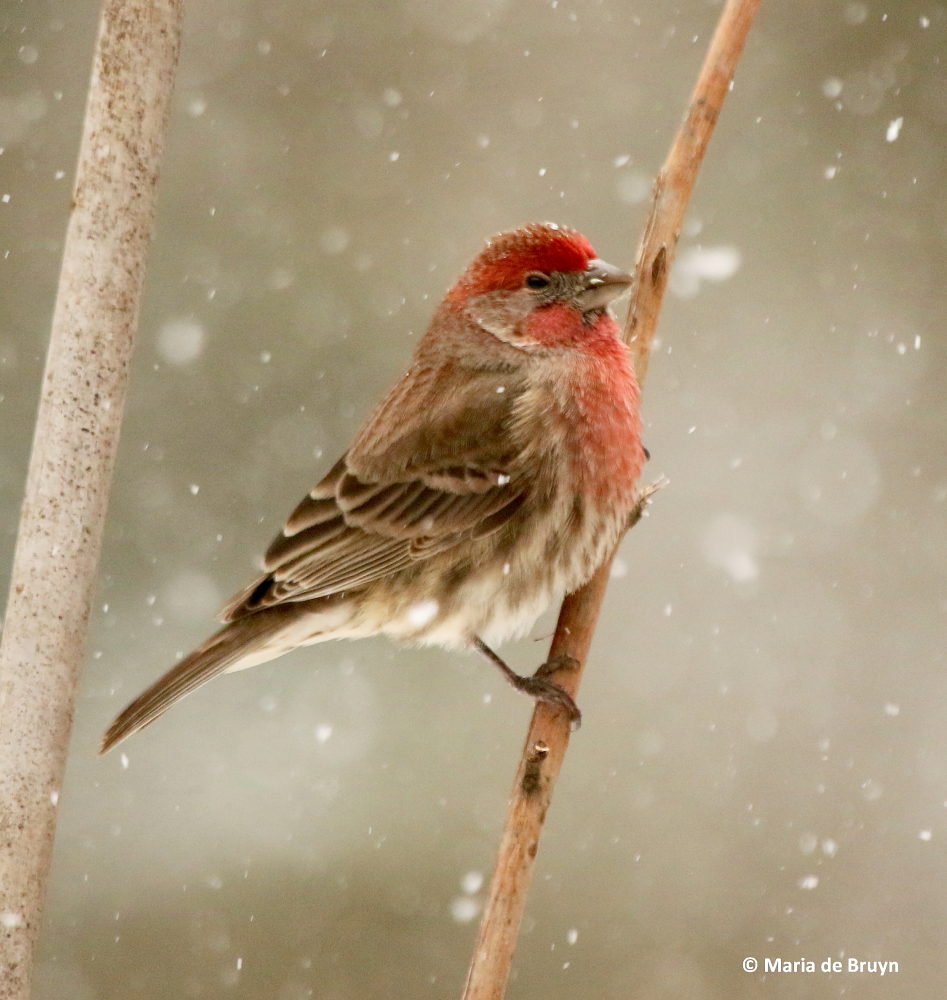
The smaller/medium bird group was rounded off by the house finches (Haemorhous mexicanus). The females were looking especially nice. The finches never have spats with anyone and are among the most peaceful feeder birds. Not everyone was like that, however, and the next blog looks at the rowdy ones.


Winter wonderland – sparrows and warblers

Yesterday, as I walked through my yard, I was surprised to see groups of daffodils sticking up their heads; it seemed rather early to me but last year we had early signs of spring as well. It is a big contrast to our weather conditions less than a month ago, though. On the 17th of January, our town was surprised by 11-12 inches of beautiful, powdery snow.


While our southern area often has a couple instances of (light) snow and/or an ice storm in the winter, our climate is generally fairly mild and temperatures in the 50s and 60s Farenheit are not uncommon during winter. So the brief but heavy snowfall was quite an event; our streets were empty of traffic as everyone stayed home and watched the falling flakes.

Some people built snowmen, others went sledding and walking, and some of us spent hours filling our bird feeders and watching the birds. I also made an attempt to photograph some frozen bubbles, which was very challenging since it was windy during the entire winter weather event.


The snow began slowly melting a bit the next day, which made some of the icicles on the house elongate to a length of almost 3-4 feet, but it wasn’t until Friday and Saturday that the snow and ice really started disappearing.

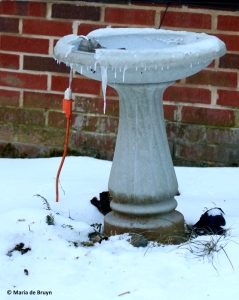
My yard looked beautiful, but I spent time on the 17th repeatedly knocking snow off the bird feeders and heated birth bath so that the birds could reach the food and water.


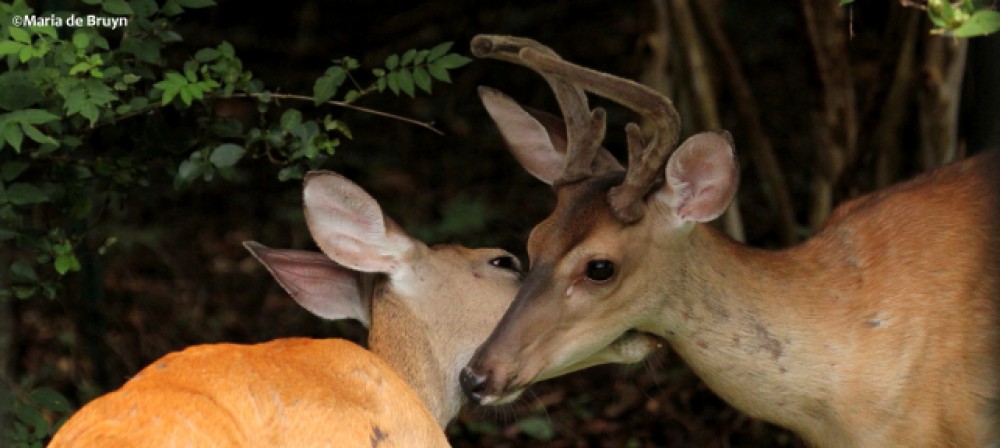
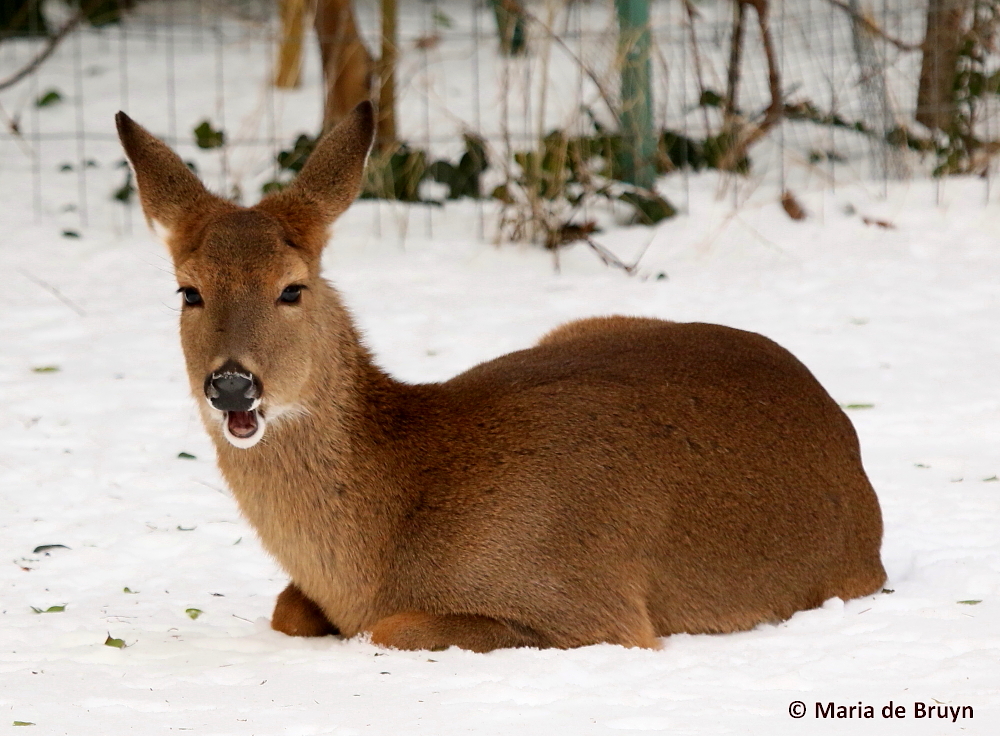
Although I saw a couple squirrels and the white-tailed deer (Odocoileus virginianus) also came by, I didn’t see other mammals like chipmunks, raccoons, opossums. But I had 25 different bird species come by on Wednesday and Thursday; on Friday and Saturday, two more species came by. I’d like to share some snow day photos of them all in this and the next few blogs.

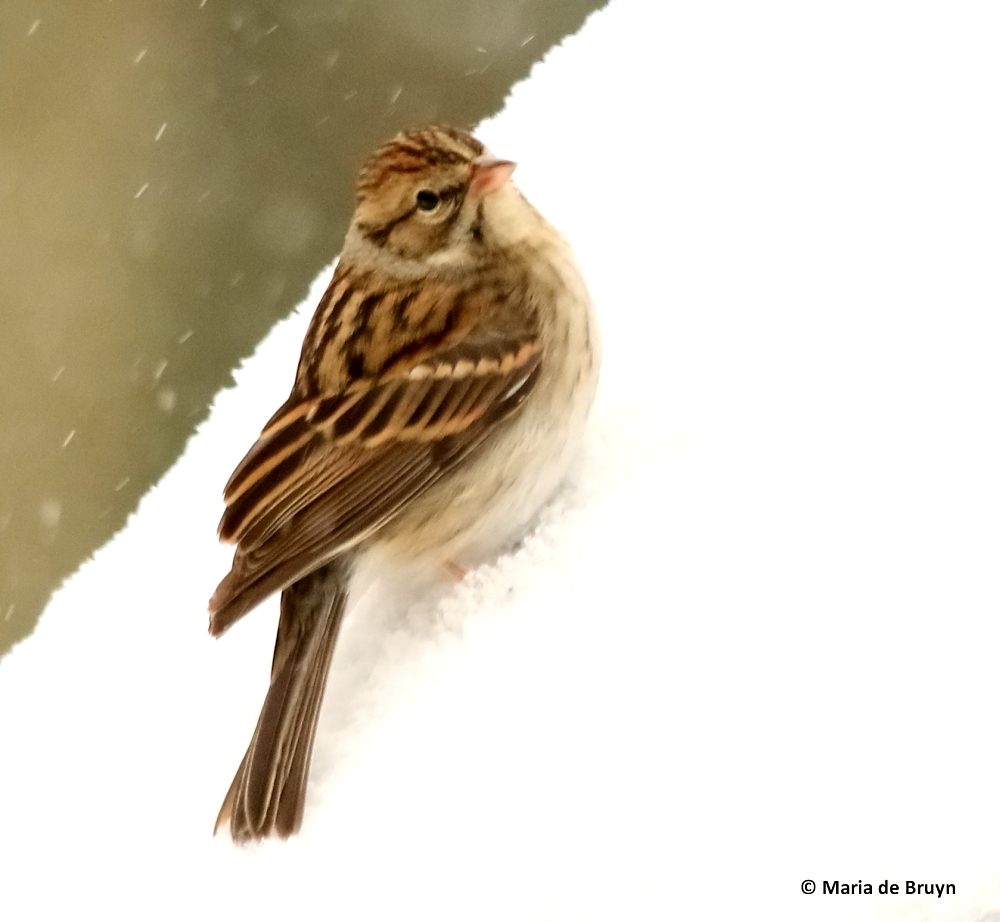
First up are the sparrows and warblers. The chipping sparrows (Spizella passerina) usually get their seed from the hanging feeders in the front and back yards but now they were looking everywhere for a bite to eat. I had strewn some seed on the ground and they began looking there.

One found a trove of food and another came by asking to be fed, a request the first sparrow accommodated quite sweetly.


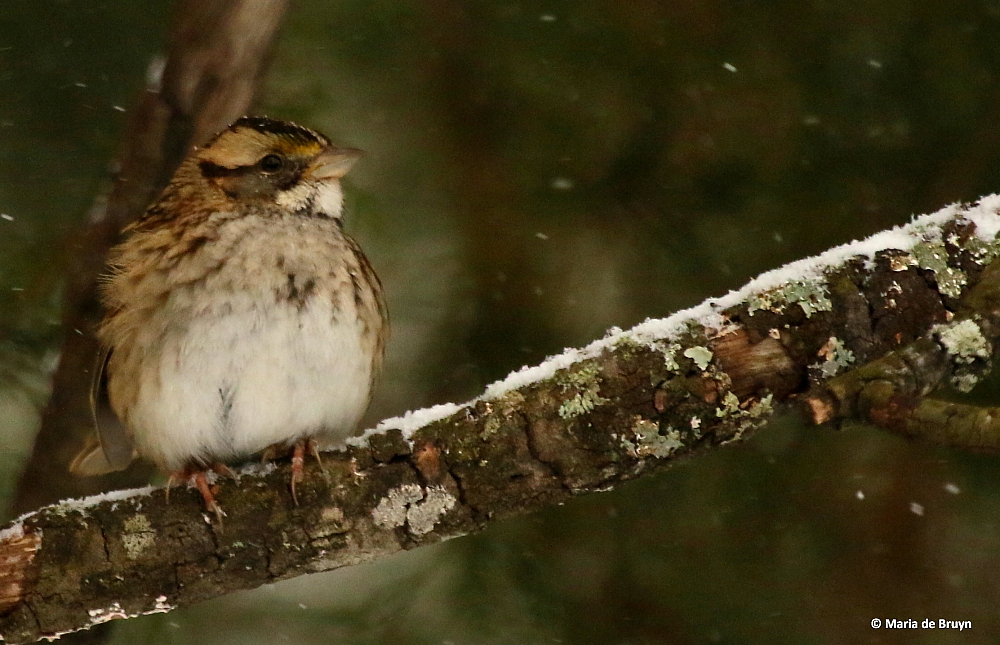
The white-throated sparrows (Zonotrichia albicollis) have an opposite feeding strategy, usually feeding on the ground and occasionally venturing up to a feeder. They, too, searched under the snow for some food.


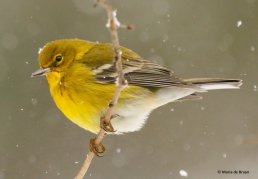
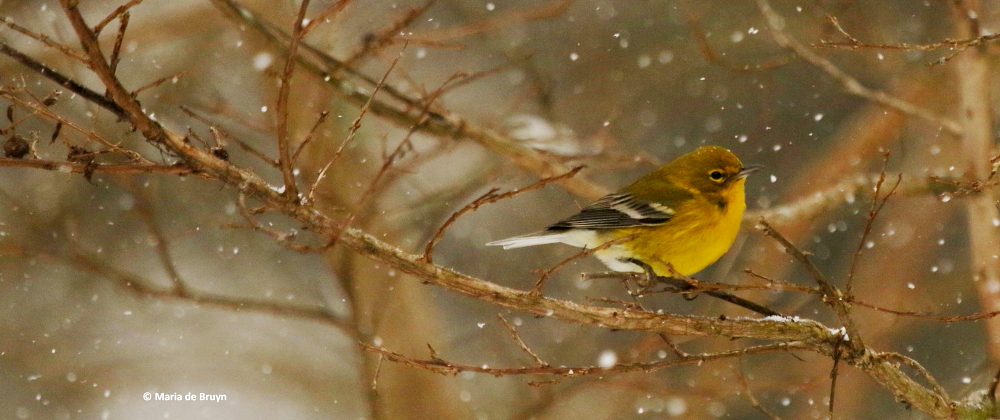
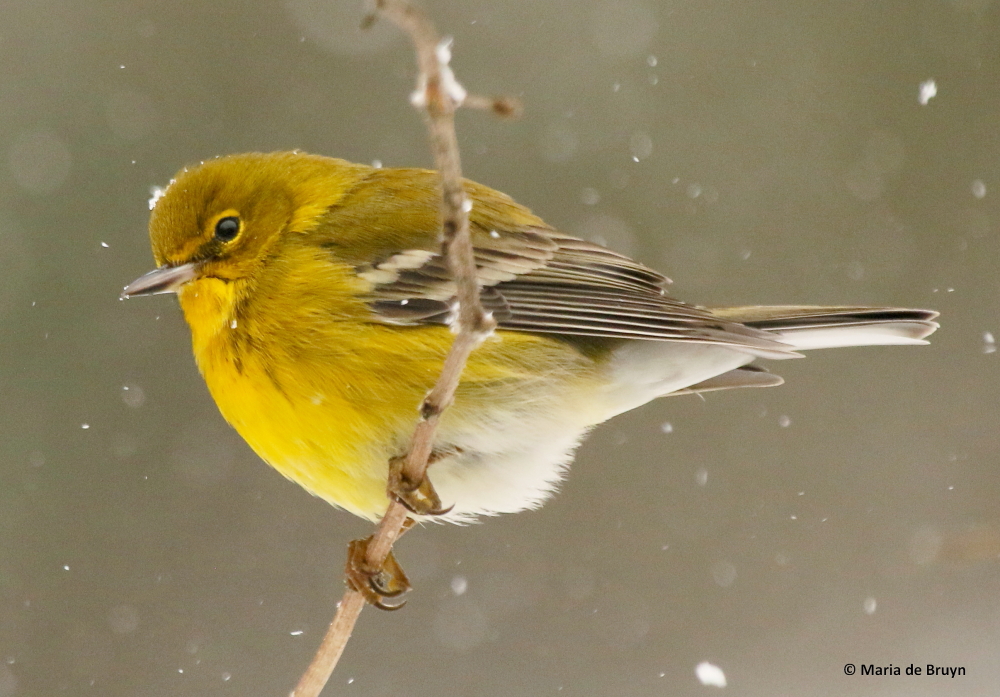
The pine warblers (Setophaga pinus) tend to be rather shy; only very rarely does a pair visit together. Mostly, one shows up at a time; their beautiful yellow color was really highlighted against the white background.


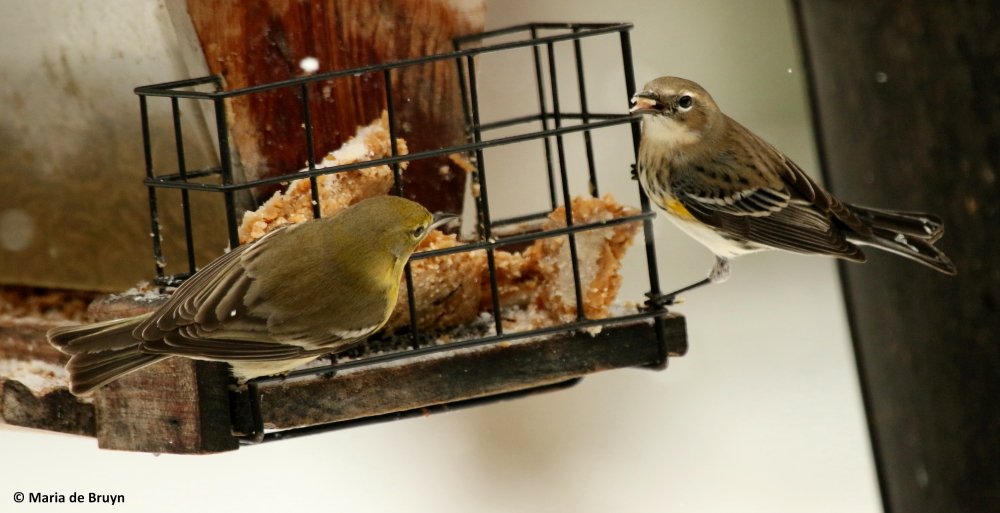
The pine warblers did have to brave a bad-tempered bird to get to the feeders. One of the six resident yellow-rumped warblers (Setophaga coronata) has become very territorial, chasing away some other yellow-rumped warblers, the ruby-crowned kinglets and the pine warbler – in other words, the birds his size or smaller. He allows a couple other yellow-rumps to feed peacefully and I think perhaps they are his family members so that he tolerates them. He didn’t stop the other small birds from coming around, however, as we’ll see in the next blog.


Avian generations in the making – part 1: courtship

The tragedies being faced in the Caribbean islands after hurricanes Maria, Jose and Irma are horrible and other than donate cash to help alleviate the needs, I’m not in a position to offer more assistance. I’m grateful for all those who can and hope government assistance will be forthcoming to help all the people in those nations recover.
The effects of the hurricanes also will be noticeable for the wildlife. Many of those living on land will drown or die of hunger; some birds may be a little luckier – able to shelter against the winds if they are native to a place or able to change their migratory pattern (e.g., delay arrival on wintering grounds) for a time. But when the effects of the storms are immense with lots of habitat destruction, the birds, too, will lack places to shelter and not have sufficient food supplies to survive.

It’s thought that some birds endemic to the islands may be severely endangered as a species. On 22 September, birders were happy to hear that eight Barbuda warblers (Setophaga subita) had been spotted on that island; not a lot but they may help ensure this tiny bird doesn’t become extinct.  At the time of writing this blog, the fate of some other bird species was still unknown. I hope that all the Caribbean bird species survive and will be thinking of them as I share this series with you on how birds take measures to ensure future generations. (It might seem odd to write this series now, but some birds are still feeding their young here.)

So, the process begins with courtship. Some birds mate for life, or at least form long-term (multiple-year) bonded relationships. They include bald eagles, black vultures, blue jays, Canada geese, white-breasted nuthatches, brown-headed nuthatches, Northern cardinals, Carolina chickadees, American crows, pileated woodpeckers and my favorite raptor shown above, the osprey (Pandion haliaetus).

Those who form ongoing bonds may have a courtship period that consists of the male bringing the female some food to indicate it’s time to get ready for nest-building. This was the case for these lovely Northern cardinals (Cardinalis cardinalis).

The American crow (Corvus brachyrhynchos) has a similar behavior; in my yard, I sometimes throw out bits of apple or bread for them in the spring as these seem to be considered real treats. The female will sit on a branch overhead calling until the male brings her some – and sometimes almost shoves it down her throat!

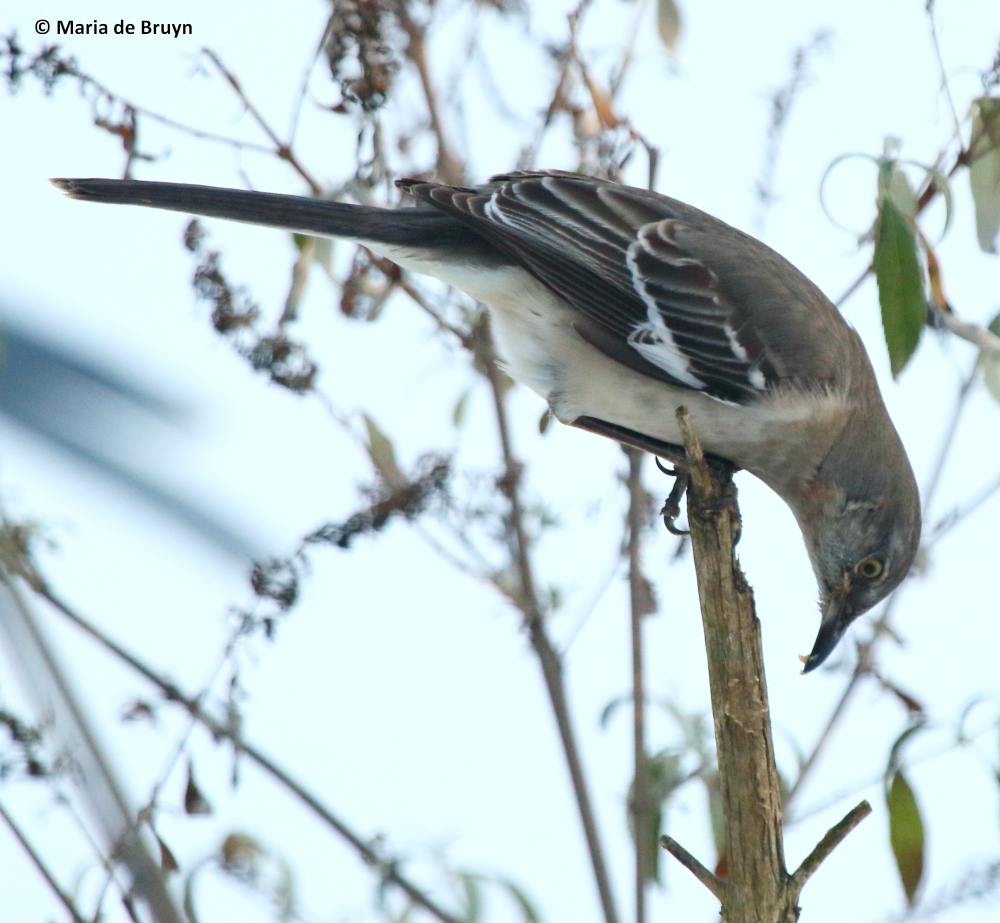
The Northern mockingbird (Mimus polyglottos) males will sing their repertoire in the spring to entice female mates – often they perch on the top of trees and fly up and down with spread wings in a beautiful display while singing.


The yellow-billed cuckoo (Coccyzus americanus) seeks new mates each year but has an interesting courtship behavior described by All About Birds: “A receptive female perches with its head up, pumping its tail slowly up and down…Just prior to mating, the male Yellow-Billed Cuckoo snaps off a short twig that he presents to the female as he perches on her back and leans over her shoulder. Both birds then grasp the twig as they copulate.”


The downy woodpecker (Picoides pubescens) females and males may both flutter between trees with slow wingbeats. Two females may also compete for the attention of a single male, a behavior I observed this past spring and which surprised me.


The male brown-headed cowbird (Molothrus ater) will vocalize for the female while spreading his wings in a display.

The killdeer (Charadrius vociferus) has a somewhat prettier courtship dance, bending forward and spreading its tail feathers to show off the colorful underside.


Next year, I hope to see more of the birds courting as it gives me a happy feeling.

The next step for the birds is nest-building. We don’t have the bowerbirds in North Carolina, who build elaborate nests as part of their courtship. But the species we have do spend a good deal of time on their nests and I’ll share some of their efforts in the next part of the series. (But one or two blogs on another topic will come first.)


Credit map: By Kmusser (Own work, all data from Vector Map.) [CC BY-SA 3.0 (https://creativecommons.org/licenses/by-sa/3.0)%5D, via Wikimedia Commons

Who wants to eat?

First, let me welcome those of you who have become new followers of my blog – nice to have you reading here and I hope you comment on what you like! I am way behind on my postings for the blog but will try to remedy that. There are photos almost ready for a series on bird courtship and child-rearing, as well as some other non-bird topics, but various issues have been keeping me from completing the texts. Now that I have had to take my preferred camera in for repairs, however, I have a bit more time to work on the blog and a recent brief trip to Topsail Island is providing some almost ready-made postings.

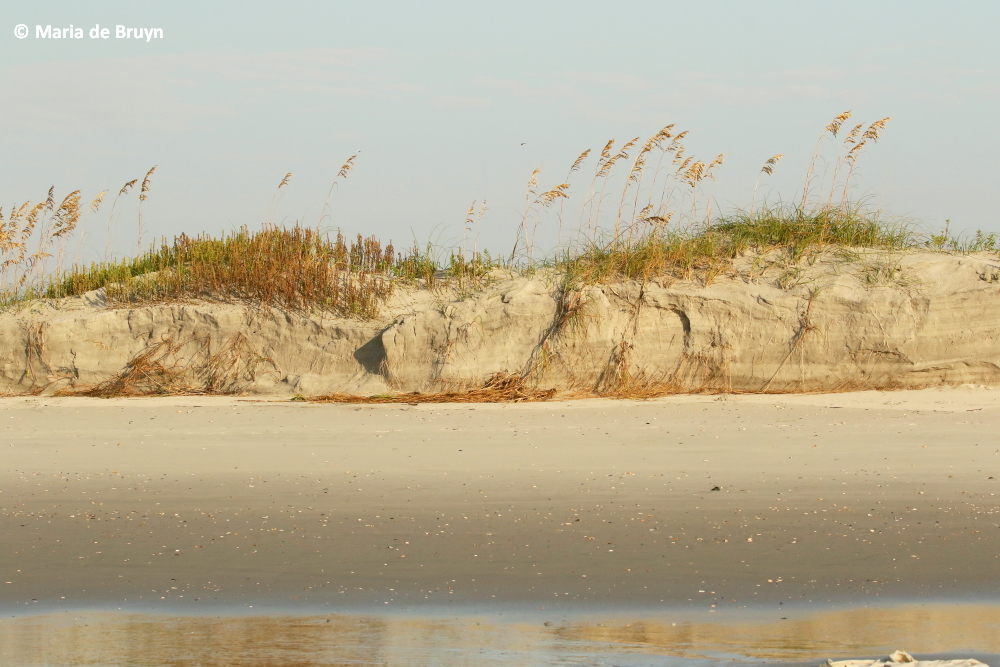
The south end of Topsail Island has been eroded greatly by the Atlantic storms, including effects from Hurricane Irma. Where normally the beach sloped up gently to beautiful dunes, these have now been sheared off vertically and the sea grasses and other vegetation before the dunes have been swept away.


That is of concern as the sea turtles nest there; hopefully, there will be sufficient places for their eggs next year. There were far fewer shells on the beach but at low tide the swath of empty sand was very wide.


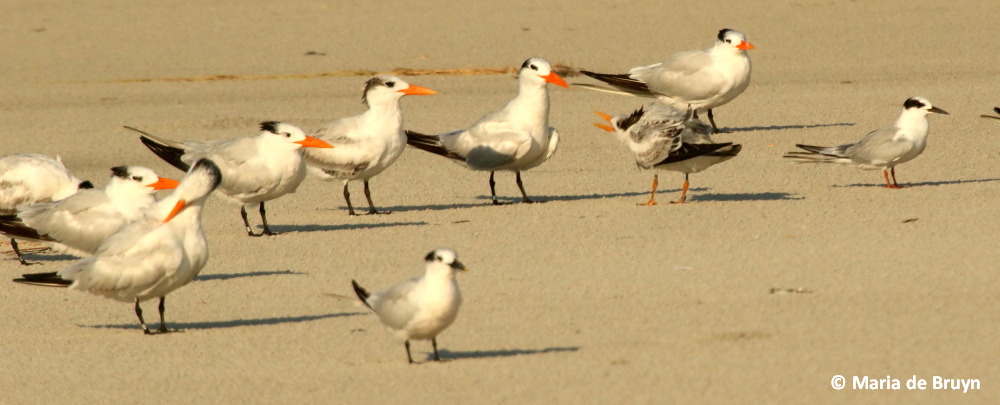
Mixed groups of birds were resting there in between ocean fishing expeditions. There were a couple immature common terns (Sterna hirundo) who were begging for food incessantly, but the adults pretty much ignored them, preferring to preen or settle down for a rest.

Some of the begging was pretty vigorous, accompanied by feather ruffling and shaking but I didn’t see any parents go off for food.

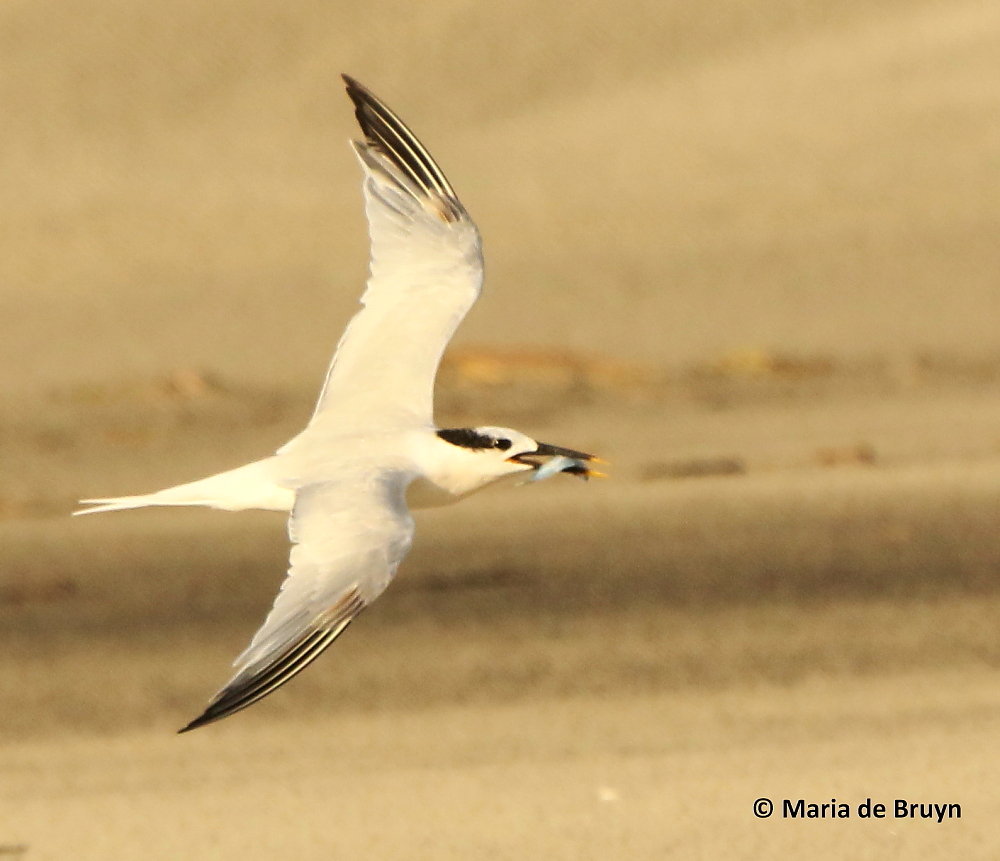
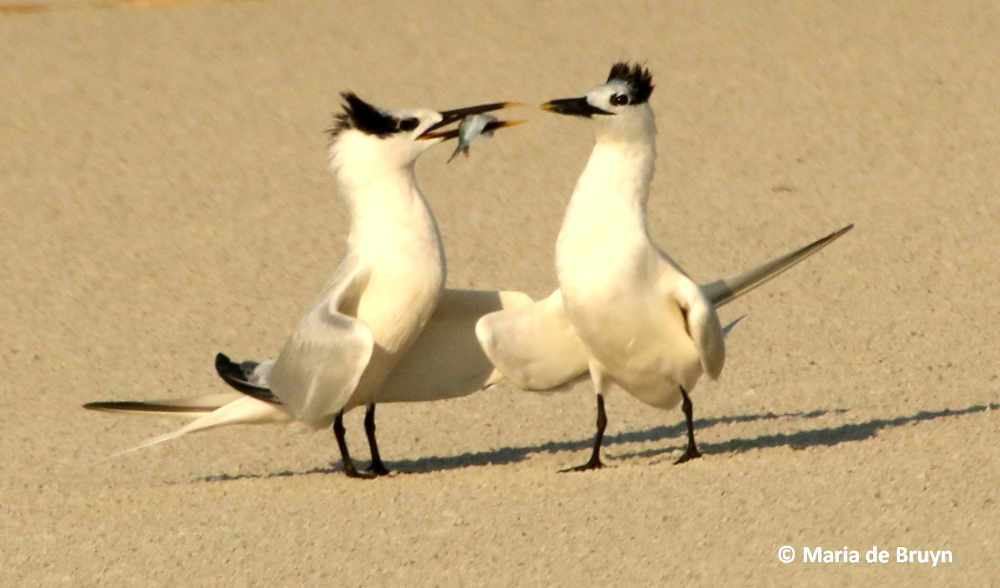
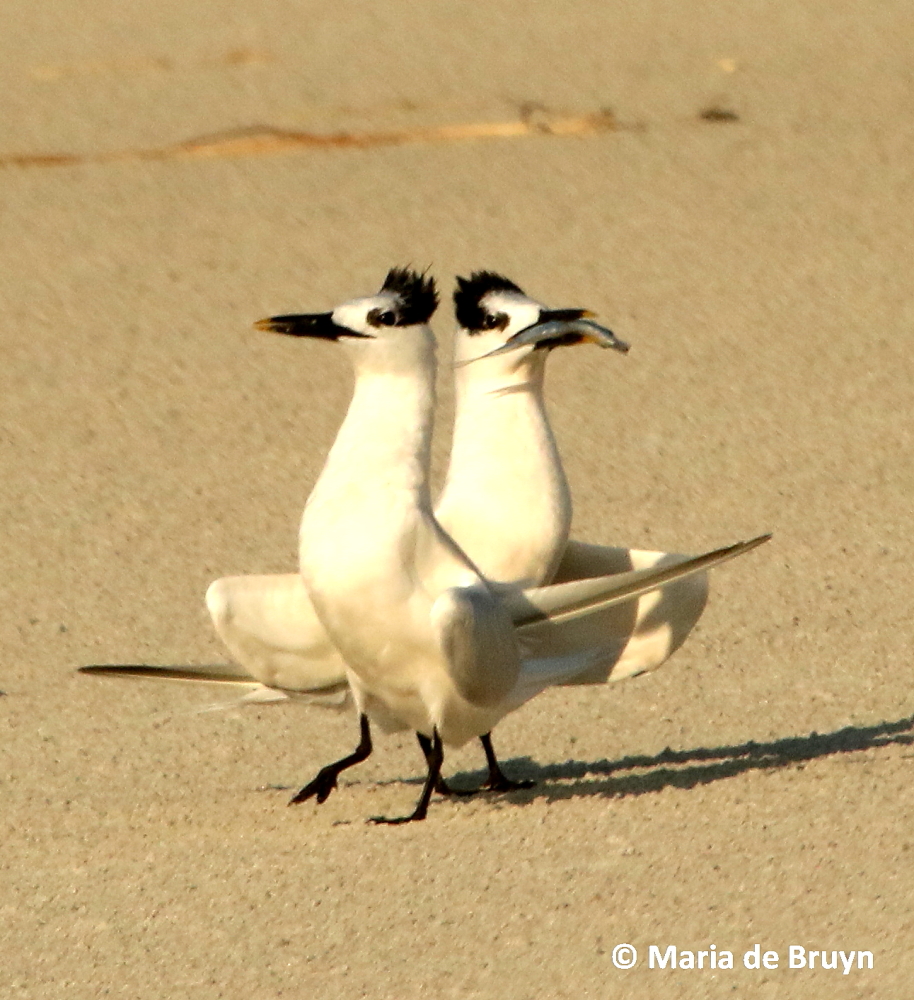
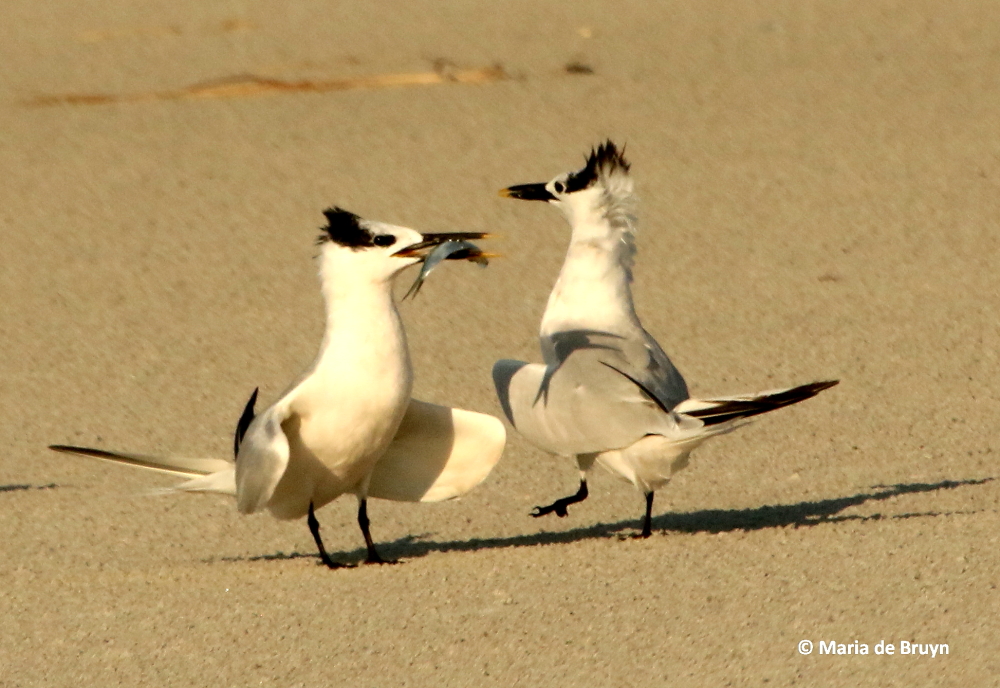
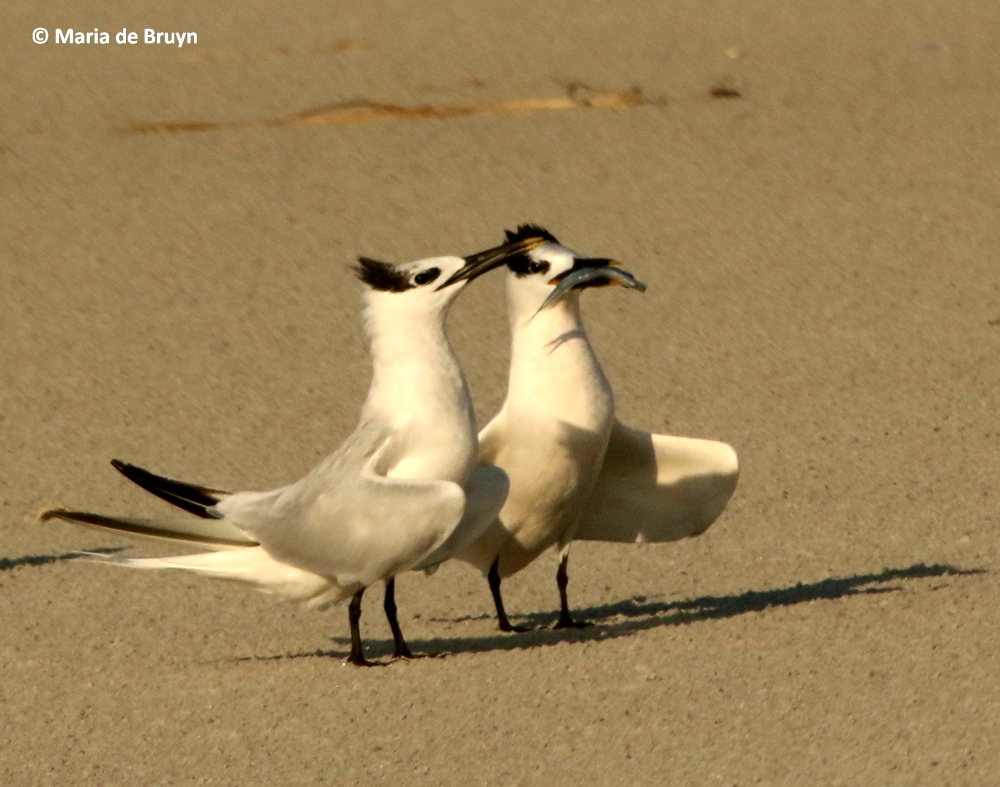
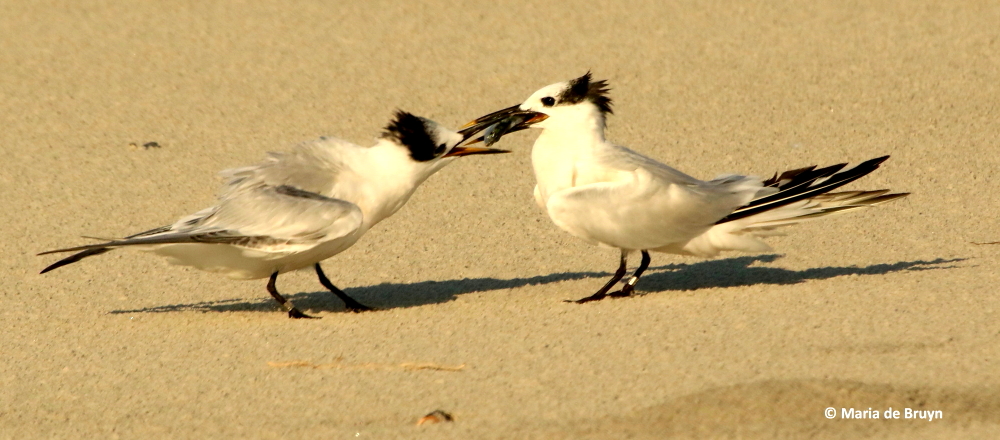
The sandwich terns (Thalasseus sandvicensis) were also resting but individuals took off frequently for a fishing flight. These terns are easily identifiable by the yellow tips on their black bills and their Groucho Mark hair-dos, a boon for people like me who are challenged in recognizing which shorebird they have before them. Sometimes, you could imagine a conversation taking place between them.

Hi! I’m back from fishing!

Didn’t take long, did it?

See, I got a fish!

Wanna smell it?

Not to your liking, huh?

Walking in circles around me won’t make it any different

I think I’ll go feed a young one!

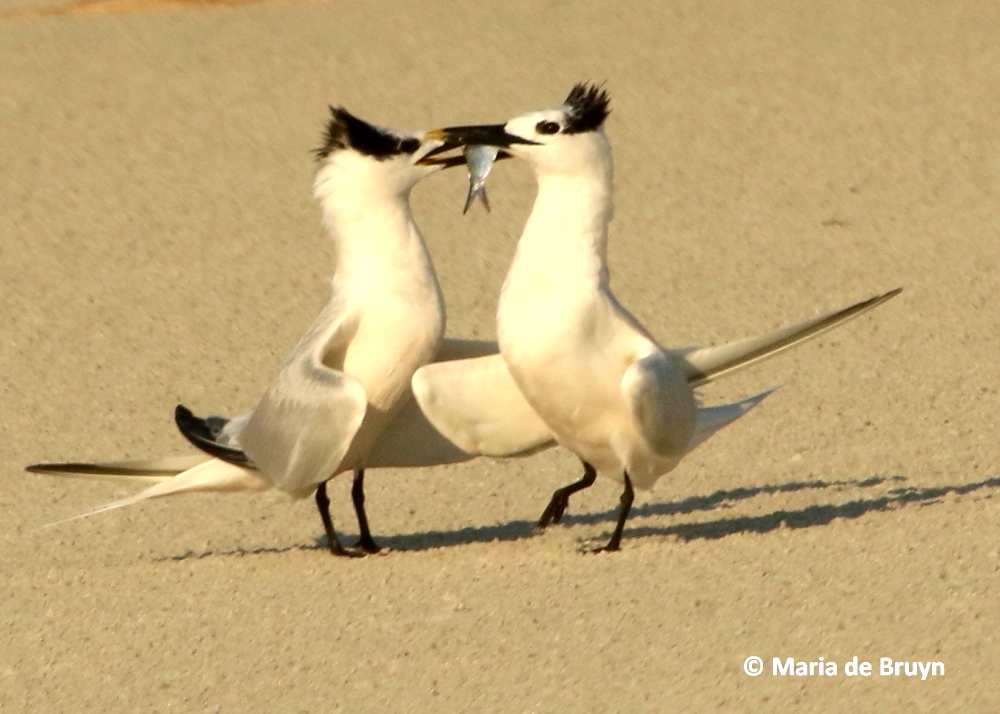
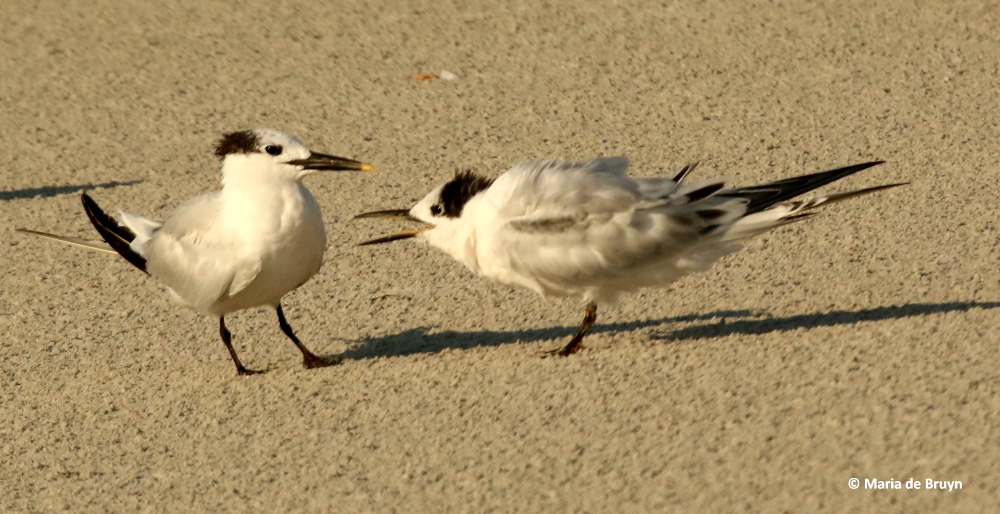
There were two immature sandwich terns who were very persistent in asking for a meal.

Come on, Ma, I’m hungry!

I am really really hungry!

Oh yum, lunch!

That’s right, put it right here!

Thank goodness you brought me something!

I’m STILL hungry!

Perhaps the adult sandwich terns were accommodating to their young as they have a lot of experience in raising them – the oldest one on record lived in North Carolina and reached the ripe old age (for a bird) of 24 years and 2 months! (However, the oldest common tern on record was 25 years, so perhaps the sandwich terns are just more caring?)

The birds were quite entertaining to watch and I have more photos to share from that trip. I will try to intersperse them between postings on avian child-rearing. Have a nice day!

Outwitting the starlings during Winter Storm Helena

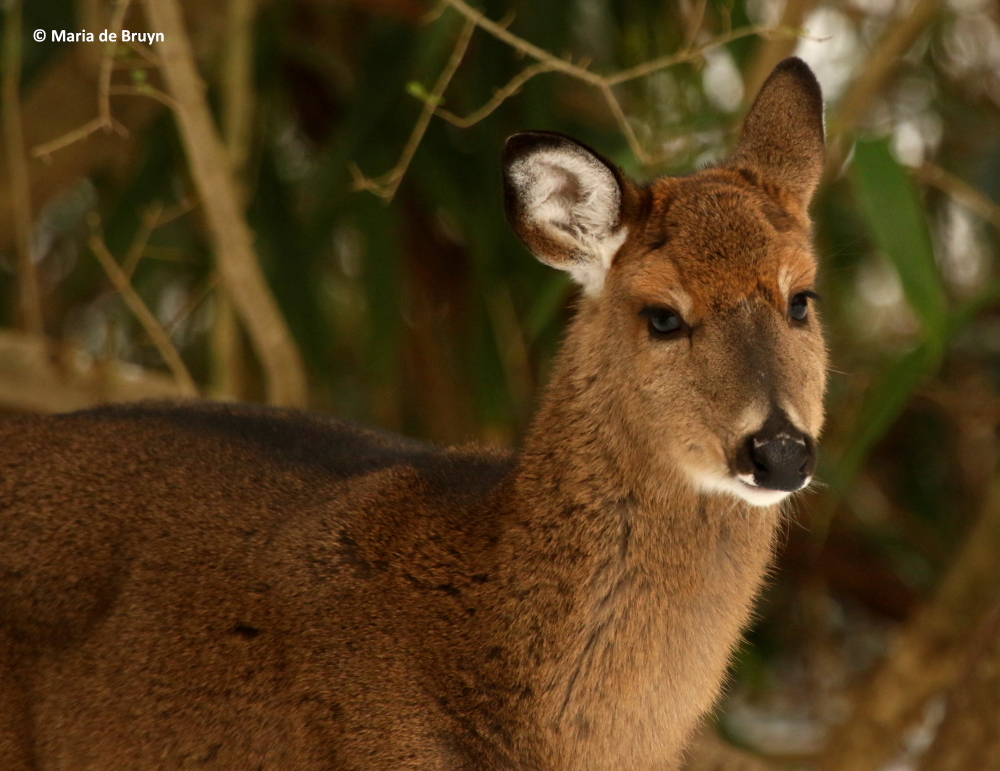
white-tailed-deer-i77a4029-maria-de-bruyn-resSo this past weekend, our part of North Carolina dealt with Winter Storm Helena, which brought us 83 straight hours of below-freezing temperatures (e.g., -9C/15F but we had lower) and a need to bundle up really well if venturing outside. (It also brought me a realization that winter storms are being named like hurricanes.) The first morning, when I went out to fill the bird feeders, I didn’t put on gloves or a cap and dealt with hypothermia symptoms when I finally went inside. I had on triple layers after that! The deer had their fur puffed up and seemed to be coping well.

The frigid air made me feel very sorry for the wildlife, although living outdoors is, of course, what they do and what they have evolved to accommodate. (I did hear today, however, of some birds and small animals that were found frozen to death!) With the snow covering the ground, it turned out the birds were more than happy to visit the feeders and piles of food I had strewn on the snow for the ground feeders.
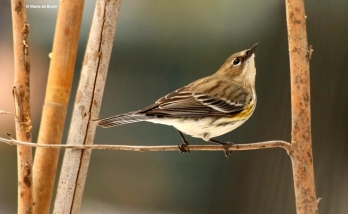
yellow-rumped-warbler-i77a4305-maria-de-bruyn-res

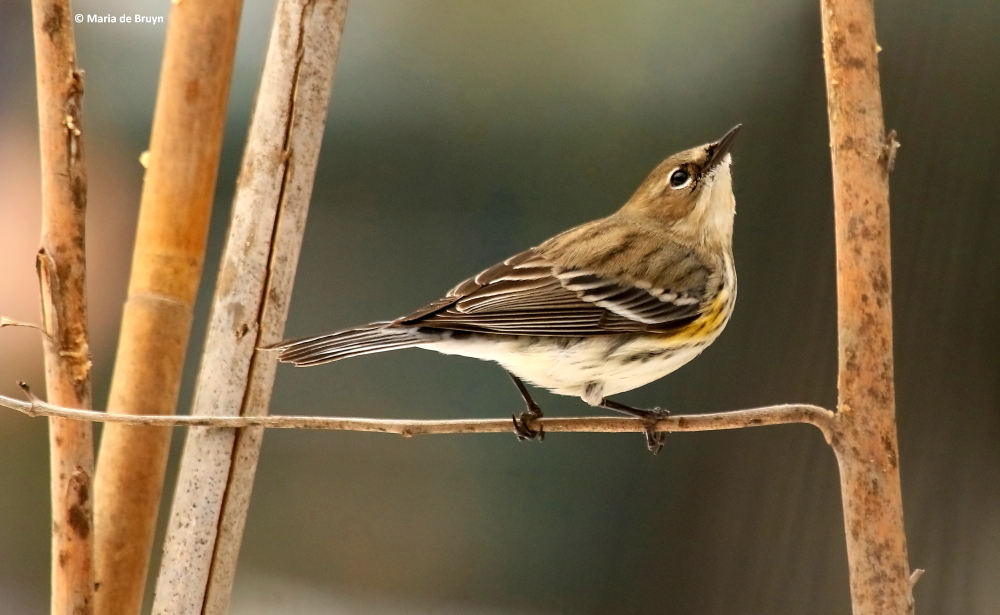
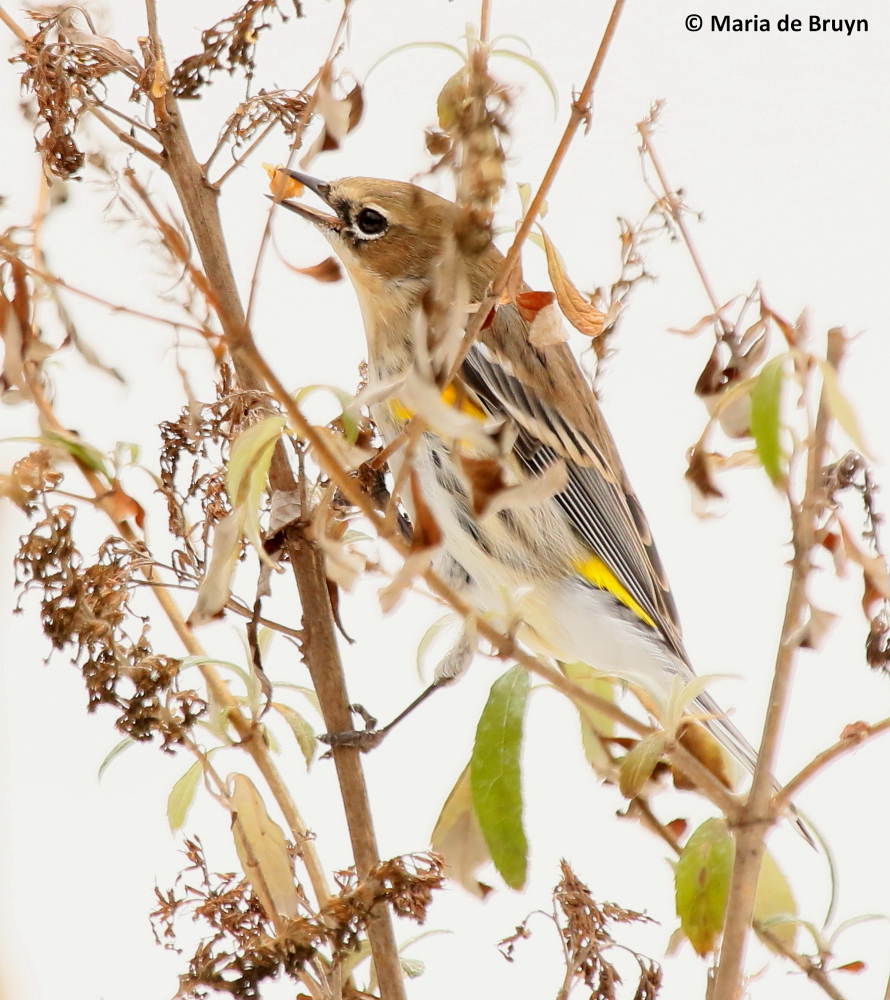
Not only did I have many types of birds coming round, but also record numbers of them. Some birds, like the yellow-rumped warblers (Setophaga coronata, above), usually tend to visit on their own and are not happy with their species mates in the vicinity but during these days, I had four of them alighting near feeders at a time. The same was true for the colorful pine warblers (Setophaga pinus) although they didn’t come close to each other.

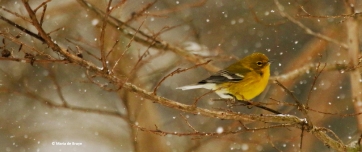
yellow-rumped-warbler-i77a3138-maria-de-bruyn-res

pine-warbler-i77a2441-maria-de-bruyn-res

The Carolina wrens (Thryothorus ludovicianus) and Carolina chickadees (Poecile carolinensis) don’t seem to have too many problems with sharing space and visited the feeders in the same way they always do – quick flights to and fro from nearby tree and shrub branches.

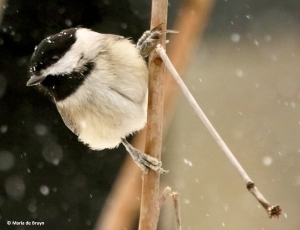
carolina-wren-i77a3873-maria-de-bruyn-res   carolina-chickadee-i77a2710-maria-de-bruyn-res

brown-thrasher-i77a4236-maria-de-bruyn-res


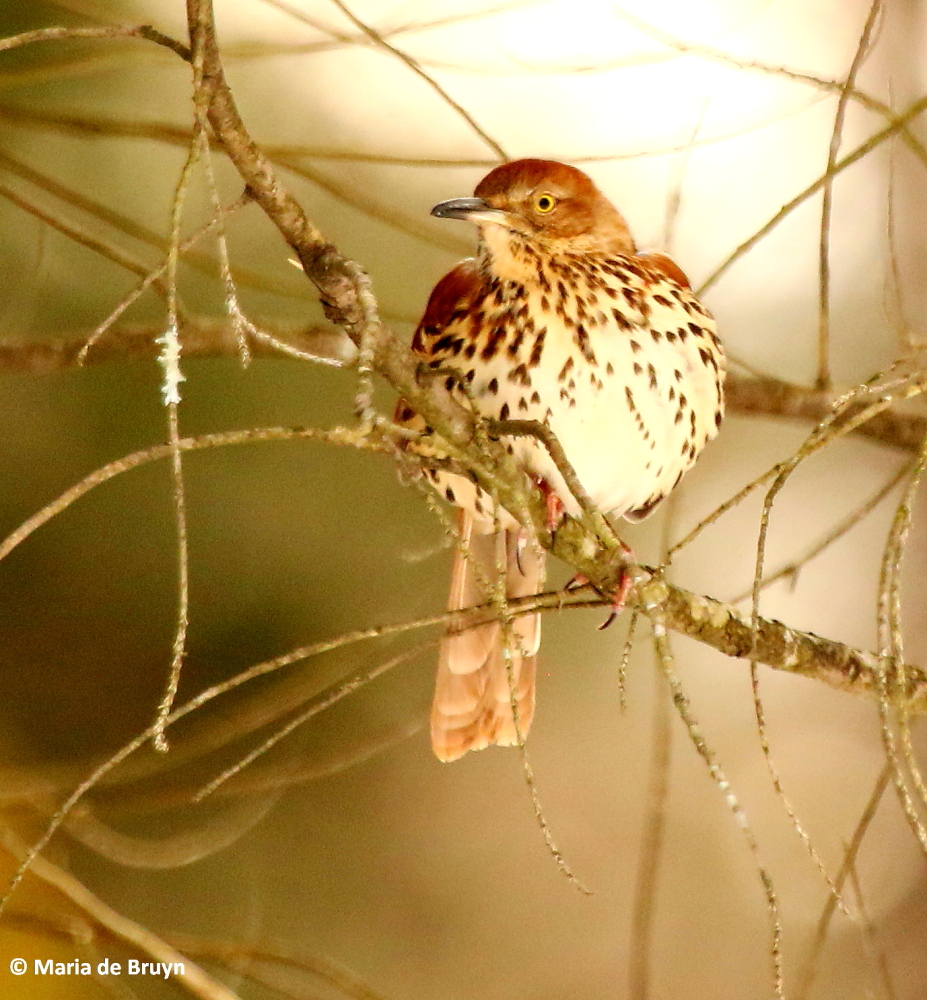
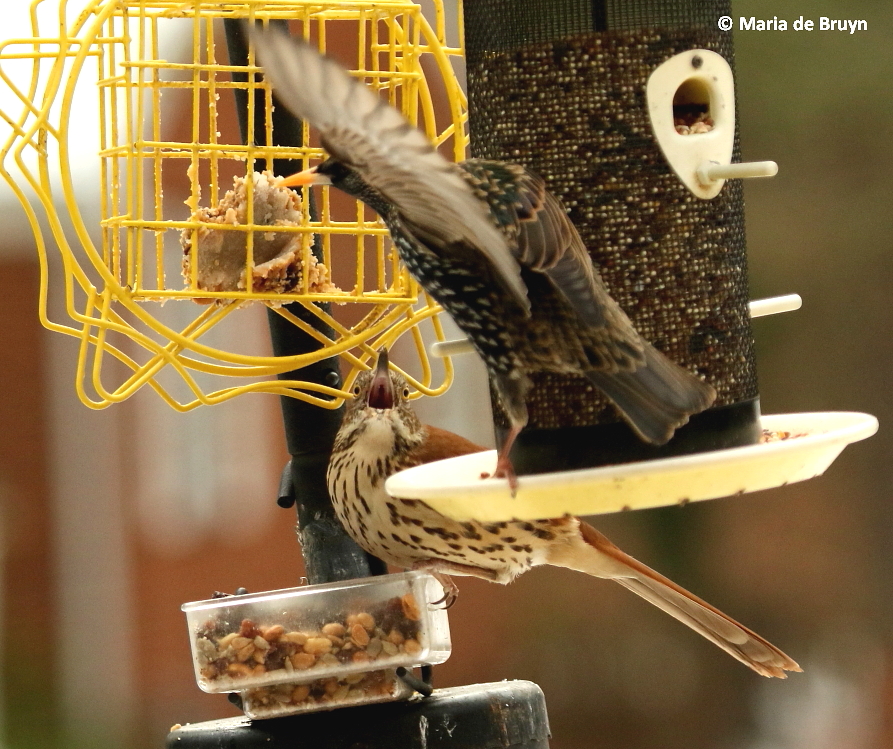
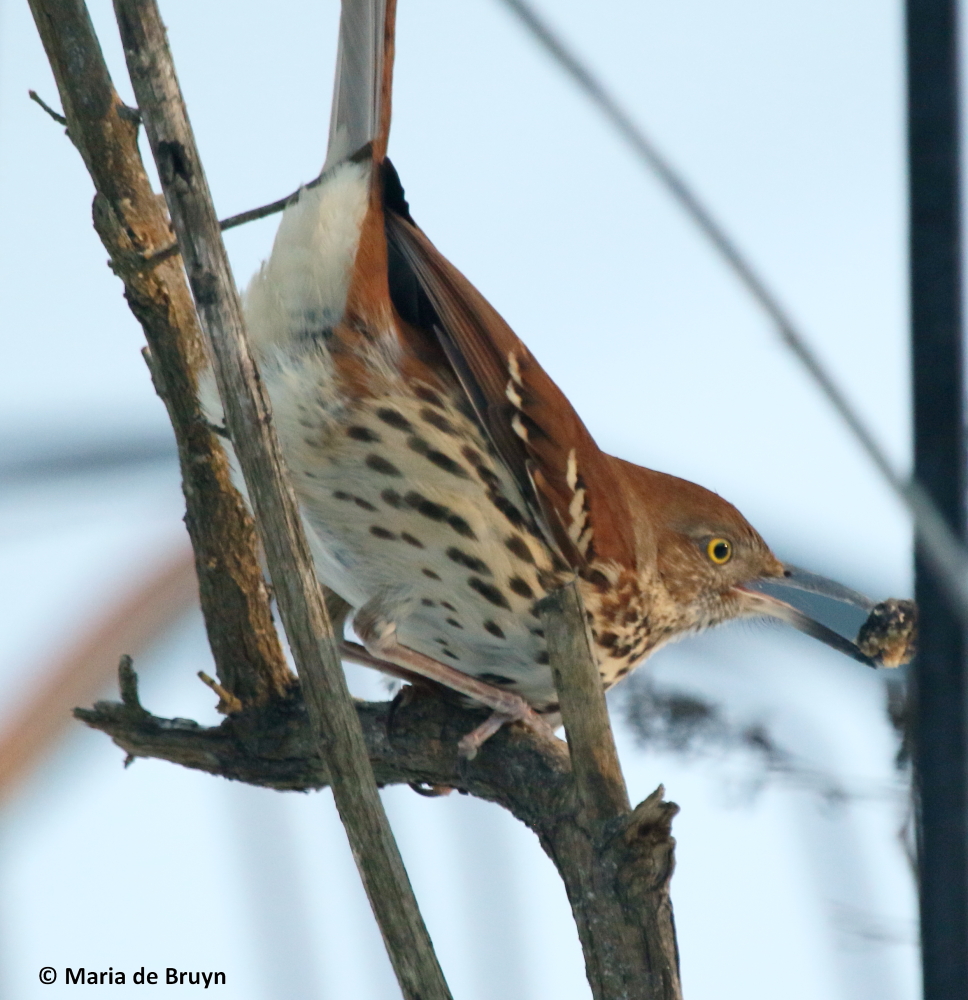
Most of the birds were fairly content to be in close proximity to one another during the snow days. The brown thrashers (Toxostoma rufum) did get very cross with one another, however, when they came too close to one another and chased their rivals away.

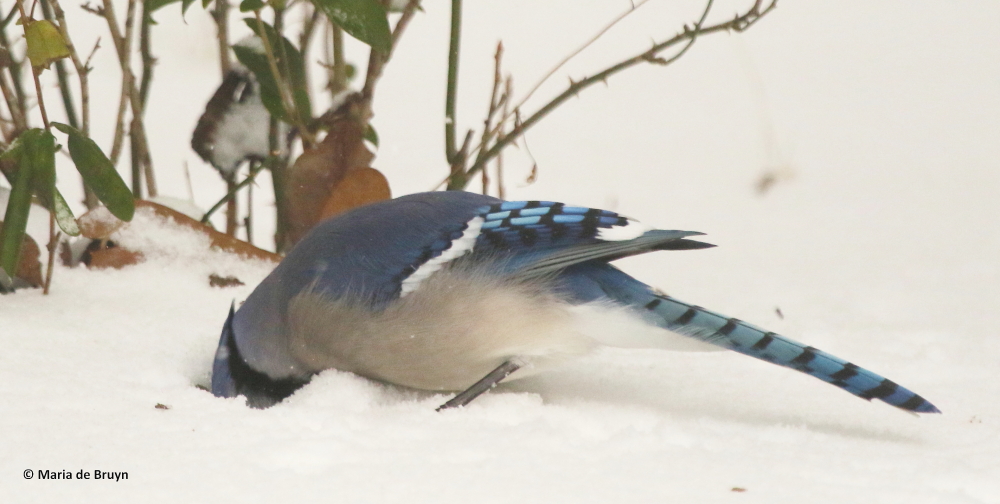
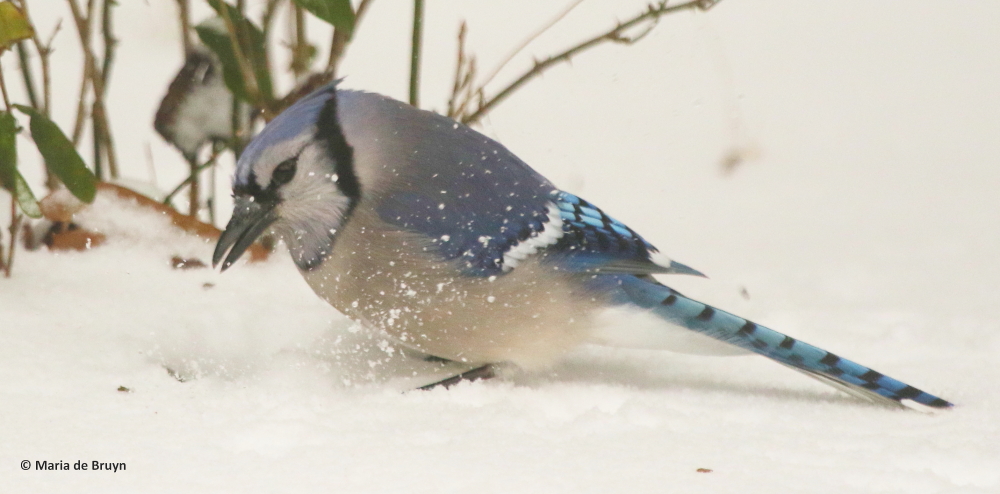
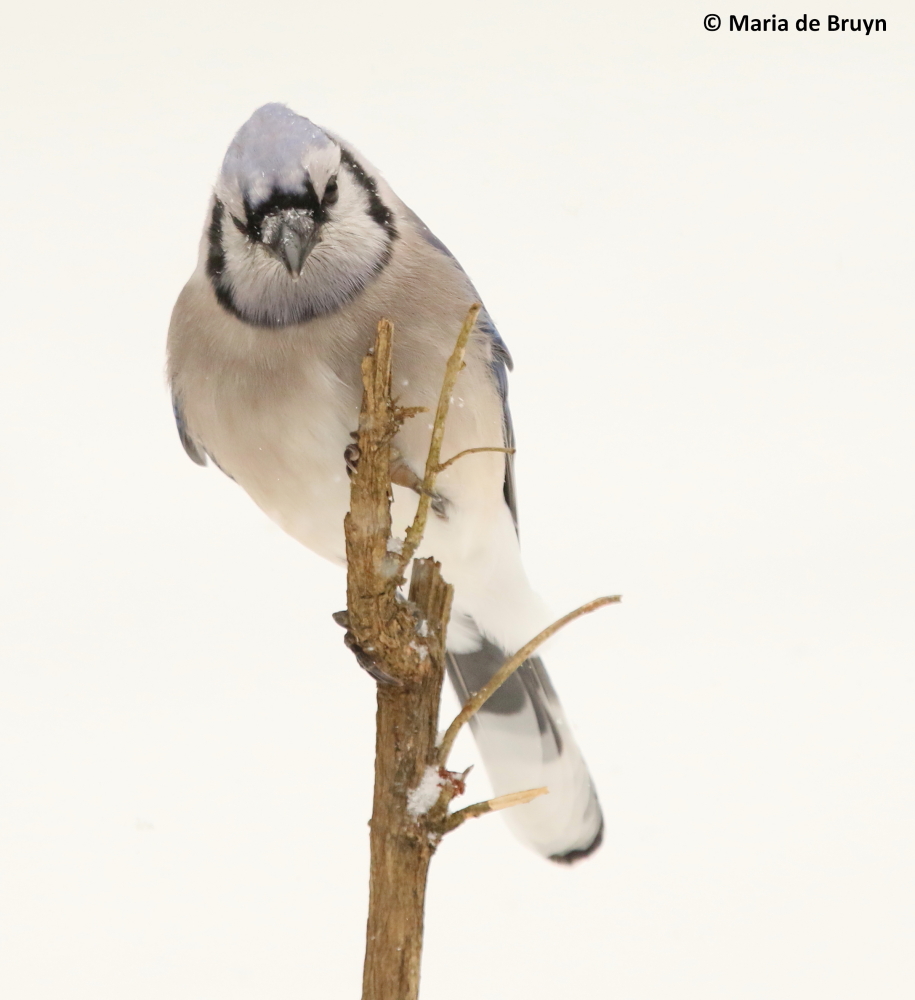
Sometimes a bird would go off and rummage in the snow, like this blue jay (Cyanocitta cristata).
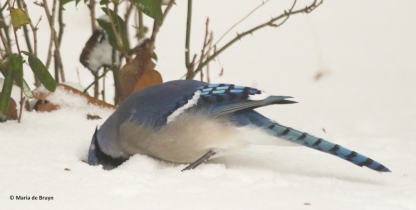
 

blue-jay-i77a2776-maria-de-bruyn-res blue-jay-i77a2770-maria-de-bruyn-res

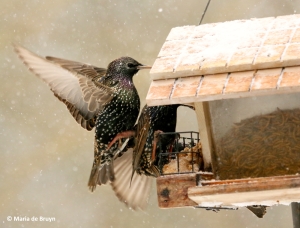
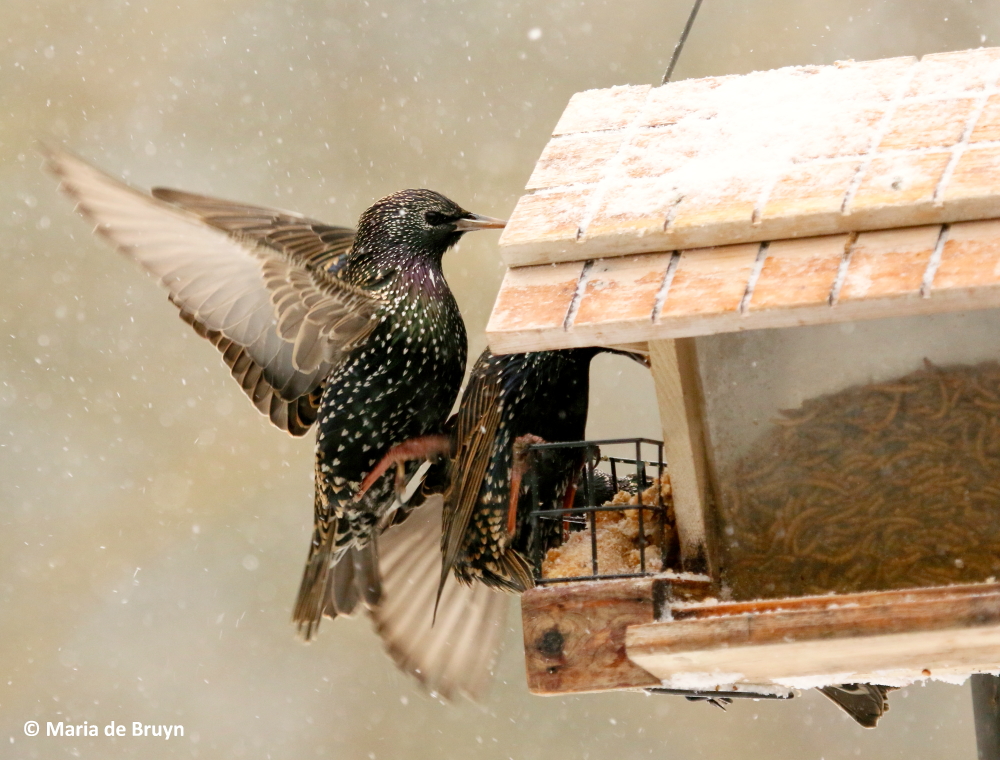
european-starling-i77a2674-maria-de-bruyn-resThe biggest challenge for me was keeping the suet and meal worms in supply, mainly because the European starlings (Sturnus vulgaris) show up in large groups and gulp down food at a speedy pace. The other birds nibble but the starlings seem to inhale food as if they have vacuum cleaners in their throats. They can get grumpy with one another and don’t mind landing atop each other to get a foothold on the feeder.

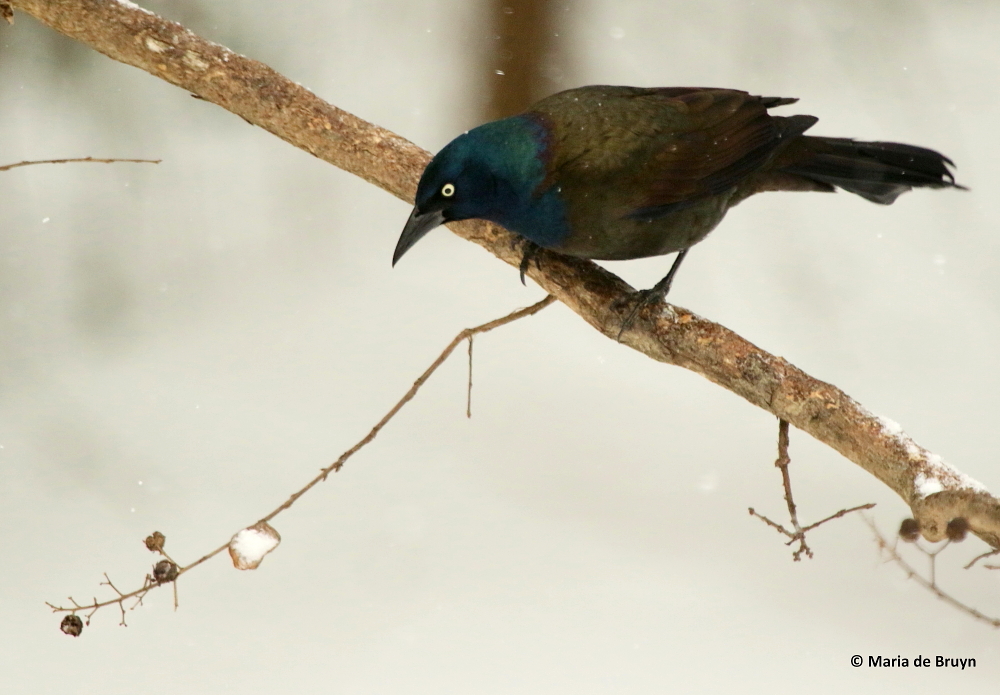
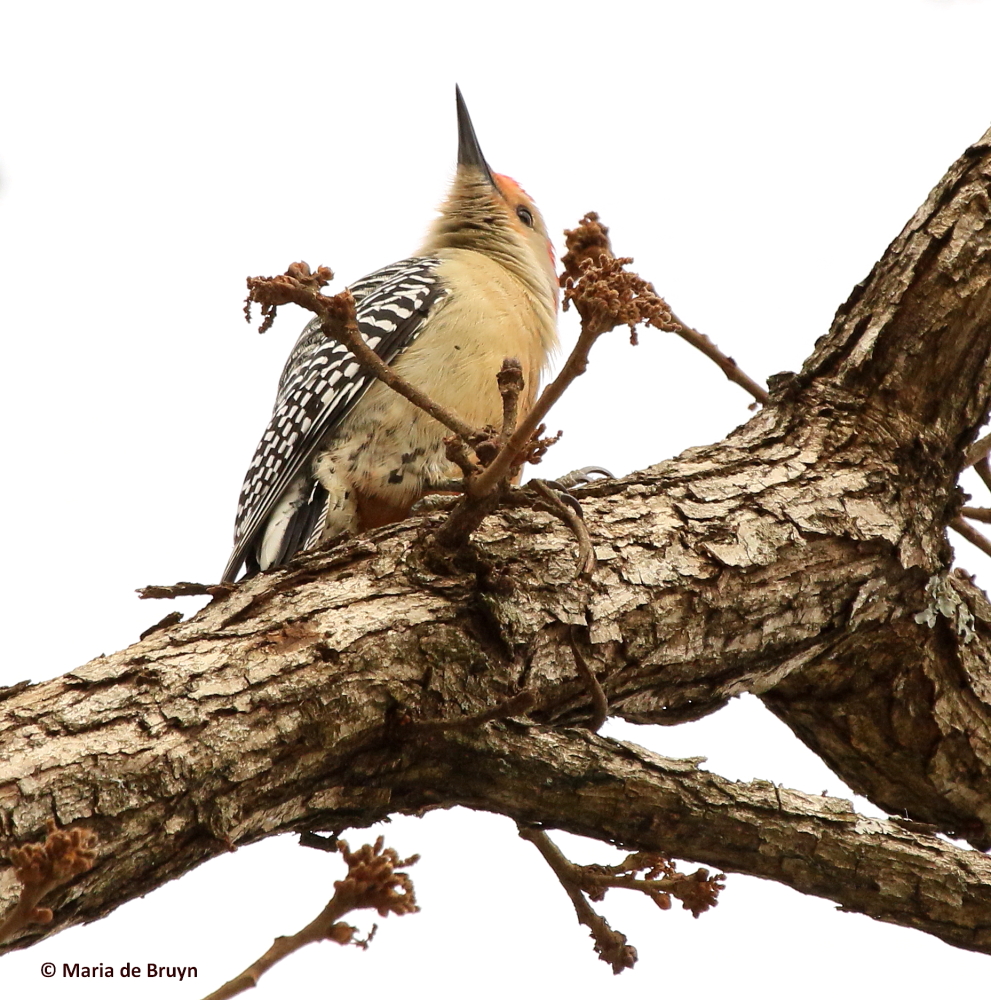
brown-thrasher-i77a3641-maria-de-bruyn-resI was pleased that the other species of birds are learning to cope with them, no longer being intimidated to fly away when these greedy avians arrive. However, they may get displaced from a feeder just because the bulky starlings take up so much room and never wait their turn to get a spot. The larger birds, like the thrashers and red-bellied woodpeckers, may express their displeasure to the starlings while trying to hold their ground. Other people report common grackles (Quiscalus quiscula) as feeder dominant birds but they are well behaved at my house.
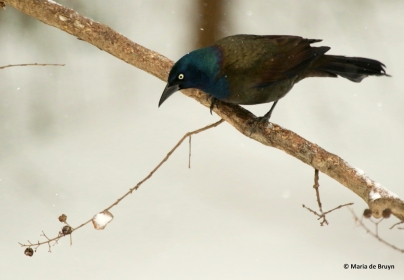
common-grackle-i77a3068-maria-de-bruyn-res

suet-i77a3541-maria-de-bruyn-res

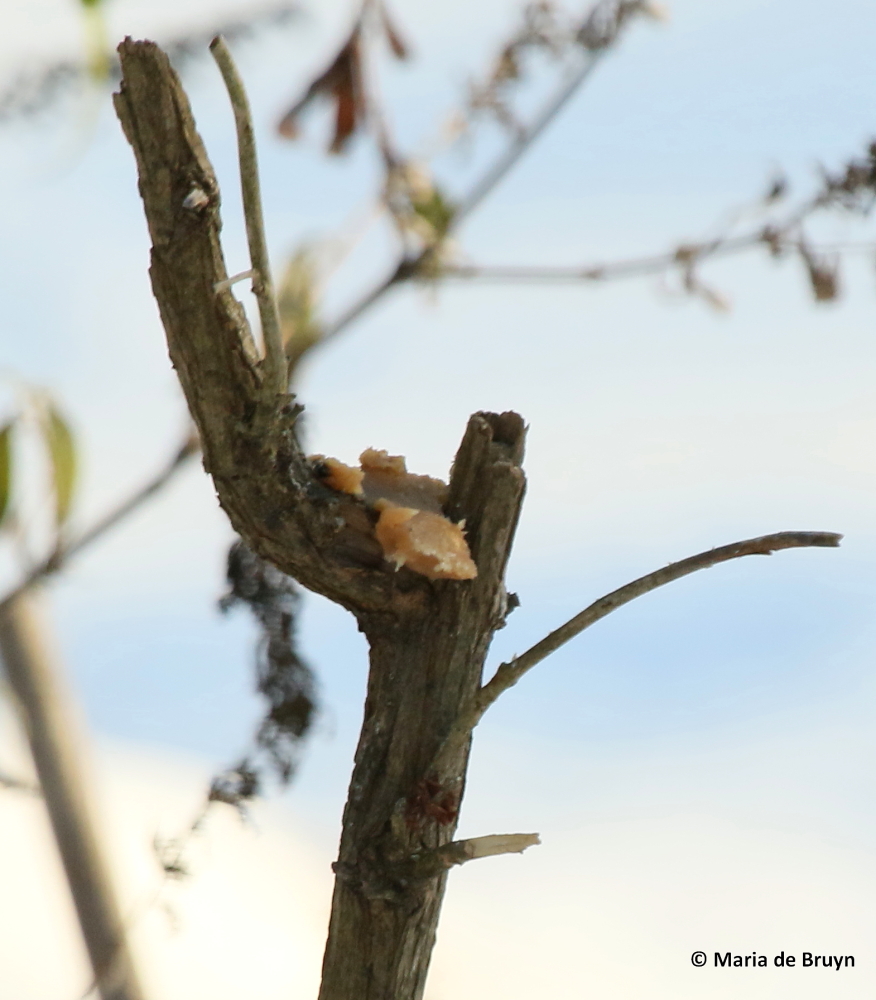
So, what was I going to do? Some of my feeders are set in a flower garden and I had left the dried stalks of sage, butterfly bush and scarlet mallow standing. They don’t look pretty but the birds love sitting on them near the feeders as they digest a bite before getting another. So I began smearing suet on the stalks, which are not sturdy enough to hold the starlings.

The yellow-rumped warblers and chickadees were pleased, as was my faithful ruby-crowned kinglet (Regulus calendula) and the Carolina chickadee.
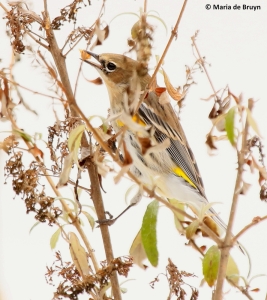
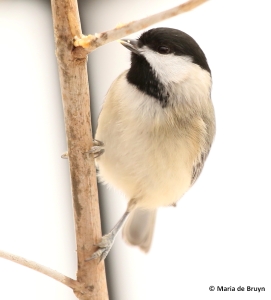
yellow-rumped-warbler-i77a3913-maria-de-bruyn-res  carolina-chickadee-i77a4283-maria-de-bruyn-res

ruby-crowned-kinglet-i77a4167-maria-de-bruyn-res

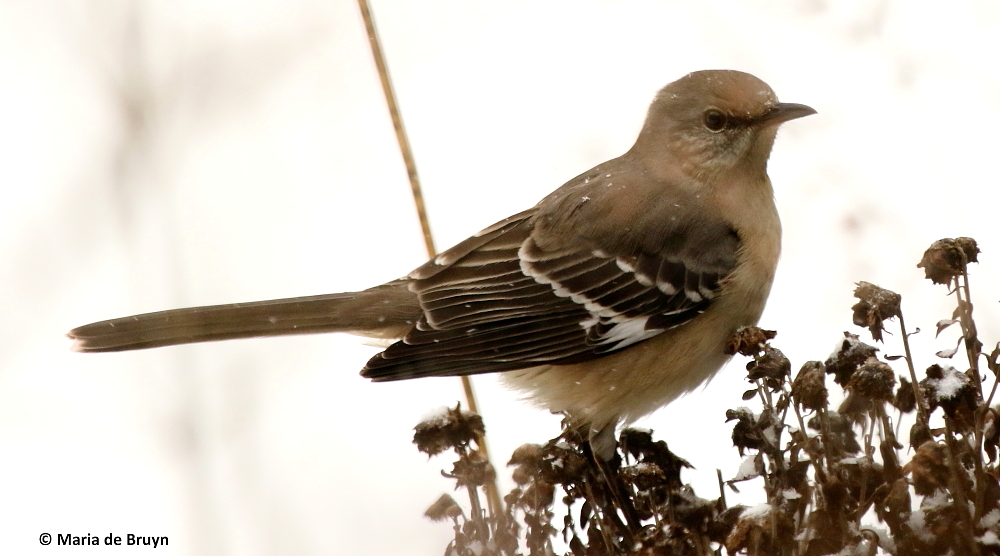
To my surprise, even the larger Northern mockingbird (Mimus polyglottos) and brown thrashers discovered and sampled the suet-laden stalks.
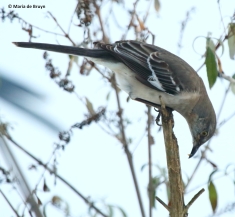
northern-mockingbird-i77a3629-maria-de-bruyn-res   brown-thrasher-i77a3607-maria-de-bruyn-res

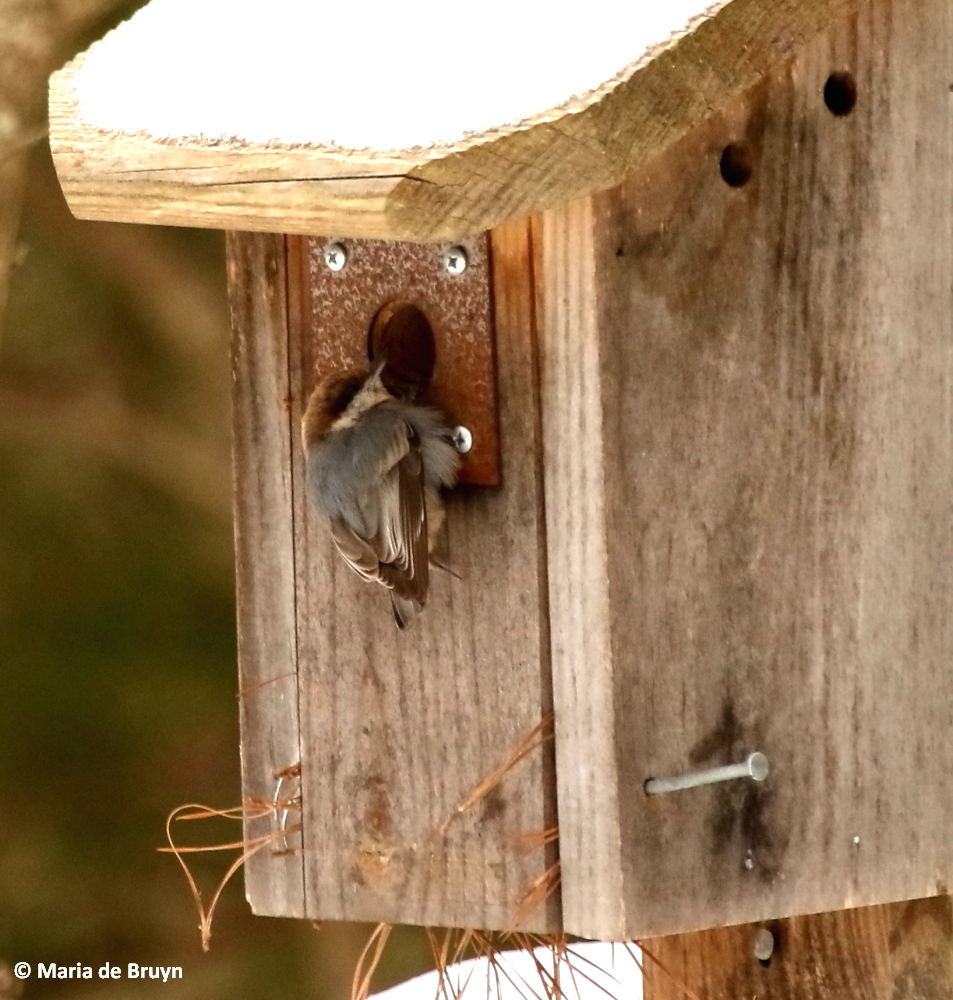
Following advice from the Bird Sleuth program, I had stuffed the bluebird and nuthatch boxes with pine needles and wool in case the birds wanted to shelter there overnight. I don’t know if any of them did, but the brown-headed nuthatches (Sitta pusilla) were again checking out their preferred nest box, so perhaps they did roost there overnight.
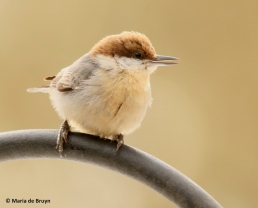
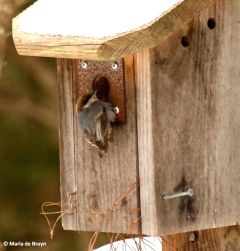
brown-headed-nuthatch-i77a3959-maria-de-bruyn-res    brown-headed-nuthatch-i77a4183-maria-de-bruyn-res

heated-fountain-i77a3586-maria-de-bruyn-res


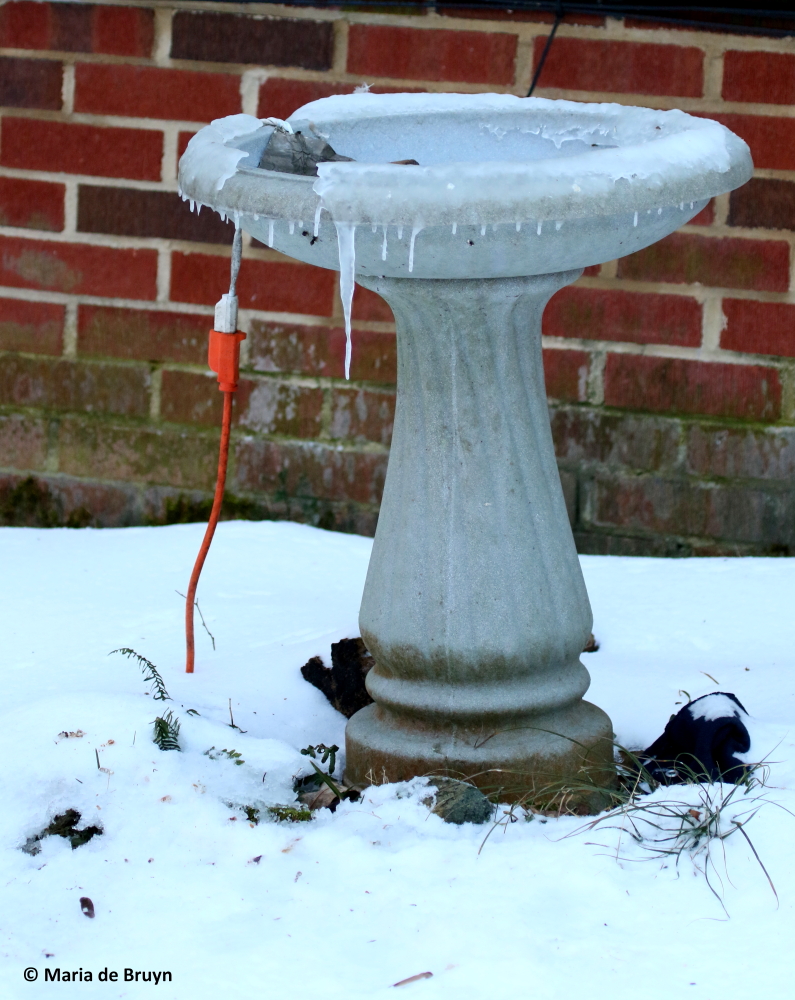
I was filling the heated bird bath daily, too, as it became a popular drinking fountain.

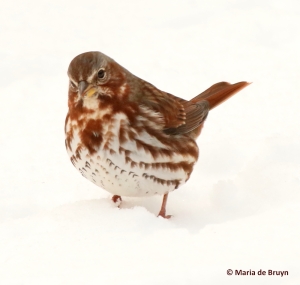
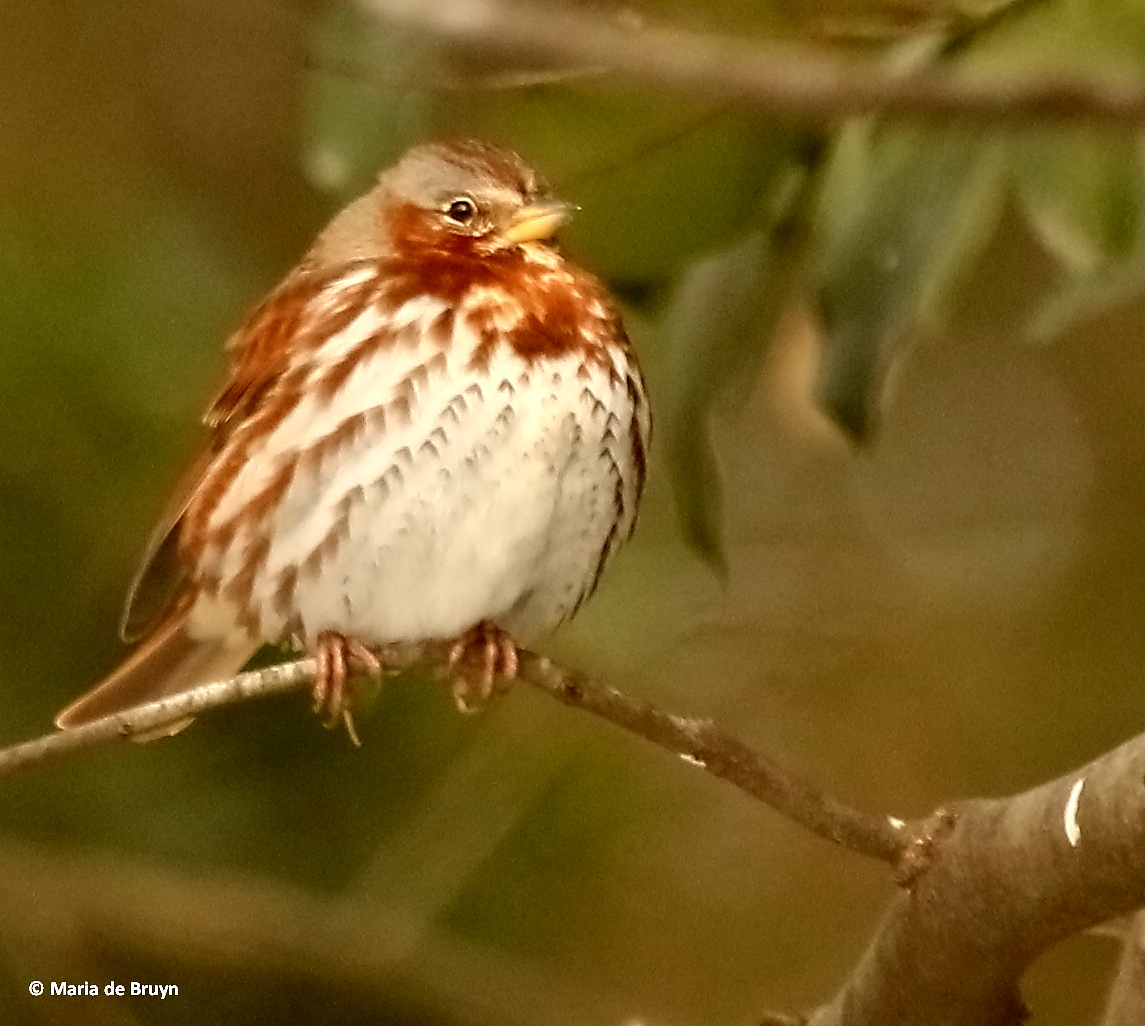
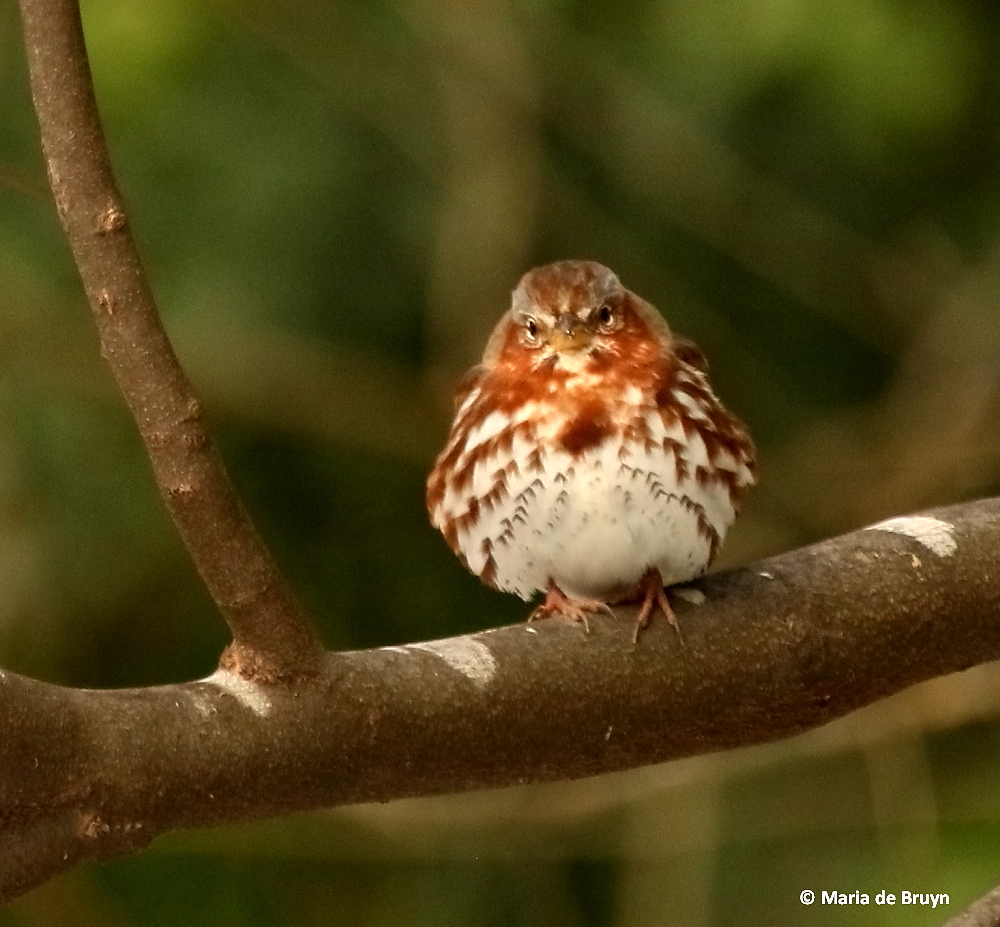
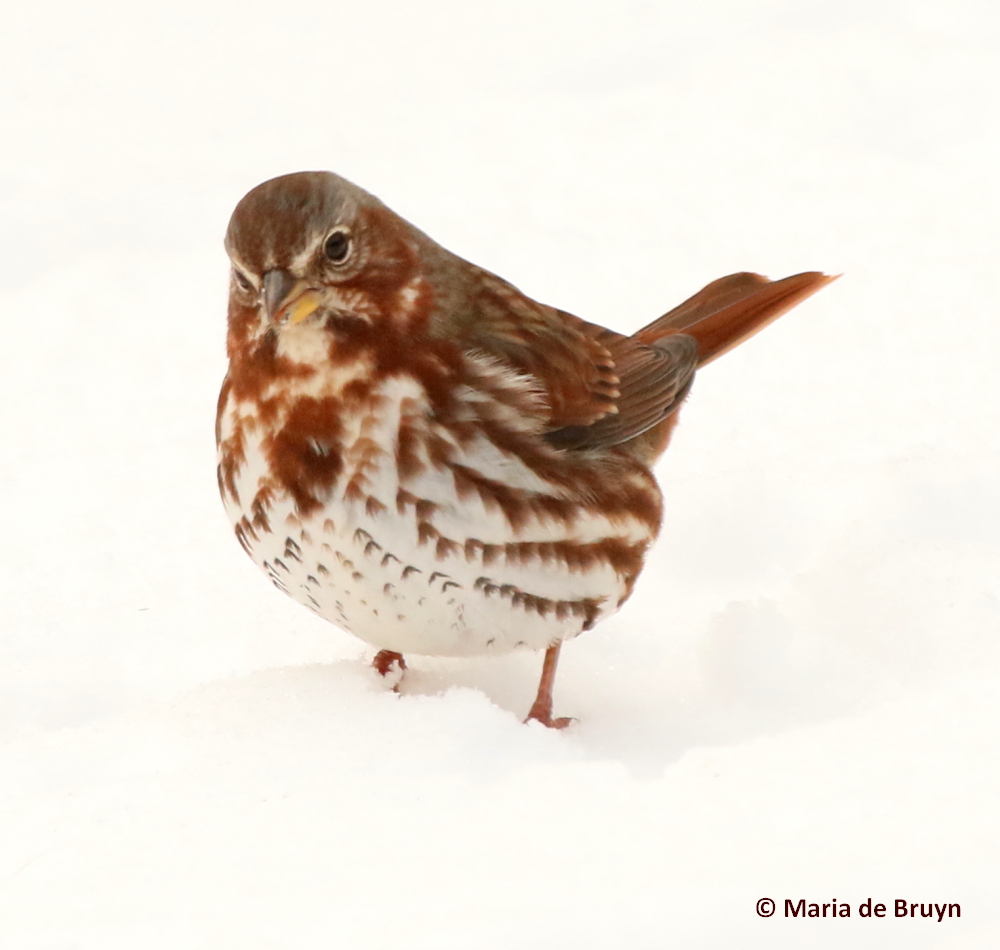
The thrill of the wintery snow days for me was a new yard visitor, a gorgeous fox sparrow (Passerella iliaca). I have never had one here before so it was a wonderful surprise and discovery. (I’m still hoping that a red-breasted nuthatch will turn up, too.)

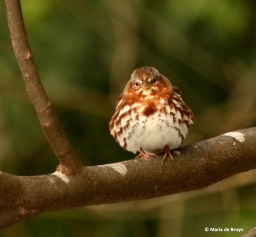


fox-sparrow-i77a4347-maria-de-bruyn  fox-sparrow-i77a4348-maria-de-bruyn-res

fox-sparrow-i77a3773-maria-de-bruyn-res

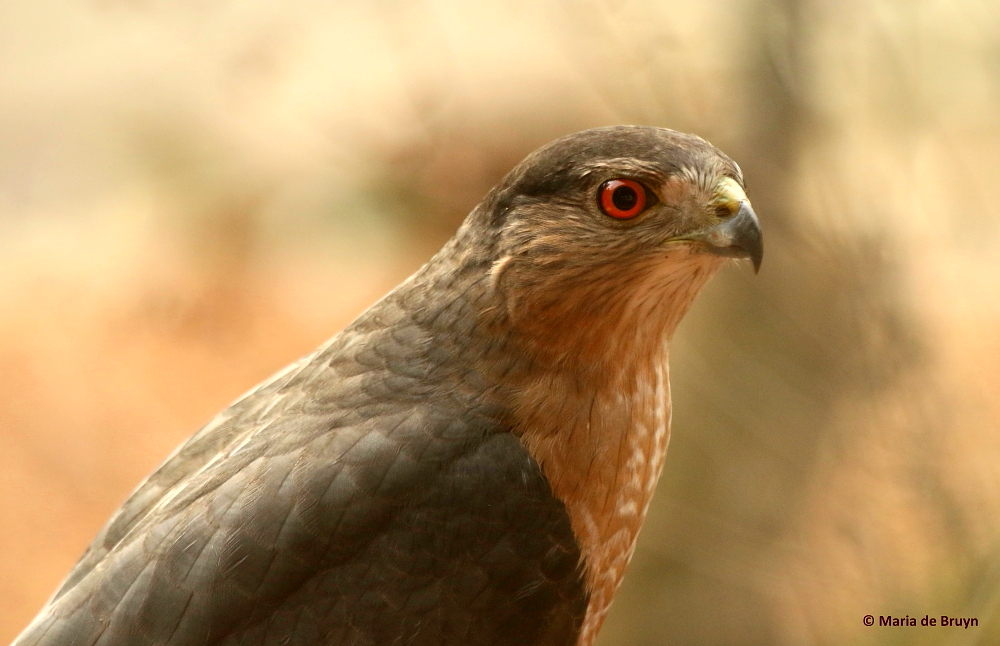
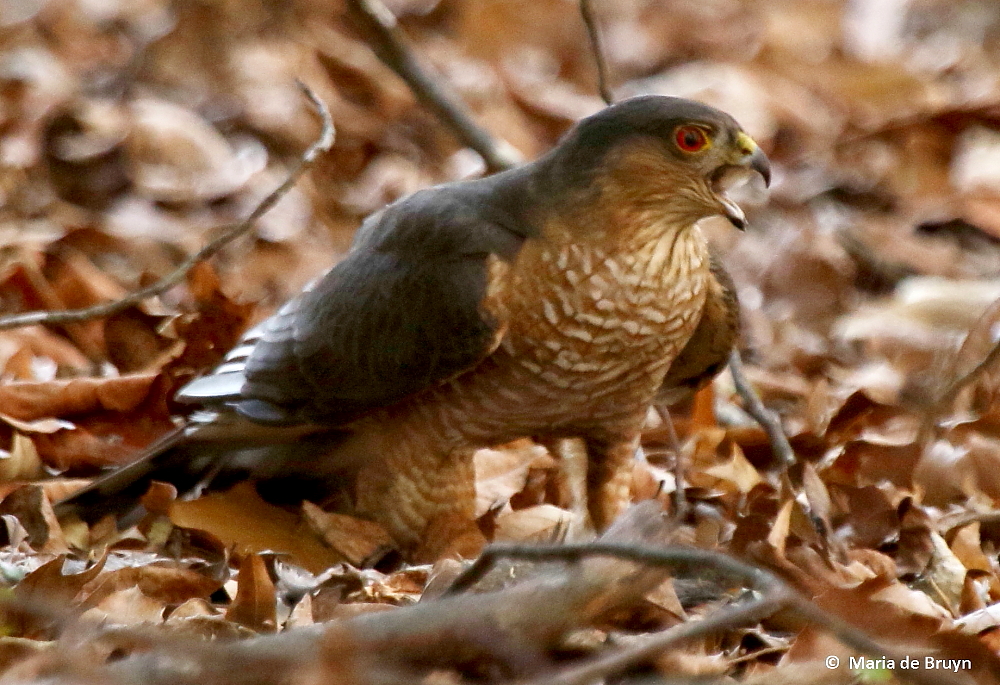
The birds “missing” from the storm gathering were the hawks. I’ve had a Cooper’s hawk  (Accipiter cooperii) visiting for years, but recently discovered that a sharp-shinned hawk (Accipiter striatus) is also taking birds from my yard. As they look quite similar, the sharpie may have been coming around for some time and I just never realized it. They were both here in the last couple weeks, but neither one made an appearance during the storm.

coopers-hawk-i77a1341-maria-de-bruyn-res   sharp-shinned-hawk-i77a8520-maria-de-bruyn-res

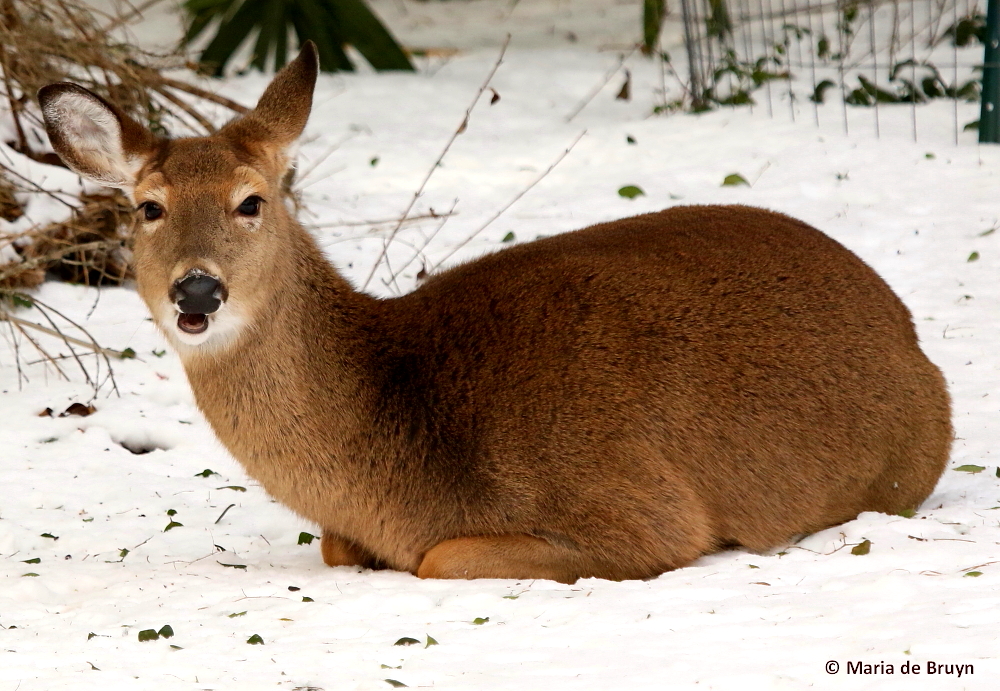
Our two neighborhood white-tailed does (Odocoileus virginianus) and their three offspring came by, obviously finding my yard a peaceful and safe space to rest.
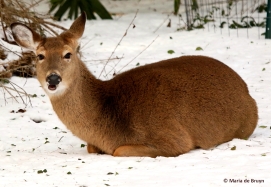
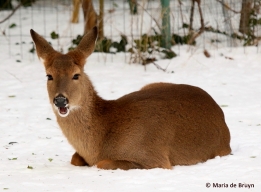
white-tailed-deer-i77a4432-maria-de-bruyn-res   white-tailed-deer-i77a4431-maria-de-bruyn-res

So I’ll end with some “beauty shots” from the snow days as the snow and ice are now melting. In two days’ time, we are supposed to be having temperatures of 68F/20C or higher! And then we can wait out the rest of January as well as February and March to see if we get any more winter storms.
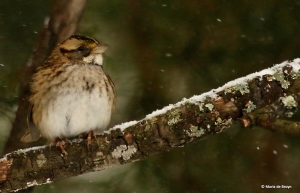
white-throated-sparrow-i77a2733-maria-de-bruyn-res

White-throated sparrow (Zonotrichia albicollis)
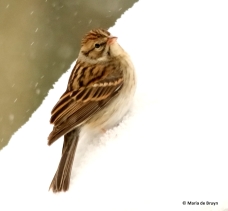
chipping-sparrow-i77a2830-maria-de-bruyn-res

     house-finch-i77a2852-maria-de-bruyn-res

Chipping sparrow (Spizella passerina)        House finch (Haemorhous mexicanus)

dark-eyed-junco-i77a2590-maria-de-bruyn-res  downy-woodpecker-i77a2810-maria-de-bruyn-res

Dark-eyed junco (Junco hyemalis)          Downy woodpecker (Dryobates pubescens)
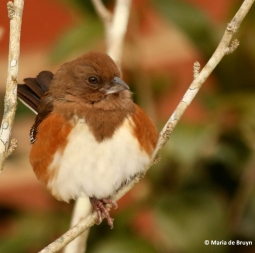
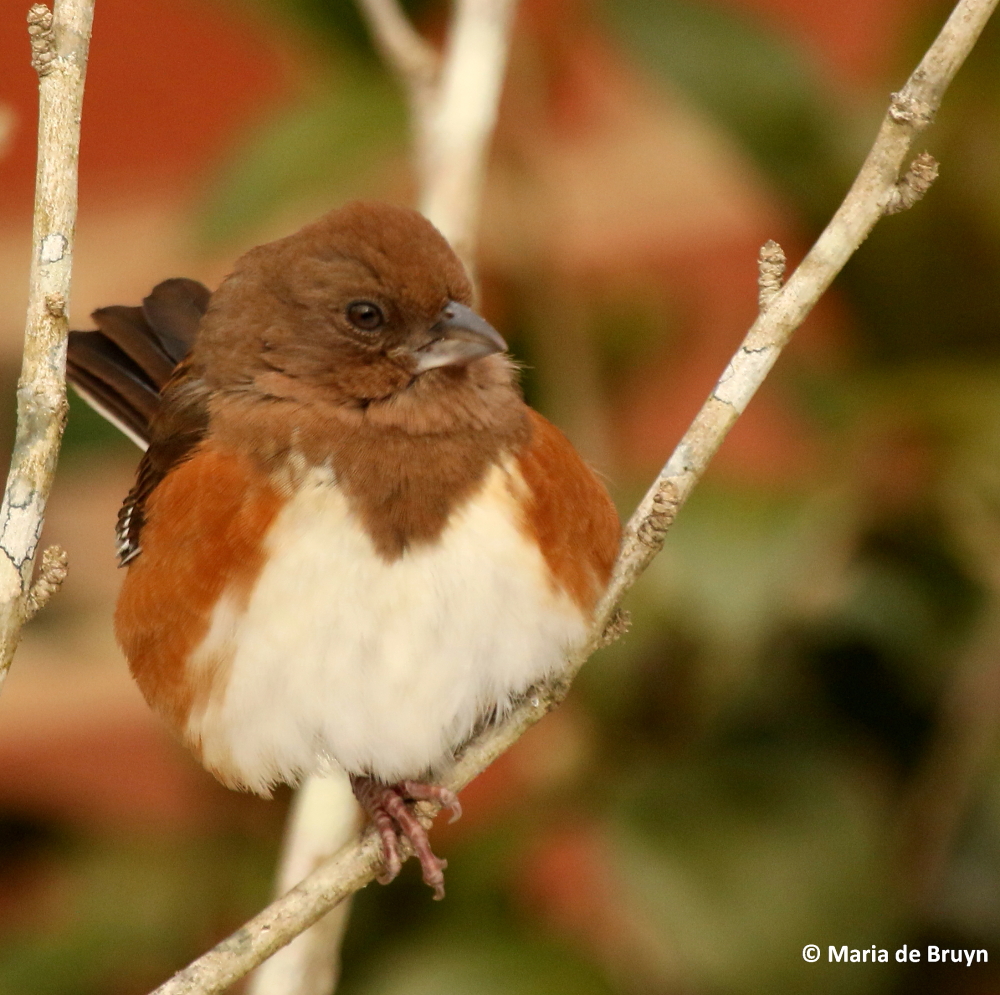
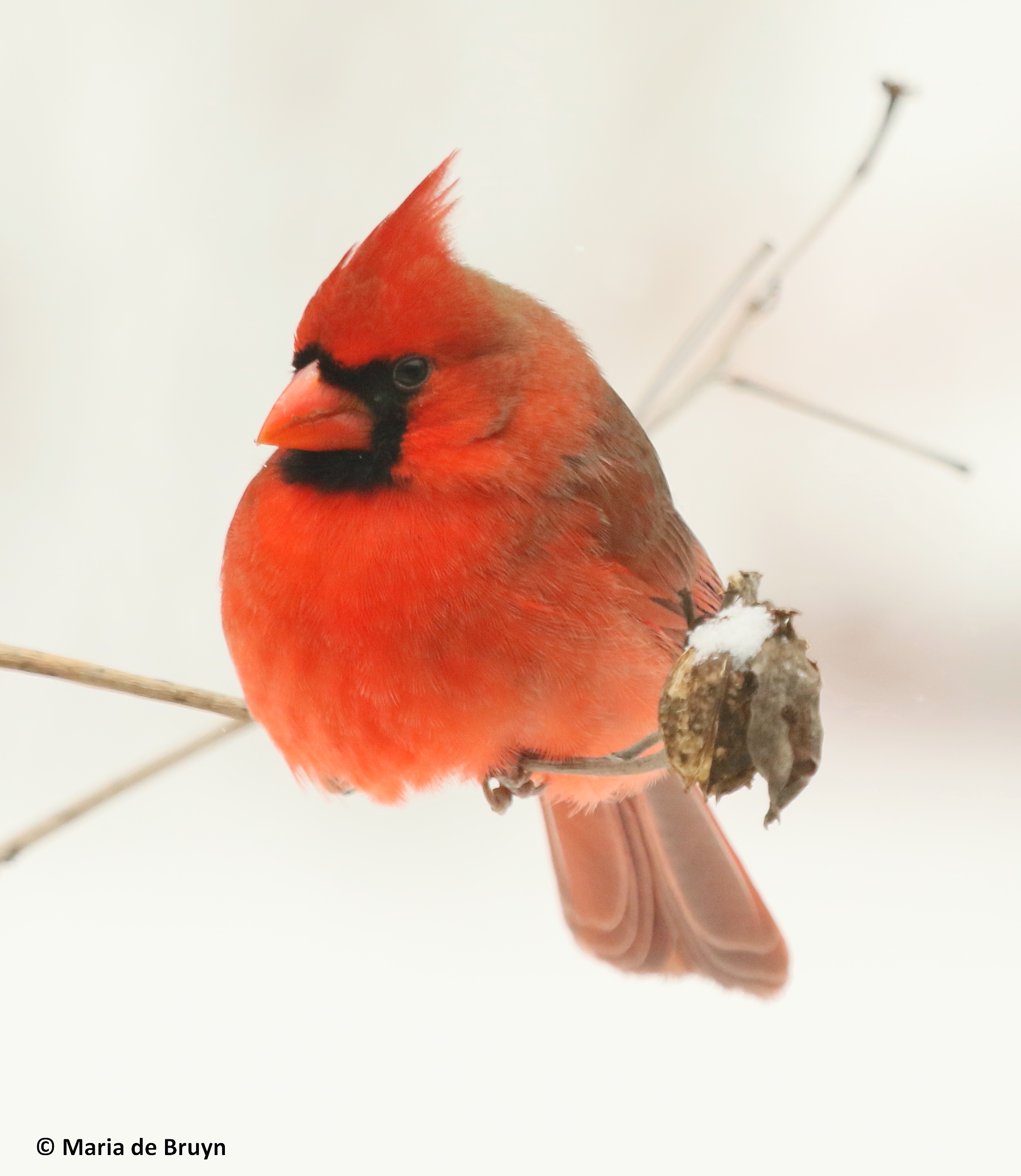
eastern-towhee-i77a4111-maria-de-bruyn-res    northern-cardinal-i77a3099-maria-de-bruyn-res

Eastern towhee (Pipilo erythrophthalmus)      Northern cardinal (Cardinalis cardinalis)
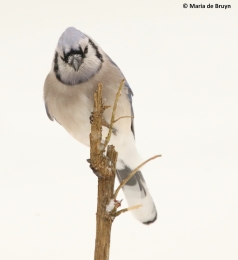
blue-jay-i77a2858-maria-de-bruyn-res     eastern-bluebird-i77a2285-maria-de-bruyn-res

Blue jay                                                       Eastern bluebird (Sialia sialis)
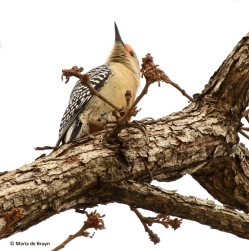
red-bellied-woodpecker-i77a4047-maria-de-bruyn-res       ruby-crowned-kinglet-i77a4263-maria-de-bruyn-res

Red-bellied woodpecker (Melanerpes carolinus)     Ruby-crowned kinglet
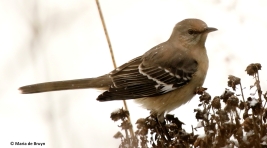
northern-mockingbird-i77a2714-maria-de-bruyn-res   pine-warbler-i77a2657-maria-de-bruyn-res

Northern mockingbird                                              Pine warbler