Serendipity in a stressful year

2020 has turned out to be quite a stress-filled series of months on multiple fronts, so unexpected pleasures and delights are very welcome. For birders in North Carolina (NC), that scenario has luckily been playing itself out this fall and winter. Several unexpected and unusual birds have been spotted in our state, including a Kirtland’s warbler, vermilion flycatcher, MacGillivray’s warbler, and sandhill cranes.

Many bird lovers have traveled to catch sight of these surprising visitors. While I’ve mostly avoided groups the past nine months as part of my COVID-avoiding measures, last week I did join the human migration to an NC home about 20 miles away to see a bird that is normally only found in the northwestern United States – a varied thrush (Ixoreus naevius).

The opportunity to see this lovely bird was offered to the local community by homeowners Tony Hewitt and Marla Wolf. They generously allowed people to come to their suburban yard (by appointment) to watch over the backyard fence to catch sight of the thrush.

When I visited on a “slow” day, it was easy to socially distance oneself from other birders and photographers. Only a couple other people were there for a while (and I was alone some of the time) waiting for the thrush to make an appearance. Everyone wore masks, some having double masked as well.

The varied thrushes normally migrate back and forth in the area stretching from Alaska, through Canada, down to northern California, as shown by this map from the Cornell Lab of Ornithology. The website remarks that a few of these birds occasionally wander outside their normal range to the Midwest and Northeast. Seeing one in the southeastern USA is highly unusual.

Map credit: https://www.allaboutbirds.org/guide/Varied_Thrush/maps-range#

This robin-sized bird is a real stunner – his orange, grey, yellow and white feathers grow in a wonderful pattern. The colors seem to vary a bit, depending on the quality of the light falling on them and the background against which you see him. But he is handsome from any angle – front, side or back!

Something I found particularly interesting was a pattern of wavy lines in his tail feathers when the light hit them in a certain way. This was not something that I saw mentioned in descriptions of its physical characteristics. The observation made me want to photograph the thrush again to see if this would show up again.


It is interesting to note that one varied thrush crossed the Atlantic and turned up in Great Britain in 1982. It was a unique bird since it represented a rare variant of the species in which the orange feather coloration has become all white. Only five such representatives of this mutation have been recorded since 1921.

In its home range, the varied thrush prefers to stay in dense, coniferous forests near water. The NC visitor is taking advantage of a backyard nook that Marla designed with multiple shrubs and some open space.

The home is not far from a lake, but the thrush is taking advantage of a bird bath for drinks, which Marla kindly had moved so that it was better visible for visiting birders looking over the fence.

Varied thrushes usually feed on insects, foraging on the ground and often under dense cover.

The thrush’s insectivorous diet can be wide-ranging and include ants, beetles, caterpillars, crickets, earthworms, millipedes, snails and spiders.


They also eat berries, either in trees or on the ground, during the autumn and winter months. 

Our NC celebrity bird is obviously enjoying seeds furnished daily by Tony and Marla.

A notice placed by Tony near fence announced that the thrush seemed to come out in the open every 30 minutes or so. It turned out that this was indeed the case the first hour that I was there; then the bird came after a couple 15-minute intervals.

He certainly seemed to be a creature of habit because I noticed that after eating, he would go back into the dense undergrowth for several minutes and then re-emerge to take a couple drinks at the bird bath. Eating obviously was making him thirsty and noticing this habit meant it was possible to get “camera-ready” for another appearance.

When it is breeding time, male varied thrushes begin to establish territories and confront other males with threat displays. These begin with the bird cocking his tail and turning it towards his rival, while he lowers his wings. If the rival bird does not go away, the thrush will lower his head, raise and fan his tail and then spread his wings out to the side.

Obviously, our NC bird had no rivals around but there were many other birds foraging in the ground underneath the feeders. They included Northern cardinals, white-throated sparrows, pine siskins and downy woodpeckers among others. And it seemed that “our” thrush was sometimes warning them off.

Or perhaps he was just flashing his wings to scare up insects hiding in the fallen leaves.

There are still large numbers of varied thrushes, with an estimate of some 20 million in the current global breeding population. However, the North American Breeding Bird Survey recorded a cumulative decline of the species of 73% between 1966 and 2015. Logging, wildfires and forest fragmentation are ongoing threats to their breeding habitat.

This is only the fifth time that a varied thrush has been seen in North Carolina. The first sighting was in 2005; three other birds were seen in 2010. No one has any idea what got this year’s bird so far off-course during its migration and no one knows how long it will stay around.

Tony and Marla have kept a visitors’ book (with hand sanitizer available for signers) and many people have been recording their visit. When I visited, more than 110 people had already come by, including some birders from Virginia and Tennessee. More people have since stopped by the Hewitt-Wolf residence to admire this vagrant bird. We are grateful to them for giving us this opportunity!

It’s apparent that the serendipitous sojourn of this gorgeous bird has been a welcome gift to many people – both those who saw it in person and those who’ve admired photos distributed through facebook groups. We hope the bird will survive the winter here and be able to return to its home grounds out West so that its journey has a happy ending!


Helping monarch butterflies thrive

If you follow news about nature, you may have come across warnings that the monarch butterfly (Danaus plexippus) has been in rather dire straits for many years now.


These lovely orange and black butterflies live from 6 to 8 weeks when they are adults engaged in reproduction. Those who live in the Eastern USA participate in a multi-generational migration process between Canada and central Mexico. The last generation to emerge in late summer is able to delay its sexual maturity to undertake the last leg of the migratory journey (called reproductive diapause) and may live up to 8 months. Individual butterflies may travel as far as 1200-3000 miles to get to their warmer over-wintering grounds.


Since the 1980s, the Eastern US monarch population has declined by about 80%, mainly because the only food source for their caterpillars has been disappearing. Milkweeds used to grow abundantly in agricultural areas and along roadsides and ditches, but people have been eradicating the plants from fields and using herbicides and mowing to remove them along roads.

Climate change has also affected the butterflies’ breeding and migratory patterns so that reproduction has been reduced.

One way to help out the monarchs is to plant native (not exotic!) milkweeds in your own yard and any other natural spaces to which you have access. I’ve been doing it around my home and as a volunteer for the Mason Farm Biological Reserve. This year, I was lucky enough to be a beneficiary of a milkweed give-away organized by some local high-school students, so I had two types of the plants in my yard.


The ones that I had originally planted were common milkweed (Asclepias syriaca). These plants have large globular clusters of flowers that range in color from pinkish to purple. They do not have blooms their first year but that doesn’t stop the caterpillars from eating their leaves.


Butterfly weed (also known as butterfly milkweed; Asclepias tuberosa) is a bit more delicate and “exuberant” in appearance, with small clusters of orange, reddish and yellow flowers. These were the plants that I was gifted by the students and I was happy to see them grow quickly to exhibit their beautiful blooms.

According to Wikipedia, the butterfly milkweed is not a preferred plant for the monarch but this year the butterflies seemed much more attracted to it than to the common milkweed. After a few visits from some butterflies, I began seeing caterpillars and at one point counted 17 crawling up and down the various plants.

They were especially prevalent on the butterfly weed in my front yard and were munching the plants to bare stems very quickly.


To make sure they had enough food, I transferred some of them to the common milkweeds in my back yard – these were larger plants with much broader leaves and I thought this would ensure their healthy development. Frass (poop) was being left on the remaining leaves and the ground surrounding the plants.


It was rewarding to see three caterpillars make it to the chrysalis stage; the other caterpillars crawled away before I could see where they went, and I didn’t find them suspended from any plants. The first one had attached itself to a bare sapling and, unfortunately, the next day it had disappeared, leaving only the silken thread by which it had been suspended.

The caterpillars store milkweed glycosides in their bodies, making them toxic to many other animals. They still have many predators, however, including wasps, spiders, other insects, lizards, toads and mice. I resolved to save at least one chrysalid if I could.

I got to see the second chrysalis being formed (see the video, which is a little shaky at times). When the caterpillar is ready to undergo the pupation stage, it attaches itself to a plant stem by making a silk pad as an anchor (called a cremaster). Then it inserts the hooks at the end of its abdomen into the pad and hangs down. When the caterpillar forms a J shape, this signals the change to a chrysalis will soon be underway.

Starting from the head, the outer skin is shed, rolling up as the new covering develops. The shed skin may remain at the silk pad or fall off.


Slowly the stripes of the caterpillar disappear, and the chrysalis takes on a shiny even green hue, with some golden accent spots.


I kept that chrysalis, as well as a third one I saw the next morning, in my house and waited for them to darken. This signals the butterfly is almost through developing inside.

One morning I found the newly emerged monarch from the second chrysalis drying its wings. I took it outside so that it could fly free and then begin its trip to Mexico. (I also took the third one outside when it darkened but the twig holding it disappeared.)


You, too, could contribute to their propagation by planting some milkweed if you have an area for this. Autumn is the best time to plant seeds, but you can try it in the spring as well. Common milkweed typically doesn’t flower during its first year, but butterfly weed will give you flowers in its first season; the latter plants may be slow to emerge at first.

Both of these milkweed varieties are perennials so be sure to remember where you planted them. Common milkweed may spread out with time, while butterfly weed remains where you put it.


Other flowering plants will attract the adult monarchs, too, for nectaring, such as asters and lantana.


And then sit back next year and wait for the monarchs to arrive, happy in the knowledge that you have contributed to maintaining a favorable environment for their survival.

More ideas on how you can participate in the drive to save this iconic butterfly are detailed on a U.S. Fish & Wildlife Service website: https://www.fws.gov/savethemonarch/


What gets a birder really going? A rare bird!

People who are “into birding” are excited when they see a new bird for the first time. Many keep “life lists” – an account of each different species they have actually seen worldwide, in their country, in their state or province, or perhaps in their yard. When they see a new species, birders say they got a “lifer” – a first-time sighting in their life. Quite a few of these birders then decide to enjoy a reward – a lifer pie!

This past week, I was lucky enough to get a lifer, thanks to alerts circulated in the birding community. Doc Ellen Tinsley, the North Carolina Piedmont area’s main bald eagle researcher, also looks for other species when she goes out to see the eagles she knows. On 27 September, she was at the Jordan Lake Dam, where she often sees eagles whom she has come to recognize and know. Since it is the migration period for many birds that breed up North, she was also watching for warblers, a popular type of songbird because they are often beautifully colored.

She counted herself very lucky when she spotted a yellow striped bird that she had not seen before. After getting a confirmation of its scientific identification, she notified area birders that she had spotted a Kirtland’s warbler (Setophaga kirtlandii) and it was still foraging so people might be able to see it if they came to the Dam.

Until recently, the Kirtland’s warbler was considered an endangered species as it requires a very specific habitat in jack pine forest to breed. It depends on areas affected by fire; about 6 years after a conflagration, the space will be regenerated with small trees, shrubs and open areas that are favorable for its nests. When trees grow to about 10-16.5 feet high (3-5 m), the warblers leave to find a more suitable living area.

Compared to other birds, the Kirtland’s has the most restricted geographical breeding area of any bird in the continental United States. In the 1970s and 1980s, only about 167-200 males were counted in annual surveys. Conservationists in Michigan, Wisconsin and Ontario, Canada, collaborated on protecting the Kirtland’s environment and achieved success. This warbler has now been re-designated a threatened rather than endangered species. There are currently about 2,300 breeding pairs who migrate south to spend the winter in the Bahamas.


These birds’ diet comprises mainly insects and small fruit such as blueberries. Occasionally, they will catch an insect on the wing but more usually they glean pine needles and other vegetation for their meals. Spiders, moths and flies constitute part of their diet. Adults will also ingest pine sap.


These birds place their nests on the ground, underneath the small jack pines. The males will feed the females while they brood and both parents bring nutrition to the hatched offspring. In the past, brown-headed cowbirds often laid their eggs in Kirtland’s warbler nests and this contributed to their endangered status. Elimination of cowbirds from the environment for many years has now reduced the threat.

“As a condition for the warbler’s delisting, the USFWS, U.S. Forest Service, and the Michigan Department of Natural Resources signed a memorandum of understanding that the agencies will continue habitat management at sufficient levels to ensure a continued stable Kirtland’s Warbler population. Keith Kintigh, a forest conservation specialist with the Michigan DNR, says his agency will plant 1.8 million jack pine seedlings per year going forward to help maintain the 38,000 acres of suitable jack-pine habitat needed to keep the warbler population above the 1,000-breeding-pair threshold for recovered status.”
9 January 2020; https://www.allaboutbirds.org/news/kirtlands-warbler-delisted-after-47-years-of-conservation-work/

It’s likely that at least 100 people have traveled to Jordan Lake Dam to see this female bird. She was very popular because she didn’t particularly hide as some birds do. (She was sometimes a bit hidden by the pine needles, but that was because she was constantly moving about in the trees.)

She was foraging for insects along rocks bordering the dam area and in nearby trees, which gave the birders an opportunity to memorialize her visit with photos. Much of the time, she was seen in the company of a male bird of the Cape May species, who look similar (left).

The Kirtland warblers’ areas in Michigan and Wisconsin are closed to the public when they are breeding. They are rarely seen so there are guided tours in those two states to enable people to spot them.


Doc Ellen provided area birders with a wonderful opportunity to admire this rare bird! A much needed bright spot in a year that has been fraught with calamities.


Kinglet capers – finding food and enjoying short rests

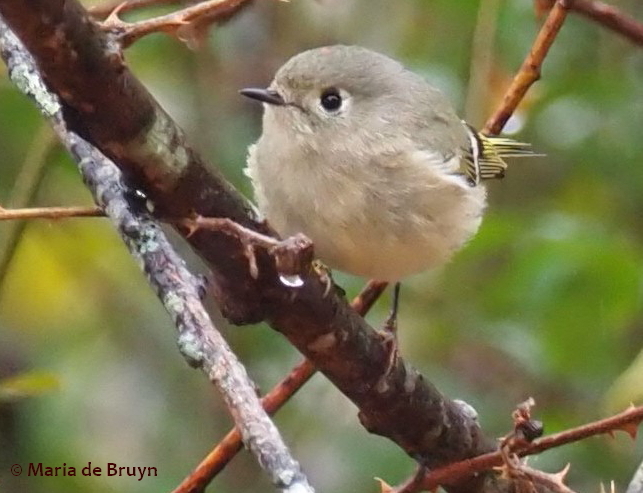
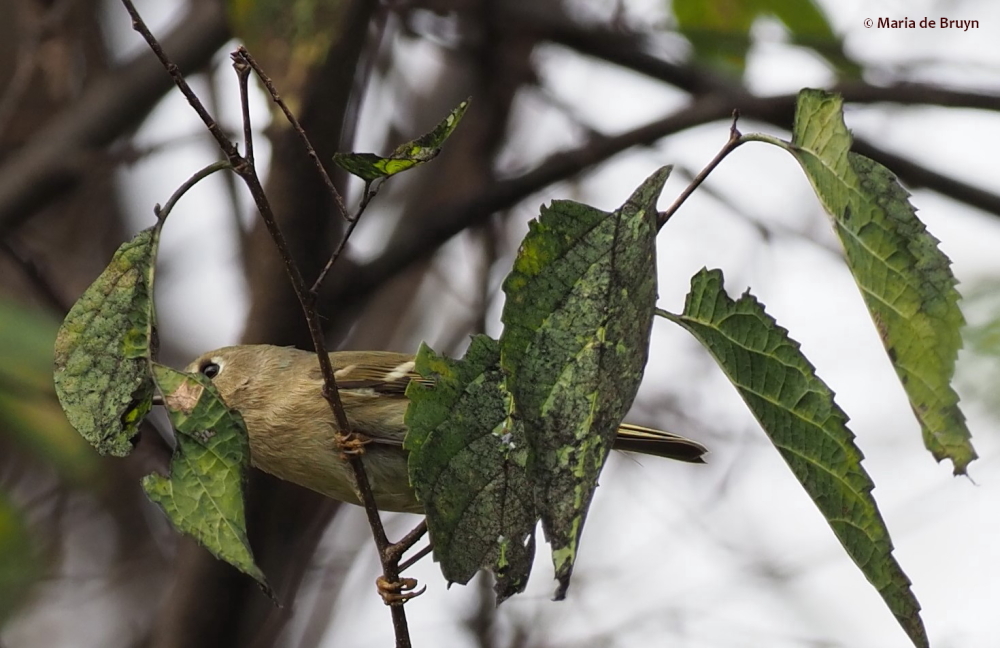
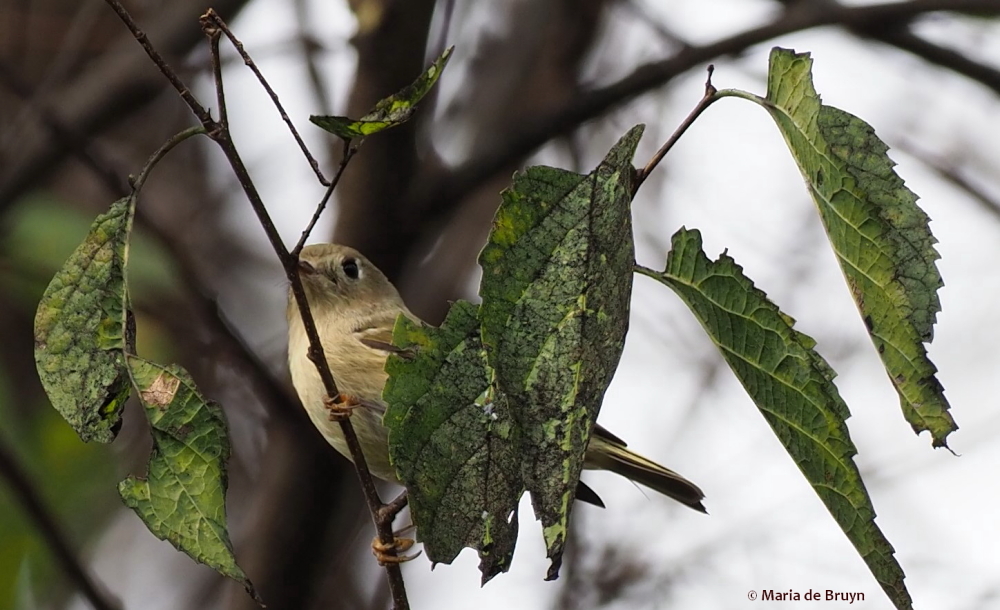
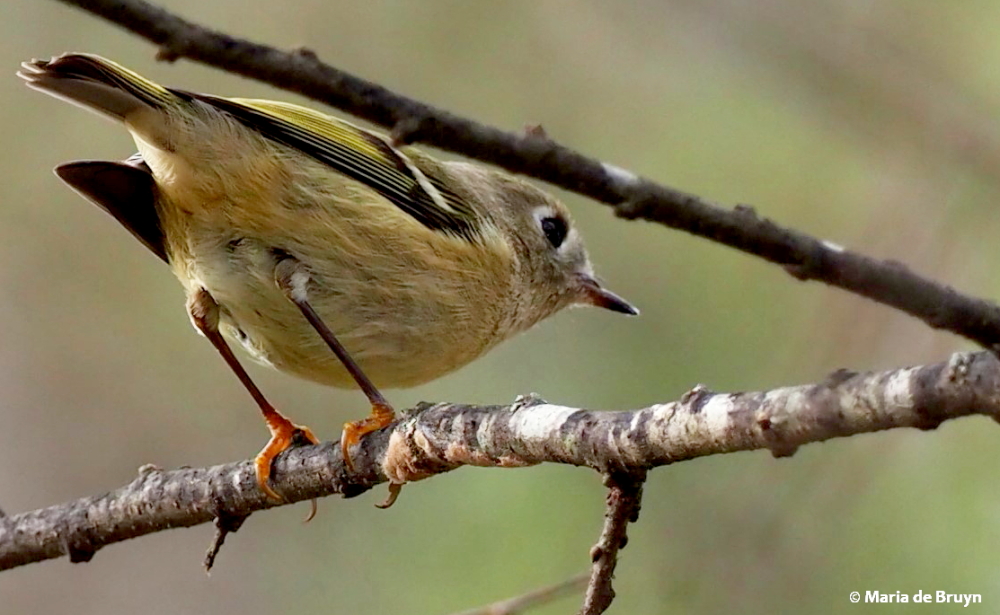
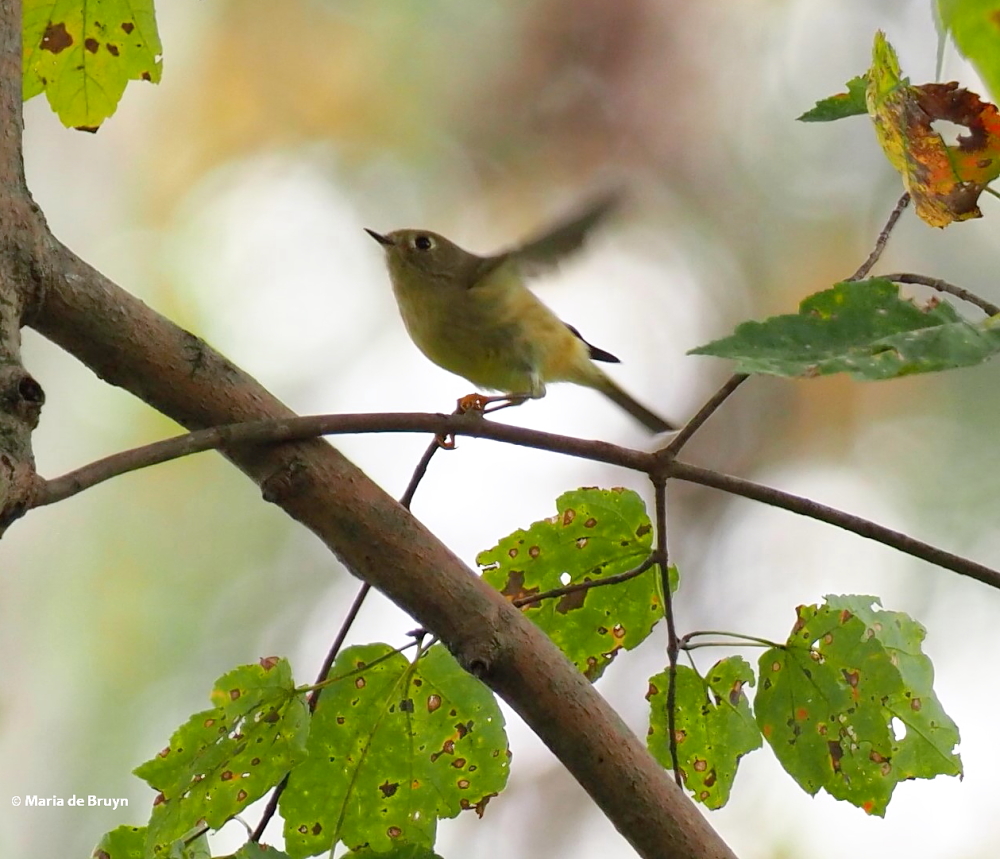
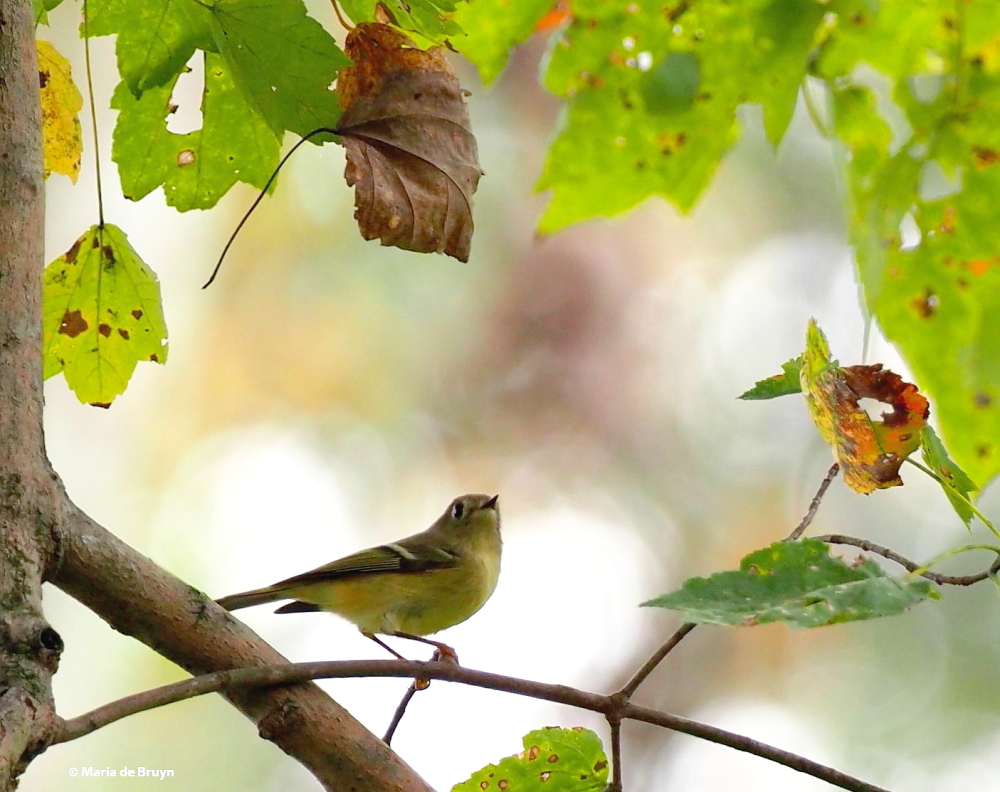
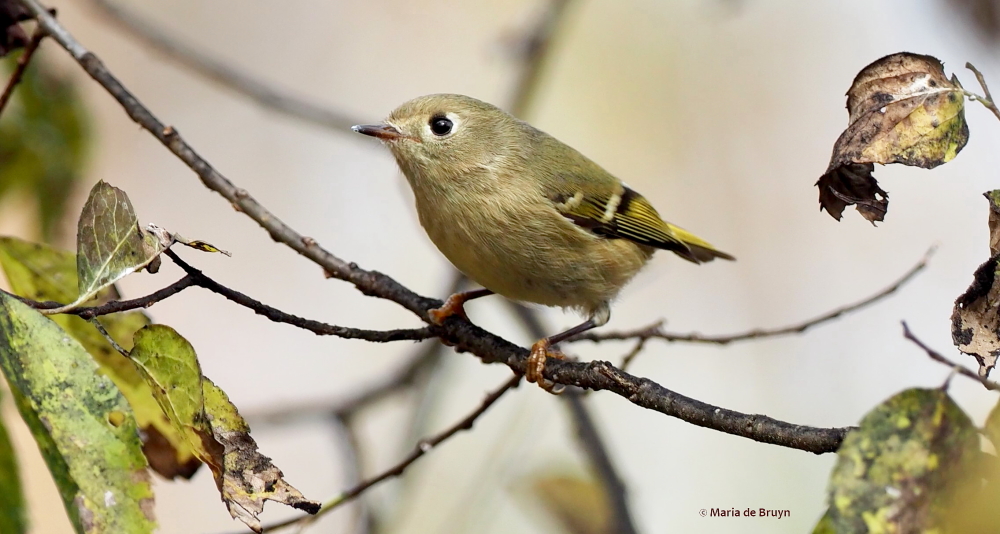
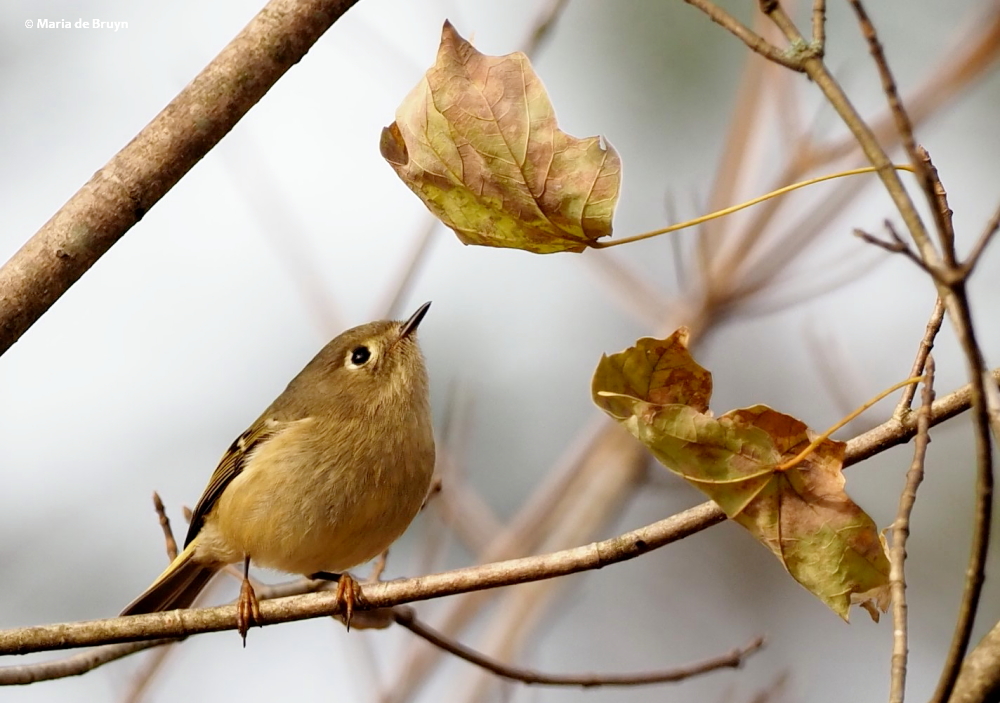
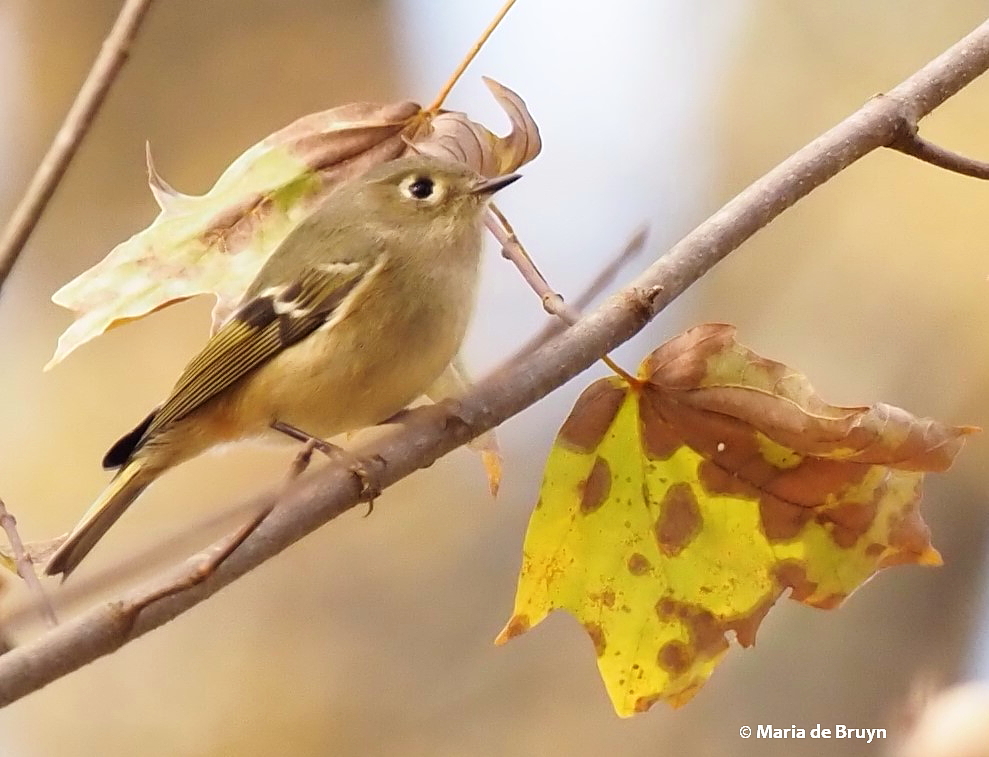
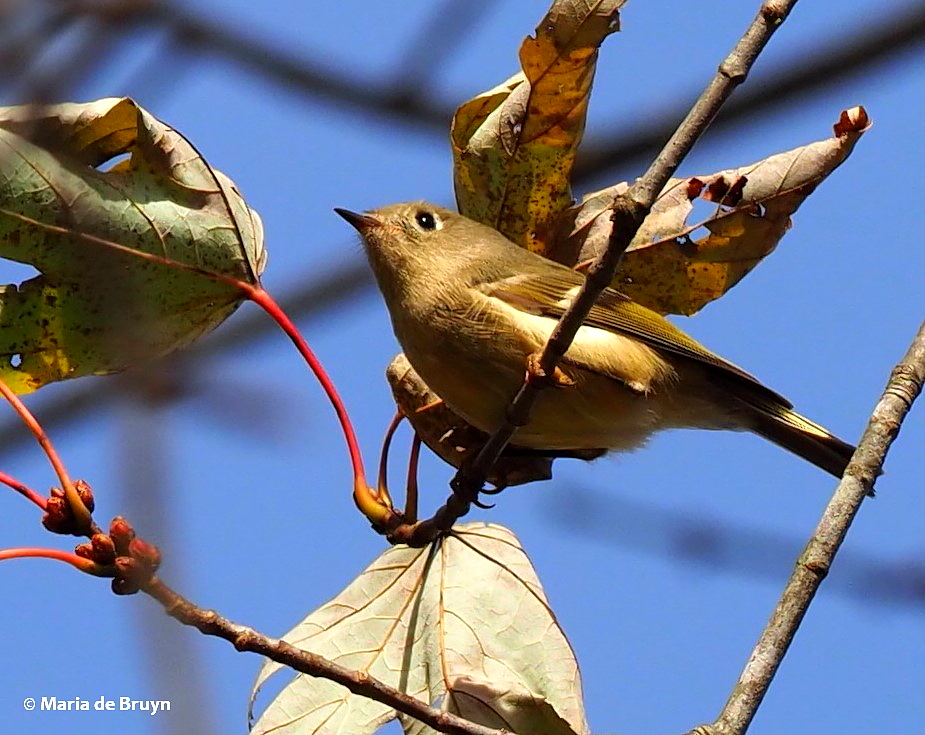
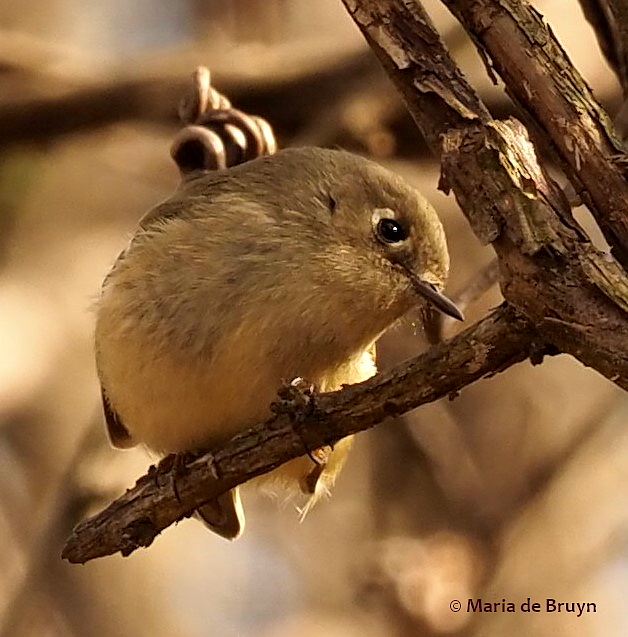
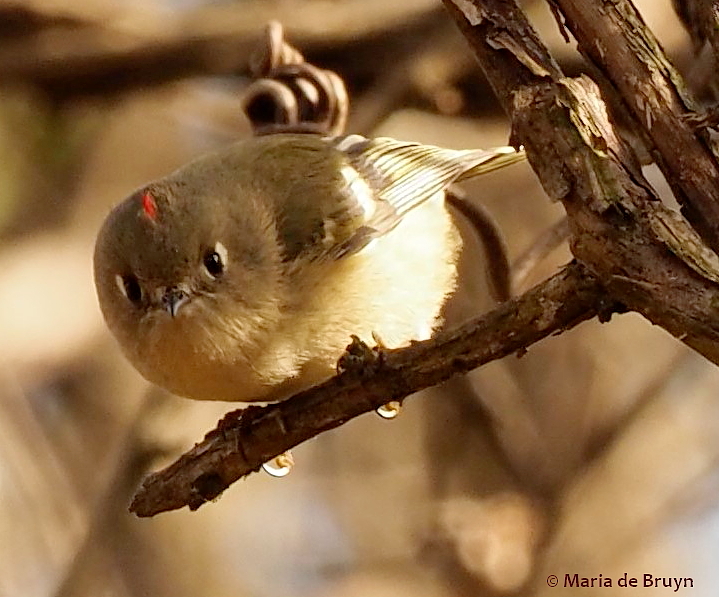
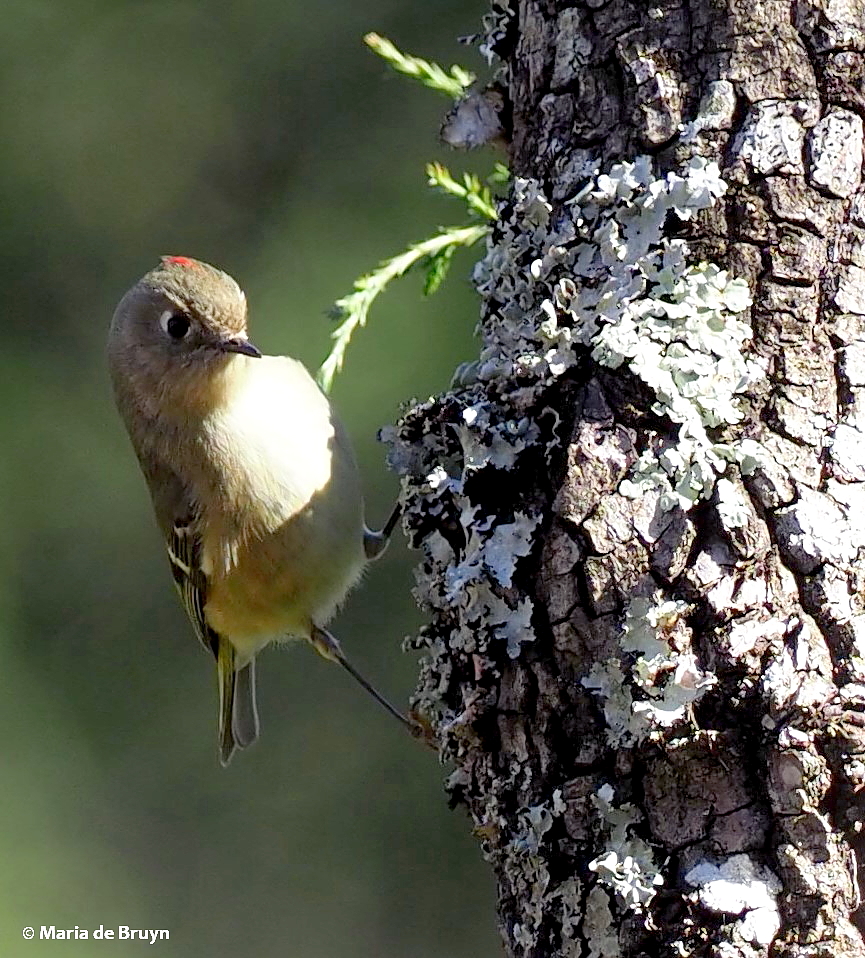
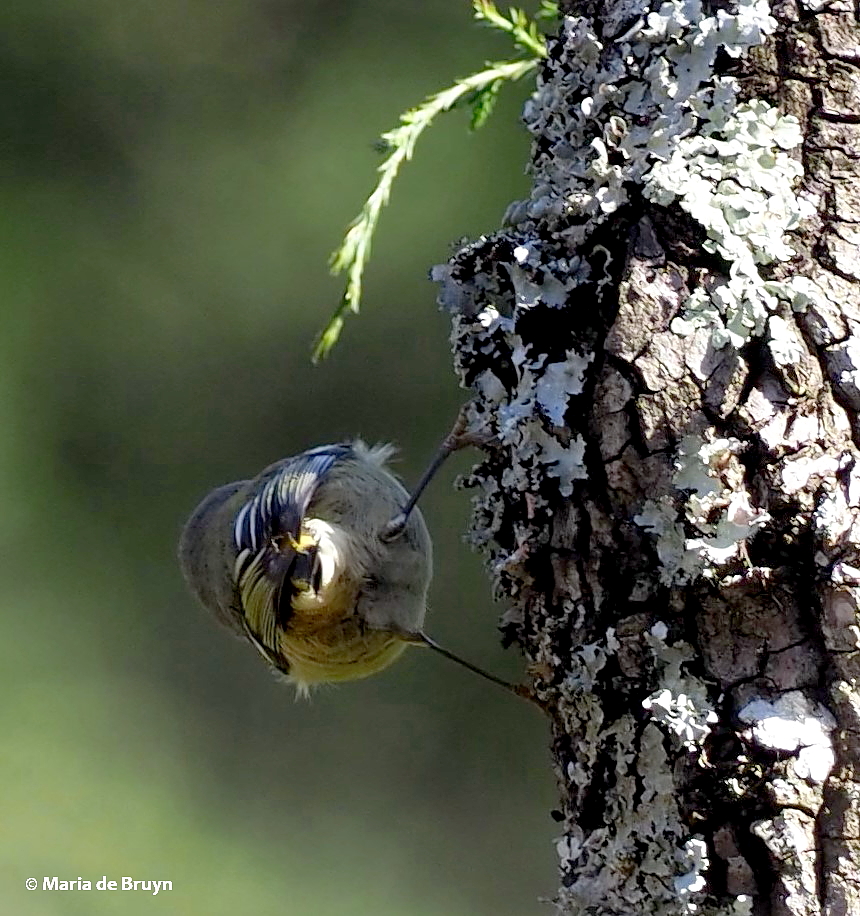
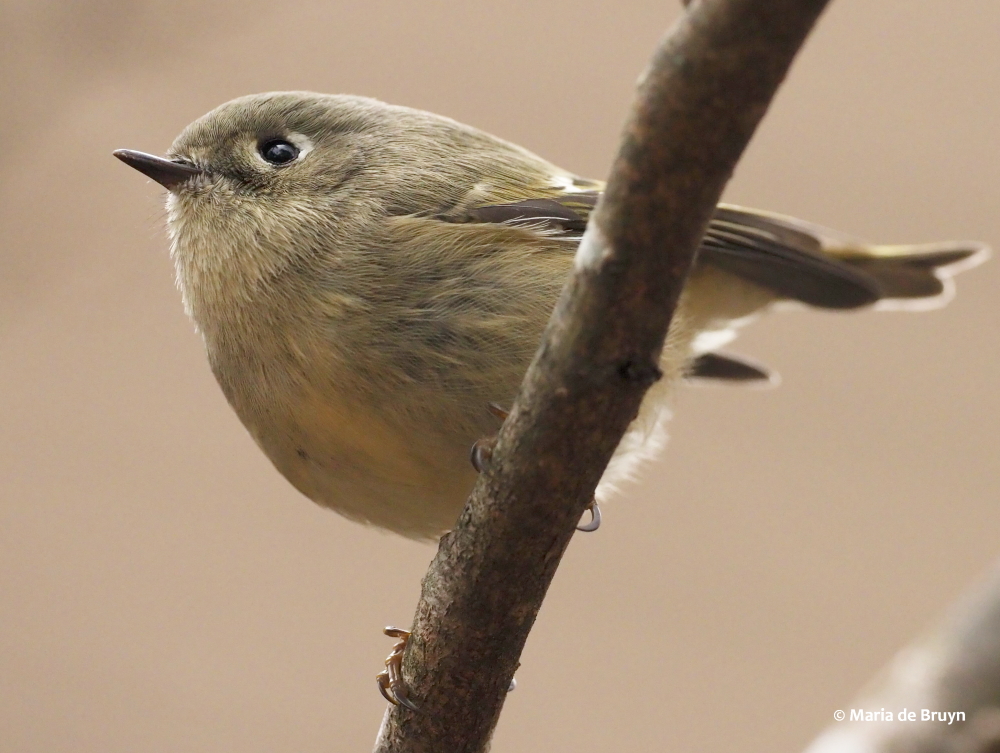
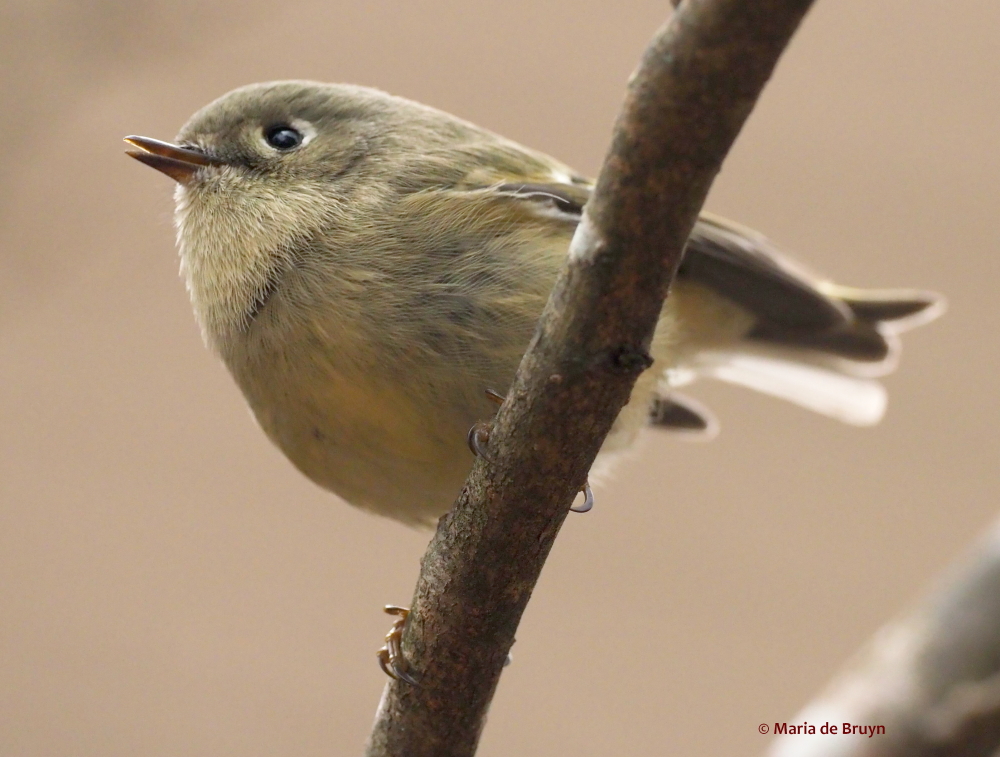
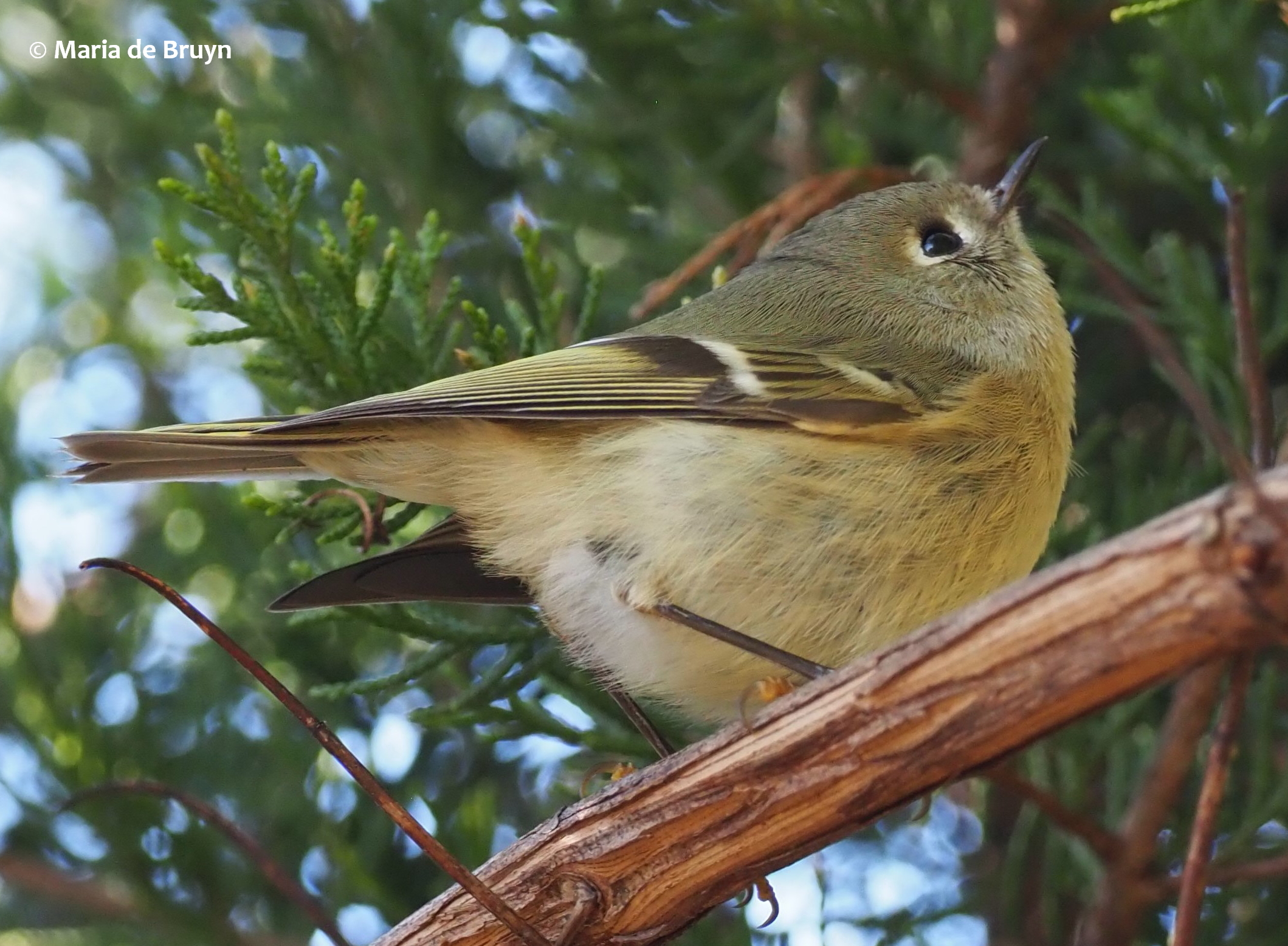
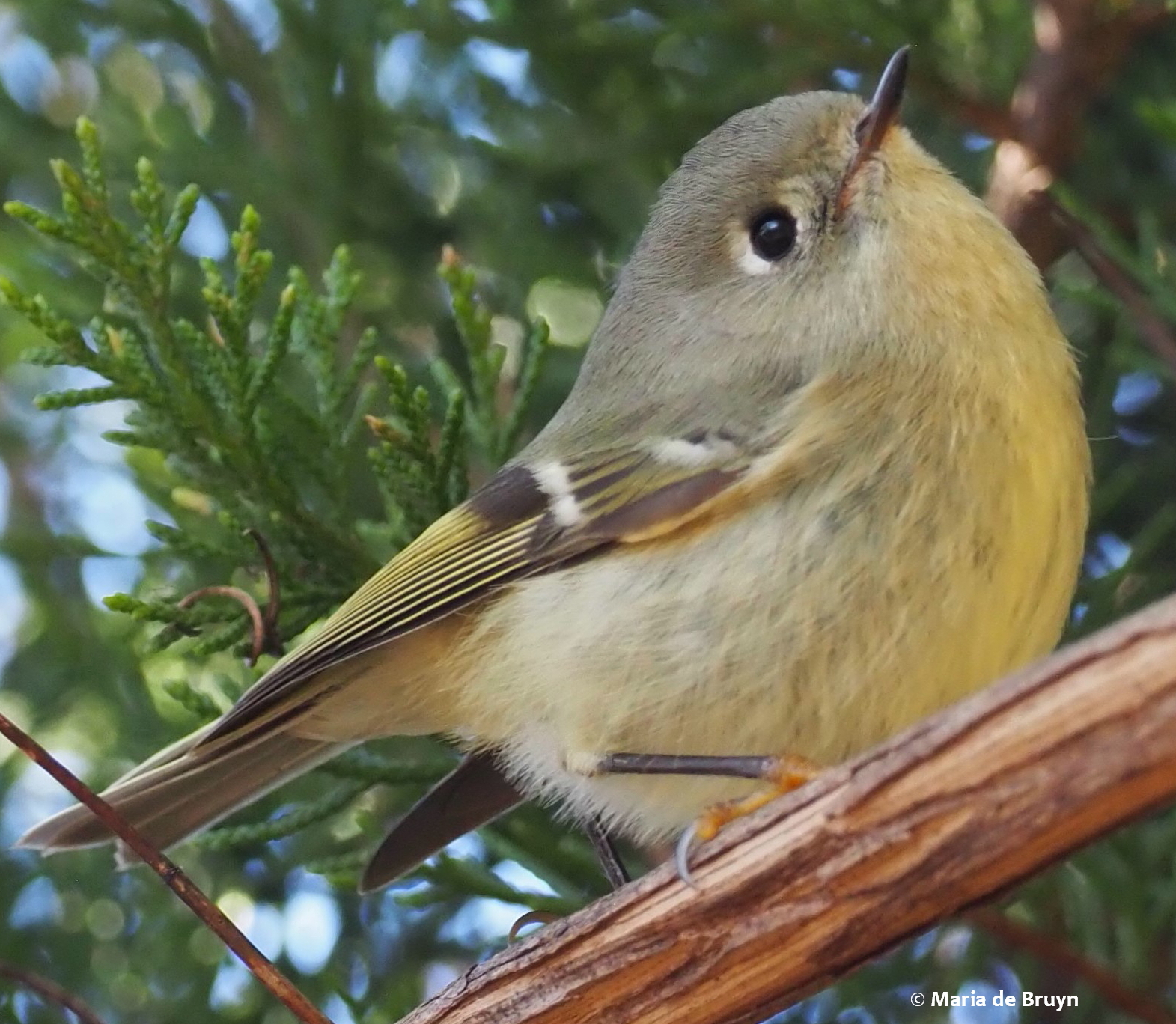
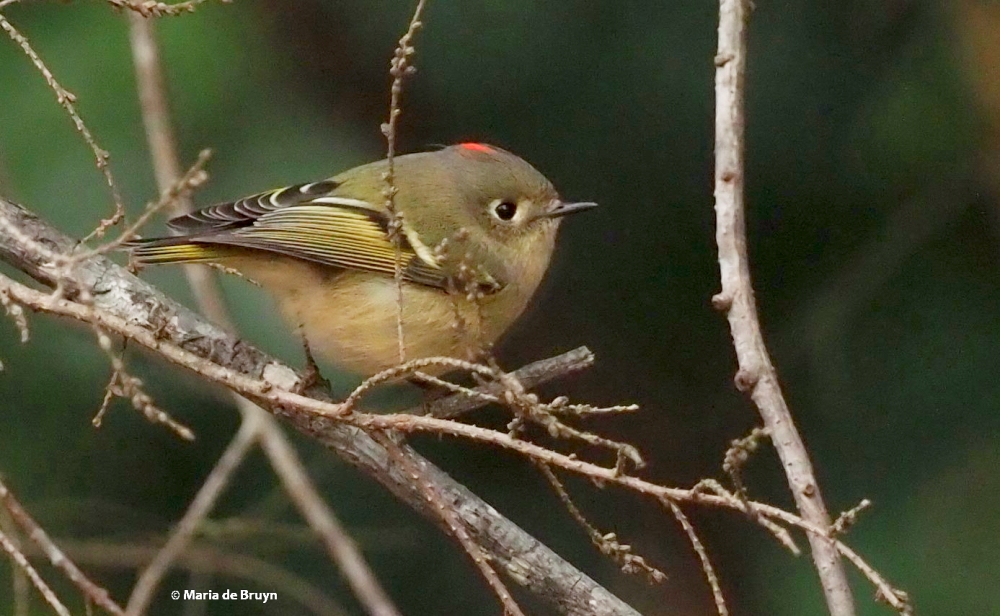
It seems that at least once a year, ruby-crowned kinglets (Regulus calendula) feature in my blogs; they are one of my favorite bird species and I always enjoy seeing them again and again.

These small birds are bundles of feathered energy, almost constantly in motion as they seek insects, which form the bulk of their diet.


They are only slightly larger than ruby-throated hummingbirds: 9-11 cm (3.5-4.3 in) long versus a length of 7-9 cm (2.8-3.5 in) for the hummer.

When they scour the vegetation for food, they may be flicking their wings continuously.

Fortunately, they do take little breaks now and again, so we can admire their beauty.

These breaks often last less than minute, however, and often are even briefer so you have to be ready and waiting to capture a photo.

I’ve been lucky this fall to find a few spots where I know some kinglets are hanging out, so I get to see them quite regularly.

My yard-visiting kinglet has returned for the winter season as well; I usually see him mostly at the suet feeder, where he will hover like a hummer as he takes quick bites of peanut-flavored vegetable lard laced with grits, oatmeal and nuts. He is a bit more gray in color than many other kinglets.

I’m wondering if this year’s bird is the same one who has been here the last 5 years. Unlike my previous visitor, I’ve seen him take a seed from a feeder as well. This has not happened before, even though it is known that they eat berries and seeds in winter.

This year’s bird also seems a bit shyer than my kinglet(s) from previous years. When I lift up my camera, he tends to take off. My resident the last years was not shy at all, a couple times actually perching on the suet feeder as I carried it to the pole. Still, my yard visitor’s anxiety has been nowhere nearly as obvious as that of another kinglet whose story I will relate in the next blog!


‘Rassing – a surprise visitor – what a delight!

(Warning – this is a bit of a long blog!) Several years ago, what was likely a rufous hummingbird took up residence in my yard during the winter months. That was really unexpected — while it’s not uncommon for migrating or some resident hummingbirds (especially ruby-throats, Archilochus colubris, above) to spend wintertime in North Carolina, particularly along the coast, it’s not so common in the central part of the state. That experience taught me that it’s a good idea to keep up a nectar feeder in the winter as you never know when a stray migrant might show up. In 2015 and 2016, I traveled with fellow birders to visit people who had a buff-breasted (Amazilia yucatanensis) and calliope hummingbird (Selasphorus calliope) wintering at their homes. In actuality, however, I didn’t really expect a rare passerby in my yard.


It was consequently with great surprise that I saw a hummer hovering at the nectar feeder last week. “Oh, wow!” I thought; “a ruby-throated hummer is passing through as a very late migrant.” I grabbed my camera to take a few shots and immediately felt perplexed.


The bird looked like he had a purple rather than ruby or red gorget (throat feathers). The white patch behind his eye also showed prominently because of his very dark head.

To me, it also looked as if this hummer had blue patches on his tail feathers. (Most say his flanks are green and a hummingbird expert said he has iridescent black tail feathers; the way the light reflects off them made me see blue, however.)

I got a few photos and cautiously asked birding experts on a facebook group if he could possibly be a black-chinned hummingbird (Archilochus alexandri), also sometimes known as the Alexander hummingbird. It seemed unlikely as their normal range is the Western part of the Northern hemisphere, reaching north into Canada (Alberta and British Columbia), east to Oklahoma, and as far south as Mexico, where most spend the winter.

A couple people thought I might be correct, but most thought it was a ruby-throated hummingbird. My spring-summer ruby-throated residents had left at least a month ago but I thought perhaps a late migrant might have arrived. The next day, I saw the bird again and became convinced that it was a black-chinned hummer; his purple gorget was very obvious to me. I posted new photos and now the experts agreed that I was correct. That was very cool – I got a lifer without even leaving my own yard!


A couple days later, North Carolina’s hummingbird researcher, Susan Campbell, came to my home to band the unusual visitor. I invited a friend who had been to bird bandings in my yard before to come for the happy event.

Susan arrived early and first set up a cage trap for ‘Rassing (short for the Dutch word verrassing, which means surprise; I wanted him to have a name during his stay 😊). She left the door open with a long string attached and hung the nectar feeder on the outside. It wasn’t long at all before the bird arrived for a drink. When he left, Susan moved the nectar feeder inside the cage.

‘Rassing returned for another drink and flew right into the cage, which Susan shut promptly. She had already laid out her banding materials so she could remove him from the trap promptly.

He went into a small bag (the kind often used to hold birds for banding) which Lucretia held while Susan began filling out the paperwork.

Then the actual banding procedure began. Susan first checked his legs to ensure that he hadn’t been banded already – the hummers rarely show their legs so that was necessary.

Then she got ready to put a thin red metal band on his tiny leg with a silver band showing his numeric code for identification in case he is caught again some time (Band number 7100 (M)-41902).

She checked the length of his bill – 19.19 mm. She also advised that bird feeders with long slits are not preferred even if the birds like them. It turns out that the thin slots can rub against the bill and wear it down, damaging the bill and making it vulnerable to infection. (I afterwards enlarged the slots into ovals and circles and went back to a couple other feeders I had with larger holes.)

She blew on his stomach feathers to check his fat; he was not a hefty bird but certainly a healthy adult male. His weight turned out to be 3.09 g. She also recorded his body length.

She stopped for a moment so I could take a few photos trying to get a good shot of the purple gorget. It looked like ‘Rassing was trembling but this was the vibrations from his rapid breathing. (When resting at 91⁰ F, they take about 245 breaths per minute; at 55⁰ F, this rises to 420 breaths per minute!!) Susan thought he was acting fairly calm.

She measured his short tail (23.5 mm), as well as his wings (40.42 mm). The female black-chinned hummer would have more rounded wing feather tips than this male.


Susan took a few photos of ‘Rassing and he got a few long drinks from a feeder held by Lucretia. Then Susan gave me the honor of releasing him – and to my delight, he chose to sit in my hand for what seemed to be at least 90 seconds. I could feel him breathing and it was a real thrill to see him so close. With a little flutter of his wings he took off – and then stayed away from the feeder for quite some time.


I added a feeder in the backyard and ‘Rassing began preferentially feeding there – perhaps the front yard had acquired some unpleasant memories. However, at the end of the day, I would remove the backyard feeder so that visitors who wanted to see him had a better chance of seeing him dine at the front-yard feeders.


A fair number of birders were interested in being able to add him to their life, state and county bird lists, so I offered to schedule visits through a birding listserv for a few people at a time. ‘Rassing appeared more reticent to stay at the feeder when there were more than 2 or 3 people watching, which is understandable. Who wants an audience for each meal and snack you eat??

When it rained, the feathers atop his head clumped together, giving him a new “hair-do.”


It appears that this species of hummingbird has not been studied much. I found his behavior interesting and spent a good amount of time observing him (chores had to wait). When I watched him leave the feeder and go to a nearby tree, he would sometimes watch me (turnabout fair play, of course).


He seemed very comfortable with lots of other bird species at nearby feeders. Perhaps it gave him a safer feeling.

‘Rassing tended not to sit on feeders, as ruby-throated hummers often do. Instead, he mainly hovered and vigorously pumped his short tail quite a lot. I learned that this tiny bundle of energy was breathing at a flight rate of about 1260 beats per minute!


Occasionally, you could see the band on his leg but mostly he kept his legs tucked into his body.

In the evenings, he came around nearly the same time each day to have a longer drink and then he sometimes perched while feeding.


A Cornell University website says that black-chinned hummers rarely stay at a feeder longer than a day during migration, even when food is scarce. In my yard, he had access to lots of bugs (I have a small pond) and three types of sage/salvia were still blooming. Indeed, he sometimes came to the feeder with pollen covering the top of his bill.

Yesterday morning, ‘Rassing apparently had decided it was time to move on. After the warmest Halloween on record in our area, the temperature plunged during the night to the 30s. The next morning was the same and he may have decided it was time to go to warmer climes.


I did feel lucky that he graced my yard with his presence for a week; it gave me something to celebrate during a personally challenging time. The oldest known black-chinned hummer was more than 11 years old; if ‘Rassing likes going east during migration, perhaps he’ll stop by again next year – wouldn’t that be a tremendous surprise! 😊