All about Ollie – barred owls at Mason Farm Biological Reserve

The end of winter and start of spring is a good time to look for some of the birds that you don’t see so often. They are not hidden by foliage and may come out more to hunt for a meal as they prepare to cope with the rigors of upcoming parenthood. That has proved to be a boon for me during visits to Mason Farm Biological Reserve where there are several pairs of barred owls (Strix varia) in residence. While these birds usually hunt at night, they have recently been seen out and about much more often in the daytime, perhaps getting ready for nesting and brooding in March and April.

These beautiful raptors sit quite still and often make no sound at all as they turn their heads scanning the ground or a creek nearby for small rodents, crayfish, fish, insects, amphibians and reptiles.


Their brown and white mottled feathers are a perfect camouflage to help them blend in with the bare gray and brown tree trunks and branches of winter. To spot them, you learn to scan trees in the distance looking for a “lump” which your binoculars or long camera lens can then help distinguish as an owl.

These owls tend to stay in one area; a study of 158 banded birds showed that none of them had ventured further away than 6 miles from the spot where they were first seen. At Mason Farm, we tend to hear the owls in specific areas – along a creek, near a couple of open fields and near a bog. These are likely different pairs who can live there for decades – the oldest known barred owl was 24 years old.

After hearing that friend Mary had been seeing one particular owl daily, I began going there more often to catch a glimpse of him/her. I nicknamed the bird Ollie – short for Oliver or Olivia. It turned out that I was fortunate enough to see both Ollies; the pair has become fairly tolerant of people nearby, sometimes perching in trees right next to the walking path.

One mid-afternoon, I was searching the fields for Ollie, noting some of the other birds who were easier to spot because of their movement, like the red-bellied woodpeckers and song sparrows. I was looking into the mid- and long-distance and then glanced up at a small tree next to the path – there was Ollie staring back at me! I had never been within about 5 feet of a wild barred owl before and was able to see him/her really well – what a beautiful bird!

To get some photos, I actually had to back up as I had a long-distance lens on the camera. Some runners came by and saw that I was focused on something, but they never looked up to notice that they were passing couple feet underneath this large raptor. Ollie just watched silently as they ran by and then returned to scanning the ground for prey.

Another day, Mary and I were following an owl from one field to the next. The hunting pattern appears to be: perch in a tree and look intently at the ground around for 10-20 minutes or longer, fly some 20 or more feet away to scan another patch. It appeared that the owl and caught something and s/he flew to a tree branch at the other side of the field. I happened to glance away in time to see the second Ollie flying toward and past us in the field on the other side of the path.  The owls fly completely silently so you have to be lucky to spot them.

Although I’ve seen the pair fairly often now, I continue to find them really beautiful.


When they spot some prey, the owls drop quietly but swiftly down to pounce on the animal. Sometimes they sit there for a minute or two, presumably swallowing the entire animal if it is small. If it is larger, they will carry it off to have their meal in a tree.

On one of our walks, Mary’s sharp eyes spotted an owl pellet and friend Lucretia and I dissected it. The pellets can contain the remains of several meals and we thought that a couple small animals’ remains were contained in the fur-covered mass. A tiny skull and pair of jaw bones with minuscule teeth could be distinguished – perhaps a vole or baby mole.

On one of my most recent spottings of Ollie, s/he was spending time taking little power naps in between ground scans. On other days, the owls had brief snoozing periods, too. The feathers on their eyelids are very cool! When a pair calls to one another, you can distinguish the male and female. The male’s call ends abruptly while the female adds a little trill to the end of her call.


On my last foray to the reserve to see owls, I was following Ollie’s progress along the field when another birder spotted me taking photos. After a while, about six or seven walkers were watching and Ollie finally flew to the top of a pine tree not far from the path so they could all admire him/her.

The one predator that goes after the large barred owls is the even larger great horned owl (Bubo virginianus).


When people go too close to a barred owl’s nest, the owls will become agitated, so we should keep that in mind and not bother them there. Oliver and Olivia seem not to mind people too much right now, since they will fly to perch near a path where people are passing. I do try to limit how much time I spend following them, though, even though they can fly away. Just like us, the owls do want to be able to go about their business in peace!


Chilean Open-Air Art~

This is not my own blog and also not about nature but it does depict a part of our beautiful world. I spent time in Chile doing research and love the country and its people and wanted to share these really beautiful images of gorgeous street art. Thanks to Cindy for sharing what she saw.

cindy knoke's avatarCindy Knoke


Chile is full of stunning street art.

Throughout Chile, large and small towns, are decorated with amazing open-air art, that is valued by the country and citizenry.

In Punta Arenas for example, the local government issued a statement saying that street art, “is a cultural manifestation, scenery which makes the walls more attractive and vital.”

The Punta Arenas city council actually financed a 400 metre section of street art.

They actively encourage street art in other parts of this most charming southerly city.

Santiago, Valparaiso, and Puerto Montt, all have a plethora of amazing open-air art.

Post the repressive Pinochet regime,

Chilean citizens exuberantly embrace and exercise their artistic talent and freedom of expression.

Walking amidst these amazing street art displays, is a wonderful experience.

Cheers to you with Chile’s stunning open-air art~

View original post

Winter wonderland – the bigger and colorful birds

In this second-to-last blog of the snowstorm series, I’d like to feature the bigger and colorful birds who demonstrated how they adapted their feeding habits to the prevailing weather. The Northern cardinals (Cardinalis cardinalis) actually didn’t change their behavior that much – they looked on the ground for fallen seeds and spent plenty of time at the feeders.

They spent some time in the snow-laden trees looking lovely, too.


The Eastern towhees (Pipilo erythrophthalmus) usually spend their time foraging underneath the feeders in search of fallen seed and they continued that behavior during the snowstorm. Unfortunately, the female was carrying a tick; I had already seen a robin and a junco with ticks on their faces – this may mean that the coming spring and summer will be an especially bad tick seasonal period for us.


The beautiful brown thrasher (Toxostoma rufum) looked both on the ground and at the feeders for his meals. Despite his size, s/he never bullied any other bird.


The remaining juniper berries on the red cedar trees (Juniperus virginiana) attracted the blue jays (Cyanocitta cristata).

The Northern mockingbird (Mimus polyglottos) was also seeking food there.


The cedar waxwings (Bombycilla cedrorum) and American robins (Turdus migratorius) had already been eating the juniper berries in the autumn; the waxwings had been by about a week earlier but now the robins were all over the trees, shaking off accumulated snow to get at the remaining fruit.


One robin looked as if s/he might have lost some outer feathers but it didn’t seem to affect her balance or flight. Occasionally, a robin also visited the meal worm feeder.


On the days following the big snowfall, as the snow melted more and more, the robins began eating it. During a previous snow event, they had joined the cedar waxwings on the roof of my house to get their drinks that way; now they were taking the snow from the trees.

They weren’t the only ones taking advantage of the opportunity. The Northern flicker (Colaptes auratus), who did not visit the feeder, spent a lot of time in an oak tree near the feeders eating snow.


There were a few birds that visit my yard who didn’t show up during the snow. They included the American crows and the hawks who often make the birds scatter from the feeders: the Cooper’s, sharp-shinned, red-tailed and red-shouldered hawks. They must have been looking for food elsewhere.

Some birds may have also avoided the feeders because of the large number of competitors who showed up, a feature of the next and last blog in this series.

Winter wonderland – the smaller and medium-sized birds

Oddly, during our January snowstorm, the brown-headed and white-breasted nuthatches did not visit my bird feeders – that was unexpected as they really do like the sunflower and other seeds, as well as the home-made suet. Other smaller birds did appear, however, and they filled up on the provided food since finding insects was almost impossible during those days.

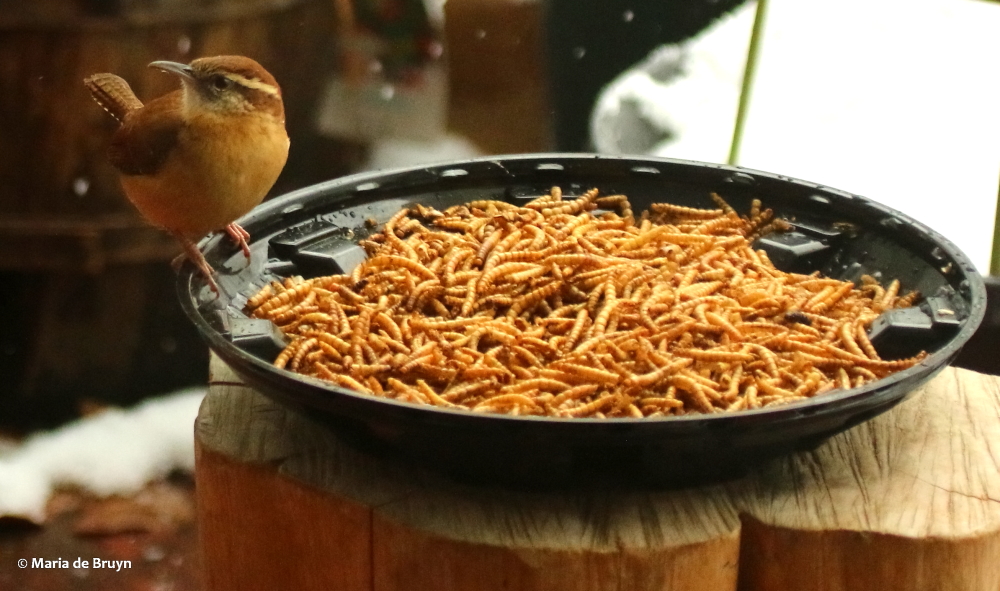
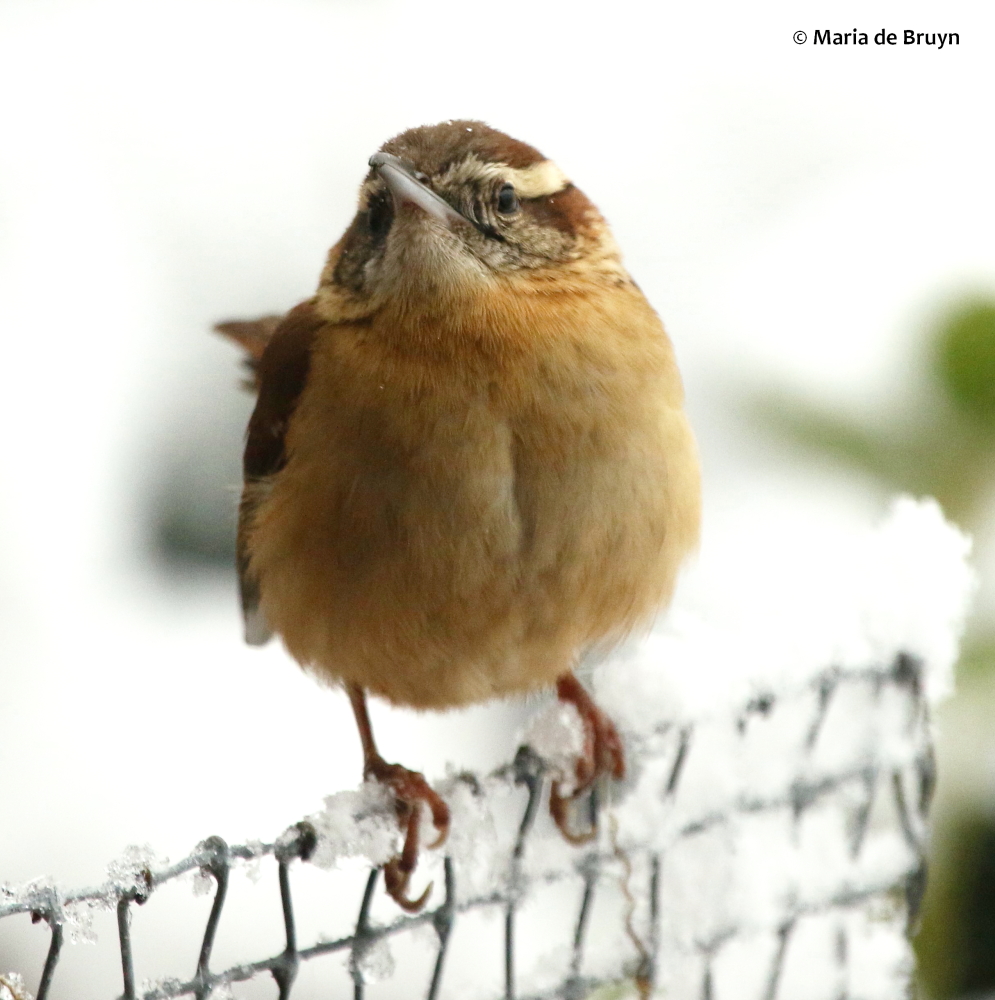
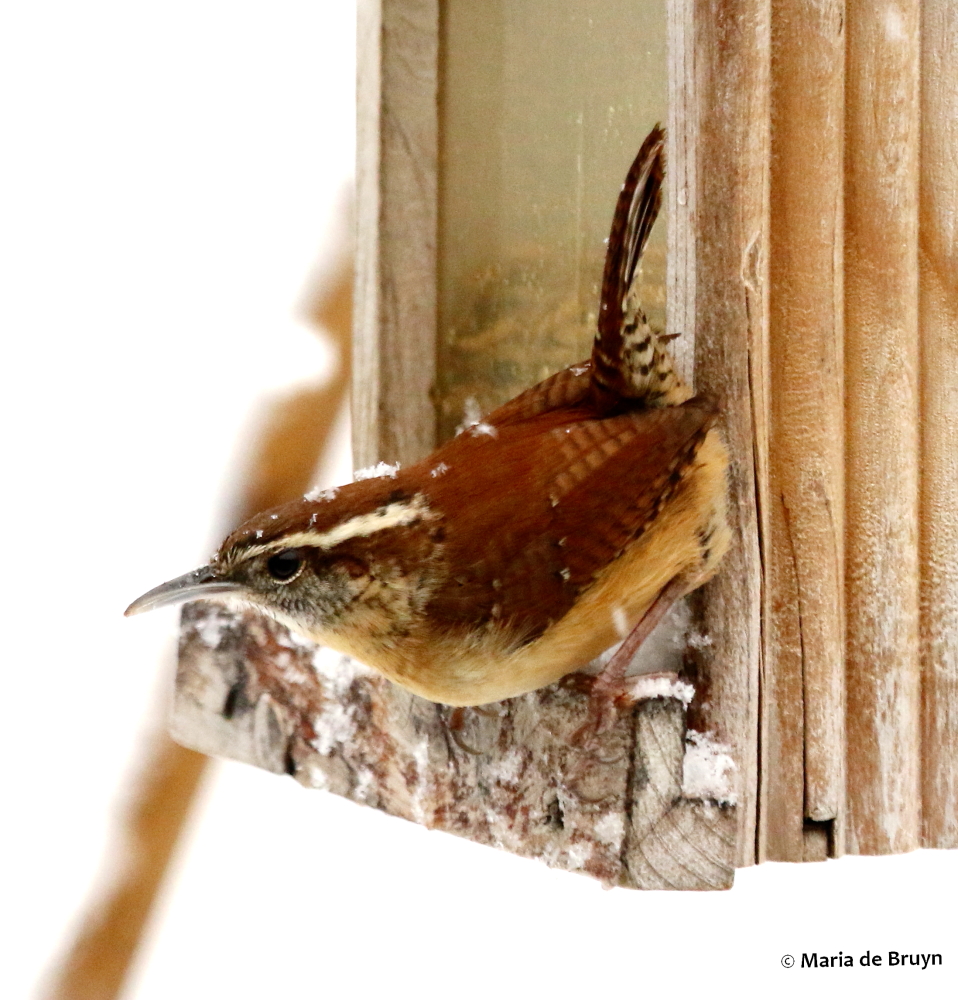
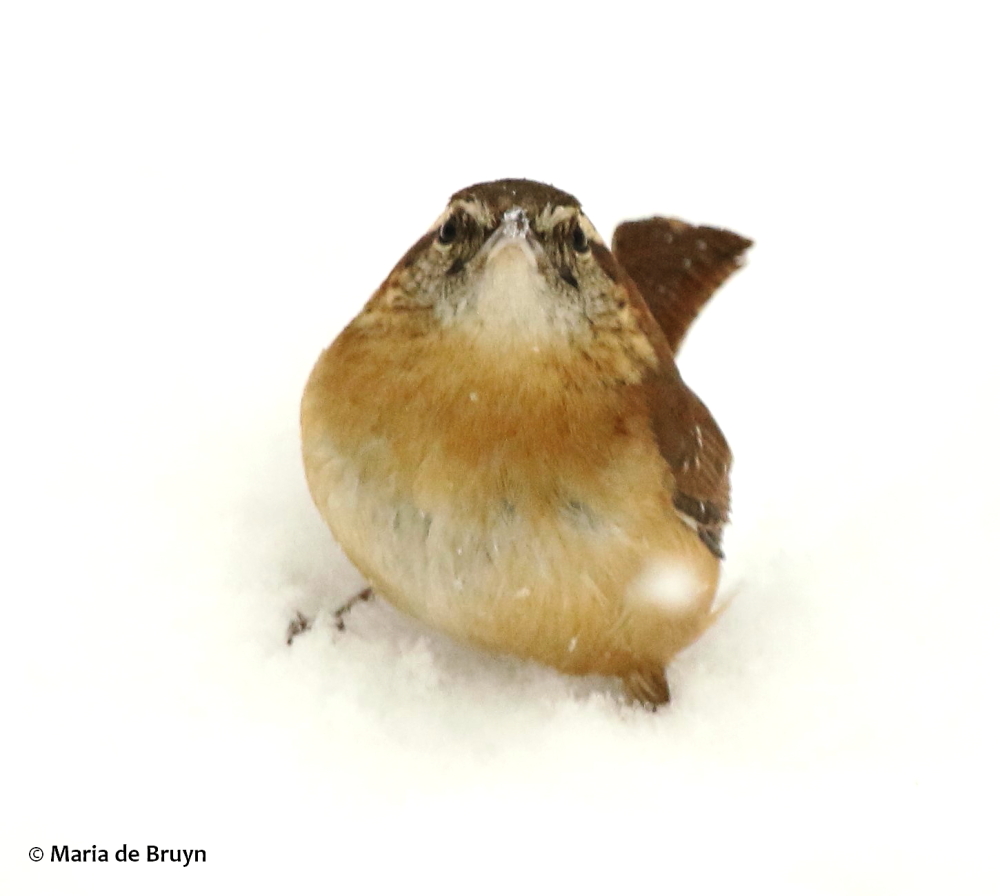
The Carolina wrens (Thryothorus ludovicianus) were fans of the dried meal worms and at one point, I put out an extra tray of these treats on the dry front porch. Other birds are more reluctant to come onto the porch so they had a nice quiet feeding area, although they also spent time perched on the snowy bushes and feeders.


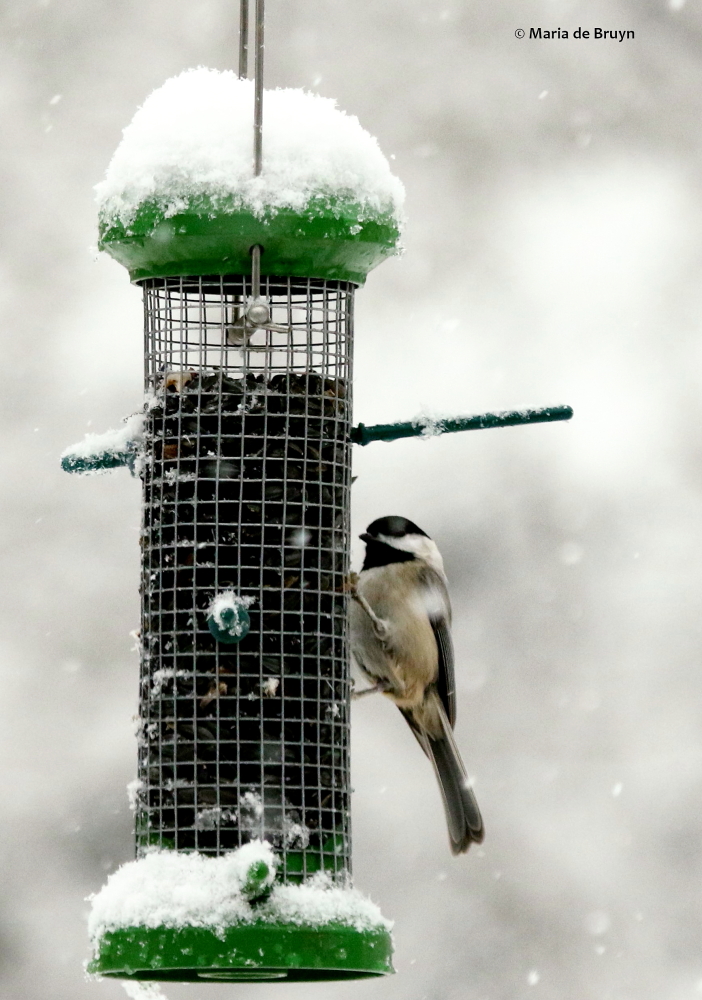
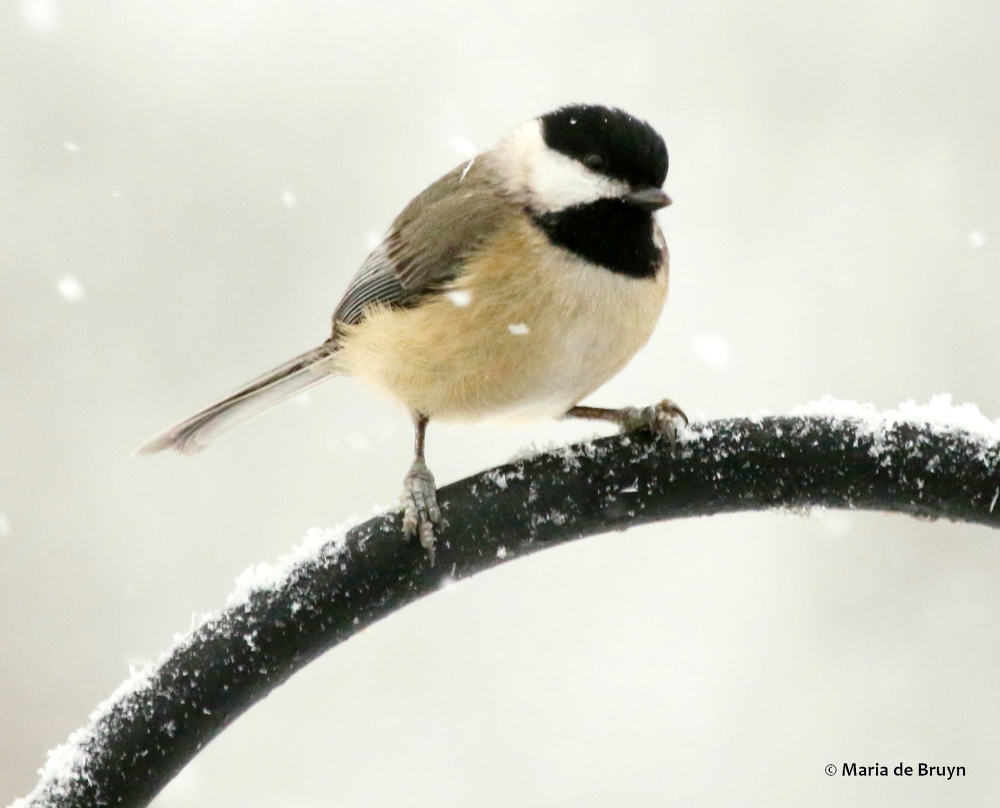
The Carolina chickadees (Poecile carolinensis) worked their way in between the other birds to reach the feeders, sometimes waiting patiently on a feeder pole for their turn.

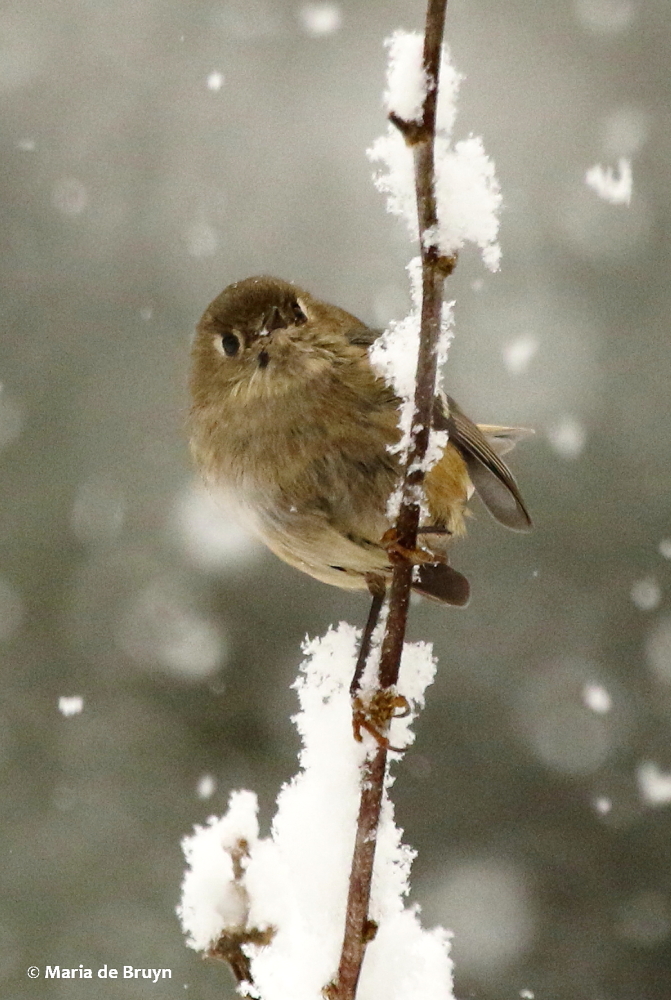
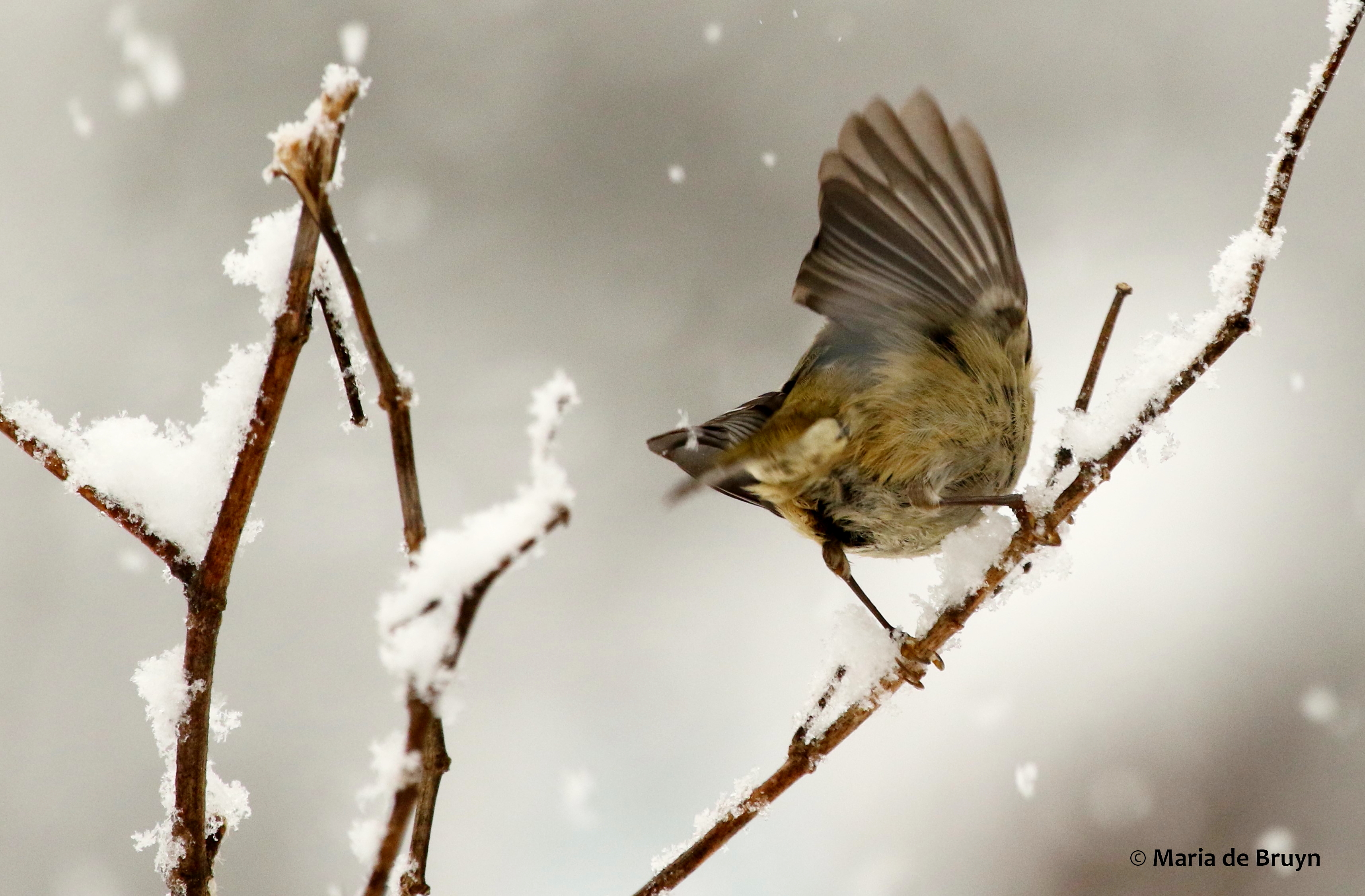
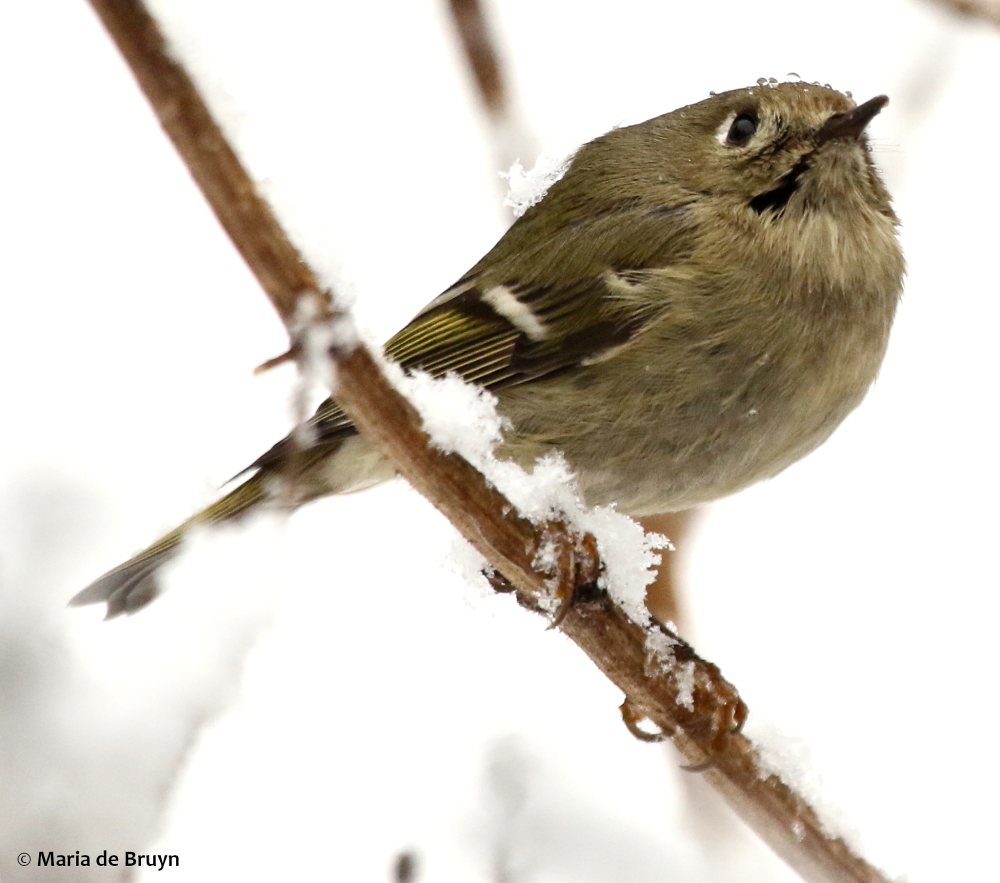
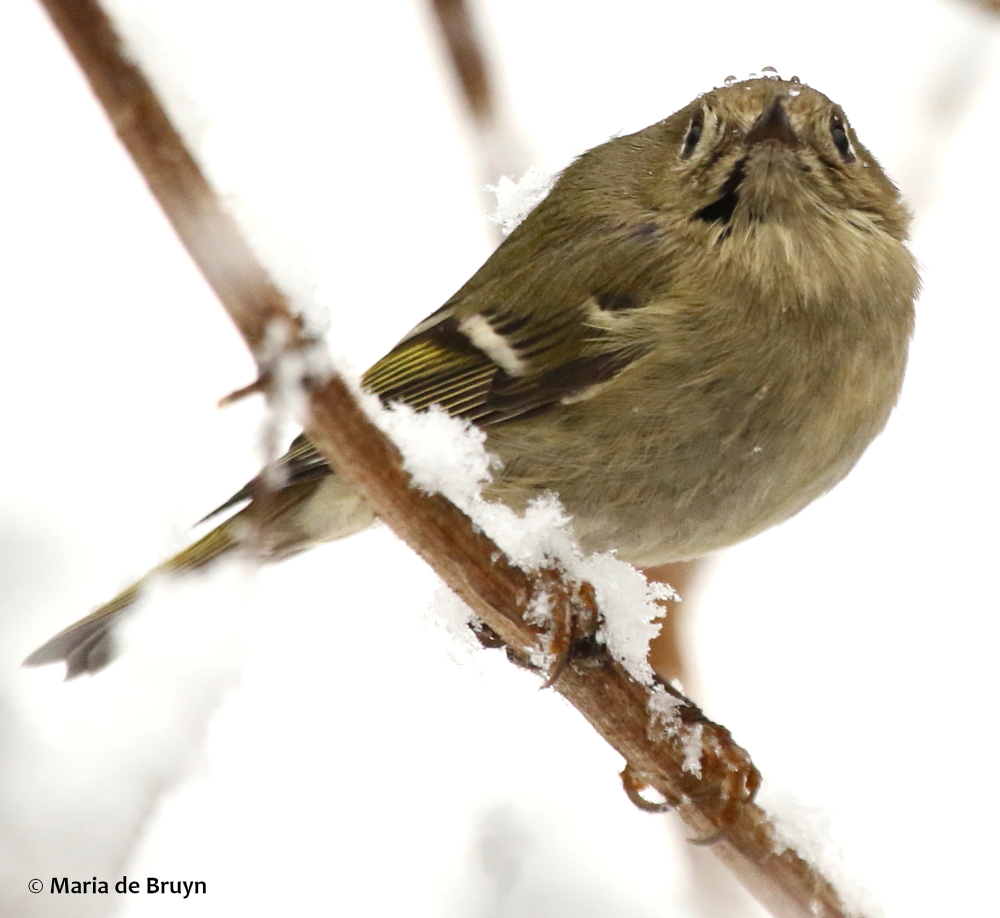
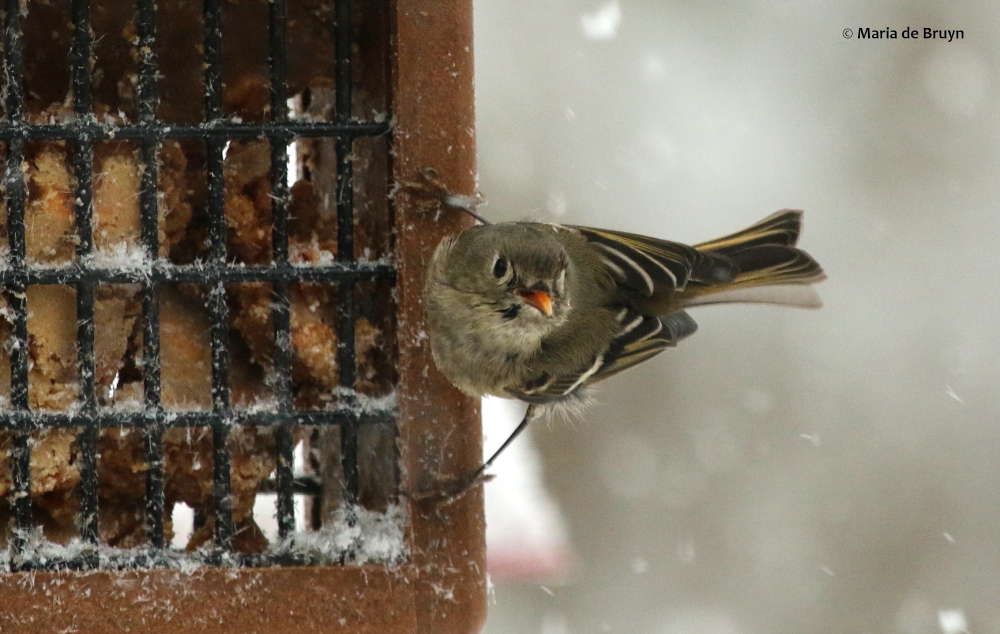
The ruby-crowned kinglets (Regulus calendula), of which I have two visiting the feeders, were happy with the home-made suet. Occasionally, I smeared a bit of suet on dried flower stalks and they would perch there to snag a bite to eat. Other times, they just waited on a twig until the yellow-rumped warblers had vacated the area so they could eat in peace.


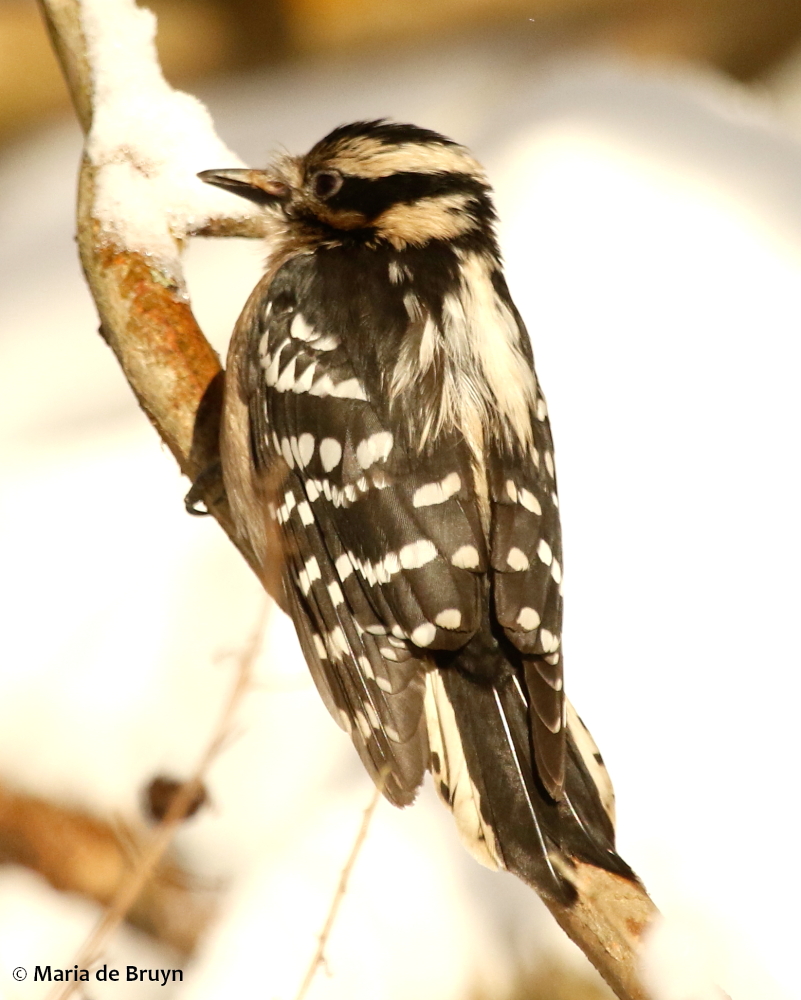
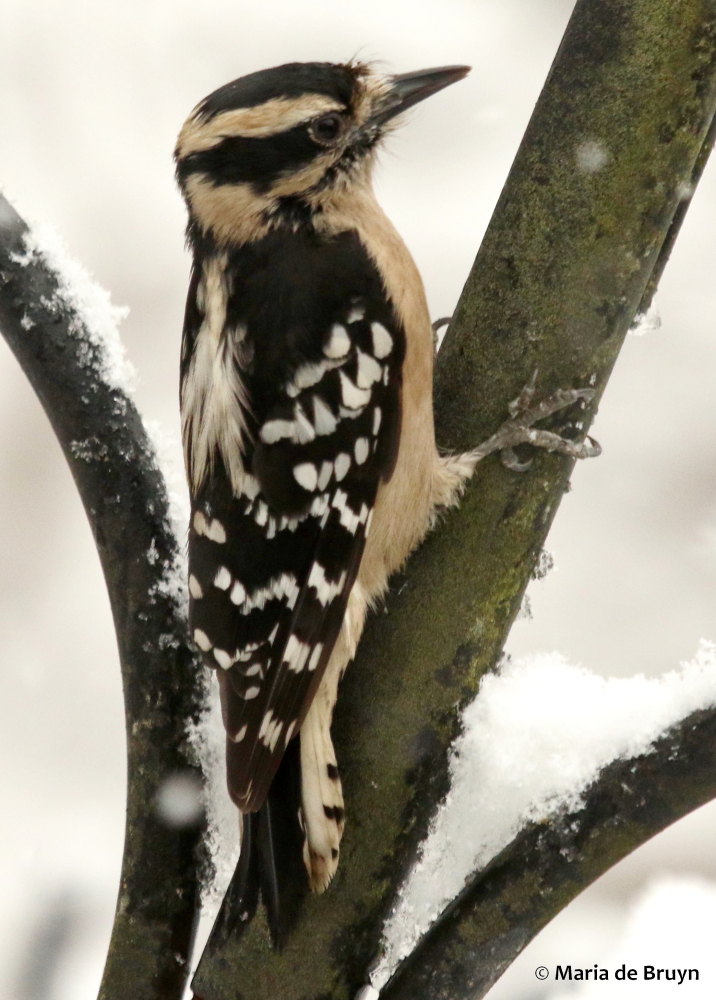
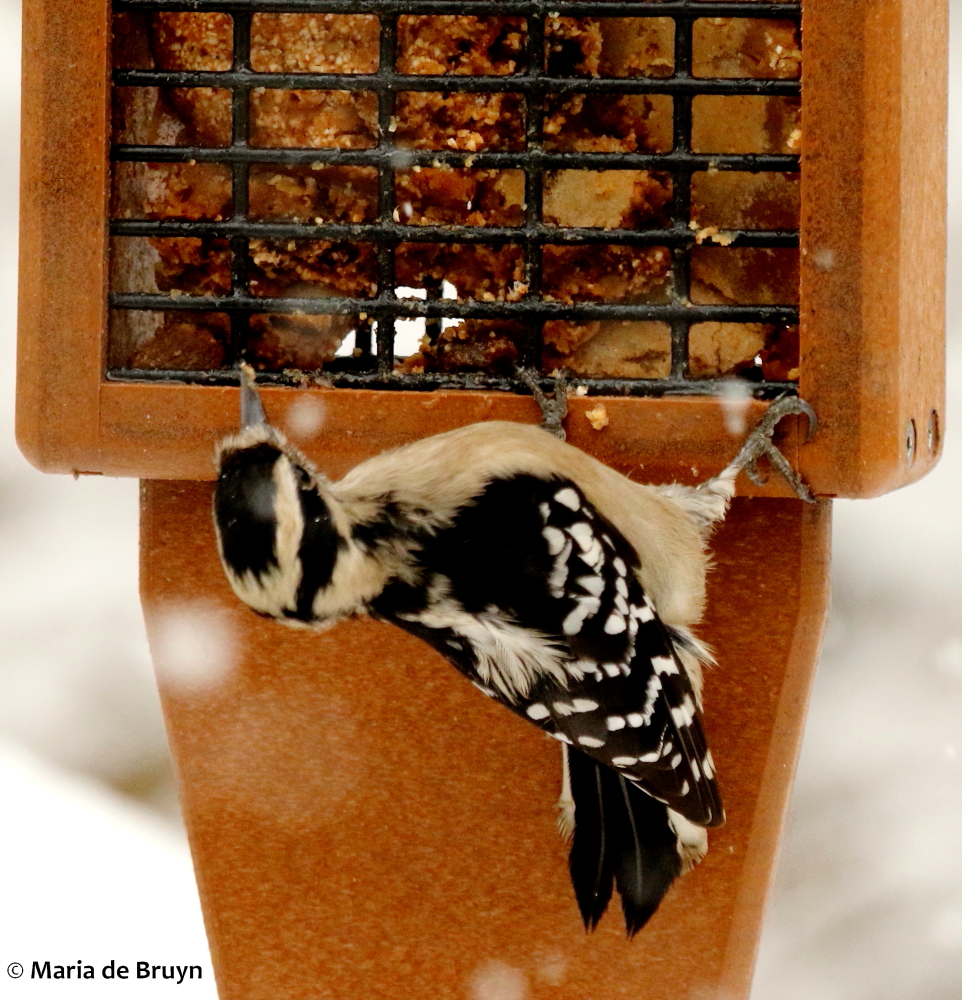
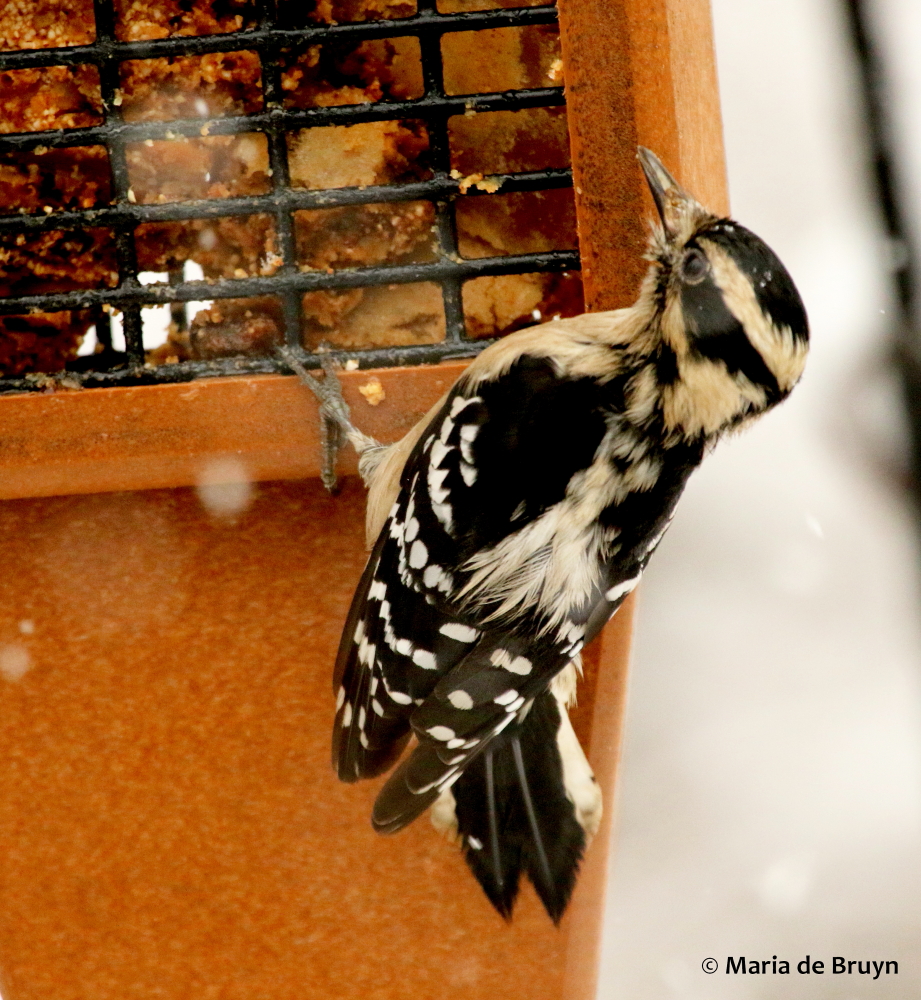
While the downy woodpecker (Picoides pubescens) is slightly larger, they are like the small birds in being somewhat hesitant to approach feeders if there is a crowd. Once on a feeder, they will feed and then hang on to take a look around.


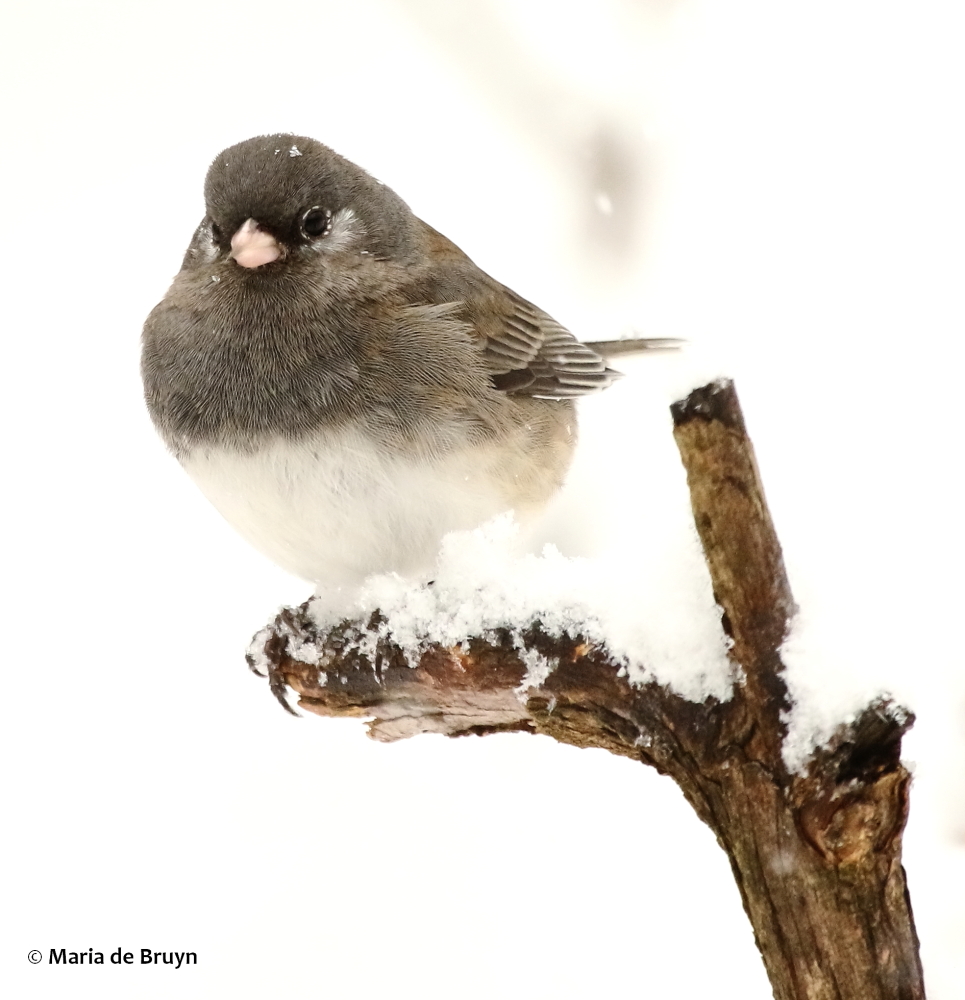
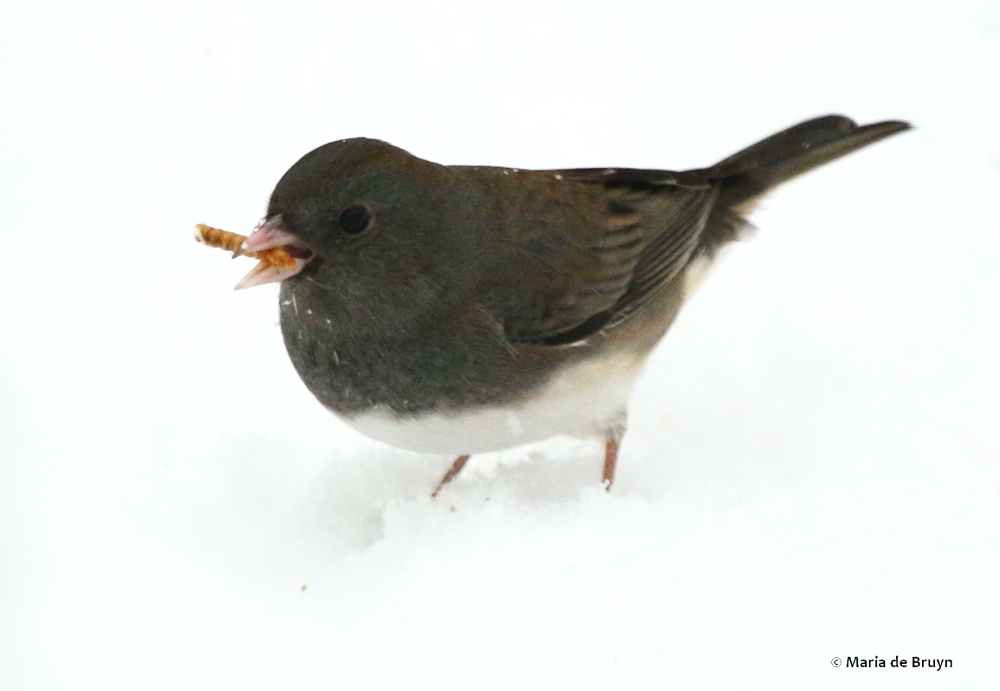
The dark-eyed juncos (Junco hyemalis), who have an understated quiet beauty, were looking for meal worms.


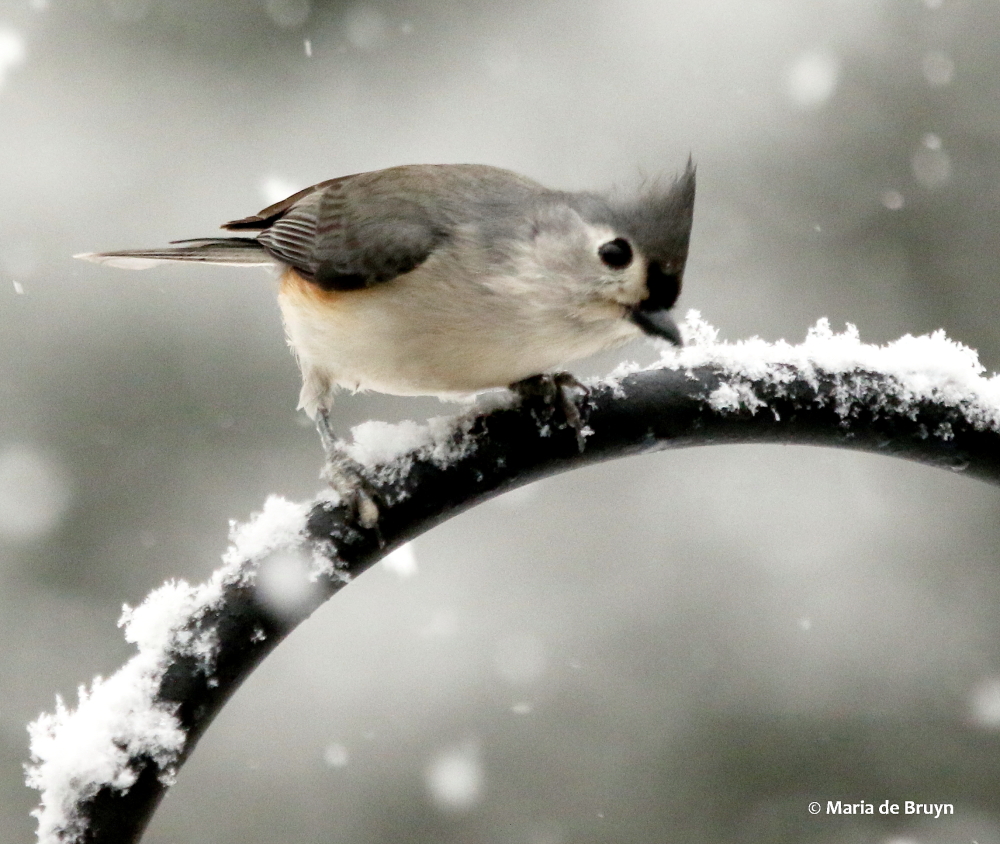
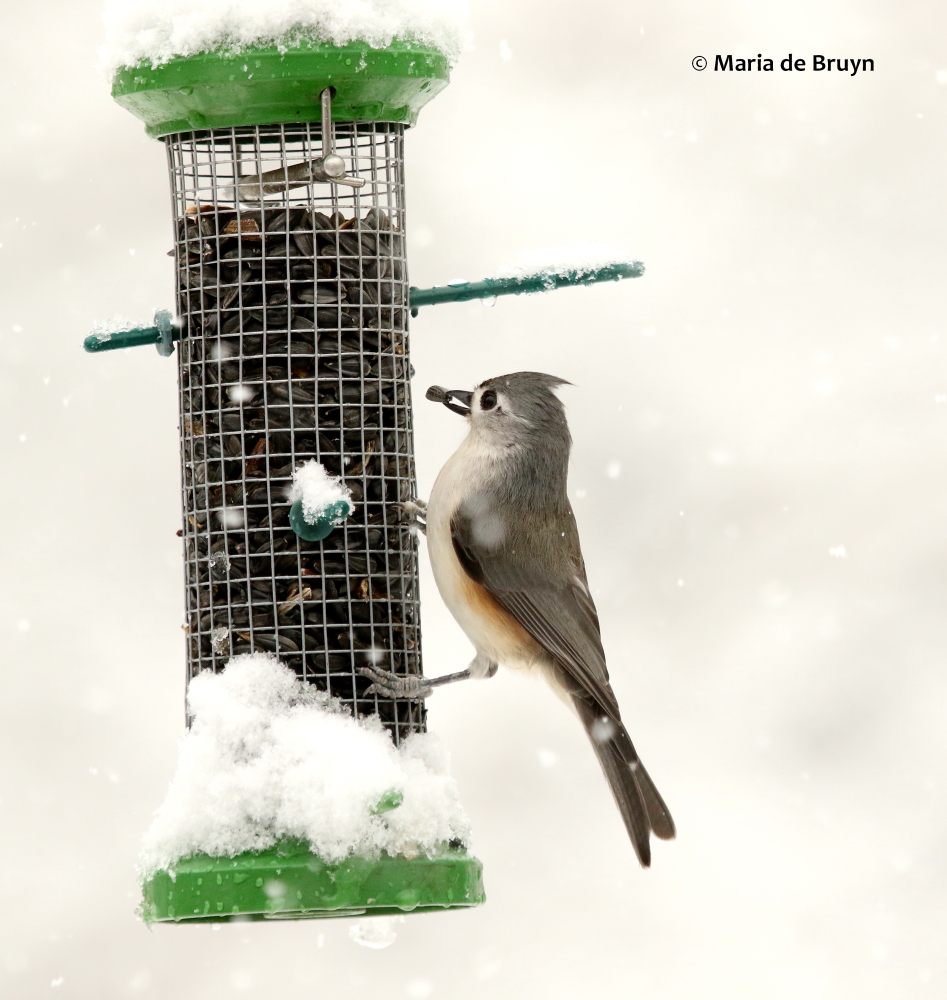
The similarly colored tufted titmouse (Baeoloophus bicolor) often zoomed in on its target of the fruit and nut feeder without taking time to perch first.

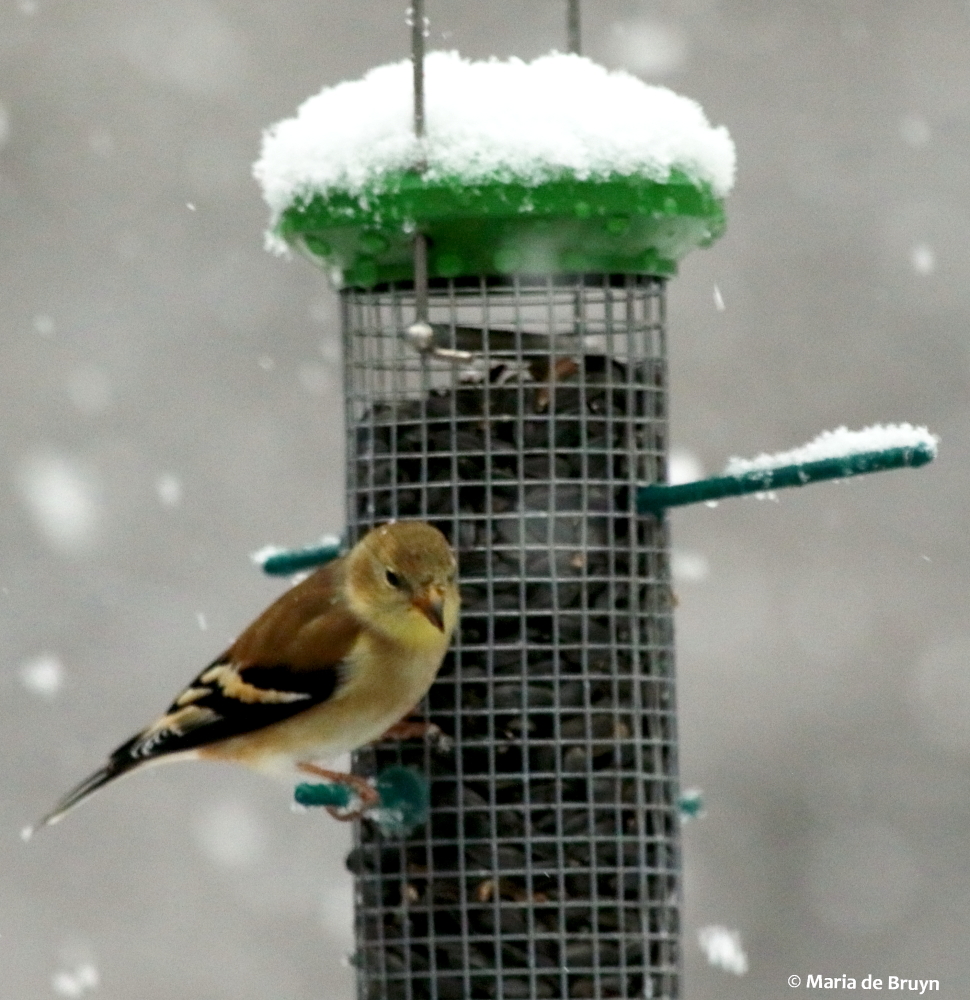
The American goldfinches (Spinus tristis) didn’t come round very much, only snacking on some sunflower seeds. Since they often feed on the crepe myrtle tree seeds, they were likely finding enough food there.

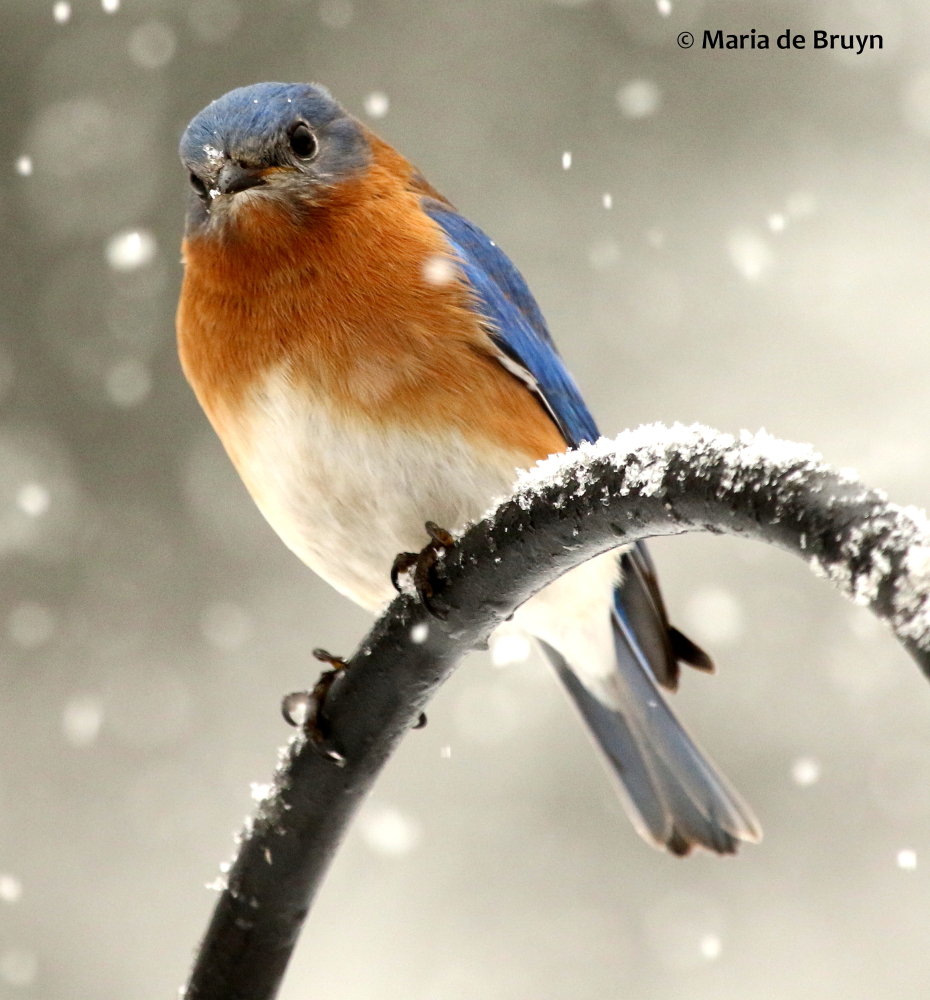
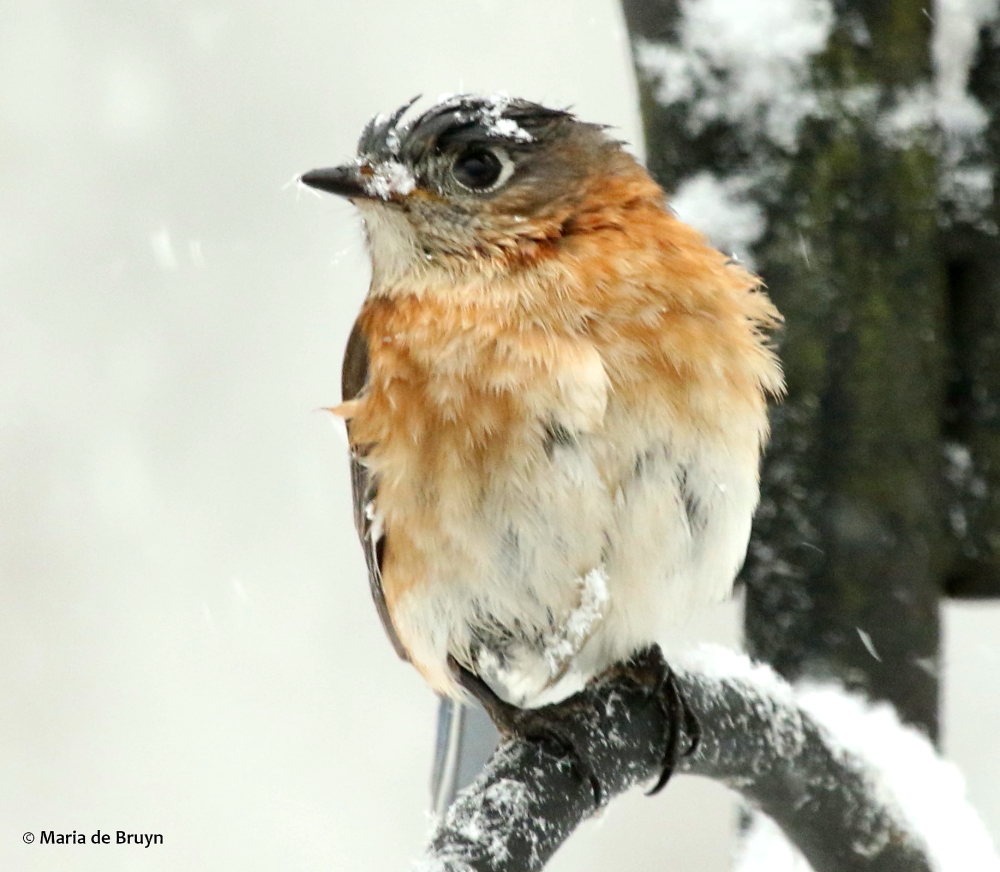
The Eastern bluebirds (Sialia sialis) came in spurts of activity. They always look rather bedraggled when they get wet with snow or rain and perhaps prefer to stay drier under branches until there is a break in the falling moisture. Even wet, though, they are still attractive to me.

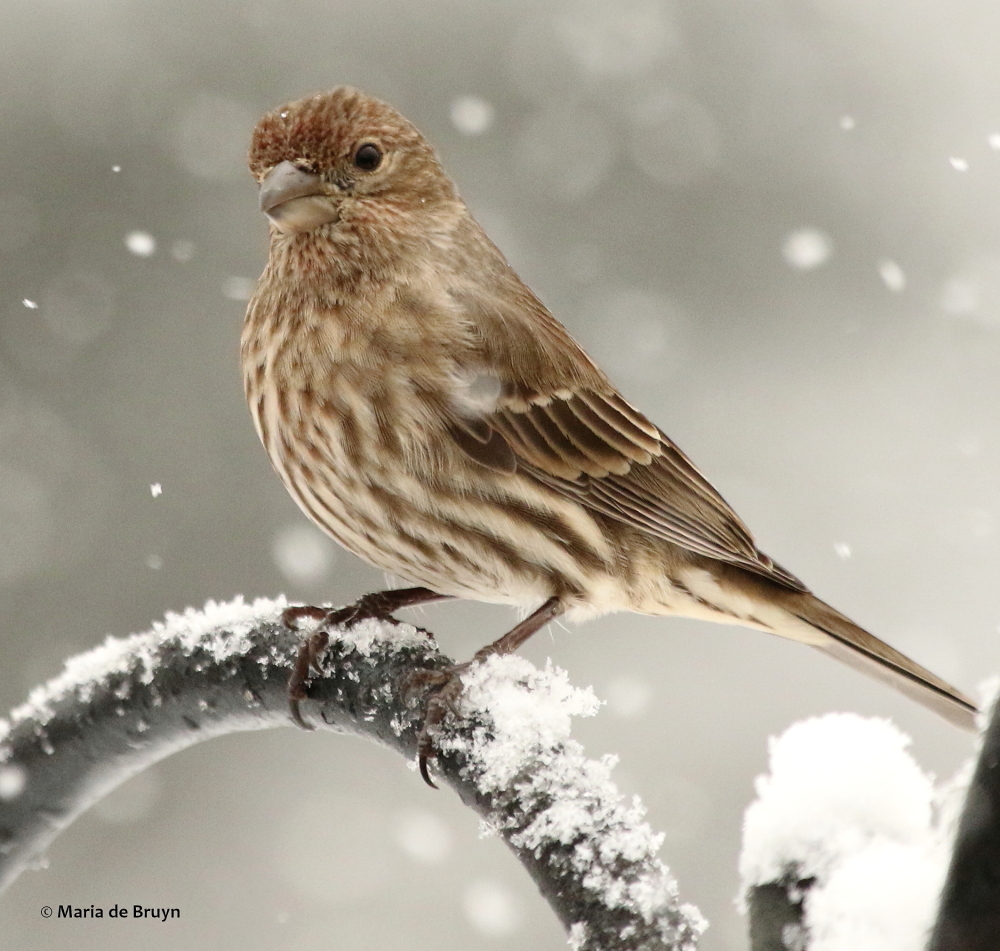
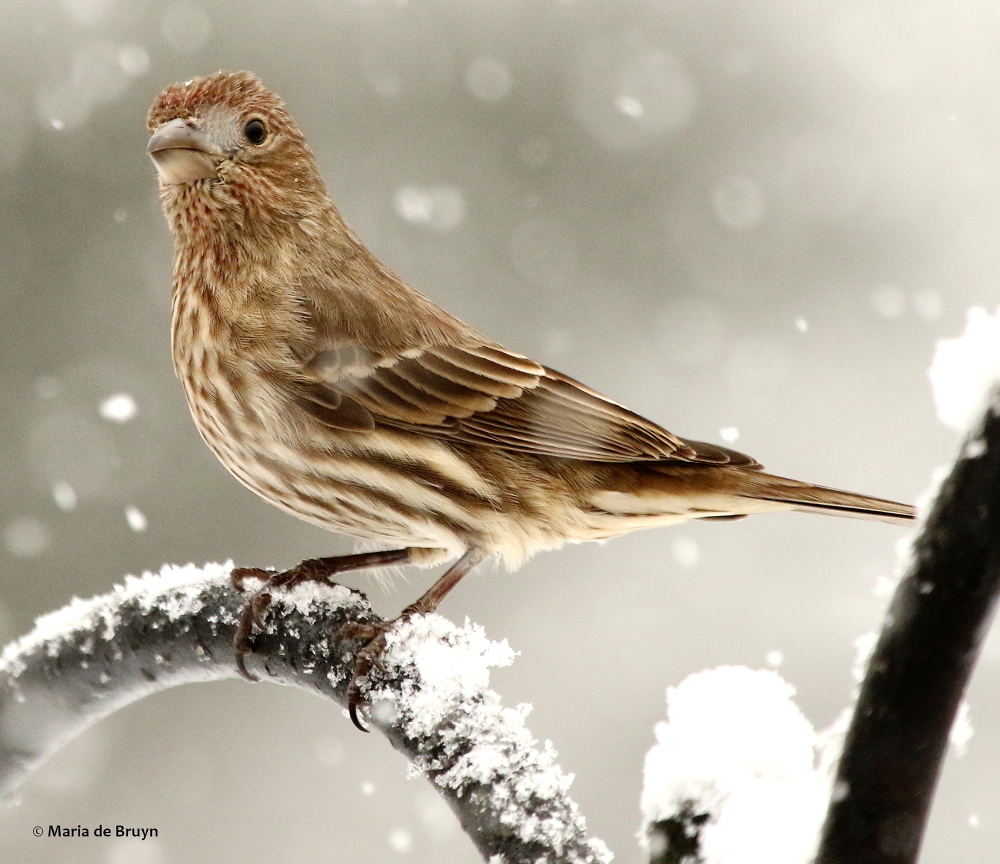
The smaller/medium bird group was rounded off by the house finches (Haemorhous mexicanus). The females were looking especially nice. The finches never have spats with anyone and are among the most peaceful feeder birds. Not everyone was like that, however, and the next blog looks at the rowdy ones.


Winter wonderland – sparrows and warblers

Yesterday, as I walked through my yard, I was surprised to see groups of daffodils sticking up their heads; it seemed rather early to me but last year we had early signs of spring as well. It is a big contrast to our weather conditions less than a month ago, though. On the 17th of January, our town was surprised by 11-12 inches of beautiful, powdery snow.


While our southern area often has a couple instances of (light) snow and/or an ice storm in the winter, our climate is generally fairly mild and temperatures in the 50s and 60s Farenheit are not uncommon during winter. So the brief but heavy snowfall was quite an event; our streets were empty of traffic as everyone stayed home and watched the falling flakes.

Some people built snowmen, others went sledding and walking, and some of us spent hours filling our bird feeders and watching the birds. I also made an attempt to photograph some frozen bubbles, which was very challenging since it was windy during the entire winter weather event.


The snow began slowly melting a bit the next day, which made some of the icicles on the house elongate to a length of almost 3-4 feet, but it wasn’t until Friday and Saturday that the snow and ice really started disappearing.

My yard looked beautiful, but I spent time on the 17th repeatedly knocking snow off the bird feeders and heated birth bath so that the birds could reach the food and water.


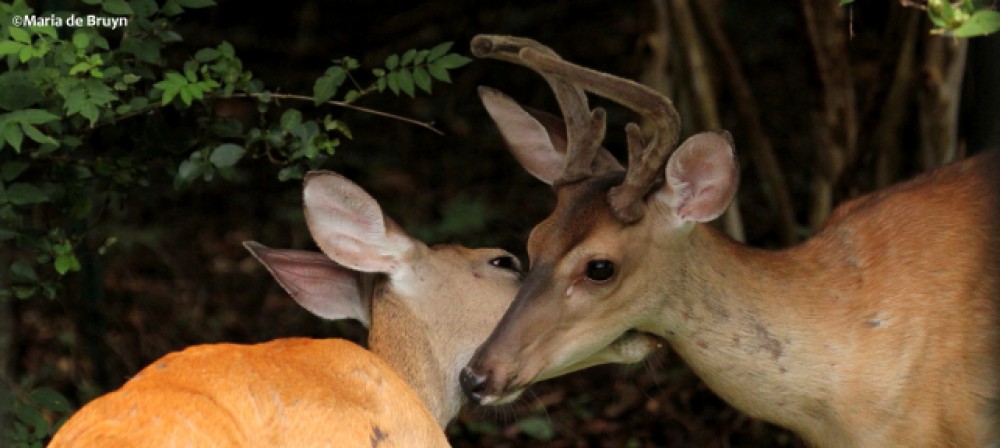
Although I saw a couple squirrels and the white-tailed deer (Odocoileus virginianus) also came by, I didn’t see other mammals like chipmunks, raccoons, opossums. But I had 25 different bird species come by on Wednesday and Thursday; on Friday and Saturday, two more species came by. I’d like to share some snow day photos of them all in this and the next few blogs.

First up are the sparrows and warblers. The chipping sparrows (Spizella passerina) usually get their seed from the hanging feeders in the front and back yards but now they were looking everywhere for a bite to eat. I had strewn some seed on the ground and they began looking there.

One found a trove of food and another came by asking to be fed, a request the first sparrow accommodated quite sweetly.


The white-throated sparrows (Zonotrichia albicollis) have an opposite feeding strategy, usually feeding on the ground and occasionally venturing up to a feeder. They, too, searched under the snow for some food.


The pine warblers (Setophaga pinus) tend to be rather shy; only very rarely does a pair visit together. Mostly, one shows up at a time; their beautiful yellow color was really highlighted against the white background.


The pine warblers did have to brave a bad-tempered bird to get to the feeders. One of the six resident yellow-rumped warblers (Setophaga coronata) has become very territorial, chasing away some other yellow-rumped warblers, the ruby-crowned kinglets and the pine warbler – in other words, the birds his size or smaller. He allows a couple other yellow-rumps to feed peacefully and I think perhaps they are his family members so that he tolerates them. He didn’t stop the other small birds from coming around, however, as we’ll see in the next blog.