These birds stole my heart!

I have always liked Eastern kingbirds and didn’t really understand why their scientific Latin name, Tyrannus tyrannus (e.g., tyrant), is so uncomplimentary. For me, they are among the loveliest and sweetest avians, and I love seeing and watching them.


Reading about the Eastern kingbirds informed me that their name is considered quite apt because they are known to harass birds that intrude into or pass over their nesting area. They drive away much bigger birds such as crows, hawks and herons.

When one of those nest predators comes near, the kingbird will do all it can to chase the predator away. During its sallies toward the intruder, the kingbird will raise its crown feathers, revealing some that are colored yellow, orange or red (similarly to a ruby-crowned kinglet). The bird will also open its beak wide showing a red gape and then dive-bomb the intruder which it sees as a threat.

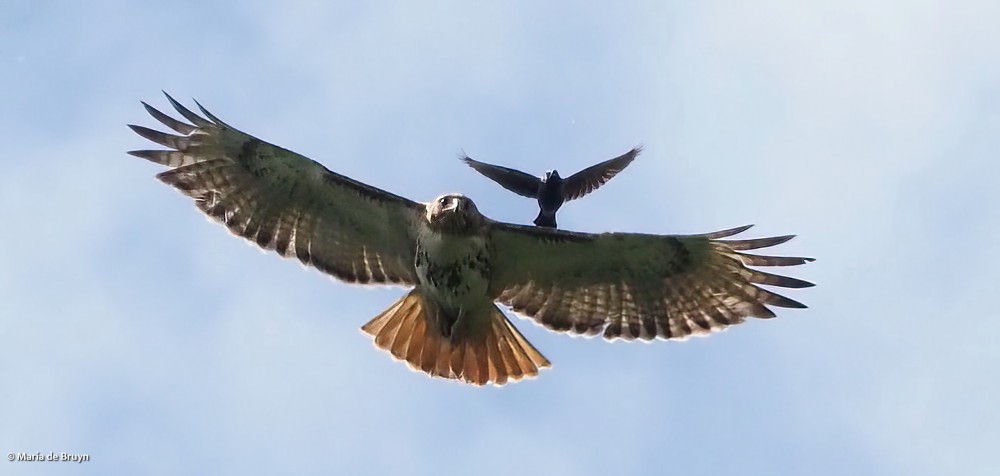
The display of the kingbird’s “royal” crown is seldom seen. Last year, I hadn’t even realized that a kingbird I photographed trying to drive away a hawk was showing its yellow crown just a little bit (photo above). This year, I saw no confrontations between nesting kingbirds and any predators, so I got no “royal” views.

This past spring I did feel quite lucky, however, to have been alerted by a fellow birder to a kingbird nest that was out in the open next to a pond. I never came close to it as I didn’t want to alarm the birds. Having a longer lens on my camera (even though it was malfunctioning and a bit dicey to use) was definitely a boon — unlike most birders of my acquaintance, I don’t have binoculars, but I was still able to get fairly good looks.

Ms. Kingbird chose to situate her nest in a spot typically favored by her species, near the end of a horizontal tree branch. She had used twigs for the structure and we birders concluded that the light-colored fluffy material inside was sheep wool gathered from a flock that had grazed nearby.


Mother kingbird spent a lot of time incubating the eggs in her nest. Every time I visited, her mate was nearby keeping an eye on me and any other possible intruders. However, he must not have felt threatened during those visits as he never revealed that trademark bit of anatomy that led to these birds’ man-given name.


I learned that kingbirds are astute nesters. The female can recognize an egg that is not her own  — for example, from a brown-headed cowbird — and she will eject the egg that she did not lay!

It turned out this kingbird had laid two eggs. Just after hatching, we still couldn’t see the babies. They stayed far down in the nest, and mom ducked her head inside to feed them. Finally, they got a bit bigger, and we could see little heads pop up when the parents arrived with food.

In the spring and summer, the kingbirds eat insects and are fun to watch as they swoop over vegetation to snatch up meals. It is rare to see them drinking water as they rely on their meals to provide any moisture they need. (They travel south to the Amazon region for the winter, spend their time in flocks during that season and then mainly eat fruit.)

I was lucky to arrive one day just after the two babies had fledged. They stayed on branches right by the nest. One bird had gone up a bit higher while the more active sibling remained below near the nest.

The two fledglings gaped wide to encourage their parents to give food.

For one of them, it was quite a wait to get a meal. If the parent feeds an insect with a stinger, this will often be removed and the insect killed before delivery.

The parent will watch as the young one gulps down the meal, especially if it is a rather large portion.


In between feedings, the fledgling on the higher branch sat still most of the time while I watched. Its sibling down lower was highly active. Preening was done thoroughly.


This was followed by flexing of wing muscles in preparation for first flight.


The exercise was vigorous — and then success  —  a tiny leap to a branch just above!

The fledgling looked quite pleased with its achievement.

Kingbird parents continue feeding their young for about seven weeks. This lengthy parental care period means that they generally only have one brood each nesting season.

If Eastern kingbirds return next year to this same area, we may see the same pair. This species tends to produce more males than females (I found no explanation as to why) and females may therefore mate with more than one male. However, males and females tend to remain faithful pairs for raising broods (i.e., they are socially monogamous).

As is the case for other bird species, there is now a decline in the number of Eastern kingbirds. Contributory factors include habitat loss (human development and changing agricultural practices), pesticide use destroying their food sources, and ingested pesticides leading to egg and nestling mortality when the poisons accumulate in parental bodies.

Despite currently declining financial assistance in protecting habitats for wildlife, I really hope that next year I’ll again have the opportunity to see the lovely kingbirds again.

An hour at a local pond

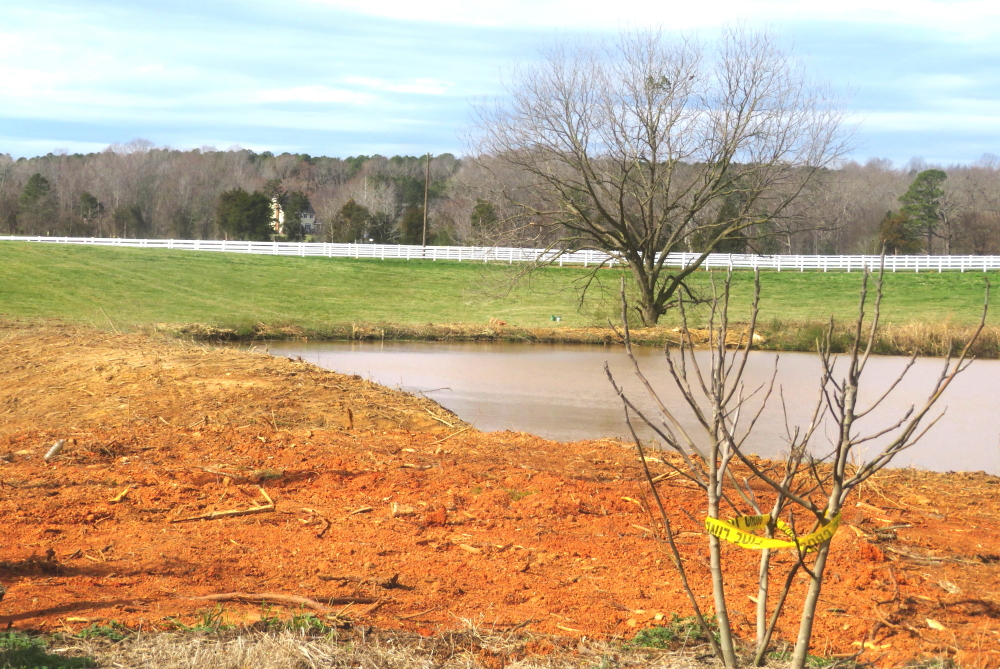
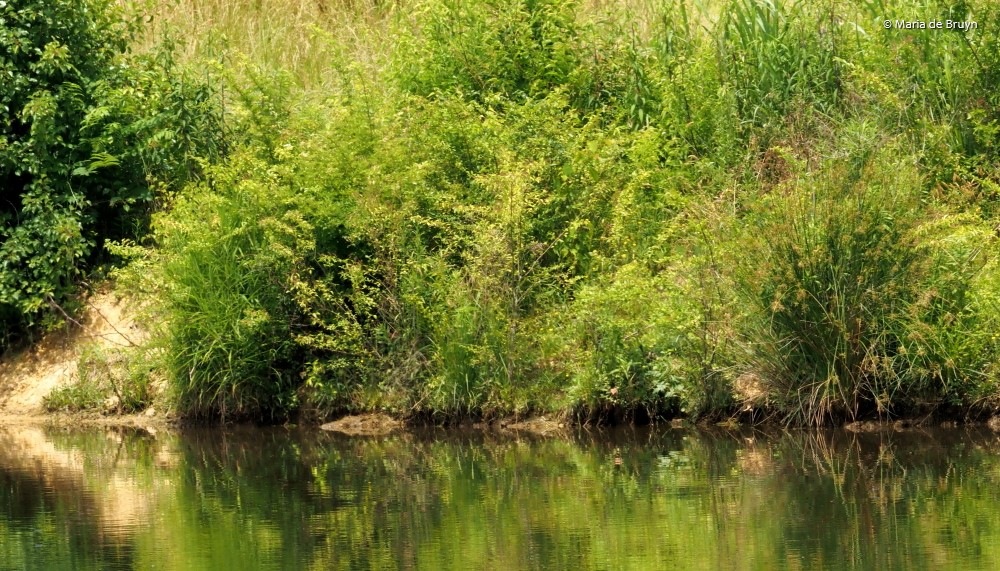
There is a pond in the county where I live that used to be a real hot spot for birds and other wildlife. The dairy farm fields around it had lots of native vegetation, which was very welcoming to avian wildlife.

A couple years ago, the farmers retired, and the property was purchased by a vineyard owner to expand his holdings. He cut down most of the vegetation around the pond and along the road bordering the fields. He has turned most of the fields into vineyards, keeping only small portions untouched where birds can still find some refuge.

I used to see a yellow-billed cuckoo return from migration to a small patch of trees there every spring. This now is a thing of the past. However, some pond-edge vegetation had been regenerated, and a little bit was planted, so some birds are hanging in there. They still make for some interesting birding. Here is what I saw on a recent visit.

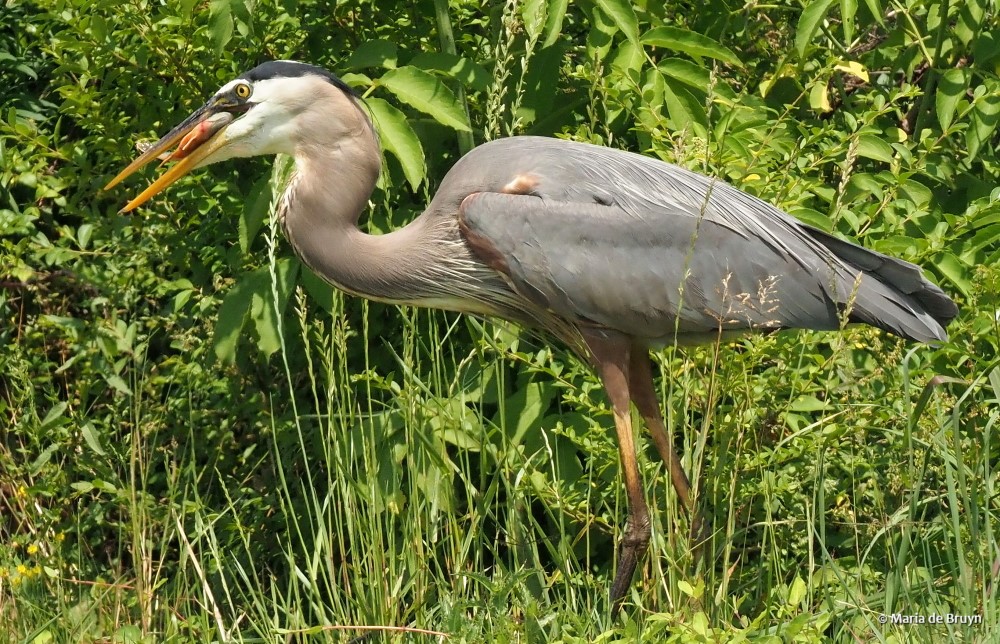
The largest birds that keep returning to the pond are the great blue herons. Sometimes there is one; other times there are two or three. Occasionally a green heron flies in or over but none stopped by on this occasion.

The heron often has good days fishing there. I often see him/her snag at least one fish and often more than one.

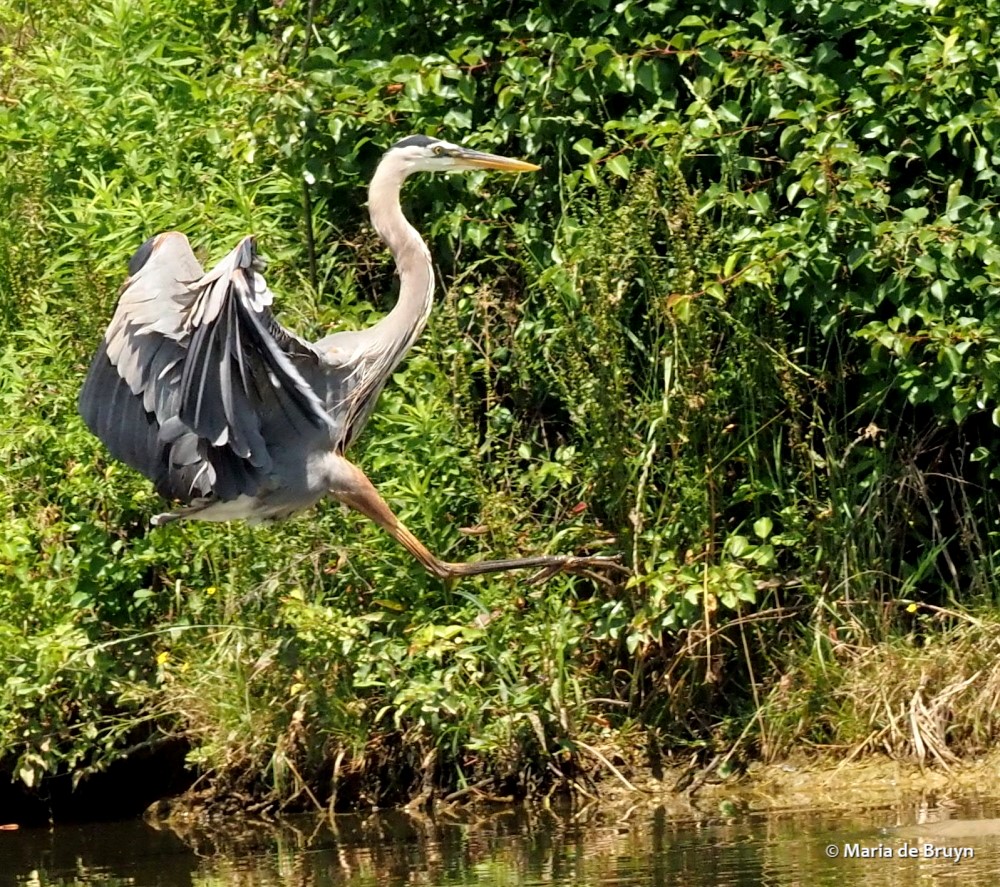
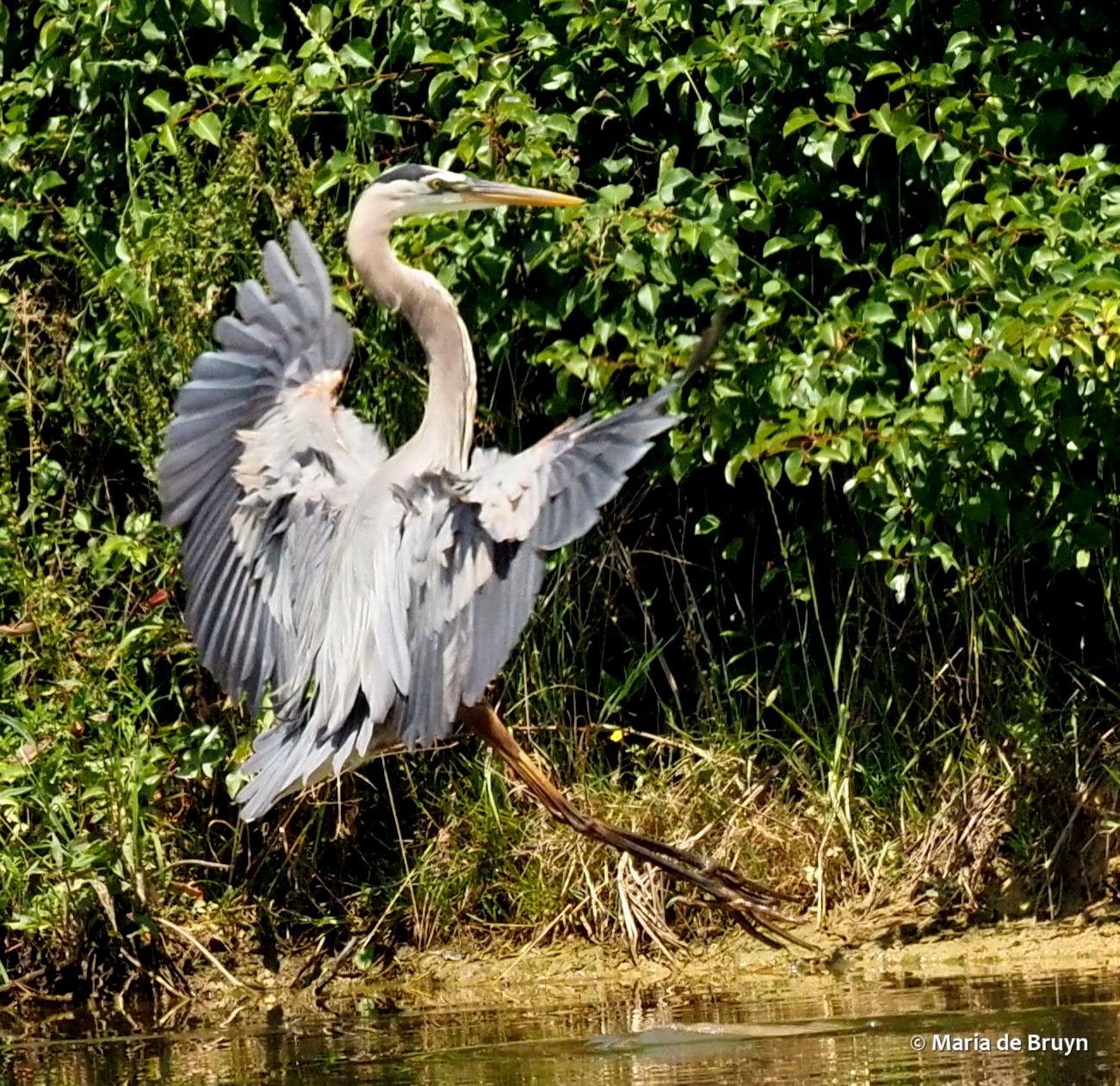
The heron stalks along the pond and frequently flies across to the other side for a change of venue. Perhaps the fish manage to hide well once they realize s/he is stalking them.

It’s wonderful to see the heron’s wings spread as the bird alights and then begins stalking again.

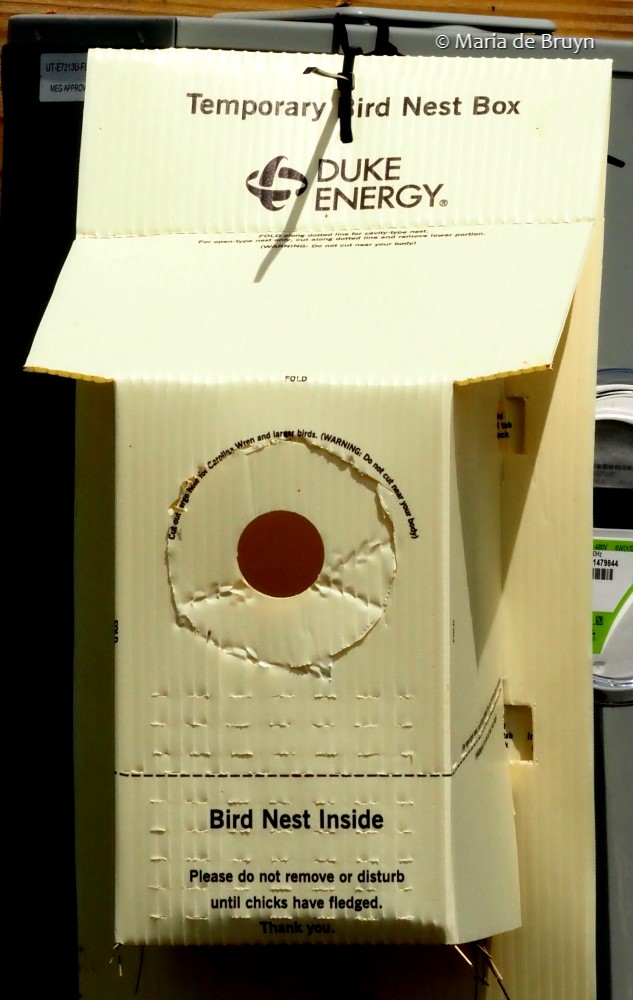
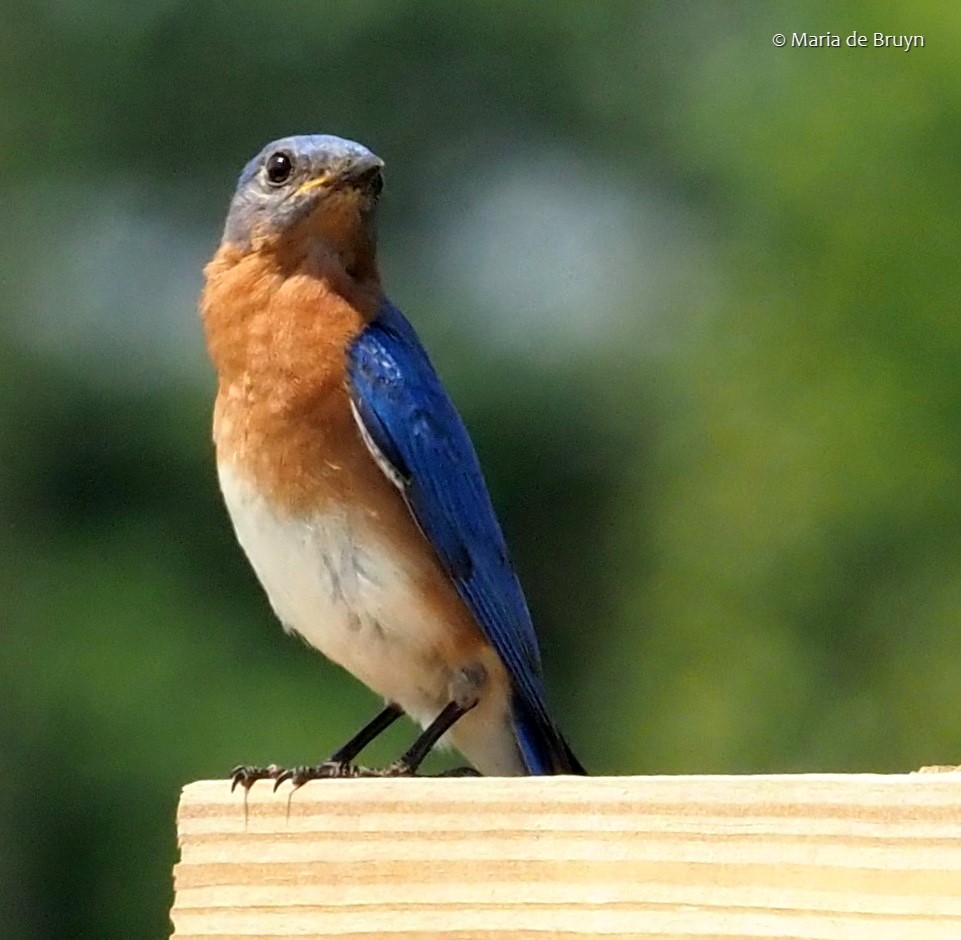
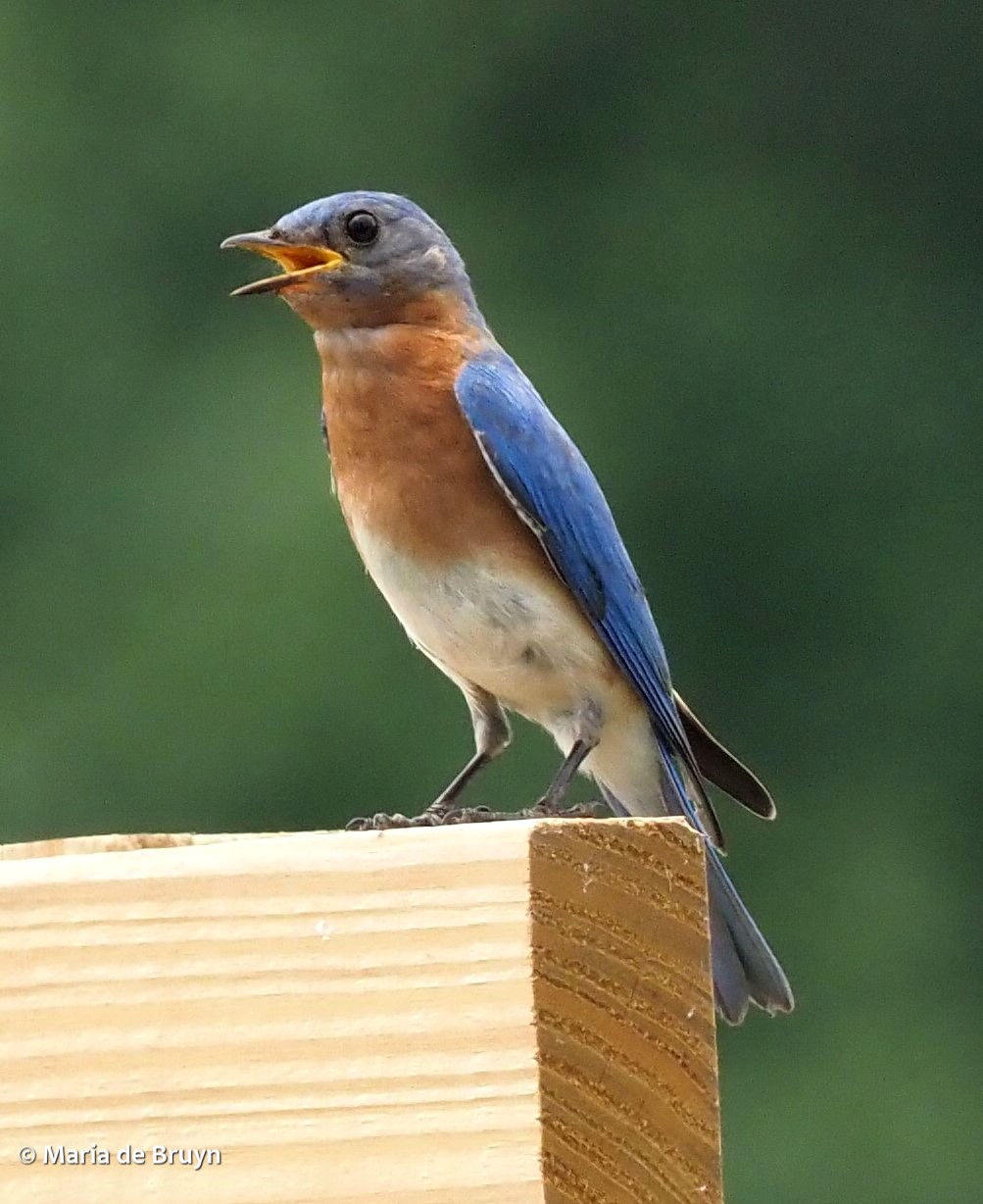
Eastern bluebirds had taken advantage of an electrical installation next to the pond (which also serves as a resource for the local fire department as needed). They not only used it as a perch for bug seeking but also built a nest inside it. I wondered what the new owner would do.


To my great surprise, his problem was solved by the local electricity company. They removed the birds’ original nest and put it into a temporary nest box!


Mom and Dad bluebird were guarding the nest space, but it looked like they were still getting used to the new digs.

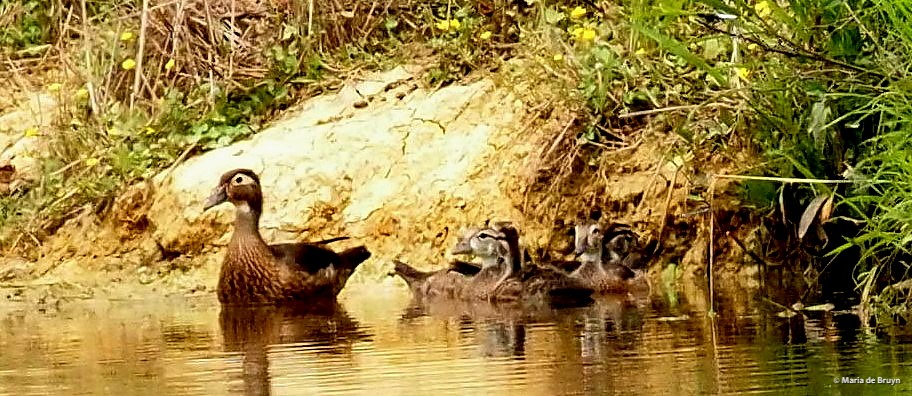
While watching the bluebirds, I suddenly heard a commotion in front of me, but I couldn’t see what was happening behind the bushes at the pond’s edge (I’m short!). However, I could tell that a bird was in distress. I wondered if one of the huge snapping turtles had caught a duckling. I walked further along and saw one of the two resident female wood ducks (above) swimming away from the area.

No ducklings followed and I feared the worst. One mother had five ducklings (above) while the one swimming away had lost one a few weeks before. Now I wondered if she had lost others, too. Luckily, I later saw her return to the area and shepherd four ducklings across the water to the other side.


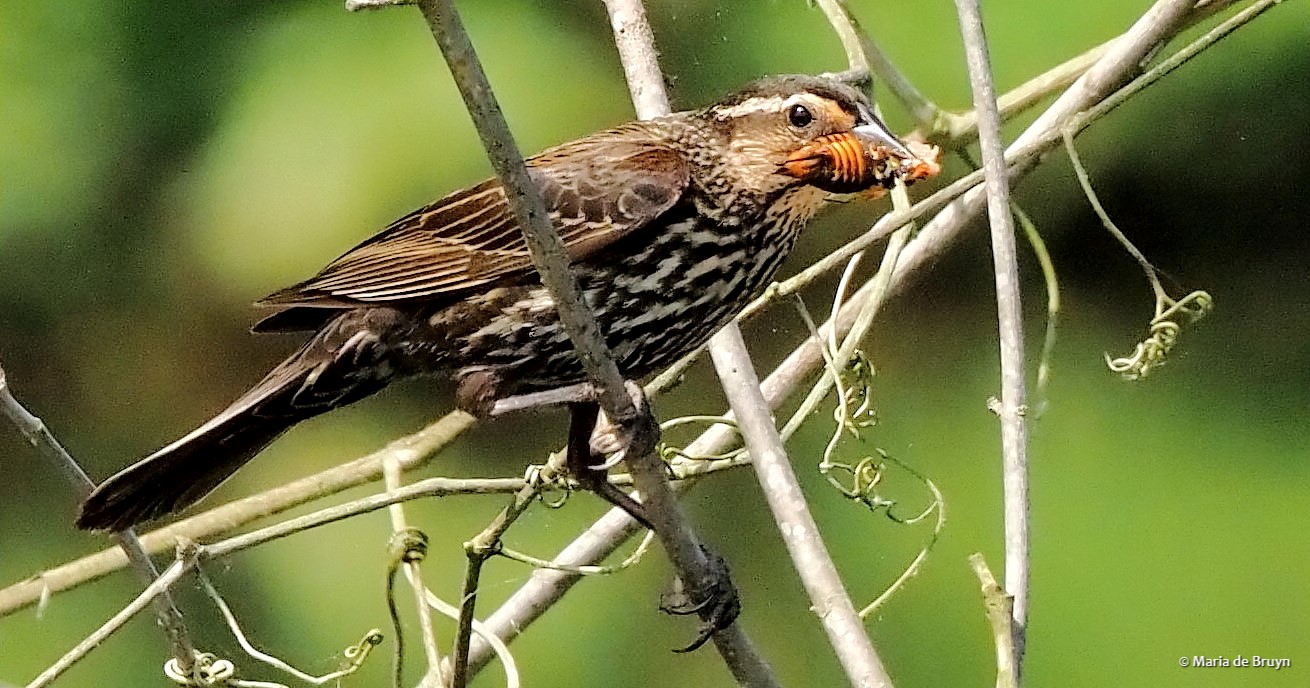
In the small bit of meadow immediately adjacent to the pond, red-winged blackbirds are now nesting. One pair has a nest close to the road and they are warning visitors away with constant flights along the pond’s edge, while the male calls repeatedly.


The female was taking breaks from warning-off flights to enjoy an occasional meal, at this time consisting of one of the remaining periodical cicadas that emerged recently.

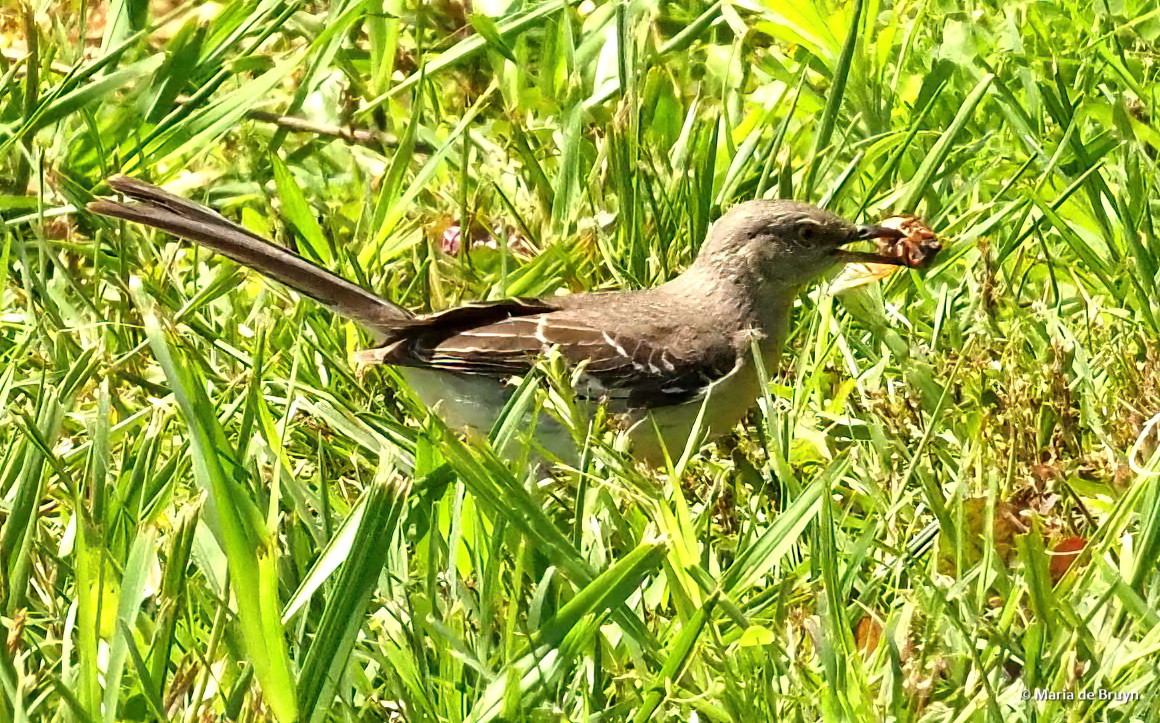
She wasn’t the only one seeking these insect delicacies. Two Northern mockingbirds were also intently examining the area under a tree for them. One finally had success in snagging a cicada. (For more about the cicadas, see my previous two blogs!)


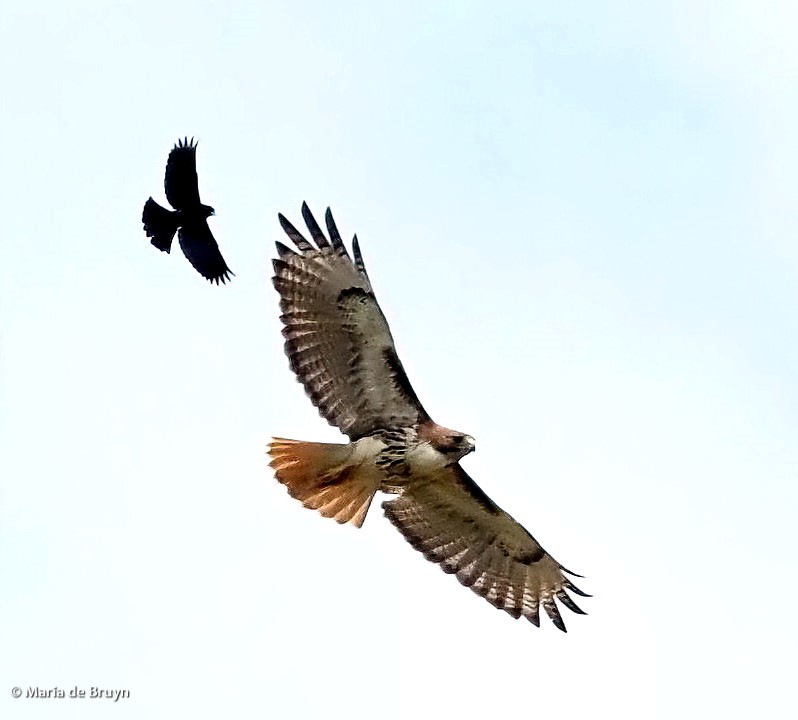
The male red-winged blackbird was very busy keeping “intruders” as far as away as possible from their nest. He warned off the great blue heron, who was actually pretty far away. (He is flying away from the heron on the left side of the photo.)

He also went after a red-tailed hawk, who appeared soaring overhead.

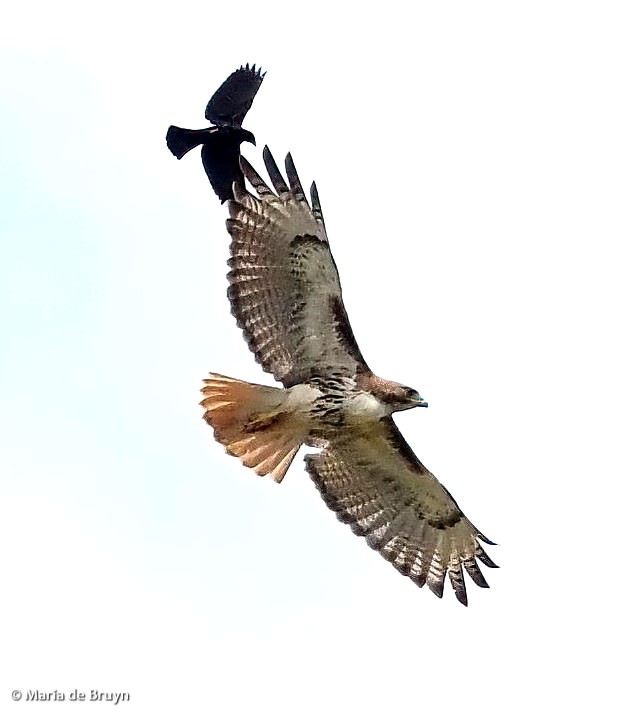
Common grackles, often present at this pond, will also chase away these hawks. There weren’t any around to join in the foray this time, but the photos below taken at another pond show how they go after the red-tails.

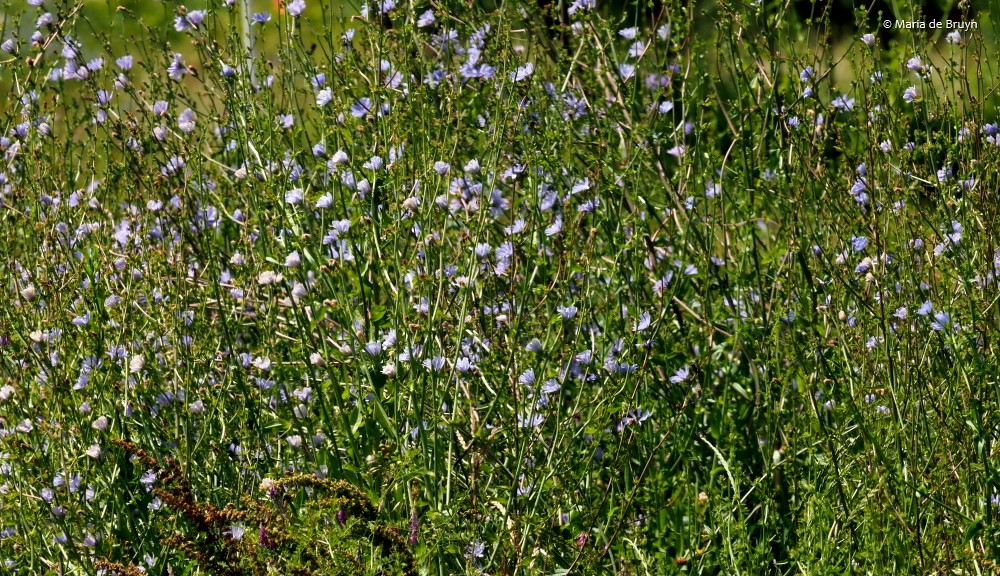
I looked at a small patch of chicory across the road to see if any bobolinks, grosbeaks or meadowlarks were around. I love this plant and planted some seeds in my own yard, hoping to attract more pollinators and birds. So far, they have not sprouted.


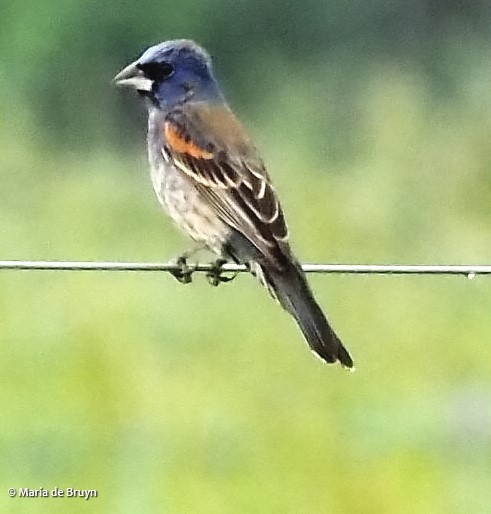
Below you see a young blue grosbeak and a pair of Eastern meadowlarks who were in the patchy field spots another time.


Usually, several types of swallows frequent the pond, including purple martins, tree swallows, barn swallows and Northern rough-winged swallows. I only saw a couple of the latter this day and only got poor flight photos as my camera began acting up, refusing to focus.

Staring hard across the pond, I did manage to spot three killdeer, four least sandpipers and a couple other sandpipers that I couldn’t immediately identify. I later learned that they were semipalmated sandpipers, which I hadn’t seen there yet. (If you click on the photo, you see it larger; then go back to the blog.)

That hour at the pond didn’t turn out to be a super one for capturing stellar photos, but it was definitely a great one for relaxing, observing the action and appreciating nature again!

Learning to love an over-protective bird

When house wrens (Troglodytes aedon) first began visiting my yard some years ago, I was not aware that they are extremely protective parents. I didn’t see them as often as birds of other species since they don’t come to my feeders and were not using nest boxes.


The past couple years, however, they have become more comfortable in my yard and began building their nests in boxes after all. This became problematic for me and especially the other species who use the boxes — Eastern bluebirds, Carolina chickadees and brown-headed nuthatches. The reason?

House wrens do their utmost to drive other birds out of their territory so that there is no competition for food needed by their nestlings and fledglings. This protectiveness makes them go so far as to peck other birds’ eggs, which they have done with chickadees and bluebirds in my yard.

Very unfortunately (and upsetting to me), they even killed two nestling nuthatches one year. The other two nuthatch babies managed to fledge. This behavior led a birder, Althea Sherman, to launch a crusade against house wrens in scientific journals in the early 1900s. Now, there are instructions online on how the wrens can be discouraged, for example, on a website devoted to bluebirds.

This year, Eastern bluebirds (Sialia sialis) were tending four eggs in one box and a house wren tried to invade. The parents were very protective and successfully drove the wren away (photo below). Another pair of bluebirds had nested early and managed to guide their young to fledging. They then abandoned my backyard for nesting and the house wrens had no rivals for nest boxes in that area for the rest of breeding season.

House wrens are one of the bird species banded in my yard each year for the Smithsonian Institution’s Neighborhood Nestwatch program. This year the bird bander noticed their nest with babies in a backyard nest box, so she upped the chances of catching one by counting on their extremely protective nature.

A net was put up not far from the box and the bird bander played the call of another house wren. This resulted in both mama and papa wren getting inadvertently caught up in the net while trying to drive away the intruder. They were both banded and then immediately let go so they could resume feeding their babies.
The four woodpiles in my backyard were like a larder for them because they host a plethora of insects.


And the house wrens are obviously not that choosy about which insects they eat. Mama and Papa brought a large variety to their ever-hungry nestlings.


The parents were also very good at keeping the nest clean.

The three nestlings appeared to be producing numerous fecal sacs so that mom and dad were constantly checking the nest for them and flying them away.


At one point, it was interesting that when the male wren brought a large insect to the nest, he handed it over to the female, who was waiting a bit after having just given the babies food.


Eventually, the large meal was delivered to the nestlings.


As the days went by, the nestlings became louder and more insistent on being fed and the parents scarcely paused in their efforts to keep the meals coming and the nest clean. It must have been a relief for the parents when the babies finally left the nest box because they could now take a breather now and then.


Right after fledging, the parents were still busy. The fledglings had not yet flown far so I could see the first post-fledging feeding session for one young wren.

I had learned that house wrens sometimes incorporate spider egg sacs into the nests they build because the hatched spiders eat nest parasites and thereby help protect the developing nestlings! The parents also fed mother spiders and egg sacs to their young. Just after fledging I caught a circle-of-life moment when a parental wren fed a mother spider with her attached egg sac to a fledgling – the death of the poor insect furthered the life of the new bird.

I could see and hear the parent house wrens continuing to feed the fledglings that afternoon. But after a while they appear to have moved to another yard, where they likely weren’t dealing with humans closely watching.


The Eastern bluebirds have a new nest in my front yard now with four eggs, so my nest watching can continue for a while. And the juvenile birds of other species coming to the feeders are entertaining, too.

Our largest North American woodpecker — a real delight!

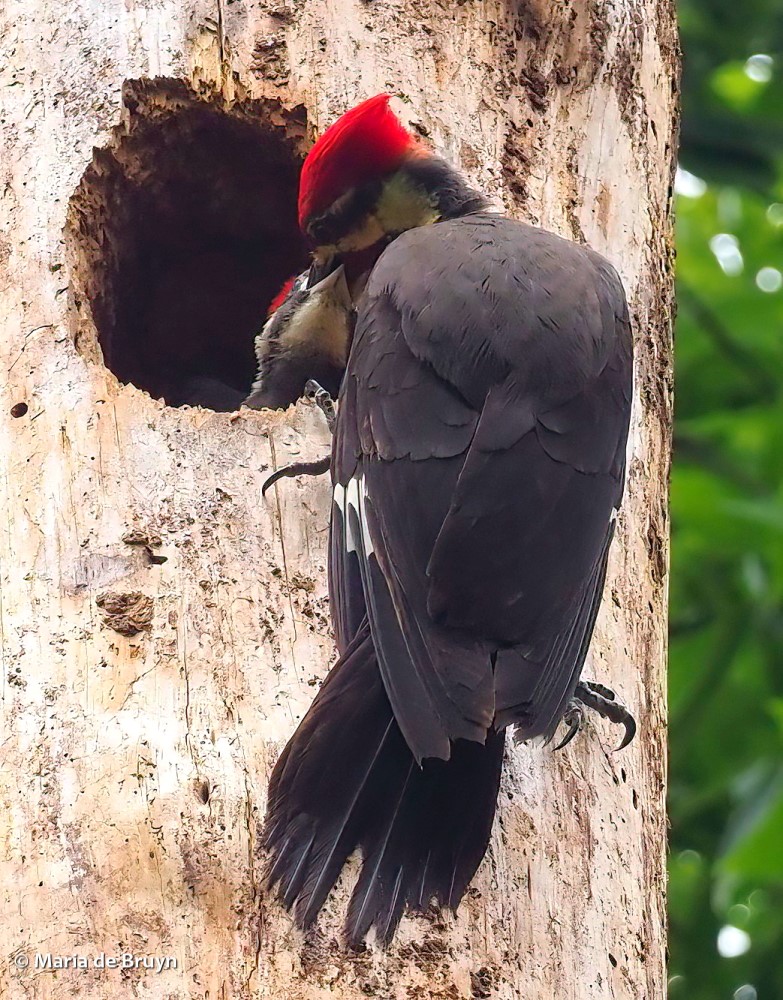
During nesting season, we have a good chance of seeing many birds whom we might not notice otherwise because they’re out in the open, collecting nesting material and scrounging for as much food as possible because they have hungry mouths to feed. I was very grateful to my friend Carol when she told me about a pileated woodpecker (Dryocopus pileatus) nest where the babies might be fledging soon. Pileated woodpeckers are also nesting somewhere near my home, but I rarely see them.

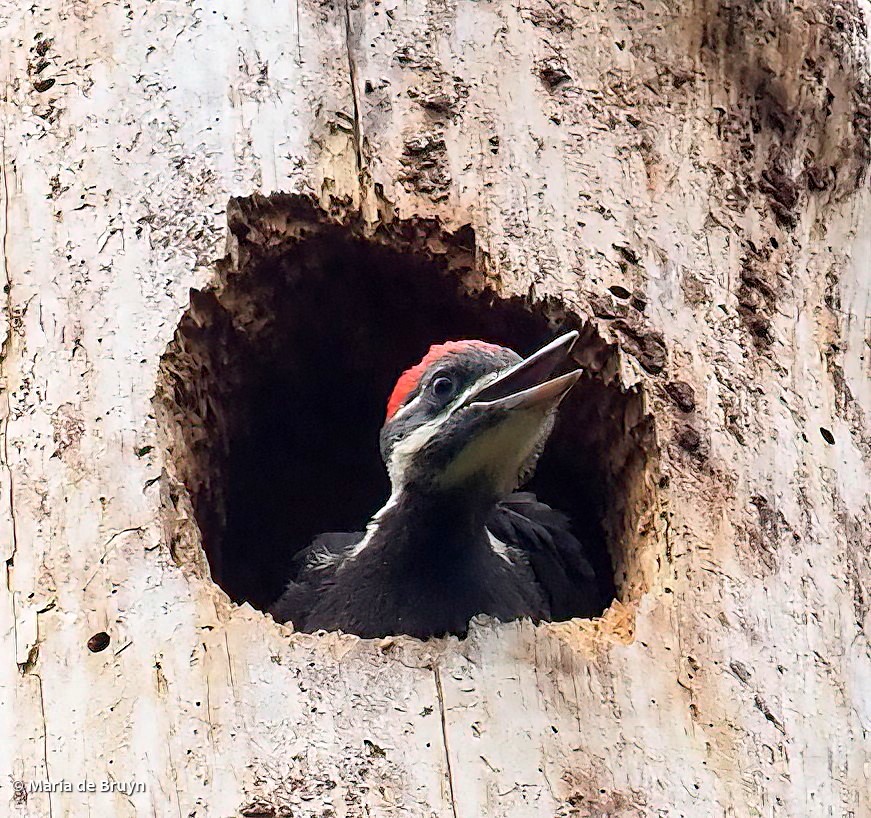
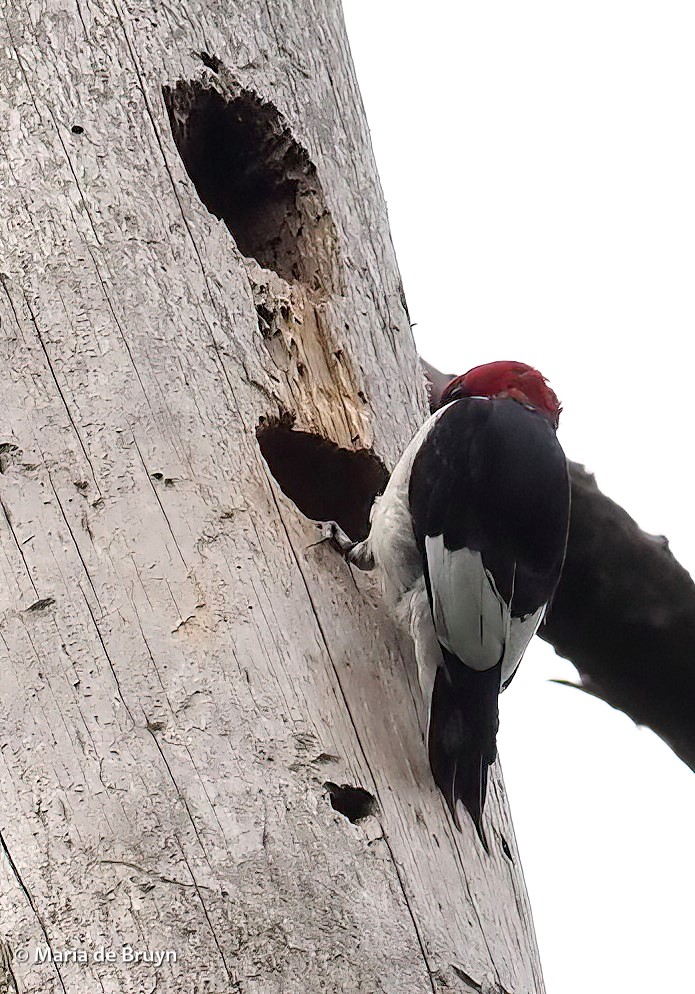
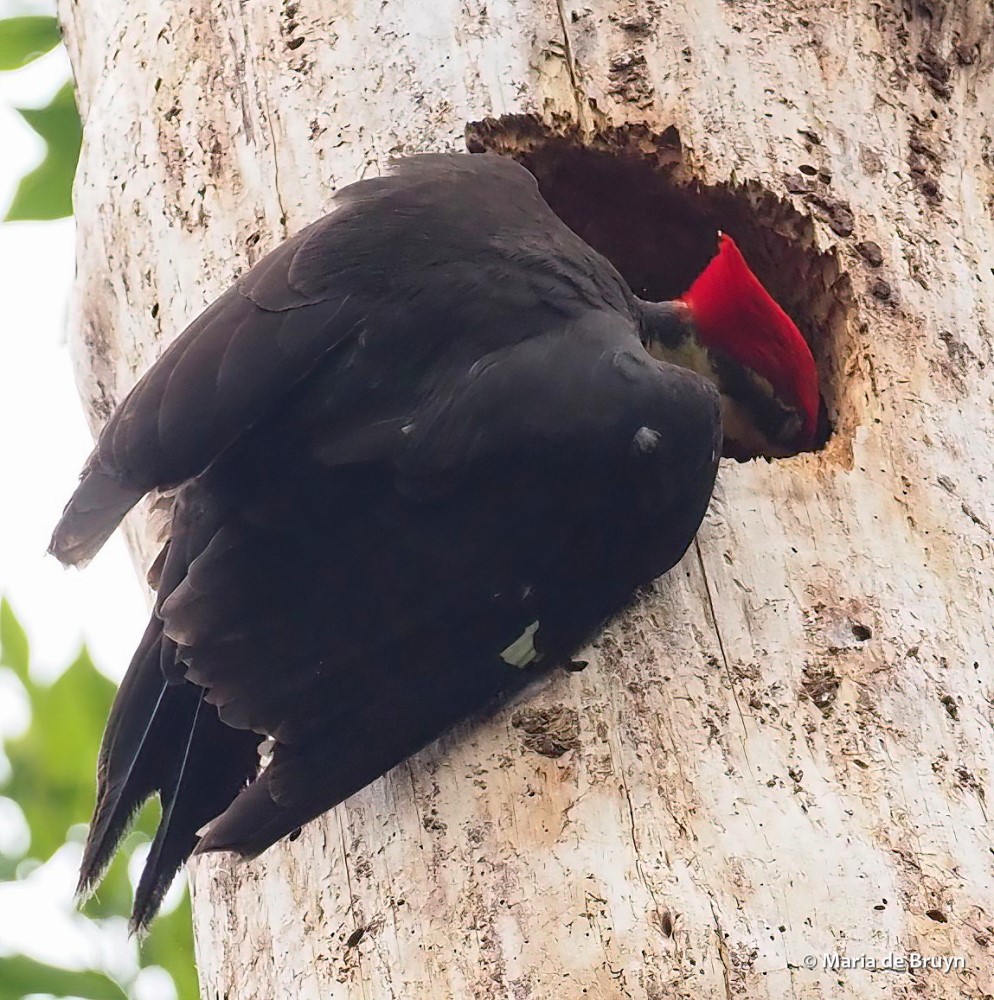
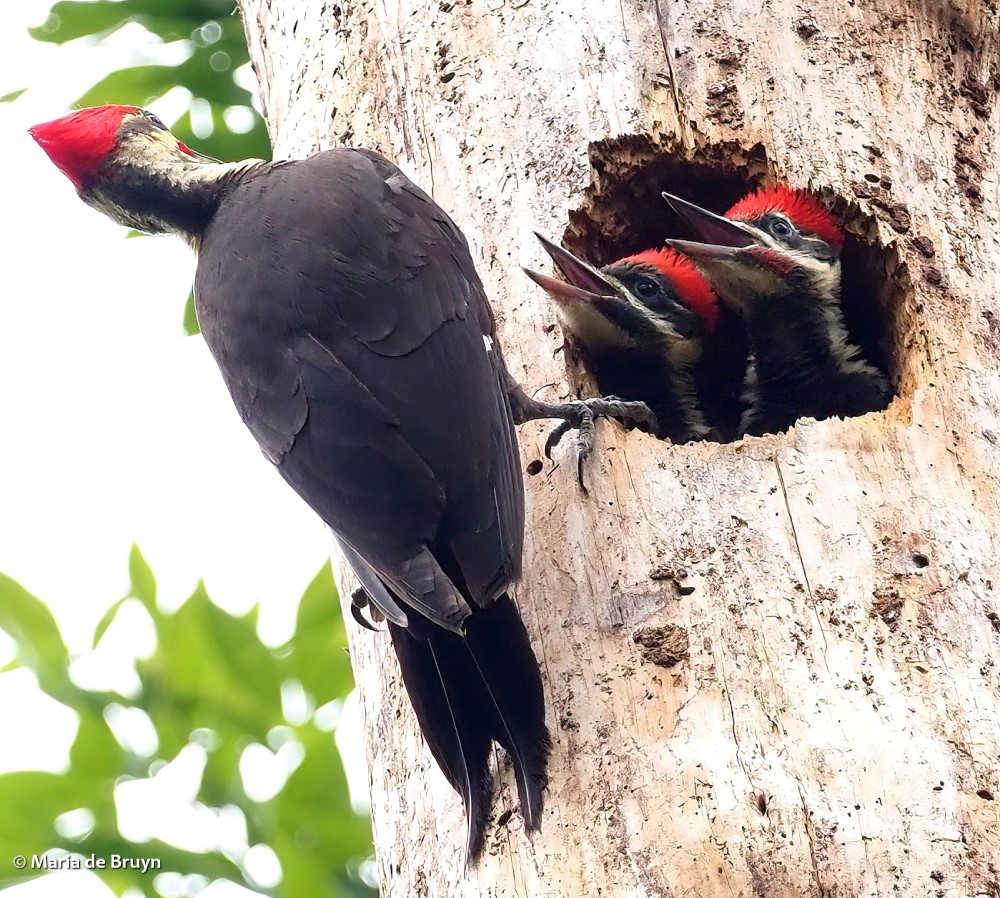
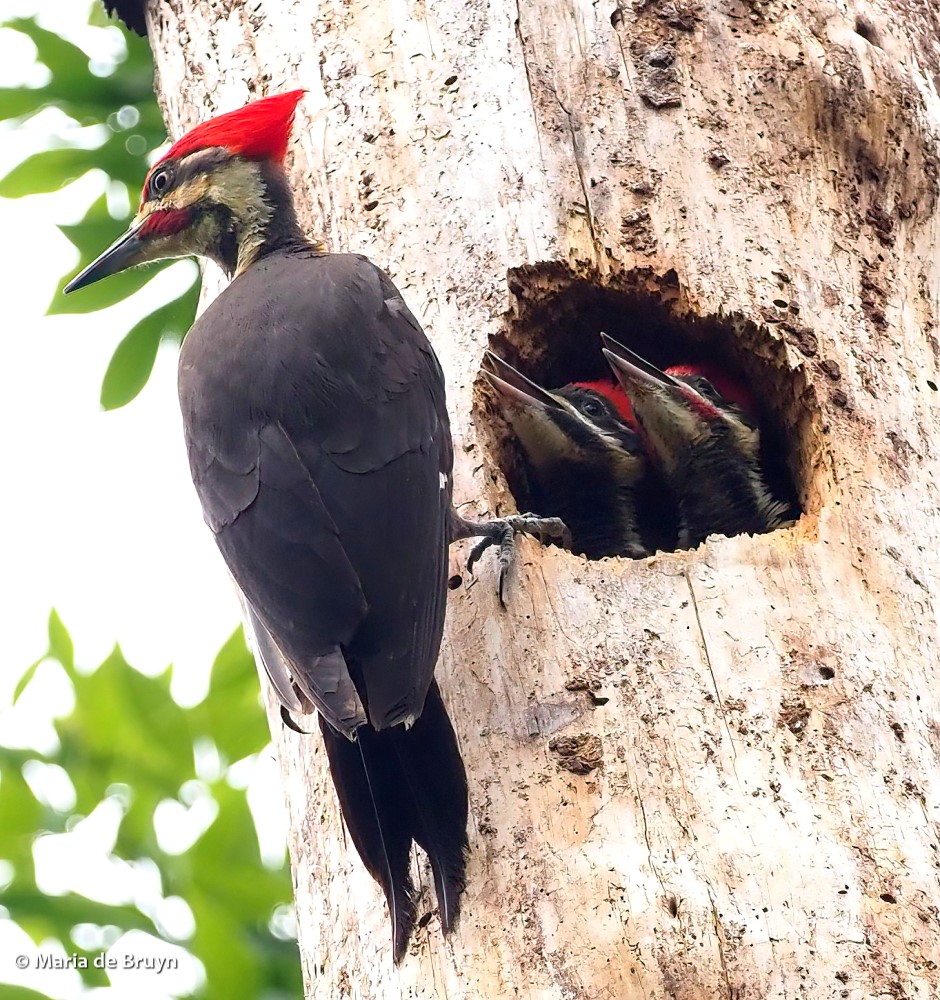
When we arrived at the nesting site, one baby was poking its head out of the oblong nest hole about two-thirds the way up a very tall snag.


Above it, a red-headed woodpecker (see right) was maintaining a nest. A red-bellied woodpecker was also visiting higher up.

While we watched, the young one continued scanning the skies while calling out to its parents. The baby persisted in watching from the nest, which was only lined with wood chips. Unlike other birds, pileated parents do not line their nests with nesting material such as soft grasses.


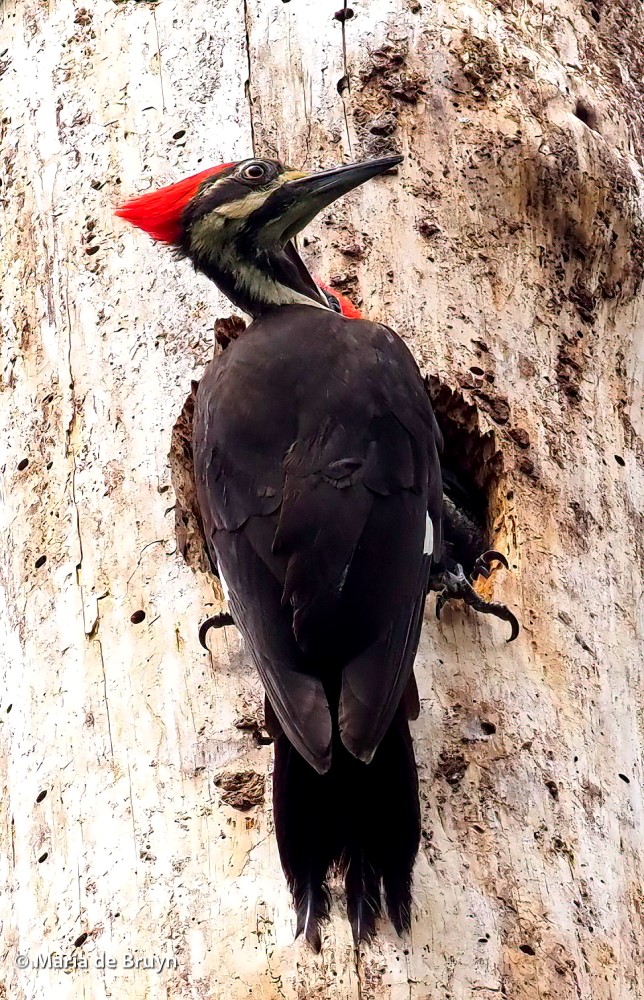
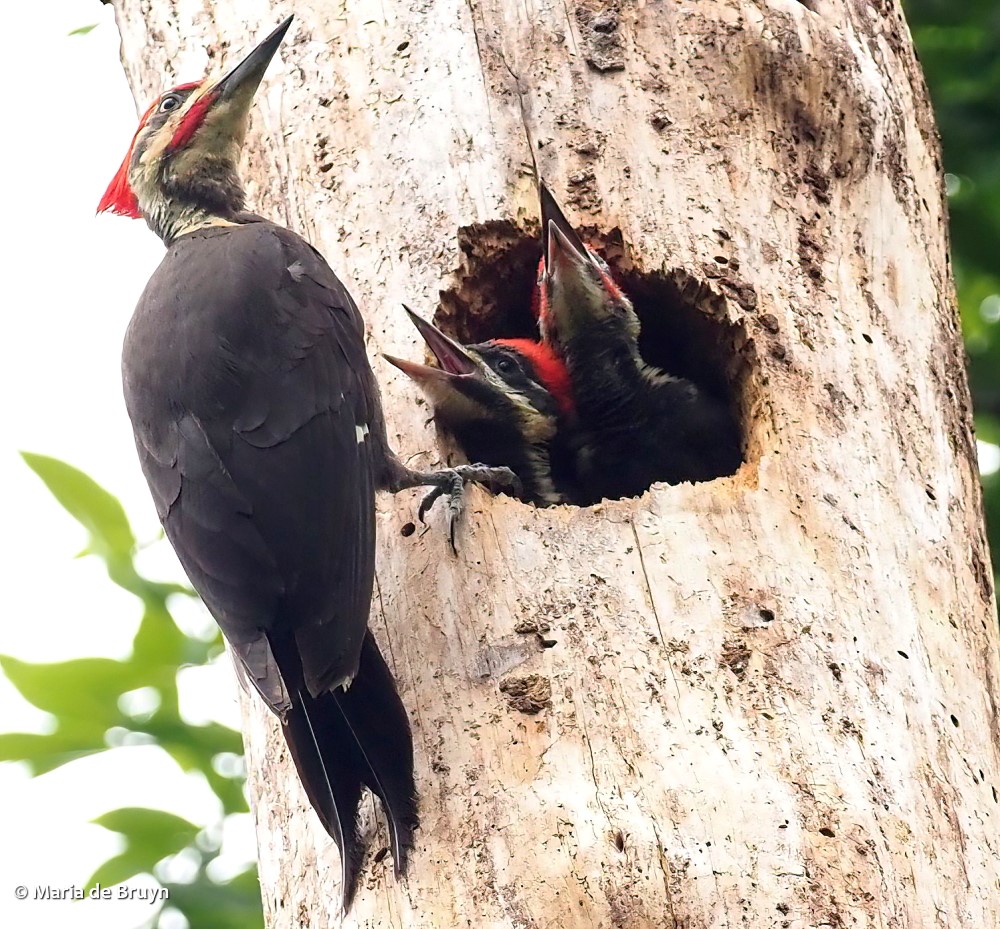
Occasionally, the parents answered and, after about 15-20 minutes, one flew over to check us out. It was the father, who could be identified by his red crest that extended down to his bill and the red cheek or moustache stripe (right photo). The left photo shows a female who was foraging in a tree on another occasion. Her red crest is only on top of her head and her cheek stripe is black.


The young one looked back into the nest; I wondered whether another nestling might be there. No one else peered out at that moment and we speculated as to whether one might already have fledged as two had been seen the previous day. When the father visited the nest, still only one baby showed itself, so we didn’t know whether there might be another one around (nests usually have 1-3 babies).


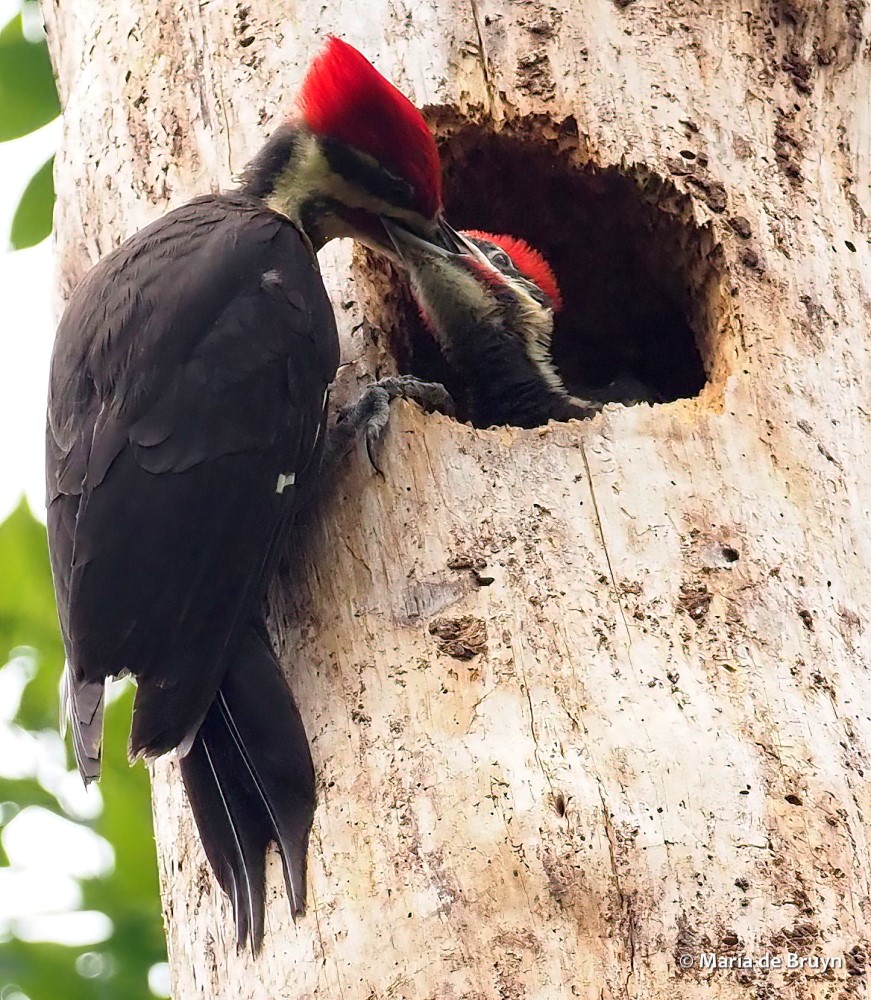
The father fed his offspring by regurgitating whatever he had been eating. The pileated woodpeckers’ diet comprises mostly carpenter ants (40-97% of their diet in various studies), supplemented by other insects including worms, caterpillars, roaches, flies, and grasshoppers.


They also eat nuts and wild fruit. If you have a garden and want to attract them, they like persimmons and many berries, including those of poison ivy, sumacs, dogwoods, elderberries, greenbriers and sassafrass.  

Many landowners tend to clear their yards and gardens of fallen logs and dead standing trees. I keep several woodpiles in various spots as the decomposing wood is home to many of the insects that the pileated woodpeckers and other birds need for their diet.

Papa took off again, leaving a satisfied young one behind (at least for the time being).

These woodpeckers are the largest in North America (15.8-19.3 in/40-49 cm), since the ivory-billed woodpeckers have been declared extinct. They are monogamous and luckily have plenty of opportunities to find mates. Pileated woodpeckers had been in serious decline in the 18th-19th centuries as forests were logged for the timber industry and to clear land for ranches and farms. Since then, they have rebounded to just over 2.5 million individuals.

I realized when I looked at my photos later that I had not been paying enough attention to the coloring of the parents and offspring. When I went away for a short time and then returned, mama pileated was visiting the nest. In addition, whereas I had been watching a female nestling first, now a male baby was calling out for food. A view of the two looking up, shows the male’s red cheek stripes were obvious, but I had been oblivious at the time. The female is on the left and the male is on the right.


The next time that papa returned, the male offspring stuck his head out for a feeding.


Papa didn’t want to play favorites, so he stuck his head in the nest to apparently call them both to come out.

They opened their beaks wide, begging for food.


Papa let them ask for a while, sticking his tongue out at them as they begged.


He also decided to take out some fecal matter. I don’t know how long the nestlings had been in there (they usually grow in the nest for a month), but a clean nest is desirable.


After the babies fledge, they may stay with their parents for up to three months.


I’m so glad that Carol and her sister Donna, near whose home the nest is located, invited me to come see the family. It was time well spent as it got my mind completely off an ongoing series of problems complicating my life lately. Hope seeing these photos was also a bright moment for you!

Getting airborne when lift is lacking….

If you’ve had the good fortune to watch a bird caring for nestlings and then encouraging them to enter the big wide world, you might think that the young ones automatically know how to fly. But my recent observations of a ruby-throated hummingbird family (Archilochus colubris) showed me that a learning curve — albeit not a long one — may be involved.

On the 29th of April, my friend Ace and I had the good fortune to spot a female hummingbird. We discovered that she was gathering construction materials for a nest with inside walls that included plant down.


She was camouflaging the outside of the walls with lichen.


As she worked on the nest, she sat in it periodically, moving her body to form the cup shape and tamp down the bottom.


The walls expand as the eggs hatch and nestlings grow; this is possible because the walls are held together by spider web and caterpillar webbing (6 May).

If we hadn’t seen her working on the nest, we likely would not have seen it. It was very cleverly placed near the crook of a small branch that had lichen growing nearby (13 May).

I noticed a twig curving down from the branch beneath the nest and that became the marker for finding it again — not always an easy task as the hummer home blended in so very well with the tree she had chosen.

Just after mid-May, I had to stop my observations as I had the immensely good fortune to visit Yellowstone National Park (blogs on that coming up!). It was only on 4 June that I was able to visit the hummer nest again and it was a thrill to see two babies had emerged from the coffee bean-sized eggs.

During their first days, young hummingbirds are very vulnerable. They are blind for about 9 days and only begin to grow pin-like feathers after about 10 days!

Mom would come by and regurgitate food (insects and nectar) into their open mouths.


When the chicks grew enough to peer over the nest’s edge, we were able to watch them surveying their surroundings.

The two of them would look around in unison.

They moved around the nest more and more, jostling for space. By 3 weeks of age, ruby-throated hummingbirds are fully feathered and getting ready to fledge.


On 7 June, I had a premonition that fledging was going to occur that day. I had volunteer duty in the morning (to pull invasive plants at a local reserve) so I could only visit the nest briefly before going to work.

The babies were both flexing their wings a lot. Hummers typically flap their wings 50-200 times per second! It turned out that they needed to exercise a lot, or they weren’t going to be able to get the lift needed to leave the nest.

The nestlings flapped back and forth as they revved up their muscles for a coming take-off. Their pectoral muscles need to be strong for their airborne flights and may account for up to 30% of their body weight.

Watching with excitement as I maneuvered a bit to get better lighting for photos, I saw one of the little ones begin to lift (above). S/he flapped furiously. I got a photo of the lift off but not the actual departure from the nest.

One nestling remained and s/he began flapping vigorously.

I had to stop my vigil as it was time to get to the nature reserve. While leaving, I ran into Ace and told him that one hummer had just fledged, and the other was getting ready so that he could see the event!

After my 2-hour shift, I drove back to the nest. Ace had let me know that Chick No. 2 had not yet left while he was watching. Sure enough, when I returned the little one was still there (above).

He moved around a lot but didn’t seem to be going anywhere.


It seemed that Chick No. 2 was not getting the lift needed to soar up and away despite all its efforts.

Mom came to give some encouragement.

She also gave Chick No. 2 a bit of nourishment.

That seemed to provide the young one with renewed energy as the practice wing flapping resumed vigorously.

After a couple hours, I needed to leave to do other things. I took a few more photos of the hard-working almost-fledgling.

11

The next morning, I visited the hummer home again wondering whether anyone would still be in residence. The nest was empty so Chick No. 2 had departed the previous afternoon or evening. But as I watched, a hummer was zipping around the tree and the nest.

I think it was Mom. She may have been considering whether the nest could serve as a spot to raise another brood. It might also have been one of the young ones returning for a last look at home.

Observing the hummingbird nest over a period of weeks was a wonderful learning experience. I’ll treasure the memory for a long time to come. And I now have an even greater appreciation for these tiny birds that become flying gems in our natural surroundings.