 This year, most of the birds that visit my yard chose to build their nests in places where I didn’t see them. Only the brown-headed nuthatches, house wrens and Eastern bluebirds chose to use nest boxes. The Carolina wrens (Thryothorus ludovicianus) began to use a nest box but their nest was invaded by ants before I had noticed so they abandoned that site. Still, I was able to watch parents with babies, both at home and out on the nature trails.
There are two major kinds of baby birds. The altricial birds hatch as helpless young who must develop their sight and feathers, requiring parental care until they can fly from the nest. They include the songbirds that you may see often, such as chickadees, nuthatches, cardinals and bluebirds, whose babies are seen below shortly after hatching and after several days of development.


 In contrast, the precocial bird babies can quickly move about on their own after hatching and are able to begin foraging for food themselves as they follow their parents around. In some cases, the parents may also feed them. Examples of precocial birds include killdeer, ducks and Canada geese (Branta canadensis) as seen below.

 The nest I watched most closely this season was built by brown-headed nuthatches (Sitta pusilla) in a nest box. Carolina chickadees were also interested in that spot, but the nuthatches won out. Mama Nuthatch laid six eggs, four of which hatched. She and Papa were very hard workers, flying to and from the box countless times per hour. Like other seed-eating birds, they fed their nestlings insects because the babies need lots of protein for their development.

They were devoted parents, flying to and fro with food, carrying away fecal sacs and chasing off other birds who used the nest box as a perch. All their care was no match, however, for a pair of birds who are known to be quite aggressive during nesting season.

I first learned of house wrens’ (Troglodytes aedon) intolerance of other nesting birds in their vicinity when they invaded the nest of a banded female Carolina chickadee (Poecile carolinensis), whom I had named Chantal. Her babies were hatching and the wrens went into the nest during her absence and killed them. That experience made me hope they would not return to my yard the next spring, but they seem to like the area. This year they visited all the nest boxes in my yard and the male began nests in several of them to keep away other birds. It is thought they may drive away other nesters in order to reduce competition for food when it comes time to raise their own young.

The wrens finally settled on a nest box and I thought they would leave the nuthatches alone. Their young ones got to the brink of fledging and the parents were encouraging them to fly out. Sometimes, they would fly up to the box as a youngster peered out into the big wide world and just hover with the food in their mouth.


They would perch atop the box and call. Eventually two took the leap (which I didn’t see); I thought the others would follow the next day. The parents were busy in the morning and suddenly all activity ceased. I guessed that the other two had taken flight, so in the afternoon I took a peak in the box. To my utter dismay, I found the remaining two nestlings deceased; the wrens had pecked them to death. ☹ I buried them in my flower garden with a small Buddha statue marking the site.


The nuthatches continued taking care of their fledged babies. They would follow the parents to the feeder poles, crouch down and flutter their wings rapidly as they begged for a morsel.

Eventually, the parents found a nearby branch in a large willow oak where they would crack nuts and feed their offspring. As you can see, the spot got a lot of use and could be easily identified by the shredded bark. The whole family still goes up there to eat their nuts from the feeders!

 Many adult birds appreciate bird feeders as “fast-food” stops for themselves while they spend most of their time searching for meals for their nestlings. Even the species who mainly eat seeds feed their babies insects because the young ones need lots of protein as they develop toward maturity. The Eastern bluebirds (Sialia sialis) in my yard and other areas seem to favor caterpillars as a food of choice for their developing youngsters.


The pileated woodpecker parents (Dryocopus pileatus) take turns sitting on eggs and bringing food for their young ones.

The larger raptors bring in heftier meals for their offspring. This red-shouldered hawk grew up alone; those of us watching the nest didn’t know whether only one egg hatched or something happened to a sibling. The parents would bring small mammals for the baby to eat.


 A pair of great horned owl babies (Buteo lineatus), located by Mary, a locally well-known bird photographer, appeared to be growing well the couple times I went to see them. I never saw the parents bring them food but assume they were well fed as they were venturing out of the nest the last time I saw them (a process called “branching”).


It seems that a young bird’s open mouth is a trigger for parents that they can barely resist. Until they mature, the fledglings have a pale white or yellow area, or in the case of American crows (Corvus brachyrhynchos) reddish, where their beaks join. This becomes very visible when they open their mouths wide to beg for food and parent birds have a hard time resisting the urge to stuff food down their throats.
The Eastern phoebes (Sayornis phoebe) at a local park were following their parents around asking for food.

They exhibited both the crouched wing fluttering and wide-open mouths as cues that they wanted to be fed.


The downy woodpecker (Picoides pubescens) juveniles did not seem to beg as much as the other birds in my yard. They just perched close to feeders or their parents and eventually mom or dad gave them a bit of suet.


The European starling young (Sturnus vulgaris) are especially demanding to judge by their behavior at my feeders. These are larger birds and the offspring are as large as their parents,
They are capable of feeding themselves but spend a good deal of time with wide open beaks demanding to be fed.


The starling parents usually give in, but you can almost think they look exasperated.

At least the immature starlings can demonstrate well how a bird looks with a full crop (i.e., the enlarged part of the esophagus that forms a muscular pouch in which food can be stored).


In between all the feeding, the parents have one other important nest duty – keeping the nest as clean as possible. They do this by removing fecal sacs, as this prothonotary warbler (Protonotaria citrea) was doing last year.


Some adult birds will actually eat the fecal sac. This is because the nestlings do not completely digest their food and the sacs therefore still contain valuable nutrients that the parents can use. I can imagine the parents are glad to be done with this duty once their young have fledged, however.
When you’re out walking or watching bird feeders, it can be entertaining to observe the birds as they nest and raise their demanding children. And it’s good to know that you may even see adult birds begin to drive away their babies, either because they’re tired of feeding them or because they are busy with a second or even third brood for the season.
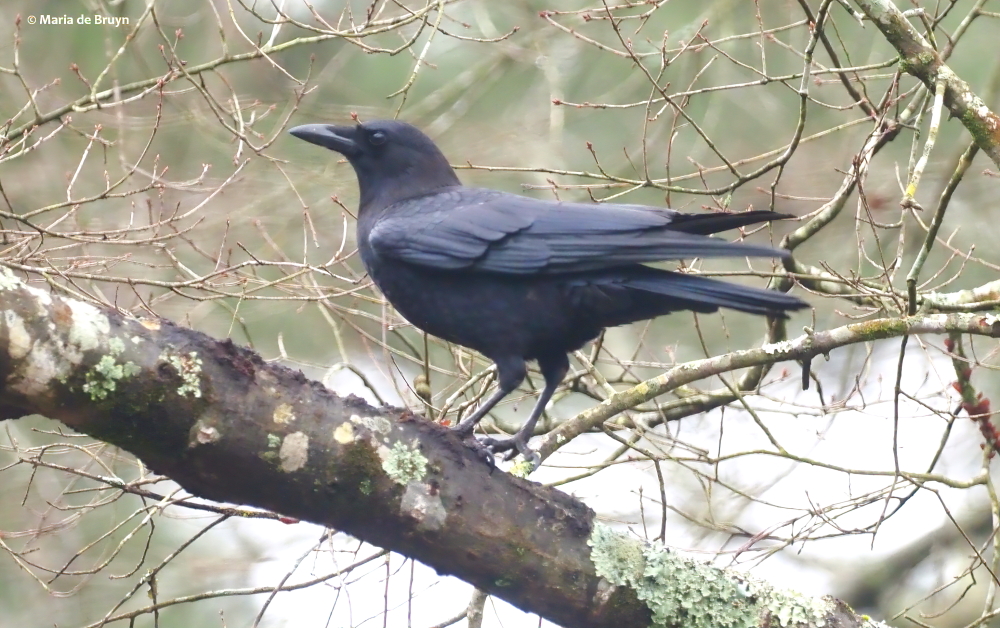
 On numerous occasions over the past months, I’ve had ideas for new blogs and set aside photos for posting. But then other things crop up that need to be handled (health, car/house issues and a monthly newspaper column) and I put off blogging. So when fellow blogger Denzil asked his followers to post some photos of corvids, it was a great opportunity to share with you some of my latest photos of favorite visitors to my yard.


 And then the corvids can also relax, enjoying drinks and bathing in the yard birdbaths. When they appear to have enjoyed a treat, I sometimes find “gifts” left behind in the brightest birdbath. One day, when I apparently had not given them something special for some time, they took off with a small ceramic turtle that they often would leave in the birdbath after a visit. I now wonder if they gifted another neighbor with that trinket.




















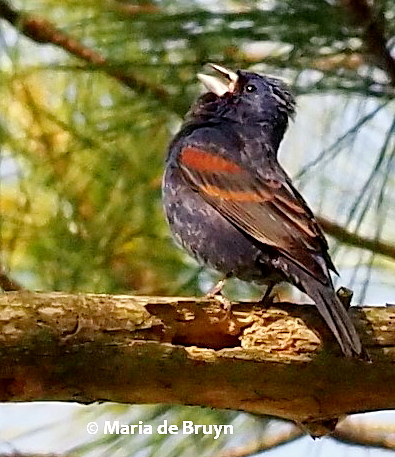


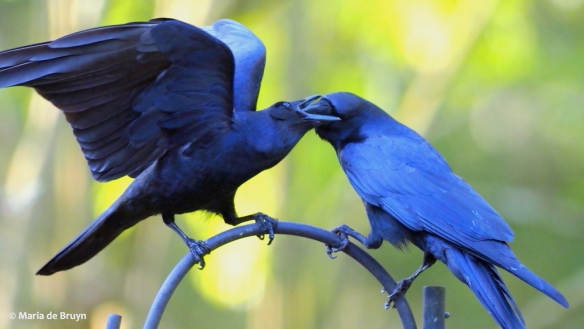

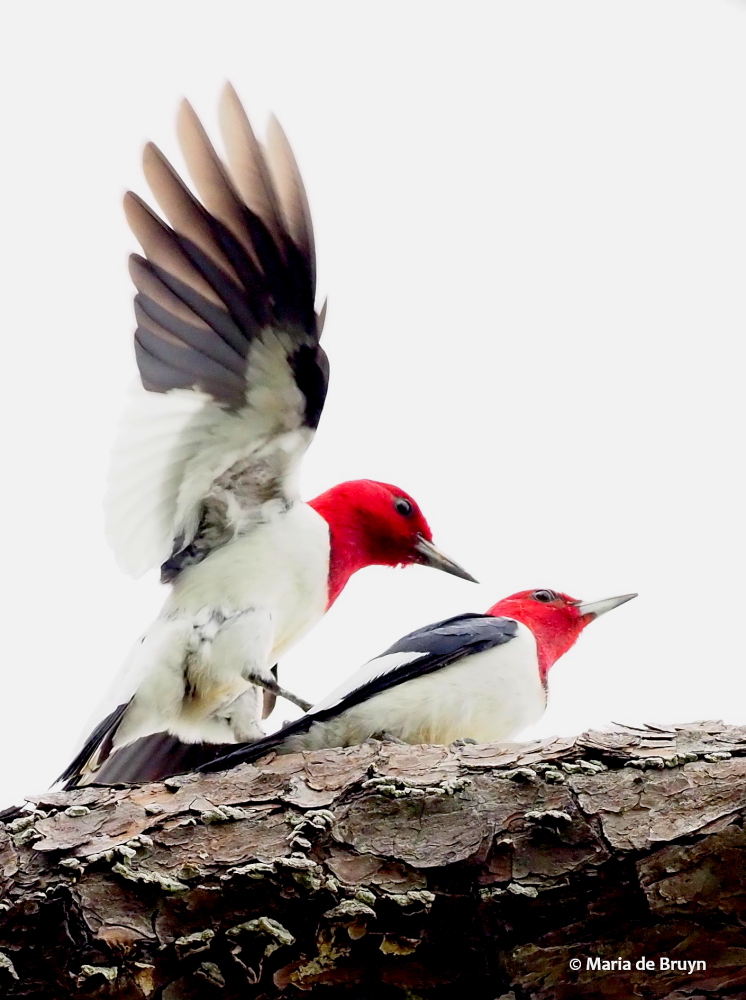


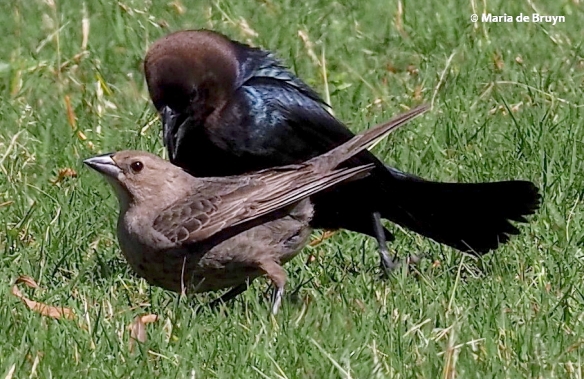
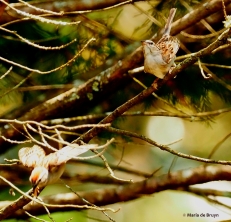
 The quickest mating scenario I’ve witnessed came from a pair of sweet little chipping sparrows (Spizella passerina). I’d seen the two fluttering together at the feeders and had noted one sparrow chasing another away – which I now think was the victorious suitor driving away a rival. Then one July afternoon, the two flew to a dying cedar and sat close to one another on a branch. Suddenly, Mr. Victory mounted his mate but for what only seemed a few seconds – really very quick work indeed! She sat there with her rear end elevated for a bit and then the two went back to feeding – and soon after I saw them collecting nesting materials.



 My beautiful world