Serendipity in a stressful year

2020 has turned out to be quite a stress-filled series of months on multiple fronts, so unexpected pleasures and delights are very welcome. For birders in North Carolina (NC), that scenario has luckily been playing itself out this fall and winter. Several unexpected and unusual birds have been spotted in our state, including a Kirtland’s warbler, vermilion flycatcher, MacGillivray’s warbler, and sandhill cranes.

Many bird lovers have traveled to catch sight of these surprising visitors. While I’ve mostly avoided groups the past nine months as part of my COVID-avoiding measures, last week I did join the human migration to an NC home about 20 miles away to see a bird that is normally only found in the northwestern United States – a varied thrush (Ixoreus naevius).

The opportunity to see this lovely bird was offered to the local community by homeowners Tony Hewitt and Marla Wolf. They generously allowed people to come to their suburban yard (by appointment) to watch over the backyard fence to catch sight of the thrush.

When I visited on a “slow” day, it was easy to socially distance oneself from other birders and photographers. Only a couple other people were there for a while (and I was alone some of the time) waiting for the thrush to make an appearance. Everyone wore masks, some having double masked as well.

The varied thrushes normally migrate back and forth in the area stretching from Alaska, through Canada, down to northern California, as shown by this map from the Cornell Lab of Ornithology. The website remarks that a few of these birds occasionally wander outside their normal range to the Midwest and Northeast. Seeing one in the southeastern USA is highly unusual.

Map credit: https://www.allaboutbirds.org/guide/Varied_Thrush/maps-range#

This robin-sized bird is a real stunner – his orange, grey, yellow and white feathers grow in a wonderful pattern. The colors seem to vary a bit, depending on the quality of the light falling on them and the background against which you see him. But he is handsome from any angle – front, side or back!

Something I found particularly interesting was a pattern of wavy lines in his tail feathers when the light hit them in a certain way. This was not something that I saw mentioned in descriptions of its physical characteristics. The observation made me want to photograph the thrush again to see if this would show up again.


It is interesting to note that one varied thrush crossed the Atlantic and turned up in Great Britain in 1982. It was a unique bird since it represented a rare variant of the species in which the orange feather coloration has become all white. Only five such representatives of this mutation have been recorded since 1921.

In its home range, the varied thrush prefers to stay in dense, coniferous forests near water. The NC visitor is taking advantage of a backyard nook that Marla designed with multiple shrubs and some open space.

The home is not far from a lake, but the thrush is taking advantage of a bird bath for drinks, which Marla kindly had moved so that it was better visible for visiting birders looking over the fence.

Varied thrushes usually feed on insects, foraging on the ground and often under dense cover.

The thrush’s insectivorous diet can be wide-ranging and include ants, beetles, caterpillars, crickets, earthworms, millipedes, snails and spiders.


They also eat berries, either in trees or on the ground, during the autumn and winter months. 

Our NC celebrity bird is obviously enjoying seeds furnished daily by Tony and Marla.

A notice placed by Tony near fence announced that the thrush seemed to come out in the open every 30 minutes or so. It turned out that this was indeed the case the first hour that I was there; then the bird came after a couple 15-minute intervals.

He certainly seemed to be a creature of habit because I noticed that after eating, he would go back into the dense undergrowth for several minutes and then re-emerge to take a couple drinks at the bird bath. Eating obviously was making him thirsty and noticing this habit meant it was possible to get “camera-ready” for another appearance.

When it is breeding time, male varied thrushes begin to establish territories and confront other males with threat displays. These begin with the bird cocking his tail and turning it towards his rival, while he lowers his wings. If the rival bird does not go away, the thrush will lower his head, raise and fan his tail and then spread his wings out to the side.

Obviously, our NC bird had no rivals around but there were many other birds foraging in the ground underneath the feeders. They included Northern cardinals, white-throated sparrows, pine siskins and downy woodpeckers among others. And it seemed that “our” thrush was sometimes warning them off.

Or perhaps he was just flashing his wings to scare up insects hiding in the fallen leaves.

There are still large numbers of varied thrushes, with an estimate of some 20 million in the current global breeding population. However, the North American Breeding Bird Survey recorded a cumulative decline of the species of 73% between 1966 and 2015. Logging, wildfires and forest fragmentation are ongoing threats to their breeding habitat.

This is only the fifth time that a varied thrush has been seen in North Carolina. The first sighting was in 2005; three other birds were seen in 2010. No one has any idea what got this year’s bird so far off-course during its migration and no one knows how long it will stay around.

Tony and Marla have kept a visitors’ book (with hand sanitizer available for signers) and many people have been recording their visit. When I visited, more than 110 people had already come by, including some birders from Virginia and Tennessee. More people have since stopped by the Hewitt-Wolf residence to admire this vagrant bird. We are grateful to them for giving us this opportunity!

It’s apparent that the serendipitous sojourn of this gorgeous bird has been a welcome gift to many people – both those who saw it in person and those who’ve admired photos distributed through facebook groups. We hope the bird will survive the winter here and be able to return to its home grounds out West so that its journey has a happy ending!

 

Craving crawdads in Carolina – a buffet for night herons

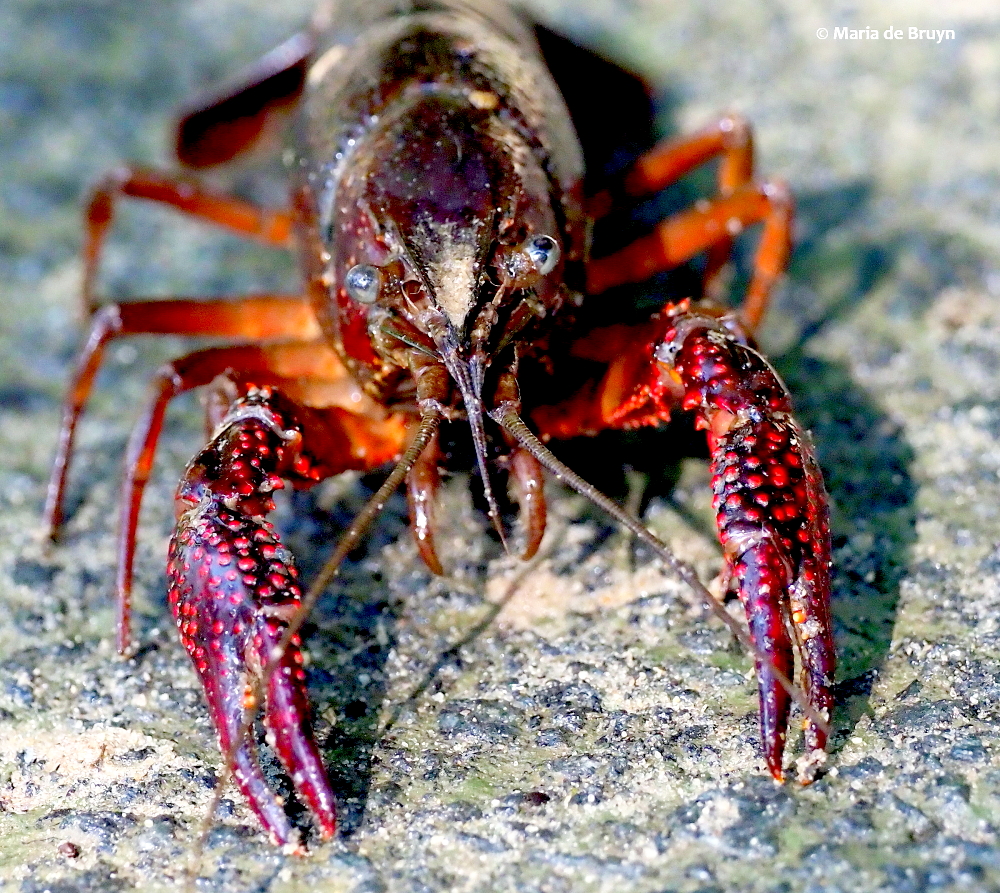
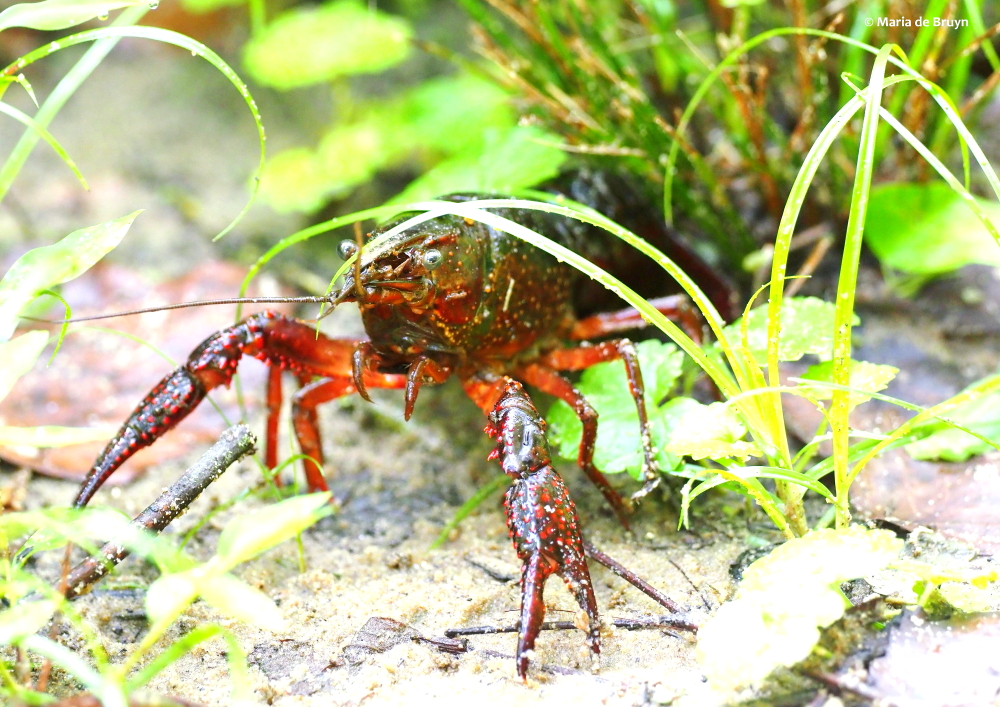
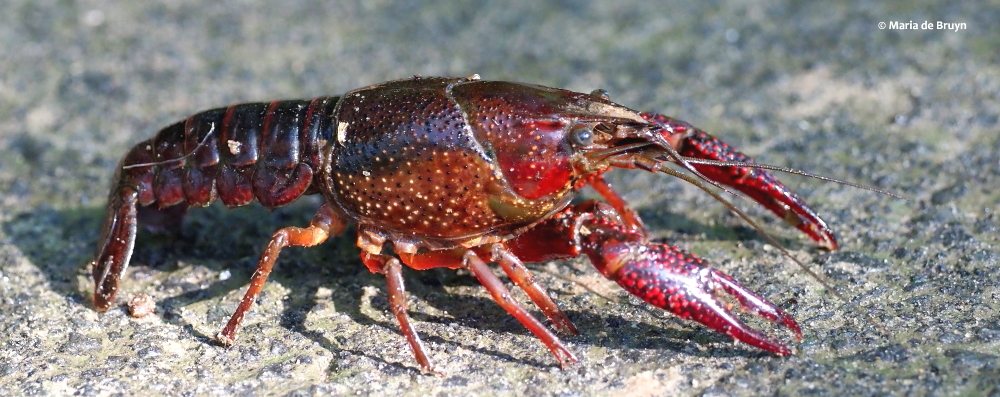
Many people in the USA, especially but not only in the South, grow up knowing what crawdads (Cambarus bartoni) are. This was not the case for me. My immigrant family pretty much stuck to the dietary customs of their own and their friends’ home countries (The Netherlands, Belgium, Germany). Like pumpkin pie, sweet potatoes and okra, crawdads were not on those menus and so it was only recently that I actually learned that these crustaceans are the same thing as crayfish, of which I had heard as a child.

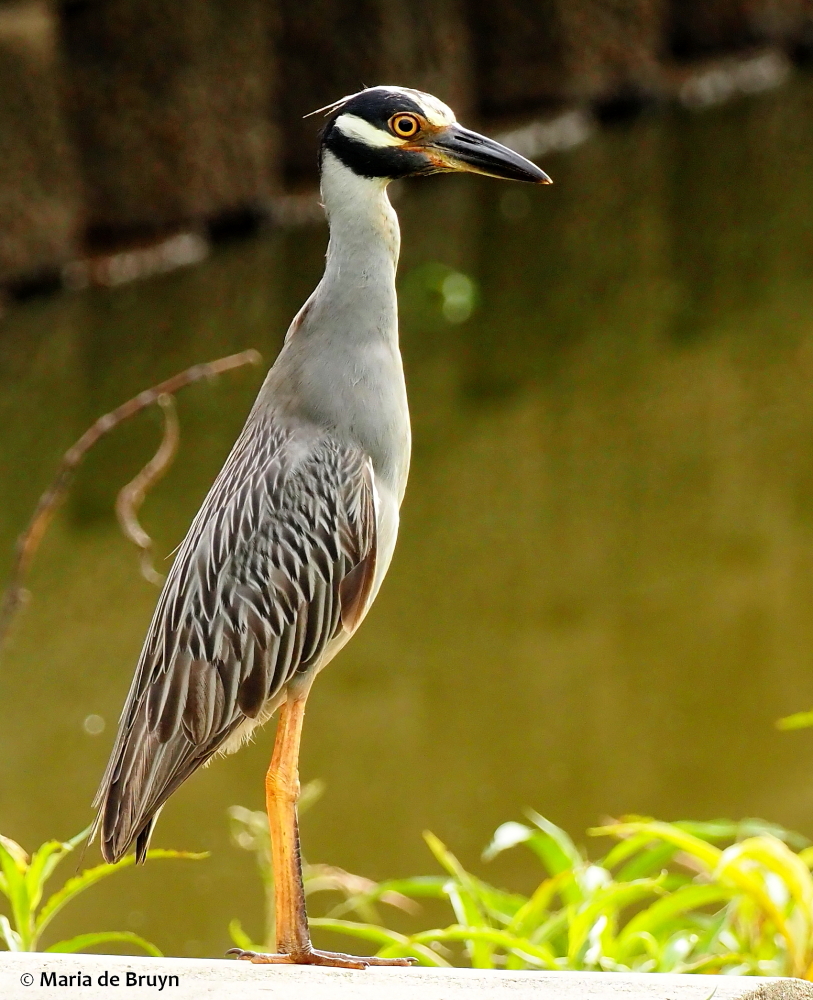
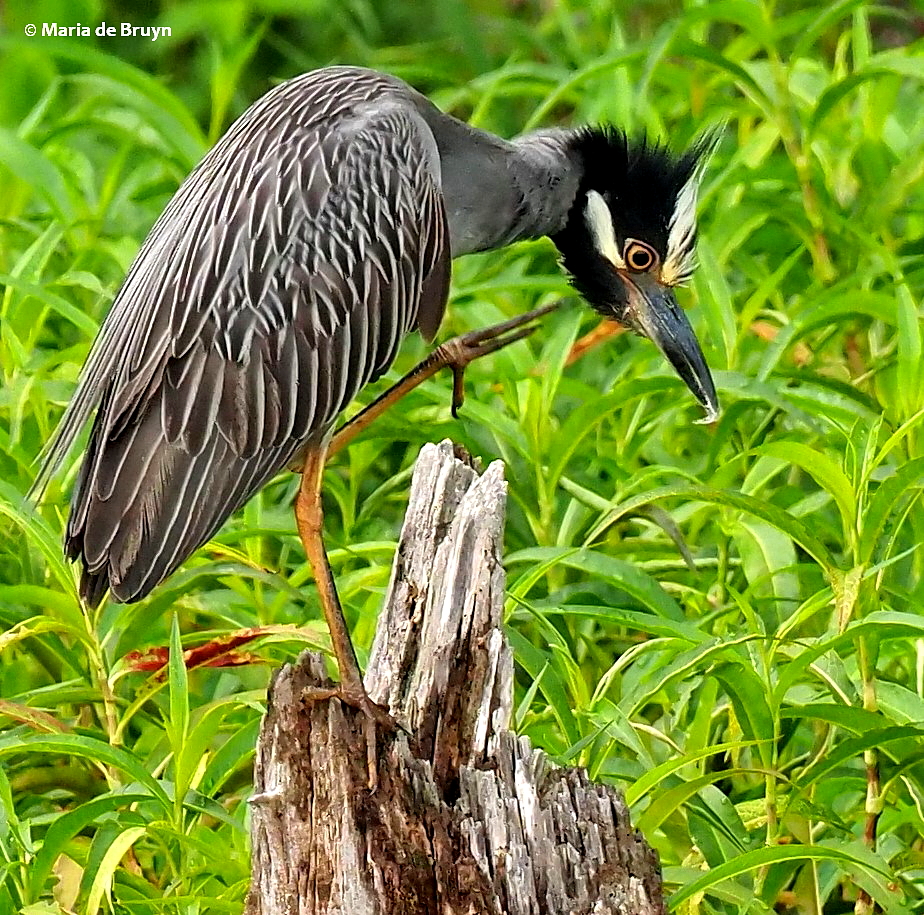
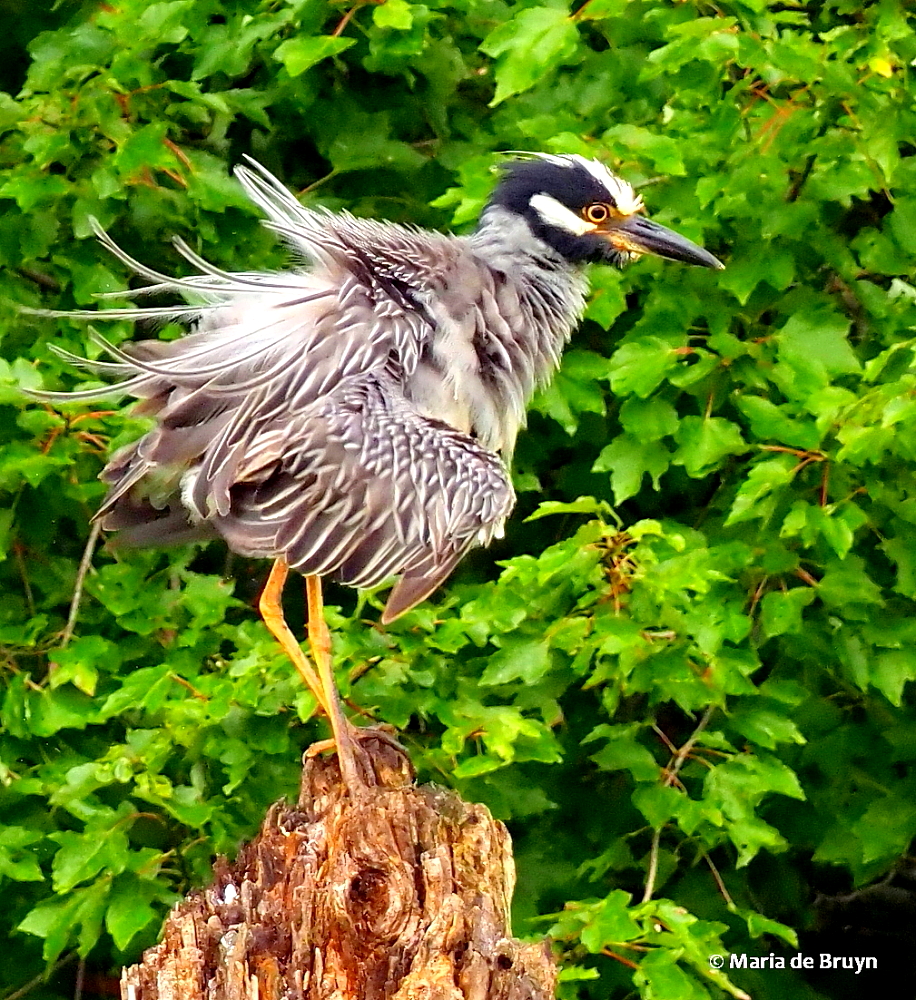
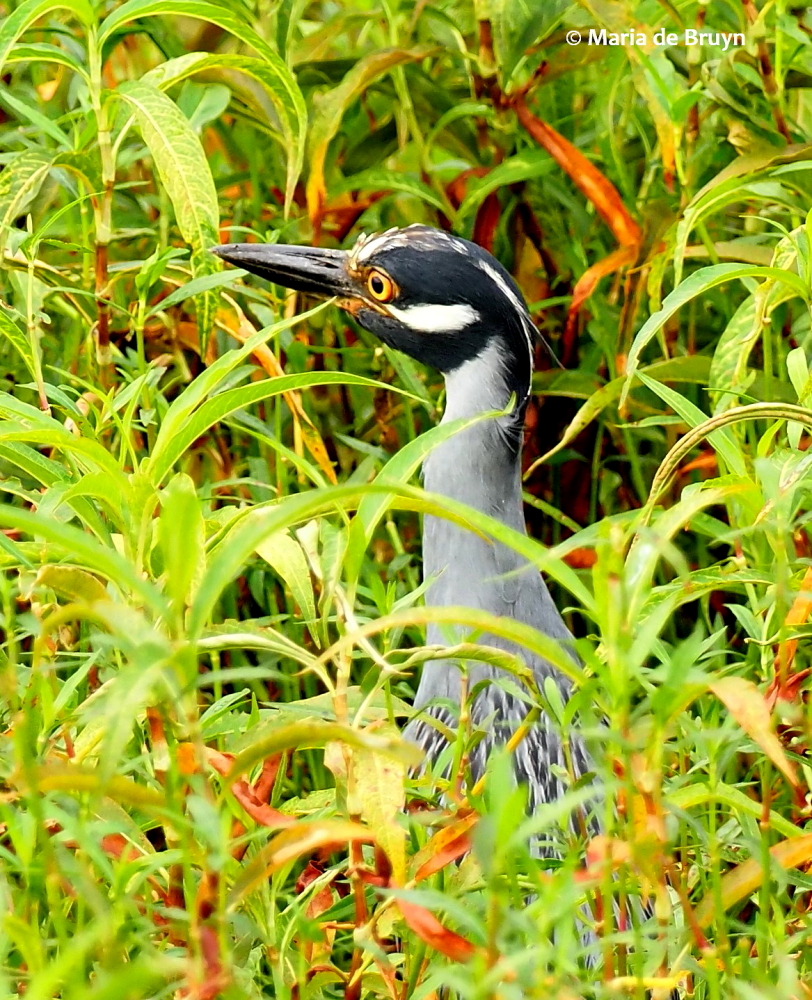
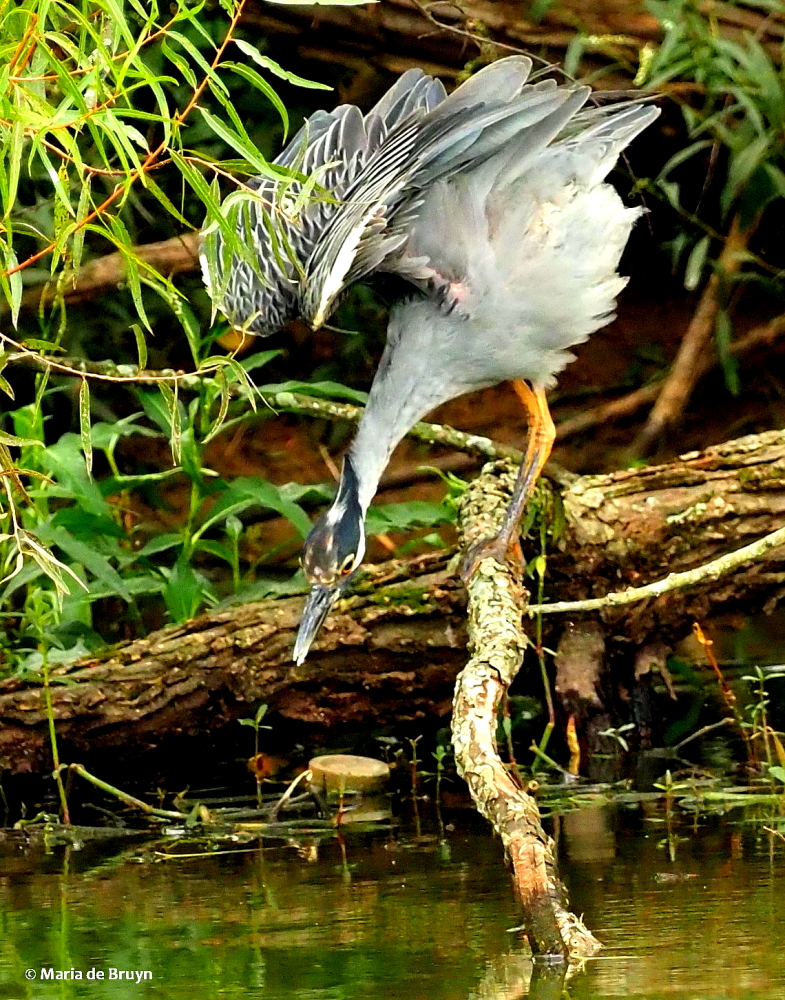
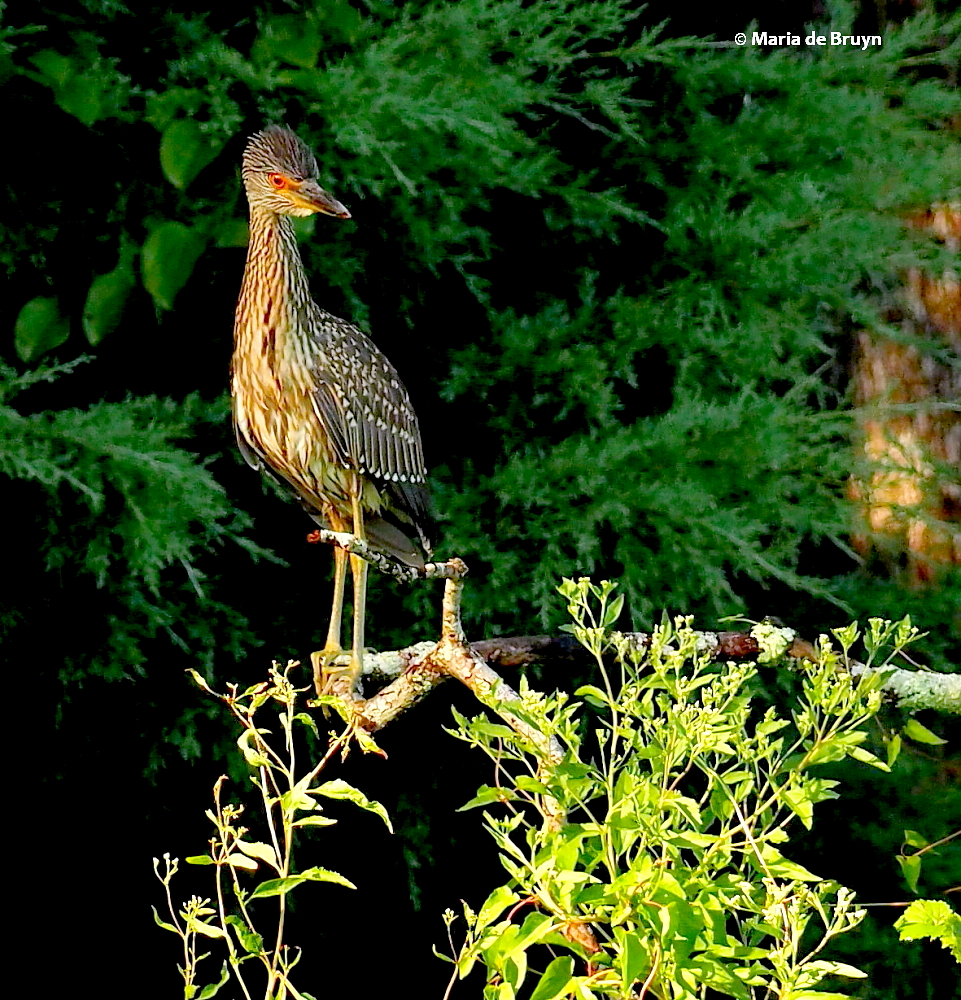
This year was my time to learn more about these members of the arthropod family who are related to lobsters – it turned out they were thriving in a pond created through a man-made wetlands installed between a shopping mall and several apartment complexes. I learned about their presence when local birders alerted one another that the crawdads were attracting a family of yellow-crowned night herons (Nyctanassa violacea).

Hoping to spot the herons, I also visited the wetlands and first noted the crayfish remains scattered around near the pond. Shortly thereafter, I came across one crossing a path in another local nature park (photos above and below). It was interesting to see how the crawdad first stayed stock still as I neared and then stood tall on its legs as its tail propelled it backwards while it made a dash for the nearby pond.

The crawdad females lay hundreds of eggs; scientists do not yet know how long they incubate before birth but estimate it takes somewhat longer than a month before they hatch. In North Carolina, there are almost 50 species of these animals and several species are found only in this state.

The crayfish at the wetlands must have had a successful year because the place became a real buffet for various birds. Both adult and young night herons stayed near this pond for quite a long time before leaving to migrate to more southerly climes for the winter.

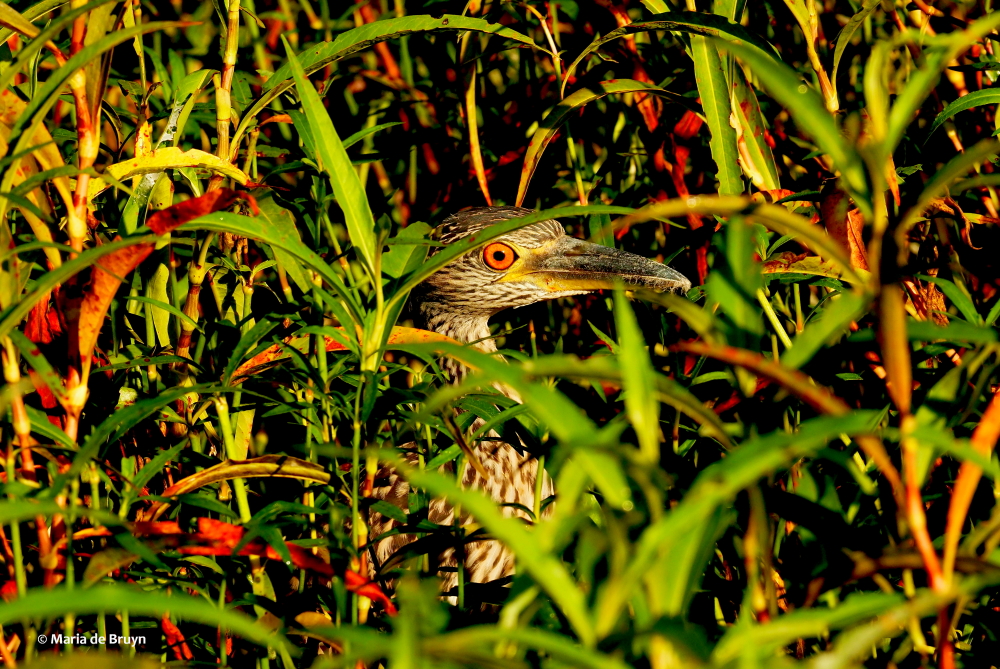
The adult herons were attractive with their boldly patterned heads.


They kept up their looks through regular preening.


Sometimes, they emerged from the pond weeds to perch on a snag while peering into the water on the lookout for a meal.


It was interesting to learn that while the adults have yellow legs most of the year, their legs can turn red or pink during breeding season.


In my experience, the younger herons were a bit less shy and didn’t fly off so quickly when I neared.


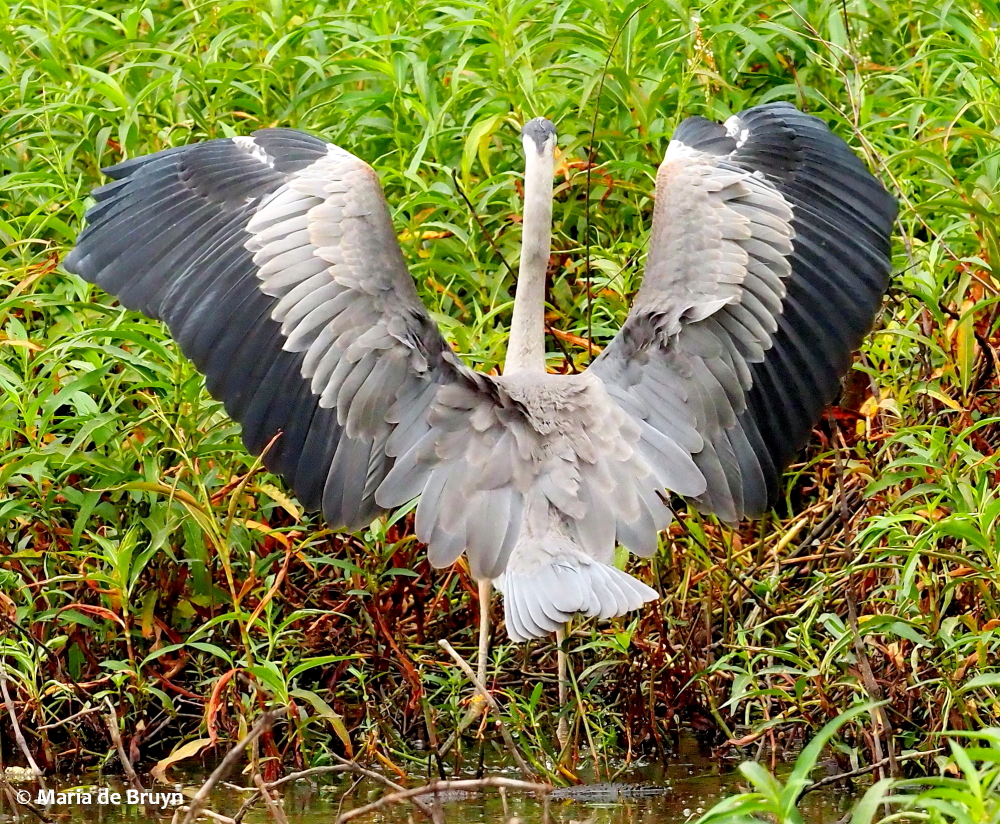
One in particular decided to take the sun in mid-August, adopting a pose that I more often see taken by great blue herons and which I’ve nicknamed the “flasher stance.”


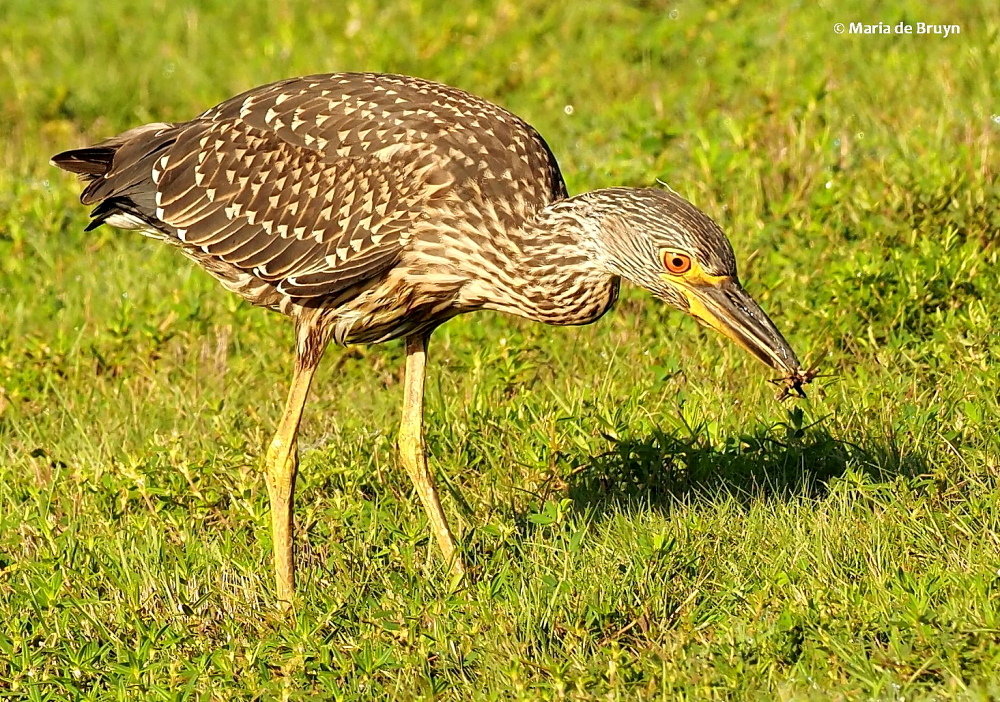
The young birds, like their parents, stalked the pond vegetation on the lookout for crawdad snacks.

They also showed the herons’ taste for other food such as snails, earthworms and insects.


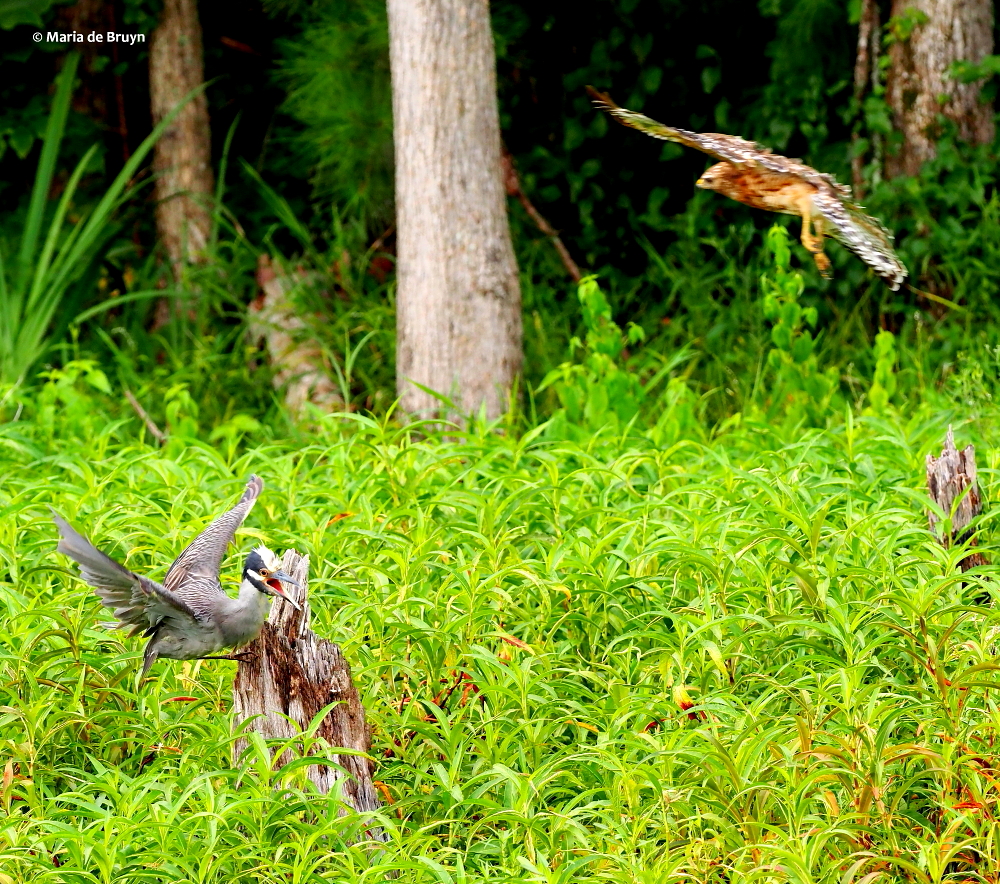
The night herons, for which most birders visited the wetlands, weren’t the only birds at the buffet, however. Red-shouldered hawks (Buteo lineatus) also showed a fondness for the crustaceans.


The herons weren’t always alert to their presence. One adult, for example, decide to fly to a low perch when chased away from a tall snag by a hawk. S/he settled in for a bit of preening but was then rudely chased off by the same hawk. (That hawk was later harassed by a group of crows, who chased it away in turn.)

Other herons who were interested in outdoor crayfish dining during the humans’ Covid epidemic, included the great blue herons (Ardea herodias).


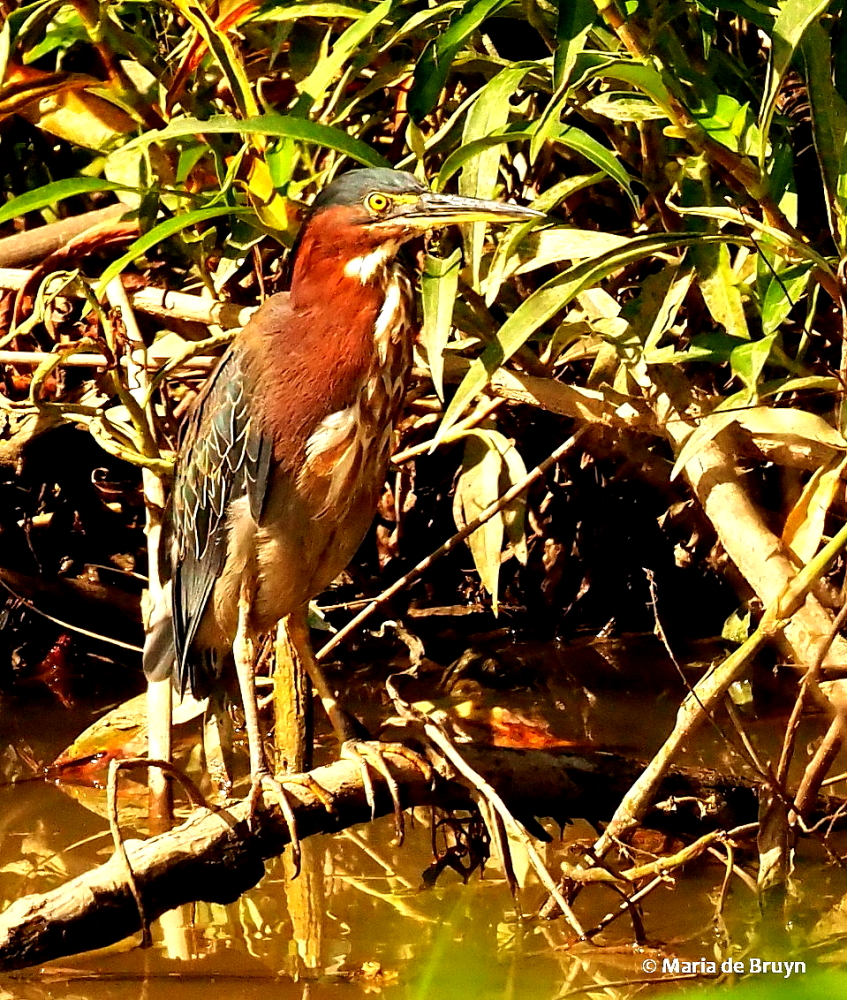
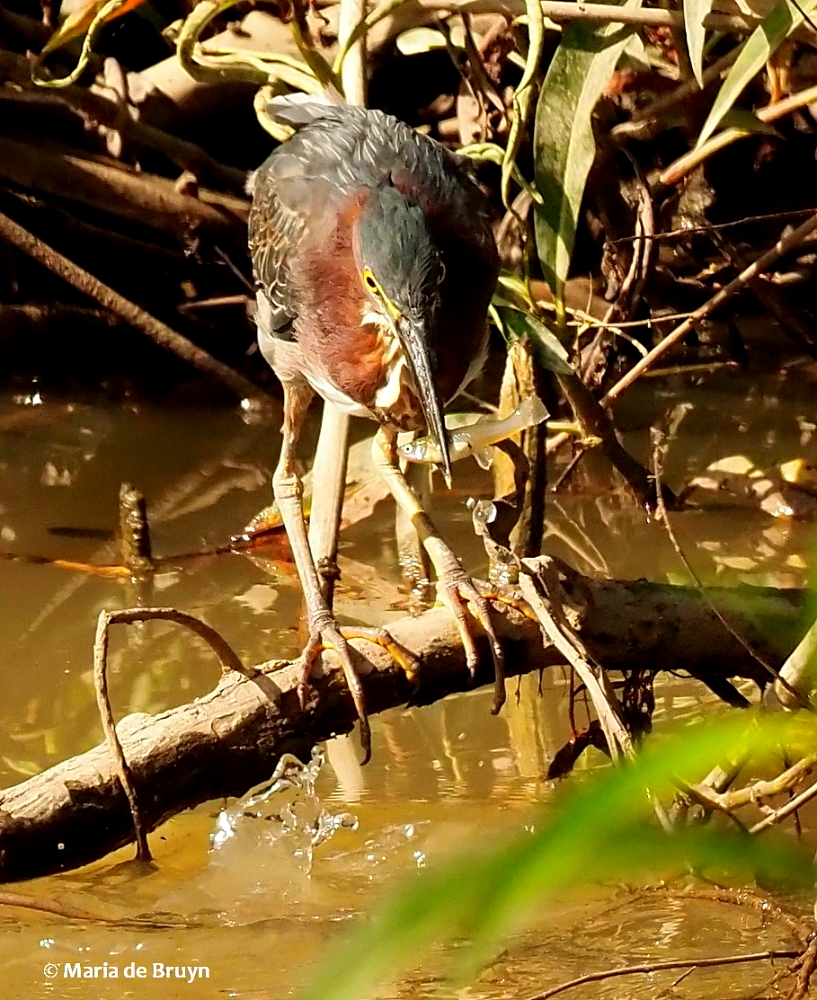
Green herons (Butorides virescens) visited the pond regularly as well, eating small fish in addition to the other wetland delicacies.


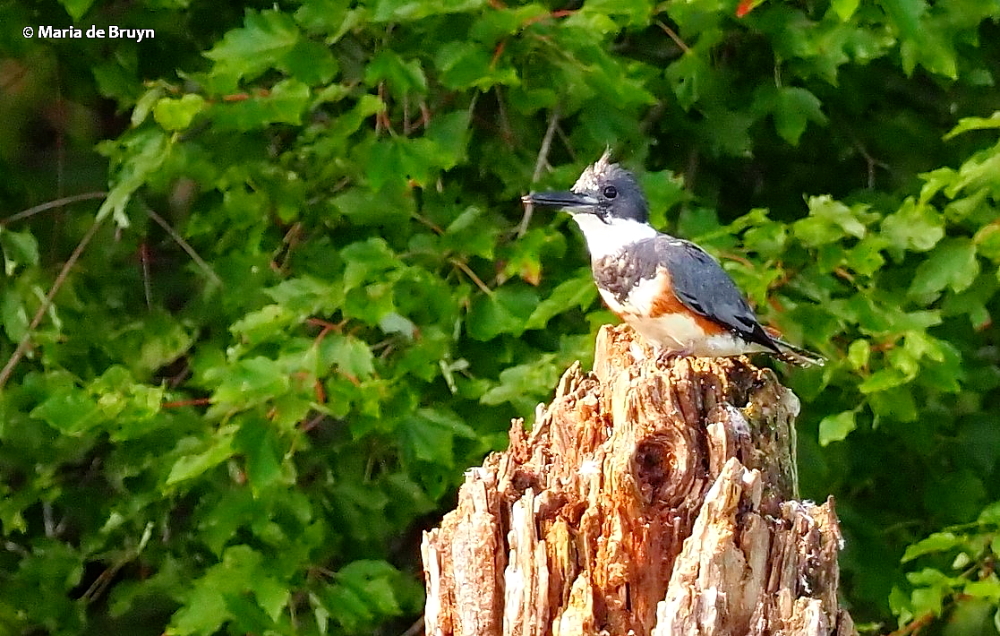
Belted kingfishers (Megaceryle alcyon) were busy flying to and fro over the length of the pond, but I didn’t see them carry off any crayfish so they must have been focused on fish.


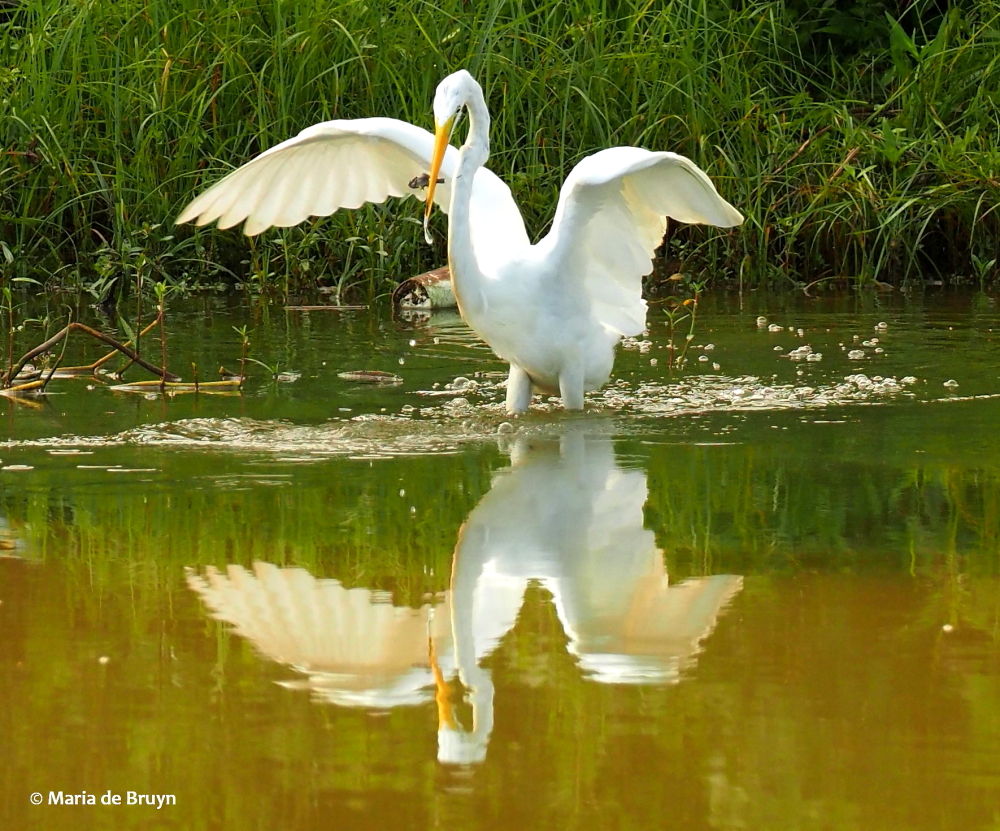
A great egret (Ardea alba) was a regular visitor, too, stalking different areas of the pond.

The adult night herons obviously thought it was interesting to watch the egret’s foraging technique.

Other regular visitors to the wetlands included a flock of Canada geese, American and fish crows, Northern mockingbirds and wandering glider dragonflies (Pantala flavescens).


There were so many animals feeding on the crawdads this summer that the female crayfish must have had a lot of success with their offspring reaching maturity. The last reported sighting of the yellow-crowned night herons at the wetland was 24 October, but I’m guessing that they will be leaving soon and the pond will not be so busy this autumn. The crayfish population had to have been reduced mightily over the summer season, so it will be interesting to see whether it rebounds and attracts crowds of birds — and birders — next year!

What gets a birder really going? A rare bird!
People who are “into birding” are excited when they see a new bird for the first time. Many keep “life lists” – an account of each different species they have actually seen worldwide, in their country, in their state or province, or perhaps in their yard. When they see a new species, birders say they got a “lifer” – a first-time sighting in their life. Quite a few of these birders then decide to enjoy a reward – a lifer pie!

This past week, I was lucky enough to get a lifer, thanks to alerts circulated in the birding community. Doc Ellen Tinsley, the North Carolina Piedmont area’s main bald eagle researcher, also looks for other species when she goes out to see the eagles she knows. On 27 September, she was at the Jordan Lake Dam, where she often sees eagles whom she has come to recognize and know. Since it is the migration period for many birds that breed up North, she was also watching for warblers, a popular type of songbird because they are often beautifully colored.

She counted herself very lucky when she spotted a yellow striped bird that she had not seen before. After getting a confirmation of its scientific identification, she notified area birders that she had spotted a Kirtland’s warbler (Setophaga kirtlandii) and it was still foraging so people might be able to see it if they came to the Dam.

Until recently, the Kirtland’s warbler was considered an endangered species as it requires a very specific habitat in jack pine forest to breed. It depends on areas affected by fire; about 6 years after a conflagration, the space will be regenerated with small trees, shrubs and open areas that are favorable for its nests. When trees grow to about 10-16.5 feet high (3-5 m), the warblers leave to find a more suitable living area.

Compared to other birds, the Kirtland’s has the most restricted geographical breeding area of any bird in the continental United States. In the 1970s and 1980s, only about 167-200 males were counted in annual surveys. Conservationists in Michigan, Wisconsin and Ontario, Canada, collaborated on protecting the Kirtland’s environment and achieved success. This warbler has now been re-designated a threatened rather than endangered species. There are currently about 2,300 breeding pairs who migrate south to spend the winter in the Bahamas.


These birds’ diet comprises mainly insects and small fruit such as blueberries. Occasionally, they will catch an insect on the wing but more usually they glean pine needles and other vegetation for their meals. Spiders, moths and flies constitute part of their diet. Adults will also ingest pine sap.


These birds place their nests on the ground, underneath the small jack pines. The males will feed the females while they brood and both parents bring nutrition to the hatched offspring. In the past, brown-headed cowbirds often laid their eggs in Kirtland’s warbler nests and this contributed to their endangered status. Elimination of cowbirds from the environment for many years has now reduced the threat.

“As a condition for the warbler’s delisting, the USFWS, U.S. Forest Service, and the Michigan Department of Natural Resources signed a memorandum of understanding that the agencies will continue habitat management at sufficient levels to ensure a continued stable Kirtland’s Warbler population. Keith Kintigh, a forest conservation specialist with the Michigan DNR, says his agency will plant 1.8 million jack pine seedlings per year going forward to help maintain the 38,000 acres of suitable jack-pine habitat needed to keep the warbler population above the 1,000-breeding-pair threshold for recovered status.”
9 January 2020; https://www.allaboutbirds.org/news/kirtlands-warbler-delisted-after-47-years-of-conservation-work/

It’s likely that at least 100 people have traveled to Jordan Lake Dam to see this female bird. She was very popular because she didn’t particularly hide as some birds do. (She was sometimes a bit hidden by the pine needles, but that was because she was constantly moving about in the trees.)

She was foraging for insects along rocks bordering the dam area and in nearby trees, which gave the birders an opportunity to memorialize her visit with photos. Much of the time, she was seen in the company of a male bird of the Cape May species, who look similar (left).

The Kirtland warblers’ areas in Michigan and Wisconsin are closed to the public when they are breeding. They are rarely seen so there are guided tours in those two states to enable people to spot them.


Doc Ellen provided area birders with a wonderful opportunity to admire this rare bird! A much needed bright spot in a year that has been fraught with calamities.


The birdy breeding cycle 2020 – 4: growing into adult plumage

As mentioned in a previous blog, when young birds are ready to leave the nest, they don’t necessarily look like their parents. Many of the altricial birds (ready to move about and forage on their own) may resemble fluffy versions of the adults, as is the case with these hooded merganser ducklings (Lophodytes cucullatus) following their mother.

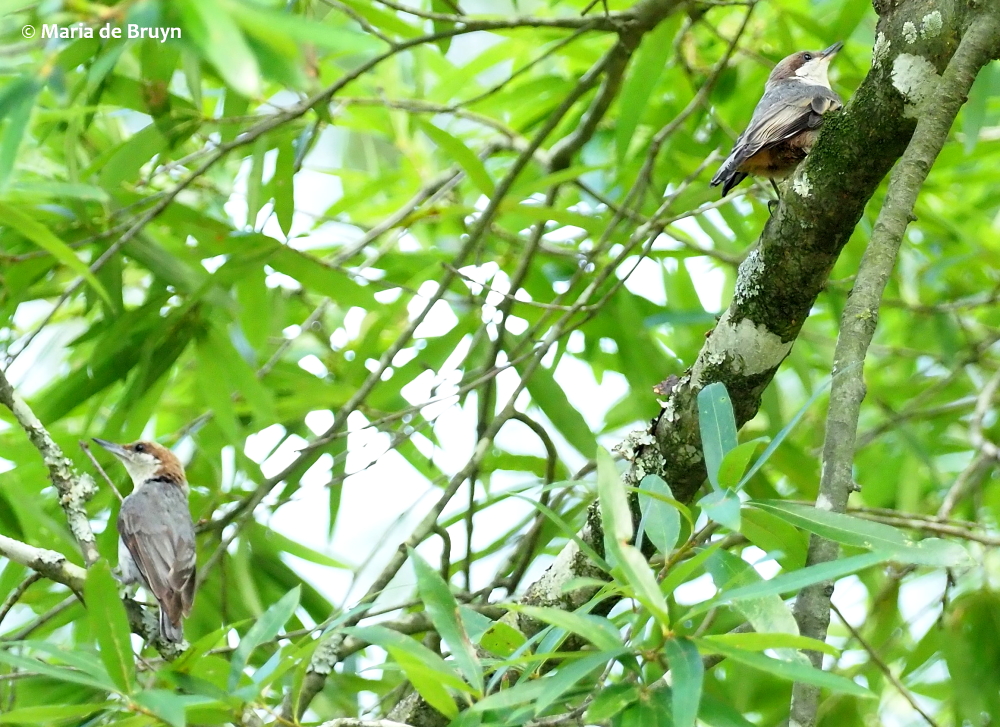
The brown-headed nuthatch babies (Sitta pusilla) look very much like their parents. Sharp-eyed observers might notice that the tops of their heads are not as brown as those of their parents.

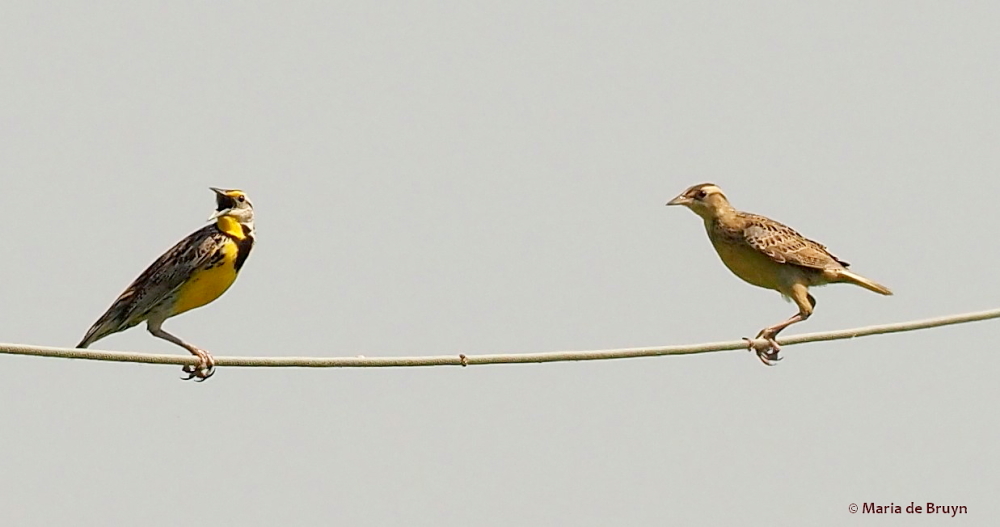
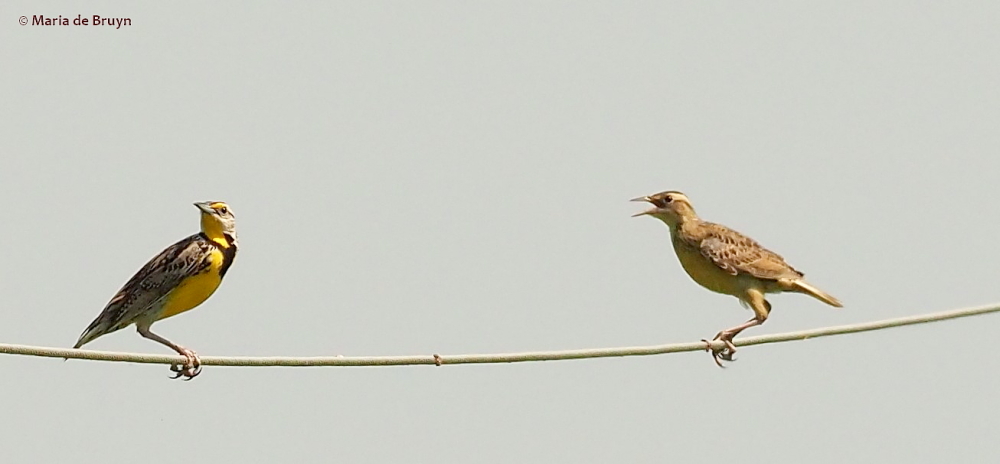
The Eastern meadowlark juveniles (Sturnella magna) resemble their parents but lack the bright yellow and black coloring on the throat and breast.


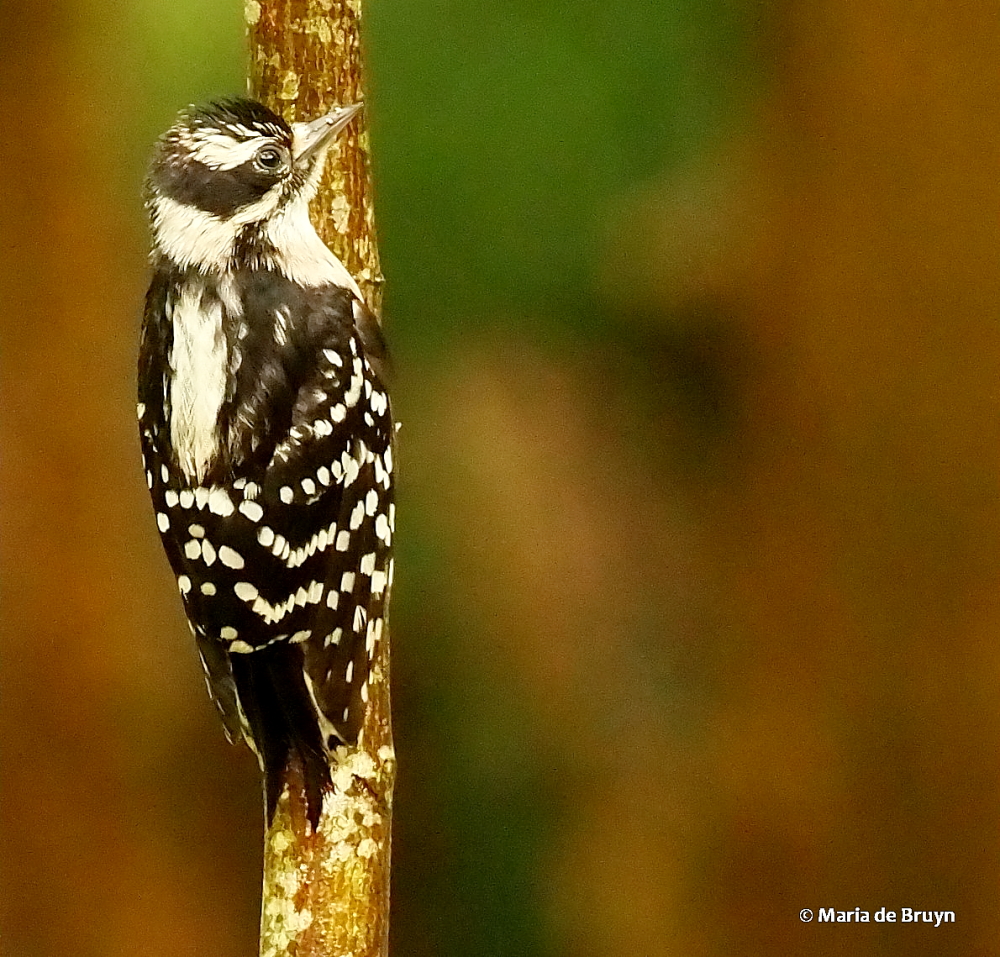
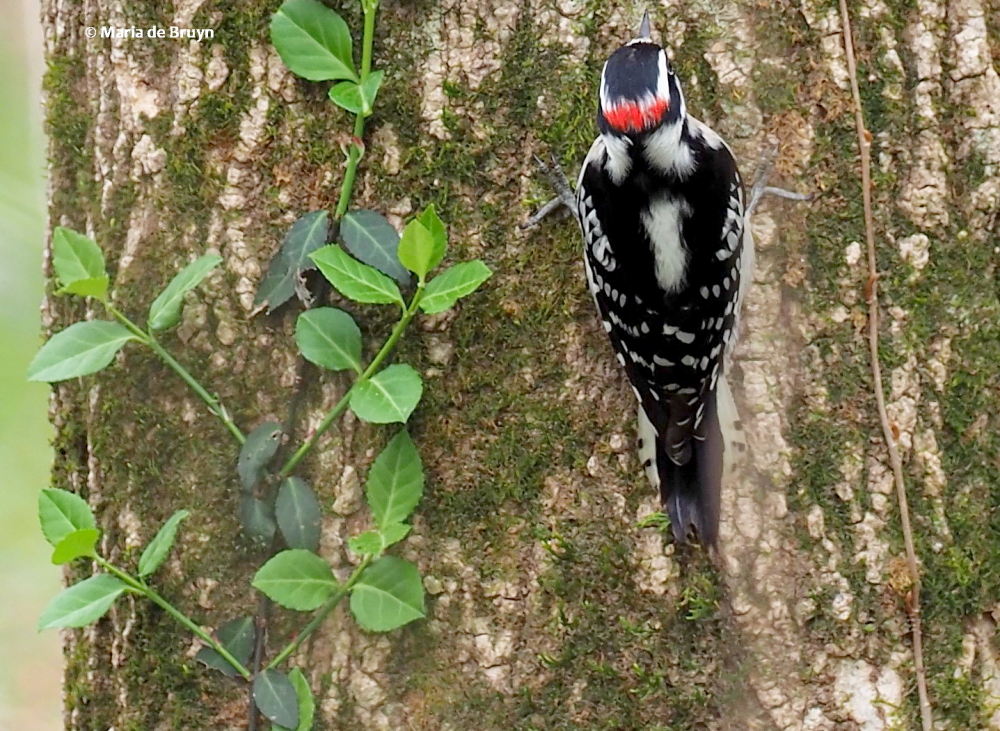
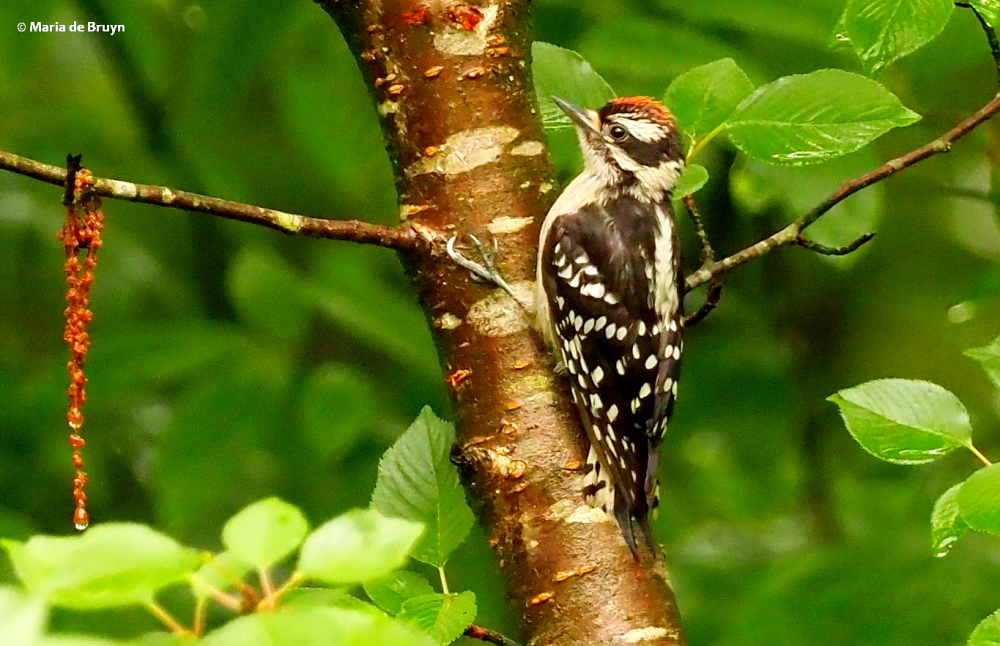
The difference between adult and juvenile downy woodpeckers (Picoides pubescens) is subtle. The female woodpecker has no coloring on the top of her head, which is simply bedecked with the white and black feathers that cover the rest of her body.

The male woodpecker has a red patch on the back of his head.

The immature woodpecker has a red patch on top if the head and this is lost as the bird reaches adulthood.

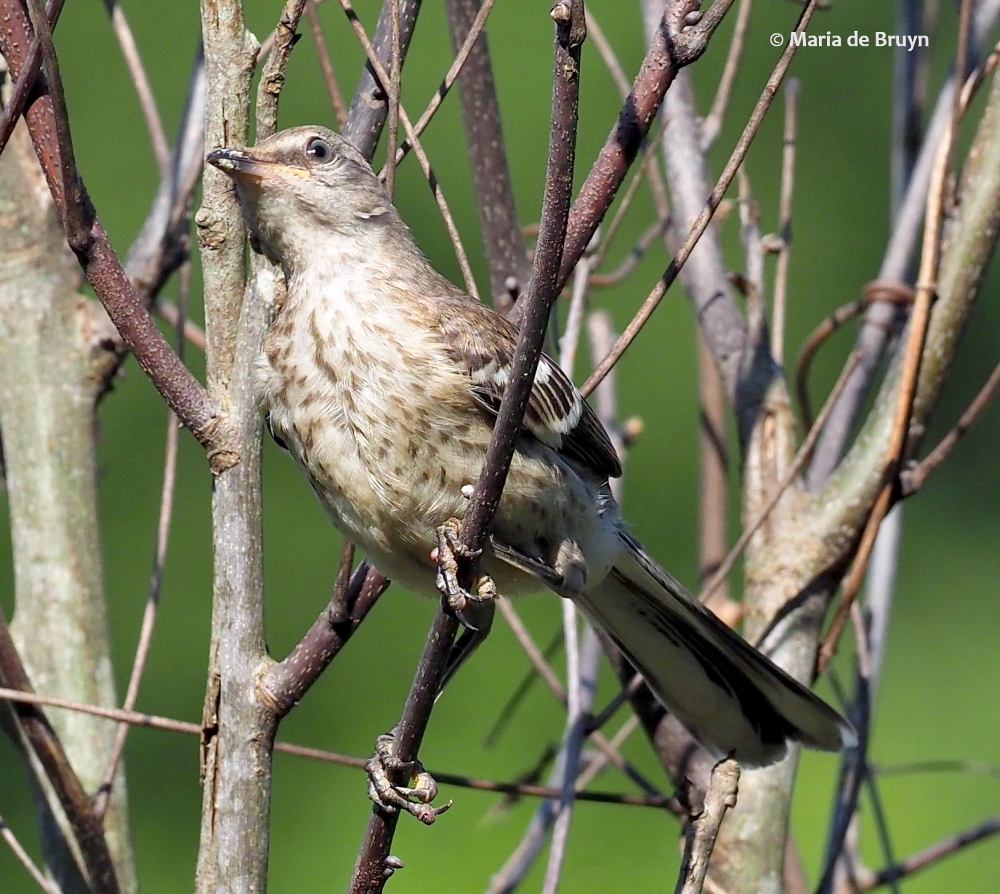
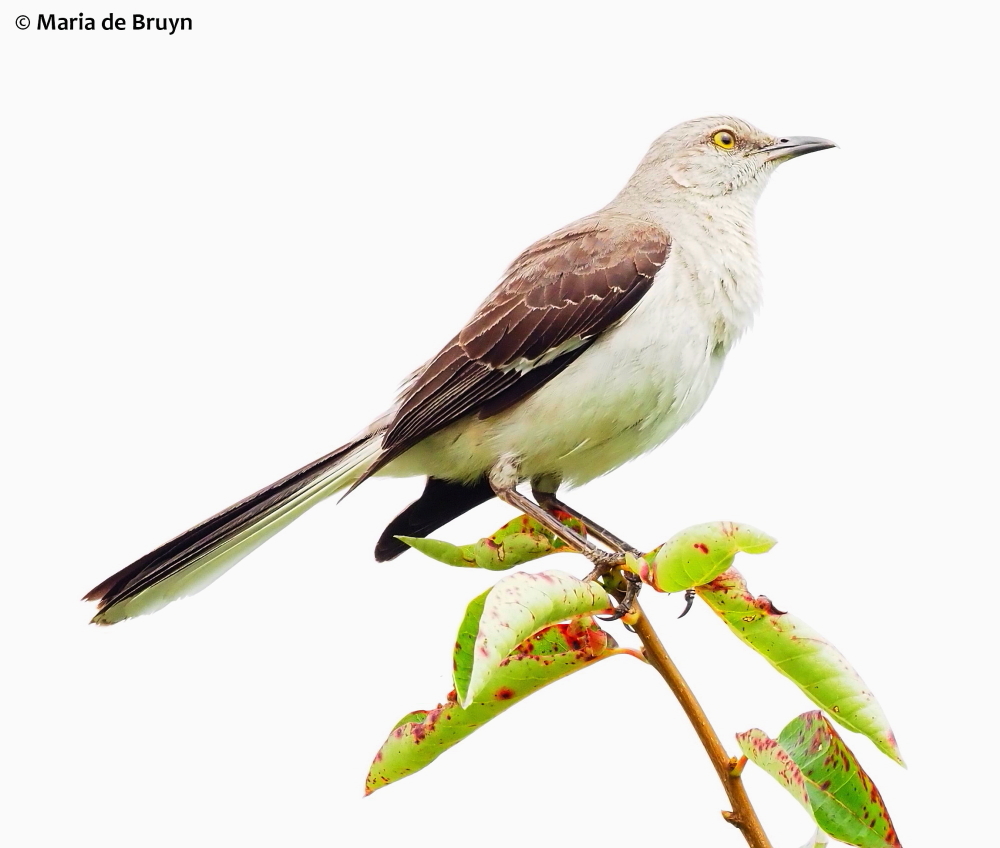
The Northern mockingbird youngling (Mimus polyglottos) resembles mom and dad quite a bit except for some spotty streaking on the chest.

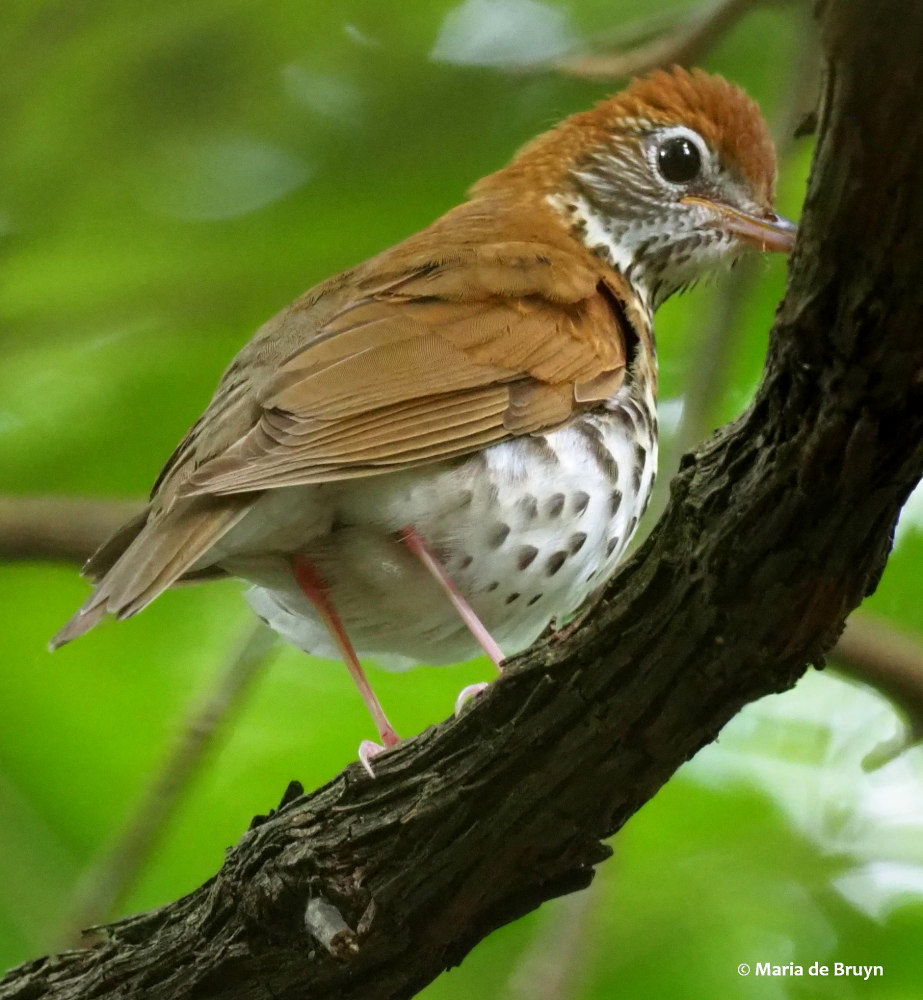
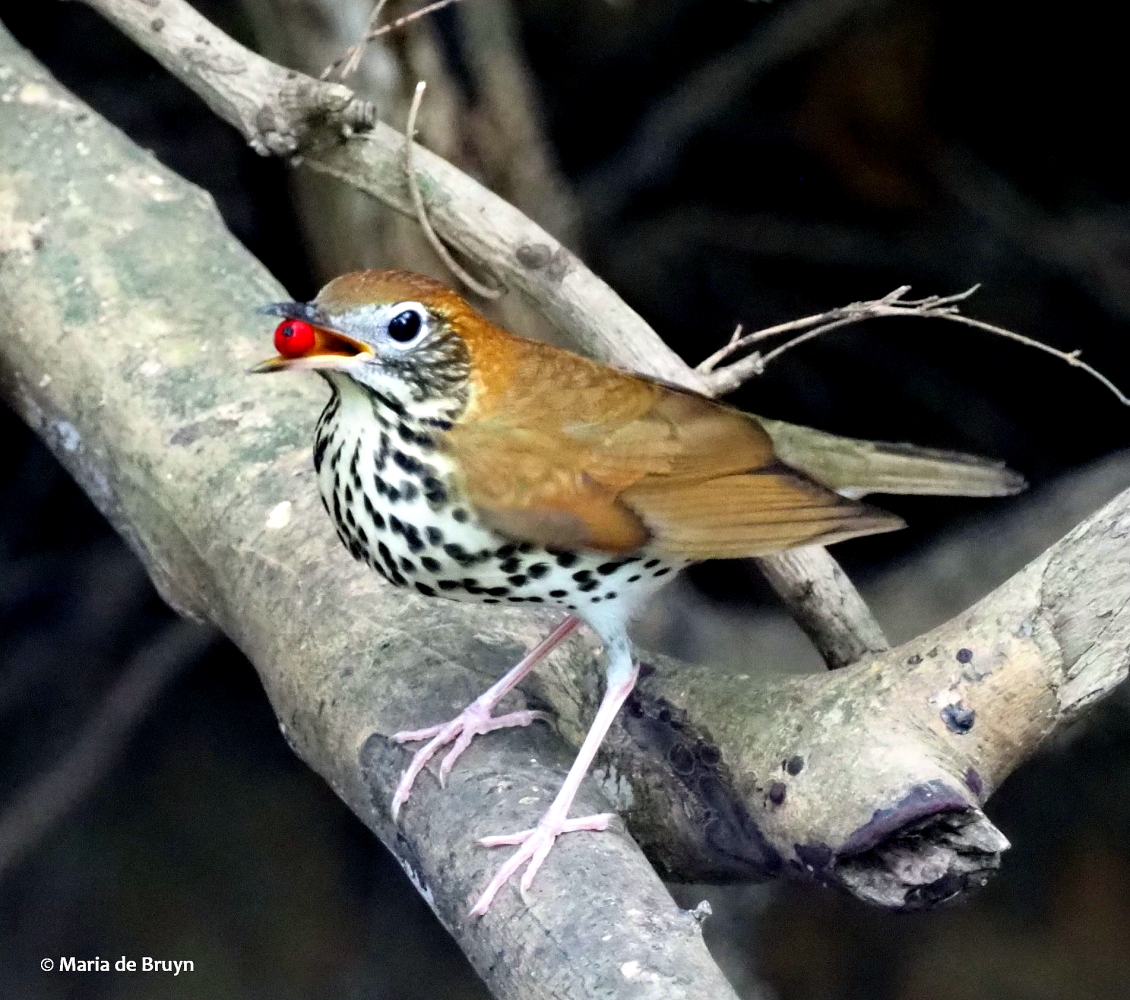
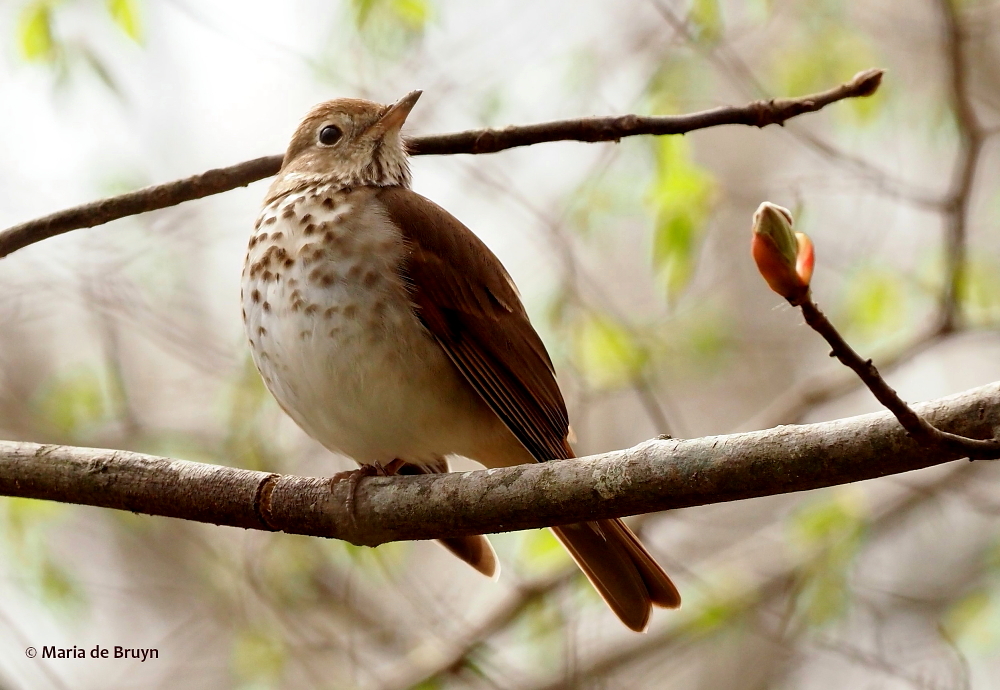
In other species, the babies start out looking quite different from their parents. Spots characterize many members of the thrush family, with birds like wood thrushes (Hylocichla mustelina) and hermit thrushes (Catharus guttatus) retaining the spots in adulthood.


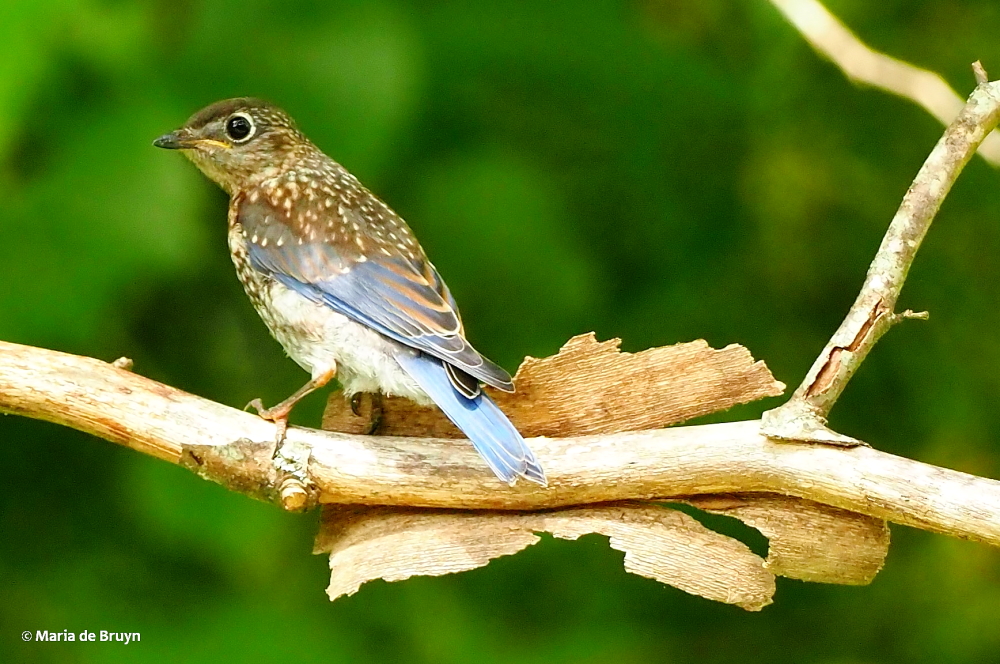
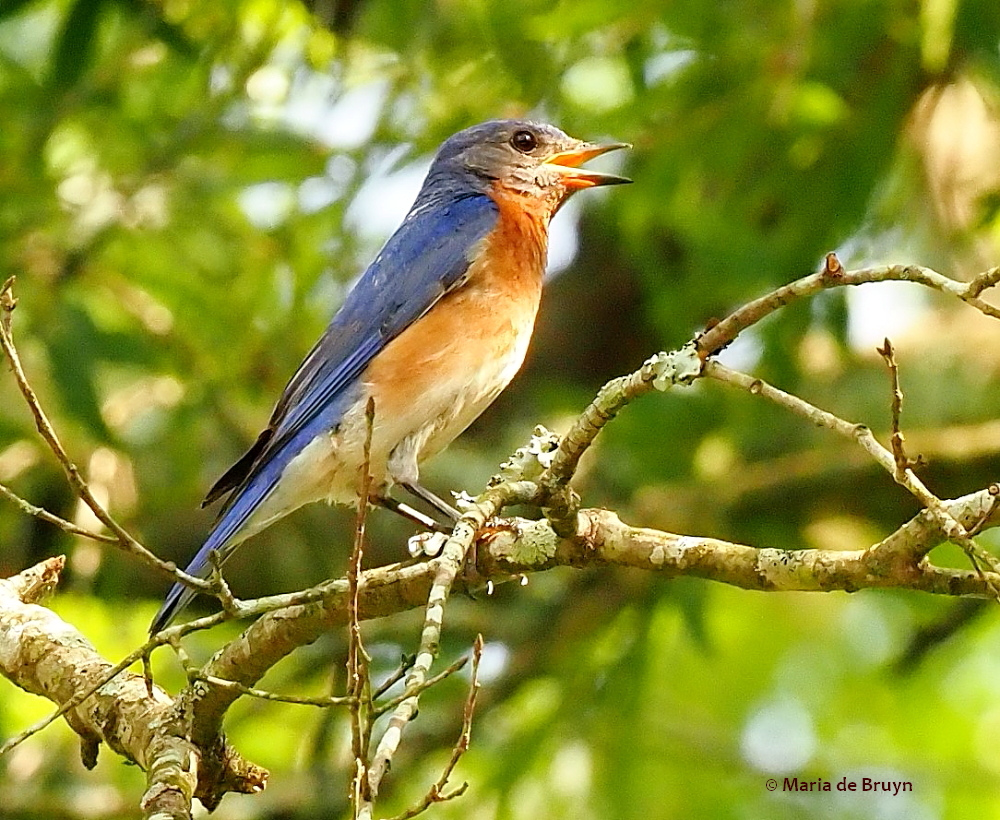
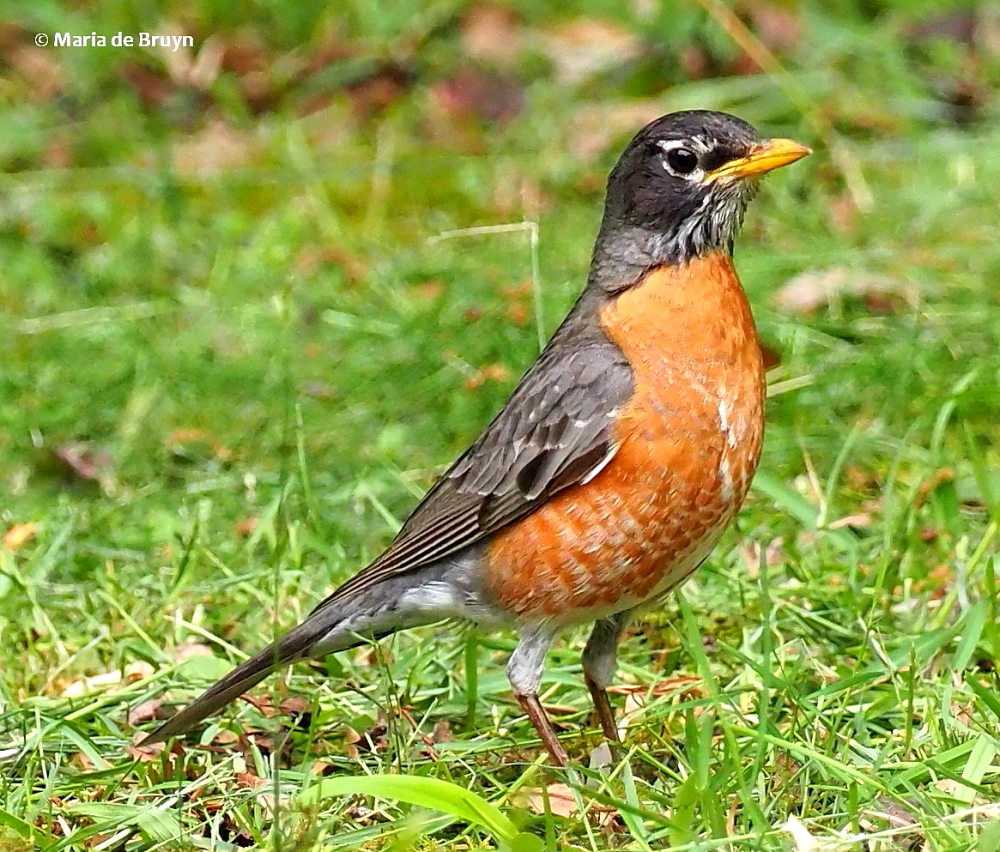
The Eastern bluebirds (Sialia sialis) and American robins (Turdus migratorius), on the other hand, are only strongly speckled as immature birds, losing their spots as they mature.

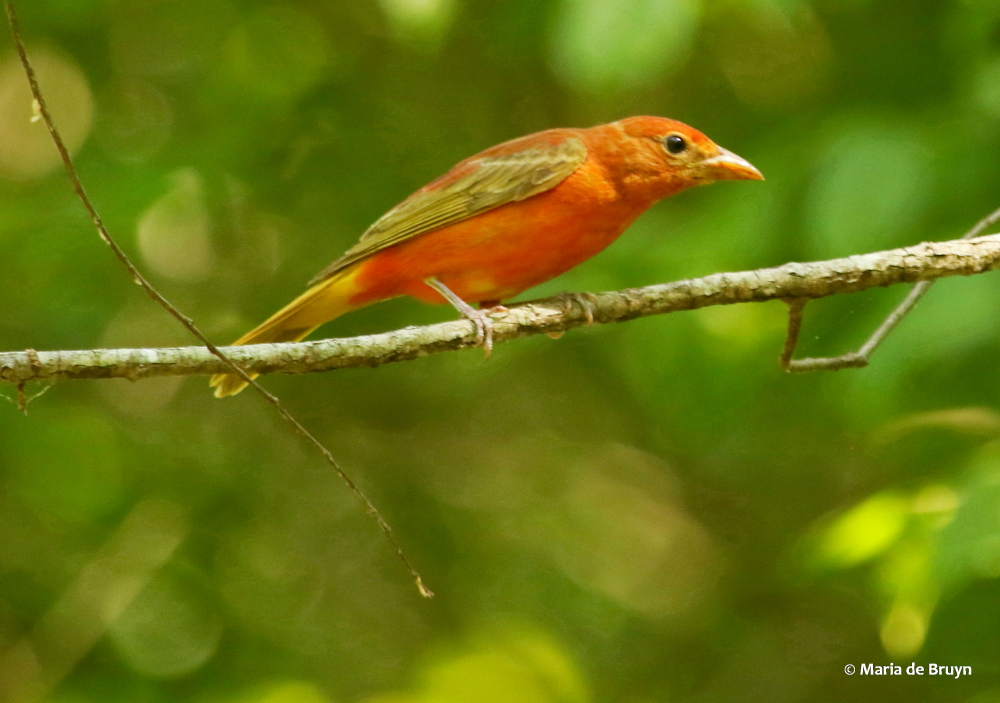
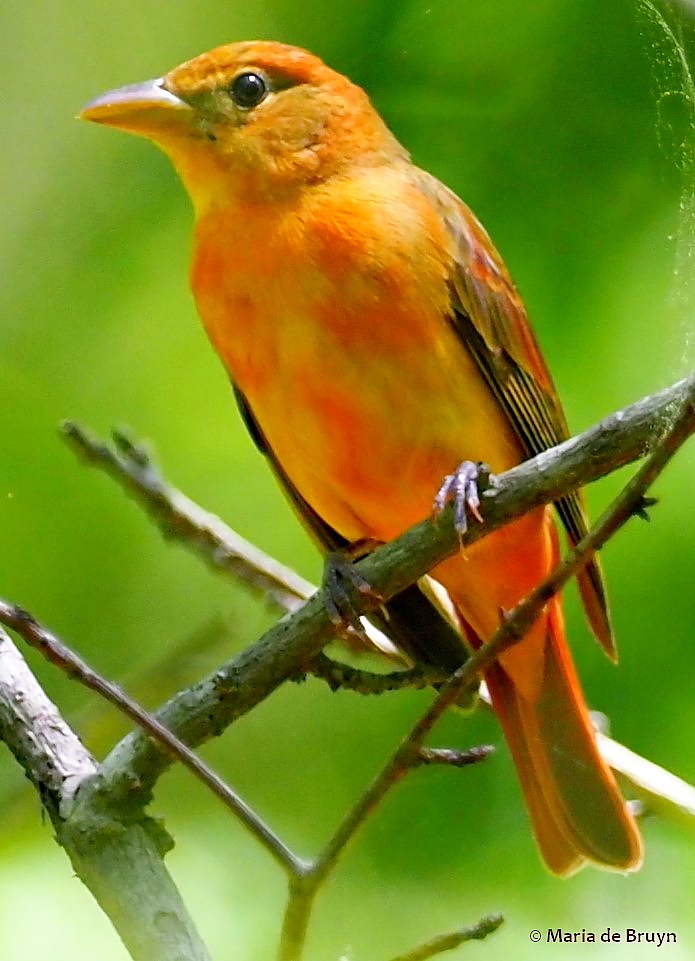
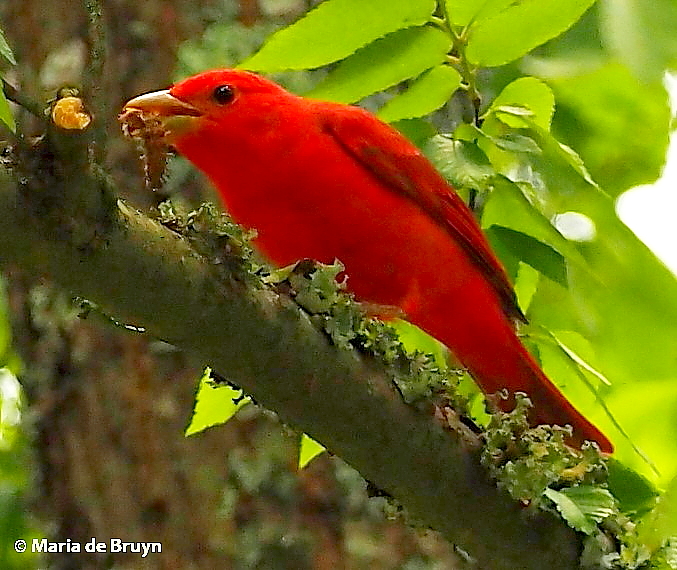
In some cases, the birds undergo color changes. Male summer tanagers (Piranga rubra) start out yellow-orange with their reddish coloring appearing in patches until they finally achieve their very bright adult red hue. Some of the immature birds are really quite beautiful with their mottled colors.


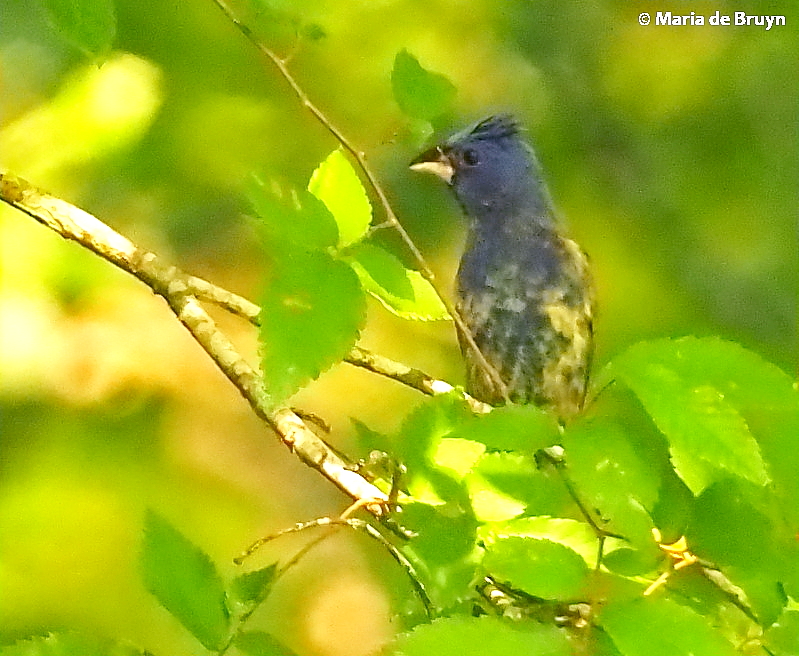
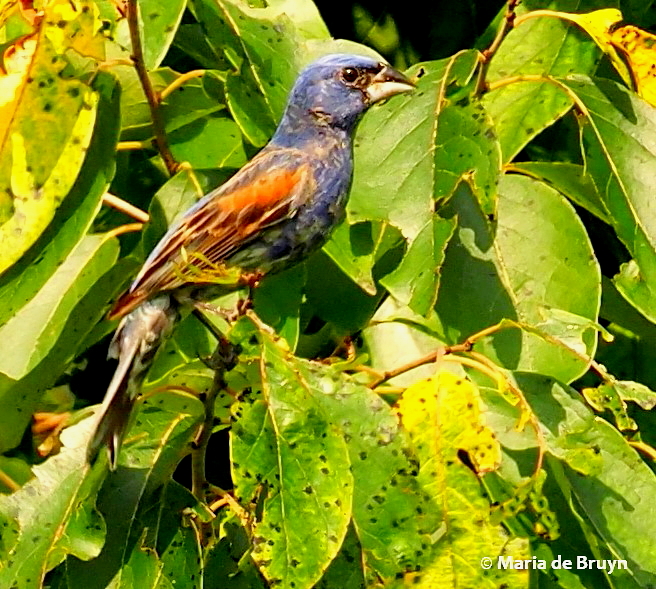
The male blue grosbeaks (Passerina caerulea) start out brown and gradually achieve their dark blue feathers with some reddish/brown wing accents.


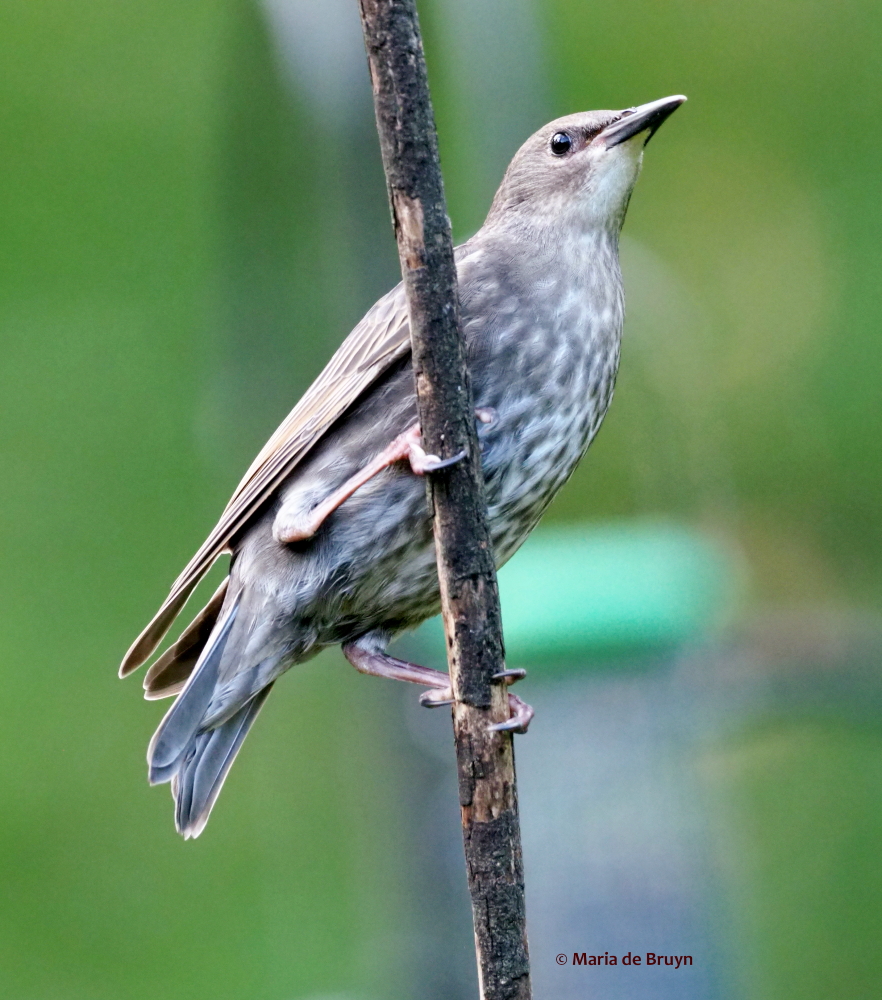
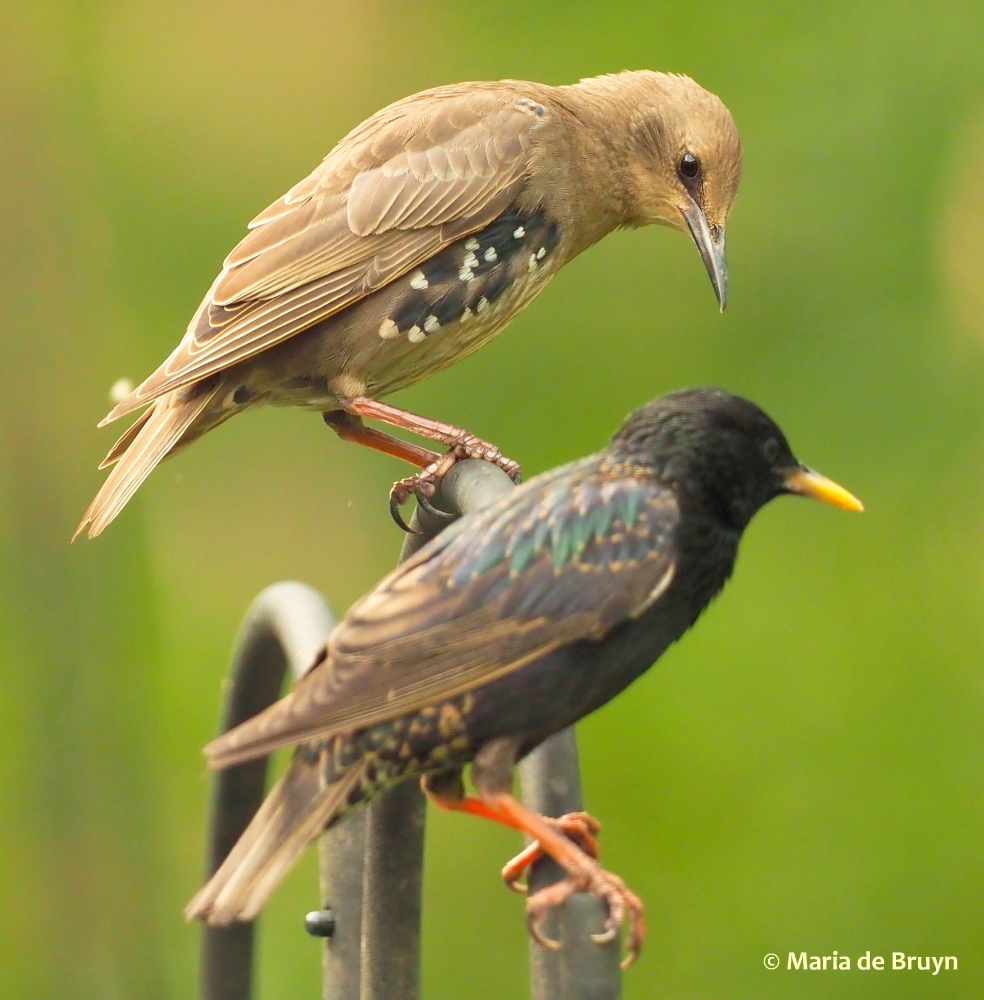
Among the birds that undergo a major change are the European starlings (Sturnis vulgaris). The young birds start out with dullish brown or gray hues with some streaking. Eventually, they begin to develop some spotting and then ultimately achieve the beautiful adult summer glossy feathering with green and purple hues mixed in.


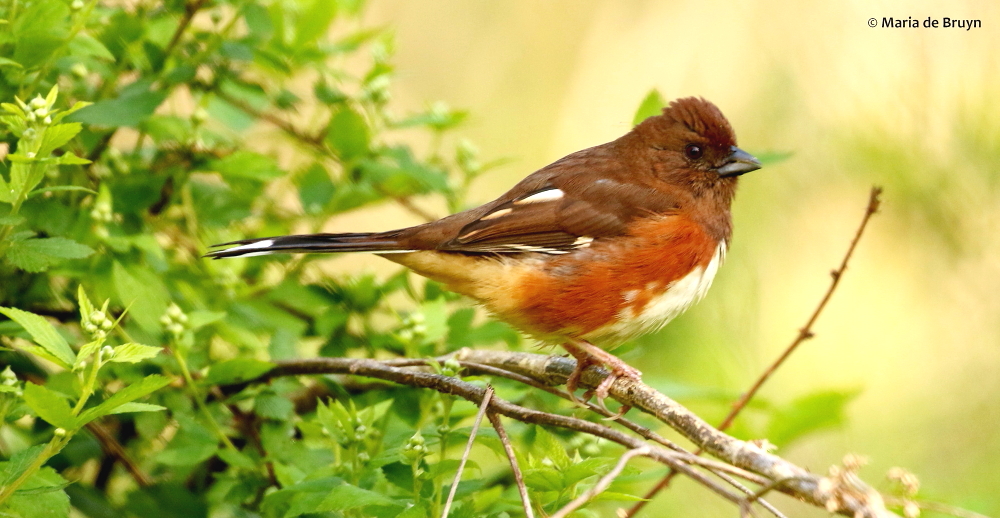
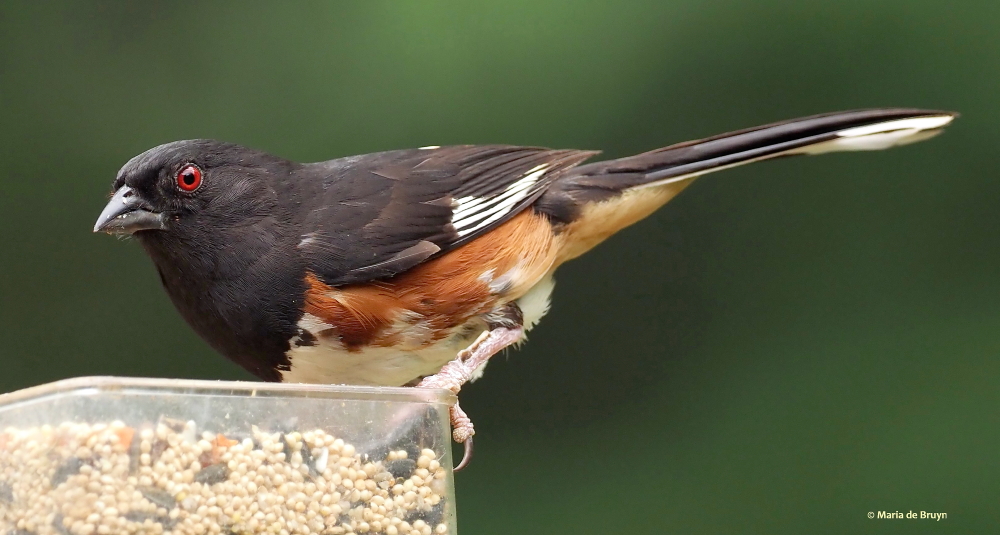
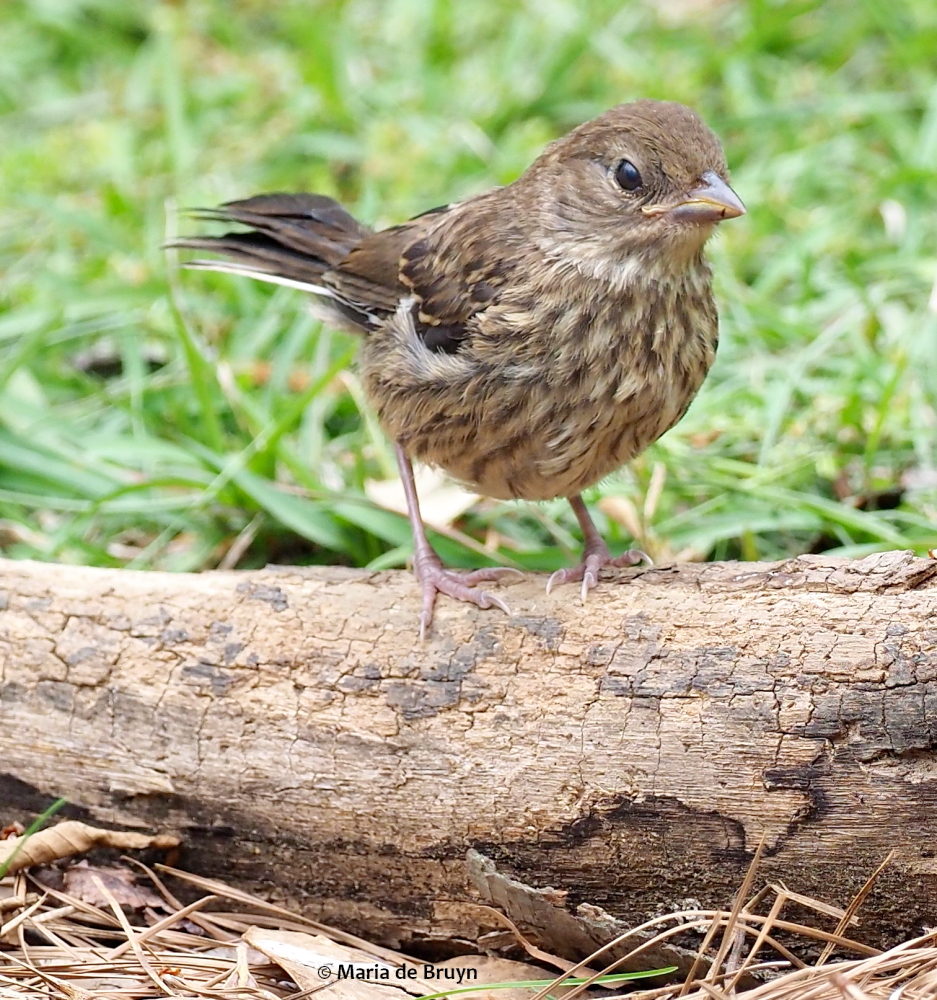
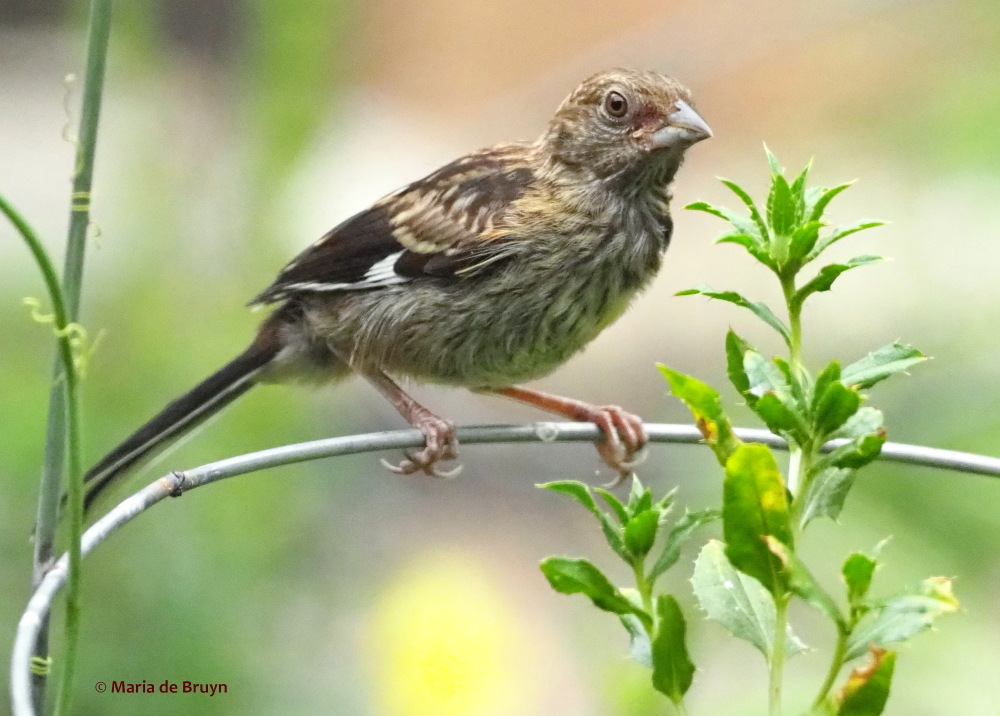
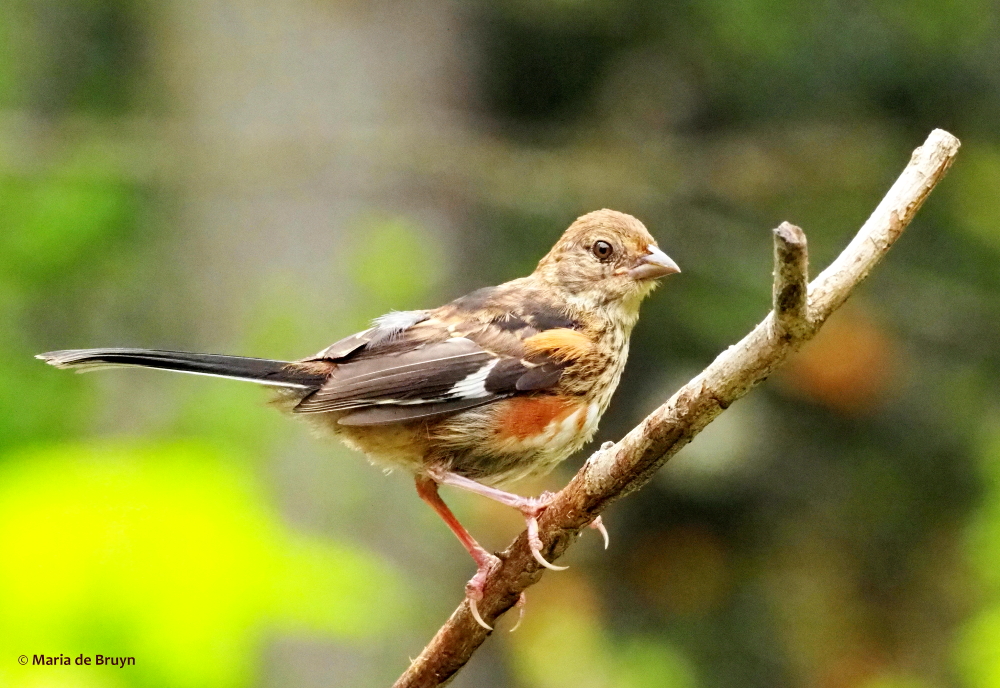
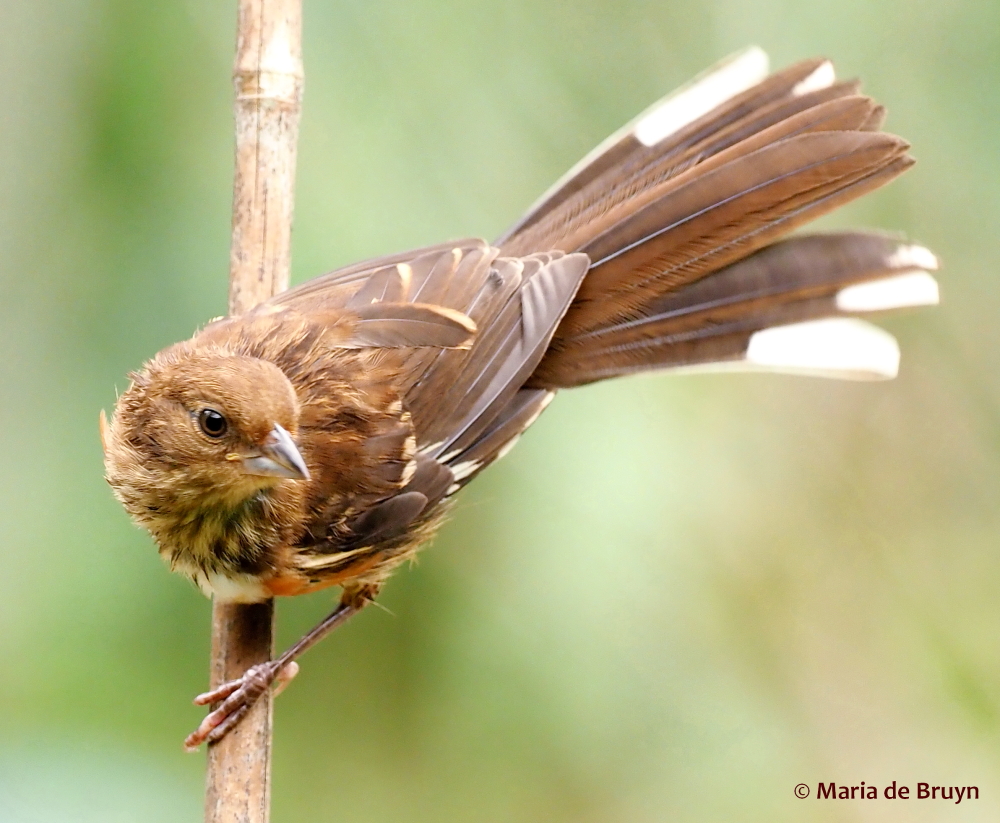
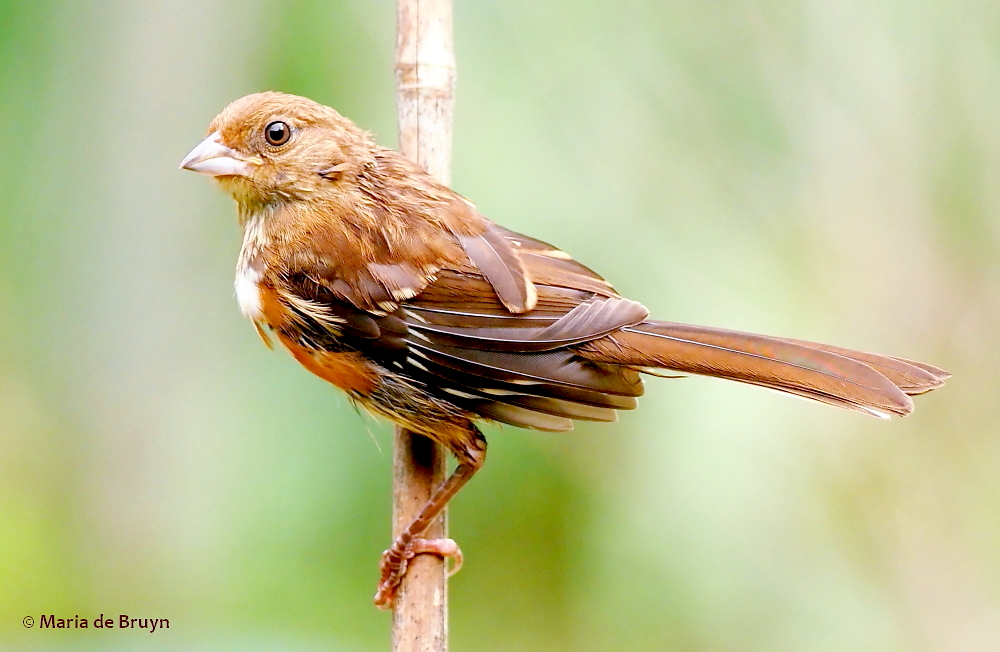
The females of the Eastern towhee species (Pipilo erythrophthalmus) have a brown back above a white breast with reddish sides, while the males have black backs.

The young developing towhees keep you guessing as to their sex since they undergo quite a lot of color changes as they develop. They do have the white in their tails, which helps you identify them as to species.


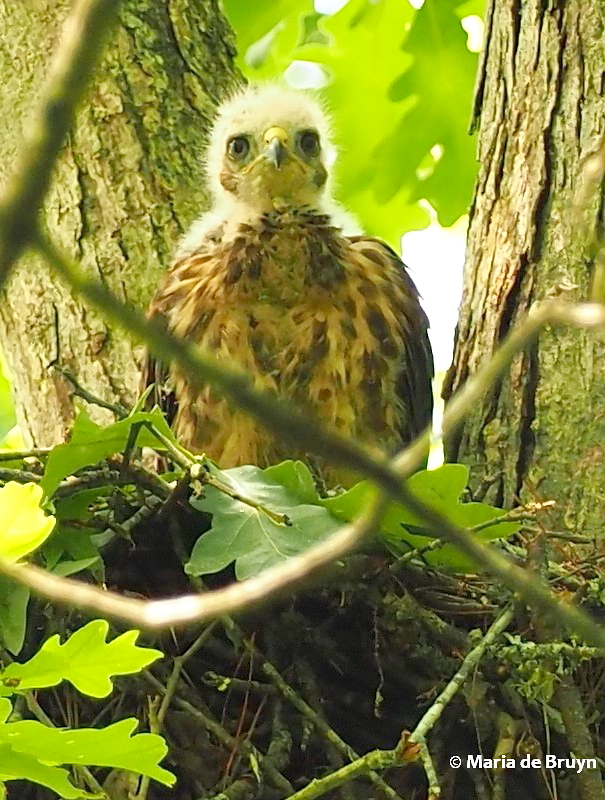
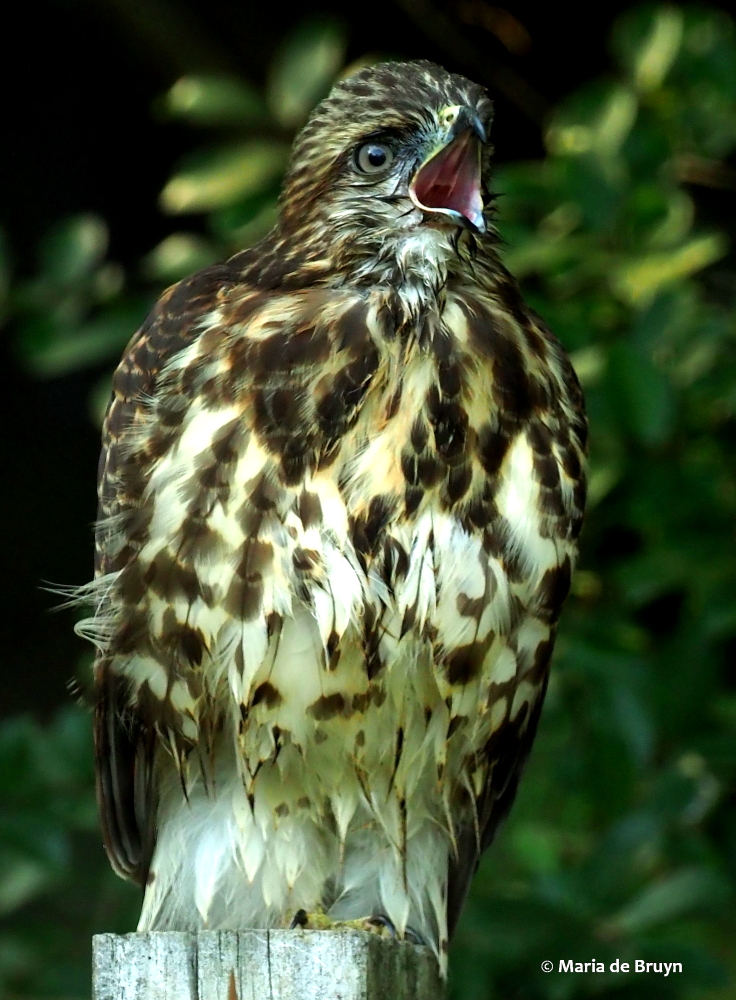
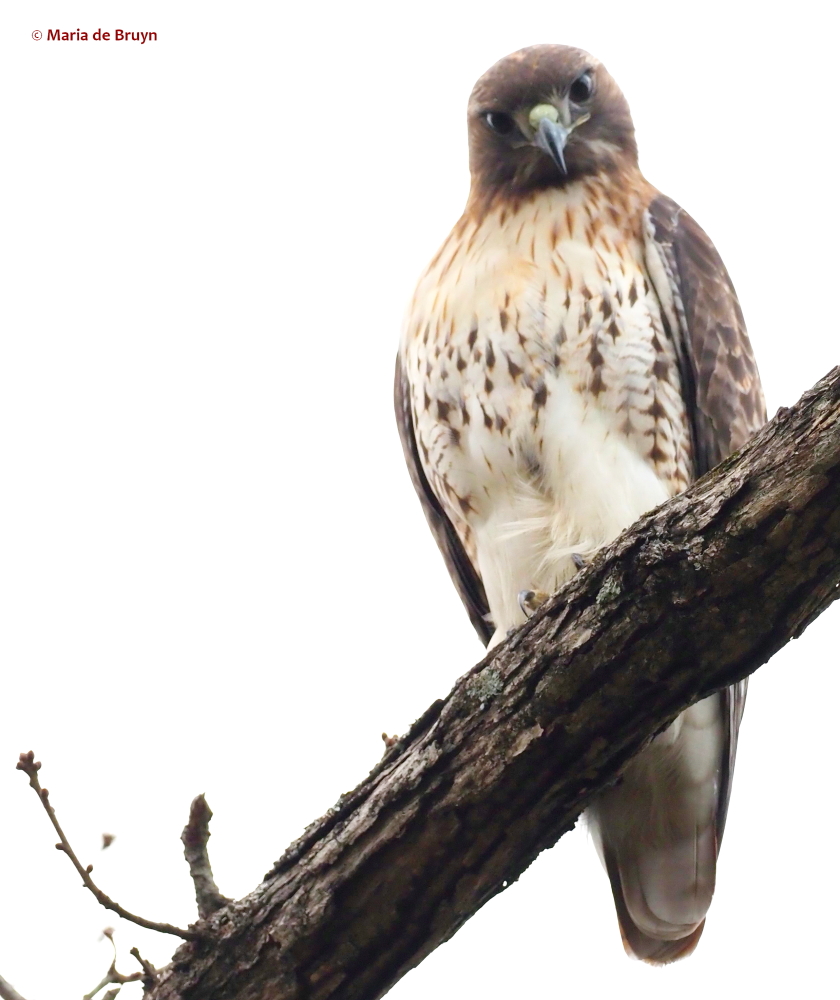
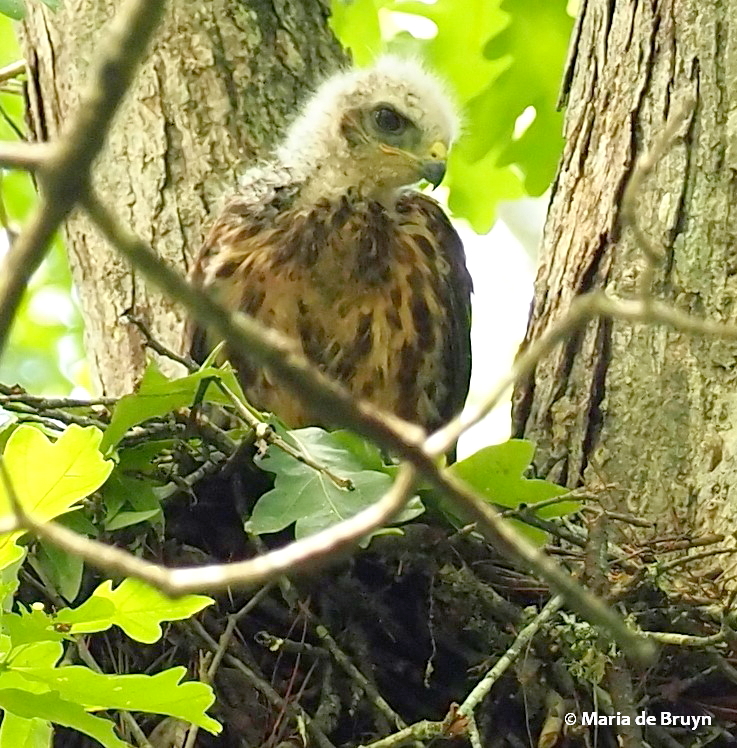
  And then we come to the hawks and owls. It is not unusual for the young raptors to look nothing at all like their parents. The red-shouldered hawks (Buteo lineatus) start out looking like fluffy and then becoming gradually kind of scruffy looking.


As they get a little older and leave the nest, they start to resemble their parents more but have more streaking on the breast. As they near adulthood, they look much more like mom and dad.


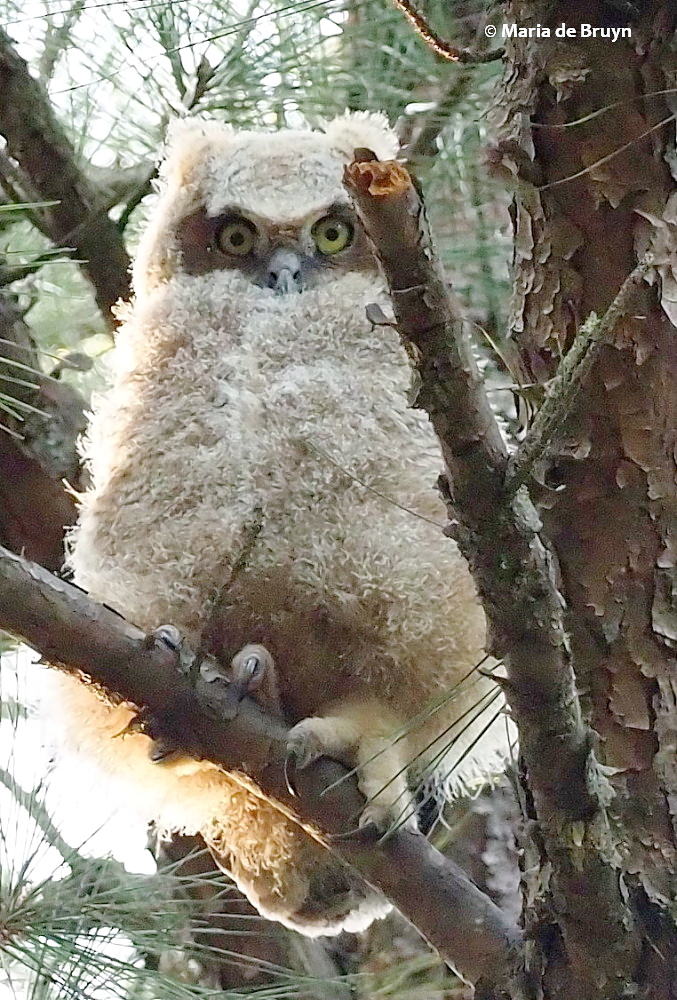
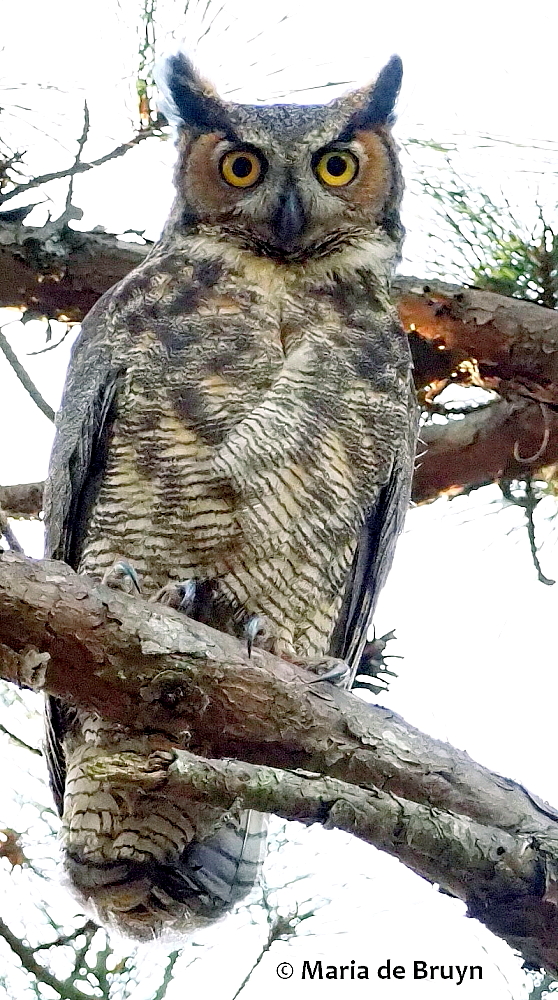
And we end with an example of another raptor. There is a real difference between the baby great horned owl (Bubo virginianus) and its parent as you can see. Many birds are impressed by the adults but ooh and aah over the nestlings. It must be the combination of those big eyes and fluffy feathers that take away attention from the already formidable claws!


Next up – a foray into the world of amphibians and reptiles!

The birdy breeding cycle 2020 – 3: raising young

This year, most of the birds that visit my yard chose to build their nests in places where I didn’t see them. Only the brown-headed nuthatches, house wrens and Eastern bluebirds chose to use nest boxes. The Carolina wrens (Thryothorus ludovicianus) began to use a nest box but their nest was invaded by ants before I had noticed so they abandoned that site. Still, I was able to watch parents with babies, both at home and out on the nature trails.

There are two major kinds of baby birds. The altricial birds hatch as helpless young who must develop their sight and feathers, requiring parental care until they can fly from the nest. They include the songbirds that you may see often, such as chickadees, nuthatches, cardinals and bluebirds, whose babies are seen below shortly after hatching and after several days of development.


In contrast, the precocial bird babies can quickly move about on their own after hatching and are able to begin foraging for food themselves as they follow their parents around. In some cases, the parents may also feed them. Examples of precocial birds include killdeer, ducks and Canada geese (Branta canadensis) as seen below.

The nest I watched most closely this season was built by brown-headed nuthatches (Sitta pusilla) in a nest box. Carolina chickadees were also interested in that spot, but the nuthatches won out. Mama Nuthatch laid six eggs, four of which hatched. She and Papa were very hard workers, flying to and from the box countless times per hour. Like other seed-eating birds, they fed their nestlings insects because the babies need lots of protein for their development.

They were devoted parents, flying to and fro with food, carrying away fecal sacs and chasing off other birds who used the nest box as a perch. All their care was no match, however, for a pair of birds who are known to be quite aggressive during nesting season.

I first learned of house wrens’ (Troglodytes aedon) intolerance of other nesting birds in their vicinity when they invaded the nest of a banded female Carolina chickadee (Poecile carolinensis), whom I had named Chantal. Her babies were hatching and the wrens went into the nest during her absence and killed them. That experience made me hope they would not return to my yard the next spring, but they seem to like the area. This year they visited all the nest boxes in my yard and the male began nests in several of them to keep away other birds. It is thought they may drive away other nesters in order to reduce competition for food when it comes time to raise their own young.

The wrens finally settled on a nest box and I thought they would leave the nuthatches alone. Their young ones got to the brink of fledging and the parents were encouraging them to fly out. Sometimes, they would fly up to the box as a youngster peered out into the big wide world and just hover with the food in their mouth.

They would perch atop the box and call. Eventually two took the leap (which I didn’t see); I thought the others would follow the next day. The parents were busy in the morning and suddenly all activity ceased. I guessed that the other two had taken flight, so in the afternoon I took a peak in the box. To my utter dismay, I found the remaining two nestlings deceased; the wrens had pecked them to death. ☹ I buried them in my flower garden with a small Buddha statue marking the site.

The nuthatches continued taking care of their fledged babies. They would follow the parents to the feeder poles, crouch down and flutter their wings rapidly as they begged for a morsel.

Eventually, the parents found a nearby branch in a large willow oak where they would crack nuts and feed their offspring. As you can see, the spot got a lot of use and could be easily identified by the shredded bark. The whole family still goes up there to eat their nuts from the feeders!

Many adult birds appreciate bird feeders as “fast-food” stops for themselves while they spend most of their time searching for meals for their nestlings. Even the species who mainly eat seeds feed their babies insects because the young ones need lots of protein as they develop toward maturity. The Eastern bluebirds (Sialia sialis) in my yard and other areas seem to favor caterpillars as a food of choice for their developing youngsters.


The pileated woodpecker parents (Dryocopus pileatus) take turns sitting on eggs and bringing food for their young ones.

The larger raptors bring in heftier meals for their offspring. This red-shouldered hawk grew up alone; those of us watching the nest didn’t know whether only one egg hatched or something happened to a sibling. The parents would bring small mammals for the baby to eat.


A pair of great horned owl babies (Buteo lineatus), located by Mary, a locally well-known bird photographer, appeared to be growing well the couple times I went to see them. I never saw the parents bring them food but assume they were well fed as they were venturing out of the nest the last time I saw them (a process called “branching”).

It seems that a young bird’s open mouth is a trigger for parents that they can barely resist. Until they mature, the fledglings have a pale white or yellow area, or in the case of American crows (Corvus brachyrhynchos) reddish, where their beaks join. This becomes very visible when they open their mouths wide to beg for food and parent birds have a hard time resisting the urge to stuff food down their throats.

The Eastern phoebes (Sayornis phoebe) at a local park were following their parents around asking for food.

They exhibited both the crouched wing fluttering and wide-open mouths as cues that they wanted to be fed.


The downy woodpecker (Picoides pubescens) juveniles did not seem to beg as much as the other birds in my yard. They just perched close to feeders or their parents and eventually mom or dad gave them a bit of suet.

The European starling young (Sturnus vulgaris) are especially demanding to judge by their behavior at my feeders. These are larger birds and the offspring are as large as their parents,

They are capable of feeding themselves but spend a good deal of time with wide open beaks demanding to be fed.


The starling parents usually give in, but you can almost think they look exasperated.

At least the immature starlings can demonstrate well how a bird looks with a full crop (i.e., the enlarged part of the esophagus that forms a muscular pouch in which food can be stored).

In between all the feeding, the parents have one other important nest duty – keeping the nest as clean as possible. They do this by removing fecal sacs, as this prothonotary warbler (Protonotaria citrea) was doing last year.


Some adult birds will actually eat the fecal sac. This is because the nestlings do not completely digest their food and the sacs therefore still contain valuable nutrients that the parents can use. I can imagine the parents are glad to be done with this duty once their young have fledged, however.

When you’re out walking or watching bird feeders, it can be entertaining to observe the birds as they nest and raise their demanding children. And it’s good to know that you may even see adult birds begin to drive away their babies, either because they’re tired of feeding them or because they are busy with a second or even third brood for the season.