Interesting encounters

Hello readers!

Once again, time has sped by as I contemplated new blogs and set aside photos to include in them. Time gets away from me, though, as I deal with health concerns and ongoing car and household issues. And then to stay on an even keel, I have my daily encounters with nature — either out on a walk (much of the time) or observing the birds and other creatures on my home turf. So my new year’s resolution is to post shorter blogs not requiring so much background research and hoping you find them interesting anyway!

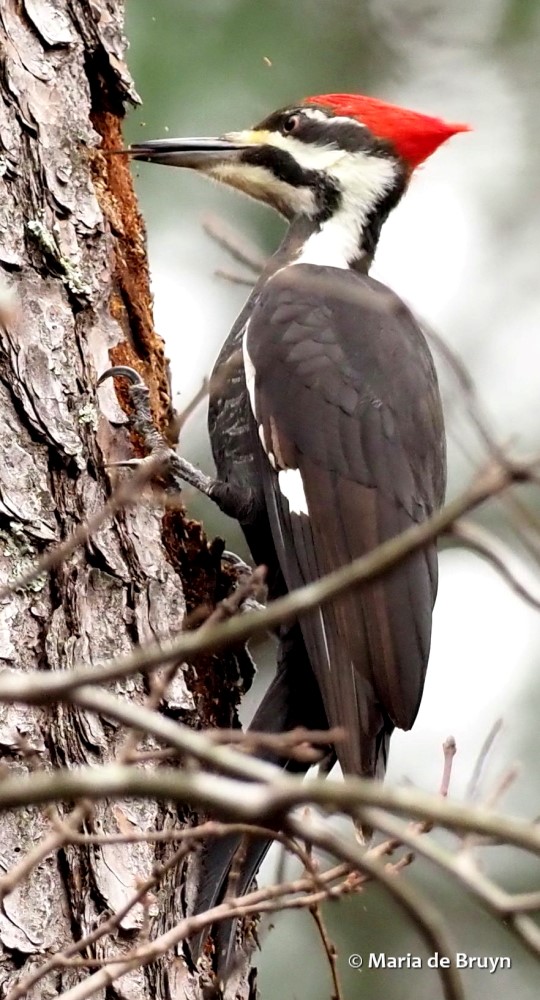
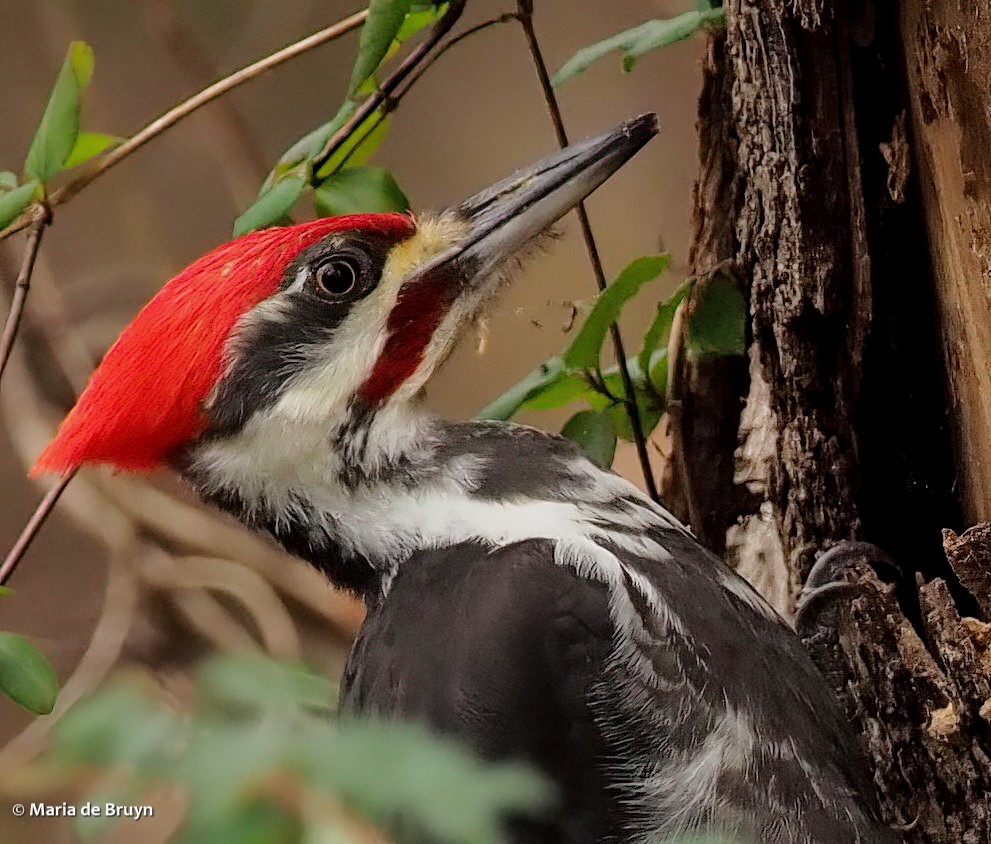
So today, let me tell you about two wildlife encounters I’ve had in the past few weeks. The first was a session with a pair of pileated woodpeckers (Dryocopus pileatus) at a local park. I first saw the male pileated with his bright red “chin stripe” as he worked at the base of a tree.

He had managed to work his way deeply into the trunk with his repeated hammering. But unfortunately, it seemed that he was just not having success finding any larvae or bugs to consume. He continued on for a while, pausing now and again to look around.
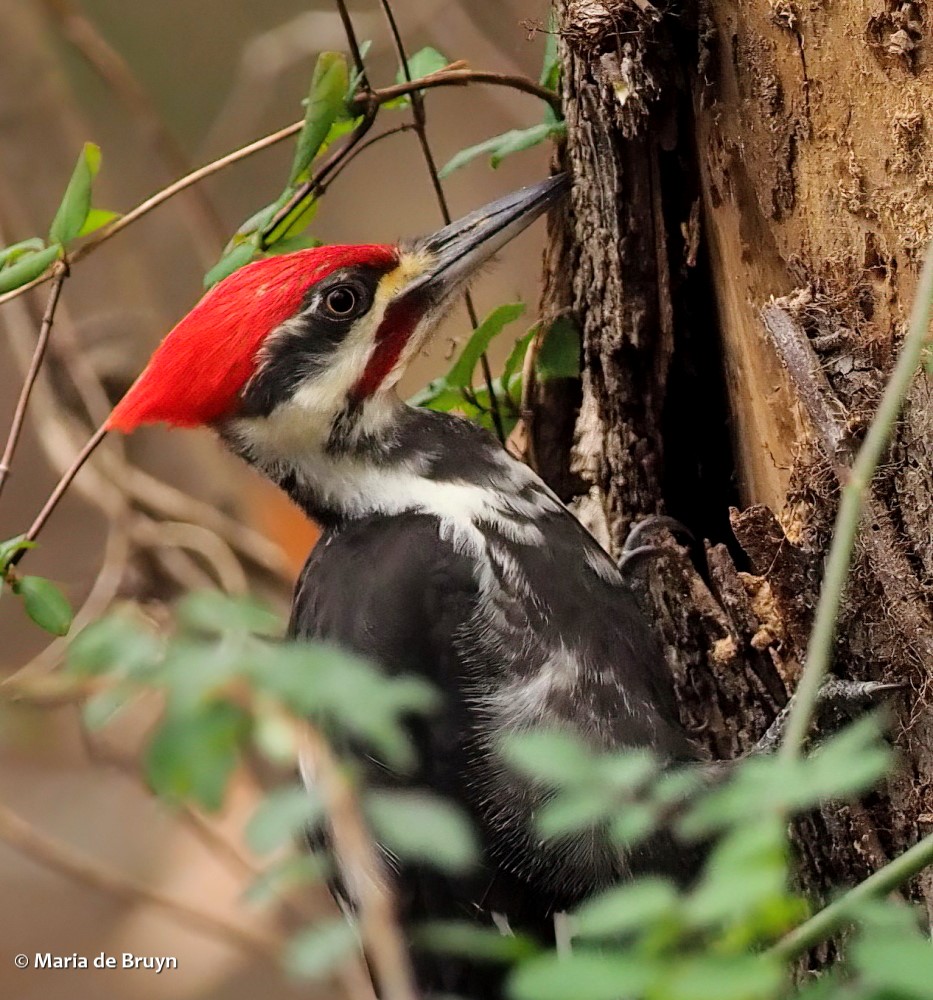
He finally decided that his labors at this spot were not that productive and flew up to the top of a nearby tree to continue his quest elsewhere. In the meantime, quite a way down the park path, I heard more loud hammering but coming from up above me. There was Ms Pileated, at work excavating a hole in her own search for sustenance.
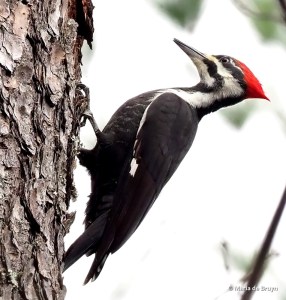
Note that she does not have a red chin stripe but she is also a stunning bird. The pileated is now North America’s largest remaining woodpecker species and the third largest woodpeckers worldwide. She was starting her work by chipping off the outer bark from the tree trunk.


Then she began rooting around in the outer layer underneath the bark to see if any food was available there. This was followed by more excavation and chipping away at the outermost inner bark layer.
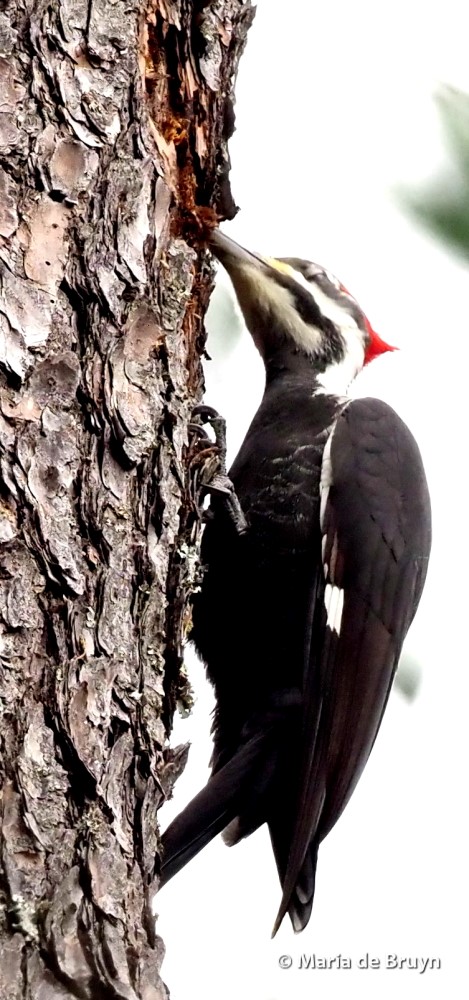
 

As she made progress, she began inserting her long tongue inside, feeling around for bugs and carpenter ants (their main prey).
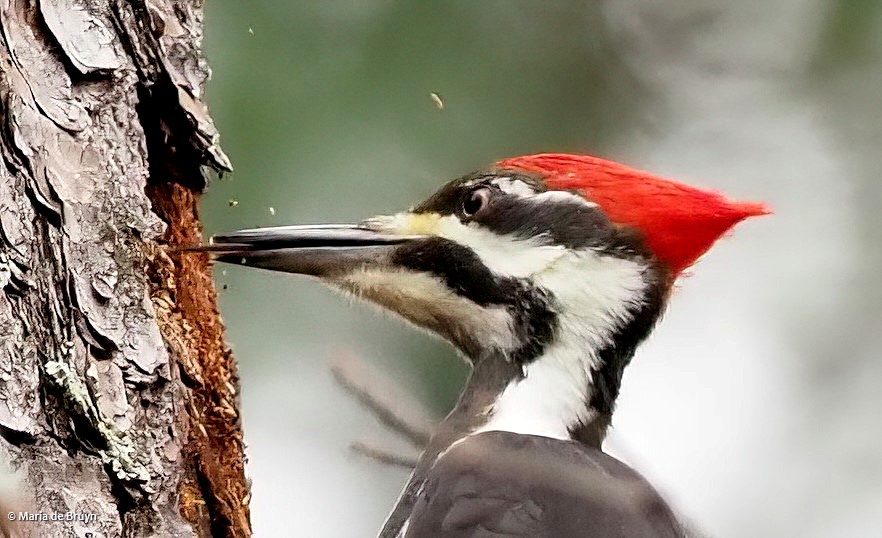
Her persistence finally paid off when she found a large beetle larva — one of their other preferred meals. It was nice to see her hard work produce results!

My next encounter also involved getting something into one’s mouth — in this case my own. I had been out for some time photographing otters and finally needed to leave quickly. I jumped in my car, grabbed a protein bar and broke off a piece as I got ready to start the engine. I felt something fall on my leg and without looking down, thought I was grabbing a piece of the bar and popped it into my mouth. Lo and behold — it did not feel like nuts, fruit and chocolate, but rather a bit hairy and I removed it from my tongue quickly. What did I discover?

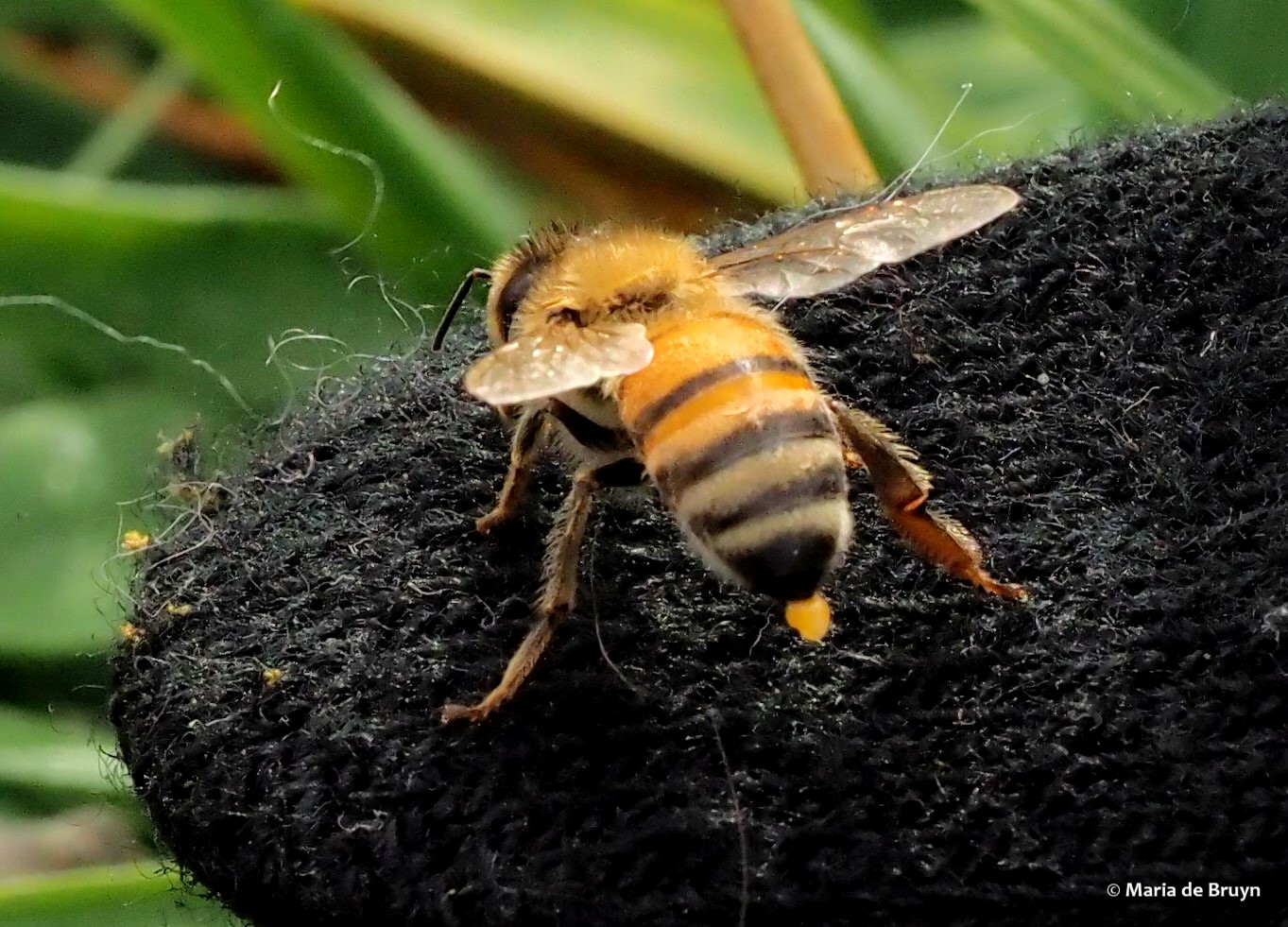
That was a real surprise, believe me! I had never had an insect in my mouth before that I could remember, and I felt badly that it was such a beneficial one! Fortunately, I had not bitten down and the honey bee was whole and uninjured, although perhaps suffering shock from its unexpected journey. I know that I was shocked (and appalled).

I took it out of the car and wanted to put it in the grass but it was not moving from my glove, likely suffering from some trauma. However, eventually I did get it off and it began crawling around in the vegetation.
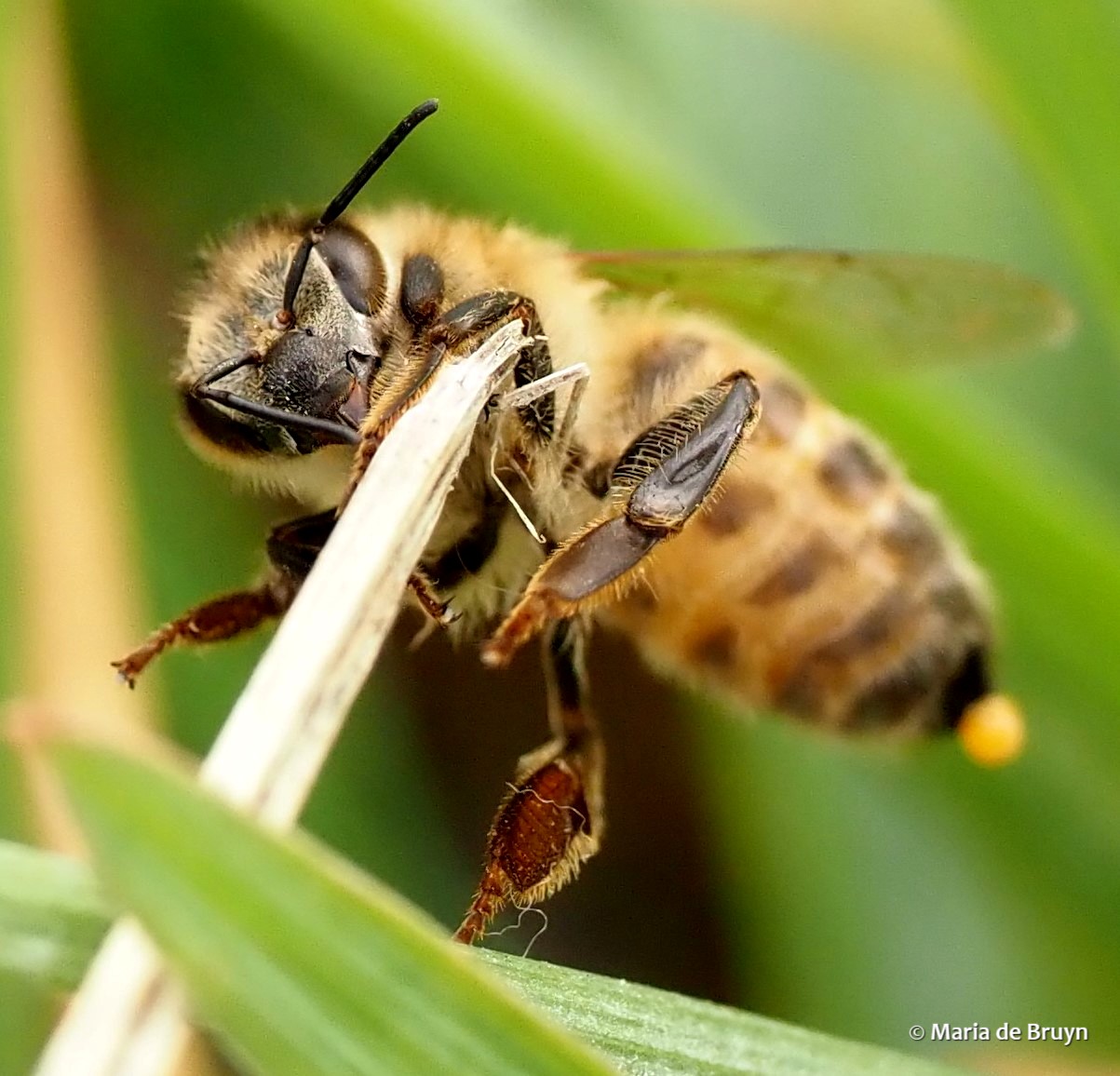
I couldn’t wait long enough to see if it would fly off but it seemed to be moving around well, so I assumed it would recover from the unexpected (and unwanted on both our parts) encounter. And I will no longer put something in my mouth before checking to see that it really is (vegetarian!) food!

Hope your year got off to a good start and will be healthy and happy!   😃


Red-winged, rusty and ravishing – black bird delights!
   

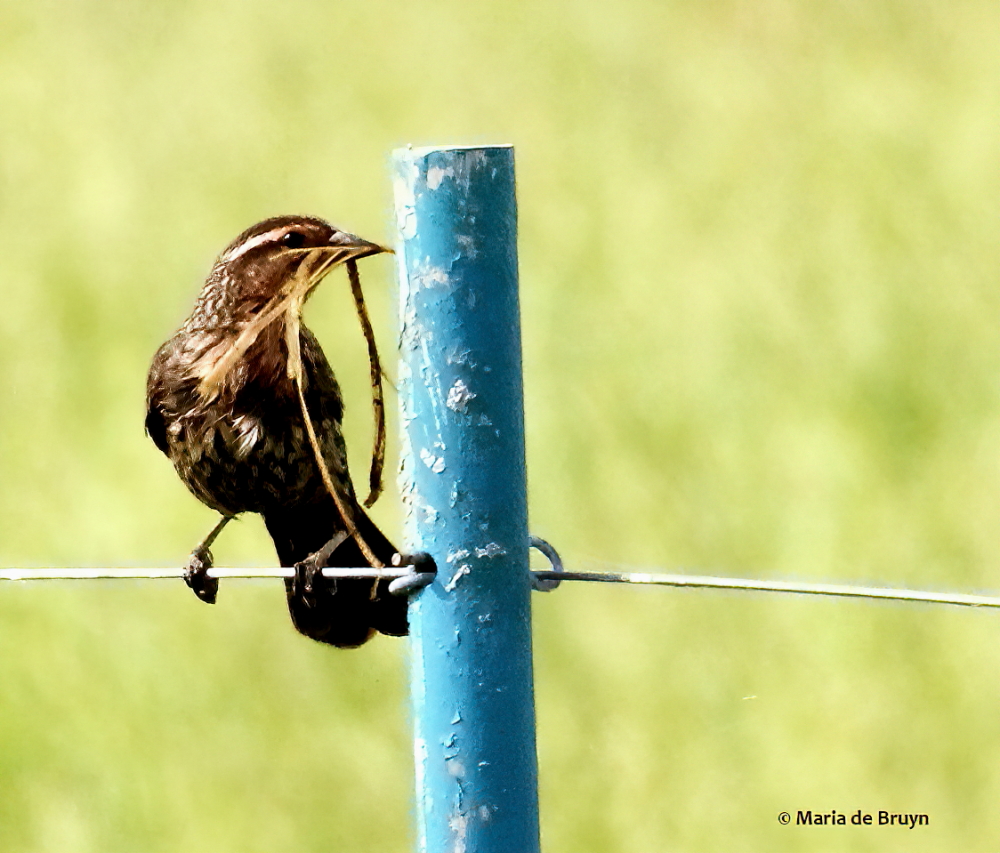
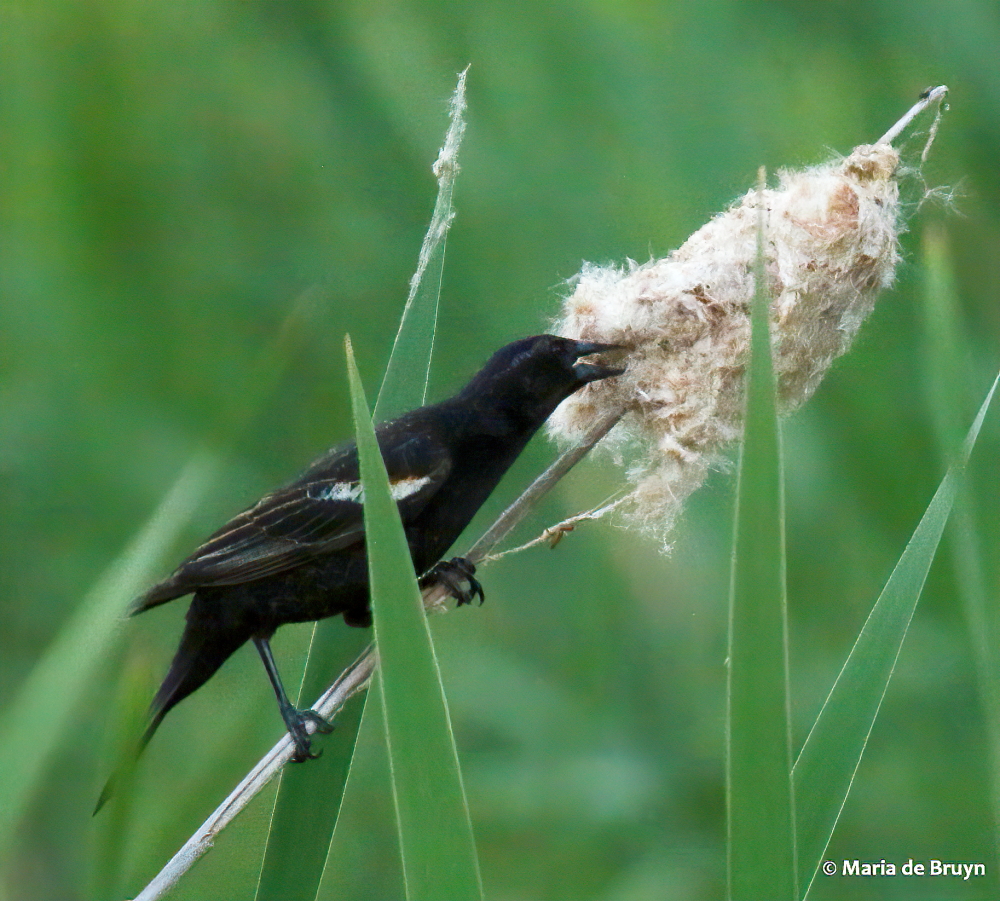
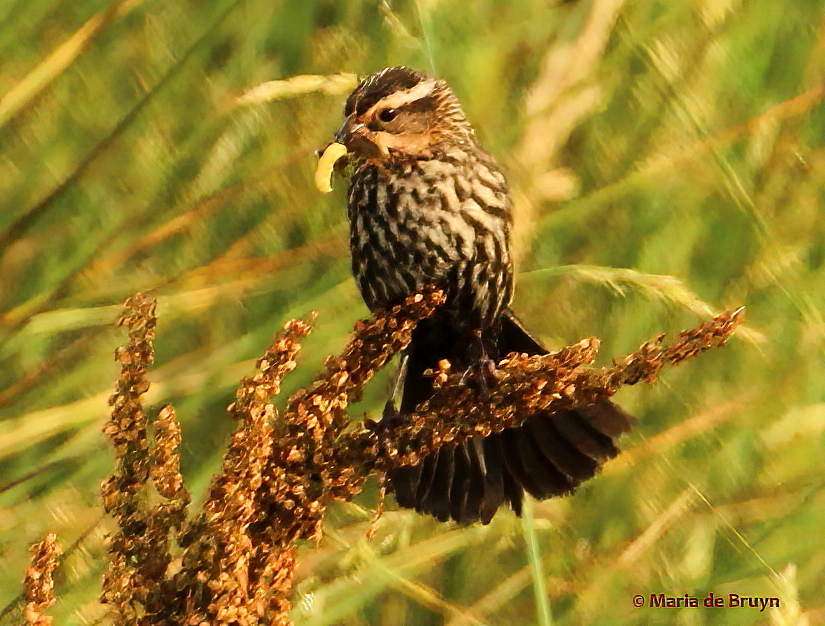
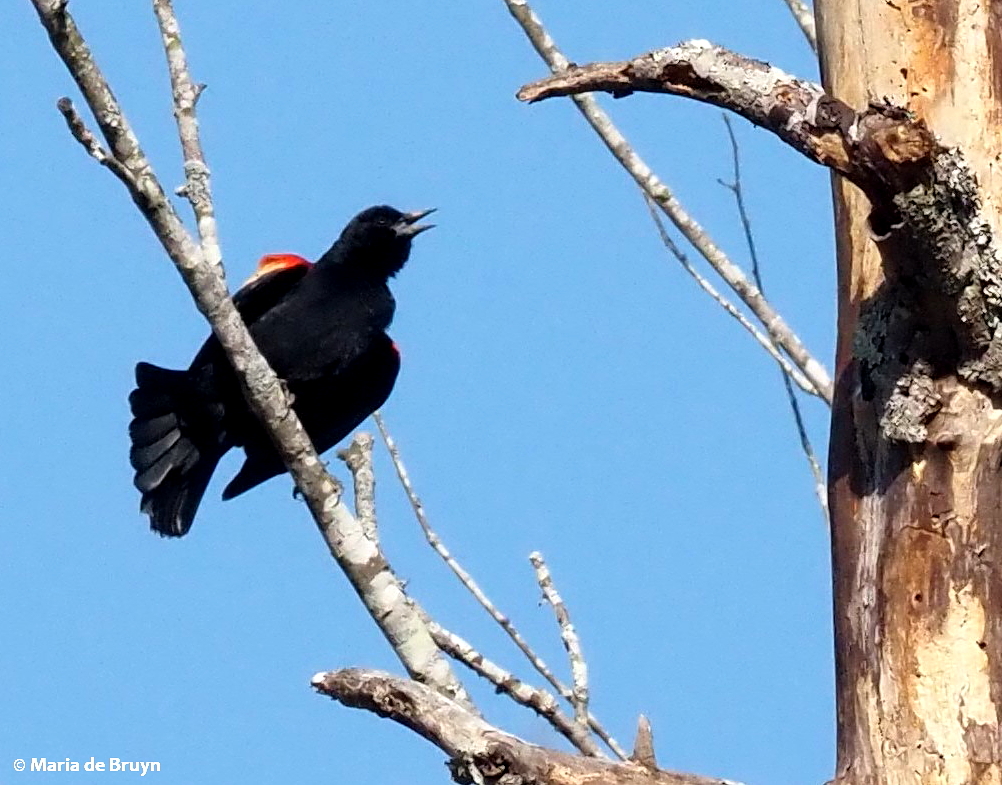
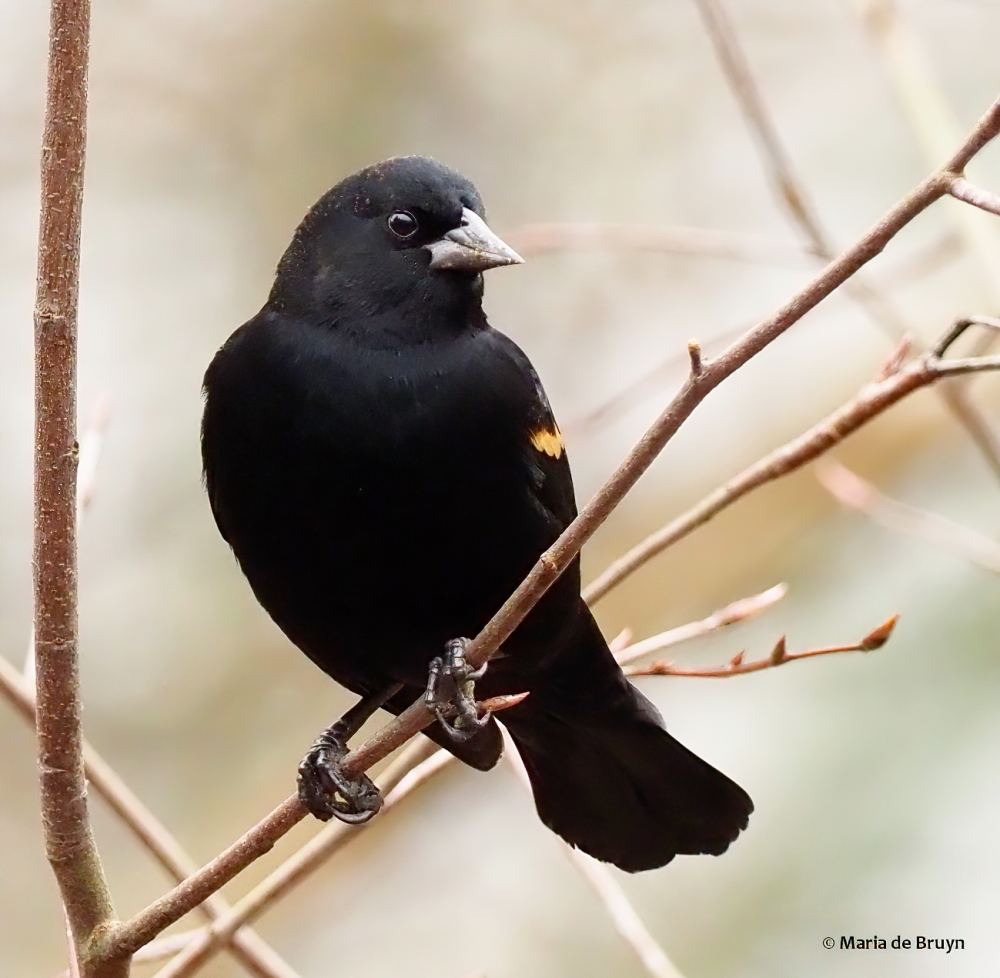
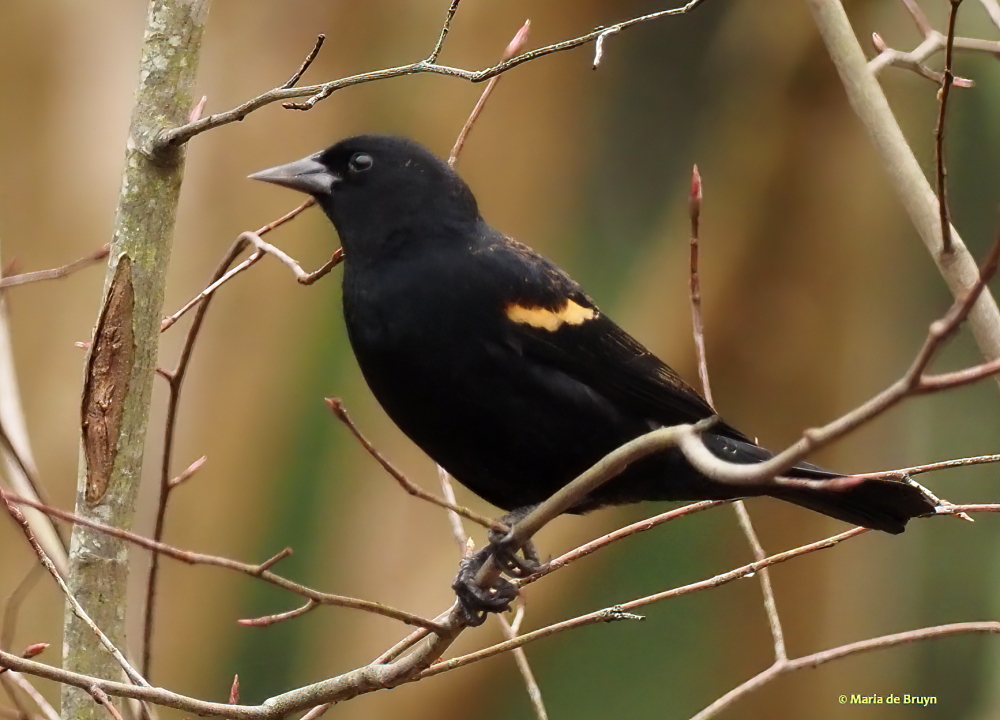
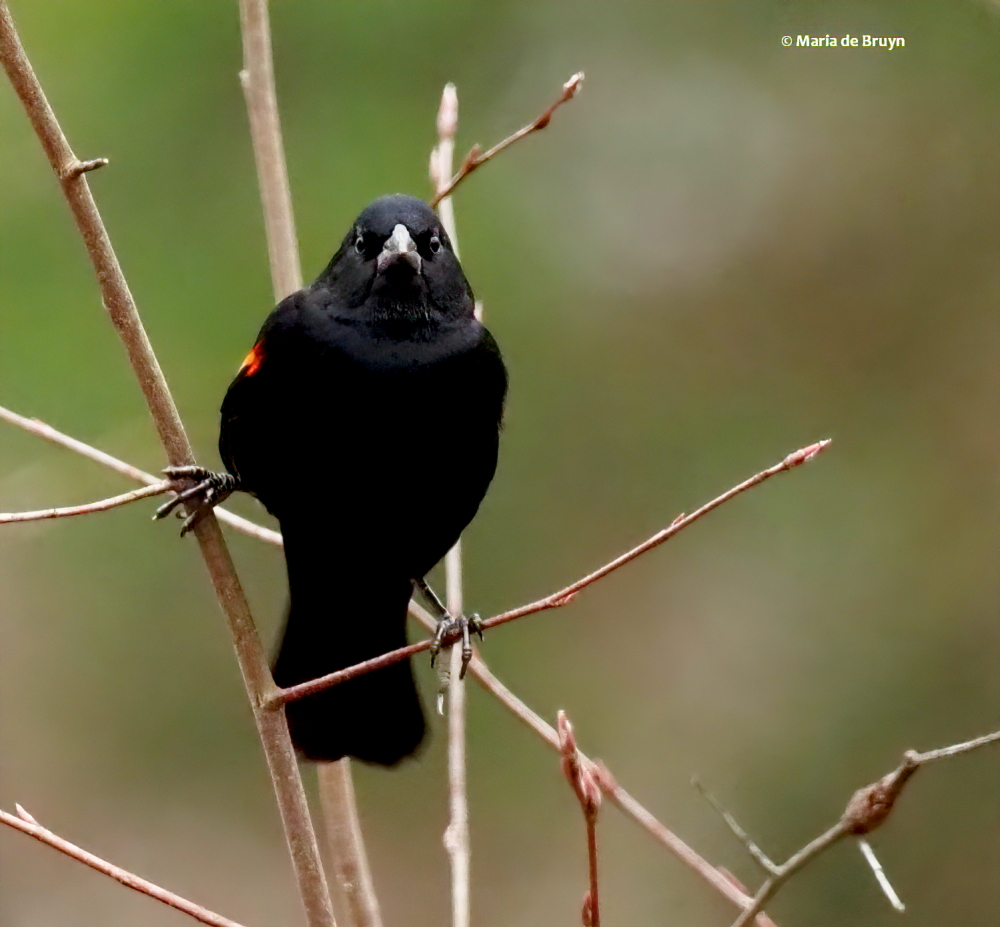
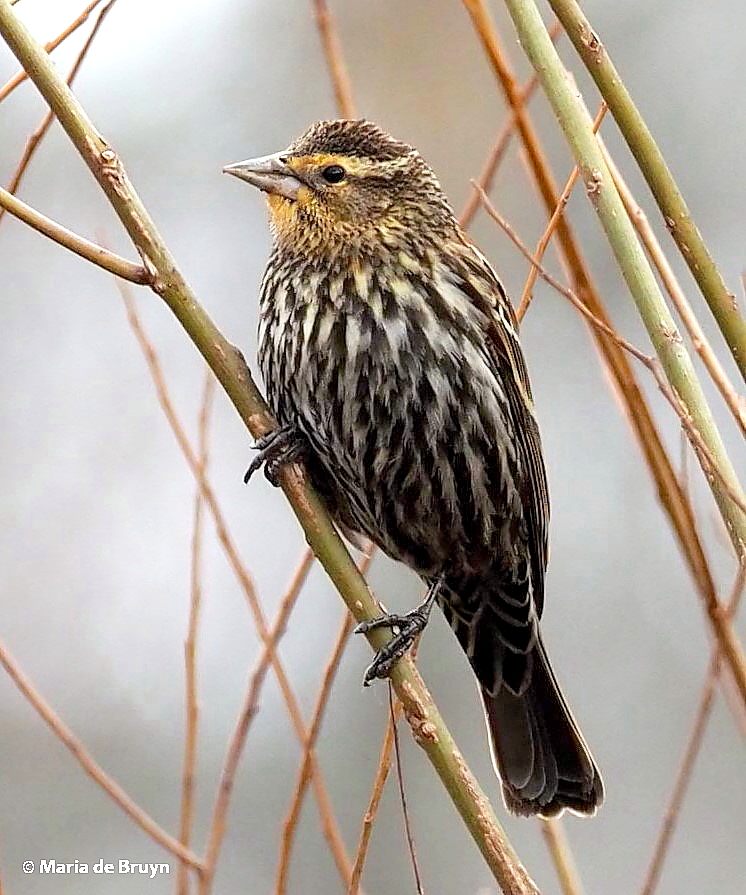
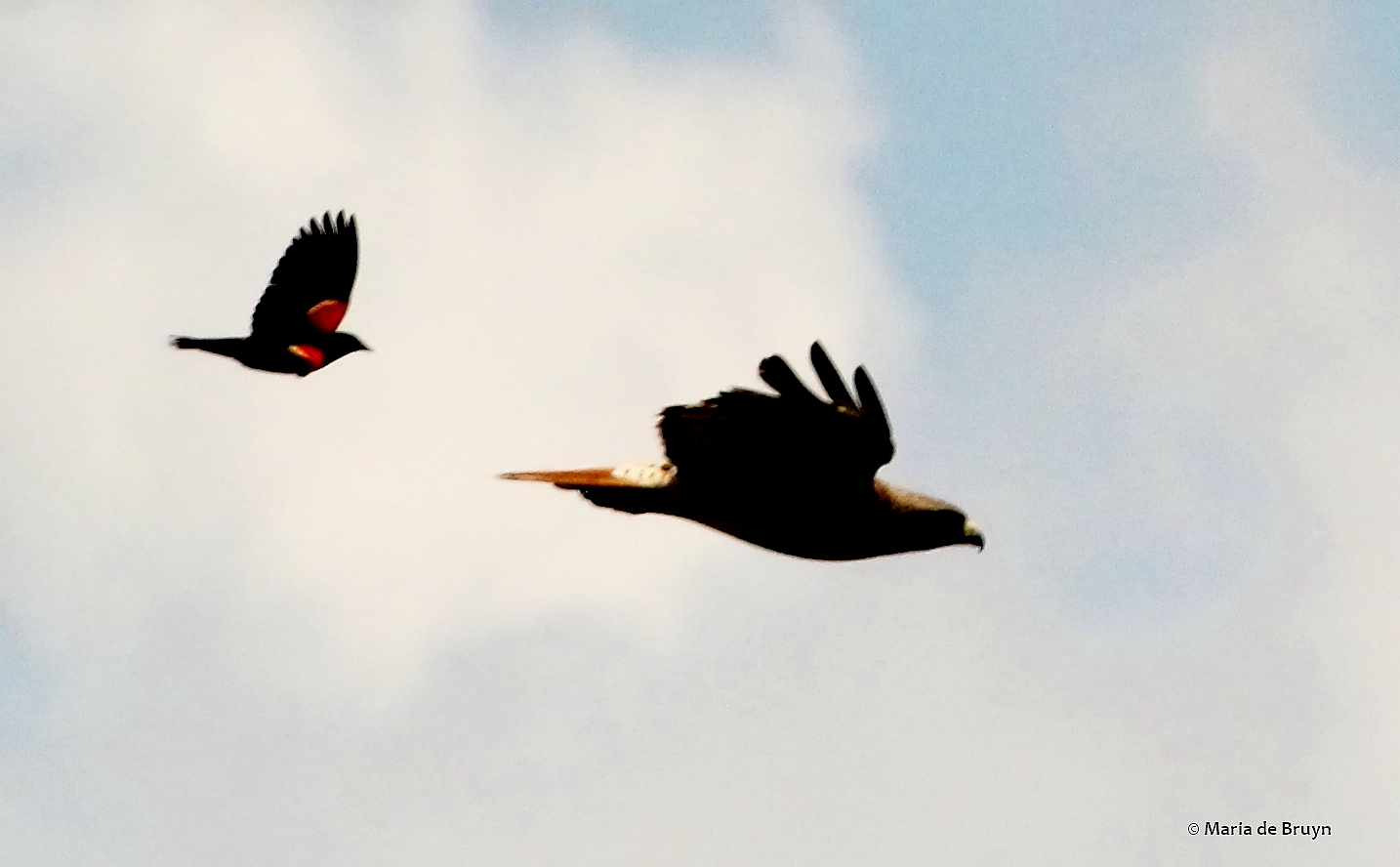
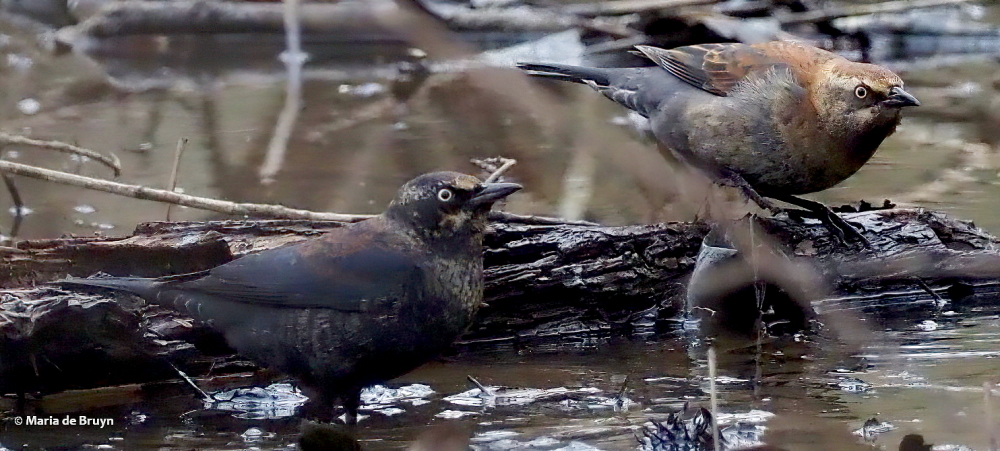
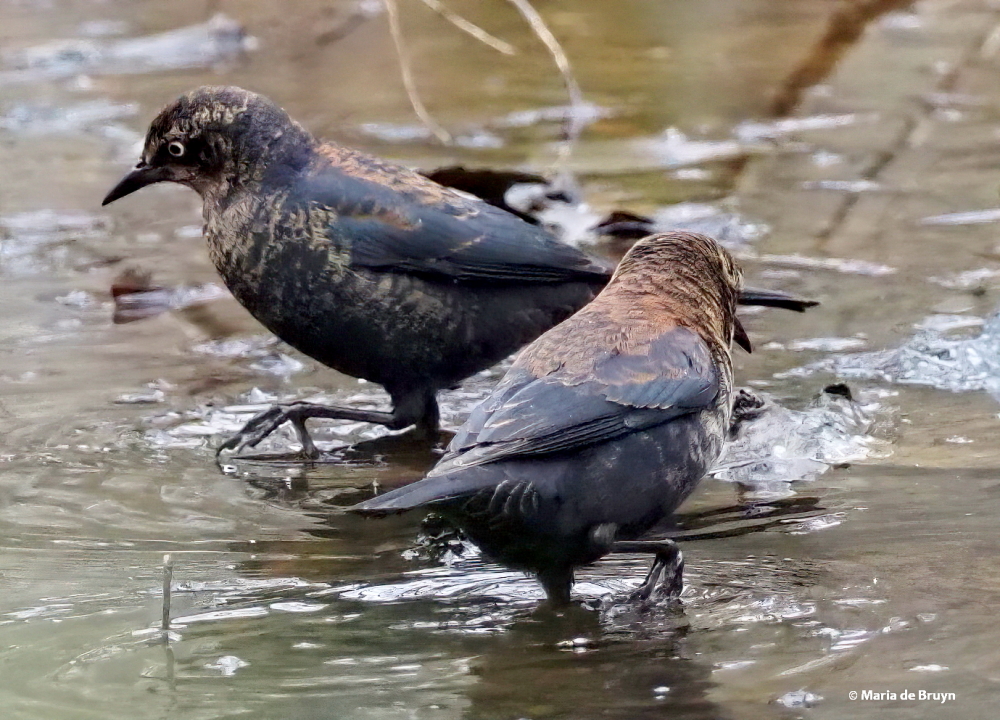
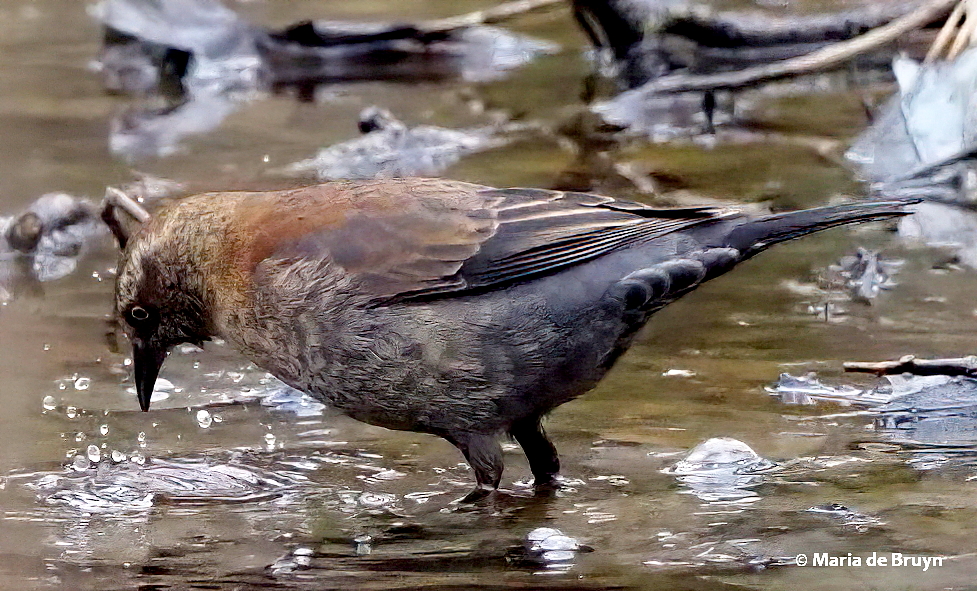
Two species of birds that I enjoy seeing during the autumn and winter months in North Carolina (NC) are red-winged blackbirds (Agelaius phoeniceus, above left) and rusty blackbirds (Euphagus carolinus, above right). Both species breed in the northern USA and Canada, traveling to the southern USA during the colder months.

There is also a population of red-winged blackbirds that nest in NC’s Piedmont region. I’ve seen them collecting nesting material at local ponds and wetlands but have never had the pleasure of seeing their nests or watching them feed their young.

The red-winged blackbirds have two avian records to their name: 1) currently perhaps the most numerous land bird in North America, with counts of more than 1 million birds in a flock!! and 2) one of the most researched wild bird species anywhere.

The male red-wings call the attention of females with the red and yellow patches on their wings. It turns out that those with larger patches are more successful in disputes with other males for territory and mates.


Some males have been recorded as having up to 15 mates in their territories during a season, but it turned out that 24-50% of the nestlings had another male as a parent!


The females look very different from the males with beautiful reddish-brown striping. Their faces are marked by off-white eyebrows.


They often nest near other red-wings.


Doing so means that their nesting area has multiple parents on the alert for predators.

It is interesting that Native American languages also had common names that describe their physical characteristics (red patch, spotted, marked). The longest one that I read about was “memiskondinimaanganeshiinh” (Ojibwa meaning “a bird with a very red damn-little shoulder blade”)!


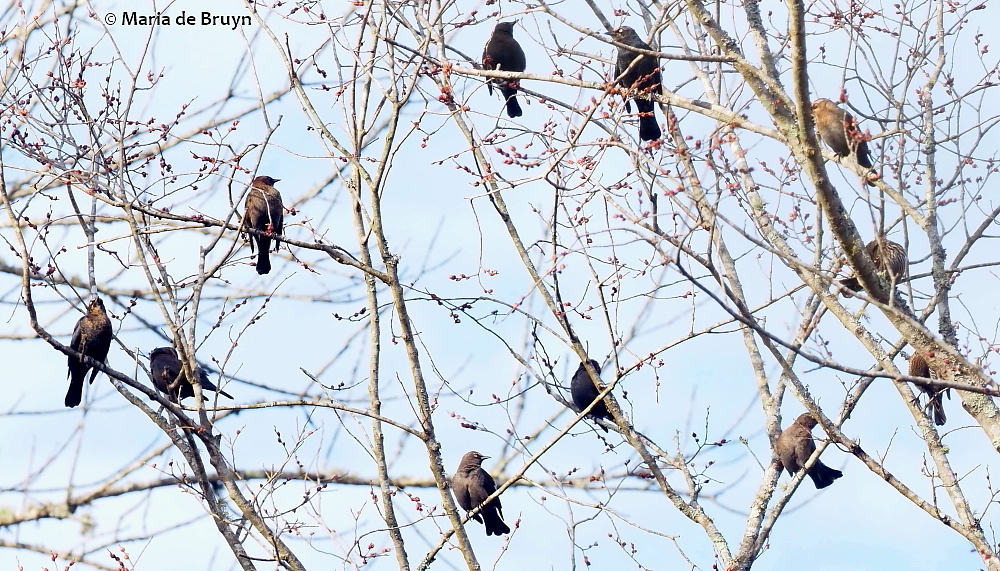
During breeding season, the male rusty blackbirds have glossy black plumage with a greenish sheen. At other times, they have rusty tips to their feathers, giving them a mottled look.

The females may also look a bit mottled but have much more light brown and beige coloration.


In contrast to the numerous red-winged blackbirds, the rusty blackbirds used to have high numbers but have lost up to 85-99% of their populations during the past 40 years for unknown reasons.


The sharp decline is so mystifying that scientists have formed an International Rusty Blackbird Working Group to investigate what is happening.


One possible explanation is a decline in wetlands, especially in the Southeastern USA where 80% of the birds overwinter. A resurgence in beaver ponds may be helping them, which shows how protecting one wildlife species can also assist another one. I have indeed seen them in areas where beavers have been active.


The rusty blackbirds that I spotted were indeed using local wetlands in their search for food, turning over the sodden leaves with their feet and beaks as they searched for sustenance.

The International Working Group is asking people to report their sightings of these birds to eBird to help track the species.

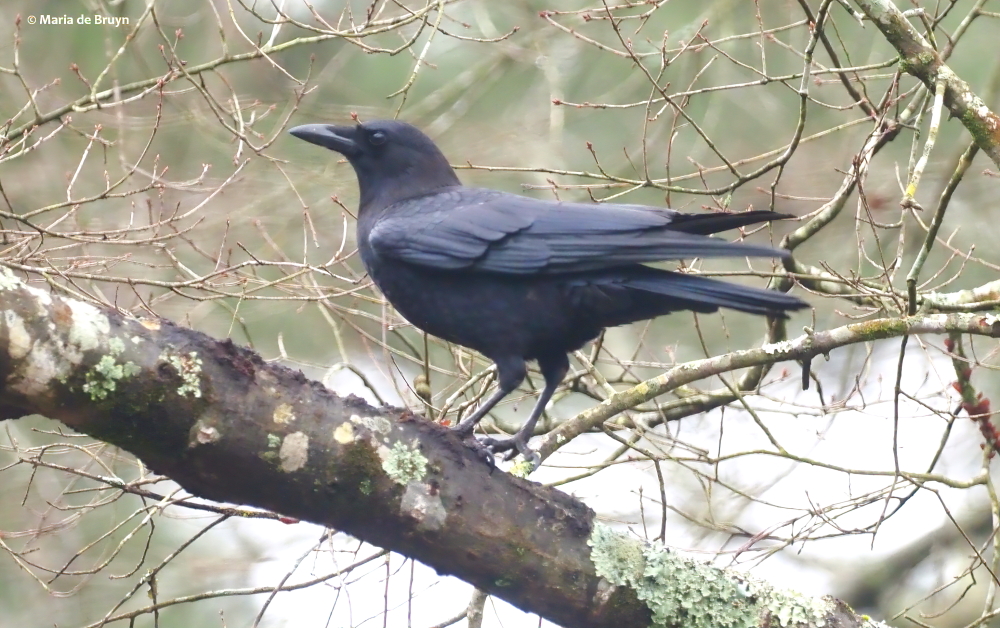
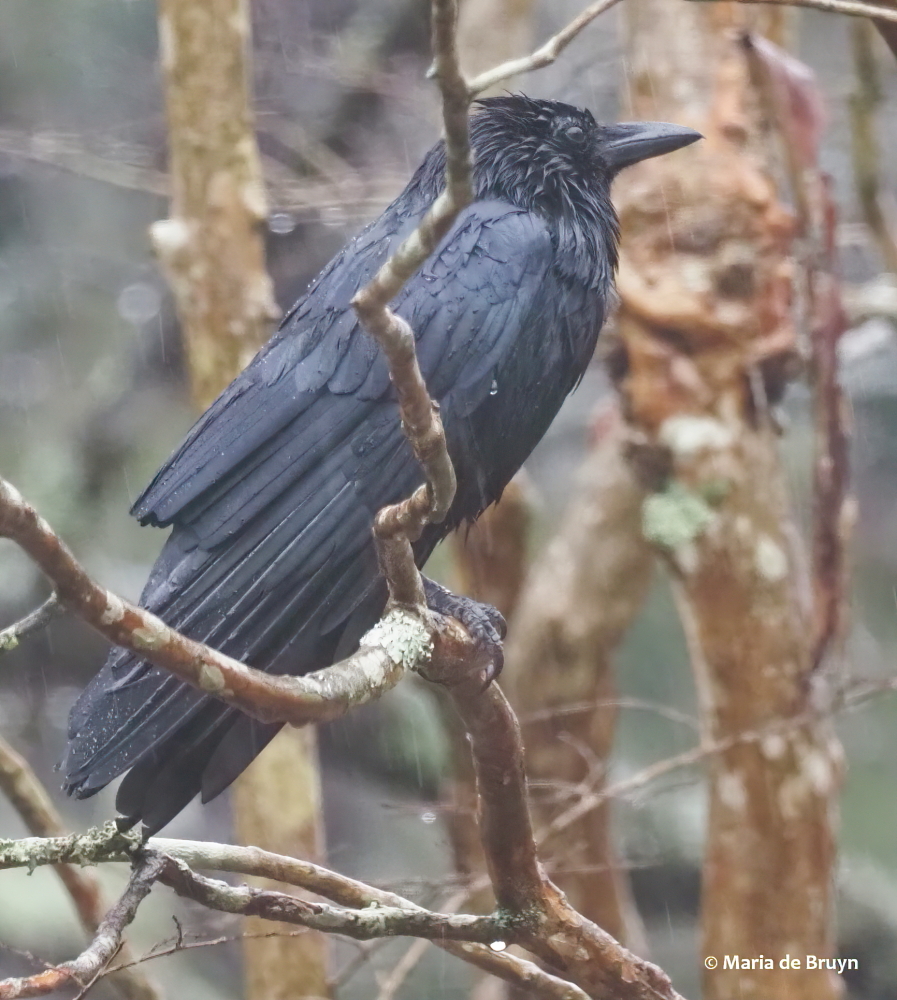
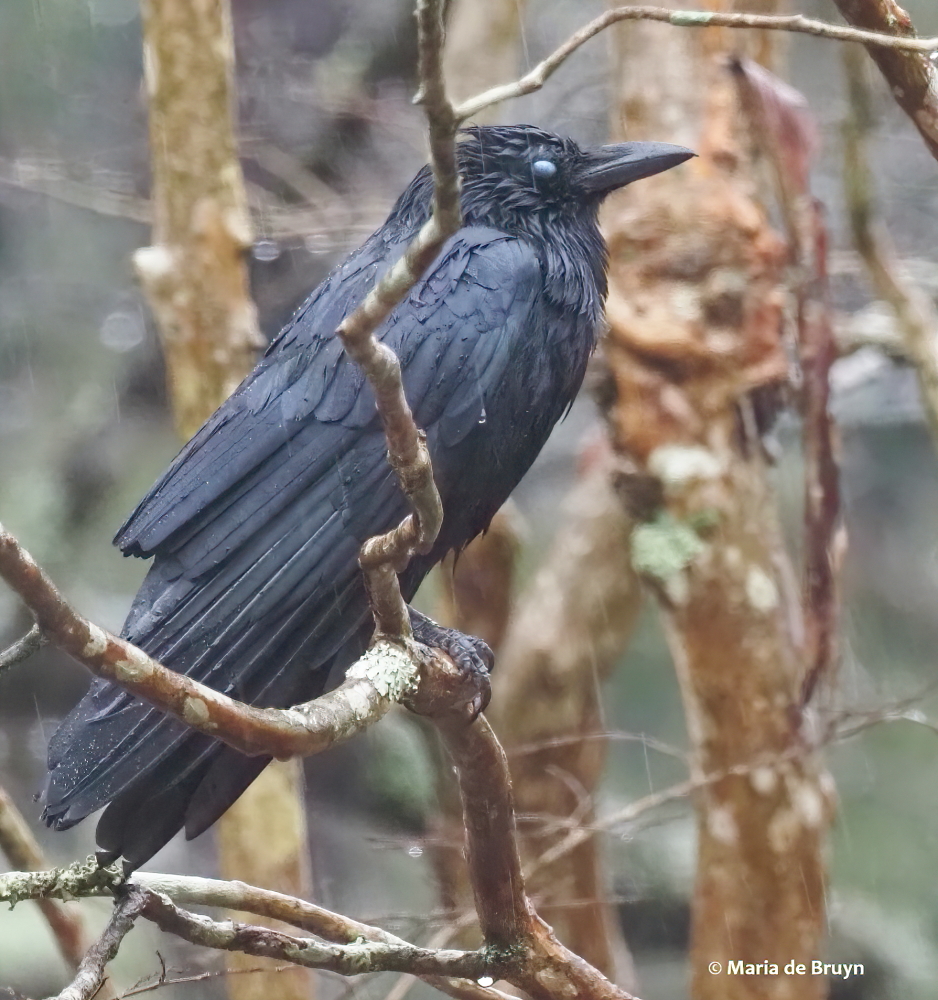
To close this blog, I wanted to share just a few photos of some other birds who are a beautiful black color: my faithful American crow couple (Corvus brachyrhynchos).

They have been visiting with one of their offspring from last year, just as they have done in previous years.


Unfortunately, it appears that one of the birds has somehow suffered an injury to one leg and foot. S/he has been hopping around on the ground and can fly well, but it is a mystery as to what happened to hurt this large bird. Perhaps a tussle with one of the neighborhood hawks?


Spring weather is beginning in our area, which means some avian species will be leaving us and some new ones will be arriving or passing through in the coming weeks. The next blog will feature a few of our feathered friends who will be leaving.

An avian buffet appears!

In the town where I live, there is a private lake in a neighborhood of single-family homes. The little body of water was created by developers who dammed a local creek; now a neighborhood association levies annual fees for use of the lake for swimming, fishing and boating. In the past month, the neighborhood residents were surprised by an influx of birds that they do not usually see and some photos of the new avian visitors began circulating.

Given my interest in wildlife and birds, some colleagues passed on a couple of photos to me and one couple kindly invited me to come visit so that I could see the new arrivals in person. They were especially curious about the identity of a few ducks. When I arrived, no ducks were in sight, but at least 80 double-crested cormorants (Phalacrocorax auratus) were hanging out in crowds on two floating docks.

Their tightly-packed presence had displaced the Canada geese (Branta canadensis), who are more common lake residents. A group of 11 geese were off in the distance on shore leaving the open water to the visiting avian groups.

Some of the cormorants couldn’t fit onto the platforms, so they swam around in the company of the many dozens of ring-billed gulls (Larus delawarensis) of all ages who were swarming the waters as well.

From time to time, the gulls would begin edging their way onto the platforms, eventually taking up space vacated by the cormorants. There are both adult and immature gulls in the crowd.

From time to time, the gulls launch themselves into the air for aerial forays which end in dives down to pick up a fish, of which there still seem to be plenty. This is because the shad population with which the lake was apparently stocked is dying off as a whole.

Why is this happening? I don’t know the species of shad with which the lake was stocked, but it appears that threadfin shad (Dorosoma petenense) are common in the Southeastern USA and often introduced as forage fish for the bass and catfish that fisher-people seek. The shad are very sensitive to changes in water temperature; when it goes below about 42° F (5.5° C), they expire. In the past 6 weeks, we had an unusual early winter storm with about 8-11 inches of snow, followed by days and days of cold rains. Sometimes, it is cold 24 hours long; other days have nights and dawns below freezing and then afternoon temperatures of 50-60° F (10-17° C). The shad die-off is a result.


The newly arrived birds are obviously enjoying the easy pickings. When the gulls drop down to snatch a fish, they are almost always pursued by other gulls who try to make them drop the prize.


Even when they alight with a fish firmly held in their beaks, other gulls harass them in an attempt to make them give up the meal.


The shad often appear to be too large for the gulls to swallow. I saw several gulls try to position them to get them down their gullets but the fish just wouldn’t go down. So they drop the fish in the water and then try to pick off pieces for easier eating, while fending off neighboring gulls.


It is unclear to me how the birds who don’t usually populate the lake in winter knew that a spontaneous buffet had appeared. In addition to the cormorants and gulls, a group of seven bald eagles (Haliaeetus leucocephalus) was also fishing when I visited. There were some almost full adult eagles (with mostly white heads and tails) and several immature birds of varying ages (eagles reach maturity at 5 years of age). I guess that they came over from Jordan Lake, which is quite a fair distance away. Searching the Internet has not yet given me an answer to this question.

I didn’t see the eagles harass gulls who had gotten a fish but they were very carefully watching one another. When the eagle below managed to get a snack, other immature eagles closely followed him/her. A sub-adult who got a fish was harassed by an immature bird as well.


The eagles soared overhead and were joined at one point by a beautiful red-tailed hawk (Buteo jamaicensis). The larger raptors let the hawk fly alongside them with no problem.

It was quite a chilly morning when I got to see the visiting aquatic birds, so I only stayed a short time. But my friends invited me to return for another visit, which I hope to do soon as there is no telling how long it will take the visiting birds to eat the easily available shad. And the ducks? I was able to get one rather indistinct photo of a threesome across the lake and helpful folks in a Facebook group confirmed my guess – they are ruddy ducks (Oxyura jamaicensis). Maybe I can get a decent photo of them next time. 🙂