It’s been quite a while since my last blog; other things keep getting in the way of my writing! In any case, I’d promised you a tale of a close encounter with a hawk; here it finally is!

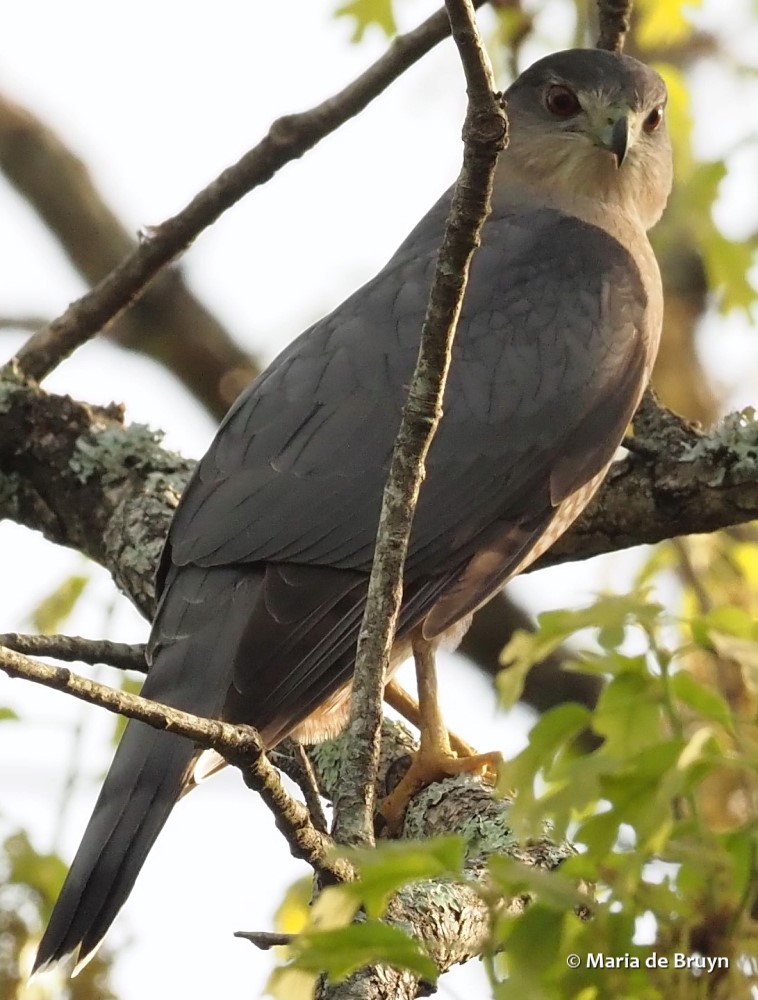
Immature Cooper’s hawk
I really enjoy watching raptors and, fortunately, I see them regularly on my nature walks. While I can spend quite a while just watching them soar, build nests and care for their young, I admittedly don’t always enjoy seeing them eat.
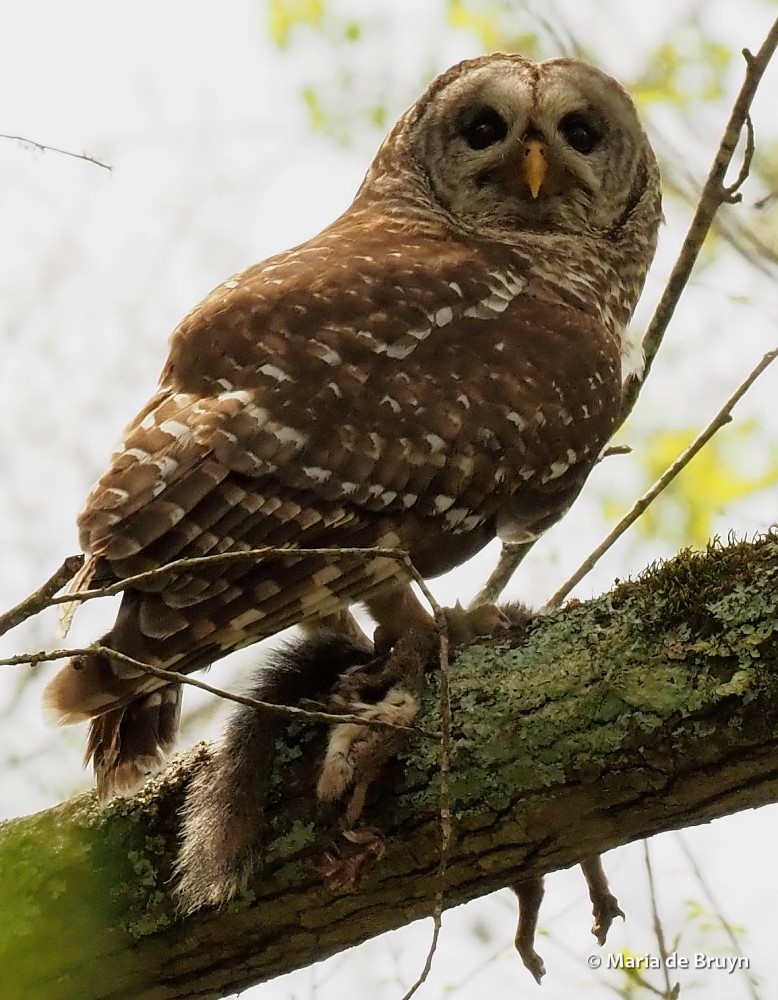
When songbirds eat insects, they dismantle and swallow them fairly quickly. When raptors dine, they rarely gulp down their food. Meals can last quite some time while they dismember their prey, as was the case for the barred owl above (Strix varia) who was eating a squirrel.
The hawks whom I see often include four species that frequent my neighborhood, including my yard — the red-shouldered hawk (Buteo lineatus), the red-tailed hawk (Buteo jamaicensis), the Cooper’s hawk (Accipiter cooperii) and the sharp-shinned hawk (Accipiter striatus).


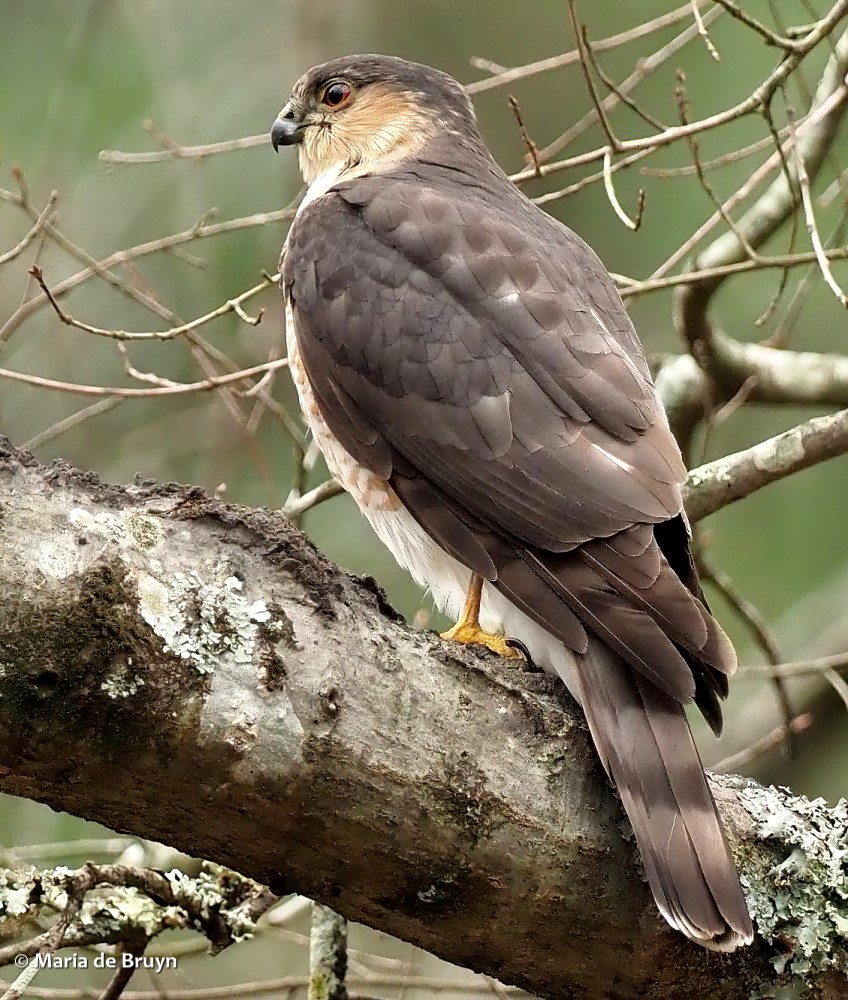
The Cooper’s and sharp-shinned hawks are the most frequent visitors. To inexperienced birders, they look very similar. Size is one clue to identity with a sharp-shinned hawk averaging 10-14 inches in length (jay- or dove-sized, 25-35 cm), and a Cooper’s hawk being about crow-sized, averaging 15-20 inches long (38-51 cm). The sharp-shinned hawks (seen above and below) don’t seem to visit as often as the Cooper’s hawks.

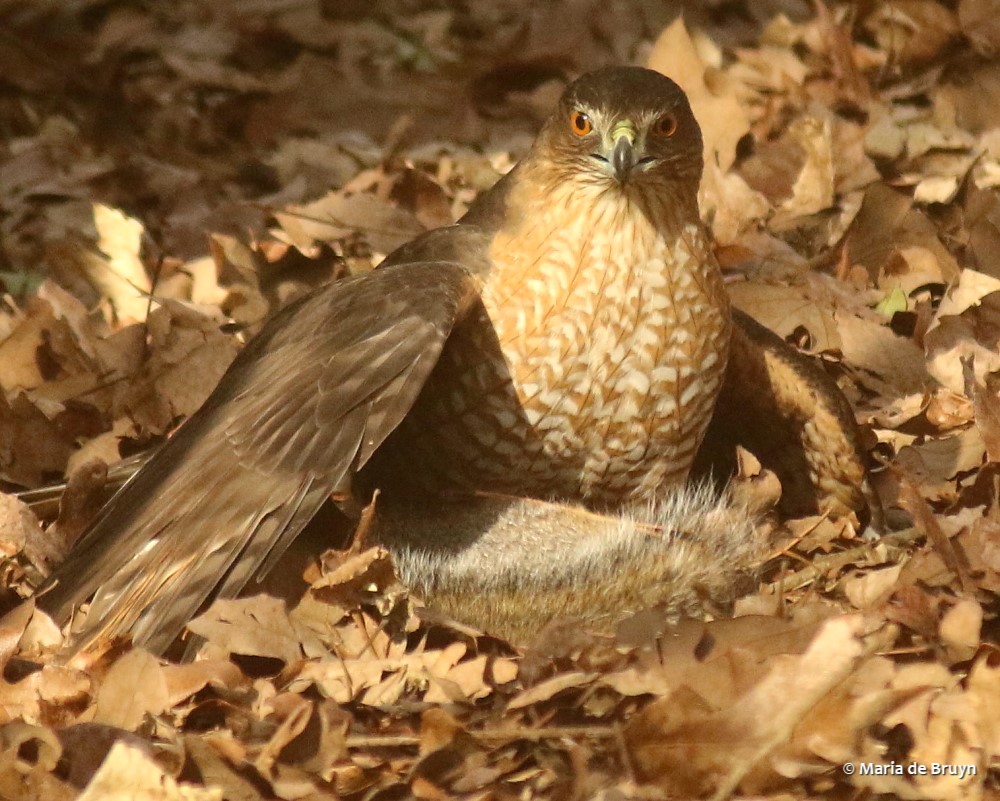
In 2019, a hawk caught a squirrel in my yard. Until recently, I was convinced that she was a red-shouldered hawk, but I decided to ask for confirmation from a raptor ID group on Facebook.

The experts informed me that she was an exceptionally large Cooper’s hawk. One commented: “Largest female Cooper’s are around 21 ounces; obese Eastern Gray Squirrels are around that but most we see are little more than half that. And even cargo helicopters strain to lift much more than their own weight. So unless I see rocket assists on a Sharp-shinned (maxing out at around 7 ounces) they can’t lift the full carcass of an adult EG Squirrel.”
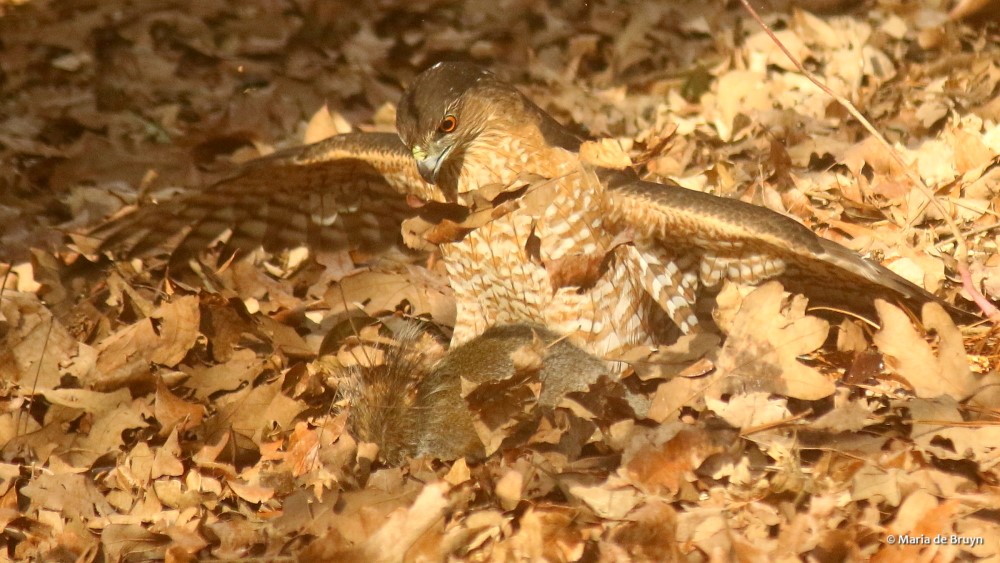
The female Cooper’s hawks are up to one-third larger in size than the males and she was a hefty individual. Nevertheless, she had her work cut out in subduing the squirrel.

While she was trying to hold onto and kill the rodent, a pair of crows began harassing her, but she held her ground.
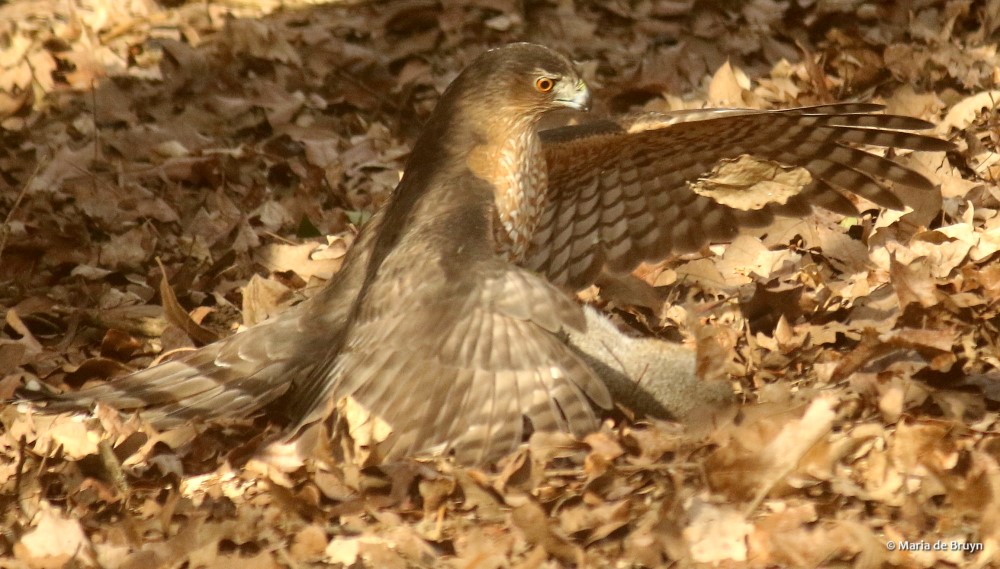
Ultimately, she was able to put the squirrel out of its misery and she finally flew off with it to consume her meal elsewhere.
This year, I’ve had a young Cooper’s hawk come by; she was born in 2021 and seemed to be searching for something to make her day.

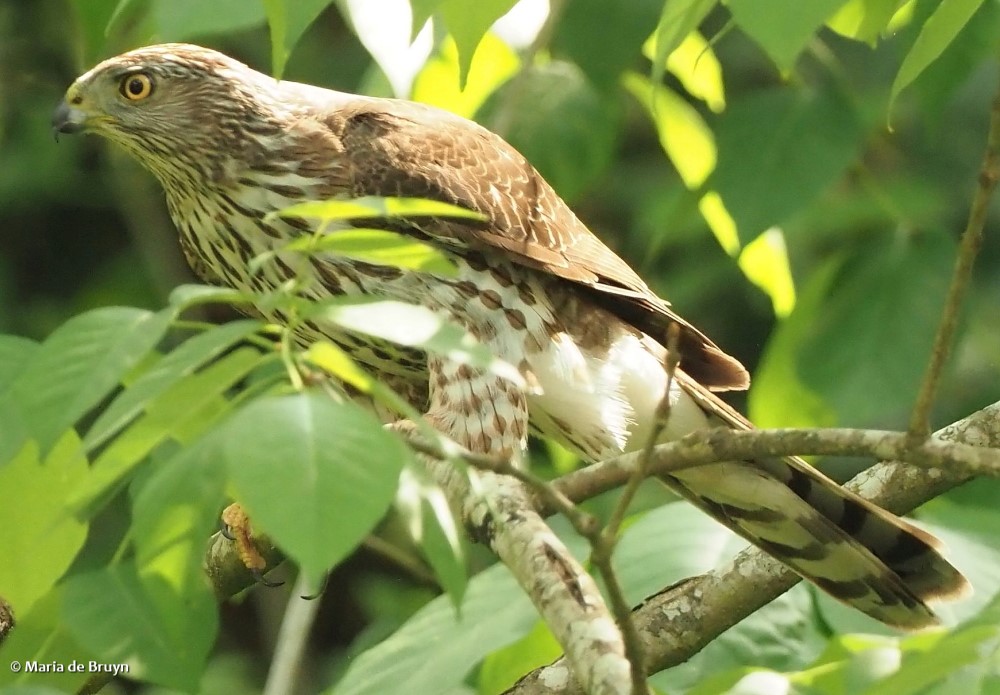

Above you see her eye covered by the nictitating membrane
My most surprising — and definitely hair-raising — encounter with a hawk occurred this past April. I was sitting in a porch chair in front of my living room window. As I looked down to record bird species for an online birding site, I heard a hard collision into the window right next to my head. A male brown-headed cowbird (Molothrus ater) fell into my lap.
He was completely stunned, and as I looked down, he slid off my lap. Then I looked up to see if he was being chased. That was indeed the case — a large Cooper’s hawk was coming right toward my face with his/her legs extended in front with widely-spread claws ready to grab prey. Of course, I had no time to take a photo, but the photo below of another Cooper’s hawk shows a bit what those claws are like. Their enlarged rear talons are about 0.67-0.85 in long (17-21.7 mm) in males and 0.78-1.05 in (19.8-26.7 mm) in female hawks.
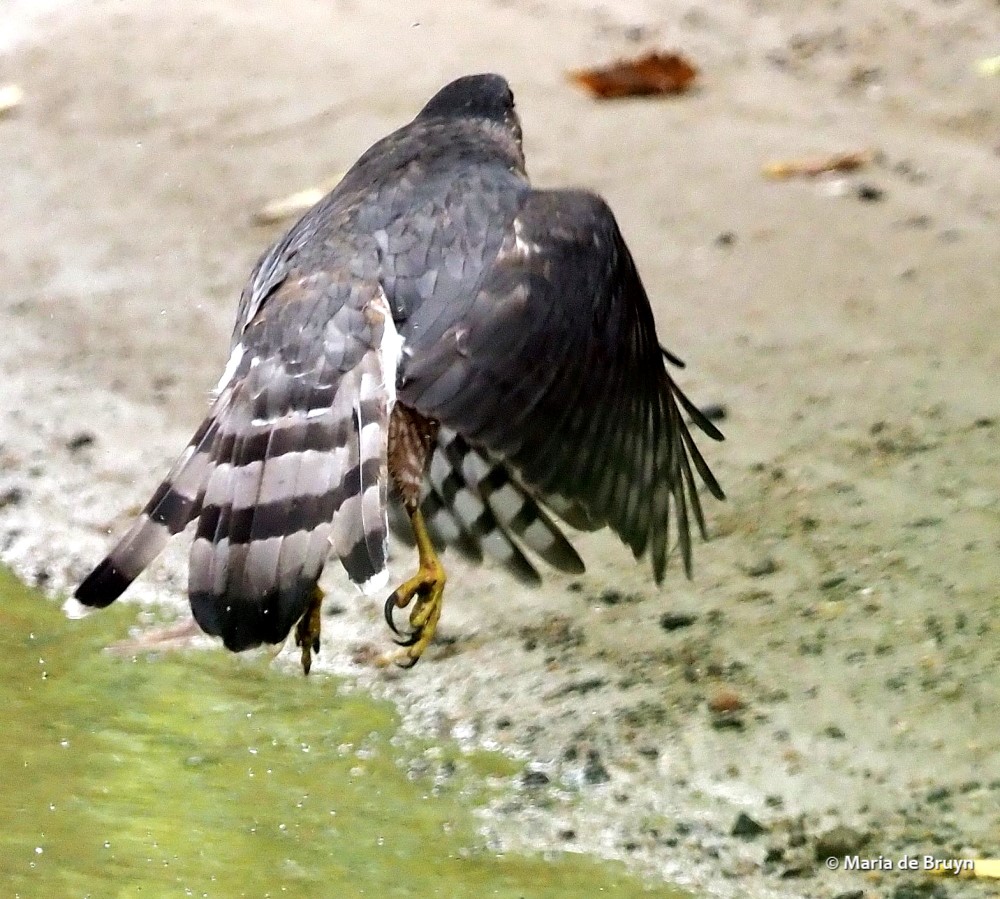
My amazement at the proximity of the incoming raptor so stunned me that I waited a second or two before waving my arm and yelling to the bird to stop — s/he was only about 3 feet from me! The bird had been so focused on the prey, that my shout made the raptor try to “backpedal” in mid-air.
The hawk tumbled a bit, righted herself (I assume the size indicated a female) and then she shot up over the porch and house. The cowbird died and I laid him in the front yard, thinking she or another predator might take him. The next day, the cowbird was untouched, so I buried him.
The encounter occupied my thoughts for quite a long time afterwards. I felt incredibly lucky those claws had not reached my face or head with terrible results. It had not occurred to me that my front porch could be a place of potential avian-caused peril, but I learned a good lesson that day — always pay attention to your surroundings and stay alert when predators could be nearby!
Next blog: a few shots of some red-tailed and red-shouldered hawks that I’ve enjoyed taking over the past couple years.
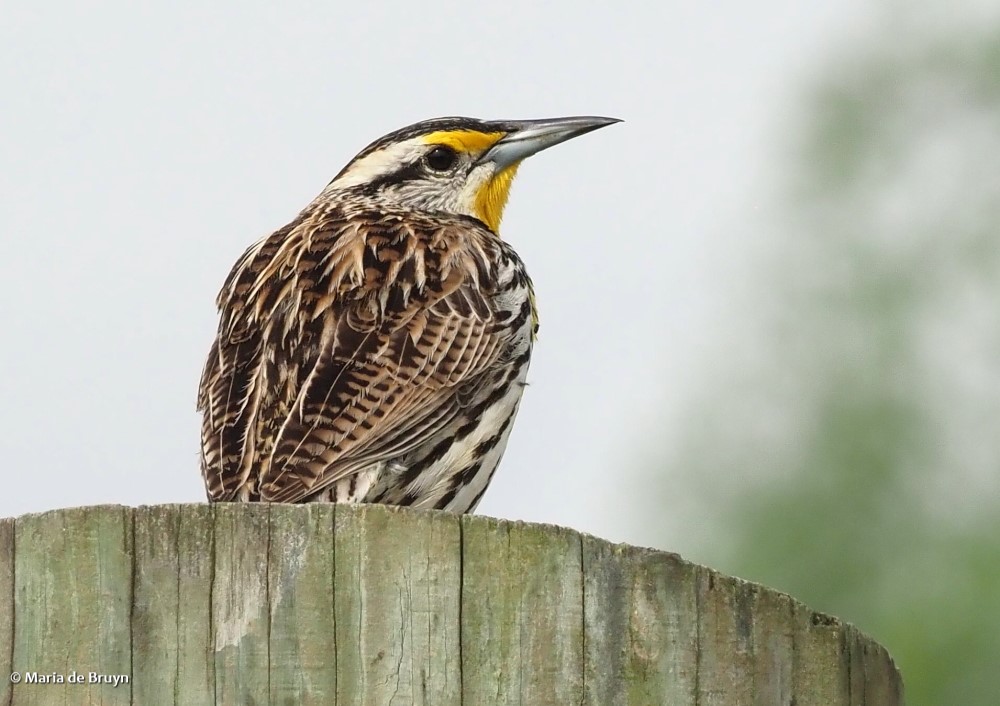
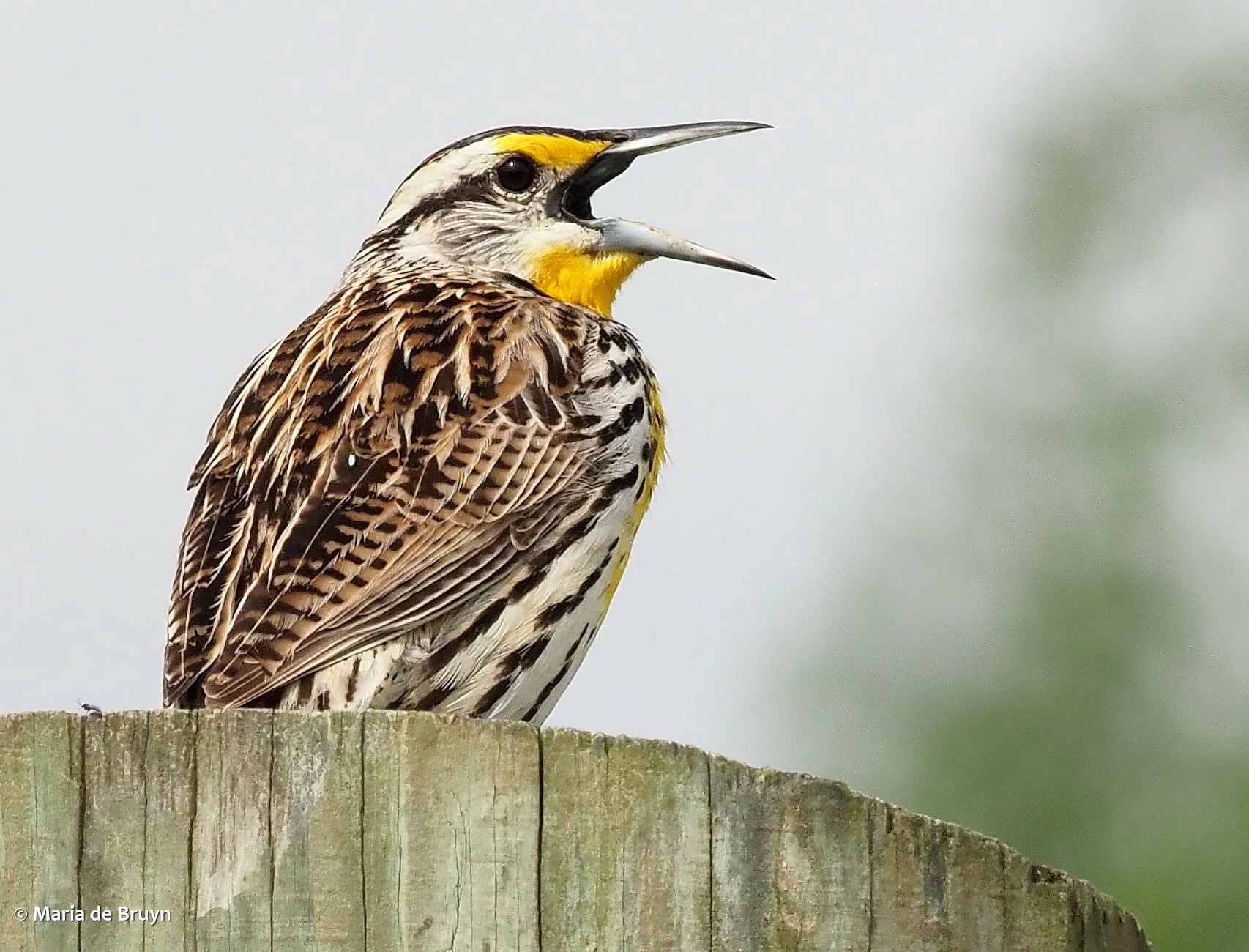
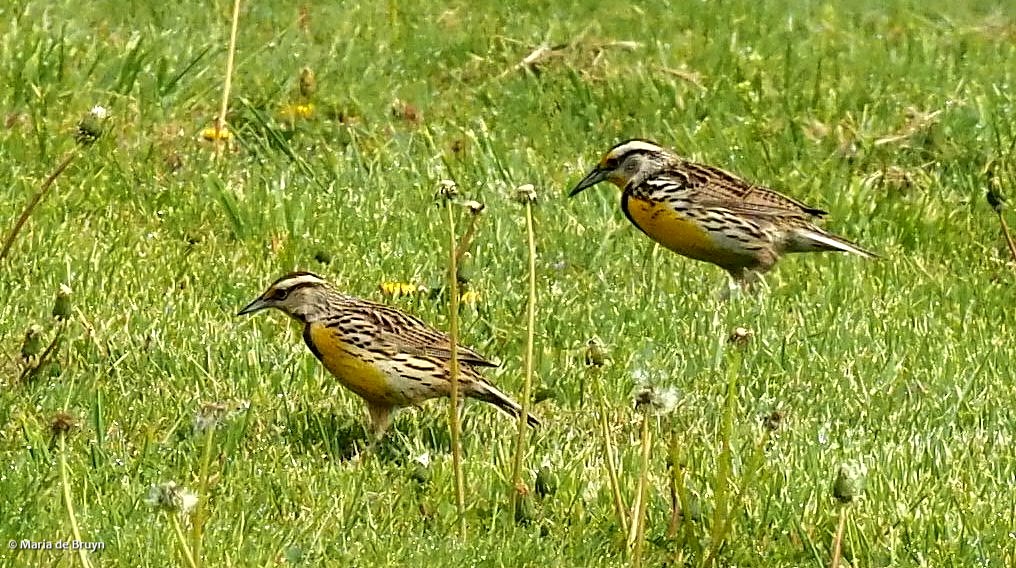
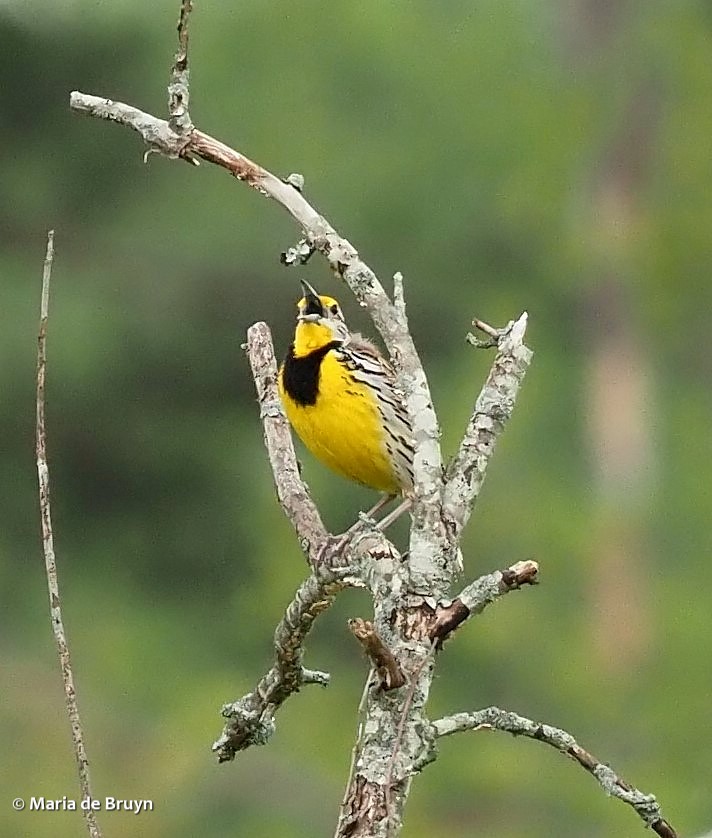
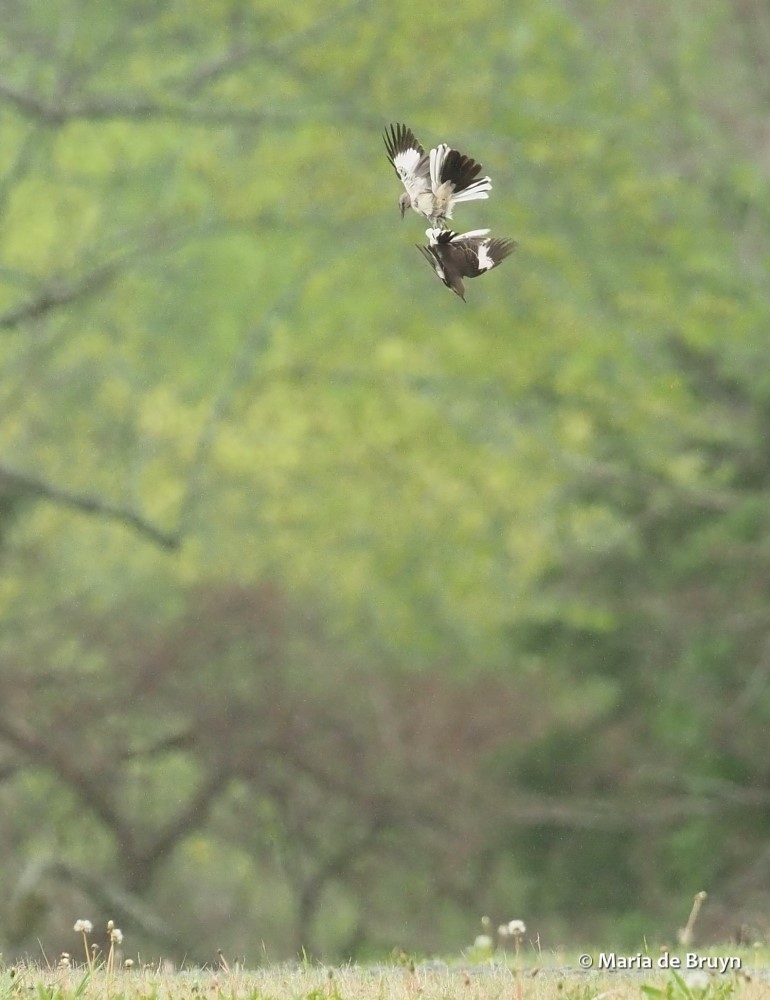

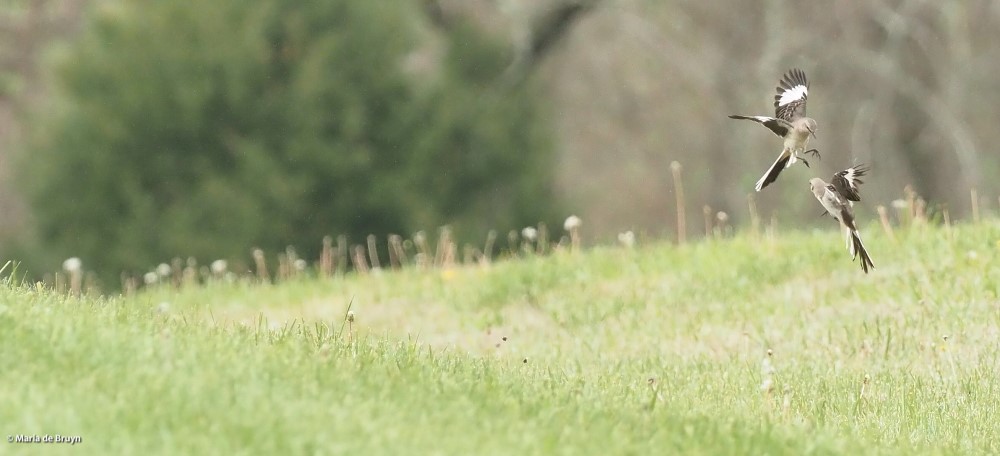
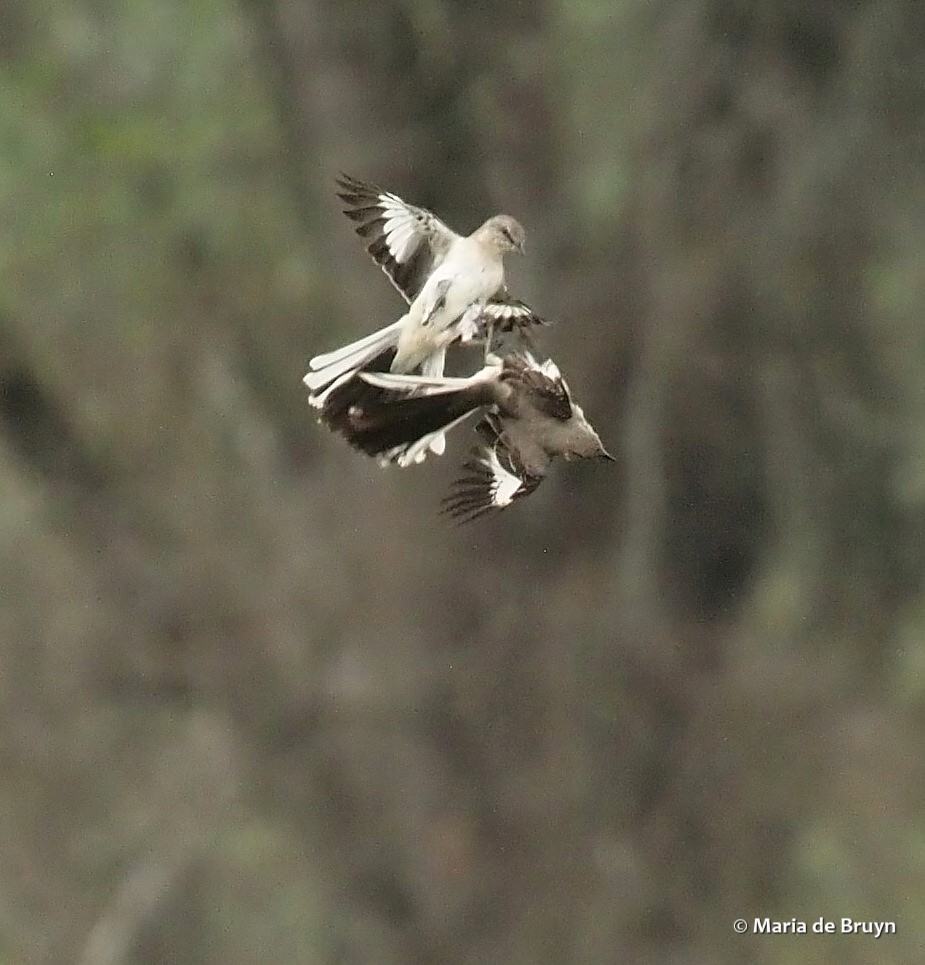
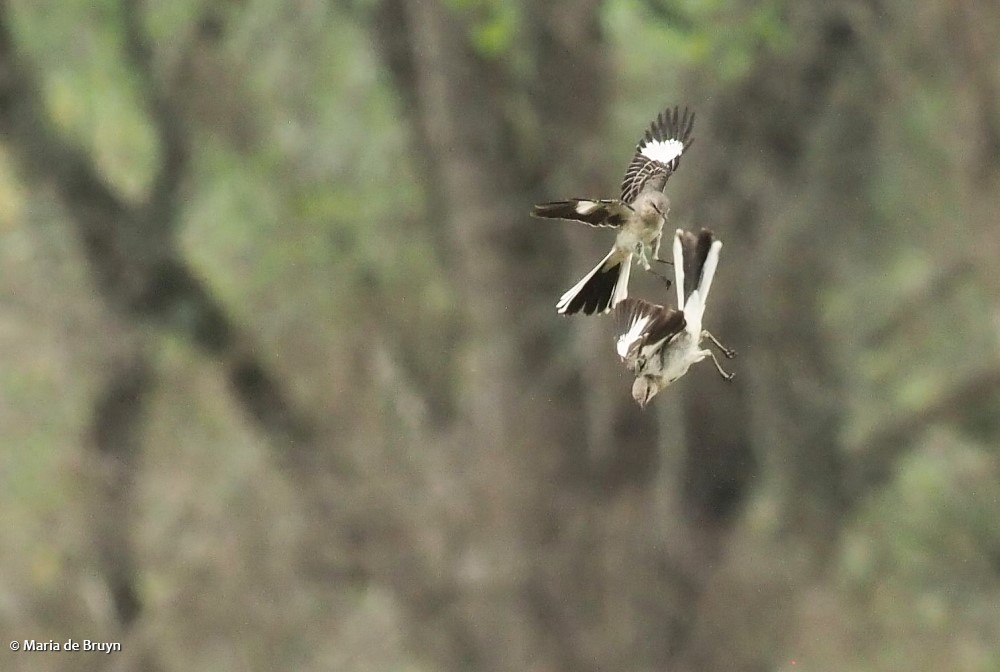
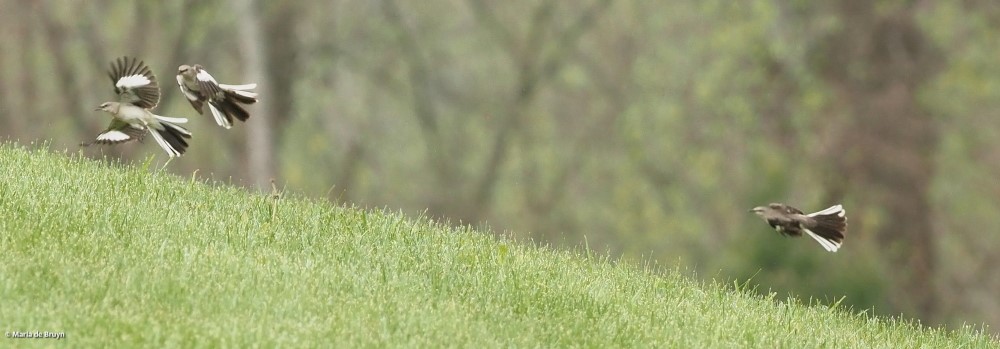

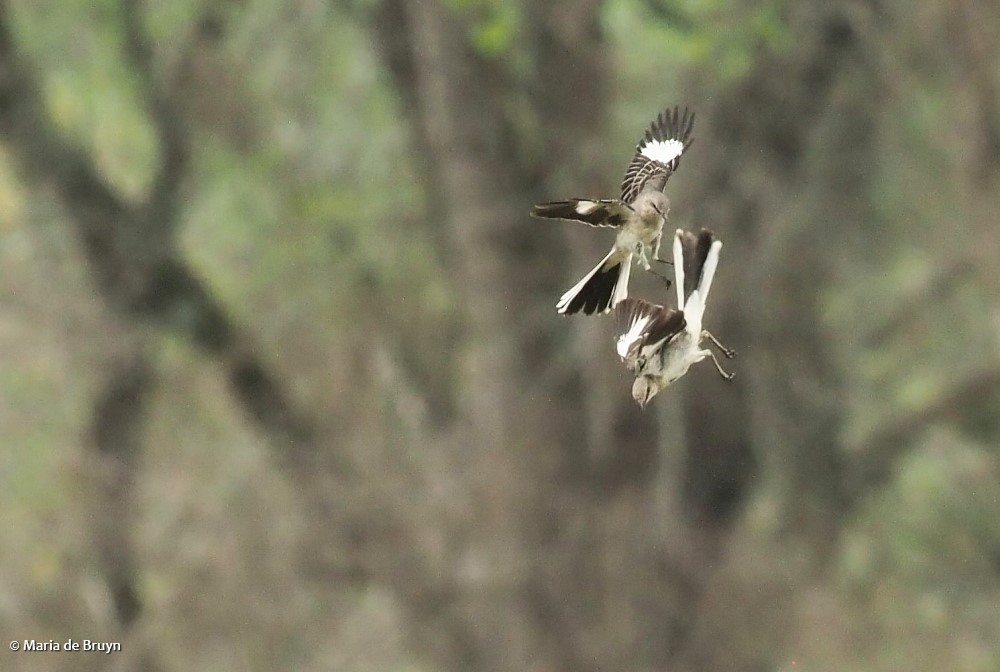
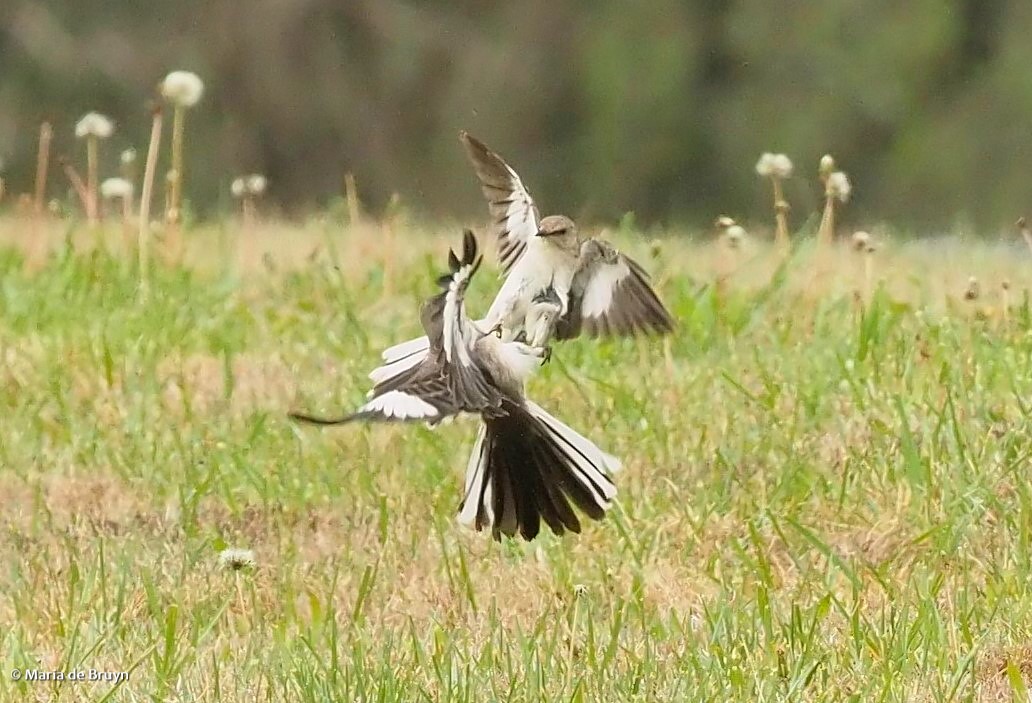
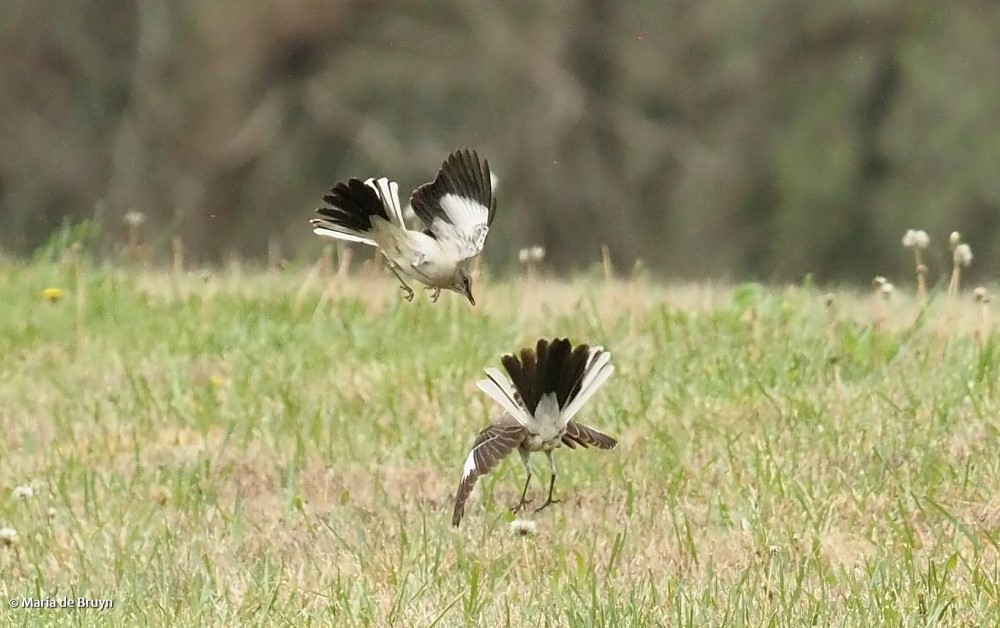
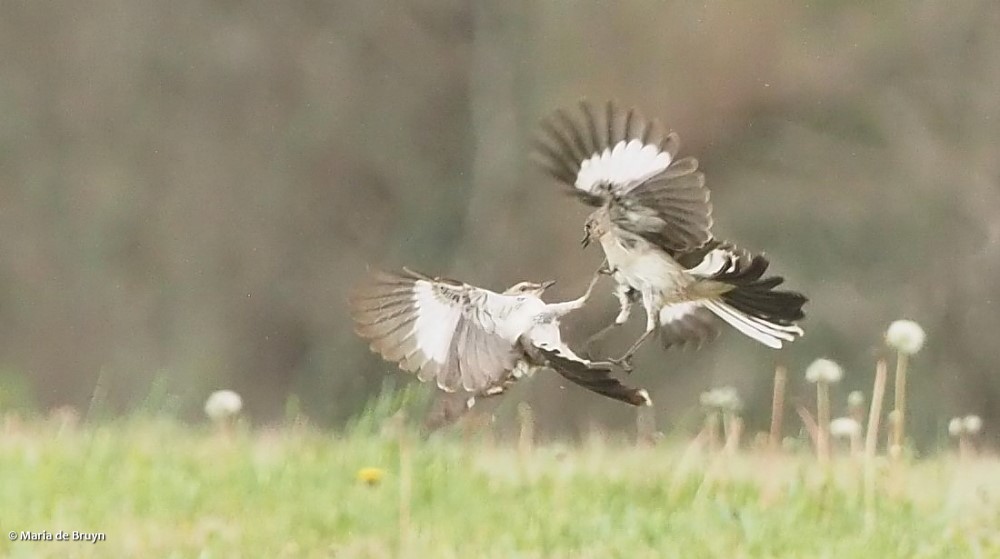

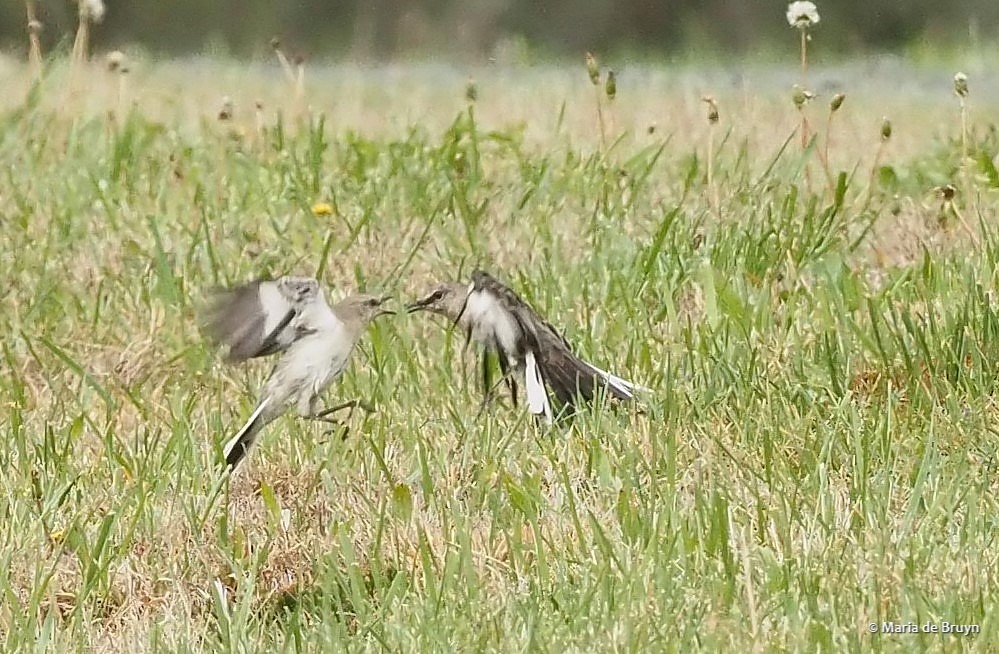
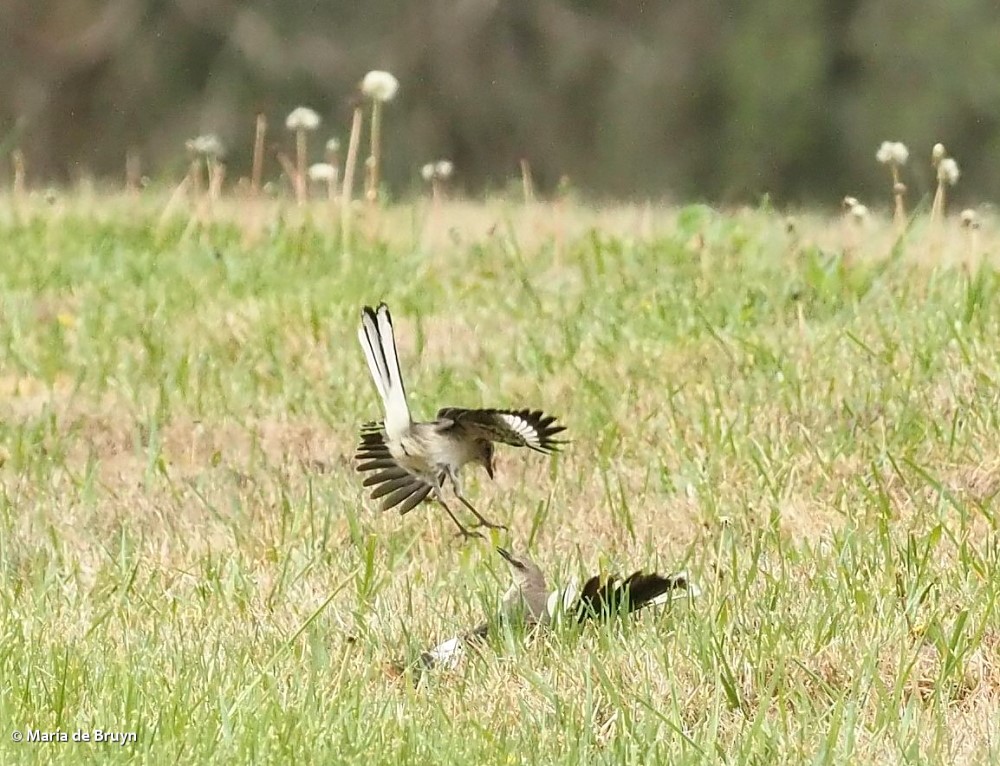
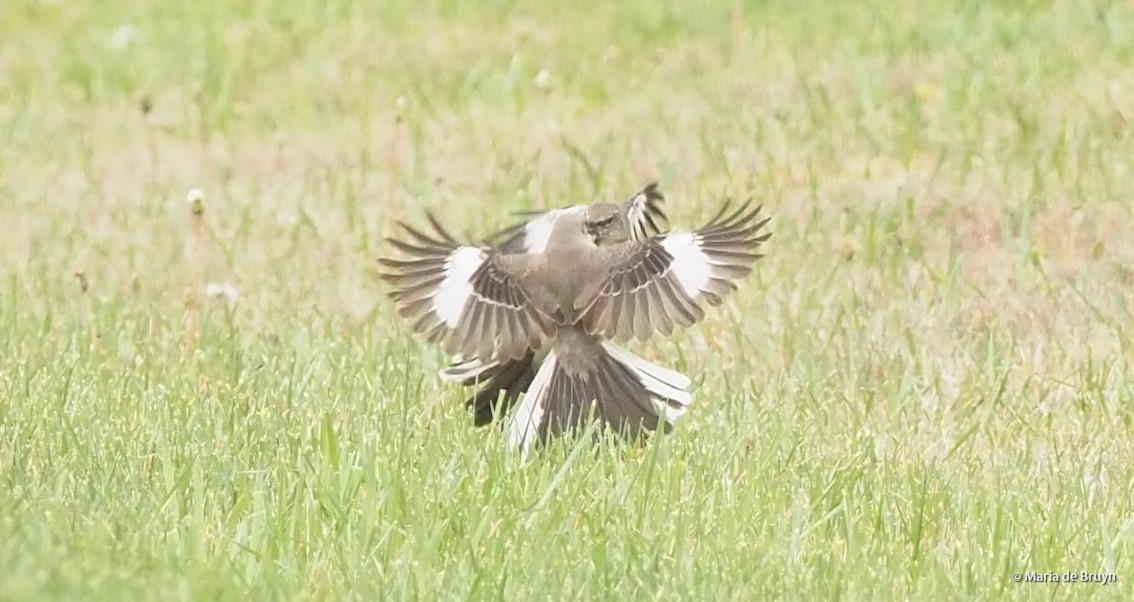
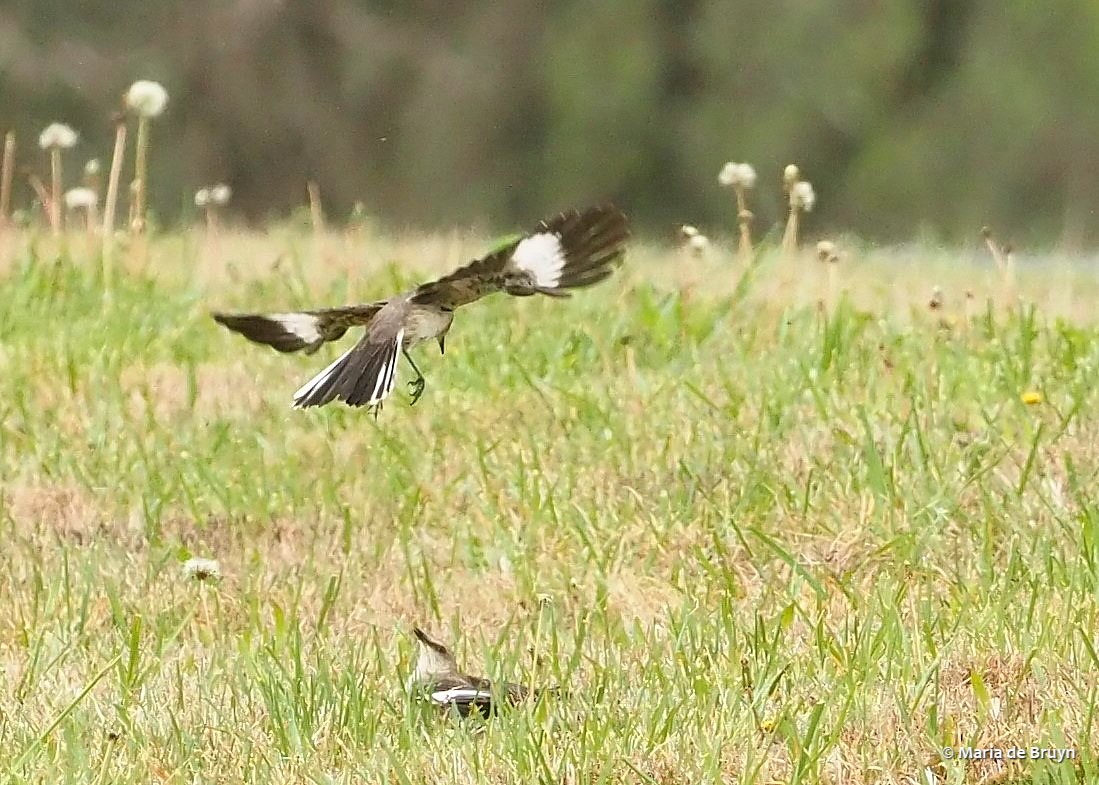
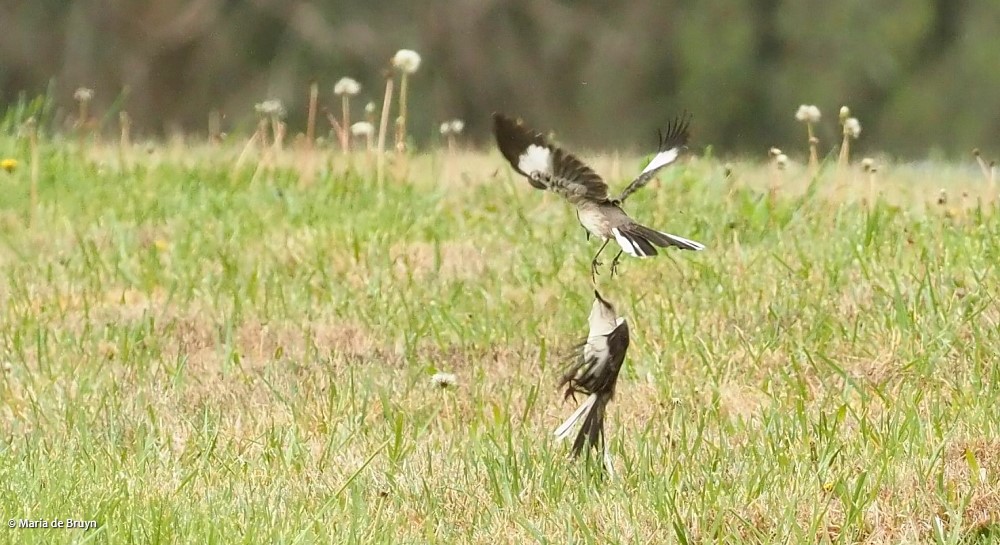
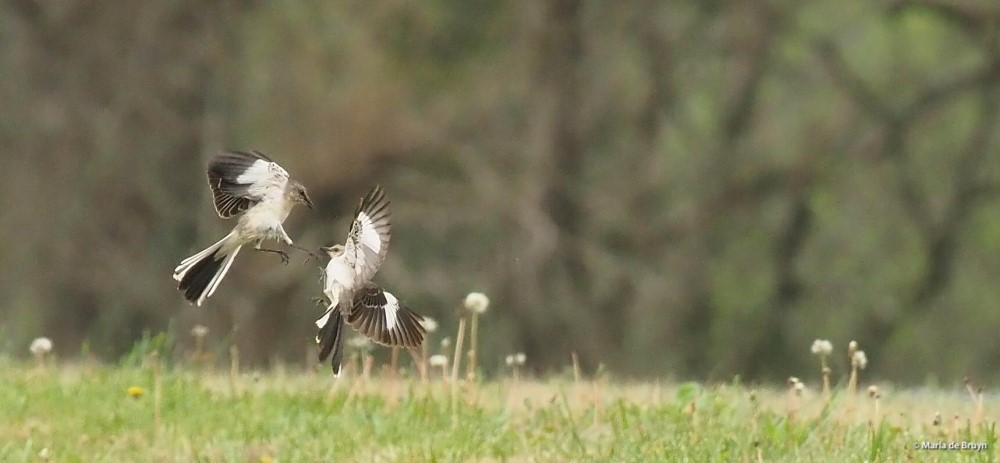


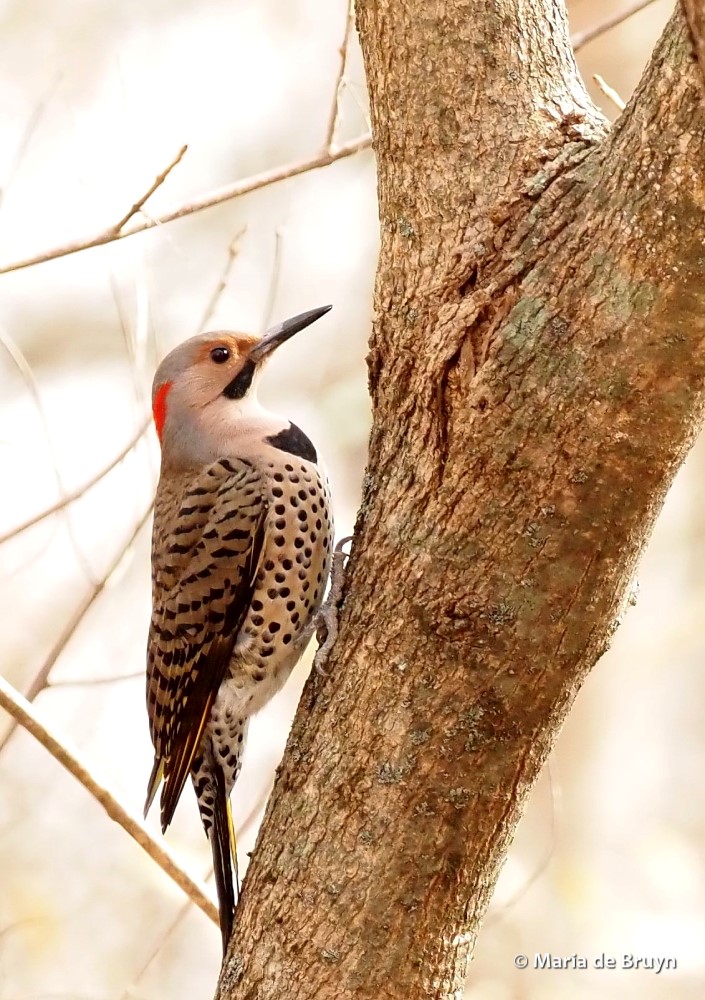
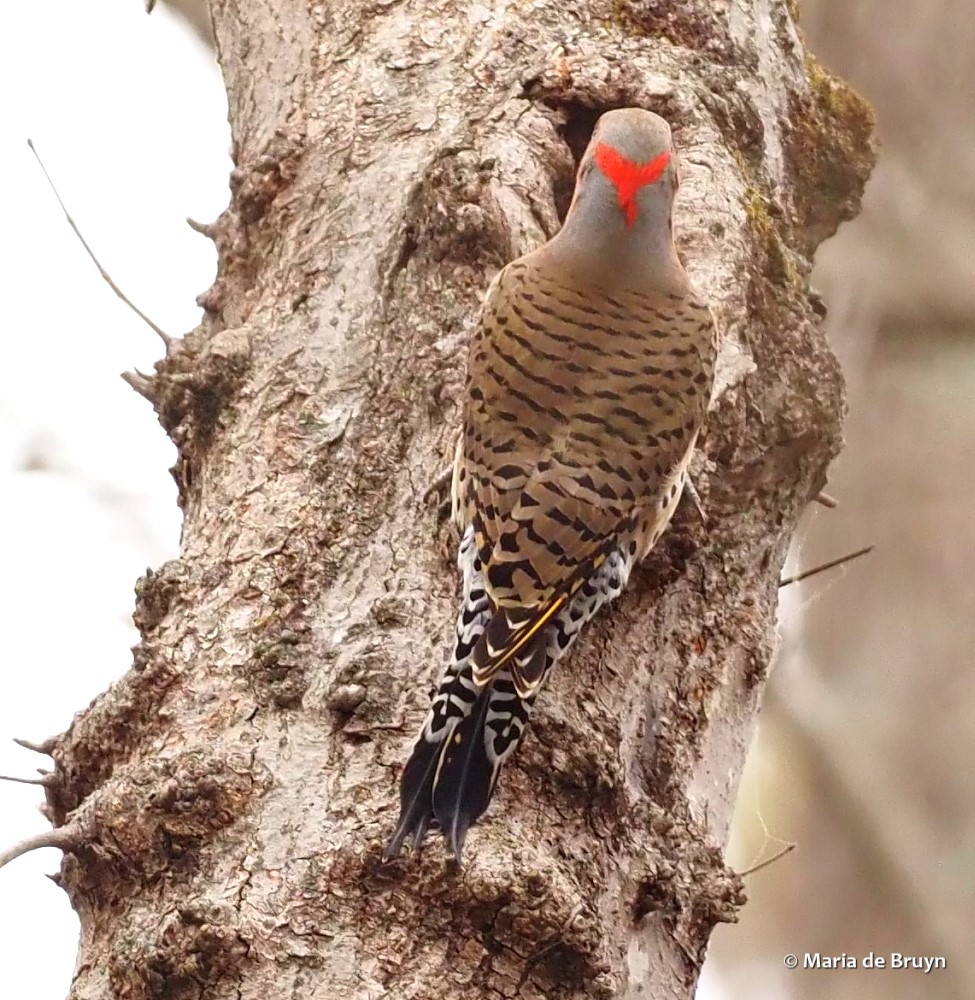
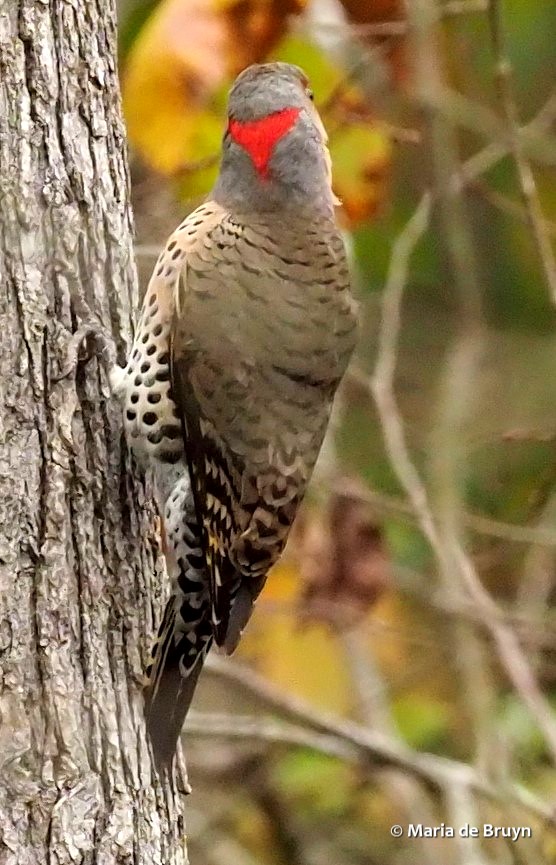
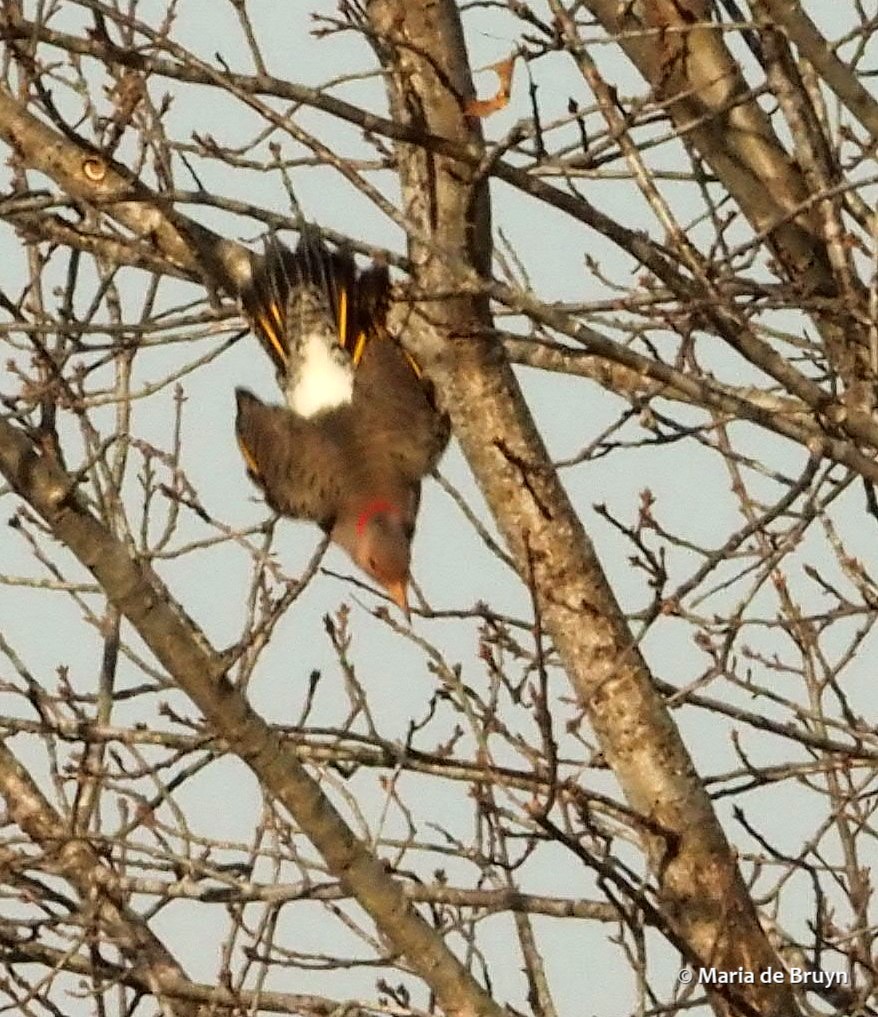
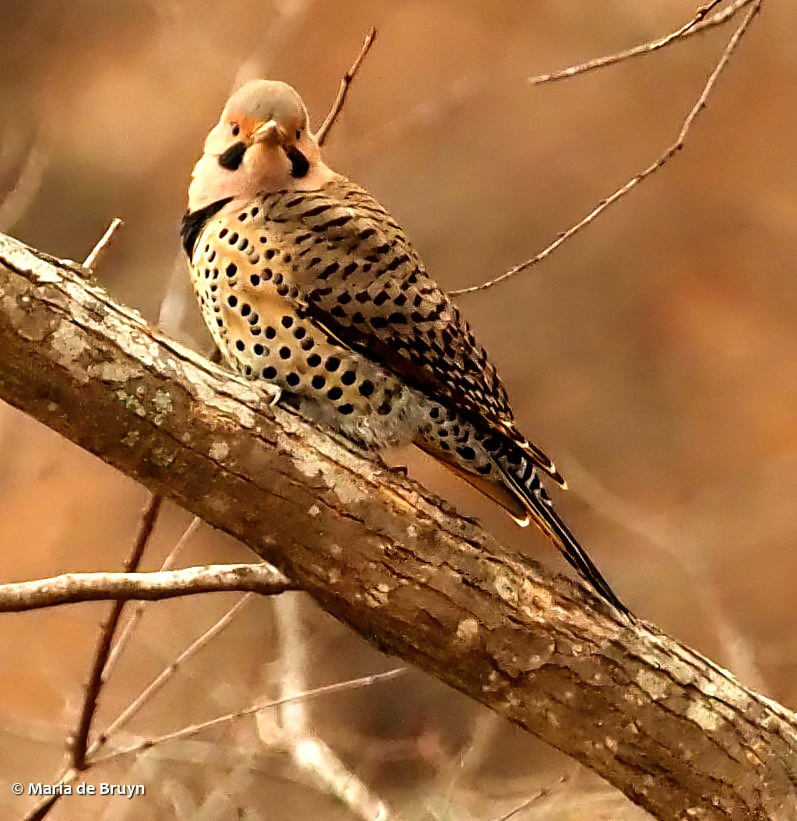
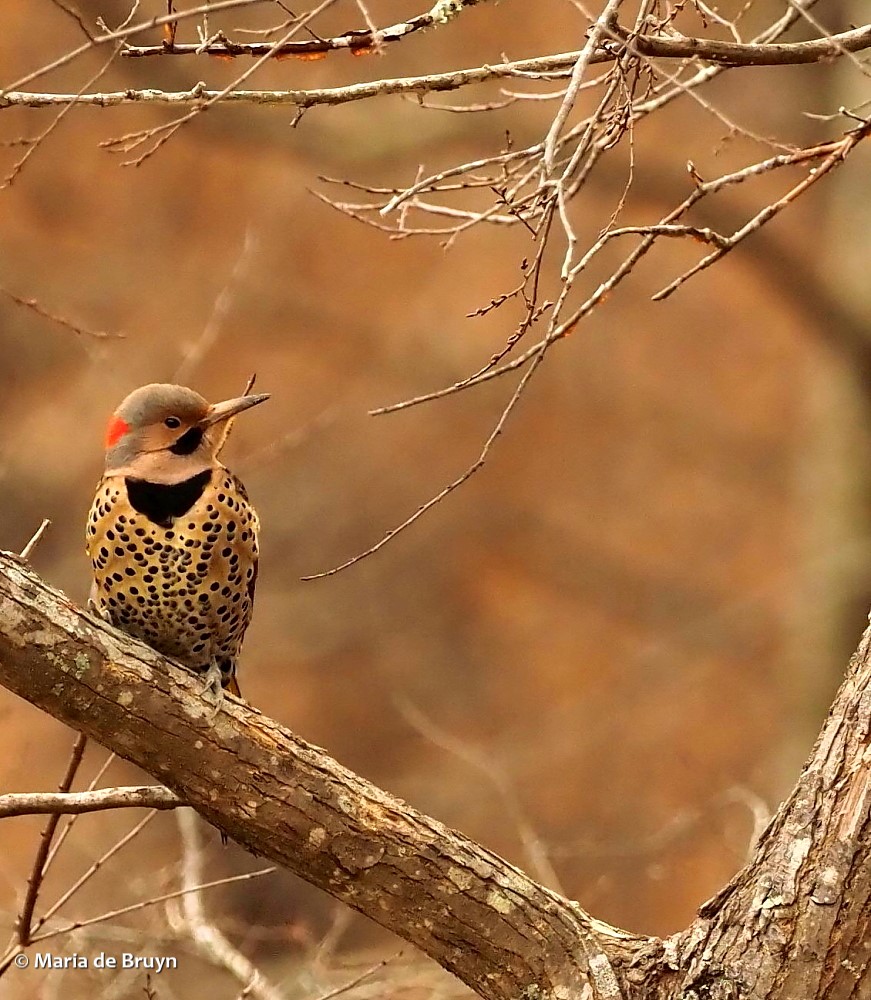
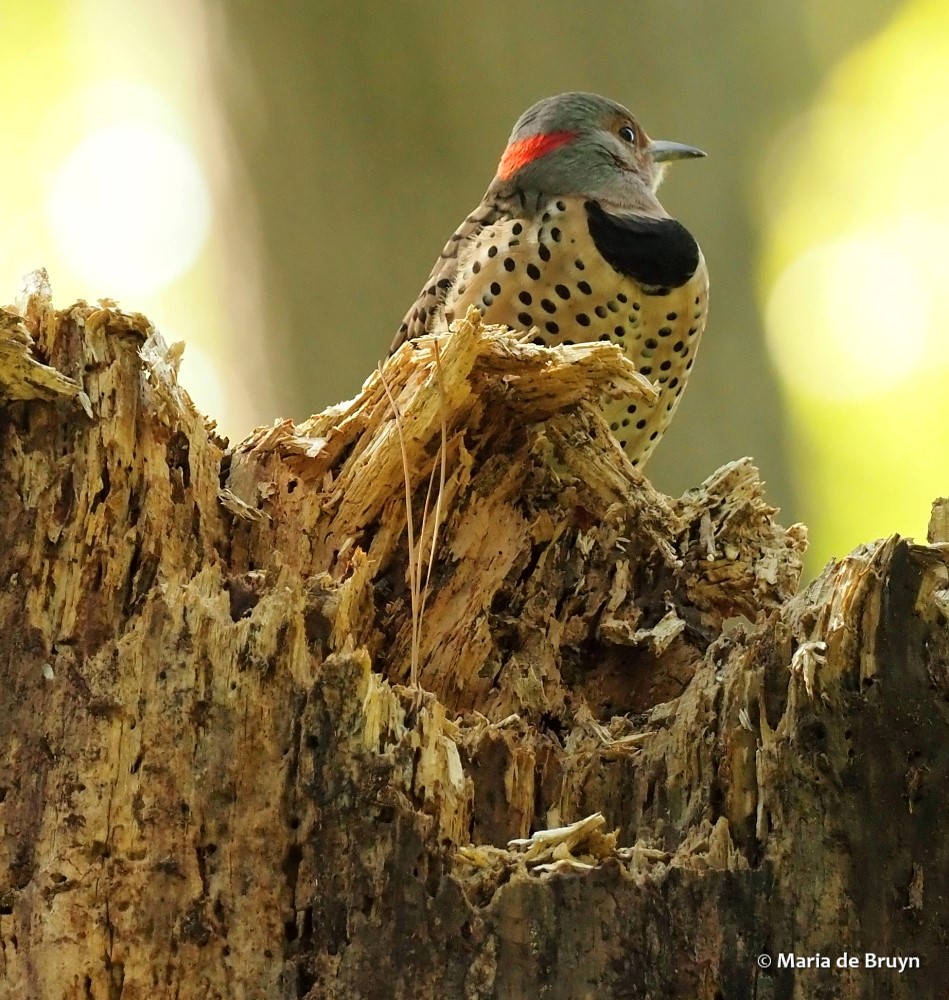
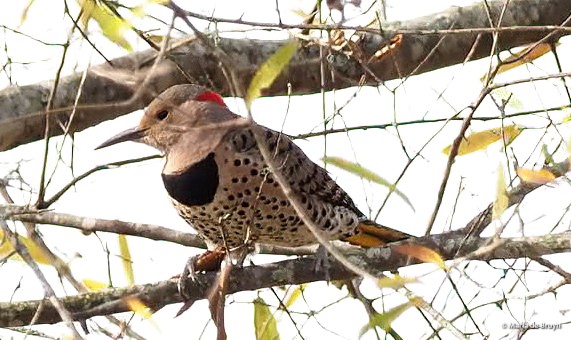
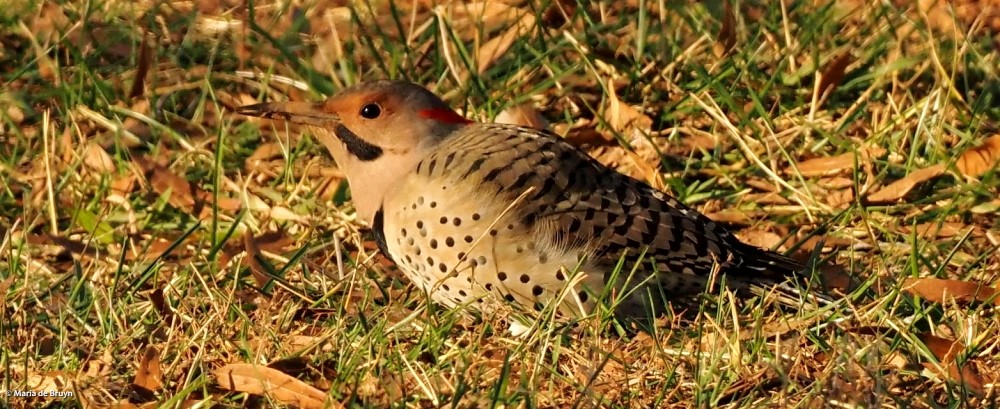
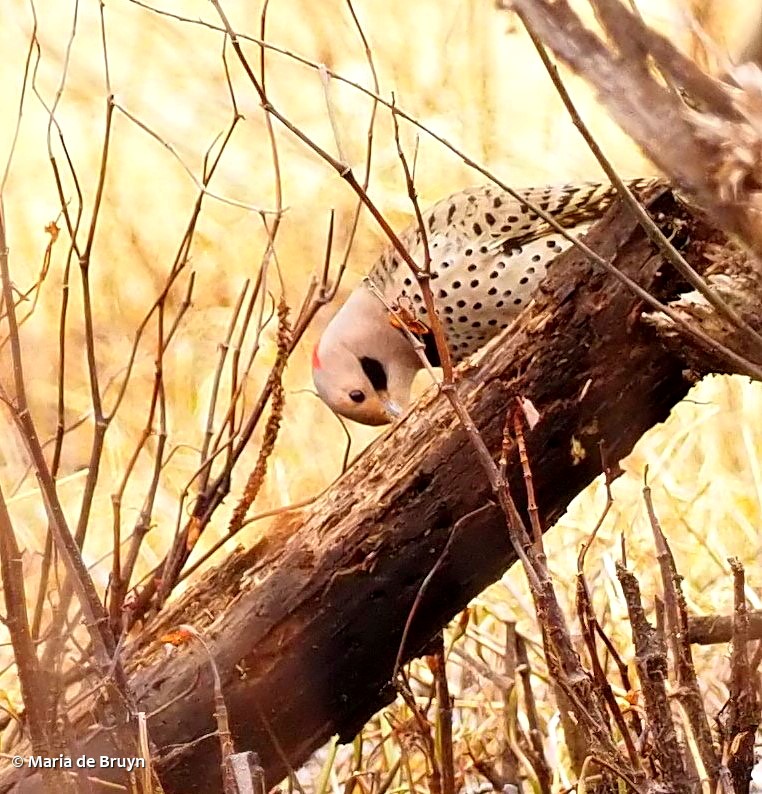
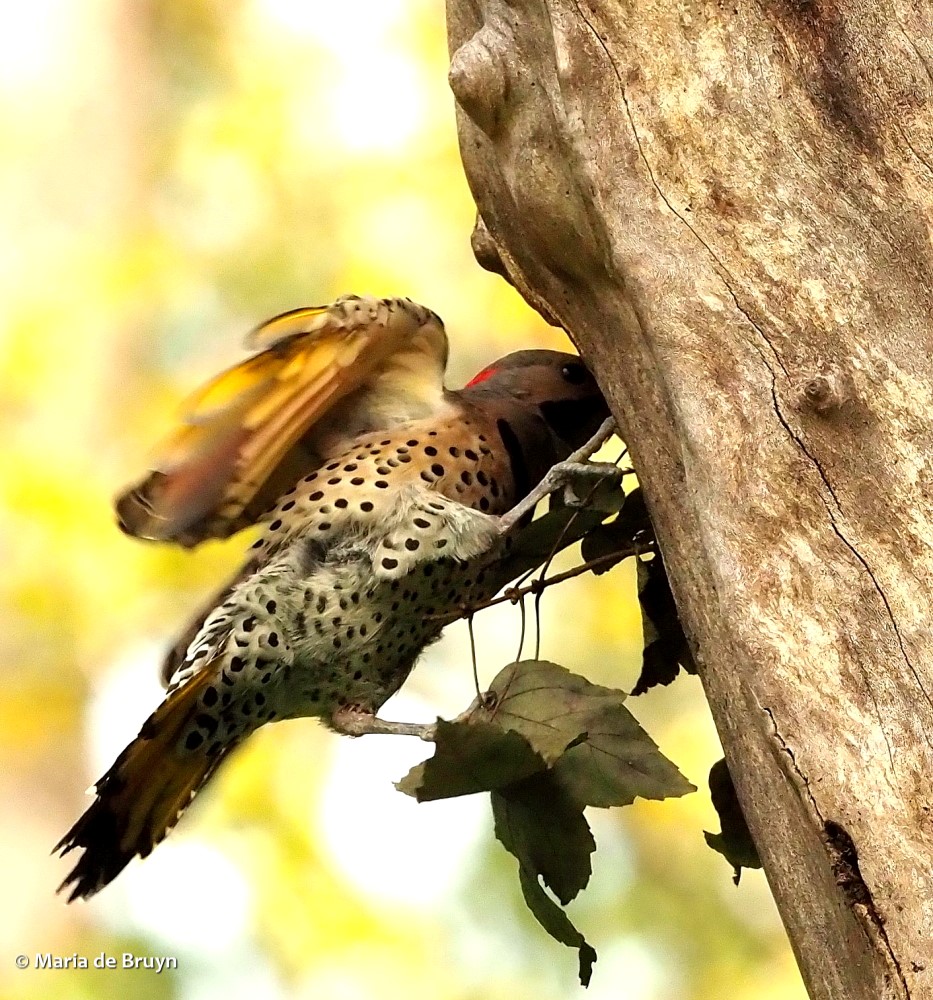

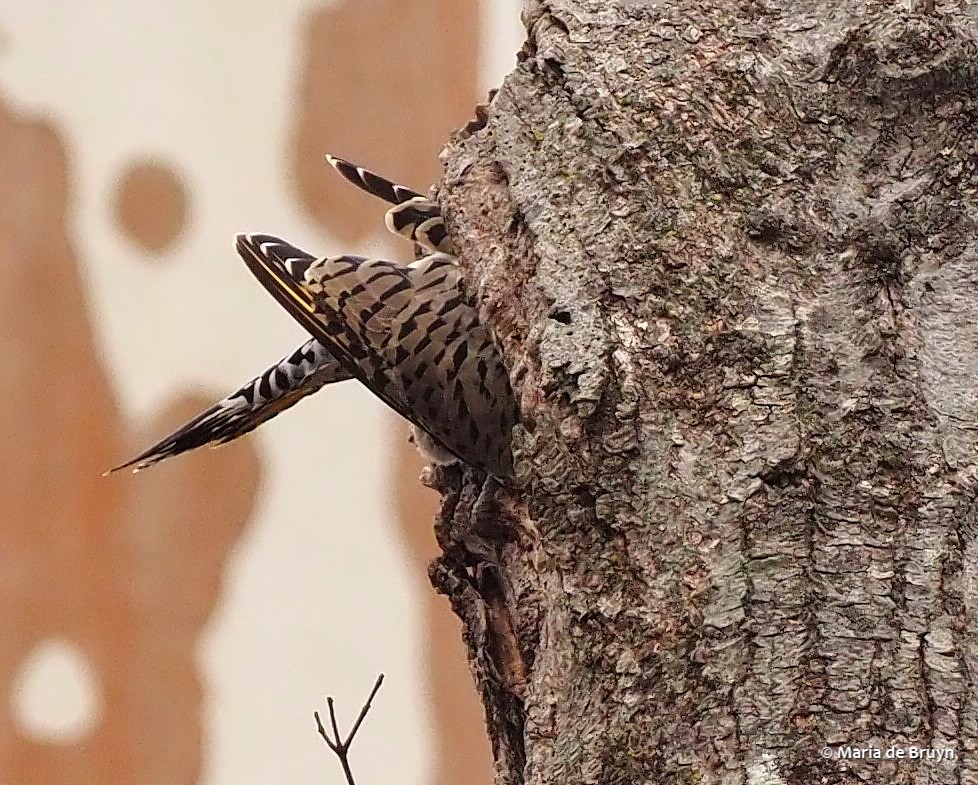
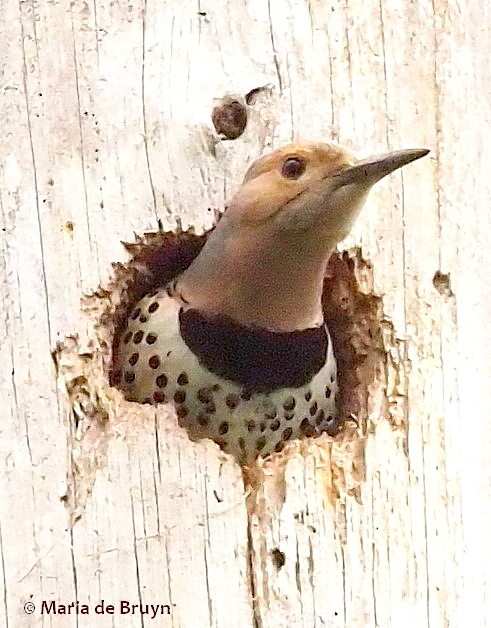
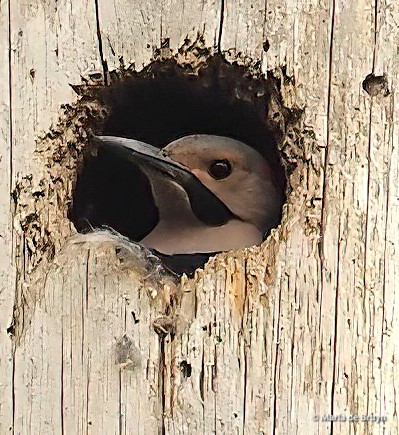
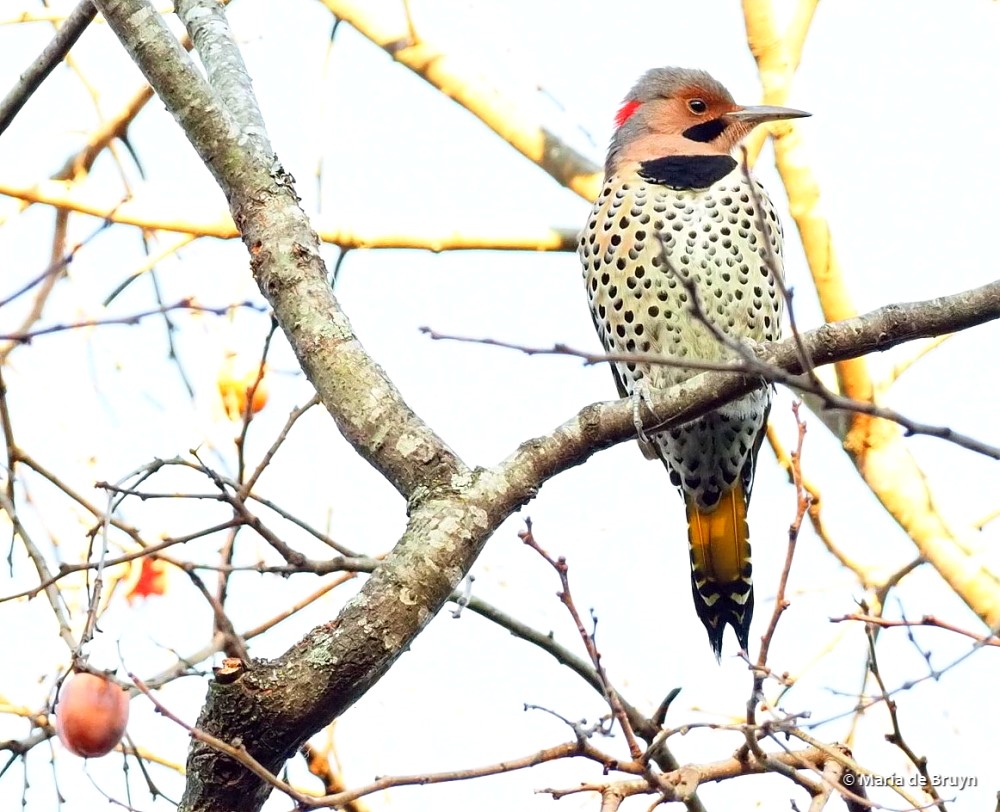
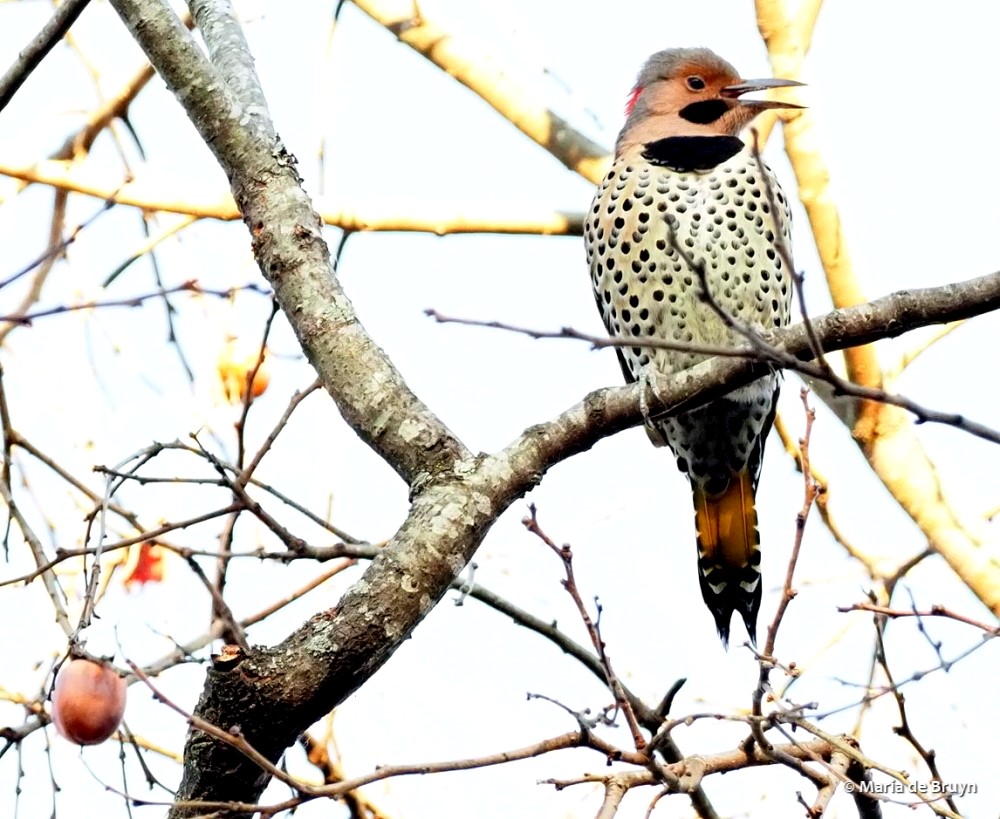
 They adapt well to living around human settlements but can be threatened by fewer available nest sites due to urban development, snag removals, and competition for nest holes, as well as heat waves that affect nestlings and wildfires that destroy their habitats.

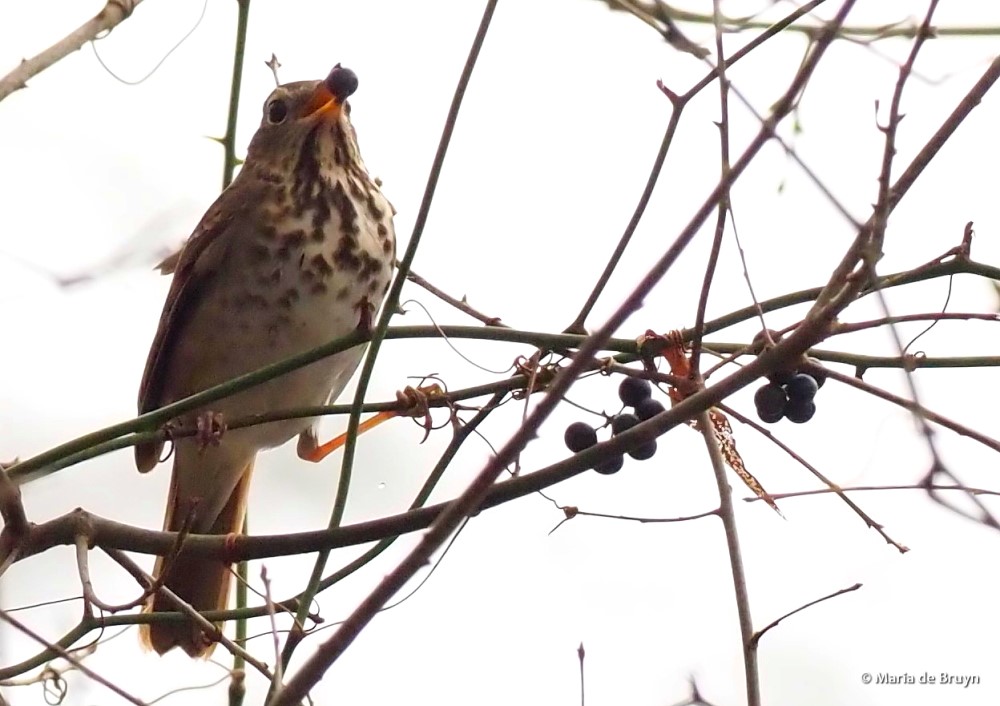
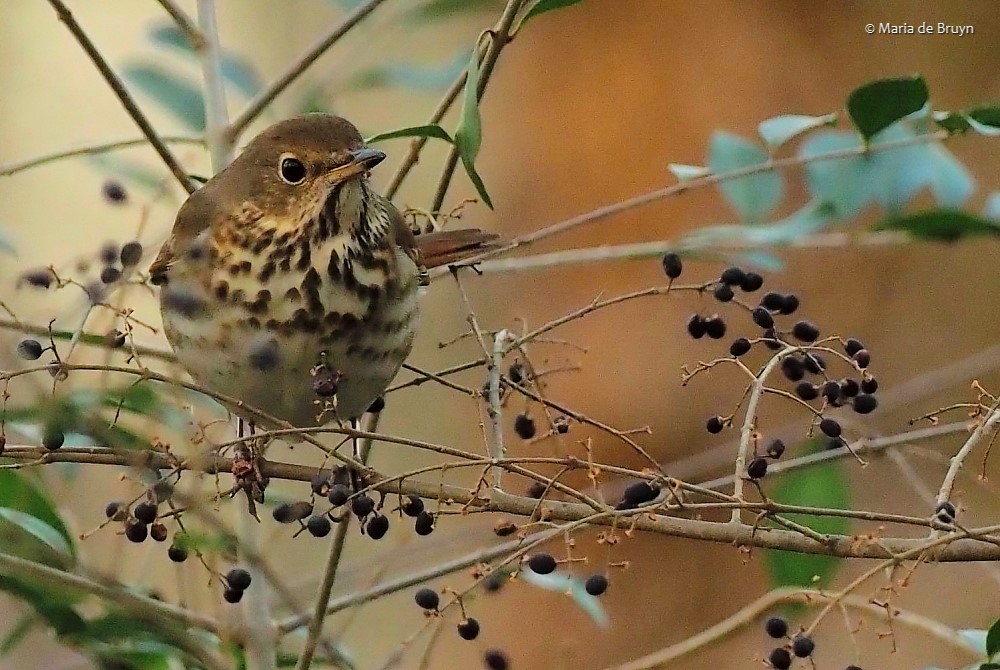
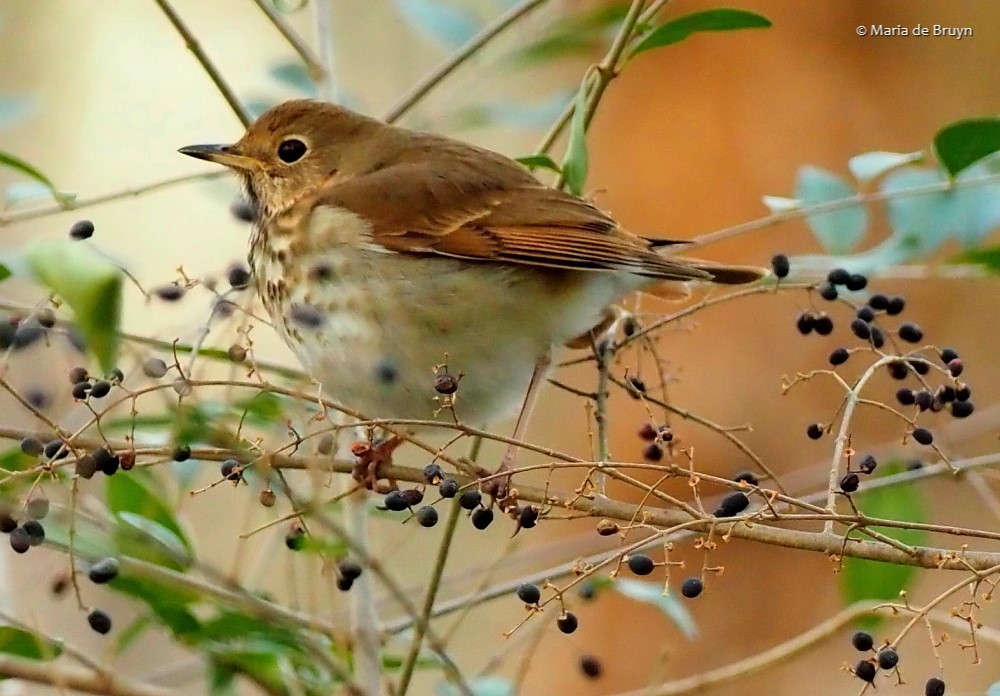


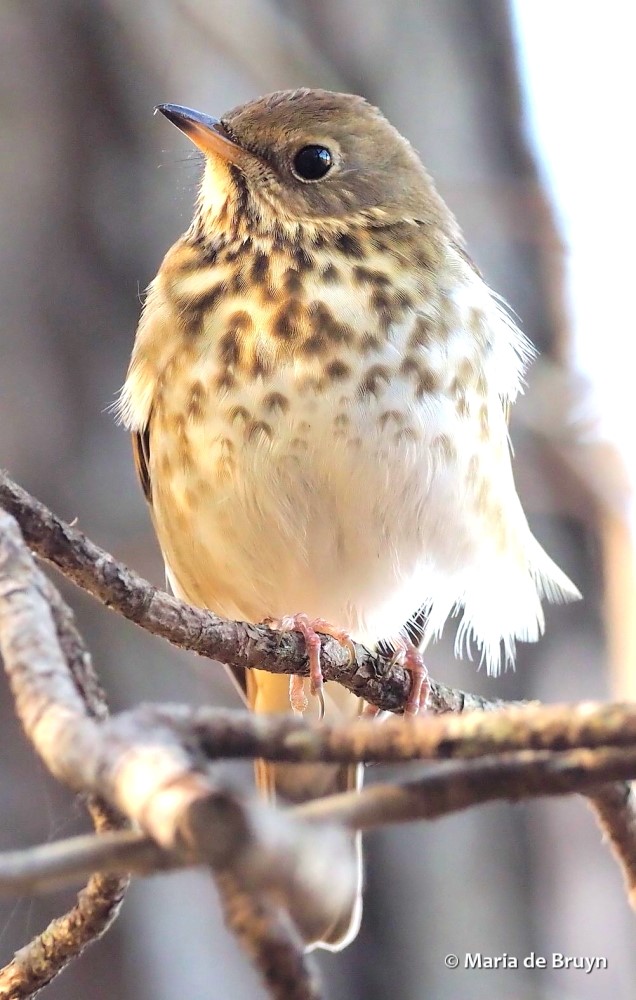




 When facing unpleasant challenges, it’s helpful to have an interest to help put them mentally aside while you find enjoyment doing something else. Observing and connecting with wildlife and plant life does that for me. For at least a while, I can think, “I don’t give a shit,” and instead focus on what’s going on immediately around me, like the red-shouldered hawk (Buteo lineatus) above actually giving a shit. 😊
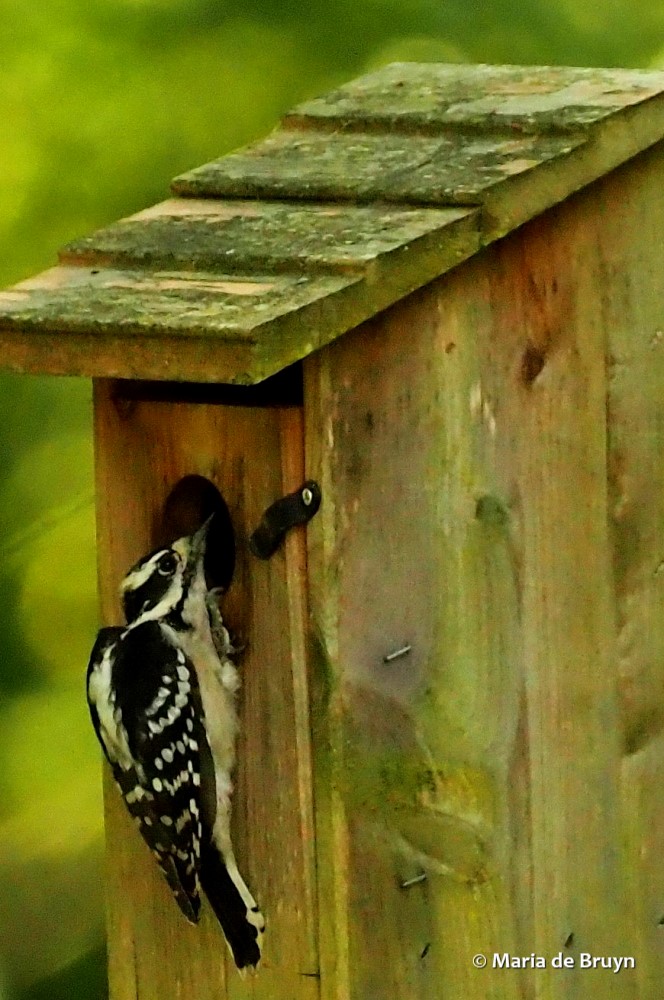 It’s my good fortune to live in a home with sizeable front and backyards where I can entice birds to spend time. Nest boxes border the yards and nesting gourds hang on the front porch, so that attracts pairs who raise young ones here in the spring. They also use these nesting sites to spend the night during cold autumn and winter nights. Downy woodpeckers (Dryobates pubescens) seem especially fond of one nest box next to the driveway.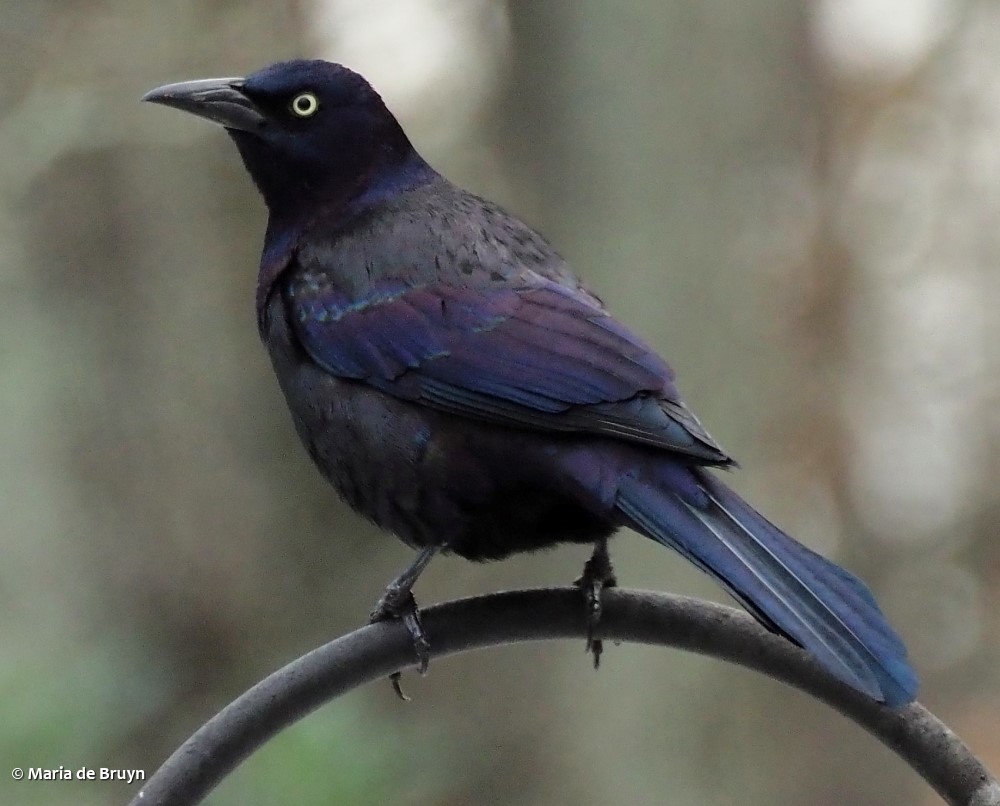
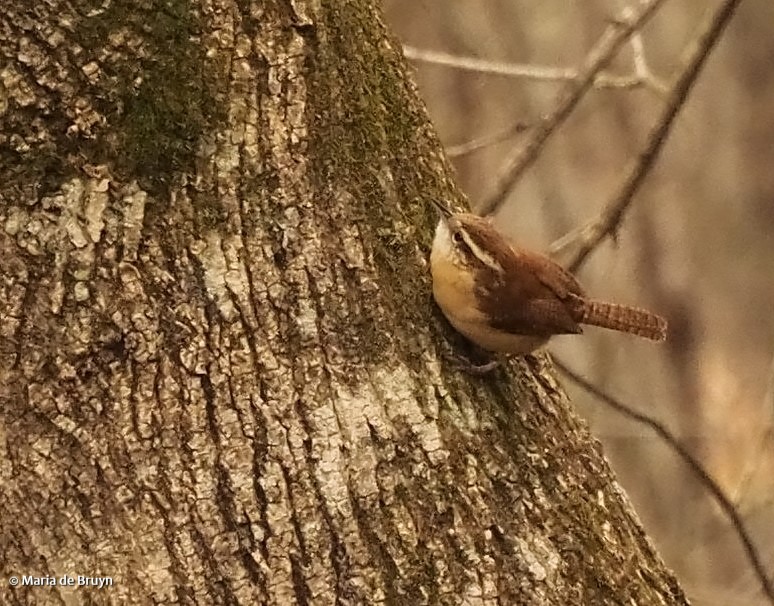 Since converting much of my front yard lawn into flower gardens (and I’m working on that in the back, although there I’ve planted more flowering and berry-bearing trees), the insect population has increased. That has helped the pollination of my flowers and provided the resident birds with meals, like one of the 6 or so Carolina wrens (Thryothorus ludovicianus) who occupy specific niches. One pair hangs out near a water-filled tub; another pair hangs out near a brush pile out back and the third pair hops in and out of a brush pile in the front yard.
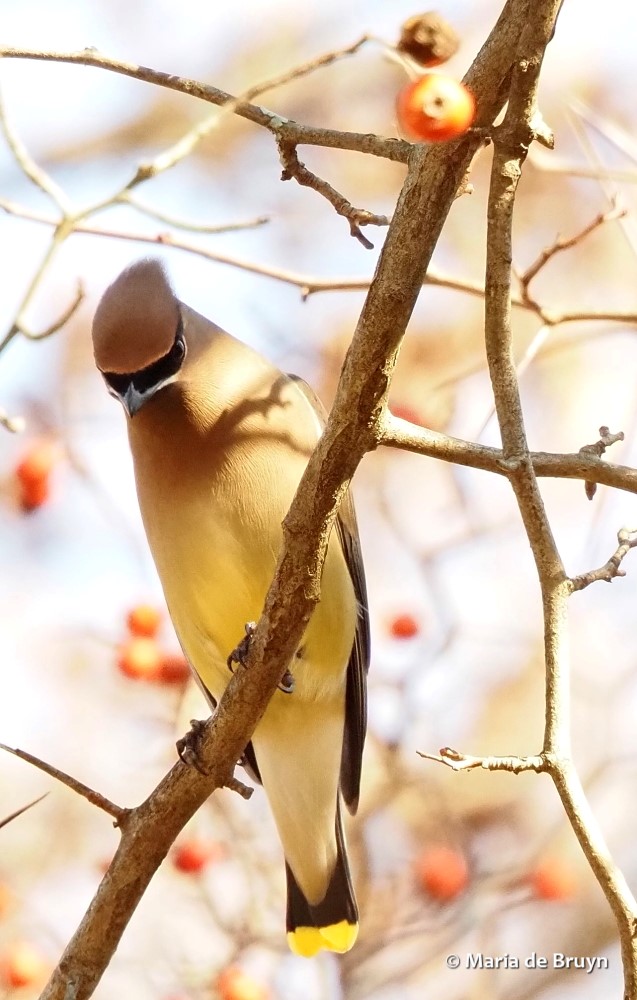 The cedar waxwings (Bombycilla cedrorum) are picky eaters. The American robins in my yard ate a lot of the juniper berries they prefer and there weren’t many other berries around (as was the case at the local arboretum). At my house, they’ve mostly been using the small ponds to drink and bathe.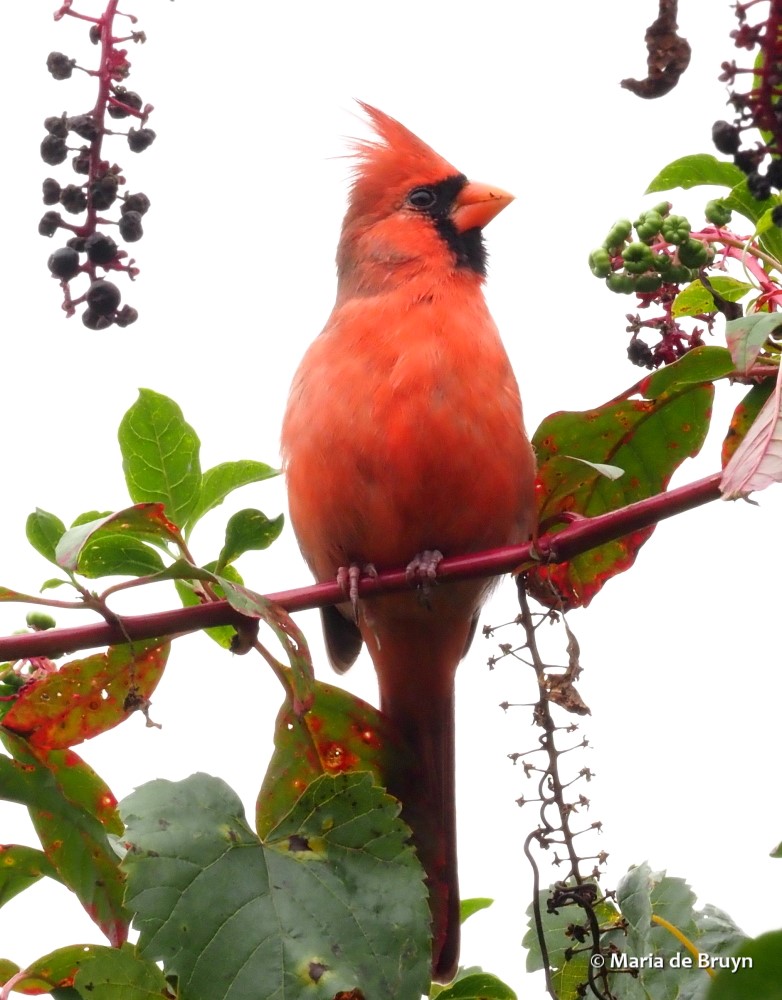
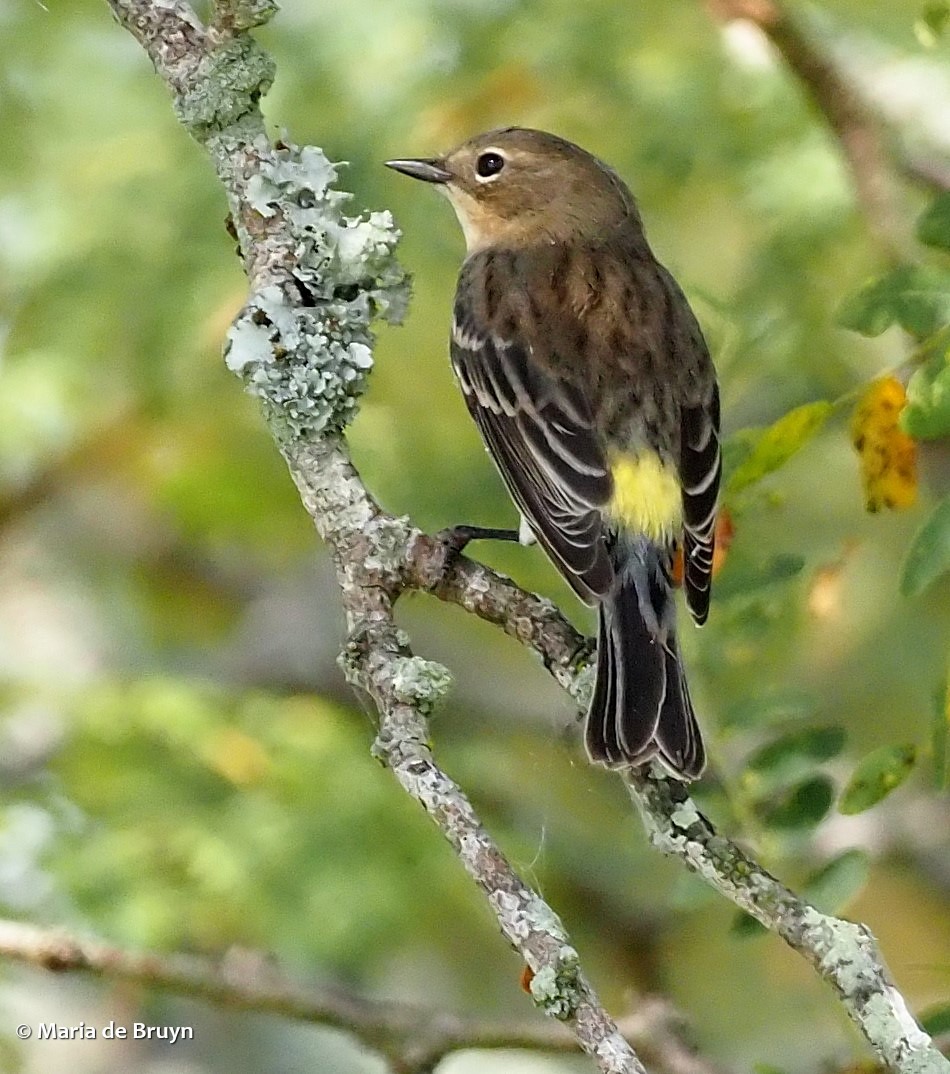
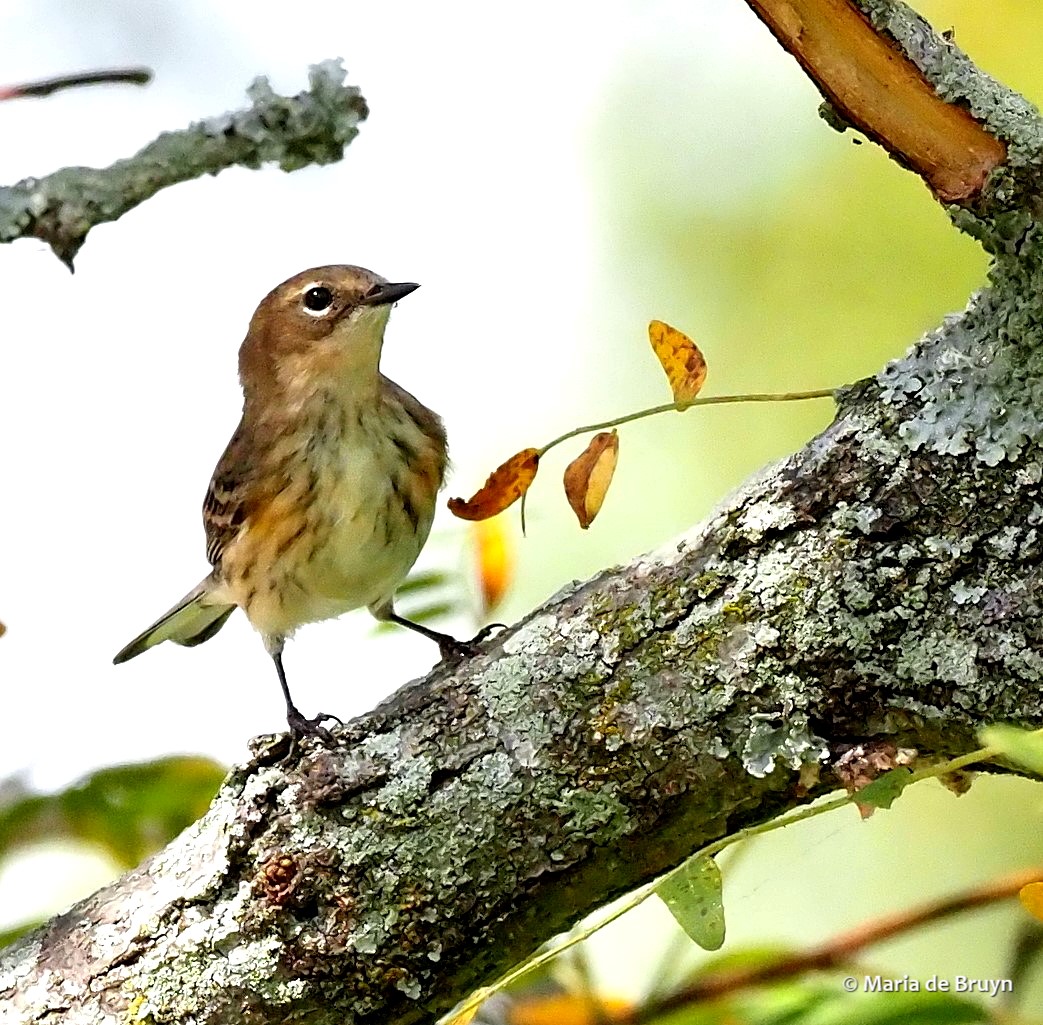 In past years, the visiting yellow-rumped warblers (Setophaga coronata) have lived peacefully with one another. This year, however, I have two birds who seem to be quite incensed when they spy each other. If one is at a feeder, the other zooms in to chase it off and often they flutter upward in a tangle with wings spread. So far, I’ve always been a couple seconds too late to capture the mid-air tussle – it is one of my goals for yard birding this year.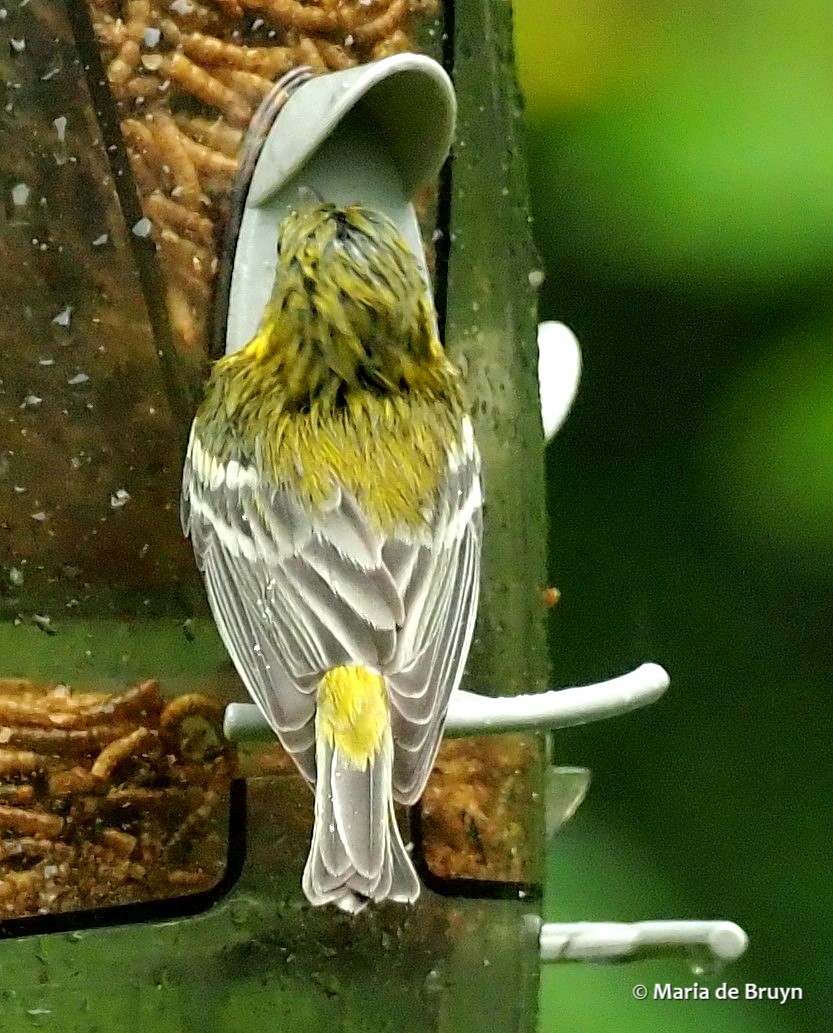
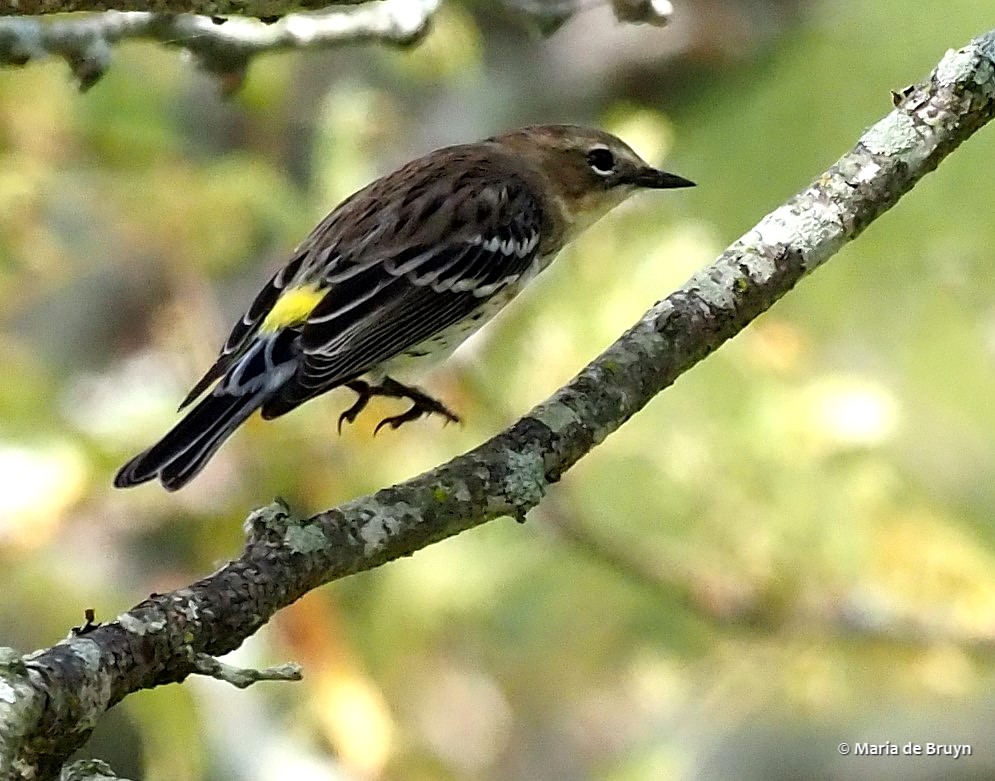
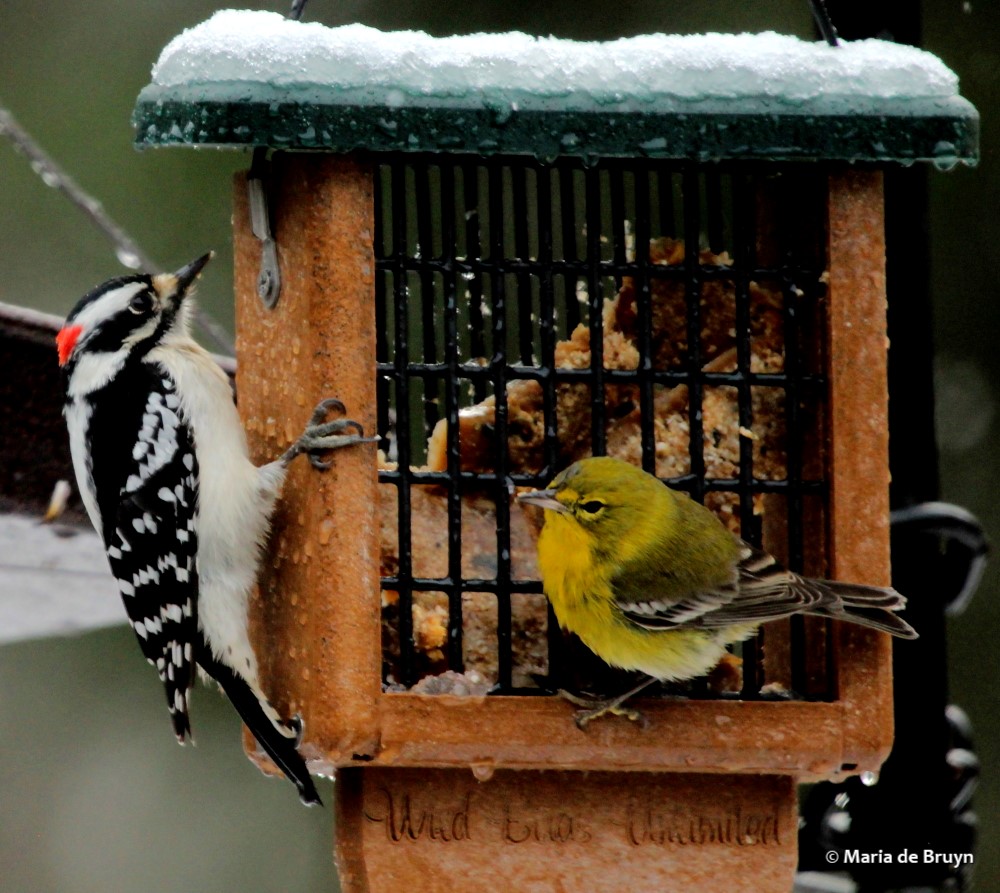 The pine warblers (Setophaga pinus) in my yard are quite tolerant and polite.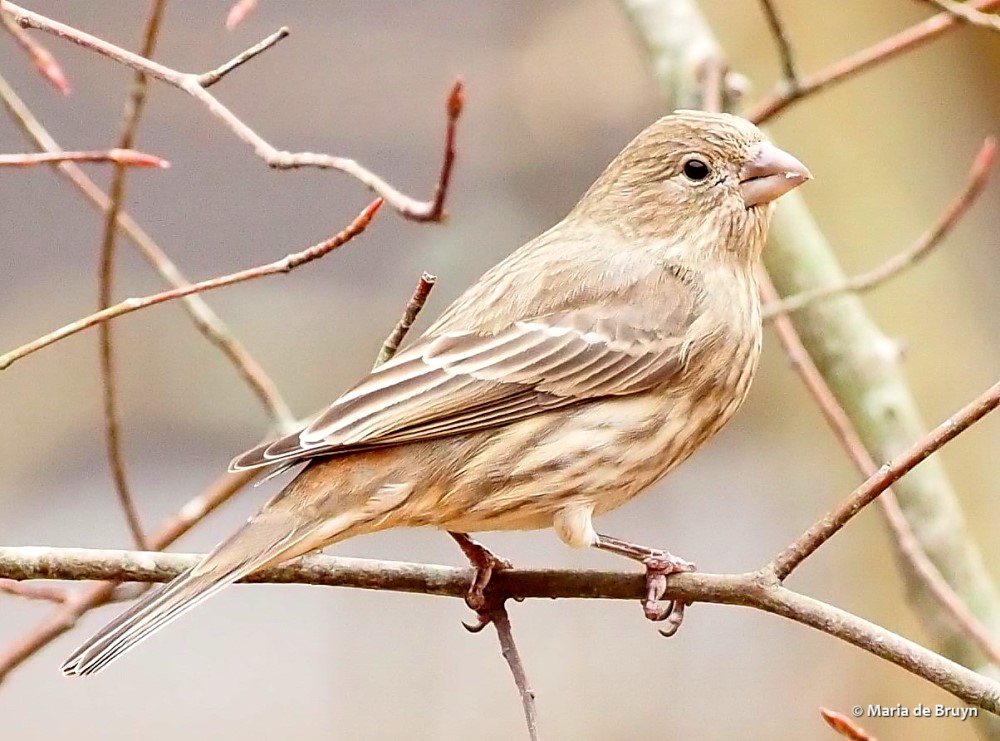

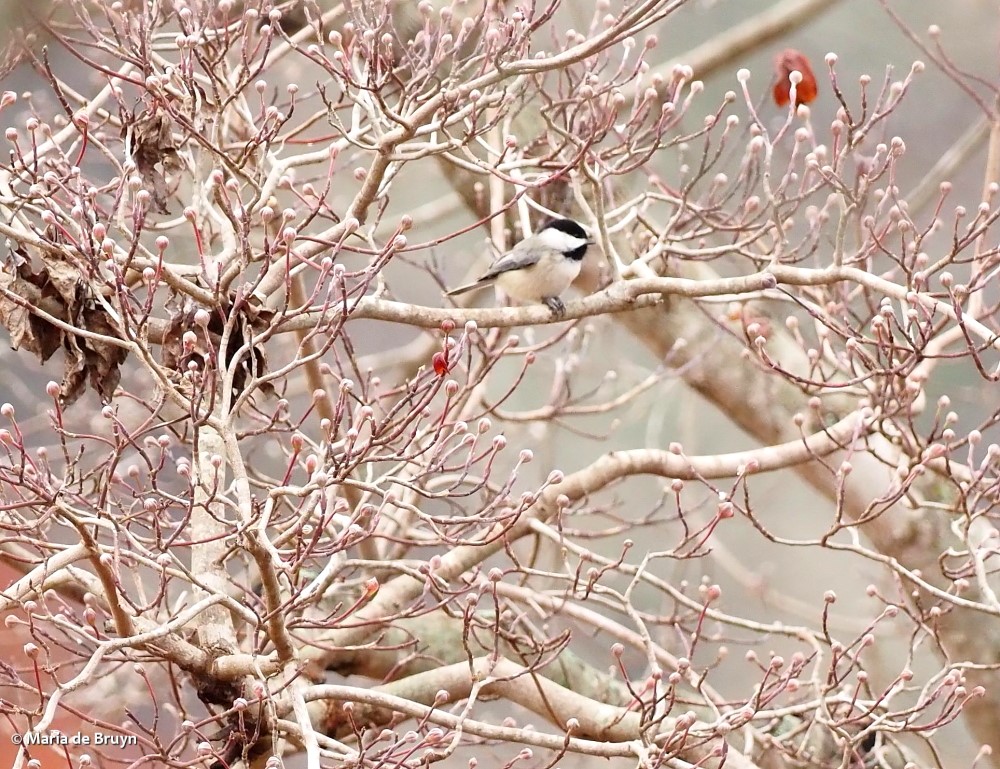
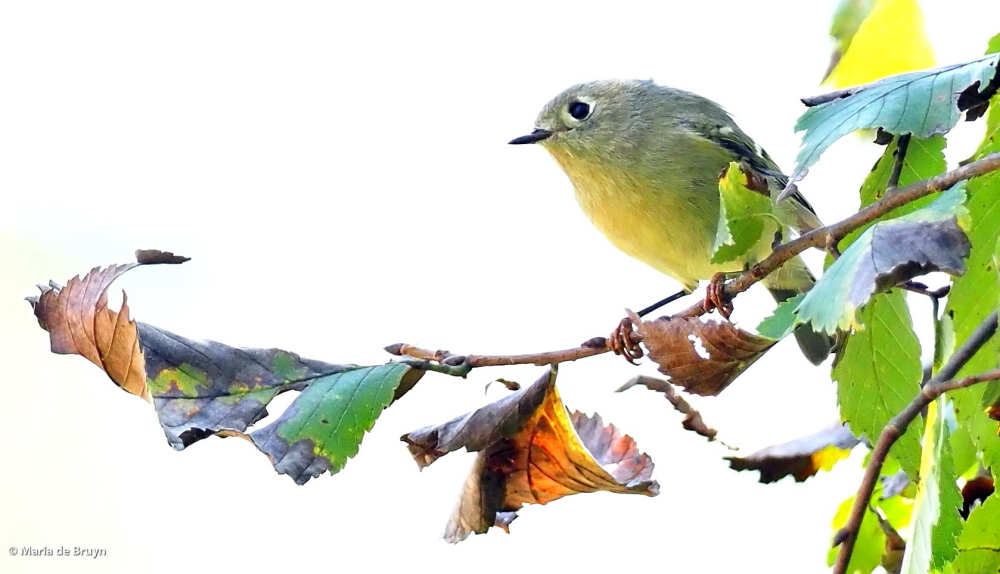
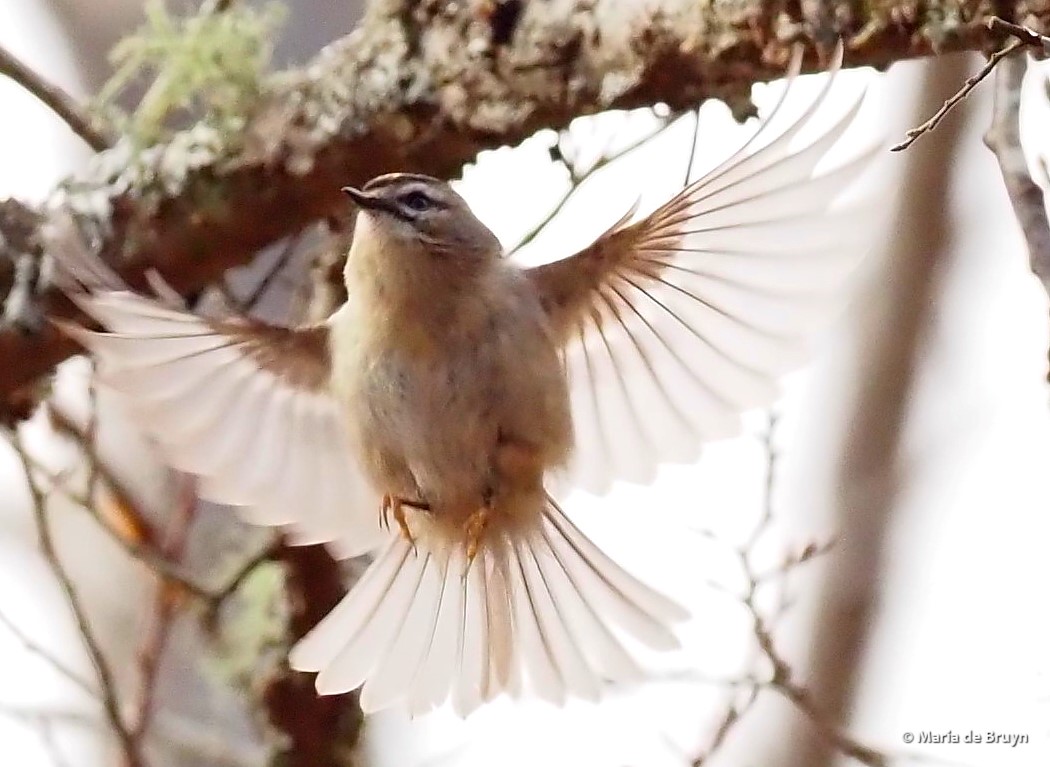
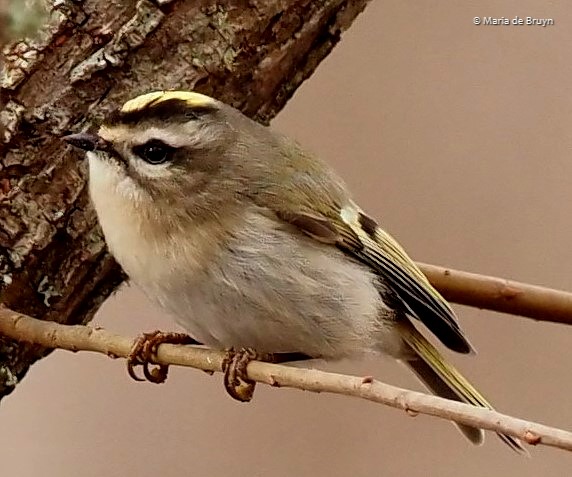 I hadn’t had golden-crowned kinglets (Regulus satrapa) in my yard much before this year; now I have at least one living here but s/he never comes to the feeders. Because this bird stays very high and I haven’t had access to my long camera lens for some time, it’s been difficult to get photos at home. I’ve had somewhat more success on walks.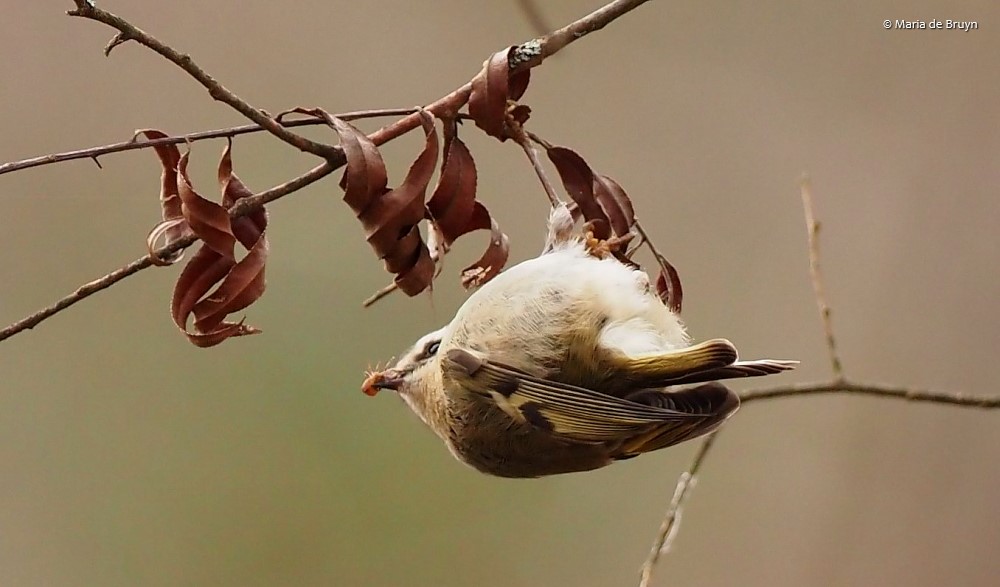


 My beautiful world