Our largest North American woodpecker — a real delight!

During nesting season, we have a good chance of seeing many birds whom we might not notice otherwise because they’re out in the open, collecting nesting material and scrounging for as much food as possible because they have hungry mouths to feed. I was very grateful to my friend Carol when she told me about a pileated woodpecker (Dryocopus pileatus) nest where the babies might be fledging soon. Pileated woodpeckers are also nesting somewhere near my home, but I rarely see them.

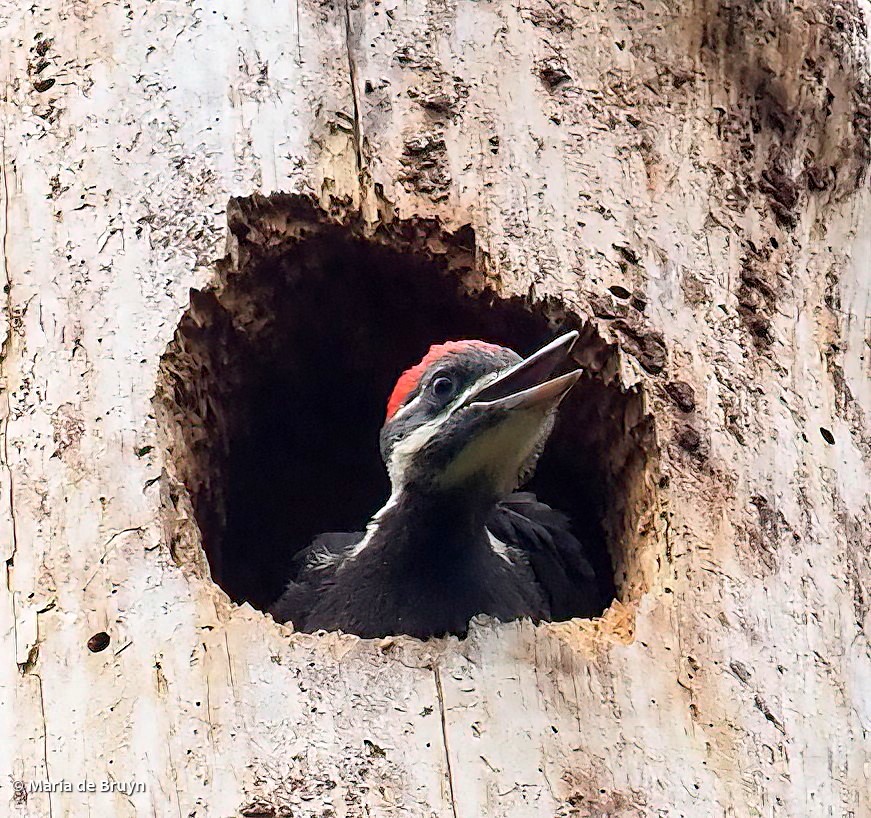
When we arrived at the nesting site, one baby was poking its head out of the oblong nest hole about two-thirds the way up a very tall snag.
 

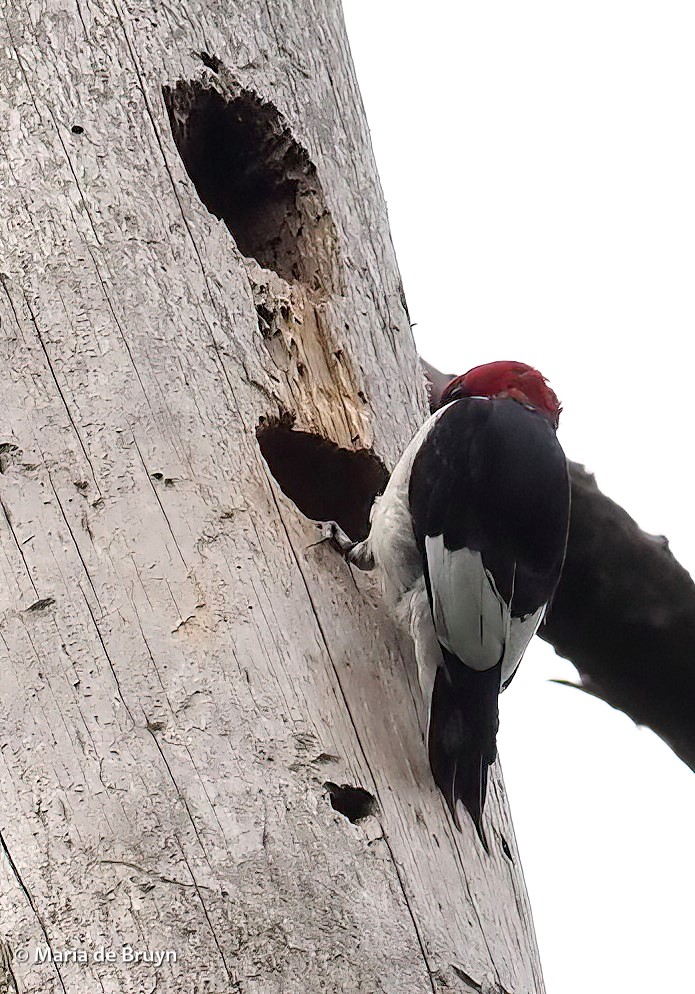
Above it, a red-headed woodpecker (see right) was maintaining a nest. A red-bellied woodpecker was also visiting higher up.

While we watched, the young one continued scanning the skies while calling out to its parents. The baby persisted in watching from the nest, which was only lined with wood chips. Unlike other birds, pileated parents do not line their nests with nesting material such as soft grasses.


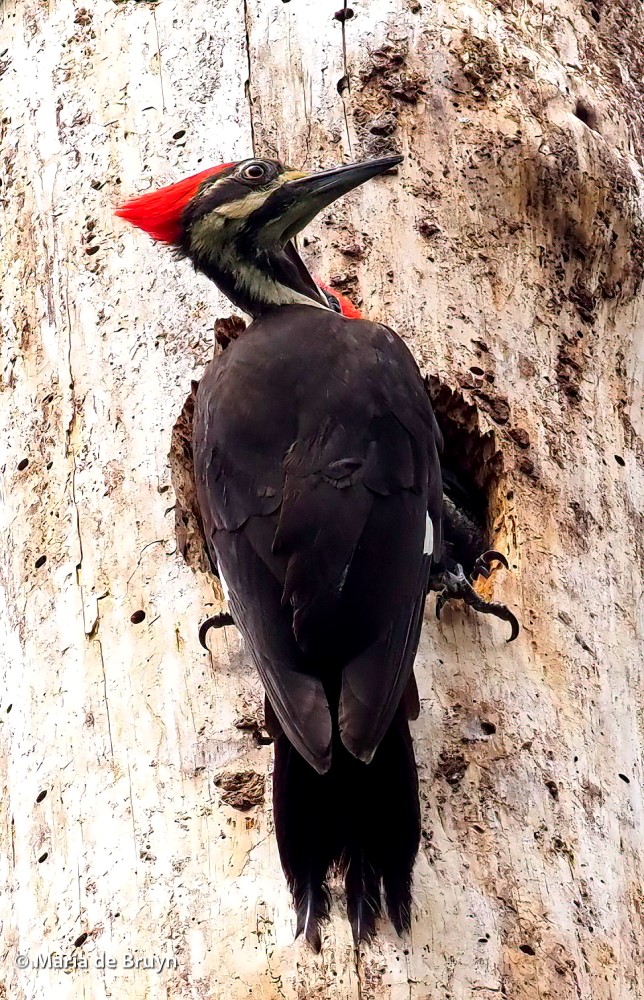
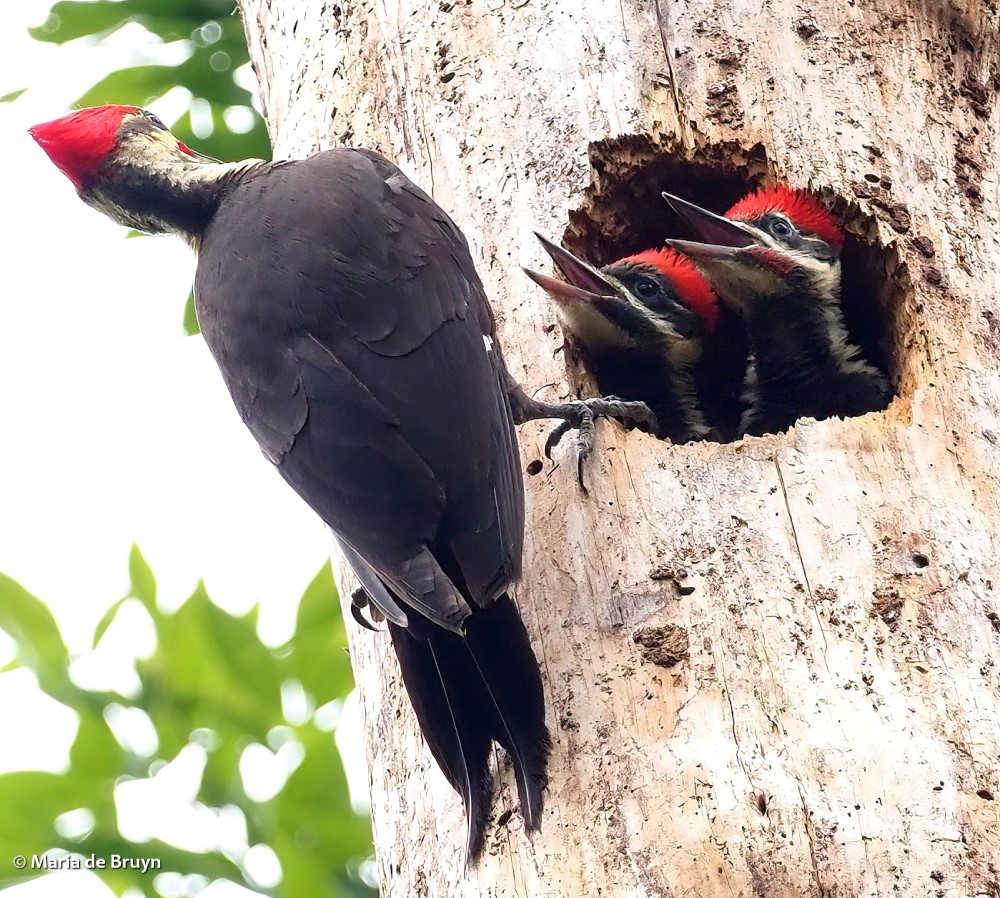
Occasionally, the parents answered and, after about 15-20 minutes, one flew over to check us out. It was the father, who could be identified by his red crest that extended down to his bill and the red cheek or moustache stripe (right photo). The left photo shows a female who was foraging in a tree on another occasion. Her red crest is only on top of her head and her cheek stripe is black.


The young one looked back into the nest; I wondered whether another nestling might be there. No one else peered out at that moment and we speculated as to whether one might already have fledged as two had been seen the previous day. When the father visited the nest, still only one baby showed itself, so we didn’t know whether there might be another one around (nests usually have 1-3 babies).


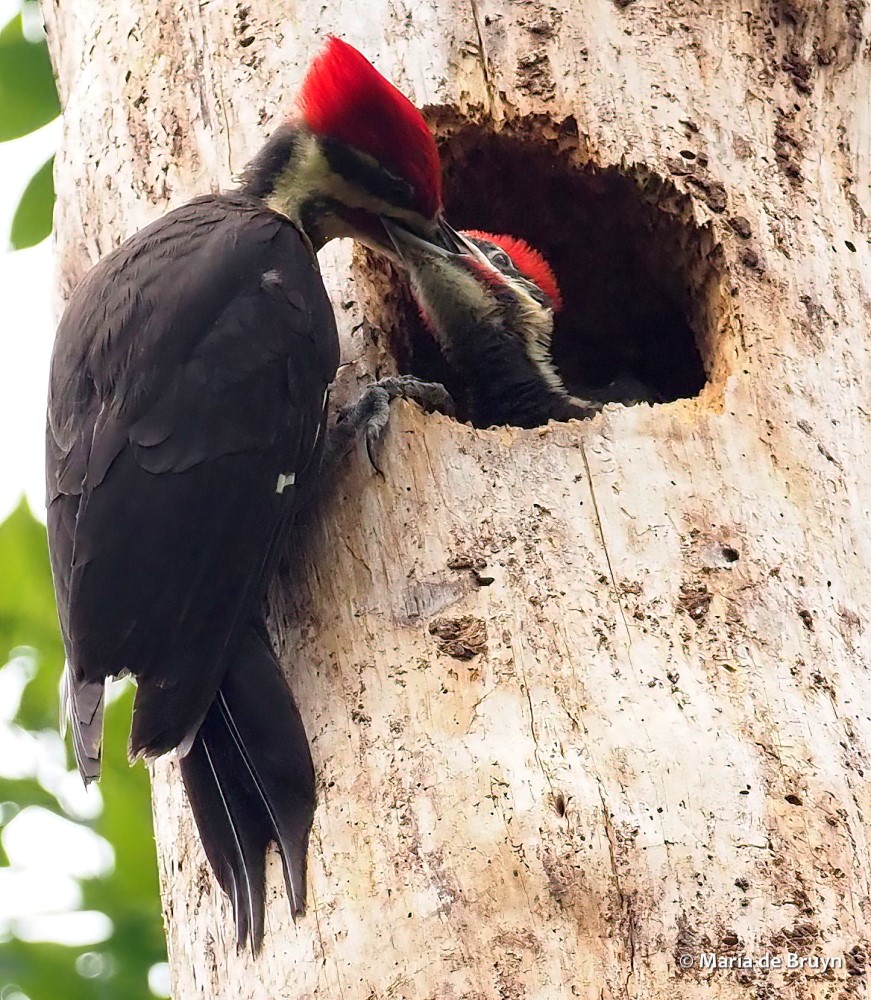
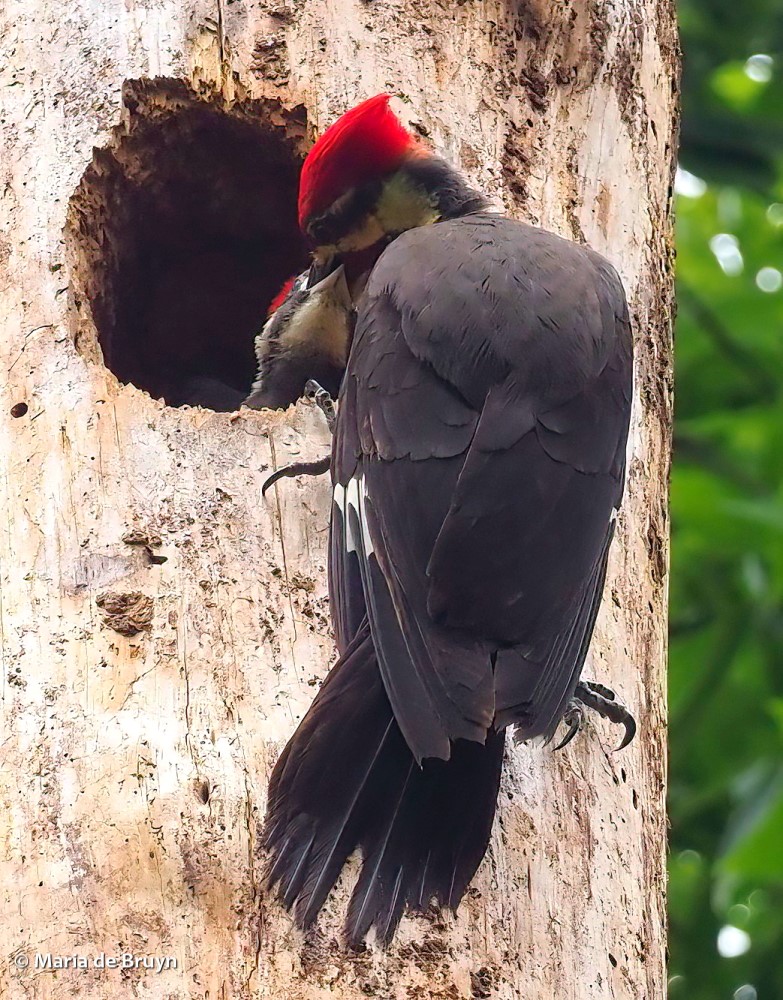
The father fed his offspring by regurgitating whatever he had been eating. The pileated woodpeckers’ diet comprises mostly carpenter ants (40-97% of their diet in various studies), supplemented by other insects including worms, caterpillars, roaches, flies, and grasshoppers.


They also eat nuts and wild fruit. If you have a garden and want to attract them, they like persimmons and many berries, including those of poison ivy, sumacs, dogwoods, elderberries, greenbriers and sassafrass.  
Many landowners tend to clear their yards and gardens of fallen logs and dead standing trees. I keep several woodpiles in various spots as the decomposing wood is home to many of the insects that the pileated woodpeckers and other birds need for their diet.

Papa took off again, leaving a satisfied young one behind (at least for the time being).

These woodpeckers are the largest in North America (15.8-19.3 in/40-49 cm), since the ivory-billed woodpeckers have been declared extinct. They are monogamous and luckily have plenty of opportunities to find mates. Pileated woodpeckers had been in serious decline in the 18th-19th centuries as forests were logged for the timber industry and to clear land for ranches and farms. Since then, they have rebounded to just over 2.5 million individuals.

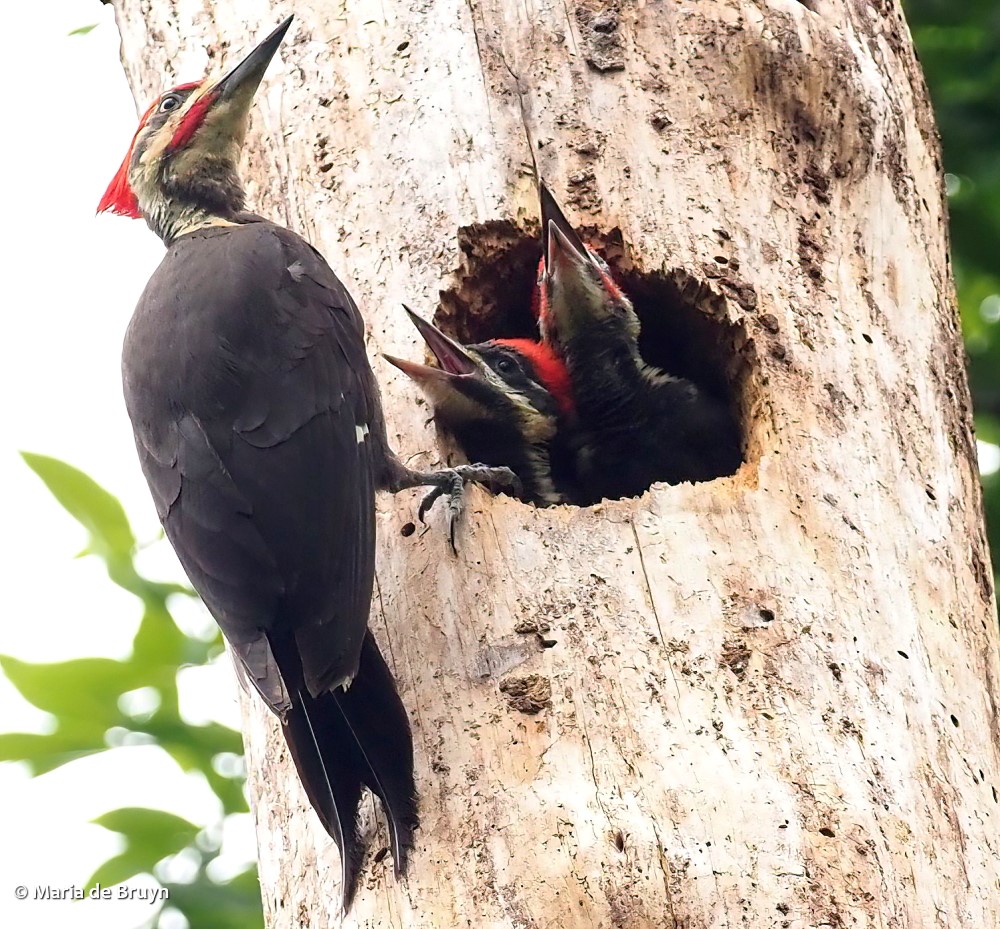
I realized when I looked at my photos later that I had not been paying enough attention to the coloring of the parents and offspring. When I went away for a short time and then returned, mama pileated was visiting the nest. In addition, whereas I had been watching a female nestling first, now a male baby was calling out for food. A view of the two looking up, shows the male’s red cheek stripes were obvious, but I had been oblivious at the time. The female is on the left and the male is on the right.


The next time that papa returned, the male offspring stuck his head out for a feeding.


Papa didn’t want to play favorites, so he stuck his head in the nest to apparently call them both to come out.
They opened their beaks wide, begging for food.
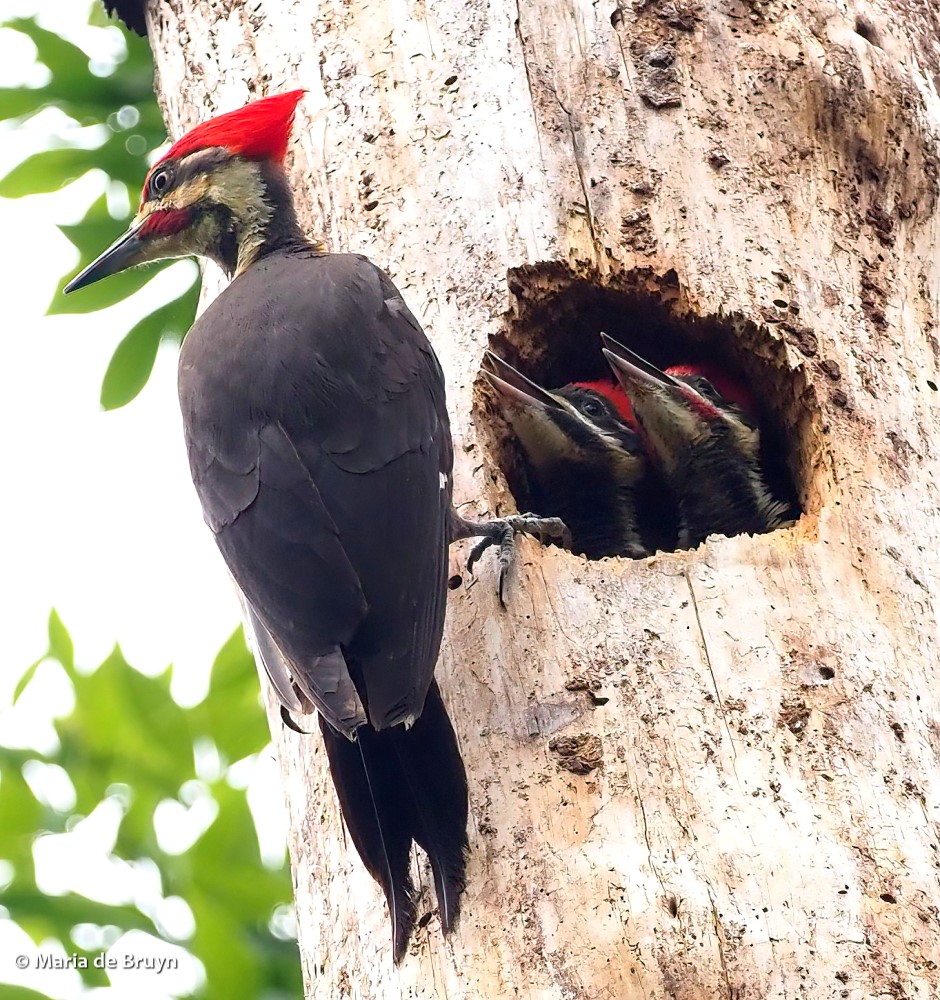
 

Papa let them ask for a while, sticking his tongue out at them as they begged.


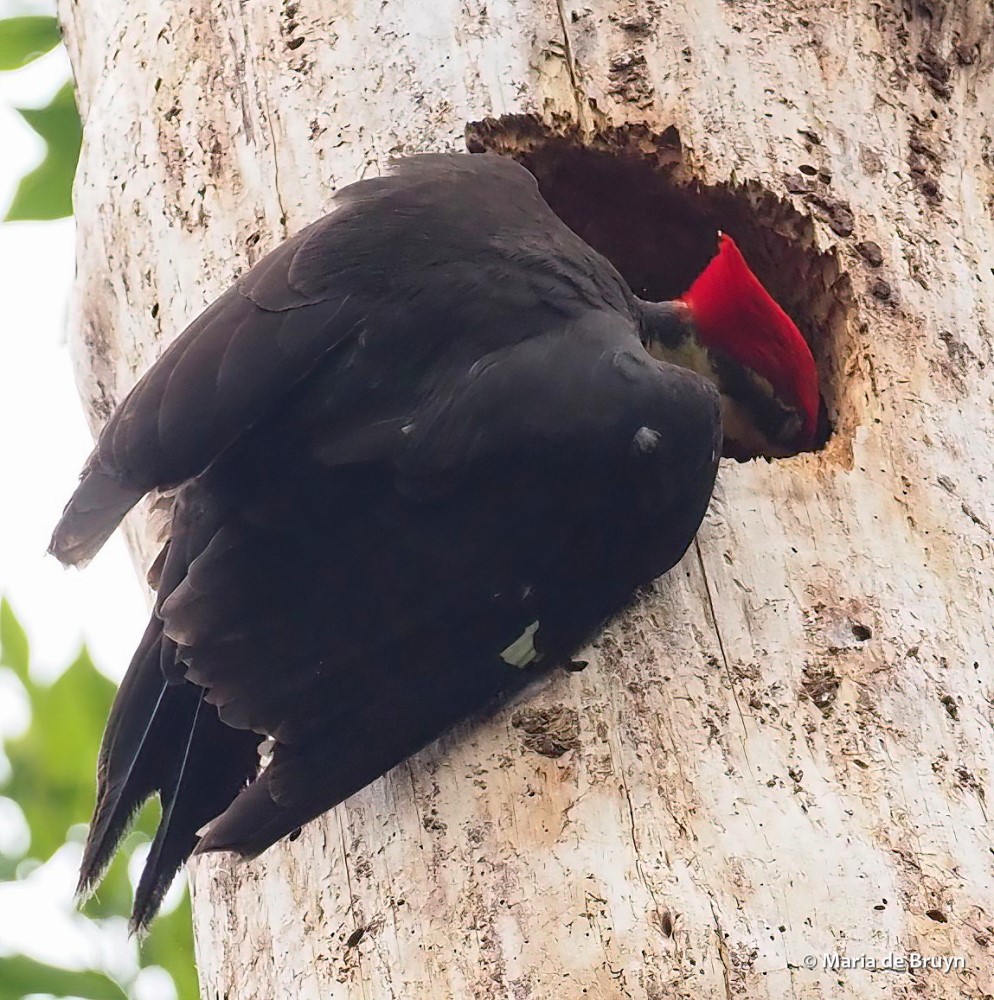
He also decided to take out some fecal matter. I don’t know how long the nestlings had been in there (they usually grow in the nest for a month), but a clean nest is desirable.


After the babies fledge, they may stay with their parents for up to three months.
   

I’m so glad that Carol and her sister Donna, near whose home the nest is located, invited me to come see the family. It was time well spent as it got my mind completely off an ongoing series of problems complicating my life lately. Hope seeing these photos was also a bright moment for you!

Creepers and peckers who attract our attention (but these are good guys!)

No, I’m not referring to plants, humans or an anatomical feature but rather avian woodcreepers, tree creepers and woodpeckers! During our nature outings in Costa Rica in August 2019, they were definitely crowd-pleasers and reminded me of how much these birds are appreciated elsewhere, too. So today I’ll share with you some of my photos of these species in Costa Rica, The Netherlands, South Africa and the USA.


The insectivorous woodcreepers are endemic to the neotropical regions where there are some 57 different species. They tend to be brown in color and look similar, making identification a challenge at times. They hold their bodies upright, using a stiff tail (a similarity to how woodpeckers maintain a vertical position). Although they mainly look for insects in tree bark, they also will eat army ants. They have strongly clawed toes to help them cling to tree trunks.


Research has shown that the woodcreepers may use one of two techniques to capture insects. The “probers” look behind bark, mosses, lichens, leaves, etc. to find their prey. Those who engage in “sallying” launch themselves into the air to catch insects in flight after their movement up a tree has flushed them.


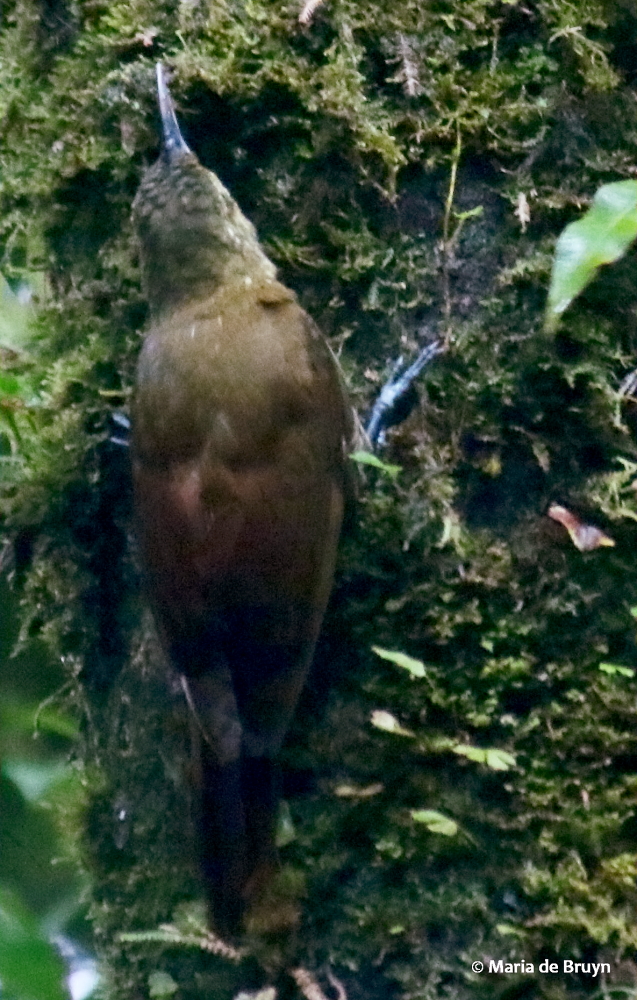
The plain brown woodcreeper (Dendrocincla fuliginosa) is distinguished from other woodcreepers by its lack of streaking or stripes.


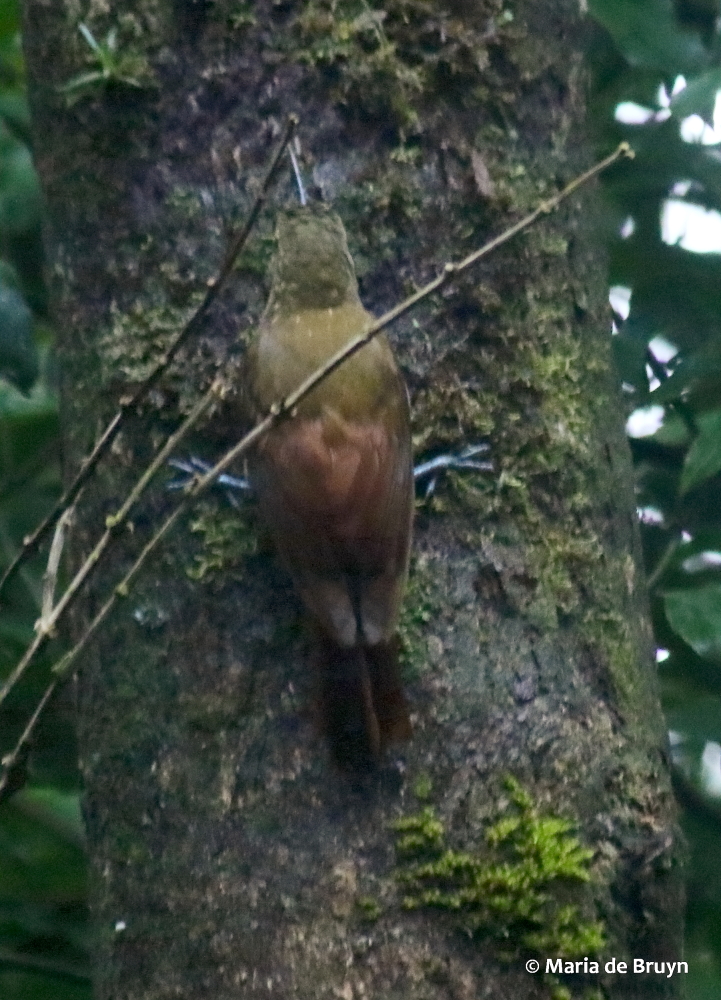
The cocoa woodcreeper (Xiphorhynchus susurrans) tends to be a more solitary feeder that looks for insects in bark.

The streak-headed woodcreeper (Lepidocolaptes souleyetii) was aptly named. It tends to be a solitary probing feeder.


The wedge-billed woodcreeper (Glyphorynchus spirurus) is the smallest species of woodcreepers; it also has a shorter bill, which helps in identification. Research has shown they tend to favor ants, beetles, spiders and pseudo-scorpions for their meals.


The brown-billed scythebill (Campylorhamphus pusillus) is obviously distinguished by its very long, curved bill. It was raining and the bird was not sitting still so my photo isn’t great; I really wish I’d gotten better photos of this species (a goal for the future).

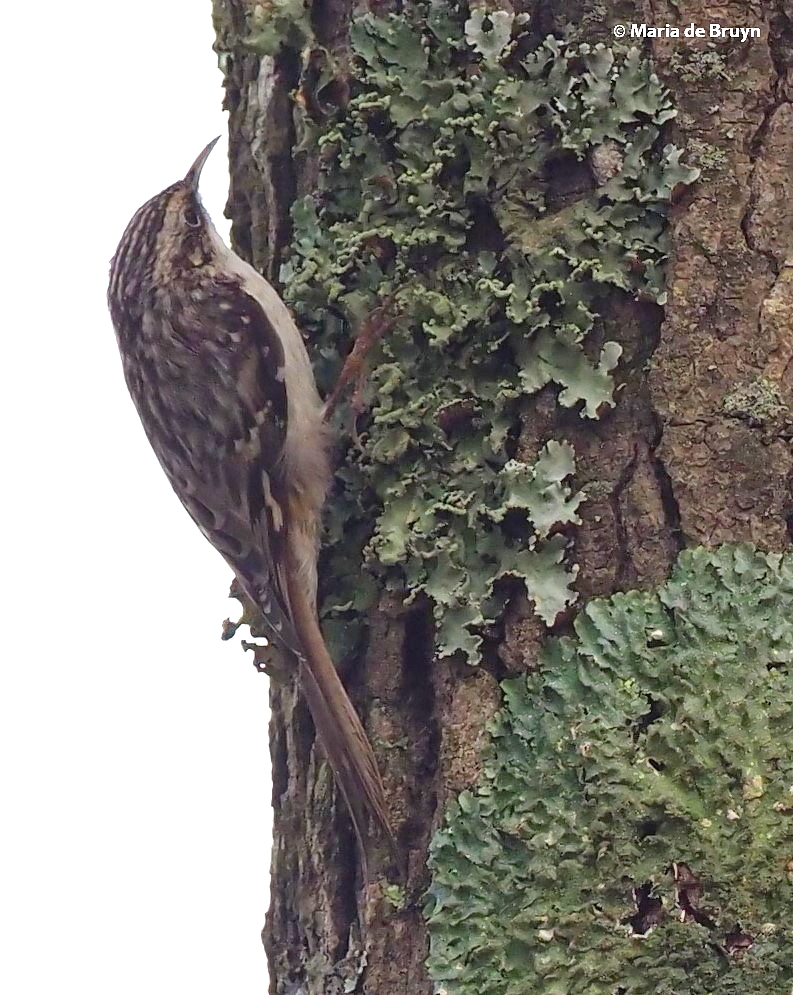
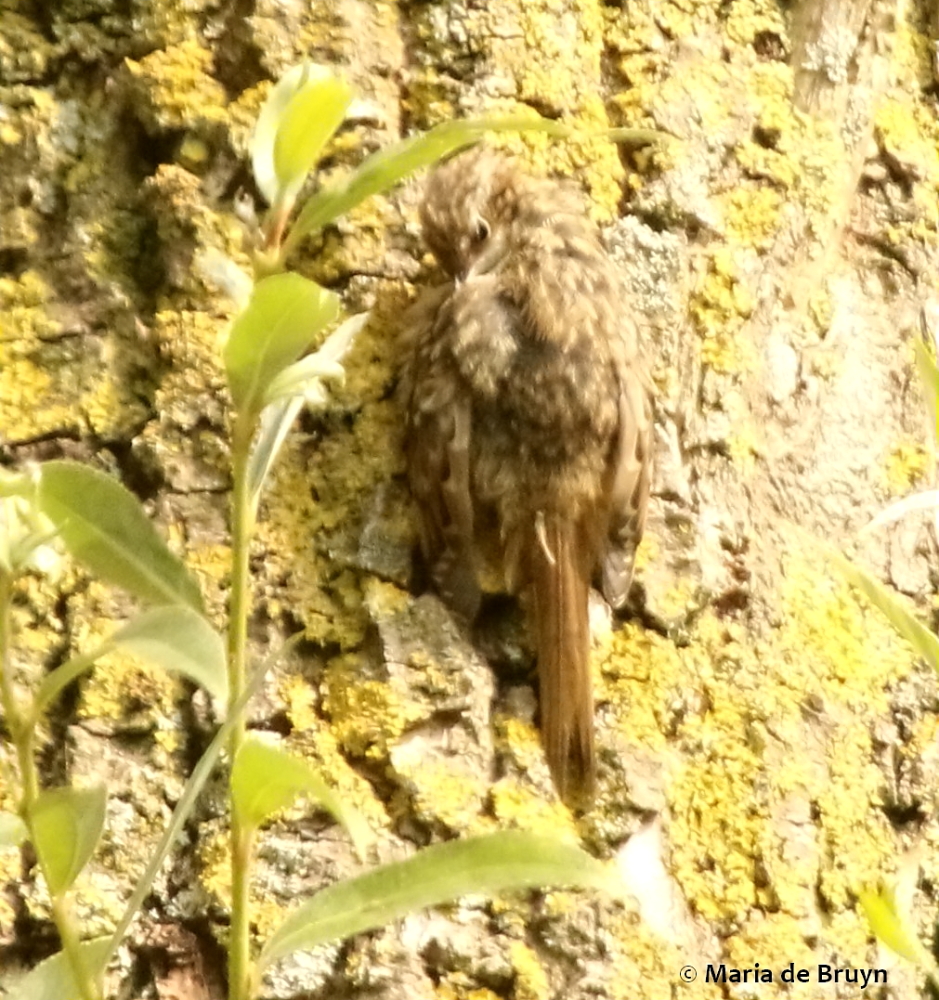
In North Carolina, we have a similar type of bird – the brown creeper (Certhia americana). I cannot hear their high-pitched call and therefore must rely on noticing movement to catch sight of them.


Watching them demands some concentration as they are continually on the move as they probe the bark and lichen. They really blend in well with the bark of their trees of choice. It’s a challenge to keep them in view.


They tend to nest in hardwood trees but prefer conifers for foraging. Like the neotropical woodcreepers, they have impressive claws to help them cling to the vertical tree trunks. An interesting fact: “By eating a single spider, a creeper gains enough energy to climb nearly 200 feet vertically.”


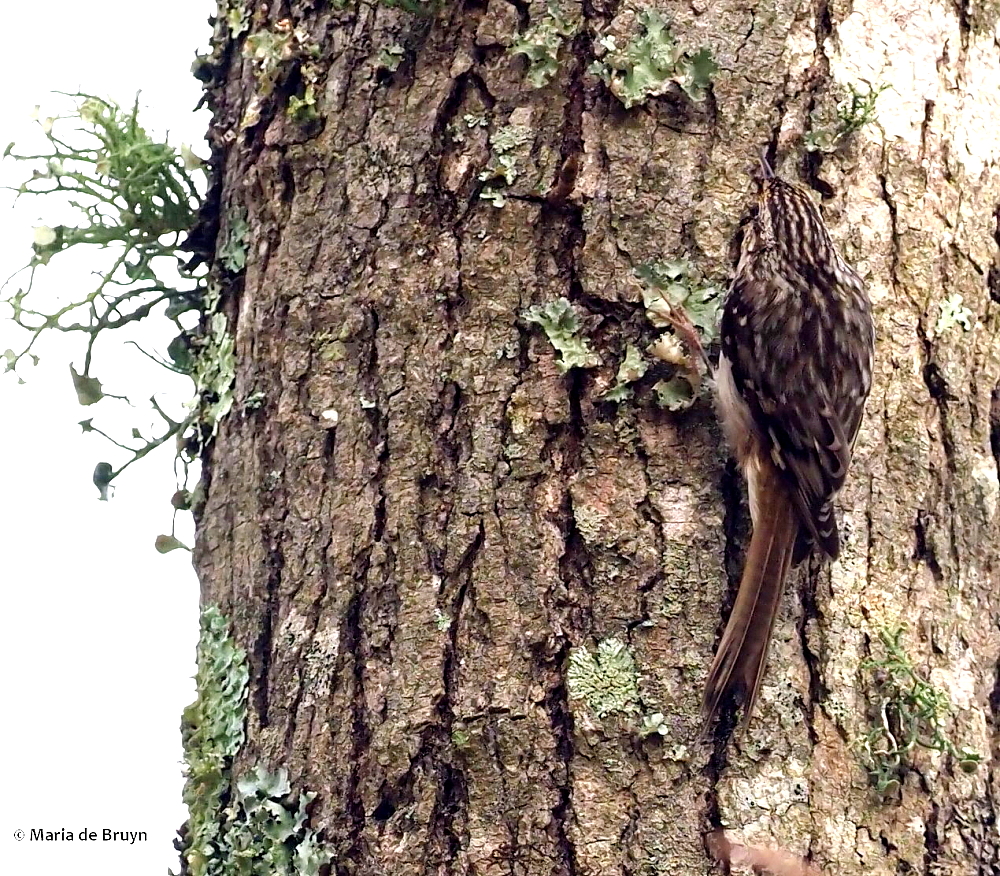
The short-toed treecreeper (Certhia brachydactyla) that I saw in the Hemmeland nature reserve in The Netherlands in 2018 is a similar bird. Like the brown creeper, it flies to the base of a tree and then works its way up the trunk as it searches for insects to eat. (It looks almost identical to the Eurasian treecreeper, so I hope it is identified correctly!)


The woodpeckers I’ve been able to see in Central America include several species that have similar-looking cousins further north. The golden-fronted woodpecker (Melanerpes aurifrons) has a yellow nape and patch at the base of the bill in much of its range. However, there is a Velasquez’s variant of this species that has a red cap and nape. I saw this one in a botanical garden in Quintana Roo, Mexico, in 2012.

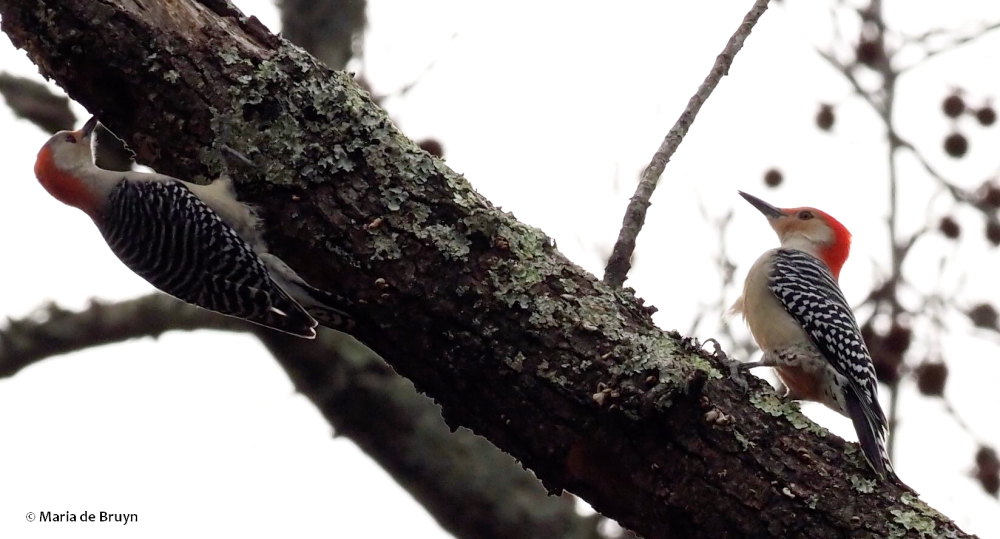
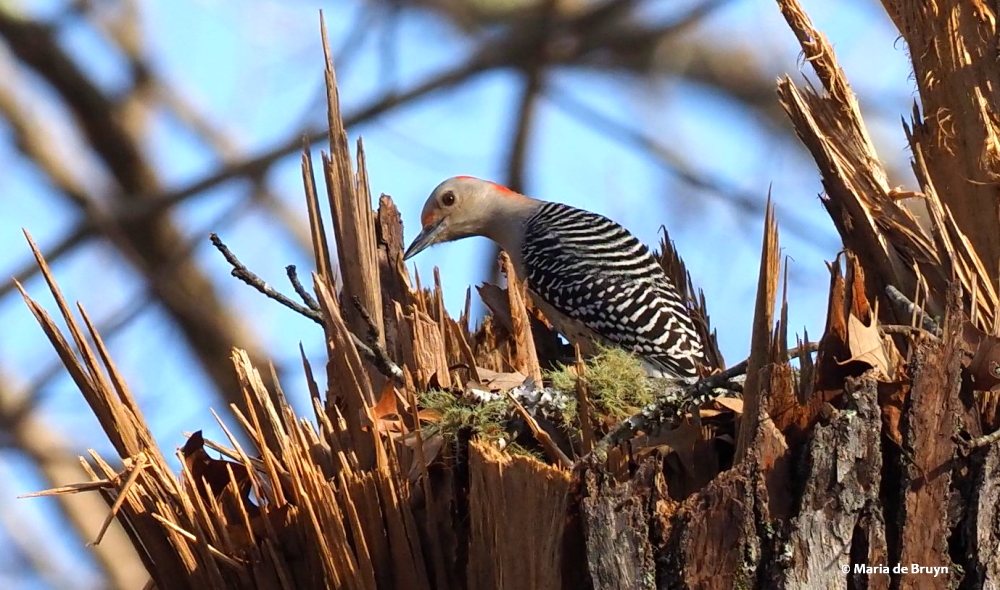
If you look at the red-bellied woodpecker (Melanerpes carolinus), which we see a lot in North Carolina, they look quite similar.


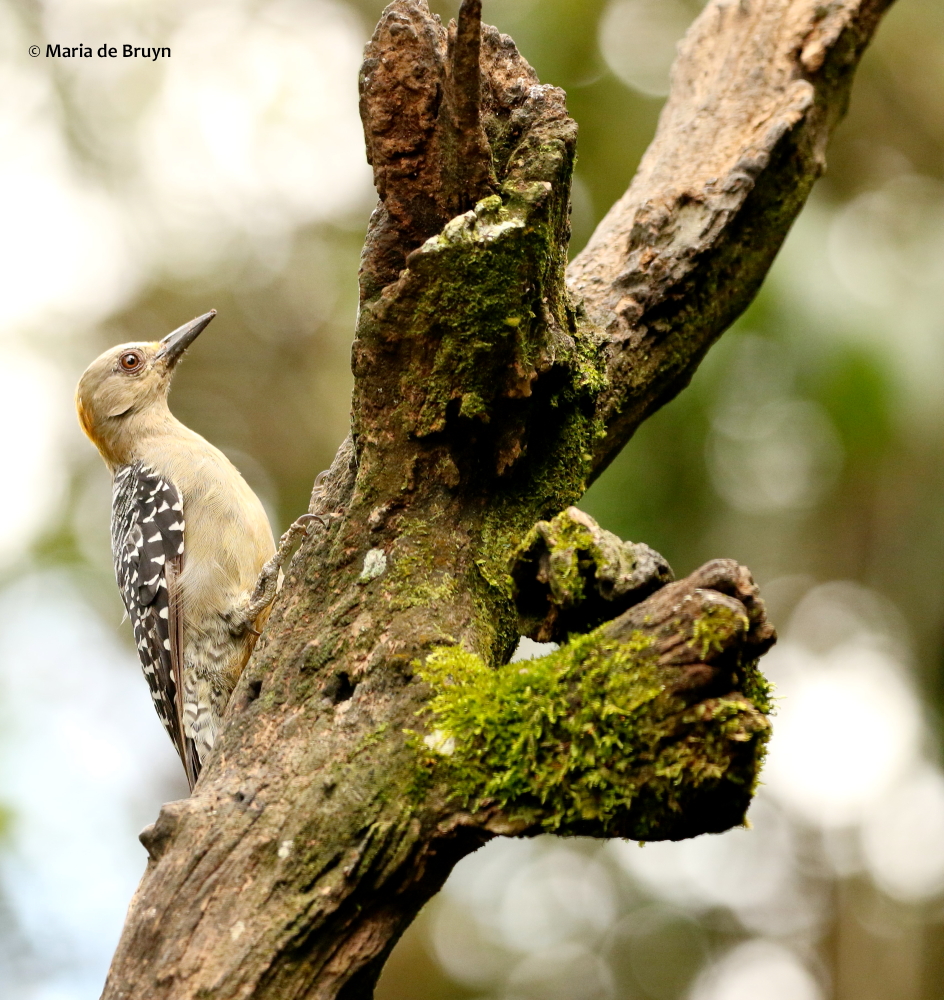
The Hoffmann’s woodpecker (Melanerpes hoffmannii) reminds me of the red-bellied species. The males have a red crown; the females do not. With their pale yellow napes, these birds look like a “pastel” version of the red-bellied species to me.

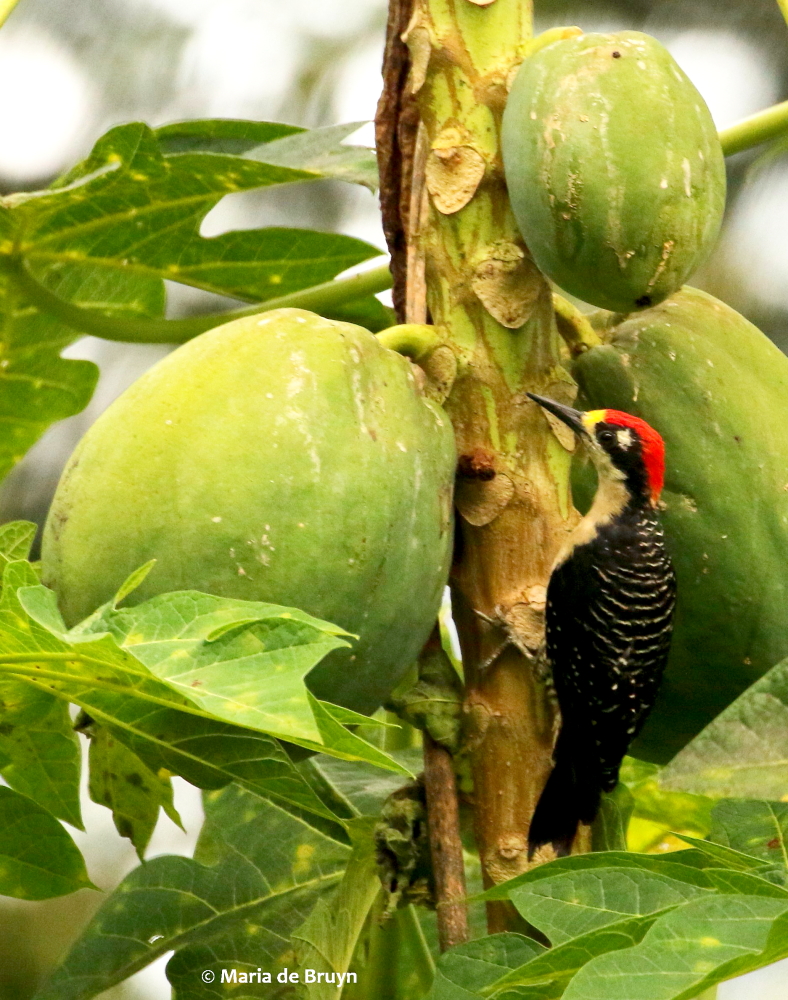
Red heads seem to be a popular “accoutrement” for the woodpeckers. The black-cheeked species (Melanerpes pucherani), seen in Arenal, Costa Rica, this past August has a red nape but a yellow forehead.


The acorn woodpecker (Melanerpes formicivorus) has a white forehead but also sports a red patch on the back of its head. Fewer than 9% of birds engage in cooperative breeding (where several related or unrelated adults cooperate in raising broods) – the acorn woodpeckers do this through coalitions of adults who nest together.


Another woodpecker with yellow hues that I’ve had the privilege to see is the golden-tailed woodpecker (Campethera abingoni), which I saw in Kruger National Park in South Africa in 2009. Like the above-mentioned woodpeckers, in this species the male also has red hues on its head.


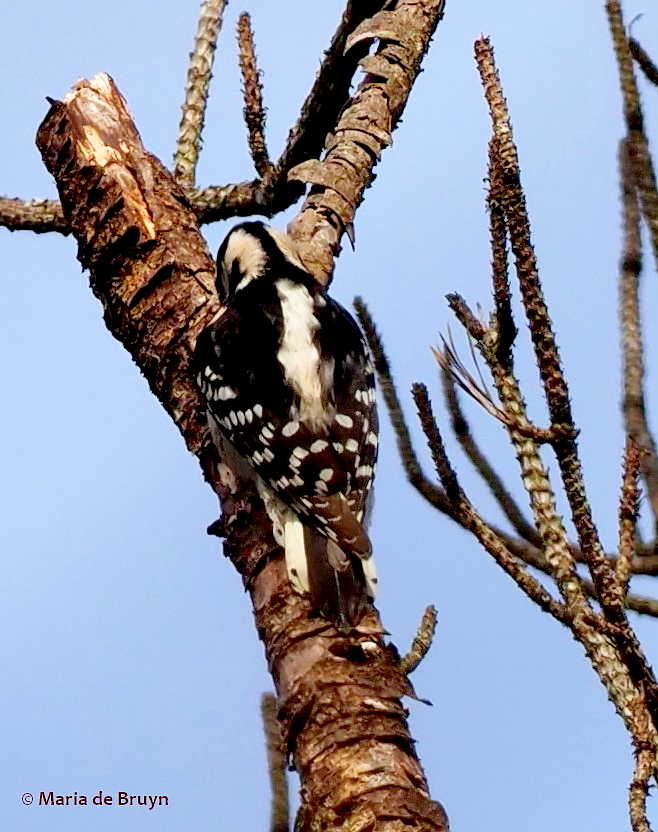
In North Carolina, two very similar smaller woodpeckers are characterized by males who sport a small red patch on the back of the head and females who lack the red coloring. The hairy woodpecker (Leuconotopicus villosus, below left) is the larger of the two species; the downy (Picoides pubescens) looks almost identical except that it is slightly smaller, has a shorter bill and no white spots on the outside tail feathers.


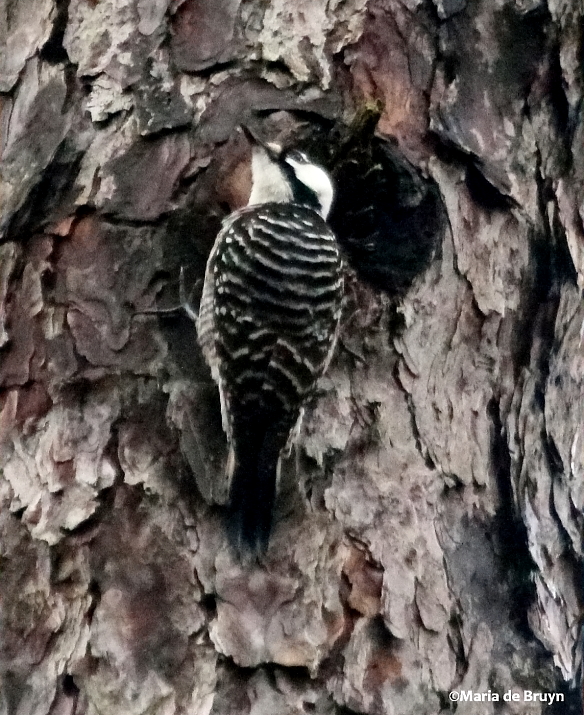
The endangered red-cockaded woodpecker (Dryobates borealis) looks like a larger version of the hairy and downy birds but it lacks any red patches anywhere on the head. Their common name refers to an almost invisible red streak (“cockade”) at the top of white cheek where it meets the black feathers atop the head. Unfortunately, this species (the only woodpeckers to make their nest holes in living trees) is under increased threat as the US Fish and Wildlife Service may remove some of the protective measures that have helped increase the population.


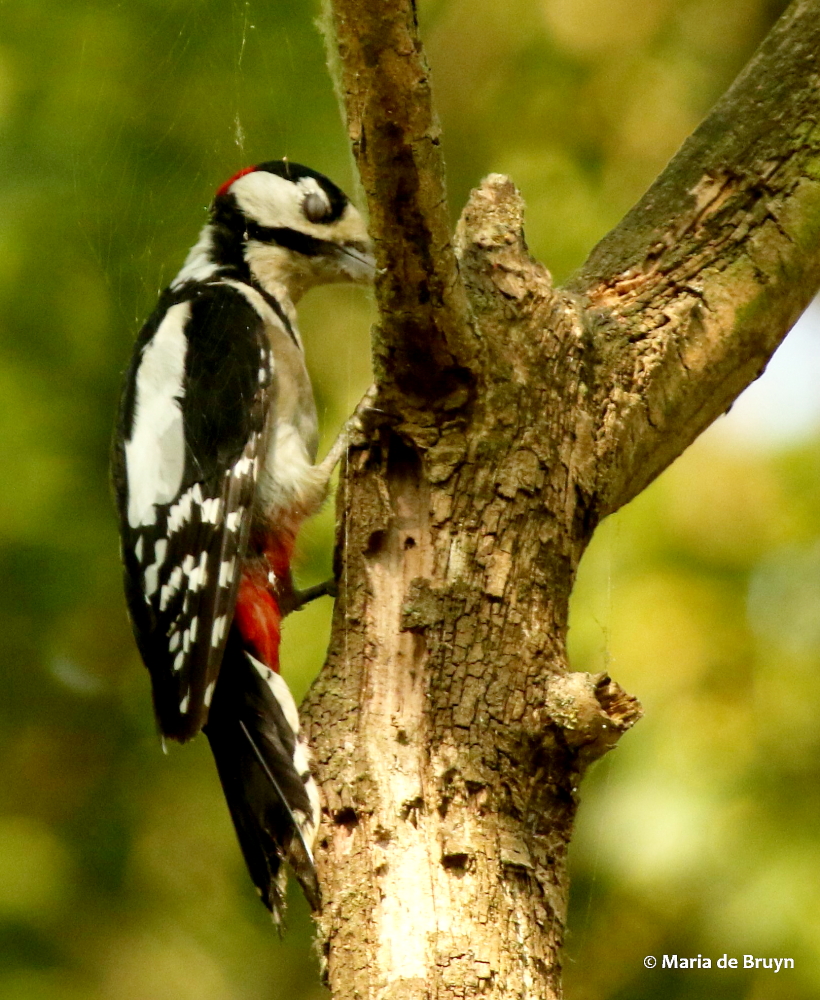
The great spotted woodpecker male (Dendrocopos major) that I saw in The Netherlands in 2018 does have a red patch on the back of its head; as in other woodpecker species, the females lack the red spot. This species also sports an obvious red belly (much more so than the red-bellied woodpecker!). An interesting feature of this woodpecker is that they undergo a complete moult after breeding that lasts up to 120 days.


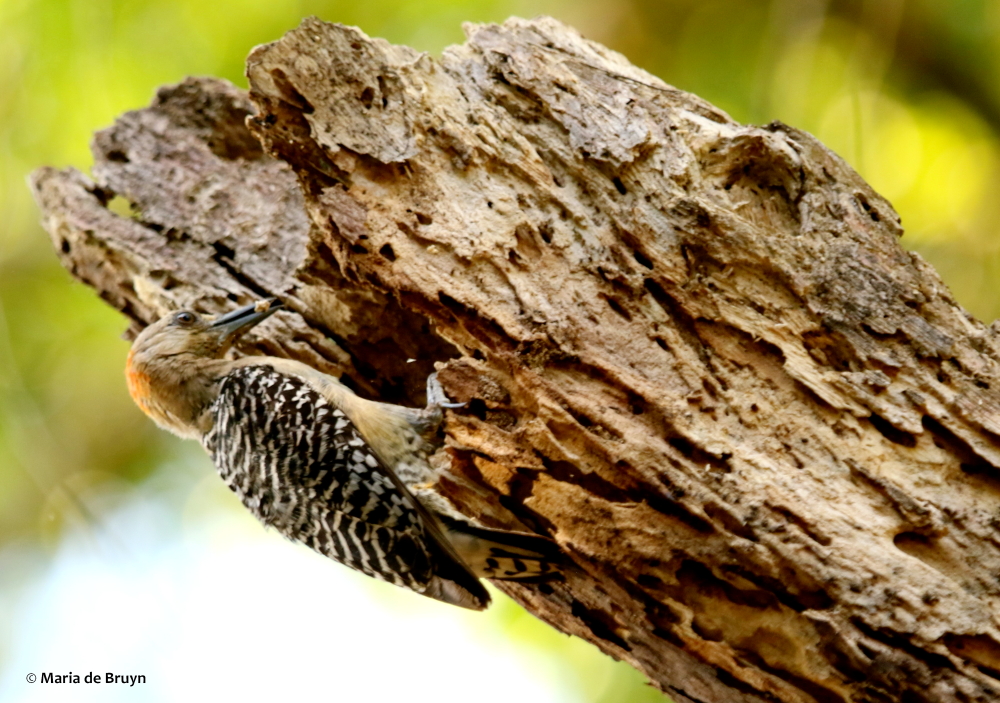
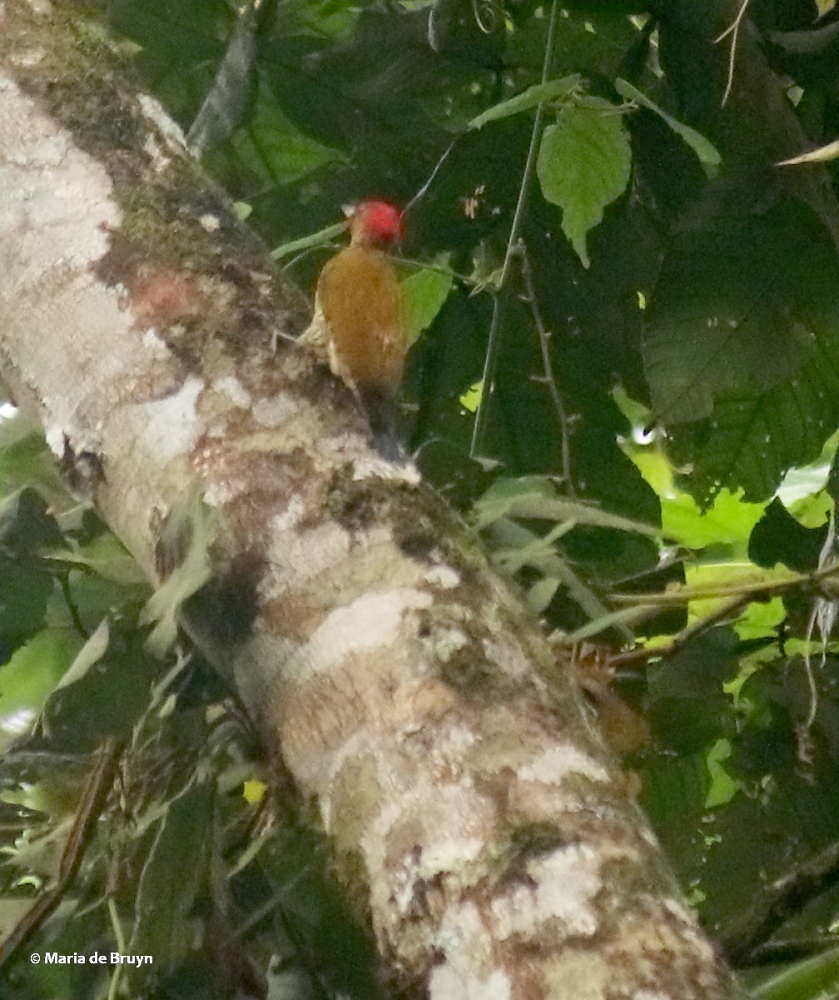
The rufous-winged woodpecker (Piculus simplex, right) only put in a very brief appearance this past August, but made it obvious that they, too, have a red crown. The golden-olive woodpecker (Colaptes rubiginosus) continued the red accented plumage – the males complement their crimson crown with a red “moustachial” stripe. There are 19 sub-species with slightly different coloration.


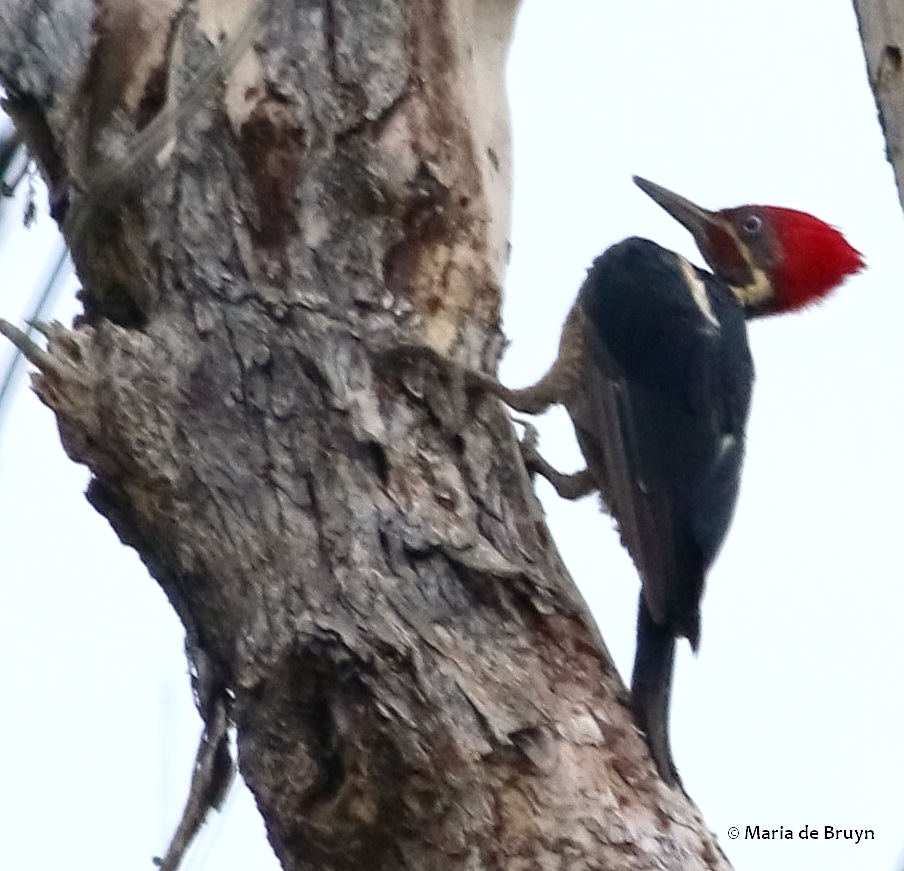
The large lineated woodpecker (Dryocopus lineatus, left) in Costa Rica closely resembles the pileated woodpeckers (Dryocopus pileatus, right) that we have in North Carolina. The males of both species can be distinguished by the red stripe going down their faces and both types of woodpeckers are known for their drumming.

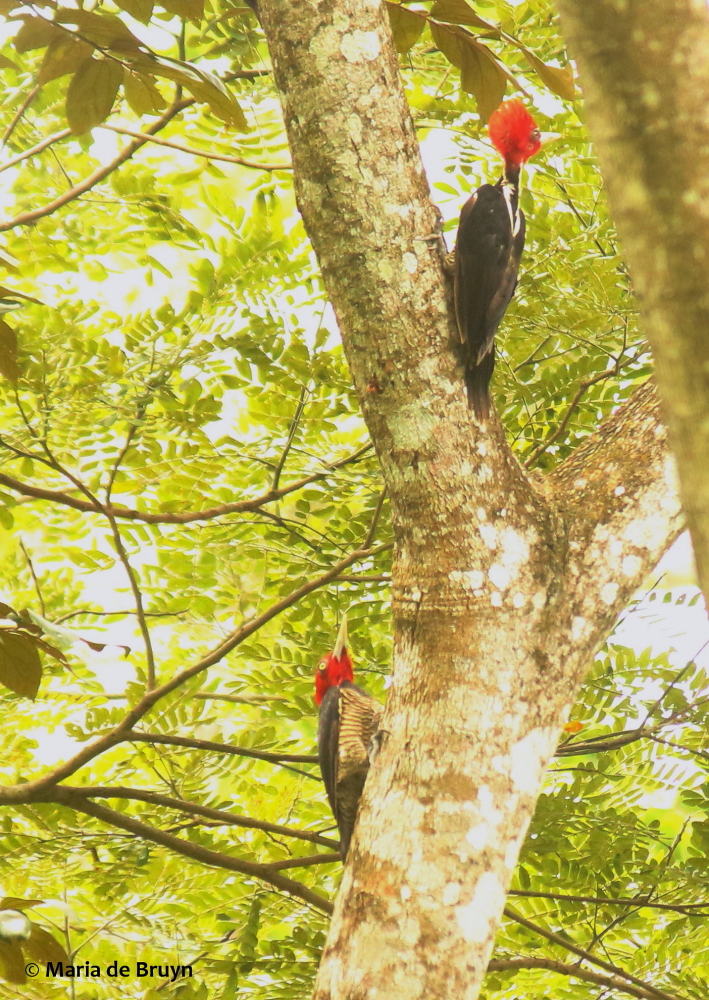
The pale-billed woodpeckers (Campephilus guatemalensis) looks a bit like the lineated and pileated species but they are even larger birds that feature an entirely red head. The adults have a light-colored beak that gives them their common name; immature birds have darker bills that lighten with age. The females can be distinguished by their black instead of red throats.

We were lucky to see a pair of these birds foraging along a large stream, accompanied by a third bird – perhaps one of their young from the previous breeding season? This species has not been studied thoroughly – for example, the incubation period and time from hatching to fledging are still both unknown.


Finally, I’ll end this long blog with two more woodpeckers that we saw in Costa Rica. There were smoky brown woodpeckers (Dryobates fumigatus) in a couple places we visited but it was difficult for me to get a good photo in the overcast rainy conditions. They are rather plain birds but again the males are distinguished by a red cap. These were in a tree with black-cheeked woodpeckers.

I had a bit more luck photographing the chestnut-colored woodpecker (Celeus castaneus). This attractive bird has reddish brown plumage and a shaggy crest. Its head feathers may be lighter in color and the males have bright red cheeks.


As there are a couple more woodpecker species where I live that I also enjoy seeing, I’ll feature them in the next blog (a shorter one!) Have a nice day!