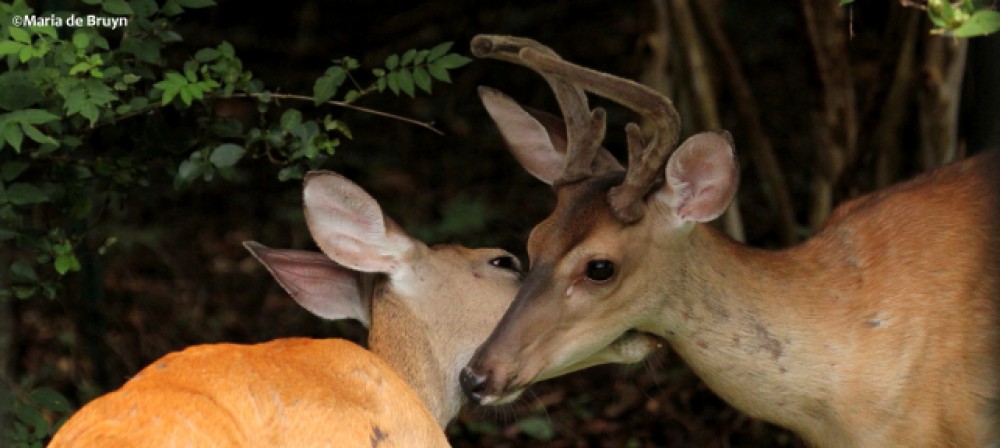
They’re baaaack!!! — and so am I! Part 2

But the Great Southern Brood of periodical cicadas is getting ready to leave…!
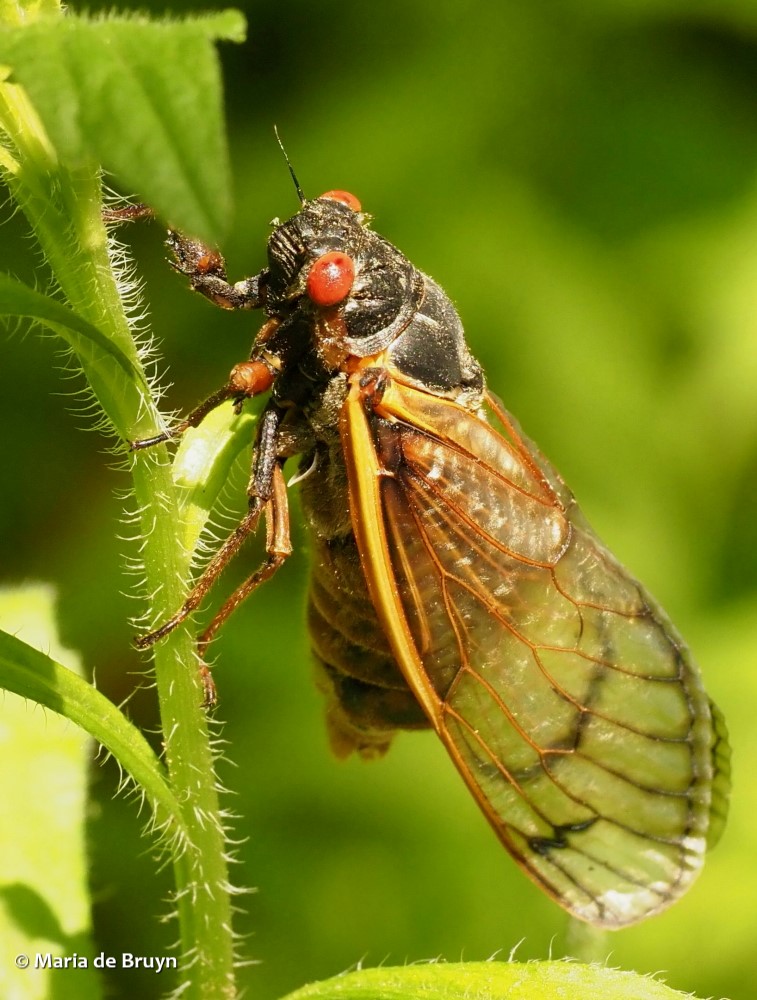
Having heralded their appearance in my previous blog, I’d like to share a bit here about what these insects are now facing as they expend their remaining energy on ensuring the survival of their species.

Some of our community members (both animal and human) are as appreciative as I am that these creatures are here. In listserv postings, a few people have commented, for example:

  • Sounds great.
  • I guess I am rare in thinking they are cool. It feels other worldly….
  • And it’s all about SEX. Just think about all those teenage hot-rodders gunning their engines to attract attention. They’re all saying “Come and get me baby. I’m HOT.” After years underground, you would be, too.

It’s almost impossible to miss the cicada phenomenon where I live unless you have hearing or vision problems or can’t get outside. Their calls for gathering and hooking up can reach a level of 100 decibels and this continues for hours on end.

The sounds can vary a bit because the Great Southern Brood comprises several species of periodical cicadas with somewhat different songs.
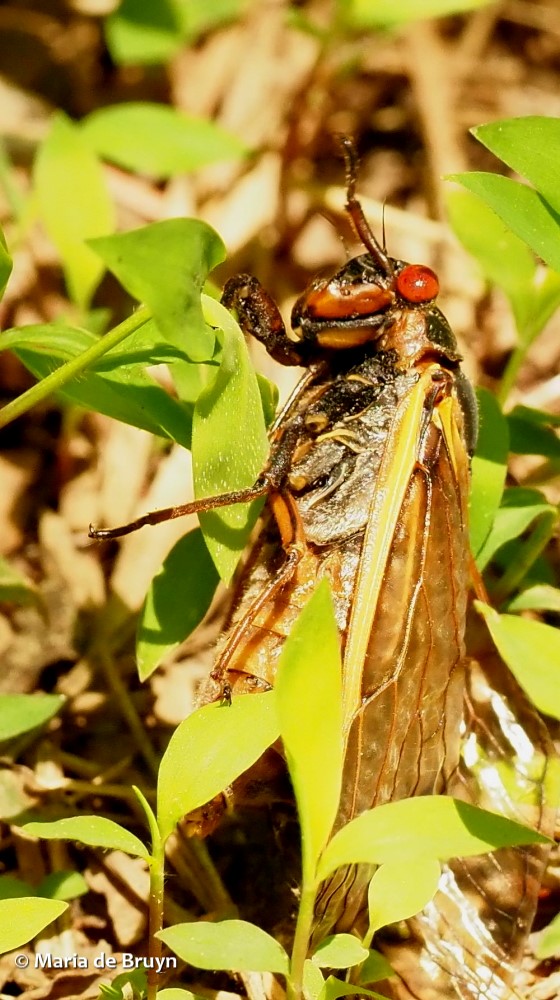
However, it seems that quite a few people don’t pay attention to the broadcast or print news. Despite the considerable coverage given to the cicadas’ appearance, inquiries about the ongoing noise continue in listservs, irritating some community members:

  • Please stop asking about the sound cicadas make! Please! And if someone answers, why do 50 people feel the need to respond? I feel that so much of the posts are so religious. Does anyone else feel this way?… I didn’t mean religious! I meant repetitive!
  • Cicadas are a plague sent from God signaling the End Of Time. The purple glow in the sky last night [Northern Lights] was the Rapture, and, since we’re still here … well, there’s that…
  • If you don’t like it, stop looking at the posts.

The numbers of cicadas we’re seeing really is amazing. They need an enormous population because that is how they ensure some will live long enough to reproduce. These insects have no physical or chemical defense mechanisms at all. Many will succumb to diseases and predators.

One particularly strange phenomenon is a fungus that attacks the cicadas. Massospora cicadina has evolved to target periodical cicadas. The cicada nymphs can become infected when they dig their way out of the soil.
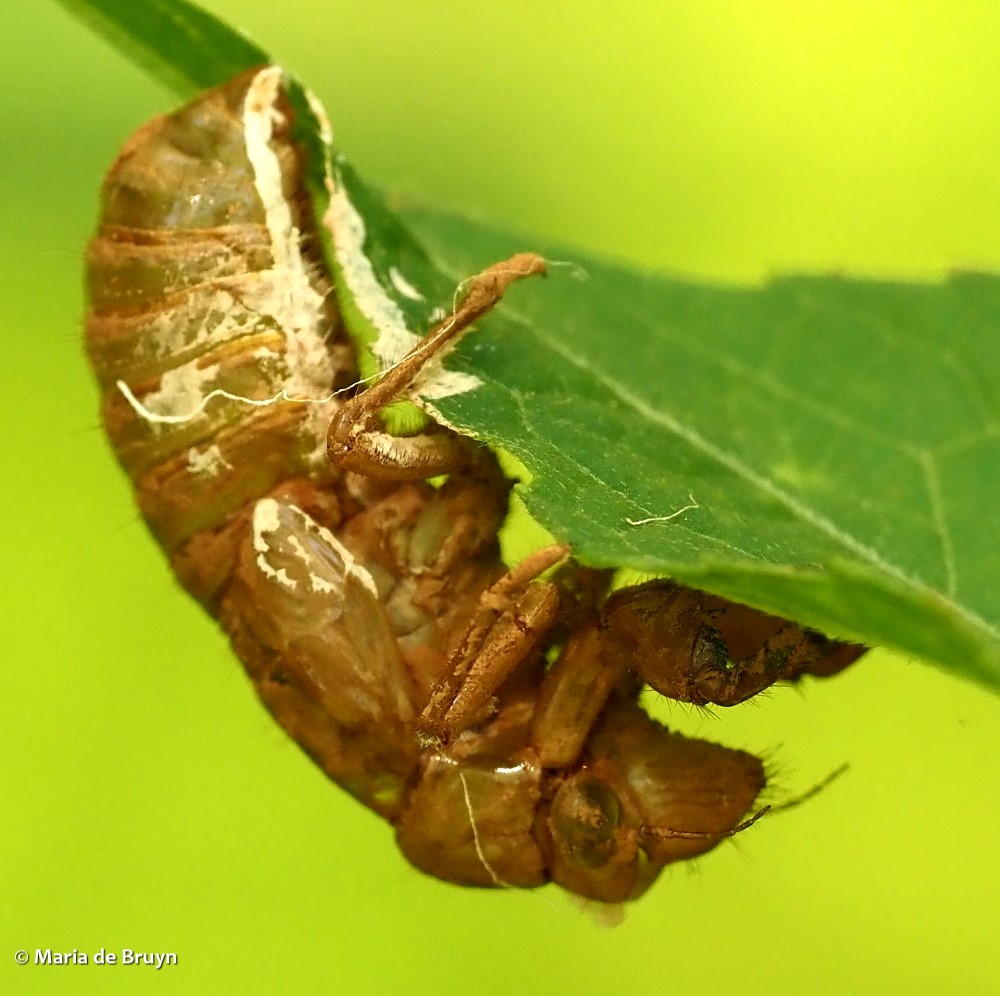
The fungus is a chalky white substance that destroys their reproductive organs but does not kill the insect. As the infection progresses, the male cicada continues to move around and tries to mate. Eventually, the back part of its abdomen drops off and we can see the white fungal growth. But the cicada doesn’t die from this and continues trying to find a mate!

Image by Katja Schulz, CC BY 4.0. Reproduced with permission from  <https://creativecommons.org/licenses/by/4.0&gt;, via Wikimedia Commons

The cicadas also have no means to fend off predators and they are a highly desired food source for other creatures. Those who eat them include snakes, spiders, beetles, wasps, opossums, squirrels, raccoons, frogs, dogs and even people.

This unfortunate individual died early on during the cicada emergence and the local ants found it on my driveway.

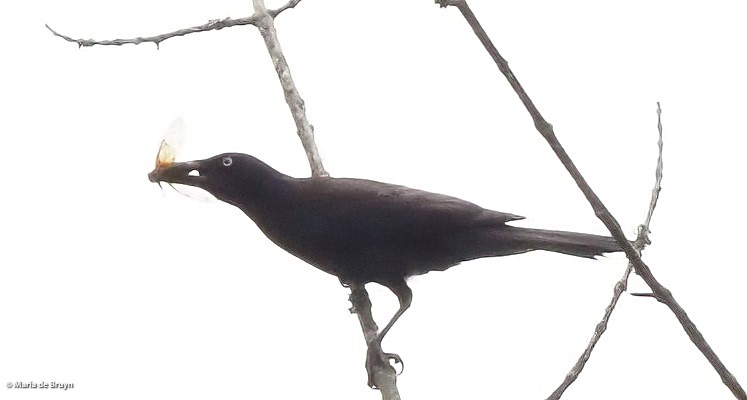
These cicadas are especially vulnerable to avian predation. I’ve now seen different species of birds chowing down on them, including grackles (below) and robins.
The red-bellied woodpeckers seem to have a particular fondness for them. A young woodpecker was hoping that its parents would provide them as a meal, but the parents were eating the insects themselves.

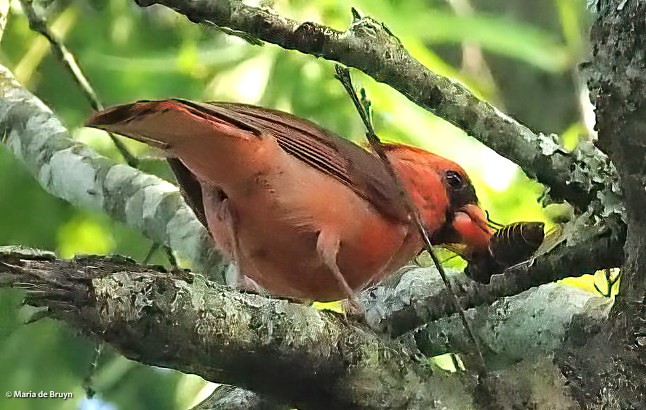
A Northern cardinal stopped by for a meal.
The resident male Eastern bluebird in my yard was supervising his three rapidly maturing fledglings in their efforts to catch and consume the large insects.

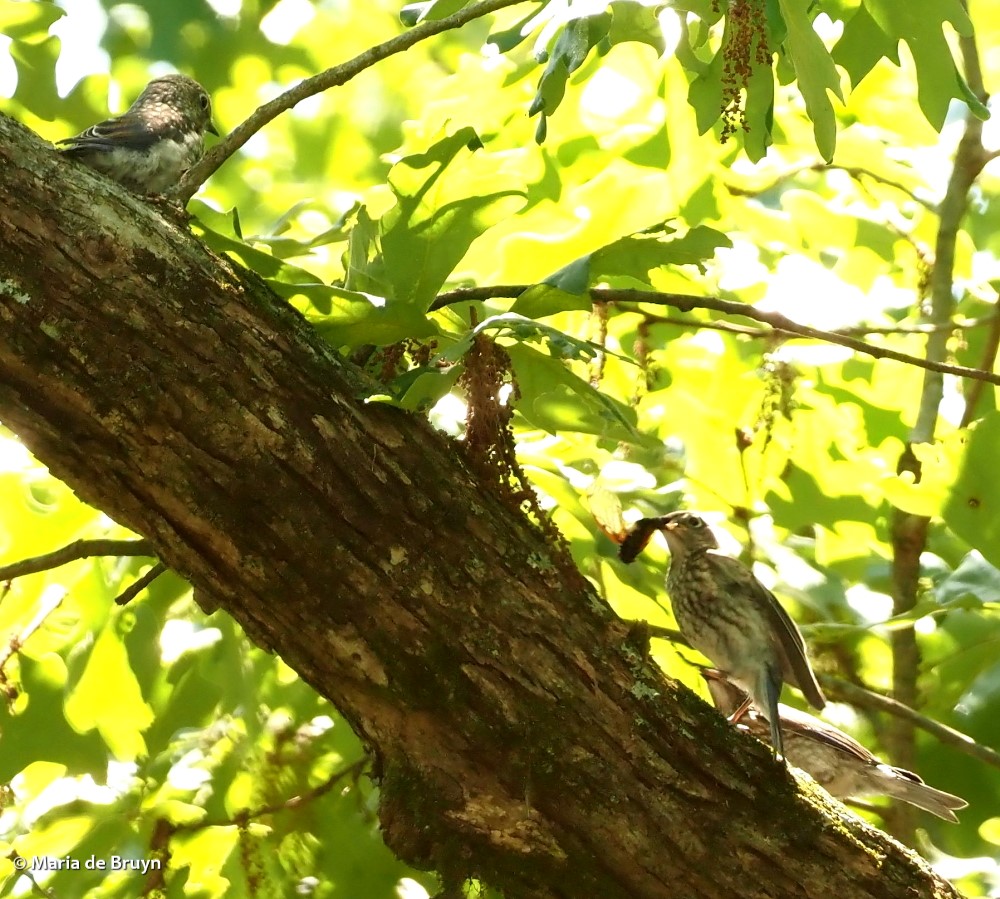
His mate was already tending another nest of 5 eggs, so he was occasionally feeding her as well, including cicada tidbits.

Given the enormous numbers of cicadas that have arrived, some are managing to stay alive and healthy so they can mate. The females may lay as many as 600 eggs in nests dug into plant stems.
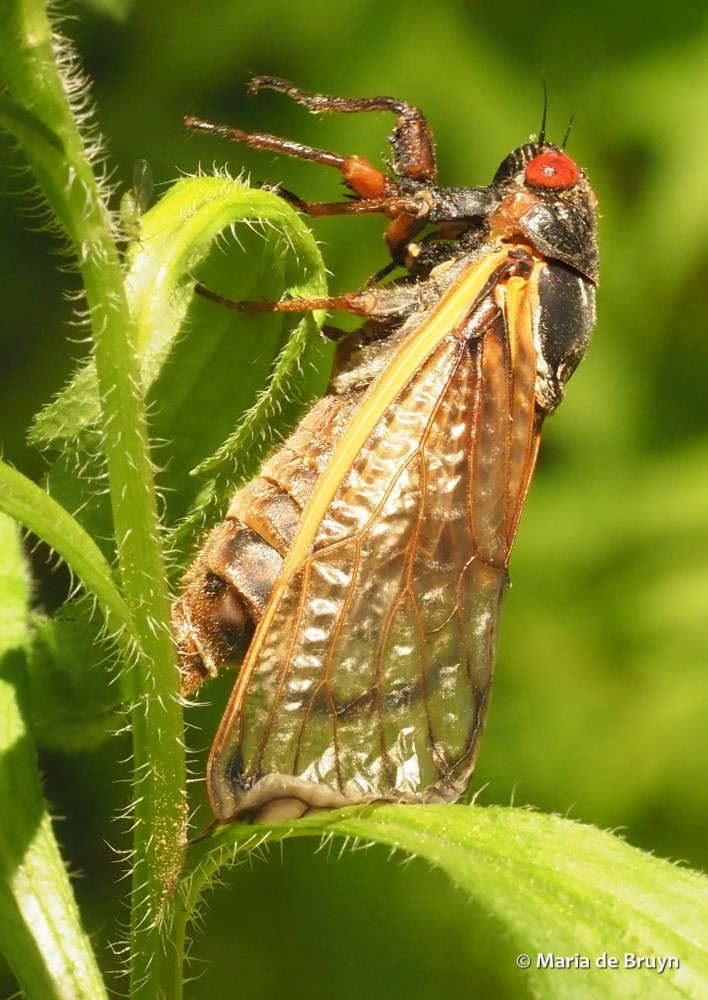
After 6-10 weeks, the eggs hatch and the nymphs crawl down to the earth to go underground for their 13-year “hibernation” period.  There they will eat sap from tree roots, undergo their molting and live out their lives with the people walking above or near them having no idea that they are there.
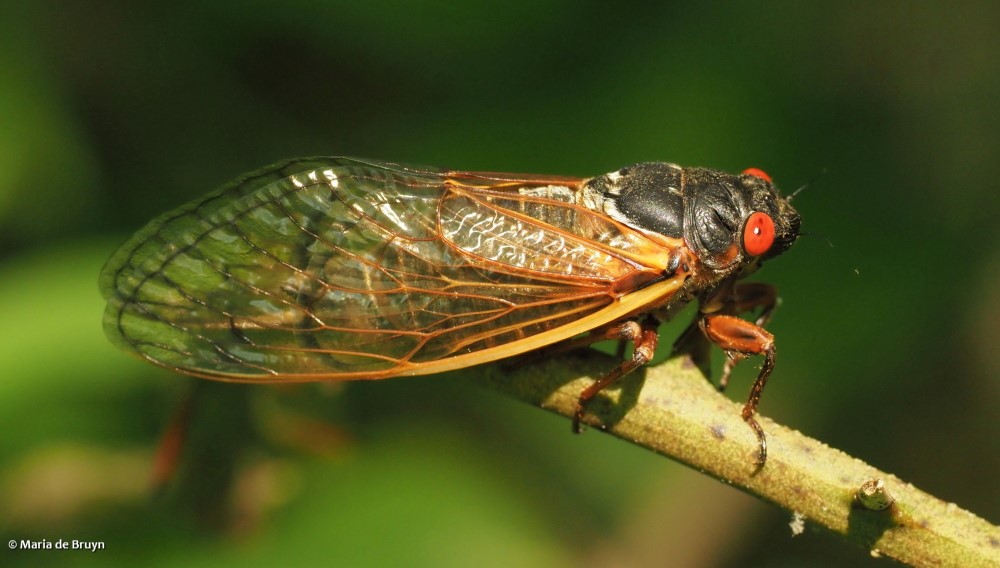
My chances of seeing the members of Brood XIX again are likely not so great, but perhaps some of you readers who live in the northeastern USA may get to see them emerge again then. If so, I hope you will find them fascinating, too!


Nature Photo Challenge: Autumn colors, part 2: “shrooms!”


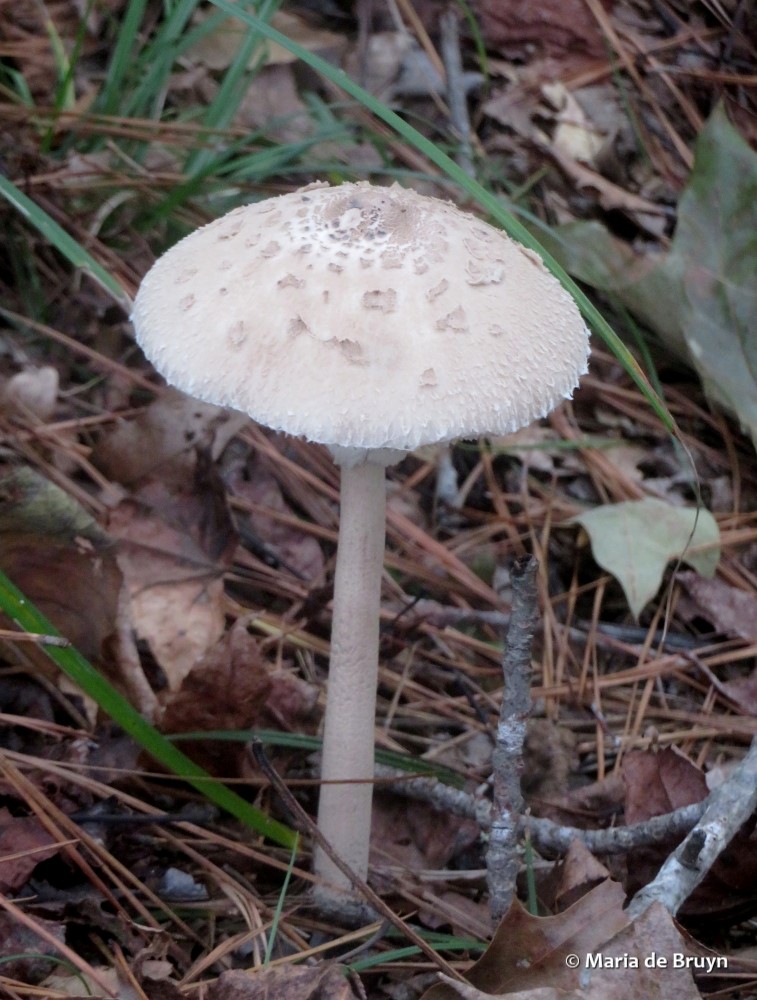
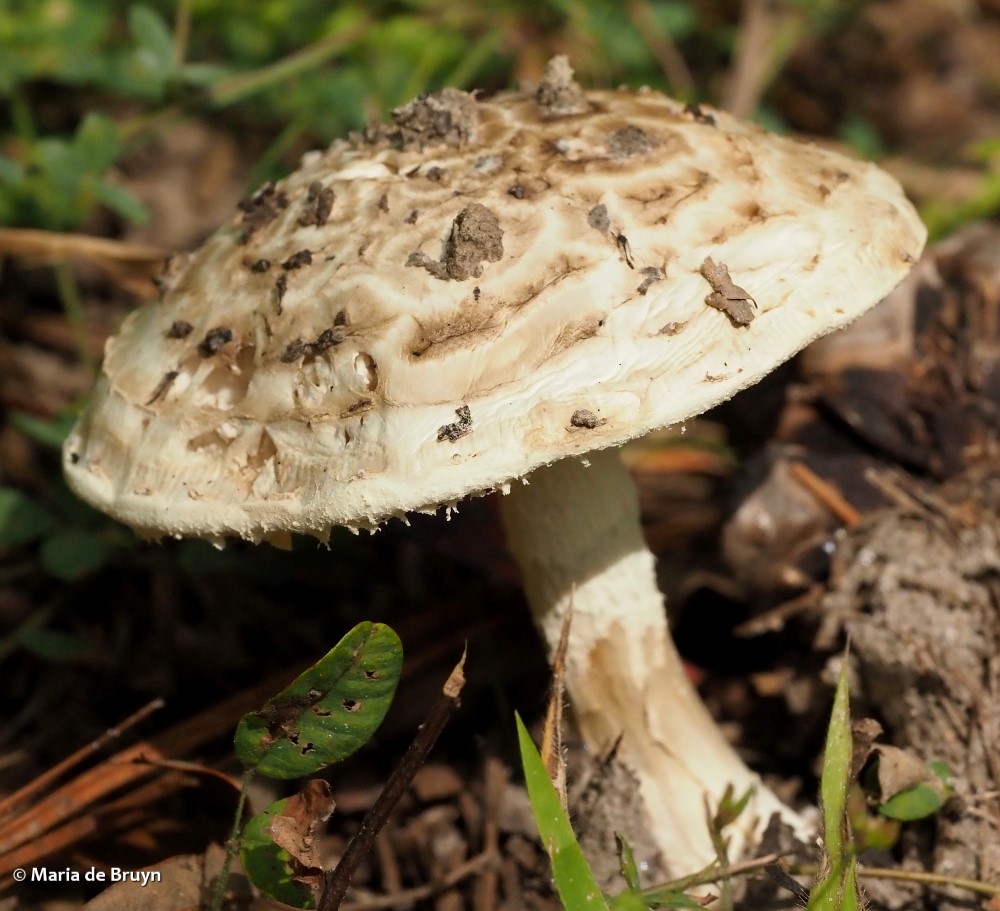
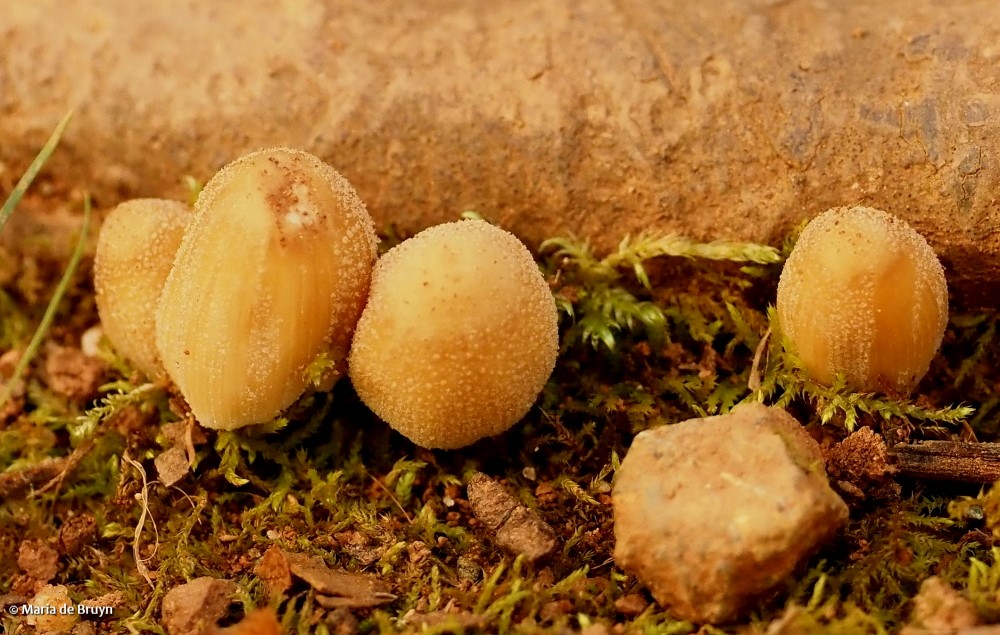
One of my favorite things to spot during autumn outings are mushrooms, the fruiting above-ground bodies of fungi. The most abundant ones in our area appear to be white and ivory in color and it’s not unusual to find small “colonies” of them growing in fields and woods.


Admittedly, I don’t know much about fungi except that they play a very important role in the natural environment. Suzanne Simard’s book, Finding the Mother Tree, was an eye-opener for me regarding how trees communicate and thrive through use of underground fungal networks. I’m now looking forward to reading Martin Sheldrake’s book, Entangled Life: How Fungi Make Our Worlds, Change Our Minds, and Shape Our Futures.

And I want to read more of the scientific writing that is challenging ideas about cooperative fungal and tree networks and cautioning us to await further studies that can show how fungi and plants may both collaborate and compete.


In the meantime, I just enjoy looking for ‘shrooms during my nature walks. Some of the white ones have interesting shapes that remind me of corals. Others have veins of bluish color.


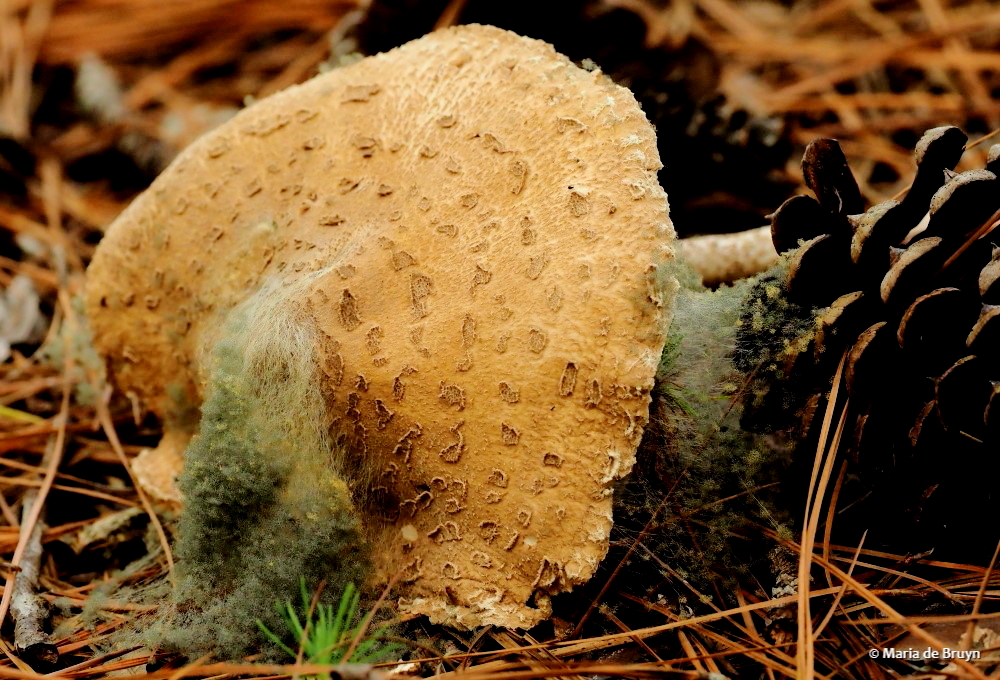
Some of the more beige/brown fungal fruits have shapes similar to the common white mushrooms. Sheldrake has pointed out how important it is that we learn more about all of them: “They are neglected in conservation frameworks, educational curriculums, and scientific and medical research. Part of the challenge is raising awareness of fungal life and the many vital roles they play in the biosphere, of course.”


Did you know, for example, that mycorrhizal fungi absorb “the equivalent of more than a third (36%) of the world’s annual carbon emissions from fossil fuels – every year?”


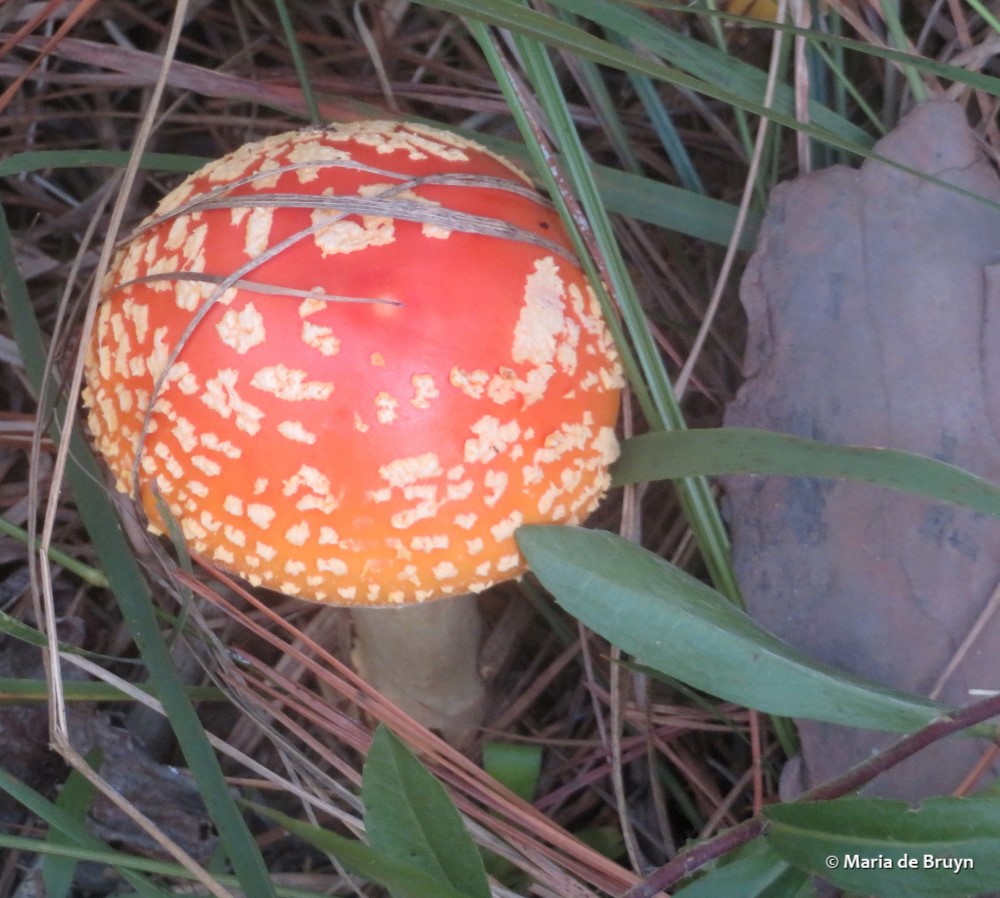
Some of my nature-oriented conservation colleagues know something about mushrooms because they enjoy collecting them for consumption. You do need to know a good deal about them, however, to do this safely as some mushrooms are poisonous. One easily recognizable one is the fly agaric mushroom with its pretty red cap dotted with white spots.

Although I went on a mushroom walk once where a knowledgeable leader encouraged us to collect specimens which he then identified at the end of the collection period, I admittedly am not so interested in learning which wild ones are edible. The cultivated mushrooms sold in stores satisfy my culinary tastes.


Spotting interesting clusters and shapes during outings is fun, however, and has led to interesting conversations with fellow walkers and photographers.


The color variations also attract me.

I always find the clusters of ‘shrooms with multi-colored lines appealing.


It’s also interesting to know that mushrooms can be used to create vivid dyes to color natural fibers such as wool.


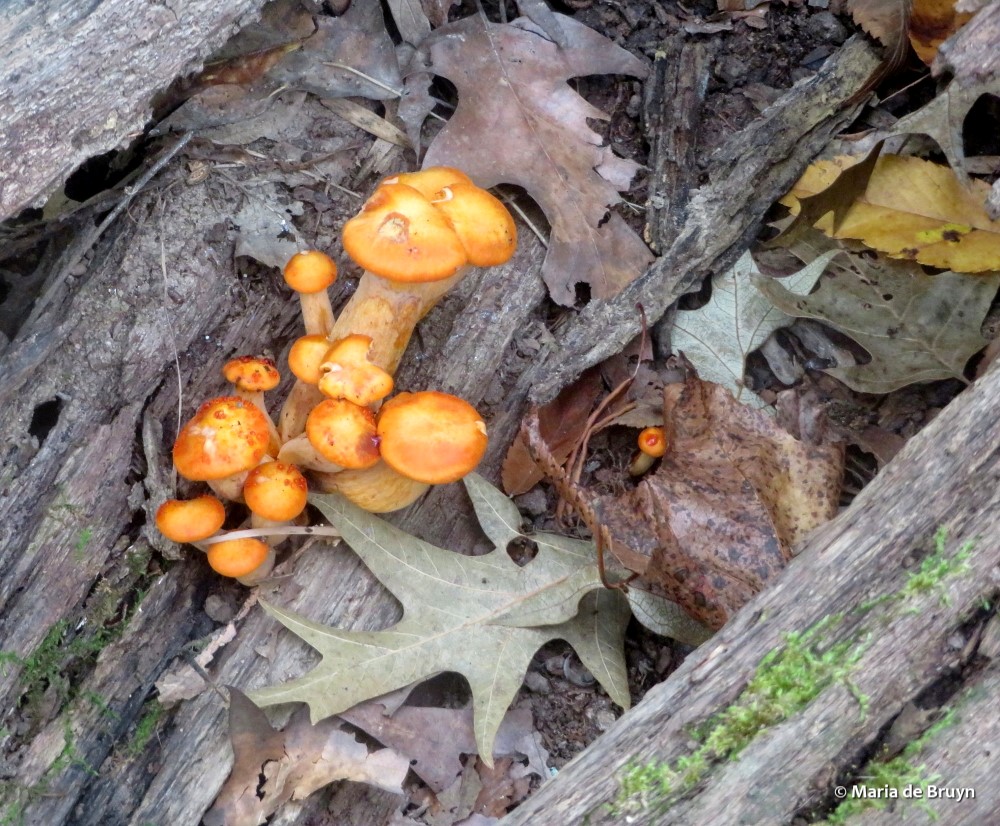
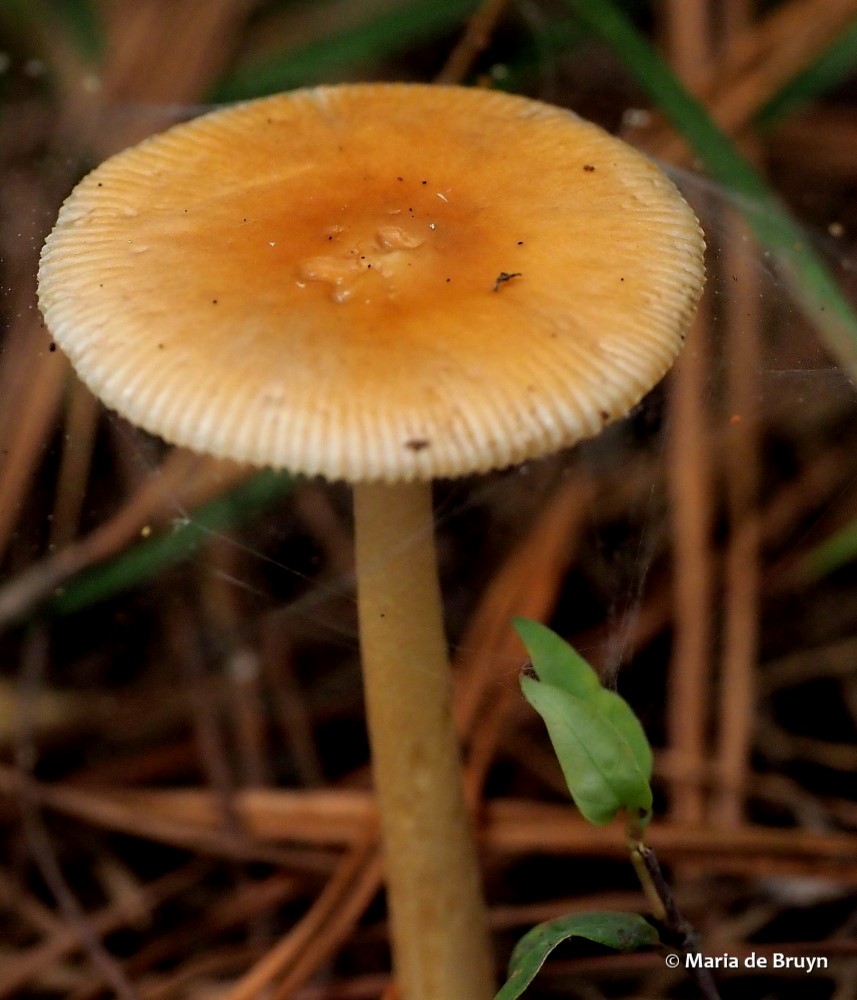
Three of my fungal finds that were favorites this autumn are shown below. Their vivid colors really caught my eye from far away and they were quite large.

I’ll leave you with a find that has puzzled me as I have no idea what it is. Several green plants were covered with these fine white filaments. I don’t know if they were produced by fungi or some type of insect; my Internet searches have not produced an answer yet. If any of you readers know what this is, please enlighten me!  And have a nice day!
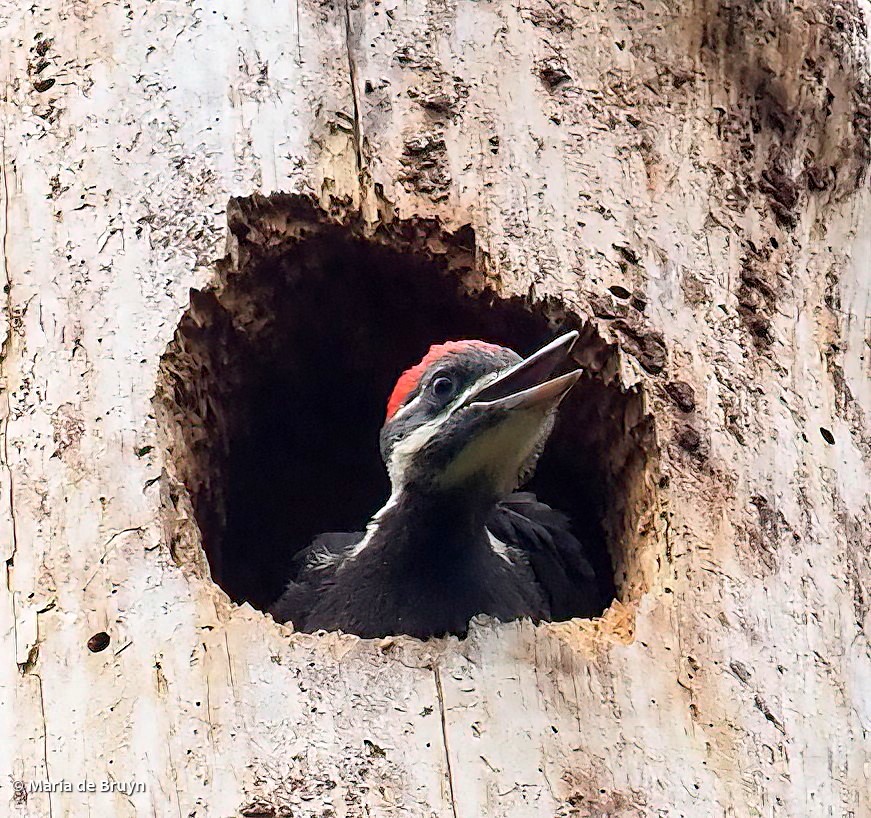
Our largest North American woodpecker — a real delight!

During nesting season, we have a good chance of seeing many birds whom we might not notice otherwise because they’re out in the open, collecting nesting material and scrounging for as much food as possible because they have hungry mouths to feed. I was very grateful to my friend Carol when she told me about a pileated woodpecker (Dryocopus pileatus) nest where the babies might be fledging soon. Pileated woodpeckers are also nesting somewhere near my home, but I rarely see them.

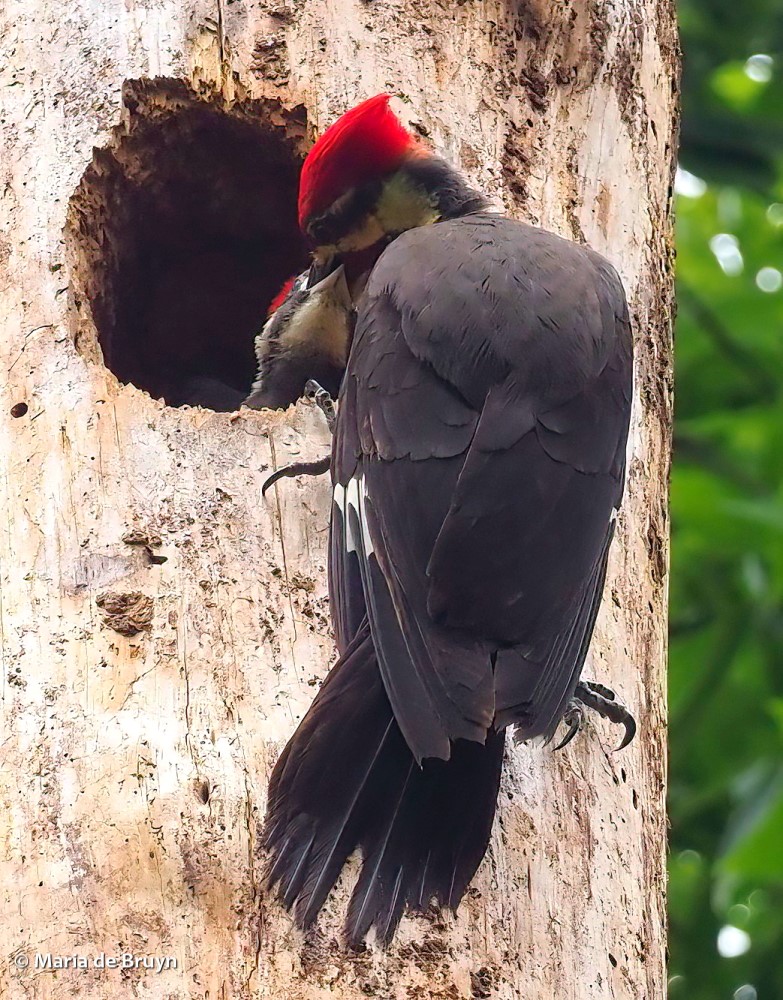
When we arrived at the nesting site, one baby was poking its head out of the oblong nest hole about two-thirds the way up a very tall snag.


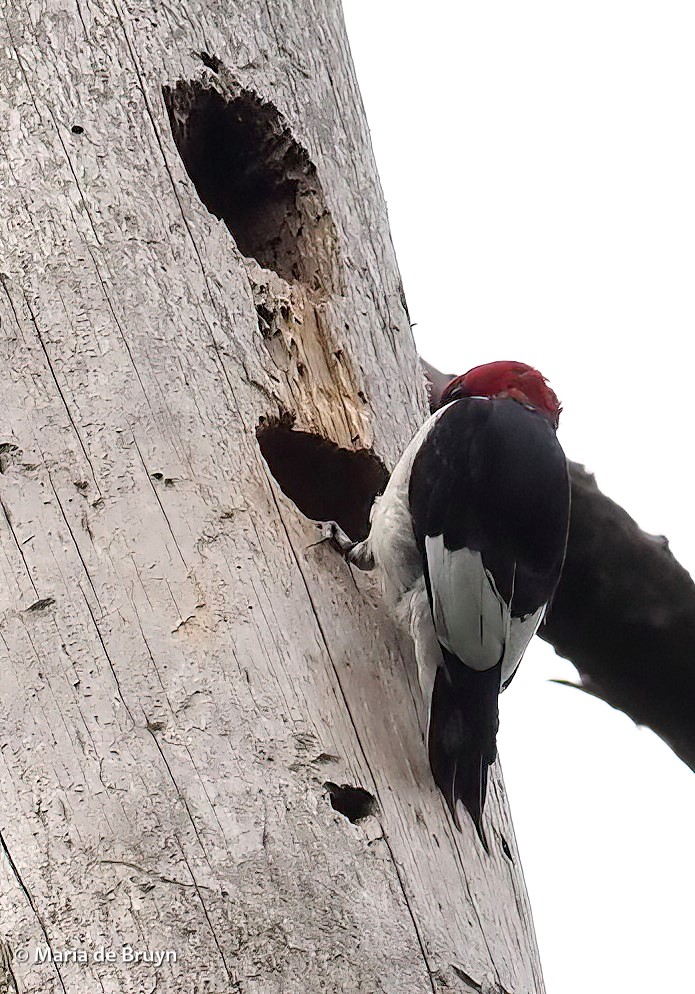
Above it, a red-headed woodpecker (see right) was maintaining a nest. A red-bellied woodpecker was also visiting higher up.

While we watched, the young one continued scanning the skies while calling out to its parents. The baby persisted in watching from the nest, which was only lined with wood chips. Unlike other birds, pileated parents do not line their nests with nesting material such as soft grasses.


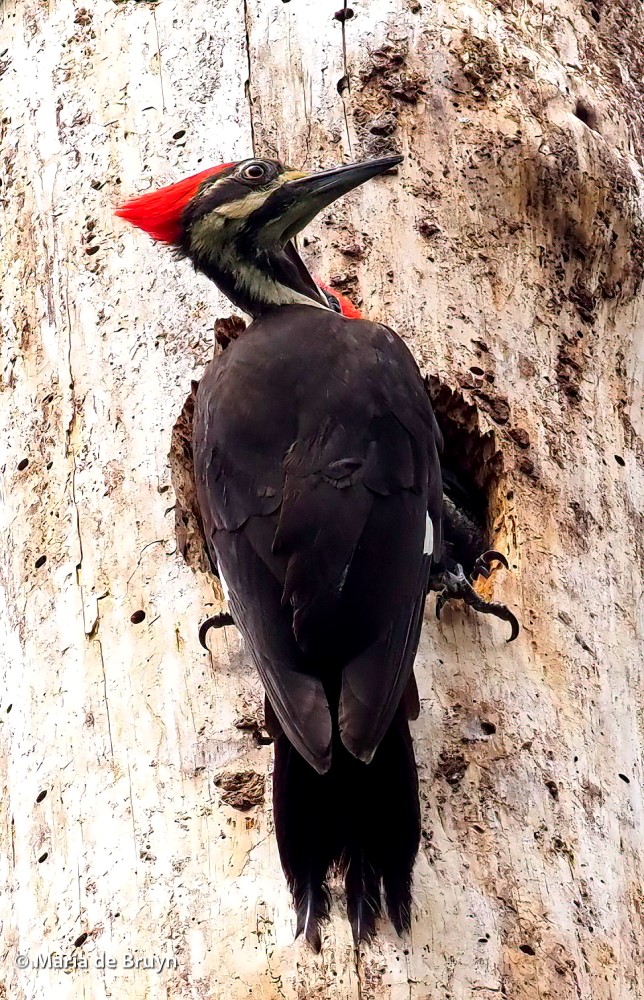
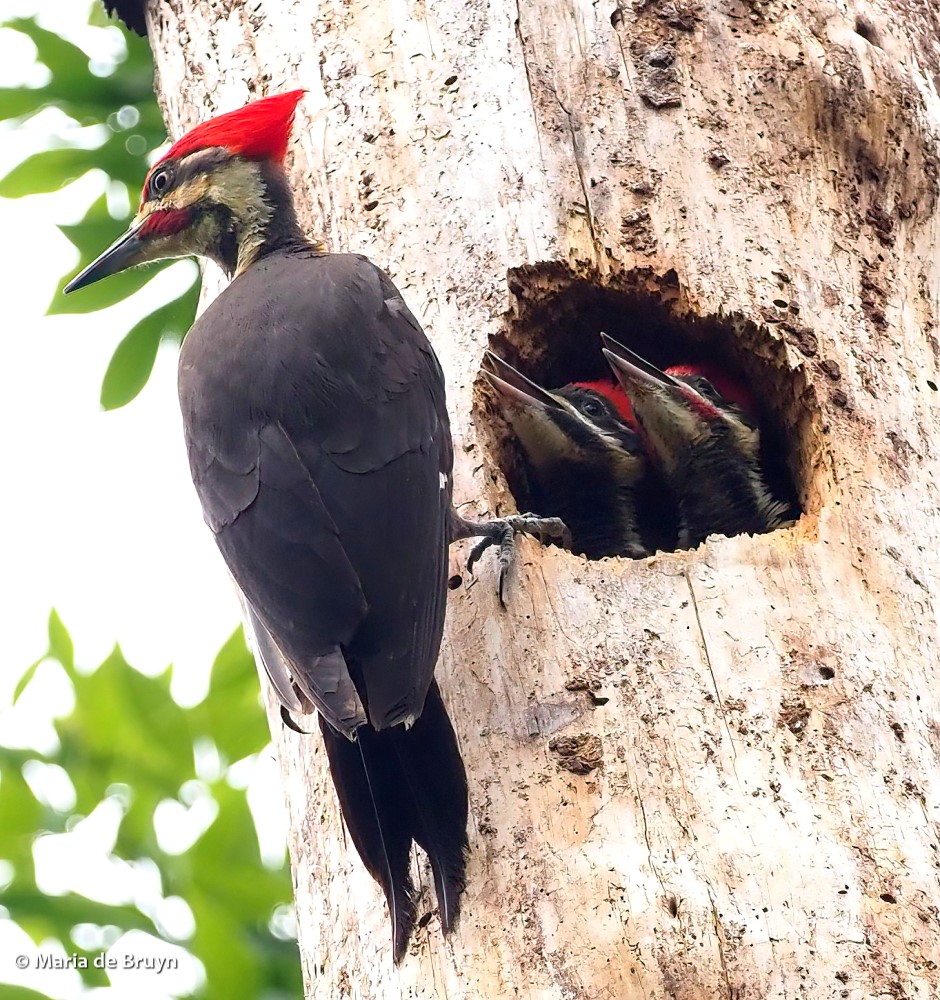
Occasionally, the parents answered and, after about 15-20 minutes, one flew over to check us out. It was the father, who could be identified by his red crest that extended down to his bill and the red cheek or moustache stripe (right photo). The left photo shows a female who was foraging in a tree on another occasion. Her red crest is only on top of her head and her cheek stripe is black.


The young one looked back into the nest; I wondered whether another nestling might be there. No one else peered out at that moment and we speculated as to whether one might already have fledged as two had been seen the previous day. When the father visited the nest, still only one baby showed itself, so we didn’t know whether there might be another one around (nests usually have 1-3 babies).


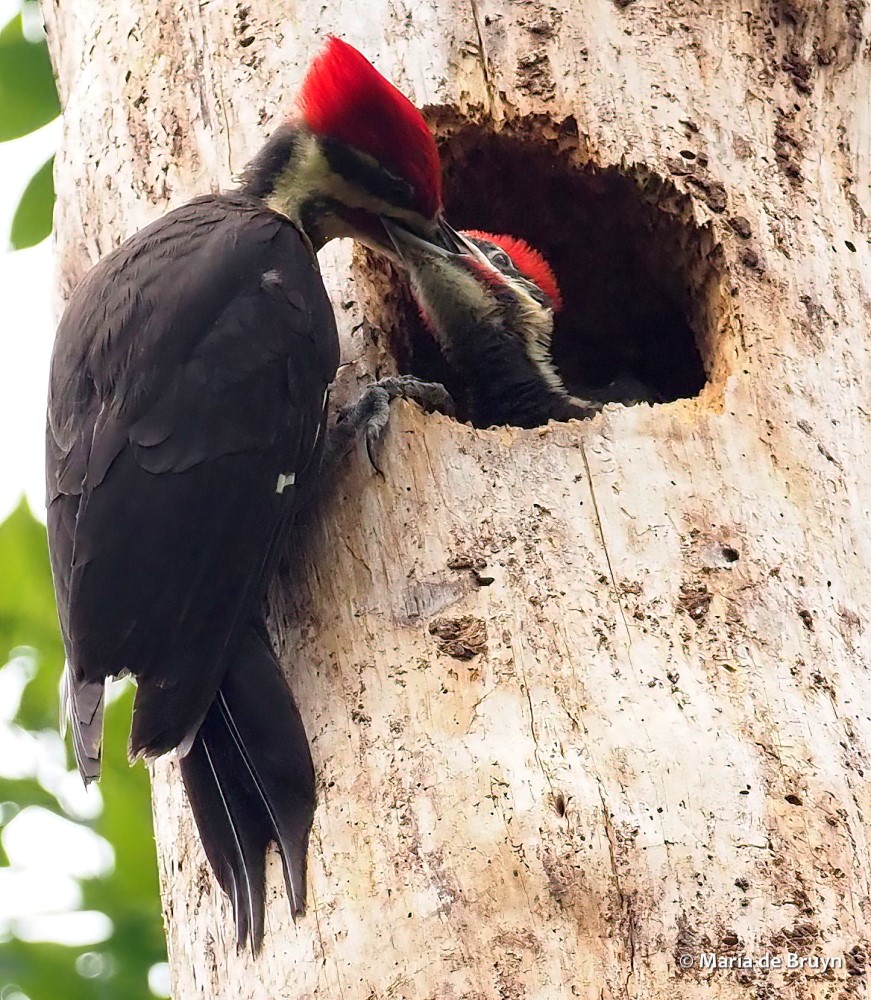
The father fed his offspring by regurgitating whatever he had been eating. The pileated woodpeckers’ diet comprises mostly carpenter ants (40-97% of their diet in various studies), supplemented by other insects including worms, caterpillars, roaches, flies, and grasshoppers.


They also eat nuts and wild fruit. If you have a garden and want to attract them, they like persimmons and many berries, including those of poison ivy, sumacs, dogwoods, elderberries, greenbriers and sassafrass.  

Many landowners tend to clear their yards and gardens of fallen logs and dead standing trees. I keep several woodpiles in various spots as the decomposing wood is home to many of the insects that the pileated woodpeckers and other birds need for their diet.

Papa took off again, leaving a satisfied young one behind (at least for the time being).

These woodpeckers are the largest in North America (15.8-19.3 in/40-49 cm), since the ivory-billed woodpeckers have been declared extinct. They are monogamous and luckily have plenty of opportunities to find mates. Pileated woodpeckers had been in serious decline in the 18th-19th centuries as forests were logged for the timber industry and to clear land for ranches and farms. Since then, they have rebounded to just over 2.5 million individuals.

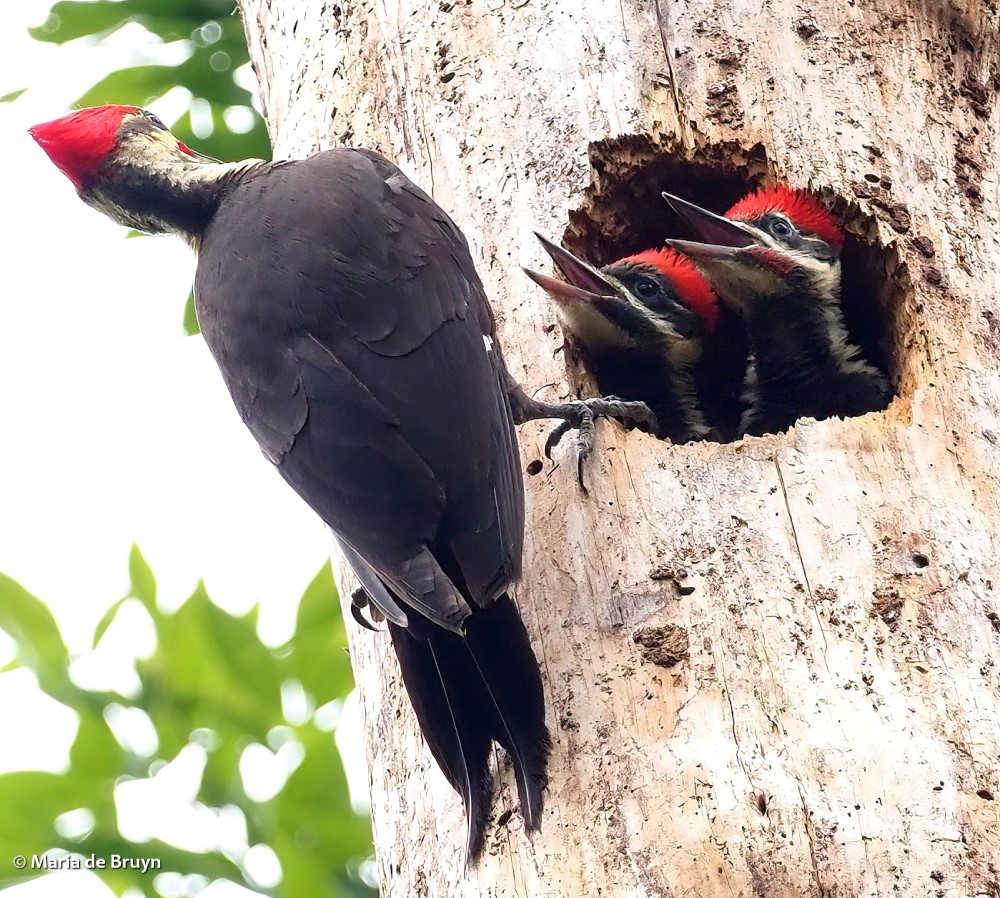
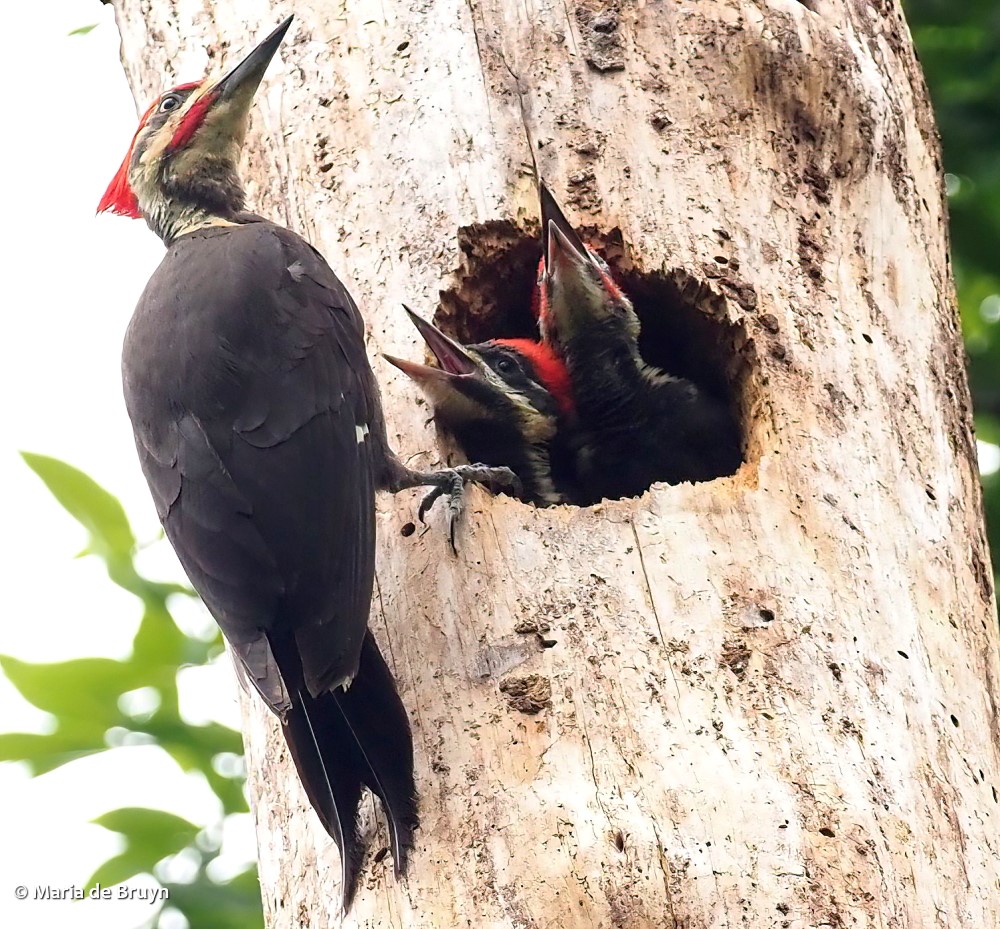
I realized when I looked at my photos later that I had not been paying enough attention to the coloring of the parents and offspring. When I went away for a short time and then returned, mama pileated was visiting the nest. In addition, whereas I had been watching a female nestling first, now a male baby was calling out for food. A view of the two looking up, shows the male’s red cheek stripes were obvious, but I had been oblivious at the time. The female is on the left and the male is on the right.


The next time that papa returned, the male offspring stuck his head out for a feeding.


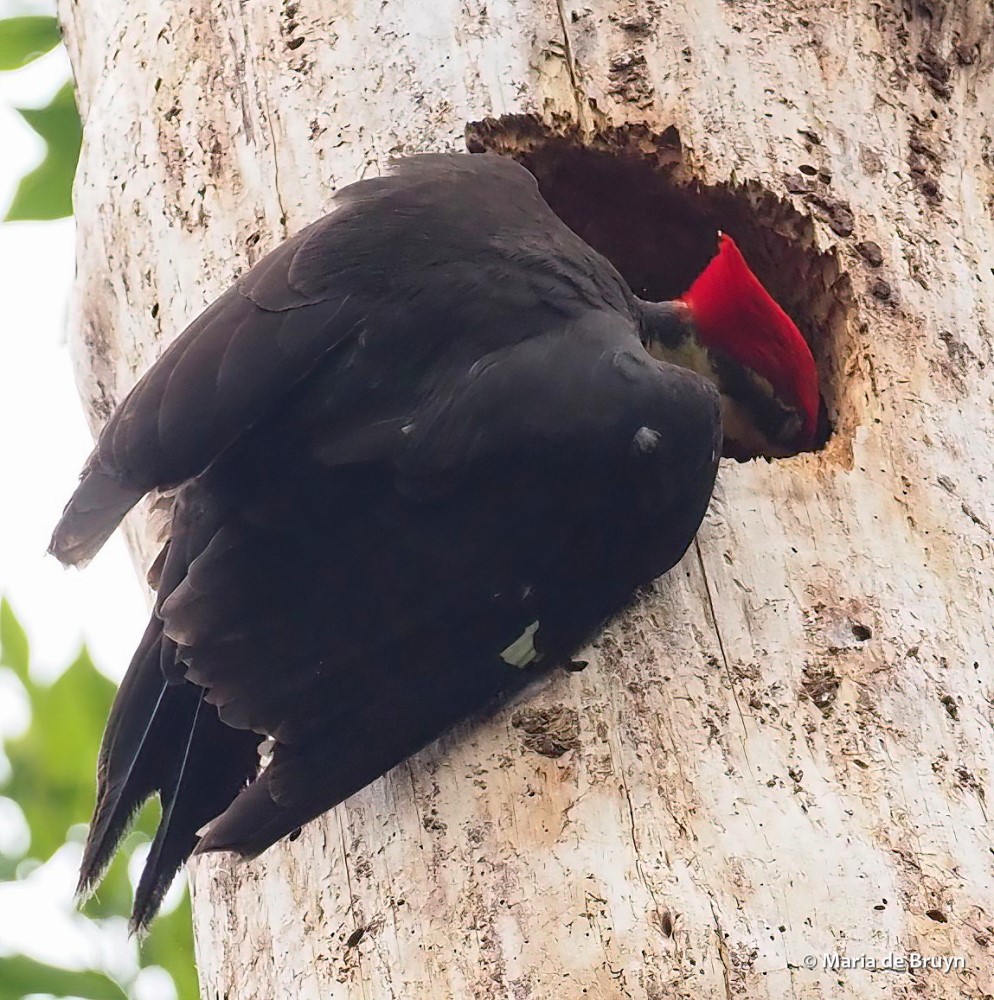
Papa didn’t want to play favorites, so he stuck his head in the nest to apparently call them both to come out.

They opened their beaks wide, begging for food.


Papa let them ask for a while, sticking his tongue out at them as they begged.


He also decided to take out some fecal matter. I don’t know how long the nestlings had been in there (they usually grow in the nest for a month), but a clean nest is desirable.


After the babies fledge, they may stay with their parents for up to three months.


I’m so glad that Carol and her sister Donna, near whose home the nest is located, invited me to come see the family. It was time well spent as it got my mind completely off an ongoing series of problems complicating my life lately. Hope seeing these photos was also a bright moment for you!

Wandering a flooded forest

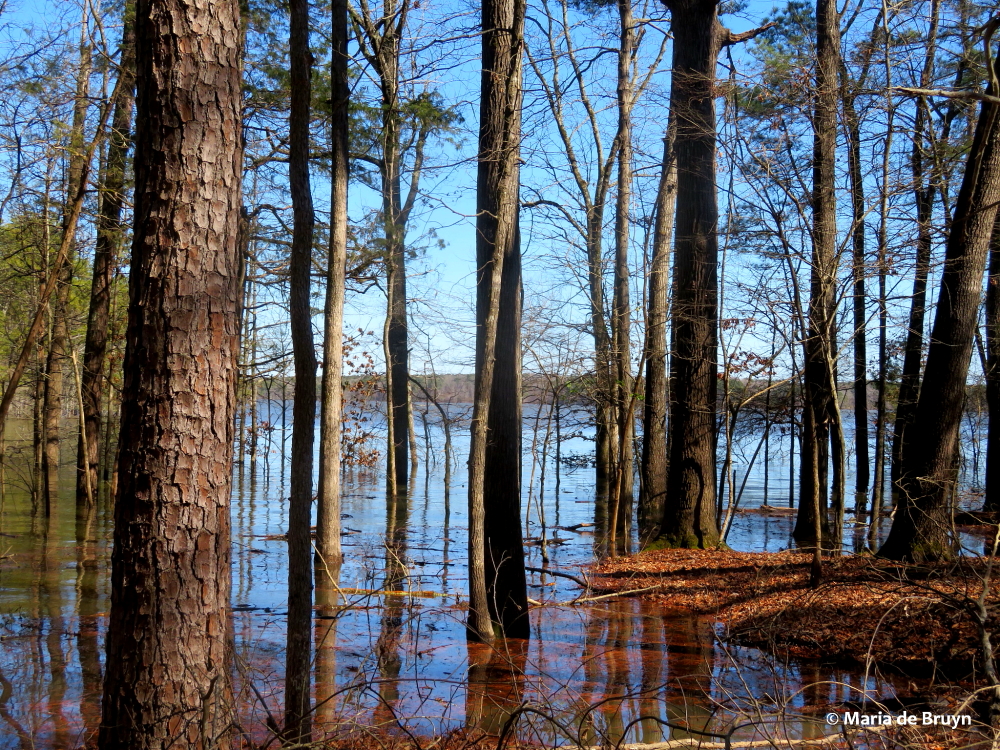
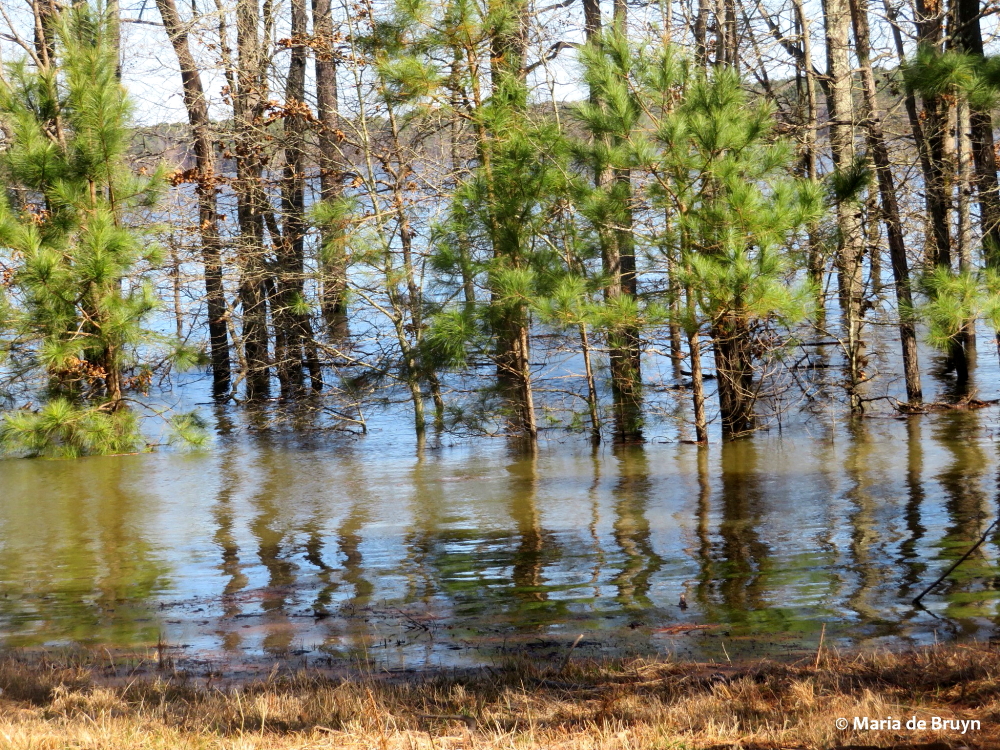
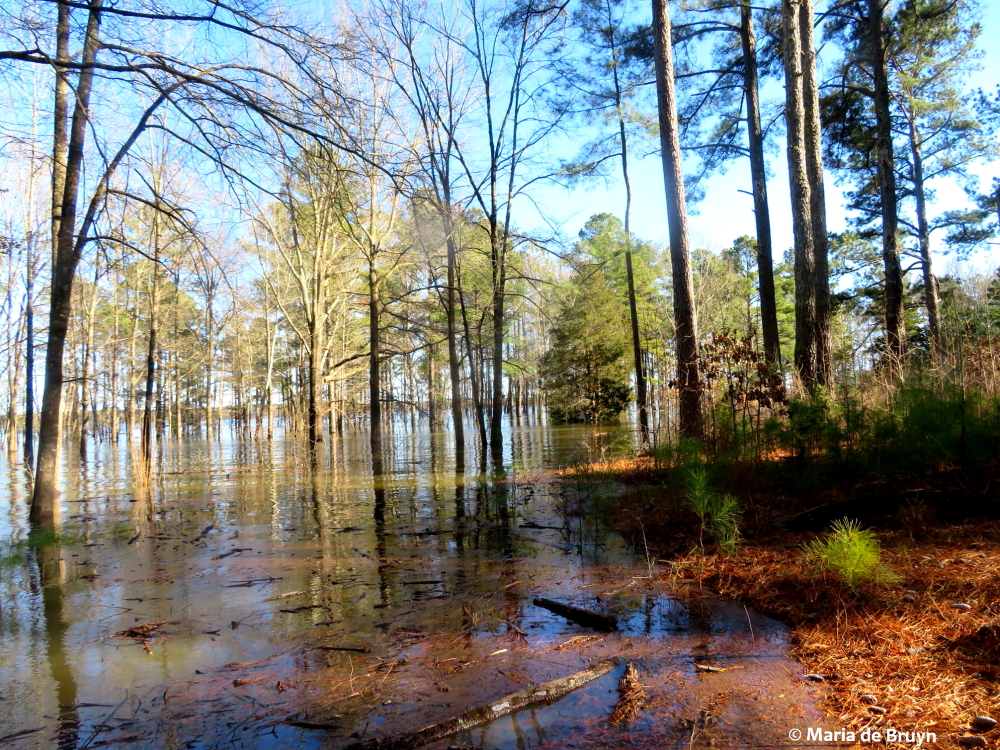
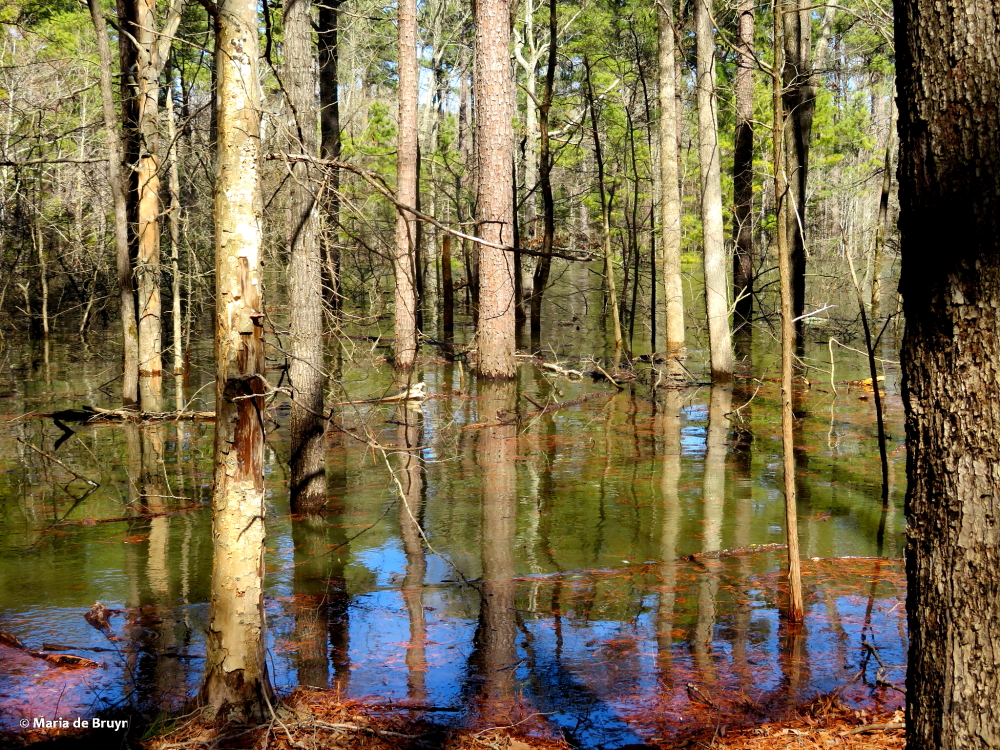
The year 2020 ended up being the wettest year on record since 1944 in the Piedmont region of North Carolina, but the rains didn’t end in December. In fact, the area recorded its second wettest February on record in 2021 and it was noticeable in the amount of flooding we saw.

Whereas Jordan Lake at full pool (normal level of the reservoir) is 216 feet above sea level, the level rose to 230.3 feet on 23 February 2021 – the day that I unknowingly chose to go for a walk in the forest bordering the lake.


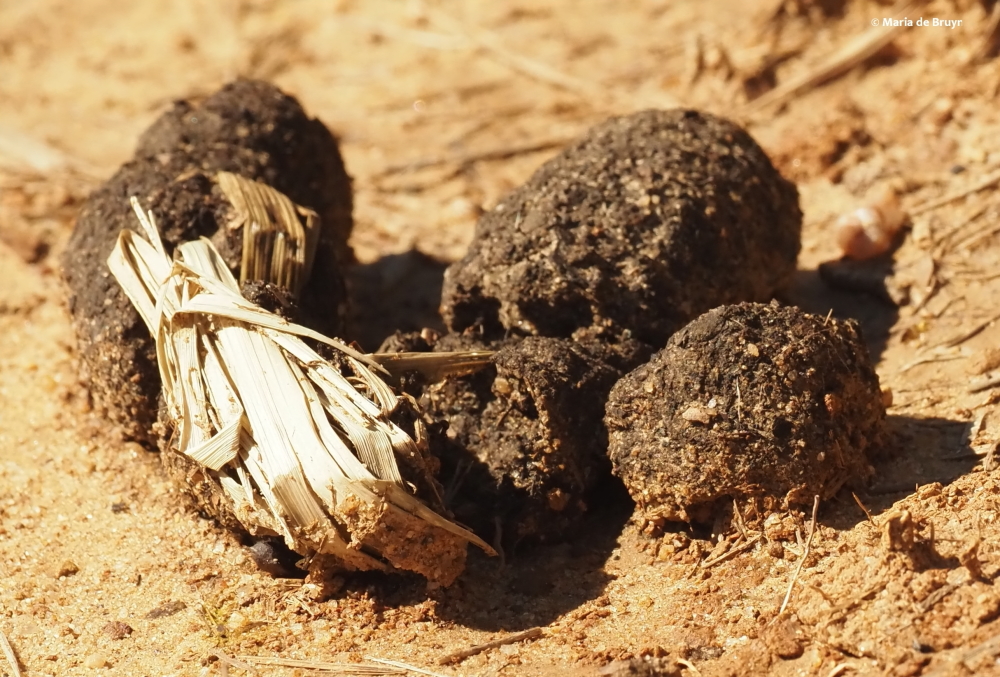
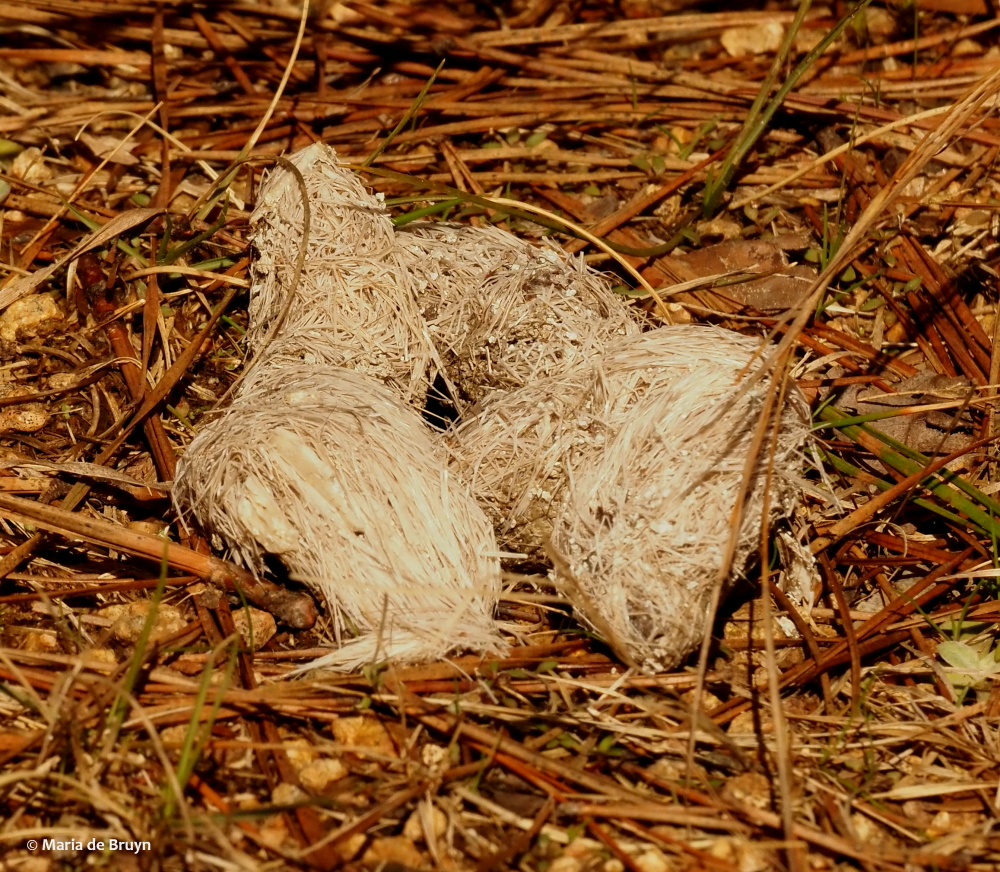
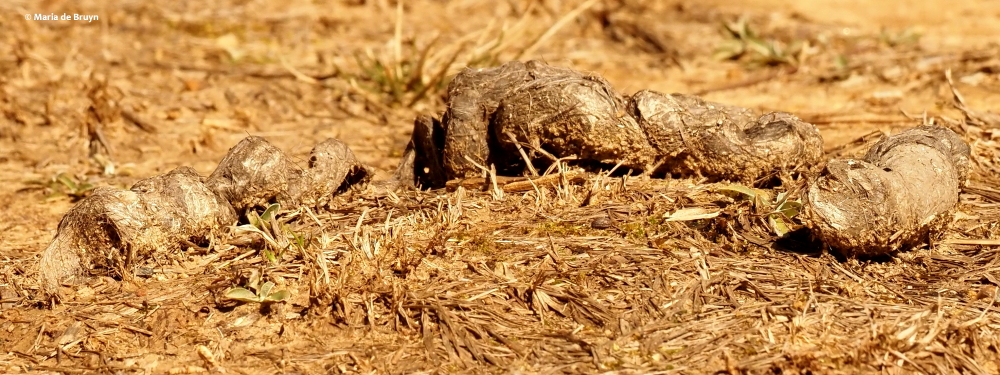
I didn’t notice the flooding immediately as I first walked through a meadow area to get to my usual walking site. What immediately drew my attention was the amount of canine scat on and alongside paths.

With a lack of human visitors, the foxes, coyotes and other animals obviously felt more comfortable wandering everywhere throughout the reserve.

Lots of flies were buzzing around the remaining dried flower stalks and I spied an early leafhopper – the first time I had seen a lateral-lined sharpshooter (Cuerna costalis).

Setting off into an area where I often saw woodpeckers, I discovered my usual walking trails had disappeared under an expanded lake.


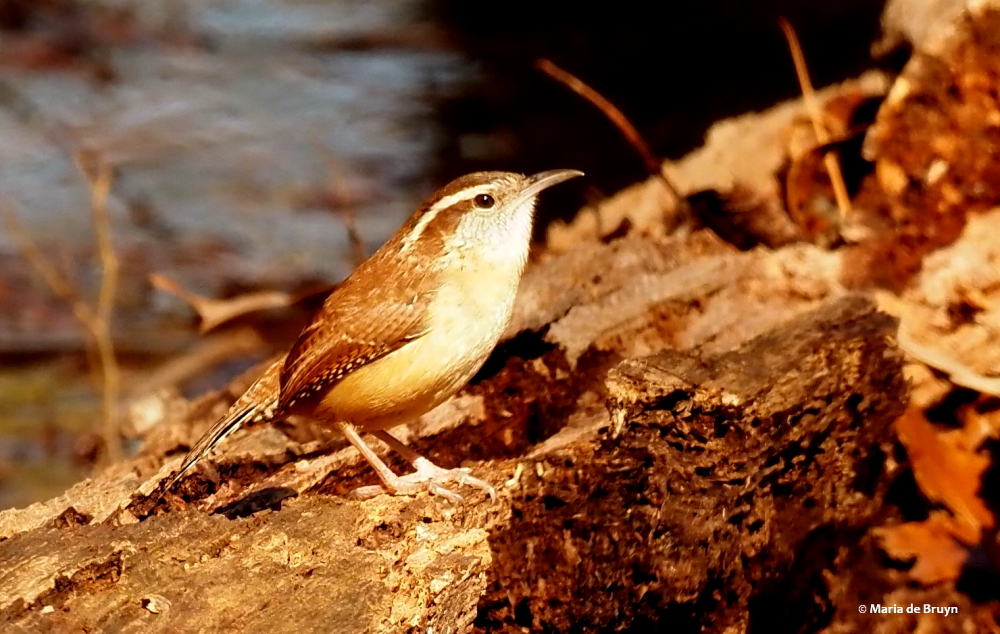
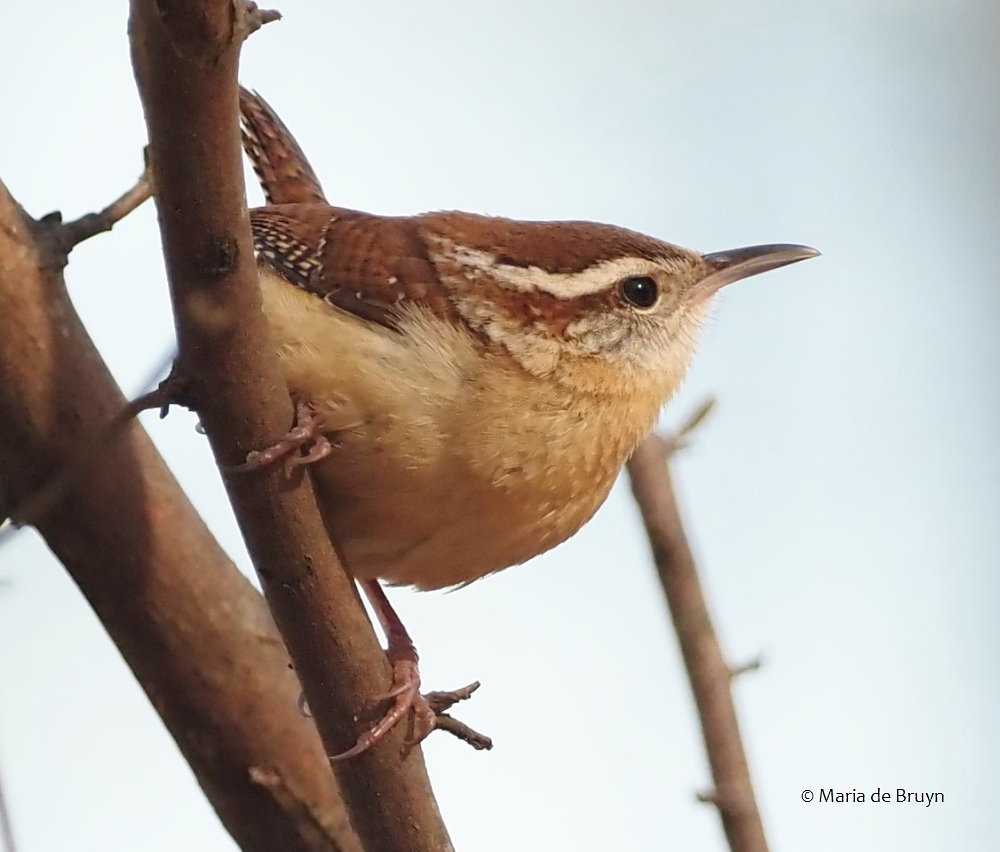
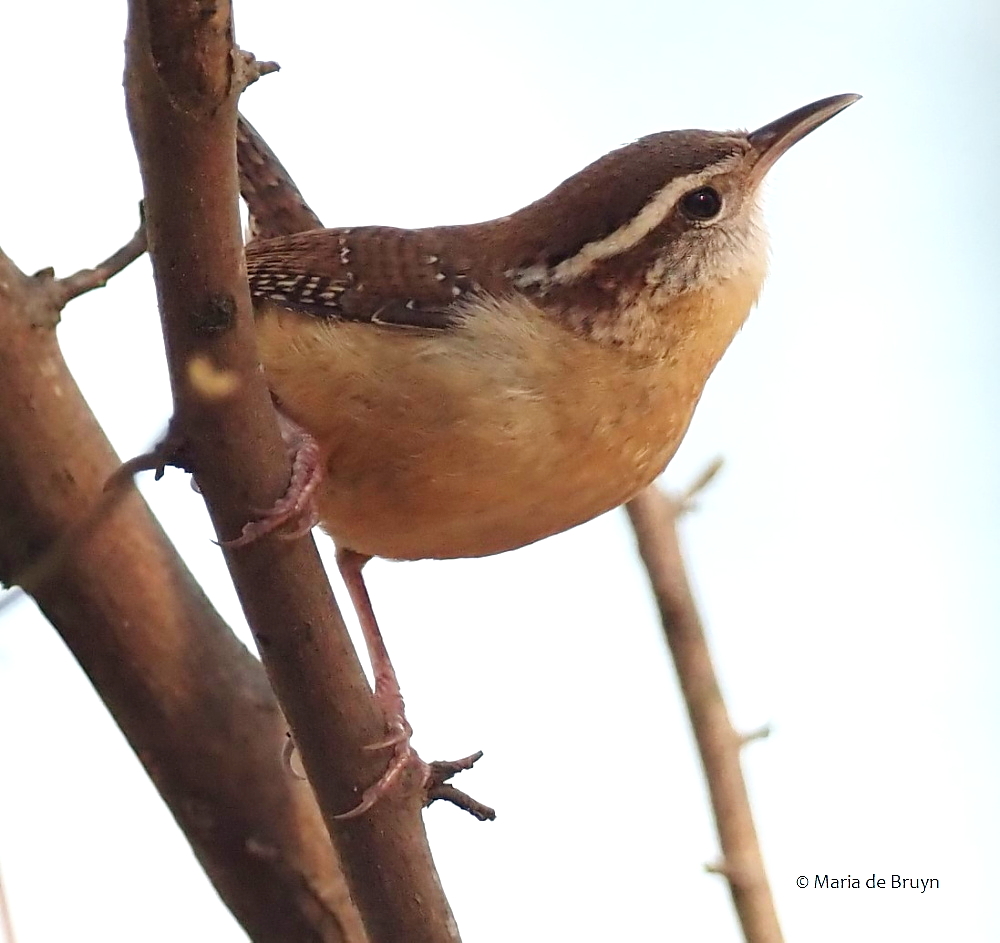
A sweet Carolina wren (Thryothorus ludovicianus) hopped into view, apparently wondering why a human being was again being seen in these parts.


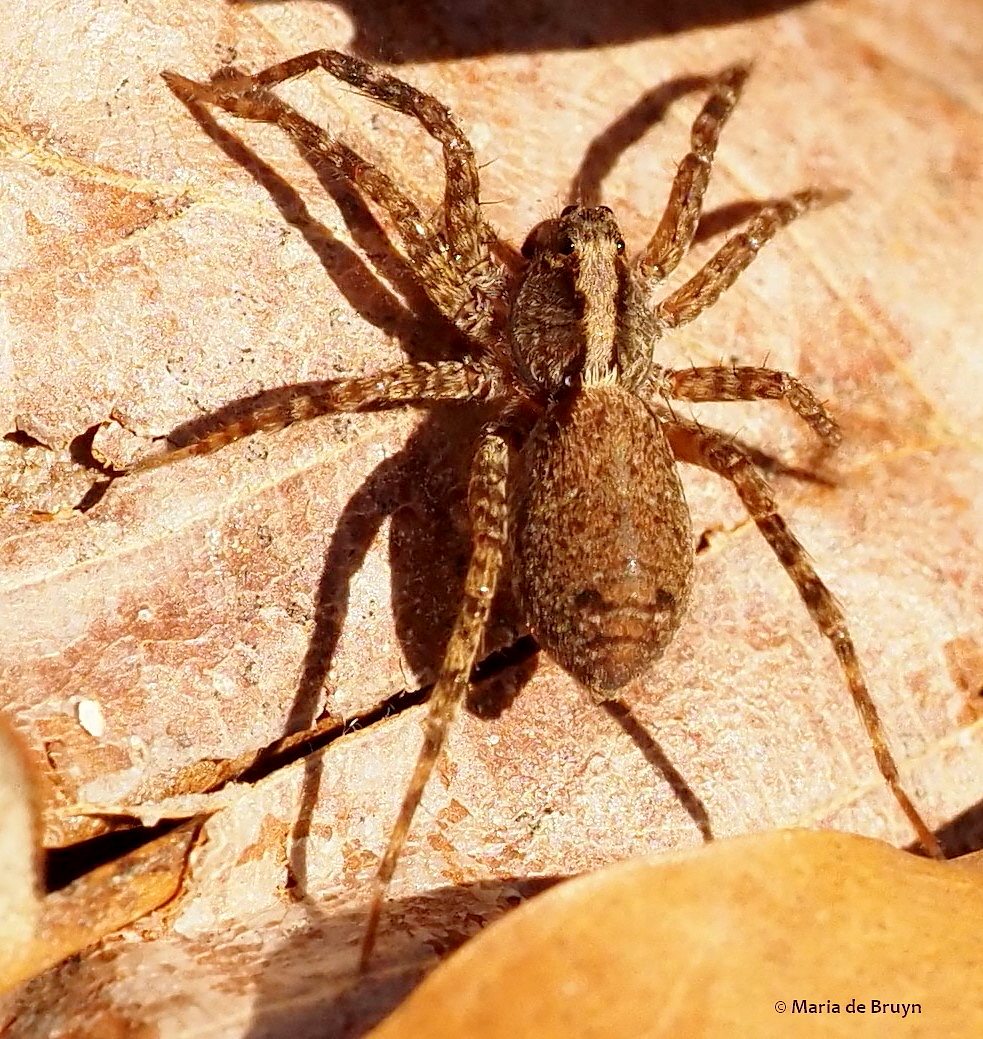
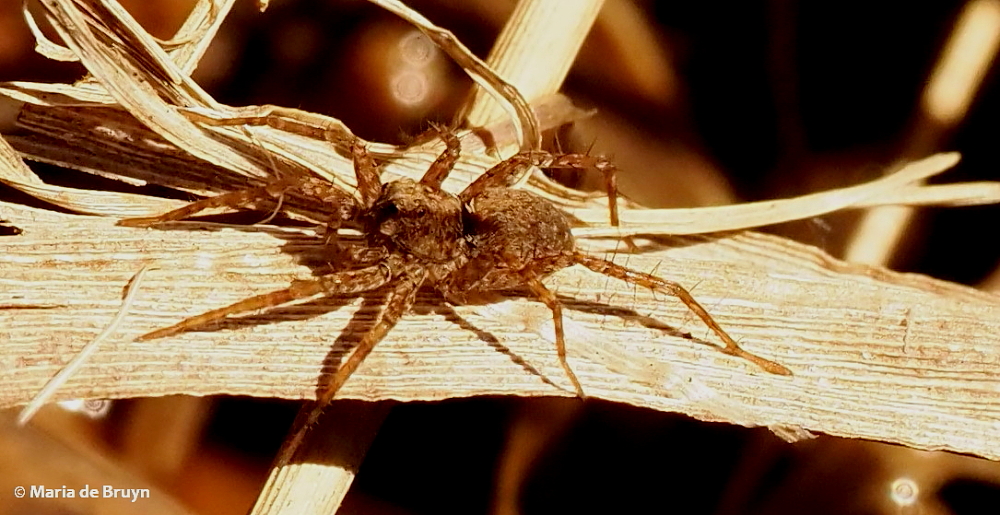
I discovered it was a good idea, too, to watch where I was walking because the remaining forest floor was alive with thin-legged wolf spiders (Pardosa) crawling over the fallen leaves.


I wonder if there were so many in this area as they had all fled the rising waters to congregate in the same area. (Certainly a way to meet other spiders!)

Wandering further, I saw that I couldn’t get anywhere close the shoreline that used to be a favorite birding area.


The osprey nest, not yet occupied, is normally on a land-bound snag but now it was in the water.

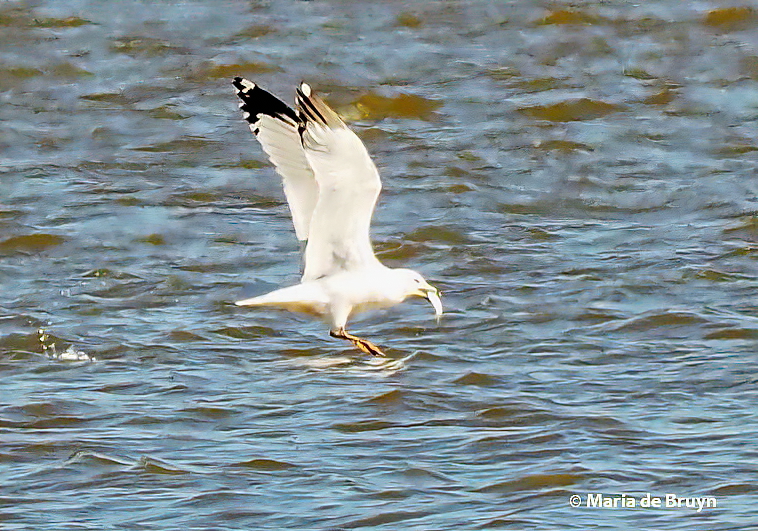
There were still some birds around, but not as many as I was used to seeing. Off in the far distance, a ring-billed gull (Larus delawarensis) was fishing.

Never had I seen this lake’s water so high – many of the areas where I usually walk were completely submerged.

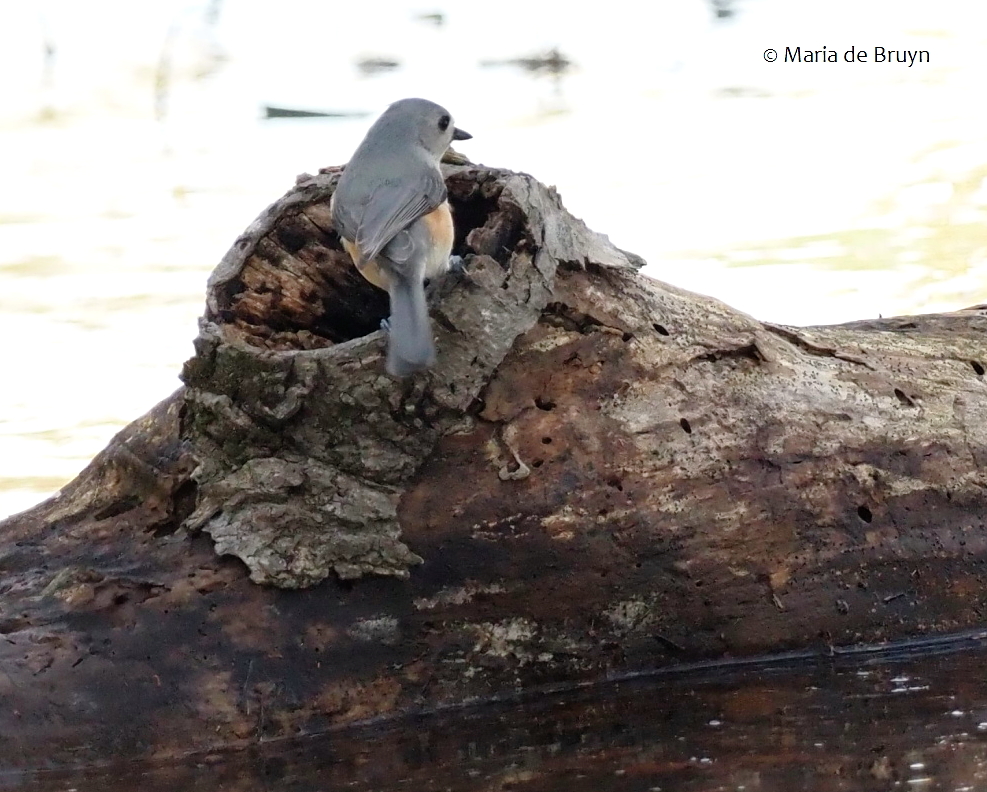
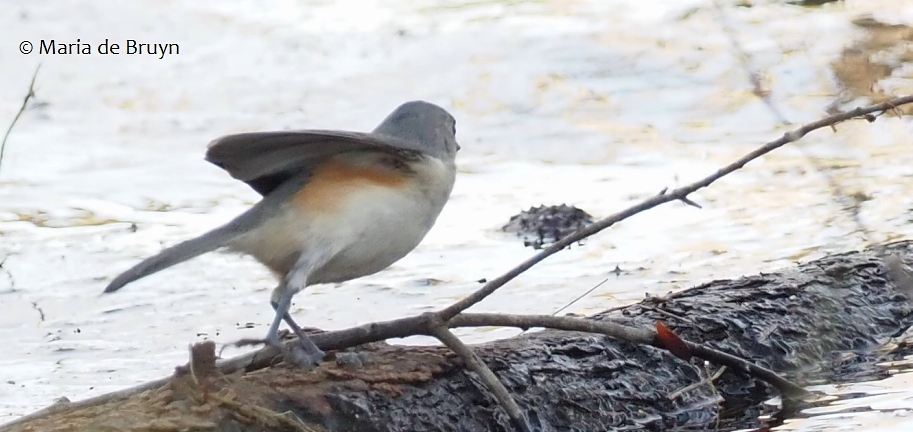
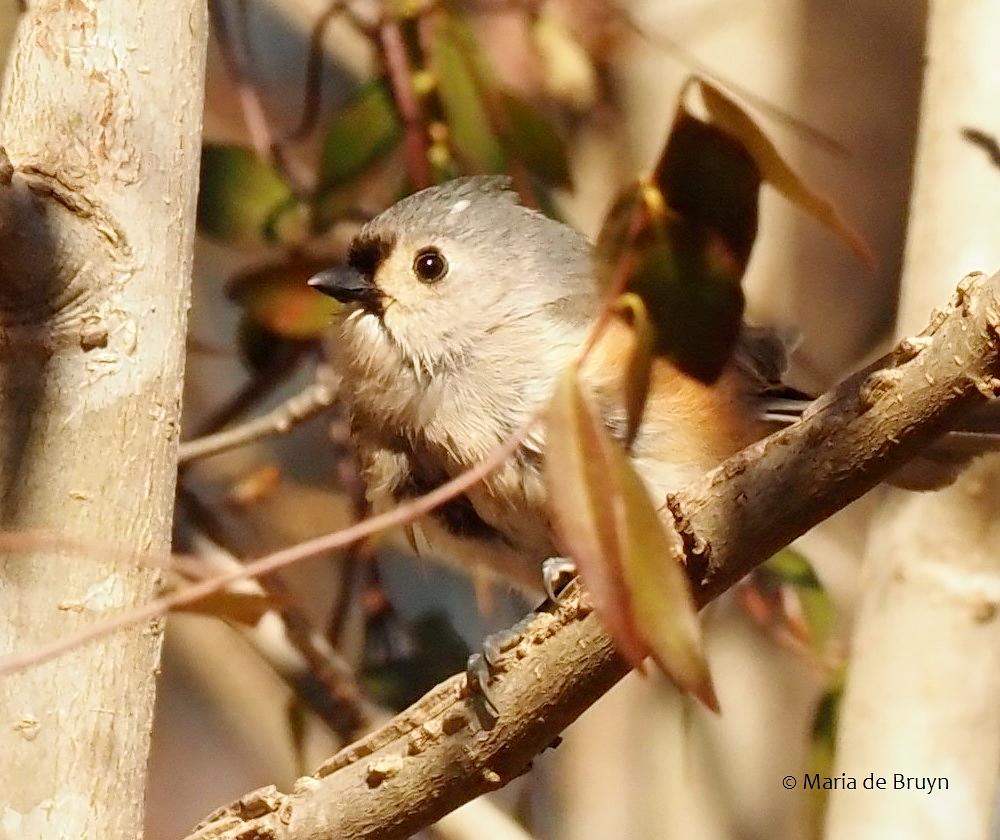
I walked along the new lake edges and noted lots of tufted titmice (Baeolophus bicolor) exploring the waterlogged fallen logs.


The Eastern bluebirds (Sialia sialis) were also flying down from tree trunks and branches to see what was near the water.

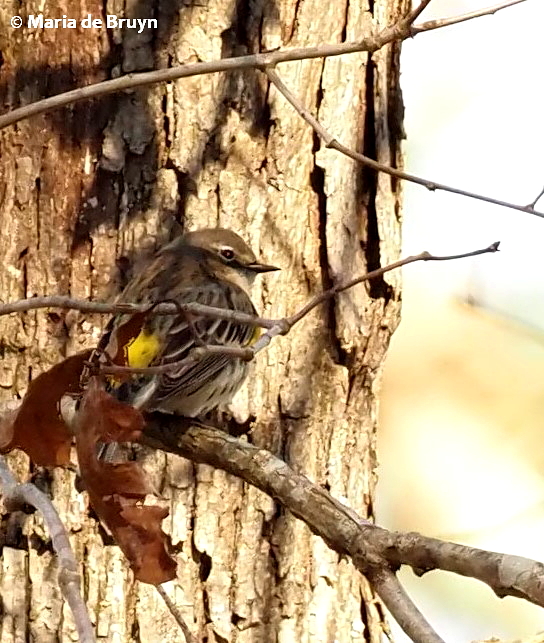
On the branches above, a a yellow-rumped warbler (Setophaga coronata) stopped by and a pine warbler (Setophaga pinus) showed off his beautiful yellow plumage.


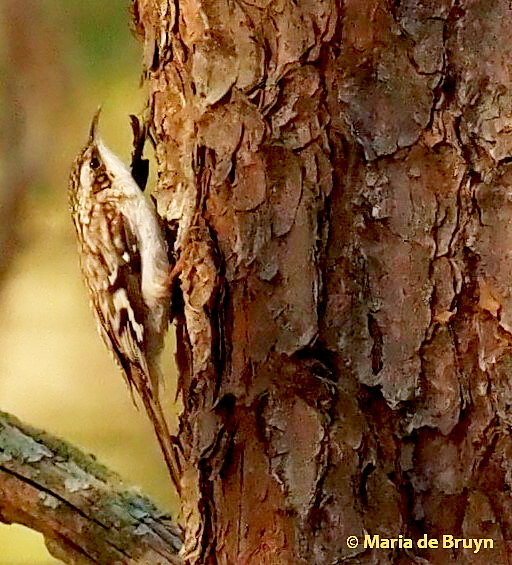
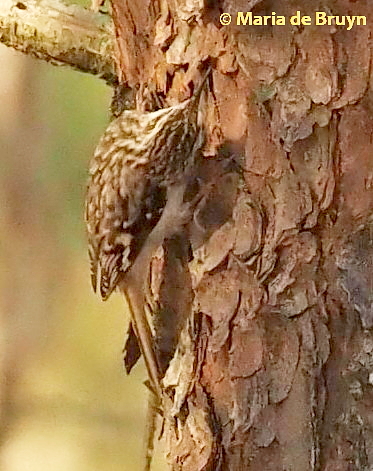
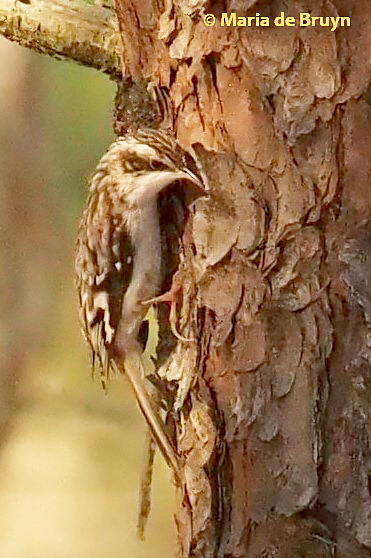
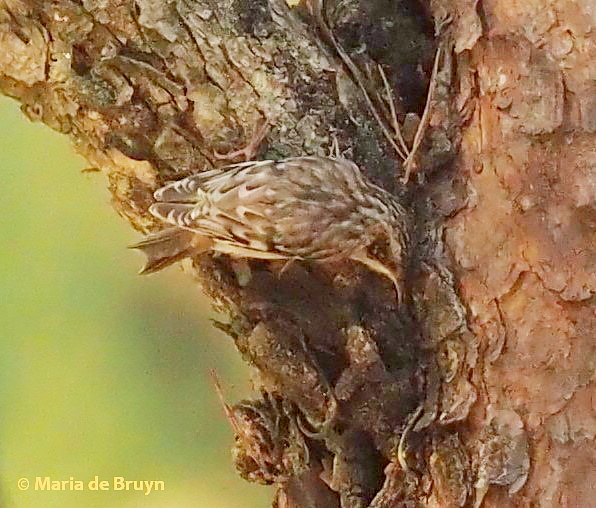
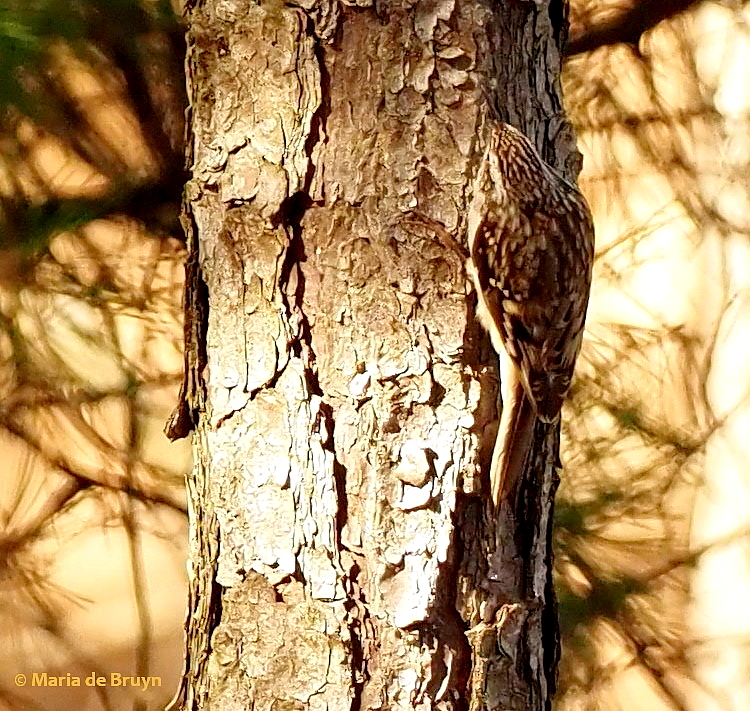
To my delight, a pair of brown creepers (Certhia americana) were ascending the water-bound trees searching for meals.


I find these birds beautiful and admire how well they blend in with their hunting grounds.

For me, the brown creepers have some of the best camouflage abilities around.

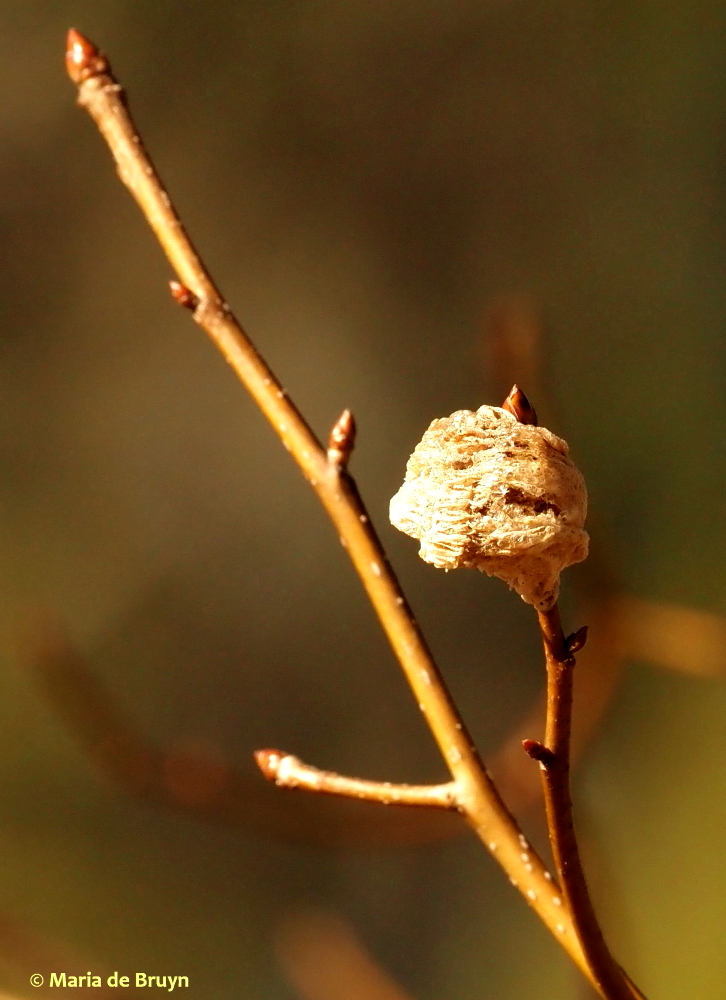
Overhead a red-tailed hawk (Buteo jamaicensis) flew by surveying the expanded water boundaries and I detected a Chinese mantis egg case swaying atop a shrub.

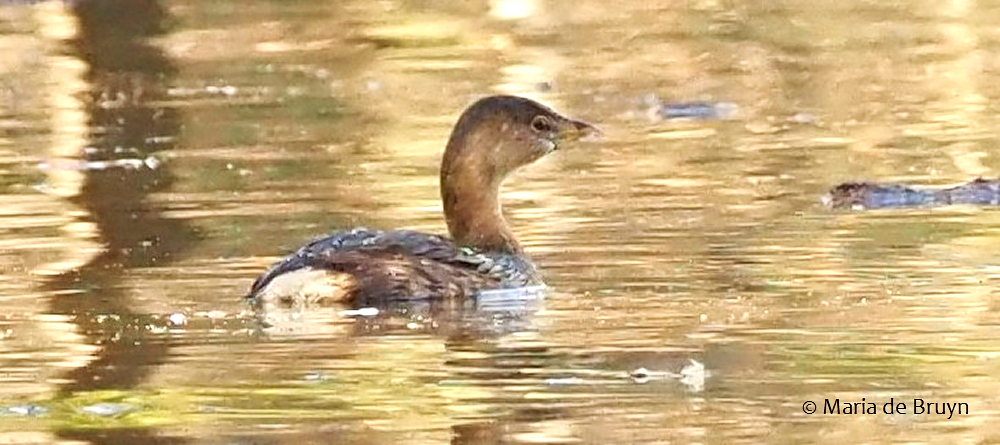
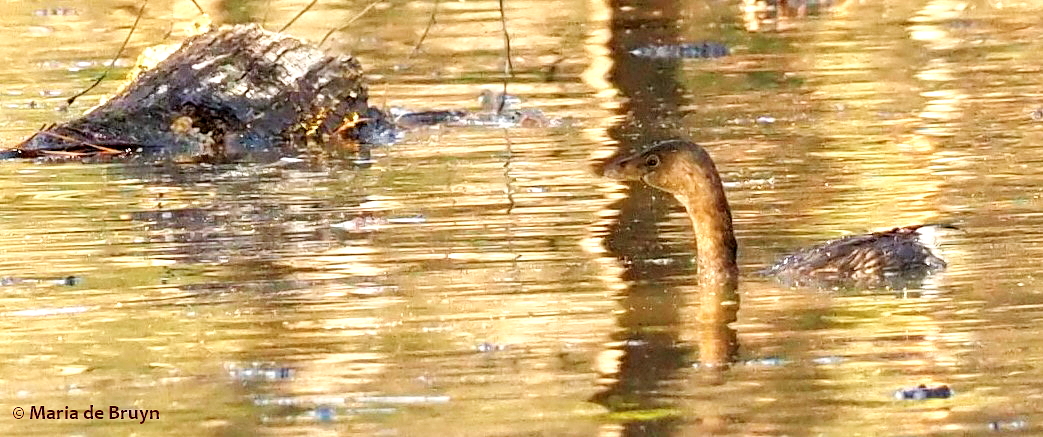
Because my walking area had been greatly reduced, I decided to leave after gazing into one more area where I usually wandered. To my surprise, I saw a wood duck (Aix sponsa, right) and a pied-billed grebe (Podilymbus podiceps) swimming over what is usually a leaf- and vegetative-laden forest floor. Perhaps they enjoyed visiting a new, albeit temporary, swimming area.

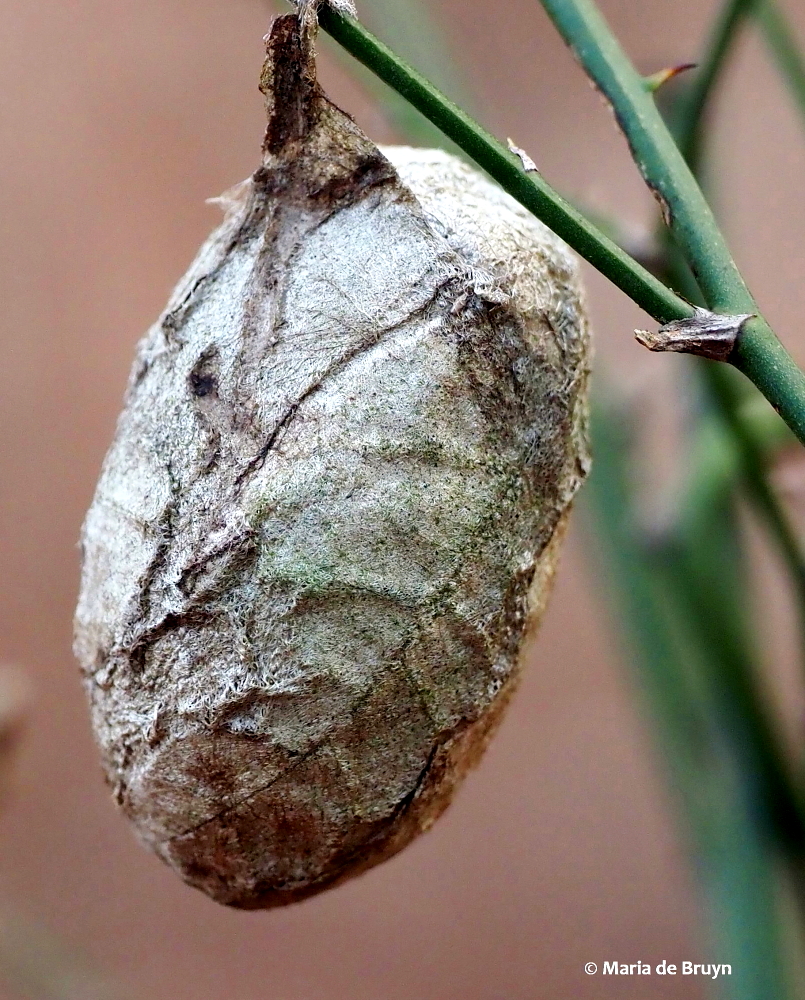
I do think that some wildlife may have suffered. This polyphemous moth cocoon (Antheraea polyphemus), which I had photographed in another part of the forest bordering the lake, was eventually submerged for some days under about four feet of water. When the area again reappeared, I found the cocoon and it was still intact but only about half its original size, so I think the moth was doomed. Now that the lake levels have fallen further, it will be interesting to see how the forest is recovering after having been submerged.


Serendipity in a stressful year

2020 has turned out to be quite a stress-filled series of months on multiple fronts, so unexpected pleasures and delights are very welcome. For birders in North Carolina (NC), that scenario has luckily been playing itself out this fall and winter. Several unexpected and unusual birds have been spotted in our state, including a Kirtland’s warbler, vermilion flycatcher, MacGillivray’s warbler, and sandhill cranes.

Many bird lovers have traveled to catch sight of these surprising visitors. While I’ve mostly avoided groups the past nine months as part of my COVID-avoiding measures, last week I did join the human migration to an NC home about 20 miles away to see a bird that is normally only found in the northwestern United States – a varied thrush (Ixoreus naevius).

The opportunity to see this lovely bird was offered to the local community by homeowners Tony Hewitt and Marla Wolf. They generously allowed people to come to their suburban yard (by appointment) to watch over the backyard fence to catch sight of the thrush.

When I visited on a “slow” day, it was easy to socially distance oneself from other birders and photographers. Only a couple other people were there for a while (and I was alone some of the time) waiting for the thrush to make an appearance. Everyone wore masks, some having double masked as well.

The varied thrushes normally migrate back and forth in the area stretching from Alaska, through Canada, down to northern California, as shown by this map from the Cornell Lab of Ornithology. The website remarks that a few of these birds occasionally wander outside their normal range to the Midwest and Northeast. Seeing one in the southeastern USA is highly unusual.

Map credit: https://www.allaboutbirds.org/guide/Varied_Thrush/maps-range#

This robin-sized bird is a real stunner – his orange, grey, yellow and white feathers grow in a wonderful pattern. The colors seem to vary a bit, depending on the quality of the light falling on them and the background against which you see him. But he is handsome from any angle – front, side or back!

Something I found particularly interesting was a pattern of wavy lines in his tail feathers when the light hit them in a certain way. This was not something that I saw mentioned in descriptions of its physical characteristics. The observation made me want to photograph the thrush again to see if this would show up again.


It is interesting to note that one varied thrush crossed the Atlantic and turned up in Great Britain in 1982. It was a unique bird since it represented a rare variant of the species in which the orange feather coloration has become all white. Only five such representatives of this mutation have been recorded since 1921.

In its home range, the varied thrush prefers to stay in dense, coniferous forests near water. The NC visitor is taking advantage of a backyard nook that Marla designed with multiple shrubs and some open space.

The home is not far from a lake, but the thrush is taking advantage of a bird bath for drinks, which Marla kindly had moved so that it was better visible for visiting birders looking over the fence.

Varied thrushes usually feed on insects, foraging on the ground and often under dense cover.

The thrush’s insectivorous diet can be wide-ranging and include ants, beetles, caterpillars, crickets, earthworms, millipedes, snails and spiders.


They also eat berries, either in trees or on the ground, during the autumn and winter months. 

Our NC celebrity bird is obviously enjoying seeds furnished daily by Tony and Marla.

A notice placed by Tony near fence announced that the thrush seemed to come out in the open every 30 minutes or so. It turned out that this was indeed the case the first hour that I was there; then the bird came after a couple 15-minute intervals.

He certainly seemed to be a creature of habit because I noticed that after eating, he would go back into the dense undergrowth for several minutes and then re-emerge to take a couple drinks at the bird bath. Eating obviously was making him thirsty and noticing this habit meant it was possible to get “camera-ready” for another appearance.

When it is breeding time, male varied thrushes begin to establish territories and confront other males with threat displays. These begin with the bird cocking his tail and turning it towards his rival, while he lowers his wings. If the rival bird does not go away, the thrush will lower his head, raise and fan his tail and then spread his wings out to the side.

Obviously, our NC bird had no rivals around but there were many other birds foraging in the ground underneath the feeders. They included Northern cardinals, white-throated sparrows, pine siskins and downy woodpeckers among others. And it seemed that “our” thrush was sometimes warning them off.

Or perhaps he was just flashing his wings to scare up insects hiding in the fallen leaves.

There are still large numbers of varied thrushes, with an estimate of some 20 million in the current global breeding population. However, the North American Breeding Bird Survey recorded a cumulative decline of the species of 73% between 1966 and 2015. Logging, wildfires and forest fragmentation are ongoing threats to their breeding habitat.

This is only the fifth time that a varied thrush has been seen in North Carolina. The first sighting was in 2005; three other birds were seen in 2010. No one has any idea what got this year’s bird so far off-course during its migration and no one knows how long it will stay around.

Tony and Marla have kept a visitors’ book (with hand sanitizer available for signers) and many people have been recording their visit. When I visited, more than 110 people had already come by, including some birders from Virginia and Tennessee. More people have since stopped by the Hewitt-Wolf residence to admire this vagrant bird. We are grateful to them for giving us this opportunity!

It’s apparent that the serendipitous sojourn of this gorgeous bird has been a welcome gift to many people – both those who saw it in person and those who’ve admired photos distributed through facebook groups. We hope the bird will survive the winter here and be able to return to its home grounds out West so that its journey has a happy ending!