
In the area where I live, many birders are thrilled when spring migration begins and the wood thrush (Hylocichla mustelina) arrives. They find its song especially appealing and exclaim over the fact that they had the privilege of hearing the wood thrush in their yard or in the woods.
 While it’s a nice song, however, I find that I’m more attracted to our winter visitor, the hermit thrush (Catharus guttatus), perhaps because this species seems less afraid to emerge from the vegetation when people are around. I find its song quite nice as well, even though it doesn’t seem to have as many trills in it as the wood thrush.


 The past couple years, I seem to have been seeing the hermit thrush more and more often. Presumably, this is not because there are more of them but because I have grown a little more adept at spotting and identifying birds as time has passed. The past six weeks, I’ve seen them in various places and have very much enjoyed each spotting.
On the 15th of December, during a walk at Mason Farm Biological Reserve, I spotted one eating berries with gusto.


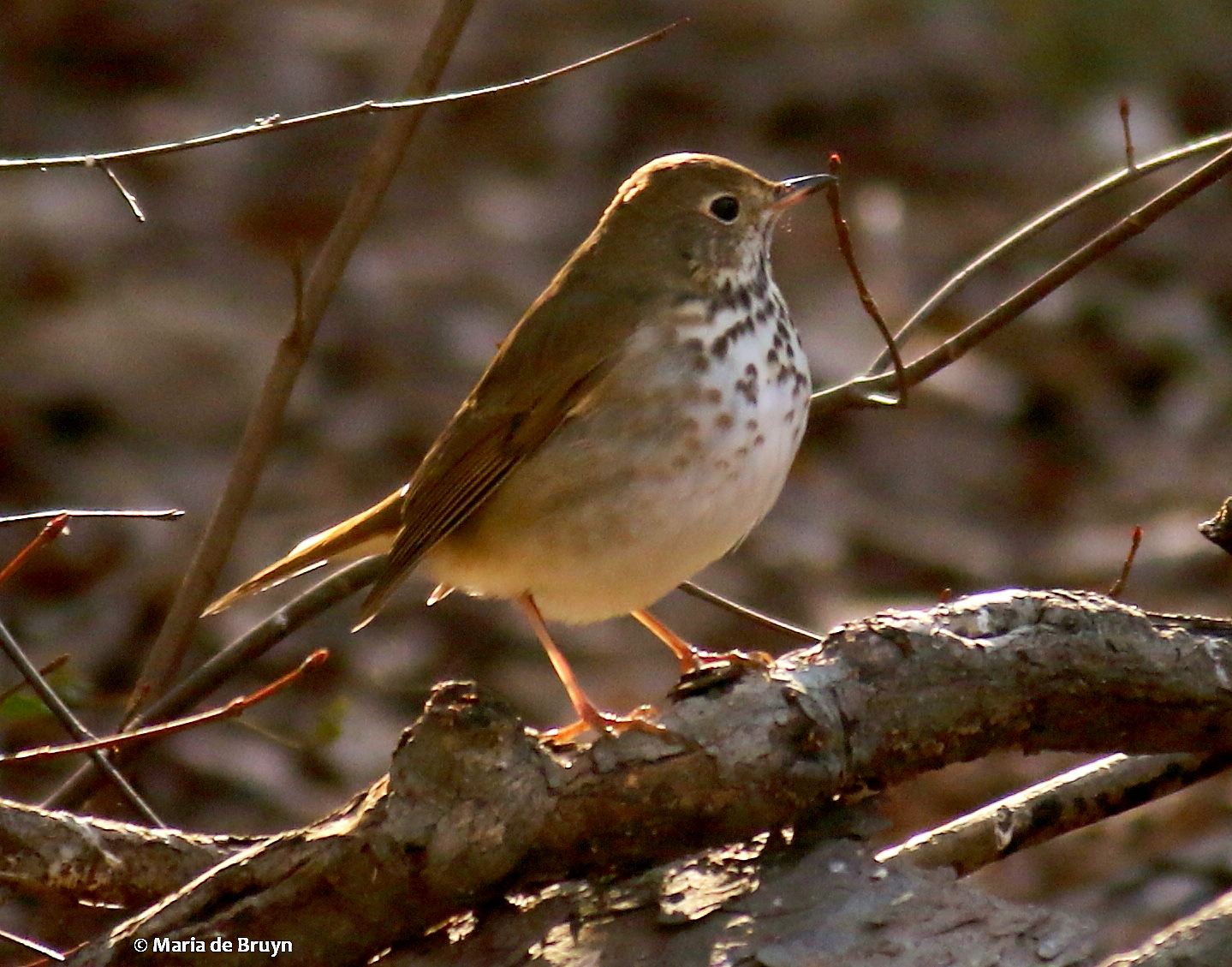
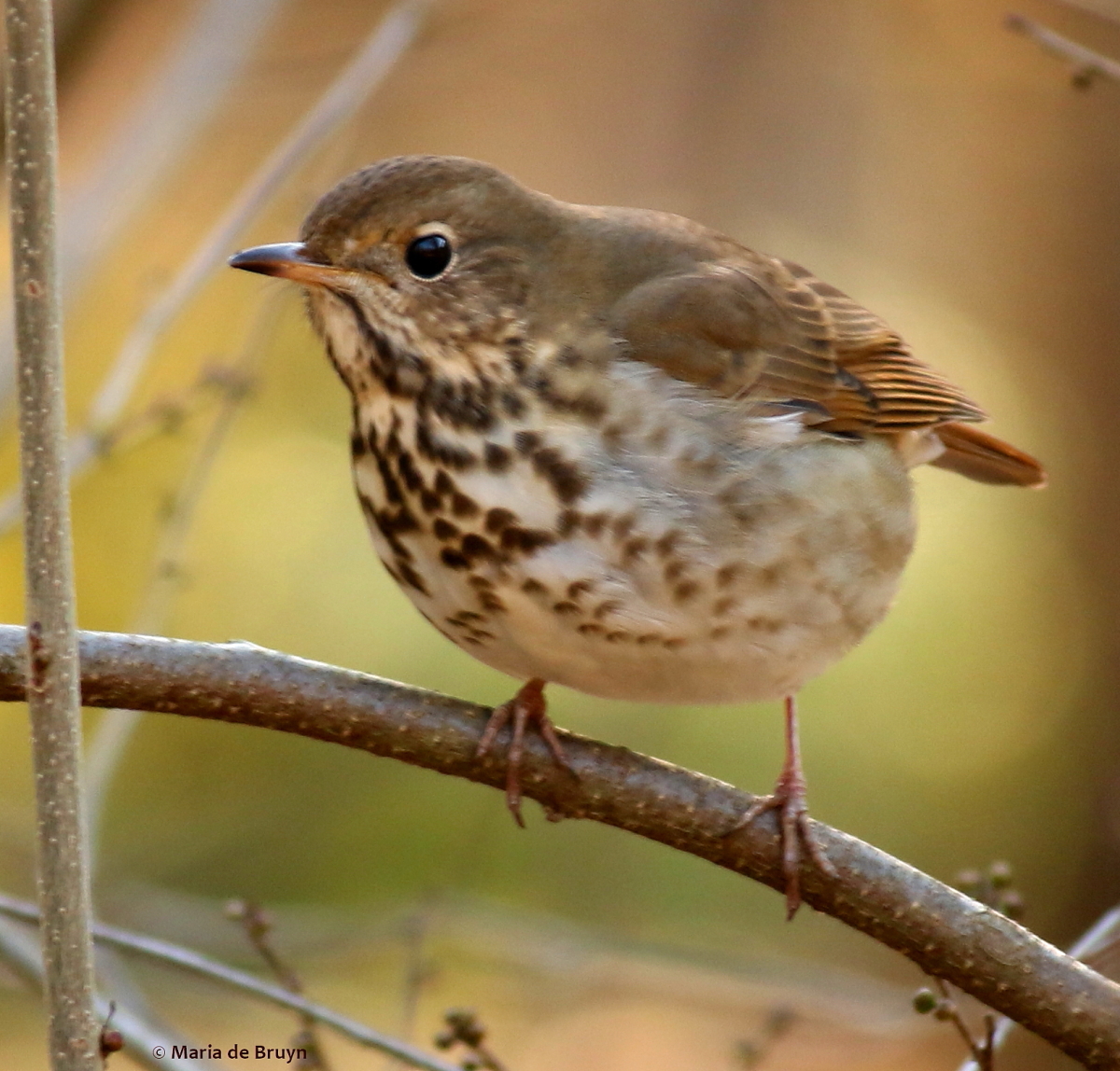
 Ten days later, birds in different parts of the reserve came out on twigs, observing me as much as I was observing them. On the 2nd of January, one caught my eye when s/he was bobbing its reddish tail up and down. It gave me a good view of the bird’s underside, which looked nicely cushioned. That part of the tail is the most colorful part of the bird, which otherwise is a rather muted light brown with a cream-colored, lightly spotted breast.


 On the 4th of January, we had a light smattering of snow and I saw a hermit thrush in a crepe myrtle tree, an unusual sight in my yard as their visits are usually few and far between. The next day, the bird returned to the red cedar trees (Juniperus virginiana) to make a few meals of the nicely ripe juniper berries.


The snow melted quickly but the bird was back the next day for more berries; fortunately, the American robins and cedar waxwings had not eaten them all.


In the spring and summer, the hermit thrush’s diet consists mainly of insects and sometimes small reptiles and amphibians. In the winter, they turn to eating berries and fruit. Here, a thrush at the Brumley Forest Preserve had been foraging on the ground and found a seed or fruit.

Back at Mason Farm, the 21st of January was a stellar day for seeing hermit thrushes; I must have seen at least six in different parts of the woods. At one point, I had stopped to listen to a downy woodpecker (Picoides pubescens) calling and then noted a thrush sitting on a sapling branch near the walking trail. S/he flew down to the path to forage and suddenly another one flew in landing atop the first thrush! The attacked bird spread its tail feathers on the ground while the other one glared at it.

The Cornell Lab of Ornithology notes that hermit thrushes may respond to predators by crouching and pulling in their heads; perhaps this was an adaptation of that response.

I always think of these little beauties as being peaceful birds so seeing one challenge the other in such a physical way was a real surprise. Then as suddenly as the attack had happened, all was sweetness and light as the two birds began foraging on the path about 2-3 feet from one another. The downy woodpecker even joined them on the ground for a little while.


The oldest recorded hermit thrush was almost 11 years old. Perhaps their generally sweet disposition helps them survive.


Depending on whether these birds are fluffing their feathers against the cold, they can either look like a sleek and slender avian or a puffy little ball of feathers. In both cases, I think they look quite appealing.


Whatever shape they take, I do look forward to seeing more of these lovely, usually demure and delightful thrushes!


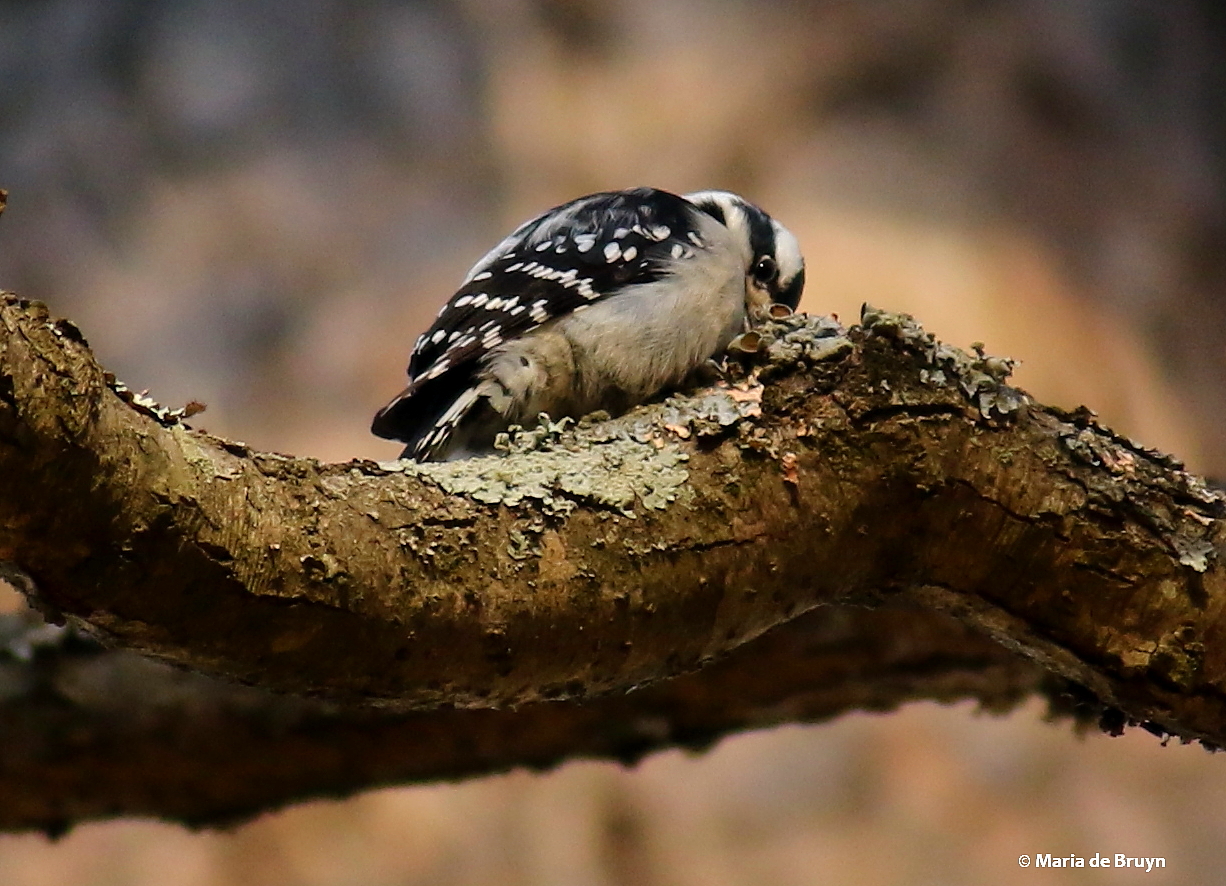
 It turned out to be a diminutive downy woodpecker (Dryobates pubescens), whose hammering sounds were enhanced by the hollow stem with which he was busy.






 My beautiful world