Blue jewels of the insect world

dogbane beetle IMG_4382©Maria de Bruyn resMy original interest in wildlife often centered around mammals; as a child, I was especially fascinated by the larger ones I saw at the zoo like lions, giraffes and bears. Eventually, in my later adult life, I became a birder and then Project Noah led me to begin paying much closer attention to the insect world. Nowadays, I find almost any type of wildlife of interest and look forward to learning more about diverse species.

Investigating insects has taught me that not only are some moths incredibly beautiful – so are some beetles and dragonflies, like the two brilliant blue species described here. I first encountered the dogbane beetle (Chrysochus auratus) on the plant for which it’s named, the white-flowering dogbane (Apocynum cannabinum). This plant is also known as rheumatism root since herbalists have used it to treat that disease, as well as conditions such as syphilis, fever, asthma and dysentery. It is also known as the hemp plant and has been used to make rope.

dogbane IMG_9002©Maria de Bruyn res     dogbane beetle IMG_4298©Maria de Bruyn res

dogbane beetle IMG_4351©Maria de Bruyn resThe iridescent beetle, which measures less than a half inch and lives 6-8 weeks in summer, feeds on the dogbane as well as milkweed plants. The insects’ wings are blue-green in color and have a gorgeous shimmery shine that looks like metallic copper; depending on the light, the highlights can also look golden or crimson in color.

They have widely spaced antennae with 11-12 segments and their legs look a bit as if they end in heart-shaped pads. Their left mandible is longer than the right one and it fits into a groove in the right (why, I don’t know!).

dogbane IMG_1372

dogbane beetle IMG_4046©Maria de Bruyn res

dogbane beetle IMG_2461©Maria de Bruyn res

They mate once a day during the summer and the male will stay on top of the female afterwards for some time to ensure that his sperm can fertilize eggs. After mating, the female lays her eggs on the underside of host plant leaves or on the ground. The larvae feed on roots and pupate underground. After 6-8 weeks, the adults die and we have to wait until next summer to see these little beauties.

dogbane beetle IMG_4006©Maria de Bruyn res  dogbane beetle IMG_4035©Maria de Bruyn res

A larger metallic blue insect is the ebony jewelwing damselfly (Calopteryx maculata), which can grow to about 2 inches. It is the black-winged males who exhibit the deep blue color on their bodies. The females are a smoky brown-gray in color and display white spots near the tips of their wings.

Ebony jewelwing IMG_7773©Maria de Bruyn res   Ebony jewelwing IMG_7870©Maria de Bruyn res

These damselflies have been studied extensively, so that we know they shelter among a wide variety of plants, including water plants (pickerel weed, duckweed, lilies, cattails) and land plants such as orange jewelweed, button bush, Joe pye weed and poison ivy. The adults frequently rest on low shrubs in sunlit patches.

Ebony jewelwing IMG_7808©Maria de Bruyn resEbony jewelwing IMG_7890©Maria de Bruyn res

These damselflies have a large variety of prey that include tiger mosquitoes, gnats, flies, beetles and even dragonflies. If they see you observing them, they will watch you in return, turning their heads to follow your movements

Ebony jewelwing IMG_7909©Maria de Bruyn resEbony jewelwing IMG_7919©Maria de Bruyn res.

Ebony jewelwing IMG_7831©Maria de Bruyn resEbony jewelwing IMG_7821©Maria de Bruyn res

Ebony jewelwing damselfly female IMG_1085© Maria de BruynThese damselflies are not strong fliers, often fluttering – even when resting on a leaf. Females will also rapidly open and close their wings if they are receptive to a courting male. If they reject the male, they will keep their wings open.

(If you click on the photo, you can see it enlarged.)


Ebony jewelwing IMG_7812©Maria de Bruyn res1The male will raise his abdomen as part of his courting display.Ebony jewelwing IMG_7738©Maria de Bruyn res

Females lay their eggs in the soft stems of water plants. And then, after about two weeks of flight, the adults pass away and we await new generations to admire. I’m looking forward to finding out if I discover any more blue jewels in the future!
Yay for the bluebirds!

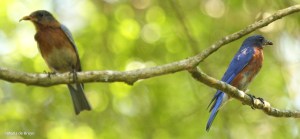
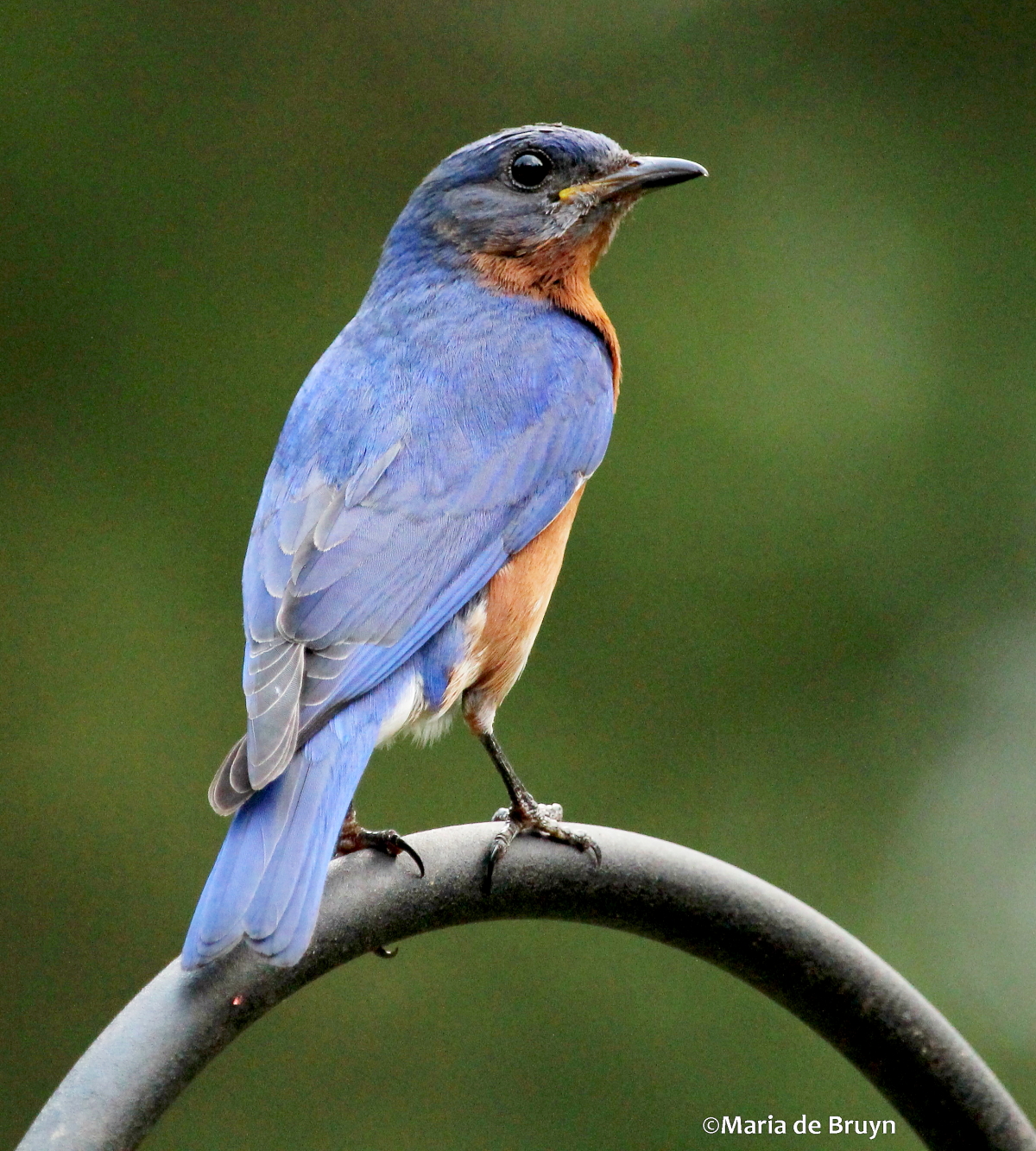
Eastern bluebird Eastern bluebird IMG_9836©Maria de Bruyn resLast year was a disappointment for the bluebirds (Sialia sialias) and me when a cowbird (Molothrus ater) laid her egg in their front-yard nest. The cowbird hatched first and when I looked a few days later, the bluebird eggs were gone. The bluebirds dutifully cared for the foster child but had none of their own.

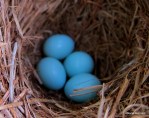
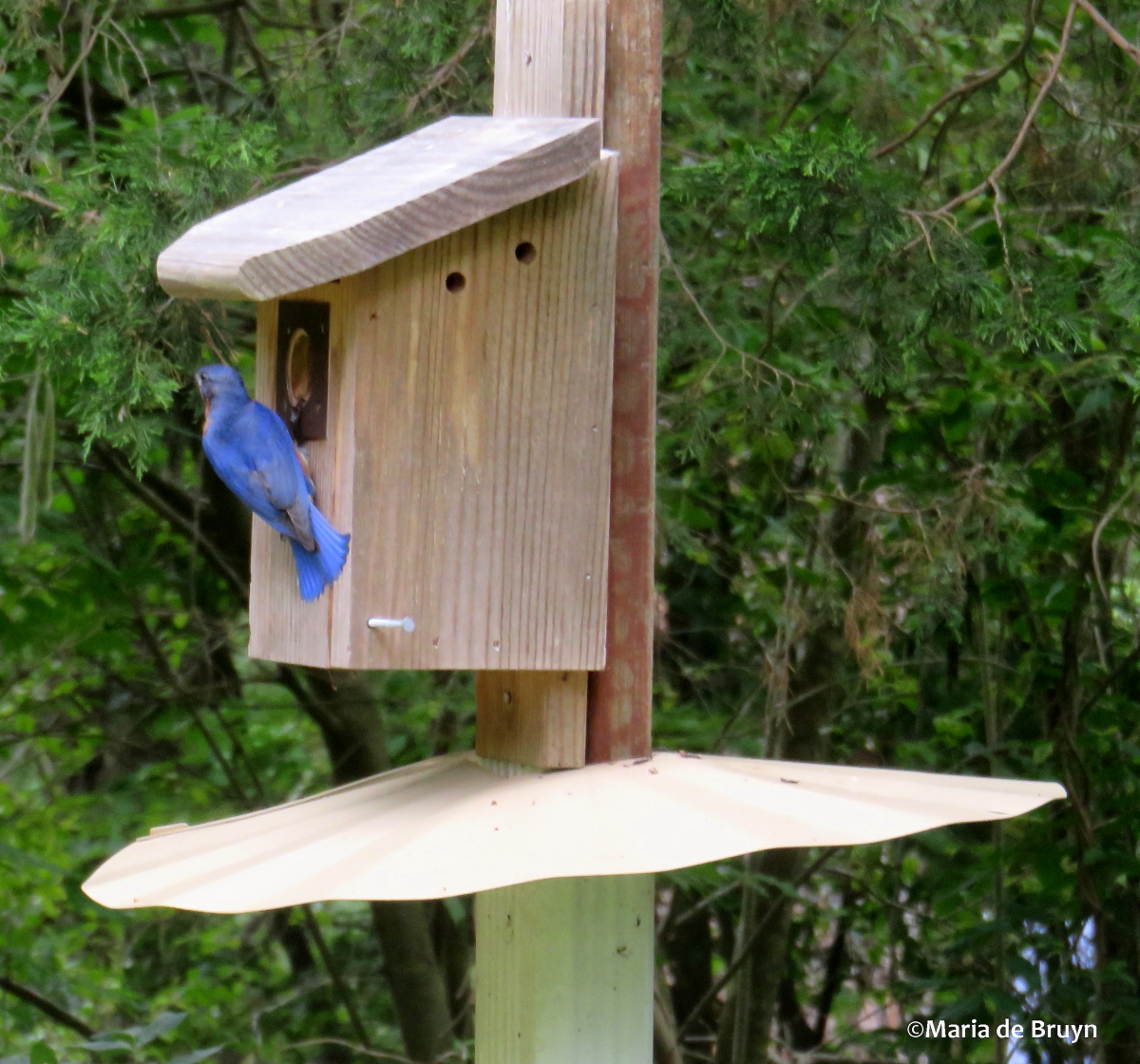
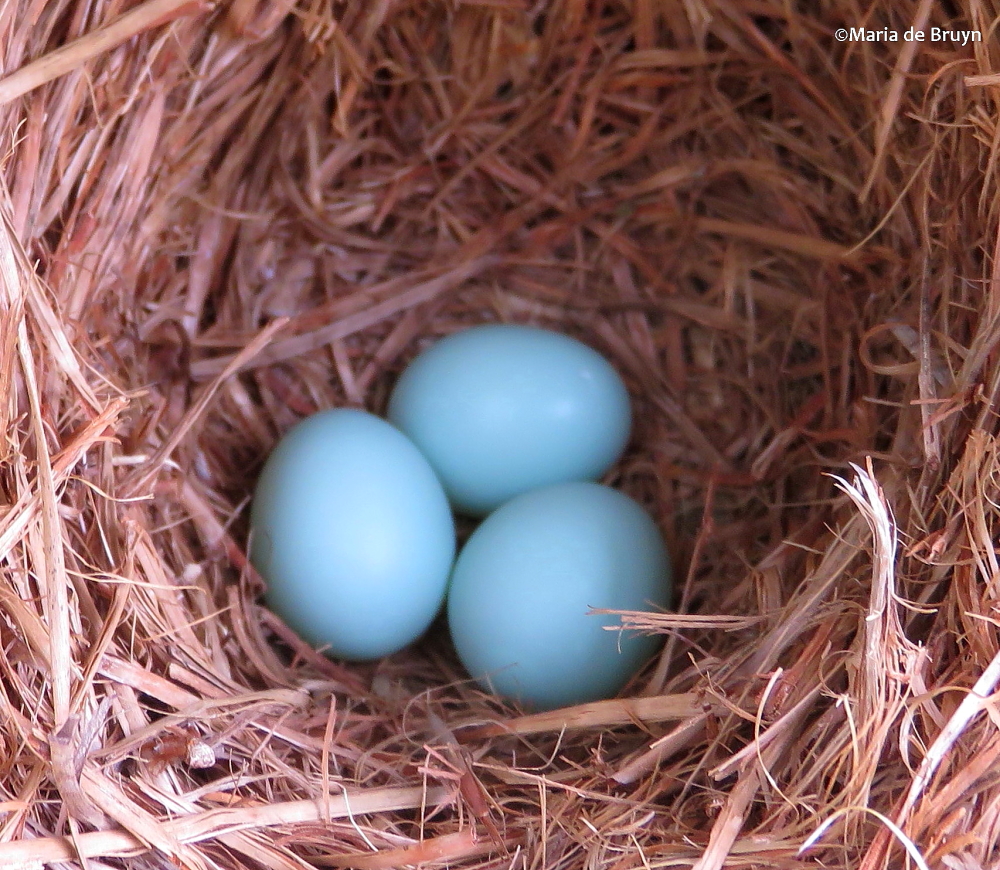
This year, they returned to the same nesting box and despite there being whole flocks of cowbirds around, they were able to avoid being surrogate parents this year. On 2 May, there were three eggs and by 5 May there were four.

Eastern bluebird IMG_5902©Maria de Bruyn resEastern bluebird IMG_4819©Maria de Bruyn resEastern bluebird IMG_4985©Maria de Bruyn res

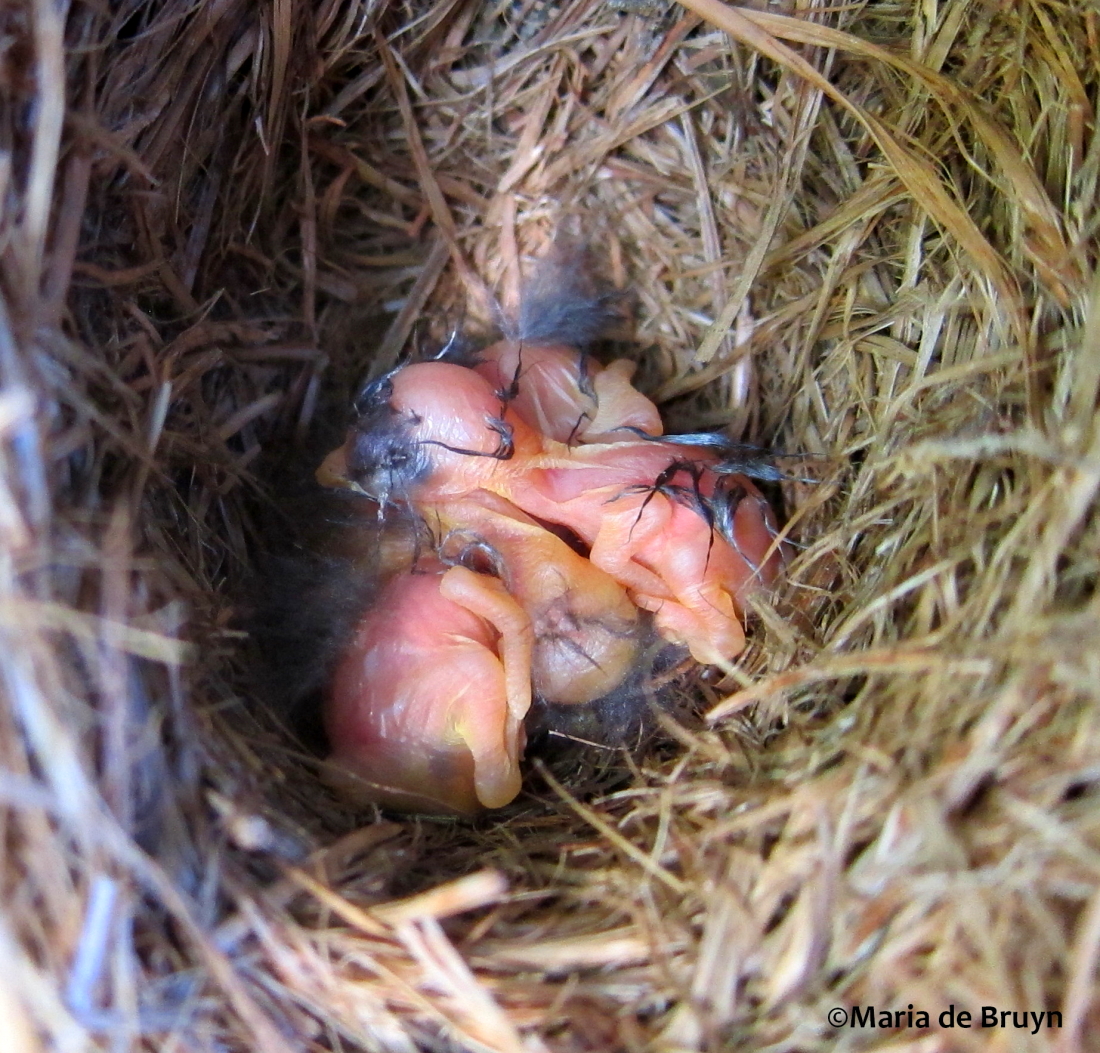
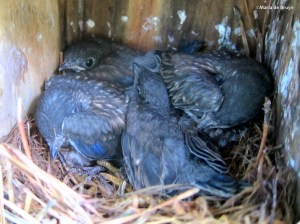
On 17 May, after mama and papa left the vicinity of the nest, I peeked in and saw the hatched babies, very naked newborns indeed! Mama was often with the babies and papa came to bring food, but mama left from time to time. They both visited the feeders to replenish themselves.

Eastern bluebird Eastern bluebird IMG_9753©Maria de Bruyn resEastern bluebird IMG_8753©Maria de Bruyn res

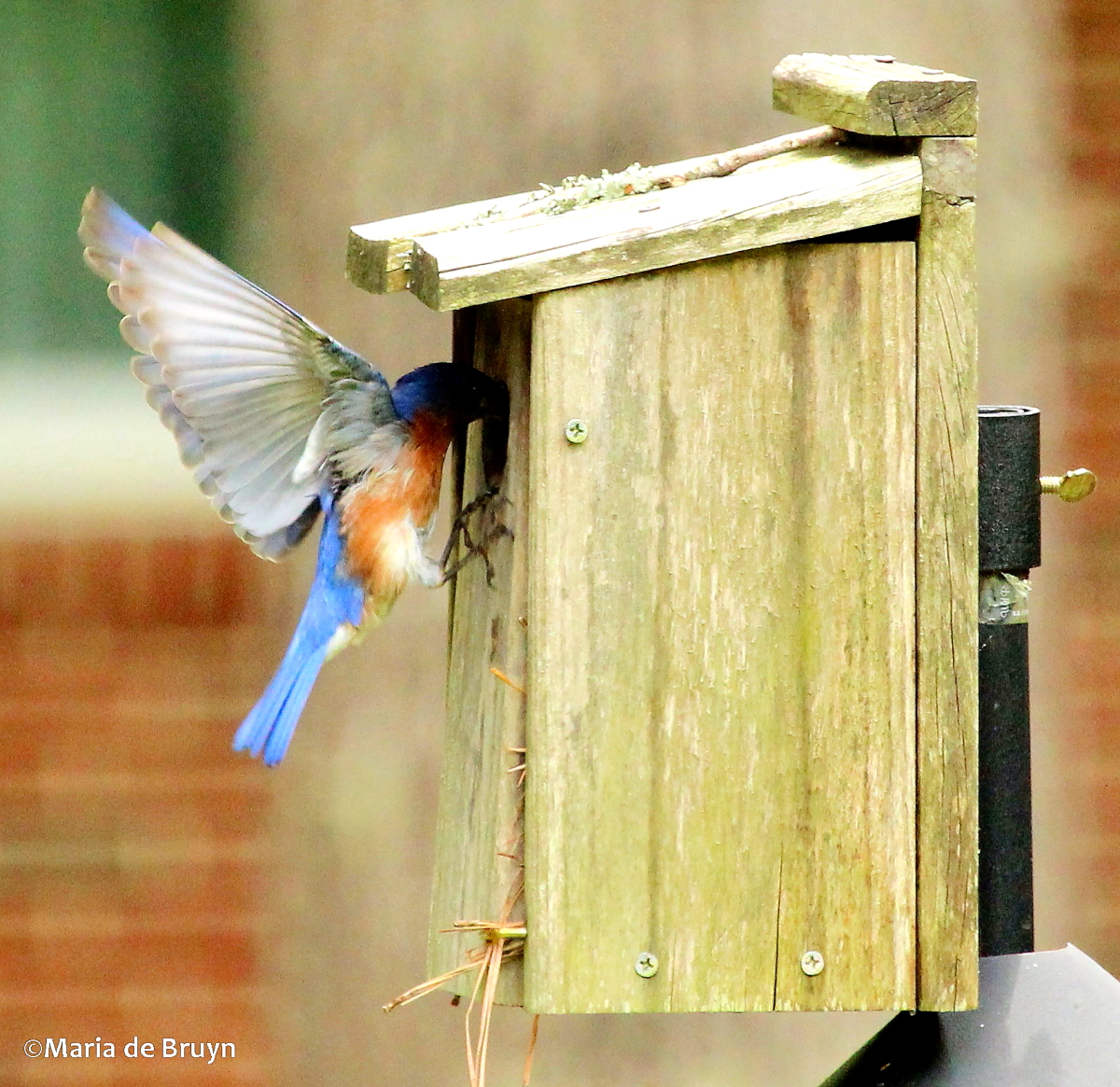
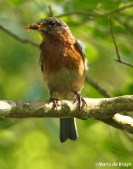
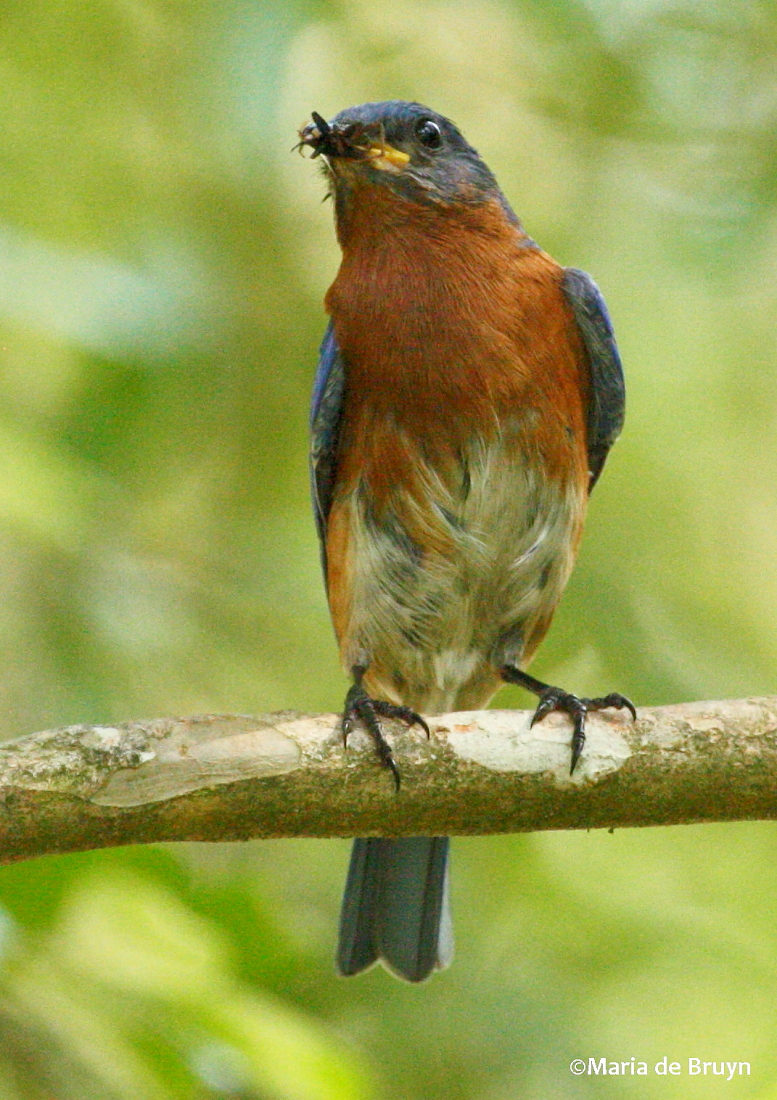
I set up a canopy chair to observe at what I thought was a good distance but discovered I was too close. The parents would arrive in the tree fronting the nest but if I was too close in their opinion, they would not go to the nest or only after I had been still for quite a long time. It was interesting to see that they were feeding the hatchlings dried meal worms along with other insects that they had caught.
Eastern bluebird IMG_3538©Maria de Bruyn resEastern bluebird IMG_3498©Maria de Bruyn res

Eastern bluebird IMG_3657©Maria de Bruyn resEastern bluebird IMG_3620©Maria de Bruyn  res

They also seemed to be feeding the babies fruit – wild raspberries from what I could tell!

Eastern bluebird IMG_4994©Maria de Bruyn resBy 28 May, the babies were much larger and feathered. Mama and papa were kept busy ensuring they were well fed! And house cleaning to remove their brood’s fecal sacs was also a definite necessity!

Eastern bluebird IMG_5129©Maria de Bruyn res

Eastern bluebird IMG_5371©Maria de Bruyn resThe parents remained very vigilant – not only keeping an eye on me but also other too curious visitors. On 1 June, a gray catbird (Dumetella carolinensis) suddenly descended to the nesting box, fluttering its wings furiously to remain suspended in front of the hole while it looked in. It then flew up on top of the box but the bluebird adults chased it away VERY quickly!


Eastern bluebird IMG_5008©Maria de Bruyn res


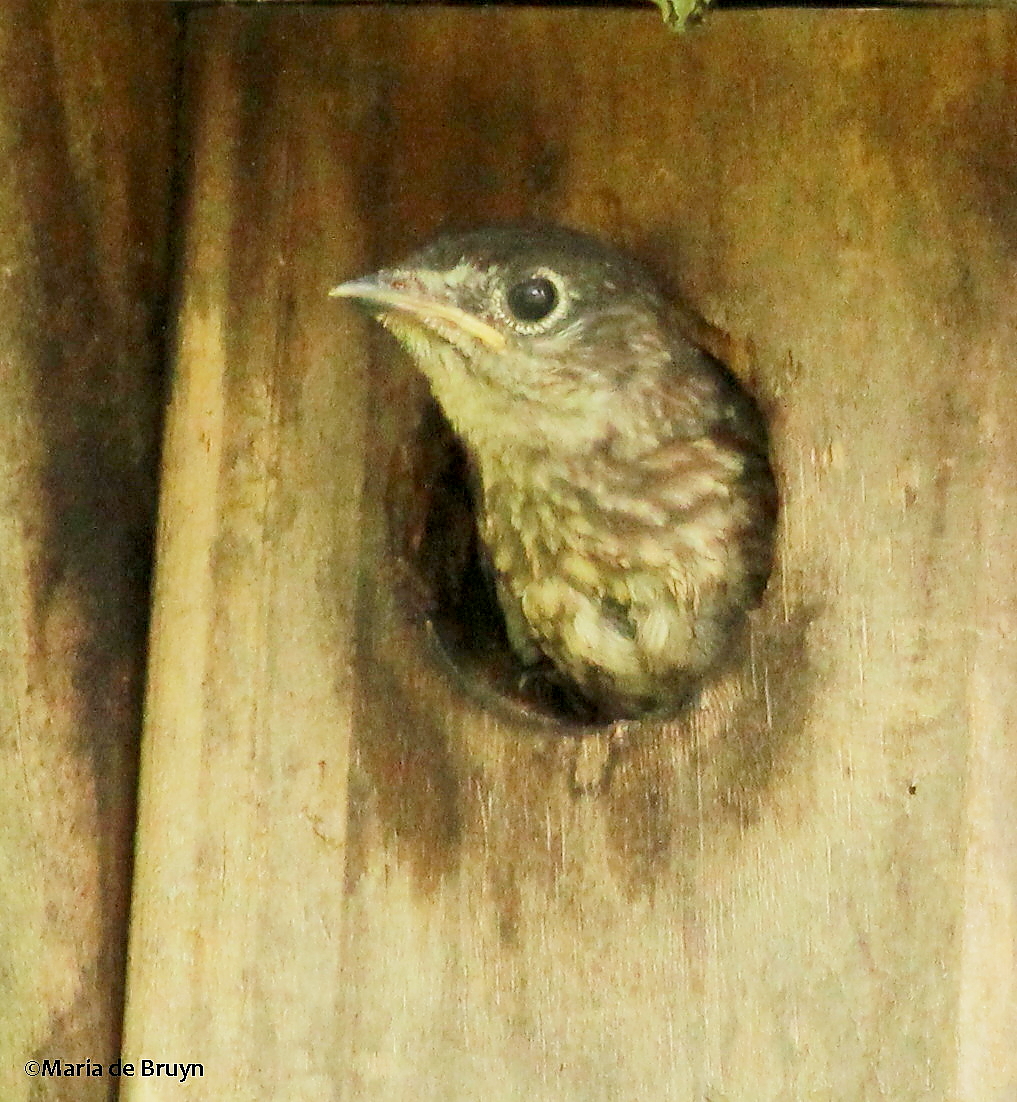
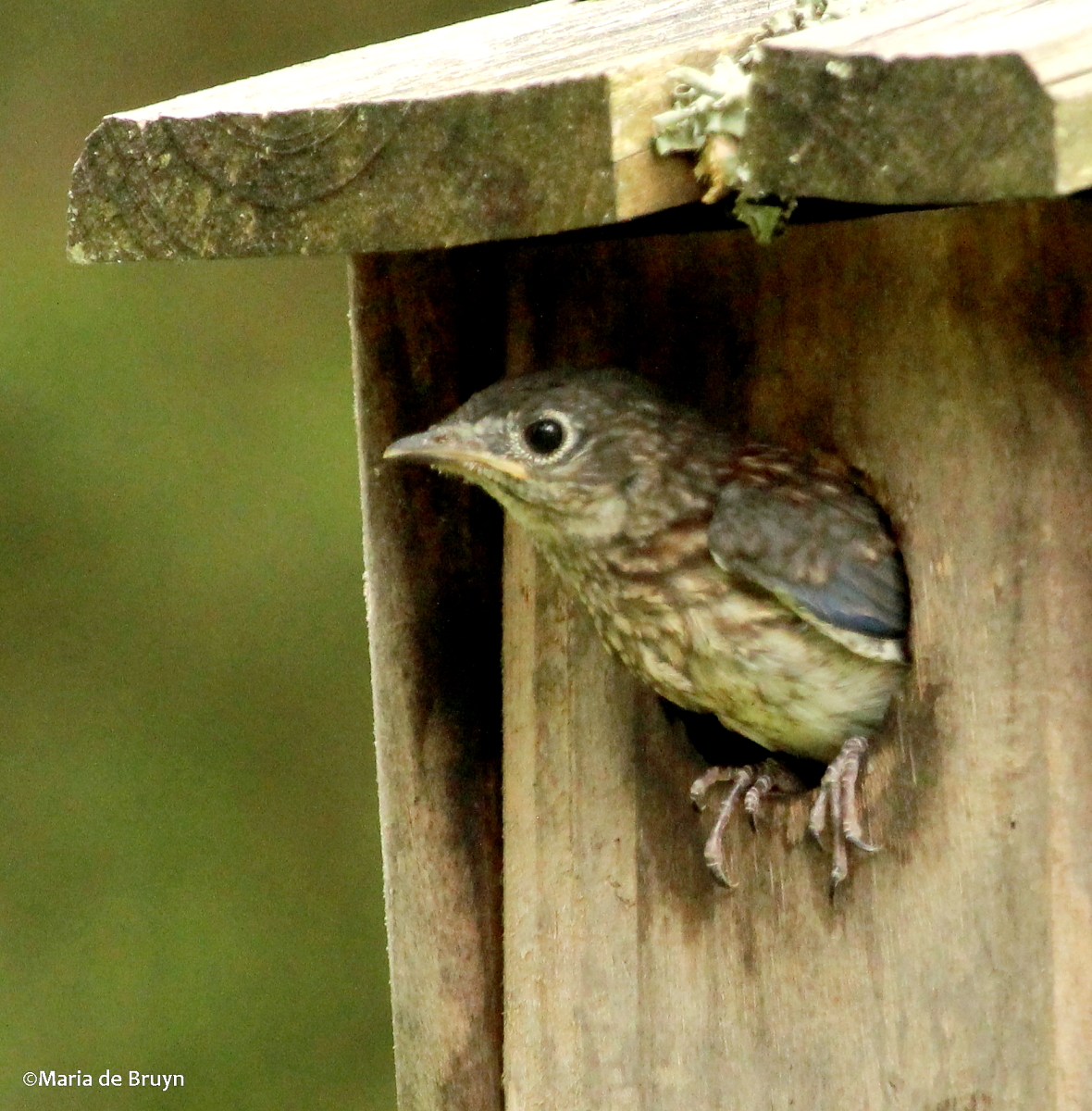
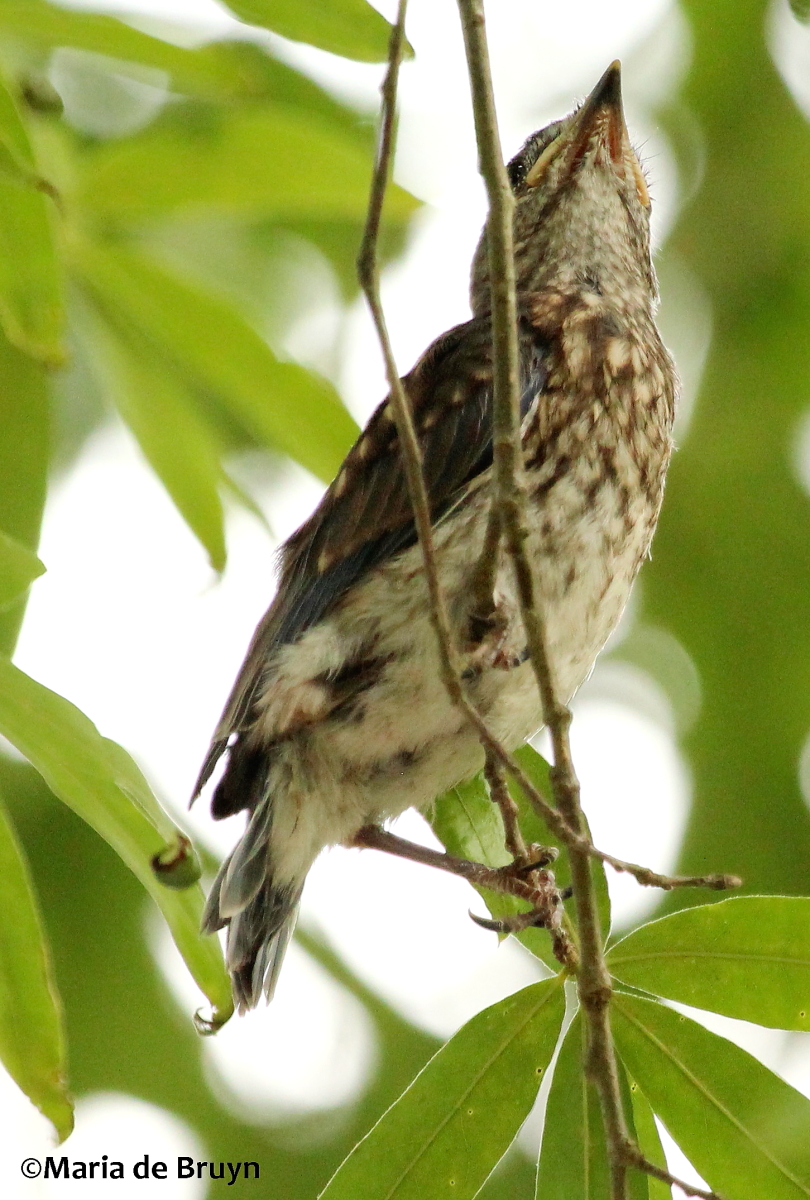
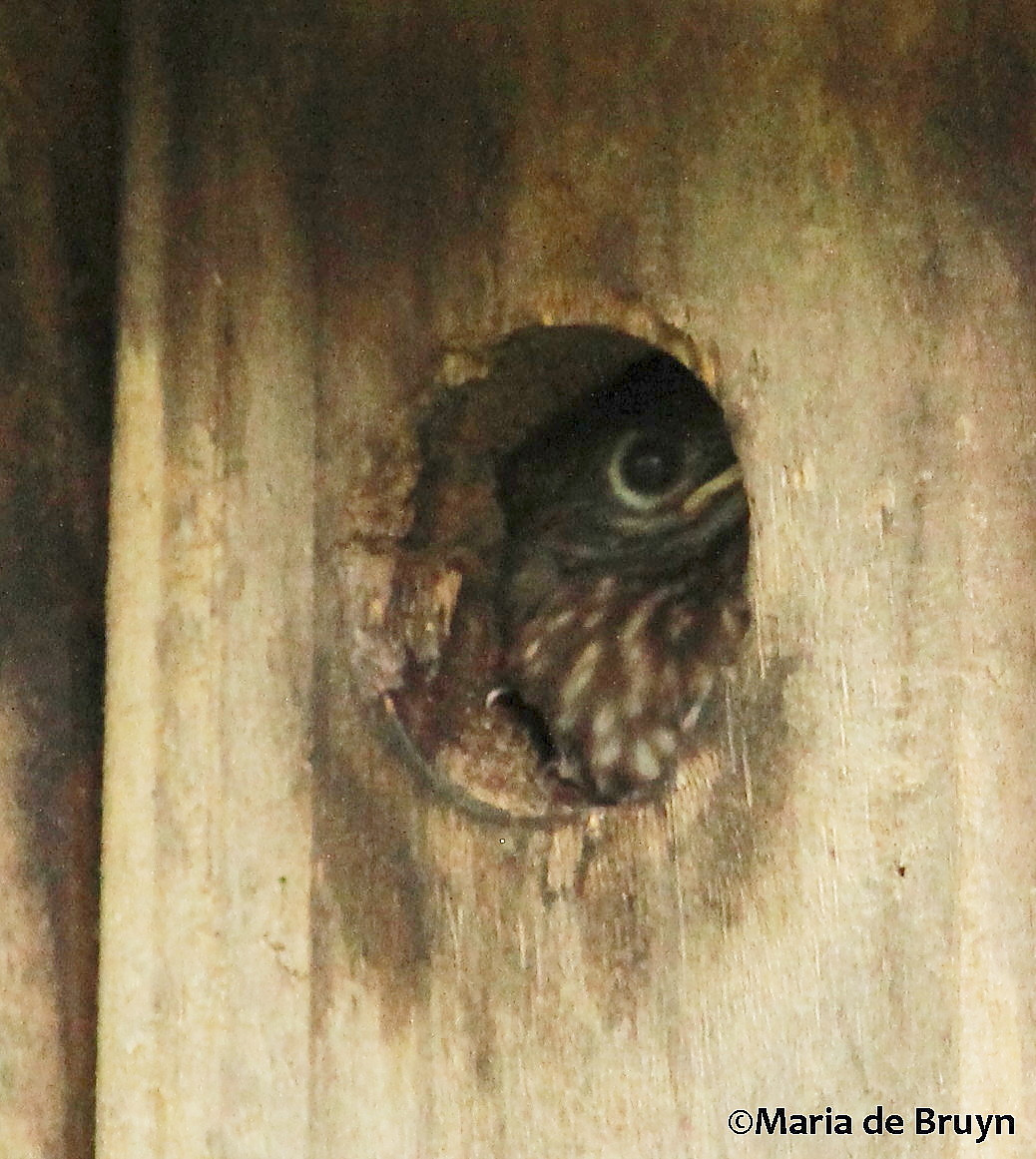
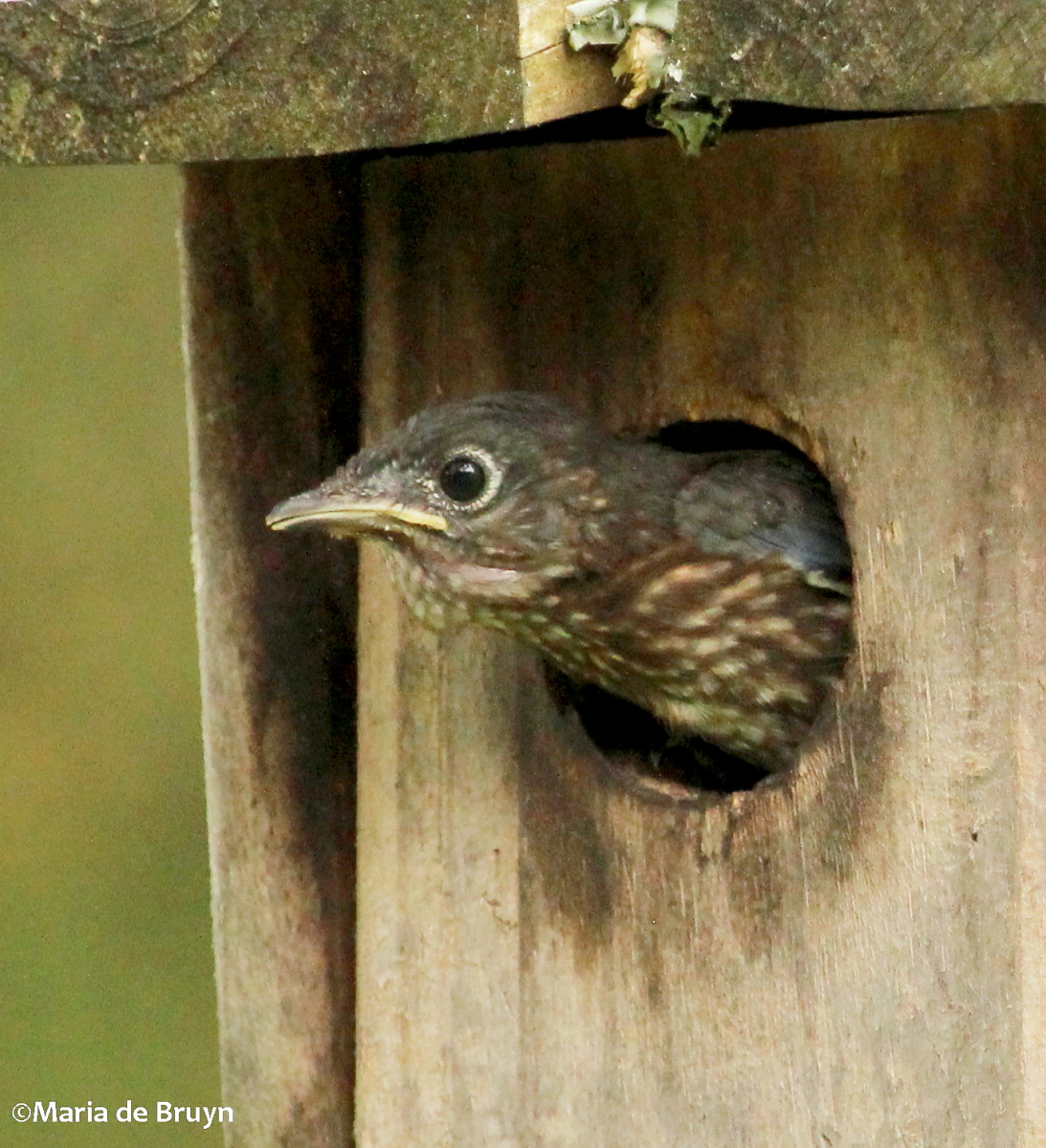
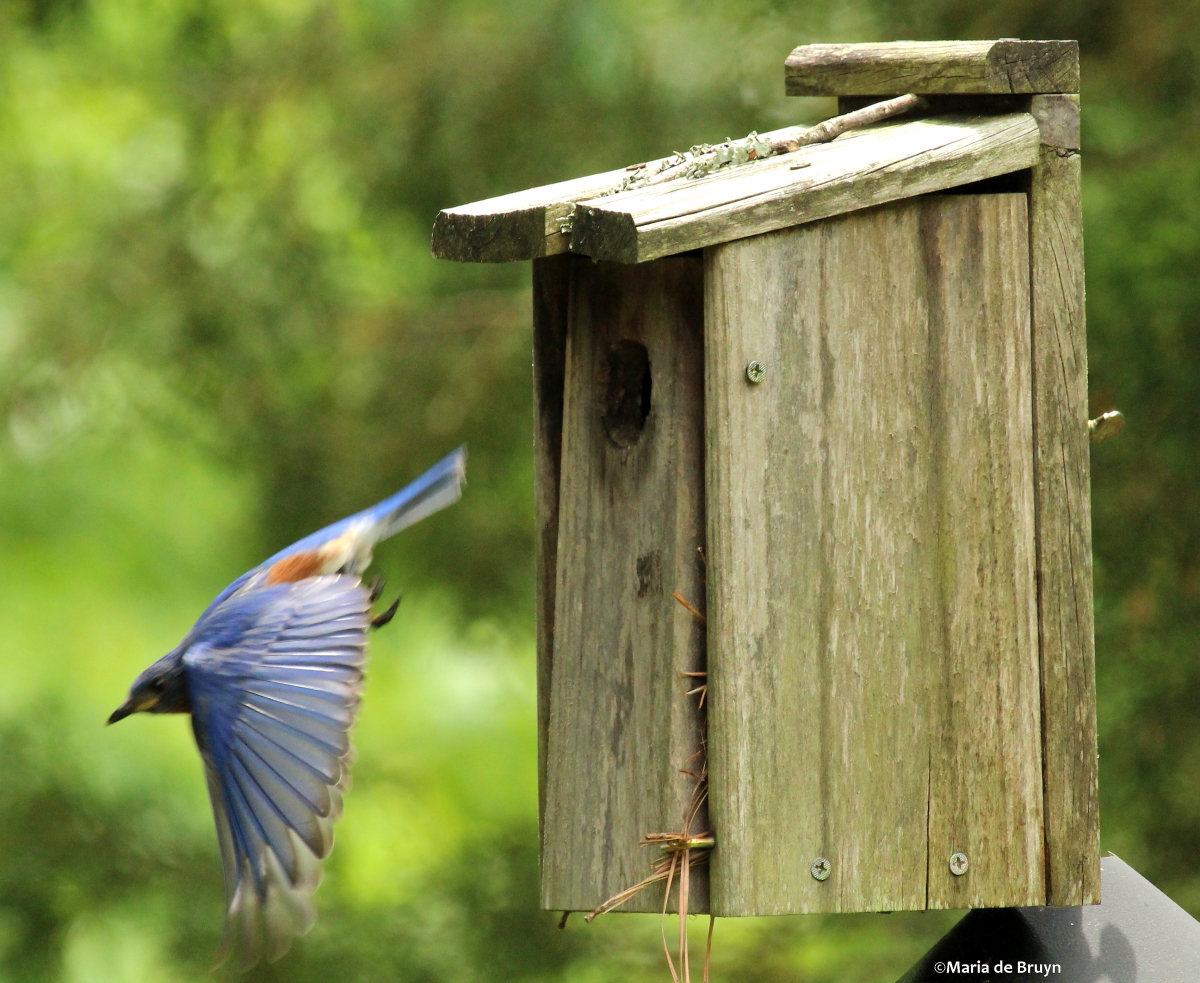
By 2 June, the babies were looking ready to fledge. The next day, I had time to watch the box and saw a baby repeatedly looking out (but not really calling much).


Eastern bluebird IMG_6267©Maria de Bruyn resEastern bluebird IMG_6330©Maria de Bruyn res

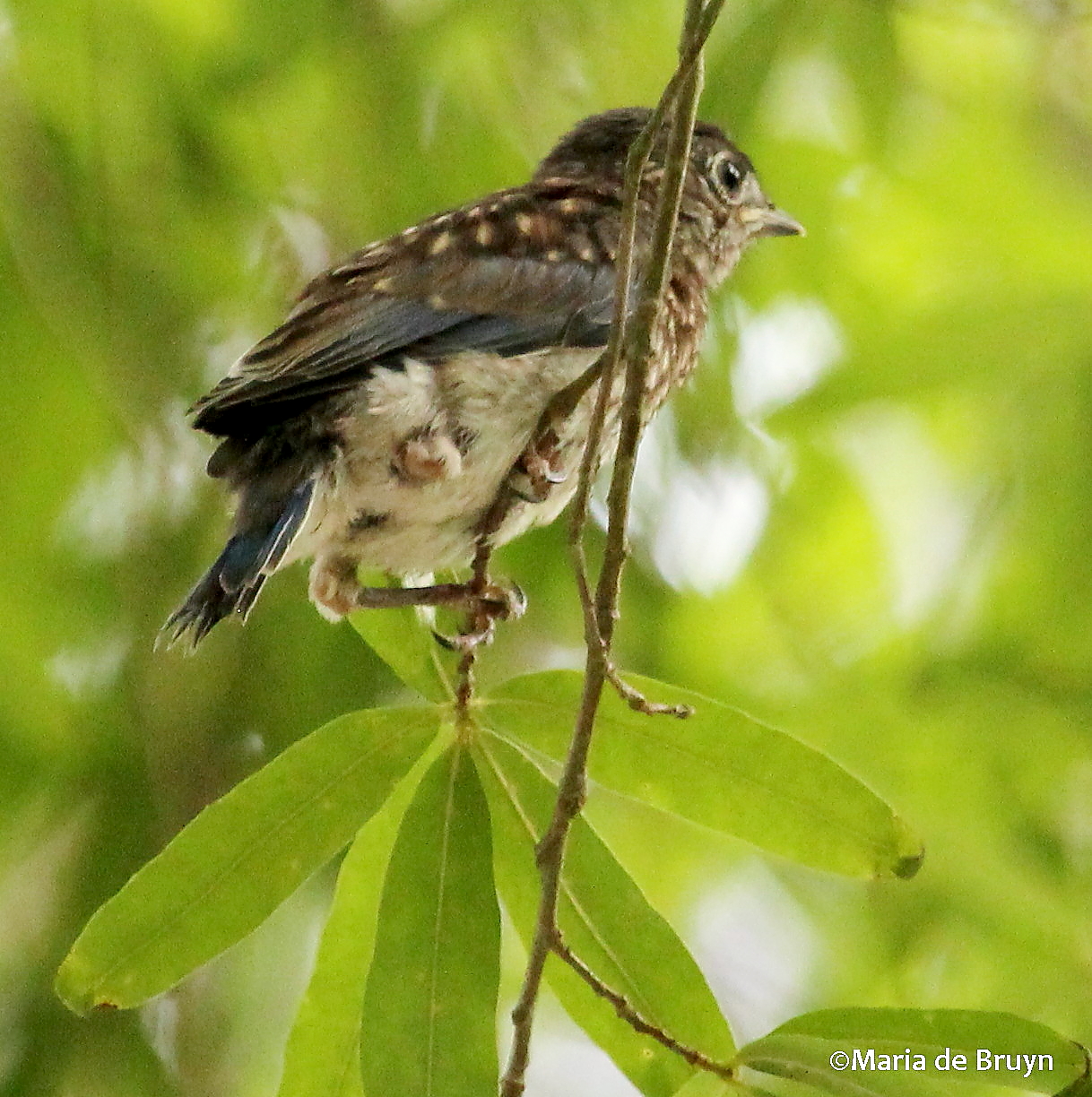
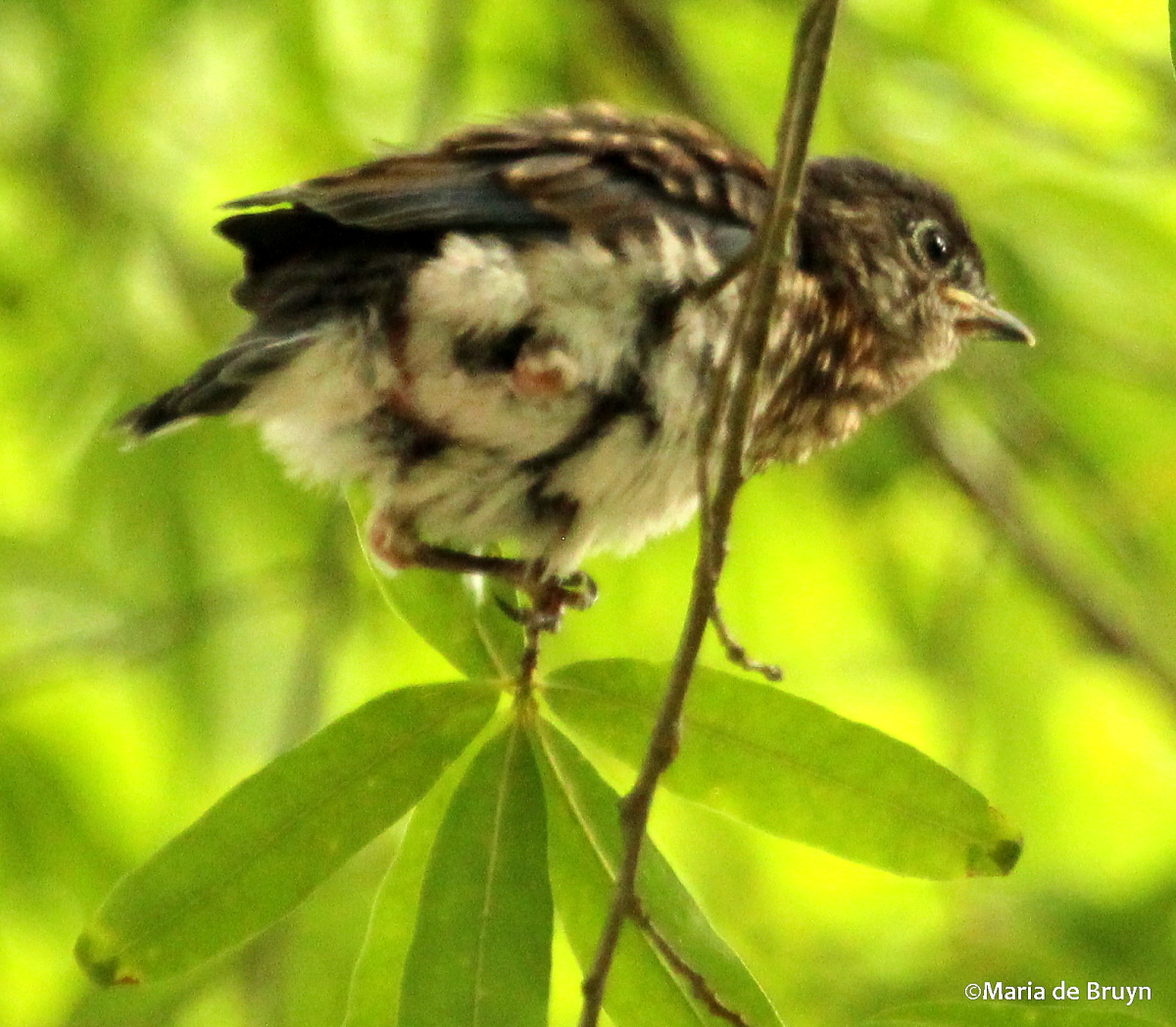
Sure enough, I saw it leap and swoop up to perch on a nearby branch.

Eastern bluebird IMG_6347©Maria de Bruyn resEastern bluebird IMG_6369©Maria de Bruyn res

Eastern bluebird IMG_6361©Maria de Bruyn resEastern bluebird IMG_6379©Maria de Bruyn res

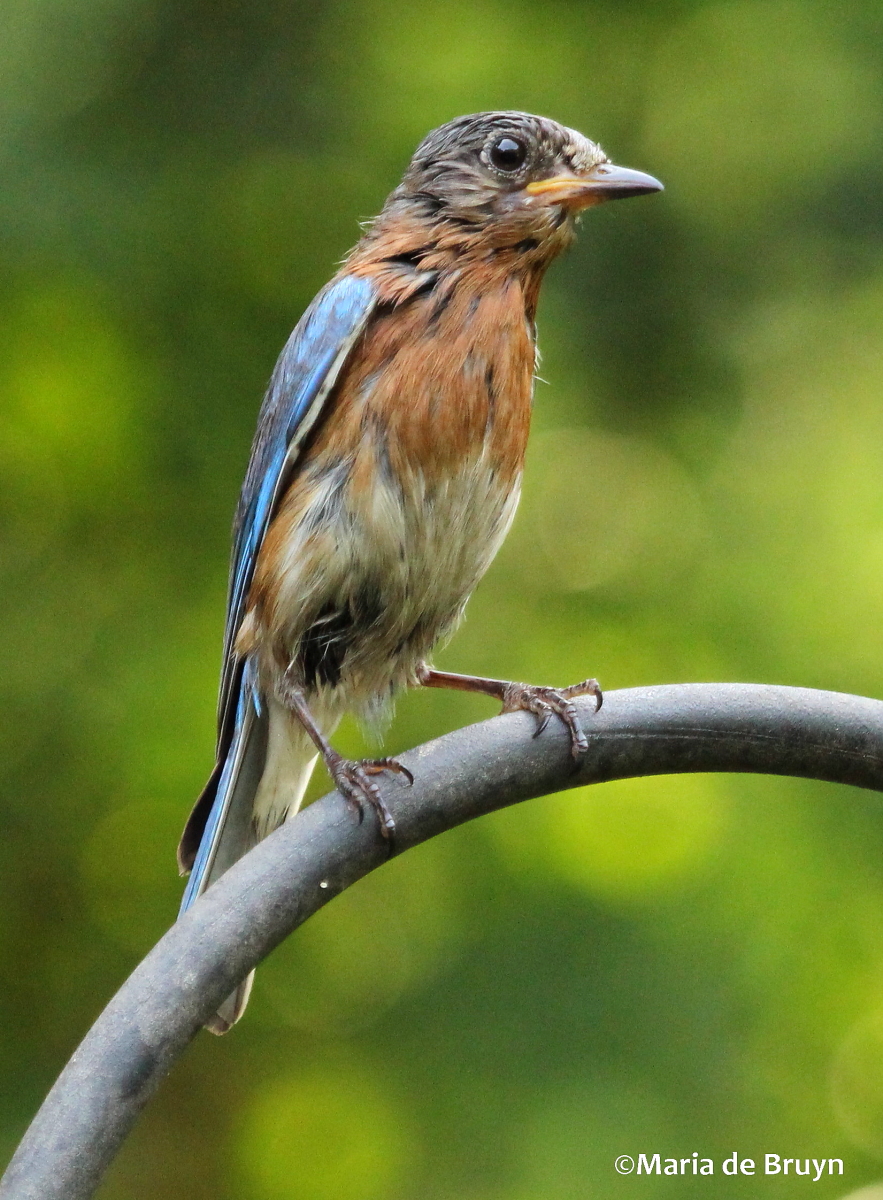
The next baby soon began peeping out, too, although this one also retreated inside the box now and again. Eventually, this baby swooped out as well, but s/he flew all the way across the street to a neighbor’s yard. When I carefully looked inside the next box, I saw that they were the last two to fledge – the others had gone before.

Eastern bluebird IMG_6452©Maria de Bruyn trdEastern bluebird IMG_6458©Maria de Bruyn res

Oddly, I haven’t seen the babies at the feeders although I see the parents there.

Eastern bluebird IMG_8743©Maria de Bruyn resEastern bluebird IMG_7504©Maria de Bruyn res


Eastern bluebird IMG_8749©Maria de Bruyn resThey or another bluebird couple were checking out a nest box in the backyard. They didn’t use this one (Carolina wrens have moved in with a nest there in the last few days) but they have constructed a new nest in another backyard box today. So I hope to witness another fledging in a few weeks! Yay for the bluebirds!


Moths to rival butterflies!

Friendly probole moth IMG_9681©Maria de BruynresThe past week has been incredibly busy with work and the next couple weeks will be so as well. But I hope to stick somewhat to my weekly schedule of (hopefully) entertaining and perhaps educating you a bit on the wonderful wildlife around us!

Today, I was pleasantly surprised to find that a fellow Project Noah member, Jacob Gorneau, had mentioned me in his article about National Moth Week (http://nationalmothweek.org/2014/02/23/project-noah-hosts-the-second-annual-national-moth-week/), What he quoted me as saying – “I really did think of butterflies as being the beauties and moths as the plain cousins. It’s great to have learned so much about the beauty of moths!” – was  a result of having participated in that annual week. Just like birders do bird counts, “moth-ers” do moth counts. And it was through my joining in on that activity that I learned to appreciate just how gorgeous moths can be – like that Friendly Probole Moth (Probole amicaria) at the top of this blog! Here are a few more beauties I’ve seen over time.

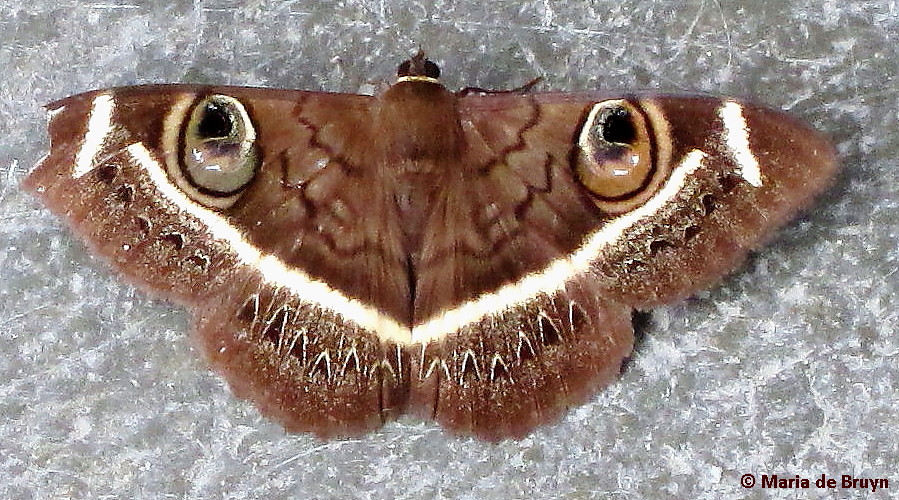
Polka-dot wasp moth IMG_0107VThis polka dot wasp moth (Syntomeida epimoth, Cream-striped owl IMG_6548© Maria de Bruynlais) was visiting a plant in Mexico. And this is a cream-striped owl moth (Cyligramma latona), which was a welcome surprise in Namibia.

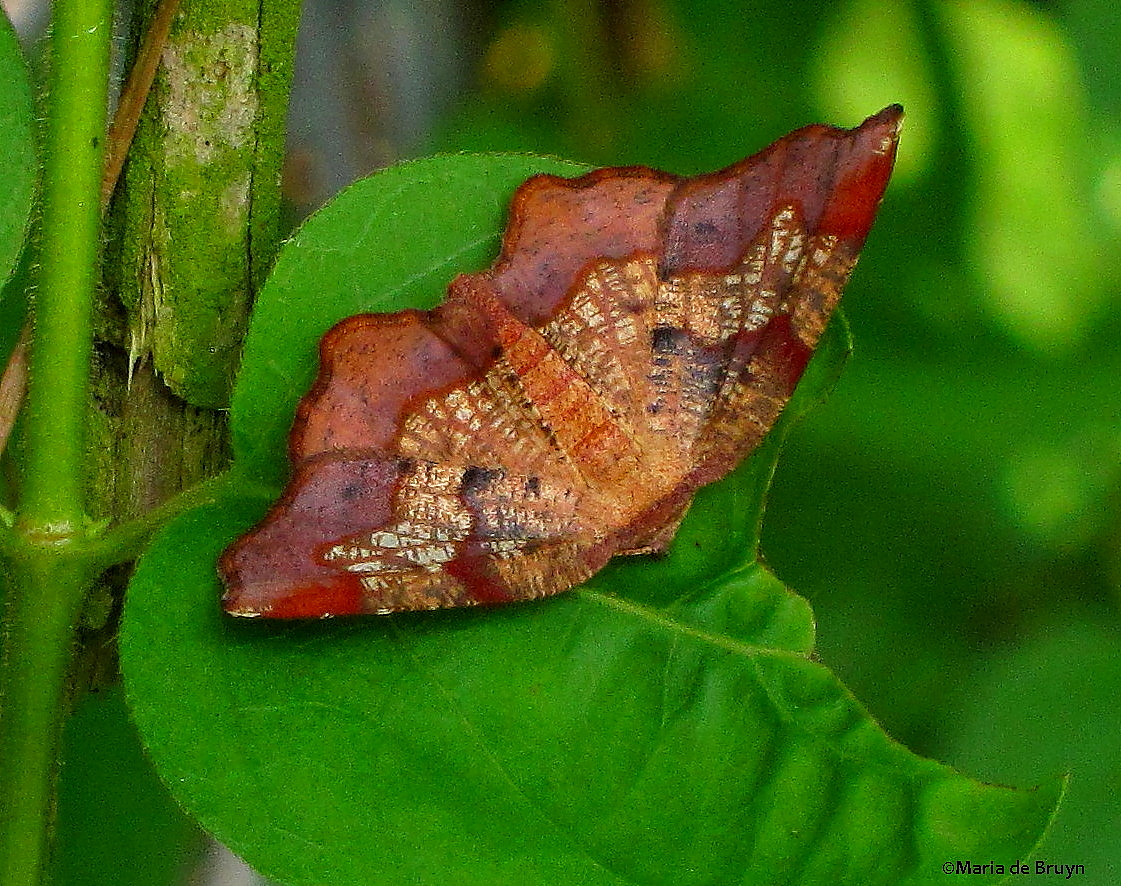
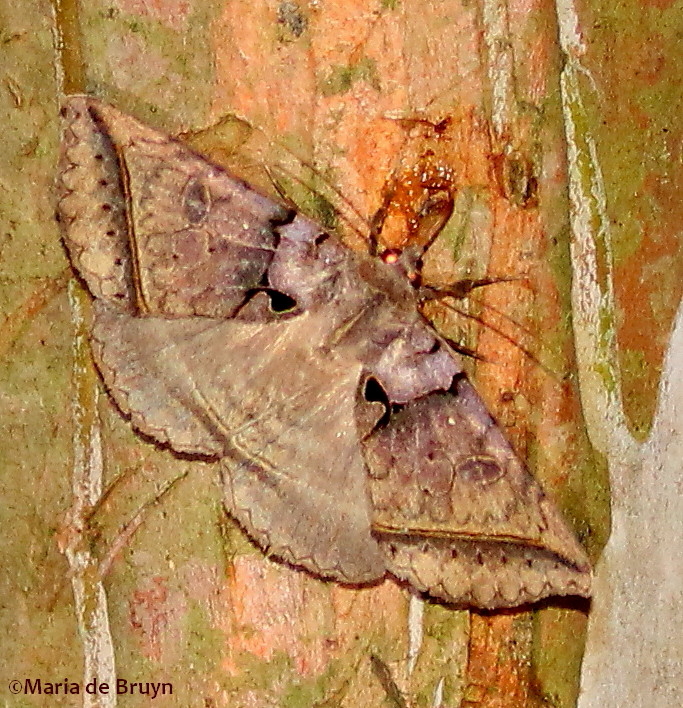
Zale moth IMG_4866©Maria de BruynMy backyard also reveals some interesting specimens. Moth Week induced me to go outside at night with a flashlight and I found these beauties on my crepe myrtle trees. Left is a Zale moth and below a black bit moth (Celiptera frustulum).

Black bit moth IMG_4867©Maria de Bruyn2

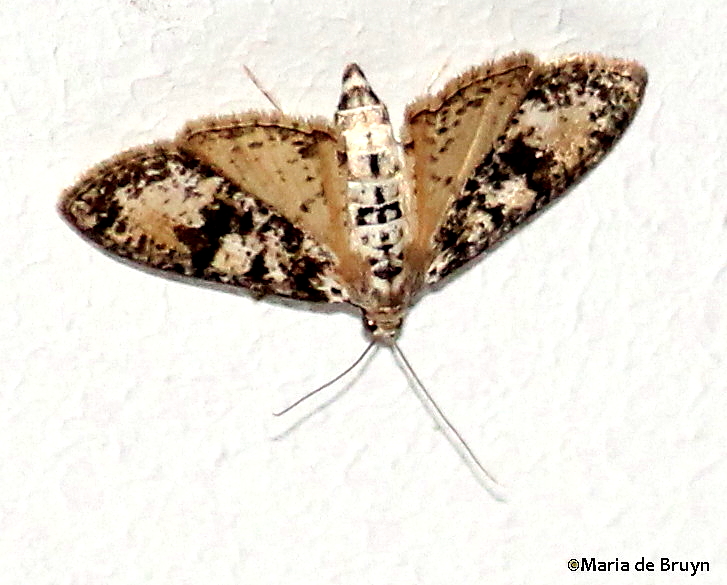
Splendid palpita moth IMG_4696©Maria de BruynThis splendid palpita moth (Palpita magniferalis) was on the ceiling of the roof overhanging my front porch. Gorgeous pattern, don’t you think?

Next week, I’ll share a few more of these beauties!