The ospreys (Pandion haliaetus) continue to capture my heart, even though my numerous forays to lakes and ponds to get some excellent photos of them have not yet paid off. I finished the book on osprey migration, Soaring with Fidel, and thoroughly enjoyed it.
Reading about different birds’ personalities and choices for migration was really interesting; learning about the different people who dedicate their lives to learning and sharing information about ospreys kept my interest, too. The ospreys definitely have a devoted fan base.
It’s quite amazing to think of these birds flying several thousand miles within a short period of time so that they can spend the winters in warmer Caribbean and South American climes. When I was at Topsail Island, I was lucky to see a few ospreys that were apparently on their migratory journeys. They flew very far overhead, but I did see one drop down into the ocean and come up with a meal.
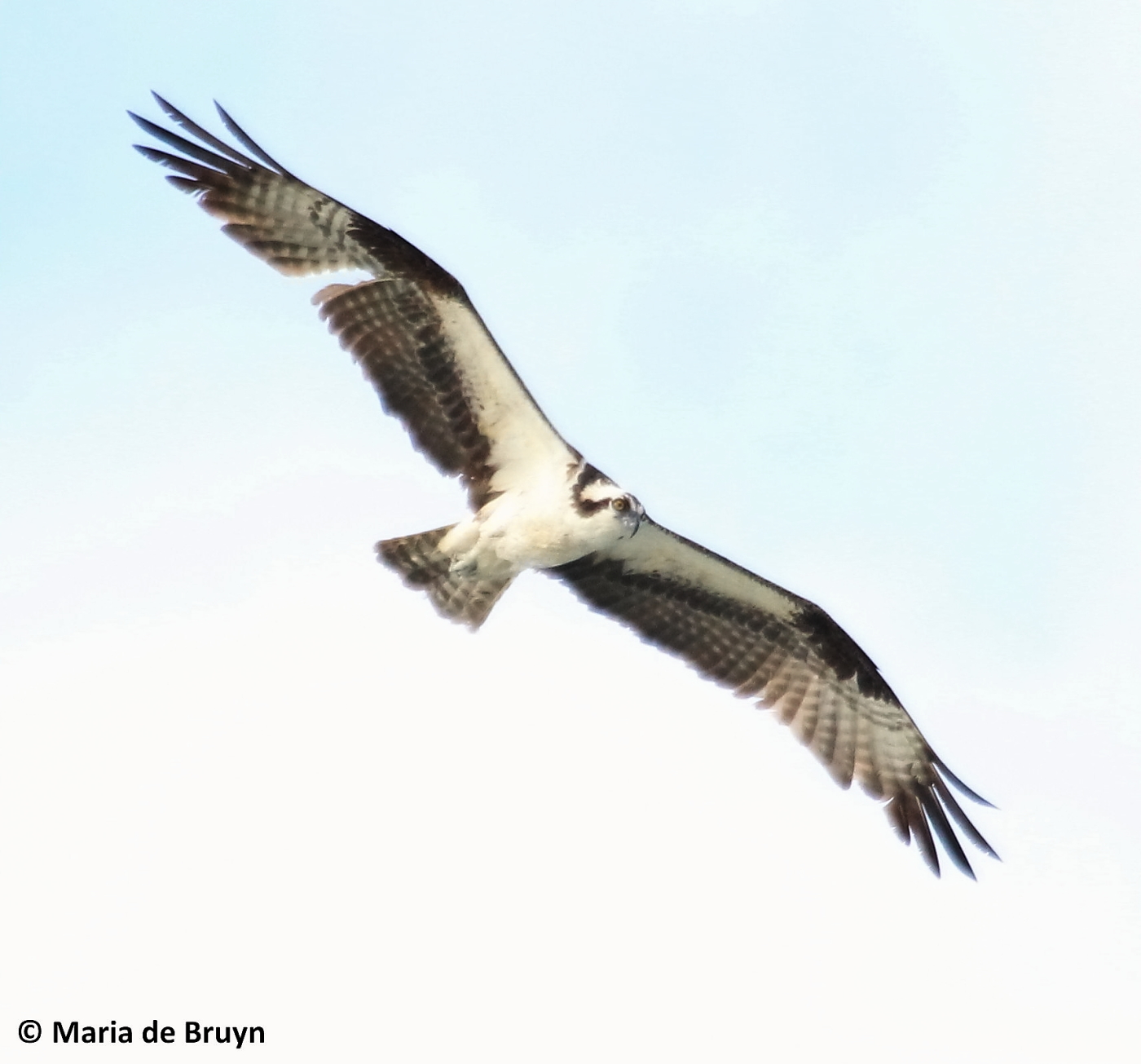
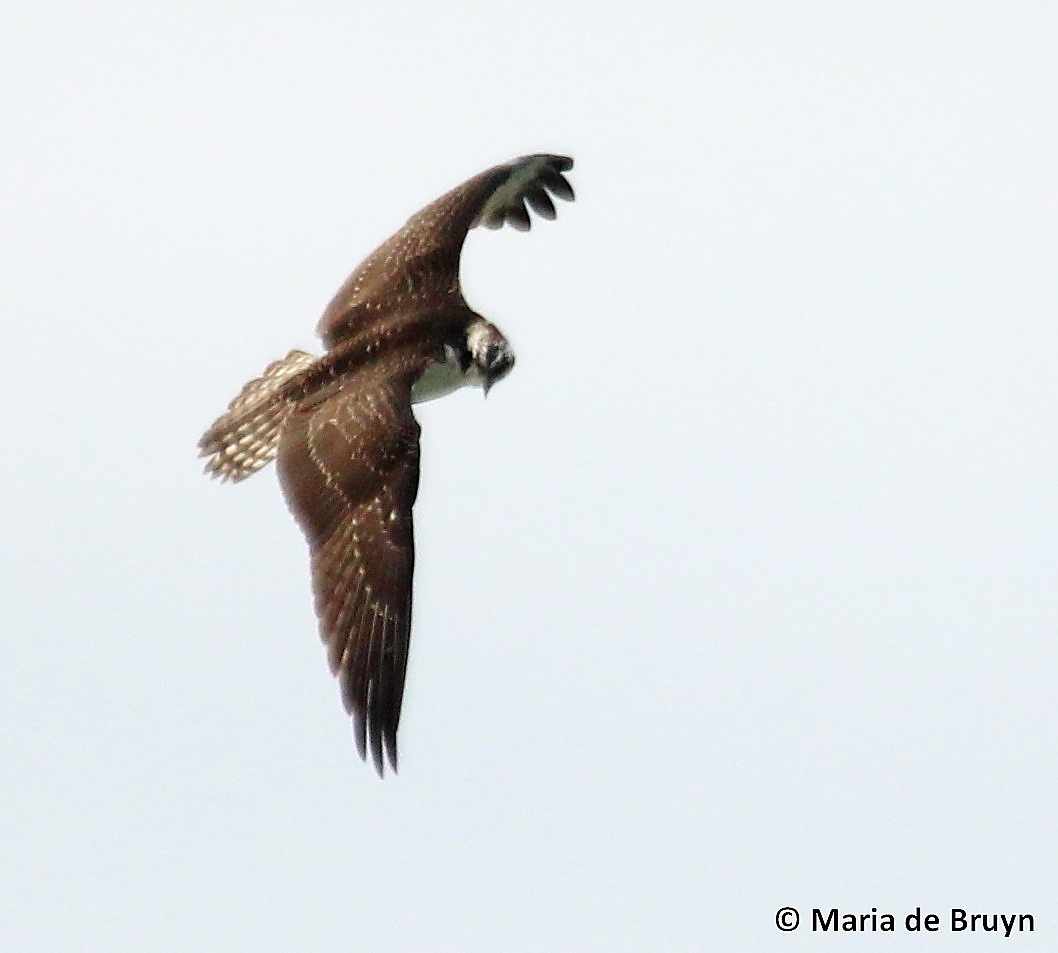
One day when I was at North Carolina’s largest man-made lake, Jordan Lake, I was lucky to see an osprey begin a predatory dive that was a bit nearer to me than usual.
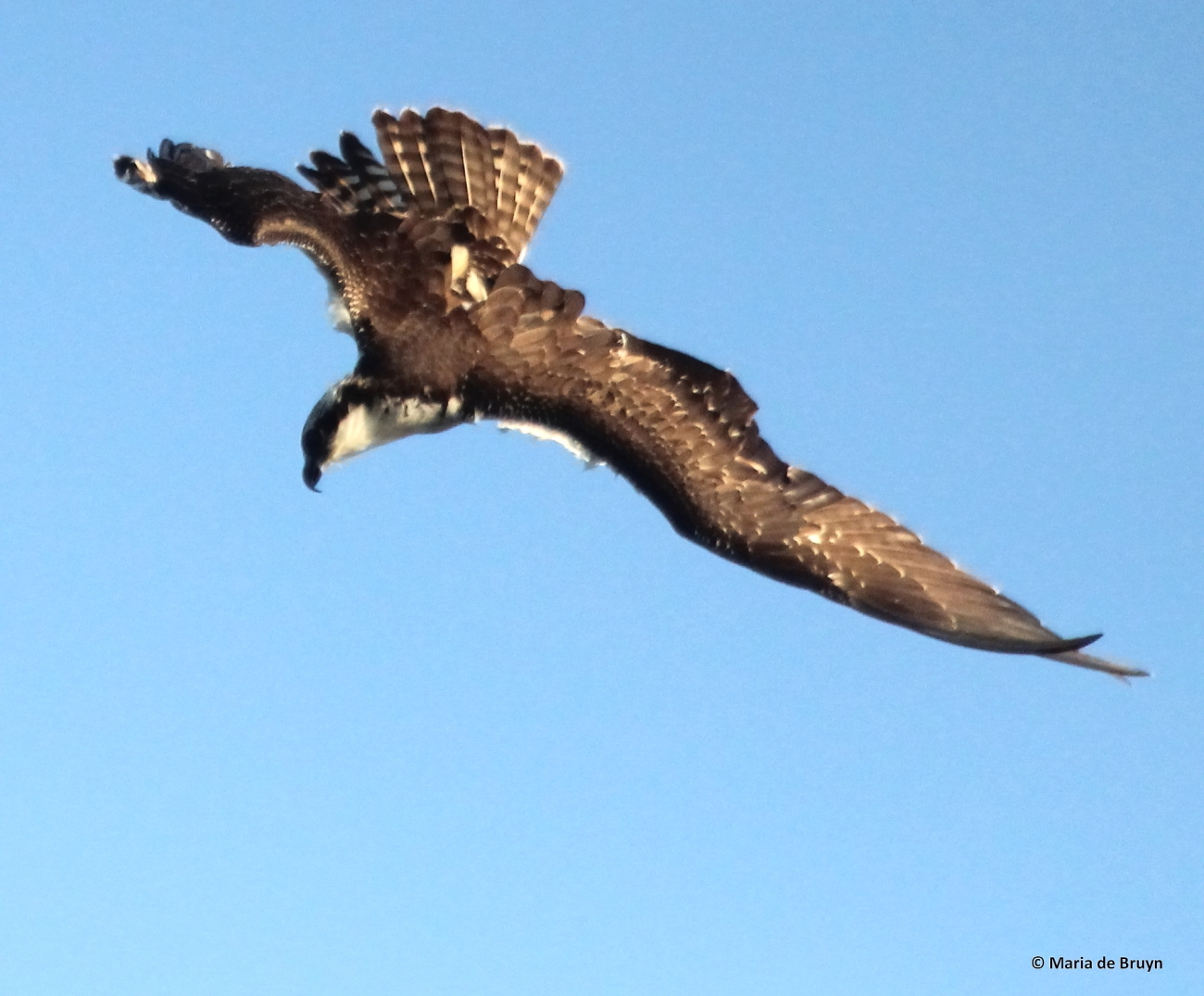
The bird’s wings and claws were spread as it readied itself to grasp the fish that was in sight down below.
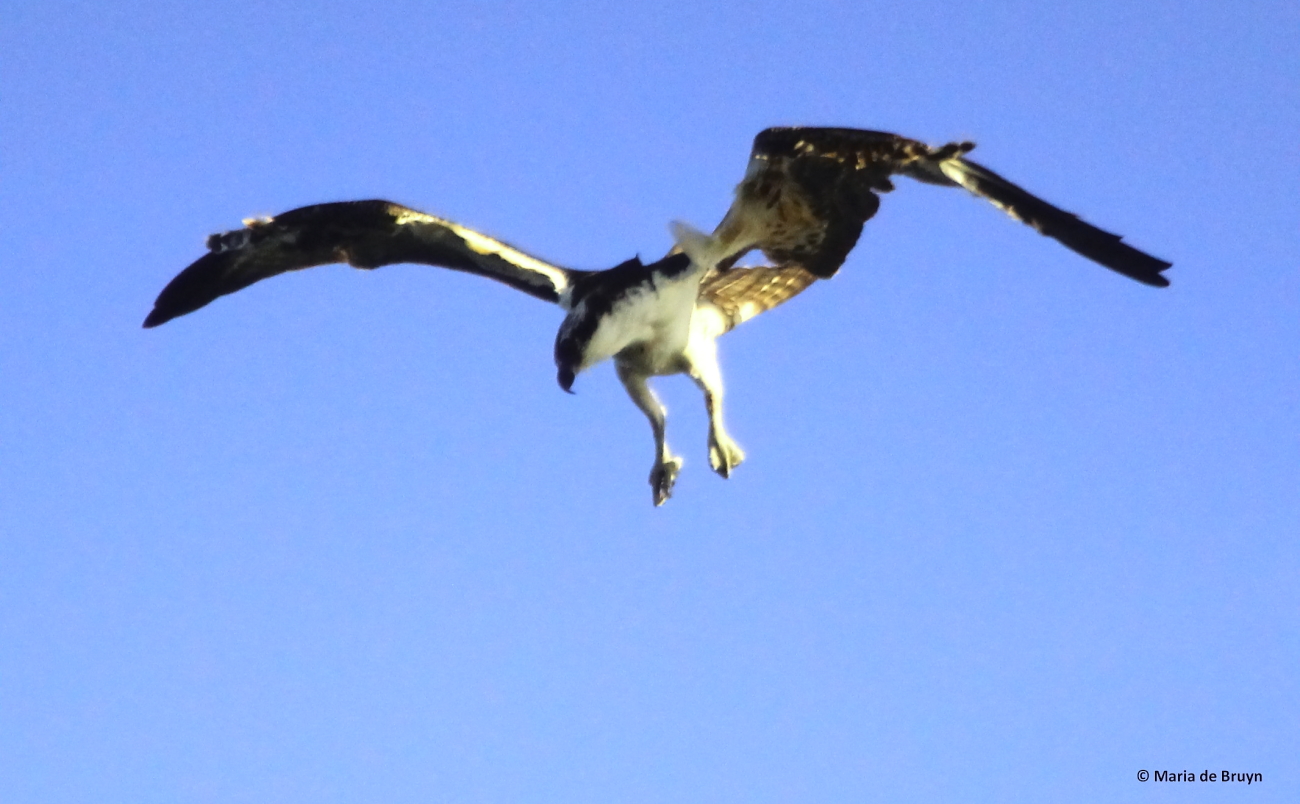
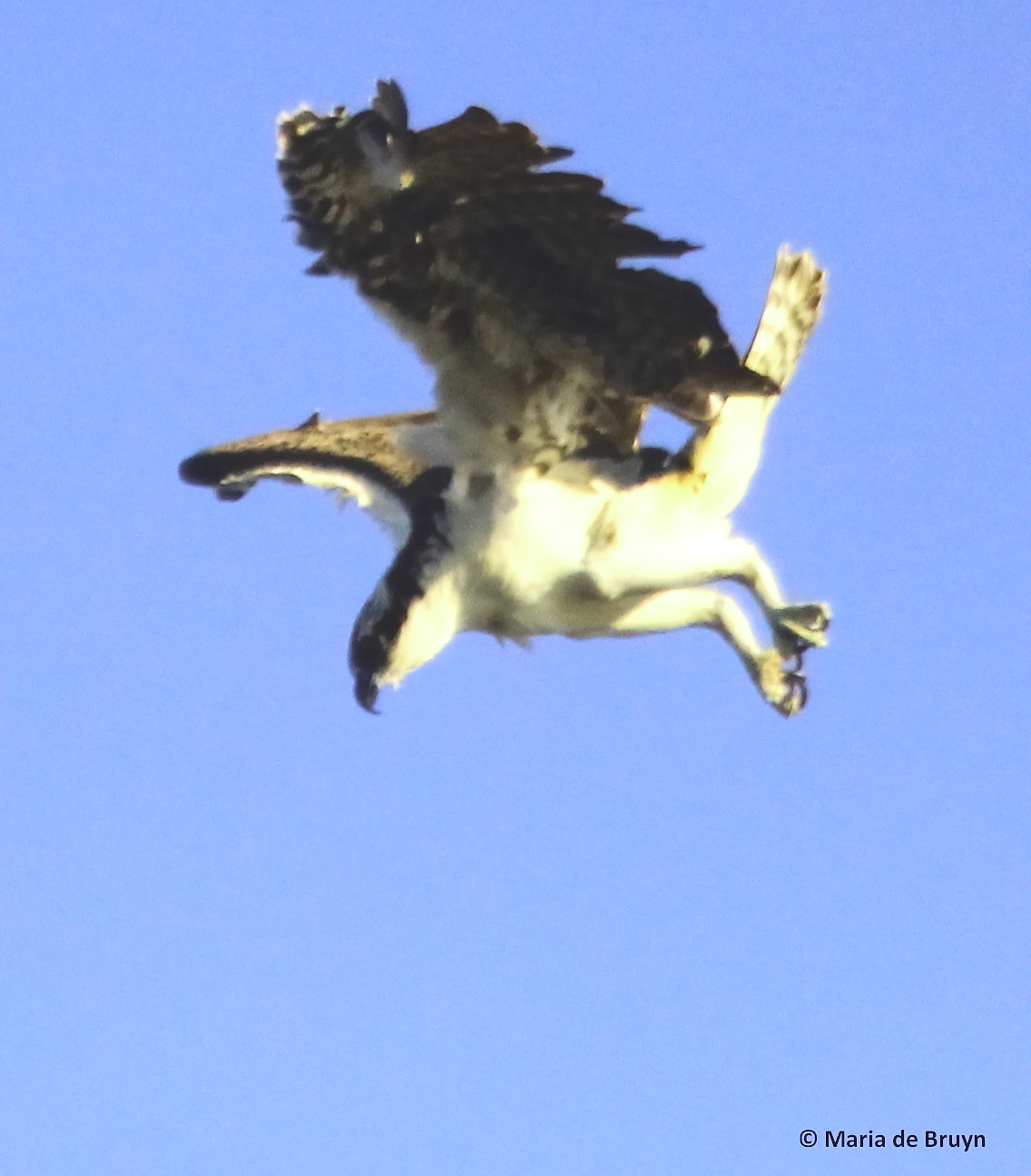
 Sometimes the birds will face forward to dive down and then flip upwards at the last minute so they enter the water feet first. This bird did most of the dive with its feet down in the clutching position, ready to strike.

A mighty plunge!
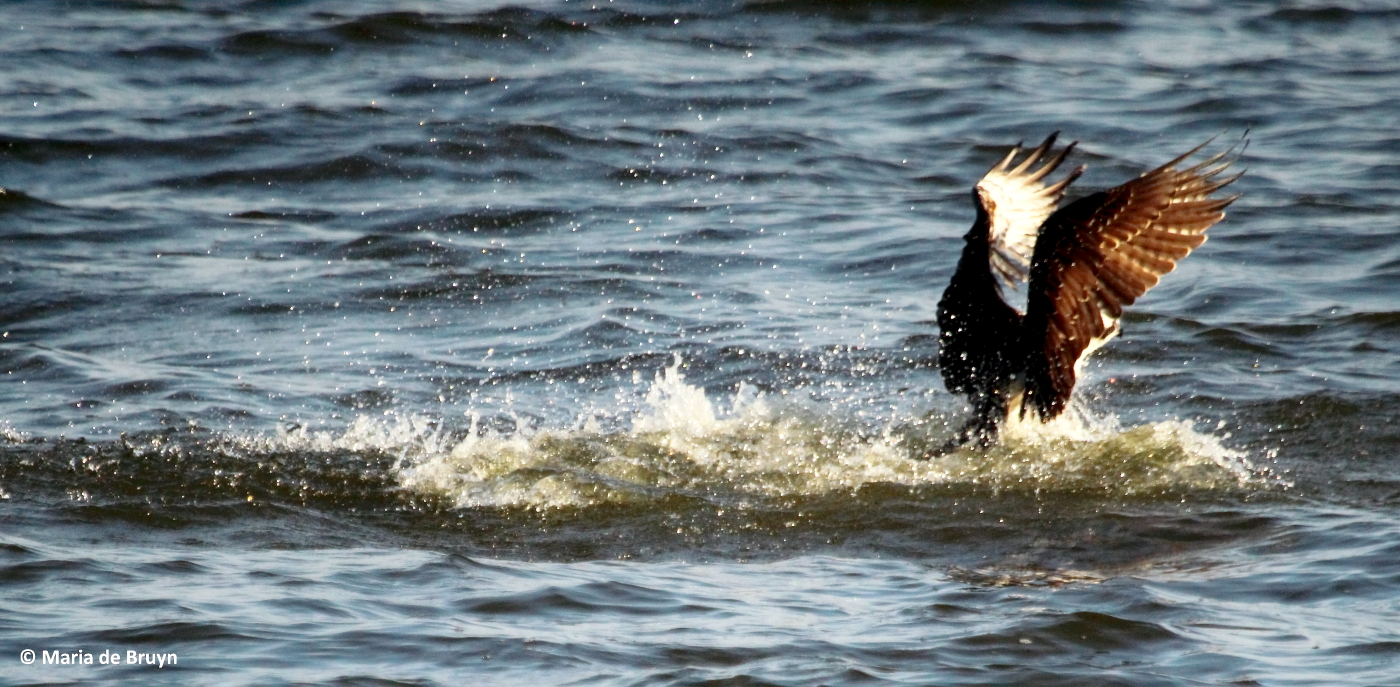 And then emergence with a meal caught in those feet with unique reversible back toes to help the osprey hold on to the slippery fish.
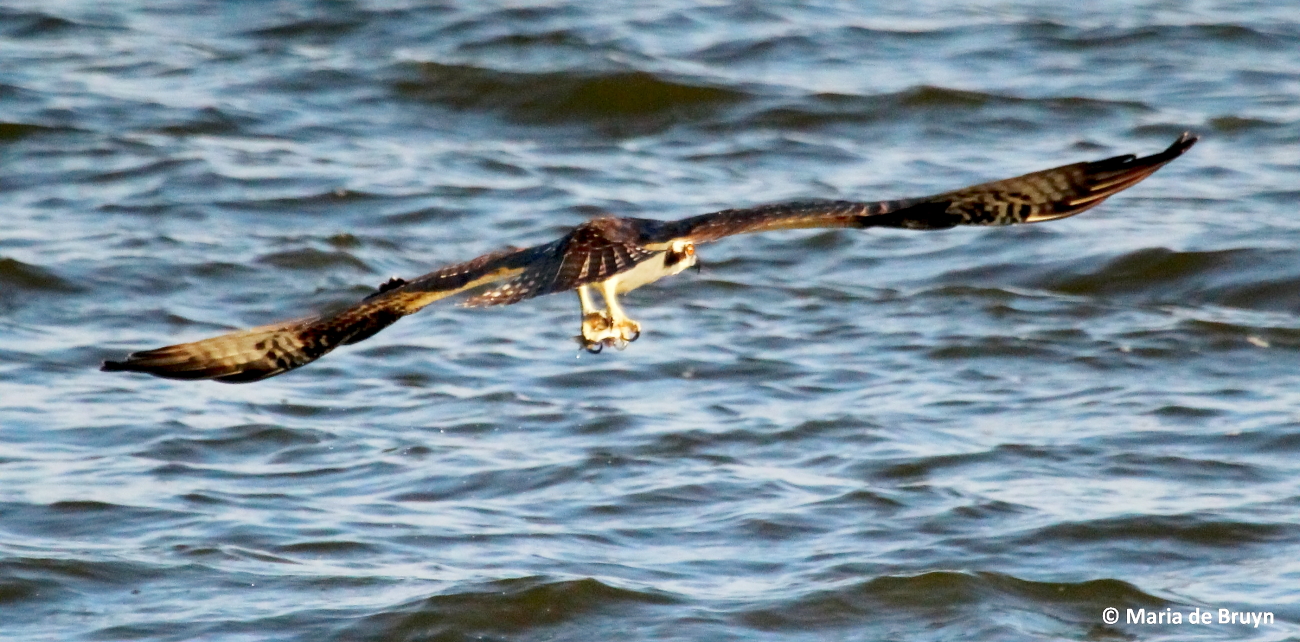 This was a happy bird. And when another (or the same?) bird suddenly flew right over my head to grace me with a piercing gaze, I was a happy birder!

 We usually don’t know who gave a bird species its common name and sometimes may scratch our heads wondering how and why someone ended up choosing a particular name. But birders faithfully learn to identify birds with those names, even when they may seem illogical. For example, many people would have chosen to call red-bellied woodpeckers red-headed woodpeckers since the reddish belly feathers are much less obvious than the red on the back of their heads.


 My beautiful world