
While I edit photos for my next “regular” blog, I was inspired by Denzil’s 28th Nature Photo Challenge to post a few photos of wild animals I’ve encountered. While I could have chosen to show some of the more exotic ones (e.g., rhinos, elephants, lions, etc.), I thought I’d introduce you to some species that live in my general area.
 Among the insects that I enjoy watching are the snowberry clearwing moths (Hemaris diffinis). The first time I saw a clearwing moth at some distance, I wondered if there was a tiny hummingbird with which I was totally unfamiliar. When I got closer, I realized it was no hummer but some amazing kind of flying insect. I still find them fascinating creatures.
The saddleback moth caterpillar (Acharia stimulea) is another favorite from the insect world. Fortunately, I found out that they have a painful sting before I ever touched one. This past week, I was lucky to see one twice. The first time was when John, an odonate expert of my acquaintance, called me over to see one he had found. He had unfortunately been stung but said the pain was tolerable: I hope he didn’t suffer for long. Several days later, I spotted another saddleback while on another nature walk.
 The bright golden color of a common sawfly caught my eye after having seen the first saddleback. It was quite a striking fly with its black and white “decorative” highlights.
 Shortly afterwards, my day was made when I spotted one of my favorite spiders, an adorable jumping spider that had caught itself a sizeable meal.


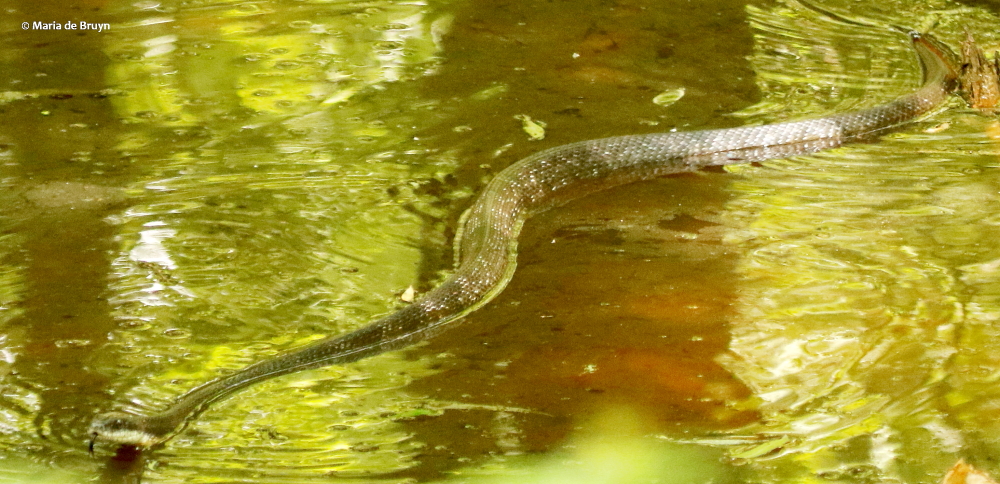
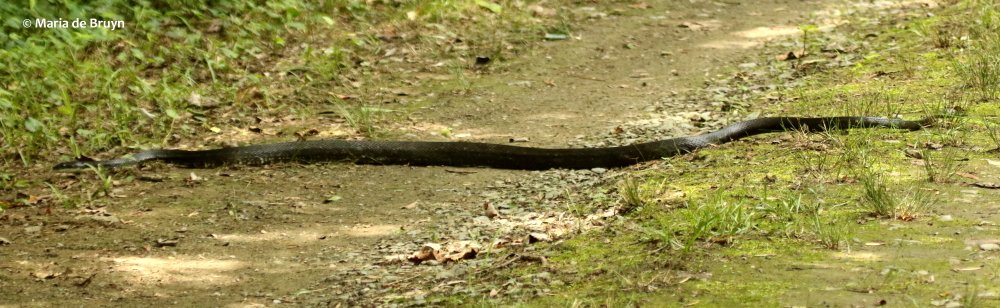
A couple days ago I startled an Eastern rat snake (Pantherophis alleghaniensis) as I passed by it on a path. I hadn’t realized it was there until the herp reared up and quickly crossed the path in front of me. I think we were both startled and I didn’t manage to get a photo. Today I did a U-turn to hop out of my car to carry an Eastern box turtle (Terrapene carolina Carolina) to safety as it began crossing a busy road. One woman stopped to thank me, while another driver gave me a somewhat irritated look. The turtle above was not the rescue but had similar colors to the turtle today.
 My pond is quite alive with lots of tadpoles and small frogs. This green frog (Lithobates clamitans) is one of the larger aquatic yard denizens.


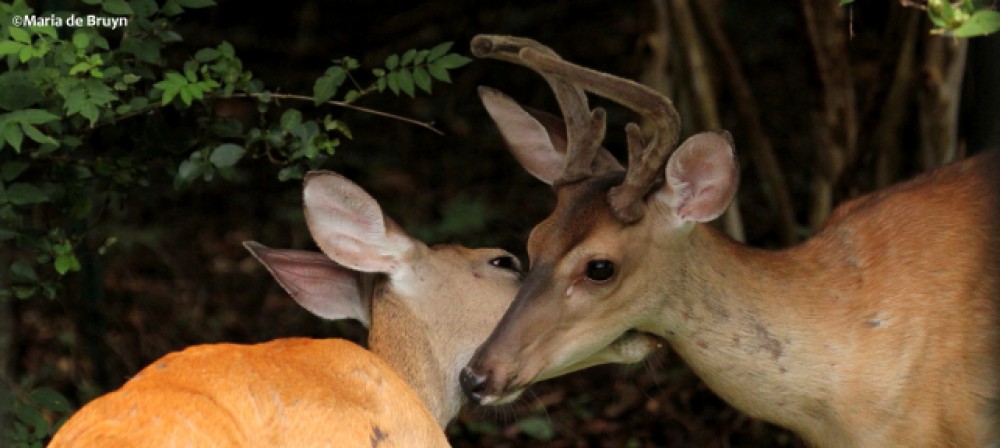
 I haven’t seen a wide variety of mammals lately except for the ubiquitous Eastern chipmunks, gray squirrels, Eastern cottontail rabbits and Eastern white-tailed deer in my yard. It’s always a treat for me to see some of the aquatic ones when out on walks, such as the river otters (Lontra canadensis) and the North American beaver (Castor canadensis).


I’ve seen the hispid cotton rats (Sigmodon hispidus) in three different North Carolina nature reserves. To my surprise, this year I also spotted one in my backyard, but I only saw it once. They are known to scurry away quickly when spotted.

And then there are the birds — they are by far the order of animals that I see most often and most easily. They are also delightful because of their great variety. Just recently, I saw a rare avian visitor to my yard, the black-and-white warbler (Mniotilta varia). I usually see them in nature reserves.
 In contrast, the lovely little chipping sparrows (Spizella passerina) are birds that I often see in my yard and at my feeders. This pair was resting in a tree top near a former dairy farm, which is now being turned into a vast vineyard. Much of the birds’ habitat has been removed during this changeover to my great disappointment.
 One bird that still remains in that area is the solitary sandpiper (Tringa solitaria), which is easily recognizable by its habit of bobbing its rear end as it walks along shores looking for food.

The sandpiper is not the only shorebird currently drawing birders in our area. Many varied species have been turning up at local lakes, giving birders the opportunity to see “lifers” (birds seen in person for the first time). The limpkin (Aramus guarauna) is one such bird for me — it was a treat to see it looking for clams and molluscs at a local lake.
Next blog: making acquaintance with a bird I’d like to imitate!











 My beautiful world