Part 3: Communication and play

The otter family that I observed this past January captivated me and I photographed them often. Here are a few more scenes from their life that I hope you enjoy seeing.


The otter that caught the very big bass kept that fish to itself even when the other two stayed close. The pair never tried to grab the prey. Finally, I concluded that the lucky hunter must be the parent and the other two the offspring.

After some time, the non-dining pair left the prize behind and the successful hunter took some pauses in consuming the large meal.


After the young mammals disappeared into the water, I assumed that they might have swum back to the beaver lodge, where they had been residing the past days. Otters shelter either in burrows that beavers have made or in natural hollows created under tree roots.

The beaver lodge in this pond appeared ideal for their purposes; they played on it, rested on it and appeared to be going into a burrow underneath as well.
River otters communicate in two ways — through olfactory and auditory signals. Their scent marking is done in two ways.
 Their hind feet have plantar pad scent glands which are used to mark various areas. Biologists believe that the otters transmit messages about identity, reproductive and social status by leaving glandular scents as well as anal secretion deposits on scent mounds that can be used for years.

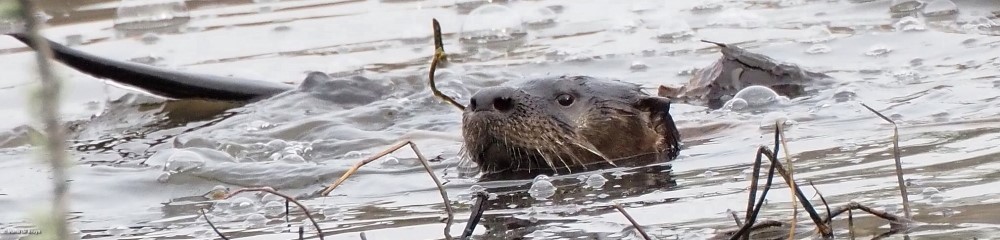
River otters have a reputation for being playful and this group lived up to that. They dove after one another and wrestled on the ice. Sometimes all three were engaged and sometimes it was a pair exercise.


 One day, after I had visited several times, their curiosity seemed to get the better of them.
Previously they had only observed me from a distance while going about their daily life. This time, they spent some time at a stump and then after a time, all turned and stared at me.
Finally, two of them began swimming under the ice in my direction, occasionally breaking through to see how close they had come to me.

One decided to chill out by a nearby stump in the water, perhaps waiting to see if I would get in the pond with them. When I just stayed still and watched, they finally regrouped and began fishing again closer to a weedy section of the pond.

The last couple times I visited the pond, I didn’t see the trio. Perhaps they had fished enough in this area and decided to go to another spot for a while so as not to deplete the available stores of fish — even though our temperatures have suddenly increased, there is no guarantee that we won’t have icy days ahead in later February or early March, so their natural pantries may be running a bit low.

I’ll miss seeing them — and hope they do return The river otters are one of the few animal species I get to see who can look like they’re smiling! 😊 😊


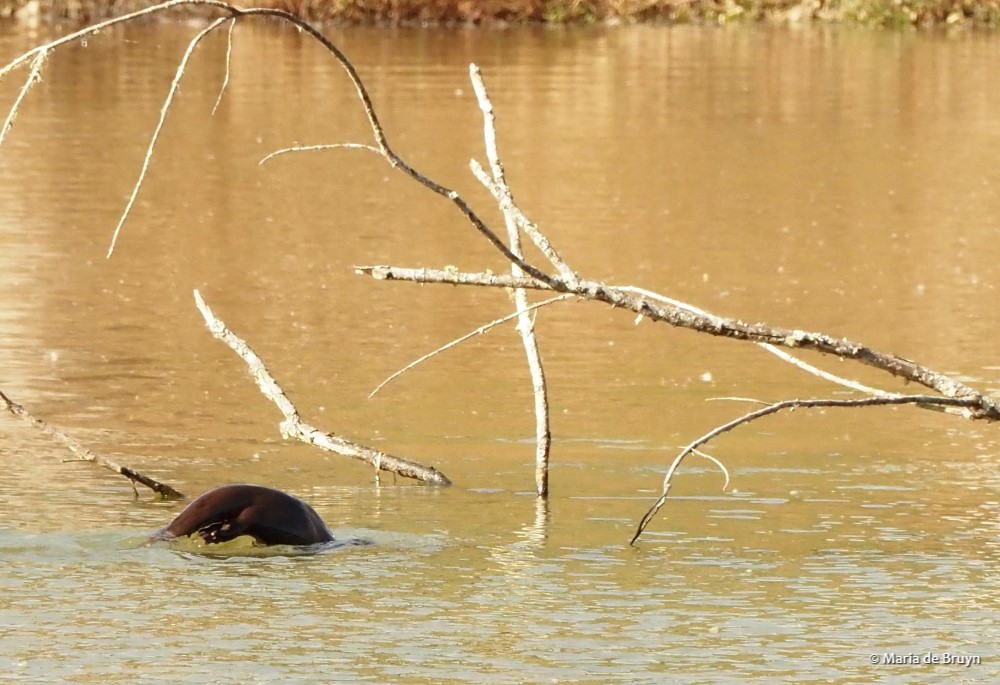

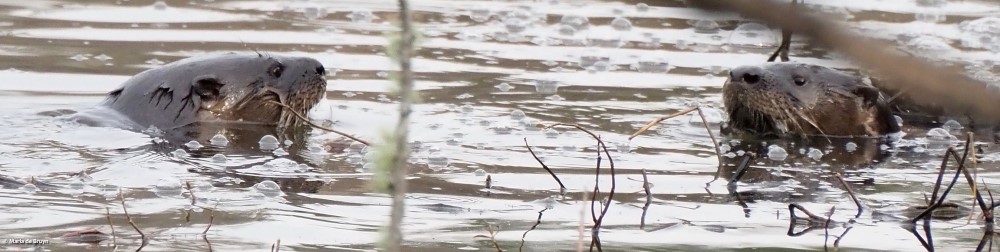
 The otters don’t always appreciate spectators. Sometimes, they emerge from the water briefly and give me a view shrouded by vegetation before they dive back down. That’s frustrating when you’re trying to get a nice photo, but at least I’ve never scared them enough for them to sound their alarm scream, which apparently can be
  The other day at another pond, I was lucky enough to see a pair close to shore. They were foraging and when they finally disappeared, they appeared to have entered a beaver lodge located next to a walking path (seen here). The beavers may have abandoned this lodge as they have at least two others in this park.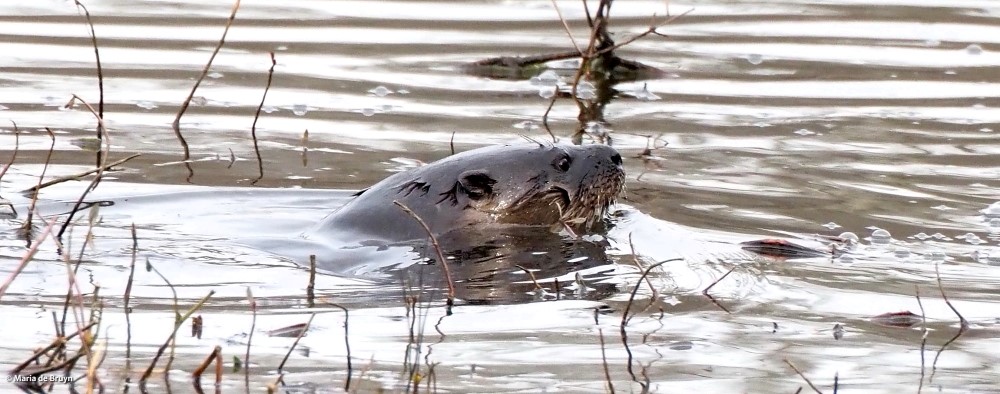


 That’s lucky because last year our county had its 12th


 My beautiful world