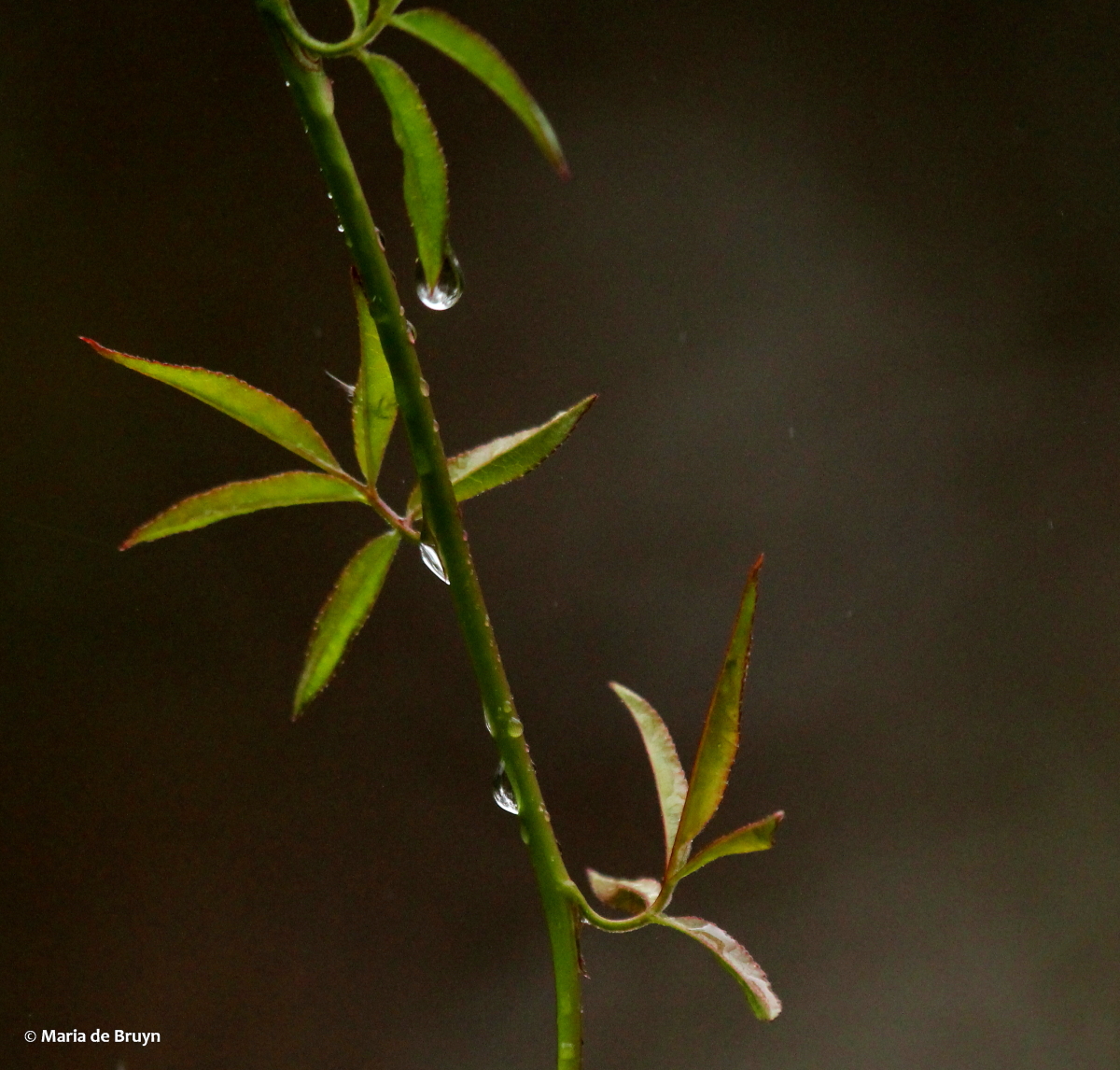
 Dewdrops in the early morning, raindrops during the day, and frost covering everything outdoors can be seen merely as various manifestations of heavenly water on earth, but another way of looking at them can be as nature’s jewels. When light and sunshine illuminate the drops and crystals, they lend an air of elegance and beauty to whatever they have covered.
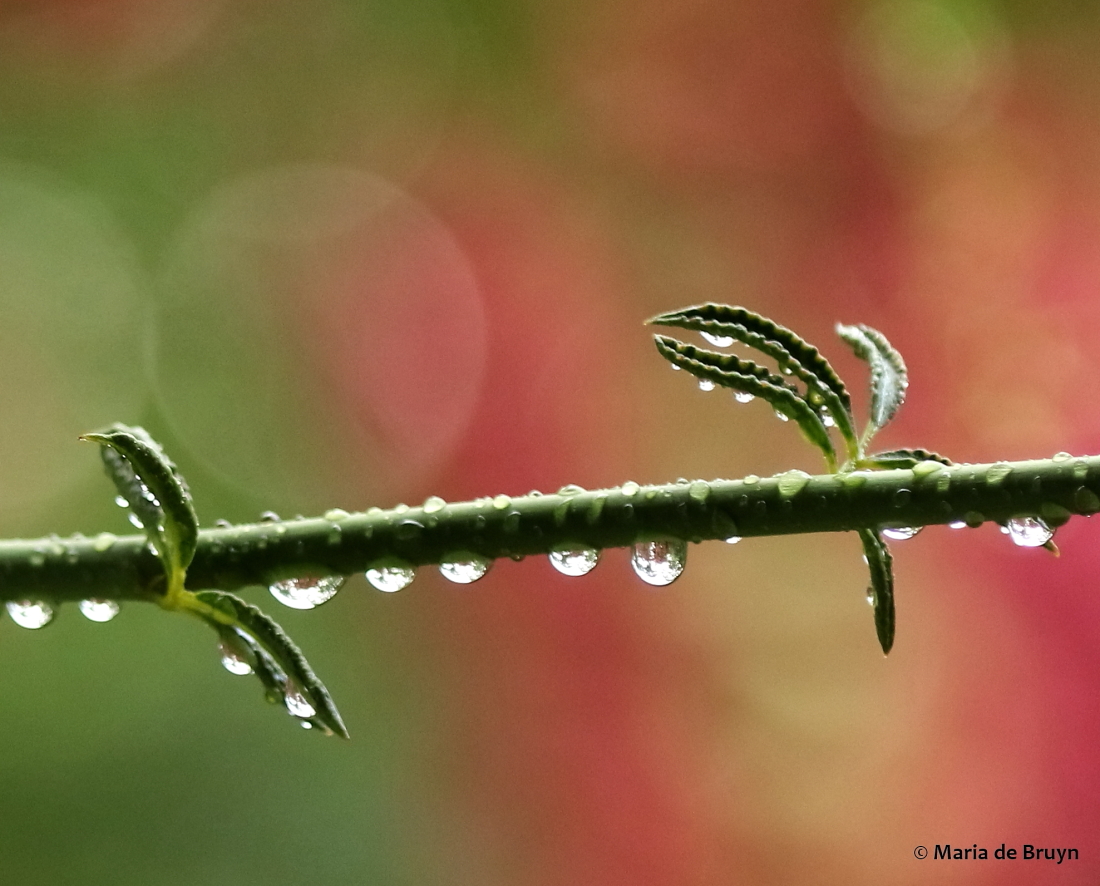
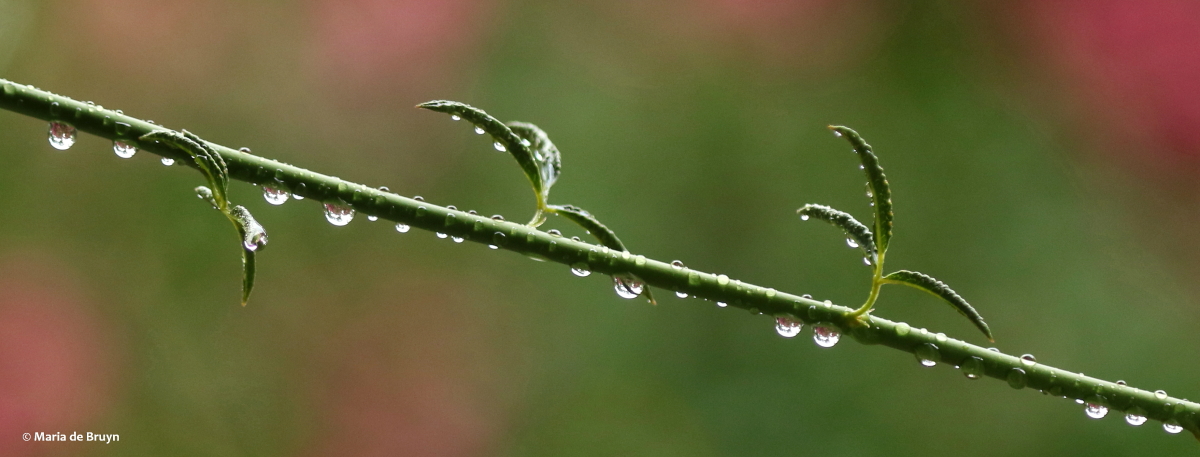
When it rains, leaves and blooms may look uniformly slick with moisture but we often see them covered in rain drops. Have you ever wondered why the rain drops are of different sizes?
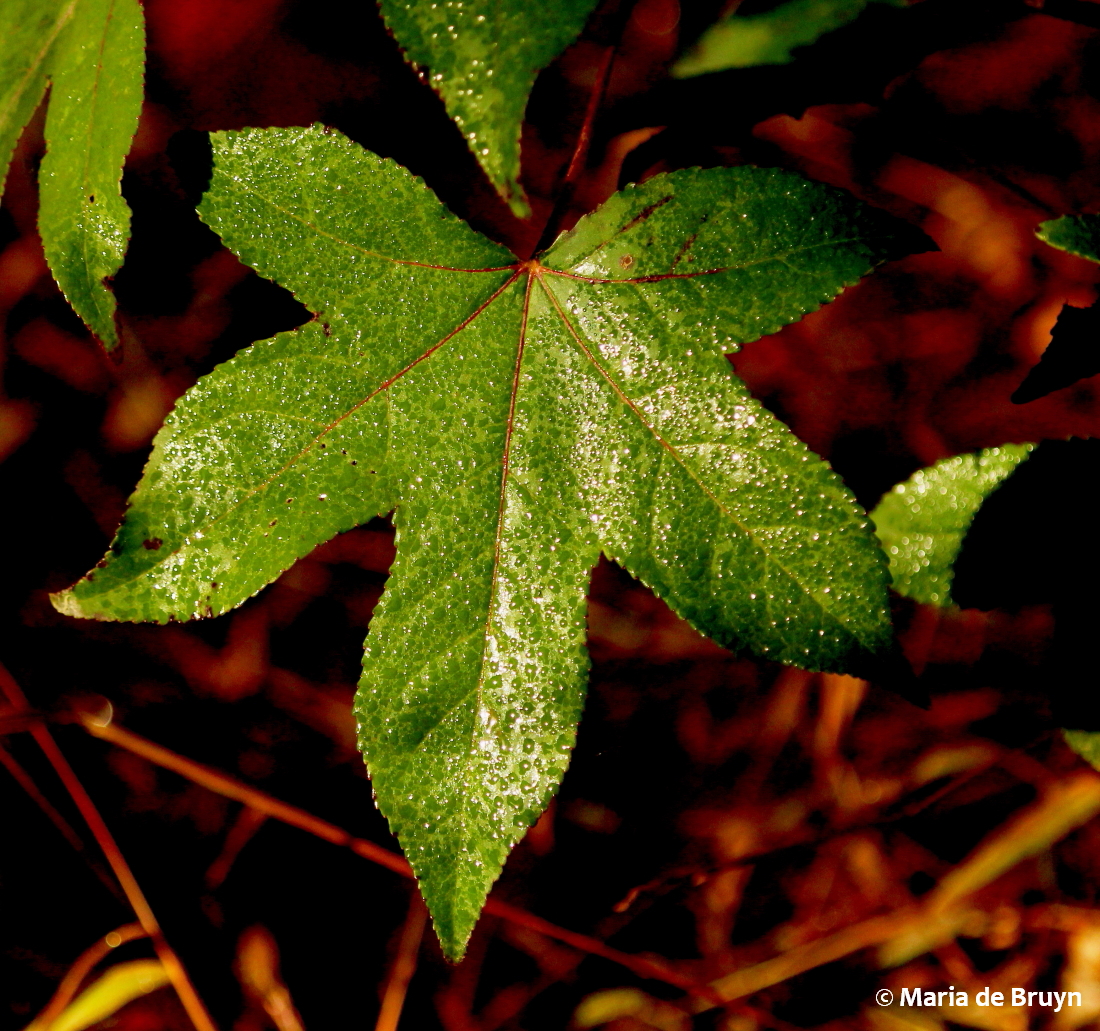

The US Geological Survey’s Water Science School reports that water vapor wraps around particles in the air (salt, smoke, dust) which are of different sizes; then when the drops begin falling to earth, they bump into other drops and merge. The drops that merge with more “neighbors” become larger. Rain drops suspended from branches and leaves are quite lovely.

 They often roll right off birds’ feathers but occasionally adhere, as was the case for this ruby-throated hummingbird (Archilochus colubris) at a feeder sheltered by a roof overhang.
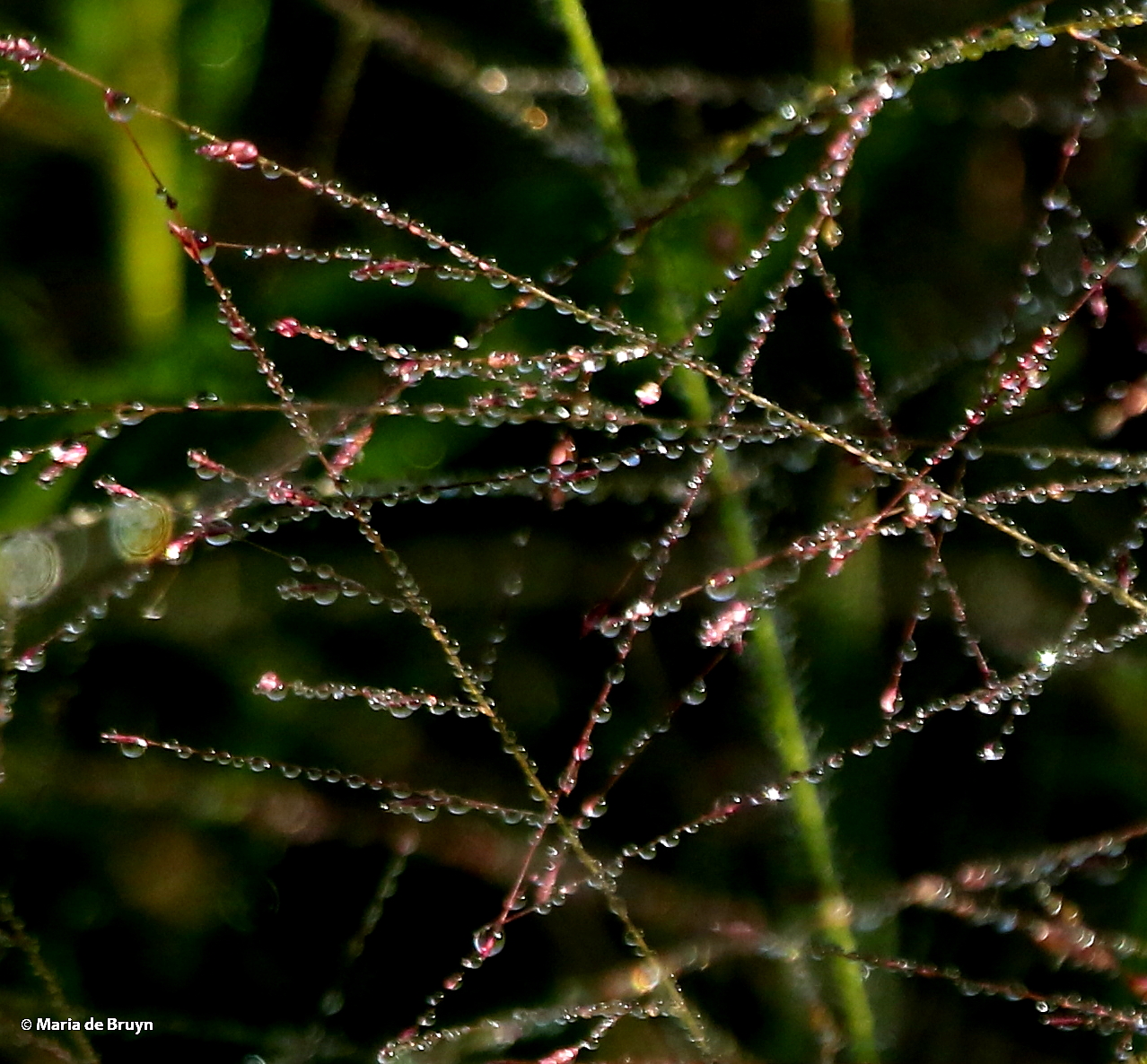
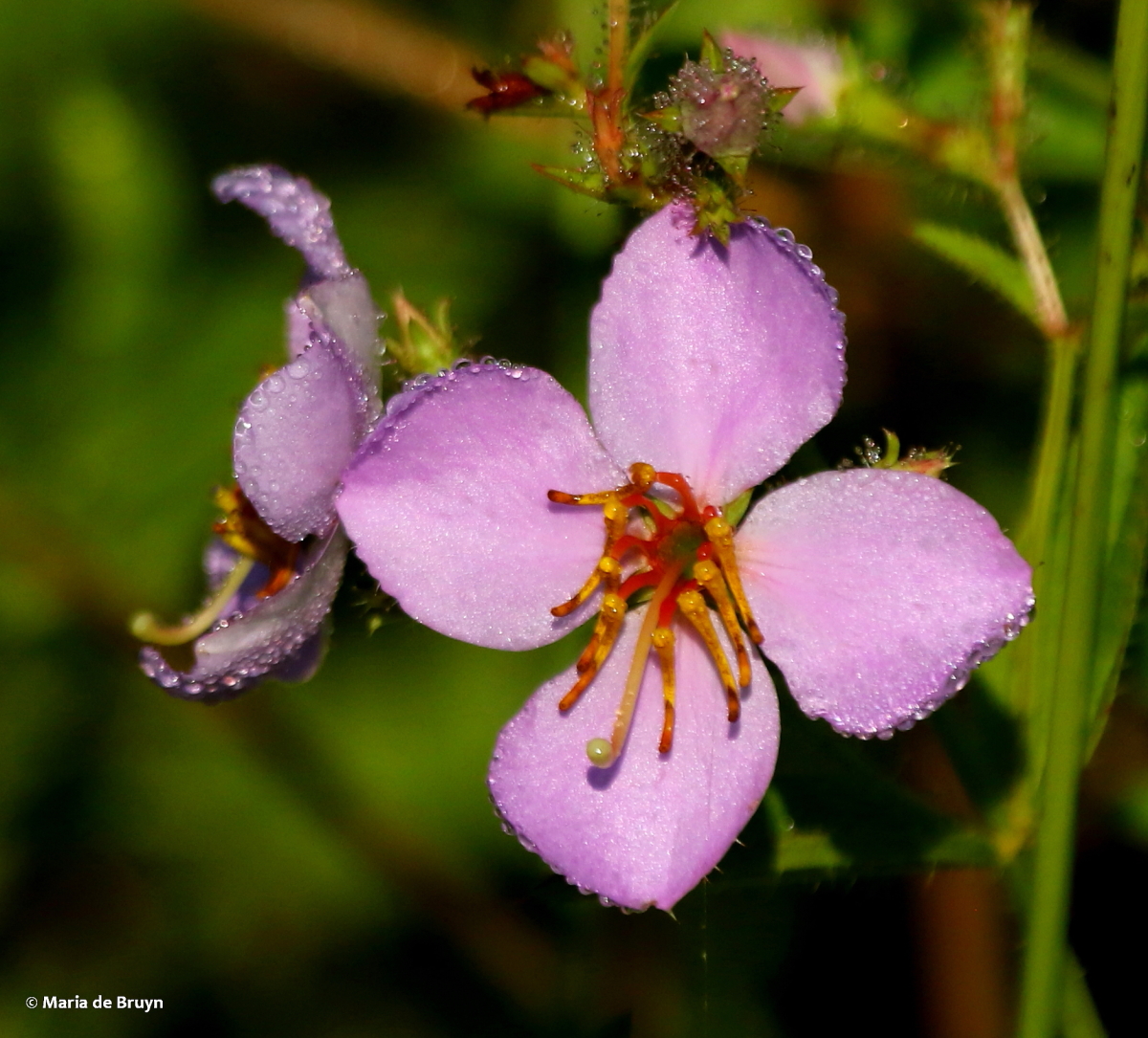
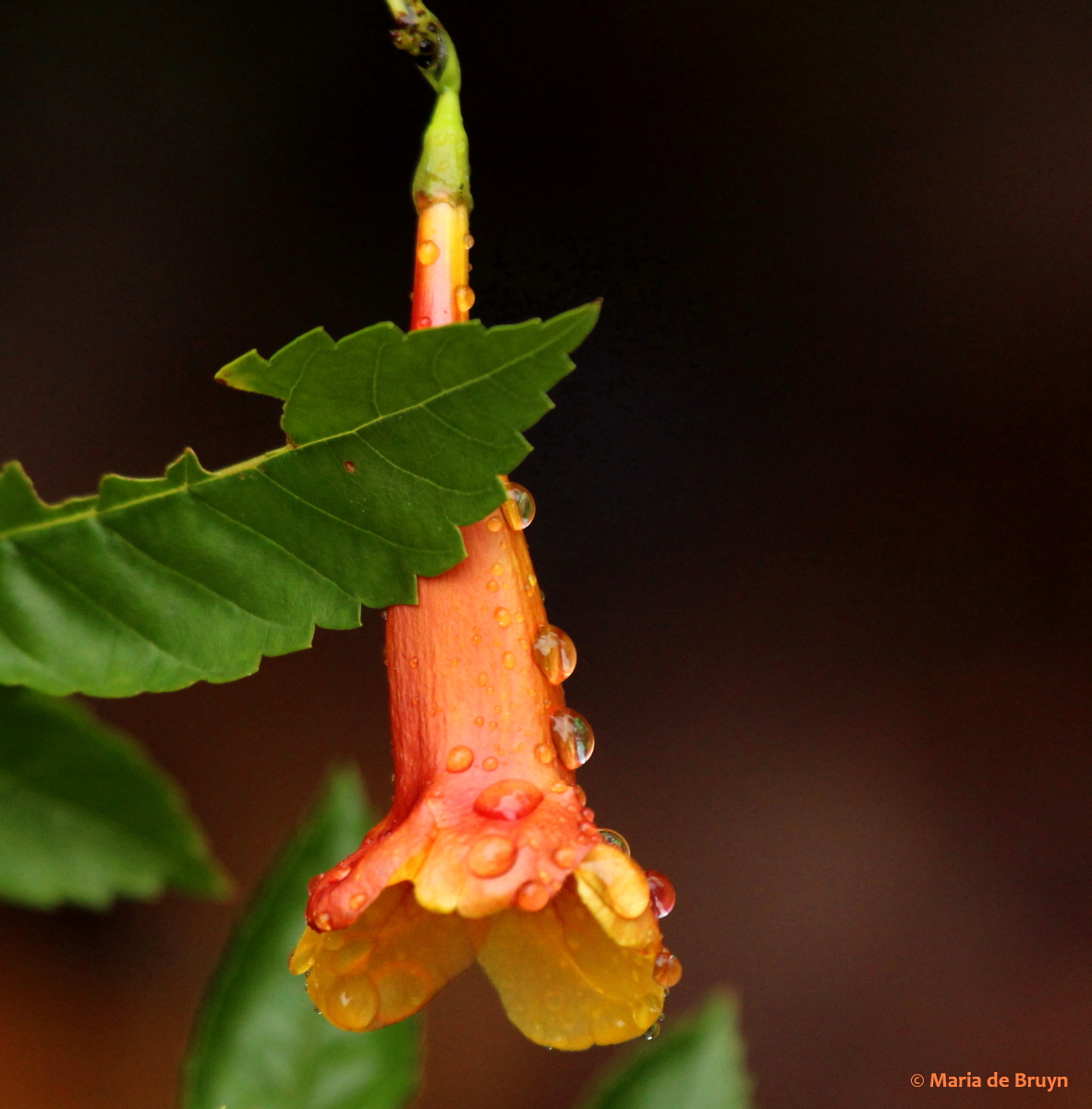
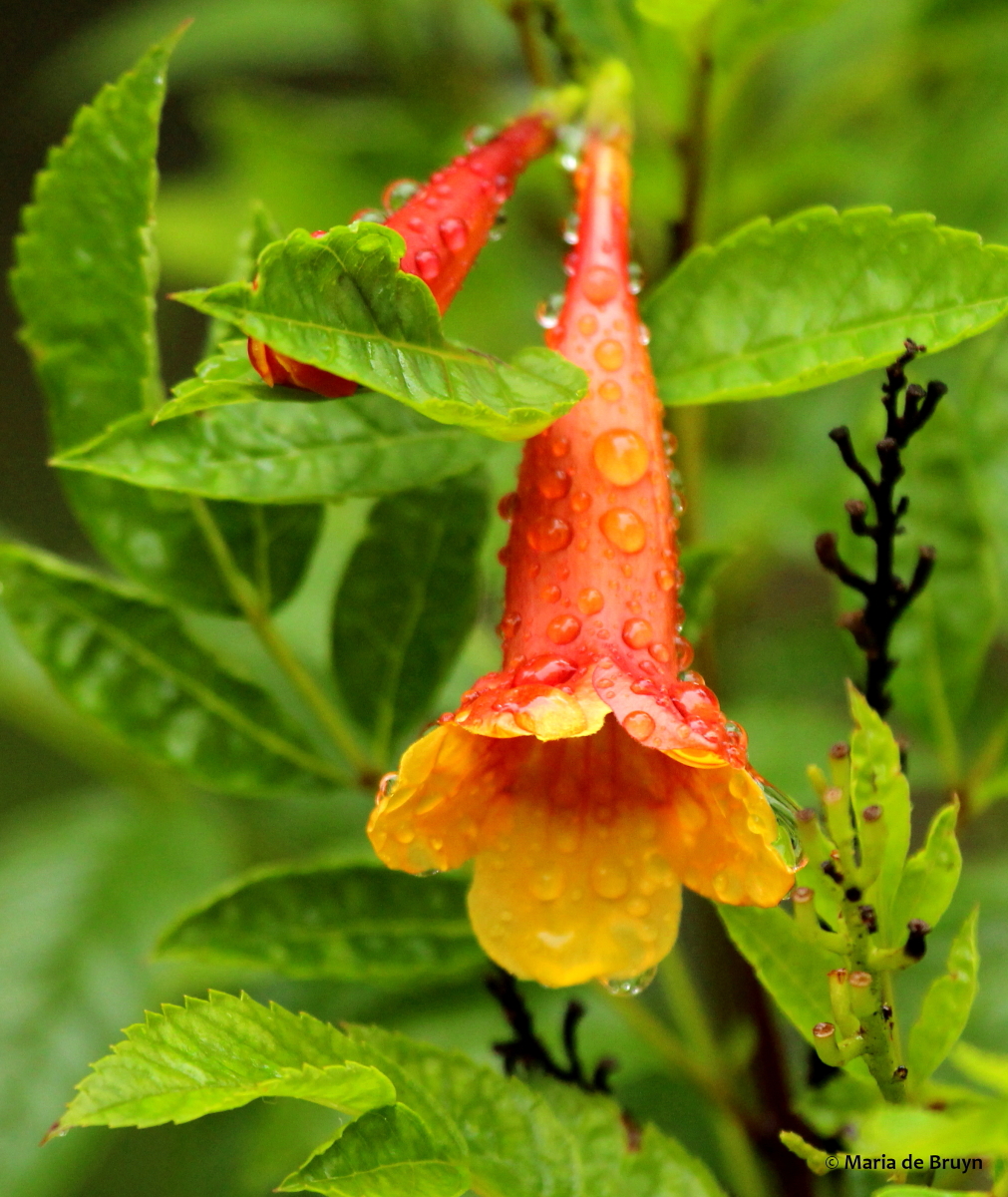
Dew – water droplets on surfaces of objects and vegetation – forms when an exposed surface cools down by radiating its heat and the moisture in the atmosphere then condenses faster than it evaporates. It looks beautiful on flowers and other plants, such as these grasses, the Virginia meadow beauty (Rhexia virginica) and the Orange mahogany esperanza (Tecoma stans “Orange Mahogany”).
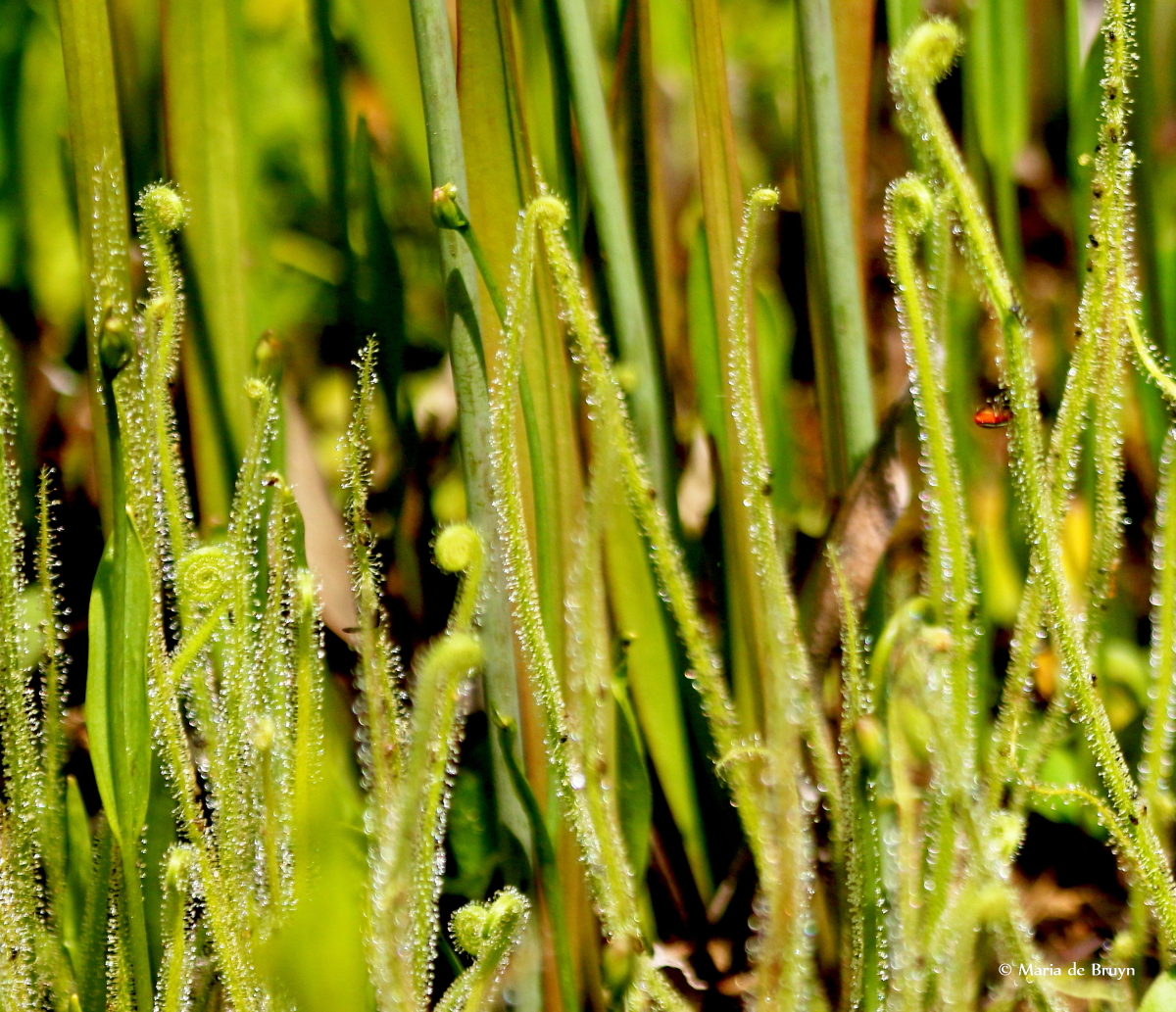
Some plants actually mimic dewdrops, like Tracey’s sundew.

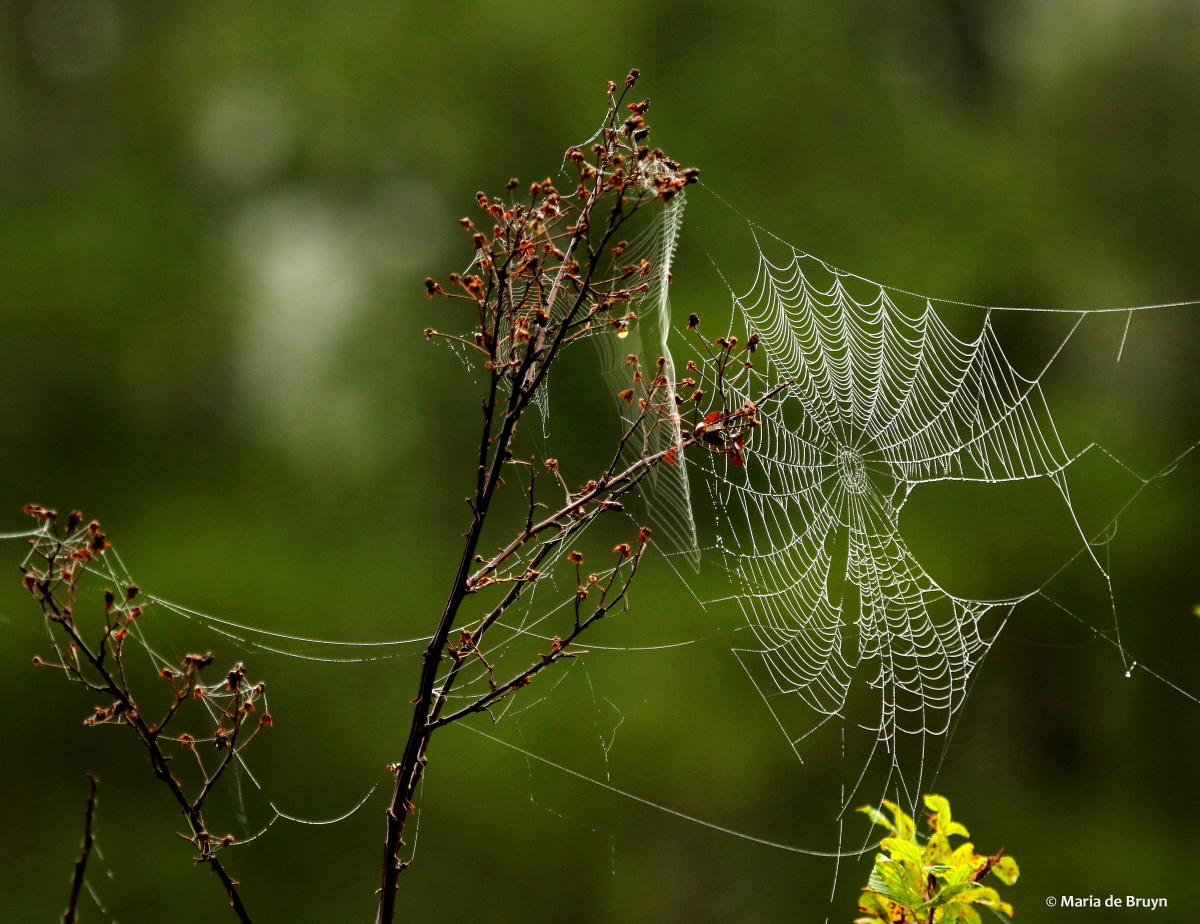
On spider webs, water and ice droplets outline the architecture created by the arachnids, showing off the symmetry and beauty of the lines.
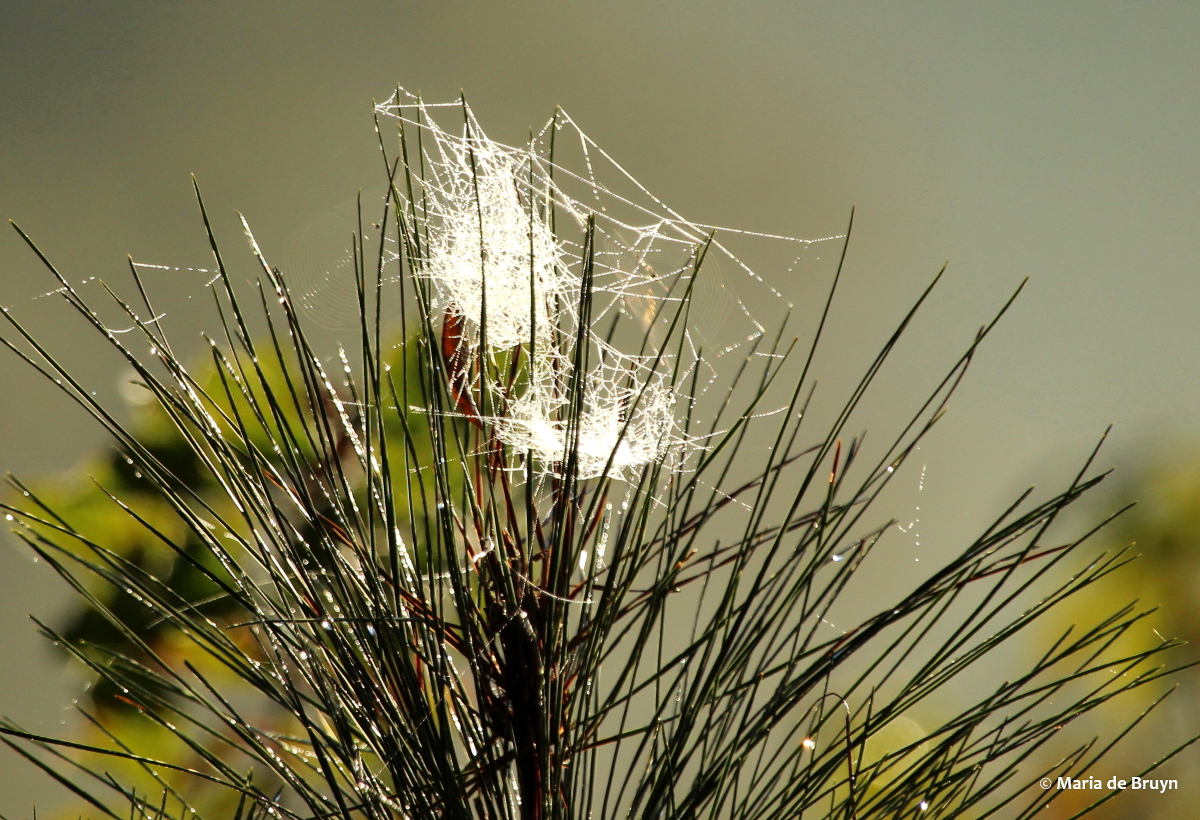

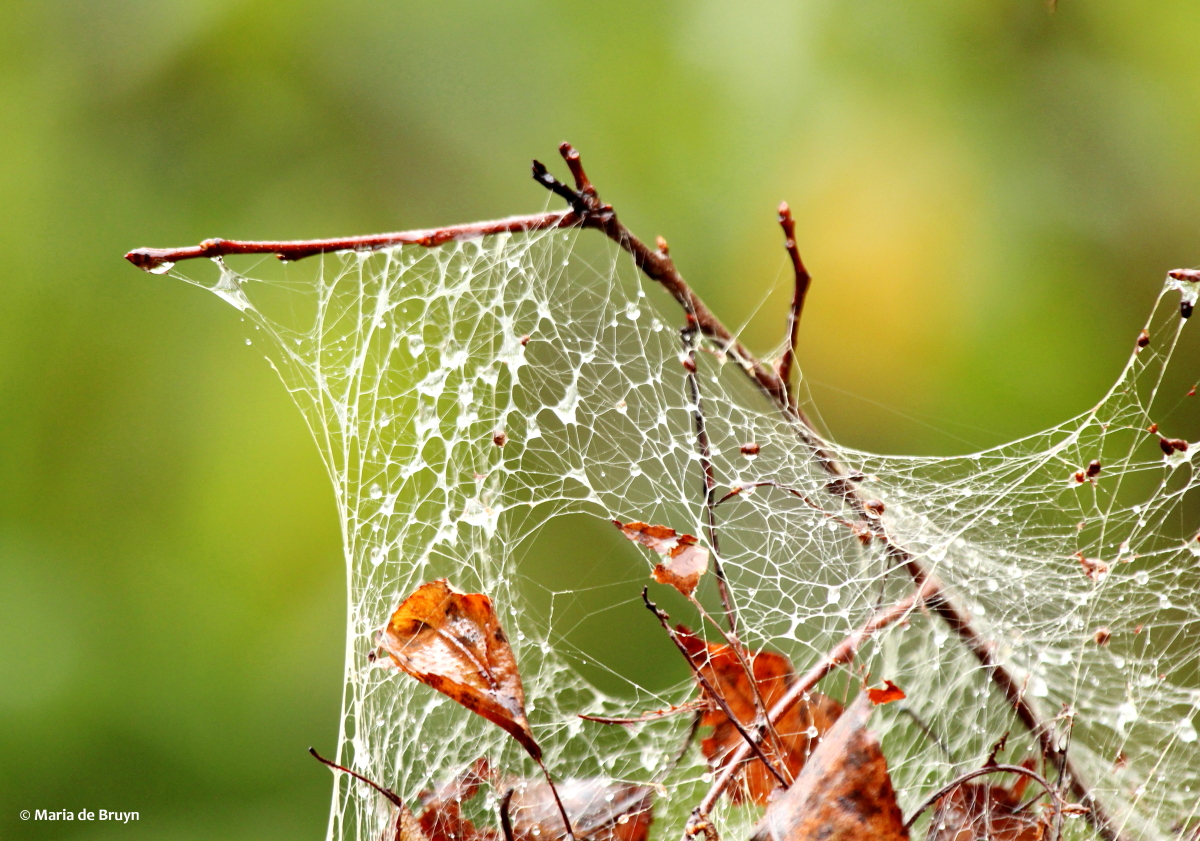
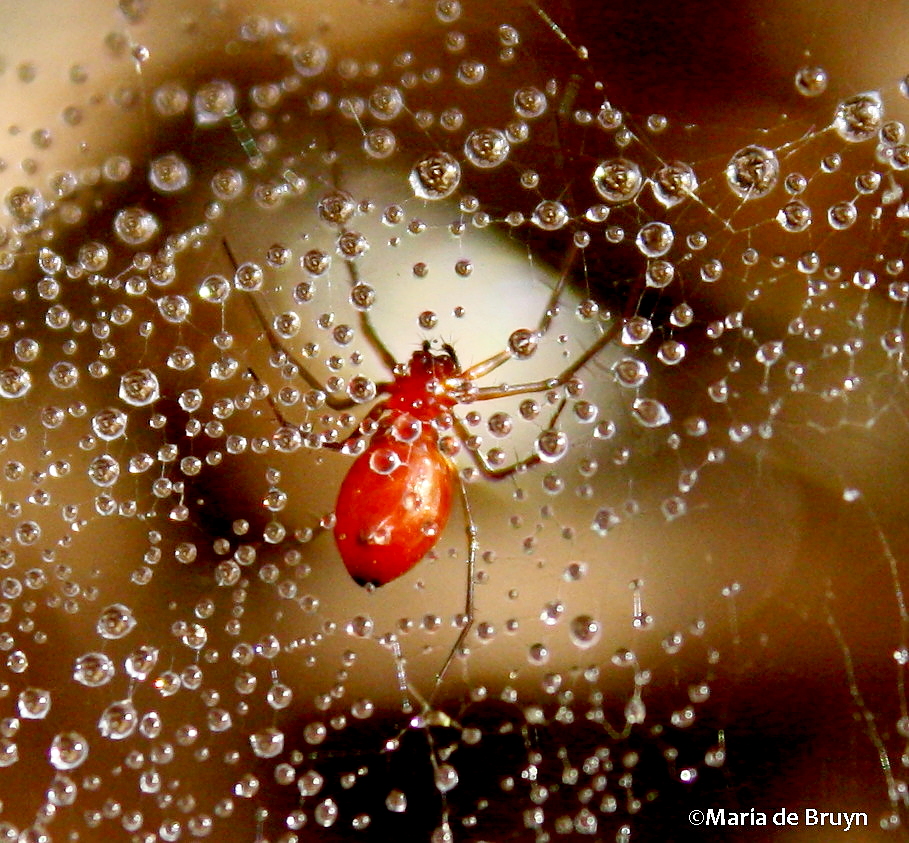
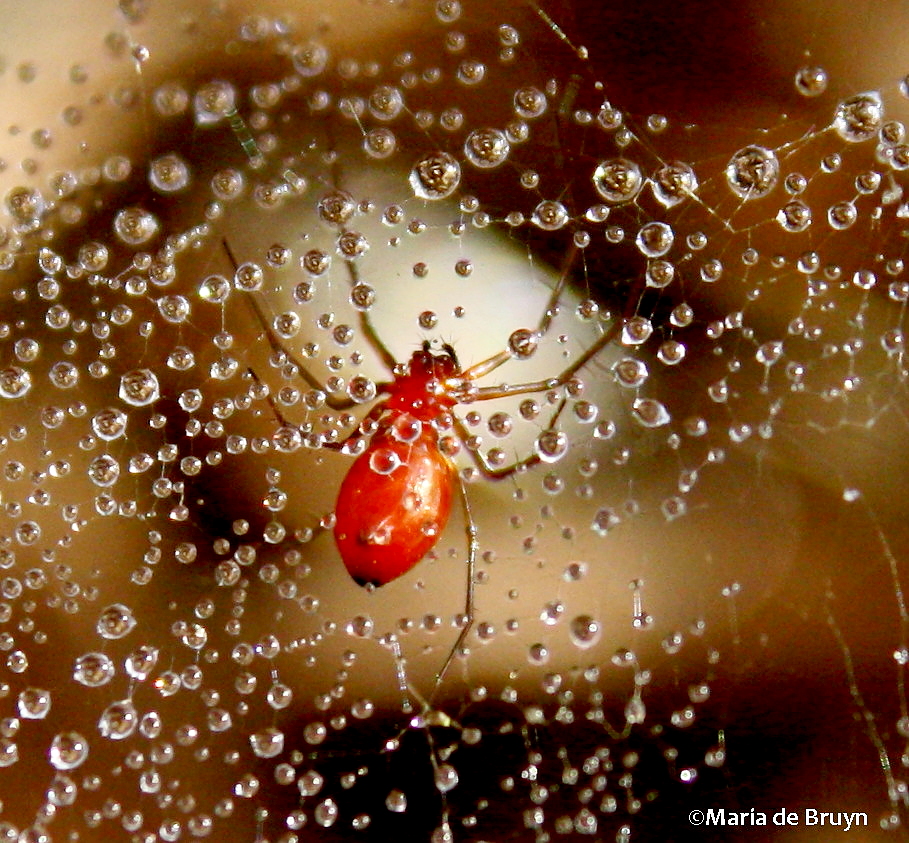
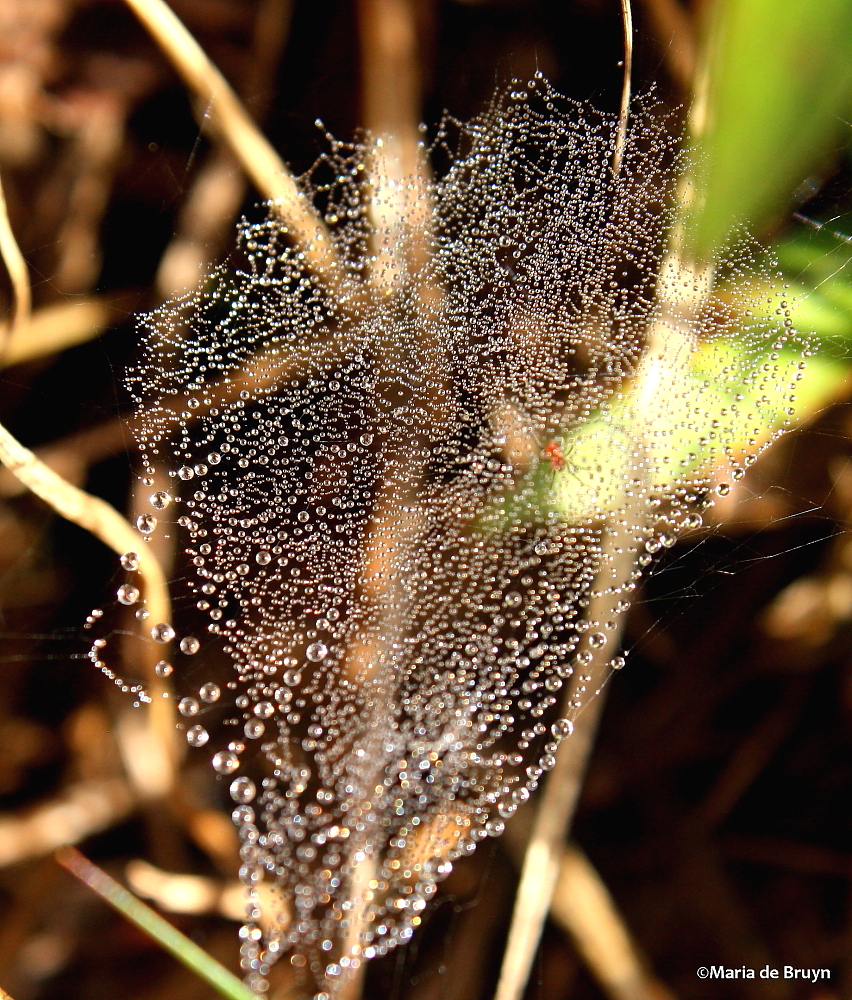
The webs of sheetweb dwarf spiders (Florinda coccinea), often not so visible in the grass, become quite noticeable when covered in dewdrops and then you can often spot the little red spider hanging underneath waiting for its prey.
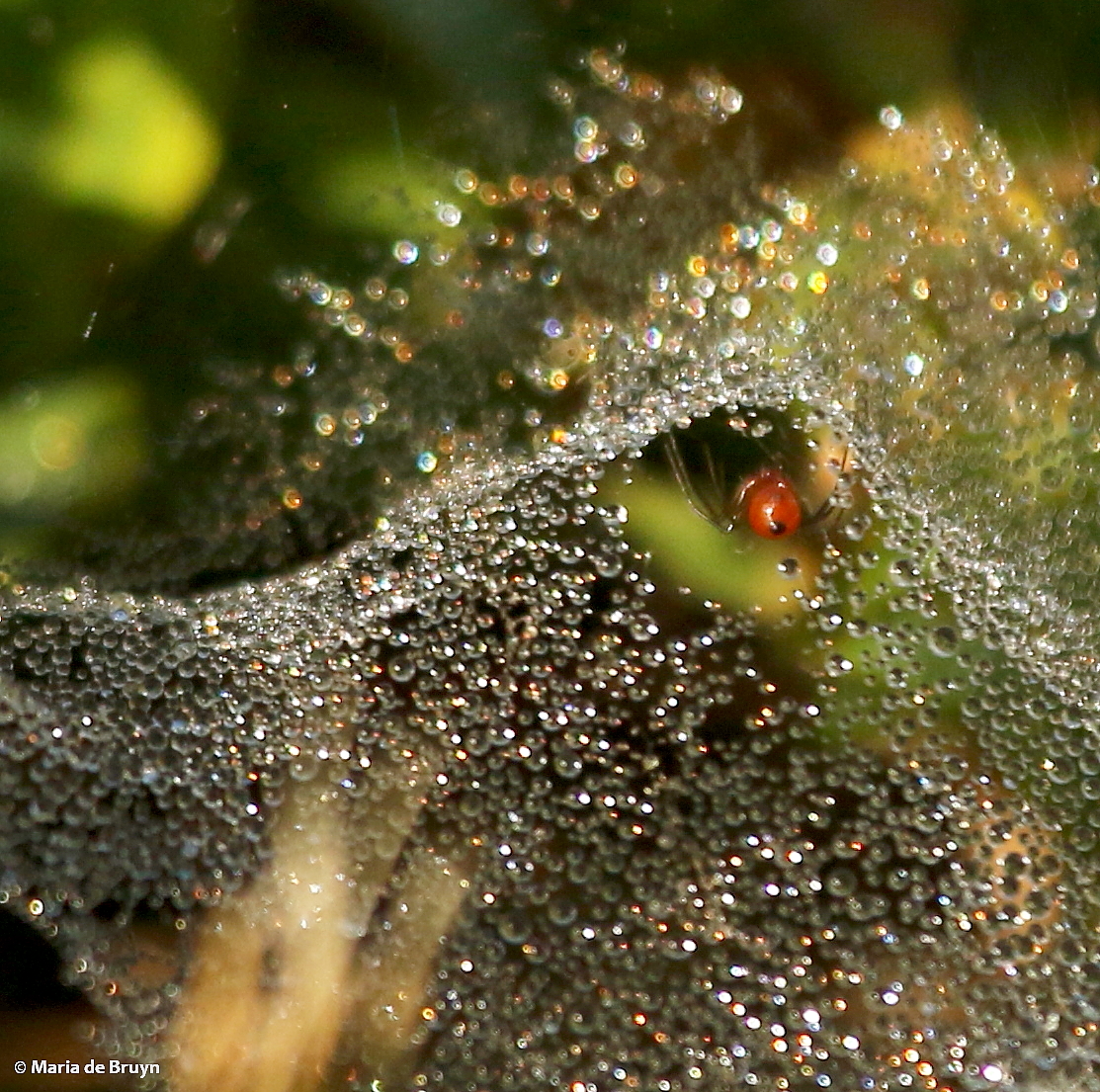
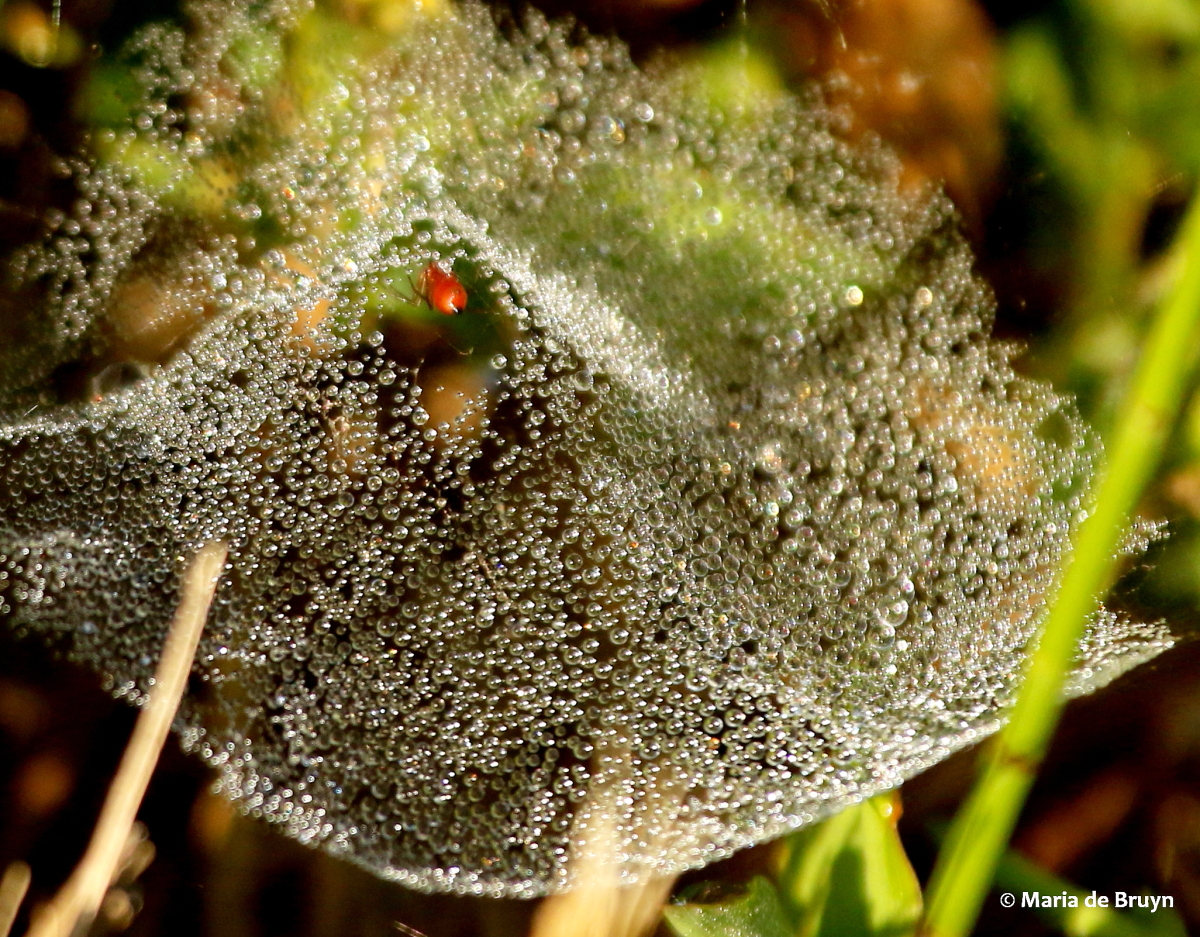
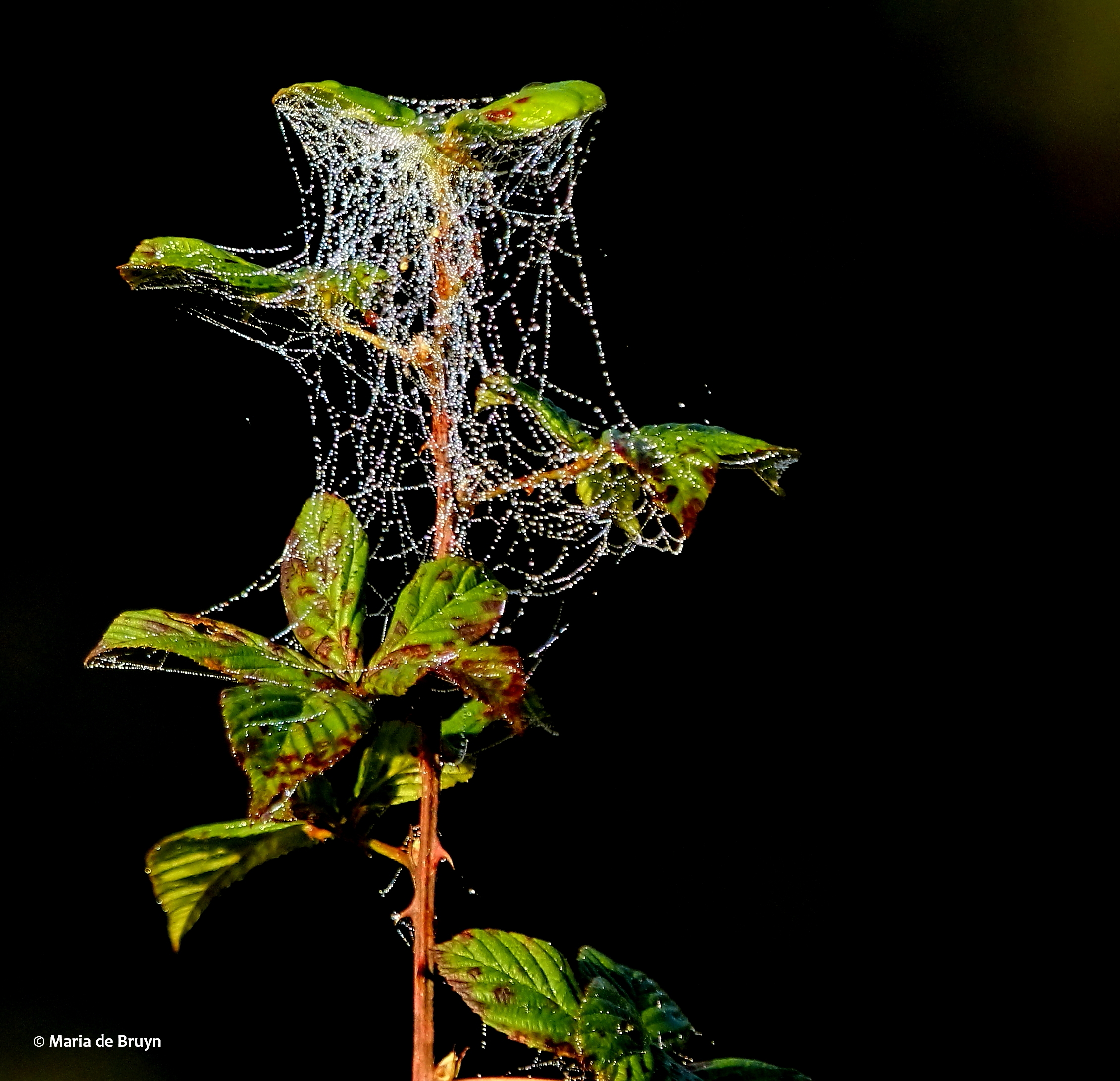
In this case, the plant looked like a natural jewelry stand for strings of glass or diamond beads.
It was interesting for me to learn that the Indian Institute of Management Ahmedabad (IIMA) and the International Organisation for Dew Utilization (OPUR) created a dew harvesting system for a semi-arid area in India. Their condensers can collect more than 200 liters of dew each night from October through May and could provide an additional water source for people in arid coastal regions.
Leaves and flowers, like this coral honeysuckle (Lonicera sempervirens) can seem bedecked with glistening jewels when the ice crystals of frozen dewdrops adhere to their surfaces and edges.

 Frost may appear to be translucent or crystal clear; when a mass of crystals are together, they look white in color because they scatter light in all directions. The ice crystals of wind frost (also known as advection frost) arise when a very cold wind blows over tree branches, leaves and flowers; they can form gorgeous borders on these surfaces.
Early morning can be a great time for nature walks – beautiful sunrises, brisk (or cooler) temperatures and awakening wildlife make for interesting viewing. And raindrops, dew and frost can add extra scenes of beauty for us to appreciate!
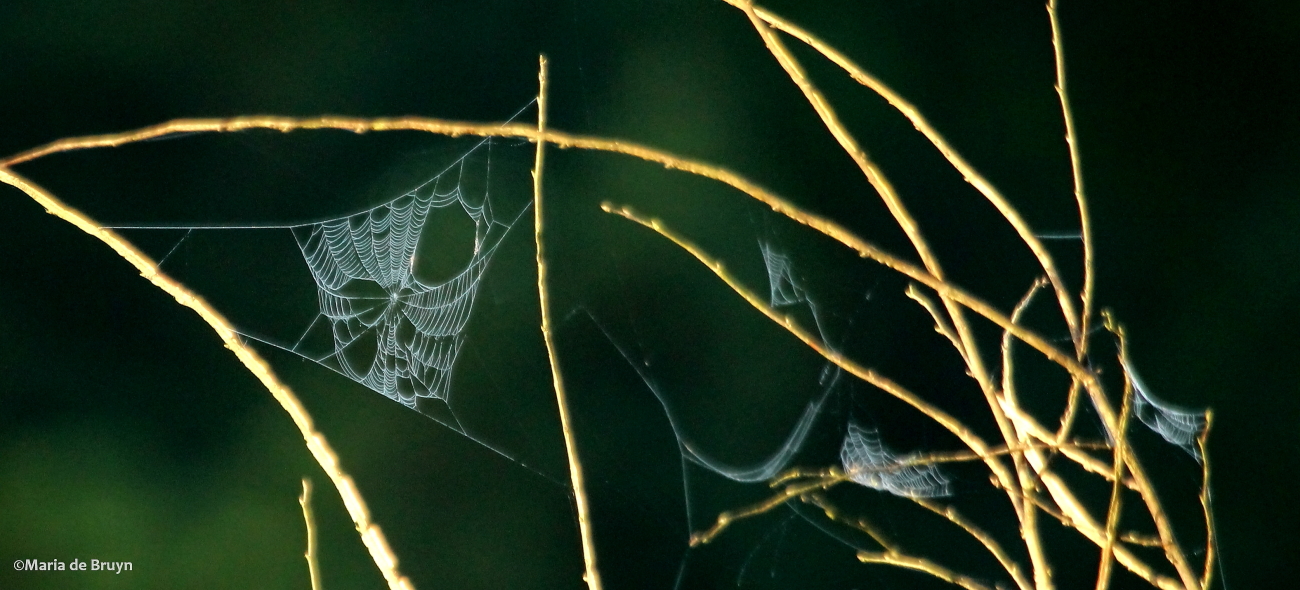
 admire the handiwork of spiders as they build temporary or semi-permanent abodes and hunting traps. During my walks in different areas this fall, I’ve seen various forms of webs, but none as large the

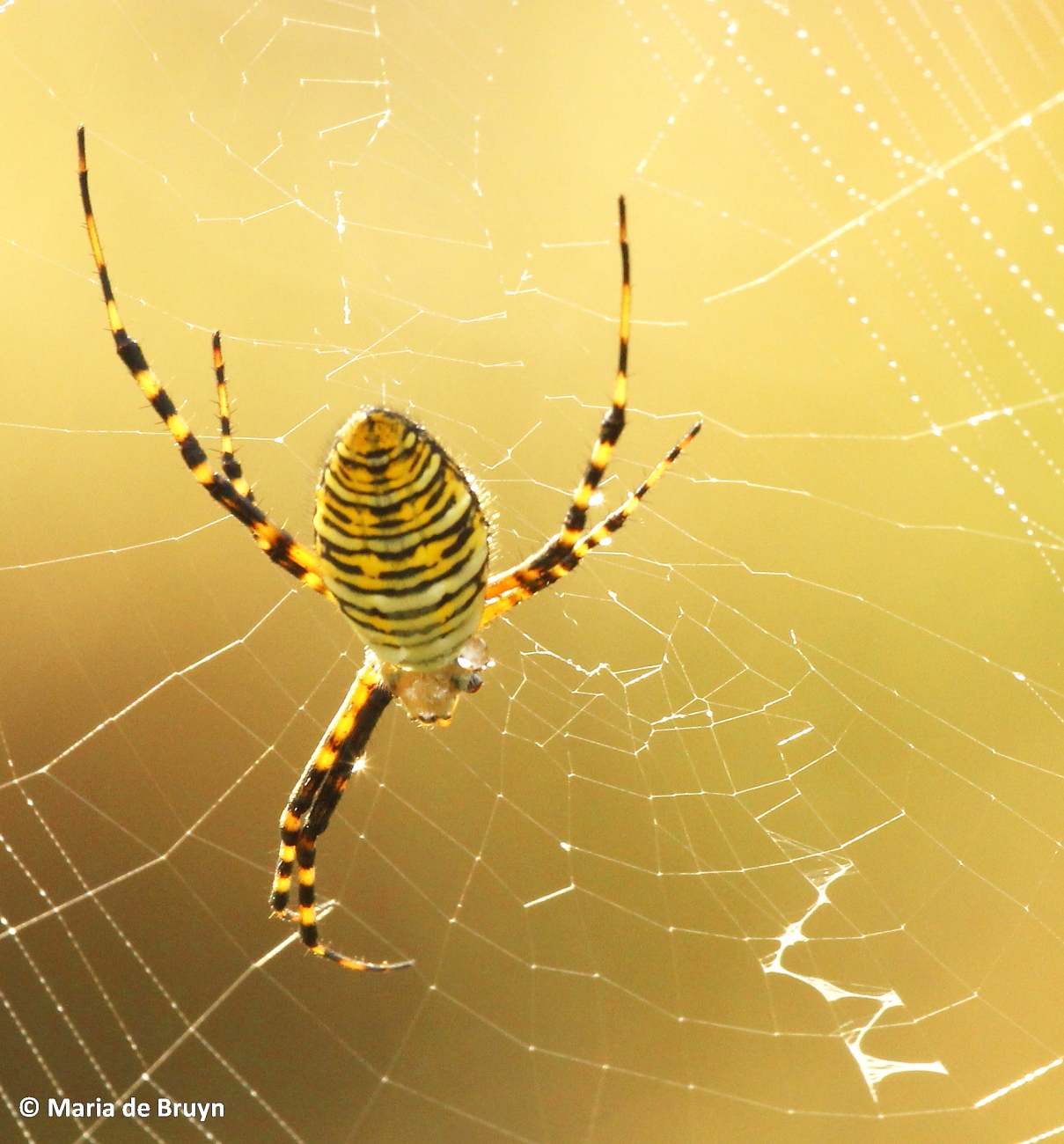
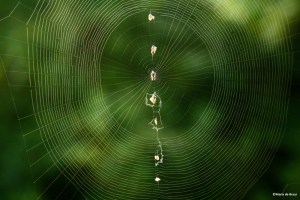 The trashline orbweaver (Cyclosa turbinata) arranges bits of old prey in a line in its web, apparently helping to camouflage itself as it looks like another piece of trash in the web.
 Arrowhead spiders (Verrucosa arenata) suspend a few or more strands of silk along or across trails at about head height. Have you wondered how they manage to suspend a web across a trail that is quite wide? They first produce a fine adhesive thread that can drift over the gap with a breeze. When the thread sticks to something at the other side of the gap, the spider feels a change in the vibrations of the thread and then reels it in and tightens it. The spider then crosses the gap on this thread and strengthens it by placing a second thread and so the web begins.
 Orbweavers tend to make large vertical webs, like the ones being spun by the marbled orbweavers (Araneus marmoreus) in the next photos.

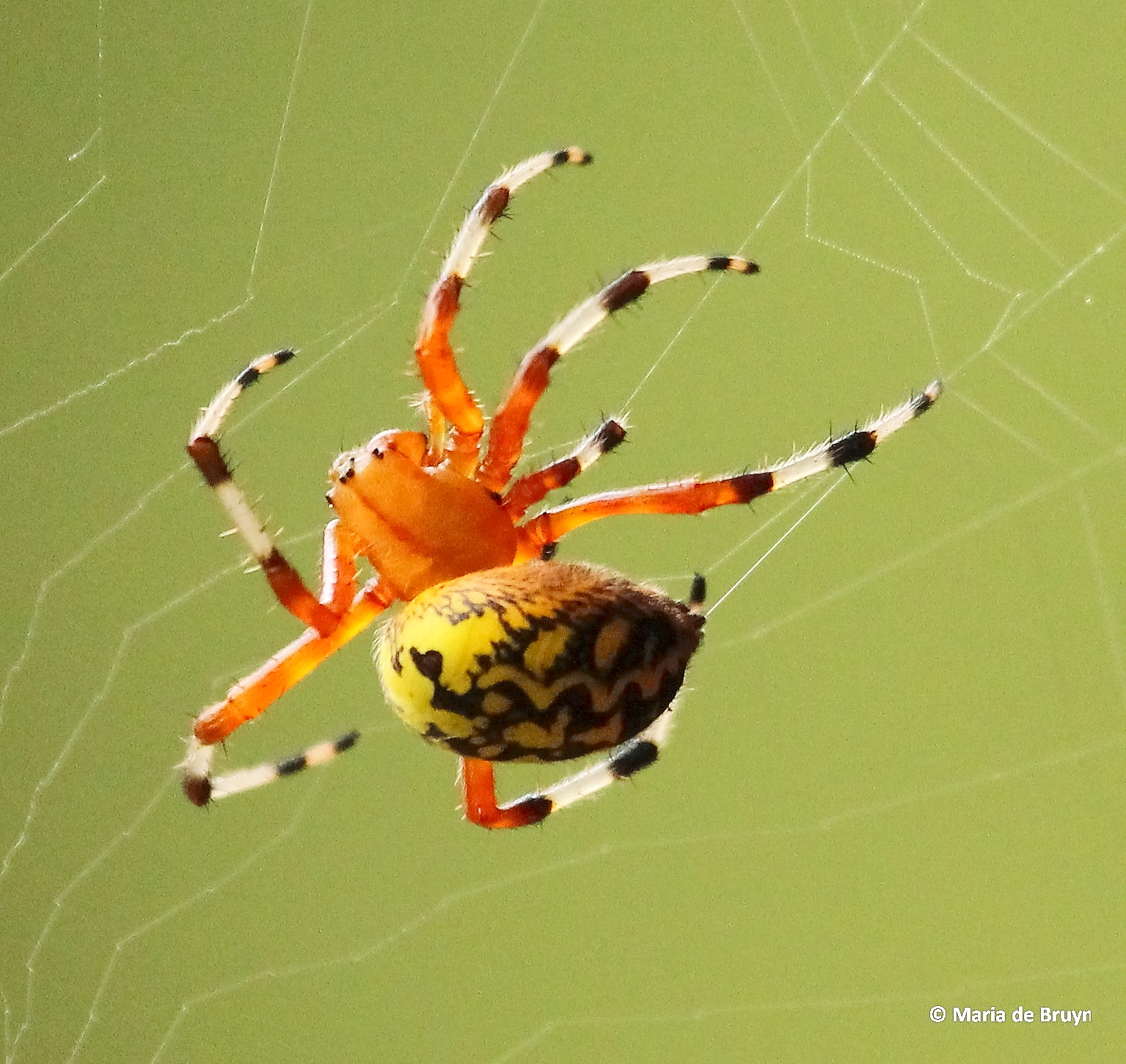
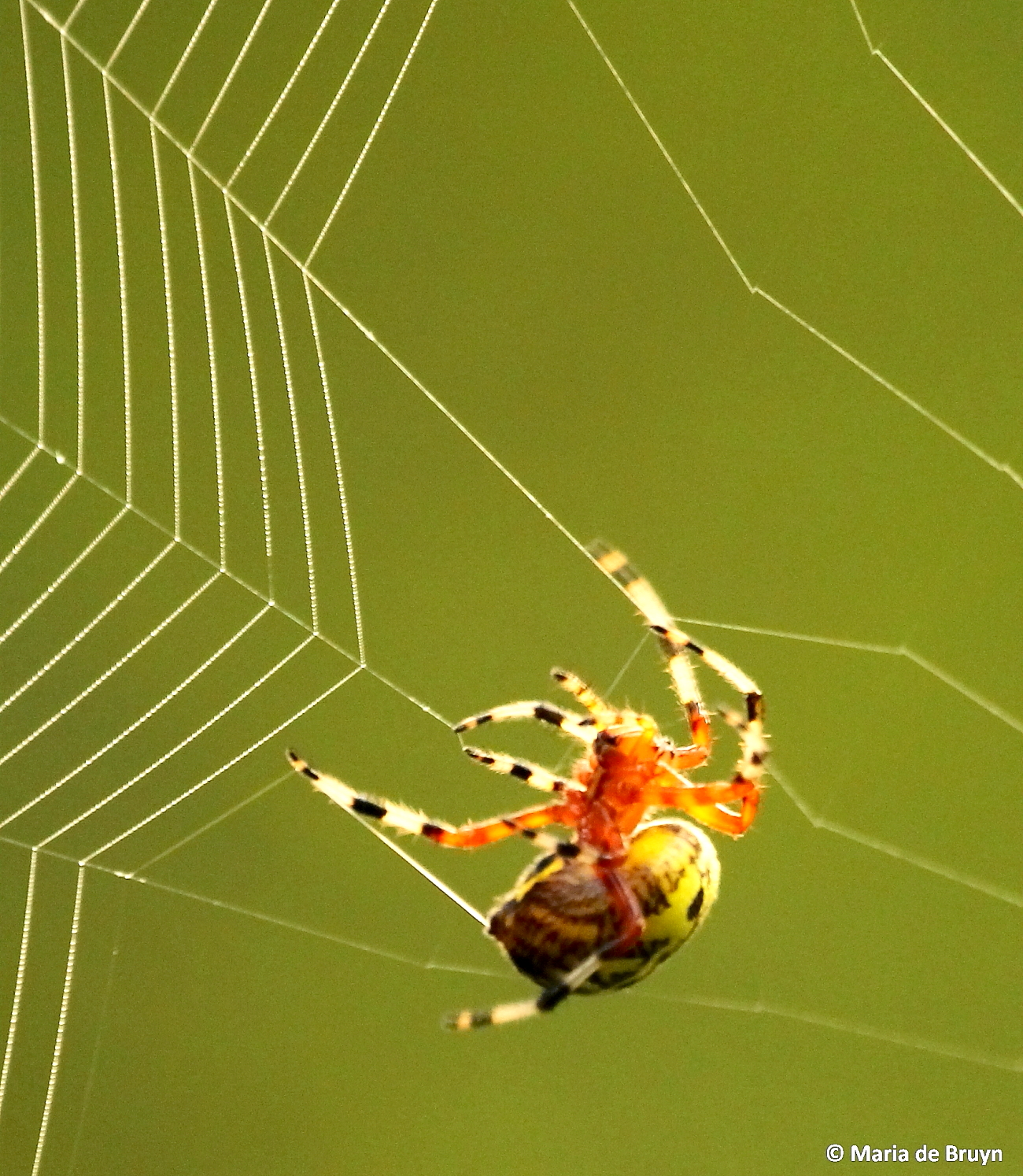
 of energy building webs and it is not uncommon for them to eat their own web in order to re-gain some energy used in spinning.
 My beautiful world