My pond and the cycle of life

Undergoing cardiology exams can bring up thoughts of mortality and a life lived; perhaps they also made me more attentive to the cycle of life in my yard, particularly in the vicinity of my backyard pond.

Several years ago, a local garden center went out of business and they had a 175-gallon black plastic pond for sale. It was a good deal, so I invested in it and then had to dig a large hole in the rocky Piedmont clay ground of my backyard (with a bit of help from a neighbor teen). At a certain point, the ground was so hard we couldn’t penetrate it with shovels so the pond now sits a bit above ground level; the rocks I piled up around it have offered a home to Eastern chipmunks (Tamias striatus).


I transferred some of my beautiful koi and goldfish from a smaller pond, only to have a great blue heron (Ardea herodias) come by to clean them all out.

On the recommendation of the garden center staff, I had positioned a heron statue by the pond – they said herons don’t like competition, so the intruder would keep flying when s/he saw the one by the pond. It didn’t take long for the bird to figure out the stationary bird was not real, however.

After the heron had eaten all the koi and goldfish, I still had some tiny baby fish. At first, I thought they were from my now deceased koi but apparently the intruder heron had had fish eggs on its feet from a nearby natural pond and left them behind. So for a time, I had unidentified native fish in the pond. They were extremely shy, however, and I only got a brief look at them when they surfaced early in the morning; as soon as I came near, they dove down under the water plants (no good photos).

Then some green frogs (Lithobates clamitus) moved in this past summer and ended up being extremely prolific reproducers. Before I realized it, there were at least 500 tadpoles in the pond!! They were eating the fish food and at the same time I noticed that I wasn’t seeing the fish at all anymore. Going online, I found out that tadpoles will eat fish – their sheer numbers had to have spelled doom for the fish.


I collected lots of the tadpoles, gave some to a friend for her water feature and released hundreds into the local creek (they are native animals after all). A few of the tadpoles grew into frogs and the pond became a residence for some very loud croakers.


The next chapter in the story came a couple days ago. I had seen a pair of red-shouldered hawks (Buteo lineatus) visiting my yard recently. I thought they were after the chipmunks, numerous squirrels and songbirds populating the area. The other day, however, one hawk took up a position in the crepe myrtle tree next to the pond and just sat there calmly not bothering with any of those creatures. Numerous Northern cardinals (Cardinalis cardinalis) perched in the tree above her and many other species of birds were at the nearby feeders;  none of them were concerned at all with the hawk’s presence. The squirrels didn’t seem perturbed either.

She sat fairly still and I took some photos through my kitchen window. Then I ventured out into the backyard, sure she would take off as I left the porch steps. But Ms. Hawk just sat there, sometimes stretching a leg or engaging in a little grooming.


Occasionally, she looked up but often her gaze was fixed on the area around the pond.

She would stare intently down at the ground – I thought she might have spotted one of the pond chipmunks.

Then after a while, I noticed her shifting her stance – suddenly she plopped down into the pond with spread wings. It happened too fast for me to get out from behind dried plants to get a good photo, so I watched as she climbed out of the pond. Then it became apparent what she had been hunting – she had caught one of the green frogs.


It looked like she bit its head to kill it as soon as she got on dry land; the frog wasn’t moving.

Then she spent time ruffling and shaking out her feathers which had gotten a good soaking.

She spent a little time looking around and then abruptly took off with her prize, closely followed by another red-shouldered hawk who suddenly swooped in.

He chased her but she got away with her meal and he ended up sitting in a neighbor’s tree, somewhat disgruntled with his failed thievery attempt.


Ms. Hawk returned yesterday and spent quite a bit of time in a high tree surveying the yard and gazing down at the ground. Red-shouldered hawks sometimes eat birds, such as sparrows, doves and starlings (which are all numerous around my feeders) but more often they go after snakes, mice, toads, frogs, lizards and small mammals such as voles and chipmunks. They will also eat insects and earthworms. Since I’m leaving the leaf litter, there are undoubtedly more insects hiding there than in neighboring yards. I’m not sure what Ms. Hawk is seeking in my yard, but I hope she doesn’t get all the pond frogs. In any event, I’m sure new ones will find the water in the spring and in the meantime, I have a beautiful bird of prey to watch this winter.

Finding fungal friends!

Although I find mushrooms interesting, they honestly are not especially favorite members of the plant kingdom for me. However, they do attract my attention when they are unusual or unusually abundant after rainfall. And I do find them a tasty addition to a meal for sure. So when the non-profit Friends of Bolin Creek sent out an invitation for a mushroom walk, it seemed like a nice way to take an outdoor break from my numerous tasks and chores.


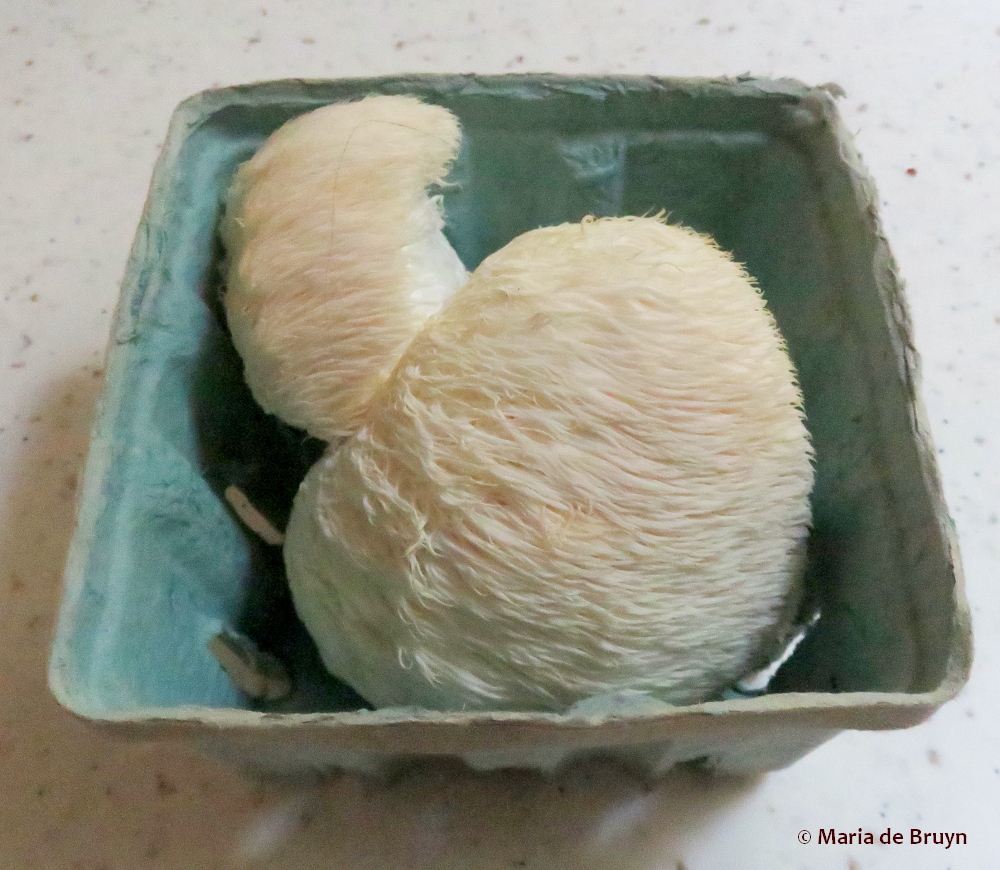
I was hoping to see a lion’s mane mushroom (Hericium erinaceus) on the walk – mushroom enthusiast friends had recommended this one to me and I happened to have purchased one from a fungus grower at the farmers’ market the previous day.

The walk was organized by the Association’s nature walk coordinator, Salli Benedict, and led by Van Cotter, a retired mycologist and volunteer with the University of North Carolina’s Herbarium in Chapel Hill. He still mentors students involved with environmental studies and our group included several students who were intent on adding to their collection of 25 species for a class assignment. So, the walk participants included people of various ages and degrees of fungal knowledge.*


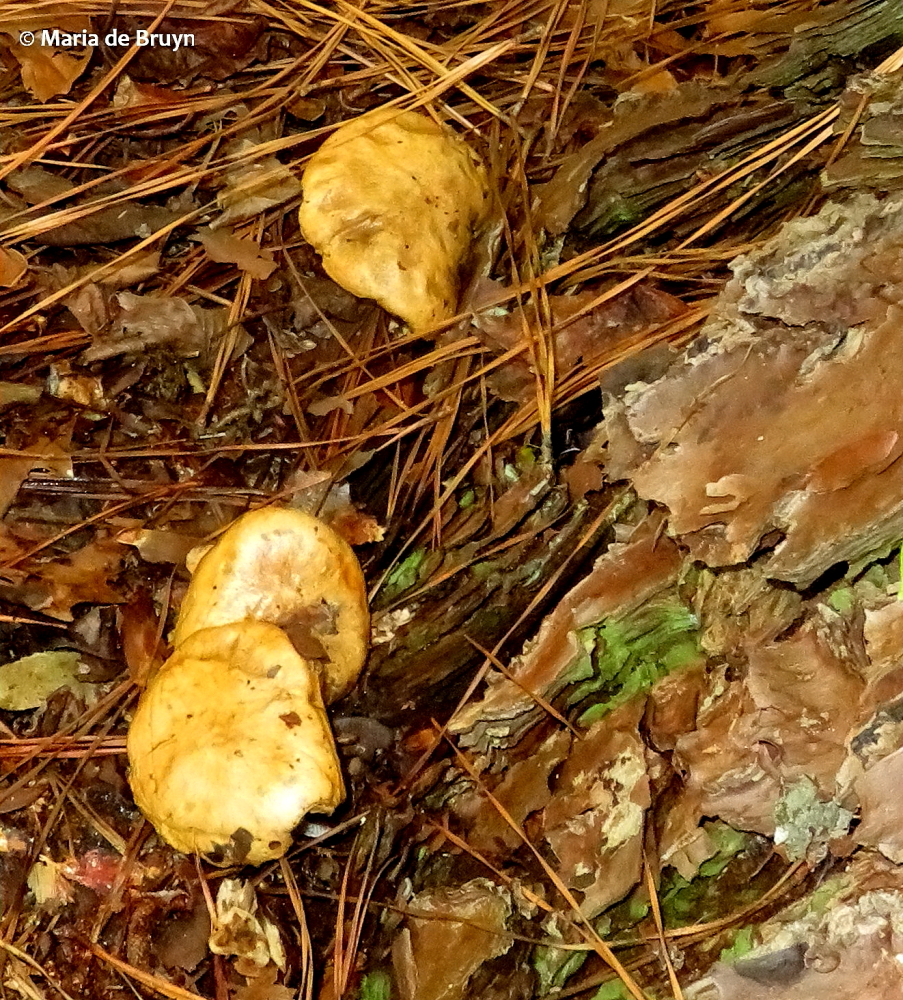
We divided into two sub-groups and our group set off into the woods. Our first spotting was a Suillis mushroom. This type is associated with pine trees and we did indeed find three growing at the base of a tree. A mycologist in our group pointed out the veil, a membranous tissue covering the cap, and she cut it length-wise so we could see the inside. These mushrooms are also called butter mushrooms.


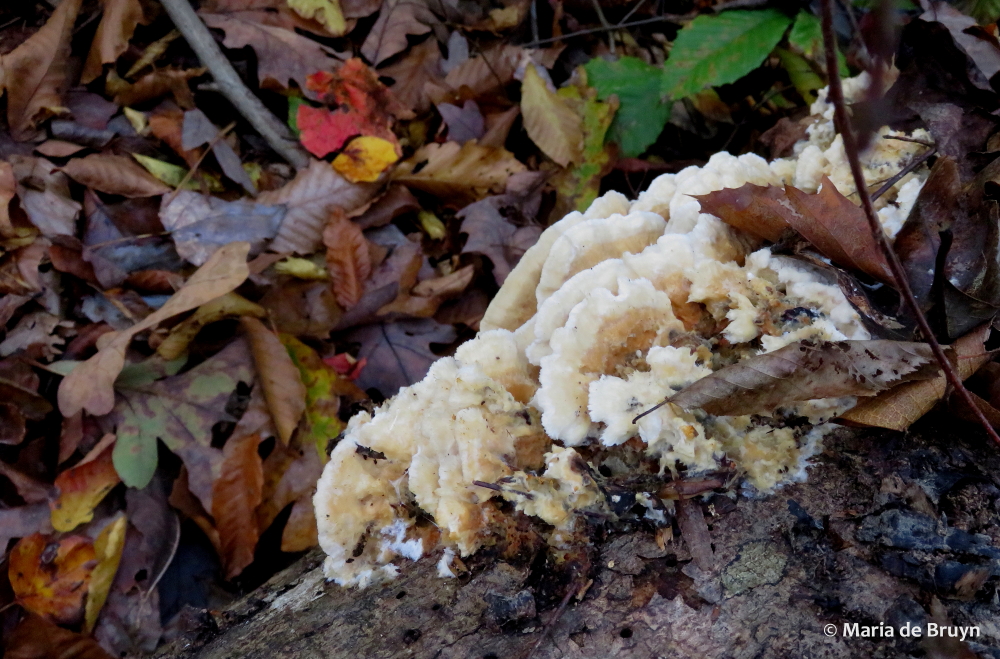
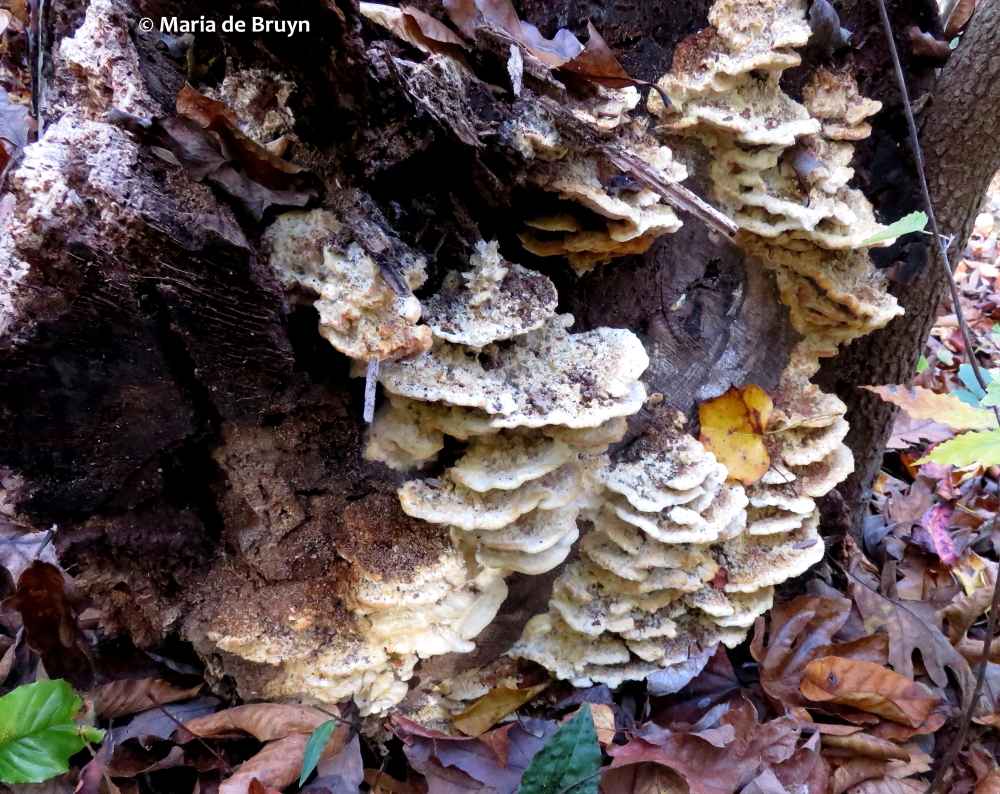
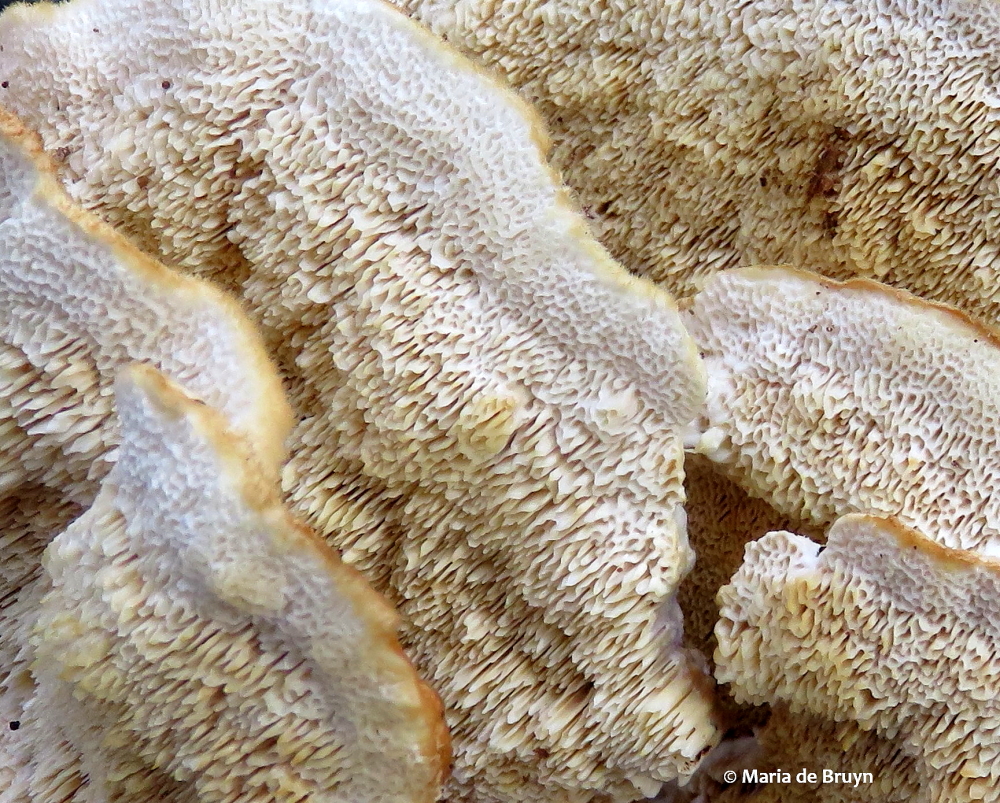
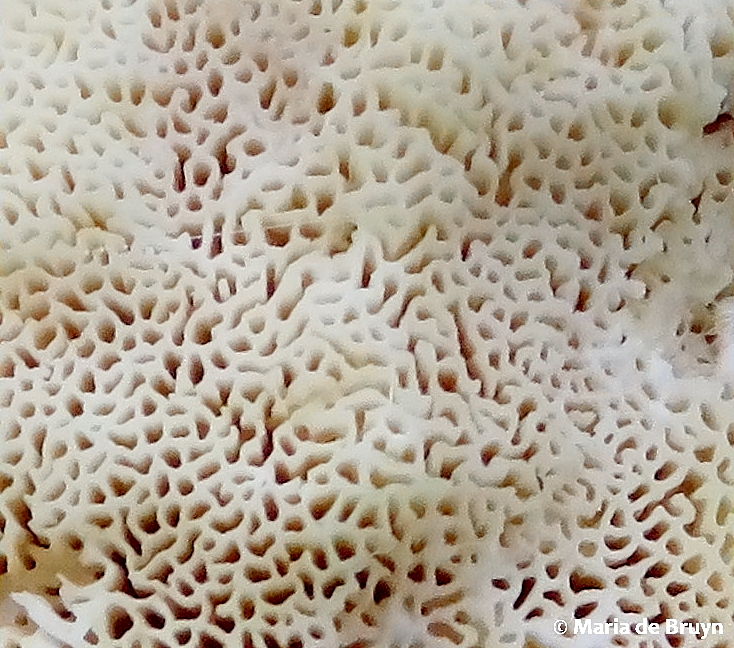
As we walked on, we came across a few species of fungi growing on fallen and rotting logs. A few were polypores, which are mushrooms with pores or tubes on the underside of the cap. Some of them were shelf or bracket mushrooms.


Some species look as if they have a maze of tubes underneath the fruiting body. The polypores are important in furthering wood decay, which in turn is important for cycling of nutrients and production of carbon dioxide in forests.


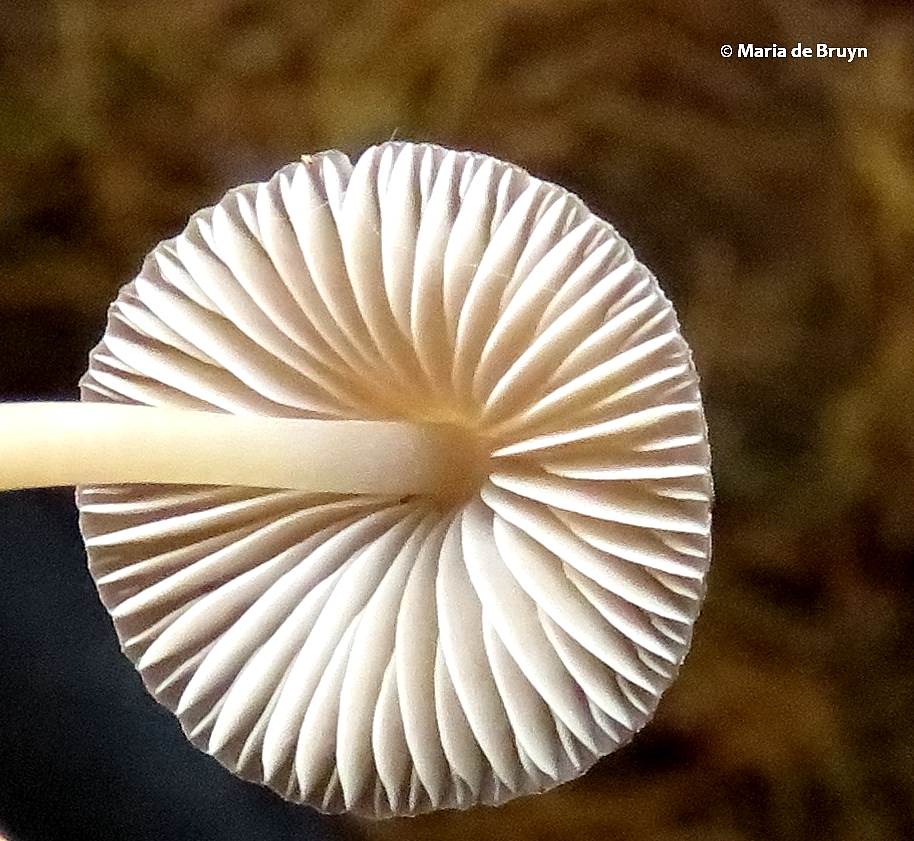
The tiny Mycena mushrooms have conical caps with gills and fragile thin stems. Some species are edible, but others contain toxins.


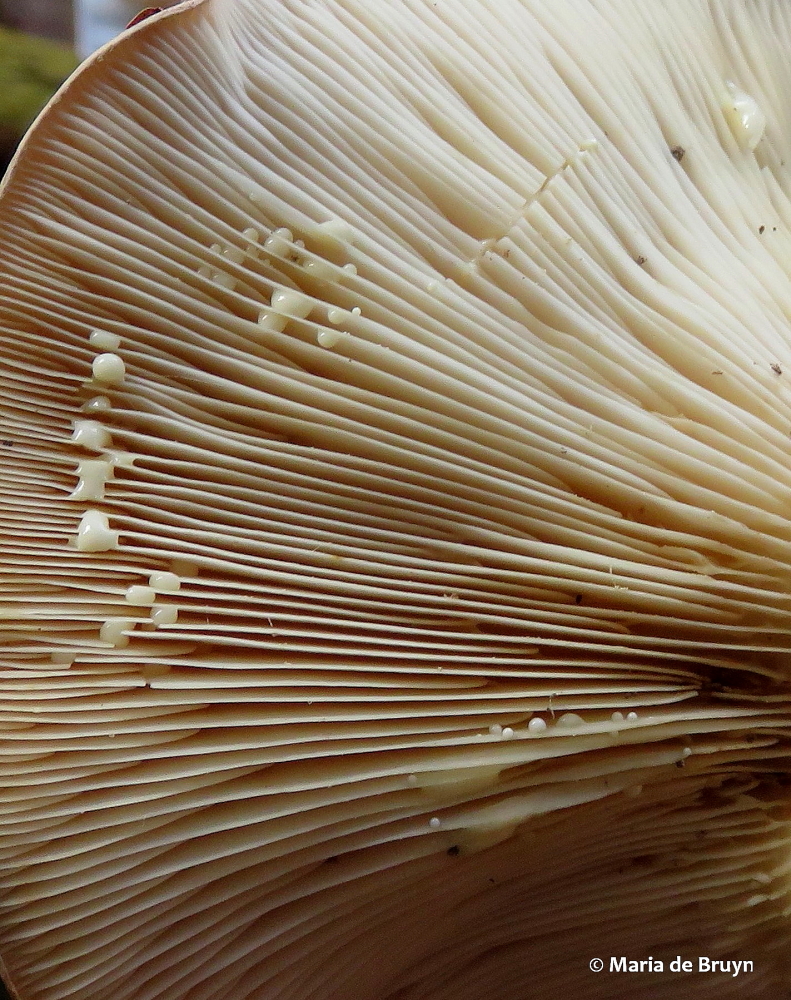
The Lactarius mushrooms, known as milk-caps, release a milky substance when the cap is cut or damaged. The undersides of the caps are gilled.

Armillaria fungi are also known as honey fungus; these mushrooms grow on rotting wood in clusters and can eventually become quite large. In fact, it is thought by some that an Armillaria in Oregon’s Malheur National Forest is the largest living organism on earth – it now covers about 2470 acres and may be about 8650 years old!


When I spotted these brightly colored Pholiota mushrooms, they were greeted with enthusiasm both by the non-mycologists and the student collectors. They only took a few and left the rest for other walkers to admire.


When we returned to our starting point, the two sub-groups laid out all their specimens and Van told us interesting facts about them. The Lepiota mushrooms are often poisonous. Because edible and poisonous mushrooms can look very similar, people without in-depth knowledge of fungi should not eat mushrooms they find growing outside. In North Carolina, for example, only about 200 of the more than 3000 identified mushrooms are common edible ones.

Few people die from eating poisonous mushrooms (7 deaths were reported in 2012), but people are hospitalized because they don’t recognize unsafe species. Some mushrooms need to be prepared for consumption in a special way to make them safe; some should not be consumed while drinking alcohol and some individuals may have personal problems with particular species.

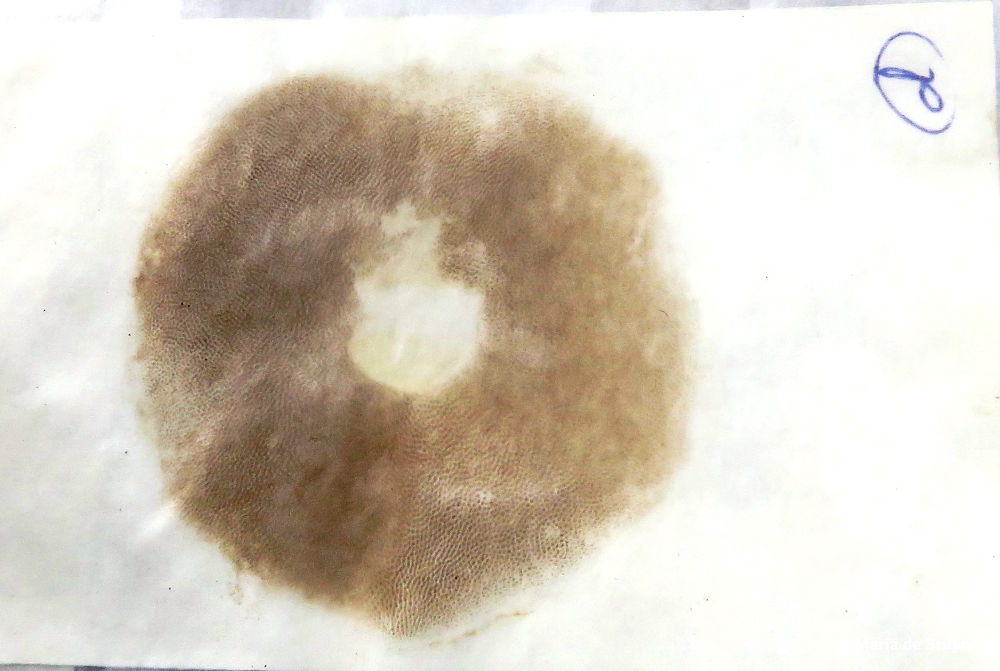
Van also pointed out that mycologists use spore prints in identifying fungal species. The color of spore prints is particularly important.


When I returned home, I prepared the lion’s mane as recommended by those who eat them regularly (sautéing or grilling; I sautéd it). It was with great anticipation that I took my first bite, remembering how much I loved oyster mushrooms when I first tried those. Sad to say, I found the lion’s mane bland and rather tasteless, but at least I had tried it. And I did have an enjoyable time on the mushroom walk, thanks to Friends of Bolin Creek!

** Thanks to Salli Benedict for providing the group photo!

Avian generations in the making – part 3B: fledgling and post-fledgling care

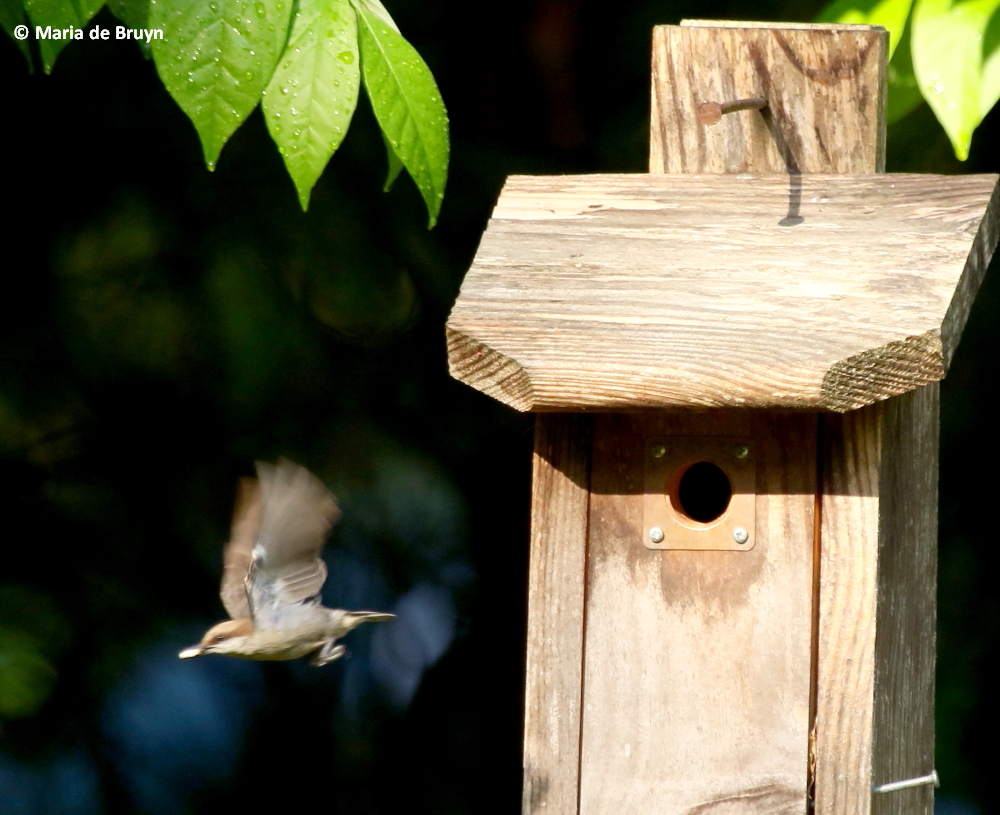
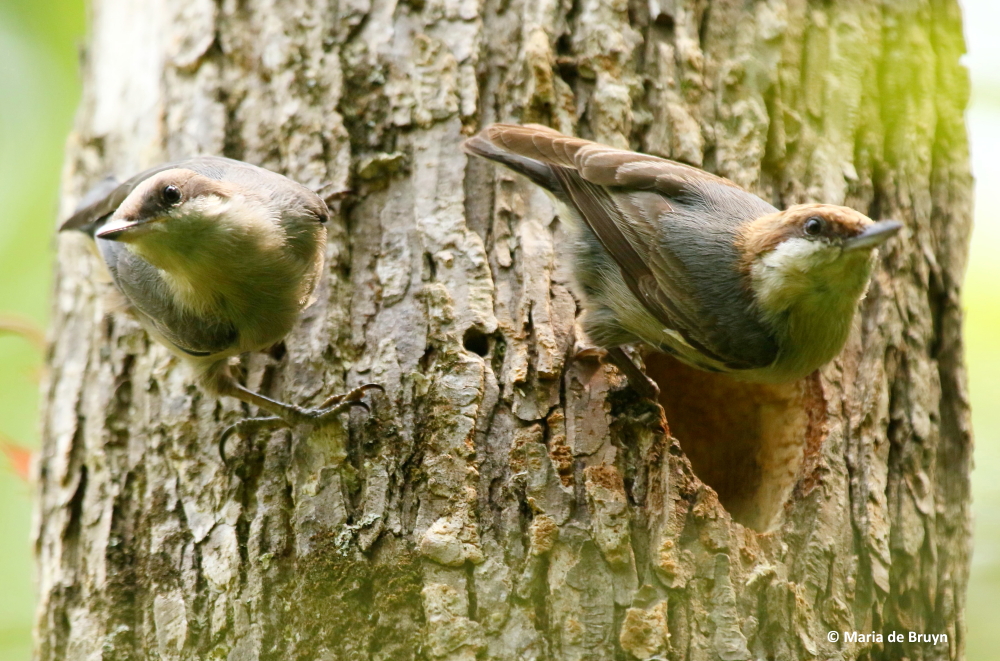
The number of days after hatching when young altricial birds leave the nest is fairly predictable for many species; knowing those approximate dates is helpful if you want to plan a day to watch fledging happen. I can often arrange to sit and watch a nest box on the appointed day for several hours.This has enabled me to see several broods of Eastern bluebirds and brown-headed nuthatches make their leaps to freedom on the path to adulthood.

When it is time for fledging, parent birds encourage their babies to leave the nest. They may entice them by perching nearby with some food but not bringing it to them. Or they fly to the box with food and then go to a branch instead of feeding. The Eastern bluebirds (Sialia sialis) in my yard will hover in front of the nest box like a hummingbird, sometimes with food in their mouths; perhaps they are showing the young ones that flight involves flapping wings.

While in some species, parents appreciate help from older children in caring for a current brood, Eastern bluebirds apparently do not. This may be because they see the previously fledged young as competitors for food. In my yard, father bluebird especially was chasing the young of earlier nests away from the feeders, not only when they begged but also when they fed themselves.


When fledging day arrived for the bluebirds’ third brood, one of the older siblings (I’m not sure if it was a female or male) was very interested in seeing the third brood fledge. He imitated his parents, hovering in front of the nest box so the young ones could see him.


Again, however, the parent bluebirds chased him away.

This did not deter the immature bird, however. He waited for the parents to go get food and again took on encouraging the young siblings. It was fascinating to watch!


The parents returned and drove him off with a show of bad temper.

Eventually, the babies did fly out of the nest box into a nearby crepe myrtle. There, they continued to call for food with a wide-open mouth.


This gaping behavior stimulates the parents to feed their offspring and the offspring can be very insistent and persistent in begging for food.


Eastern starling (Sturnus vulgaris)


Carolina wrens (Thryothorus ludovicianus)


Common grackle (Quiscalus quiscula)     Royal tern   (Thalasseus maximus)

This behavior can go on for days, especially when the young ones cannot yet fly, like this recently fledged Northern mockingbird (Mimus polyglottos).


The birds that feed their young ones on the ground, like the American robins (Turdus migratorius) have it a bit easier than those that feed juveniles perched on wires, like these barn swallows (Hirundo rustica).


I can imagine that the mother and father get to a point of thinking, “Enough already!” as those large fledglings continue to beg for food; this parent Northern cardinal (Cardinalis cardinalis) did not seem willing to go out for yet another bug for the young one.

But some young birds can be very insistent, even when it is obvious that they are now fully capable of finding some food on their own. This parent chipping sparrow (Spizella passerina) seemed willing to be a feeder for a while longer.
                        

The parent-child feeding routine that often catches people’s eye is when a young brown-headed cowbird is being fed by a (non-voluntary) adoptive parent. For example, here we see a male hooded warbler (Setophaga citrina) bringing food to a brown-headed cowbird baby (Molothrus ater) after the youngster spent quite a while loudly crying out for a meal and hopping around on branches after the parent to convince him that he needed to be fed.


Of course, at a certain point the parents do stop feeding and the young set off on their own. They may check out nearby nest boxes, either scouting homes for next season or looking for roosting boxes for the cold winter nights, like these Eastern bluebirds. They may groom a bit to remove the last bits of fluffy feathers, like this red-shouldered hawk (Buteo lineatus). And then they are ready to spend an autumn and winter getting ready to repeat the cycle, this time as the parent birds. And we can look forward to watching the process again. 😊


Avian generations in the making – part 3A: raising and feeding babies

So here in North America, it’s approaching winter and it may seem a bit weird to have another blog at this time on birds raising their young. But I wanted to complete the series even though it has been delayed because of my volunteer activities and commitments the past month. Also, it is now late spring in the Southern hemisphere so for some people this is seasonal and there are other birds around them that are getting ready for babies, though different species than these American robins (Turdus migratorius). Because this part kept growing longer as I worked on it, I’ve divided it into two parts – this one on raising the babies until fledging and the next one on fledging and post-fledgling care. I hope all of you who read this will enjoy it no matter where you live.

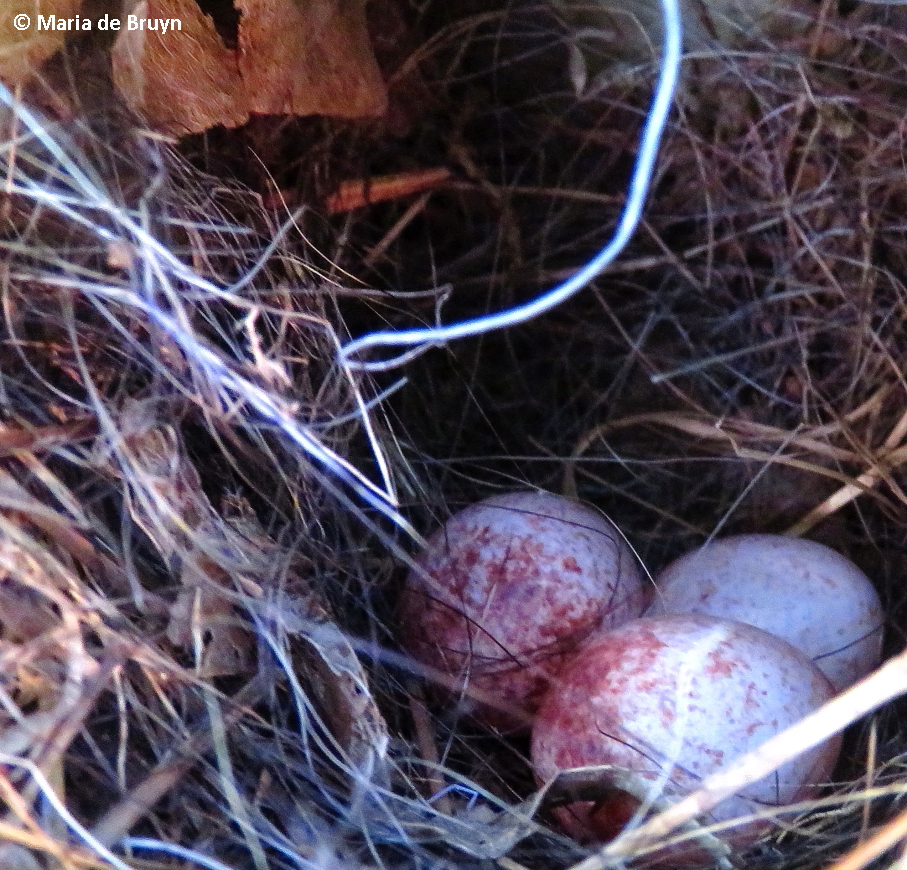
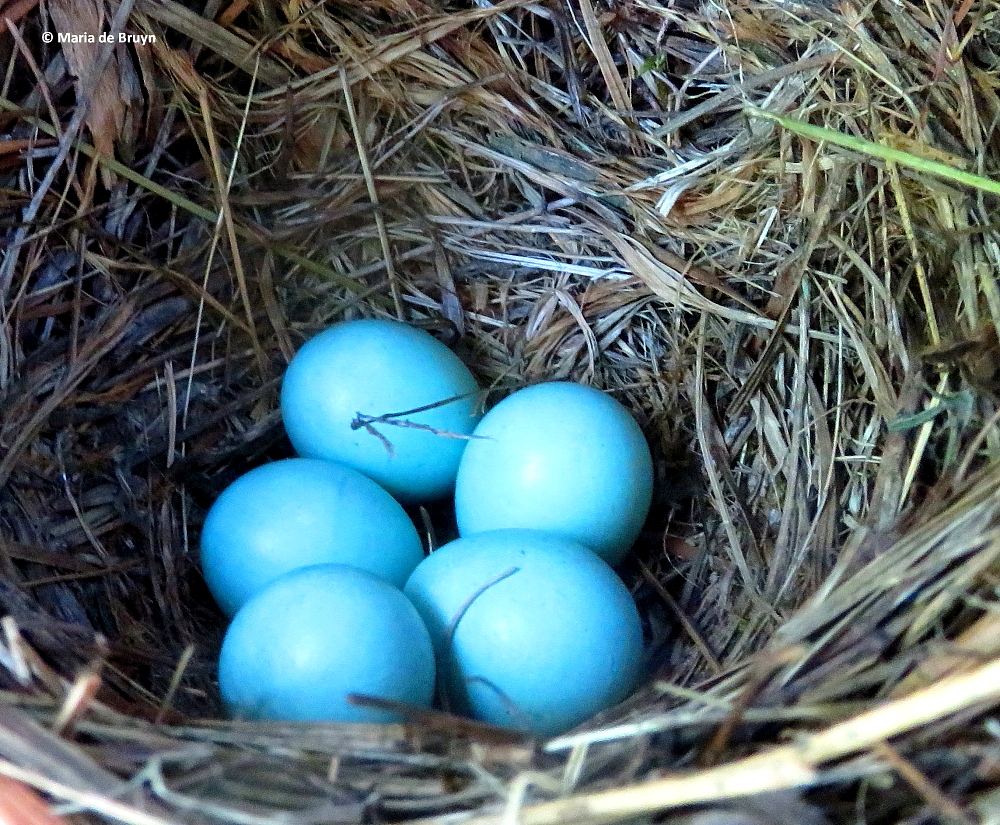
It’s fascinating to me to watch the birds during their reproductive cycle; I always learn something new. Once parent birds have completed a nest to their liking, the female lays her eggs and proceeds to brood them, with some species sitting on the eggs almost full time right away and others taking breaks.


Carolina wren (Thryothorus ludovicianus)              Eastern bluebird (Sialia sialis)

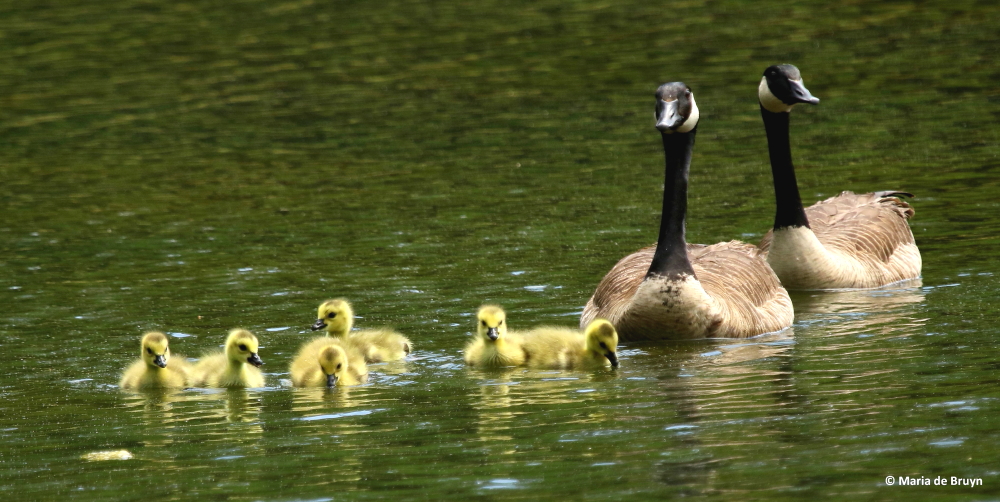
An acquaintance recently told me about a friend of hers who commented that she had seen a very pregnant goose that was so fat, she was waddling. The acquaintance proceeded to give an avian reproduction lesson to her friend – a woman in her 80s – who apparently did not know all birds lay eggs! Even after babies hatch, the Canada goose (Branta canadensis) may still look well-fed!

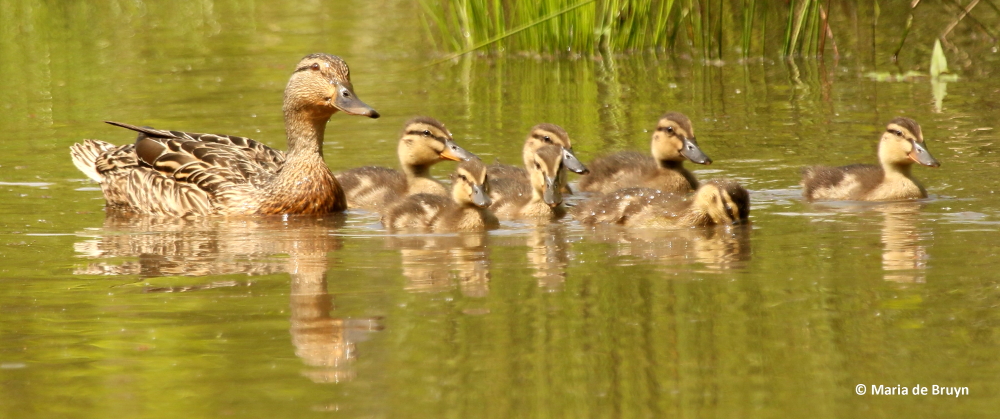
Some bird species have young who are “precocial”, that is, they are covered with downy feathers and have open eyes when they hatch and are soon able to feed themselves. These species include turkeys and ducks, like these mallards (Anas platyrhynchos), and the young often leave the nest soon after birth (which makes them “nidifugous” – good Scrabble word!). The newborns may look fuzzy but it’s not long before they start to take after their parents’ looks.

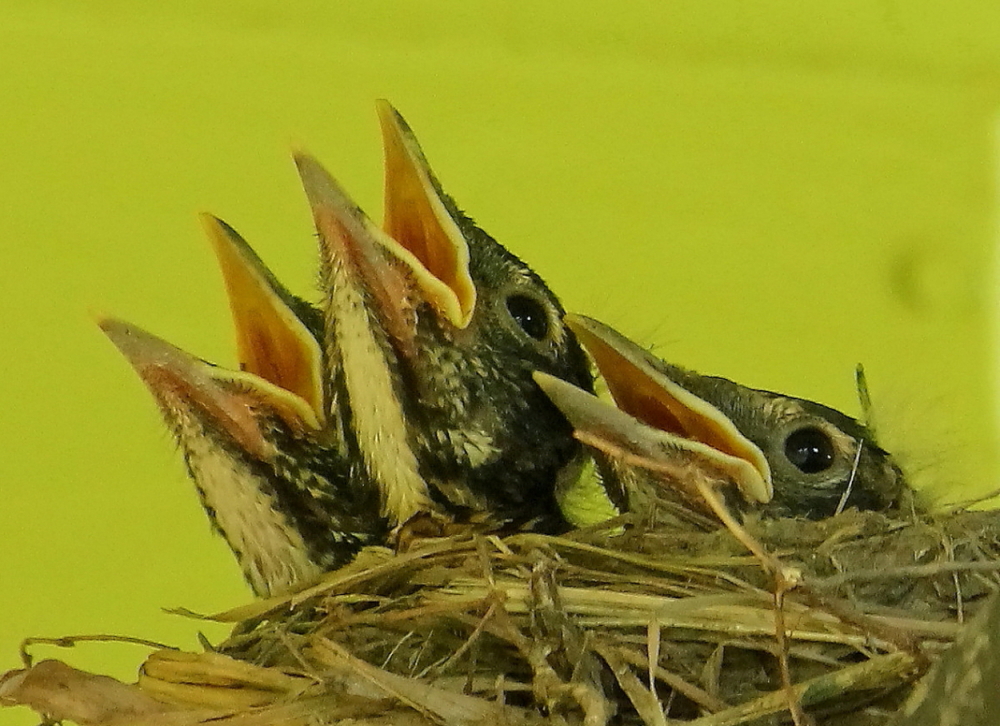
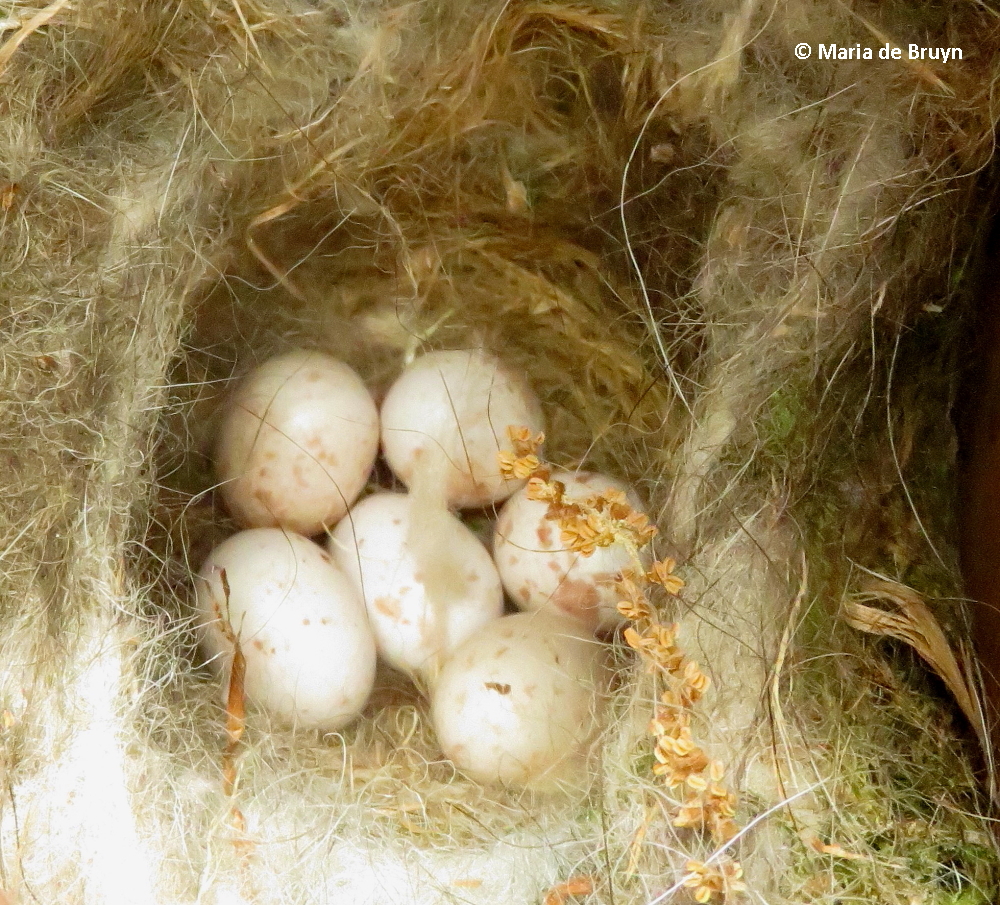
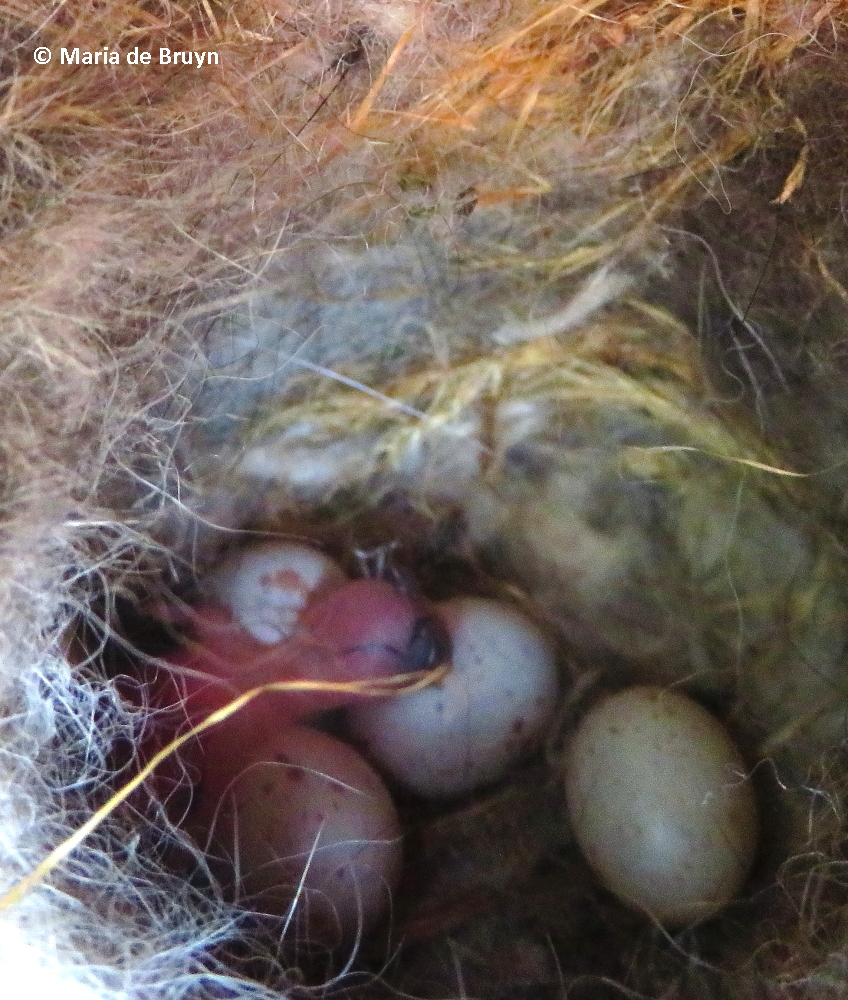
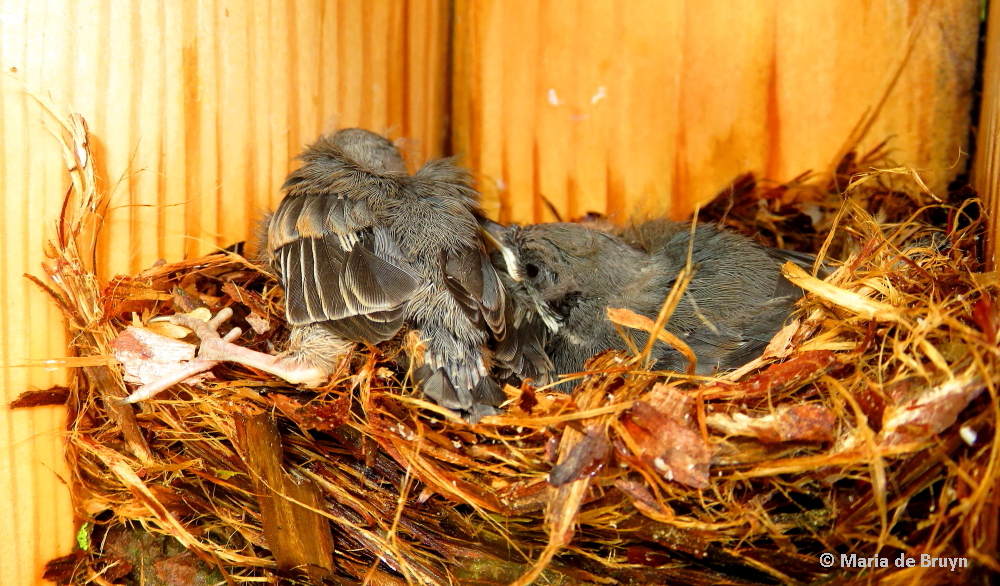
Other birds, such as songbirds, are altricial (as are human beings) – they are naked and helpless at birth and require considerable care before they can walk, fly and feed themselves. If you have some in a nest that is easily observable (and you can take photos when parents are not there so you don’t distress them), it’s interesting to see how the babies develop.


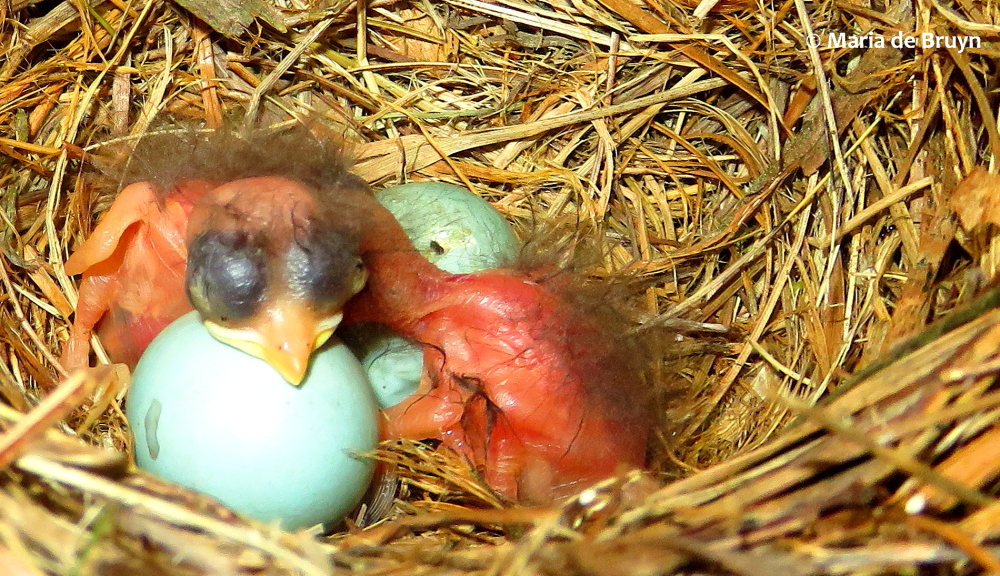
Carolina chickadees (Poecile carolinensis) on 18 and 22 April           

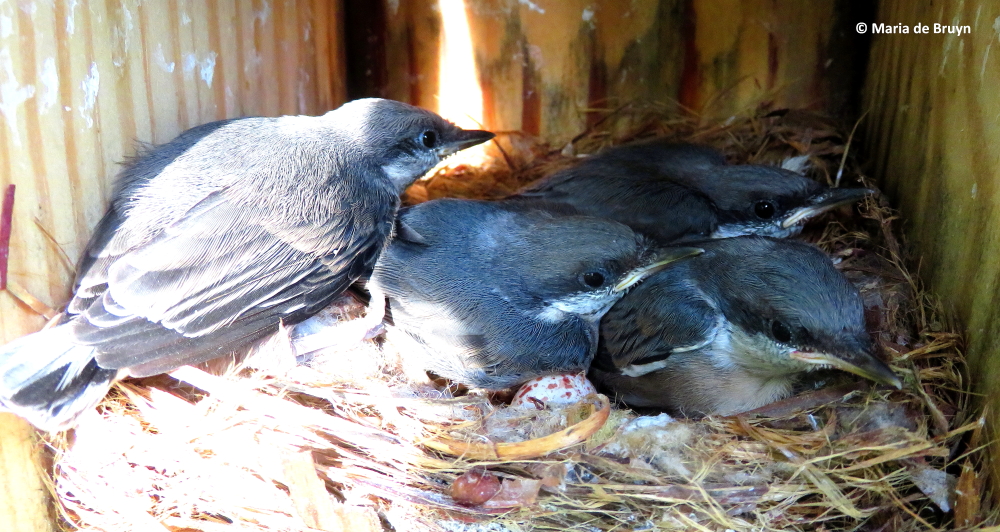
Brown-headed nuthatches (Sitta pusilla) on 13, 25 and 29 April


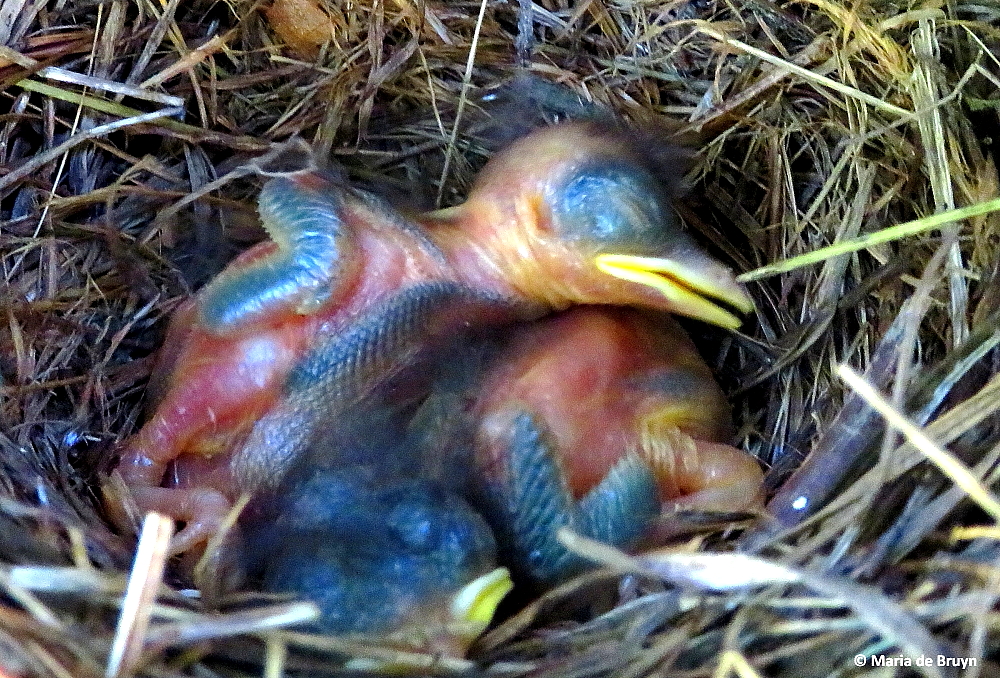
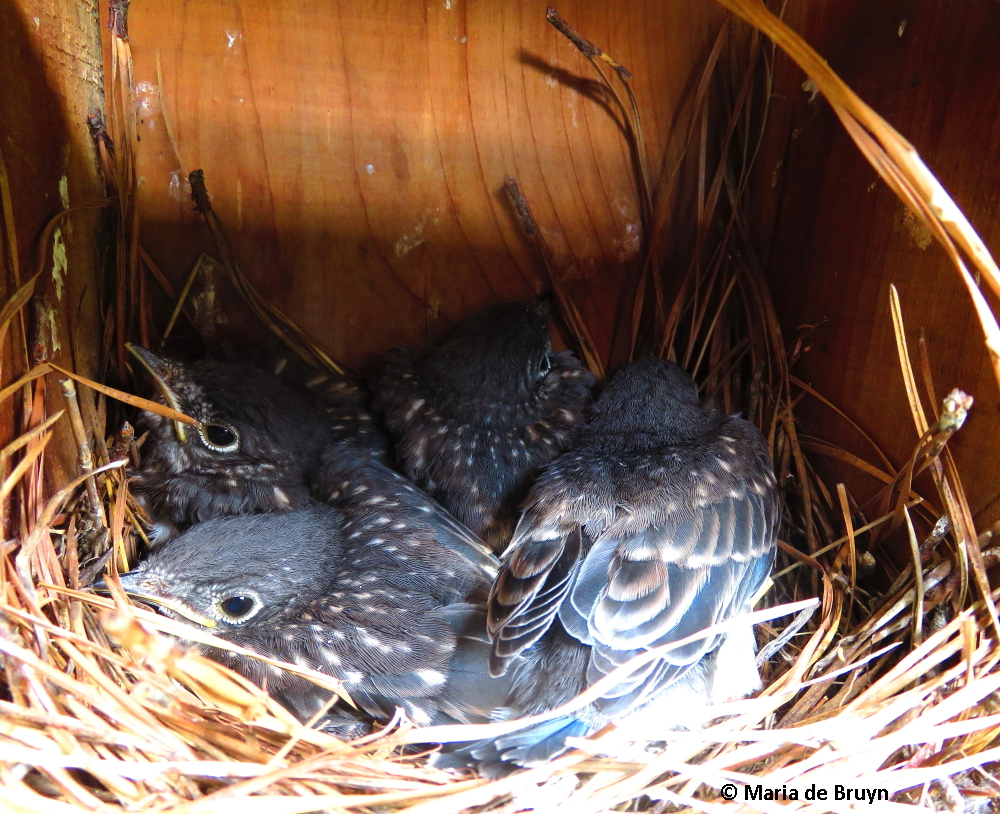
Eastern bluebirds (below)


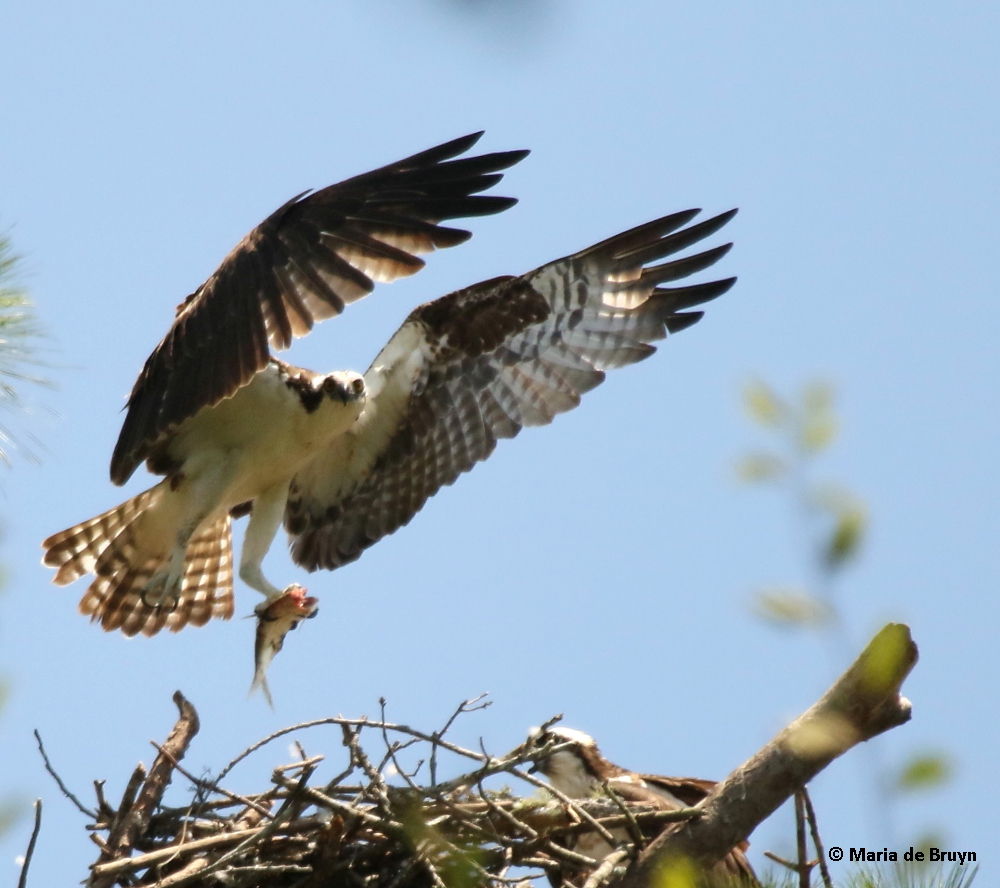
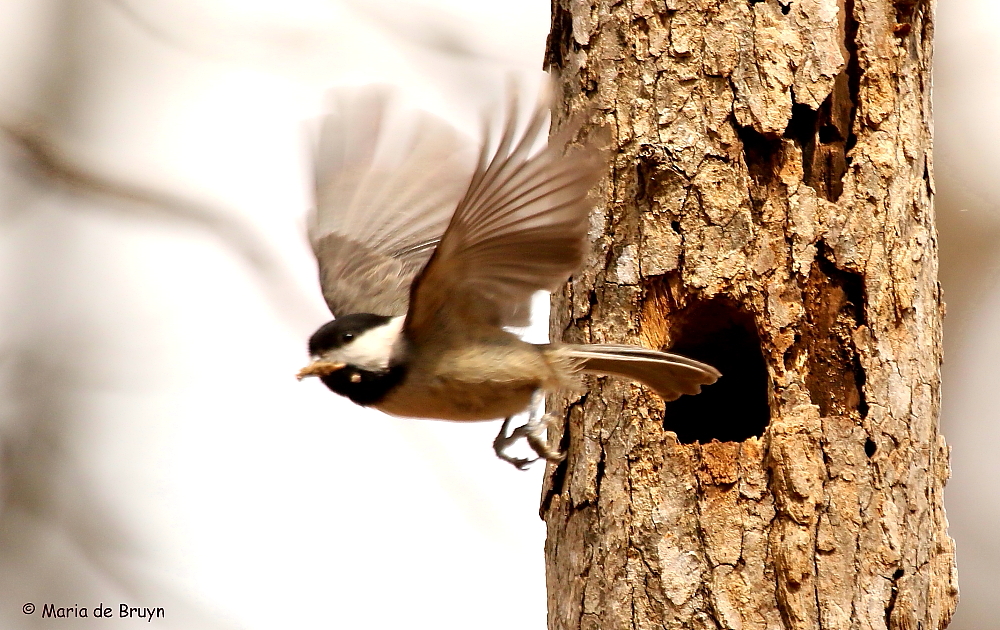
As the mother incubates the eggs, her mate will often feed her so she doesn’t have to leave the nest. This young osprey (Pandion haliaetus) was assiduous in bringing his female life companion fish. Then as the babies hatch, in many species both the male and female parents get busy bringing the young frequent meals.  It’s estimated that Carolina chickadees, for example, will bring over 5000 insects to their brood before fledging!

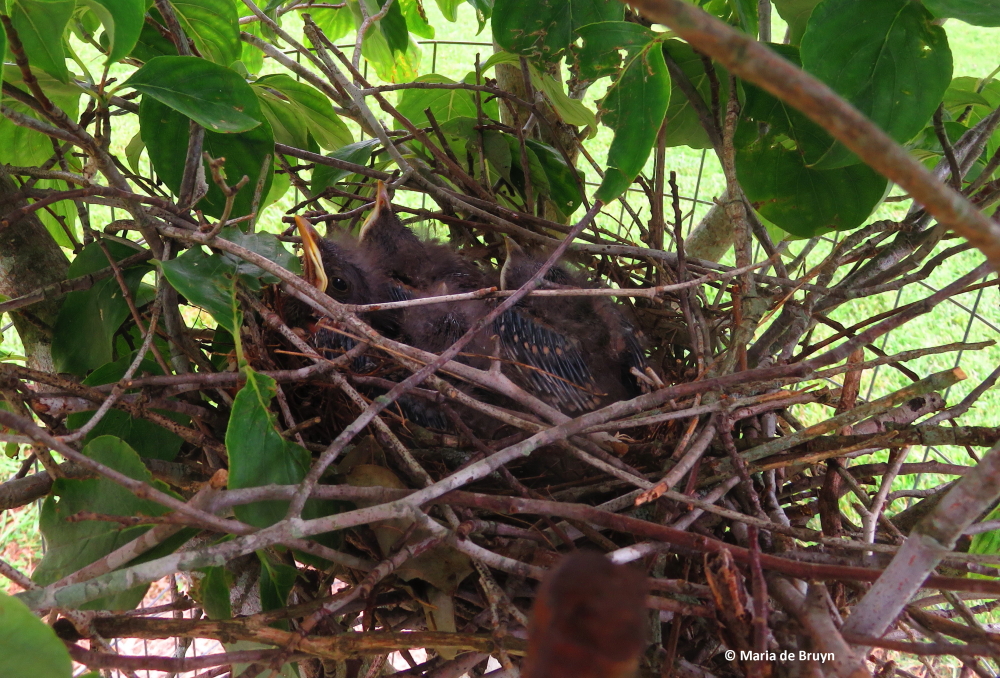
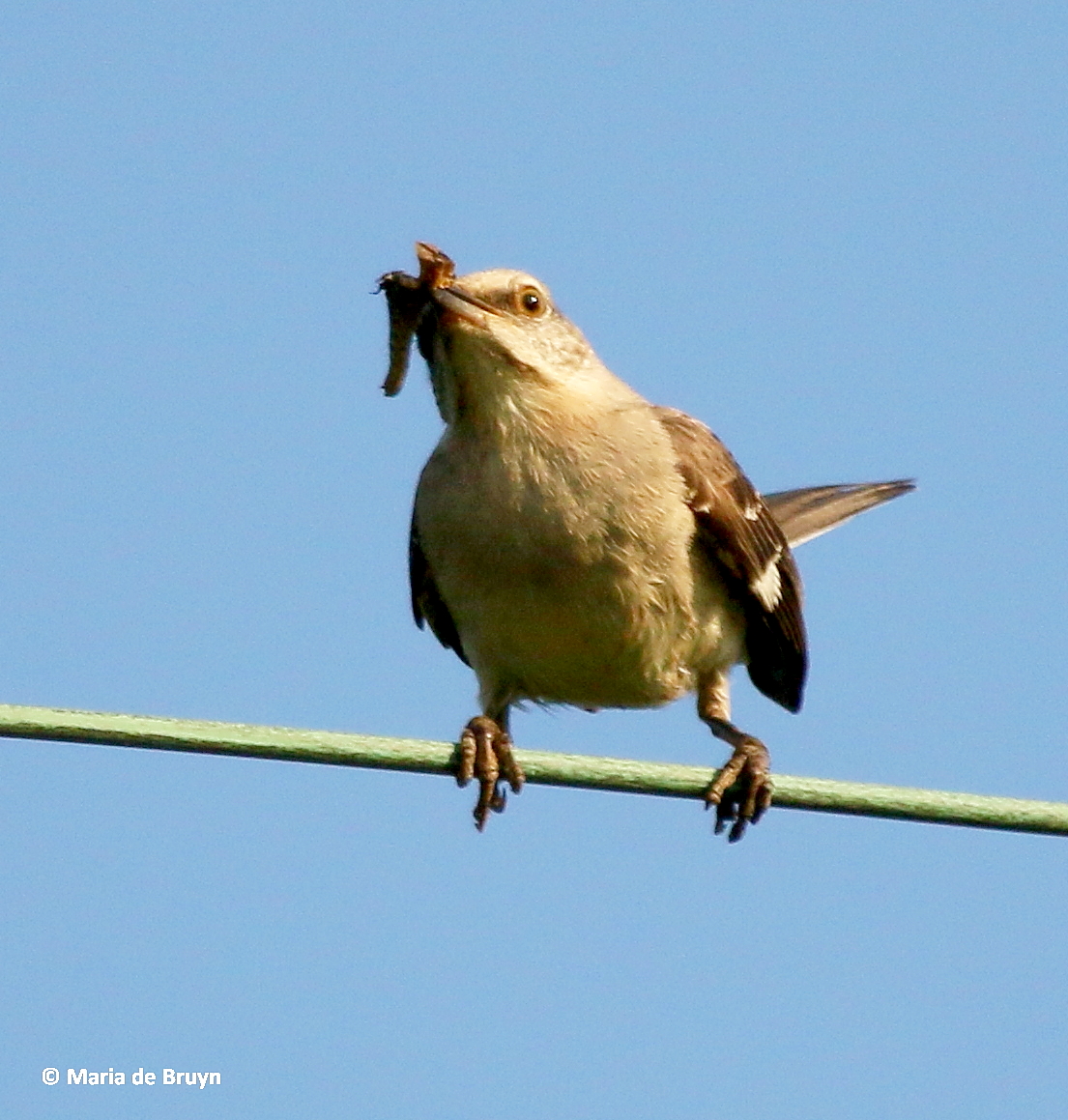
Northern mockingbird (Mimus polyglottos)


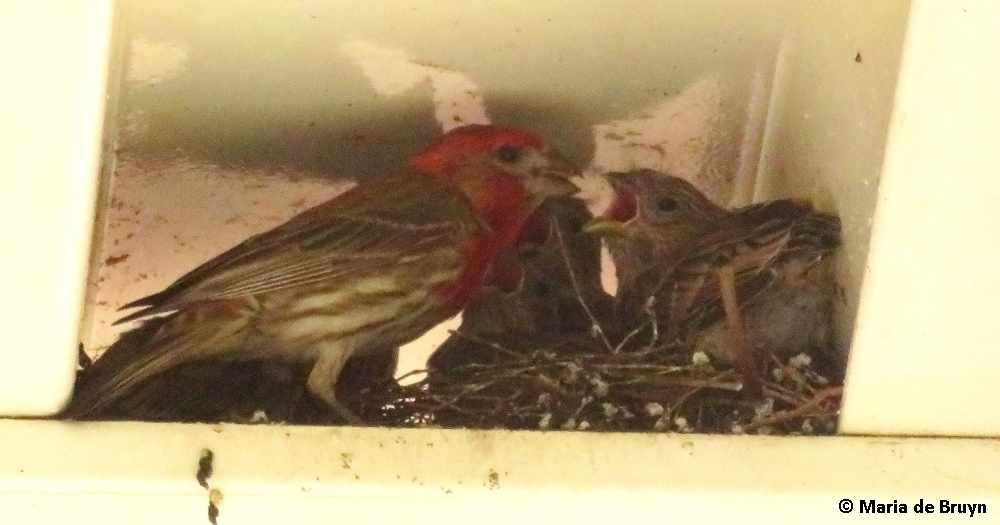
House finch (Haemorhous mexicanus)  and Red-headed woodpecker                (Melanerpes erythrocephalus)


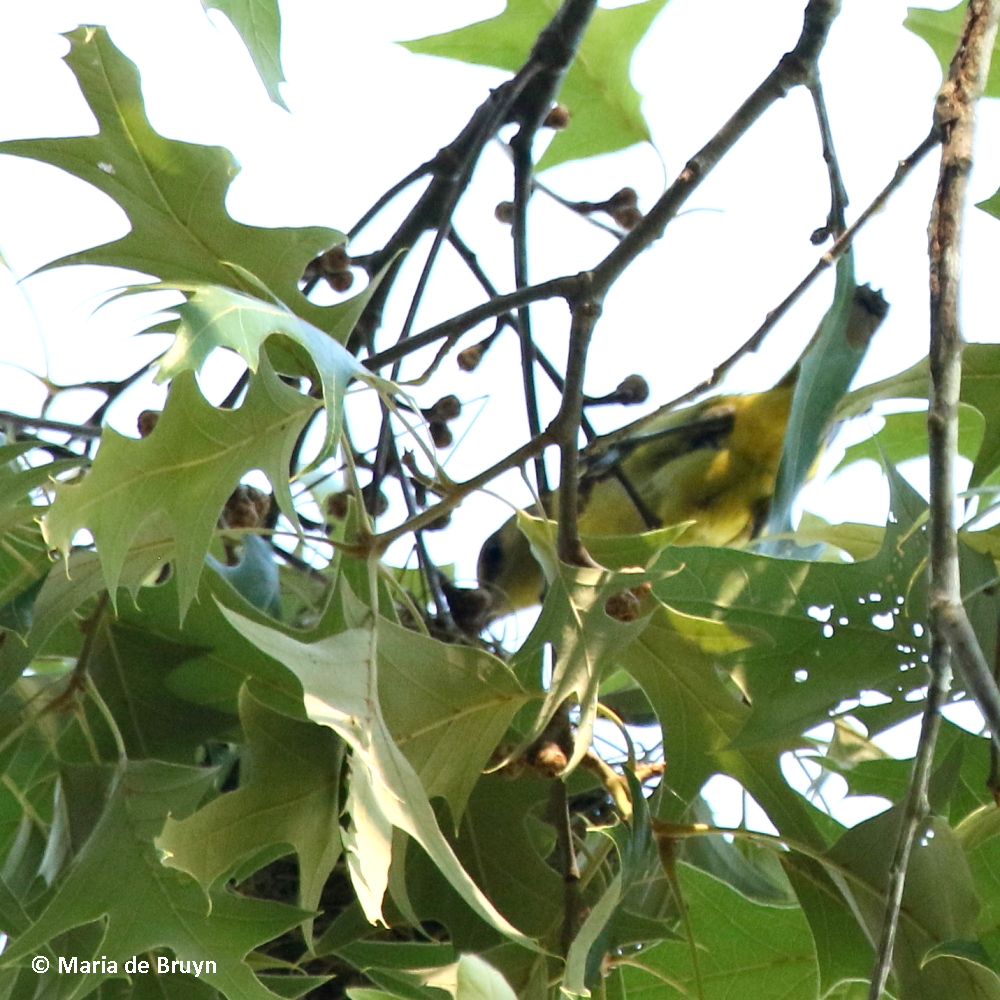
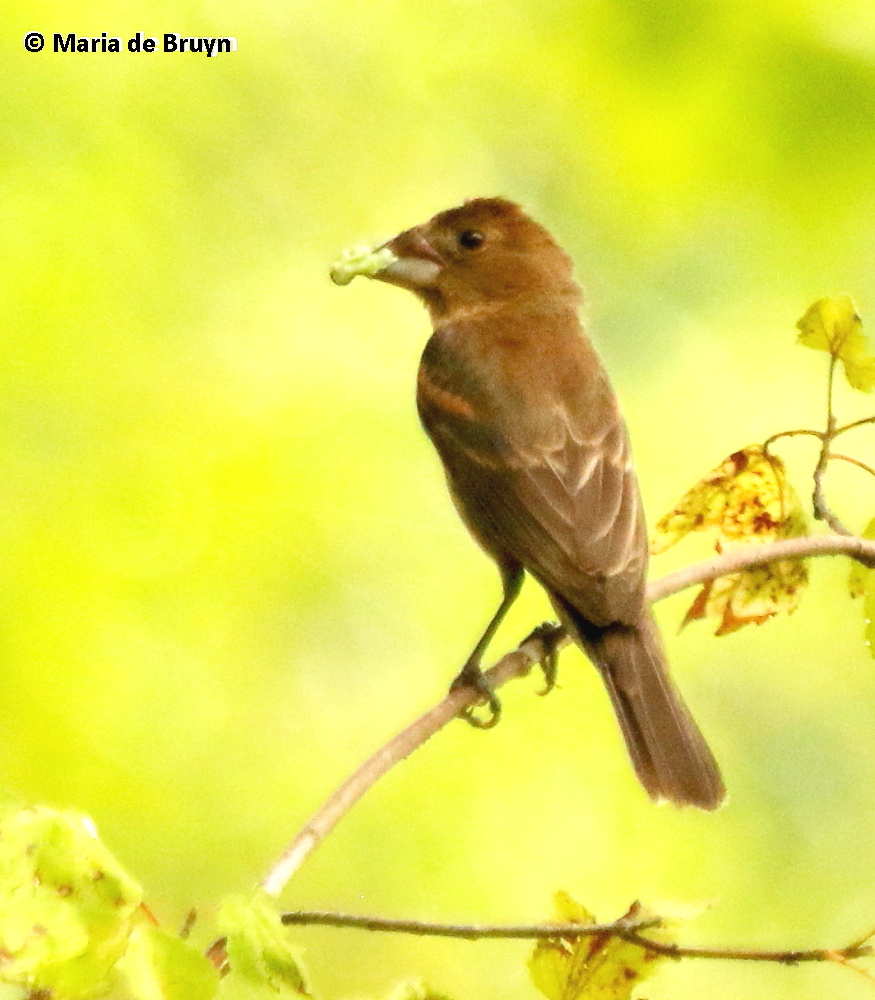
Orchard oriole (Icterus spurius)                  Blue grosbeak (Passerina caerulea


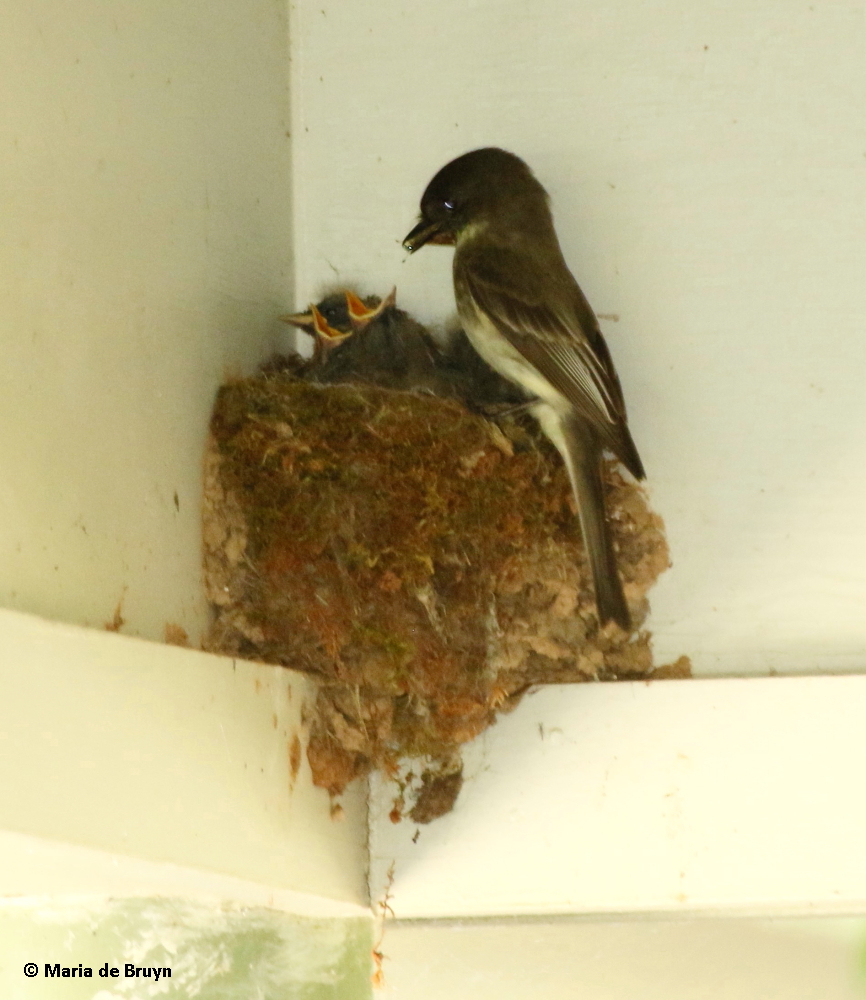
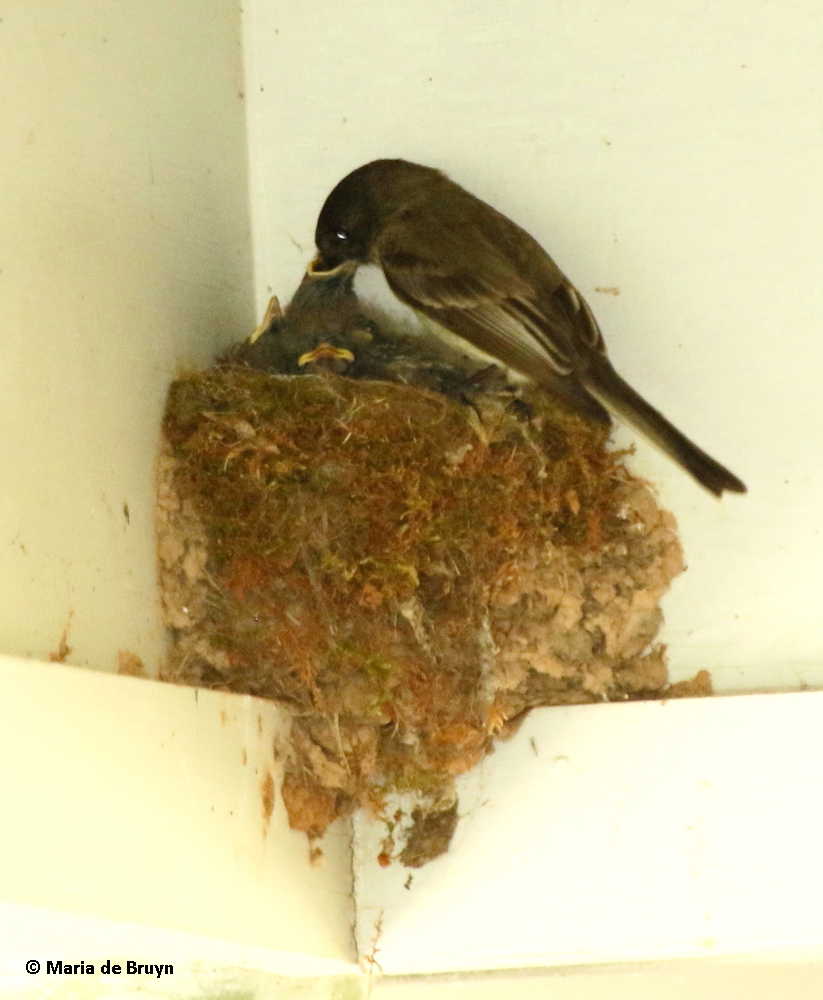
Eastern phoebe (Sayornis phoebe)

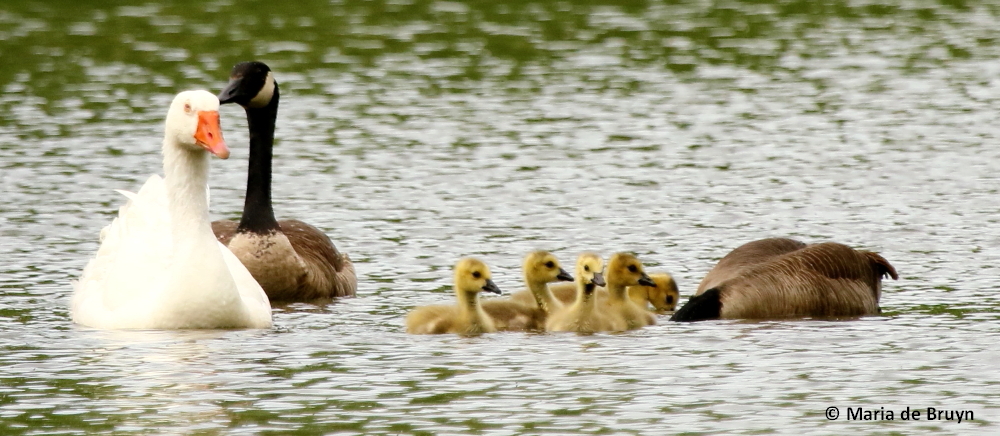
In some species, the previous year’s young will help their parents with the new brood. Brown-headed nuthatches and American crows are examples of this. A pair of Canada geese that I observed this past spring seemed to have a domestic goose helping them out.

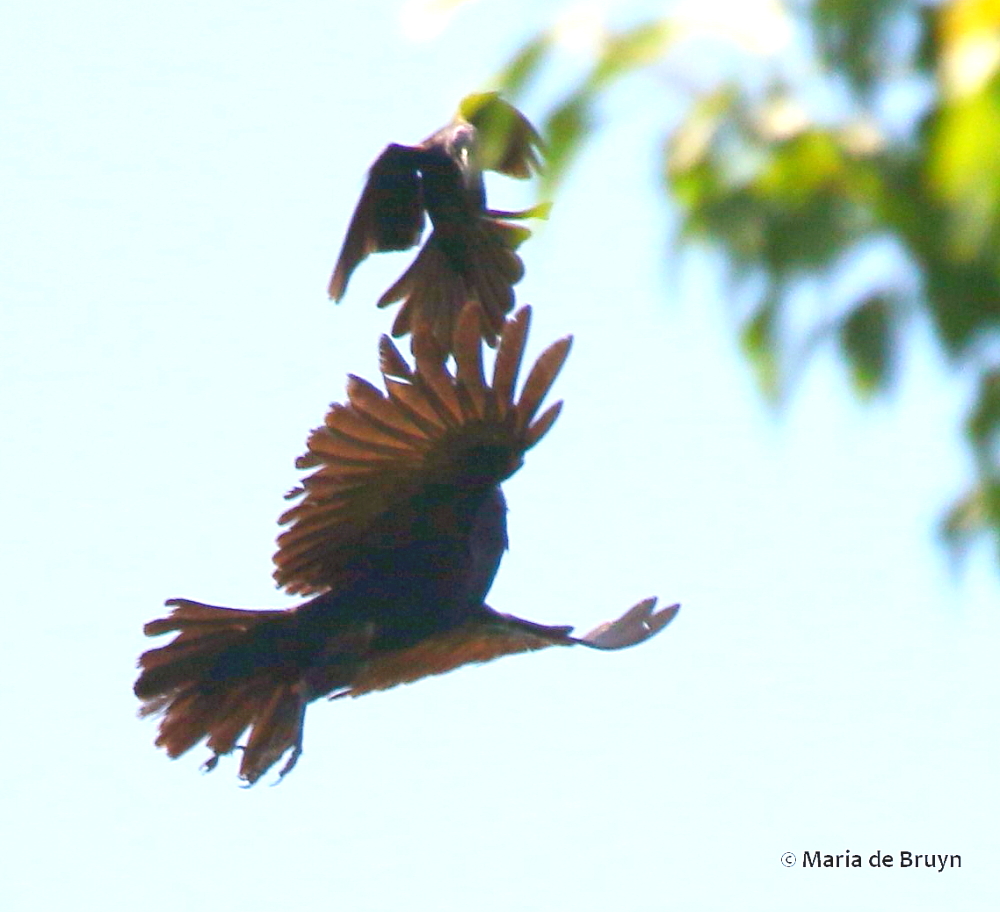
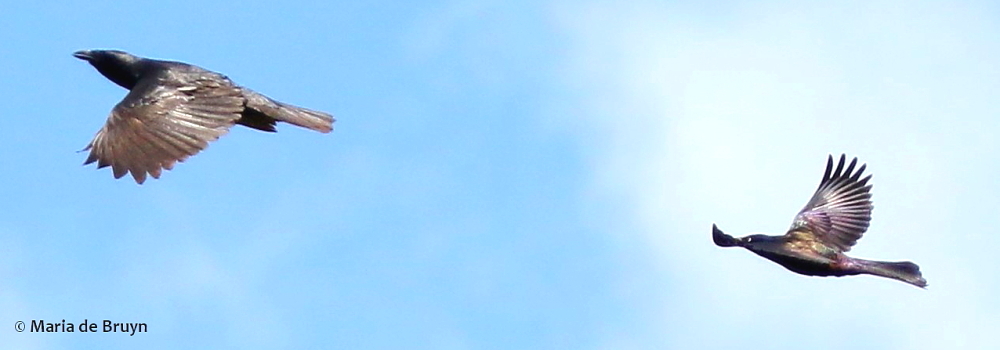
The parents have other chores, too. They must keep the babies safe from predators – Both American crows (Corvus brachyrhynchos) and common grackles (Quiscalus quiscula) will be chased away by songbirds, for example, because these birds will raid nests to eat eggs and babies. But the grackles must also protect their own young against the crows, pursuing them non-stop to drive them away.


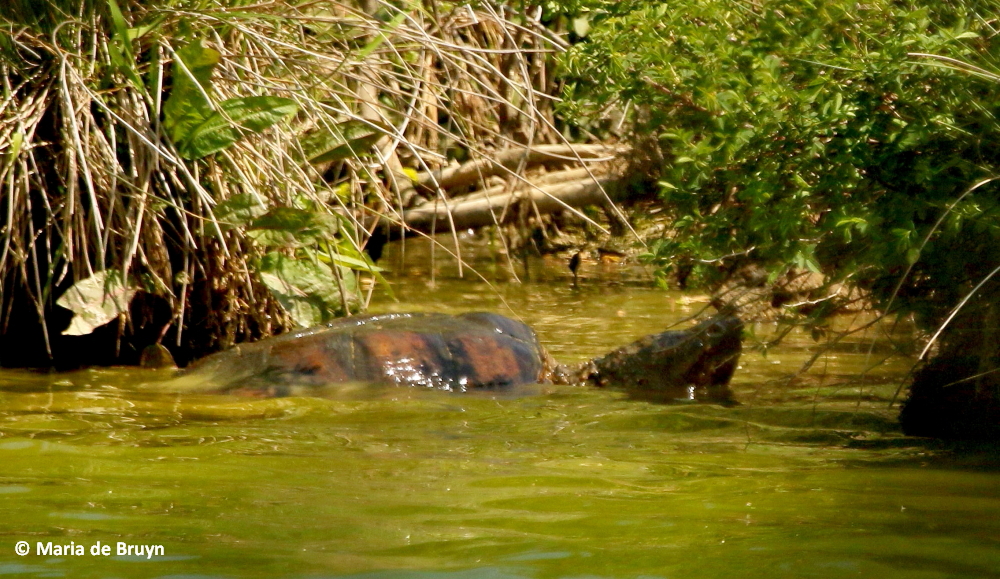
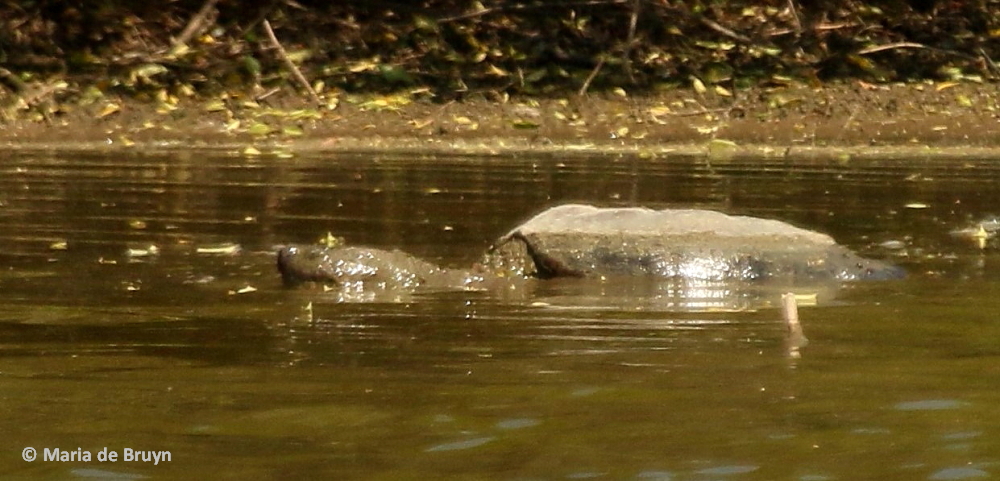
For other birds, protecting the young can be more difficult. This mother wood duck (Aix sponsa) was raising her brood in a pond that was home to at least three large snapping turtles (Chelydra serpentina). Ultimately, another birder and I thought she only had two ducklings survive.   

Keeping the nest reasonably clean is another chore. The babies make this task a little easier than you might think because they defecate into a mucous membrane that forms a sac. When you watch a nest box, especially when it gets closer to fledging time, you can periodically see the parents flying out of the box with a white blob in their mouth, which turns out to be a fecal sac. They either discard it elsewhere or sometimes eat it for some nutritional benefit.


Brown-headed nuthatches

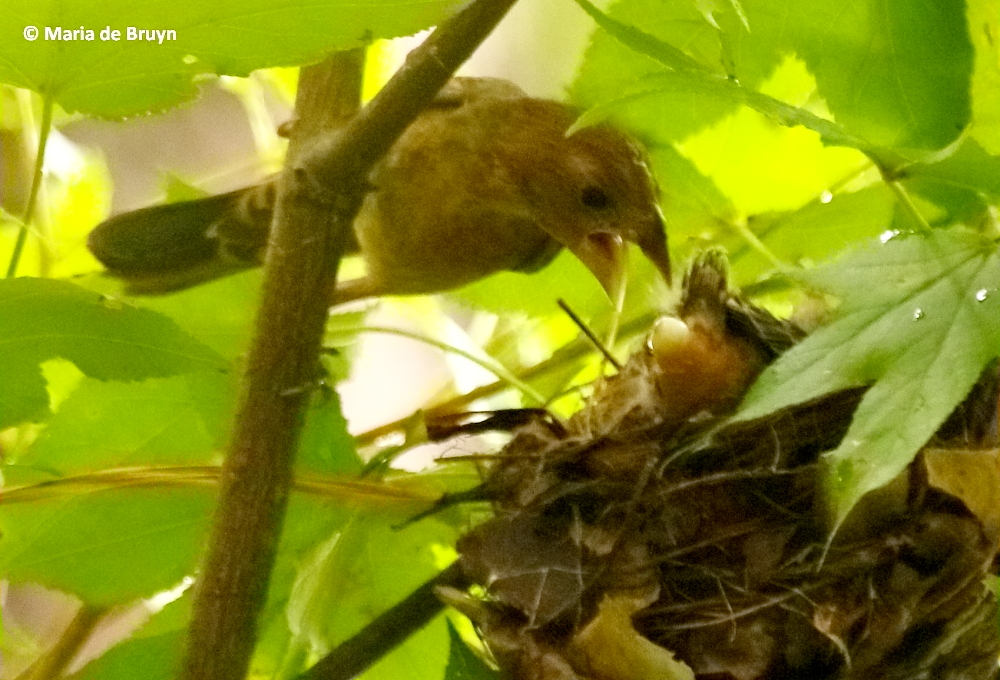
This year, I was surprised to have caught a female blue grosbeak during the cleaning – it appeared that she was actually pulling the fecal sac from the baby! Later, I read that some species stimulate defecation by prodding the babies’ cloaca so they can get on with the chore. I also caught a photo in which a baby bluebird had just presented its rear end to the parent for removal of a sac. I could imagine that some human parents might think a fecal sac would be a cool avian adaptation for their babies to have – no more dirty diapers and expense for diapers either! (An idea for an SF short story?)


After all their efforts, the parents are usually ready for those babies to fledge – the subject of the upcoming last blog in the series.


* Not all the photos in this blog are of great quality, I know, but my intention was first to show behaviors and secondarily to have some nice shots in the blog.


Avian generations in the making – part 2B: nesting in nature

My last blog looked at birds’ nests in man-made structures and there are plenty of birds who take the opportunity to use such sites. Most birds, however, make their homes out in nature – in shrubs, trees and on the ground. This is a bit of a long blog but I want to share views of different species at work.

There are different types of nests; a few types that we see in North Carolina include:

  • Cavity nests – holes in trees, made by the parents themselves or adopted as a home when birds like the cavities made by others
  • Simple scrapes – these are shallow depressions scratched out on the ground and they may be lined with materials or left to look like the rest of the surrounding ground
  • Cup-shaped nests – these structures are like small bowls and may be lined with materials like those used in nest box nests. They can be made of varied materials – swallows use mud while American robins and other birds use plant materials.
  • Platform nests – these nests are usually quite large and comprise large twigs and small branches
  • Plate nests are a bit similar to platform nests but much smaller and less organized; they may consist simply of a few twigs arranged in a shallow bundle
  • Pendant nests hang from branches.

When birds look for a cavity site, they may seek out a new spot on a tree trunk or investigate already existing cavities. These Eastern bluebirds (Sialia sialis) at Sandy Creek Park were examining one particular hole with interest, but a downy woodpecker was interested as well so there was some rivalry. The female bluebird chose to just sit on a nearby branch while her mate looked at the hole numerous times trying to make a decision.


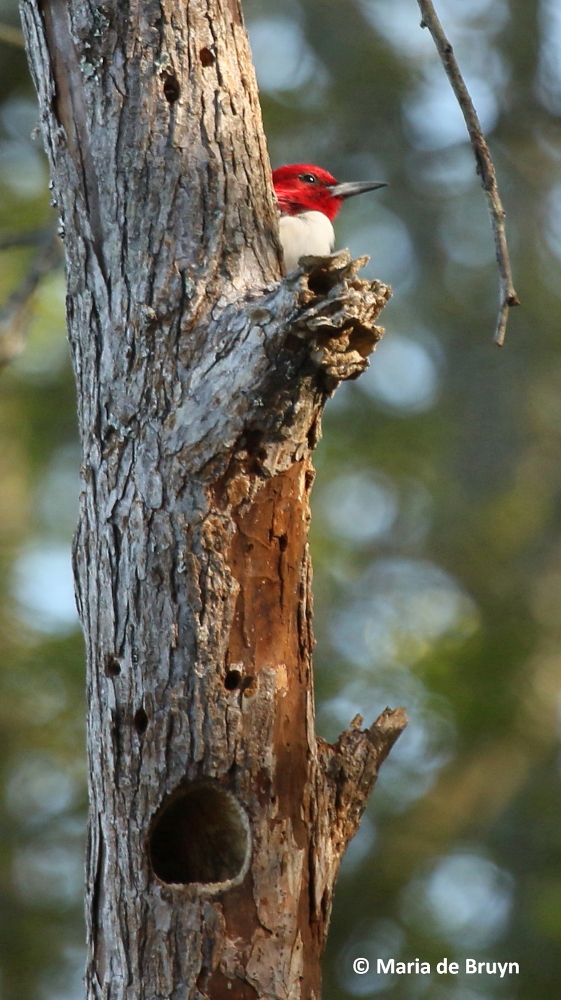
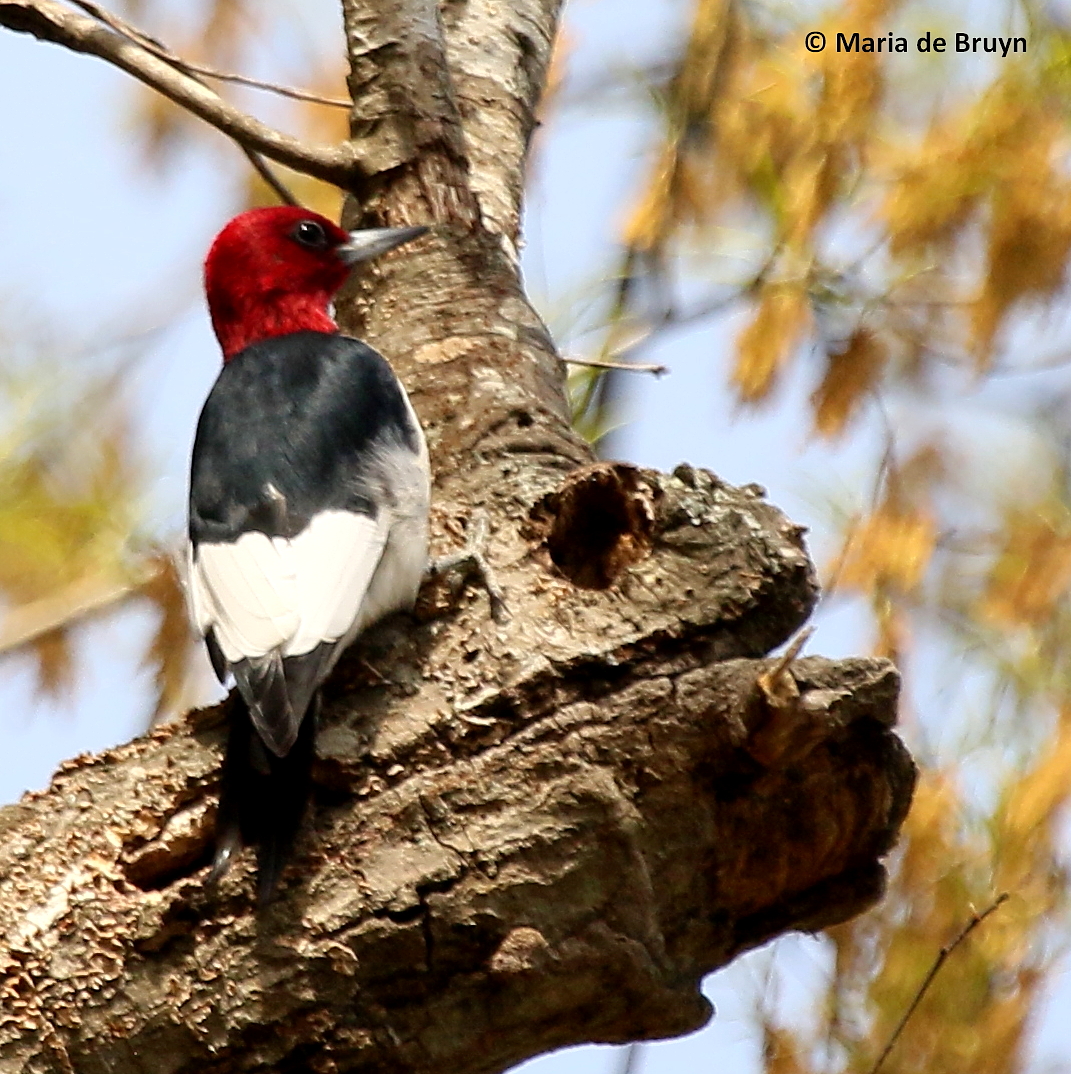
Red-headed woodpeckers (Melanerpes erythrocephalus) excavate larger cavities in tree trunks to raise their broods. They may visit various trees before deciding on a spot.


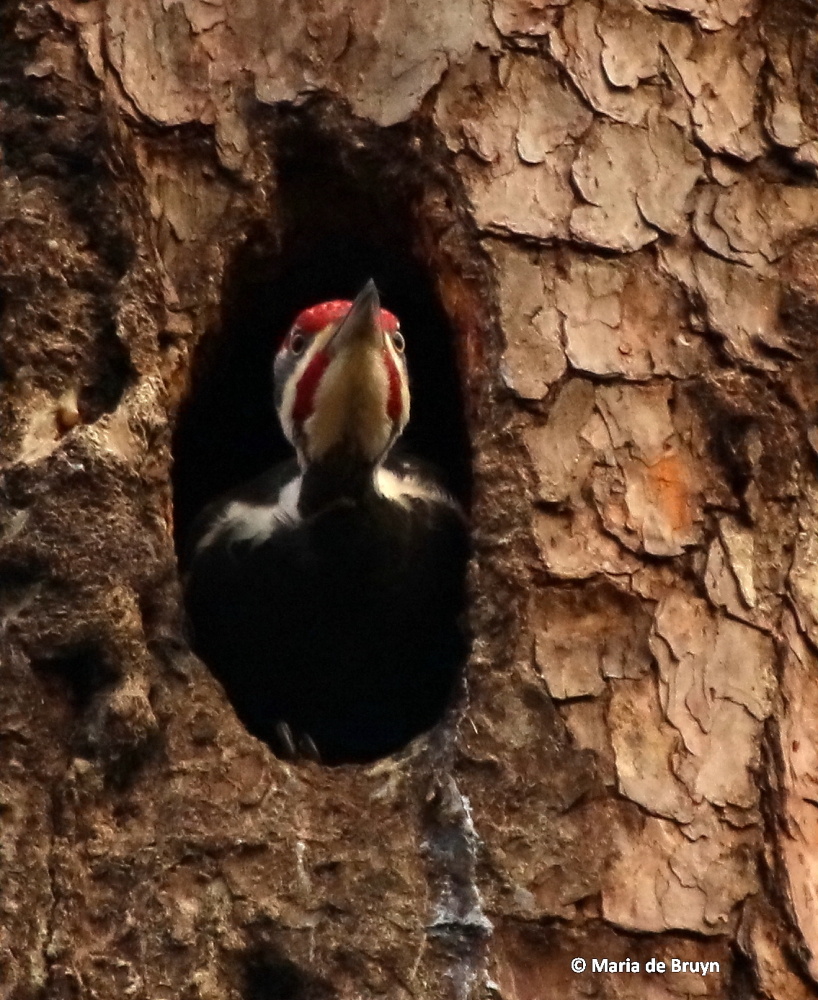
Pileated woodpeckers (Hylatomus pileatus) may use the same holes year after year. They make holes for resting as well as for nesting and often include a “back door” so they can make a quick escape if a snake shows up.
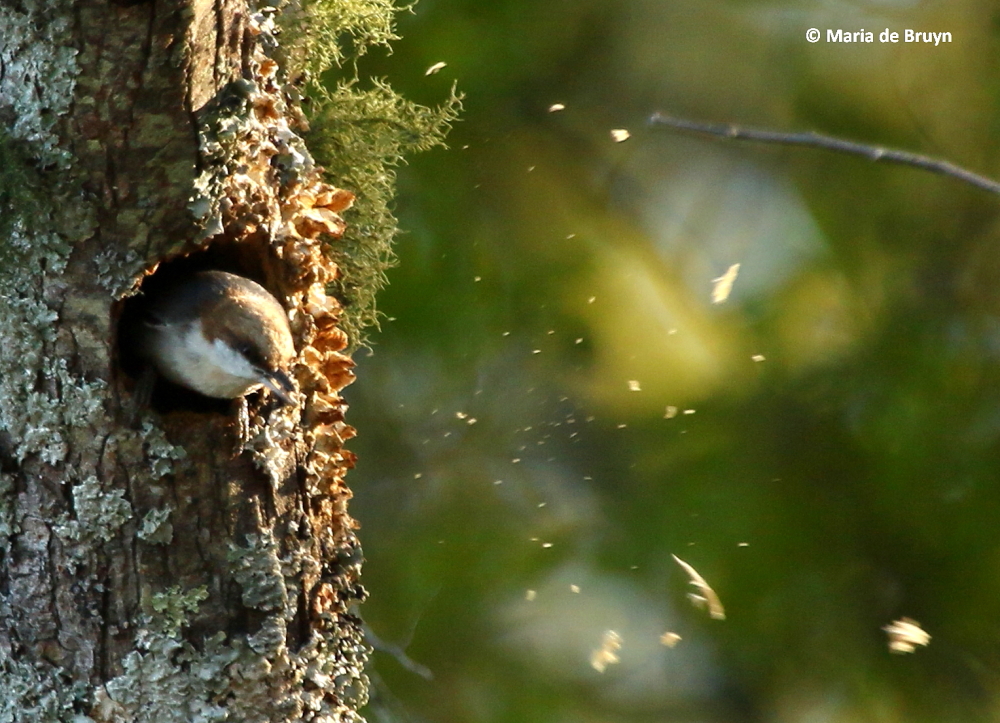
          

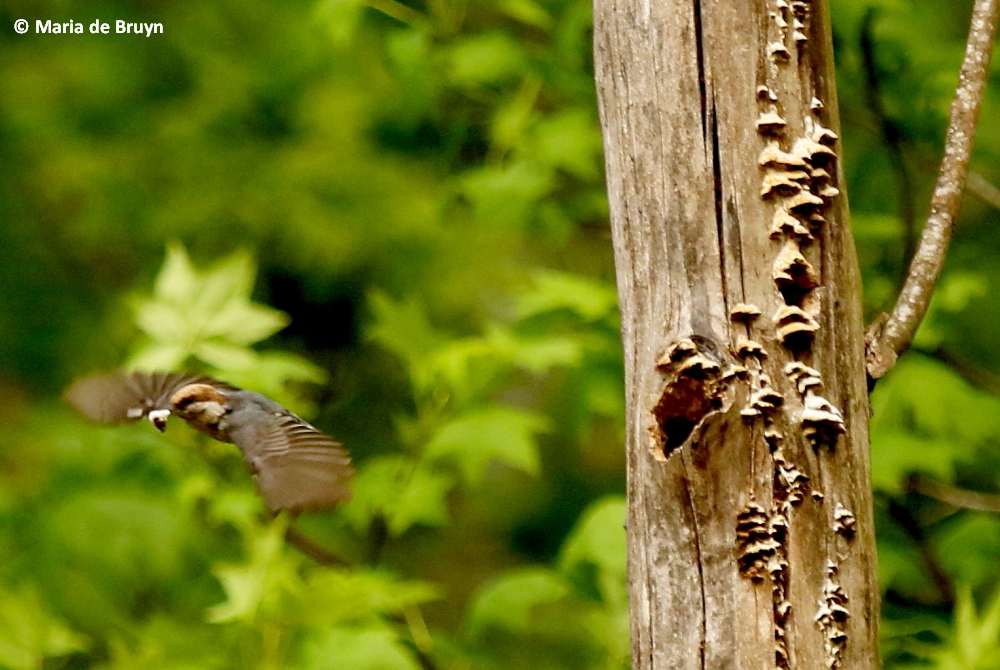
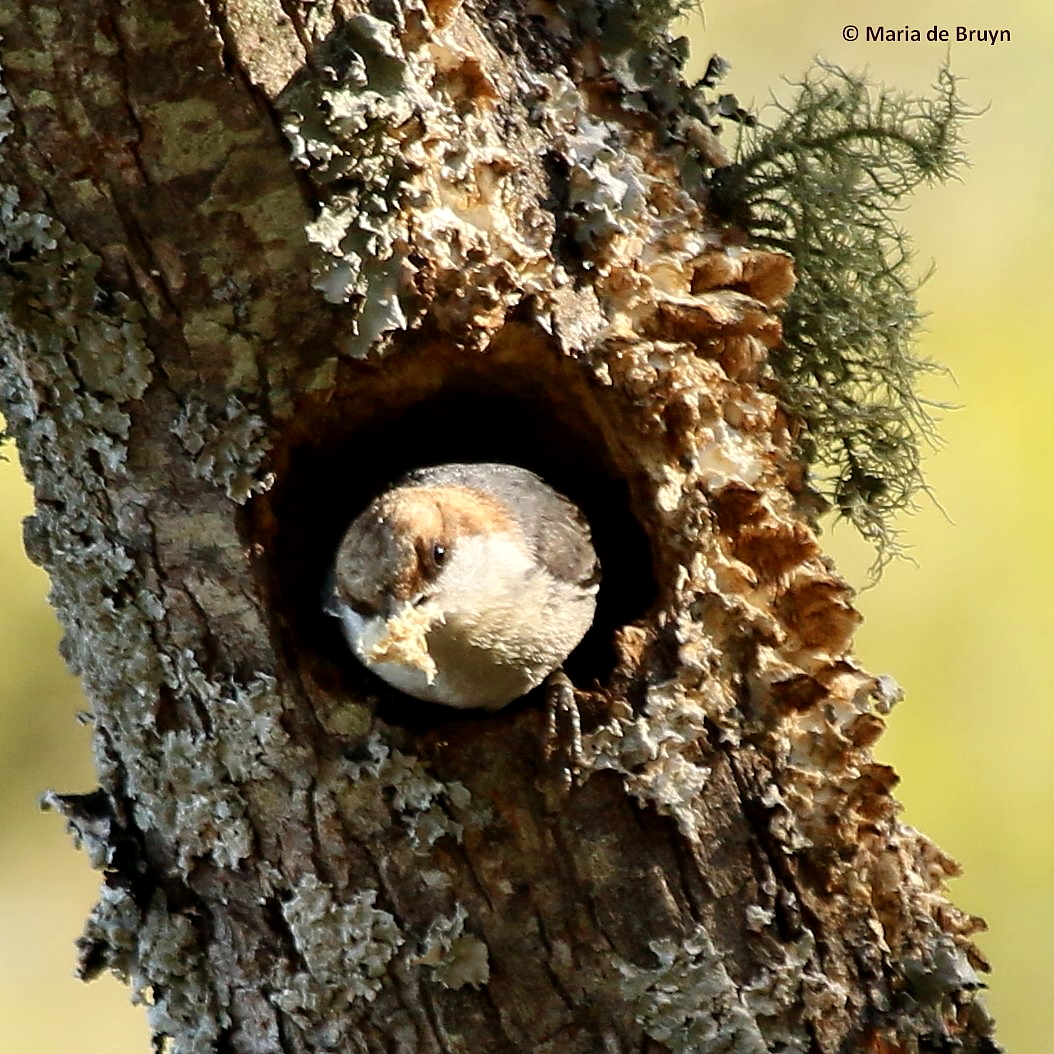
Brown-headed nuthatches (Sitta pusilla), like this one at Jordan Lake, can be very industrious in excavating their nest cavities. You can watch them pecking away at the wood of a tree trunk or branch, scattering wood shavings and removing bigger bits of softened wood in their beaks to achieve a hole of the right depth for their babies. (See a short video of one at work here.)


I also saw nuthatches making nests on the edges of a farm and near the NC Botanical Garden. The pair working on a nest at the Garden were doing this with a great horned owl on a branch overhead, as well as a red-tailed hawk and crows who were raising a racket. Their presence didn’t bother the little birds; these nuthatches also appeared to have help from a previous year’s youngster willing to help the parents raise the new siblings.


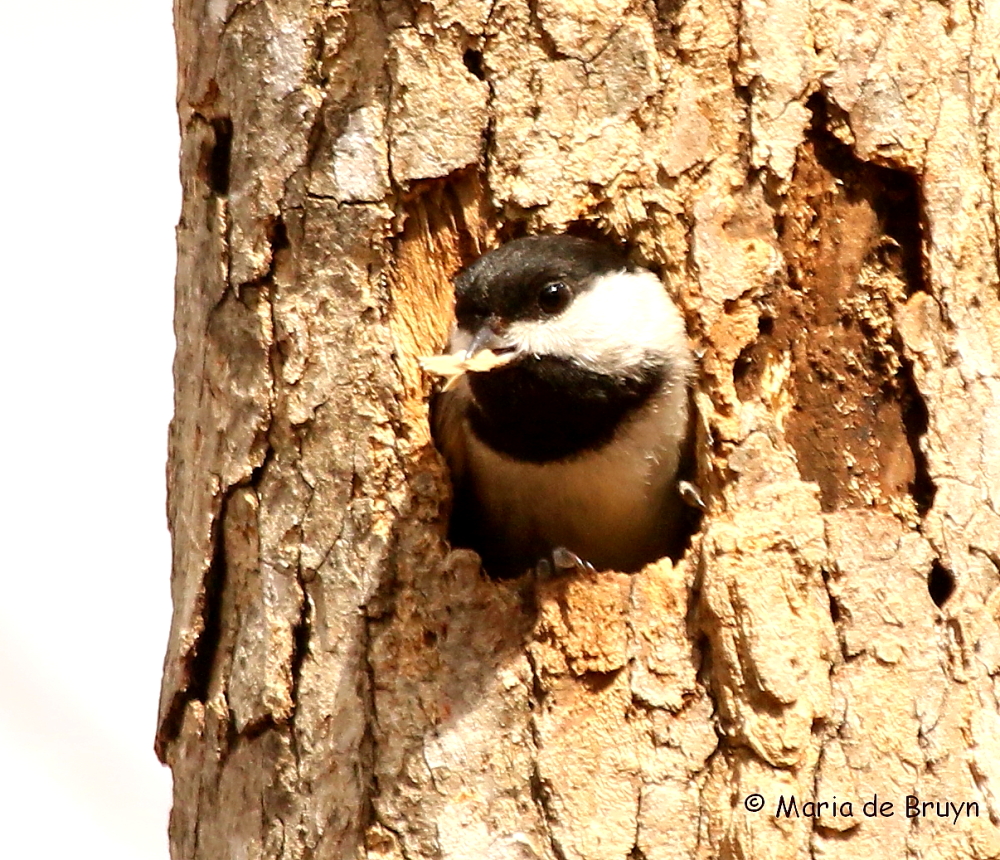
Carolina chickadees (Poecile carolinensis) also dig out small holes in trees and snags.


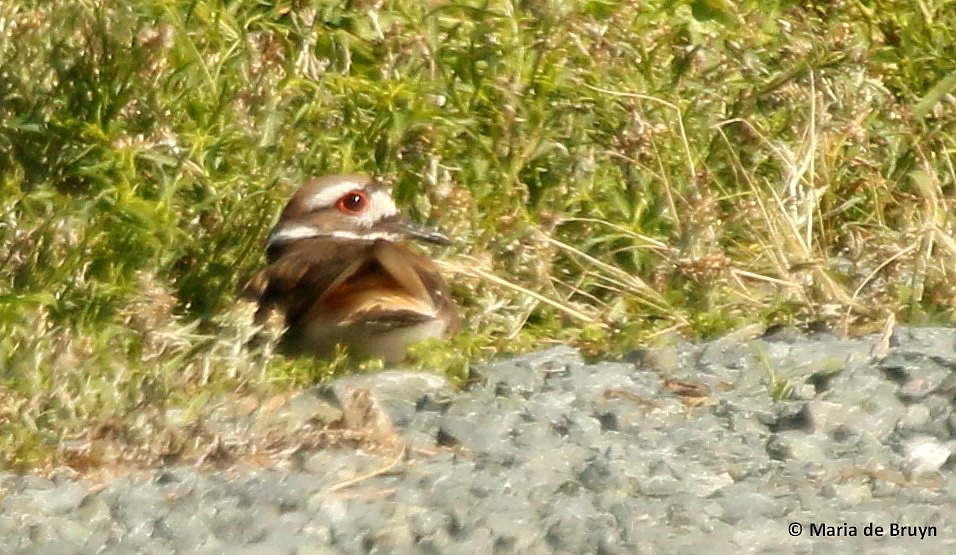
Killdeer (Charadrius vociferous) use scrape nests which may look exactly like the surrounding area; their eggs then blend in really well with the environment and can be difficult to see.

When I first saw this nest suspended from a tree near a bridge, I had no idea which bird had built it. A birding friend had fortunately seen the parent bird fly to the nest – it belonged to a Northern parula like the one shown below (Setophaga americana).


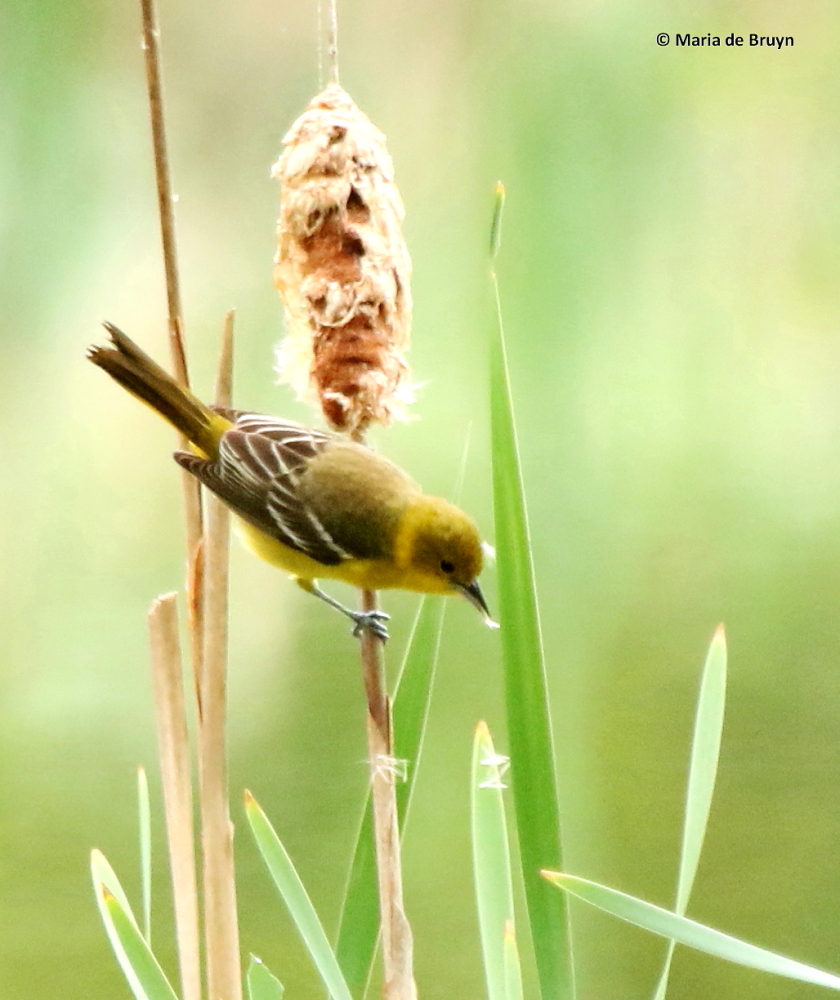
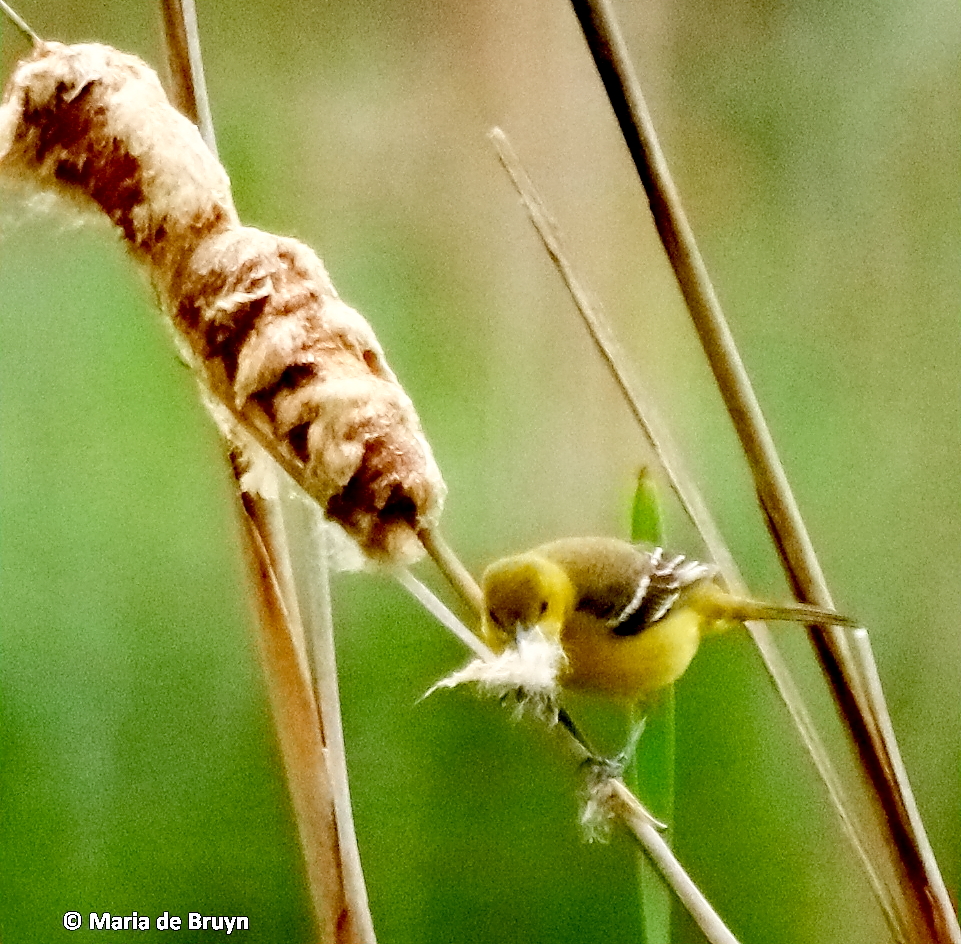
I was lucky to see a female orchard oriole (Icterus spurius) collecting nice soft lining materials for its nest this past spring.


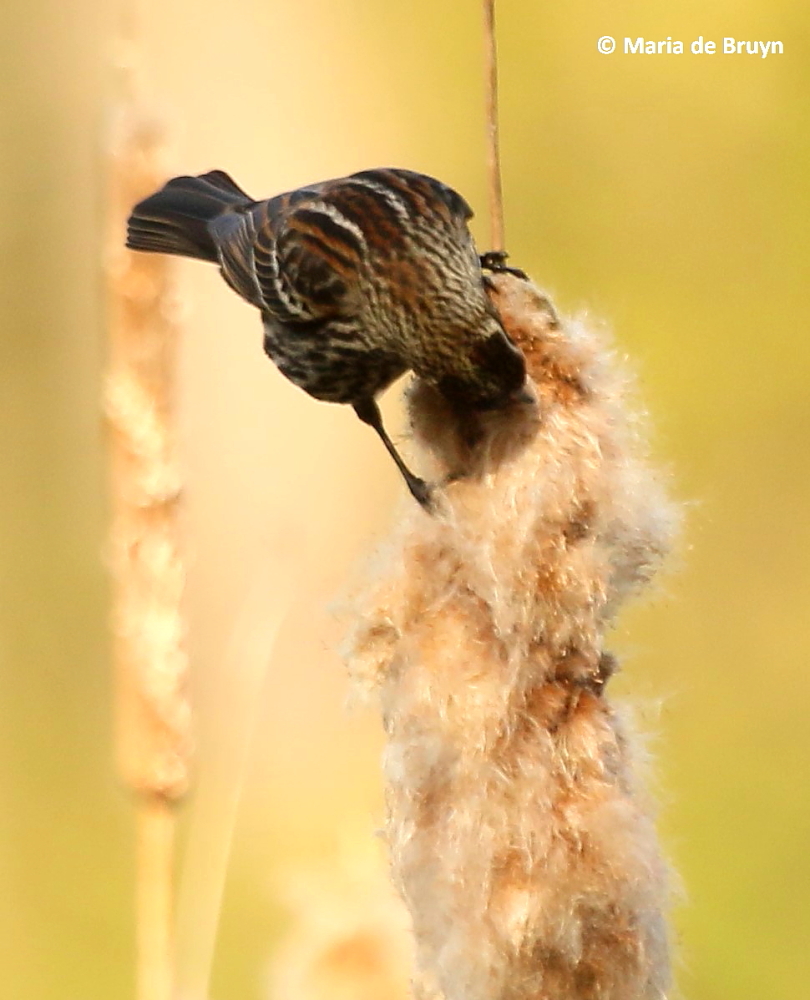
A red-winged blackbird (Agelaius phoeniceus) was doing the same with cattails – an obviously appropriate source for bird bedding!


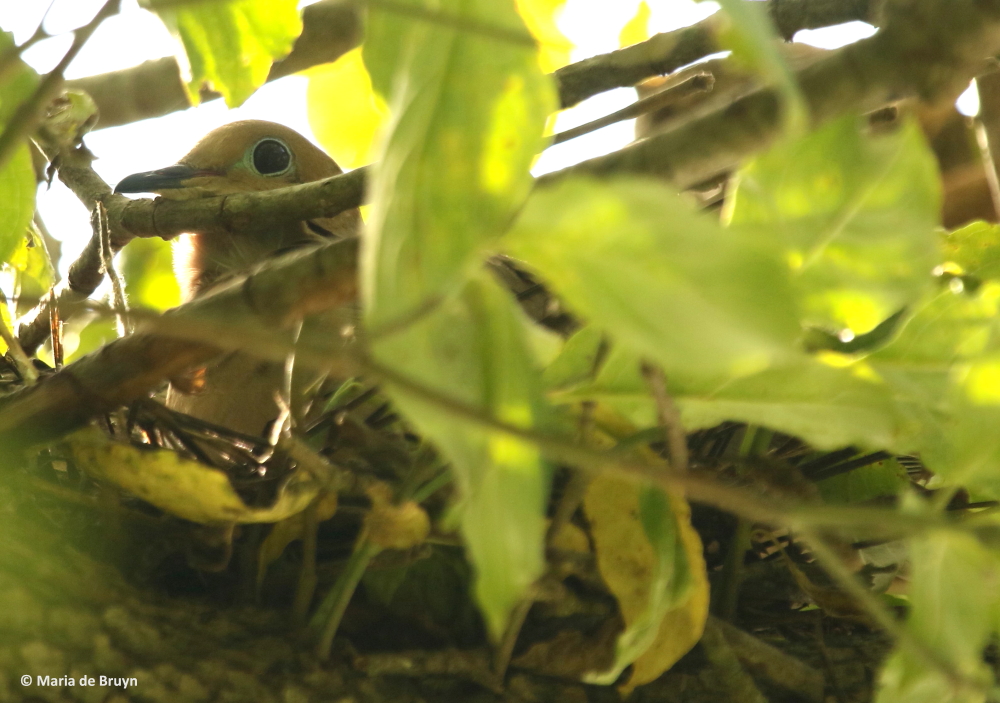
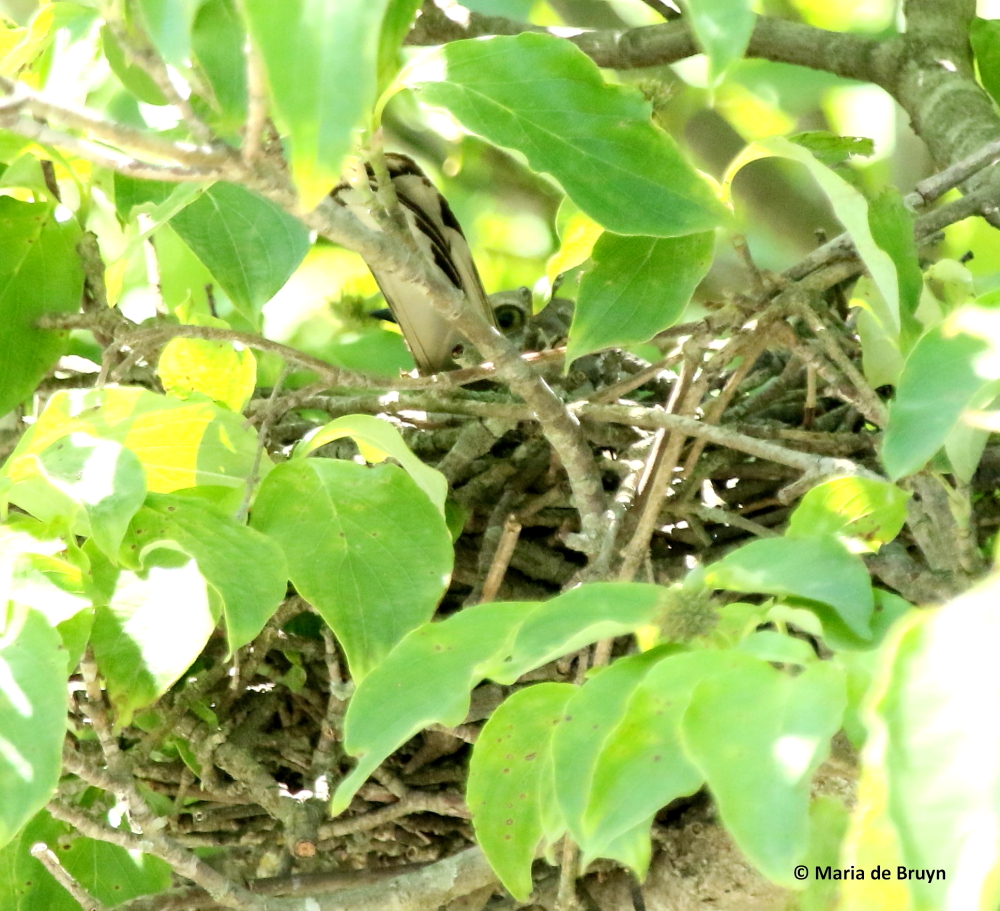
Mourning doves (Zenaida macroura) and Northern mockingbirds (Mimus polyglottos) make fairly shallow, twiggy nests (“plate nests”). It makes you wonder if eggs ever roll out of them through cracks in the loose, low walls.


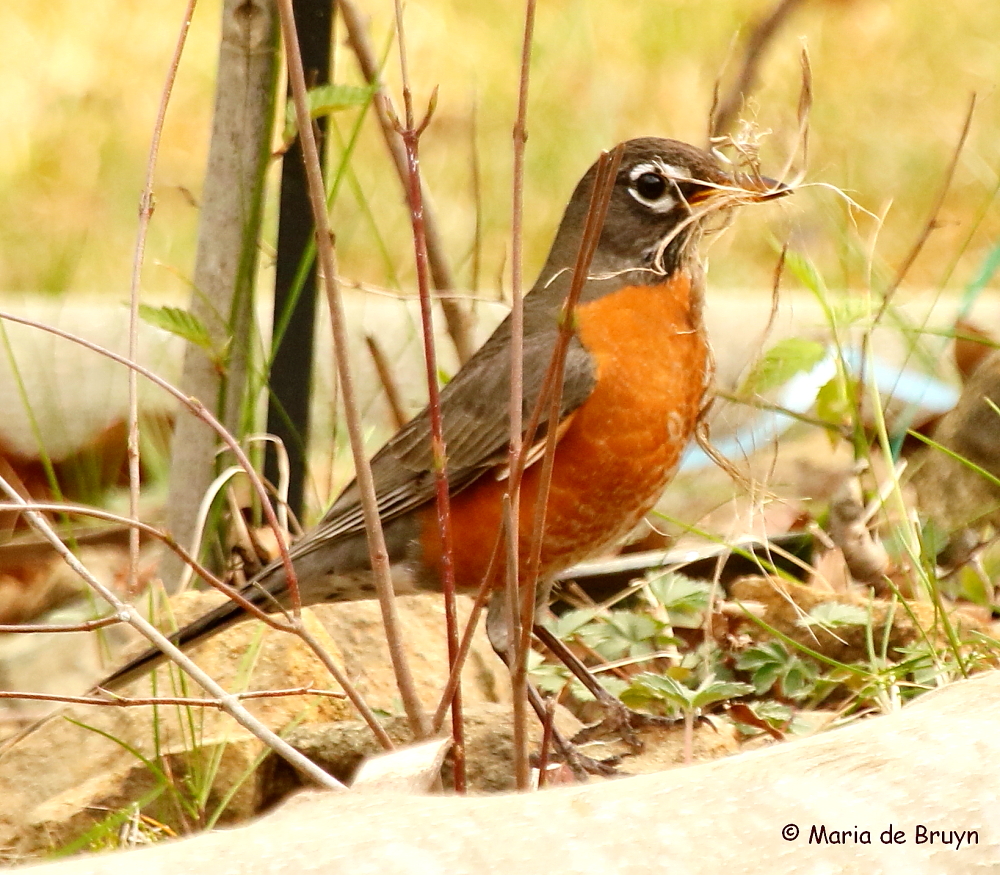
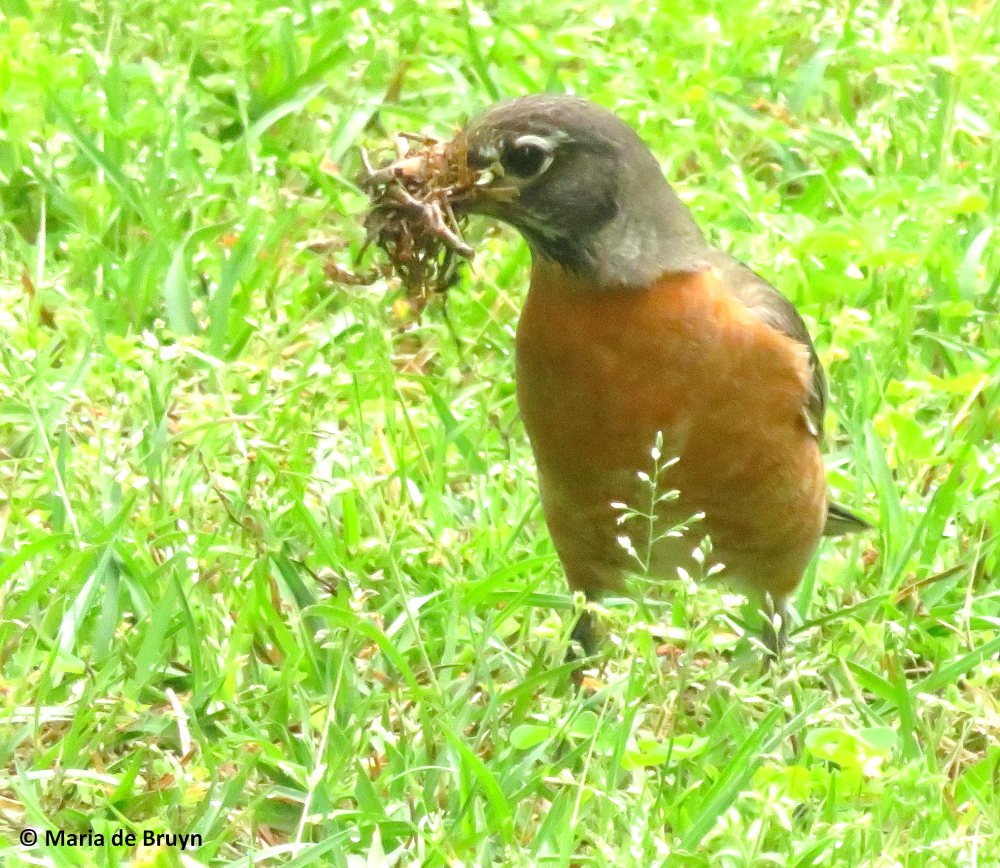
Many birds make cup nests and spend a good amount of time collecting the materials to produce them. Here you see American robins (Turdus migratorius) gathering grasses – they tend to fill their mouths as much as possible before flying off to the nest-in-the making.


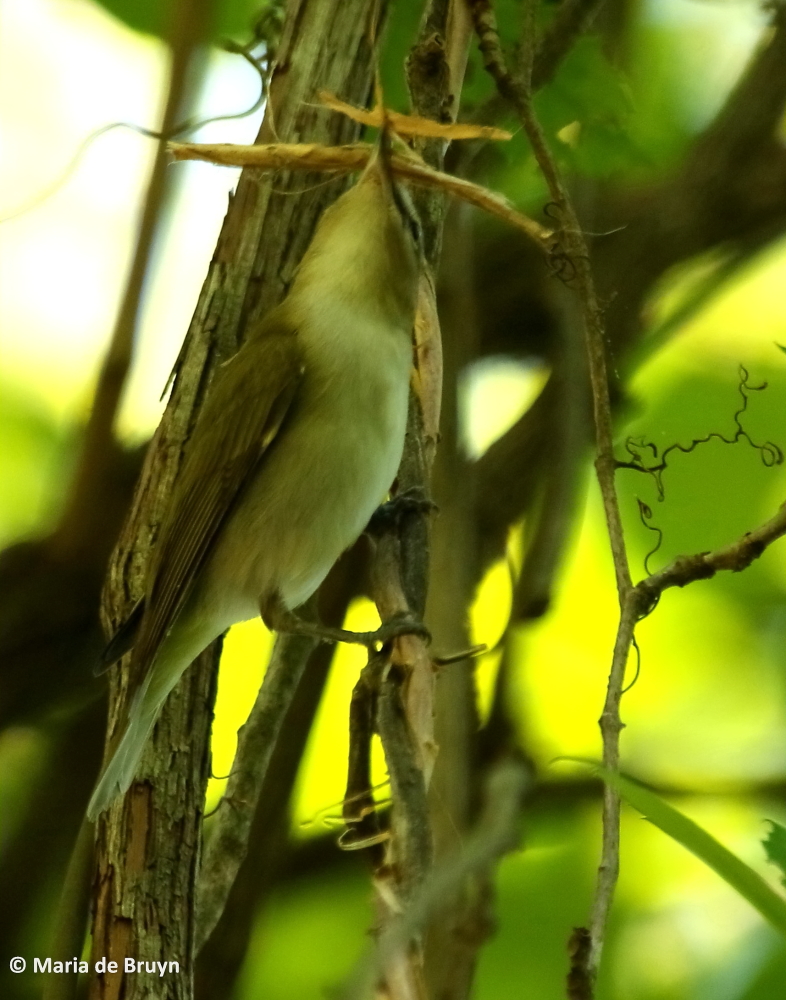
Red-eyed vireos (Vireo olivaceus) will also attempt to get several pieces of bark into their beaks before flying back to the home site. The photos here are dark as the bird was deep in shrubs where little light was penetrating.


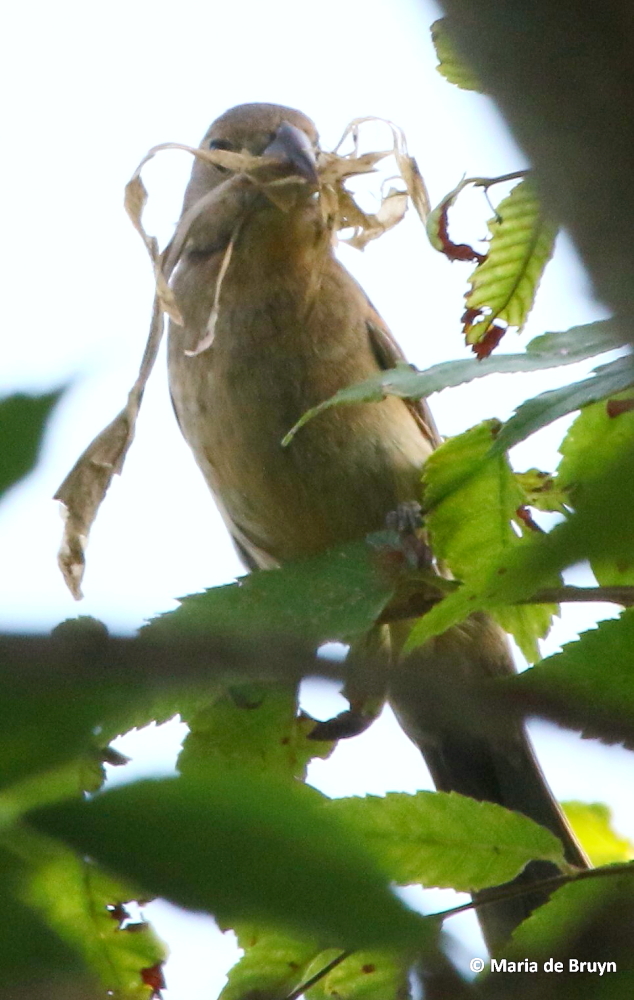
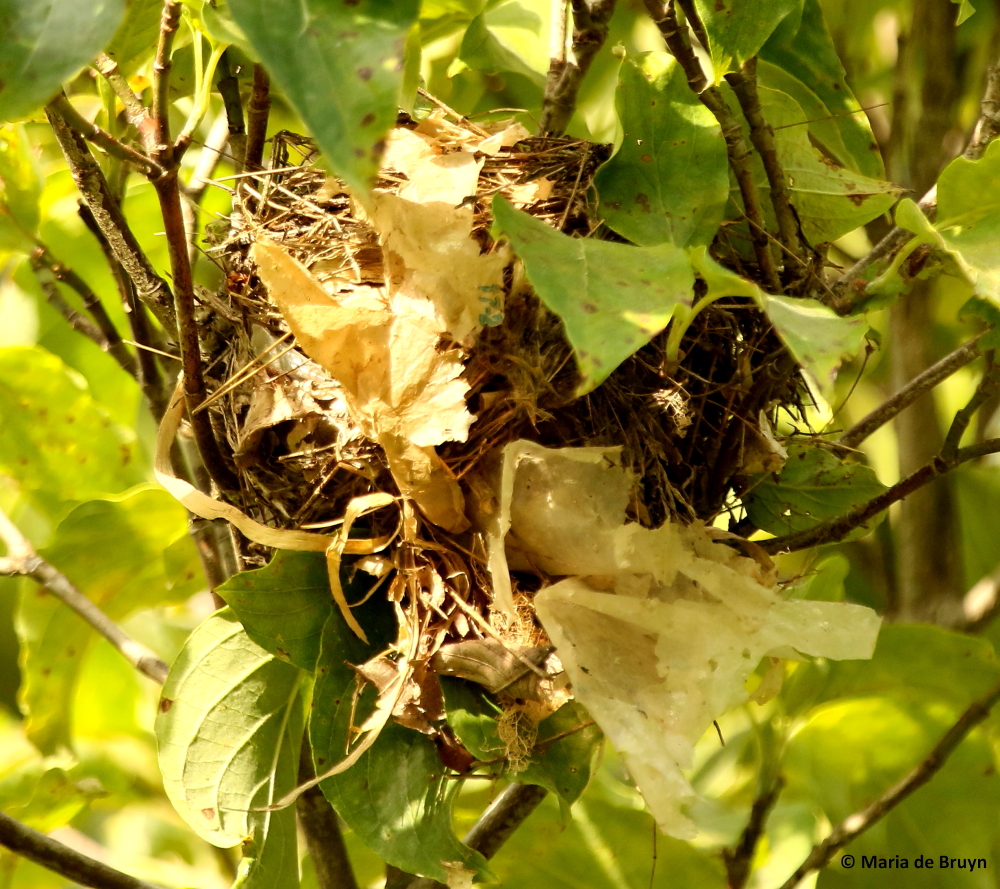
Blue grosbeaks (Passerina caerulea) weave what looks like a cross between a pendant nest and a cup nest; they also add man-made materials such as rags, cellophane, newspaper and bits of plastic.


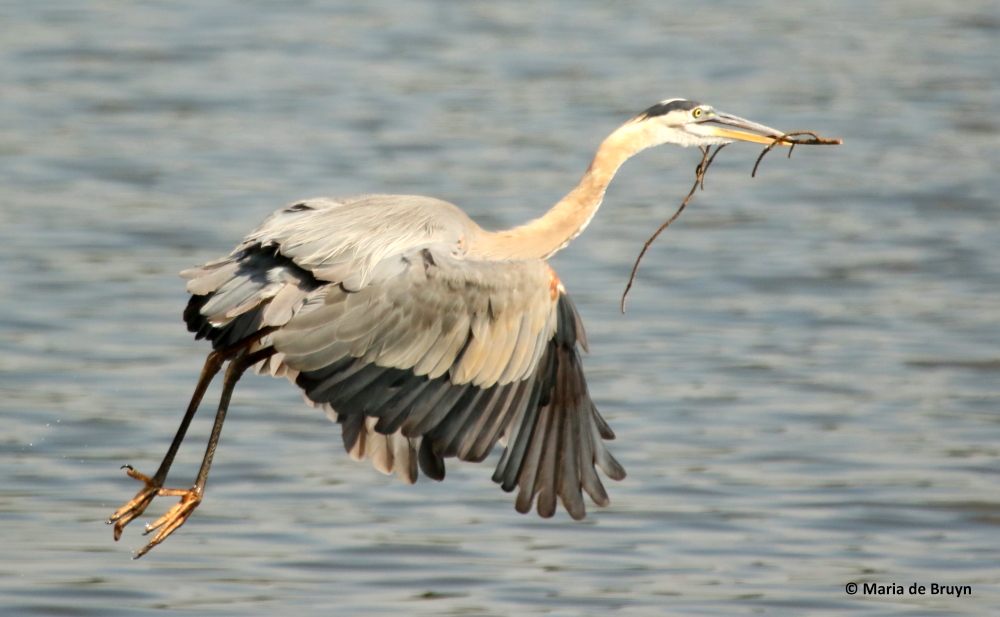
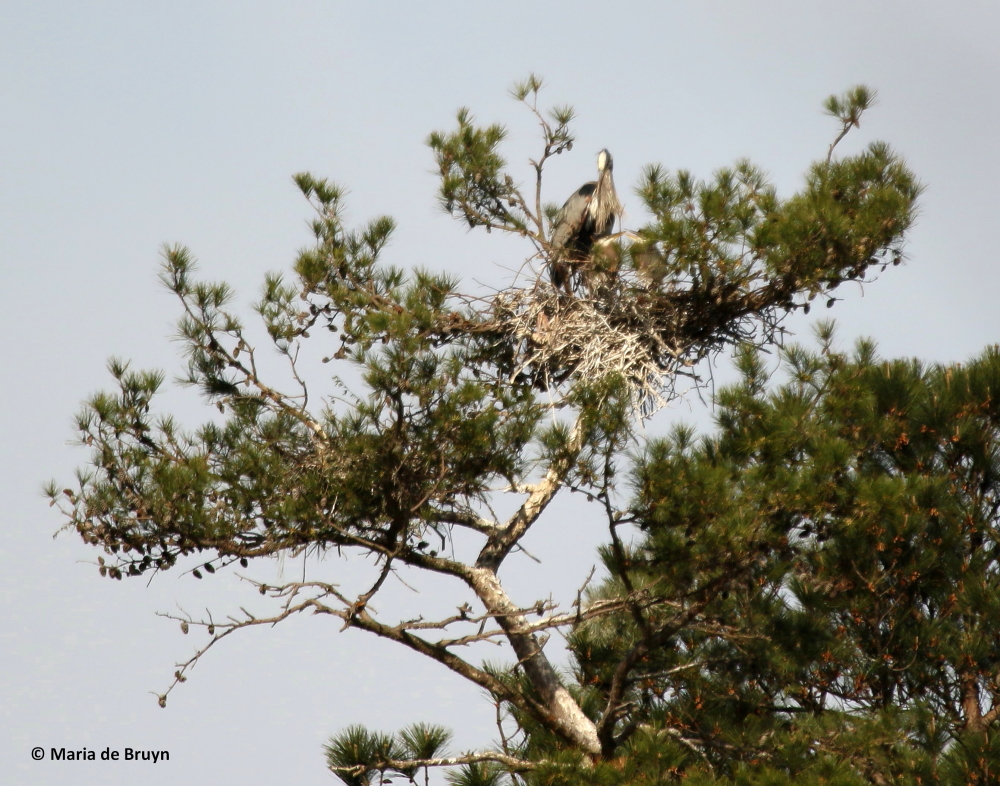
Great blue herons and ospreys are builders of platform nests.The great blue herons (Ardea herodias) carry large twigs and branches to furnish a nest. At Sandy Creek Park they have been using the same tree-top platforms for several years now.


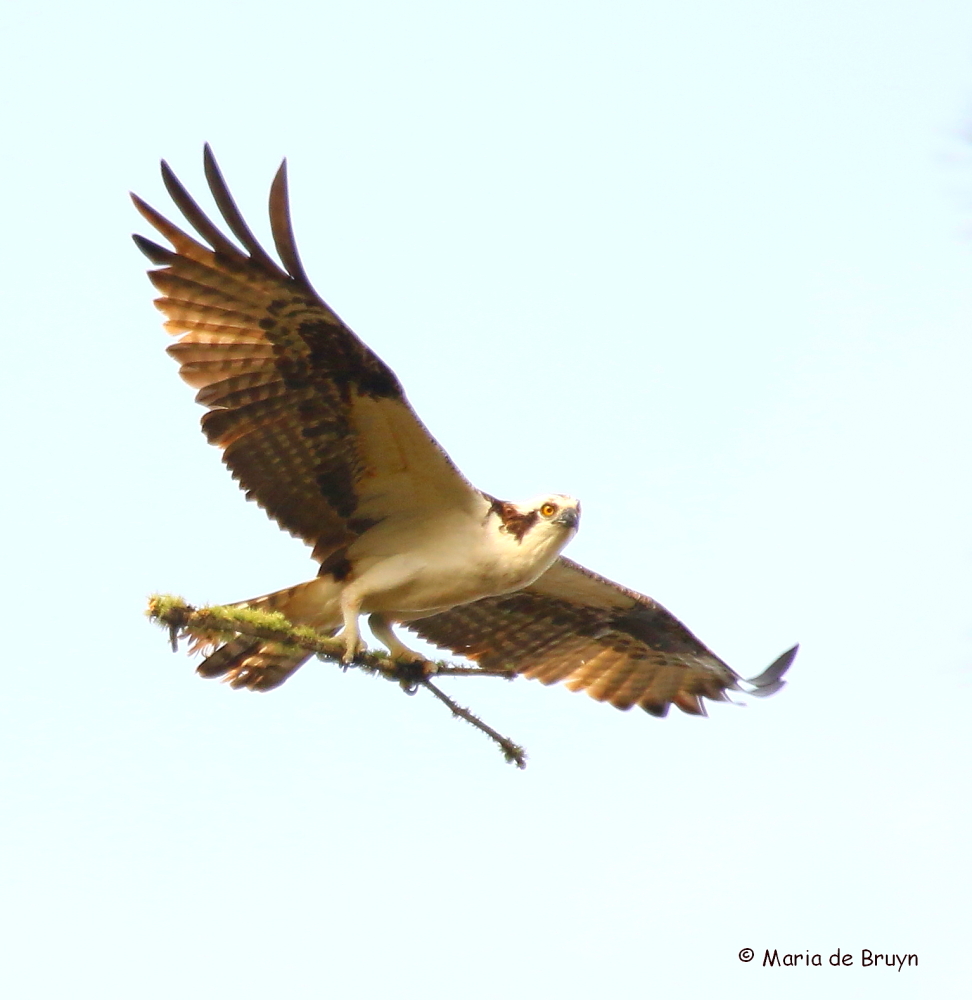
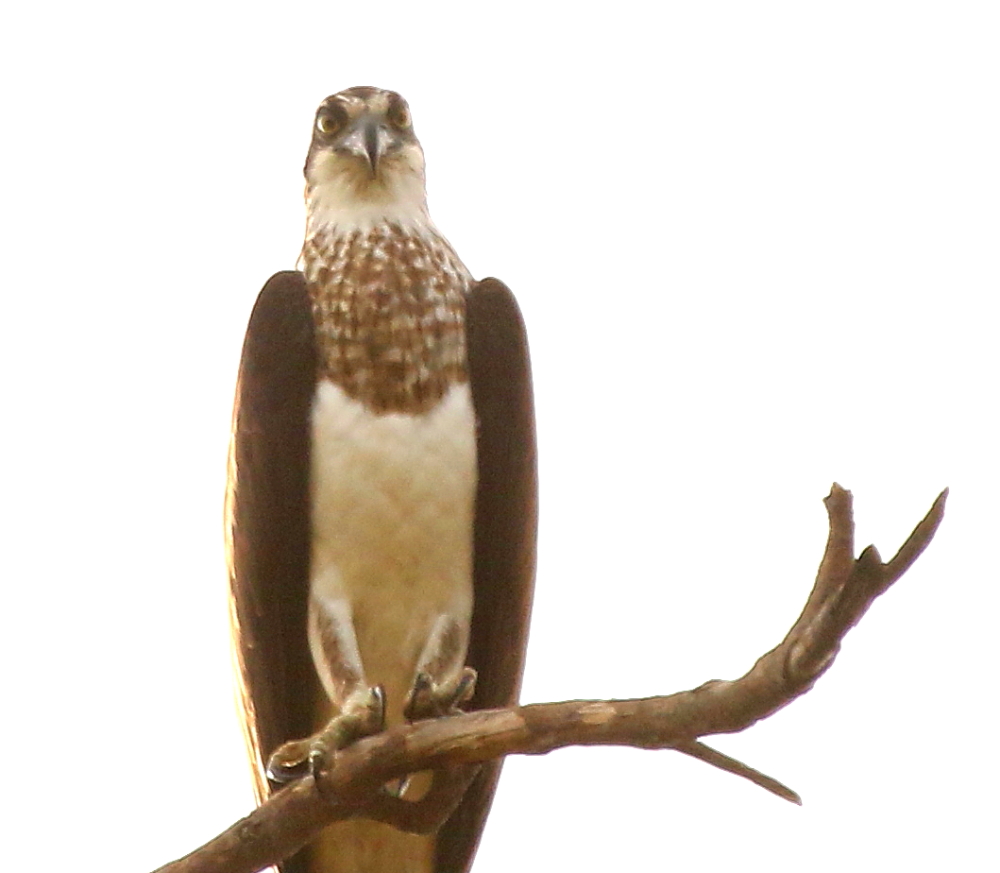
Last year, I saw this osprey pair (Pandion haliaetus) build their first nest from scratch; they weren’t enthusiastic about me being in the vicinity and would perch or fly overhead to give me “the evil eye” – sometimes calling to one another to sound the alert that they had spotted me down below.


This year, they were busy refurbishing the nest – these birds with longer-term mates may use the same nest year after year. Again, they would stop their work to stare me down.


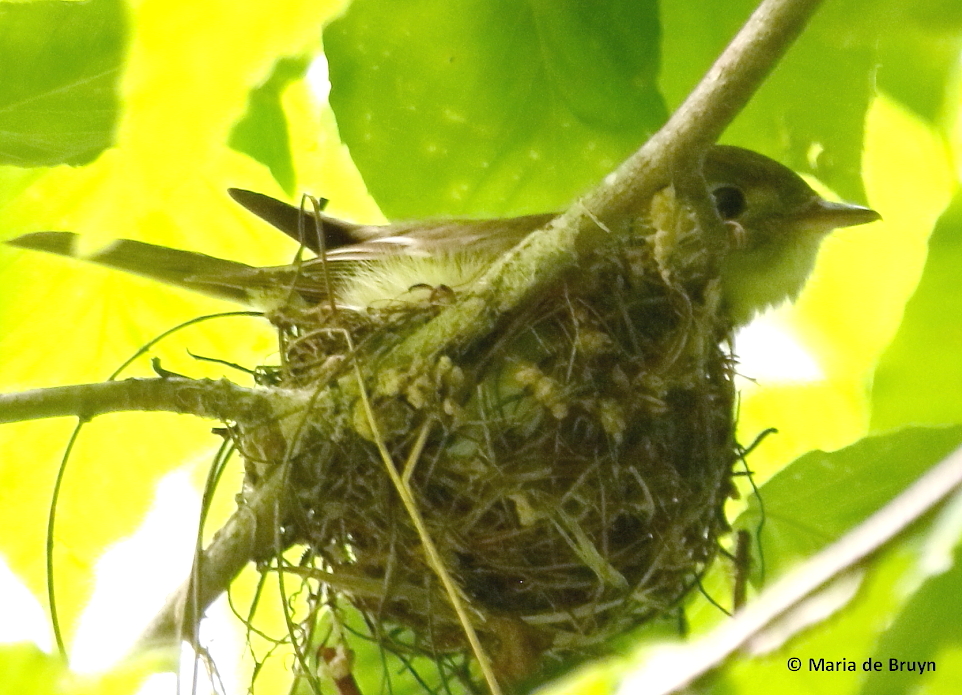
The Acadian flycatcher (Empidonax virescens) makes a cup nest that is well-hidden among the leaves of the tree spot it chooses. A friend saw the pair constructing this nest and it was done by the time I visited. It seemed quite a tight fit for mom to sit in while brooding her eggs.

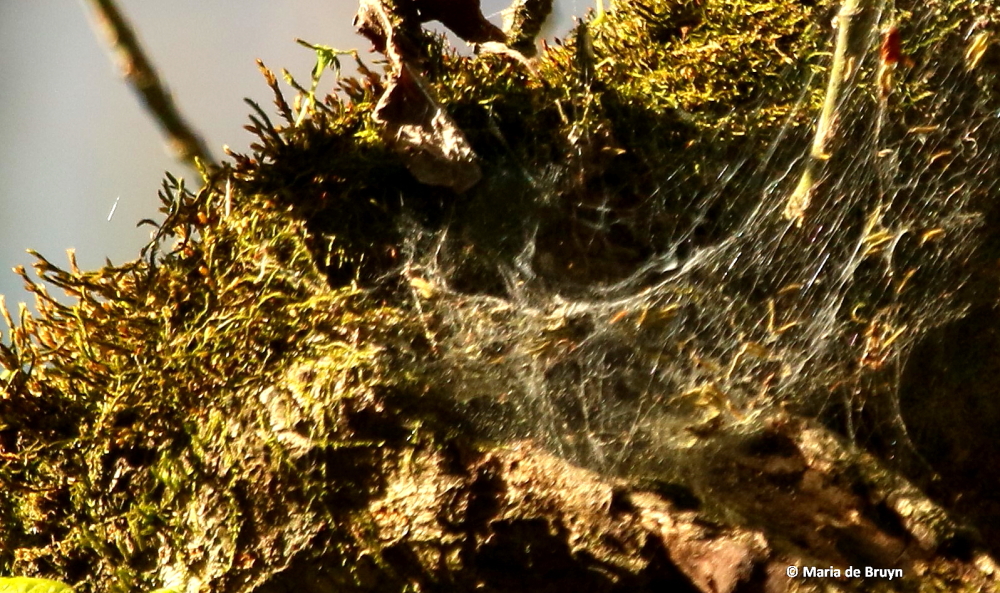
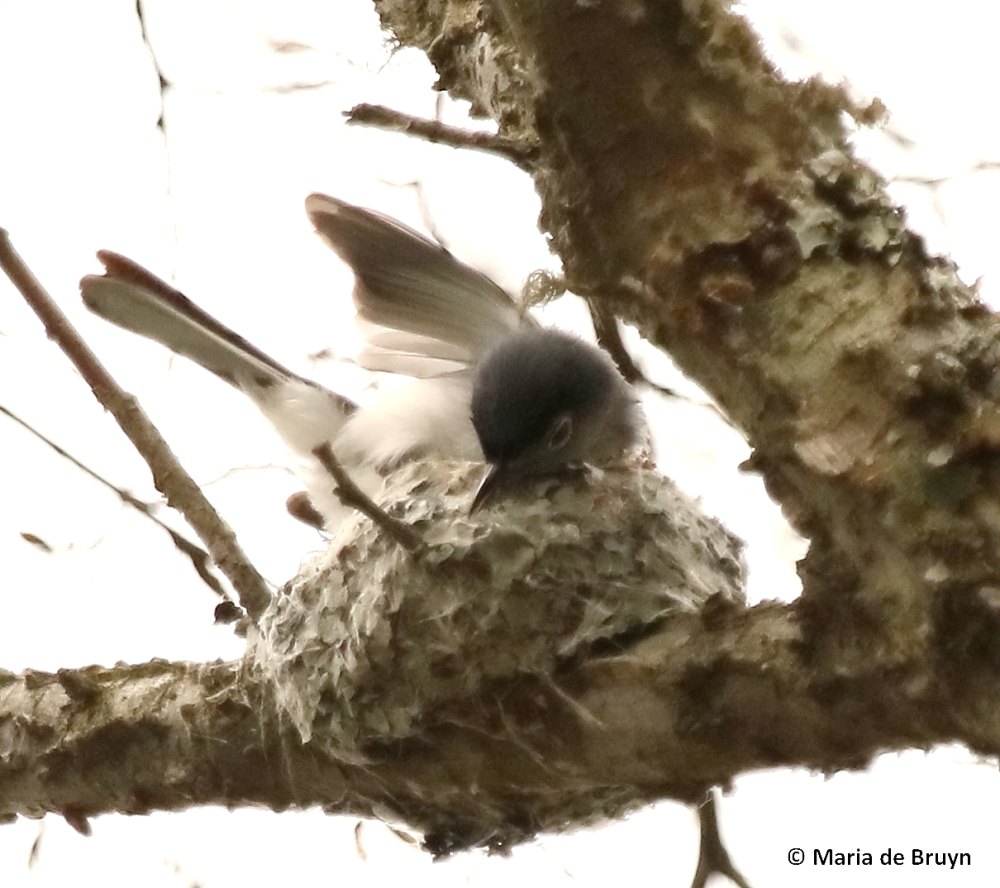
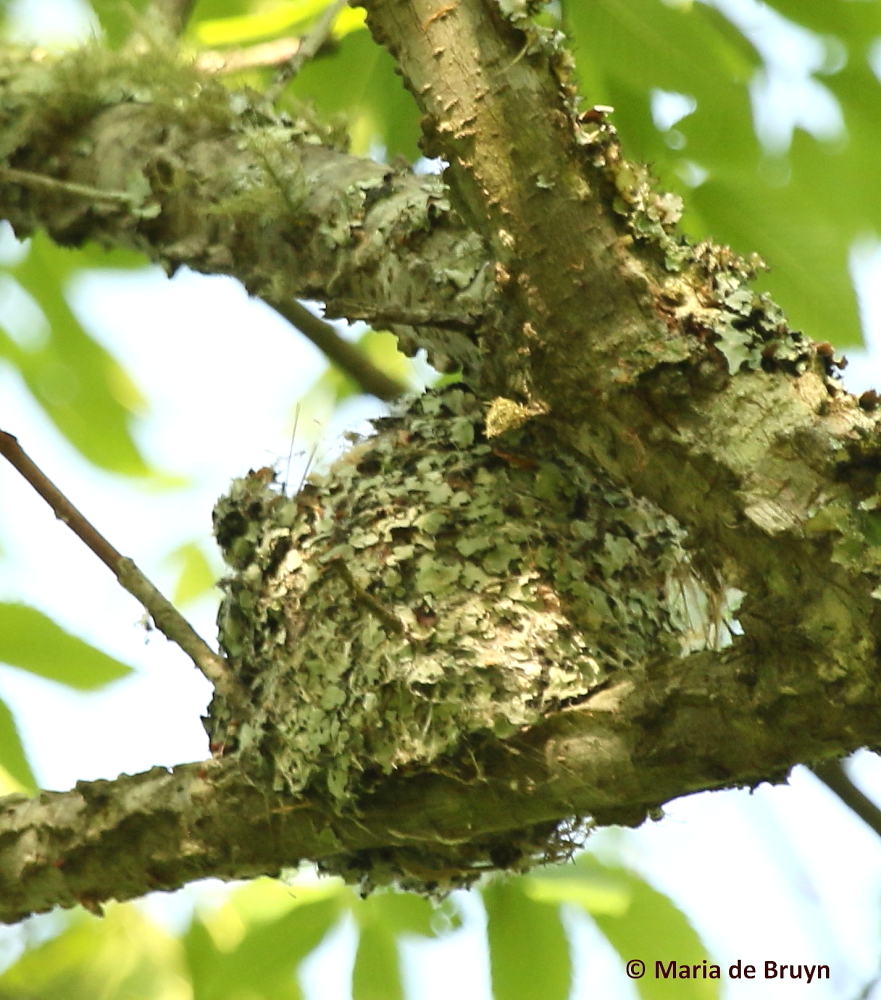
The bird whom I enjoy seeing most during nest construction is the blue-gray gnatcatcher (Polioptila caerulea). These little birds are very active and often don’t sit still for long as they feed in shrubs and trees. When they are busy making a new home though, they take their time to do a good job. First, they locate good locations for the materials they use – leaves, spider web to hold the leaves together and pieces of lichen to cover the outside walls.


They affix the lichen carefully to make a really beautiful, compact and elegant little cup. The female then sits in it and moves her body to ensure it gets the right shape and dimensions for her upcoming brooding.


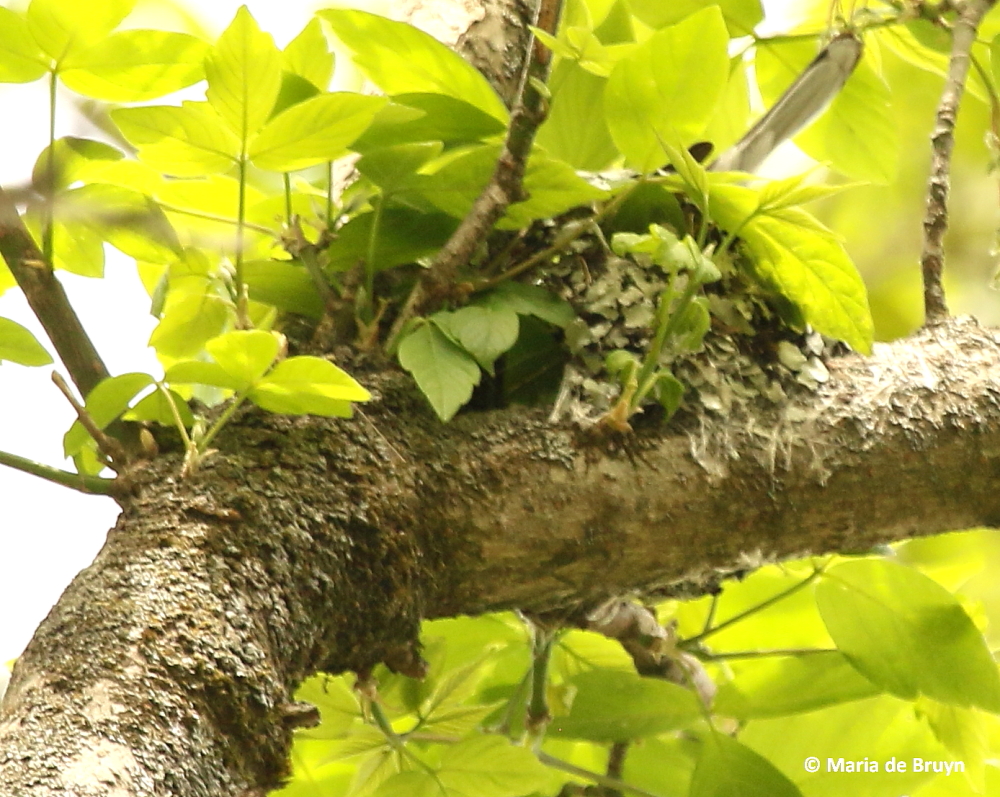
The male and female both work hard on the nests and this year I got to see three pairs at work. In two cases, it was lucky I saw them flying to and fro because their nests blended in really well with the tree.

Unlike the cavity and platform nesters, the cup and pendant nesters usually need to build a new nest each year. At the end of the summer, for example, the blue-gray gnatcatcher nest had already deteriorated considerably with the rain and wind, even though it was a fairly calm and dry season.


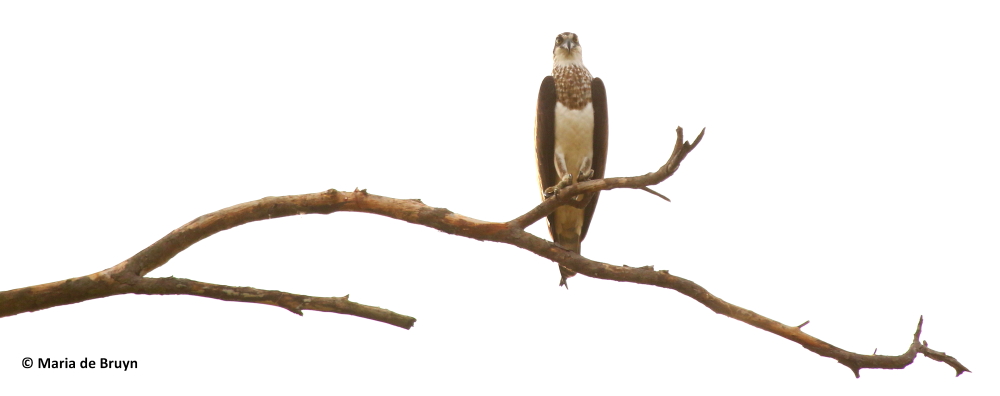
Once the nest is complete, the avian parents brood and feed their babies before fledging and this will be the third part of this series. For now, I leave you with the male and female ospreys as they watch the birdwatcher….