“Nuts” for nuts!

A primary source of nutrition for many birds is nuts.This high-calorie food provides them with dietary fat, which can be especially welcome during the colder months. As nuts ripen, you can see the birds flying by, carrying acorns and beechnuts, as well as seeds of various kinds. Some birds are especially suited to eating nuts with their thicker, cone-shaped bills, which are shaped to help them crack open pods and seed cases. Northern cardinals (Cardinalis cardinalis), sparrows, grosbeaks, finches and woodpeckers are seed and nut lovers.

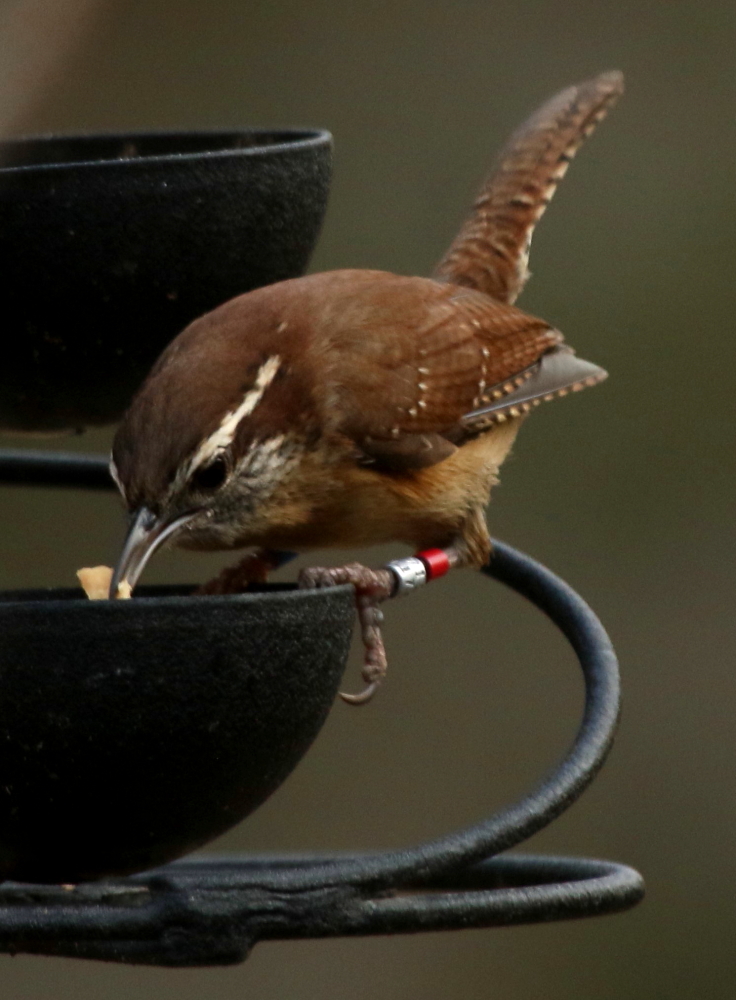
I had been lax in providing my yard birds with these culinary treats except for sunflower seeds and the seed pods in my yard trees. So one day early last year, I purchased a nut and seed holder and proceeded to give them peanuts, which are not actually nuts but the seed of a legume (Arachis hypogaea). This makes no difference to the birds like the Carolina wren (Thryothorus ludovicianus) of course.

I first tried peanuts in the shell and an occasional blue jay and tufted titmouse would stop by. However, they didn’t seem to want to put much time into removing the nuts from the shells and I didn’t really want the shells littering the ground either.

Then in the spring I put out some shelled peanuts from a container I’d bought for my own consumption and the avian visitors were delighted. Reading about peanut feeding informed me that I should avoid giving salted peanuts. I couldn’t readily find unsalted ones at the grocery store, so I began removing the salt, either by shaking the nuts in a paper bag or by washing off the salt.

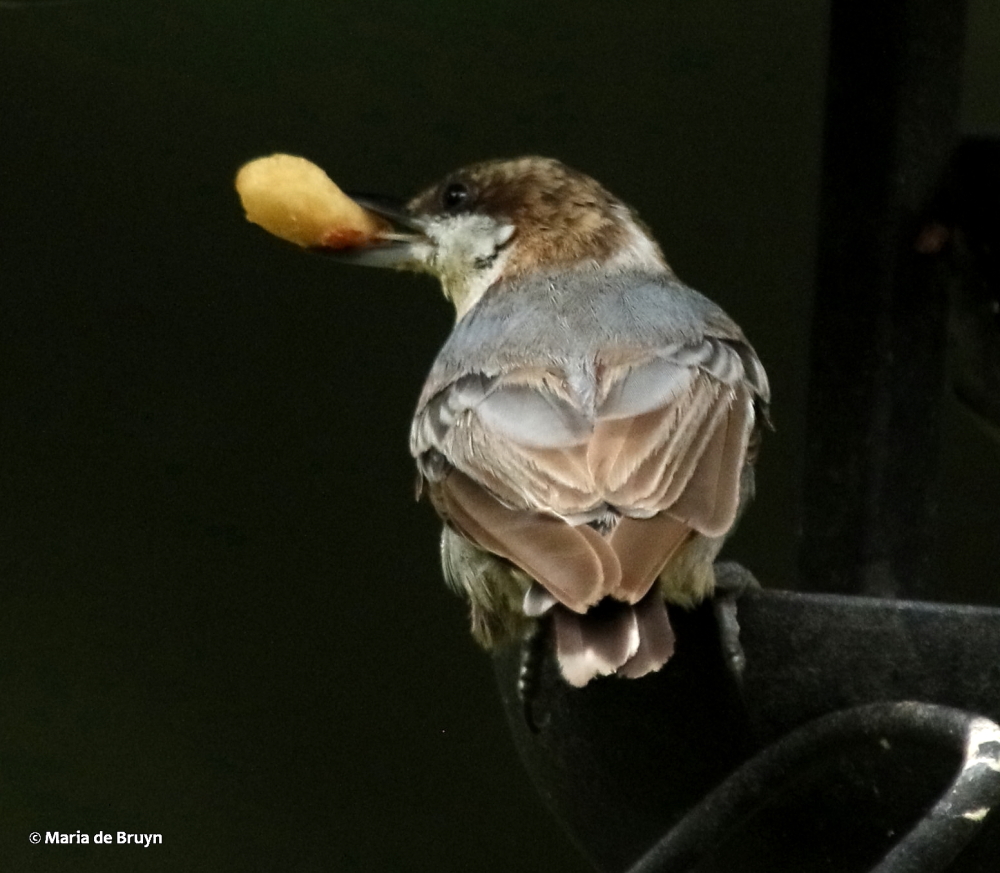
   

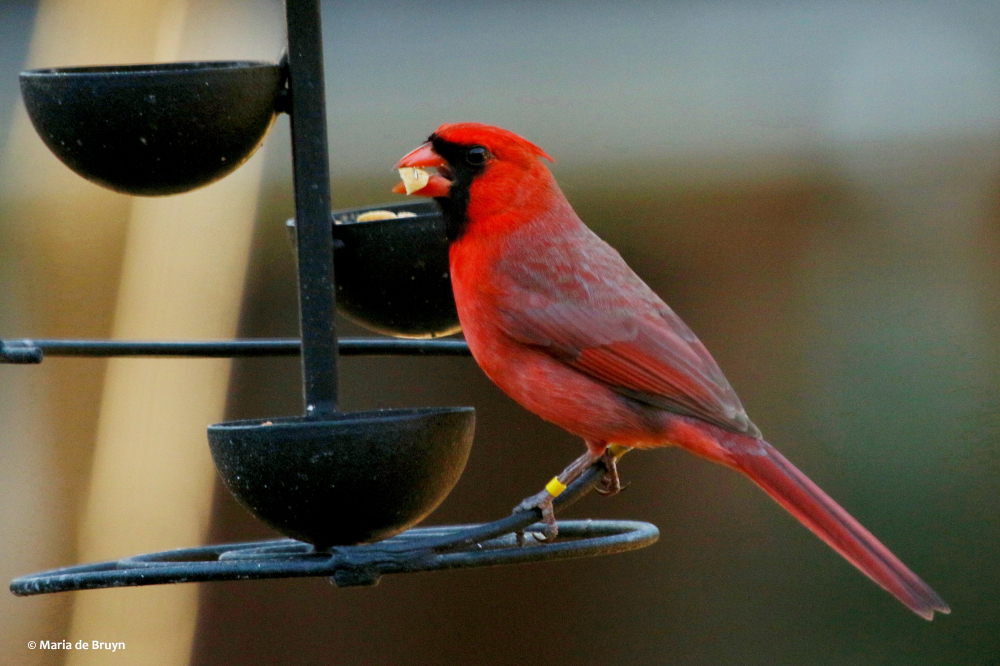
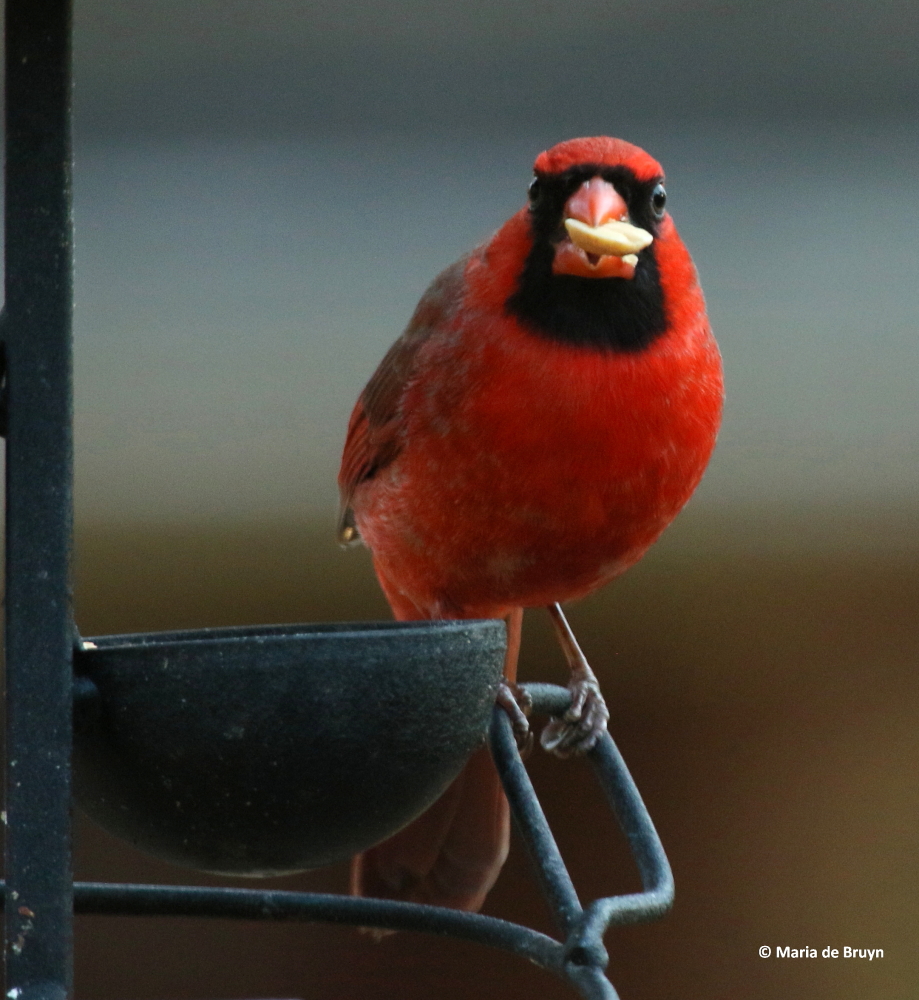
Northern cardinal                                            Brown-headed nuthatch (Sitta pusilla)

Before they left for the summer, the yellow-rumped warbler (Setophaga coronata) and ruby-crowned kinglet (Regulus calendula) tried the peanuts, too. Sometimes I wondered if the kinglet was also not looking for insects around the peanut feeder.


My choice to provide nuts was a big hit; I was rewarded with a procession of individuals of varied species who came by to quickly gulp or carry off a tasty nut. Some are pictured below – they came at different times of the day.
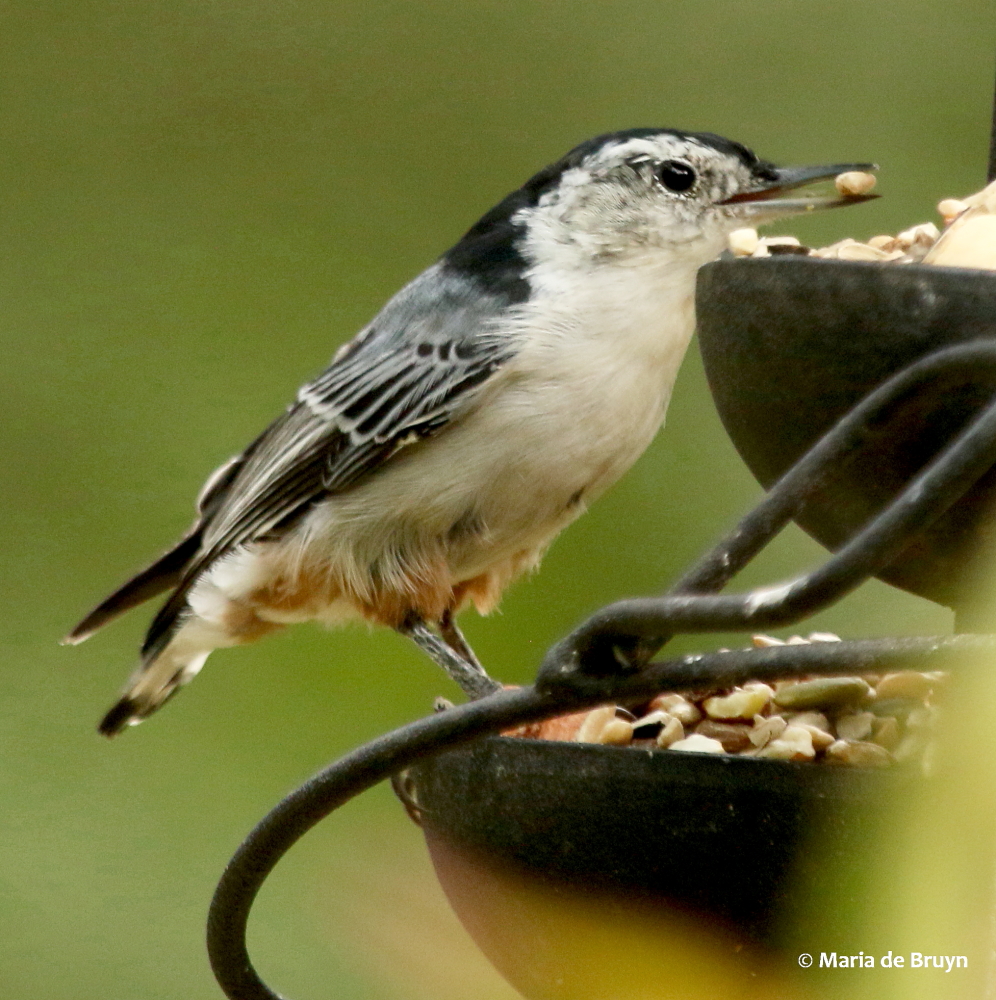
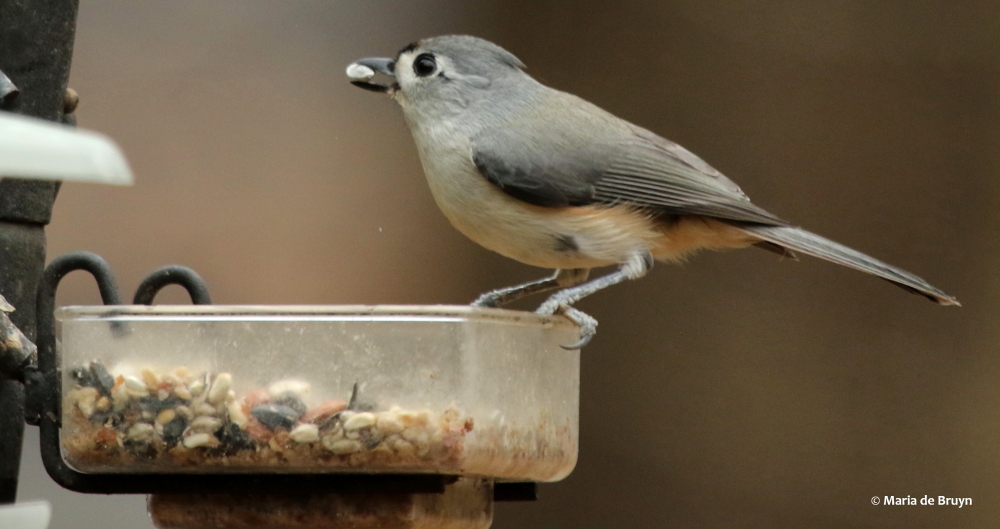
 

White-breasted nuthatch (Sitta carolinensis)     Tufted titmouse (Baeolophus bicolor)
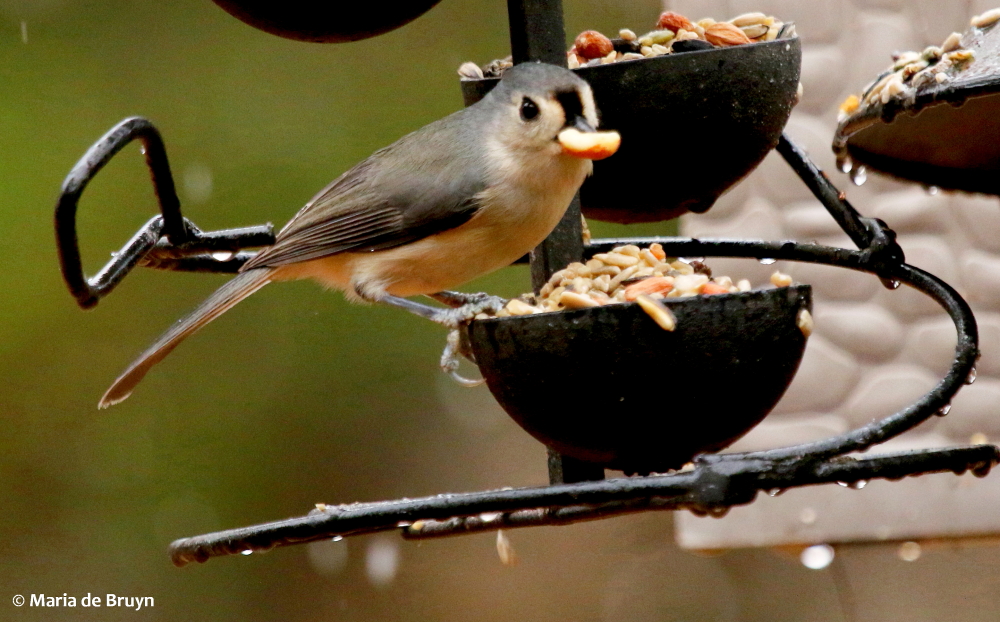
    

Tufted titmouse                                                       Pine warbler (Setophaga pinus)


Red-bellied woodpecker (Melanerpes carolinus)      Northern cardinal


Gray catbird (Dumetella carolinensis)        Eastern bluebird (Sialia sialis)
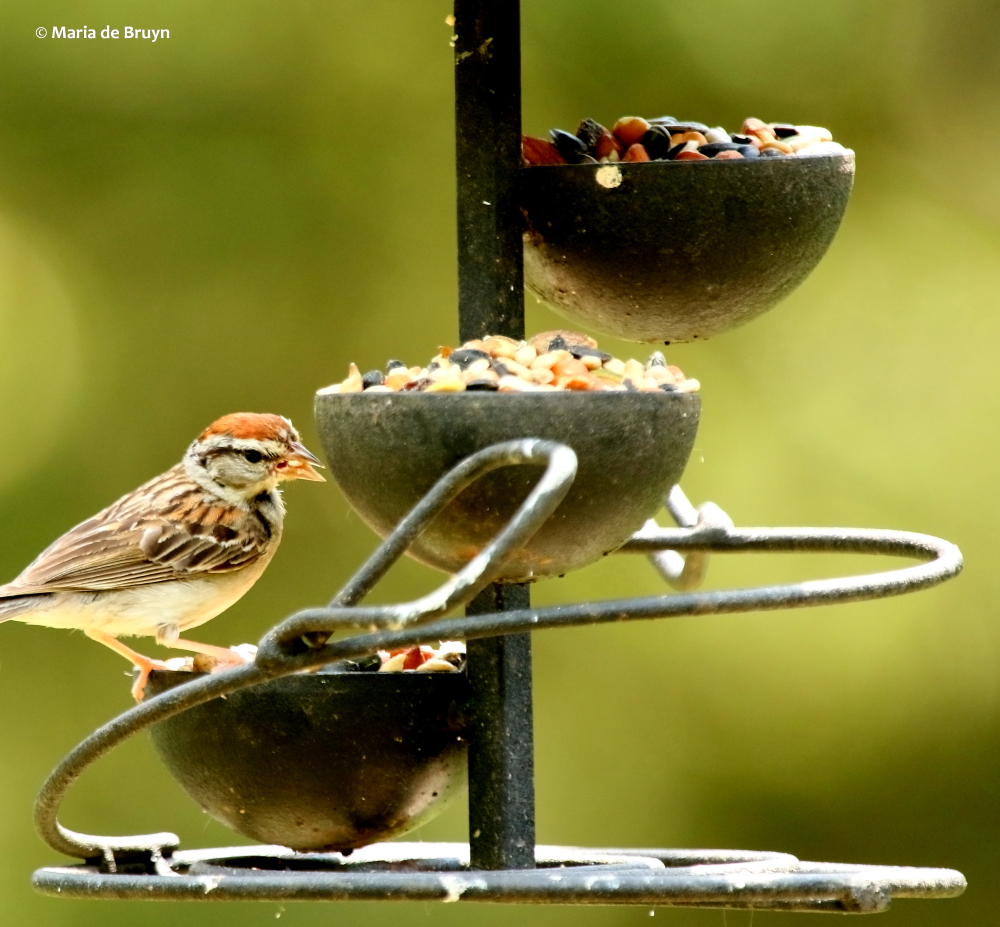
       

Chipping sparrow (Spizella passerina)         Brown thrasher (Toxostoma rufum)

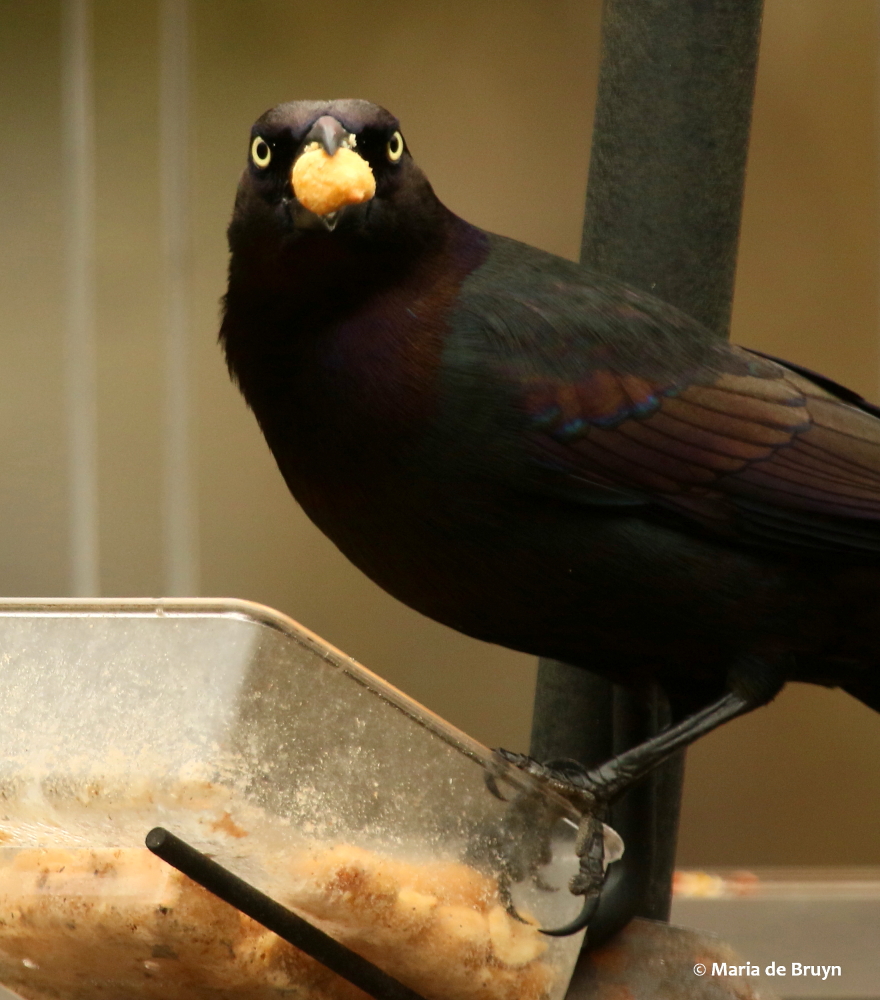
The common grackles (Quiscalus quiscula) will sometimes break down the nuts (and are quite messy about it, compared to the chickadees and titmice), but they will also swallow the treats whole.
  

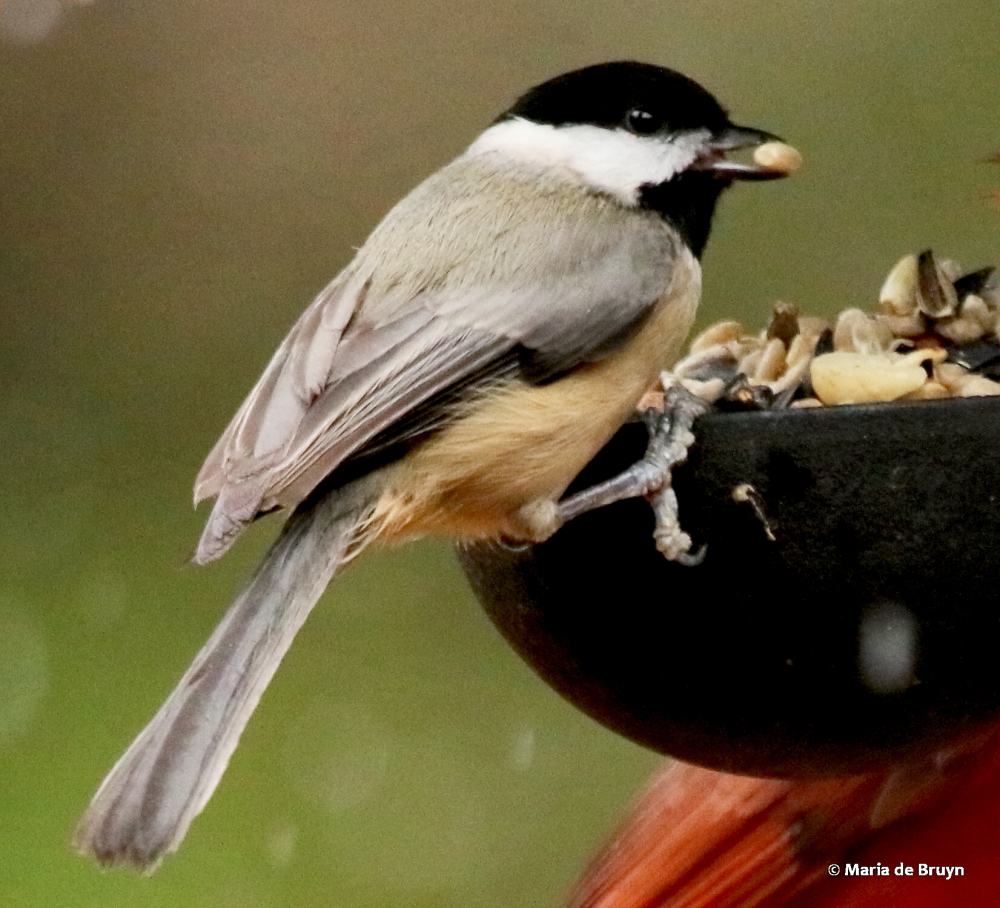
Others are intent on breaking the peanuts into smaller pieces that are easier to get down; this seems especially true for the smaller birds like the Carolina chickadee (Poecile carolinensis) below. Here we also see Riley, my banded Carolina wren, enjoying a treat.
   

The blue jays (Cyanocitta cristata) often gulp down some nuts quickly and then try to carry off several nuts at a time.
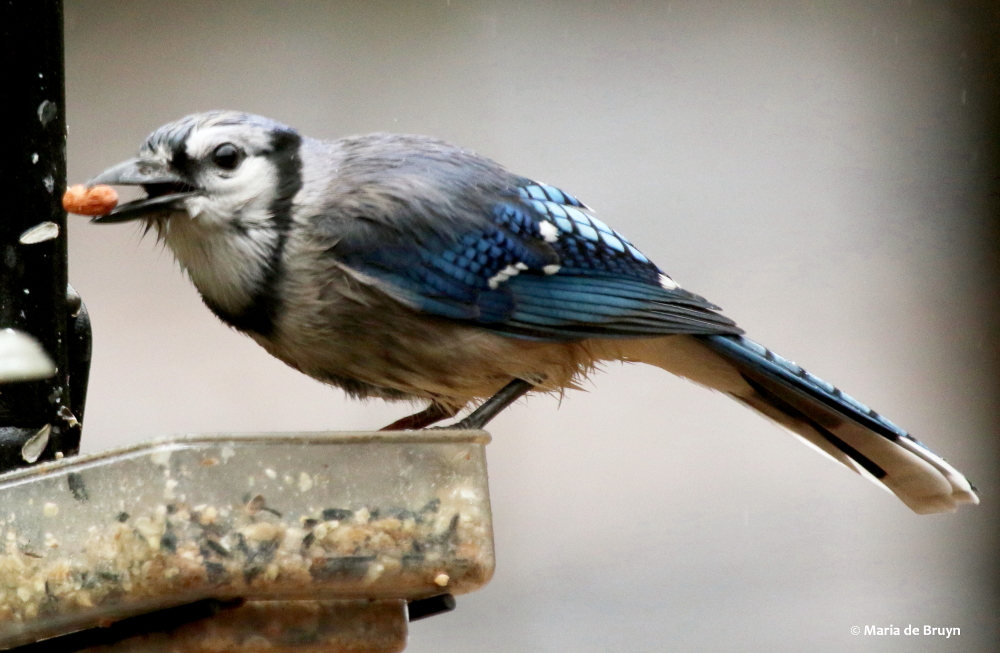
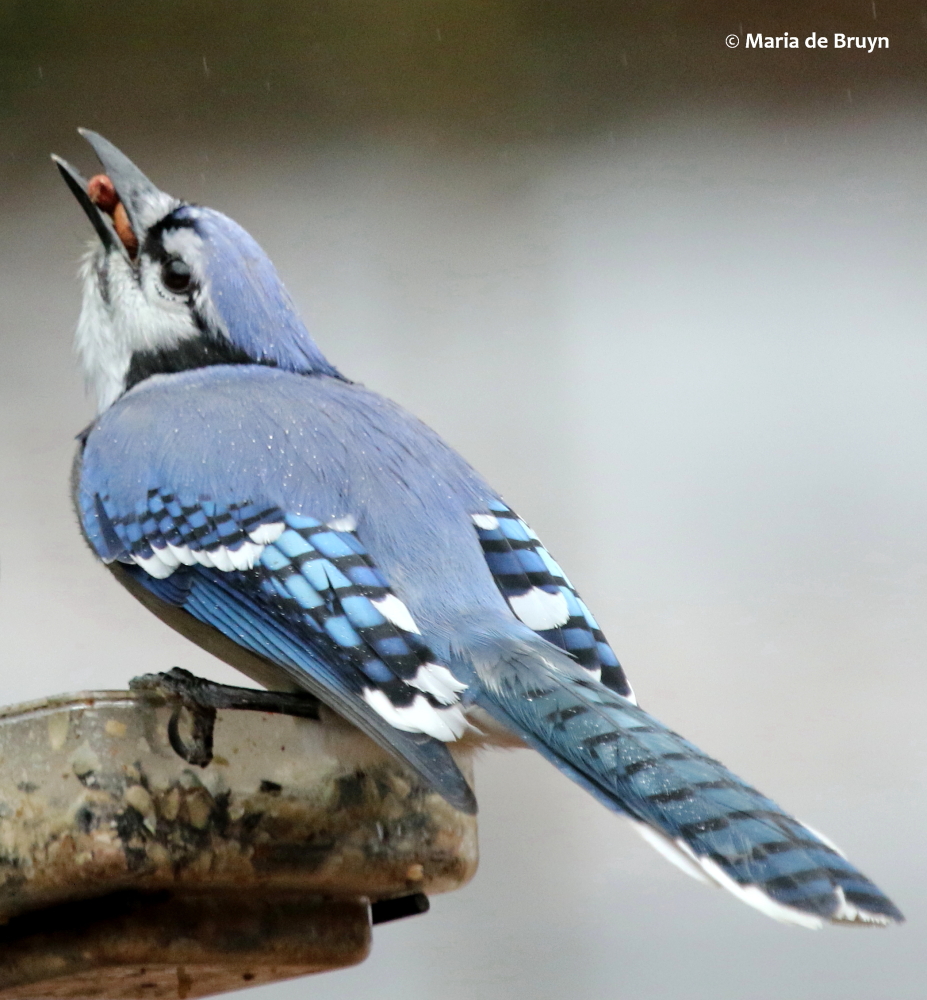
One good thing about the peanuts is that thankfully the starlings (Sturnus vulgaris) and brown-headed cowbirds (Molothrus ater) don’t appear fond of them (they gulp down the dried mealworms, however, as if that food is going out of style). One will occasionally sample a nut, but they never seem to want a second.

As time passed, I realized that the peanut feeding strategy was rewarding me with frequent avian visitors, but was also rather costly. In the autumn, I began putting out a less expensive fruit and nut mix. This has also proved very popular and various species of birds are willing to share space at the feeders. The chickadees especially will feed alongside others, like the house finches and Northern cardinal below.
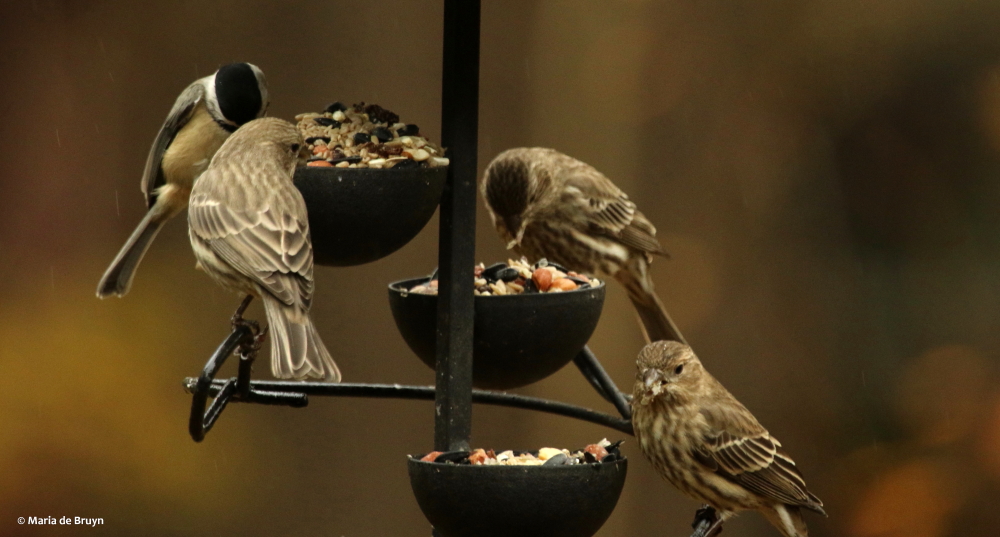
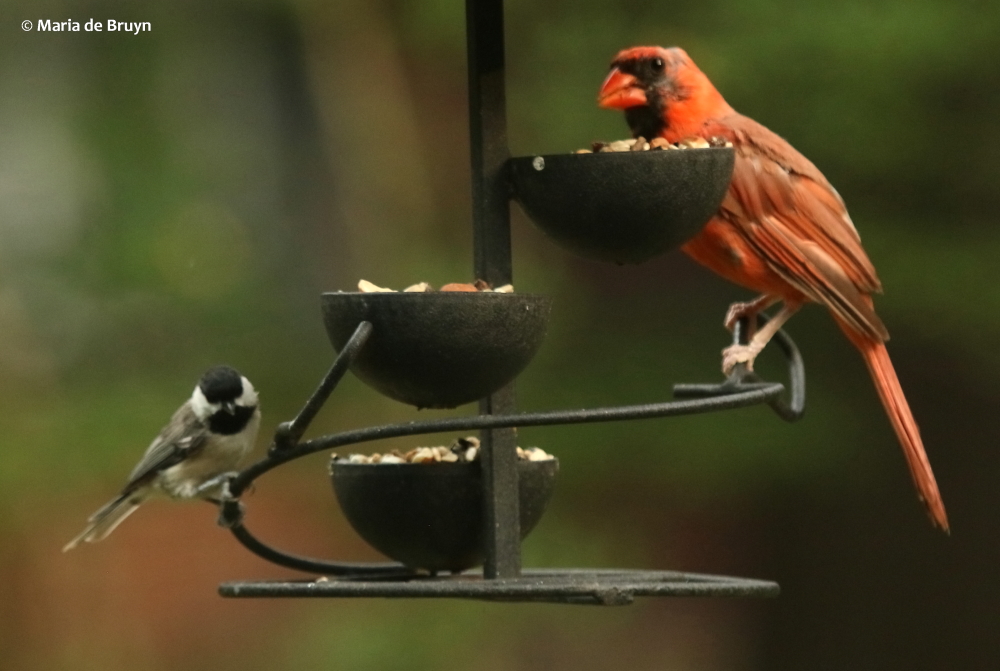
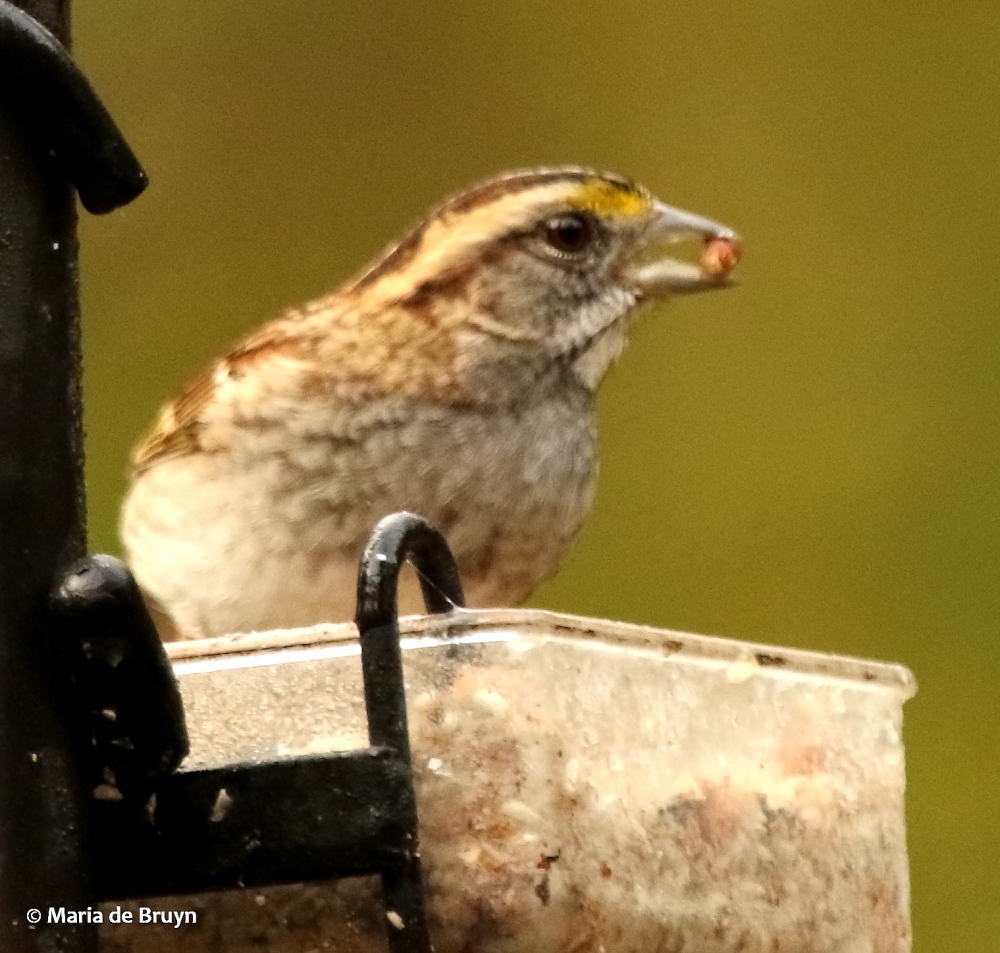
Species that usually forage on the ground, like the white-throated sparrows (Zonotrichia albicollis), also make occasional forays to the nut feeder.

When the nut feeders are empty, it’s not uncommon to see birds sitting atop them; when they see me, some will call out, as if saying, “Hey, fill up that feeder, please!” And I usually accommodate them, especially when it is very cold, as has been the case the first days of 2018 – we have had a record-breaking stretch of days in which the temperature did not rise above freezing, an unusual occurrence for our southern state of North Carolina.
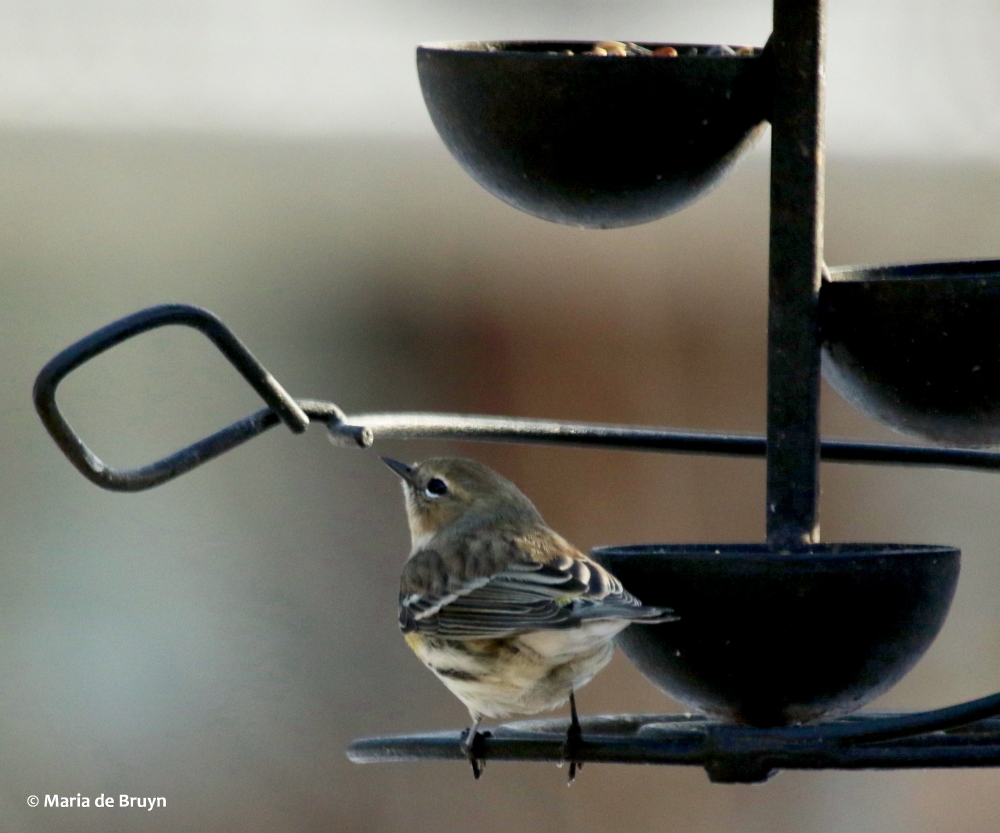
 

Yellow-rumped warbler  (Setophaga coronata)  House finch (Haemorhous mexicanus)

The nut feeders have also been very attractive to the resident Eastern gray squirrels (Sciurus carolinensis), one of whom has been VERY persistent in devising ways to get onto the feeders. Each time s/he succeeds, I change the position of the feeders or stumps and branches nearby. Currently, that clever rodent hasn’t been able to get up there. In compensation, I occasionally throw a handful of nuts on the ground.
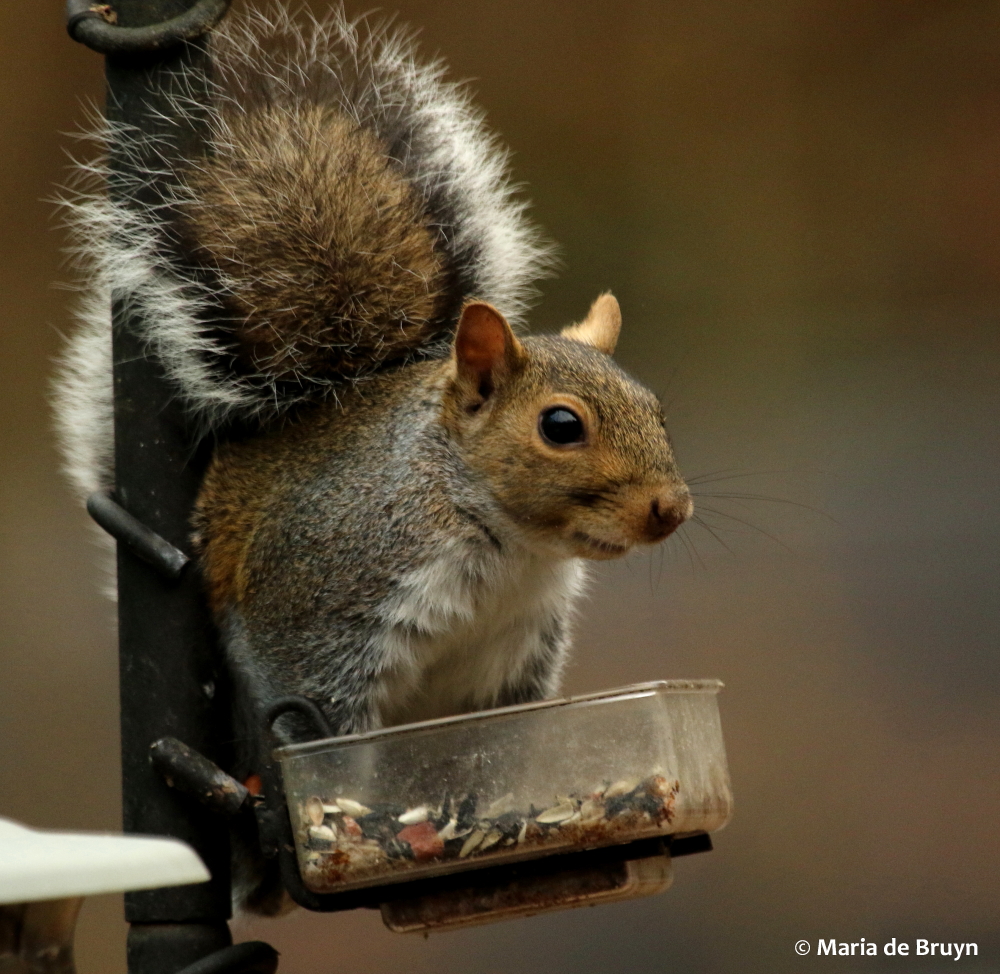
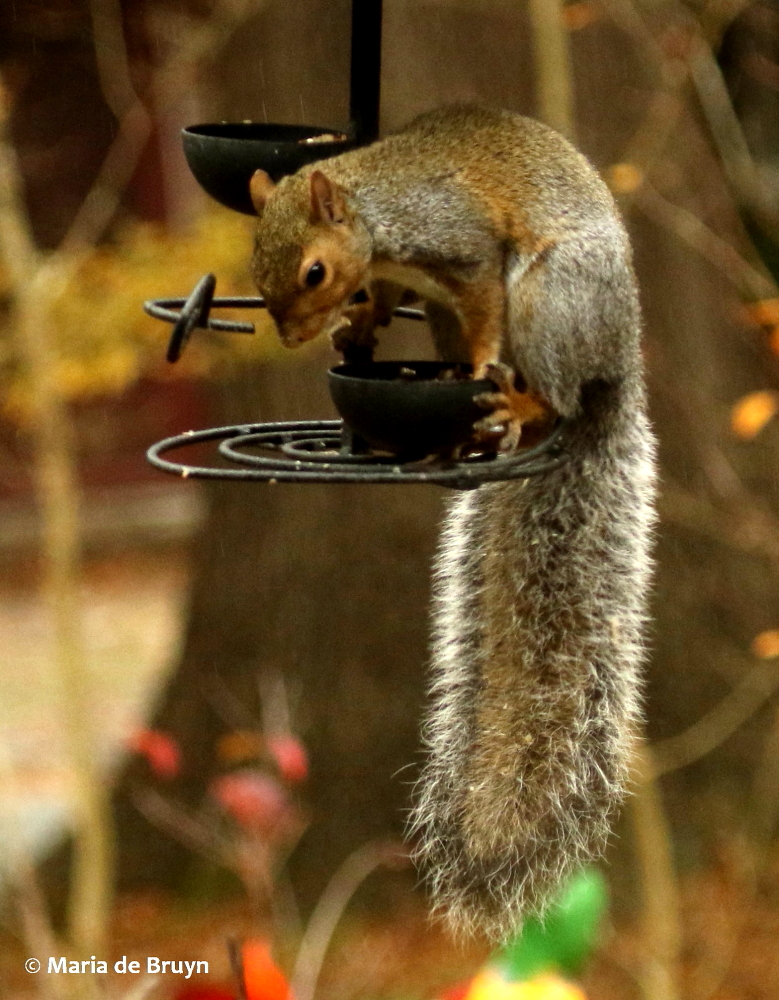
             

So, not all the birds are “nuts” for nuts, but plenty of species think they’re mighty fine! They are definitely a worthwhile addition to the birders’ array of feeder offerings.
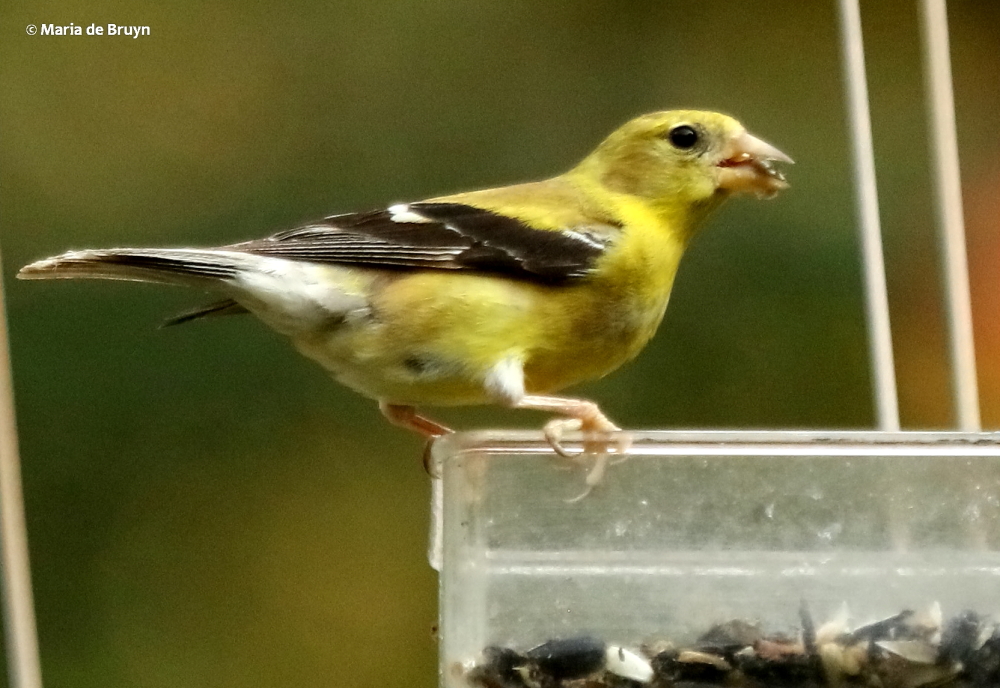
American goldfinch (Spinus tristis)



Finding fungal friends!

Although I find mushrooms interesting, they honestly are not especially favorite members of the plant kingdom for me. However, they do attract my attention when they are unusual or unusually abundant after rainfall. And I do find them a tasty addition to a meal for sure. So when the non-profit Friends of Bolin Creek sent out an invitation for a mushroom walk, it seemed like a nice way to take an outdoor break from my numerous tasks and chores.


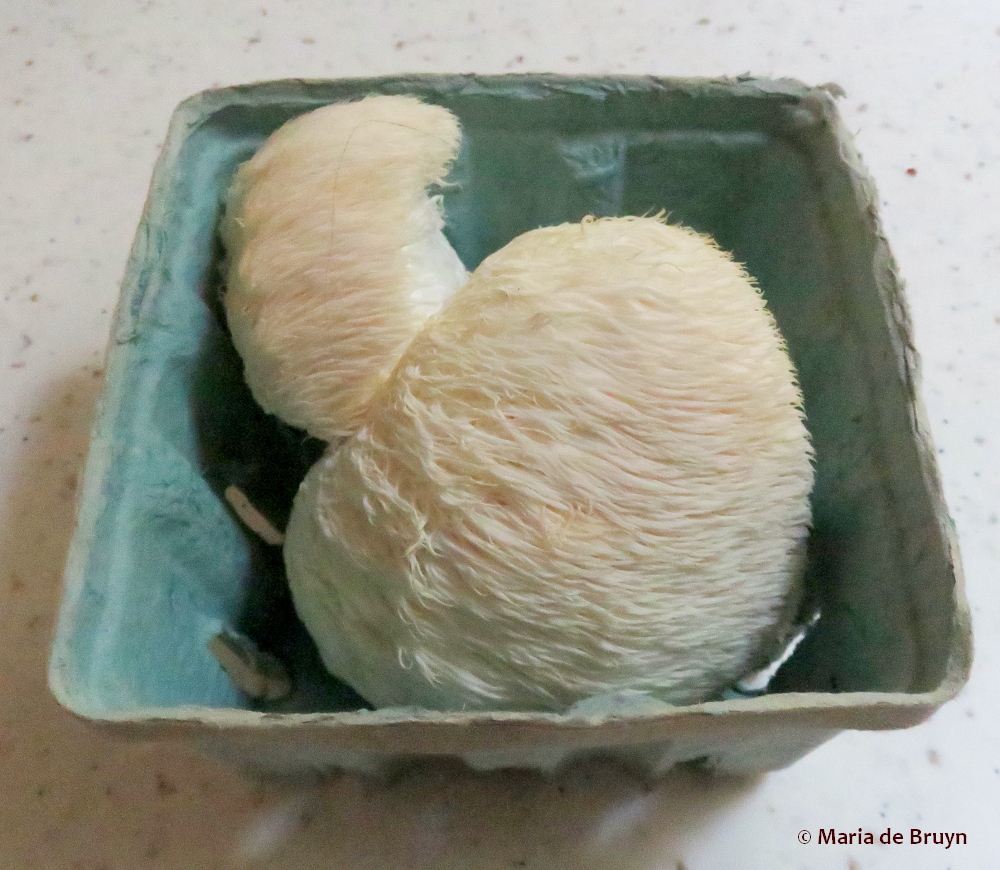
I was hoping to see a lion’s mane mushroom (Hericium erinaceus) on the walk – mushroom enthusiast friends had recommended this one to me and I happened to have purchased one from a fungus grower at the farmers’ market the previous day.

The walk was organized by the Association’s nature walk coordinator, Salli Benedict, and led by Van Cotter, a retired mycologist and volunteer with the University of North Carolina’s Herbarium in Chapel Hill. He still mentors students involved with environmental studies and our group included several students who were intent on adding to their collection of 25 species for a class assignment. So, the walk participants included people of various ages and degrees of fungal knowledge.*


We divided into two sub-groups and our group set off into the woods. Our first spotting was a Suillis mushroom. This type is associated with pine trees and we did indeed find three growing at the base of a tree. A mycologist in our group pointed out the veil, a membranous tissue covering the cap, and she cut it length-wise so we could see the inside. These mushrooms are also called butter mushrooms.


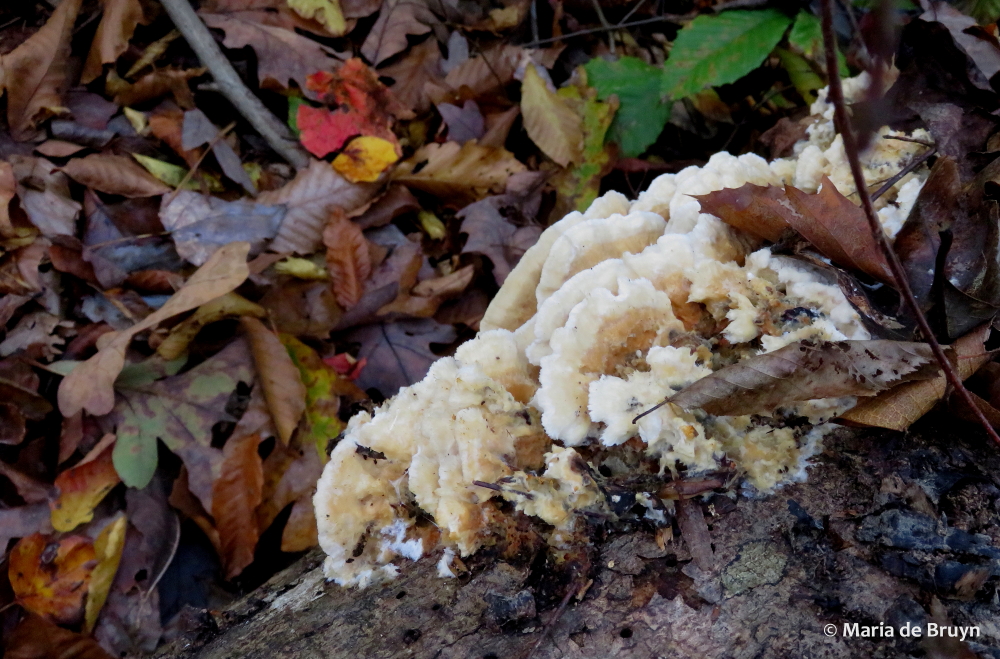
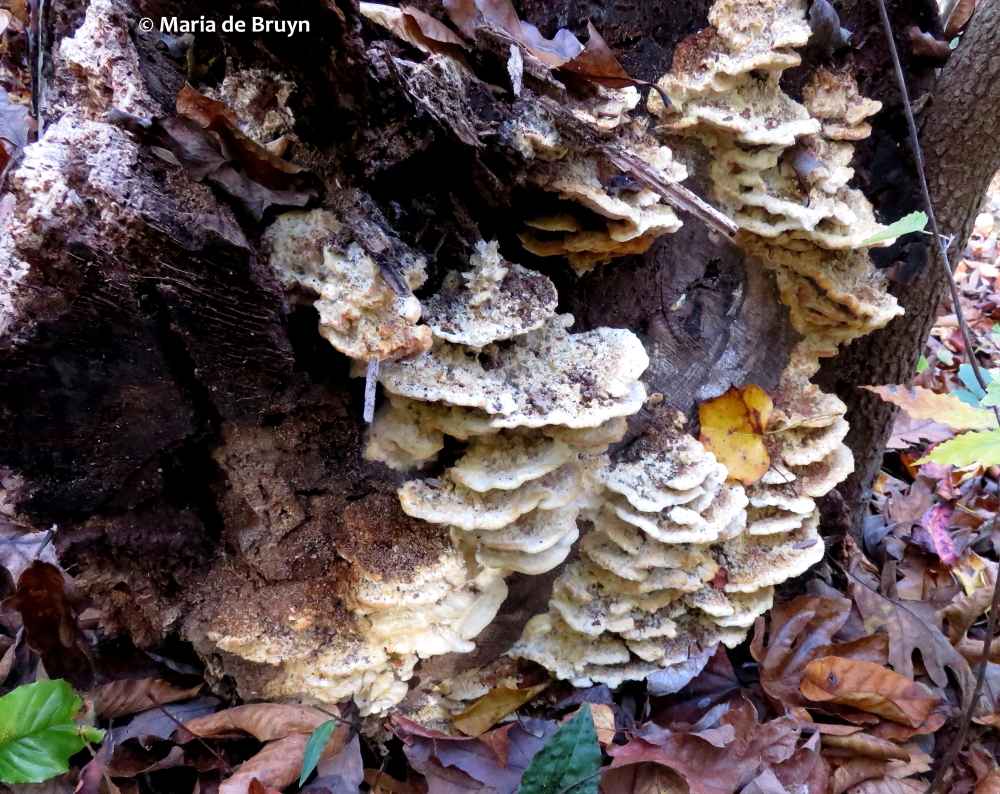
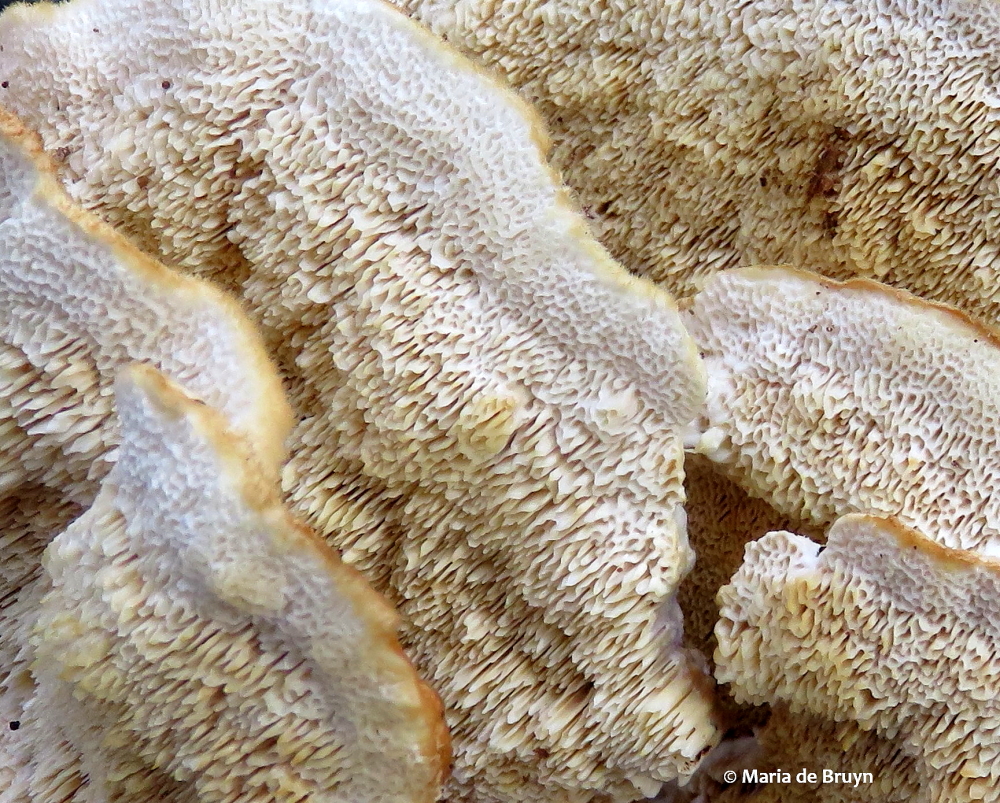
As we walked on, we came across a few species of fungi growing on fallen and rotting logs. A few were polypores, which are mushrooms with pores or tubes on the underside of the cap. Some of them were shelf or bracket mushrooms.


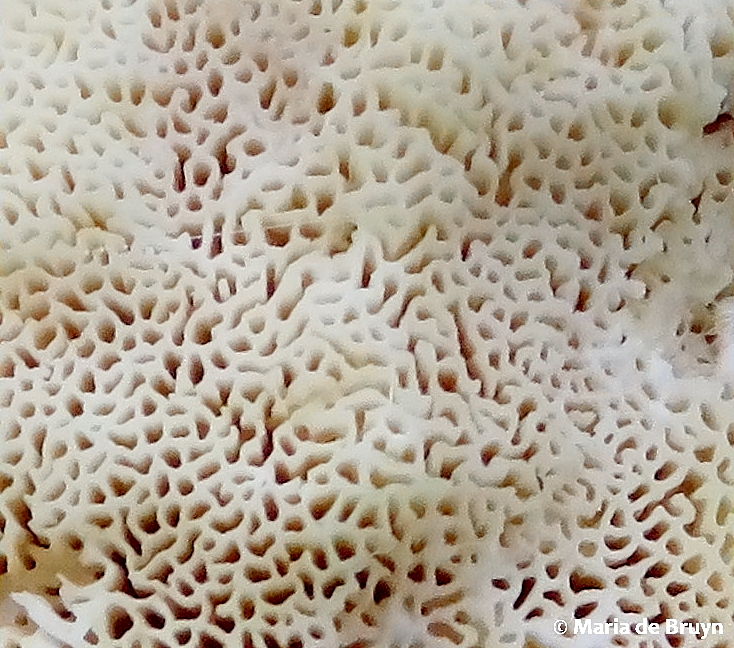
Some species look as if they have a maze of tubes underneath the fruiting body. The polypores are important in furthering wood decay, which in turn is important for cycling of nutrients and production of carbon dioxide in forests.


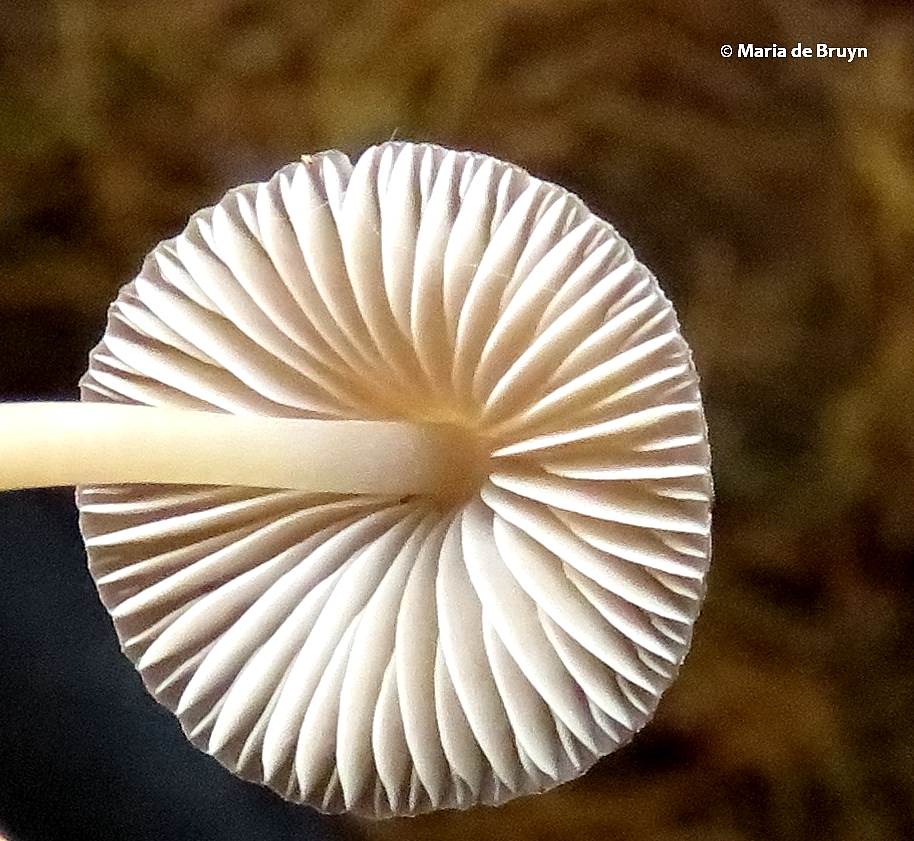
The tiny Mycena mushrooms have conical caps with gills and fragile thin stems. Some species are edible, but others contain toxins.


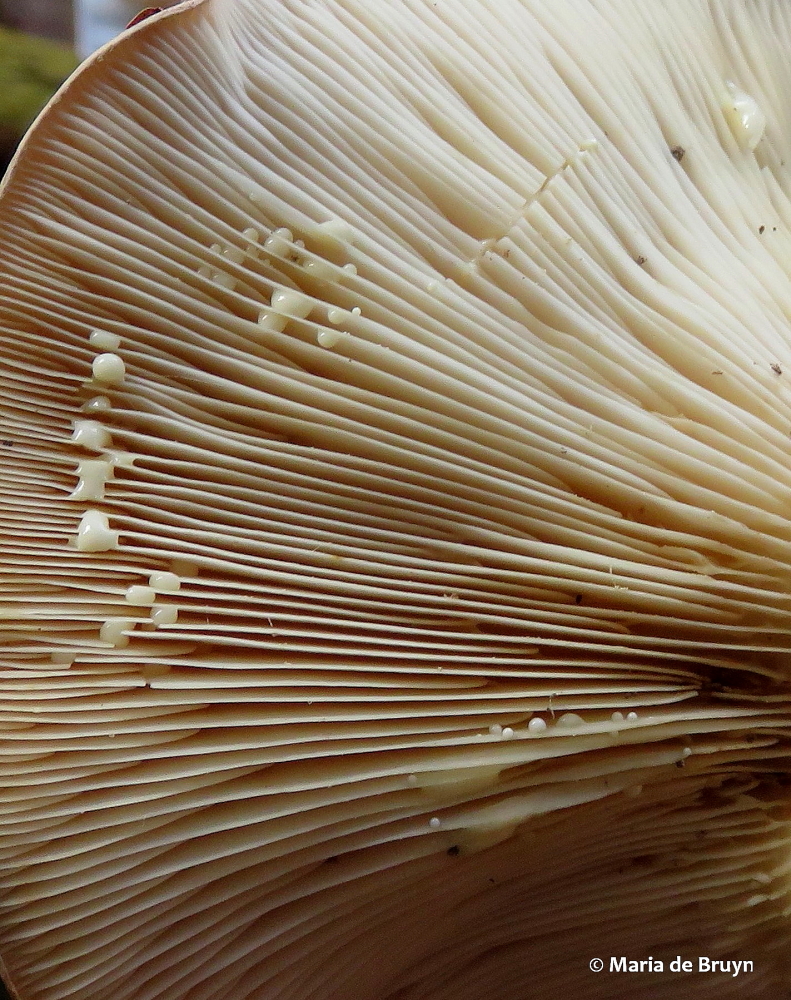
The Lactarius mushrooms, known as milk-caps, release a milky substance when the cap is cut or damaged. The undersides of the caps are gilled.

Armillaria fungi are also known as honey fungus; these mushrooms grow on rotting wood in clusters and can eventually become quite large. In fact, it is thought by some that an Armillaria in Oregon’s Malheur National Forest is the largest living organism on earth – it now covers about 2470 acres and may be about 8650 years old!


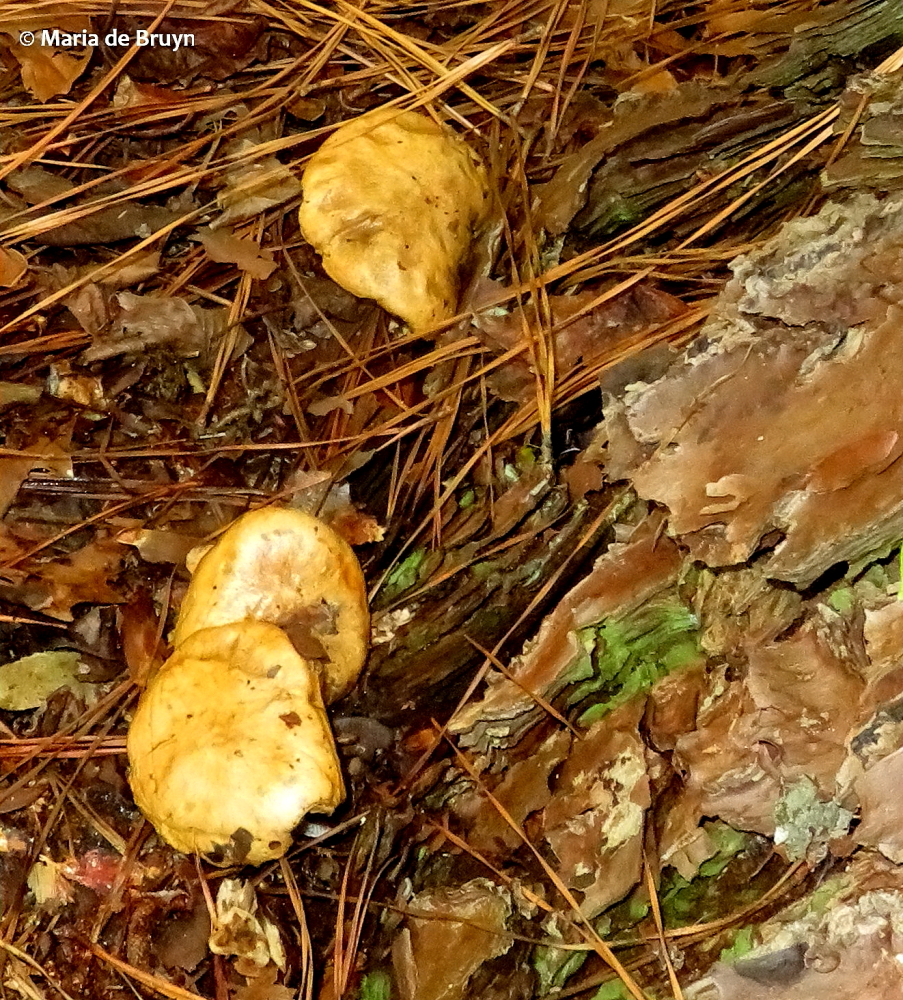
When I spotted these brightly colored Pholiota mushrooms, they were greeted with enthusiasm both by the non-mycologists and the student collectors. They only took a few and left the rest for other walkers to admire.


When we returned to our starting point, the two sub-groups laid out all their specimens and Van told us interesting facts about them. The Lepiota mushrooms are often poisonous. Because edible and poisonous mushrooms can look very similar, people without in-depth knowledge of fungi should not eat mushrooms they find growing outside. In North Carolina, for example, only about 200 of the more than 3000 identified mushrooms are common edible ones.

Few people die from eating poisonous mushrooms (7 deaths were reported in 2012), but people are hospitalized because they don’t recognize unsafe species. Some mushrooms need to be prepared for consumption in a special way to make them safe; some should not be consumed while drinking alcohol and some individuals may have personal problems with particular species.

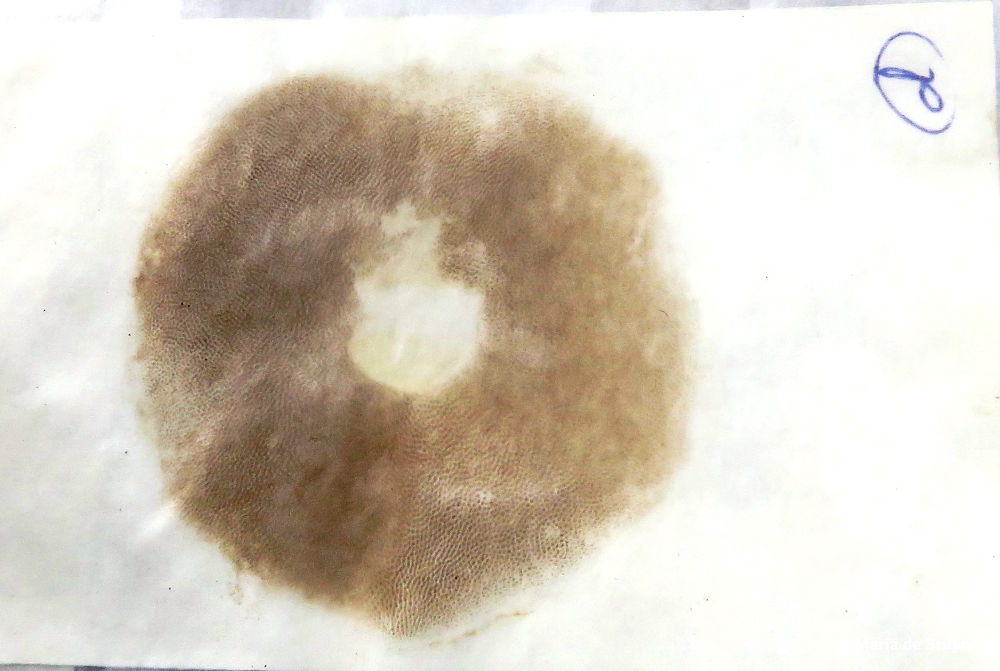
Van also pointed out that mycologists use spore prints in identifying fungal species. The color of spore prints is particularly important.


When I returned home, I prepared the lion’s mane as recommended by those who eat them regularly (sautéing or grilling; I sautéd it). It was with great anticipation that I took my first bite, remembering how much I loved oyster mushrooms when I first tried those. Sad to say, I found the lion’s mane bland and rather tasteless, but at least I had tried it. And I did have an enjoyable time on the mushroom walk, thanks to Friends of Bolin Creek!

** Thanks to Salli Benedict for providing the group photo!

Avian generations in the making – part 3B: fledgling and post-fledgling care

The number of days after hatching when young altricial birds leave the nest is fairly predictable for many species; knowing those approximate dates is helpful if you want to plan a day to watch fledging happen. I can often arrange to sit and watch a nest box on the appointed day for several hours.This has enabled me to see several broods of Eastern bluebirds and brown-headed nuthatches make their leaps to freedom on the path to adulthood.

When it is time for fledging, parent birds encourage their babies to leave the nest. They may entice them by perching nearby with some food but not bringing it to them. Or they fly to the box with food and then go to a branch instead of feeding. The Eastern bluebirds (Sialia sialis) in my yard will hover in front of the nest box like a hummingbird, sometimes with food in their mouths; perhaps they are showing the young ones that flight involves flapping wings.

While in some species, parents appreciate help from older children in caring for a current brood, Eastern bluebirds apparently do not. This may be because they see the previously fledged young as competitors for food. In my yard, father bluebird especially was chasing the young of earlier nests away from the feeders, not only when they begged but also when they fed themselves.


When fledging day arrived for the bluebirds’ third brood, one of the older siblings (I’m not sure if it was a female or male) was very interested in seeing the third brood fledge. He imitated his parents, hovering in front of the nest box so the young ones could see him.


Again, however, the parent bluebirds chased him away.

This did not deter the immature bird, however. He waited for the parents to go get food and again took on encouraging the young siblings. It was fascinating to watch!


The parents returned and drove him off with a show of bad temper.

Eventually, the babies did fly out of the nest box into a nearby crepe myrtle. There, they continued to call for food with a wide-open mouth.


This gaping behavior stimulates the parents to feed their offspring and the offspring can be very insistent and persistent in begging for food.


Eastern starling (Sturnus vulgaris)


Carolina wrens (Thryothorus ludovicianus)


Common grackle (Quiscalus quiscula)     Royal tern   (Thalasseus maximus)

This behavior can go on for days, especially when the young ones cannot yet fly, like this recently fledged Northern mockingbird (Mimus polyglottos).


The birds that feed their young ones on the ground, like the American robins (Turdus migratorius) have it a bit easier than those that feed juveniles perched on wires, like these barn swallows (Hirundo rustica).


I can imagine that the mother and father get to a point of thinking, “Enough already!” as those large fledglings continue to beg for food; this parent Northern cardinal (Cardinalis cardinalis) did not seem willing to go out for yet another bug for the young one.

But some young birds can be very insistent, even when it is obvious that they are now fully capable of finding some food on their own. This parent chipping sparrow (Spizella passerina) seemed willing to be a feeder for a while longer.


The parent-child feeding routine that often catches people’s eye is when a young brown-headed cowbird is being fed by a (non-voluntary) adoptive parent. For example, here we see a male hooded warbler (Setophaga citrina) bringing food to a brown-headed cowbird baby (Molothrus ater) after the youngster spent quite a while loudly crying out for a meal and hopping around on branches after the parent to convince him that he needed to be fed.


Of course, at a certain point the parents do stop feeding and the young set off on their own. They may check out nearby nest boxes, either scouting homes for next season or looking for roosting boxes for the cold winter nights, like these Eastern bluebirds. They may groom a bit to remove the last bits of fluffy feathers, like this red-shouldered hawk (Buteo lineatus). And then they are ready to spend an autumn and winter getting ready to repeat the cycle, this time as the parent birds. And we can look forward to watching the process again. 😊


A nature walk with some history to ponder

In our area of North Carolina, various nature reserves have some background of historical interest. It may be related to the provenance of the land, the names of the reserve and its trails, or the remnants of structures still in place. A newer reserve in Orange County is the Blackwood Farm Park and it had some historical artefacts which I had not expected to see while I searched for beautiful plants and wildlife of different kinds.

The 152-acre reserve has transformed a former working farm into a place with hiking trails through fields and hilly woodlands, preserved farm buildings (barn, smokehouse, corncrib, milking shed, etc.), and meadows where hay is still sown and harvested every year. The first farmers arrived around 1745 and farming ended with the Blackwood family in the 1980s.


Dogs are allowed but supposed to remain on leash; currently, the trails are for hikers, birders and others who appreciate nature. On my last visit, a small group of dog trainers were putting canines through their paces in front of the old farmhouse, while a few people were chatting at the picnic tables nearby.

In the meantime, a chipping sparrow (Spizella passerina) was extensively grooming itself in one of the shady yard trees.


As I began my walk through the woods, I heard a distinctive bird call and began searching for the scarlet tanager (Piranga olivacea). Lucky me, he came into sight briefly overhead so that I could admire his handsome but fleeting appearance.

The meadows were filled with flowers, including Carolina horsenettle (Solanum carolinense), with its distinctive white and purple flowers, and beautiful moth mullein (Verbascum blattaria), which some botanists consider a weed and rip out in glee when they see it (this happened a few days ago when I was volunteering at another reserve!).


Butterflies, like this American lady (Vanessa virginiensis), were investigating the flowers like me and sometimes feeding on the ground.


The trail through the woods is partly level and then leads up and down hills and across small streams. Some sections are alive with bird sound and others are fairly quiet. Small signs indicate where the reserve property abuts nearby privately-owned farms.

As I came nearer to the forest edge adjoining a meadow with a pond, I came across an unexpected reminder of history. A sign at the entrance to a clearing announced that it was a burial site for slaves who had been owned by farmer Samuel Strayhorn from 1817 to 1847 and visitors are asked to observe the site with appropriate respect.


Archaeological surveying has identified 34 graves, including adults and children; some are marked by stones and others are now indicated by small metal tags.


Oral tradition relates that not only the slaves but some of their descendants were buried here after the Civil War. It is a sobering reminder of a shameful time in the history of this country, but it is good that the site has been preserved and that further historical research is being done to learn more about the enslaved people who lived here.


After spending some time in contemplation and wondering how the slaves’ descendants are faring now, I wandered on, emerging into the pond area where numerous dragonflies were flitting about.


Male blue dasher dragonfly                      Female widow skimmer (Libellula luctuosa)

(Pachydiplax longipennis)

          Banded pennants (Celithemis fasciata)


A couple of amorous damselflies were also in evidence.


Leaving the pond, I entered the woods again and witnessed a pair of six-spotted tiger beetles (Cicindela sexguttata) engaged in mating, but it was not with mutual consent. The iridescent blue male jumped on the greenish female, who did her best to escape. He literally tackled her and at one point had her on her back as he kept hold of her.


She continued trying to escape but he was persistent and finally managed to mount her. She periodically engaged in vigorous shaking, obviously trying to dislodge him but he hung on.


Finally, after some time, she bucked a bit like a horse at a rodeo and threw the male off so that she was able to streak off with great speed. The male remained behind, alone.


A little further on, a black and yellow millipede (Boraria stricta) trundled along the forest floor, its antennae exploring the ground ahead and identifying which obstacles (twigs, stones) it could surmount and which ones it needed to skirt.


At one point, I pondered a tube hung on a tree by someone who was probably doing a study of some kind, rather than making an artistic statement (I hope).


When I left the reserve, a Northern mockingbird (Mimus polyglottos) was flashing its wings near a picnic table, undoubtedly looking for insects as a meal to enjoy there.

My walk that day didn’t result in a wide variety of wildlife spottings, but what I did see was interesting. Coming upon the cemetery was an unexpected educational experience that made the visit well worthwhile. I hope the researchers uncover more information that can be shared with visitors in the future.


A morning at the Butterfly House – with birds, butterflies and more!

I have all these ideas for blogs in mind, and photos to accompany them as well, but I keep taking new photos and then get behind in posting. One day, the thought came that I could just not go out to photograph and settle down to writing some blogs, but going out for nature walks as often as possible has become a real need in my life. Scientists are saying that “forest bathing” is good for your health and being outdoors and observing and learning about the flora and fauna certainly contributes to my having a happier state of mind, while contributing to my overall stamina (but not weight loss, more’s the pity). I also enjoy “shoreline, field and meadow, creek, river, and backyard bathing.”

It came to me today, after spending 3.5 hours tearing out invasive plants from my yard, that one blog that doesn’t need to be postponed because I keep getting new shots to include is this one – my visit to the Durham Museum of Life and Science Butterfly House with the Carolinas’ Nature Photographers Association.

The Museum had opened the Butterfly House for the morning for our group alone so that we could take photos for several hours without people walking in front of our shots. The Butterfly House is a 35-foot tall, glassed-in dome with many tropical plants such as the Angel’s Trumpet (Brugmansia). One of the four species of birds living in the conservatory, the Oriental white-eye (Zosterops palpebrosus), was enjoying a meal of tropical flowers. The bird would pluck a petal from the stem and then insert its beak into the base; the white-eyes have a special brush-like appendage at the end of the tongue which helps them forage for nectar and pulp.


The white-eyes were brought into the conservatory to help control leaf pests and ants.


The butterflies were gorgeous and the subject of many photos in our group. The postman butterflies have variations within a species.


Common postman (Heliconius melpomene)


Red postman (Heliconius erato)

Another group were the longwing butterflies.


Cydno longwing (Heliconius cydno)


Sara longwing (Heliconius sara)


Tiger longwing (Heliconius hecale)              Doris longwing (Heliconius doris)


Numata longwing (Heliconius numata)

As we looked at the butterflies that landed low on flowers, we were able to see the Crested wood partridges (Rollulus roulroul) that are endemic to Asia. They breed in the conservatory, laying their eggs behind dense shrubs, and they help control soil pests in the Butterfly House.


Male                                                                        Female

At one point, a museum staff-member brought us a group of insects to see up close. One of them, I certainly would not have touched, although it was fascinating to watch: the Asian forest scorpion (Heterometrus).


The Chilean rose tarantula (Grammaostola rosea) was a really beautiful tarantula that blended in well with the tree against which it was placed.

The dragon-headed katydid (Eumegalodon blanchardi) was an interesting creature. I do think its head looks more like a horseshoe crab, though!


The rhinoceros beetle was nice and shiny – I once saw a young boy in Thailand who had one as a pet; he was taking it for a walk in the forest and it looked to be about as big as his hand.


It’s interesting how the patterns on the dorsal and ventral sides of a butterfly can be so very different – you may need to look up both sides to get a good ID of the species. This is especially true of the Blue morpho (Morpho peleides).


The same is true for the male scarlet peacock (Troides amphrysus)


The female shows similarities in her dorsal and ventral wings.


The owl butterfly (Caligo memnon) was an impressively large individual.


The Malayan birdwing (Troides amphrysus) spent much of its time huddled up against the windows but I was able to catch it on a flower.


Two kinds of black-and-white butterflies were fluttering about, the Asian paper kite (Idea leuconoe) and the zebra mosaic (Colobura dirce) from Central and South America.


There is a glass case in the conservatory that has lines of chrysalids hanging on wires. At any time, you may see one or several butterflies that have just emerged and are unfolding and drying their wings. This individual was perched against the glass for the unfurling, giving an excellent view of beautiful feathery antennae.


There were two more birds in the Butterfly House that were beautiful to see. Both from Australia, the zebra finch (Taeniopygia guttata) was difficult to photograph as it spent a lot of time very high up in the dome.


The most beautiful – to me – was the Gouldian finch (Erythrura gouldiae). The colors are a bit like the American painted bunting but they look as if they were put on in blocks of color like a kind of avian Mondriaan painting. I followed this bird around several times in the hopes of getting some nice photos and finally succeeded in my opinion. I’d love to have this bird coming to my feeders!