Sometimes feared but with an endearing side – Sweet Tooth and Swayback

Today, I’d like to entertain you with a tale of two wild creatures that I’ve come to know a bit. I always enjoy learning about animals, even more so when I get to know something about their lives first-hand. Before getting to a description of Sweet Tooth and Swayback (two snapping turtles), I’ll share some interesting life facts about this reptilian species.

While box turtles often garner remarks of “how sweet,” “how cute,” and “let’s help it cross the road,” the appearance of a snapping turtle (Chelydra serpentina) can arouse fear and dislike. Many people don’t consider them “beautiful,” and they have a reputation for being dangerous because they can cause injuries.

That is such a shame because this species doesn’t always live up to its “combative disposition when out of the water with its powerful beak-like jaws, and highly mobile head and neck” (according to Wikipedia). It’s true that they don’t want to be picked up and will react very differently from the docile box turtle, who generally pulls in its head and legs and just waits for you to leave it alone.

Unlike the box turtle, the snapper cannot withdraw its head and limbs into its shell, so its main defense is to use powerful jaws to snap and bite when feeling threatened. The North Carolina Wildlife Resources Commission (NCWRC) notes that: “they are normally inoffensive underwater and pose little if any danger to swimmers or waders.”

Snapping turtles spend most of their time in the water and tend not to bask like other turtles. Instead, they swim near the surface and enjoy the sun’s rays from there.

They mate in the spring; this pair was engaged in a fairly sedate encounter at an urban park.

The NCWRC notes that it’s not uncommon for the pair to snap “savagely” at one another during mating (another instance of negative language to characterize them; they could have said “vigorously”!). This pair opened their jaws to one another but were not biting.

Females can conserve sperm for several seasons so that there is some on hand when needed. So this female may have wanted to use that as she pushed the male away.

This pair of turtles, whom I saw at an Orange County pond, did seem to be having a tussle, but they also might have been contesting territory or engaging in some other behavior.

The females come out of the water to lay their eggs (about 25); you may only see their tracks in the mud and never know where they buried the clutch. The eggs have a great chance of ending up as food for other animals, such as skunks, minks, raccoons, foxes, crows, and eastern kingsnakes.

Newborn and juvenile snappers often fall prey to large fish, mammals, birds (e.g., bitterns, hawks, owls), American bullfrogs, and alligators. This great blue heron (Ardea herodias) had a small turtle for a snack and spent quite a long time trying to crush it before swallowing it. (This was not a snapper but shows how the birds eat young turtles.)

Perhaps the high newborn mortality rate accounts for the fact that a female may lay a second clutch as well (laying 11-83 eggs in total in a breeding season). An interesting fact about the hatching snappers is that the little ones make a noise before they dig themselves out of the earth. To us, these sounds mimic clicks, creaks or what sounds like someone rubbing their finger over a fine-toothed comb.

The snapping turtles’ diet comprises quite a lot of vegetation, carrion and small animals. The latter are swallowed whole or bitten into pieces — young ducklings in a pond with snappers need to stay alert to avoid being caught. The snappers who survive to adulthood may reach a considerable age if they live in an undisturbed area, e.g., up to some 40 years.

And now we finally get back to Sweet Tooth and Swayback in particular. I’ve had the good fortune to become familiar with this pair at a local pond alongside a public road where I’ve photographed wildlife for many years. It has been designated as a “hot spot” for local and other birders on eBird. As my friend Lucretia has said: “birders and nature lovers have always enjoyed the beauty of the pond and surrounding meadows and fields and the wildlife that lives there. It is a special place.” Unfortunately, it’s now uncertain what will be happening to Sweet Tooth’s and Swayback’s longtime home.

I had seen these turtles swimming around in the pond frequently and admired their size. I’m guessing they might be a few decades old.

Last fall when a persimmon tree at the edge of the pond began dropping its ripe fruit, I was surprised to see one of the turtles up on the surrounding lawn on a rainy day— s/he saw me and quickly trundled off to the water’s edge.

On subsequent visits, I approached carefully and not too closely. By moving only a few steps to get in position for some photos and then standing still (although I did talk to the turtle, I admit), the animal decided to stay put. The temptation to eat some of the ripe persimmons was just too great and helped him/her overcome any fears.

I was very surprised as I had no idea that snapping turtles are fond of this fruit. On subsequent visits to the pond, however, I learned that it must be a real delicacy for them. This turtle seemed to recognize me after a few visits and didn’t hurry away. When Lucretia visited, Sweet Tooth (a name we decided to use for him/her) also stayed put.

Sweet Tooth is a bit of a messy eater, but then s/he doesn’t have teeth or any way to get the dripping persimmon flesh off her/his chin.

One day, I was surprised to see that Sweet Tooth had been joined by a companion, whom I called Swayback. I don’t know if this turtle had been injured at some point to cause the dent in its carapace.

Swayback didn’t seem quite as enamored with the persimmons as Sweet Tooth but did seem to enjoy eating some fruit from time to time.

Recently, the property on which the pond is located was sold. I’ve been told by people who pass by daily that the pond may be dredged and deepened so that it can be used for irrigation. Much of the surrounding vegetation, which made it a delightful spot with many hiding and perching places for migrating and resident birds was bulldozed.

I and others are worried about what could happen to the pond’s inhabitants. We hope that Sweet Tooth, Swayback and any other wildlife who call the pond home can be rescued, rehabbed if necessary, and eventually returned to their longtime home. Keep your fingers crossed along with me that we might enjoy seeing this pair of snappers relishing persimmon treats in the future!

One last note: if you want to rescue a snapper from a busy road, only pick it up at the back of its carapace above the hind legs. If you have your hands any further forward, the turtle can use its long and flexible neck to reach you for a bite. You can also move it with a square shovel (be prepared for a heavy load) or by having it on a tarp or blanket to carry it along.

Red-winged, rusty and ravishing – black bird delights!


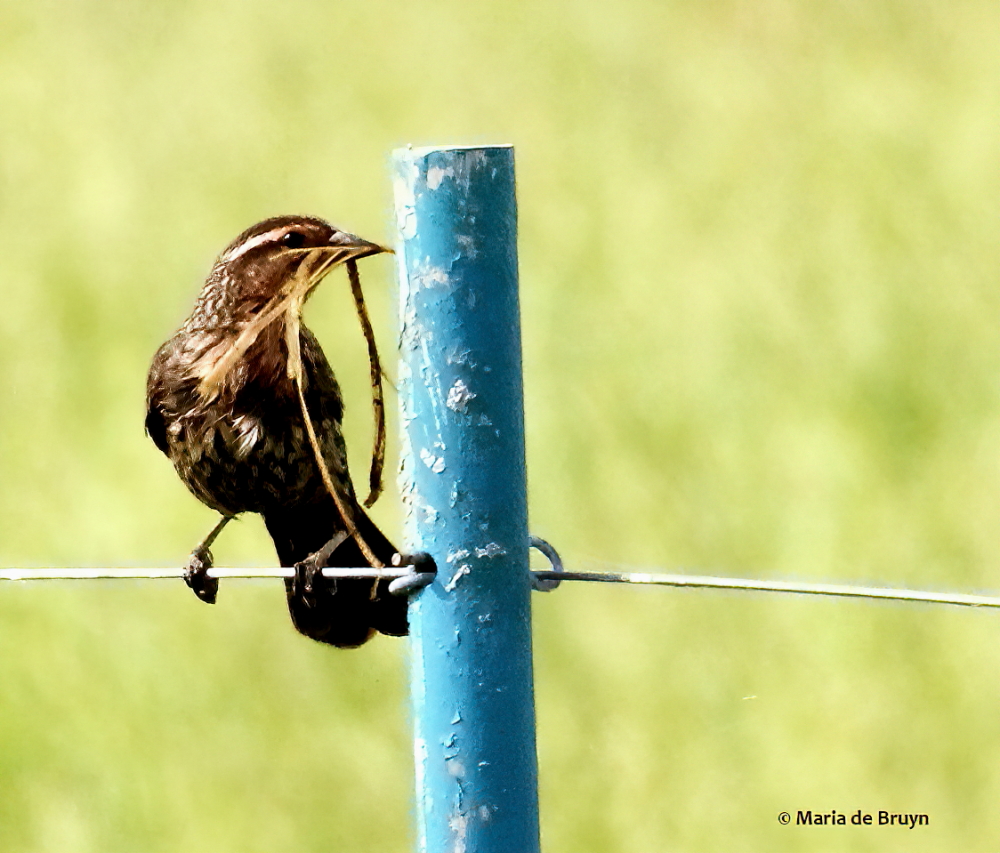
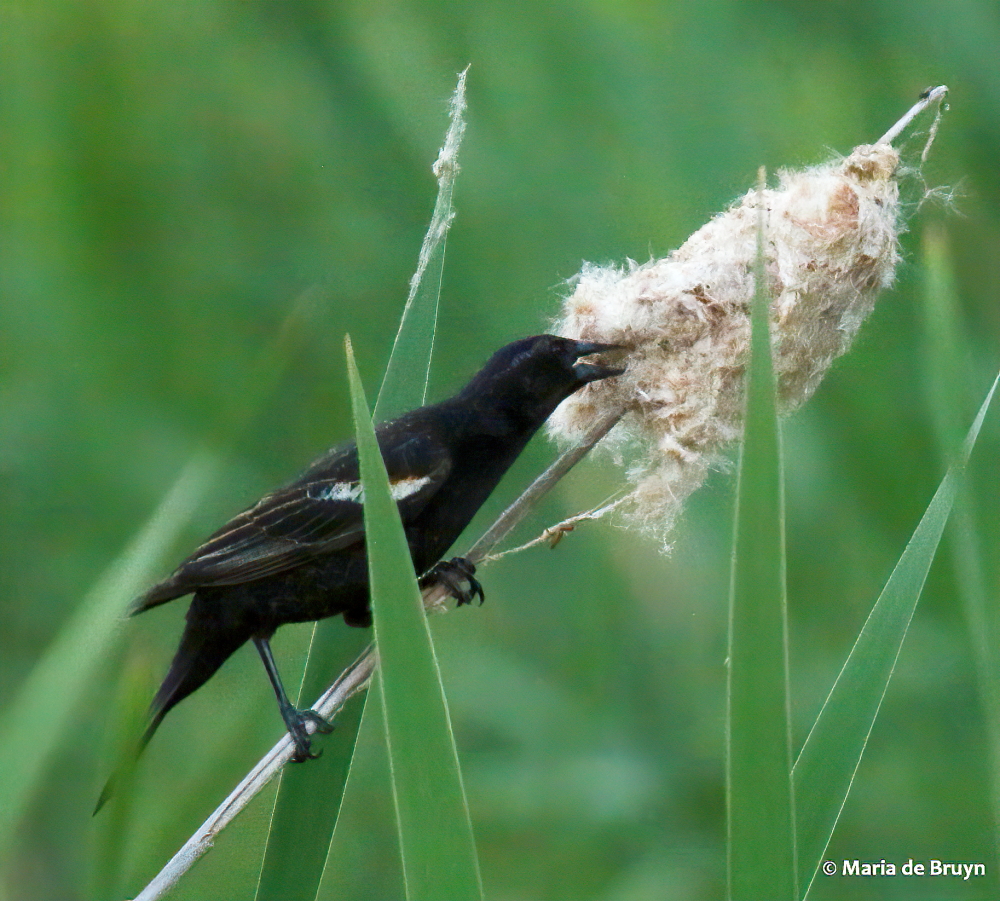
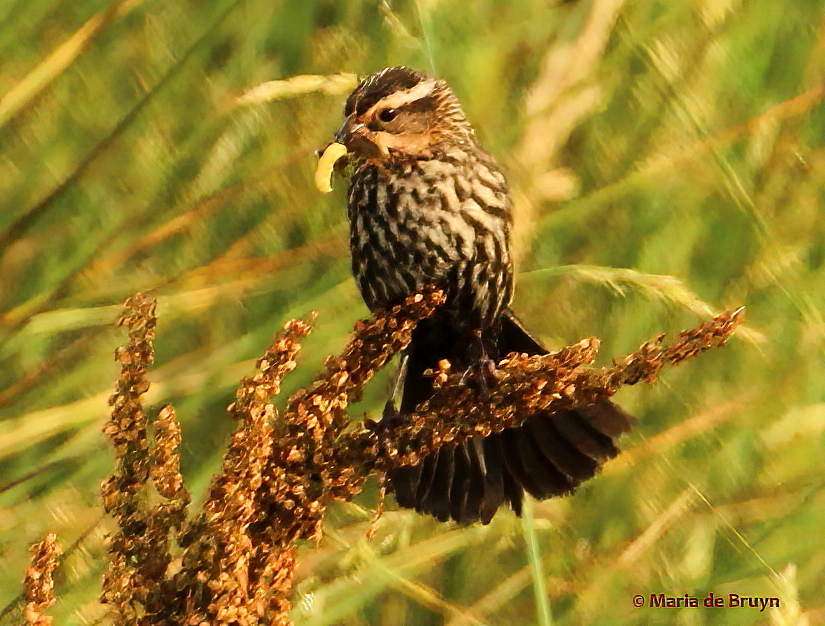
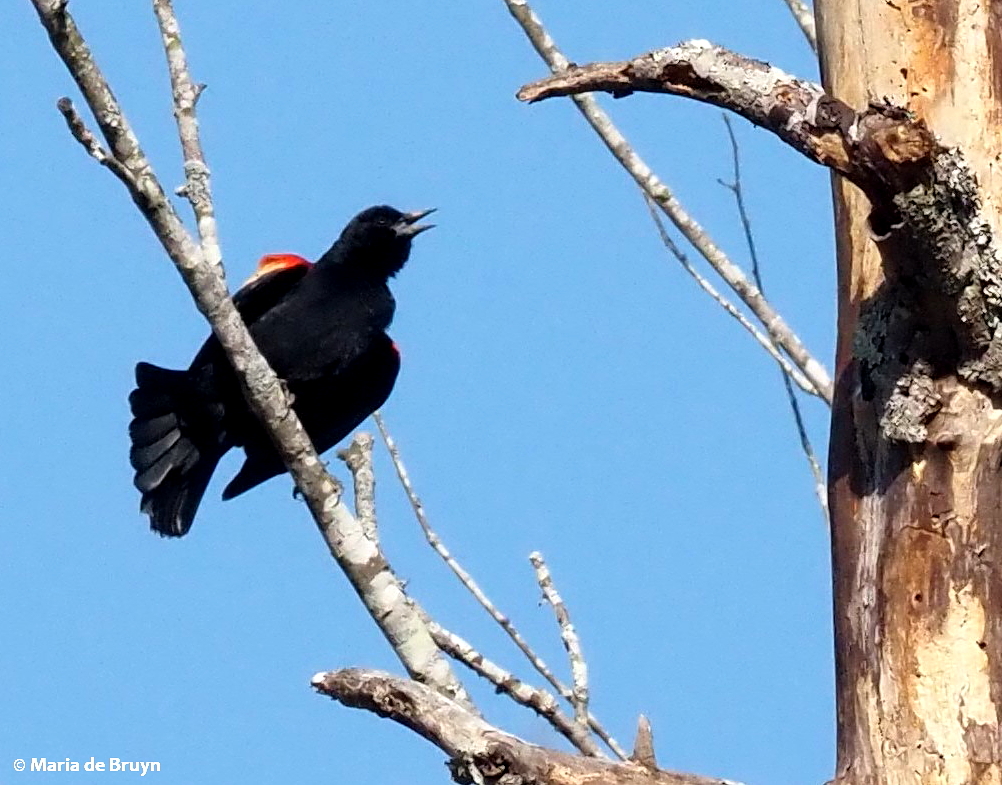
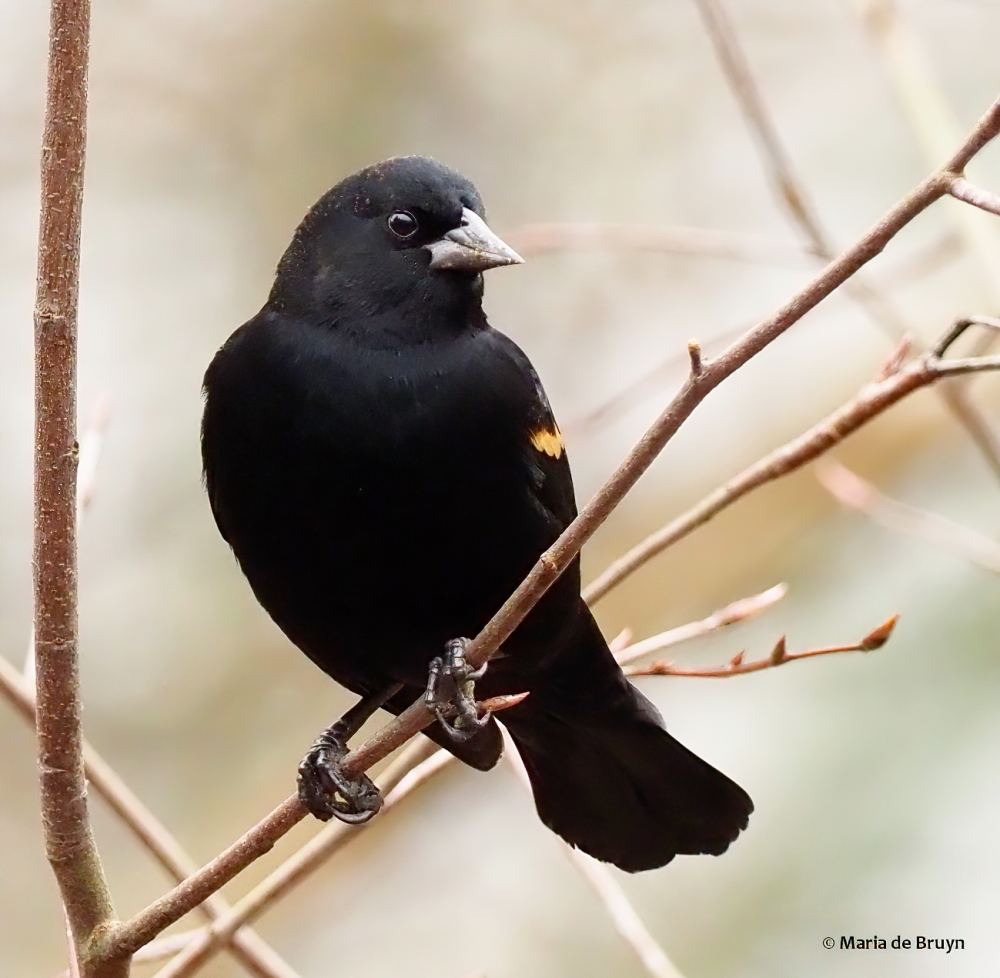
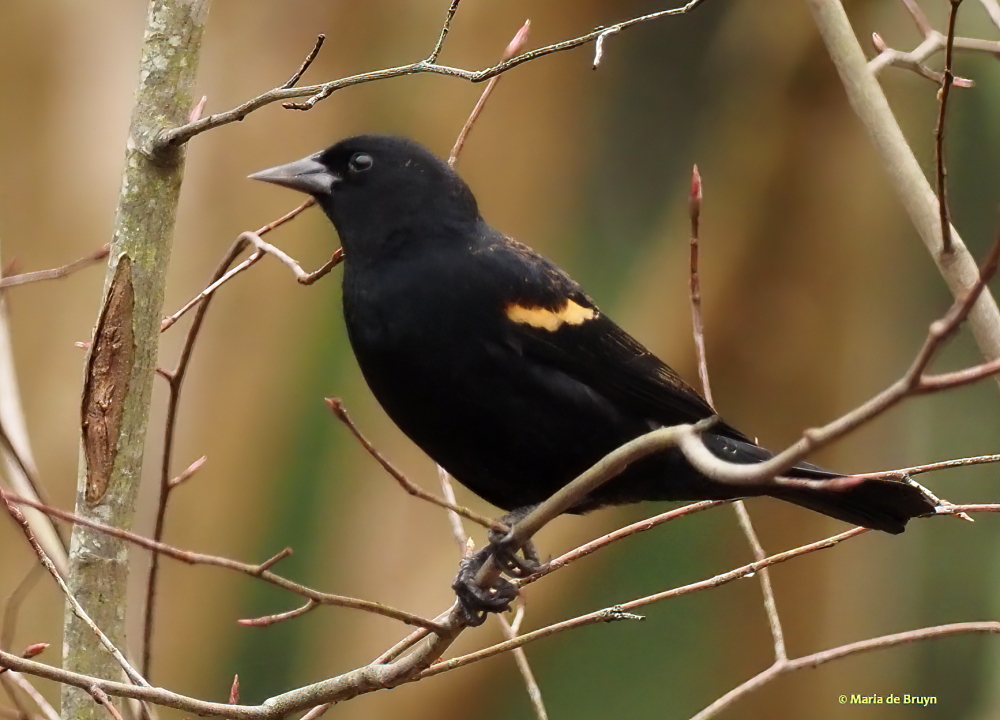
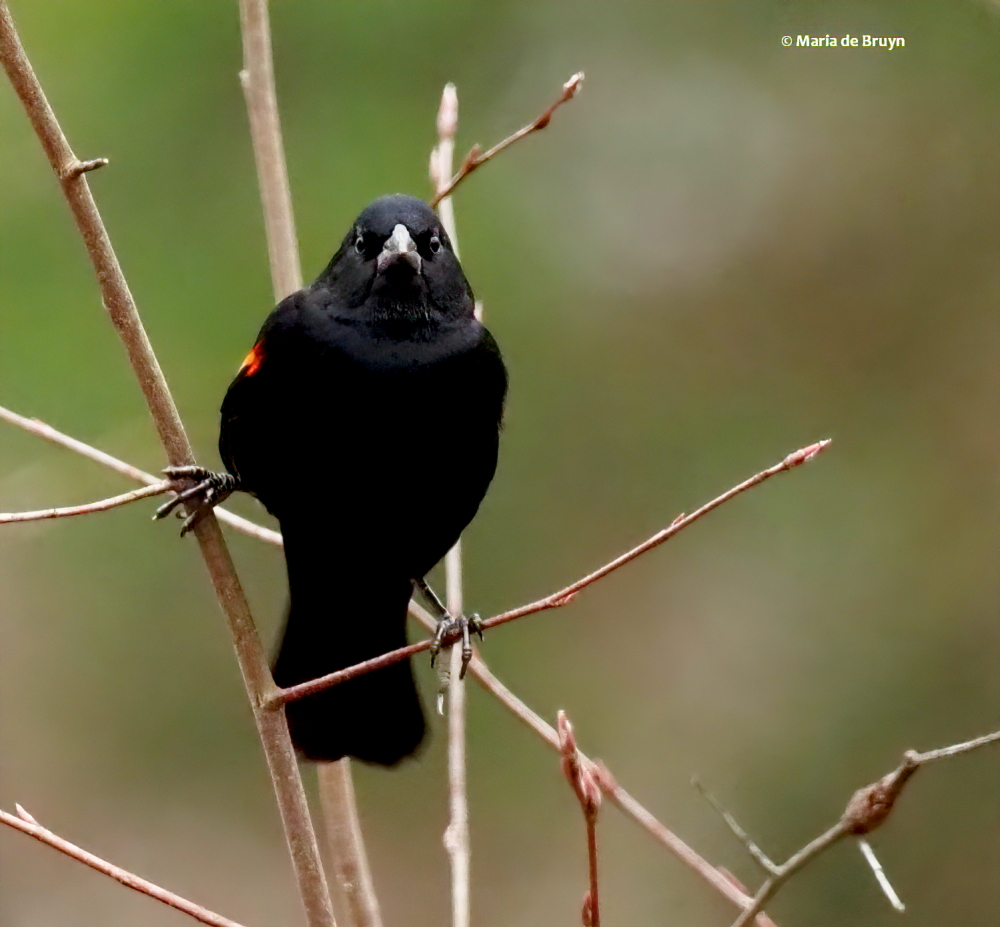
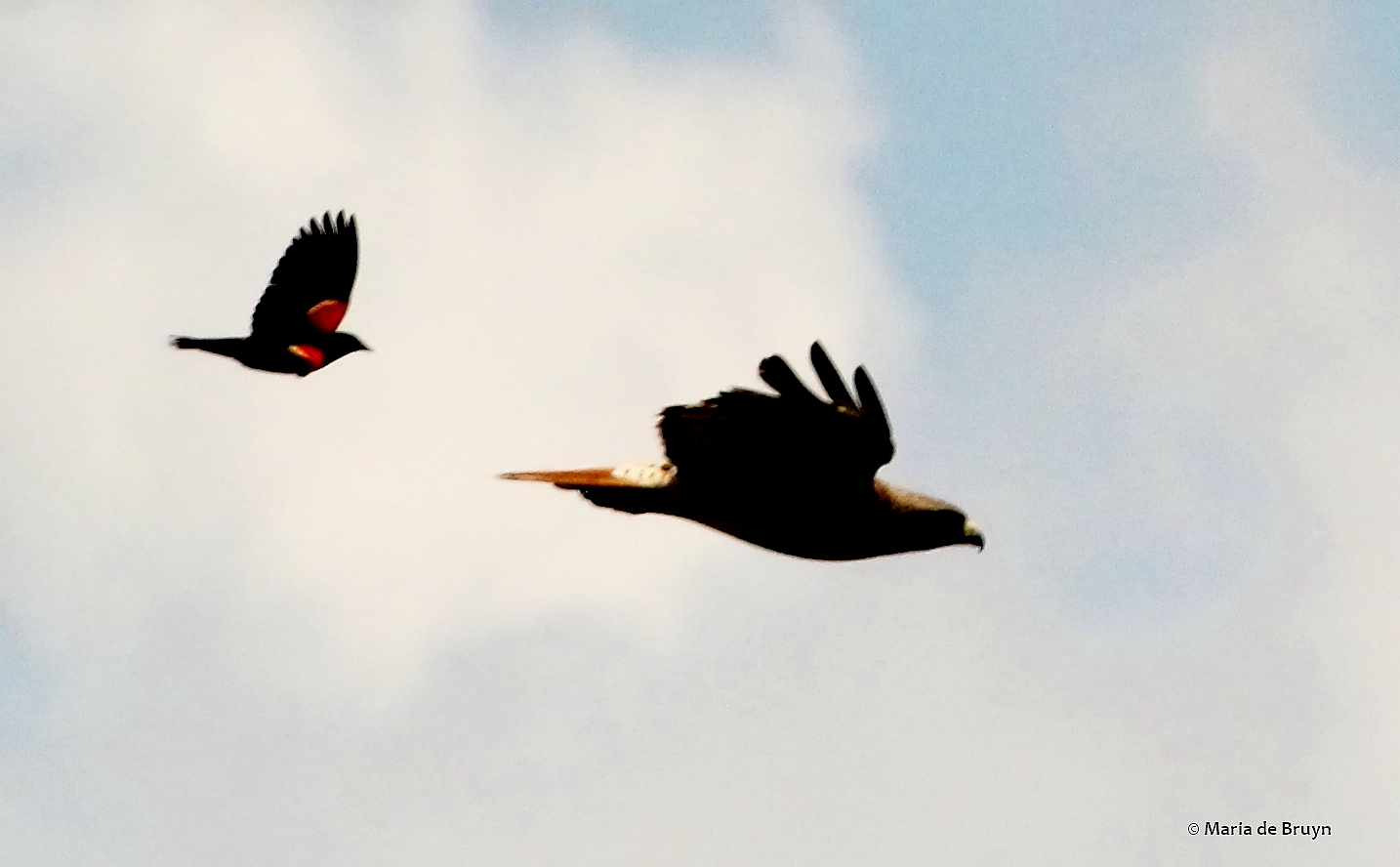
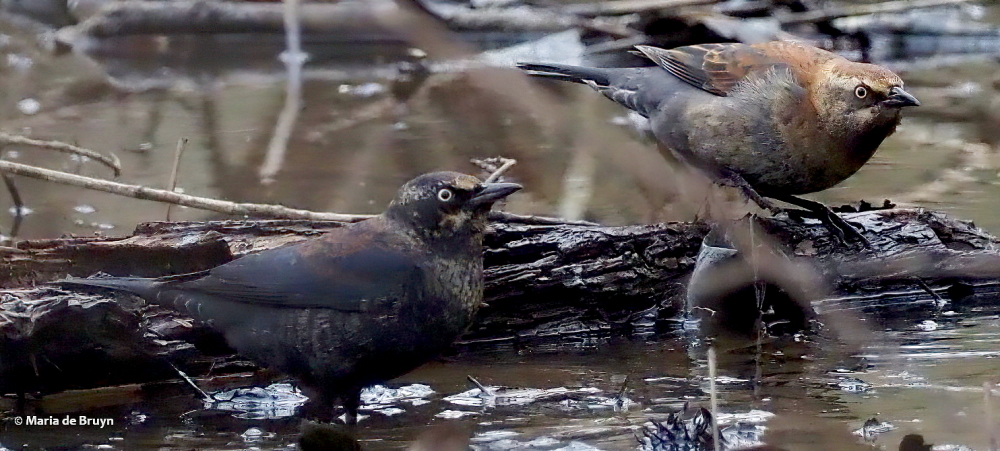
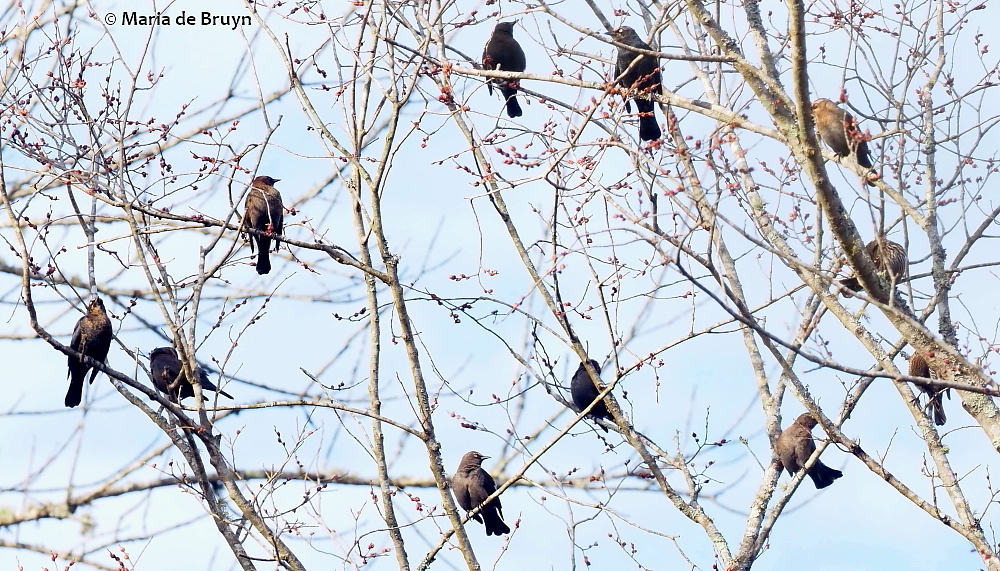
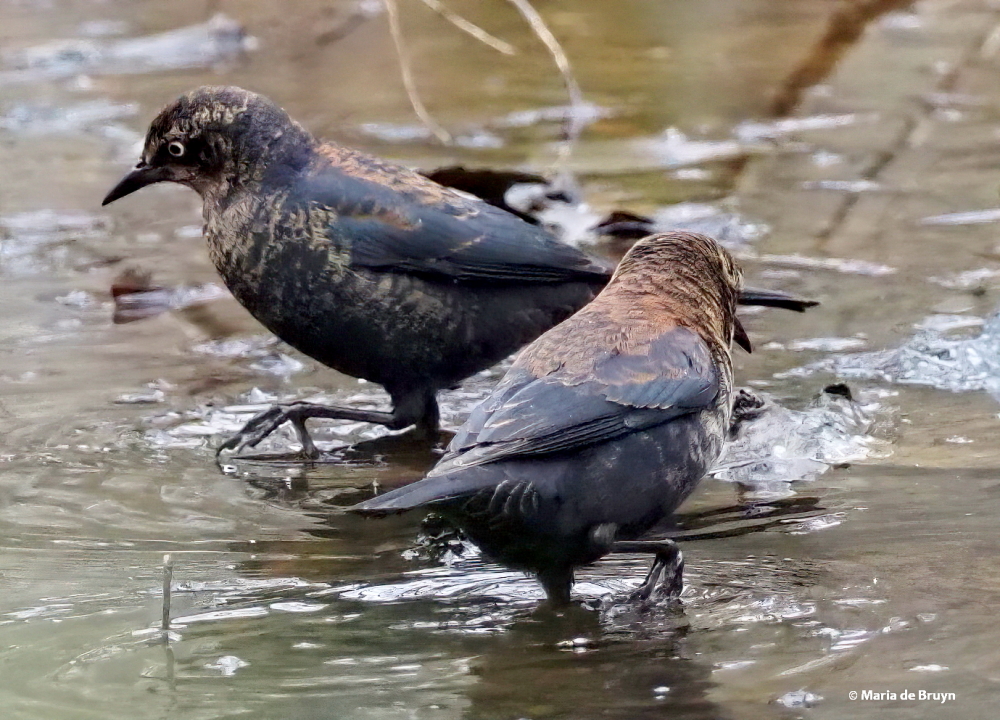
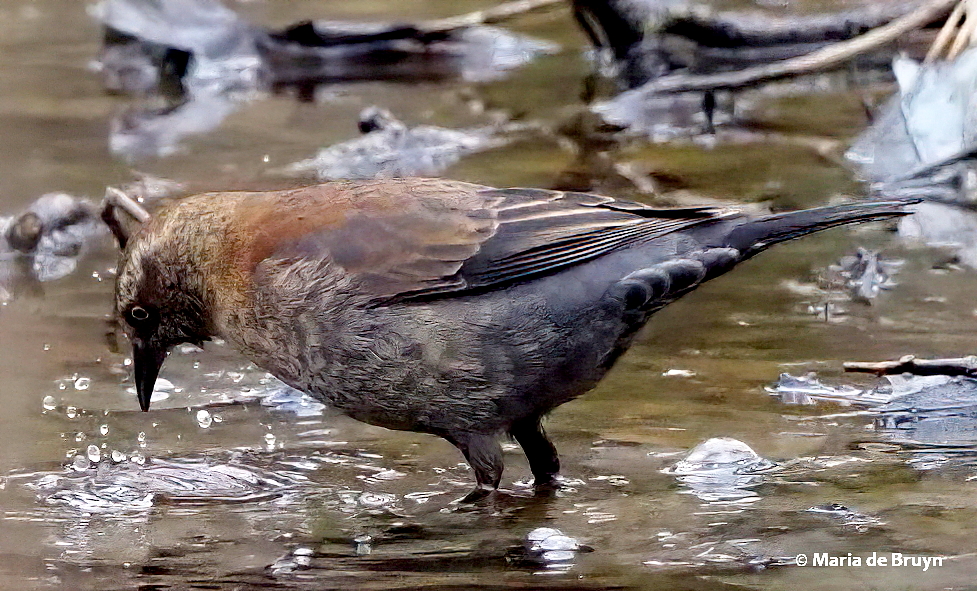
Two species of birds that I enjoy seeing during the autumn and winter months in North Carolina (NC) are red-winged blackbirds (Agelaius phoeniceus, above left) and rusty blackbirds (Euphagus carolinus, above right). Both species breed in the northern USA and Canada, traveling to the southern USA during the colder months.

There is also a population of red-winged blackbirds that nest in NC’s Piedmont region. I’ve seen them collecting nesting material at local ponds and wetlands but have never had the pleasure of seeing their nests or watching them feed their young.

The red-winged blackbirds have two avian records to their name: 1) currently perhaps the most numerous land bird in North America, with counts of more than 1 million birds in a flock!! and 2) one of the most researched wild bird species anywhere.

The male red-wings call the attention of females with the red and yellow patches on their wings. It turns out that those with larger patches are more successful in disputes with other males for territory and mates.


Some males have been recorded as having up to 15 mates in their territories during a season, but it turned out that 24-50% of the nestlings had another male as a parent!


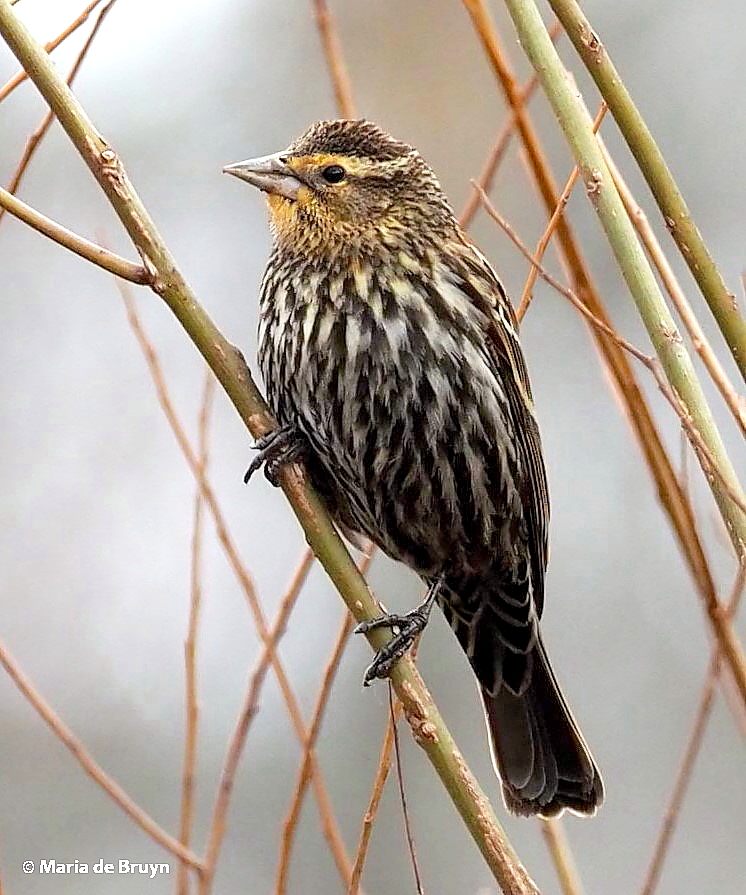
The females look very different from the males with beautiful reddish-brown striping. Their faces are marked by off-white eyebrows.


They often nest near other red-wings.


Doing so means that their nesting area has multiple parents on the alert for predators.

It is interesting that Native American languages also had common names that describe their physical characteristics (red patch, spotted, marked). The longest one that I read about was “memiskondinimaanganeshiinh” (Ojibwa meaning “a bird with a very red damn-little shoulder blade”)!


During breeding season, the male rusty blackbirds have glossy black plumage with a greenish sheen. At other times, they have rusty tips to their feathers, giving them a mottled look.

The females may also look a bit mottled but have much more light brown and beige coloration.


In contrast to the numerous red-winged blackbirds, the rusty blackbirds used to have high numbers but have lost up to 85-99% of their populations during the past 40 years for unknown reasons.


The sharp decline is so mystifying that scientists have formed an International Rusty Blackbird Working Group to investigate what is happening.


One possible explanation is a decline in wetlands, especially in the Southeastern USA where 80% of the birds overwinter. A resurgence in beaver ponds may be helping them, which shows how protecting one wildlife species can also assist another one. I have indeed seen them in areas where beavers have been active.


The rusty blackbirds that I spotted were indeed using local wetlands in their search for food, turning over the sodden leaves with their feet and beaks as they searched for sustenance.

The International Working Group is asking people to report their sightings of these birds to eBird to help track the species.

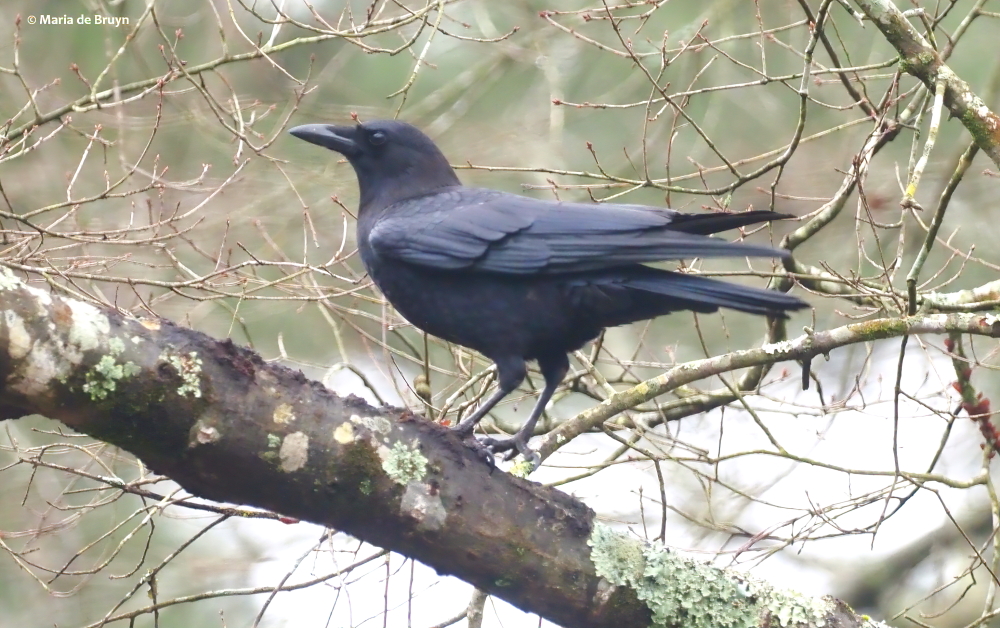
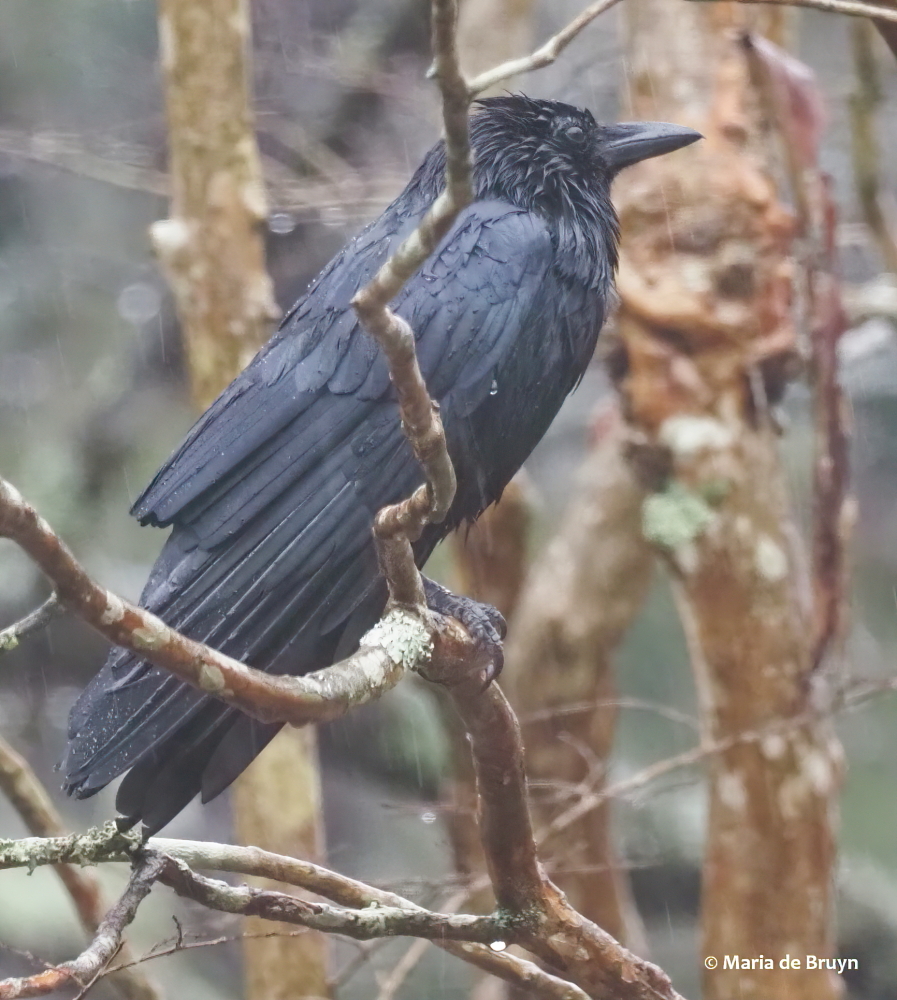
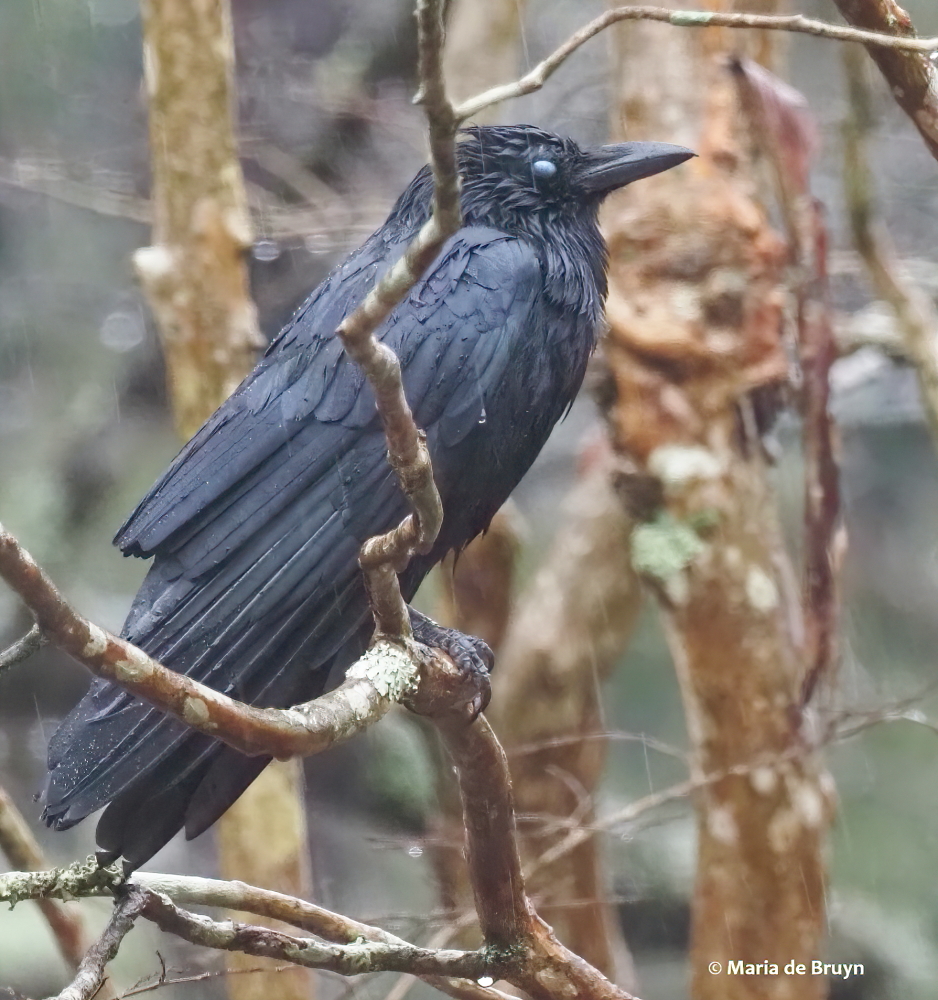
To close this blog, I wanted to share just a few photos of some other birds who are a beautiful black color: my faithful American crow couple (Corvus brachyrhynchos).

They have been visiting with one of their offspring from last year, just as they have done in previous years.


Unfortunately, it appears that one of the birds has somehow suffered an injury to one leg and foot. S/he has been hopping around on the ground and can fly well, but it is a mystery as to what happened to hurt this large bird. Perhaps a tussle with one of the neighborhood hawks?


Spring weather is beginning in our area, which means some avian species will be leaving us and some new ones will be arriving or passing through in the coming weeks. The next blog will feature a few of our feathered friends who will be leaving.

Helping monarch butterflies thrive

If you follow news about nature, you may have come across warnings that the monarch butterfly (Danaus plexippus) has been in rather dire straits for many years now.
 

These lovely orange and black butterflies live from 6 to 8 weeks when they are adults engaged in reproduction. Those who live in the Eastern USA participate in a multi-generational migration process between Canada and central Mexico. The last generation to emerge in late summer is able to delay its sexual maturity to undertake the last leg of the migratory journey (called reproductive diapause) and may live up to 8 months. Individual butterflies may travel as far as 1200-3000 miles to get to their warmer over-wintering grounds.


Since the 1980s, the Eastern US monarch population has declined by about 80%, mainly because the only food source for their caterpillars has been disappearing. Milkweeds used to grow abundantly in agricultural areas and along roadsides and ditches, but people have been eradicating the plants from fields and using herbicides and mowing to remove them along roads.

Climate change has also affected the butterflies’ breeding and migratory patterns so that reproduction has been reduced.

One way to help out the monarchs is to plant native (not exotic!) milkweeds in your own yard and any other natural spaces to which you have access. I’ve been doing it around my home and as a volunteer for the Mason Farm Biological Reserve. This year, I was lucky enough to be a beneficiary of a milkweed give-away organized by some local high-school students, so I had two types of the plants in my yard.


The ones that I had originally planted were common milkweed (Asclepias syriaca). These plants have large globular clusters of flowers that range in color from pinkish to purple. They do not have blooms their first year but that doesn’t stop the caterpillars from eating their leaves.


Butterfly weed (also known as butterfly milkweed; Asclepias tuberosa) is a bit more delicate and “exuberant” in appearance, with small clusters of orange, reddish and yellow flowers. These were the plants that I was gifted by the students and I was happy to see them grow quickly to exhibit their beautiful blooms.

According to Wikipedia, the butterfly milkweed is not a preferred plant for the monarch but this year the butterflies seemed much more attracted to it than to the common milkweed. After a few visits from some butterflies, I began seeing caterpillars and at one point counted 17 crawling up and down the various plants.

They were especially prevalent on the butterfly weed in my front yard and were munching the plants to bare stems very quickly.


To make sure they had enough food, I transferred some of them to the common milkweeds in my back yard – these were larger plants with much broader leaves and I thought this would ensure their healthy development. Frass (poop) was being left on the remaining leaves and the ground surrounding the plants.


It was rewarding to see three caterpillars make it to the chrysalis stage; the other caterpillars crawled away before I could see where they went, and I didn’t find them suspended from any plants. The first one had attached itself to a bare sapling and, unfortunately, the next day it had disappeared, leaving only the silken thread by which it had been suspended.

The caterpillars store milkweed glycosides in their bodies, making them toxic to many other animals. They still have many predators, however, including wasps, spiders, other insects, lizards, toads and mice. I resolved to save at least one chrysalid if I could.

I got to see the second chrysalis being formed (see the video, which is a little shaky at times). When the caterpillar is ready to undergo the pupation stage, it attaches itself to a plant stem by making a silk pad as an anchor (called a cremaster). Then it inserts the hooks at the end of its abdomen into the pad and hangs down. When the caterpillar forms a J shape, this signals the change to a chrysalis will soon be underway.

Starting from the head, the outer skin is shed, rolling up as the new covering develops. The shed skin may remain at the silk pad or fall off.


Slowly the stripes of the caterpillar disappear, and the chrysalis takes on a shiny even green hue, with some golden accent spots.


I kept that chrysalis, as well as a third one I saw the next morning, in my house and waited for them to darken. This signals the butterfly is almost through developing inside.

One morning I found the newly emerged monarch from the second chrysalis drying its wings. I took it outside so that it could fly free and then begin its trip to Mexico. (I also took the third one outside when it darkened but the twig holding it disappeared.)


You, too, could contribute to their propagation by planting some milkweed if you have an area for this. Autumn is the best time to plant seeds, but you can try it in the spring as well. Common milkweed typically doesn’t flower during its first year, but butterfly weed will give you flowers in its first season; the latter plants may be slow to emerge at first.

Both of these milkweed varieties are perennials so be sure to remember where you planted them. Common milkweed may spread out with time, while butterfly weed remains where you put it.


Other flowering plants will attract the adult monarchs, too, for nectaring, such as asters and lantana.


And then sit back next year and wait for the monarchs to arrive, happy in the knowledge that you have contributed to maintaining a favorable environment for their survival.

More ideas on how you can participate in the drive to save this iconic butterfly are detailed on a U.S. Fish & Wildlife Service website: https://www.fws.gov/savethemonarch/


What gets a birder really going? A rare bird!

People who are “into birding” are excited when they see a new bird for the first time. Many keep “life lists” – an account of each different species they have actually seen worldwide, in their country, in their state or province, or perhaps in their yard. When they see a new species, birders say they got a “lifer” – a first-time sighting in their life. Quite a few of these birders then decide to enjoy a reward – a lifer pie!

This past week, I was lucky enough to get a lifer, thanks to alerts circulated in the birding community. Doc Ellen Tinsley, the North Carolina Piedmont area’s main bald eagle researcher, also looks for other species when she goes out to see the eagles she knows. On 27 September, she was at the Jordan Lake Dam, where she often sees eagles whom she has come to recognize and know. Since it is the migration period for many birds that breed up North, she was also watching for warblers, a popular type of songbird because they are often beautifully colored.

She counted herself very lucky when she spotted a yellow striped bird that she had not seen before. After getting a confirmation of its scientific identification, she notified area birders that she had spotted a Kirtland’s warbler (Setophaga kirtlandii) and it was still foraging so people might be able to see it if they came to the Dam.

Until recently, the Kirtland’s warbler was considered an endangered species as it requires a very specific habitat in jack pine forest to breed. It depends on areas affected by fire; about 6 years after a conflagration, the space will be regenerated with small trees, shrubs and open areas that are favorable for its nests. When trees grow to about 10-16.5 feet high (3-5 m), the warblers leave to find a more suitable living area.

Compared to other birds, the Kirtland’s has the most restricted geographical breeding area of any bird in the continental United States. In the 1970s and 1980s, only about 167-200 males were counted in annual surveys. Conservationists in Michigan, Wisconsin and Ontario, Canada, collaborated on protecting the Kirtland’s environment and achieved success. This warbler has now been re-designated a threatened rather than endangered species. There are currently about 2,300 breeding pairs who migrate south to spend the winter in the Bahamas.


These birds’ diet comprises mainly insects and small fruit such as blueberries. Occasionally, they will catch an insect on the wing but more usually they glean pine needles and other vegetation for their meals. Spiders, moths and flies constitute part of their diet. Adults will also ingest pine sap.


These birds place their nests on the ground, underneath the small jack pines. The males will feed the females while they brood and both parents bring nutrition to the hatched offspring. In the past, brown-headed cowbirds often laid their eggs in Kirtland’s warbler nests and this contributed to their endangered status. Elimination of cowbirds from the environment for many years has now reduced the threat.

“As a condition for the warbler’s delisting, the USFWS, U.S. Forest Service, and the Michigan Department of Natural Resources signed a memorandum of understanding that the agencies will continue habitat management at sufficient levels to ensure a continued stable Kirtland’s Warbler population. Keith Kintigh, a forest conservation specialist with the Michigan DNR, says his agency will plant 1.8 million jack pine seedlings per year going forward to help maintain the 38,000 acres of suitable jack-pine habitat needed to keep the warbler population above the 1,000-breeding-pair threshold for recovered status.”
9 January 2020; https://www.allaboutbirds.org/news/kirtlands-warbler-delisted-after-47-years-of-conservation-work/

It’s likely that at least 100 people have traveled to Jordan Lake Dam to see this female bird. She was very popular because she didn’t particularly hide as some birds do. (She was sometimes a bit hidden by the pine needles, but that was because she was constantly moving about in the trees.)

She was foraging for insects along rocks bordering the dam area and in nearby trees, which gave the birders an opportunity to memorialize her visit with photos. Much of the time, she was seen in the company of a male bird of the Cape May species, who look similar (left).

The Kirtland warblers’ areas in Michigan and Wisconsin are closed to the public when they are breeding. They are rarely seen so there are guided tours in those two states to enable people to spot them.


Doc Ellen provided area birders with a wonderful opportunity to admire this rare bird! A much needed bright spot in a year that has been fraught with calamities.


Finding joy in troubled times

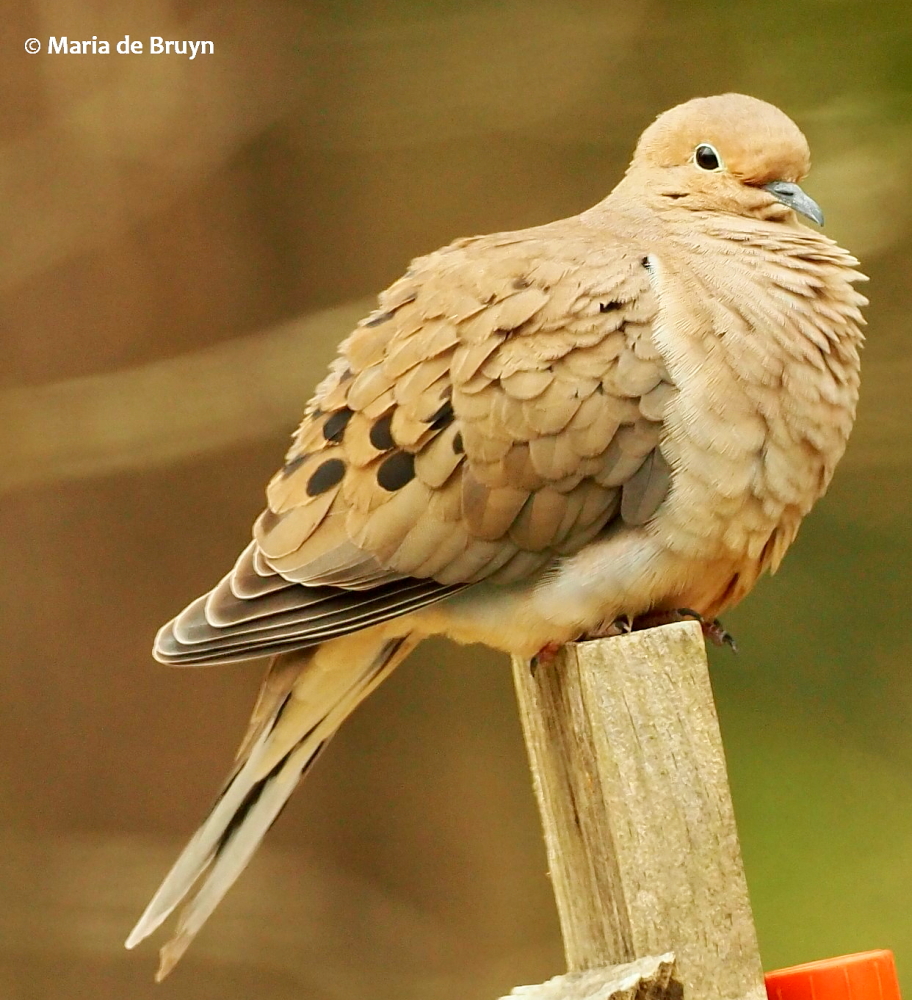
While working on photos for other blogs, it occurred to me that it might be more productive right now to focus on what we, everywhere, are facing with the current pandemic. It’s my hope that as many of us as possible will survive, thrive and overcome the distress we are facing. As we hunker down, like this beautiful mourning dove (Zenaida macroura), we can intensify our nature observations – or begin paying more attention to the wildlife around us when we do go for walks.


Practicing social quarantine and distancing is essential –- even if we live somewhere where authorities are not yet requiring this. Keeping away physically from those outside our households can protect them as well as ourselves. In most places, social distancing rules still allow us to get outside for walks in the fresh air and nature. I have never seen so many people, including families with children, in the local nature reserves and that is a welcome sight. Hopefully, a side effect of this will be much more social support and advocacy for environmental conservation and expansion of natural areas, parks and reserves now and in the future -– that would be an unexpected positive outcome to the measures we are taking to get through these troubled times! (Yellow trout lily above, Erythronium americanum).

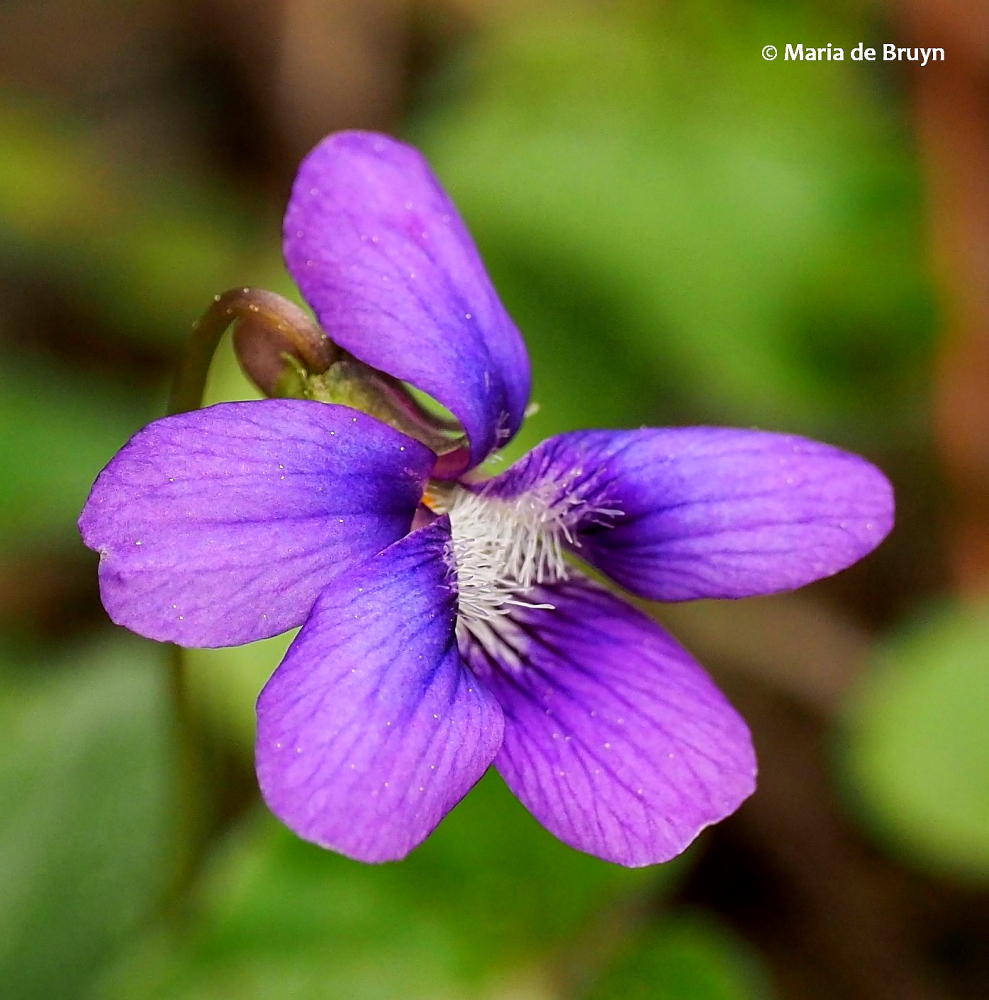
For people who haven’t had the pleasure of getting out much on walks, I wanted to share something about how to possibly enjoy nature even more. From my perspective, a key element is learning to practice patience and to stop, wait, watch and explore frequently. Here are some examples of what you might find. (Common Blue Violet, Viola sororia)

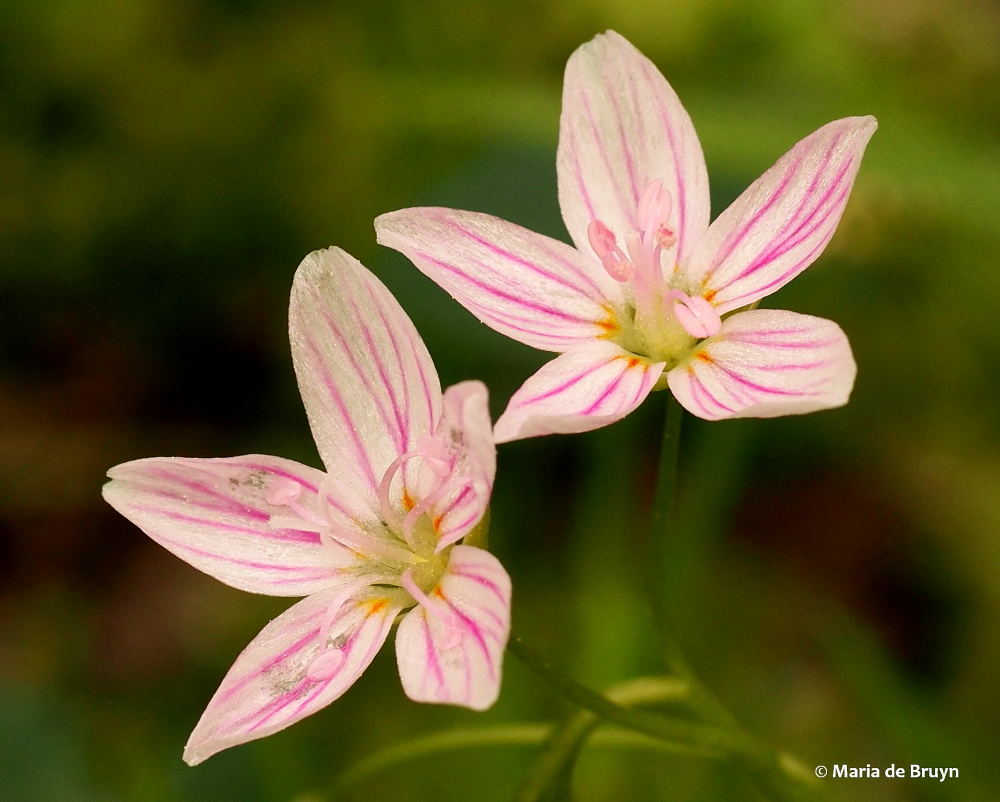
Looking down at the ground can be a fruitful exercise, especially in spring. Fresh new blooms are emerging and can delight us with their beauty (like the Eastern spring beauties, Claytonia virginica).

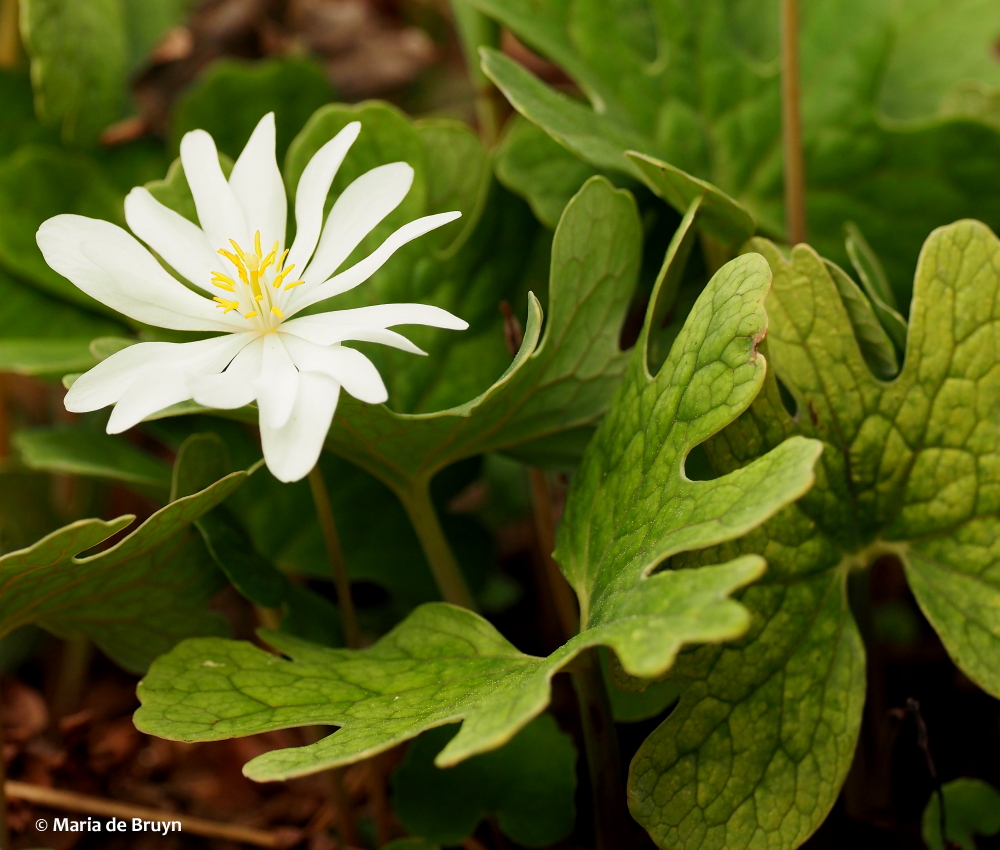
Bloodroot (Sanguinaria canadensis) – the leaves look like jigsaw puzzle pieces

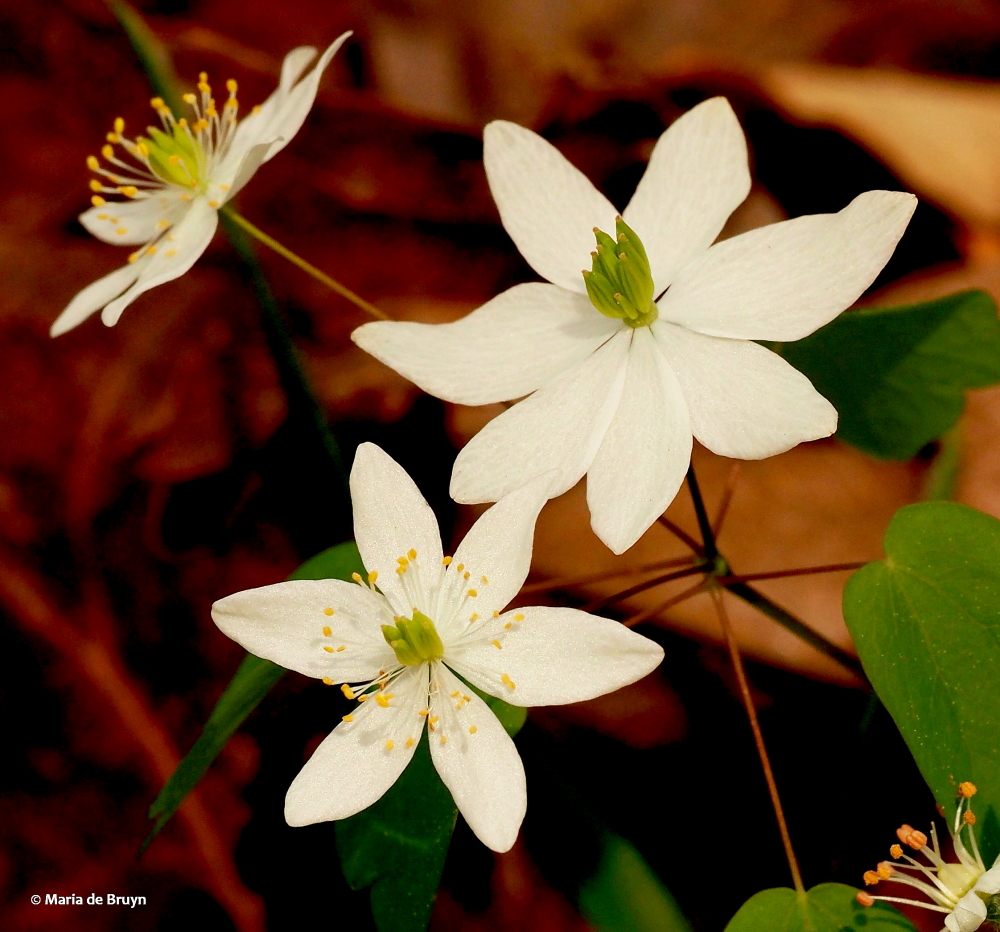
Rue anemone (Thalictrum thalictroides)                  Tiny bluet (Houstonia pusilla)

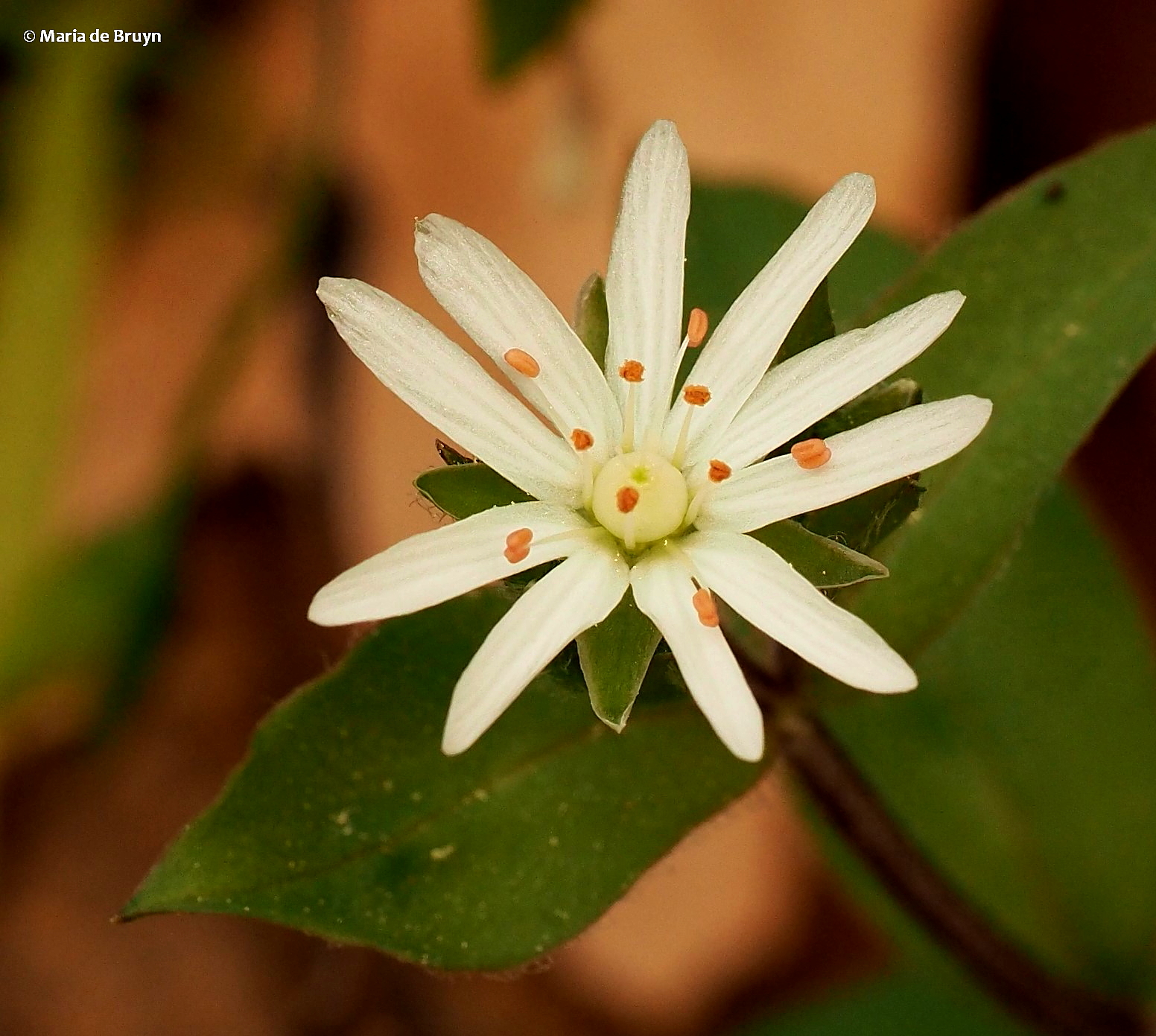
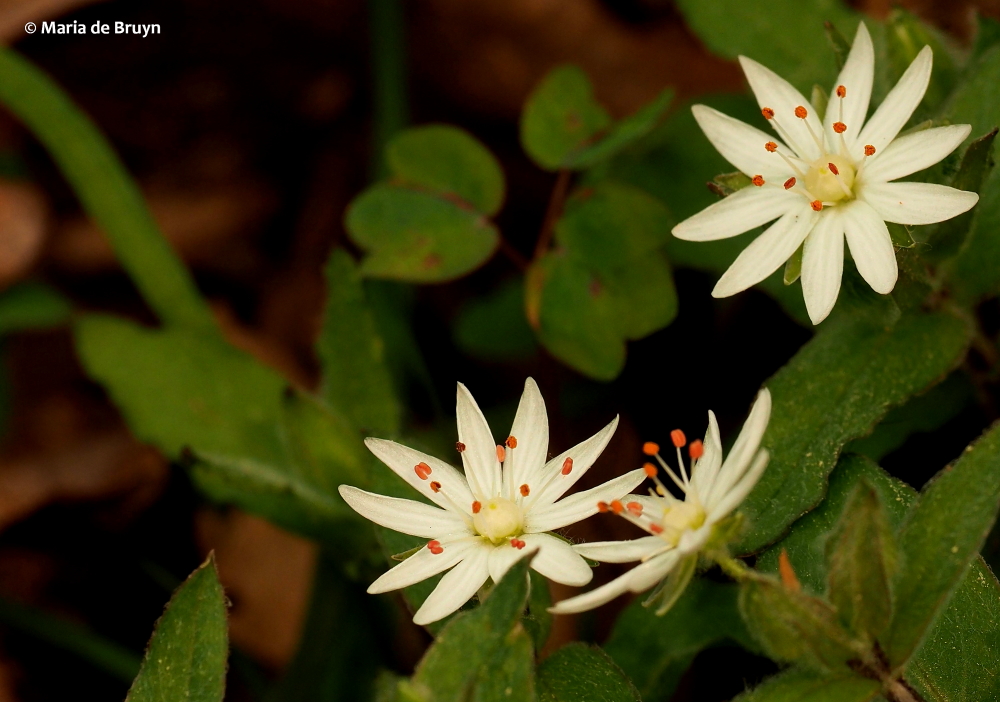
Common chickweed (Stellaria media)


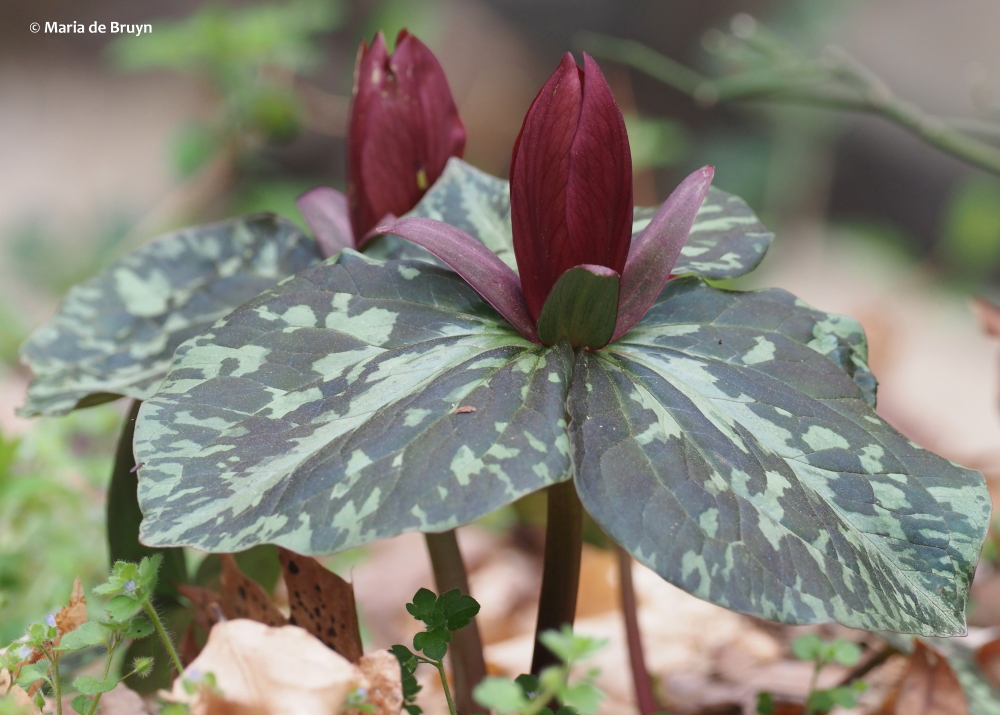
Little sweet Betsy (Trillium cuneatum)


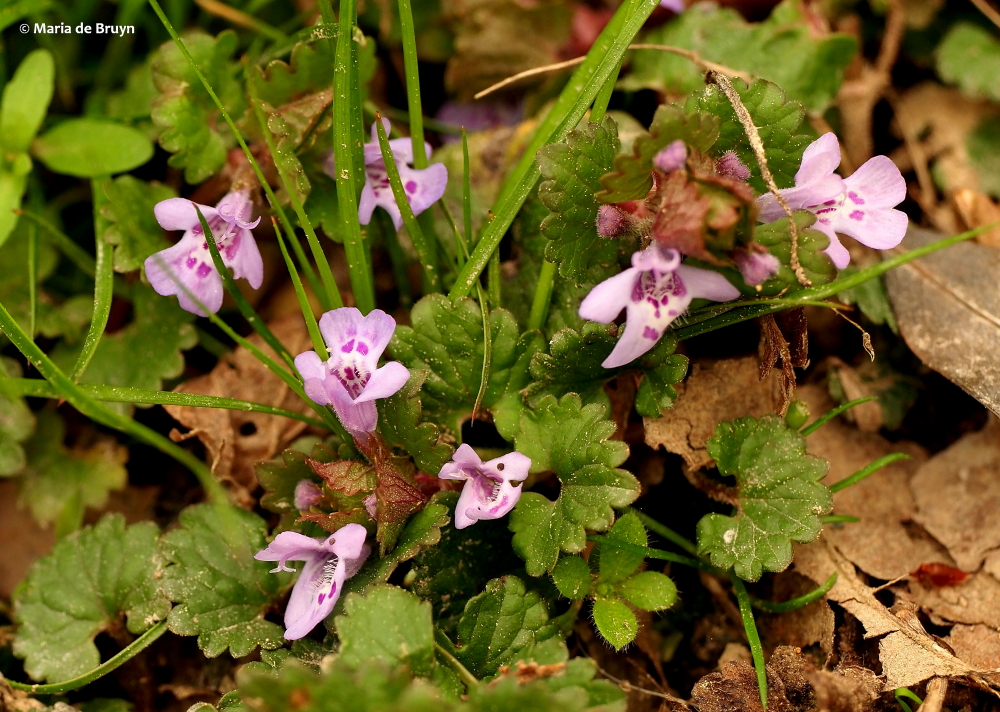
Ground ivy – also known as creeping Charlie (Glechoma hederacea)

Henbit (Lamium amplexicaule) and purple deadnettle (Lamium purpureum)

If you are out with kids, you can pay more attention to the plants –- take photos of them (most reserves and parks don’t want people to dig up and pick flowers) and then look them up at home and learn about them. Or make a game out of fallen leaves –- find three with very different shapes and identify the trees.

If you look closely at the flowers, you might glimpse small bugs flitting around the blooms. If you have a camera or phone camera, try to get a photo. When you enlarge it, you might find that you have actually seen a beautiful fly, bee or other insect whose shape and colors you couldn’t see with the naked eye. If you want to identify it, post the photo to the site BugGuide.net, where entomologists can perhaps tell you what species you saw.

Parasitic fly (Goninii, above)


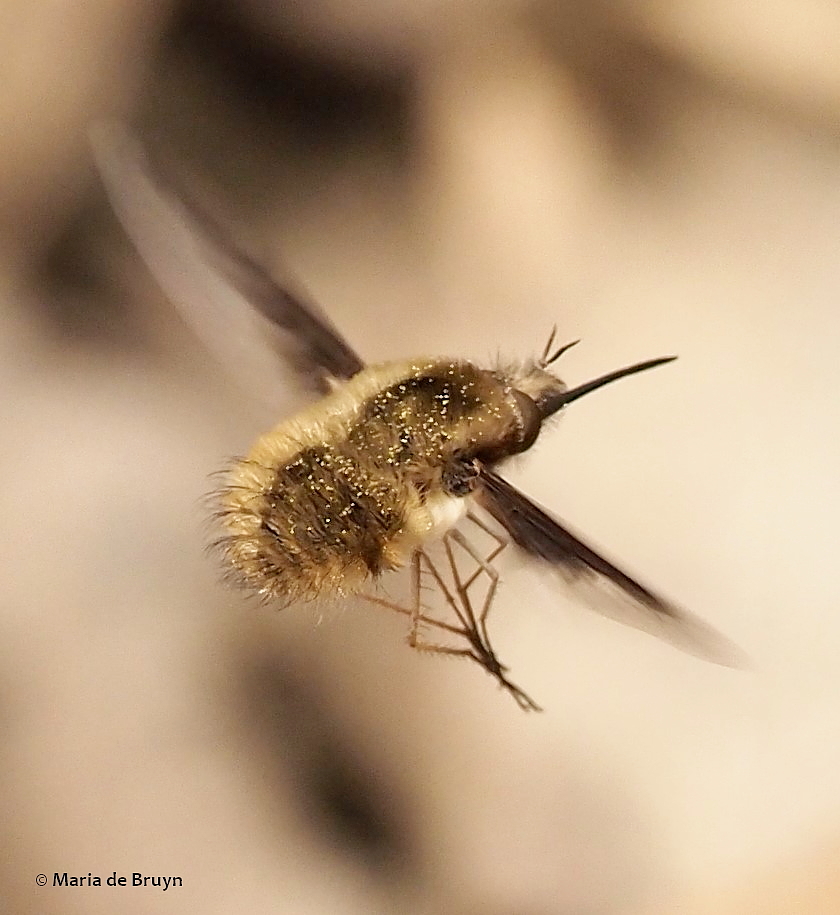
Greater bee fly (Bombylius major)

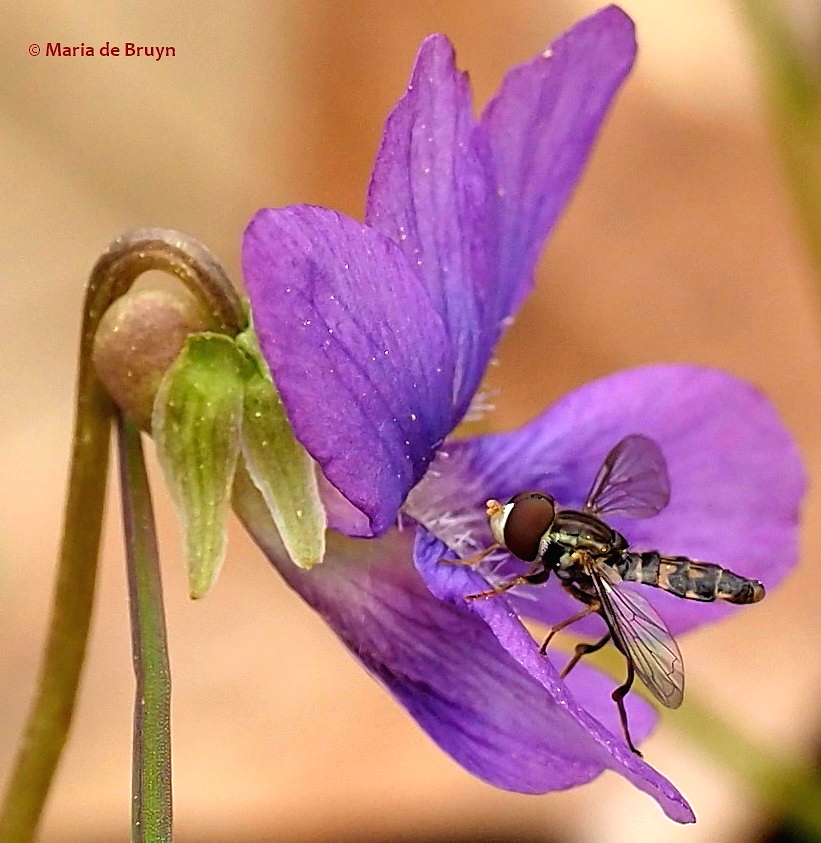
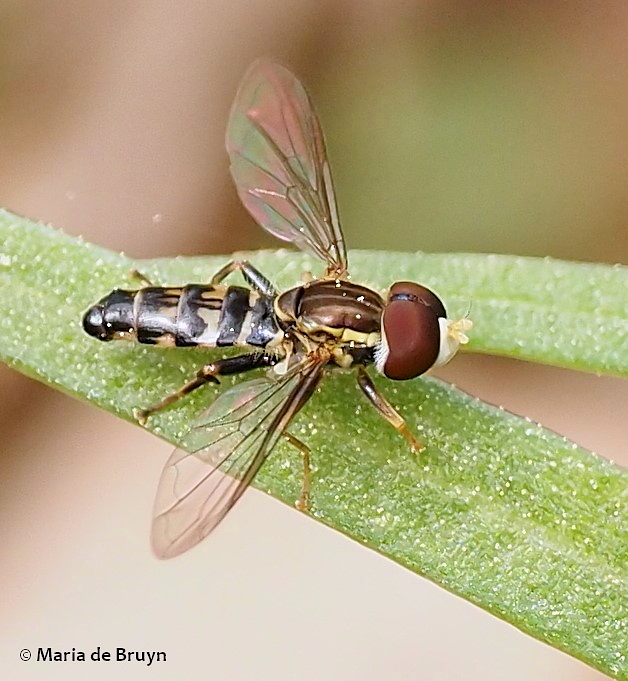
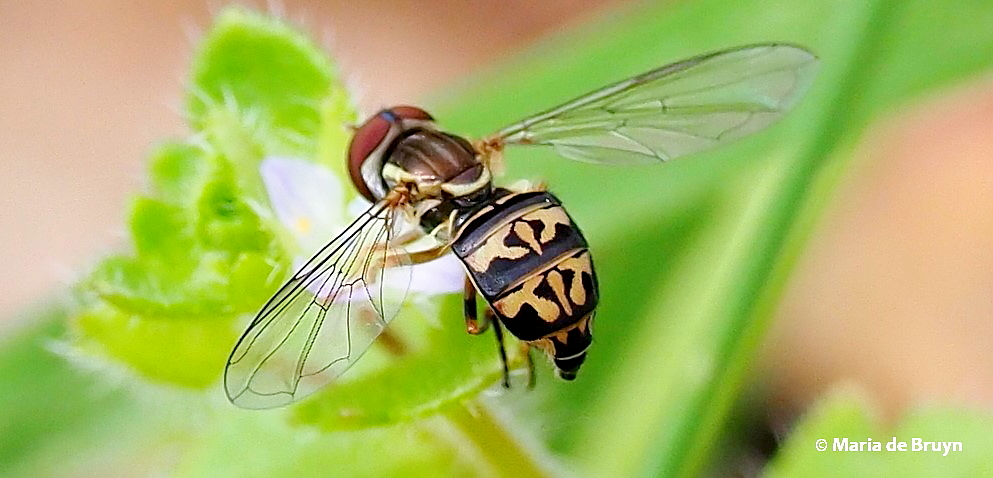
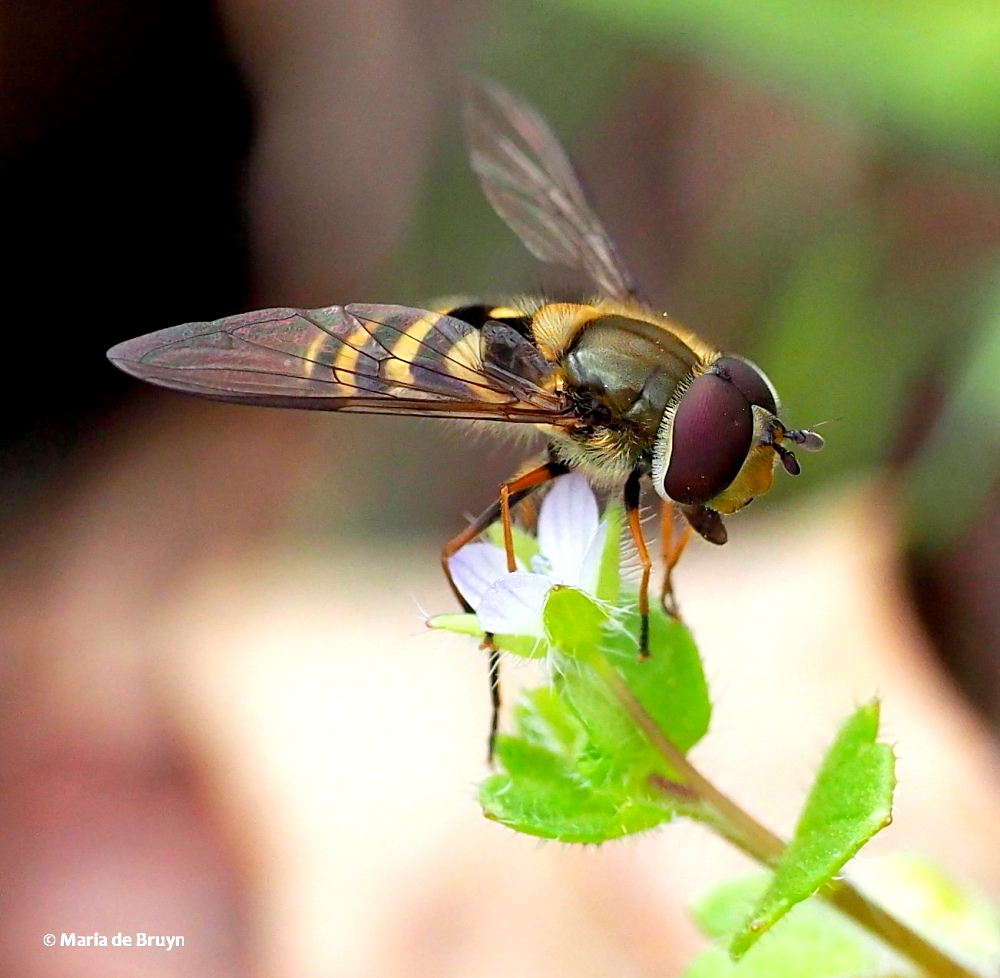
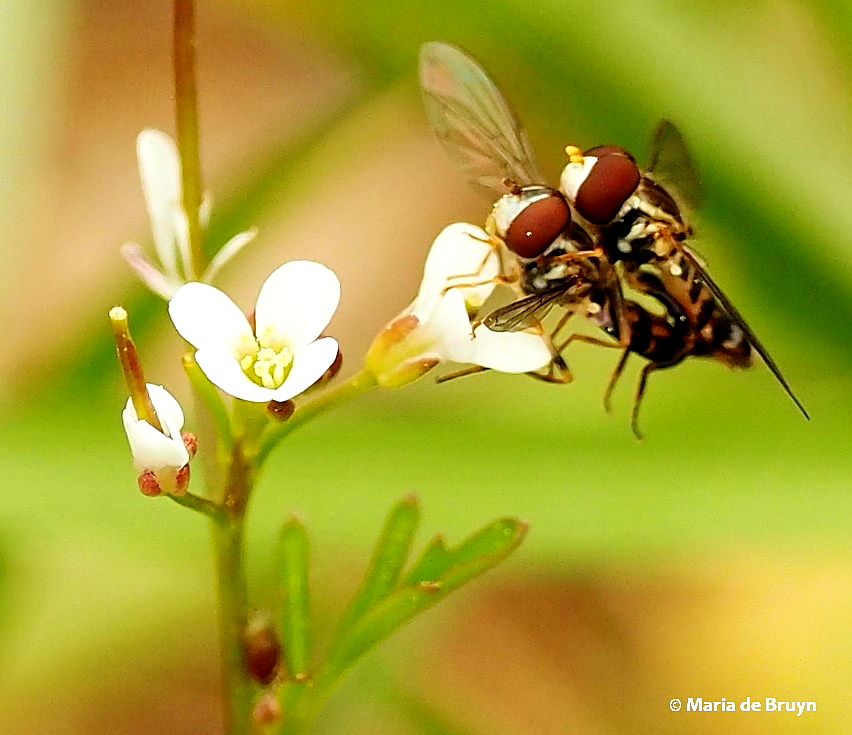
Various species of syrphid flies are shown below; they are often mistaken for small bees. The first photos are all of the species Toxomerus geminatus.


Male                                                               Female

And below the male and female together.


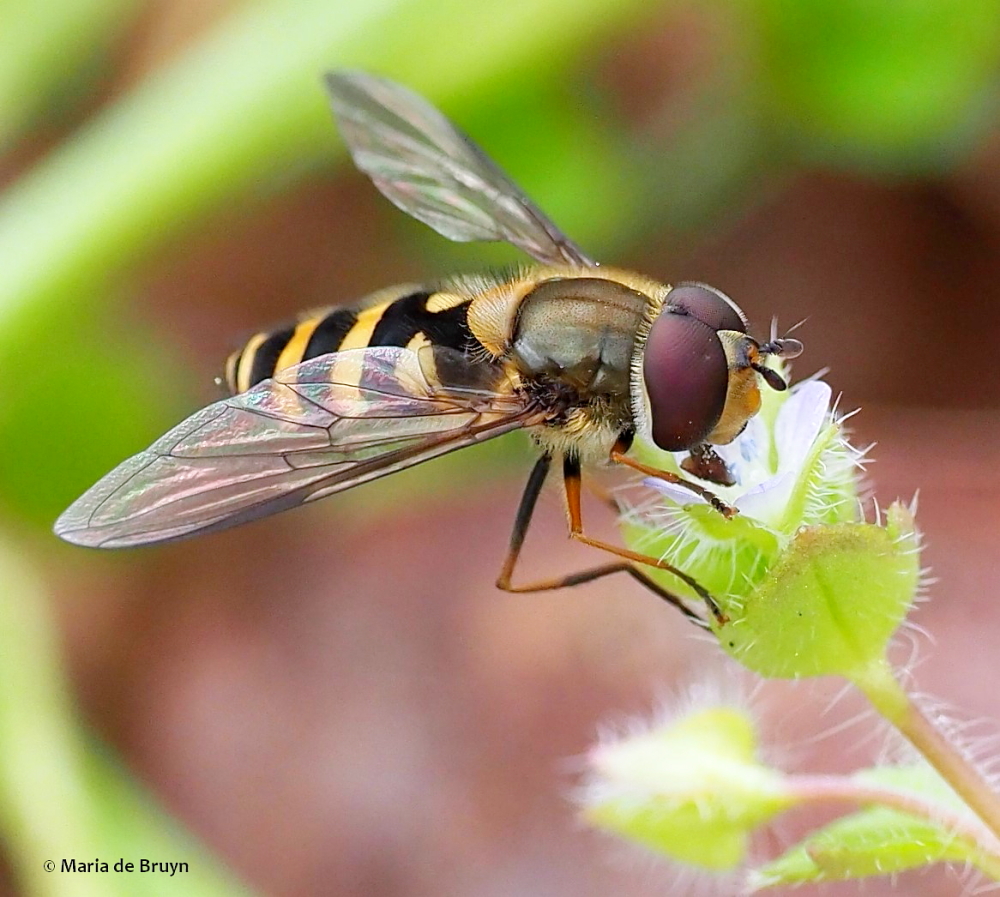
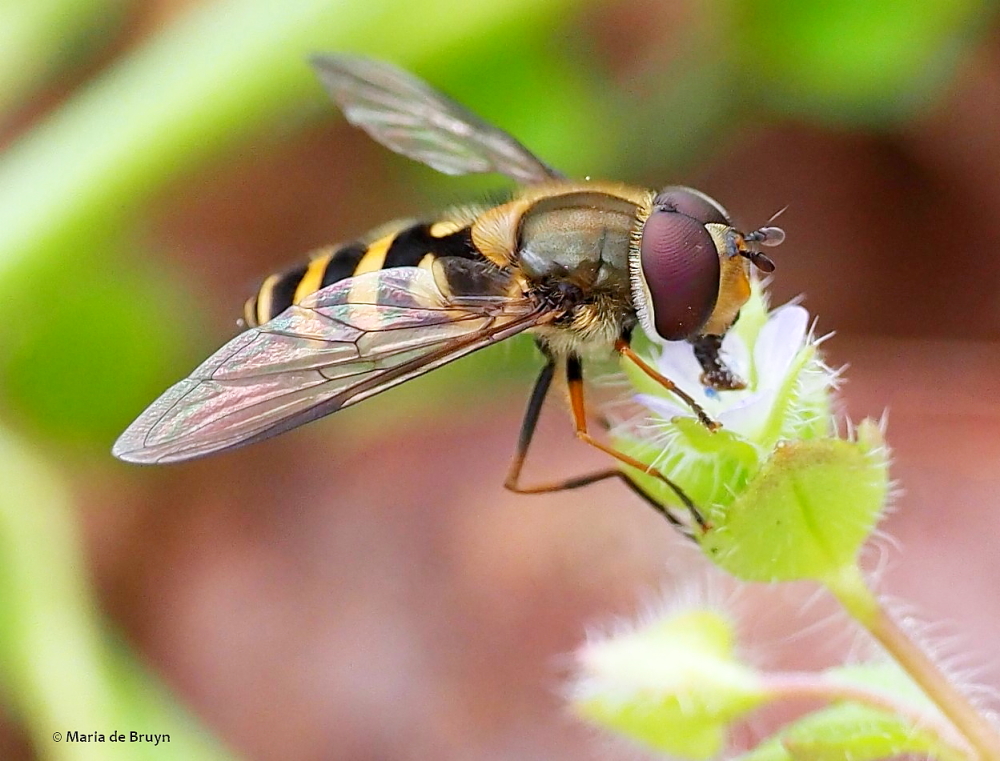
A species of syrphid fly with a striped abdomen (Syrphus torvus) is characterized by “hairy” eyes (more so in males, like this one). Click to enlarge and see the hairs.

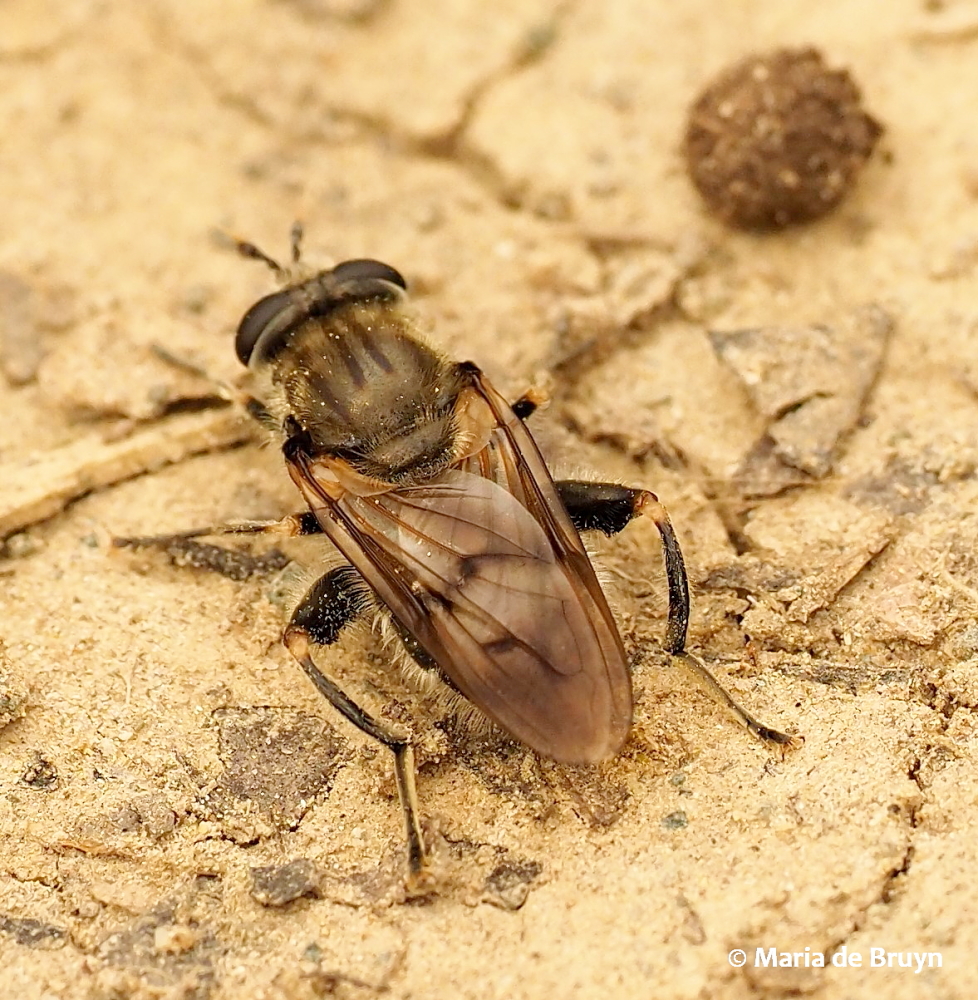
A larger species, Brachypalpus oarus, is not so colorful.

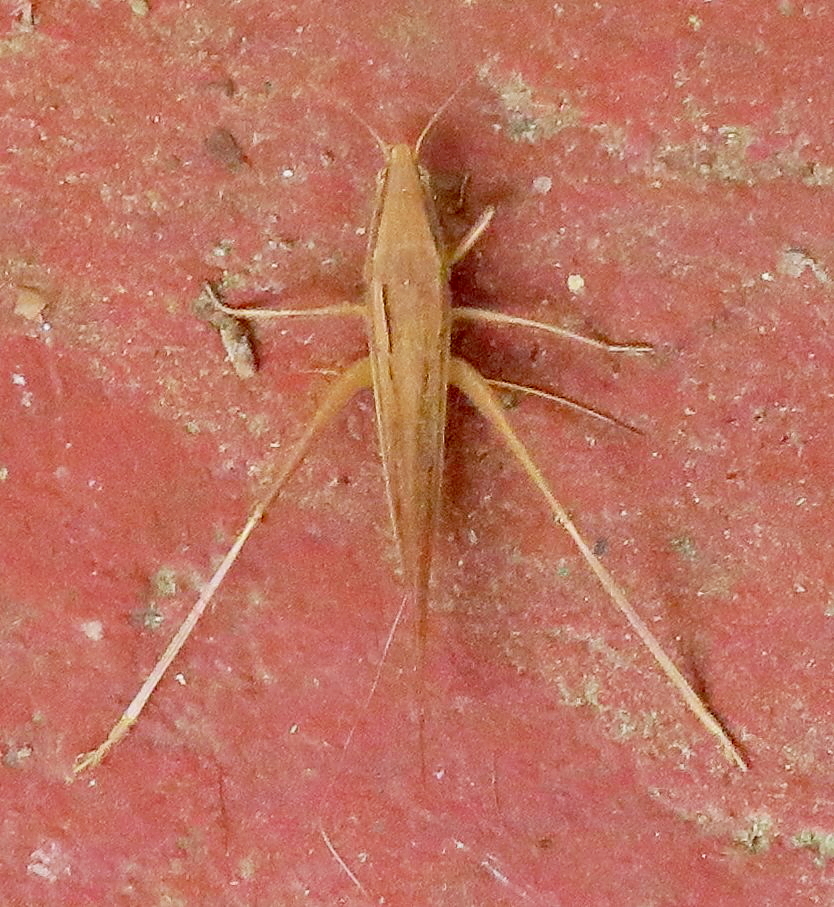
Even if you can’t get outside much, you might see an interesting insect around your house. For example, this male brown-tipped conehead katydid (Neoconocephalus triops) appeared on my porch when I was sweeping.

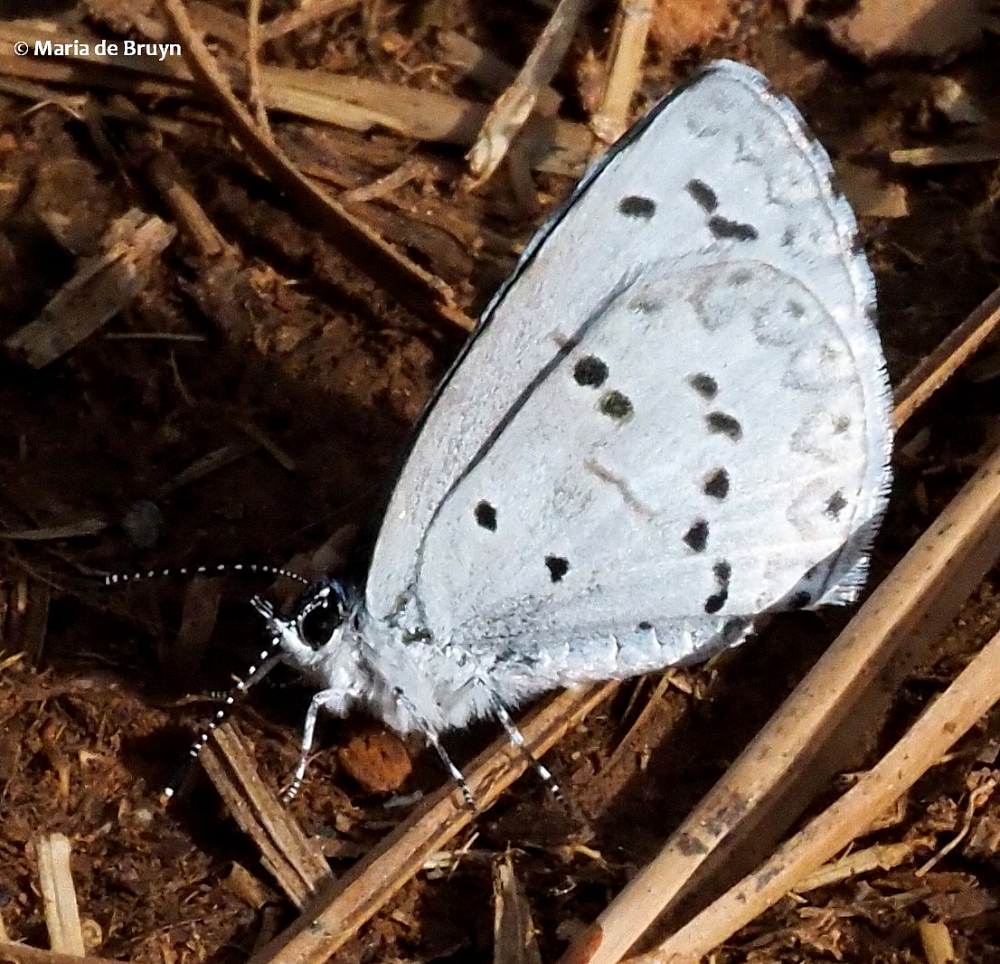
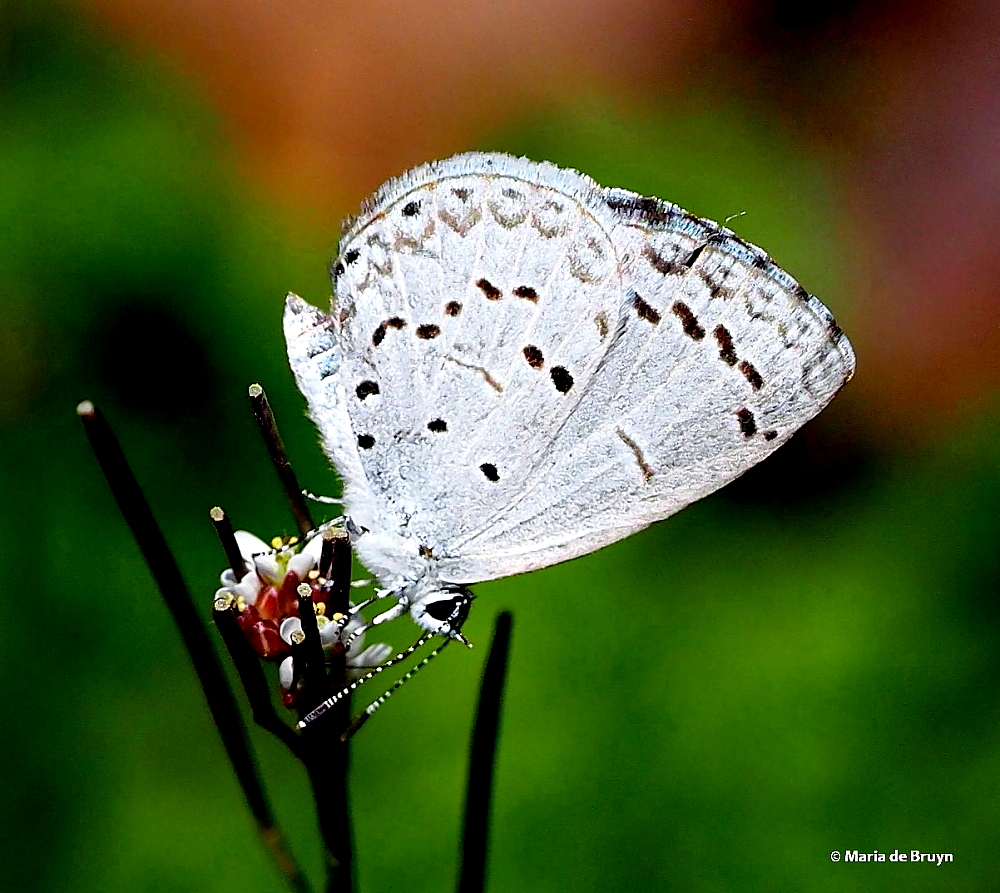
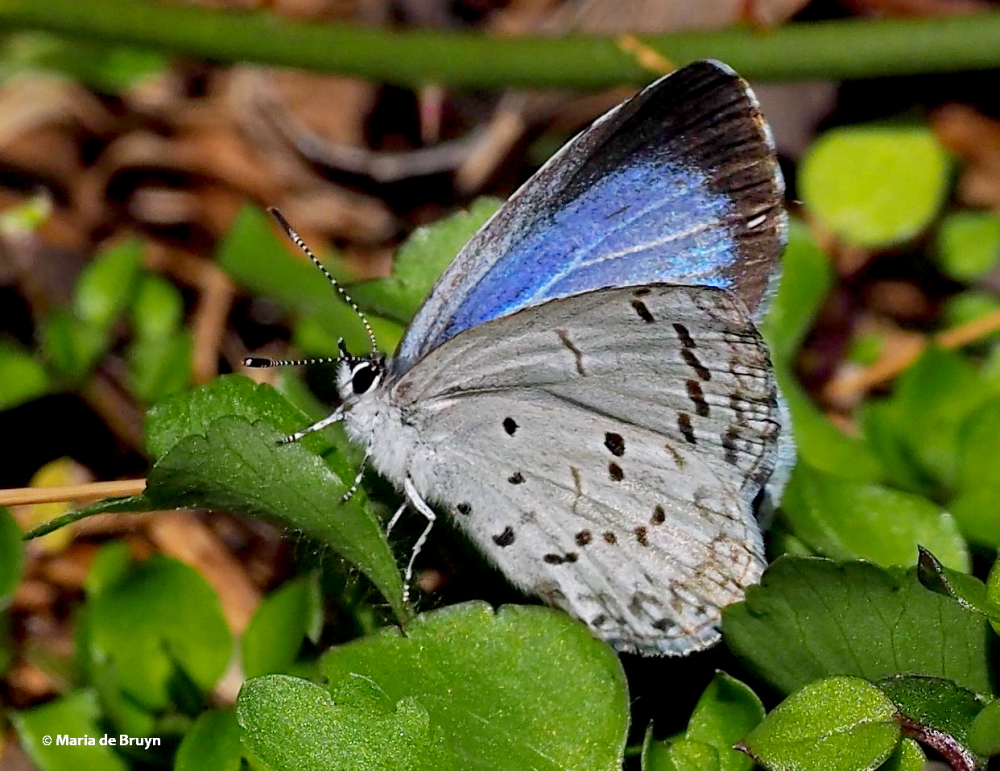
Butterflies are really starting to fly around now. The bluish spring azures (Celastrina ladon) are abundant right now.

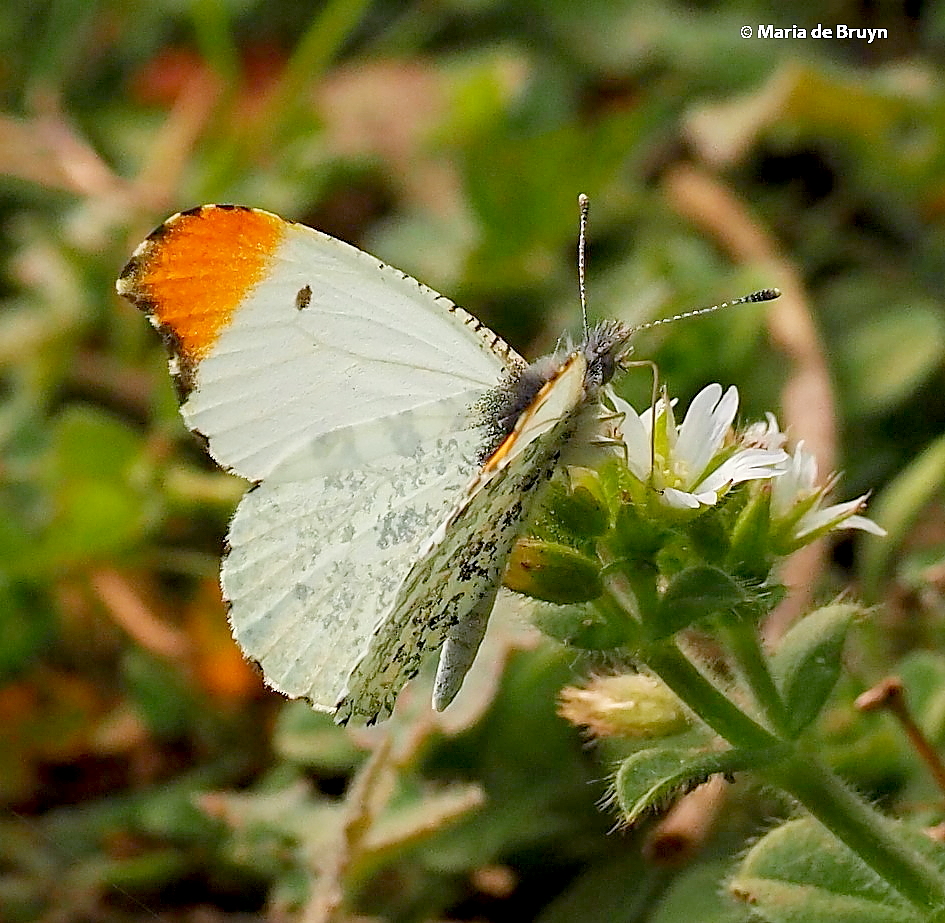
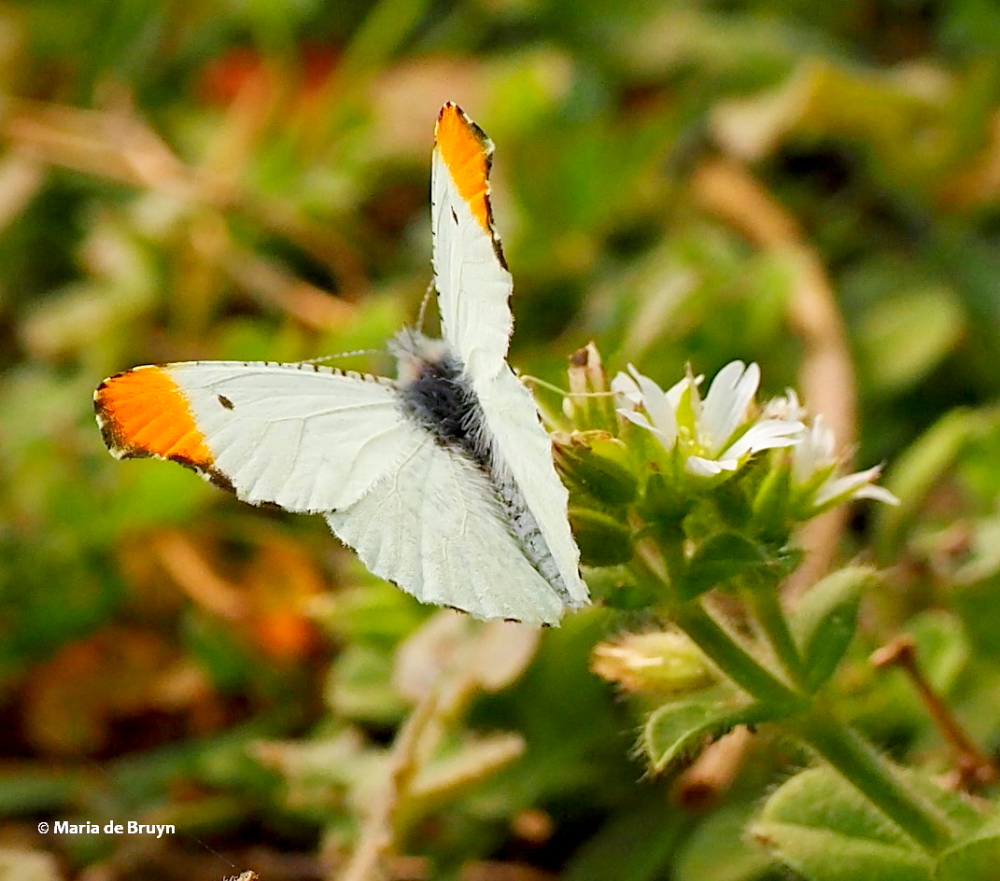
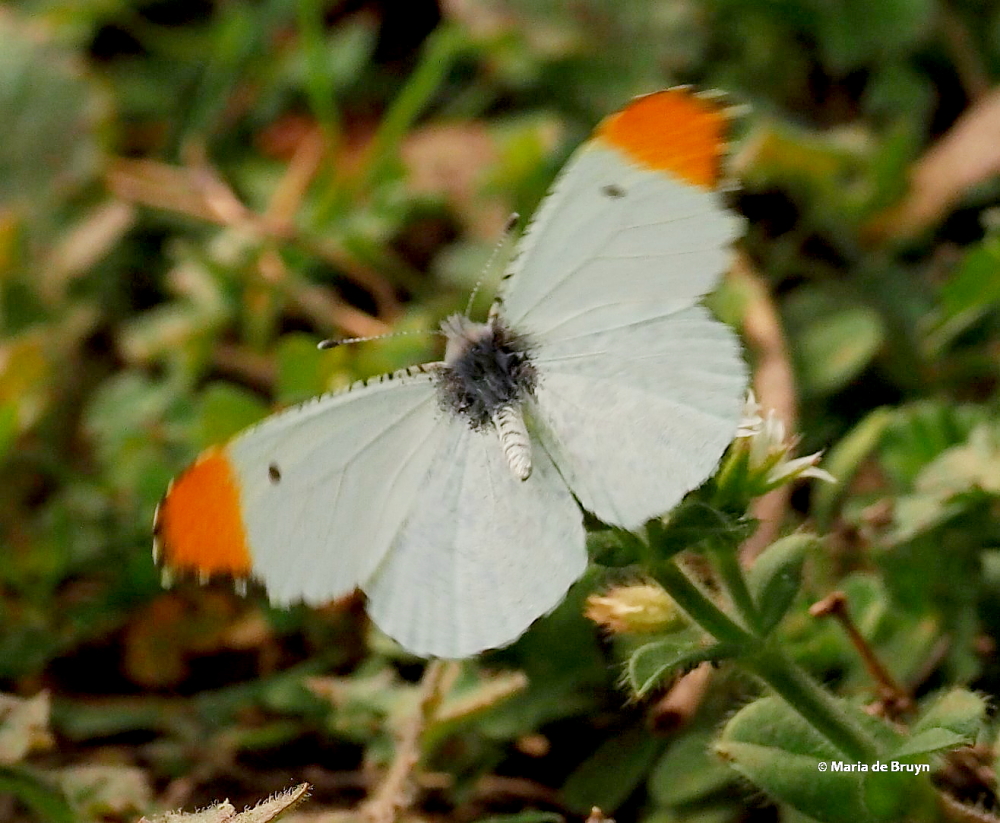
I’ve been seeing falcate orangetips (Anthocharis midea), too.

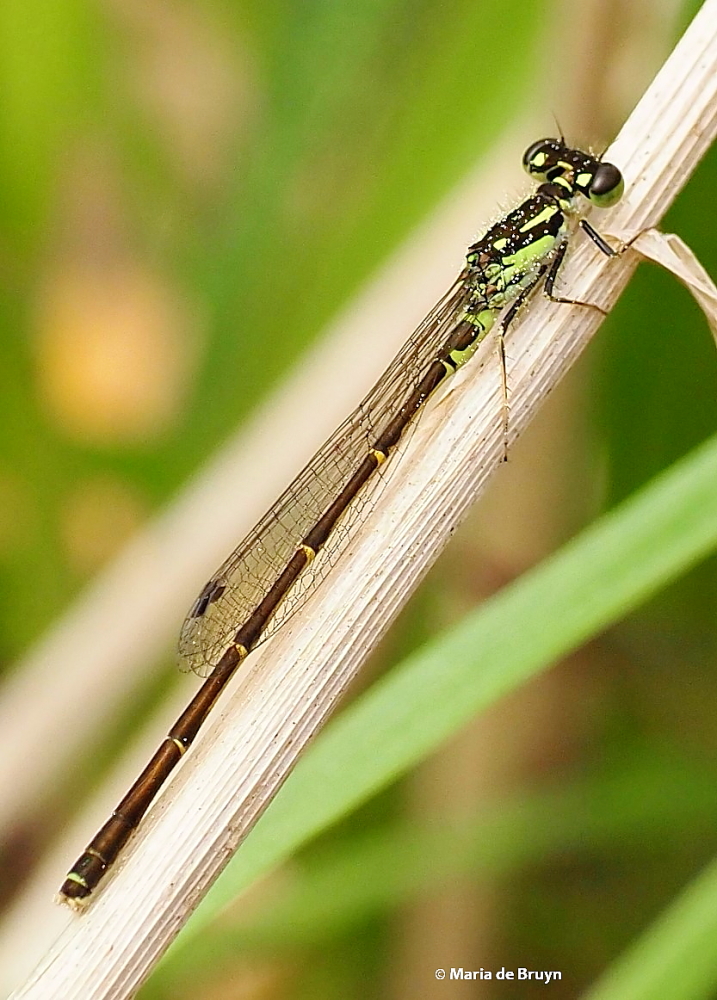
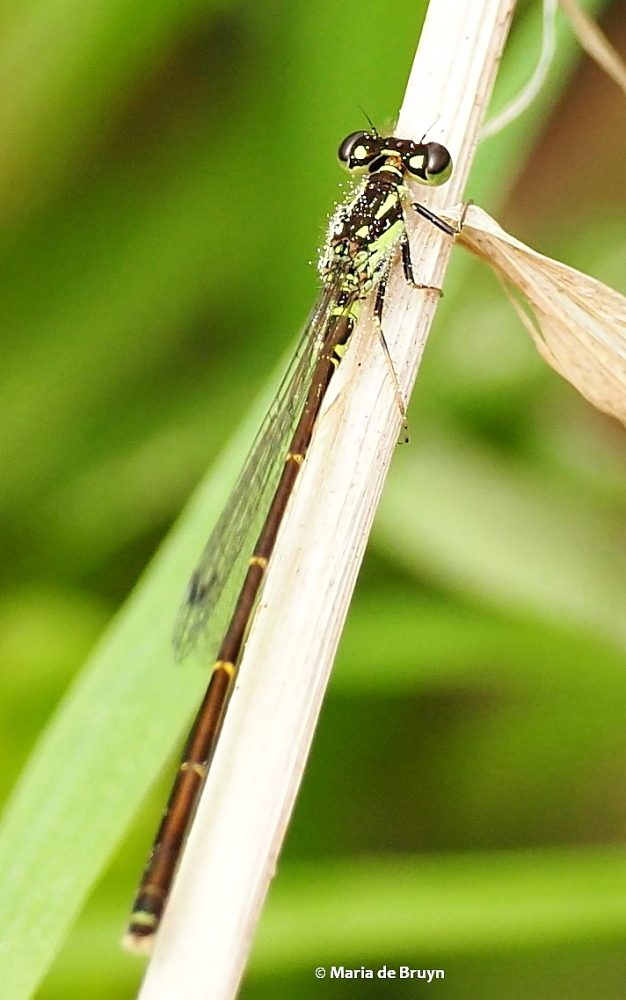
Damselflies are also starting to appear; we tend to see them earlier than the dragonflies, who spread their wings horizontally when they alight on vegetation. This fragile forktail damselfly (Ischnura posita) was getting covered in yellow pine pollen –- much of North Carolina’s Piedmont region is bedecked in yellow dust during the spring weeks when the pine trees emit clouds of pollen.


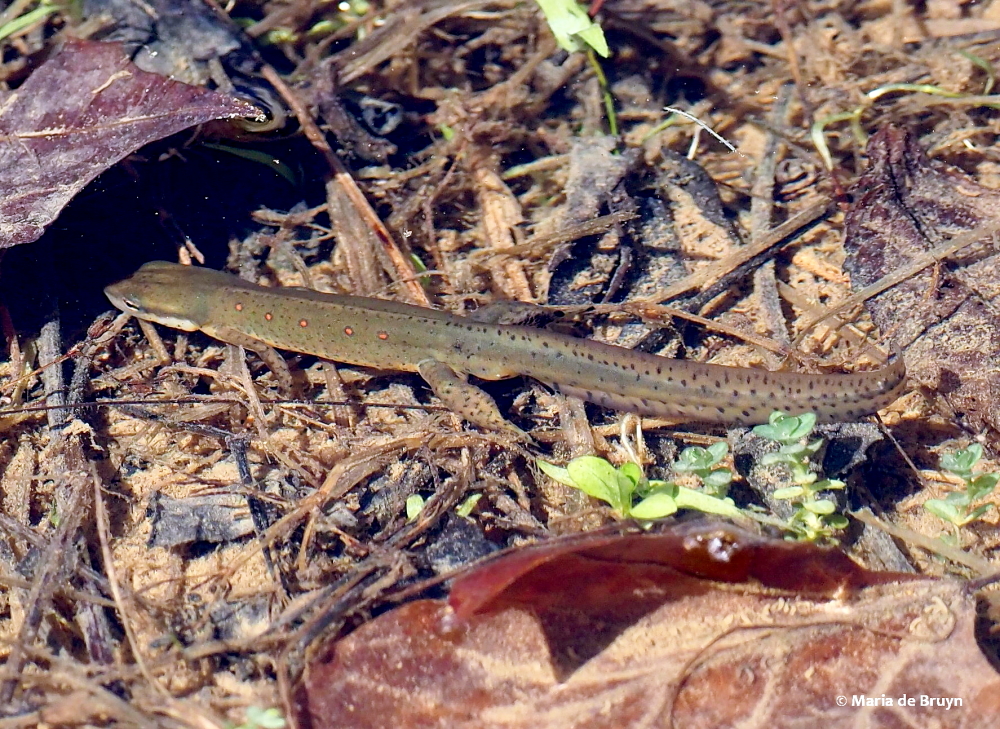
Looking in the water can be productive, too. One day, I spent some time scanning the edge of a pond where the water was shallow enough to see the bottom. As I watched little fish darting to and fro, I suddenly noticed something larger moving about quickly. I looked more intently and discovered Eastern newts (also called red-spotted newts, Notophthalmus viridescens) down there – the first time I had seen these amphibians!!

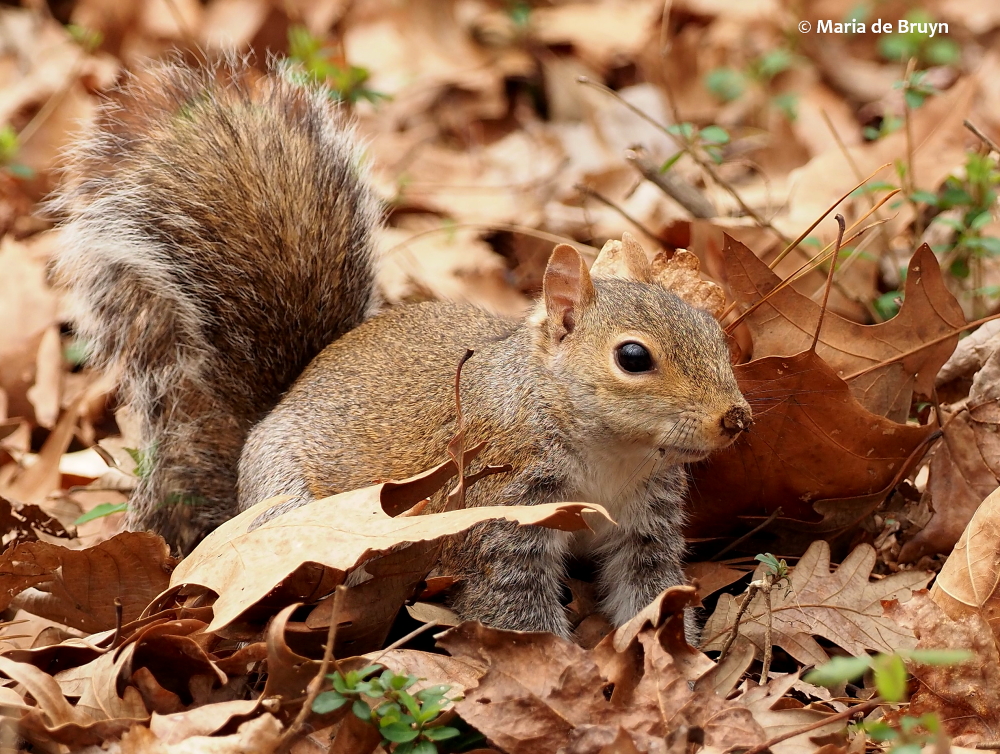
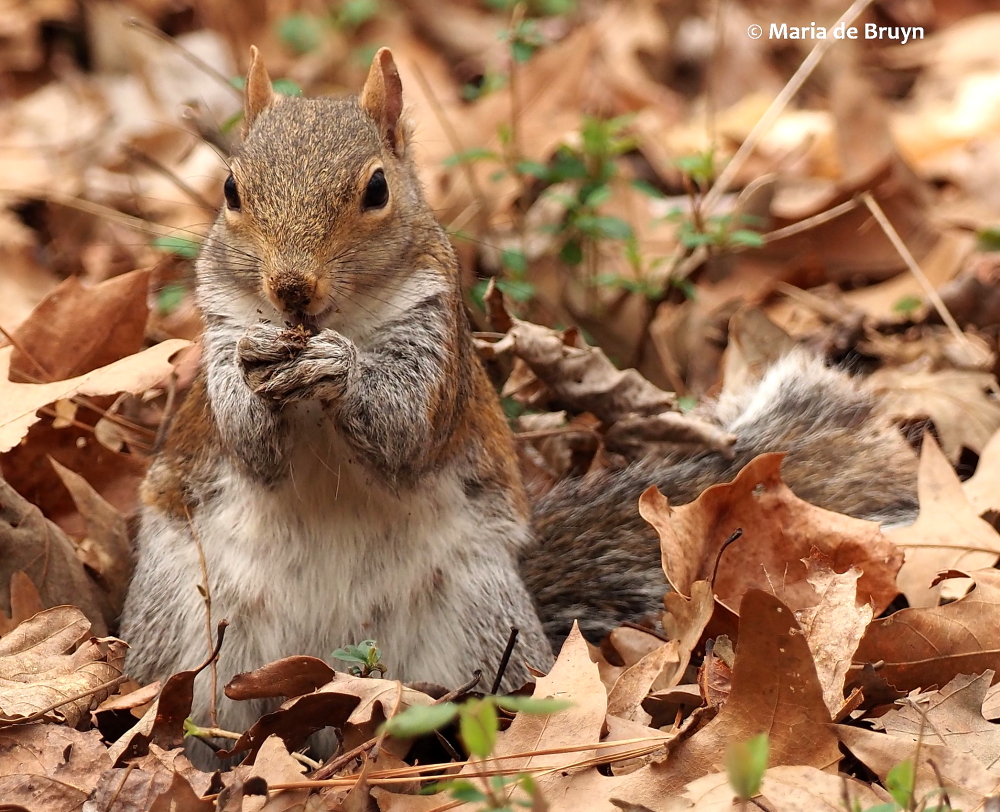
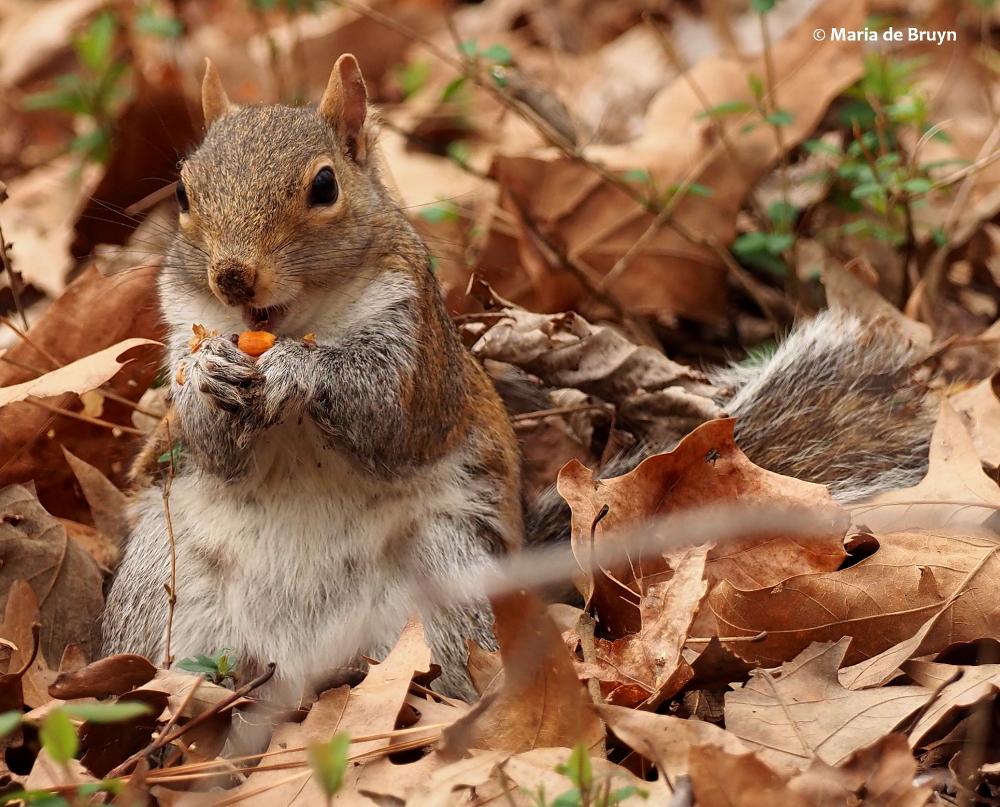
When you see an Eastern gray squirrel (Sciurus carolinensis) scurrying across the leaves in the forest or even alongside a road, stop and watch a bit. I did the other day and saw the mammal locate a winter stash and dig up some food it had stored. This article describes their storage process and reveals that they can probably remember where up to 95% of their stashes are hidden!

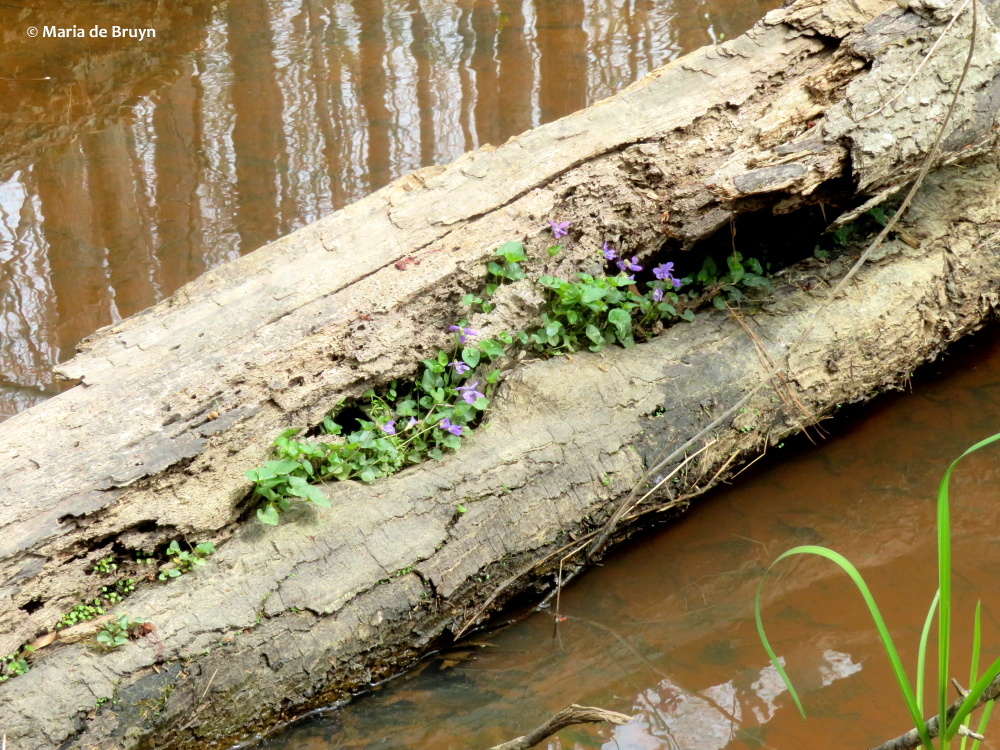
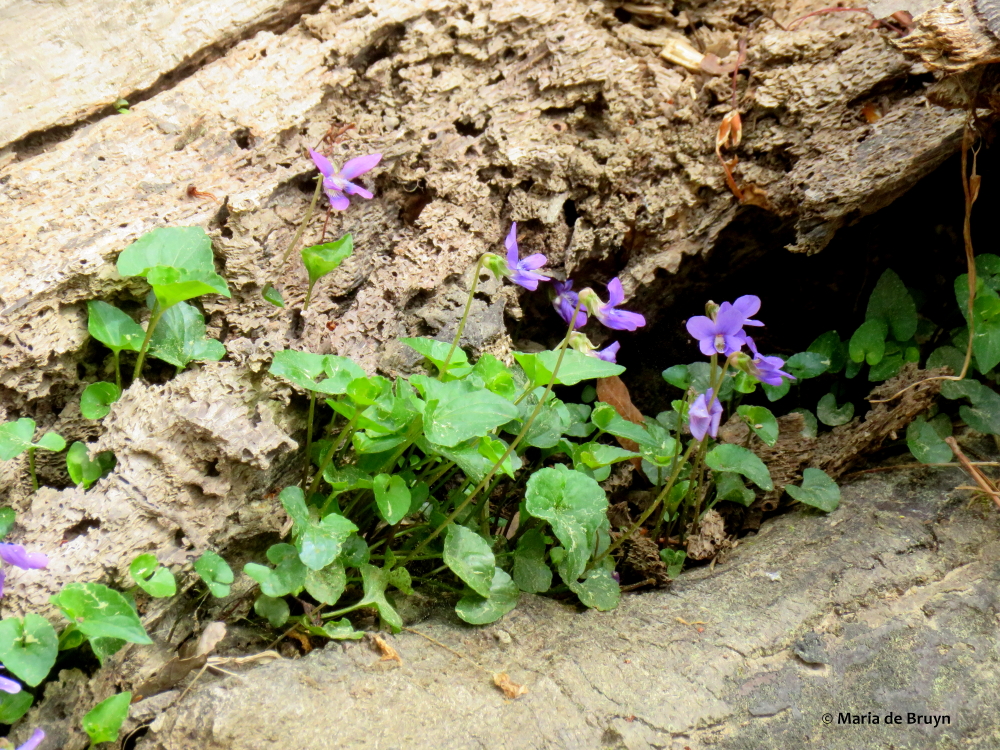
Paying attention to fallen logs can reveal beauty, too. This tree that fell across a creek ended up providing a growing place for common blue violets (Viola sororia).

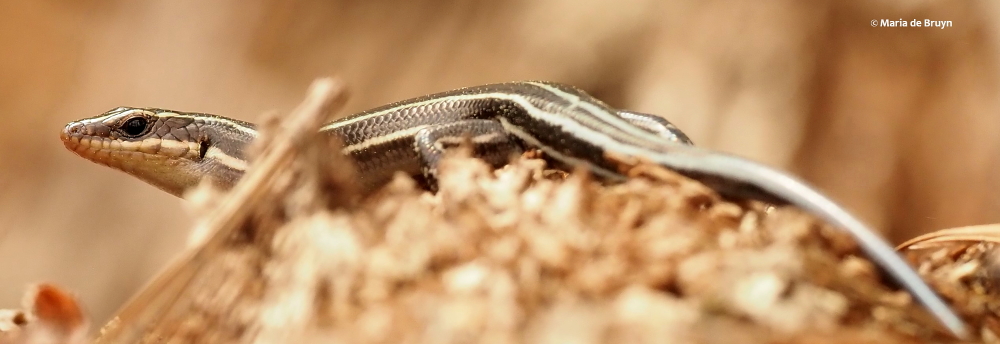
As I walked by some other fallen trees, a common five-lined skink (Plestiodon fasciatus) popped briefly into view, gave me a pensive look and then disappeared into the leaf and twig litter.

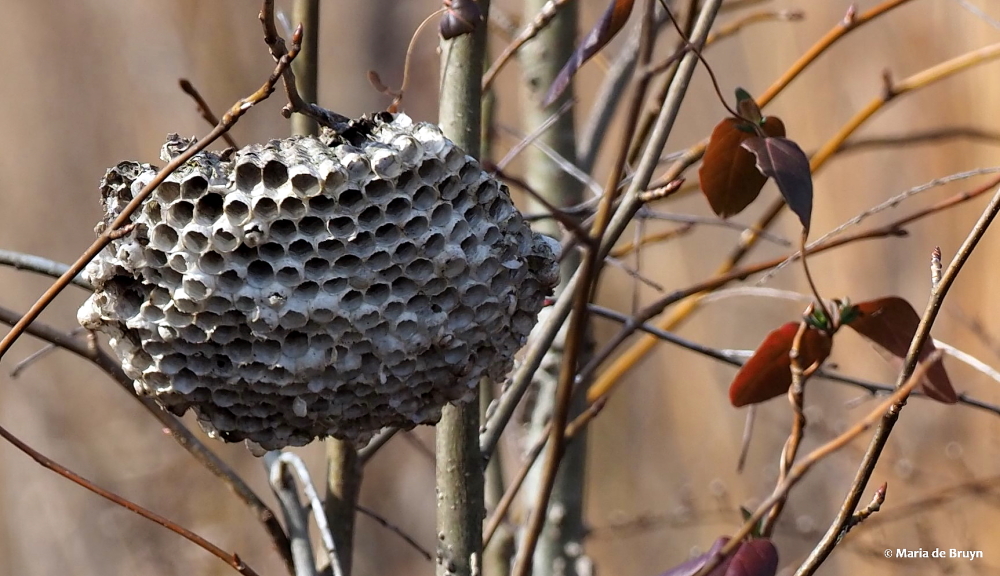
Looking up at the trees, you might be lucky to see a wasp nest. The paper wasps (Polistes) make compartmentalized nests, with a place for each individual egg.

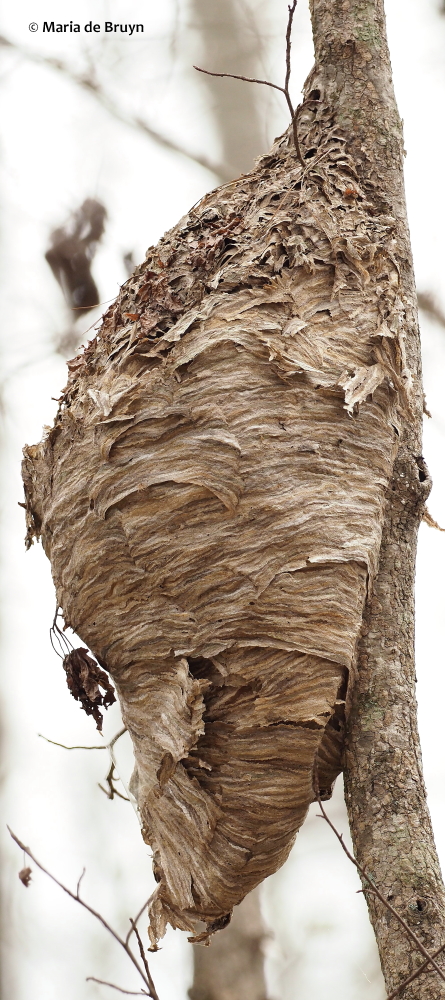
Or you may see a large bald-faced hornet’s nest (Dolichovespula maculata).


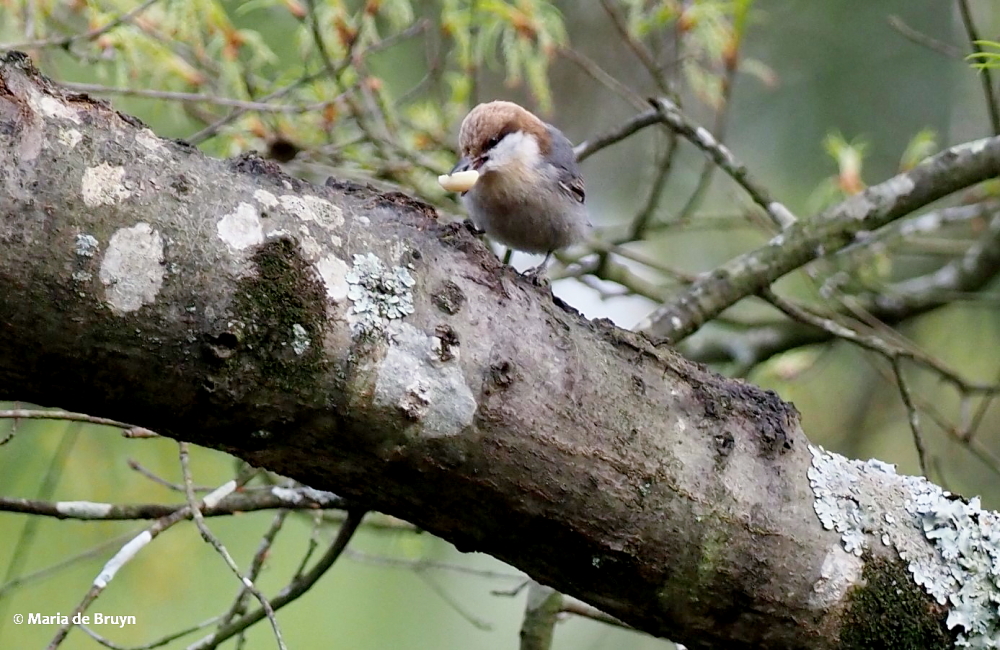
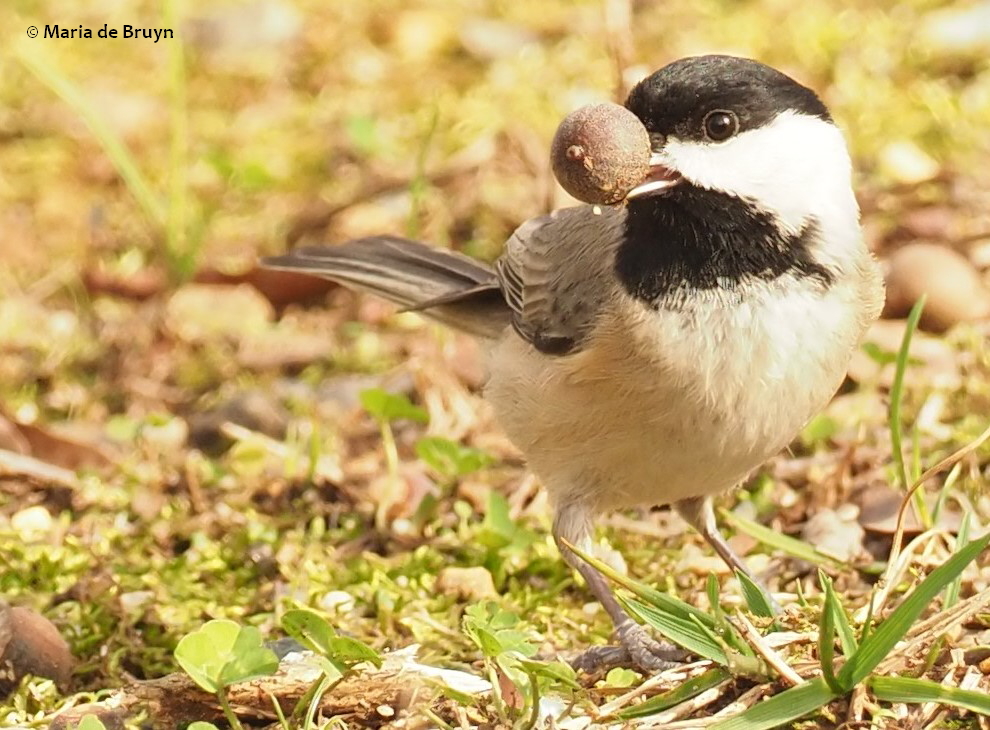
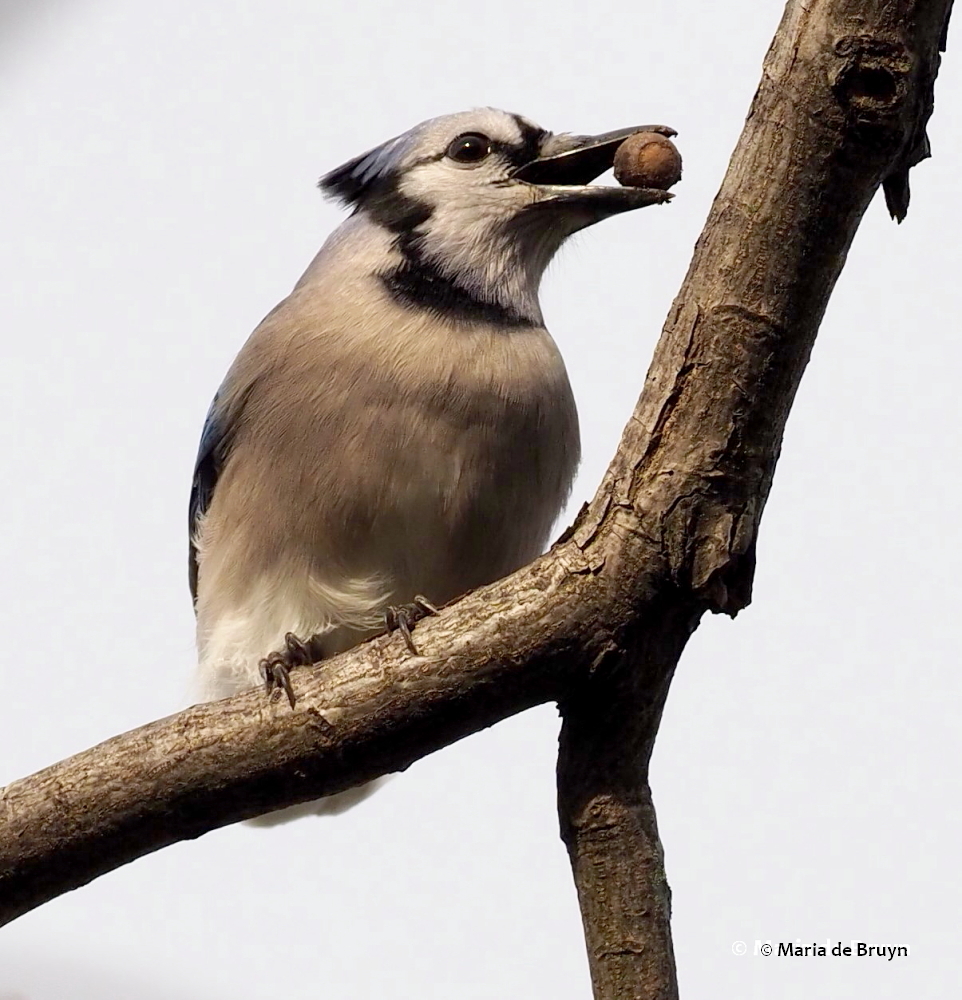
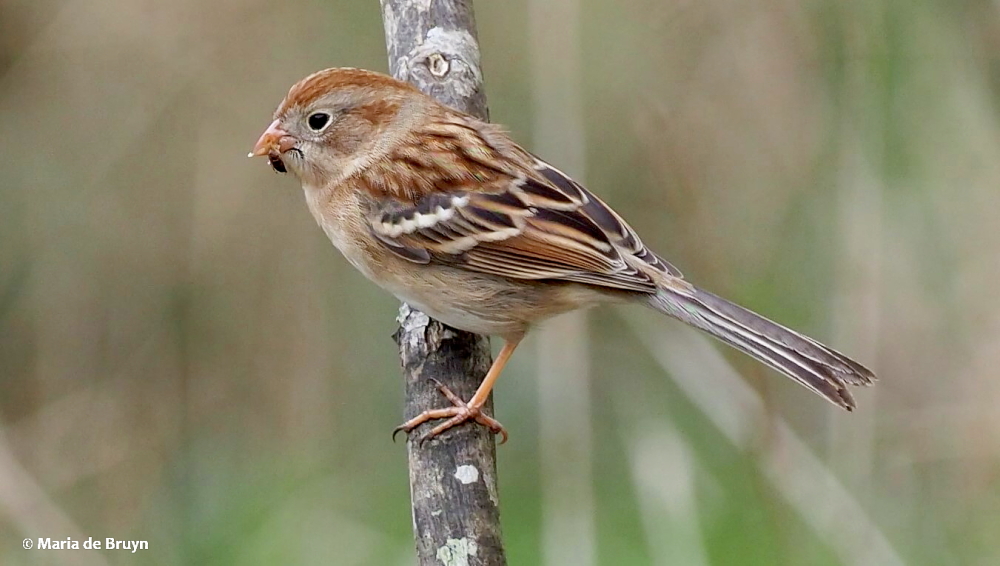
If you take the time to watch birds, you may see them engaged in looking for food (like insects, nuts, berries and seeds).

Tufted titmouse (Baeolophus bicolor)         Brown-headed nuthatch (Sitta pusilla)

Carolina chickadee (Poecile carolinensis) White-throated sparrow (Zonotrichia albicollis)

Blue jay (Cyanocitta cristata)                          Cedar waxwing (Bombycilla cedrorum)


Black & white warbler (Mniotilta varia)    Field sparrow (Spizella pusilla)

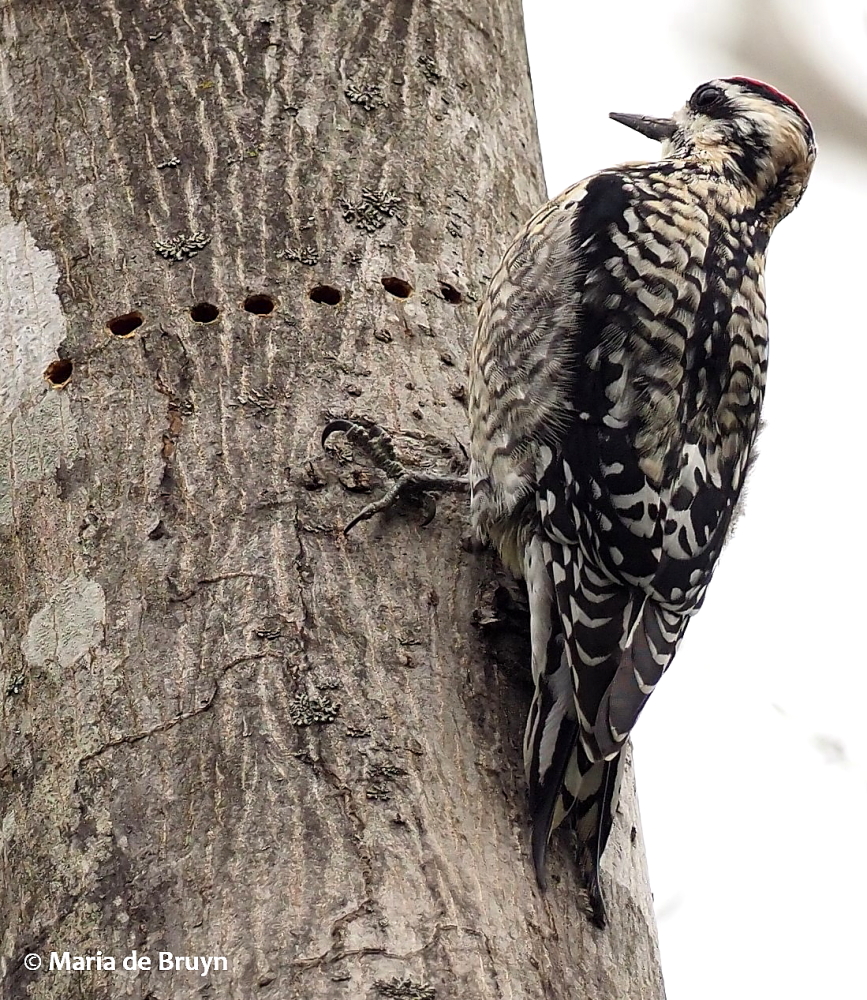
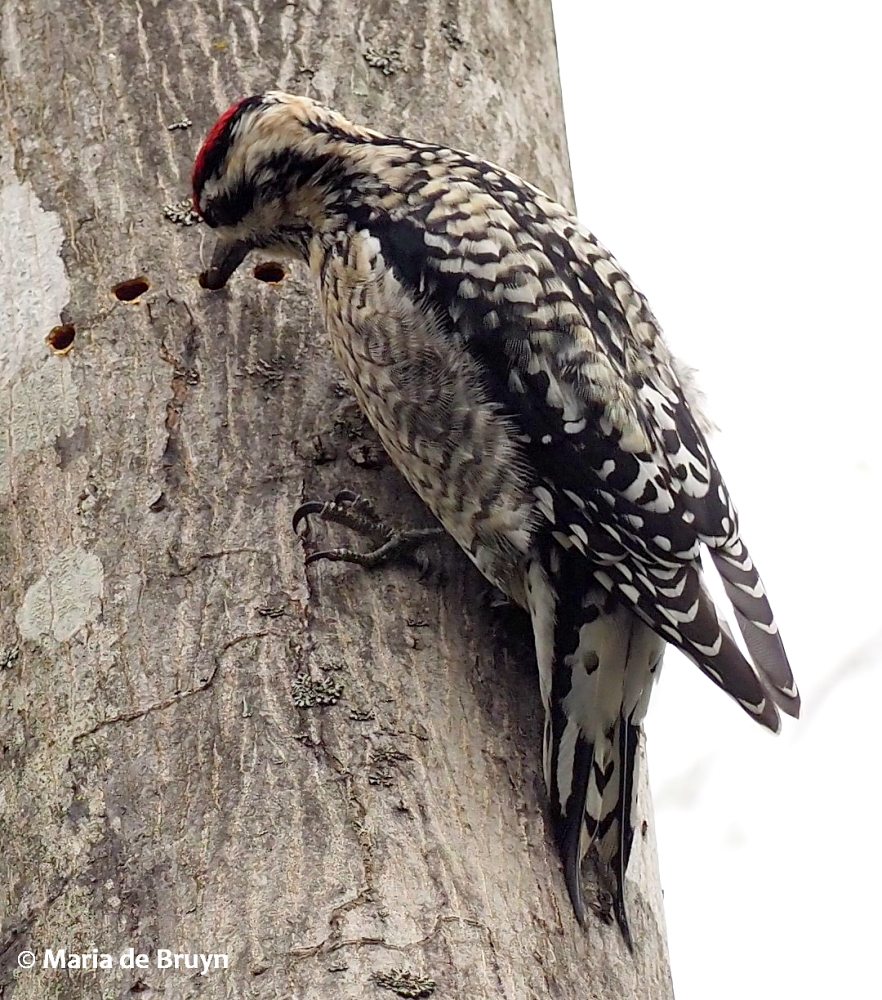
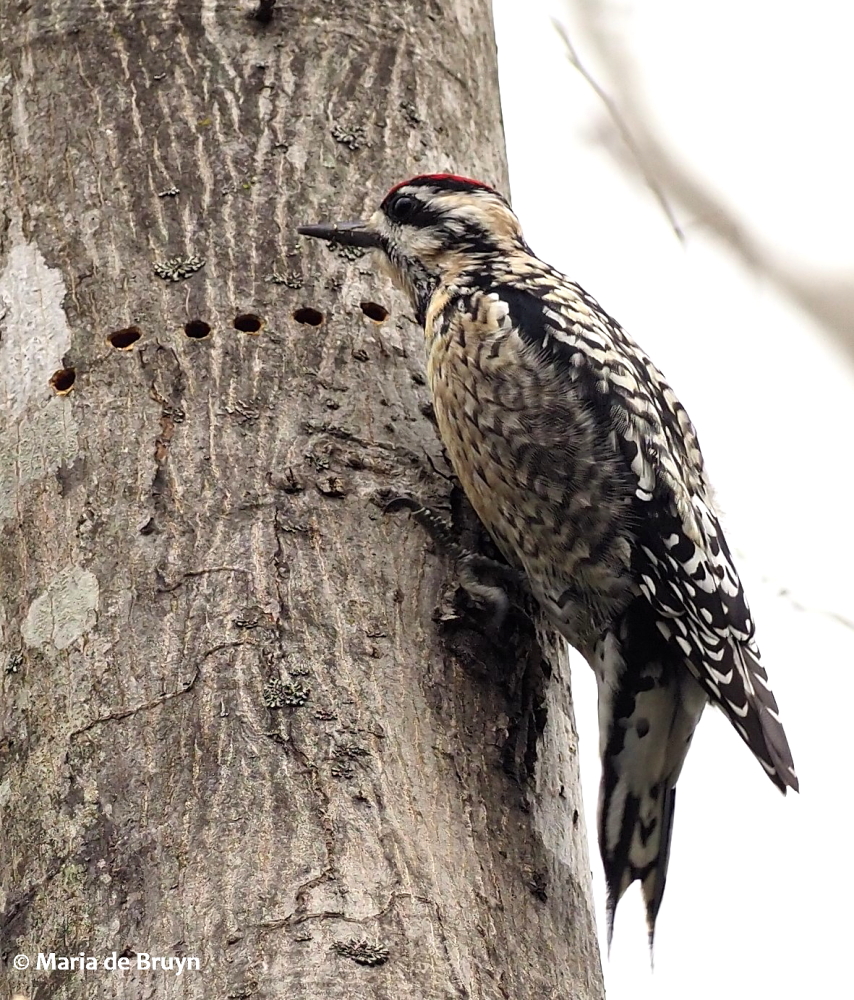
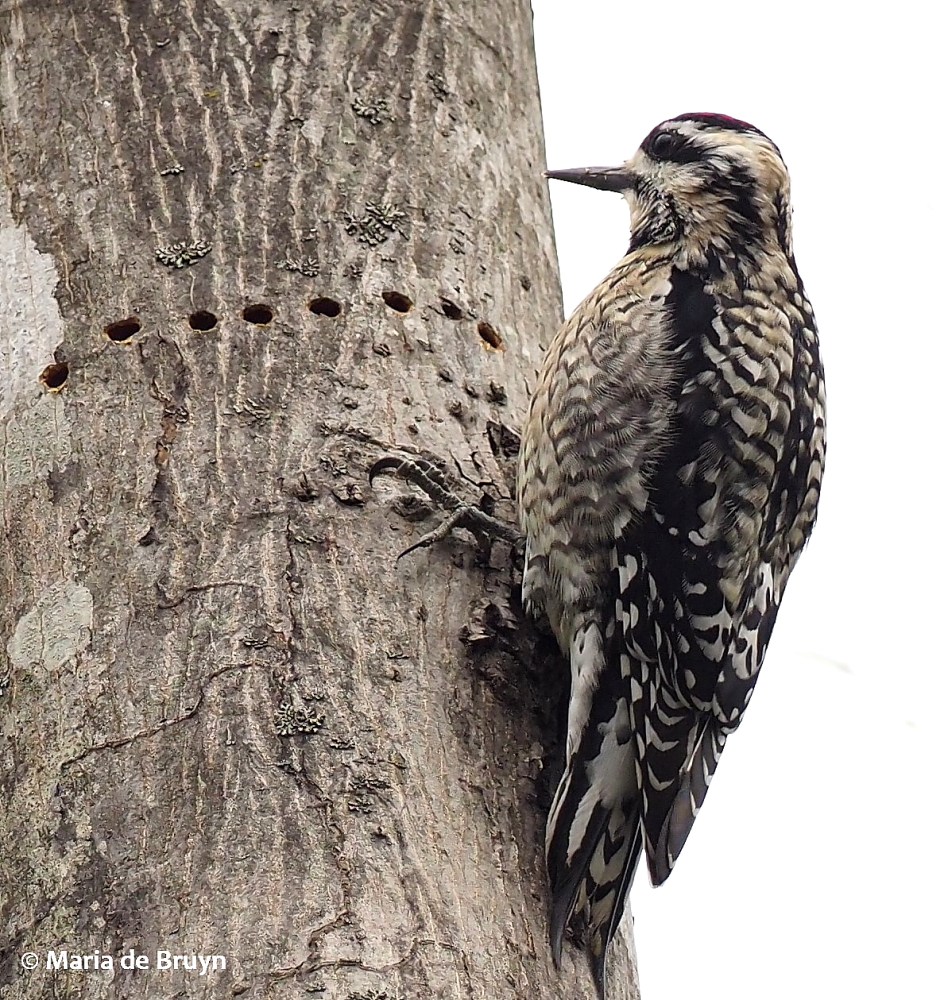
On one of my latest walks, I heard rapid knocking and was able to watch a yellow-bellied sapsucker (Sphyrapicus varius) engaged in beginning a new series of sap holes, which provide sweet drinking spots for themselves and other birds.

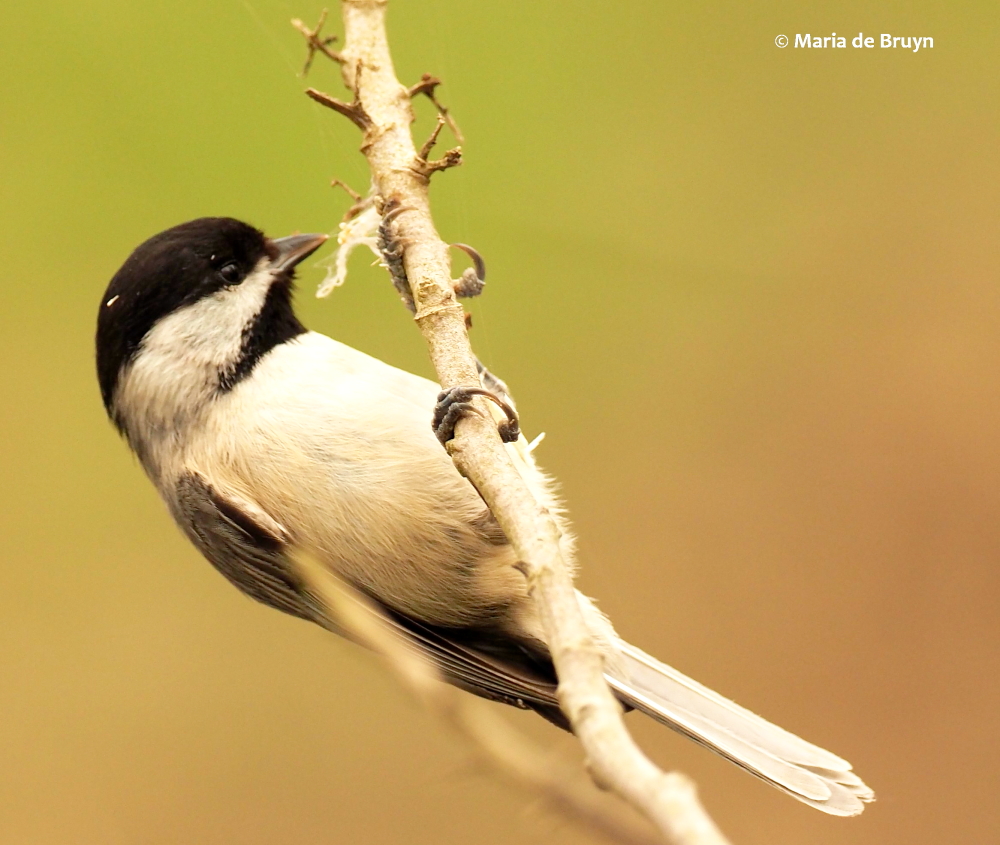
If you’re able to look at trees, bushes or nest boxes during walks or from your windows, you might catch birds collecting materials for their nests. Just the other day, I saw a Carolina chickadee gathering up some spider web to use in a nest.

If you find a nest, be sure to maintain a good distance, but then watch the parents bringing food to their nestlings after they hatch. If you’re lucky, you may even see the babies fledge! And if you are not near any trees, watch some birds at their nests through webcams online: https://www.allaboutbirds.org/cams/ – https://www.audubon.org/birdcamshttps://birdwatchinghq.com/live-bird-cams/
https://birdcams.live/

If, at some point, we are “stuck” inside, we can follow this link to international wildlife days. If we find one to celebrate during our quarantine, we can spend some time learning about that animal and drawing or painting it. And we can do the same for other environmental days as well at this link.

To end, I’d like to share some resources with free online nature activities – for children and adults! Not all the sites require having a yard; even readers living in apartments could get out for a short walk and find something to see, investigate, etc.  Enjoy!!