Mammal merriment, misery and markings

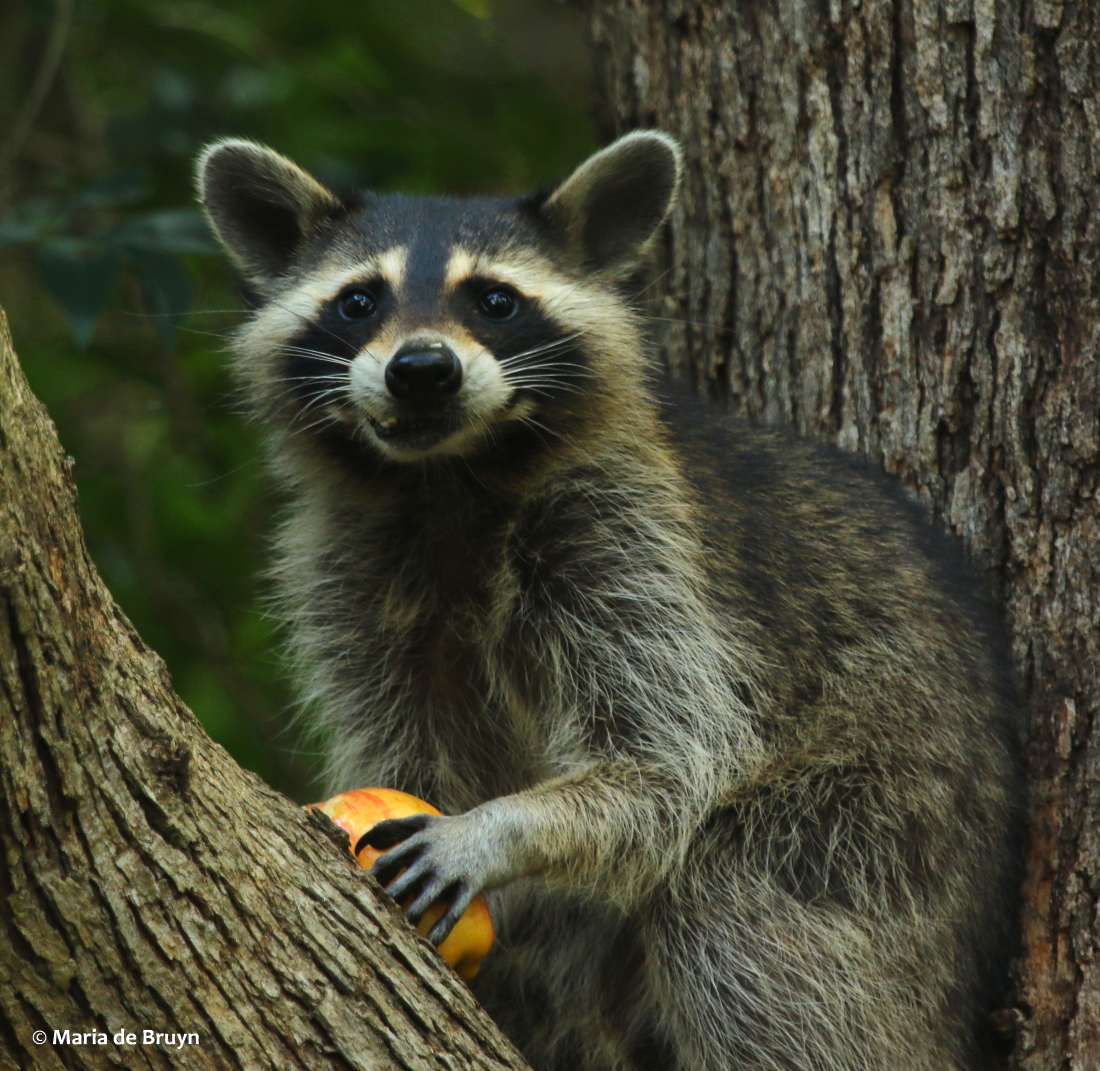
Lately, many of my blogs have been about birds, mostly because they have been the easiest wildlife to photograph during the colder months. The mammals – and insects, reptiles and amphibians – have not been around much and likely have often visited when I’m not watching. I’m fairly certain that raccoons (Procyon lotor) and opossums (Didelphis virginiana) come to my yard after dark; perhaps the odd fox or coyote does as well. Nevertheless, after she stopped weaning her young and since summer ended, I haven’t seen Raquel raccoon all winter.

raccoon DK7A4351© Maria de Bruyn   raccoon DK7A4248© Maria de Bruyn res

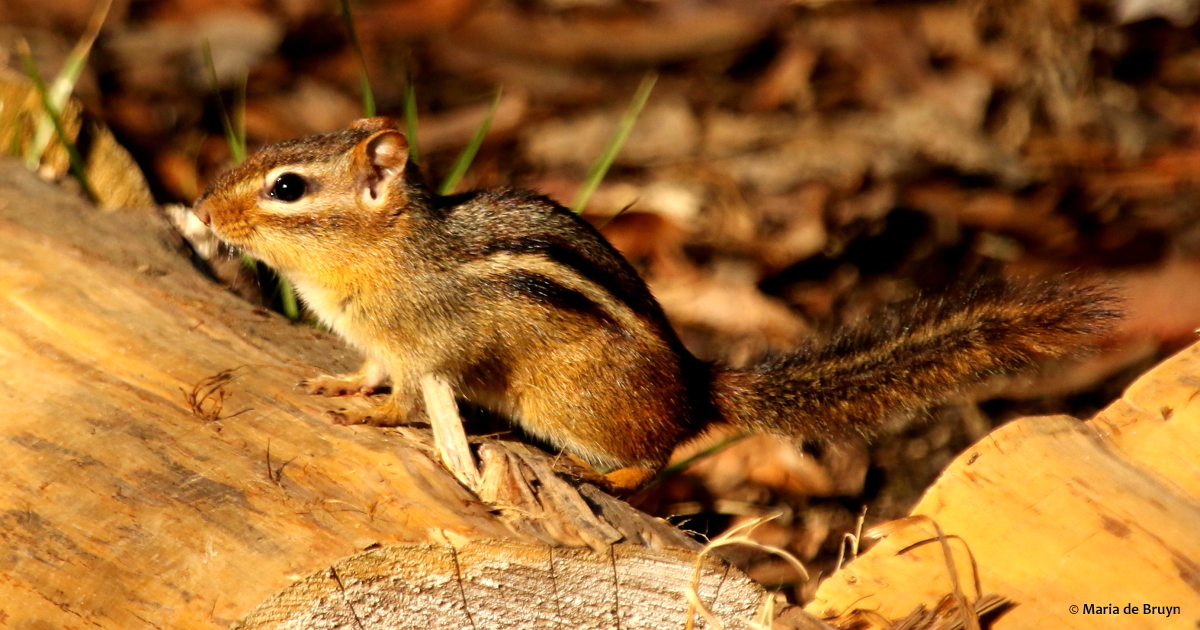
Eastern chipmunk I77A8790© Maria de Bruyn resThere a couple mammals, however, that I can count on to see every day because they have grown accustomed to having a food source at my house. Fallen bird seed (and seed and apples put out deliberately for ground feeders) does not get entirely gobbled up by the avian visitors, leaving pickings for the Eastern gray squirrels (Sciurus carolinensis), Eastern chipmunks (Tamias striatus) and white-tailed deer (Odocoileus virginianus).

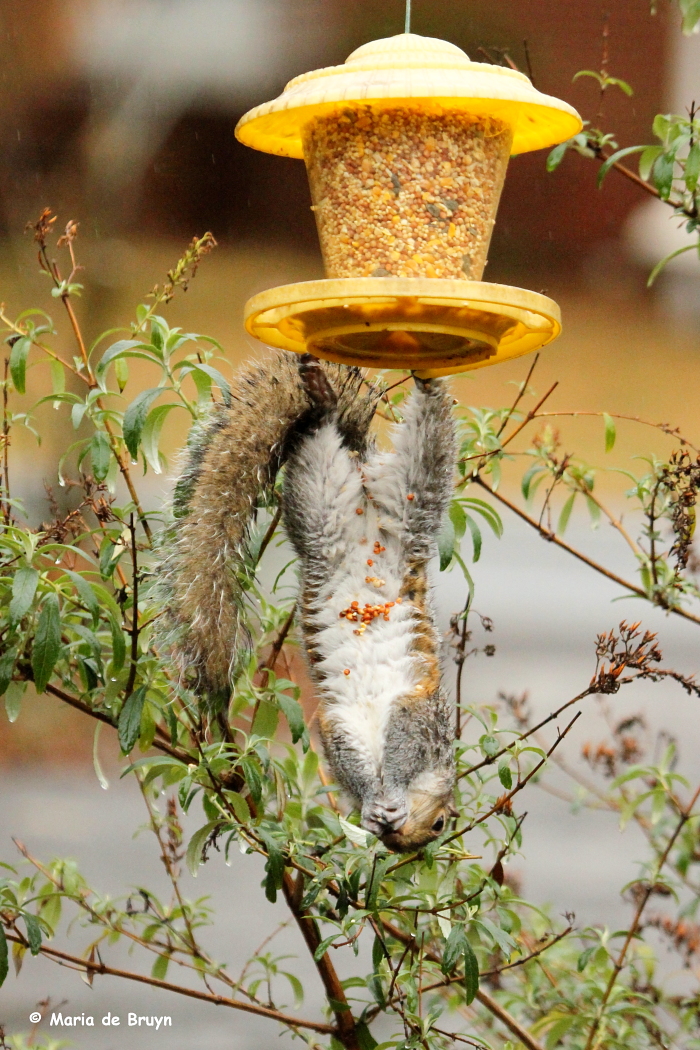
The squirrels keep a watch from the trees and underbrush and appear very quickly after the bird seed is replenished. My combined squirrel and raccoon baffles – and placing the feeder poles at least 10 feet away from any structures from which they launch themselves onto the poles – have proved successful in keeping them from the feeders. But they continue to look for vantage points from which they can attempt a jump to the feeders.
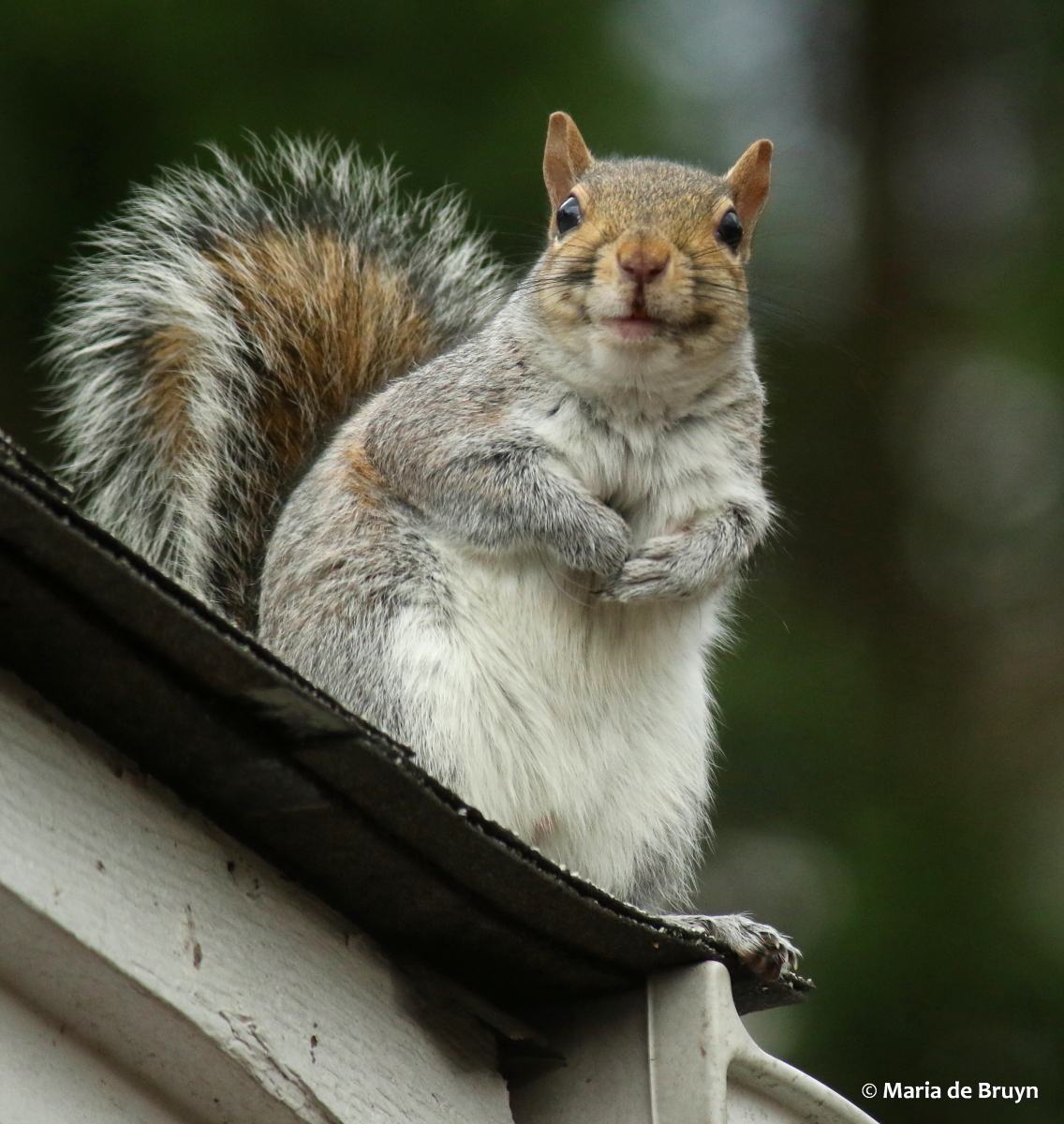
Eastern gray squirrel I77A5504© Maria de Bruyn res  Eastern gray squirrel I77A5494© Maria de Bruyn res

Eastern gray squirrel IMG_3643 mdb


Before I learned how to thwart them, they made off with plenty of seed and suet – one squirrel even carrying off the entire suet feeder when s/he couldn’t get it open. I saw it happening and chased that squirrel, but they were faster than me!

They will share space happily with birds but don’t always want to share with other squirrels or chipmunks.
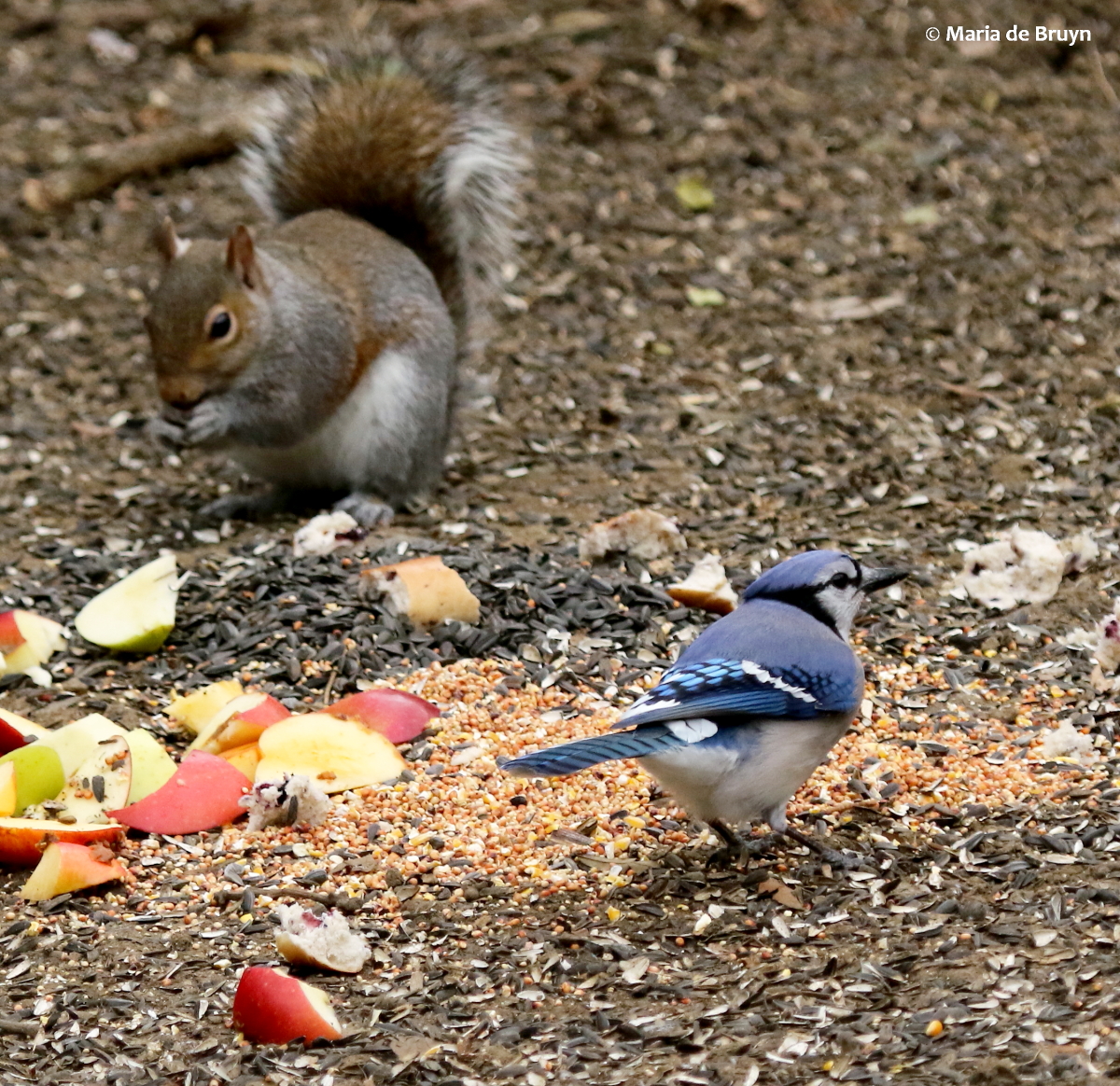
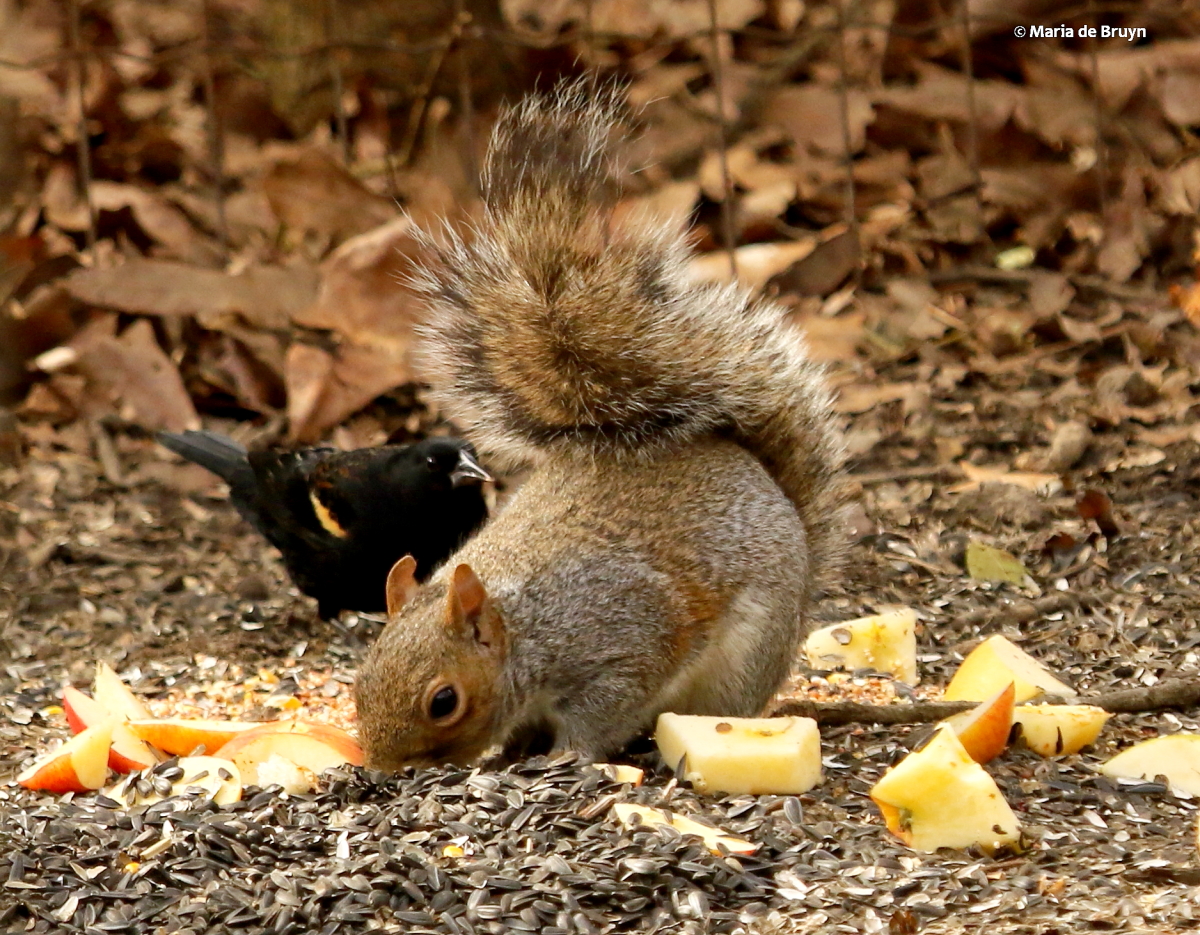


Eastern gray squirrel I77A8350© Maria de Bruyn Eastern gray squirrel I77A0711© Maria de Bruyn res

The chipmunks don’t let that selfish attitude deter them; they just keep a sharp eye out for when a squirrel might turn on them. They wolf down seed after seed, giving themselves a very fat-cheeked countenance!
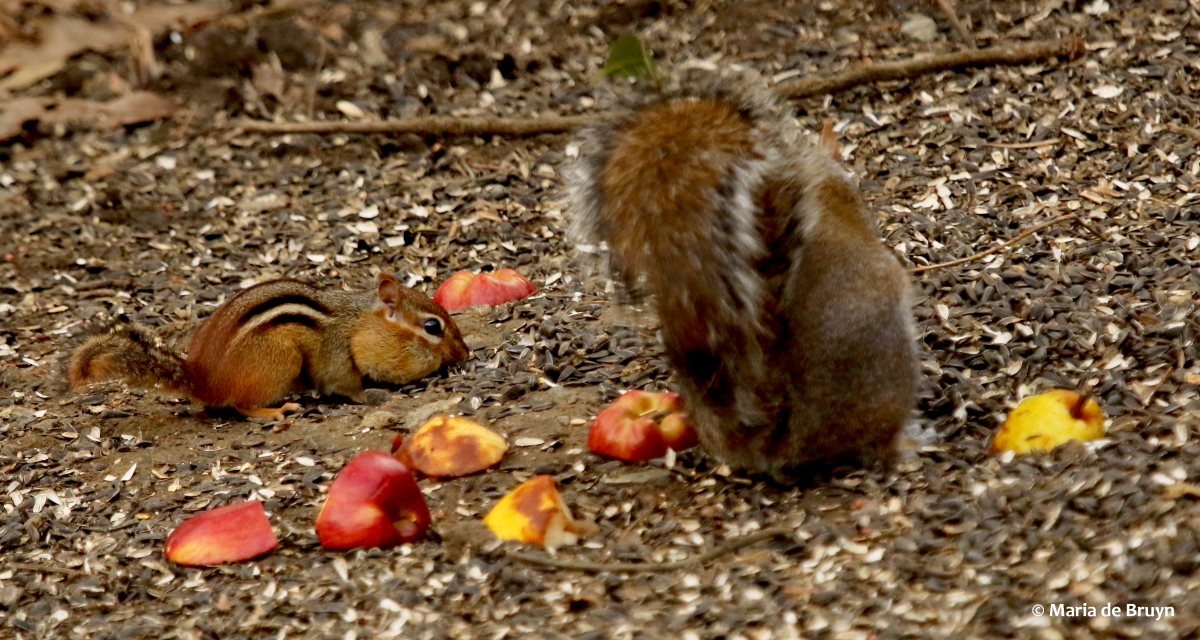
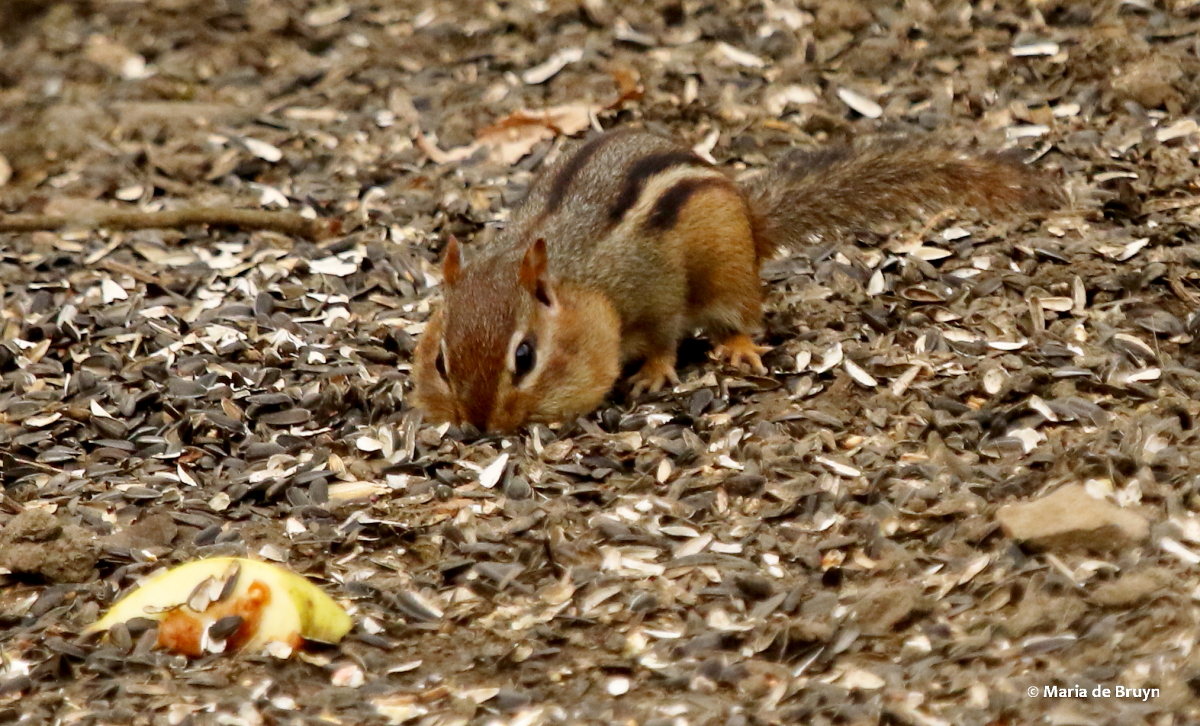
Eastern chipmunk I77A3326© Maria de Bruyn  Eastern chipmunk I77A3335© Maria de Bruyn

The past few days, the squirrels have continued their chasing, but now it is not always in rivalry or play. Instead, their romantic side is showing and the merriment goes on for a good length of time. They appear to have designated a particular tree stump/snag in my back yard as their trysting spot.
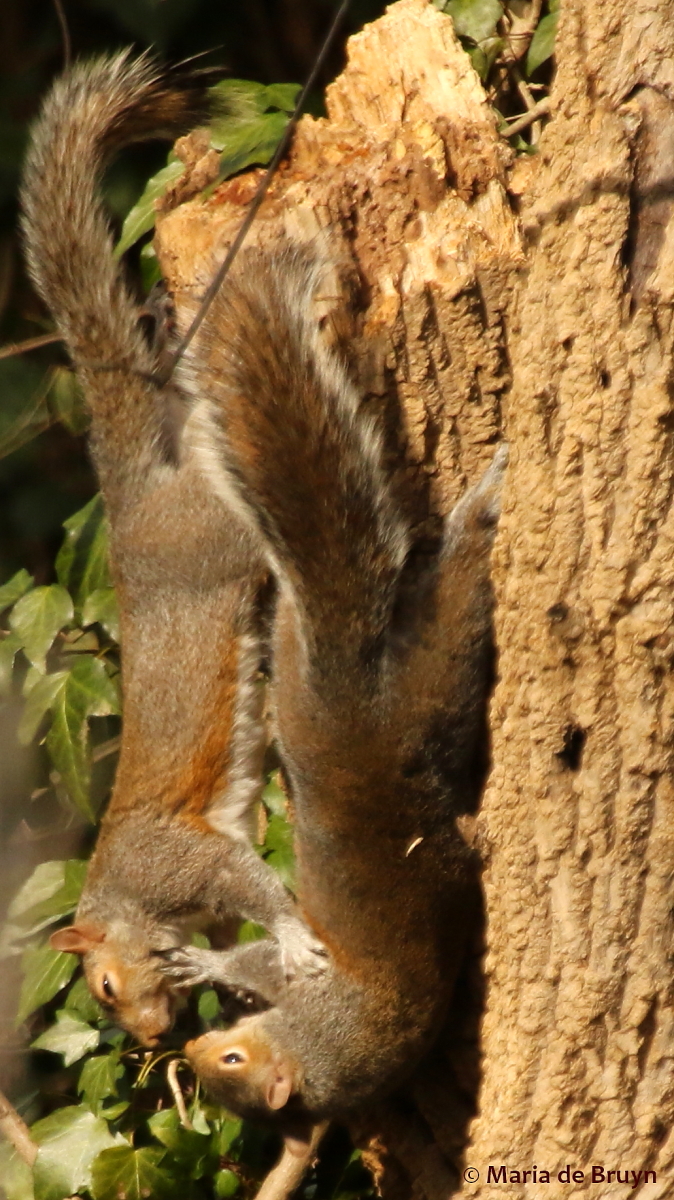
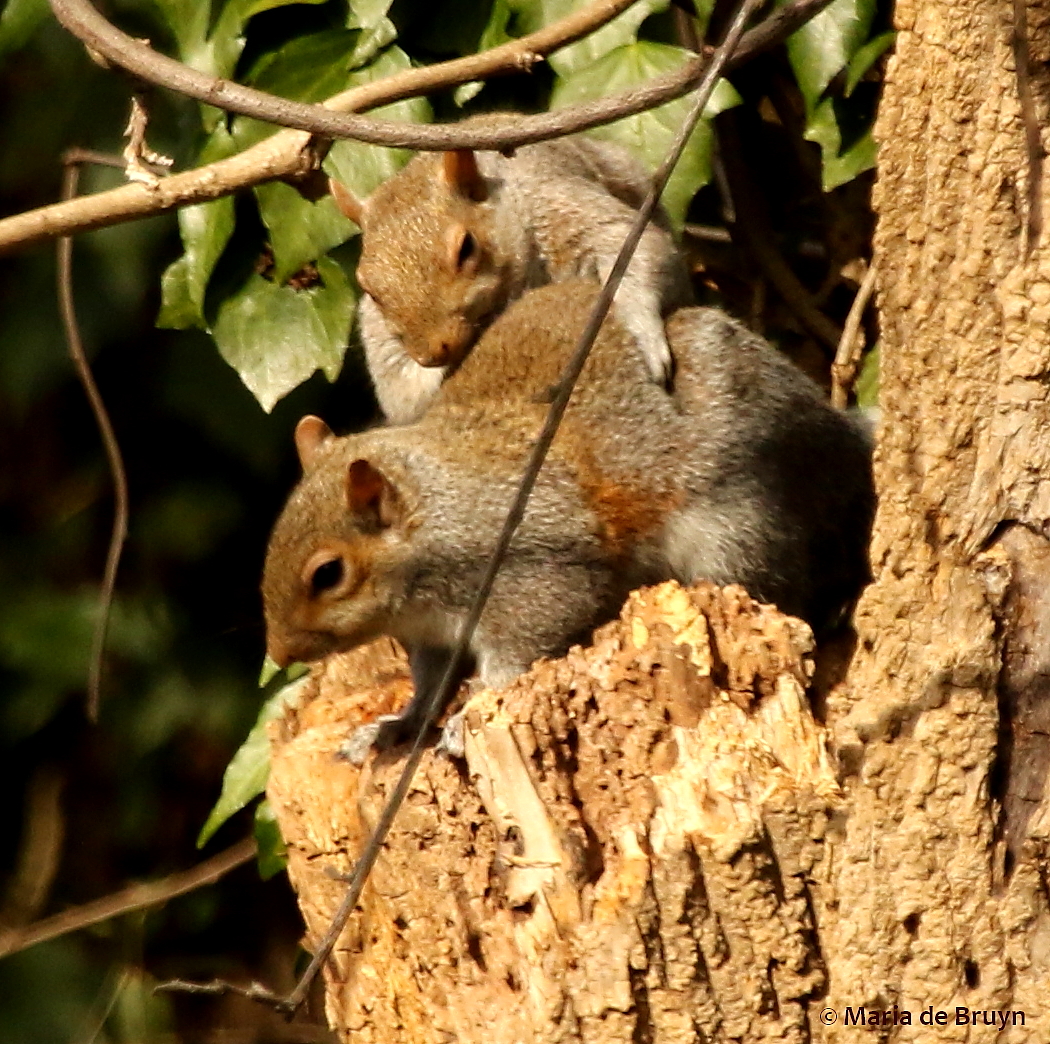
Eastern gray squirrel I77A1104© Maria de Bruyn res              Eastern gray squirrel I77A0980© Maria de Bruyn

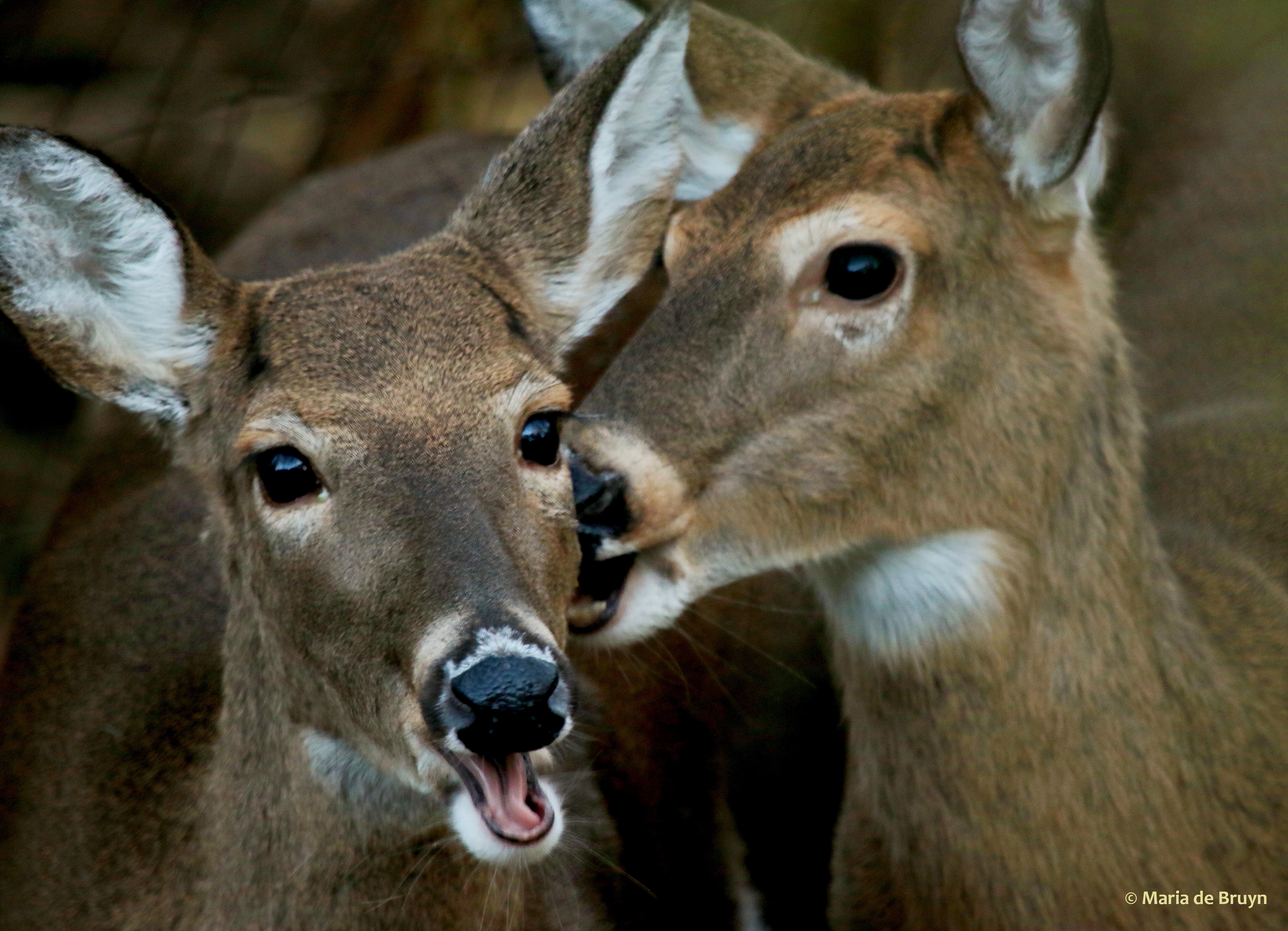
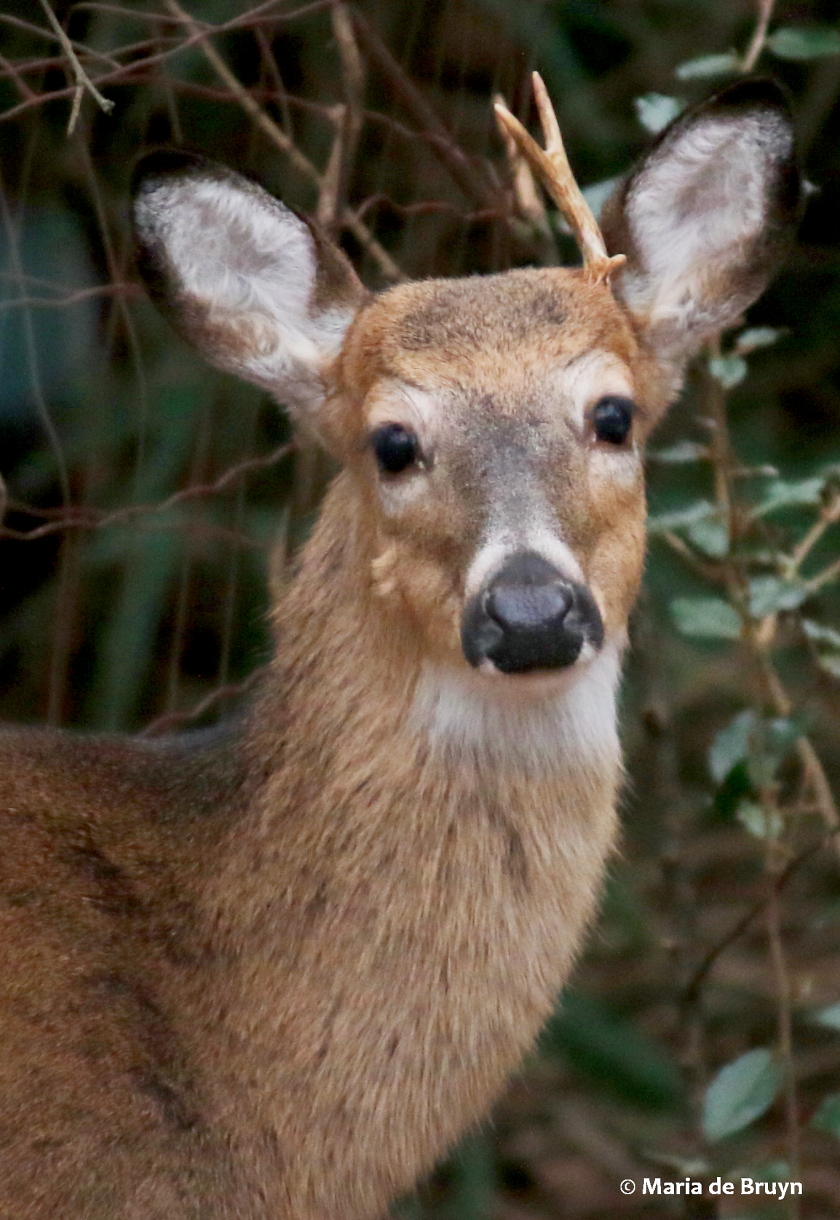
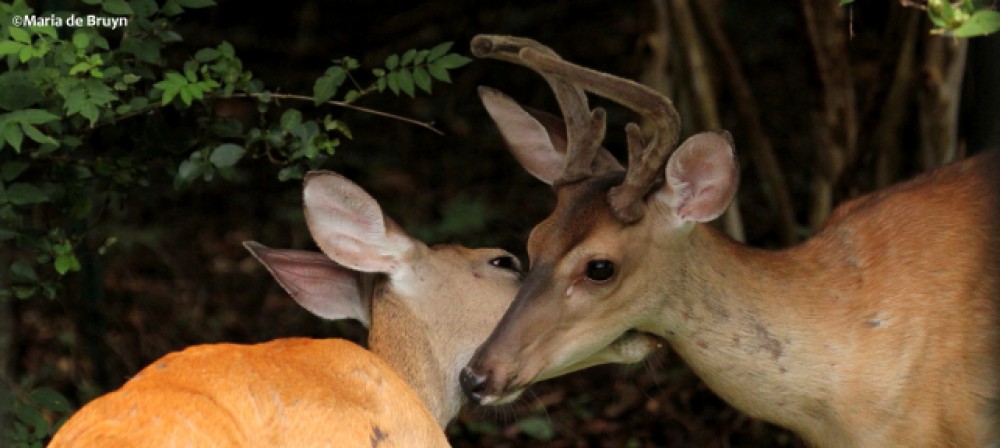
white-tailed deer I77A0963© Maria de Bruyn resThe white-tailed deer carry on their mating elsewhere but I know it’s happening as the males are evidence. Usually, one small family group comes to my home – mom, her one-year-old daughter and one-year-old son (a button buck, so-called for his tiny little antler nubs). They were occasionally accompanied by a couple second-year bucks with little antlers – I suspect mama’s sons from the previous year.
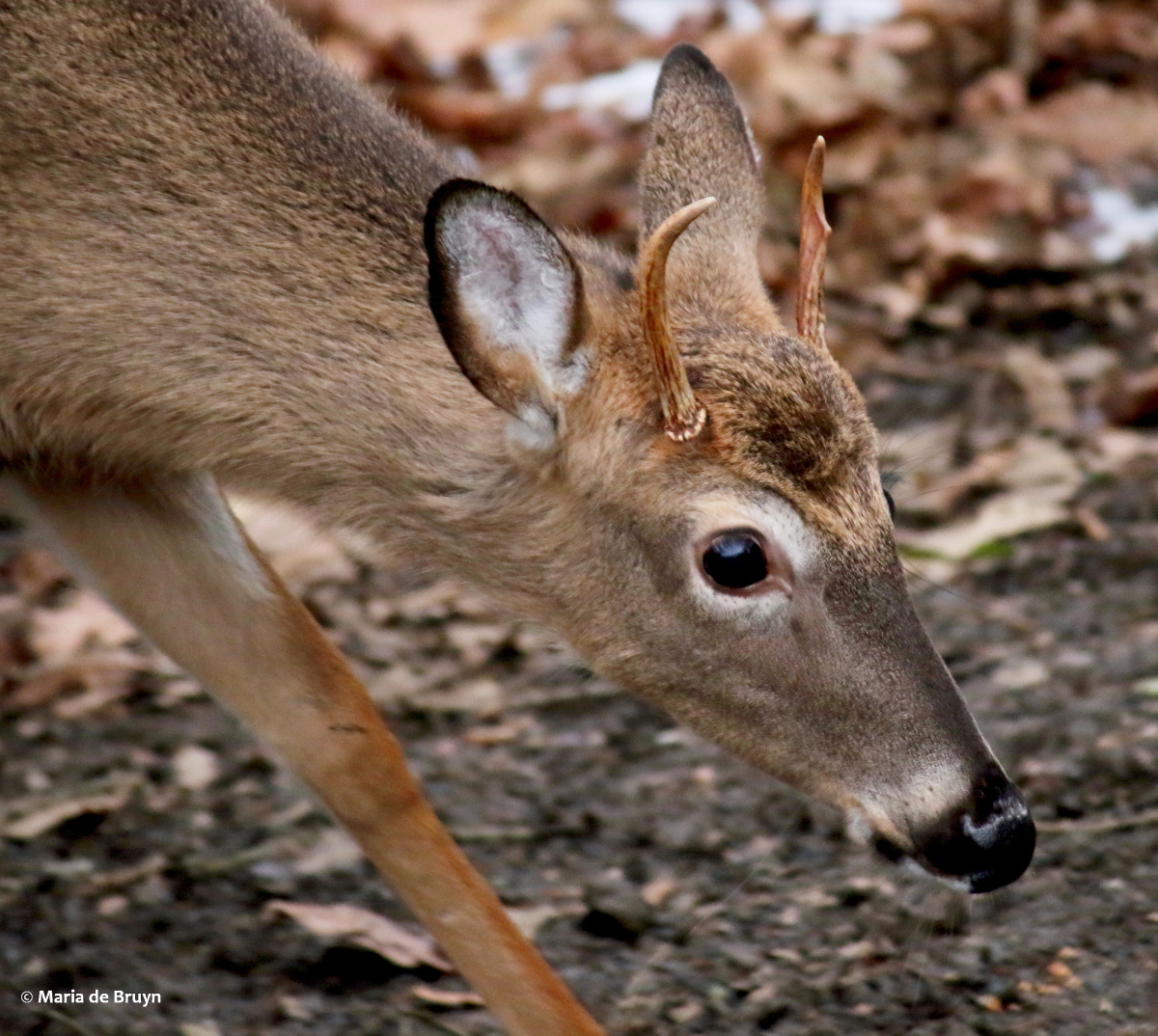
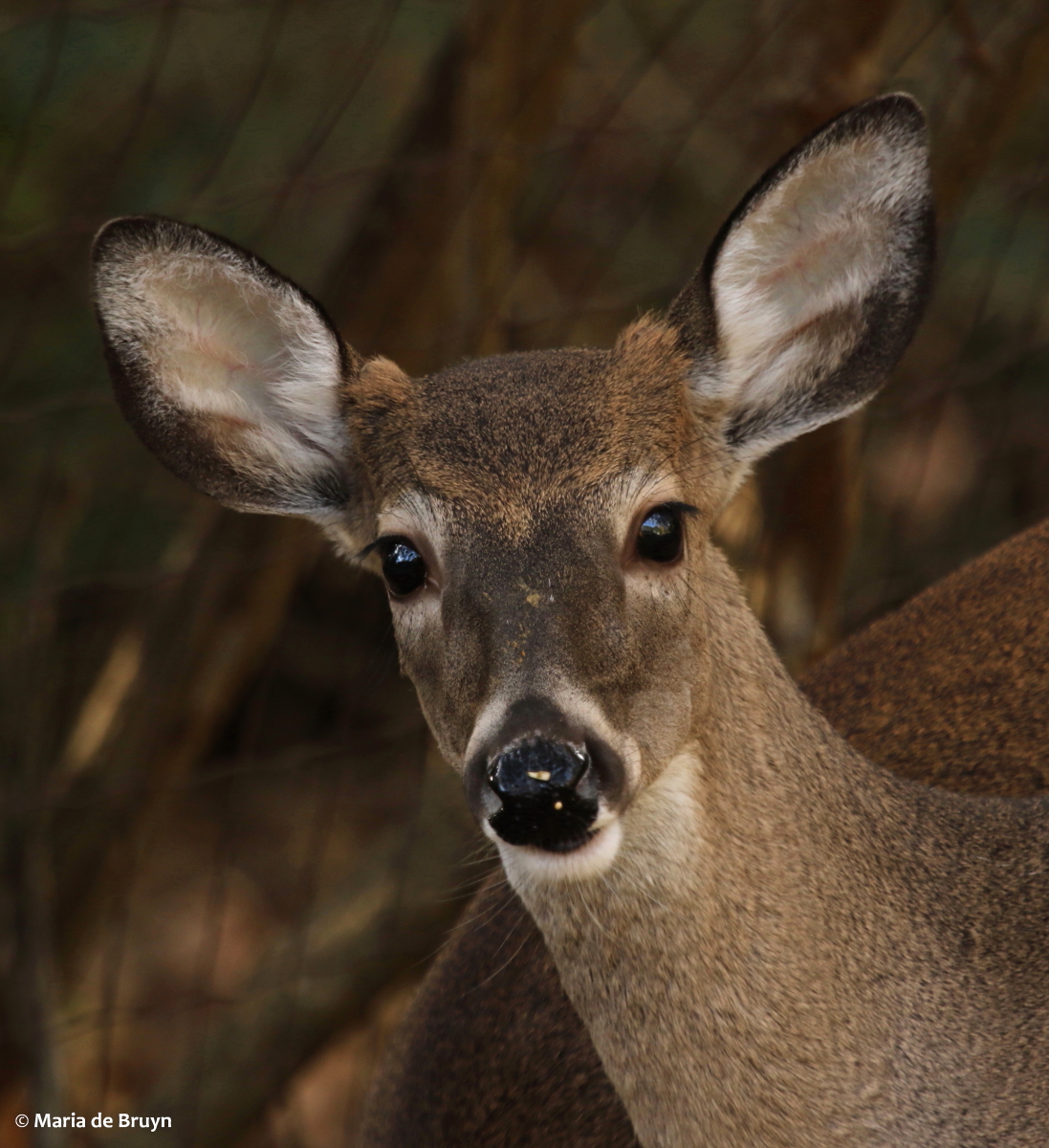
white-tailed deer I77A1367© Maria de Bruyn res    white-tailed deer I77A2025© Maria de Bruyn res

white-tailed deer I77A1366© Maria de Bruyn res


One of them lost one of his antlers early, but whether this was the result of a fight or accident is unknown to me. It seems that mama has allowed an orphaned button buck to join their group occasionally, too.

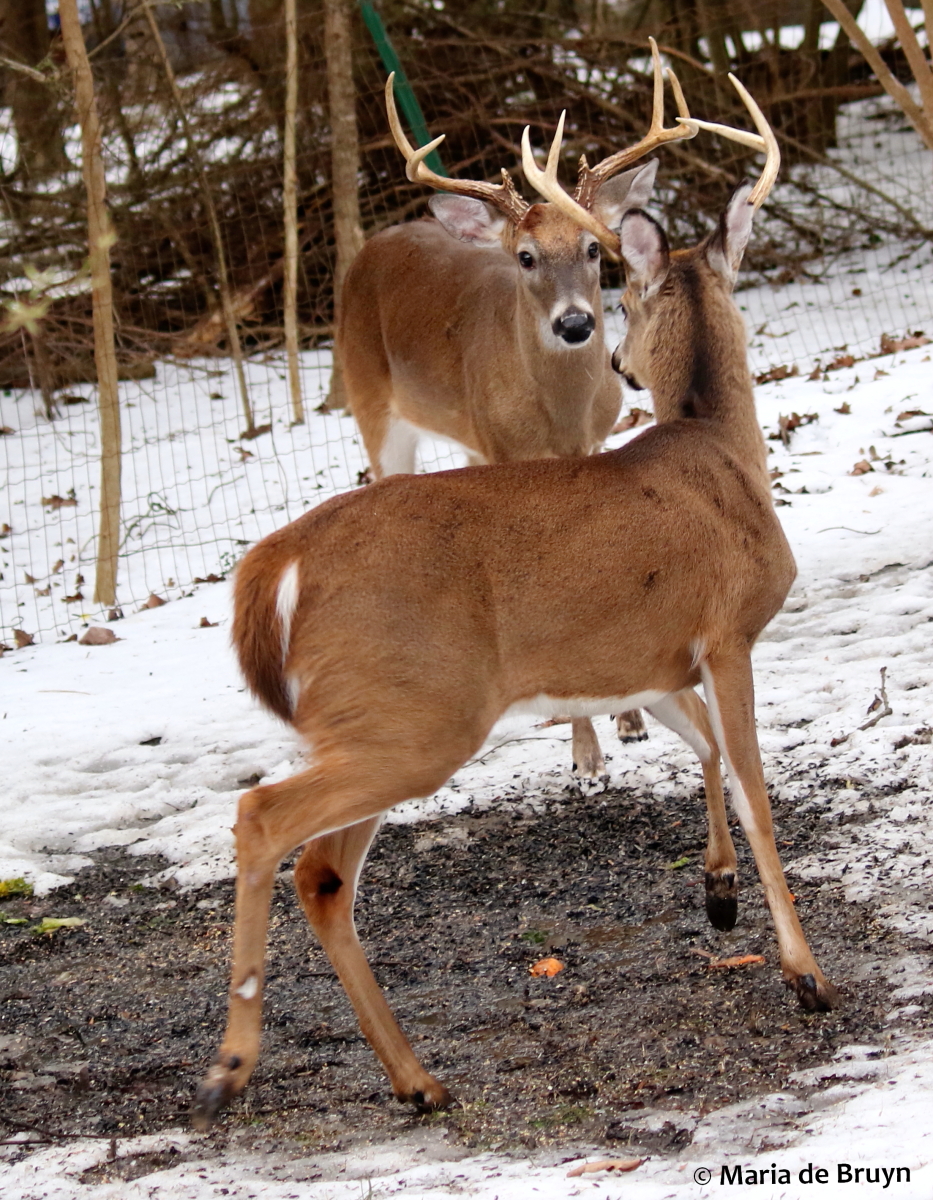
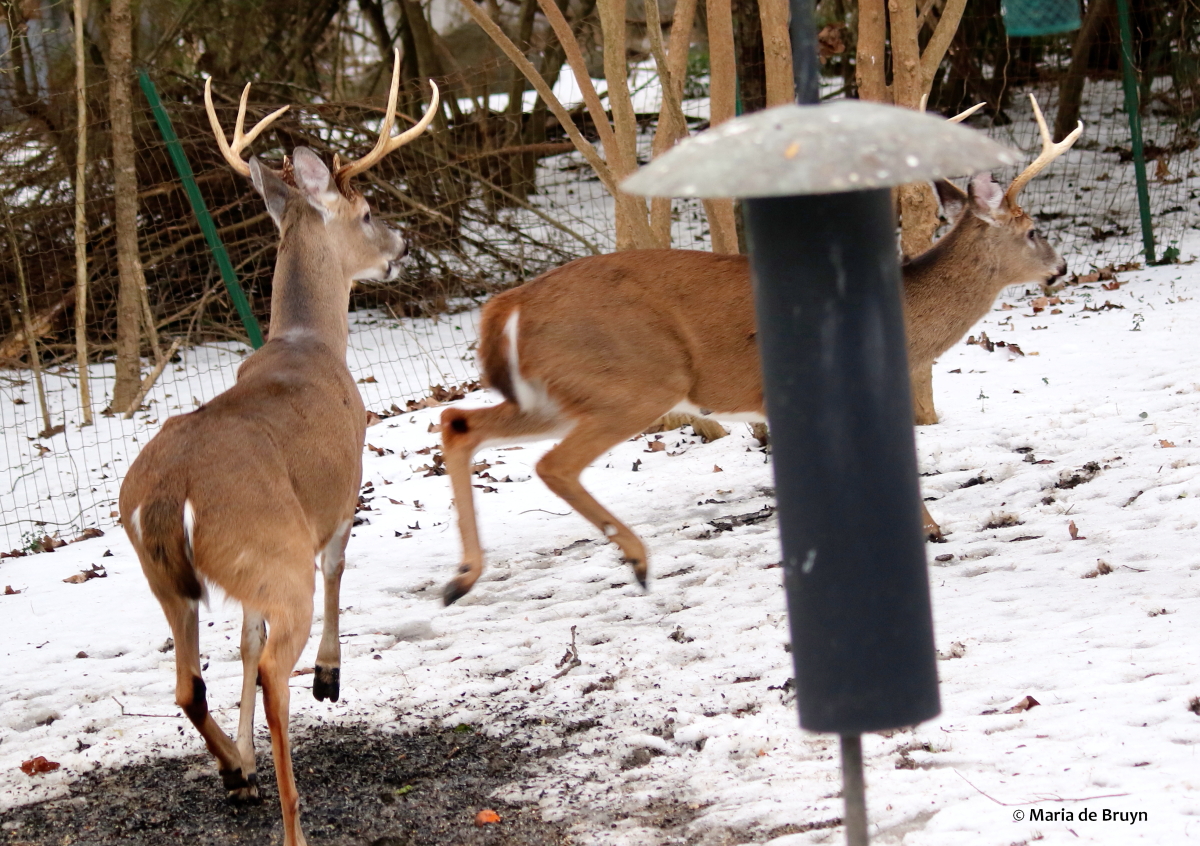
A couple weeks ago, two of the older males came down from the woods in search of does and food in the cold weather. This pair was traveling together but that didn’t stop some rivalry where first-access to the available food was concerned.
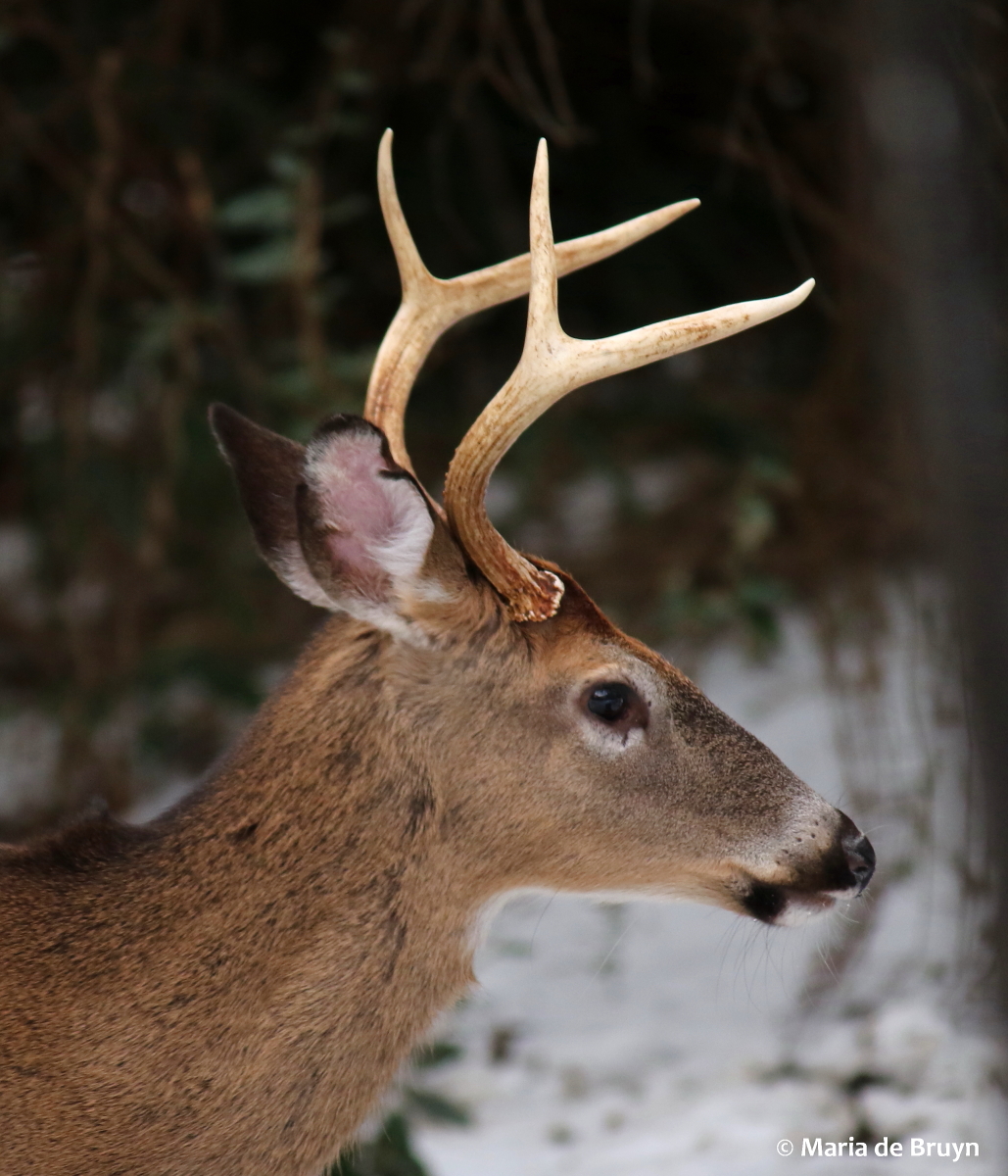
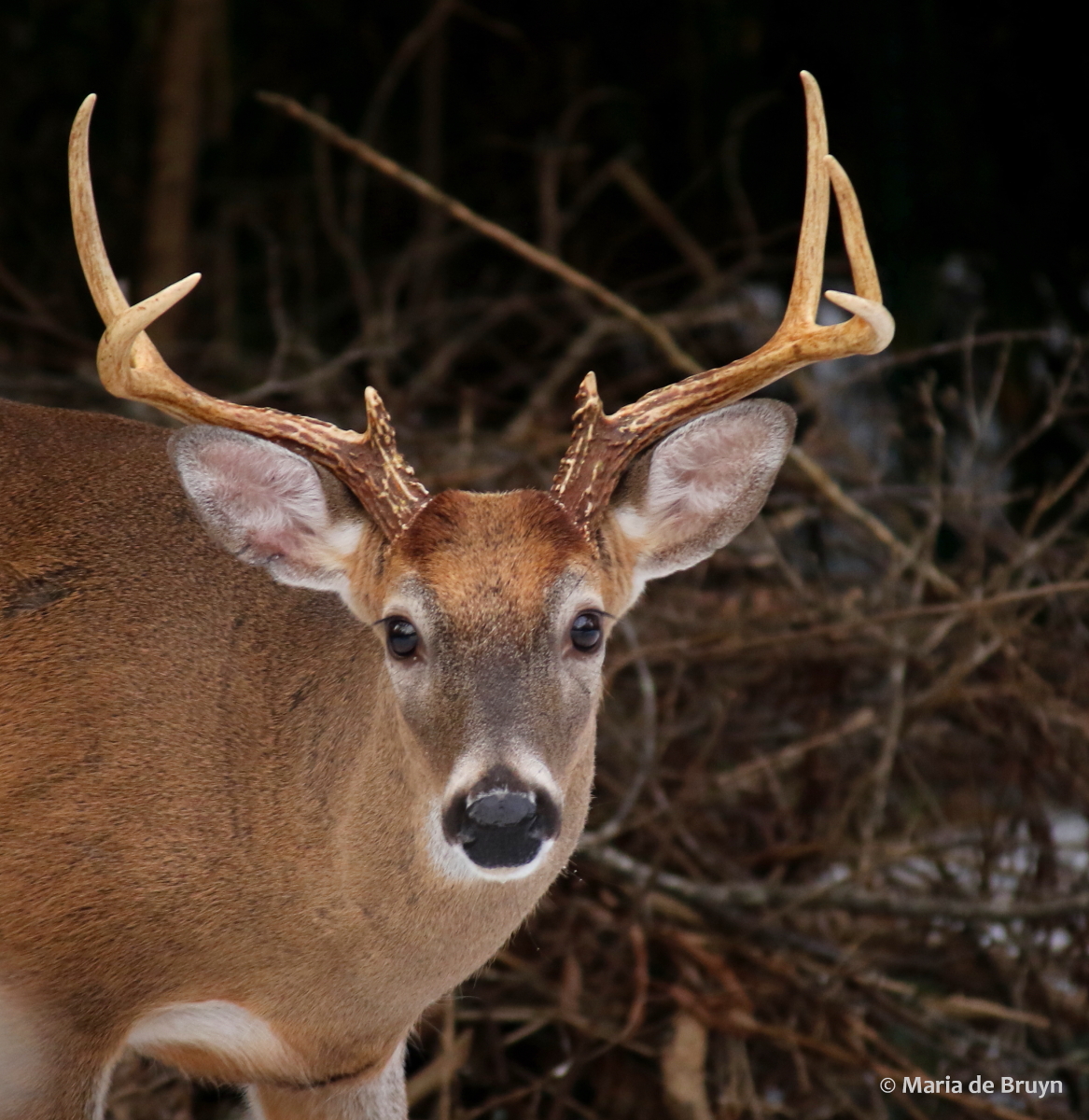
 

white-tailed deer I77A1061© Maria de Bruyn res white-tailed deer I77A1005© Maria de Bruyn res


white-tailed deer I77A1127© Maria de Bruyn res  white-tailed deer I77A1150© Maria de Bruyn res

white-tailed deer I77A1893© Maria de Bruyn res


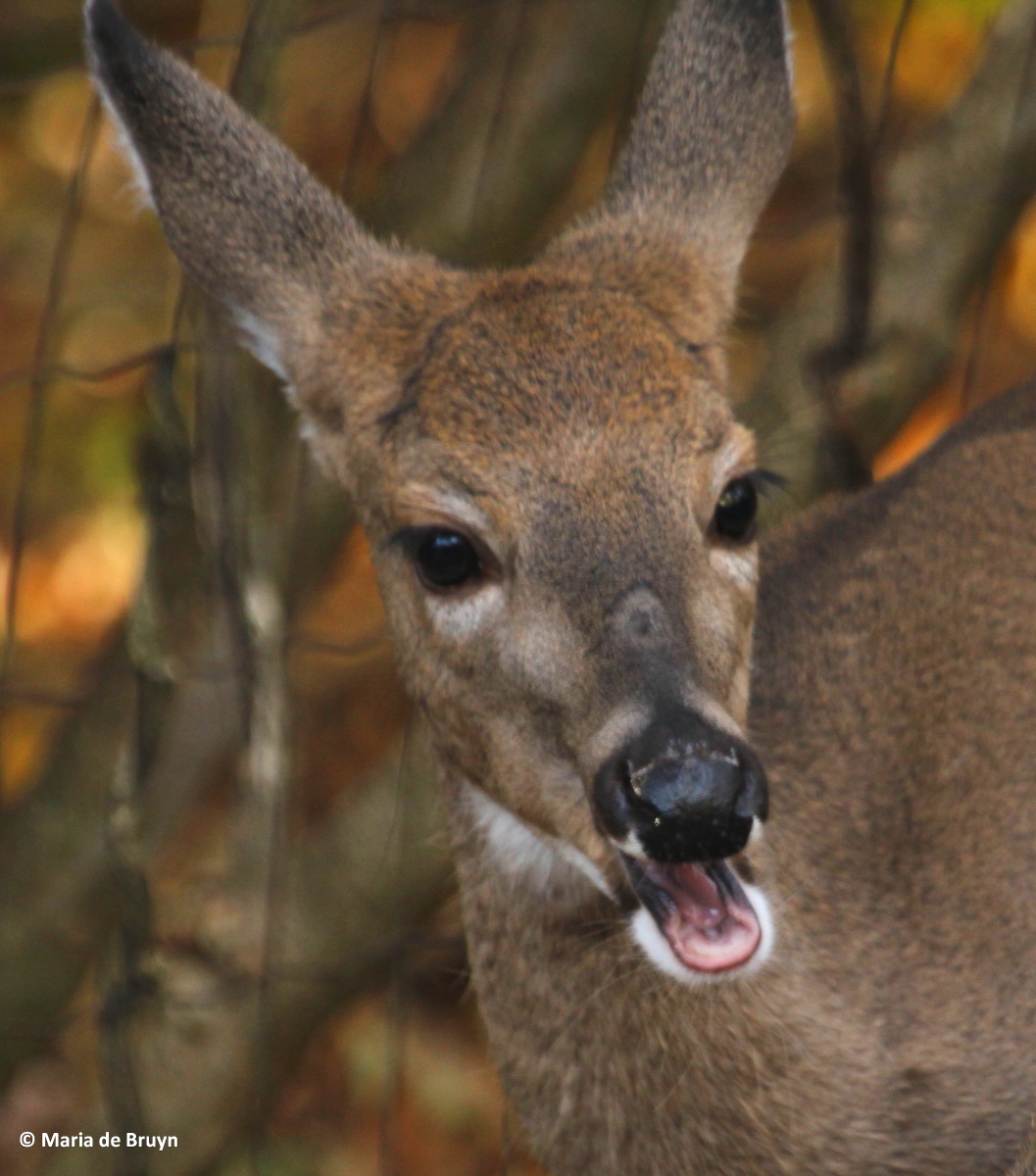
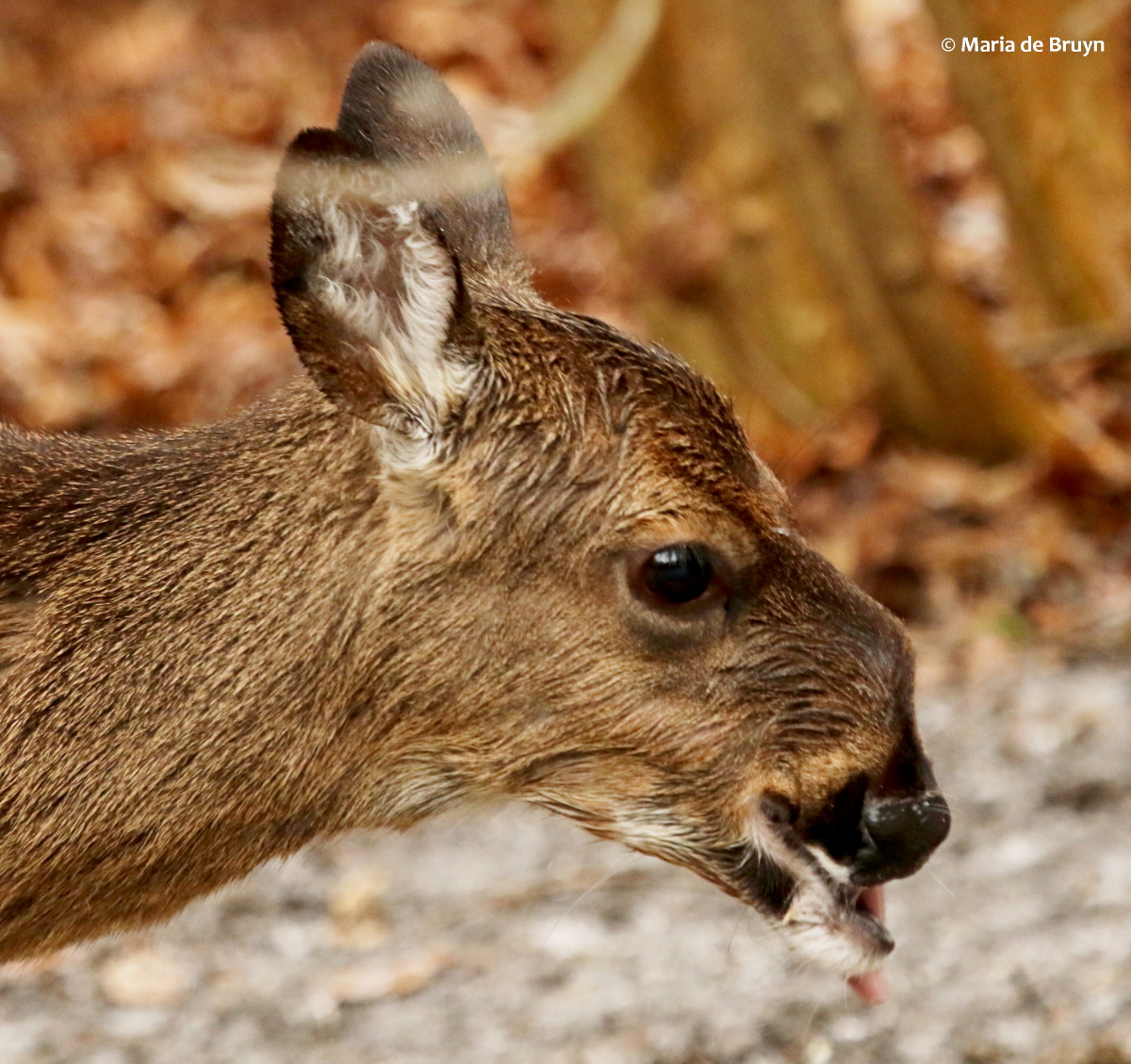
Then one day about a week ago when we had some very icy weather, I was surprised by a new and unfamiliar family group for a day. I didn’t mind them eating some seed and the resident family wasn’t around to chase them away. But then I felt immensely sad as I saw that one of them had been injured. Her tongue was lolling out but it was only when she came into the yard that I saw she must have been in an accident.


I felt miserable for her, seeing her face had been smashed in but after watching for a while, I realized the accident must have happened some time ago as she had no open wounds.
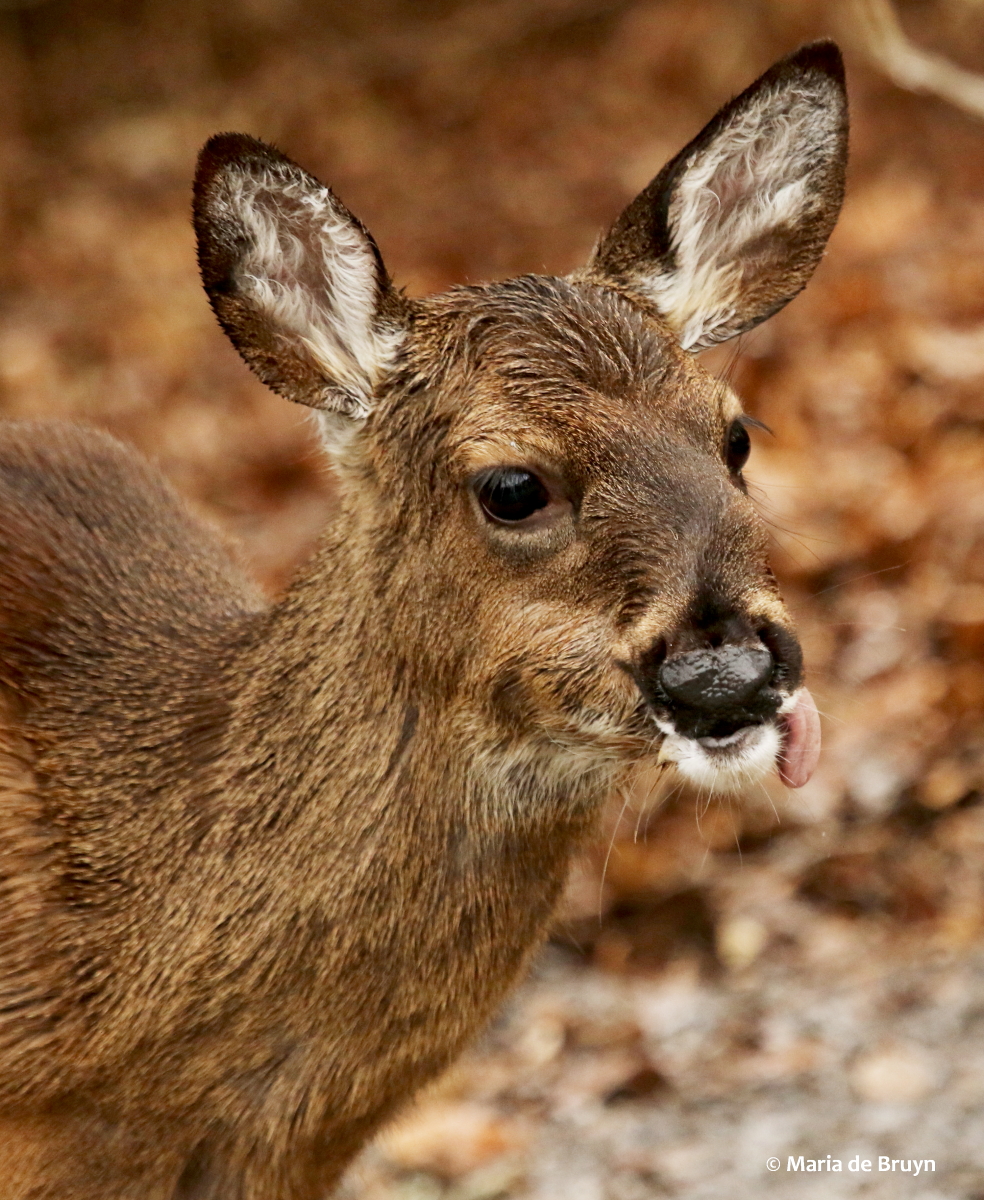
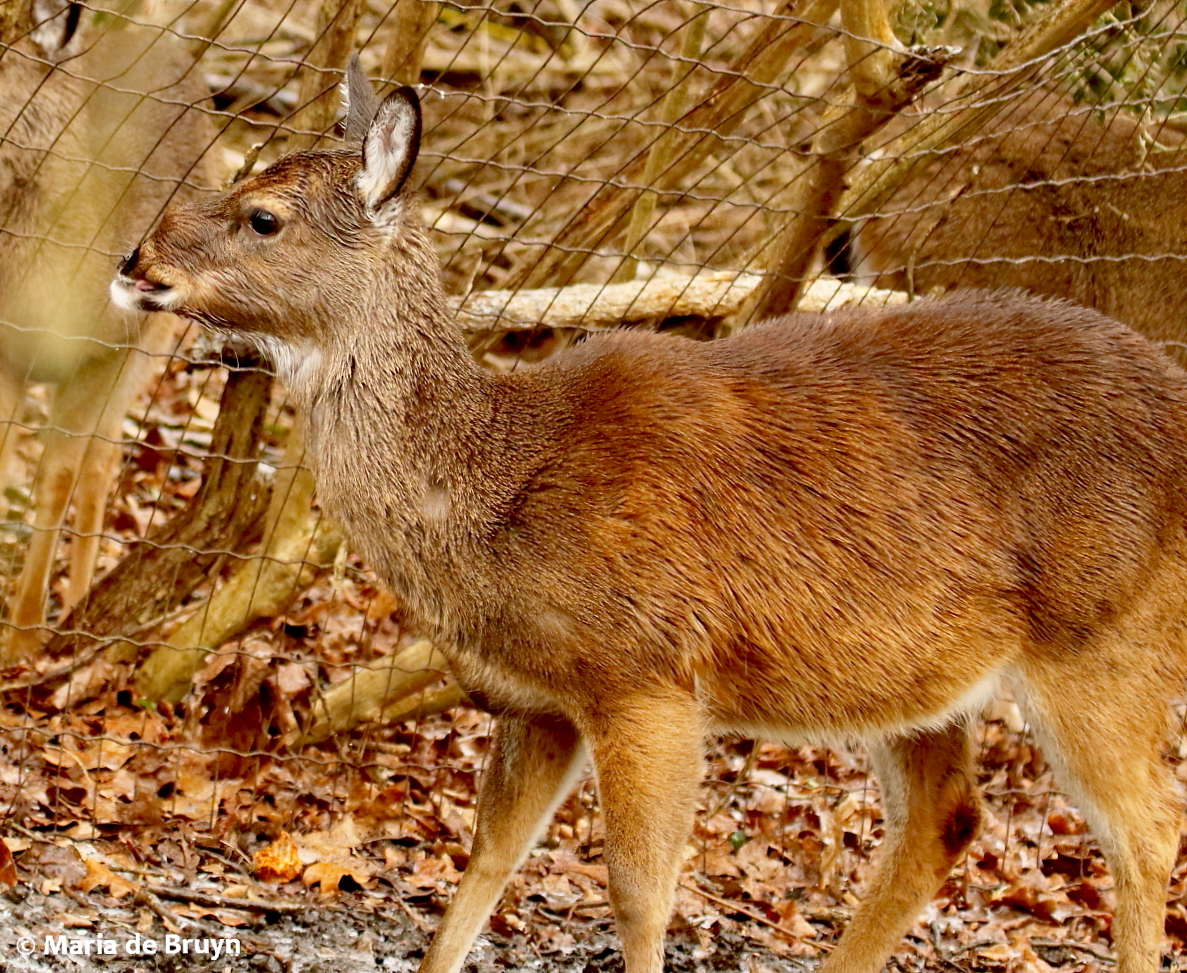
white-tailed deer I77A1917© Maria de Bruyn res white-tailed deer I77A1869© Maria de Bruyn

It must have been terribly painful though. I decided to call her Camelia as her profile reminded me of a camel.
white-tailed deer I77A1932© Maria de Bruyn res   white-tailed deer I77A1906© Maria de Bruyn res

white-tailed deer I77A1887© Maria de Bruyn res

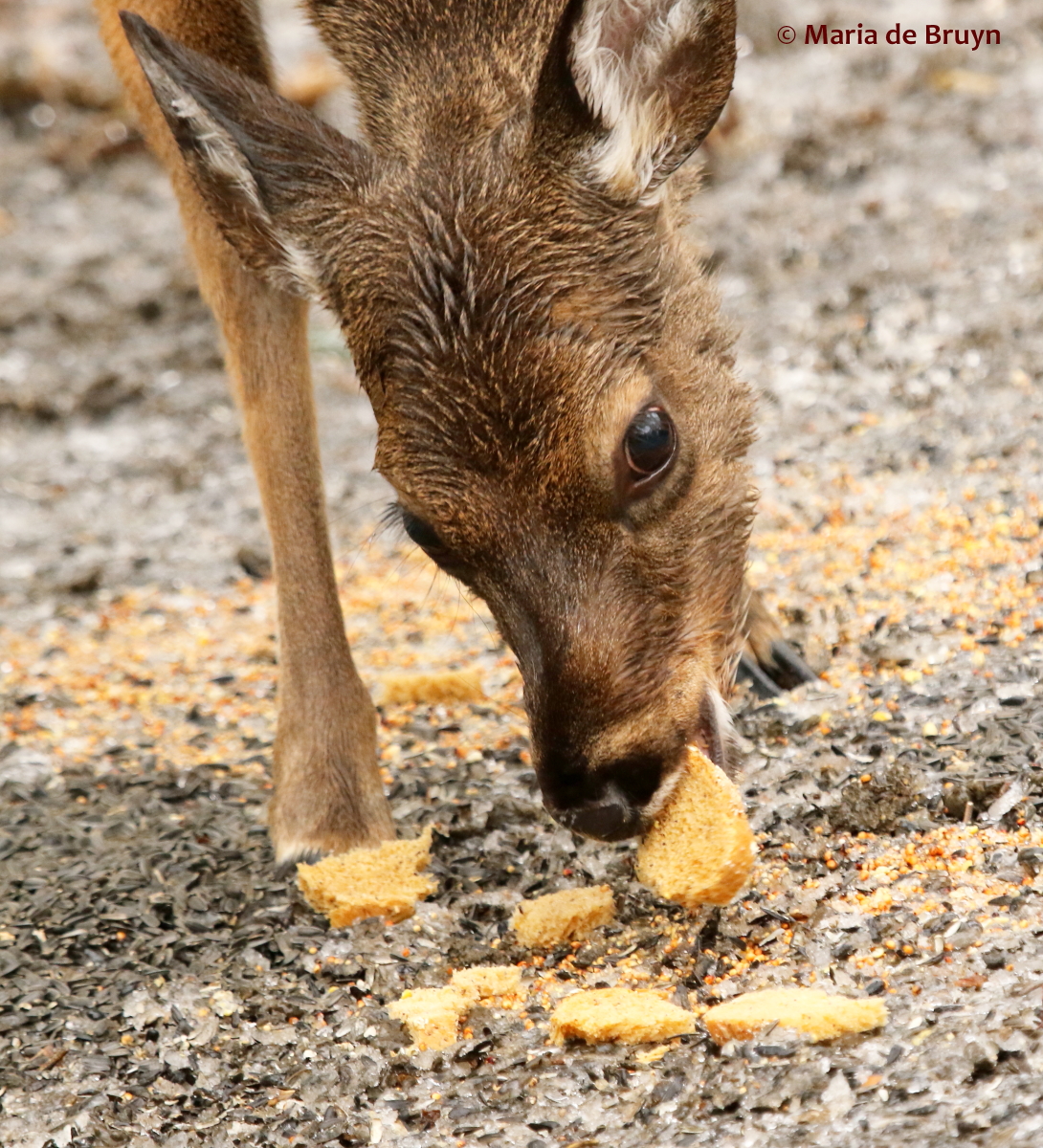
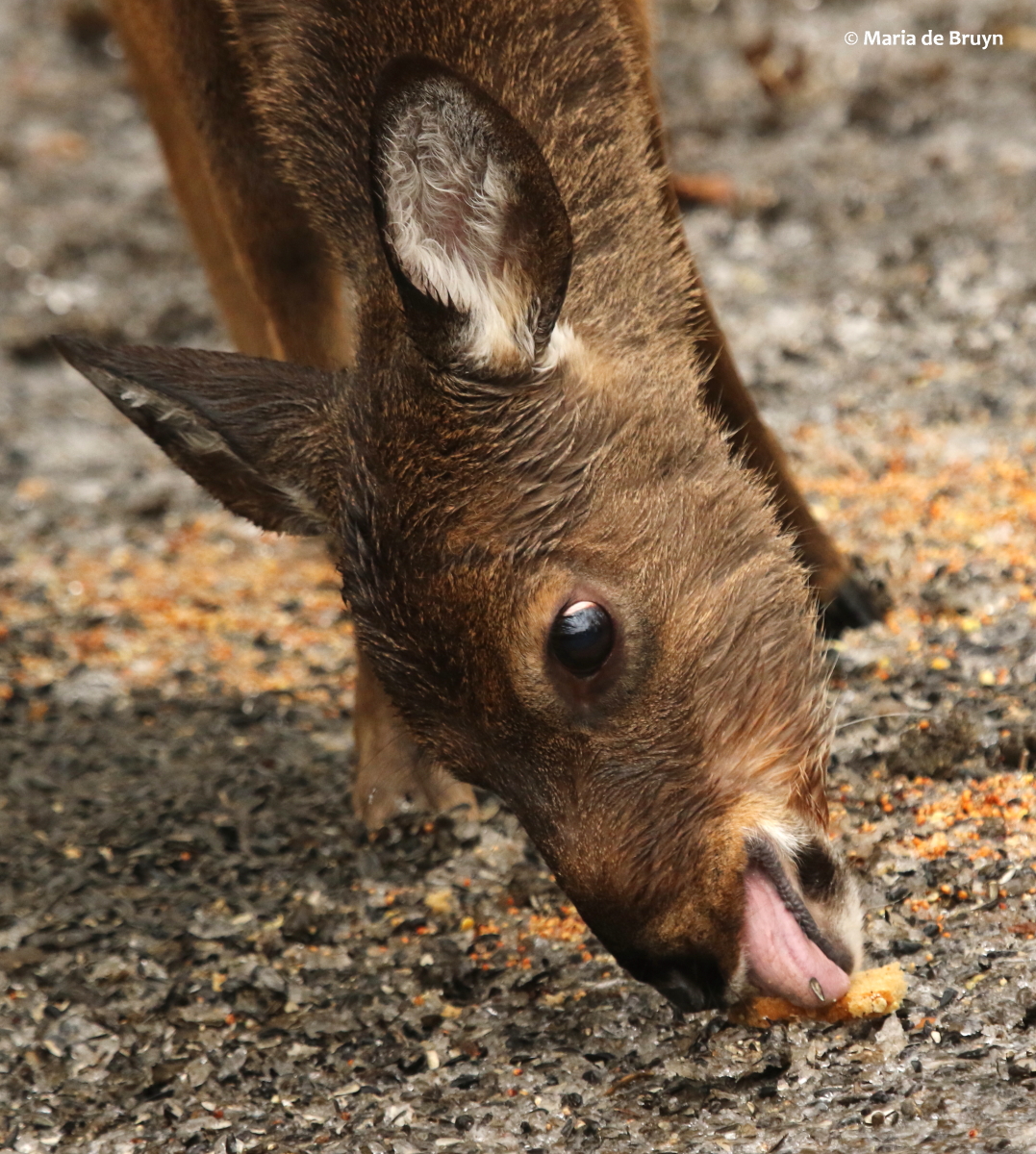
I put out some soft bread for her because I don’t know how easily she can eat. She does seem well-fed, however, so perhaps her disability is not hampering her nutritional intake. I haven’t seen her or her family again and don’t know if they will ever return, but it reminded me of how many deer are hurt and killed in accidents. I continue to think it would be worthwhile for research to continue on reducing deer populations through contraceptive use.


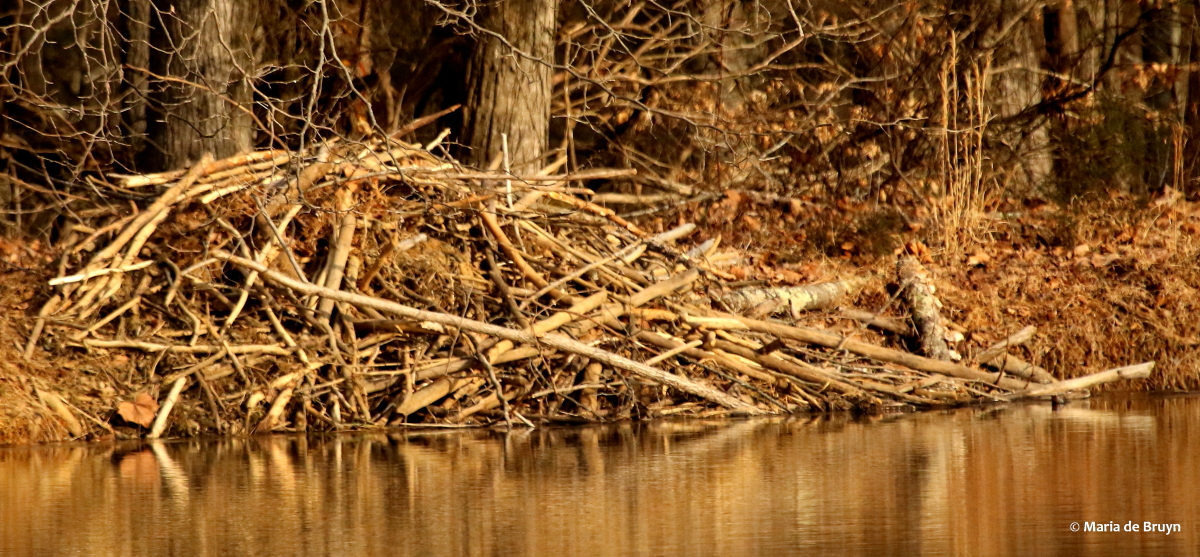
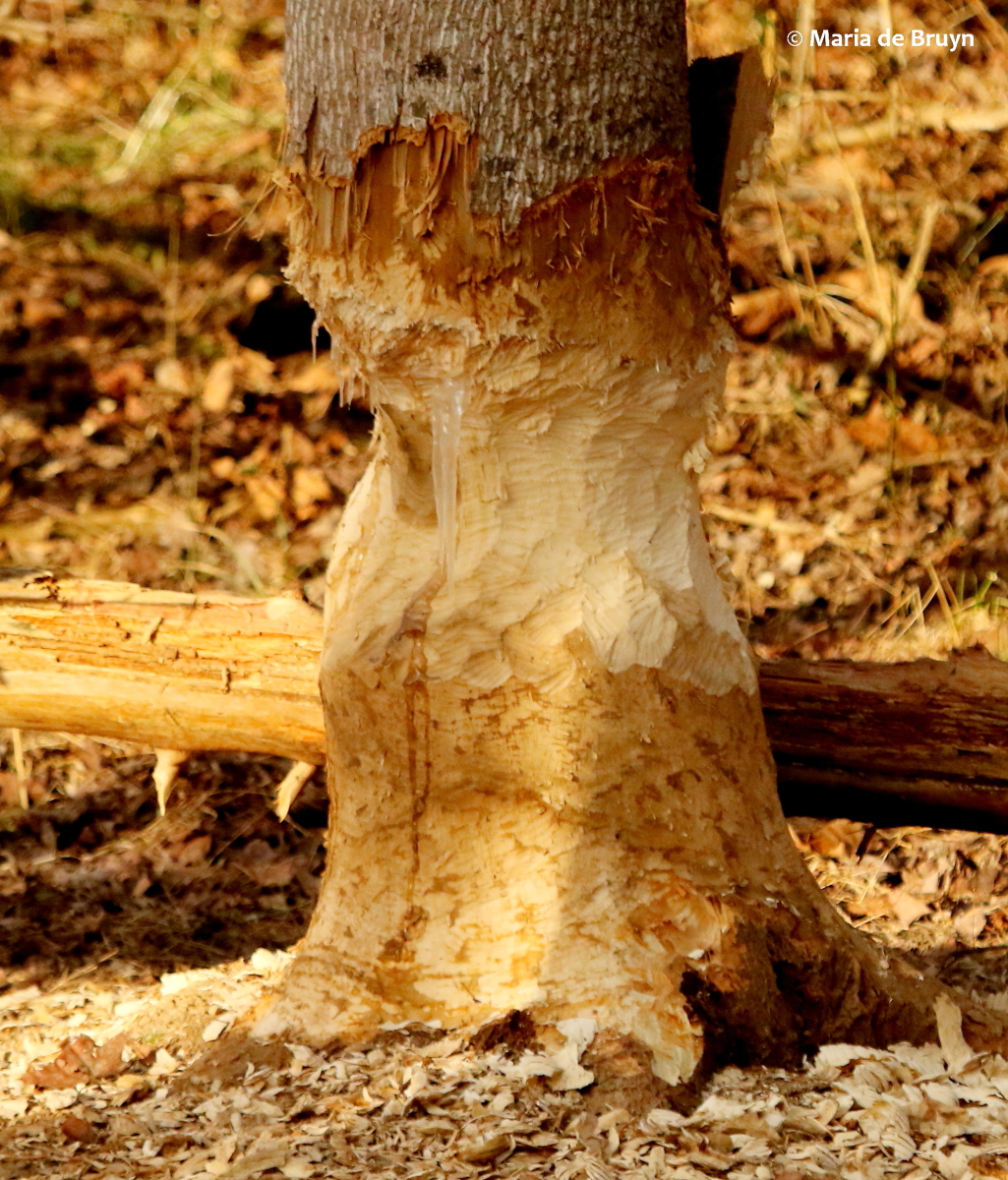
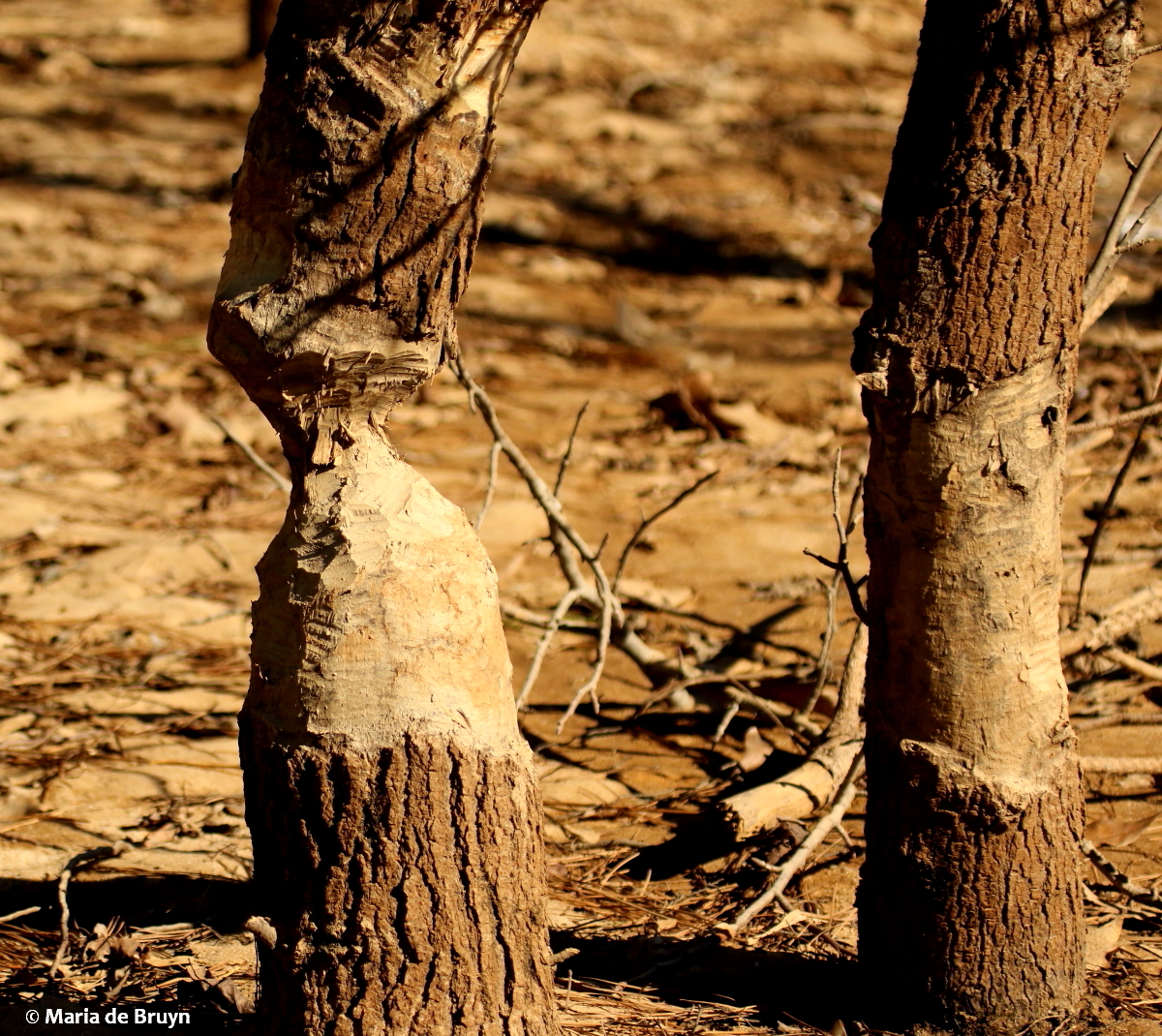
Beaver DK7A4173©Maria de Bruyn resOutside my yard, I’ve been seeing many signs of beavers (Castor canadensis) in the parks and reserves I visit. Their teeth are strong and I recently learned why their teeth are reddish brown – the enamel contains iron!


They have left tree stumps, half-gnawed trees and detached trees that they have apparently not yet been able to drag over to their dams and dens.
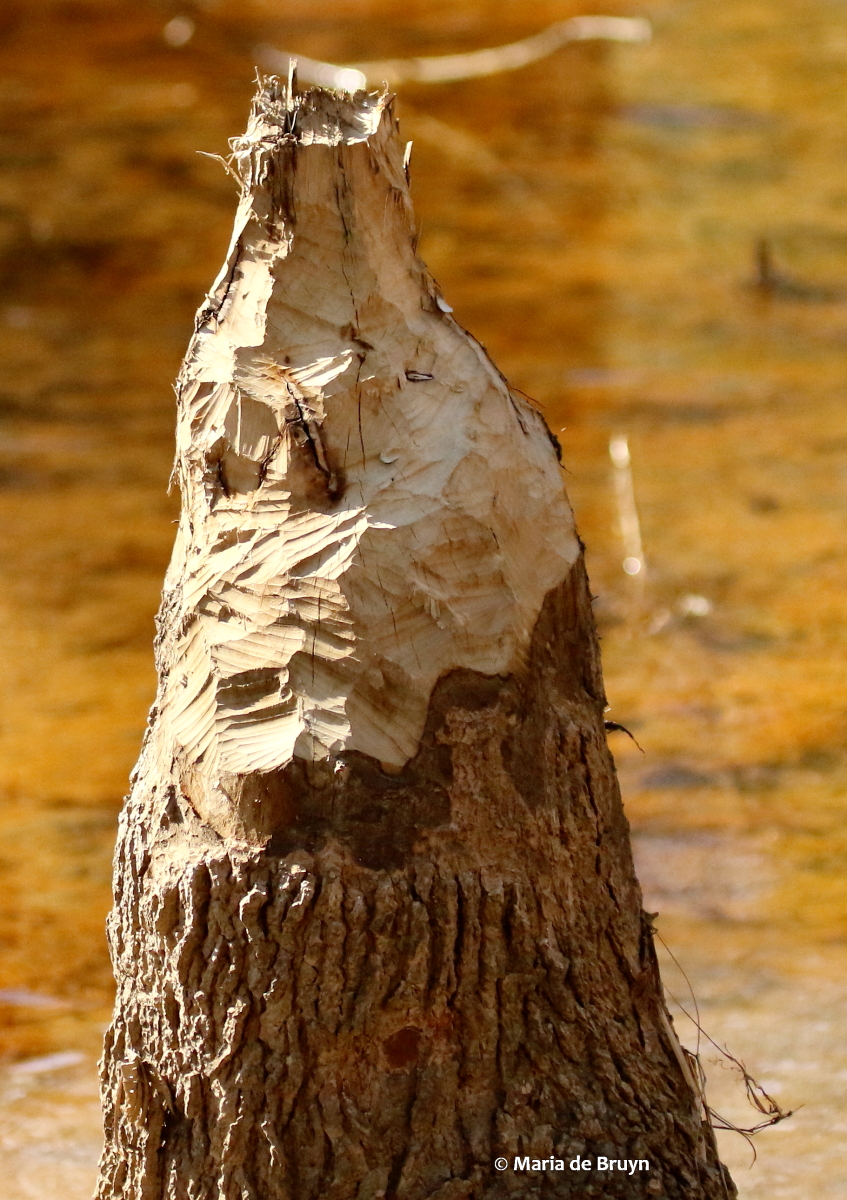
beaver tree I77A2950© Maria de Bruyn res  beaver I77A0313© Maria de Bruyn res

beaver I77A0125© Maria de Bruyn res  beaver I77A0098© Maria de Bruyn res

One downed tree in particular looked to me like they had been working on a bird sculpture!
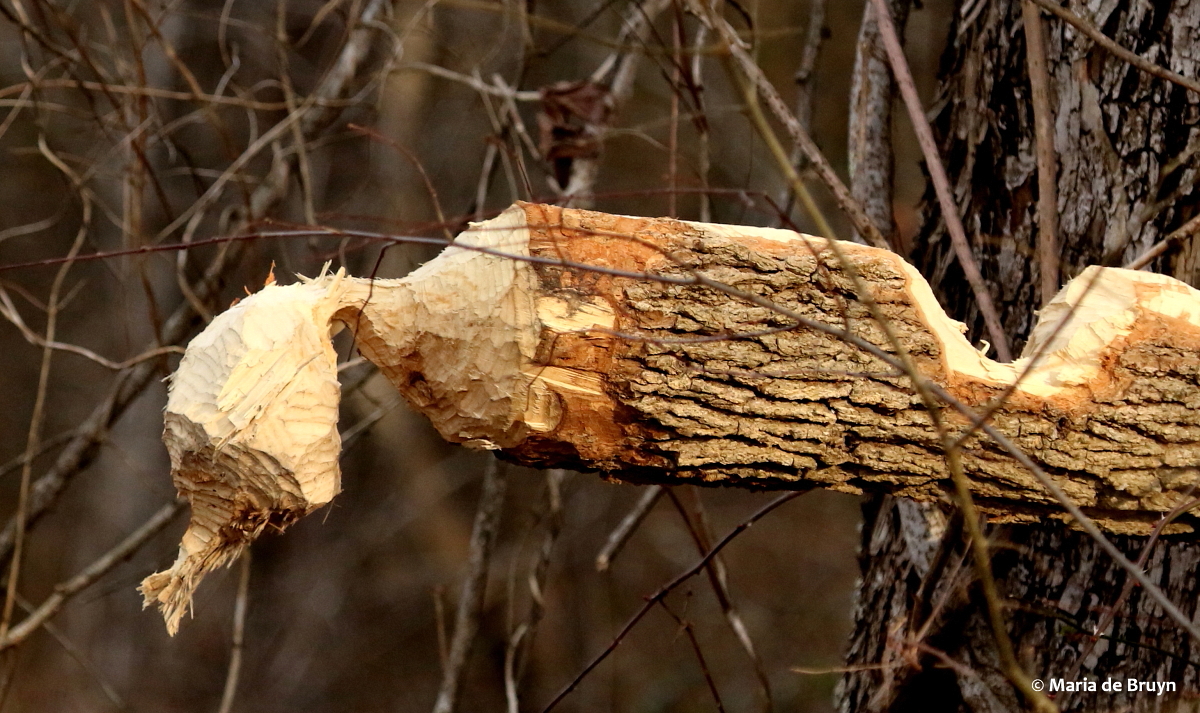
beaver I77A0090© Maria de Bruyn res


Eastern chipmunk I77A6221© Maria de Bruyn resI’m guessing that some of the other animals will be coming out in the daytime soon around my home – at the very least, the frogs and rabbits, whom I have seen only very occasionally. Spring is coming and while I enjoy seasonal variety, I will welcome it with open arms!

A bedraggled sort of day

Carolina wren IMG_4876© Maria de Bruyn resFirst, let this lovely Carolina wren (Thryothorus ludovicianus) and me wish you – fellow nature lovers and blog readers – all the best as we look to the future in this year of 2015! May your minor disappointments (life is not always rosy) be compensated by love, laughter, health and happiness in abundance!


Yesterday may have been a minor disappointment for the wildlife here.Hermit thrush IMG_3106© Maria de Bruyn res On Sunday, it was very cold for North Carolina standards. Together with two other Audubon Society volunteers, I was standing at a local lake in 15°F (-9.4°C) weather waiting to see if any bald eagles flew by for inclusion in the quarterly Eagle Count. We didn’t see any, although this lovely hermit thrush (Catharus guttatus) was nearby eating berries.

Monday was warmer but EXTREMELY wet! Two of my cats awakened me at 5 a.m. and I could hear the rain coming down in a veritable deluge. I wondered if I would be able to see the road to drive for an appointment later that morning (it did let up, thank goodness) and also wondered how the birds and animals were keeping in this unpleasant weather.

Northern cardinal IMG_4462© Maria de Bruyn res

Northern cardinal IMG_4049© Maria de Bruyn res


When it’s cold, the birds fluff up their feathers to trap air pockets by their bodies; this helps they retain body heat and stay warmer. Heavier wet feathers don’t seem to fluff well, though. On the other hand, birds’ feathers are covered with an oily or waxy substance that helps water run off, thereby keeping their bodies drier. Those feathers don’t necessarily look pretty though. Many of the birds were indeed looking bedraggled, some to a greater degree and others just a bit like these Northern cardinals (Cardinalis cardinalis).

red-bellied woodpecker IMG_5005© Maria de Bruyn resIt didn’t seem that many birds were hiding in vegetation to get out from under the downpour. Nope – they all appeared to be very hungry and anxious red-bellied woodpecker IMG_4948© Maria de Bruyn resfor a meal like this red-bellied woodpecker (Melanerpes carolinus), who was scolding me for being so close to the feeders!
white-tailed deer IMG_4092© Maria de Bruyn resA few white-tailed deer (Odocoileus virginianus) were also wet and hungry, including two visitors to my yard that I had not seen before. They were two bucks, one of whom must have been hit by a car. One of his antlers was broken off and he was hopping along holding up his left hind leg, which had obviously been injured.


white-tailed deer IMG_4063© Maria de Bruyn res white-tailed deer IMG_4001© Maria de Bruyn res

white-tailed deer IMG_4055© Maria de Bruyn resA young doe, who visits regularly, stopped for some bird seed, as did the other buck whose antlers had been shed. Their thick hair was coated in raindrops.

The Eastern gray squirrels (Sciurus carolinensis) can curl their tails up over their backs as a kind of natural umbrella, both on the ground and in trees. This individual, who may have been injured by a predator and escaped, enjoyed some apple – first on the ground and then later in the tree away from the blue jays that were hopping around it.

Eastern gray squirrel IMG_4325© Maria de Bruyn res Eastern gray squirrel IMG_4334© Maria de Bruyn res

Some of the birds definitely looked more presentable than other. The three visiting mockingbirds (Mimus polyglottos) were sleek and beautiful, one using its long tail tobalance as it plucked meal worms from a feeder designed for somewhat smaller birds.

Northern mockingbird IMG_4503© Maria de Bruyn res Northern mockingbird IMG_4467© Maria de Bruyn res

The dark-eyed juncos (Junco hyemalis), Eastern towhees (Pipilo erythrophthalmus) and chipping sparrows (Spizella passerina) looked in fine shape, too.

dark-eyed junco IMG_4802© Maria de Bruyn res dark-eyed junco IMG_4729© Maria de Bruyn res

Eastern towhee IMG_4924© Maria de Bruyn res chipping sparrow IMG_4817© Maria de Bruyn res

The bluebirds (Sialia sialis) varied in appearance; a couple looked groomed but wet, while a couple others looked a bit disheveled.

Eastern bluebird IMG_4587© Maria de Bruyn res Eastern bluebird IMG_4588© Maria de Bruyn res

pine warbler IMG_4569© Maria de Bruyn resThe pine warbler (Setophaga pinus) – usually among the more handsome garden birds – unfortunately looked a sorry sight. Fortunately, when the rain ends, he’ll be able to shake that water off and get back to looking like one of the handsome fellas of the avian neighborhood!
pine warbler IMG_4618© Maria de Bruyn


pine warbler IMG_4842© Maria de Bruyn res

ruby-crowned kinglet IMG_4777© Maria de BruynThe ruby-crowned kinglet’s (Regulus calendulabrown-headed nuthatch IMG_4409© Maria de Bruyn res) oily feather covering seemed to do well in keeping the rainwater at bay, while the brown-headed nuthatch (Sitta pusilla) looked a bit more water-logged.ruby-crowned kinglet IMG_4741© Maria de Bruyn res

The tufted titmouse (Baeolophus bicolor) and Carolina chickadee (Poecile carolinensis) join me in looking forward to dryer and sunnier weather in a few days’ time!

tufted titmouse IMG_4350© Maria de Bruyn resCarolina chickadee IMG_4386© Maria de Bruyn res

Plenty of persimmon pleasure!

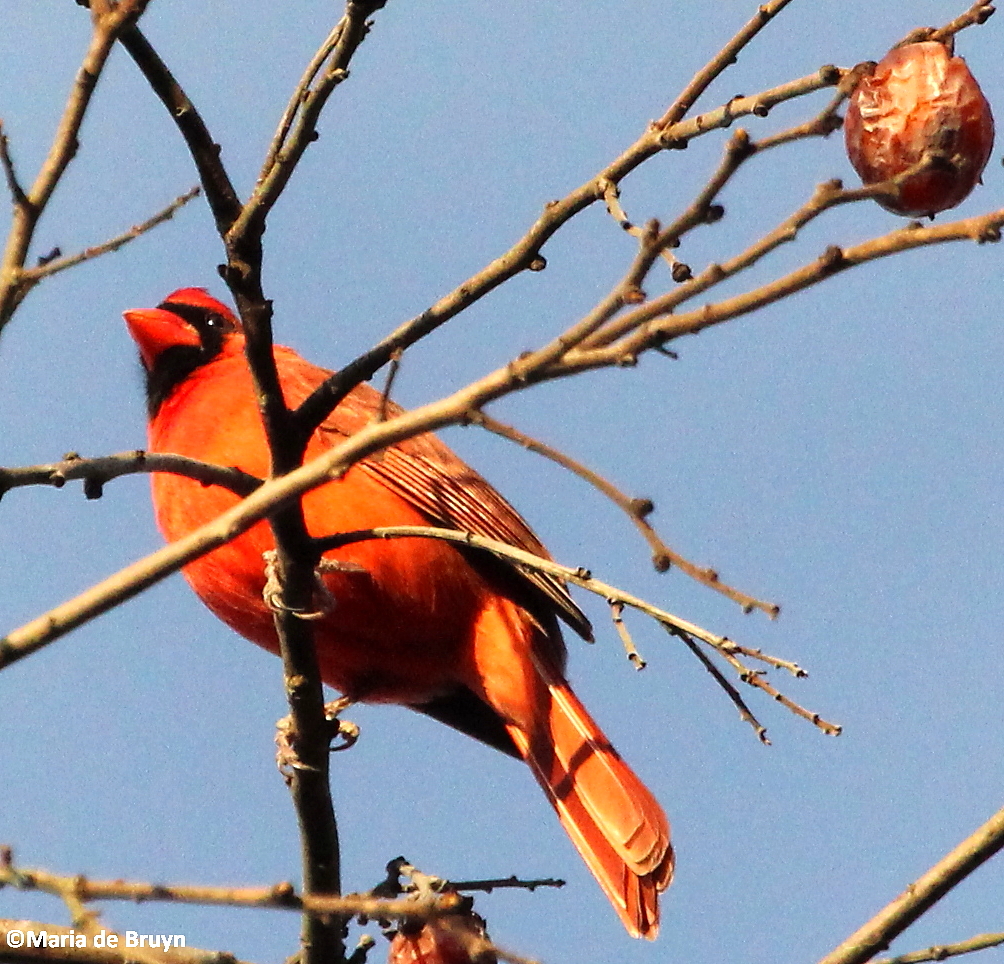
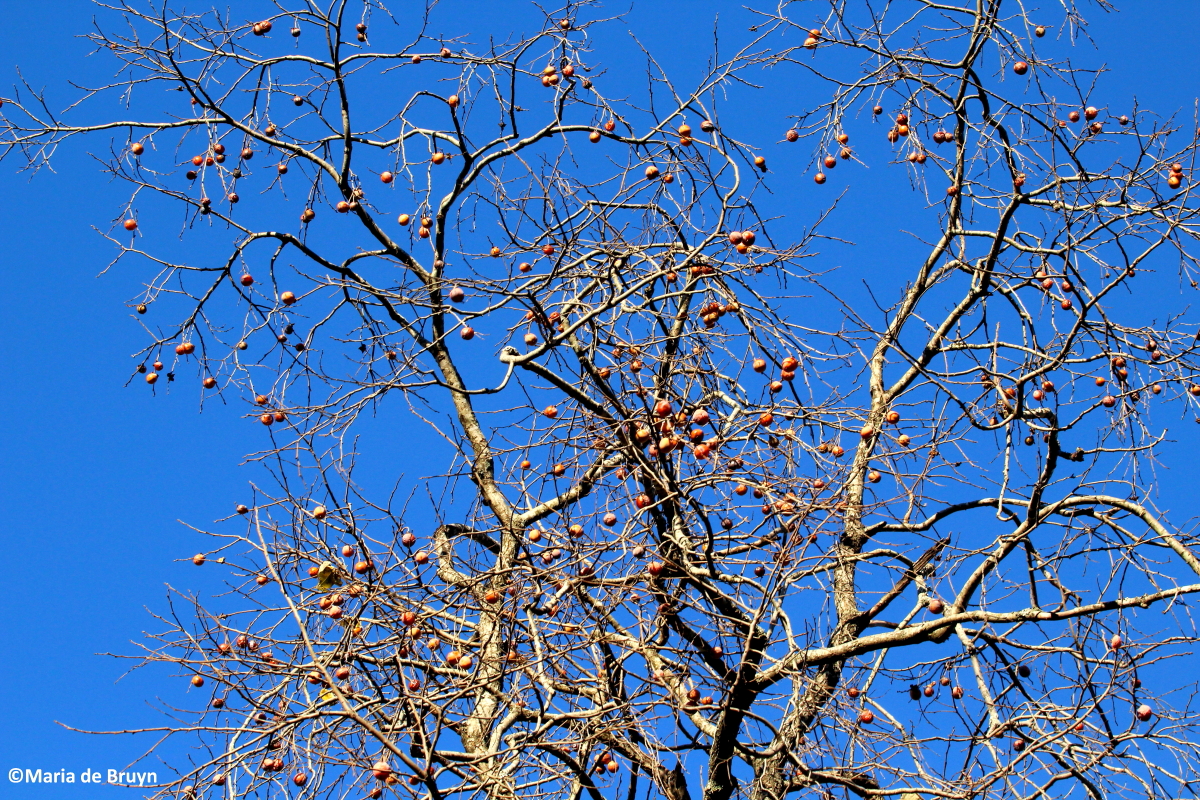
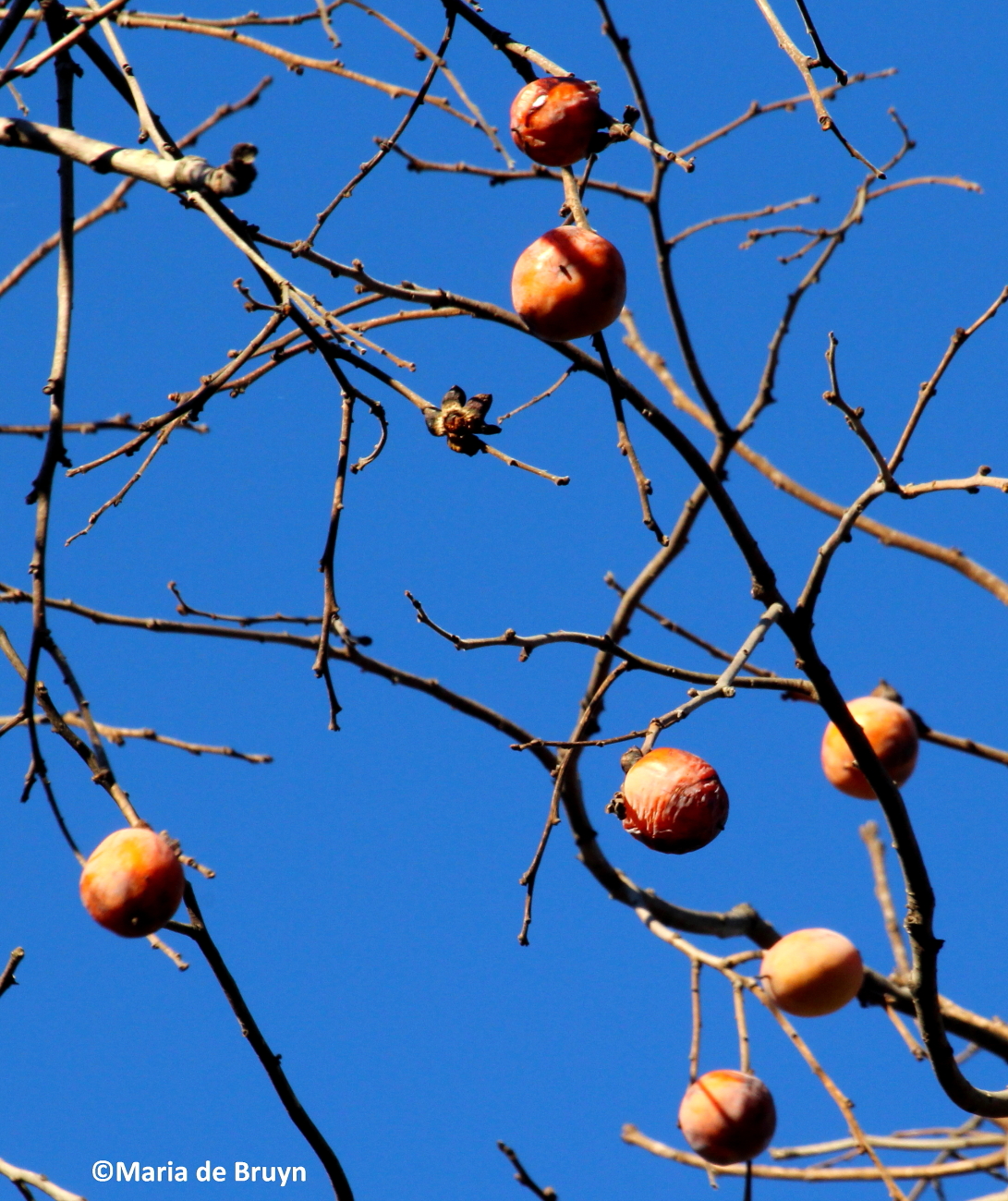
Northern cardinal  IMG_7335© Maria de BruynMy side- and backyards are both blessed with a persimmon tree (Diospyros virginiana) but the one out back only produces small hard fruit for some reason. The large persimmon at the side of my house, however, is the exact opposite. Each year it is laden with fruit; much of it begins falling while the persimmons are still unripe or only half-ripe but plenty remains on the tree through the first frost. You need to have both male and female plants for the fruit to grow, but I don’t know where the male trees are – likely in a neighbor’s yard.

Persimmon tree IMG_6996© Maria de Bruyn resPersimmon tree IMG_6993© Maria de Bruyn res

I’d been warned that an unripe or only partly ripe persimmon would not be tasty and, when I tried one, that advice turned out to be very true. I later tried a really ripe persimmon as so many North Carolinians find it a wonderful fruit, especially in pudding, but I can’t say that it is much to my liking. You won’t find me using persimmons to make tea, wine, beer or bread.

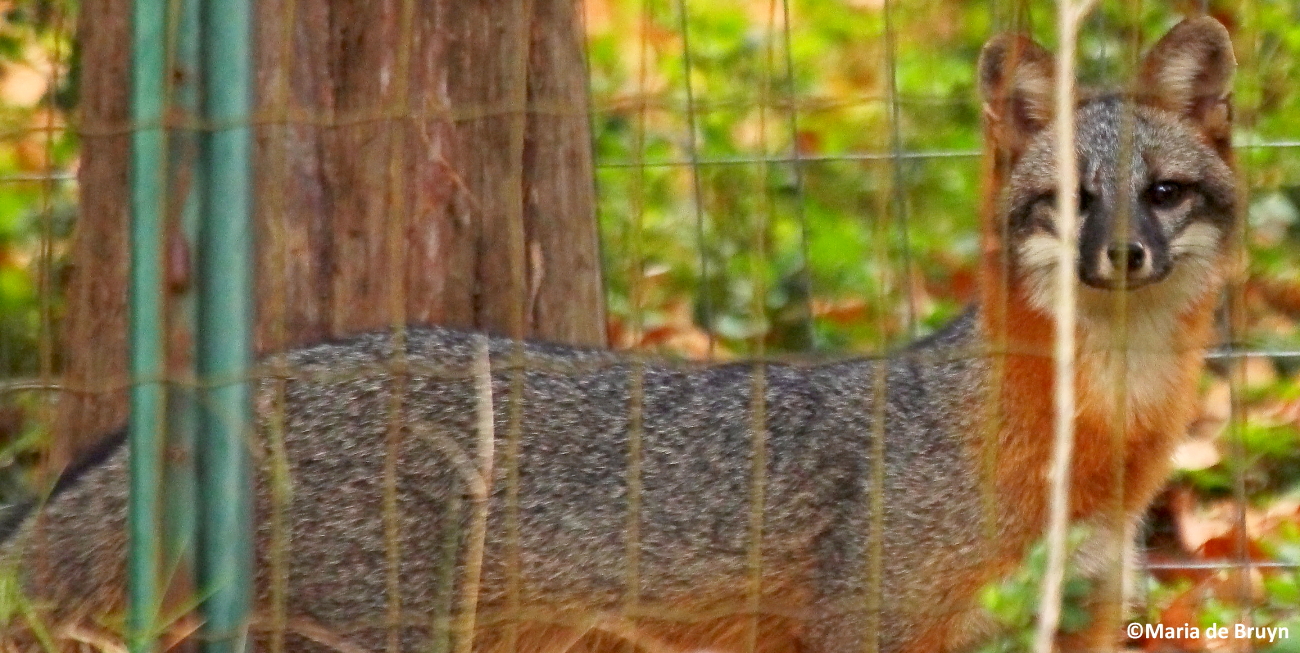
white-tailed deer IMG_9971© Maria de Bruyn resIt is, however, VERY popular with the wildlife that is around my house. The first fallen persimmons are gobbled up by the white-tailed deer (Odocoileus virginianus), who don’t seem to mind a bit of astringent fruit. Our neighborhood has opossums, raccoons, coyotes and gray foxes (Urocyon cinereoargenteus) , but I haven’t seen their persimmon seed-filled scat – I think the deer get the fruit before they have a chance. (Too bad the stem was in front of the fox’s face; I don’t use Photoshop, but you can still see its beauty.)

Gray fox IMG_1124 MdB res

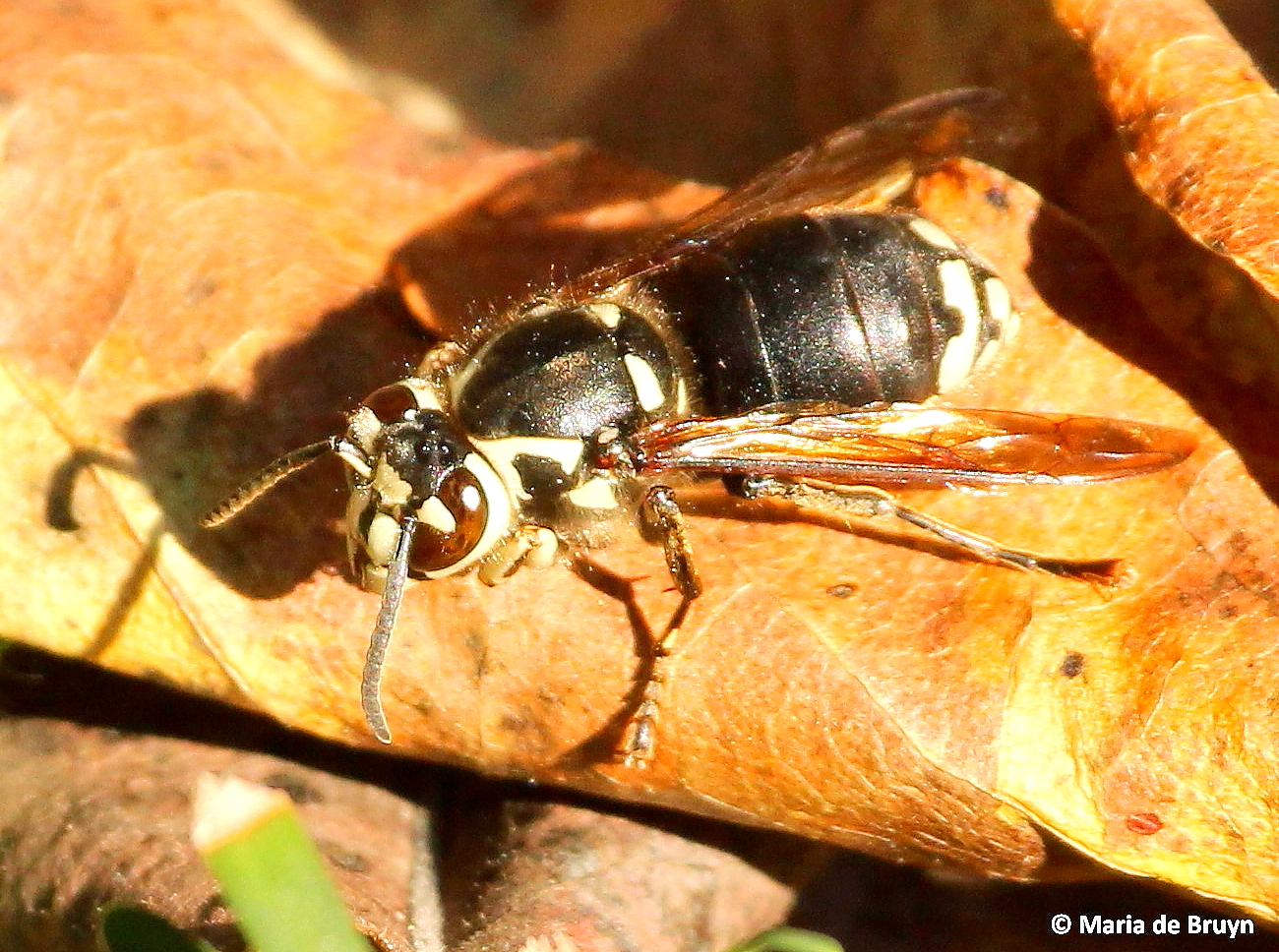
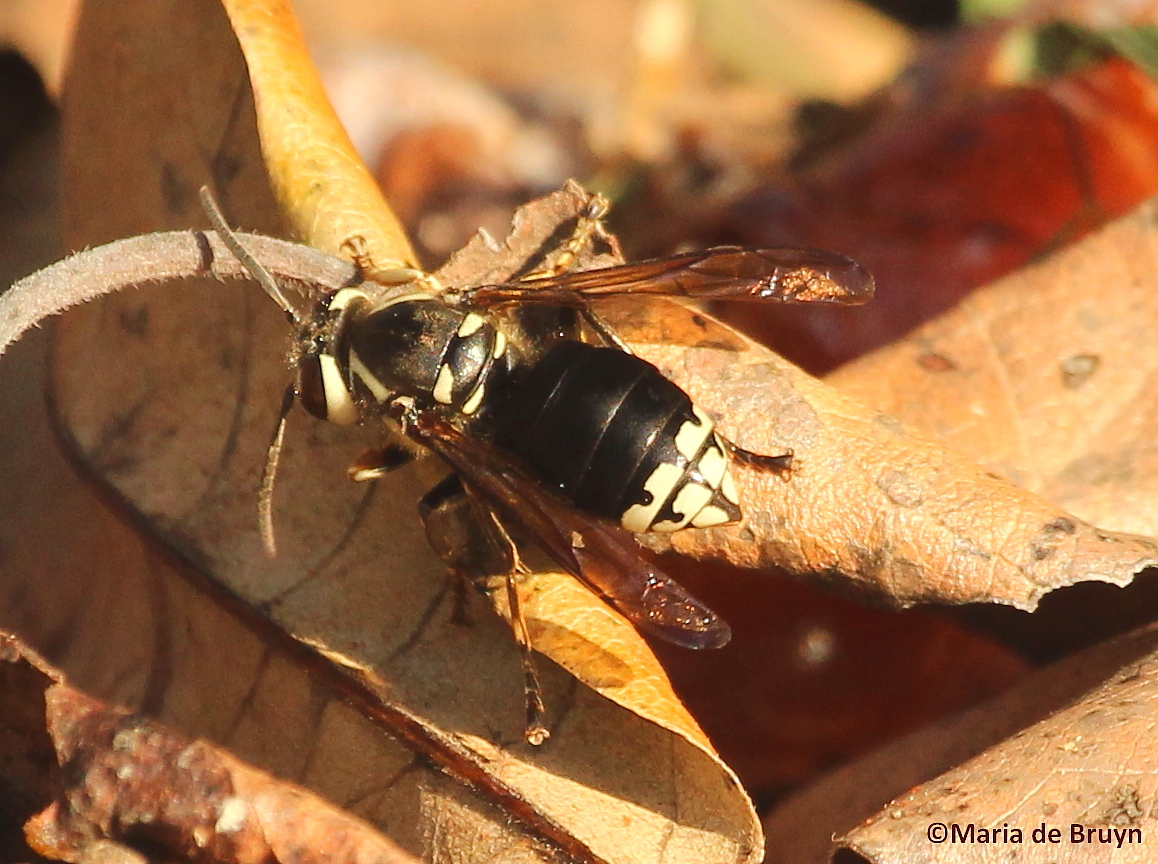
When the large orange berries begin falling on the ground in an ever riper state, the first diners include the bald-faced hornets (Dolichovespula maculata), whose beautiful large nest must be in a neighbor’s tree.

bald-faced hornet IMG_3348©Maria de Bruynbald-faced hornet IMG_3486©Maria de Bruyn

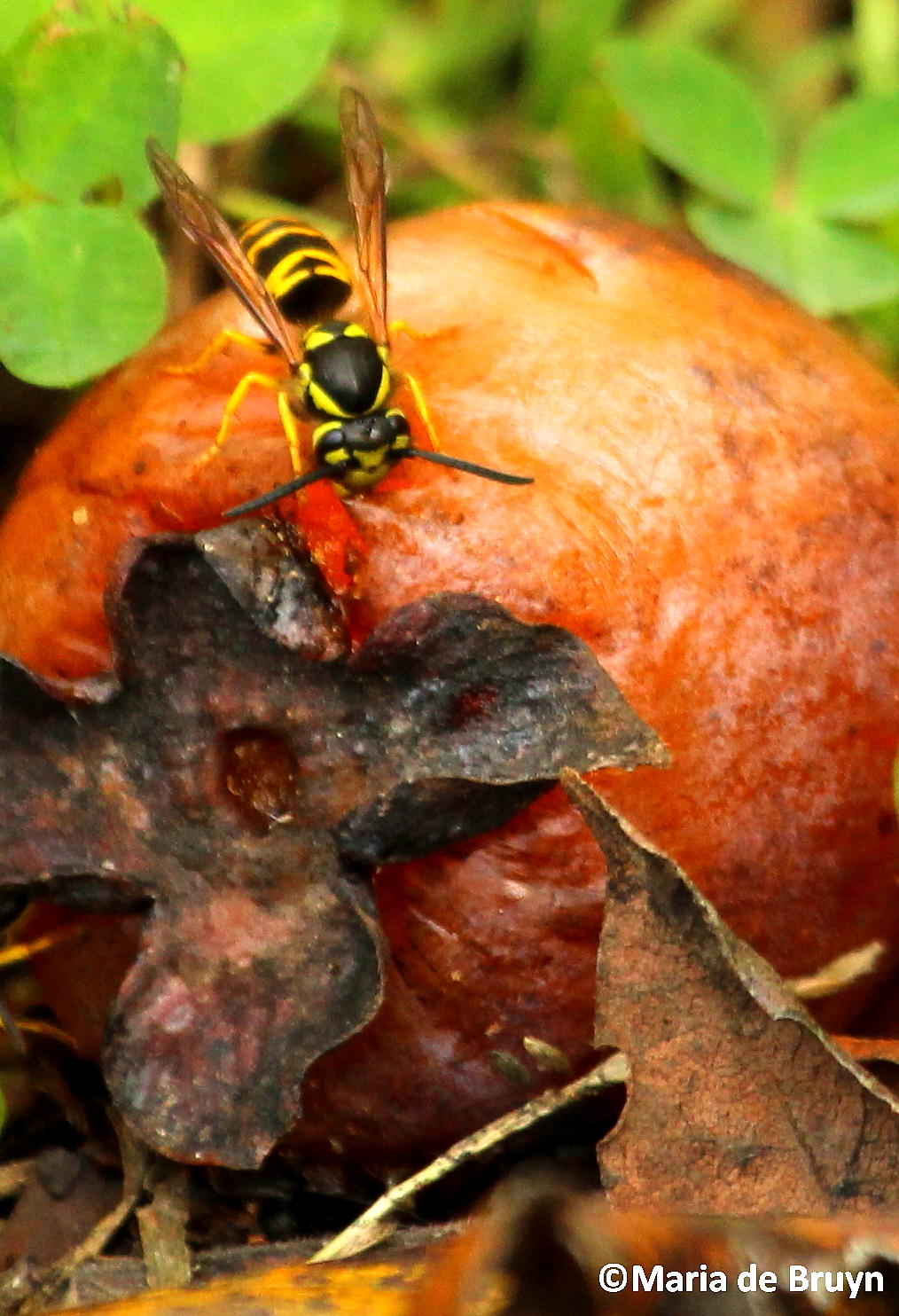
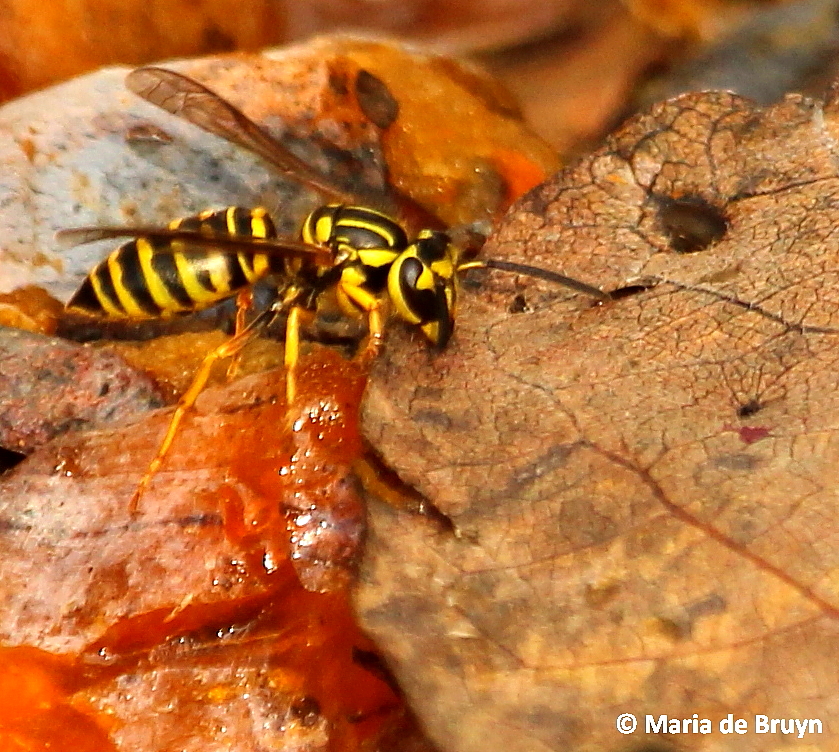
Eastern yellowjacket IMG_2502©Maria de BruynEastern yellowjacket wasps (Vespula maculifrons), which can deliver a very nasty sting, show no interest in a human hovering over the persimmons to get a shot – they are totally engrossed in getting a piece of juicy fruit.

Southern yellowjackets (Vespula squamosa), also painful stingers, act likewise – their focus is entirely on the orange pulp.


Southern yellowjacket IMG_2473©Maria de BruynSouthern yellowjacket IMG_2507©Maria de Bruyn res

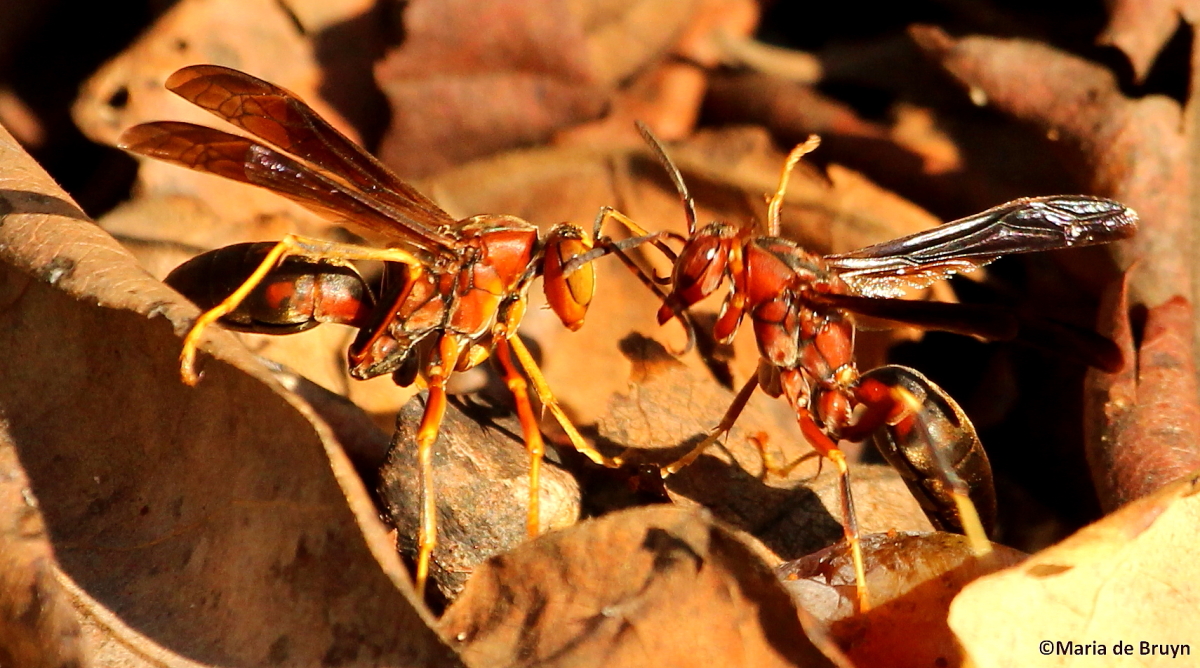
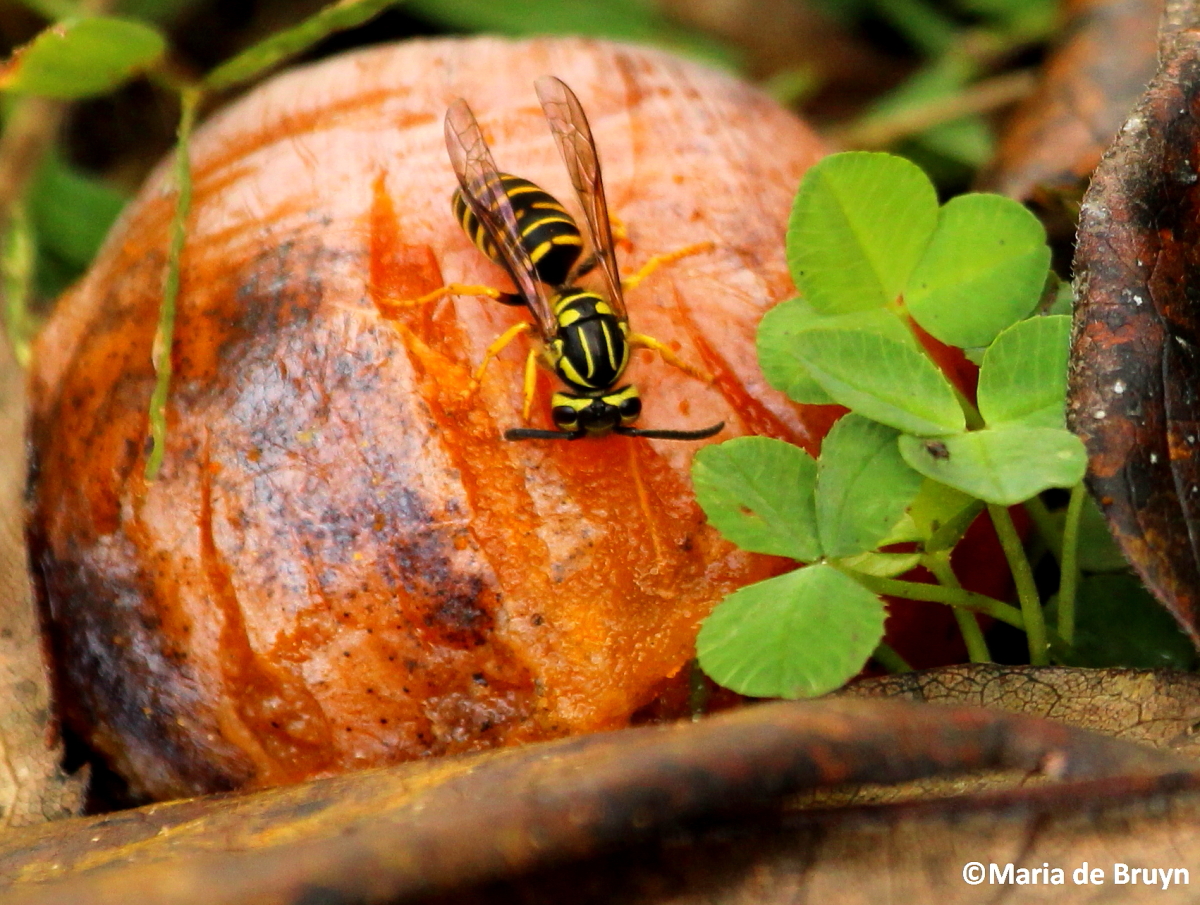
Paper wasp polistes metricus IMG_4359©Maria de BruynThe paper wasps (Polistes metricus) dig deep into the persimmon to extract some sweetness.

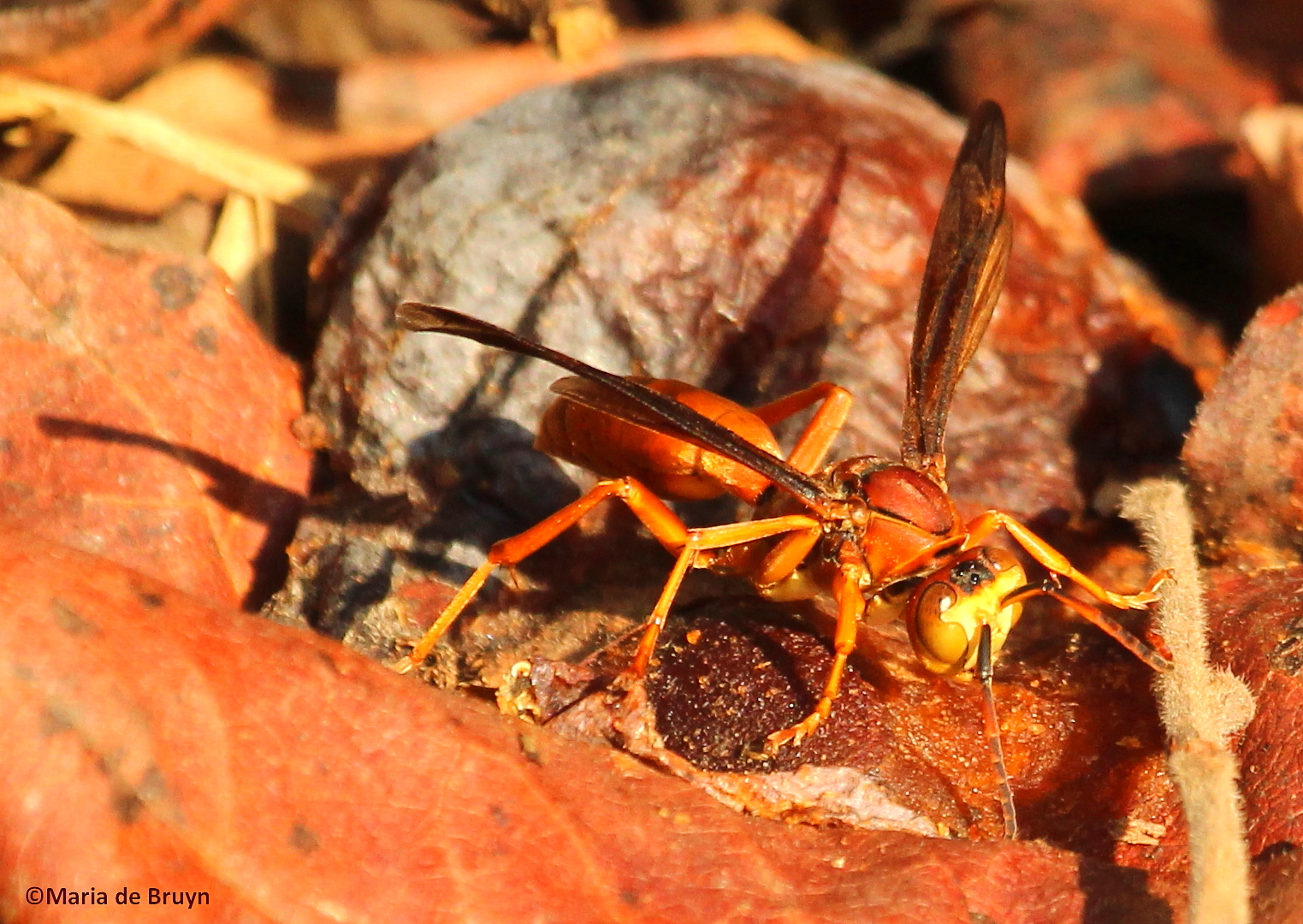
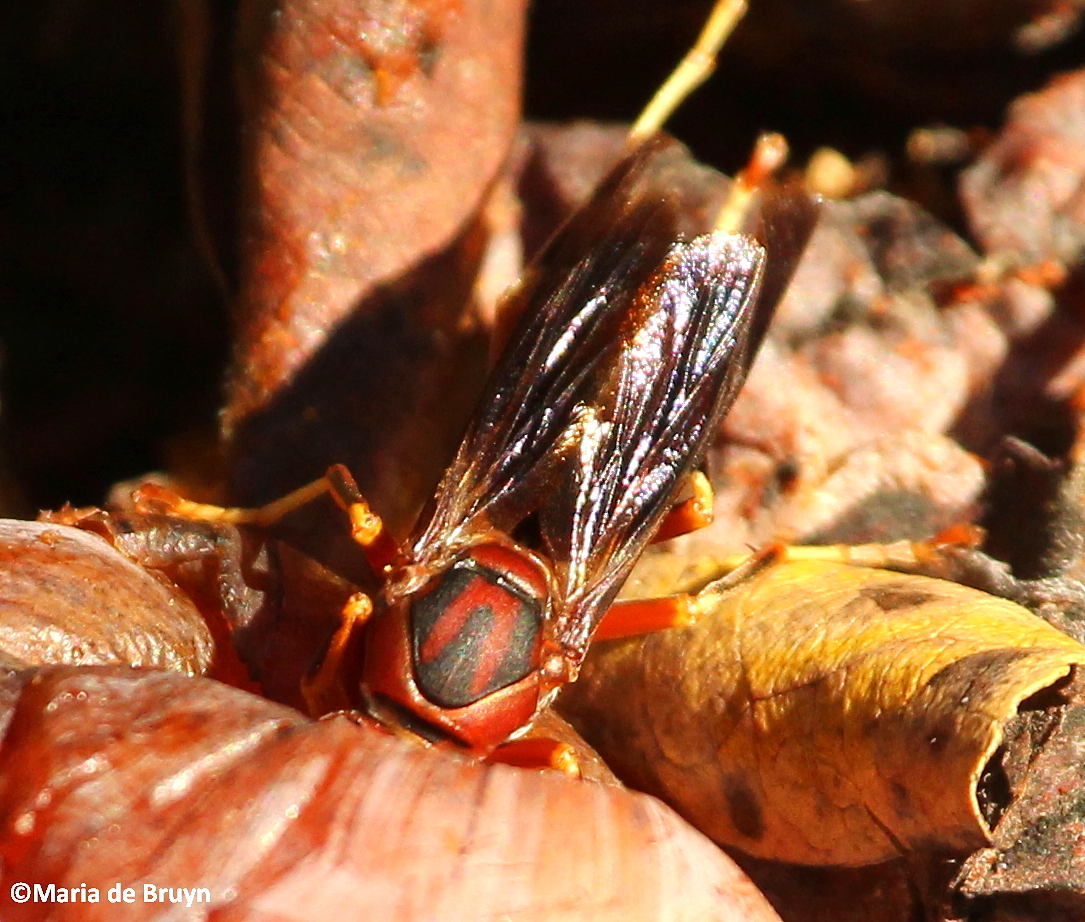
The red wasps (either Polistes carolina or rubiginosus; entomologists can only tell by examining the insect) also enjoy flitting from one fallen fruit to another in search of the sweetest bits. Sometimes they and the paper wasps challenge one another for territory.

Red wasp P carolina IMG_3495©Maria de Bruyn

Paper wasp polistes metricus IMG_3513©Maria de Bruyn res

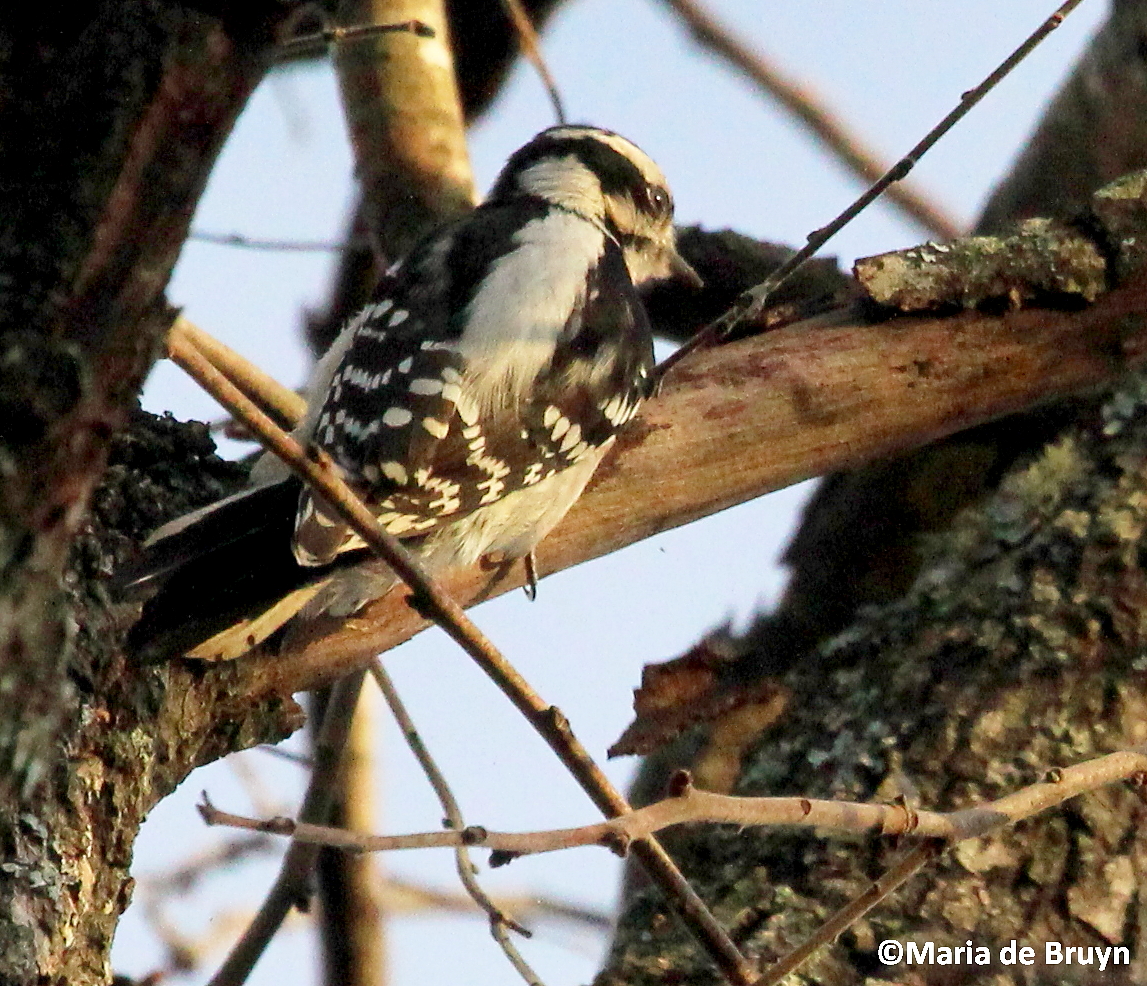
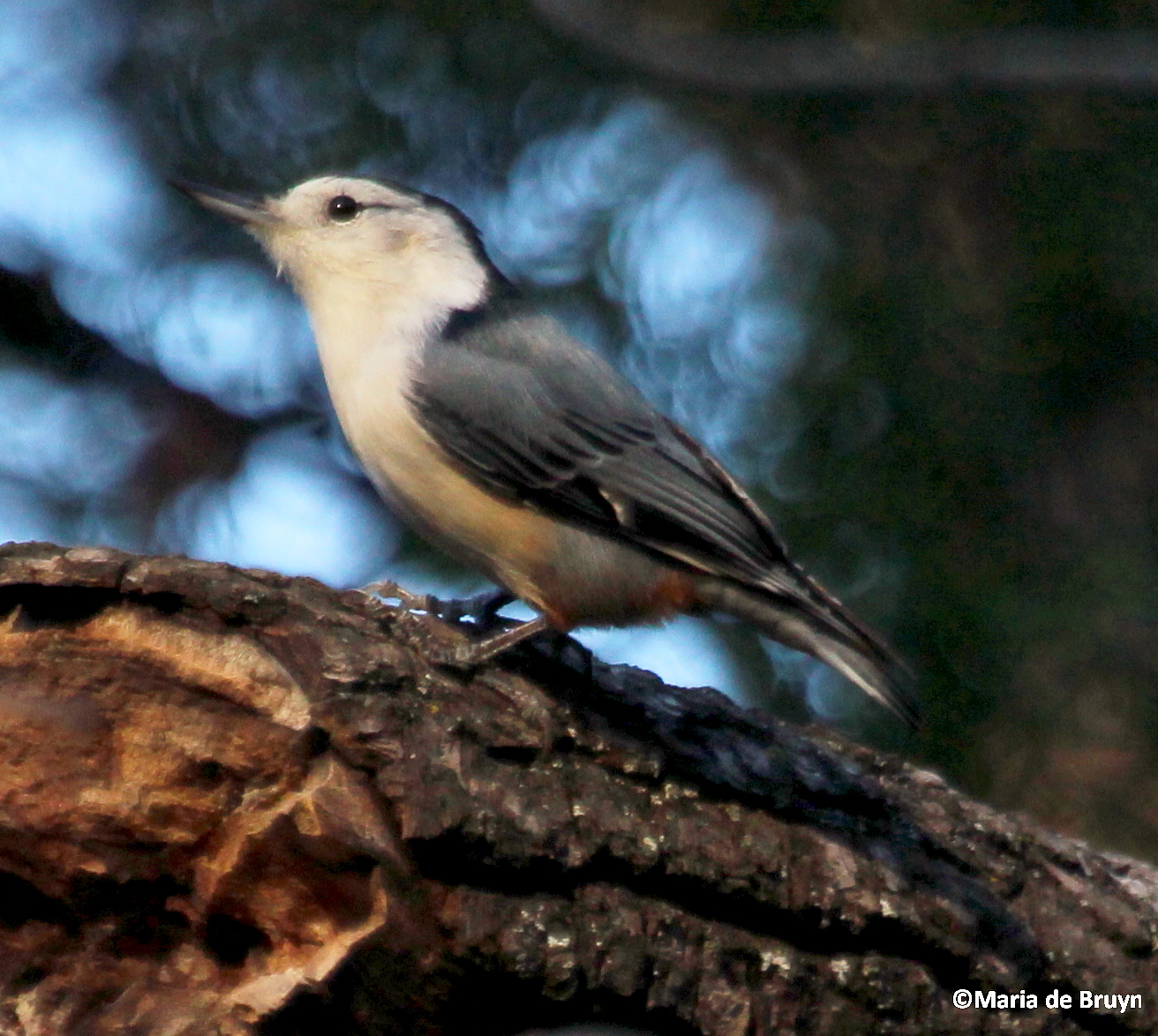
Downy woodpecker IMG_7248© Maria de BruynThe next group of persimmon pickers are the birds. Some birds only visit the tree to rest or look for insects, like the downy woodpecker (Picoides pubescens) and the white-breasted nuthatch (Sitta carolinensis).

White-breasted nuthatch IMG_5997© Maria de Bruyn


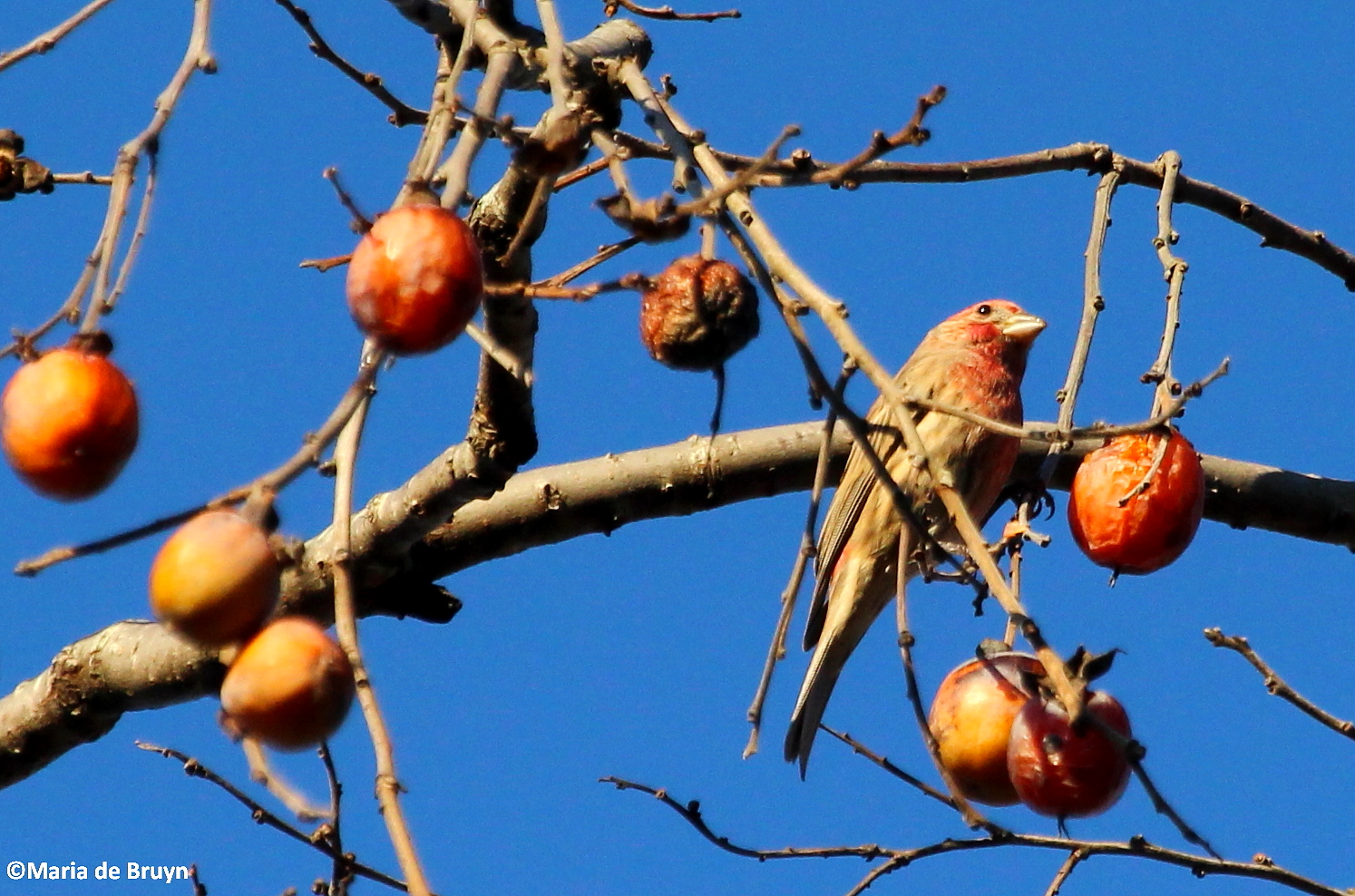
A few birds just rest in the tree and others rest and occasionally peck at a berry, like the house finches (Haemorhous mexicanus).


House finch IMG_5956© Maria de Bruyn

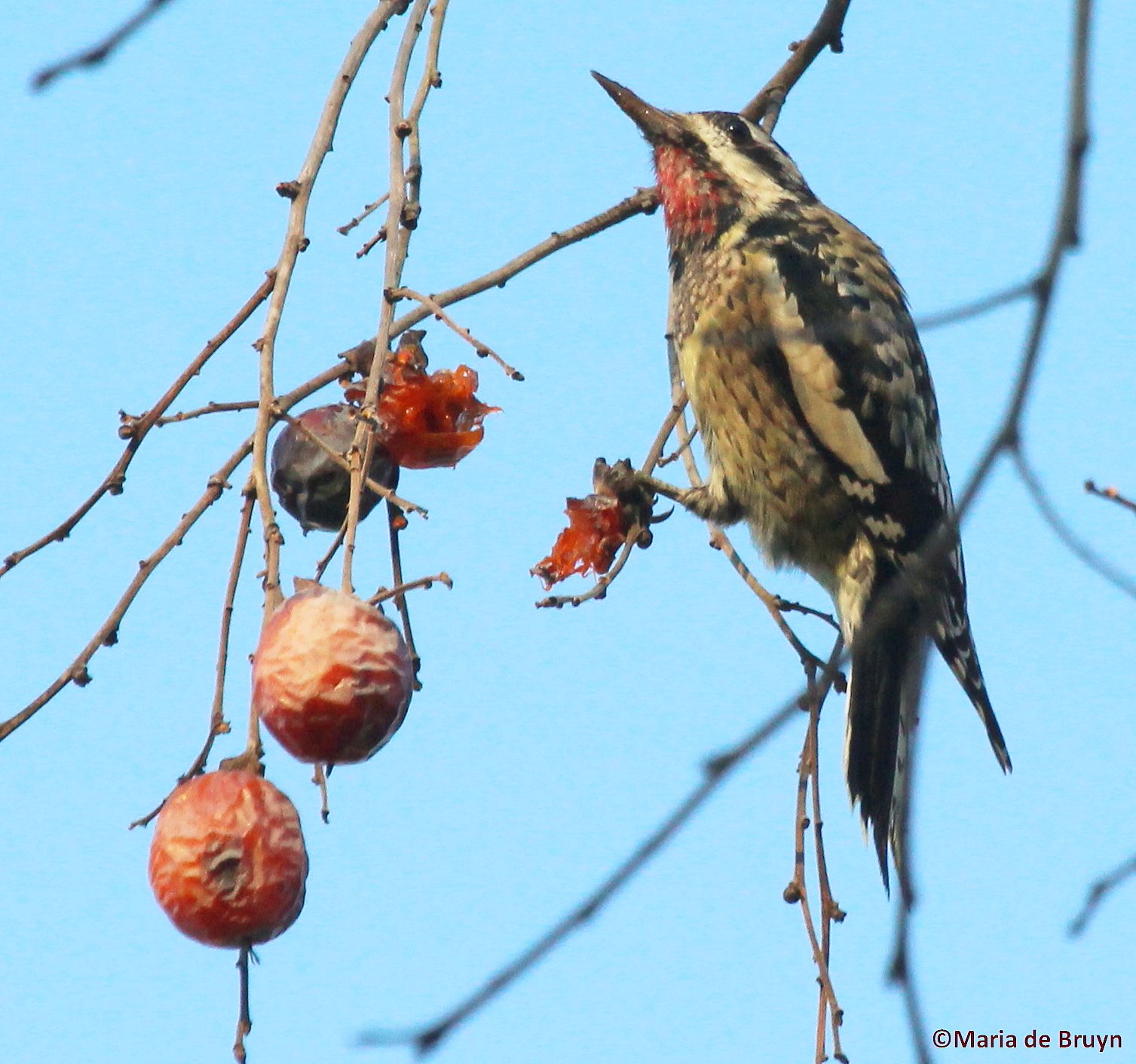
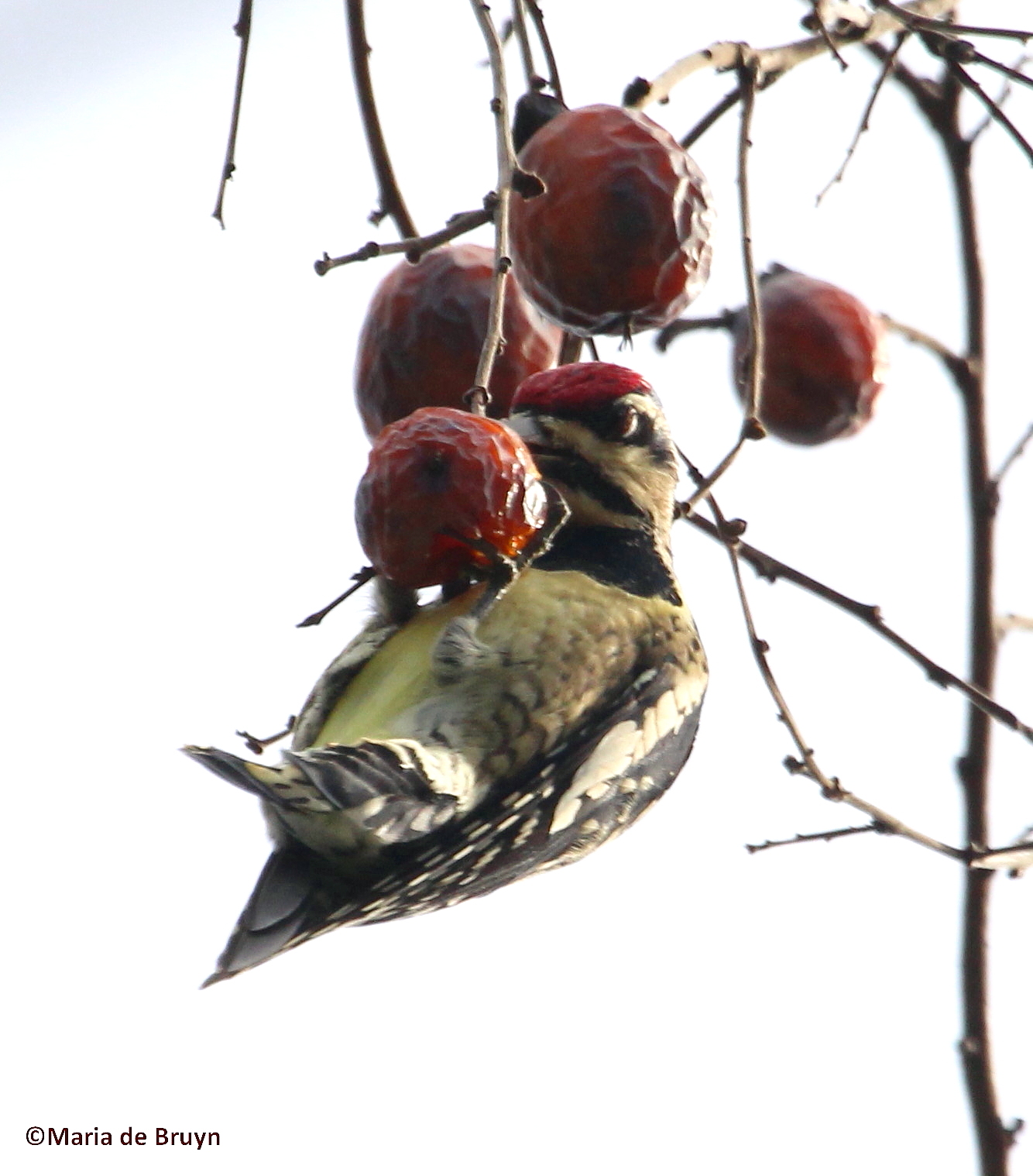
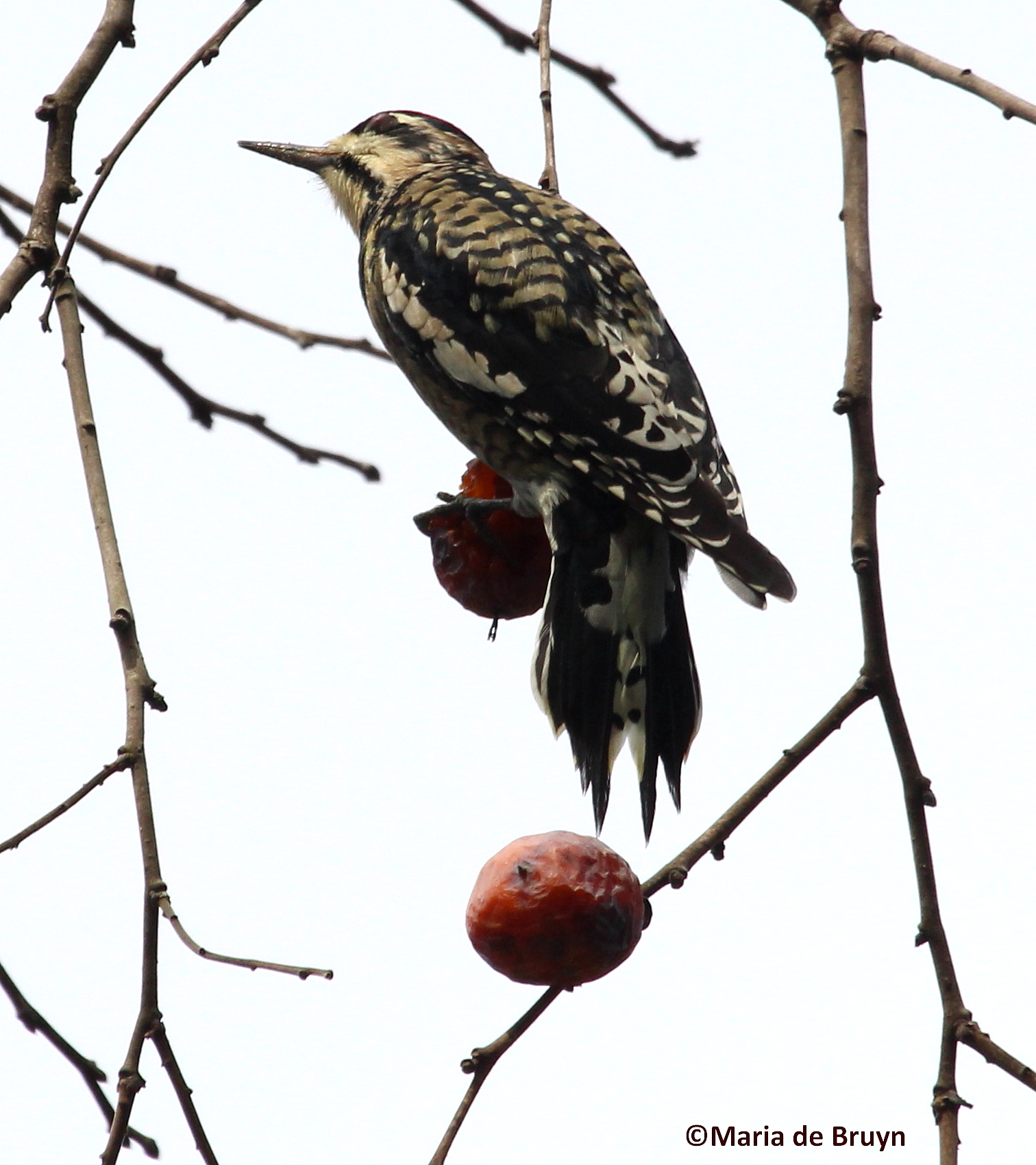
Yellow-bellied sapsucker IMG_8379© Maria de Bruyn The yellow-bellied sapsucker (Sphyrapicus varius) though is a woodpecker that is highly attracted by the fruit. A few of these attractive birds – both adults and juveniles – have been visiting the tree every day for weeks now to enjoy a sweet treat.


Yellow-bellied sapsucker IMG_8263© Maria de BruynYellow-bellied sapsucker IMG_8233© Maria de Bruyn

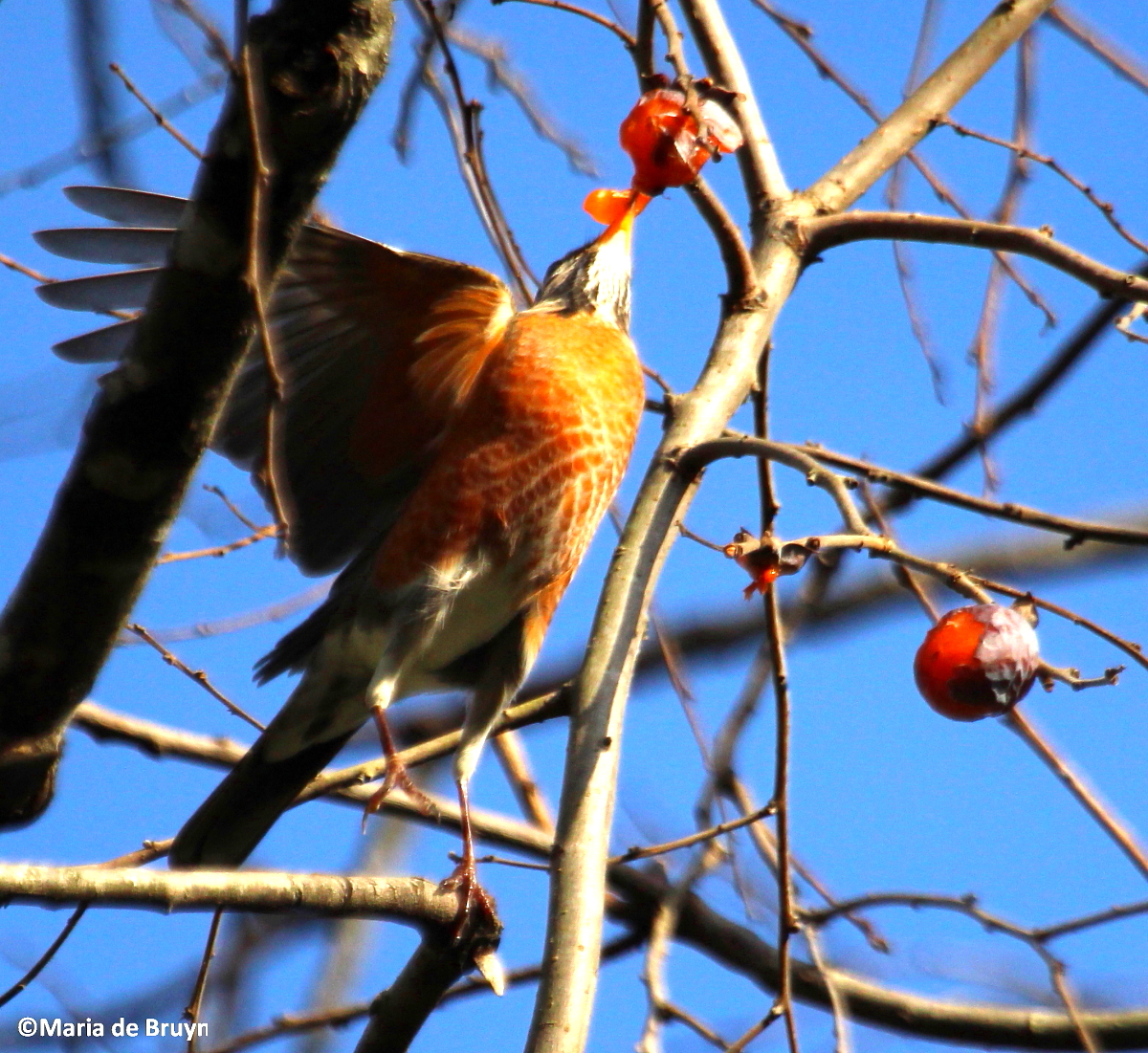
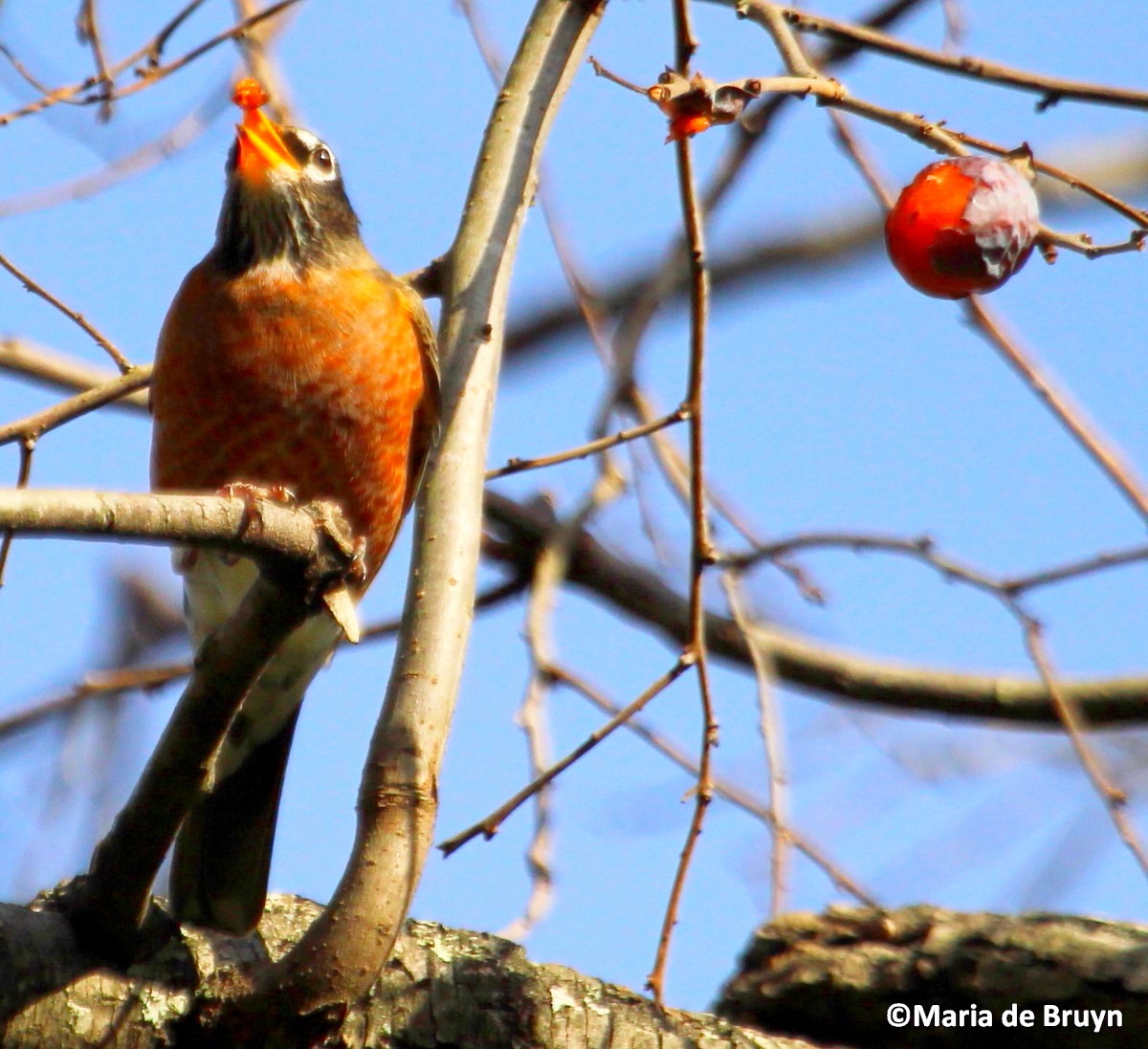
The American robin (Turdus migratorius) will not turn up its beak at a piece of persimmon either. Perhaps next year I should take a leaf from their books and collect a few fruits to try a pudding??

American robin IMG_9826©Maria de Bruyn resAmerican robin IMG_9813©Maria de Bruyn res


The exuberance of youth!

White-tailed deer IMG_3548© Maria de BruynSad and distressing events in the private and public spheres conspired to make the past 10 days rather depressing; it seemed every time I looked at the news, there was just more to grieve about. A nature walk always helps get my mind off that stuff and I often discover new things to boot.

Sometimes, though, I don’t even have to leave the house to get a little bit of cheer. Young white-tailed deer fawns (Odocoileus virginianus) can exhibit such exuberance when they feel they are in a safe place that you almost feel like joining them in dashing, darting and jumping in delight.

White-tailed deer IMG_3571© Maria de BruynWhite-tailed deer IMG_7393©Maria de Bruyn

This year, the local deer family did not produce many offsWhite-tailed deer IMG_3478©Maria de Bruynpring, undoubtedly adjusting to the urban environment. We have had very little rain this summer and their food supplies have dwindled way down. The ground-feeding birds do not always get to the seed first.

Four does, whom I am calling Mama, Plain Jane, White Spot and Grandma, visit my yard several times a day, sometimes alone and sometimes in the company of one or two others. At first, they were accompanied by one fawn, whom I was calling Baby. Baby could be the offspring of Mama or White Spot; oddly, I have seen both of them nursing her. I believe Plain Jane is the mother of a second fawn that showed up later; the two babies sometimes come together now.

White-tailed deer IMG_0469©Maria de BruynGrass has dried up, shrubs have shriveled and even my normally flowering plants are having a hard time. The deer are very hungry; I saw one nibbling on a crepe myrtle tree – something I had never seen in the more than 14 years I have lived here. Most of the time, my bird feeders are up high but when I hung one lower, Grandma took advantage of my forgetfulness. I don’t mind if they eat some of the bird seed and I have left some grapevine leaves for them as well.

I keep my fingers crossed that Baby will make it since a neighbor a couple blocks away, informed me that a fawn fell prey to coyotes there. (Perhaps that one belonged to either Mama or White Spot and accounts for both of them caring for Baby??) A fox was strolling through my yard the other day so the predators are certainly around. When no perceived danger is near, Baby really demonstrates what the verb “gamboling” is all about.

White-tailed deer IMG_3523©Maria de BruynWhite-tailed deer IMG_3597© Maria de BruynWhite-tailed deer IMG_7430©Maria de BruynWhite-tailed deer IMG_7385©Maria de Bruyn

When they get going, these little fawns can reach high speeds – and fly a little bit!

White-tailed deer IMG_3599© Maria de Bruyn

Sometimes, it looks a bit like they are demonstrating a deer yoga pose.White-tailed deer IMG_3596© Maria de Bruyn

Since I spray the plants I want to keep with deer repellant and I am ok with the family eating other plants, I have no problem with their frequent visits. In fact, I look forward to seeing them and having Baby lift my spirits!

Next blog: another wildlife spirit-lifter!

White-tailed deer IMG_3485©Maria de Bruyn

Do deer like treats? Of course, they do!

deer bird seed IMG_3127© Maria de BruynAnyone who has lived in proximity to white-tailed deer (Odocoileus virginianus) know that they have a great appetite for all types of vegetation, including garden flowers that people plant in their yards. This has been a cause of strife between humans and the deer (at least, from the humans’ point of view), even though I and other people have found that deer repellants – both home-made and store-bought – work really well to keep deer from eating plants we wish to keep.

I also have a 5-foot fence around my vegetable garden. In theory, the deer could jump this but the trick is to make the garden long and narrow since the deer calculate how much space they have to land on the other side of the fence. If it looks like the space is too small, they won’t try to jump eveIMG_5431© Maria de Bruynn if they see and smell delicious veggies inside – I know this is true as I’ve watched them figuratively “lick their lips” outside my garden but never attempt to get into it.

The deer’s four-chambered stomach enables it to eat a variety of food. In spring and summer, they prefer green plants, including grasses; in the autumn, they go for corn, acorns and other nuts. In the winter-time, deer eat twigs and buds of trees. They also eat fruit, such as the berries on privet trees, lichens and other fungi.

Stip at apple treeStip and privet IMG_1648© Maria de Bruyn

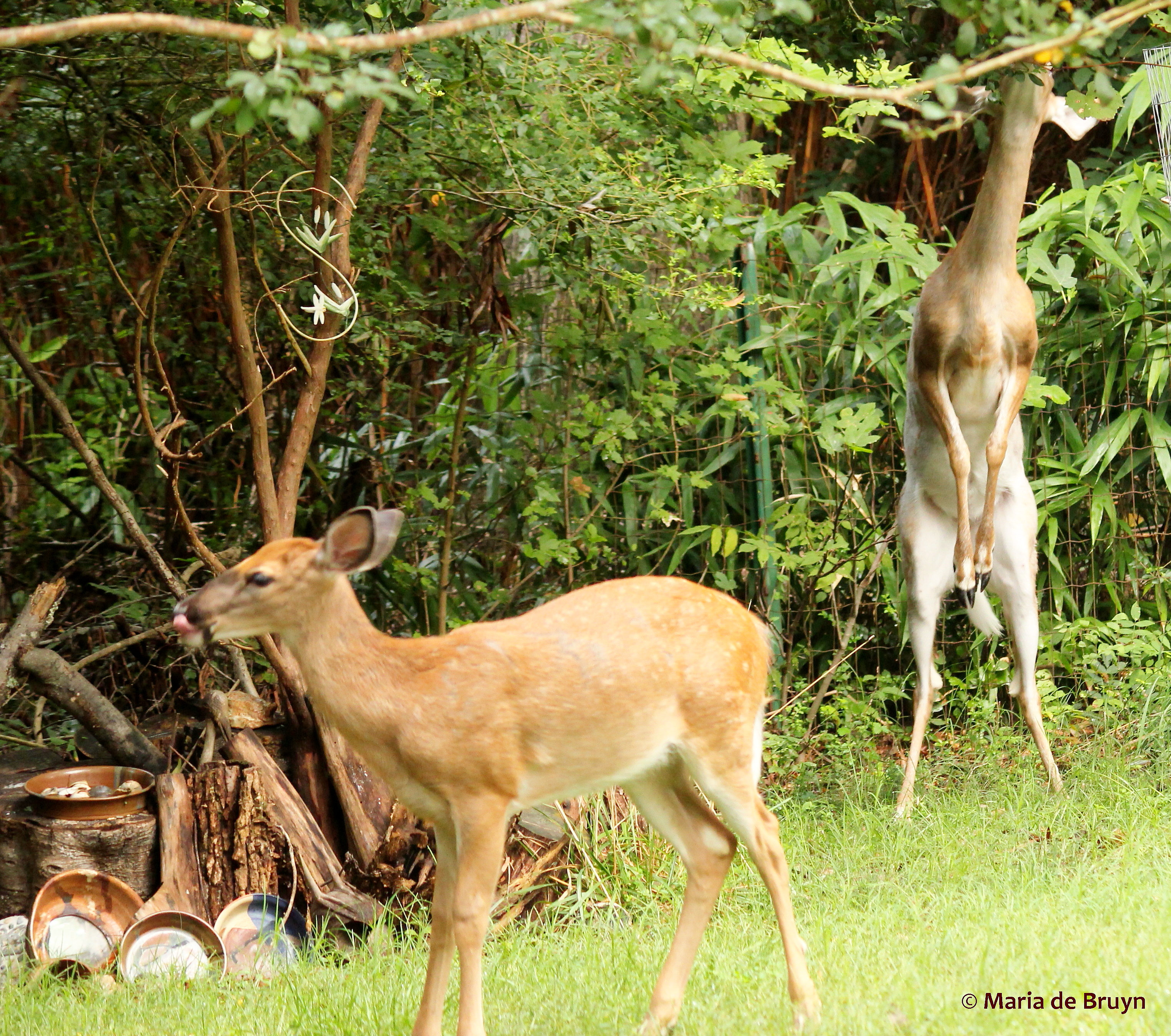
To get to the privet berries, they need to reach the tree branches and their good sense of balance comes in handy. The does do it often in my back yard and the fawns watch them carefully so they can try it, too. Surprisingly, the fawns can stand on their hind legs pretty well when they are only a few months old.

Nezhoni and apple tree 3©Maria de BruynBuck and privet IMG_5243© Maria de Bruyn

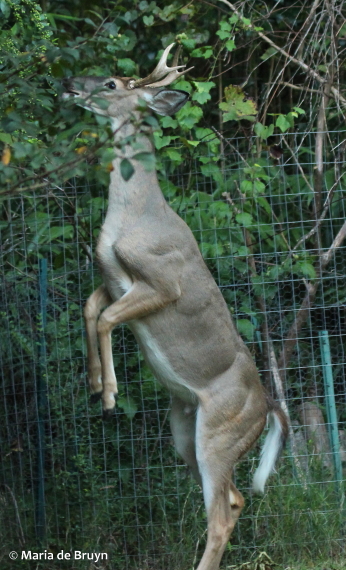
Besides privet berries, they like grape leaves (which can be high when the grapevines climb up the privet) and apples. The big bucks will also have a go at it but I don’t see them lifting their bulky bodies up often.

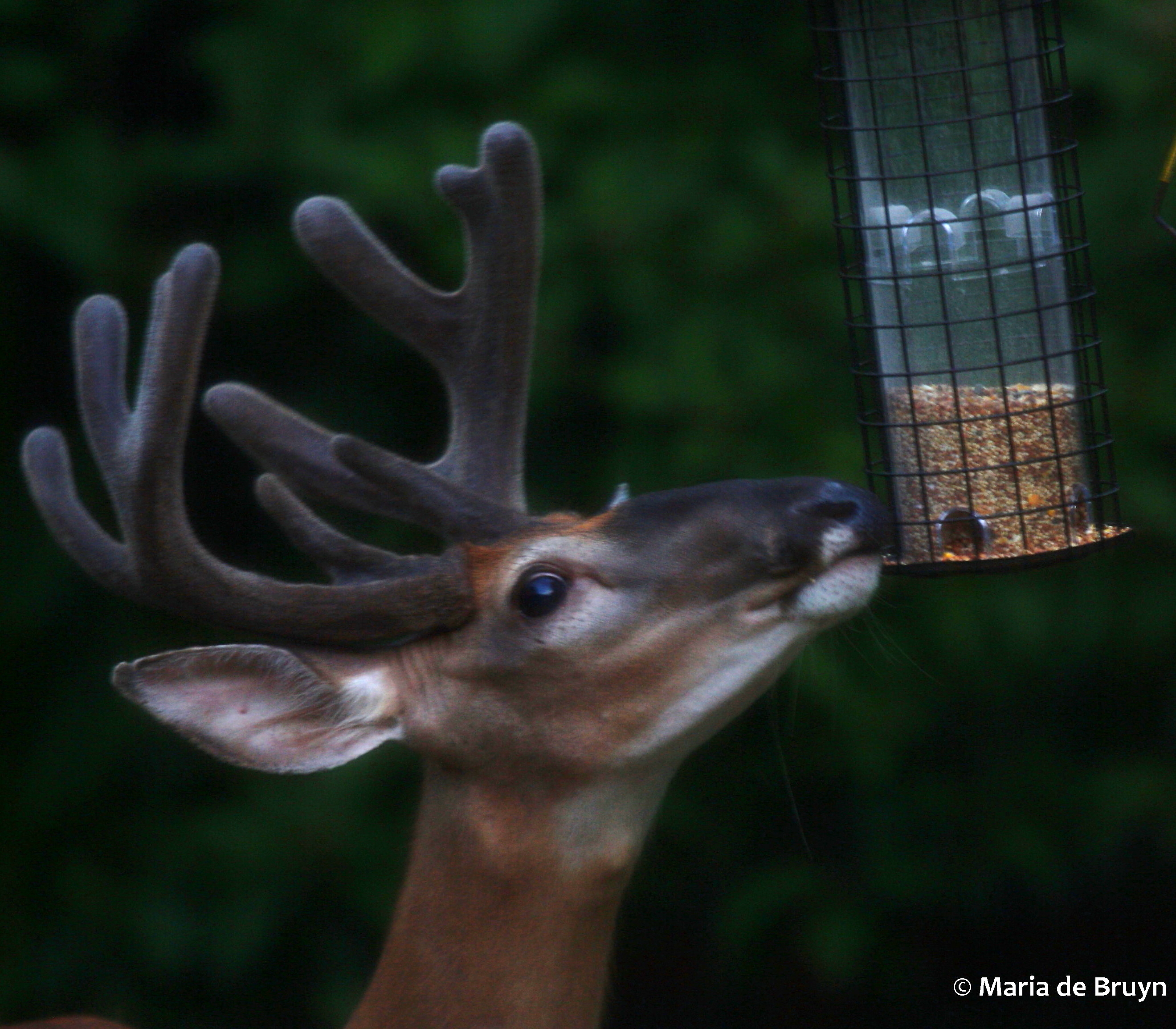
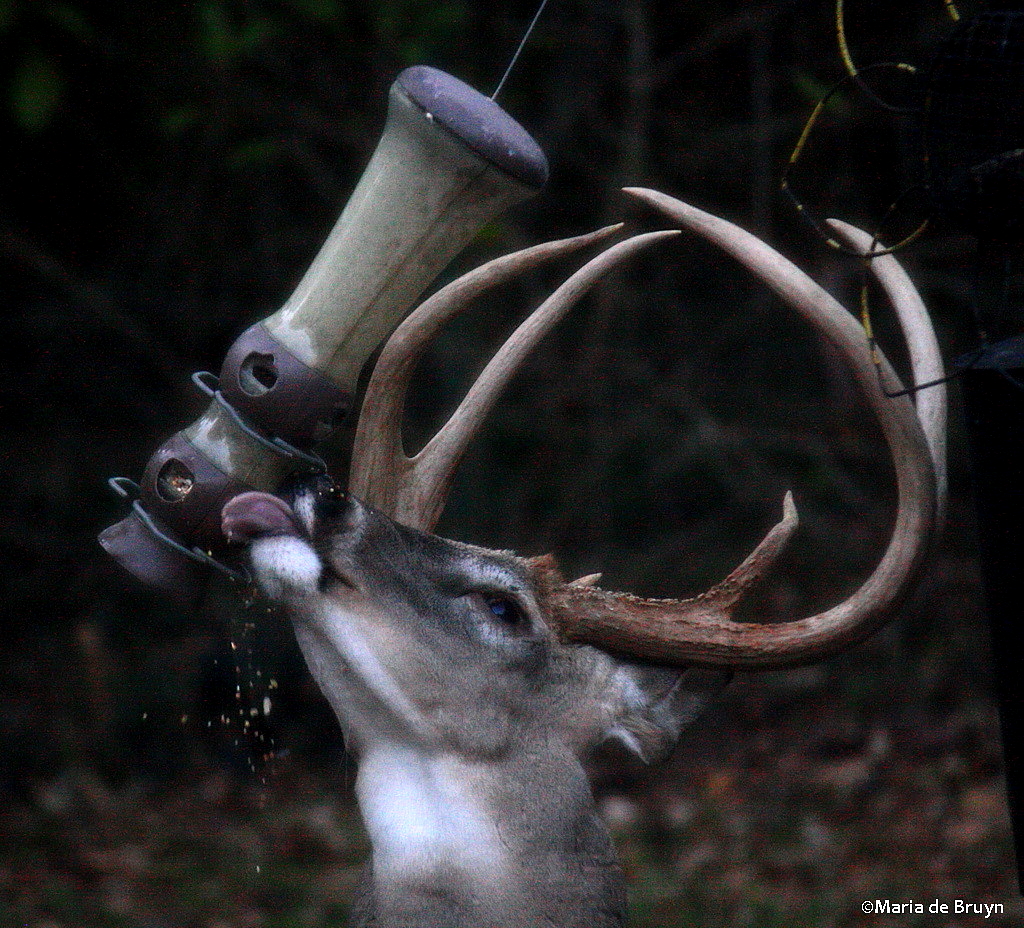
The deer also enjoy treats, just as we may like sweets and birds have a fondness for suet. Bird seed is one treat they like. If the deer are very hungry, they can lick up all the bird seed put out for the ground feeders, but when they are feeling well fed, they will just have a little and leave seed for the birds (and squirrels). The deer’s fondness for bird seed can be strong; if you don’t hang your feeders high enough, they can clean out a feeder in a short time.

emptying bird feeder at night©Maria de Bruynwhite-tailed deer MdB 3 buck

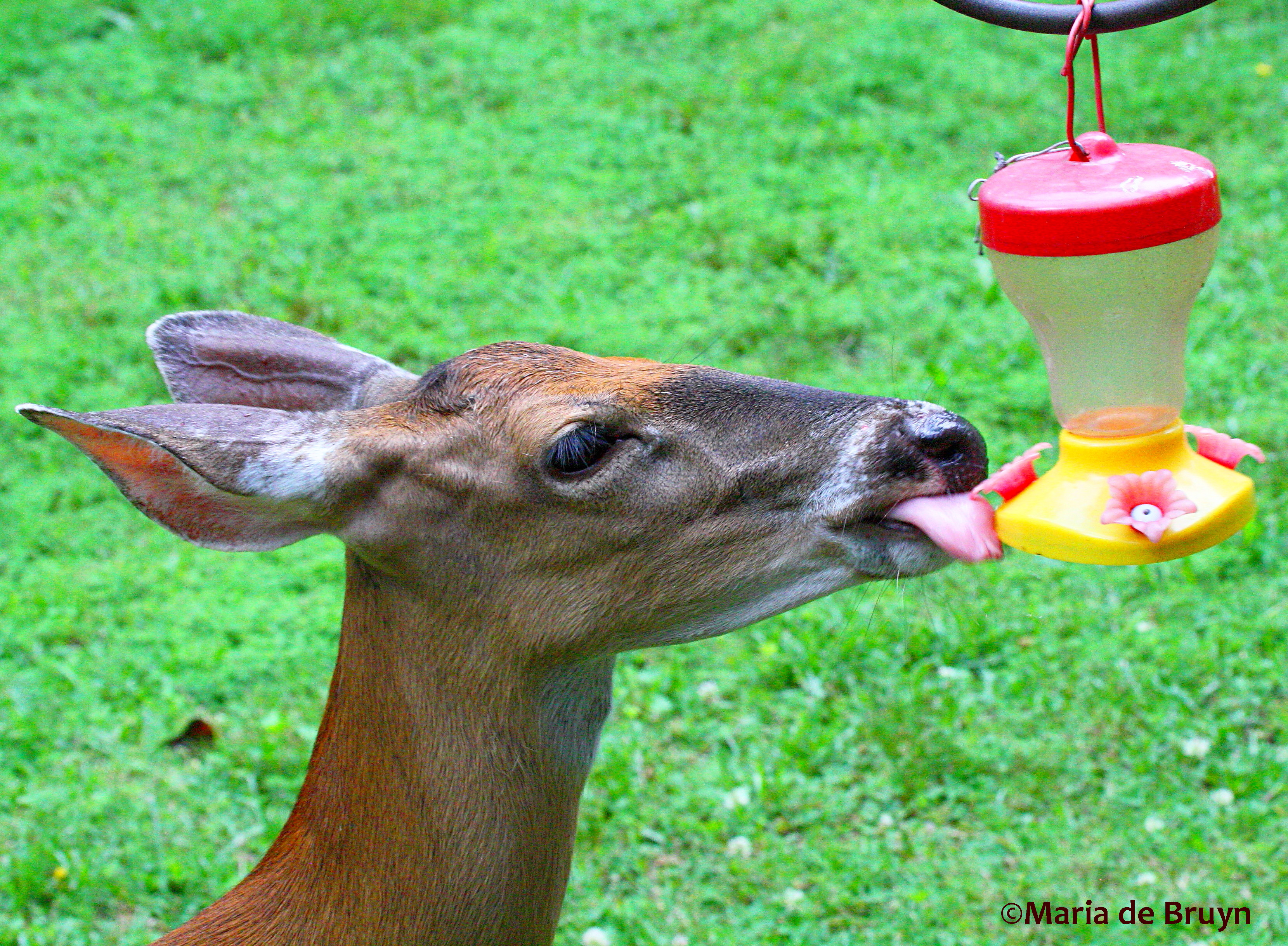
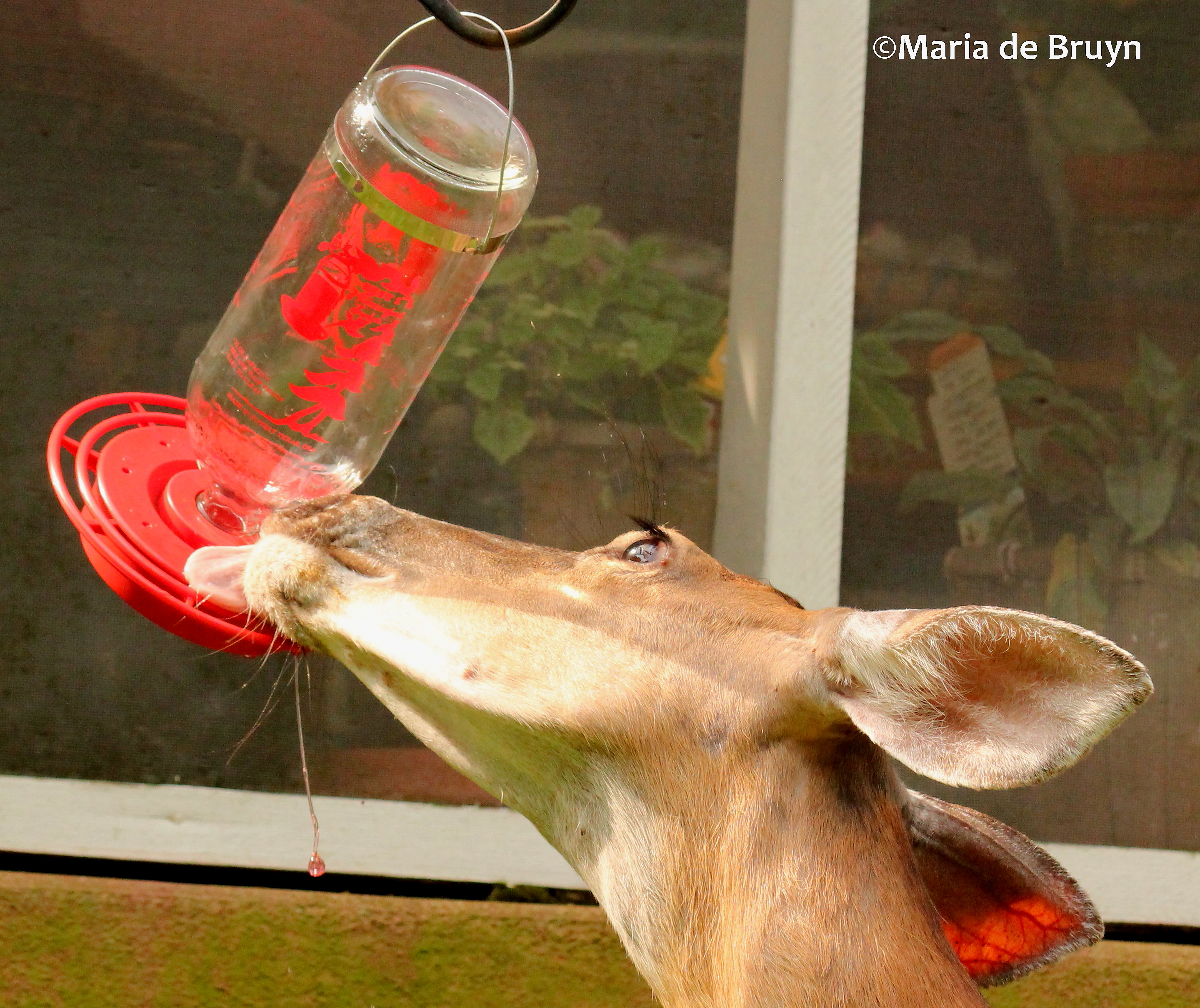
My biggest surprise concerning a deer treat came from Schatje, my “dear deer” friend of five years. One summer, I noted that the hummingbird feeder was emptying quickly and I just thought the hummers were very thirsty. Then one day, I looked outside to see Schatje enjoying a sweet drink. It turned out she was extremely fond of nectar and eventually I had to hang the feeder higher so she wouldn’t drink all the contents a couple times a day!

white-tailed  deer Schatje 1 ©Maria de Bruyn signedSchatje nectar IMG_1727©Maria de Bruyn

This winter has been especially cold and the local deer family have had to rely on their winter diet of fungi, leaves and twigs a lot. Though they likely are not anticipating spring, I’m sure they will be glad when it gets here, just like me!

Next week: squirrel treats