Interesting encounters

Hello readers!

Once again, time has sped by as I contemplated new blogs and set aside photos to include in them. Time gets away from me, though, as I deal with health concerns and ongoing car and household issues. And then to stay on an even keel, I have my daily encounters with nature — either out on a walk (much of the time) or observing the birds and other creatures on my home turf. So my new year’s resolution is to post shorter blogs not requiring so much background research and hoping you find them interesting anyway!

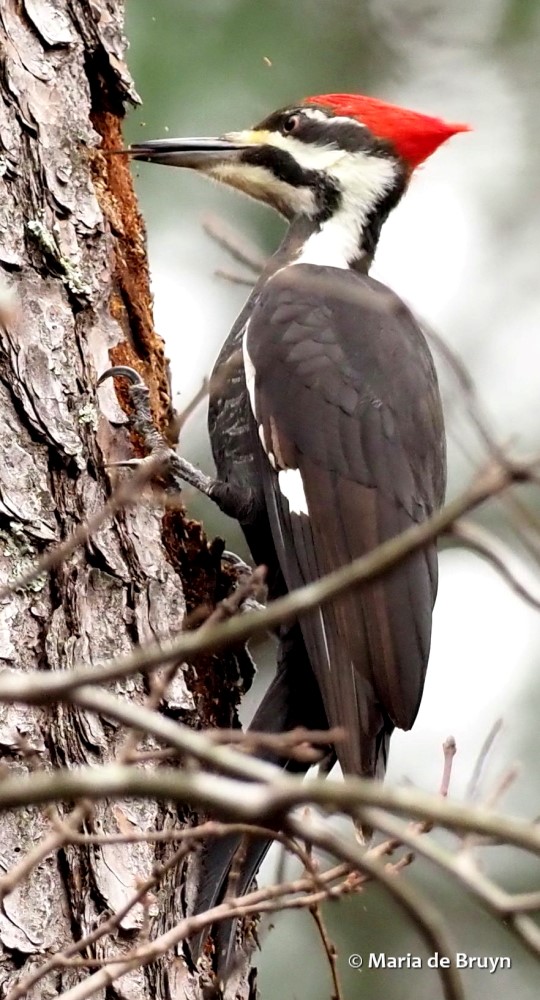
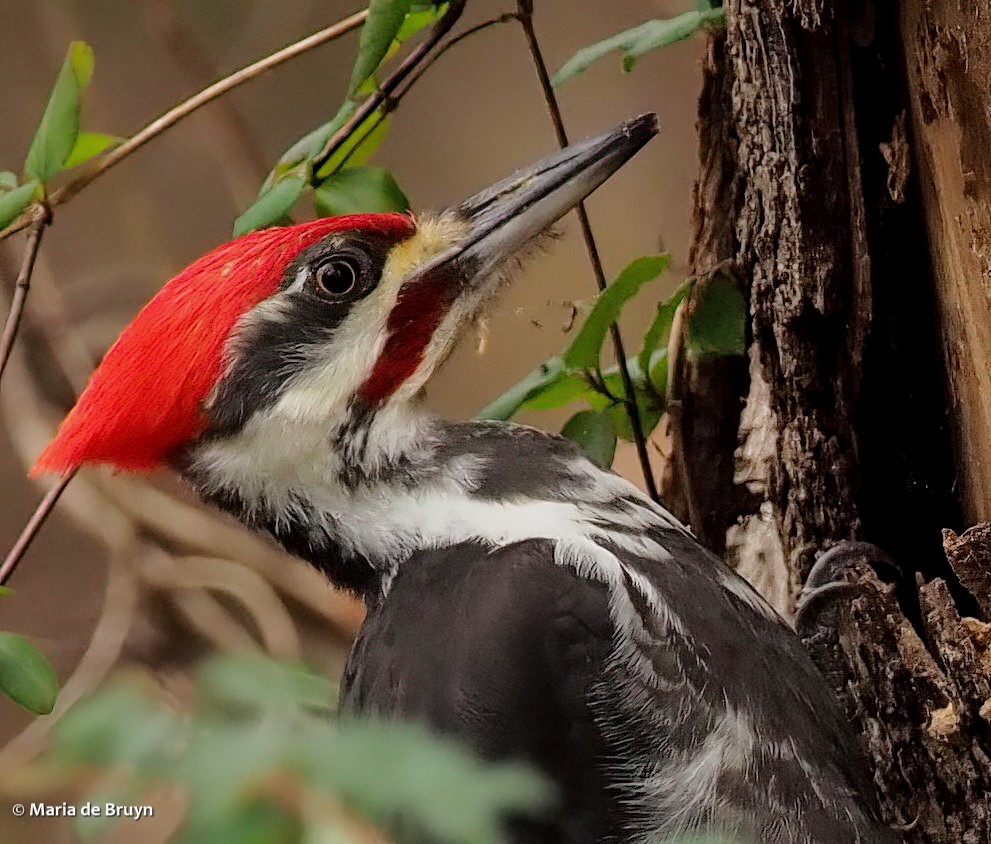
So today, let me tell you about two wildlife encounters I’ve had in the past few weeks. The first was a session with a pair of pileated woodpeckers (Dryocopus pileatus) at a local park. I first saw the male pileated with his bright red “chin stripe” as he worked at the base of a tree.

He had managed to work his way deeply into the trunk with his repeated hammering. But unfortunately, it seemed that he was just not having success finding any larvae or bugs to consume. He continued on for a while, pausing now and again to look around.
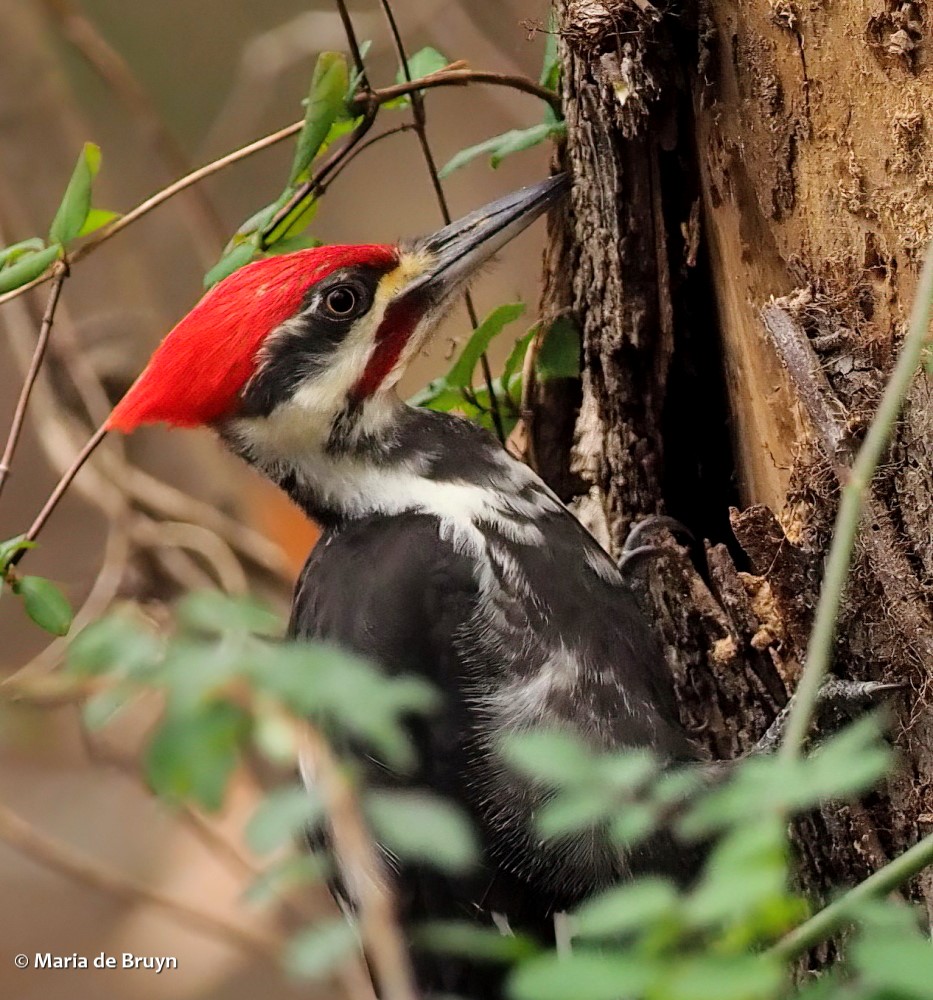
He finally decided that his labors at this spot were not that productive and flew up to the top of a nearby tree to continue his quest elsewhere. In the meantime, quite a way down the park path, I heard more loud hammering but coming from up above me. There was Ms Pileated, at work excavating a hole in her own search for sustenance.
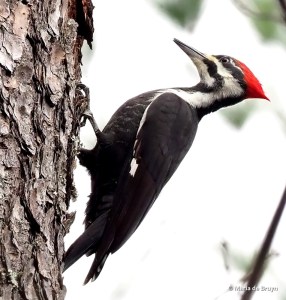
Note that she does not have a red chin stripe but she is also a stunning bird. The pileated is now North America’s largest remaining woodpecker species and the third largest woodpeckers worldwide. She was starting her work by chipping off the outer bark from the tree trunk.


Then she began rooting around in the outer layer underneath the bark to see if any food was available there. This was followed by more excavation and chipping away at the outermost inner bark layer.
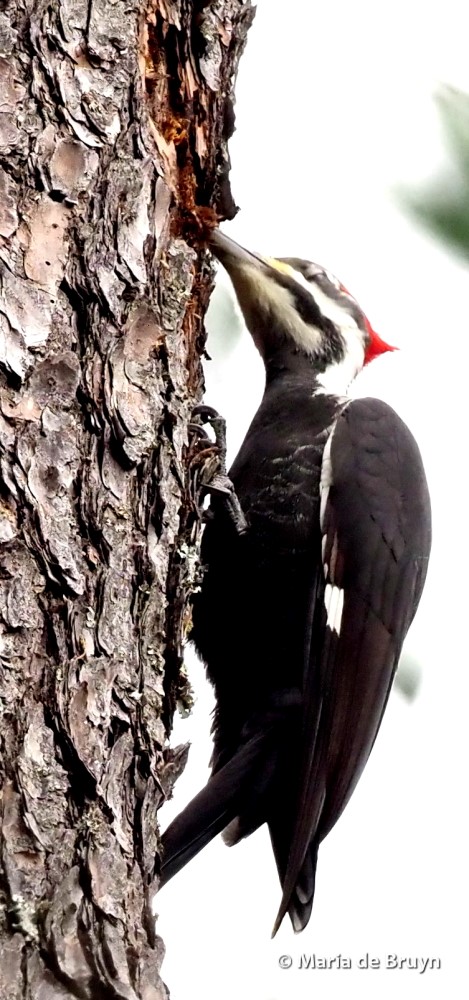
 

As she made progress, she began inserting her long tongue inside, feeling around for bugs and carpenter ants (their main prey).
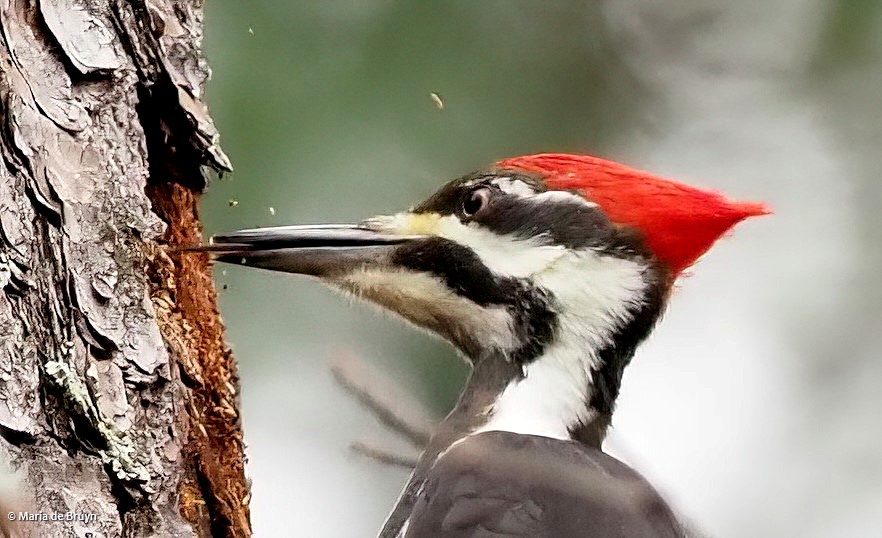
Her persistence finally paid off when she found a large beetle larva — one of their other preferred meals. It was nice to see her hard work produce results!

My next encounter also involved getting something into one’s mouth — in this case my own. I had been out for some time photographing otters and finally needed to leave quickly. I jumped in my car, grabbed a protein bar and broke off a piece as I got ready to start the engine. I felt something fall on my leg and without looking down, thought I was grabbing a piece of the bar and popped it into my mouth. Lo and behold — it did not feel like nuts, fruit and chocolate, but rather a bit hairy and I removed it from my tongue quickly. What did I discover?

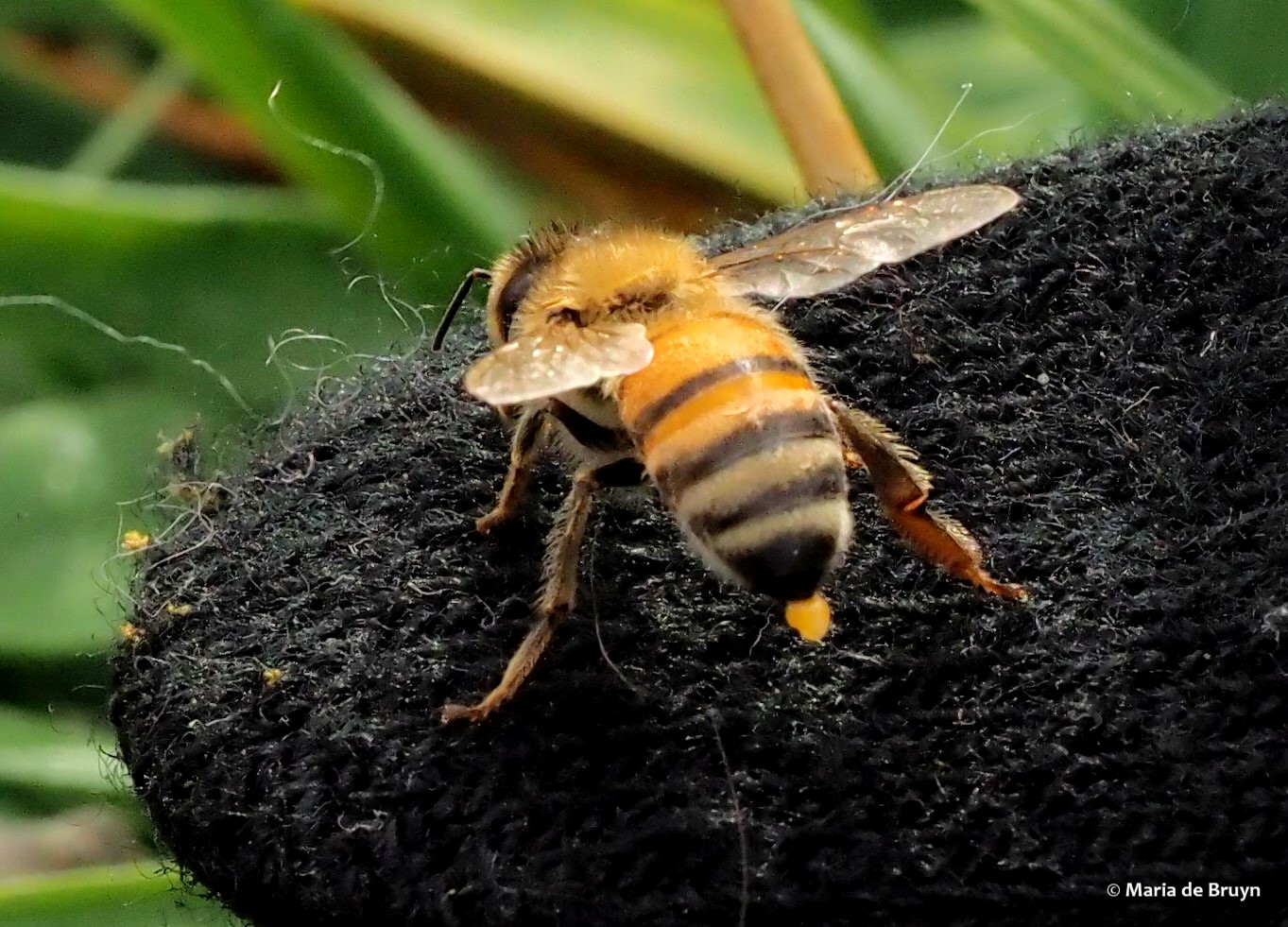
That was a real surprise, believe me! I had never had an insect in my mouth before that I could remember, and I felt badly that it was such a beneficial one! Fortunately, I had not bitten down and the honey bee was whole and uninjured, although perhaps suffering shock from its unexpected journey. I know that I was shocked (and appalled).

I took it out of the car and wanted to put it in the grass but it was not moving from my glove, likely suffering from some trauma. However, eventually I did get it off and it began crawling around in the vegetation.
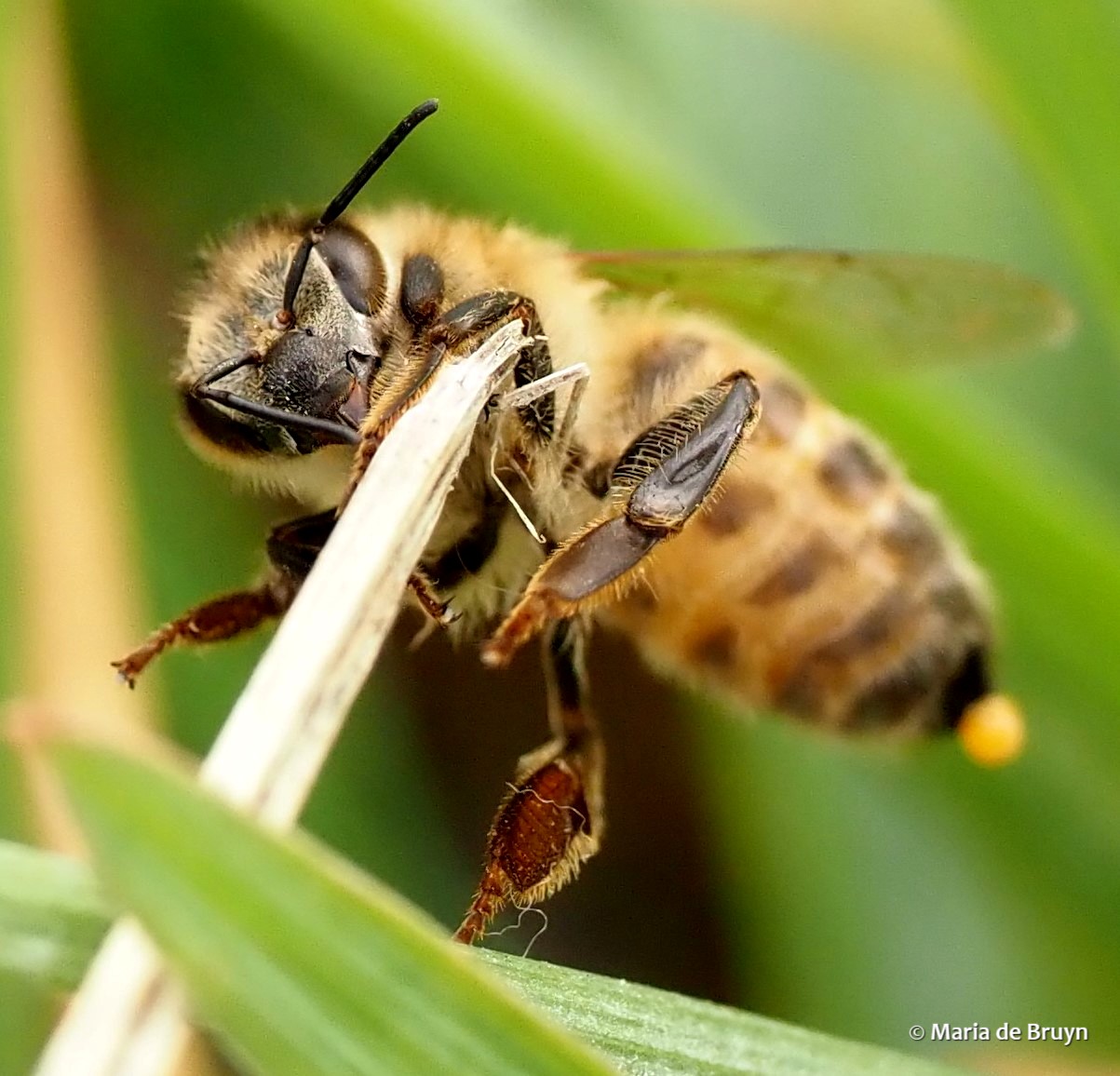
I couldn’t wait long enough to see if it would fly off but it seemed to be moving around well, so I assumed it would recover from the unexpected (and unwanted on both our parts) encounter. And I will no longer put something in my mouth before checking to see that it really is (vegetarian!) food!

Hope your year got off to a good start and will be healthy and happy!   😃


An hour at a local pond

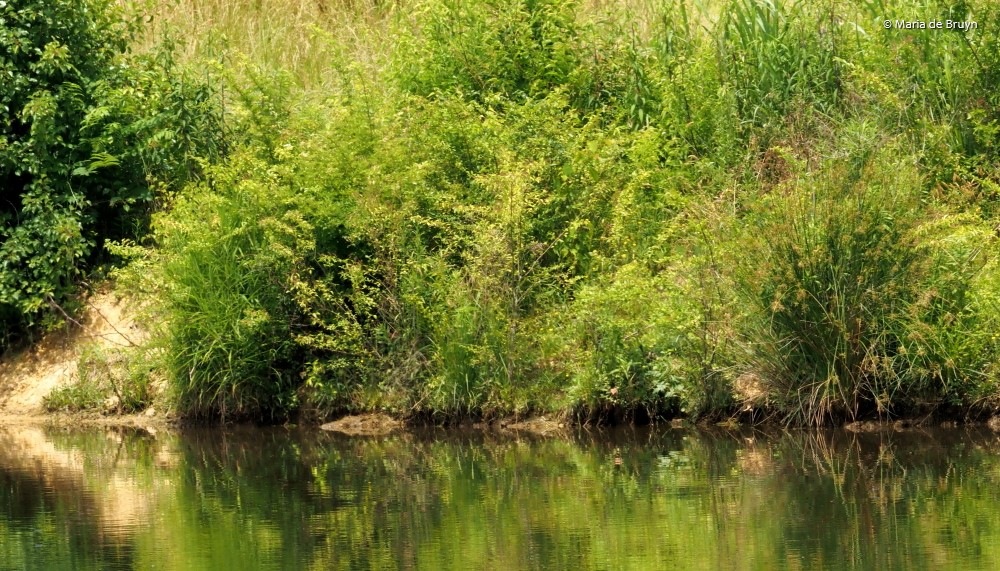
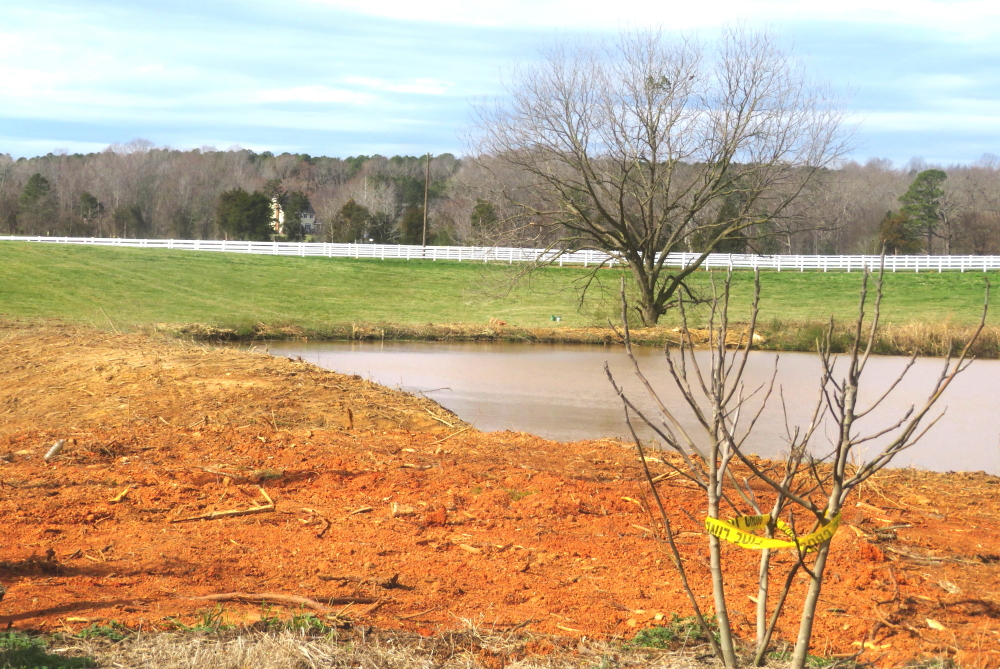
There is a pond in the county where I live that used to be a real hot spot for birds and other wildlife. The dairy farm fields around it had lots of native vegetation, which was very welcoming to avian wildlife.

A couple years ago, the farmers retired, and the property was purchased by a vineyard owner to expand his holdings. He cut down most of the vegetation around the pond and along the road bordering the fields. He has turned most of the fields into vineyards, keeping only small portions untouched where birds can still find some refuge.

I used to see a yellow-billed cuckoo return from migration to a small patch of trees there every spring. This now is a thing of the past. However, some pond-edge vegetation had been regenerated, and a little bit was planted, so some birds are hanging in there. They still make for some interesting birding. Here is what I saw on a recent visit.

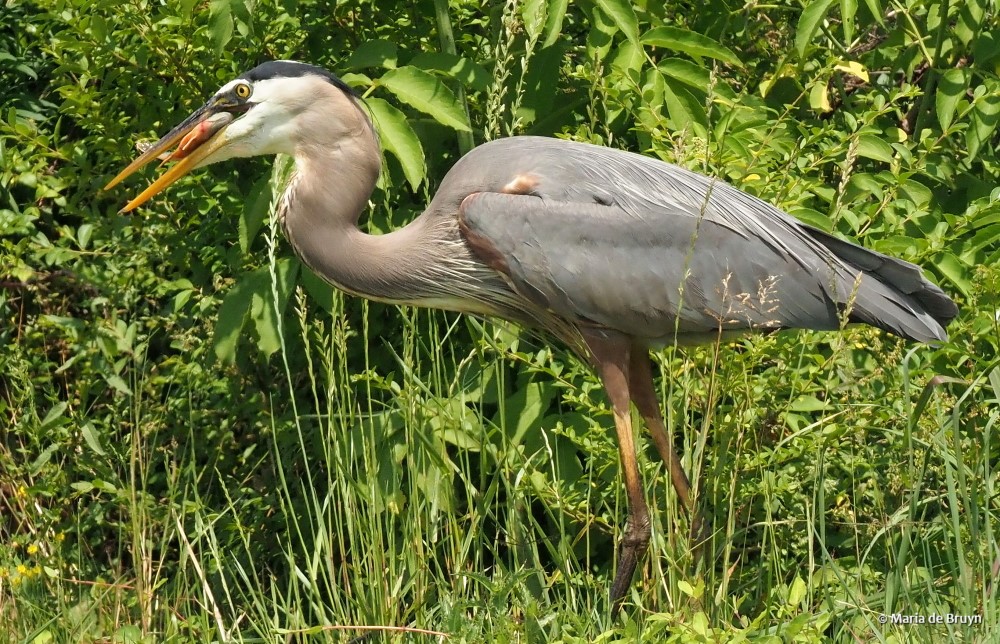
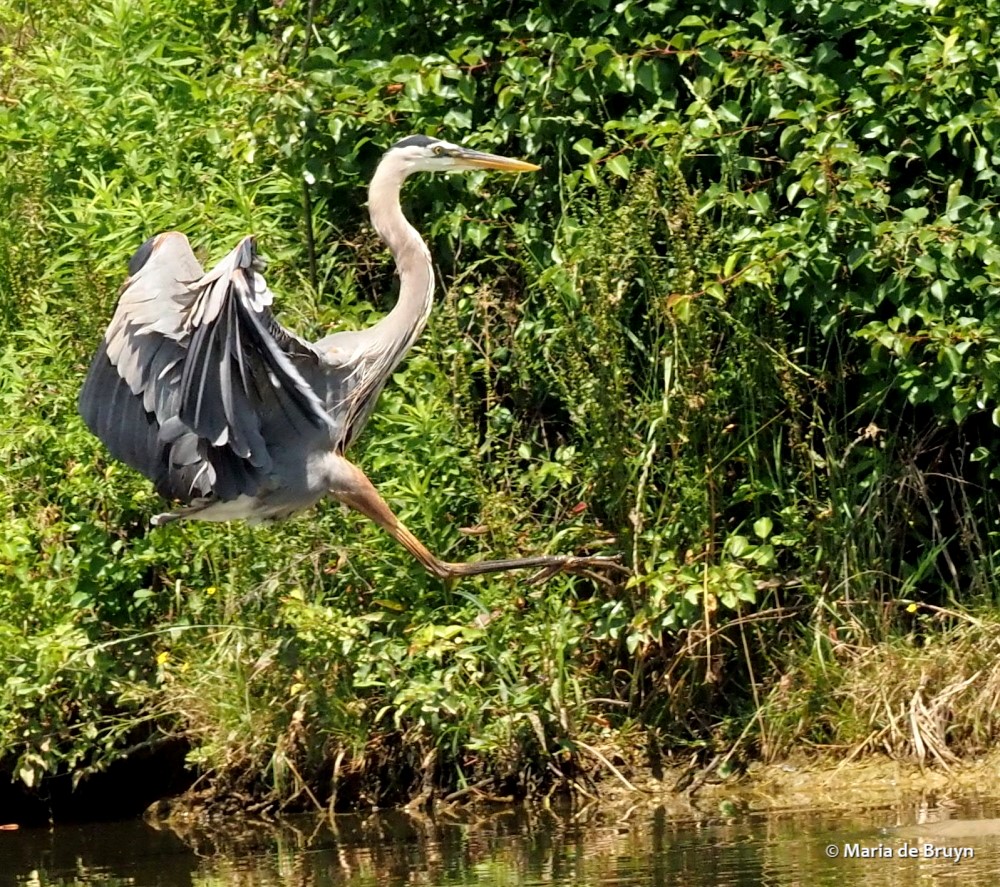
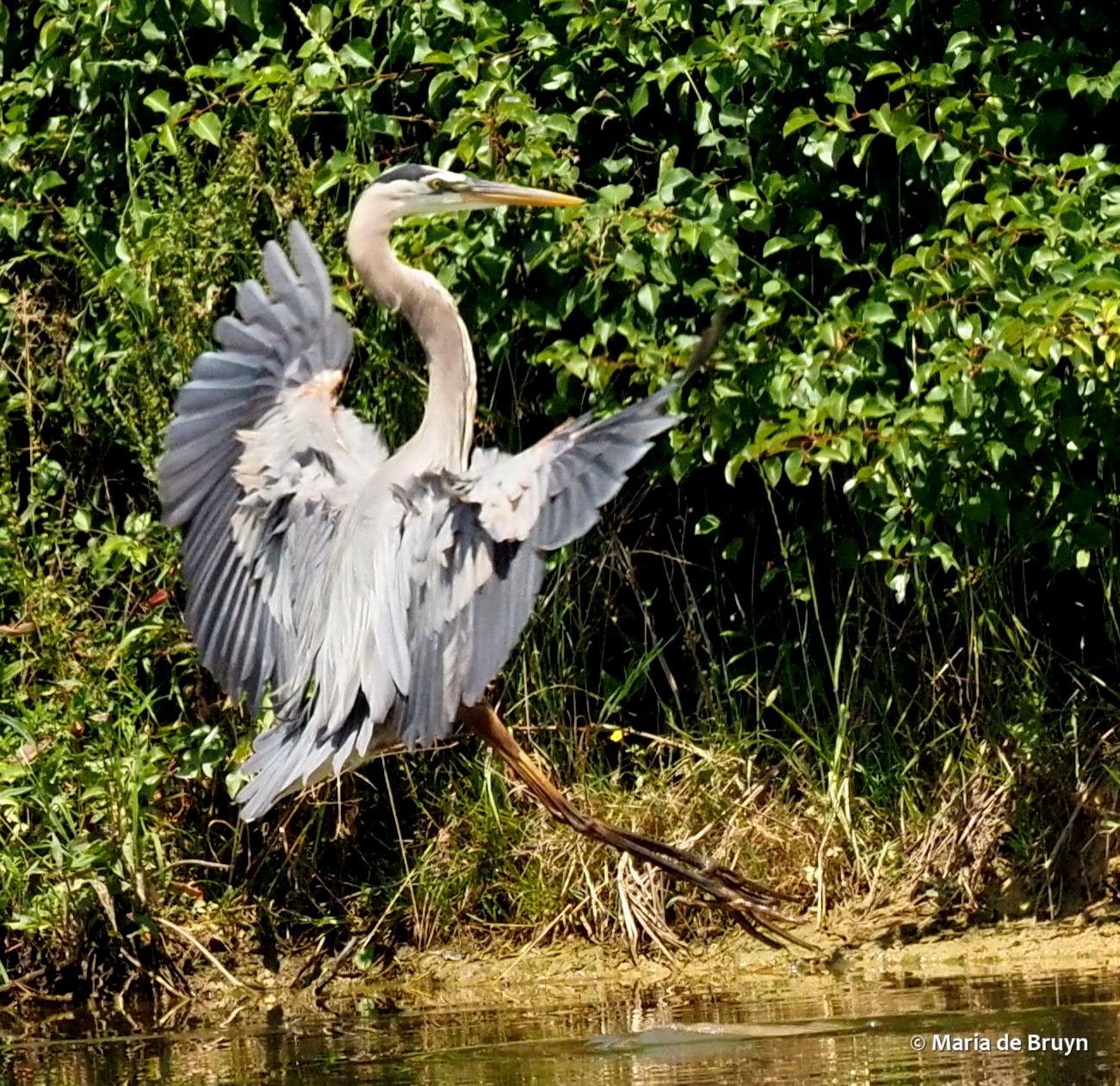
The largest birds that keep returning to the pond are the great blue herons. Sometimes there is one; other times there are two or three. Occasionally a green heron flies in or over but none stopped by on this occasion.

The heron often has good days fishing there. I often see him/her snag at least one fish and often more than one.

The heron stalks along the pond and frequently flies across to the other side for a change of venue. Perhaps the fish manage to hide well once they realize s/he is stalking them.

It’s wonderful to see the heron’s wings spread as the bird alights and then begins stalking again.

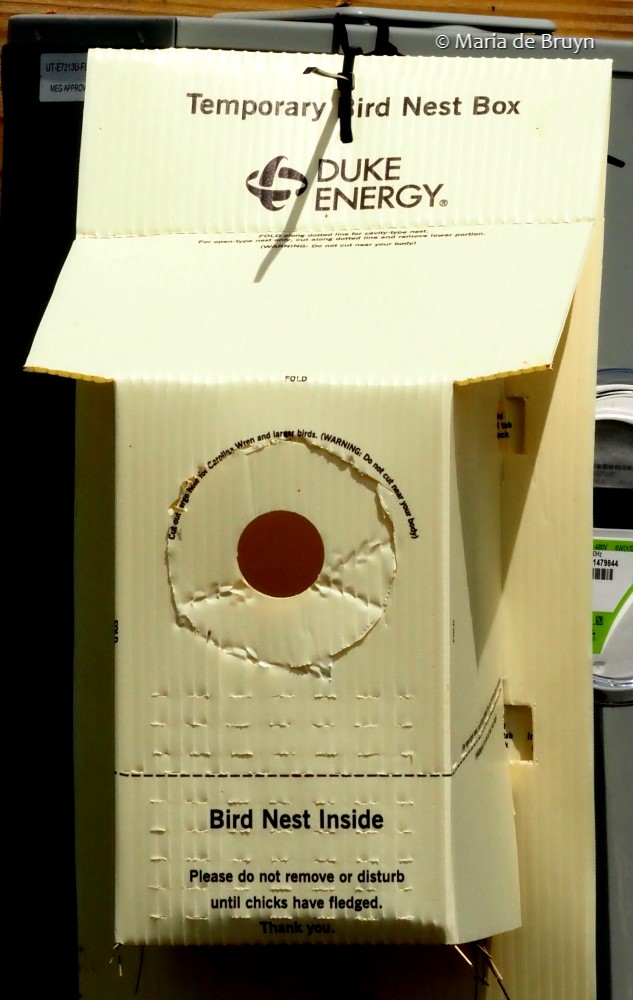
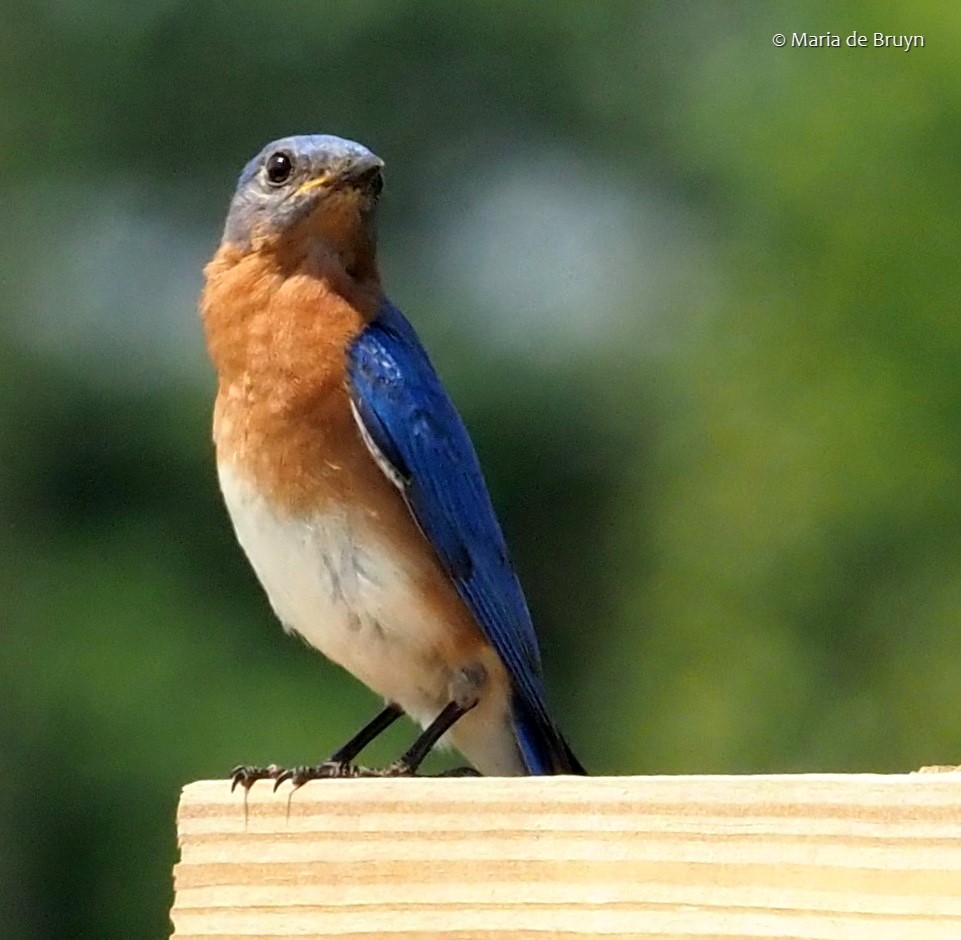
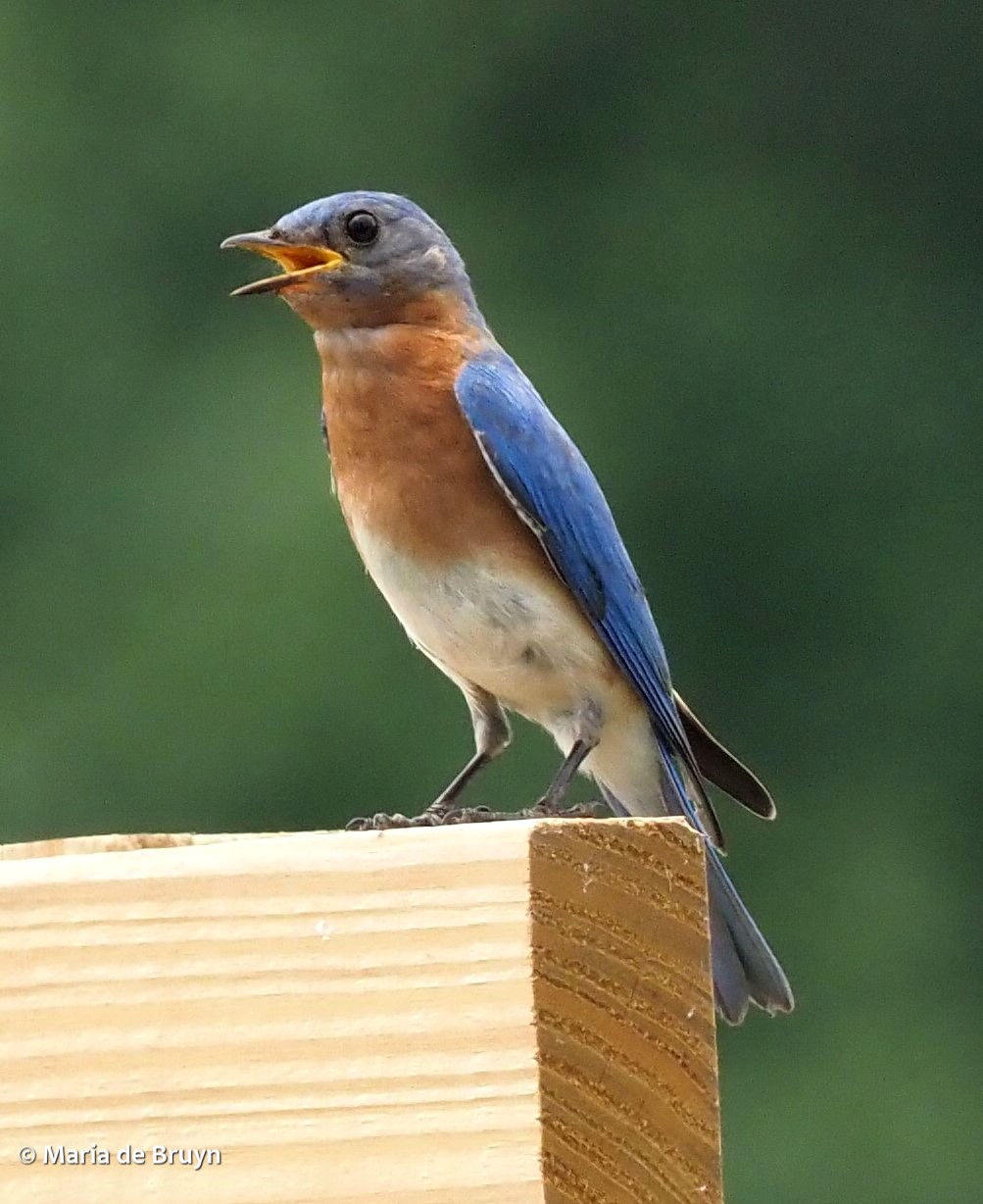
Eastern bluebirds had taken advantage of an electrical installation next to the pond (which also serves as a resource for the local fire department as needed). They not only used it as a perch for bug seeking but also built a nest inside it. I wondered what the new owner would do.


To my great surprise, his problem was solved by the local electricity company. They removed the birds’ original nest and put it into a temporary nest box!
    

Mom and Dad bluebird were guarding the nest space, but it looked like they were still getting used to the new digs.

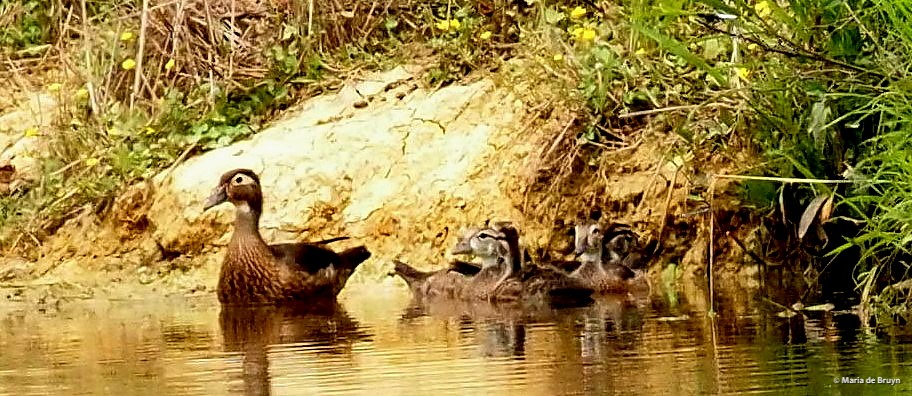
While watching the bluebirds, I suddenly heard a commotion in front of me, but I couldn’t see what was happening behind the bushes at the pond’s edge (I’m short!). However, I could tell that a bird was in distress. I wondered if one of the huge snapping turtles had caught a duckling. I walked further along and saw one of the two resident female wood ducks (above) swimming away from the area.

No ducklings followed and I feared the worst. One mother had five ducklings (above) while the one swimming away had lost one a few weeks before. Now I wondered if she had lost others, too. Luckily, I later saw her return to the area and shepherd four ducklings across the water to the other side.


In the small bit of meadow immediately adjacent to the pond, red-winged blackbirds are now nesting. One pair has a nest close to the road and they are warning visitors away with constant flights along the pond’s edge, while the male calls repeatedly.


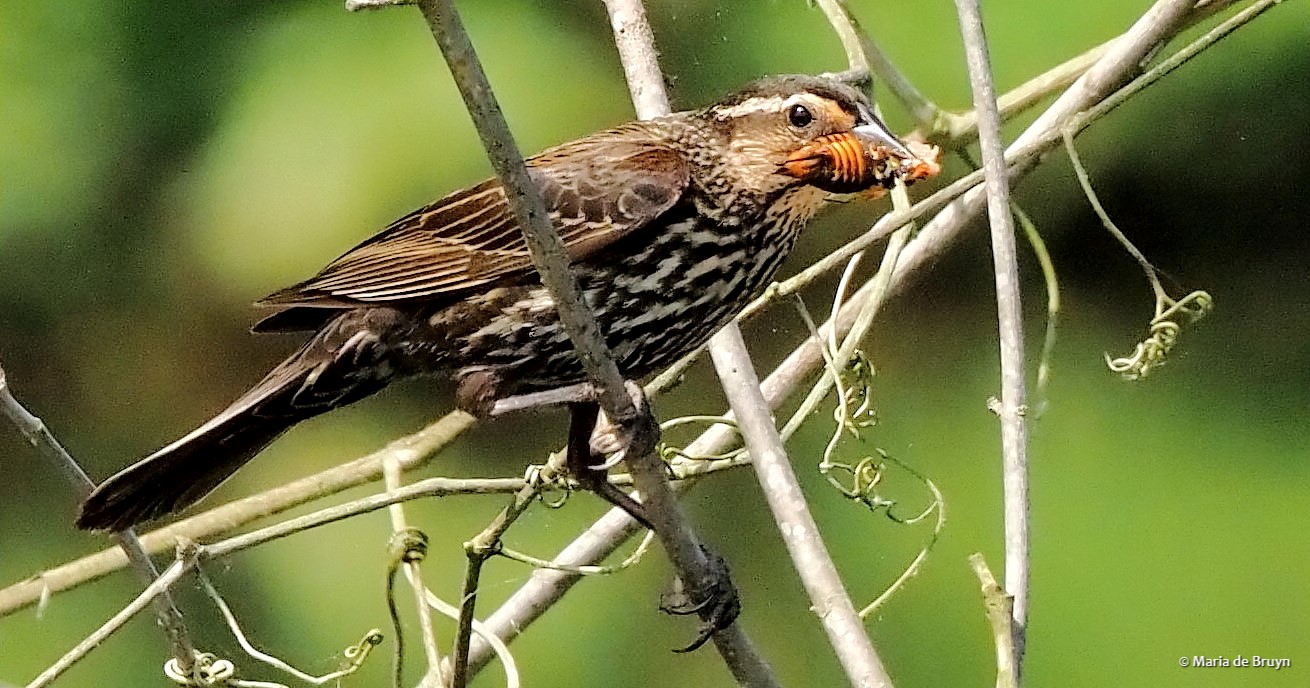
The female was taking breaks from warning-off flights to enjoy an occasional meal, at this time consisting of one of the remaining periodical cicadas that emerged recently.

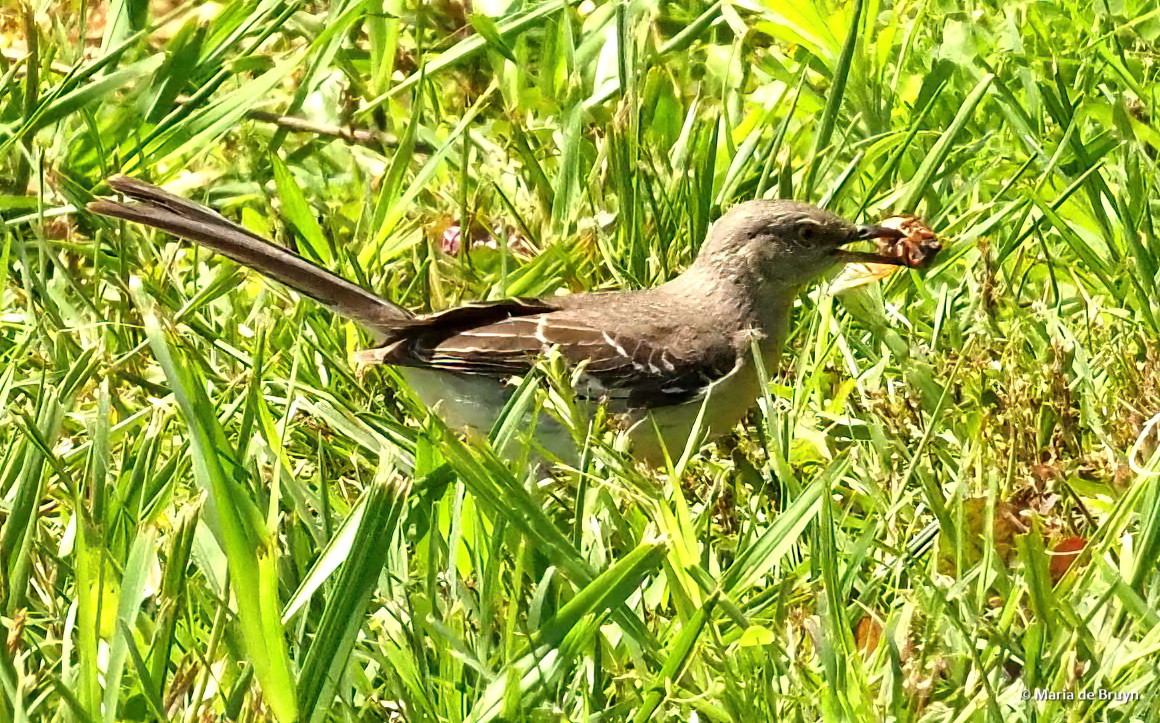
She wasn’t the only one seeking these insect delicacies. Two Northern mockingbirds were also intently examining the area under a tree for them. One finally had success in snagging a cicada. (For more about the cicadas, see my previous two blogs!)


The male red-winged blackbird was very busy keeping “intruders” as far as away as possible from their nest. He warned off the great blue heron, who was actually pretty far away. (He is flying away from the heron on the left side of the photo.)

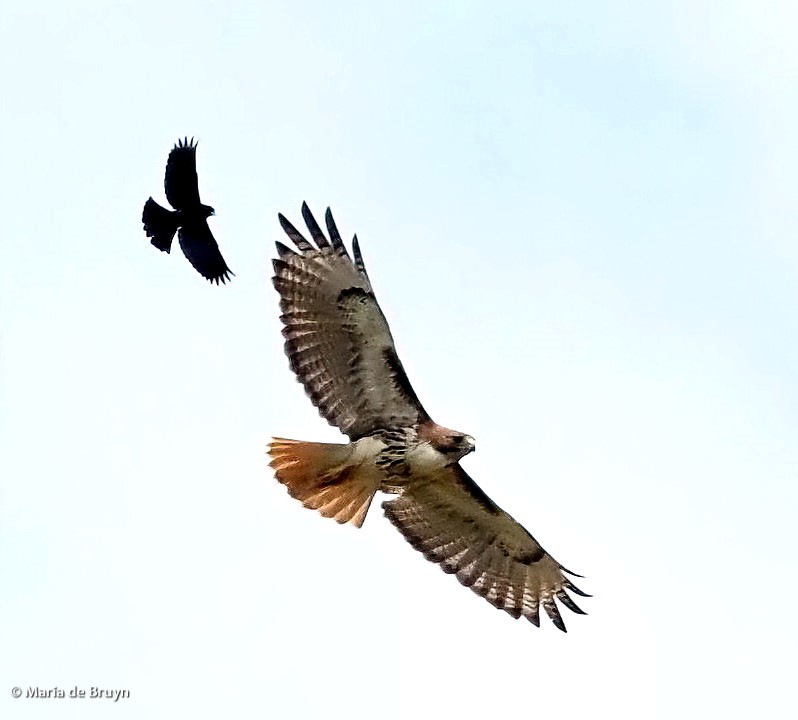
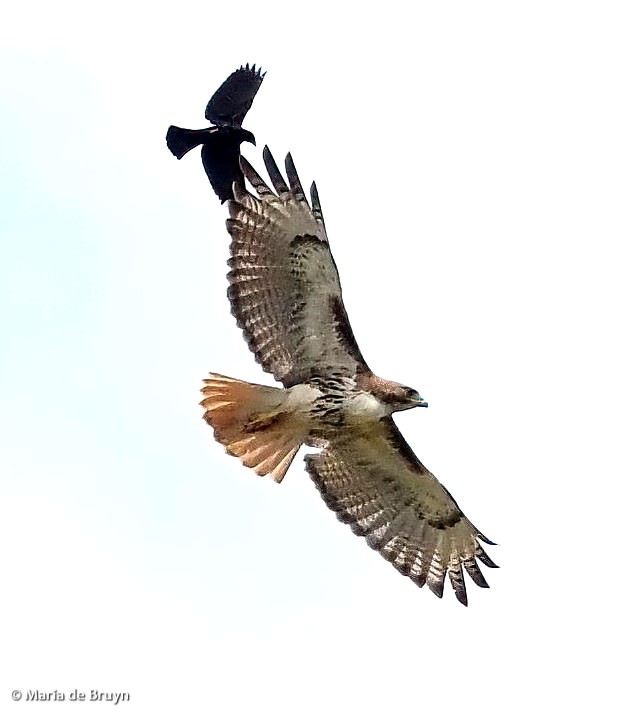
He also went after a red-tailed hawk, who appeared soaring overhead.

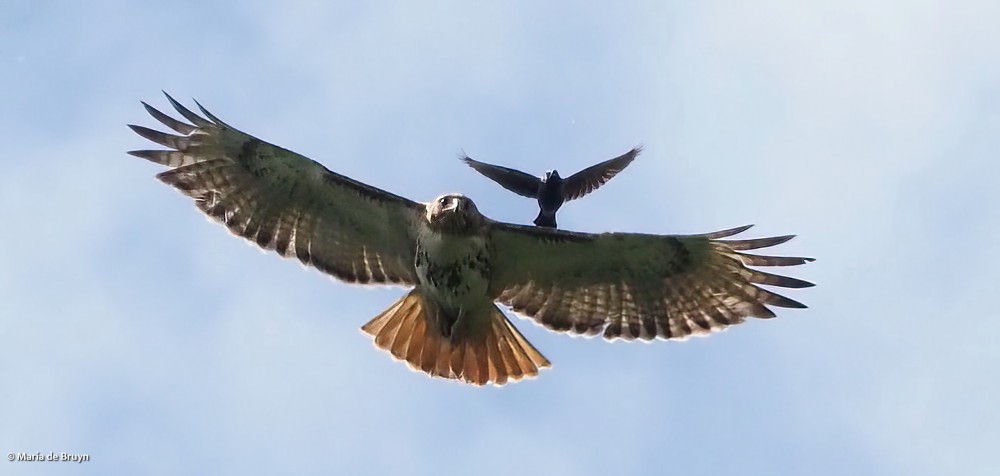
Common grackles, often present at this pond, will also chase away these hawks. There weren’t any around to join in the foray this time, but the photos below taken at another pond show how they go after the red-tails.

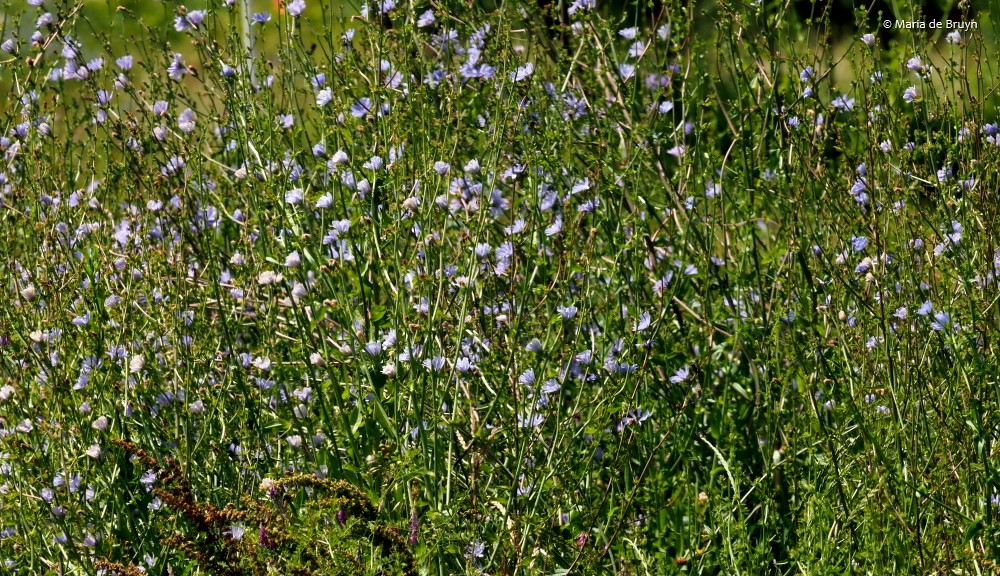
I looked at a small patch of chicory across the road to see if any bobolinks, grosbeaks or meadowlarks were around. I love this plant and planted some seeds in my own yard, hoping to attract more pollinators and birds. So far, they have not sprouted.


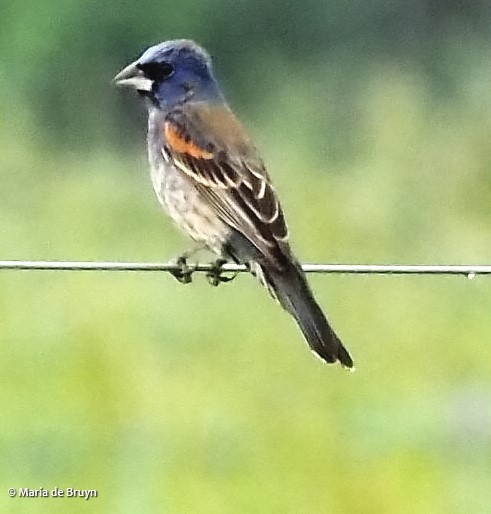
Below you see a young blue grosbeak and a pair of Eastern meadowlarks who were in the patchy field spots another time.


Usually, several types of swallows frequent the pond, including purple martins, tree swallows, barn swallows and Northern rough-winged swallows. I only saw a couple of the latter this day and only got poor flight photos as my camera began acting up, refusing to focus.

Staring hard across the pond, I did manage to spot three killdeer, four least sandpipers and a couple other sandpipers that I couldn’t immediately identify. I later learned that they were semipalmated sandpipers, which I hadn’t seen there yet. (If you click on the photo, you see it larger; then go back to the blog.)

That hour at the pond didn’t turn out to be a super one for capturing stellar photos, but it was definitely a great one for relaxing, observing the action and appreciating nature again!

They’re baaaack!!! — and so am I! Part 2

But the Great Southern Brood of periodical cicadas is getting ready to leave…!

Having heralded their appearance in my previous blog, I’d like to share a bit here about what these insects are now facing as they expend their remaining energy on ensuring the survival of their species.

Some of our community members (both animal and human) are as appreciative as I am that these creatures are here. In listserv postings, a few people have commented, for example:

  • Sounds great.
  • I guess I am rare in thinking they are cool. It feels other worldly….
  • And it’s all about SEX. Just think about all those teenage hot-rodders gunning their engines to attract attention. They’re all saying “Come and get me baby. I’m HOT.” After years underground, you would be, too.

It’s almost impossible to miss the cicada phenomenon where I live unless you have hearing or vision problems or can’t get outside. Their calls for gathering and hooking up can reach a level of 100 decibels and this continues for hours on end.

The sounds can vary a bit because the Great Southern Brood comprises several species of periodical cicadas with somewhat different songs.

However, it seems that quite a few people don’t pay attention to the broadcast or print news. Despite the considerable coverage given to the cicadas’ appearance, inquiries about the ongoing noise continue in listservs, irritating some community members:

  • Please stop asking about the sound cicadas make! Please! And if someone answers, why do 50 people feel the need to respond? I feel that so much of the posts are so religious. Does anyone else feel this way?… I didn’t mean religious! I meant repetitive!
  • Cicadas are a plague sent from God signaling the End Of Time. The purple glow in the sky last night [Northern Lights] was the Rapture, and, since we’re still here … well, there’s that…
  • If you don’t like it, stop looking at the posts.

The numbers of cicadas we’re seeing really is amazing. They need an enormous population because that is how they ensure some will live long enough to reproduce. These insects have no physical or chemical defense mechanisms at all. Many will succumb to diseases and predators.

One particularly strange phenomenon is a fungus that attacks the cicadas. Massospora cicadina has evolved to target periodical cicadas. The cicada nymphs can become infected when they dig their way out of the soil.

The fungus is a chalky white substance that destroys their reproductive organs but does not kill the insect. As the infection progresses, the male cicada continues to move around and tries to mate. Eventually, the back part of its abdomen drops off and we can see the white fungal growth. But the cicada doesn’t die from this and continues trying to find a mate!

Image by Katja Schulz, CC BY 4.0. Reproduced with permission from  <https://creativecommons.org/licenses/by/4.0&gt;, via Wikimedia Commons

The cicadas also have no means to fend off predators and they are a highly desired food source for other creatures. Those who eat them include snakes, spiders, beetles, wasps, opossums, squirrels, raccoons, frogs, dogs and even people.

This unfortunate individual died early on during the cicada emergence and the local ants found it on my driveway.

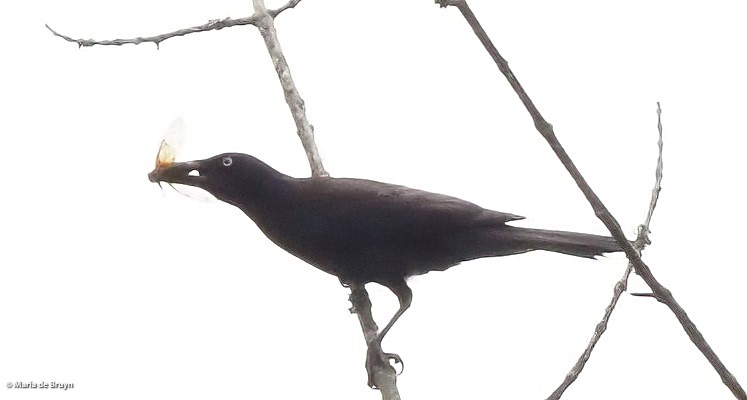
These cicadas are especially vulnerable to avian predation. I’ve now seen different species of birds chowing down on them, including grackles (below) and robins.

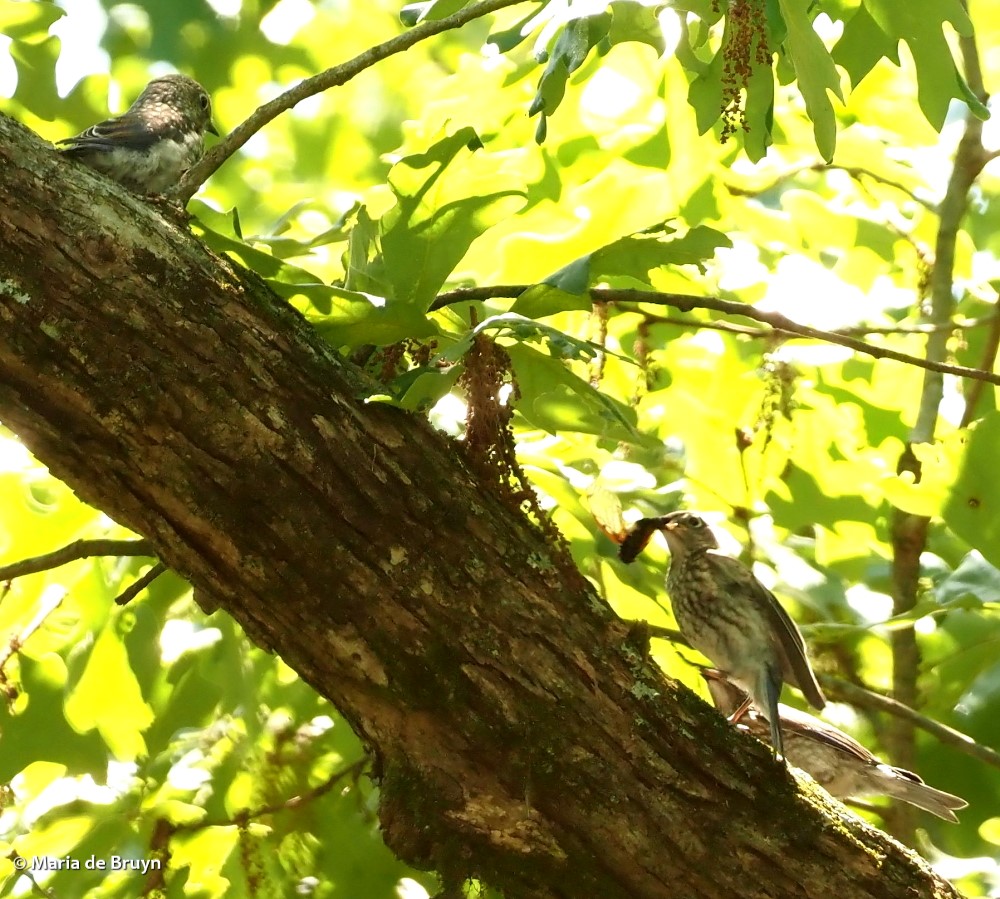
The red-bellied woodpeckers seem to have a particular fondness for them. A young woodpecker was hoping that its parents would provide them as a meal, but the parents were eating the insects themselves.

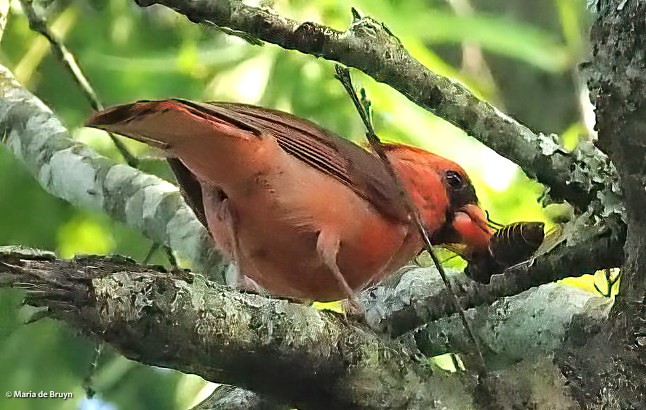
A Northern cardinal stopped by for a meal.

The resident male Eastern bluebird in my yard was supervising his three rapidly maturing fledglings in their efforts to catch and consume the large insects.

His mate was already tending another nest of 5 eggs, so he was occasionally feeding her as well, including cicada tidbits.

Given the enormous numbers of cicadas that have arrived, some are managing to stay alive and healthy so they can mate. The females may lay as many as 600 eggs in nests dug into plant stems.

After 6-10 weeks, the eggs hatch and the nymphs crawl down to the earth to go underground for their 13-year “hibernation” period.  There they will eat sap from tree roots, undergo their molting and live out their lives with the people walking above or near them having no idea that they are there.

My chances of seeing the members of Brood XIX again are likely not so great, but perhaps some of you readers who live in the northeastern USA may get to see them emerge again then. If so, I hope you will find them fascinating, too!


They’re baaaack!!! — and so am I! Part 1

The Great Southern Brood is here!

It’s been over a half year since I’ve written a blog (although I’ve penned a monthly newspaper column and a few articles in the meantime). Numerous concerns including ill health kept leading to blog postponements. Fortunately, I’ve been able to continue my nature observations, a boon to keeping things on a somewhat even keel. And lately it’s been my privilege to see some interesting creatures and to witness behaviors I’d not seen before in person.

The immediate inspiration for resuming my blogs has been the emergence of the Great Southern Brood XIX (Magicicada spp.) of periodical cicadas — an animal species which humans only get to see every 13 years! This is the largest cicada brood in eastern North America, which is the only geographical area where they occur. I’ll share some of my current sightings and interesting tidbits about them and hope you enjoy this in a two-part blog.

Periodical cicada eggs, laid above ground, hatch into nymphs which then go underground to pass through five juvenile stages before emerging 13 years later by the hundreds of thousands (even millions!). After emergence, they only live a few weeks, purely for the purpose of finding a mate and reproducing their species.

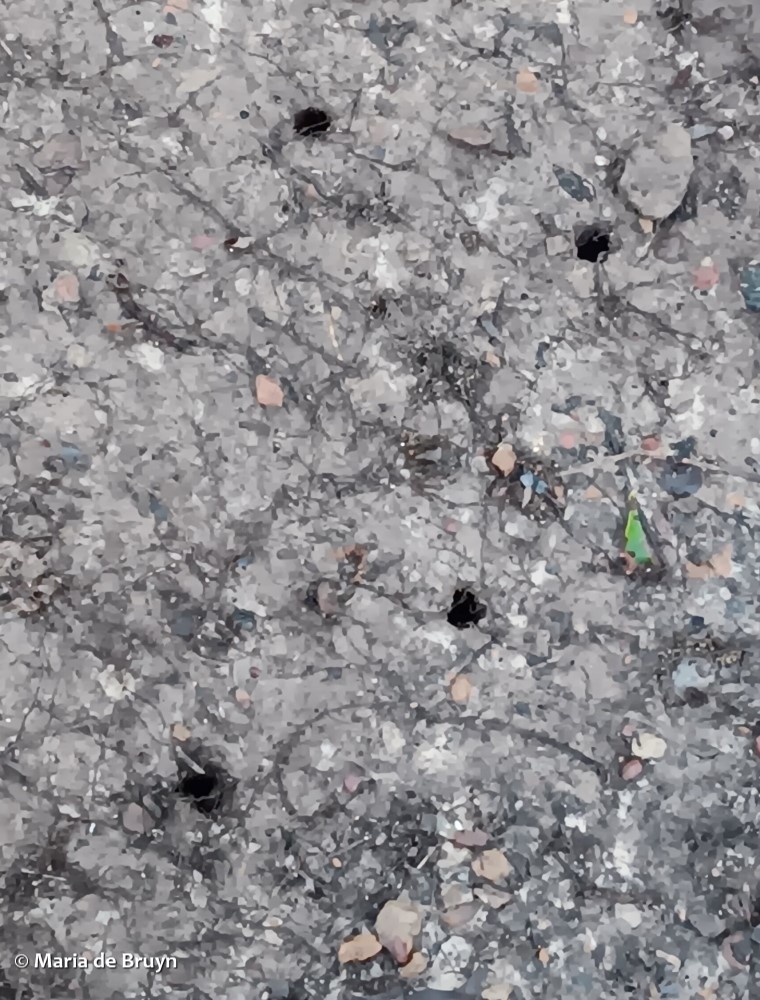
One of the first noticeable things to alert humans to the coming “deluge” of cicadas, seen above, is the appearance of numerous holes in the earth as they tunnel out to the fresh air. This happens when the ground reaches a temperature of about 64°F/17.8°C.

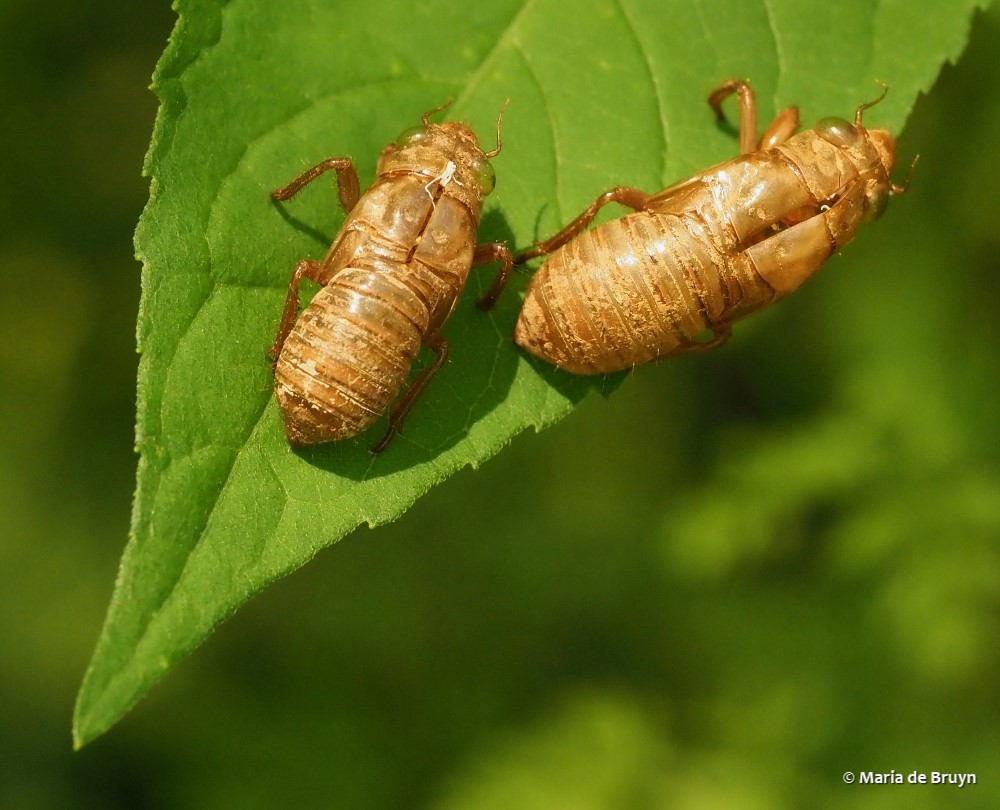
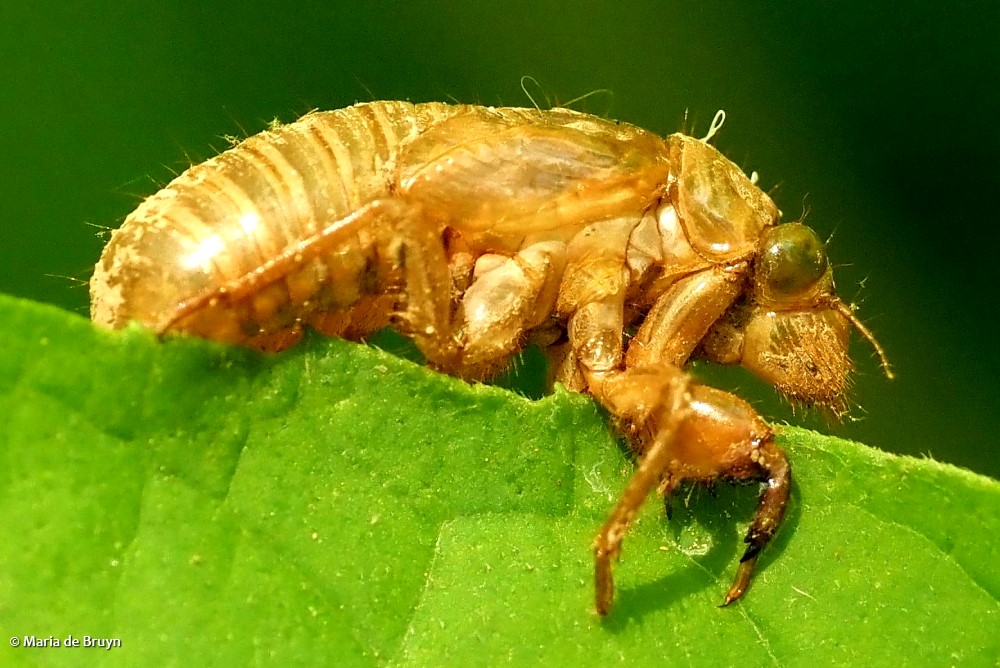
What emerges from the holes are brownish-tan nymphs, who crawl onto plant stems and tree trunks. Underground, they will have undergone four moulting periods as they grew during the past 13 years.

The vegetation becomes laden with these still immature insects almost everywhere you look.


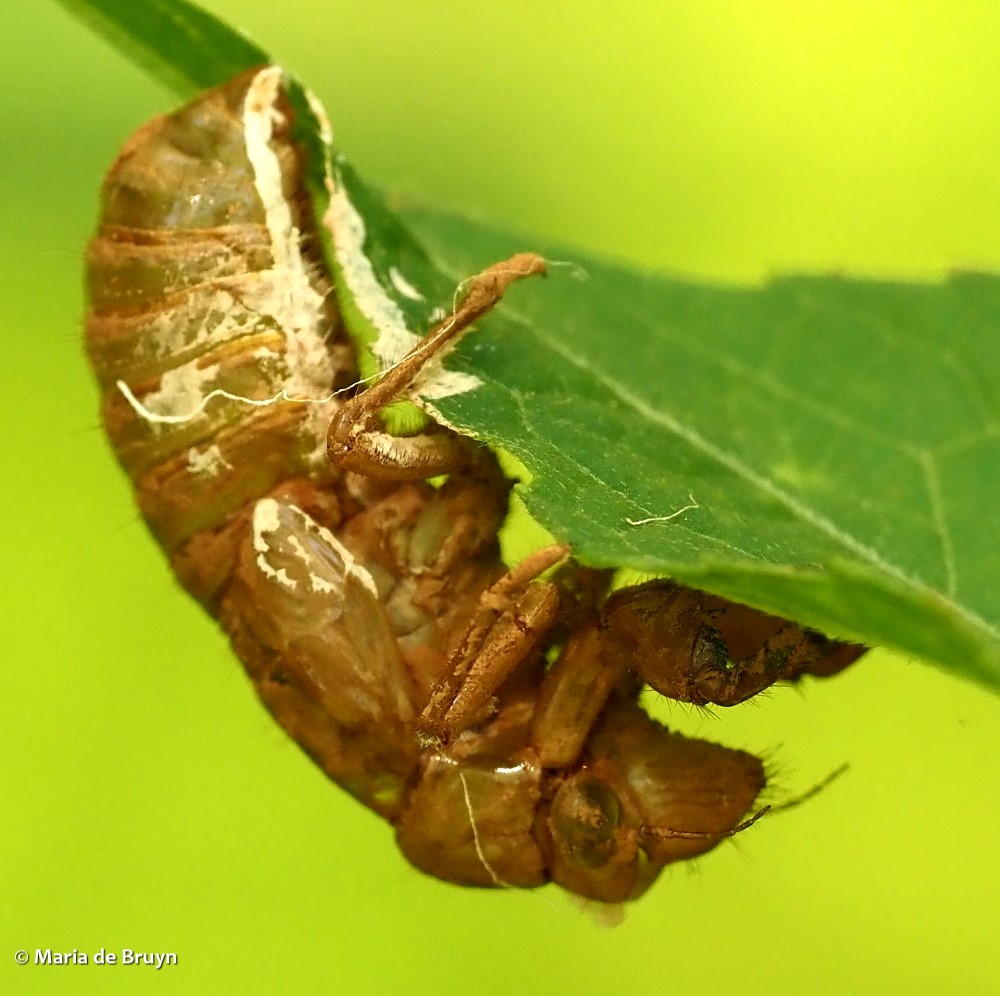
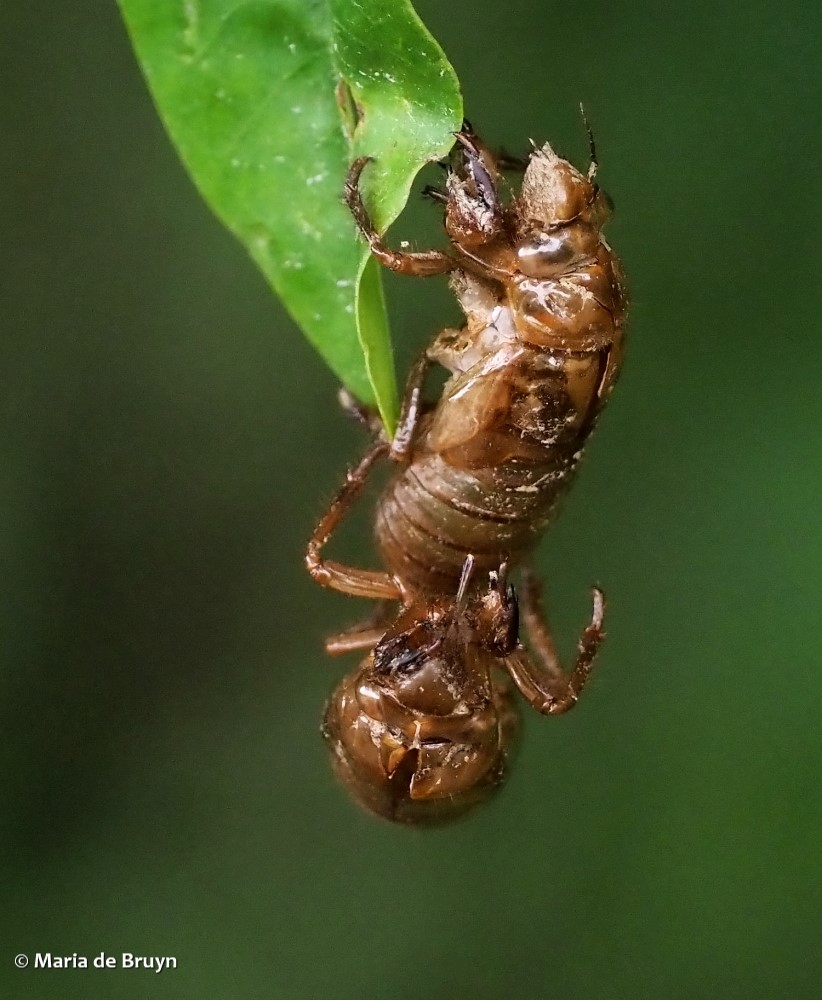
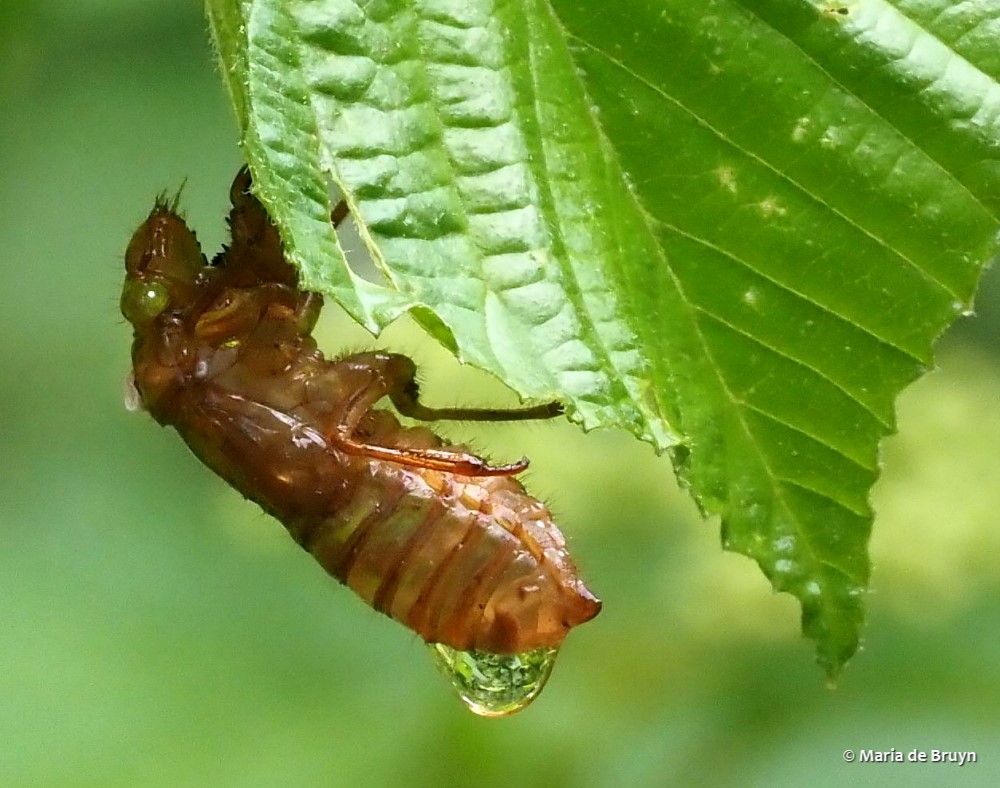
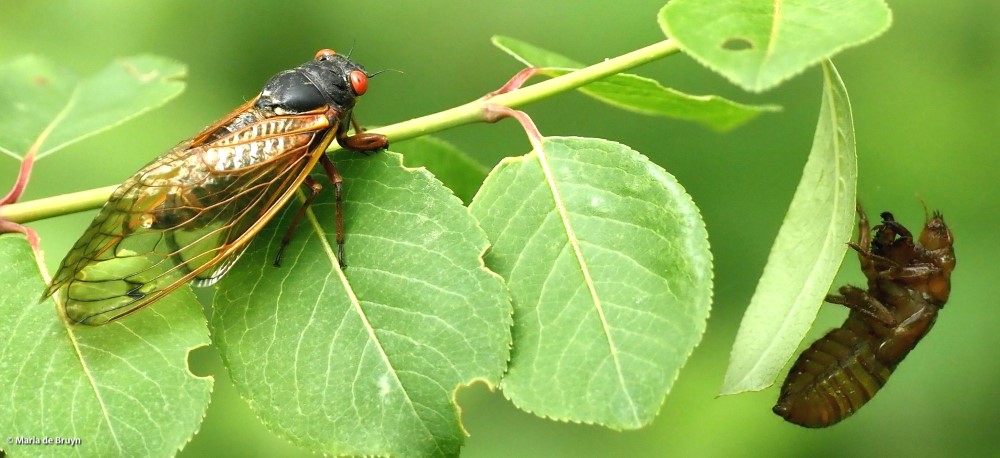
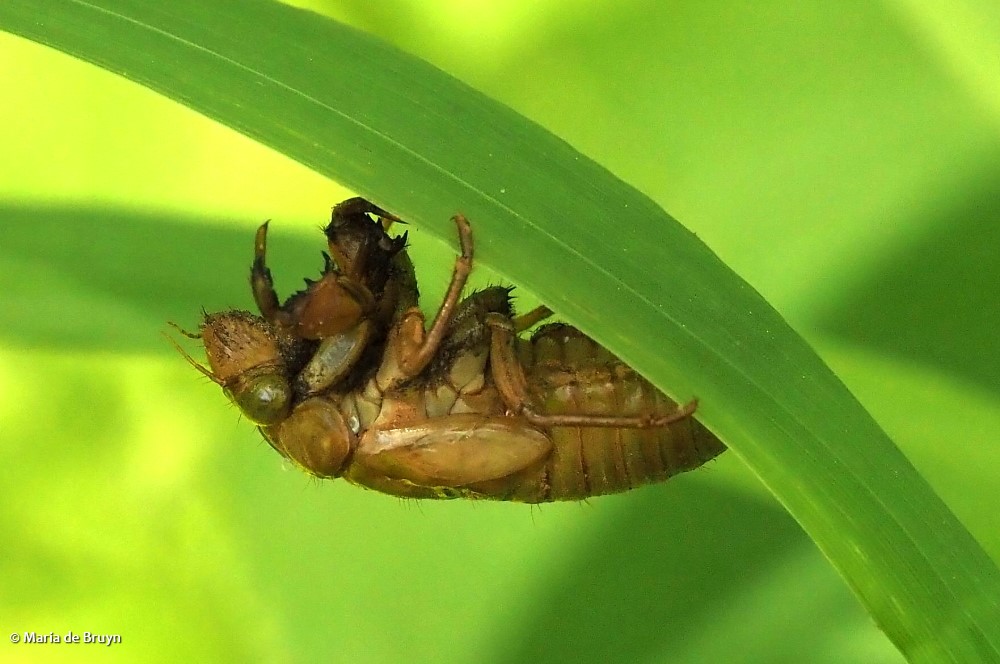
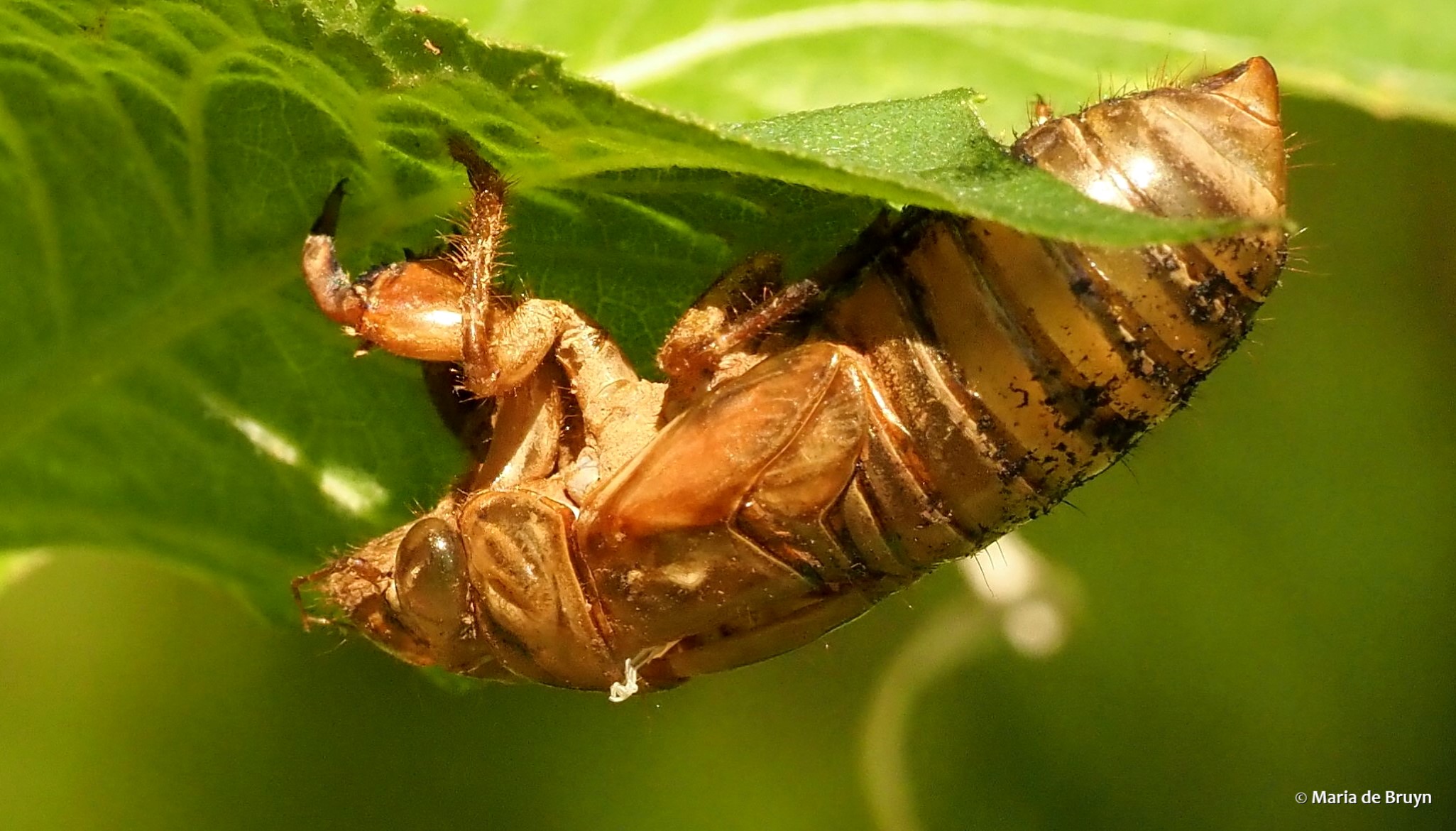
The adults emerge from their last exoskeleton through the back, which splits open. If you look carefully below, you can see one emerging on the right.

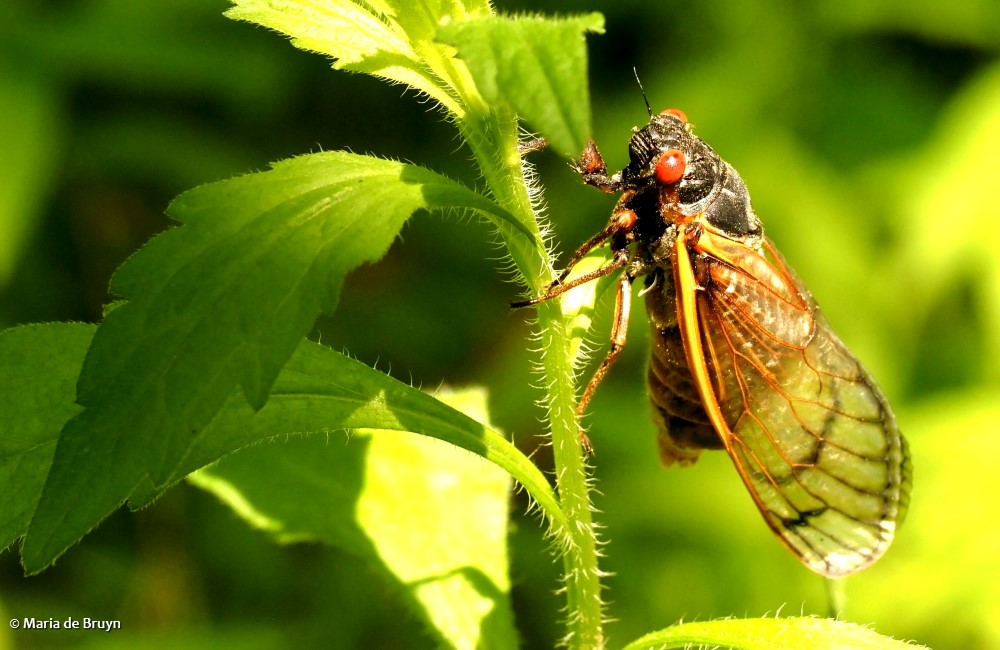
The newly emerged cicadas then undergo a quick maturation process within an hour or so.

They must unfurl and flex their new wings.

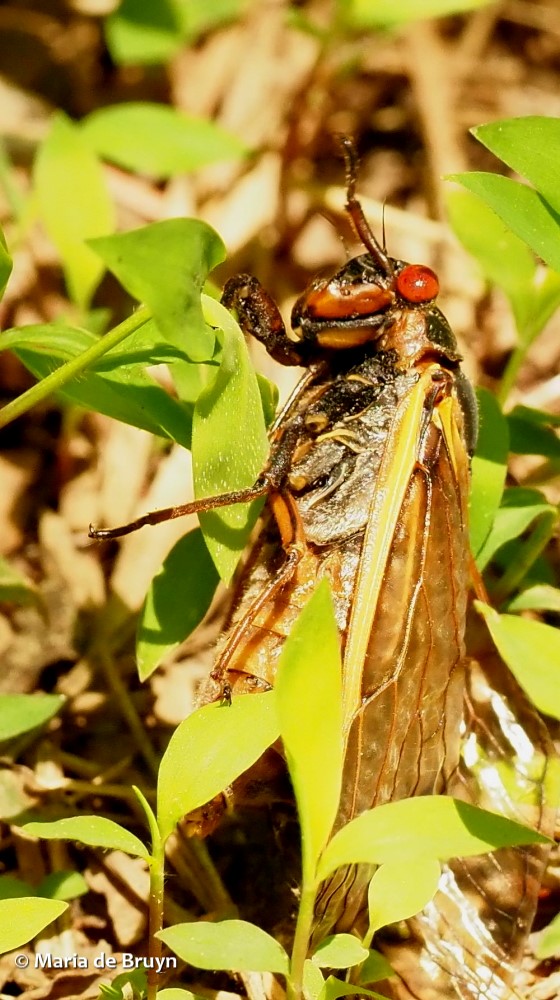
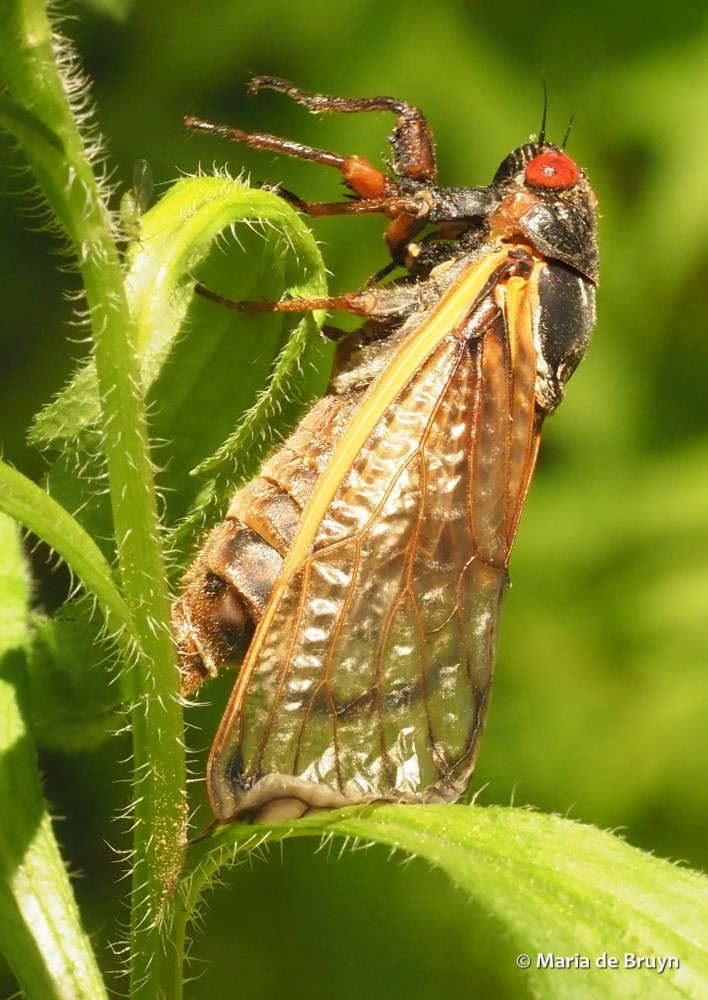
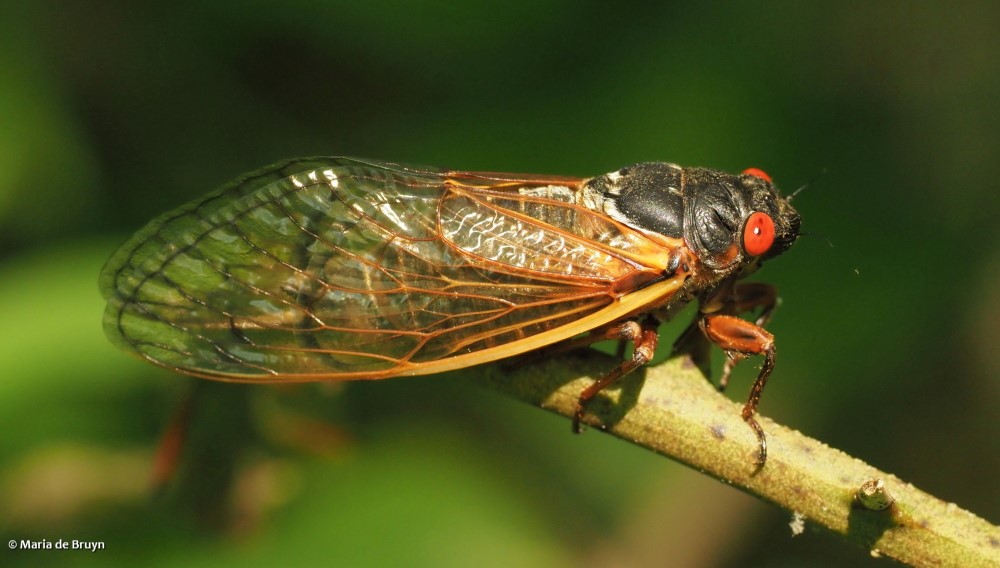
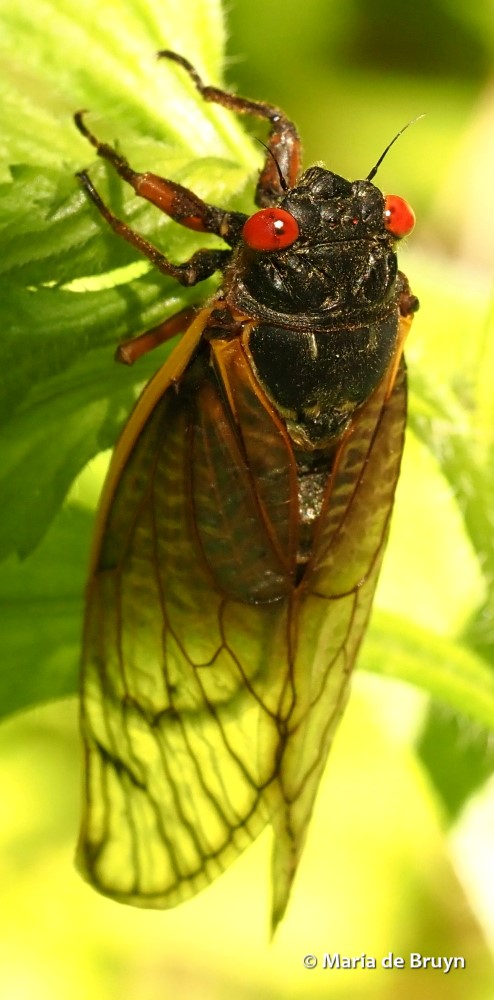
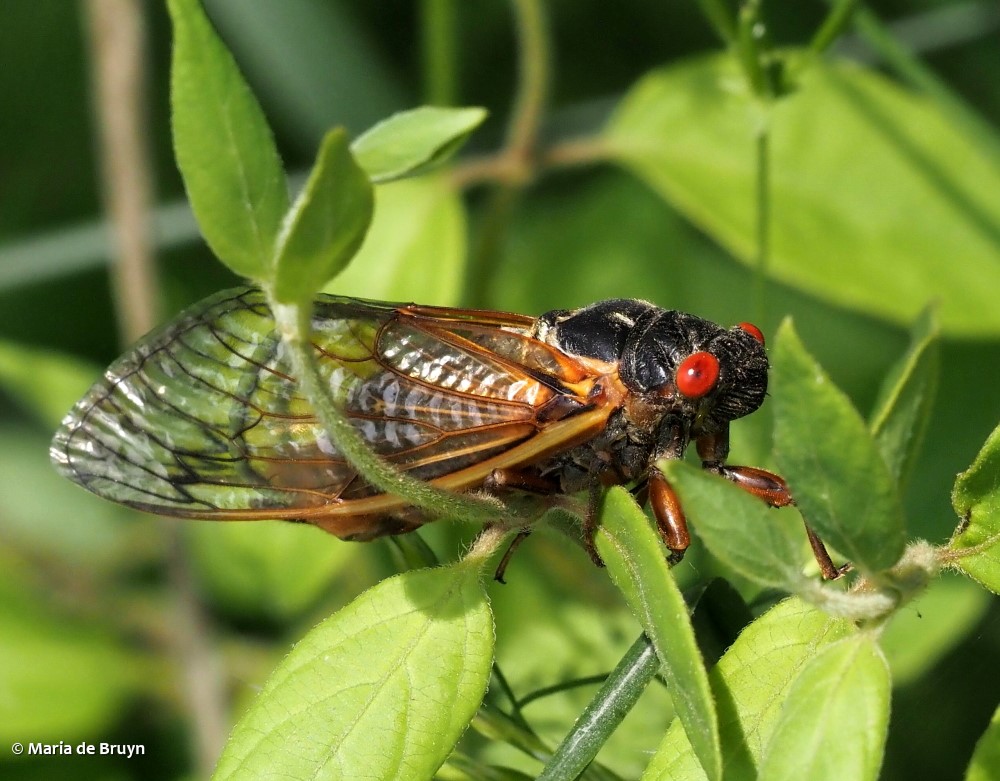
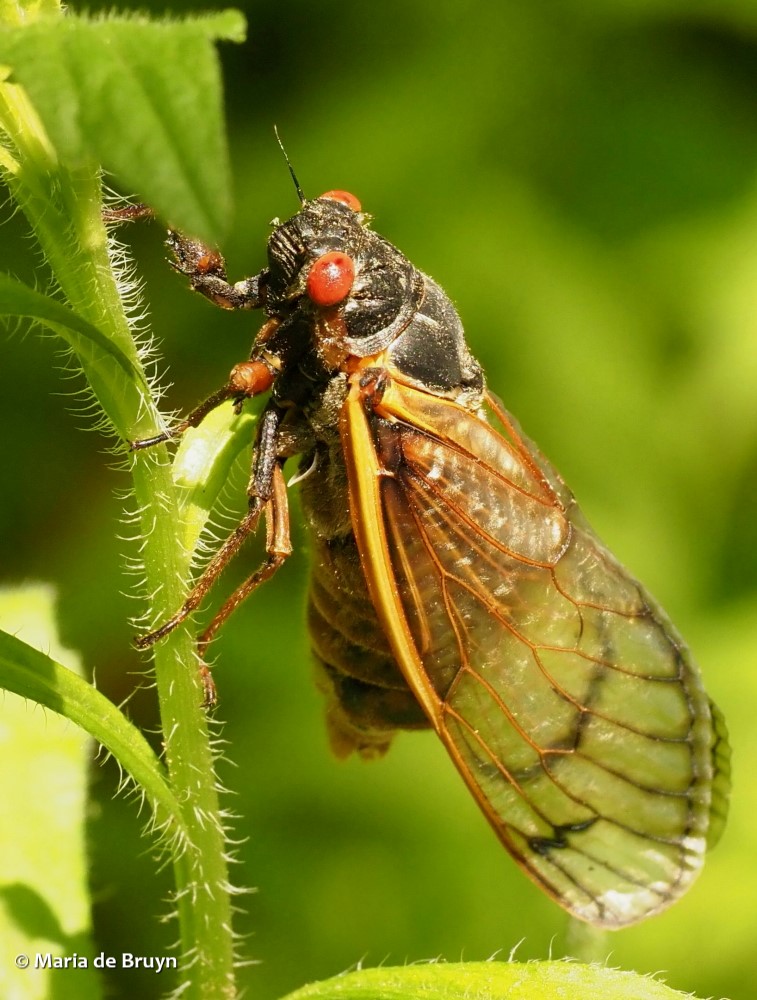
Their orange eyes take on a deep red — in my view mesmerizing — hue.


Seen head-on, their faces look to me as if there is a car grill in the middle.

The adults can’t fly right away after emergence but must make several attempts to get airborne.

When the adults are ready to meet, the males begin making calls and songs, using a pair of ridged membranes on their abdomens. Some calls are a sign to gather; others are alarm calls made when the cicadas are handled.


Their hollow abdomens are thought to act as a resonating chamber, increasing the volume of their already-loud sounds, When they gather in groups of hundreds and more, the volume can be astounding, reaching the level of a chainsaw or motorcycle.


In our area, numerous inquiries on neighborhood listservs commented on the growing and ongoing noise:

  • Is there a sound like a siren going off that you can hear? It seems to be getting louder.
  • Perhaps the machines grinding rocks to expand I 40 [highway].
  • Alien invasion 😂
  • The noise is continual with no change in pitch or volume. Sounds man made.
  • This is some sort of machine or something running all day long.
  • I was so intrigued as well that I called the energy company to investigate the cause of the intense noise!
  • Miniature Flying UFOs made to look like Cicadas.
  • This morning, I walked inside my house looking 👀 for the toilet that I thought was running.

Some people made analogies for what they thought the cicada ‘songs’ were like:

  • To me it sounds like alien spaceships are landing – just like in a 1950’s creature feature.
  • It sounds like the flying saucers in old 1950s movies.
  • I think the 13-year bunch sound like the phasers on the original Star Trek show.
  • To me they sound just like 18wheel rigs all revving up their engines.
  • The sound to me is like “environmental tinnitus”. 🙂 [Response] Exactly, but it actually helps my tinnitus!
  • Sounds like heavy traffic in another decade or two with everyone driving electric vehicles. [Response] My hybrid has that same sound (only quieter) to warn people/animals that I am backing up. When my car is operating under battery power, it’s silent, so manufacturers added that sound to warn people and wildlife away. You are so right. That may be the sound of the future. AAAAGH!

Others appreciated this natural phenomenon:

  • Sounds great.
  • I guess I am rare in thinking they are cool. It feels other worldly….
  • And it’s all about SEX. Just think about all those teenage hot-rodders gunning their engines to attract attention. They’re all saying “Come and get me baby. I’m HOT.” After years underground, you would be too.

Finally, some listserv readers tired of all the comments after a while:

  • Please stop asking about the sound Cicadas make! Please! And if someone answers, why do 50 people feel the need to respond? I feel that so much of the posts are so religious. Does anyone else feel this way?… I didn’t mean religious ! I meant repetitive!
  • Cicadas are a plague sent from God signalling the End Of Time. The purple glow in the sky last night [Northern Lights] was the Rapture, and, since we’re still here … well, there’s that…
  • If you don’t like it stop looking at the posts.

In the next blog, I’ll explain a bit more about the periodical cicadas’ vulnerabilities and life cycle. And hopefully you’ll enjoy seeing some more photos of these creatures who won’t see the light again until 2037!

Nature Photo Challenge – Wild Animals

While I edit photos for my next “regular” blog, I was inspired by Denzil’s 28th Nature Photo Challenge to post a few photos of wild animals I’ve encountered. While I could have chosen to show some of the more exotic ones (e.g., rhinos, elephants, lions, etc.), I thought I’d introduce you to some species that live in my general area.

Among the insects that I enjoy watching are the snowberry clearwing moths (Hemaris diffinis). The first time I saw a clearwing moth at some distance, I wondered if there was a tiny hummingbird with which I was totally unfamiliar. When I got closer, I realized it was no hummer but some amazing kind of flying insect. I still find them fascinating creatures.

The saddleback moth caterpillar (Acharia stimulea) is another favorite from the insect world. Fortunately, I found out that they have a painful sting before I ever touched one. This past week, I was lucky to see one twice. The first time was when John, an odonate expert of my acquaintance, called me over to see one he had found. He had unfortunately been stung but said the pain was tolerable: I hope he didn’t suffer for long. Several days later, I spotted another saddleback while on another nature walk.

 The bright golden color of a common sawfly caught my eye after having seen the first saddleback. It was quite a striking fly with its black and white “decorative” highlights.

Shortly afterwards, my day was made when I spotted one of my favorite spiders, an adorable jumping spider that had caught itself a sizeable meal.

A couple days ago I startled an Eastern rat snake (Pantherophis alleghaniensis) as I passed by it on a path. I hadn’t realized it was there until the herp reared up and quickly crossed the path in front of me. I think we were both startled and I didn’t manage to get a photo. Today I did a U-turn to hop out of my car to carry an Eastern box turtle  (Terrapene carolina Carolina) to safety as it began crossing a busy road. One woman stopped to thank me, while another driver gave me a somewhat irritated look. The turtle above was not the rescue but had similar colors to the turtle today.

My pond is quite alive with lots of tadpoles and small frogs. This green frog (Lithobates clamitans) is one of the larger aquatic yard denizens.

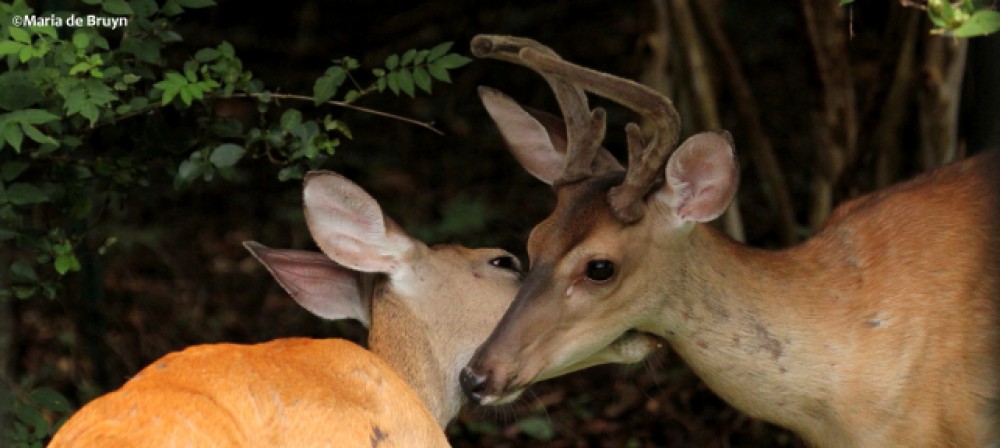
I haven’t seen a wide variety of mammals lately except for the ubiquitous Eastern chipmunks, gray squirrels, Eastern cottontail rabbits and Eastern white-tailed deer in my yard. It’s always a treat for me to see some of the aquatic ones when out on walks, such as the river otters (Lontra canadensis) and the North American beaver (Castor canadensis).

I’ve seen the hispid cotton rats (Sigmodon hispidus) in three different North Carolina nature reserves. To my surprise, this year I also spotted one in my backyard, but I only saw it once. They are known to scurry away quickly when spotted.

And then there are the birds — they are by far the order of animals that I see most often and most easily. They are also delightful because of their great variety. Just recently, I saw a rare avian visitor to my yard, the black-and-white warbler (Mniotilta varia). I usually see them in nature reserves.

In contrast, the lovely little chipping sparrows (Spizella passerina) are birds that I often see in my yard and at my feeders. This pair was resting in a tree top near a former dairy farm, which is now being turned into a vast vineyard. Much of the birds’ habitat has been removed during this changeover to my great disappointment.

One bird that still remains in that area is the solitary sandpiper (Tringa solitaria), which is easily recognizable by its habit of bobbing its rear end as it walks along shores looking for food.

The sandpiper is not the only shorebird currently drawing birders in our area. Many varied species have been turning up at local lakes, giving birders the opportunity to see “lifers” (birds seen in person for the first time). The limpkin (Aramus guarauna) is one such bird for me — it was a treat to see it looking for clams and molluscs at a local lake.

Next blog: making acquaintance with a bird I’d like to imitate!