Costa Rican rambles 5A: the Talari Mountain Lodge

This edition of Costa Rican rambles will be a two-parter. Remember that you can click on a photo to see it larger and then click the back arrow to go back to the blog. The Talari Mountain Lodge, located in the El General Valley next to the Chirripo River, became our pied-à-terre for two nights. We had lush surroundings, as you can see from our view looking out of the dining area.


Several of the signs were made of old tires that had been artistically cut and painted – beautifully and colorfully done! Some hanging plant holders had also had a previous life as tires.
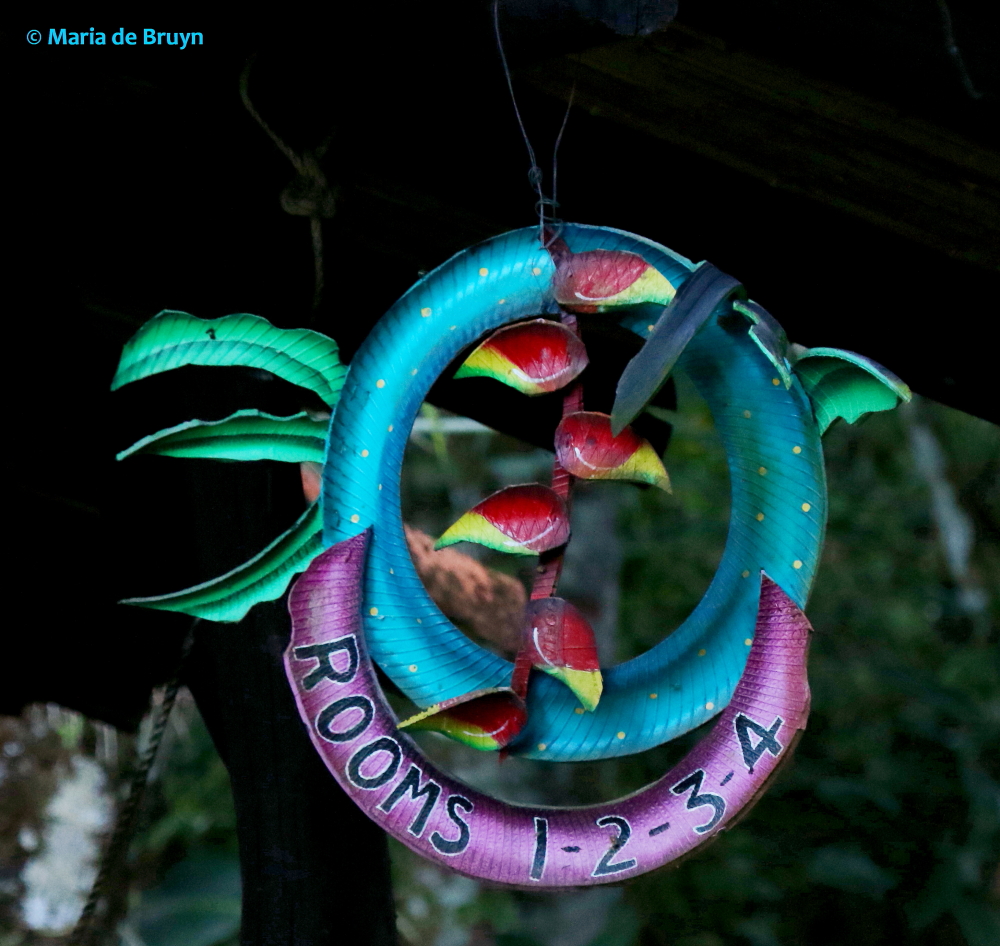
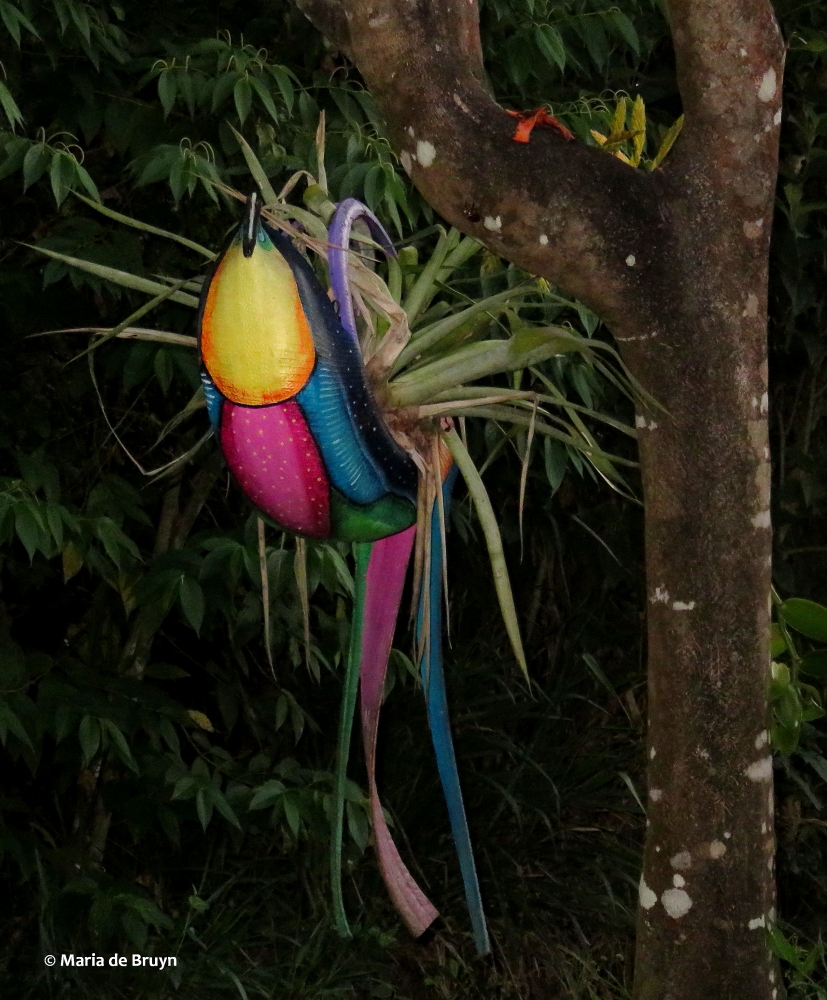
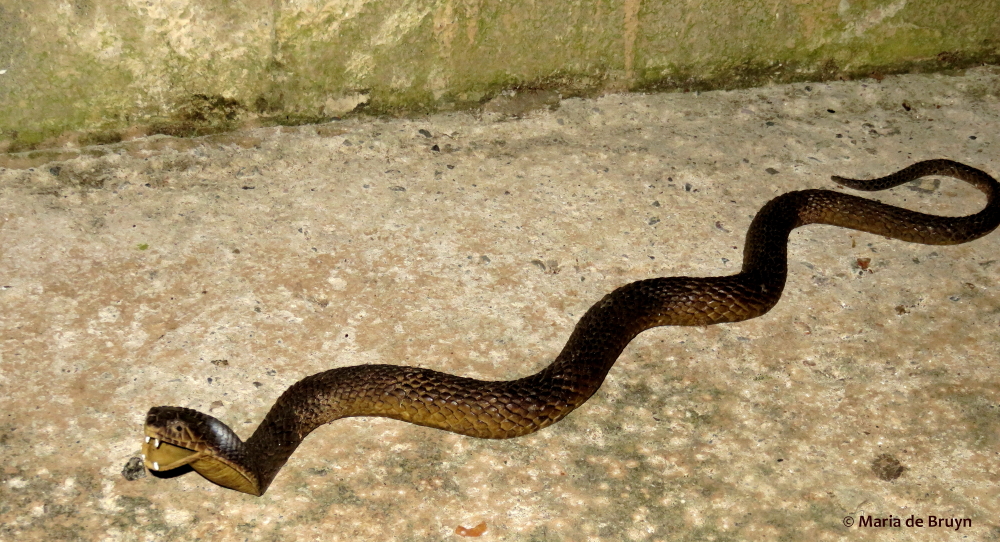
There were some other decorations, too – a brightly painted cart and some snakes (we only saw one real one during the trip).

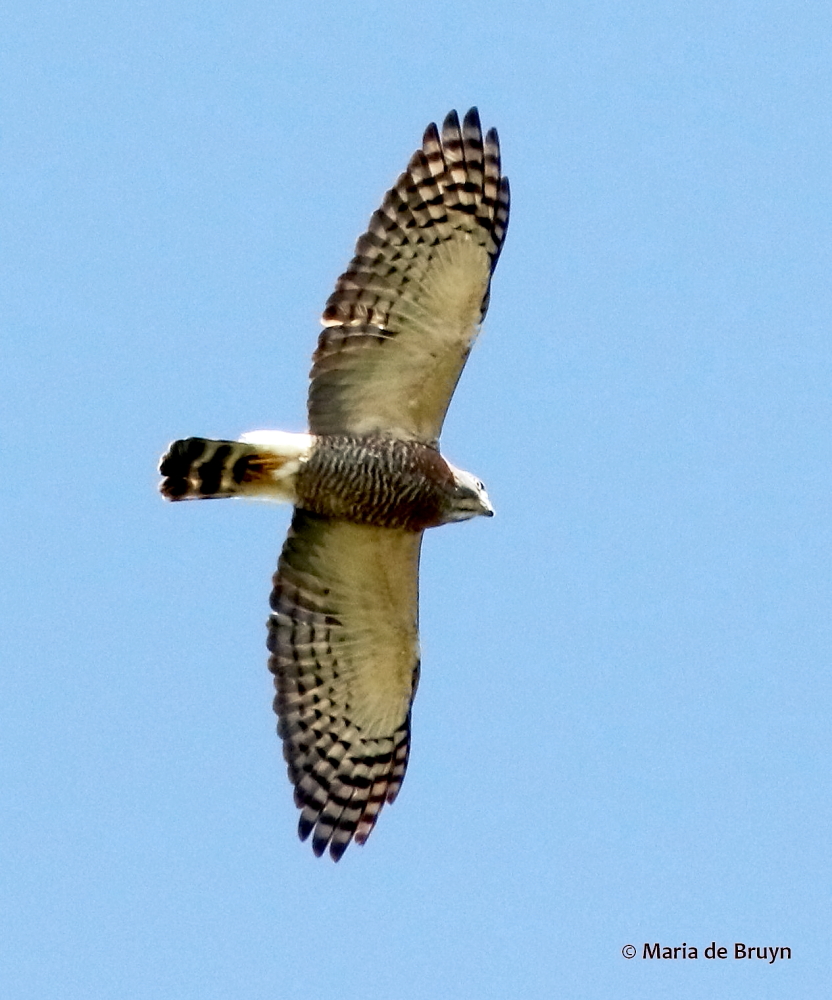
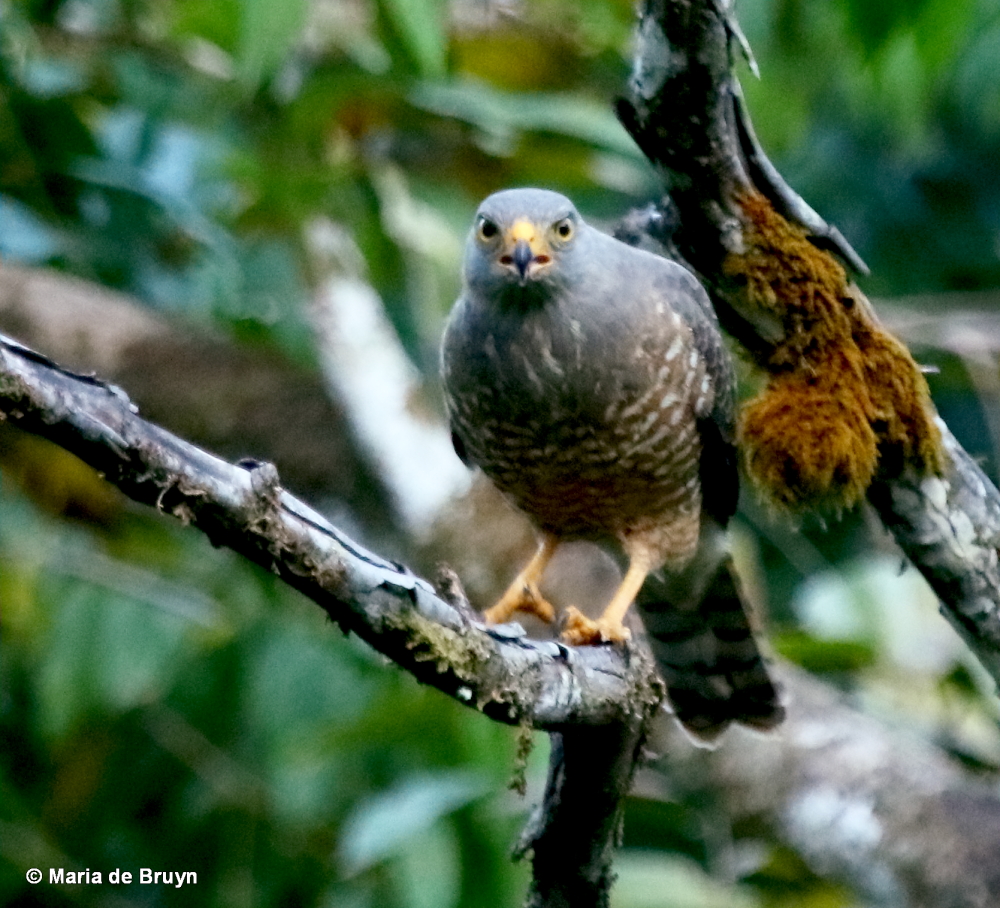
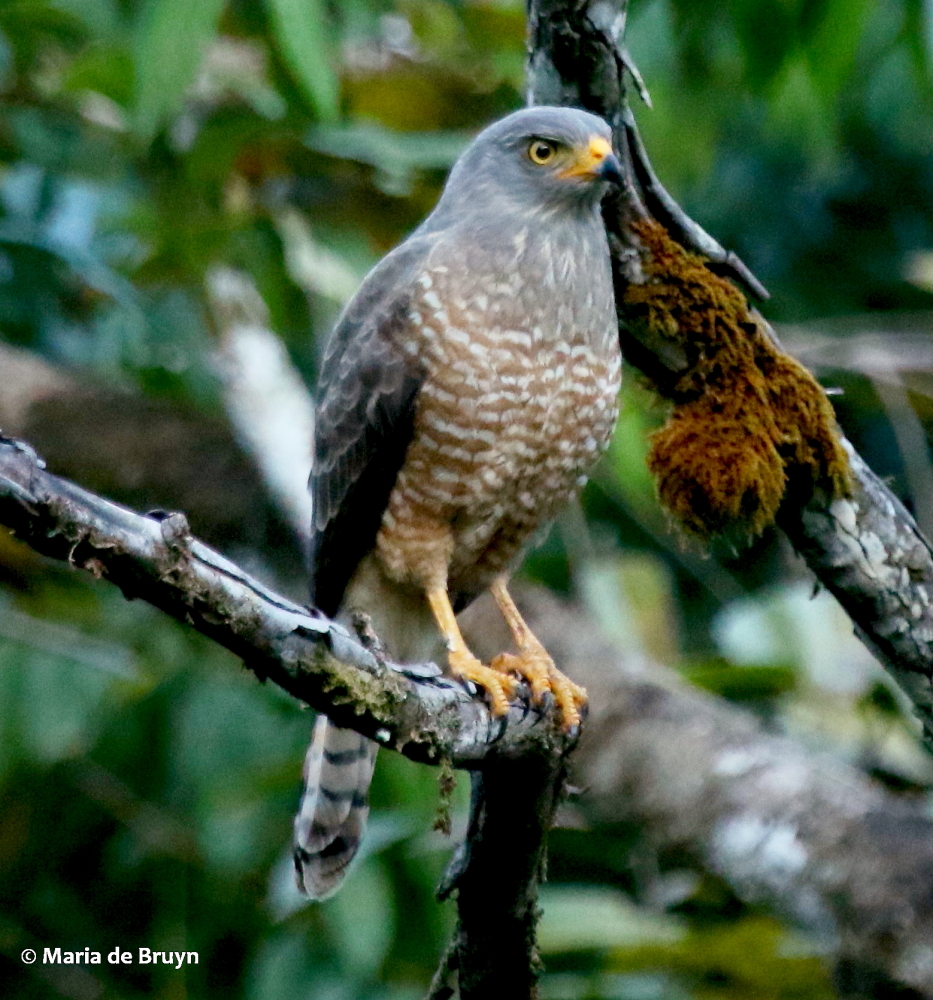
Having gotten some coffee and tea, we set out to see the lodge surroundings before breakfast. After passing a strangler-fig covered tree (Ficus aurea), we stopped by the rooms in which some of our group were staying. There we were welcomed by a very handsome roadside hawk (Rupornis magnirostris).
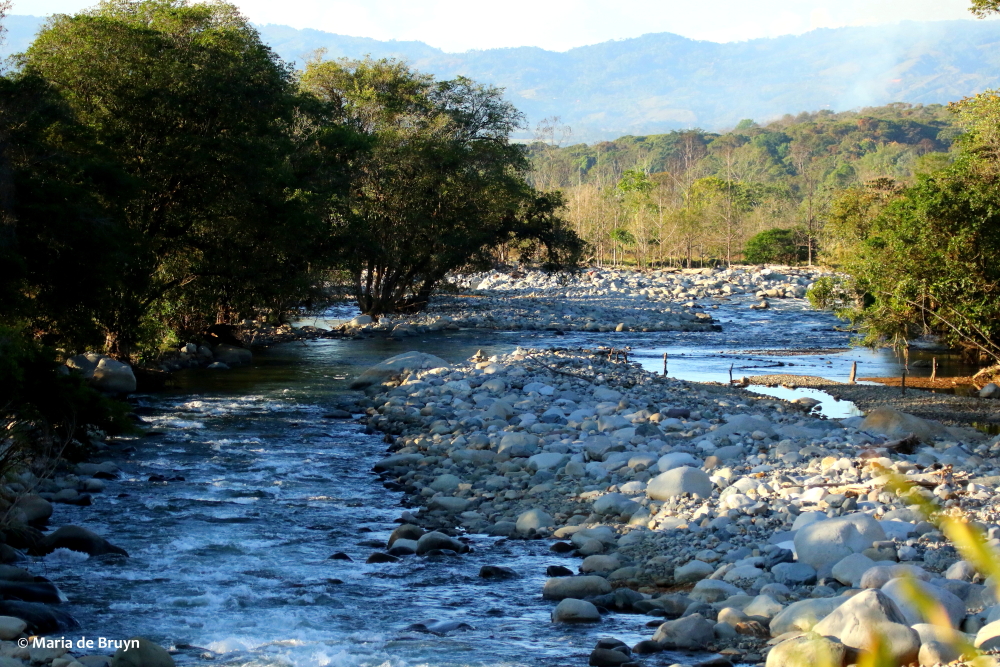
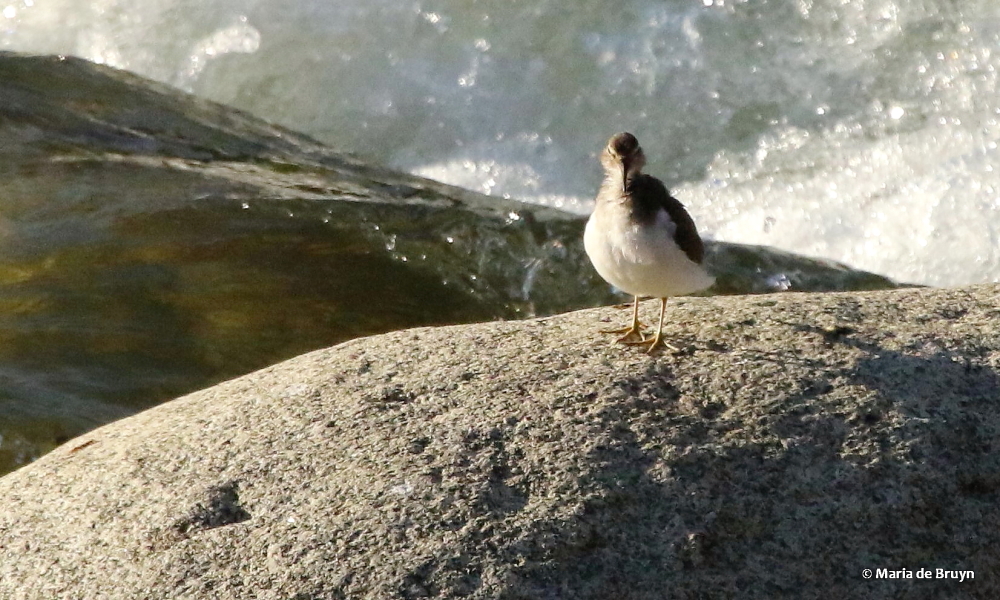
We neared the river, which was rather low. Some of our group members managed to catch sight of an otter there a few times but I never had that sighting. I did see a sandpiper on a rock in the river, which our guide said was a spotted sandpiper but it looked like a solitary sandpiper (Tringa solitaria) to me.
 

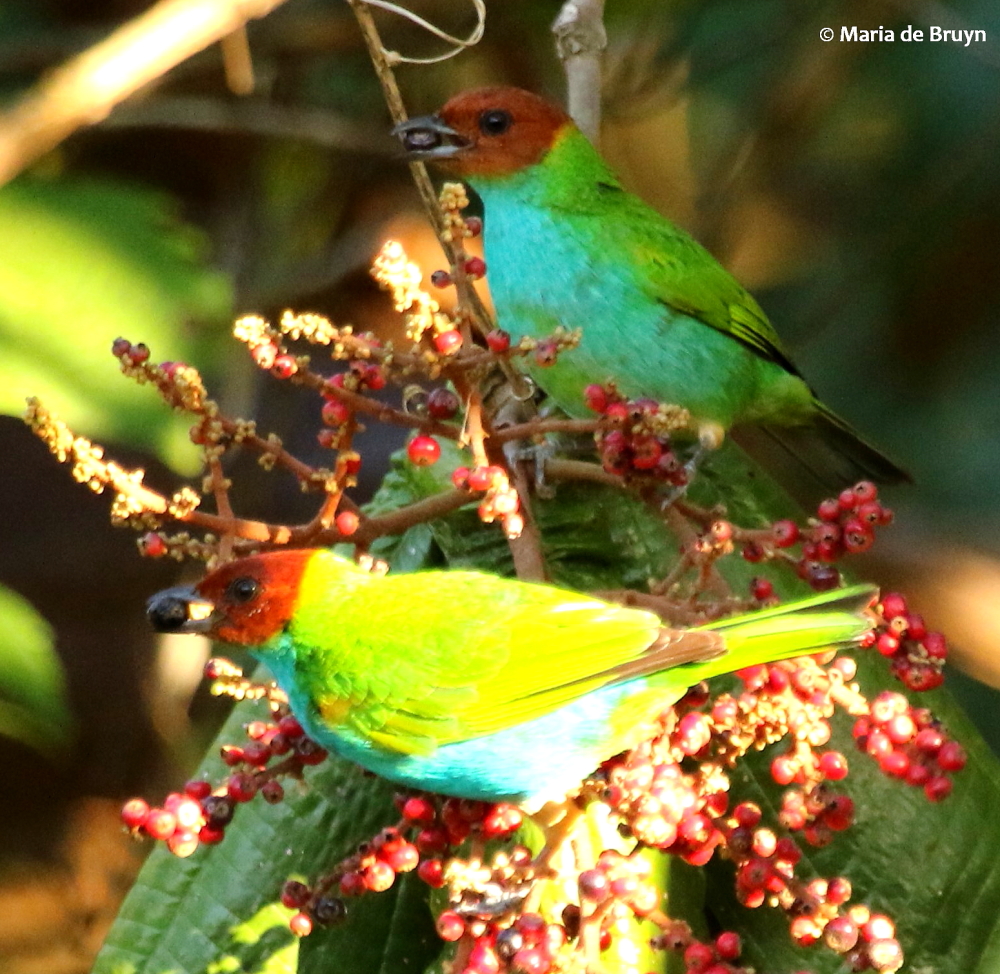
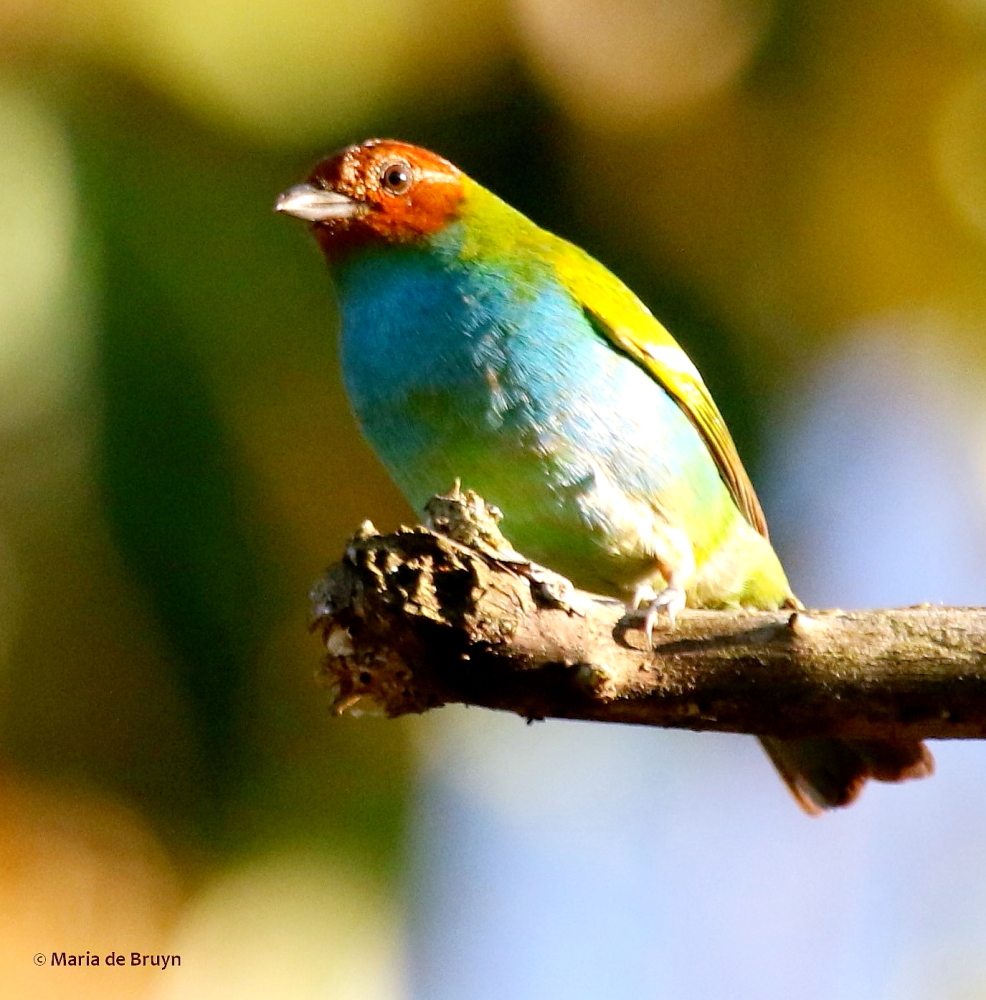
The trees along the banks were filled with birds. One of the first that really caught my eye was the bay-headed tanager (Tangara gyrola). I would have given it a different common name, but its distinct head color really did set off its beautiful blue and green feathers, which looked almost neon in the bright sunlight  .


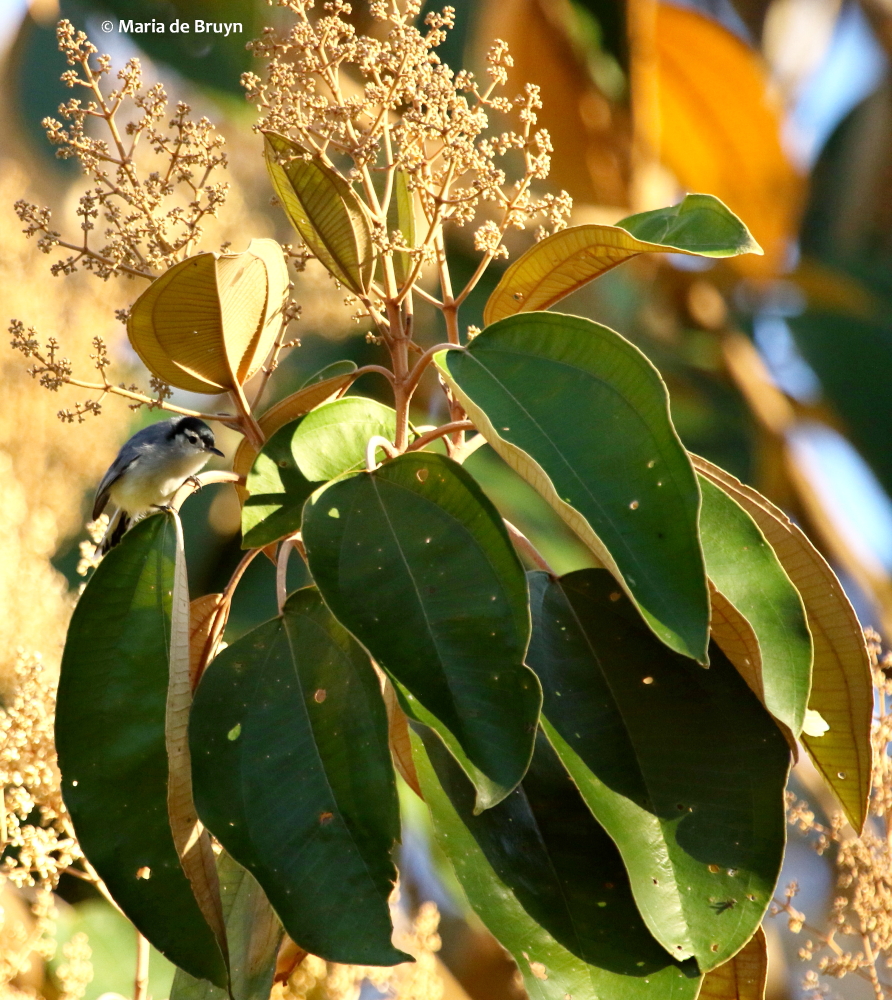
Now that spring has come to North Carolina, I’ve been having fun watching the blue-gray gnatcatchers building their nests. They have a counterpart in Costa Rica, called the tropical gnatcatcher (Polioptila plumbea). It seems to be about the same size as our gnatcatcher, with its gray feathers and tendency to move about a lot, but its head reminds me more of a Carolina chickadee. Perhaps this is what a hybrid blue-gray gnatcatcher/Carolina chickadee would look like.


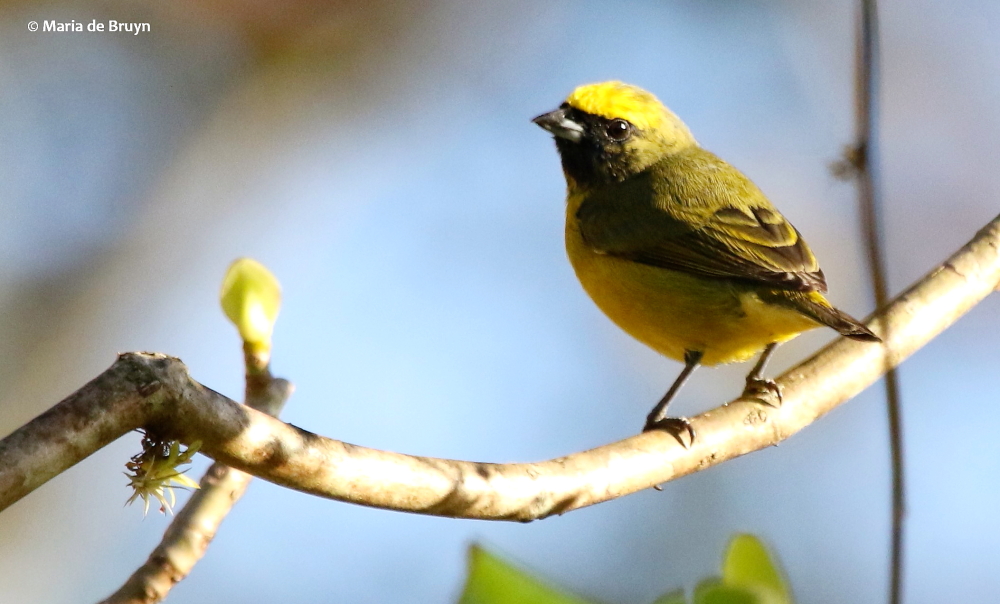
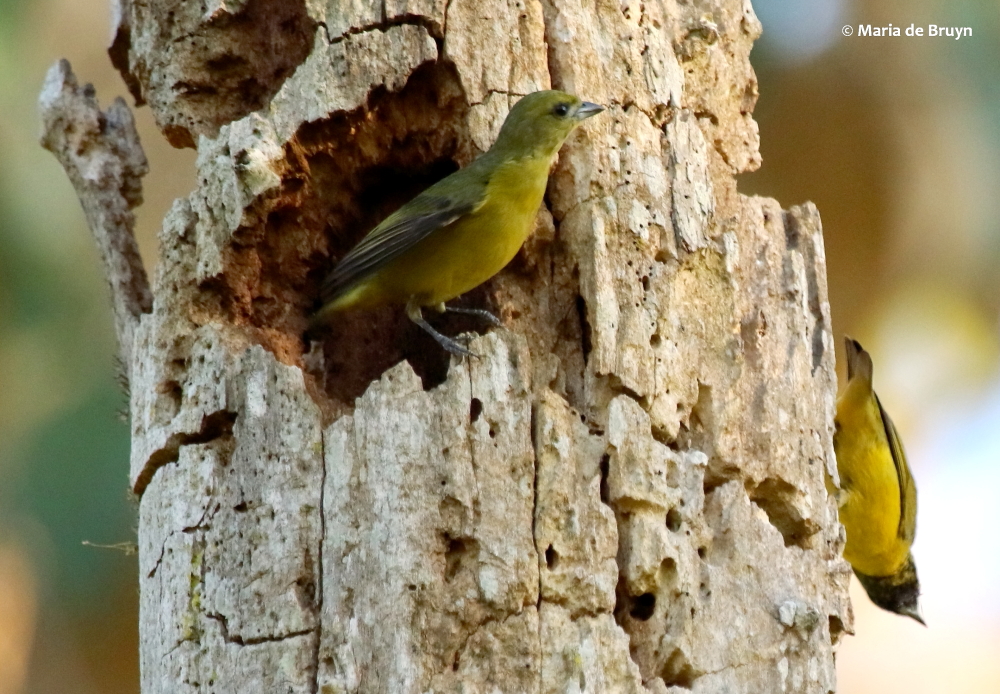
The next bright bird to occupy my attention, while my fellow birders peered through their binoculars at other species, was the yellow-crowned euphonia (Euphonia luteicapilla). The adult males have bright yellow and blue plumage; I only saw younger males and a female who seemed to be checking out a nesting cavity.       
 

A scaly-breasted hummingbird (Phaeochroa cuvierii) put in a brief appearance, while several species of swifts were circling overhead.

On our way back to breakfast, I admired the lodge’s stone bird bath and noted they have an invasive plant that we have in North Carolina, too, the Asiatic dayflower (Commelina communis).


Then I got some photos of a banded peacock (Anartia fatima) and a Cucullina ringlet butterfly (Hermeuptychia cucullina).
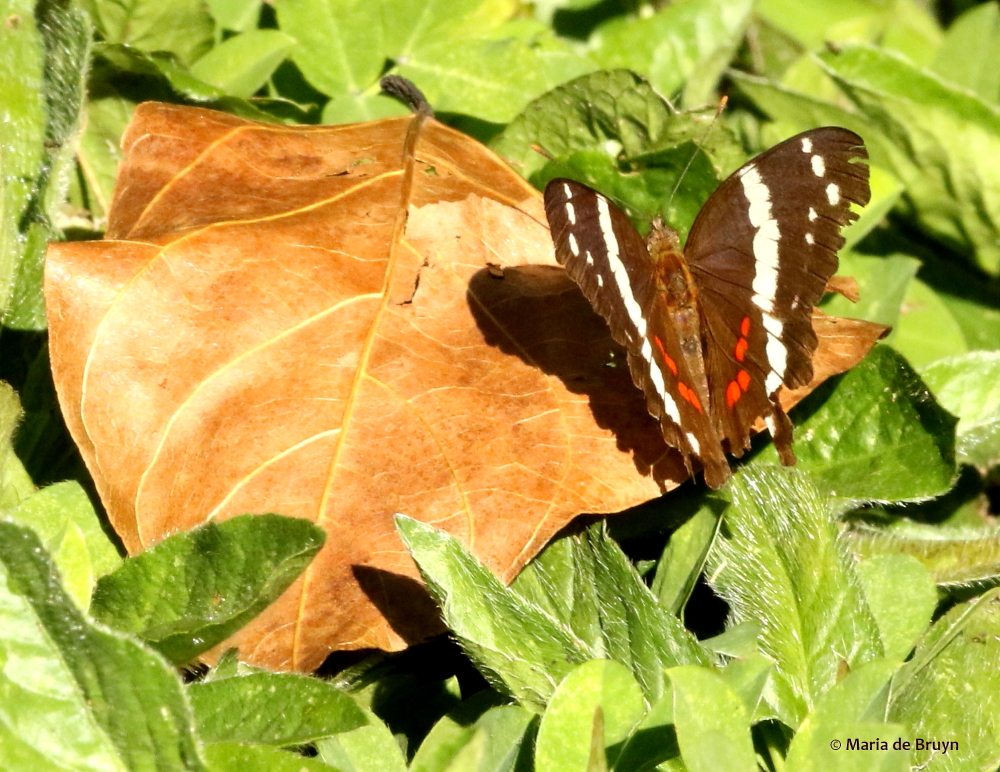
 

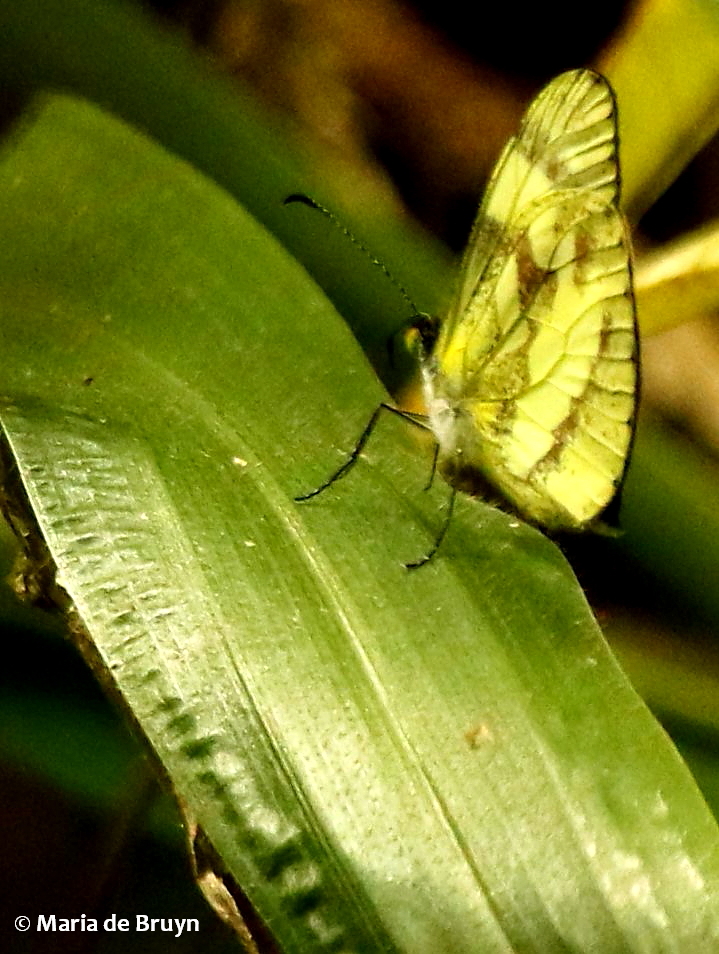
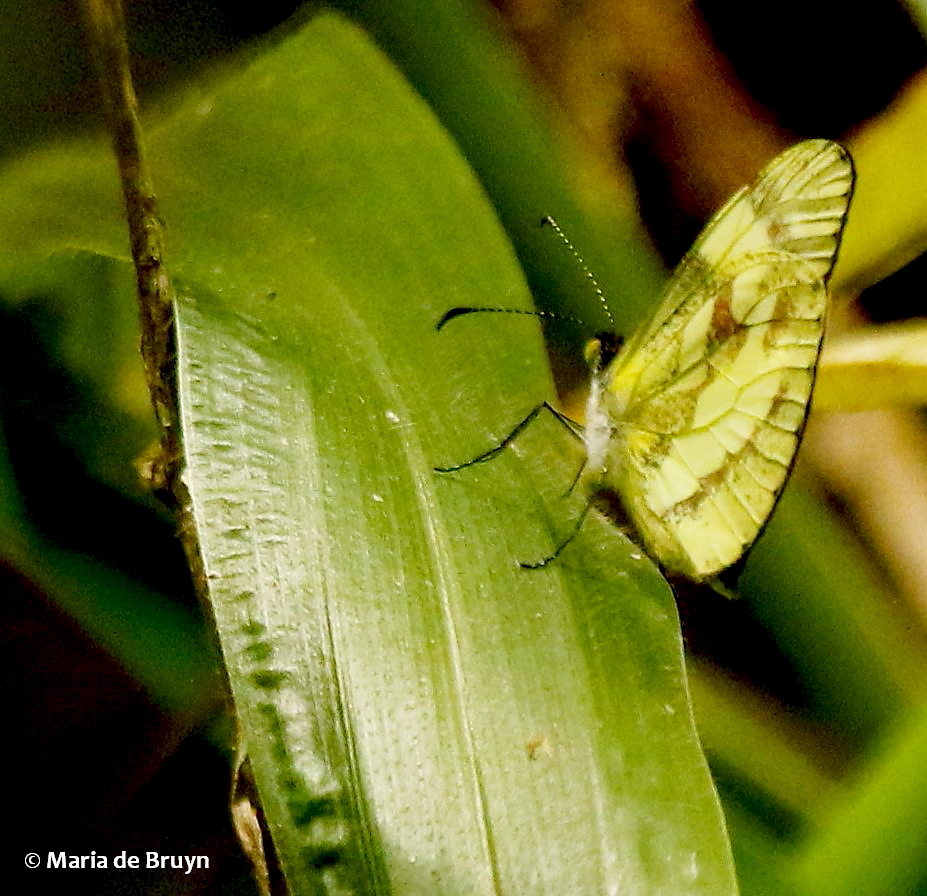
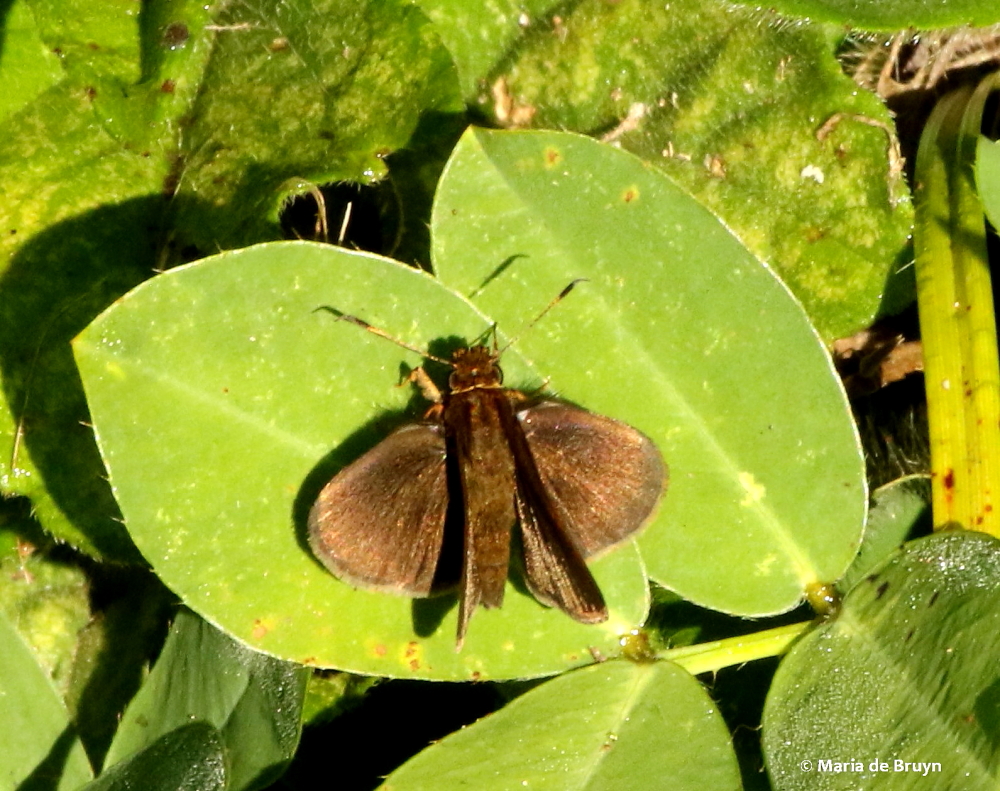
I was not able to find out the species (yet) for a brown skipper, a white moth and another pretty butterfly.
 

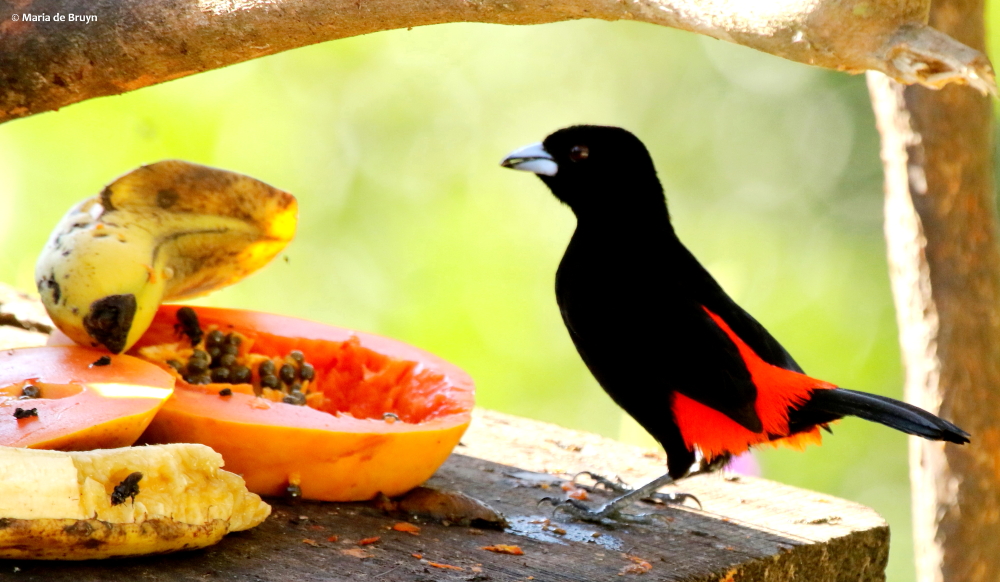
The feeders at the lodge had a black-headed male green honeycreeper (Chlorophanes spiza) visiting along with a lovely male Cherrie’s tanager (Ramphocelus costaricensis) whose red feathers looked like a fringed shawl covering his lower back. The next morning the female honeycreeper came by as well.


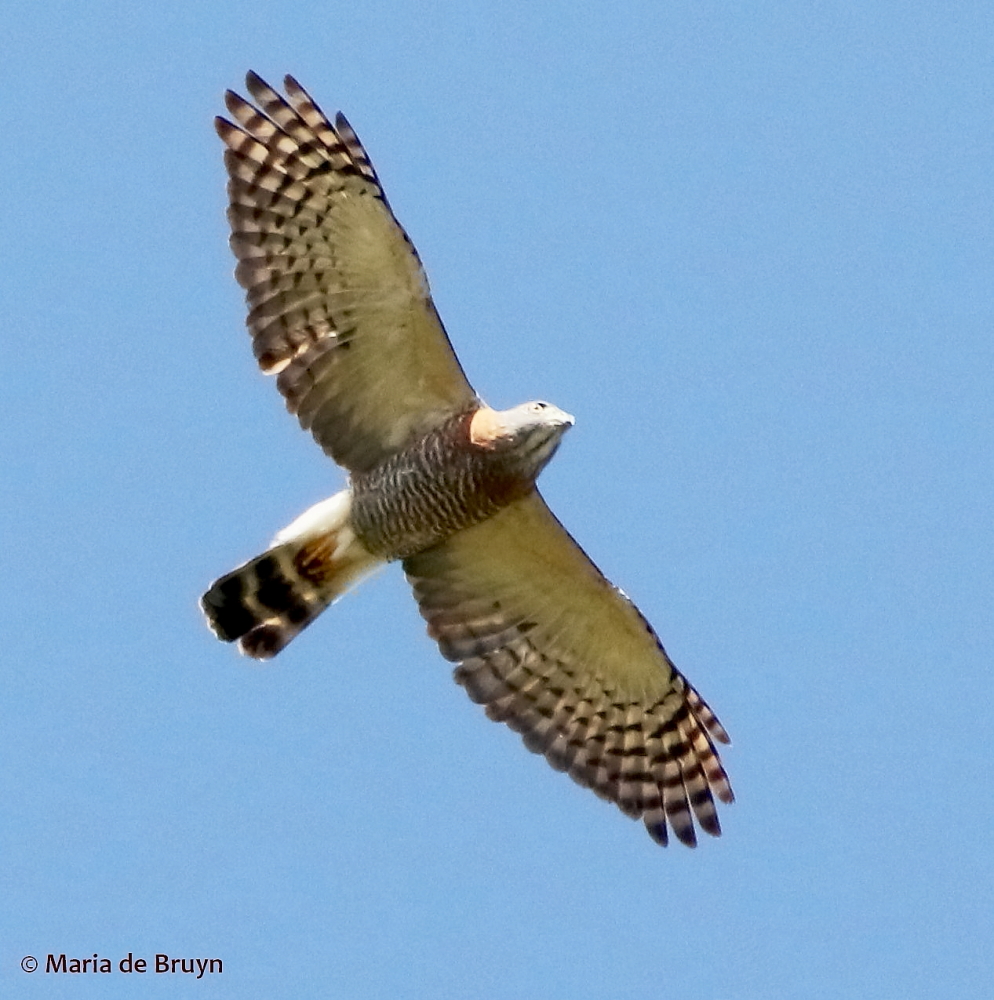
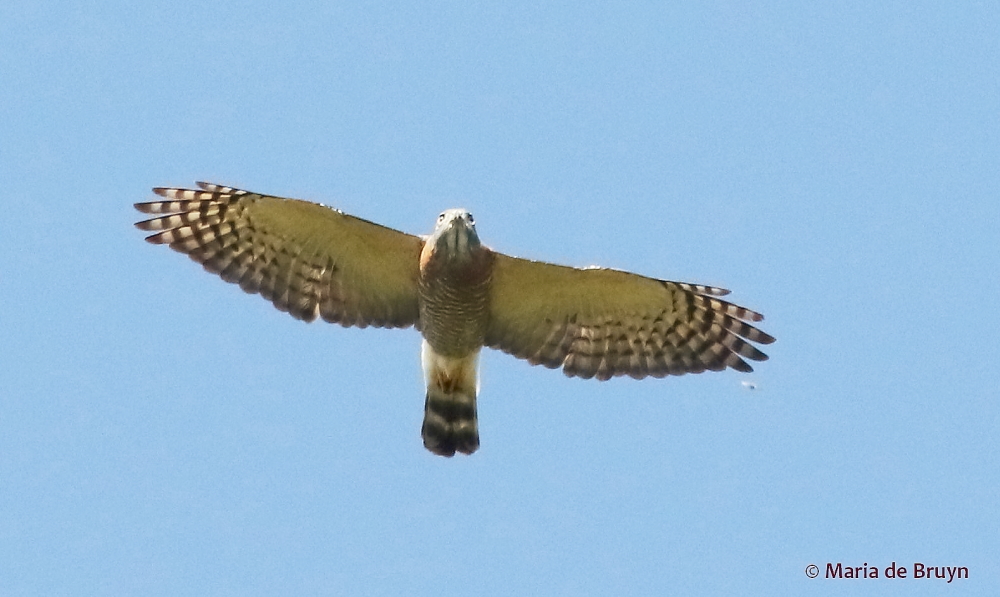
Our first trip of the day involved a visit to the UNA (Universidad Nacional) campus, where I had my first views of a double-toothed kite (Harpagus bidentatus). The stripe underneath its chin, along with its coloring, made it a very attractive bird for me.


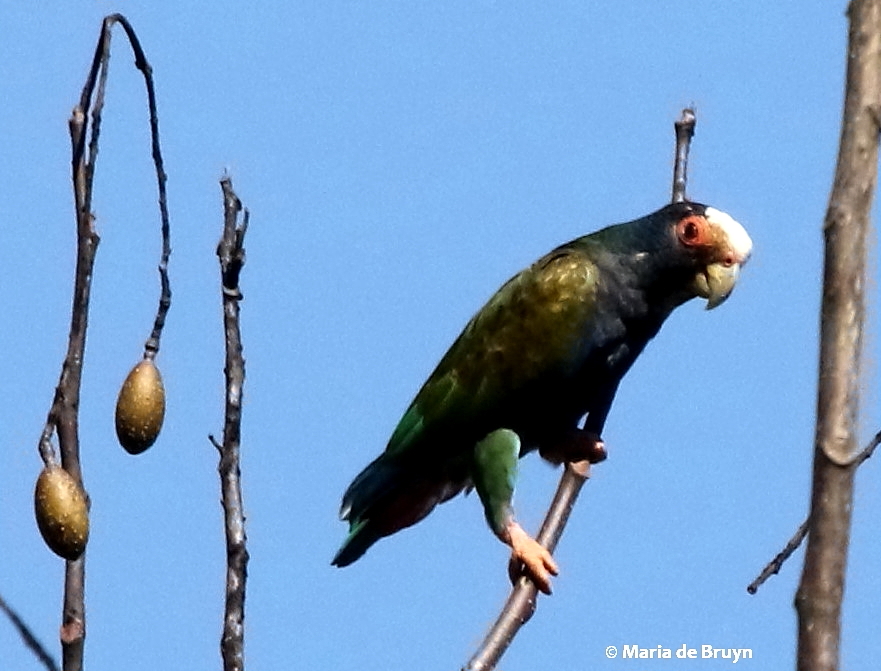
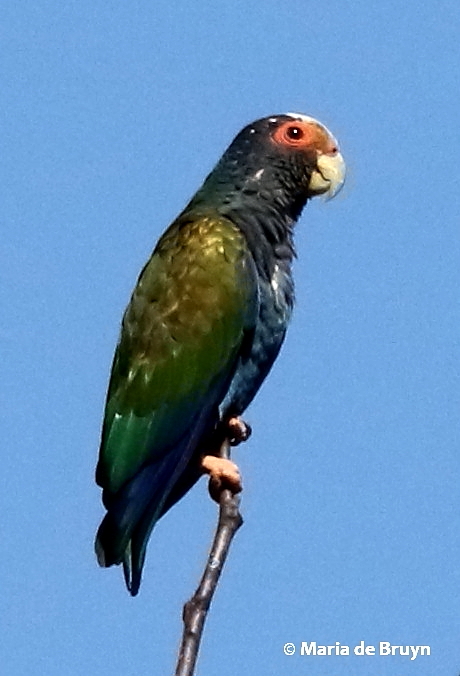
We then drove to another university campus site, stopping along a road where we saw a white-crowned parrot (Pionus senilis) in the distance.



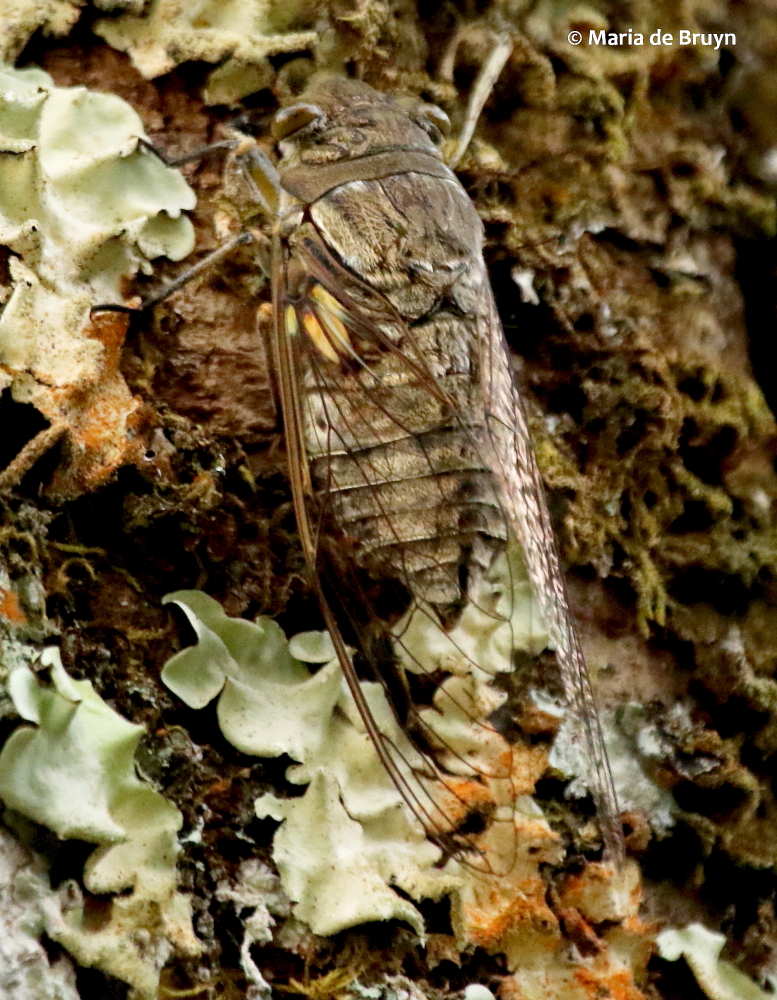
Our guide, Steve, had warned us to wear hats as we would be in areas with lots of cicadas, which are called chicharras locally. We had already heard them in the morning – there seemed to be at least hundreds of them in various wooded areas. The 23 Costa Rican species emerge from underground during the breeding season of several bird species that feed on them, such as motmots, trogons and flycatchers. Their cacophony of mating calls was sometimes so loud that you had to speak loudly to other people to be heard over it. But why would we need hats – don’t they just perch in the trees and call?

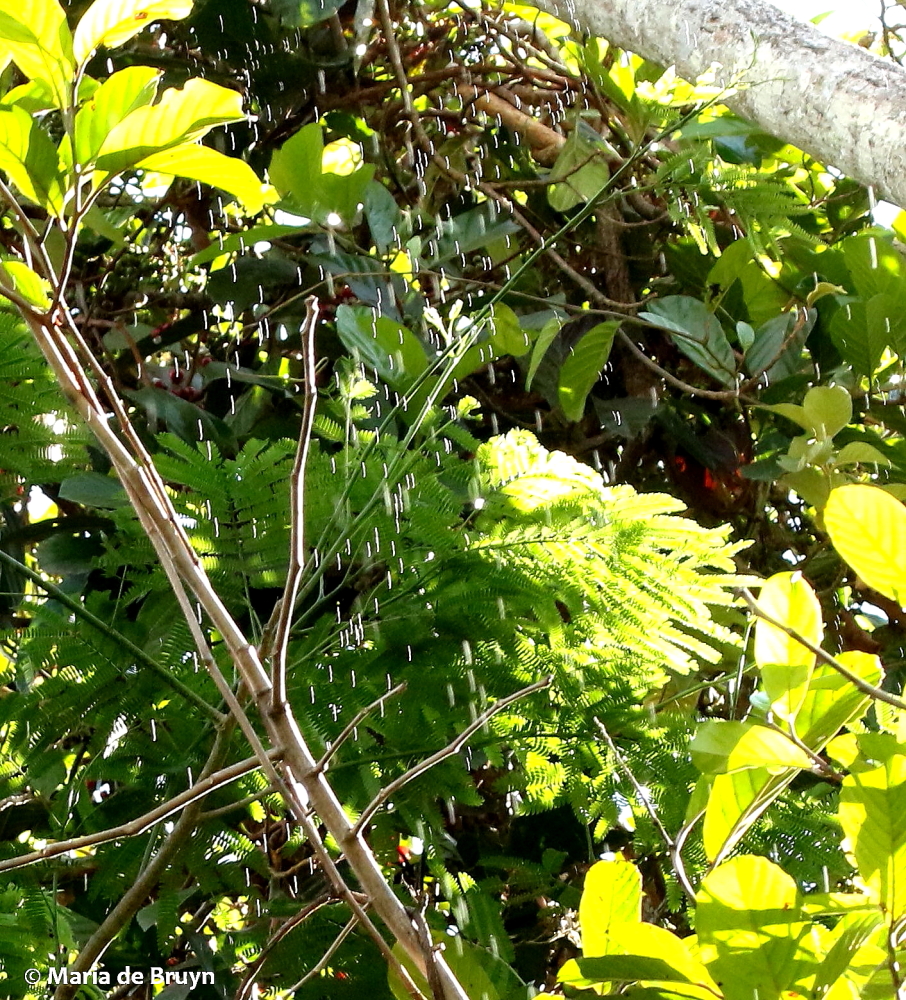
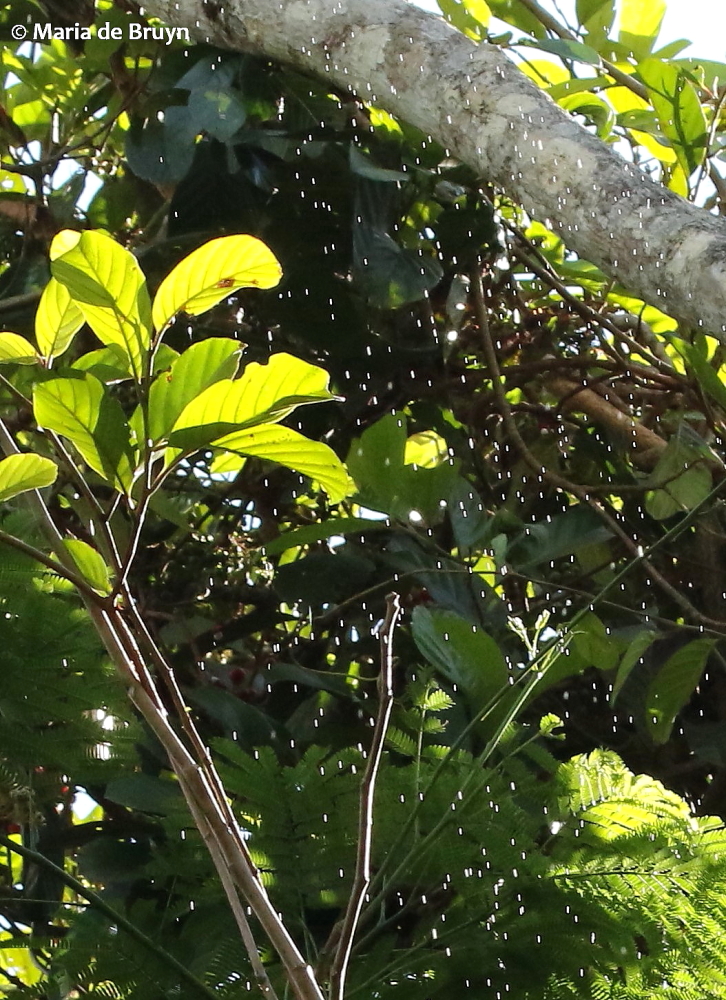
As I stood on the road, photographing the parrot, I thought we had run into a quick shower – then I realized what the slightly sticky (to me) droplets were – cicada rain!!! The cicadas drink xylem, which is tree sap, and urinate as they process the nutrients– when they do so in large numbers and you are standing underneath them, an umbrella would not be out of place. I tried to photograph the rain to give an idea of the falling pee.


More on Talari Lodge and its surroundings in the next blog!

Costa Rican rambles 4: Bosque del Tolomuco

After lunch on our first day birding, we set off to visit a lodge called Bosque del Tolomuco, named after a weasel-like mammal called a tayra (tolomuco in Spanish). Located in the Talamanca mountains, the gardens featured three fruit feeders and numerous flowering plants, shrubs and trees that attract varied birds.

About 600 of the 870 species of birds recorded in Costa Rica are year-round residents and a considerable number are endemic to this West Virginia-sized country (and Panama). In addition, about 200 species of birds migrate there during the North American winter. At this stop, I saw a couple migrants as well, notably a Baltimore oriole and a rose-breasted grosbeak (Pheucticus ludovicianus).

A large bird was at one of the fruit feeders when we arrived; it was a gray-headed chachalaca (Ortalis cinereiceps). This particular feeder seemed to attract larger creatures – a little while later, a red-tailed squirrel (Sciurus granatensis) showed up.


Some smaller birds were feeding on fruit and nectar shrubs. One was the bananaquit (Coereba flaveola) with a striped head; the other was a somewhat drab bird with a fancy name, the paltry tyrannulet (Zimmerius vilissimus).


The male and female red-headed barbets (Eubucco bourcierii) were anything but drab; in fact, they were quite eye-catching. Their striped abdomens made me think of a man’s striped trousers.


High overhead, making a good shot a bit difficult, were some blue-headed elegant euphonias (Euphonia elegantissima). At least I got a recognizable photo of them, unlike my attempts to photograph some sparrow species who appeared in darker shadowy areas.


Several of my birding friends are raptor fans; a couple others are very partial to warblers. On this trip, I realized that I am quite fond of tanagers. I saw a few summer tanagers in Costa Rica but was really delighted by the species native to this country. Several were enjoying fruit at feeders, including a beautiful blue-gray tanager (Thraupis episcopus). Some birds are not so brightly colored but have a muted beauty, which was how I saw this species.

The male Cherrie’s tanager (Ramphocelus costaricensis) with his black plumage highlighted by a red rump is eye-catching; his female companion was also a real looker with her soft orange, olive and yellow colors.


The silver-throated tanagers (Tangara icterocephala) immediately became one of my favorites; their beautiful shades of yellow were stunning as far as I was concerned.

They were accompanied by a larger bird, a buff-throated saltator (Saltator maximus), which is related to the tanagers.


Another very attractive bird was the speckled tanager (Tangara guttata).


The flame-colored tanager (Piranga bidentata), which I had seen before, continued to delight with its bright colors. There were also several hummingbird species, which I think I have identified properly. Their rapid flights on an overcast day that was darkening as the afternoon progressed made for some challenging photography, but it was fun trying to capture them. The snowy-bellied hummingbirds (Amazilia edward) were the first ones I saw.


The bottlebrush flowers (Callistemon) appeared to be a very attractive food source for them.


A green hermit (Phaethornis guy) was dashing in and out among the hanging flowers to get some nectar.


The very cute white-crested coquette (Lophornis adorabilis), on the other hand, was flitting from bush to bush for quick meals and then finally decided to pose for a while. I couldn’t resist taking multiple photos of this little beauty.


The green-crowned brilliant (Heliodoxa jacula) was a much larger hummingbird. Both females (with white and green spotted breast) and males were taking nectar from feeders and then taking little rests on nearby shrubs.


The stripe-tailed hummingbird (Eupherusa eximia) was enjoying the bottlebrush blooms, too.

The gray-tailed mountain gems (Lampornis cinereicauda), which I’d seen earlier in the day at Miriam’s restaurant, were here as well and much more difficult to photograph in between flowers rather than feeders. However, I was able to get better glimpses of their colorful feathers as they turned their heads in the light.


Finally, the white-tailed emeralds (Elvira chionura) rounded out the group of hummers to admire at the Bosque del Tolomuco.

We finally left the lodge after admiring a blue and white swallow on our way to the Talari Mountain Lodge. Along the way, I saw a horse (Equus caballus) – which finally satisfied my desire to see an animal other than a bird! We then stopped along a street and later at a soccer field in San Isidro El General, where local boys were having a game – half of them wore shoes and half were barefoot (perhaps their way of identifying team membership).  A tropical mockingbird (Mimus gilvus) was moving along treetops, while a great kiskadee (Pitangus sulphuratus) perched in another tree.


The bromeliads were again beautiful. Our guide directed our attention to the underbrush, however, as he had spotted an Isthmian wren (Cantorchilus elutus). We stared at the dark leaves, waiting for some movement that would indicate where the little bird was; finally, it emerged from behind some leaves for several seconds so we could get a better look.


As cattle egrets flew by overhead, we saw a lesser elaenia (Elaenia chiriquensis) and then a yellow-bellied elaenia (Elaenia flavogaster), which reminded me of the great-crested flycatcher I have seen in my own yard.


A cool seed pod and rose-breasted grosbeak caught my attention.


And then the highlight of that stop for me came by – a streak-headed woodcreeper (Lepidocolaptes souleyetii).


We arrived at the Talari Lodge for a quick stroll in the garden before our meal and then prepared for an early morning walk to the nearby river. More to come!

Signs of spring in an uncertain season

As tiny snowflakes fall gently from the sky, my thoughts have left Costa Rica for a bit and turned to the weird weather we’ve been having in North Carolina. I didn’t move to this state for its weather but in the time I’ve been here, I’ve grown to appreciate the climate – we have four seasons but the winters have not seemed overly long and the spring and autumn temperatures are often fabulous.


This year, much of February was unseasonably warm in our Piedmont area and people, as well as plants and animals, were enjoying the warm sun and mild temperatures. Crocuses and irises poked their blooms up a bit early and birds were checking out nest boxes.


Butterflies, like this question mark (Polygonia interrogationis) made an appearance (it was getting sustenance from some dog poop left on a bridge!) and Carolina anoles (Anolis carolinensis) emerged to sun in the warmth.


Then on 12 March, we had a day of snow. The male Northern cardinal (Cardinalis cardinalis) and Carolina wren (Thryothorus ludovicianus) sat amid the flakes between trips to the feeders.


The female ruby-crowned kinglet (Regulus calendula) didn’t seem too perturbed, but the male resident was not happy – his bedraggled red crown was in evidence, both when chasing her away from the feeders and when he was just coping with the wet snow.


When I left for my Costa Rican rambles, it looked like the spring weather might give way to colder temperatures; when I returned 10 days later, it was definitely more winter-like. Then, this past weekend, we had a brief respite. Despite a cold morning start, friend Karla and I visited the Guilford County Farm. The farm personnel had marked off a section of the gravel parking lot where killdeer (Charadrius vociferus) had placed a nest with four eggs. When the babies hatch, they can walk away from the nest as soon as their downy feathers dry.


They won’t be able to fly until about 25 days later, but they can feed themselves. The parents will continue tending to and defending them, however. In the meantime, the parents do not come near the nest so as not to draw attention to it and they will try to lead any potential predators away with a broken wing display. They do fly near the nest often, however, and keep an eye on it in between their own feeding sessions.

Karla quickly spotted Wilson’s snipes (Gallinago delicata) flying over the pond and settling at the water’s edge. As we drew closer, we could spot them occasionally, but they blended really well with the vegetation. Below are a couple photos taken at a fair distance with a high ISO and lots of grain – but you can try to see if you can spot the six snipes in the first photo and the two in the second.

Fortunately, one flew in a bit later and I got a couple more recognizable photos!


Some Canada geese (Branta canadensis) flew in and headed for the same corner of the pond.

Then, as I was trying to find the snipe in the grass again, I noticed a killdeer looking for insects nearby.

She was accompanied by a male, who at first seemed to be preening but who was actually trying to impress her with some courtship displays.


The males will show off their feathers for their (potential) mates, especially raising and displaying their bright tail feathers as a fan.

The female would walk away and he would eventually move closer in an attempt to get a response.

Nearby, we saw three Northern mockingbirds (Mimus polyglottos), two of whom seemed to be males battling over a female. Their dispute was very vigorous and lasted quite a long time. In fact, when they flew away, they were still going after one another!


During our continuing walk in the fields and woods near the farm, we saw many other bird species including Eastern meadowlarks, brown creepers, woodpeckers and a pair of kestrels. The woods were kind of strange in that there were very few bird nests visible in the bare trees and also no Eastern gray squirrel nests – in fact, we did not see one squirrel the entire time we were there, which was very odd. An adorable baby donkey (Equus asinus) did greet us as we walked by, though, and our long excursion (about 6 hours) gave us a nice taste of spring. Hopefully, when the snow flurries today end, we will see spring weather come back quickly and be able to enjoy the flora and fauna of this season again. Next blog – back to Costa Rica!


Costa Rican rambles 3 – Parque Nacional Los Quetzales and Miriam’s restaurant

Our usual daily trip routine in Costa Rica began on the first day: coffee and tea at 5:45 a.m. (except the last day when we had it at 4:30 a.m.!) – birding – breakfast around 7 a.m. – travel & birding – lunch around noon-1 p.m. – travel and birding – dinner/supper around 7 p.m. And on two nights we went owling after supper. One of our group members tracked our steps – over 8 days, we walked and hiked a bit more than 50 miles. This meant that although I ate more than usual, I didn’t gain any weight, which was an added bonus!

On the first day, we set off for the National Park Los Quetzales, passing small settlements and villages along the way. Between them, we saw the rolling hills and mountains covered with lots of vegetation – this was the end of the dry season, so when the rainy season begins the scenery must be even much more lush.


We were going to see several species of birds which are endemic only to parts of Costa Rica and Panama, which was a treat for the birders who keep life lists counting how many species of birds they have seen.

The day had an overcast start, which made photographing the birds at Los Quetzales a bit challenging. Sometimes they blended in really well with the vegetation in which they perched and discerning them was a bit of a feat (especially if you don’t have binoculars). One of the first birds we found was the slaty flowerpiercer (Diglossa plumbea). The male has a rich blue-gray color while the female is a much drabber olive gray – it was her upturned beak that helps her pierce the base of flowers for nectar that helped me ID her in the photos.


The black-capped flycatcher (Empidonax atriceps) gave me some issues, too, until one finally alighted atop a plant – giving me a chance for a quick, backlit photo before he flew off.

There were many flowering bushes and shrubs and bees were buzzing among them. A timberline wren hopped around these bushes, but I was unable to get a photo of her. I did succeed in getting some shots of a couple volcano hummingbirds (Selasphorus flammula), who were very active – challenging one another and hunting insects. These very small hummingbirds only breed in the mountains of Costa Rica and Panama; they are only 3 inches (7.5 cm cm) long and very quick flyers. One ended up posing for a while!


A sooty-capped bush tanager – also called a sooty-capped chlorospingus (Chlorospingus pileatus) was scurrying about the same bushes. At first, I couldn’t get any photos of him, but finally he emerged from behind some leaves. At our lunch stop, I was able to get a close-up photo of this species.


A large-footed finch (Pezopetes capitalis) made its arrival known as s/he perched in a nearby tree branch; a few hours later, I was able to get a closer photo of this bird, too. This is one of the larger birds we saw, almost reaching 8 inches (20.3 cm) in length.


Another larger bird, the sooty thrush (Turdus nigrescens) posed prettily atop a tree. These 10-inch long (24 cm) birds behave similarly to American robins, rooting around in leaves for insects and spiders.

The flame-throated warbler (Oreothlypis gutturalis) showed up nicely against the green foliage.


In some flowering bushes nearby, a fiery-throated hummingbird (Panterpe insignis) put in an appearance. These hummers are larger than the small volcano hummingbirds.  Like other hummers, their brilliant colors may only show up when the light rays hit their feathers at just the right angle. My only shot demonstrating a bit of their fiery beauty was unfortunately a bit blurry.


A black and yellow silky flycatcher (Phainoptila melanoxantha, below) was hopping around in a distant leafy tree and then finally emerged for a couple minutes before flying off to another leafy abode. In contrast to many of the other birds who dine on insects, these birds favor berries and plant materials. A yellow-winged vireo (Vireo carmioli, right) emerged briefly, rounding out our endemic species sightings.


Before leaving the park, I was lucky to see a forest forager (otherwise known as a branch bird) and some lichens growing on the ground. 😉

For lunch, we stopped at Miriam’s restaurant, a well-known birding station in the San Gerardo de Dota area. In addition to a very nice lunch menu, there are nectar and fruit feeders behind the eatery, which attracted a large number of birds when we first visited (a return visit a few days later had very few birds – perhaps they were all busy with nests and insect feeding by then). Besides the rufous-collared sparrows (Zonotrichia capensis), there were gorgeous flame-colored tanagers (Piranga bidentata) – both males and females/immature males.


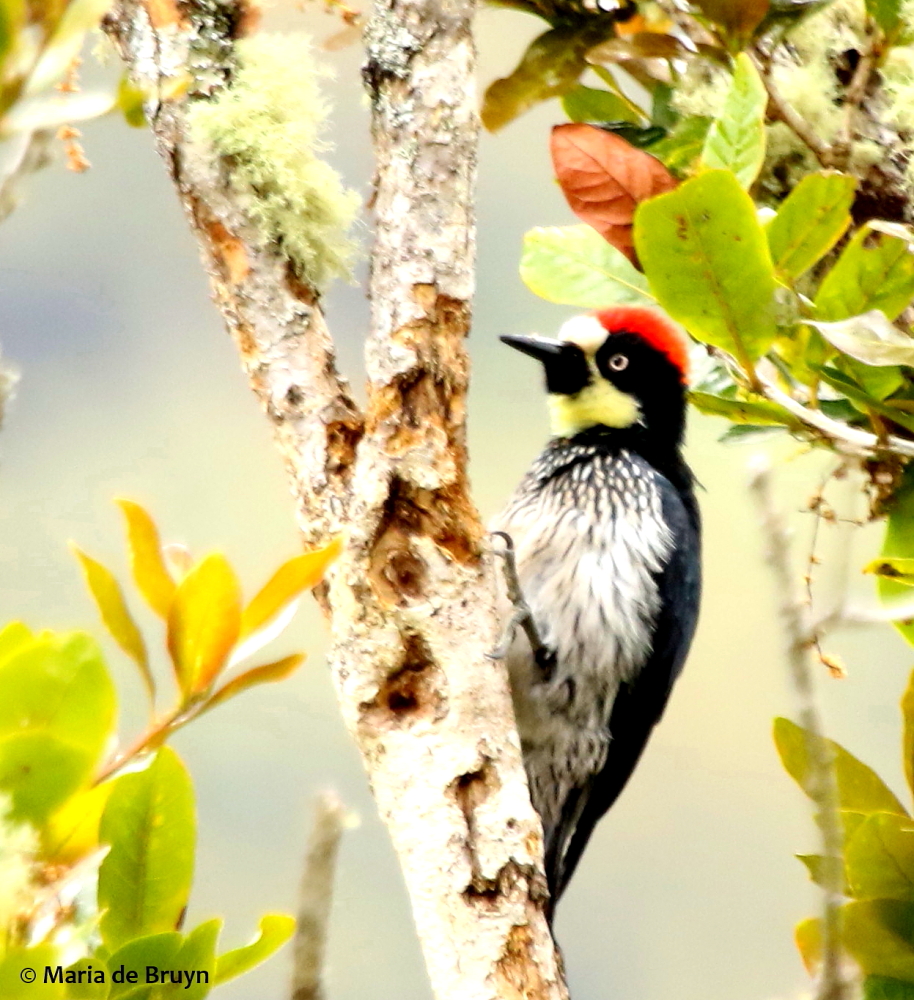
A group of five acorn woodpeckers (Melanerpes formicivorus) came to enjoy the fruit, perfectly willing to share the space with the other birds. These birds, which are also seen in the Western USA, do eat lots of different nuts but insects and fruit are obviously also desired meals.


There were three main species of hummingbirds at the nectar feeders. According to some bird websites, the white-throated mountain gem is only found in Panama, while the very similar gray-tailed mountain gem (Lampornis cinereicauda) is seen in southern Costa Rica. They are beautiful birds, with the females sporting a cinnamon-colored breast and the males a blue-purple crown when the light hits their feathers just right.


The Talamanca hummingbird males (Eugenes spectabilis) have a brilliant gorget and forehead when the lighting is right. The females of this large hummer species lack this coloring but also have a prominent white spot behind their eyes.


My favorite hummingbird at this stop was the lesser violetear (Colibri cyanotus). They have a subtle violet color underneath their eyes and pretty bands of blue in different shades on their tails.


Next up – our visit to the Bosque del Tolomuco!

** Thanks to Janet Kurz for the group photo

Costa Rican rambles 1: a flower-laden arrival

Traveling to countries in Europe, Asia, Africa and the Americas was a privilege I really enjoyed as part of my work in health care, gender and rights for immigrants and people living in developing countries. That frequent travel came to an end due to the circumstances of my retirement, so it was with enormous pleasure that I just participated in my first post-career trip to Costa Rica, giving me the first stamp in my most recent passport!


This was only my second time traveling as part of an organized tour (the first time was in the 1970s on a visit to the Soviet Union). While I would have liked to linger longer in some places, the accommodations and good food arranged by the trip organizer, our birding guide’s wit, our driver’s helpfulness, and my fellow travelers’ good spirits made for lots of laughter, interesting sightings and delicious, companionable meals – and it was relaxed as I didn’t have to worry about how to get somewhere and find a place to stay.

Costa Rica’s natural beauty was a daily delight, and I’d like to share some of what I saw in a series of blogs. Many blogs nowadays are short on text; my blogs will be long with lots of photos, which may be a challenge to some readers in these days of imited time (attention spans) and Internet surfing. But I hope those of you who stick it out will enjoy the descriptions!

Since this was a birding trip, the series will mostly feature avians, but I managed to get some photos of mammals, insects and reptiles, too. But to start, we’ll take a look at the abundant flora in the 10-acre Santo Domingo hotel garden where we spent our first afternoon and next morning. The Hotel Bougainvillea received the Costa Rican National Gardening Association’s award as the best botanical garden in Costa Rica and it was a pleasure to visit.

Not being a botanist and having never studied plants, it took me an inordinate amount of time to identify some of the plants; half-way through my searching, I finally understood that this garden also features tropical plants from other continents. I wasn’t able to ascertain the names of many flowers – if anyone can identify the unnamed ones, please leave a comment!

The bougainvillea were blooming and an African blue butterfly bush (Rotheca myricoides) also caught my eye.


The native Heliconia flowers were abundant and varied, appealing not only to humans strolling about the gardens, but also to the birds who sheltered among them, searched for insects there or drank the floral nectar. Some of these plants are also called lobster claws, parrot flowers and wild plantain.


Some of the 40 species of heliconias can grow up to 30 feet high; there are heliconias whose flowers grow upright and others that hang. Their bracts – modified leaves or scales that surround a flower – may be larger and more colorful than the actual flower.


I quite enjoyed the bromeliads, like this one (Guzmania lingulata); we saw them in abundance throughout the trip and it made me long for some in my own trees.

There were plants with which I am familiar such as lantanas and lilies.


I’ve seen the Angel’s trumpet in the NC Botanical Garden; all parts of this plant are toxic, as my Costa Rican friend Esmeralda pointed out. All seven Brugmansia species are listed as extinct in the wild. These flowers were either Brugmansia versicolor or insignis.


I had also seen the Anthurium and passion flowers (Passiflora coccinea) before.


One tree had me stumped; it reminded me of a mimosa but was different. It took more than an hour searching the Internet but I was finally able to identify it as the pink shaving brush tree (Pseudobombax ellipticum)! It became one of my favorites.


Another favorite, which I would love to have in my garden, is the torch ginger (Etlingera elatior). Near it were some attractive golden shrimp plants (Pachystachys lutea).


A few plants had handy name signs by them, like this mateares cactus (Pereskia lychnidiflora), which is almost extinct in Costa Rica (but abundant in other parts of Central America). It was right next to what looked like a type of prickly pear cactus.

Some of the non-Central American plants were really lovely. The bottle palm (Hyophorbe lagenicaulis) is endemic to Mauritius. The fan palm may have been a native though.


The blue-green jade vine (Strongylodon macrobotrys), which looked like someone had dyed it, comes from the Philippines, while the bright orange flame vine (Pyrostegia venusta) is a Mexican plant.


The lily of the Nile (Agapanthus) is native to Uganda and Kenya.

The balloonplant (Gomphocarpus physocarpus), native to southeast Africa, didn’t look like a type of milkweed to me!

There were some lovely orchids, like a purple one that could be Guarianthe skinneri or perhaps Guaria morada (the national flower) and a yellow one, which I thought was Oncidium sphacelatum.


This type of lady slipper orchid had a name tag but unfortunately I forgot to write down the name!


And then there were the ones I couldn’t figure out.


The garden also featured a couple tables with examples of geological specimens for the mineral and rock collecting enthusiasts.


One part had what I think was petrified wood.

If you visit San José, I’d definitely recommend a visit to the hotel garden. Next up –  wildlife in the garden!