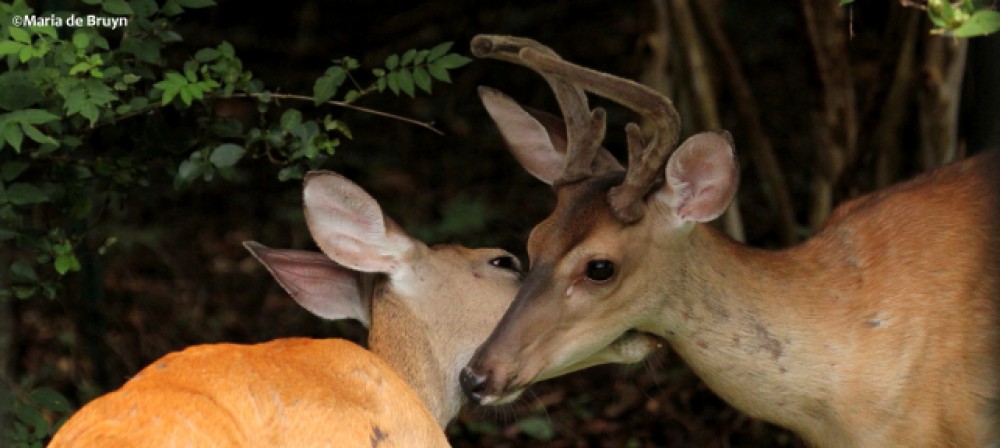
It would be cool if it was a male of the same species as me, but I have come across another species that is giving me great joy when I see it. Ah, pray tell, say you – what or who has won your heart?

 It’s this raptor that has seized my attention and grabbed my thoughts so that I return again and again to spots where he (or she) is known to be seen. I haven’t lost my affection for the many other avian family members, but the graceful flight and piercing eyes of the osprey (Pandion haliaetus carolinensis) have captured my imagination for sure.
The osprey’s beautiful face with a black stripe highlighting its focused gaze is actually more attractive to me than its bird of prey cousin who delights so many, the bald eagle.
 Over the past few months, I’ve discovered I’m not the only osprey fan around. During various visits to Jordan Lake, I’ve now met at least 8 guys who devote themselves to photographing raptors. They tend to get more excited when spotting an adult or juvenile eagle, but they will definitely train their zoom lenses in the direction of osprey looking for a meal.
 The ospreys circle round and round in the air high above the lake, training their eyes on the water because their superb vision allows them to see the fish underwater.
Sometimes, fish jump out of the water fairly close to me, leaving an ever-widening circle wavelet which is a give-away of their presence. Yet the osprey often ignores those tell-tale signs and looks elsewhere – often at a good distance from where I am so that my shots are mostly from far away and a little blurry. But that gives me motivation to return again and again, hoping for a sharply focused close-up one day!
The bird’s wingspan averages 127–180 cm (50–71 in) and they can weigh up to 2.1 kg (4.6 lb). Interestingly, ospreys are found in all continents except Antarctica, so this family has gotten around!


They are fairly successful hunters. It’s not unlikely to see one beginning a dive, only to halt its descent half-way, apparently deciding that a plunge won’t be rewarding. They begin their dive head first. Then, at the last minute they flip upright so that they enter the water feet first, with claws spread wide and ready to snatch their prey.


Very often when they crash down into the water, closing their nostrils so that they don’t get waterlogged heads, they arise with a fish. Like owls, ospreys have reversible outer toes which help them grab their slippery prey with two toes in front and two behind.
 If the fish is large, the bird may have a bit of a struggle to arise from the water while gripping its meal tightly in its talons. Apparently, if the fish is too large, an osprey may not be able to let go and then can drown; luckily, I’ve not witnessed that.
 It’s not unusual to see them holding their capture in only one foot , however. Sometimes, they will circle for quite a while holding their fish before they head for a tree where they can eat it at their leisure.


Ospreys usually mate for life and they re-use nests from one year to the next. Some nests have been in use for as long as 70 years. These birds often live 7-10 years, but some individuals have been known to survive up to 20-25 and even 30 years.
My fellow raptor photo-graphers and I are not the only osprey fans around. More than 50 international postage stamps have featured this bird of prey and sports teams have been named after them (sometimes using the nickname Seahawk).
David Gessner, a nature writer based at UNC-Wilmington, has written a couple books about osprey and I was recently lucky enough to get Soaring with Fidel at a bargain price. I’ve just begun reading his adventure in following the ospreys’ migration and expect it will heighten my enjoyment of the photographic pursuit. Knowing these beautiful birds will be soaring overhead when I visit lakes and ponds has certainly made me one of their faithful fans; we’ll be seeing one another for some time to come!
 Several years ago, as I was beginning to photograph wildlife more seriously, I became quite excited at the North Carolina Botanical Garden. Buzzing around some profusely blooming flowers was what I thought might be the smallest hummingbird I had ever seen. I was not used to taking shots of something that was in almost constant motion, but I persisted until I got photos that made it at least a little recognizable. I lost the original photo when both my computer and my back-up hard drive crashed at almost the same time, but I “rescued” one of those first photos from a Word document.
 I soon learned that what I had seen was actually an insect – a hummingbird clearwing moth (Hemaris thysbe) to be precise. This is likely one of the first insects that I ever got enthusiastic about.


 Their caterpillars are called hornworms as they have a horn at the rear; I have not seen one yet but they must be around somewhere. They pupate in leaf litter and on the ground; since I leave the fallen leaves around, I’ve been providing them with a childhood and adolescent home! And that’s good as I really look forward now to welcoming them to my yard each year!
 We usually don’t know who gave a bird species its common name and sometimes may scratch our heads wondering how and why someone ended up choosing a particular name. But birders faithfully learn to identify birds with those names, even when they may seem illogical. For example, many people would have chosen to call red-bellied woodpeckers red-headed woodpeckers since the reddish belly feathers are much less obvious than the red on the back of their heads.


 Much of the insect world consists of animals that we usually don’t even see or notice because: a) we don’t know they exist and therefore don’t look for them and b) they are tiny and only well visible with an enlarging lens. But once you get a good look at them, they turn out to be fascinating and sometimes quite attractive. One group of these insects is the hoppers – leaf- and planthoppers, that is, like the gray lawn leafhopper (Exitianus exitiosus) to the left.
 Leafhoppers are only 1/16 to 5/8 of an inch (2-15 mm) long. About 20,000 different leafhoppers have been described around the world; they feed by sucking plant sap from grass, shrubs, or trees. Planthoppers, some of which look like leaves and may be a bit bigger, also feed on plants.The nymphs (juveniles) are tiny, too, as seen in this photo where you see my fingertip above the nymph of an Acanaloid planthopper .
 a delicate little fly while resting.
 Versute sharpshooters (Graphocephala versuta) in love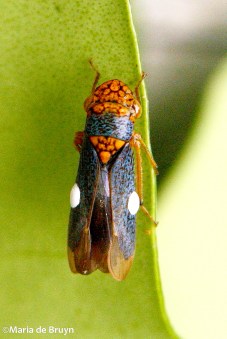


 Planthopper nymphs, like the two-striped planthopper (Acanalonia bivittata) and the Acanalonia servillei below, are known for producing waxy strands from their bodies which repel water. These strands also help protect them from predators, who might grab onto the showy white hairs, which break off so that the hopper can escape. The nymphs can ultimately be entirely covered in white wax.


 I imagine there are many more interesting behaviors to observe with the hoppers. Maybe one day I will get a macro lens so that I can really get some good photos of these cute little insects. In the meantime, as there are several thousand species in North America, I can look forward to finding new ones – with my camera in hand as I wouldn’t be able to see anything but specks on plants without it!
 So, in honor of International Cat Day 2014, a departure from wildlife to celebrate my family cats. My household is currently graced with three feline companions, two males and a female. Jonahay, the senior cat, is 15.5 years old and the only one allowed to go outside now and again. According to my vet, he is the strongest cat and most stubborn cat he has met – it has taken two guys over 6 feet tall to try and hold him down to get a pill into him. In the end, they gave him a shot while he was immobilized.
 thing but to bring interesting, living and moving “toys” inside. Over time, I had to remove birds, a baby rabbit, chipmunks, garter snake and field mouse from inside the house. During that time, only a couple birds and a couple mice did not survive when he clamped down a bit hard to prevent them from getting away or me taking them from him. Now, he will sit in the yard or rest on the front porch rocker with a squirrel or bird two feet away and just cast them a glance. The only creature that will rouse him for a chase is a chipmunk – for some reason, he still finds them too cool to leave alone.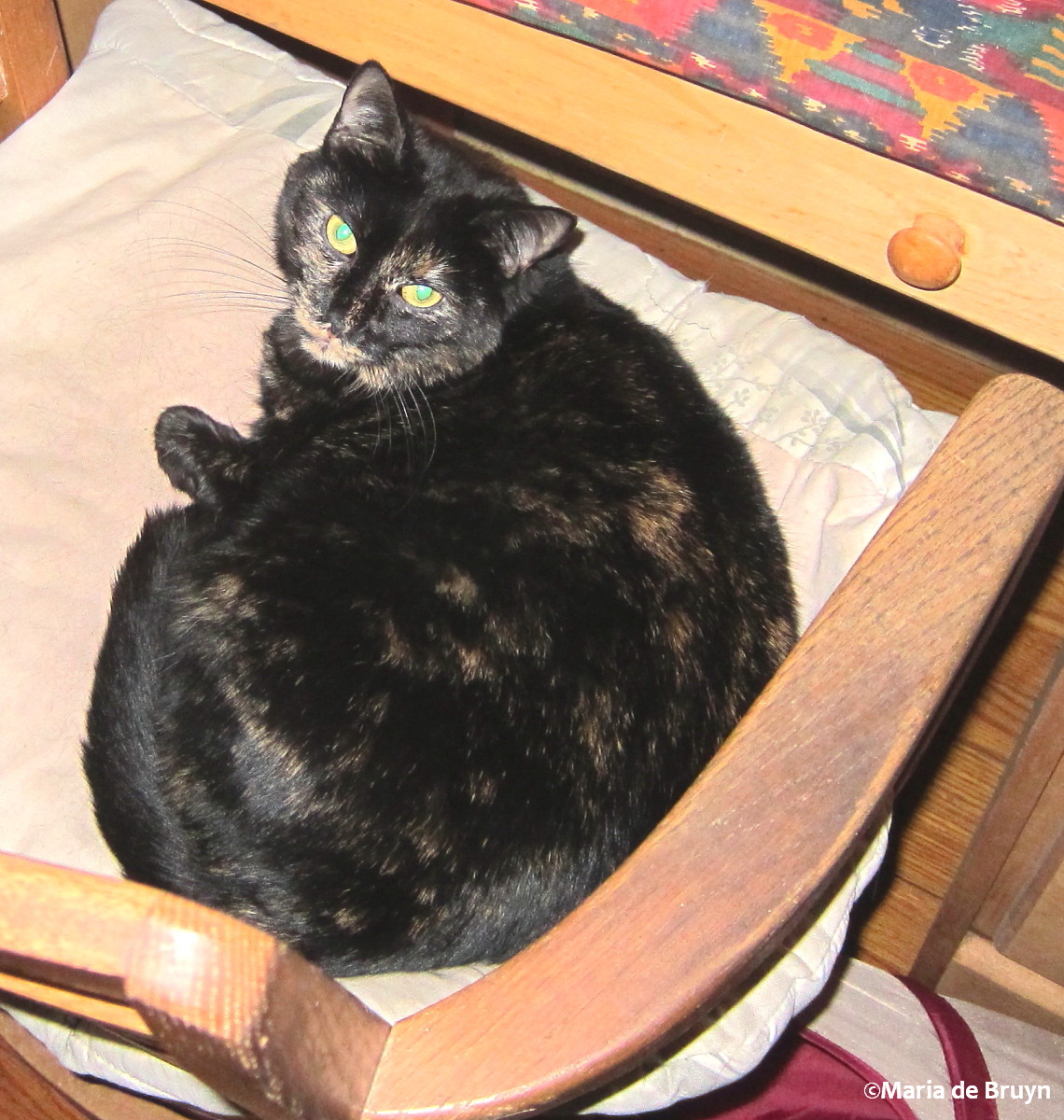
 he mouth and in obvious distress – she had likely eaten a stink bug, which is not a good thing for cats. About a week ago, she yelped with an open mouth and had some pain; a wasp that had gotten into the porch was gone.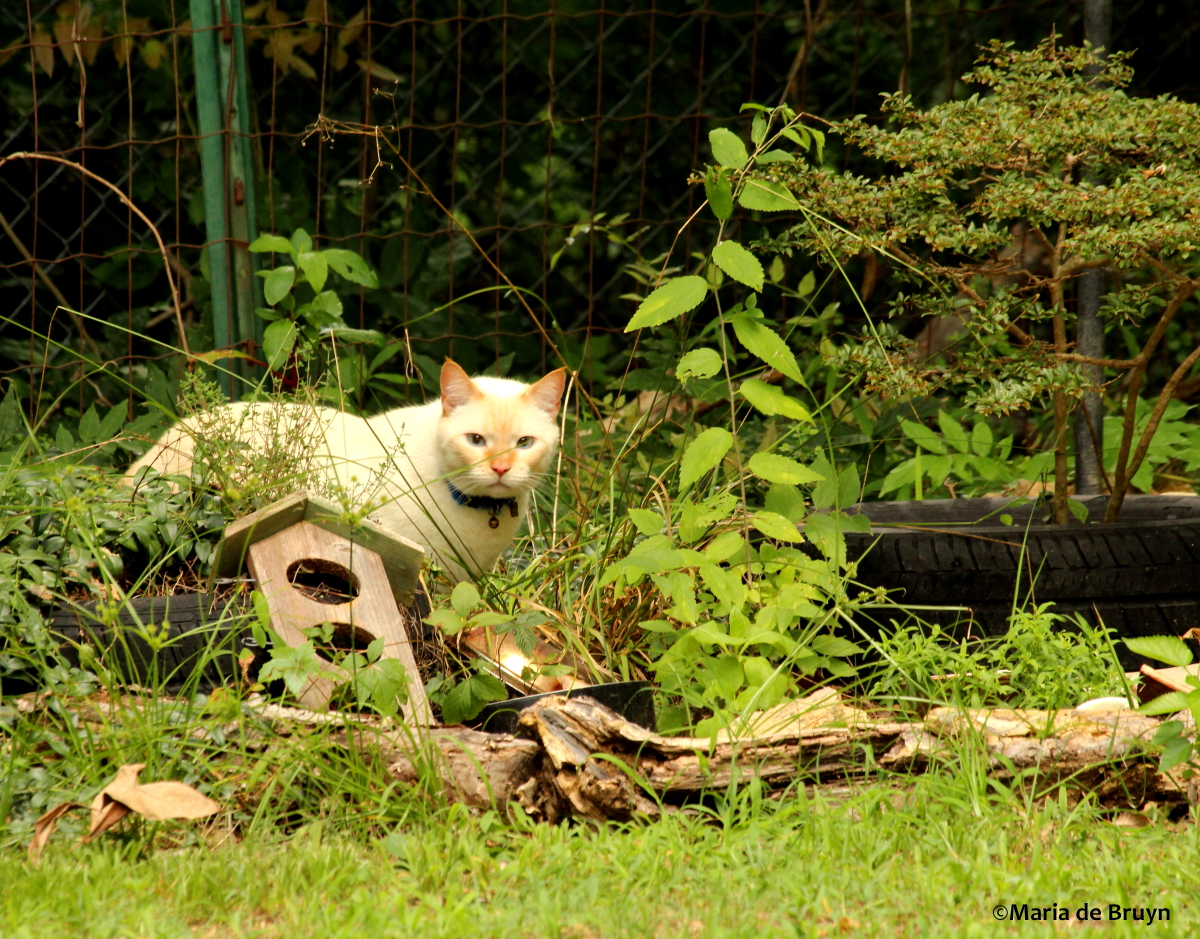
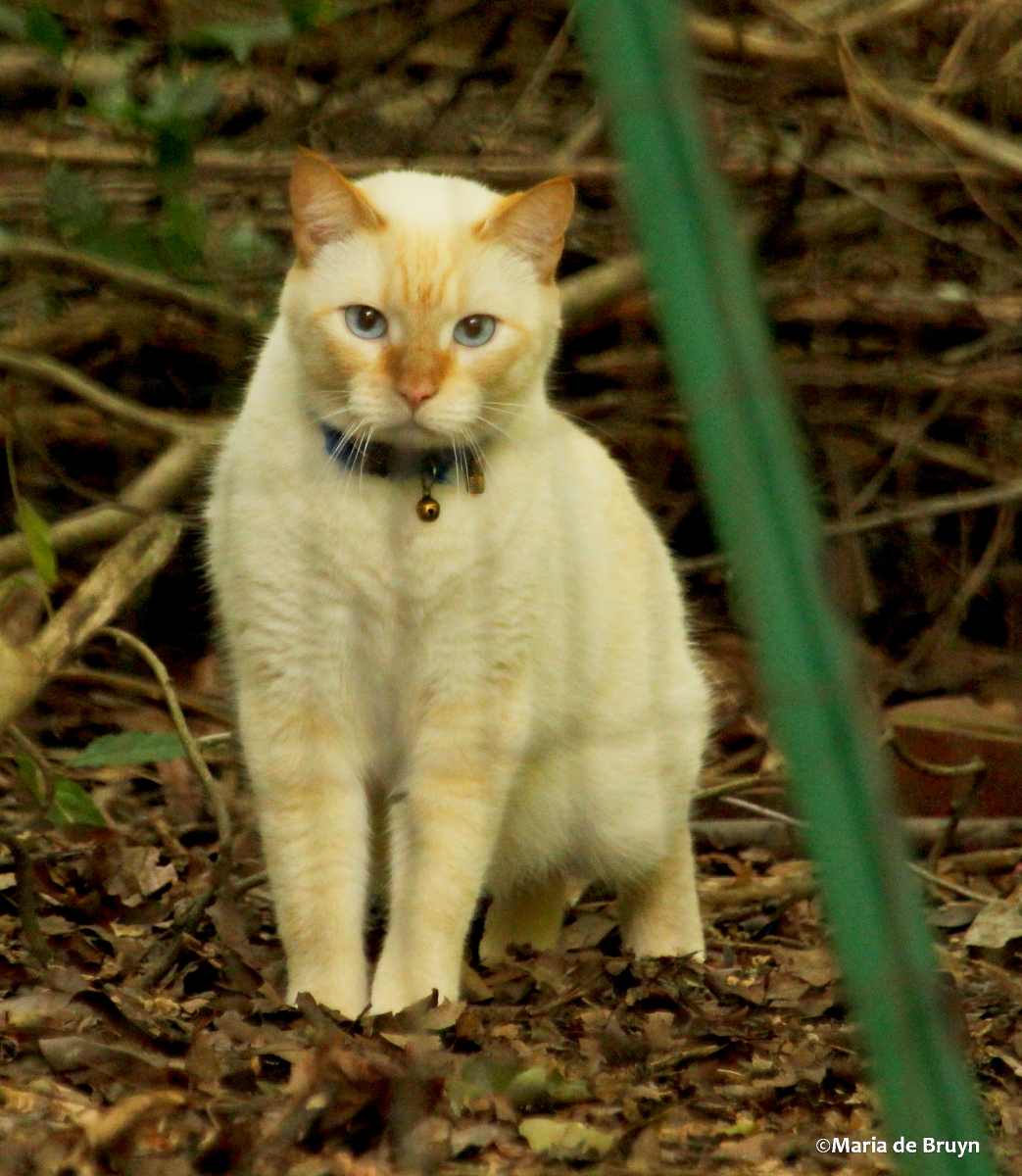

 ther day, Ogi made another great escape. He hung out by the ground feeding station and stayed put until one deer came too close.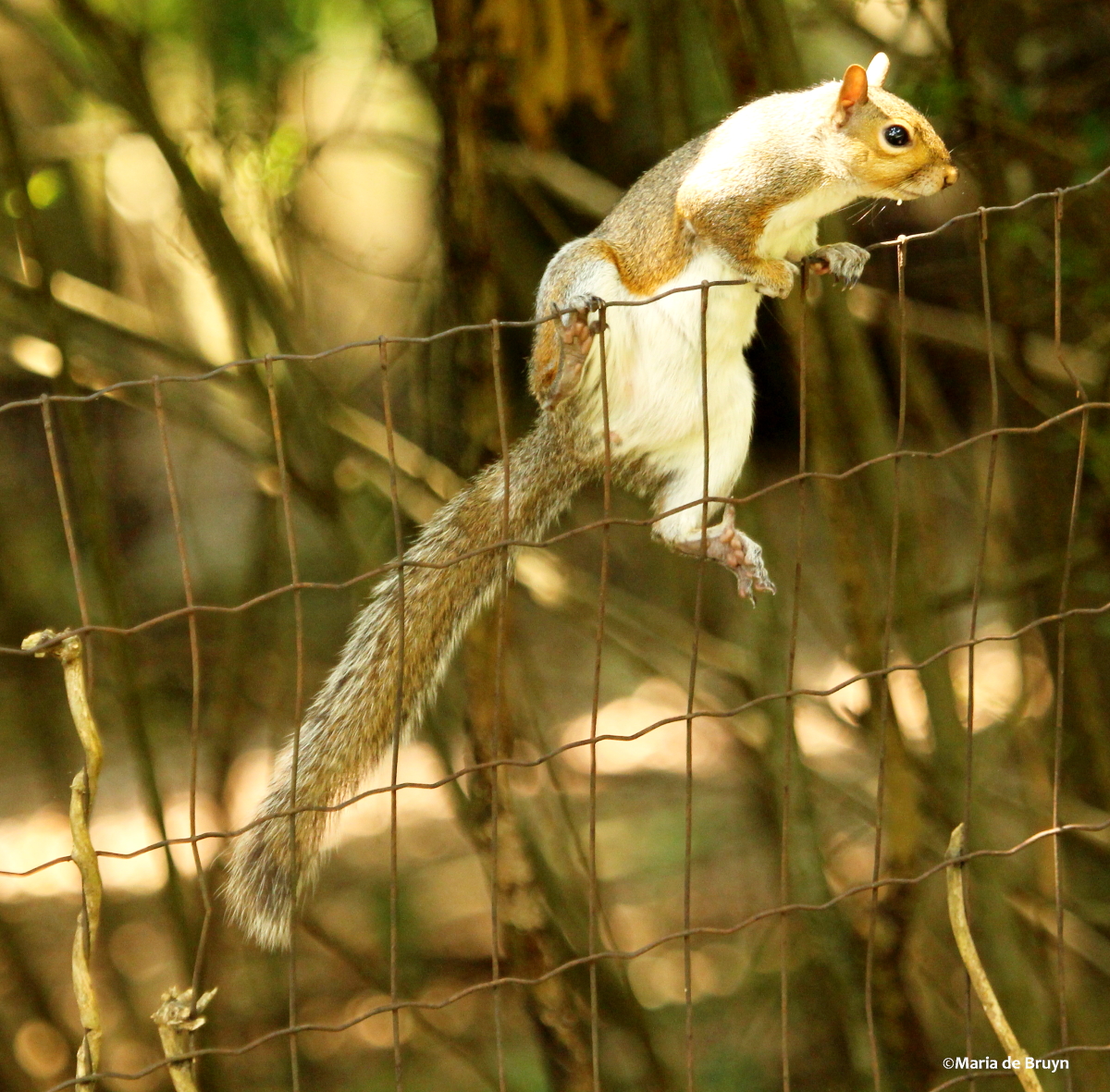


 My beautiful world