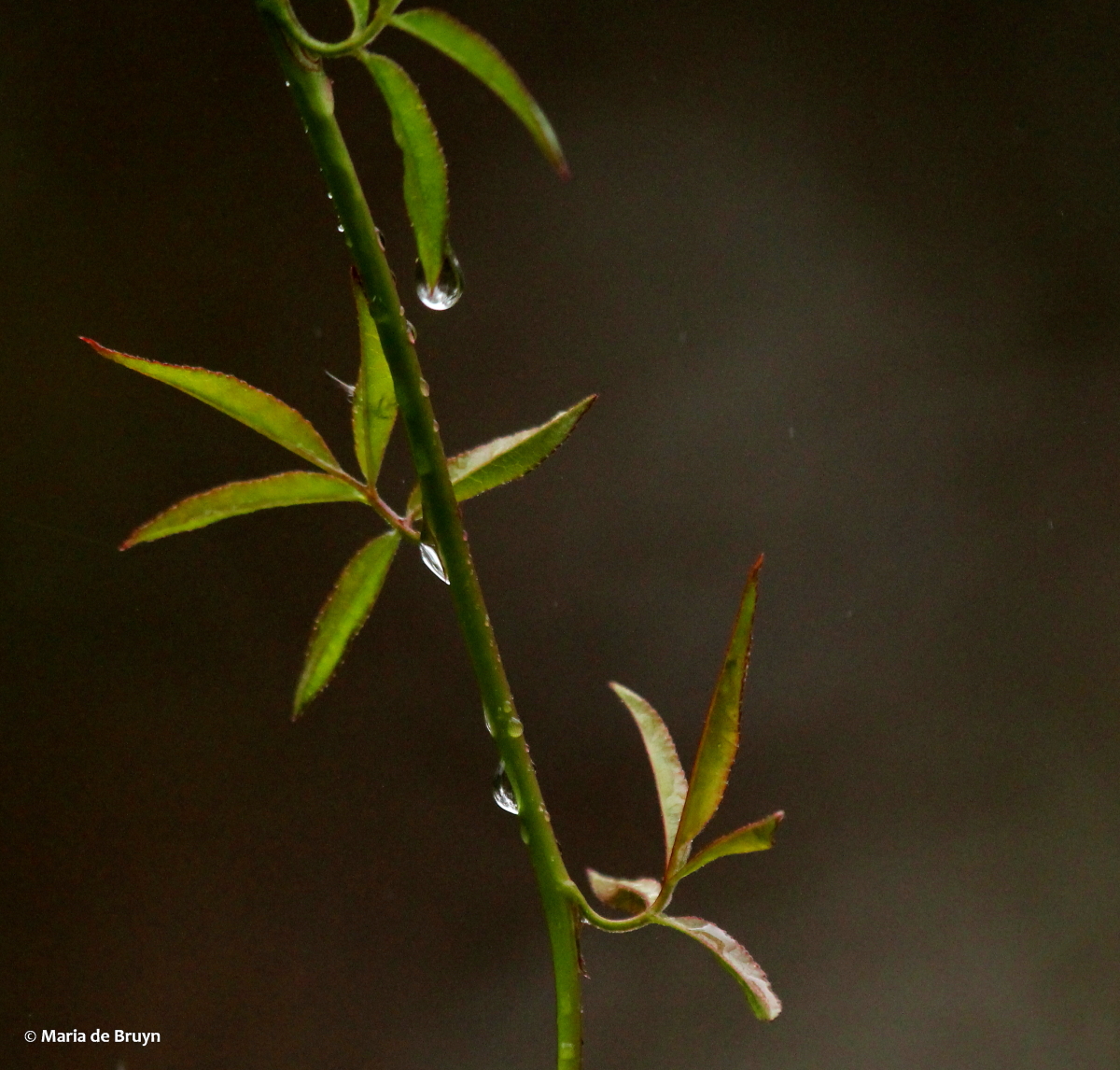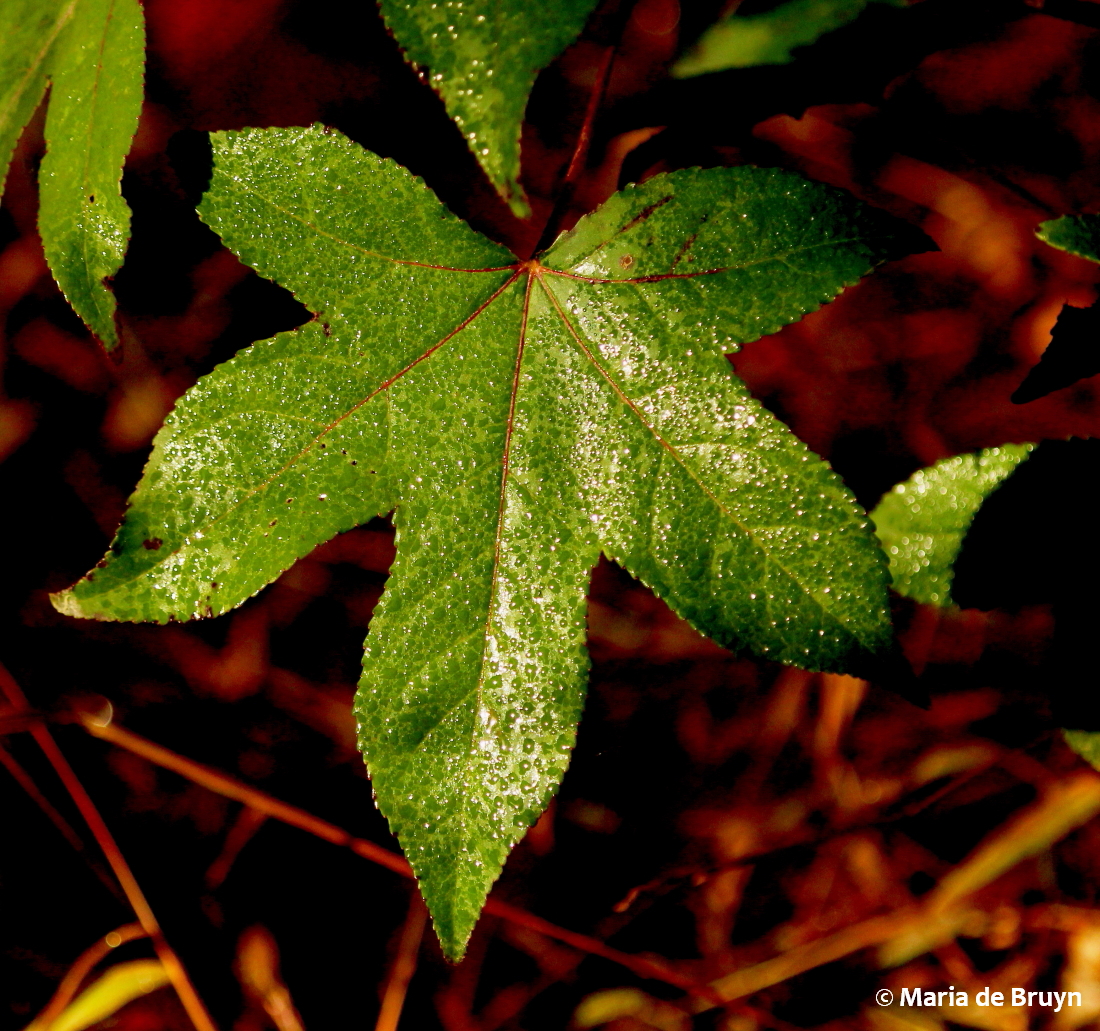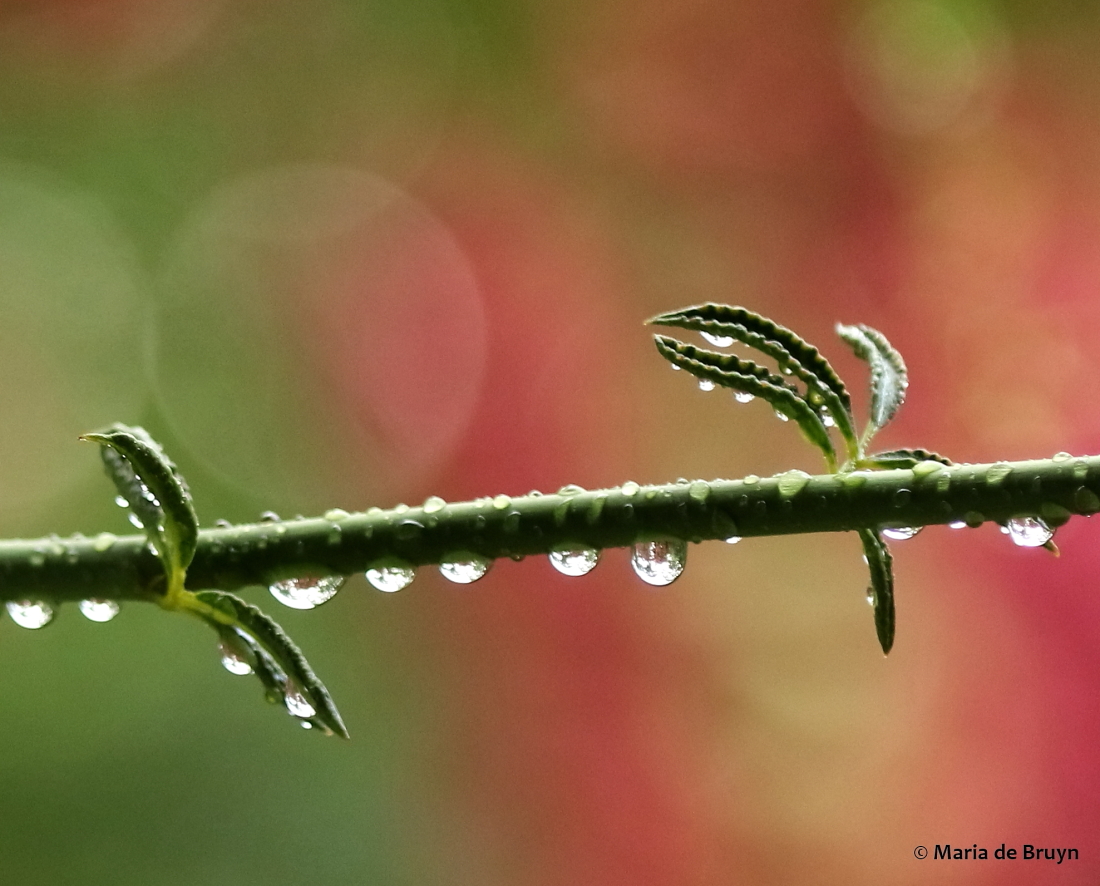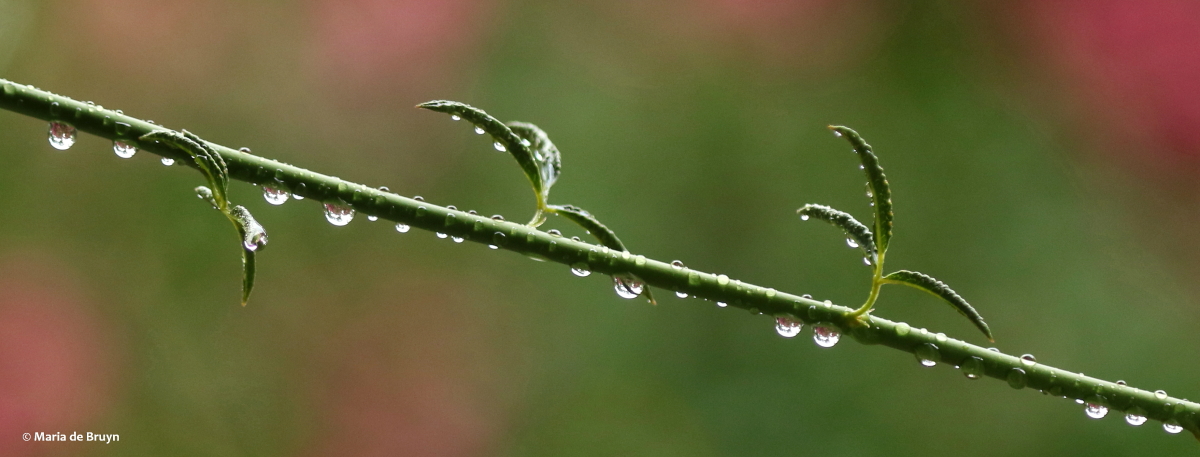
A wildflower walk with surprises!

owl IMG_3036© Maria de Bruyn resThis past Saturday morning, we awoke to water streaming from the heavens in quite a heavy downpour. A local conservation group, Friends of Bolin Creek, had scheduled a wildflower walk to see some of our ephemeral spring blooms but the wet conditions were not inviting. A decision to postpone the walk to early afternoon was taken – and the weather-people had gotten it right – the sun began shining at mid-day and the temperature rose, creating lovely conditions for a walk after all. A large owl (later revealed to be granddaughter Kate of the group’s president) greeted the small group of intrepid walkers and we set off to see what we could find.

Southern arrowwood IMG_3039© Maria de Bruyn res

Our first flowers were the not-yet-open blooms of a Southern arrowwood (Viburnum dentatum). We passed numerous black and yellow millipedes on the paths and then found another millipede species (Narceus americanus) curled up next to a little brown jug (also known as arrowleaf heartleaf, Hextastylis arifolia var arifolia).

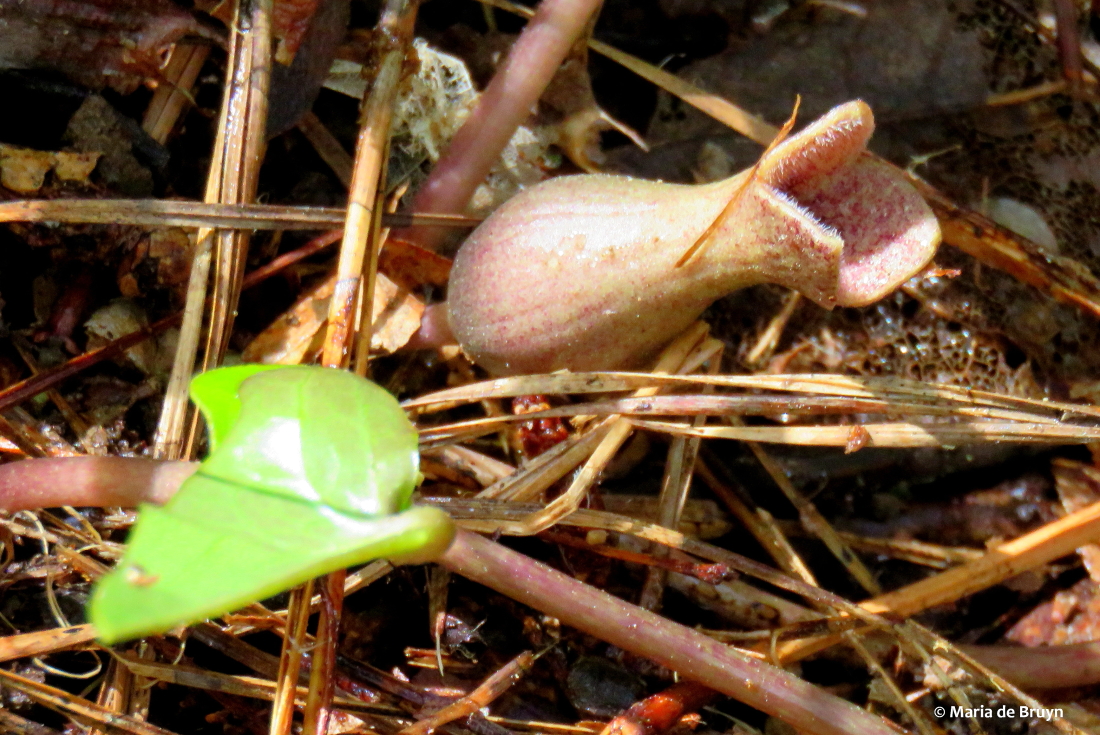
millipede IMG_3052© Maria de Bruynlittle brown jug IMG_3048© Maria de Bruyn

We came across other nice specimens of the plant, including one with four small flowers.

little brown jug IMG_3138© Maria de Bruynlittle brown jug IMG_3141© Maria de Bruyn

The painted buckeye trees (Aesculus sylvatica) were blooming profusely with their greenish-yellow flowers.

painted buckeye IMG_3070© Maria de Bruynpainted buckeye IMG_3492© Maria de Bruyn


Eastern spring beauty IMG_3089© Maria de Bruyn


Clusters of Eastern spring beauties (Claytonia virginica) were in their vicinity.
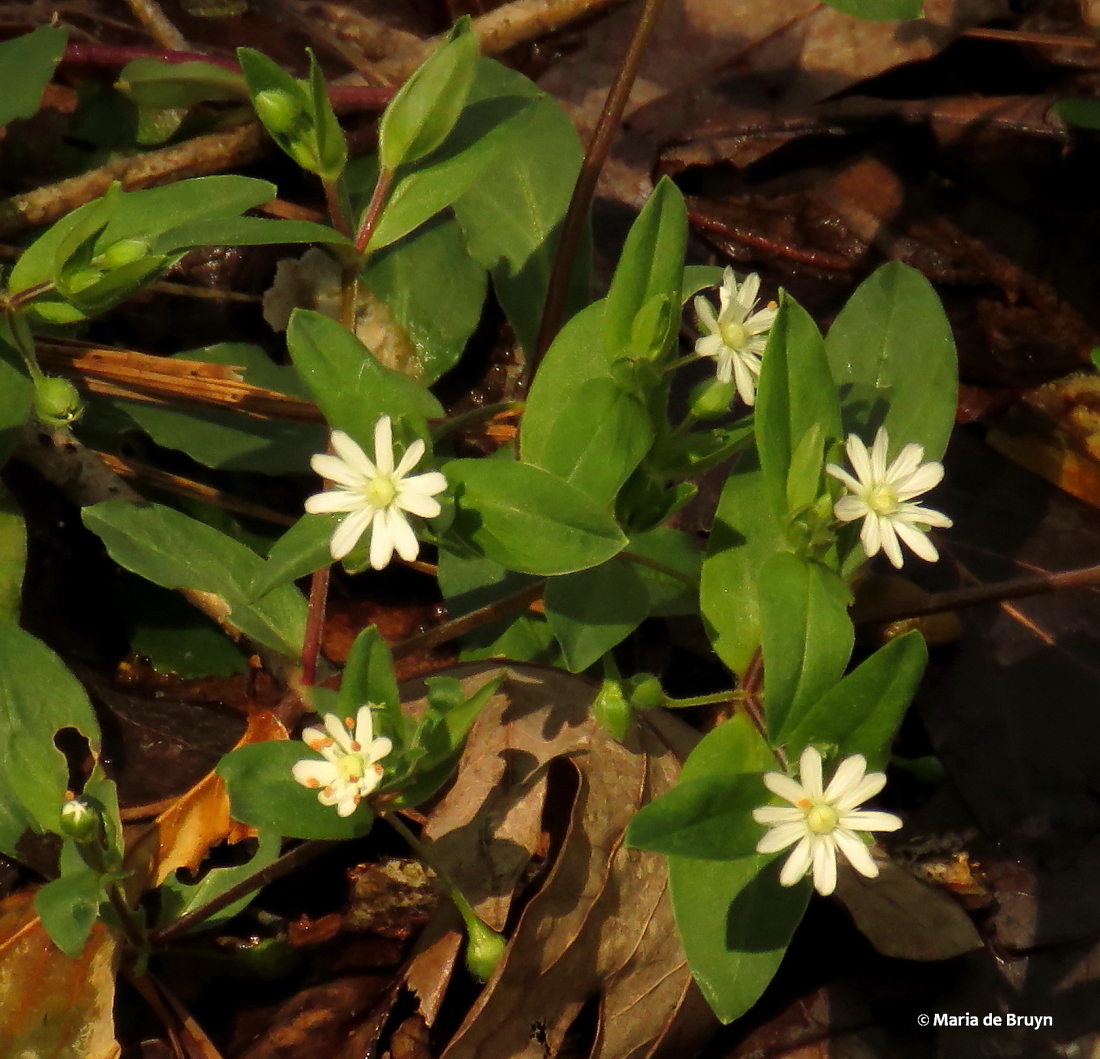


star chickweed IMG_3095© Maria de Bruyn


Some of the star chickweeds (Stellaria pubera) were near another white bloom, the rue anemones (Thalictrum thalictroides).


rue anemone IMG_3110© Maria de Bruyn rue anemone IMG_3109© Maria de Bruyn

Both the trout lilies (Erythronium americanum) and cranefly orchids (Tipularia discolor) had already bloomed, the trout lilies about 7-10 days ago and the orchids in the winter (when there are no leaves). One orchid had left behind its brown stalk as a witness to the flower that had seen the light.
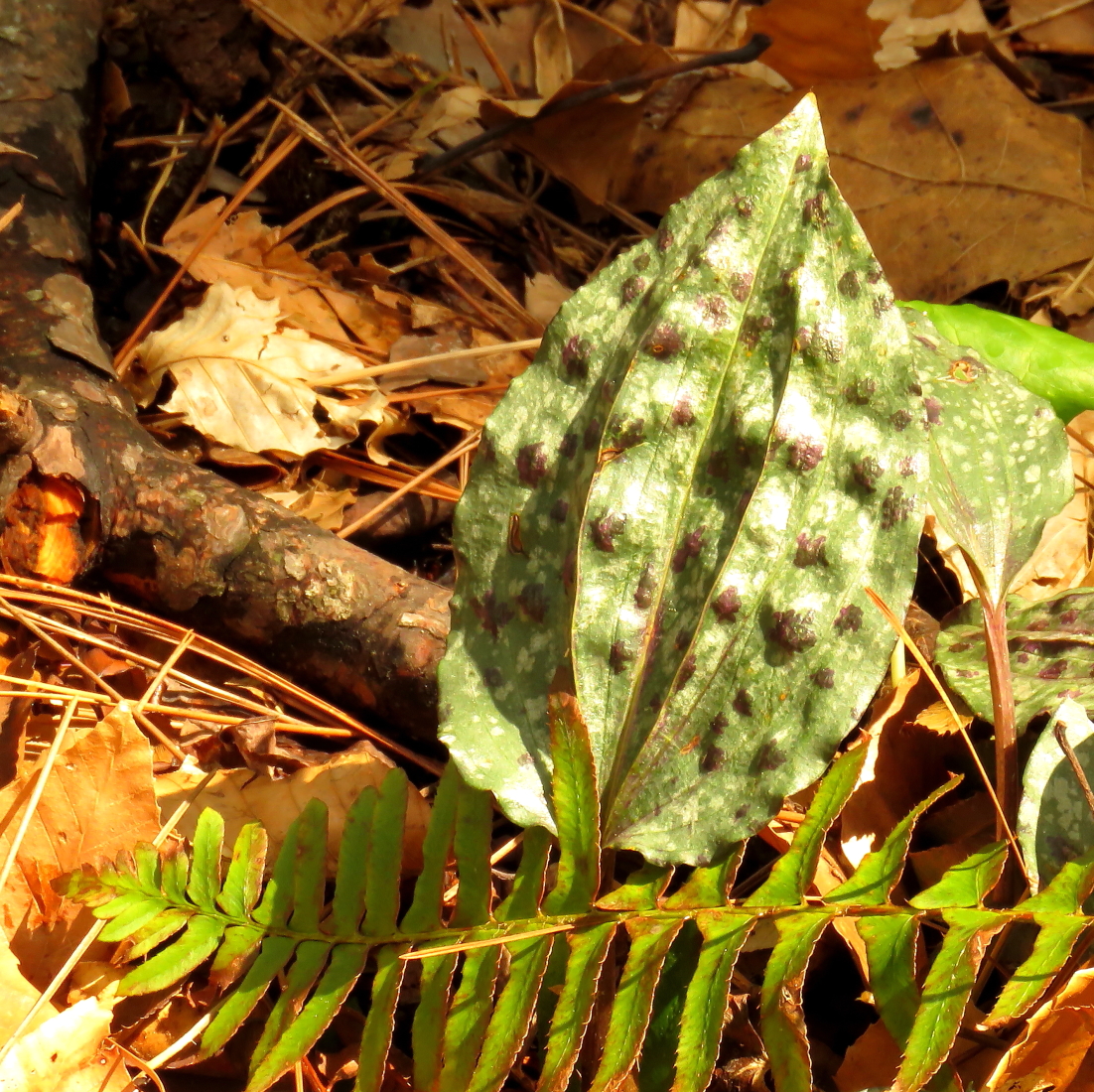
trout lily IMG_3156© Maria de Bruyncranefly orchid IMG_3148© Maria de Bruyn

Tiny bluets (Houstonia pusilla) in clusters here and there provided some variation from the ubiquitous white blooms that we were seeing. The mayapples (Podophyllum peltatum) were just emerging and it will be a little while before we see their flowers emerge underneath the leafy umbrellas.

tiny bluet IMG_3118© Maria de Bruynmayapple IMG_3196© Maria de Bruyn


Bolin creek IMG_3165© Maria de BruynThe creek was running high and fast and we debated on crossing it at the first branch. Only two of us had wellingtons (and one lady found that her boots leaked); others were wearing running and walking shoes but everyone made it across by using stones, canes and walking sticks that some of our group had brought along. Our immediate reward was a view of a gorgeous pinxterbloom wild azalea (Rhododendron periclymenoides).

pinxterbloom azalea IMG_3174© Maria de Bruyn

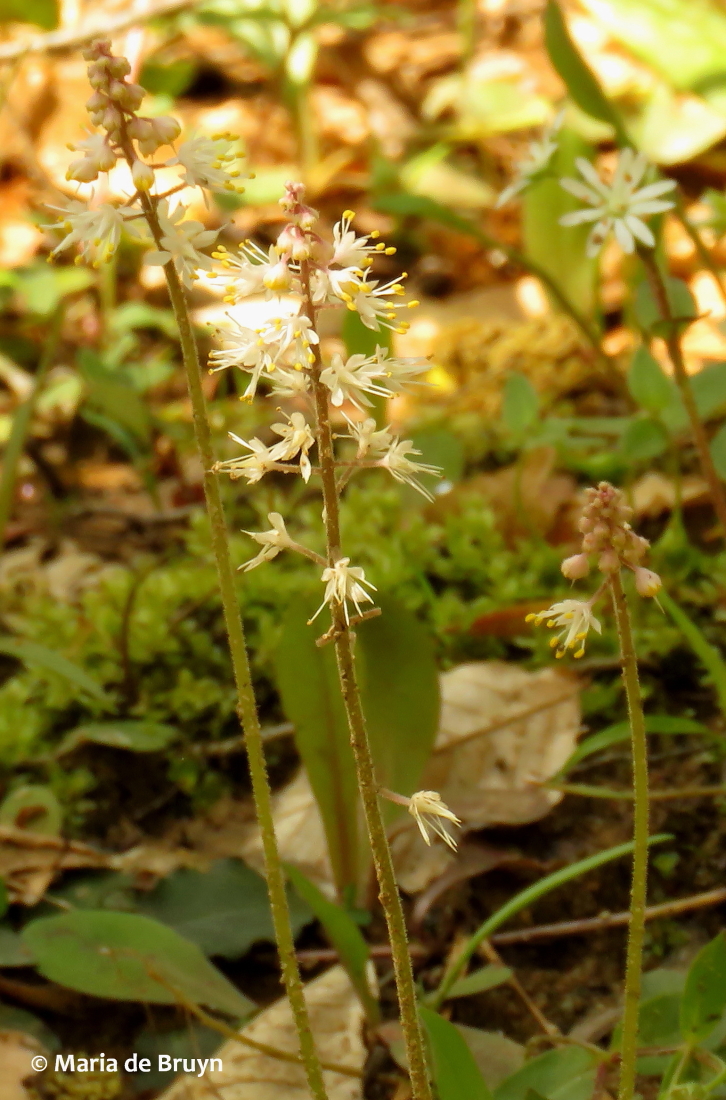
foamflower IMG_3180© Maria de Bruyn


A sighting of a foamflower (Tiarella cordifolia), followed by a cutleaf toothwort (Cardamine concatenata) provided a bit more color, as did the littleleaf buttercup (Ranunculus abortivus), although its blooms were not fully expanded yet.
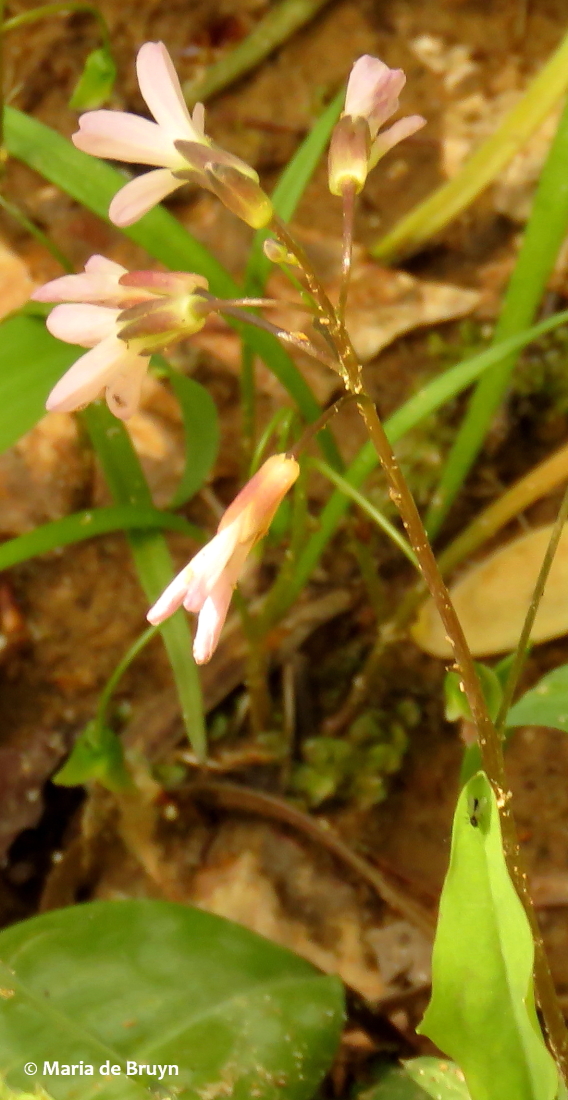
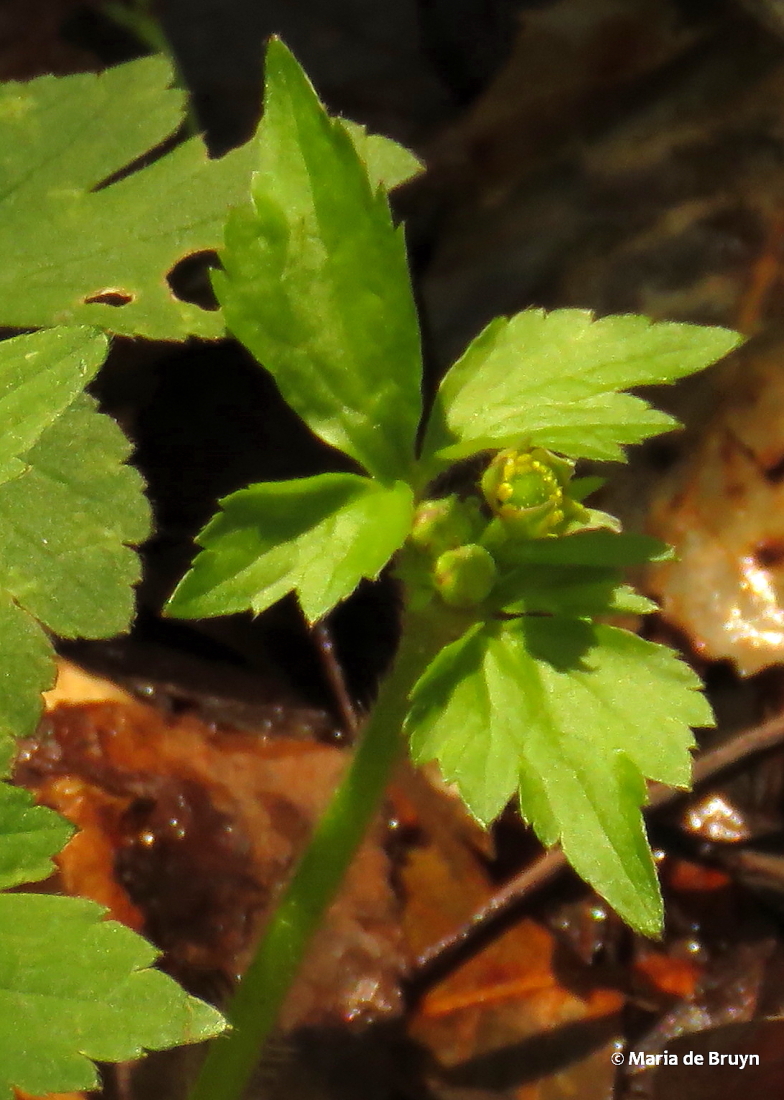
 

cutleaf toothwort IMG_3187© Maria de Bruynlittle leaf buttercup IMG_3092© Maria de Bruyn

Only the jigsaw puzzle-like leaves of the bloodroot (Sanguinaria canadensis) were in evidence as that flower had stopped blooming already. A tufted titmouse singing overhead (Baeolophus bicolor) gave us a nice little concert as compensation.

bloodroot IMG_3198© Maria de Bruyn tufted titmouse IMG_3201© Maria de Bruyn

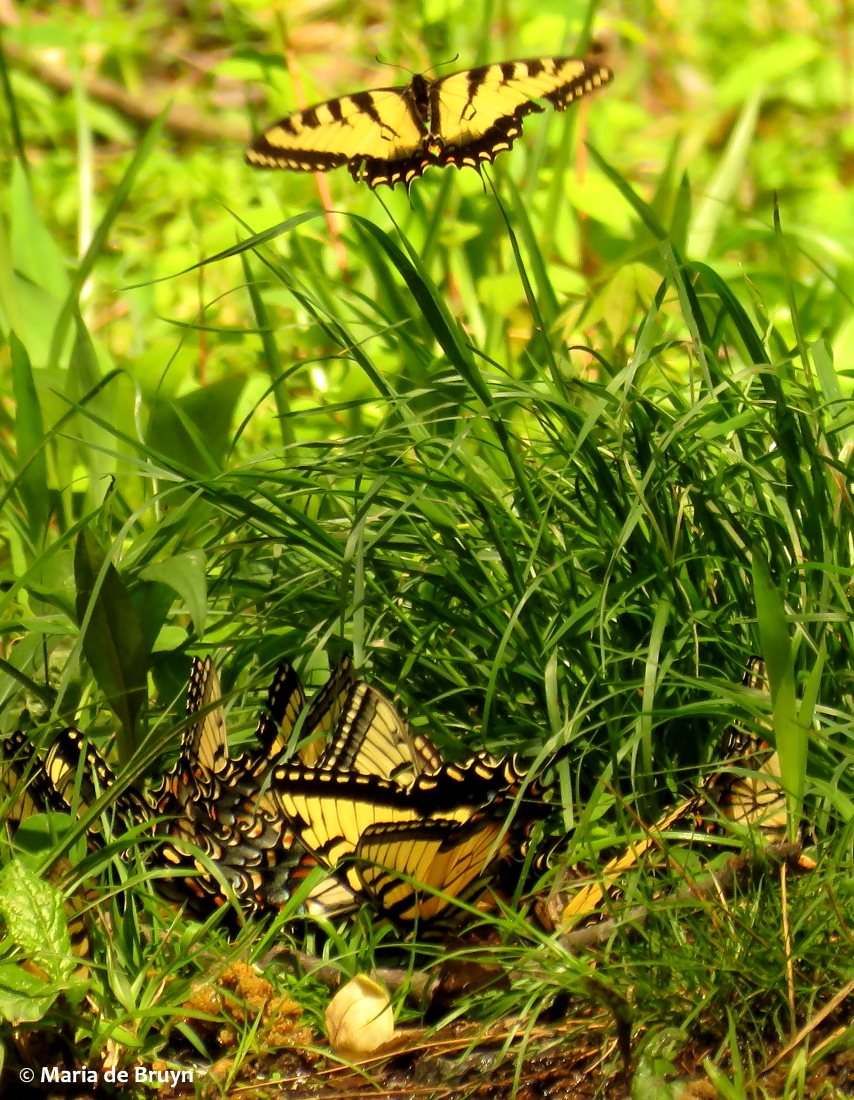
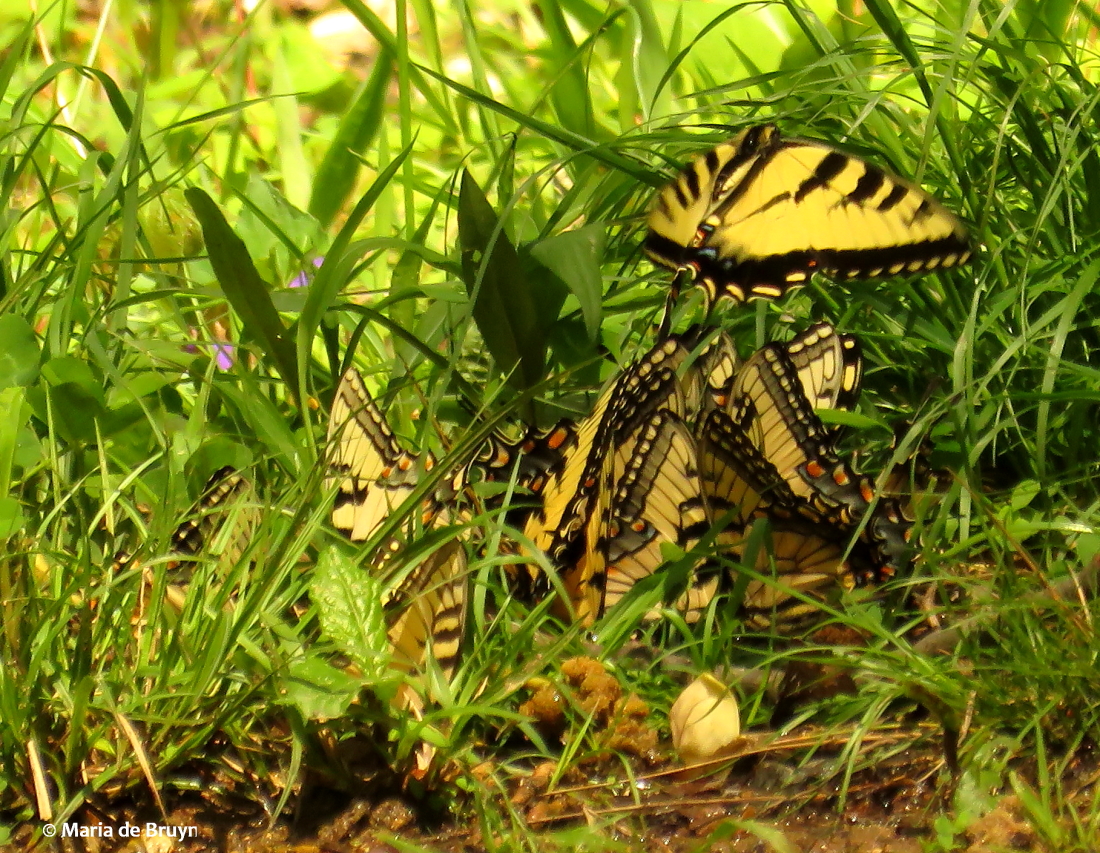
Eastern tiger swallowtail IMG_3428© Maria de Bruyn resAnd then we came across our three surprises of the walk. We had already seen several Eastern tiger swallowtail butterflies (Papilio glaucus) fluttering by in one’s and two’s and we remarked how welcome they were because of the paucity of butterflies we had had the past couple years. But then across another branch of the creek, we spotted some 12-20 butterflies congregating over some delicacy of unknown (to us) origin.
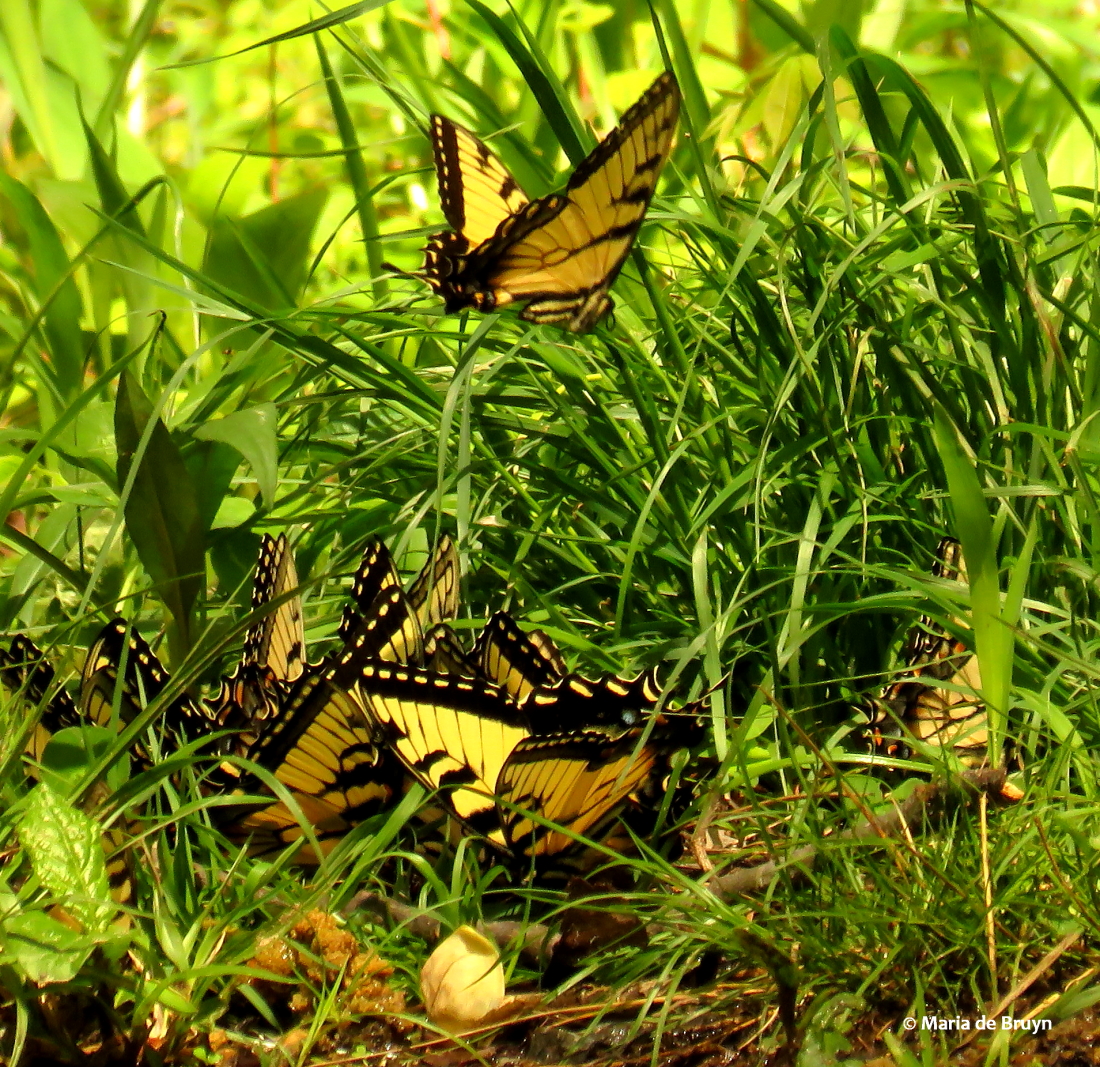
Eastern tiger swallowtail IMG_3259© Maria de Bruyn res Eastern tiger swallowtail IMG_3263© Maria de Bruyn res

The water was fairly deep and flowing fast, so we did not cross but we surmised that someone’s dog had left a pile of poo to provide a mud-puddling butterfly feast.

Eastern tiger swallowtail IMG_3443© Maria de Bruyn res Eastern tiger swallowtail IMG_3447© Maria de Bruyn res

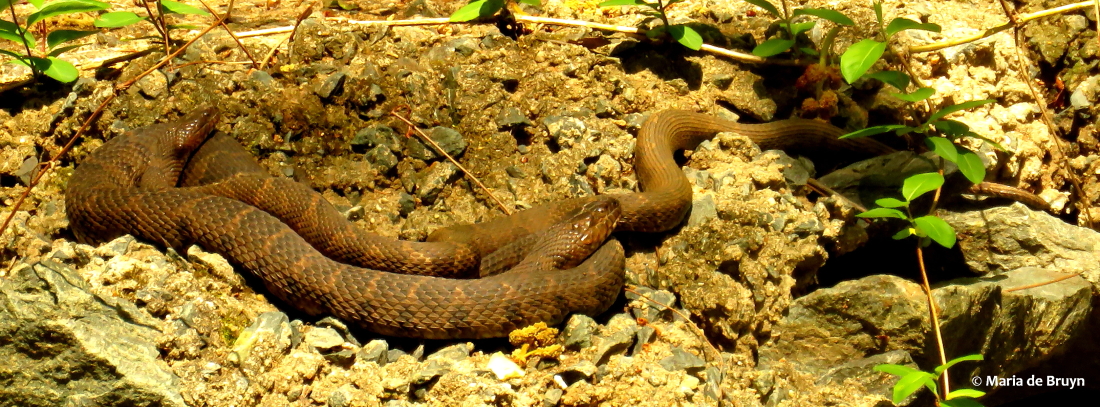
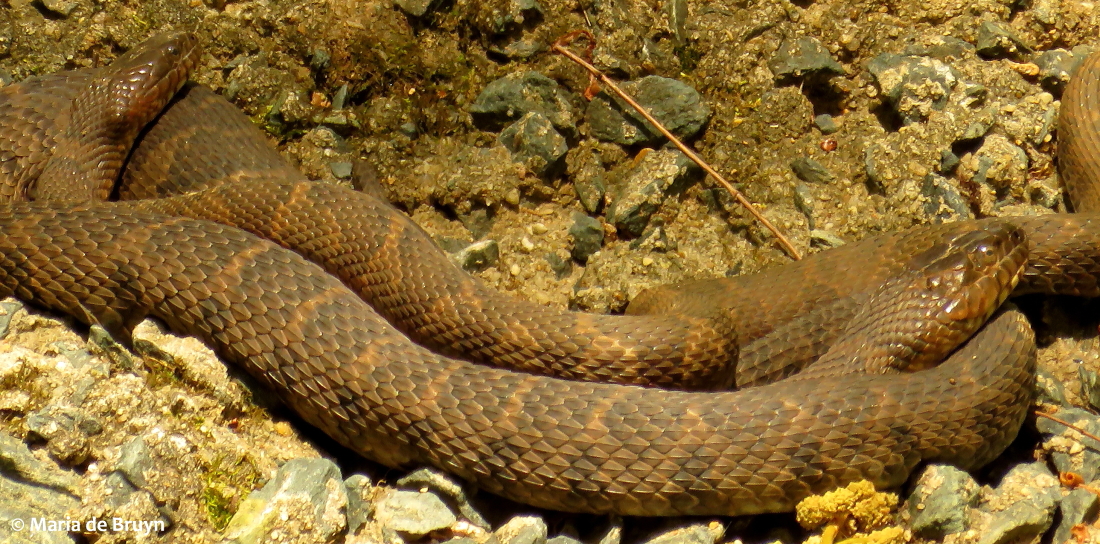
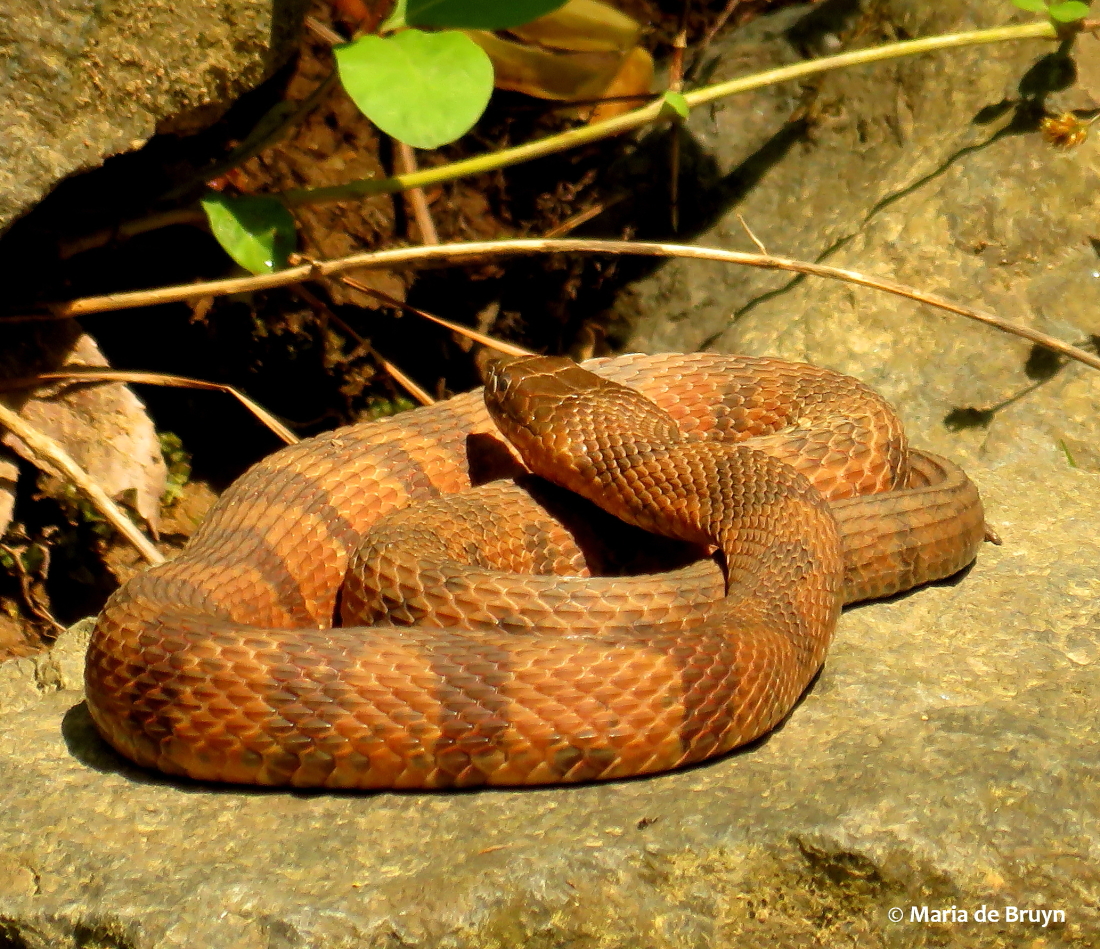
Then we noticed on a rock just below the bank under the butterflies where two Northern watersnakes (Nerodia sipedon) were having a little rest.
northern watersnake IMG_3406© Maria de Bruyn

northern watersnake IMG_3408© Maria de BruynThey were a bit dull in color, which became quite obvious when compared to a third northern watersnake that we spotted on a rock closer to the creek – perhaps a younger individual who had decided that a sunbath was just the thing for a Saturday afternoon.
northern watersnake IMG_3241© Maria de Bruyn northern watersnake IMG_3349© Maria de Bruyn

While we were all enamored with the flowers we’d seen, the butterflies and snakes gave our walk a special feel.
bugleweed IMG_3501© Maria de Bruyn


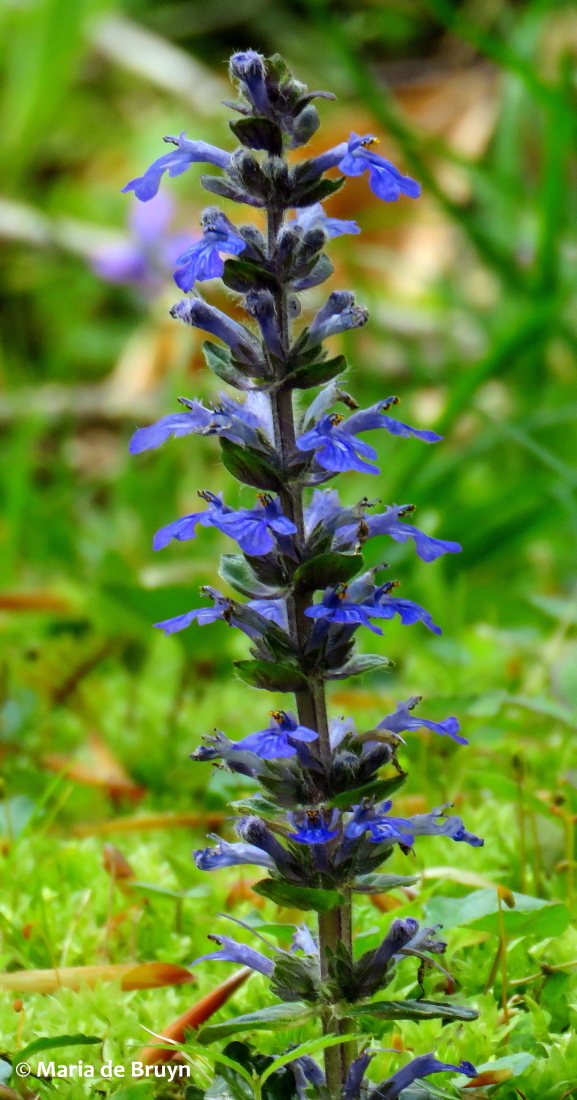
On our return trip through the woods to reach our transportation, we came across an invasive plant, the bugleweed (Ajuga reptans). We had already seen plenty of Japanese wisteria, mahonia, privet and autumn olive and agreed that another volunteer day to weed out some invasives would be a good contribution to the preserve. But that is for the future – right now, we are happy to think back to our surprise spottings!
April’s fool – this is NOT a flower!


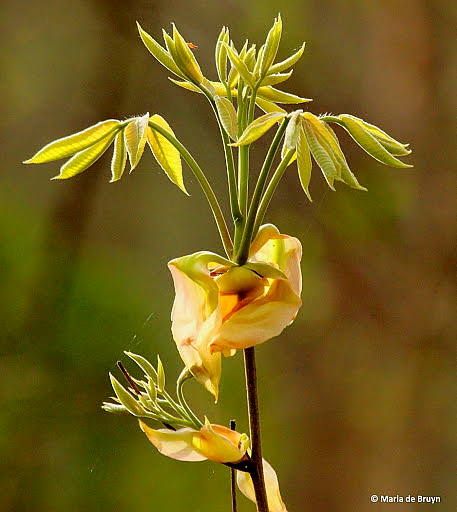
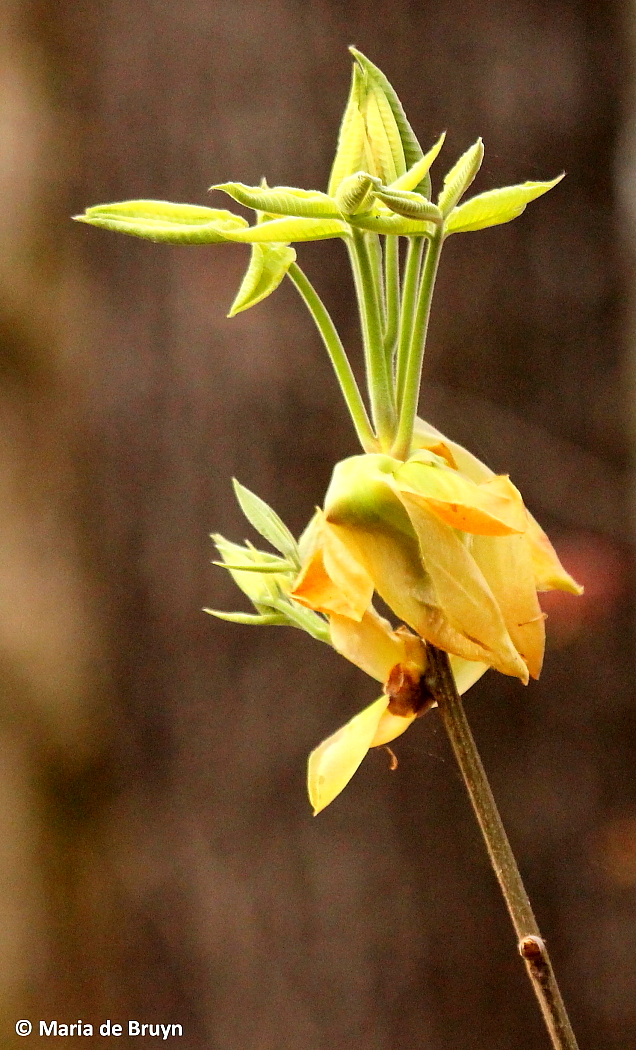
shagbark hickory I77A7704© Maria de Bruyn resDuring North Carolina’s early spring weeks, visitors to wooded areas may be delighted by newly emerging shagbark hickory saplings (Carya ovata).

shagbark hickory I77A7683© Maria de Bruyn

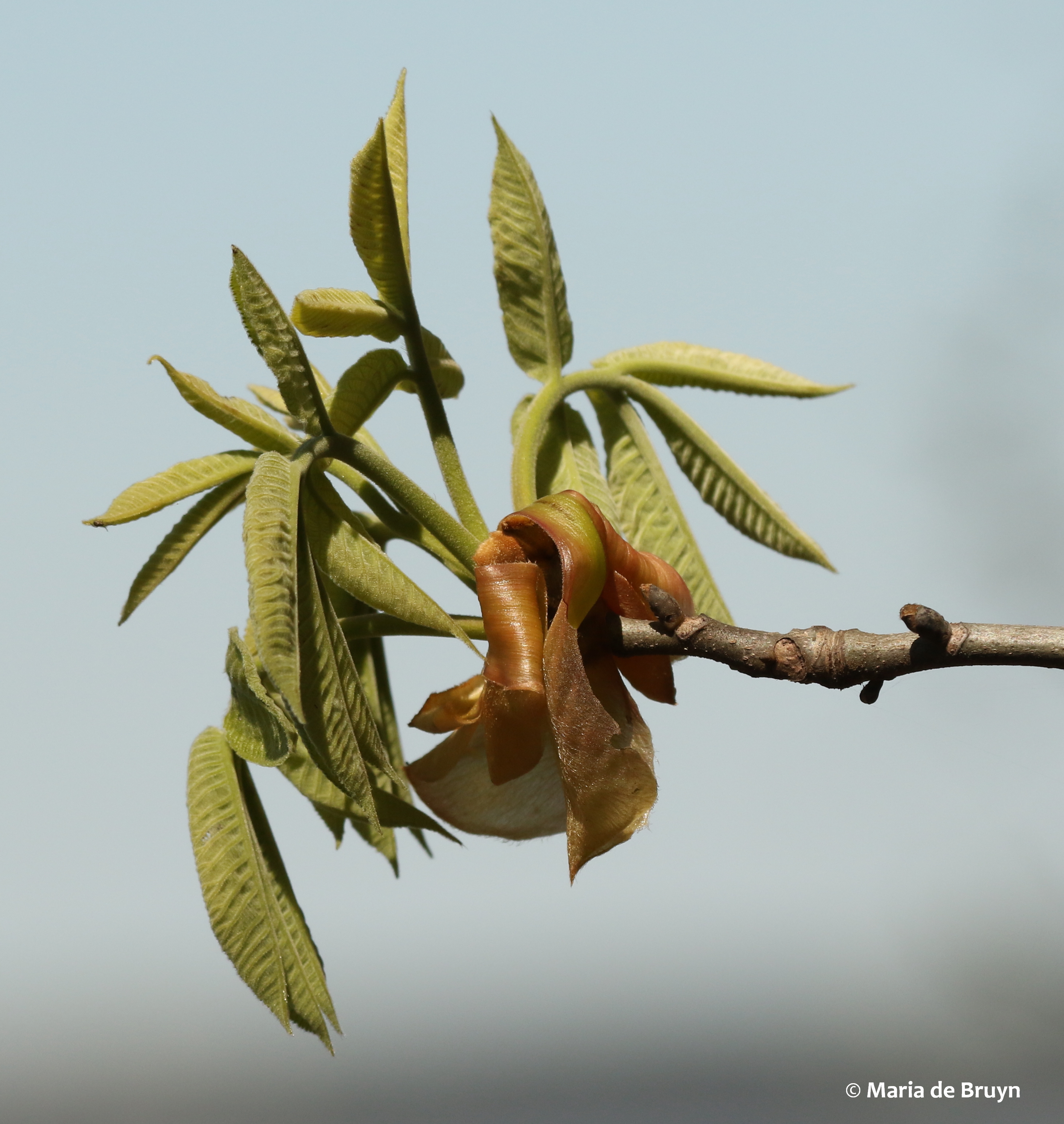
The slender young trees show off their new leaves at the ends of branching twigs, creating lovely patterns against the sky and other foliage. Eventually, they may reach a height of some 100 feet (30 meters) and, if not felled by storms, floods or other means, they may get as old as 350 years.

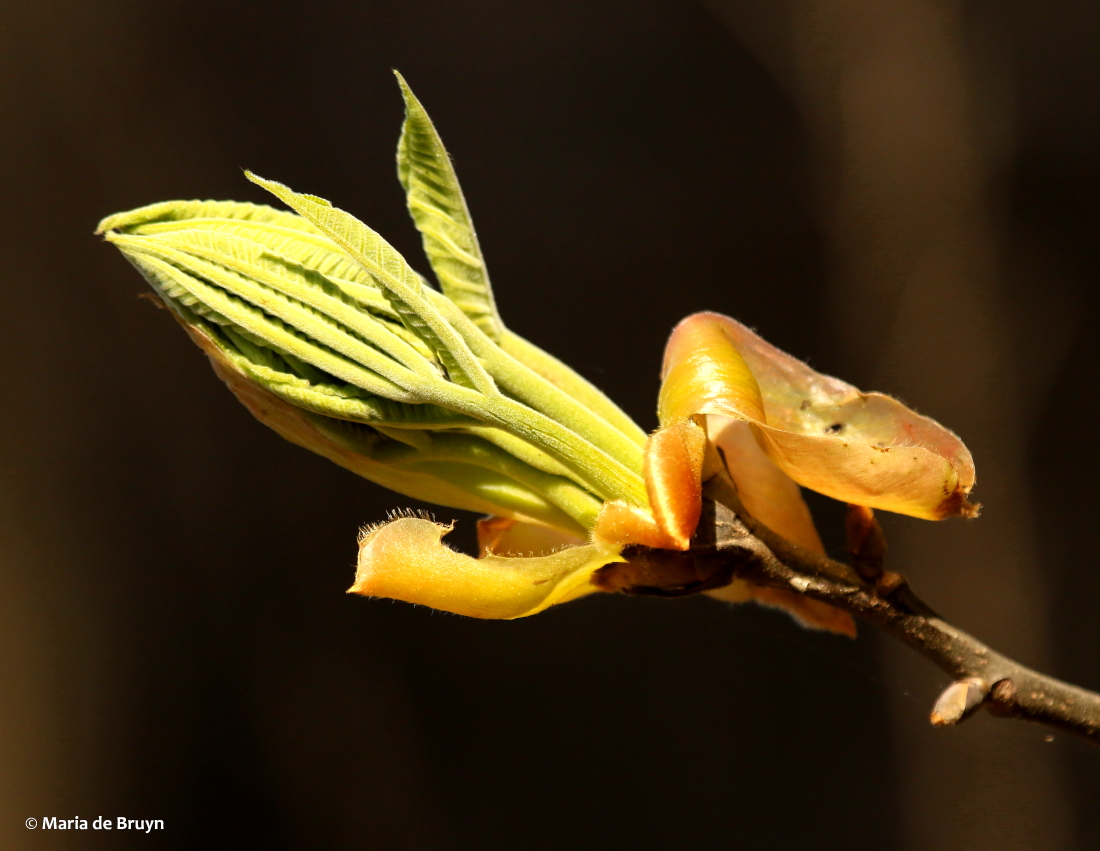
When I first saw these little beauties, I thought that they had wonderful spring flowers in hues of orange, rose and yellow. The “flowers” were at the base of clusters of pinnate leaves and they were often quite lovely.

shagbark Noah Shagbark hickory tree IMG_0185© Maria de Bruyn

It turns out that I had been fooled not only on April 1st, but the whole spring season in past years. Only recently did I find out that the shagbarks don’t have spring flowers at all – the curling petals are actually the scales of the buds from which the leaves emerge! The male and female flowers appear in late summer and early fall.

shagbark hickory I77A7708© Maria de Bruyn res

When the shagbark reaches the age of about 10 years, it begins to produce hickory nuts, reaching its full nut-bearing potential around the age of 40 and continuing to produce until about 100 years. The nuts are eaten by many species, including humans, squirrels, raccoons, chipmunks, black bears, mice, foxes and birds.

shagbark hickory I77A7679© Maria de Bruyn res

The shaggy bark, found in mature but not young trees, is used to help flavor syrups. I must admit that these trees attract my attention much more in the spring than other times of year – those flower-like bud scales are gorgeous!


Woodpecker welcome!

My celebration for the arrival of 2016 happened on 21 January, when I had my first nature walk of the year. It was delayed by a hospitalization at the start of the year and home treatments for a couple weeks after that. When a relatively warm and sunny day arrived, I just had to get out there despite still dealing with some recovery-related issues. I chose the North Carolina Botanical Garden as my venue since it has plenty of benches for short rests in between walking. It was simply lovely.

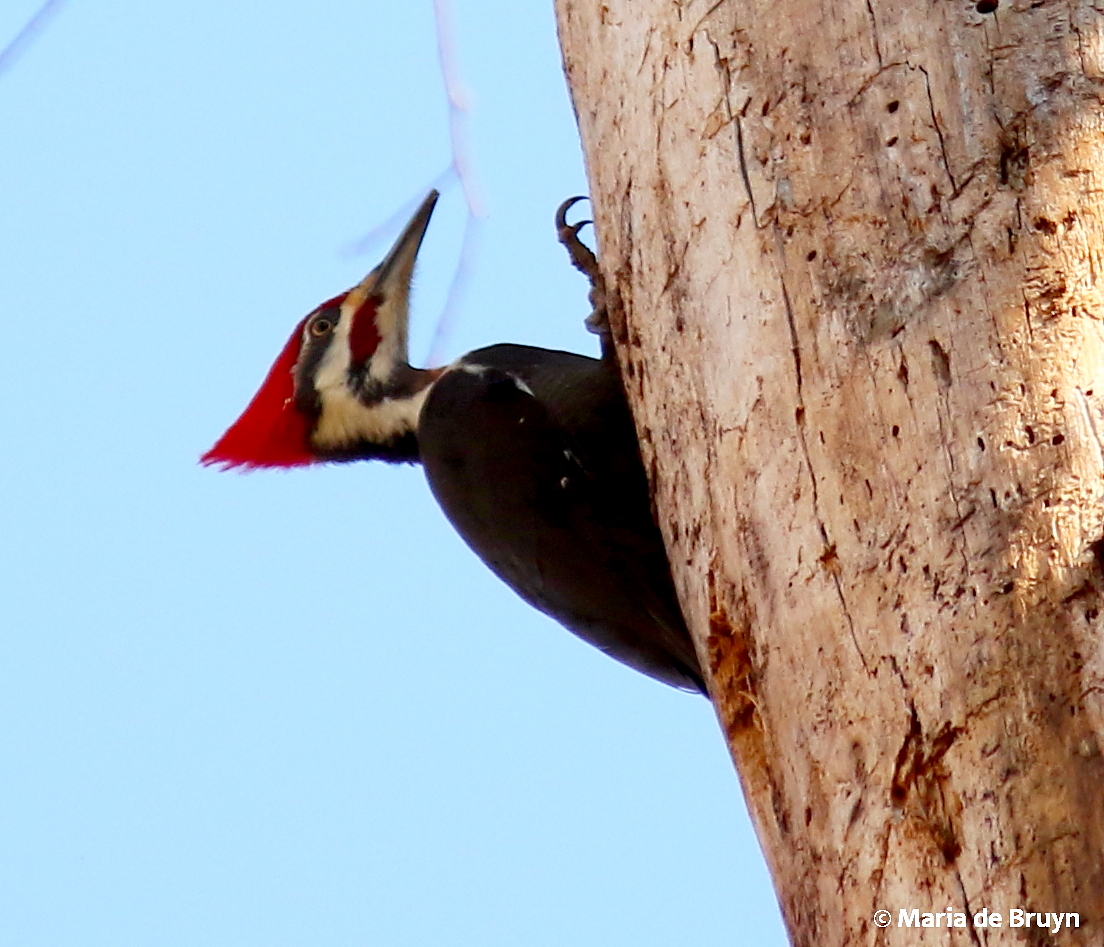
pileated woodpecker I77A7321© Maria de BruynMy first bird of the day was a beautiful male pileated woodpecker (Dryocopus pileatus), a harbinger of the day’s theme – the woodpeckers were my welcome committee!

Loud rhythmic hammering had me searching the snags among the tall trees for the next greeter – it reminded me of the facts I had learned about woodpeckers and their adaptations to a pecking life.

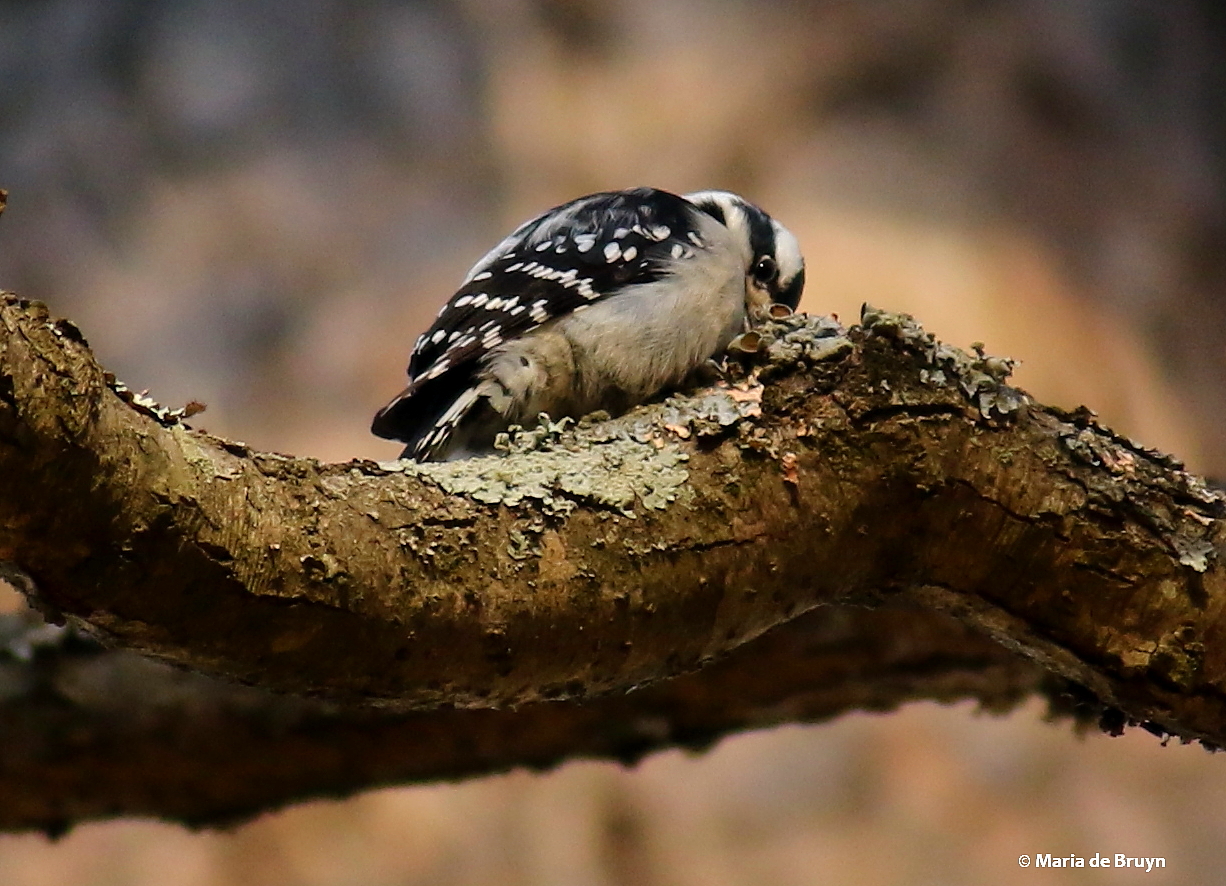
downy woodpecker I77A7372© Maria de BruynIt turned out to be a diminutive downy woodpecker (Dryobates pubescens), whose hammering sounds were enhanced by the hollow stem with which he was busy.
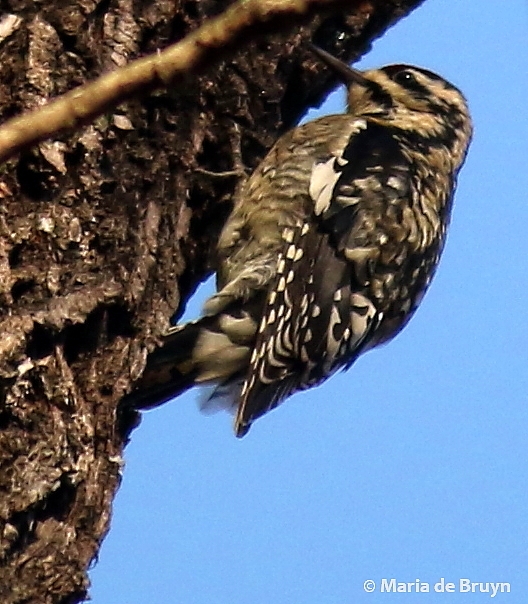
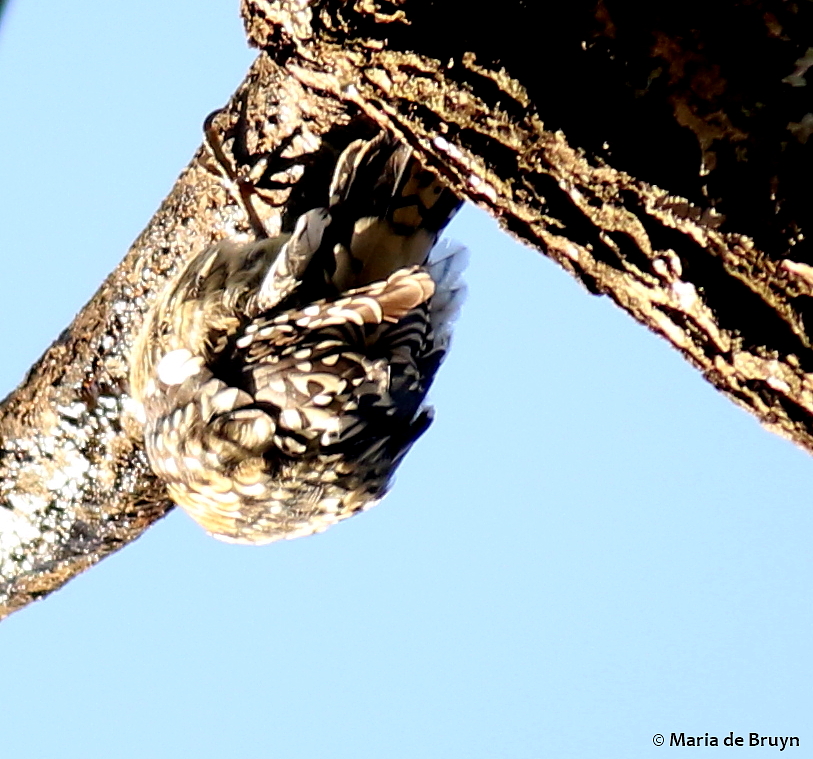
Next up was a lovely female yellow-bellied sapsucker (Sphyrapicus varius) who was very industriously flitting from branch to branch in search of sustenance.

yellow-bellied sapsucker I77A7419© Maria de Bruynyellow-bellied sapsucker I77A7582© Maria de Bruyn

When flattened against tree trunks, she demonstrated how well camouflaged her back feathers make her. A male sapsucker showed it, too.

yellow-bellied sapsucker I77A7476© Maria de Bruyn

yellow-bellied sapsucker I77A7860© Maria de Bruyn res

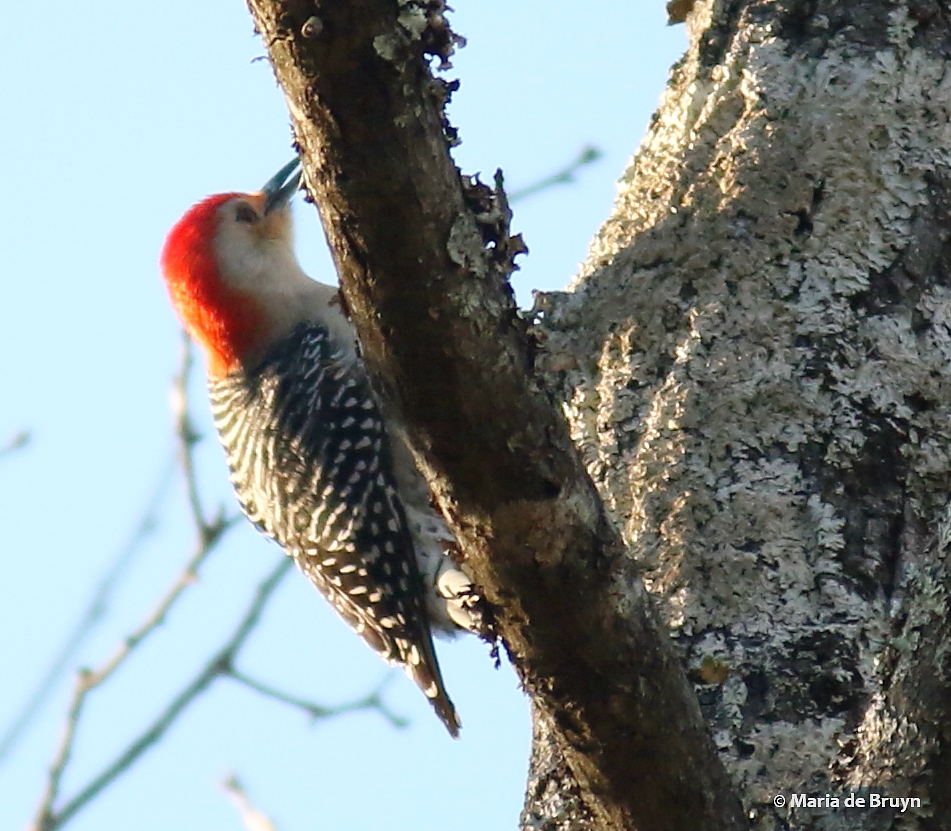
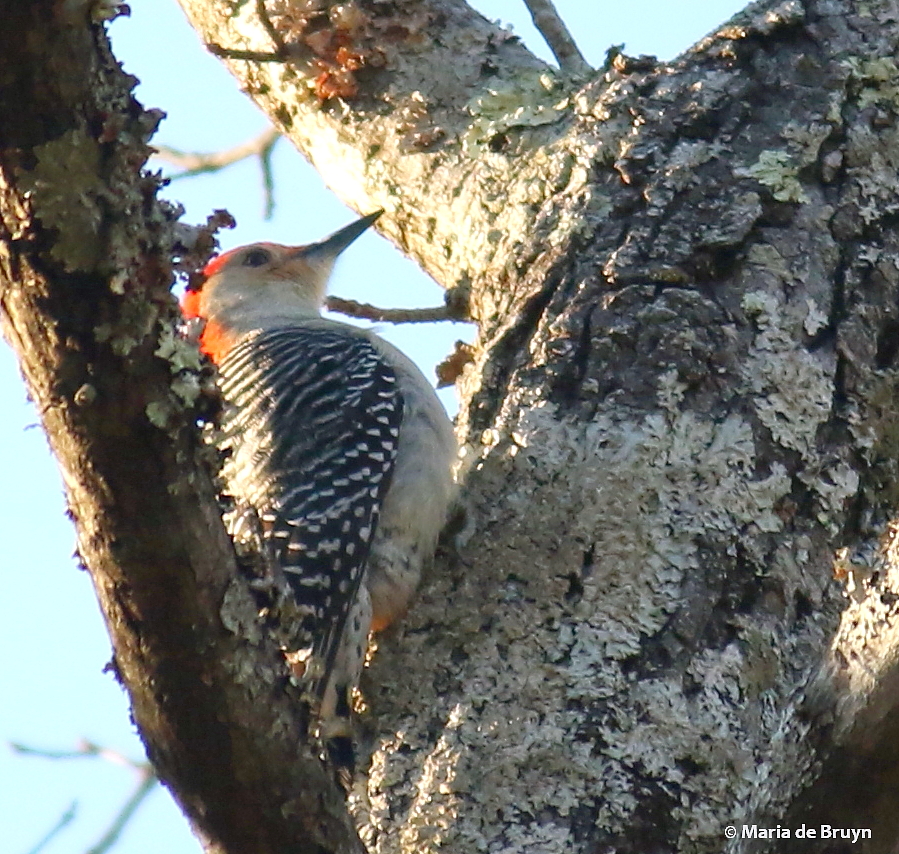
red-bellied woodpecker I77A8242© Maria de BruynA red-bellied woodpecker (Melanerpes carolinus) rounded out the welcoming committee.

The other birds didn’t disappoint. Several species were in the woods and at the feeders near the Garden’s bird blind. A lovely Carolina chickadee (Poecile carolinensis) flitted about. A tufted titmouse (Baeolophus bicolor) was singing.


Carolina chickadee I77A7639© Maria de Bruyn tufted titmouse I77A7388© Maria de Bruyn


white-breasted nuthatch I77A8203© Maria de Bruyn


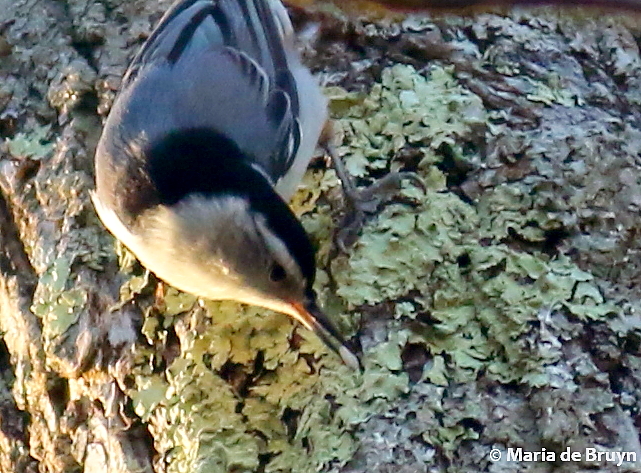
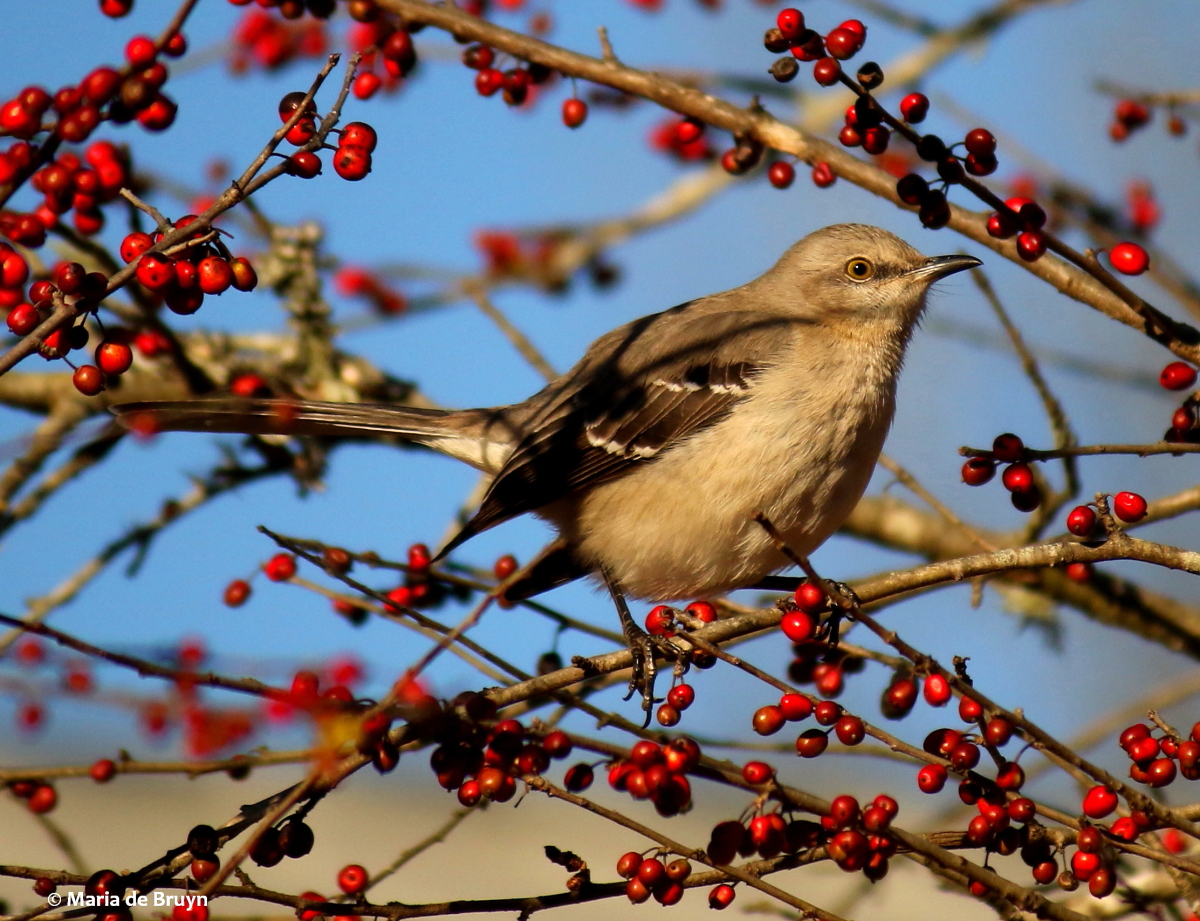
A white-breasted nuthatch (Sitta carolinensis) foraged on tree trunks overhead. A Northern mockingbird (Mimus polyglottos polyglottos) posed among red winter berries.


Northern mockingbird I77A7737© Maria de Bruyn res

hermit thrush I77A7658© Maria de Bruyn


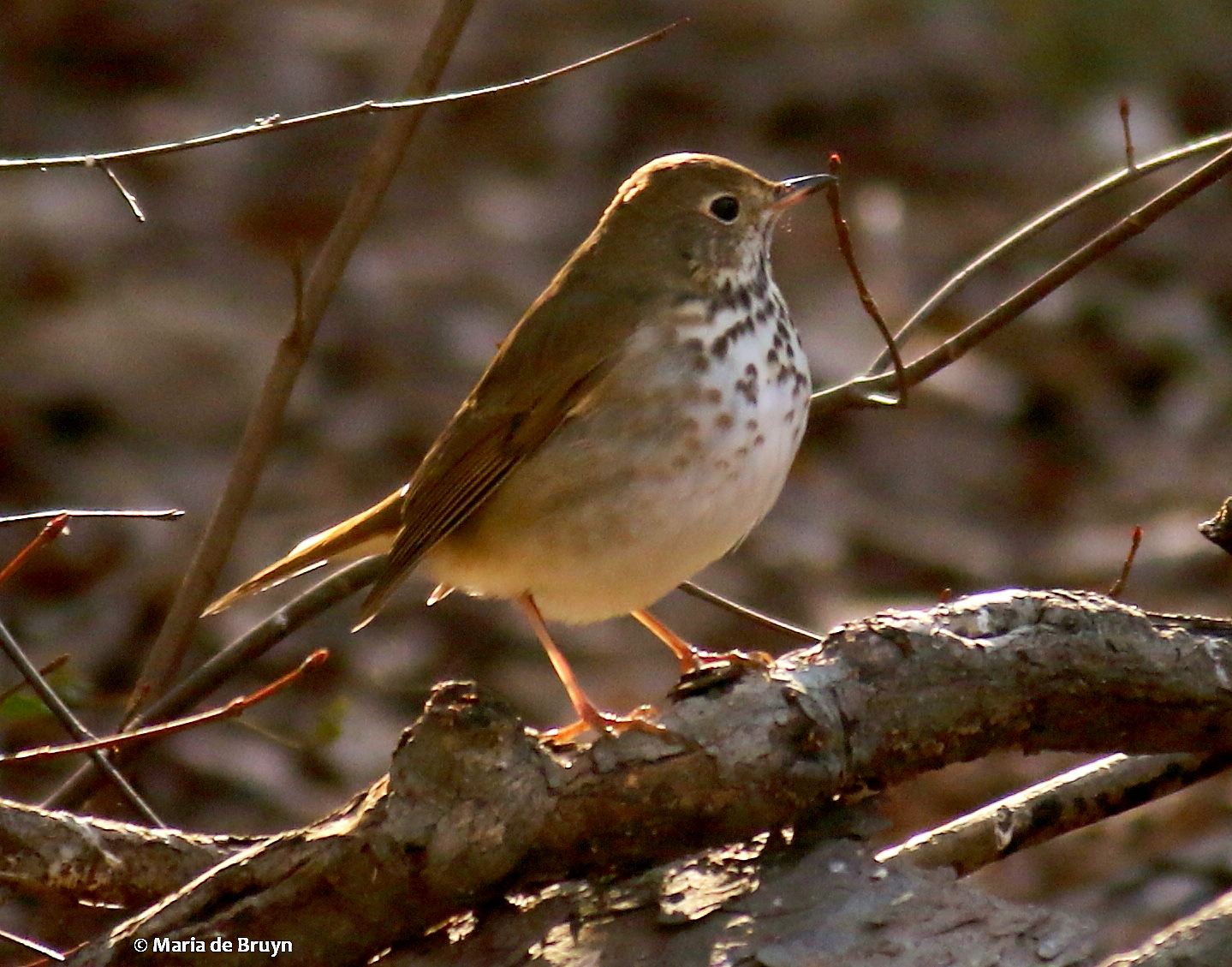
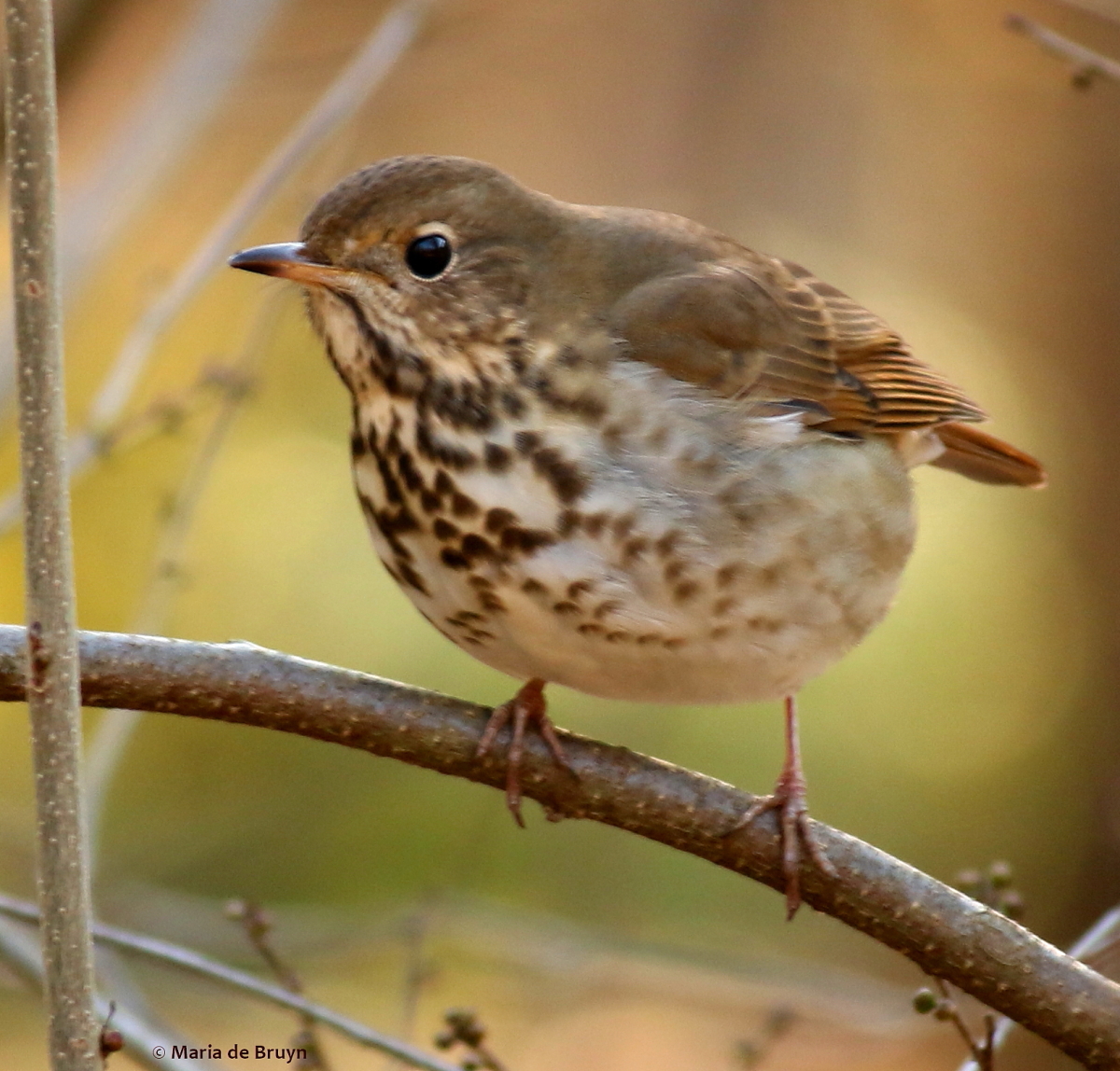
A hermit thrush (Catharus guttatus) emerged near the bird blind, and then the same bird or another seemed to accompany me as I walked another part of the native habitats garden.


hermit thrush I77A7818© Maria de Bruyn

hermit thrush I77A7788© Maria de Bruyn res

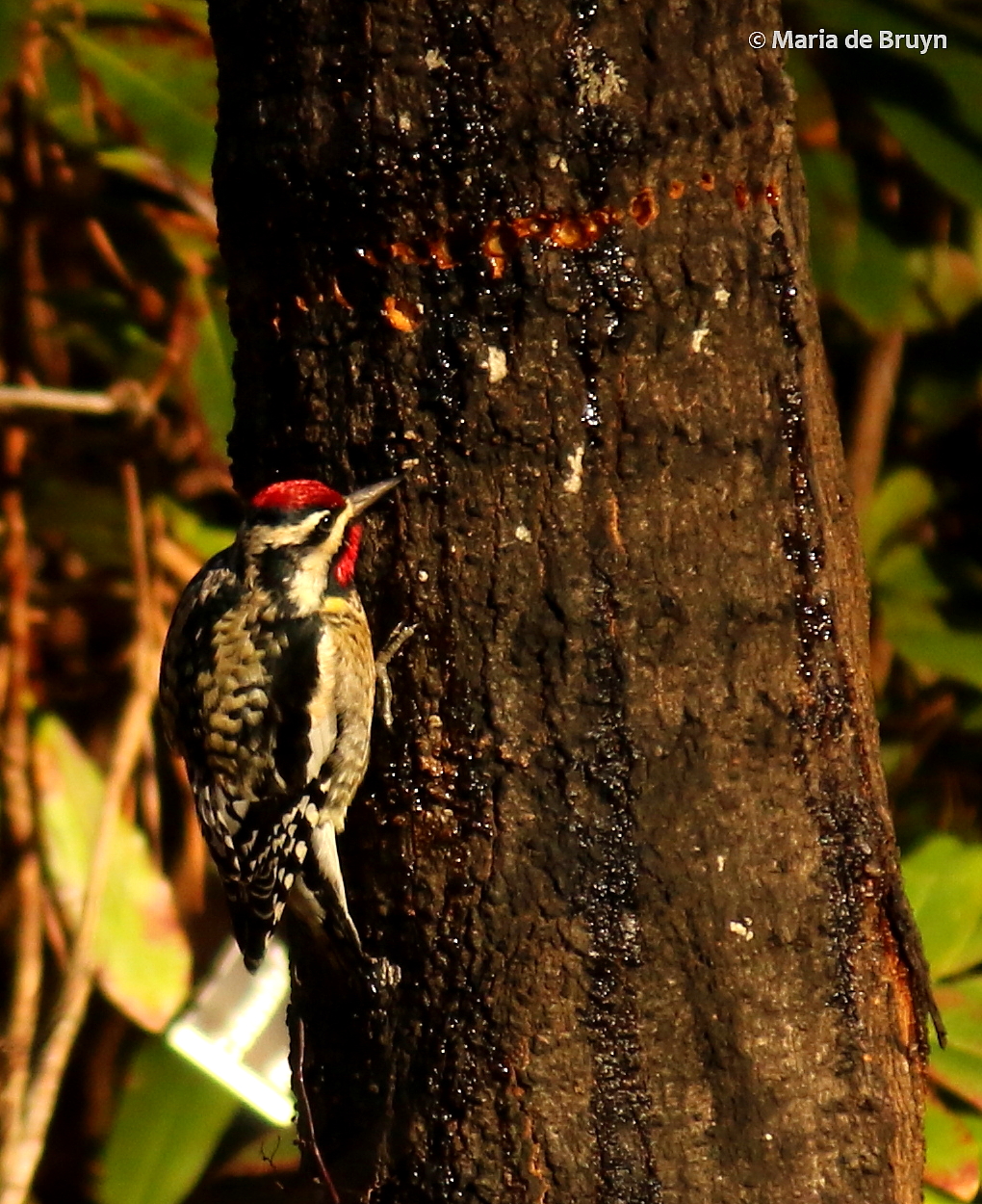
Later, a male sapsucker (identifiable by his red throat) appeared near the Paul Green cabin, where he had been busy working on his sapwells.

yellow-bellied sapsucker I77A7858© Maria de Bruyn res yellow-bellied sapsucker I77A7854© Maria de Bruyn res

Shortly thereafter a downy woodpecker came to the same spot and sampled sap (or something else) from the row of holes left by the sapsucker! That was a nice example of how what one animal does can benefit another, too.

downy woodpecker I77A7912© Maria de Bruyn

downy woodpecker I77A7921© Maria de Bruyn res

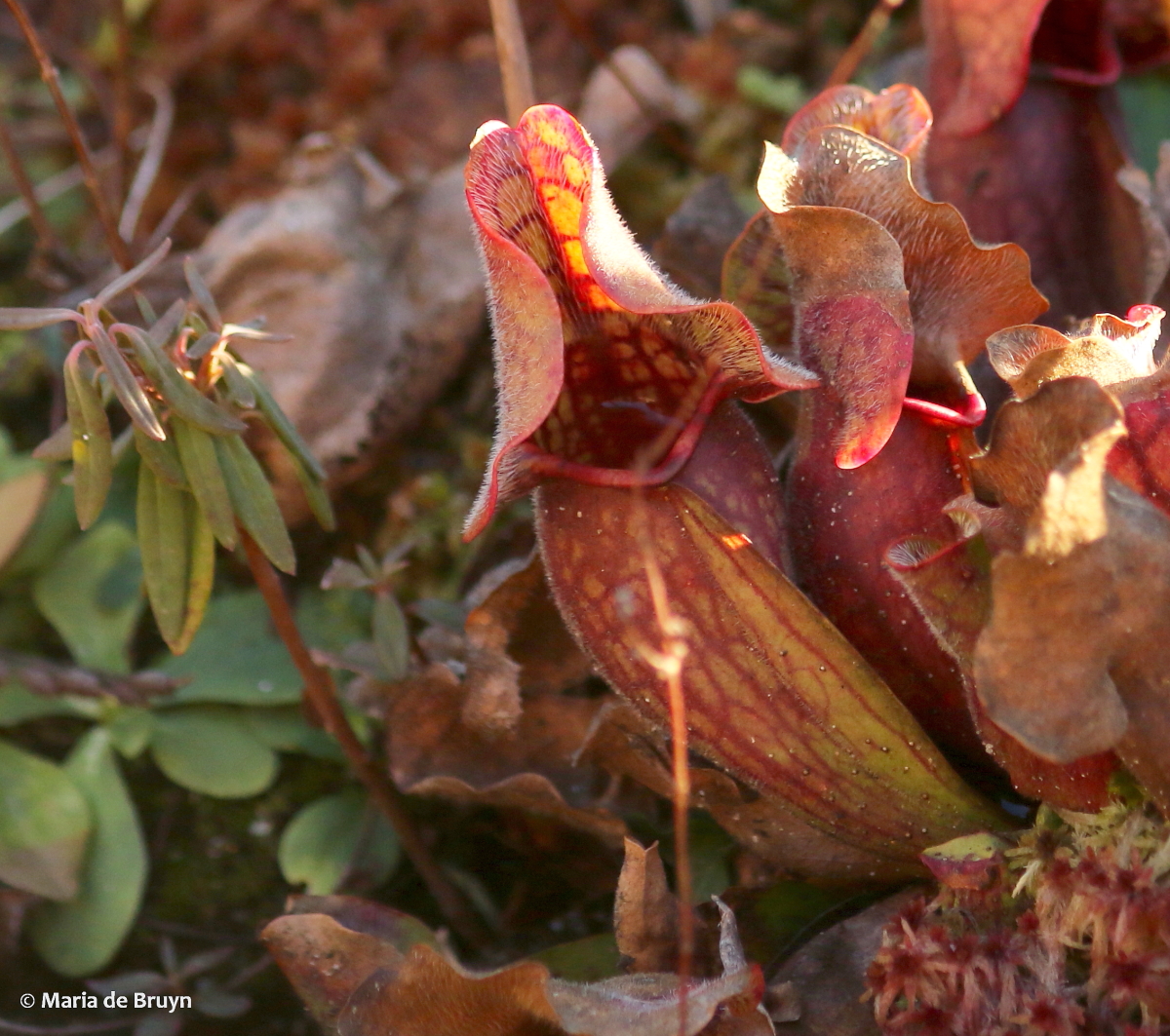
During a plant interlude, I was surprised to see some Southern purple pitcher plants (Sarracenia purpurea) that had not yet shriveled up in the cold.

Southern purple pitcher plant I77A8086© Maria de Bruyn Southern purple pitcher plant I77A8081© Maria de Bruyn res


When, I was leaving, a ruby-crowned kinglet (Regulus calendula) alighted overhead,

ruby-crowned kinglet I77A8165© Maria de Bruyn ruby-crowned kinglet I77A8164© Maria de Bruyn

a red-bellied woodpecker arrived, and one more woodpecker made an appearance – a Northern flicker (Colaptes auratus) high up behind some branches in a tall tree. I was using my small zoom lens so the photo quality isn’t great, but you can see that s/he was there.

red-bellied wooodpecker I77A8234© Maria de Bruyn Northern flicker I77A8154© Maria de Bruyn

downy woodpecker I77A8006© Maria de BruynThe only woodpeckers that are common in our town that I missed were the red-headed and hairy woodpeckers – it was truly a woodpecker welcome and a really lovely start to my wildlife photography outings for this year!

Birds, berries, nuts and seeds – enjoyment of nature’s bounty

So this wasn’t my last blog of 2015 after all. An unexpected hospital admission on 30 December brought about quite a delay in my blogging efforts. But I managed to complete this in instalments over the past days and hope you enjoy the final version, which I am happily able to post on my second day at home in 2016!

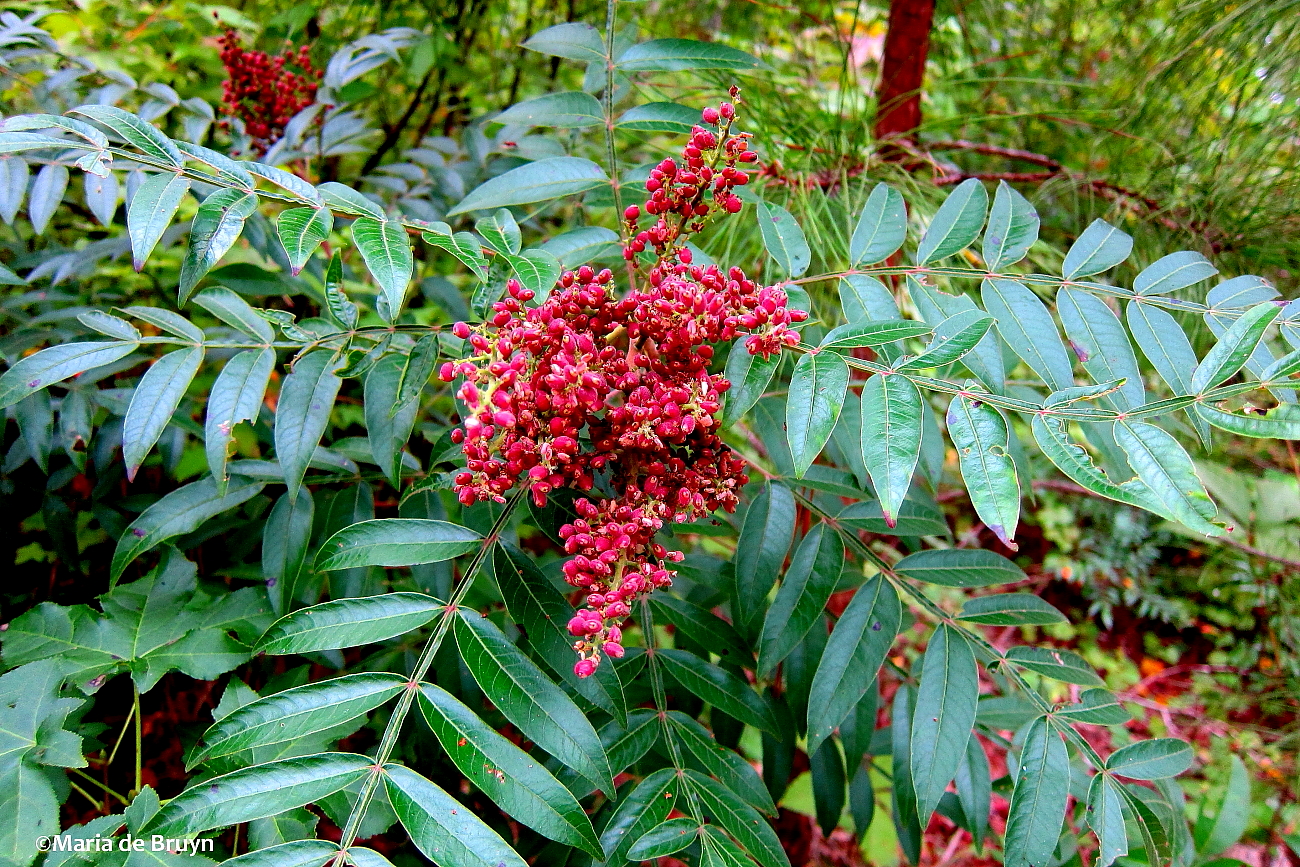
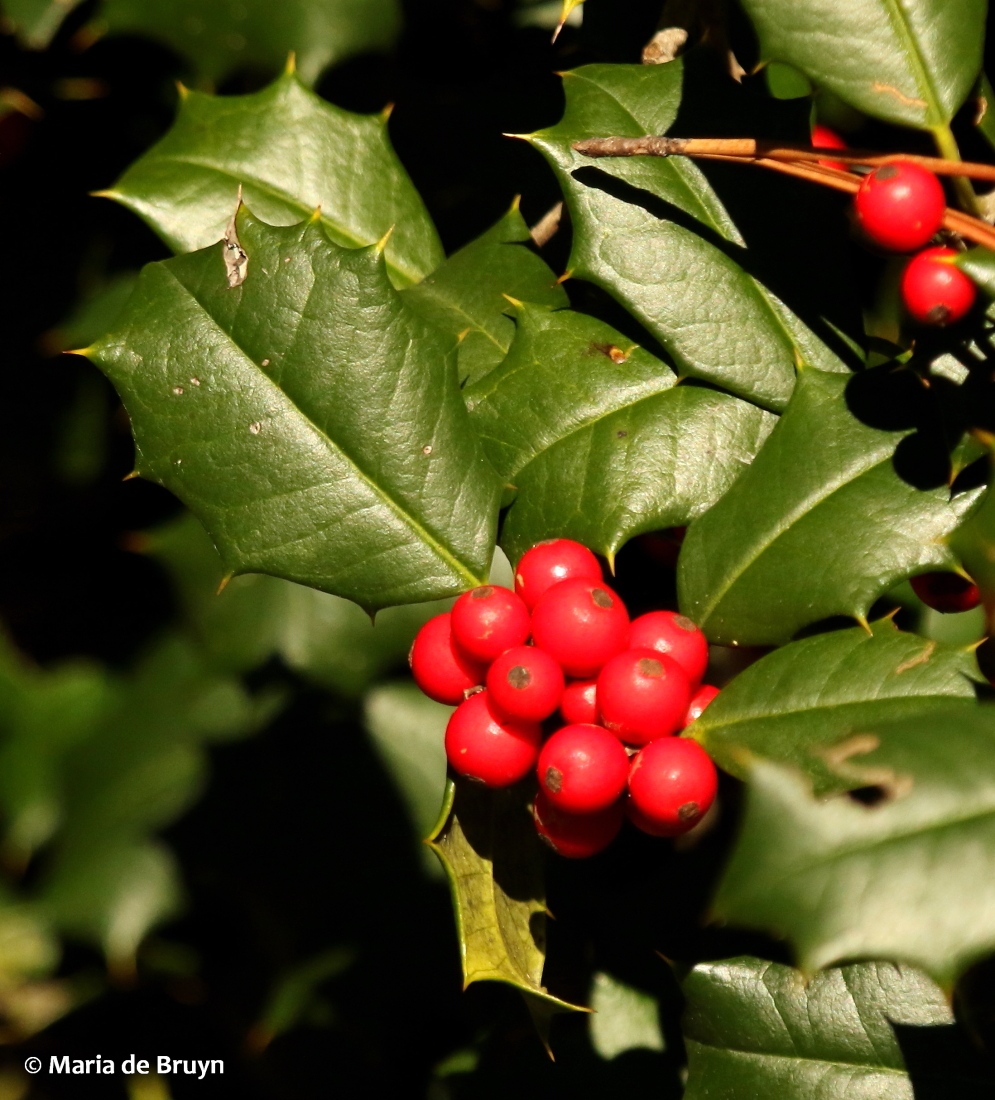
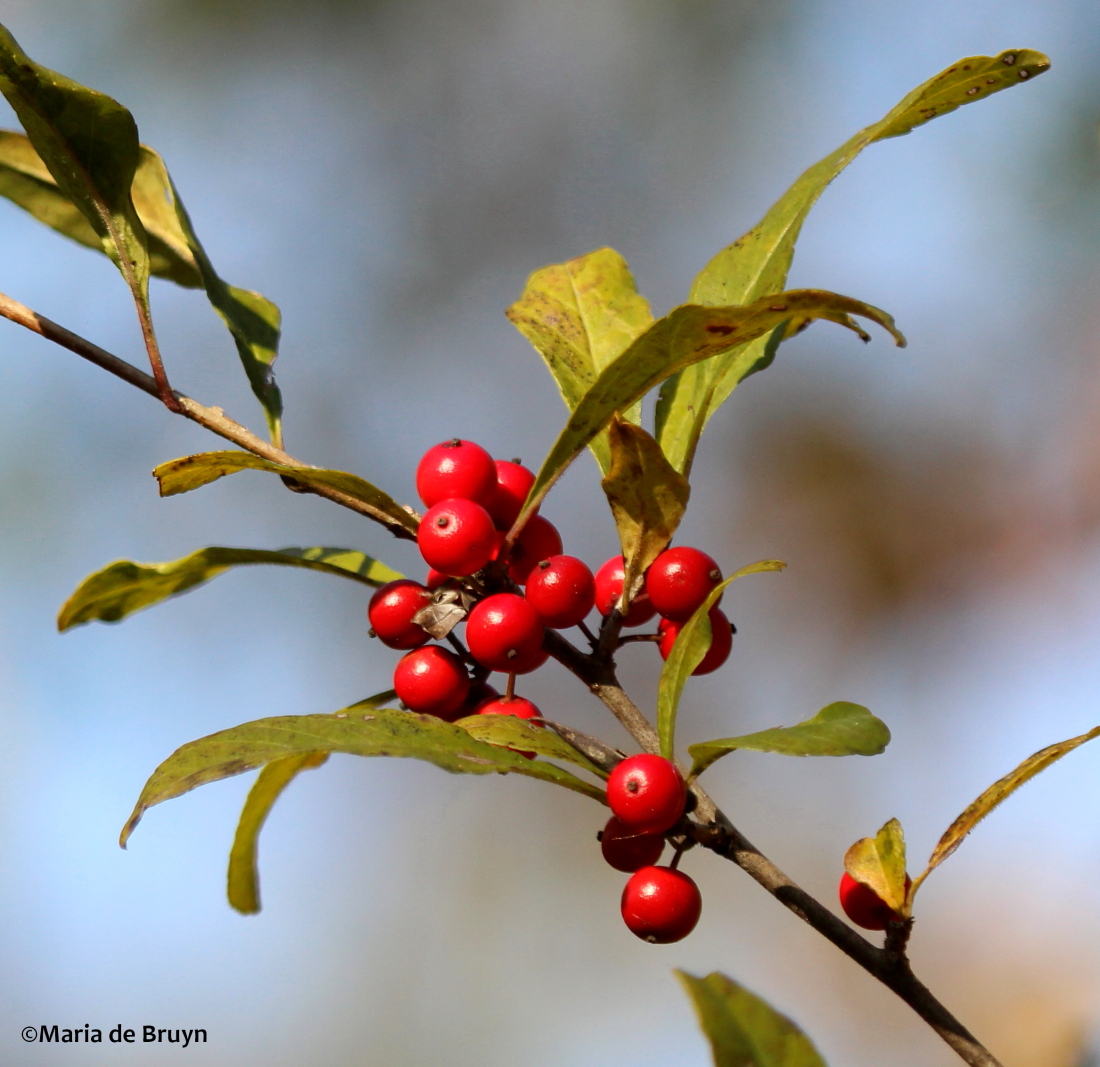
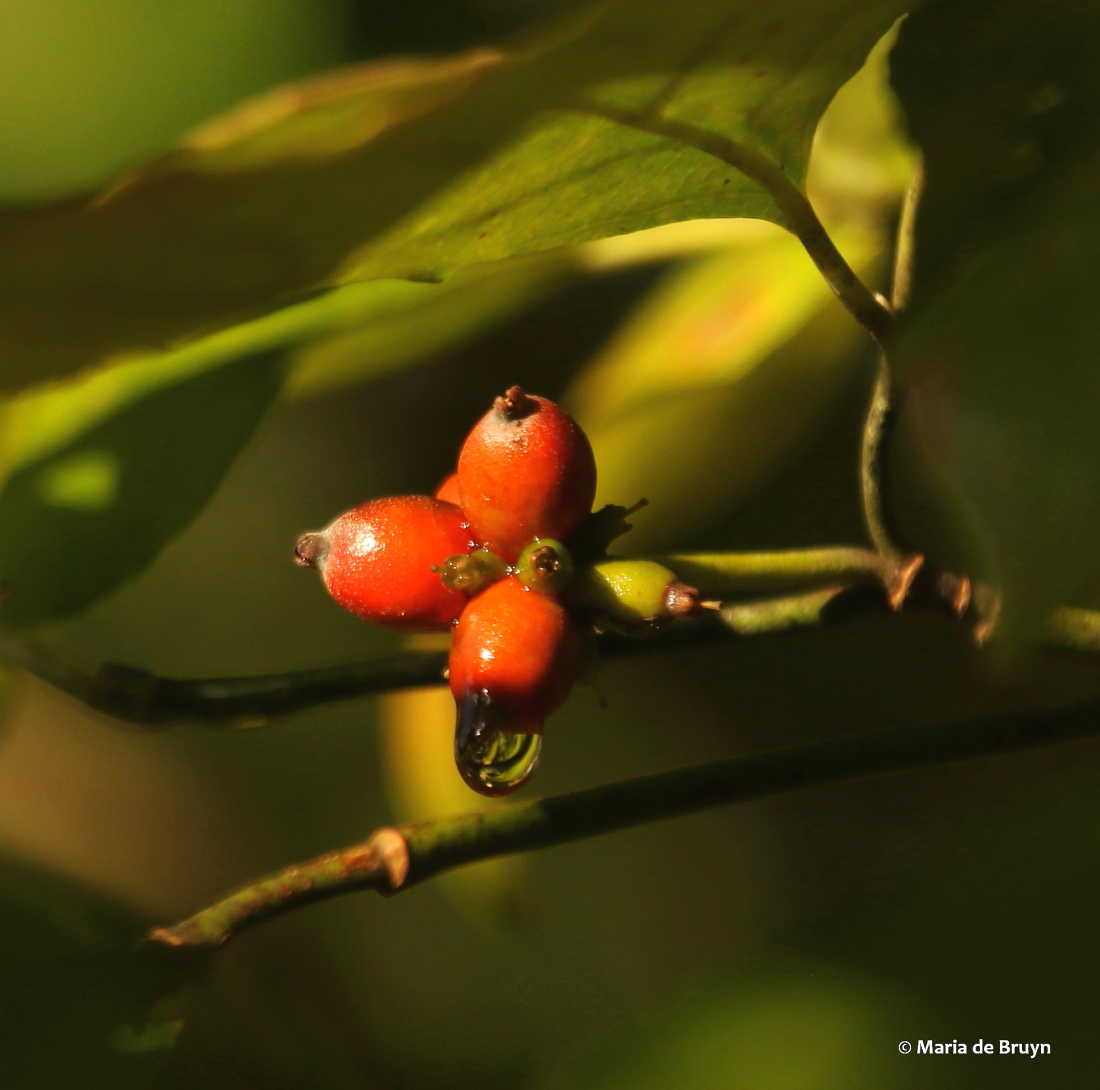
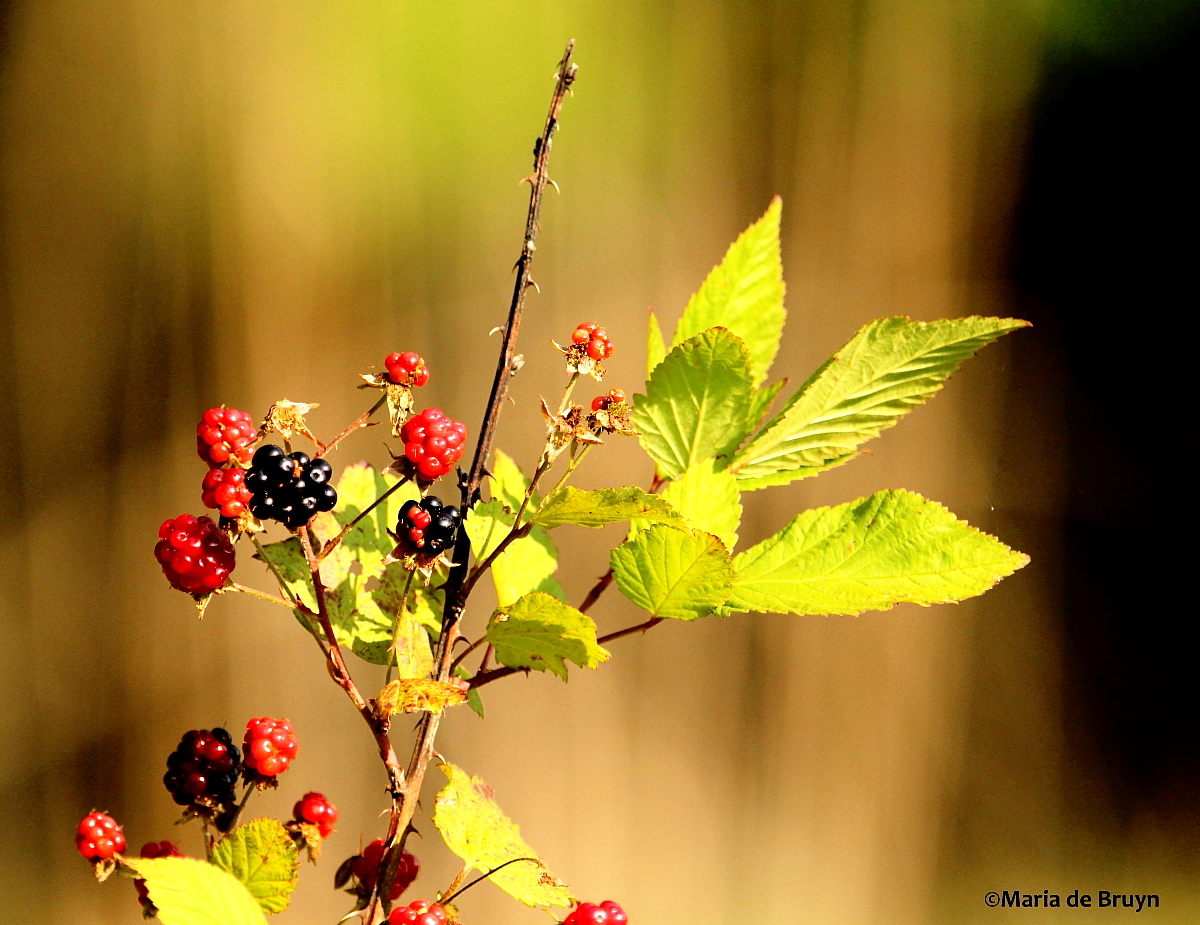
During late summer, when various plants have or start developing fruit, the birds begin to enjoy nature’s bounty. Here in North Carolina, they will eat the berries of native plants such as American beautyberry (Callicarpa americana), winged sumac (Rhus copallinum), American holly (Ilex opaca), possumhaw (deciduous holly, Ilex decidua), flowering dogwood (Cornus florida) and wild blackberries (Rubus).
American beautyberry IMG_7637© Maria de Bruyn resWinged sumac IMG_5377©Maria de Bruyn res

American holly I77A3150© Maria de Bruyn resDeciduous holly IMG_4428© Maria de Bruyn res

Flowering dogwood DK7A7731© Maria de Bruyn reswild blackberryIMG_2588©Maria de Bruyn res


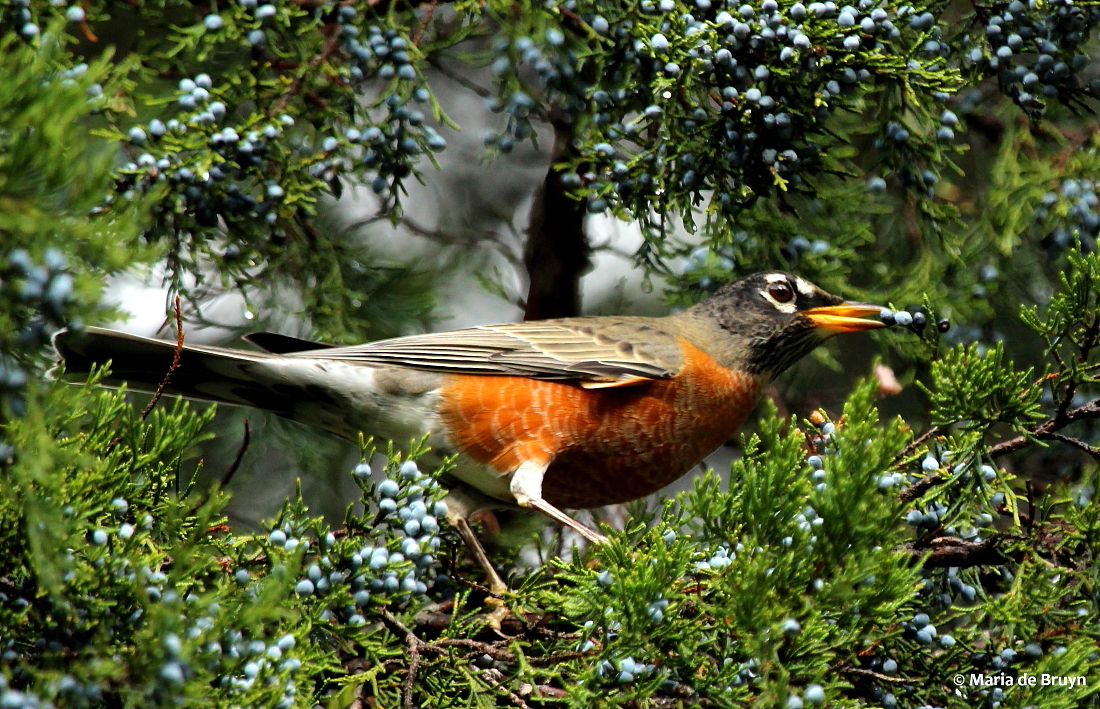
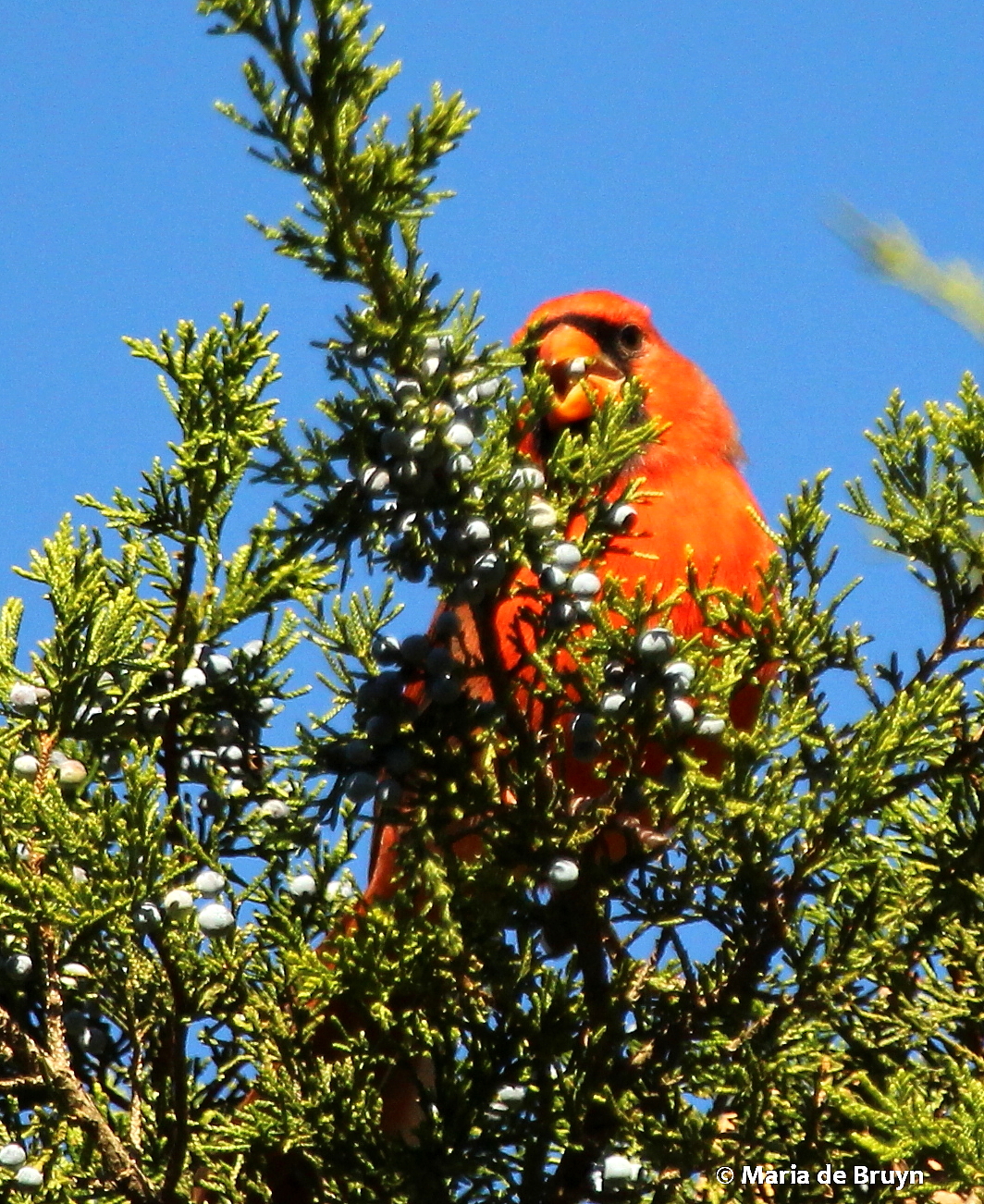
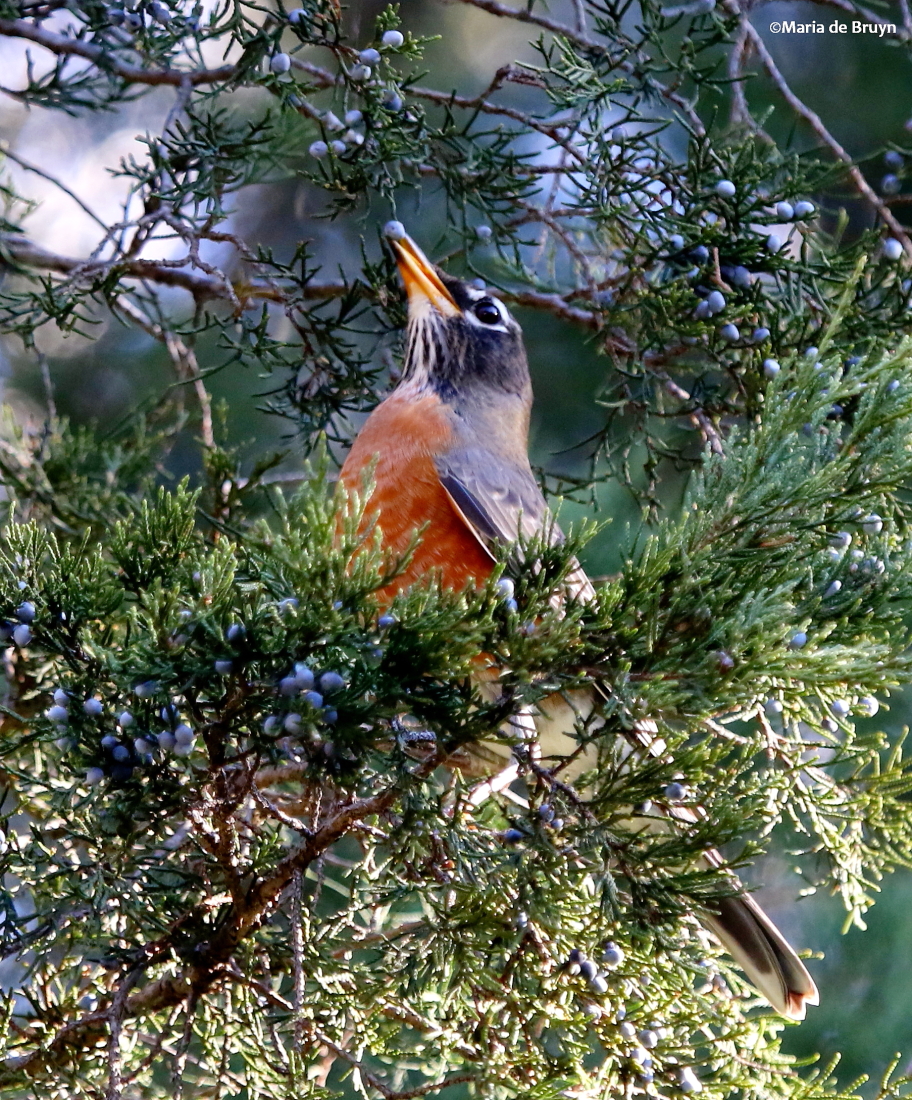
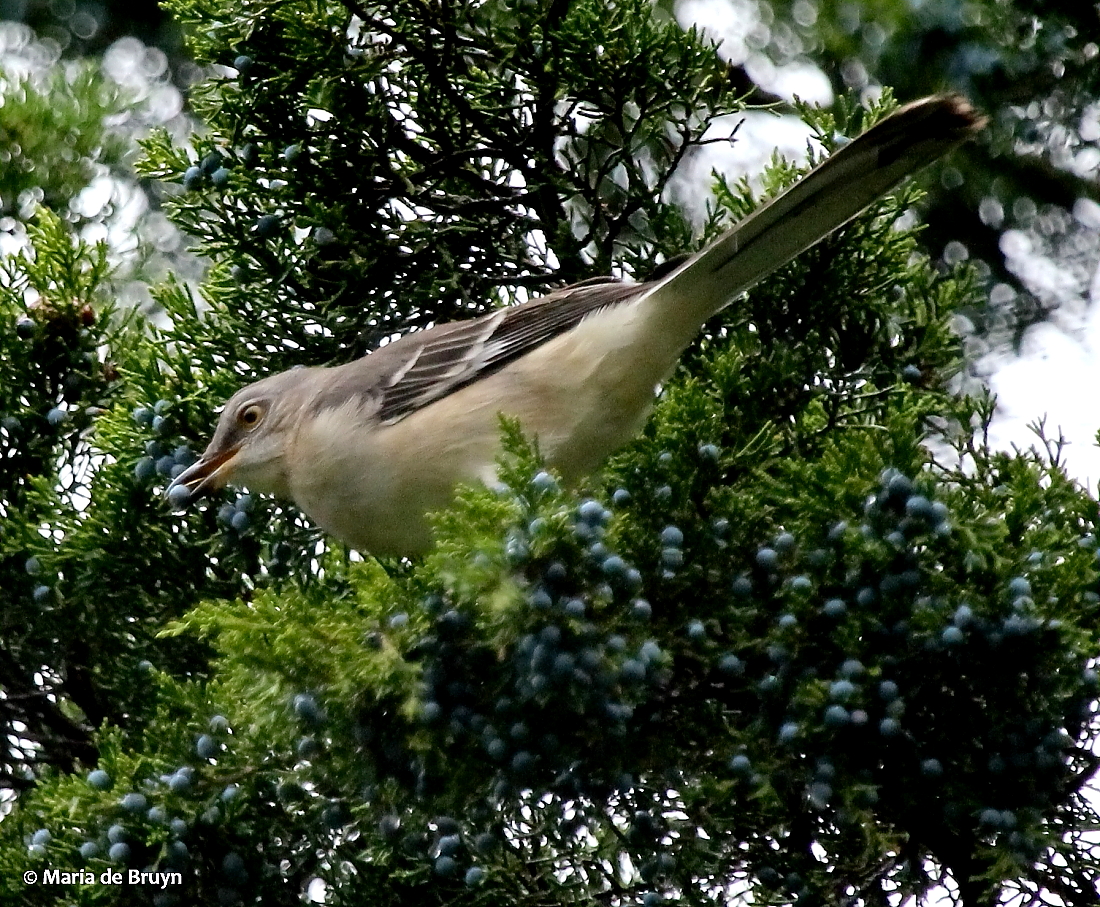
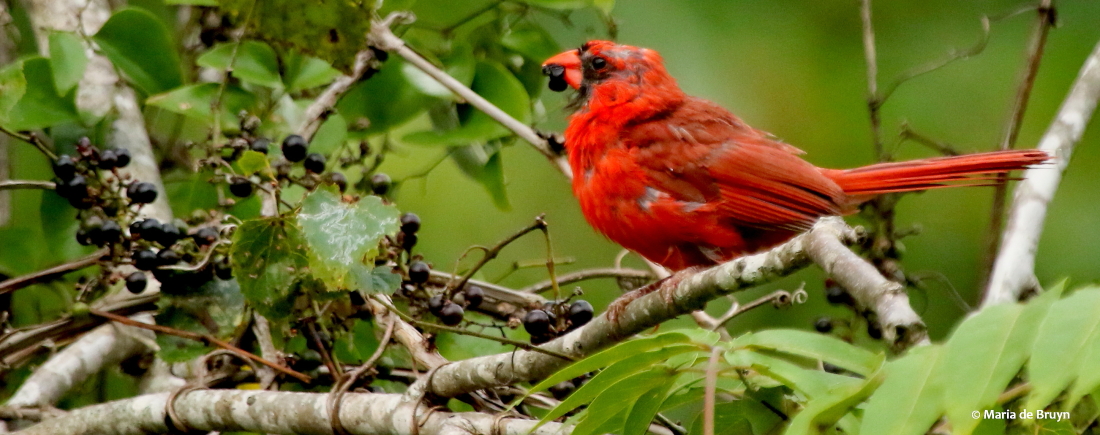
This year, the juniper berries were a real crowd pleaser. The American robins (Turdus migratorius) went for them first, soon followed by Northern cardinals (cardinalis cardinalis), Eastern bluebirds (Sialia sialis), Northern mockingbirds (Mimus polyglottos polyglottos) and Northern flickers (Colaptes auratus).

American robin IMG_6567© Maria de Bruyn res

Northern cardinal IMG_3653© Maria de BruynAmerican robin I77A0801©Maria de Bruyn res

Eastern bluebird I77A0913©Maria de Bruyn resNorthern mockingbird 2 IMG_6308© Maria de Bruyn res

Northern flicker IMG_5853© Maria de Bruyn res

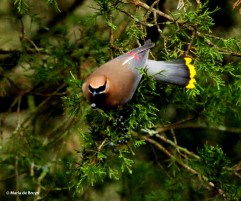
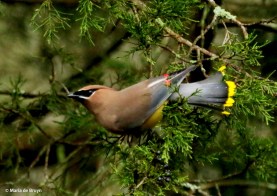
The beautiful cedar waxwings (Bombycilla cedrorum) enjoyed the cedar berries, too.

cedar waxwing I77A4266© Maria de Bruyn res

cedar waxwing I77A4293© Maria de Bruyn res

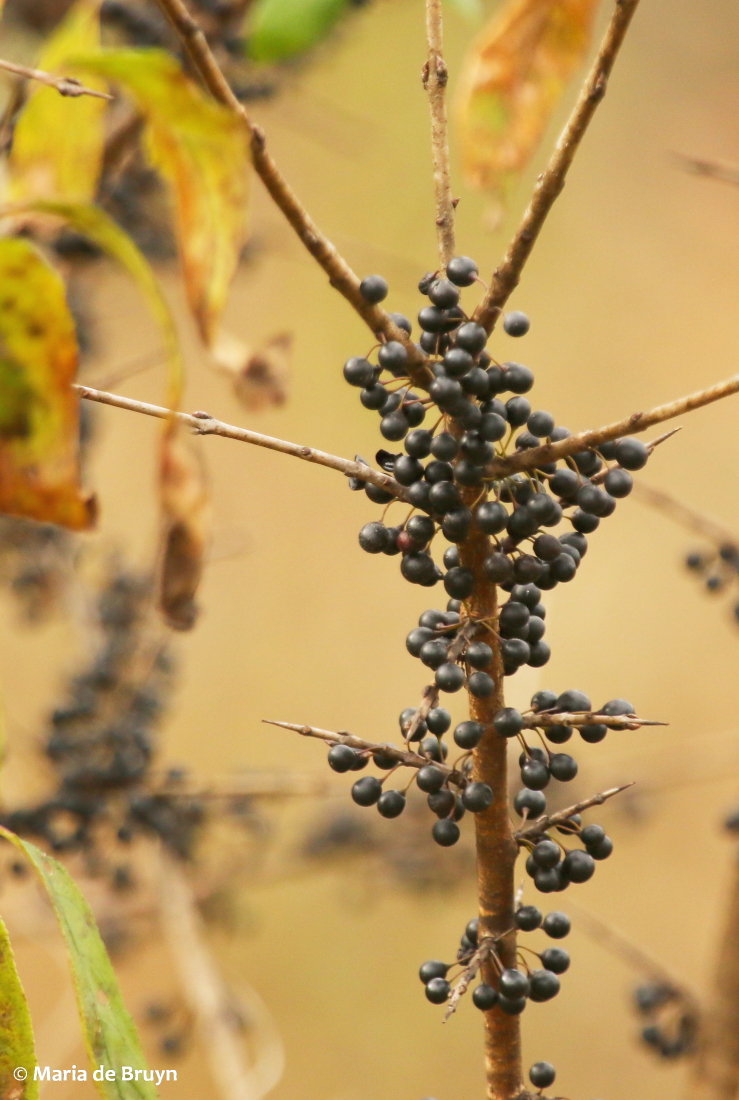
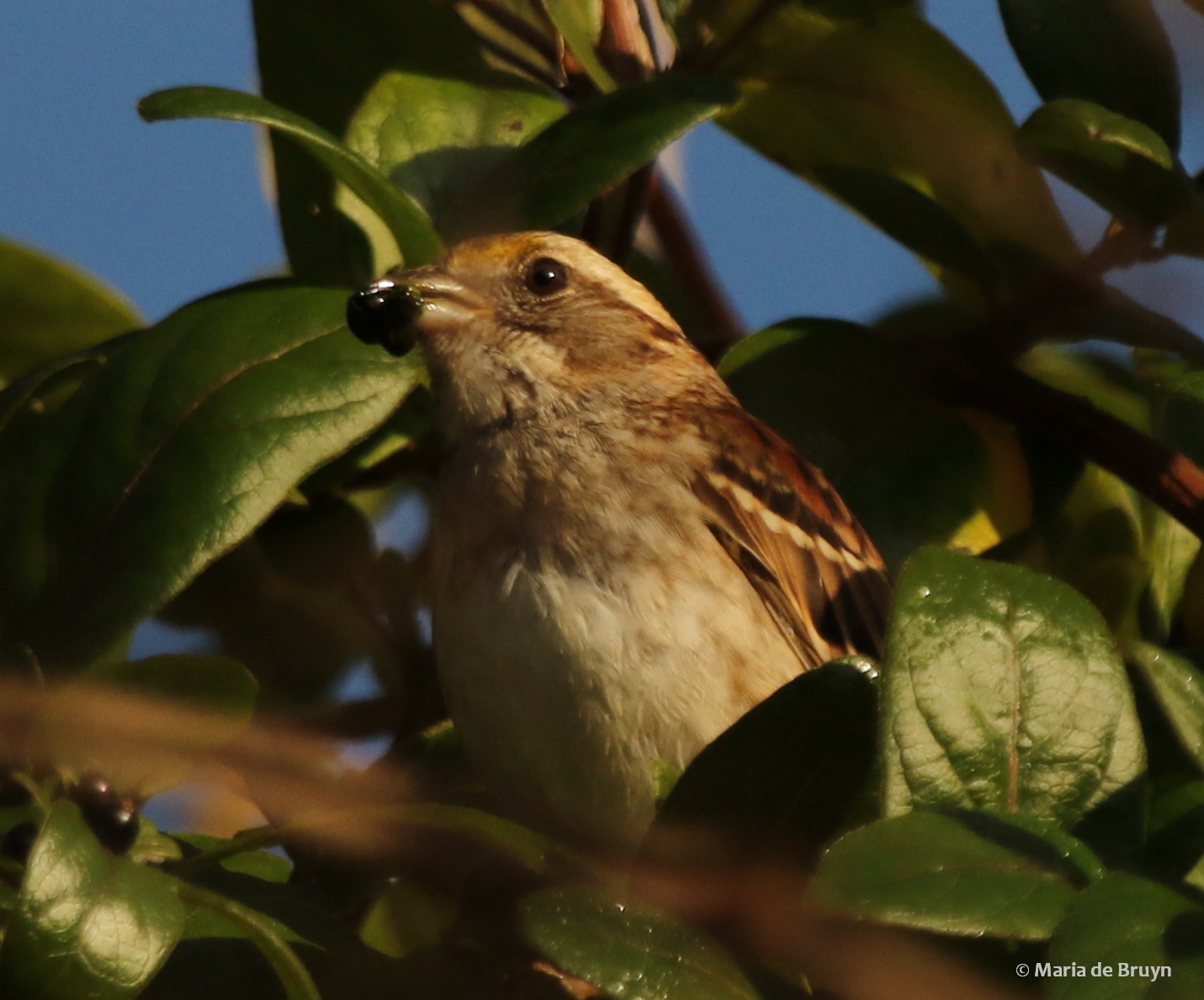
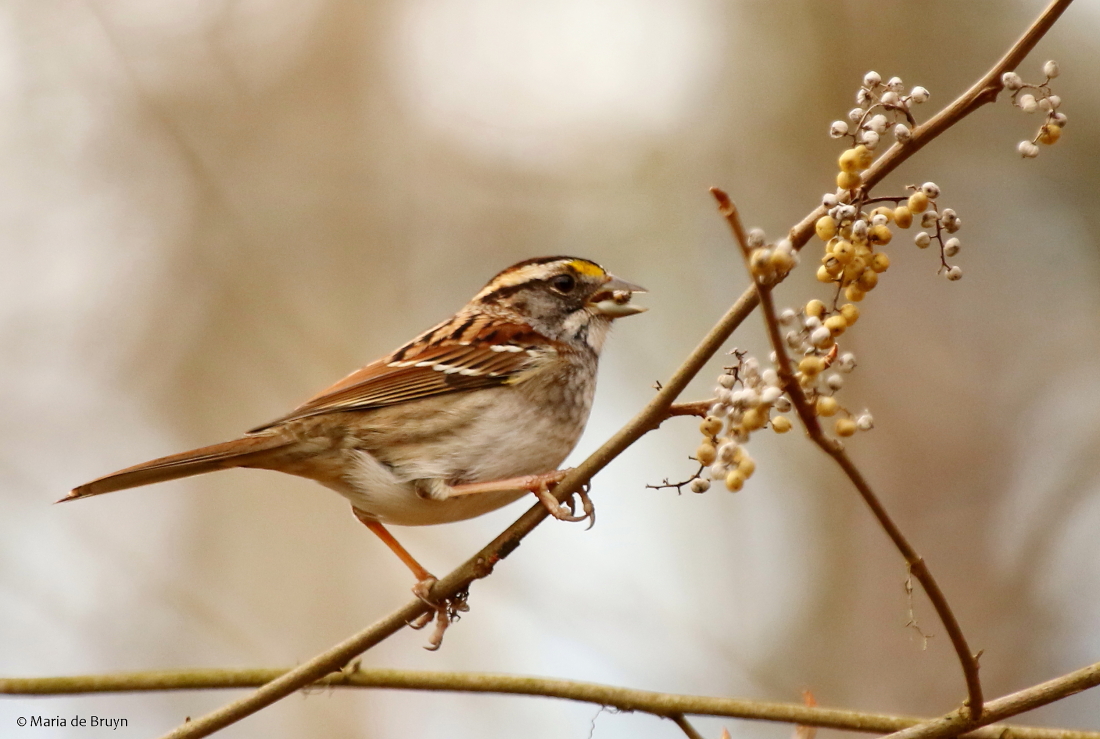
Birds like thbuckthorn I77A2455© Maria de Bruyn signed rese Northern mockingbird and white-throated sparrow (Zonotrichia albicollis) also enjoy the berries of invasive plants such as privet (Ligustrum), common buckthorn (Rhamnus cathartica. left), Chinaberry (Melia azedarach) and autumn olive (Eleagnus umbellata).

Northern mockingbird I77A2924© Maria de Bruyn res
white-throated sparrow I77A8188© Maria de Bruyn 2 reswhite-throated sparrow I77A4714© Maria de Bruyn signed

Watching our avian friends enjoy snapping up berries from vines can create enjoyment for the birdwatcher, too!

Northern cardinal DK7A8841© Maria de Bruyn signed res

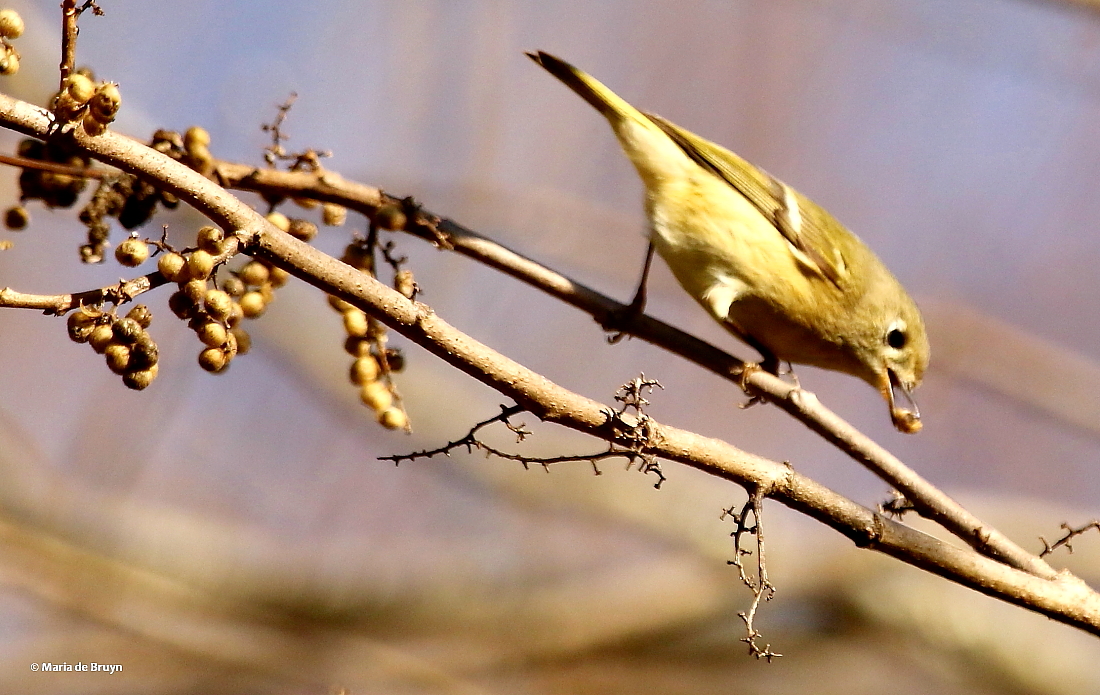
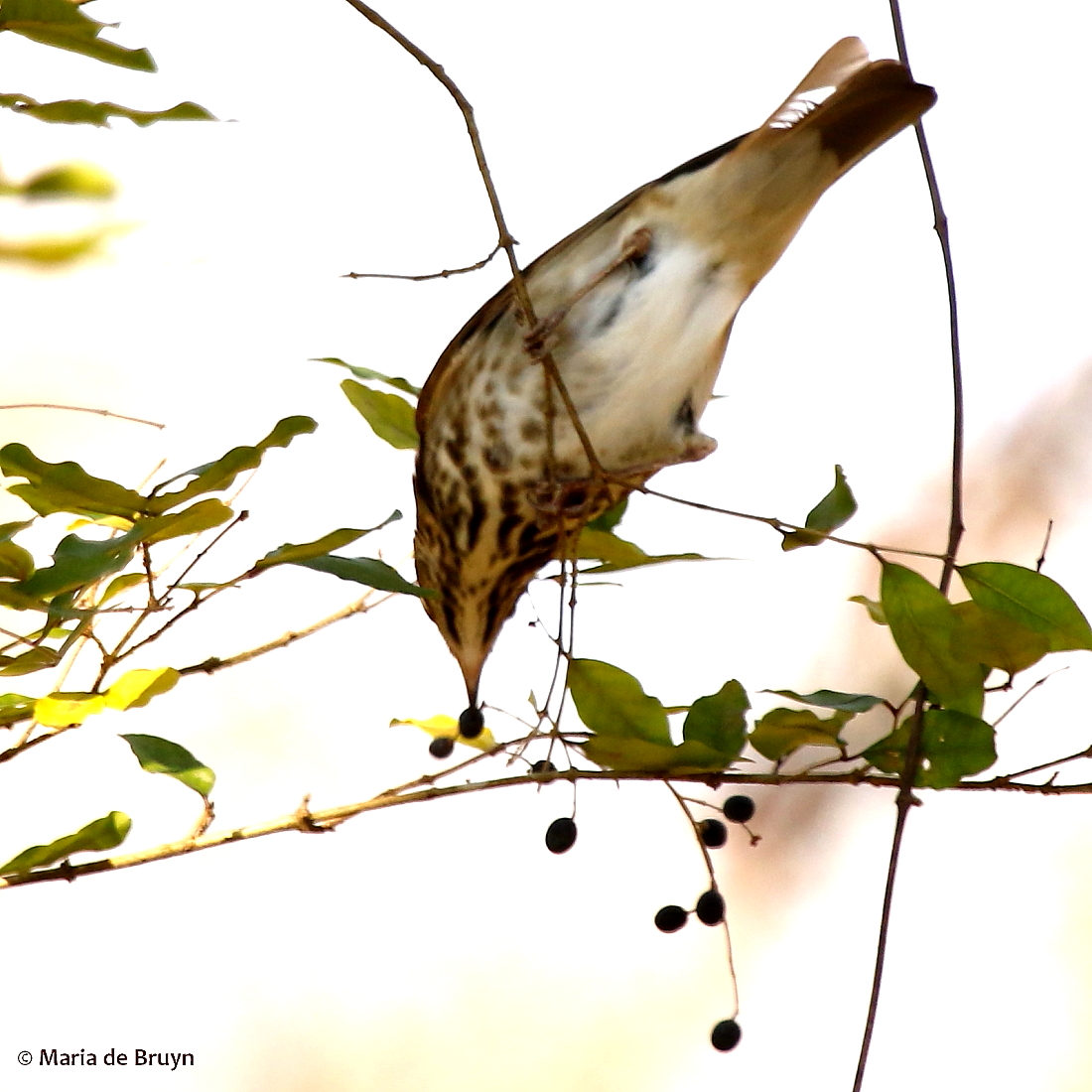
ruby-crowned kinglet I77A5319© Maria de Bruyn reshermit thrush I77A5816© Maria de Bruyn signed res

Ruby-crowned kinglet (Regulus calendula)

Hermit thrush (Catharus guttatus)


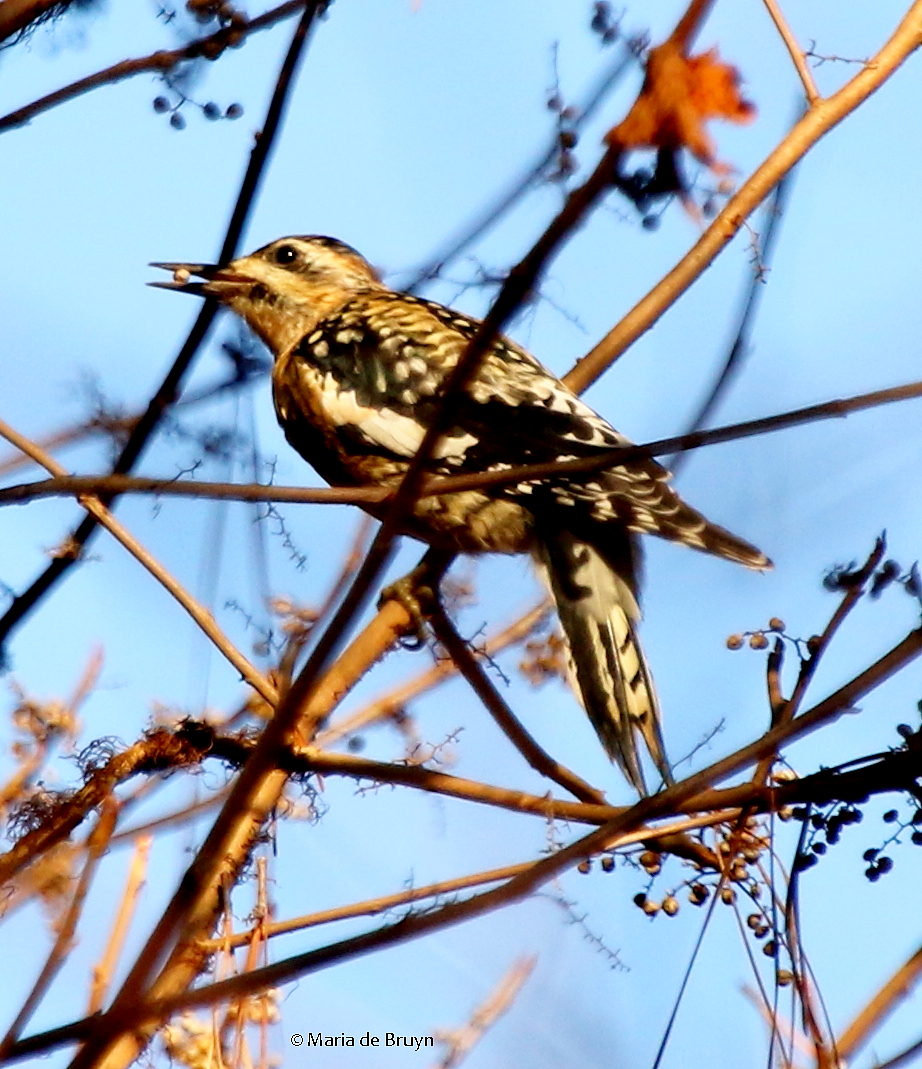
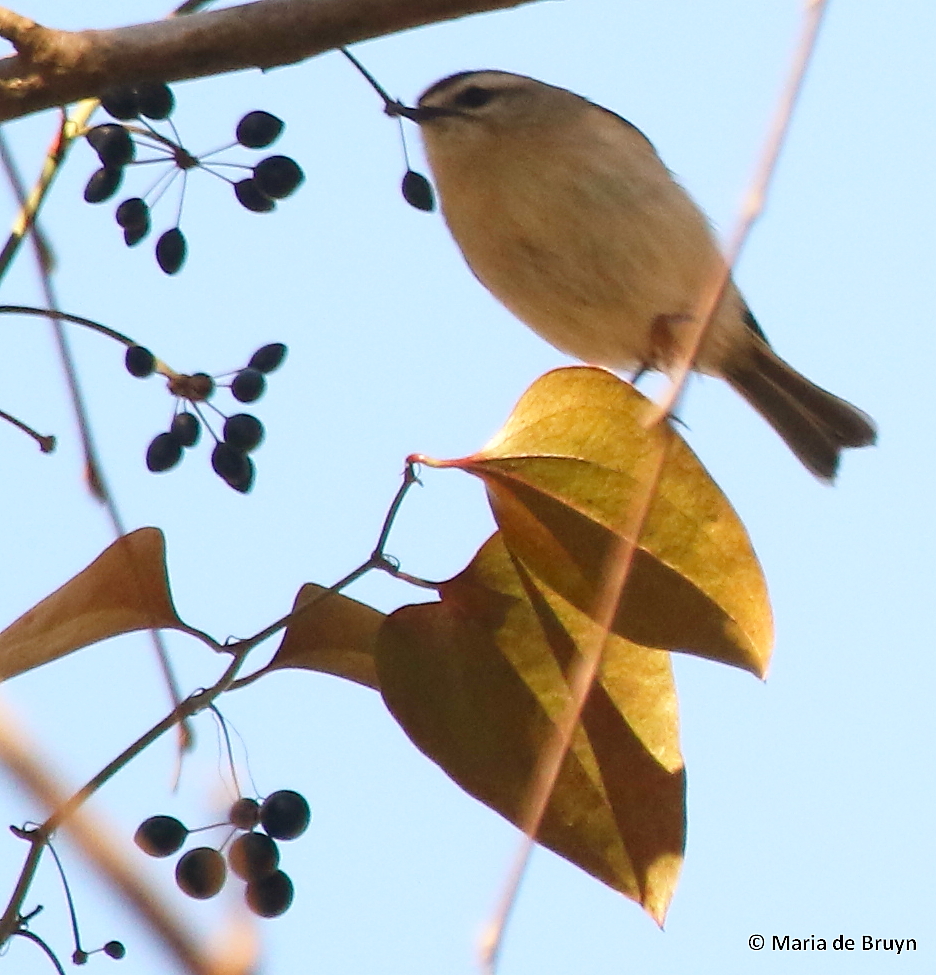
In some cases, they may also be seeking insects along with the berries, as this yellow-bellied sapsucker (Sphyrapicus varius) and tiny golden-crowned kinglet (Melanerpes erythrocephalus) may have been doing.

Yellow-bellied sapsucker I77A9133© Maria de Bruyngolden-crowned kinglet I77A1918© Maria de Bruyn

American goldfinch DK7A4411© Maria de Bruyn signed


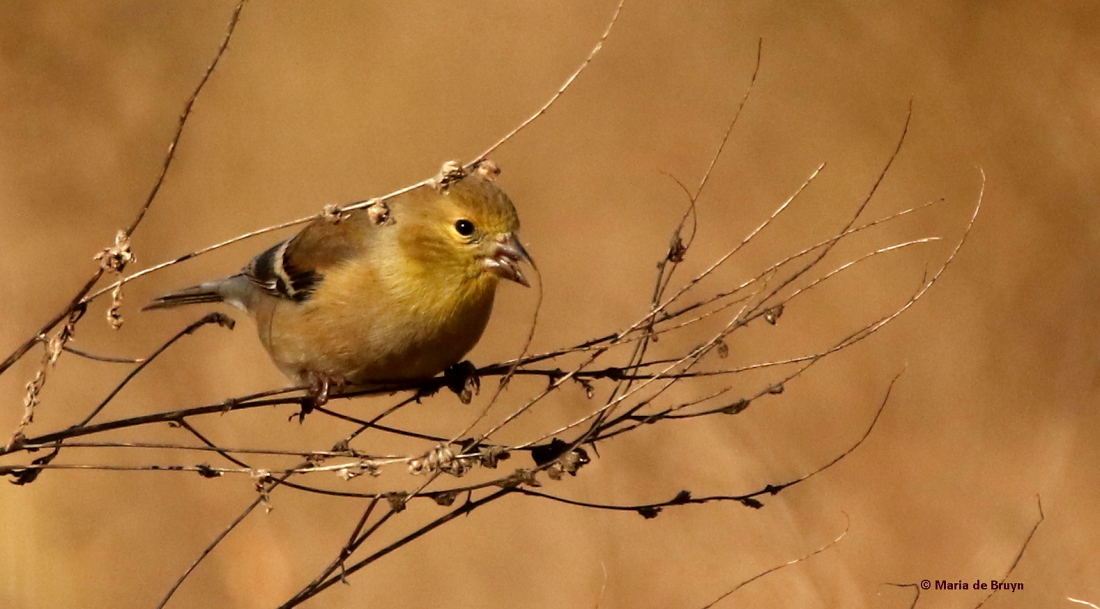
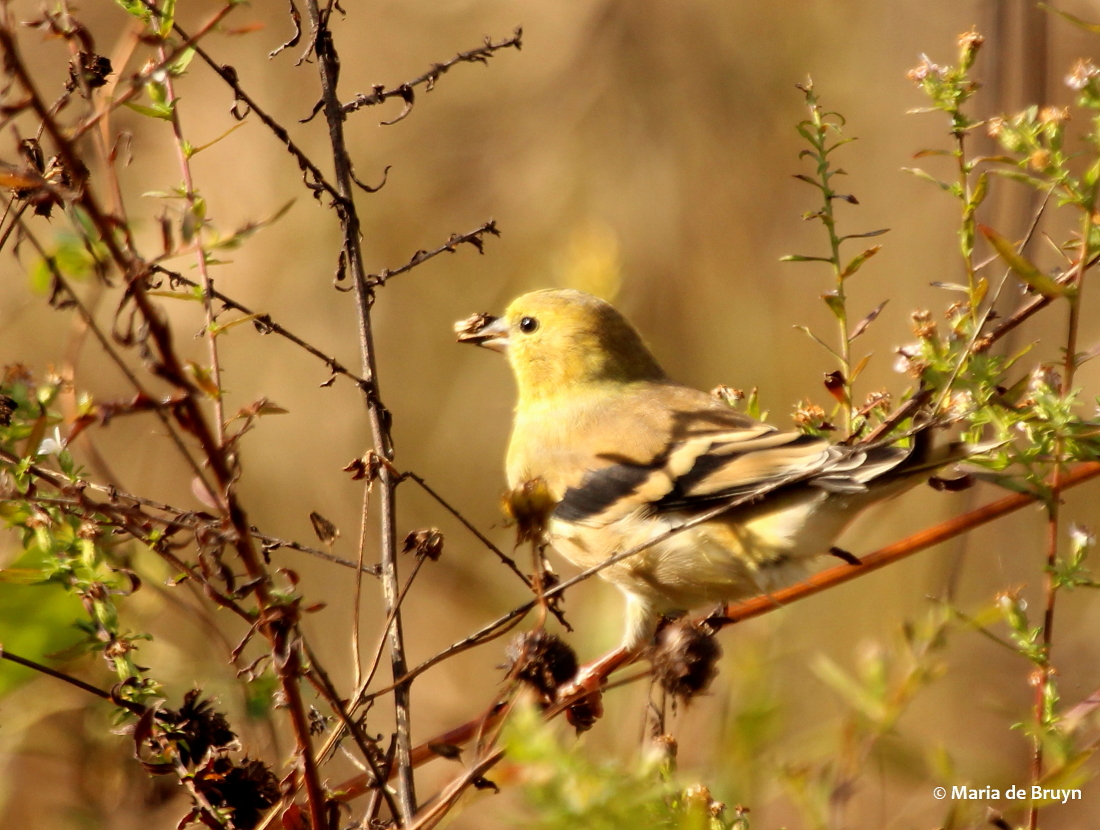
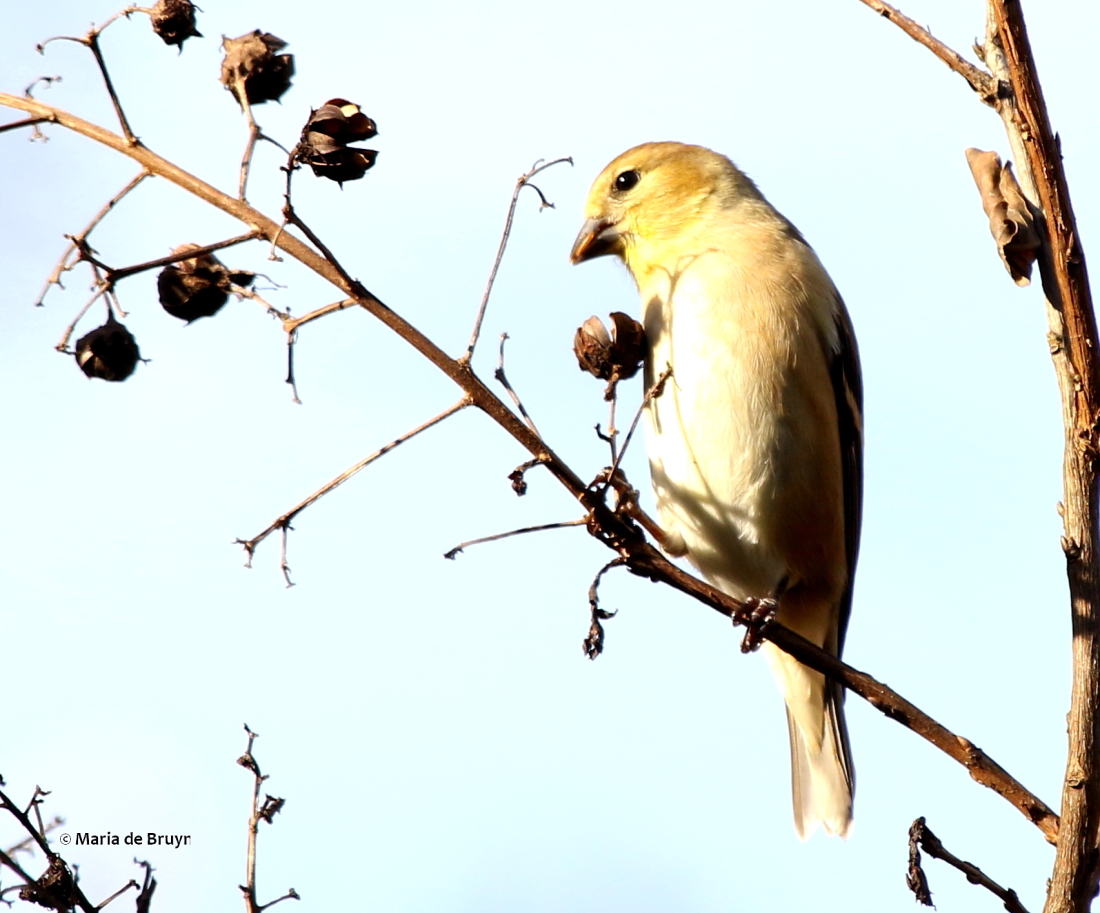
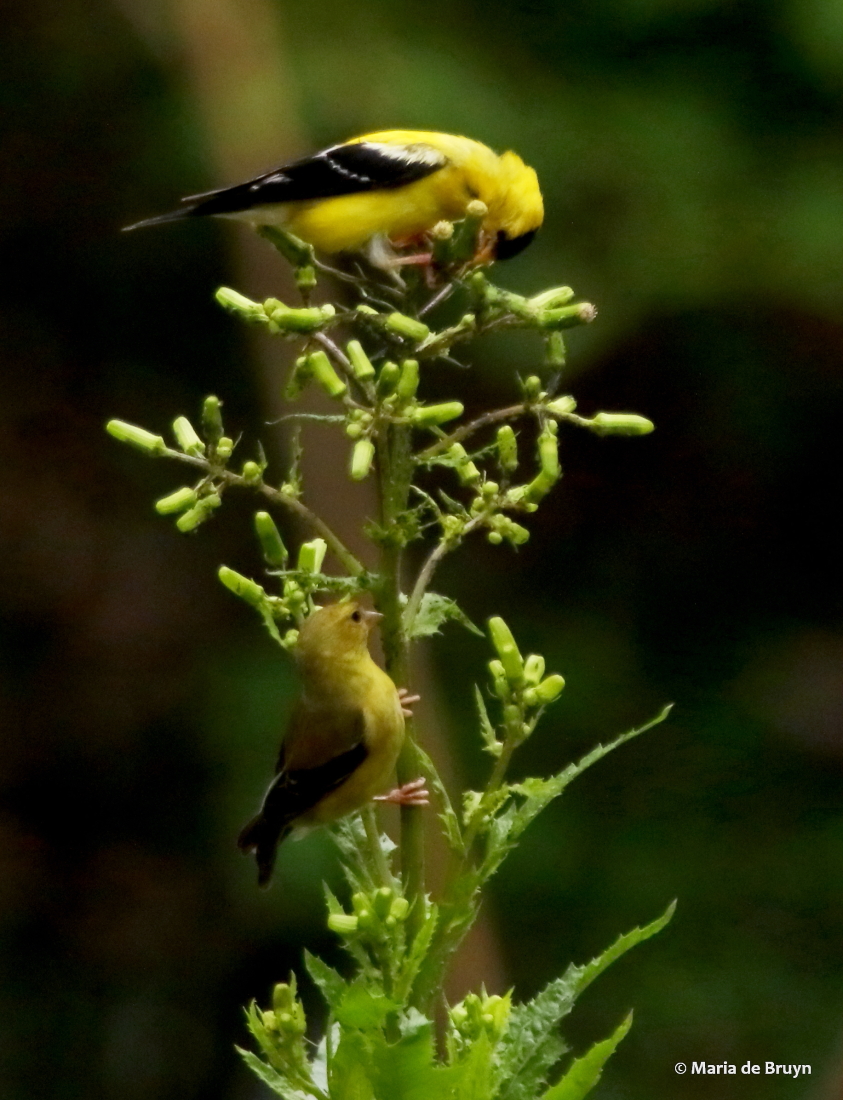
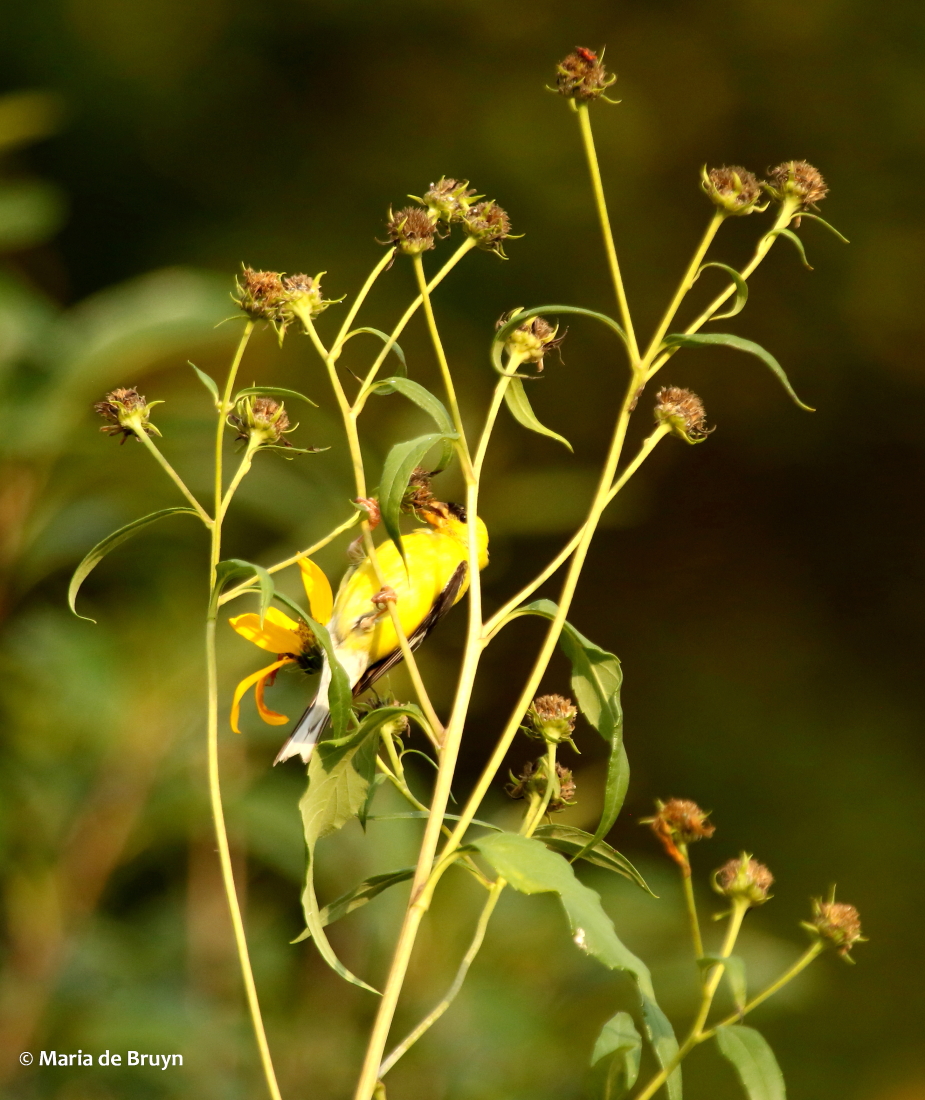
It’s not only the fruit that draws them away from the bird feeders in the autumn though. Sunflower seeds (Helianthus) are a big hit with the American goldfinches (Spinus tristis), who also seek out different kinds of seed pods.


American goldfinch I77A2510© Maria de Bruyn res American goldfinch IMG_7947© Maria de Bruyn signed res

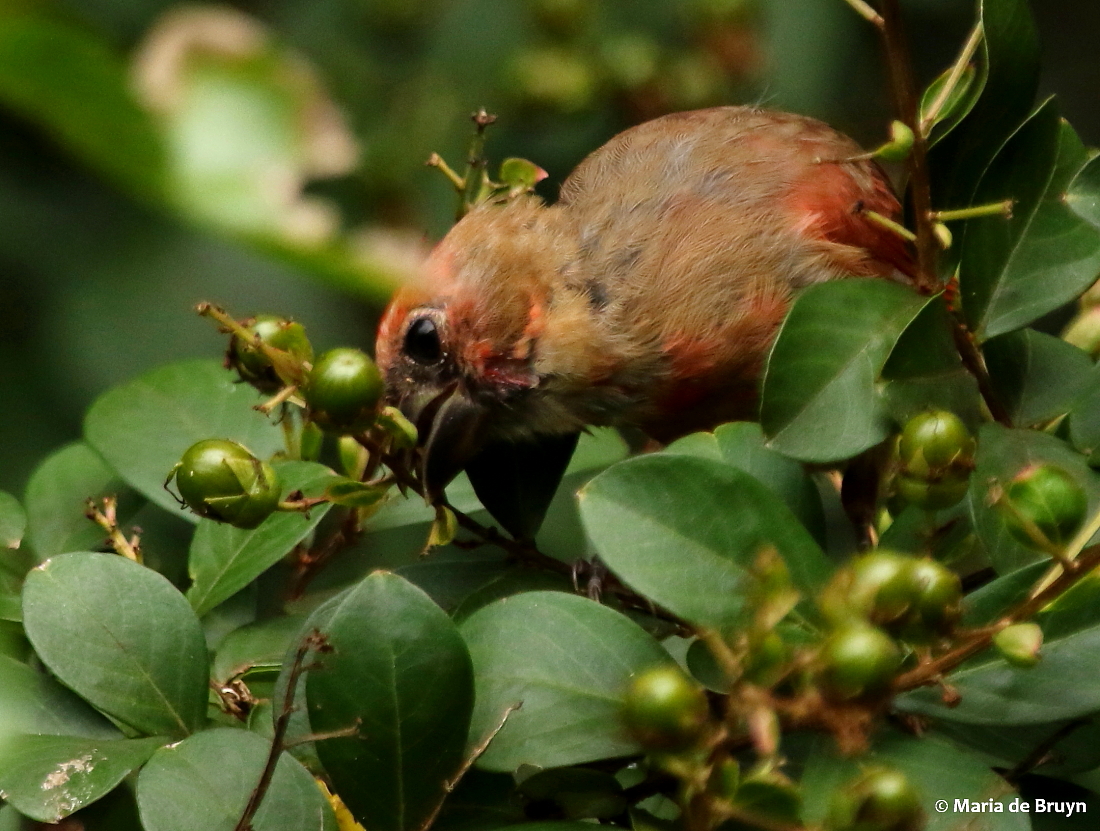
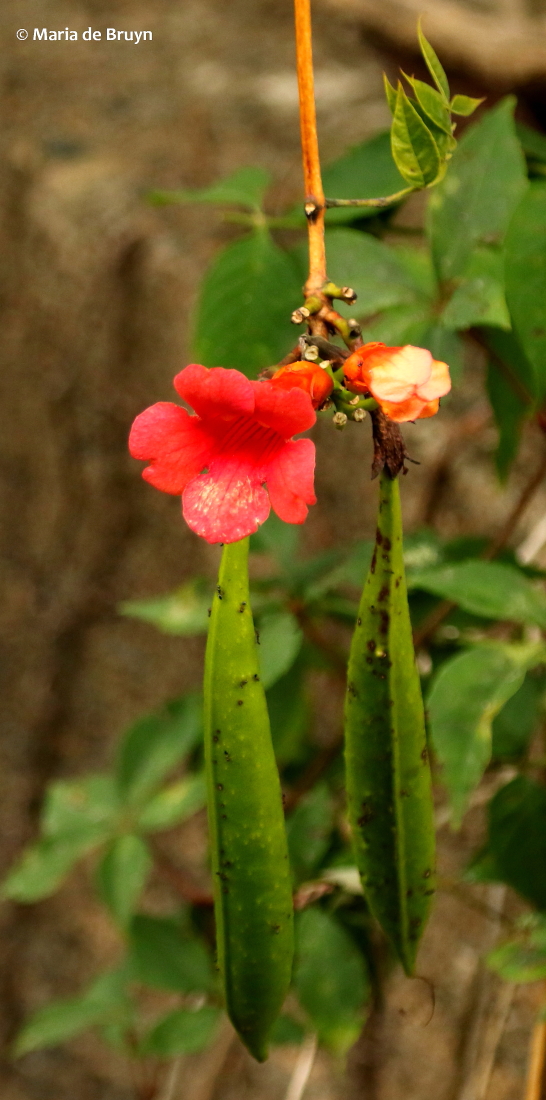
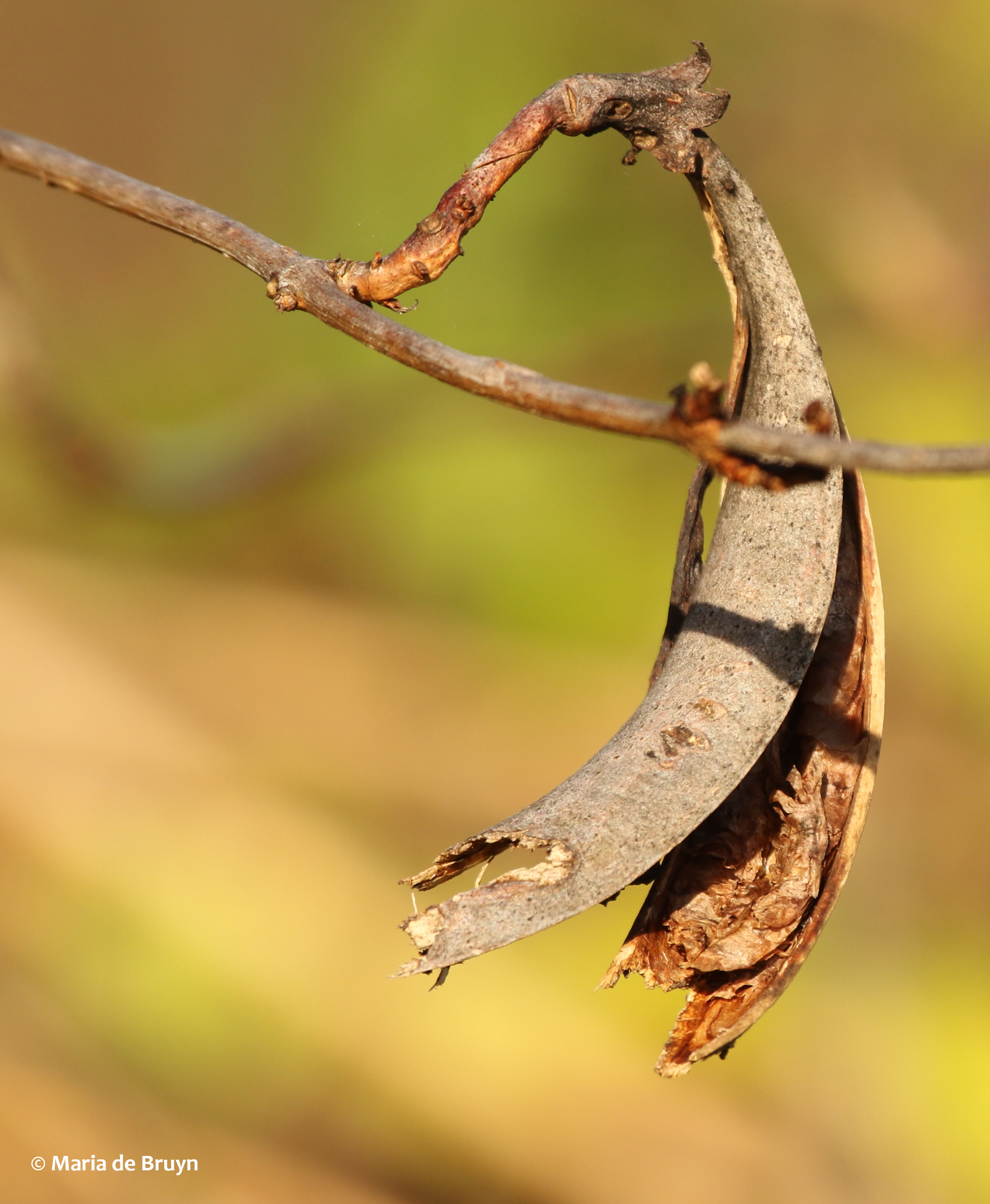
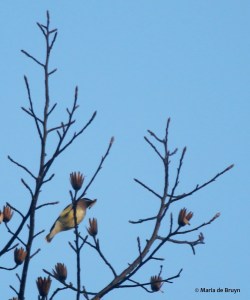
Pods on trees, like the crepe myrtle (Lagerstroemia fauriei), and on vines such as the trumpet creeper (Campsis radicans) offer attractive meals, too.

goldfinch I77A2097© Maria de Bruyn resNorthern cardinal DK7A1206© Maria de Bruyn signed res

American goldfinch and Northern cardinal both eating crepe myrtle

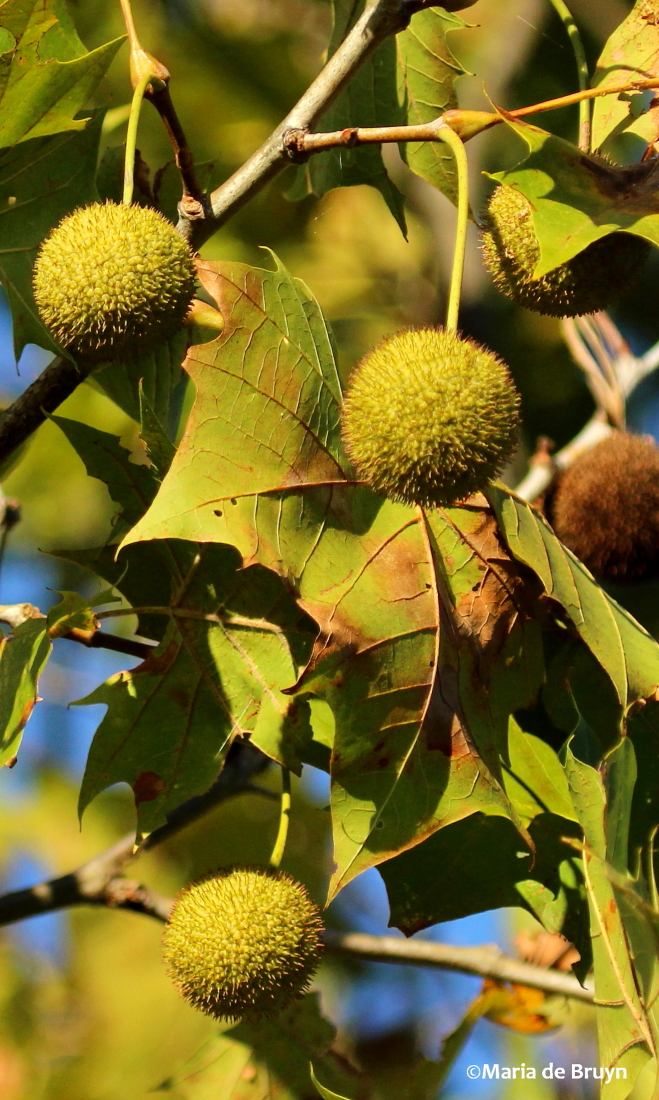
Trumpet vine DK7A9266© Maria de Bruyn signed restrumpet vine I77A1487© Maria de Bruyn ressycamore IMG_2339©Maria de Bruyn res

Trumpet vine                                         American sycamore (Platanus occidentalis)

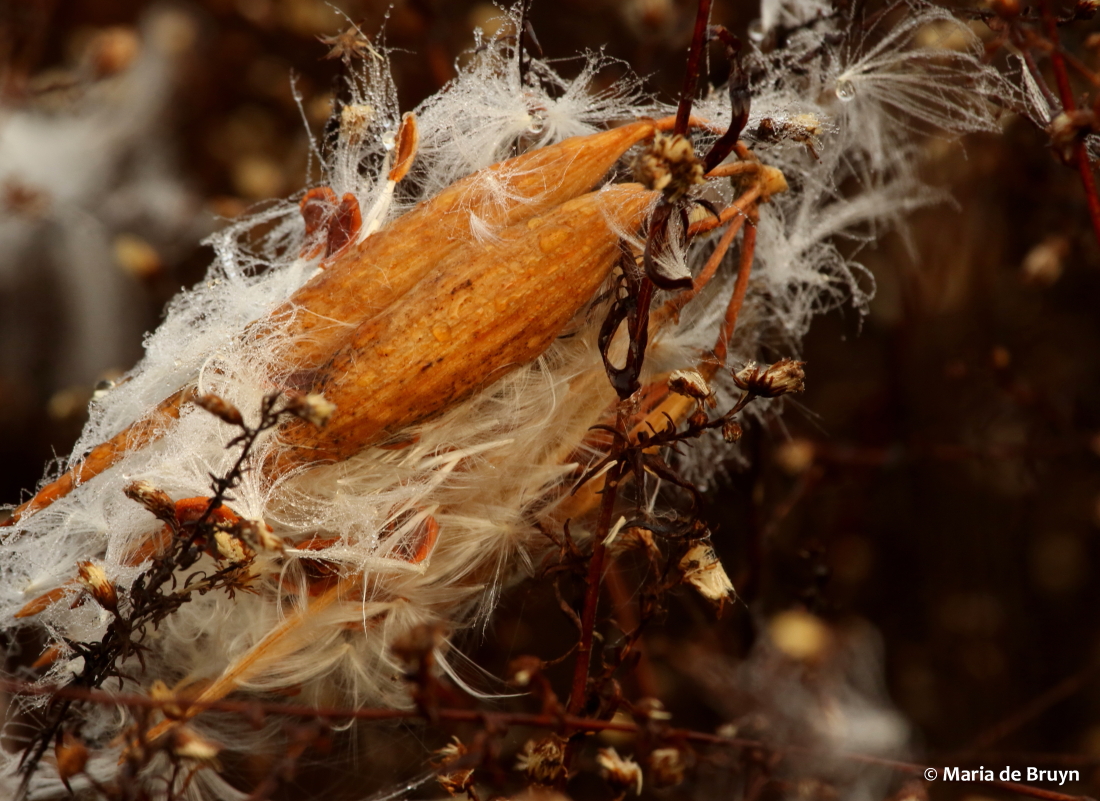
milkweed I77A7144© Maria de Bruyn signed resCarolina wren I77A8006©Maria de Bruyn res

Milkweed (Asclepius) and Carolina chickadee (Poecile carolinensis)

American goldfinch DK7A1355© Maria de Bruyn SIGNED RESamerican goldfinch DK7A7127© Maria de Bruyn signed res

American goldfinches

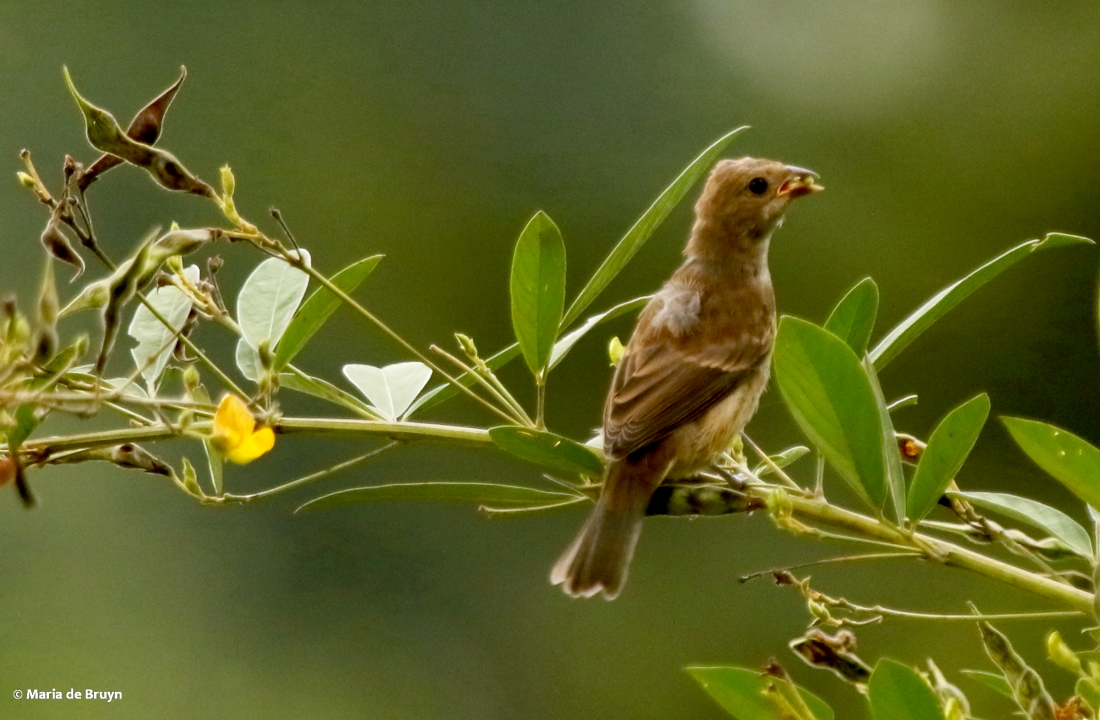
Indigo bunting DK7A7525© Maria de Bruyn signed res

Indigo bunting ( Passerina cyanea)

Scarlet tanager IMG_7415© Maria de Bruyn signed

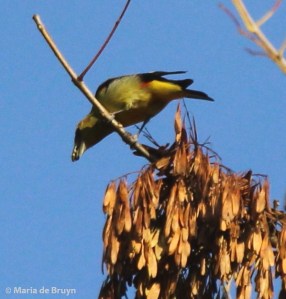
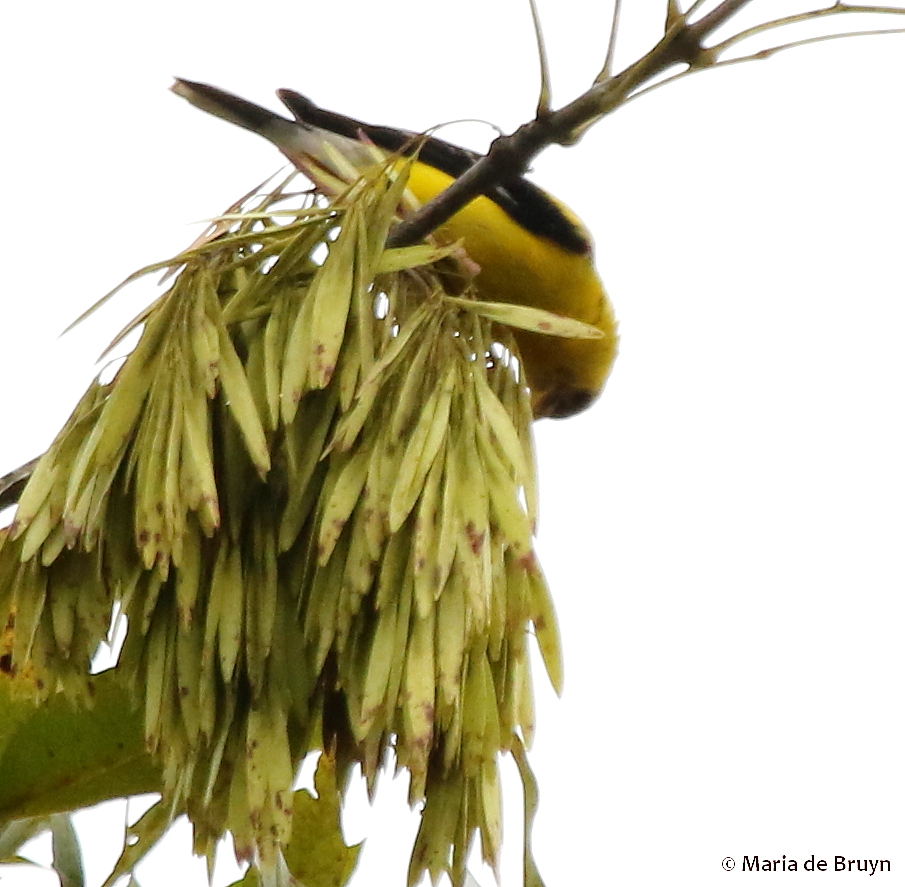
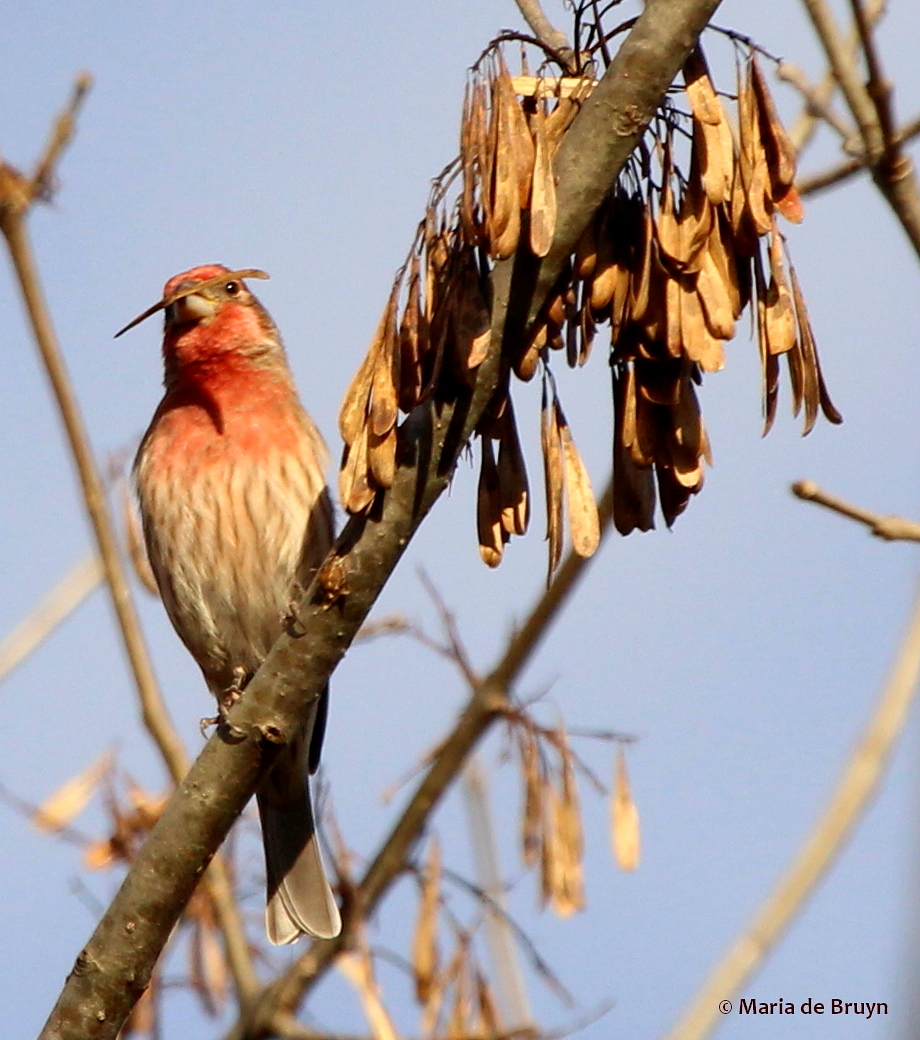
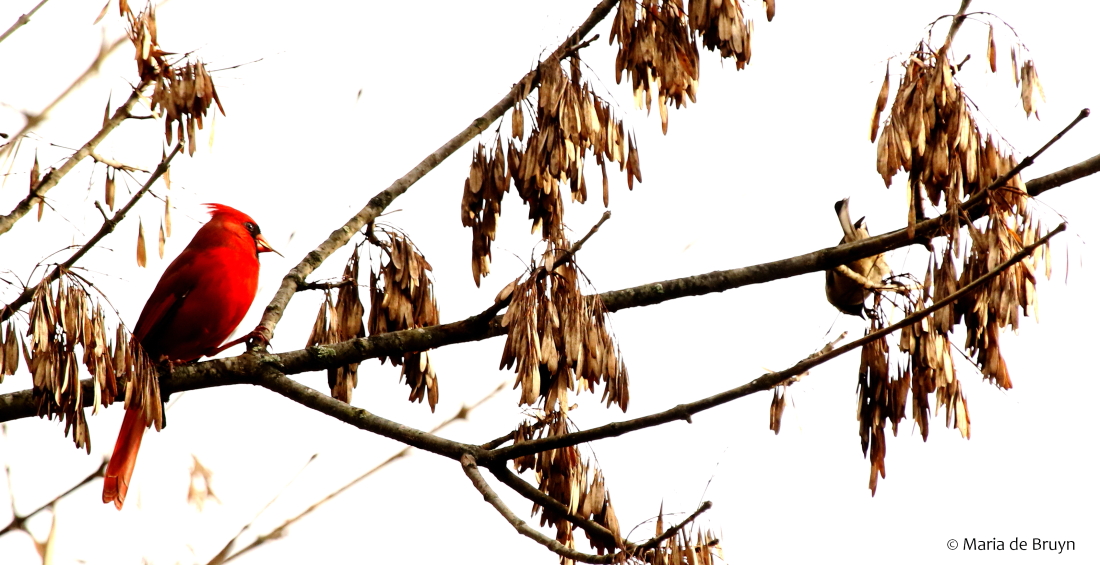
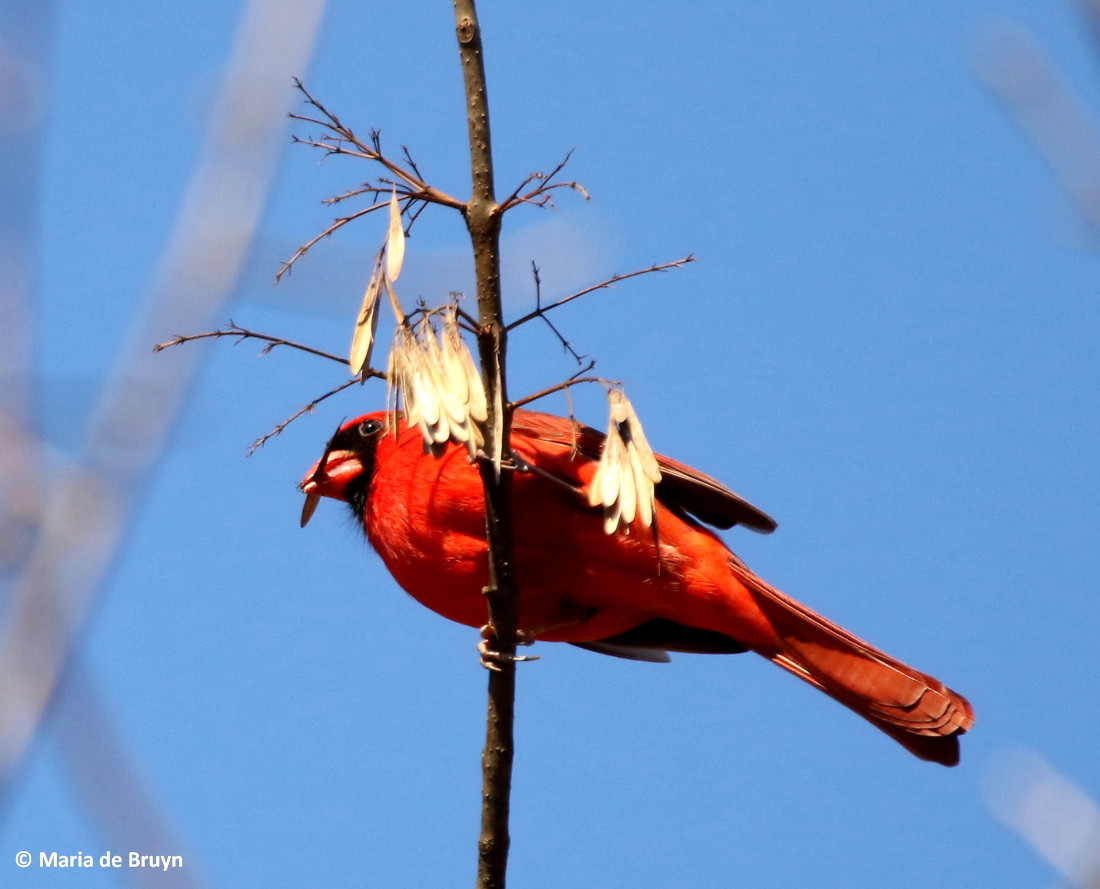
Some trees like maples have samara seed pods, in which a single seed is surrounded by a paper-like tissue that is dispersed by the wind. Ash trees have samaras that grow in clusters. Here a young scarlet tanager (Piranga olivacea) is dining. Below are an American goldfinch, house finch (Haemorhous mexicanus) and Northern cardinal, all of them males.


American goldfinch DK7A5026© Maria de Bruyn signedHouse finch IMG_7718© Maria de Bruyn signed


Northern cardinal I77A8006© Maria de Bruyn res


cedar waxwing I77A6594© Maria de Bruyn signed res

Cedar waxwing (left) with samara of the tulip tree (Liriodendron tulipifera)


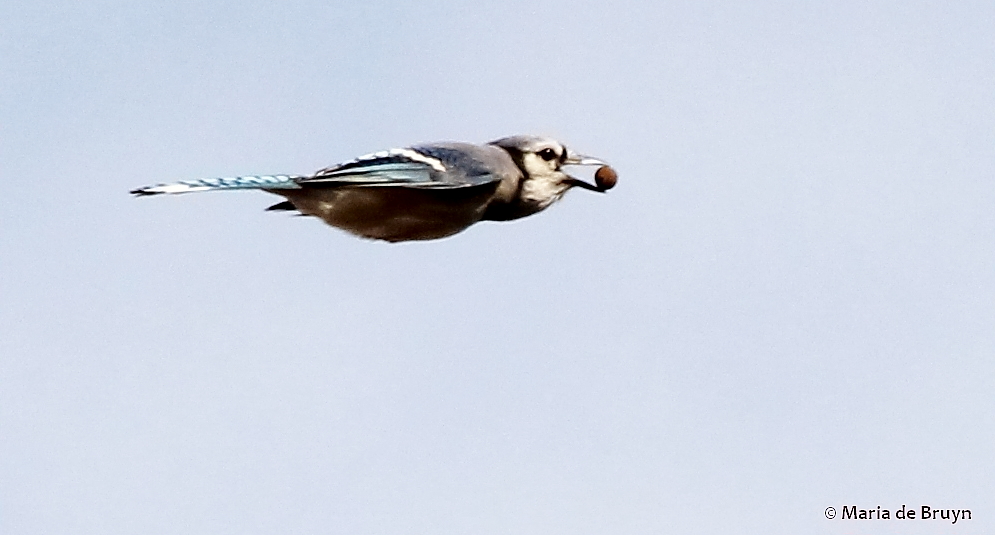
blue jay IMG_7806© Maria de Bruyn signed


Blue jays (Cyanocitta cristata, above) like nuts a great deal and can often be seen flying away with a prize.

red-bellied woodpecker IMG_5780© Maria de Bruyn (2)


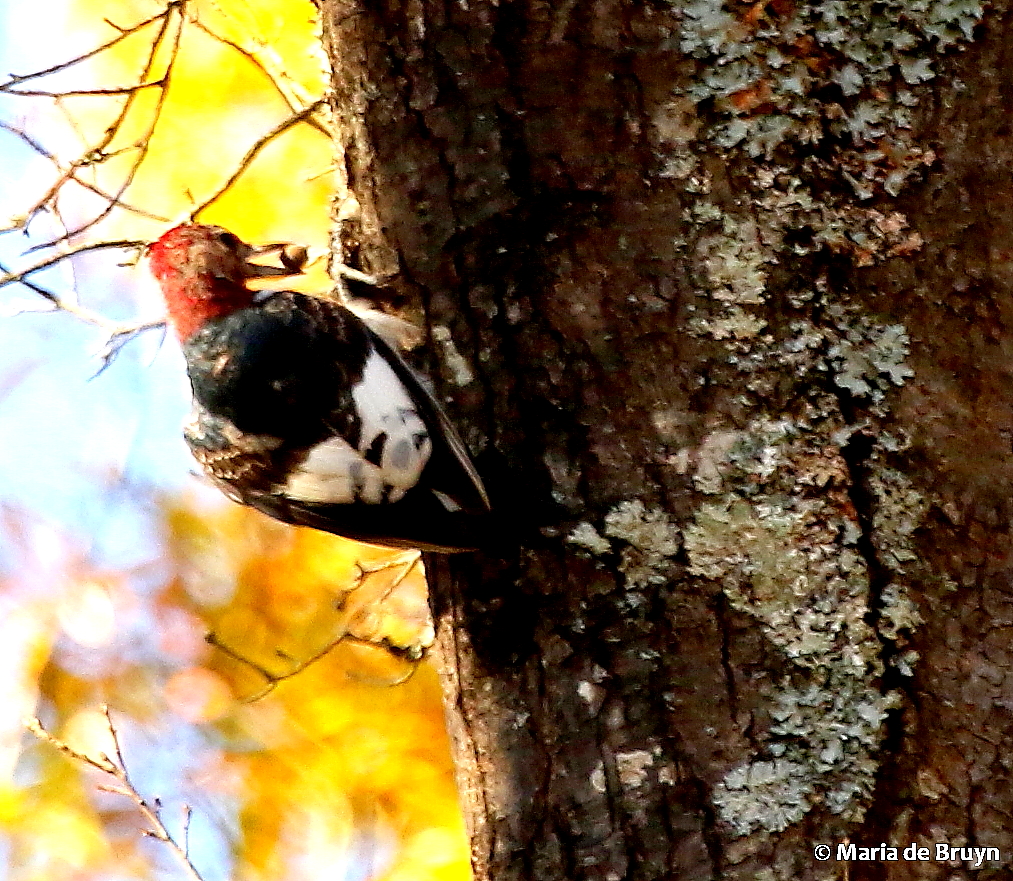
The red-bellied woodpeckers (Melanerpes carolinus) and red-headed woodpeckers (Melanerpes erythrocephalus) don’t turn away from nuts either.


Red-headed woodpecker I77A7844© Maria de Bruyn signed       red-headed woodpecker I77A5149© Maria de Bruyn res

Northern cardinal I77A2153© Maria de Bruyn res

It may feel a bit sad when activity dies down at the feeders for a time, but if you can manage to have nut-, seed- and fruit-bearing vegetation around your home, you can still enjoy watching your avian friends forage – and the natural surroundings can make for lovelier photos, too!

Rain drops, dewdrops and frost – Mother Nature’s adornments

rain drops IMG_8843© Maria de Bruyn resDewdrops in the early morning, raindrops during the day, and frost covering everything outdoors can be seen merely as various manifestations of heavenly water on earth, but another way of looking at them can be as nature’s jewels. When light and sunshine illuminate the drops and crystals, they lend an air of elegance and beauty to whatever they have covered.

When it rains, leaves and blooms may look uniformly slick with moisture but we often see them covered in rain drops. Have you ever wondered why the rain drops are of different sizes?

dewdrops IMG_7571© Maria de Bruyn res day lily with rain drops IMG_5259© Maria de Bruyn res

The US Geological Survey’s Water Science School reports that water vapor wraps around particles in the air (salt, smoke, dust) which are of different sizes; then when the drops begin falling to earth, they bump into other drops and merge. The drops that merge with more “neighbors” become larger. Rain drops suspended from branches and leaves are quite lovely.

rain drops DK7A8019© Maria de Bruyn res rain drops DK7A8052© Maria de Bruyn 2 res

rain drops DK7A8020© Maria de Bruyn resruby-throated hummingbird DK7A8190© Maria de Bruyn resThey often roll right off birds’ feathers but occasionally adhere, as was the case for this ruby-throated hummingbird (Archilochus colubris) at a feeder sheltered by a roof overhang.

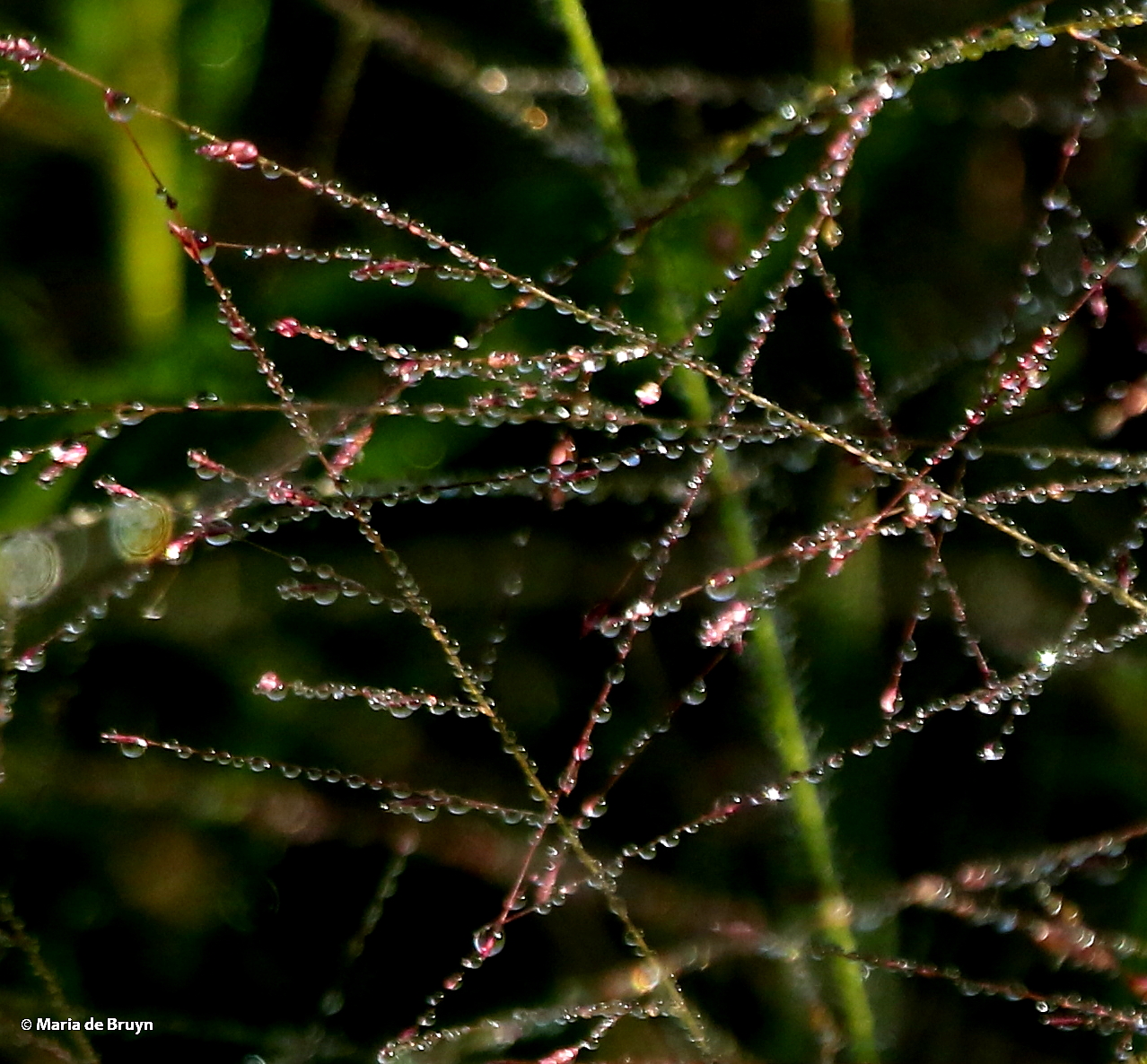
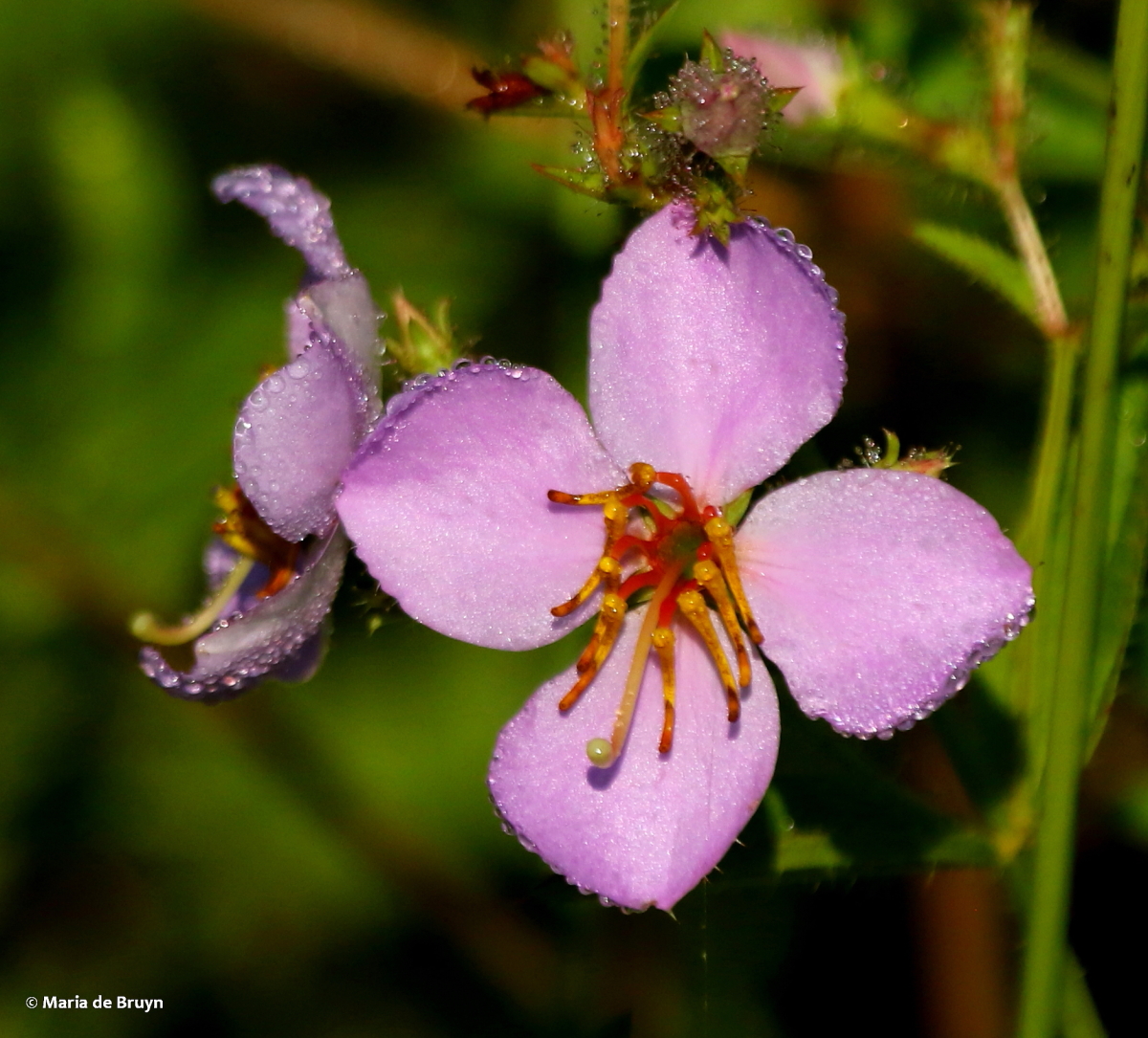
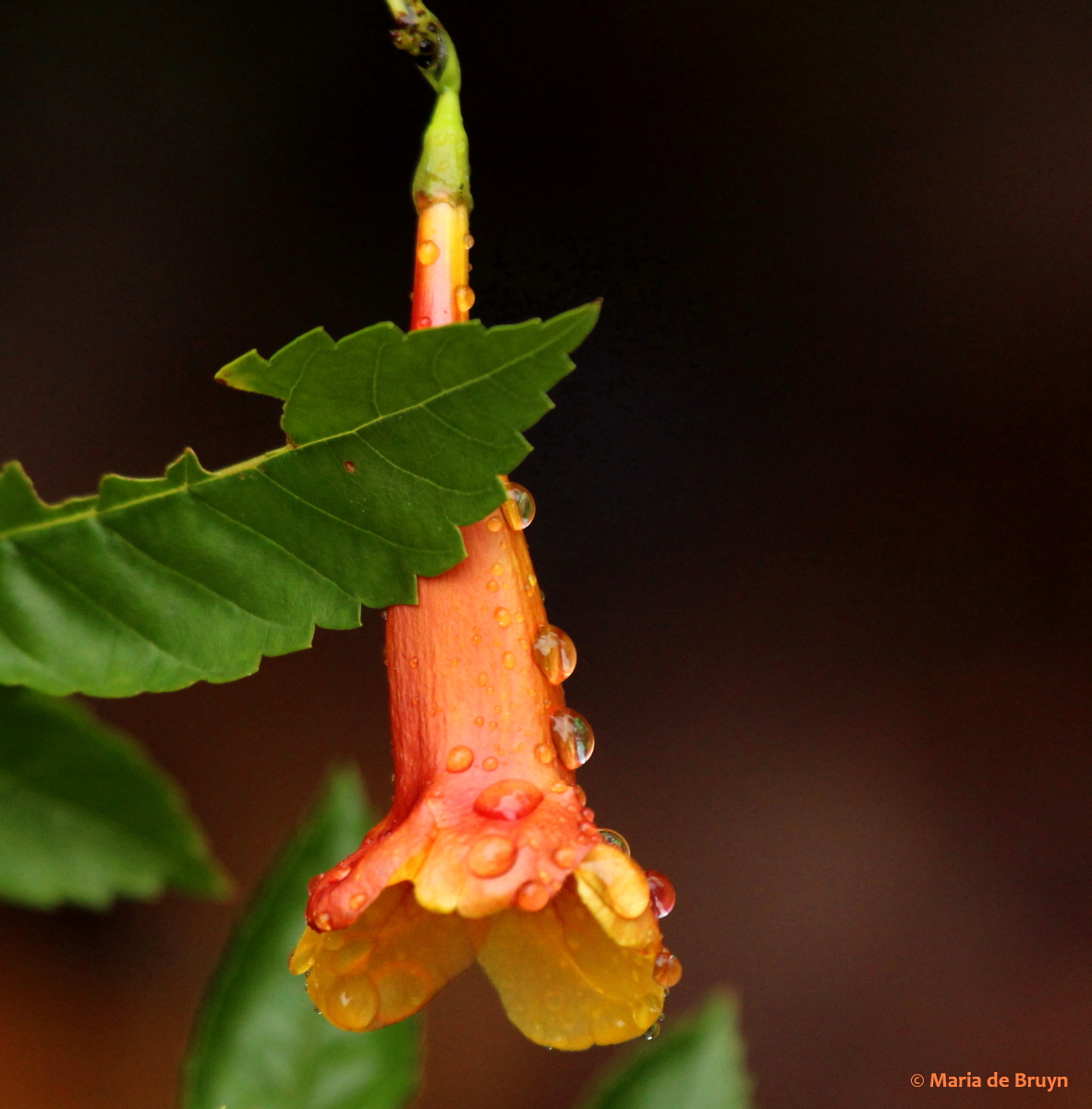
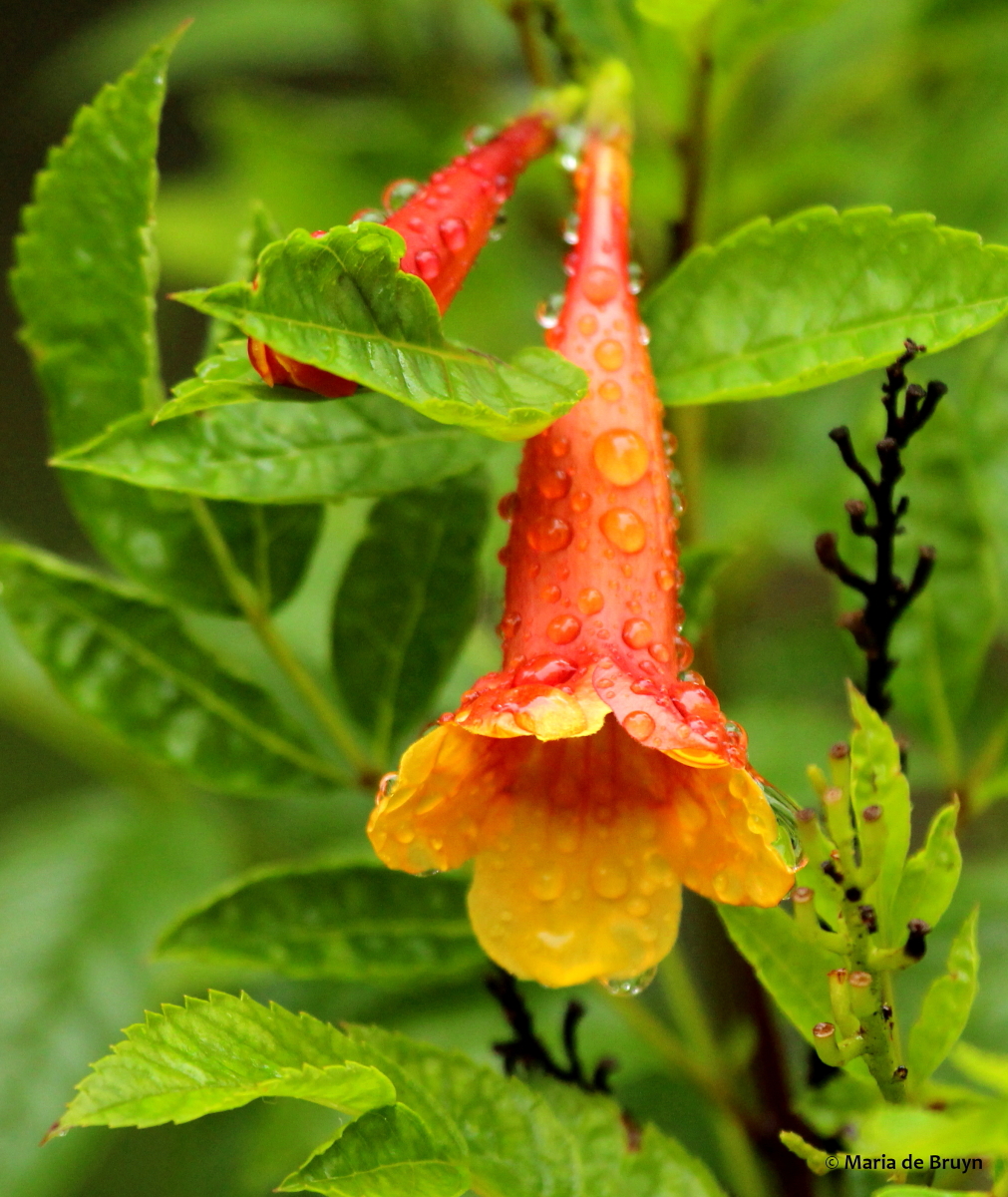
Dew – water droplets on surfaces of objects and vegetation – forms when an exposed surface cools down by radiating its heat and the moisture in the atmosphere then condenses faster than it evaporates. It looks beautiful on flowers and other plants, such as these grasses, the Virginia meadow beauty (Rhexia virginica) and the Orange mahogany esperanza (Tecoma stans “Orange Mahogany”).

dewdrops DK7A2989© Maria de Bruyngrass dewdrops DK7A3012© Maria de Bruyn res

Virginia meadow beauty DK7A3083© Maria de Bruyn res

Orange mahagony esperanza IMG_6425© Maria de Bruyn res Orange mahagony esperanza IMG_6414© Maria de Bruyn res

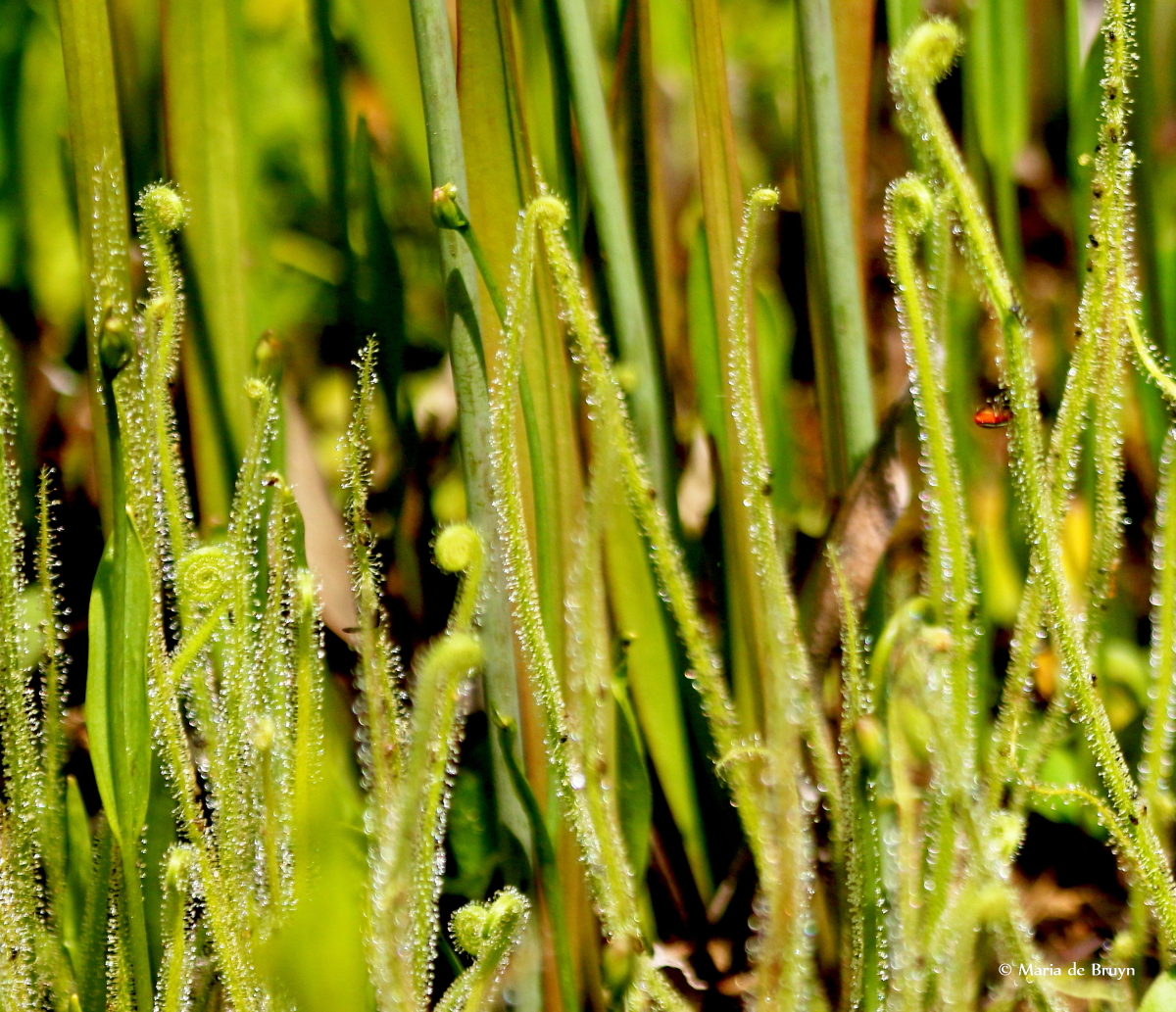
Some plants actually mimic dewdrops, like Tracey’s sundew.

Tracy's sundew DK7A5228© Maria de Bruyn res Tracy's sundew IMG_4952© Maria de Bruyn

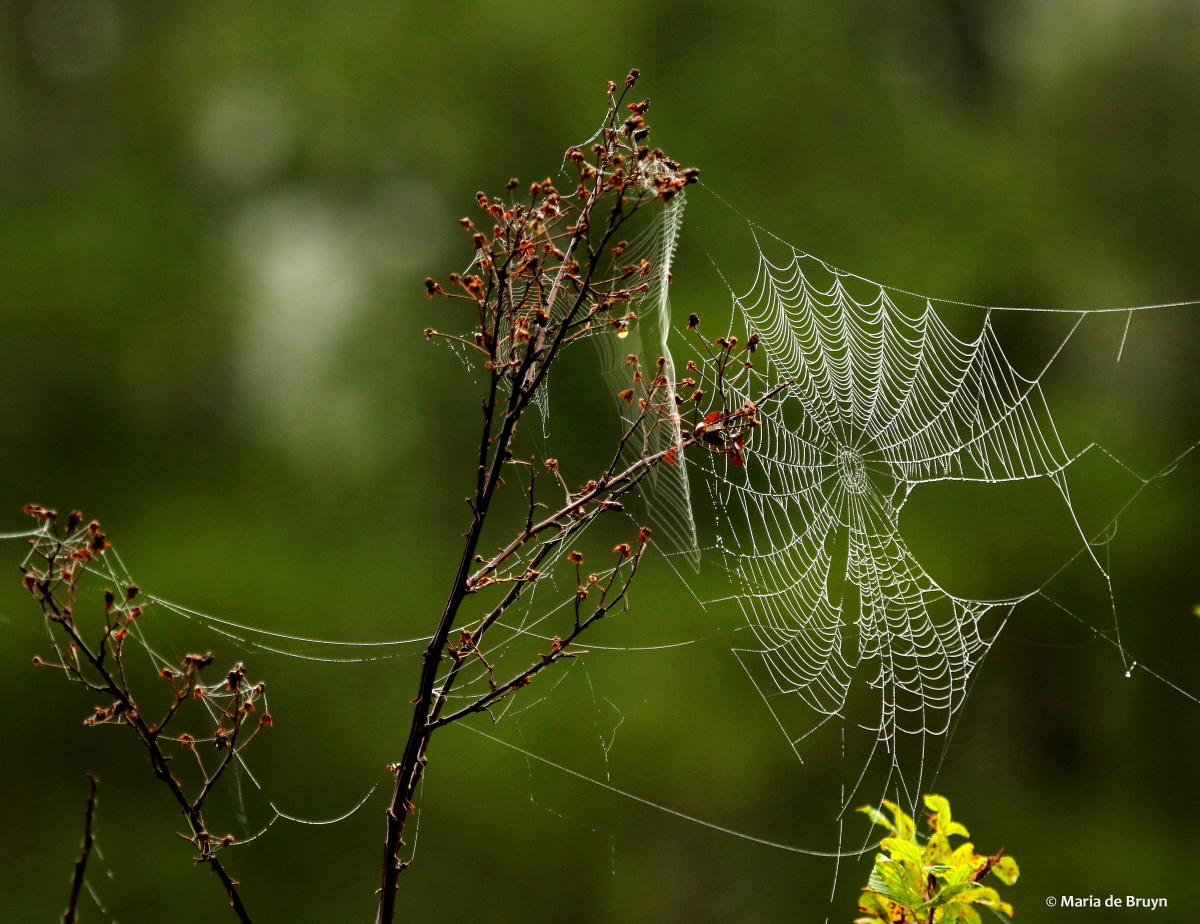
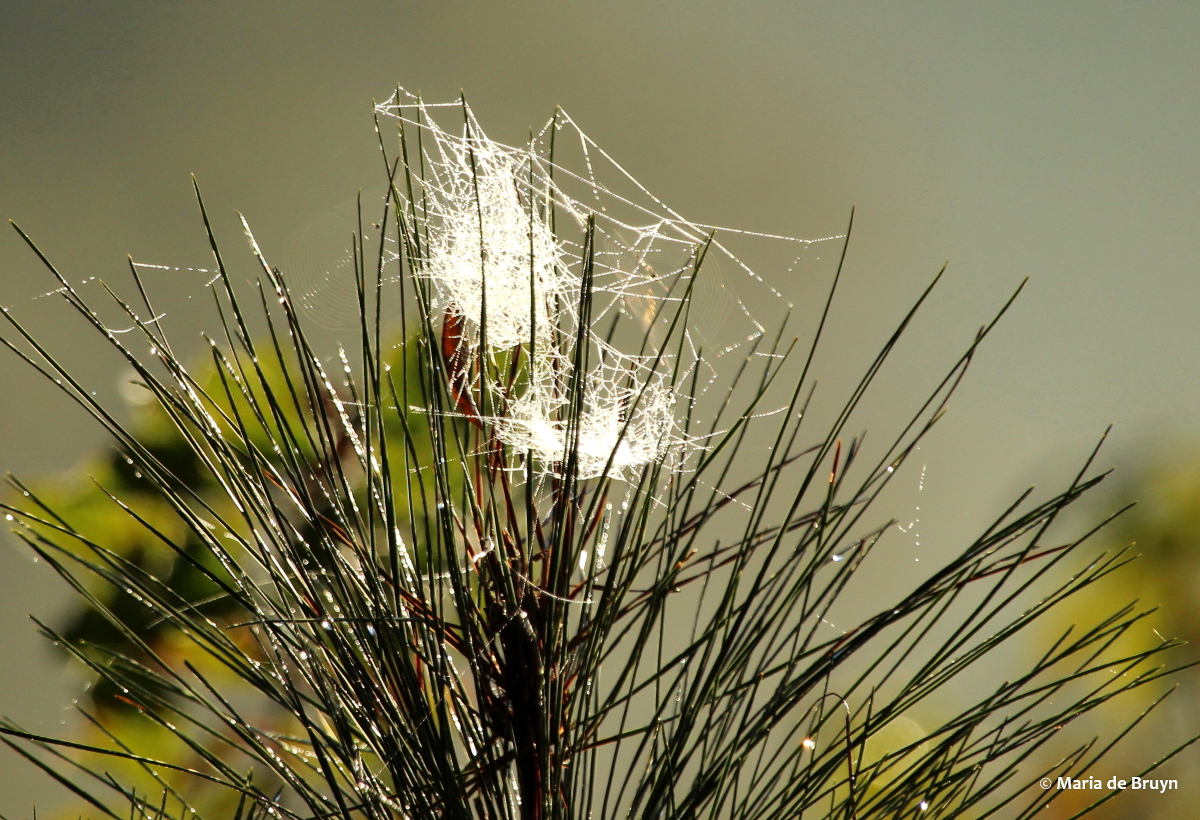
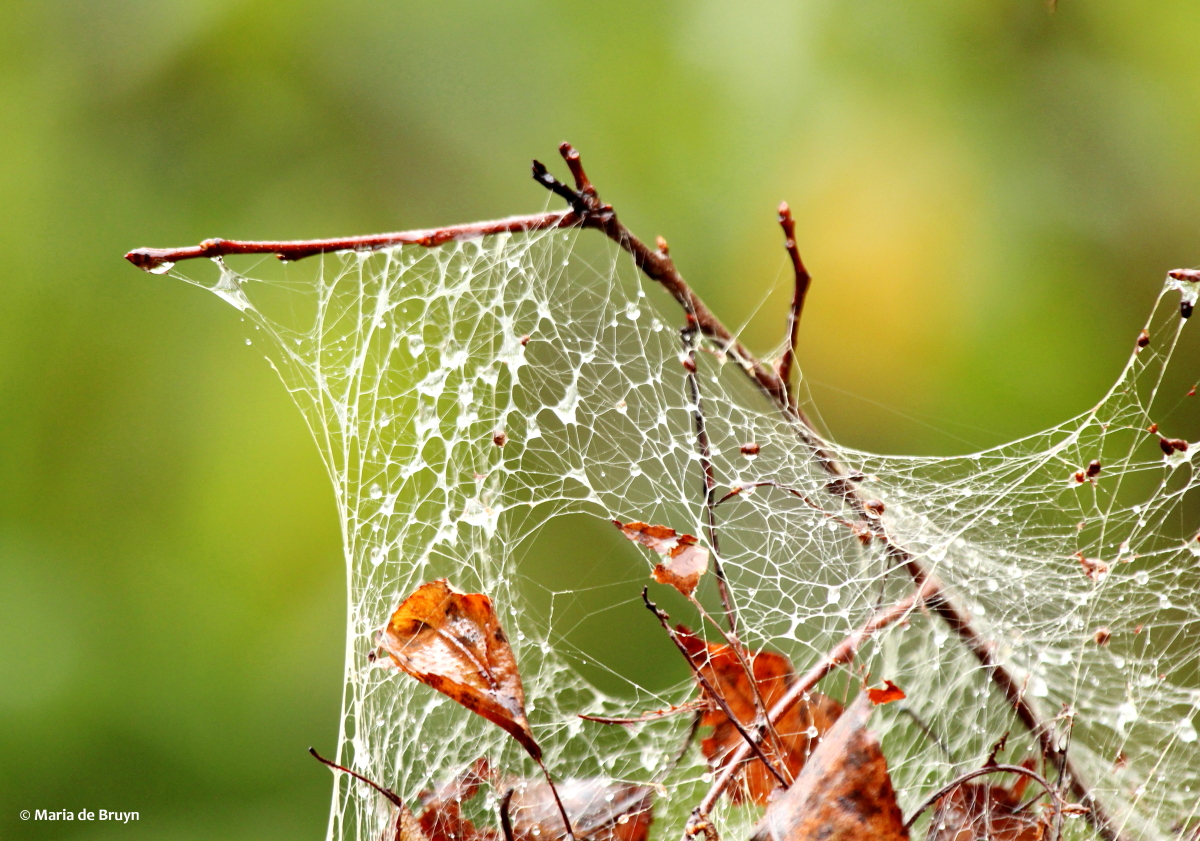
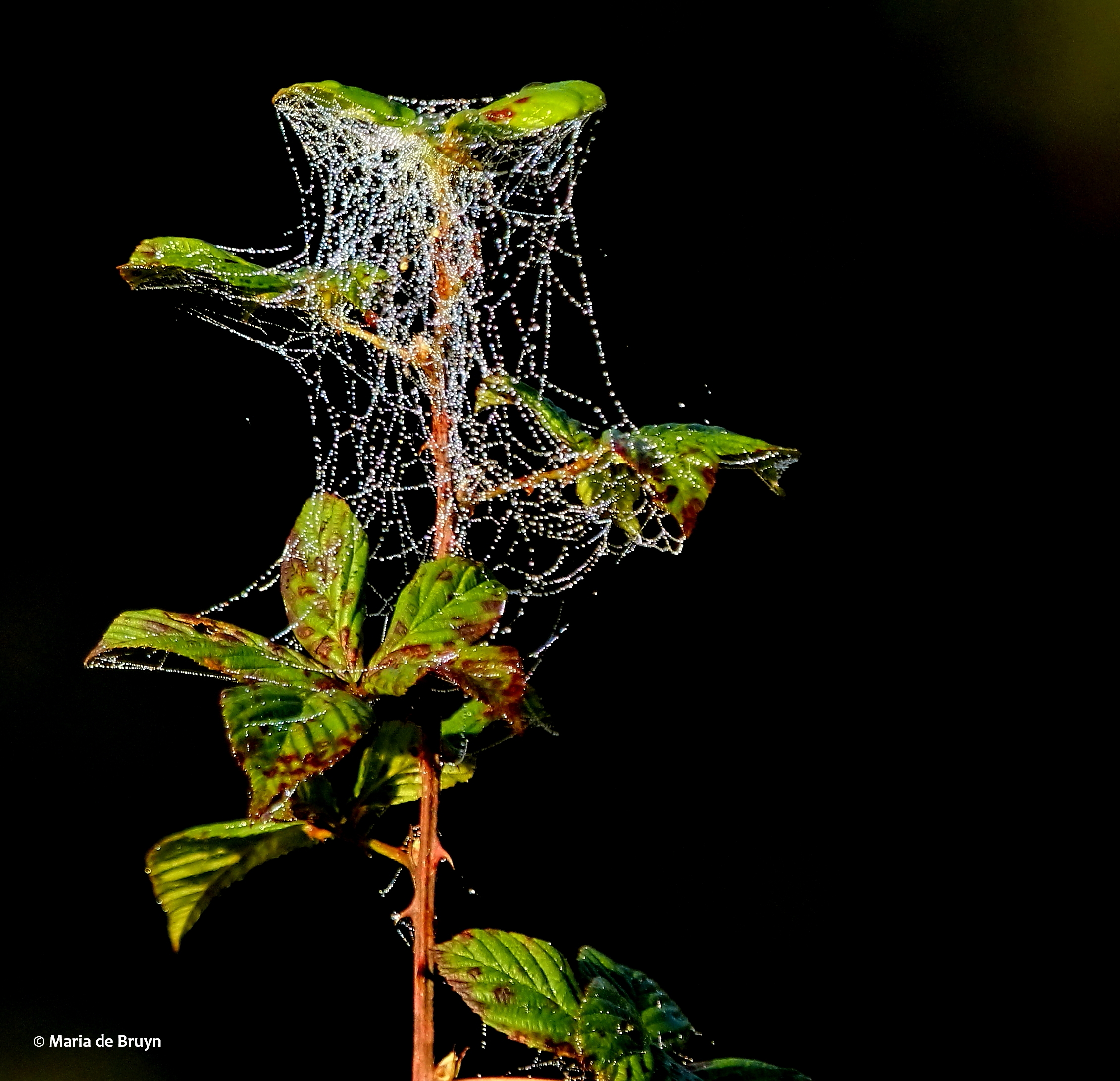
On spider webs, water and ice droplets outline the architecture created by the arachnids, showing off the symmetry and beauty of the lines.

spider web DK7A6479© Maria de Bruyn res spider web with dewdrops IMG_2683©Maria de Bruyn res

spider web with dewdrops IMG_6438© Maria de Bruyn res spider web with dewdrops IMG_6396© Maria de Bruyn res

sheetweb dwarf spider IMG_0959©Maria de Bruynsigned


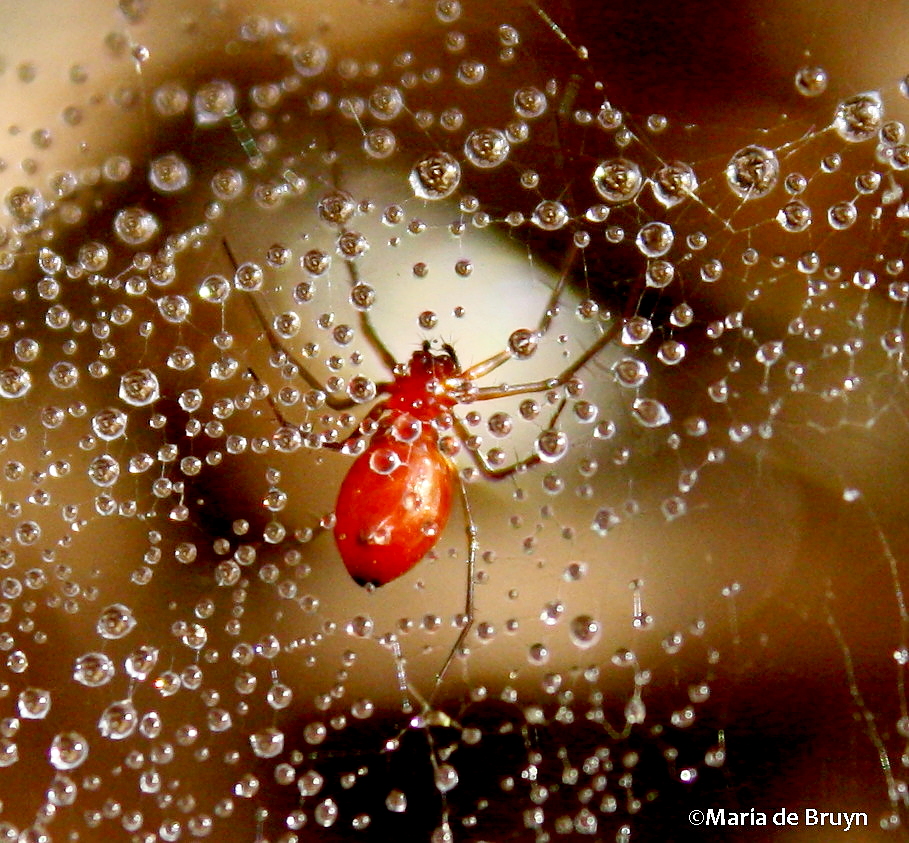
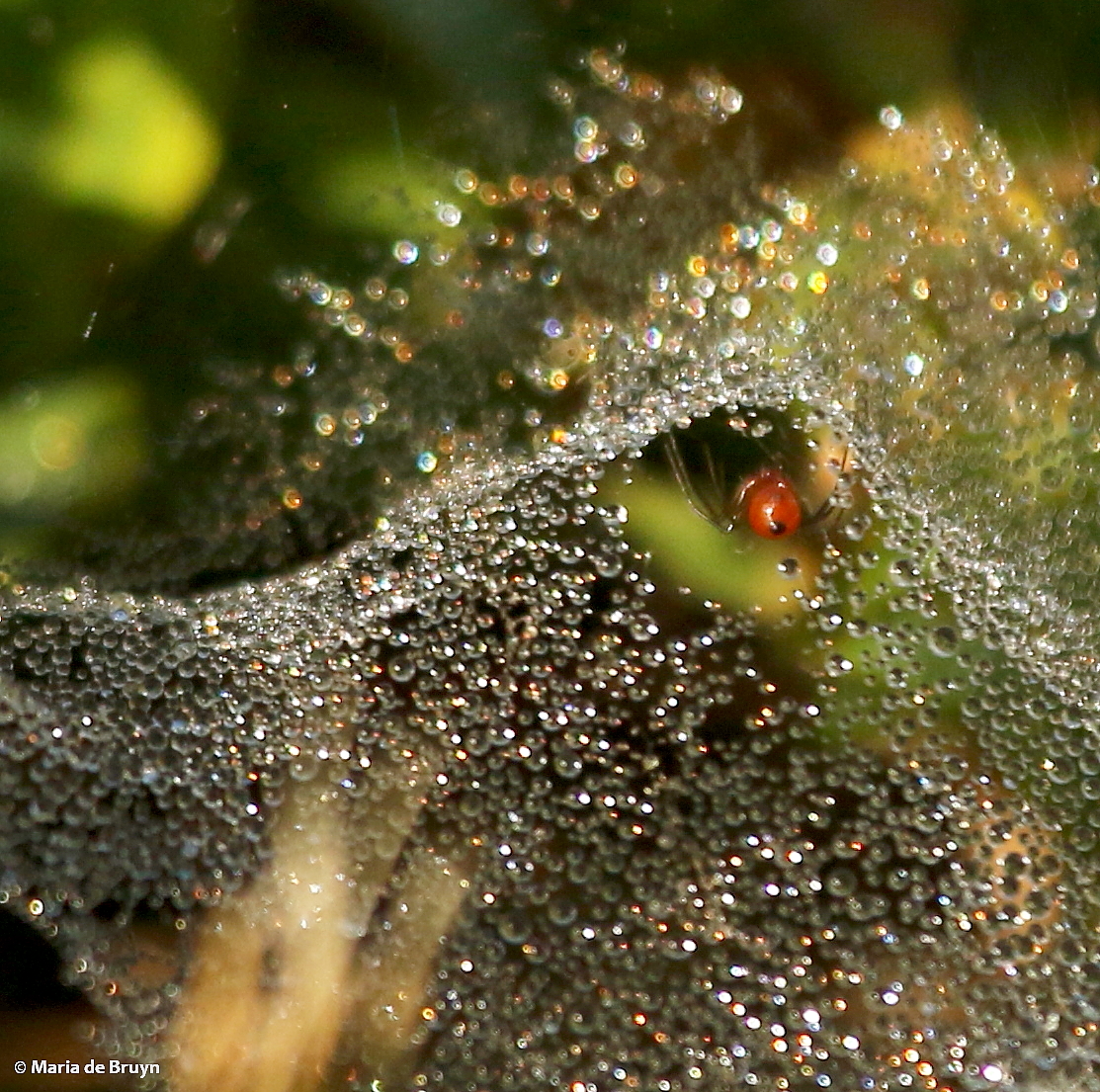
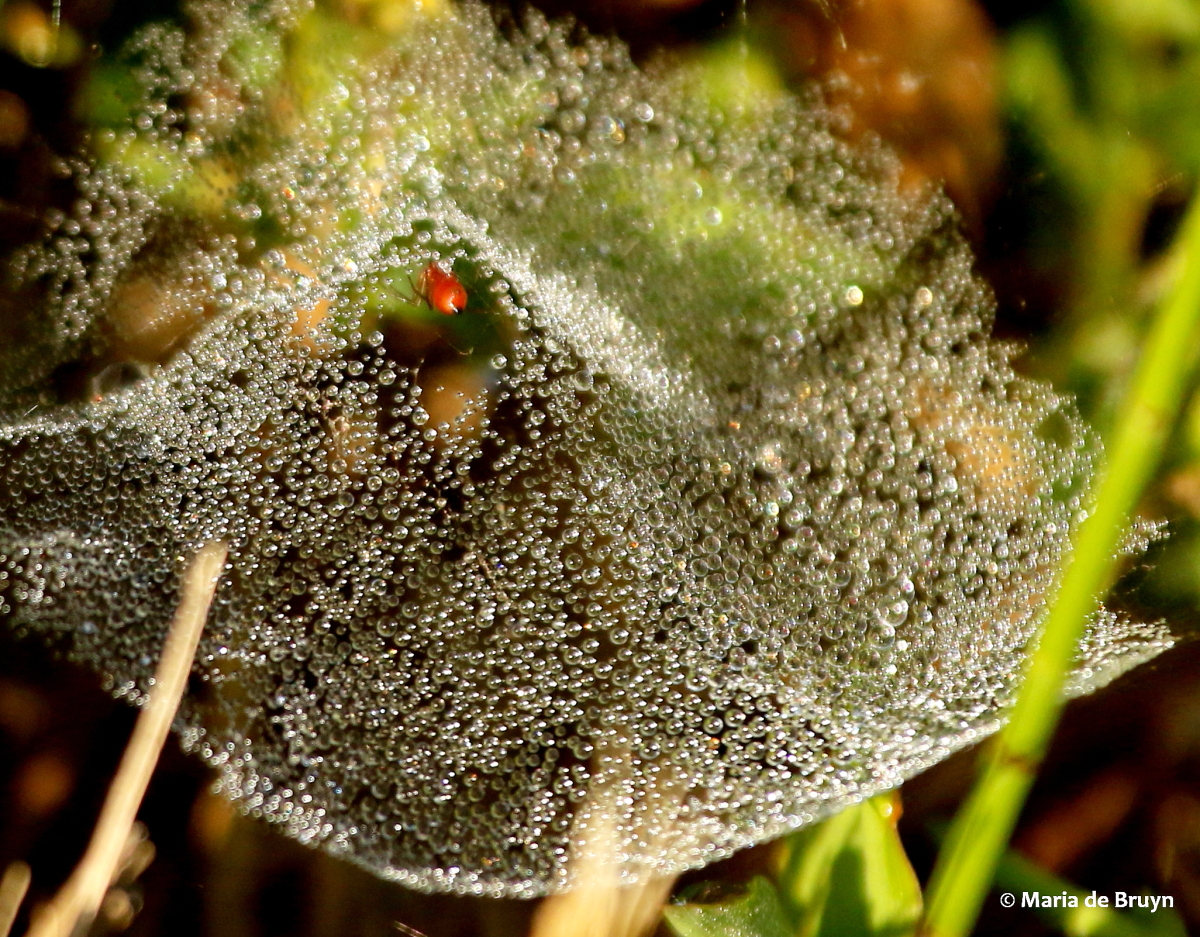
The webs of sheetweb dwarf spiders (Florinda coccinea), often not so visible in the grass, become quite noticeable when covered in dewdrops and then you can often spot the little red spider hanging underneath waiting for its prey.

sheetweb spider DK7A4086© Maria de Bruyn sheetweb dwarf spider DK7A4076© Maria de Bruyn res

spider web splendor IMG_2727©Maria de Bruyn res


In this case, the plant looked like a natural jewelry stand for strings of glass or diamond beads.

It was interesting for me to learn that the Indian Institute of Management Ahmedabad (IIMA) and the International Organisation for Dew Utilization (OPUR) created a dew harvesting system for a semi-arid area in India. Their condensers can collect more than 200 liters of dew each night from October through May and could provide an additional water source for people in arid coastal regions.

Leaves and flowers, like this coral honeysuckle (Lonicera sempervirens) can seem bedecked with glistening jewels when the ice crystals of frozen dewdrops adhere to their surfaces and edges.

Coral honeysuckle DK7A6792© Maria de Bruyn resCoral honeysuckle DK7A6805© Maria de Bruyn res

frosty morning leaves IMG_7351©Maria de Bruyn Nat GeoFrost may appear to be translucent or crystal clear; when a mass of crystals are together, they look white in color because they scatter light in all directions. The ice crystals of wind frost (also known as advection frost) arise when a very cold wind blows over tree branches, leaves and flowers; they can form gorgeous borders on these surfaces.

Early morning can be a great time for nature walks – beautiful sunrises, brisk (or cooler) temperatures and awakening wildlife make for interesting viewing. And raindrops, dew and frost can add extra scenes of beauty for us to appreciate!