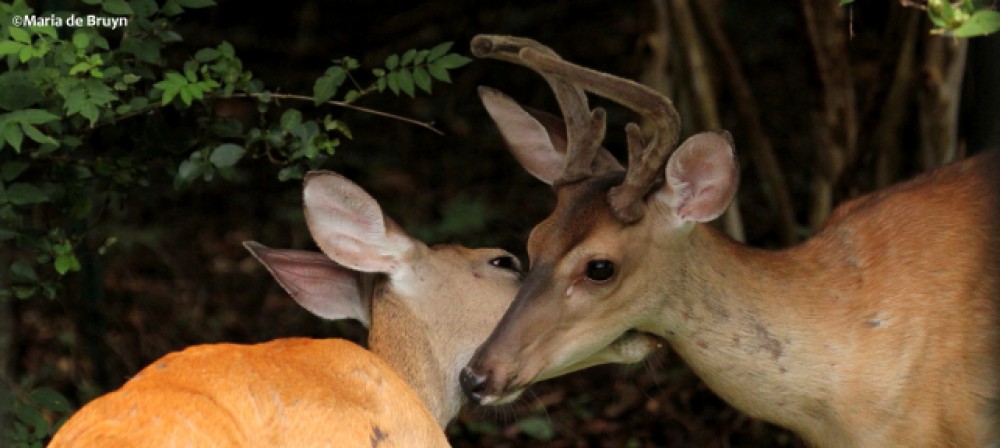
Sea-side supper (and breakfast and lunch)

Often when we visit the seashore, we either see the birds flying overhead or resting on the sand. But we also get to see them hunting for food, either through their own means or taking advantage of the opportunities afforded by others – be they other animals or human beings.

Crabs are a favorite food for various birds, including boat-tailed grackles (Quiscalus major) and sanderlings (Calidris alba).

boat-tailed grackle IMG_6386©Maria de Bruyn resSanderling IMG_5024© Maria de Bruyn resSanderling IMG_5025© Maria de Bruyn res

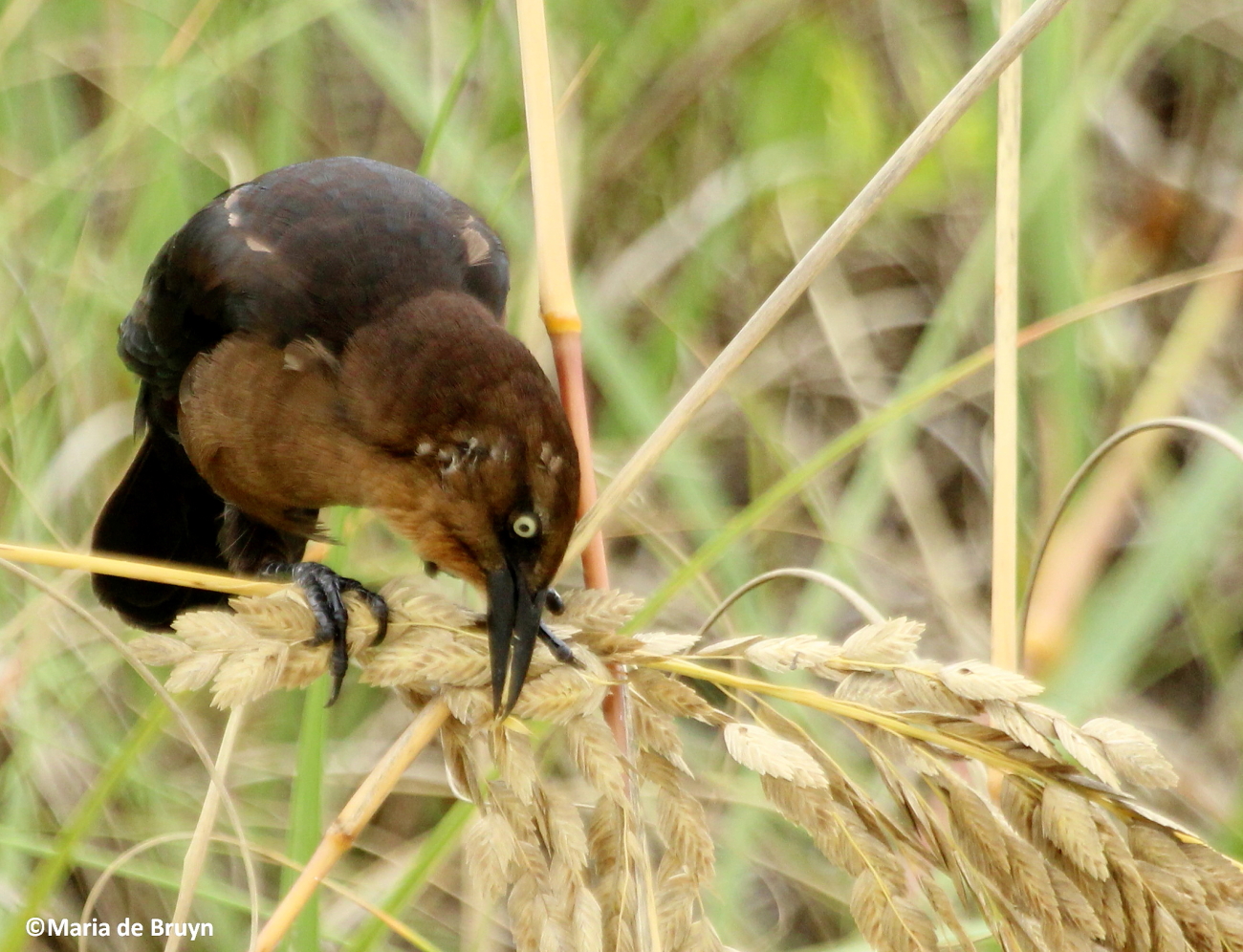
Grackles also snack on sea oats – including the adult males, adult females and juveniles.
Boat-tailed grackle IMG_1361©Maria de Bruyn resBoat-tailed grackle IMG_1400©Maria de Bruyn res

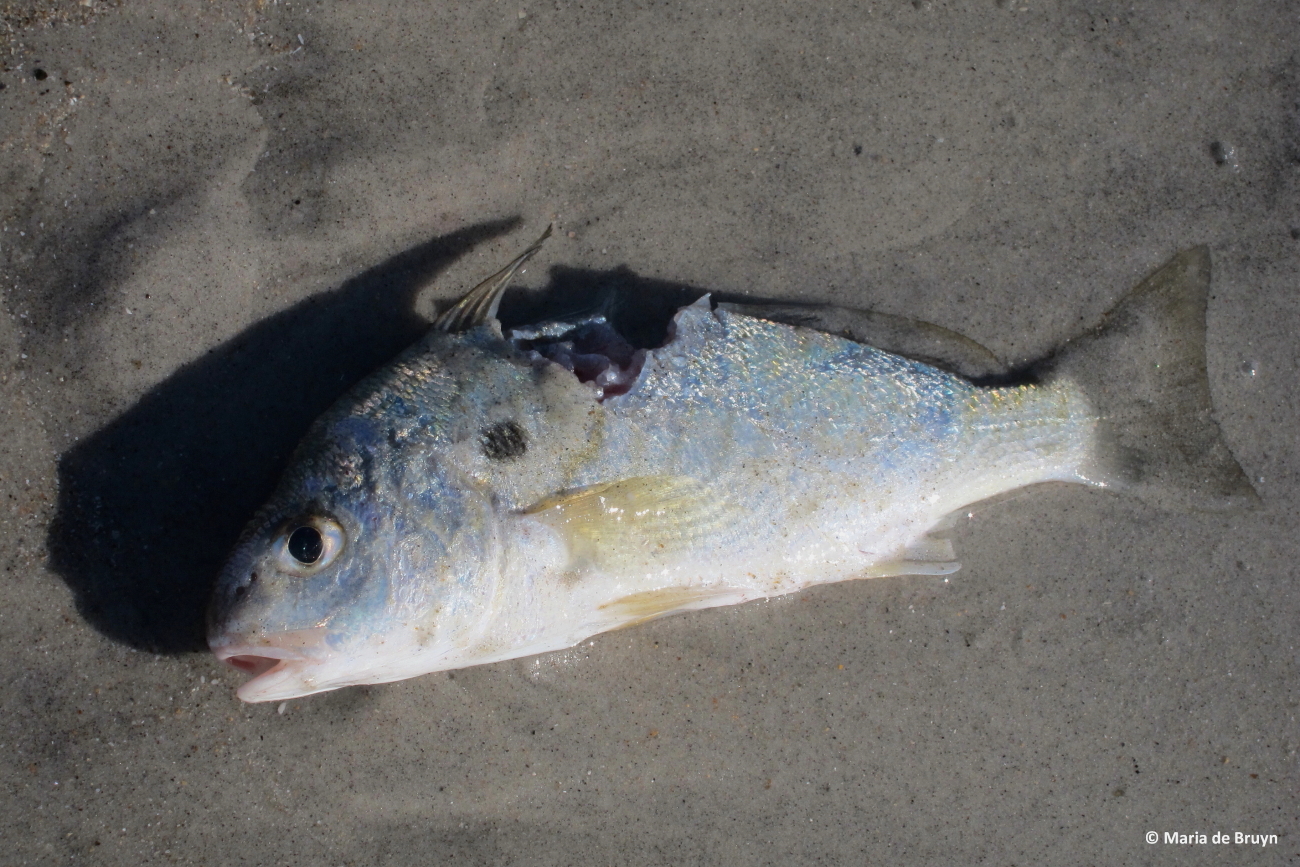
fish IMG_5688 (2)© Maria de Bruyn


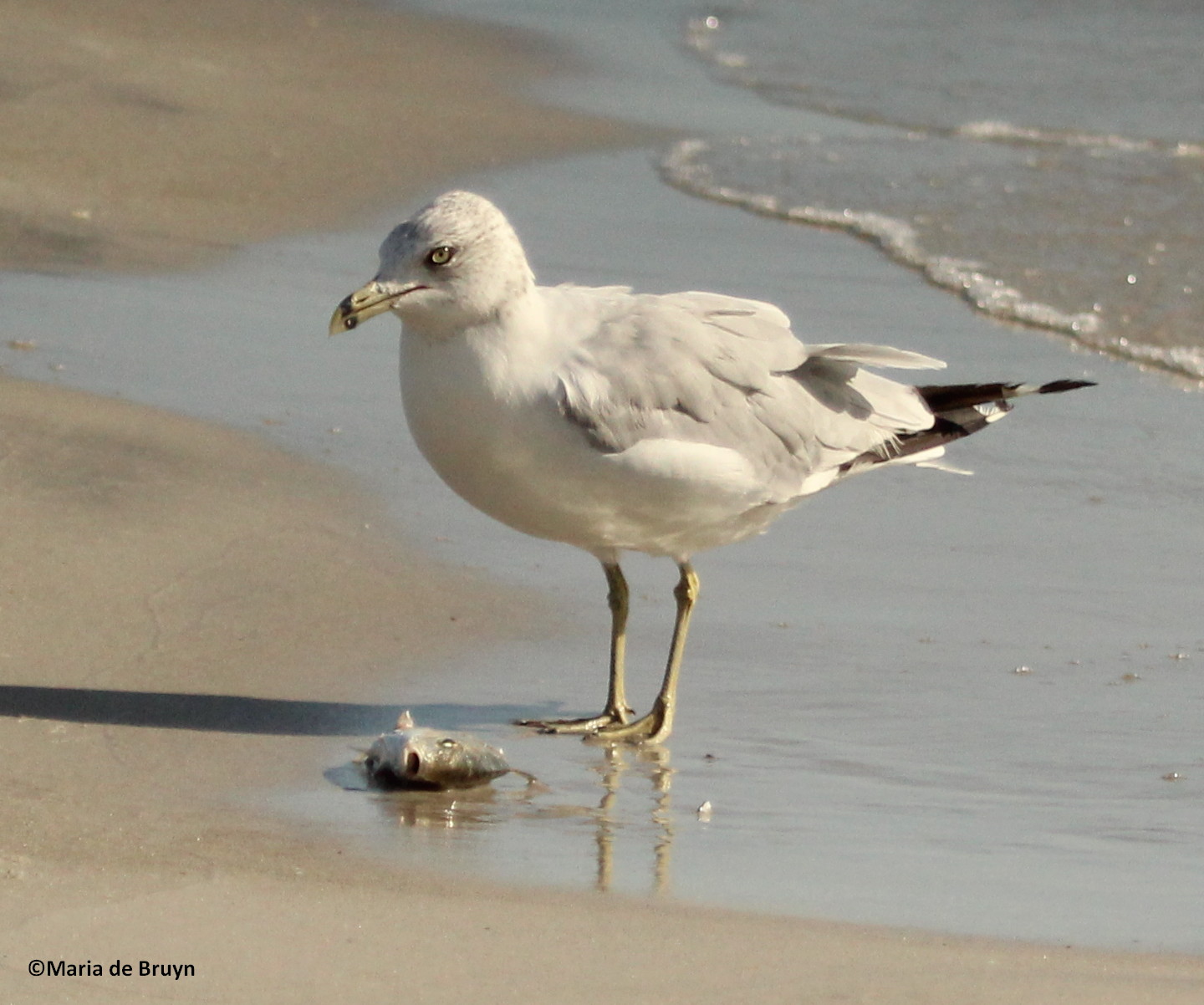
One afternoon on Topsail Island, I came across a fish on shore that had been abandoned.
ring-billed gull IMG_5190© Maria de Bruyn

Just after passing it, I turned to see a ring-billed gull (Larus delawarensis) fly in, obviously with the intention of making that fish its supper.

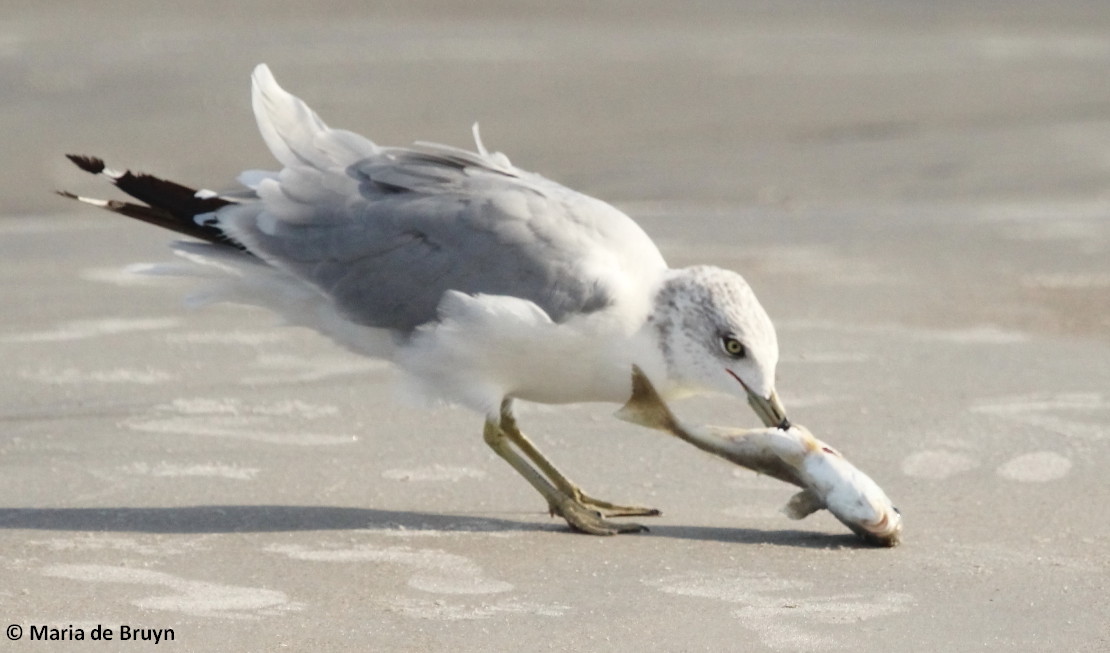
The gull was eating delicately, plucking bits of the fish off and eating at its leisure.

Unfortunately, the feast didn’t last long for the gull because a thief in the form of a large great black-backed gull (Larus marinus) swooped in. The ring-billed gull was not happy but couldn’t do much about it (click on the link to the video).
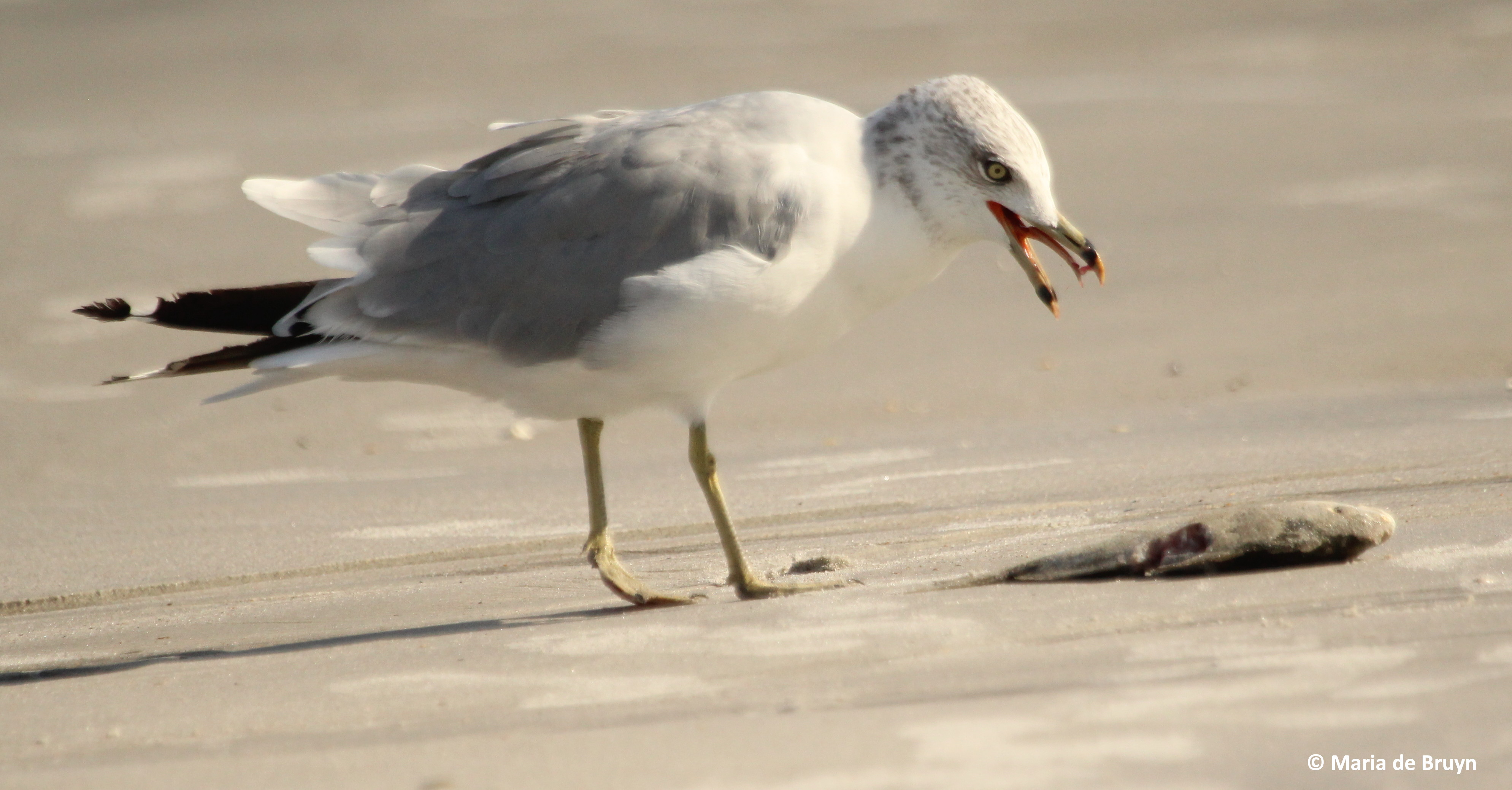
ring-billed gull IMG_5224© Maria de Bruyn resRing-billed gull IMG_5255© Maria de Bruyn

The people fishing from the shoreline frequently have a group of birds waiting nearby. This can definitely be to their benefit, as was the case for this juvenile great black-backed gull that was tossed a fish by a man wrapping up his activities for the day. He told me that he shared fish with the birds on a regular basis.
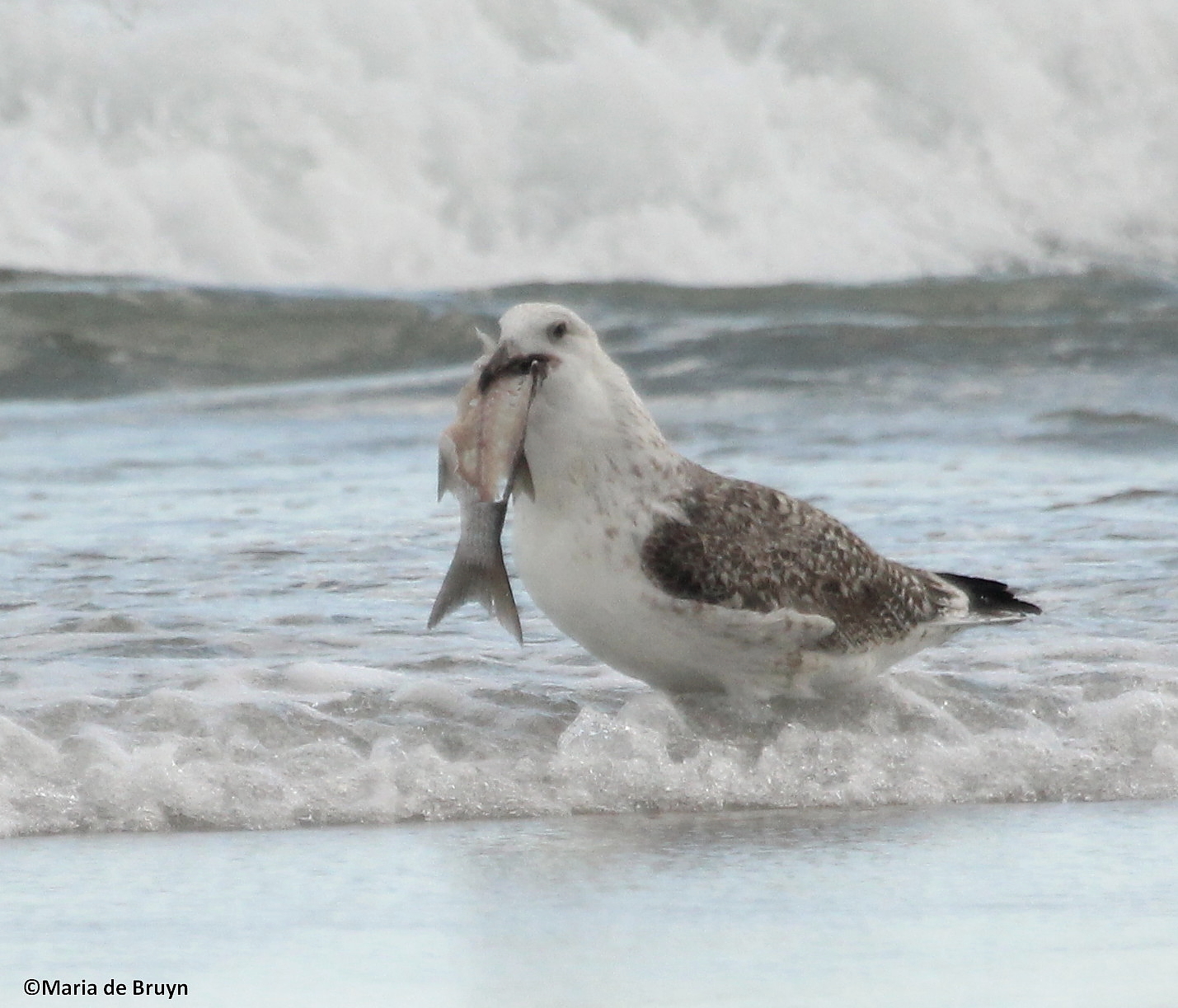
great black-backed gull IMG_4978© Maria de Bruyngreat black-backed gull IMG_4985© Maria de Bruyn res

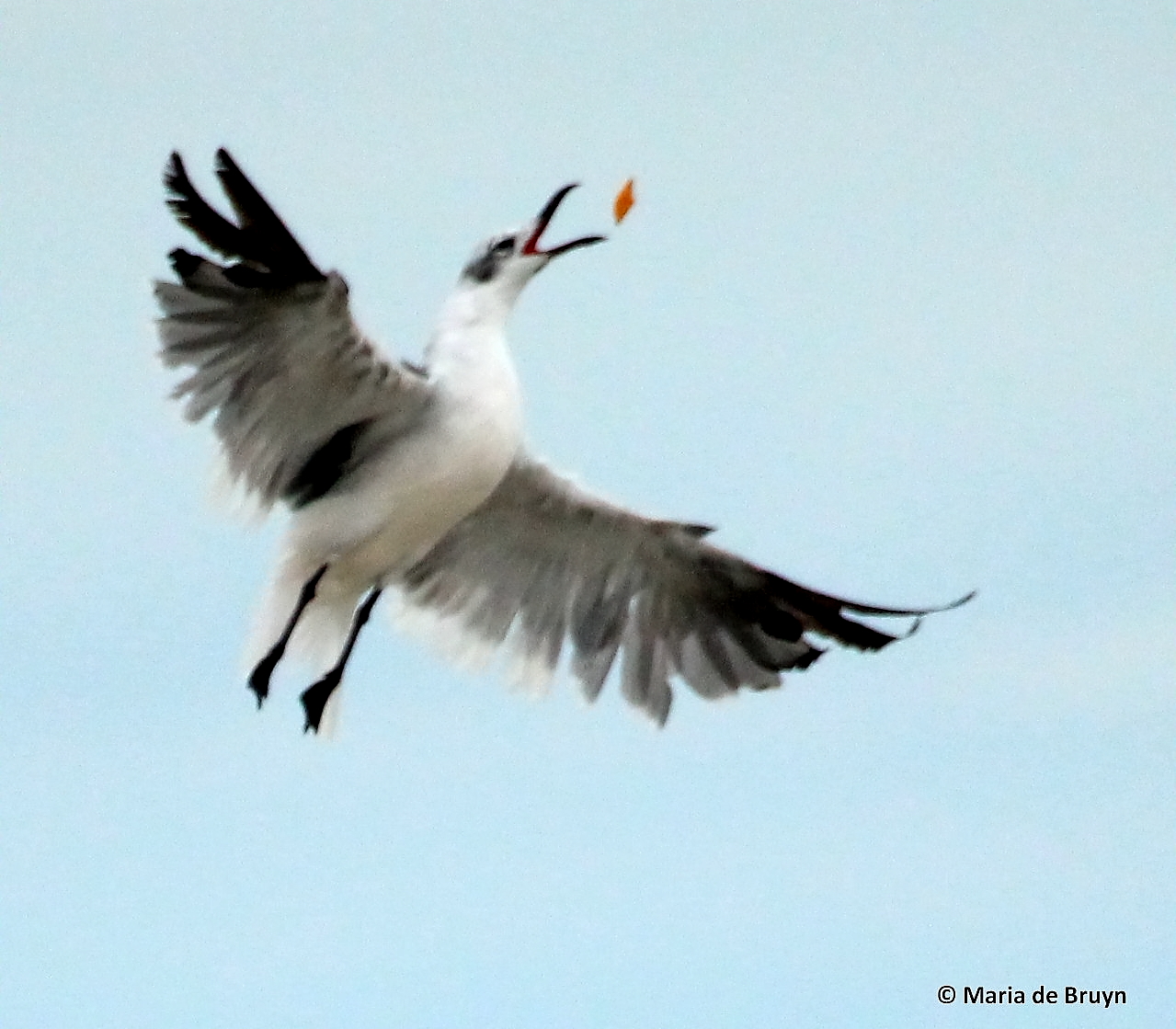
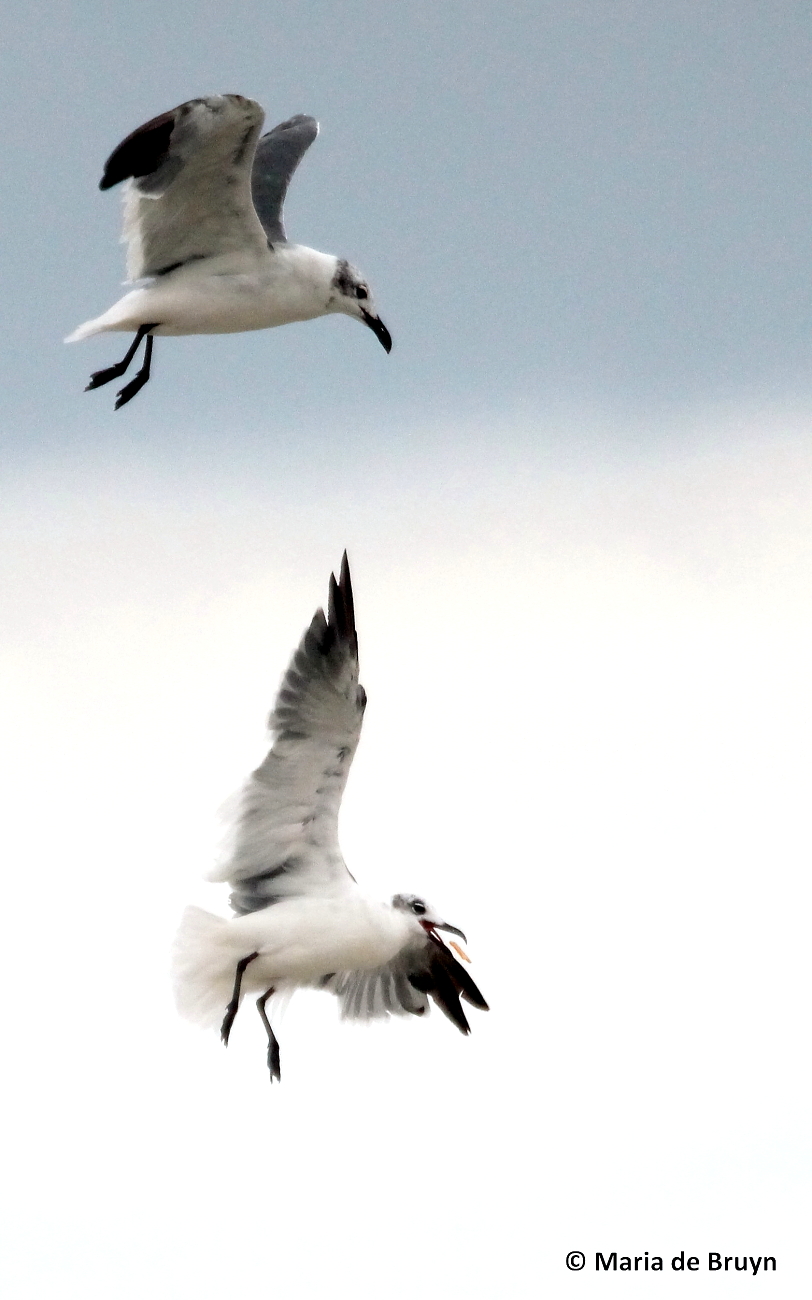
Laughing gull  IMG_1150© Maria de BruynOther people also offer the seabirds food, but not always of the nutritious kind. Two days running, I saw Laughing gull  IMG_1194© Maria de Bruyn resa young man throwing orange-colored morsels into the air, which were snapped up eagerly by laughing gulls (Leucophaeus atricilla) and common terns (Sterna hirundo). Unfortunately, it appears that he was feeding them cheetohs or some kind of cracker with lots of food coloring. The birds seemed to be really anxious to snag a piece; obviously human beings aren’t the only species prone to eating junk food.


Other birds, like this laughing gull and snowy egret (Egretta thula) were more successful in finding their own food. And that is as it should be!
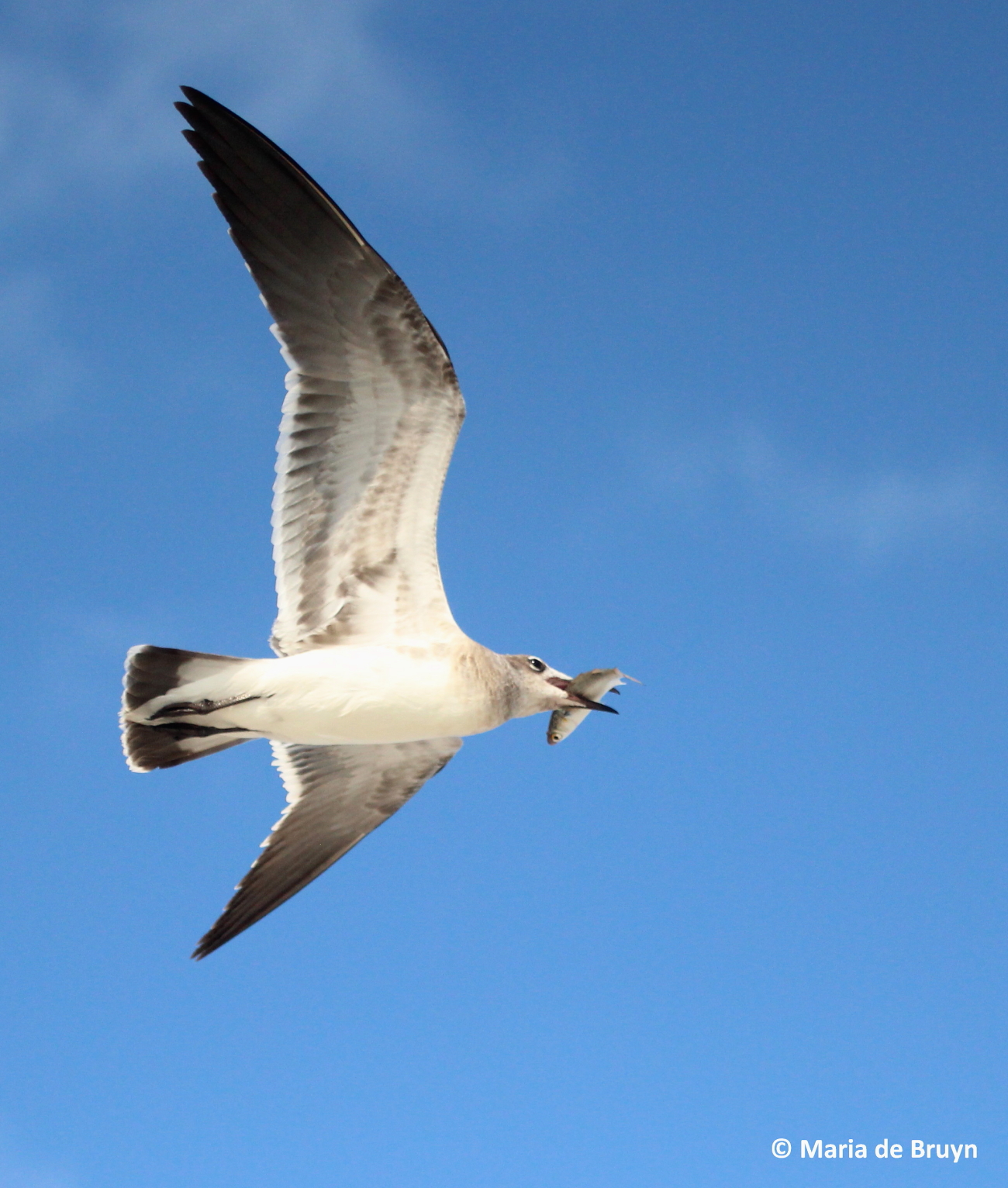
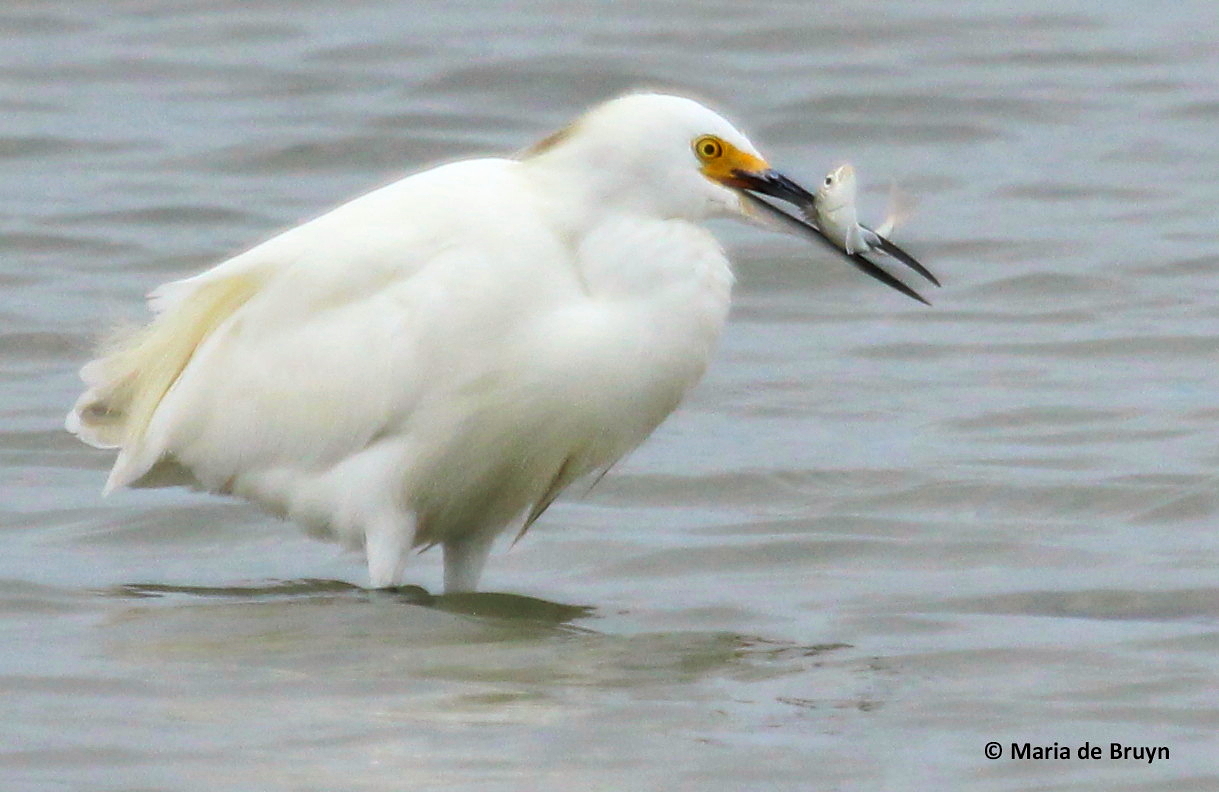
laughing gull IMG_5050©Maria de Bruynsnowy egret IMG_3329© Maria de Bruyn

My love affair, take 2

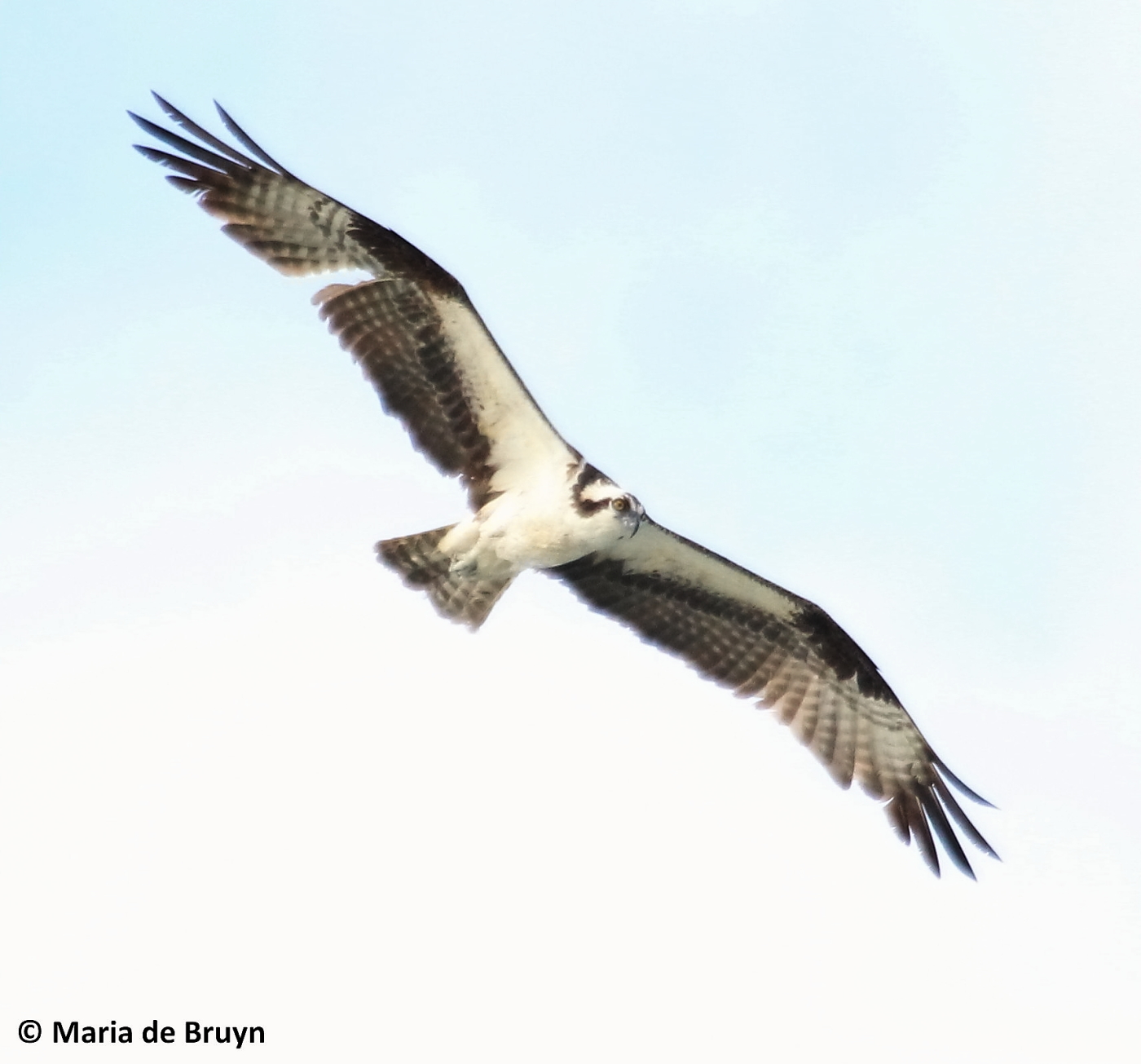
osprey IMG_0689© Maria de Bruyn res

The ospreys (Pandion haliaetus) continue to capture my heart, even though my numerous forays to lakes and ponds to get some excellent photos of them have not yet paid off. I finished the book on osprey migration, Soaring with Fidel, and thoroughly enjoyed it.

Reading about different birds’ personalities and choices for migration was really interesting; learning about the different people who dedicate their lives to learning and sharing information about ospreys kept my interest, too. The ospreys definitely have a devoted fan base.

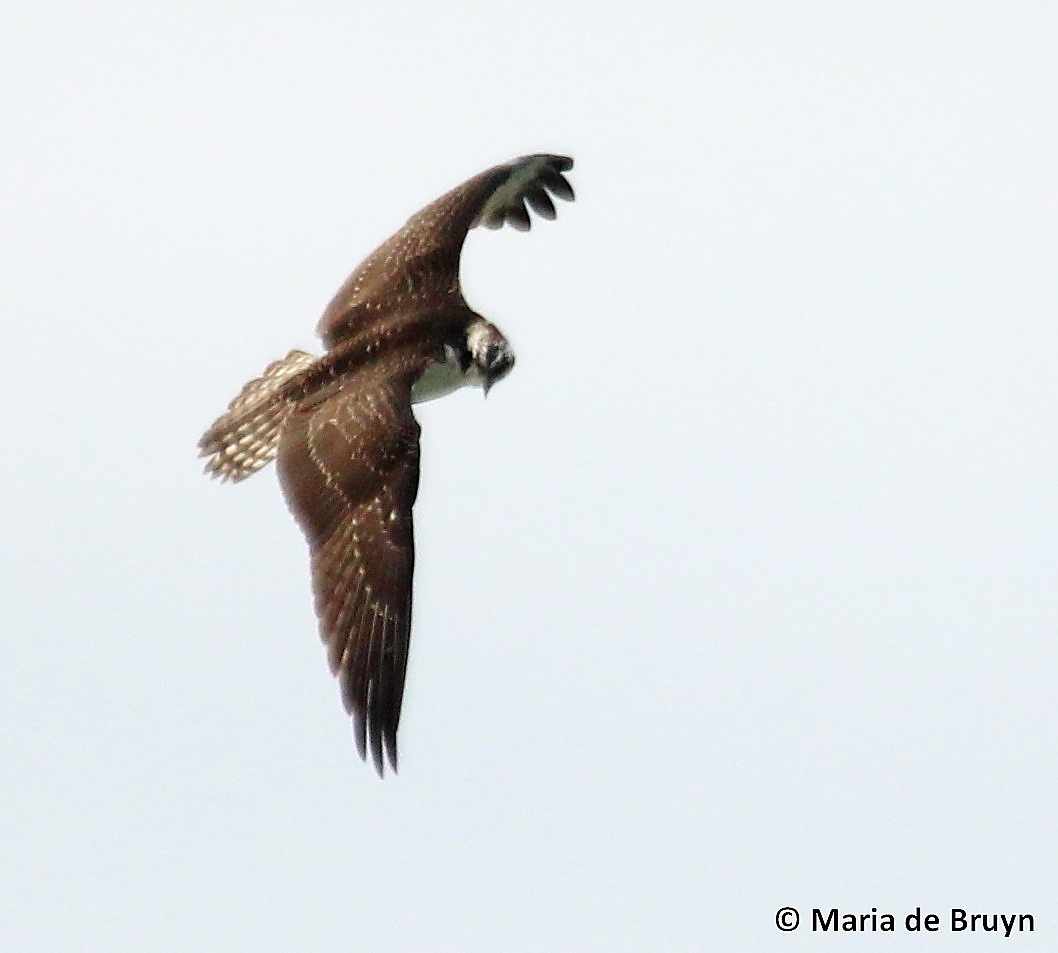
It’s quite amazing to think of these birds flying several thousand miles within a short period of time so that they can spend the winters in warmer Caribbean and South American climes. When I was at Topsail Island, I was lucky to see a few ospreys that were apparently on their migratory journeys. They flew very far overhead, but I did see one drop down into the ocean and come up with a meal.

osprey IMG_4103© Maria de Bruyn resosprey IMG_3810© Maria de Bruyn


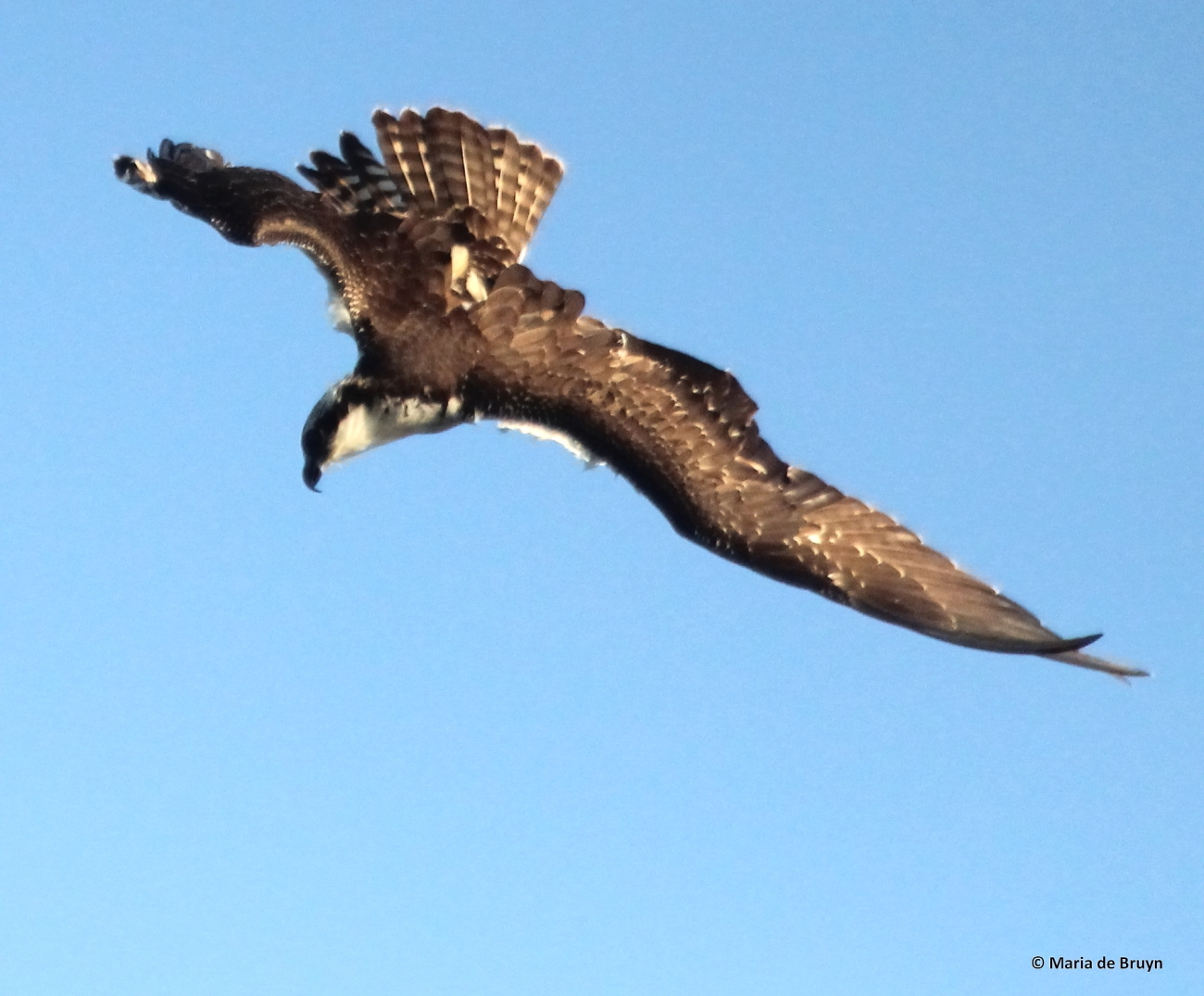
One day when I was at North Carolina’s largest man-made lake, Jordan Lake, I was lucky to see an osprey begin a predatory dive that was a bit nearer to me than usual.

osprey IMG_0805© Maria de Bruyn res

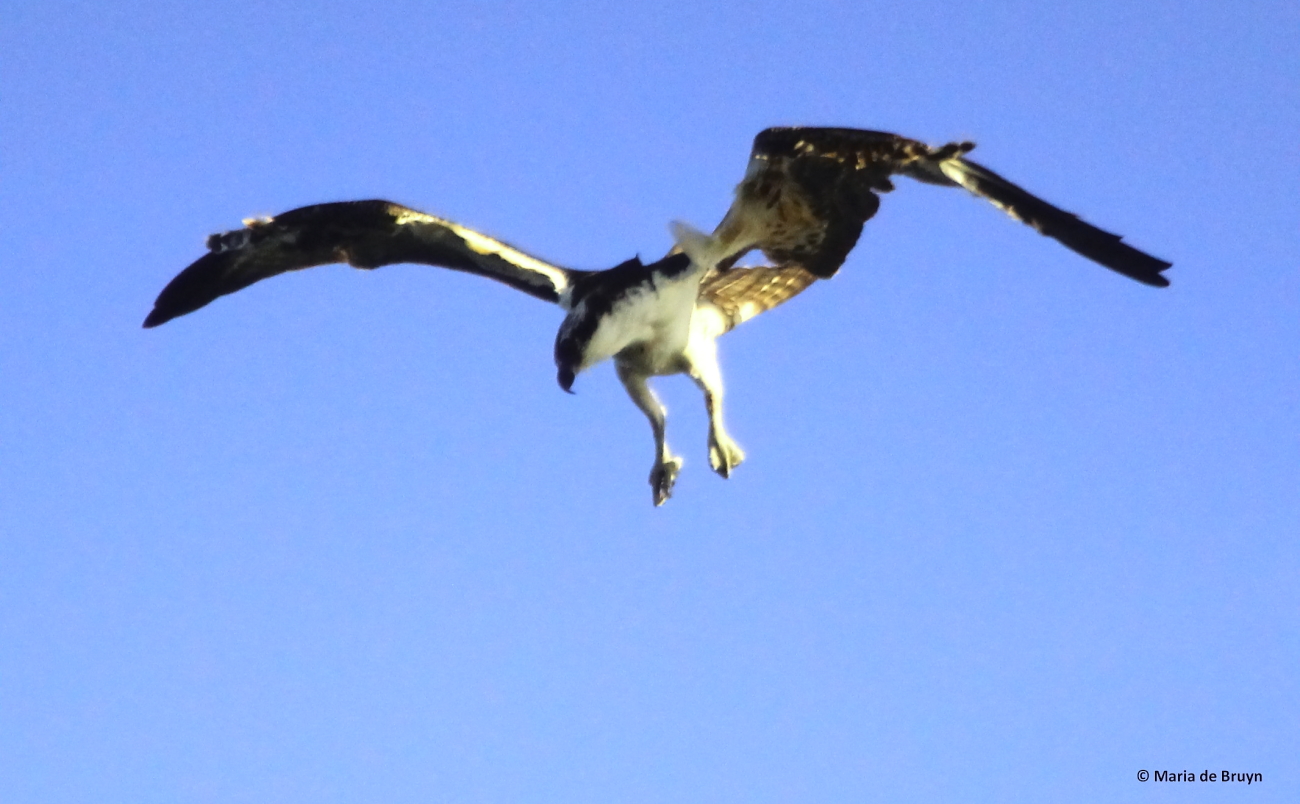
The bird’s wings and claws were spread as it readied itself to grasp the fish that was in sight down below.

osprey IMG_0803© Maria de Bruynosprey IMG_0802© Maria de Bruyn

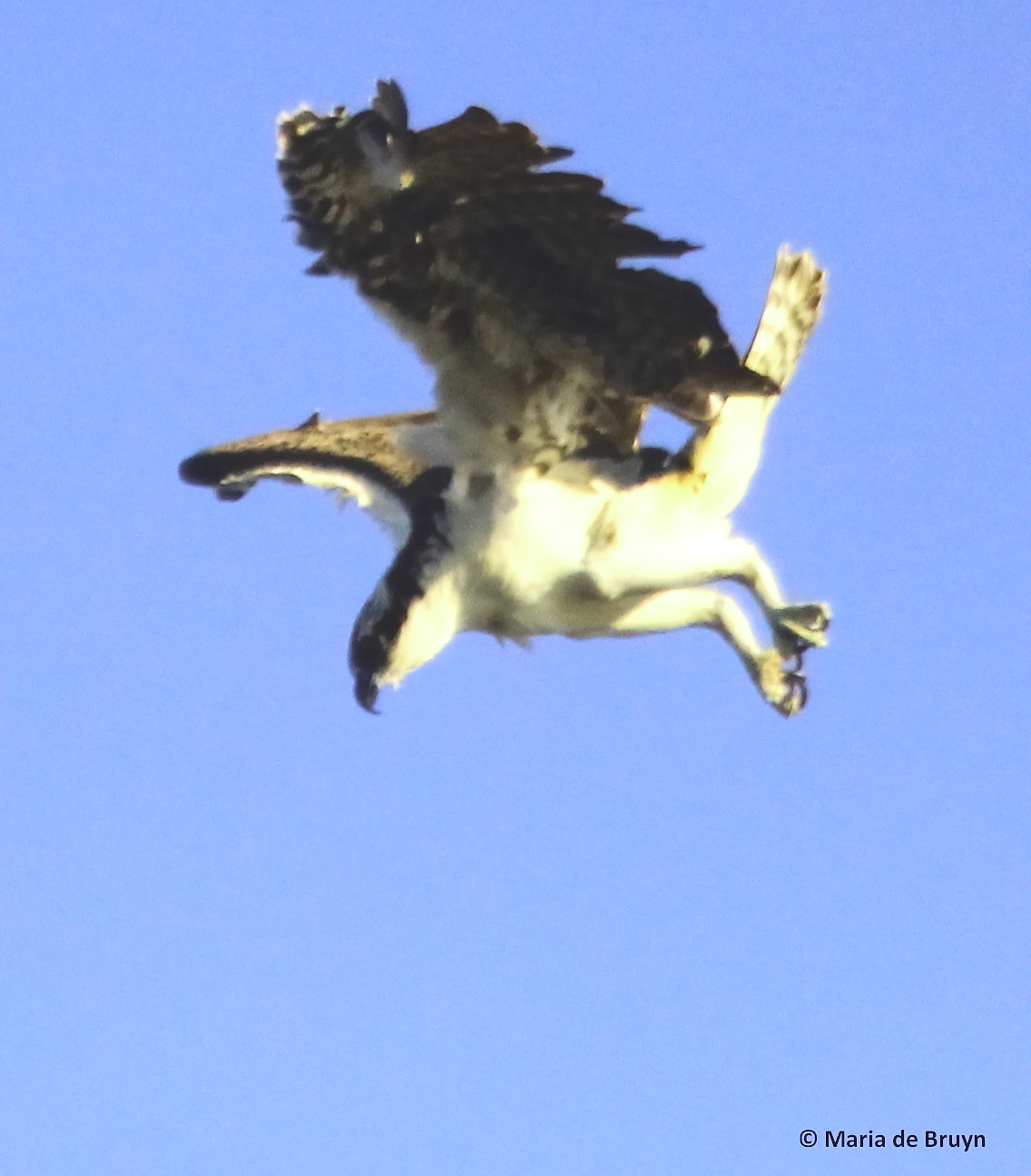
osprey IMG_0806© Maria de Bruyn resSometimes the birds will face forward to dive down and then flip upwards at the last minute so they enter the water feet first. This bird did most of the dive with its feet down in the clutching position, ready to strike.
osprey IMG_0812©Maria de Bruyn res

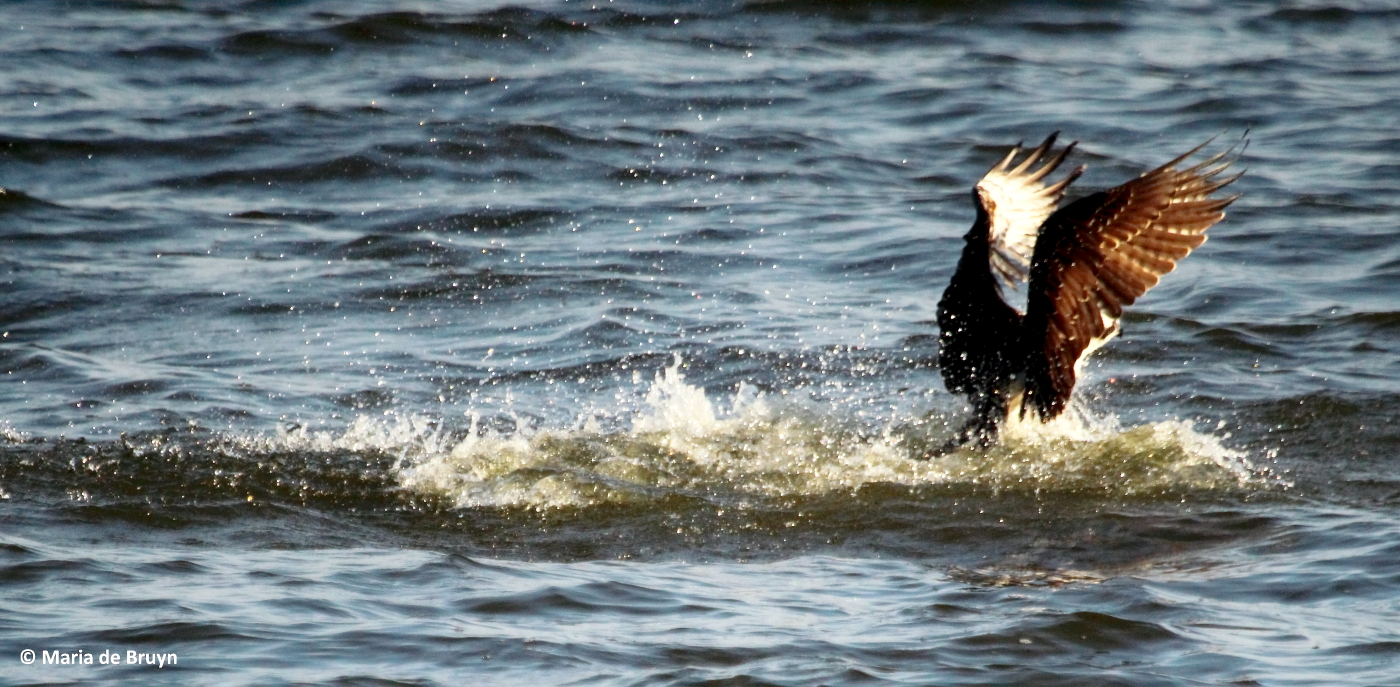
A mighty plunge!

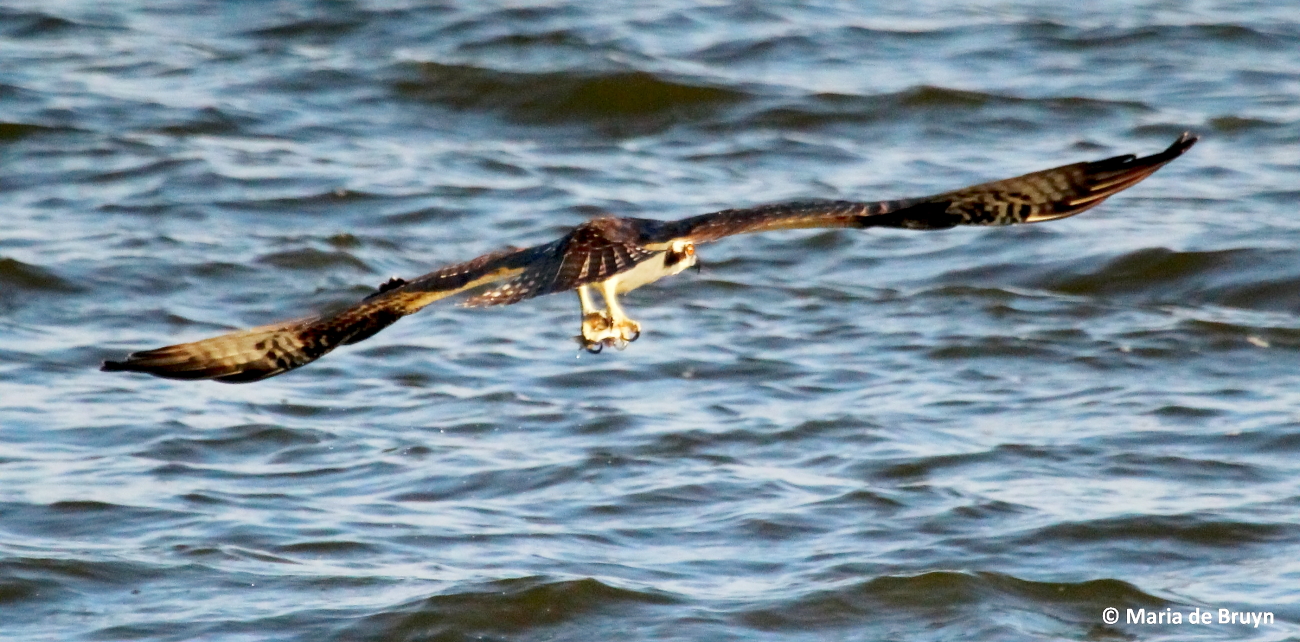
osprey IMG_0813© Maria de Bruyn resAnd then emergence with a meal caught in those feet with unique reversible back toes to help the osprey hold on to the slippery fish.

osprey IMG_0815© Maria de Bruyn resThis was a happy bird. And when another (or the same?) bird suddenly flew right over my head to grace me with a piercing gaze, I was a happy birder!

osprey IMG_0736© Maria de Bruyn res

Danger on the beach!

great black-backed gull IMG_4207© Maria de Bruyn resDuring a recent visit to Topsail Island, one of my favorite get-away sites, the various gulls, terns and other birds were very busy: resting, eating and investigating beach debris such as twigs, like this great black-backed gull (Larus marinus).

When I looked through my zoom lens and saw two juveniles of the species picking up and dropping items into the sand, I decided to photograph them. Given some deterioration in my eyesight, even through the zoom lens, I thought one of them was examining a large black twig so I shot away. Imagine my surprise when I downloaded the photos to my computer and enlarged them to see what the gull was actually carrying around!

great black-backed gull IMG_4297© Maria de Bruyn

Most of the time, s/he appeared to be grasping the knife by the blade rather than the handle end, which totally amazed me.

great black-backed gull IMG_4277© Maria de Bruyn res bgreat black-backed gull IMG_4306© Maria de Bruyn

The bird would drop the paring knife and then pick it up again.

great black-backed gull IMG_4292© Maria de Bruyn resgreat black-backed gull IMG_4280© Maria de Bruyn res

One time it was by the handle.

great black-backed gull IMG_4284© Maria de Bruyn resgreat black=backed gull IMG_4288© Maria de Bruyn res

I wish I had realized what the gull was doing when I was there so that I could have picked up the utensil but at the time, I was convinced it was a twig and after shooting the series, I turned to other birds.

great black-backed gull IMG_4297© Maria de Bruyn res b

I posted the photo on a Facebook birding group page with the remark that: “Beach-goers and fishermen need to pay a lot more attention to what they leave behind onshore!” The responses that came were interesting:

– wow…scary the things people leave behind
– I hope he dropped it when he realized how sharp it was!
– Smelled like fish most likely….
– Sometimes they ‘steal’ from us while our backs are turned on a fishing pier!
– Maybe he’s in a gang?
– Considering it’s Topsail, more likely one of Blackbeard’s crew. Nice image of the gull.

And then one person apparently doubted that the photo I had posted was real: “The size of the gull and the size of the knife looks fishy. The knife is only a bit longer than the beak. That must be one big gull. It’s all in the perspective, I guess.” Since I don’t own Photoshop or some other program with which I can combine photos or insert things into photos, I can assure you that the series shows what happened.

While the respondent who mentioned birds stealing items from people is stating a fact, this site was at the end of the island very far from any piers. So I can only assume that some careless human left the knife behind on the beach (like the cell phone cover and plastic that I collected for the garbage that day).

It is well known that the trash on beaches often ends up in the sea, harming animals that ingest it and contributing to large floating garbage piles.great black-backed gull IMG_4311© Maria de Bruyn resOn 20 September 2014, the Ocean Conservancy is sponsoring the International Coastal Cleanup — the world’s largest volunteer effort to clean up waterways and the ocean. I don’t live near an ocean but will pick up trash near a large lake in my area. And I urge you all to participate in some way if you can! It may be a drop in the ocean/waterways bucket but the drops add up!

I’ve fallen in love!

It would be cool if it was a male of the same species as me, but I have come across another species that is giving me great joy when I see it. Ah, pray tell, say you – what or who has won your heart?

osprey IMG_9944©Maria de Bruyn

osprey IMG_5354©Maria de Bruyn resIt’s this raptor that has seized my attention and grabbed my thoughts so that I return again and again to spots where he (or she) is known to be seen. I haven’t lost my affection for the many other avian family members, but the graceful flight and piercing eyes of the osprey (Pandion haliaetus carolinensis) have captured my imagination for sure.


The osprey’s beautiful face with a black stripe highlighting its focused gaze is actually more attractive to me than its bird of prey cousin who delights so many, the bald eagle.

IMG_8405©Maria de BruynOver the past few months, I’ve discovered I’m not the only osprey fan around. During various visits to Jordan Lake, I’ve now met at least 8 guys who devote themselves to photographing raptors. They tend to get more excited when spotting an adult or juvenile eagle, but they will definitely train their zoom lenses in the direction of osprey looking for a meal.

osprey IMG_9503©Maria de BruynThe ospreys circle round and round in the air high above the lake, training their eyes on the water because their superb vision allows them to see the fish underwater.

Sometimes, fish jump out of the water fairly close to me, leaving an ever-widening circle wavelet which is a give-away of their presence. Yet the osprey often ignores those tell-tale signs and looks elsewhere – often at a good distance from where I am so that my shots are mostly from far away and a little blurry. But that gives me motivation to return again and again, hoping for a sharply focused close-up one day!

The bird’s wingspan averages 127–180 cm (50–71 in) and they can weigh up to 2.1 kg (4.6 lb). Interestingly, ospreys are found in all continents except Antarctica, so this family has gotten around!

osprey IMG_9298©Maria de Bruyn resosprey IMG_8387©Maria de Bruyn res

They are fairly successful hunters. It’s not unlikely to see one beginning a dive, only to halt its descent half-way, apparently deciding that a plunge won’t be rewarding. They begin their dive head first. Then, at the last minute they flip upright so that they enter the water feet first, with claws spread wide and ready to snatch their prey.

IMG_8390©Maria de Bruynosprey IMG_9466©Maria de Bruyn

osprey IMG_9947©Maria de Bruyn res

osprey IMG_5671©Maria de Bruyn 2 res

Very often when they crash down into the water, closing their nostrils so that they don’t get waterlogged heads, they arise with a fish. Like owls, ospreys have reversible outer toes which help them grab their slippery prey with two toes in front and two behind.

IMG_8401©Maria de Bruyn resIf the fish is large, the bird may have a bit of a struggle to arise from the water while gripping its meal tightly in its talons. Apparently, if the fish is too large, an osprey may not be able to let go and then can drown; luckily, I’ve not witnessed that.


osprey IMG_9908©Maria de BruynIt’s not unusual to see them holding their capture in only one foot , however. Sometimes, they will circle for quite a while holding their fish before they head for a tree where they can eat it at their leisure.

osprey IMG_5703©Maria de Bruyn res


osprey IMG_9509©Maria de Bruyn

Ospreys usually mate for life and they re-use nests from one year to the next. Some nests have been in use for as long as 70 years. These birds often live 7-10 years, but some individuals have been known to survive up to 20-25 and even 30 years.

My fellow raptor photo-graphers and I are not the only osprey fans around. More than 50 international postage stamps have featured this bird of prey and sports teams have been named after them (sometimes using the nickname Seahawk).

osprey IMG_9908©Maria de BruynDavid Gessner, a nature writer based at UNC-Wilmington, has written a couple books about osprey and I was recently lucky enough to get Soaring with Fidel at a bargain price. I’ve just begun reading his adventure in following the ospreys’ migration and expect it will heighten my enjoyment of the photographic pursuit. Knowing these beautiful birds will be soaring overhead when I visit lakes and ponds has certainly made me one of their faithful fans; we’ll be seeing one another for some time to come!

It’s a bird! No, it’s not! It’s an insect??!!

Clearwing moth first photo©Maria de BruynSeveral years ago, as I was beginning to photograph wildlife more seriously, I became quite excited at the North Carolina Botanical Garden. Buzzing around some profusely blooming flowers was what I thought might be the smallest hummingbird I had ever seen. I was not used to taking shots of something that was in almost constant motion, but I persisted until I got photos that made it at least a little recognizable. I lost the original photo when both my computer and my back-up hard drive crashed at almost the same time, but I “rescued” one of those first photos from a Word document.

Hummingbird clearwing moth brown IMG_2701 M de Bruyn resizedI soon learned that what I had seen was actually an insect – a hummingbird clearwing moth (Hemaris thysbe) to be precise. This is likely one of the first insects that I ever got enthusiastic about.

I have seen a second, similar, species called the snowberry clearwing moth (Hemaris diffinis), seen below.


Snowberry clearwing moth IMG_8436dddd nr MdBSnowberry Clearwing moth IMG_8492

So, how do you tell the species apart? The snowberry clearwing has a dark band running from its eye down its throat and thorax and its legs are black, while the hummingbird clearwing lacks the thick dark band and has yellowish or paler legs.

snowberry and hummingbird clearwing moths IMG_7461©Maria de BruynresSome people identify these moths as bumblebee mimics, which also makes sense since they are similar in size to bumblebees. Here you see a hummingbird clearwing moth next to a silver-spotted skipper butterfly (Epargyreus clarus, one of the smaller butterflies).

Snowberry clearwing moth IMG_8252dnr MdBAnd here you see a snowberry clearwing next to a large milkweed bug (Oncopeltus fasciatus). The adult moths are about 1.25-2 inches (3.18-5 cm) long.

Large milkweed bug and snowberry clearwing moth IMG_6290©Maria de Bruynres

The clearwings have an upper body color that ranges from tan to green. They are quite “furry” and have cute little tufts at their posteriors. Underneath they are pale, whitish or yellowish.

Hummingbird clearwing moth brown IMG_1822 MdBHummingbird clearwing moth green IMG_2200 MdB

Both species have dark abdomens. The juvenile moths have dark wings but scales fall away as they mature leaving clear, transparent, panels in their wings. They would make good subjects for a stained glass artist!

Hummingbird clearwing moth IMG_0027 MdB

Like butterflies, these moths have a long proboscis (tongue) that they can curl up when resting or during flight. The adult moths sip nectar from a variety of plants including Japanese honeysuckle, beebalm, red clover, lilacs, phlox and thistles. In my yard, they are especially fond of the butterfly bushes (Buddleja davidii), which I just discovered can be an invasive plant (so I have to keep them trimmed and make sure to lop off the dried flowers before seeds spread).

Hummingbird clearwing moth IMG_9982 MdBHummingbird clearwing moth green IMG_1955 MdB

Snowberry clearwing moth IMG_4435©Maria de Bruyn resTheir caterpillars are called hornworms as they have a horn at the rear; I have not seen one yet but they must be around somewhere. They pupate in leaf litter and on the ground; since I leave the fallen leaves around, I’ve been providing them with a childhood and adolescent home! And that’s good as I really look forward now to welcoming them to my yard each year!