Quebec chronicles: walking through Quebec City

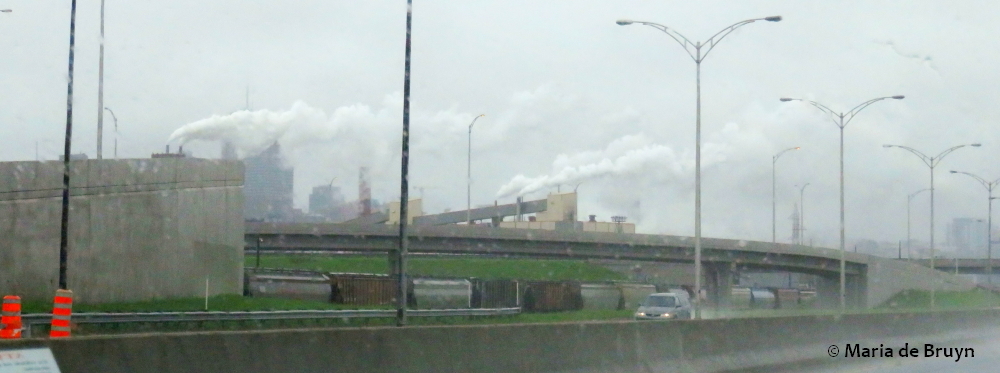
We visited Quebec City at the end of our recent round-trip migration, but I’ll start off here with some urban scenes before going on to the rural and wildlife parts of the trip in the next blogs. A shocker for me as we drove into the City was the billowing air pollution along the entry highway. The previous 8 days had been in pretty pristine environments; even the little villages looked very clean and litter-free.
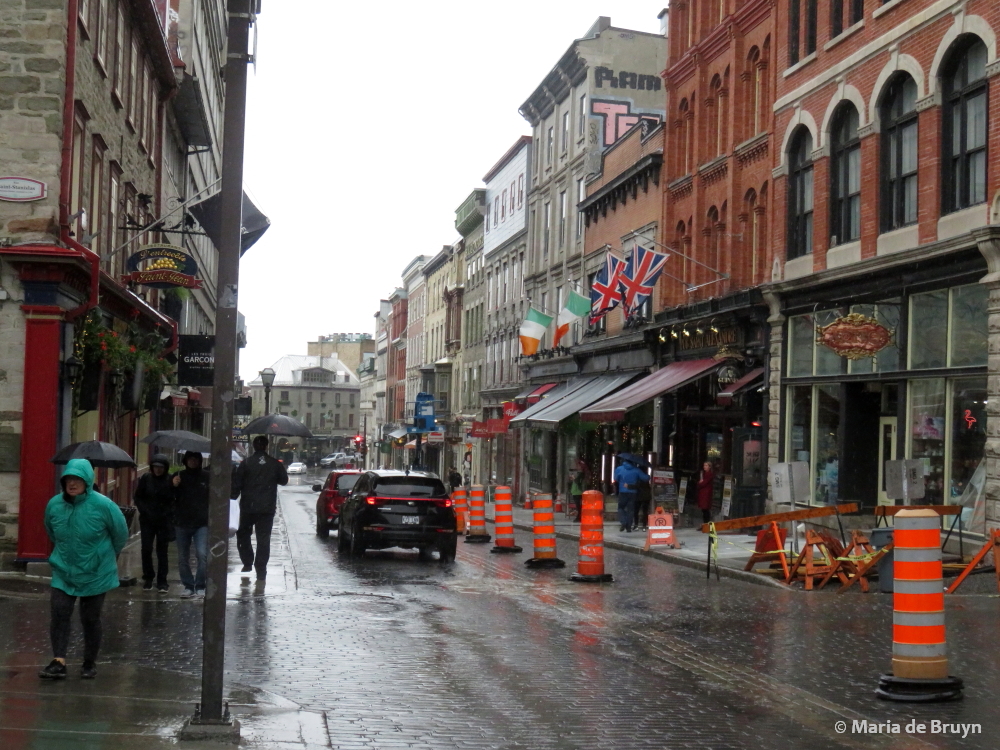
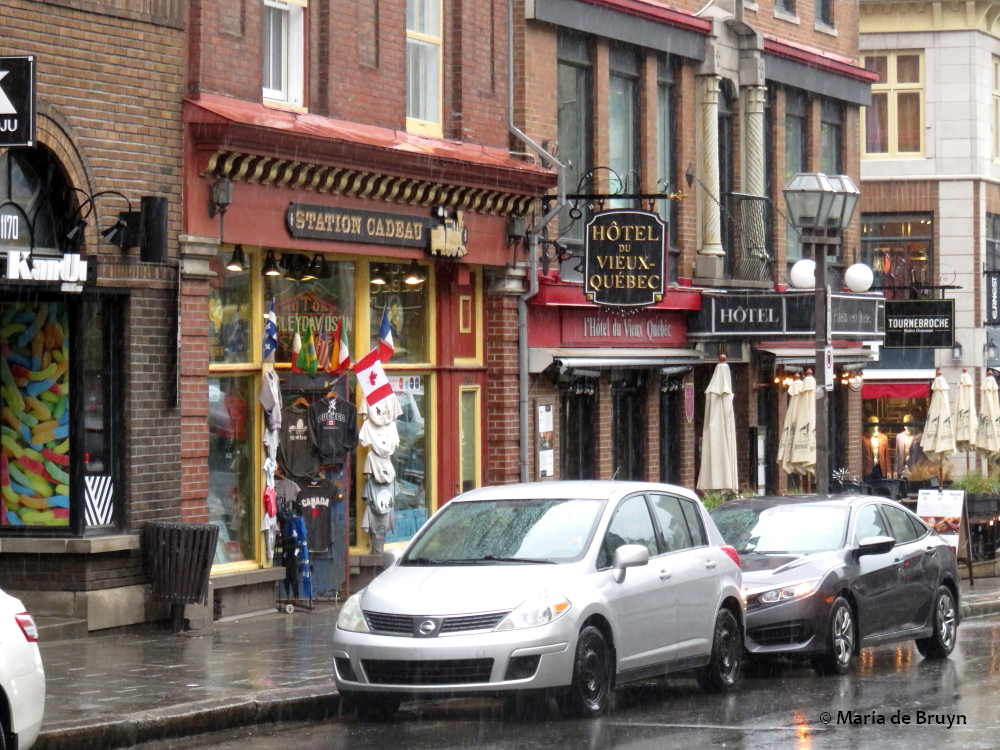
Four of us took two walks in the provincial capital, whose name stems from an Algonquin word meaning “where the river narrows”. Quebec City is built on the north shore of the St. Lawrence Seaway. Our first walk was during a very rainy afternoon. After taking a bus partway, we walked through the Porte St.-Jean to enter Old Quebec.
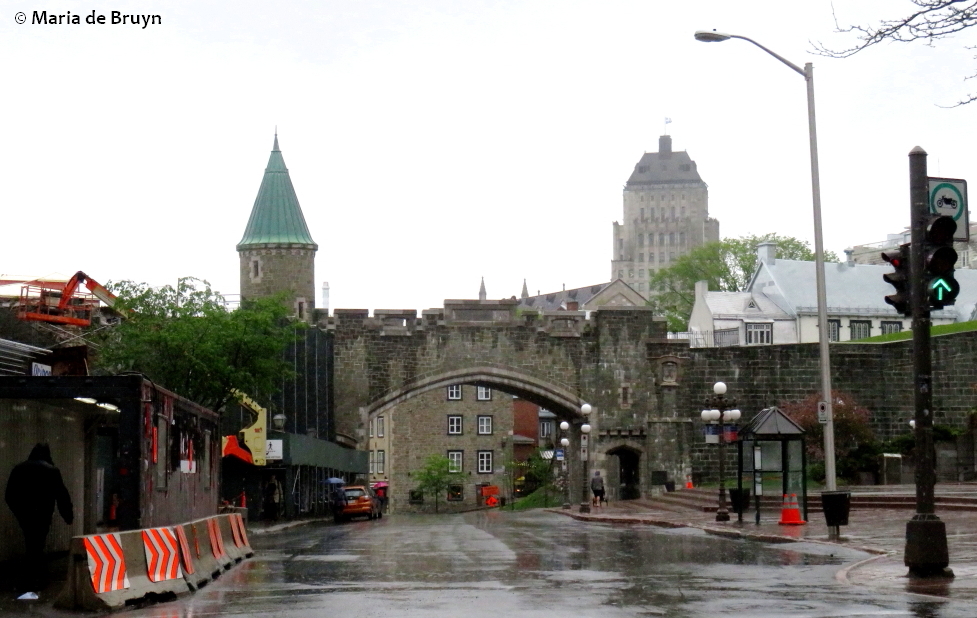
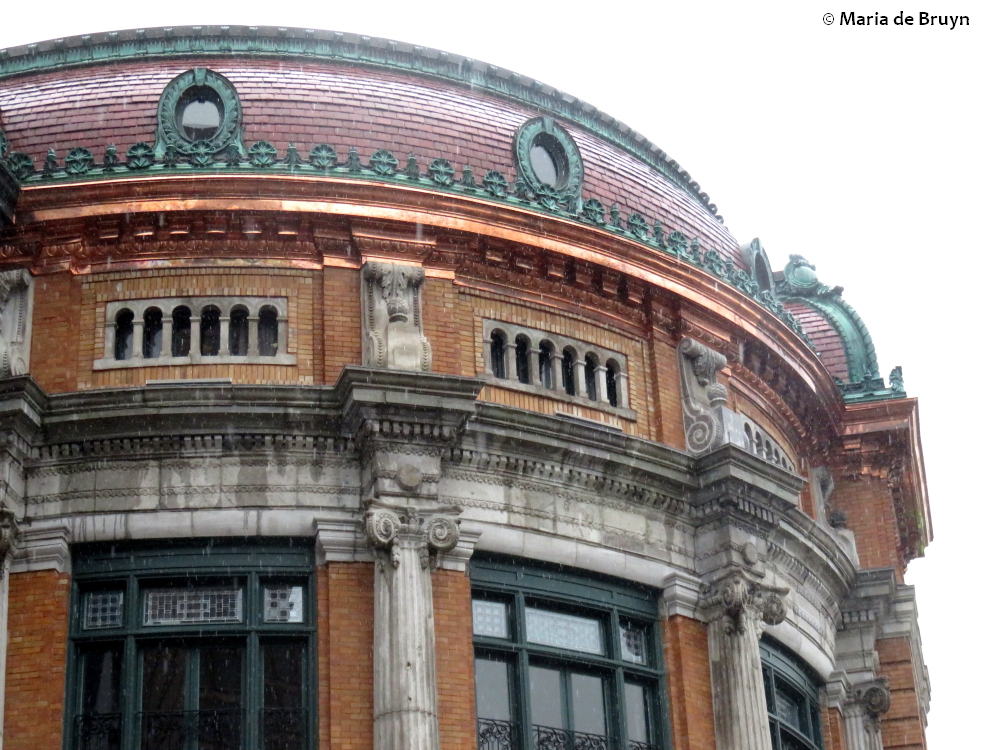
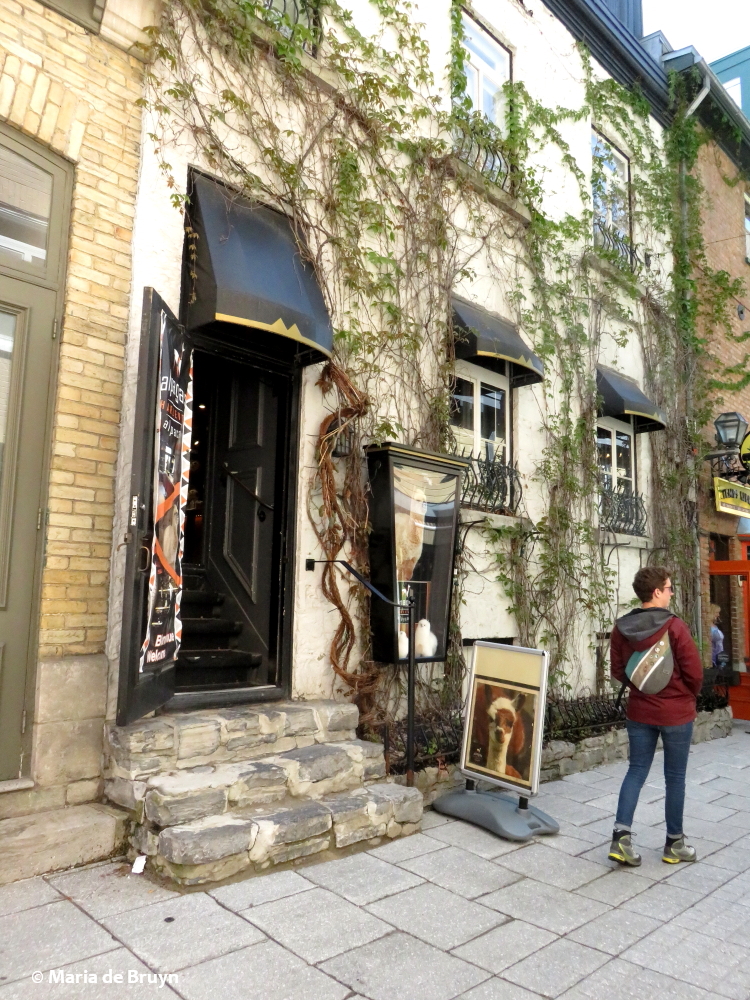
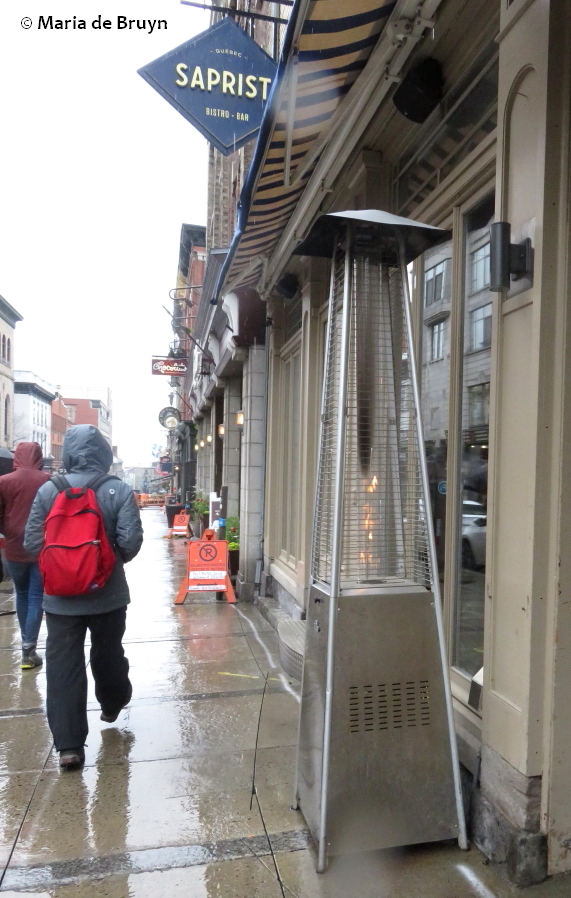
The streets and buildings looked quite European to me, including the many gift and tourist shops that one sees nowadays in old neighborhoods that attract tourists. Gas-flame heaters were burning outside some shops. And in one drugstore, we were helped by a young woman who had one of the most beautiful tattoos I have seen. She was surprised I recognized it right away as a fox because she said people had asked if it was a wolf or a bear!!! (Click on it to enlarge, then left arrow click back to blog.)
     

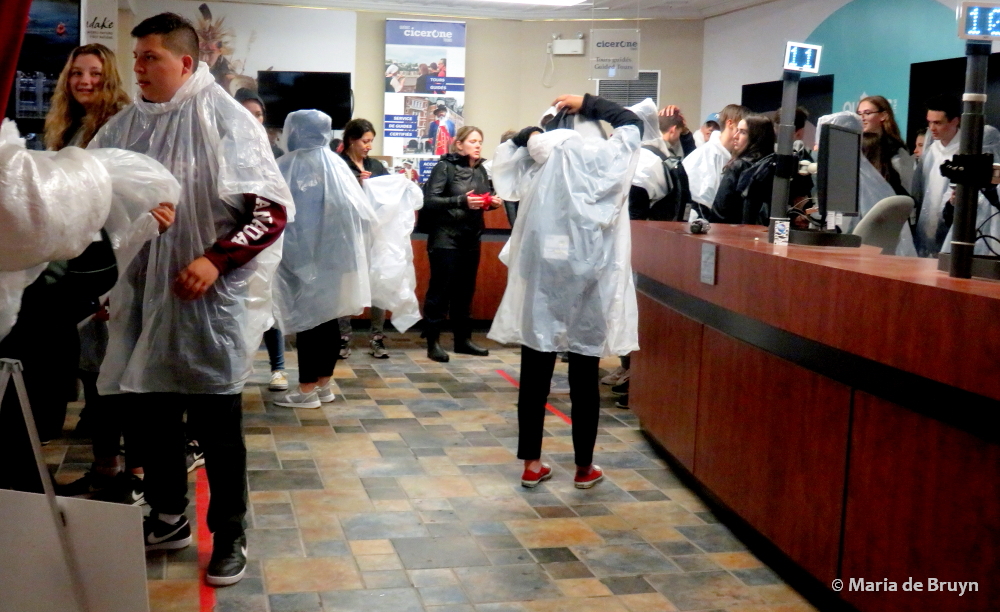
The rain intensified as we walked on; many people were purchasing rain ponchos at a local tourist information shop.
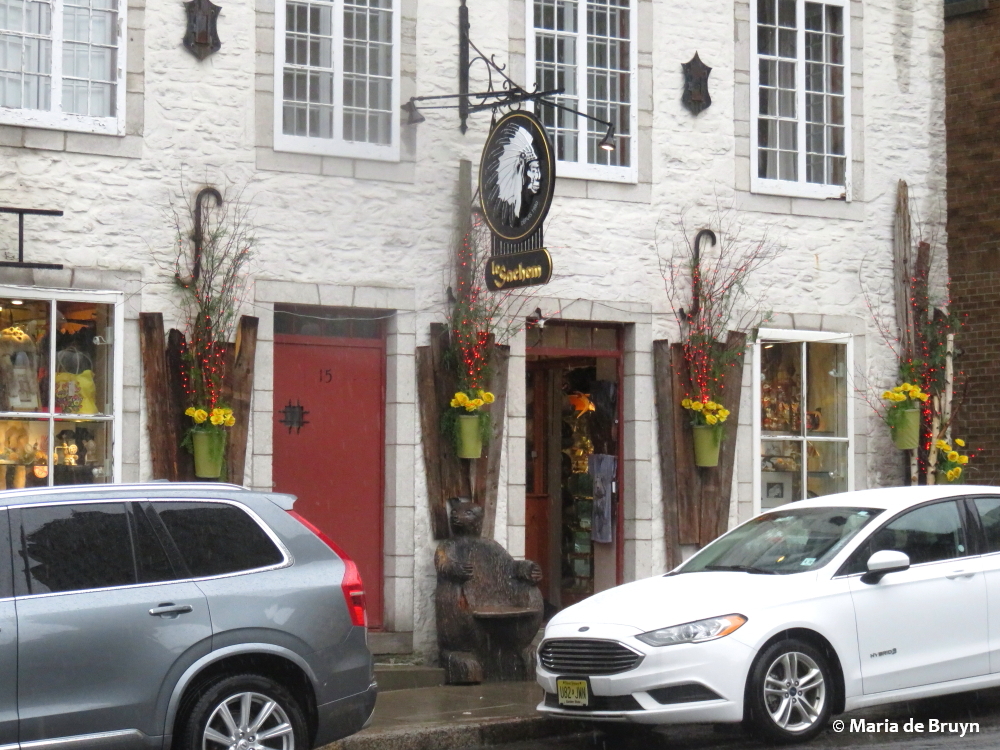
And the stores started beckoning to us as we strolled along, also admiring architecture.
Earlier in the week, we had stopped at a rural village to visit a well-reviewed chocolate shop. The owners had taken a course in Belgium and learned to make Belgian bon bons (very similar to Dutch ones). Since chocolate appeared to be a comfort food for most of our group members, a fair amount of time was spent in that shop!

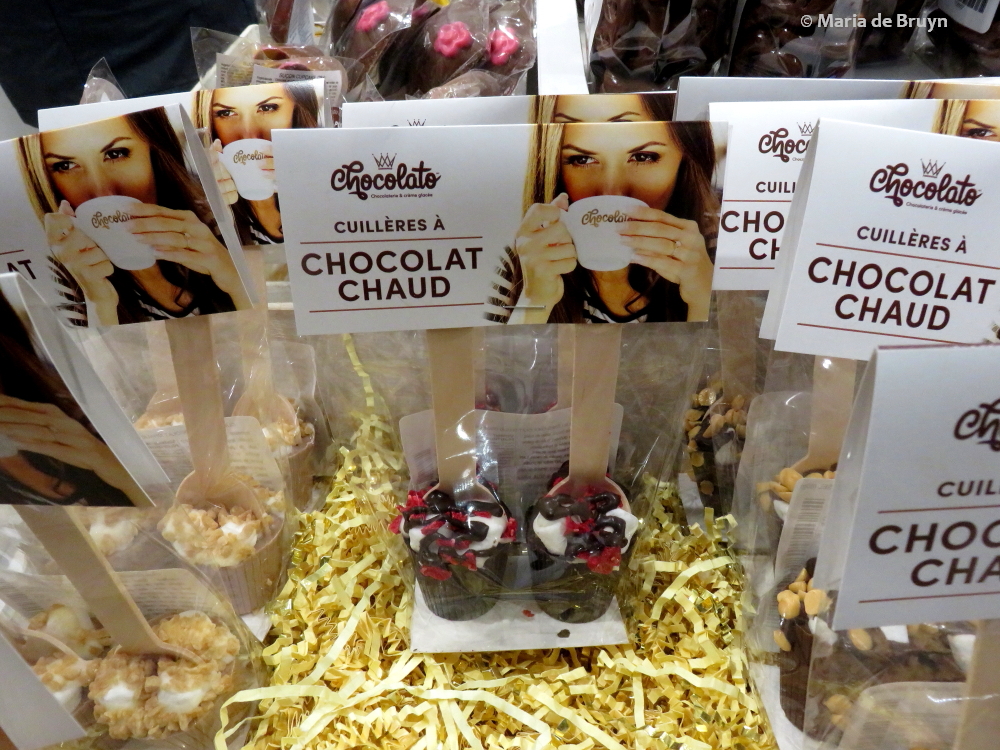
When we saw a sign for chocolate in Old Quebec, we ducked in out of the rain to examine the wares there. The chocolate on a stick for hot chocolate looked good to me; the chocolate sausages were a surprise.
 

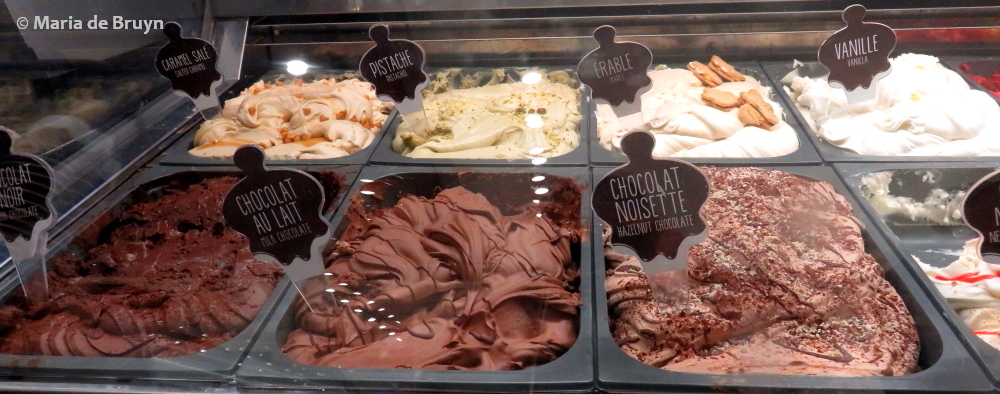
Canned chocolate fondue in various flavors was for sale in the regular grocery stores as well. What really tempted me were the different flavors of chocolate toppings for Dairy Queen-style cones; I resisted, however.

 

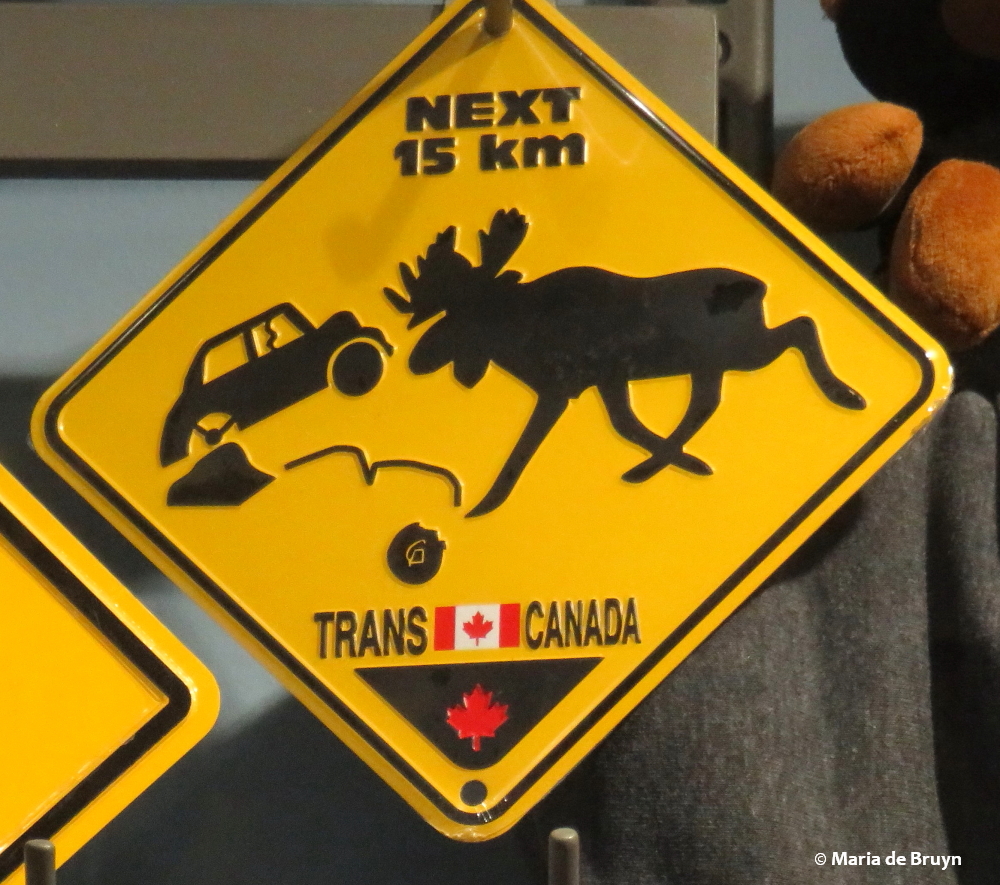
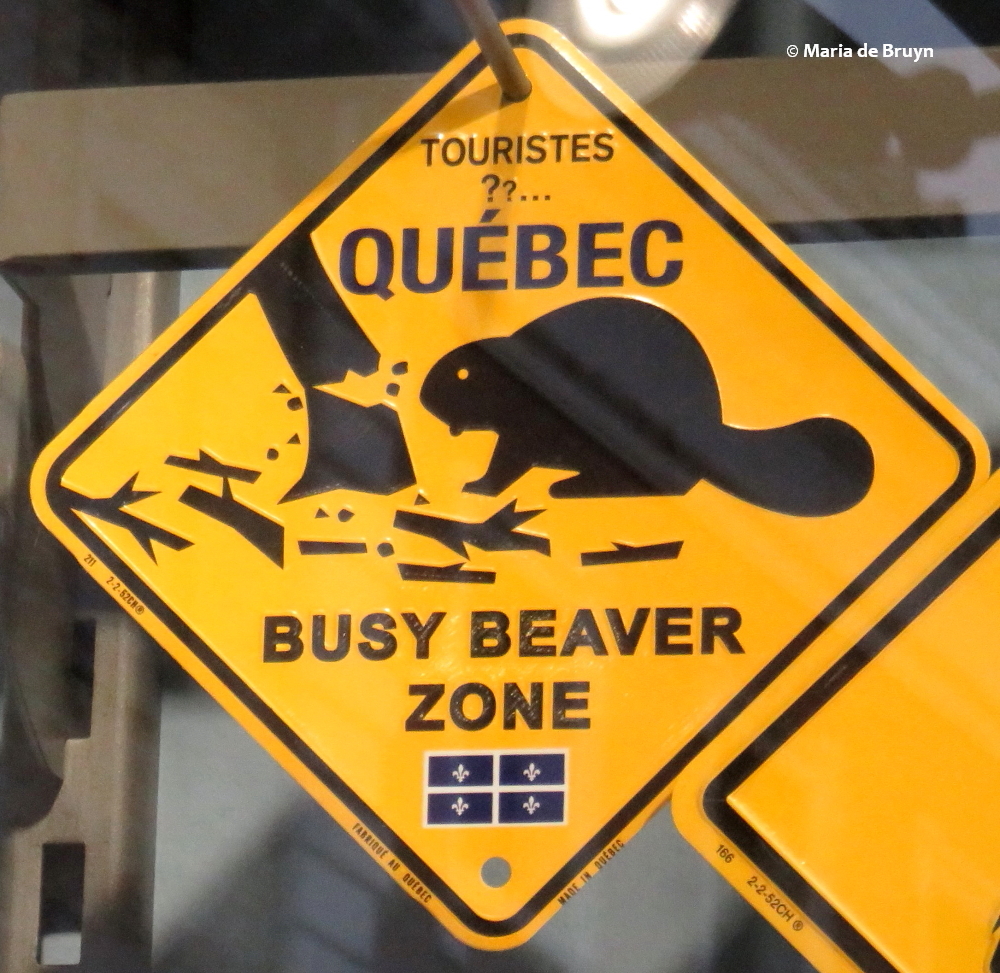
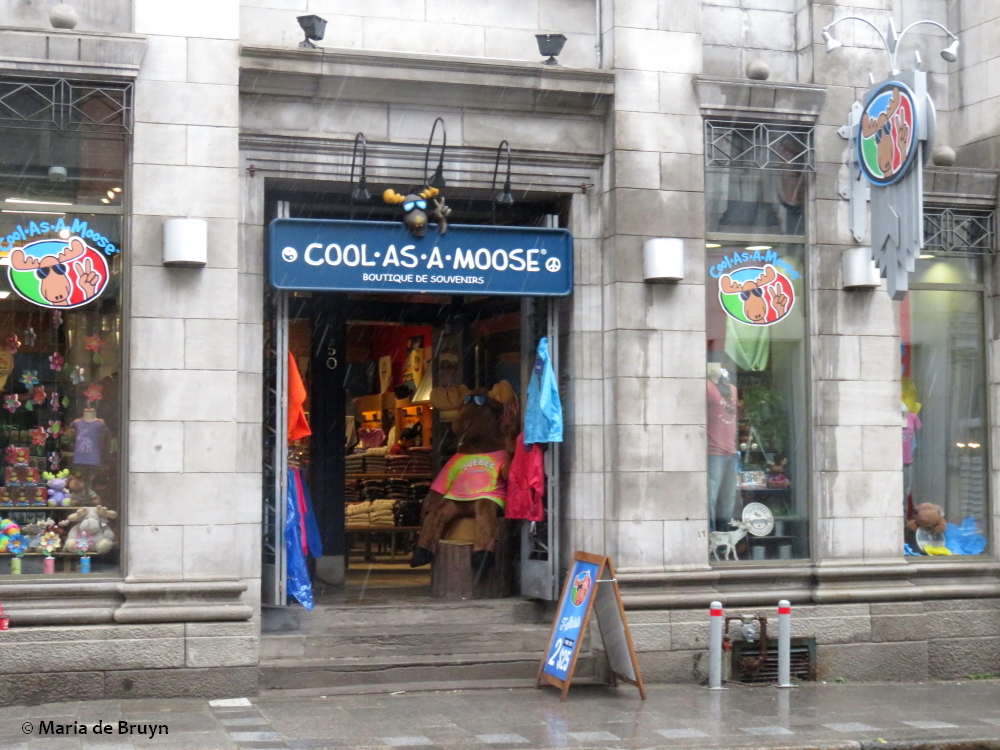
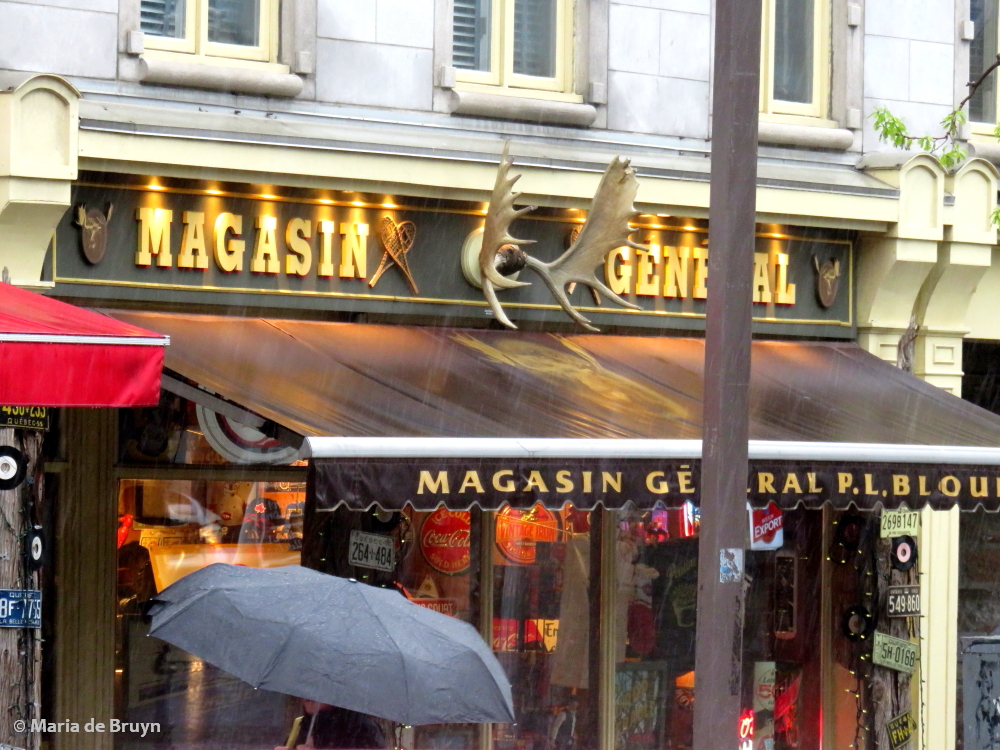
The chocolate shops sold maple syrup products, too, and some stores in Old Quebec made references to moose – with antlers above the door, in their names or in the products they sold.
 

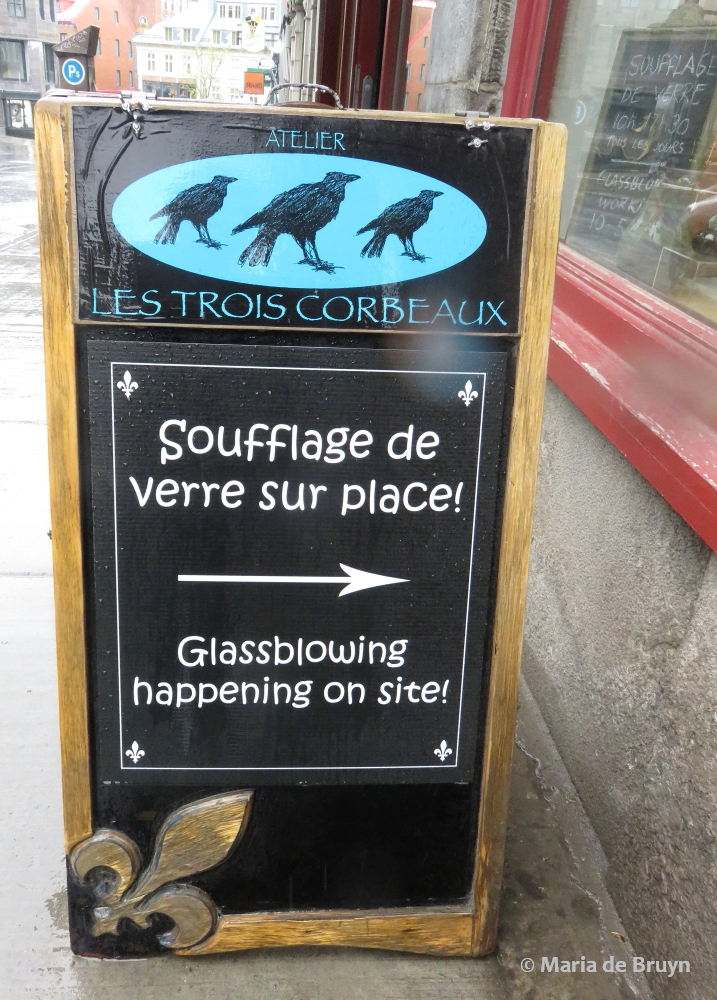
When we saw the sign for Les Trois Corbeaux (the three crows), the birders in us had to pop in to see this artisan-run glassblowing shop. A very nice young woman was forming tiny pieces of glass into ducks at the front of the store.

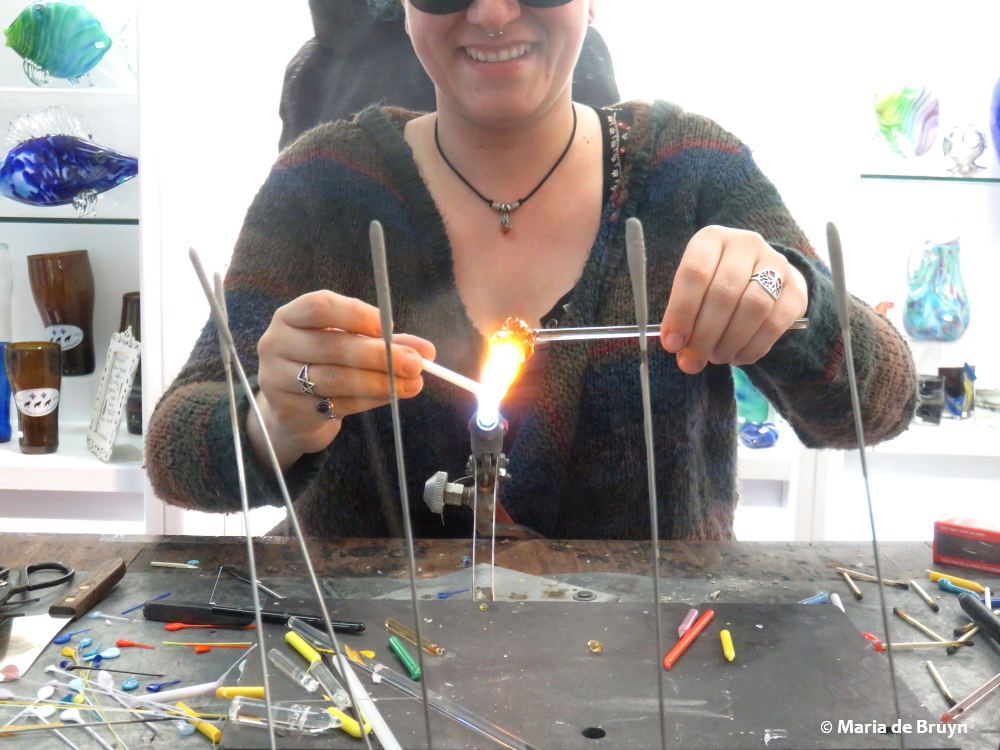
 

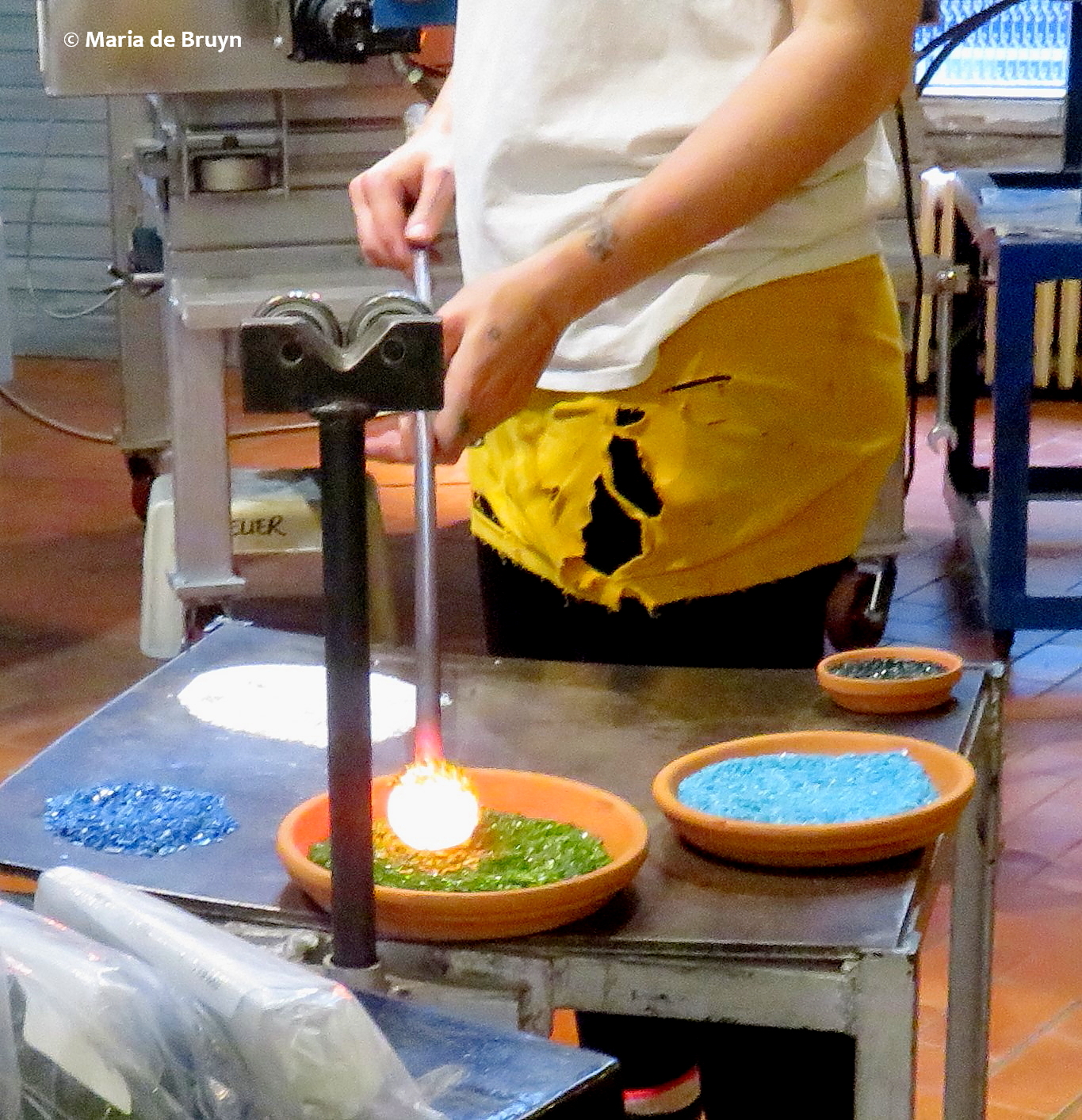
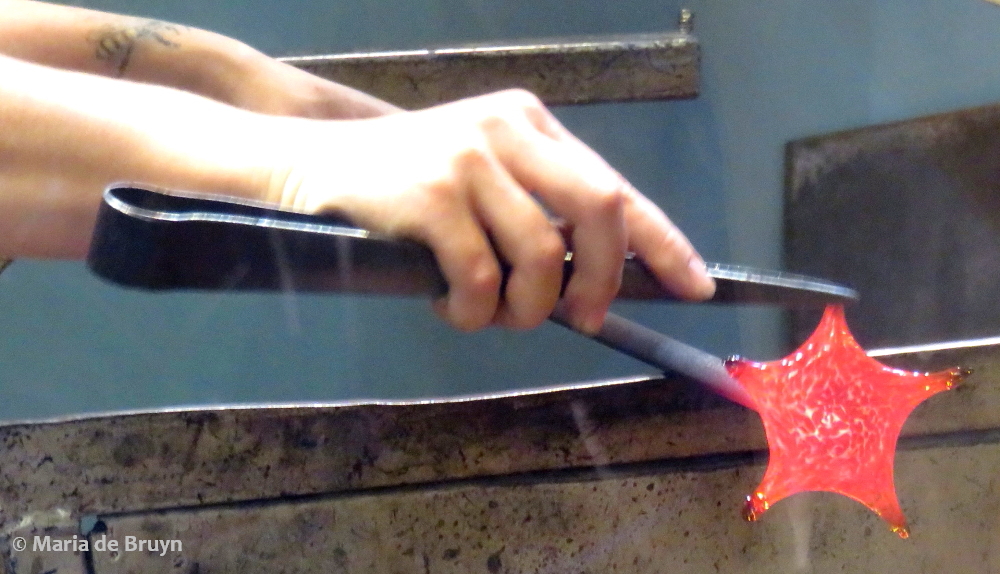
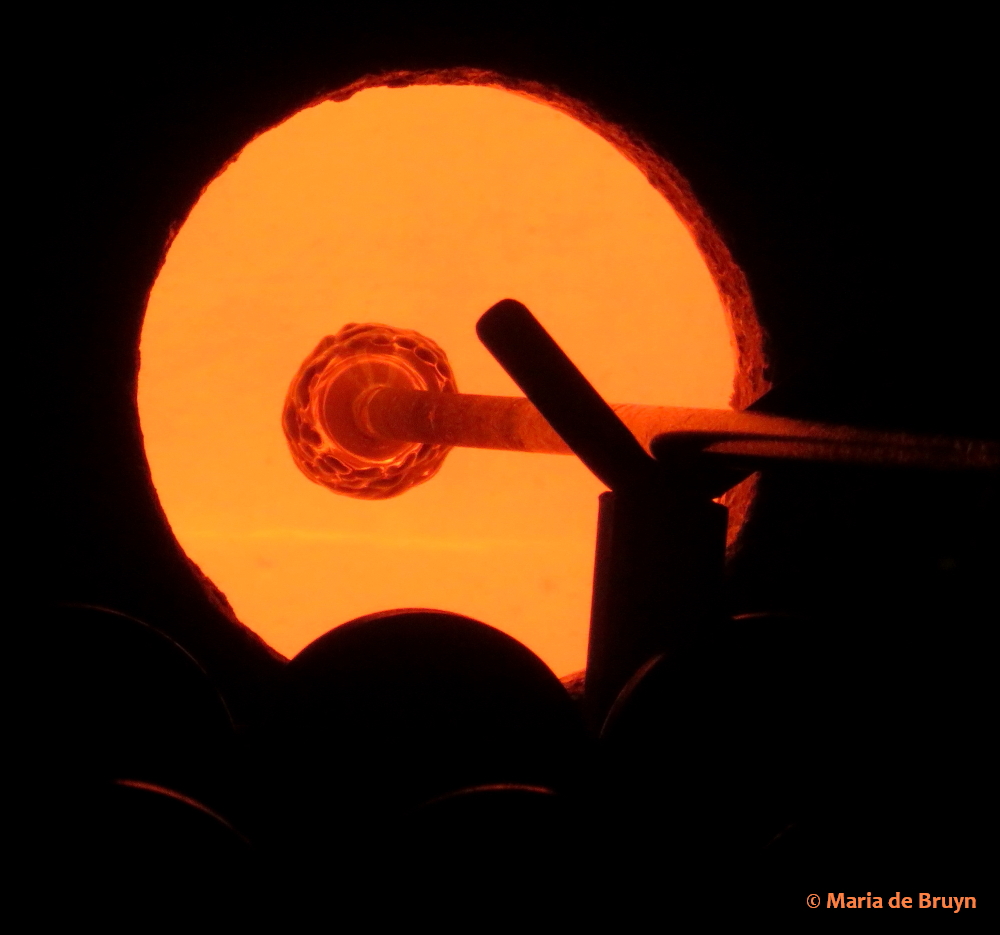
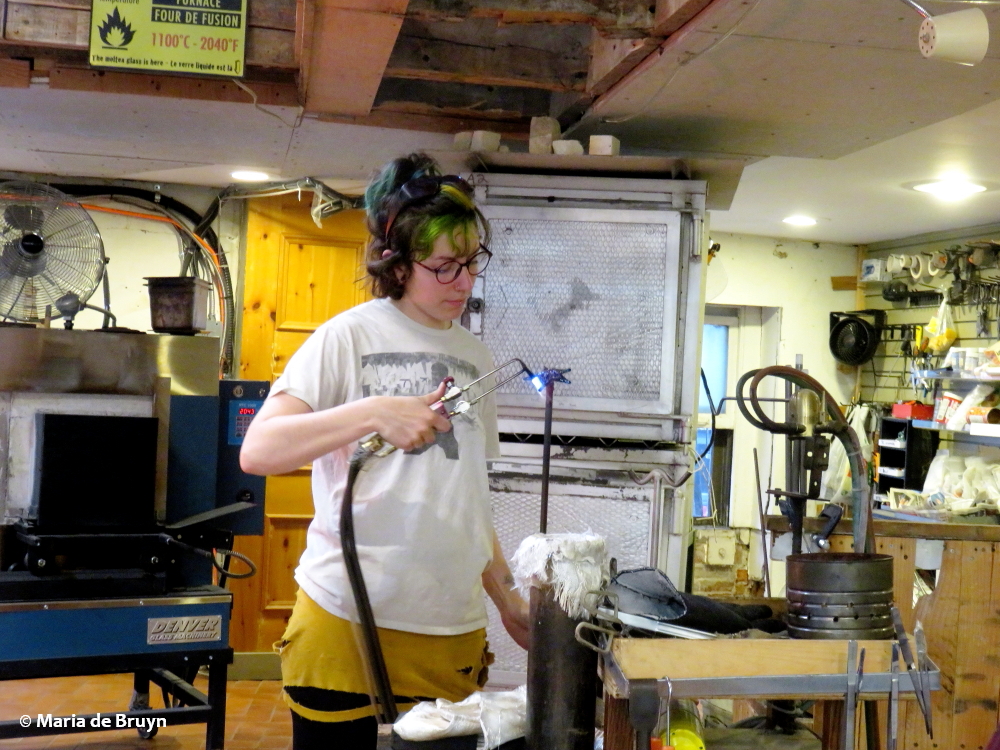
At the back, another young woman was rolling blobs of glass in different colored glass pieces, firing them and then stretching the bulbs into brightly-colored starfish. These small pieces were obviously for the tourist trade; larger, more abstract and more expensive elegant pieces were for the art collectors.
 

We walked on and got to the promenade overlooking the river. Along the way, I noted that renters in the city are protesting something (likely high rents). The funiculaire was providing respite to people who didn’t want to climb the multiple flights of stairs (which I did the next day – about 15 in total and not great for my leg which I had re-injured earlier in the week).
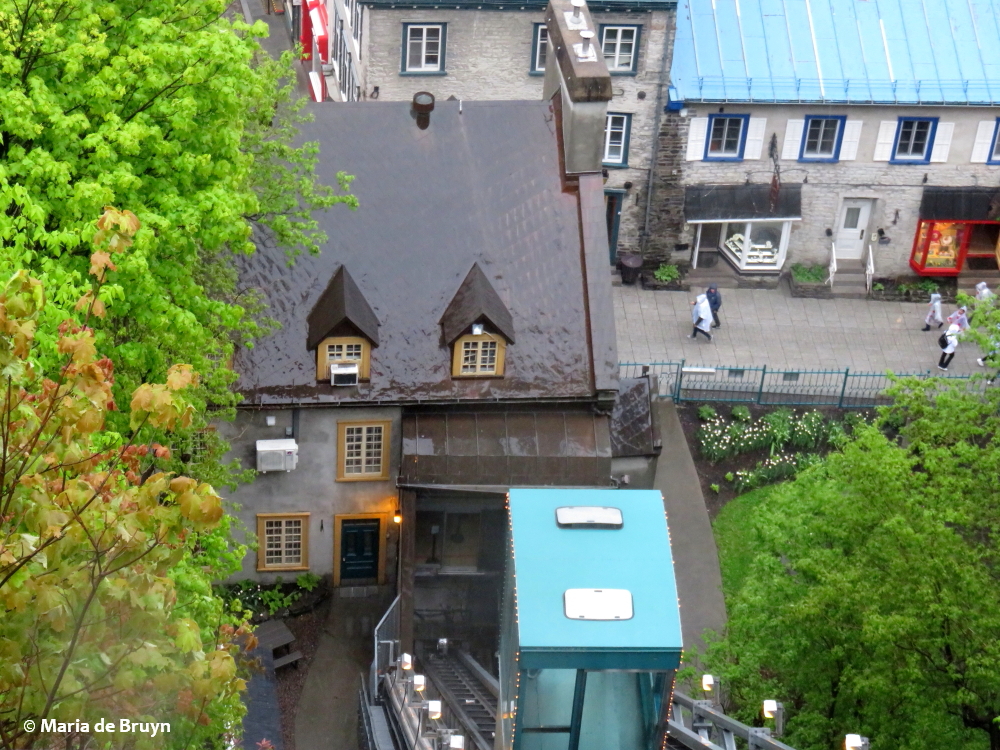
We gazed out over the river where I saw my second Dutch boat (the first was from Delfzijl at the Pointe-au-Pic quai).


   

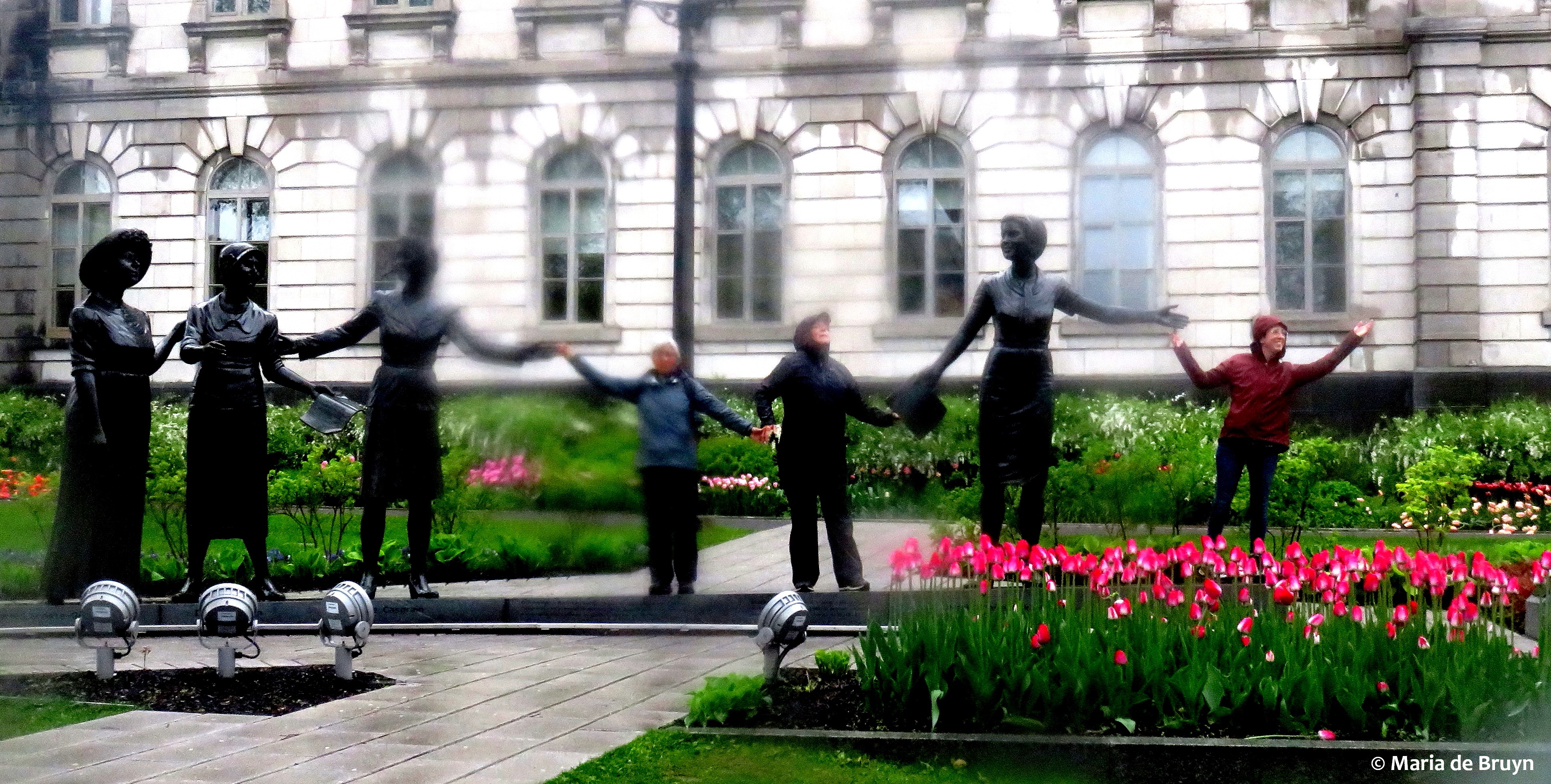
And then we walked home in the rain, stopping so that my friends could pose with a statue honoring women leaders (but I couldn’t keep my point-and-shoot camera dry long enough to get a raindrop-free photo).
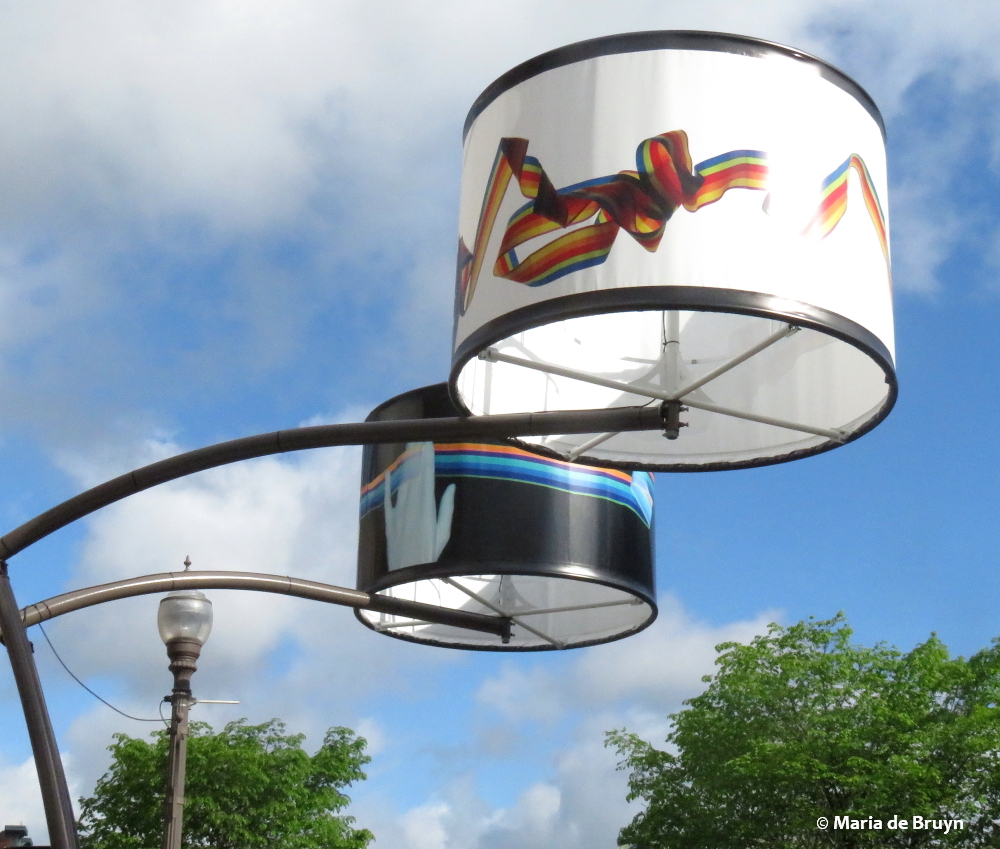
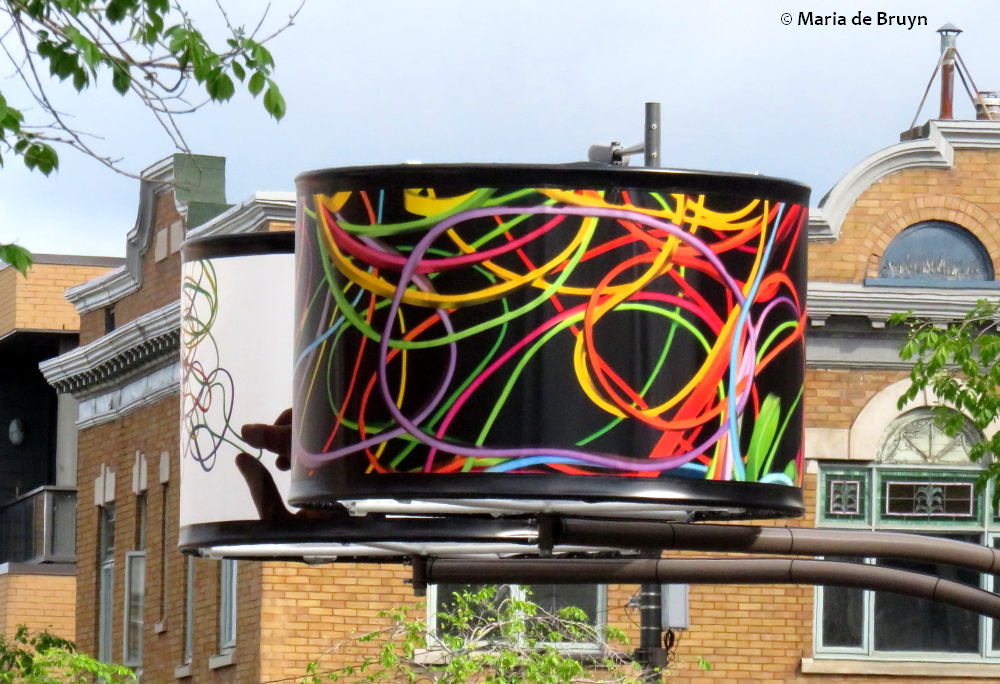
The next morning, we again strolled through the local neighborhood, saw the colorful street sign covers, and took the bus to the old city.
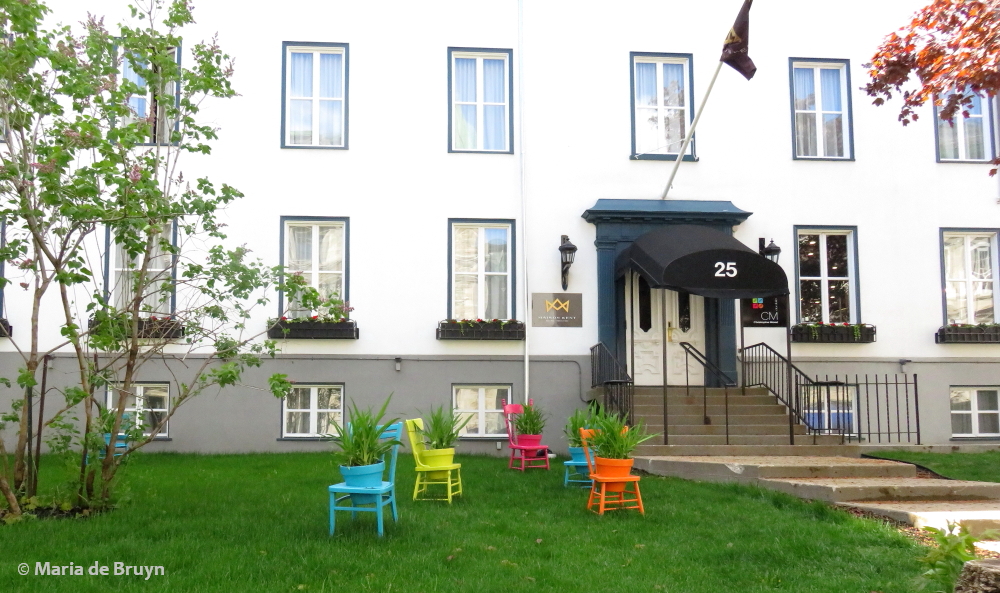
Another chocolate shop (!!) didn’t advertise heavily but had lovely painted chairs with potted plants on its lawn. We also noted another branch of a chain restaurant, which had given us a really nice meal the day before (even for vegetarians).
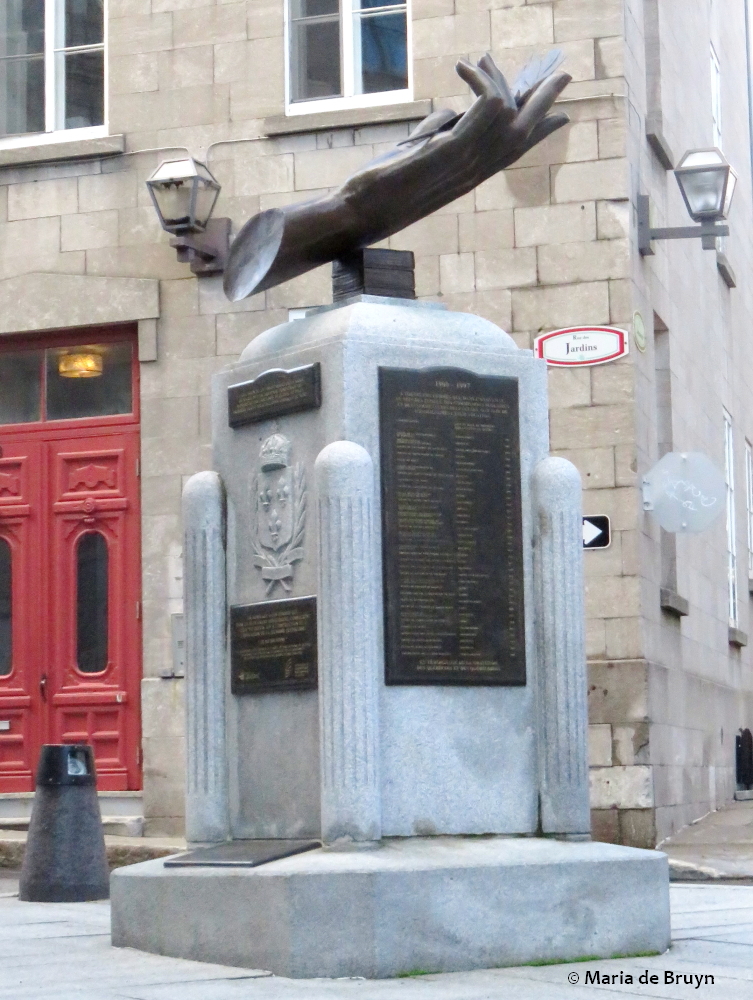
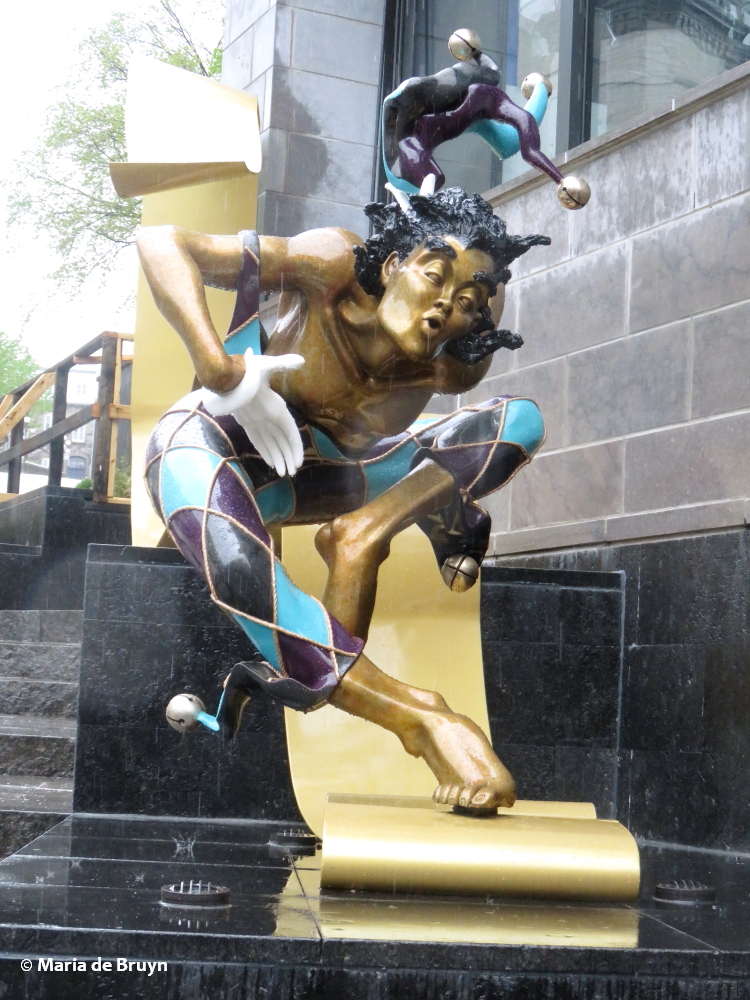
We saw another statue honoring women – in this case, those who dedicated their lives to educating the youth of Quebec after 1639. I found a statue of a jester quite appealing.
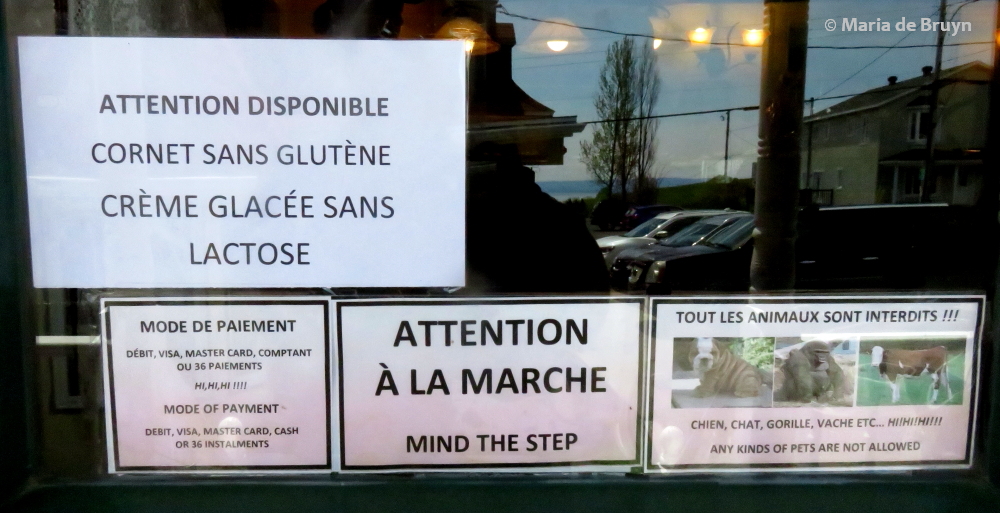
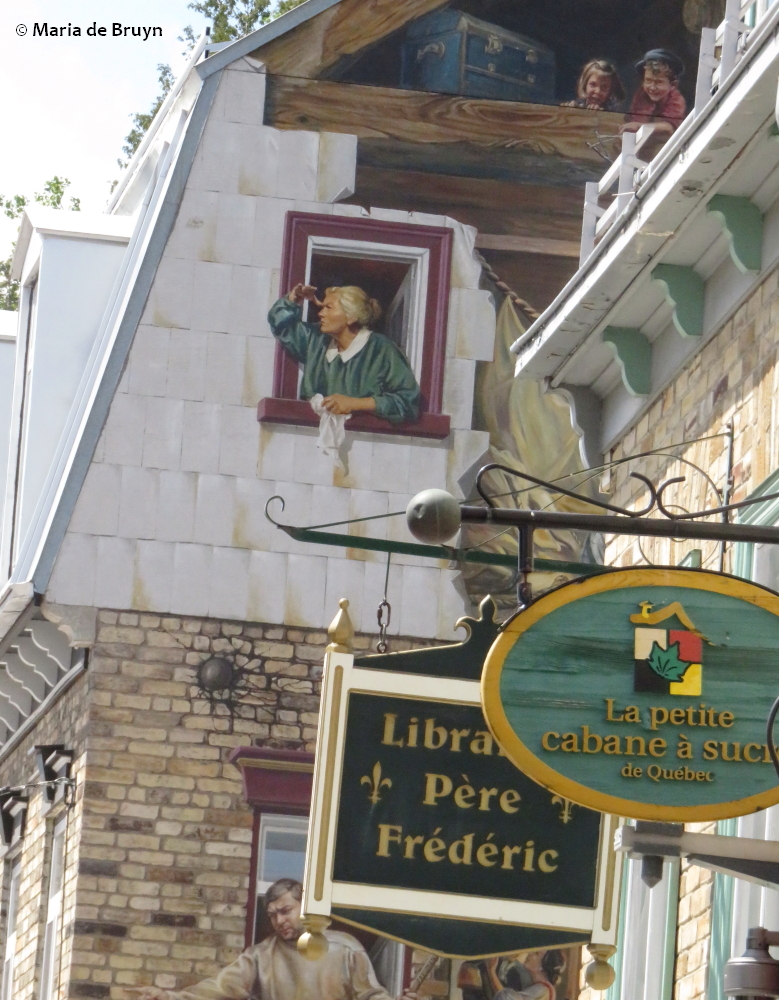
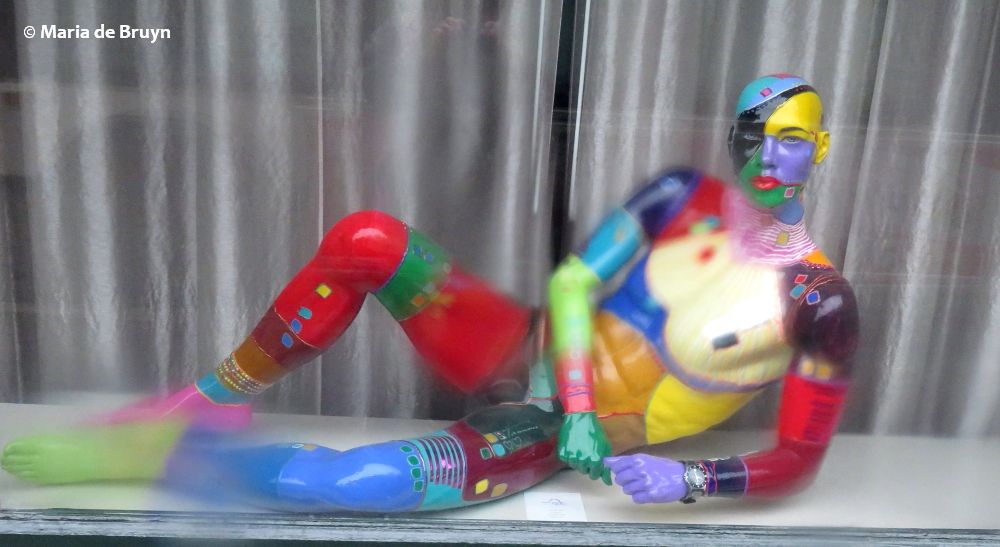
As we wandered, we looked at more shop displays – many were colorful, either in hues or their messages.


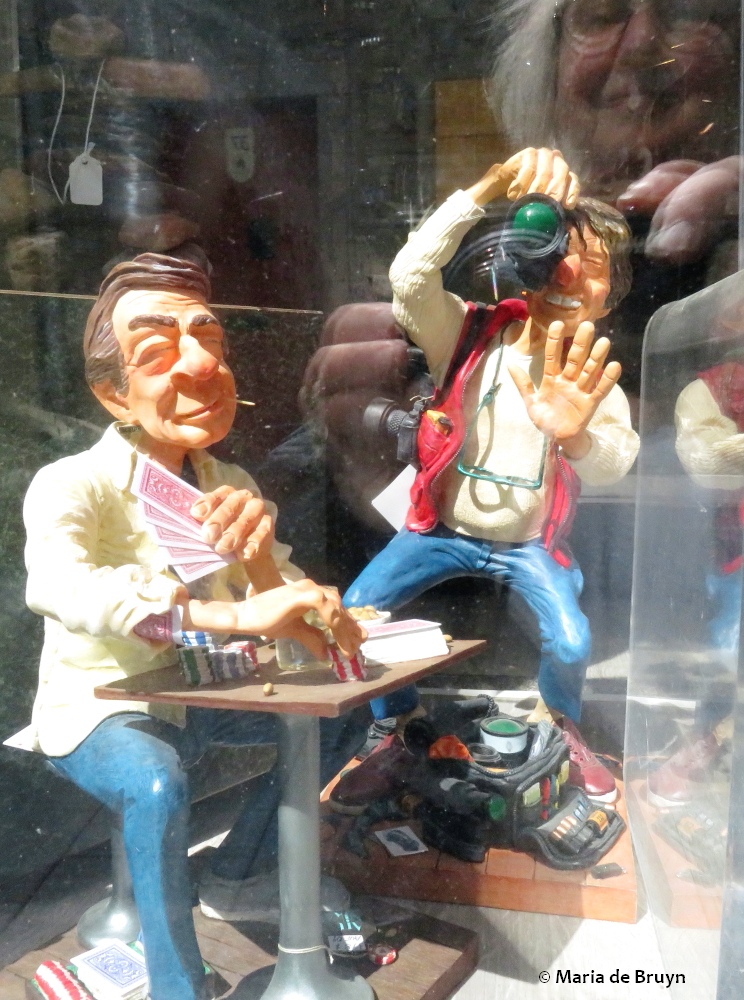
A last exciting sighting of yellow warblers along the stairs (the only birds I recognized there besides song sparrows) stopped us so some photos could be taken. I didn’t have my good camera along, so this reminder of photographers should suffice here.

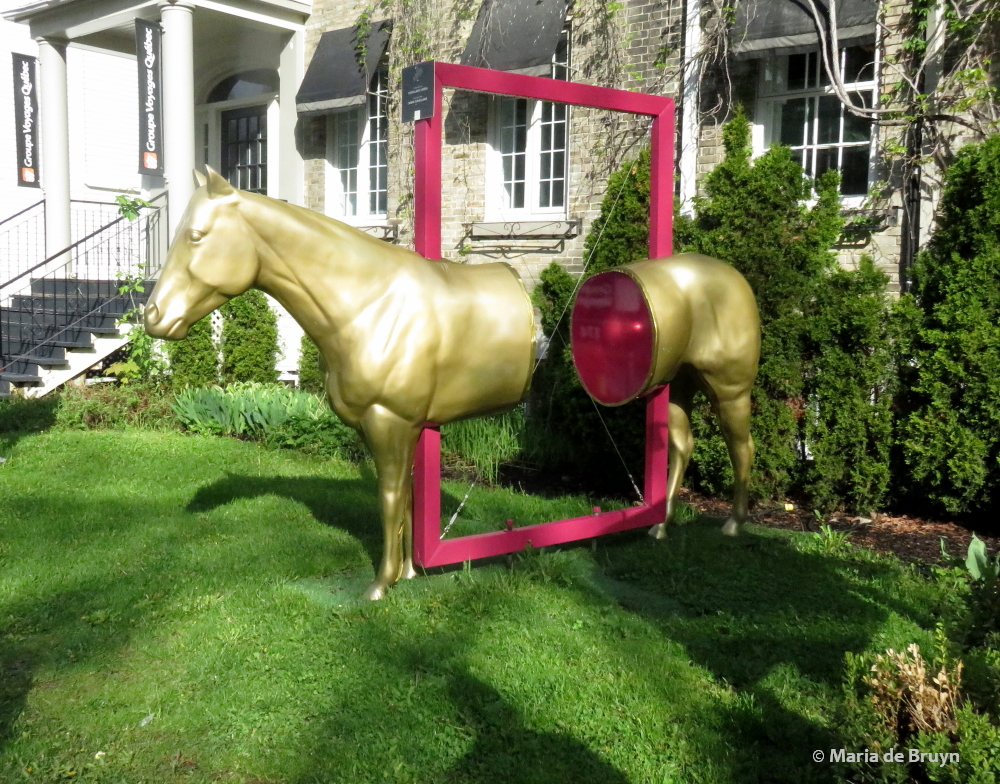
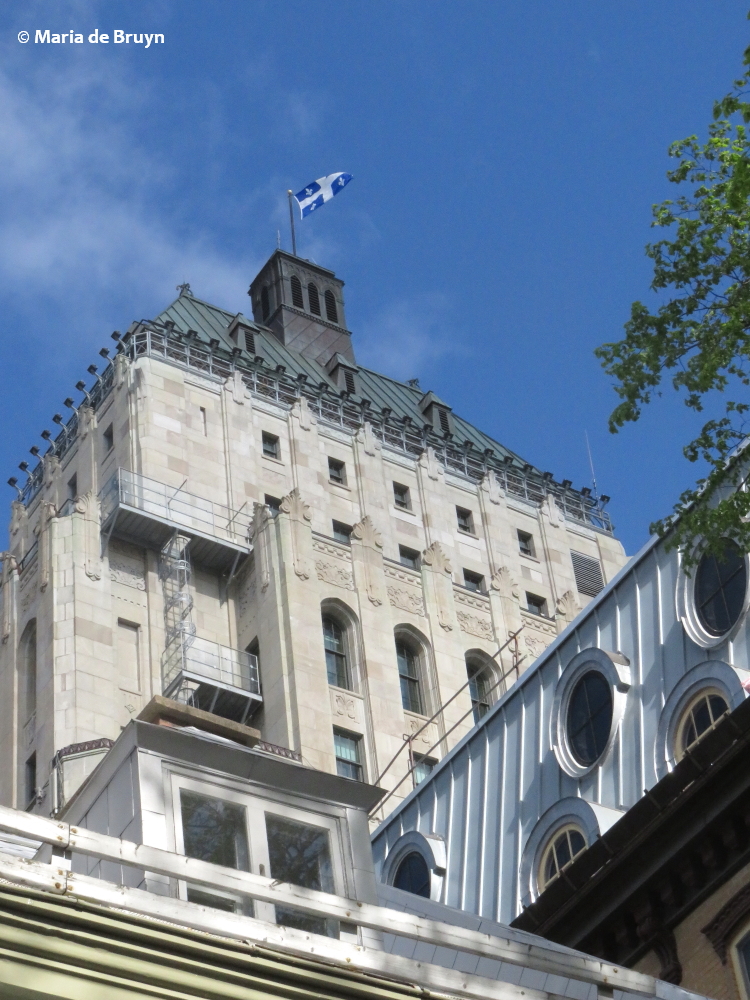
We then hurried through a park to get to our hotel, which was unusual with a “split horse” in front. And then off to the airport we went, just as it began raining again! (I hope you noticed that I managed to get some animals in this blog, just not live ones. 😊)
 

Goodbye from Quebec City!


Quebec chronicles: Ste Anne-de-Beaupré

At the end of May/start of June, it was my good fortune to travel to Quebec province with six friends to observe wildlife there, especially the migration of warblers who arrive in their beautiful breeding plumage. There were thousands of birds and I also enjoyed documenting other wildlife – it will take me some time to go through all the photos to select some for sharing. In the meantime, I’m breaking from my usual postings about natural areas and animals to show something of urban and rural Quebec to start off this multi-part series.

On our way to Quebec City, we stopped to see the Shrine of Sainte Anne-de-Beaupré, a church complex devoted to Jesus of Nazareth’s grandmother. The shrine’s brochure claims it is the oldest pilgrimage site in North America, while the website says it is the second oldest. The pilgrims include various Native American groups according to their tourist information. One stained-glass window featured a Byzantine cleric and a female Italian pilgrim.

The bits of info that I read mentioned various Native American groups who visit, but I don’t recall the Inuit being among them. In Quebec shops, we could admire some of the beautiful Inuit and other Native American art for sale (apologies for the reflections in the window that made photographing it difficult).


The basilica includes mosaics in the ceiling showing Ste Anne learning to read in a temple; the church houses three relics of the Saint – a forearm, finger bone and other pieces of bones.

In 1658, a man names Louis Guimont was healed at the chapel; now the basilica houses two columns displaying crutches, immobilization masks used during radiation therapy and other symbols of ill health that was said to be cured through divine intervention.


A side chapel houses what appears to be a baptismal font; a statue of St. Anthony of Padua is at the back of the basilica.


As in Catholic churches I have visited, there were stations of the cross.

The shrine appears to be a money-maker as so many church ventures seem to be. A special office with large windows featured a priest wearing a nice straw hat to complement his robes as he blessed people who presumably had paid a fee for this. This was the first time I had seen a facility like this at a church; I would have thought that blessings would be freely given.


A large, well-stocked gift shop featured shelves of holy water, religious items and a series of stone and wood scenes created by Normand Simard, ‘a man of nature who uses Charlevoix region stones to create men of stone, ducks and bird houses.’ The ends of the pews in the basilica also featured carvings including animals and birds so even in a man-made structure dedicated to thinking about an afterlife instead of our world, nature managed to have its presence acknowledged.


Next up: a visit to Quebec City

Life on late winter-early spring farmlands

Although it’s taken me some time to process photos taken earlier this year, I’d still like to share what I was seeing in late winter and early spring when stopping at farm fields. These sometimes muddy and stubble-covered parcels of land can offer wildlife watchers nice views of birds and occasionally other animals, unobstructed by a lot of foliage. So visits to roadside farms and ponds were on my early 2019 nature-walk itineraries.

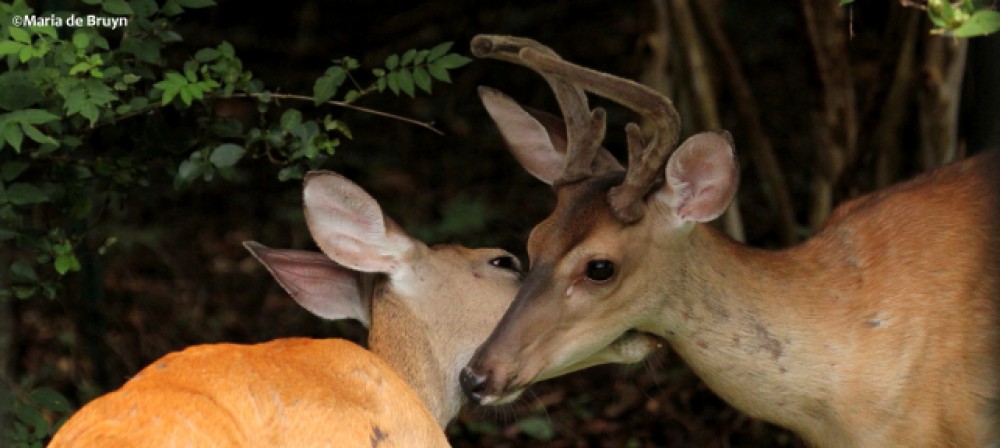
Farm fields are often bordered by stands of trees where animals can retreat if they become disturbed by humans standing around aiming long camera lenses at them. The white-tailed deer (Odocoileus virginianus) above were browsing one morning and seemed unconcerned as I photographed nearby birds. When I turned to watch them specifically though, they decided to move back into the woods bordering the field.

Many farmers put out bird boxes on fences bordering their fields; in early March, the Eastern bluebirds (Sialia sialis) were already checking out and starting to furnish potential nest sites. Here a male was flying away from a nest box while his mate was gathering pine needles.

The fences offer other birds a good vantage point for observation, too. A Northern flicker (Colaptes auratus) perched on a fence post to look around and then flew to a branch high above me.


A bird present in large numbers was the brown-headed cowbird (Molothrus ater). One morning, a friend and I counted some 200 birds in one small group of trees. Many people think they are an invasive species and dislike these birds intensely because they evolved a behavior that can endanger other birds. The cowbirds, who are native to America, were originally present in prairies where they followed the buffalo. This meant they did not stay in one place long enough to tend a nest, so they began laying their eggs in other birds’ nests. The young cowbirds hatch first and then may throw out the other eggs or hatchlings or they eat so ravenously that the other nest mates don’t get enough.

It certainly is disconcerting to see a small warbler feeding a large cowbird fledgling and a couple bird species have been endangered by the behavior. But I don’t dislike the cowbird because of this – they did not choose how to evolve and the behavior developed as an adaptation, not an “evil” practice. They are attractive birds. And the sounds they make are lovely, akin to water droplets falling into a pool.


The American robins (Turdus migratorius) were also present in abundance; they tend to flock together in the winter and early spring. One farm had a boggy area with some cyprus trees and the robins were busy looking for insects among the cyprus “knees” (Taxodium distichum). These woody structures that grow out of the roots may help stabilize the trees when they are standing in water but scientists have not yet definitively identified their purpose.

There were other trees near the cypresses; in one, the cocoon of a Polyphemus moth (Antheraea polyphemus) was hanging high overhead. It also pays to look around to see who is flying u[ ahigh above those trees and fields. It’s not uncommon to see Canada geese (Branta canadensis) flying from one farm pond to another.

Red-tailed hawks (Buteo jamaicensis) soared over different fields I visited.

Red-shouldered hawks (Buteo lineatus) also made an appearance.

And one of my favorite raptors often eluded my efforts to capture a portrait. Only a couple times was I able to catch a beautiful kestrel (Falco sparverius) speeding by in flight.

The robins were feeding in the fields as were several other bird species.


Yellow-rumped warbler (Setophaga coronata)

Savannah sparrow (Passerculus sandwichensis)

Pine warbler (Setophaga pinus)

A pair of Northern mockingbirds (Mimus polyglottos) was taking advantage of numerous cow patties left behind on one farm field in their search for insects. They were flashing their wings repeatedly; I’m convinced that this was behavior designed to scare up bugs so they can catch them easily.


Other birds were following them around in the field, apparently taking advantage of the insect smorgasbord. Two of them were a song sparrow (Melospiza melodia) and a field sparrow (Spizella pusilla).

This year, it was also my good fortune to see a bird new to me in one farm field, the lovely horned lark (Eremophila alpestris). Although these birds are not considered endangered, their numbers declined by 71% between 1966 and 2015.

I couldn’t get close to the larks but one day I did catch a bird taking a dust bath in a gravel and dirt road next to their preferred field. On a second visit to that farm, I again saw a lark in the road and then another lark joined it.

It turns out that female larks perform a courting display that looks very similar to actually taking a dust bath, so I got to see a mating behavior that I hadn’t expected!

Reading about the behavior, I discovered that if male larks see a female who is dust bathing, he may mistake what she’s doing and try to mate with her when she’s not ready.

So reproductive life is a bit difficult for those males, who look so adorable when they raise those head feathers to project two little black horns.I will leave you here with a few more views of a horned lark who was singing and foraging not too very far from the road.


Spring is in the air…. Uh, I mean water!

It was the sound that first attracted my attention. Initially, I thought that it sounded like a flock of birds, but as I approached a pond, I realized that was not the case. The almost chirruping sound didn’t fit with any frogs I had heard before. As I scanned the scene before, my roving vision finally alit on a small section of brownish water dappled with green algae and stalks of dead reeds – there were moving bumps there. When I came closer, I finally realized that it was a mass of writhing and continually moving toads, engaged in what resembled a bit of a battle. It was actually what could be called a mating contest. (Click on a photo to see it larger; then arrow back to return to blog.)

The sound made by the male Eastern American toad (Anaxyrus americanus americanus) when he is ready to breed has been likened to an old-fashioned ringing telephone. It can last from 6 to 30 seconds and when multiple toads are calling at the same time, they create a very loud and penetrating “concert”. It doesn’t sound like a phone to me; you can judge by listening to the video.

I only saw a couple of the toads with inflated throat sacs. The sound was very loud, however, and the water was roiling with moving heads topped by periscope eyes, warty bodies and thrashing legs.

Before examining how the toads were going about their reproductive endeavor, a little biology lesson. Toads are a sub-group of frogs; while most frogs have moist skin, toads generally have drier and wartier skins. They vary greatly in color, including shades of yellow, brown, black and red, and may be speckled or have solid hues. The skin color can also change in response to stress, temperature, humidity and habitat.


American toads have two glands at the top of their head behind the eye crest. These are parotid glands that produce a neurotoxin, bufotoxin, which can sicken and even kill a predator. The milky substance can produce skin irritation in human beings and can be dangerous to smaller mammals (like dogs).


Like birds, toads have nictitating membranes, transparent eyelids that help protect the eye. They sometimes raise the nictitating membrane half-way so that they retain sharper vision.


Toads actually spend a lot of their lives on dry land, eating insects as well as worms, slugs and other small invertebrates. A particularly fascinating fact is that they use their eyeballs to help swallow food – when they ingest their prey, the eyeballs sink down into their mouth and help push the food down their throats!!!

At times, they created little whirlpools as they bumped up against one another or tried to mount a neighbor.


Sometimes, a large female with a smaller male atop her would rest quietly under water, apparently trying to avoid notice. This strategy did not always work, however, and sometimes one or more other males would try to join the pair already in amplexus (i.e., when the male grasps the female with his front legs and fertilizes the eggs as she releases them from her body)..

The female toad ejects her eggs in two strings, which are immediately fertilized by a nearby male spurting out a stream of sperm. (Frogs lay their eggs in clusters.) Tadpoles will emerge from the eggs within 2–14 days and reach adulthood within 50–65 days. They become sexually mature at 2-3 years.

In one case, I developed a real sympathy for a particularly large female. She had a small male astride her who resembled her in coloring and they looked to be peacefully joined. Then another male spotted them and he launched a sneak attack, trying to usurp the position of her already-present suitor. The first male clung on tightly.

No. 1 pushed No. 2 away with a hind leg again and again.

In the meantime, a great blue heron (Ardea herodius) who had been feeding on the other side of the pond, made its way over to the site of toad frenzy. S/he had been eating small fish and amphibians.

I thought the heron would plunge into the midst of the numerous toads for an easy meal, but instead the bird looked around and then skirted the group, veering away to the shoreline. Perhaps some instinct made the heron avoid the group during a reproductive event? Or s/he was put off by the vigorous activity of the potential prey?

A second rival toad then joined the first, who was still trying to get the original mating male out of the way. Eventually, a third, fourth and yet another male joined the group and the poor female was weighted down by 5 – FIVE! – male toads all vying for the prime spot on her back. Often her head was pushed down under water.

The first male clung on with great determination, often being pushed down under water as well as the other males piled on. He was NOT going to give up.

Ms Toad did not like this state of affairs. She laboriously began moving from a deeper spot in the pond to the pond’s edge. This was a slow process, made difficult by the clinging crowd who must have weighed a good deal as a group.

I thought she might be trying to get to more shallow water so the toad “knot” would not keep her submerged. Toads can breathe under water like frogs because they can absorb oxygen through their skin. They do have lungs, however, and if these fill with water, they can drown. A fellow Facebook nature lover told me that she had seen expired female toads with males still clinging to them. A toad knot can therefore unfortunately result in maternal mortality – the demise of a mother giving birth (to several thousand eggs; most of the tadpoles do not survive).

I soon left the scene after Ms Toad had reached the side of the pond and could keep her head above water. It was noticeable that her throat pouch was inflating and deflating – perhaps she was breathing deeply to compensate for lack of oxygen when she had to suffer a submerged head due to the over-amorous males.


Inhale!                                                                  Exhale!

I know I am anthropomorphizing, but I do believe that she likely felt the amphibian equivalent of relief and was looking forward to the end of that day!

Diving in for a meal


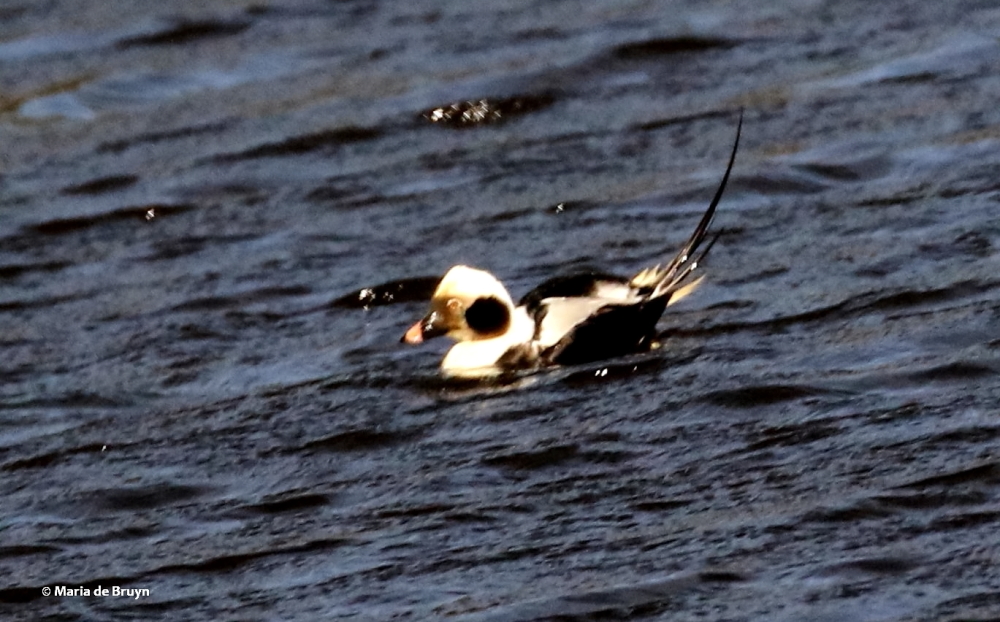
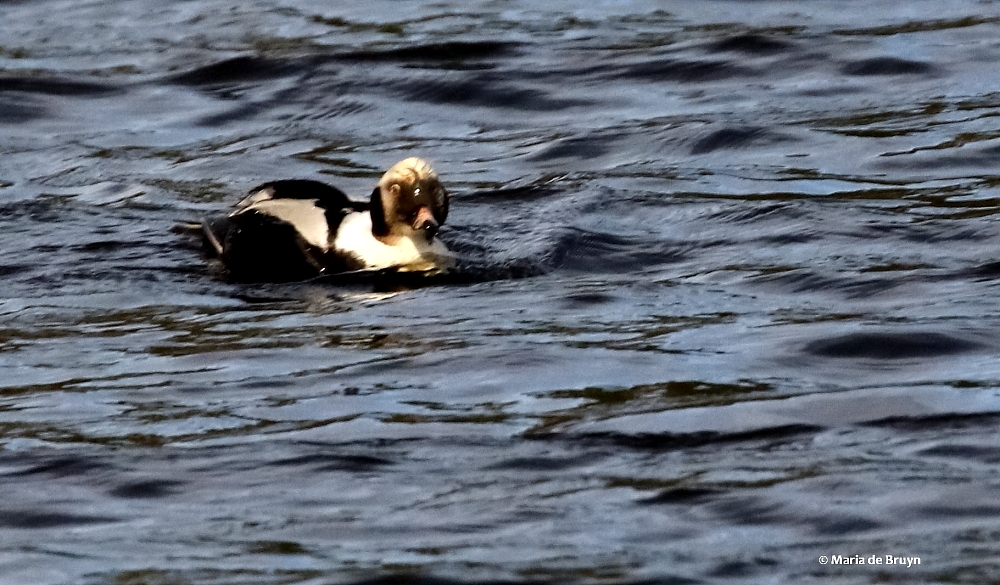
Recently, I had the good fortune to see a sea duck because it had veered away from its usual habitat to land on a pond near the middle of North Carolina. The male long-tailed duck (Clangula hyemalis) is a real looker in his winter plumage. His dark grey bill is tipped by bright pink color and he has large black circles on his white cheeks, which some people think look a bit like ear-muffs.

According to the Audubon Society, these ducks dine on mollusks and crustaceans when they are at sea during the winter. Since this duck had apparently gotten off-course during his winter migration, he seemed to be satisfied now with pondweeds and grasses, which is what they tend to eat in the summer when they are at their breeding grounds.

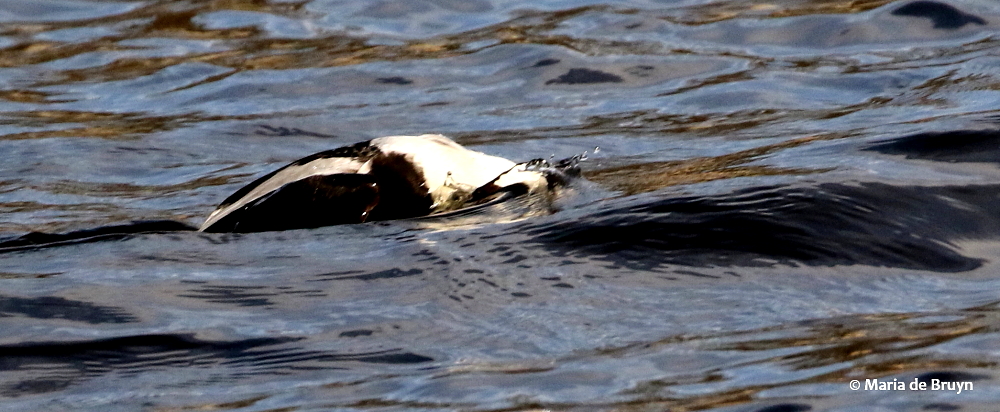
It is his beautiful long tail (3.9 to 5.9 in, 10-15 cm) that really catches your eye, especially when he dives under to gather up some of his food. His dive appeared to comprise a very slight spreading of wing feathers and then a quick forward and downward movement, ending with his rear end sticking up with the long-tailed plume waving a bit before he straightened out just below the water’s surface.

It was when I watched this duck dive under again and again that I actually stopped to think a bit about how ducks dive for their meals. This bird seemed to stay under water for what seemed a very long time (probably 15-30 seconds). It turns out that they can remain submerged up to a minute. In comparison to other diving ducks, the long-tailed duck spends more time under water than at the surface; in fact, when looking for food, this duck will be under water 3-4 times longer than it stays above water!

When reviewing my photos, I realized that this bird was not diving deep but rather staying submerged just under the surface. My friend Lucretia pointed out that the duck would extend his wings a bit away from his body before he went under and the photos showed his wings spread out.

This must be the species’ diving technique when they are foraging for plant material because it turns out that they are likely the deepest diving ducks in the world, able to go down as much as 200 feet (60 meters) in search of food! So it turned out that we were really seeing quite a special bird.

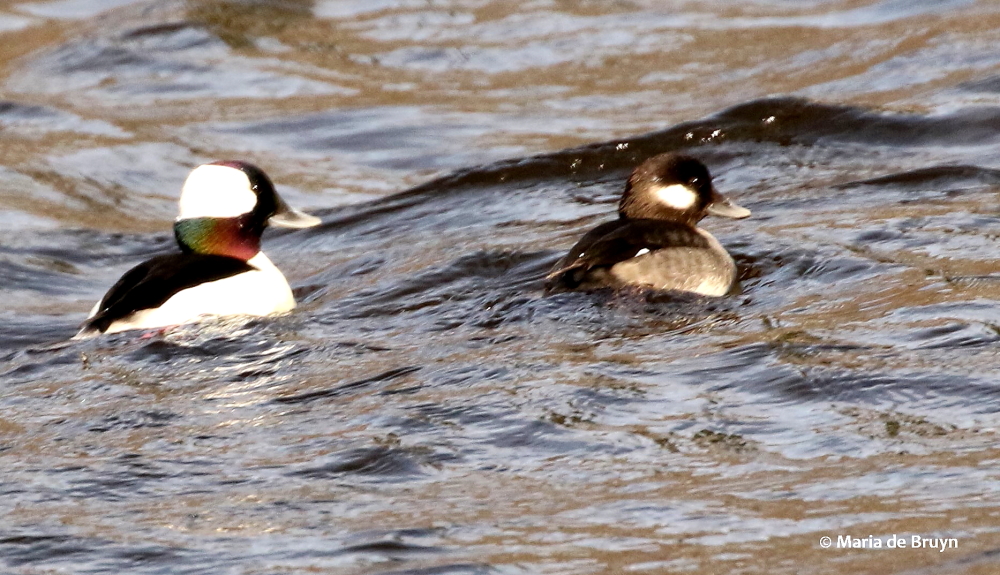
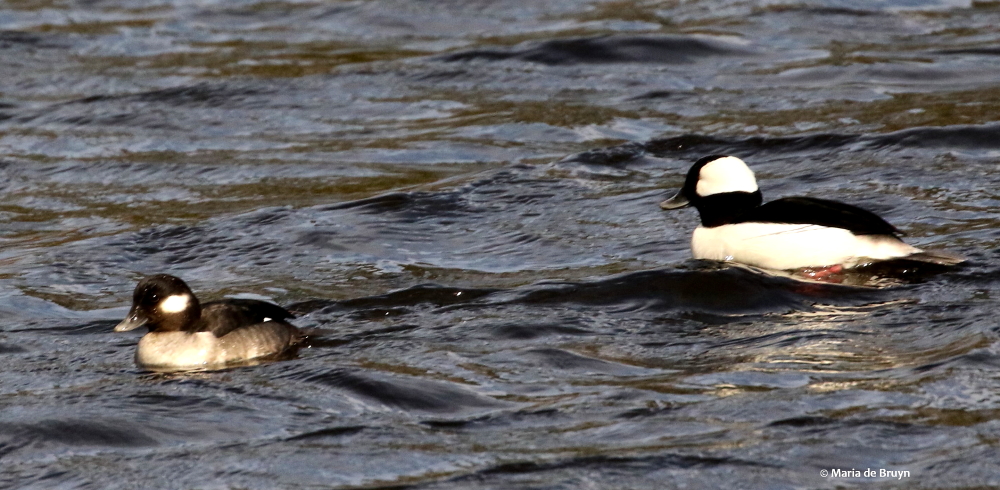
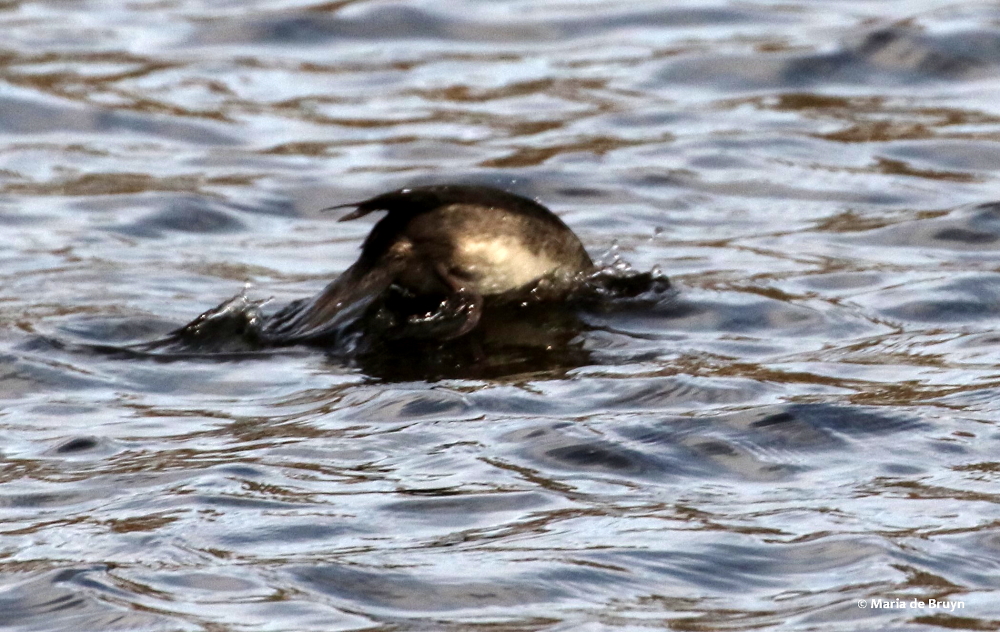
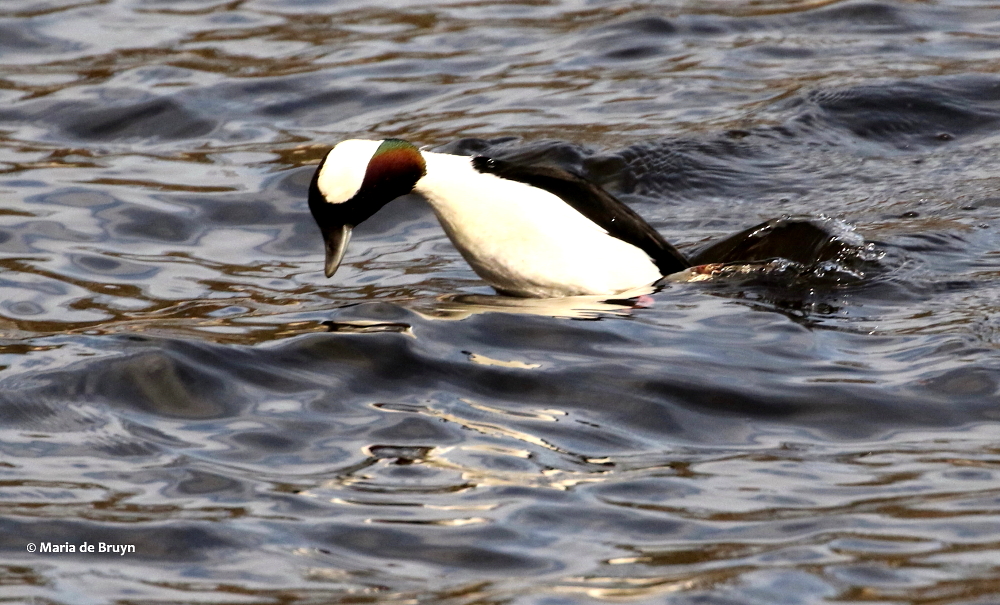
A pair of bufflehead ducks (Bucephala albeola) were at the same pond and give a nice demonstration of their different diving technique. Their winter and summer diets are similar to those of the long-tailed duck; they, too, seemed to be eating plants during our visit. Their dives were of much shorter duration; they appear to stay under water “only” 12-25 seconds at most.

In contrast to the long-tailed duck, however, they would rear up a bit over the water and then arch their bodies in a graceful dive, popping up again quickly after swallowing their food.


It’s interesting to note that their Greek genus name comes from a term meaning bull-headed, while their common name came from a combination of the words buffalo and head. The male duck can puff out his head feathers, making his head look even larger.

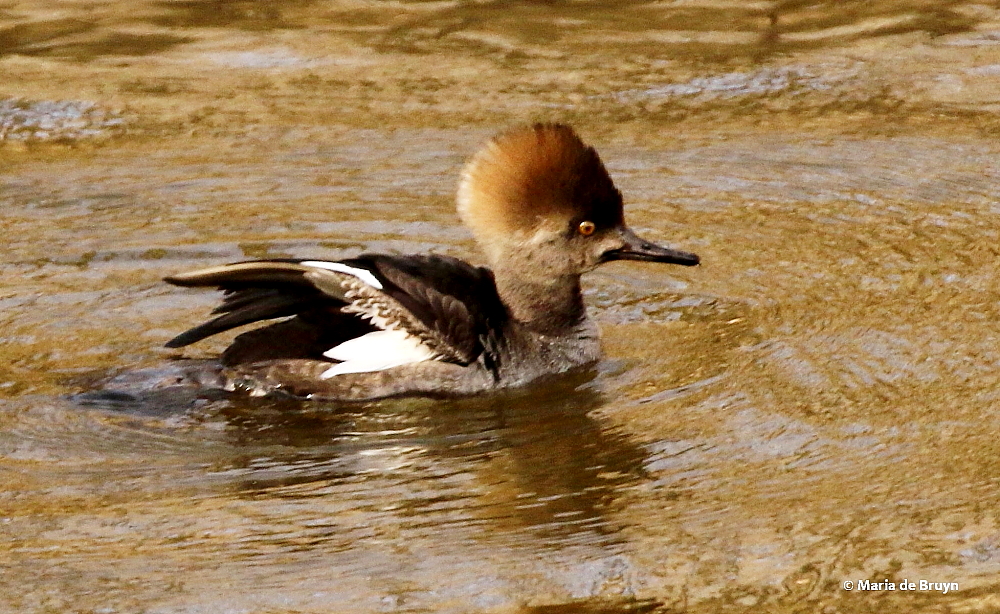
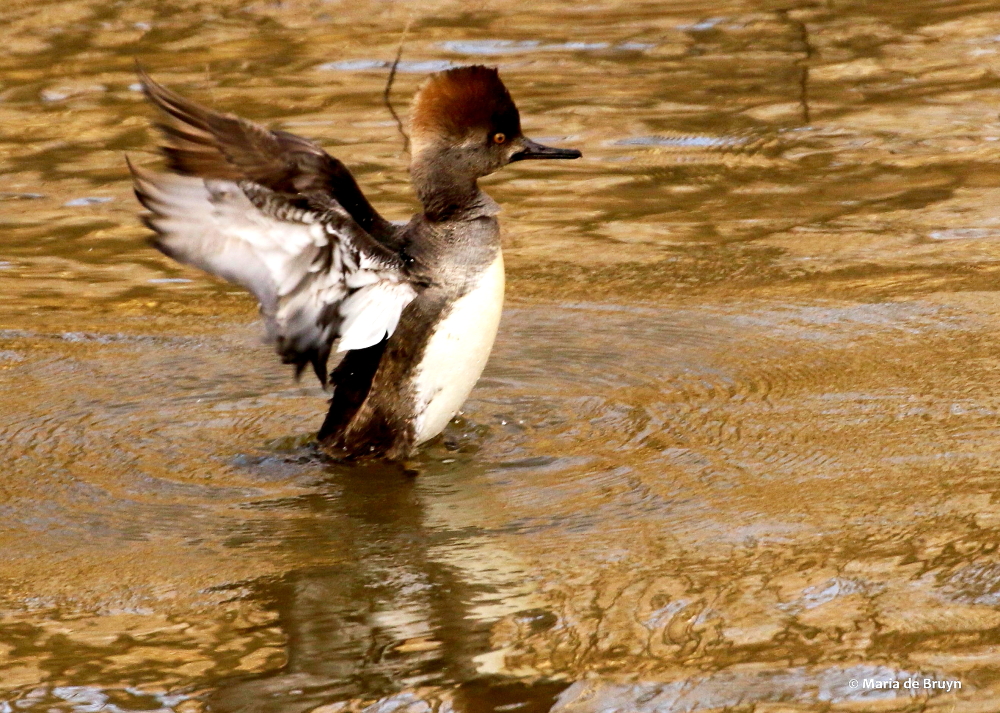
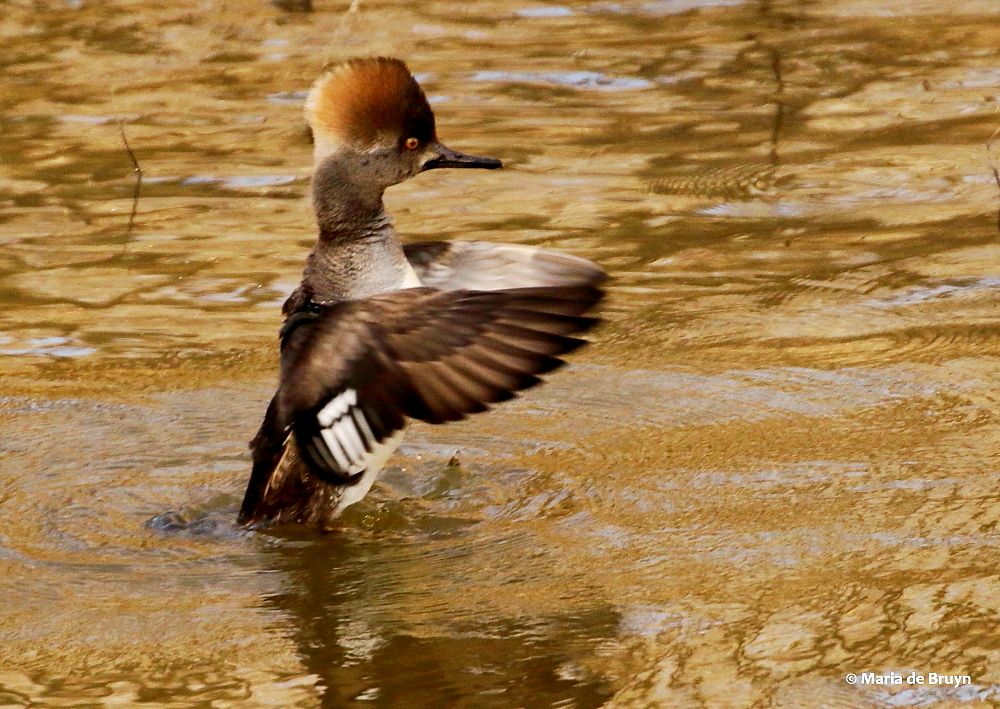
Another duck that can do this is the male hooded merganser (Lophodytes cucullatus); the female can also extend her head feathers, giving herself a crested appearance.

The male and female are quite different in appearance, but both are attractive. Their diet appears to be mostly crustaceans and mollusks.

A female merganser at nearby lake gave a short diving demo the same day as the long-tailed and bufflehead ducks. She, too, tended to perform a shallow dive like the former duck.

Duck watching had not been one of my preferred birding activities but now I’ve become curious as to how other species are executing their underwater forays. Perhaps the arcing-body plunge is a bufflehead specialty – I’ll have to pay more attention to diving techniques from now on!