My nemesis birds!

european-starling-dk7a5386-maria-de-bruyn-resIn the birding world, a “nemesis bird” often refers to a species of bird that is eluding a birder intent on adding to their life list of bird species seen in person. For me, however, a nemesis bird is one that is emptying my feeders and depriving other birds of their bit of nutritional goodness because it descends in such great numbers that no one else has a chance. Which bird is this? It’s the European starling (Sturnus vulgaris), a bird which I admittedly find visually beautiful but rather unattractive as far as temperament goes.

northern-mockingbird-i77a9648-maria-de-bruyn-resOther birders who spend time attracting birds to their yards often comment on how Northern mockingbirds (Mimus polyglottos) chase other birds away – those in my yard feed quite happily alongside other species, however, and even wait their turn for the suet feeders. Another large bird, the brown thrasher (Toxostoma rufum), does the same. In fact, most of the species that visit my yard are content to share feeder space and/or wait their turn.

brown-thrasher-img_9913-maria-de-bruyn-res     sharing-feeders-i77a9154-maria-de-bruyn-res

american-crow-dk7a2281-maria-de-bruyn-resOther species that are called “bully birds” include common grackles (Quiscalus quiscula, below), who can look quite beautiful with iridescent feathers, blackbird species and house sparrows. The grackles and red-winged blackbirds (Agelaius phoeniceus) in my yard have not been too dominant; they do sometimes come in numbers but let other birds near. I haven’t had crowds of grackles lately and when they’ve come, their main concern was to attempt to drive away the American crows (Corvus brachyrhynchos, above), so my main foe has been the starlings.

common-grackle-dk7a2236-maria-de-bruyn-res   common-grackle-i77a1447-maria-de-bruyn-res

They discovered my yard as a buffet about a year ago and introduced their young to the feasting area this past summer.

european-starling-dk7a3396-maria-de-bruyn-res  european-starling-dk7a3404-maria-de-bruyn-res


european-starling-dk7a5233-maria-de-bruyn-res


What is striking to me is the fact that they not only will “yell” at other species to go away but also compete vigorously with one another for a spot at the platform and other feeders, indicating a rather nasty disposition.

european-starling-dk7a5130-maria-de-bruyn-res   european-starling-dk7a0871-maria-de-bruyn-res

european-starling-i77a7396-maria-de-bruyn-res

The young starlings pick up on this behavior quickly.

If I come outside, they quickly fly off and roost high up in the tallest trees; sometimes, they will actually fly off to another place in the neighborhood. Clapping my hands and banging on the window will also get them to leave. However, they stick around to assess whether I will appear and if I don’t come out, they are back in short order.

european-starling-i77a1048maria-de-bruyn-res

pine-warbler-dk7a0358-maria-de-bruyn-res


Their first love turned out to be the dried mealworms, which are a big hit with the Eastern bluebirds (Sialia sialis), tufted titmice (Baeolophus bicolor), Carolina chickadees (Poecile carolinensis), Carolina wrens (Thryothorus ludovicianus) and pine warblers (Setophaga pinus, left) among other species.

eastern-bluebird-i77a6862-maria-de-bruyn-res  eastern-bluebird-i77a9596-maria-de-bruyn-res

tufted-titmouse-img_4143-maria-de-bruyn-res   tufted-titmouse-i77a9678-maria-de-bruyn-res

carolina-chickadee-i77a9738-maria-de-bruyn-res   carolina-wren-i77a7312-maria-de-bruyn-res

It’s always a pleasure to see the banded birds return, like the Carolina wren below.

carolina-wren-i77a9548-maria-de-bruyn-res   carolina-wren-i77a9547-maria-de-bruyn-res

When five or more starlings gather around a feeder, they literally gulp the mealworms down, making short shrift of a good-sized supply.

european-starling-dk7a0937-maria-de-bruyn-res   european-starling-dk7a2433-maria-de-bruyn-res

northern-cardinal-i77a2061-maria-de-bruyn-resI began putting out only mixed seed, sunflower seeds (Helianthus annuus) and my home-made vegetarian suet, the latter being a favorite for many species: the bluebirds, chickadees, wrens, titmice, yellow-rumped warblers (Setophaga coronata), brown-headed nuthatches (Sitta pusilla), Northern cardinals (Cardinalis cardinalis, left), and downy and red-bellied woodpeckers (Picoides pubescens and Melanerpes carolinus).

yellow-rumped-warbler-i77a9778-maria-de-bruyn-res

brown-headed-nuthatch-i77a6423-maria-de-bruyn-res

downy-woodpecker-dk7a1967-maria-de-bruyn-res   downy-woodpecker-dk7a1961-maria-de-bruyn-res

red-bellied-woodpecker-i77a4258maria-de-bruyn-res red-bellied-woodpecker-dk7a0440-maria-de-bruyn-res

My resident ruby-crowned kinglet (Regulus calendula) hasn’t returned this winter (though I hope he is just late), so he doesn’t have to compete with the much, much larger starlings for his beloved meals.

ruby-crowned-kinglet-img_1776-maria-de-bruyn-res  ruby-crowned-kinglet-dk7a0538-maria-de-bruyn-res

european-starling-dk7a5647-maria-de-bruyn-resTo my dismay, when the starlings discovered no mealworms were available, they decided that suet could be a nice substitute. Oy vey! They manage to empty the suet holders in record time.

I waited to put out the suet until I saw no starlings in any of the tall trees surrounding the yard.

european-starling-img_0035-maria-de-bruyn-res

european-starling-i77a7189-maria-de-bruyn-resThe smaller birds came but this lasted only a little while. Soon the starlings showed up, leading me to think that either “scout” or “watch birds” were left behind to warn the flock when preferred food arrived, or they had a tremendous sense of smell that led them to my yard. It does turn out that starlings use their sense of smell to identify plants for their nests, so who’s to say they don’t use it to find food, too?


red-bellied-woodpecker-dk7a1833-maria-de-bruyn-resOne bird advice website recommends avoiding sunflower seeds as “bully birds” prefer them. Well, so far, the starlings have assiduously avoided any seeds. So a couple days ago, I filled all the feeders with seed except for the suet feeders – and I stood outside next to them so that the songbirds could have a go at the suet without their bigger avian neighbors chasing them away. It was gratifying to see the little ones enjoy a bit of suet while the starlings perched high above, unwilling to come down in my presence. Today, it was raining persistently but the songbirds were flying to and fro among the feeders so I put suet in three holders and some mealworms in one.

For an hour or so, they had the dried worms and peanut butter-based treat to themselves; then a starling appeared. I went outside but this particular bird didn’t seem to mind. When three of its compatriots arrived and saw me, they swooped away so the little birds still could grab some suet and mealworms.

european-starling-i77a9669-maria-de-bruyn-res

Now I’ll wait to see if the starlings begin eating the seed or finally move on or stay away for longer periods. I’m guessing as long as there is occasional suet, they will leave their scouts in place to warn them when a tasty meal is available. And I do want to put out some mealworms now and again so I don’t disappoint the chickadees and wrens who greet me with loud twittering when I approach empty feeders. Non-birders probably think that’s silly (to put it mildly) but I think bird lovers will understand….
Living above a restaurant

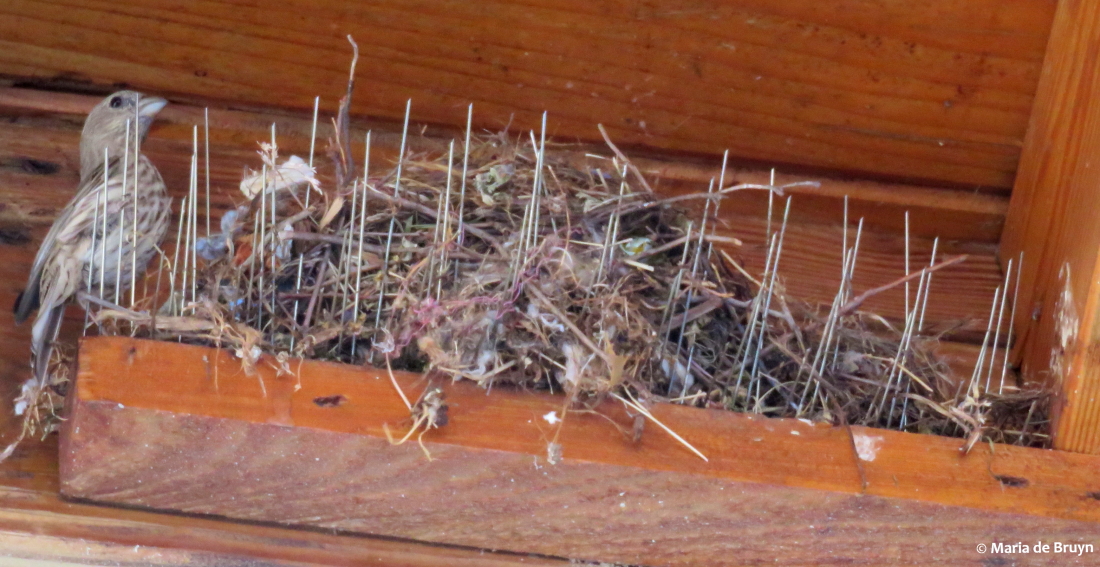
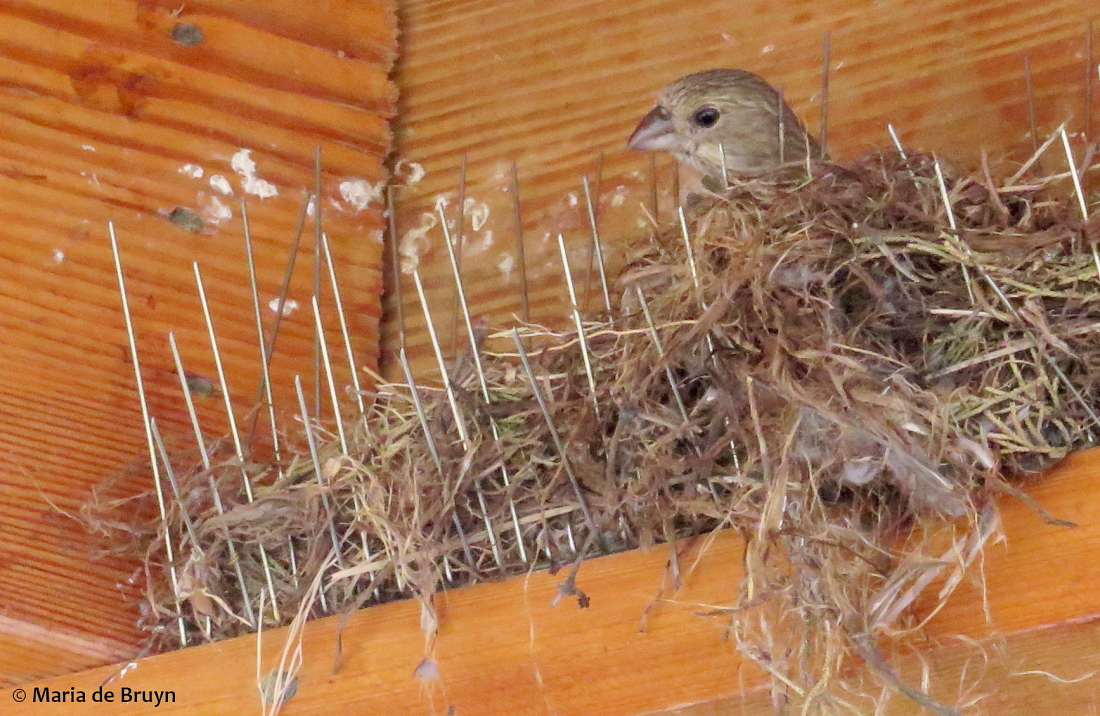
house finch nest 1 IMG_4358© Maria de Bruyn resAt one point in Amsterdam, I lived in a room with a shared kitchen and toilet above a butcher shop. It was a cramped space but I made some nice friends there. Eventually, I painted the hallway with flowers and snails to bring a bit of nature inside. Today, on my way to a prompt writing session, I saw that some birds also choose to live above commercial establishments, including those who established homes above one of my favorite restaurants, El Tigre.

House finch nest 1IMG_4373© Maria de Bruyn res


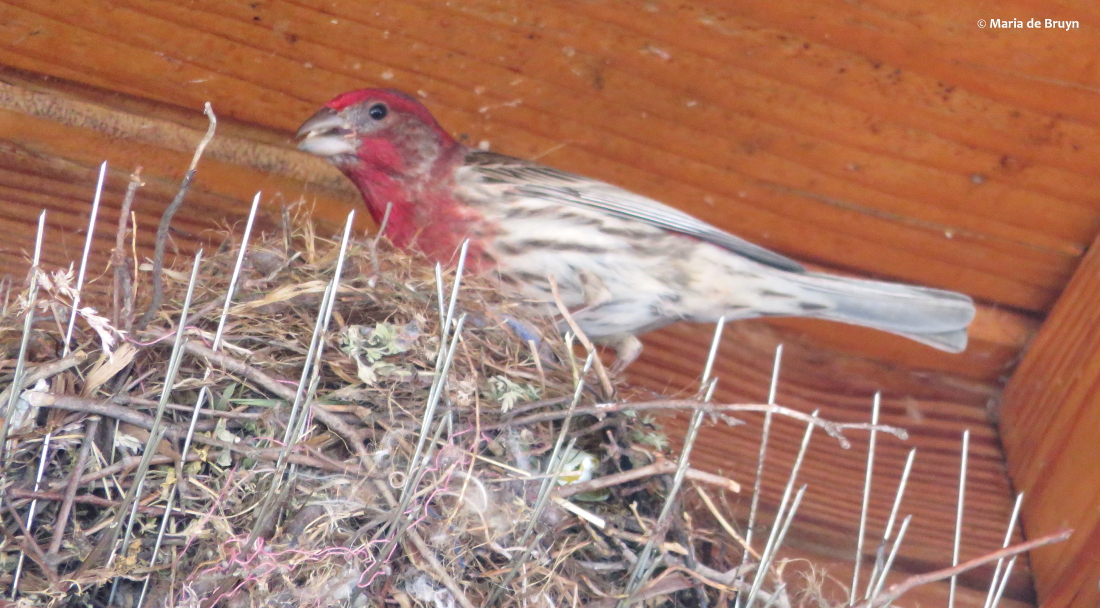
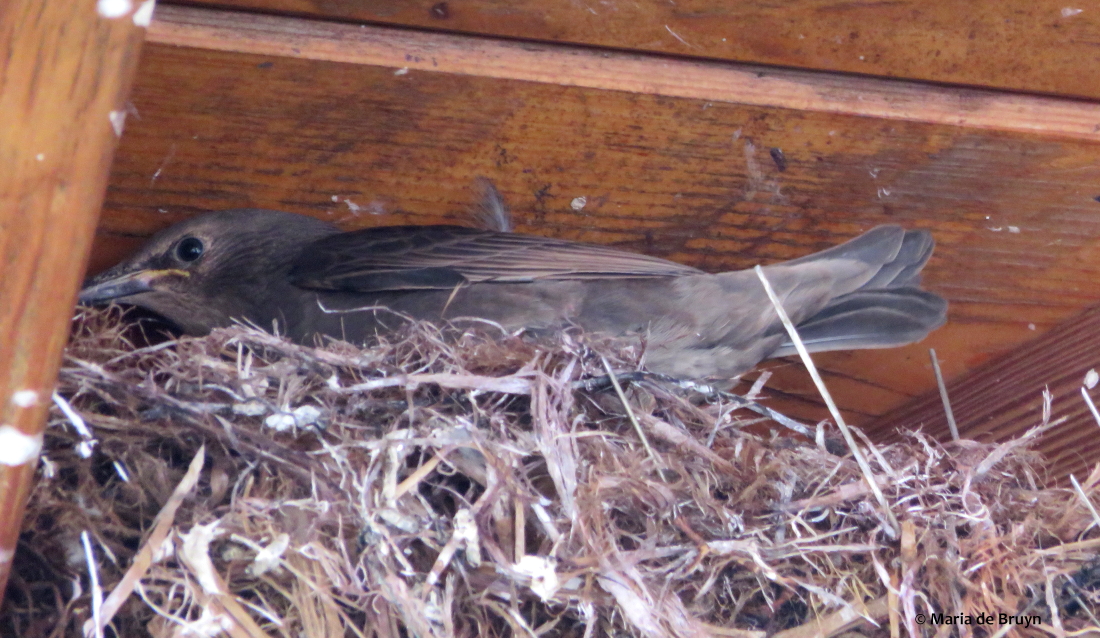
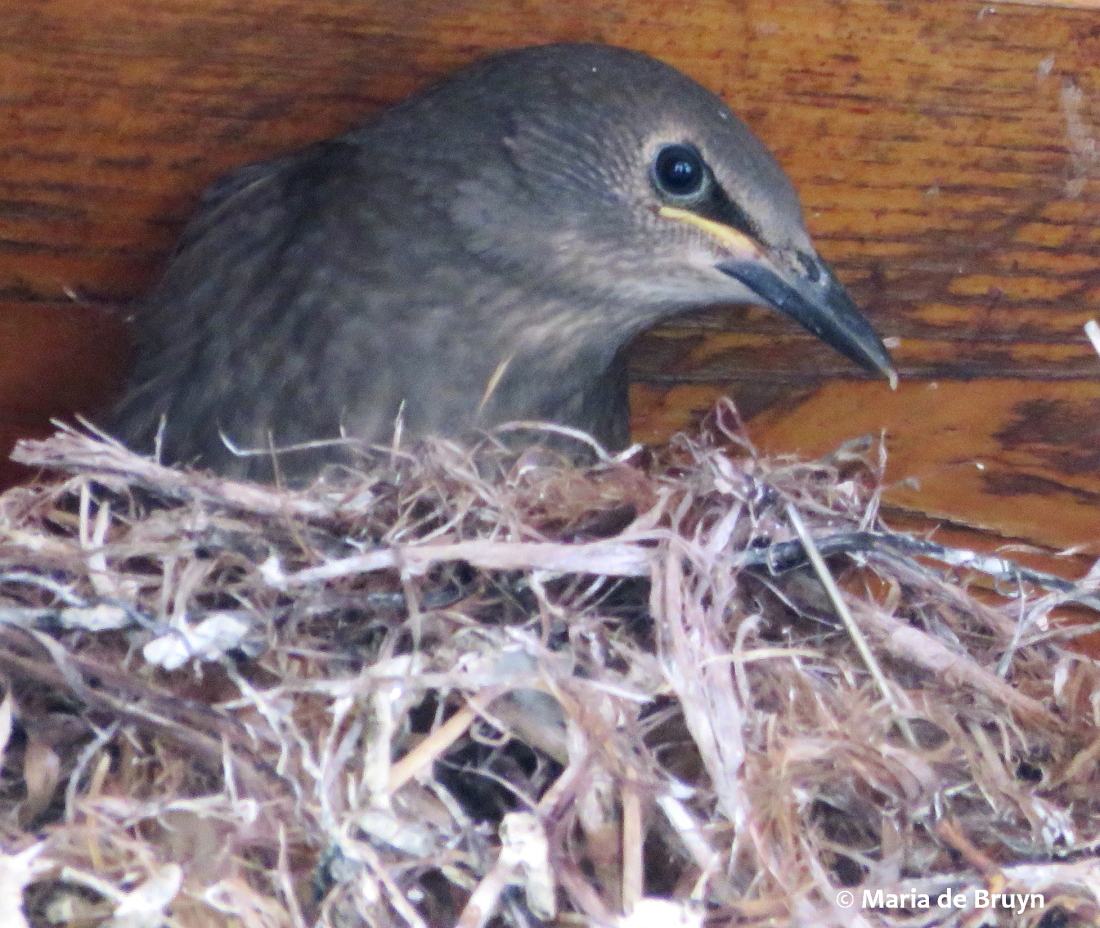
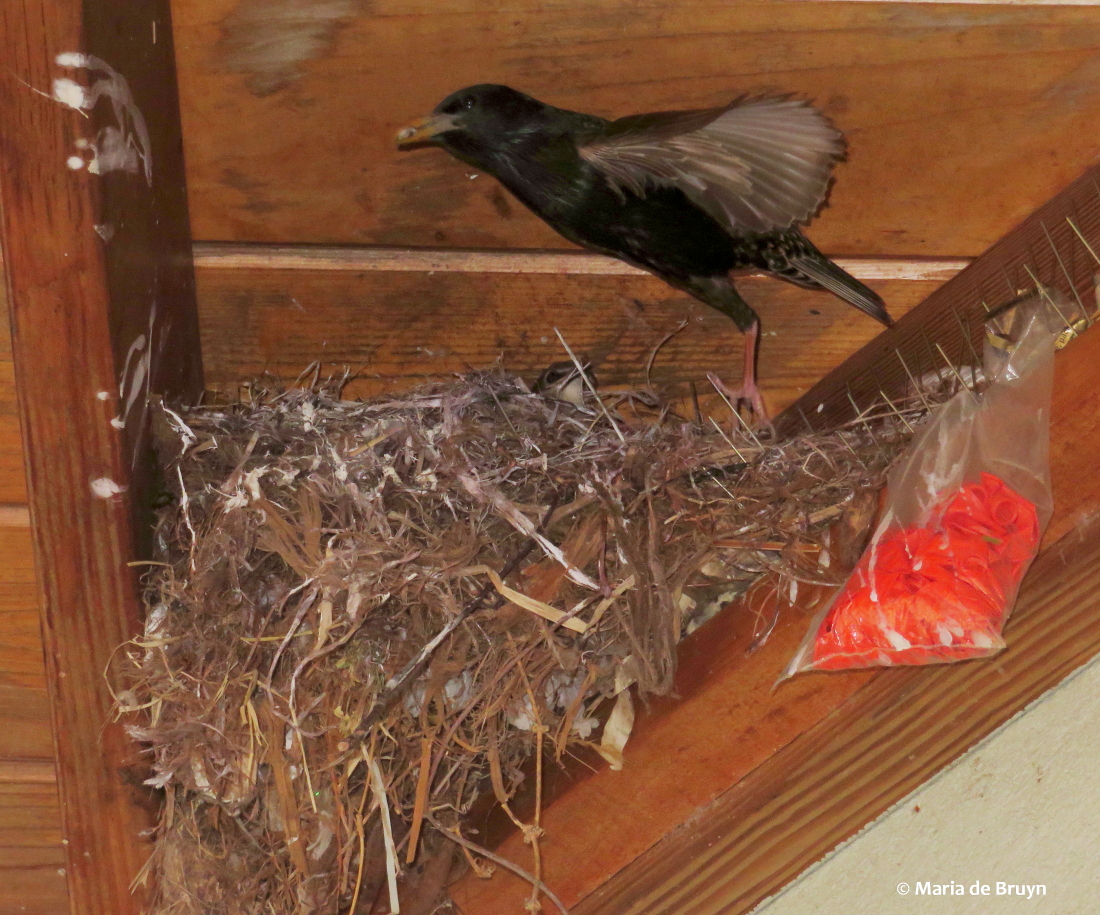
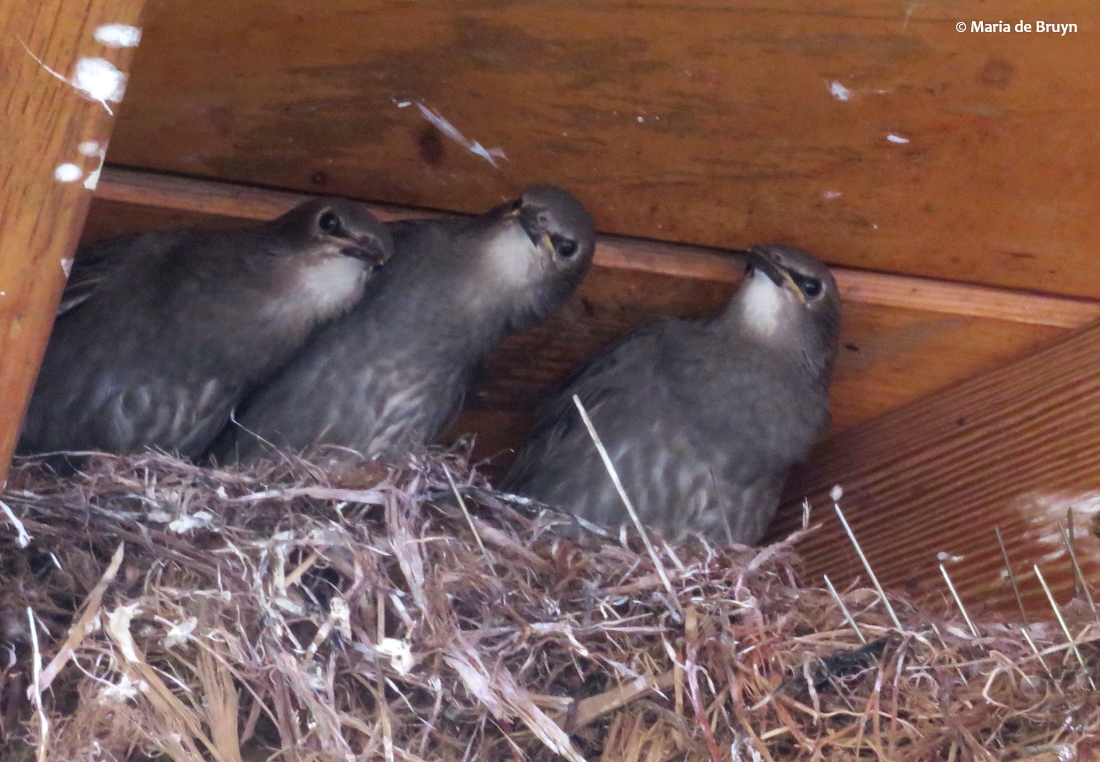
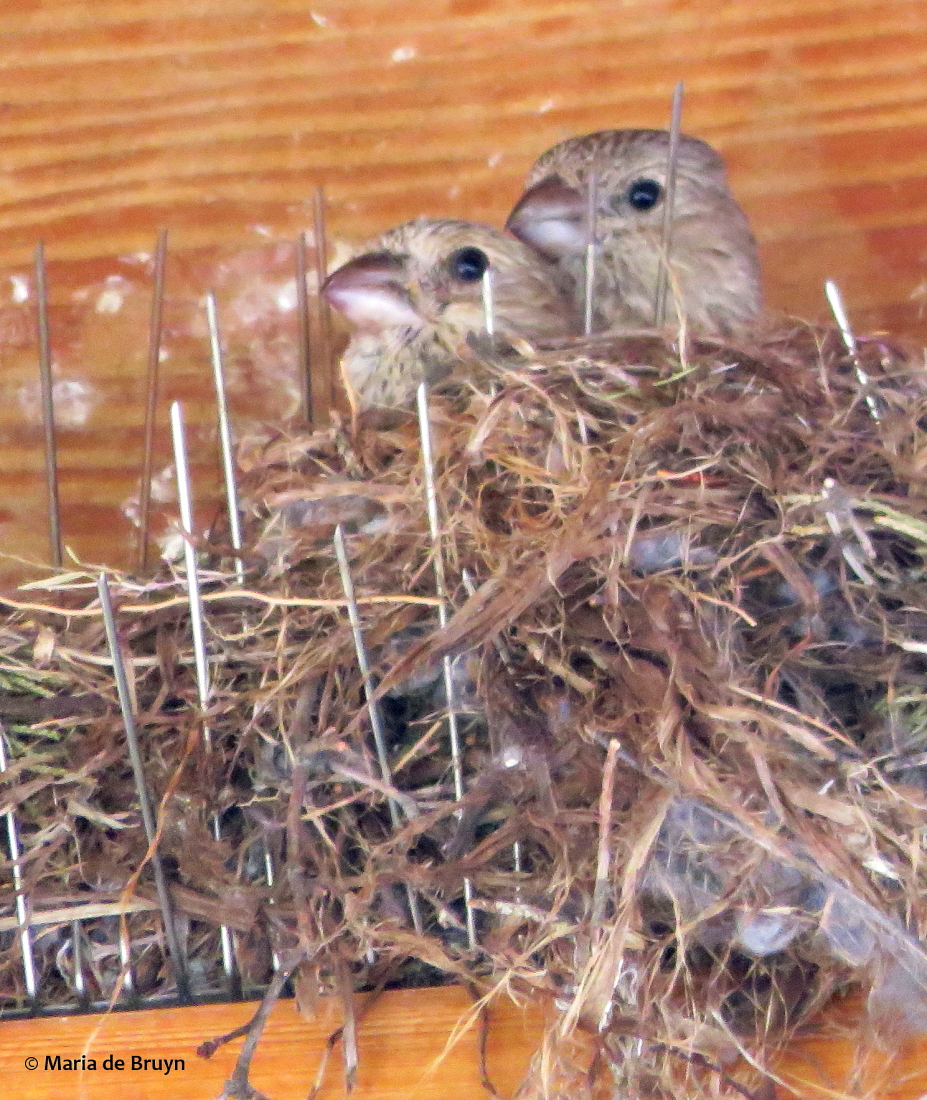
There were three nests (at least – I didn’t look around to the other wall), with house finches (Haemorhous mexicanus) on either side of a European starling (Sturnus vulgaris) home in the middle. Nest 1 had a female bird visiting while a couple stayed inside.


The other finch nest was attended by both mother and father.

house finch nest 3 IMG_4375© Maria de Bruyn res house finch nest 3 IMG_4351© Maria de Bruyn res

house finch nest 3 IMG_4396© Maria de Bruyn res

European starling IMG_4390© Maria de Bruyn resThe nest with starlings had rather large babies in it. At one point, an adult bird flew in with a worm or insect but then took off before feeding anyone – perhaps alarmed when it saw me watching the nest. The babies didn’t say much, in contrast to the somewhat older baby starlings in my yard who make quite a racket asking to be fed.

European starling IMG_4387© Maria de Bruyn resEuropean starling IMG_4347© Maria de Bruyn res


European starling IMG_4397© Maria de Bruyn res

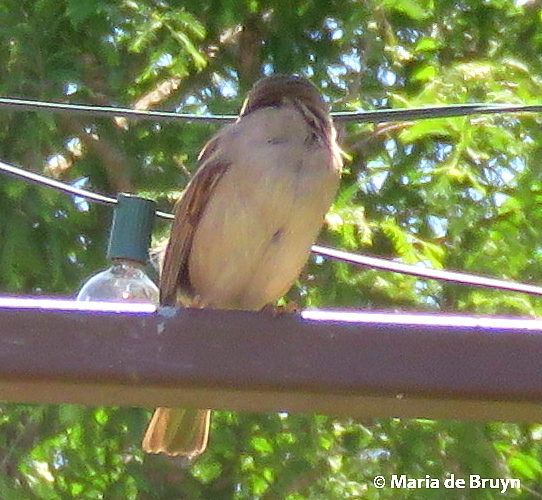
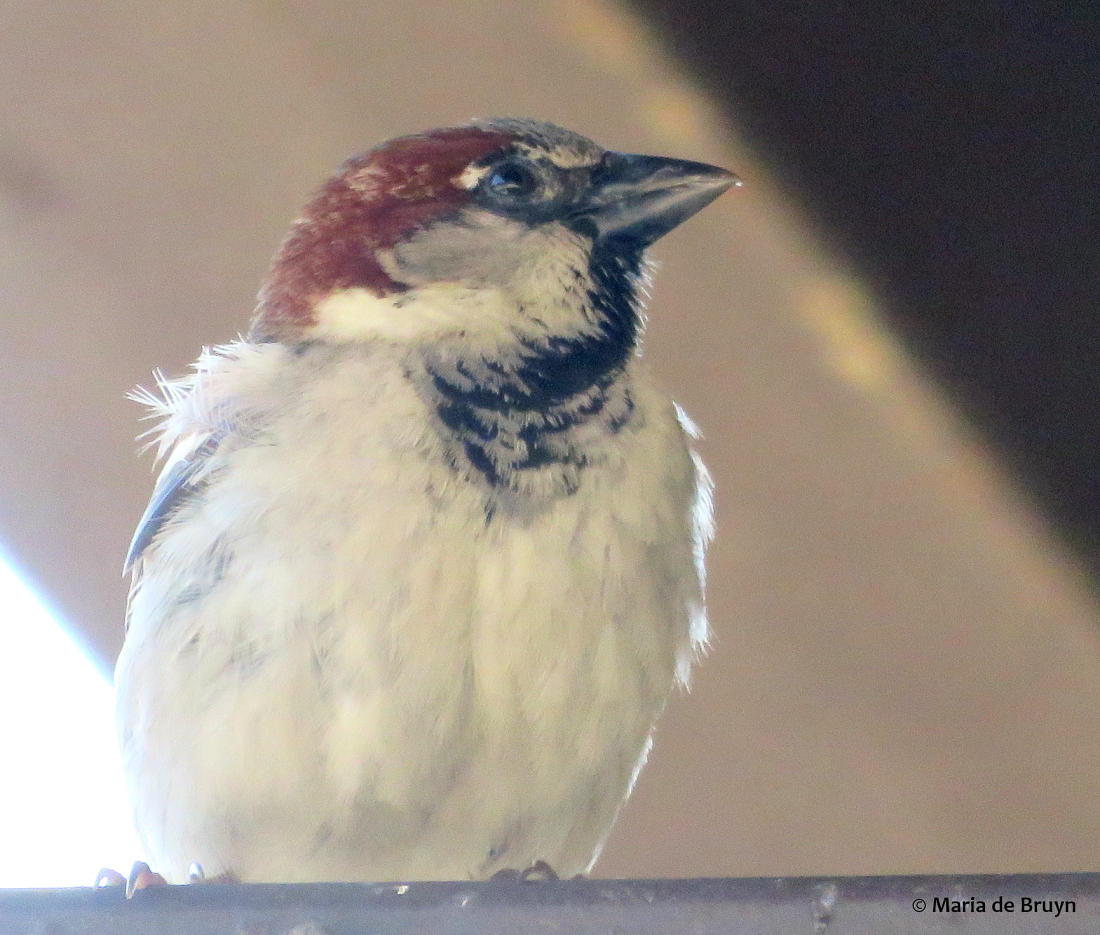
I wasn’t the only observer, however; a couple house sparrows (Passer domesticus) were also observing the comings and goings to and from the nests.

house sparrow IMG_4412© Maria de Bruyn res house sparrow IMG_4355© Maria de Bruyn res

I had a busy day and didn’t think I’d get to do much nature observation – but then those adaptable birds showed me that even in an urban environment, I can grab a few moments to see what other species are doing on a lovely spring day!


Corvid courtship – something to crow about

American crow DK7A7017©Maria de Bruyn res

American crow DK7A5544© Maria de Bruyn resAs I was sorting out photos of birds in our recent snow and sleet storm, my attention was drawn by the raucous cawing of one of our neighborhood crows. He had found some apple slices that I had put out with the bird seed and was one happy bird. He spent a lot of time calling, presumably to alert family members to the presence of this desired food source. And his enthusiasm made me decide to post a blog about corvid courtship now, since this late winter/early springtime ritual may be coming sooner than I thought.

Depending on geographic location and weather conditions, some birds begin nest building quite early in the year and American crows (Corvus brachyrhynchos) are among the early mating pairs and nest builders. Last year, a male crow who visited my home discovered and enjoyed both grape jelly and apple slices around early March.American crow DK7A7423©Maria de Bruyn res

American crow DK7A0779© Maria de Bruyn


American crow DK7A5569© Maria de Bruyn resHe even tried to add the homemade suet to his diet but he was a bit large to balance well on the small feeder.

Last year, he only had to visit my yard a few times before he was accompanied by his mate. She would sit on a branch or on the ground and caw loudly like him, but she was demanding that he feed her.

American crow DK7A7678©Maria de Bruyn res

He met her demands but was not about to just give up his treats. He would often grab a piece of apple, fly up to a branch near her but then first eat about half of it himself as she continued her raucous cries for food.

American crow DK7A7321©Maria de Bruyn res

American crow DK7A4616© Maria de Bruyn res

American crow DK7A7022©Maria de Bruyn res


She could have easily flown down to the ground to grab a piece of apple but refused. On a few occasions, she did fly down but just refused to pick up the apple herself, waiting for him to stuff it down her throat.


American crow DK7A8031© Maria de Bruyn res


He fed her in the trees and on the ground, pushing the food way down her throat.


American crow DK7A7655©Maria de Bruyn (2) res

American crow DK7A7672©Maria de Bruyn res

Some preening went on as they perched in the backyard oak tree, too.

American crow DK7A8104© Maria de Bruyn res

American crow DK7A7504©Maria de Bruyn (2) resAmerican crow DK7A7530©Maria de Bruyn res


.I learned that offspring will remain with their parents up to five years. These “helpers” will assist in feeding the female as she incubates eggs and also bring food to their new siblings.

American crow DK7A5642© Maria de Bruyn res

It seems that our warm days in December and January this year may be getting my faithful crow in a romantic mood a bit sooner this year.The crows are loud, especially when three or more show up at a time, but I do enjoy their visits and look forward to watching the corvid courtship again this spring.

American crow DK7A8461©Maria de Bruyn res

Nesting perils – or not?

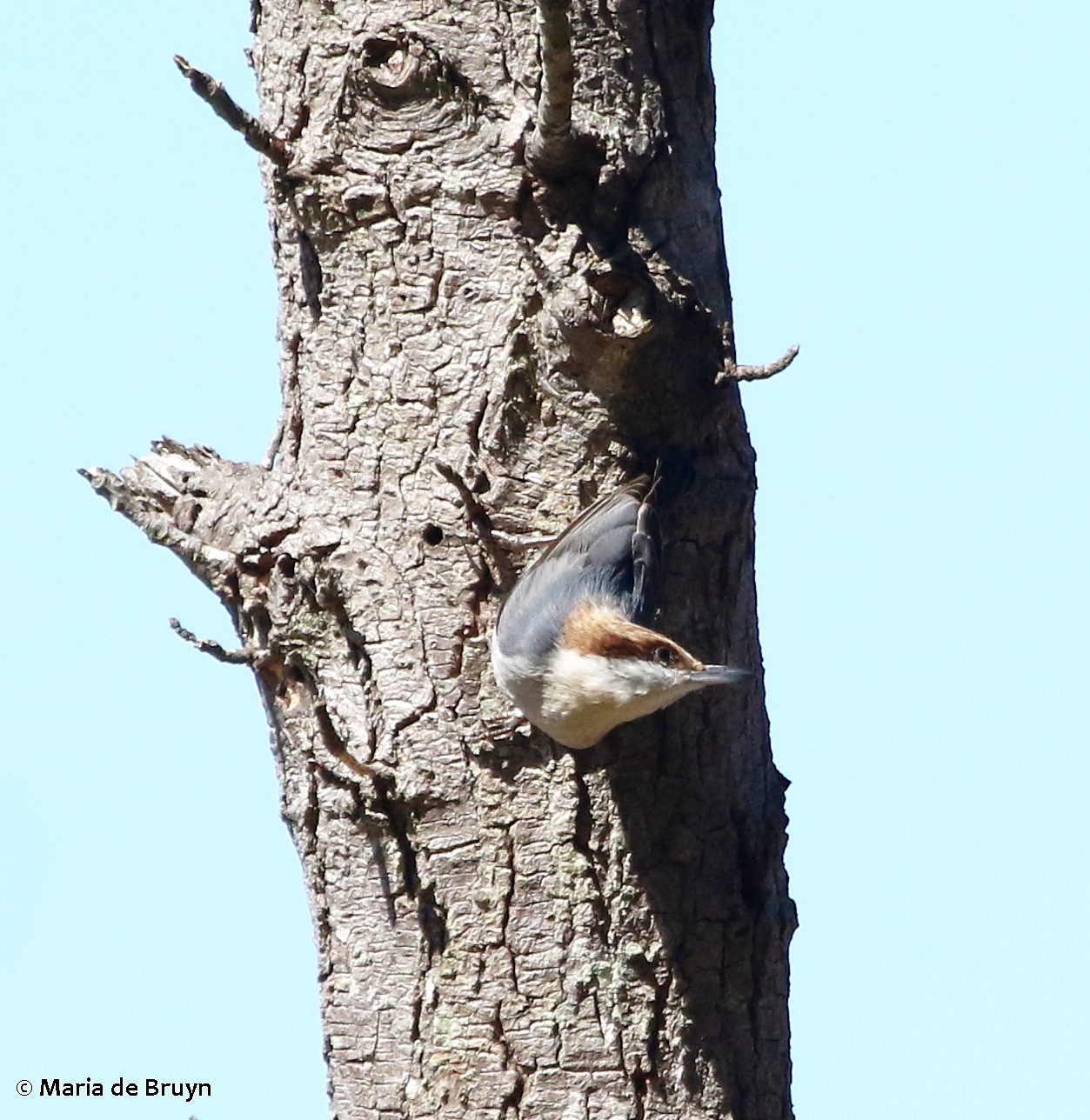
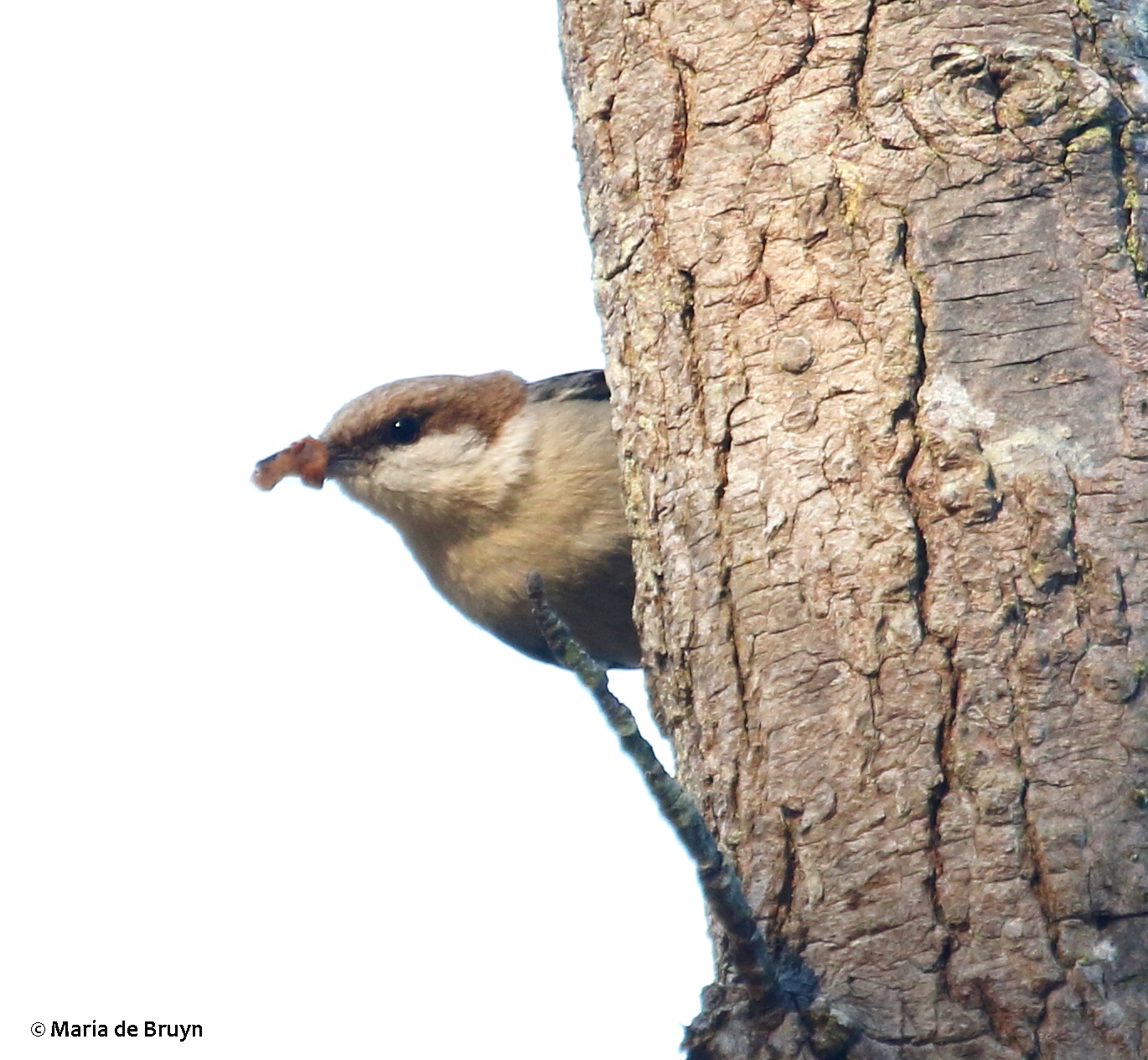
brown-headed nuthatch DK7A5128© Maria de Bruyn resLast year, I had the good fortune to come upon a snag (a dead standing tree) near the shore of Jordan Lake in which brown-headed nuthatches (Sitta pusilla) were tending a nest. This year, thinking back to those delightful visits, I decided to go investigate the tree again. My first visit revealed no nuthatches in the vicinity, but a second visit a few days later on 15 March revealed they had a nest in the same place again. As these birds may keep mates for several years, I just assumed it was the same pair as in 2014, so it was like seeing old friends!


brown-headed nuthatch DK7A0438© Maria de Bruyn brown-headed nuthatch DK7A0467© Maria de Bruyn

brown-headed nuthatch DK7A9987©Maria de BruynOn 29 March, it looked like the birds were bringing food to the nest. One might also have had a piece of bark in its mouth; these nuthatches may use bark pieces as tools to help dig for insects. If the female had by chance laid her eggs around 15 March, the eggs would have just been hatching now. Usually, it then takes 18-19 days for the babies to fledge, so they could have been ready to fly around 15 April, but the egg-laying and hatching could have been earlier.

brown-headed nuthatch DK7A9990©Maria de Bruyn resbrown-headed nuthatch DK7A9994©Maria de Bruyn res

On 4 April, the birds were still bringing food to the nest.

brown-headed nuthatch DK7A4943© Maria de Bruynbrown-headed nuthatch DK7A5264© Maria de Bruyn

brown-headed nuthatch DK7A4649© Maria de Bruyn res

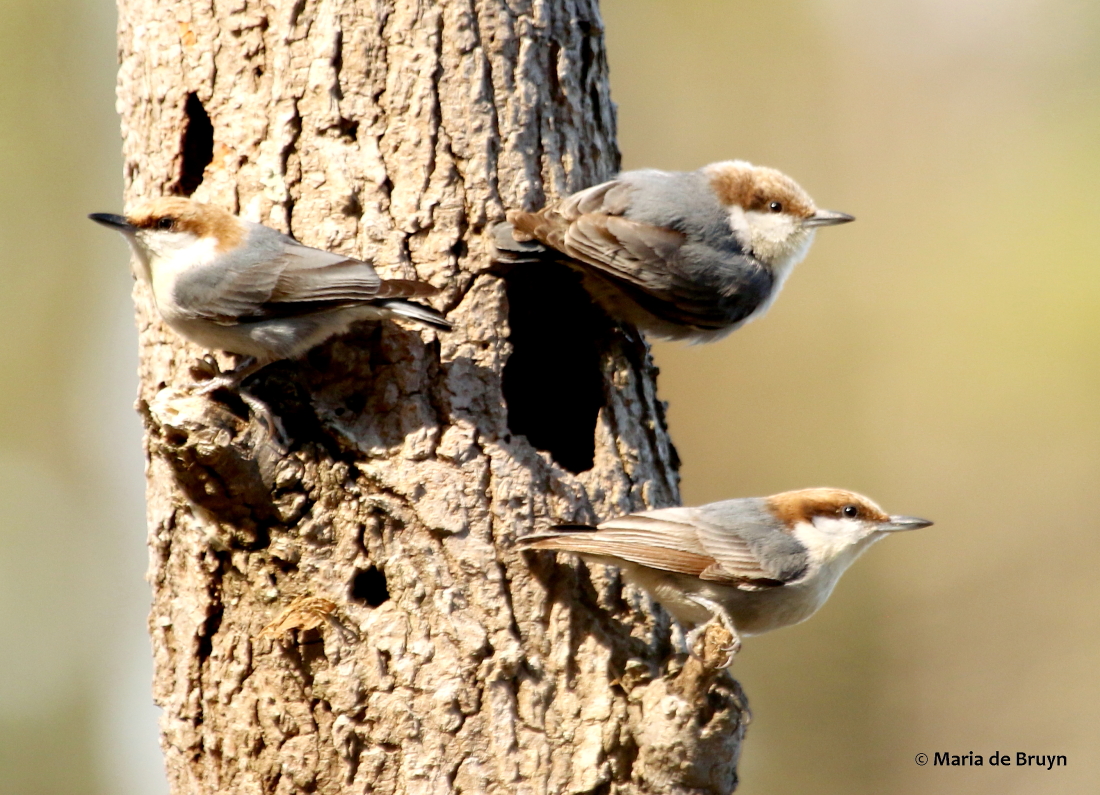
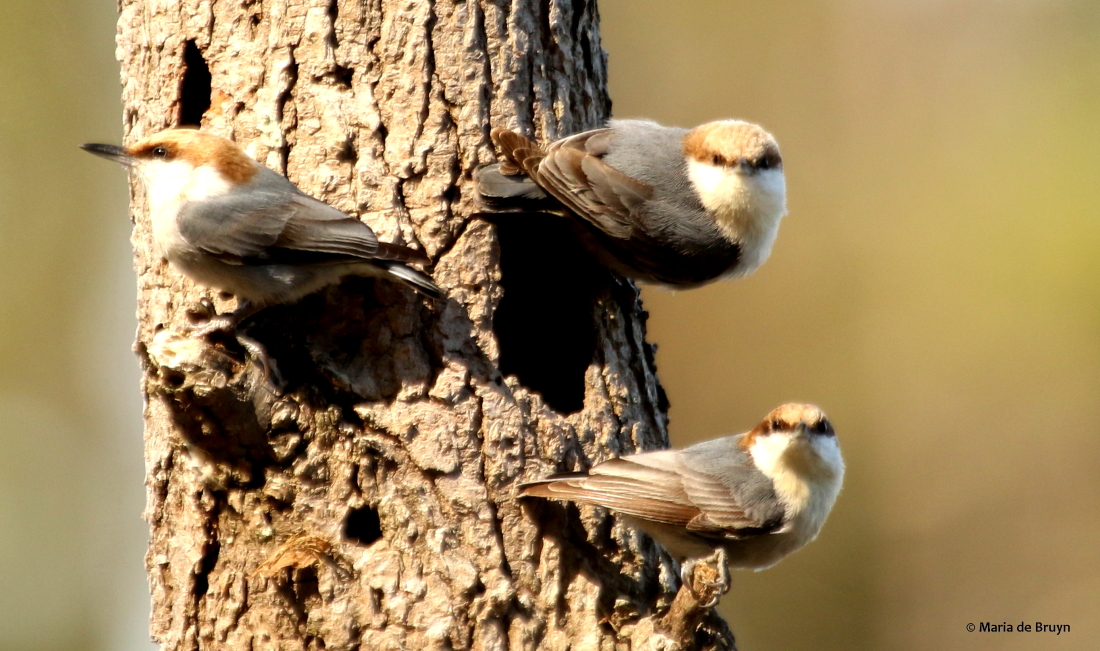
brown-headed nuthatch DK7A5331© Maria de Bruyn resI was photographing the birds and wondering which one might be the male and which the female. Suddenly, I was surprised to see three birds, all about the same size.

Reading up on the species taught me that not only the mating pair but also other individuals, usually young males, help attend the nests. Scientists don’t yet know whether these helpers are older offspring, but it seems to me that it might be similar to the older son helpmates among the American crows.

brown-headed nuthatch DK7A5353© Maria de Bruyn resbrown-headed nuthatch DK7A5351© Maria de Bruyn res

brown-headed nuthatch DK7A5366© Maria de Bruyn res brown-headed nuthatch DK7A5364© Maria de Bruyn res

brown-headed nuthatch DK7A8333© Maria de BruynOn the other hand, perhaps the rather fuzzy bird was a baby, which lacks the white neck spot seen in the adults. The babies also tend to have more gray and less brown coloring than adults. On 12 April, I didn’t see any nuthatches, but on 27 April, I saw a bird peeping out of the nest, well past the fledging period I think.

As I mentioned in a previous blog, since 1966, the population of brown-headed nuthatches has declined by 45% because they are losing nesting habitats (dead and pine trees) to deforestation and urbanization. Apparently, they also lose nests to predation.

brown-headed nuthatch 2 DK7A5128© Maria de Bruynbrown-headed nuthatch DK7A9709© Maria de Bruyn res

brown-headed nuthatch DK7A9827© Maria de Bruyn resOn 9 May, when I returned to Jordan Lake to see if nuthatches were still around the nest, I found their home tree decapitated, precisely at the spot where the hole had been for their nest. I imagine that a raccoon might have gotten up there, although I suppose some other predator could have wreaked havoc as well. In any event, it means I won’t be able to count on visiting the nuthatches there next spring.

The mysteries of the third bird’s identity and what took down the nest will likely remain unknowns. But at least I have my photos of the lovely little birds’ last nest at that site!

Yearning and burning for biological diversity

Burn 18 March 2015 DK7A1575© Maria de Bruyn resOn 18 March, a controlled burn again took place on 18 March at the Mason Farm Biological Reserve as part of the management strategy to promote the biological diversity of native plants at this nature refuge. During a controlled understory burn, the undergrowth of a defined area is set afire in a simulation of the wildfires that have historically been a part of meadow and forest ecology.

Burn 18 March 2015 IMG_1047© Maria de Bruyn resThe area to be burned is prepared by clearing a broad border of flammable materials such as leaves and twigs. If there are trees or plants that should remain but that could catch fire, for example because there are vines going up their trunks, the area around them can be raked clear or sprayed with water, creating a firebreak.


Burn 18 March 2015 IMG_1107© Maria de Bruyn resA controlled burn requires permission from safety authorities and is monitored by a team of people, some of whom will ignite the fire and others who will patrol the perimeters and help ensure that the fire is quenched before leaving for the day. Duties are assigned during pre-burn briefings and team members have copies of maps showing which sections of the designated burn area are their responsibility. They carry out a radio check before the burn begins to ensure they can be in communication when needed.

Burn 18 March 2015 IMG_1076© Maria de Bruyn resBurn 18 March 2015 IMG_1078© Maria de Bruyn res

Burn 18 March 2015 IMG_1157© Maria de Bruyn resdrip torch IMG_1156© Maria de Bruyn resAt Mason Farm, the fires were ignited in lines through the use of a drip torch, which allows the person wielding it to direct a stream of flaming fuel to the area to be burned.


Burn 18 March 2015 DK7A1407© Maria de Bruyn res Burn 18 March 2015 DK7A1393© Maria de Bruyn res

Perimeter and interior monitors use implements such as shovels, rakes, “fire flappers” (long-handled instruments with flexible ends to swat down flames and embers) and portable water sprayers to contain the burn within its boundaries.

Burn 18 March 2015 IMG_1117© Maria de Bruyn resBurn 18 March 2015 DK7A1460© Maria de Bruyn res

The burn at Mason Farm was ignited first in a small patch so that the team could observe the speed with which the fire spread and burned the ground vegetation.

Burn 18 March 2015 DK7A1421© Maria de Bruyn res Burn 18 March 2015 IMG_1080© Maria de Bruyn res

Burn 18 March 2015 IMG_1090© Maria de Bruyn resBurn 18 March 2015 IMG_1119© Maria de Bruyn resThey also paid careful attention to the wind direction, which could transport embers and bits of burned debris away from the burn site.

Burn 18 March 2015 DK7A1427© Maria de Bruyn res Burn 18 March 2015 DK7A1446© Maria de Bruyn res

Controlled burns are important in eradicating invasive plants (e.g., Microstegium vimineum, commonly known as Japanese stiltgrass) and enabling native plants to thrive. Some plants are fire-resistant and suffer little damage during a burn. A variety of grasses, flowers and trees need fire for their seeds to germinate, while other plants may need less dense areas as prime growth habitat. Some of the minerals contained in slowly decaying plant matter become soluble and more available in ash, contributing to quicker rejuvenation of the soil.

Burn 18 March 2015 IMG_1120© Maria de Bruyn resBurn 18 March 2015 DK7A1520© Maria de Bruyn res

Some areas of the work area burned quickly and turned into smoldering ash that occasionally flared up with a rise or turn of the wind. During this burn, some patches did not catch fire; others at first appeared immune to the fire only to burst into flame after some time.

Burn 18 March 2015 IMG_1154© Maria de Bruyn resThe flames could be quite beautiful and even mesmerizing as they flickered and flashed.

Burn 18 March 2015 DK7A1627© Maria de Bruyn res Burn 18 March 2015 DK7A1577© Maria de Bruyn res

At times the wind turned and brought smoke in our direction, obscuring the view but then the wind shifted again and we could see the crackling, shifting fire on logs and stumps.

Burn 18 March 2015 DK7A1496© Maria de Bruyn res Burn 18 March 2015 DK7A1498© Maria de Bruyn res

Burn 18 March 2015 DK7A1573© Maria de Bruyn resA concern for wildlife lovers is the possible demise of animals during a burn. Birds may lose nests but if the burn takes place outside the breeding season, the majority of birds can fly to safety. Many mammals can flee to other areas, while some reptiles and amphibians can burrow into the ground and survive. Occasionally, some animals may perish such as slow-moving turtles and arthropods (e.g., spiders) and insects. That is certainly a sad and regrettable outcome but team members sometimes can help rescue fleeing wildlife. During this burn, the marbled salamander larvae (Ambystoma opacum) continued to swim about placidly in a vernal pool in the woods across from the fire.

Marbled salamander DK7A1338© Maria de Bruyn resOverall, promoting a healthy environment for native plants not only helps restore the natural environment but is also important for wildlife species that depend on the fire-dependent plants for sustenance and habitat. Watching a burn can be an interesting and educational experience. People who want to participate in controlled burns can volunteer for this with the managers of preserved natural areas.