Quebec chronicles – the marine mammals, part 2

Our whale-watching tour set off from a dock in the village of Tadoussac. A naturalist was on board, but she stood only at the front of the boat and her electronically-enhanced voice was difficult to understand with some static and heavy winds interfering. Our group stationed itself at the back of the boat so we would have unobstructed views of the birds and any possible whales. To our enormous delight, a fellow passenger called out a view of the first whale to swim near – a minke whale (Balaenoptera acutorostrata), which is a type of baleen whale.

illustration credit: International Whaling Commission; https://wwhandbook.iwc.int/en/species/minke-whale

These smaller whales, which feed on krill and smaller schooling fish, are known for frequently breaching but that didn’t happen during our tour. It was cool to see this one swimming along though. We are unsure if we saw it again as they appeared somewhat similar to the fin whales, but the other whales we saw on the tour were a pair and minkes tend to be more solitary. Unfortunately, the minke is now the most numerous whale species worldwide and therefore a main target of the whaling industry.

Our next sighting way out on the river was a pair of harbor seals (Phoca vitulina), whose heads bobbed on the surface as we passed by. Then we were thrilled to see a “blow”, a whale spouting water into the air.

A pair of fin whales (Balaenoptera physalus) was swimming around in our vicinity and though they did not breach, they did rise to the surface multiple times – once quite close to our boat.

Illustration credit: International Whaling Commission; https://wwhandbook.iwc.int/en/species/fin-whale

These whales, considered an endangered species, are the second largest mammals in the world and have been nicknamed the greyhounds of the sea because of their swimming speed.

They have sleek bodies that can grow to 80 feet in length. Sometimes, you could spot where they might partly surface due to a bit of turbulence in the water.

Their diet consists of krill, crustaceans and small schooling fish. If they get enough to eat, can avoid predators (e.g., orcas) and man-made threats, they can live to be 100 or more years old! (The minke whales live 30-60 years.)

A scientific group has been collecting photo IDs of fin whales since 1986; they now have some 100 identified individuals who have received names such as Capitaine Crochet, Triangle, Caïman and Zipper. Another group has a catalogue that has identified 450 fin whales since 1980.

While we were thrilled to have seen the minke and fin whales, a beluga sighting remained a wish. That evening after the boat trip, Chloe and I were talking about whales as we gazed out at the St. Lawrence Seaway from the balcony of our rental house. I was of the opinion that if we really made it our intention to see a beluga, we would (Illusions is one of my very favorite books!). Fleeta joined us a little later on the balcony and then excitedly called out – “Beluga!!!”

Everyone came running out from inside the house and a few of us ran for cameras, despite the fact that all we could really see was a white splotch against the blue water. Those with binoculars likely had a much better view, but I didn’t care – we had our elusive sighting! The following photos, taken on our last evening and the next morning when it was raining, are admittedly not good ones but do give you an idea of what we saw.

The beluga (Delphinapterus leucas) is the only white whale and is known as the canary of the sea for its broad range of vocalizations. This trait, combined with the species’ curiosity which causes it to surface near boats to look at humans, unfortunately has led to it being one of the aquatic mammals that are hunted and captured (and sometimes bred) for the entertainment industry.

In contrast to the fin and minke whales, the belugas are social mammals, often traveling in groups and also moving from one group to another. On our last evening in St. Irénée, we probably saw about 12-15 of them! If you look closely at the white spots, you will see there were seven in this photo.

Males tend to associate with other males and females and their calves (born about every three years) hang out together. The young belugas are born gray and turn white between 5-12 years. Another interesting fact is that these whales molt in the summertime!

The St. Lawrence Seaway belugas, the southernmost beluga population in the world, are protected under Canada’s Species at Risk Act. This became necessary to multiple threats, a main one being massive hunting of the species. From 1880 to 1950, about 15,000 of these whales were killed, being blamed as “white demons” for threatening commercial fishing (which proved to be false). The latest estimate of how many now remain in this area is a paltry 889 individuals.

Hunting of belugas was outlawed in Canada in 1979 but other threats to the species persist. Besides chemical and plastics pollution, they succumb to getting hit by boats, being ensnared in fishing nets, and falling prey to predators (e.g., orcas). They may also be facing competition for their food sources, including the sardine-like capelin fish; here you see a couple that washed ashore.


Wildlife conservationists have been alarmed by a large number of female and baby belugas washing up on shore along the Seaway since 2008. Many of the mothers have died in the neonatal period and researchers are asking whether the mammals are lacking sufficient energy and failing to find sufficient food.

It is thought that the Seaway habitat may be changing with damming of rivers that flow into it. Noise pollution from whale-watching, boating, military sonar, oil and gas drilling may also be making life difficult for the whales as it disrupts their navigation. On the day we went out, a couple zodiacs zoomed a bit close to a pair of fin whales, even though they are supposed to observe the same distance rules as the larger boats. Hopefully, the authorities will be closely monitoring this.This is now being studied by Fisheries and Oceans Canada. In 2019, the Groupe de recherche et d’éducation sur les mammifères marins (GREMM) received a grant from the Prince Albert II of Monaco Foundation to study the increased mortality among the female and young belugas.

It would be great if the Beluga Whale Health Project could discover what is harming the belugas in the Seaway since these mammals can live more than 100 years of age in favorable circumstances. That is important for the species because it was recently documented that belugas have their own cultures in groups that stay together for generations; one researcher Greg O’Corry-Crowe, commented: “”We have compelling evidence, in our view, for the evolution of culturally inherited migration knowledge and behaviour.” This also has led to the intriguing question of whether their ability to learn from one another might help them cope with changing climatic conditions.


Hopefully, something can be done in the shorter term to help all the whales cope with the challenges and threats facing them. Outside the whaling and marine entertainment industries, many people would like to see them survive and thrive in the wild. They inspire artists as well, as shown by the metal beluga sculptures on display down the road from where we stayed.

At the Domaine le Forget in Charlevoix, another sculpture was called the Song of the Whales by Peter Lundberg.

It was a joy to see the whales during our trip, especially given the threats to which all the aquatic mammals are subject: hunting, getting caught in fishing nets, poisoning due to toxic chemicals from litter and oil spills, and ingestion of the ever-increasing plastic trash that is floating into our oceans. I would love to return to the area in warmer weather in the hope of getting closer to the belugas to see them better. I would again go on one of the large whale-watching boats because it appears that the smaller boats might be getting too close to the marine mammals. If we want to see the cetaceans in person, we need to think about how we can do it most responsibly while protecting them. The St. Lawrence Seaway is quite beautiful and will hopefully continue to offer a home to the southernmost belugas.

Surprise gifts from Mother Nature in 2018 – part 2: non-avian wildlife!

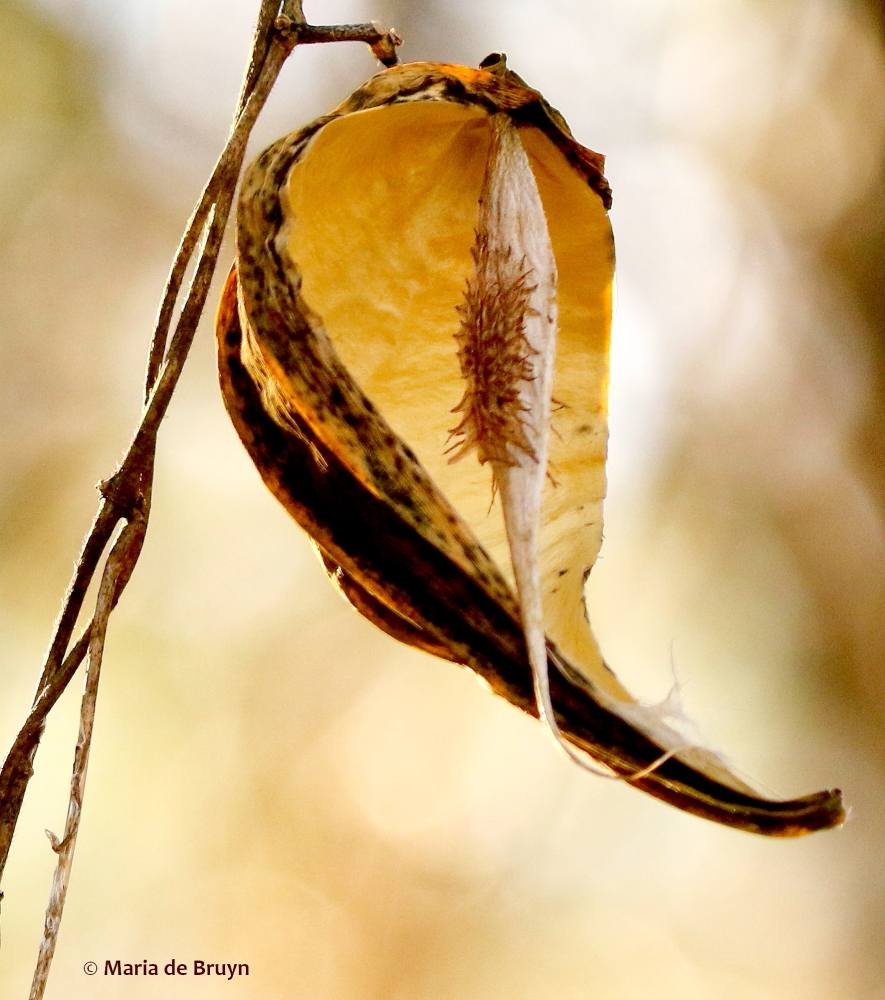
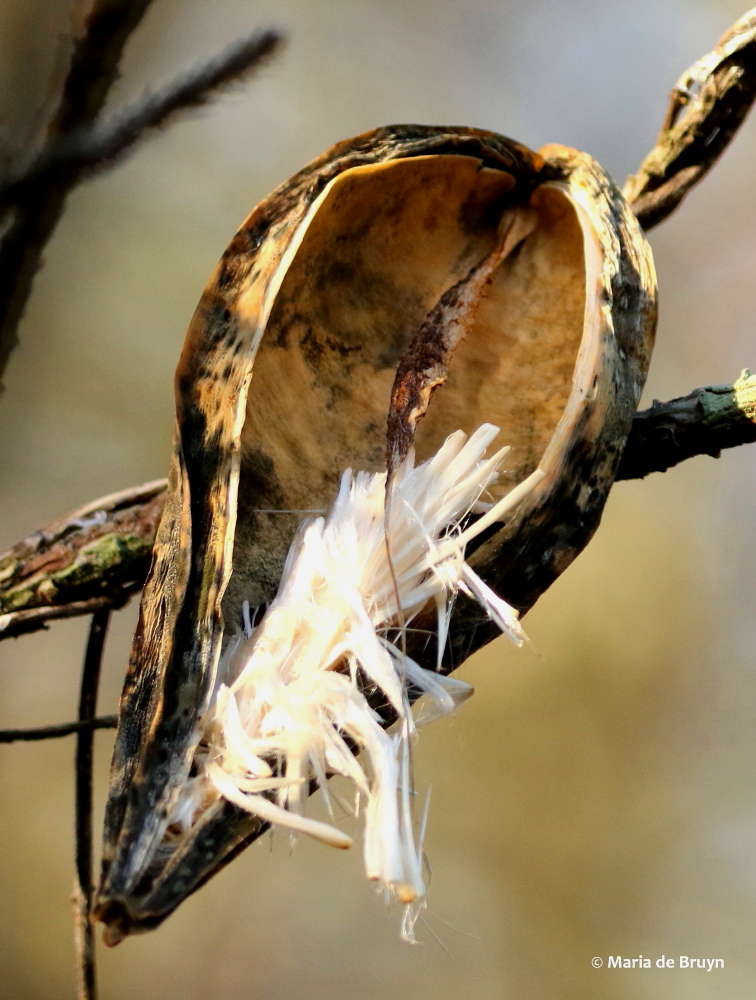
Birding is an activity I enjoy, especially since I can usually spot at least one bird during my outdoor excursions. I’d prefer to call myself a “wildlifer” rather than a “birder”, however, since all kinds of other wildlife also fascinate me. Here is a selection of some wildlife surprises and new species I saw last year, including a new plant – the honeyvine milkweed (Cynanchum laeve).
 

This vine is sometimes described simply as a native plant that spreads by seed and long roots; other websites call it a noxious weed. It does perhaps spread quickly but it is also a food source for monarch butterfly caterpillars so it seems like a desirable plant to me.

This mushroom was another one of my favorite vegetation spottings last year – it looks to me as if it is an animal with large ears.

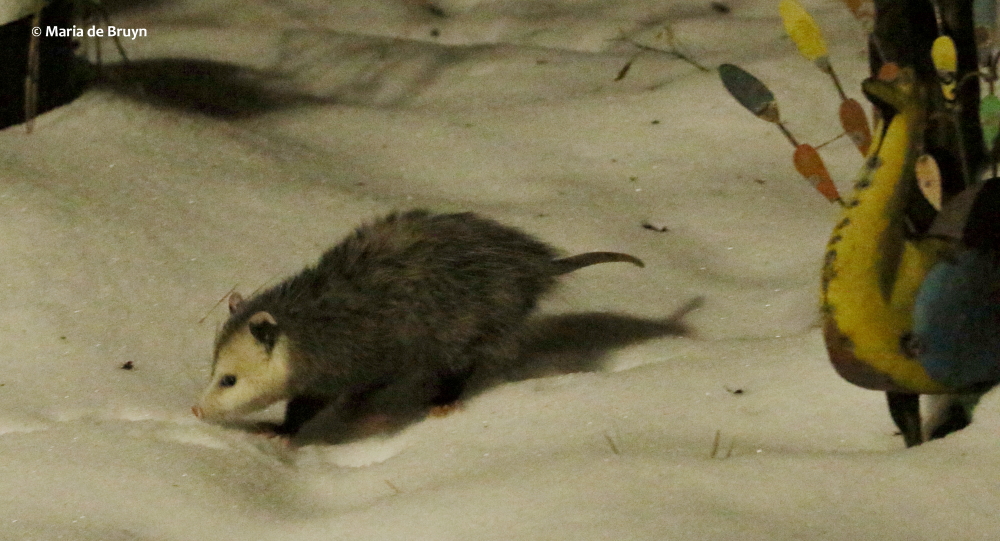
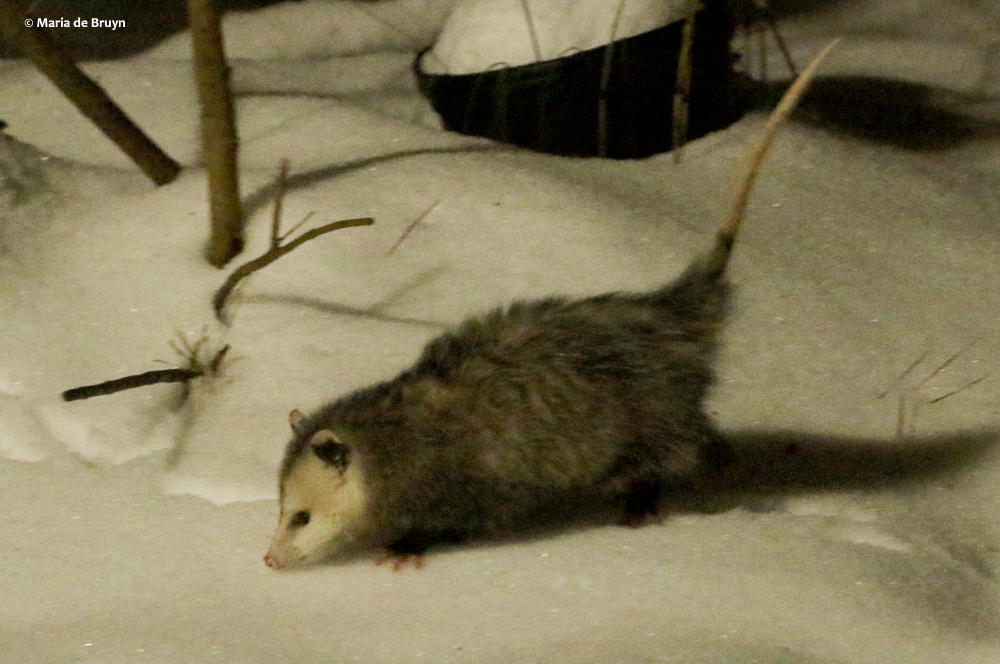
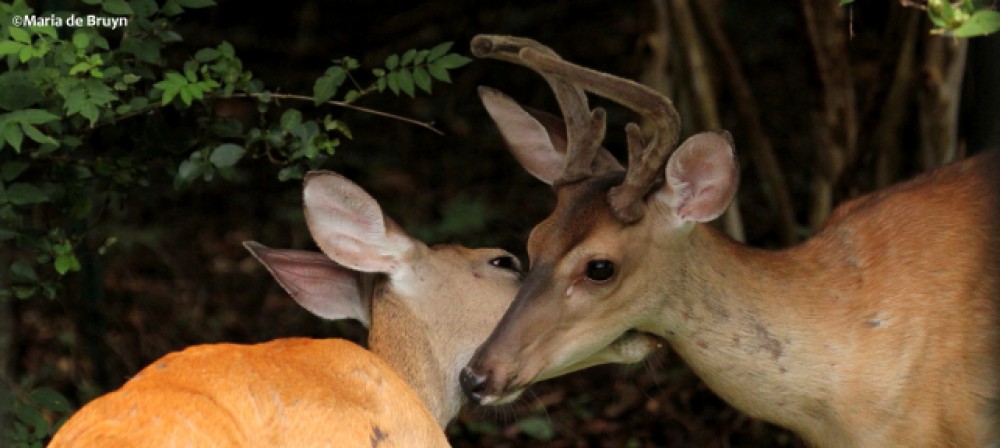
Mammals are favorites of mine but I only see a restricted number regularly – white-tailed deer, Eastern squirrels, raccoons, Eastern chipmunks. When I get to see an opossum (Didelphis virginiana) – like one who visited the yard at night during our early December snowstorm, it was a treat. It seems many people dislike North Carolina’s state marsupial (and the only marsupial in North America) but it is a valuable neighbor since it eats up to 4000 ticks a week. There likely weren’t many ticks around for it to eat but I hope it found something for a meal!


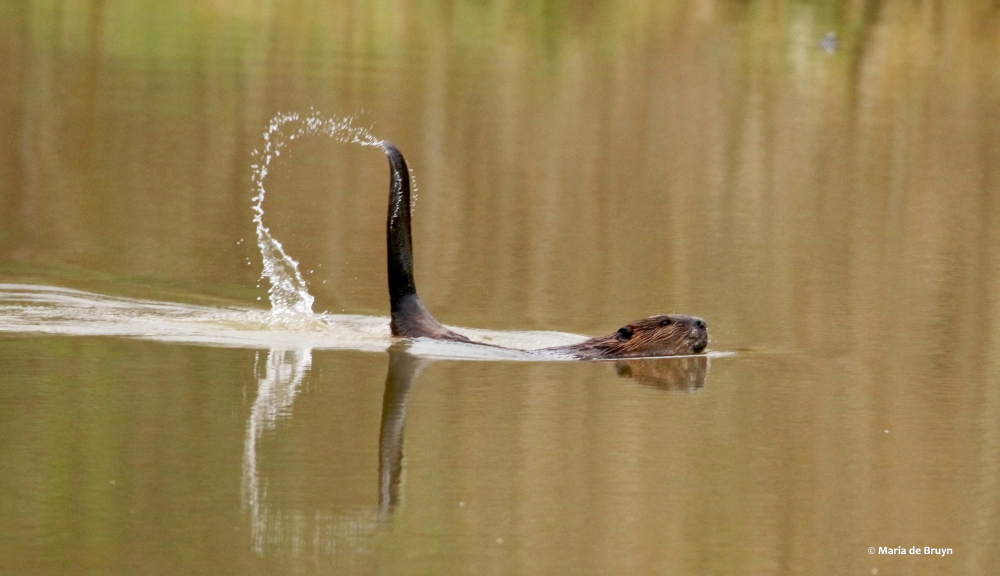
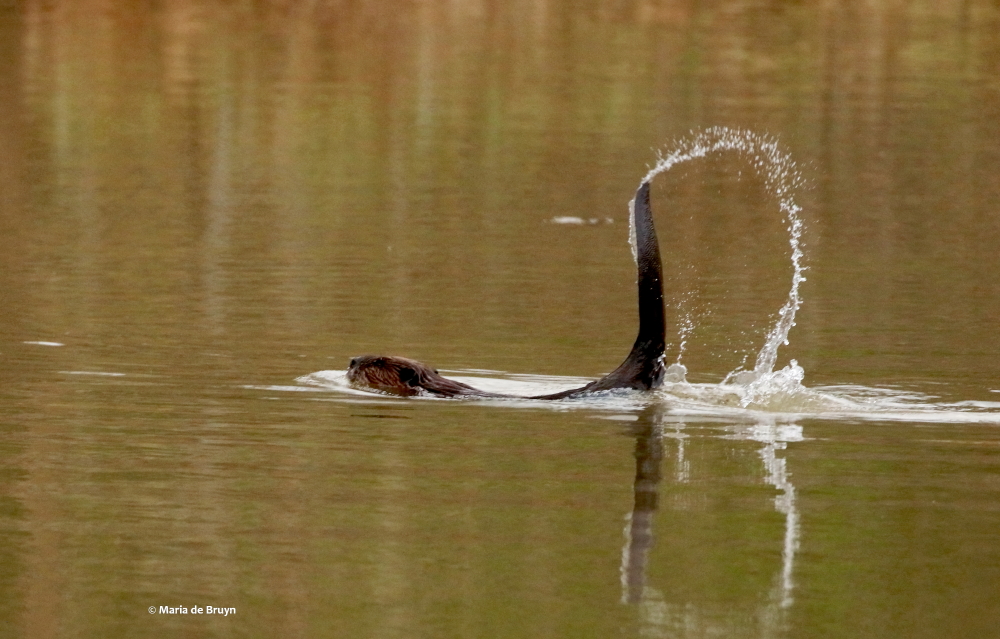
This past year was my “year of the beavers” as I had a chance to follow these nature landscape architects in three different places. And as mentioned in a previous blog, I was so thrilled to get a shot of the warning tail-slapping behavior.


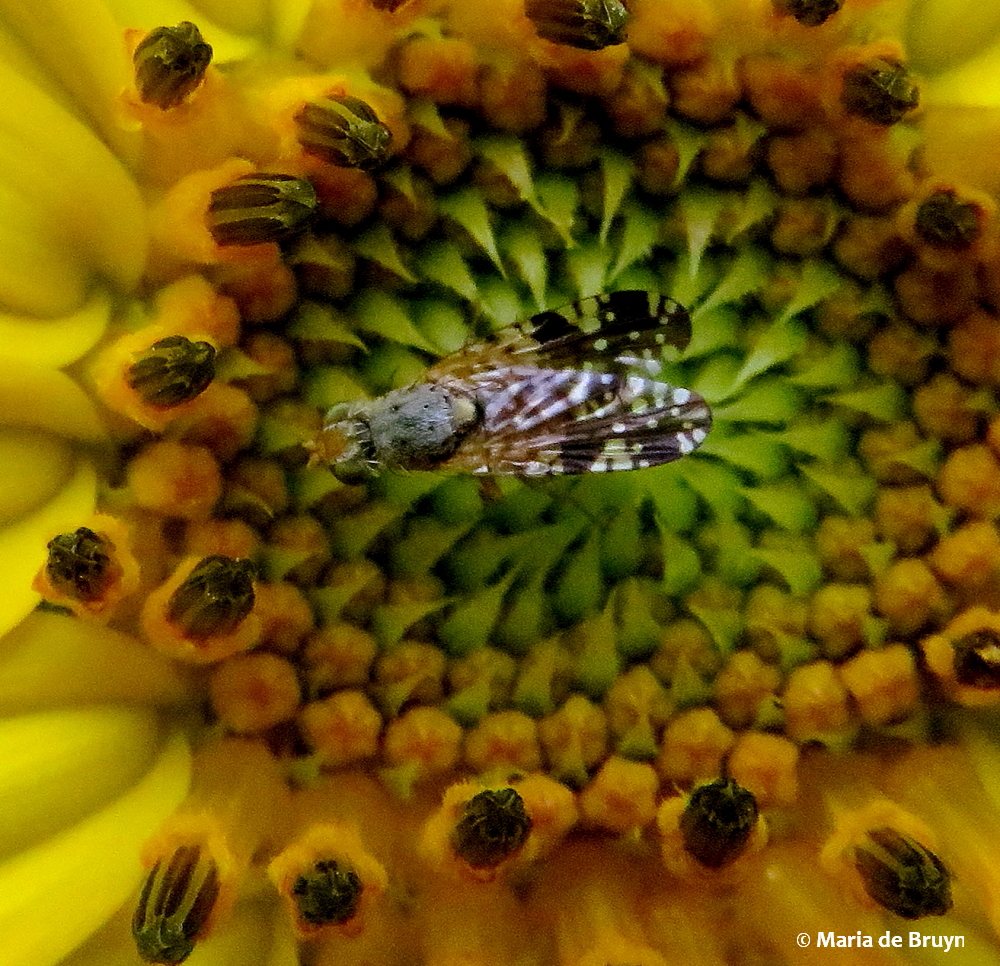
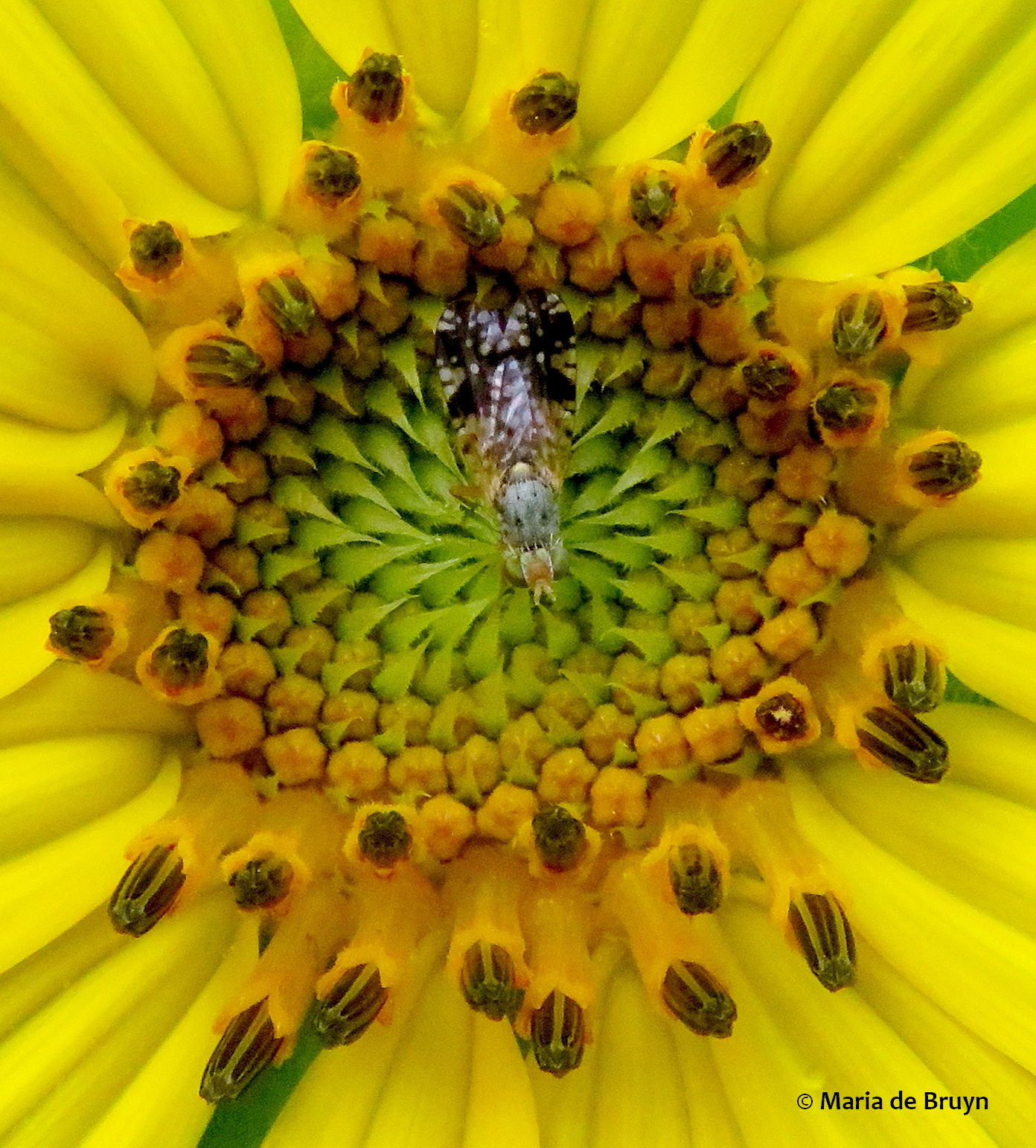
2018 was a good year for seeing new insects. Some are so tiny that you can’t really see their body patterns without magnification. Here are a few of my “discoveries”. The flies can be very interesting.

Sunflower seed maggot fruit fly (Neotephritis finalis)


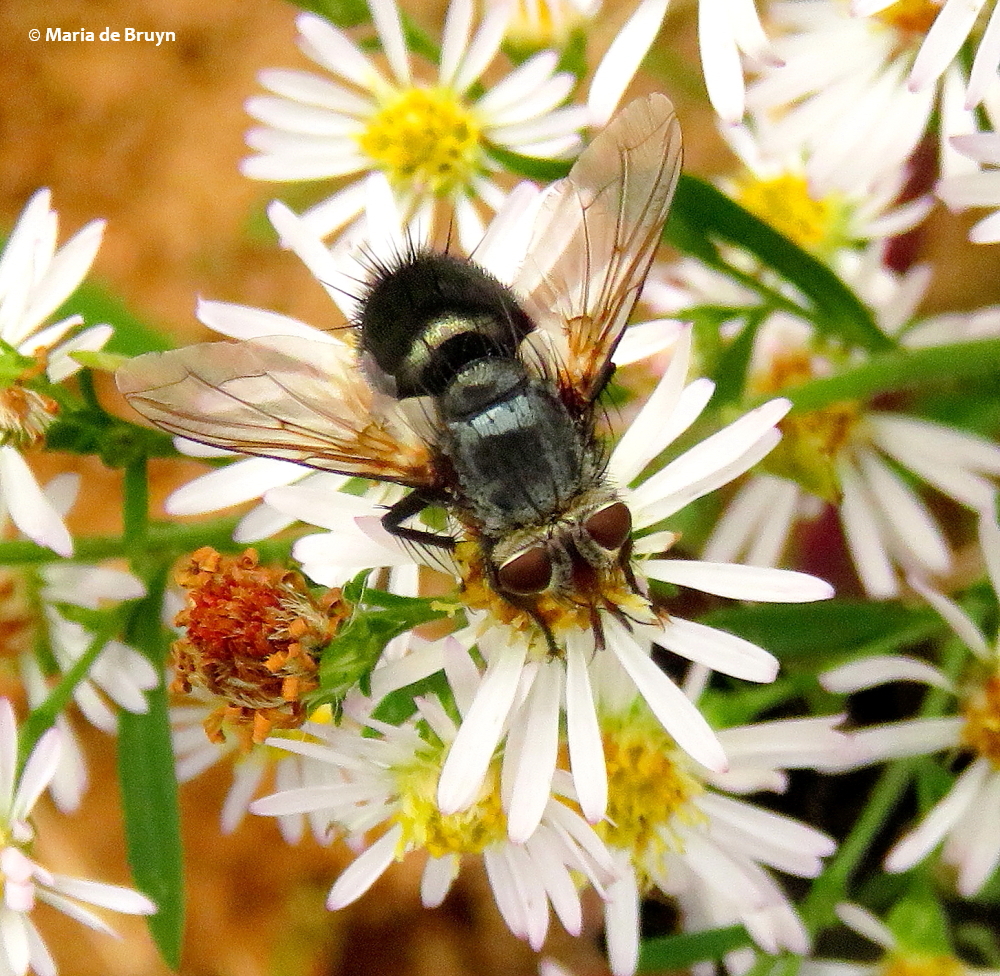
Parasitic fly (Archytas)

2018 was a year for learning about reproduction among the bugs; not only did I see caterpillars but also chrysalids and arthropod parents caring for offspring. The green lynx spider (Peucetia viridans) is a very attentive mother; she often hangs her egg sac from a grass stalk and then encircles it with her body to keep predators away.

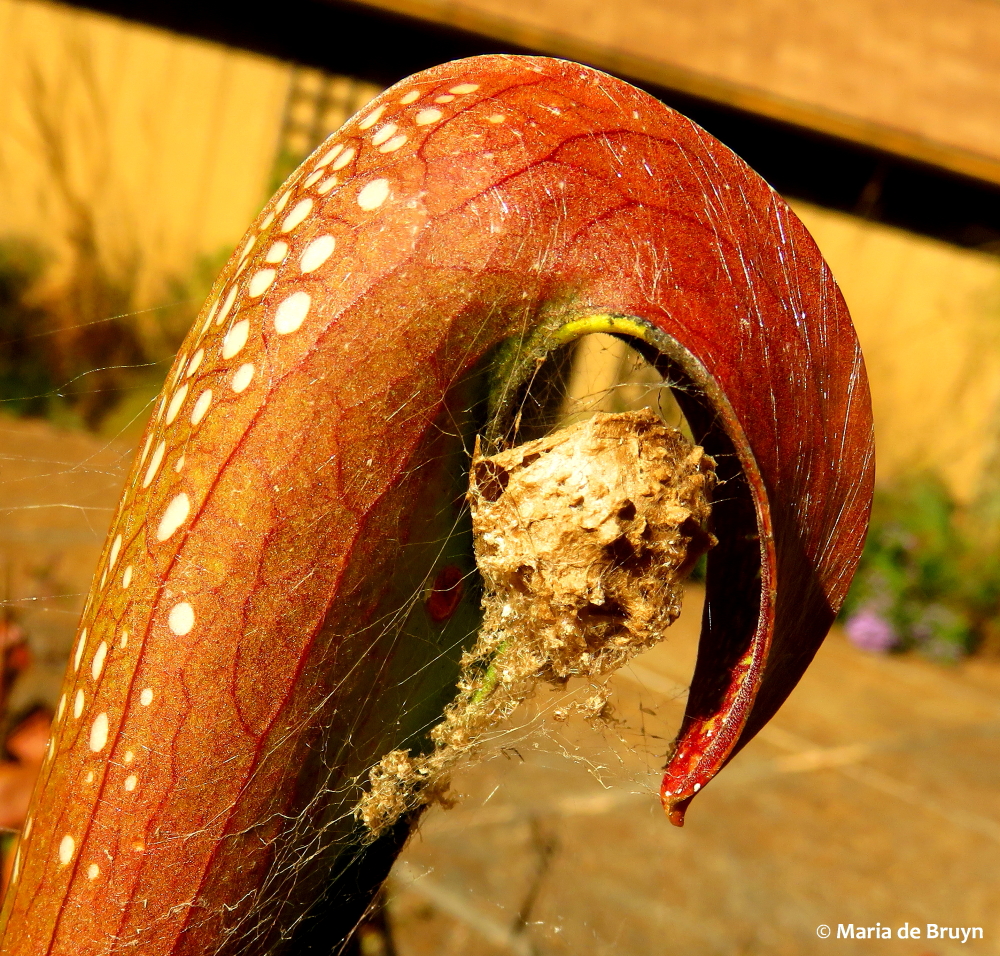
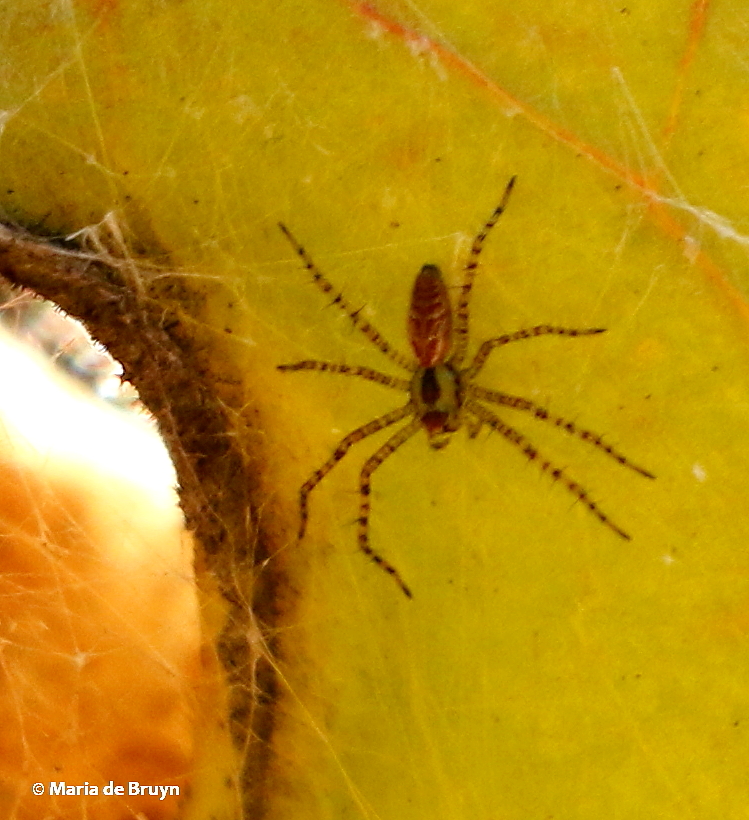
One green lynx at the NC Botanical Garden placed her egg sac underneath the “lid” of a pitcher plant and then hung out on that and neighboring plants to keep an eye on the sac. I was lucky to see one of the babies after it hatched.

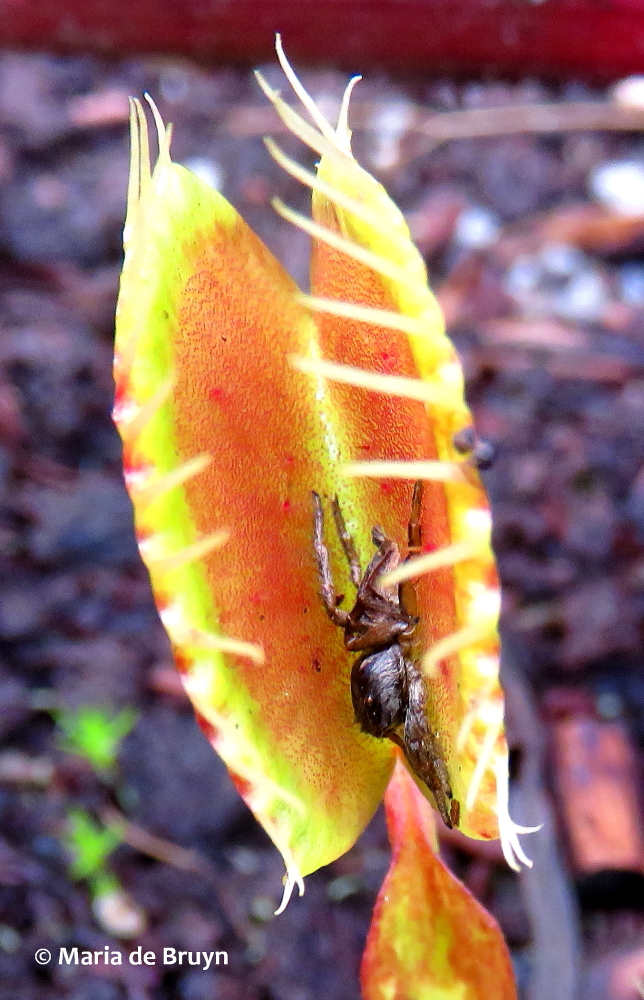
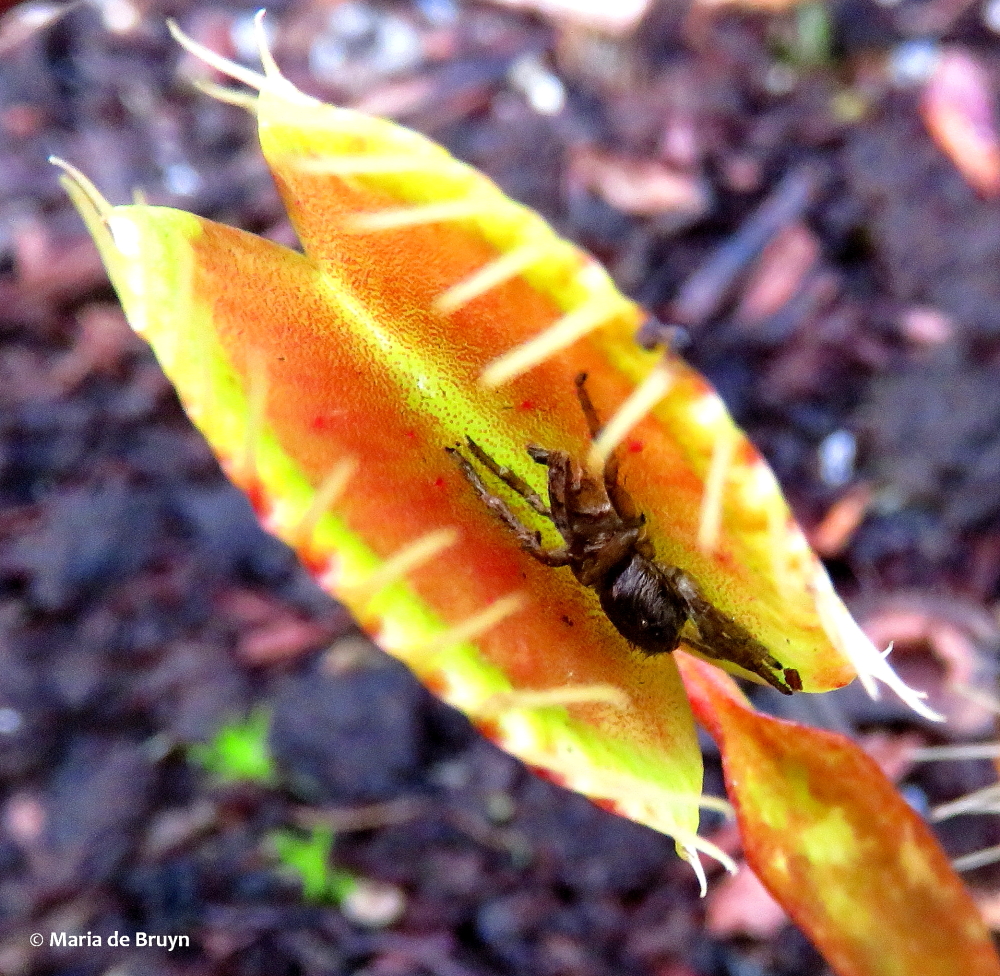
Another spider was not so lucky – it became a meal for one of North Carolina’s endemic “special plants”, the Venus flytrap (Dionaea muscipula).

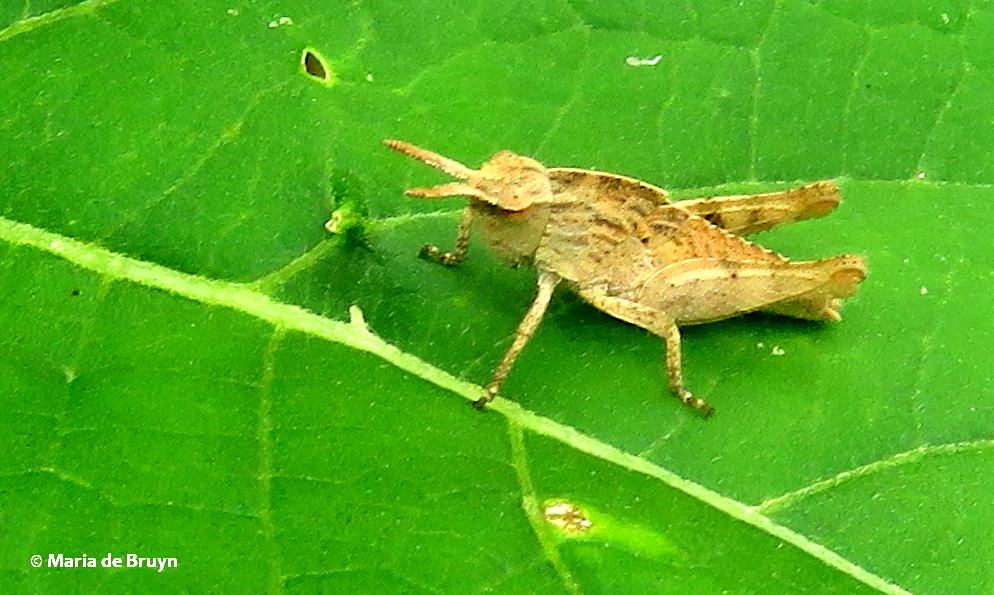
North Carolina has many species of grasshoppers; I saw several species this past year, including several mating pairs. Here is a young short-horned grasshopper.

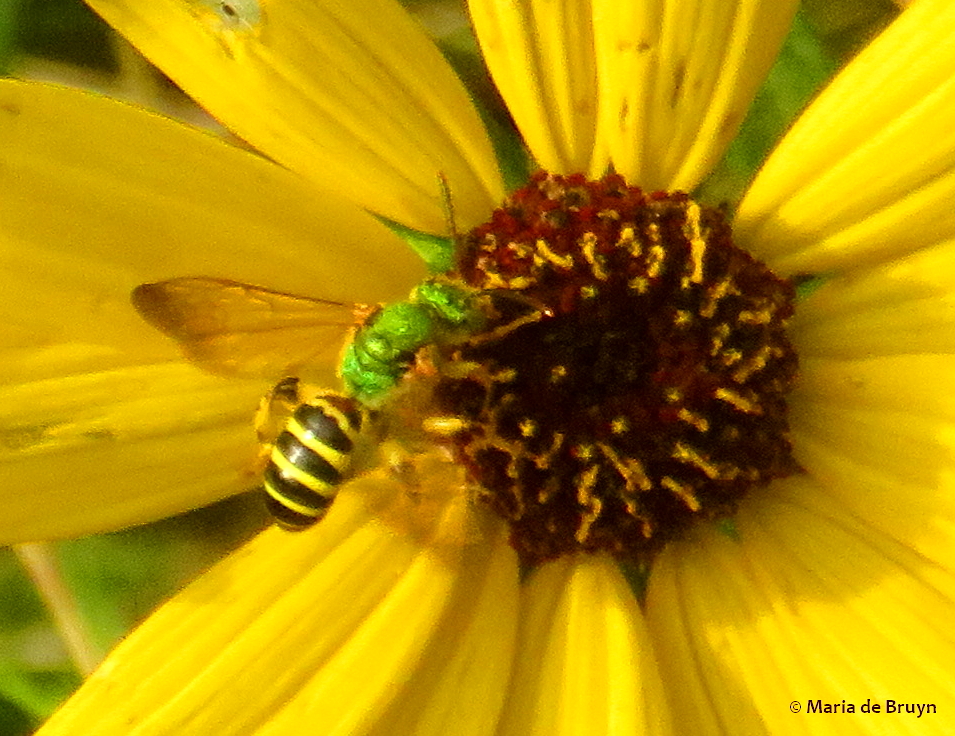
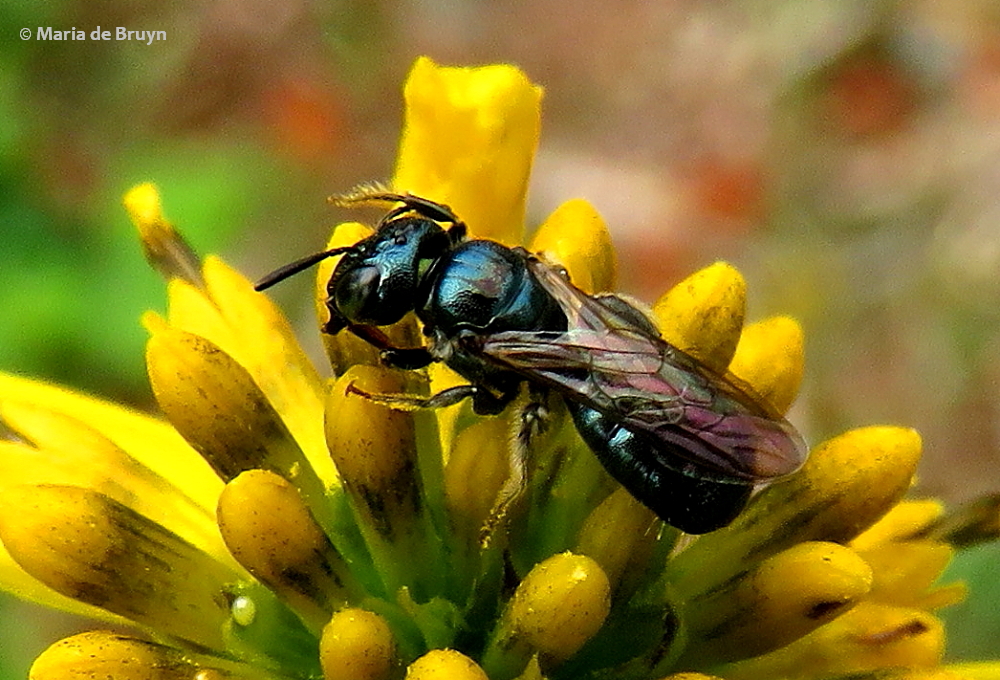
It’s always nice to see some pollinators.


Brown-winged striped sweat bee                        Small carpenter bee                                (Agapostemon splendens)                                   (Ceratina)


I got to see the chrysalids of two fritillary butterfly species, the variegated fritillary (Euptoieta Claudia, left) and the gulf fritillary (Agraulis vanilla, below).

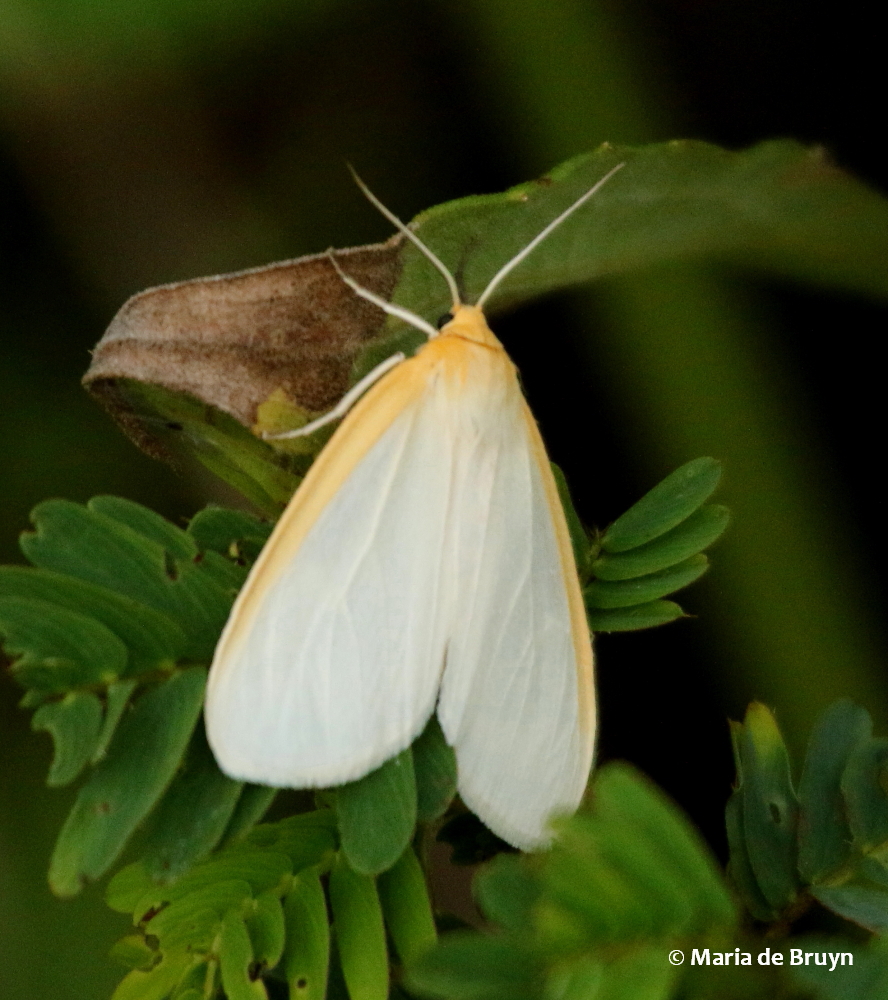
Sometimes, I think the moths get a bum rap, being seen as poor cousins to the “beautiful butterflies”. But there are many really beautiful moths, like the lunate zale moth (Zale lunata) and delicate cycnia moth (Cycnia tenera).


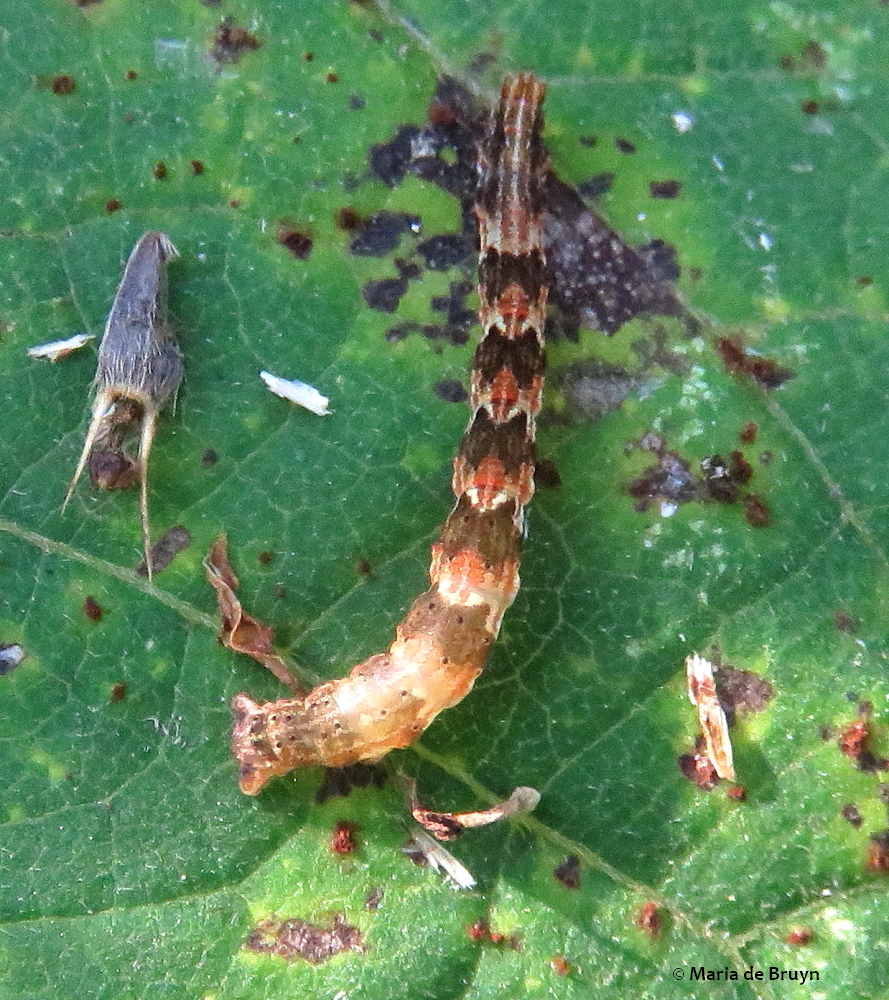
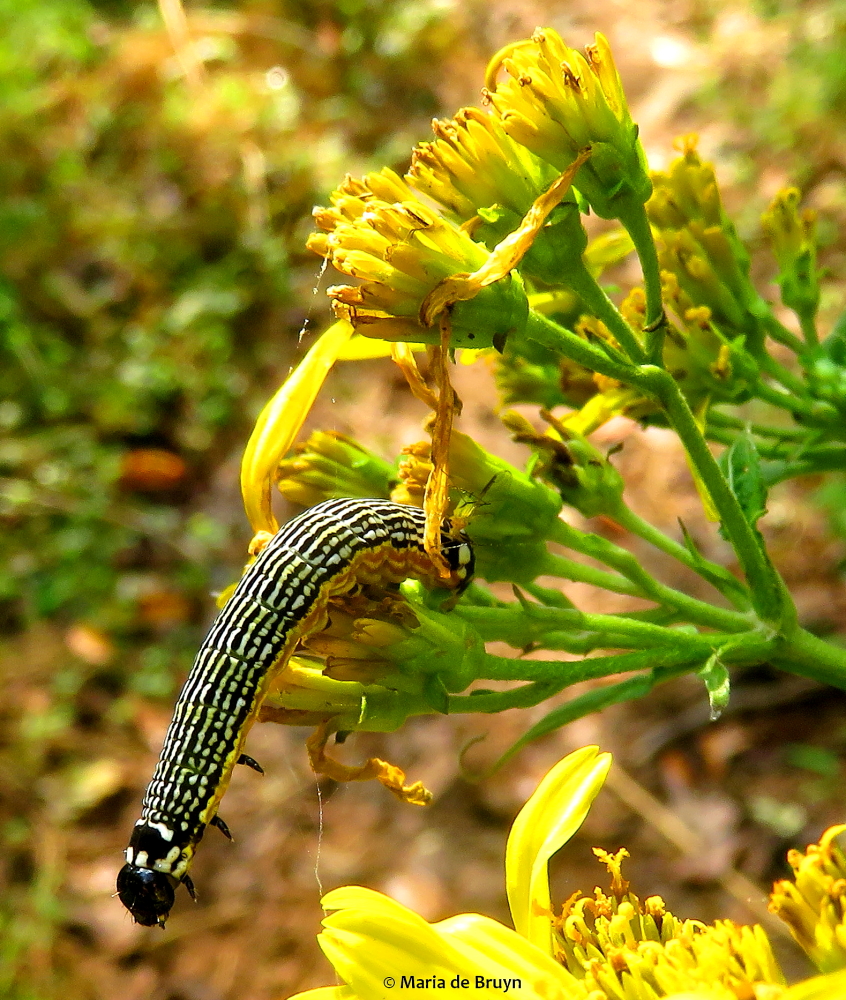
I got to see several moth caterpillars this year; the experts at BugGuide were very helpful in identifying them for me.


Common tan wave moth                           Gold moth caterpillar  (Basilodes pepita)          (Pleuroprucha insulsaria)

 
Turbulent phosphila moth caterpillar (Phosphila turbulenta)

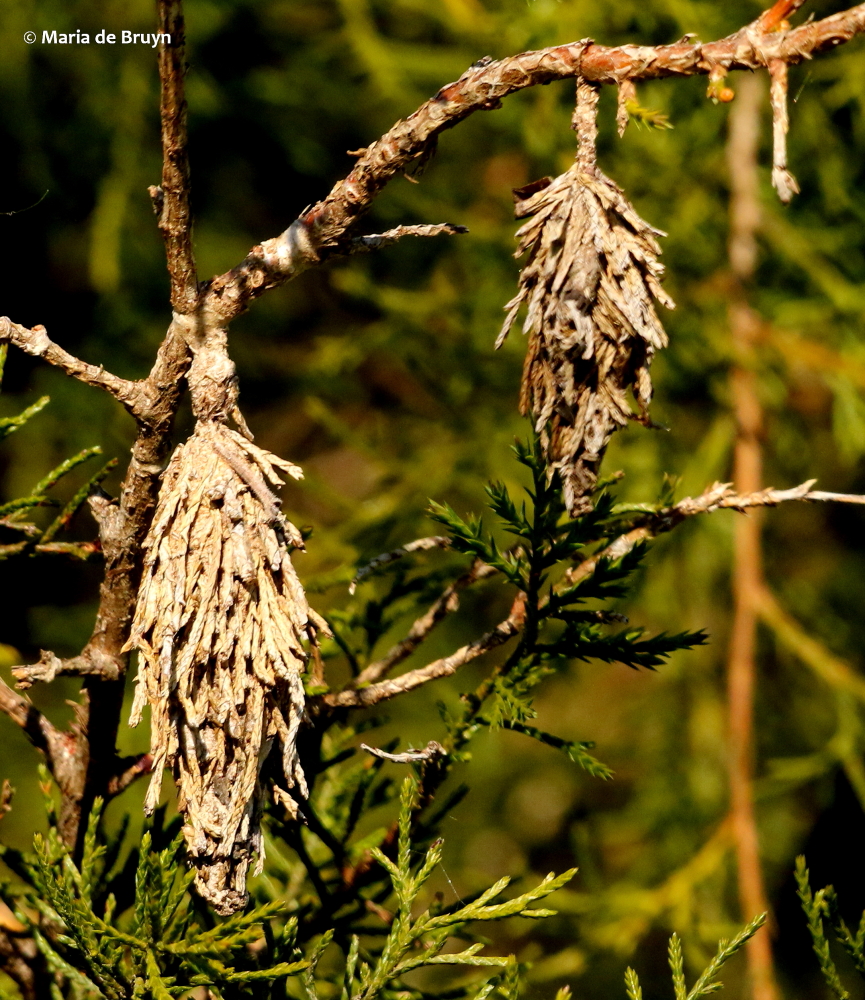
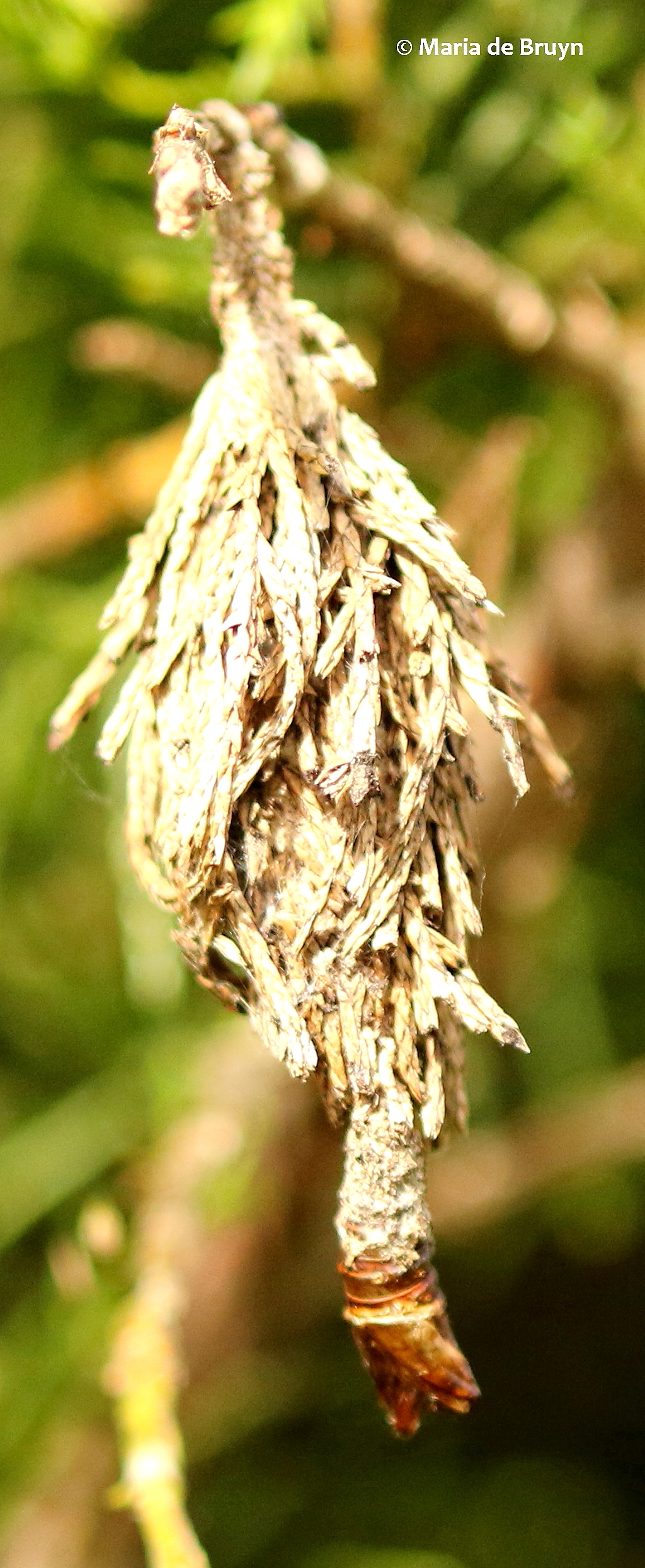
For the first time, I got to see an evergreen bagworm moth (Thyridopteryx ephemeraeformis). There were several hanging out in trees next to a rural farm pond – they did not restrict themselves to an evergreen tree but hung themselves from a persimmon, privet and cedar tree. I think the last photo shows the caterpillar as it was completing the “bag” into which it would insert itself.


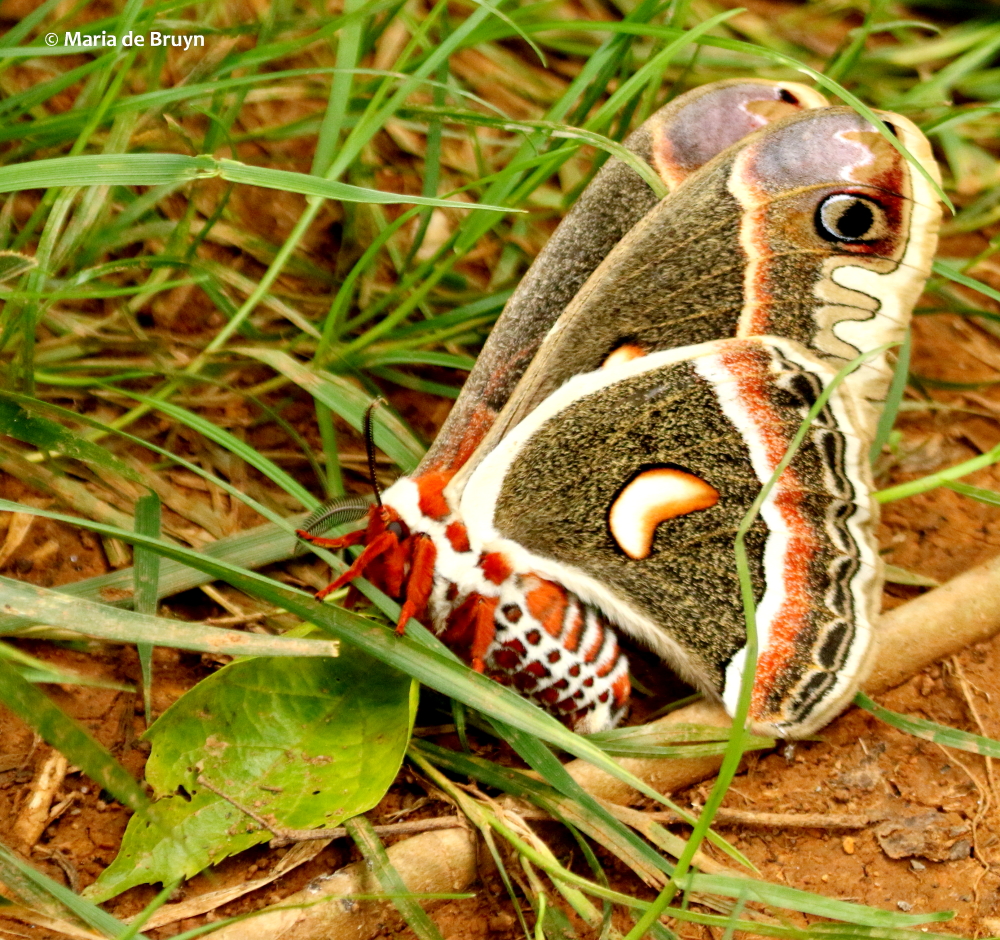
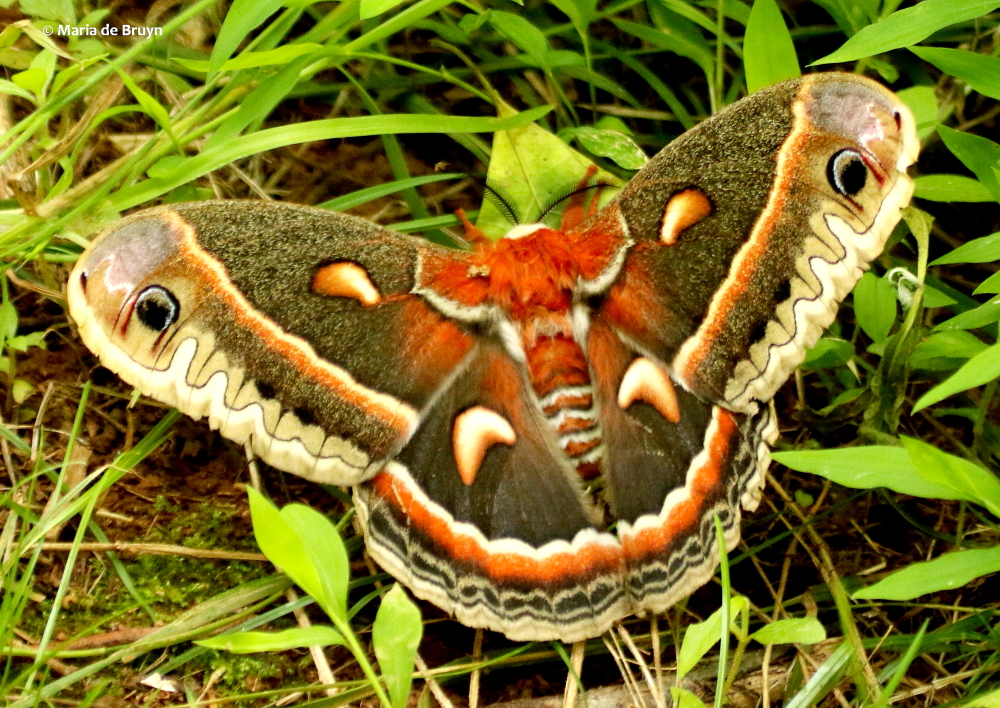
In the summer, I was lucky to see a cecropia moth (Hyalophora cecropia).


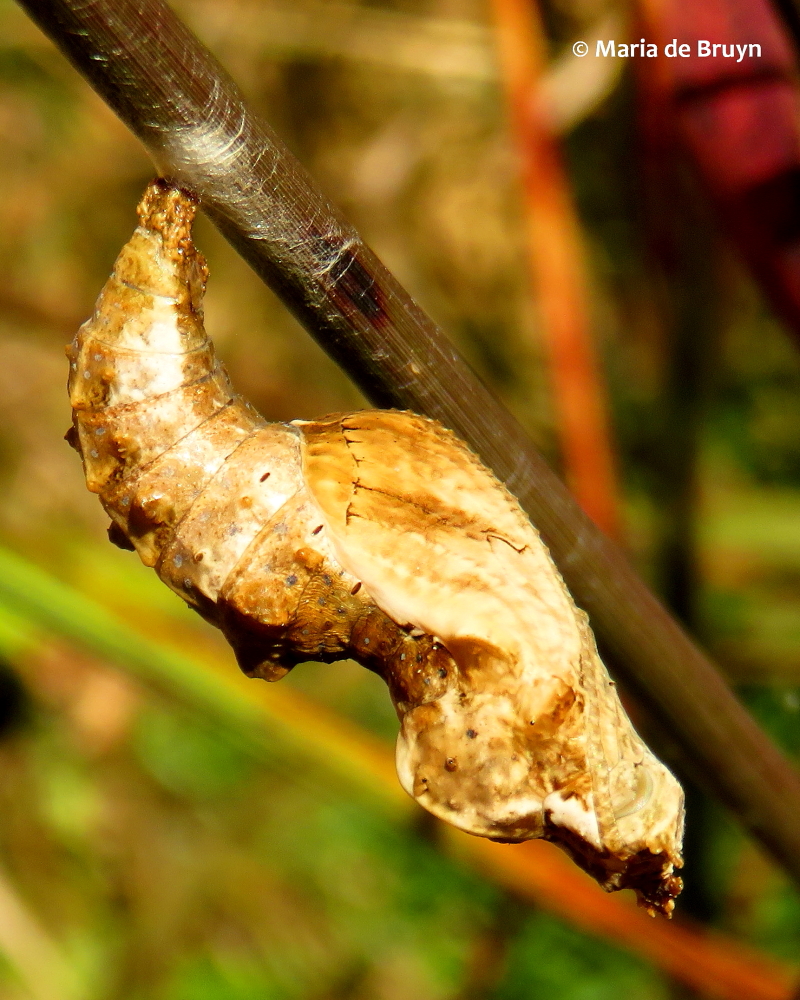
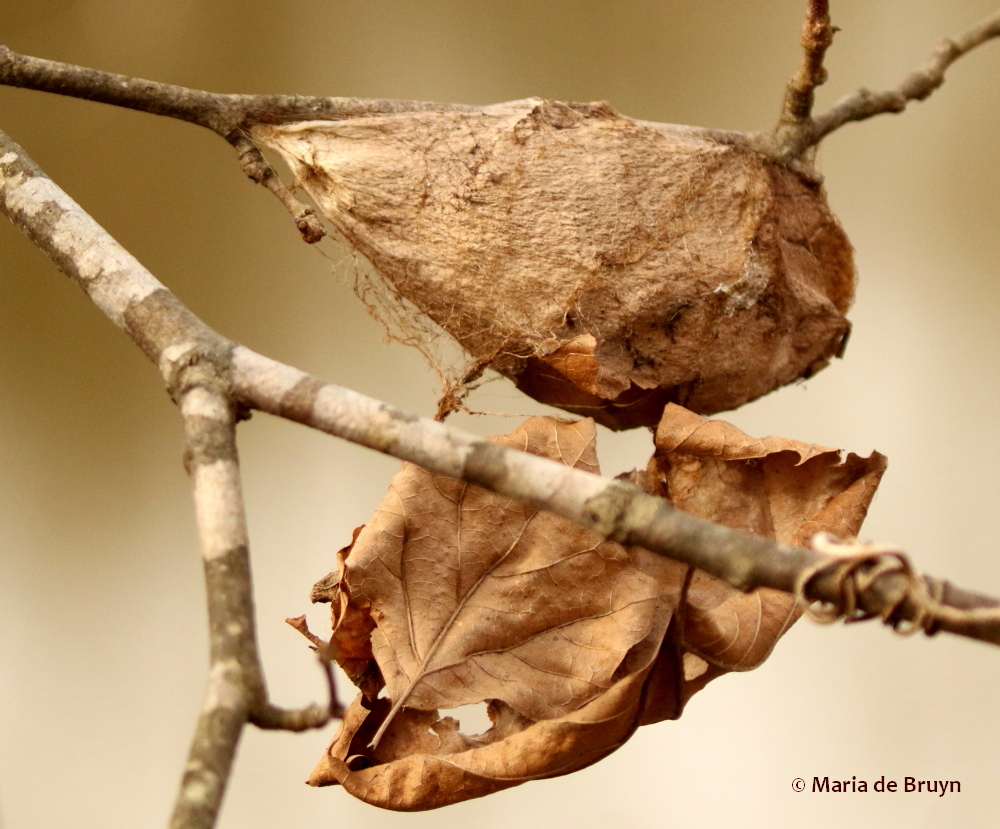
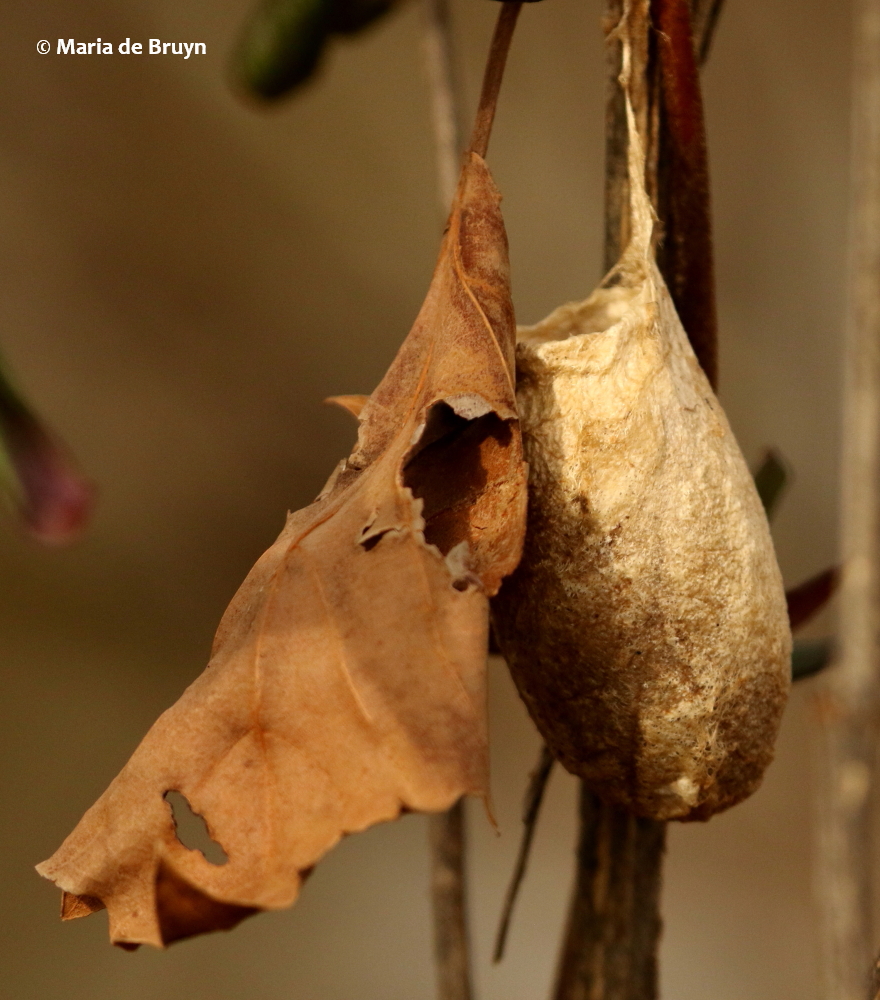
In December, I discovered two cecropia chrysalids, as well as the cup-like chrysalis of a polyphemus moth (Antheraea Polyphemus, which was empty).


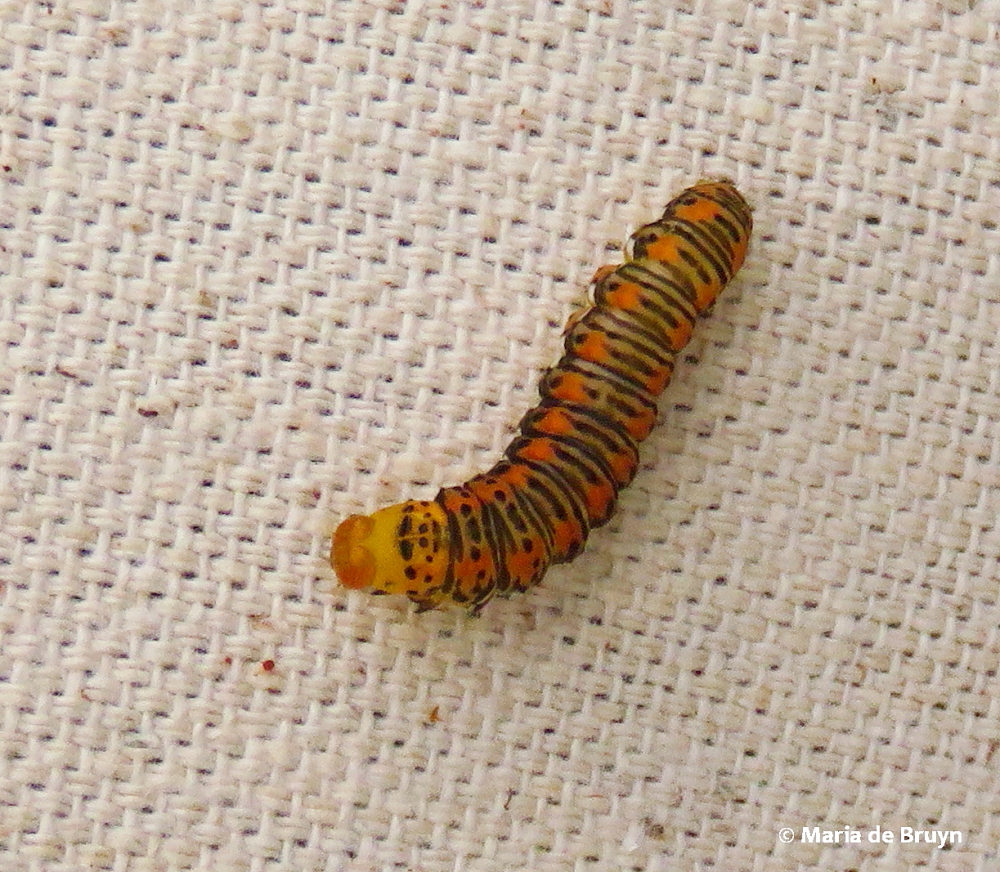
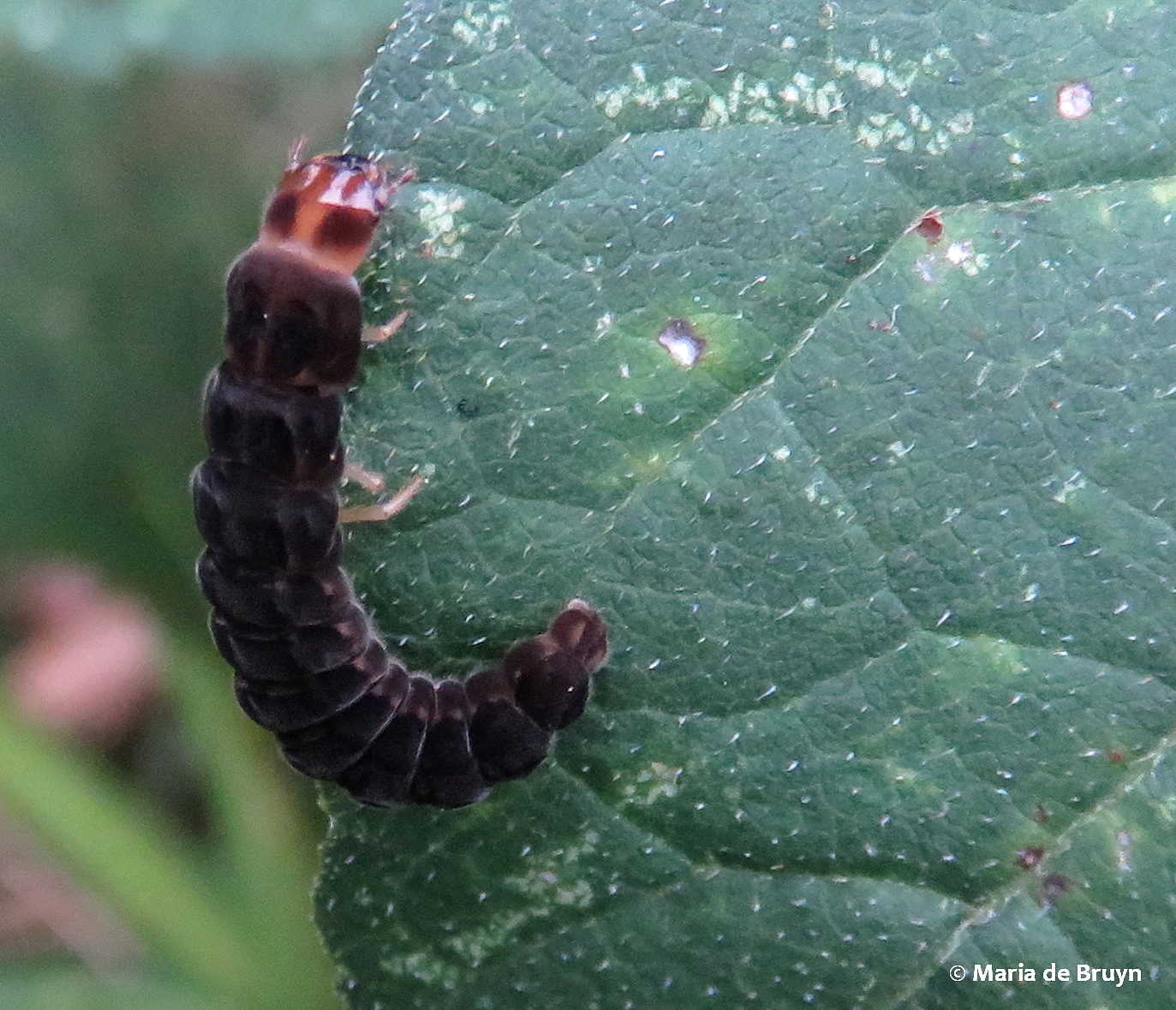
Another discovery was that the larvae of soldier beetles look like some type of caterpillar as well.

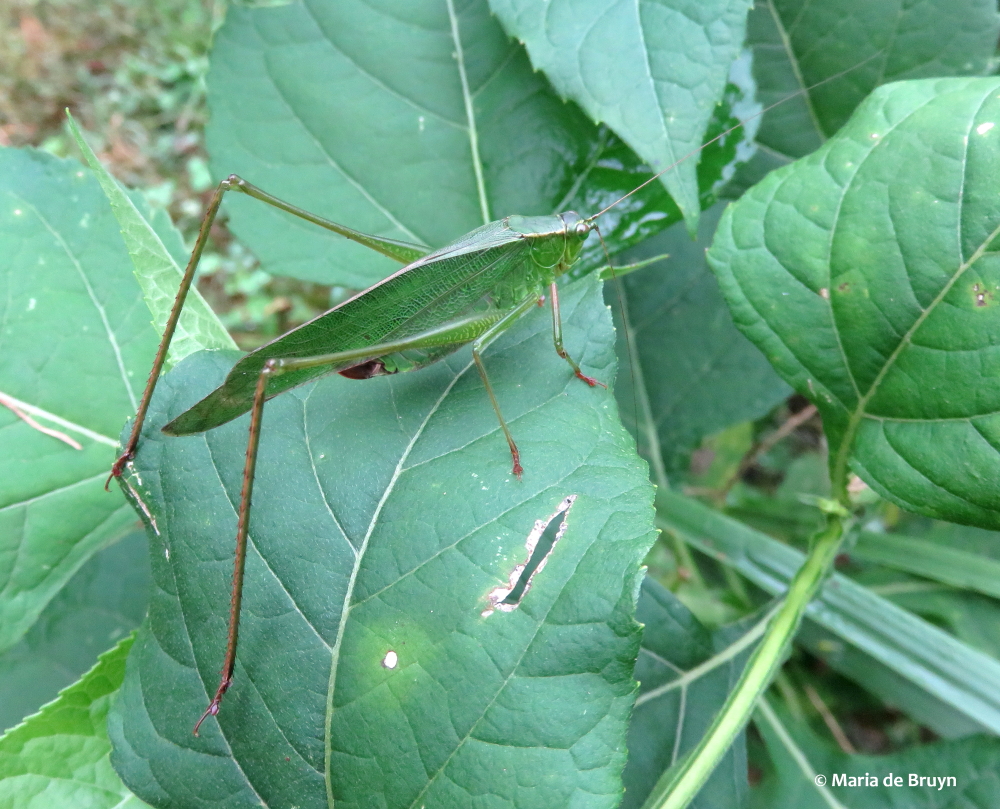
There were lots of katydids around, including the slender straight-lanced katydid (Conocephalus strictus) and the stockier Scudderia bush katydid.


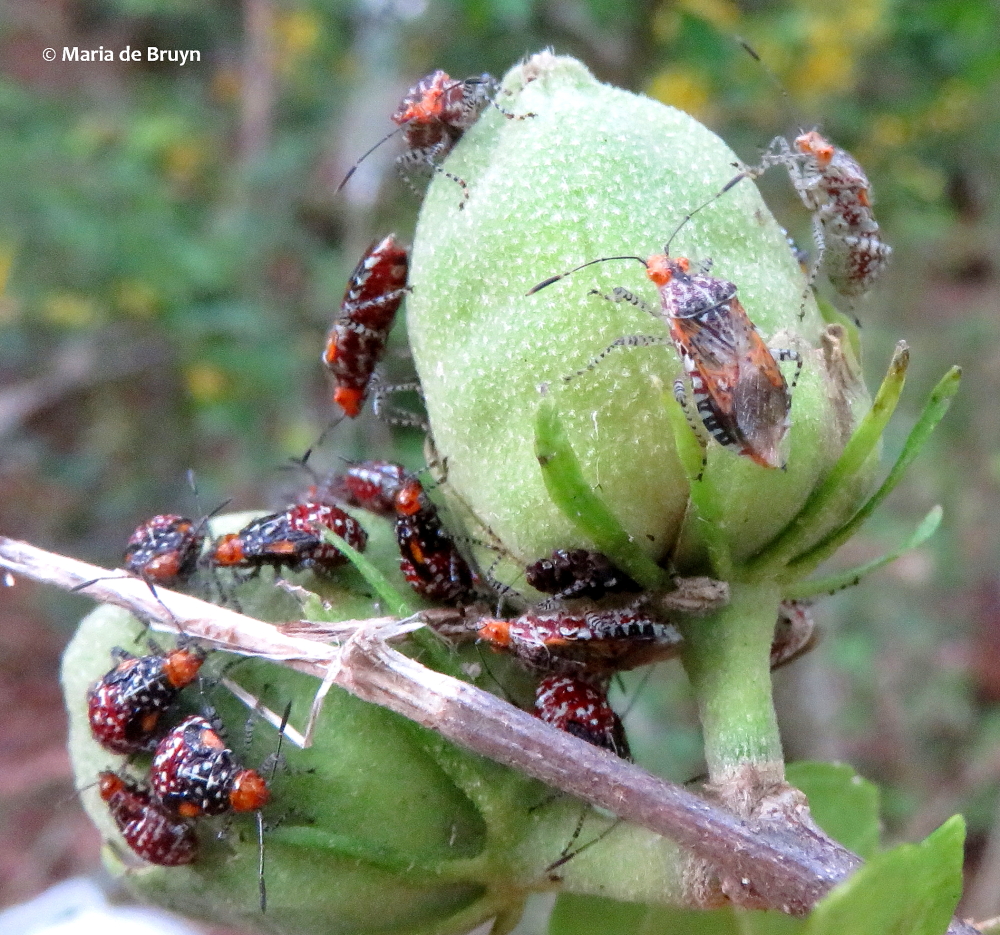
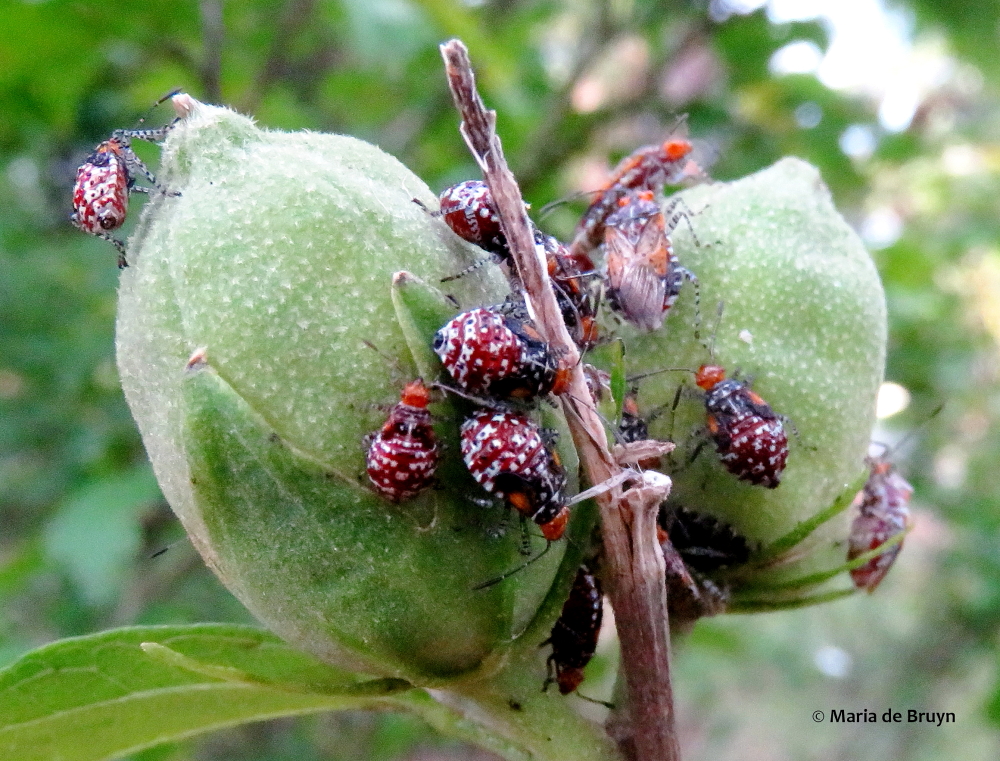
Some new bugs appeared in my yard, including a plant bug with muted colors (not yet identified to species) and some more colorful scentless plant bugs (Niesthrea louisianica) on my Rose of Sharon shrubs.


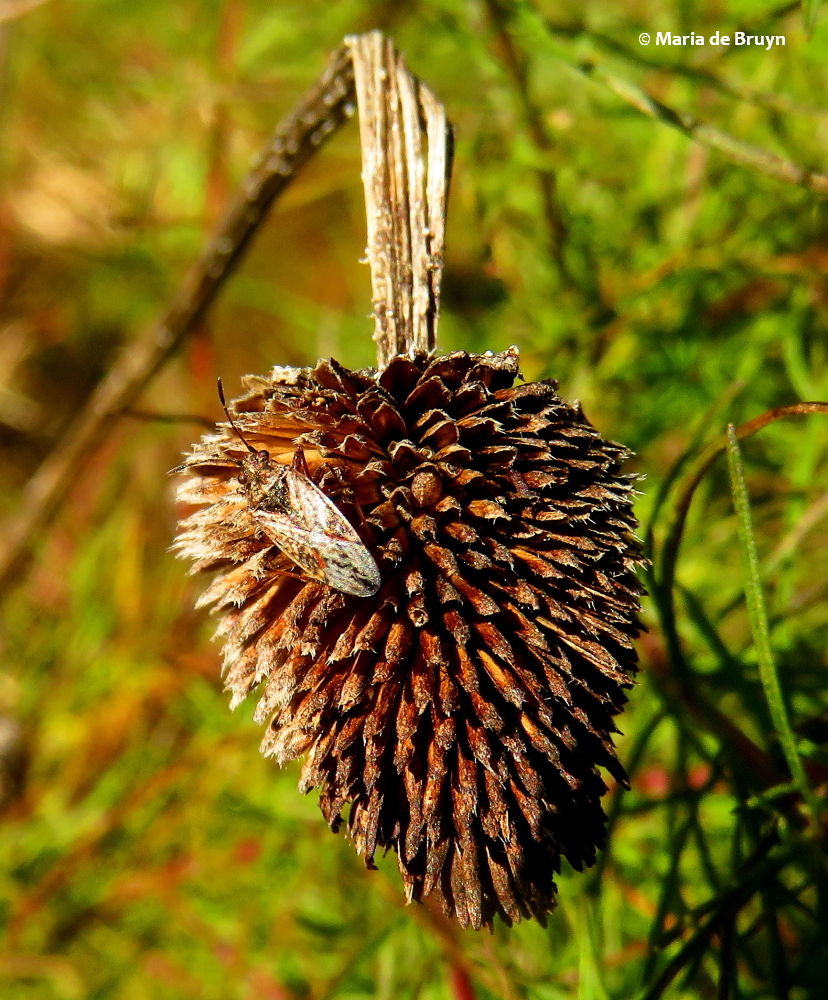
A seed bug on a seed pod and a head-on photo of a millipede (Narceus americanus-annularis-complex) were cool sightings, too.


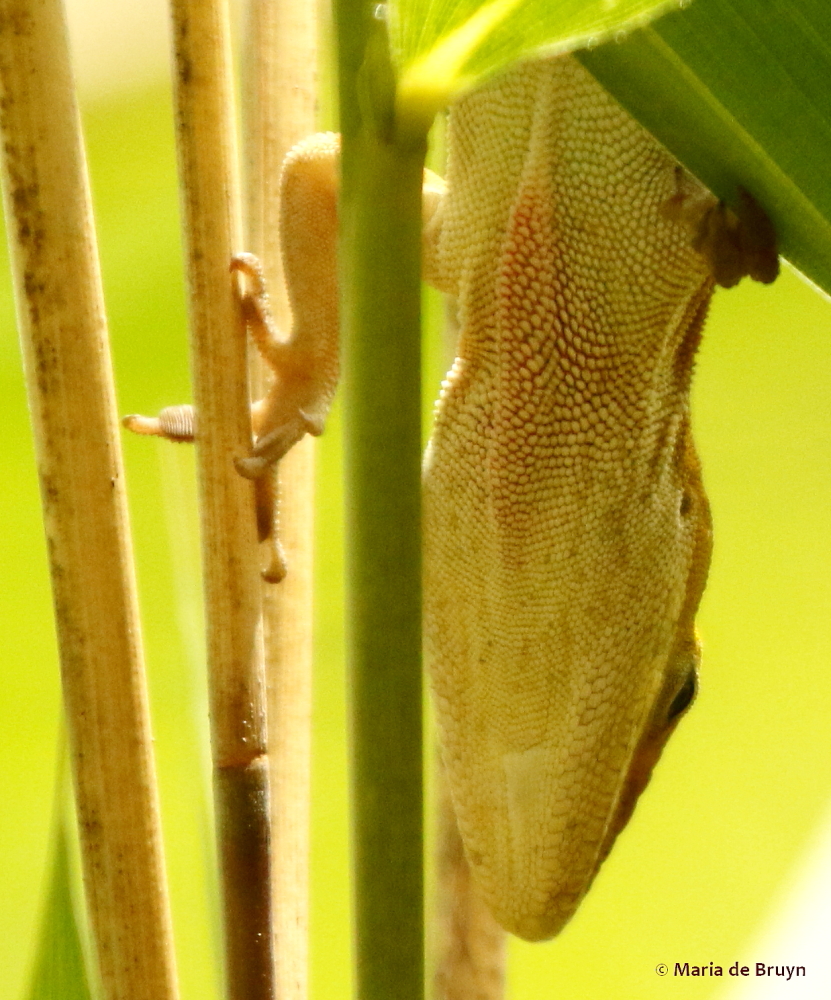
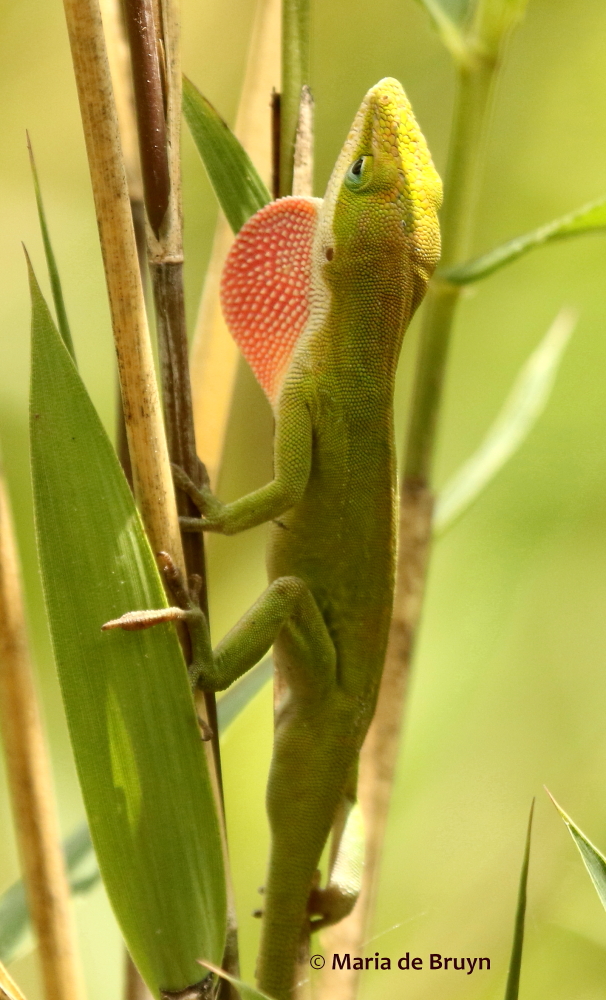
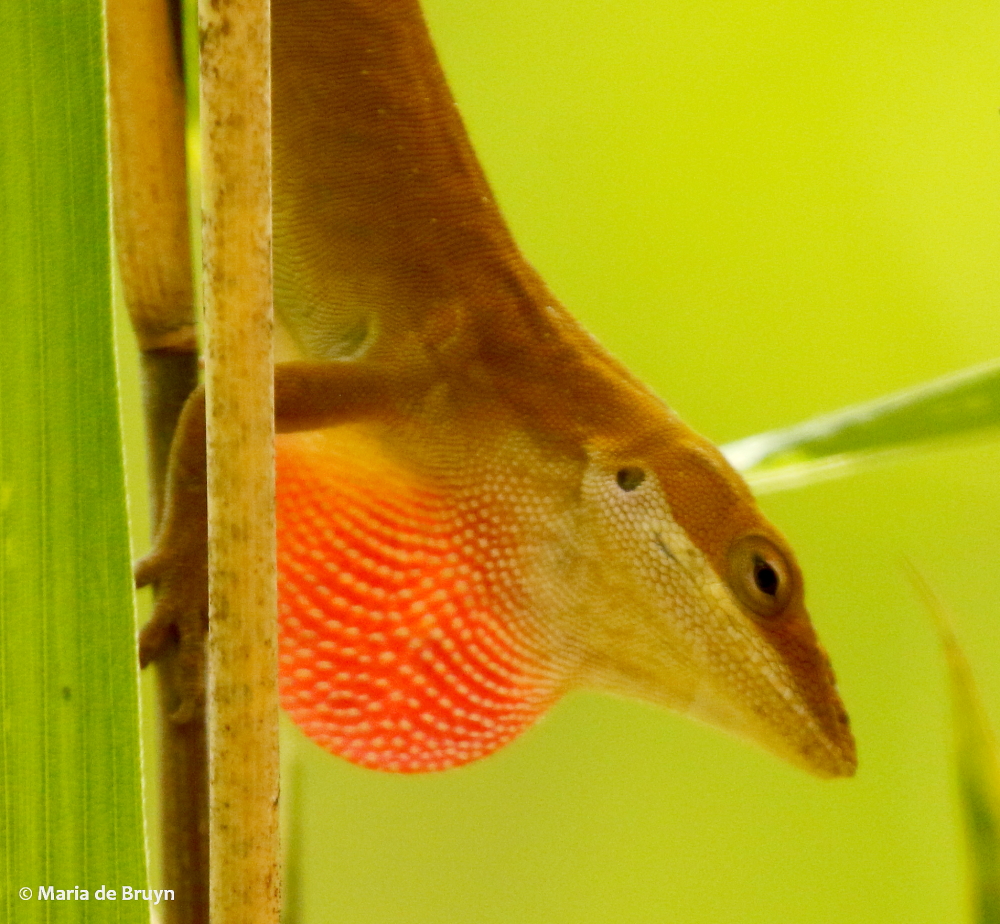
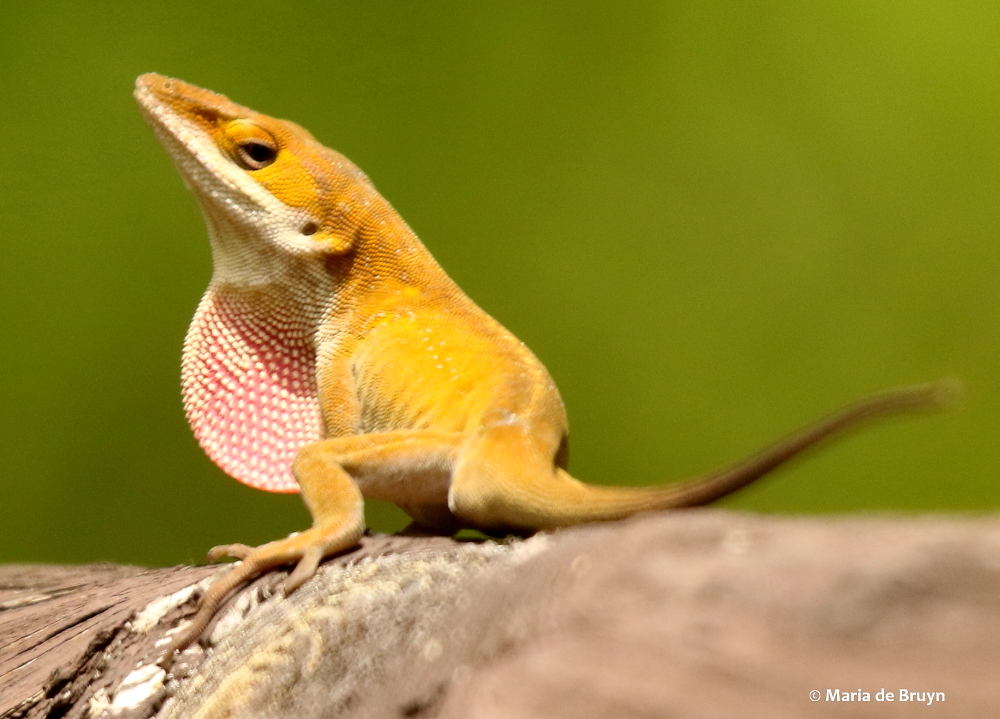
2018 was a good year for my observations of reptiles, too. Seeing a Carolina anole (Anolis carolinensis) flash its red dewlap (also known as a throat fan) was not a new experience but the fact that it was only a foot away from me doing it was a surprise.


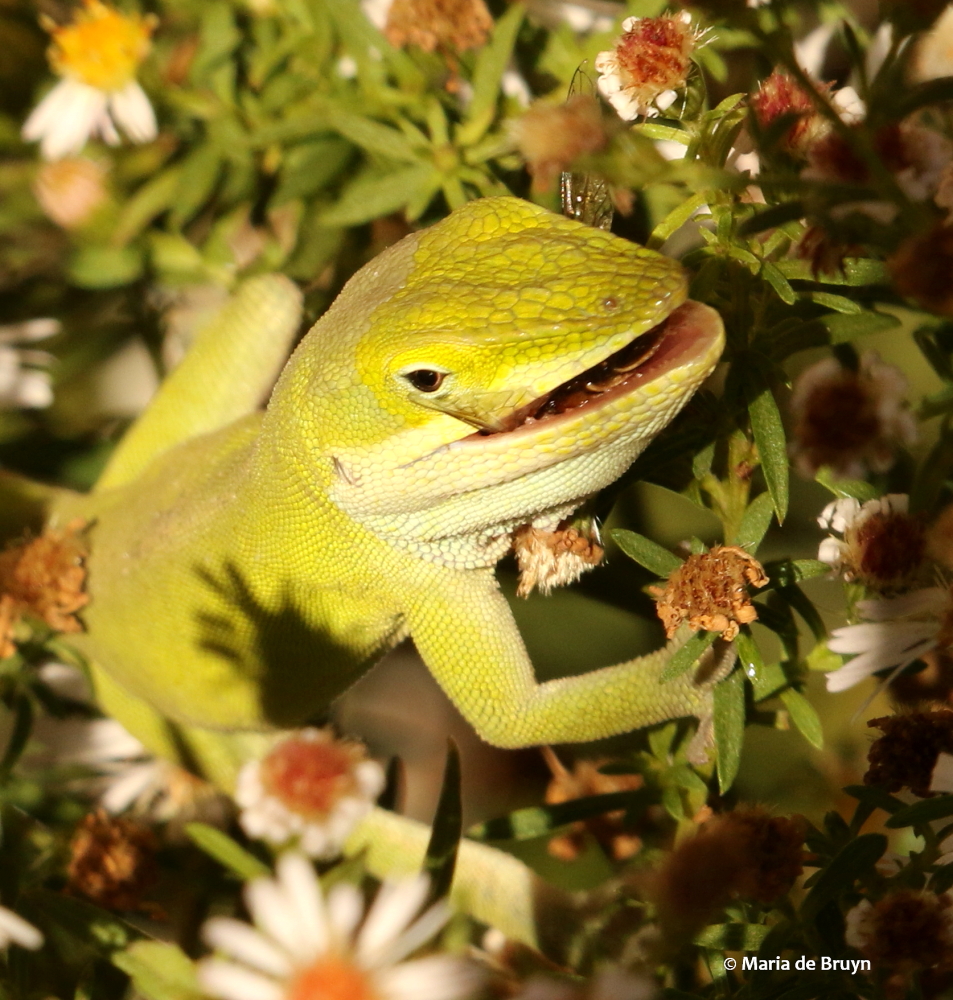
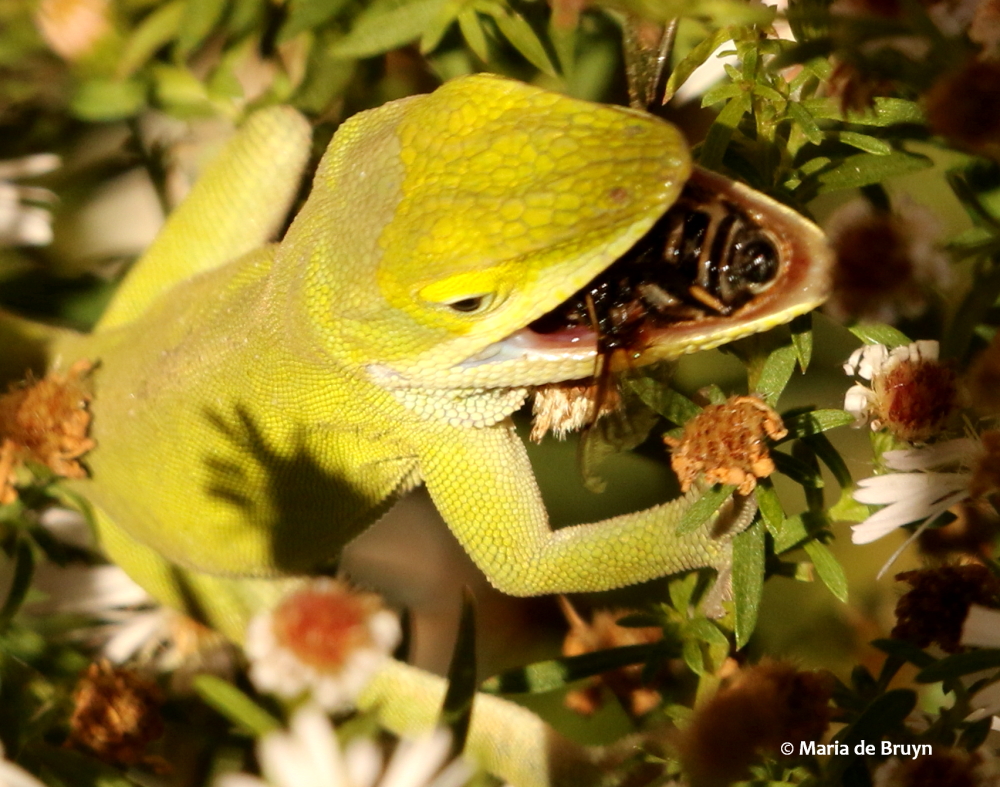
Seeing one of these anoles jump from one small flower twig to another in order to catch a bee for supper was a surprise – I didn’t know they eat bees. I felt a little sad that we lost a pollinator that way, but the anoles have to eat, too.


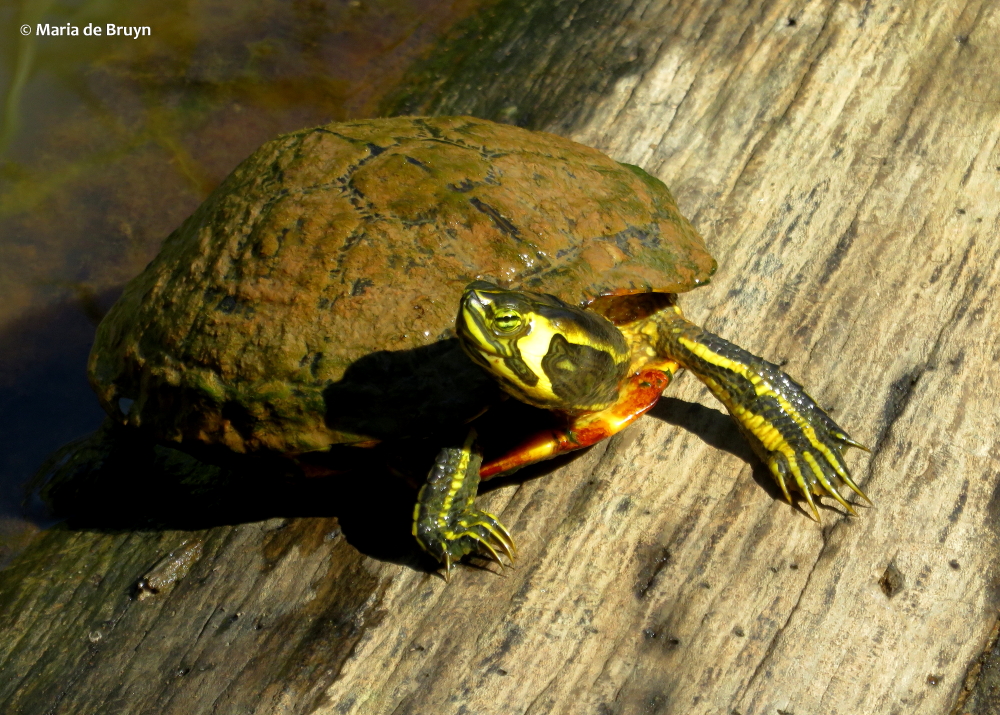
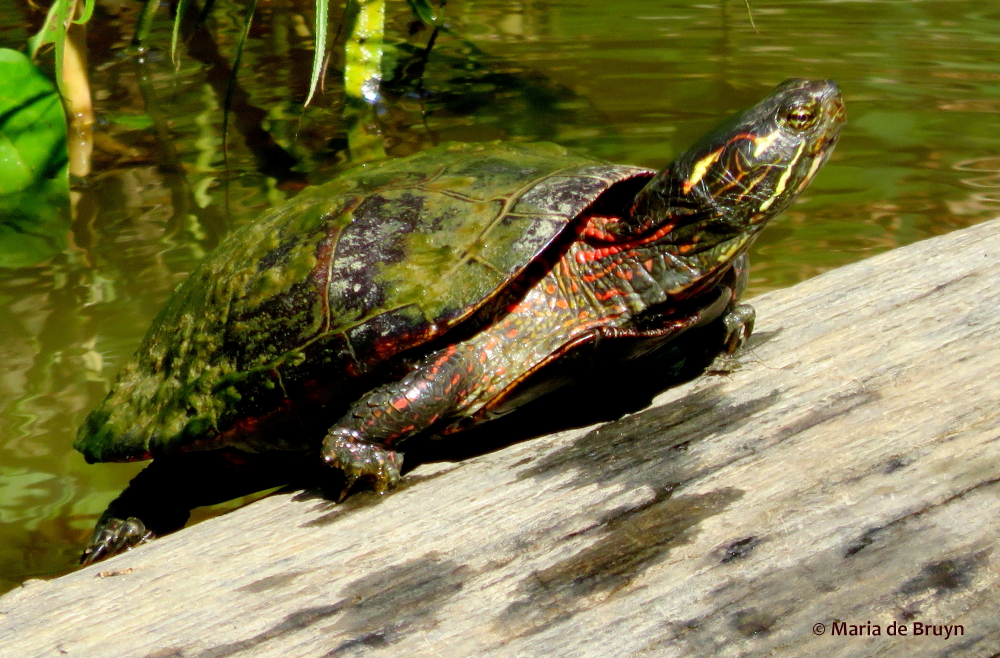
One day, when walking at the same wetlands where the anole hung out I came across some beautifully colored turtles. The yellow-bellied slider (Trachemys scripta) had a beautiful pattern on its face.


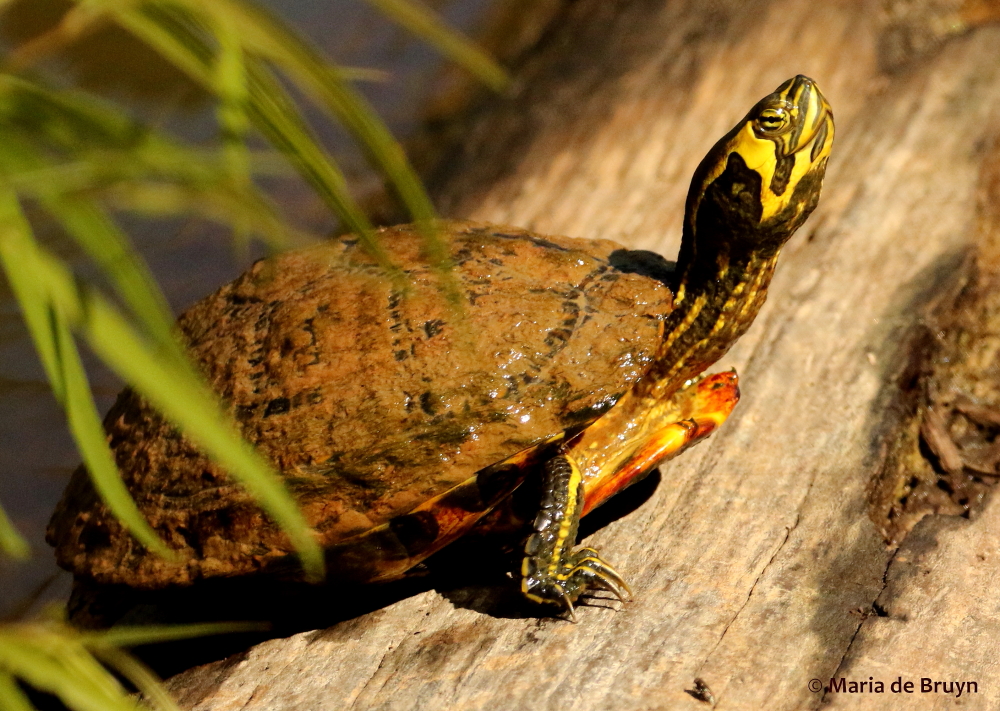
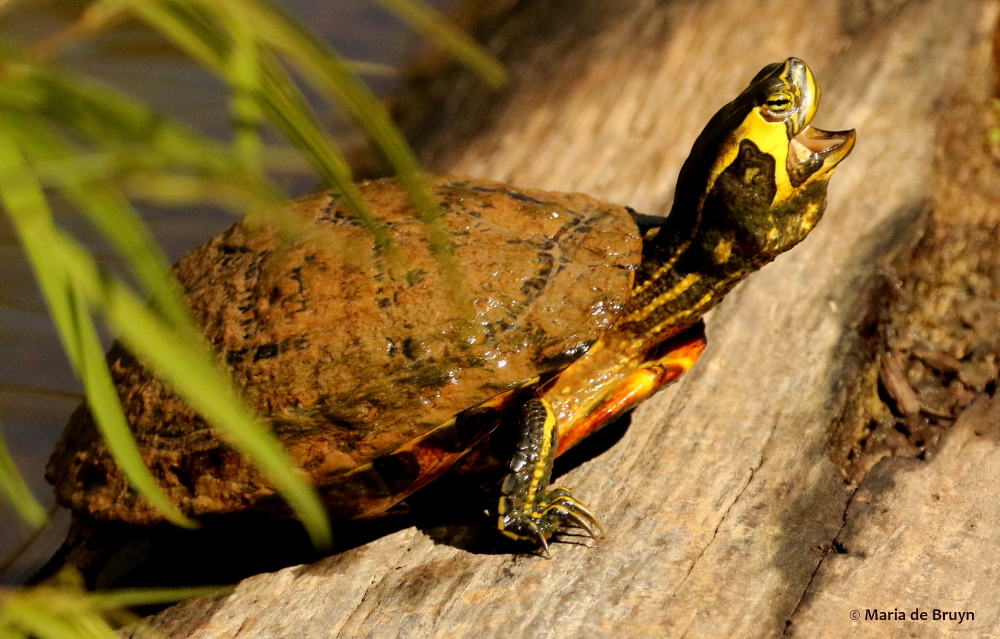
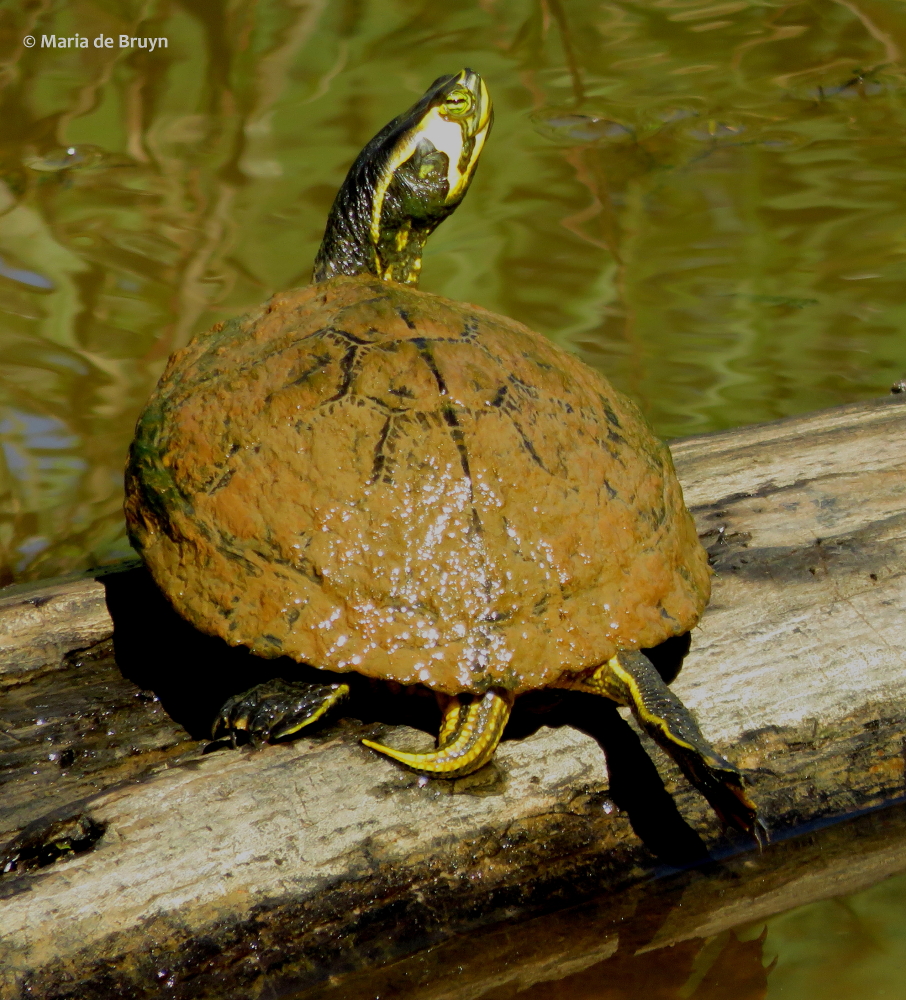
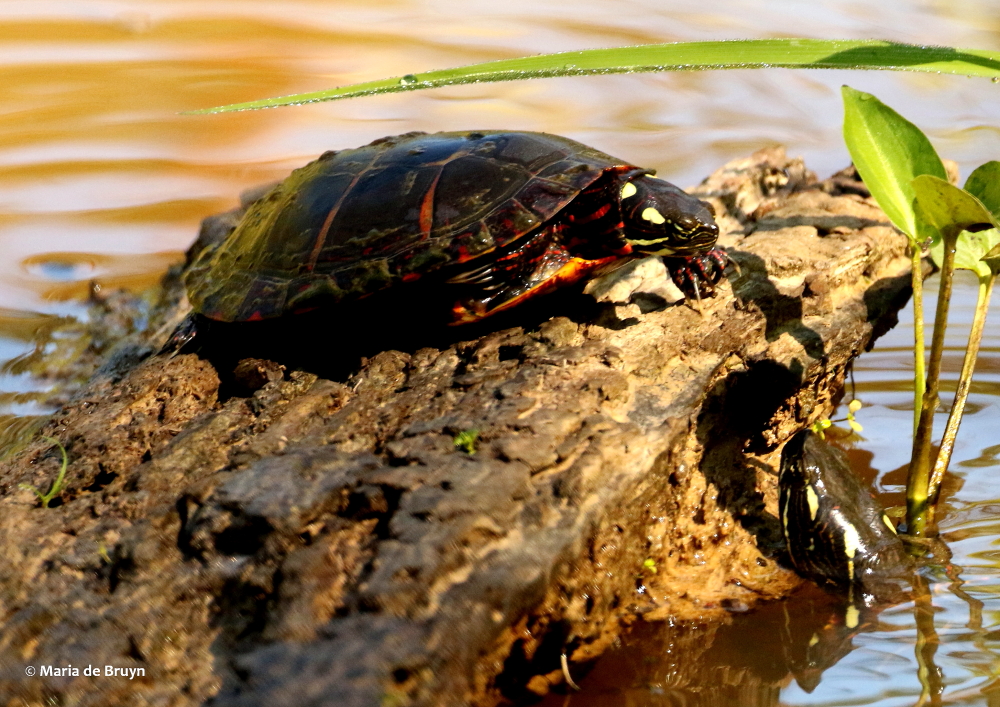
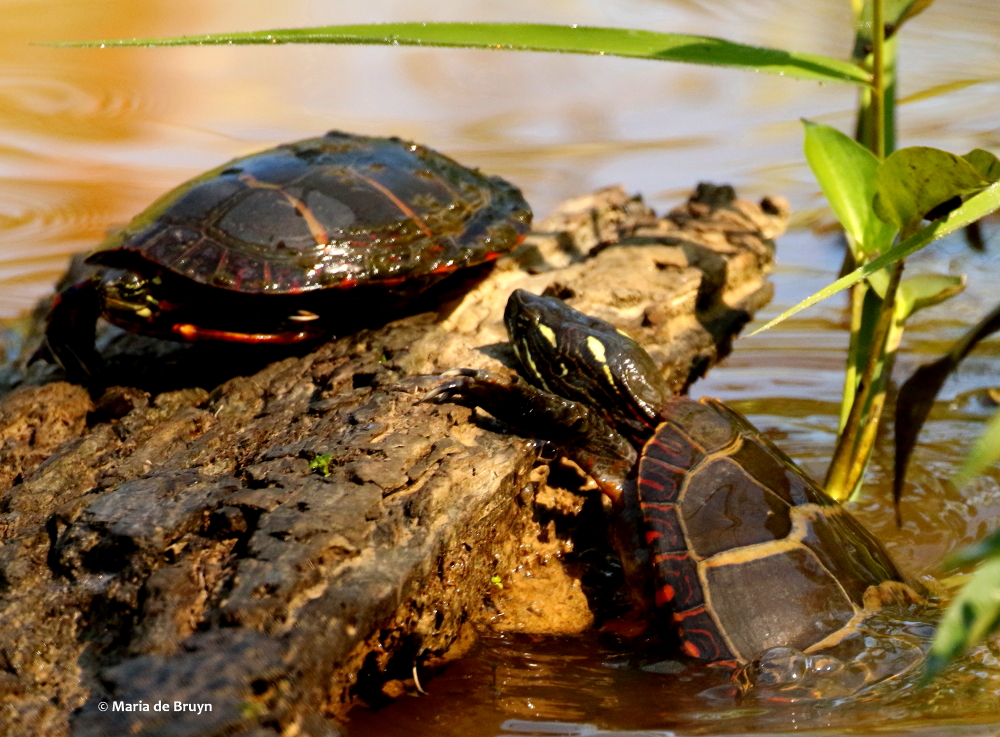
The painted turtle (Chrysemys picta picta) with its long claws had some beautiful bright red striping. It had gotten a prime sunning spot on a log that another turtle wanted for itself; the first turtle held it off.


The second turtle circled around and tried to get on board from the other side but turtle No. 1 kept it at bay.


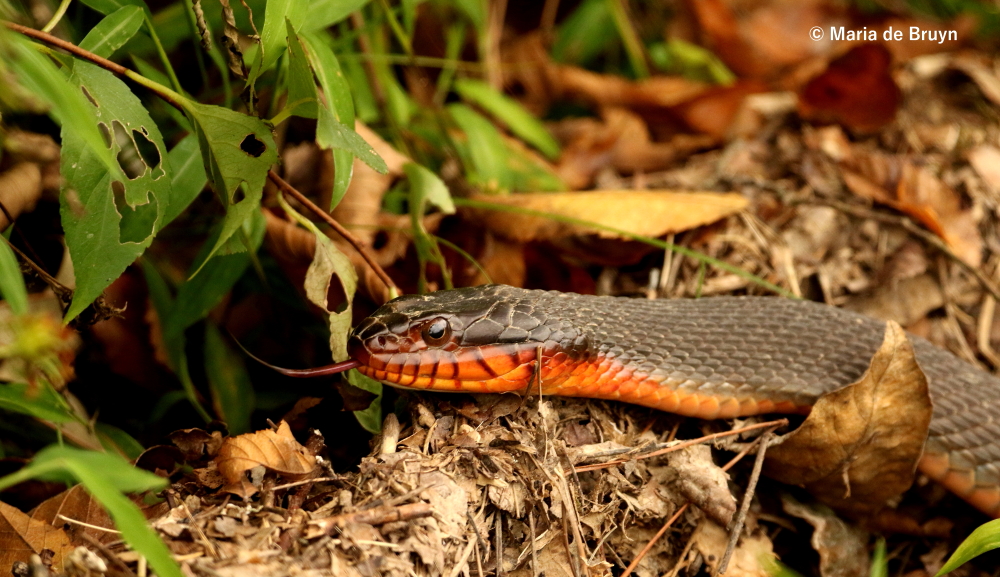
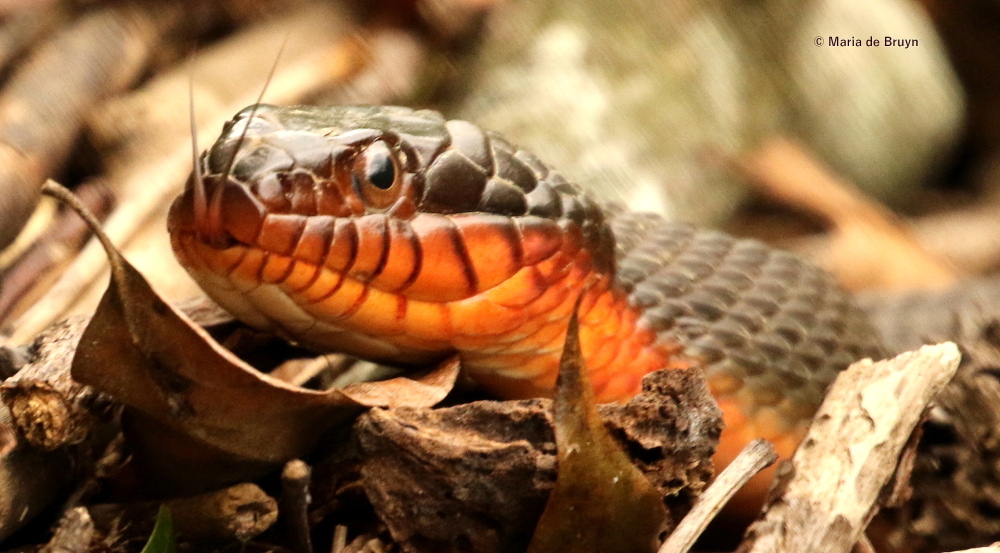
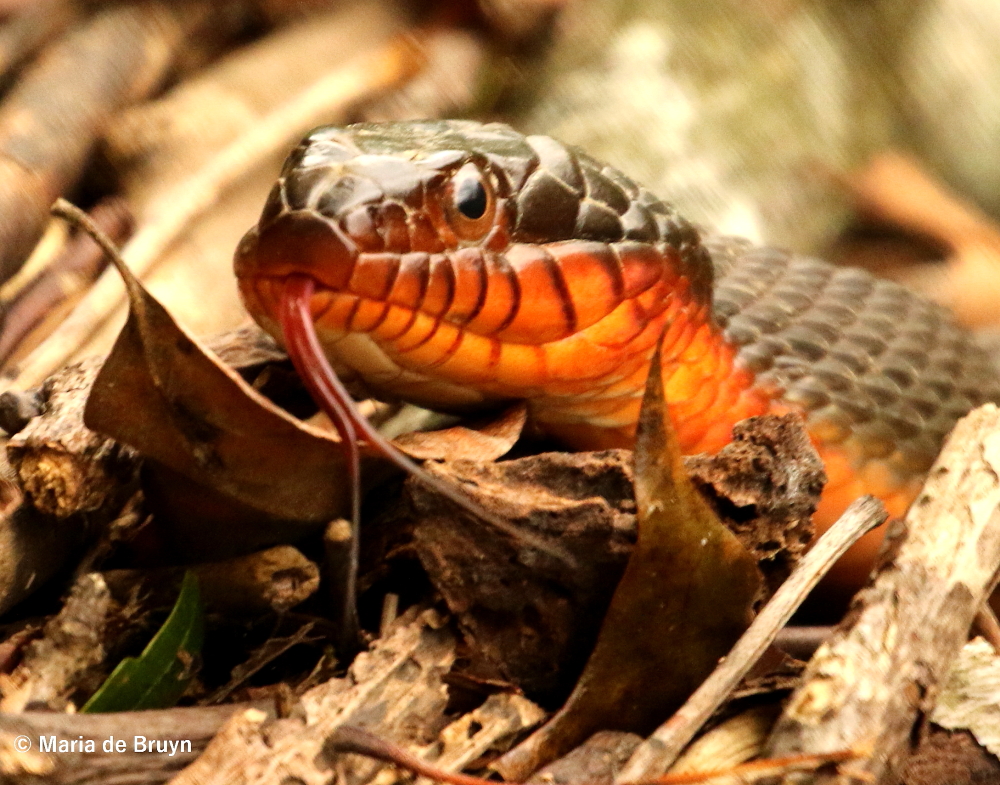
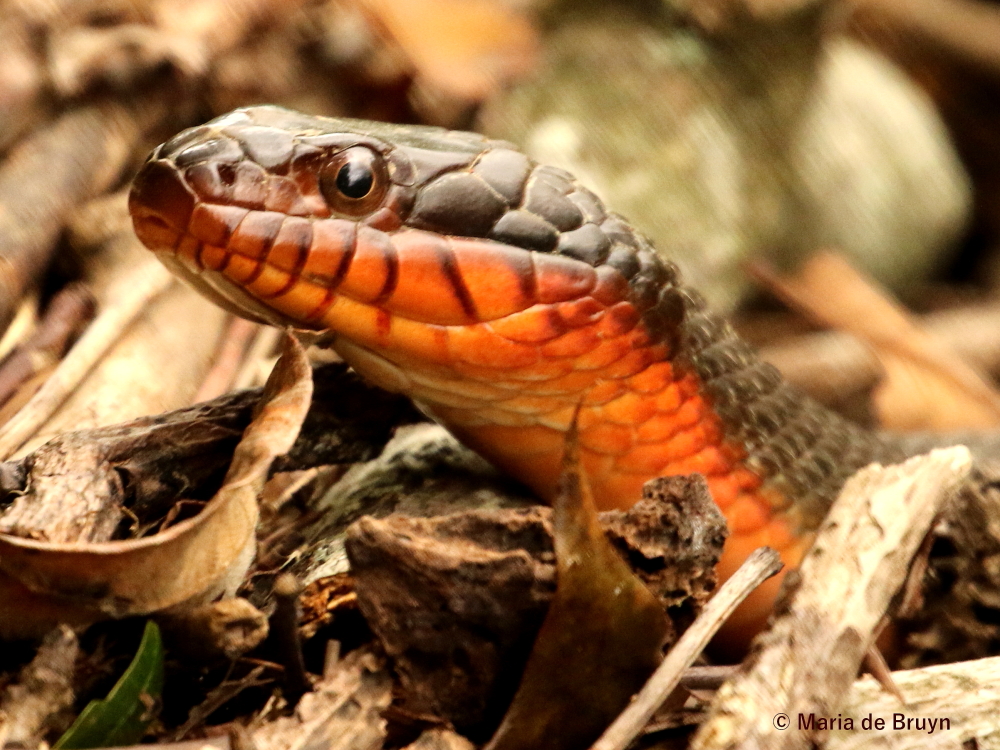
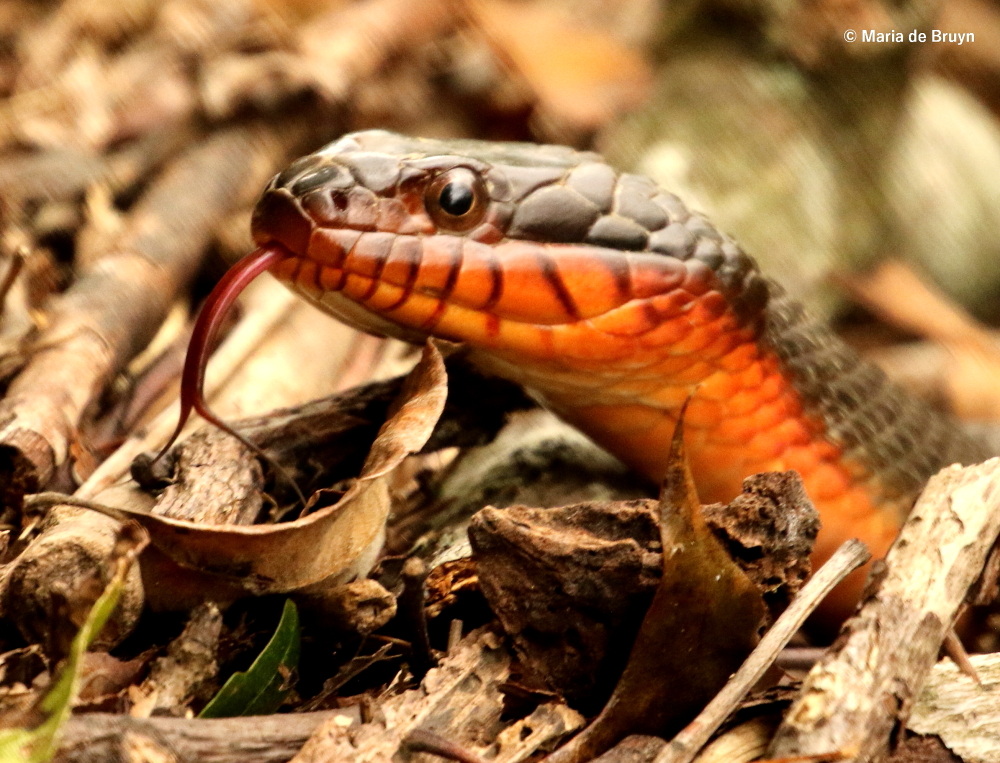
My snake encounters included seeing Northern water snakes and rat snakes. It was a beautiful red-bellied water snake (Nerodia erythrogaster) that caught me by surprise when it suddenly veered off its course toward me. I backed up and the reptile stopped approaching, flicking its tongue out as it explored what was going on.

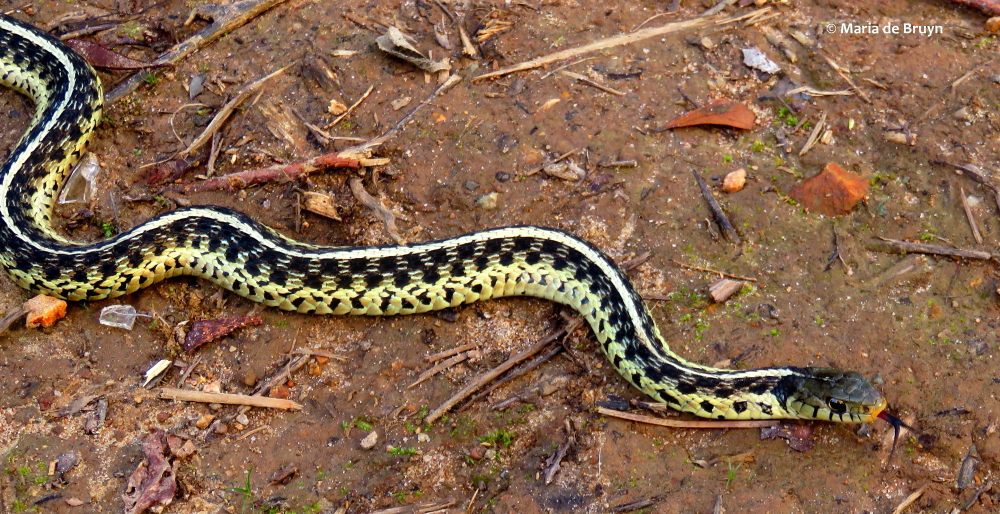
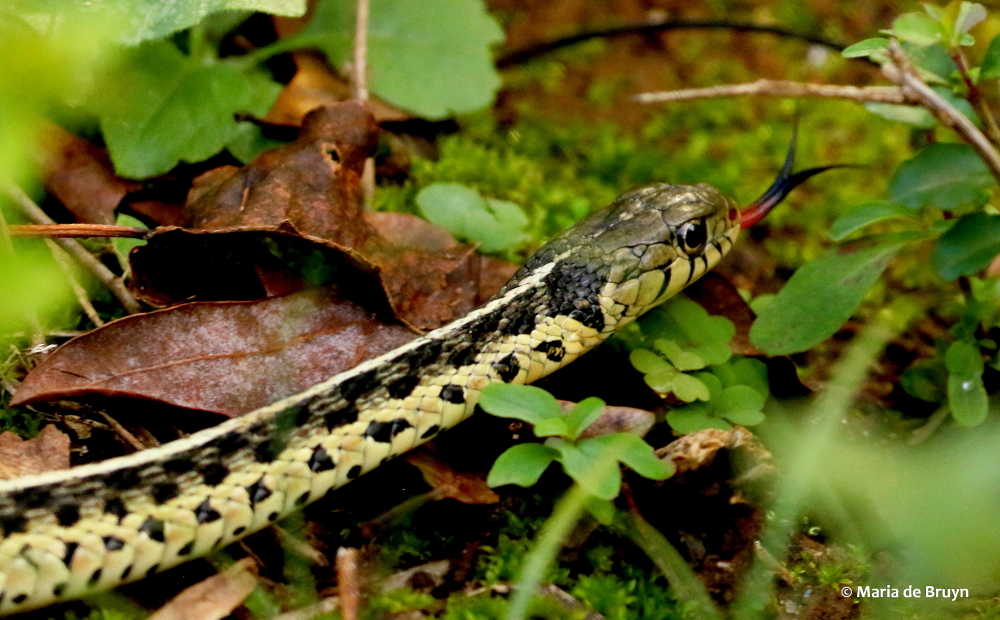
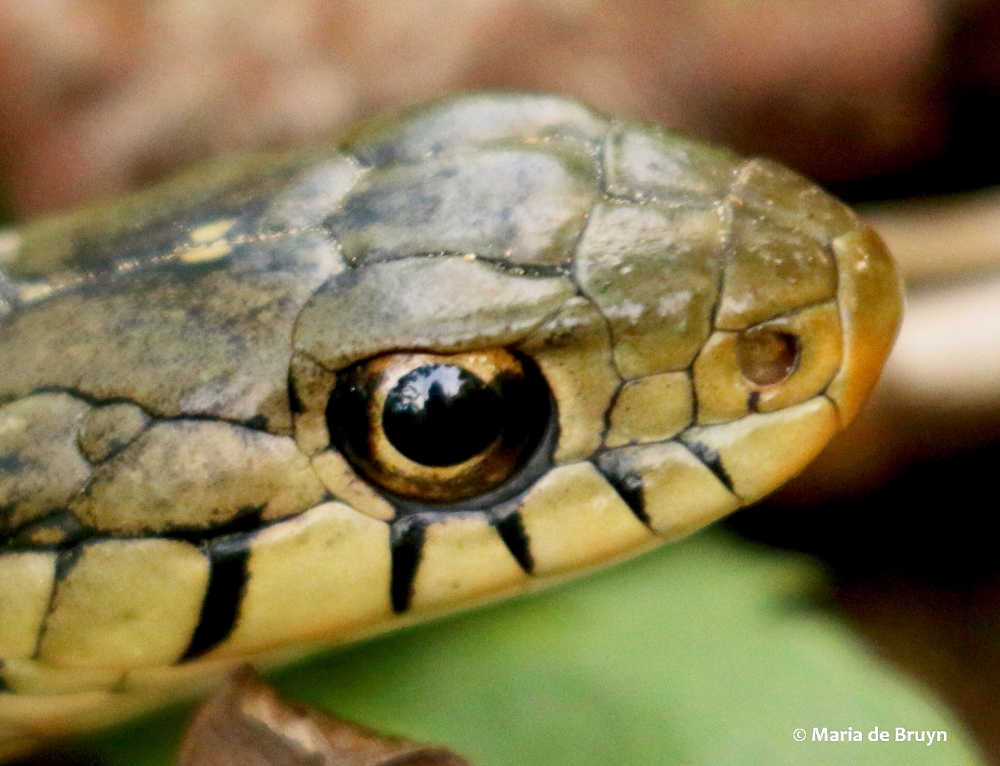
My final spotting to share with you today is another gorgeous snake – a common garter snake (Thamnophis sirtalis). It had been a long time since I had encountered one and this individual had quite vivid colors.

Next up – some beautiful raptors.

An avian buffet appears!

In the town where I live, there is a private lake in a neighborhood of single-family homes. The little body of water was created by developers who dammed a local creek; now a neighborhood association levies annual fees for use of the lake for swimming, fishing and boating. In the past month, the neighborhood residents were surprised by an influx of birds that they do not usually see and some photos of the new avian visitors began circulating.

Given my interest in wildlife and birds, some colleagues passed on a couple of photos to me and one couple kindly invited me to come visit so that I could see the new arrivals in person. They were especially curious about the identity of a few ducks. When I arrived, no ducks were in sight, but at least 80 double-crested cormorants (Phalacrocorax auratus) were hanging out in crowds on two floating docks.

Their tightly-packed presence had displaced the Canada geese (Branta canadensis), who are more common lake residents. A group of 11 geese were off in the distance on shore leaving the open water to the visiting avian groups.

Some of the cormorants couldn’t fit onto the platforms, so they swam around in the company of the many dozens of ring-billed gulls (Larus delawarensis) of all ages who were swarming the waters as well.

From time to time, the gulls would begin edging their way onto the platforms, eventually taking up space vacated by the cormorants. There are both adult and immature gulls in the crowd.

From time to time, the gulls launch themselves into the air for aerial forays which end in dives down to pick up a fish, of which there still seem to be plenty. This is because the shad population with which the lake was apparently stocked is dying off as a whole.

Why is this happening? I don’t know the species of shad with which the lake was stocked, but it appears that threadfin shad (Dorosoma petenense) are common in the Southeastern USA and often introduced as forage fish for the bass and catfish that fisher-people seek. The shad are very sensitive to changes in water temperature; when it goes below about 42° F (5.5° C), they expire. In the past 6 weeks, we had an unusual early winter storm with about 8-11 inches of snow, followed by days and days of cold rains. Sometimes, it is cold 24 hours long; other days have nights and dawns below freezing and then afternoon temperatures of 50-60° F (10-17° C). The shad die-off is a result.


The newly arrived birds are obviously enjoying the easy pickings. When the gulls drop down to snatch a fish, they are almost always pursued by other gulls who try to make them drop the prize.


Even when they alight with a fish firmly held in their beaks, other gulls harass them in an attempt to make them give up the meal.


The shad often appear to be too large for the gulls to swallow. I saw several gulls try to position them to get them down their gullets but the fish just wouldn’t go down. So they drop the fish in the water and then try to pick off pieces for easier eating, while fending off neighboring gulls.


It is unclear to me how the birds who don’t usually populate the lake in winter knew that a spontaneous buffet had appeared. In addition to the cormorants and gulls, a group of seven bald eagles (Haliaeetus leucocephalus) was also fishing when I visited. There were some almost full adult eagles (with mostly white heads and tails) and several immature birds of varying ages (eagles reach maturity at 5 years of age). I guess that they came over from Jordan Lake, which is quite a fair distance away. Searching the Internet has not yet given me an answer to this question.

I didn’t see the eagles harass gulls who had gotten a fish but they were very carefully watching one another. When the eagle below managed to get a snack, other immature eagles closely followed him/her. A sub-adult who got a fish was harassed by an immature bird as well.


The eagles soared overhead and were joined at one point by a beautiful red-tailed hawk (Buteo jamaicensis). The larger raptors let the hawk fly alongside them with no problem.

It was quite a chilly morning when I got to see the visiting aquatic birds, so I only stayed a short time. But my friends invited me to return for another visit, which I hope to do soon as there is no telling how long it will take the visiting birds to eat the easily available shad. And the ducks? I was able to get one rather indistinct photo of a threesome across the lake and helpful folks in a Facebook group confirmed my guess – they are ruddy ducks (Oxyura jamaicensis). Maybe I can get a decent photo of them next time. 🙂

Avian generations in the making – part 3B: fledgling and post-fledgling care

The number of days after hatching when young altricial birds leave the nest is fairly predictable for many species; knowing those approximate dates is helpful if you want to plan a day to watch fledging happen. I can often arrange to sit and watch a nest box on the appointed day for several hours.This has enabled me to see several broods of Eastern bluebirds and brown-headed nuthatches make their leaps to freedom on the path to adulthood.

When it is time for fledging, parent birds encourage their babies to leave the nest. They may entice them by perching nearby with some food but not bringing it to them. Or they fly to the box with food and then go to a branch instead of feeding. The Eastern bluebirds (Sialia sialis) in my yard will hover in front of the nest box like a hummingbird, sometimes with food in their mouths; perhaps they are showing the young ones that flight involves flapping wings.

While in some species, parents appreciate help from older children in caring for a current brood, Eastern bluebirds apparently do not. This may be because they see the previously fledged young as competitors for food. In my yard, father bluebird especially was chasing the young of earlier nests away from the feeders, not only when they begged but also when they fed themselves.


When fledging day arrived for the bluebirds’ third brood, one of the older siblings (I’m not sure if it was a female or male) was very interested in seeing the third brood fledge. He imitated his parents, hovering in front of the nest box so the young ones could see him.


Again, however, the parent bluebirds chased him away.

This did not deter the immature bird, however. He waited for the parents to go get food and again took on encouraging the young siblings. It was fascinating to watch!


The parents returned and drove him off with a show of bad temper.

Eventually, the babies did fly out of the nest box into a nearby crepe myrtle. There, they continued to call for food with a wide-open mouth.


This gaping behavior stimulates the parents to feed their offspring and the offspring can be very insistent and persistent in begging for food.


Eastern starling (Sturnus vulgaris)


Carolina wrens (Thryothorus ludovicianus)


Common grackle (Quiscalus quiscula)     Royal tern   (Thalasseus maximus)

This behavior can go on for days, especially when the young ones cannot yet fly, like this recently fledged Northern mockingbird (Mimus polyglottos).


The birds that feed their young ones on the ground, like the American robins (Turdus migratorius) have it a bit easier than those that feed juveniles perched on wires, like these barn swallows (Hirundo rustica).


I can imagine that the mother and father get to a point of thinking, “Enough already!” as those large fledglings continue to beg for food; this parent Northern cardinal (Cardinalis cardinalis) did not seem willing to go out for yet another bug for the young one.

But some young birds can be very insistent, even when it is obvious that they are now fully capable of finding some food on their own. This parent chipping sparrow (Spizella passerina) seemed willing to be a feeder for a while longer.


The parent-child feeding routine that often catches people’s eye is when a young brown-headed cowbird is being fed by a (non-voluntary) adoptive parent. For example, here we see a male hooded warbler (Setophaga citrina) bringing food to a brown-headed cowbird baby (Molothrus ater) after the youngster spent quite a while loudly crying out for a meal and hopping around on branches after the parent to convince him that he needed to be fed.


Of course, at a certain point the parents do stop feeding and the young set off on their own. They may check out nearby nest boxes, either scouting homes for next season or looking for roosting boxes for the cold winter nights, like these Eastern bluebirds. They may groom a bit to remove the last bits of fluffy feathers, like this red-shouldered hawk (Buteo lineatus). And then they are ready to spend an autumn and winter getting ready to repeat the cycle, this time as the parent birds. And we can look forward to watching the process again. 😊


Who wants to eat?

First, let me welcome those of you who have become new followers of my blog – nice to have you reading here and I hope you comment on what you like! I am way behind on my postings for the blog but will try to remedy that. There are photos almost ready for a series on bird courtship and child-rearing, as well as some other non-bird topics, but various issues have been keeping me from completing the texts. Now that I have had to take my preferred camera in for repairs, however, I have a bit more time to work on the blog and a recent brief trip to Topsail Island is providing some almost ready-made postings.

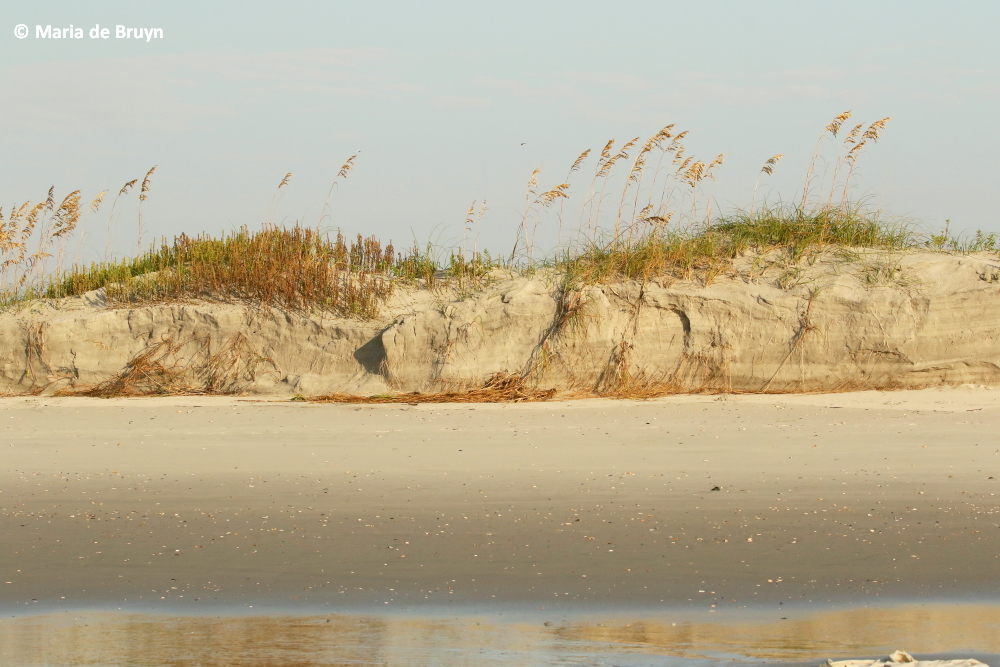
The south end of Topsail Island has been eroded greatly by the Atlantic storms, including effects from Hurricane Irma. Where normally the beach sloped up gently to beautiful dunes, these have now been sheared off vertically and the sea grasses and other vegetation before the dunes have been swept away.


That is of concern as the sea turtles nest there; hopefully, there will be sufficient places for their eggs next year. There were far fewer shells on the beach but at low tide the swath of empty sand was very wide.


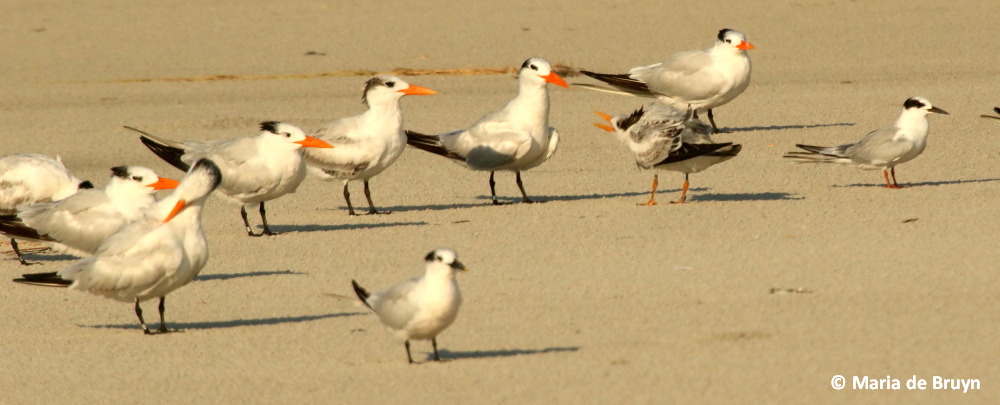
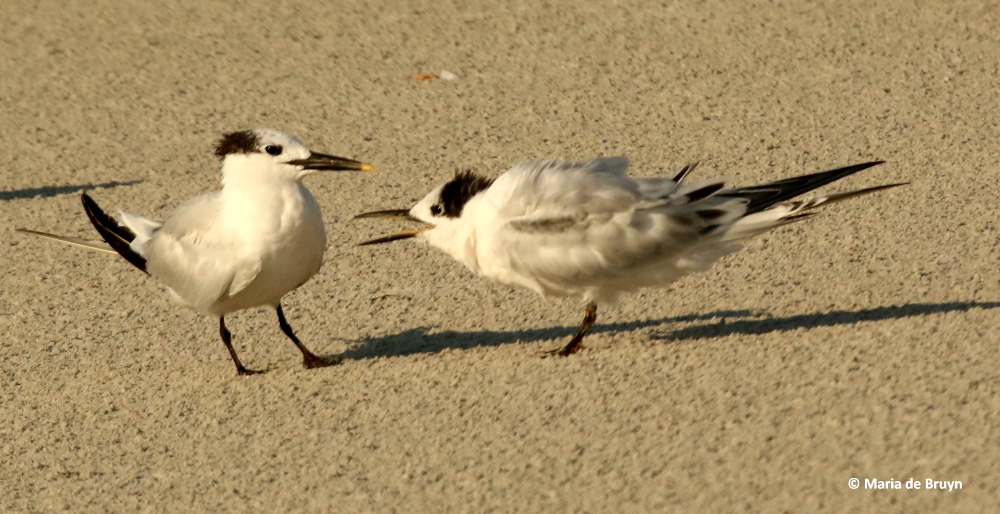
Mixed groups of birds were resting there in between ocean fishing expeditions. There were a couple immature common terns (Sterna hirundo) who were begging for food incessantly, but the adults pretty much ignored them, preferring to preen or settle down for a rest.

Some of the begging was pretty vigorous, accompanied by feather ruffling and shaking but I didn’t see any parents go off for food.

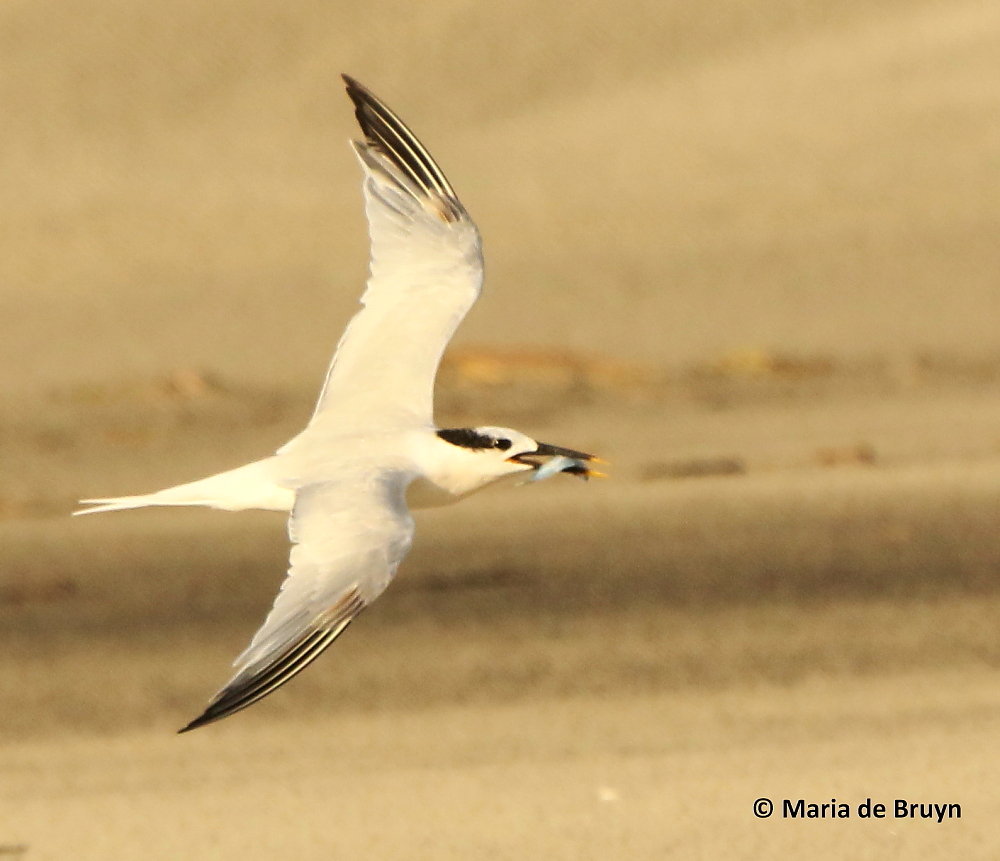
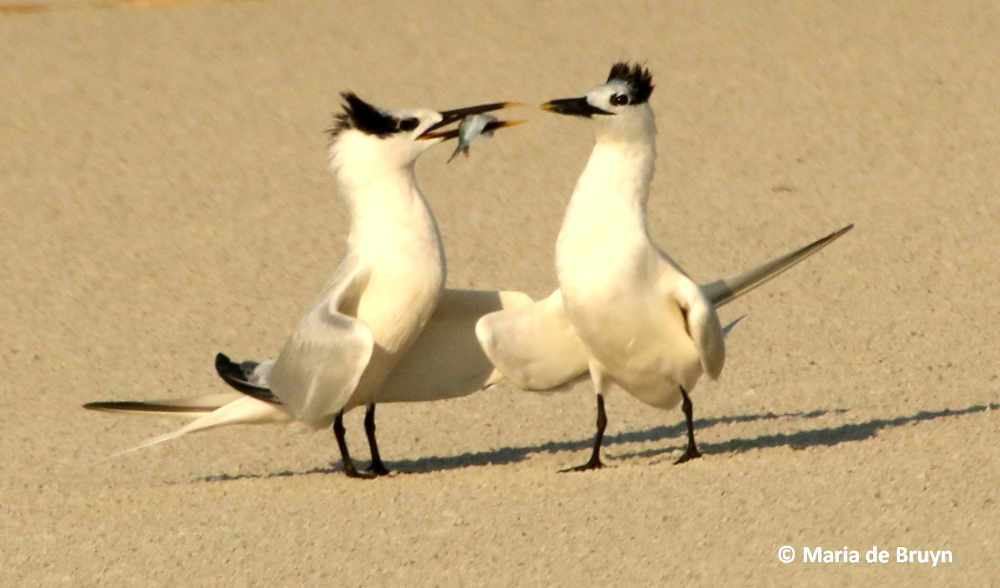
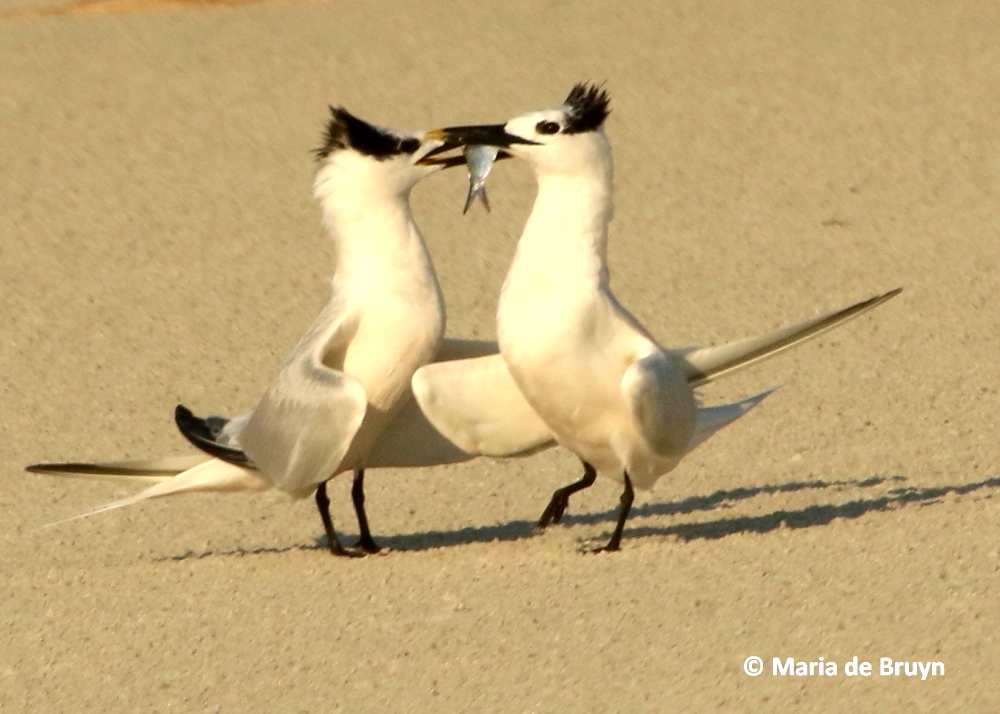
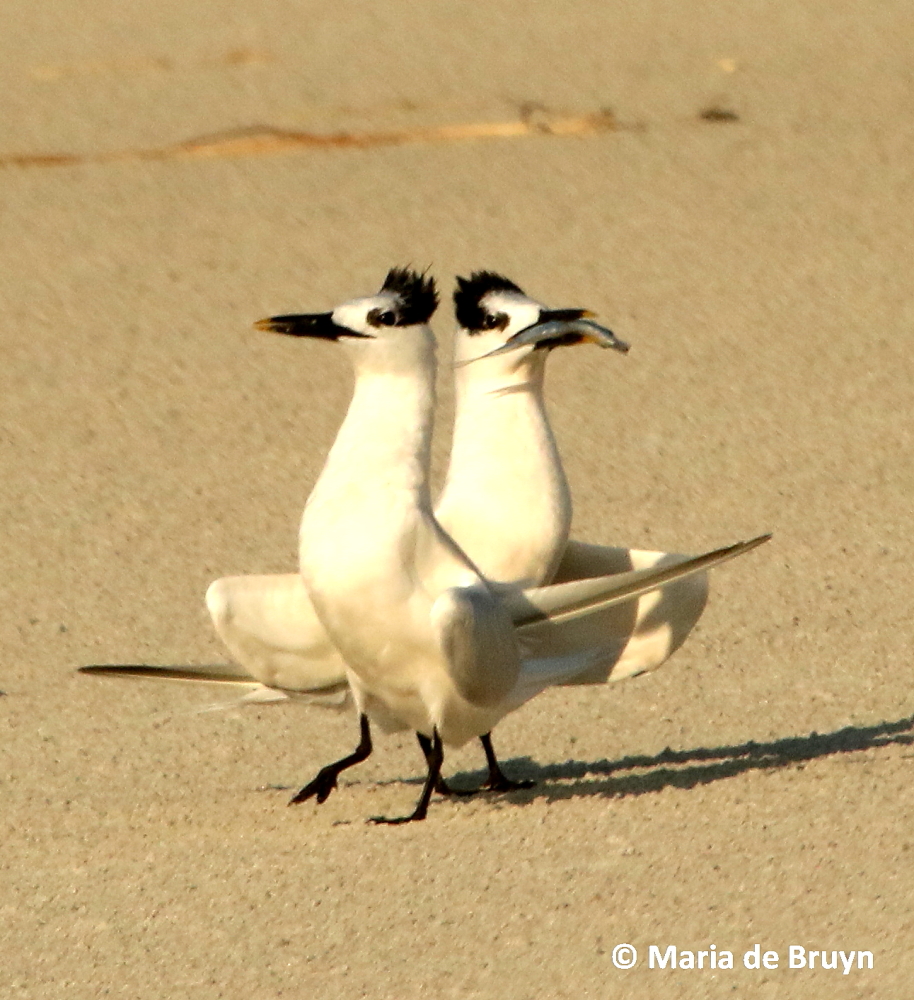
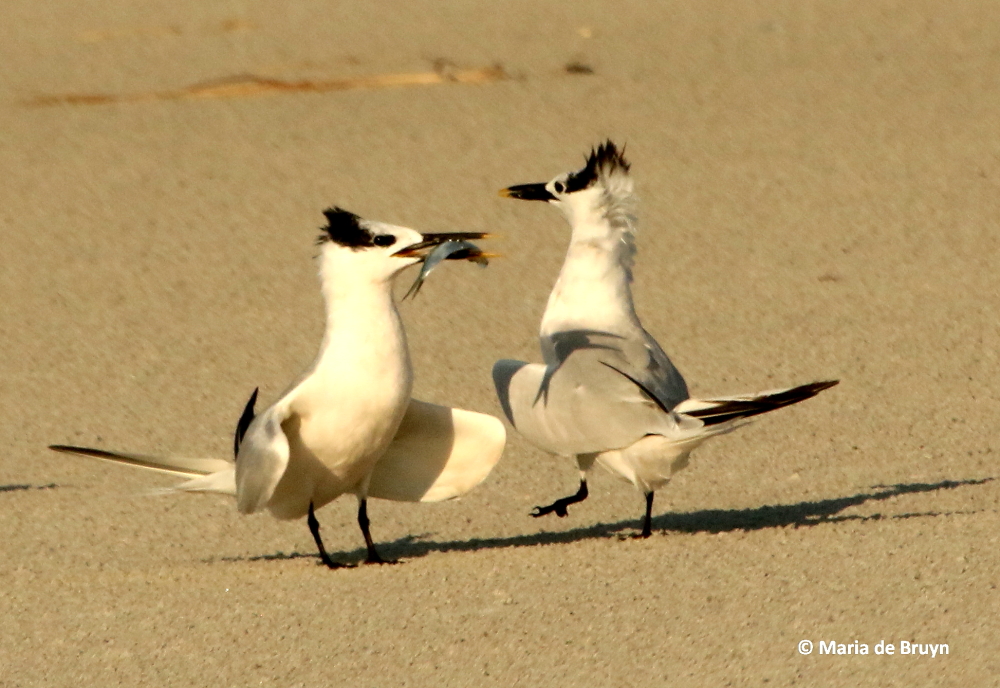
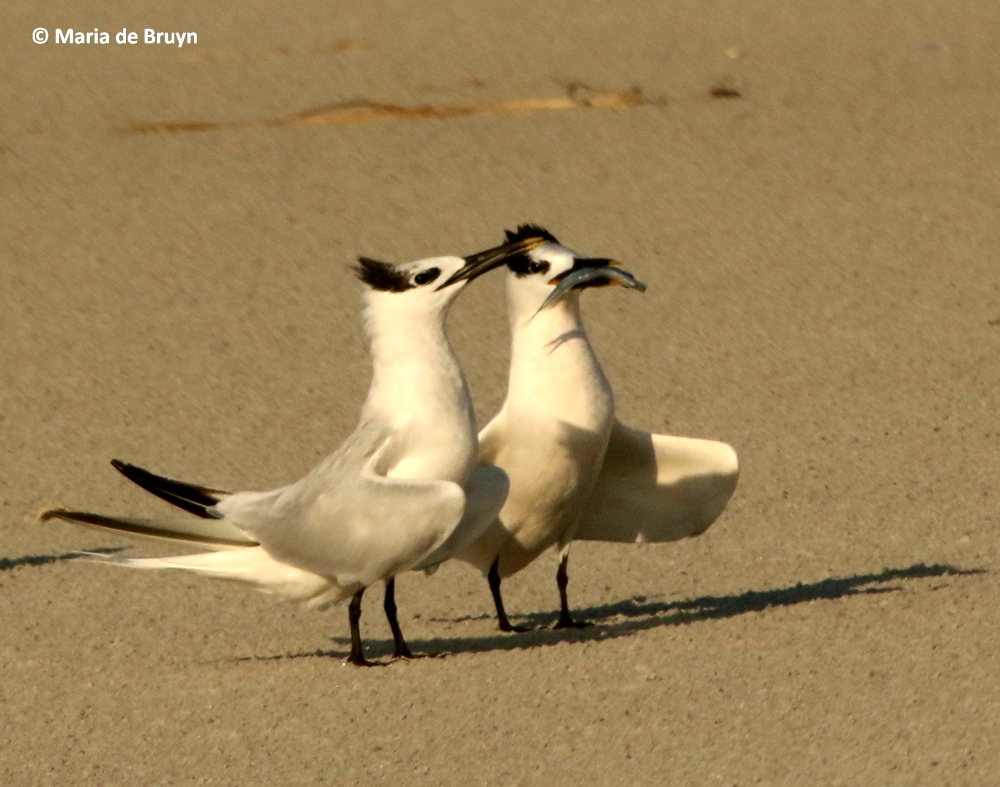
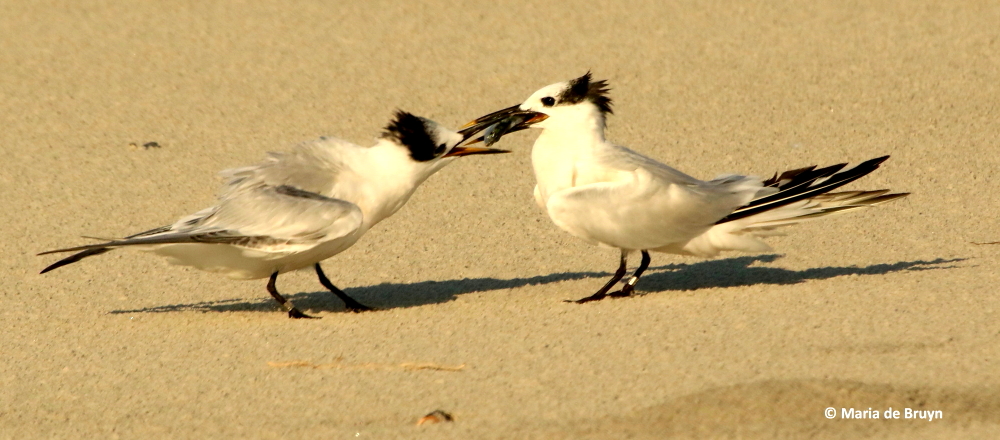
The sandwich terns (Thalasseus sandvicensis) were also resting but individuals took off frequently for a fishing flight. These terns are easily identifiable by the yellow tips on their black bills and their Groucho Mark hair-dos, a boon for people like me who are challenged in recognizing which shorebird they have before them. Sometimes, you could imagine a conversation taking place between them.

Hi! I’m back from fishing!

Didn’t take long, did it?

See, I got a fish!

Wanna smell it?

Not to your liking, huh?

Walking in circles around me won’t make it any different

I think I’ll go feed a young one!

There were two immature sandwich terns who were very persistent in asking for a meal.

Come on, Ma, I’m hungry!

I am really really hungry!

Oh yum, lunch!

That’s right, put it right here!

Thank goodness you brought me something!

I’m STILL hungry!

Perhaps the adult sandwich terns were accommodating to their young as they have a lot of experience in raising them – the oldest one on record lived in North Carolina and reached the ripe old age (for a bird) of 24 years and 2 months! (However, the oldest common tern on record was 25 years, so perhaps the sandwich terns are just more caring?)

The birds were quite entertaining to watch and I have more photos to share from that trip. I will try to intersperse them between postings on avian child-rearing. Have a nice day!