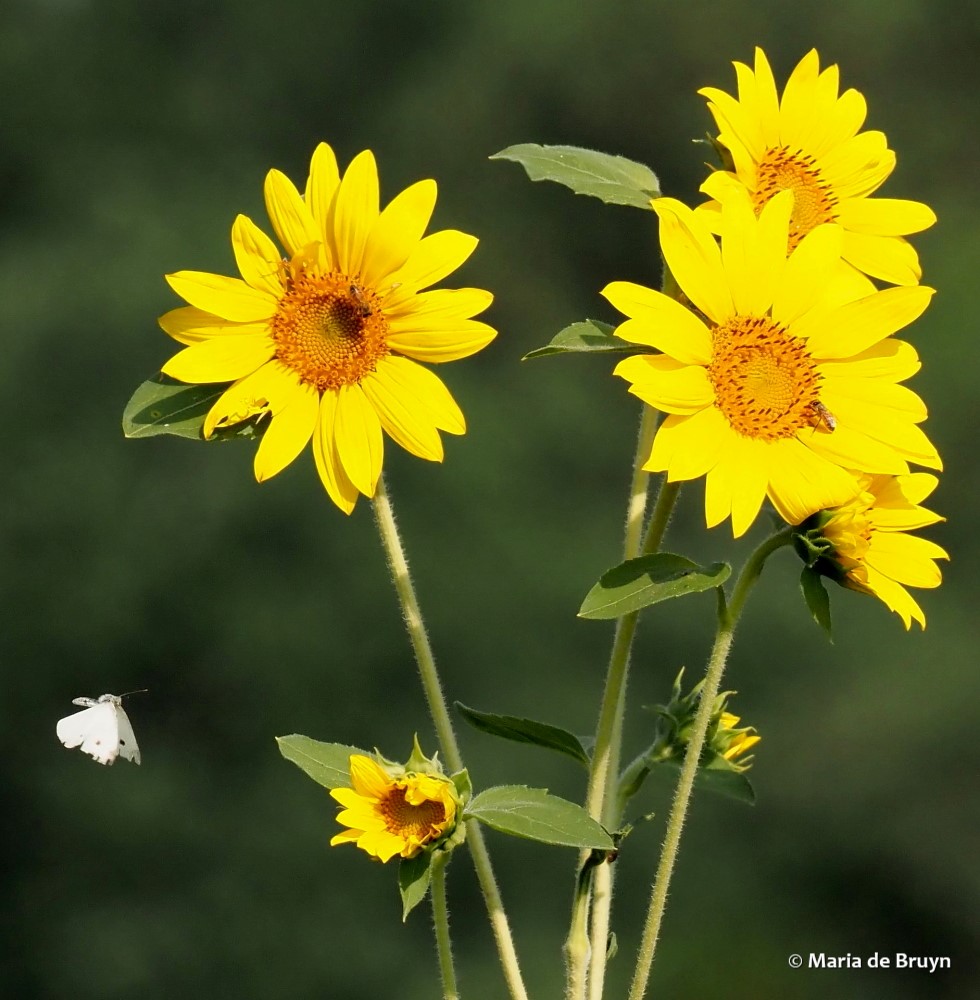
Last month, many residents of the county where I live were alerted to the eruption of profusely blooming sunflowers that were attracting both birds and people. The avians were looking for tasty seeds, as well as bugs attracted to the blooms, and the humans were seeking beauty and backdrops for photo portraits.
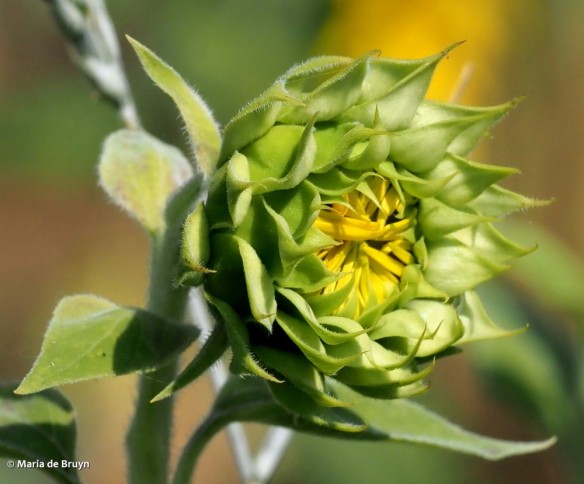
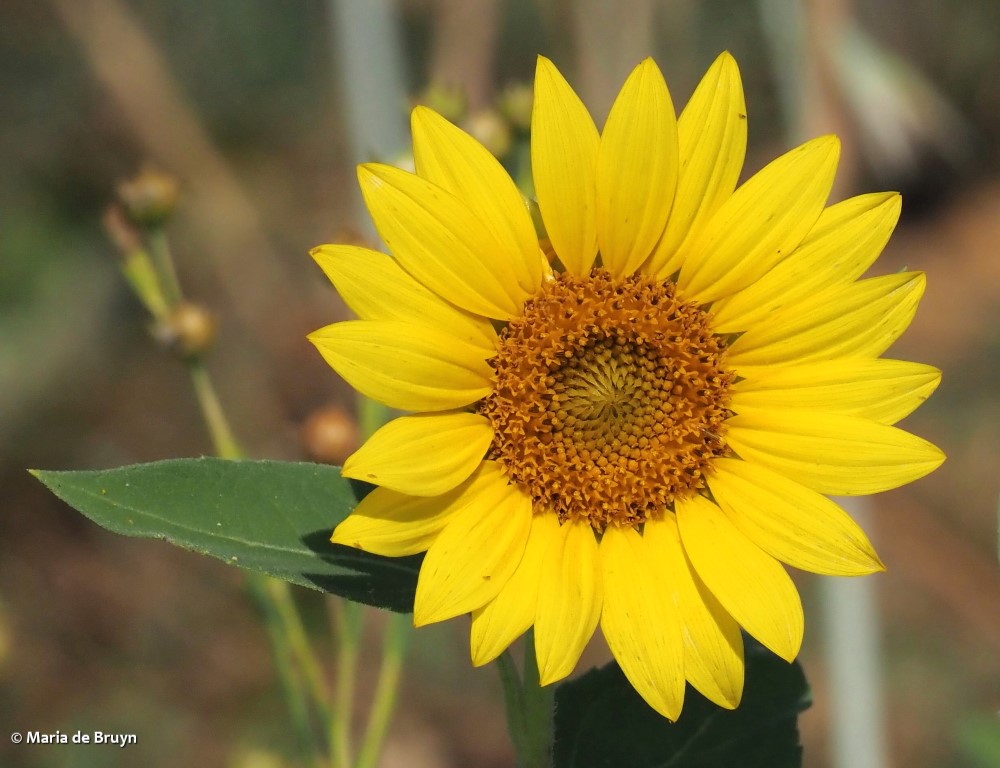
Sunflower fields are so popular in our area that they feature on the TV news and in online tourism guides. The NC Museum of Art has sunflower fields and offered a sold-out Sunflower Photography Workshop.
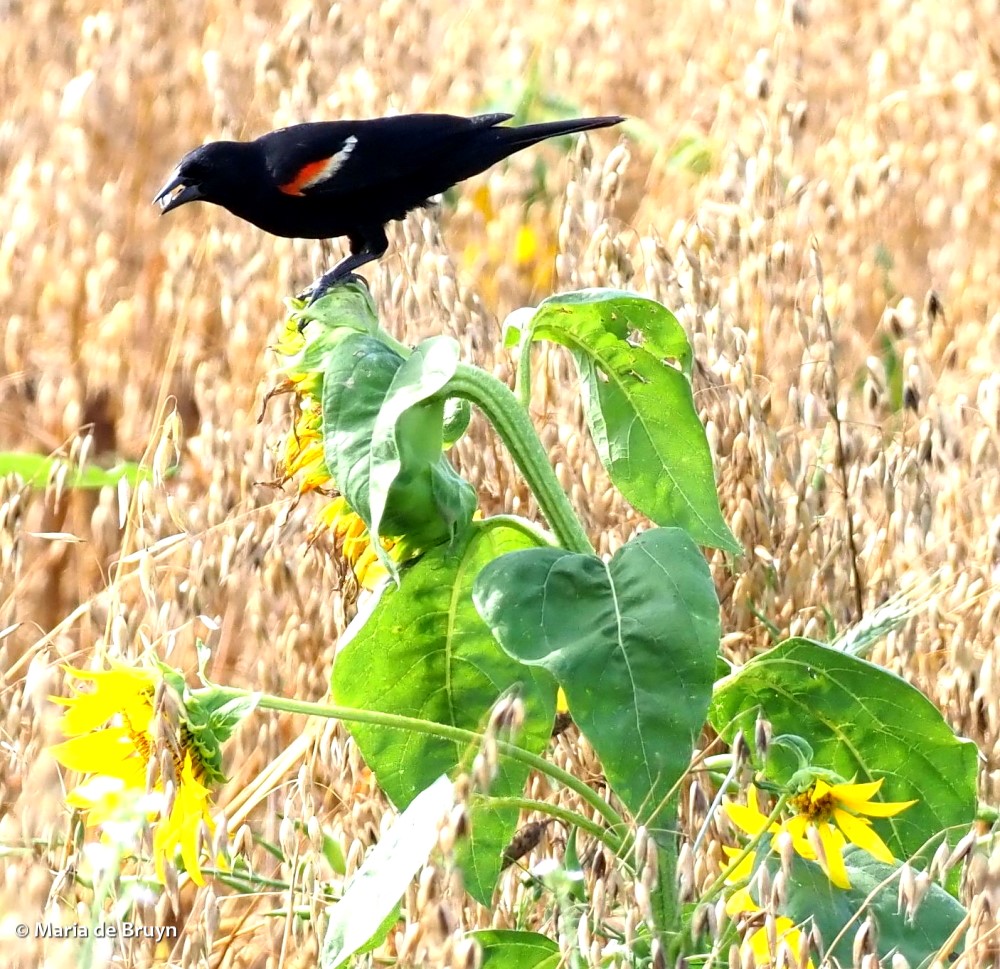
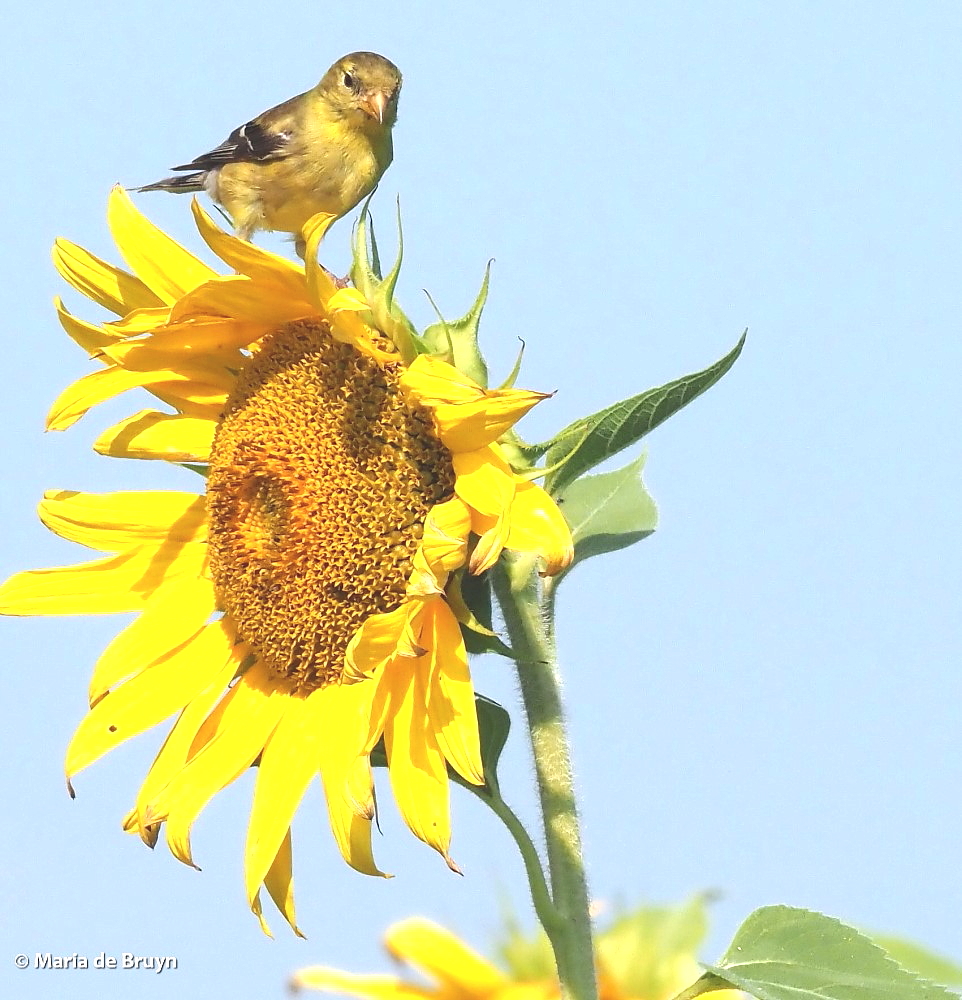
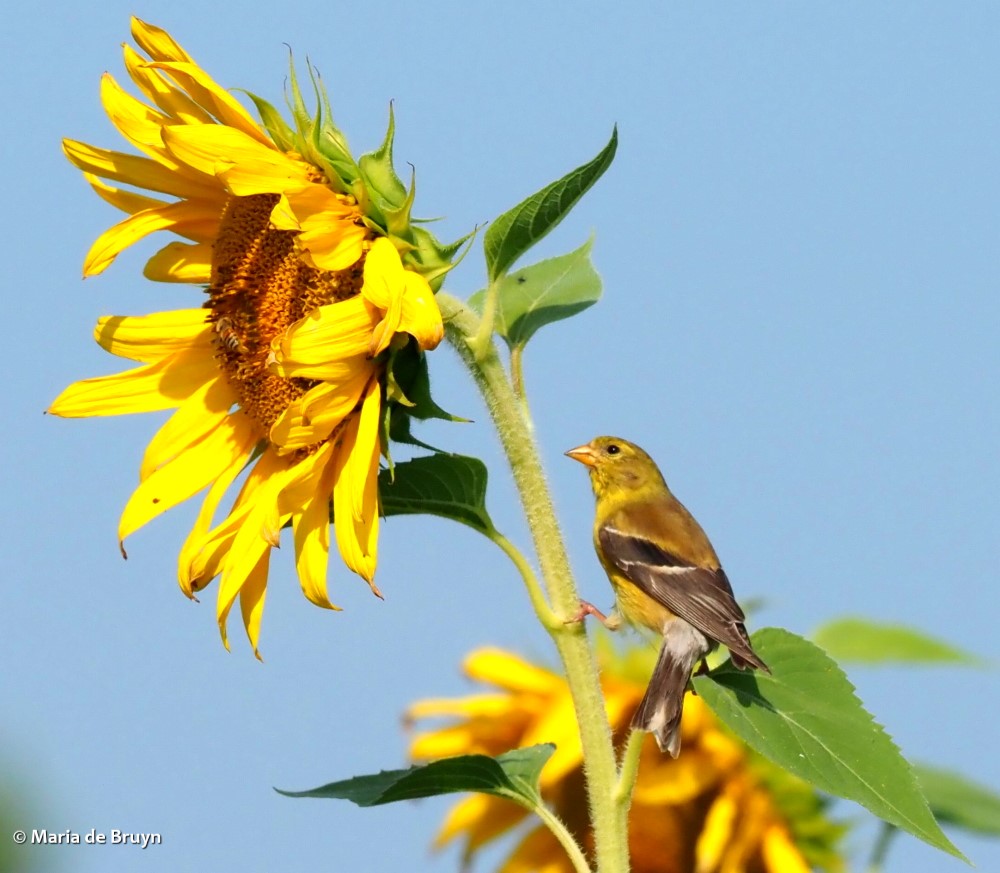
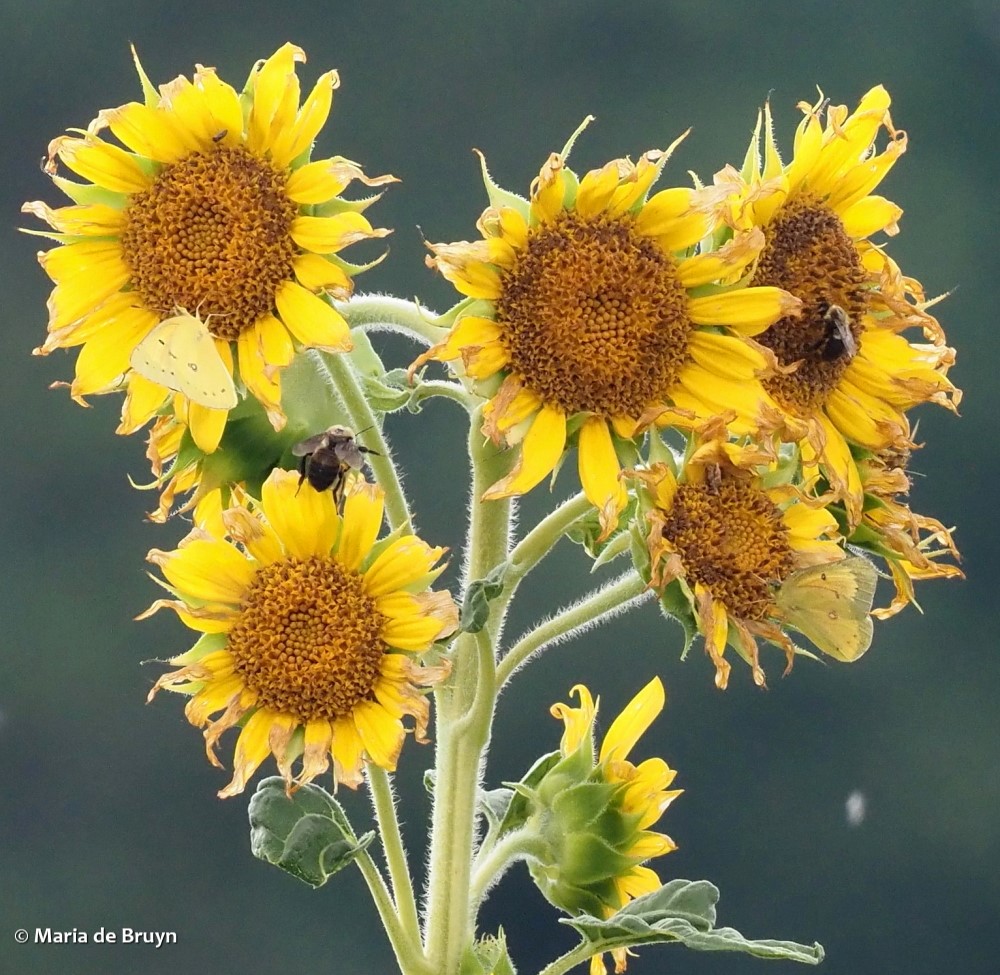 Many birds love sunflower seeds, but it can be difficult to see the foragers as they may be dining at blooms lower down on stems. The bright blue indigo buntings are sometimes easy to spot but I couldn’t get photos of them feeding. Red-winged blackbirds (Agelaius phoeniceus) and American goldfinches (Spinus tristis) will often perch atop a bloom to peck away at the ripening seeds.
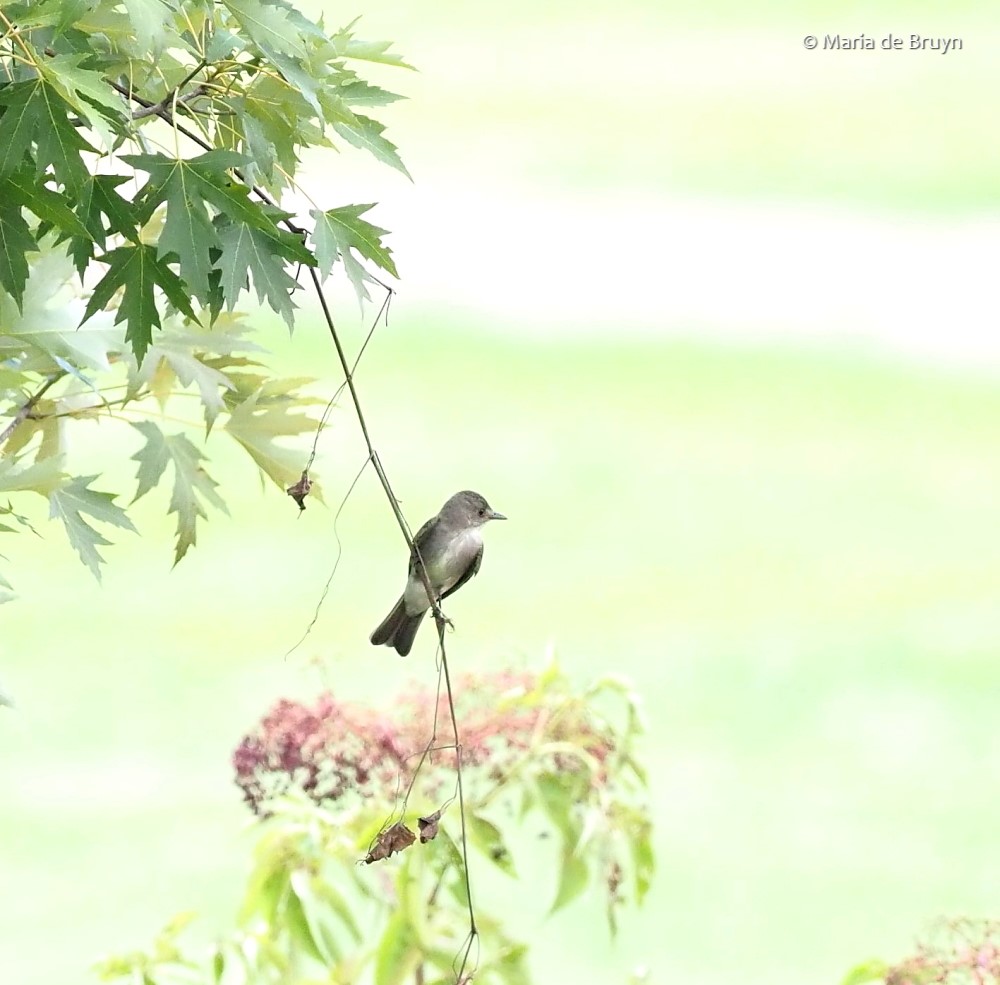
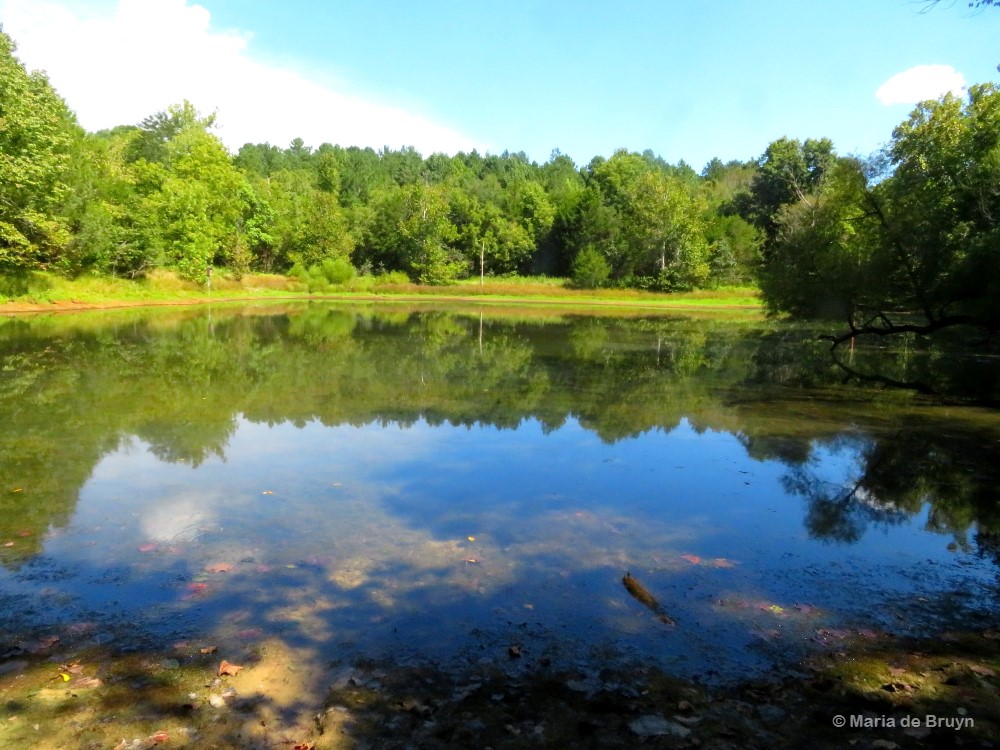
Other birds were active in the vicinity of the fields, but I didn’t see them at the flowers. For example, the Eastern wood-pewee (Contopus virens) stayed in the vicinity of a nearby pond while I visited.
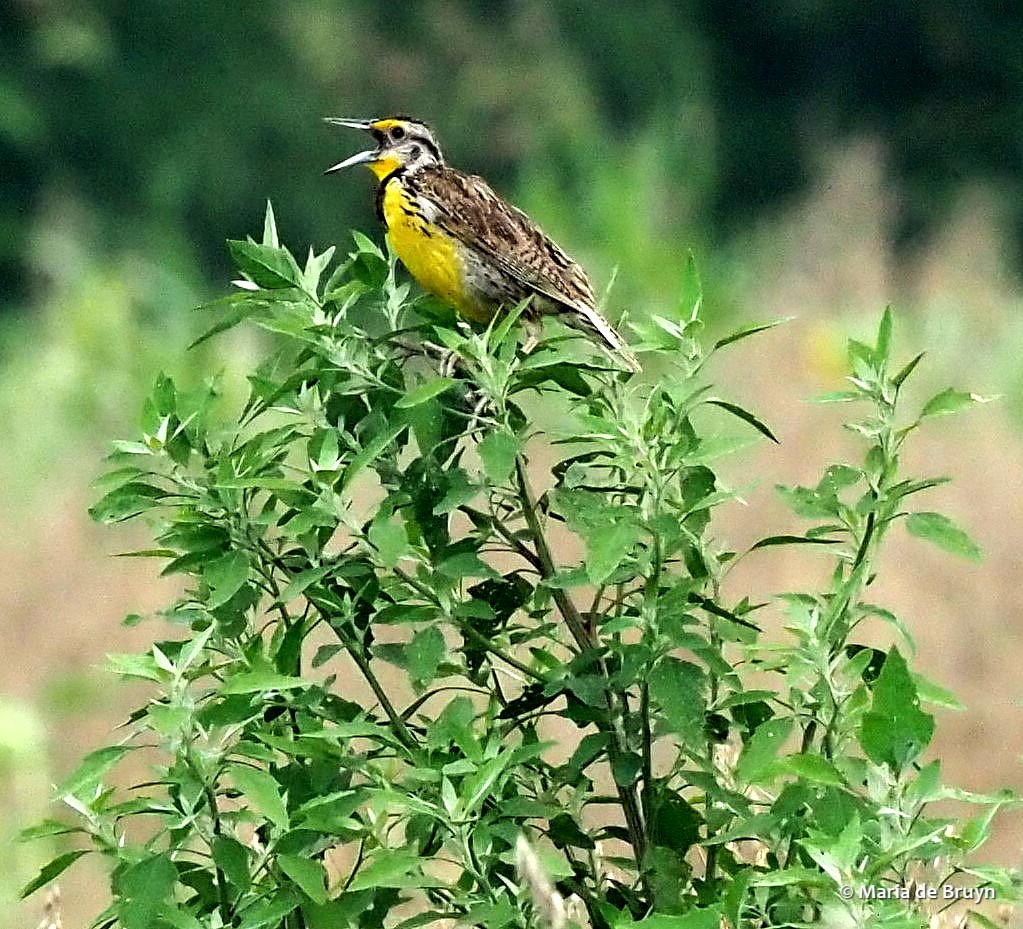
 The Eastern meadowlarks (Sturnella magna) flitted about in nearby meadows. I didn’t see them among the sunflowers.
 It’s not only the birds and people that like sunflowers, however. A field of these flowers is a boon for pollinators. The Orange County fields that I visited featured hundreds of butterflies. The most numerous were the orange sulphurs (Colias eurytheme).
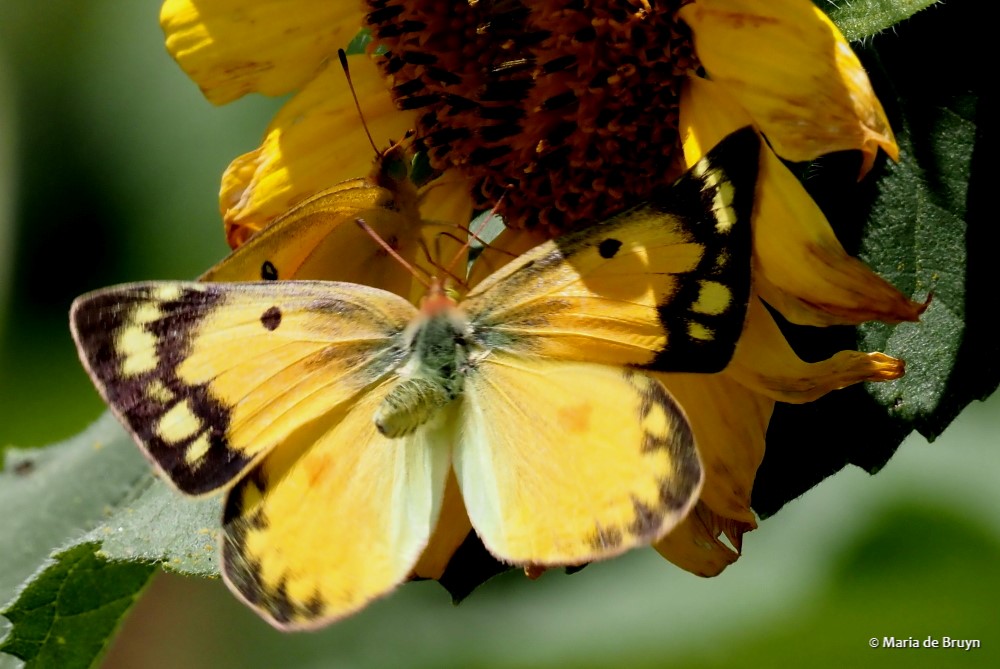
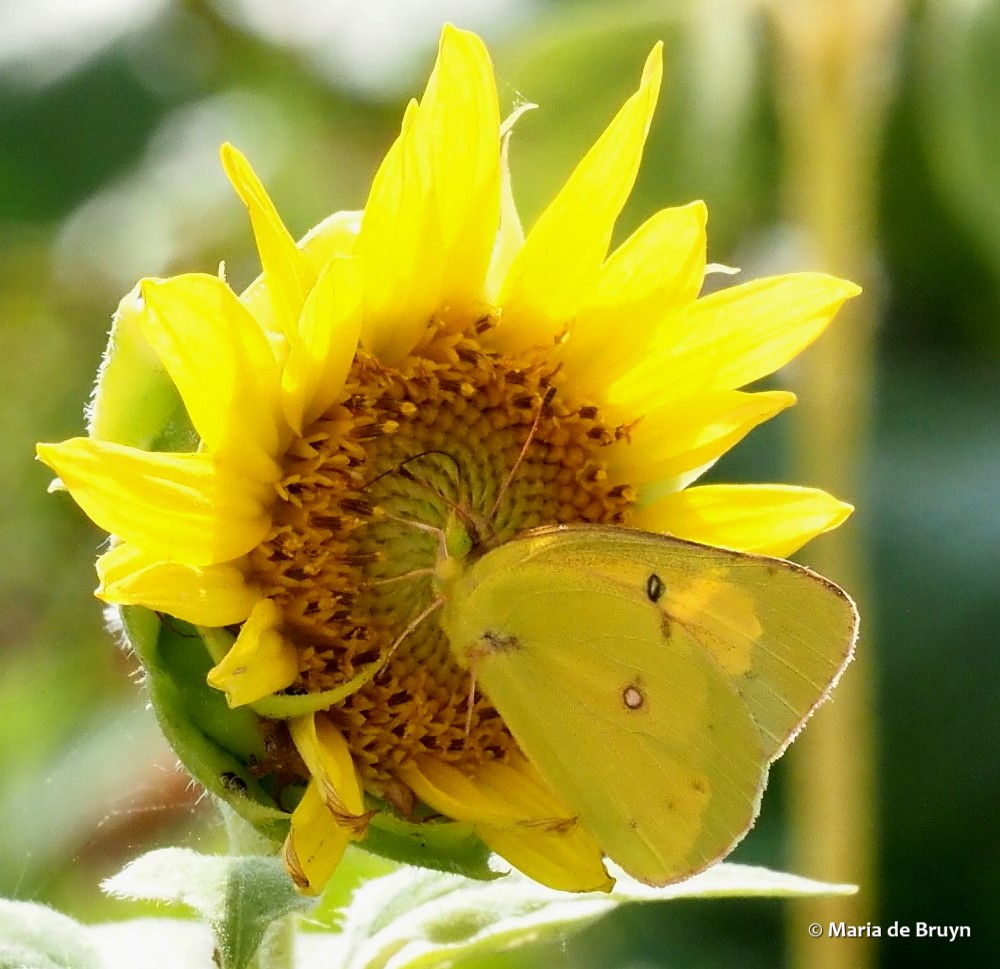
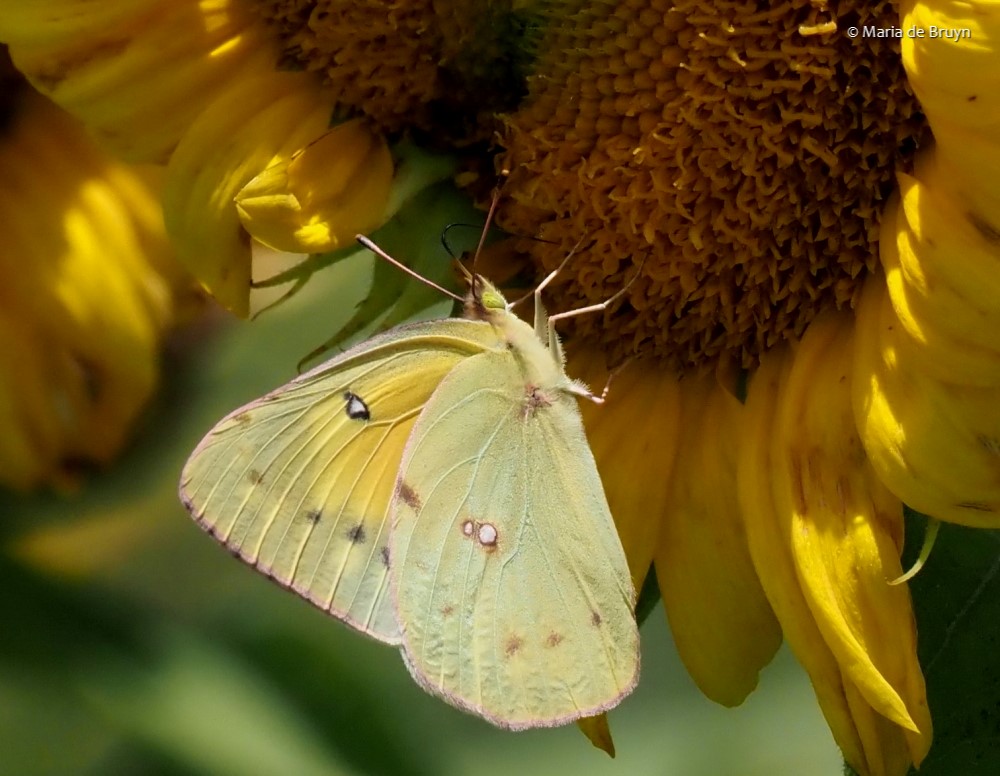
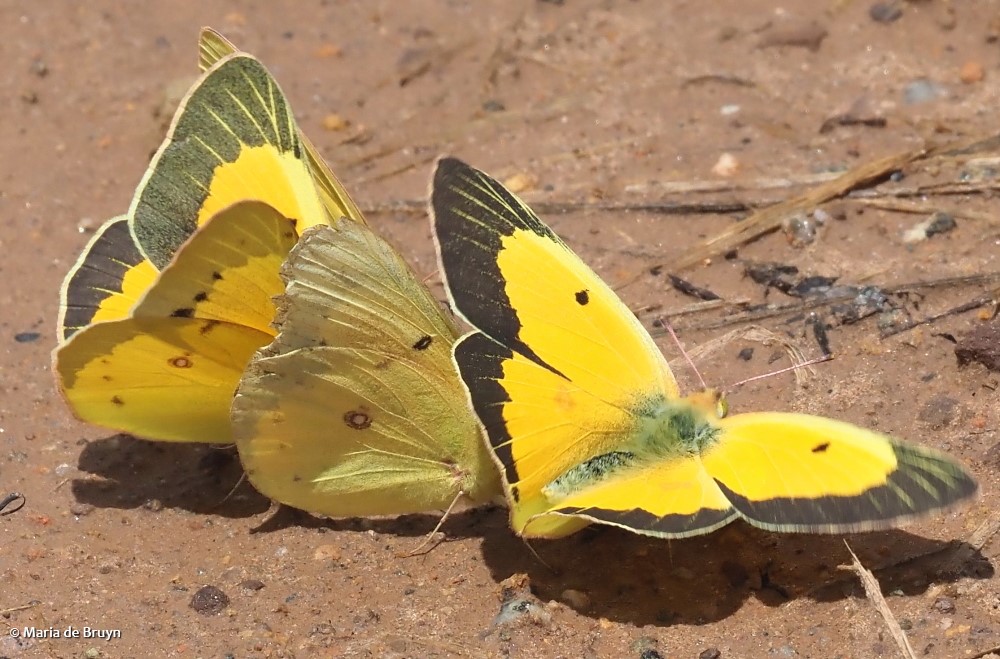
As I watched, pairs of sulphurs would often flutter around one another, ascending high up in the air. It was interesting to see that two types of female orange sulphurs were present. Some were yellow-hued like the males; others were whitish in color, known as the Alba variant.
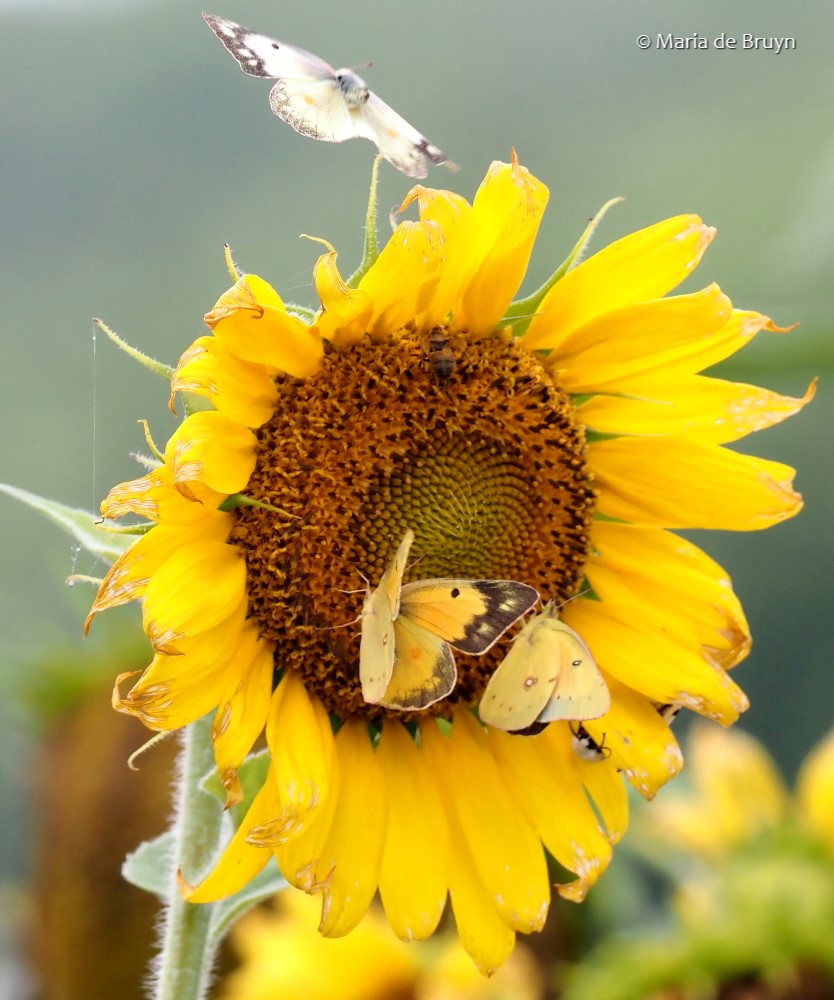
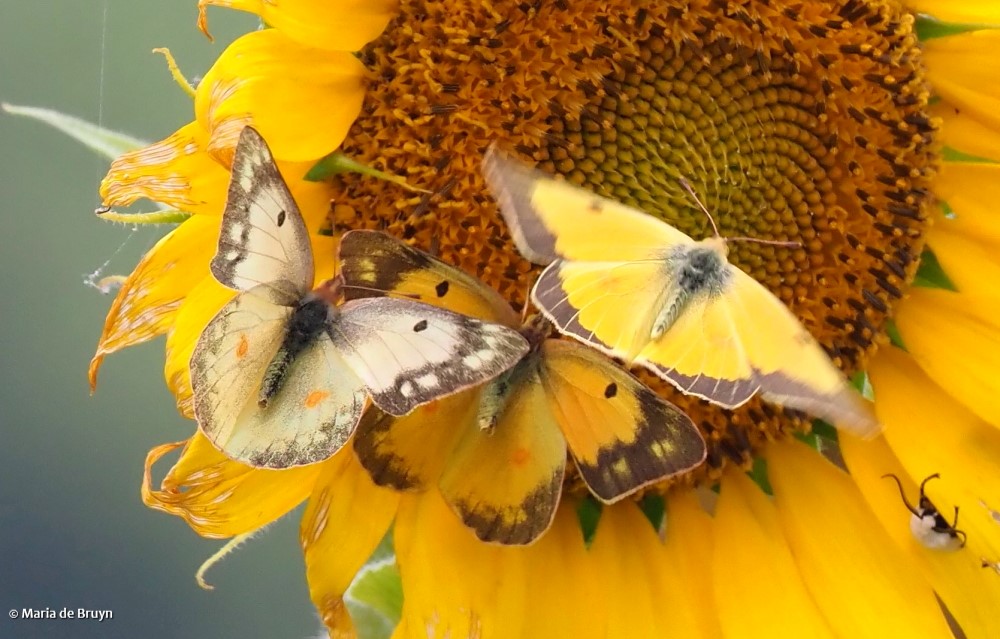
These sulphurs are also known as alfalfa butterflies and the larva is sometimes called the alfalfa caterpillar. An interesting fact about these sulphurs is that the males’ hind wings have an ultraviolet light reflectance pattern, while the females’ hind wings have an ultraviolet absorbing pattern so that they can be distinguished in flight.
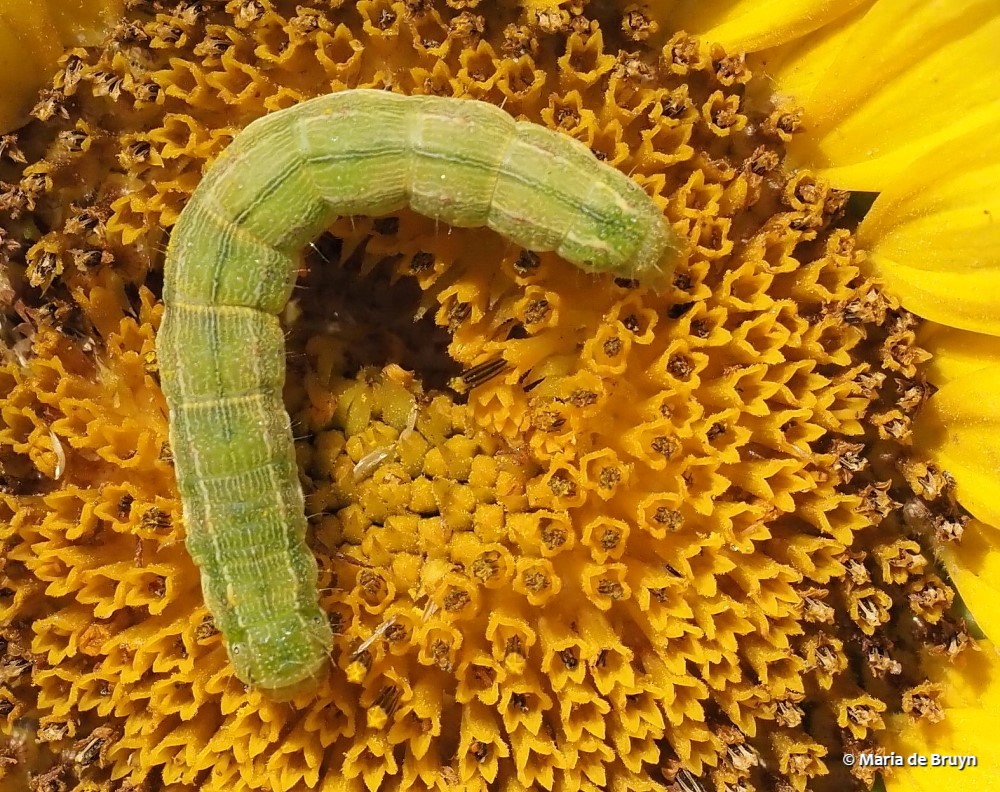
Another abundantly present butterfly species were the cabbage whites (Pieris rapae), which were accidentally introduced into North America around 1860. They didn’t seem attracted to the sunflowers per se but instead were fluttering around and landing on the other flowering plants mixed in with them.
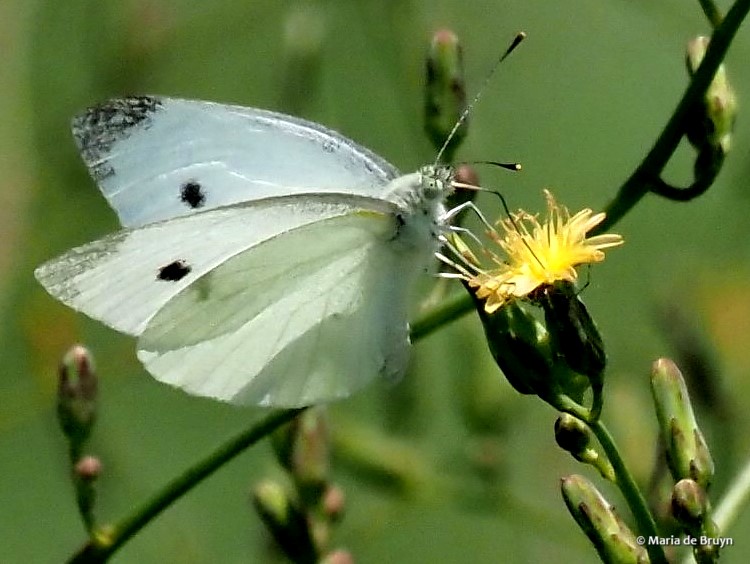
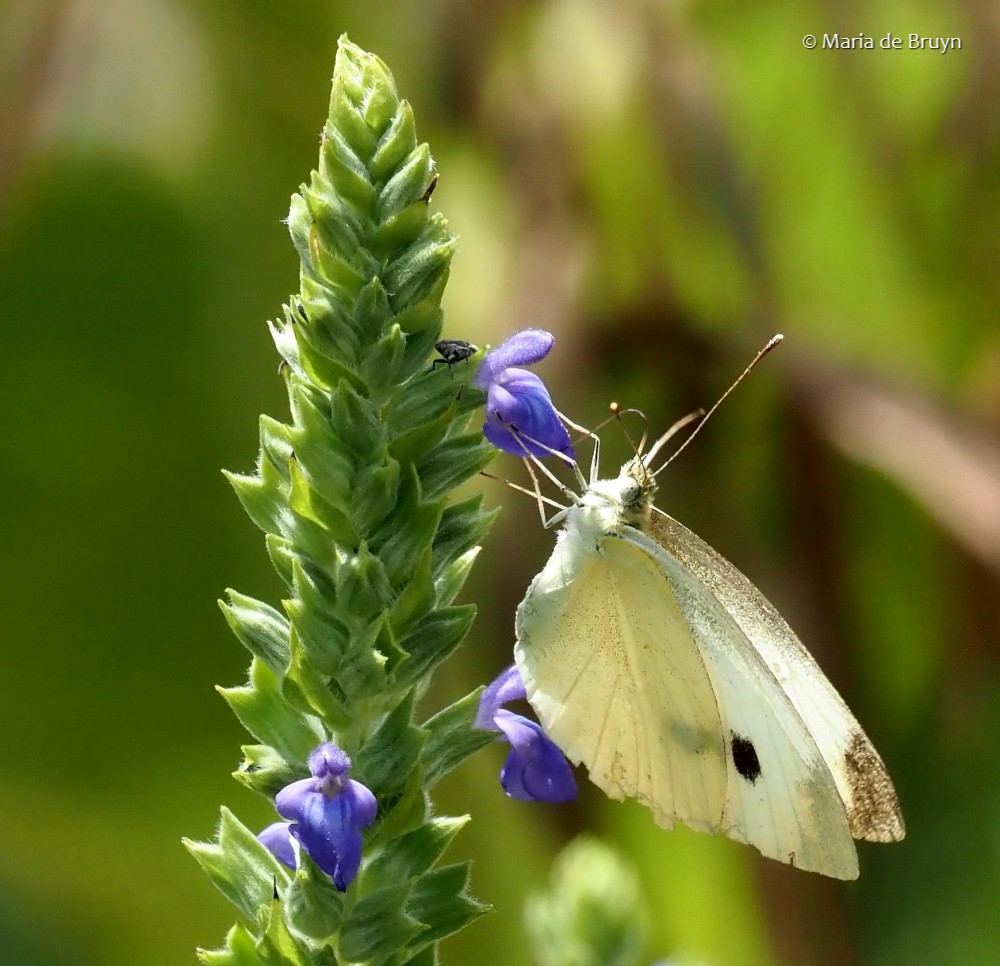
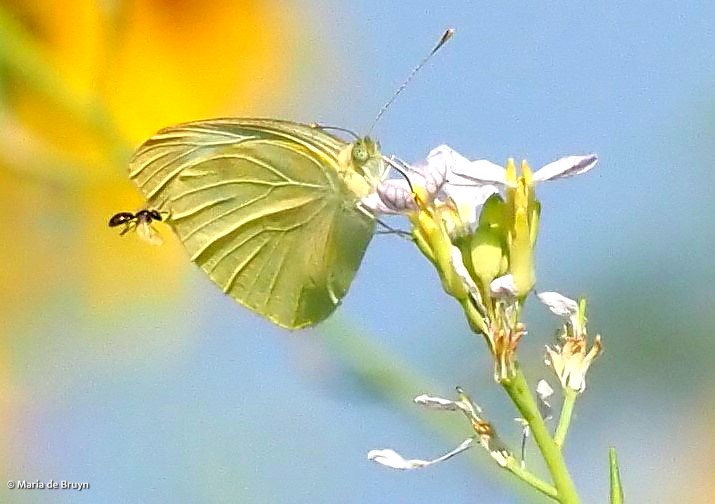
Of these small butterflies had me stumped for an ID at first; it was yellowish in color and didn’t have prominent black spots. However, an entomology expert on BugGuide assured me that it was a cabbage white.
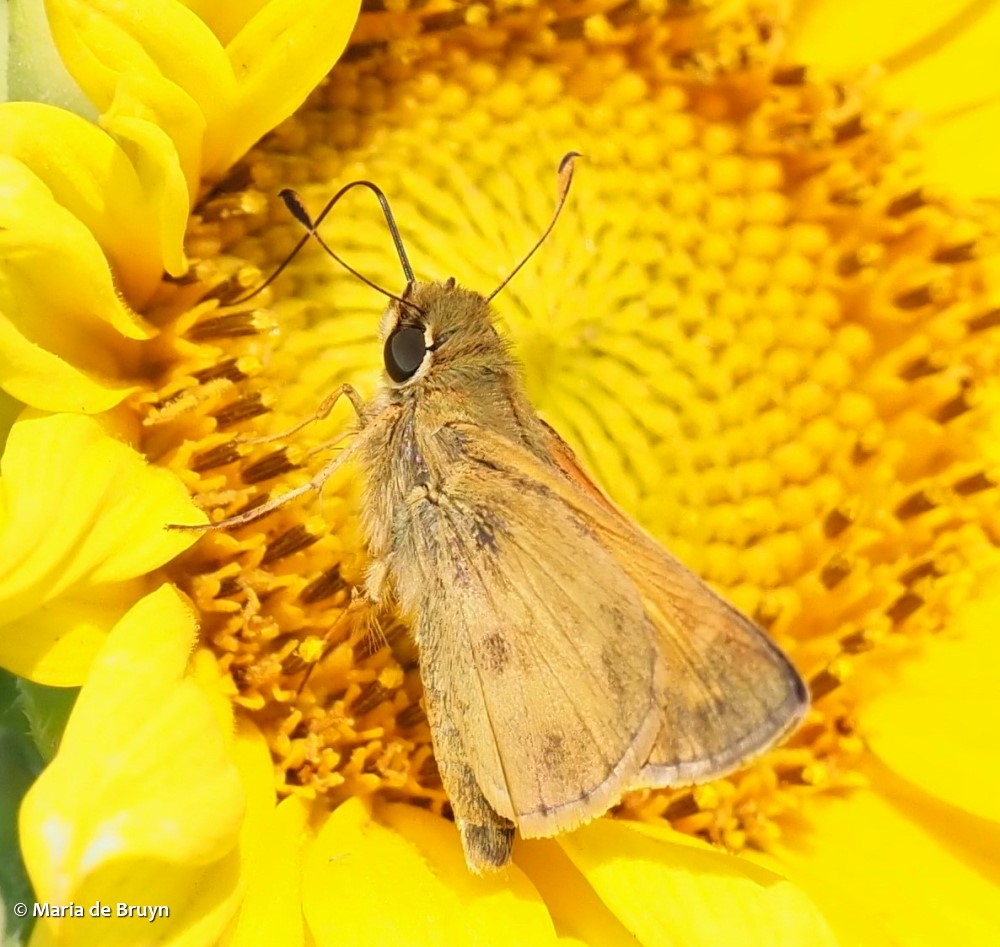
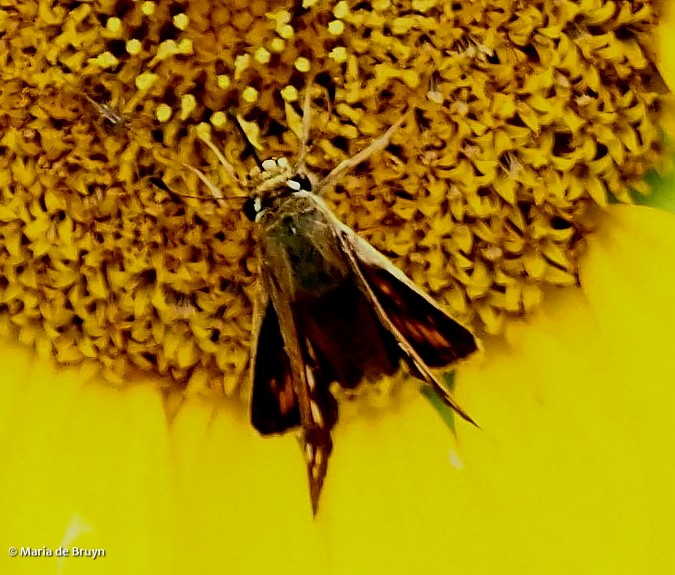
 Various types of skipper butterflies were feeding on the sunflowers.
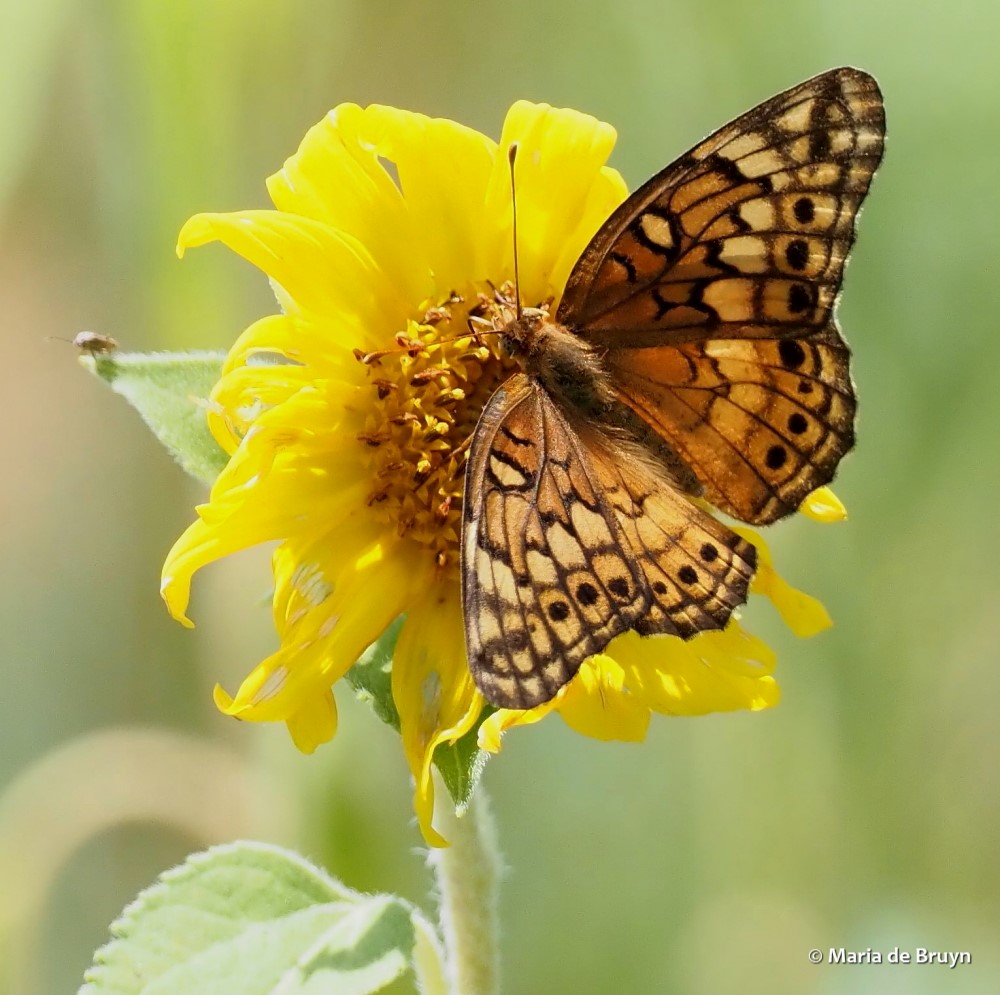
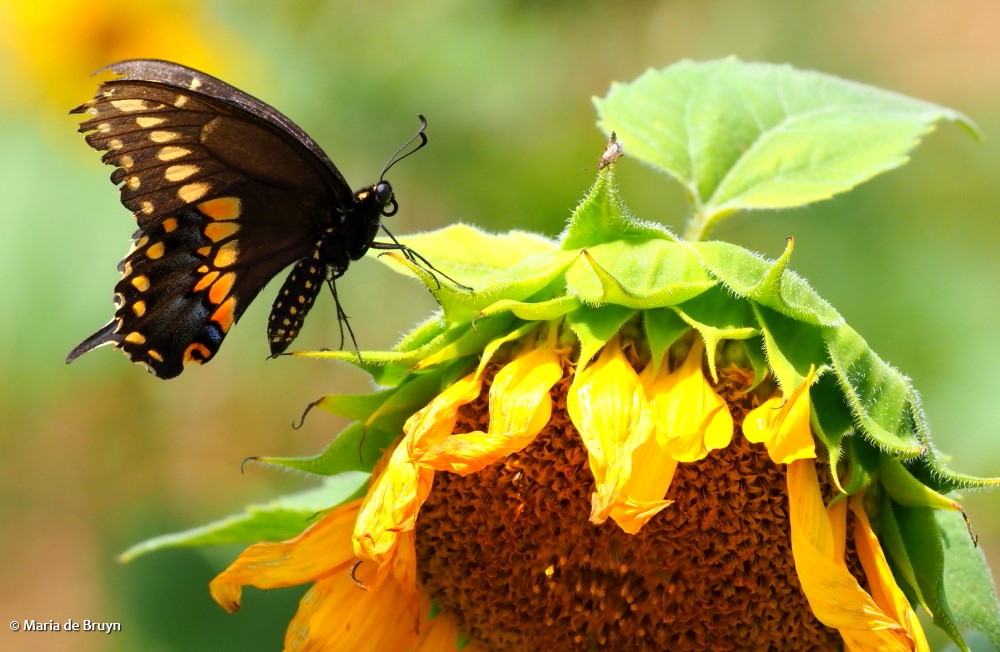
 There were a few variegated fritillaries (Euptoieta claudia) visiting the sunflowers and an occasional black swallowtail (Papilio polyxenes) fluttered into view as well.
Both the cabbage whites and orange sulphurs were visiting muddy spots at a nearby pond.
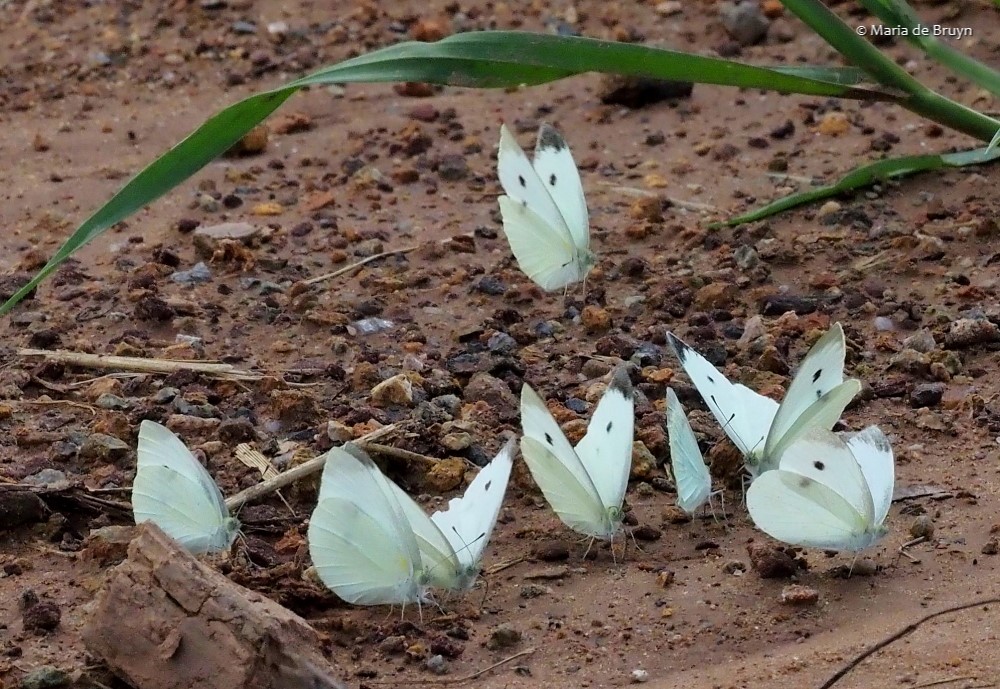
This behavior is known both as mudding and mud-puddling and occurs when the butterflies are looking for certain nutrients in mud and rotting plant matter.
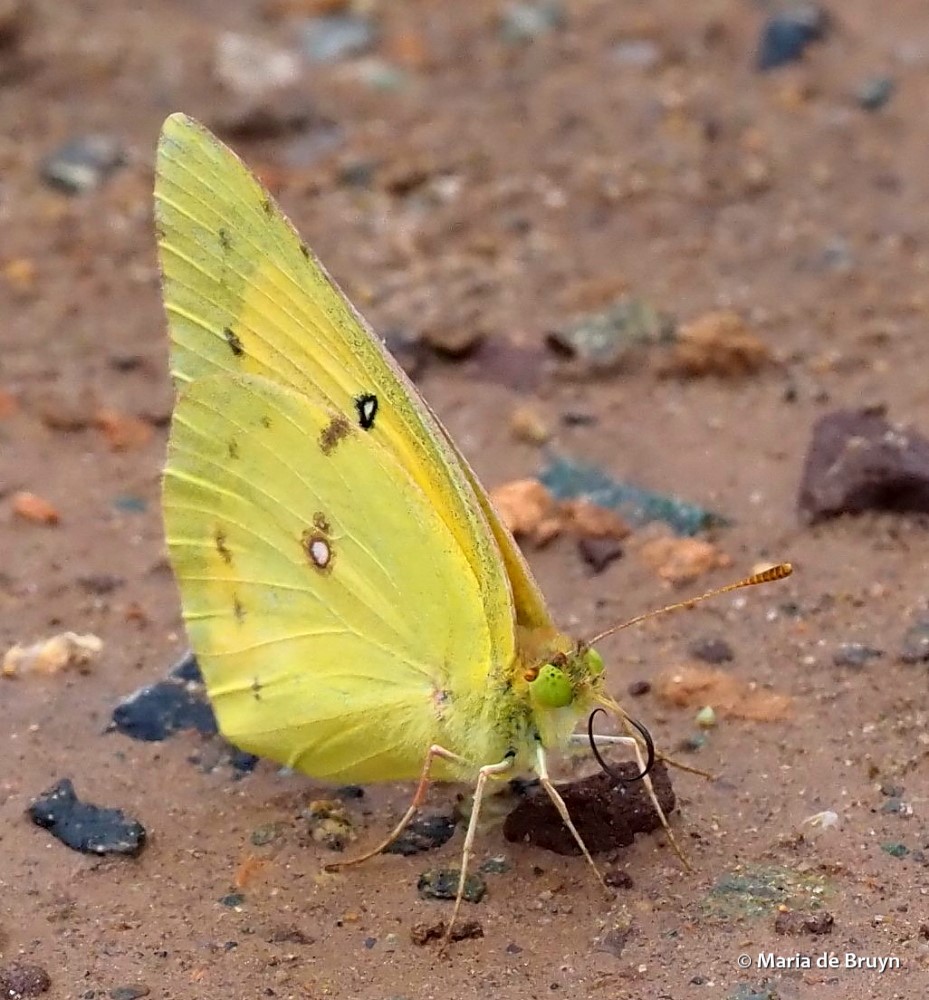 Observations have indicated that most of the puddling butterflies are males who often appear to be ingesting salts and amino acids. These substances seem to improve the males’ reproductive success and they transfer these compounds to females when they mate. The nutrients then contribute to the survival of the deposited eggs. Wouldn’t it be interesting if human males could transfer nutritional benefits to offspring in that way?
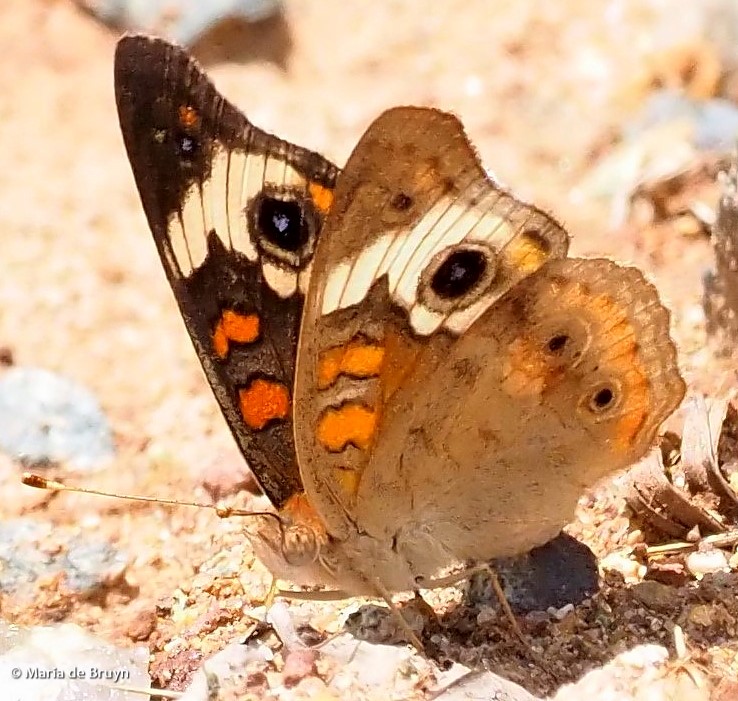
A latecomer to the puddling parties was a lone common buckeye butterfly (Junonia coenia Hübner). This species generates several generations of offspring each summer and I’m always pleased to see them in my own yard.
 Next blog: the sunflower field visit continues with some other numerous visitors!











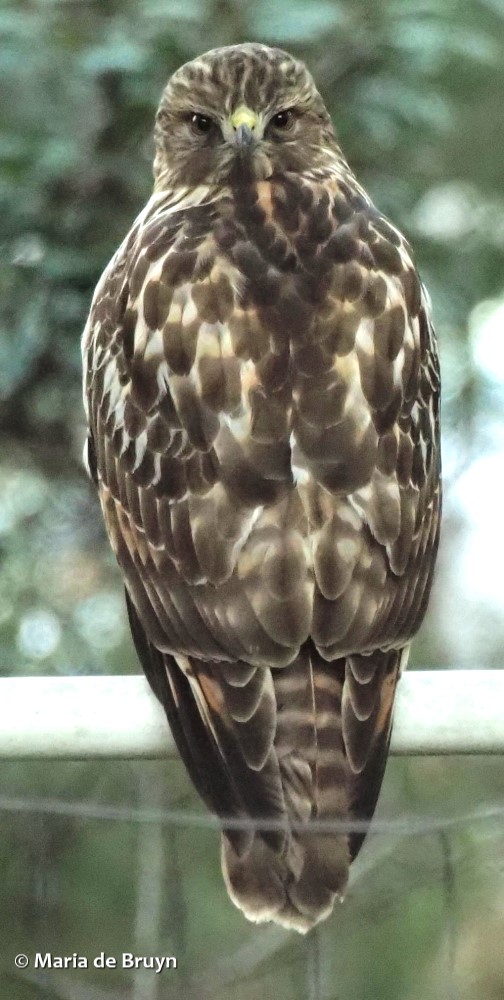
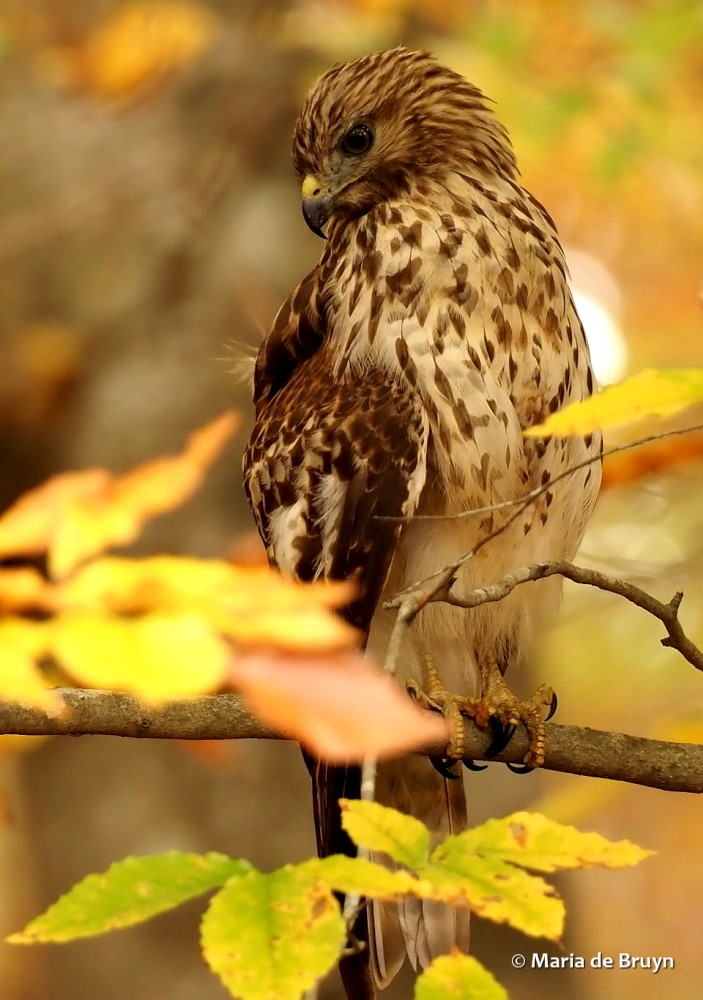
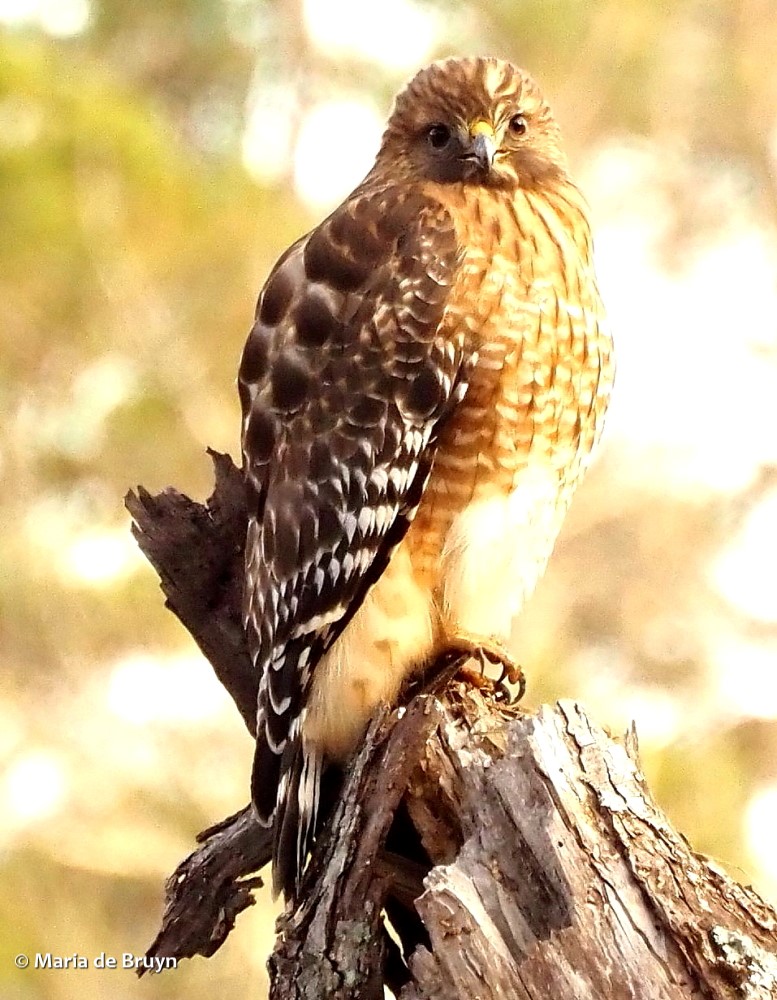
 When facing unpleasant challenges, it’s helpful to have an interest to help put them mentally aside while you find enjoyment doing something else. Observing and connecting with wildlife and plant life does that for me. For at least a while, I can think, “I don’t give a shit,” and instead focus on what’s going on immediately around me, like the red-shouldered hawk (Buteo lineatus) above actually giving a shit. 😊
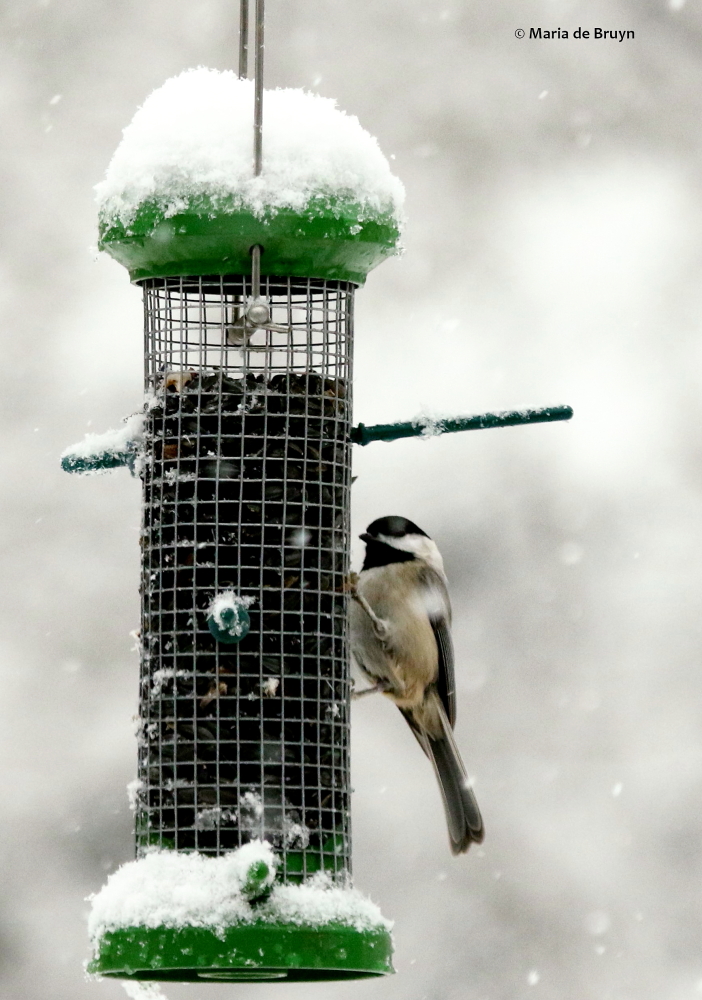
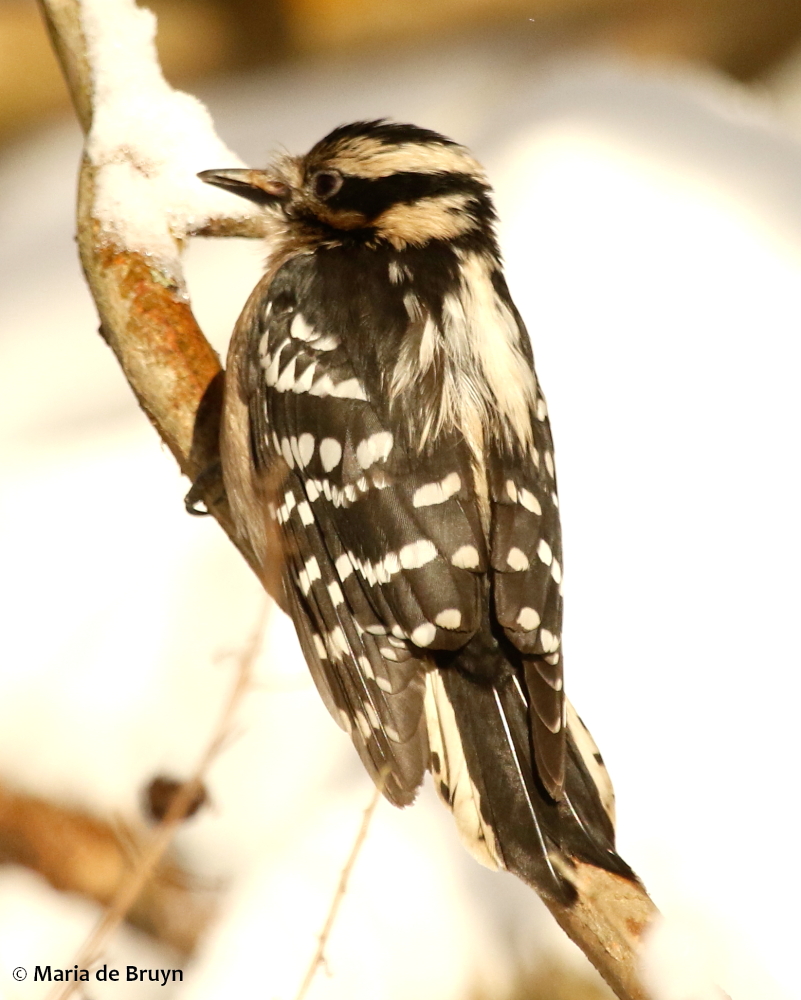
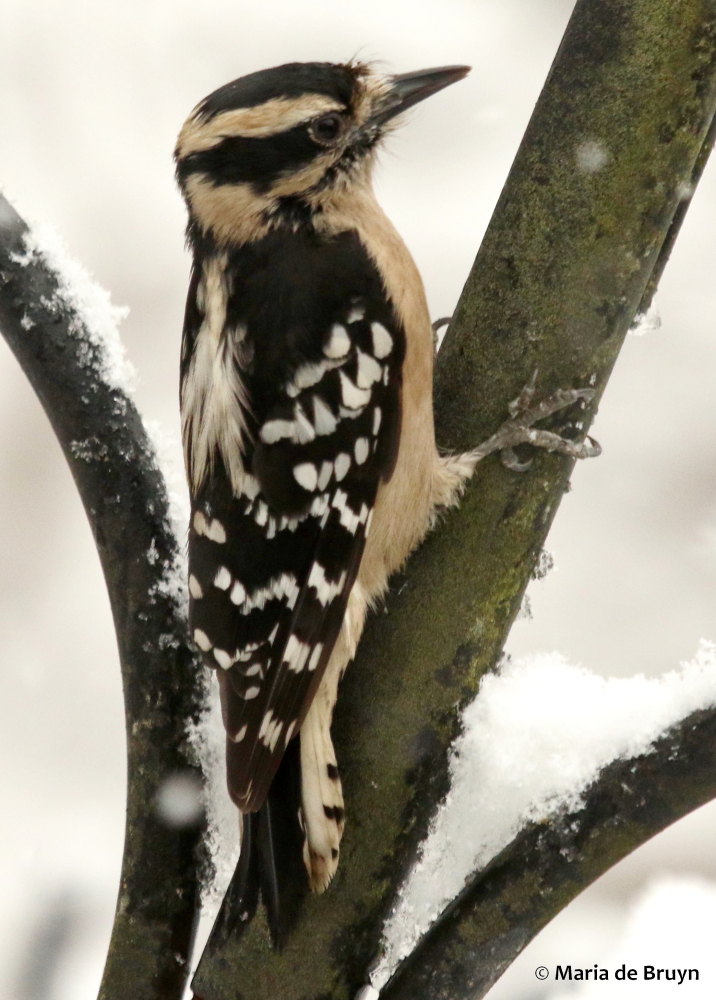
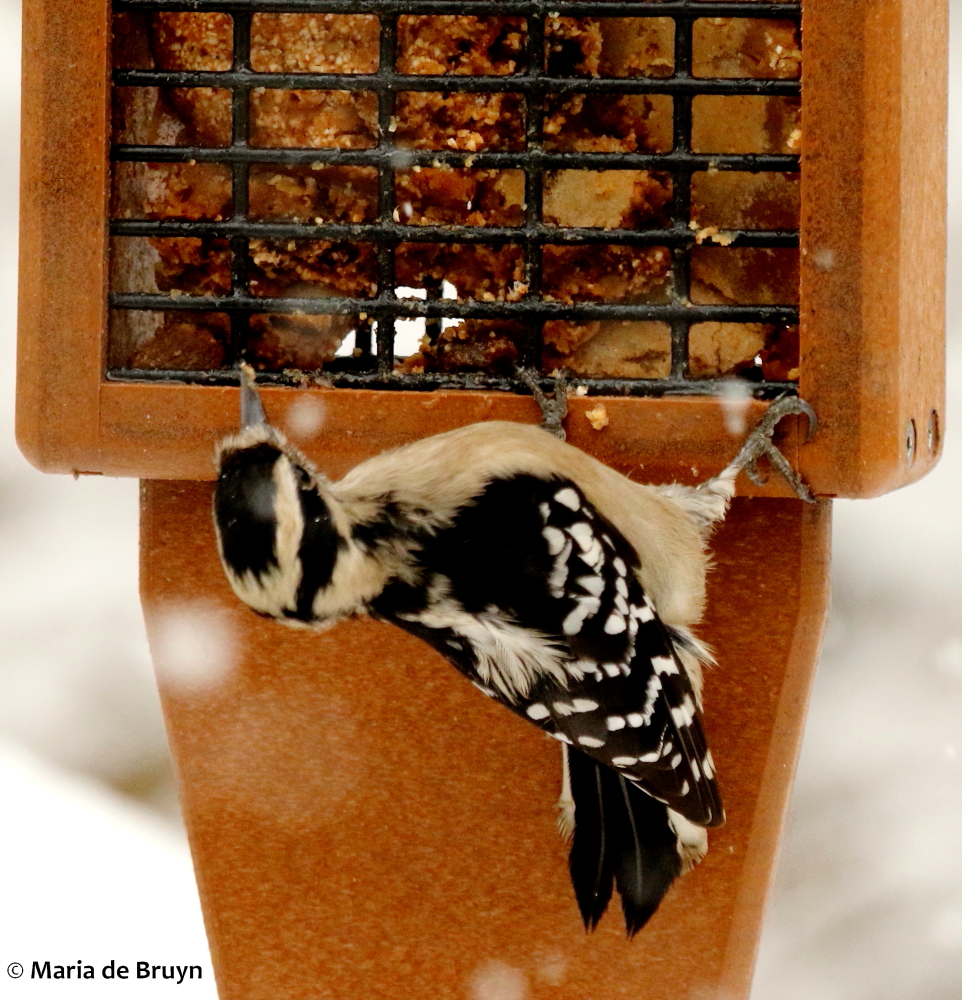
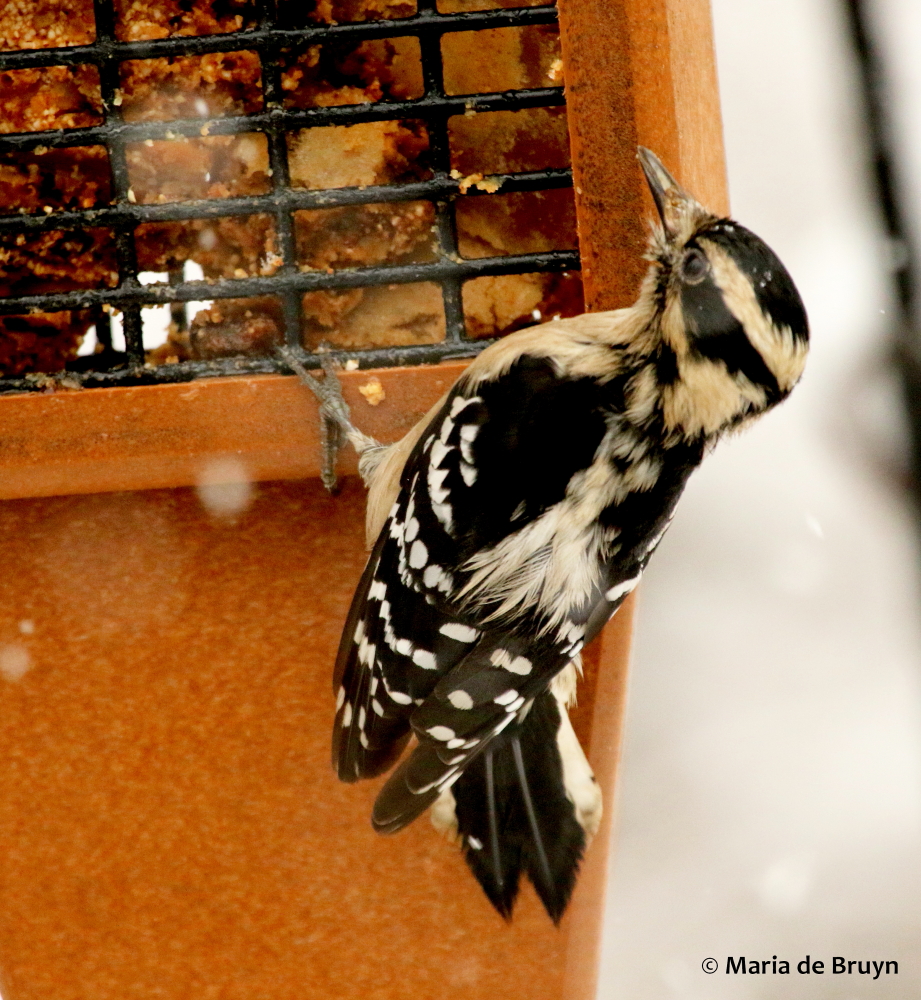
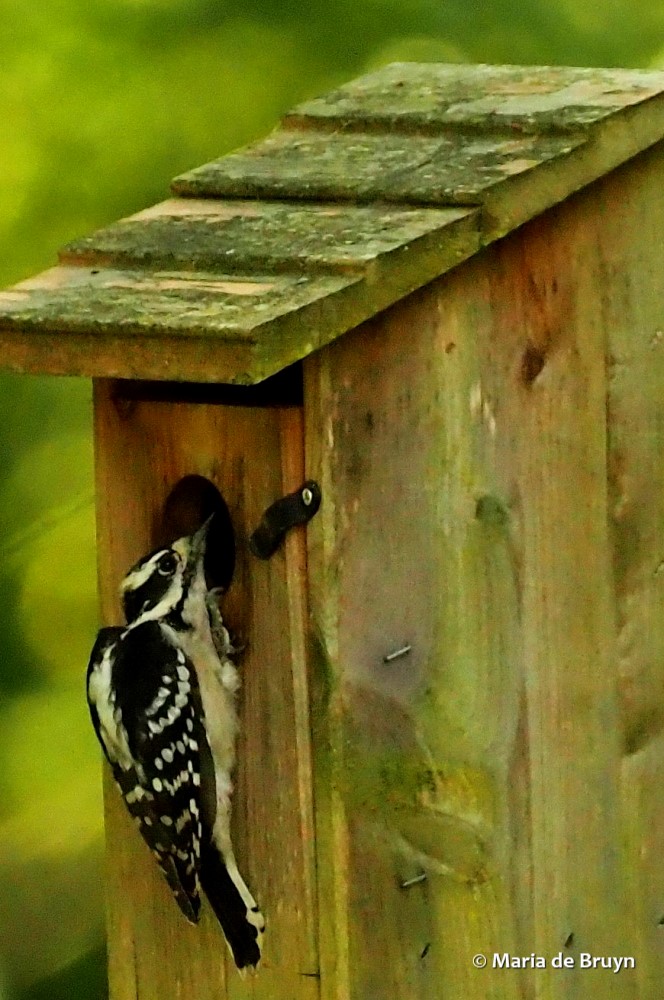 It’s my good fortune to live in a home with sizeable front and backyards where I can entice birds to spend time. Nest boxes border the yards and nesting gourds hang on the front porch, so that attracts pairs who raise young ones here in the spring. They also use these nesting sites to spend the night during cold autumn and winter nights. Downy woodpeckers (Dryobates pubescens) seem especially fond of one nest box next to the driveway.
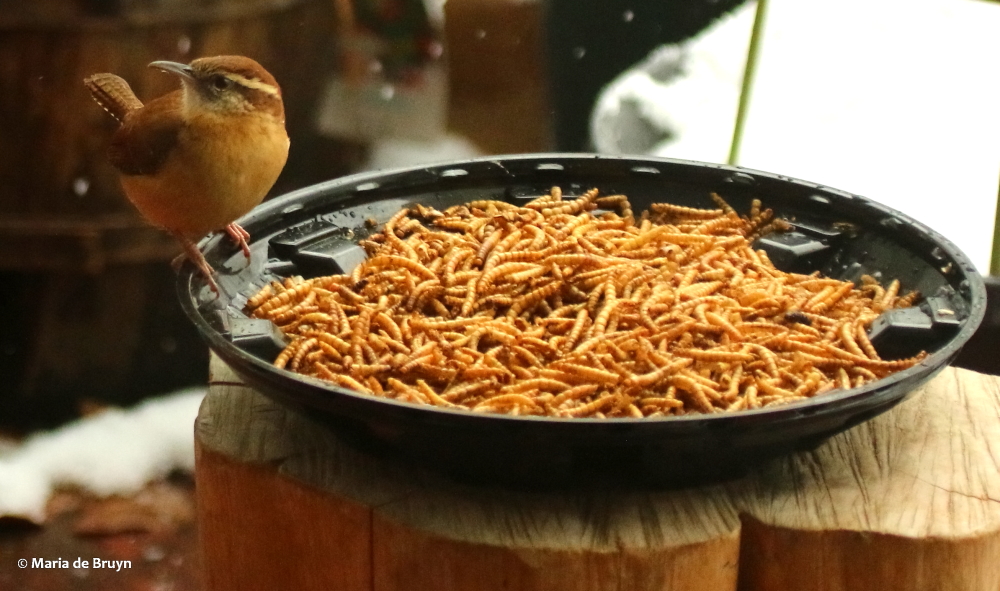
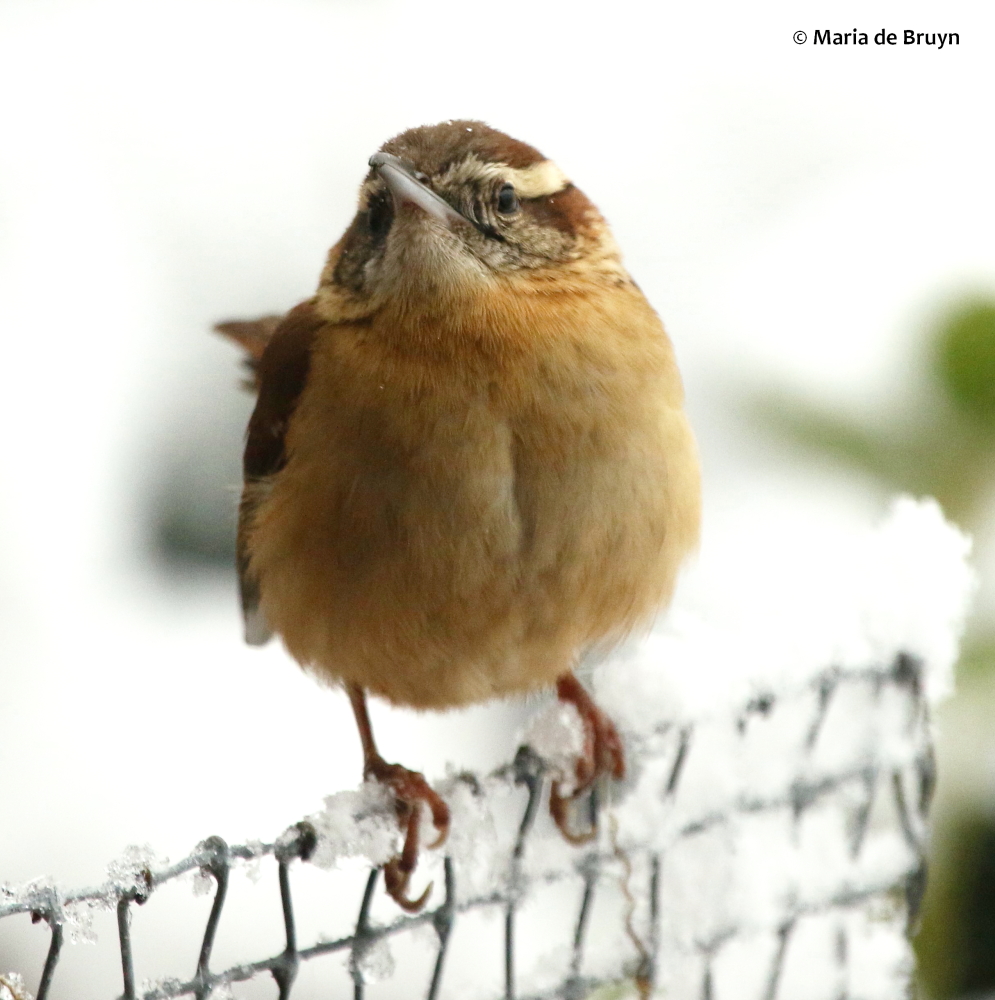
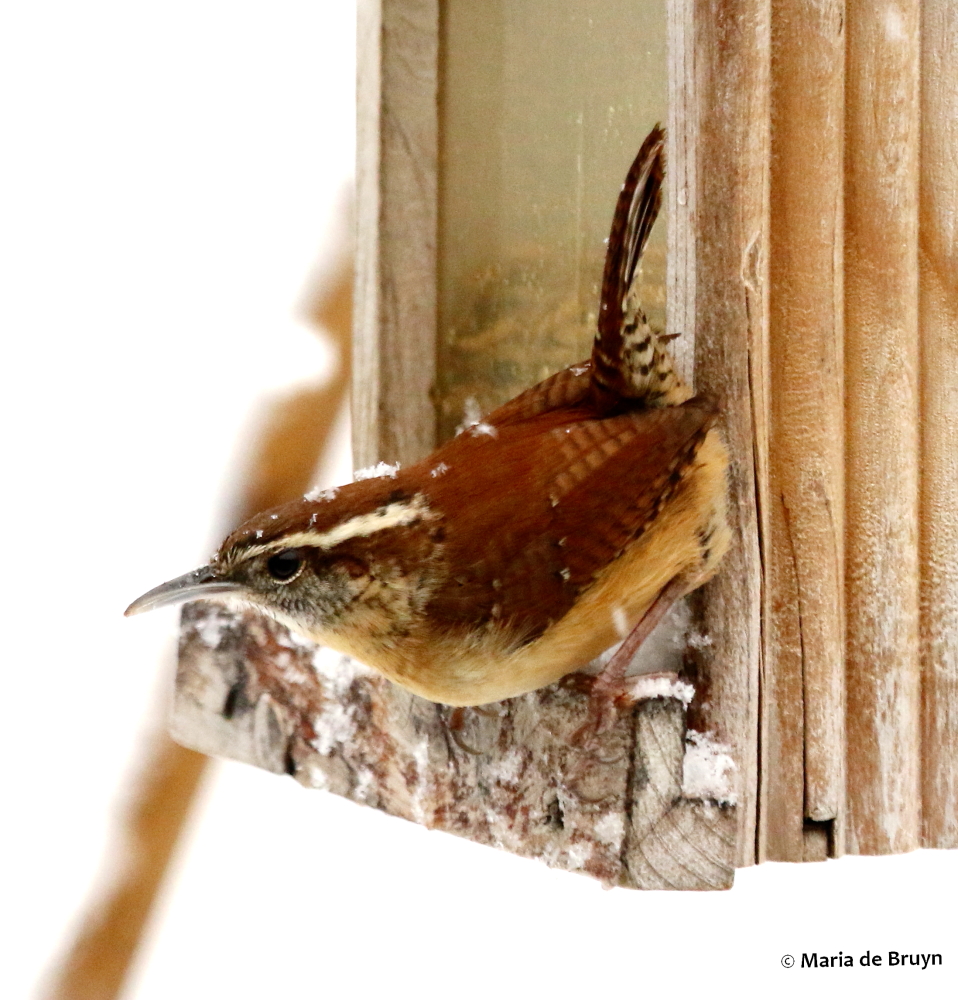
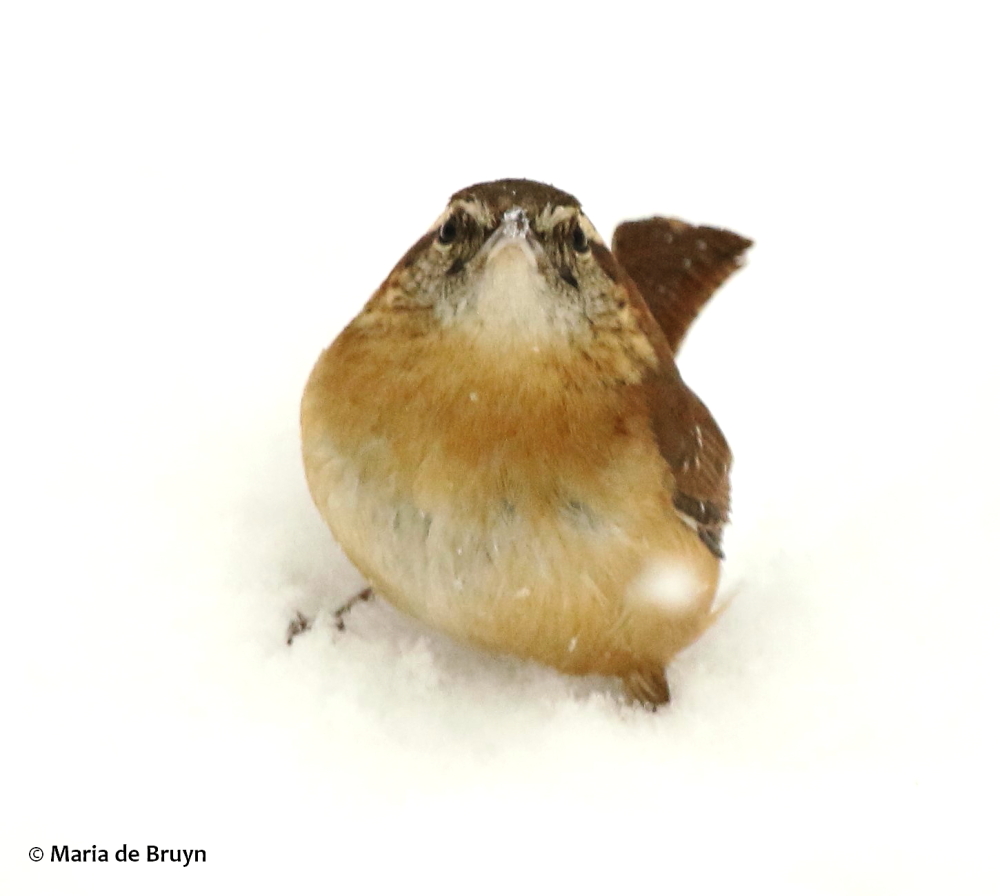
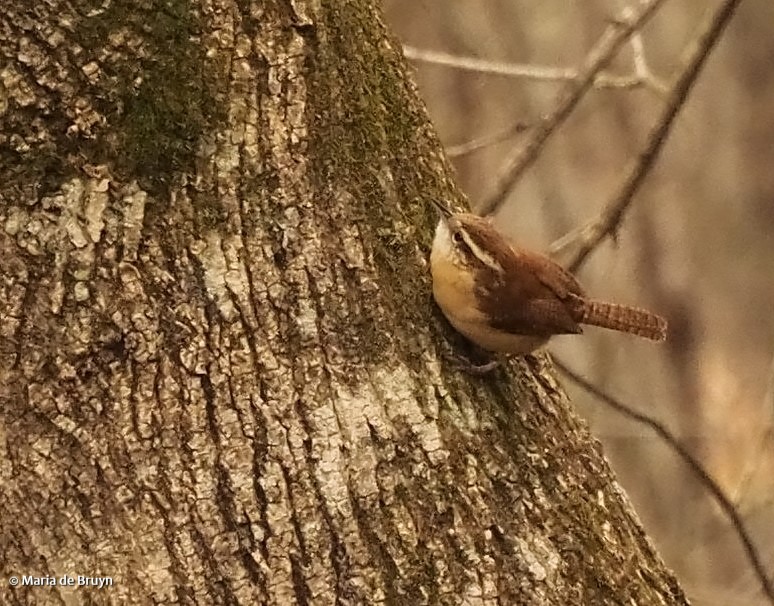 Since converting much of my front yard lawn into flower gardens (and I’m working on that in the back, although there I’ve planted more flowering and berry-bearing trees), the insect population has increased. That has helped the pollination of my flowers and provided the resident birds with meals, like one of the 6 or so Carolina wrens (Thryothorus ludovicianus) who occupy specific niches. One pair hangs out near a water-filled tub; another pair hangs out near a brush pile out back and the third pair hops in and out of a brush pile in the front yard.
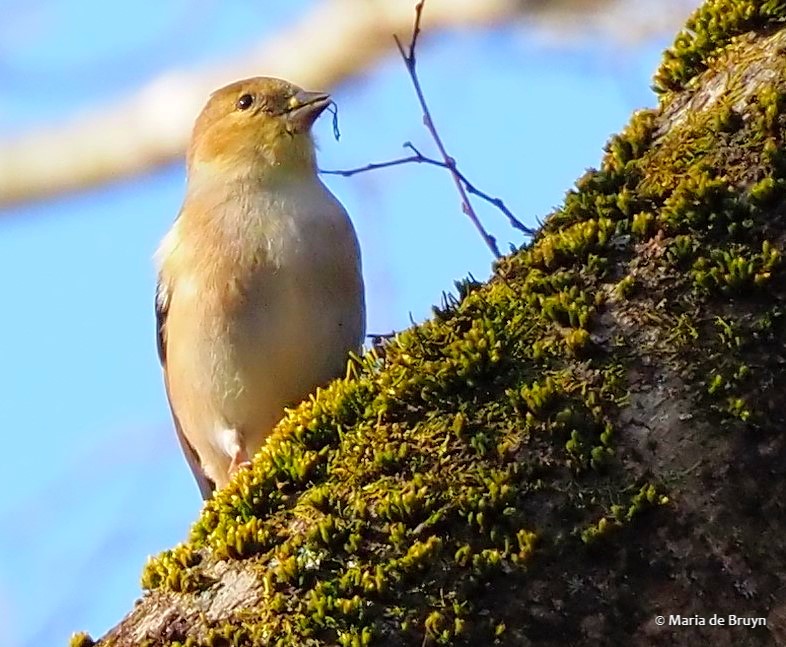
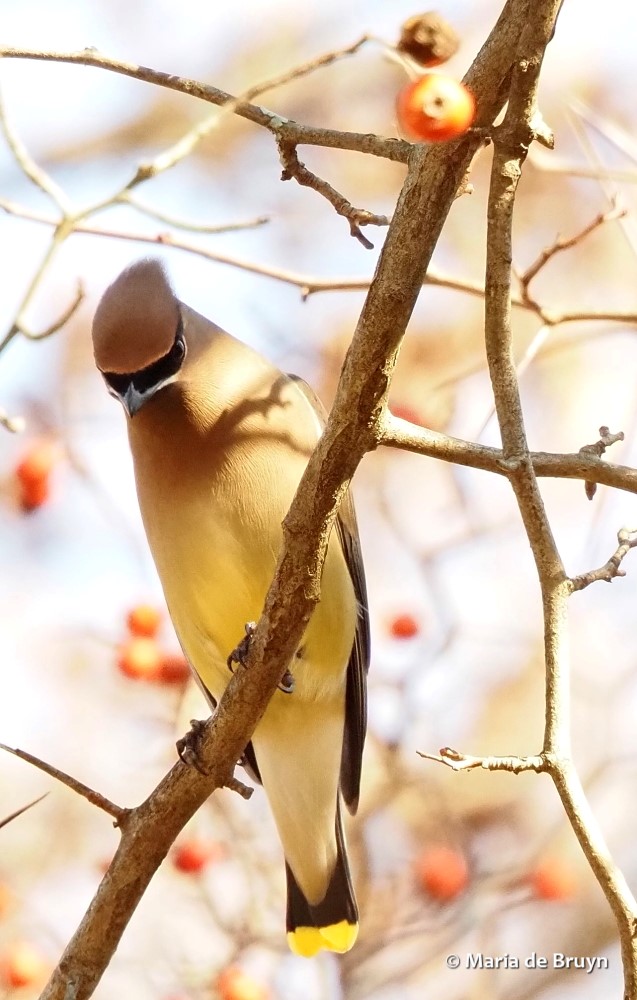 The cedar waxwings (Bombycilla cedrorum) are picky eaters. The American robins in my yard ate a lot of the juniper berries they prefer and there weren’t many other berries around (as was the case at the local arboretum). At my house, they’ve mostly been using the small ponds to drink and bathe.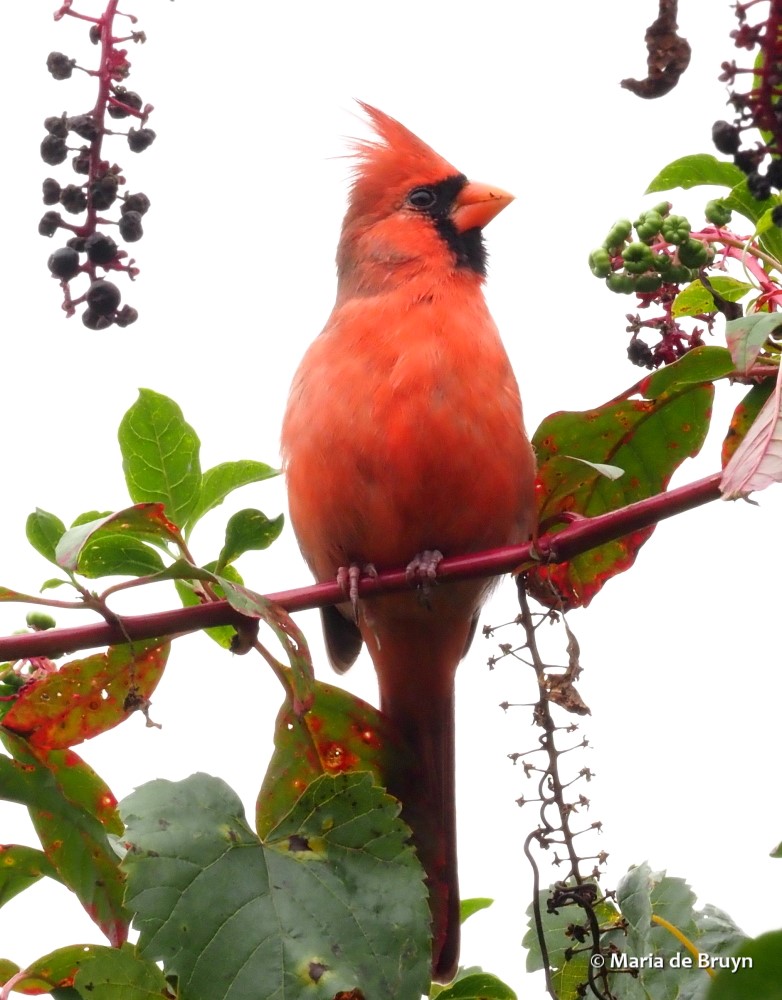
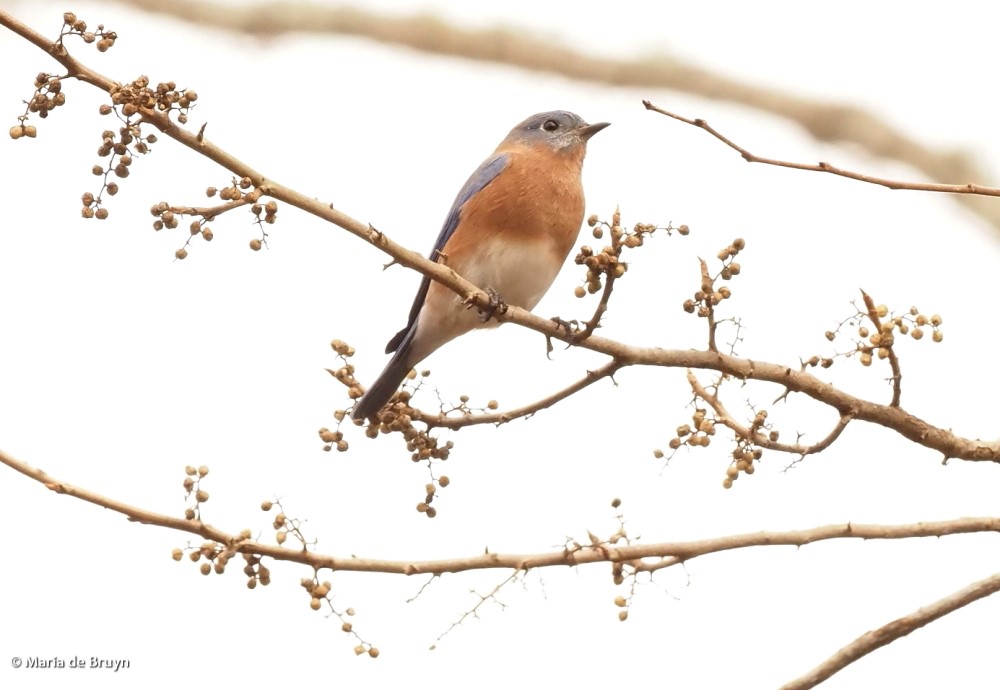
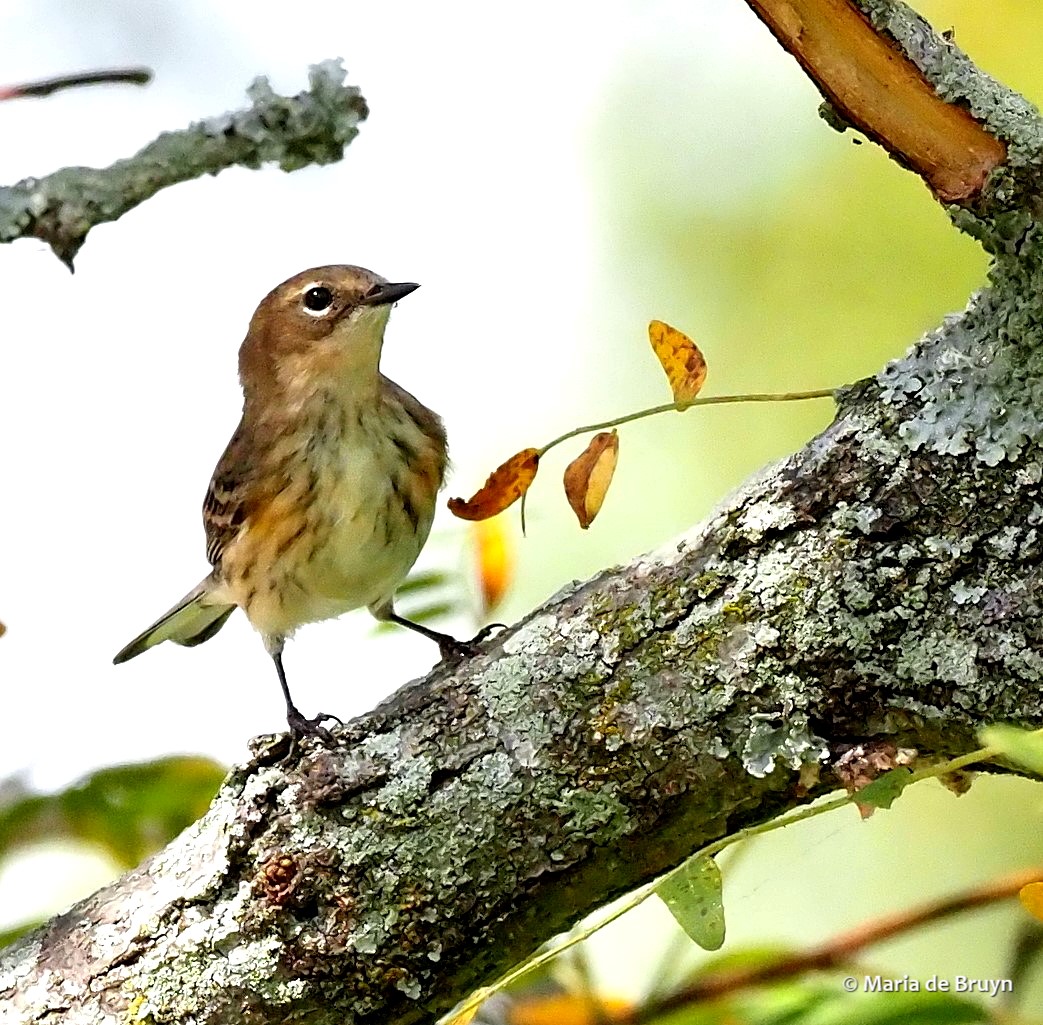 In past years, the visiting yellow-rumped warblers (Setophaga coronata) have lived peacefully with one another. This year, however, I have two birds who seem to be quite incensed when they spy each other. If one is at a feeder, the other zooms in to chase it off and often they flutter upward in a tangle with wings spread. So far, I’ve always been a couple seconds too late to capture the mid-air tussle – it is one of my goals for yard birding this year.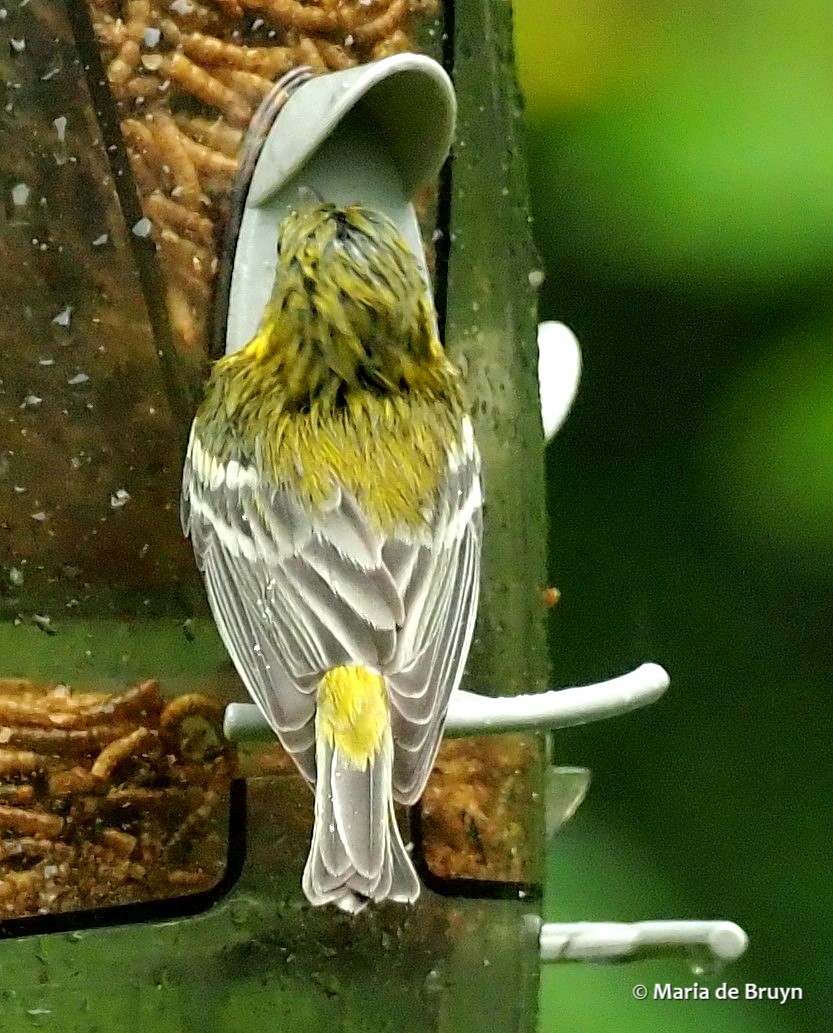
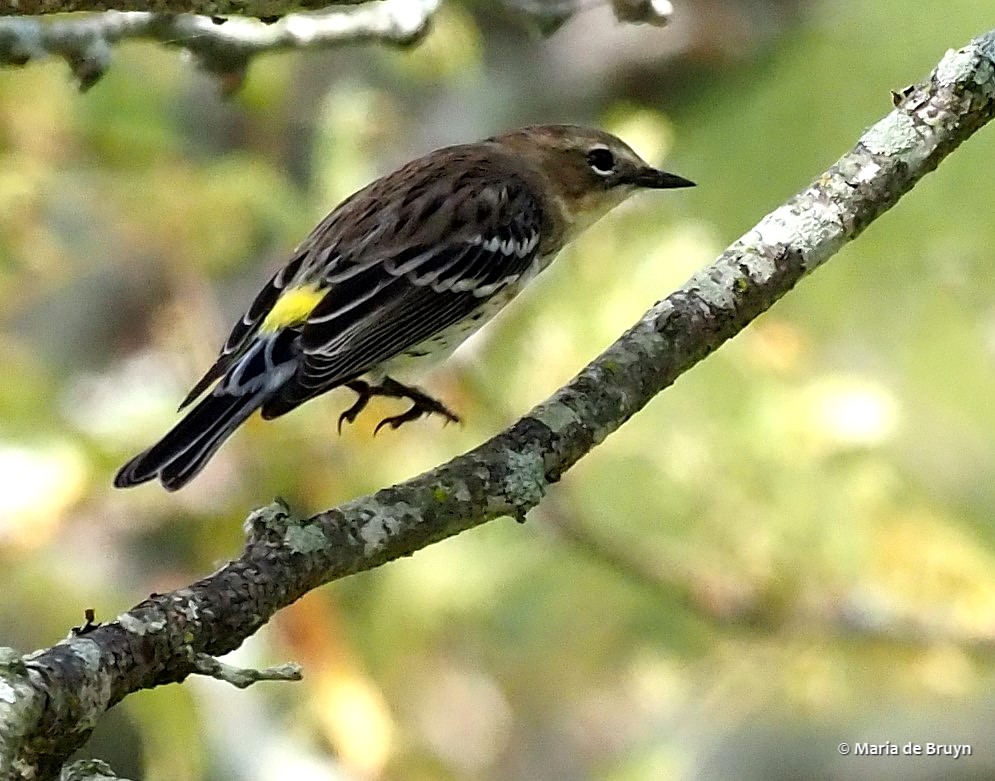
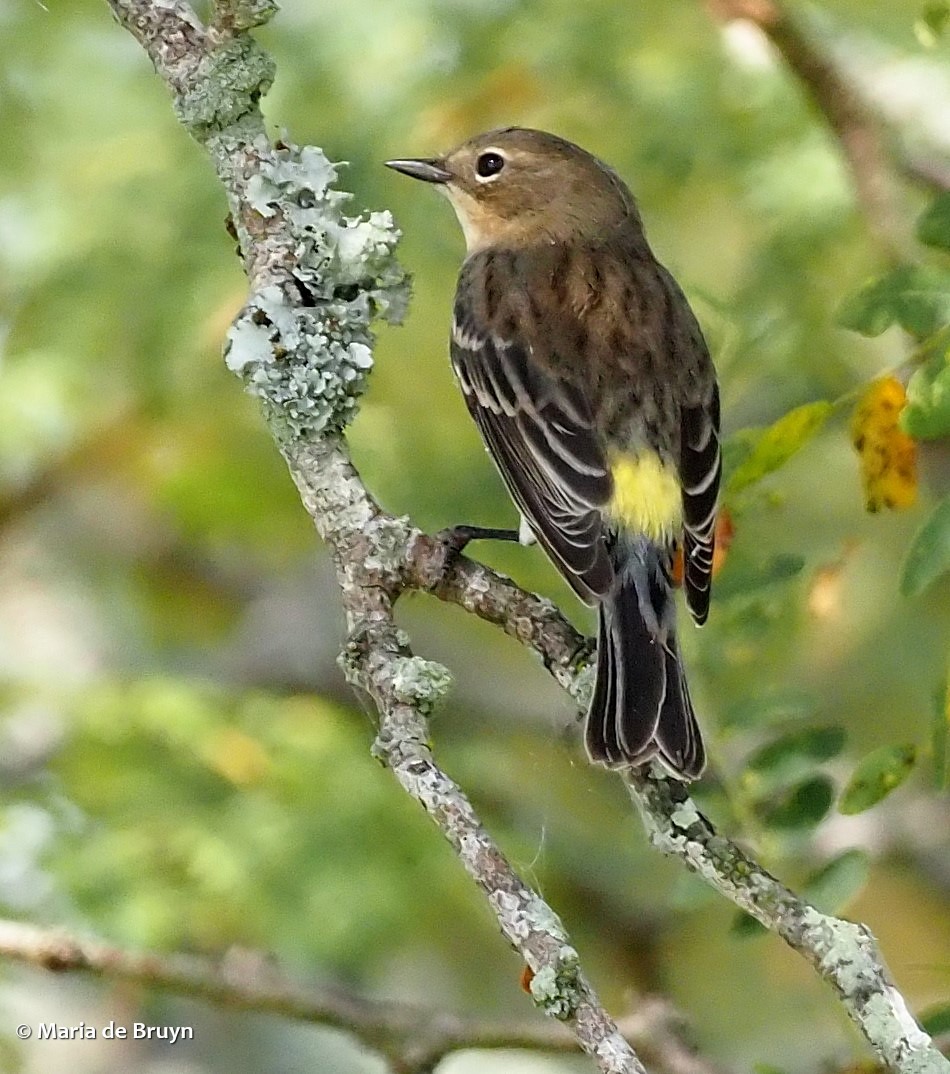
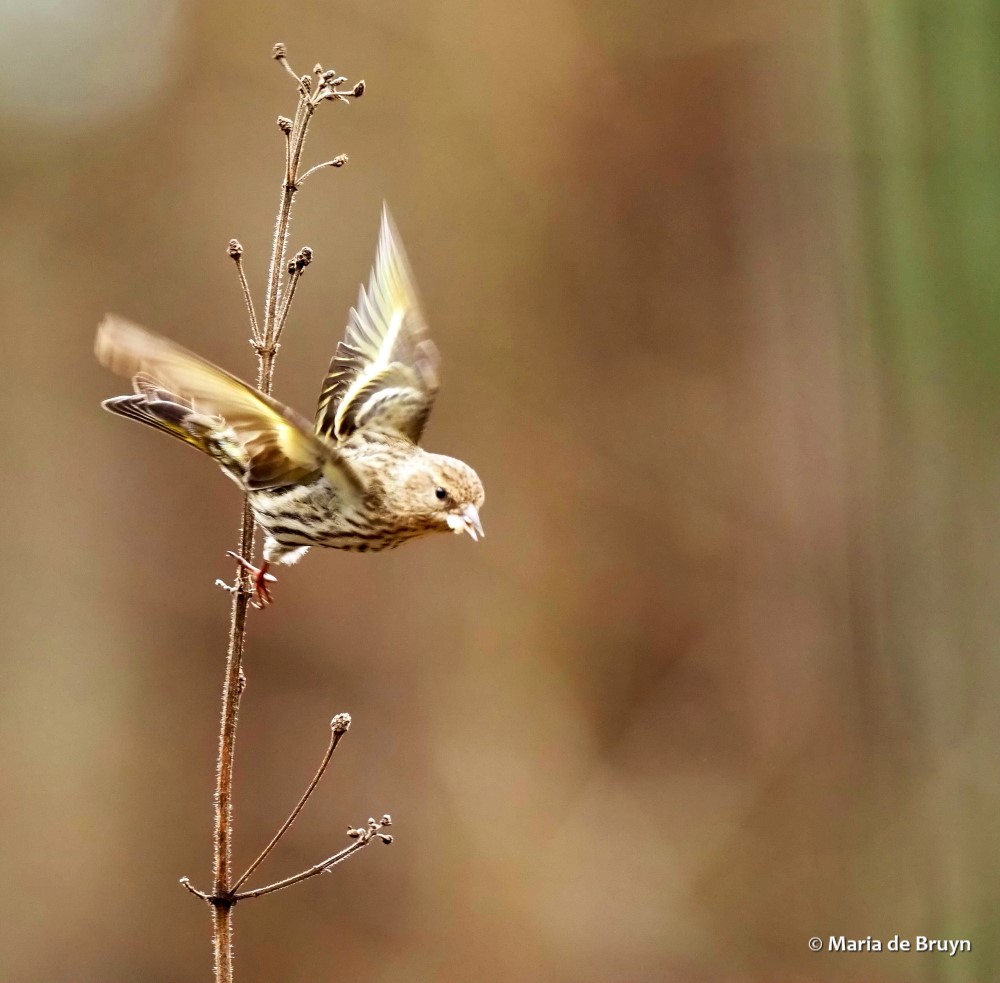
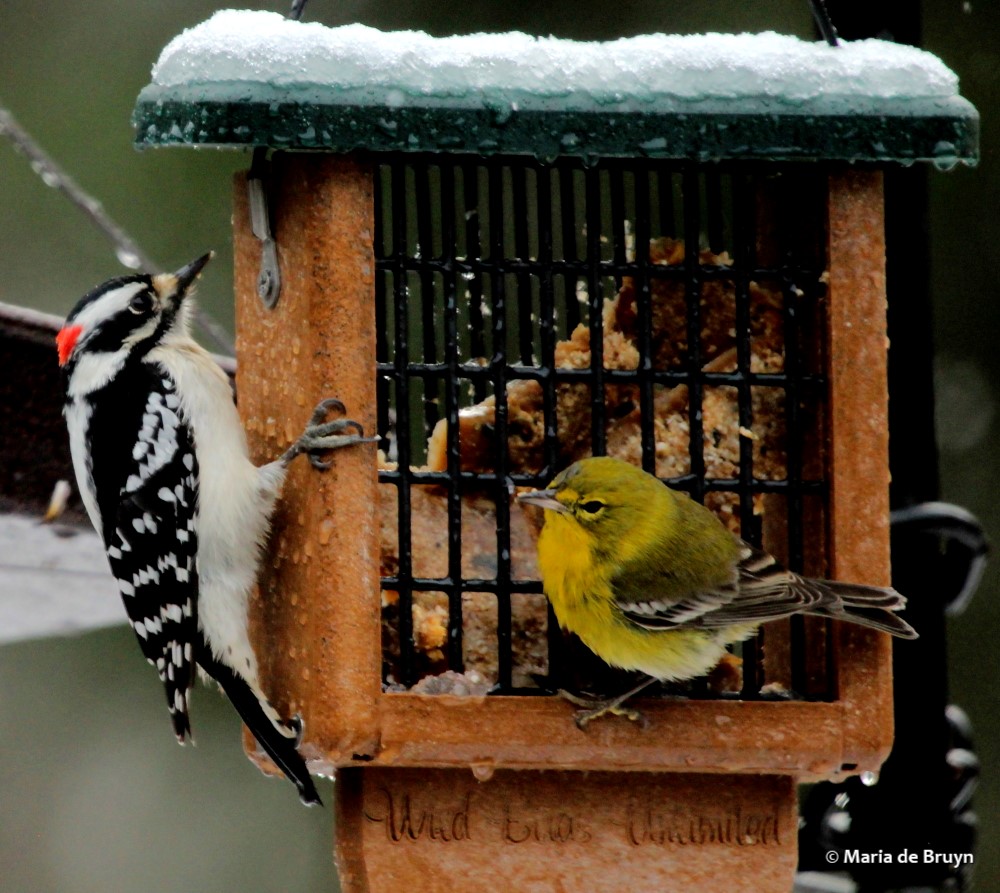 The pine warblers (Setophaga pinus) in my yard are quite tolerant and polite.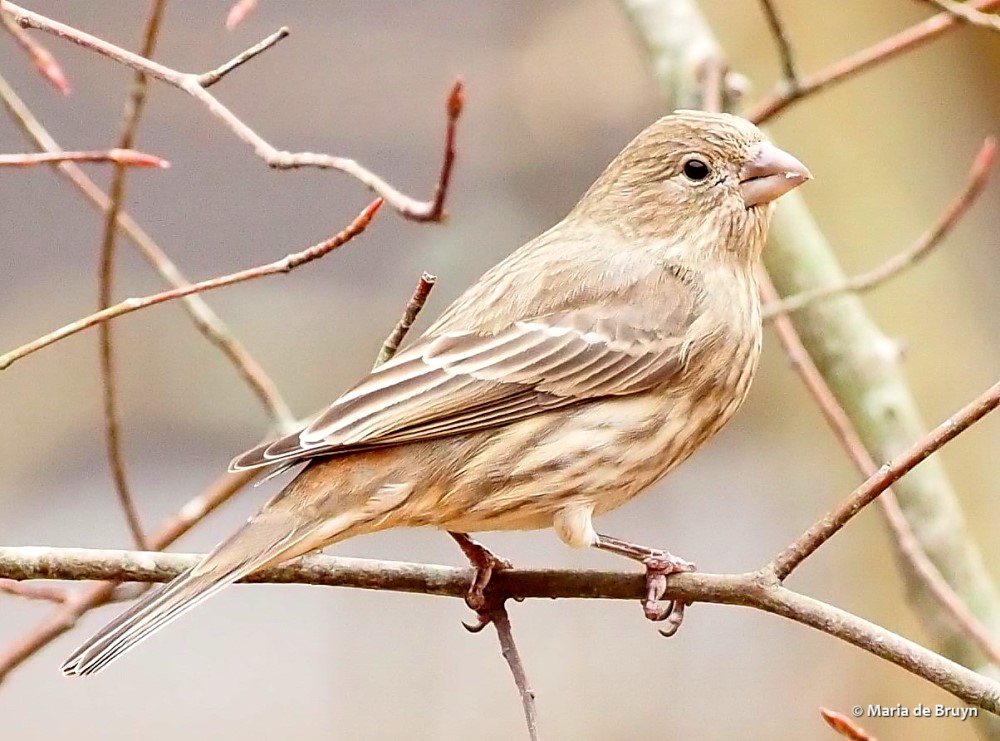

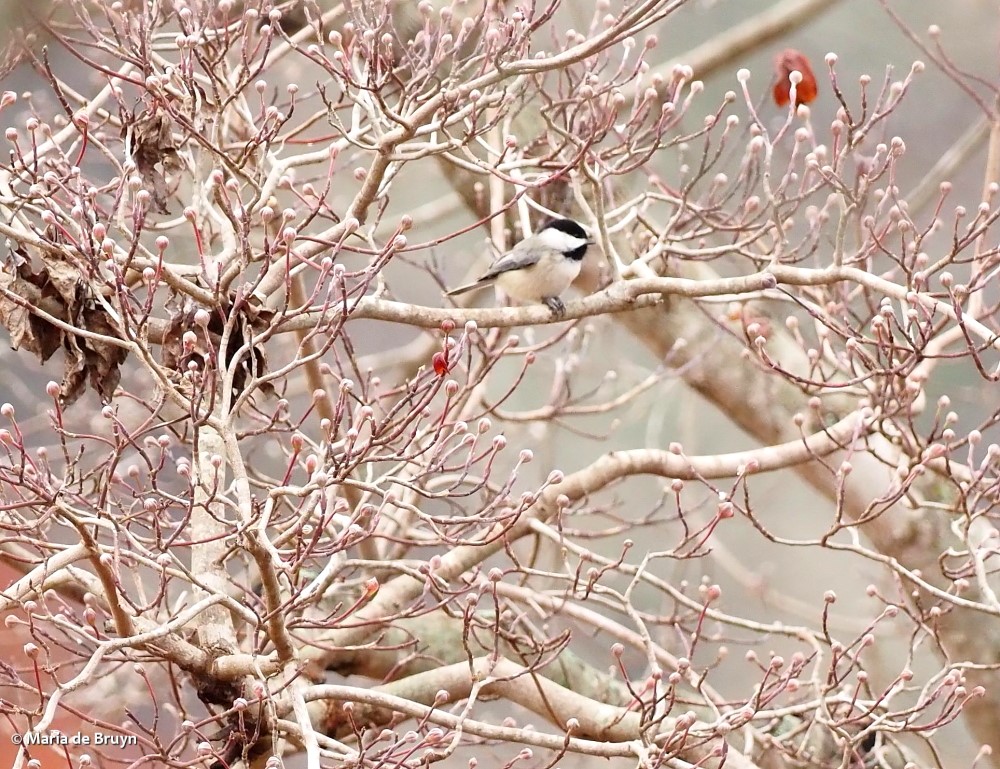
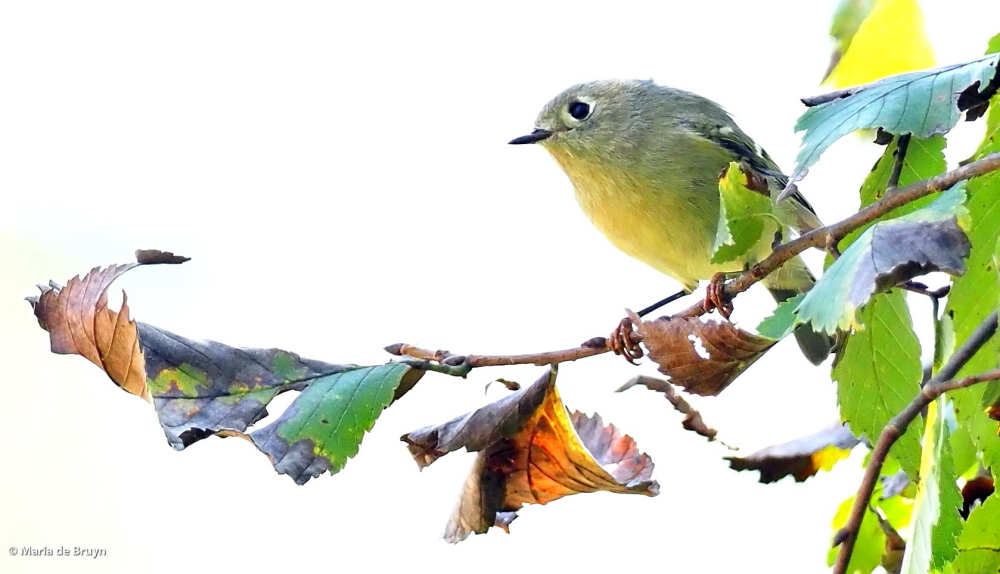
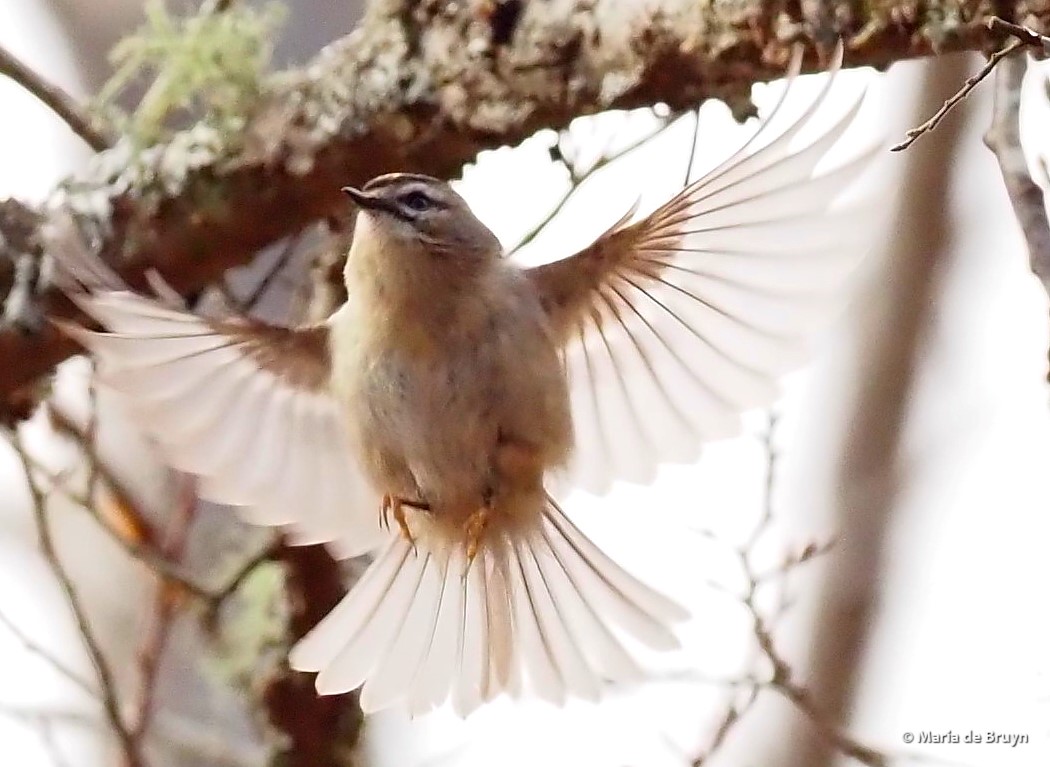
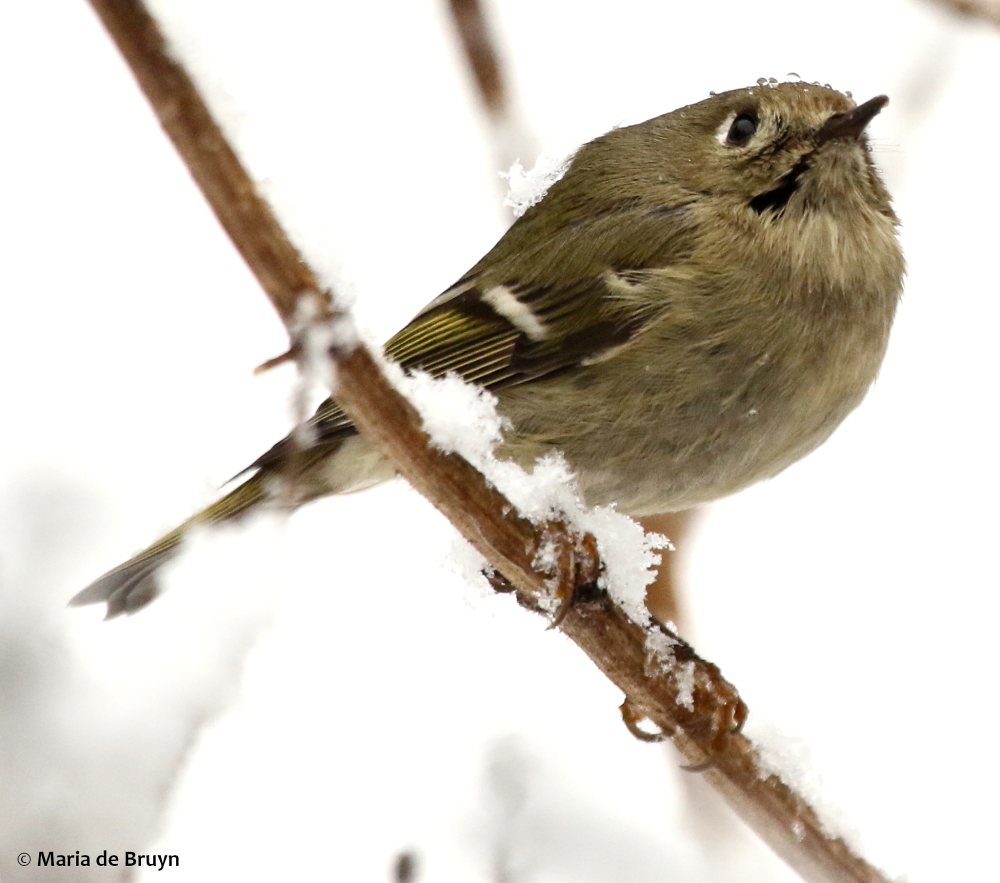
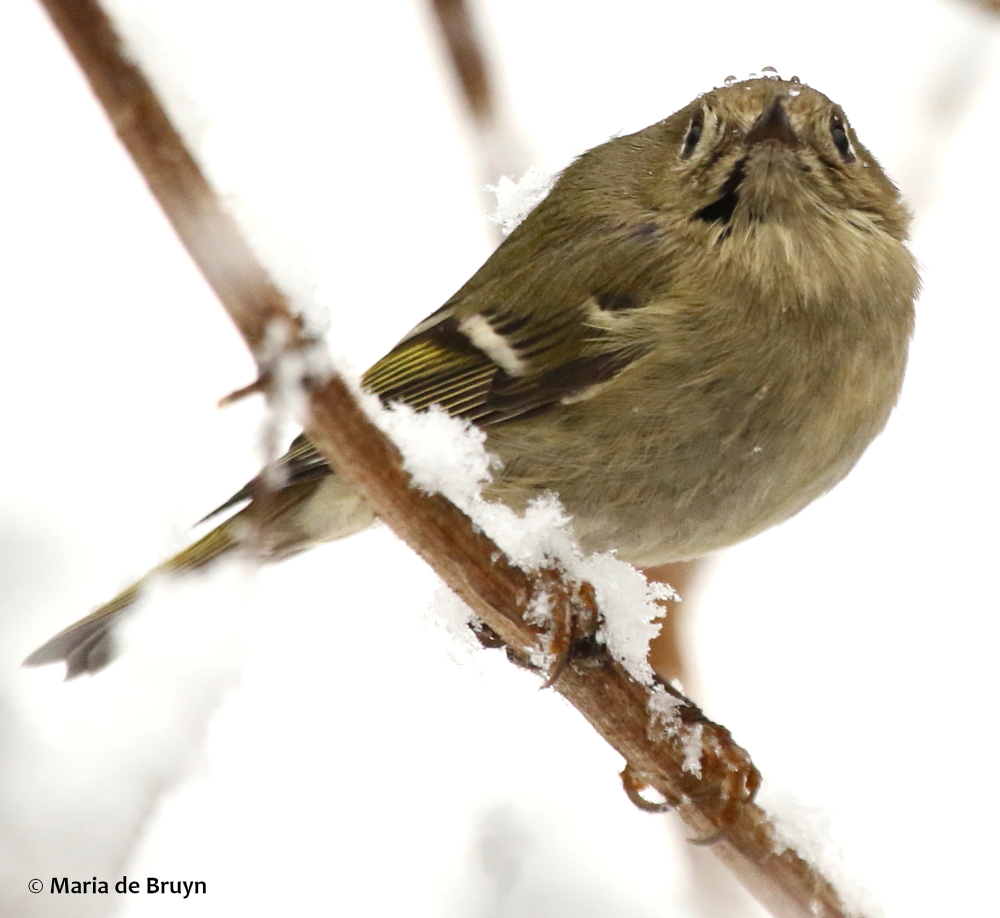
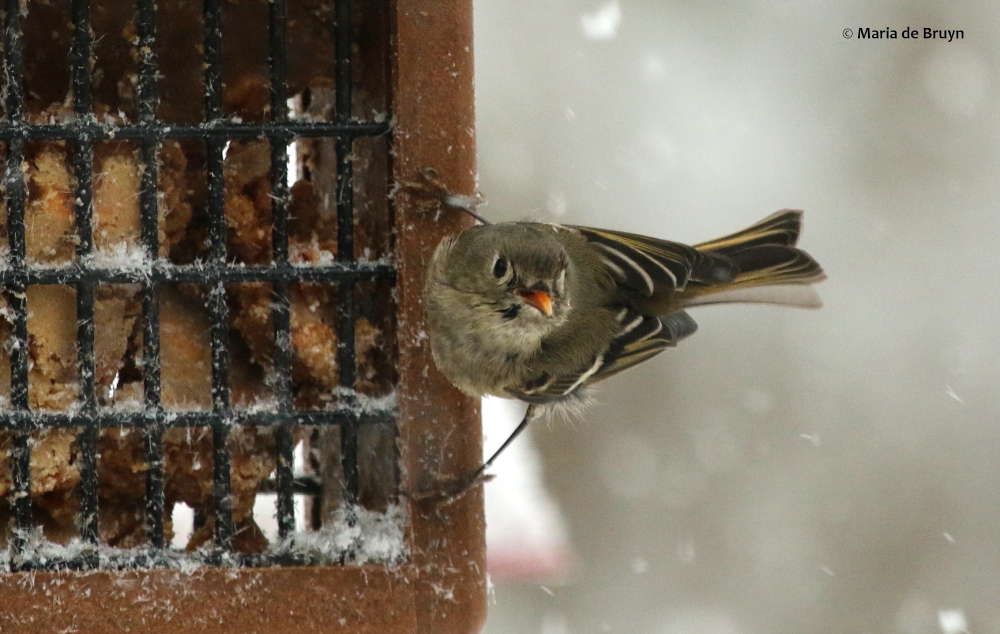
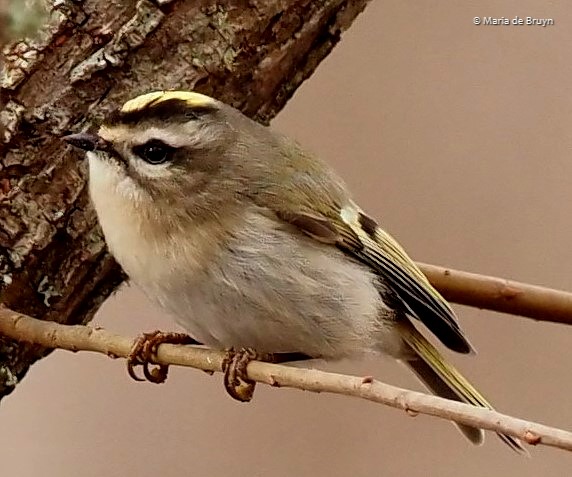 I hadn’t had golden-crowned kinglets (Regulus satrapa) in my yard much before this year; now I have at least one living here but s/he never comes to the feeders. Because this bird stays very high and I haven’t had access to my long camera lens for some time, it’s been difficult to get photos at home. I’ve had somewhat more success on walks.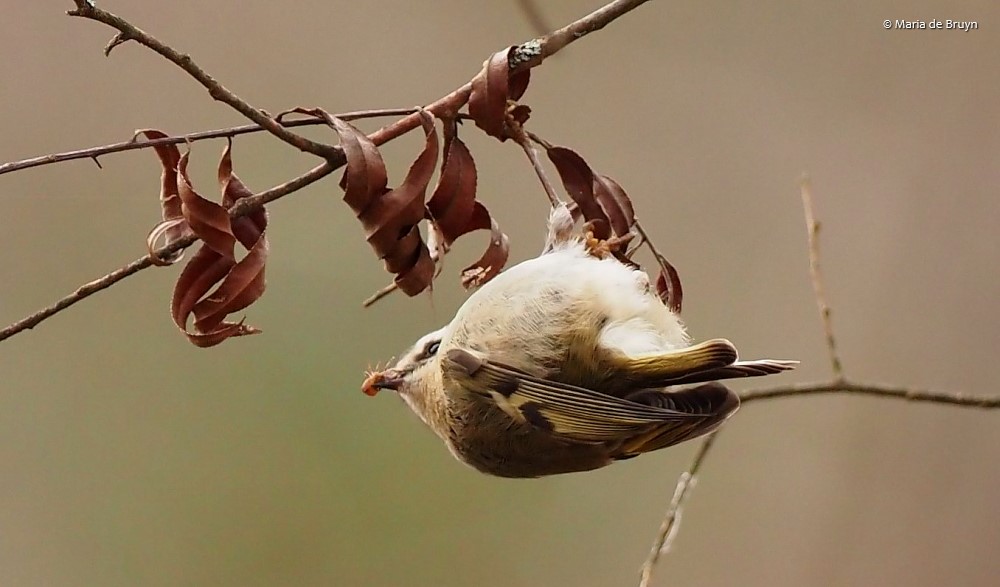






 My beautiful world