Big-beaked birds – lovely or laughable?

I don’t know how many of us would find a human being with an extremely large nose (e.g., even bigger than the face) and multi-colored head, facial and body hair to be beautiful or even attractive. Perhaps it would depend on the nose shape and which color combinations would be in play? But it is certainly a fact that many of us find big-beaked, multi-hued birds to be alluring and enticing, if not just plain gorgeous, magnificent and delightful to say the least.
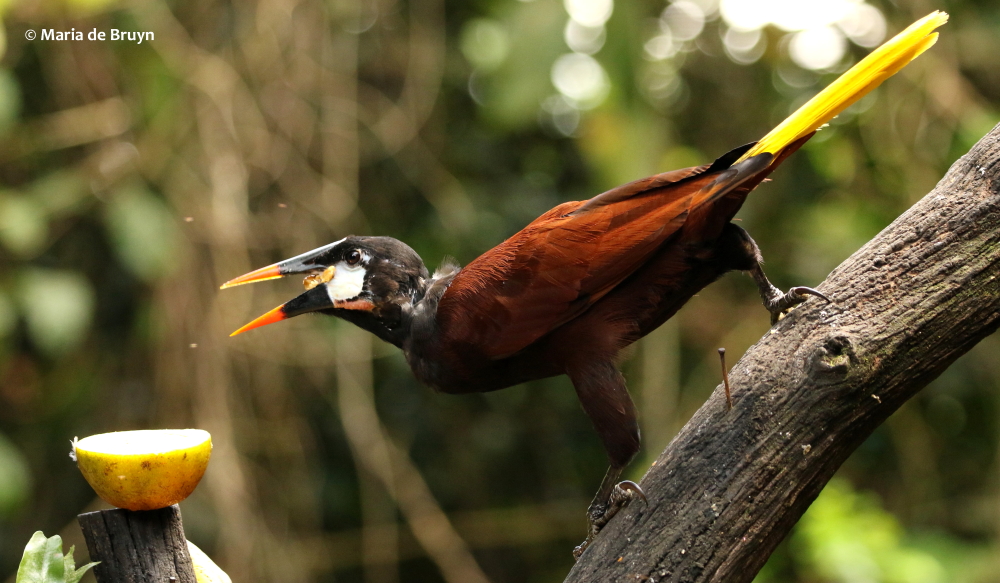
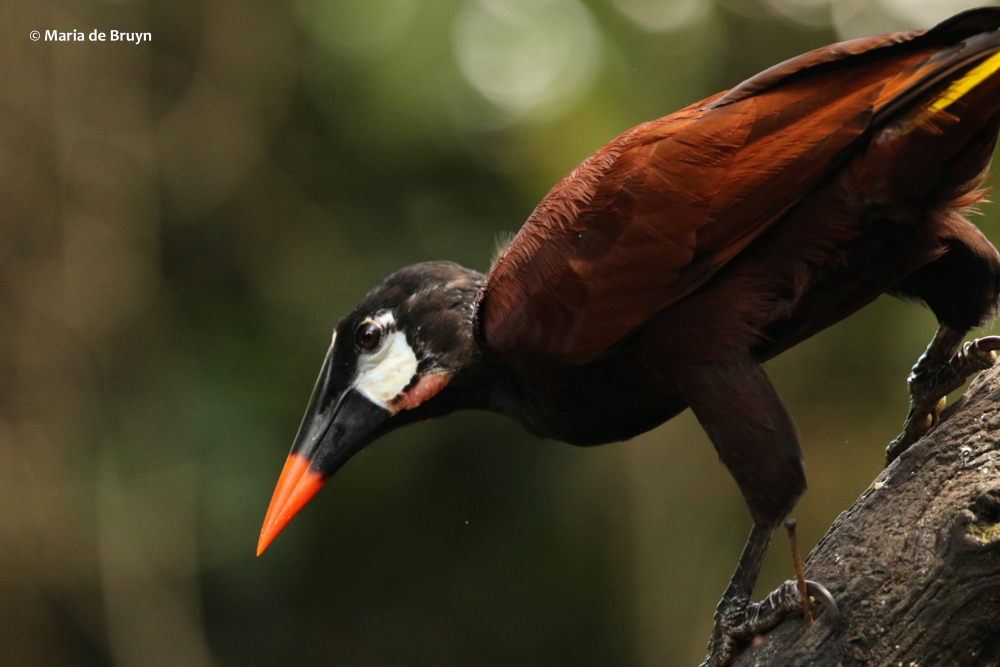
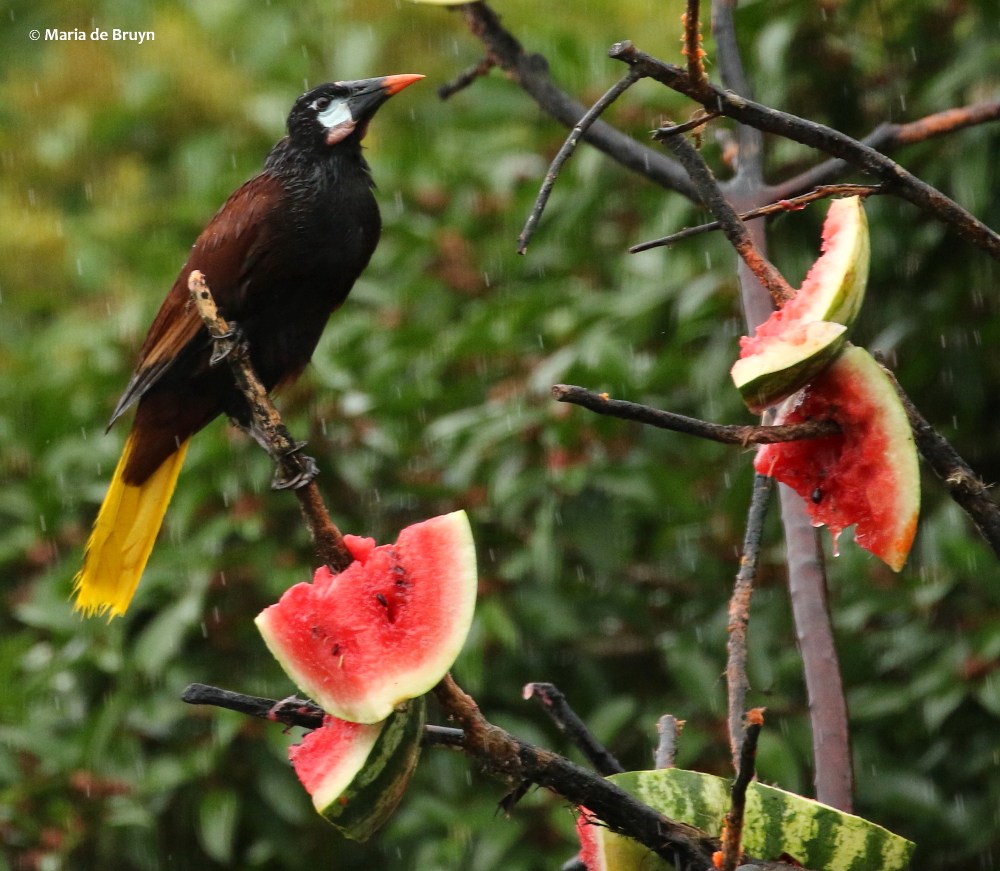
Well, Costa Rica does not lack for a variety of big-beaked birds and I found them all appealing, each in their own way. Some were not completely colorful but had splashes of color, like the brown-hued Montezuma oropendola (Psarocolius montezuma) with its white bare patch on the cheek with a pink wattle underneath and mostly yellow tail feathers.
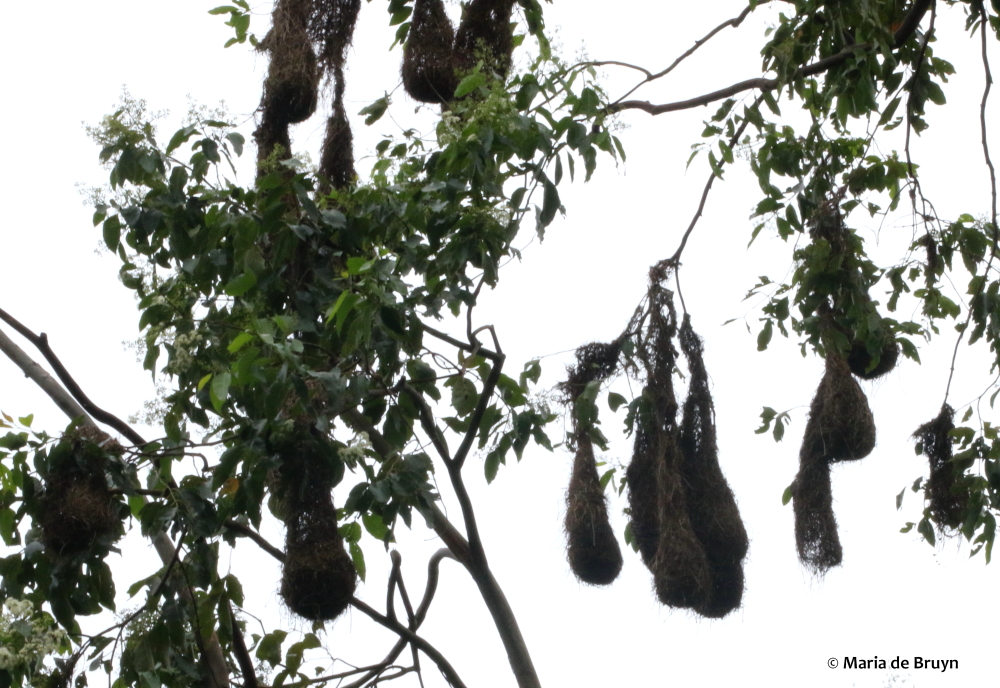
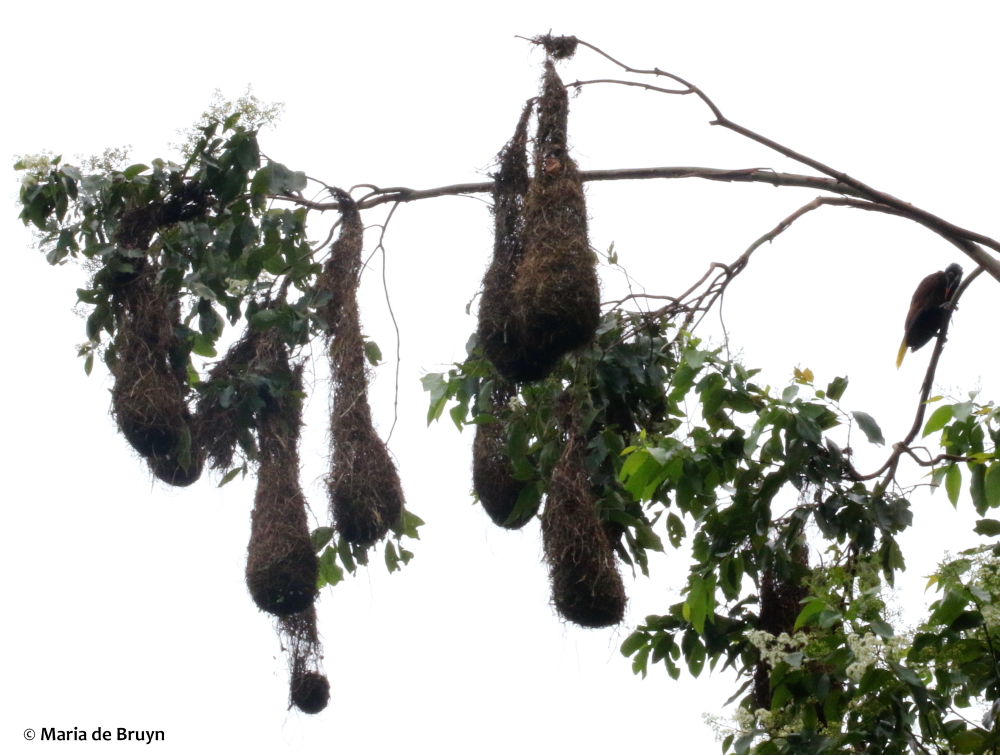
An unusual fact about this bird is that the males are generally twice as heavy as the females. They are called “colonial” nesters, meaning that the females build their pendulous nests (24-71 in/60–180 cm long) near one another in “colonies”. Unfortunately, their nest success is not great with only about one-third of colony nests resulting in a fledgling!
 

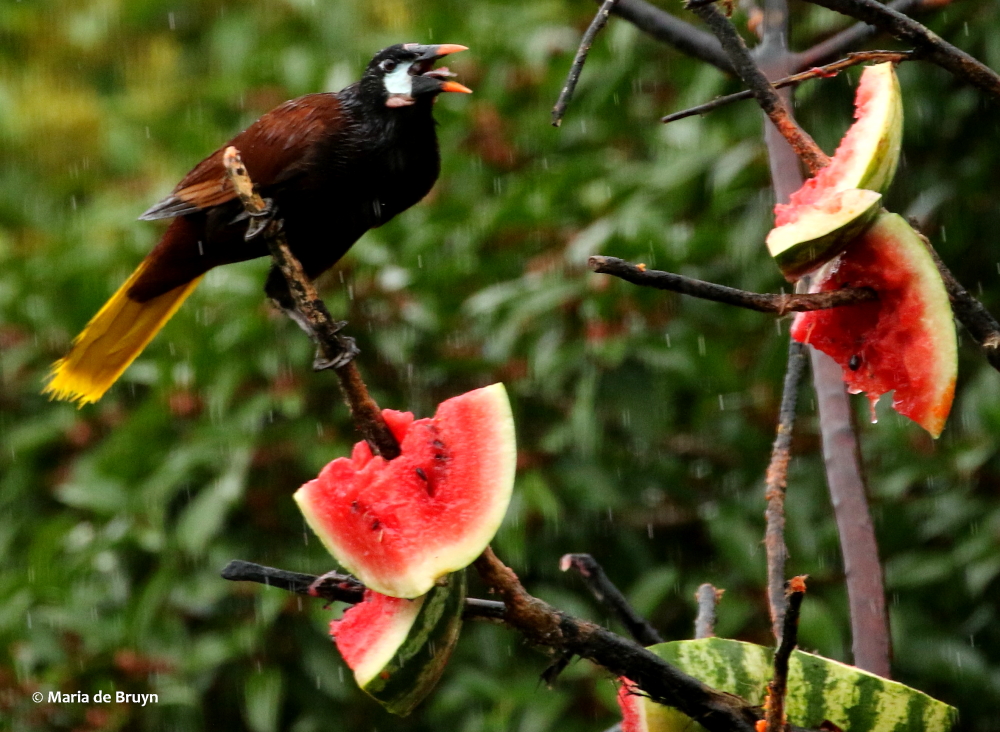
These oropendolas tend to forage in small groups in the tree canopies, searching for insects and fruit. Their love of fruit also brings them to feeding platforms, like this one set up to not only entice birds but also the tourists who want to see them. They seemed to especially enjoy papayas and watermelon.
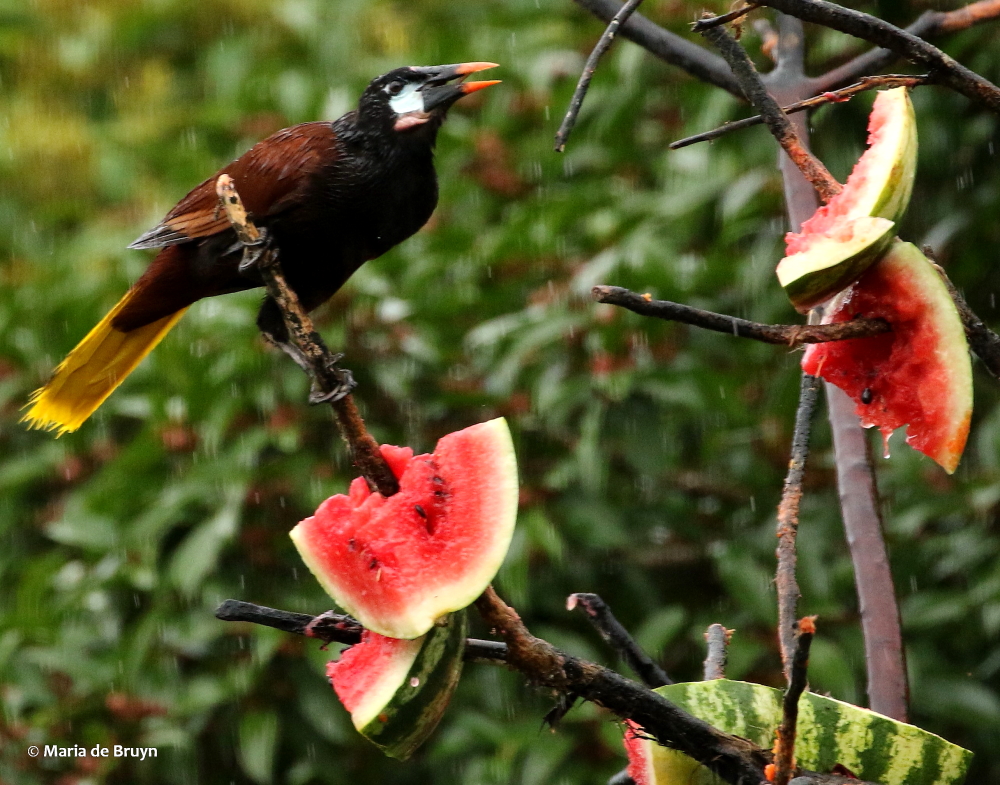
The call that the males especially emit from their bi-colored black and red-tipped beaks is said to resemble water being poured from a bottle, bubbling and gurgling.
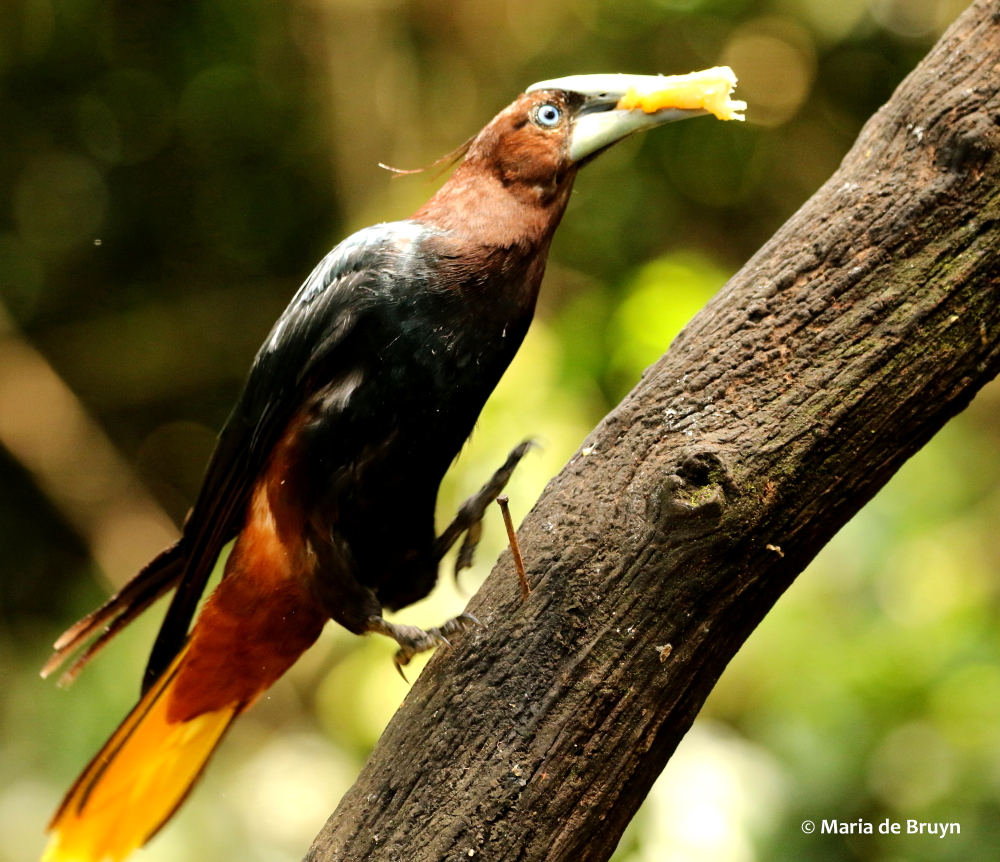
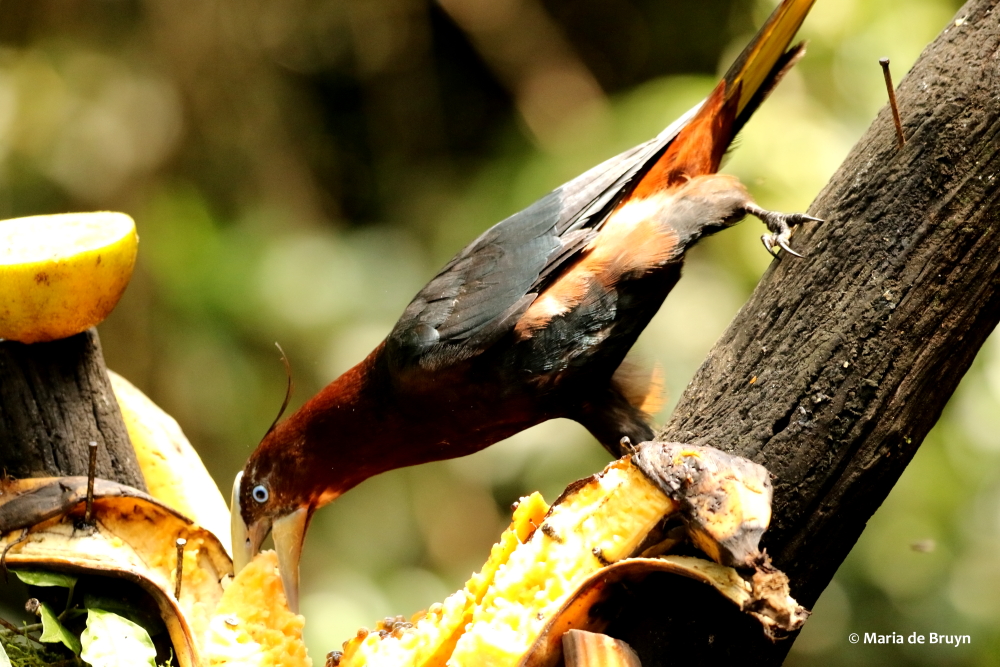
The chestnut-headed oropendola (Psarocolius wagleri) resembles the Montezuma species but is a bit less colorful with a pale bill. They are a bit smaller than the Montezumas and fly more quickly. Like their cousins, their broods in hanging nests are also threatened by giant cowbirds (nest parasites) and botflies.
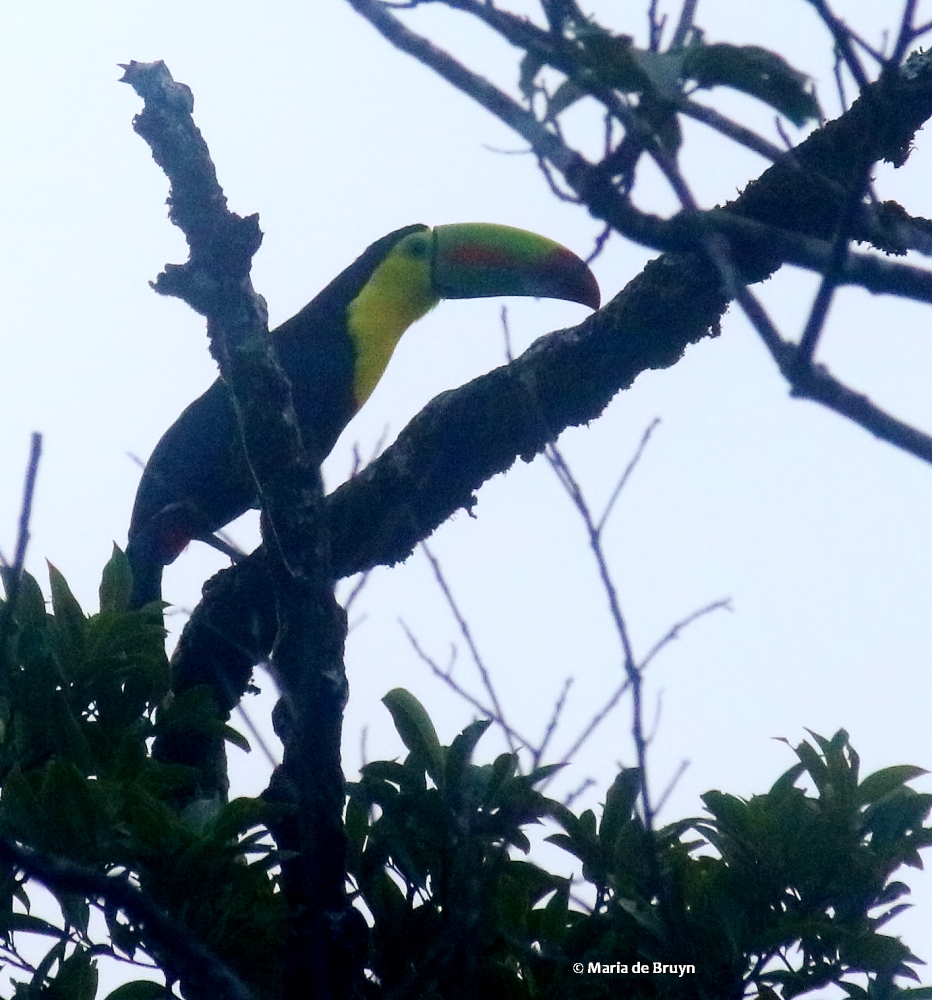
 

We were lucky to see two toucans and a toucanet during our trip to Costa Rica this past year. We had a glimpse of a keel-billed toucan (Ramphastos sulfuratus) high up in trees on a cloudy day. Their large bill measures 4.7-5.9 in (12–15 cm), which is about one-third the size of their entire length! Their zygodactyl feet (two toes facing forwards and two facing backwards) help them balance on branches.
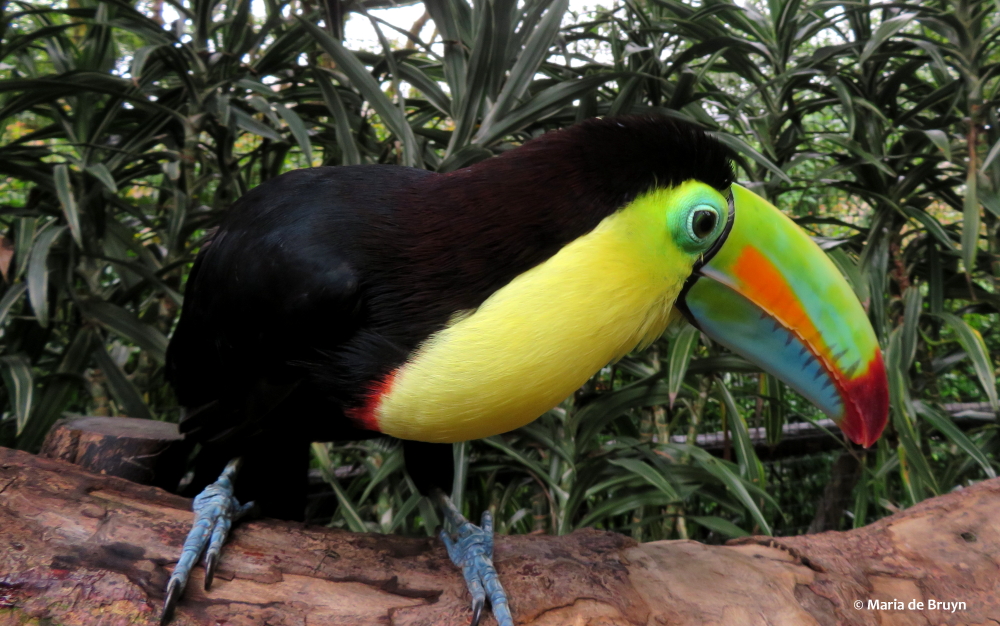
 

We got an up-close and personal view of a couple when we visited a hotel with an adjacent bird park and animal displays. A couple of these birds were in a large aviary, accompanied by two attendants who let people pose for photos with them. I just took photos of the birds and did not have a self-portrait done.
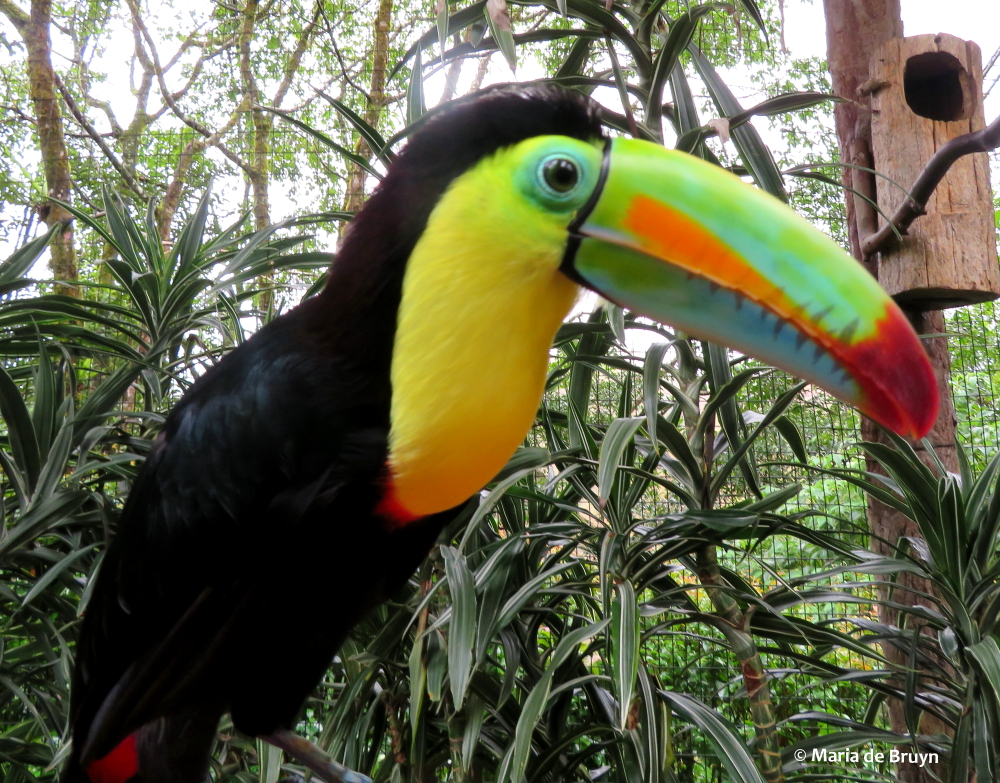
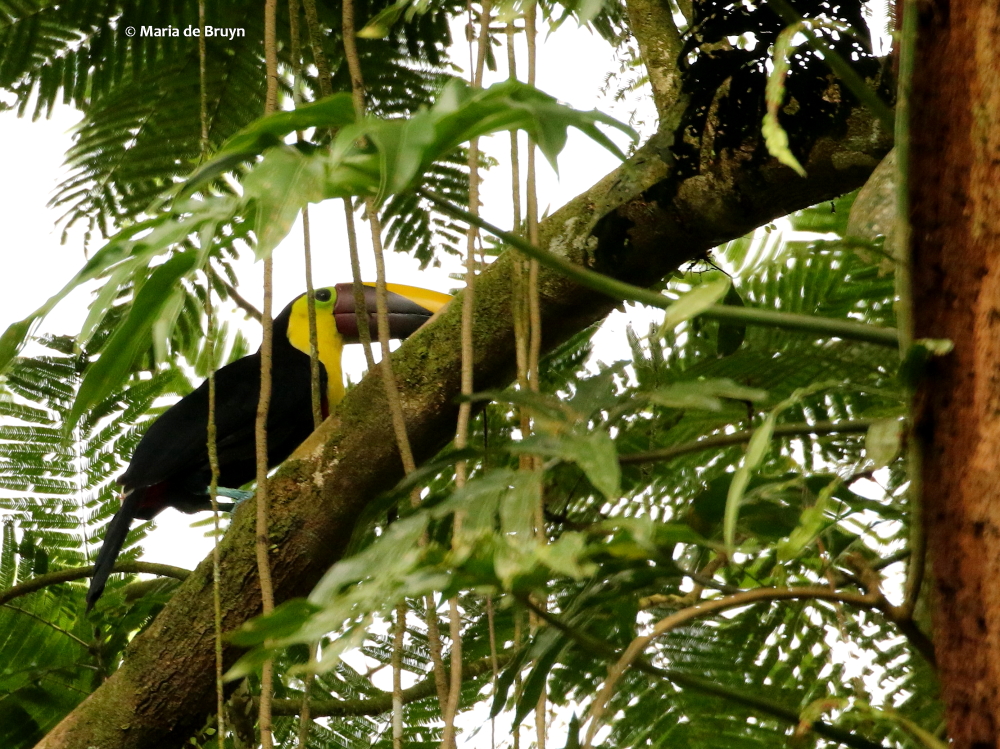
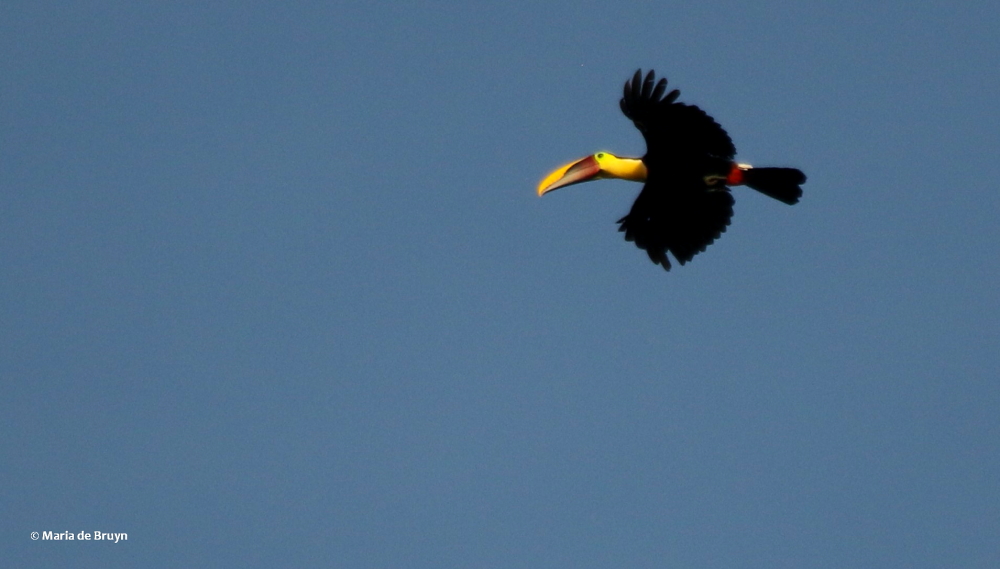
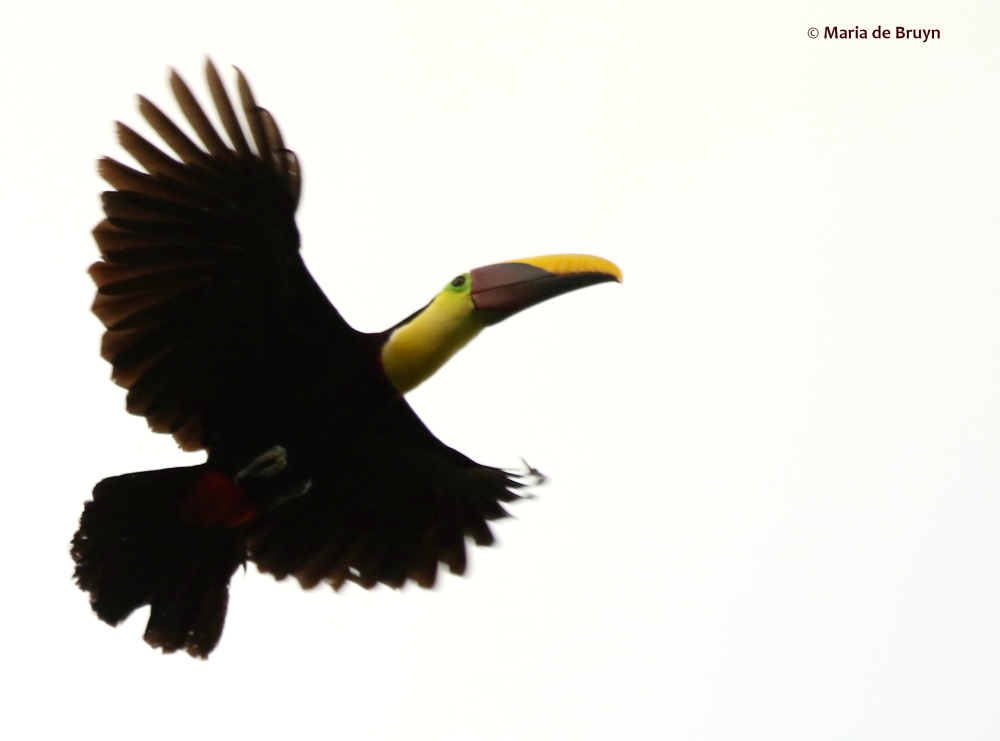
The second toucan that we got to see was the yellow-throated toucan (Ramphastos ambiguus), one of whom seemed to be posing for us during an early morning walk. They have an even larger bill than the keel-billed toucan, which ranges in length from 5.1-7.9 in (12.9-20 cm).
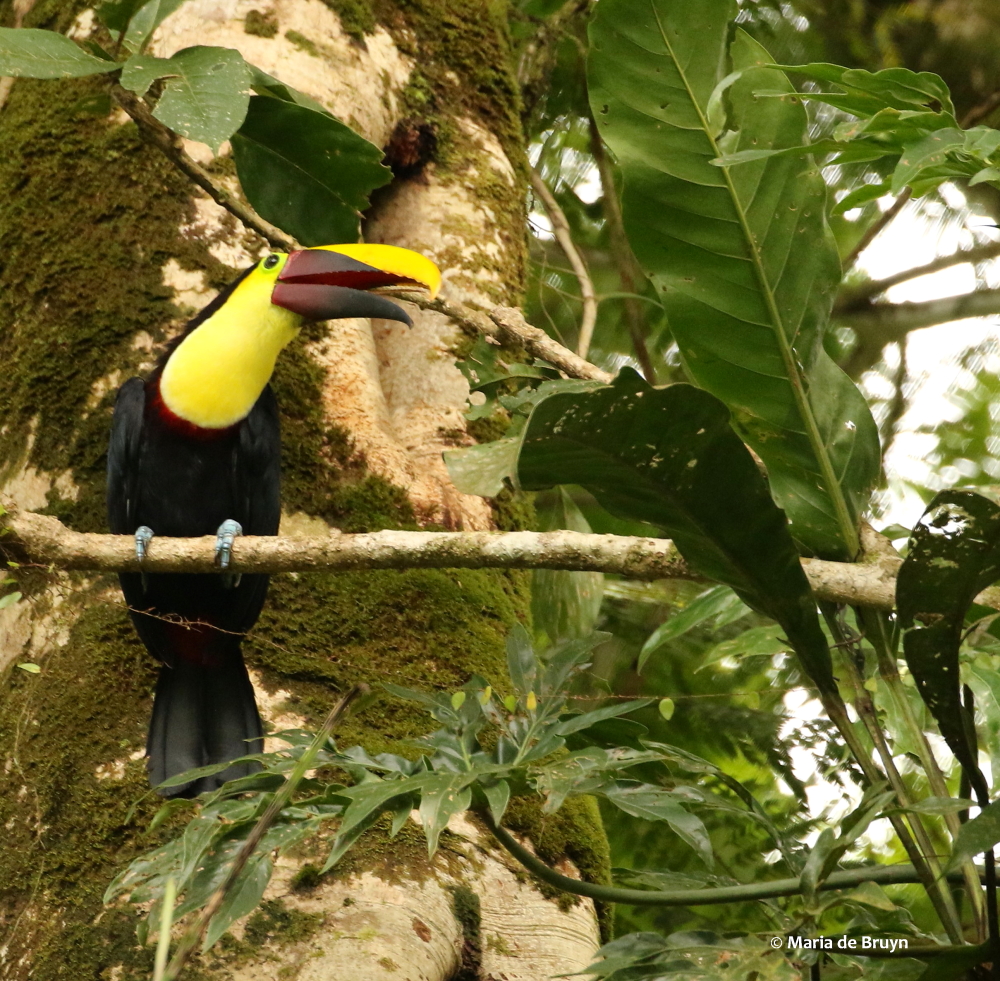
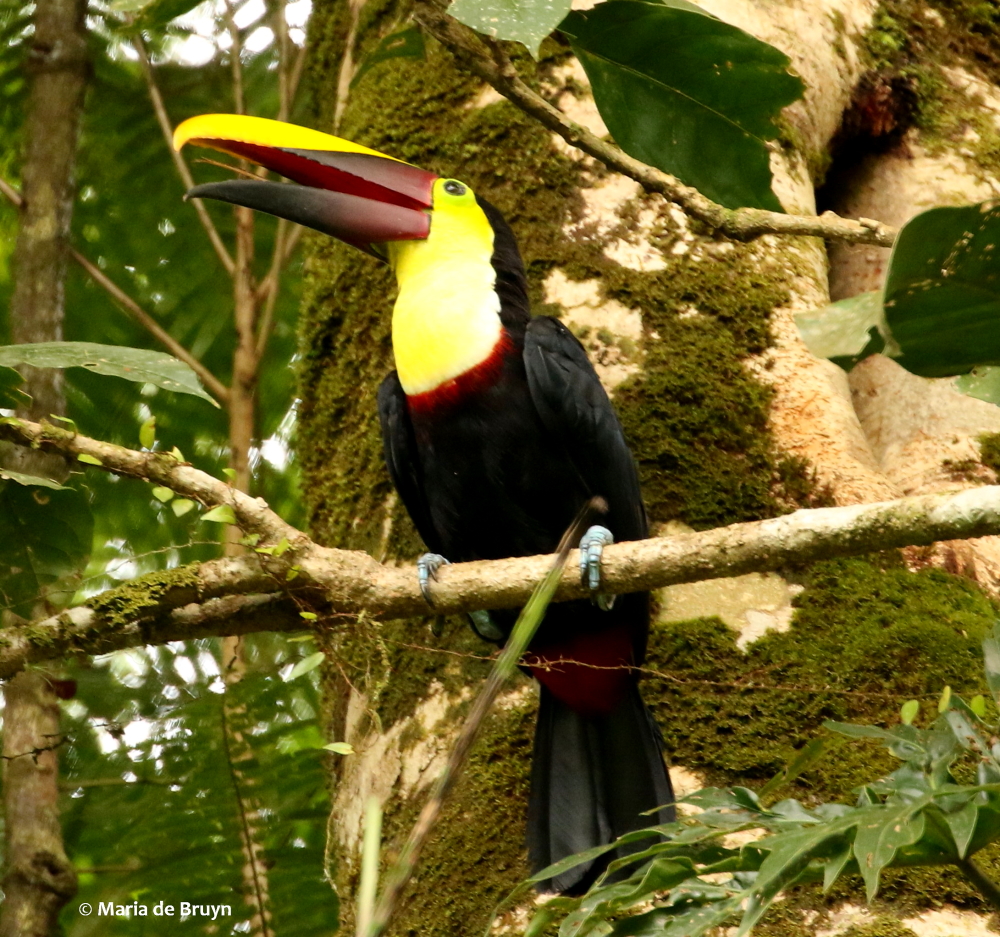


In 2018, I was able to photograph a couple that were flying by over a river.


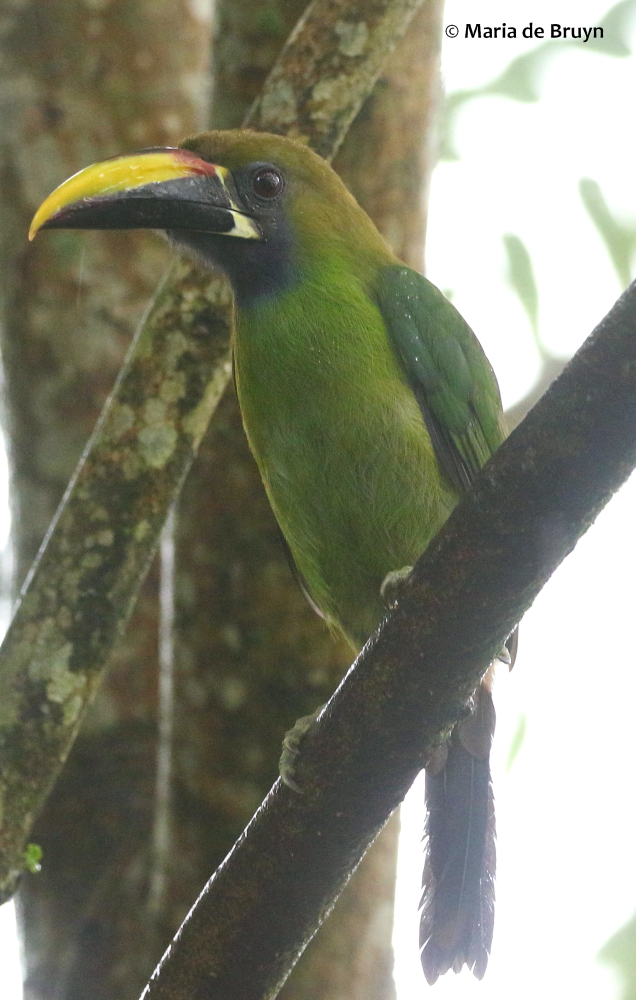
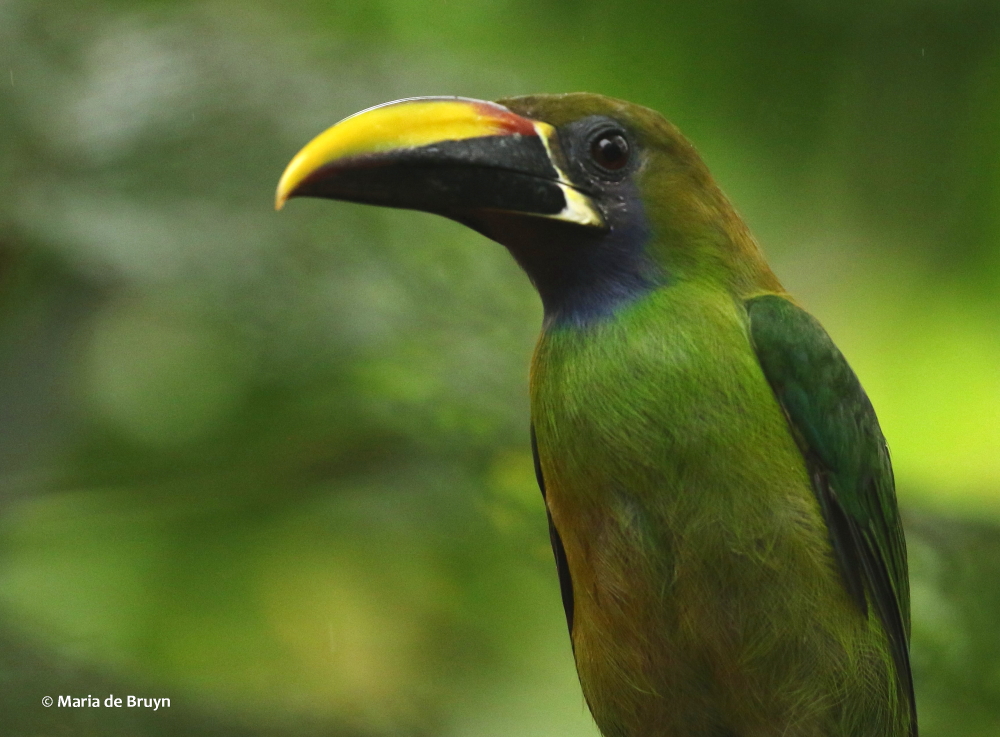
The Northern emerald toucanet (Aulacorhynchus prasinus) is a smaller toucan that also sports a large beak in comparison to its head size. We saw one of these birds every morning at one hotel where we stayed as it was hanging out in trees next to our room cabins. It was often overcast, however, and it wasn’t easy to get a good photo; the same situation arose several days later when we saw one on another rainy day.


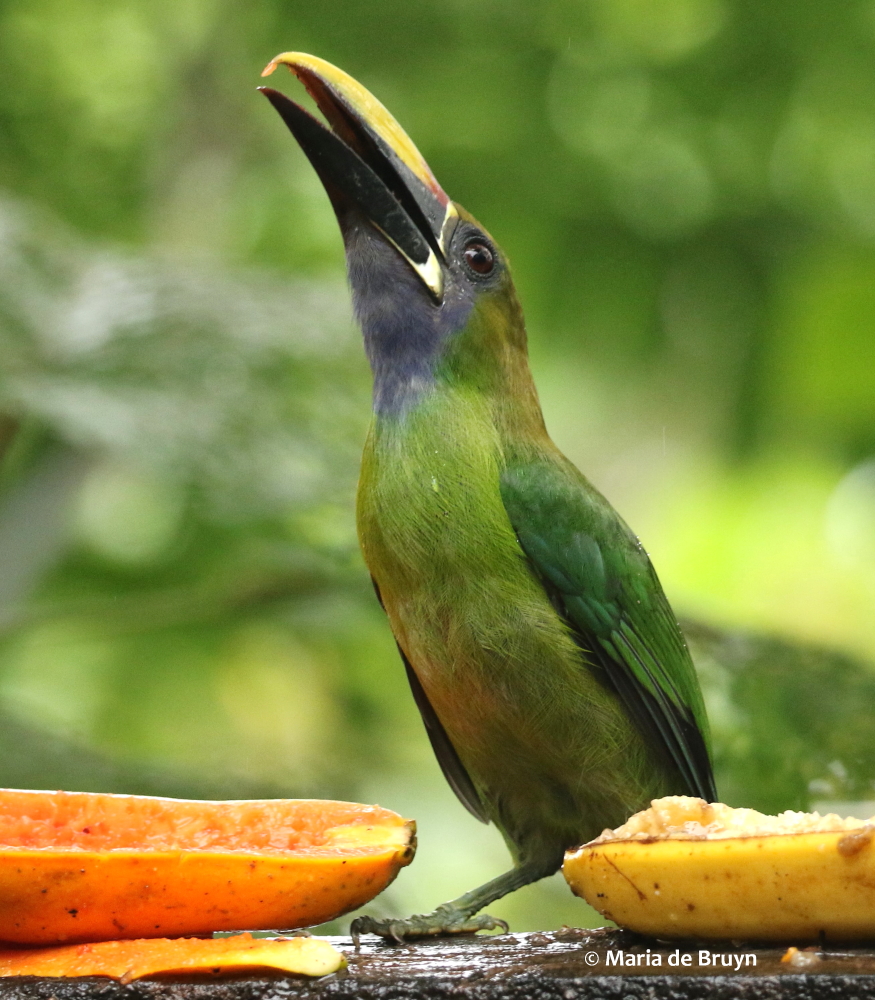
Luckily, that bird came down to a feeding station set up to attract birds for tourists. You can see its beautiful green body set off with a multi-colored bill that has a distinctive white band at the base.
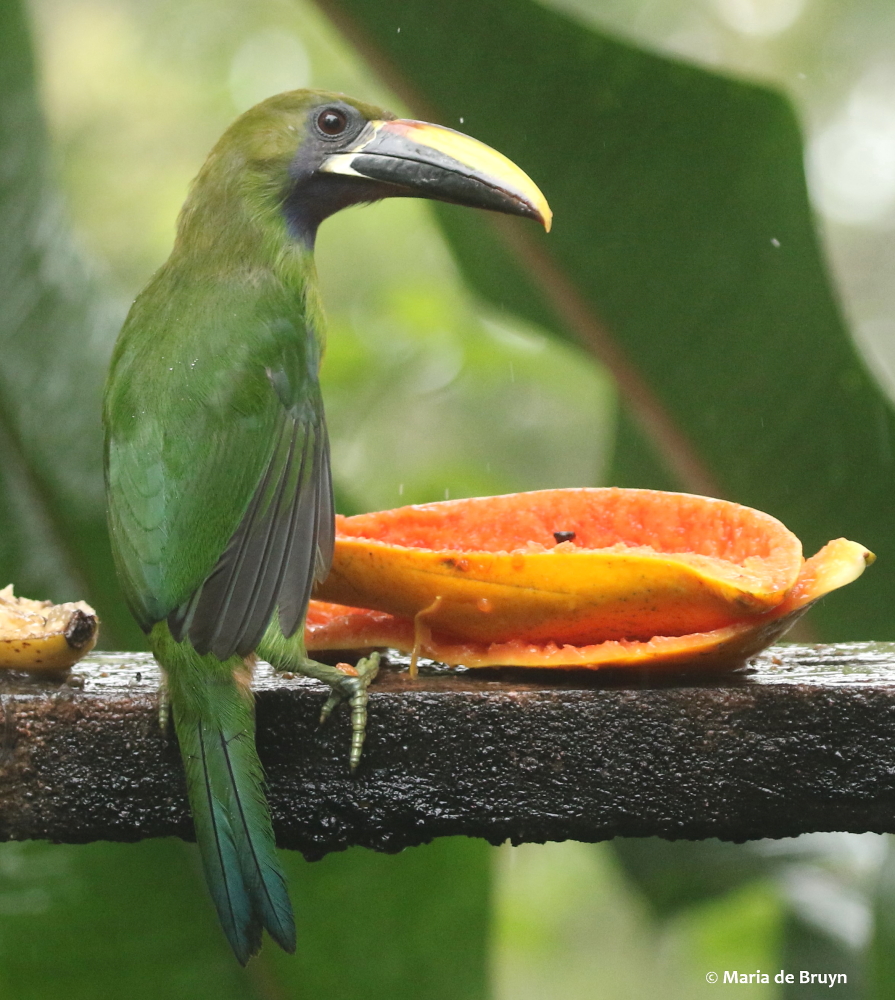
 

Like other toucans, the toucanet will eat insects and lizards but it, too, has a real fondness for fruit meals, especially berries.

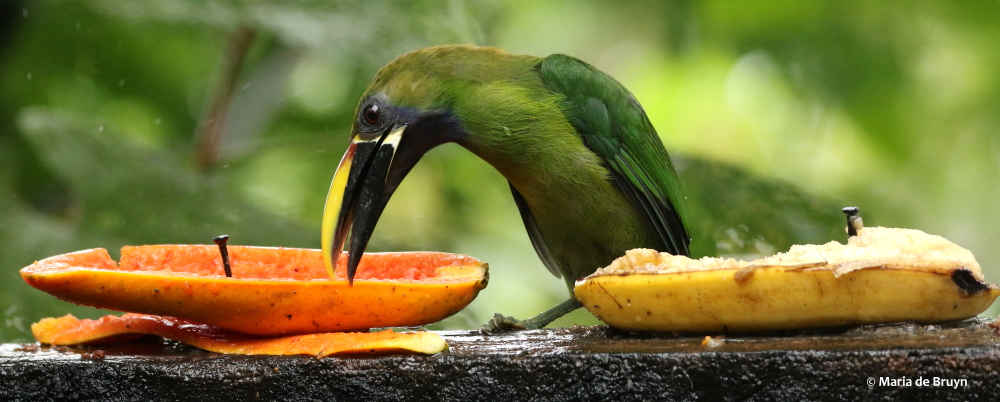
 

In contrast to the oropendolas, this bird’s calls resemble frog croaking and barking!
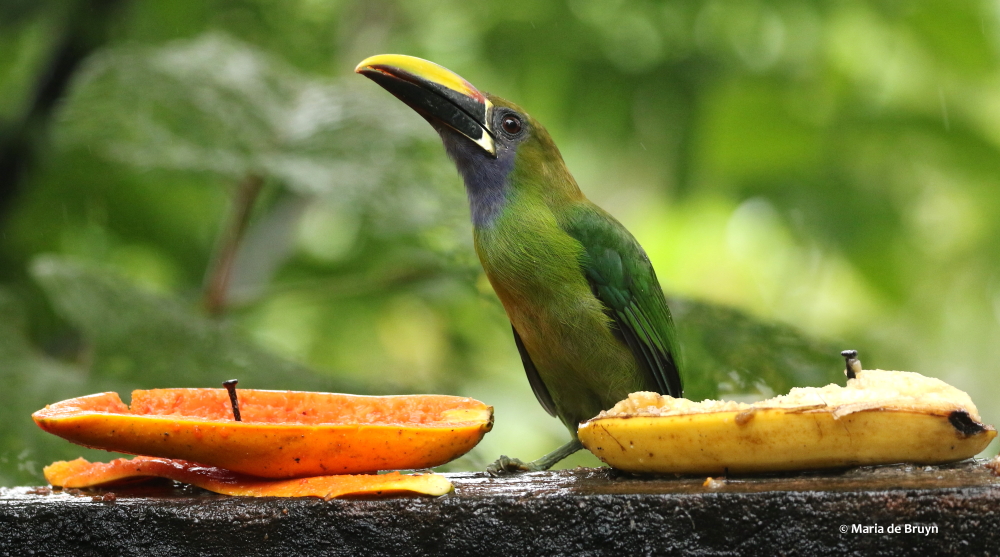
Unfortunately, it appears that these birds are popular as pets and they are taken from the wild to live in cages. They are popular because they can be affectionate and interact with their “owners” and they can learn tricks.
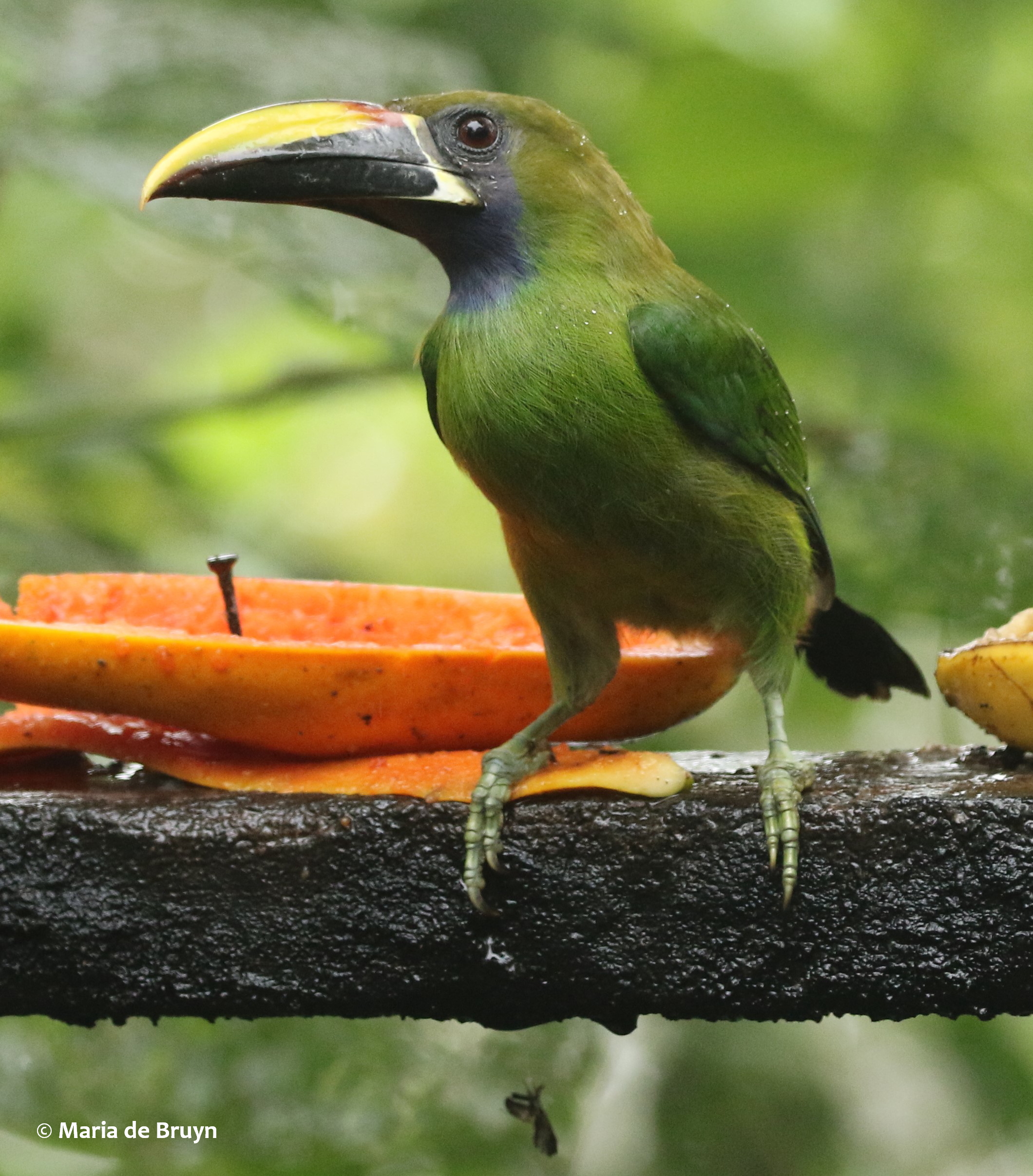
 

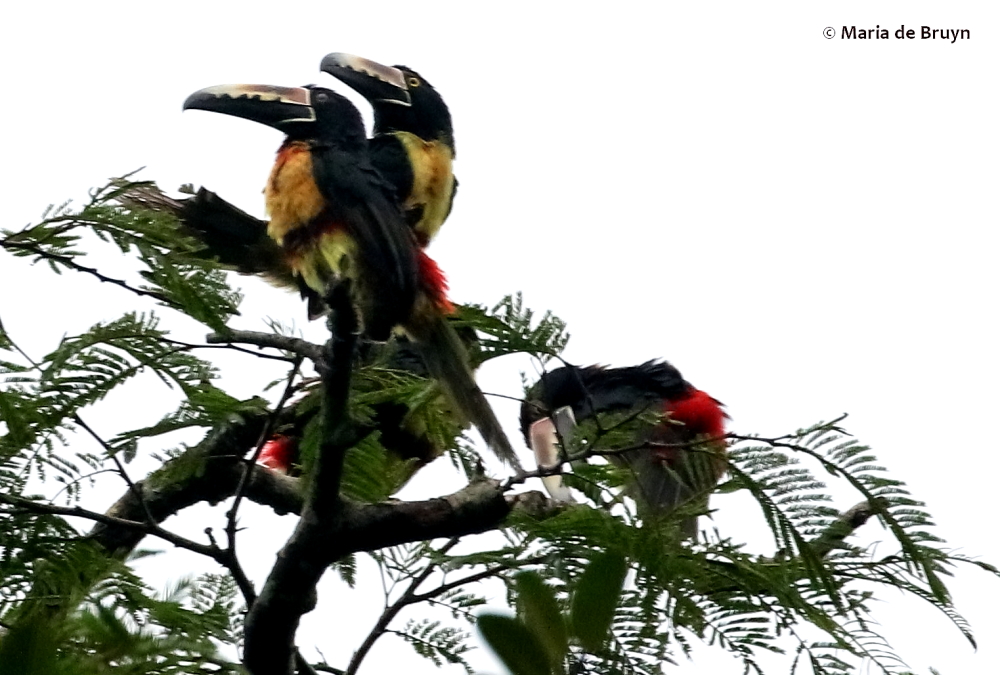
Going back to the bigger birds, Costa Rica has two aracaris, which are also members of the toucan group. They differ from other toucans in their sociability, often roosting in groups of several birds.
We did not see the fiery-billed aracari (Pteroglossus frantzii) during our August 2019 trip, but I had seen one flying by during a trip to Costa Rica in 2018.
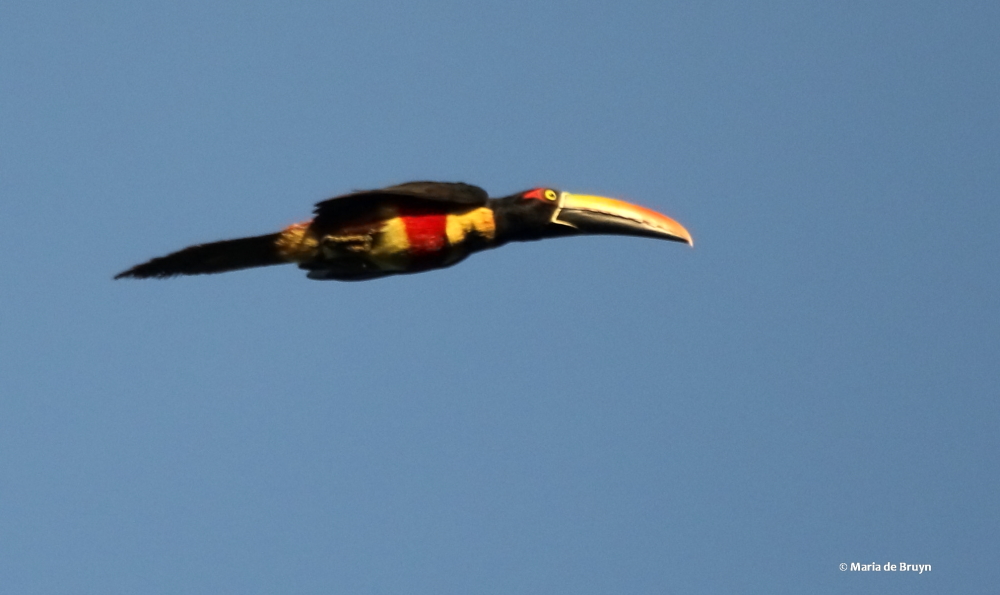
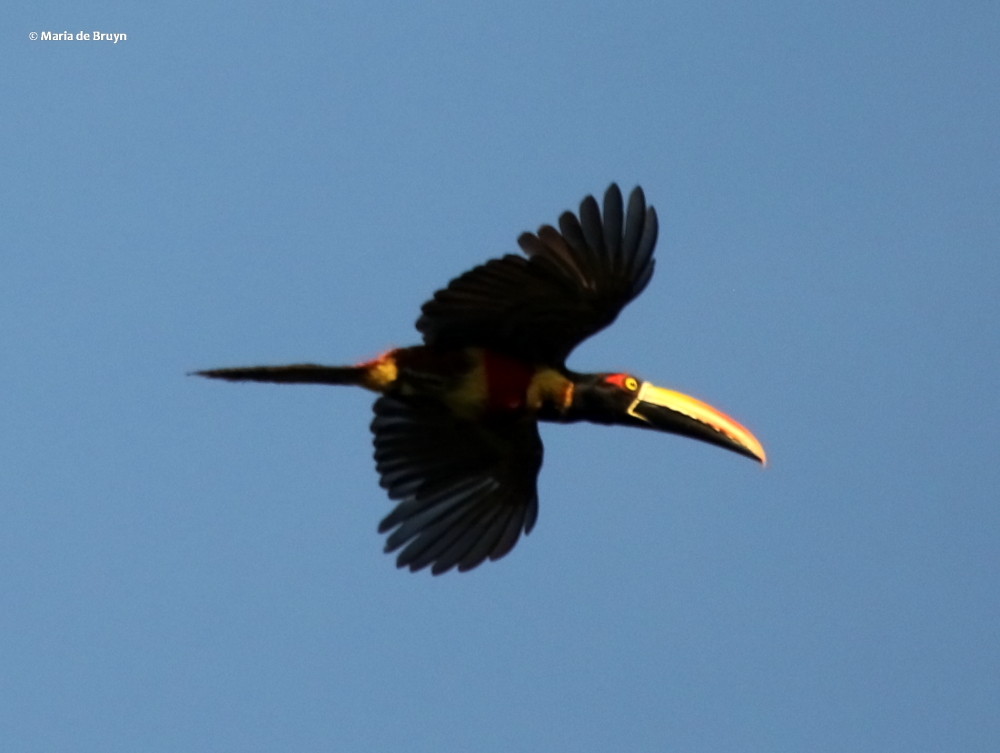
It looks similar to the collared aracari but is distinguished by a bright red breast band and its bill is somewhat more colorful. It, too, is mainly frugivorous.
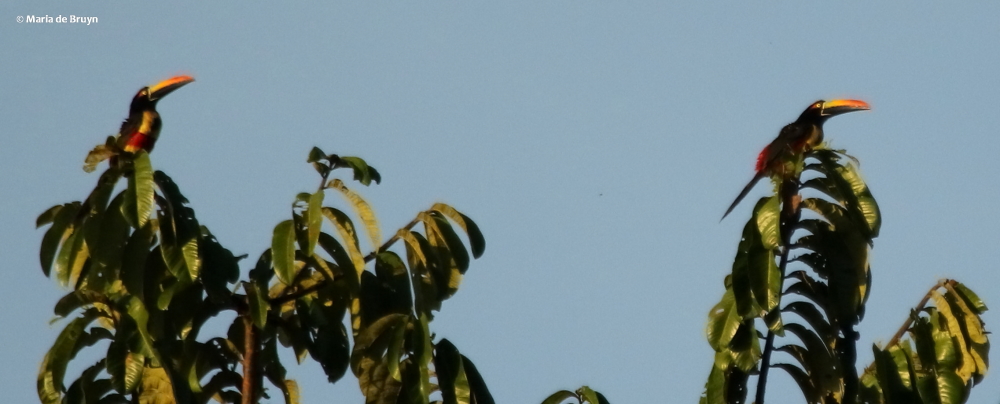
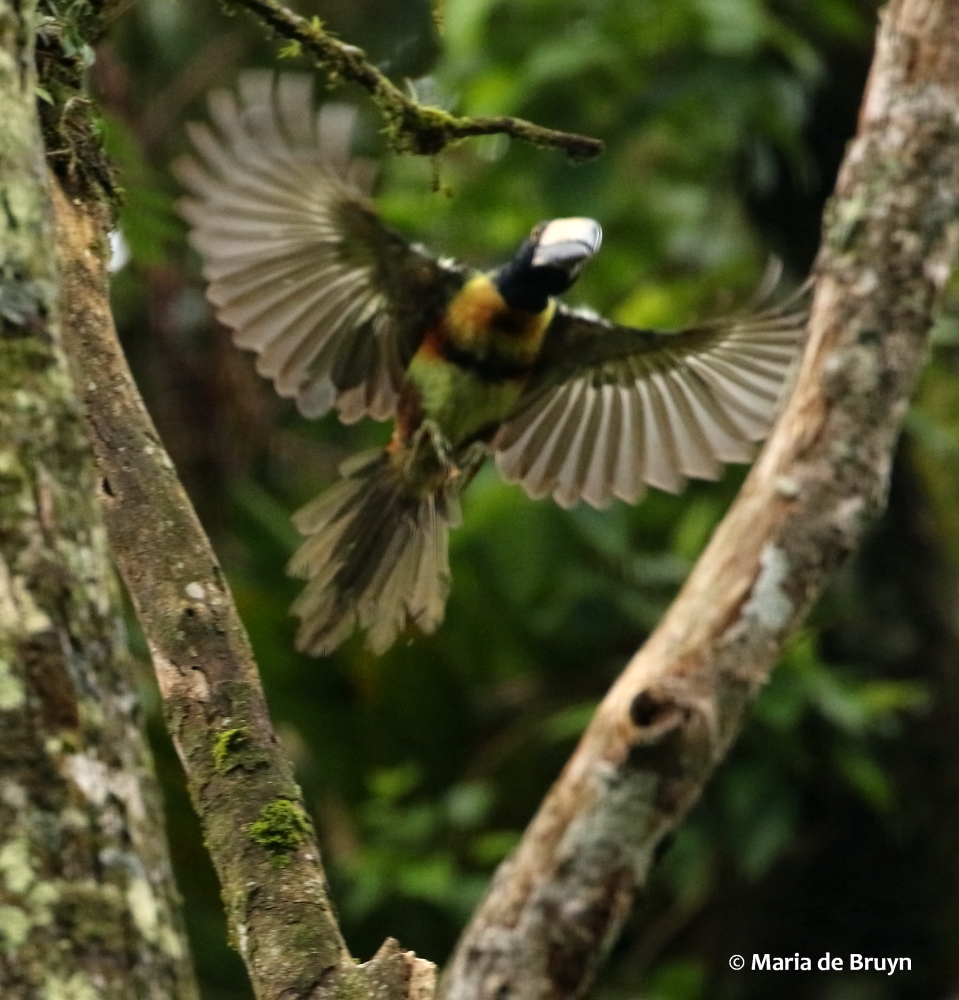
 

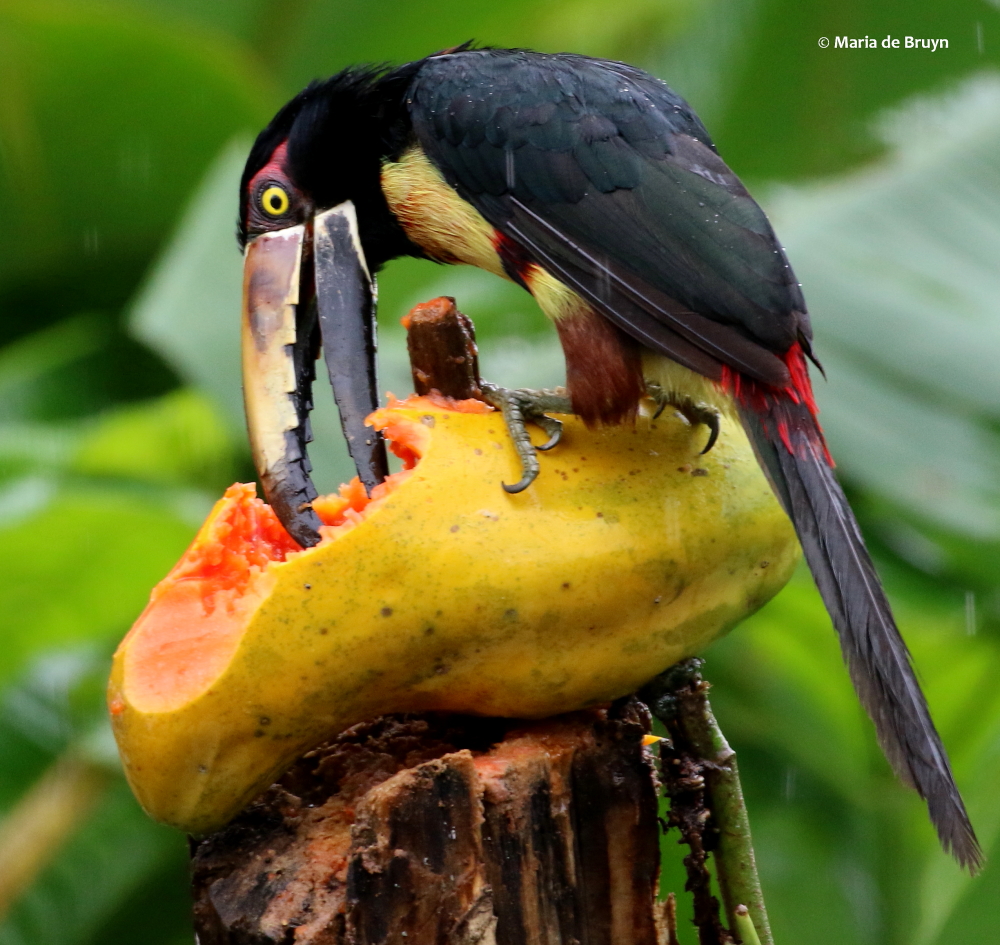
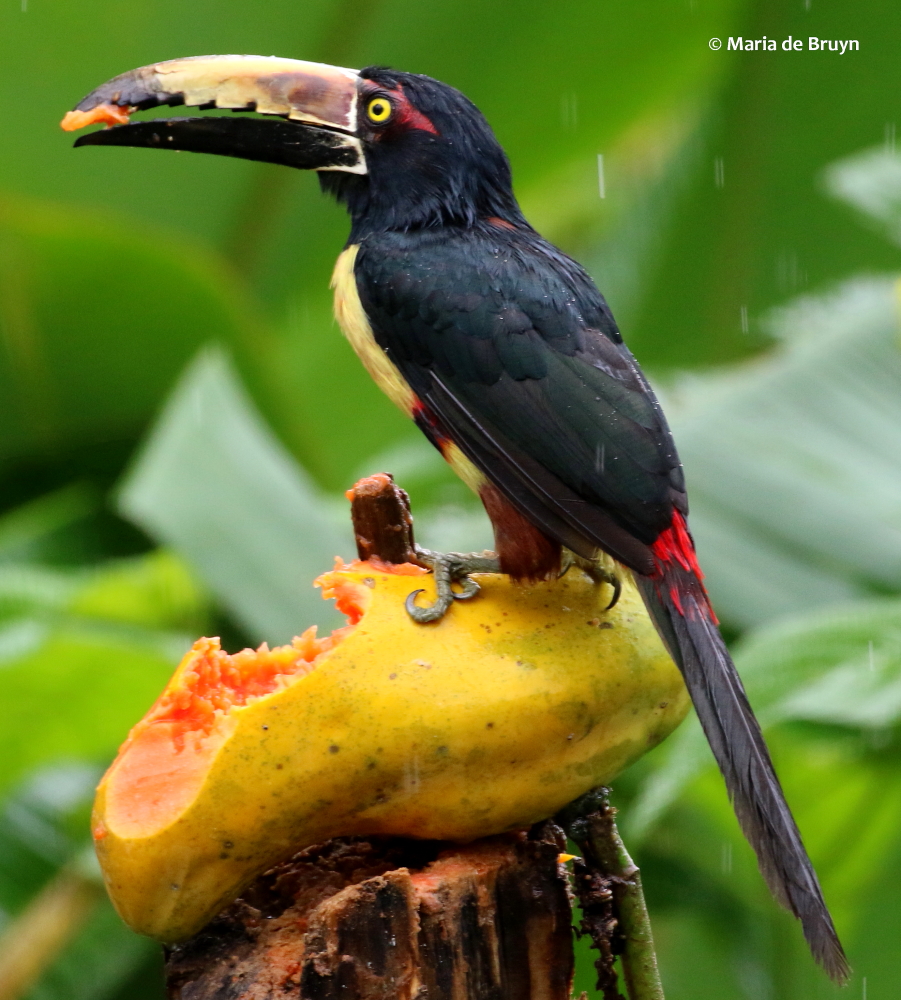
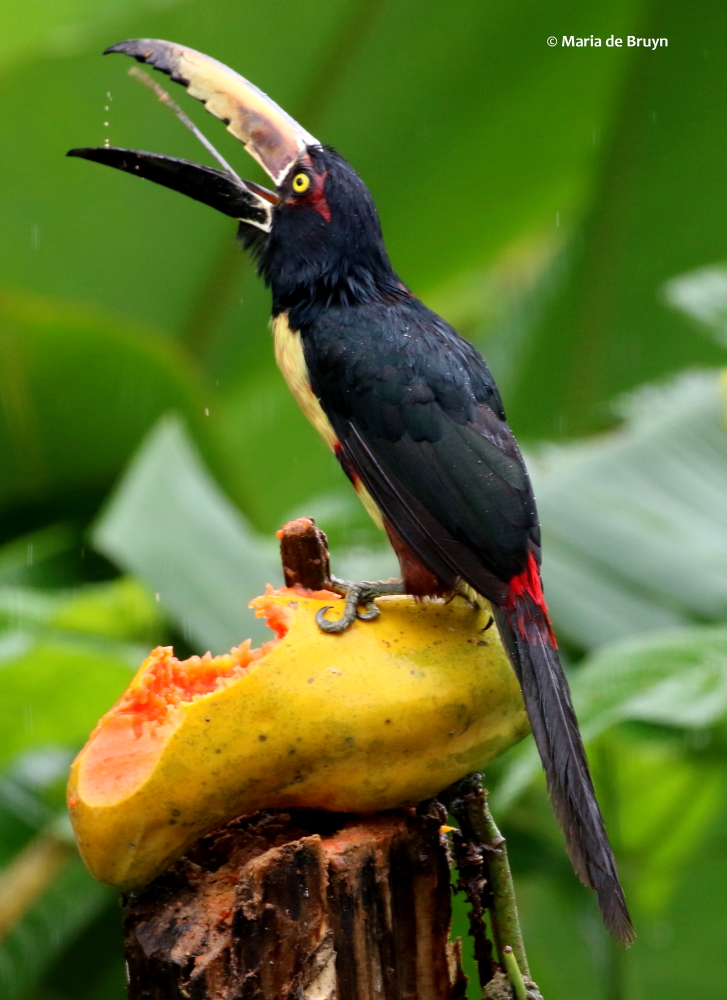
The collared aracari (Pteroglossus torquatus) was a frequently seen bird during our August trip through Costa Rica.


We visited several spots where people were earning tourist dollars by setting up feeding stations with plenty of fruit to attract a variety of birds. The aracaris were enthusiastic and voracious feeder visitors.
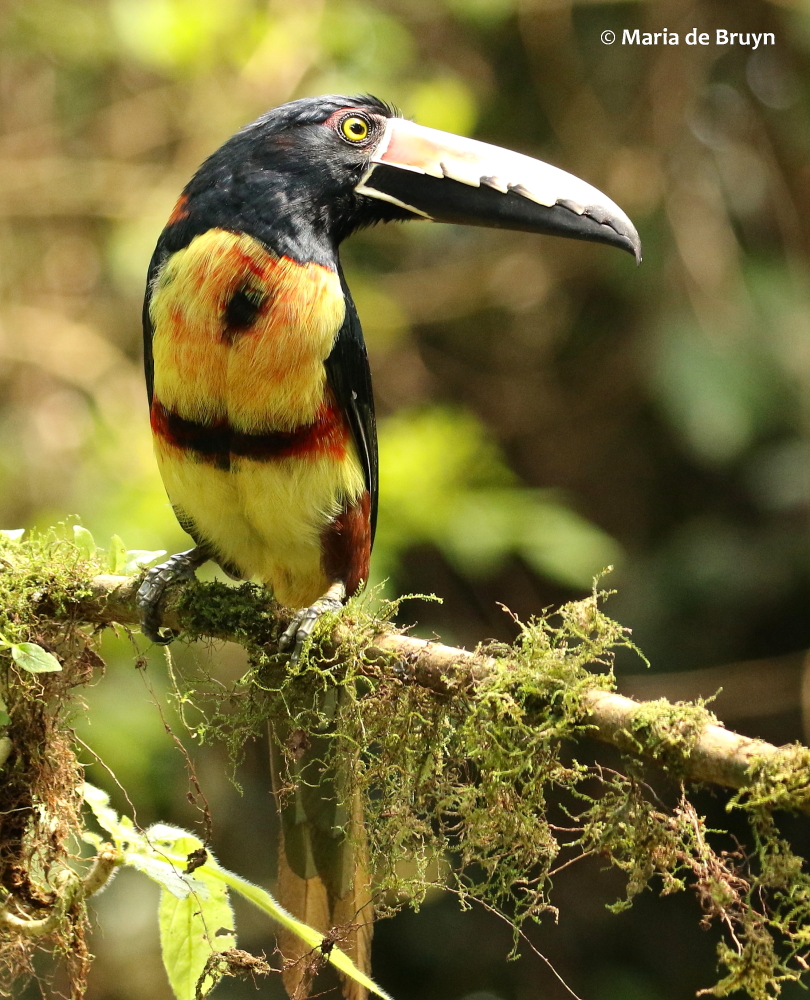
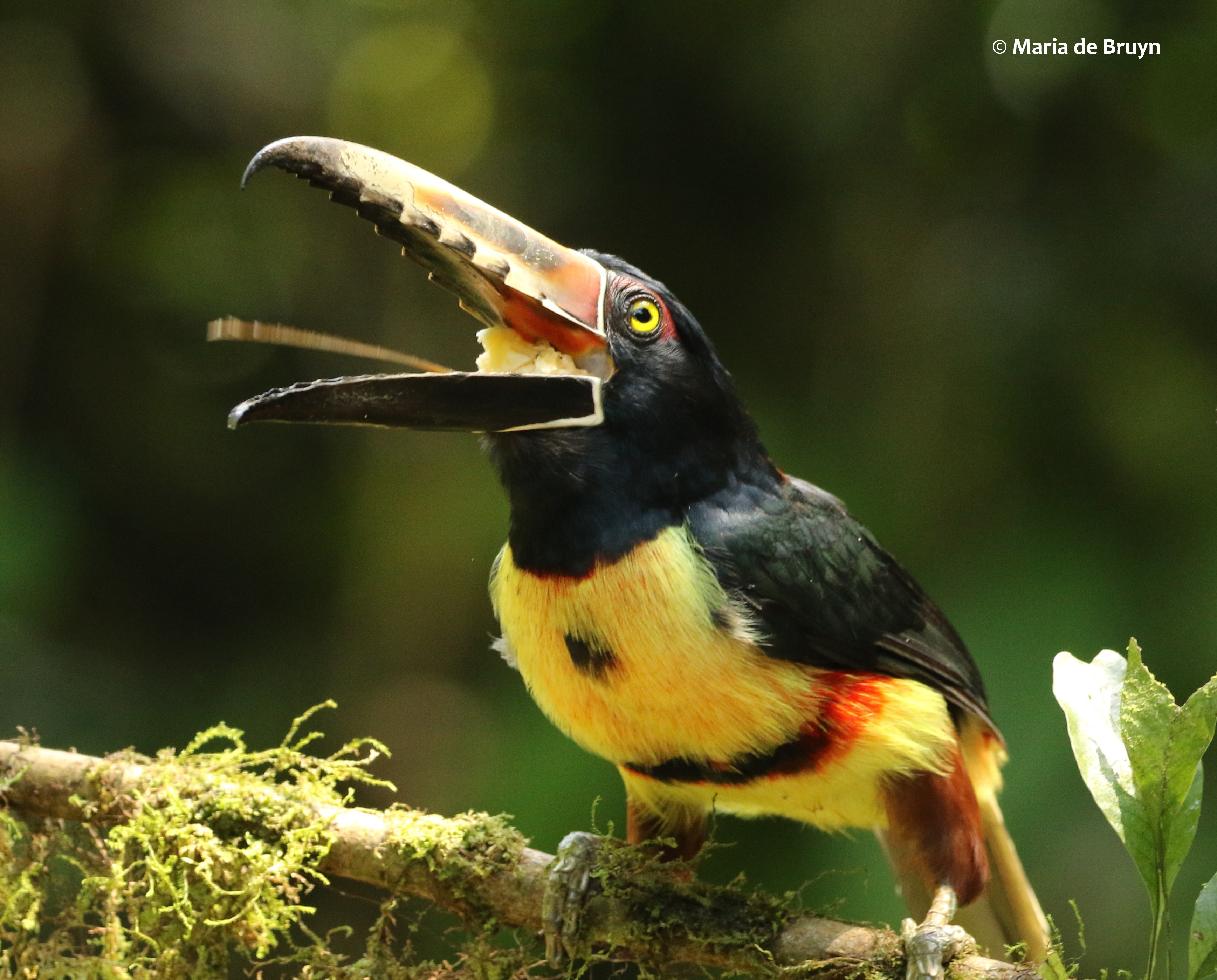
 

When the young aracaris are born, they are blind, naked and have short bills. Their feet also have specialized heel pads to help protect their feet from the rough nest floor. Not only the parents but also other birds help feed them for six weeks, at which point they fledge. The adults will still feed them for a time after they leave the nest as well.
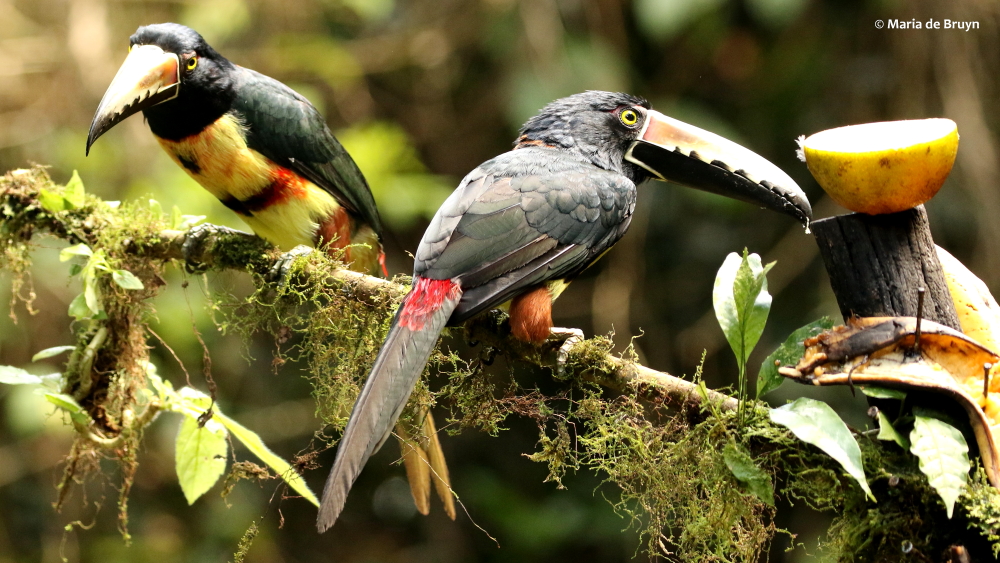
These aracaris are interesting in that their large colorful bills also have a sawtooth pattern on the cutting edges. It can take up to a year for the young birds to develop the notches and color pattern on their beaks.
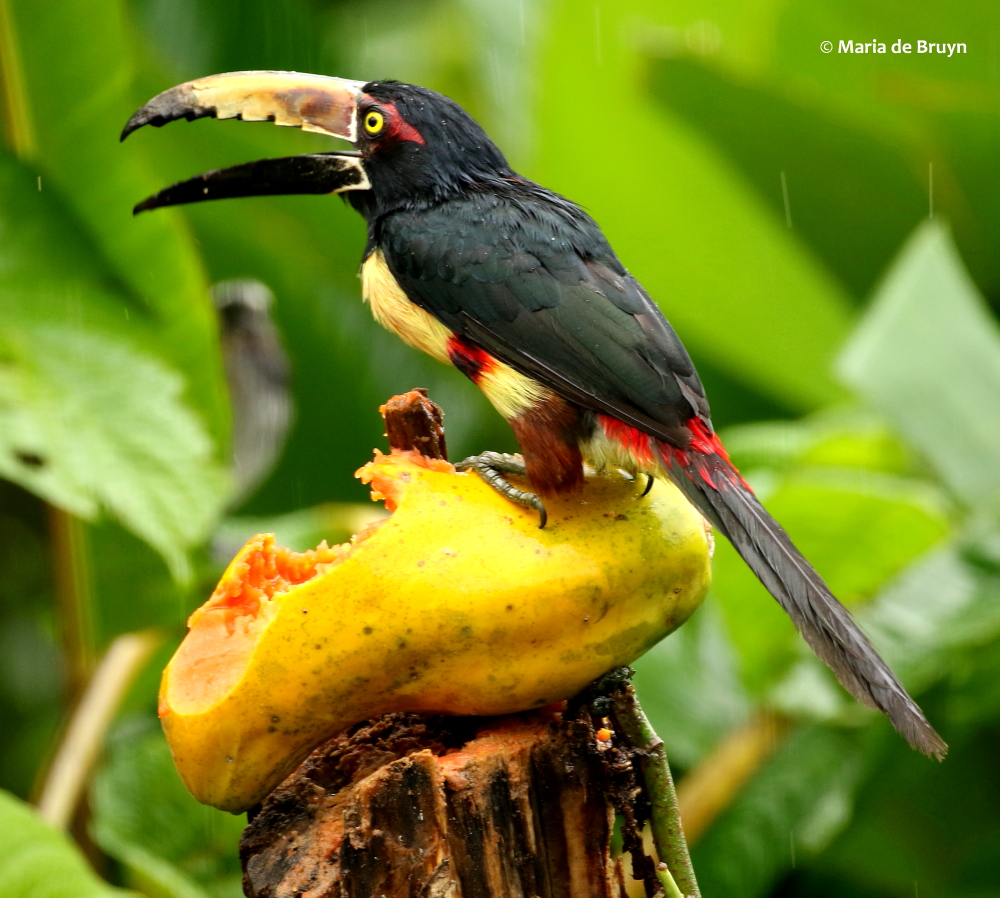
Now all these photos might give the impression that all the big-beaked birds are large in size, but this is definitely not the case. There are also medium- and small-sized colorful birds that tote around bills large in size when compared to their heads. Among the middle-sized range are two beautiful motmots.

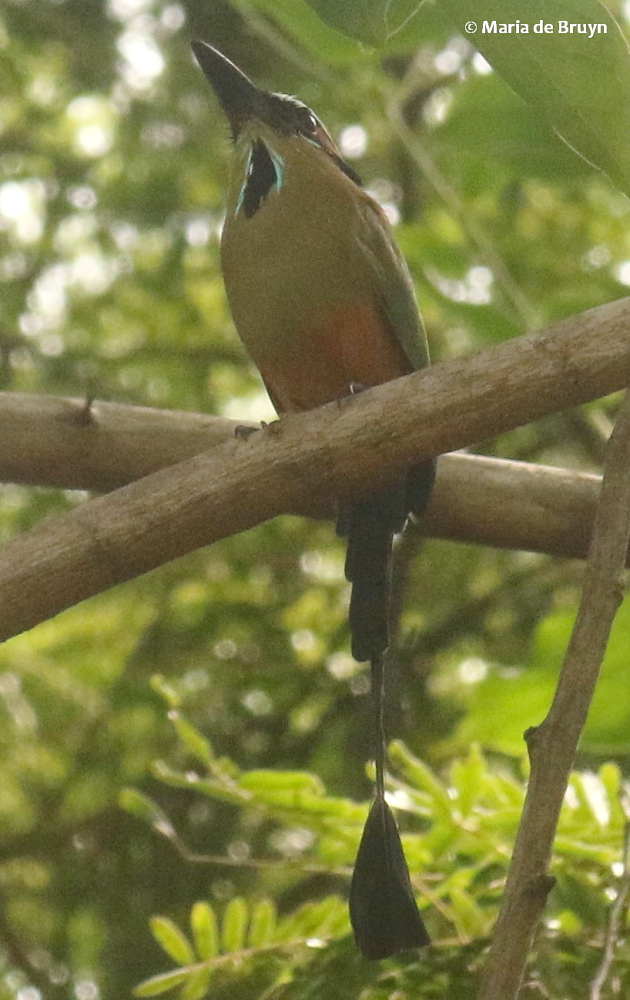
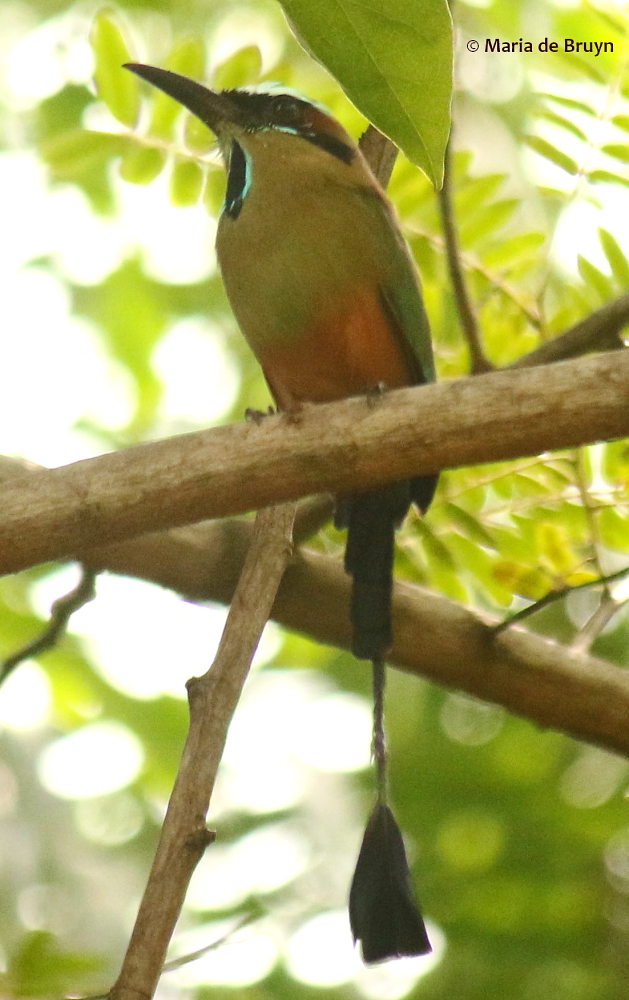
We saw our first turquoise-browed motmot (Eumomota superciliosa) early one morning when it was still dark. A flashlight showed the bird sitting quietly in a tree as we made our way to breakfast. Oddly (to me at least), it didn’t seem very bothered by the bright light and just watched us as we drew near.
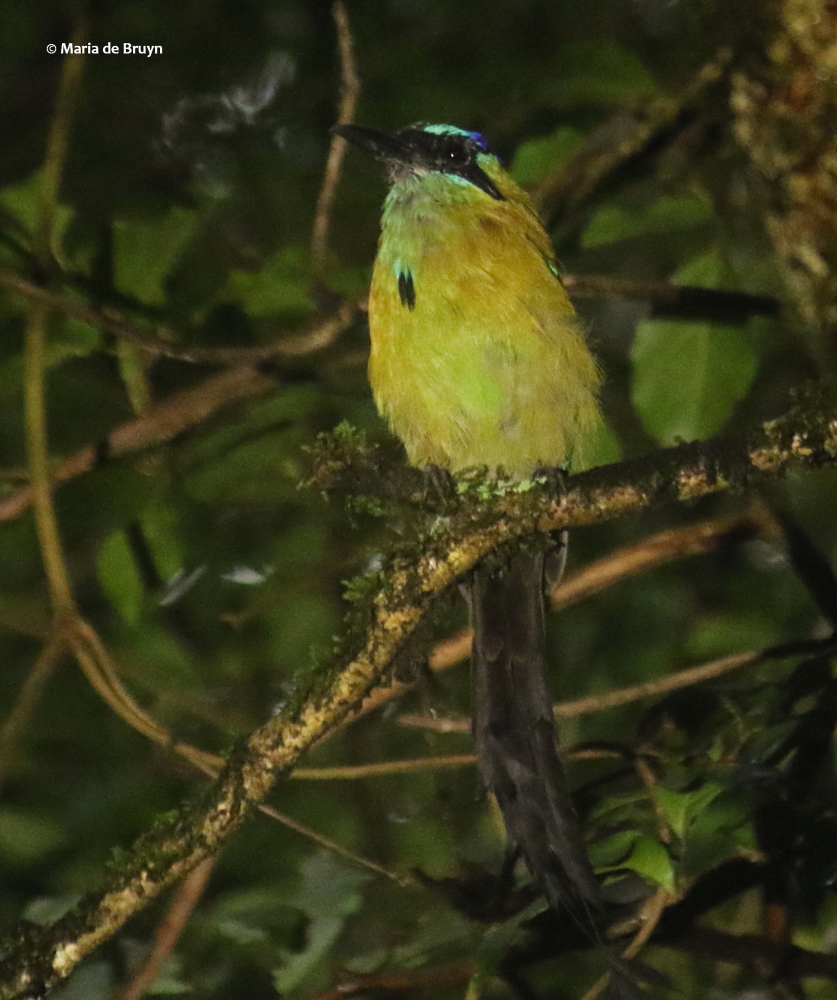
We later saw one sitting in a shady area alongside a road. They often perch on fences and wires as well, scanning the area for their diet of insects and lizards. They use their racketed tails for communication purposes, as part of a mating display or as a “pursuit-deterrent signal” to warn predators that they have been seen and will not be able to capture the aware birds. In Costa Rica, these birds have the nickname pájaro bobo (foolish bird) because they will allow humans to get quite near.
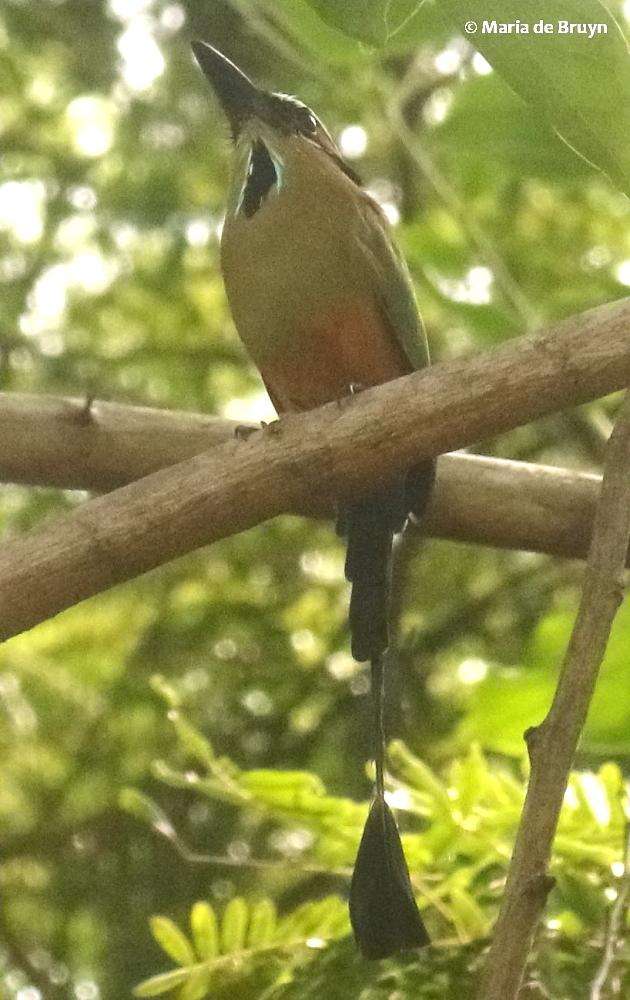
         

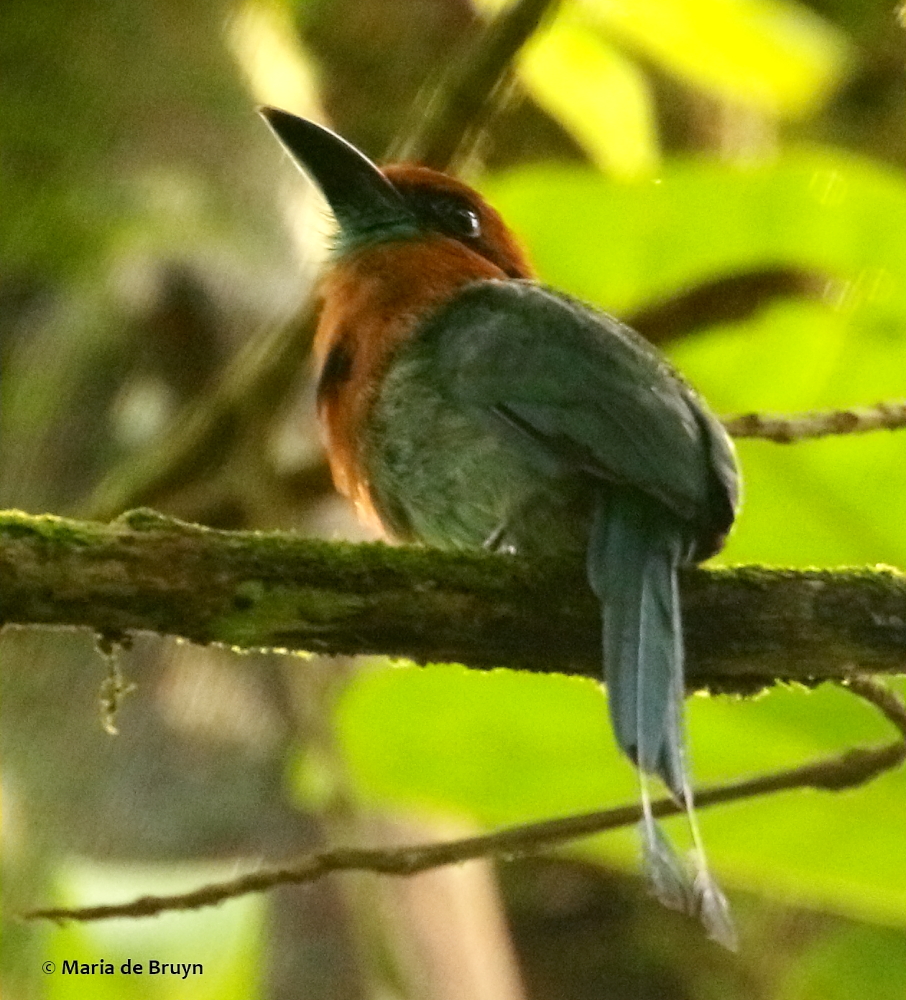
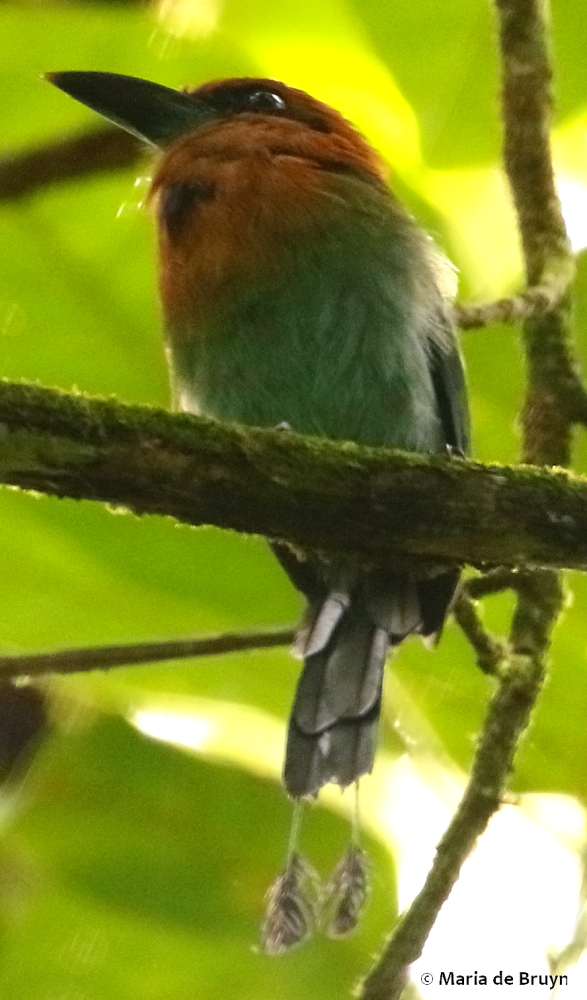
The broad-billed motmot (Electron platyrhynchum) is also an insectivore and has not been seen consuming fruit. These motmots are less studied than the turquoise-browed species; for example, it is not known how they use the tail rackets for communication.
 

The smallest bird in this account of the big-beaked avians is the rufous-tailed jacamar (Galbula ruficauda), which I first thought might be a large hummingbird. (Some hummers also have enormously large bills and will feature in a later blog.) They measure only 10 inches long (25 cm) with a 2-inch (5 cm) bill.
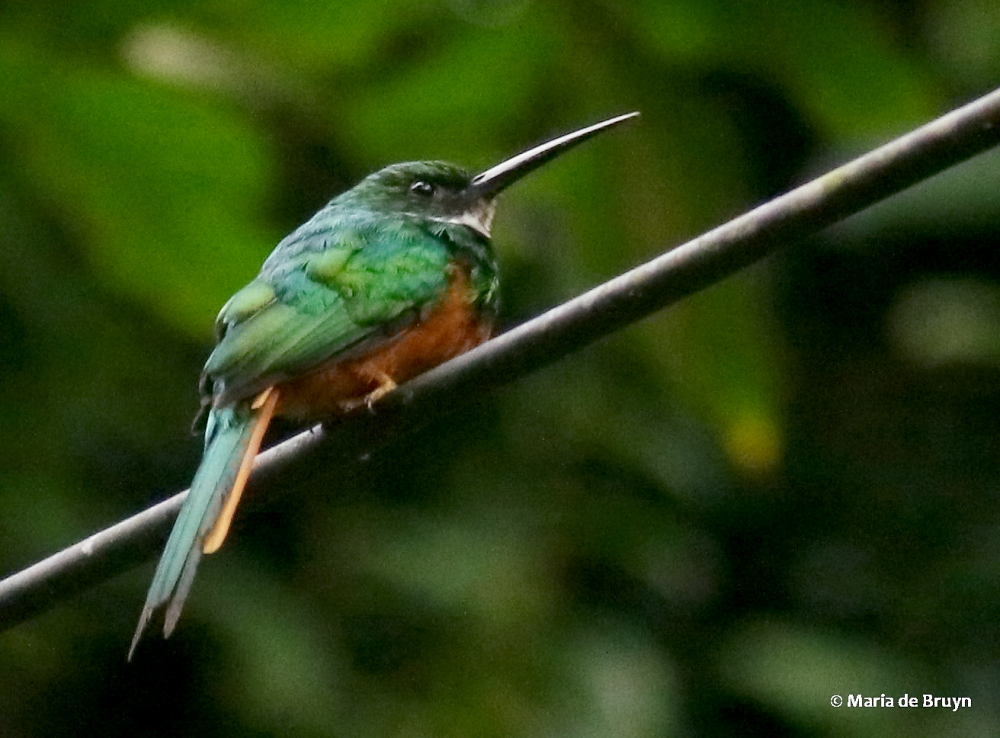
They are insectivores who will remove an insect’s wings before they swallow it. A surprising finding for me was that they nest in bare earth burrows. They do not keep the burrows clean and the nestlings do not lie down but remain standing so that they protect their feathers from accumulated debris!

On that surprising note, I wish my blog readers a wonderful start to the next decade and hope you all will have a great 2020 with good health, a comfortable living situation and as many hours enjoying our beautiful natural world as possible!

‘Rassing – a surprise visitor – what a delight!

(Warning – this is a bit of a long blog!) Several years ago, what was likely a rufous hummingbird took up residence in my yard during the winter months. That was really unexpected — while it’s not uncommon for migrating or some resident hummingbirds (especially ruby-throats, Archilochus colubris, above) to spend wintertime in North Carolina, particularly along the coast, it’s not so common in the central part of the state. That experience taught me that it’s a good idea to keep up a nectar feeder in the winter as you never know when a stray migrant might show up. In 2015 and 2016, I traveled with fellow birders to visit people who had a buff-breasted (Amazilia yucatanensis) and calliope hummingbird (Selasphorus calliope) wintering at their homes. In actuality, however, I didn’t really expect a rare passerby in my yard.


It was consequently with great surprise that I saw a hummer hovering at the nectar feeder last week. “Oh, wow!” I thought; “a ruby-throated hummer is passing through as a very late migrant.” I grabbed my camera to take a few shots and immediately felt perplexed.


The bird looked like he had a purple rather than ruby or red gorget (throat feathers). The white patch behind his eye also showed prominently because of his very dark head.

To me, it also looked as if this hummer had blue patches on his tail feathers. (Most say his flanks are green and a hummingbird expert said he has iridescent black tail feathers; the way the light reflects off them made me see blue, however.)

I got a few photos and cautiously asked birding experts on a facebook group if he could possibly be a black-chinned hummingbird (Archilochus alexandri), also sometimes known as the Alexander hummingbird. It seemed unlikely as their normal range is the Western part of the Northern hemisphere, reaching north into Canada (Alberta and British Columbia), east to Oklahoma, and as far south as Mexico, where most spend the winter.

A couple people thought I might be correct, but most thought it was a ruby-throated hummingbird. My spring-summer ruby-throated residents had left at least a month ago but I thought perhaps a late migrant might have arrived. The next day, I saw the bird again and became convinced that it was a black-chinned hummer; his purple gorget was very obvious to me. I posted new photos and now the experts agreed that I was correct. That was very cool – I got a lifer without even leaving my own yard!


A couple days later, North Carolina’s hummingbird researcher, Susan Campbell, came to my home to band the unusual visitor. I invited a friend who had been to bird bandings in my yard before to come for the happy event.

Susan arrived early and first set up a cage trap for ‘Rassing (short for the Dutch word verrassing, which means surprise; I wanted him to have a name during his stay 😊). She left the door open with a long string attached and hung the nectar feeder on the outside. It wasn’t long at all before the bird arrived for a drink. When he left, Susan moved the nectar feeder inside the cage.

‘Rassing returned for another drink and flew right into the cage, which Susan shut promptly. She had already laid out her banding materials so she could remove him from the trap promptly.

He went into a small bag (the kind often used to hold birds for banding) which Lucretia held while Susan began filling out the paperwork.

Then the actual banding procedure began. Susan first checked his legs to ensure that he hadn’t been banded already – the hummers rarely show their legs so that was necessary.

Then she got ready to put a thin red metal band on his tiny leg with a silver band showing his numeric code for identification in case he is caught again some time (Band number 7100 (M)-41902).

She checked the length of his bill – 19.19 mm. She also advised that bird feeders with long slits are not preferred even if the birds like them. It turns out that the thin slots can rub against the bill and wear it down, damaging the bill and making it vulnerable to infection. (I afterwards enlarged the slots into ovals and circles and went back to a couple other feeders I had with larger holes.)

She blew on his stomach feathers to check his fat; he was not a hefty bird but certainly a healthy adult male. His weight turned out to be 3.09 g. She also recorded his body length.

She stopped for a moment so I could take a few photos trying to get a good shot of the purple gorget. It looked like ‘Rassing was trembling but this was the vibrations from his rapid breathing. (When resting at 91⁰ F, they take about 245 breaths per minute; at 55⁰ F, this rises to 420 breaths per minute!!) Susan thought he was acting fairly calm.

She measured his short tail (23.5 mm), as well as his wings (40.42 mm). The female black-chinned hummer would have more rounded wing feather tips than this male.


Susan took a few photos of ‘Rassing and he got a few long drinks from a feeder held by Lucretia. Then Susan gave me the honor of releasing him – and to my delight, he chose to sit in my hand for what seemed to be at least 90 seconds. I could feel him breathing and it was a real thrill to see him so close. With a little flutter of his wings he took off – and then stayed away from the feeder for quite some time.


I added a feeder in the backyard and ‘Rassing began preferentially feeding there – perhaps the front yard had acquired some unpleasant memories. However, at the end of the day, I would remove the backyard feeder so that visitors who wanted to see him had a better chance of seeing him dine at the front-yard feeders.


A fair number of birders were interested in being able to add him to their life, state and county bird lists, so I offered to schedule visits through a birding listserv for a few people at a time. ‘Rassing appeared more reticent to stay at the feeder when there were more than 2 or 3 people watching, which is understandable. Who wants an audience for each meal and snack you eat??

When it rained, the feathers atop his head clumped together, giving him a new “hair-do.”


It appears that this species of hummingbird has not been studied much. I found his behavior interesting and spent a good amount of time observing him (chores had to wait). When I watched him leave the feeder and go to a nearby tree, he would sometimes watch me (turnabout fair play, of course).


He seemed very comfortable with lots of other bird species at nearby feeders. Perhaps it gave him a safer feeling.

‘Rassing tended not to sit on feeders, as ruby-throated hummers often do. Instead, he mainly hovered and vigorously pumped his short tail quite a lot. I learned that this tiny bundle of energy was breathing at a flight rate of about 1260 beats per minute!


Occasionally, you could see the band on his leg but mostly he kept his legs tucked into his body.

In the evenings, he came around nearly the same time each day to have a longer drink and then he sometimes perched while feeding.


A Cornell University website says that black-chinned hummers rarely stay at a feeder longer than a day during migration, even when food is scarce. In my yard, he had access to lots of bugs (I have a small pond) and three types of sage/salvia were still blooming. Indeed, he sometimes came to the feeder with pollen covering the top of his bill.

Yesterday morning, ‘Rassing apparently had decided it was time to move on. After the warmest Halloween on record in our area, the temperature plunged during the night to the 30s. The next morning was the same and he may have decided it was time to go to warmer climes.


I did feel lucky that he graced my yard with his presence for a week; it gave me something to celebrate during a personally challenging time. The oldest known black-chinned hummer was more than 11 years old; if ‘Rassing likes going east during migration, perhaps he’ll stop by again next year – wouldn’t that be a tremendous surprise! 😊


The Northern mockingbird boundary dance

In between searching the web and bird guides for plant and other IDs for my (long-time coming, I know!) next Costa Rica blogs, I’ve taken time for nature walks so that I can continue to see lovely wildlife and plants here in my home area. A recent discovery came up unexpectedly when I was with a couple friends looking for migrating warblers at a local lake.

Previously, I’ve written about how Northern mockingbirds (Mimus polyglottos) engage in wing-flashing behavior, which scientists continue to study in an effort to pinpoint its various functions. I’ve seen the wing-flashing every year since I began watching the mockingbirds, but a few days ago I saw a pair of mockers exhibiting a different type of behavior that was very interesting to watch. (If you click on a photo, you can see it larger.)

The two birds landed on a section of parking lot and proceeded to face off against one another.

They slowly drew closer.

Then they stretched to stand very erect.


They confronted each other face to face.

 A little hop by one or the other followed. A shifting from side to side ensued.

Occasionally, they flew up with flapping wings to confront one another in the air (I tried to video this but obviously don’t know yet how to take proper videos with my new camera). According to research, they might actually have an airborne physical tussle but that didn’t really happen with this pair.

So why do the mockingbirds do this? These displays are called boundary dances, where male birds go to the edge of the territory they claim to ensure that another male does not encroach on their domain.

After several confrontations, this pair eventually decided that they had made their point. It has been reported that they stop when one dominates but these males seemed evenly matched. Or perhaps they were not feeling very aggressive. Each one flew off and presumably they settled in to patrol the areas that they had claimed as their own. It was nice that there was a peaceful end to the show of masculine bravado!

Going out in nature is such a delight – you never know when you will discover something new (at least to yourself!)

“Wattle” I do to get a better photo of you?

In mid-August 2019, it was my privilege and good fortune to participate in an interesting, engaging and VERY fun “Birding Plus” tour in Costa Rica thanks to a great roommate, Nan, knowledgeable guide and tour organizer, Steve and Sherry, and group of fellow travelers (Ann, Art, Bill, Gordon, Len, Tom and Ylva). My next blogs will mostly focus on the birds, amphibians, mammals and insects we were fortunate to see there. The photos are not all great as taking shots in the rain and dark cloud/rain forests was challenging for multiple reasons. But they will give you an idea of the fascinating and beautiful sightings we had. (Clicking on photos enlarges them; then back arrow.)

One of the most difficult birds to “capture” in a good photo was likely the one about which I was most excited, the three-wattled bellbird (Procnias tricarunculatus). This species, which also lives in Honduras, Nicaragua and Panama, only breeds in the mountains of Costa Rica. These bellbirds are known to be shy, secretive and elusive as they remain mostly in the dense, high canopies of the forests. They apparently prefer to perch on uncluttered branches that are 33-72 ft (10-22 m) high and 0.98-2 in (25-50 mm) in diameter.

The males usually sing from March through June, so we were lucky that some of them were calling out in mid-August. Here we see a couple digiscoped photos of a male bird. The females look very different with olive coloring and a streaky yellow breast (we did not see a female). They are quite different in size, with males in one study having a mean wing length of 6.5 in (165.5 mm) compared to 5.7 in (145.1 mm) for the females.


The common name for these birds comes from the sound they make. In some articles, it is described as a 3-part song. To me, it sounded like they first made a high-pitched brief screech, squeak or whistle sound and then a deeper call.


Others have described their calls/songs as a “boink,” “bonk” or “Hee-aahh” sound. In any event, they obviously work at producing the sound. As we watched, “our” bird would open his mouth very wide, so that you could see the white and black lines surrounding the bill.

He seemed to be breathing in plenty of air as he sat there silently for a while. You could see his neck getting ridges, which I assumed was due to the oxygen he was gathering and holding to be expelled in the call. (This turned out to be a correct assumption according to one study!)

Then, he moved his head up and down a bit and you knew the sound was coming. It is unmistakable once you have heard it as in this brief video that fellow traveler Ylva made.

It is said that the bellbird’s sound is one of the loudest avian calls, audible to humans who are more than 0.5 miles (0.80 km) away. The calls and songs are not instinctive – the birds learn the calls and there are different “dialects” among the birds from different areas! One bird studied in Costa Rica could perform the song/call repertoires of Talamanca and Monteverde – in other words, he was bilingual!


Research has also shown that immature male bellbirds not only take 6 years to achieve their full adult plumage but also to perfect their entire song repertoire! Kroodsma et al. also note that: “Males appear to be highly attentive to the nuances of songs produced by their competitors, as both immatures and adults visit each others’ display perches, listening there for up to several minutes at a time.”

The other really striking characteristic of this species is the three wattles on the male’s head which begin growing when he is 6-12 months of age. One dangles from each side of the bird’s mouth and one is affixed to the base of the upper bill.

The wattles have been described as “wormlike”. Nan and I thought they looked a bit like hair-braids and on the flight home I sat next to a woman who had three braids ending in a point with interwoven gold thread that immediately made me want to give her the nickname “Bellbird”. (I didn’t tell her that though.)

The wattles are about one-third of the bird’s size (9.5-12 in or 25-30 cm). They cannot be controlled by muscles or made rigid, but they can be extended in length up to 3.9 in (10 cm) when the bird is interacting with others or singing.

The birds are frugivorous (eat only fruit) and prefer wild avocados (Lauraceae). They play an important role in the tree’s seed dispersal.


Due to habitat loss and hunting, the numbers of the three-wattled bellbird have declined to about 20,000 individuals and the International Union for Conservation of Nature (IUCN) has declared its conservation status to be vulnerable. They obviously inspire artists in Costa Rica, however, as witnessed by a mural at a restaurant where we stopped for lunch.


After three blogs in quick succession, I’ll now take a break to process and sort some more photos from Costa Rica to share with you. In the meantime, bye bye from the bellbird!

Further information

Summer hummers – entertainment for free: part 2

In my yard this summer, the ruby-throated hummingbirds (Archilochus colubris) came late to the feeders (similarly to what other people in the area had reported). Now, there are at least four vying for the four feeders, claiming territory for their own.


One bird in particular is most likely to be seen enjoying the garden flowers, including blue-black sage (Salvia guaranitica) and hot lips salvia (Salvia microphylla ‘Hot Lips’). In the first two photos below, you can see as his throat starts to bulge more as he sucks up the sweet nectar to complement his mostly insectivorous diet.


The airborne nectar droplets indicate that sometimes this hummer is a messy eater — or must leave quickly as another hummer is almost literally on its tail.

A couple of the birds spend a lot of time near the nectar feeders, perching close by to chase off anyone who comes near.


They each have favorite perching spots from which they can observe if an “intruder” is coming near the feeder they have claimed.


Sometimes, they fly up to a higher perch so they can see both the front and back yards – a necessary vantage point if they want to keep an eye on where everyone is.


Most ruby-throats have 940 feathers, all of which are replaced each year. As they take little rests, they stretch their feathers and may also groom them.

When a rival approaches, they spread their rectrices (tail feathers) – both when sitting and in the air.


Their feathers are beautifully arranged, looking like scalloped decorations.


They make frequent trips to the feeders and then occasionally “air out” their tongues.


The bill of the ruby-throated hummingbird is one of its most distinctive features. It measures about 0.59-0.79 in (15-20 mm) in length and is said to open no more than about 0.39 in (1 cm wide) at the tip. The hummers in my yard seem to be able to open their mouths to varying extents, however. They consume nectar by extending and contracting their tongues up to 13 times per second.


A quick, only few-second nap is also a frequent behavior. The hummers are almost constantly at the feeders and thus bulking up for their long migration, but they also expend considerable energy chasing one another away from feeders and flowers!


The hummers are not fazed by weather, zipping around rain or shine. Putting on weight and strength for their autumn migration down south is important for survival!

These minute marvels are such a pleasure to watch; I will certainly miss them when they begin their journeys to their wintering grounds.