Interesting encounters

Hello readers!

Once again, time has sped by as I contemplated new blogs and set aside photos to include in them. Time gets away from me, though, as I deal with health concerns and ongoing car and household issues. And then to stay on an even keel, I have my daily encounters with nature — either out on a walk (much of the time) or observing the birds and other creatures on my home turf. So my new year’s resolution is to post shorter blogs not requiring so much background research and hoping you find them interesting anyway!

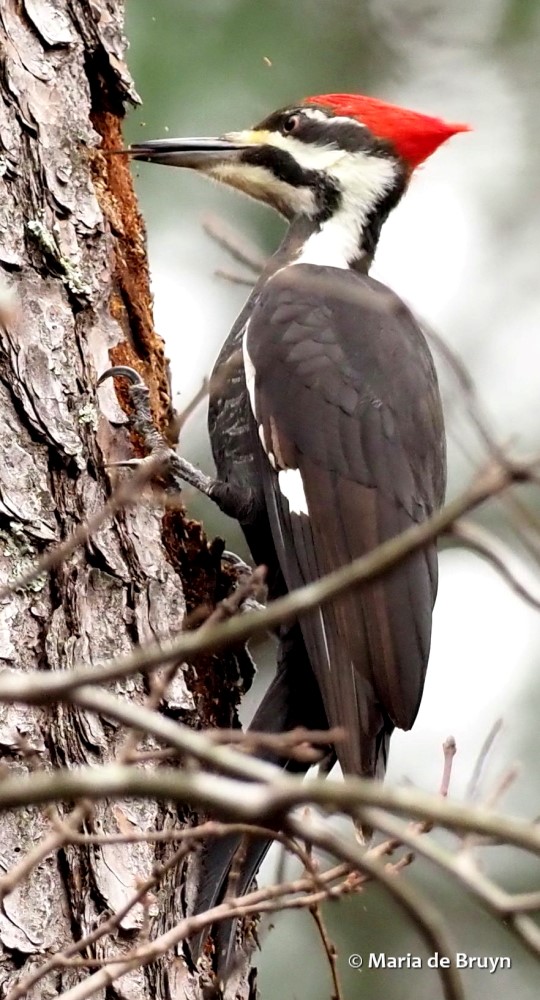
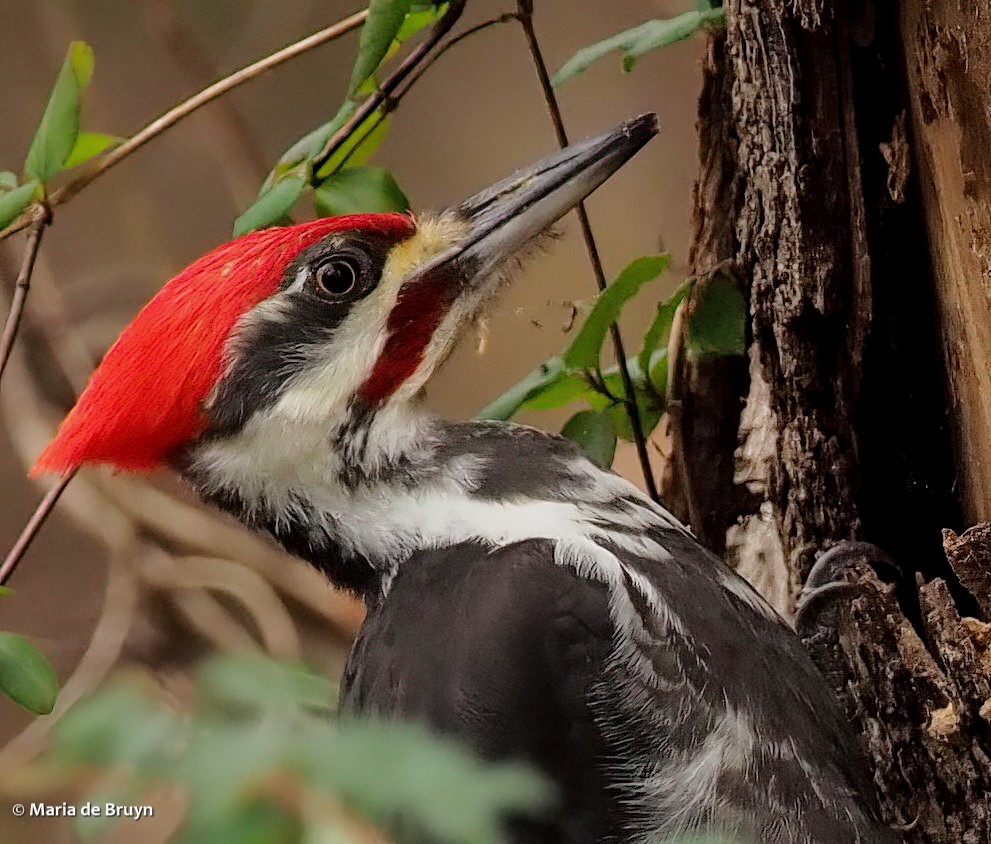
So today, let me tell you about two wildlife encounters I’ve had in the past few weeks. The first was a session with a pair of pileated woodpeckers (Dryocopus pileatus) at a local park. I first saw the male pileated with his bright red “chin stripe” as he worked at the base of a tree.

He had managed to work his way deeply into the trunk with his repeated hammering. But unfortunately, it seemed that he was just not having success finding any larvae or bugs to consume. He continued on for a while, pausing now and again to look around.
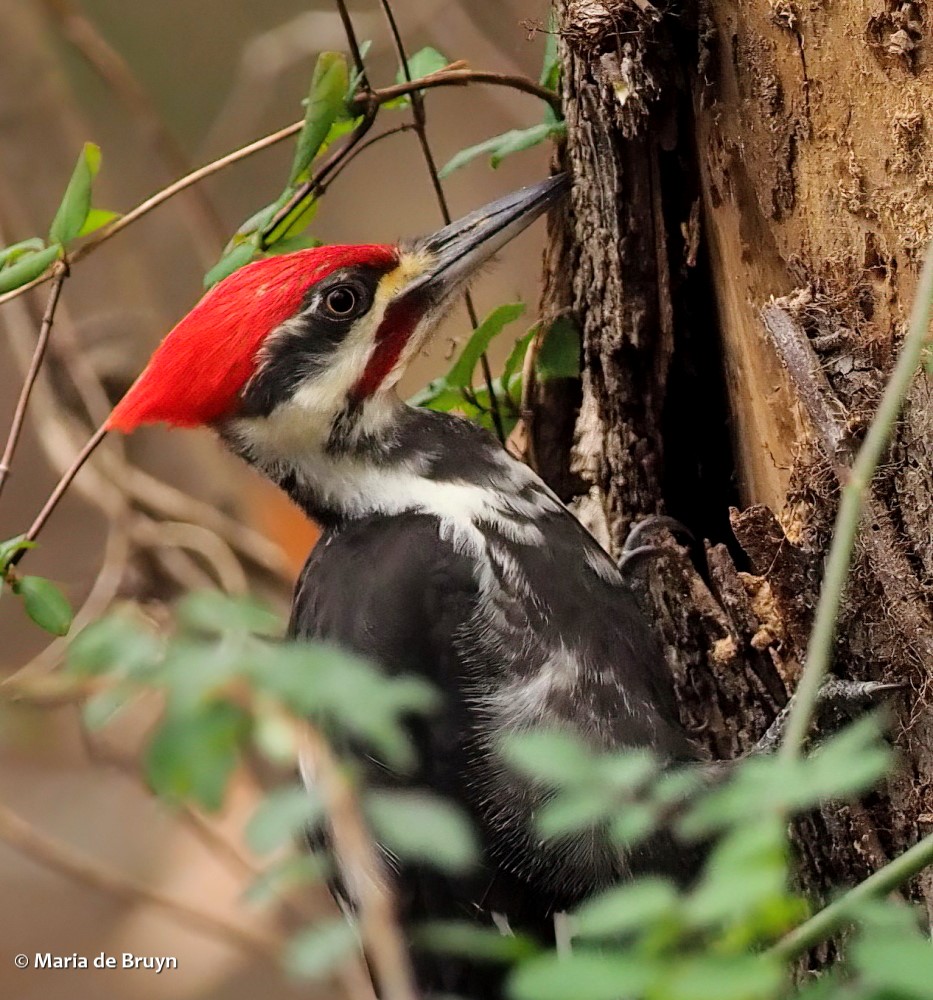
He finally decided that his labors at this spot were not that productive and flew up to the top of a nearby tree to continue his quest elsewhere. In the meantime, quite a way down the park path, I heard more loud hammering but coming from up above me. There was Ms Pileated, at work excavating a hole in her own search for sustenance.
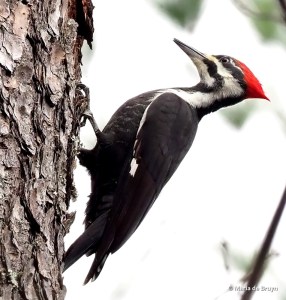
Note that she does not have a red chin stripe but she is also a stunning bird. The pileated is now North America’s largest remaining woodpecker species and the third largest woodpeckers worldwide. She was starting her work by chipping off the outer bark from the tree trunk.


Then she began rooting around in the outer layer underneath the bark to see if any food was available there. This was followed by more excavation and chipping away at the outermost inner bark layer.
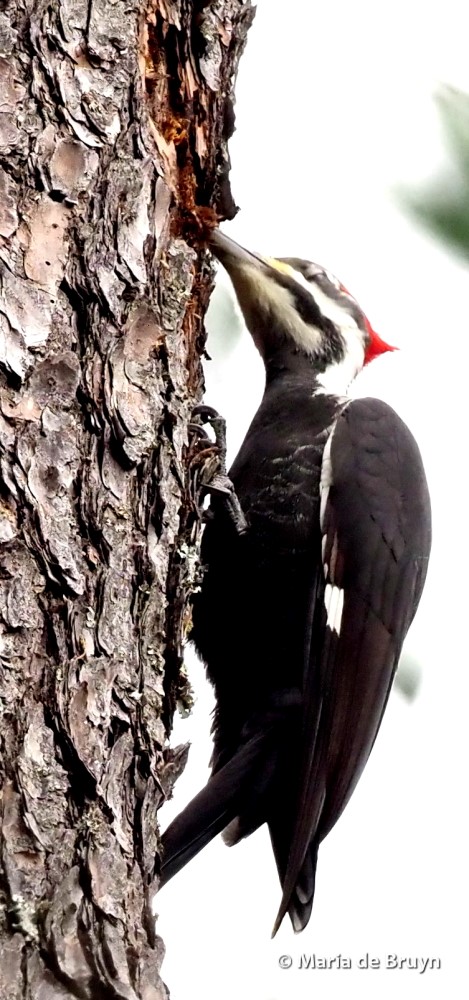
 

As she made progress, she began inserting her long tongue inside, feeling around for bugs and carpenter ants (their main prey).
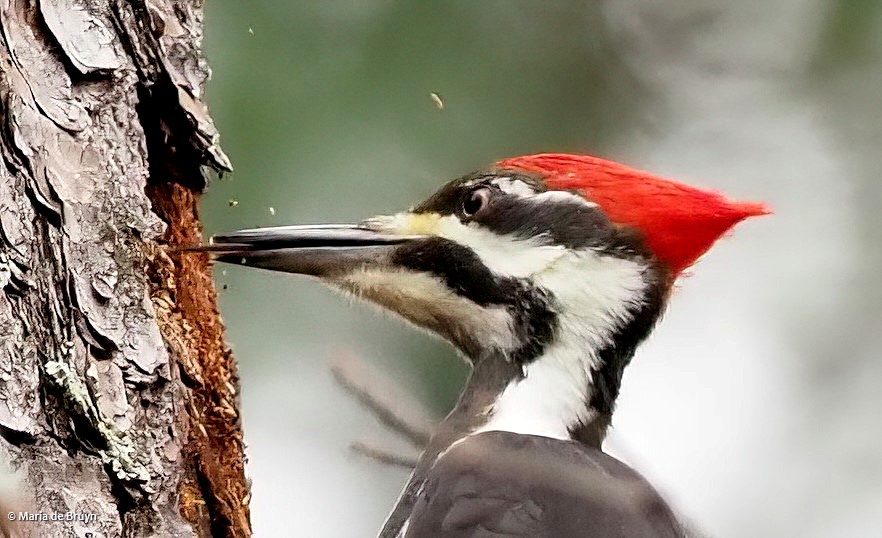
Her persistence finally paid off when she found a large beetle larva — one of their other preferred meals. It was nice to see her hard work produce results!

My next encounter also involved getting something into one’s mouth — in this case my own. I had been out for some time photographing otters and finally needed to leave quickly. I jumped in my car, grabbed a protein bar and broke off a piece as I got ready to start the engine. I felt something fall on my leg and without looking down, thought I was grabbing a piece of the bar and popped it into my mouth. Lo and behold — it did not feel like nuts, fruit and chocolate, but rather a bit hairy and I removed it from my tongue quickly. What did I discover?

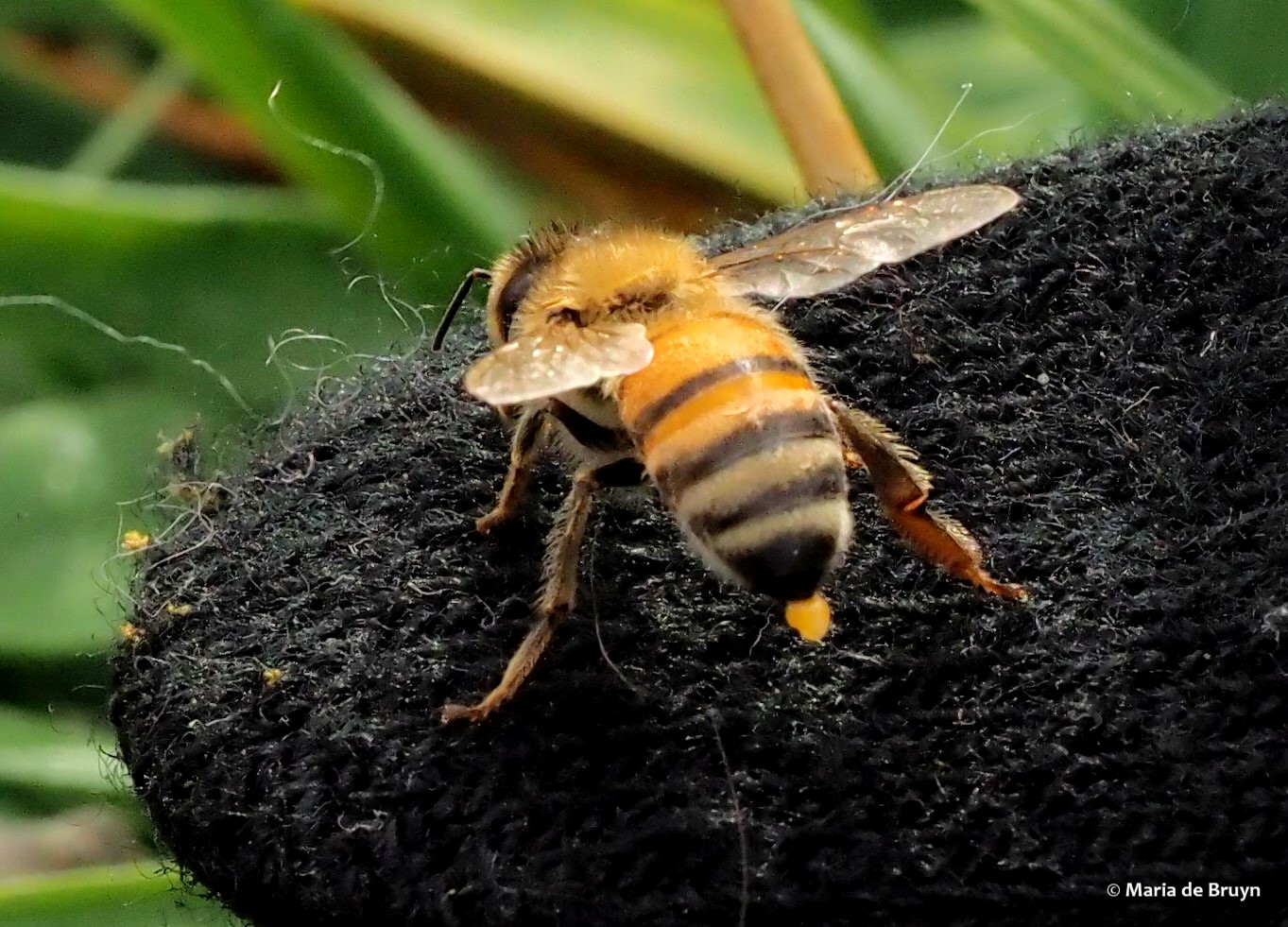
That was a real surprise, believe me! I had never had an insect in my mouth before that I could remember, and I felt badly that it was such a beneficial one! Fortunately, I had not bitten down and the honey bee was whole and uninjured, although perhaps suffering shock from its unexpected journey. I know that I was shocked (and appalled).

I took it out of the car and wanted to put it in the grass but it was not moving from my glove, likely suffering from some trauma. However, eventually I did get it off and it began crawling around in the vegetation.
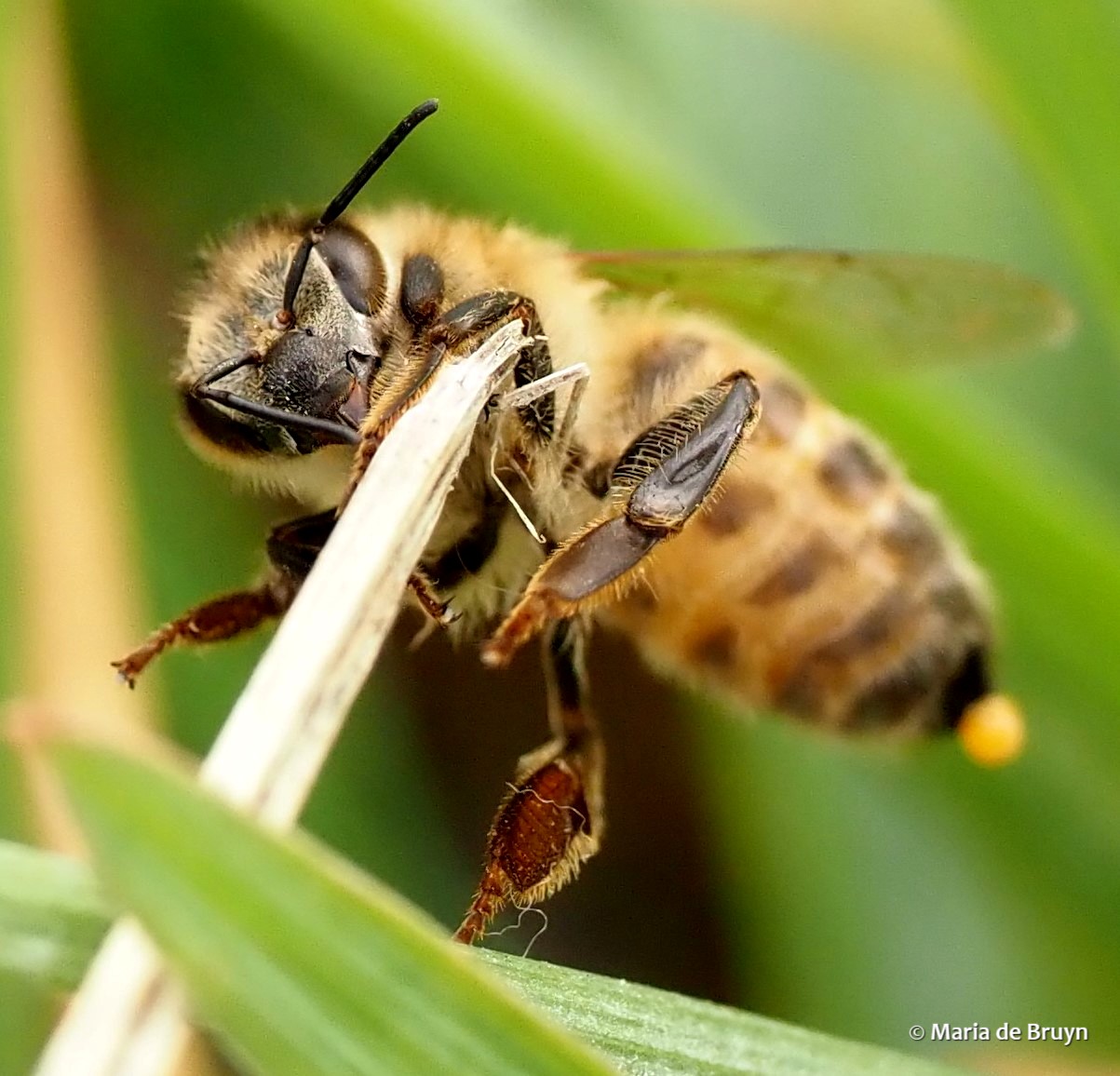
I couldn’t wait long enough to see if it would fly off but it seemed to be moving around well, so I assumed it would recover from the unexpected (and unwanted on both our parts) encounter. And I will no longer put something in my mouth before checking to see that it really is (vegetarian!) food!

Hope your year got off to a good start and will be healthy and happy!   😃


A cold but rewarding day at the pond!
On 29 November our area had its first really cold morning of the season, dawning at 25°F (-3.88°C). I fortunately had gotten my spring bulbs and seeds in the ground a few days earlier, so I was mostly ok with it except feeling bad for the outside critters having to deal with morning frost in the coming weeks.

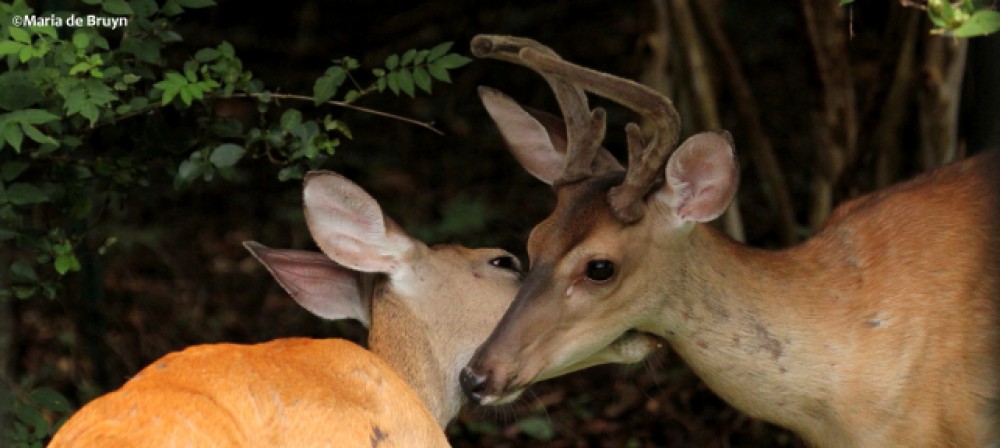
There were still a few very hardy flowers blooming in the yard; a few were eaten by the deer, which was ok with me. However, the neighborhood honeybees had slim pickings, which may be why I suddenly found them swarming the nectar feeder which I’ve left in place in case a winter hummer shows up!

So before doing needed grocery shopping, I stopped at a local pond. The parking area near the path to the water is in an area usually filled with birds but scarcely any wildlife was to be seen. A song sparrow briefly popped up, but it was very quiet. Finally, I heard some pecking and there was a yellow-bellied sapsucker working on a new row of sap holes in a nearby tree.


Walking towards the pond, I crossed a bridge over the feeder creek. Usually, this area has numerous birds but not a sound or movement was present. When I started nearing the pond, I finally spotted mallard ducks — 16 as far as my count through the trees could tell.

A pair of geese was perched on a stump, and they seemed to be just chilling out, preening, paddling and resting.

Scarcely any other birds were around; a few sparrows popped up quickly and some turkey vultures were parked in area trees.


Finally, I noticed the great blue heron perched on the beaver lodge, not moving a muscle or feather. Its statue imitation was impressive. I began walking back and forth along the shore, hoping to spot wildlife but the cold even had the bugs laying low.

After a while, I figured it was cold enough to make the visit shorter than usual when I was stopped by the sight of a couple new dark lumps on the beaver lodge behind dried vegetation..

It turned out to be a couple of otters — a delightful sighting to be sure even if not clear as they were far away behind dried vegetation.

After waiting to see if the otters would leave their resting spot, I decided they had settled down for a lengthy nap. As I turned to leave, I suddenly saw movement and the two otters slipped into the water, with me turning and trying to get a few quick photos.

They swam quickly to the beaver dam, crossed and dropped down to the lower swamp on the other side.

I counted myself lucky to have seen them and was pleased with this unexpected encounter. I stared at the dam hoping for some movement, saw nothing and again began to leave when suddenly a head popped up again.

To my astonishment, not one, not two, but four otters came over the dam and swam over to the far shore behind the beaver lodge. They were going fast and I only got glimpses, but it was still so rewarding to see them.

They were underwater much of the time but finally popped into view at the edge of the pond vegetation behind the lodge.

They were obviously feeding on something, but it wasn’t possible to see what they were catching.

They moved along the shoreline, swimming together and alone.

The otters must have been having considerable feeding success because the heron left the beaver lodge and began following them along the shoreline.

I tried to follow along on the other side of the pond and caught glimpses of them until they disappeared into a vegetation-heavy area of the pond. The heron kept following them so they must have been good guides to where the foraging was rewarding.

It finally became time to really call an end to my pond visit, so I left along the path which was still almost wholly silent without bird song. Back near my car, the sapsucker was still busy in the same tree working on the same line of new sap holes. The woodpecker had obviously found itself a good feeding spot and I felt fortunate, too, to have had a surprise encounter with those beautiful sleek water mammals at the pond.


This sighting was indeed something to be thankful for the day after Thanksgiving. It followed my chance a few days earlier to see our county’s first tundra swan on record. A friend alerted me to its presence and many people went to our county’s water reservoir, where the bird was hanging out far across the lake. Some very cool sightings to mark a holiday week! 😊

(Apologies for the somewhat blurry photos but the wildlife was fairly distant and my camera lens is no longer working optimally. But I still wanted to share the good fortune of these wildlife sightings!)

Small, feisty and fascinating — my favorite herons!

Well, time has passed again quite quickly since my last blog (at least for me), but I hope you find this posting worth the wait! I’d like to introduce you to my favorite herons.

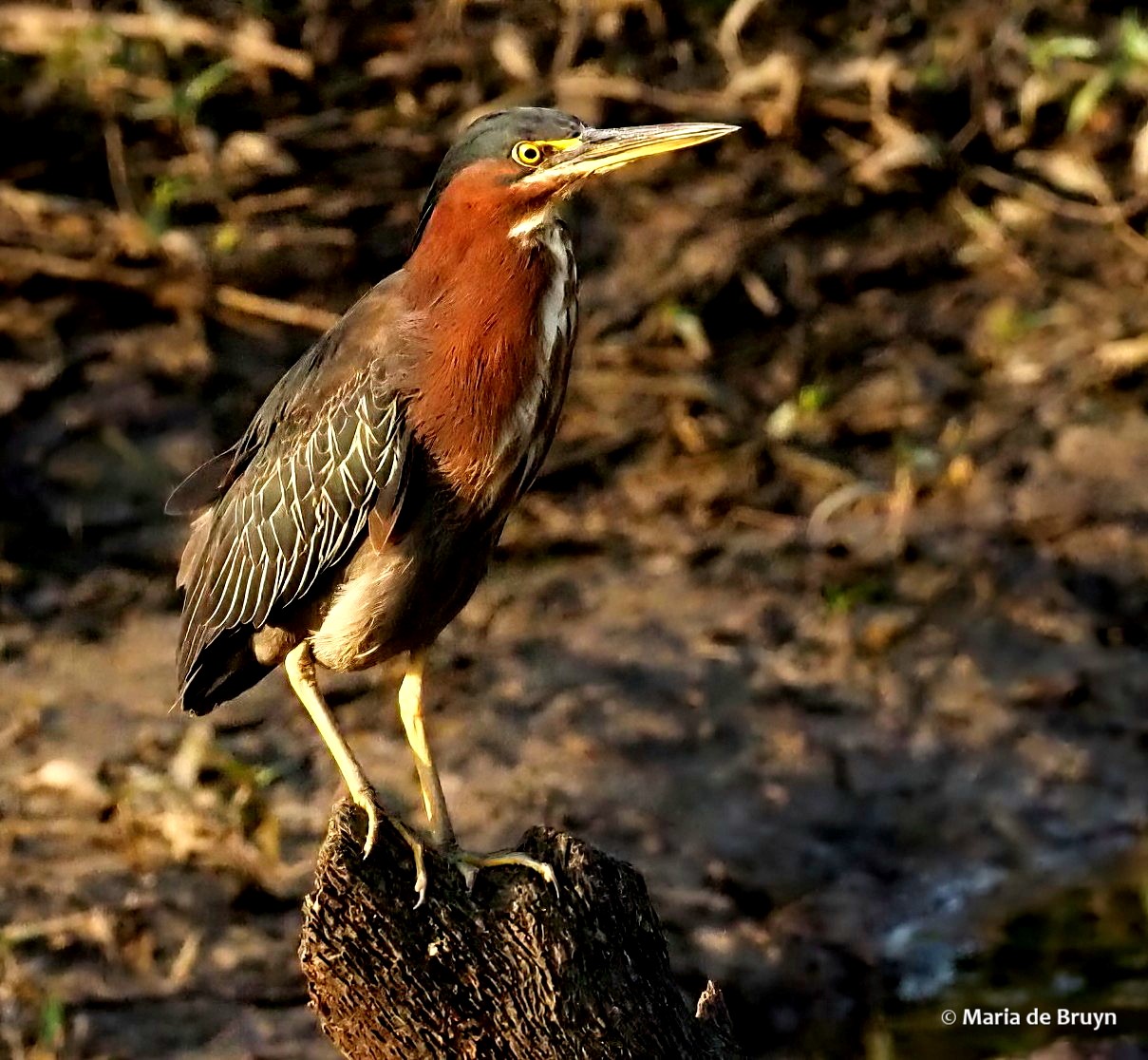
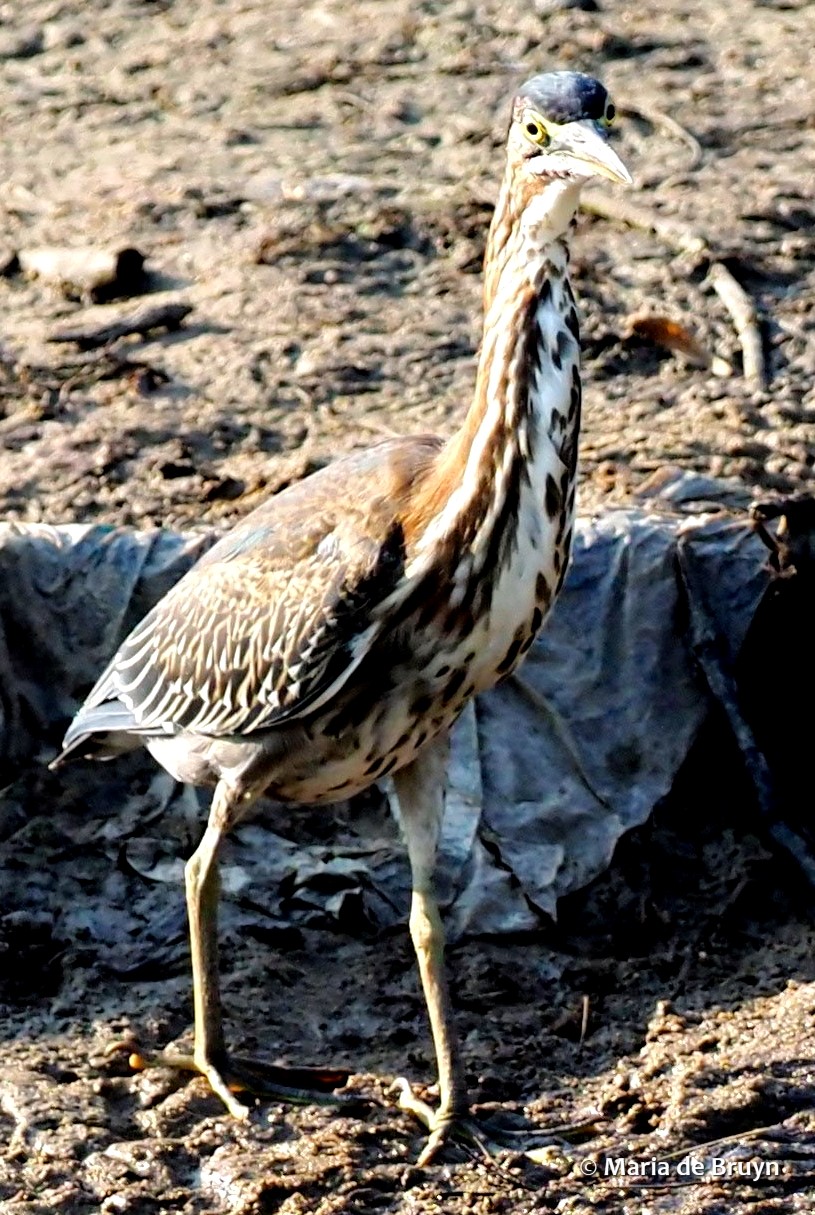
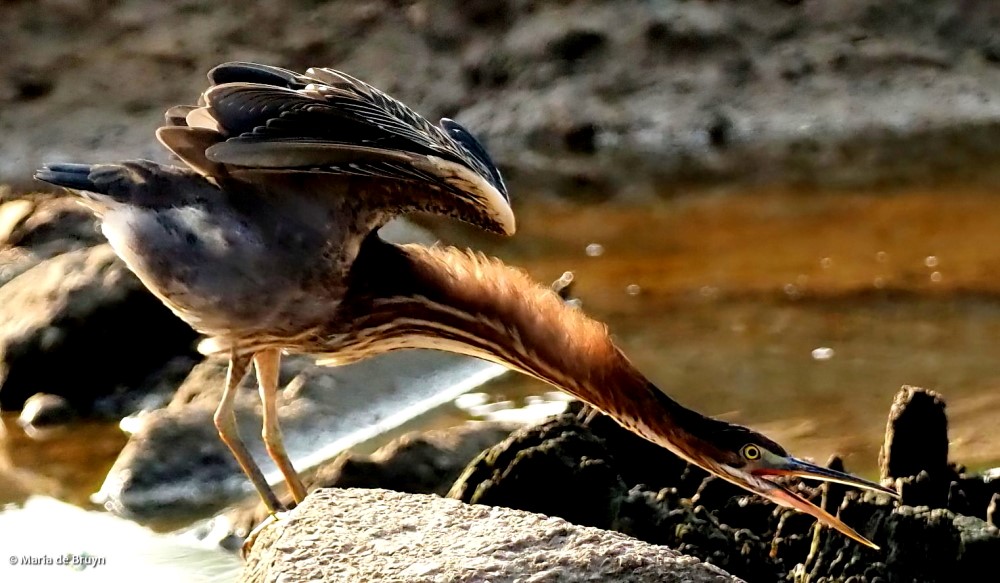
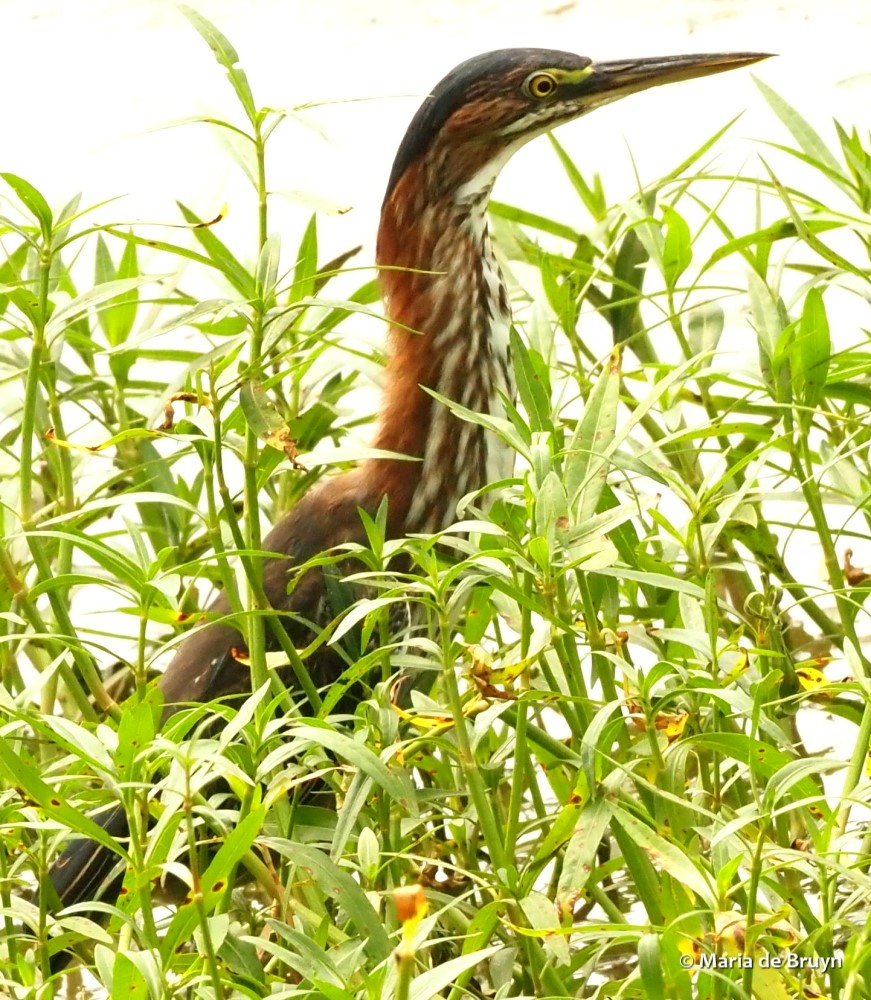
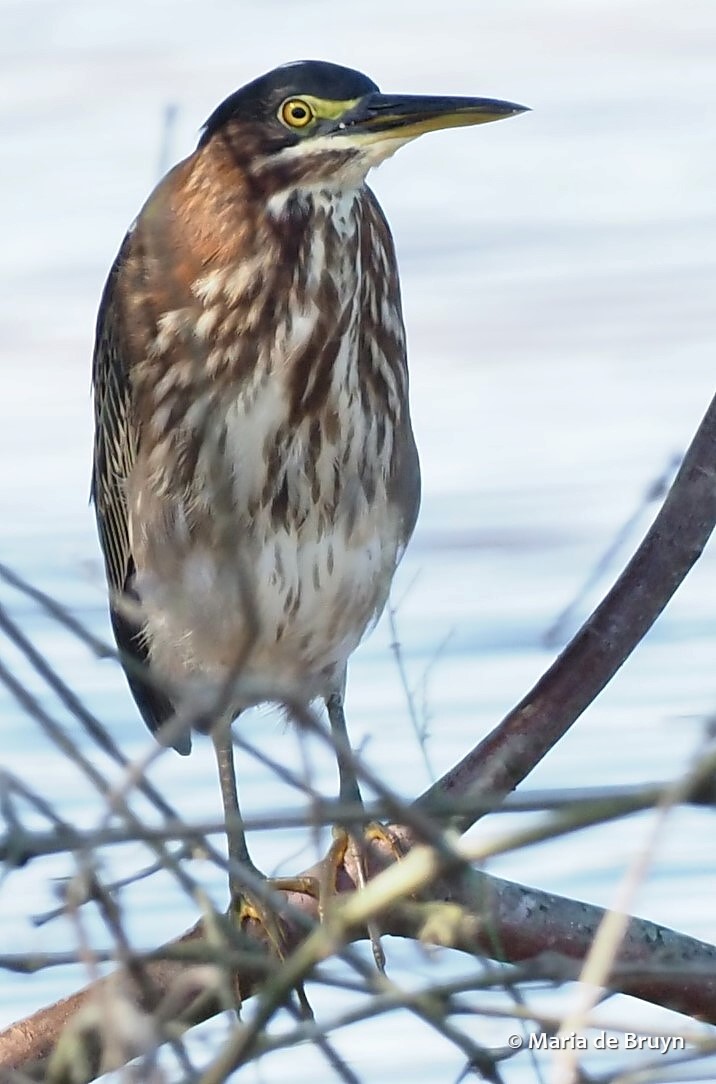
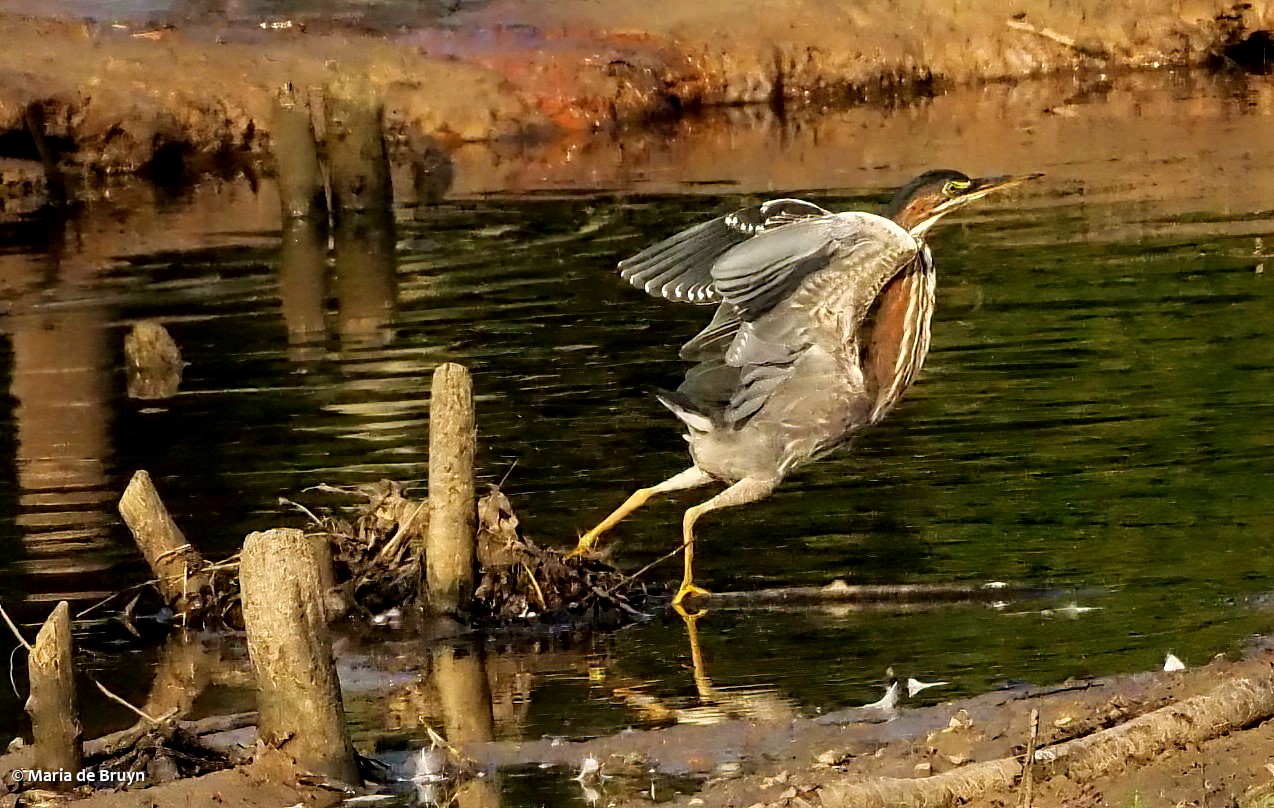
There are 16 heron species in the USA, and many are fairly large birds. But my favorite is the smallest one — the green heron (Butorides virescens)!

They are sometimes considered rather “secretive” birds, avoiding being out in the open or in full sight. When they sit and stalk near vegetation, they can indeed be difficult to spot.

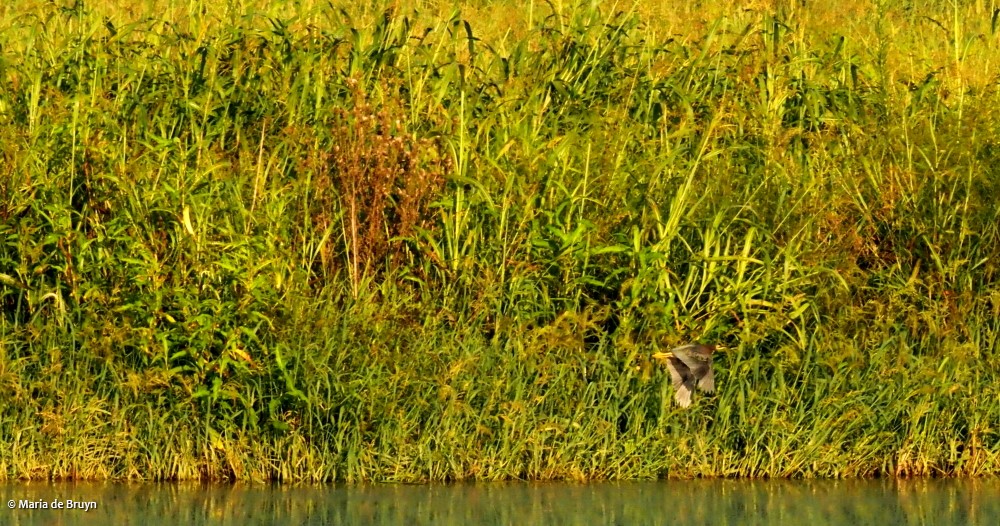
Even when flying, they can blend in well with background bushes and trees.

This year I was fortunate enough to see them out and about fairly often. They accommodated birders by staying for a while at four different ponds and a small lake.

What used to be a decent pond behind a shopping center was drained a couple years back and became a barren and often trashy area. The beavers who helped keep it water-filled were chased away. But when our area had copious rains in late summer this year, the pond filled partly and sometimes fully. A pair of green herons took up residence for several weeks alongside mallards, a lone hooded merganser, a young ibis, some egrets and little blue herons.


Green herons are known by various common names, some of which I find rather weird:

  • Fly-up-the-creek (likely inspired by their swift flight when startled or disturbed)
  • Poke (perhaps referring to how they forage)
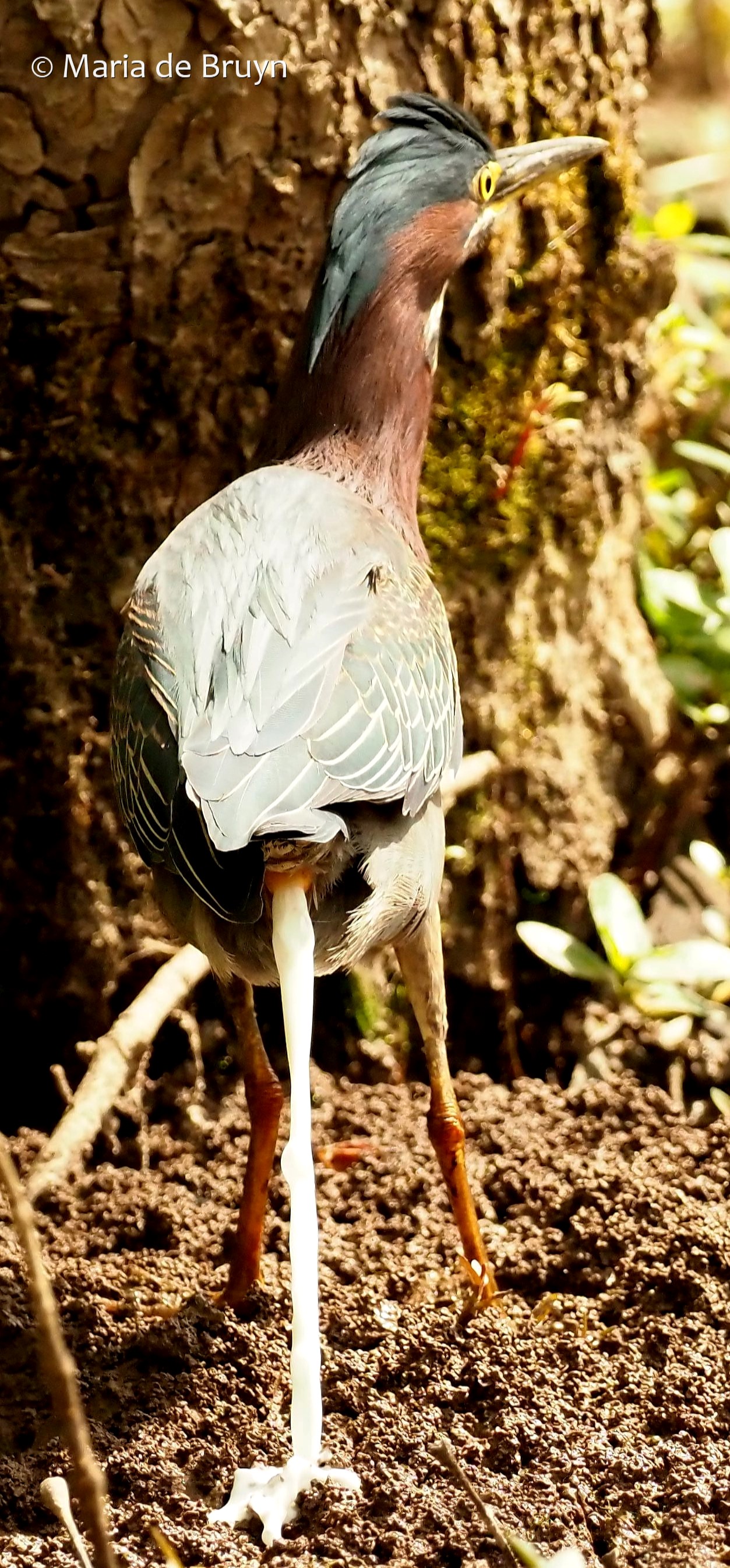
  • Shitepoke (referring to their projected fecal matter; see left!)
  • Chalkline
  • Indian Hen and
  • Chucklehead.

In my experience, great blue herons tend to ignore people for the most part, but the greens always seem very aware of our presence and sometimes curious about why we’re watching. So, I might be inclined to give them a nickname like Puzzlers, befitting their sometimes-intent perusal of watchers.


When not stalking prey, these herons often perch or stand with their long neck pulled in and they look like they’re hunching their shoulders. When you see their neck extended, though, you get a good idea of how tall they can be!


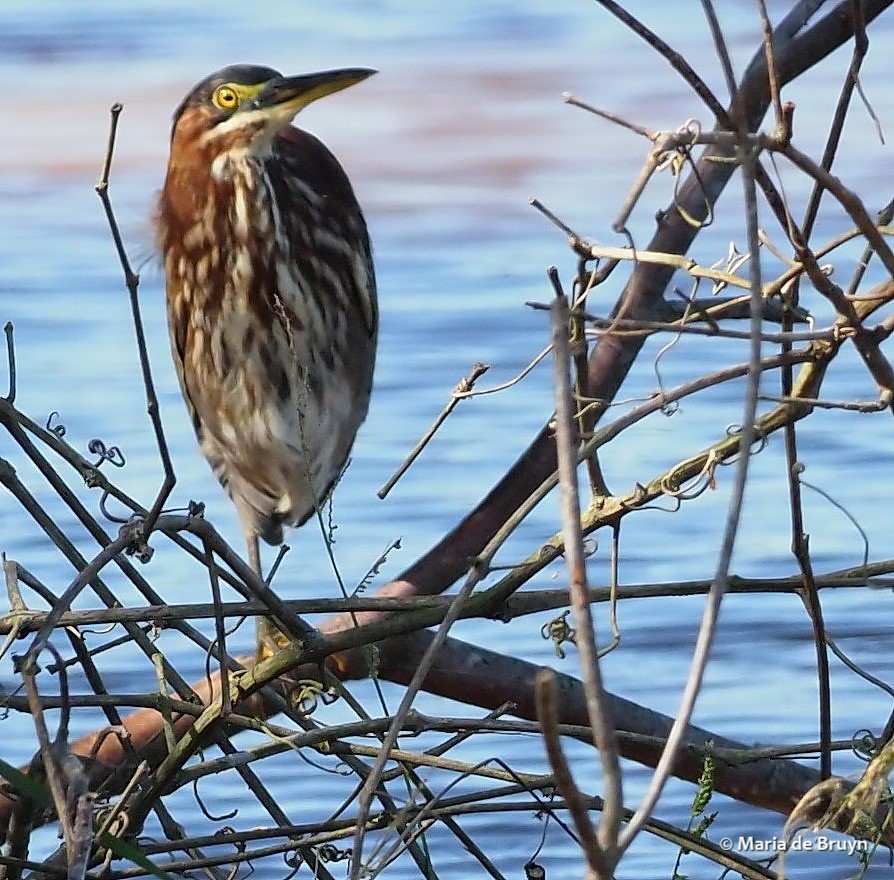
Other herons are not quite as colorful as the greens. These small herons change their appearance much more, displaying feathers of white, cream, chestnut, green, brown, gray and black colors. This is set off against a pair of yellow or orange legs, making for quite an attractive bird.


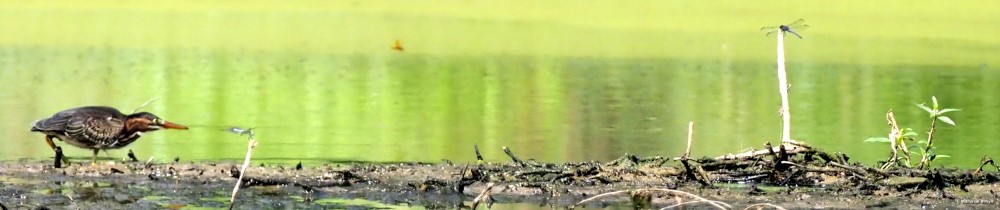
The green herons are among the tool-users of the animal world. They fetch different items to serve as bait to lure fish to the water’s surface, including insects, bread, leaves or feathers. They mostly look for prey while wading along waterways or stalking in shallow areas. Occasionally, they also go after prey in deeper water, evening diving in and needing to swim back to land.

Their diet can be varied, including animals such as frogs, tadpoles, lizards, crayfish, snakes, dragonflies, grasshoppers and other insects, and sometimes small rodents.

This summer I saw one green heron catch a very large frog that was at least as long as its beak, if not longer. Unfortunately, I didn’t get a clear photo as my camera has been malfunctioning. ☹

After watching them often, it’s still not entirely clear to me why they sometimes raise their crests. Perhaps it’s a way of warning those around them that they are on the alert and not willing to share space. I do think it gives them an attractive look, although they can be stunning when simply resting on a branch while they survey the surrounding area.

At the end of August, I thought the greens had begun moving on to their winter abodes as I wasn’t spotting them. But then a few days ago, I caught one chilling out at a vineyard pond with no other wading birds in sight.


My late summer sighting was perched on branches at the pond’s edge, standing on one leg. Since a large snapping turtle was floating right behind him/her, I hoped that the other leg was simply tucked up under its feathers — and luckily, that was correct.

A threat to these entertaining birds is the alteration and loss of wetlands, which are proceeding quickly. Green herons are not (yet) among the birds whose survival is threatened as a species and individuals can live as long as 9 years. Nevertheless, this year the U.S. Fish and Wildlife Service reported that wetland loss rates have increased by 50% since 2009 and North Carolina, where I live, was particularly affected.

This continuing decline can only be stopped with more action to preserve existing wetlands, as well as measures to deal with the effects of climate change. I very much hope that I’ll be able to continue seeing the green herons and other wetlands wildlife for a long time to come.

My welcome American crow friends

On numerous occasions over the past months, I’ve had ideas for new blogs and set aside photos for posting. But then other things crop up that need to be handled (health, car/house issues and a monthly newspaper column) and I put off blogging. So when fellow blogger Denzil asked his followers to post some photos of corvids, it was a great opportunity to share with you some of my latest photos of favorite visitors to my yard.

A pair of crows have been coming to visit my yard for many years now. I’ve had numerous opportunities to see them courting and looking for treats at bird feeders (and occasional pieces of apple that I put out when they come by). Above, one of them was addressing me and then gave him/herself a kind of creepy look when s/he covered her/his eyes with the nictitating membrane.

Each year, mom and dad return with their newest brood in tow. Sometimes I think offspring from previous years also join the group as this year I’ve had 6 or 7 of them come by at a time.

They are fond of several kinds of bird food that I put out for other birds, including dried mealworms and my homemade suet.

They hang their big bodies off the feeders and then usually fly down to consume whatever morsels they have gotten.

They are a loquacious lot, communicating loudly among themselves much of the time.

They are loudest, however, when they gather together to chase off the red-tailed and Cooper’s hawks who also live in the neighborhood. The crow family does not like them at all and make it known to all their neighbors, avians and humans alike. The other birds are likely happy with their alarm calls as they disappear when warned of hawks in the vicinity.

And then the corvids can also relax, enjoying drinks and bathing in the yard birdbaths. When they appear to have enjoyed a treat, I sometimes find “gifts” left behind in the  brightest birdbath. One day, when I apparently had not given them something special for some time, they took off with a small ceramic turtle that they often would leave in the birdbath after a visit. I now wonder if they gifted another neighbor with that trinket.

Their visits are always welcome to me, perhaps because I haven’t seen them harassing any of the smaller birds. Denzil’s suggestion to post about corvids was a nice reminder of the birding pleasure “my” family of crows brings along.

Learning to love an over-protective bird

When house wrens (Troglodytes aedon) first began visiting my yard some years ago, I was not aware that they are extremely protective parents. I didn’t see them as often as birds of other species since they don’t come to my feeders and were not using nest boxes.


The past couple years, however, they have become more comfortable in my yard and began building their nests in boxes after all. This became problematic for me and especially the other species who use the boxes — Eastern bluebirds, Carolina chickadees and brown-headed nuthatches. The reason?

House wrens do their utmost to drive other birds out of their territory so that there is no competition for food needed by their nestlings and fledglings. This protectiveness makes them go so far as to peck other birds’ eggs, which they have done with chickadees and bluebirds in my yard.

Very unfortunately (and upsetting to me), they even killed two nestling nuthatches one year. The other two nuthatch babies managed to fledge. This behavior led a birder, Althea Sherman, to launch a crusade against house wrens in scientific journals in the early 1900s. Now, there are instructions online on how the wrens can be discouraged, for example, on a website devoted to bluebirds.

This year, Eastern bluebirds (Sialia sialis) were tending four eggs in one box and a house wren tried to invade. The parents were very protective and successfully drove the wren away (photo below). Another pair of bluebirds had nested early and managed to guide their young to fledging. They then abandoned my backyard for nesting and the house wrens had no rivals for nest boxes in that area for the rest of breeding season.

House wrens are one of the bird species banded in my yard each year for the Smithsonian Institution’s Neighborhood Nestwatch program. This year the bird bander noticed their nest with babies in a backyard nest box, so she upped the chances of catching one by counting on their extremely protective nature.

A net was put up not far from the box and the bird bander played the call of another house wren. This resulted in both mama and papa wren getting inadvertently caught up in the net while trying to drive away the intruder. They were both banded and then immediately let go so they could resume feeding their babies.

The four woodpiles in my backyard were like a larder for them because they host a plethora of insects.


And the house wrens are obviously not that choosy about which insects they eat. Mama and Papa brought a large variety to their ever-hungry nestlings.


The parents were also very good at keeping the nest clean.

The three nestlings appeared to be producing numerous fecal sacs so that mom and dad were constantly checking the nest for them and flying them away.


At one point, it was interesting that when the male wren brought a large insect to the nest, he handed it over to the female, who was waiting a bit after having just given the babies food.


Eventually, the large meal was delivered to the nestlings.


As the days went by, the nestlings became louder and more insistent on being fed and the parents scarcely paused in their efforts to keep the meals coming and the nest clean. It must have been a relief for the parents when the babies finally left the nest box because they could now take a breather now and then.


Right after fledging, the parents were still busy. The fledglings had not yet flown far so I could see the first post-fledging feeding session for one young wren.

I had learned that house wrens sometimes incorporate spider egg sacs into the nests they build because the hatched spiders eat nest parasites and thereby help protect the developing nestlings! The parents also fed mother spiders and egg sacs to their young. Just after fledging I caught a circle-of-life moment when a parental wren fed a mother spider with her attached egg sac to a fledgling – the death of the poor insect furthered the life of the new bird.

I could see and hear the parent house wrens continuing to feed the fledglings that afternoon. But after a while they appear to have moved to another yard, where they likely weren’t dealing with humans closely watching.


The Eastern bluebirds have a new nest in my front yard now with four eggs, so my nest watching can continue for a while. And the juvenile birds of other species coming to the feeders are entertaining, too.