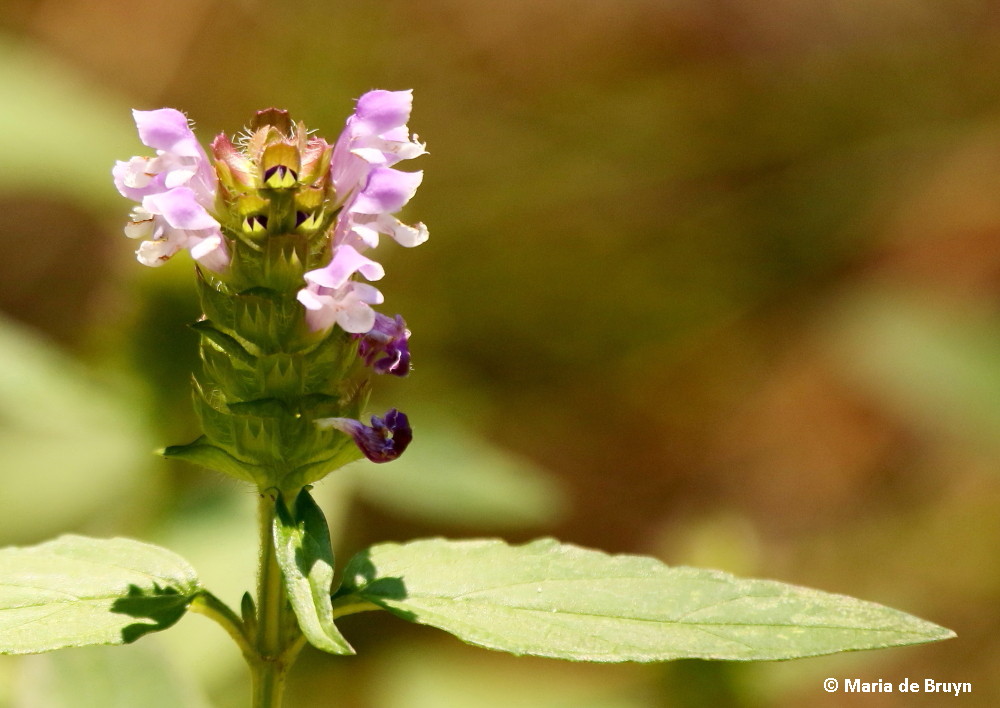
Winter wonderland – sparrows and warblers

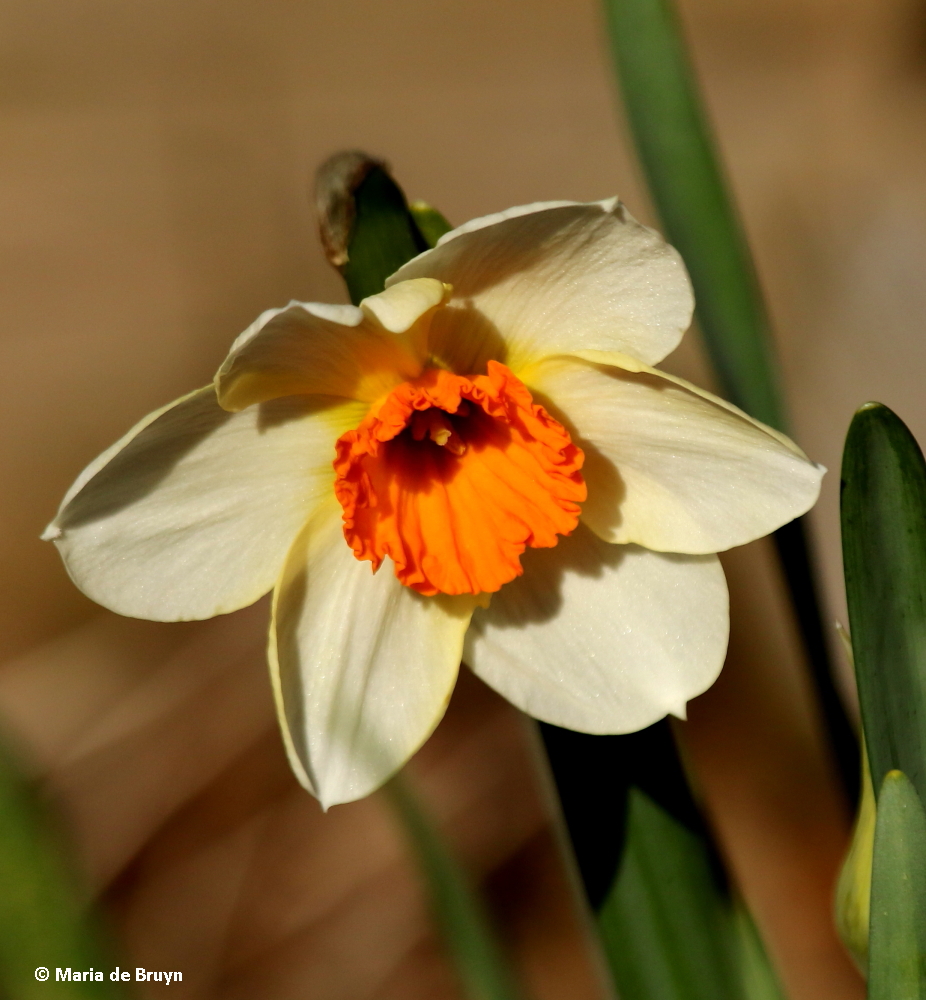
Yesterday, as I walked through my yard, I was surprised to see groups of daffodils sticking up their heads; it seemed rather early to me but last year we had early signs of spring as well. It is a big contrast to our weather conditions less than a month ago, though. On the 17th of January, our town was surprised by 11-12 inches of beautiful, powdery snow.


While our southern area often has a couple instances of (light) snow and/or an ice storm in the winter, our climate is generally fairly mild and temperatures in the 50s and 60s Farenheit are not uncommon during winter. So the brief but heavy snowfall was quite an event; our streets were empty of traffic as everyone stayed home and watched the falling flakes.

Some people built snowmen, others went sledding and walking, and some of us spent hours filling our bird feeders and watching the birds. I also made an attempt to photograph some frozen bubbles, which was very challenging since it was windy during the entire winter weather event.


The snow began slowly melting a bit the next day, which made some of the icicles on the house elongate to a length of almost 3-4 feet, but it wasn’t until Friday and Saturday that the snow and ice really started disappearing.

My yard looked beautiful, but I spent time on the 17th repeatedly knocking snow off the bird feeders and heated birth bath so that the birds could reach the food and water.


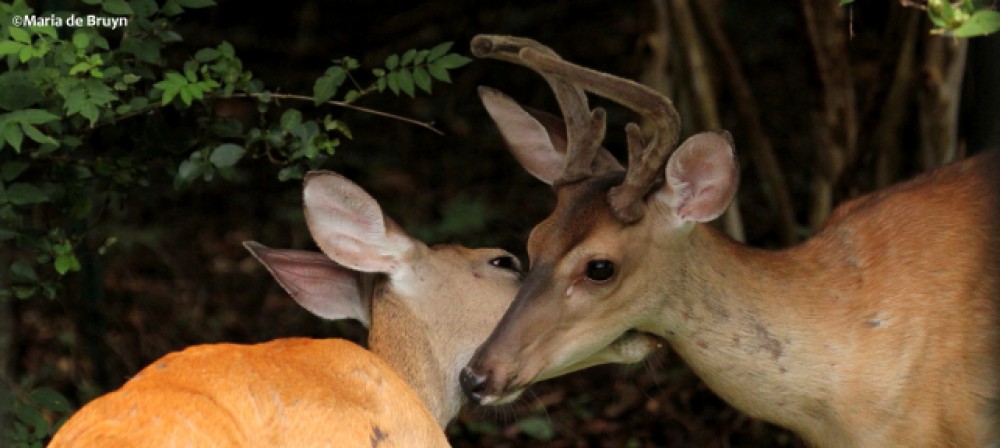
Although I saw a couple squirrels and the white-tailed deer (Odocoileus virginianus) also came by, I didn’t see other mammals like chipmunks, raccoons, opossums. But I had 25 different bird species come by on Wednesday and Thursday; on Friday and Saturday, two more species came by. I’d like to share some snow day photos of them all in this and the next few blogs.

First up are the sparrows and warblers. The chipping sparrows (Spizella passerina) usually get their seed from the hanging feeders in the front and back yards but now they were looking everywhere for a bite to eat. I had strewn some seed on the ground and they began looking there.

One found a trove of food and another came by asking to be fed, a request the first sparrow accommodated quite sweetly.


The white-throated sparrows (Zonotrichia albicollis) have an opposite feeding strategy, usually feeding on the ground and occasionally venturing up to a feeder. They, too, searched under the snow for some food.


The pine warblers (Setophaga pinus) tend to be rather shy; only very rarely does a pair visit together. Mostly, one shows up at a time; their beautiful yellow color was really highlighted against the white background.


The pine warblers did have to brave a bad-tempered bird to get to the feeders. One of the six resident yellow-rumped warblers (Setophaga coronata) has become very territorial, chasing away some other yellow-rumped warblers, the ruby-crowned kinglets and the pine warbler – in other words, the birds his size or smaller. He allows a couple other yellow-rumps to feed peacefully and I think perhaps they are his family members so that he tolerates them. He didn’t stop the other small birds from coming around, however, as we’ll see in the next blog.


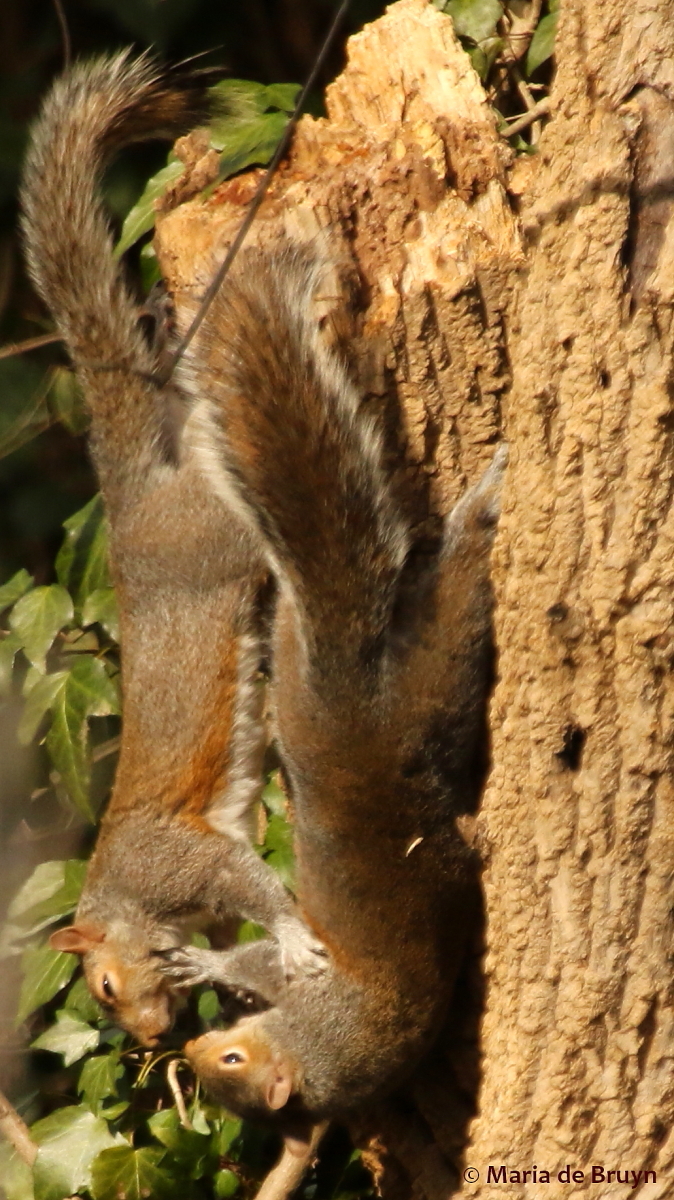
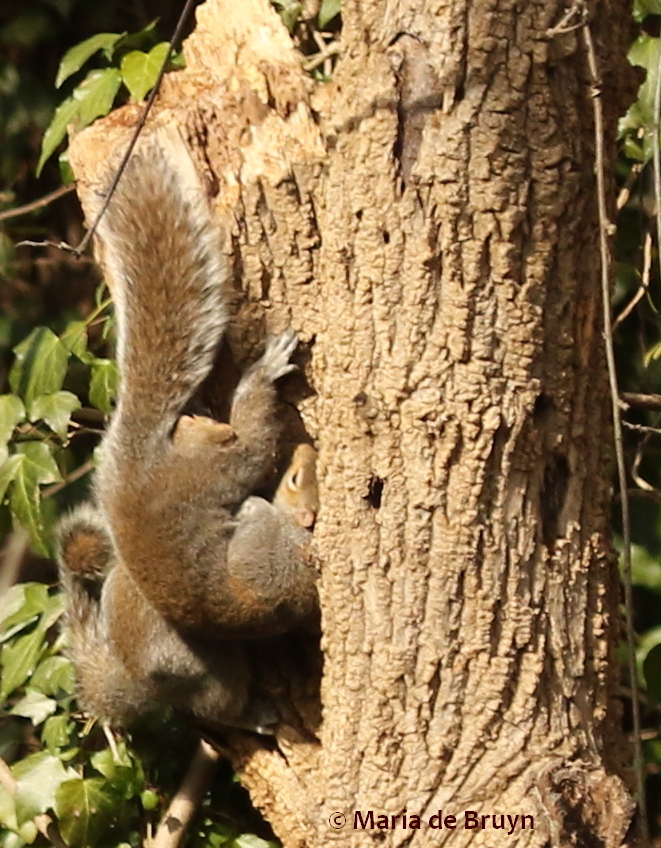
My squirrel nemesis – a worthy opponent!

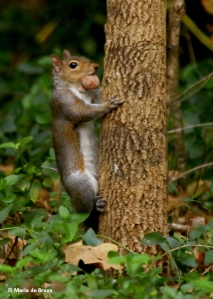
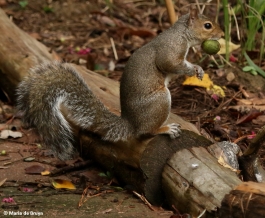
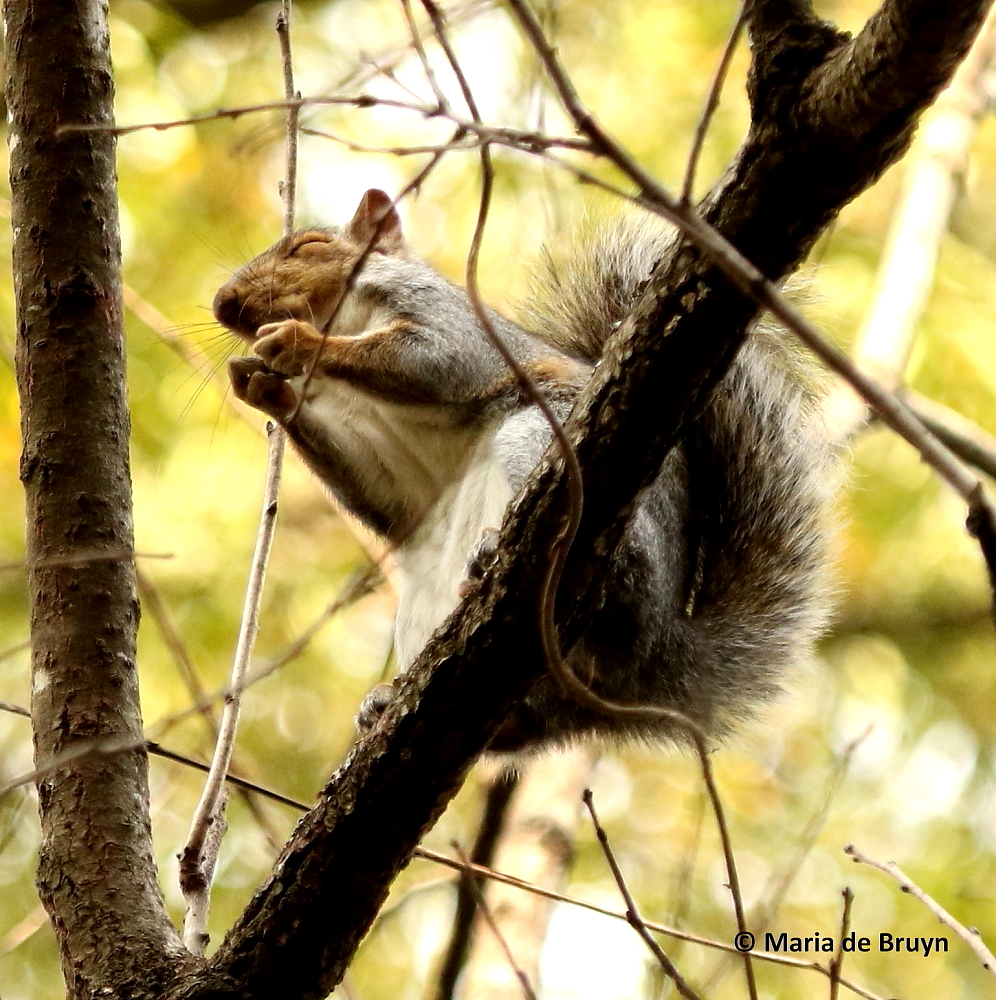
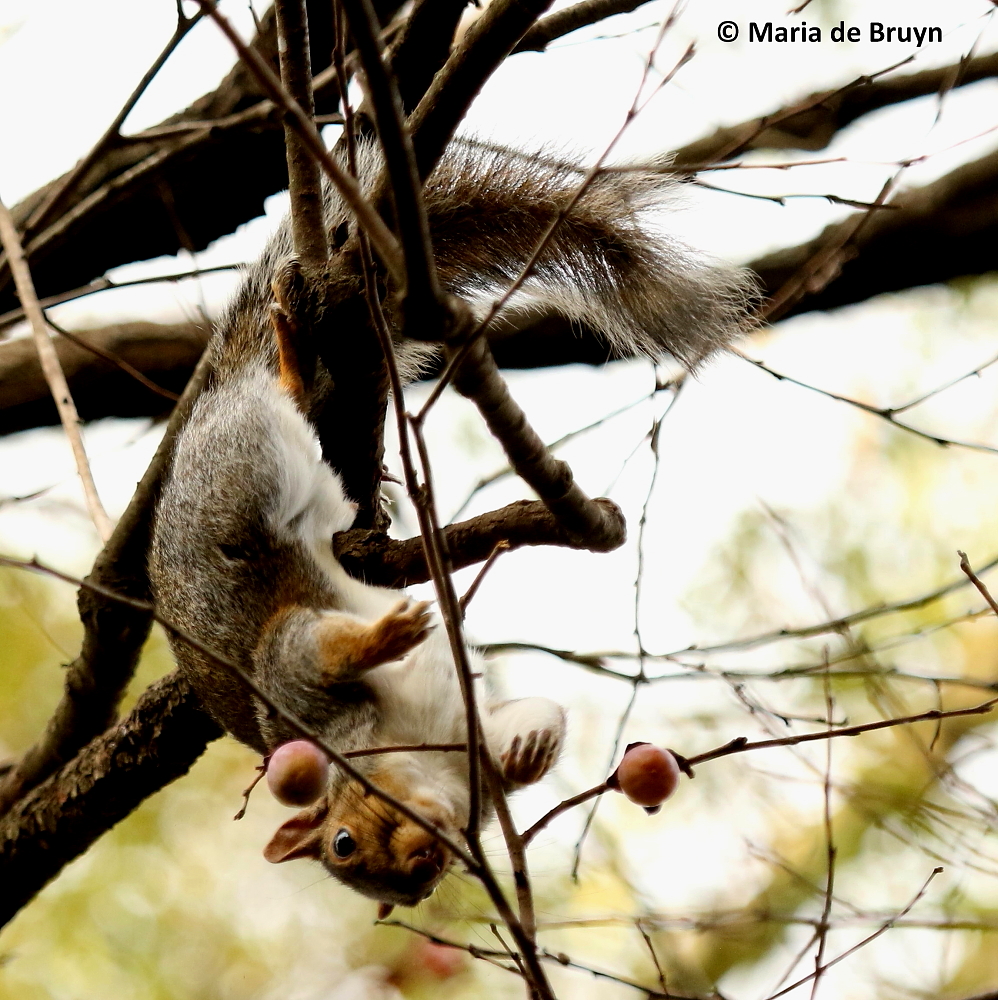
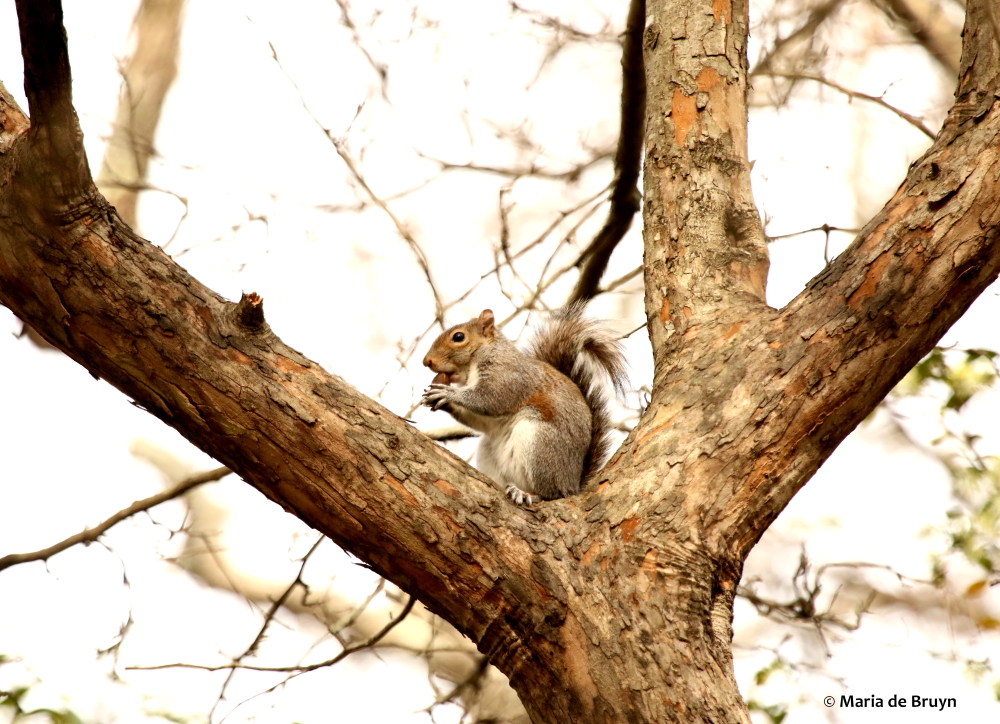
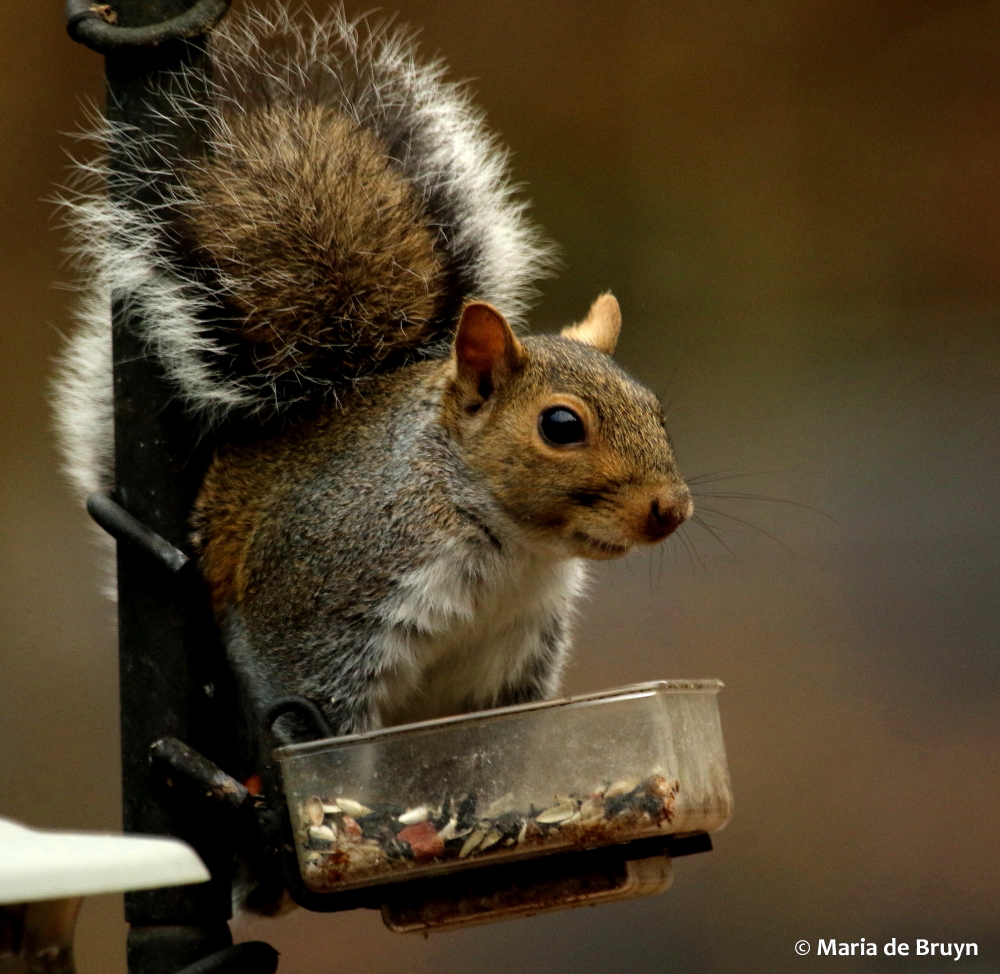
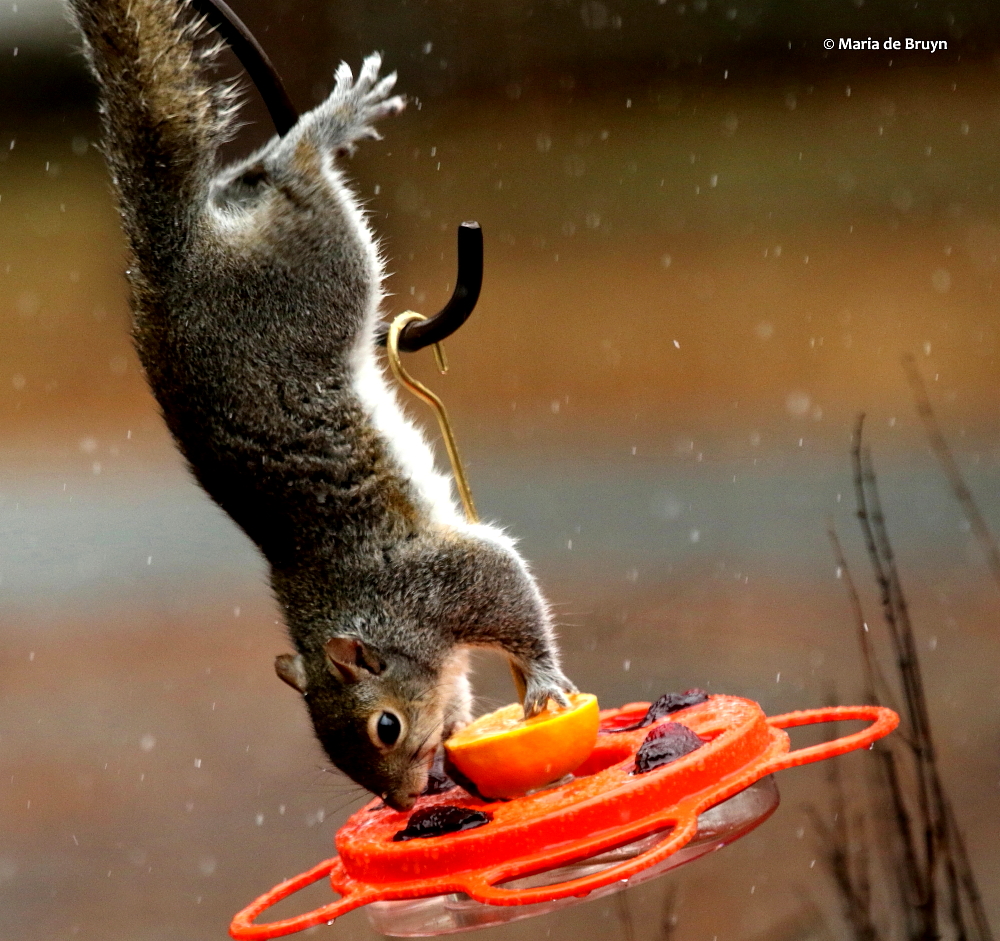
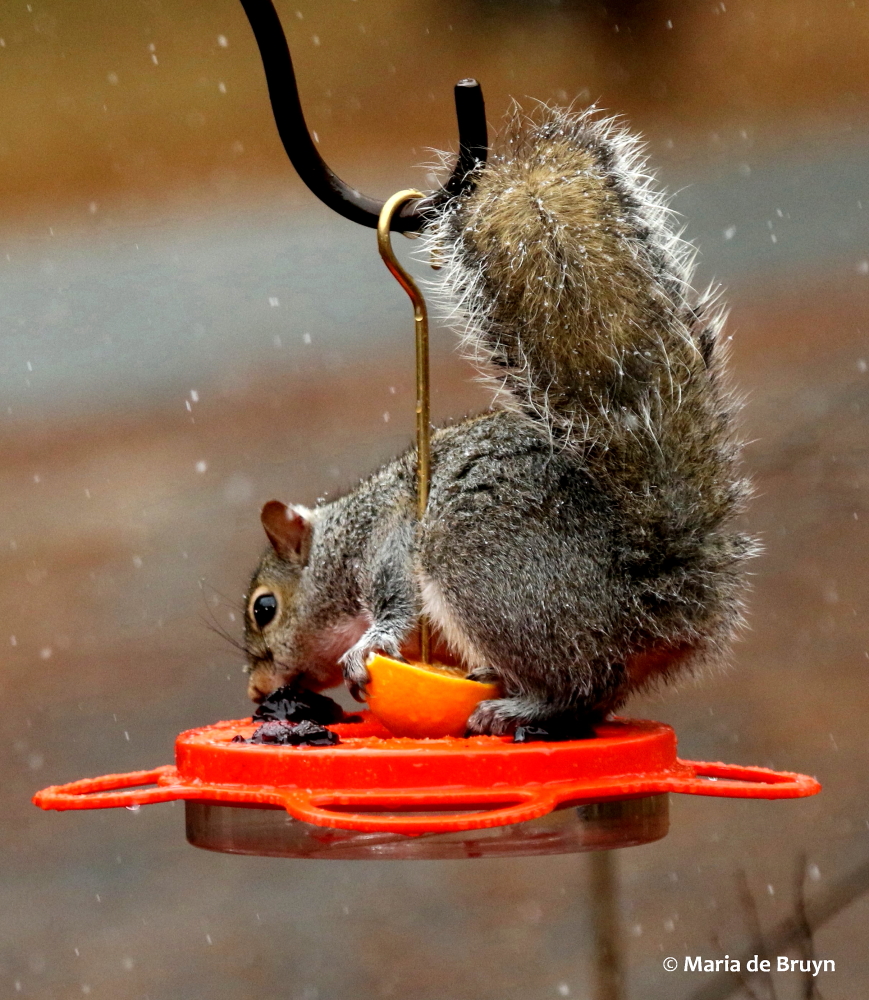
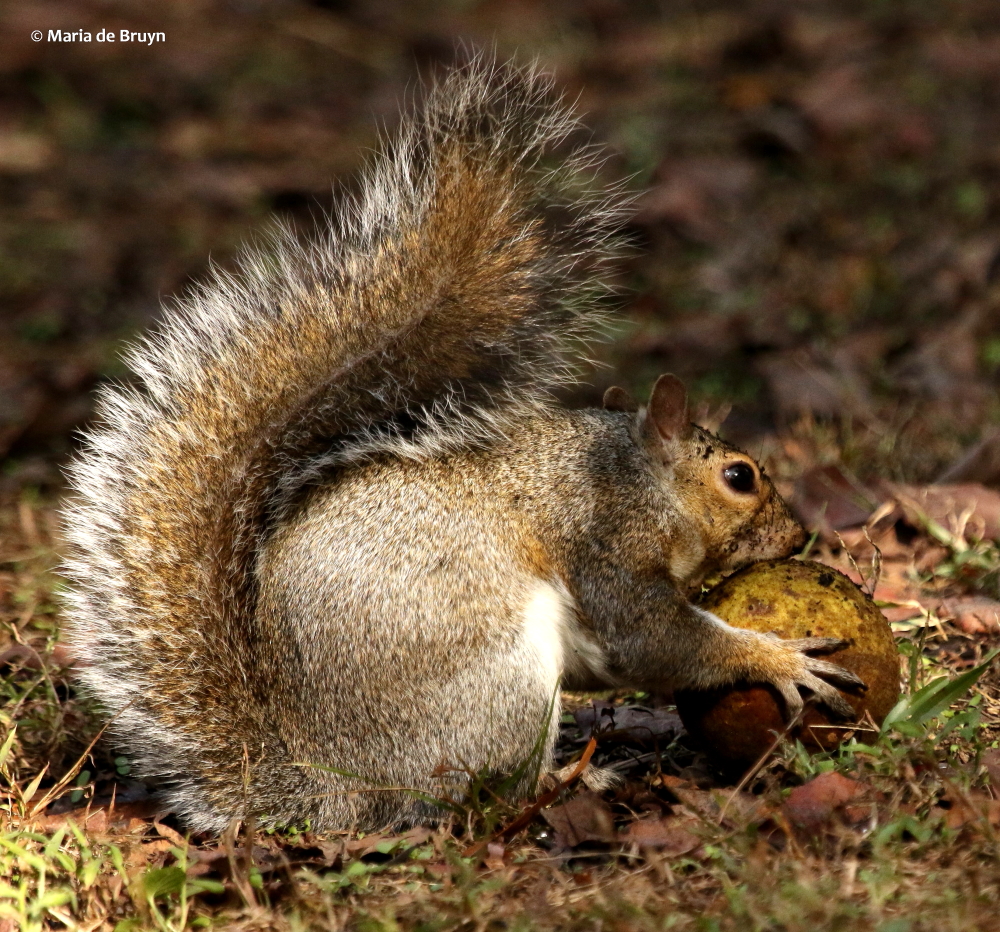
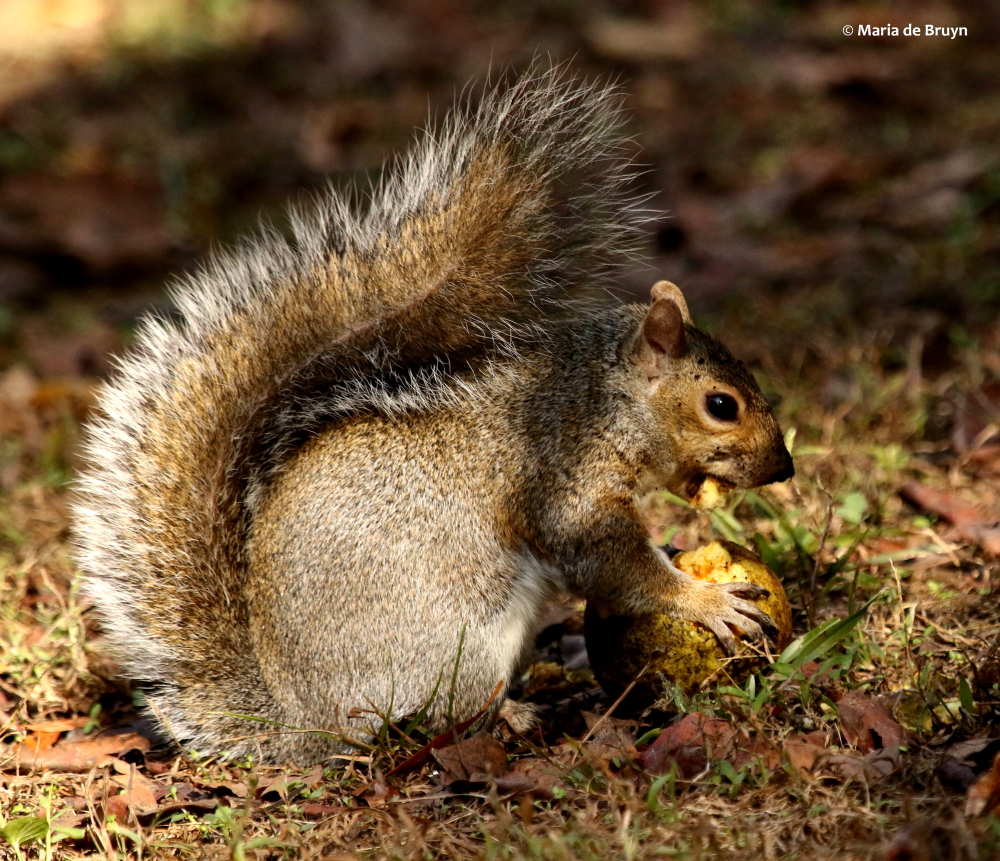
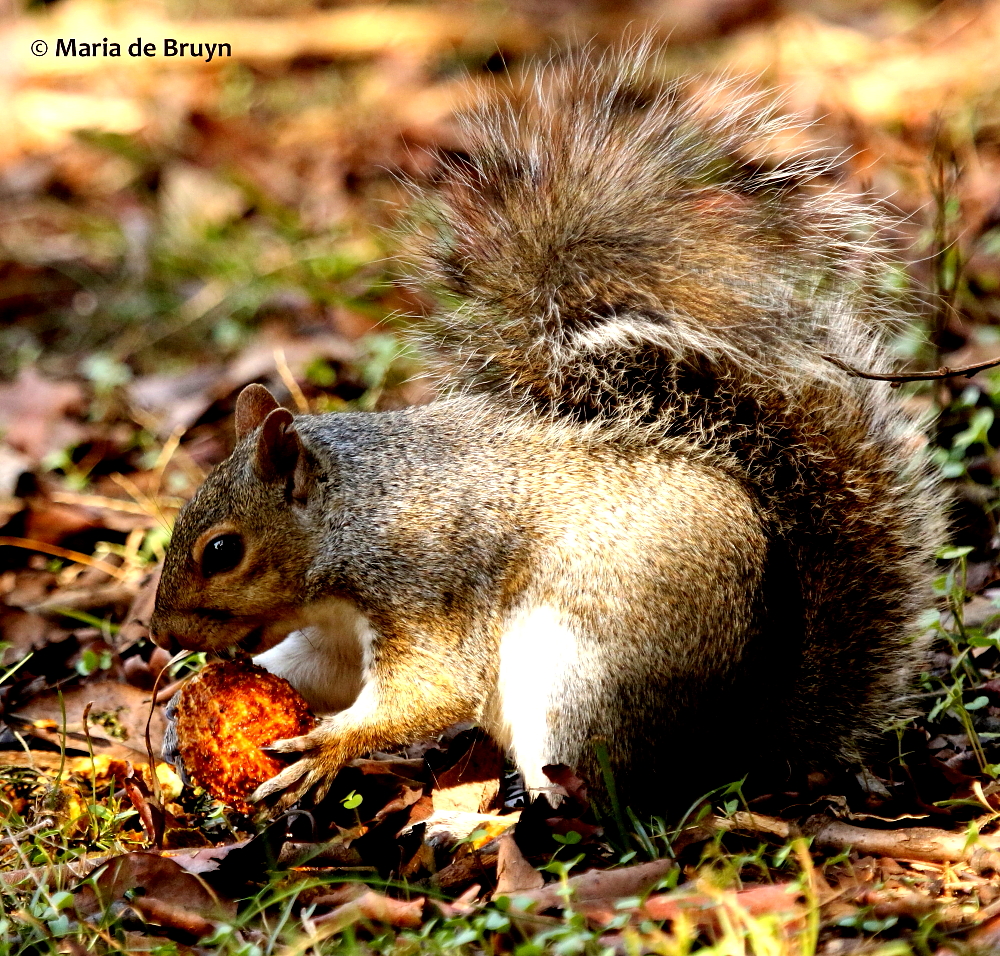
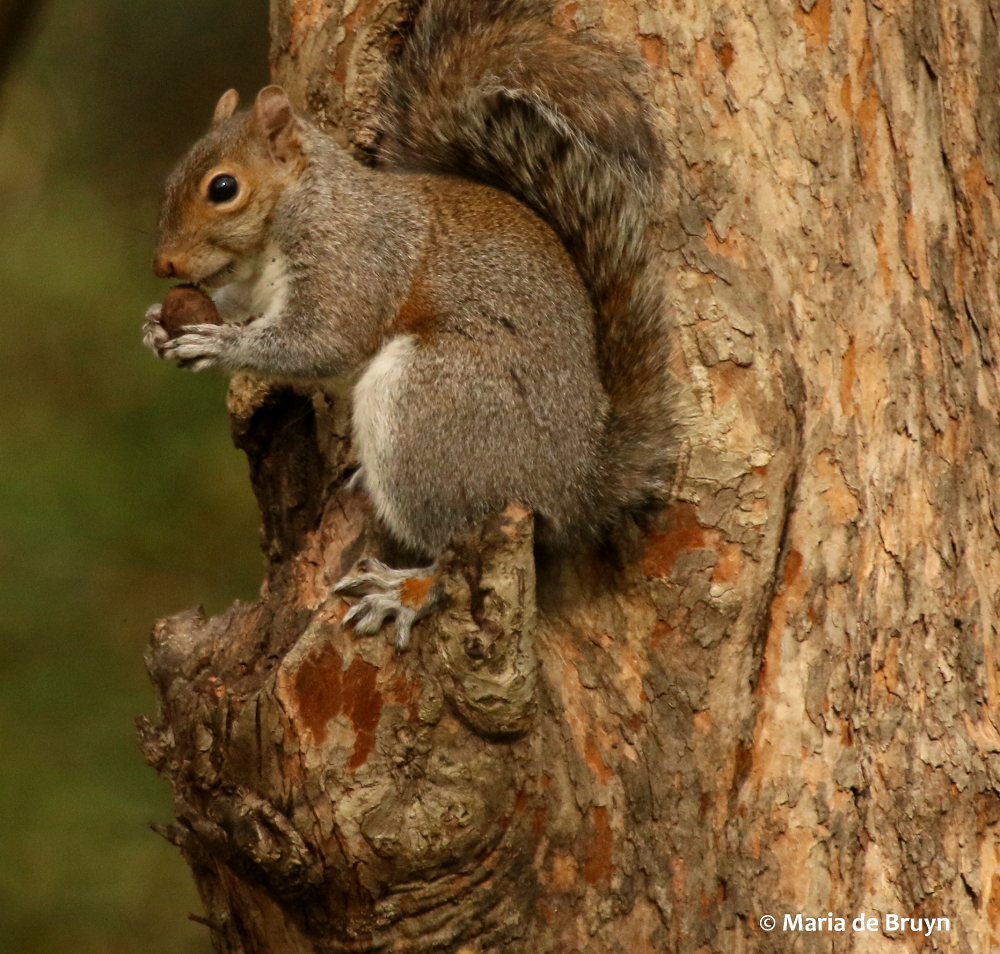
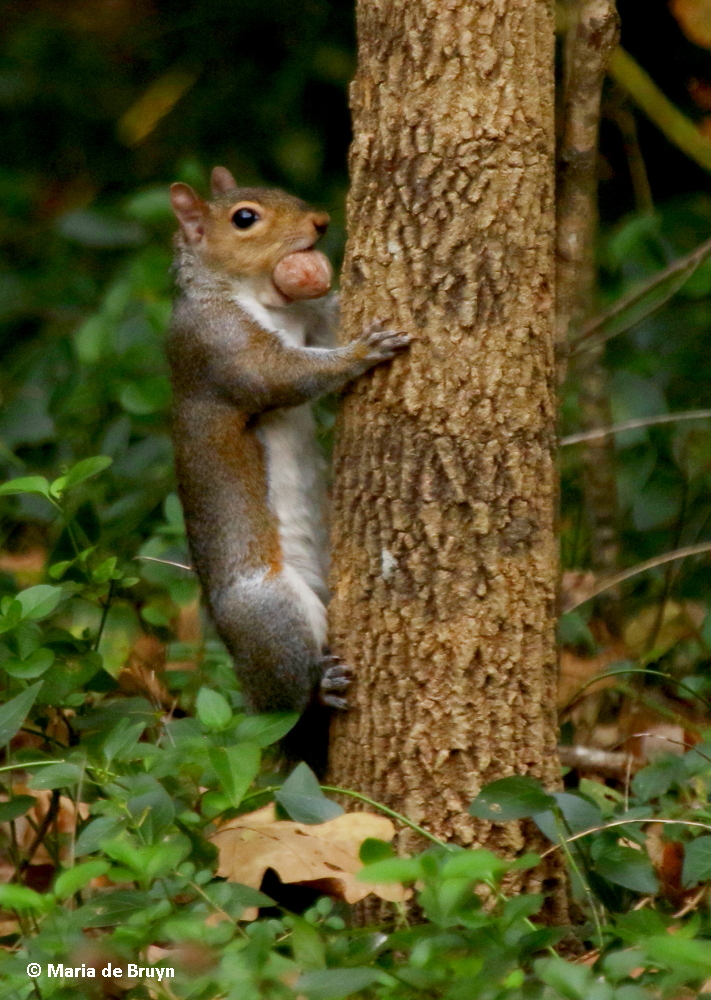
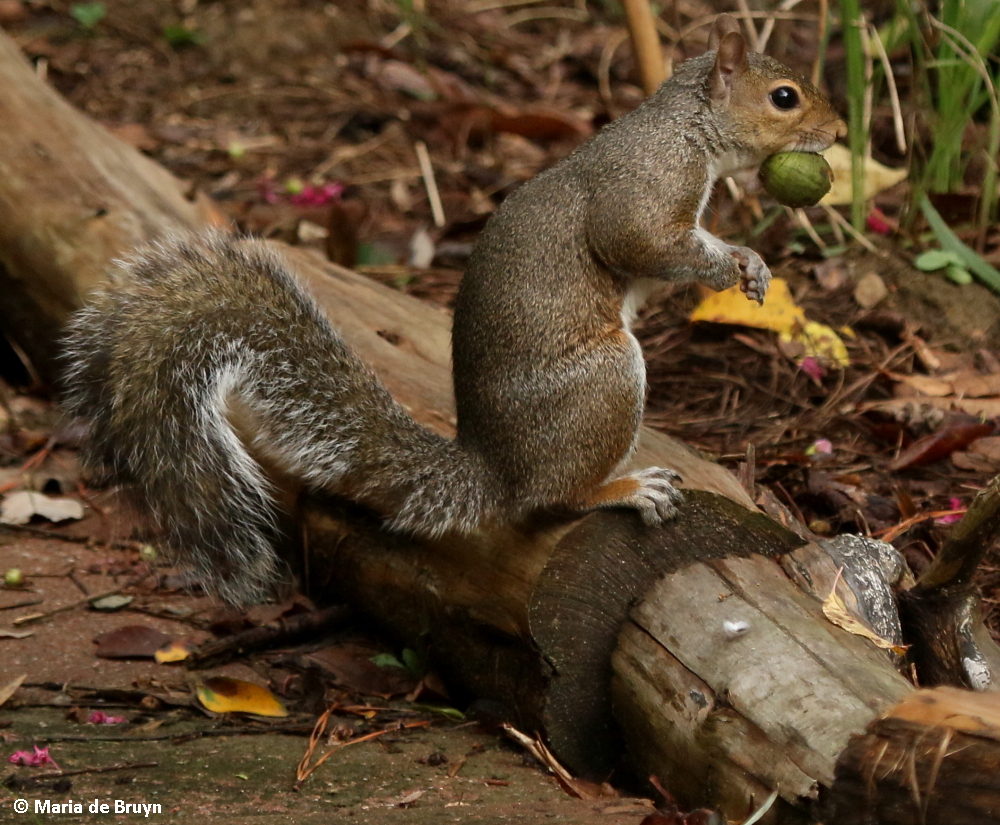
Today is Squirrel Appreciation Day in the USA, a holiday created by Christy Hargrove, a  wildlife rehabilitator affiliated with the Western North Carolina Nature Center. The Eastern gray squirrel species (Sciurus carolinensus) was first recorded in the Carolinas, so I thought I’d honor this wild creature by sharing some photos of the squirrels in my yard who sometimes drive me up the wall with frustration. There is one in particular who can get my ire up. Of course, I realize it may not always be the same creature – perhaps several of “my” squirrels are taking turns in trying to overcome my measures to keep them off my bird feeders. But I do think one in particular is especially tenacious and persistent.

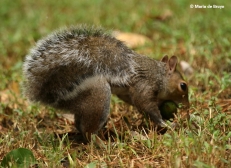
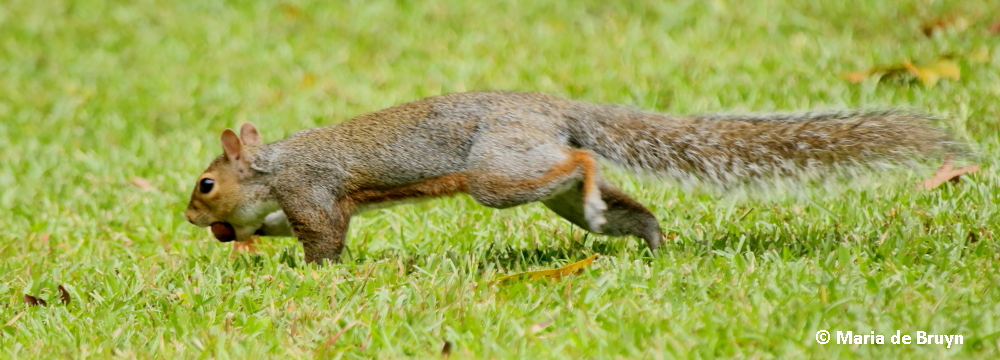
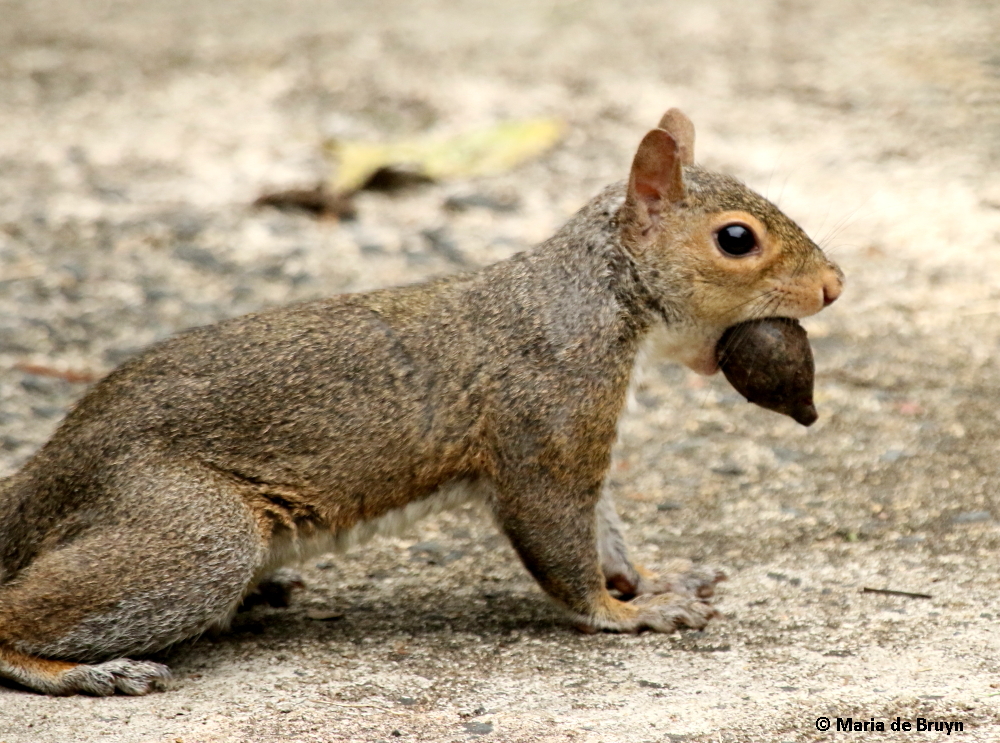
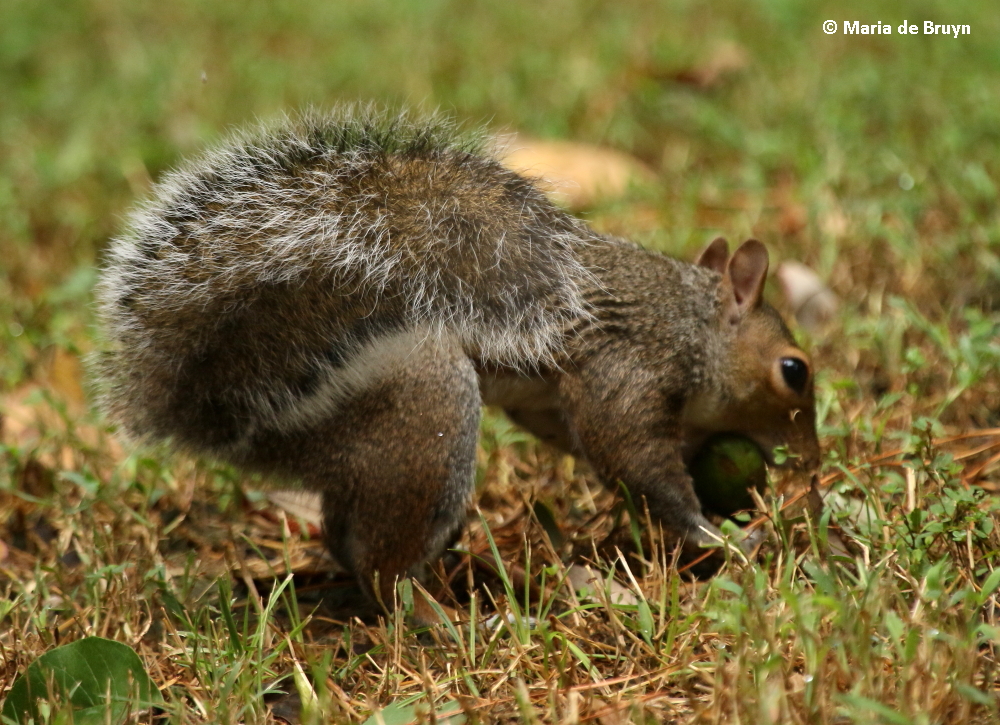
The yard squirrels are lucky since my neighbor has beech trees and I have a couple oak trees that provide plenty of acorns; these mammals therefore have plenty of nuts to store for winter. I periodically see them digging little holes in the lawn and different parts of the garden, “squirreling away” the nuts they have found in the trees. I also saw one burying some grapes that I had put out for the birds; that didn’t seem like a good strategy to me, but I have since learned that they will make temporary caches so perhaps that squirrel was just hoarding a treat for later. They have also occasionally gone after the persimmons.

These squirrels aren’t satisfied with the natural bounty of the yard, however. They also want to get the nuts and seeds in my bird feeders, even when they have been able to  partake of the bounty strewn over the earth for the ground-feeding birds.

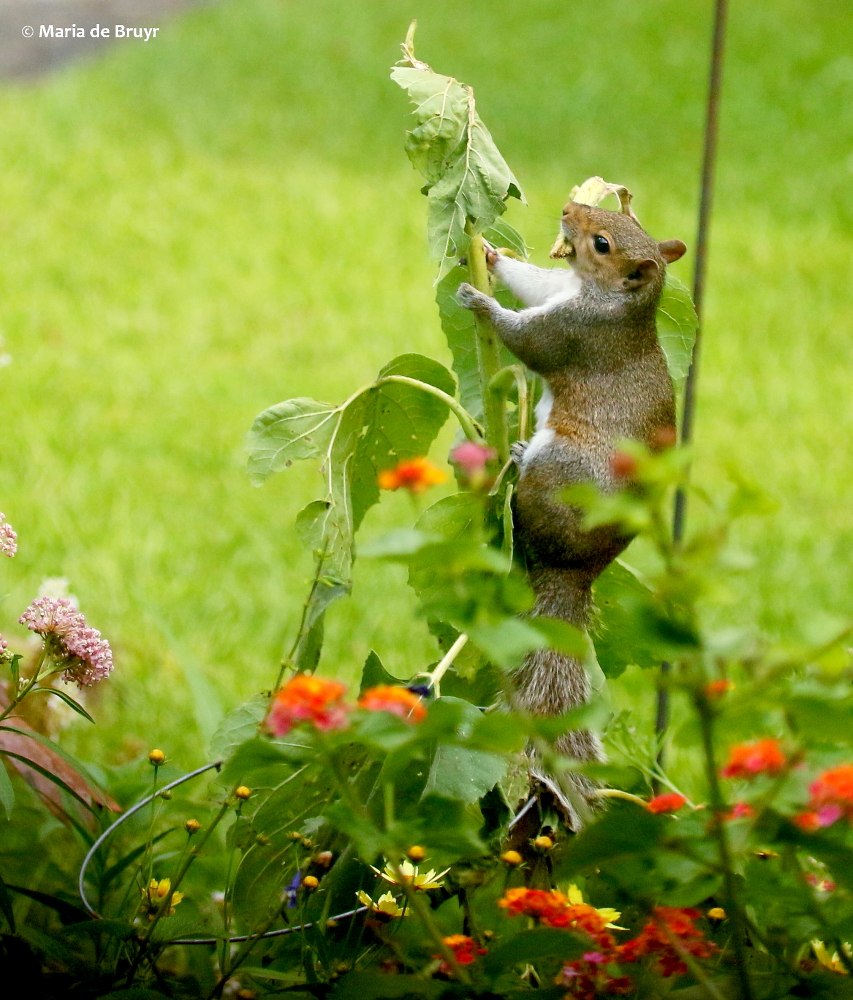
I learned early on that the bird feeder poles need to be at least 10 feet away from the roof of my house and any sturdy shrubs or stumps that they can use as a launching pad to bypass the baffles placed on poles to outwit them. They do go up the raccoon baffle from time to time, testing whether they now might find a way through it but so far that has not been a useful strategy for them. One has managed to climb a thick-stalked sunflower so that it could nip off the seed bud.

I had put a couple stumps in my front flower garden as natural decorations. Then, it appeared that one of the squirrels was using a stump as a launching pad – managing to land above the baffles atop the nut and fruit feeders.


I made the mistake of putting an oriole feeder on a pole without a baffle; I didn’t think it would attract the squirrels but apparently the jelly and nectar did appeal to one individual.


Another time I had only a hummingbird nectar feeder on one pole, which seemed rather flimsy. But the squirrel had to check it out all the same, even though there was nothing to its liking there.

As I have been removing invasive plants and shrubs from my yard, I’ve been adding native shrubs and plants. At one point, I thought it would be nice to have a black walnut (Juglans nigra) so I took a couple walnuts home from a park and then planted them in a deep plant pot with lots of soil over it. I had looked around beforehand and didn’t see a squirrel anywhere watching me, so I thought it was ok.

The next morning, I found a pile of walnut husks in the carport next to the plant pot. Then the next day, I saw one of the squirrels making off with the remaining walnut. Apparently, they can re-locate their hoarding caches partly by memory and partly by smell – so this squirrel must have discovered the tasty walnut by its odor (which I couldn’t detect at all).


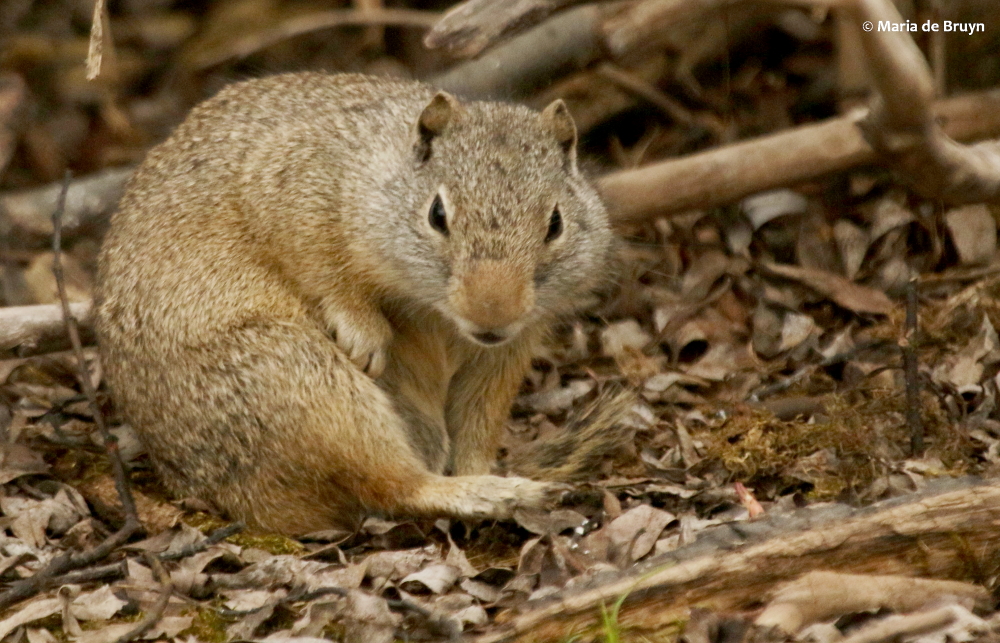
The Eastern gray squirrels are only one of earth’s 200 squirrel species (there are four others in the USA: the fox squirrel, red squirrel, Northern and Southern flying squirrels and the ground squirrels, like this Uinta ground squirrel (Urocitellus armatus) seen in Yellowstone National Park.


I’m glad that I mostly only deal with one species and while I must admit that I don’t appreciate them every day, I always do admire their tenacity, perseverance and ingenuity in finding ways to overcome my strategies for outwitting them. The squirrels are not only a source of food for the neighborhood hawks, but also a source of entertainment for the humans.

Love my yard!

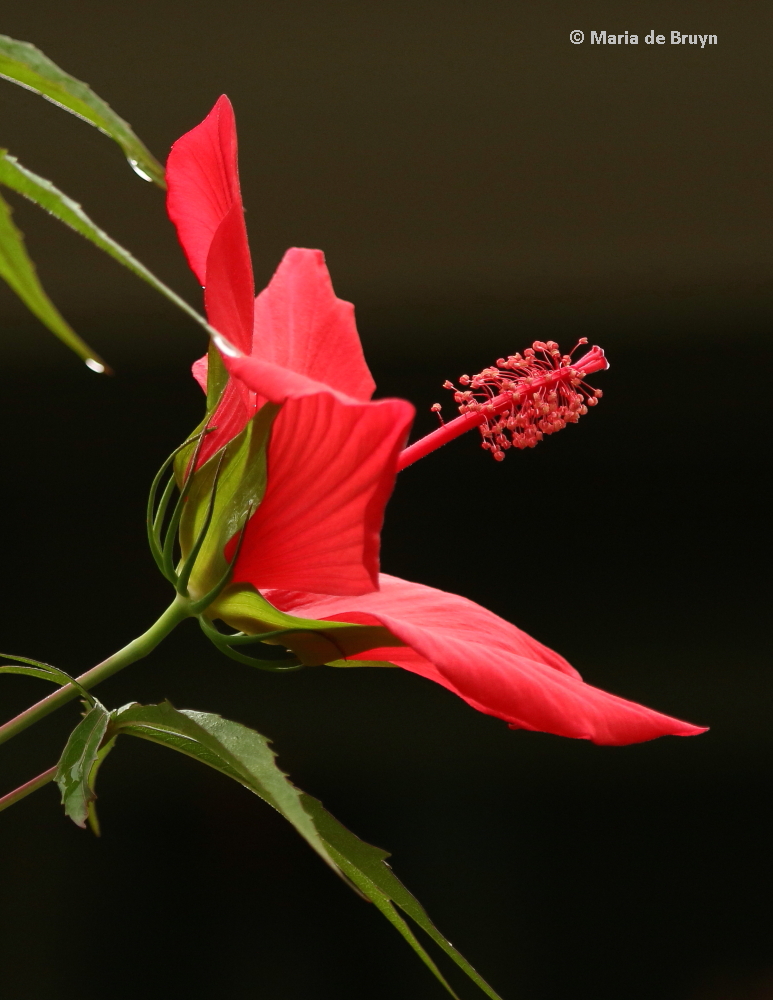
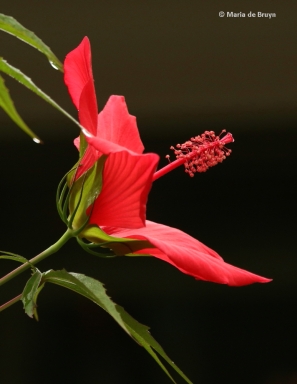
scarlet-mallow-i77a6509-maria-de-bruyn-res2016 began with distress for me, having just been admitted to hospital in considerable pain and worried about expenses. So when I was able to get home again and find diversion from the necessity of self-administering an IV medication twice daily by admiring what nature has to offer in my yard, it was a more-than-welcome event.

Even when my mood is down, walks in nature soothe my spirit since my mind becomes totally absorbed by what I’m observing and there’s no space for any other thoughts. Even aches and pains recede to the background so when I can’t get out to a reserve or park, taking advantage of the little plot of land I call my own is a real delight.
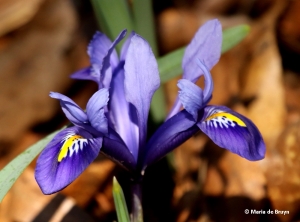
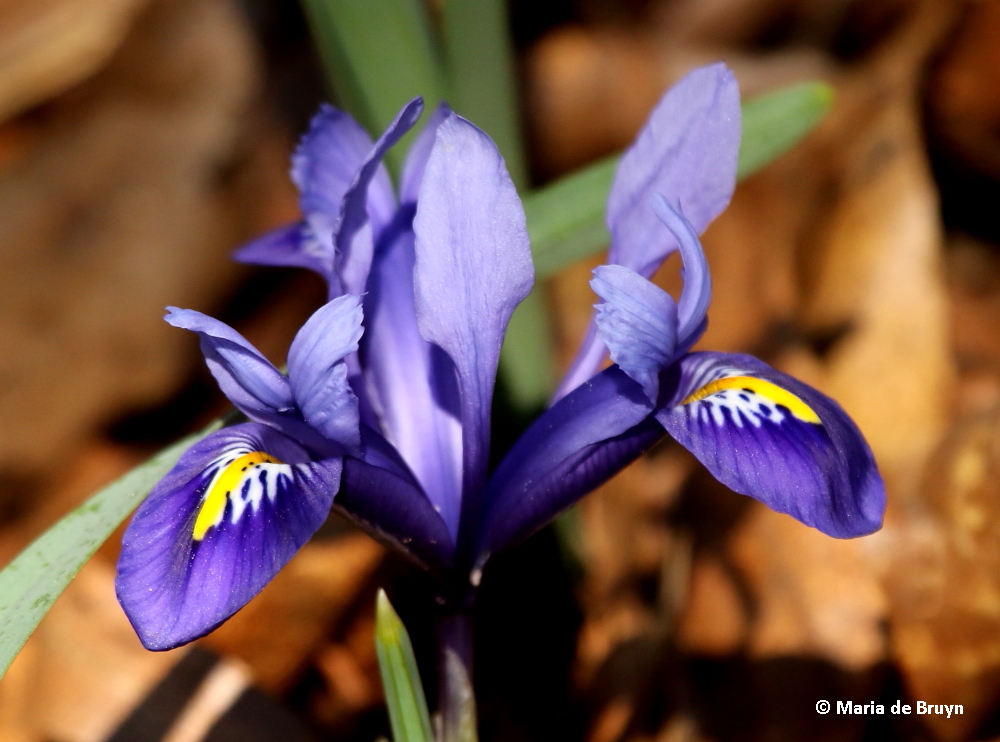
iris-i77a4541maria-de-bruyn-res


The yard has everything – plants, insects, amphibians, reptiles, birds and mammals, which is very cool indeed. Spring and summer are especially lovely with the blooming flowers and I’ve taken care to include many native vegetative species among the plantings.
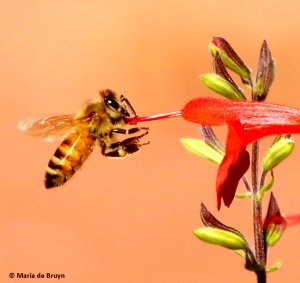
 

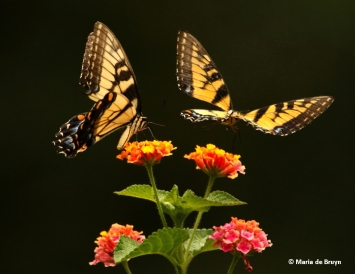
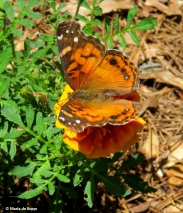
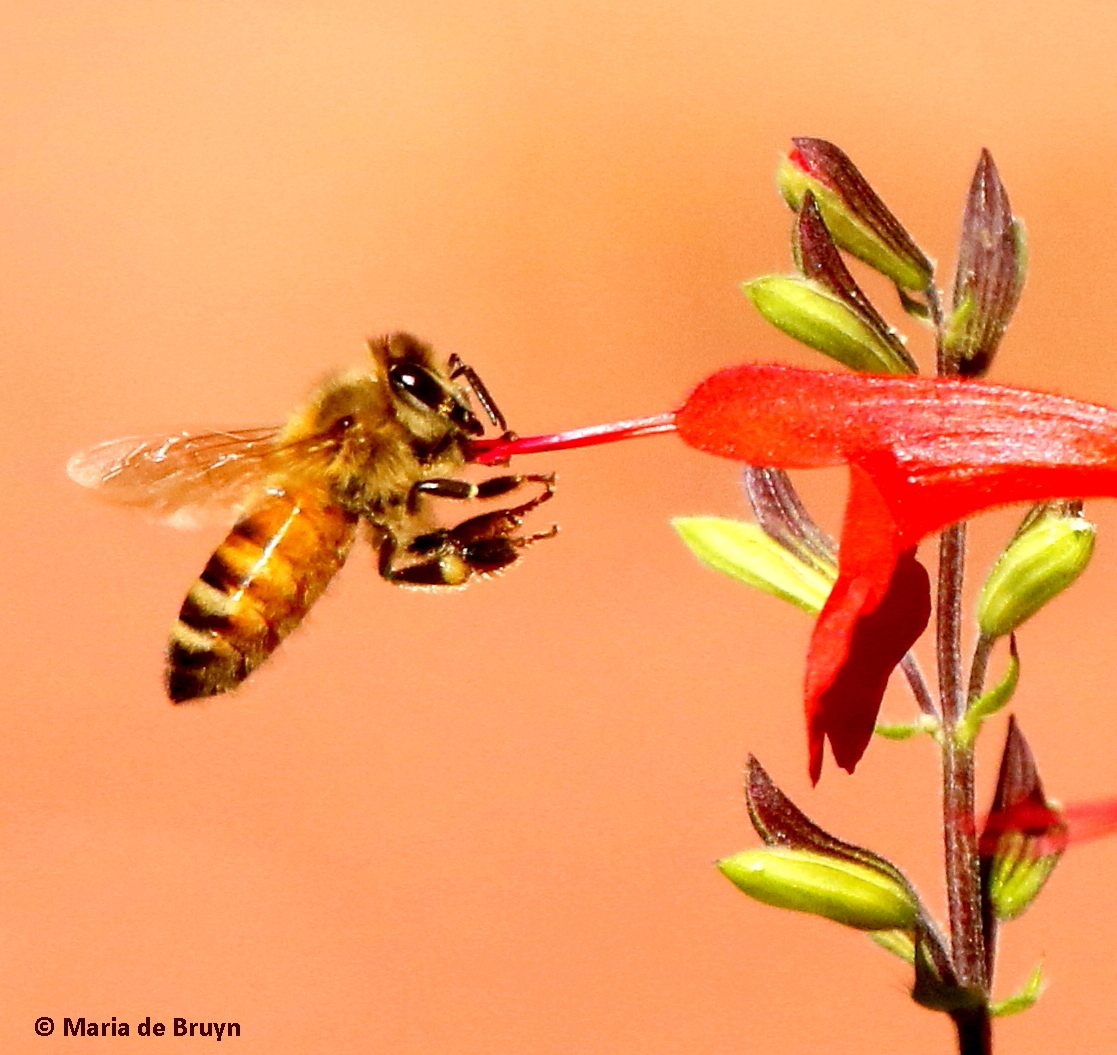
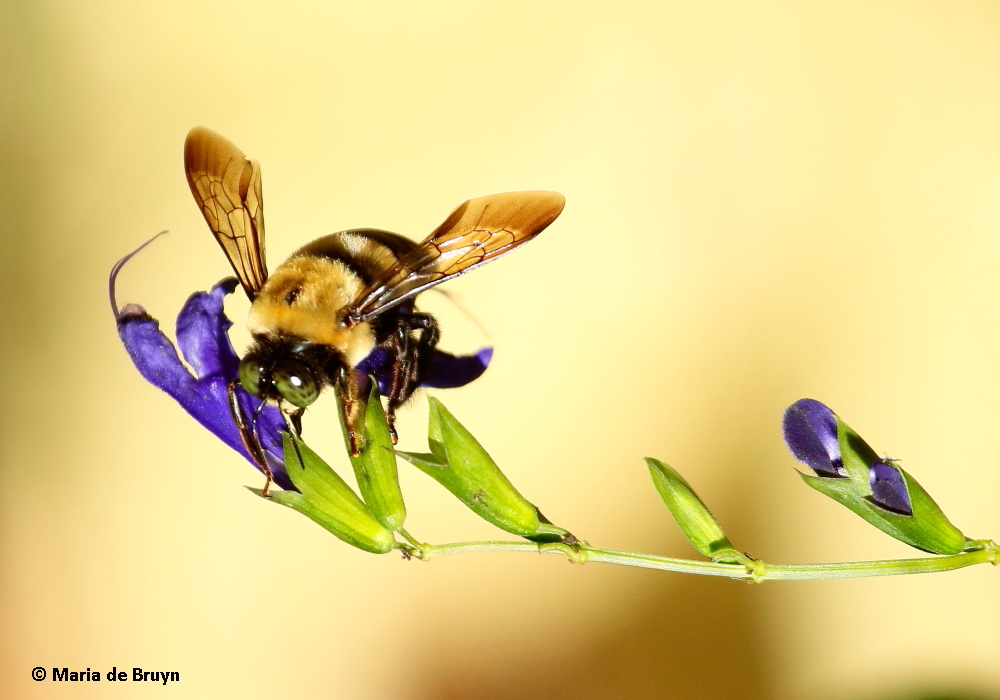
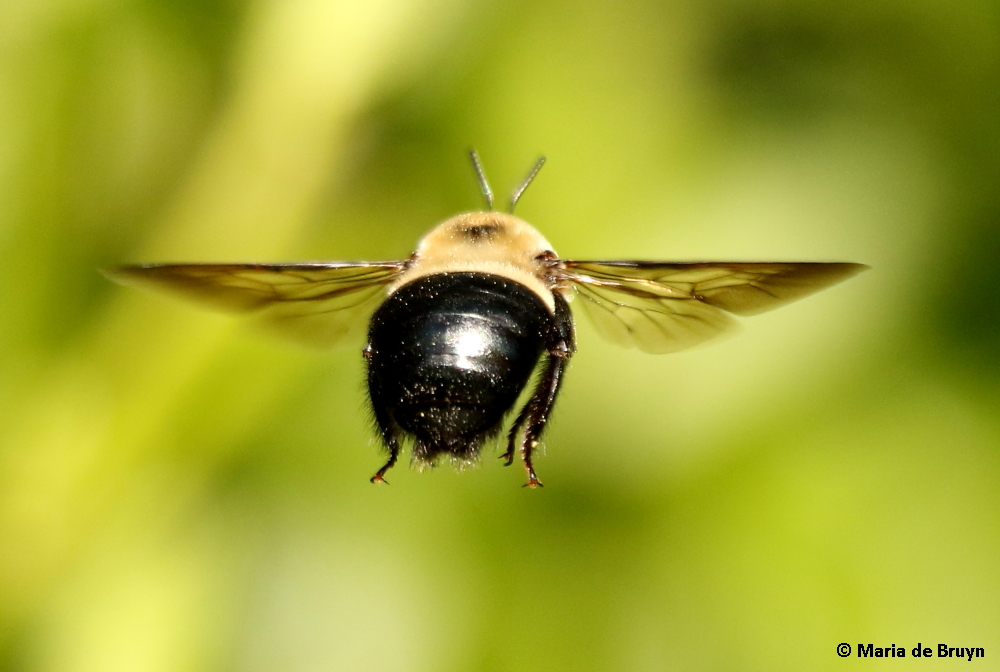
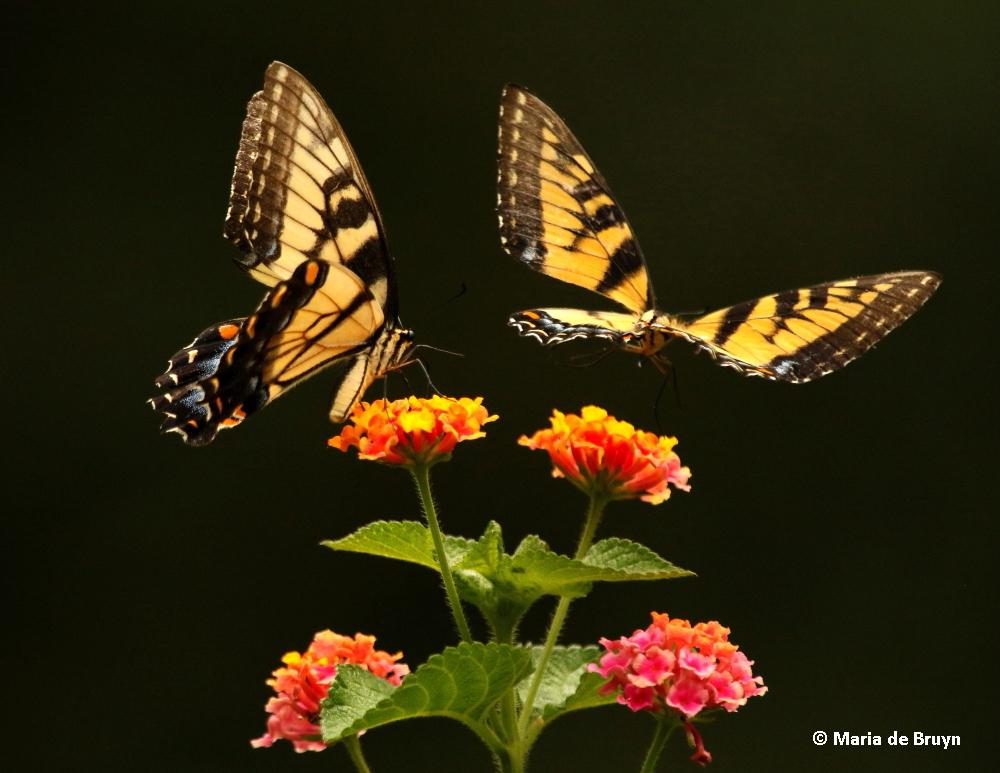
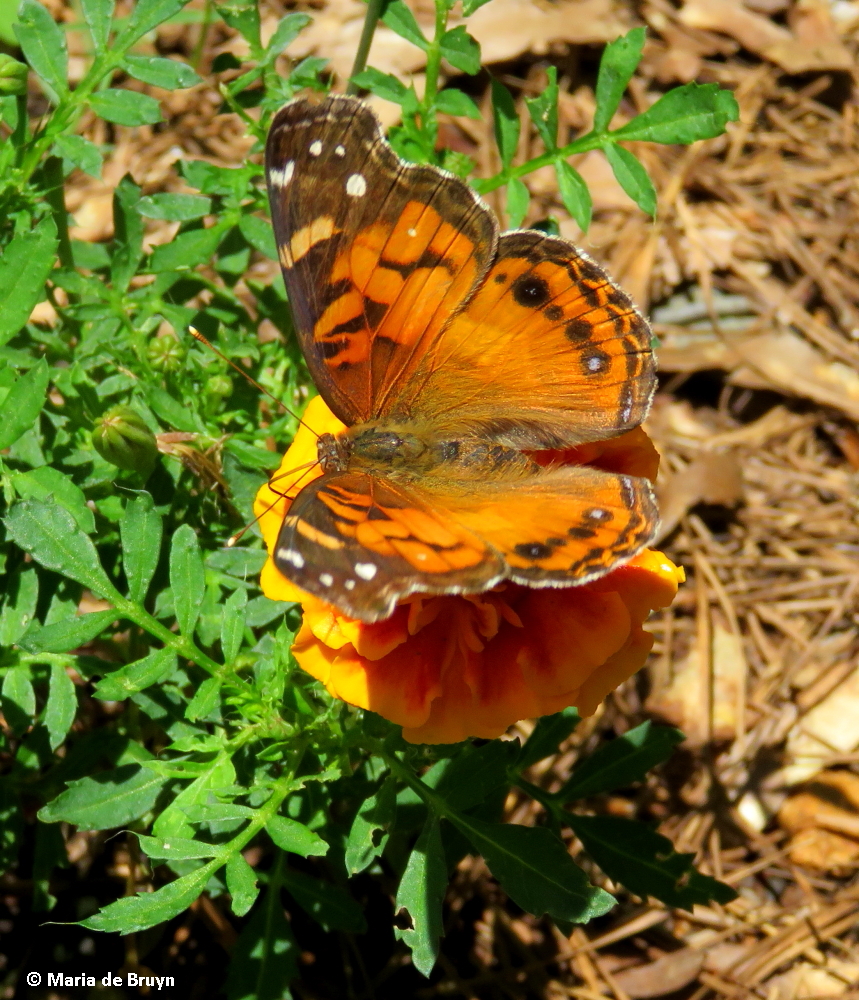
honey-bee-morning-calisthenics-i77a5676-maria-de-bruyn-resThe flowers and shrubs not only attract birds but many species of insects, too, and give me plenty of chances to practice photographing bees in flight and butterflies nectaring. The Eastern carpenter bees (Xylocopa virginica), and European honey bees (Apis mellifera) were good models, as were the Eastern tiger swallowtails (Papilio glaucus) and American lady (Vanessa virginiensis) butterflies.
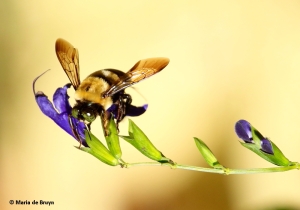
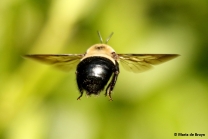
eastern-carpenter-bee-2-i77a7906-maria-de-bruyn-res  eastern-carpenter-bee-i77a8678-maria-de-bruyn-res

eastern-tiger-swallowtail-i77a8669-maria-de-bruyn-res  american-lady-img_0069-maria-de-bruyn-res

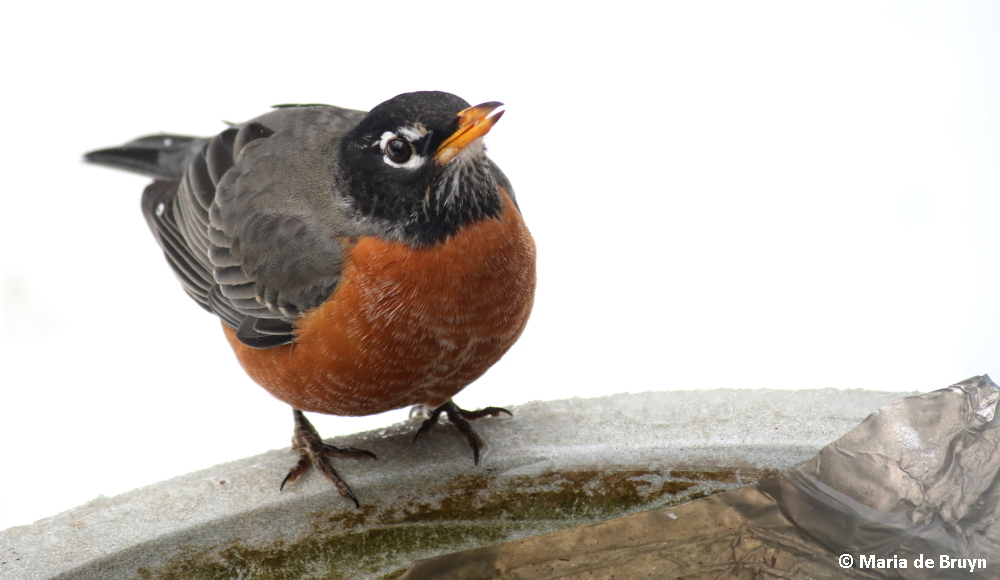
blue-pickerel-weed-i77a3947-maria-de-bruyn-resThe front yard has one small pond with blue pickerel weed (Pontederia cordata) and the back yard has two ponds and a heated bird bath in winter. Deer, raccoons and birds, like this American robin (Turdus migratorius) use these as watering holes.
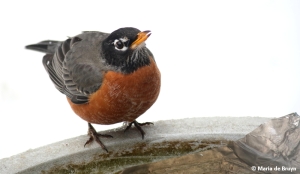
american-robin-i77a9005-maria-de-bruyn-res

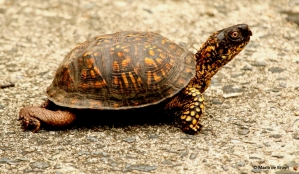
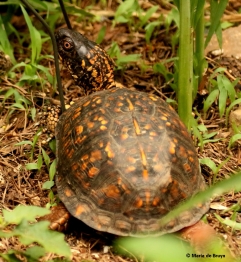
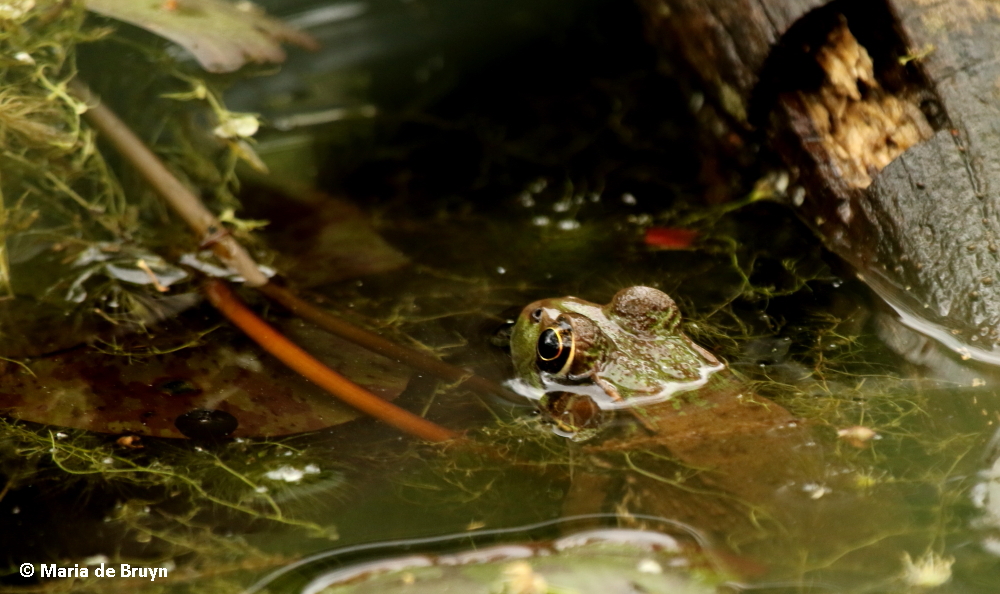
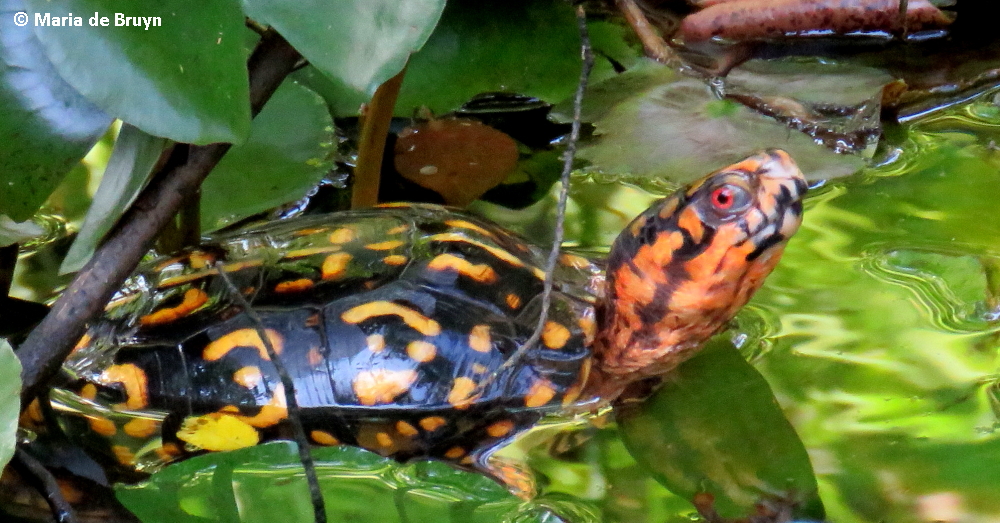
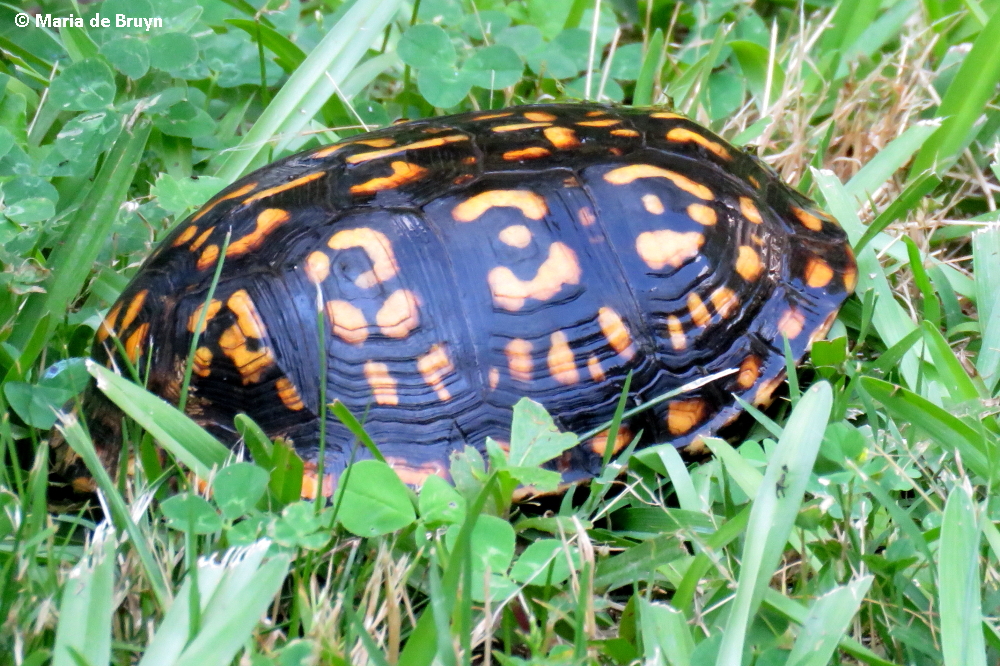
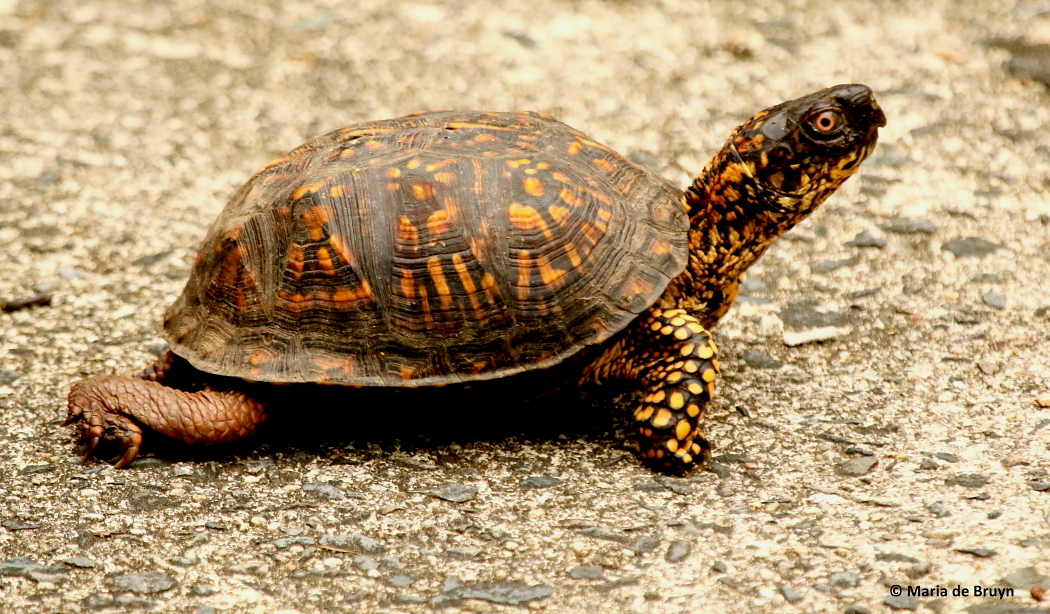
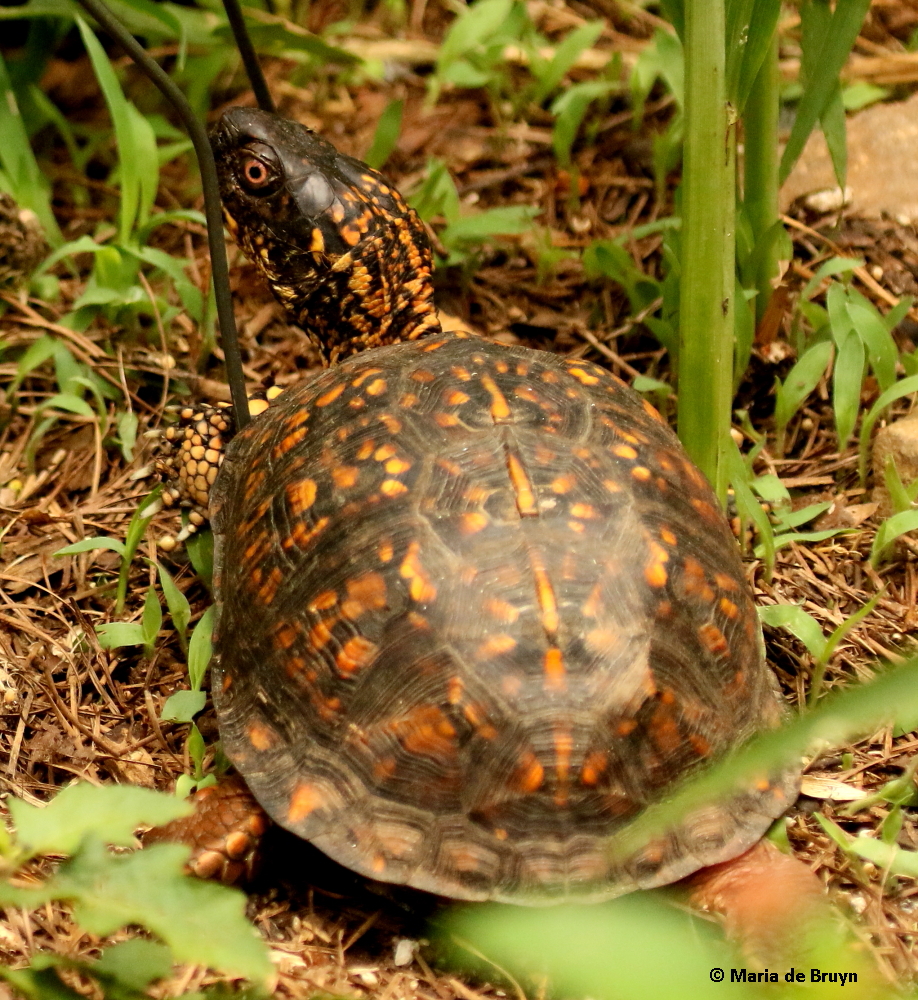
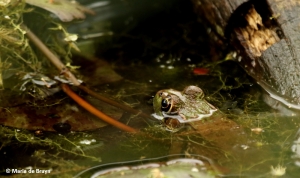
bullfrog-i77a9694-maria-de-bruyn-resFish live in one pond along with green and/or bullfrogs (Lithobates catesbeianus). Occasionally, I’ve had to rescue an adventurous Eastern box turtle (Terrapene carolina carolina) that didn’t seem able to climb out again on the logs provided as bridges out of the water. Other turtles trundle around in other parts of the yard.
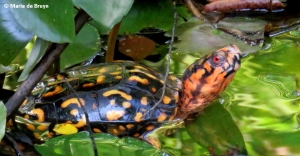
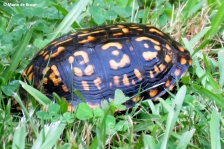
eastern-box-turtle-img_1392-maria-de-bruyn-res    eastern-box-turtle-img_1422-maria-de-bruyn-res

eastern-box-turtle-male-i77a8333-maria-de-bruyn-res   eastern-box-turtle-i77a8380-maria-de-bruyn-res

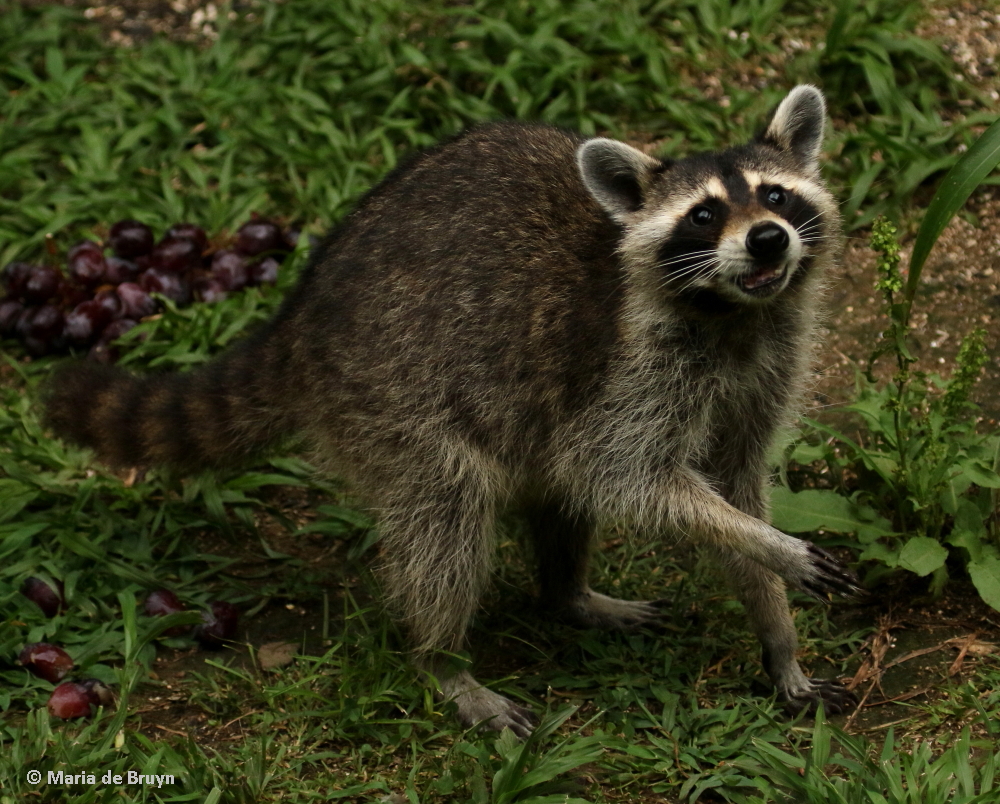
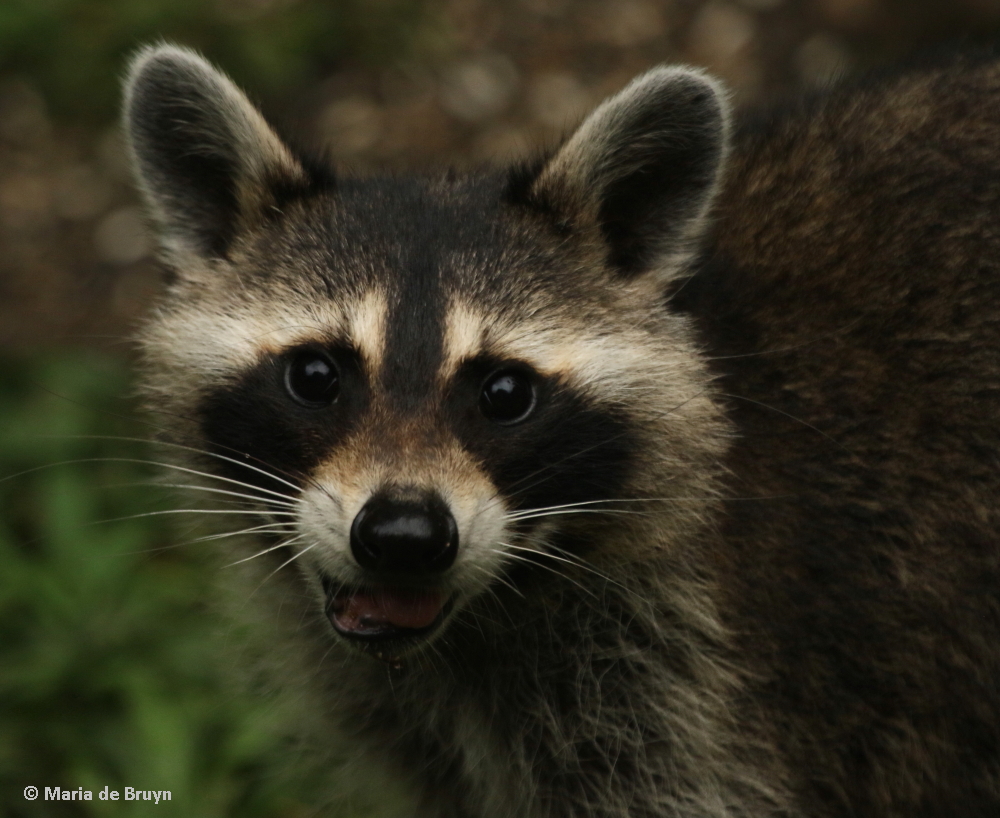
Raquel raccoon (Procyon lotor) and members of her family usually appear at night, as do the local opossums, of whom I have few photos. When Raquel is expecting another brood or in nursing mode, she gets more adventurous and comes round in the daytime.
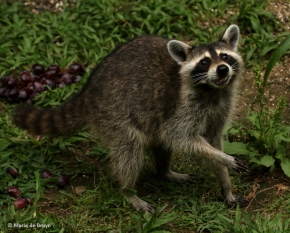
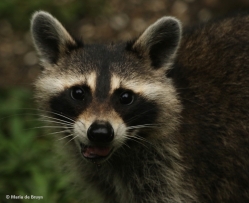
raccoon-i77a5969-maria-de-bruyn-res   raccoon-i77a5906-maria-de-bruyn-res

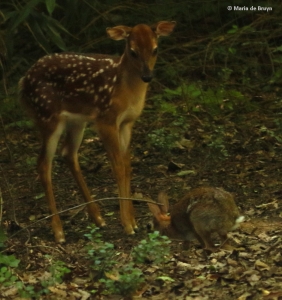
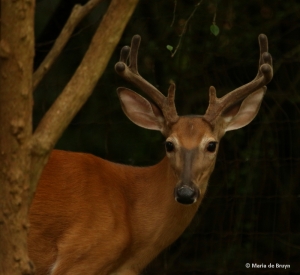
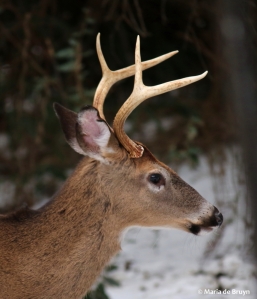
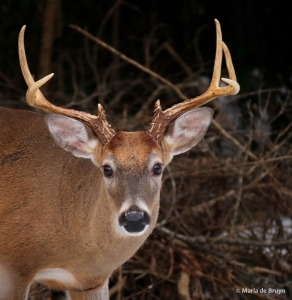
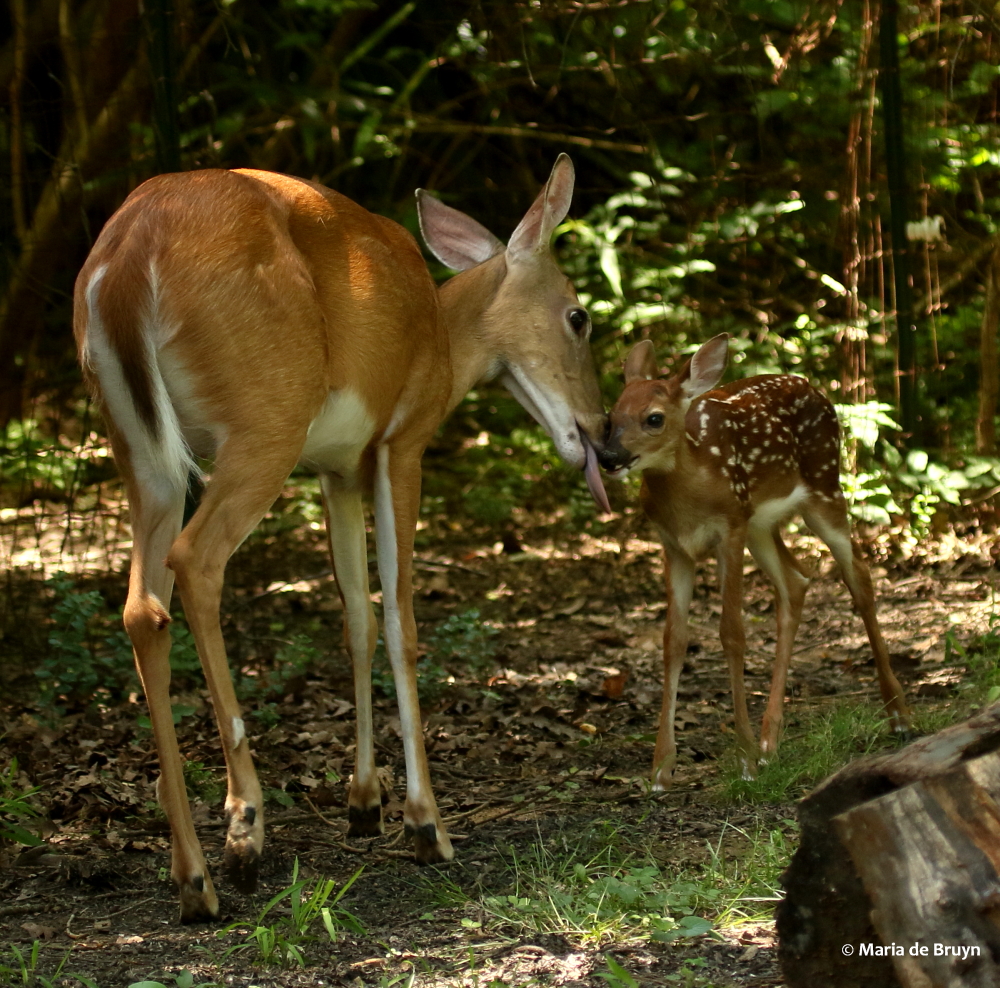
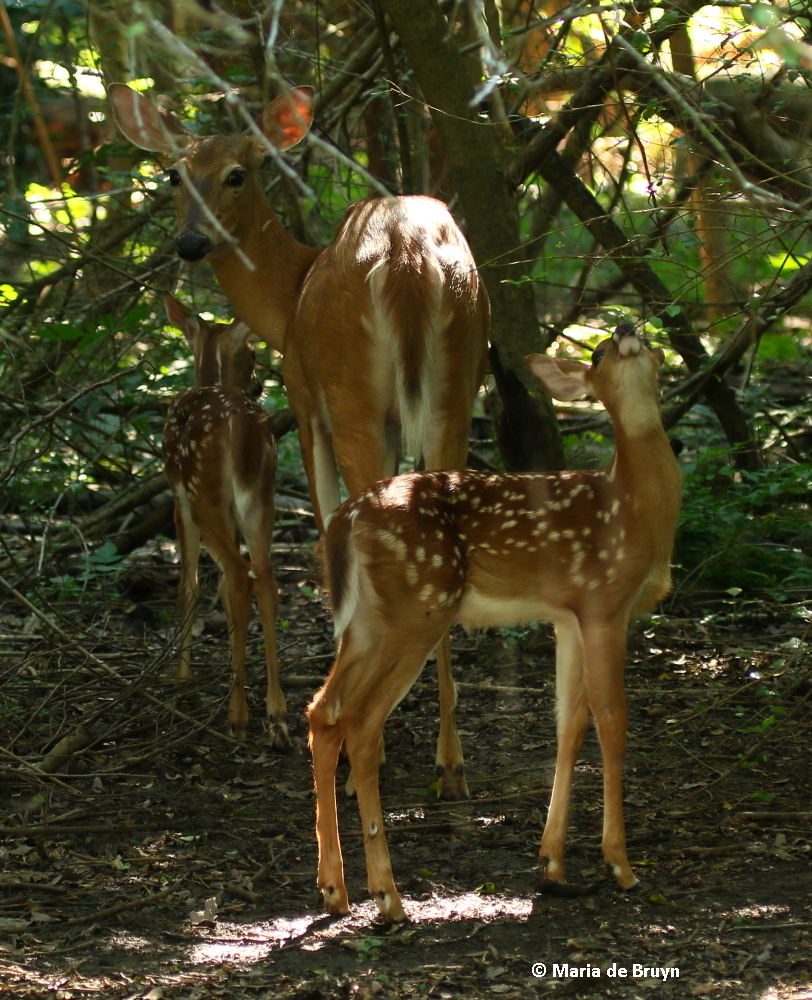
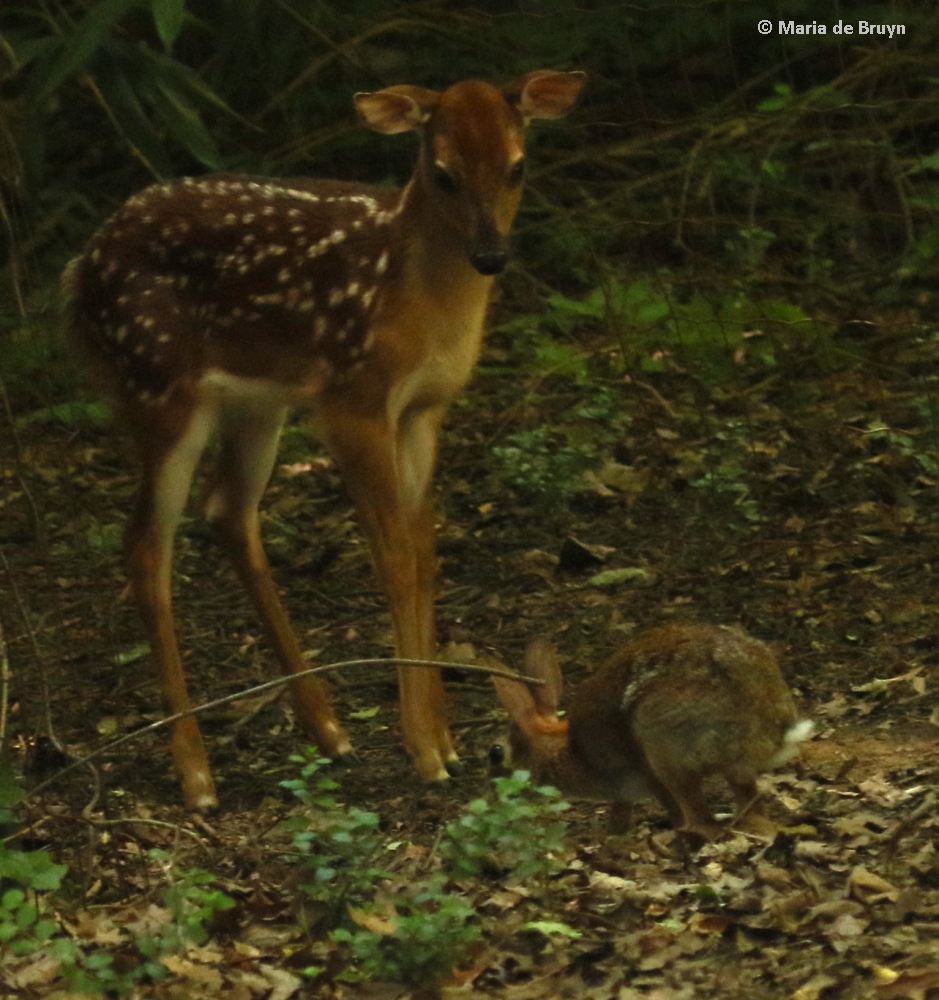
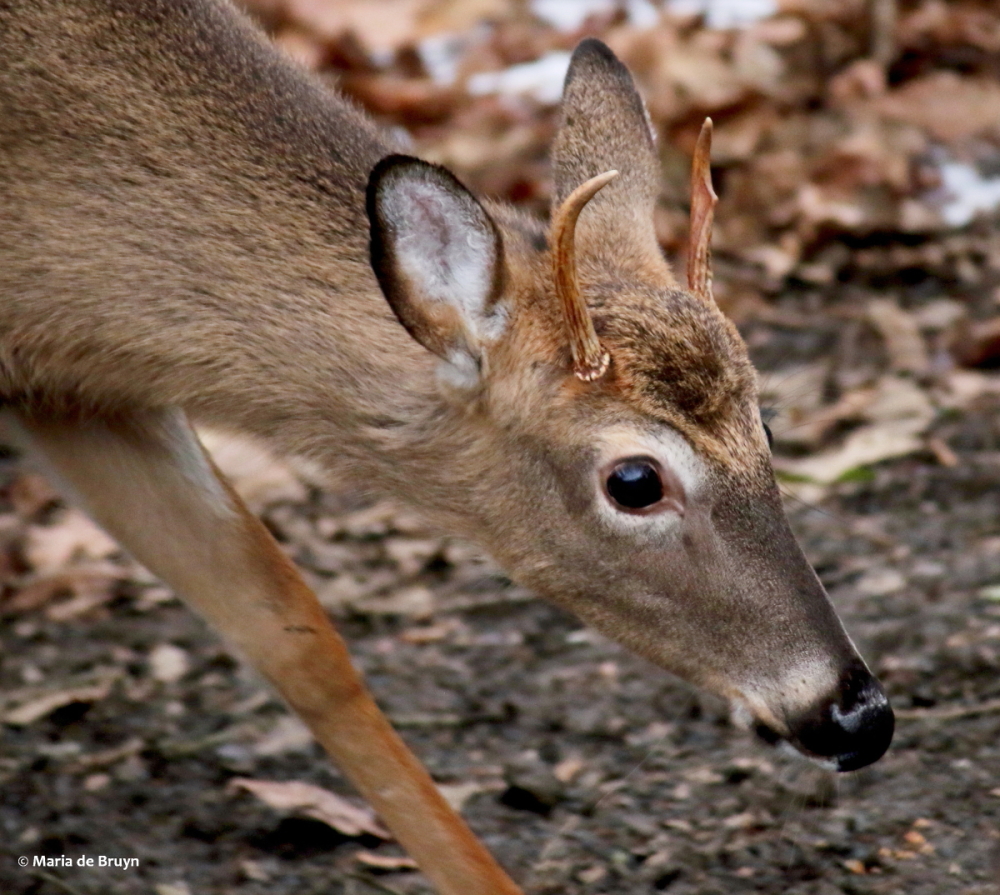
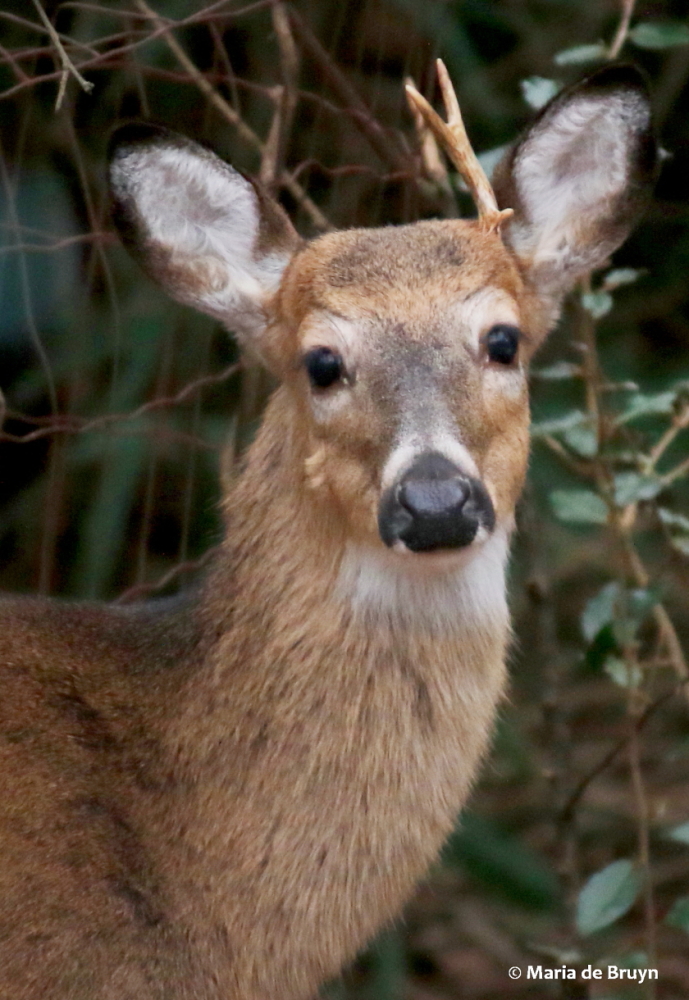
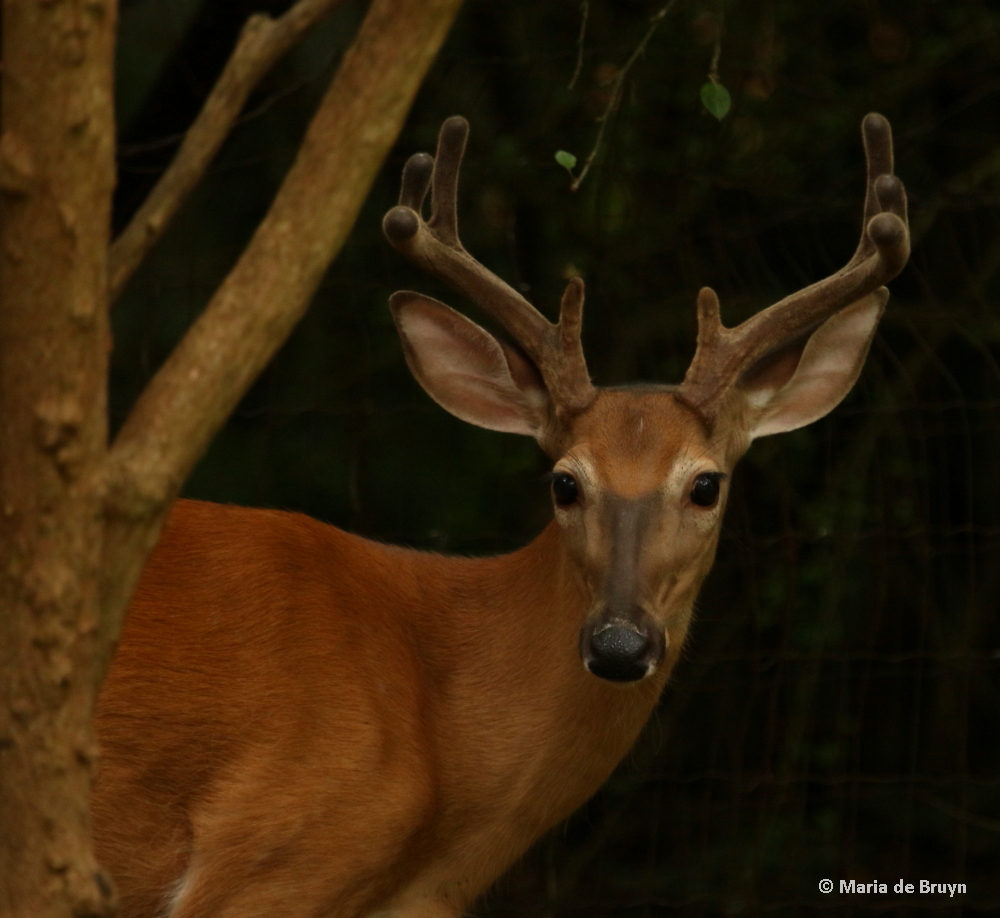
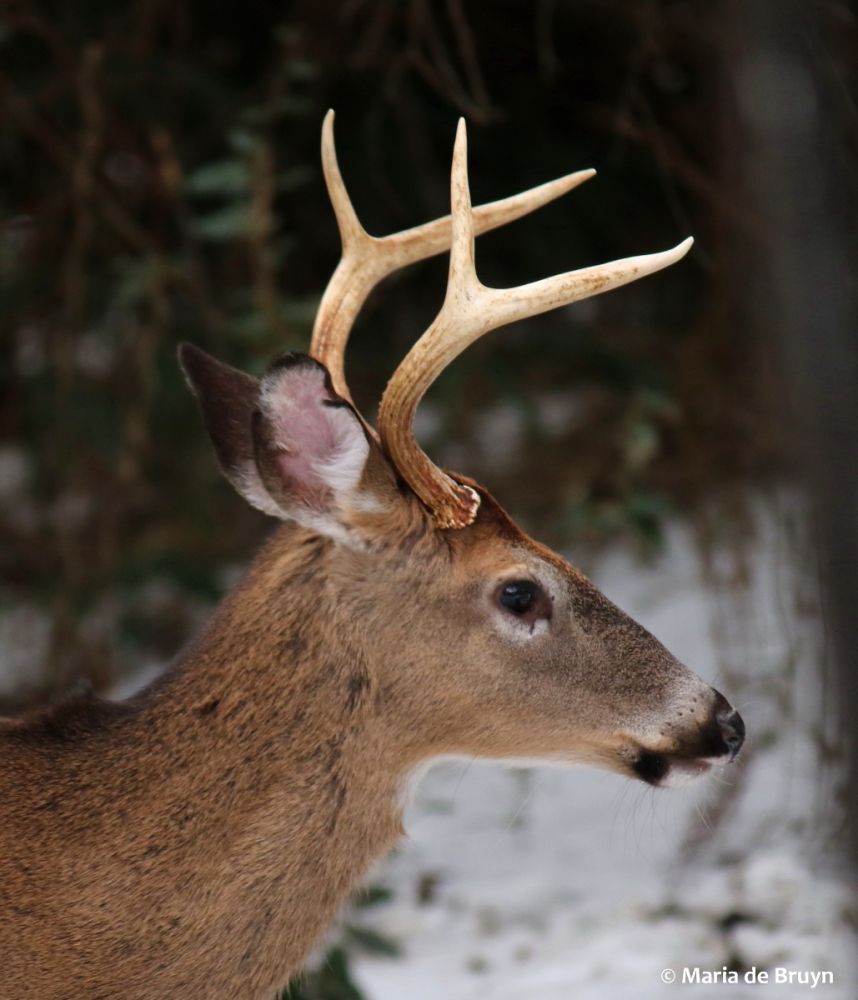
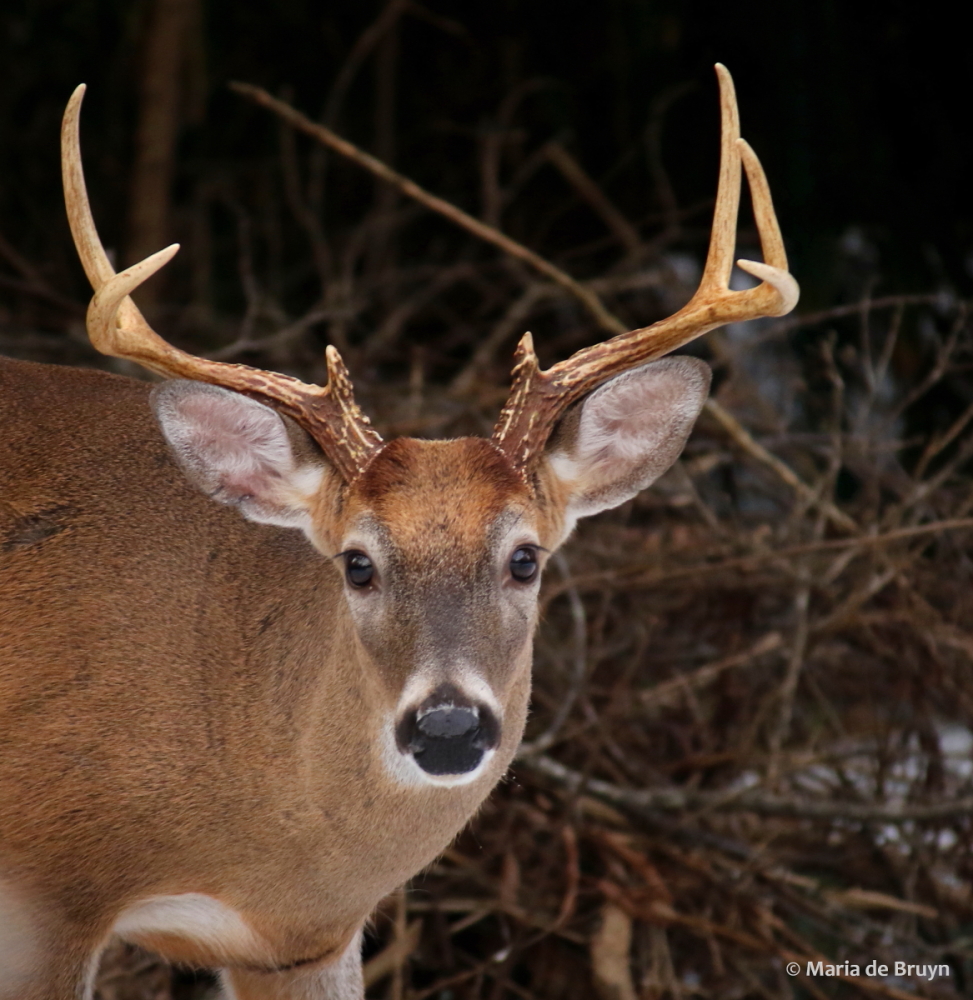
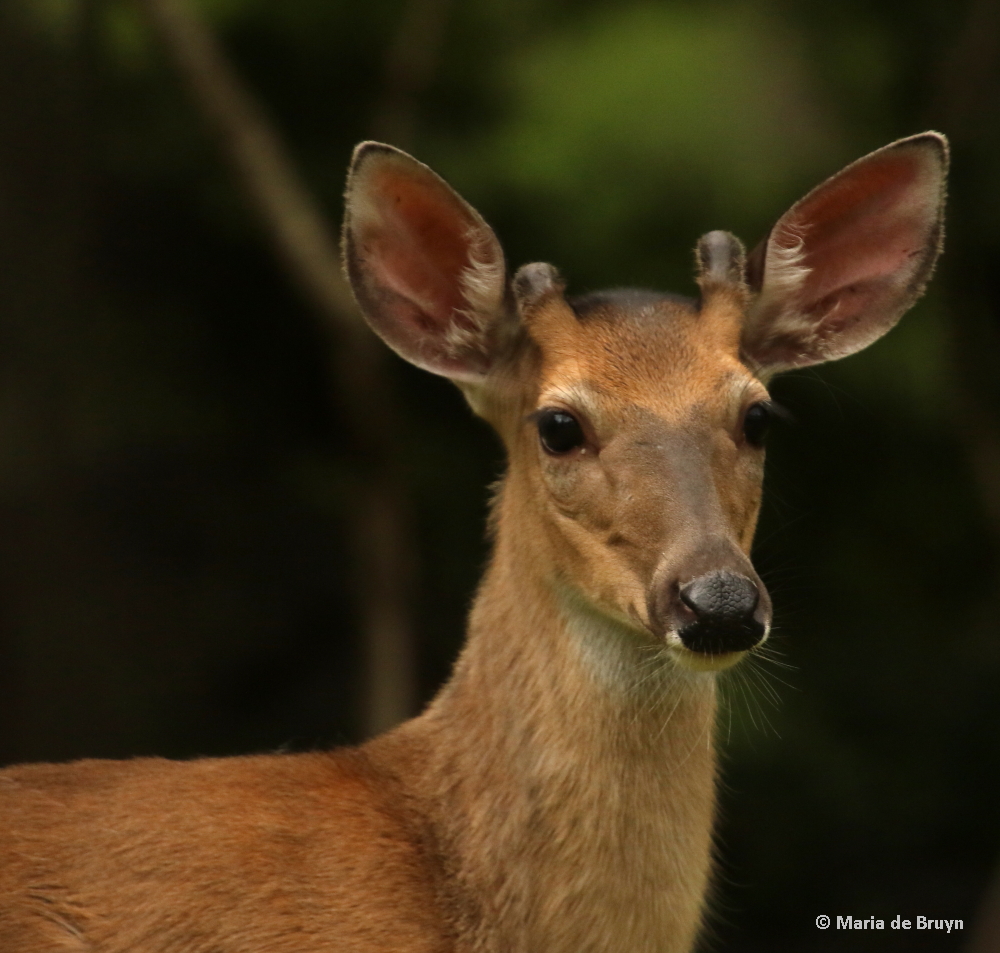
The white-tailed deer (Odocoileus virginianus) come by all months of the year and provide opportunities to see how the fawns learn about the other creatures sharing their space.
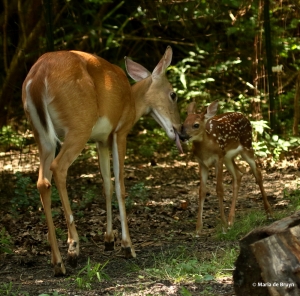
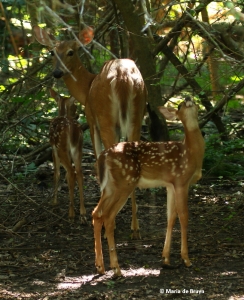
white-tailed-deer-i77a7463-maria-de-bruyn white-tailed-deer-i77a2126-maria-de-bruyn-res

white-tailed-deer-i77a7826-maria-de-bruyn-res

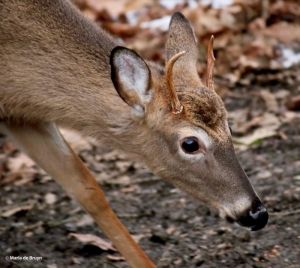
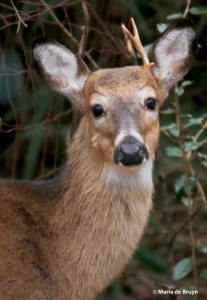
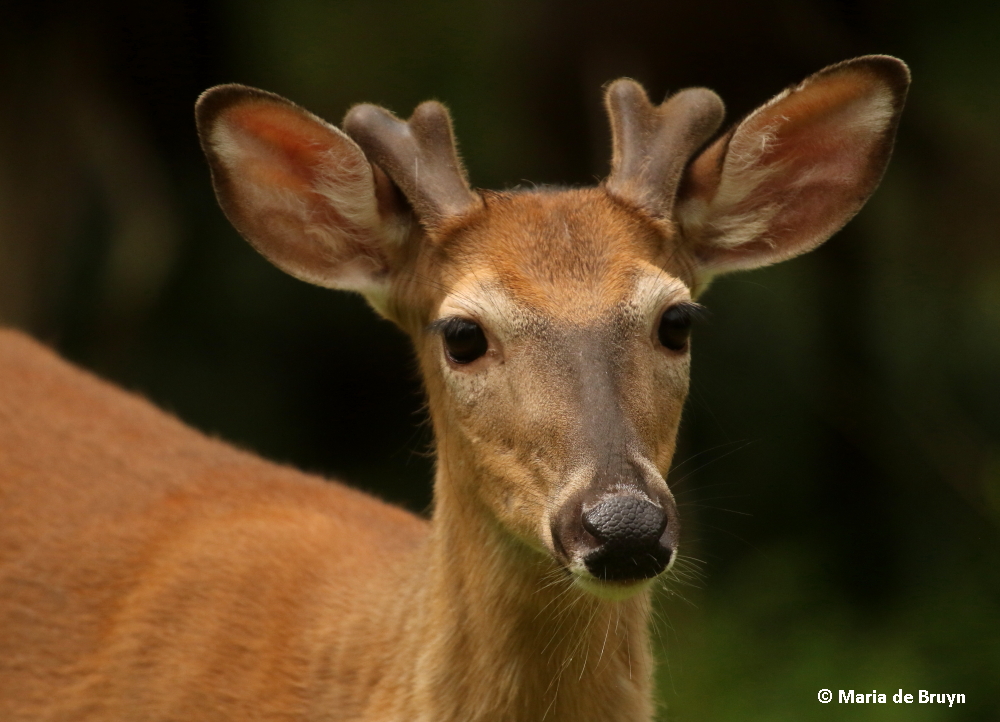
It’s interesting to see how button bucks are followed by yearlings with nubby antlers and eventually grow up to become handsome 5- or more point bucks.
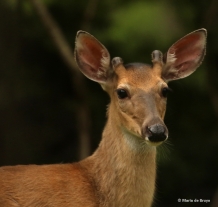
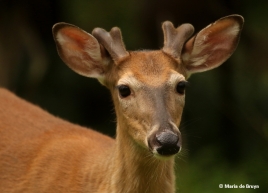
white-tailed-deeri77a4099-maria-de-bruyn-res      white-tailed-deer-i77a4097-maria-de-bruyn-res

white-tailed-deer-i77a1367-maria-de-bruyn-res  white-tailed-deer-i77a1366-maria-de-bruyn-res

white-tailed-deer-i77a9813-maria-de-bruyn-res

white-tailed-deer-i77a1061-maria-de-bruyn-res white-tailed-deer-i77a1005-maria-de-bruyn-res

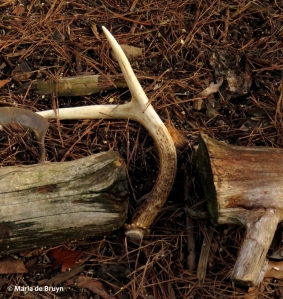
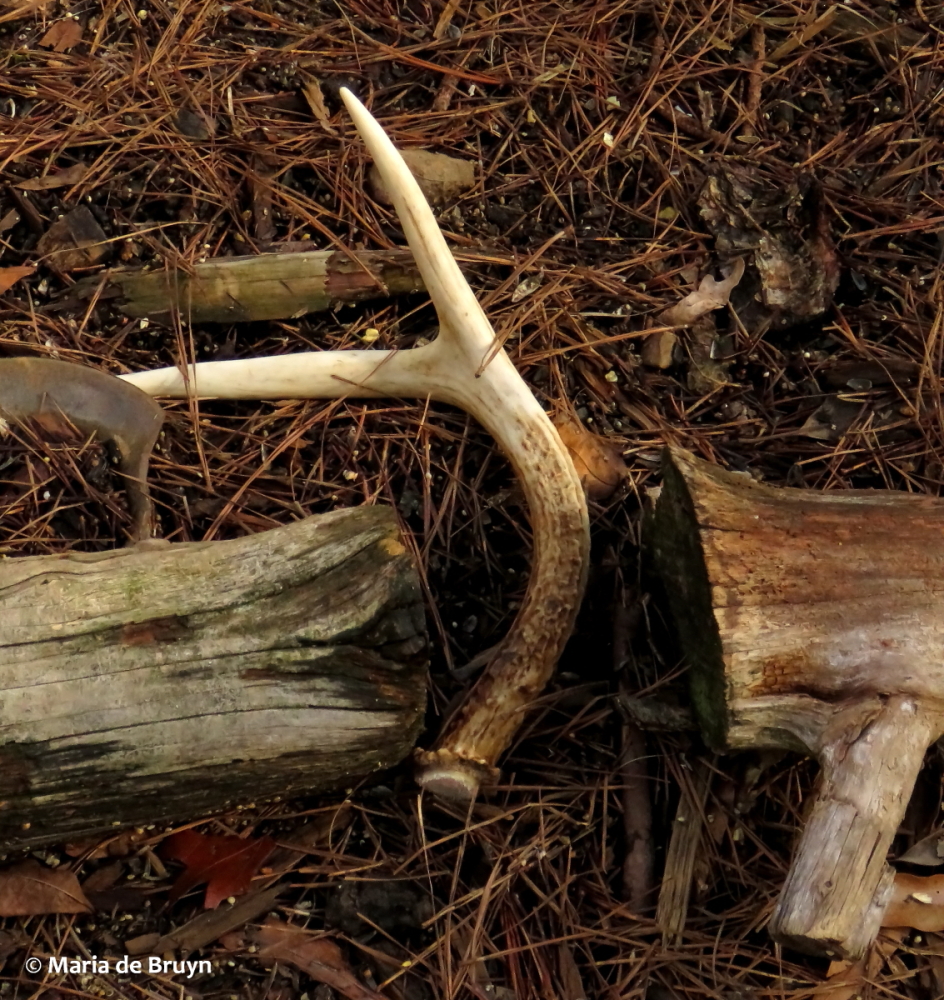
white-tailed-deer-antler-img_1211-maria-de-bruyn-resThis past year, one of the bucks was kind enough to drop one of his antlers in my yard as a souvenir.

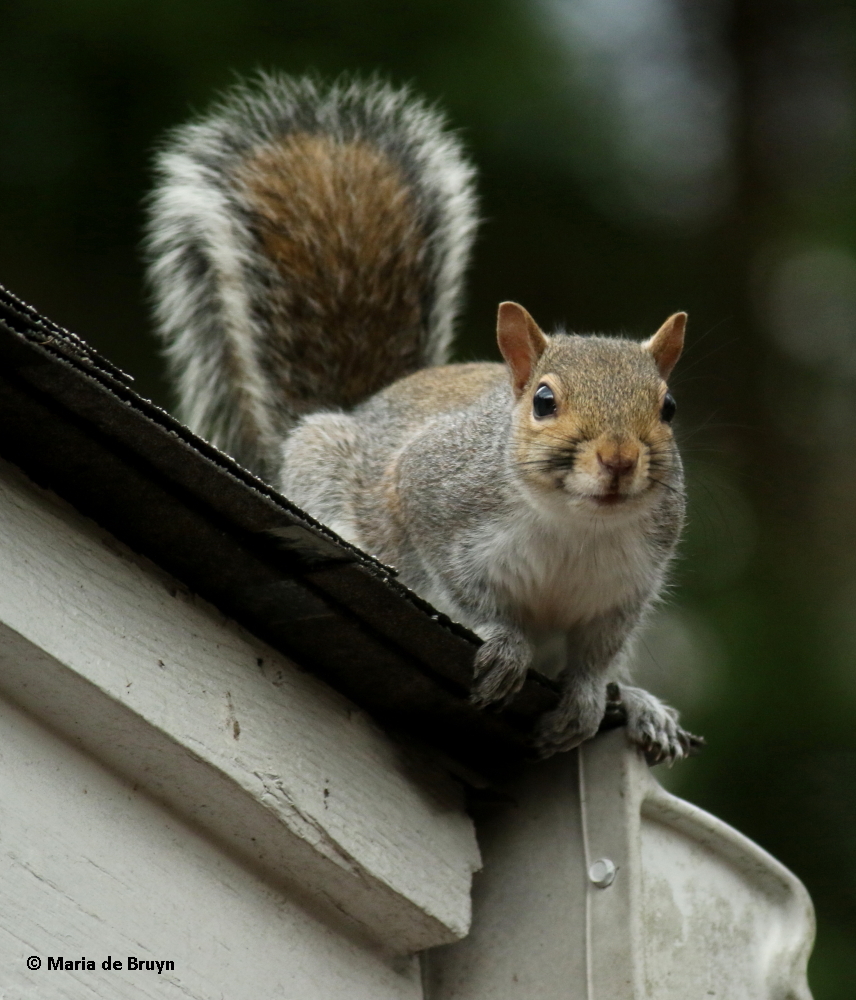
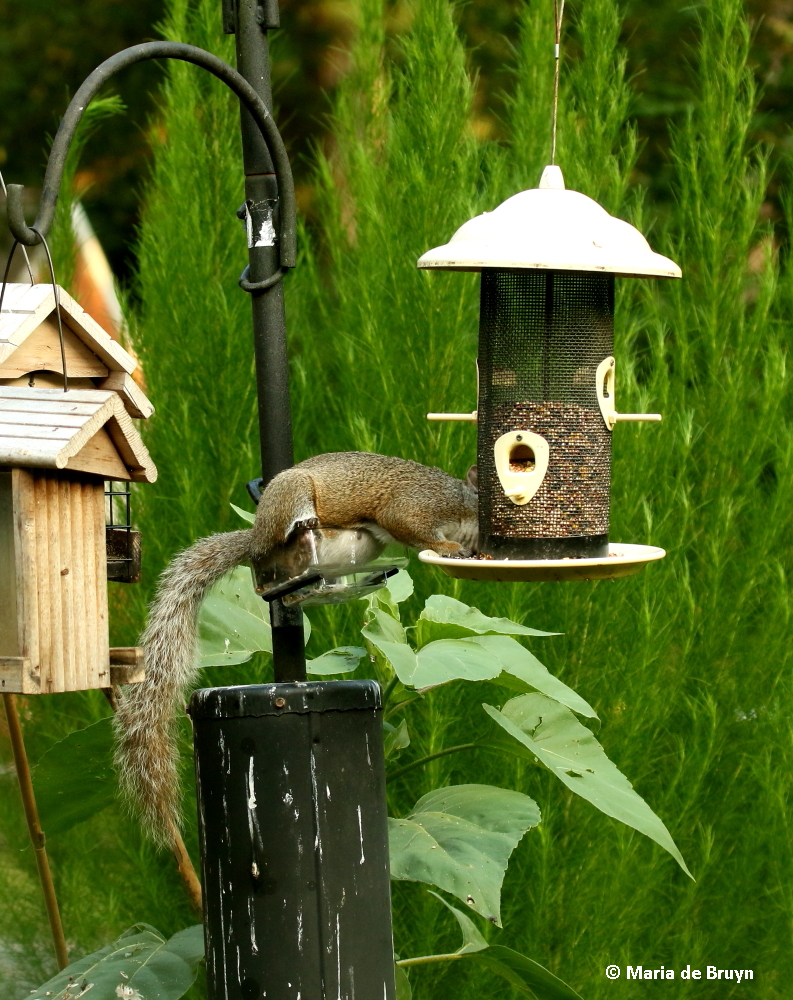
The Eastern gray squirrels (Sciurus carolinensis) provide endless amusement – one way is by investigating various techniques to find a way onto the bird feeders. These are largely unsuccessful, even when they climb up on the roof to see if they can launch themselves far enough to reach a feeder pole. This year, however, one enterprising squirrel managed to finally get onto a feeder by climbing up a rather large sunflower stem that held his/her weight until it bent over close to a pole.
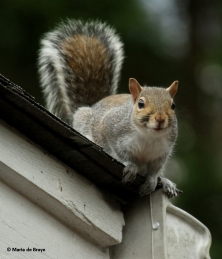
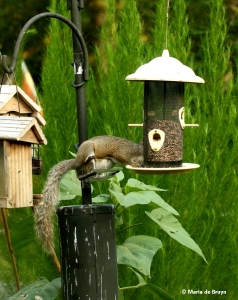
eastern-gray-squirrel-i77a5492-maria-de-bruyn-res   eastern-gray-squirrel-i77a7478-maria-de-bruyn-res

Their antics as they chase one another in play and for amorous purposes, too, are also quite entertaining.

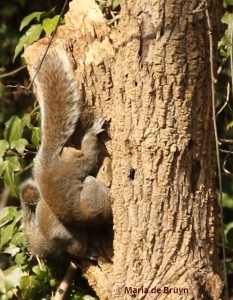
eastern-gray-squirrel-i77a1104-maria-de-bruyn-res      eastern-gray-squirrel-77a0929-maria-de-bruyn

It’s fun to watch them caching seeds as well; sometimes, they decide a spot in the middle of the lawn is the best hiding place!
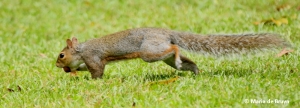
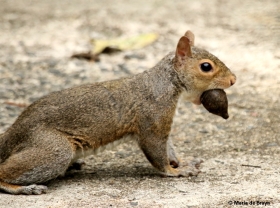
eastern-gray-squirrel-i77a0026-maria-de-bruyn-res

eastern-gray-squirrel-i77a9947-maria-de-bruyn-res   eastern-gray-squirrel-i77a6837-maria-de-bruyn-res

eastern-gray-squirrel-i77a4579-maria-de-bruyn-res   eastern-gray-squirrel-i77a4938-maria-de-bruyn-res

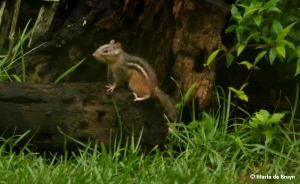
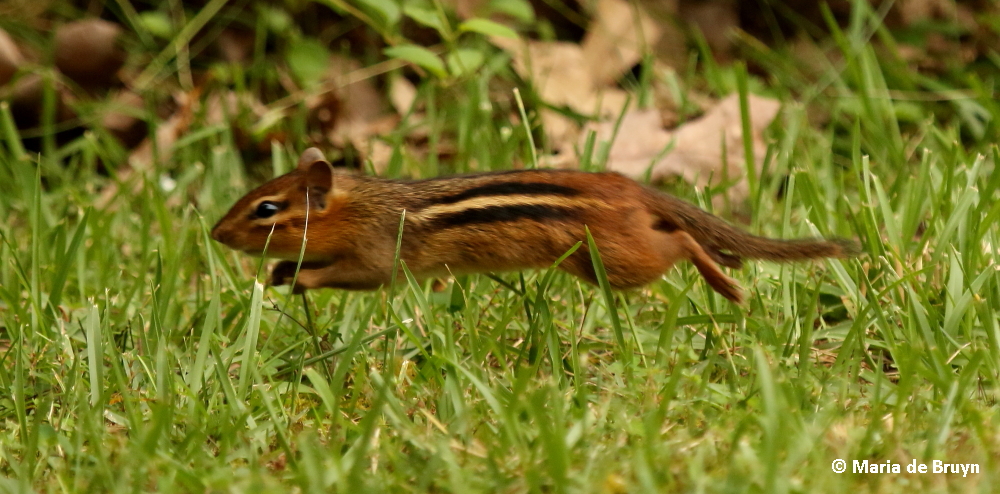
eastern-chipmunk-i77a4007-maria-de-bruyn-res


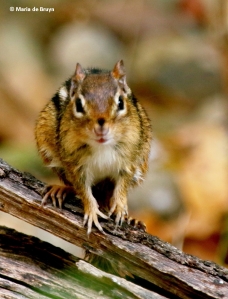
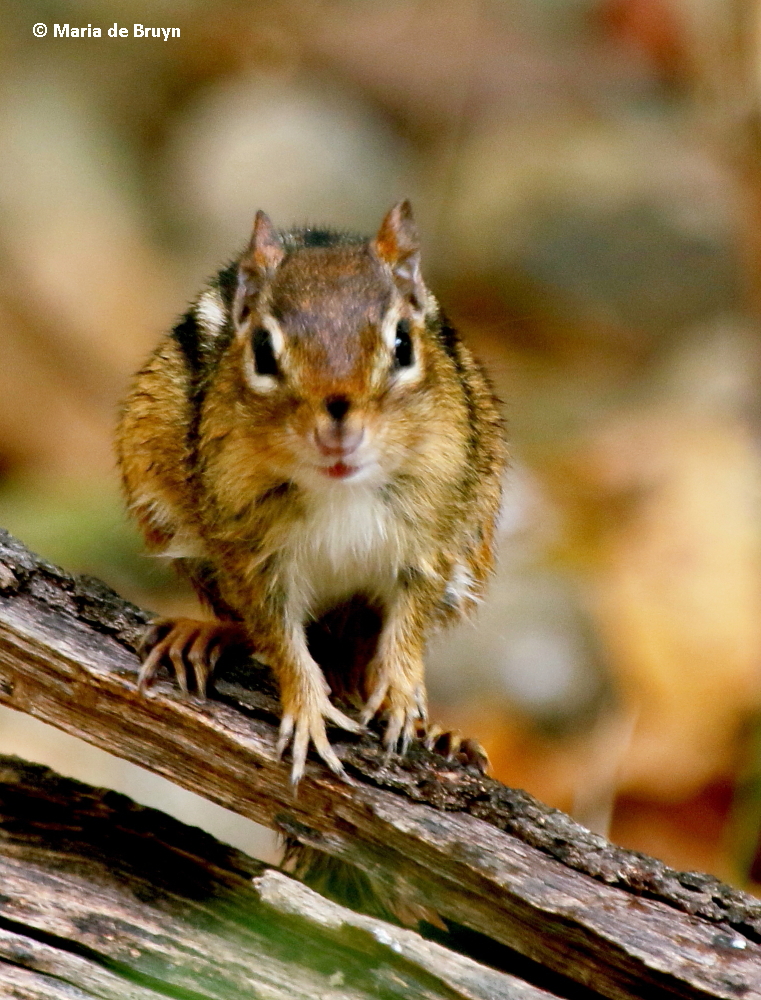
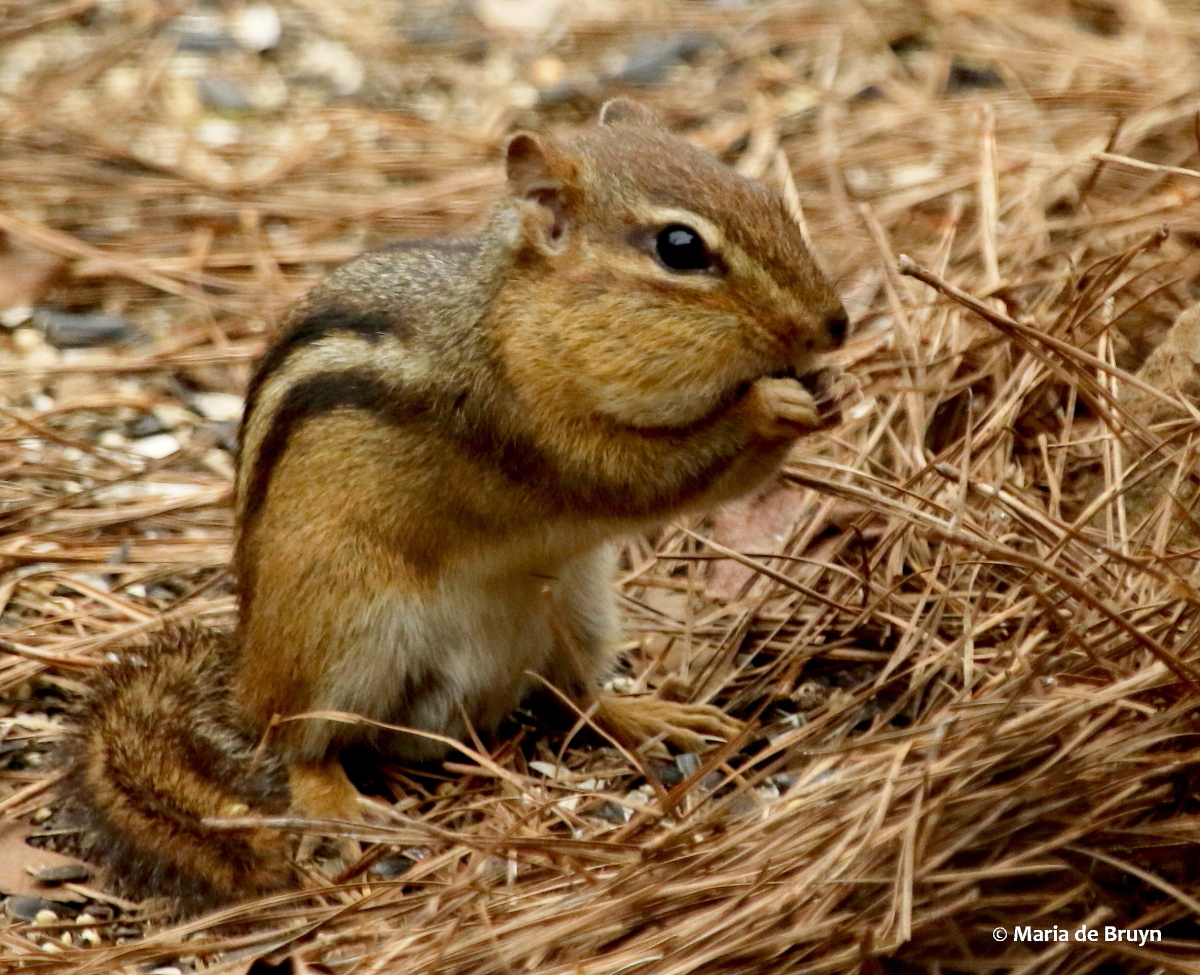
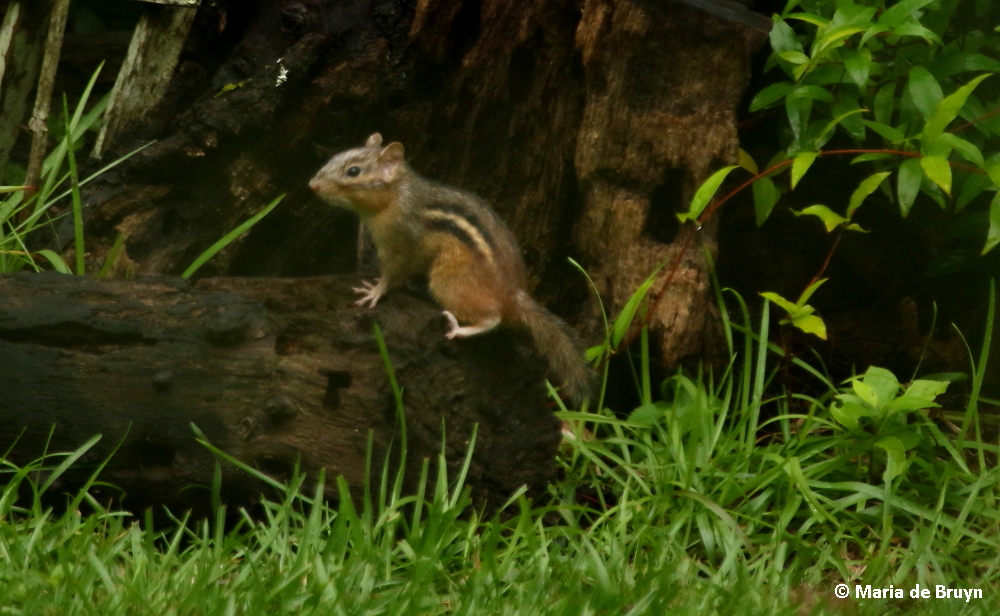
They often will chase non-family members away from the food I put out on the ground – seeds, bits of bread and apples for the birds (crows and catbirds are especially fond of apples). They are usually (not always!) willing to tolerate the Eastern chipmunks (Tamias striatus) who come to get some goodies, too.
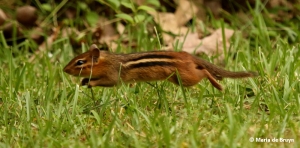
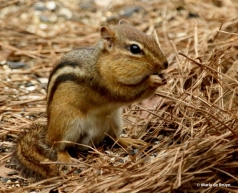
eastern-chipmunk-i77a7935-maria-de-bruyn-res

eastern-chipmunk-i77a8790-maria-de-bruyn-res  eastern-chipmunk-i77a3418-maria-de-bruyn-res

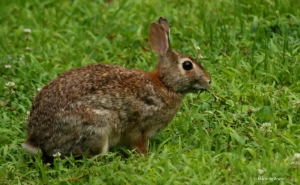
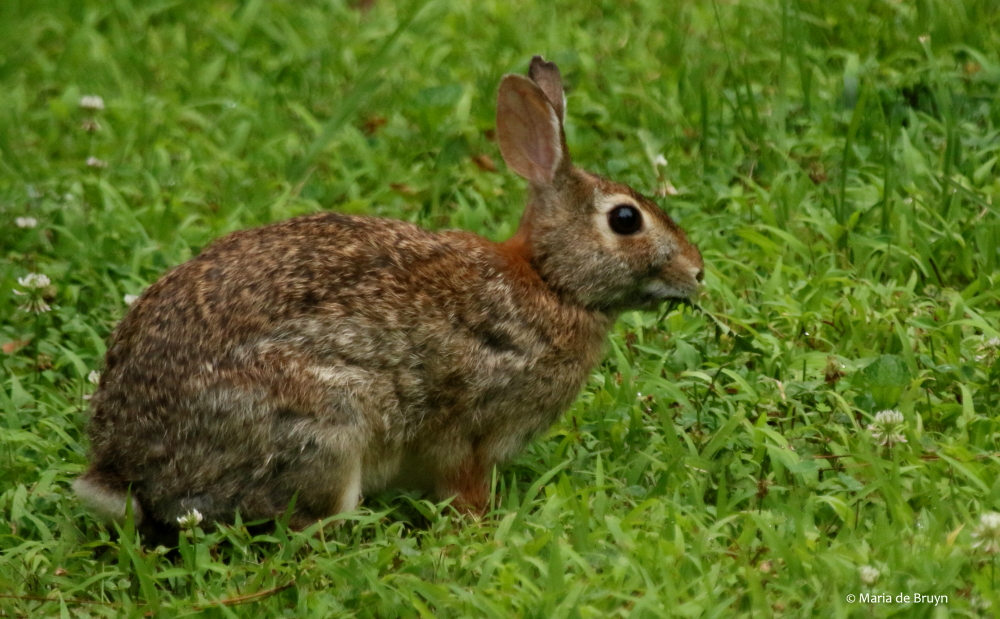
eastern-cottontail-i77a9747-maria-de-bruyn-resThe Eastern cottontail rabbits (Sylvilagus floridanus) don’t often go for the bird food but prefer to munch on the grasses and other plants growing on the “lawn”.

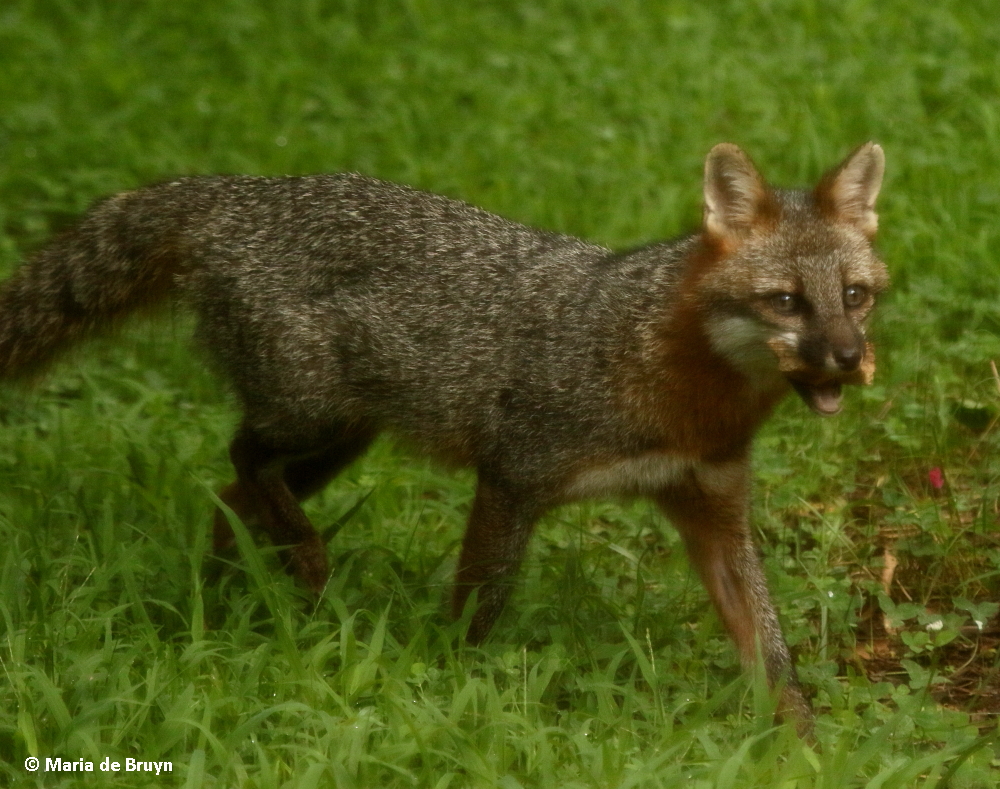
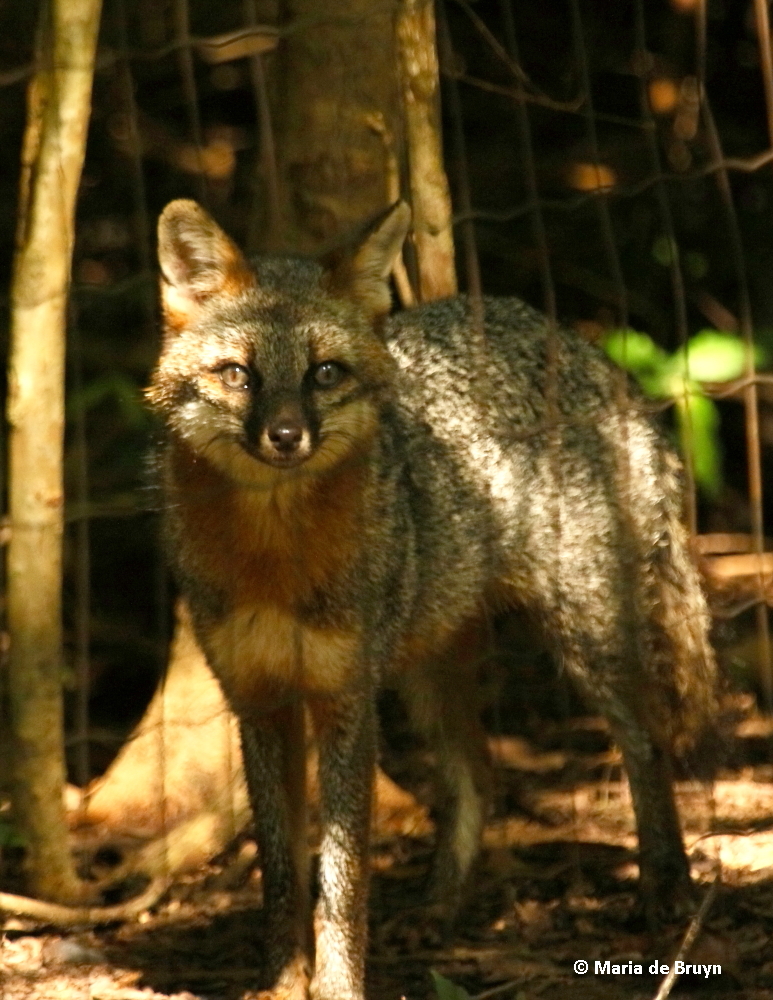
I was surprised this summer when I discovered that the beautiful neighborhood gray fox (Urocyon cinereoargenteus) was fond of bread.
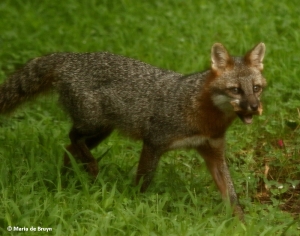
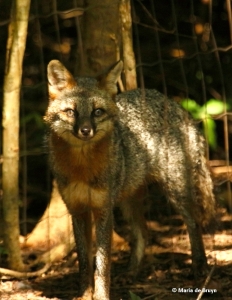
gray-fox-i77a1236-maria-de-bruyn-res gray-fox-faith-i77a1197-maria-de-bruyn-res

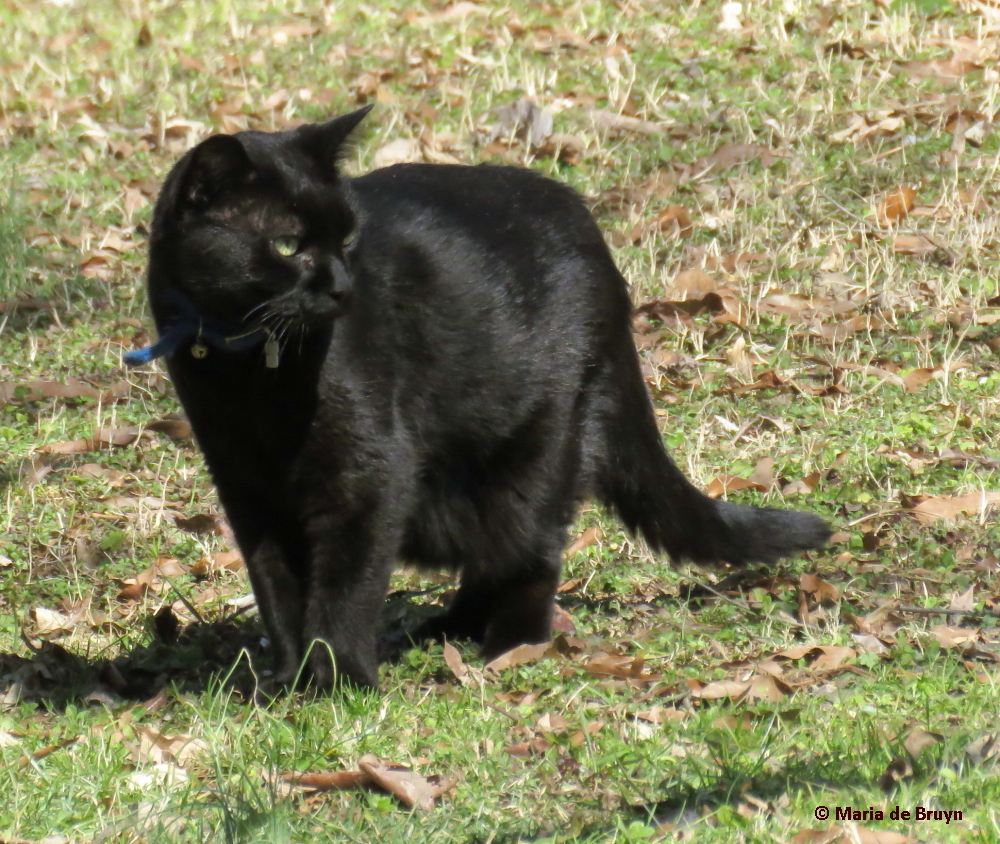
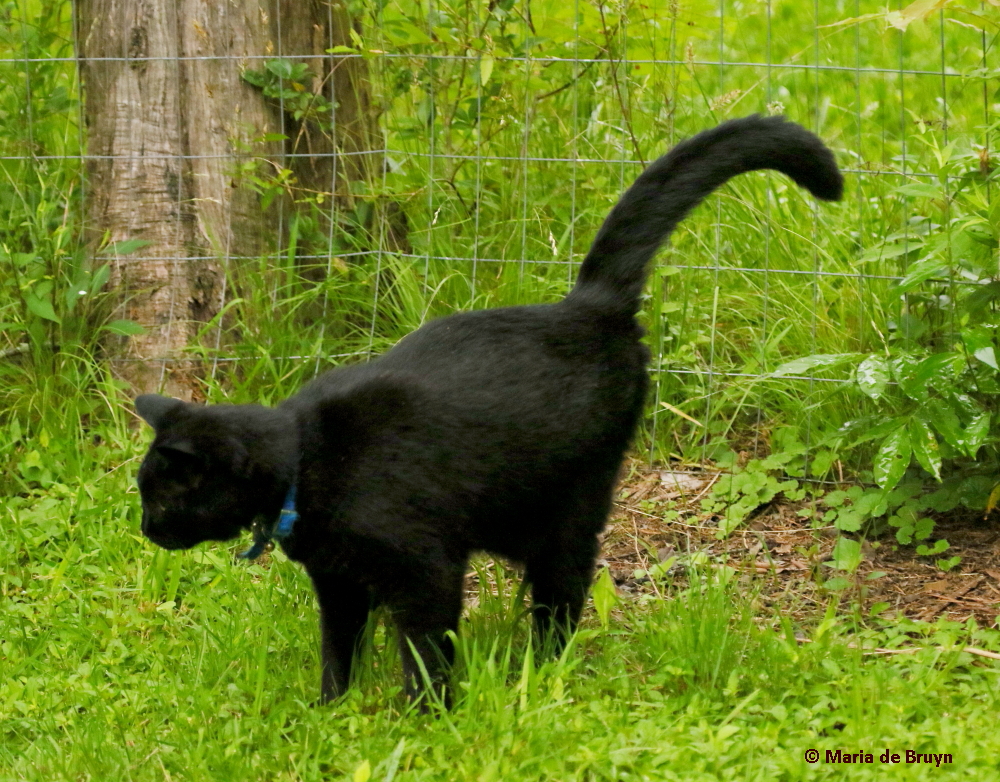
Her presence in the yard reinforced my resolve to no longer let my former indoor-outdoor cat, Jonahay, out by himself anymore. He has almost reached the ripe old age of 18 years and is going strong despite suffering arthritis, mild kidney disease, mild dementia and deafness. But all the years of having roamed outside have preserved a strong will to go outdoors so I take him for walks around the yard, which give him opportunities to mark his territory anew. (My other two cats are strictly indoor felines, although one of them likes to escape now and again.)
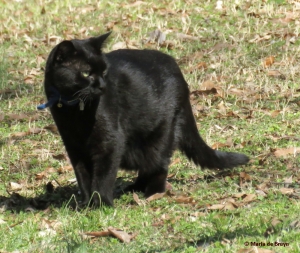
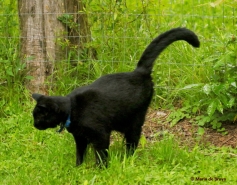
jonahay-img_0058-maria-de-bruyn-res jonahay-i77a5004-maria-de-bruyn-res

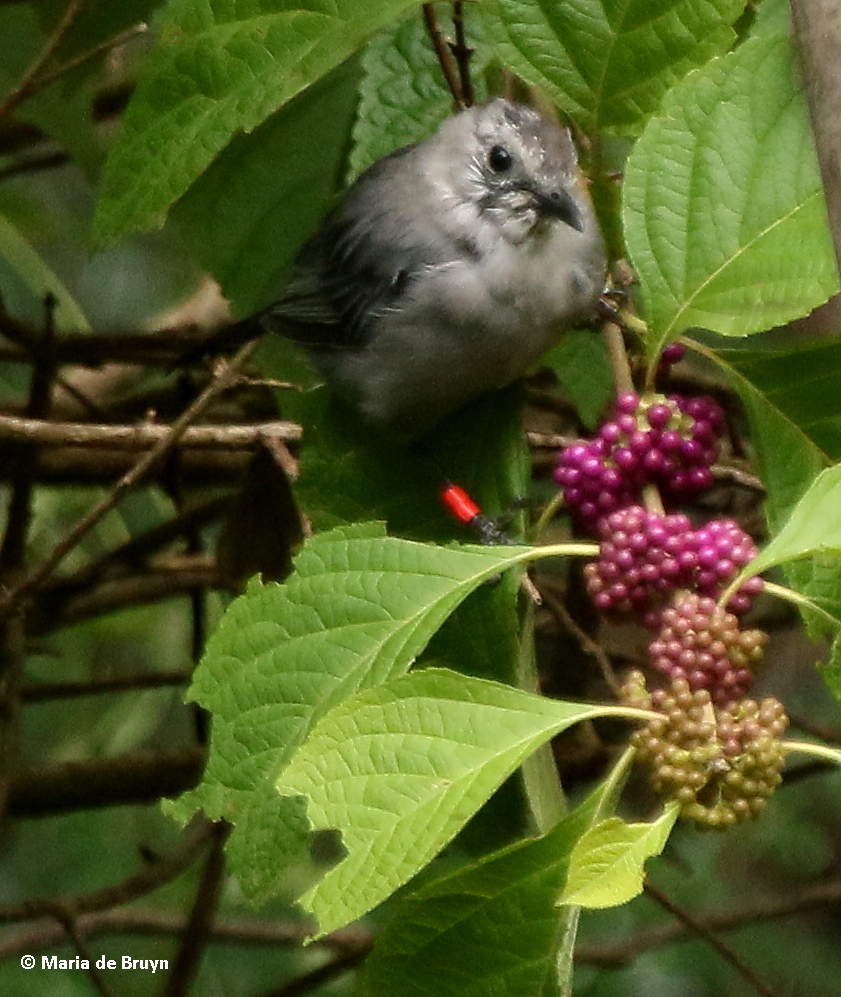
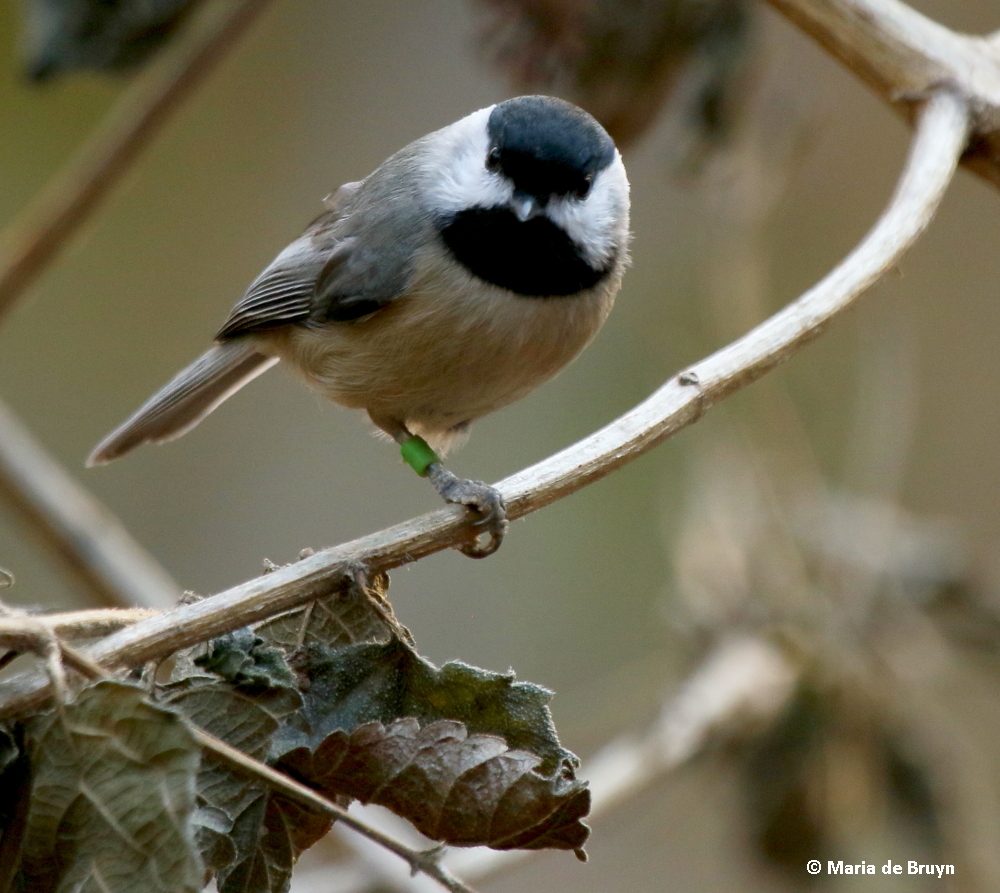
Two years running now, my yard has served as a venue for a citizen-science bird banding exercise and it’s always a pleasure to see banded birds returning to the feeders, like Corey catbird (Dumetella carolinensis) who enjoys American beautyberries. They also include my intrepid Carolina chickadee (Poecile carolinensis), Chantal, who unfortunately lost a leg (I think because she had scaly leg when she was banded and the bands were too tight but I don’t know this for sure). She is a feisty little bird and manages to balance remarkably well on her remaining leg; her daily return is always a joyous sight for me.
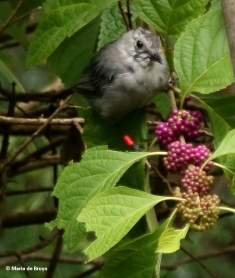
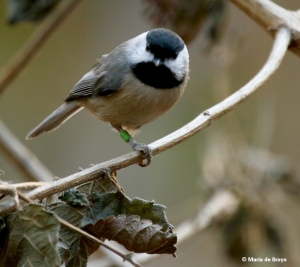
gray-catbird-corey-i77a4763-maria-de-bruyn-res  carolina-chickadee-chantal-i77a7263-maria-de-bruyn-res

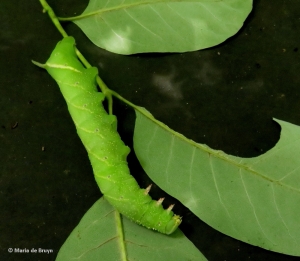
sphinx-moth-caterpillar-img_4314-maria-de-bruyn-res


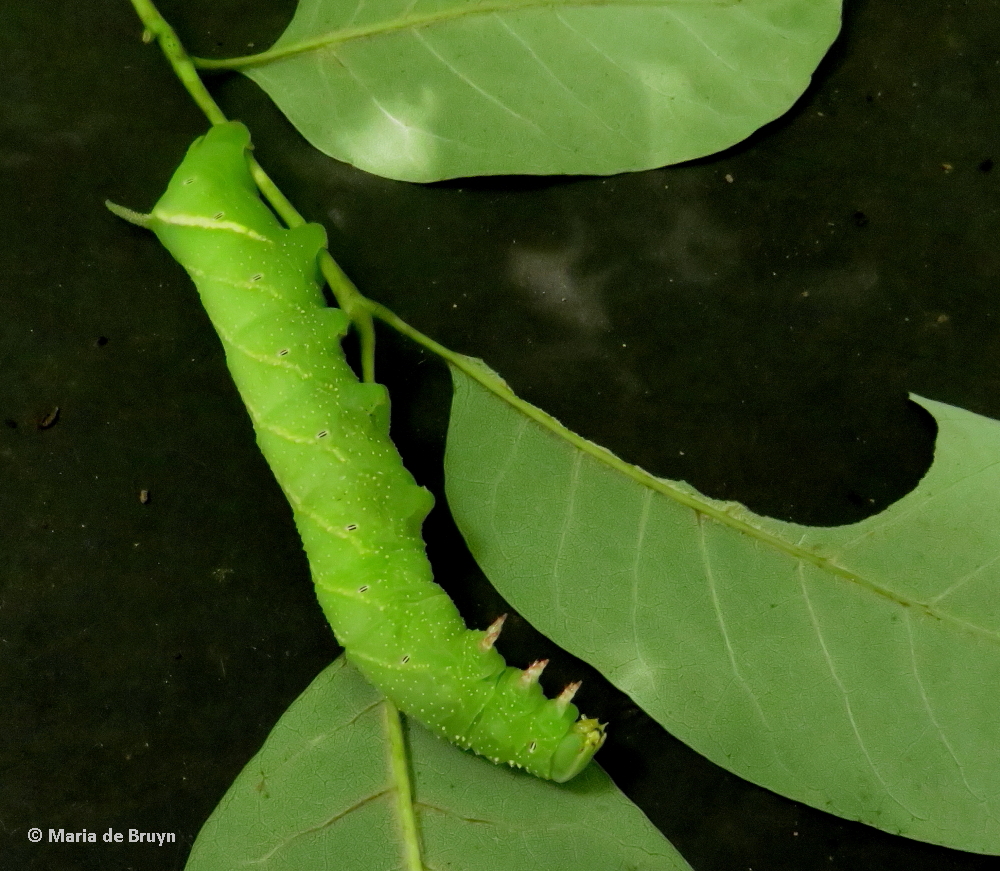
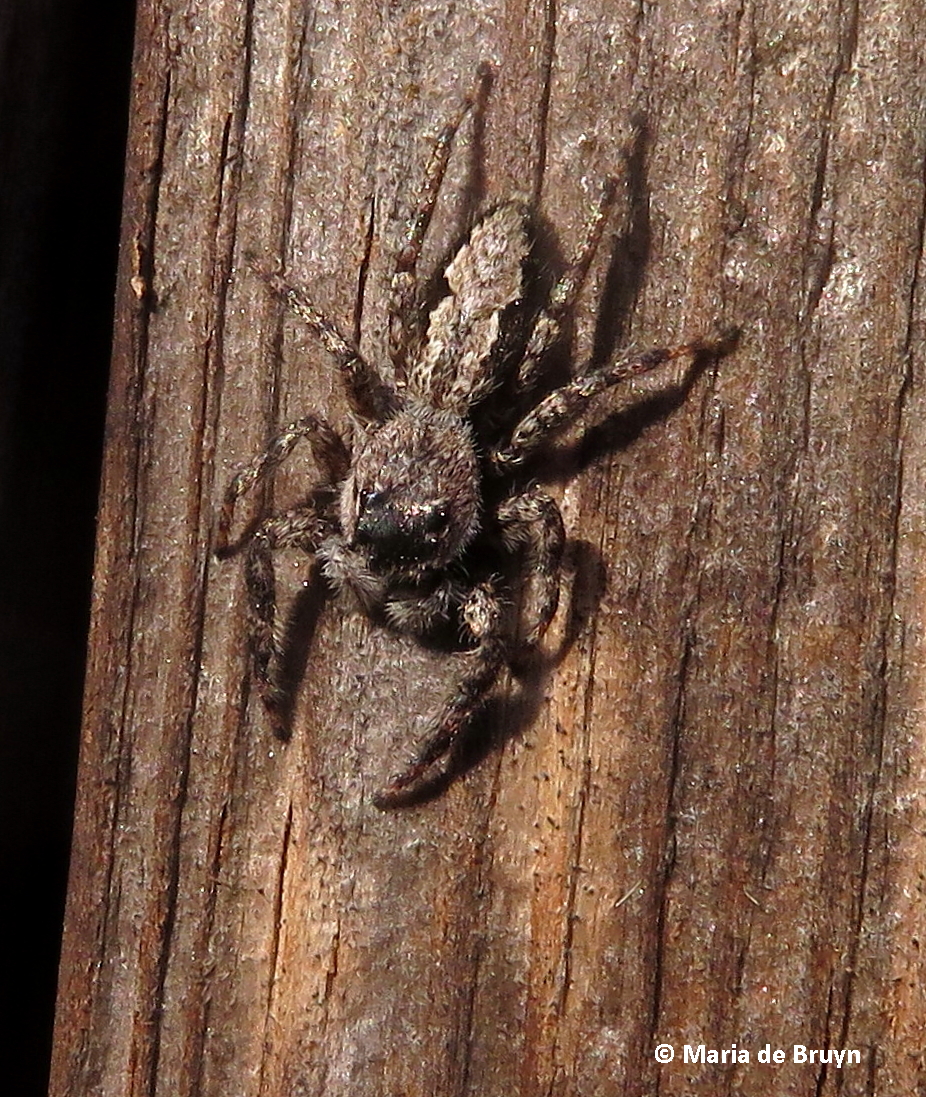
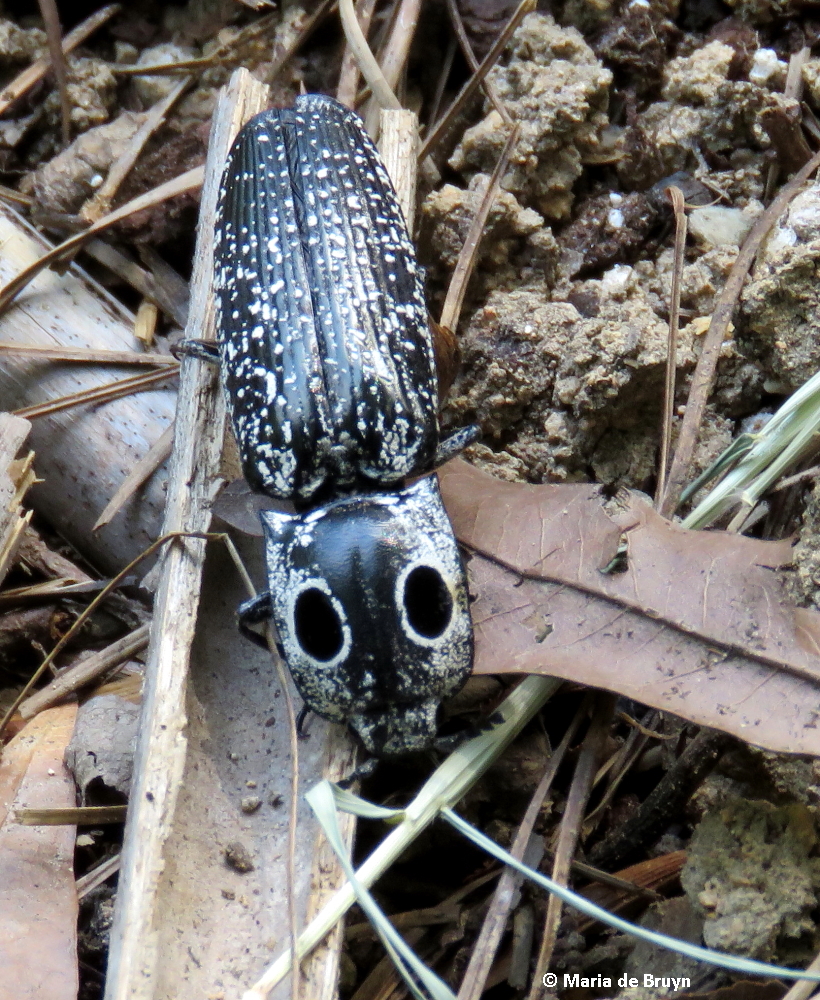
2016 was an exciting year as far as caterpillars went since a large sphinx moth caterpillar (Paonias) graced the yard for the first time (at least that I had noticed).  Cute little jumping spiders (Salticidae) climb onto bird nest boxes and Eastern eyed click beetles (Alaus oculatus) are found in the leaf litter.
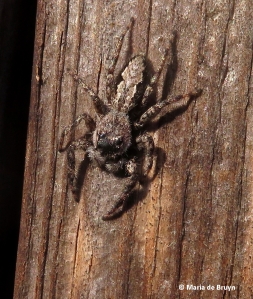
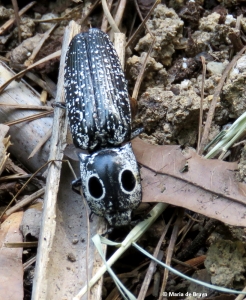
 

jumping-spider-img_0562_1-maria-de-bruyn   click-beetle-img_4582-maria-de-bruyn-res

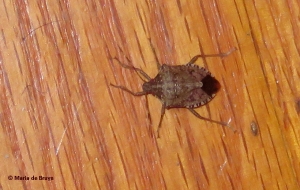
stink-bug-img_0575maria-de-bruyn-res


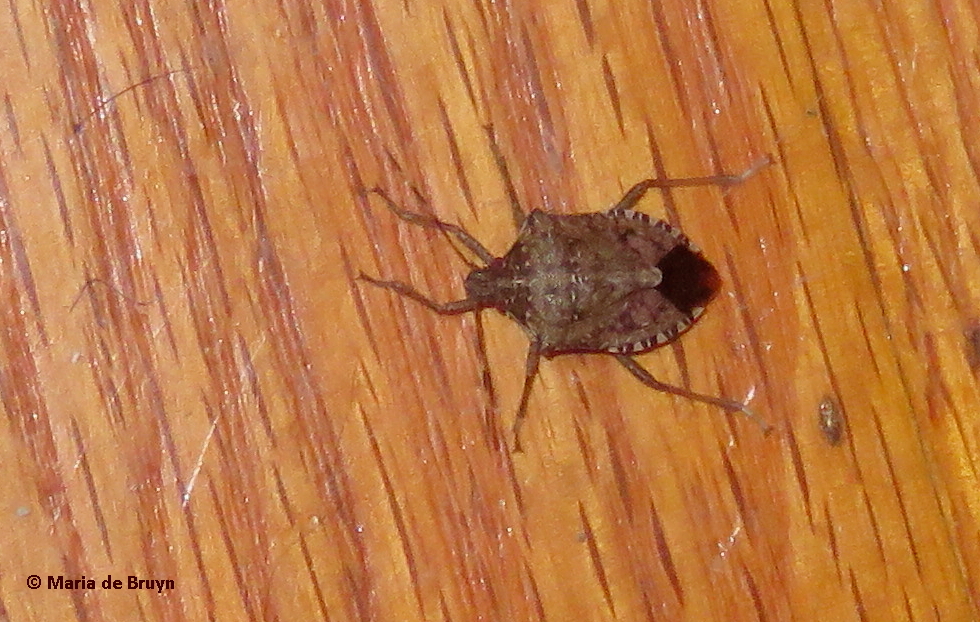
Unfortunately, some of the stink bugs (Halyomorpha) make their way into the house so that I have to take them back outside. One of my cats made the mistake of eating one that I hadn’t got in time and she ended up quite sick, even foaming at the mouth!
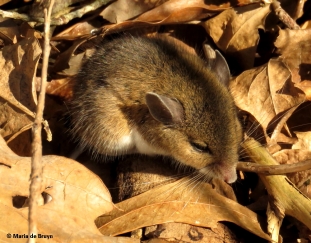
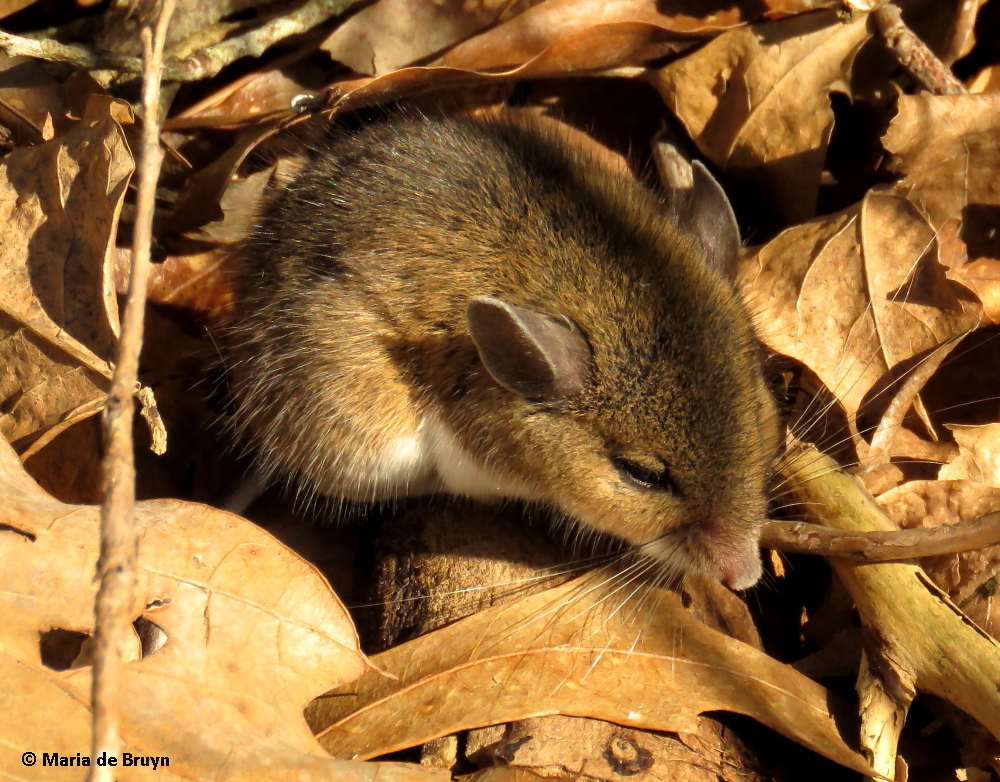
mouse-img_2726-maria-de-bruyn-resOccasionally, mice (Mus) get into the house. The cats don’t eat them and aren’t out to kill them but if they catch one at night and I don’t awaken, the rodent will be dead in the morning. Otherwise, I manage to get hold of the animal (sometimes with a lot of effort) and let it go outside again.

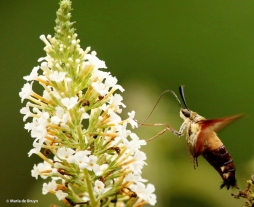
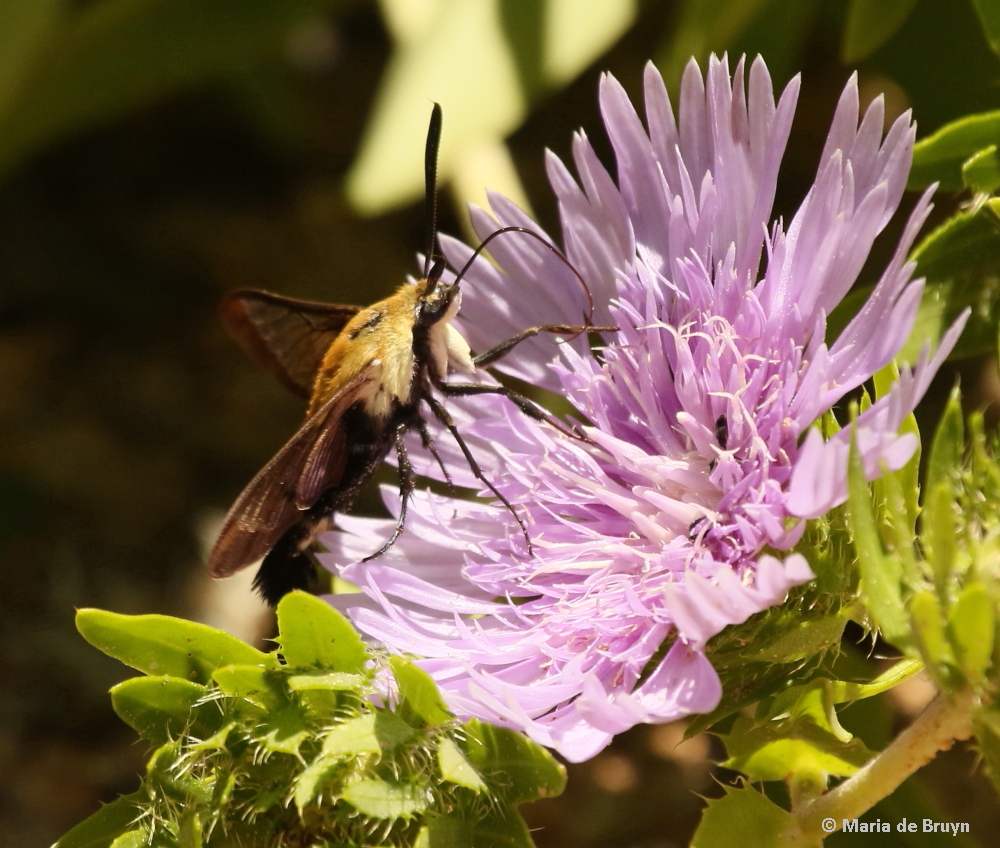
The snowberry (Hemaris diffinis) & hummingbird clearwing moths (Hemaris thysbe) are delightful.
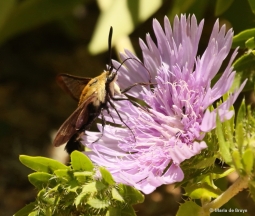
snowberry-clearwing-moth-i77a5324-maria-de-bruyn-res   clearwing-hummingbird-moth-i77a7002-maria-de-bruyn-res

great-crested-flycatcher-i77a6714-maria-de-bruyn-res


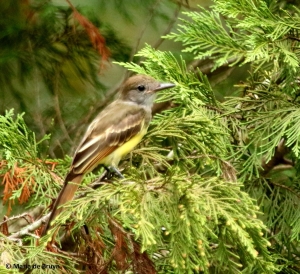
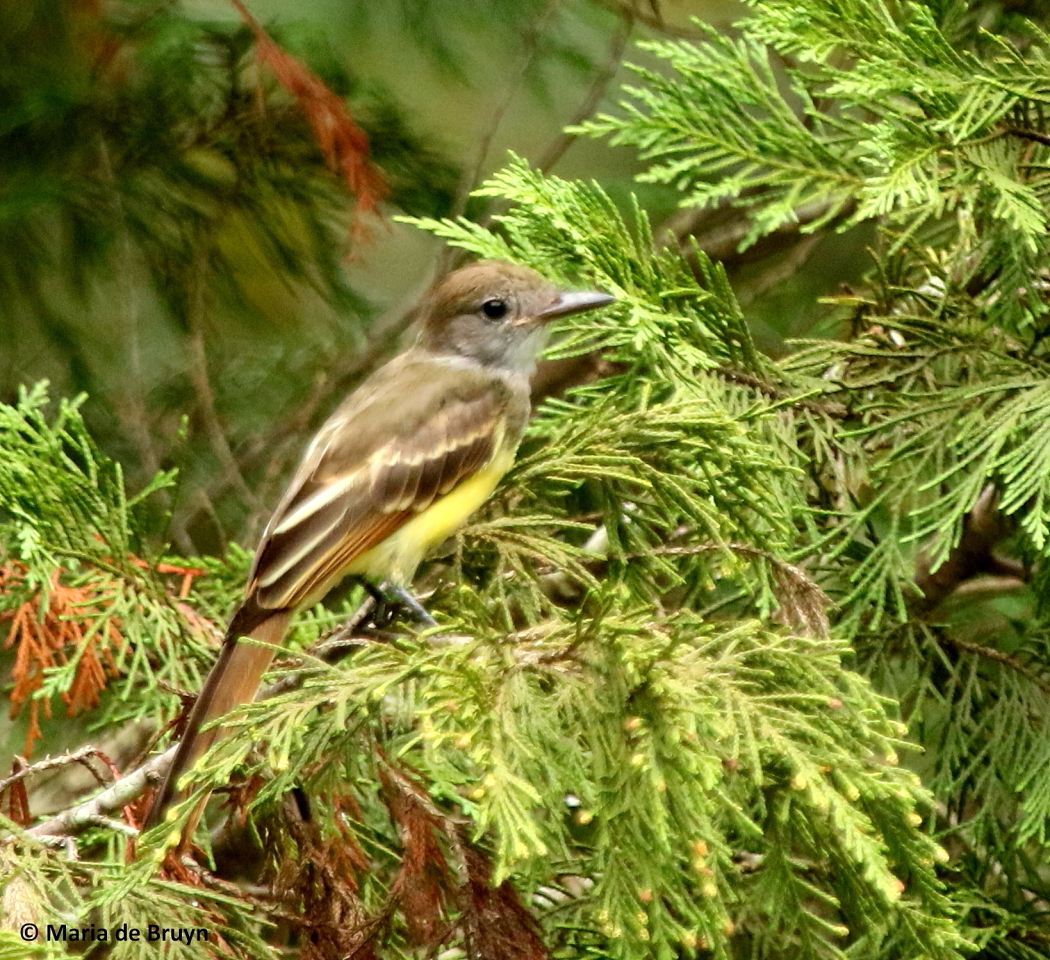
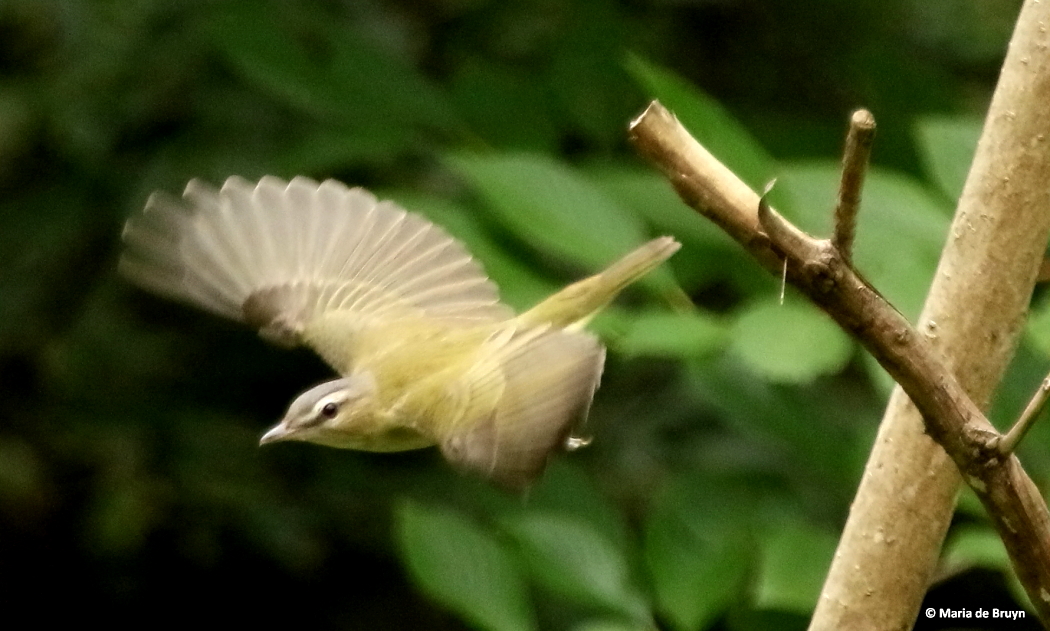
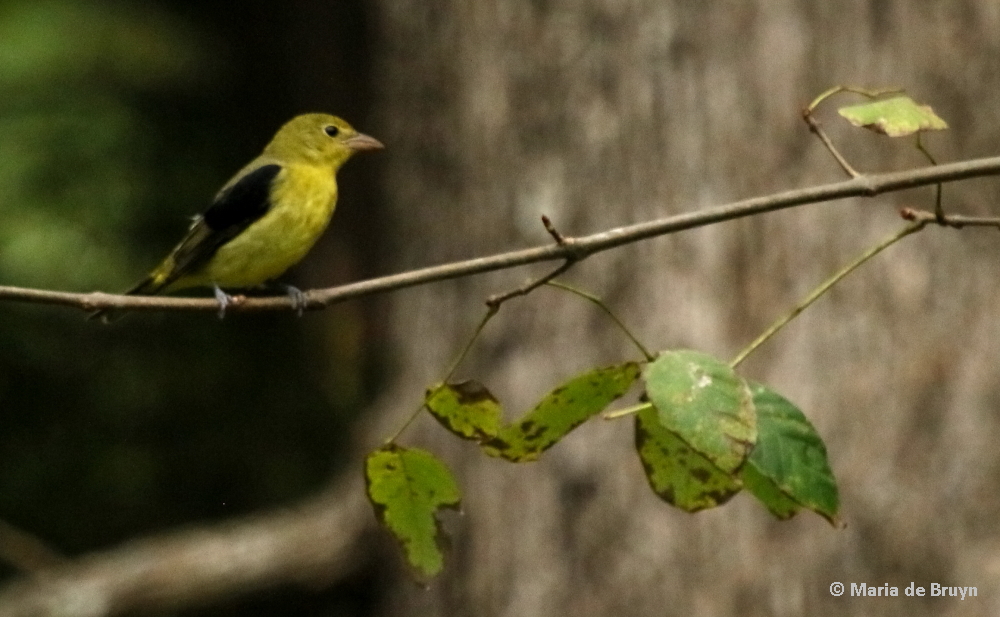
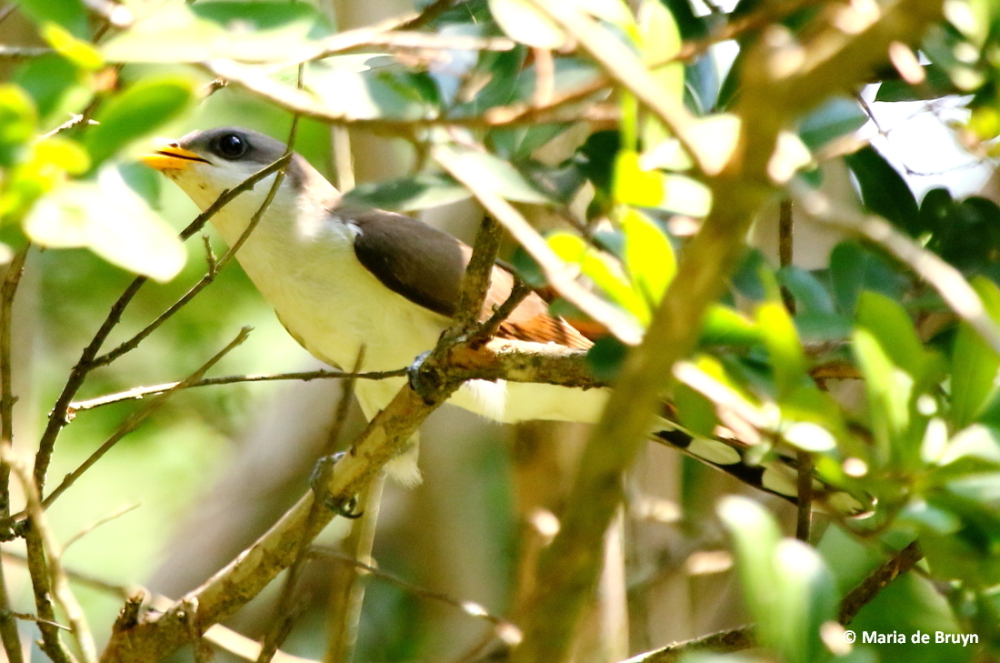
And so were various birds that visited my yard for the first time this year (or at least as far as I had noticed)! They included the black and white warbler, chestnut-sided warbler and Northern parula. Here are three more, plus the beautiful great crested flycatcher (Myiarchus crinitus, left), which I’d seen before but not well.
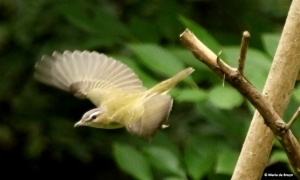
 

red-eyed-vireo-i77a6755-maria-de-bruyn-res

Red-eyed vireo (Vireo olivaceus)

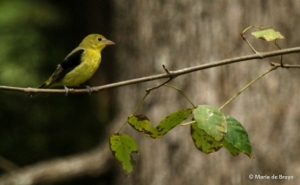
scarlet-tanager-i77a0102-maria-de-bruyn-res

Scarlet tanager (Piranga olivacea)

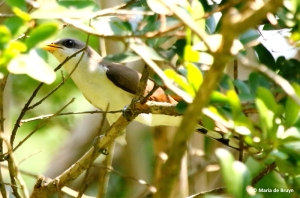
yellow-billed-cuckoo-i77a1564-maria-de-bruyn-res

Yellow-billed cuckoo (Coccyzus americanus)
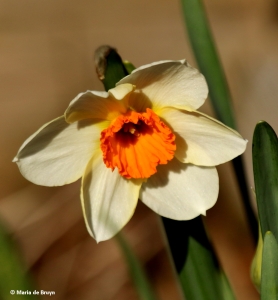
daffodil-i77a8465-maria-de-bruyn-res


I’m so pleased to begin this year in my home and really hope that circumstances in 2017 will allow me to continue enjoying nature, especially in my yard as I work to make it ever more welcoming to the local wildlife. And I hope all of you who read my blog will have many opportunities to get out and appreciate our beautiful natural world, too! Happy New Year to you!


Humankind has not woven the web of life.
We are but one thread within it.
Whatever we do to the web, we do to ourselves.
All things are bound together.
All things connect.

~ Chief Seattle, 1854 ~
crocus-i77a6296-maria-de-bruyn-res

My hummer summer, part 1 – guarding the home front!

ruby-throated-hummingbird-i77a2165-maria-de-bruyn-res


Just like human beings, some birds like to hang out in groups, while others are more solitary in nature, coming together mainly to reproduce. A prime example of the latter group are the ruby-throated hummingbirds (Archilochus colubris).


ruby-throated-hummingbird-i77a7336-maria-de-bruyn-res2This past summer, some health and other problems led to my spending a good deal of time at home. The upside was that being a bit home-bound gave me plenty of opportunities to observe the comings and goings of these gorgeous little flyers and to learn more about their behavior towards one another.

I had at least four ruby-throats – and probably more as I couldn’t distinguish them all – visiting my feeders and yard regularly. A couple had a distinctive trait that helped me identify them, like some white feathers on top of their heads or at the bottom part of their gorgets.

ruby-throated-hummingbird-i77a1237-maria-de-bruyn-res   ruby-throated-hummingbird-i77a9185-maria-de-bruyn-res

ruby-throated-hummingbird-i77a0810-maria-de-bruyn-res


I usually had three or four nectar feeders up in my back yard and two in my front yard. In addition, as the summer progressed, the gardens were filled with increasing numbers of nectar-filled flowers so my home site was a fairly well-stocked larder for them.

The ruby-throats are among the more competitive hummingbirds and don’t really like to share their feeding space with others, although a friend and I visited a birder in a nearby town who had more than a dozen feeders up and many dozens of hummers visiting his back yard every day, feeding right next to one another. At my house, I suppose guarding their food source is an instinctual imperative, since they do consume half their own weight in nectar each day.

ruby-throated-hummingbird-i77a0514-maria-de-bruyn-res

ruby-throated-hummingbird-i77a8255-maria-de-bruyn-resThe tiny birds were quite intent on protecting their territory from intruders. Only thing was, several of them considered my feeders THEIR territory, so there was a continual rotation of birds perched in nearby trees and shrubs to watch for “invaders”. Once spotted, the newly arrived hummers would have the current “resident” bird swoop down on them (at up to 60 miles per hour!), frequently chittering like mad as a warning to “get out of here.”

Sometimes, they would have a little “challenge flight ballet” as they confronted one another, until one gave up and flew off – sometimes across the street, sometimes to the yard on the other side of the house, and sometimes to a nearby tree or shrub at the side of the house.

ruby-throated-hummingbird-i77a8257-maria-de-bruyn-res   ruby-throated-hummingbird-i77a8256-maria-de-bruyn-res

ruby-throated-hummingbird-i77a9443-maria-de-bruyn-resThere was one particular male hummer who seemed particularly aggressive – or perhaps possessive is a better term as I never saw him body slam a rival; he just made sure that the other bird would leave. I recognized him as he often chose exactly the same spots on a nearby Rose of Sharon, a willow oak and a cedar as his watching posts,

Some of those who were run off didn’t travel far, however. They would fly to a nearby tree or shrub and wait to see if Hummer No. 1 would leave.

ruby-throated-hummingbird-i77a0290-maria-de-bruyn-res       ruby-throated-hummingbird-i77a1099-maria-de-bruyn-res

ruby-throated-hummingbird-i77a5725-maria-de-bruyn-resScientists have determined that the brain section responsible for memory and learning – the hippocampus – is five times larger in hummingbirds than in woodpeckers, seabirds and songbirds. They memorize where feeders and nectar flowers are and can remember when they last fed there. They can even estimate how long it will take each flower to fill up with nectar again.

ruby-throated-hummingbird-i77a6553-maria-de-bruyn-res


The hummers’ memory is long-term, too – they recall not only where feeders are placed in their breeding territories but also in places along their yearly migration routes! Wouldn’t it be nice if we had such great memories making GPS and maps less of a necessity?


ruby-throated-hummingbird-i77a7716-maria-de-bruyn-resAnother behavior I observed several times was a hummer hovering in front of me, especially when the nectar feeders were getting low. Scientists have determined that they can recognize the people who replenish their food sources, which makes for a delightful encounter as one chirps at you while suspended in front of your face with its wings flapping at 60 beats per second!

While guarding their home turf, they may stick out their tongues briefly after feeding.
ruby-throated-hummingbird-i77a5099-maria-de-bruyn-res   ruby-throated-hummingbird-i77a2353-maria-de-bruyn-res

ruby-throated-hummingbird-i77a9404-maria-de-bruyn-res


However, if you see one with its tongue stuck out permanently, this can be a sign of a fungal infection (often acquired from dirty feeders). Their tongues swell with the infection and they can no longer drink with these anatomical, elastic micro-pumps.
 

ruby-throated-hummingbird-i77a8243-maria-de-bruyn-res


Often death ensues, so it’s important to keep the nectar feeders clean!


Coming up in part 2: the beauty of the hummingbirds at rest and in flight


Leaping into the wide – and sometimes wet – world!

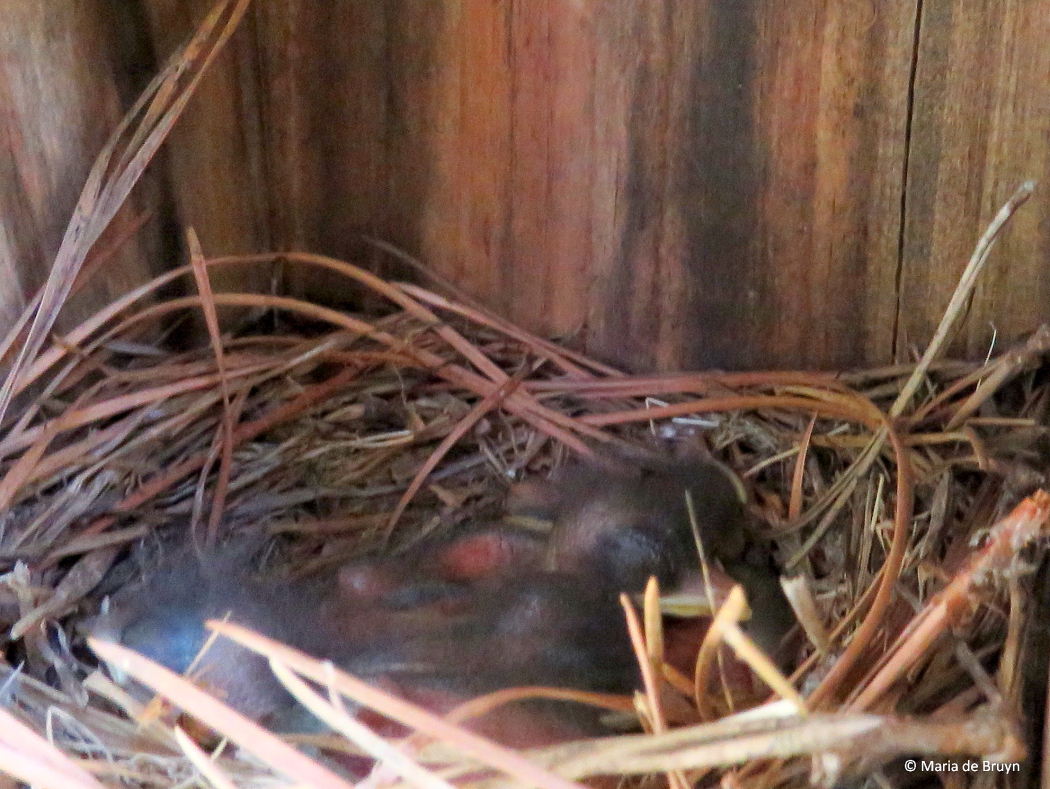
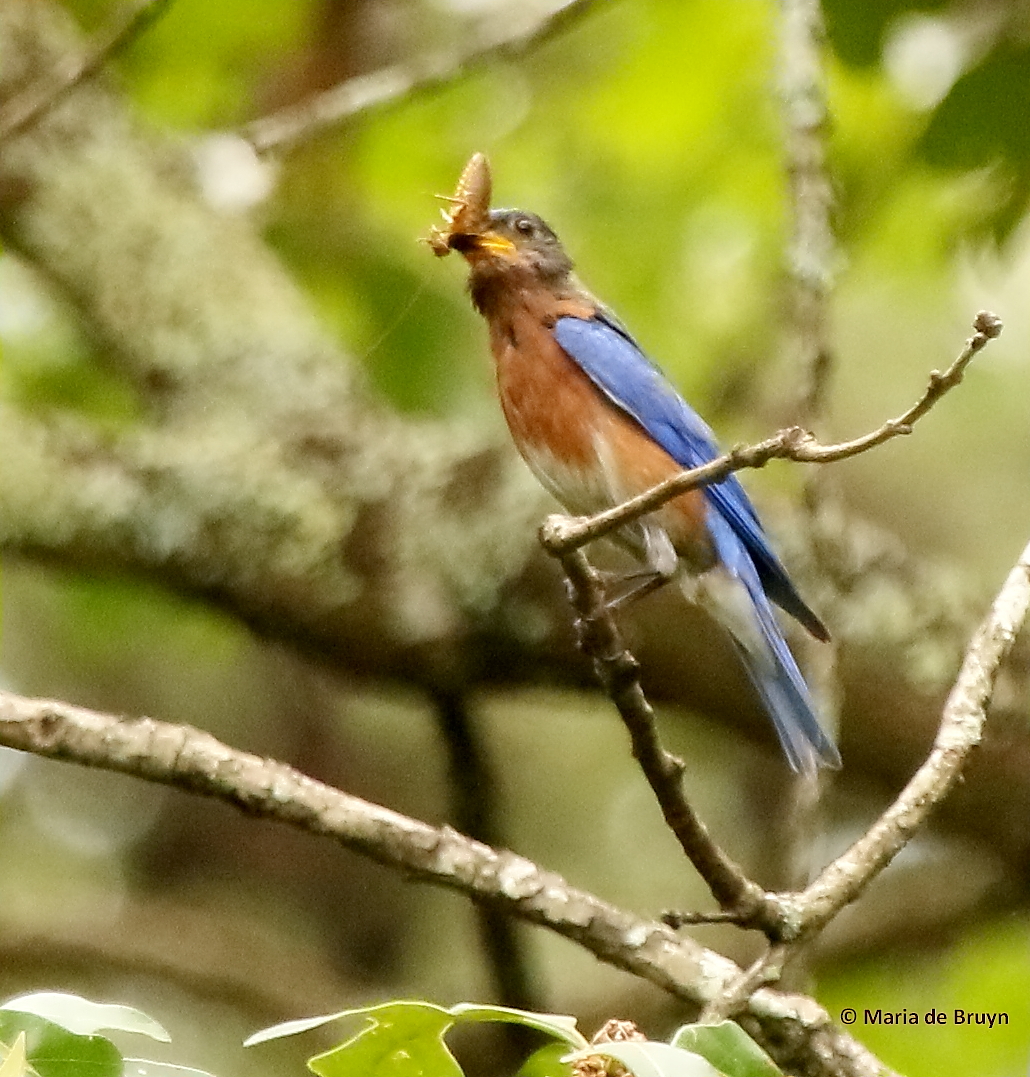
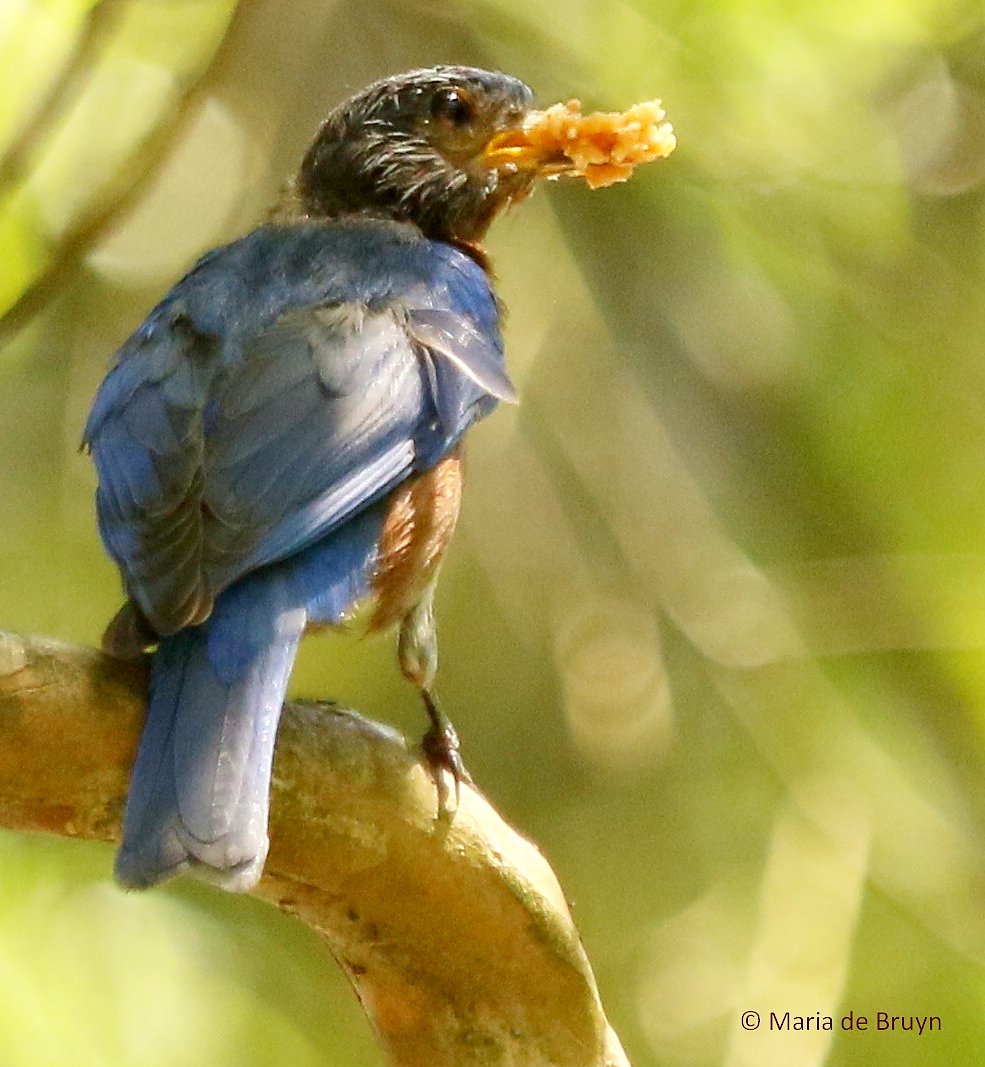
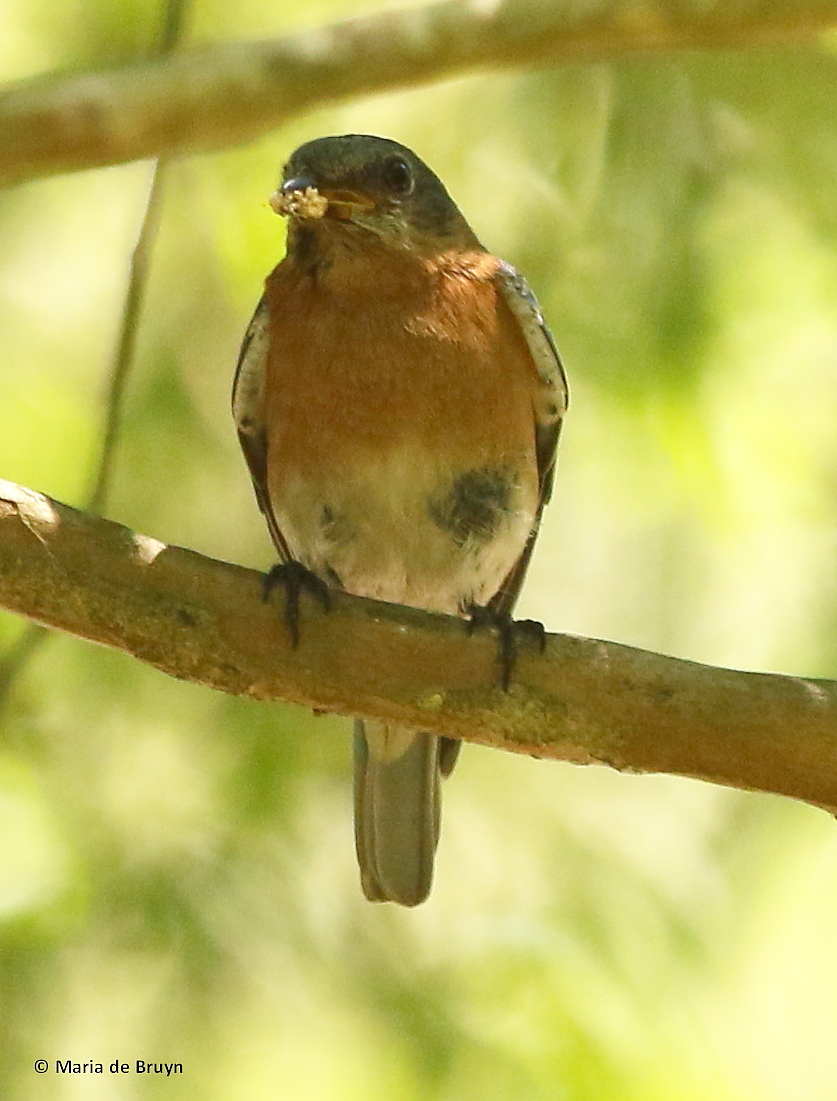
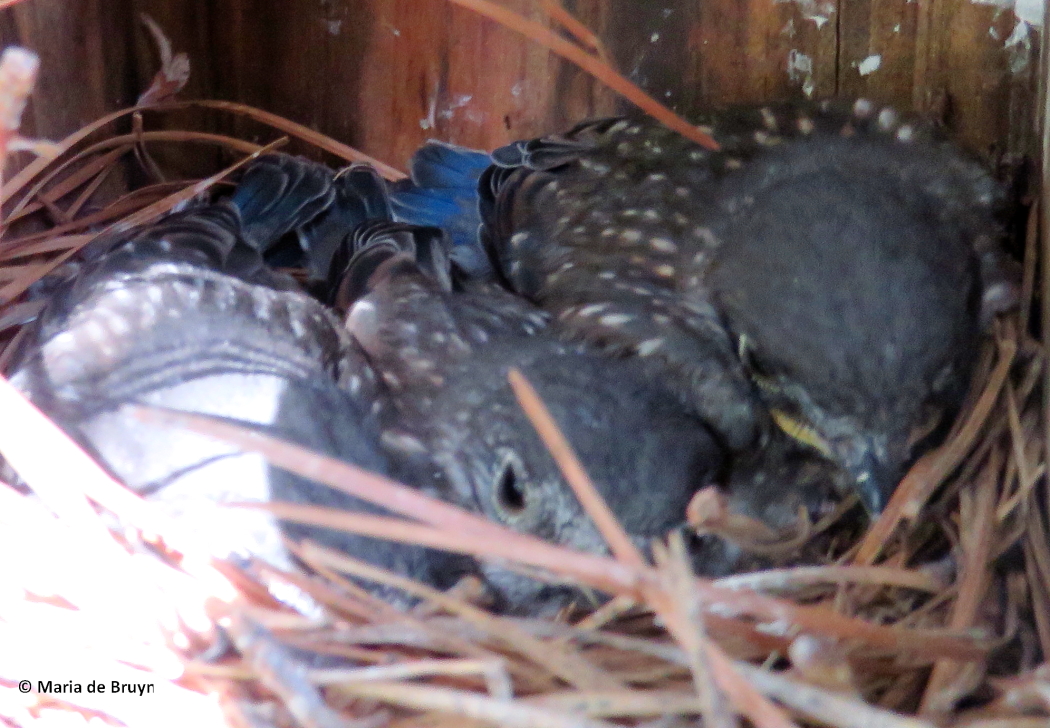
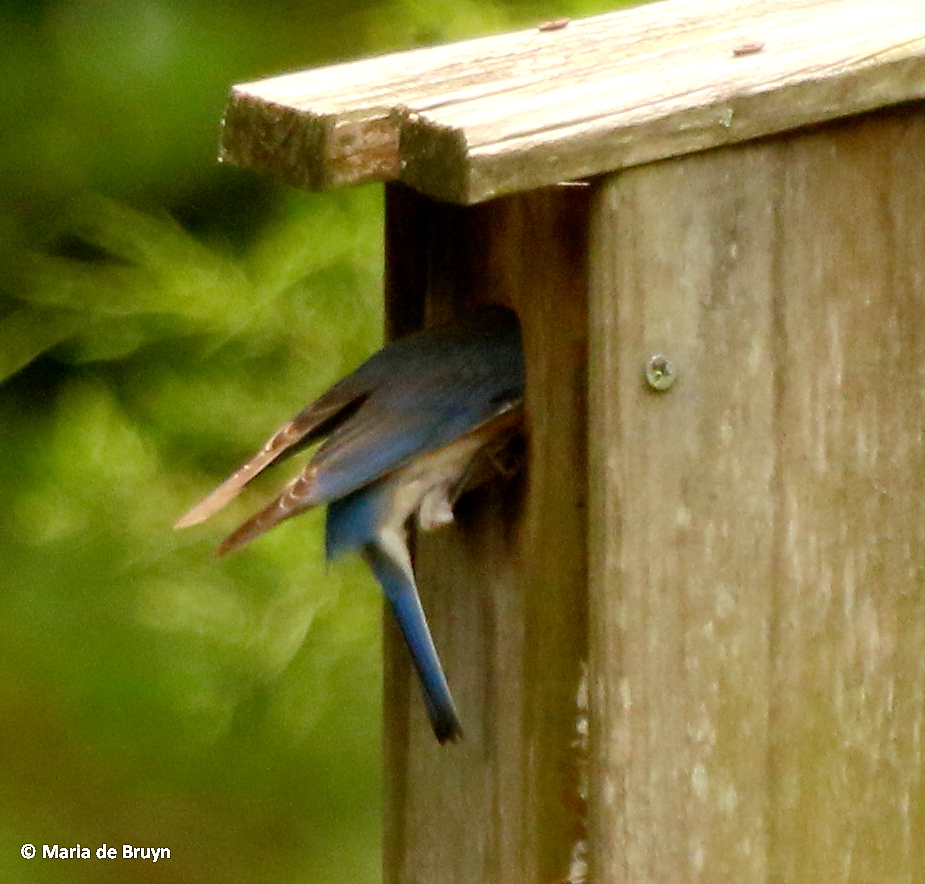
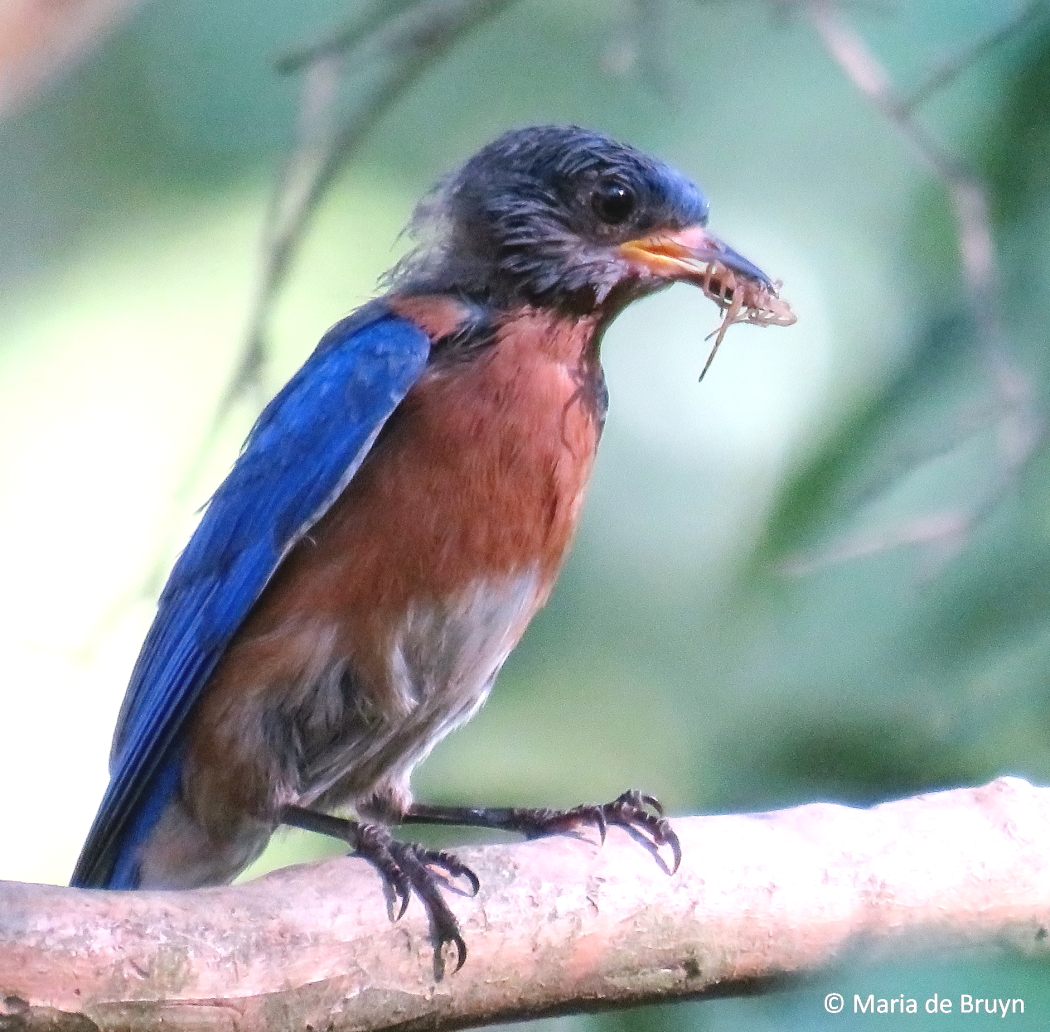
Eastern bluebird IMG_2991© Maria de Bruyn resEarlier this past week, I calculated that the Eastern bluebird (Sialia sialis) babies in my front-yard nest box were close to fledging. I knew approximately when mom had finished laying her eggs (four in total), so that I could guess when they reached normal fledging age (16-18 days after hatching). When I looked at the nest on 10 June, I saw that there were only three babies; I have no clue what happened to egg No. 4.  But the three survivors were progressing well as mom and dad made frequent forays to gather caterpillars and insects for them.
Eastern bluebird IMG_2819© Maria de Bruyn res Eastern bluebird I77A5733© Maria de Bruyn res

Eastern bluebird I77A8417© Maria de Bruyn

Occasionally, the male and also the female bluebird, identifiable by her subtler coloring and her brood patch, would visit the suet and meal worm feeders for a fast food repast for themselves. It was hard work keeping their growing offspring fed!

Eastern bluebird I77A6411 © Maria de Bruyn         Eastern bluebird I77A5769© Maria de Bruyn

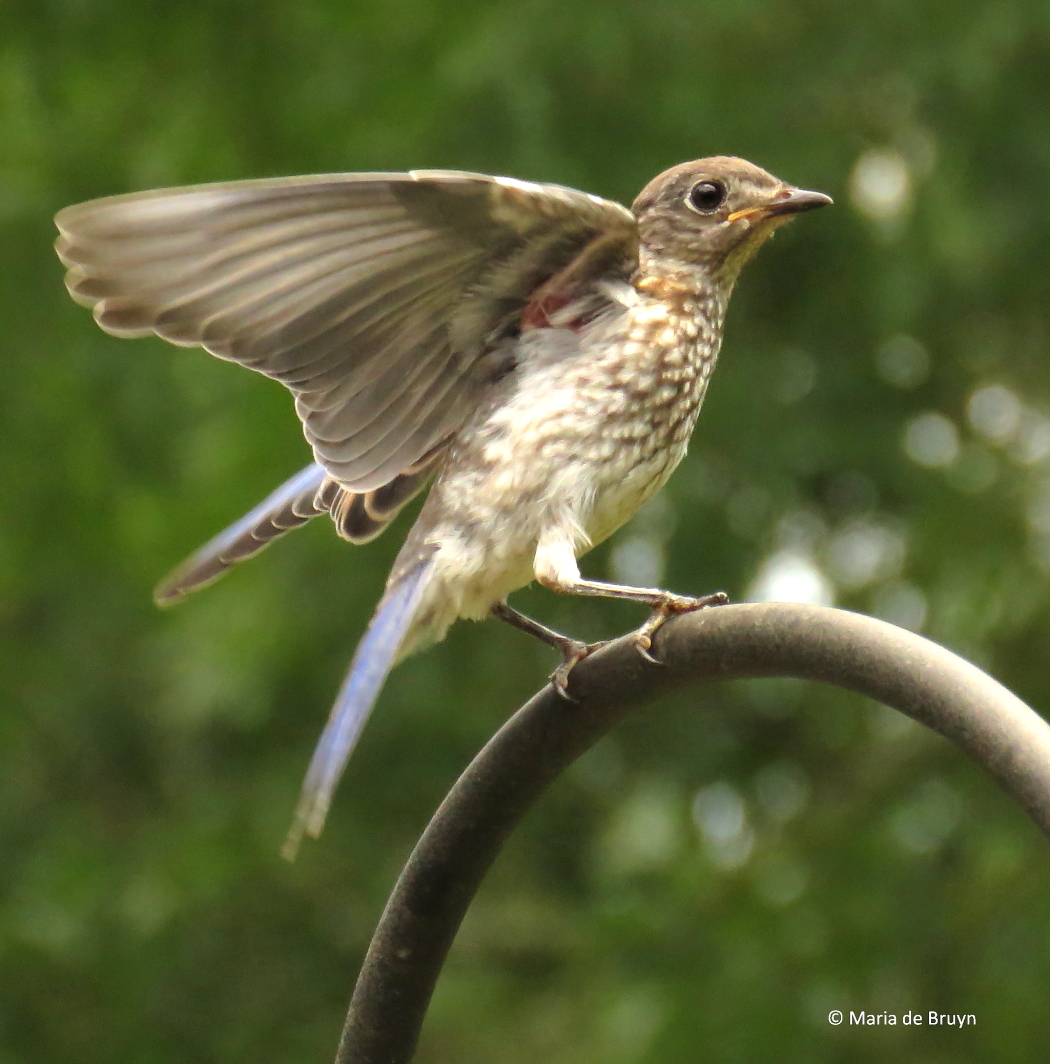
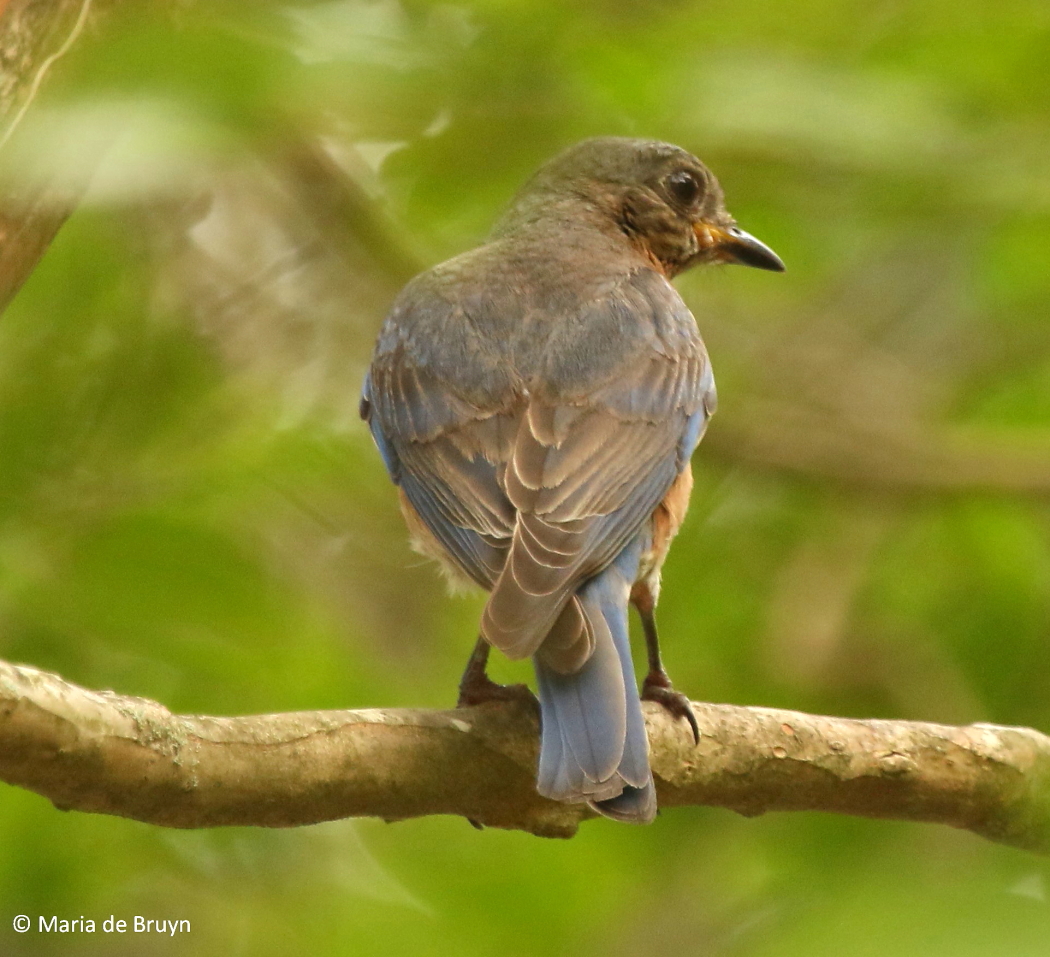
They also had to let one of their older offspring from a previous brood know that they were no longer going to feed him, even when he begged.

Eastern bluebird IMG_1509© Maria de Bruyn res

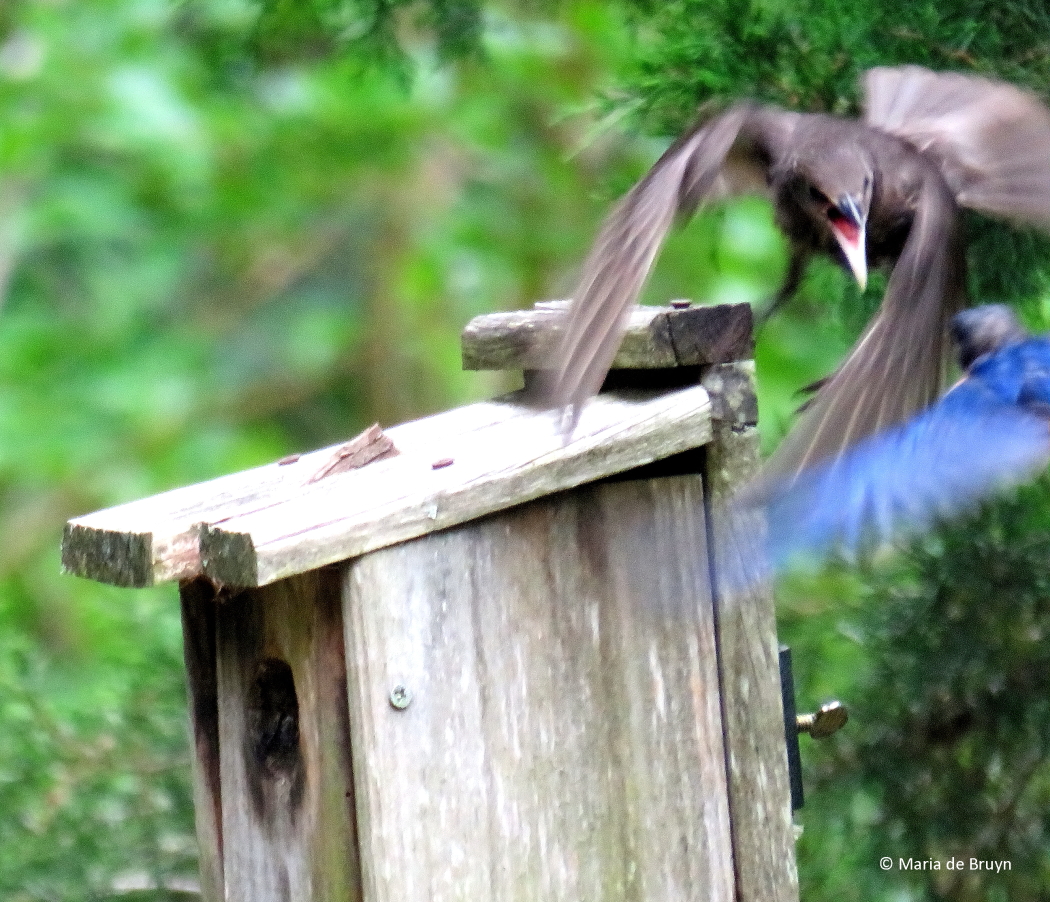
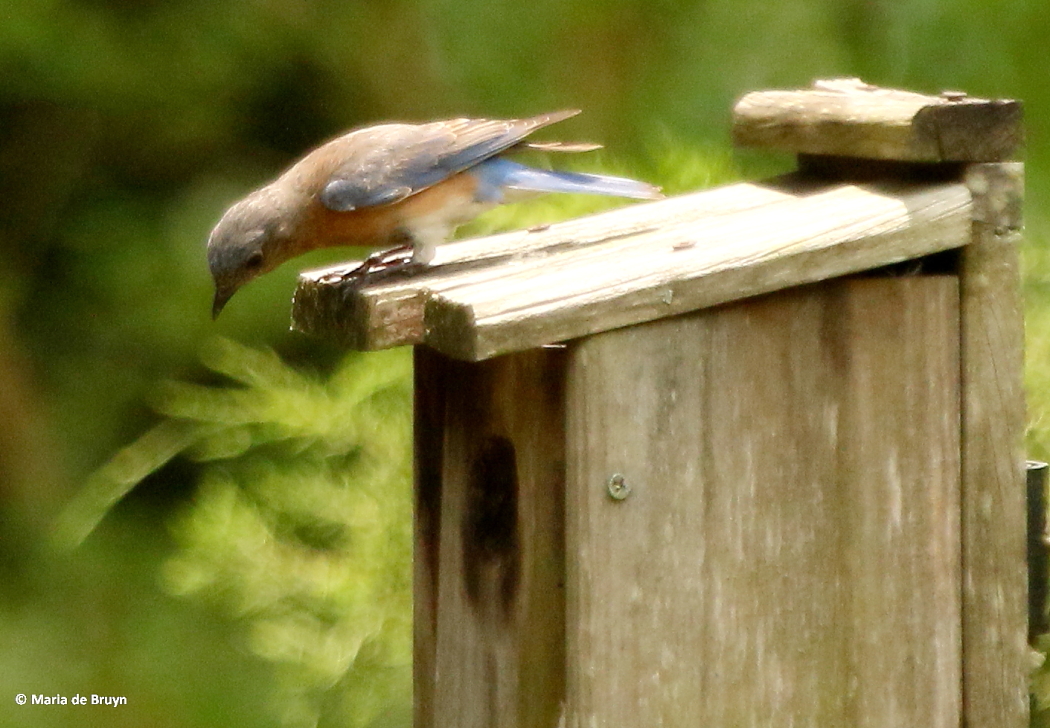
As fledging time neared, mom and dad had to contend with other birds coming near the box. Dad was especially angry with a young starling (Sturnus vulgaris) who wanted to settle on top of the box. Starlings have been known to eat young birds and papa bluebird was obviously taking no chances! (I just caught the action out of the corner of my eye so the photos aren’t great but do give an idea of the argument!). The parents also chased away squirrels from the tree in front of the box, which alerted me to the fact that fledging was probably imminent since the parents become especially protective at this time. I started using a smaller camera with a very long zoom (but somewhat lesser photo quality) as they weren’t excited by me being too close either.

Eastern bluebird IMG_3841© Maria de Bruyn res     Eastern bluebird IMG_3840© Maria de Bruyn res

Eastern bluebird IMG_4618© Maria de Bruyn res

On Wednesday, I checked the box before going out for the morning and there were still three babies there. When I came home a few hours later, mama and papa were sitting on branches, with or without food, calling to their little ones to come on out. They would also fly to the box for a quick look inside.

Eastern bluebird I77A7702© Maria de Bruyn res           Eastern bluebird I77A7729 © Maria de Bruyn res

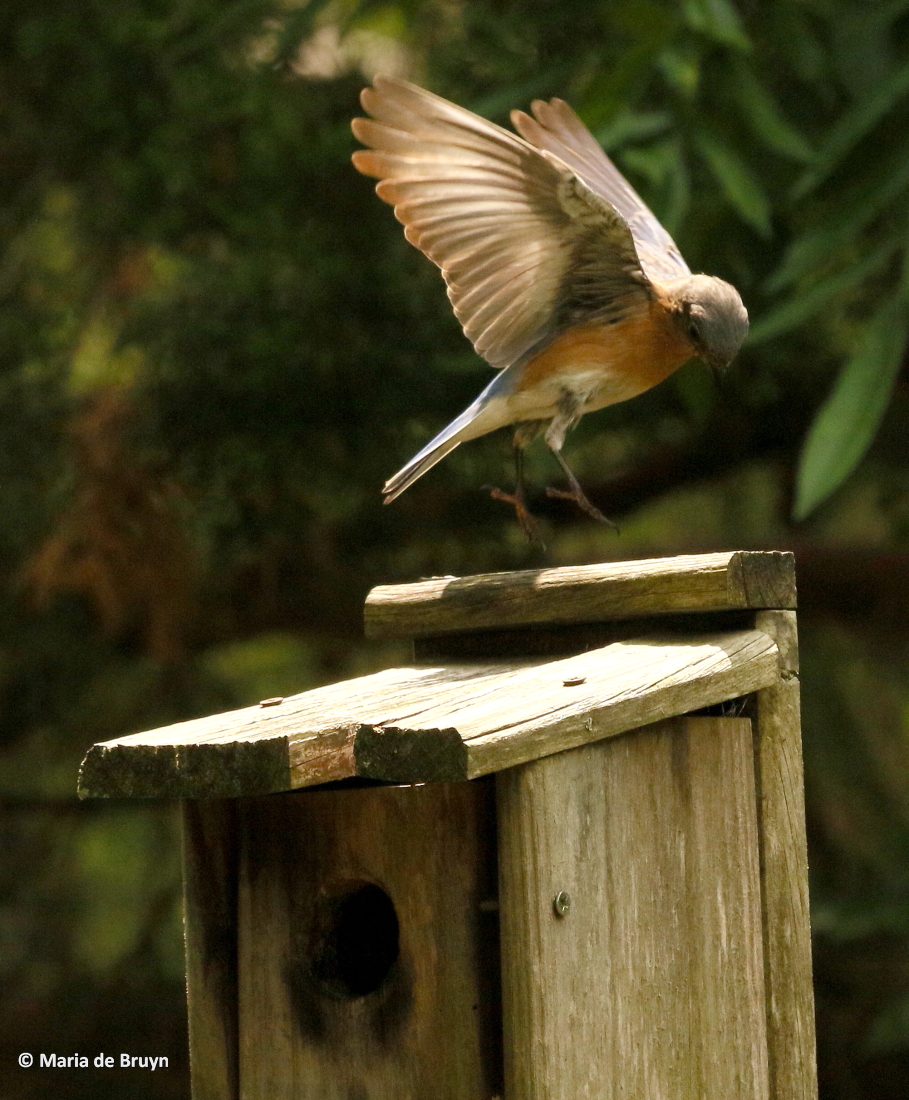
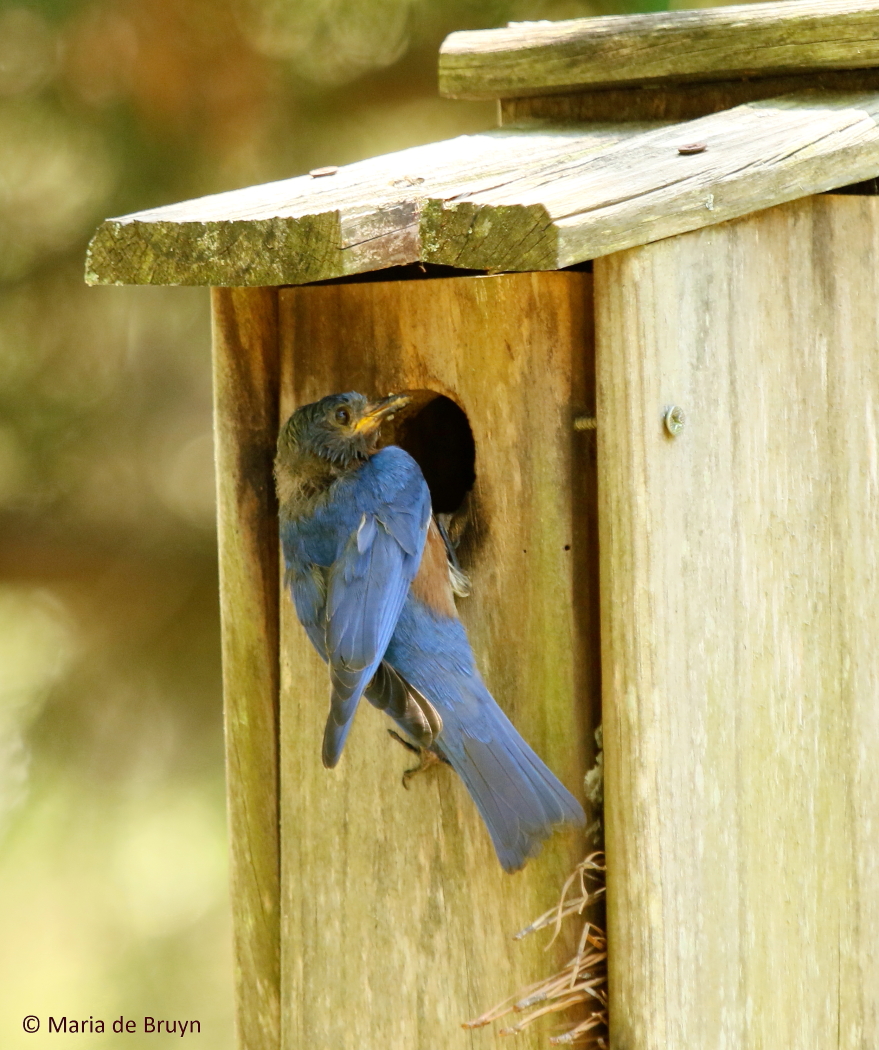
Mama also repeated behavior I had seen last year – flying to the box, standing on top and then hovering in front of the hole as a form of encouragement.  When she and dad left, I approached to take a look and discovered bluebird baby No. 1 had already flown away. This meant that the parents had to watch the first baby out in the trees somewhere, as well as their two lagging offspring in the box.

Eastern bluebird I77A8584© Maria de Bruyn res        Eastern bluebird I77A8791© Maria de Bruyn res

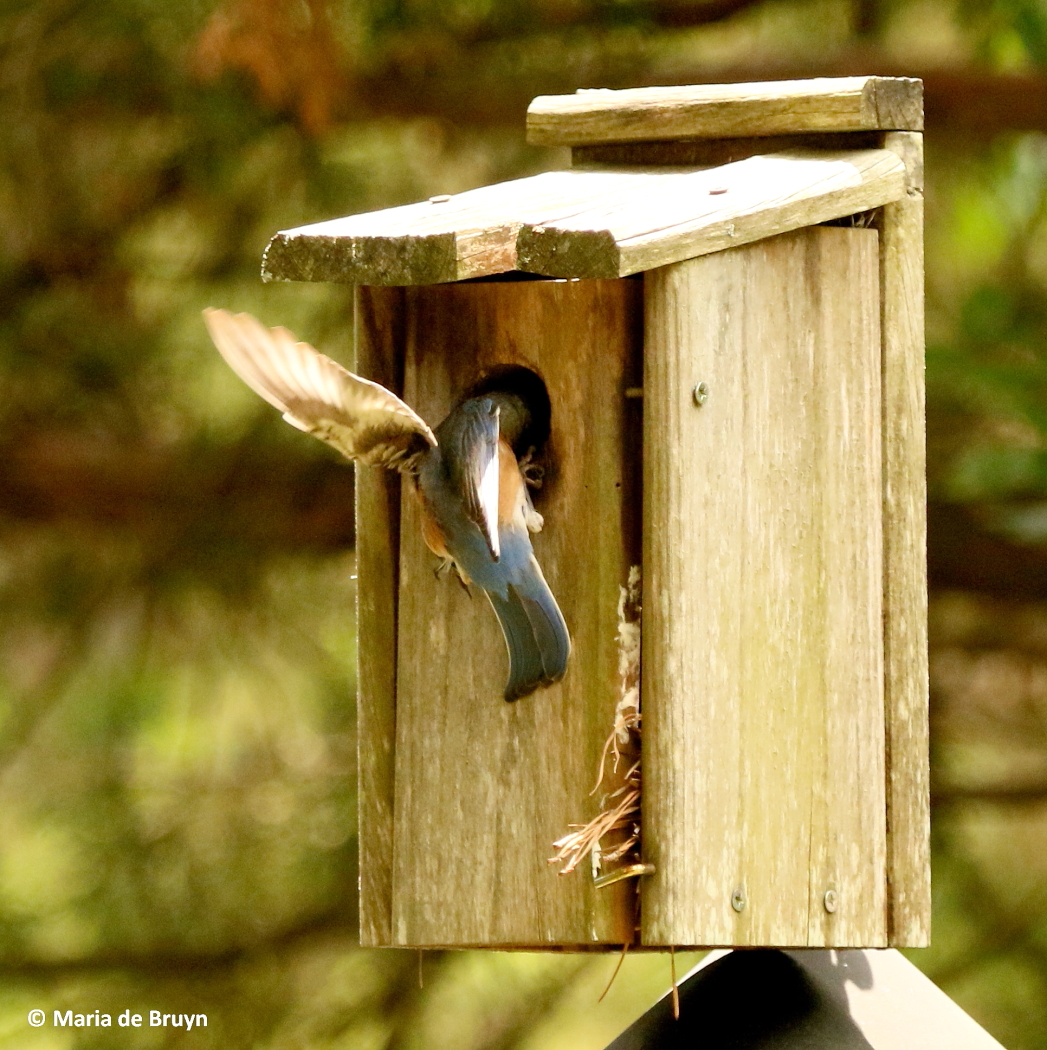
Eastern bluebird I77A8592© Maria de BruynAt one point, mother bluebird seemed a bit fed up – she flew over to the box (without food) and finally entered, staying inside for a good 60-90 seconds at least. I imagined her giving the babies a lecture about how they had to be courageous and willing to jump.

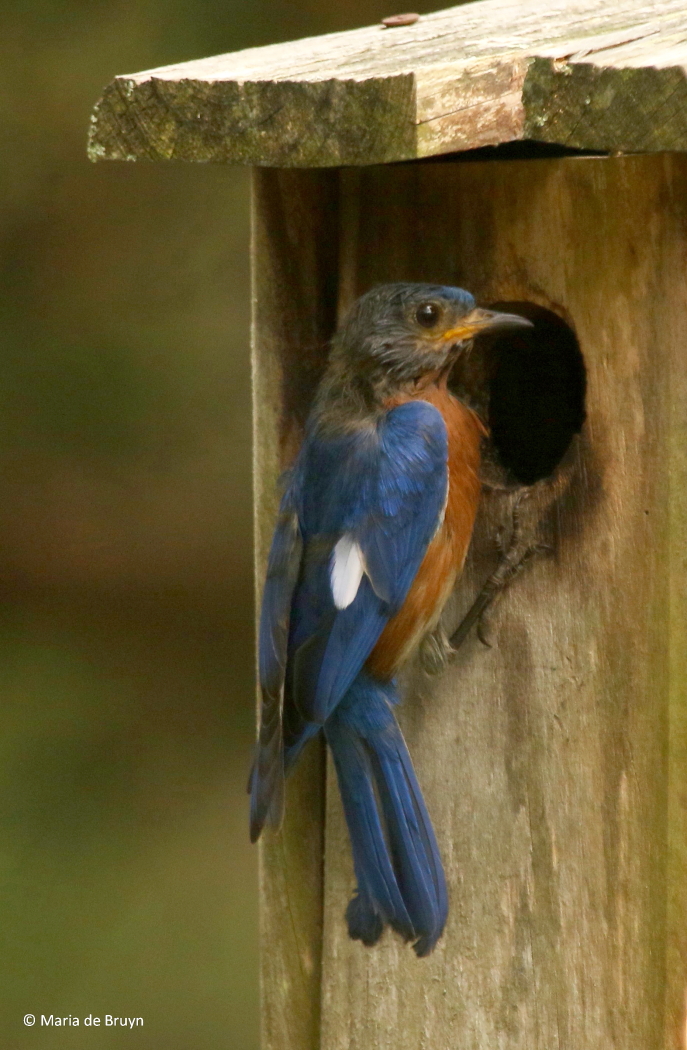
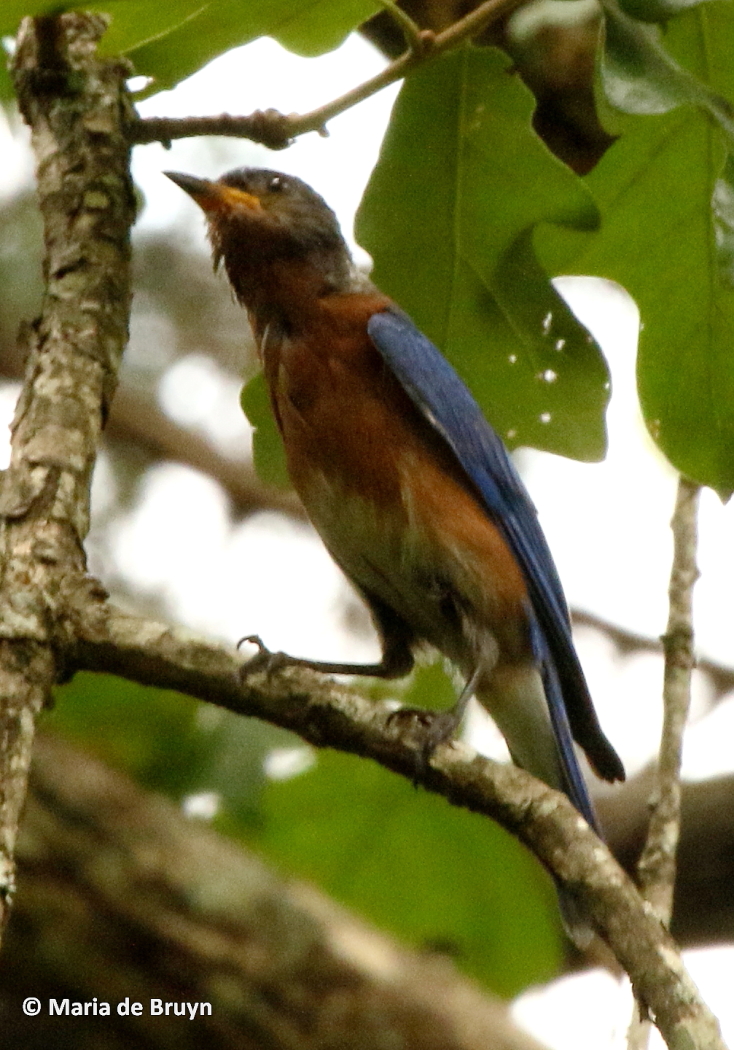
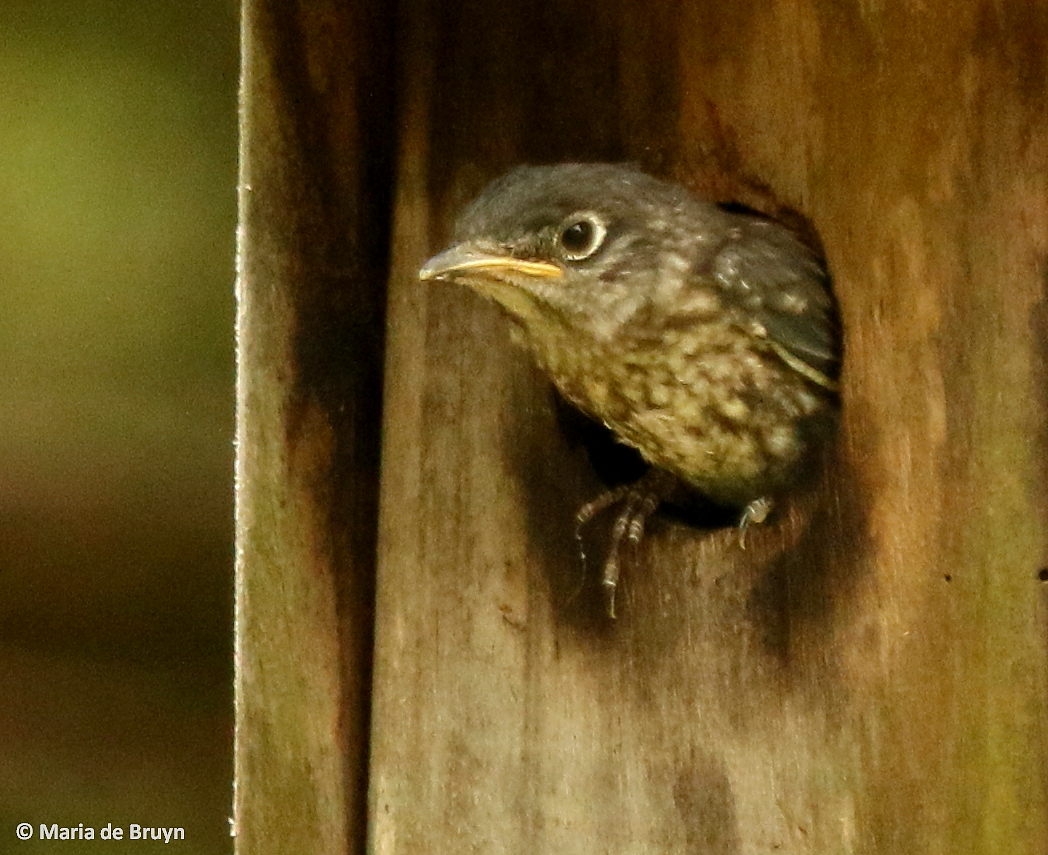
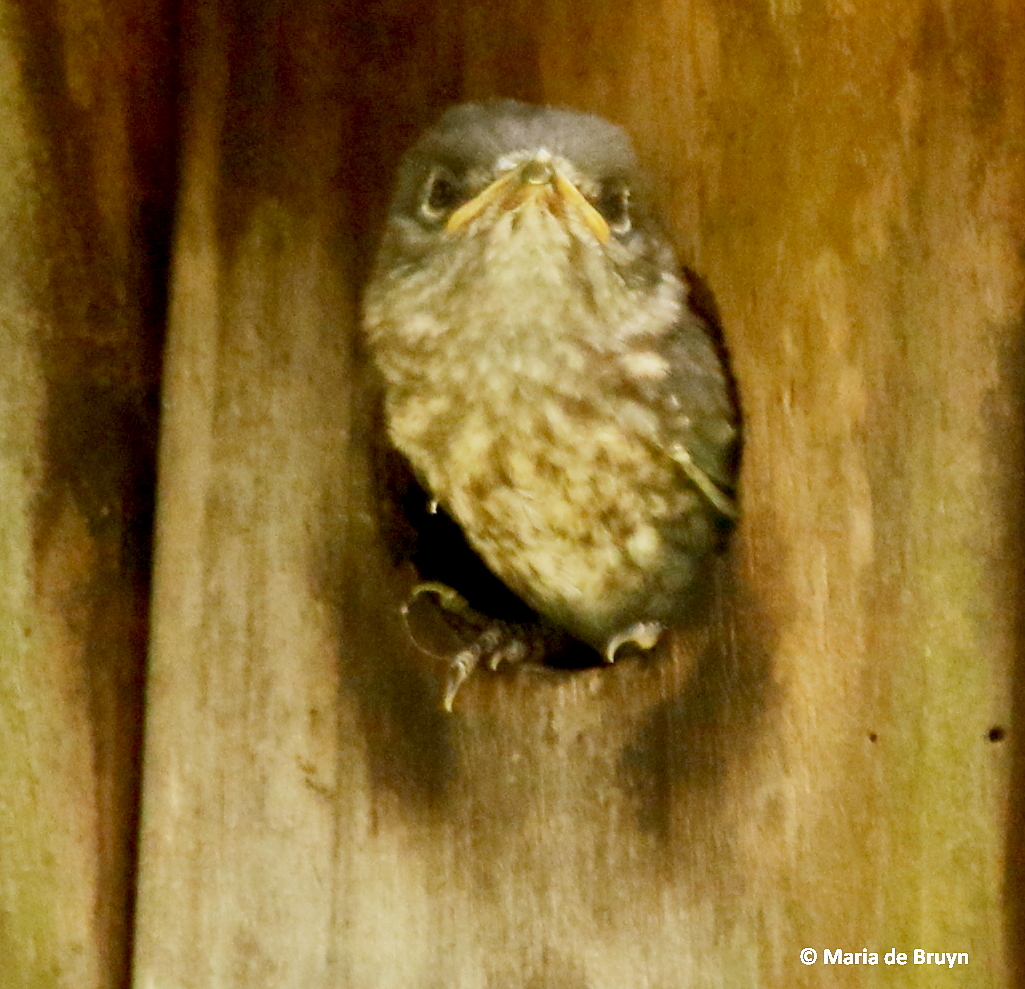
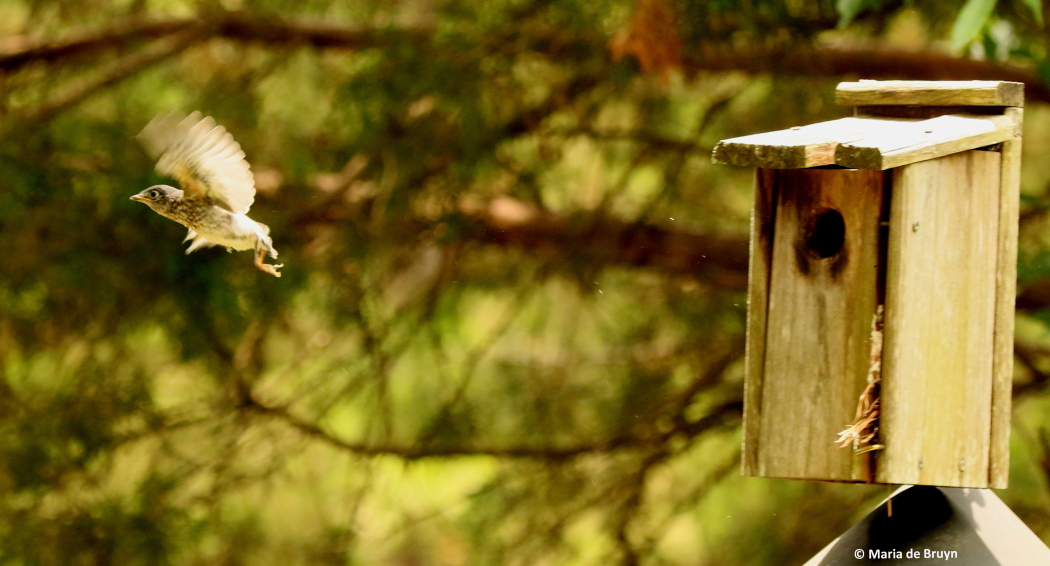
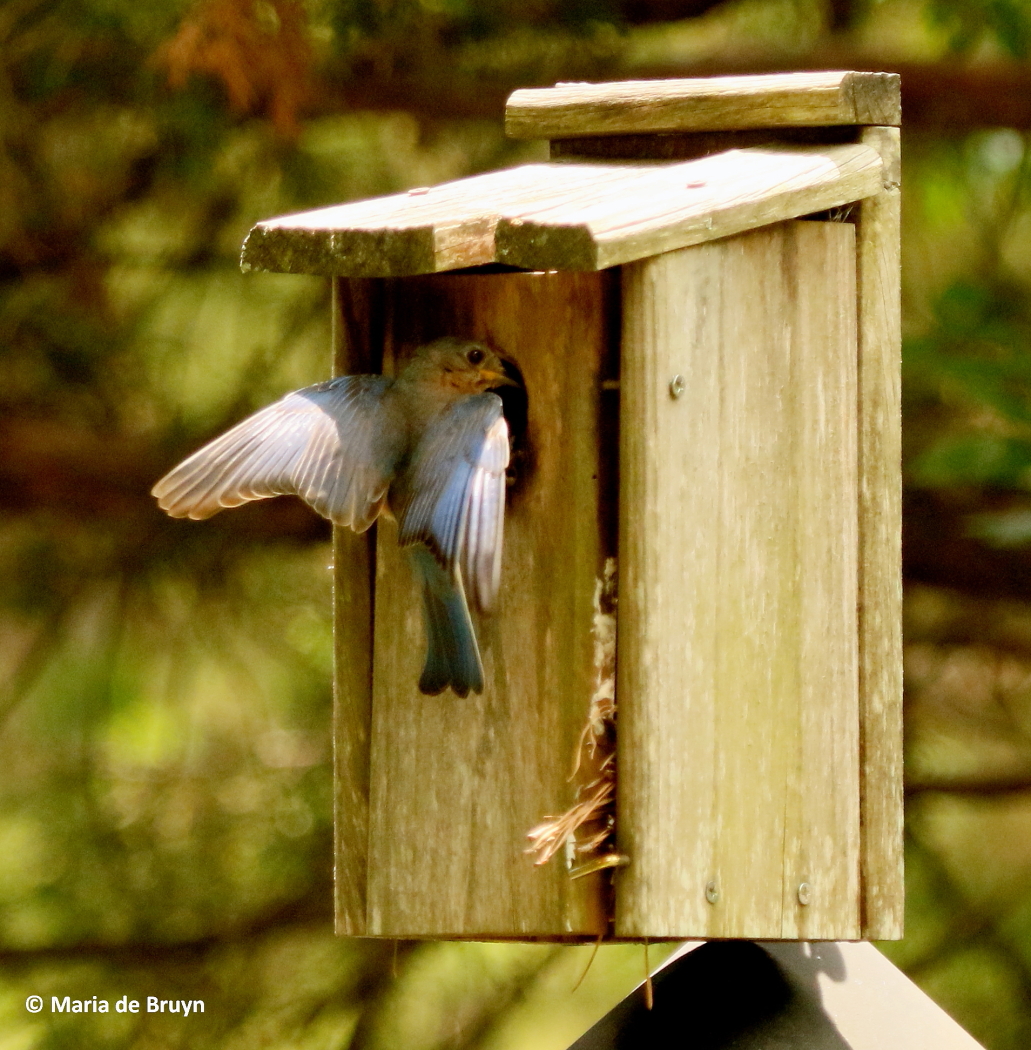
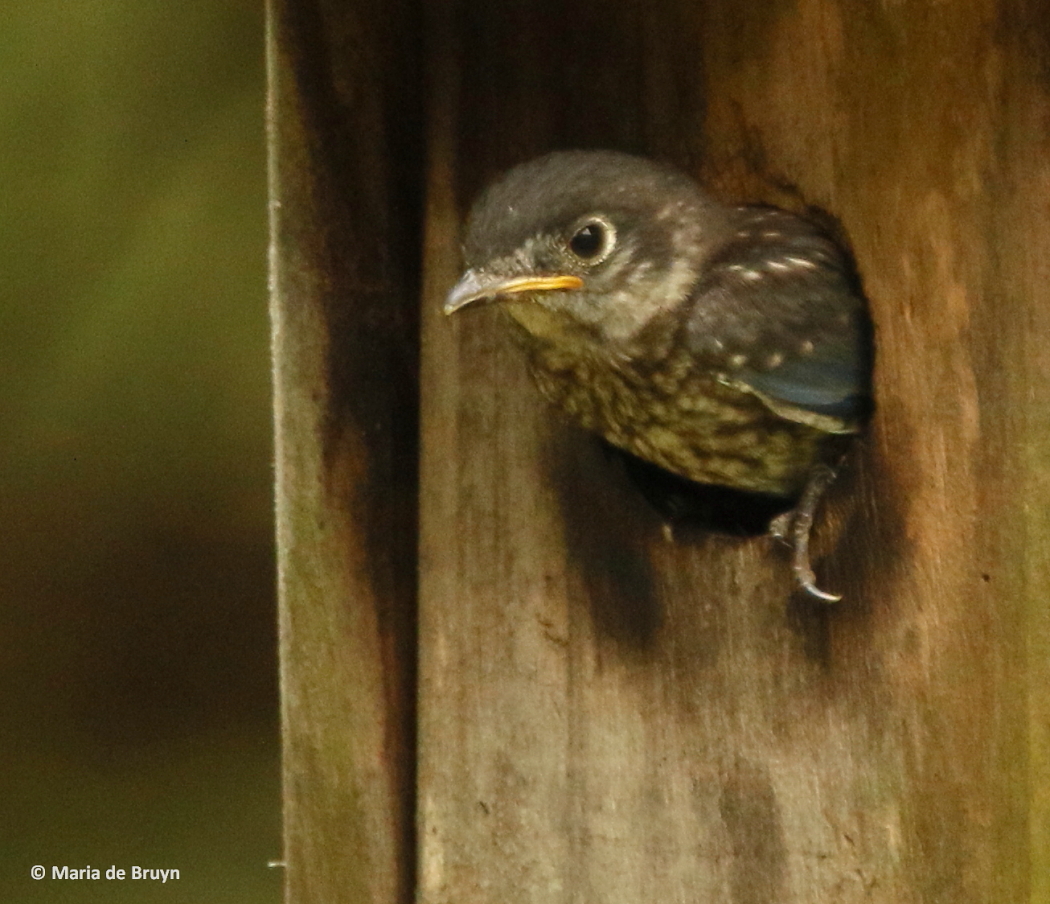
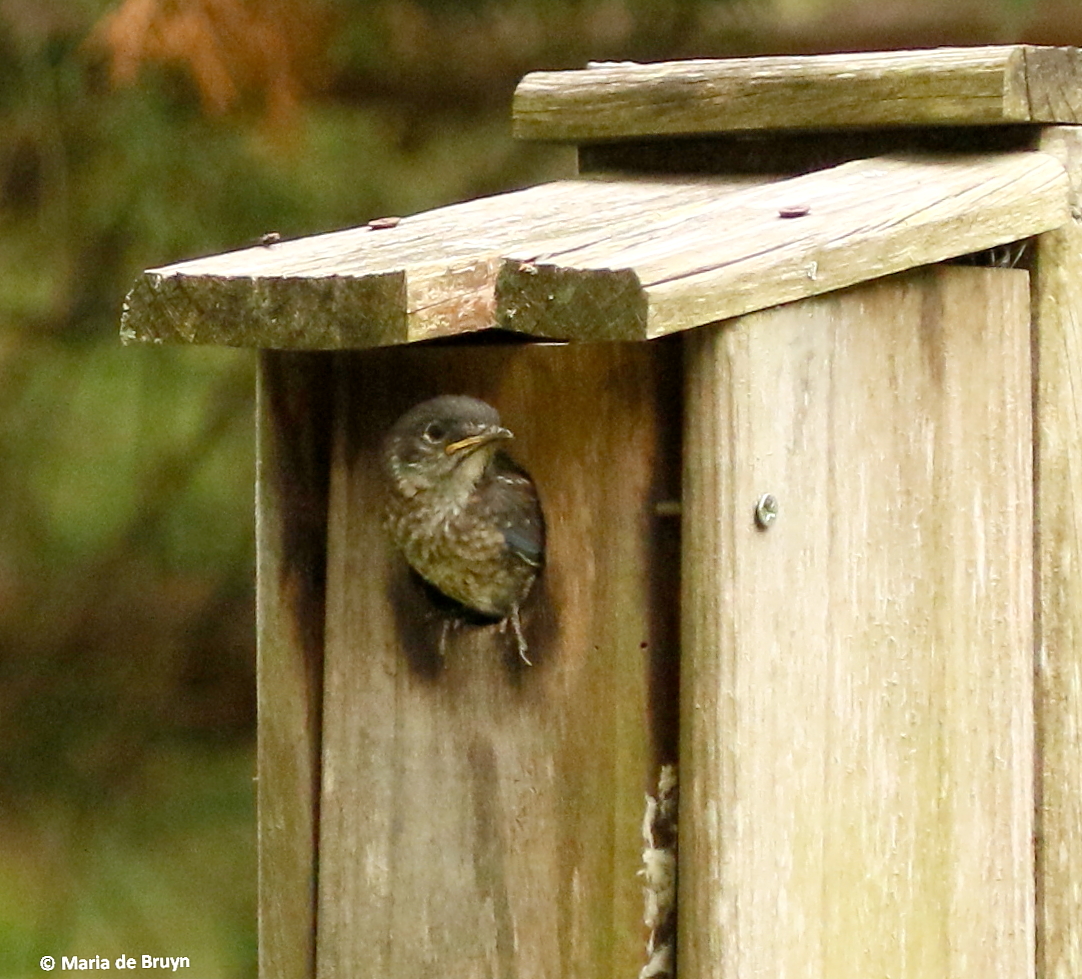
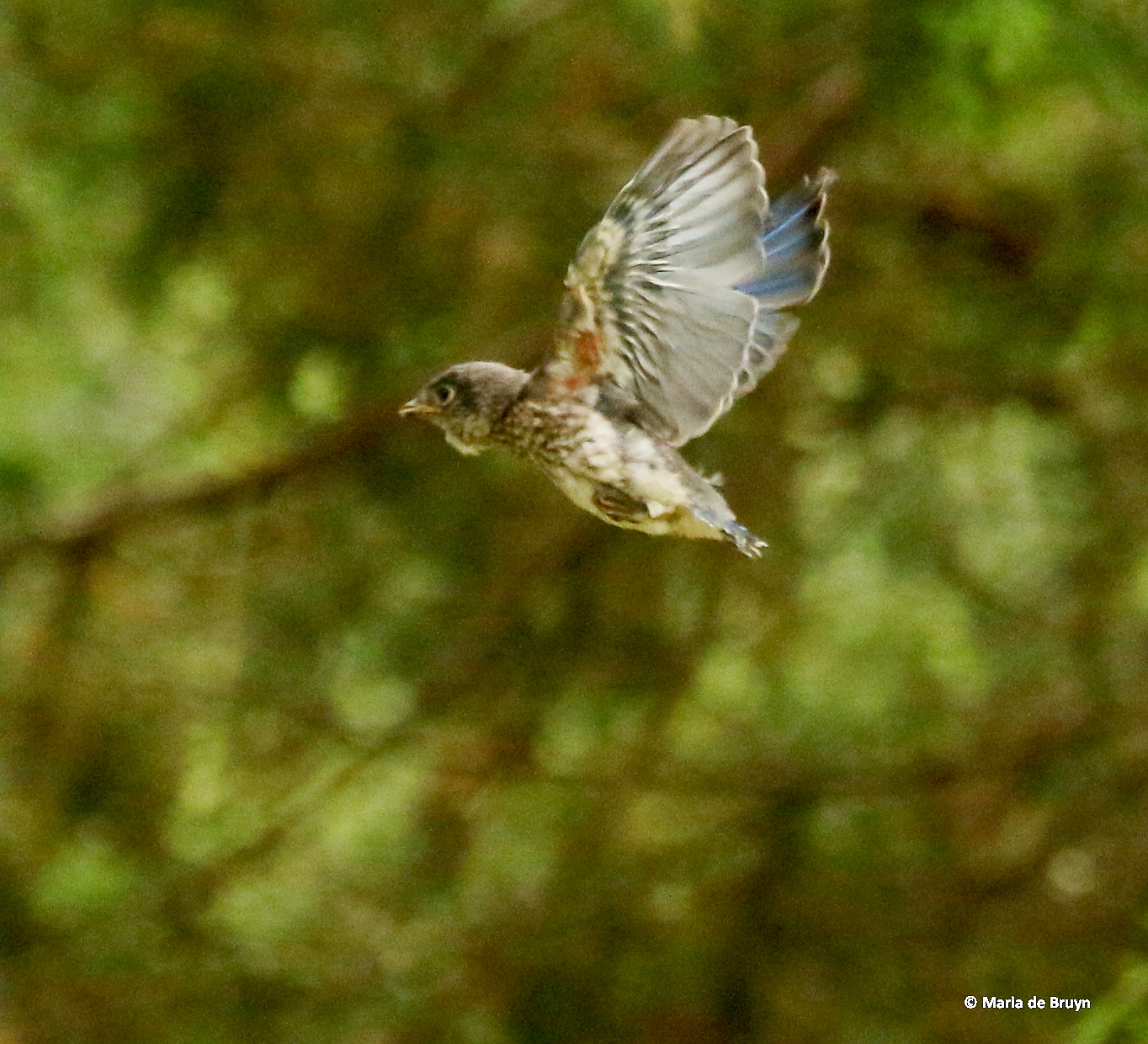
Her admonishments seemed to have had an effect; the babies began calling loudly from inside their birth home. Finally, after about 30 minutes, one poked its head out to take a look at the big wide world. Mom and dad seemed glad, waiting together in the tree to see how long it would take baby No. 2 to join them.

Eastern bluebird I77A8685© Maria de Bruyn    Eastern bluebird I77A8648© Maria de Bruyn

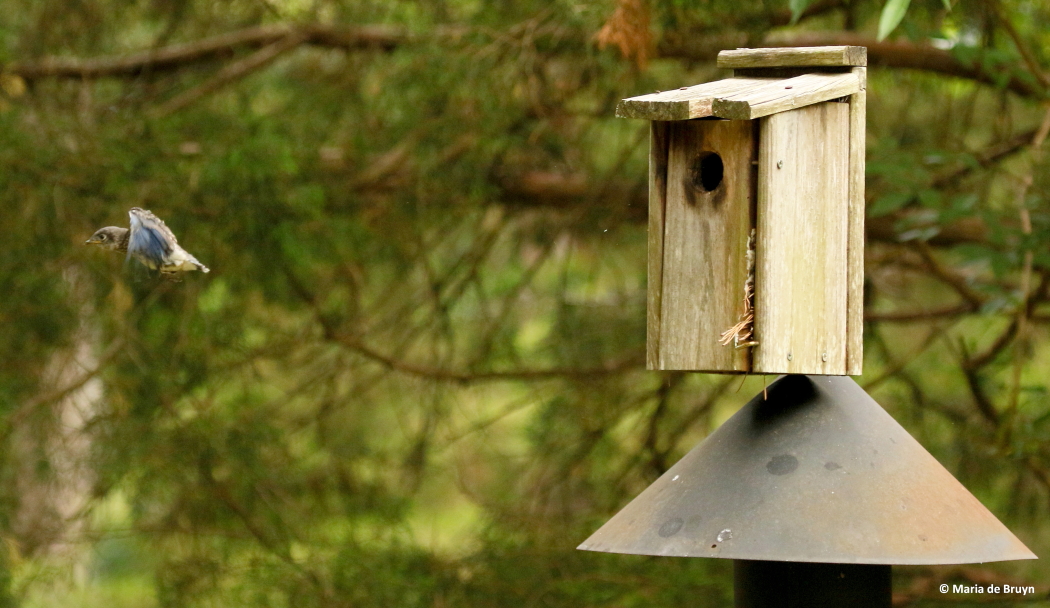
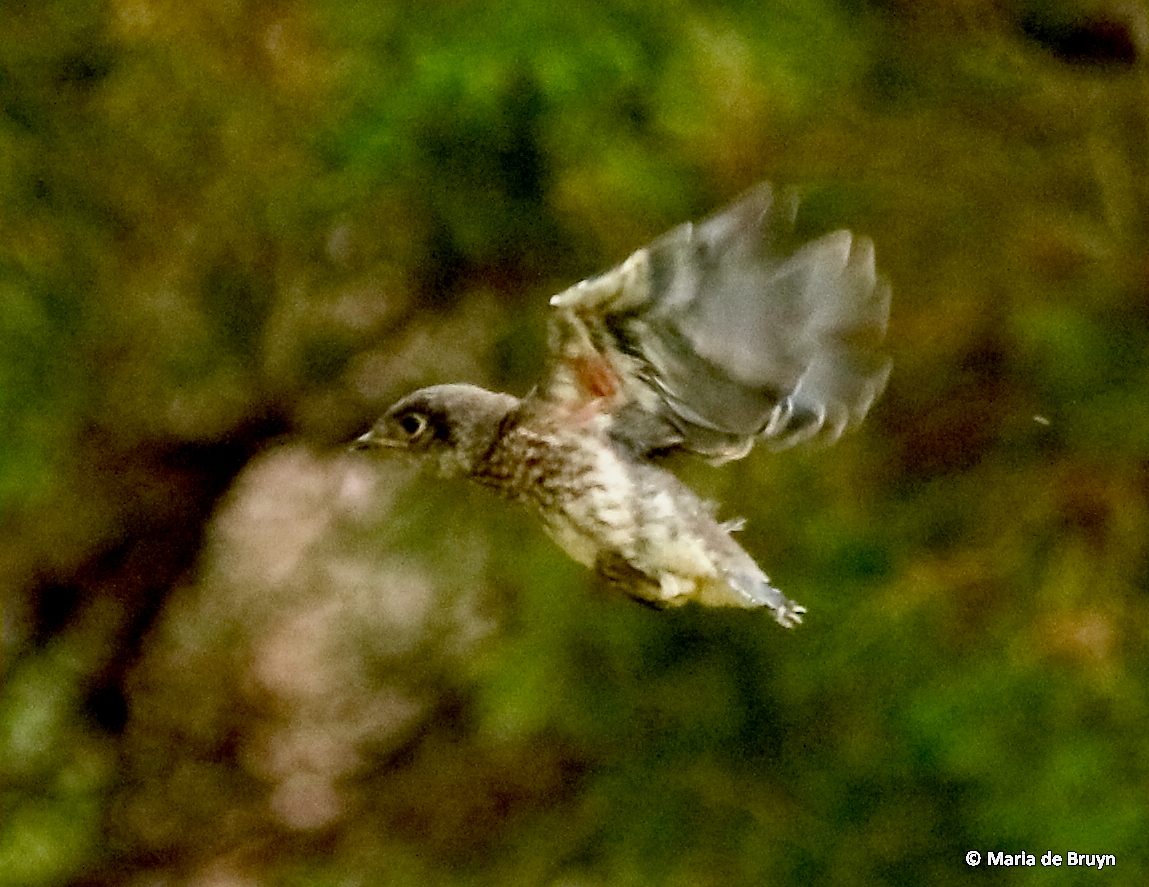
The baby looked around a lot, also staring at me; s/he went back inside and then looked out a few more times, finally taking the great leap into the outside world. Baby 2 was a very strong flier – not even alighting in the tree in front of the box but circling around to land high in a juniper and then in a tall oak tree behind the box.

Eastern bluebird I77A8746© Maria de Bruyn res

Eastern bluebird I77A8877© Maria de Bruyn res


Sibling No. 3 took a little while longer and mama bluebird again went to the box to give encouragement. The baby then spent a little more time observing the new environment and also made a strong flight out.

Eastern bluebird I77A8899© Maria de Bruyn res Eastern bluebird I77A8891© Maria de Bruyn res

Eastern bluebird I77A8861© Maria de Bruyn res  Eastern bluebird I77A8925© Maria de Bruyn

Eastern bluebird I77A8930© Maria de Bruyn res Eastern bluebird I77A8931© Maria de Bruyn     Eastern bluebird I77A8932© Maria de Bruyn res

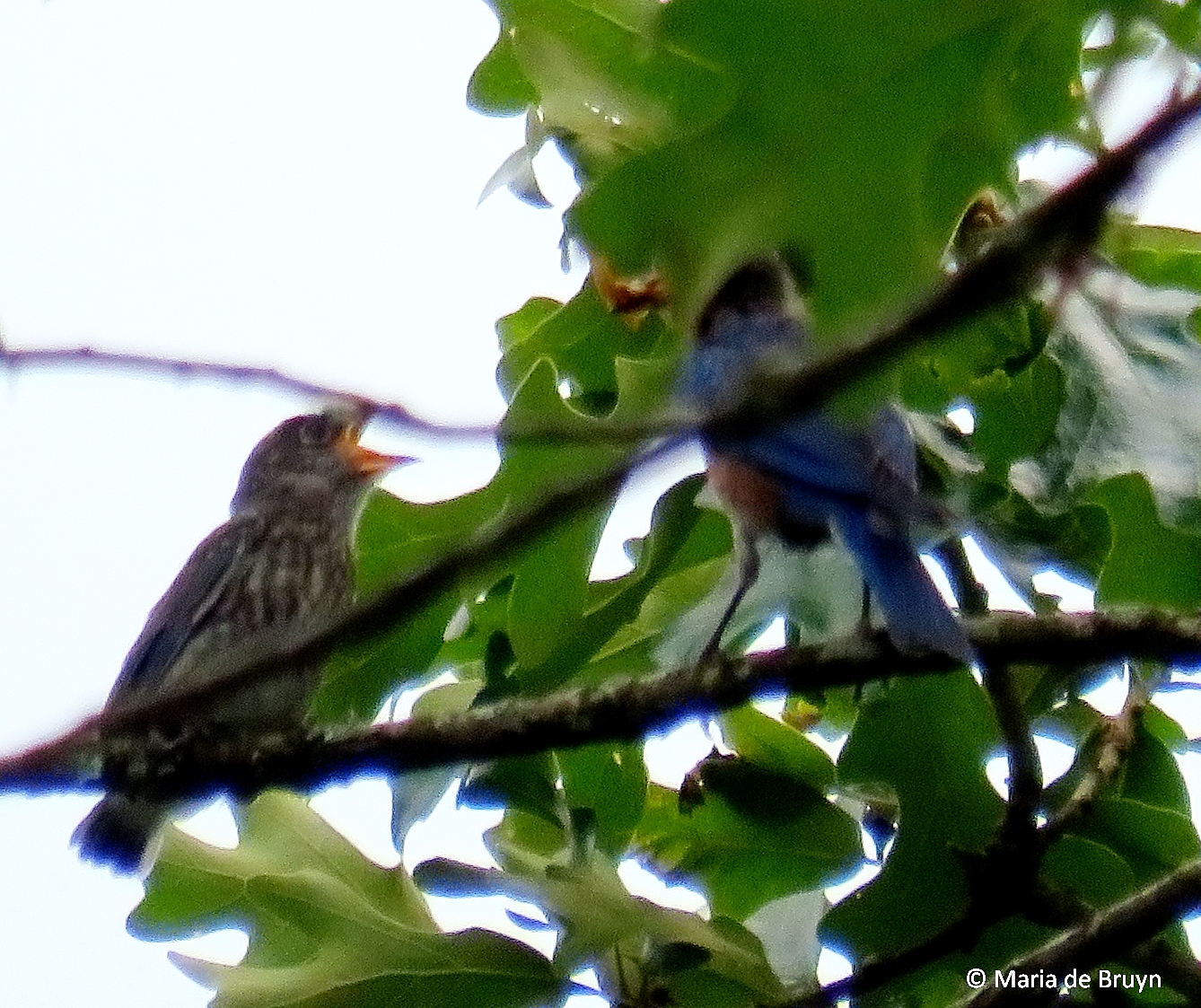
It rained that night and I hoped that the bluebird babies were ok; between the thunderstorms and a neighbor’s cat who comes to hunt birds in my yard, their environment seemed precarious for their first days of life. In the afternoon, I was happy to see papa bluebird feeding one of the three babies at the top of an oak tree. Mama was also flying around up there, so I assumed they were all hanging out in the high branches.

Eastern bluebird IMG_4723© Maria de Bruyn        Eastern bluebird IMG_4777© Maria de Bruyn res

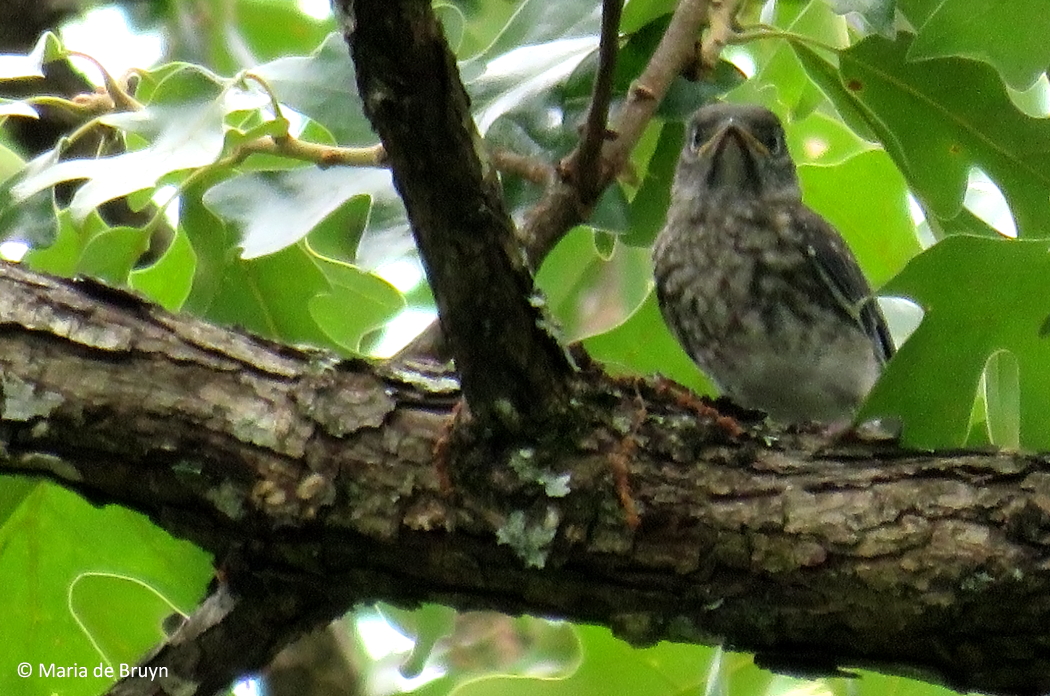
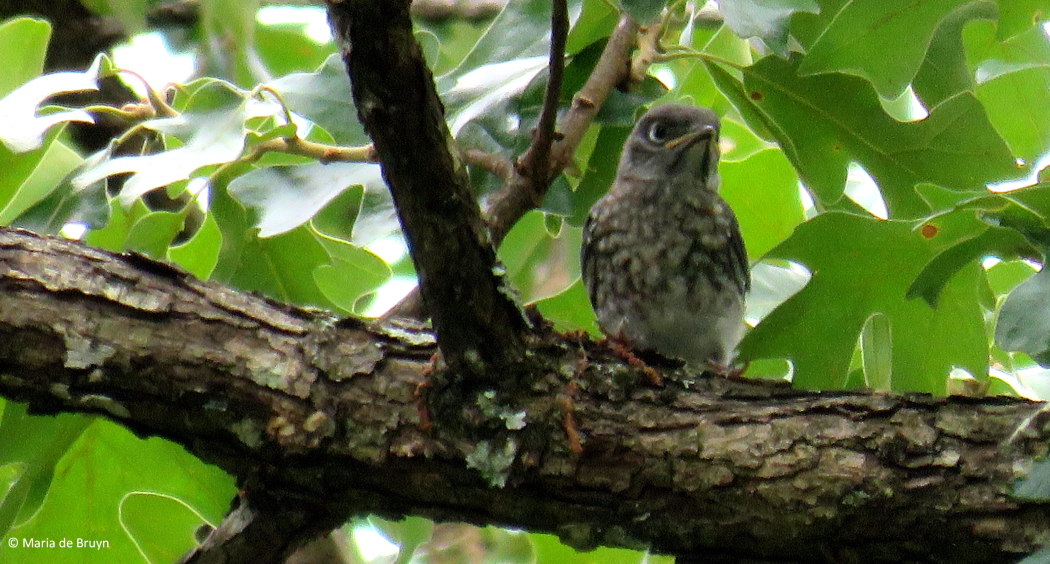
Thursday night, it rained heavily again for many hours; Friday was an easier day and night. I haven’t seen the fledglings again yet but have seen their parents coming for suet and meal worms and flying up to the oak tree, so I assume at least a couple are there. I look forward to seeing their speckled selves at the feeders along with their parents – and will be curious to see if their parents go for a third brood this year.

Eastern bluebird IMG_4779© Maria de Bruyn res