Winter mornings at Jordan Lake

Mist on the lake I77A5266© Maria de BruynSpending two cold early mornings at Jordan Lake the past couple weeks reinforced my conviction that getting out into nature is a restorative and calming activity. And it doesn’t need to be warm. Although a doctor pronounced me healed after my recent hospitalization and home treatment, it turns out that I’m not completely healthy after all. Starting a new treatment was a bit stressful, but seeing the birds at the lake was a joy.

snag I77A6203© Maria de Bruyn res

Mind you, I’d love to see other wildlife there, but the mammals, reptiles and amphibians have been hiding out or keeping away from areas frequented by people. The fact that it is still hunting season probably makes some of them somewhat shy, too. I did manage to see a fly on one morning though.

fly I77A2979© Maria de Bruyn

The animals do leave behind signs of their presence, however. Tracks in the sand is one give-away that they passed by.

animal tracks I77A2998© Maria de Bruyn res

The beavers (Castor canadensis) leave behind distinctively gnawed tree stumps – and here you can also see one tree that they haven’t quite finished felling yet.

beaver tree I77A2933© Maria de Bruyn res beaver tree I77A2950© Maria de Bruyn res

The shoreline vegetation was decorated with gull feathers in various areas of the lake.

bird feather I77A2711© Maria de Bruyn res bird feather I77A2697© Maria de Bruyn res

heron track I77A2924© Maria de Bruyn res


A sandy track of what I assumed was a great blue heron (Ardea herodias) didn’t produce a bird at that site, but I saw these beauties in flight at two other sites.


great blue heron I77A3926© Maria de Bruyn res

great blue heron I77A2558© Maria de Bruyn res

At one area, I spotted a bird that seemed unfamiliar just as it was turning to take off. Friendly birders online identified it as an American pipit (Anthus rubescens), the first time I had seen this species (known as a “lifer” among the birding crowd). The next week I saw a killdeer (Charadrius vociferous) in the same spot but got a better shot.

American pipit I77A2526© Maria de Bruynkilldeer I77A5908© Maria de Bruyn

The killdeer didn’t hang around too long either, but I was able to get a couple of nice flight photos this time.

killdeer I77A5933© Maria de Bruyn res killdeer I77A5931© Maria de Bruyn res

American crow I77A2810© Maria de Bruyn res


The American crows (Corvus brachyrhynchos) were foraging in the shoreline woods, while the song sparrow was looking for food among the woody detritus left at lakeside.


song sparrow I77A5877© Maria de Bruyn res song sparrow I77A5866© Maria de Bruyn res

In another place, the crows were very loudly making their presence known – it turned out that a red-tailed hawk (Buteo jamaicensis) was perched nearby and they were making sure everyone knew the hawk was there.

red-tailed hawk I77A3850© Maria de Bruyn resAmerican crow I77A3878© Maria de Bruyn res

In the trees near the lake, various birds could be seen: the ruby-crowned kinglet (Regulus calendula) was very busy as usual, flying from a sweet gum (Liquidambar styraciflua) to other trees in rapid succession.

ruby-crowned kinglet I77A5662© Maria de Bruyn ruby-crowned kinglet I77A6049© Maria de Bruyn

At one site, there were many dark-eyed juncos foraging on the ground and taking pauses in the trees and shrubs around. Juncos are actually a type of sparrow and a group of sparrows is known by several names: a crew, a flutter, a meinie, a quarrel and an ubiquity.

dark-eyed junco I77A2838© Maria de Bruyn dark-eyed junco I77A2379© Maria de Bruyn

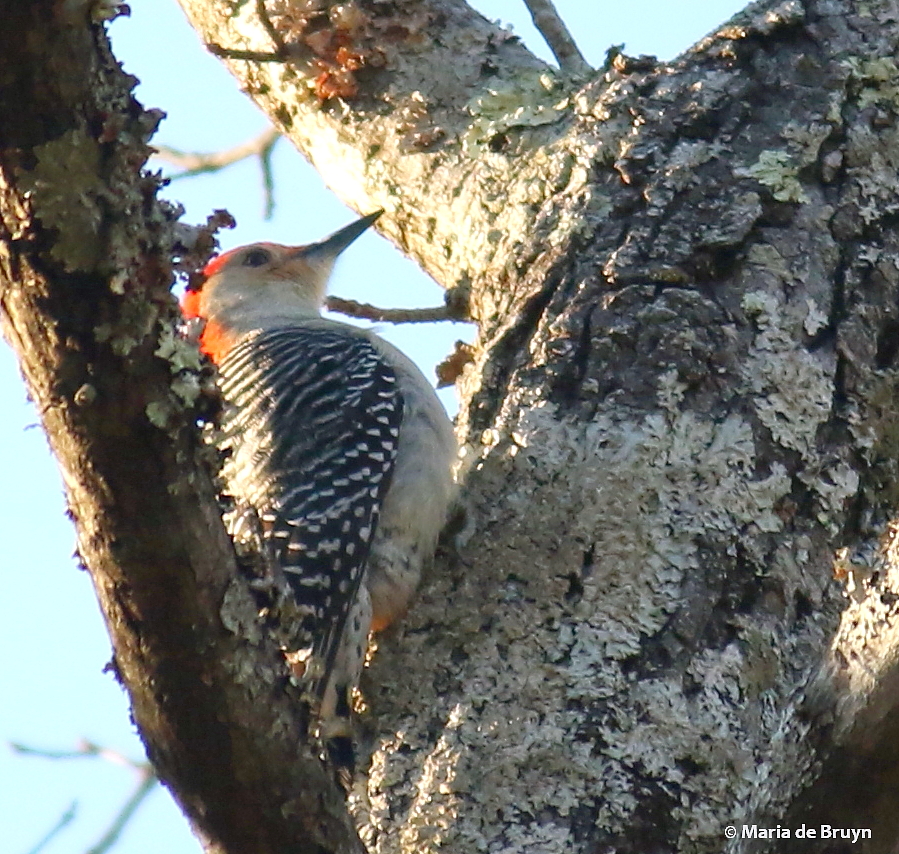
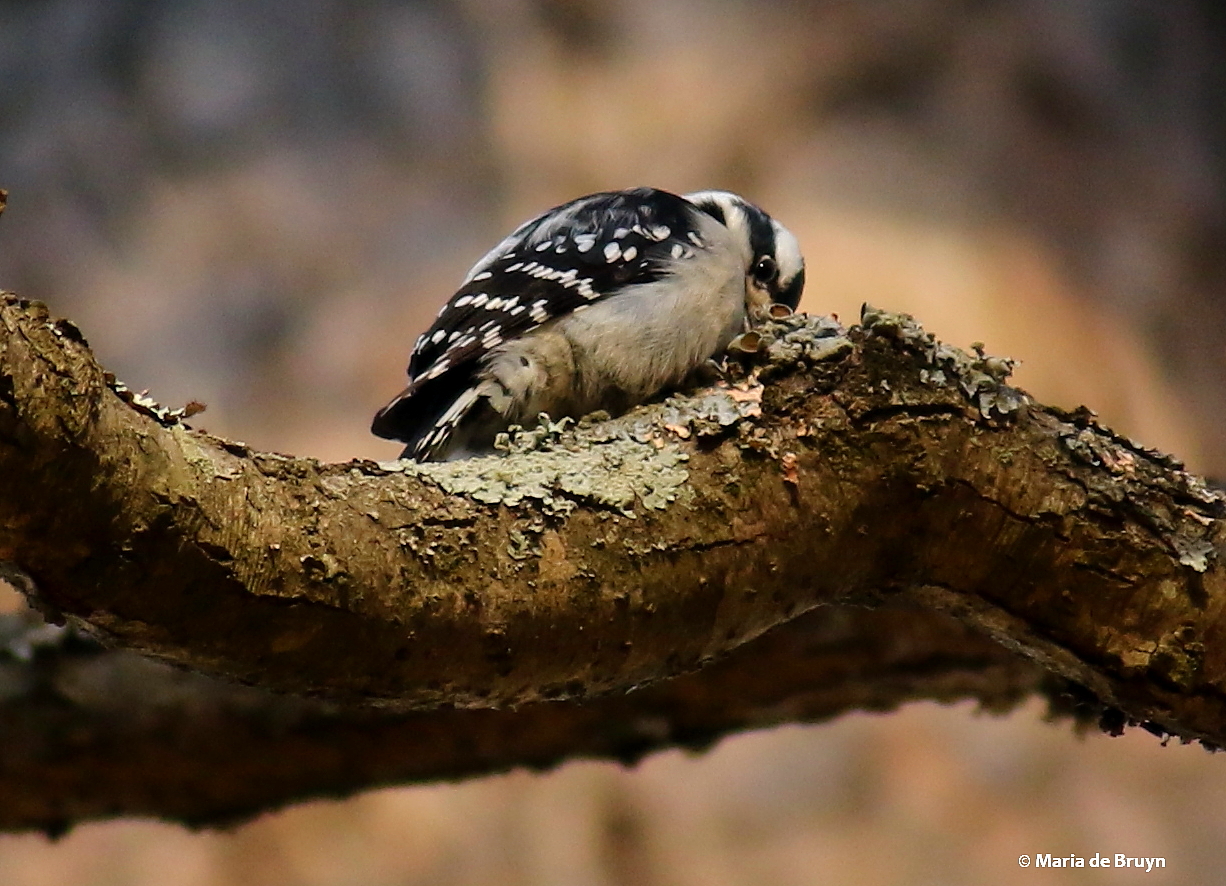
The downy woodpeckers (Dryobates pubescens) and red-bellied woodpeckers (Melanerpes carolinus) were in evidence at various lake sites.

downy woodpecker I77A2504© Maria de Bruyn resRed-bellied woodpecker I77A5384© Maria de Bruyn res

Overhead, the double-crested cormorants (Phalacrocorax auritus) flew by; they would land and share space with the ring-billed gulls (Larus delawarensis).


double-crested cormorant I77A2731© Maria de Bruyn resring-billed gull I77A3558© Maria de Bruyn res

ring-billed gull I77A2389© Maria de Bruyn res


The ring-billed gulls were numerous and occasionally one swooped down to fish not too far from shore.

ring-billed gull I77A5489© Maria de Bruyn resring-billed gull I77A5497© Maria de Bruyn res

While I was watching, the horned grebes (Odiceps auritus) were more successful in getting meals as they dove into the cold water.

Horned grebe I77A3662© Maria de Bruynhorned grebe I77A3094© Maria de Bruyn

belted kingfisher I77A4014© Maria de BruynA couple times I was very surprised by a bird that suddenly seemed to emerge out of nowhere to fly over my head or just in front of me. That was the case with a beautiful male wood duck (Aix sponsa) and a belted kingfisher (Megaceryle alcyon).


wood duck I77A3719© Maria de Bruyn res wood duck I77A3718© Maria de Bruyn res

bald eagle I77A3030© Maria de BruynAn adult bald eagle (Haliaeetus leucocephalus) soared by just as I was approaching an observation platform in one area; the distance and height were considerable but I managed a shot. A Bonaparte’s gull (Chroicocephalus philadelphia) flew by a little lower, while a Carolina chickadee (Poecile carolinensis) sat still for a portrait.


Bonaparte's gull I77A3962© Maria de Bruyn


Carolina chickadee I77A5806© Maria de Bruyn res

My last avian companions during my latest lake walk were a white-throated sparrow (Zonotrichia albicollis) and a lovely hermit thrush (Catharus guttatus).

white-throated sparrow I77A6115© Maria de Bruynhermit thrush I77A6165© Maria de Bruyn

I returned home on both occasions a satisfied birder!
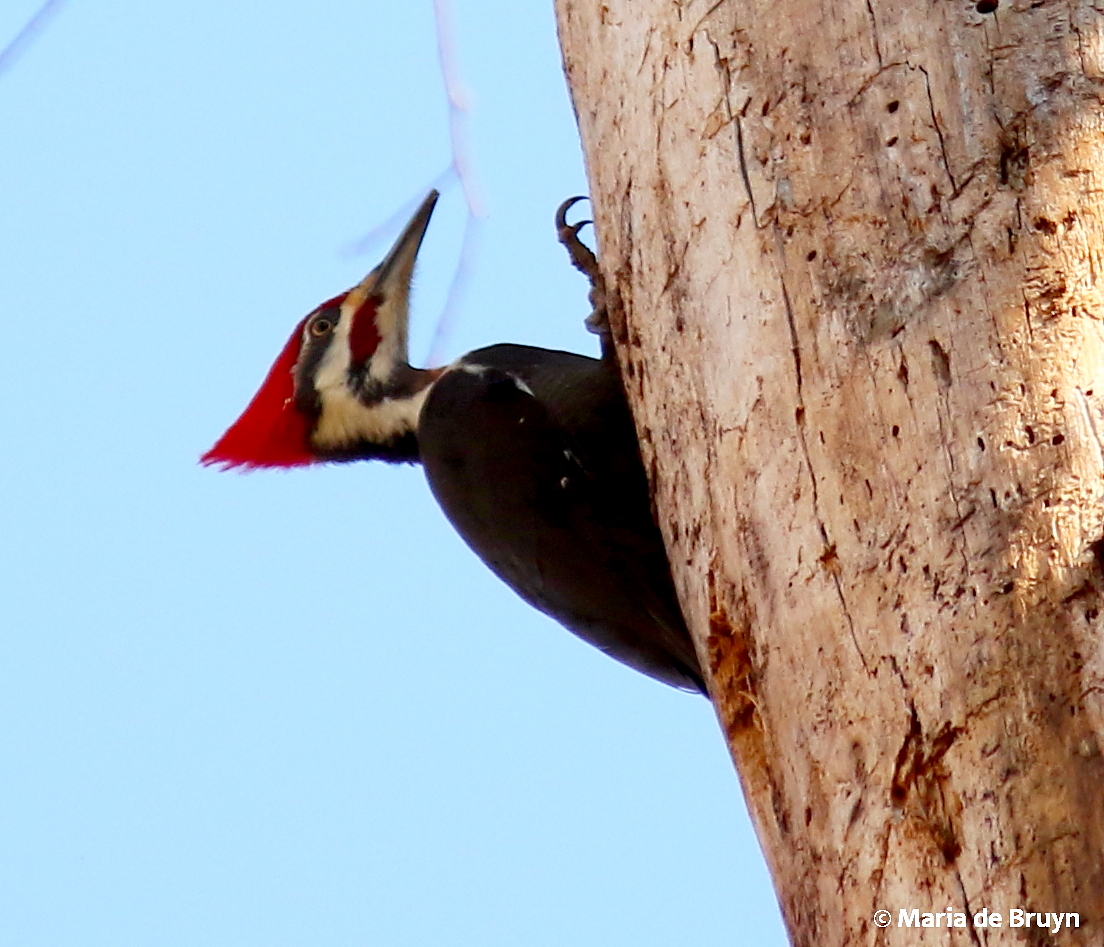
 

Woodpecker welcome!

My celebration for the arrival of 2016 happened on 21 January, when I had my first nature walk of the year. It was delayed by a hospitalization at the start of the year and home treatments for a couple weeks after that. When a relatively warm and sunny day arrived, I just had to get out there despite still dealing with some recovery-related issues. I chose the North Carolina Botanical Garden as my venue since it has plenty of benches for short rests in between walking. It was simply lovely.

pileated woodpecker I77A7321© Maria de BruynMy first bird of the day was a beautiful male pileated woodpecker (Dryocopus pileatus), a harbinger of the day’s theme – the woodpeckers were my welcome committee!

Loud rhythmic hammering had me searching the snags among the tall trees for the next greeter – it reminded me of the facts I had learned about woodpeckers and their adaptations to a pecking life.

downy woodpecker I77A7372© Maria de BruynIt turned out to be a diminutive downy woodpecker (Dryobates pubescens), whose hammering sounds were enhanced by the hollow stem with which he was busy.
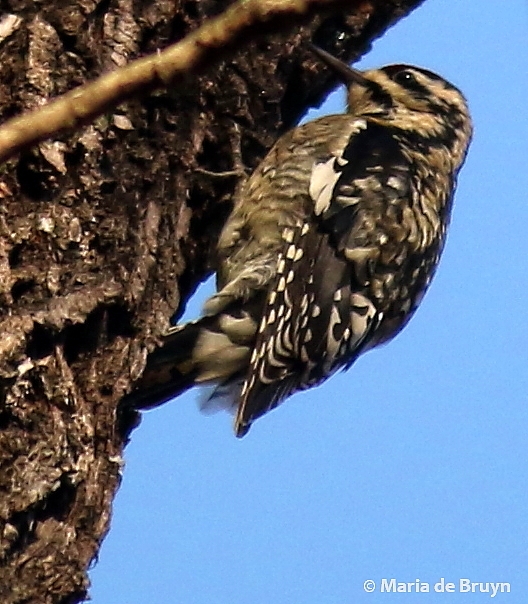
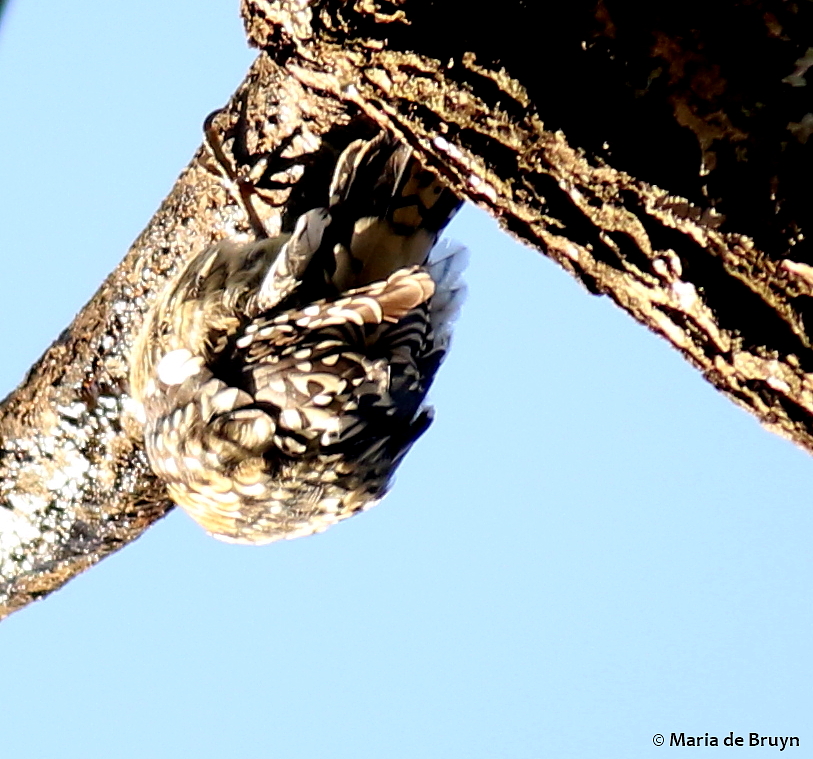
Next up was a lovely female yellow-bellied sapsucker (Sphyrapicus varius) who was very industriously flitting from branch to branch in search of sustenance.

yellow-bellied sapsucker I77A7419© Maria de Bruynyellow-bellied sapsucker I77A7582© Maria de Bruyn

When flattened against tree trunks, she demonstrated how well camouflaged her back feathers make her. A male sapsucker showed it, too.

yellow-bellied sapsucker I77A7476© Maria de Bruyn

yellow-bellied sapsucker I77A7860© Maria de Bruyn res

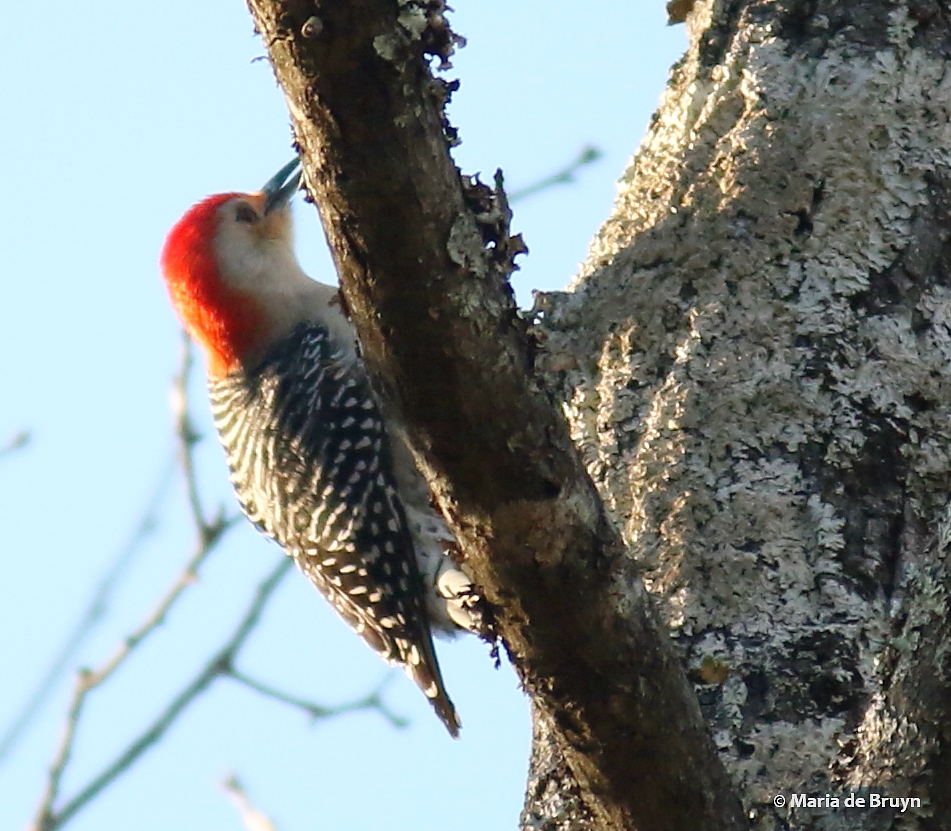
red-bellied woodpecker I77A8242© Maria de BruynA red-bellied woodpecker (Melanerpes carolinus) rounded out the welcoming committee.

The other birds didn’t disappoint. Several species were in the woods and at the feeders near the Garden’s bird blind. A lovely Carolina chickadee (Poecile carolinensis) flitted about. A tufted titmouse (Baeolophus bicolor) was singing.


Carolina chickadee I77A7639© Maria de Bruyn tufted titmouse I77A7388© Maria de Bruyn


white-breasted nuthatch I77A8203© Maria de Bruyn


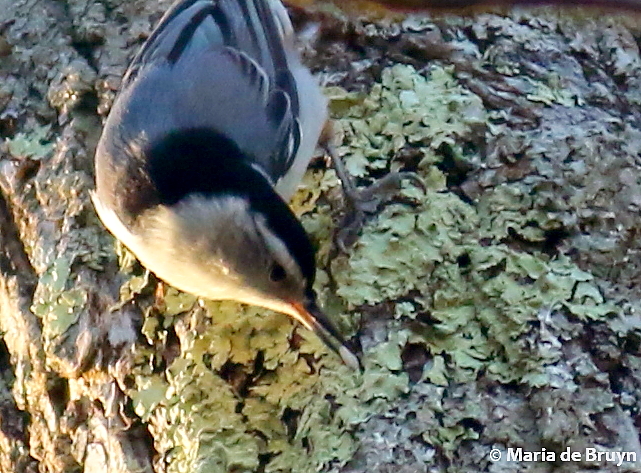
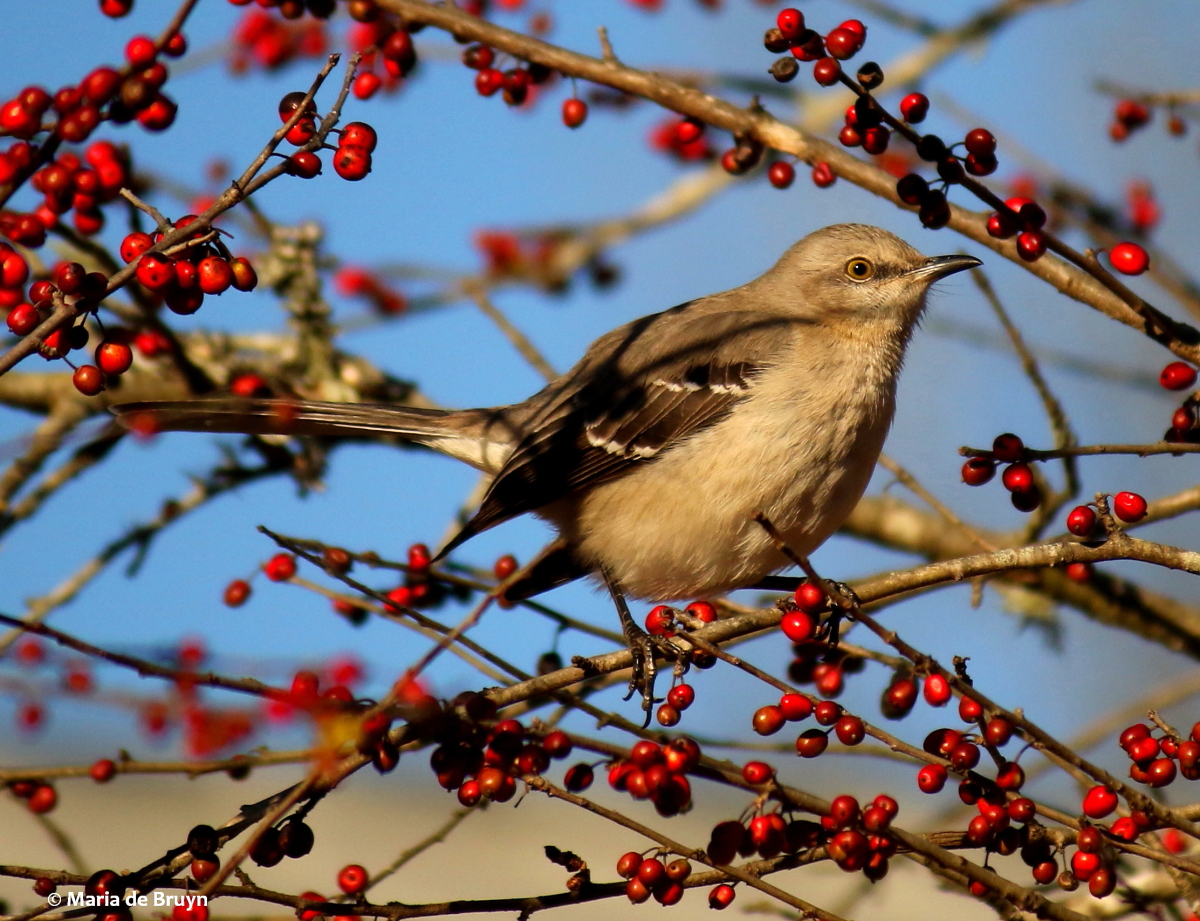
A white-breasted nuthatch (Sitta carolinensis) foraged on tree trunks overhead. A Northern mockingbird (Mimus polyglottos polyglottos) posed among red winter berries.


Northern mockingbird I77A7737© Maria de Bruyn res

hermit thrush I77A7658© Maria de Bruyn


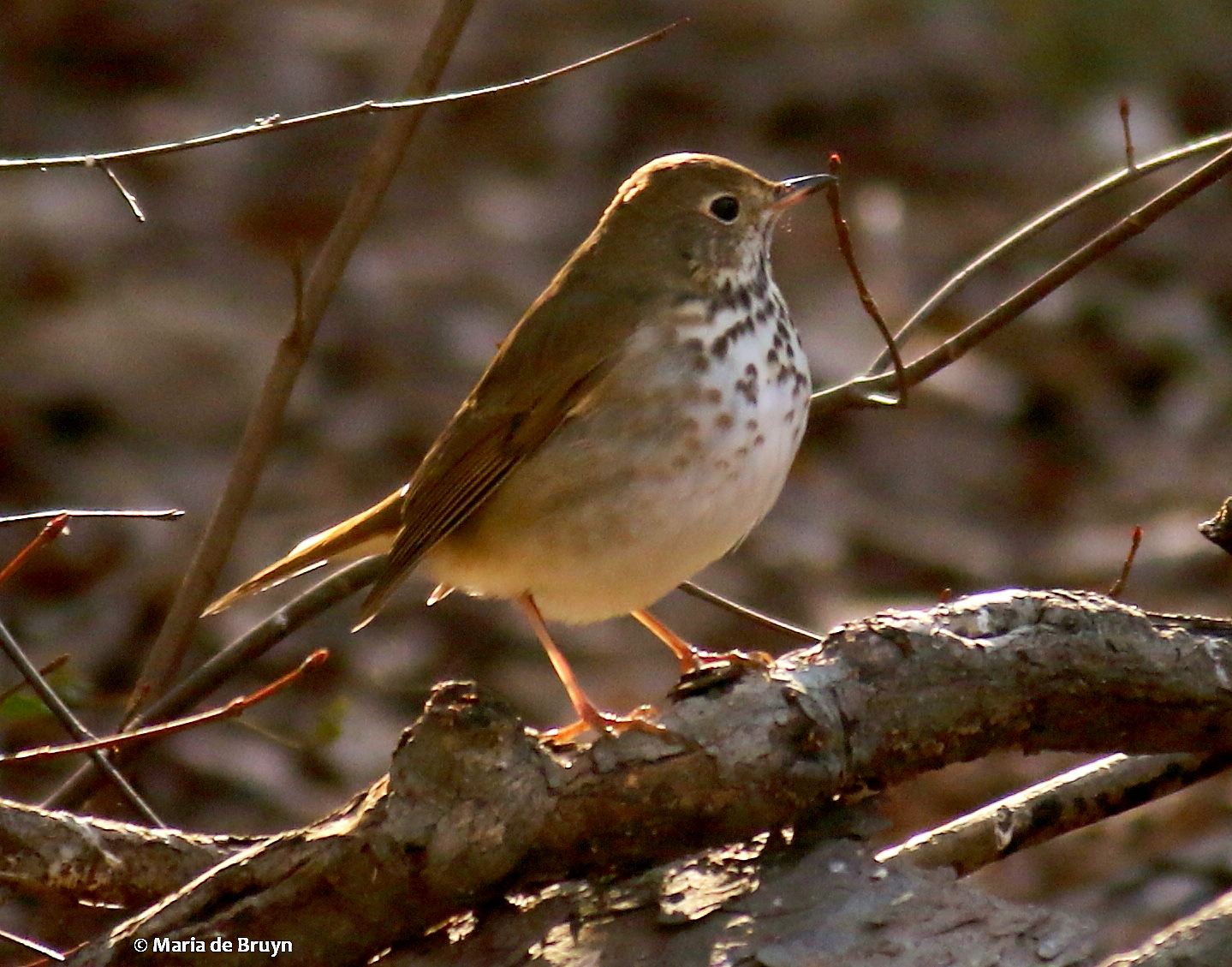
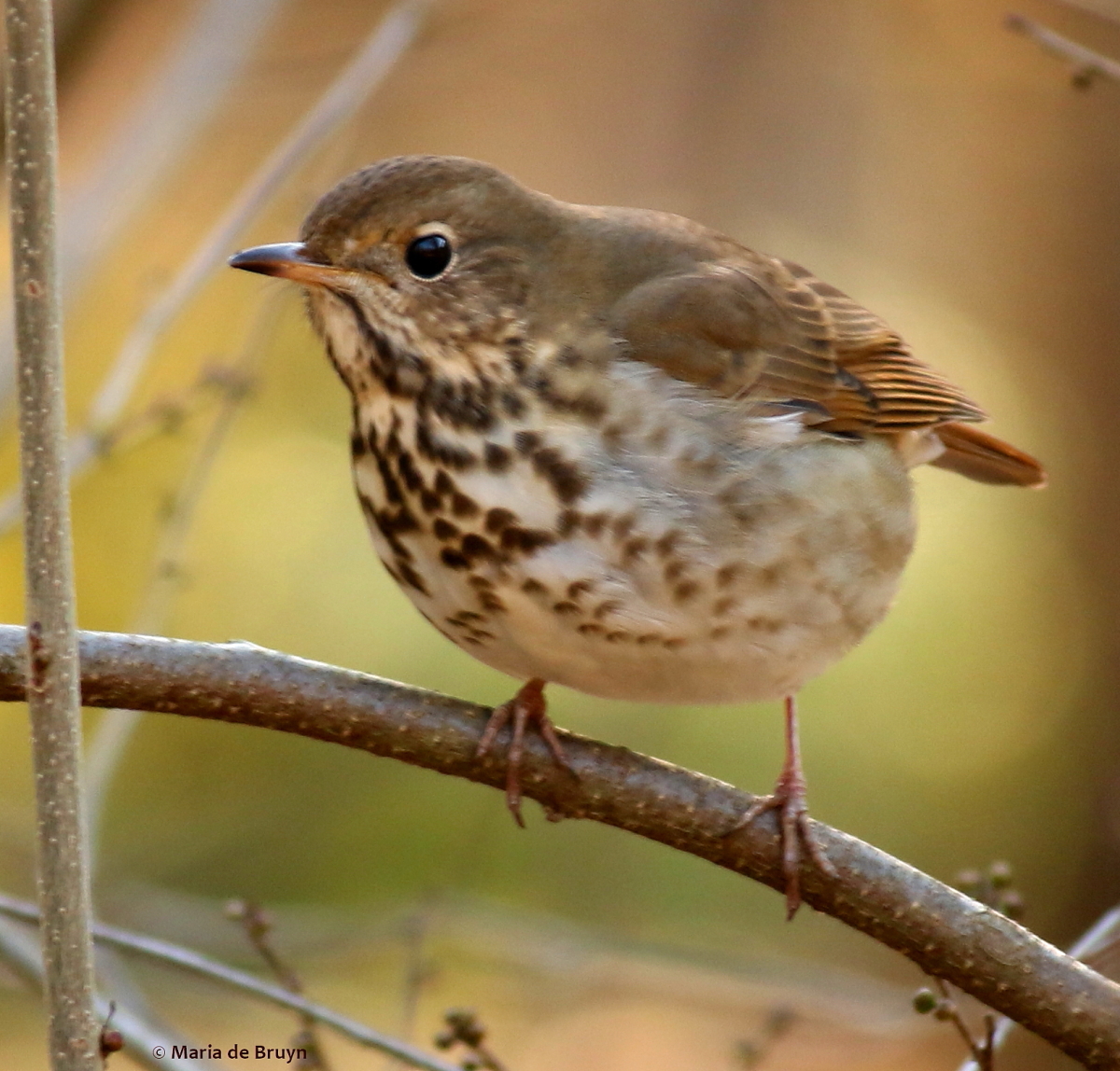
A hermit thrush (Catharus guttatus) emerged near the bird blind, and then the same bird or another seemed to accompany me as I walked another part of the native habitats garden.


hermit thrush I77A7818© Maria de Bruyn

hermit thrush I77A7788© Maria de Bruyn res

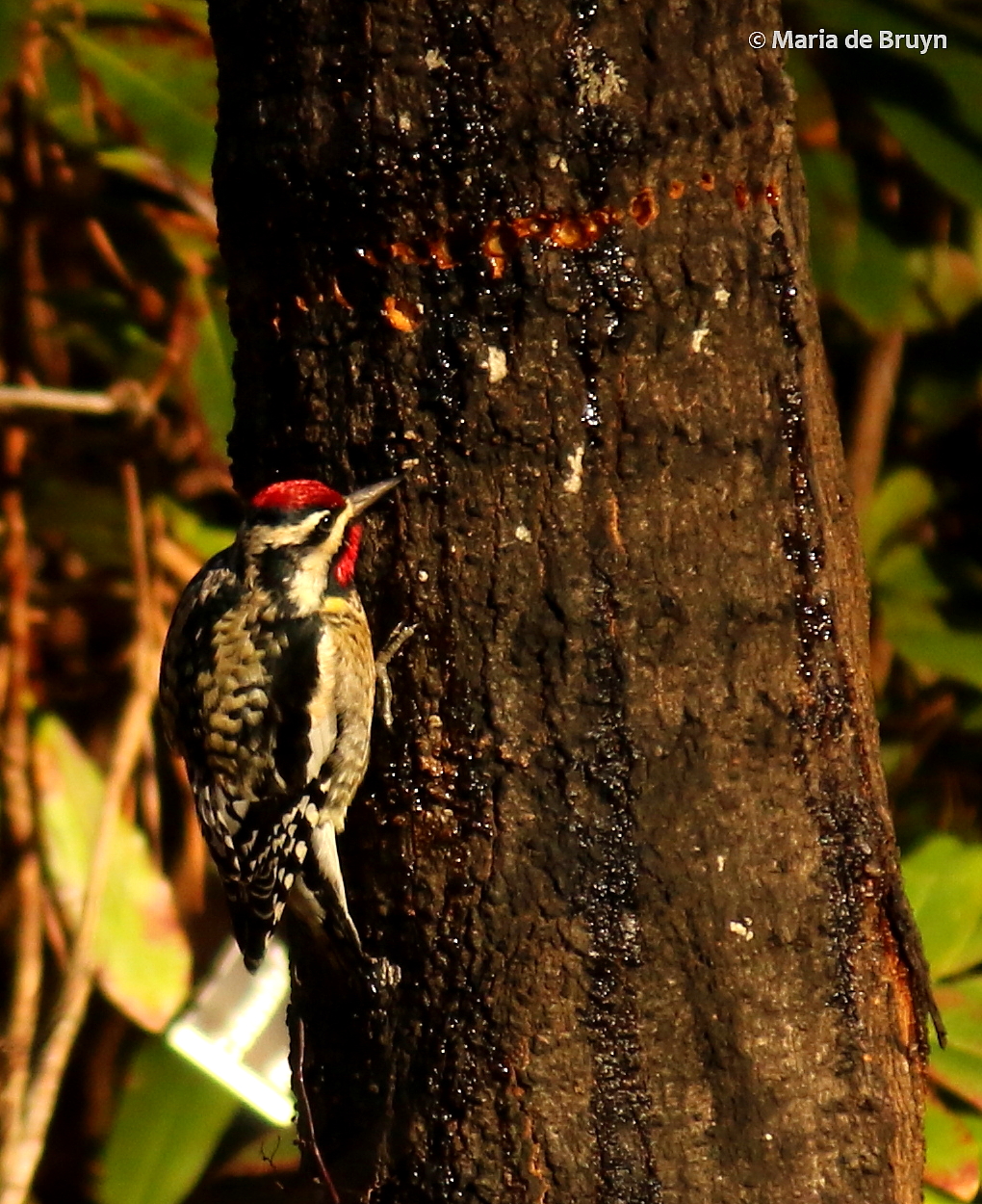
Later, a male sapsucker (identifiable by his red throat) appeared near the Paul Green cabin, where he had been busy working on his sapwells.

yellow-bellied sapsucker I77A7858© Maria de Bruyn res yellow-bellied sapsucker I77A7854© Maria de Bruyn res

Shortly thereafter a downy woodpecker came to the same spot and sampled sap (or something else) from the row of holes left by the sapsucker! That was a nice example of how what one animal does can benefit another, too.

downy woodpecker I77A7912© Maria de Bruyn

downy woodpecker I77A7921© Maria de Bruyn res

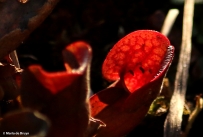
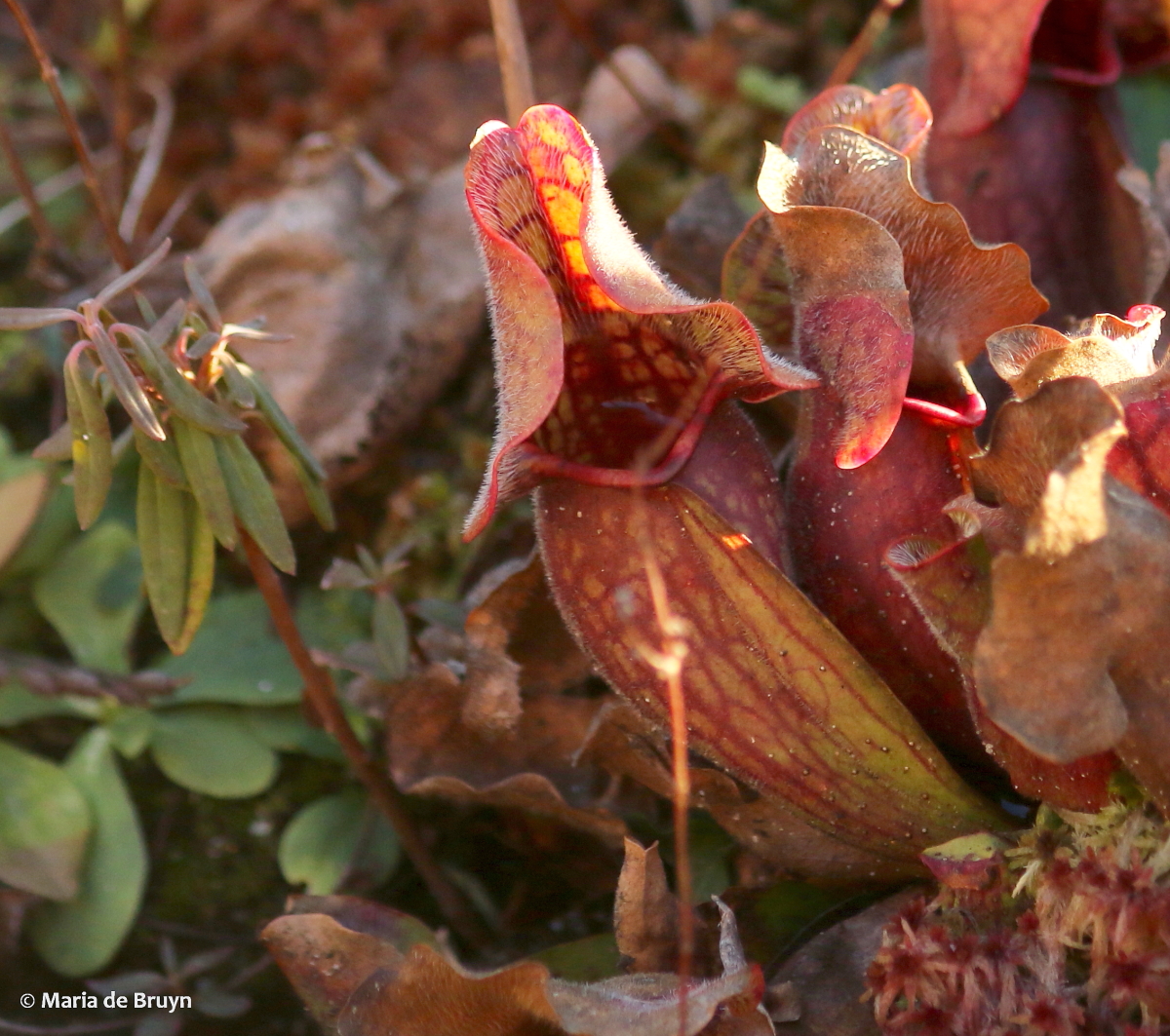
During a plant interlude, I was surprised to see some Southern purple pitcher plants (Sarracenia purpurea) that had not yet shriveled up in the cold.

Southern purple pitcher plant I77A8086© Maria de Bruyn Southern purple pitcher plant I77A8081© Maria de Bruyn res


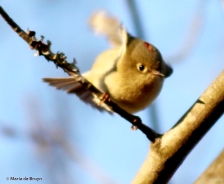
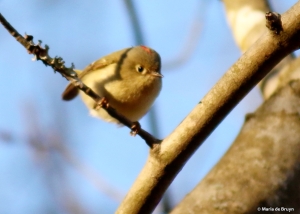
When, I was leaving, a ruby-crowned kinglet (Regulus calendula) alighted overhead,

ruby-crowned kinglet I77A8165© Maria de Bruyn ruby-crowned kinglet I77A8164© Maria de Bruyn

a red-bellied woodpecker arrived, and one more woodpecker made an appearance – a Northern flicker (Colaptes auratus) high up behind some branches in a tall tree. I was using my small zoom lens so the photo quality isn’t great, but you can see that s/he was there.

red-bellied wooodpecker I77A8234© Maria de Bruyn Northern flicker I77A8154© Maria de Bruyn

downy woodpecker I77A8006© Maria de BruynThe only woodpeckers that are common in our town that I missed were the red-headed and hairy woodpeckers – it was truly a woodpecker welcome and a really lovely start to my wildlife photography outings for this year!

Thrushes – speckles and spots, or not

Learning to “bird” (i.e., spot birds and determine what species they are) is no easy matter. There are guides that have color-coded pages so you can begin by looking for birds that are primarily of the color of the one at which you happen to be looking, but then the females and males can differ greatly and the young can look very different from their parents, too.
Hermit thrush IMG_1357©Maria de Bruyn blogIf you can learn something about “families”, that will help you narrow down your search in other guides. So I began associating the family of thrushes with birds that have spotted breasts. I discovered that is true for some of the avian species that have the word thrush in their name, like the hermit thrush (Catharus guttatus) with its reddish tail and the wood thrush (Hylocichla mustelina, below right) with a really beautiful song.

Hermit thrush IMG_1359©Maria de Bruyn blogwood thrush IMG_5416©Maria de Bruyn blog

Wikipedia says that a characteristic of this bird family is that most species are of a gray or brown color, often with speckled under parts. But you can’t count on that being a definitive trait. For example, the large brown thrasher (Toxostoma rufum, below left) is not in the thrush family but its speckles and streaks are more than obvious. And the lovely little ovenbird (Seiurus aurocapilla, below right) with an orange stripe on its head looks similar to the hermit thrush but is actually a member of the warbler family.

brown thrasher IMG_8217©Maria de Bruyn resOvenbird IMG_0044© Maria de Bruyn blog

You can’t count on the name to help out either. The Louisiana waterthrush (Parkesia motacilla) is not a thrush at all but a somewhat larger warbler species that places its nest near water.

Louisiana waterthrush IMG_1260©Maria de Bruyn blog

American robin IMG_3049©Maria de Bruyn resOn the other hand, I was surprised to find out that American robins (Turdus migratorius) are thrushes. But then I saw that the young robins do have speckled breasts – very obvious on this one to the left.

And I learned that Eastern bluebirds (Sialia sialis) are a thrush species, too – those spots are also evident in the young!


Eastern bluebird IMG_6155©Maria de Bruyn resEastern bluebird IMG_5850©Maria de Bruyn

It turns out that Eurasian (common) blackbirds (Turdus merula) are thrushes, too. The males, like this one seen in Switzerland, are all black but the females show some spotting.

Eurasian blackbird male 6 MdB blogEurasian blackbird female 3 MdBblog

Nevertheless, speckling and spotting are no clear-cut clues to thrushes and common names can be confusing and deceiving. Perhaps I should give up on examining bird breasts to help figure out what species they are. Enjoying the birds, their behavior and their appearance is a much better birding experience for me than aiming to become an identification or birding expert!