Outwitting the starlings during Winter Storm Helena

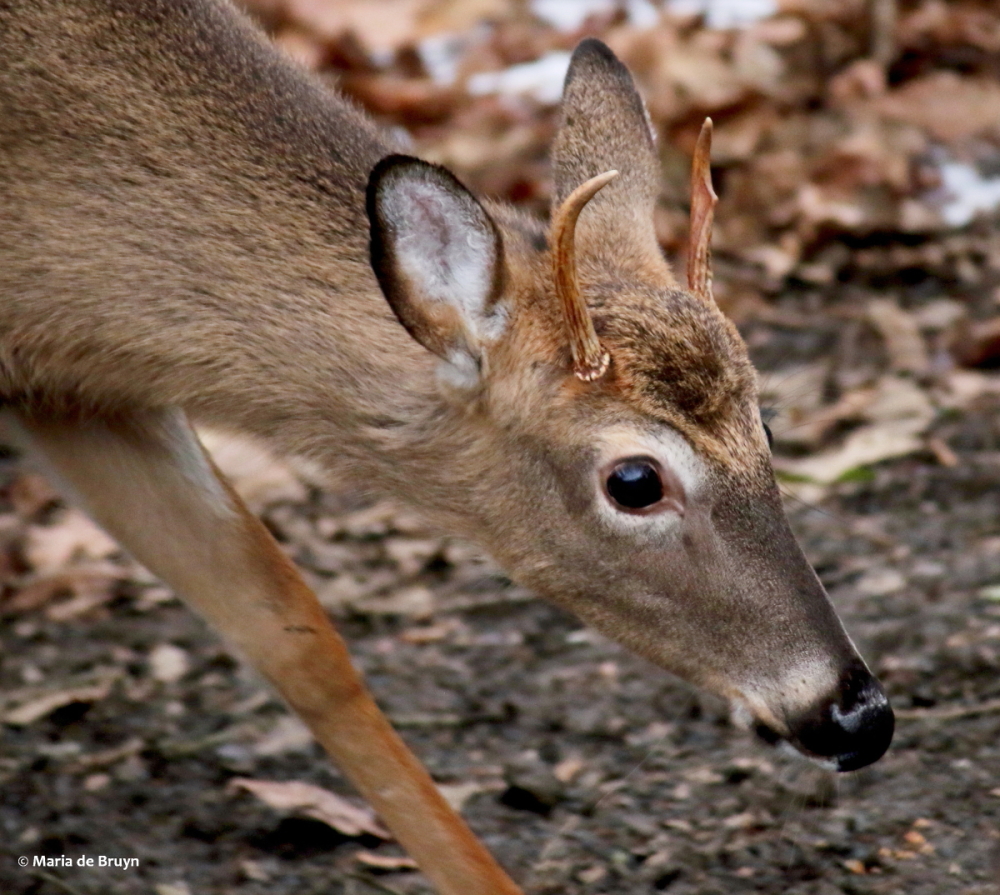
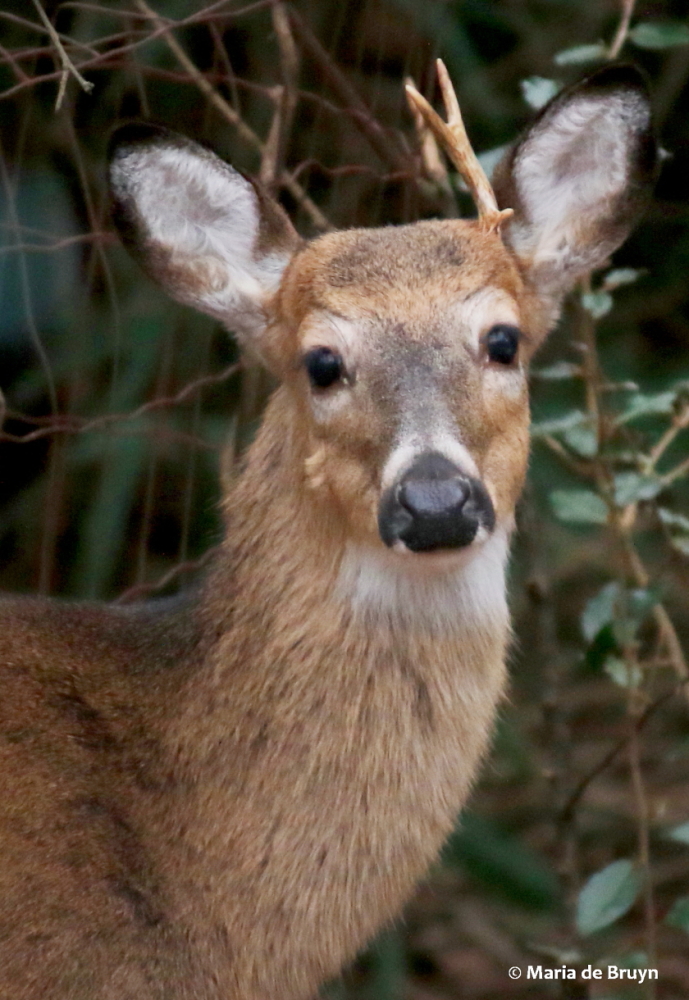
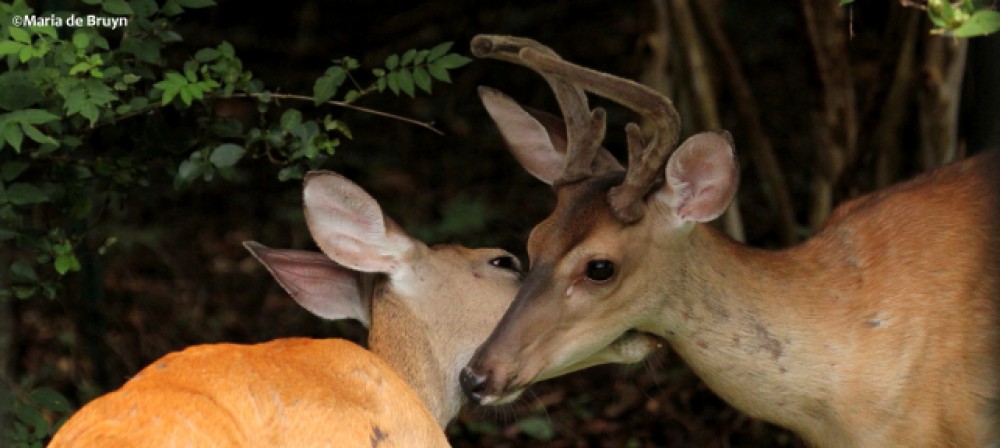
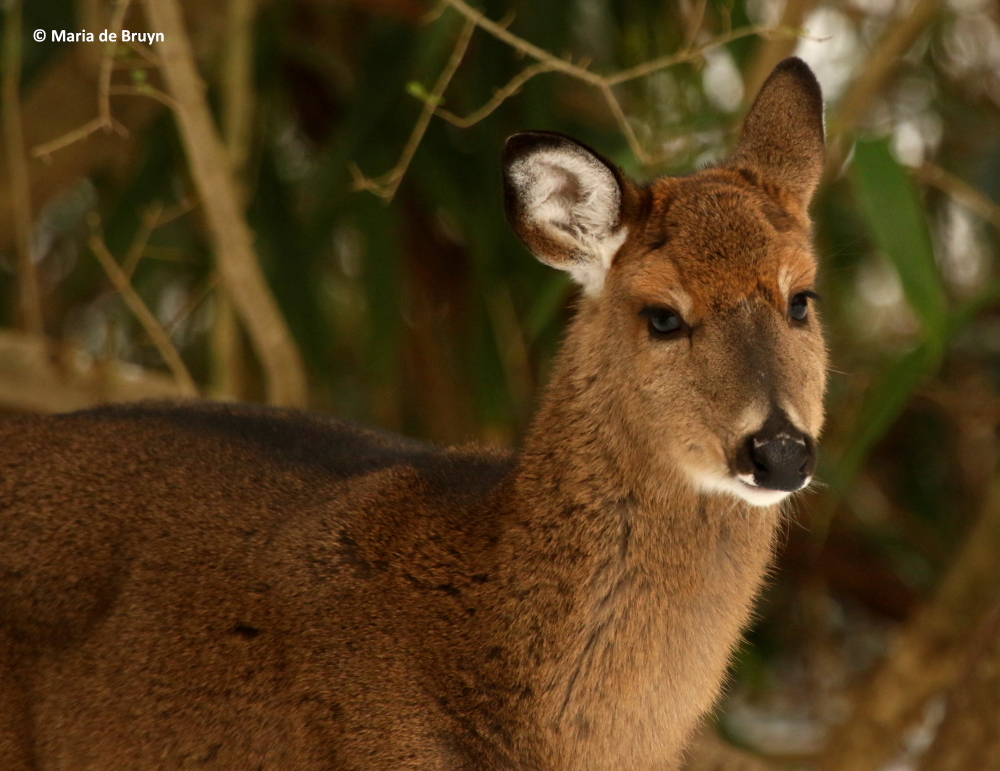
white-tailed-deer-i77a4029-maria-de-bruyn-resSo this past weekend, our part of North Carolina dealt with Winter Storm Helena, which brought us 83 straight hours of below-freezing temperatures (e.g., -9C/15F but we had lower) and a need to bundle up really well if venturing outside. (It also brought me a realization that winter storms are being named like hurricanes.) The first morning, when I went out to fill the bird feeders, I didn’t put on gloves or a cap and dealt with hypothermia symptoms when I finally went inside. I had on triple layers after that! The deer had their fur puffed up and seemed to be coping well.

The frigid air made me feel very sorry for the wildlife, although living outdoors is, of course, what they do and what they have evolved to accommodate. (I did hear today, however, of some birds and small animals that were found frozen to death!) With the snow covering the ground, it turned out the birds were more than happy to visit the feeders and piles of food I had strewn on the snow for the ground feeders.
yellow-rumped-warbler-i77a4305-maria-de-bruyn-res

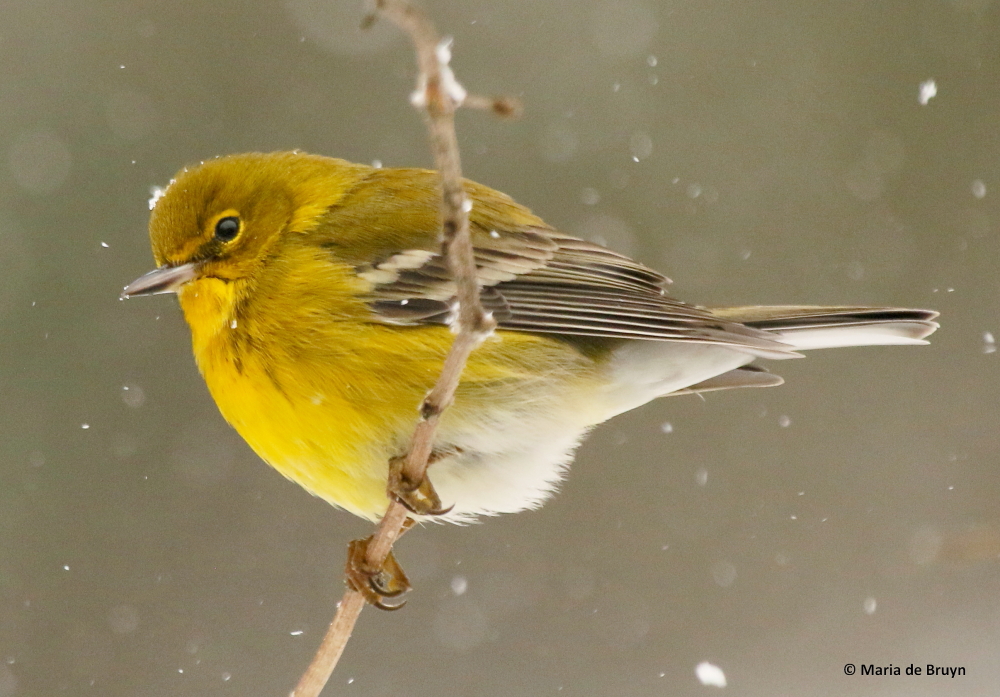
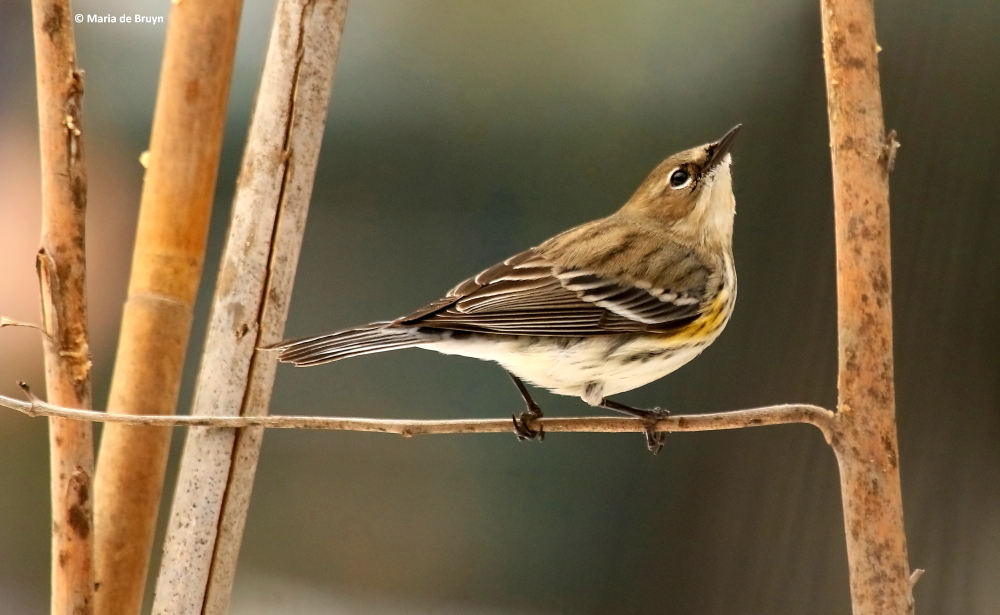
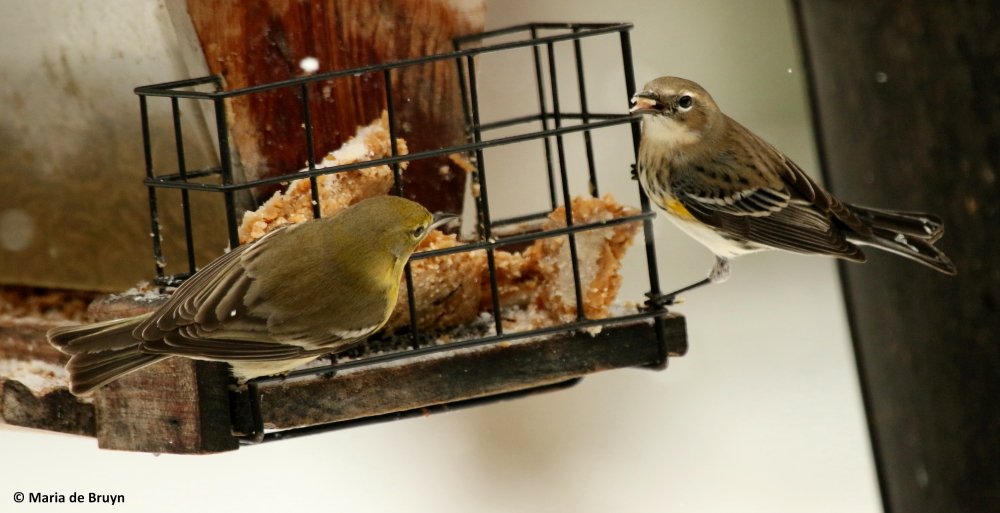
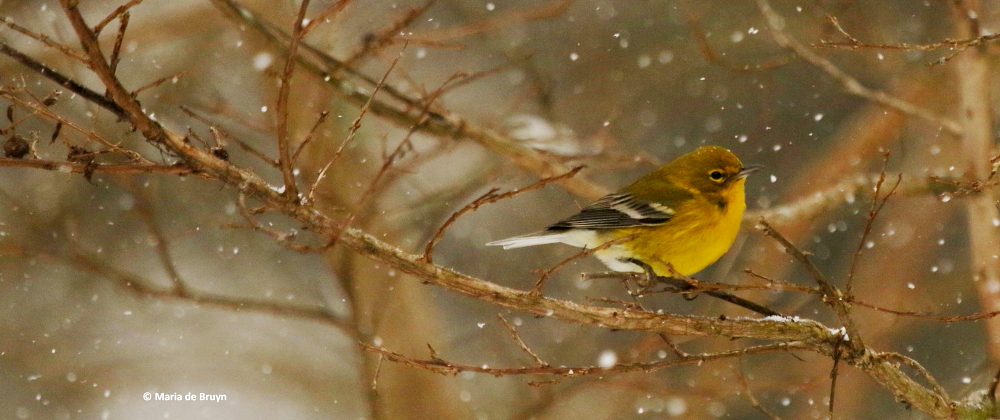
Not only did I have many types of birds coming round, but also record numbers of them. Some birds, like the yellow-rumped warblers (Setophaga coronata, above), usually tend to visit on their own and are not happy with their species mates in the vicinity but during these days, I had four of them alighting near feeders at a time. The same was true for the colorful pine warblers (Setophaga pinus) although they didn’t come close to each other.
yellow-rumped-warbler-i77a3138-maria-de-bruyn-res

pine-warbler-i77a2441-maria-de-bruyn-res

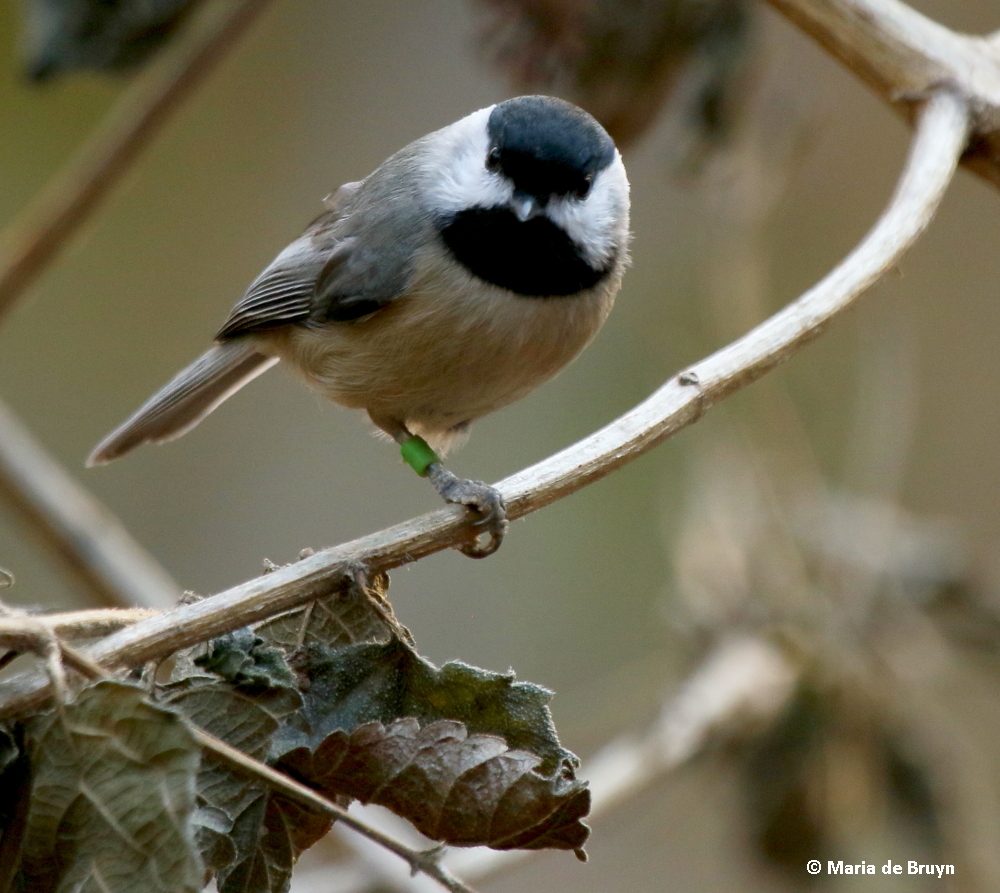
The Carolina wrens (Thryothorus ludovicianus) and Carolina chickadees (Poecile carolinensis) don’t seem to have too many problems with sharing space and visited the feeders in the same way they always do – quick flights to and fro from nearby tree and shrub branches.
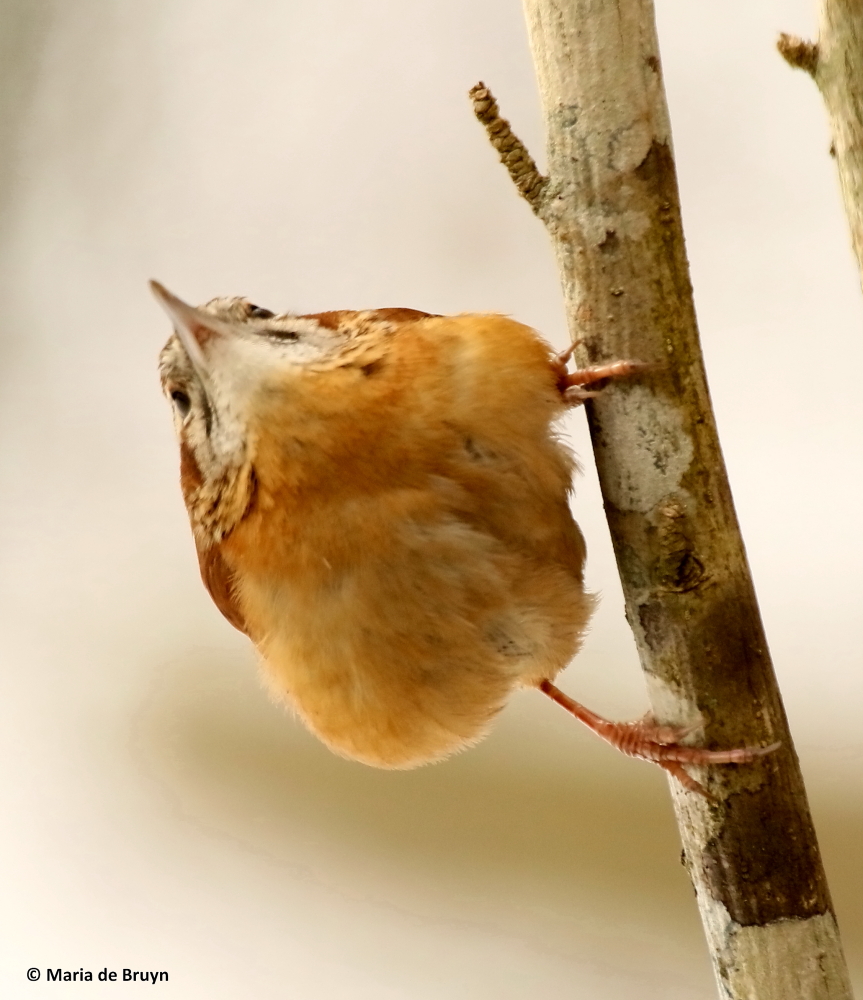
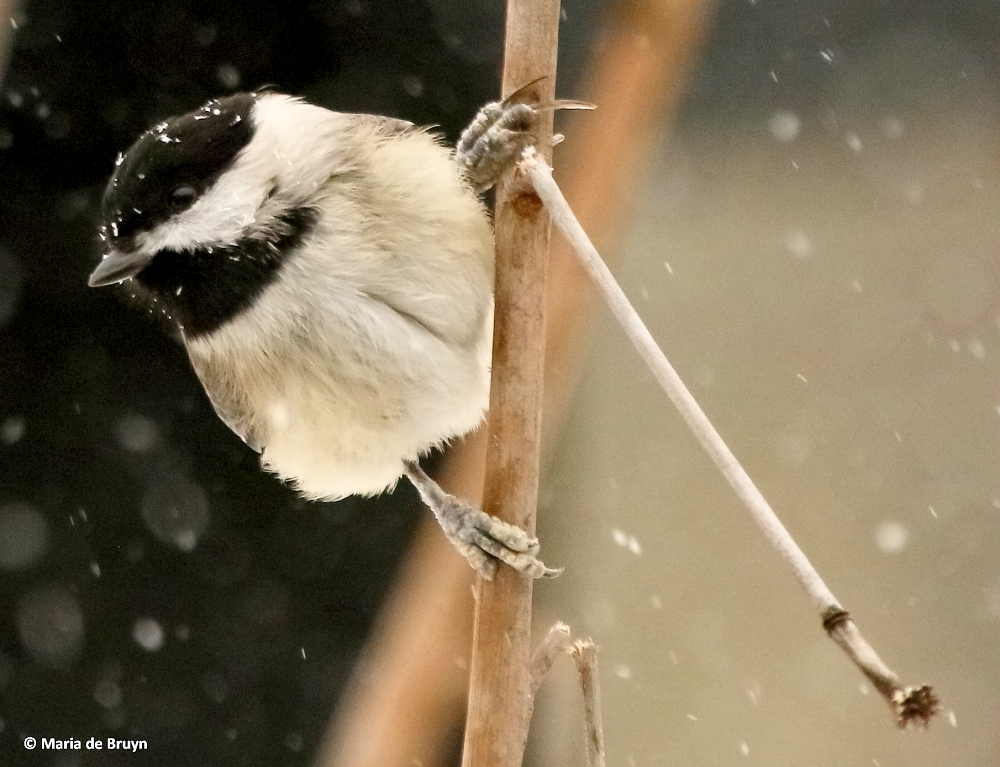
carolina-wren-i77a3873-maria-de-bruyn-res   carolina-chickadee-i77a2710-maria-de-bruyn-res

brown-thrasher-i77a4236-maria-de-bruyn-res


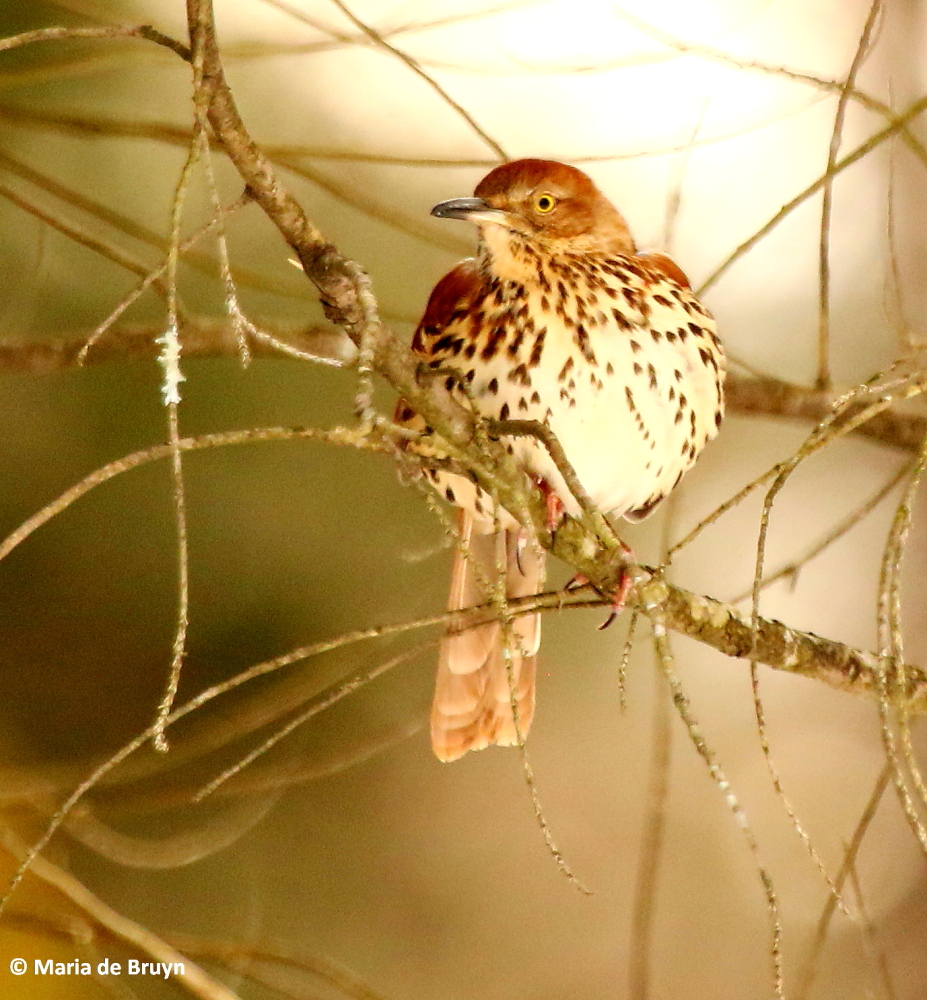
Most of the birds were fairly content to be in close proximity to one another during the snow days. The brown thrashers (Toxostoma rufum) did get very cross with one another, however, when they came too close to one another and chased their rivals away.

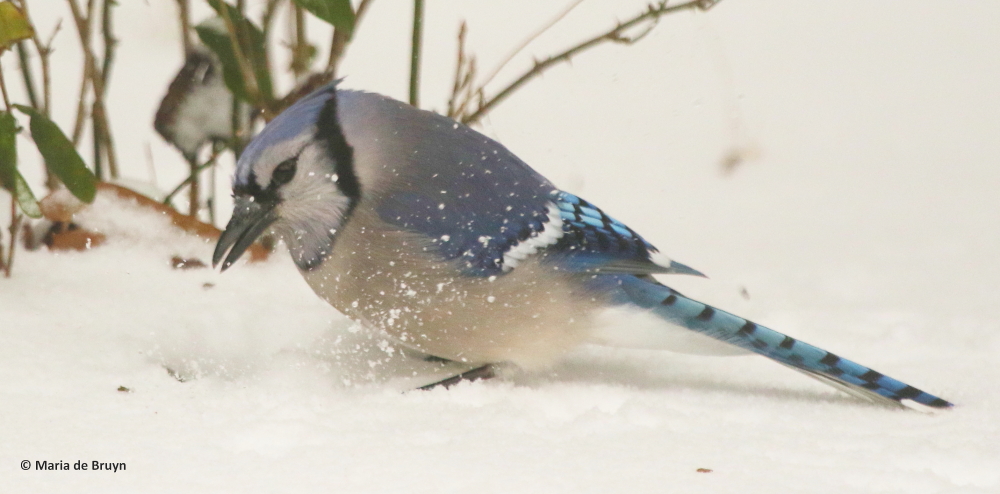
Sometimes a bird would go off and rummage in the snow, like this blue jay (Cyanocitta cristata).
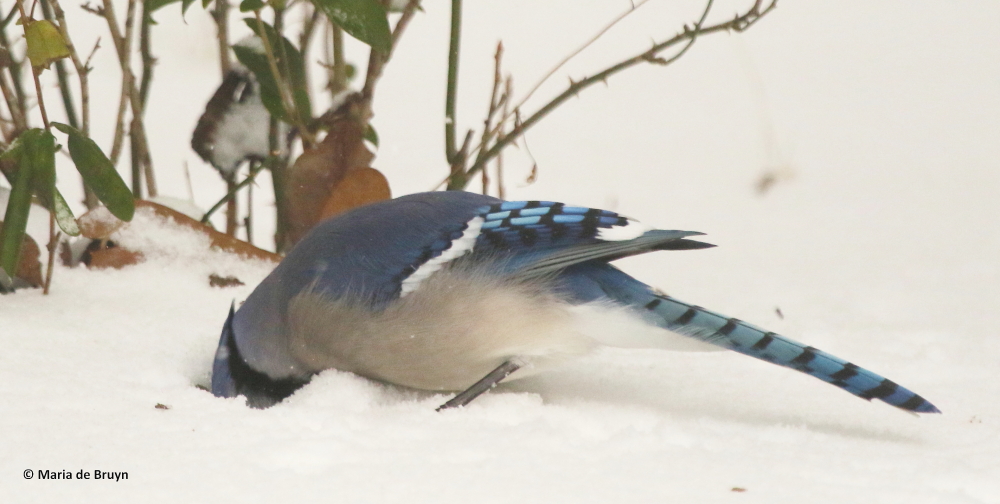
 

blue-jay-i77a2776-maria-de-bruyn-res blue-jay-i77a2770-maria-de-bruyn-res

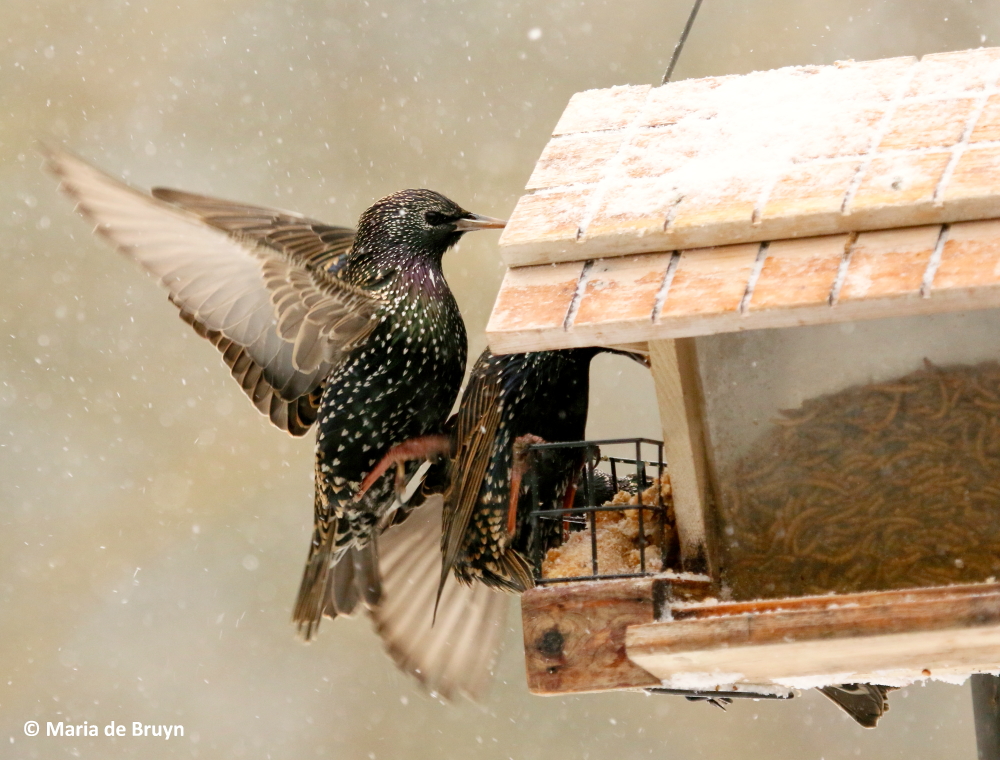
european-starling-i77a2674-maria-de-bruyn-resThe biggest challenge for me was keeping the suet and meal worms in supply, mainly because the European starlings (Sturnus vulgaris) show up in large groups and gulp down food at a speedy pace. The other birds nibble but the starlings seem to inhale food as if they have vacuum cleaners in their throats. They can get grumpy with one another and don’t mind landing atop each other to get a foothold on the feeder.
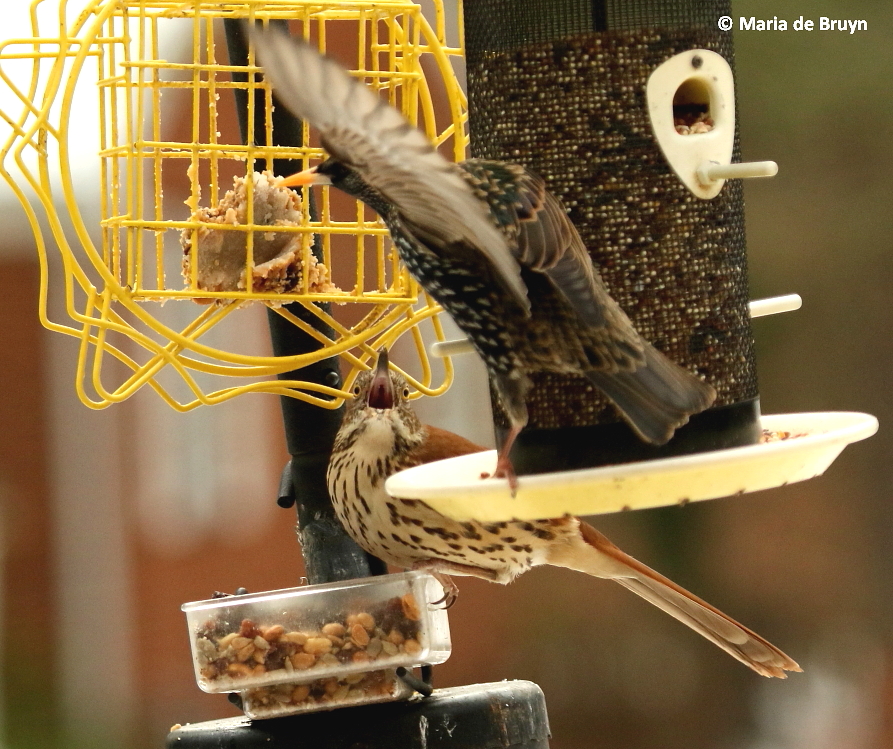
brown-thrasher-i77a3641-maria-de-bruyn-resI was pleased that the other species of birds are learning to cope with them, no longer being intimidated to fly away when these greedy avians arrive. However, they may get displaced from a feeder just because the bulky starlings take up so much room and never wait their turn to get a spot. The larger birds, like the thrashers and red-bellied woodpeckers, may express their displeasure to the starlings while trying to hold their ground. Other people report common grackles (Quiscalus quiscula) as feeder dominant birds but they are well behaved at my house.
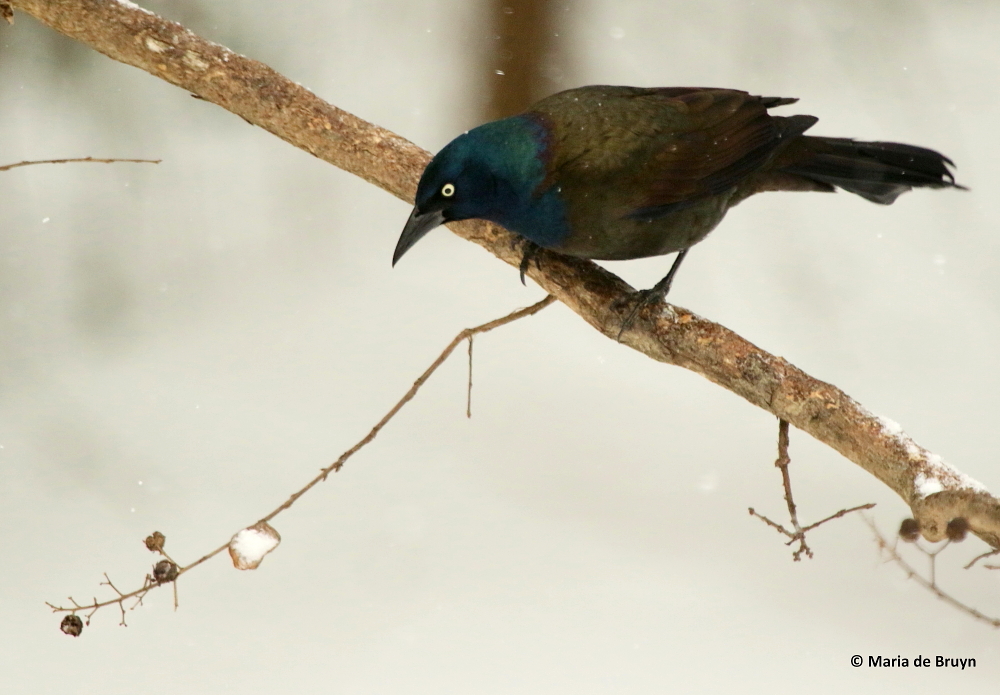
common-grackle-i77a3068-maria-de-bruyn-res

suet-i77a3541-maria-de-bruyn-res

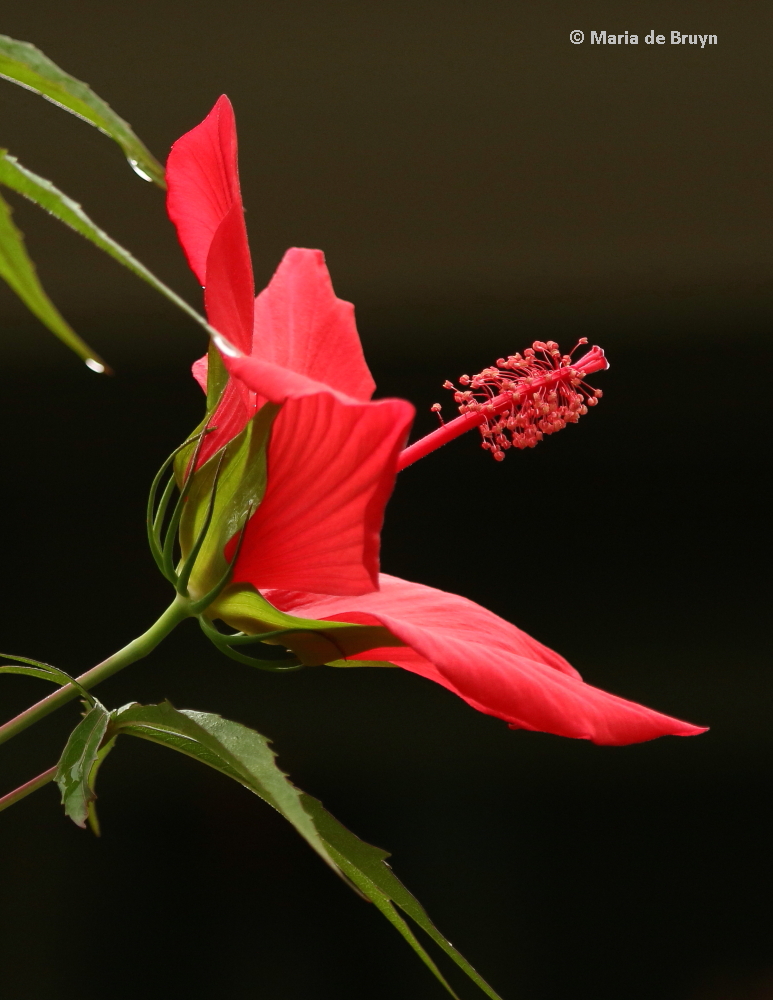
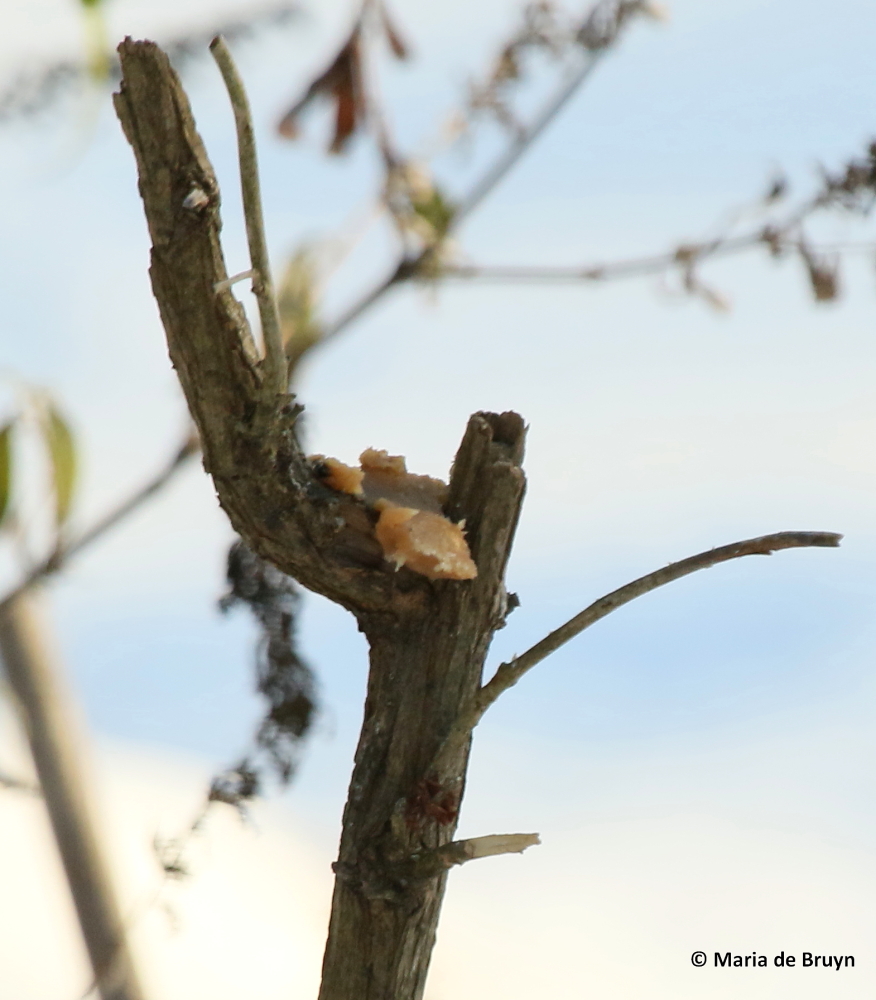
So, what was I going to do? Some of my feeders are set in a flower garden and I had left the dried stalks of sage, butterfly bush and scarlet mallow standing. They don’t look pretty but the birds love sitting on them near the feeders as they digest a bite before getting another. So I began smearing suet on the stalks, which are not sturdy enough to hold the starlings.

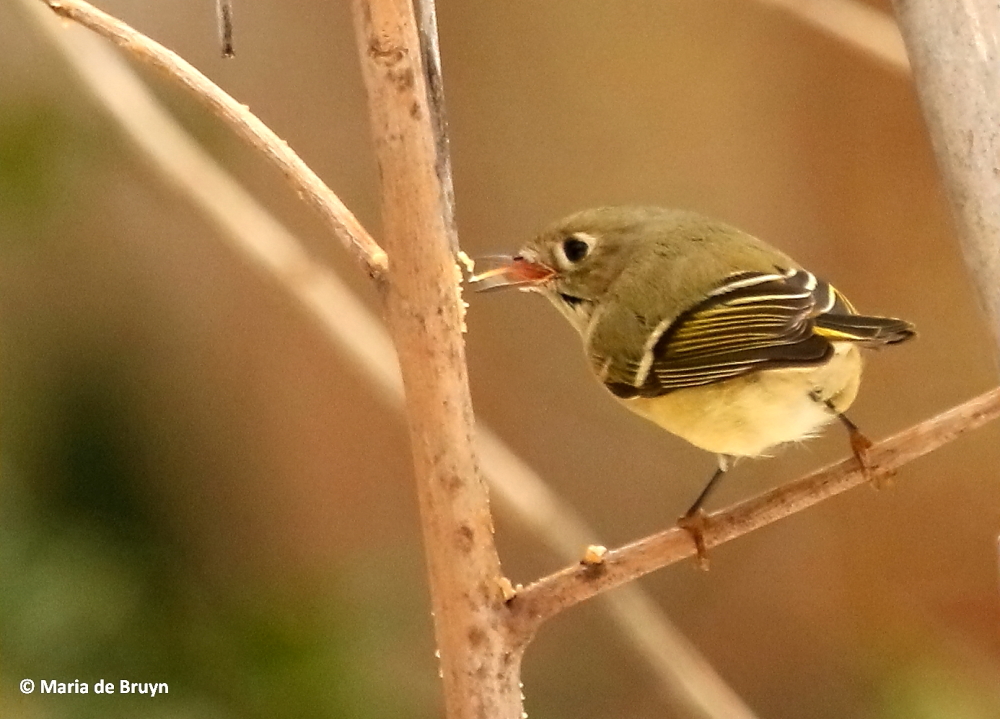
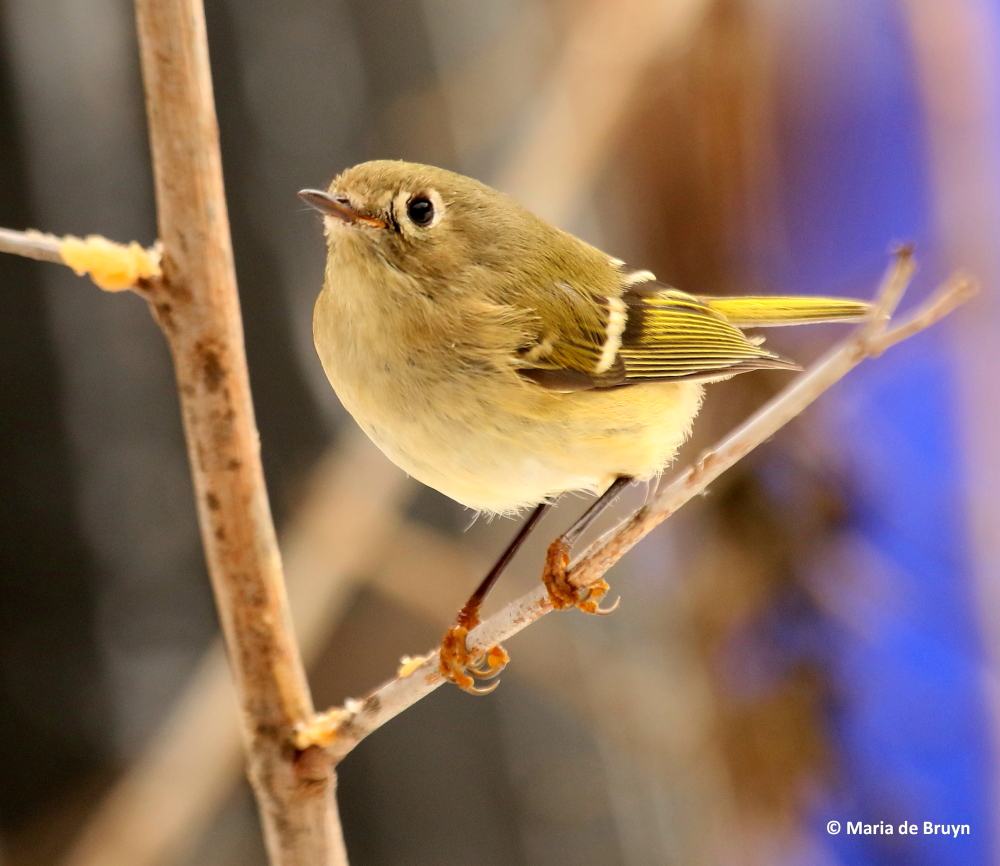
The yellow-rumped warblers and chickadees were pleased, as was my faithful ruby-crowned kinglet (Regulus calendula) and the Carolina chickadee.
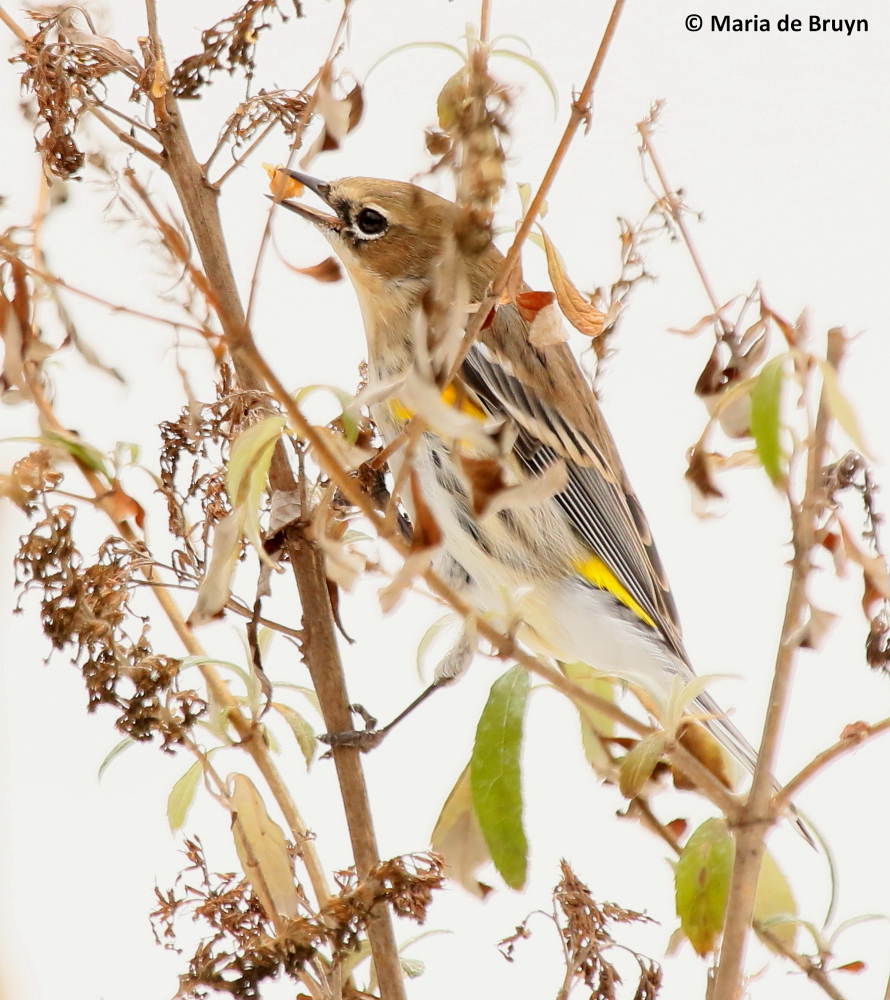
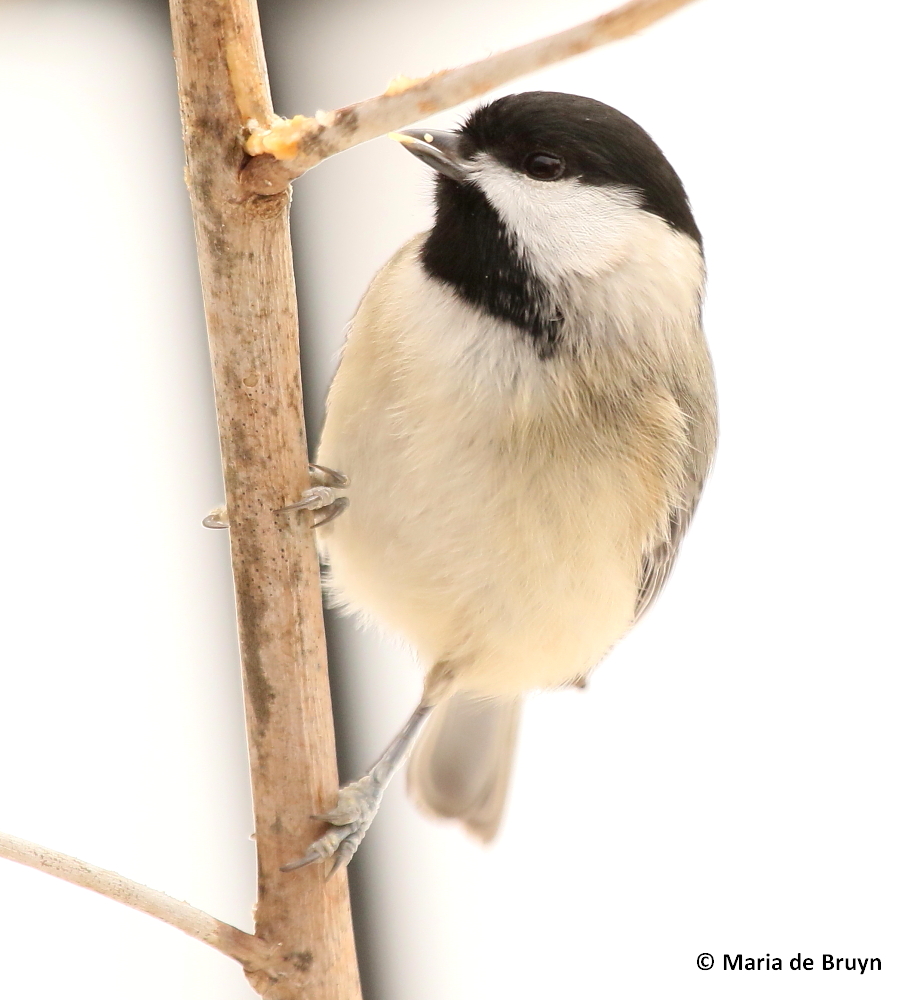
yellow-rumped-warbler-i77a3913-maria-de-bruyn-res  carolina-chickadee-i77a4283-maria-de-bruyn-res

ruby-crowned-kinglet-i77a4167-maria-de-bruyn-res

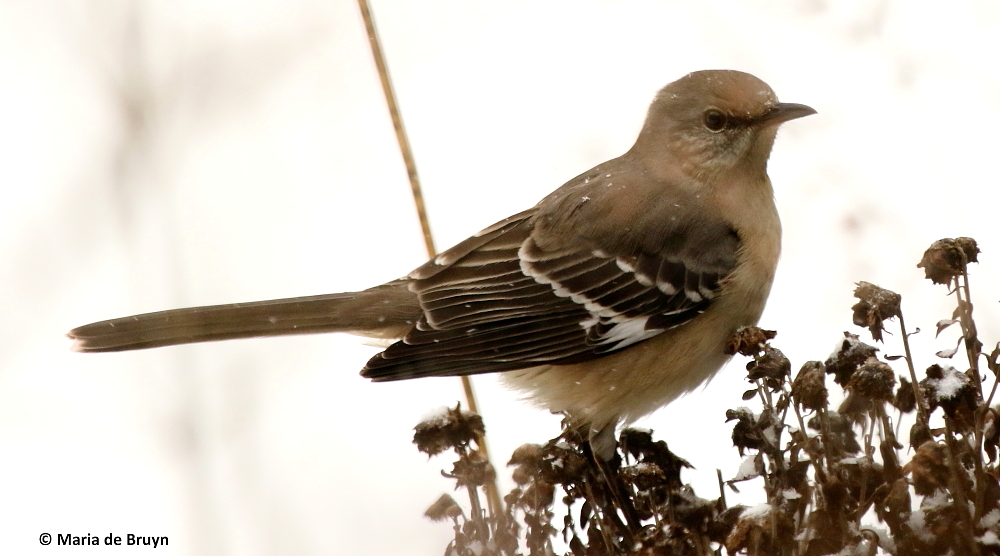
To my surprise, even the larger Northern mockingbird (Mimus polyglottos) and brown thrashers discovered and sampled the suet-laden stalks.
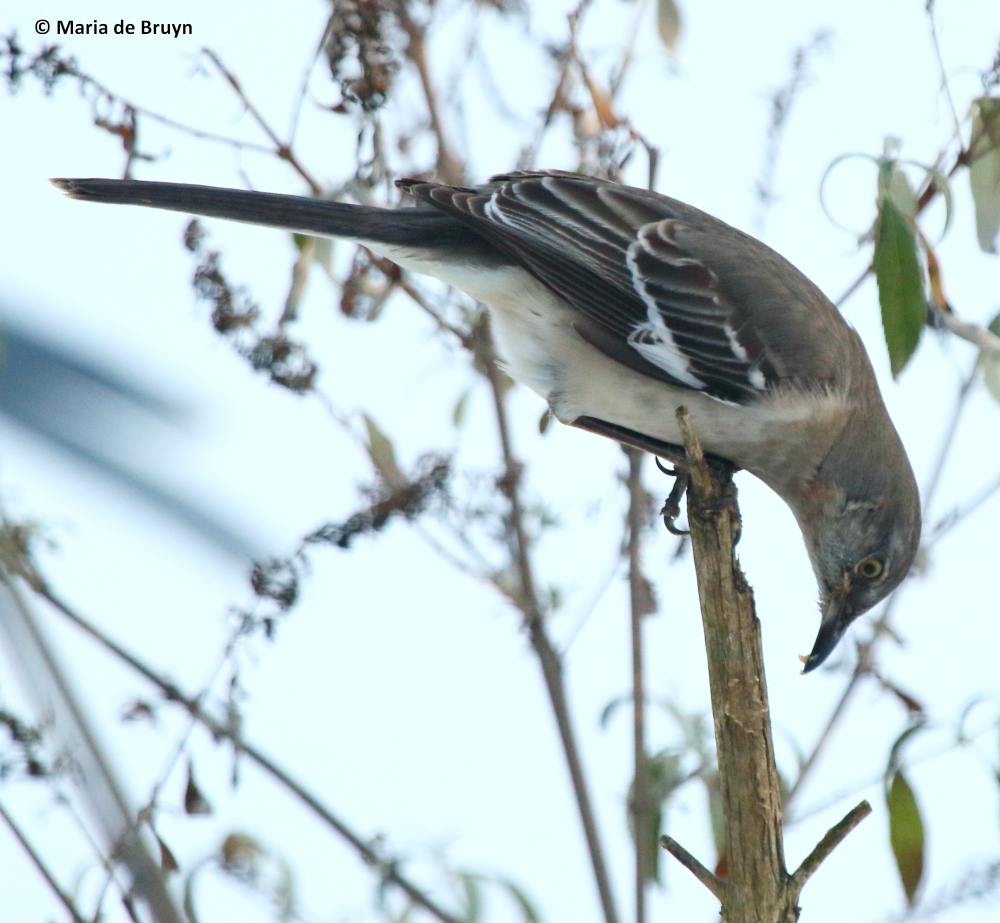
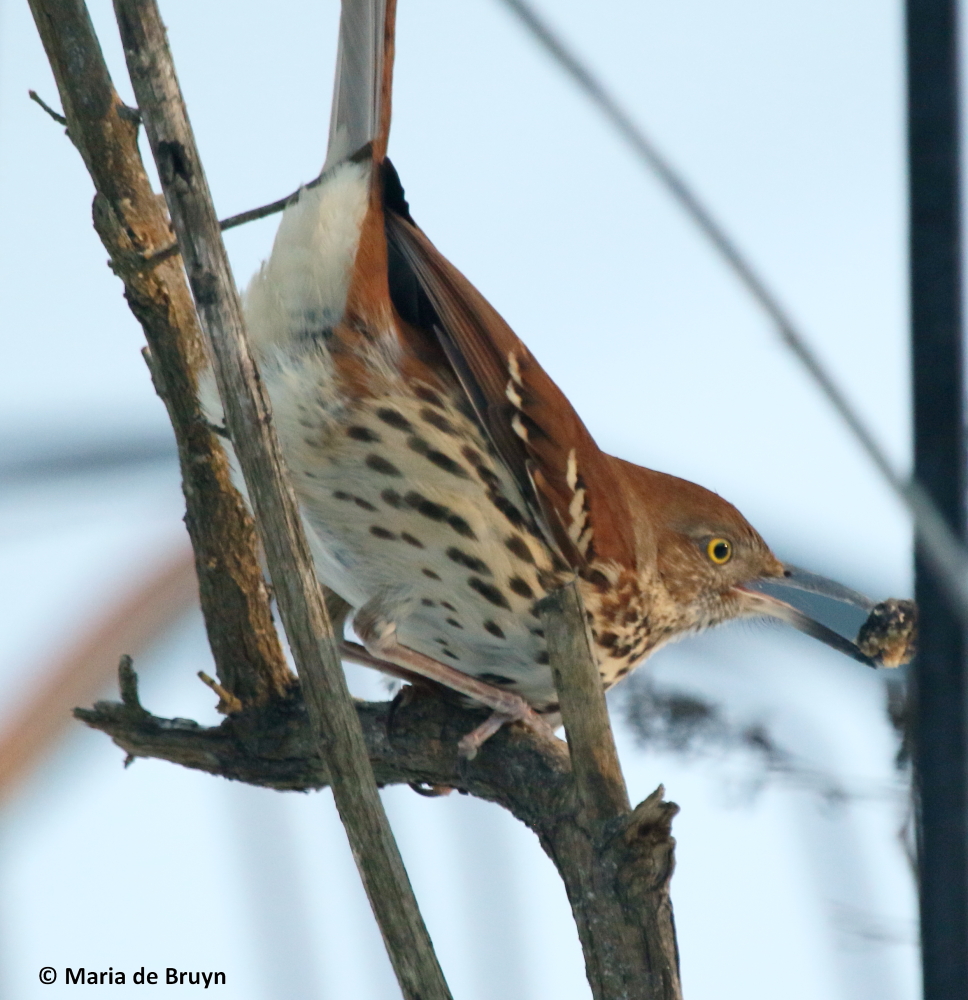
northern-mockingbird-i77a3629-maria-de-bruyn-res   brown-thrasher-i77a3607-maria-de-bruyn-res

Following advice from the Bird Sleuth program, I had stuffed the bluebird and nuthatch boxes with pine needles and wool in case the birds wanted to shelter there overnight. I don’t know if any of them did, but the brown-headed nuthatches (Sitta pusilla) were again checking out their preferred nest box, so perhaps they did roost there overnight.
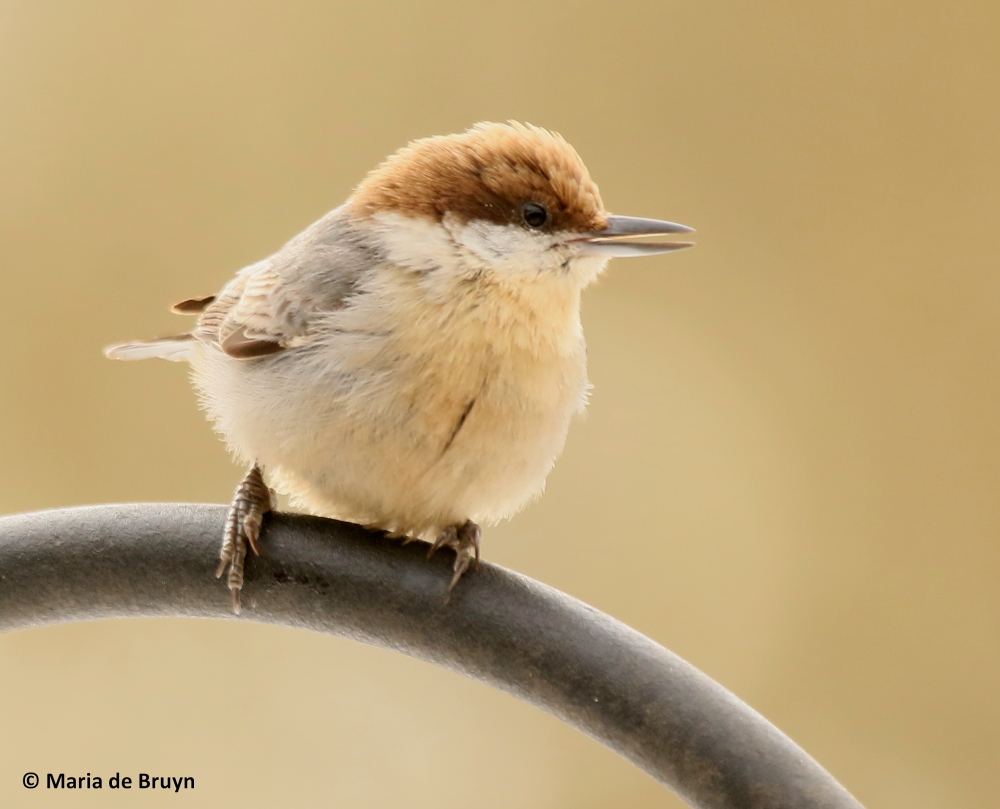
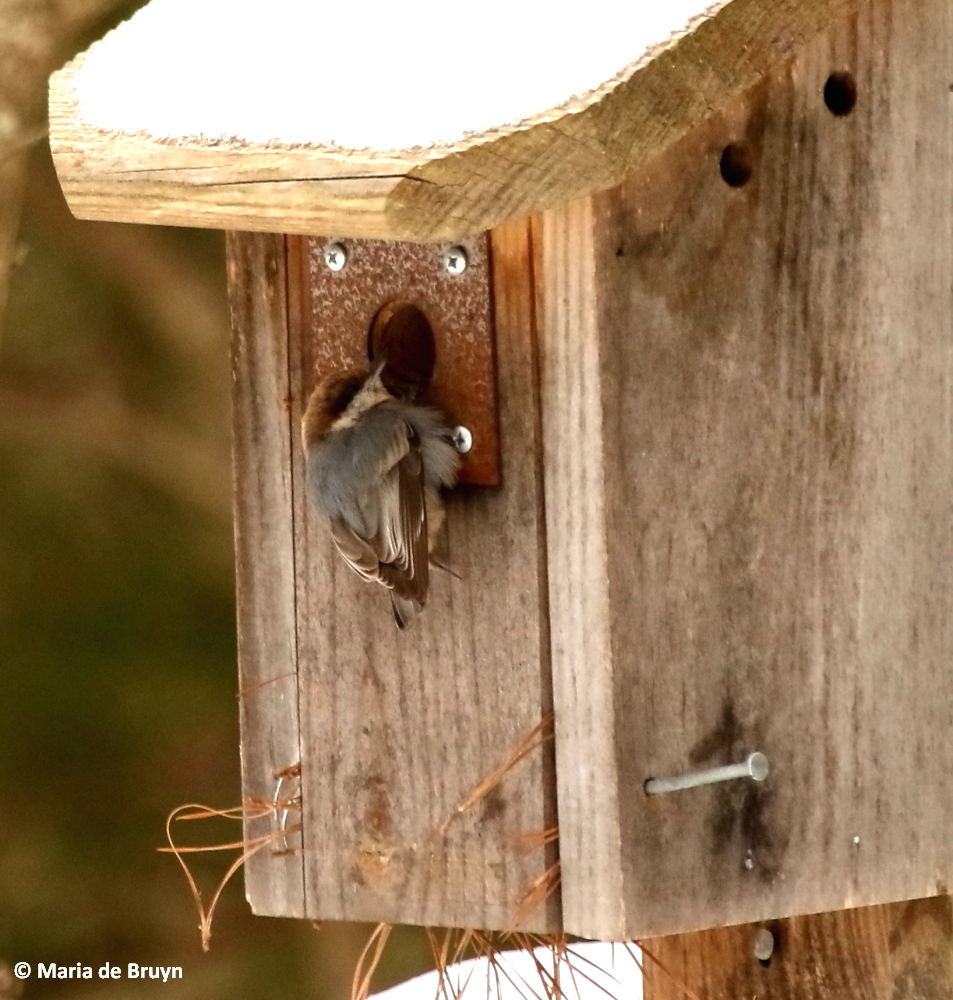
brown-headed-nuthatch-i77a3959-maria-de-bruyn-res    brown-headed-nuthatch-i77a4183-maria-de-bruyn-res

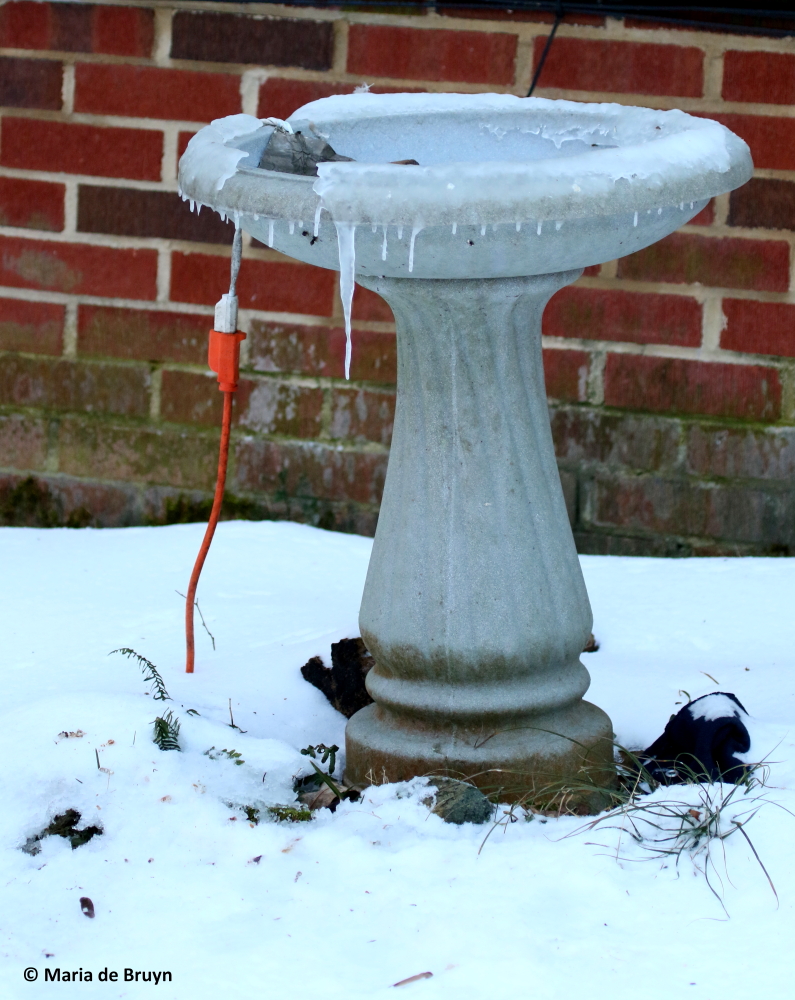
heated-fountain-i77a3586-maria-de-bruyn-res


I was filling the heated bird bath daily, too, as it became a popular drinking fountain.

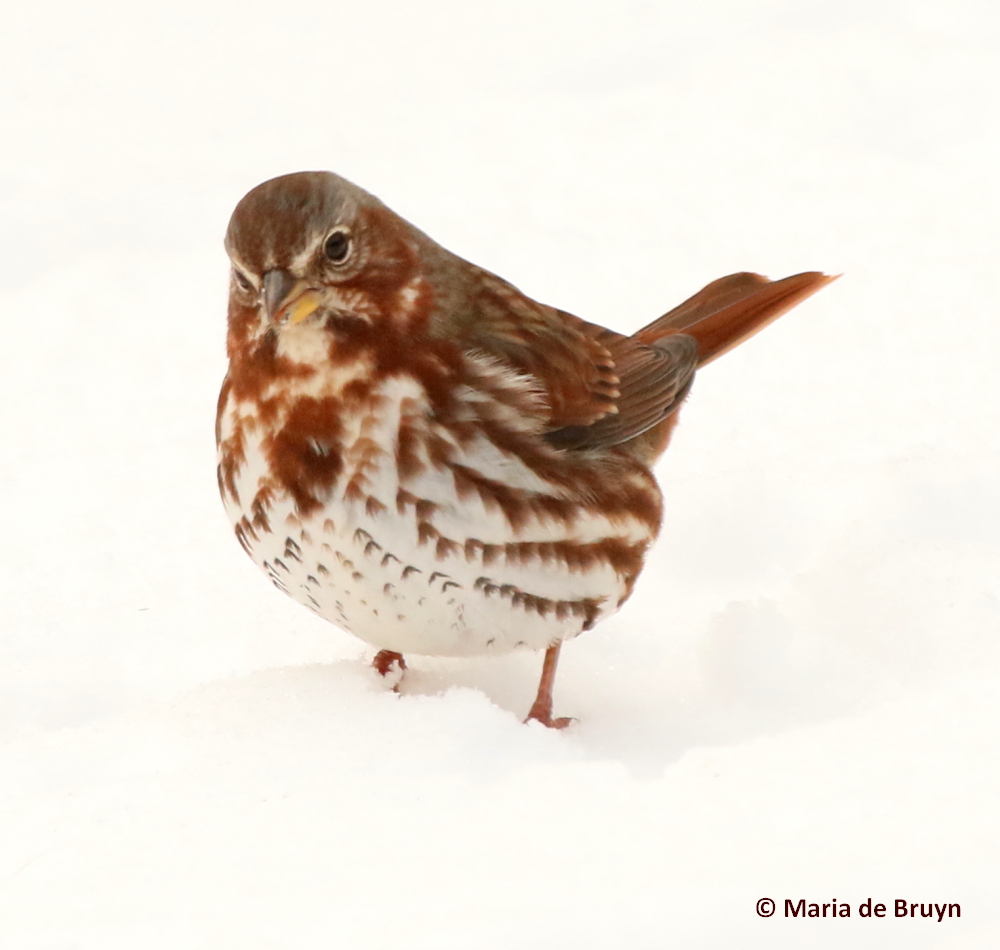
The thrill of the wintery snow days for me was a new yard visitor, a gorgeous fox sparrow (Passerella iliaca). I have never had one here before so it was a wonderful surprise and discovery. (I’m still hoping that a red-breasted nuthatch will turn up, too.)
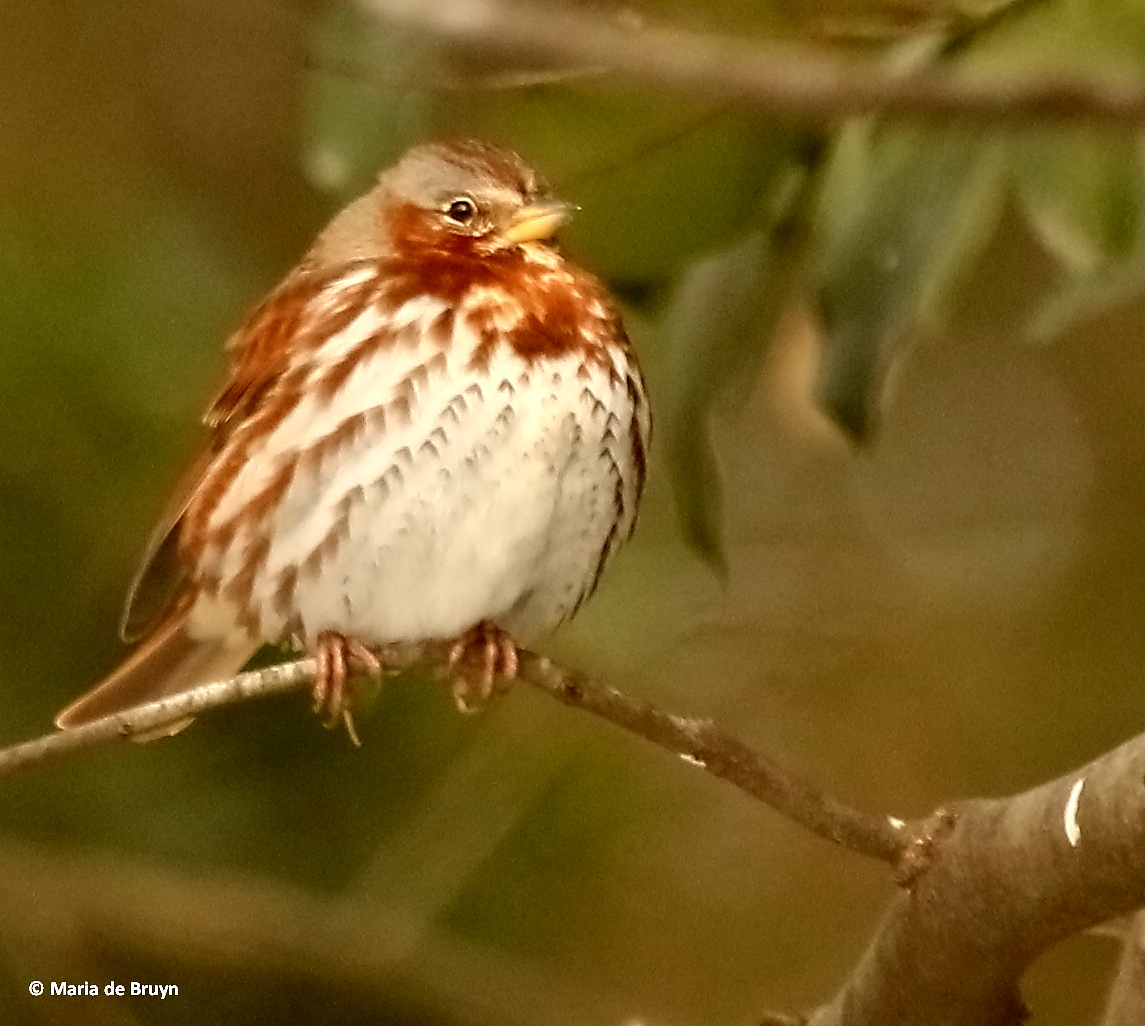
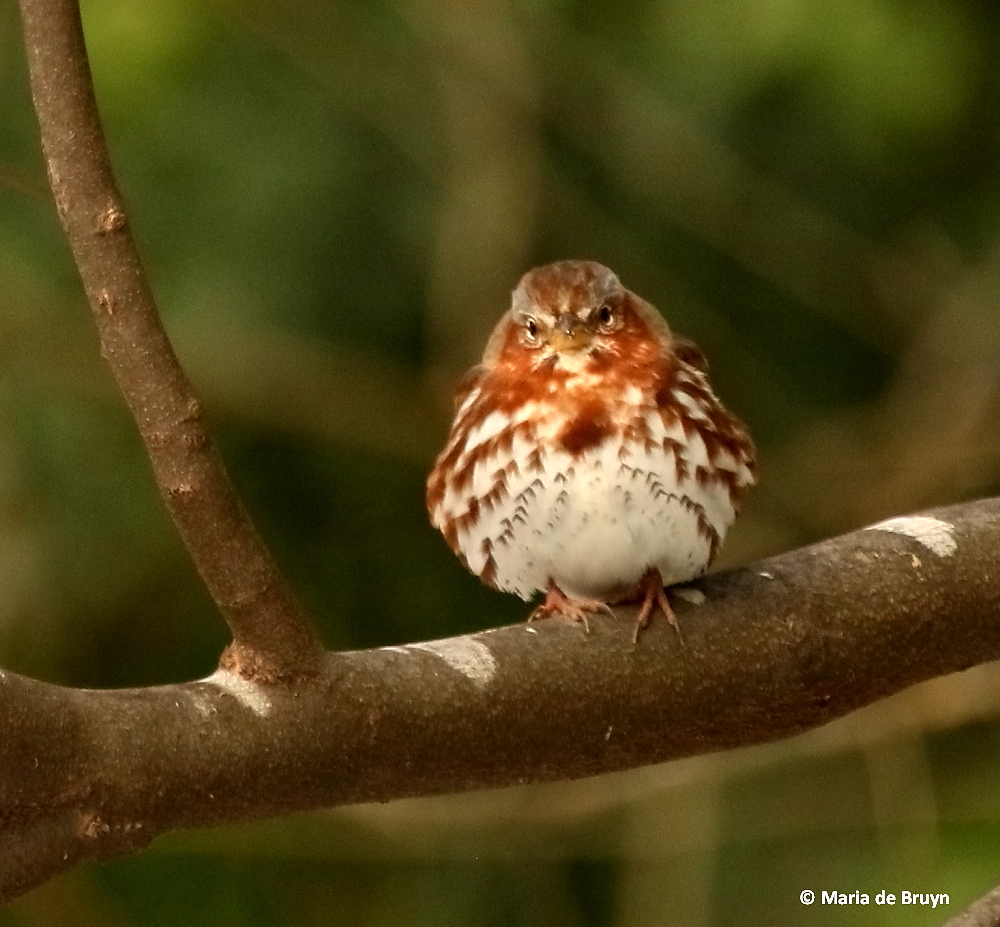


fox-sparrow-i77a4347-maria-de-bruyn  fox-sparrow-i77a4348-maria-de-bruyn-res

fox-sparrow-i77a3773-maria-de-bruyn-res

The birds “missing” from the storm gathering were the hawks. I’ve had a Cooper’s hawk  (Accipiter cooperii) visiting for years, but recently discovered that a sharp-shinned hawk (Accipiter striatus) is also taking birds from my yard. As they look quite similar, the sharpie may have been coming around for some time and I just never realized it. They were both here in the last couple weeks, but neither one made an appearance during the storm.
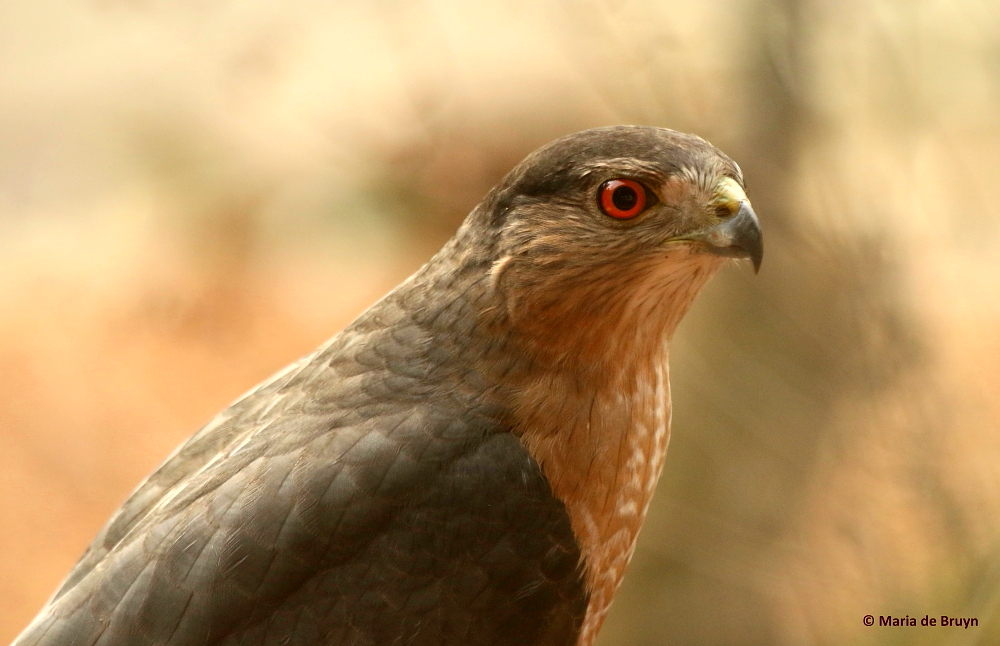
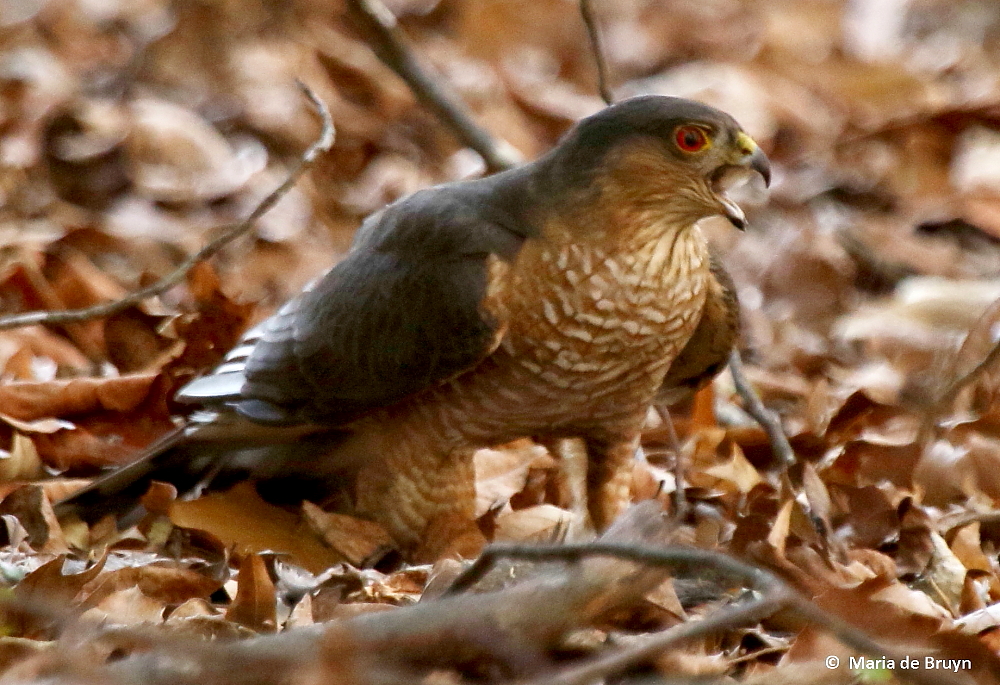
coopers-hawk-i77a1341-maria-de-bruyn-res   sharp-shinned-hawk-i77a8520-maria-de-bruyn-res

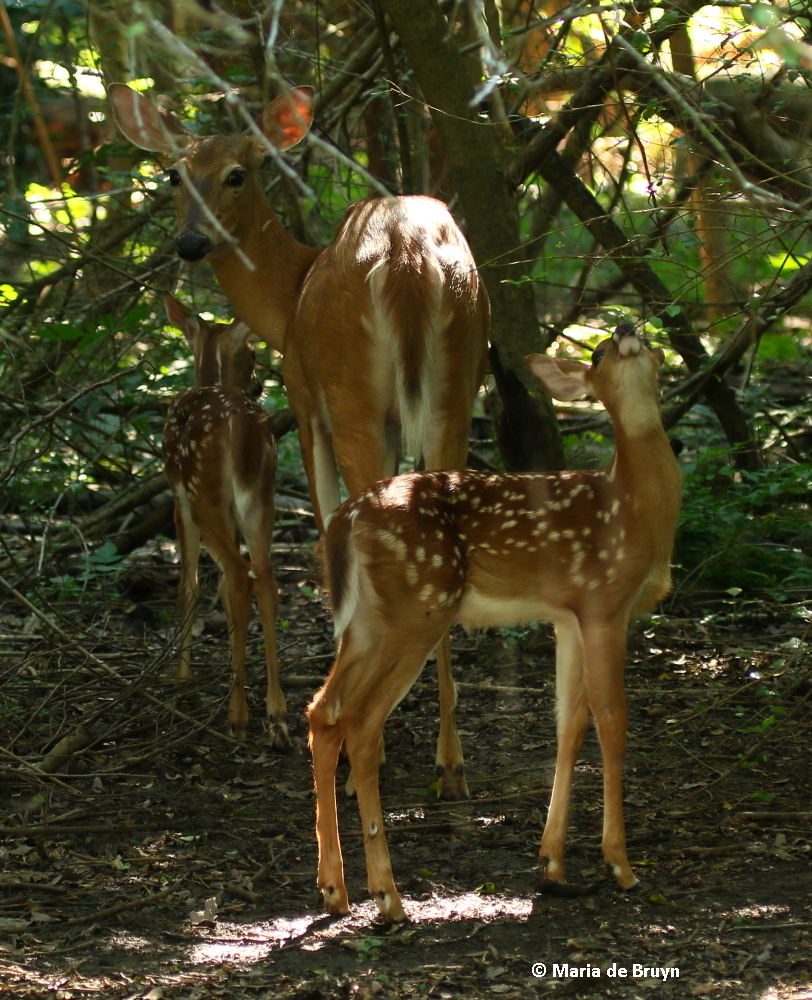
Our two neighborhood white-tailed does (Odocoileus virginianus) and their three offspring came by, obviously finding my yard a peaceful and safe space to rest.
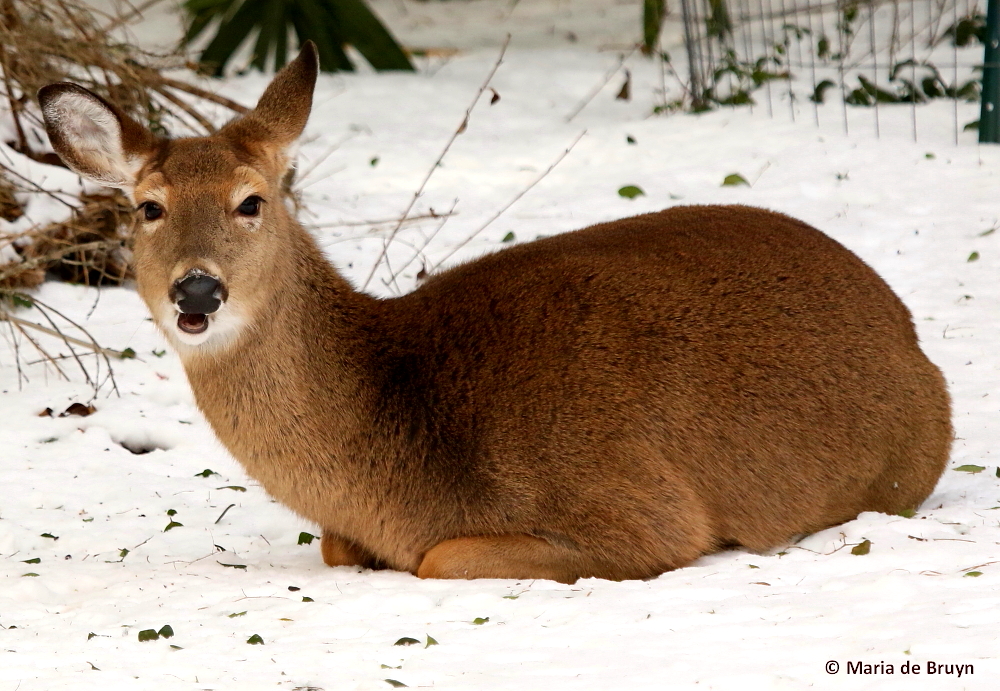
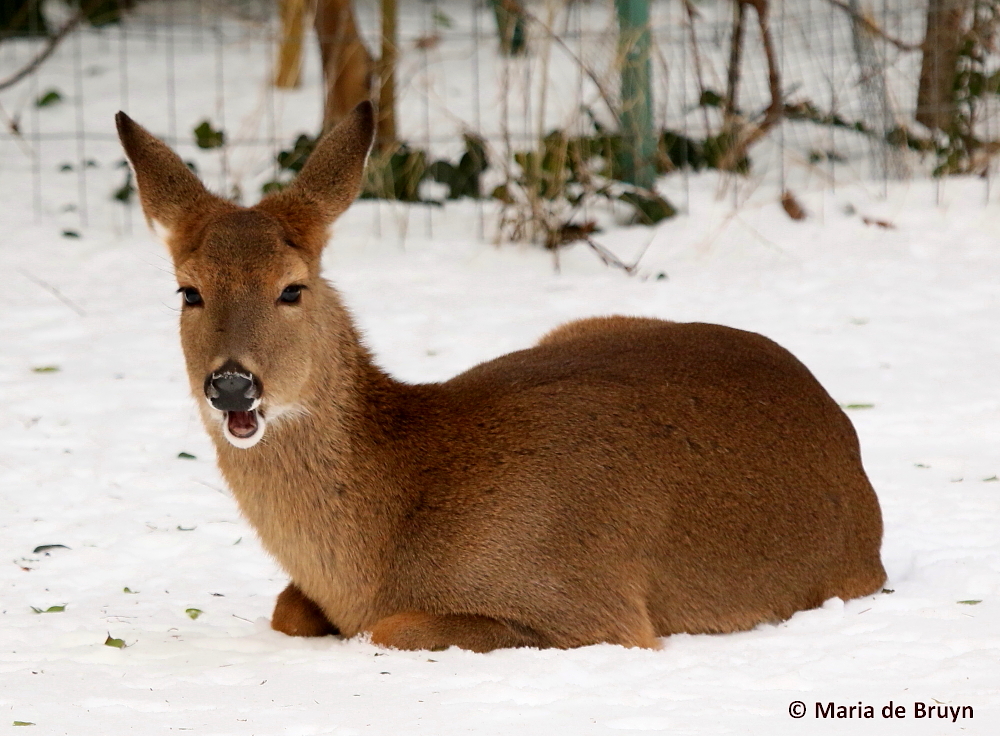
white-tailed-deer-i77a4432-maria-de-bruyn-res   white-tailed-deer-i77a4431-maria-de-bruyn-res

So I’ll end with some “beauty shots” from the snow days as the snow and ice are now melting. In two days’ time, we are supposed to be having temperatures of 68F/20C or higher! And then we can wait out the rest of January as well as February and March to see if we get any more winter storms.
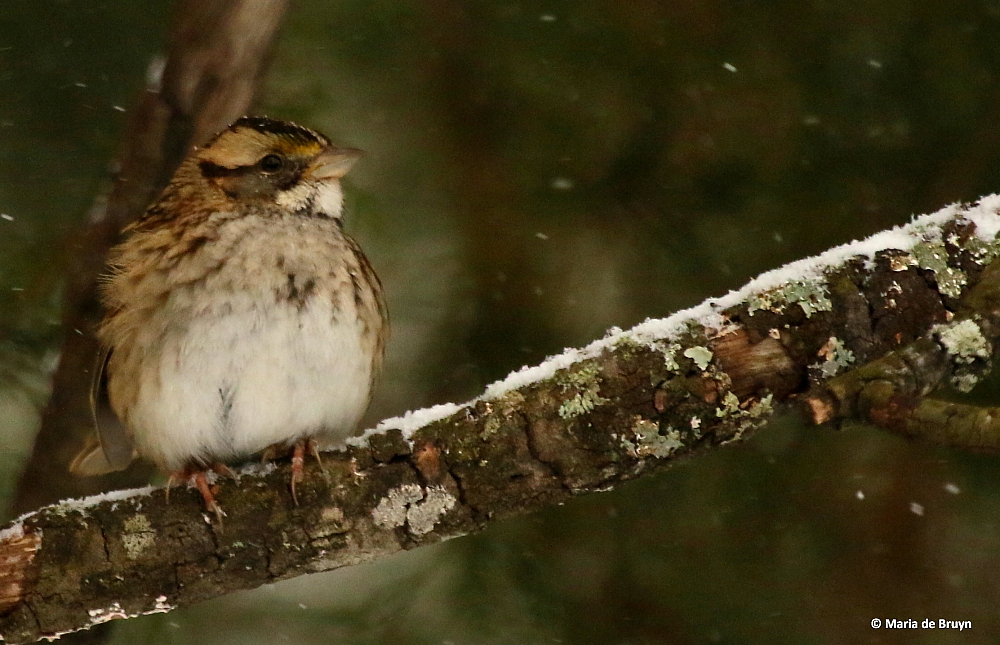
white-throated-sparrow-i77a2733-maria-de-bruyn-res

White-throated sparrow (Zonotrichia albicollis)
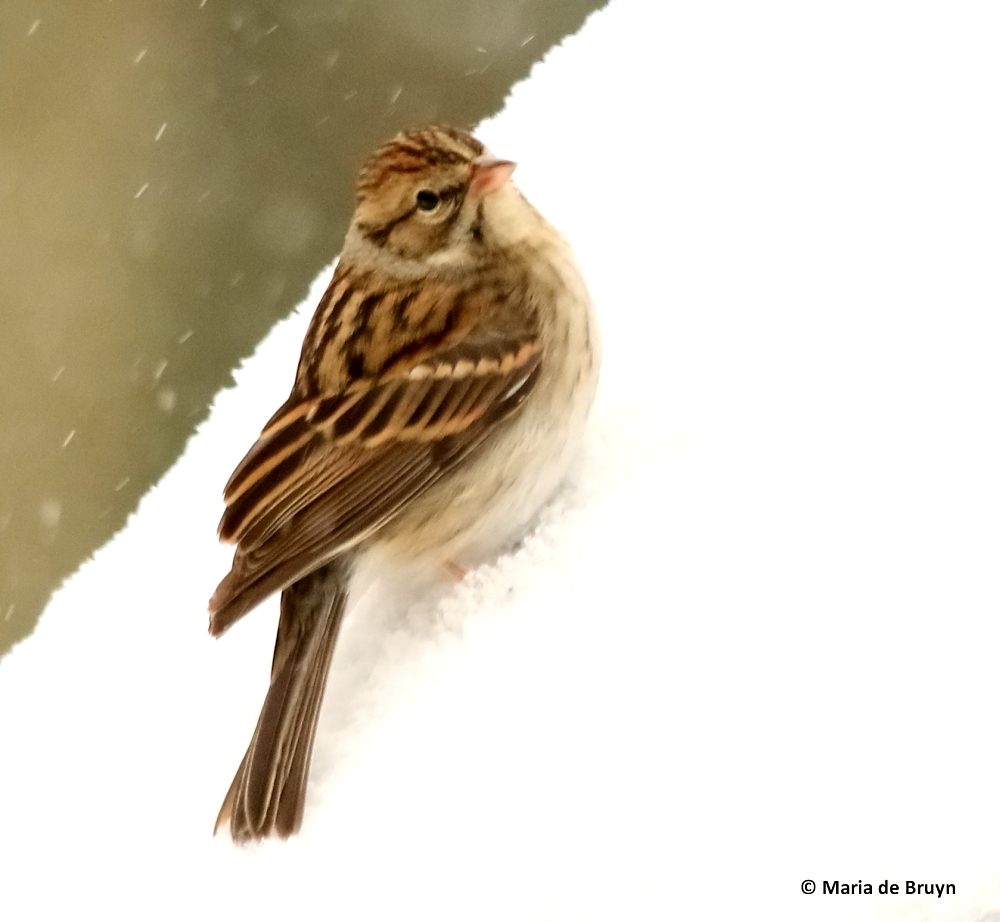
chipping-sparrow-i77a2830-maria-de-bruyn-res

     house-finch-i77a2852-maria-de-bruyn-res

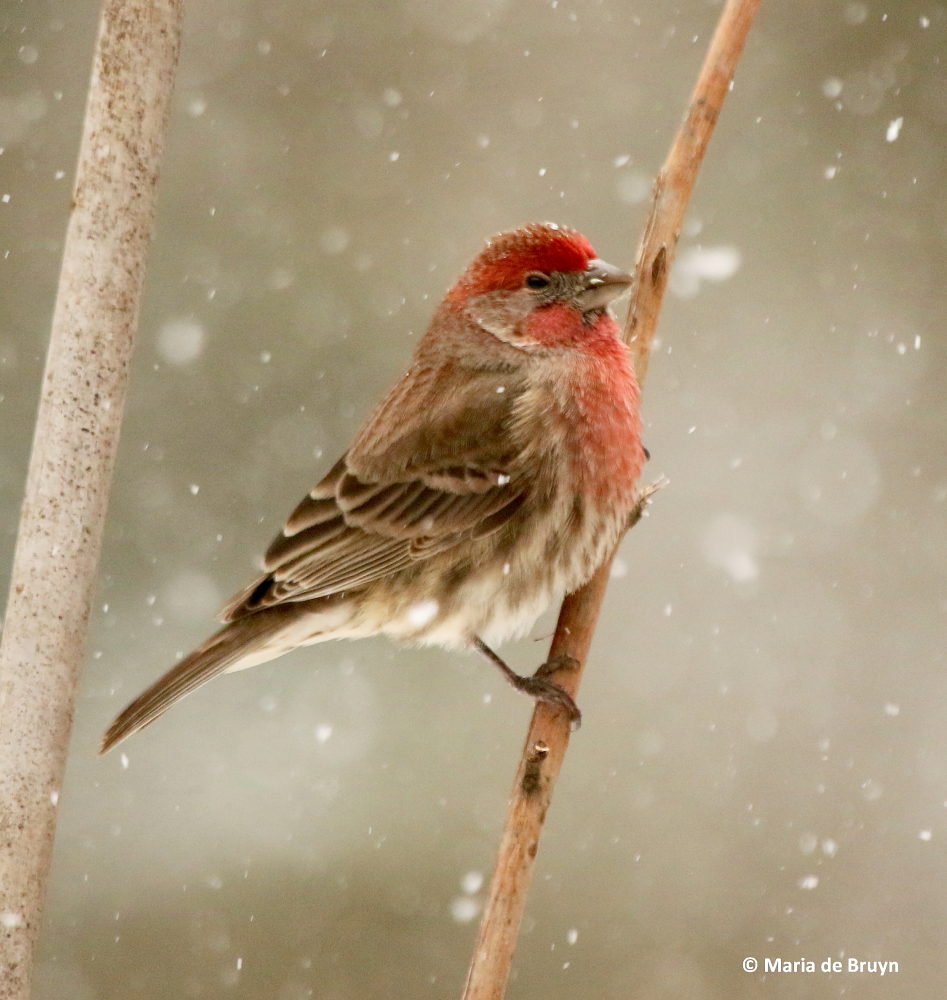
Chipping sparrow (Spizella passerina)        House finch (Haemorhous mexicanus)
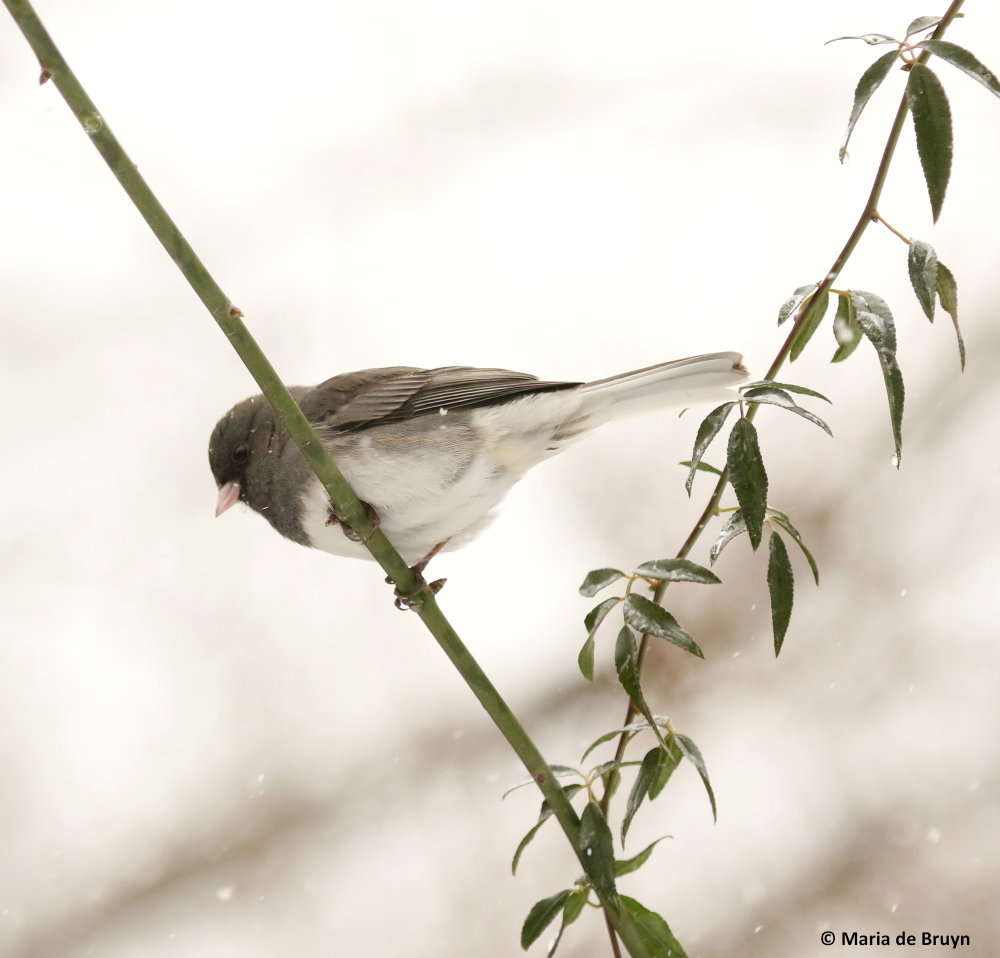
dark-eyed-junco-i77a2590-maria-de-bruyn-res  downy-woodpecker-i77a2810-maria-de-bruyn-res

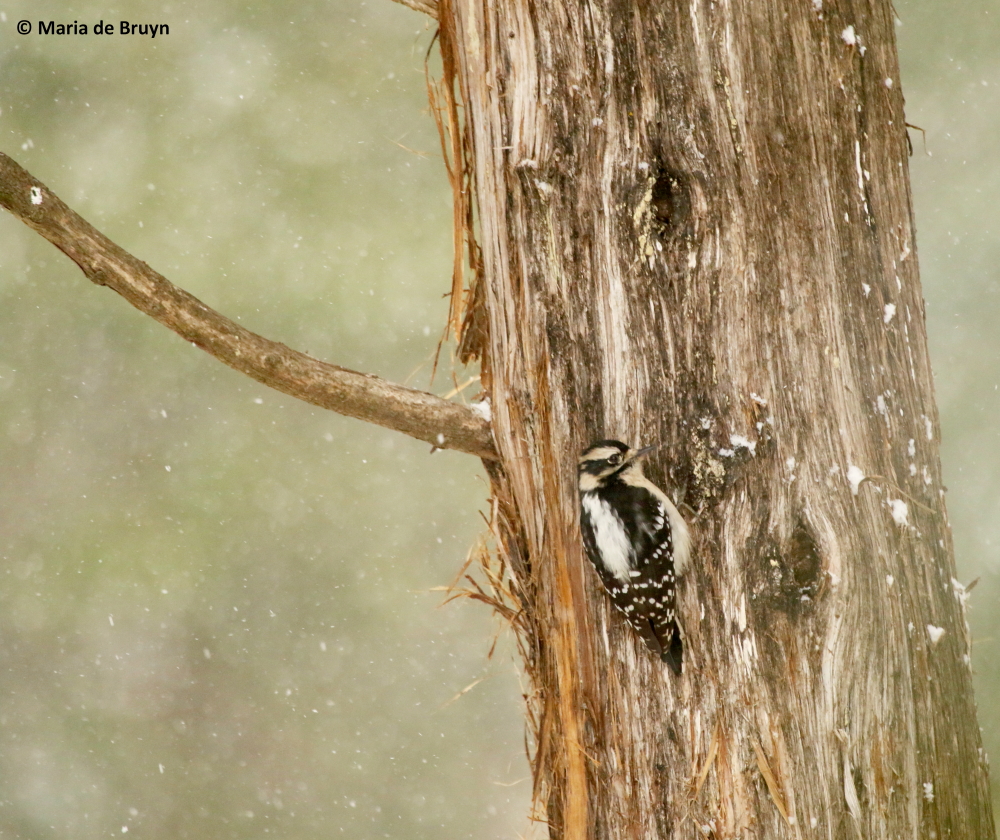
Dark-eyed junco (Junco hyemalis)          Downy woodpecker (Dryobates pubescens)
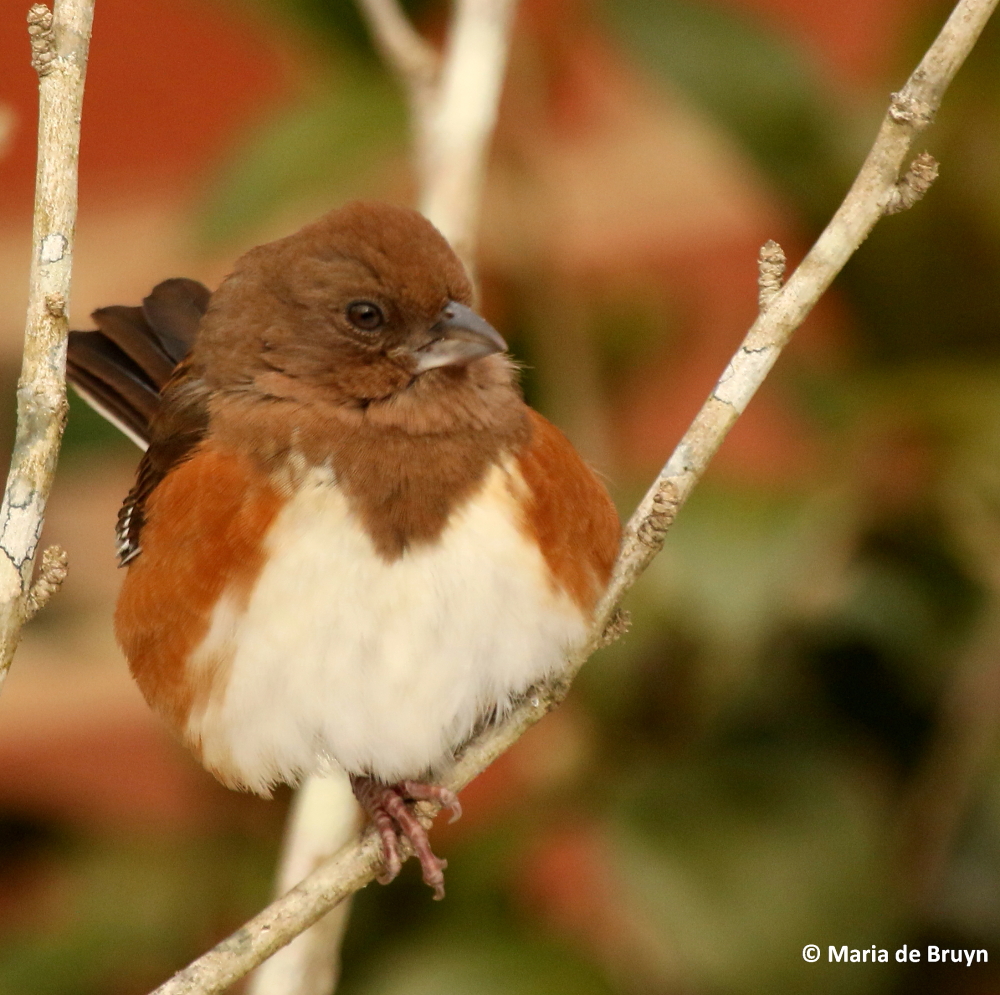
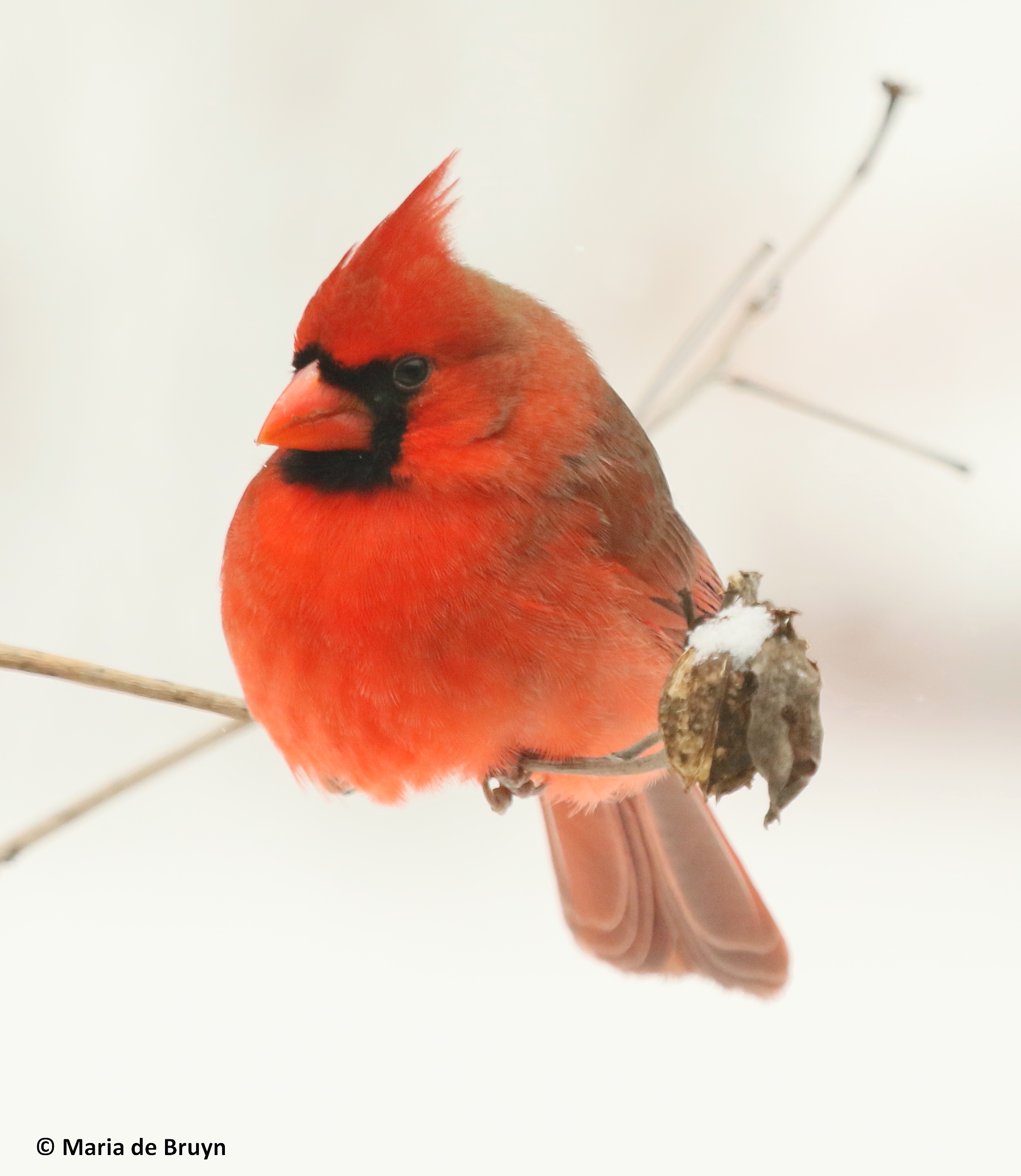
eastern-towhee-i77a4111-maria-de-bruyn-res    northern-cardinal-i77a3099-maria-de-bruyn-res

Eastern towhee (Pipilo erythrophthalmus)      Northern cardinal (Cardinalis cardinalis)
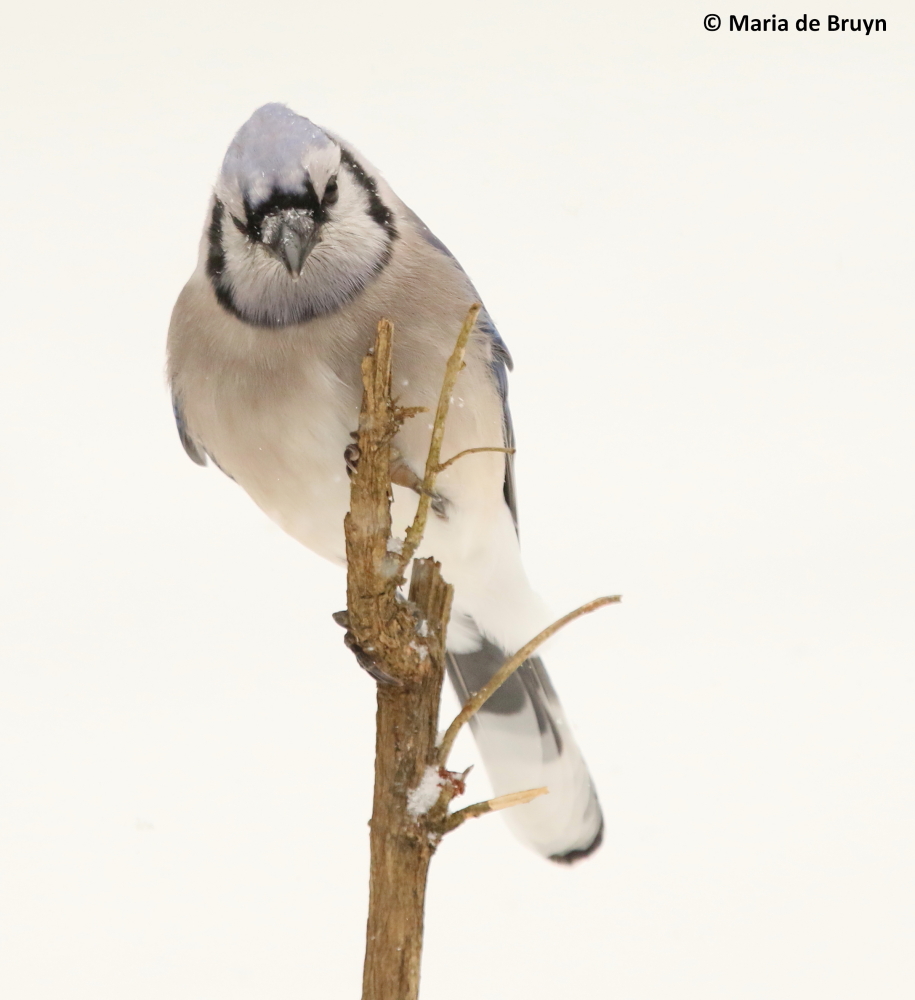
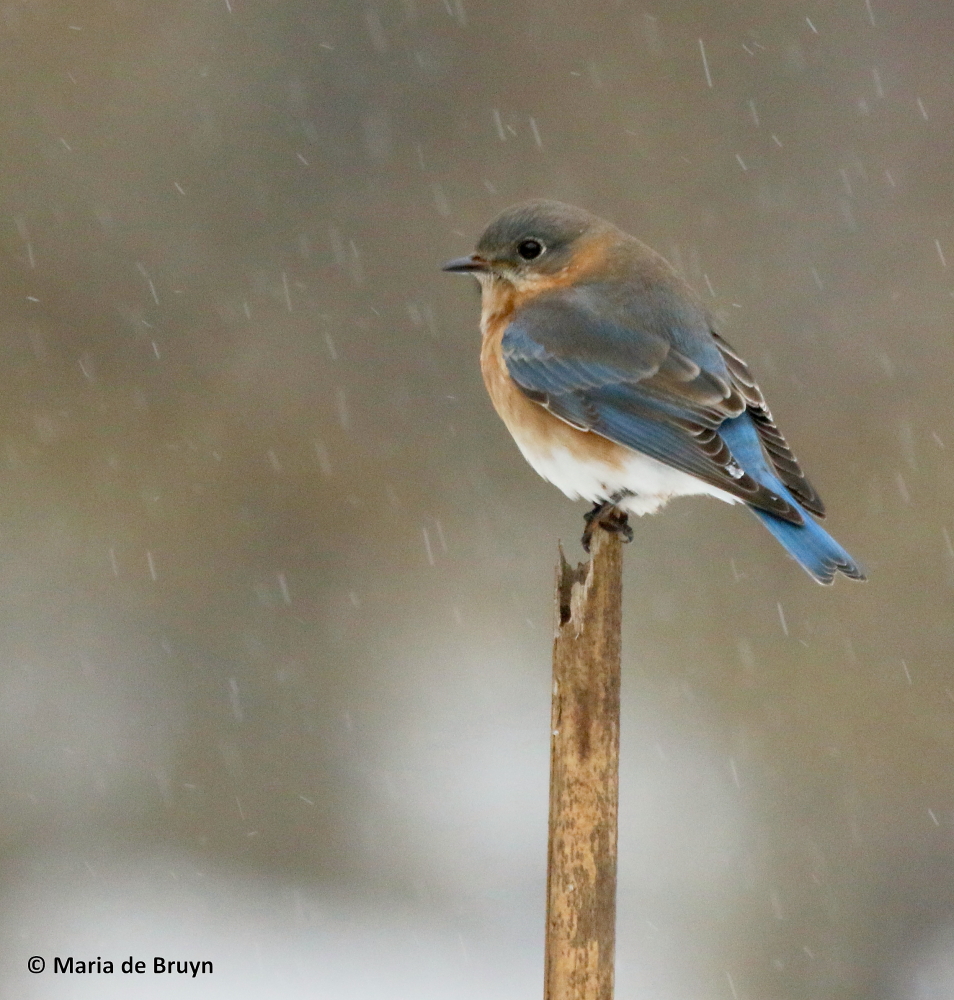
blue-jay-i77a2858-maria-de-bruyn-res     eastern-bluebird-i77a2285-maria-de-bruyn-res

Blue jay                                                       Eastern bluebird (Sialia sialis)
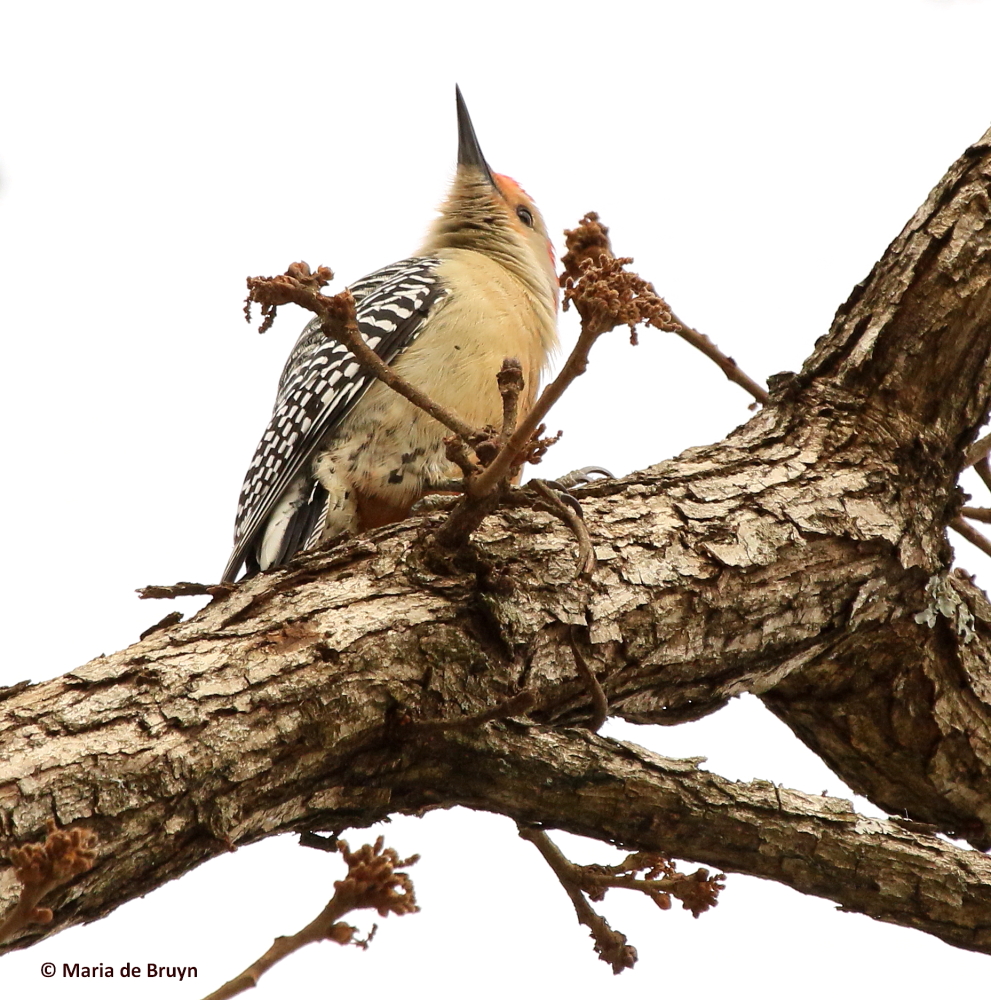
red-bellied-woodpecker-i77a4047-maria-de-bruyn-res       ruby-crowned-kinglet-i77a4263-maria-de-bruyn-res

Red-bellied woodpecker (Melanerpes carolinus)     Ruby-crowned kinglet
northern-mockingbird-i77a2714-maria-de-bruyn-res   pine-warbler-i77a2657-maria-de-bruyn-res

Northern mockingbird                                              Pine warbler
 

Love my yard!

scarlet-mallow-i77a6509-maria-de-bruyn-res2016 began with distress for me, having just been admitted to hospital in considerable pain and worried about expenses. So when I was able to get home again and find diversion from the necessity of self-administering an IV medication twice daily by admiring what nature has to offer in my yard, it was a more-than-welcome event.

Even when my mood is down, walks in nature soothe my spirit since my mind becomes totally absorbed by what I’m observing and there’s no space for any other thoughts. Even aches and pains recede to the background so when I can’t get out to a reserve or park, taking advantage of the little plot of land I call my own is a real delight.

iris-i77a4541maria-de-bruyn-res


The yard has everything – plants, insects, amphibians, reptiles, birds and mammals, which is very cool indeed. Spring and summer are especially lovely with the blooming flowers and I’ve taken care to include many native vegetative species among the plantings.


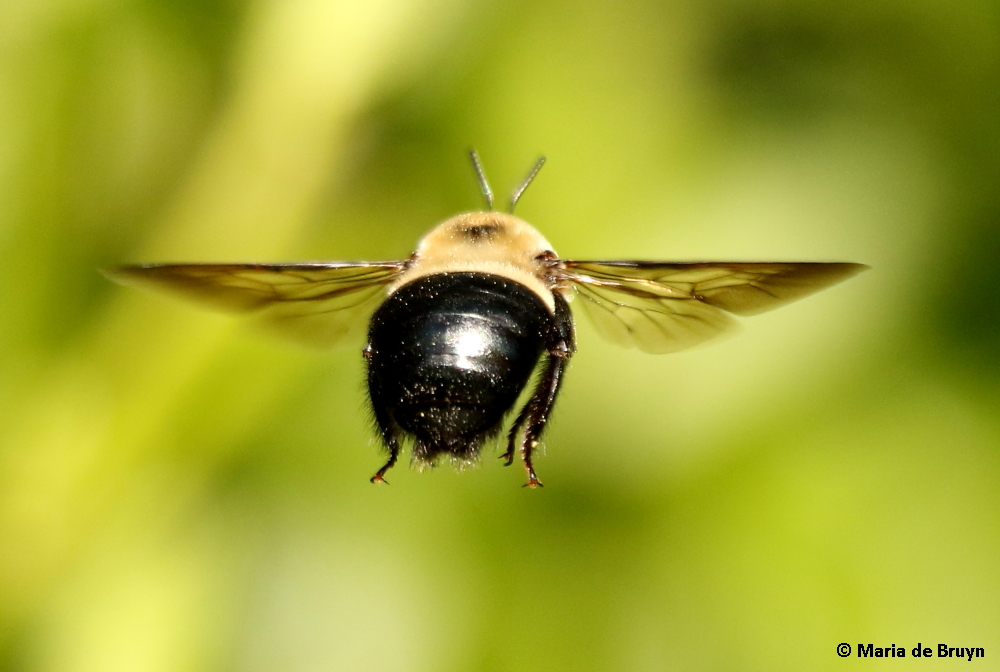
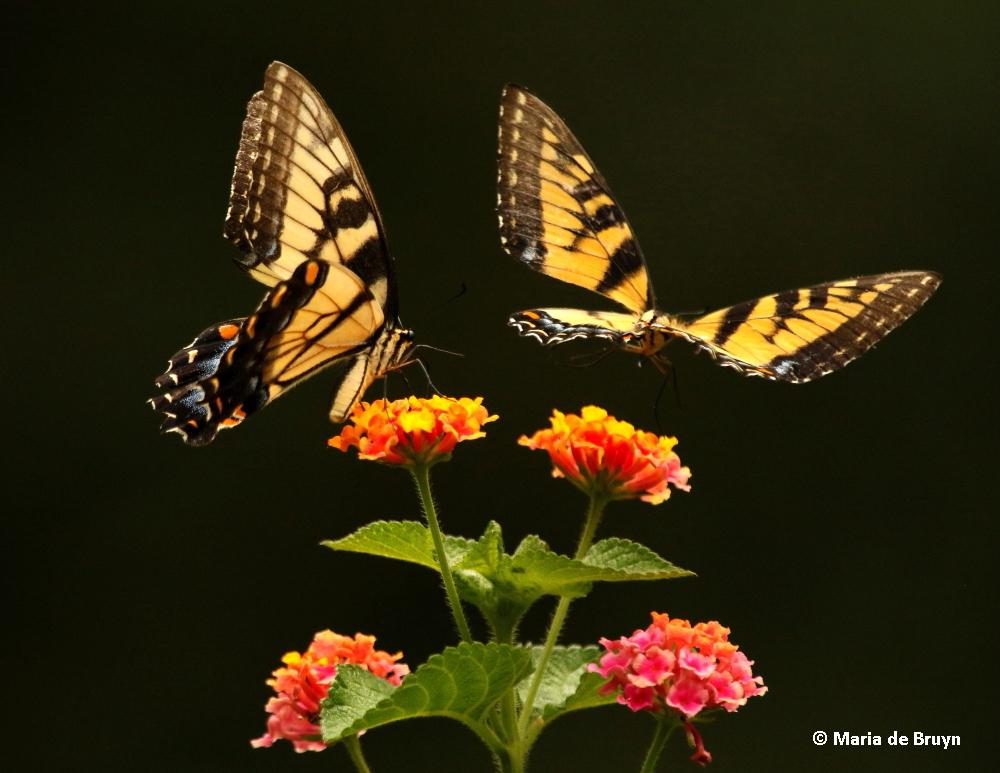
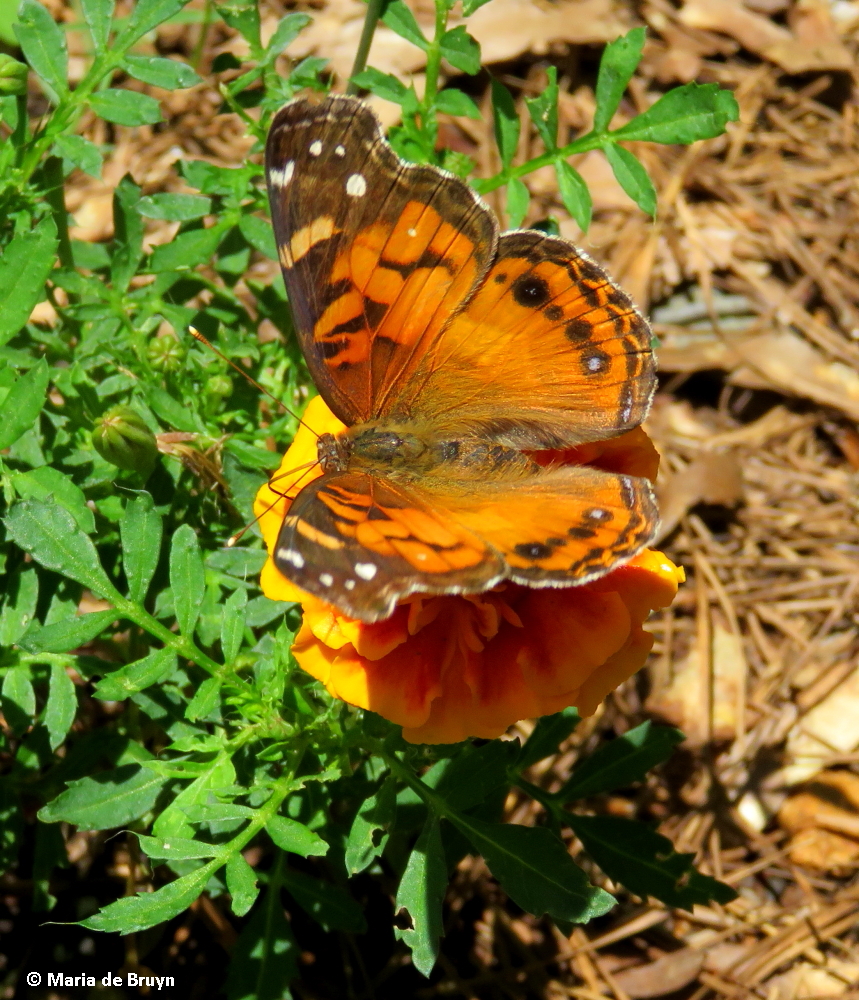
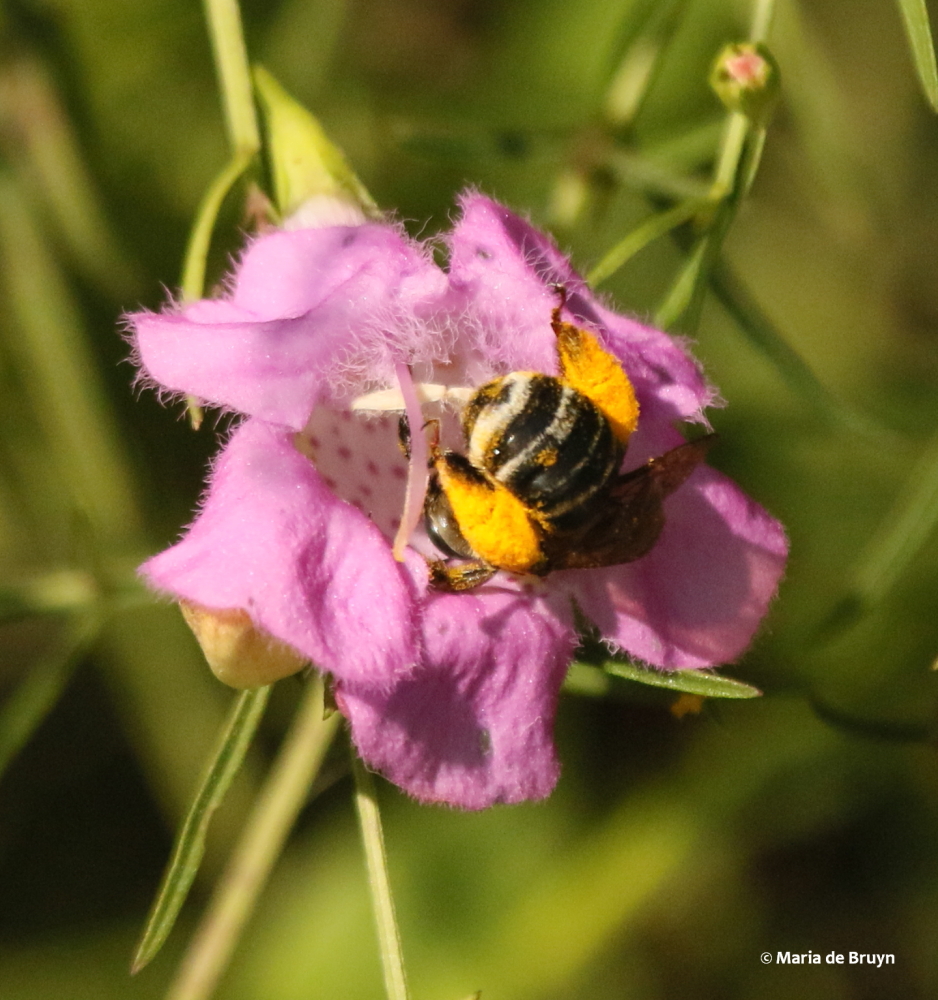
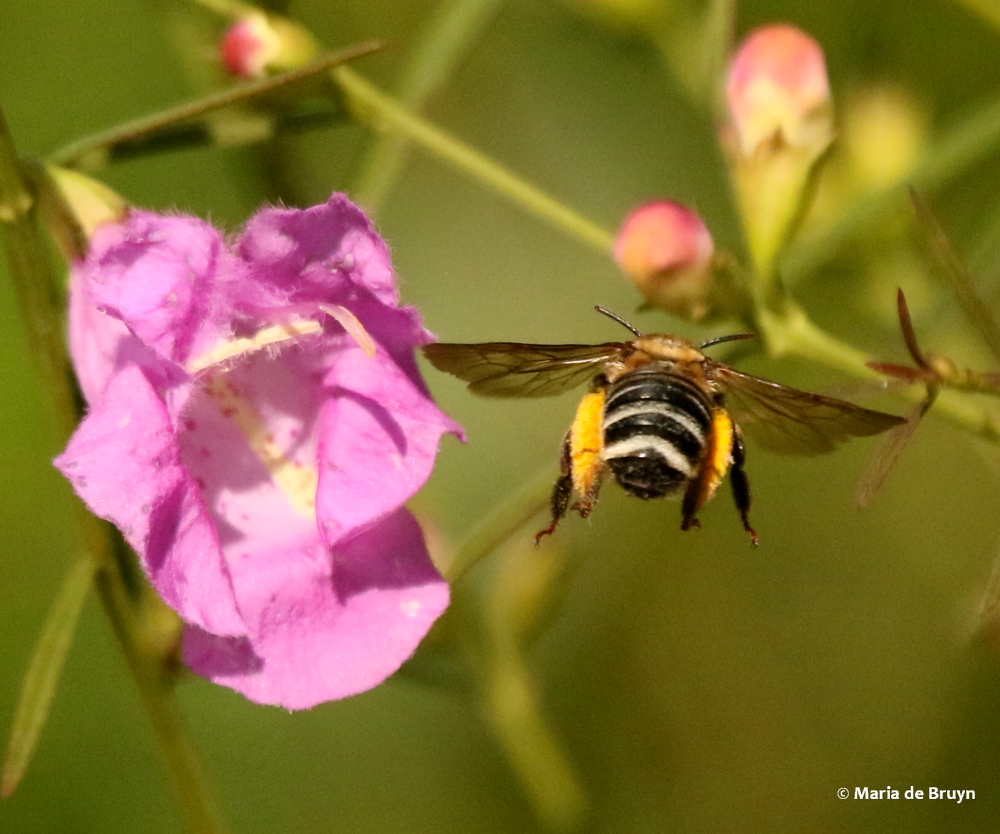
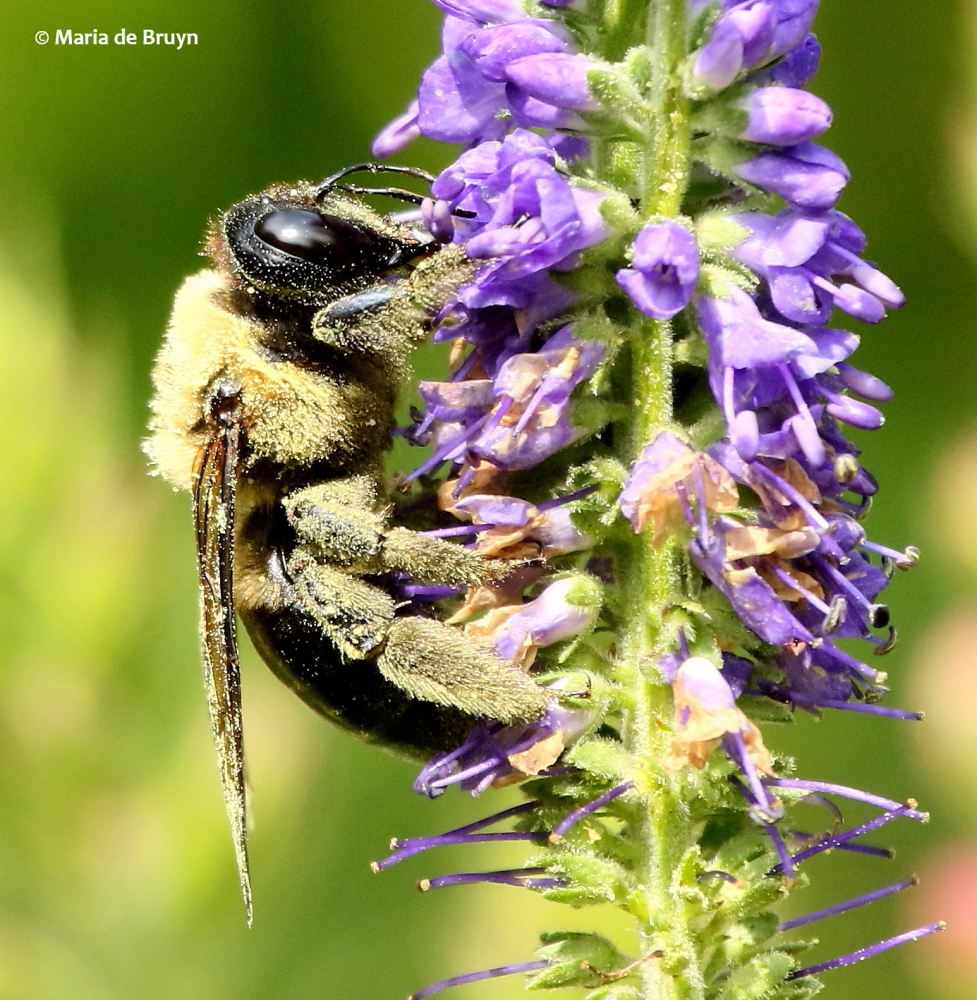
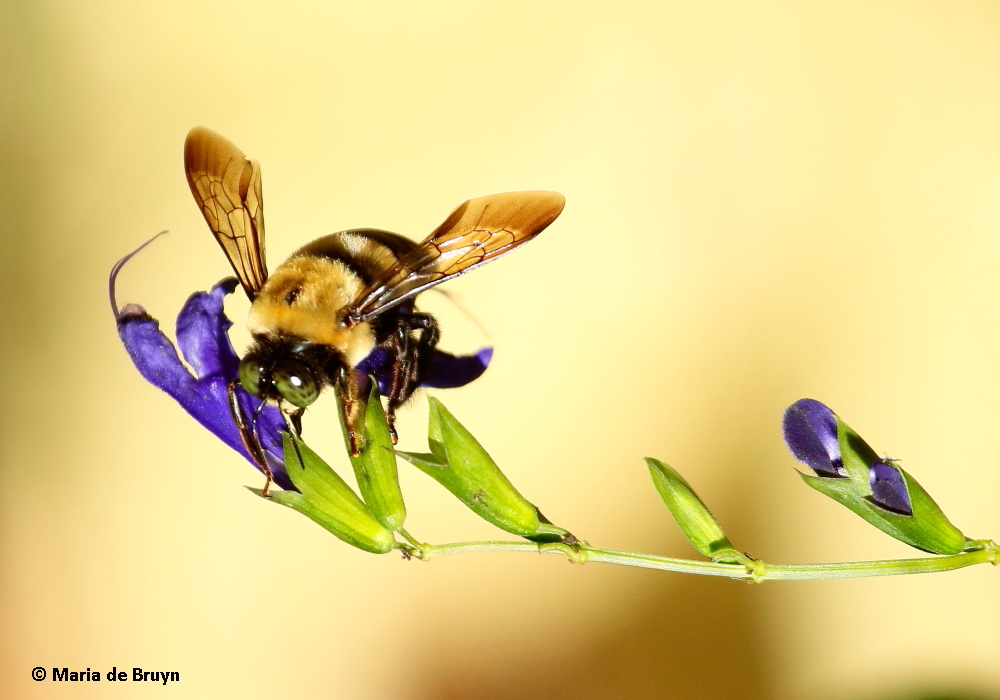
honey-bee-morning-calisthenics-i77a5676-maria-de-bruyn-resThe flowers and shrubs not only attract birds but many species of insects, too, and give me plenty of chances to practice photographing bees in flight and butterflies nectaring. The Eastern carpenter bees (Xylocopa virginica), and European honey bees (Apis mellifera) were good models, as were the Eastern tiger swallowtails (Papilio glaucus) and American lady (Vanessa virginiensis) butterflies.

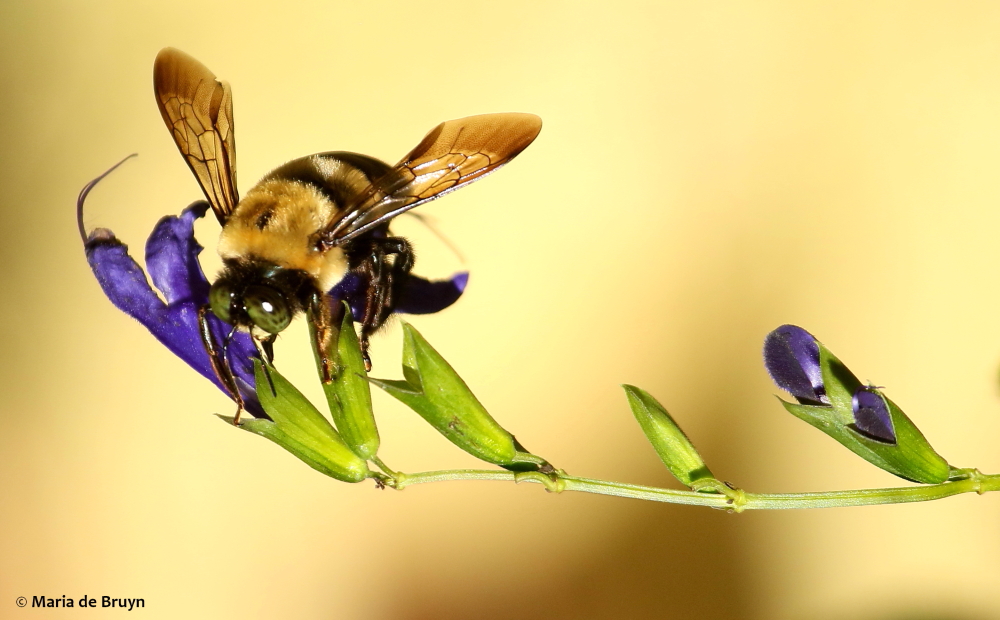
eastern-carpenter-bee-2-i77a7906-maria-de-bruyn-res  eastern-carpenter-bee-i77a8678-maria-de-bruyn-res

eastern-tiger-swallowtail-i77a8669-maria-de-bruyn-res  american-lady-img_0069-maria-de-bruyn-res

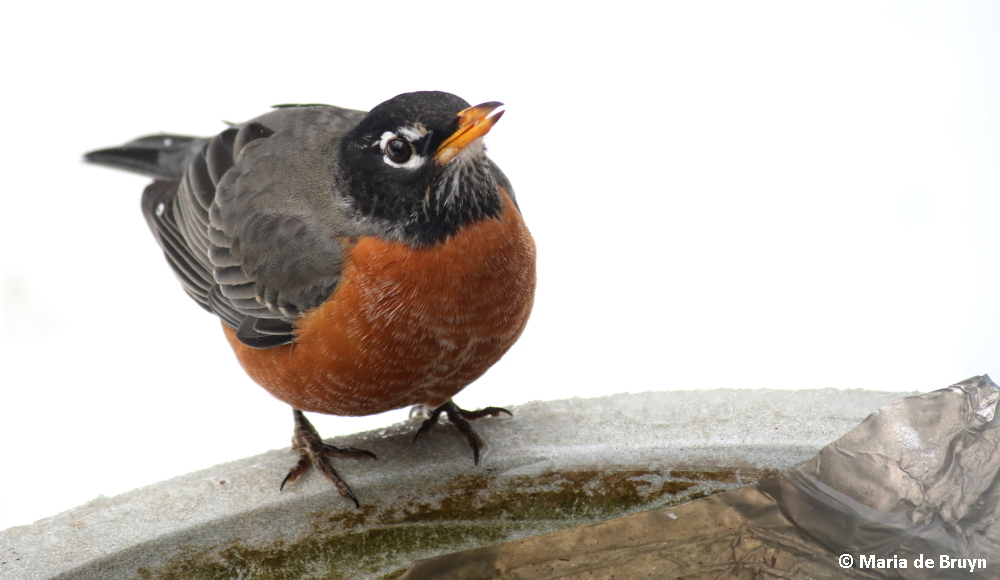
blue-pickerel-weed-i77a3947-maria-de-bruyn-resThe front yard has one small pond with blue pickerel weed (Pontederia cordata) and the back yard has two ponds and a heated bird bath in winter. Deer, raccoons and birds, like this American robin (Turdus migratorius) use these as watering holes.

american-robin-i77a9005-maria-de-bruyn-res

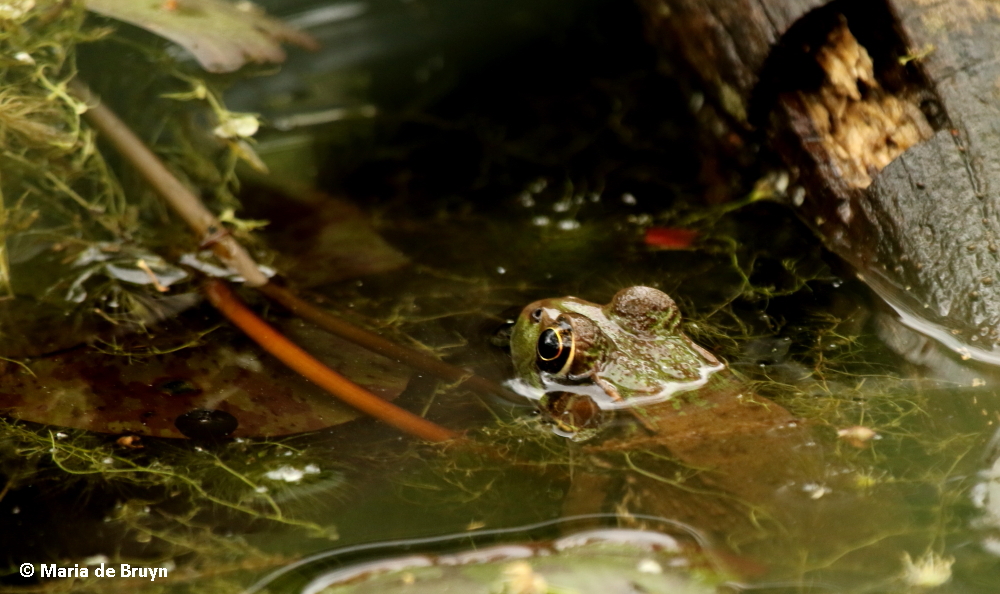
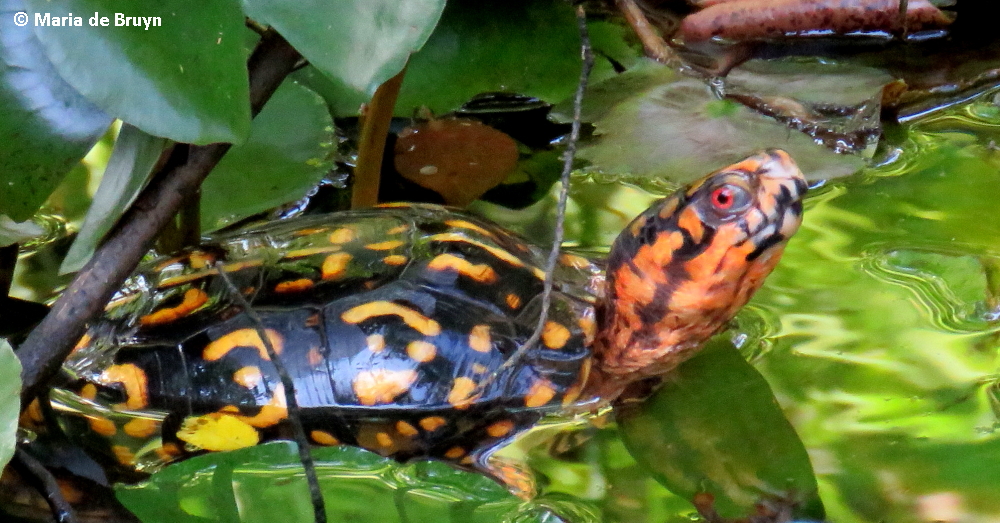
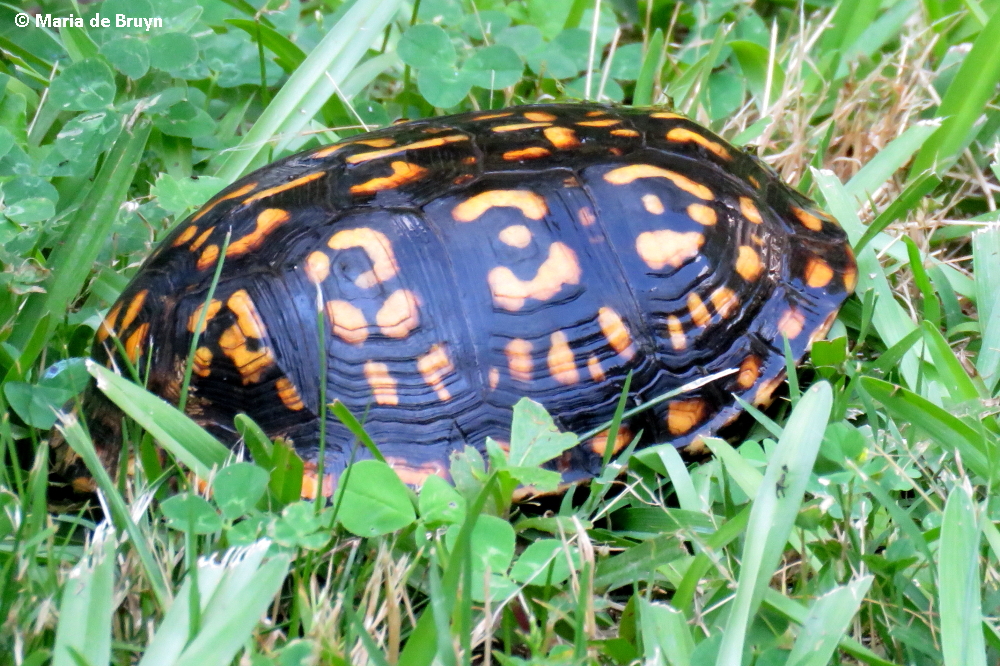
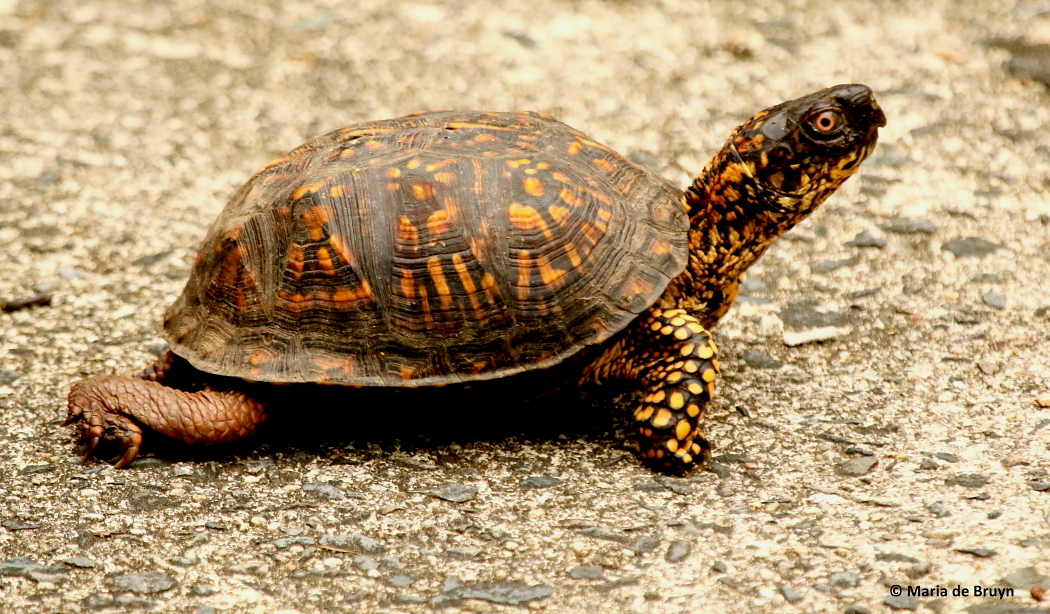
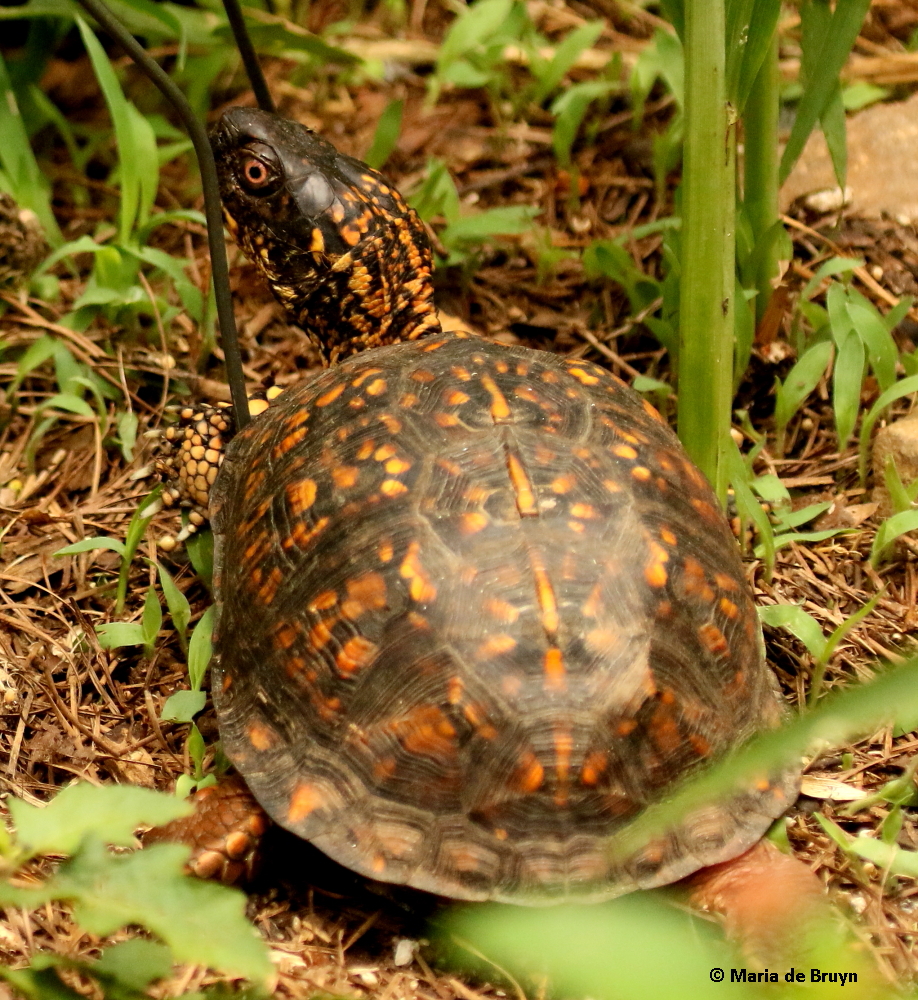
bullfrog-i77a9694-maria-de-bruyn-resFish live in one pond along with green and/or bullfrogs (Lithobates catesbeianus). Occasionally, I’ve had to rescue an adventurous Eastern box turtle (Terrapene carolina carolina) that didn’t seem able to climb out again on the logs provided as bridges out of the water. Other turtles trundle around in other parts of the yard.

eastern-box-turtle-img_1392-maria-de-bruyn-res    eastern-box-turtle-img_1422-maria-de-bruyn-res

eastern-box-turtle-male-i77a8333-maria-de-bruyn-res   eastern-box-turtle-i77a8380-maria-de-bruyn-res

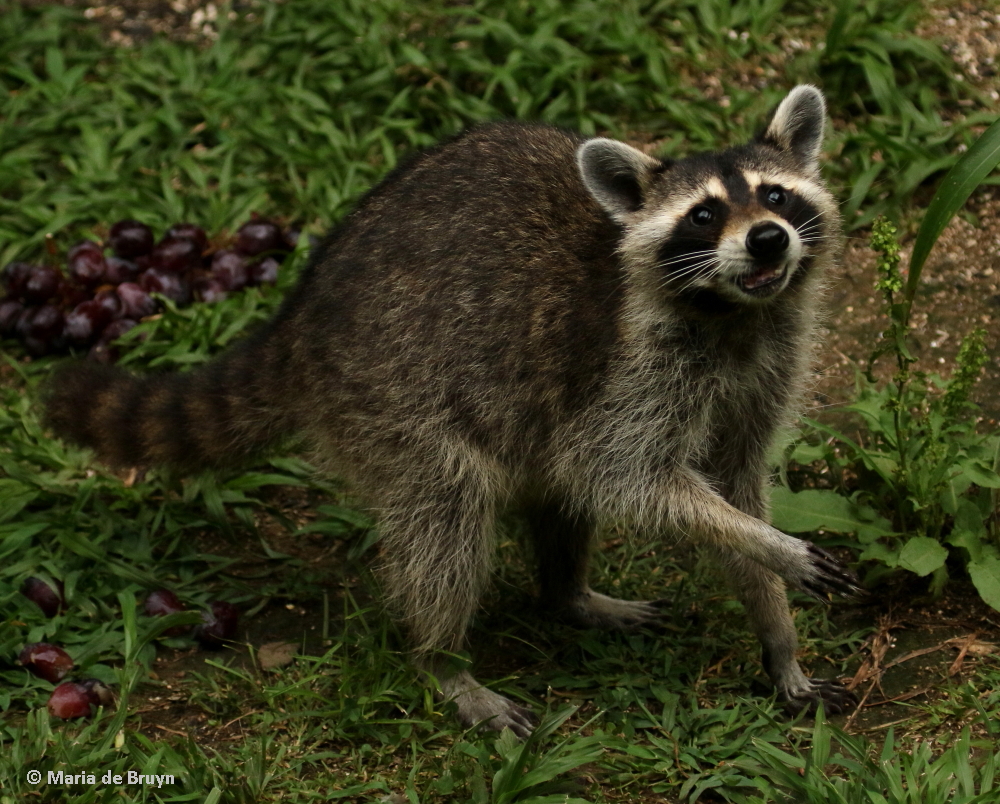
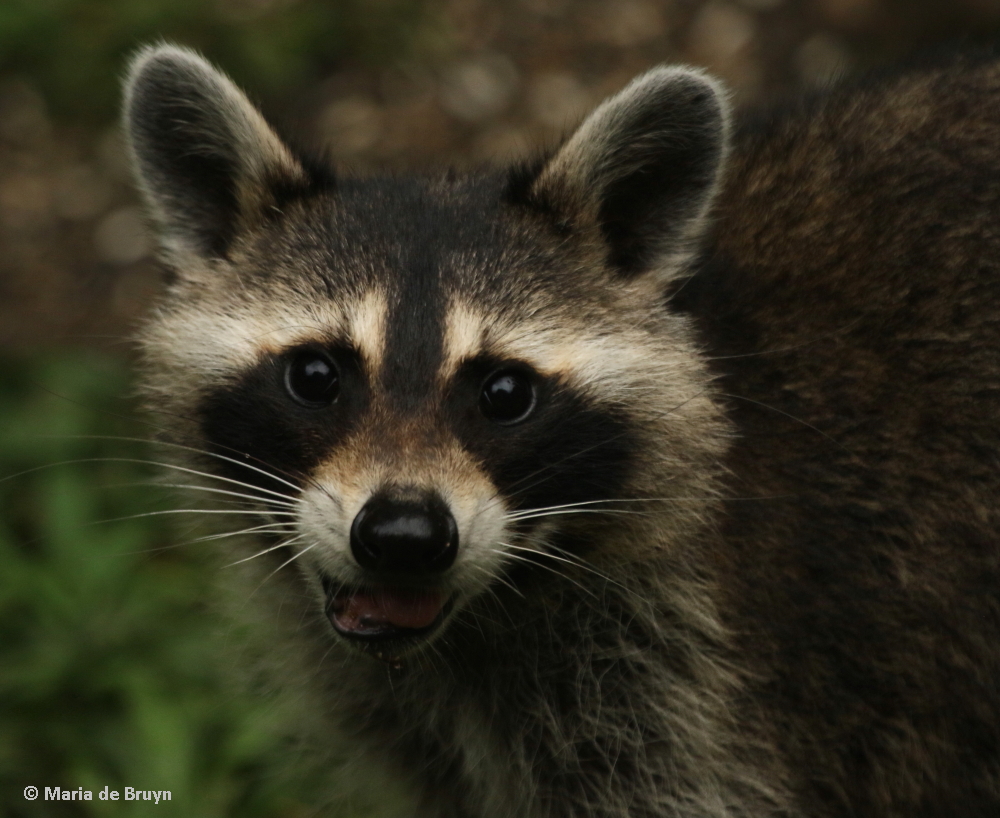
Raquel raccoon (Procyon lotor) and members of her family usually appear at night, as do the local opossums, of whom I have few photos. When Raquel is expecting another brood or in nursing mode, she gets more adventurous and comes round in the daytime.

raccoon-i77a5969-maria-de-bruyn-res   raccoon-i77a5906-maria-de-bruyn-res

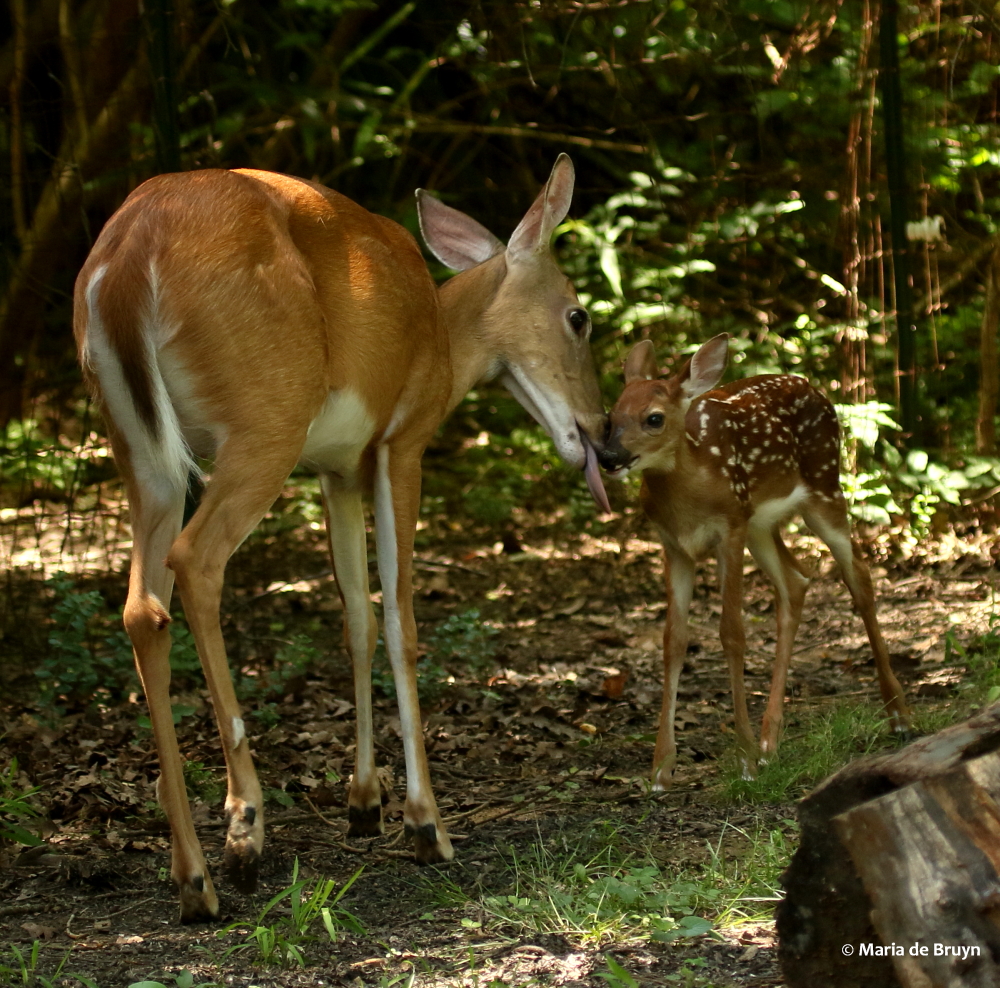
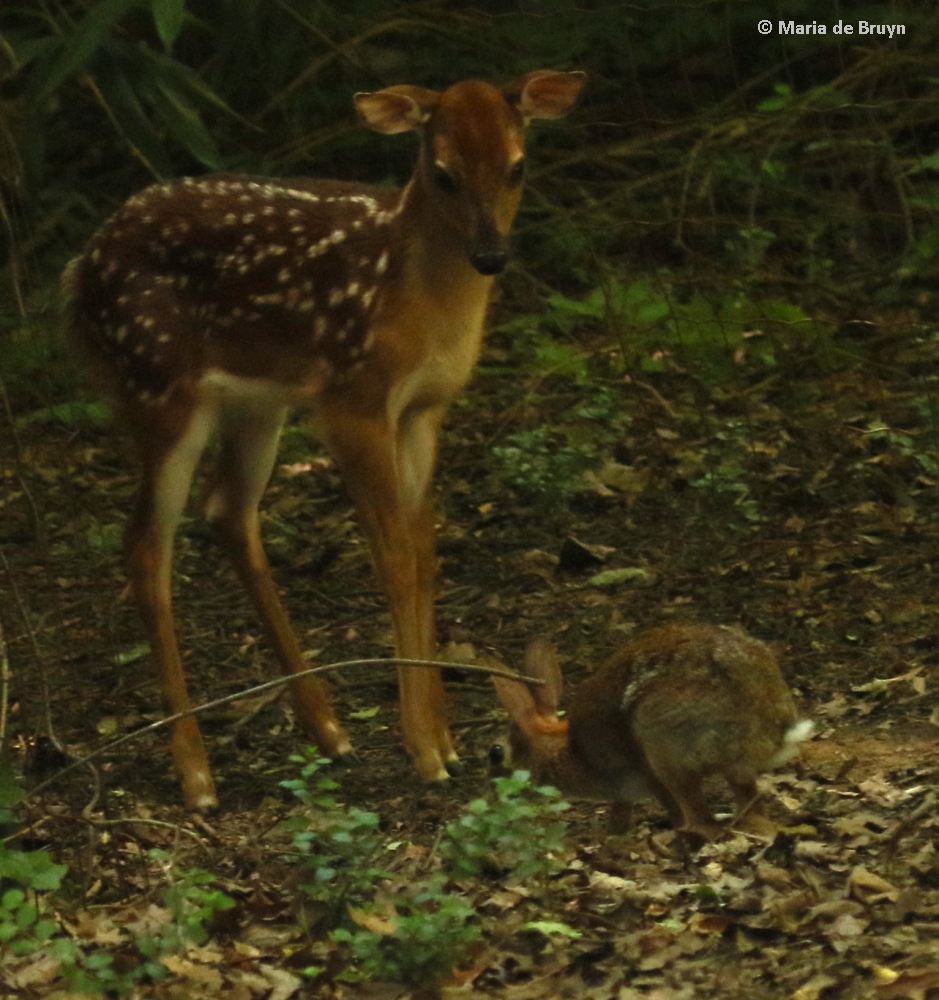
The white-tailed deer (Odocoileus virginianus) come by all months of the year and provide opportunities to see how the fawns learn about the other creatures sharing their space.

white-tailed-deer-i77a7463-maria-de-bruyn white-tailed-deer-i77a2126-maria-de-bruyn-res

white-tailed-deer-i77a7826-maria-de-bruyn-res

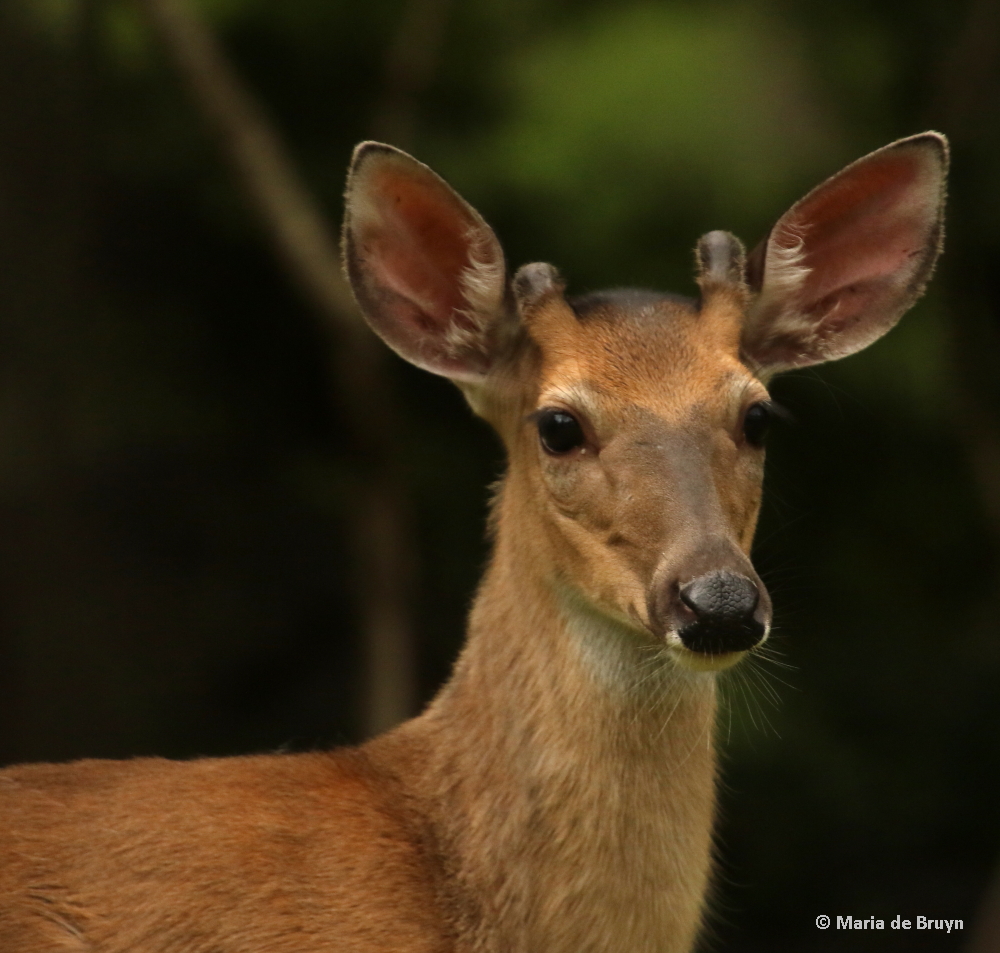
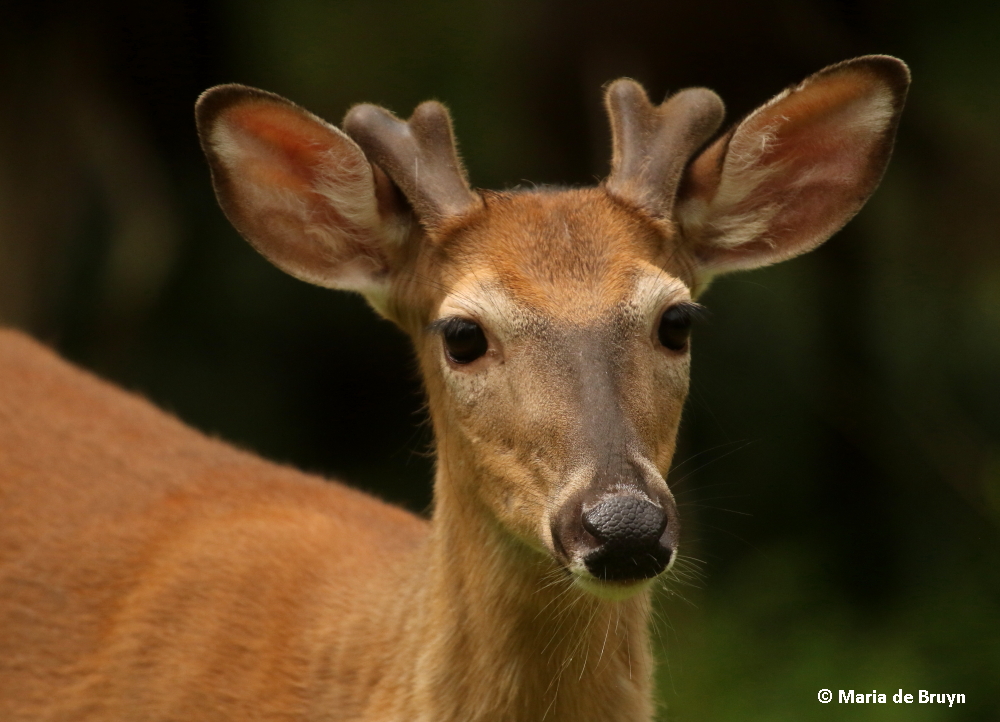
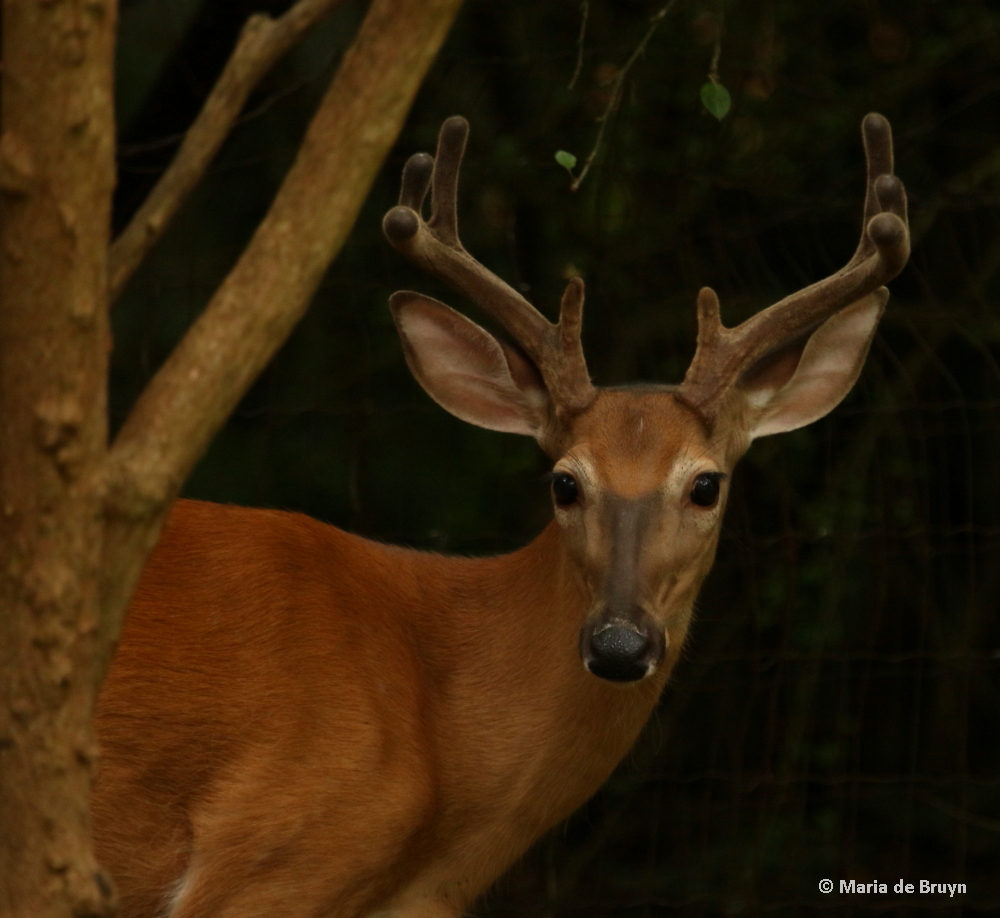
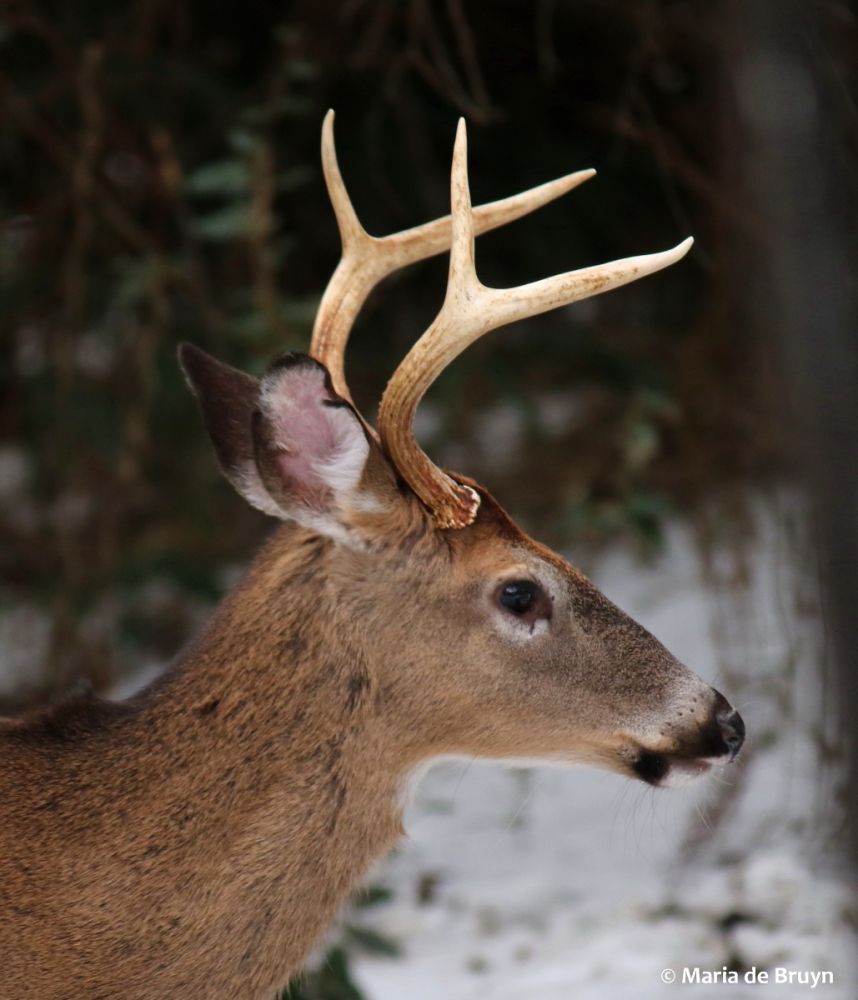
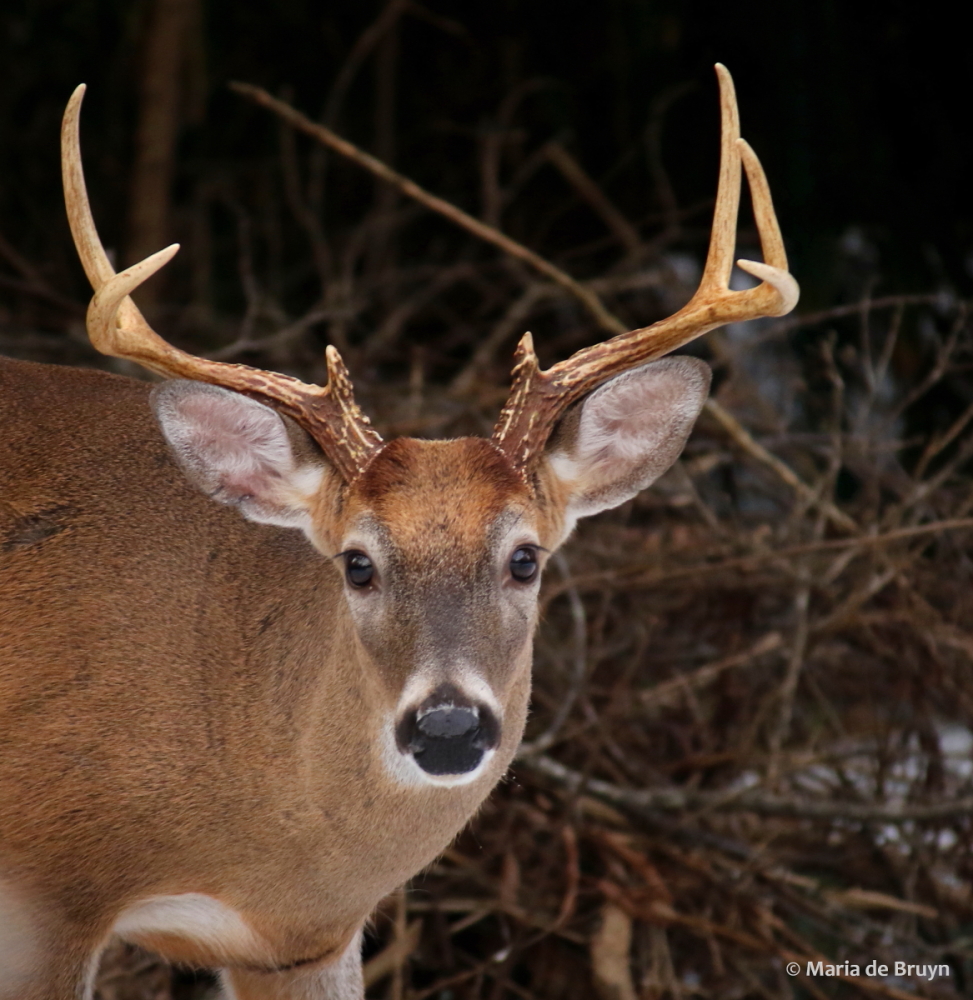
It’s interesting to see how button bucks are followed by yearlings with nubby antlers and eventually grow up to become handsome 5- or more point bucks.

white-tailed-deeri77a4099-maria-de-bruyn-res      white-tailed-deer-i77a4097-maria-de-bruyn-res

white-tailed-deer-i77a1367-maria-de-bruyn-res  white-tailed-deer-i77a1366-maria-de-bruyn-res

white-tailed-deer-i77a9813-maria-de-bruyn-res

white-tailed-deer-i77a1061-maria-de-bruyn-res white-tailed-deer-i77a1005-maria-de-bruyn-res

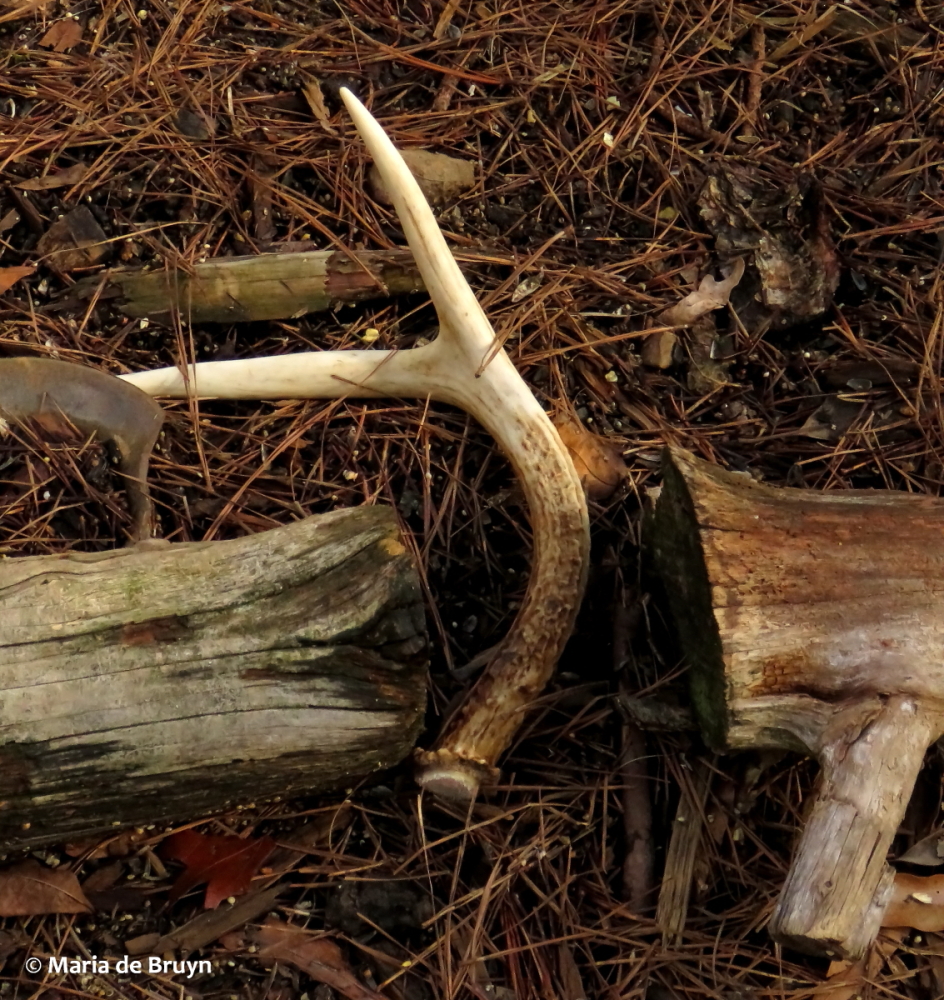
white-tailed-deer-antler-img_1211-maria-de-bruyn-resThis past year, one of the bucks was kind enough to drop one of his antlers in my yard as a souvenir.

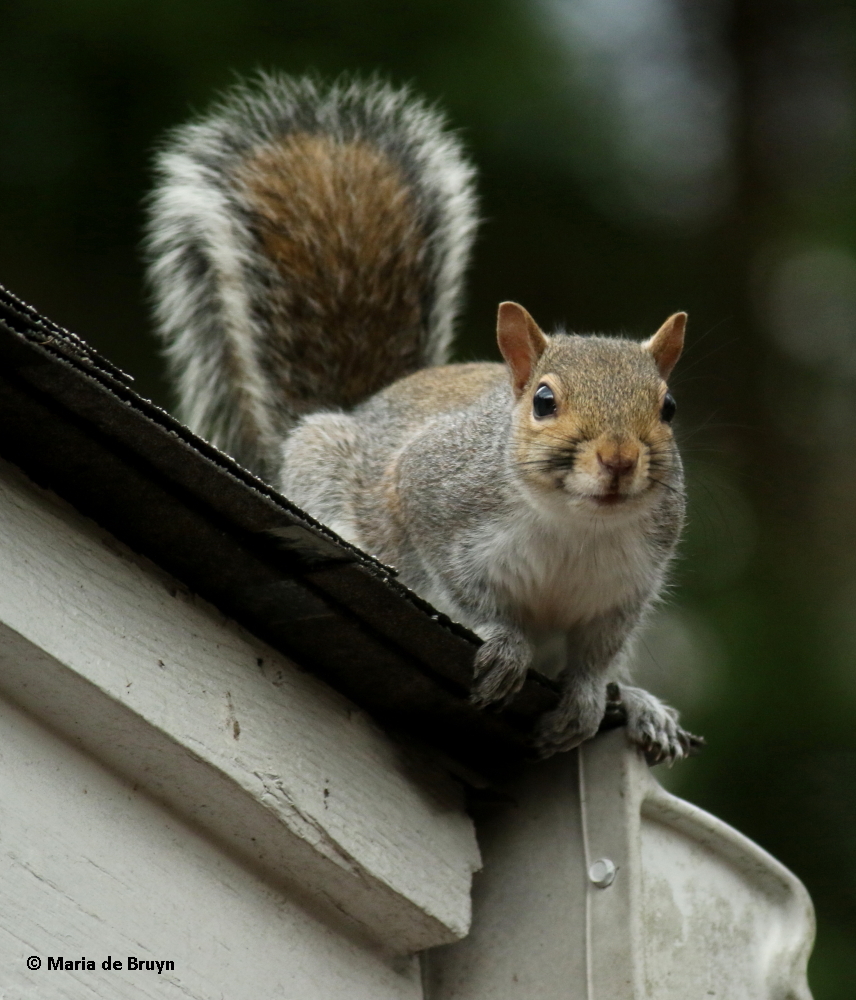
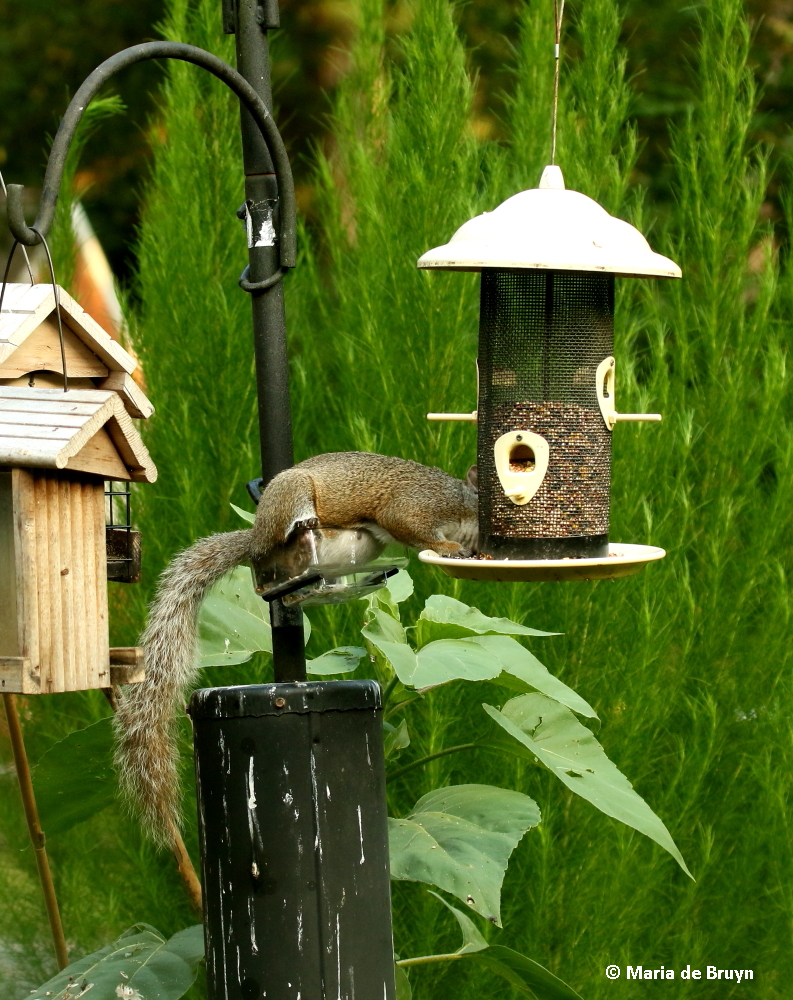
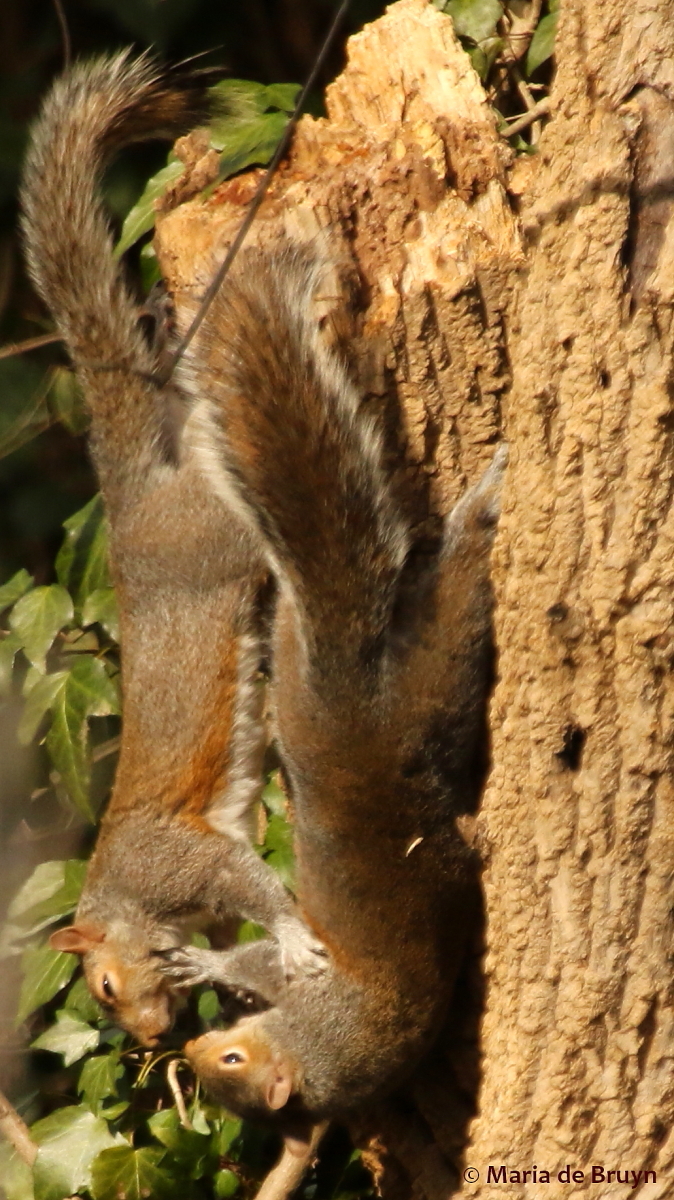
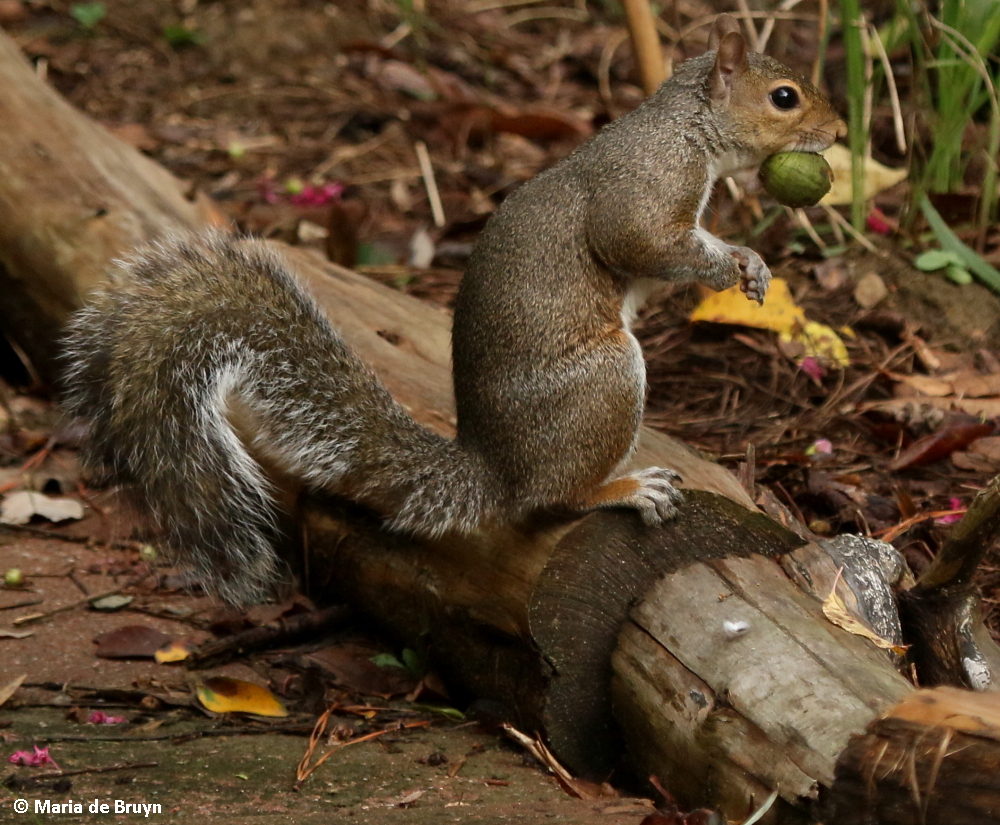
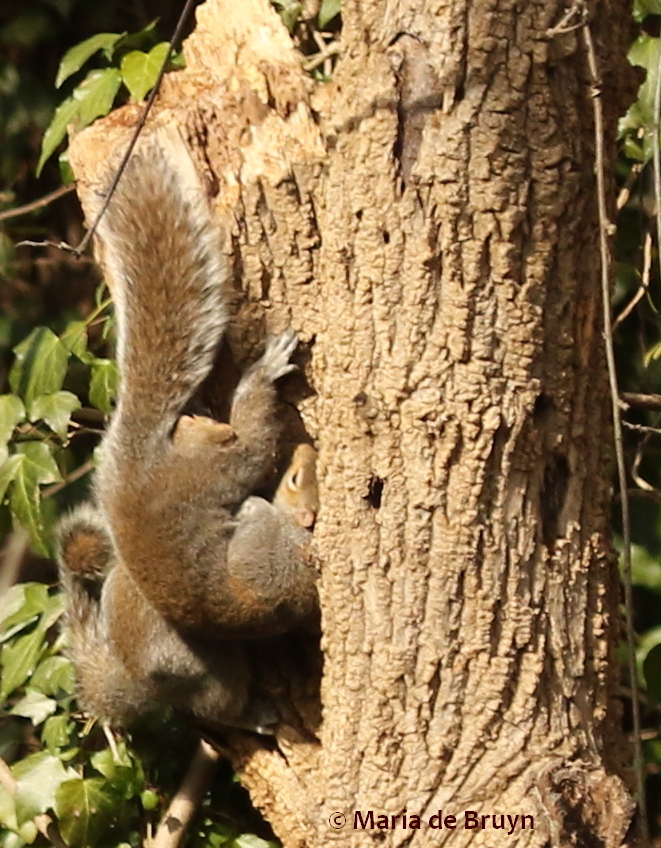
The Eastern gray squirrels (Sciurus carolinensis) provide endless amusement – one way is by investigating various techniques to find a way onto the bird feeders. These are largely unsuccessful, even when they climb up on the roof to see if they can launch themselves far enough to reach a feeder pole. This year, however, one enterprising squirrel managed to finally get onto a feeder by climbing up a rather large sunflower stem that held his/her weight until it bent over close to a pole.

eastern-gray-squirrel-i77a5492-maria-de-bruyn-res   eastern-gray-squirrel-i77a7478-maria-de-bruyn-res

Their antics as they chase one another in play and for amorous purposes, too, are also quite entertaining.

eastern-gray-squirrel-i77a1104-maria-de-bruyn-res      eastern-gray-squirrel-77a0929-maria-de-bruyn

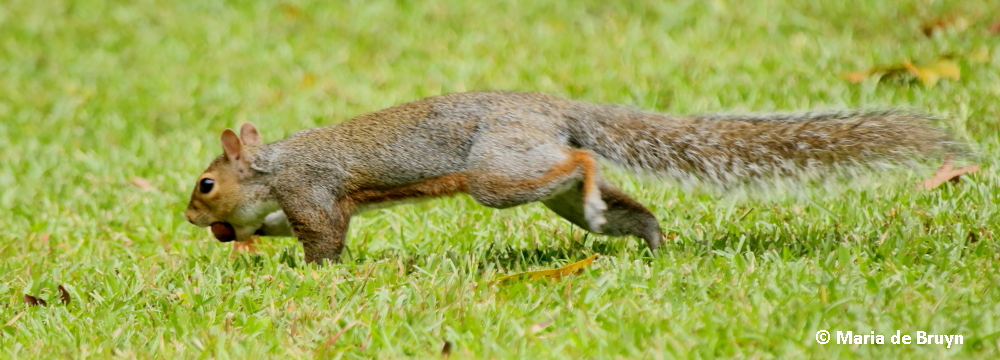
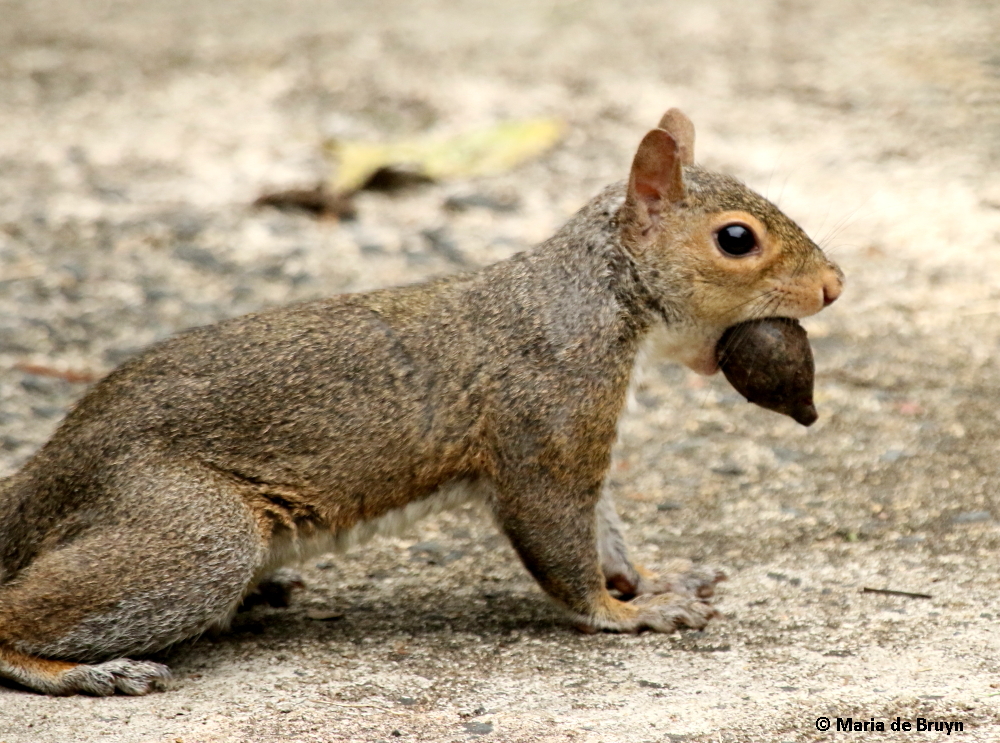
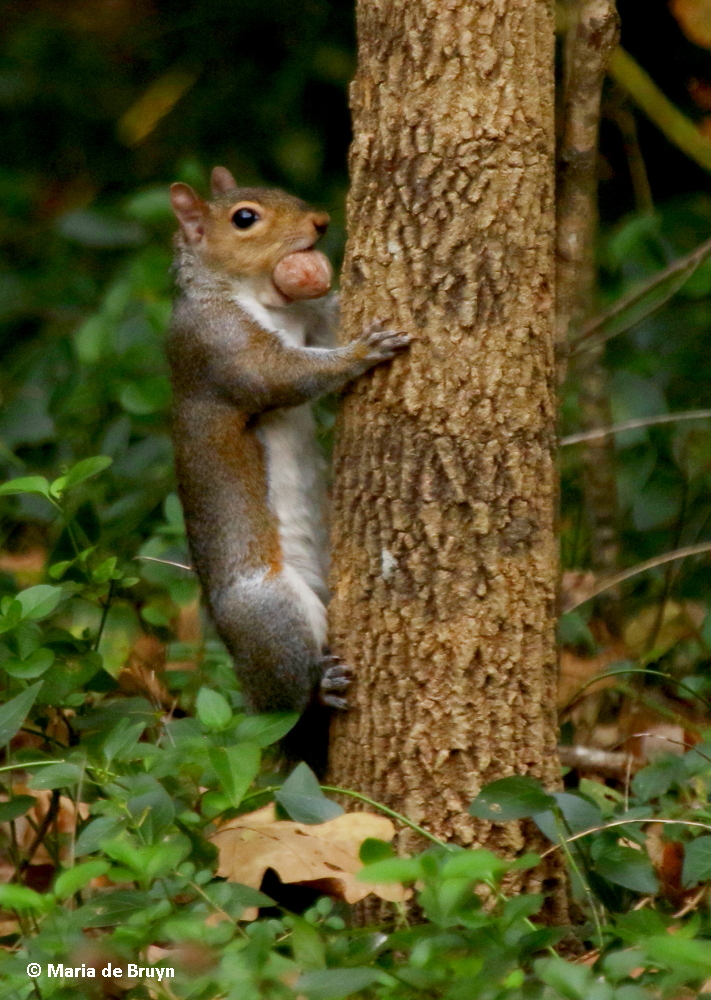
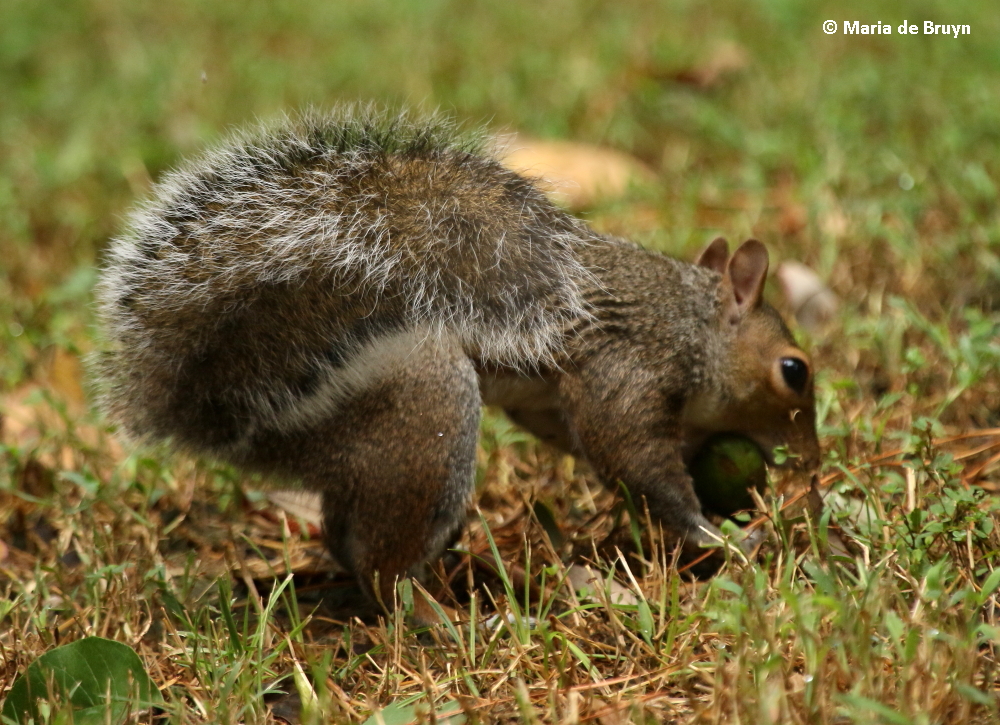
It’s fun to watch them caching seeds as well; sometimes, they decide a spot in the middle of the lawn is the best hiding place!

eastern-gray-squirrel-i77a0026-maria-de-bruyn-res

eastern-gray-squirrel-i77a9947-maria-de-bruyn-res   eastern-gray-squirrel-i77a6837-maria-de-bruyn-res

eastern-gray-squirrel-i77a4579-maria-de-bruyn-res   eastern-gray-squirrel-i77a4938-maria-de-bruyn-res

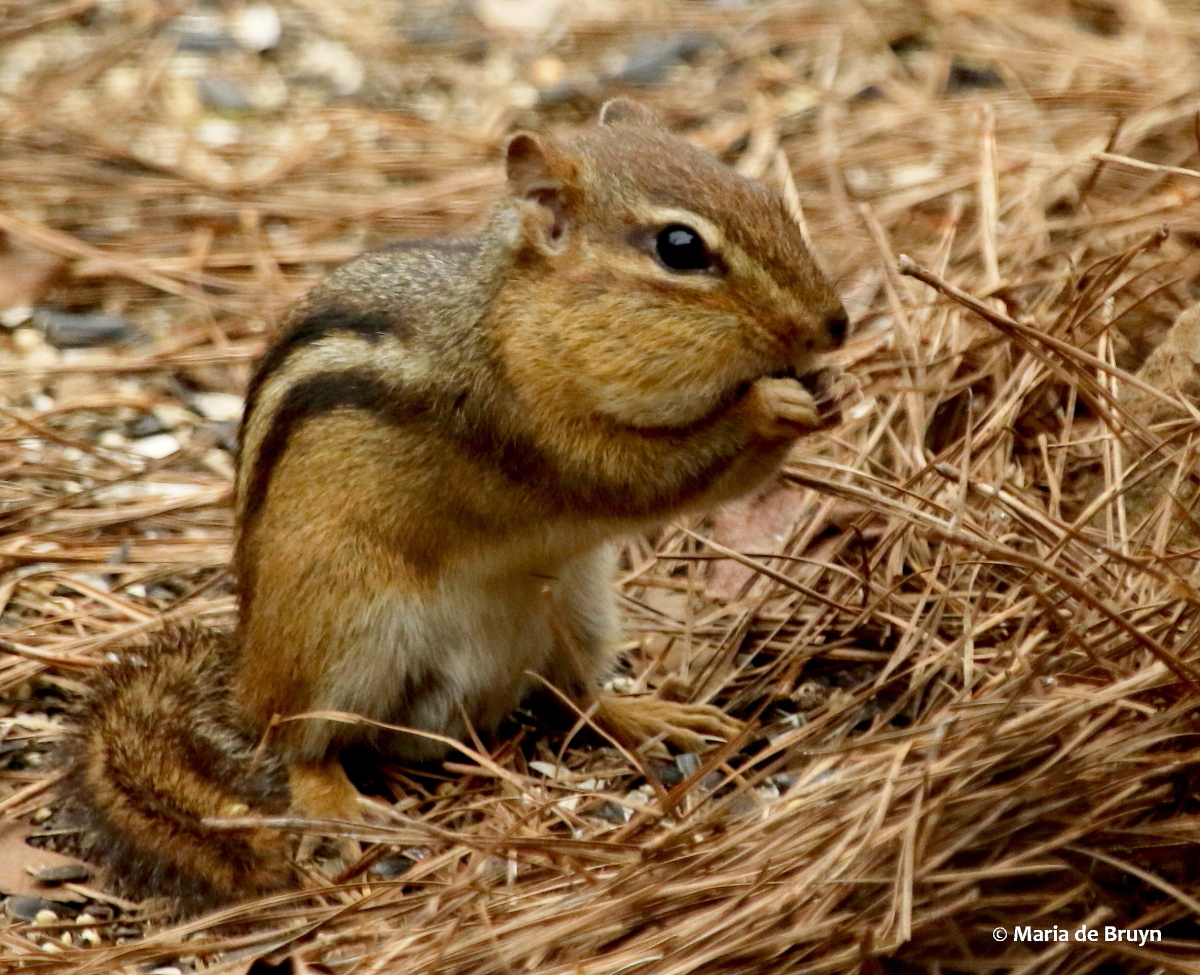
eastern-chipmunk-i77a4007-maria-de-bruyn-res


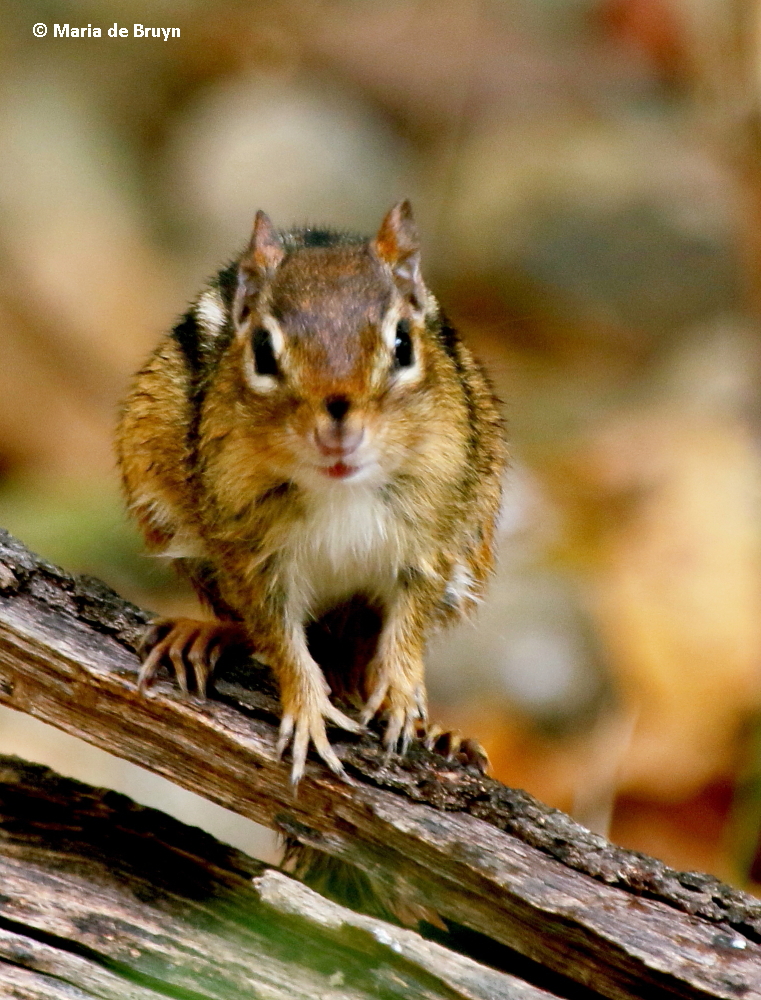
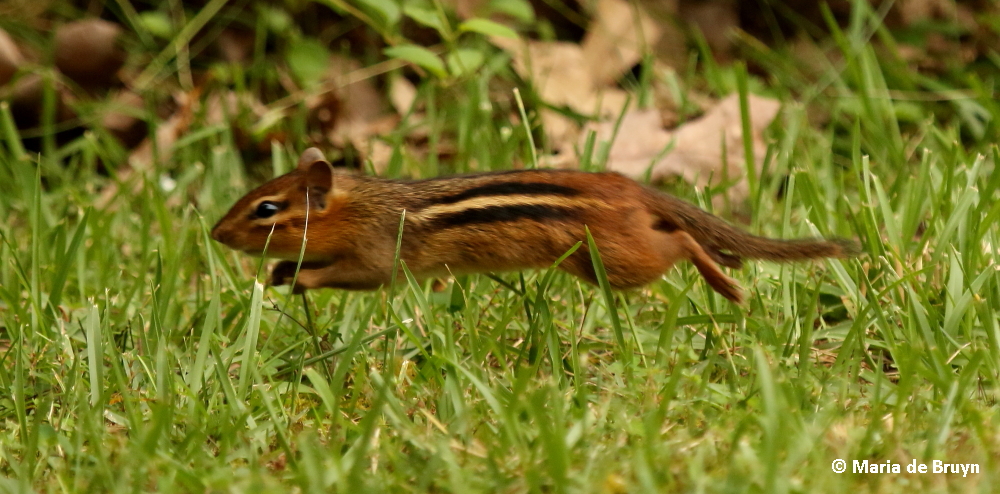
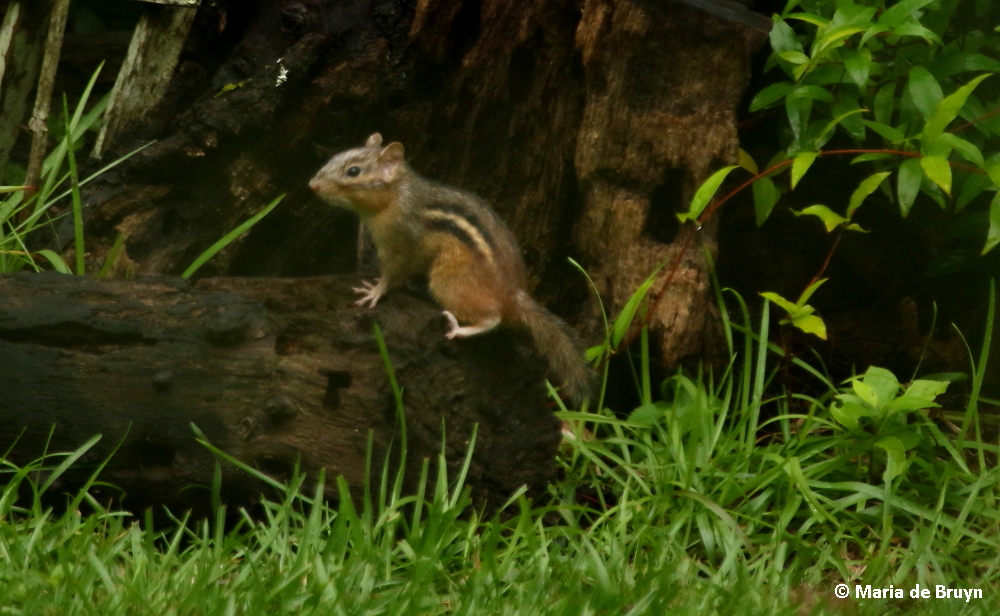
They often will chase non-family members away from the food I put out on the ground – seeds, bits of bread and apples for the birds (crows and catbirds are especially fond of apples). They are usually (not always!) willing to tolerate the Eastern chipmunks (Tamias striatus) who come to get some goodies, too.

eastern-chipmunk-i77a7935-maria-de-bruyn-res

eastern-chipmunk-i77a8790-maria-de-bruyn-res  eastern-chipmunk-i77a3418-maria-de-bruyn-res

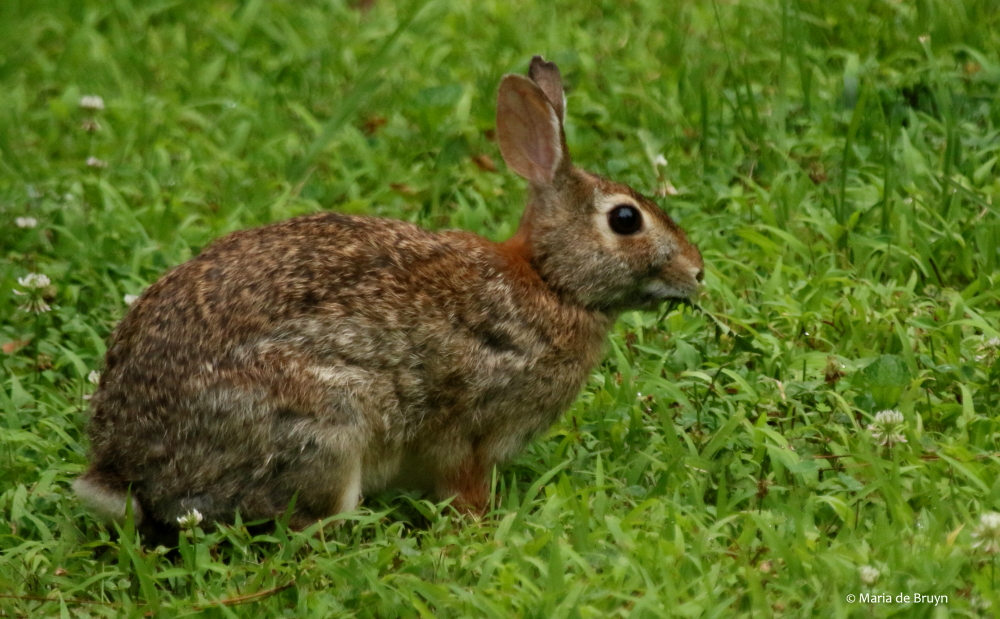
eastern-cottontail-i77a9747-maria-de-bruyn-resThe Eastern cottontail rabbits (Sylvilagus floridanus) don’t often go for the bird food but prefer to munch on the grasses and other plants growing on the “lawn”.

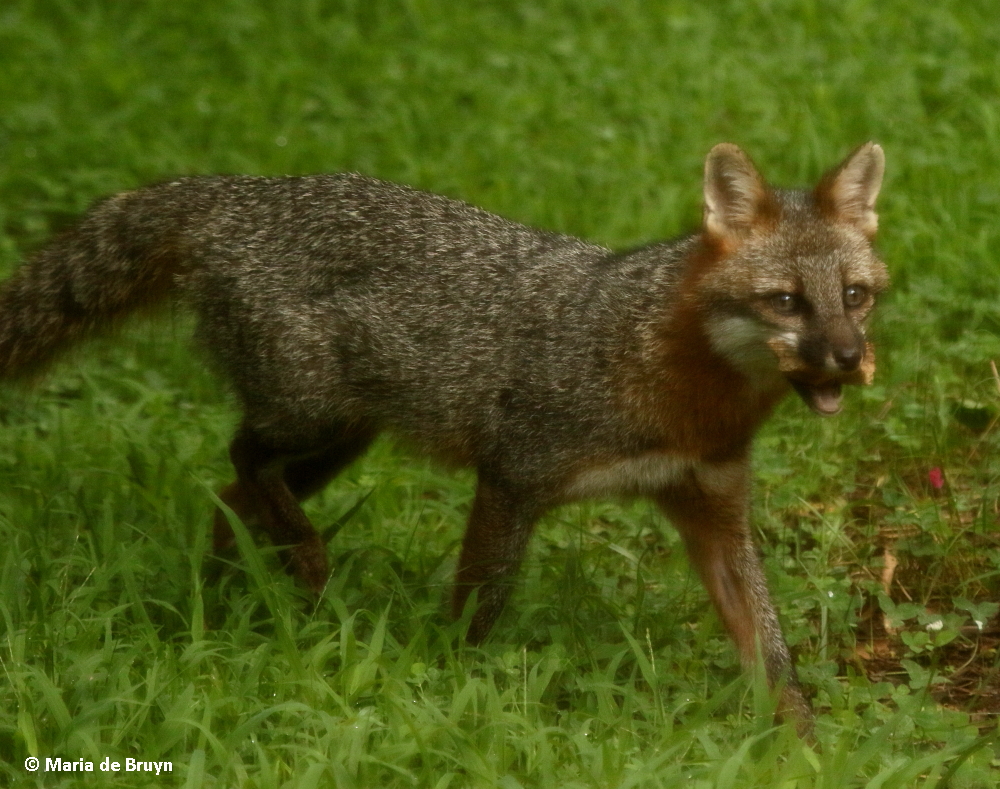
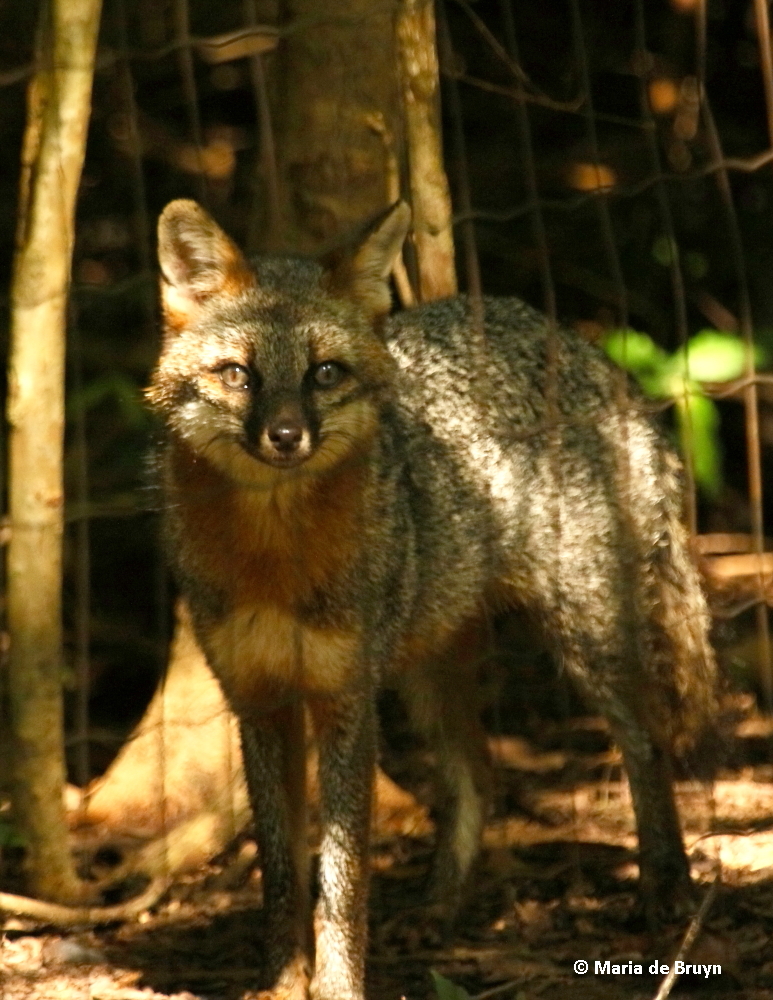
I was surprised this summer when I discovered that the beautiful neighborhood gray fox (Urocyon cinereoargenteus) was fond of bread.

gray-fox-i77a1236-maria-de-bruyn-res gray-fox-faith-i77a1197-maria-de-bruyn-res

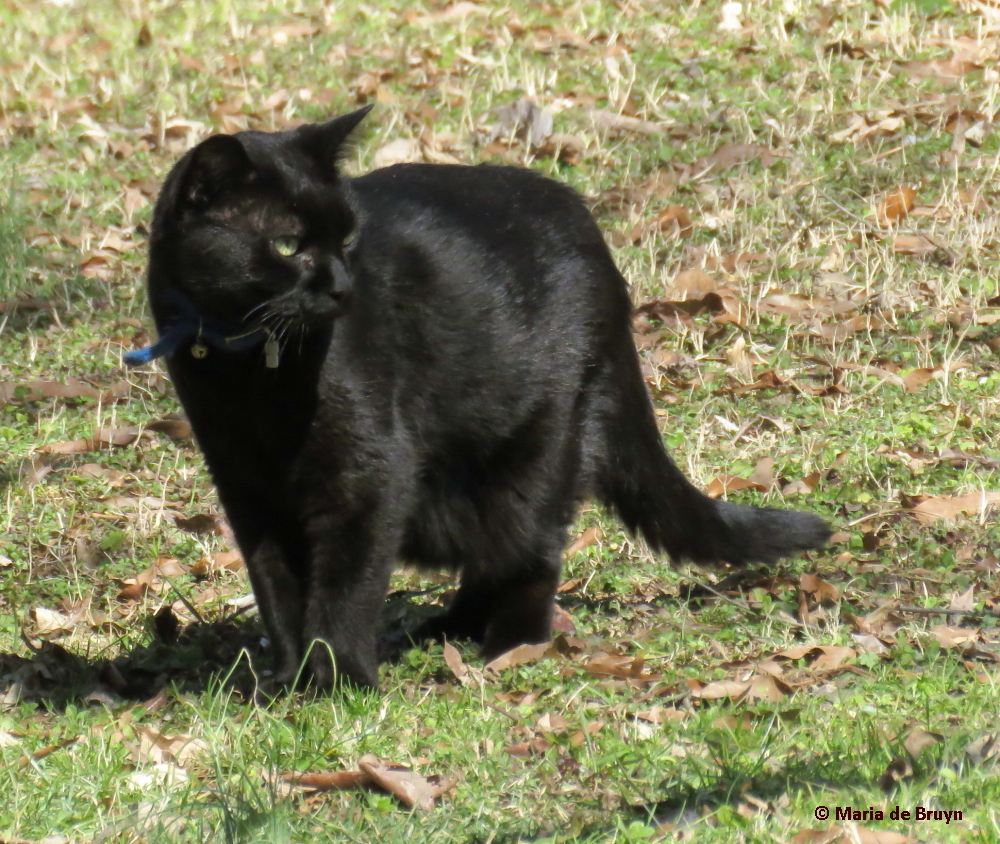
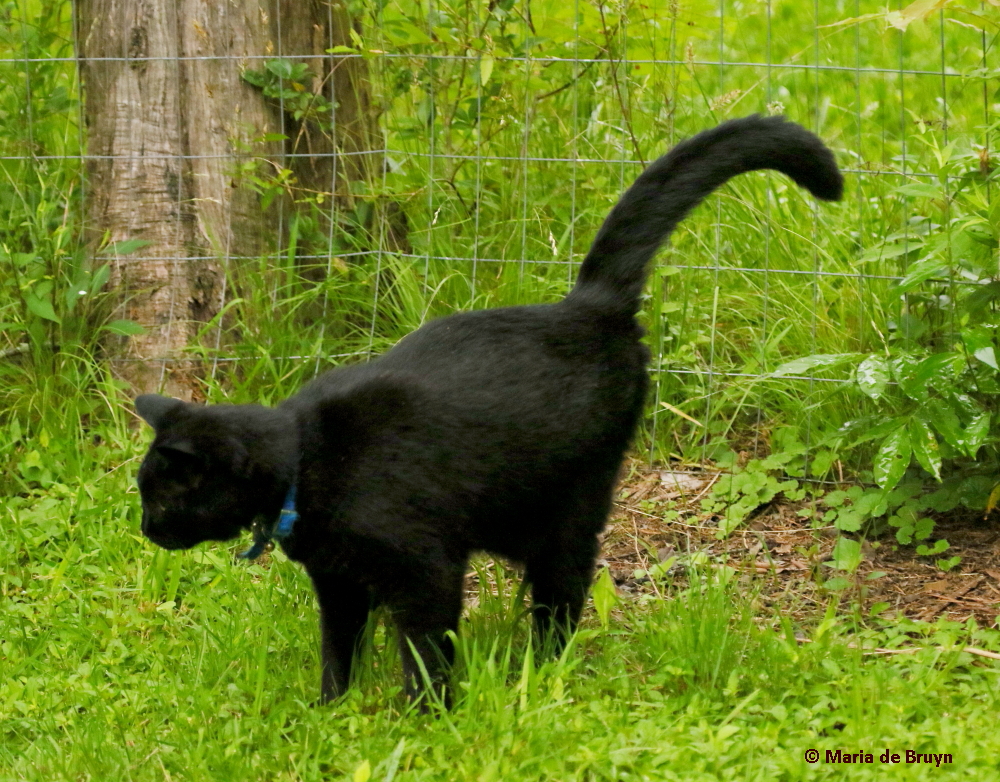
Her presence in the yard reinforced my resolve to no longer let my former indoor-outdoor cat, Jonahay, out by himself anymore. He has almost reached the ripe old age of 18 years and is going strong despite suffering arthritis, mild kidney disease, mild dementia and deafness. But all the years of having roamed outside have preserved a strong will to go outdoors so I take him for walks around the yard, which give him opportunities to mark his territory anew. (My other two cats are strictly indoor felines, although one of them likes to escape now and again.)

jonahay-img_0058-maria-de-bruyn-res jonahay-i77a5004-maria-de-bruyn-res

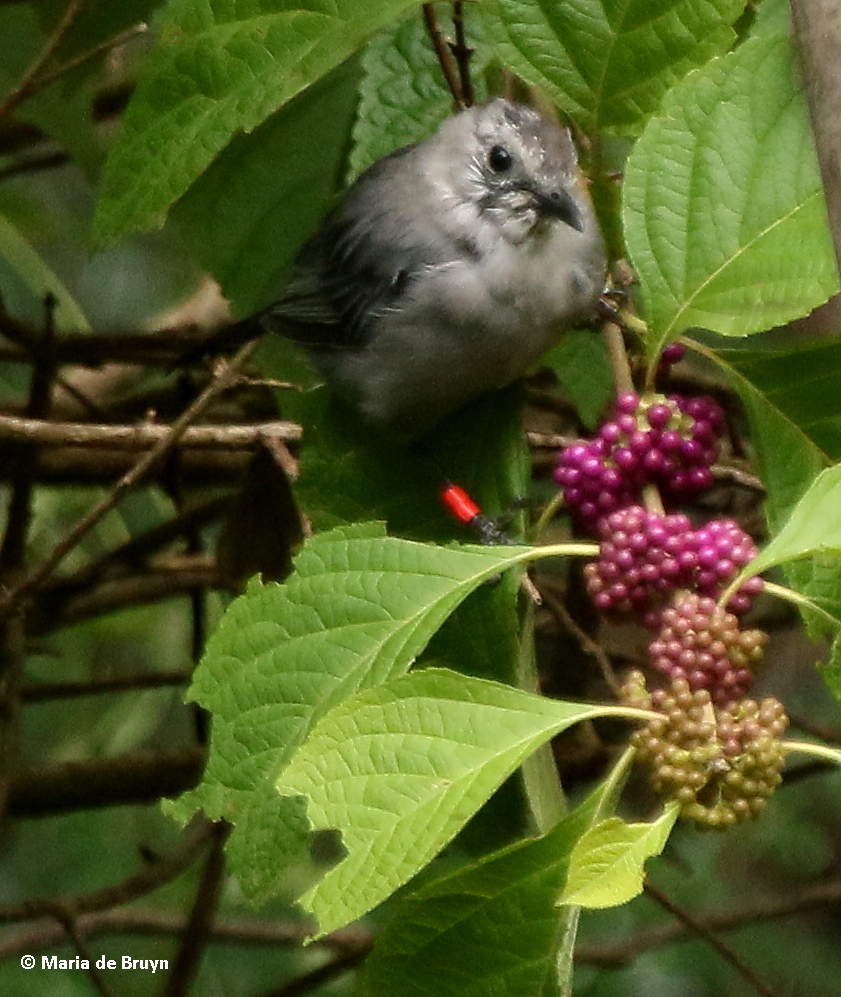
Two years running now, my yard has served as a venue for a citizen-science bird banding exercise and it’s always a pleasure to see banded birds returning to the feeders, like Corey catbird (Dumetella carolinensis) who enjoys American beautyberries. They also include my intrepid Carolina chickadee (Poecile carolinensis), Chantal, who unfortunately lost a leg (I think because she had scaly leg when she was banded and the bands were too tight but I don’t know this for sure). She is a feisty little bird and manages to balance remarkably well on her remaining leg; her daily return is always a joyous sight for me.

gray-catbird-corey-i77a4763-maria-de-bruyn-res  carolina-chickadee-chantal-i77a7263-maria-de-bruyn-res

sphinx-moth-caterpillar-img_4314-maria-de-bruyn-res


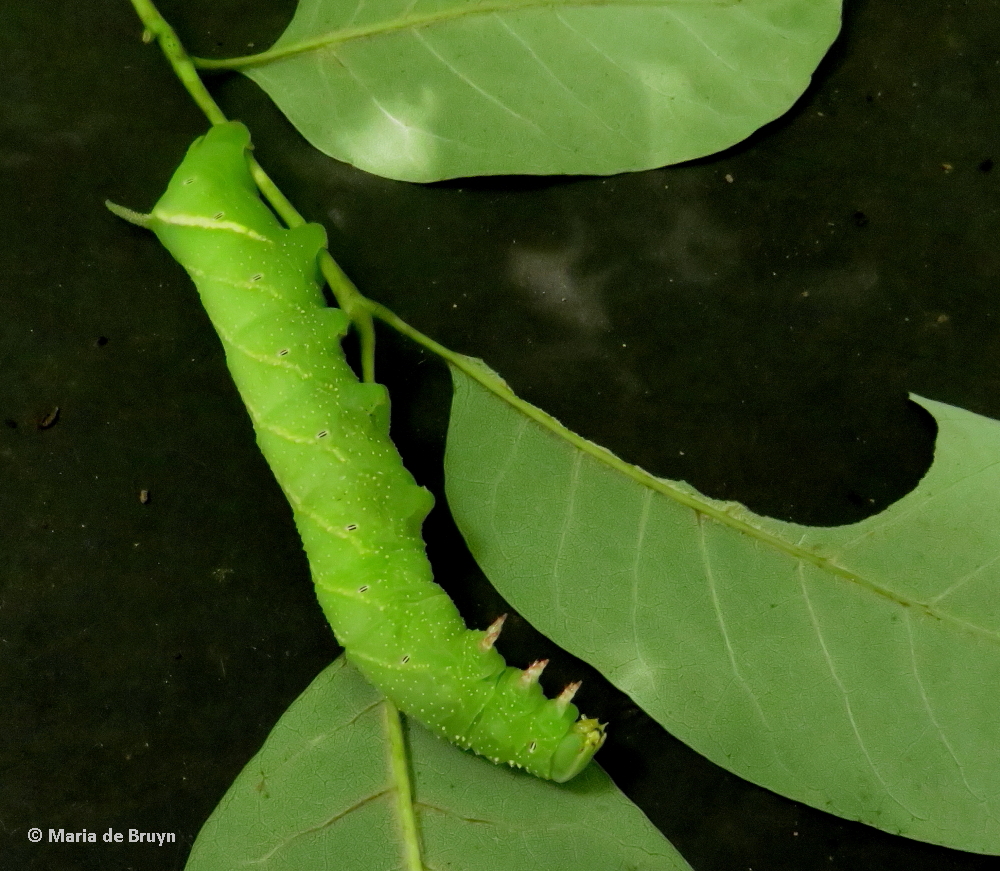
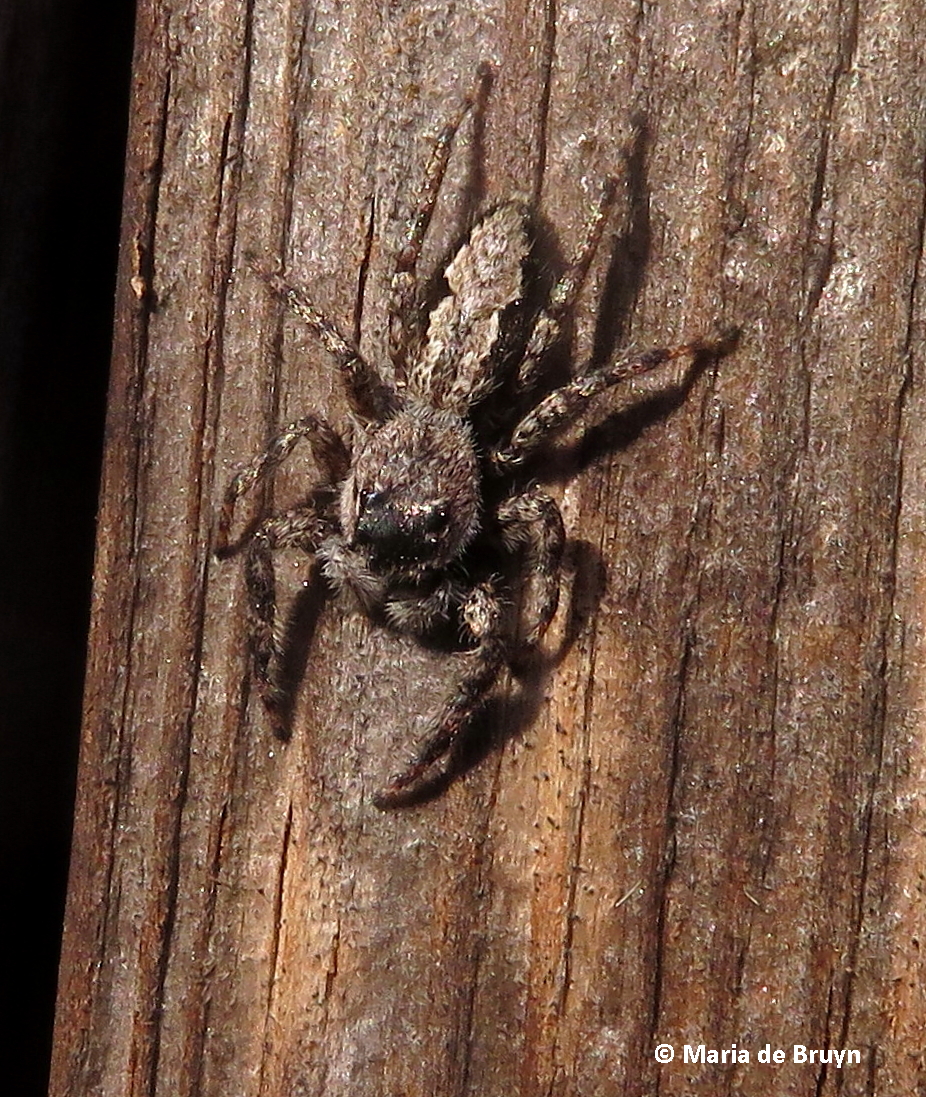
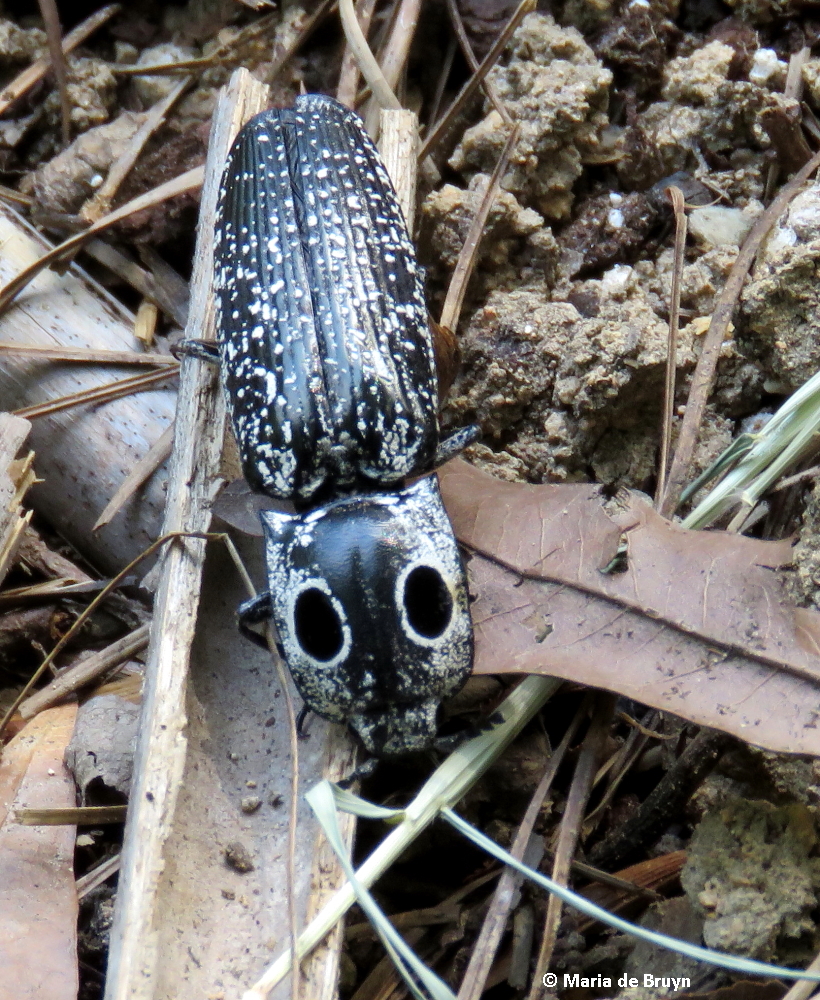
2016 was an exciting year as far as caterpillars went since a large sphinx moth caterpillar (Paonias) graced the yard for the first time (at least that I had noticed).  Cute little jumping spiders (Salticidae) climb onto bird nest boxes and Eastern eyed click beetles (Alaus oculatus) are found in the leaf litter.


jumping-spider-img_0562_1-maria-de-bruyn   click-beetle-img_4582-maria-de-bruyn-res

stink-bug-img_0575maria-de-bruyn-res


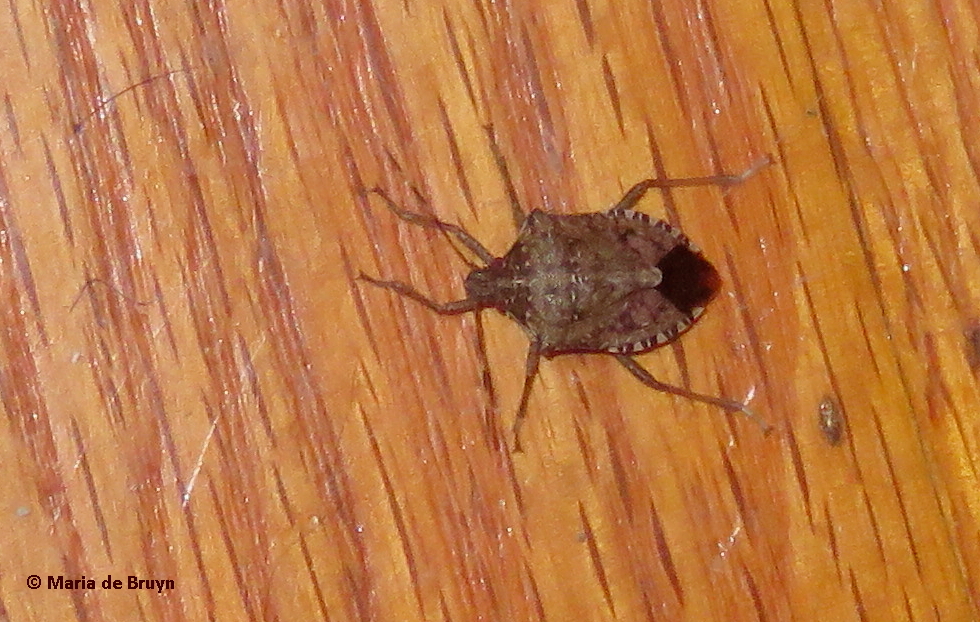
Unfortunately, some of the stink bugs (Halyomorpha) make their way into the house so that I have to take them back outside. One of my cats made the mistake of eating one that I hadn’t got in time and she ended up quite sick, even foaming at the mouth!

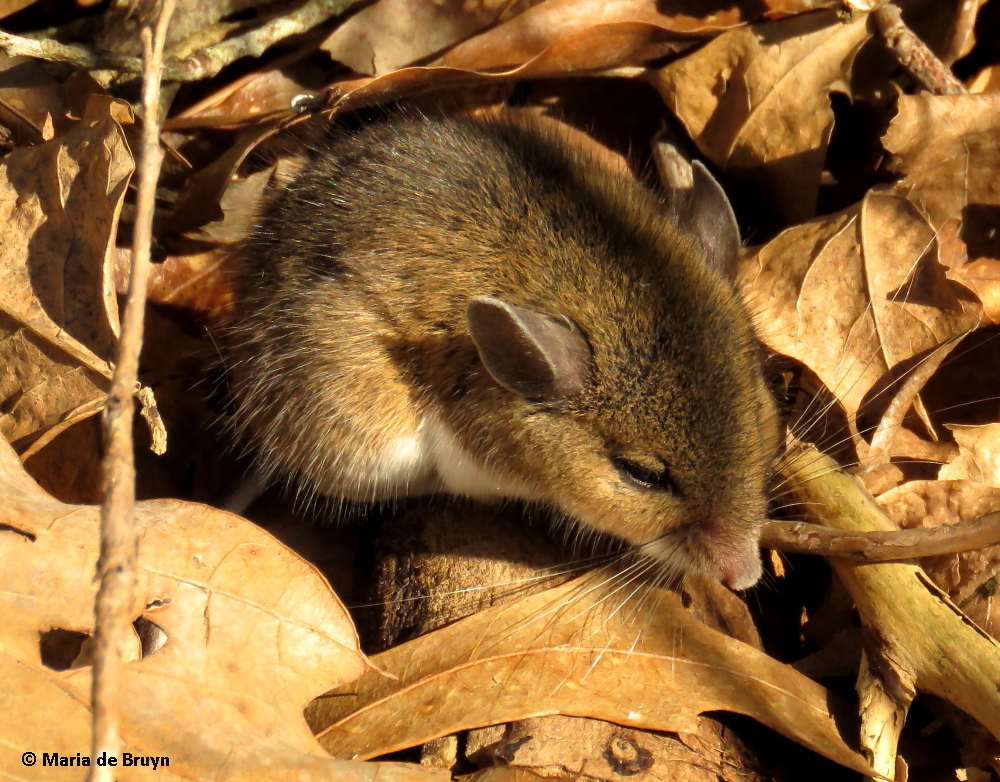
mouse-img_2726-maria-de-bruyn-resOccasionally, mice (Mus) get into the house. The cats don’t eat them and aren’t out to kill them but if they catch one at night and I don’t awaken, the rodent will be dead in the morning. Otherwise, I manage to get hold of the animal (sometimes with a lot of effort) and let it go outside again.

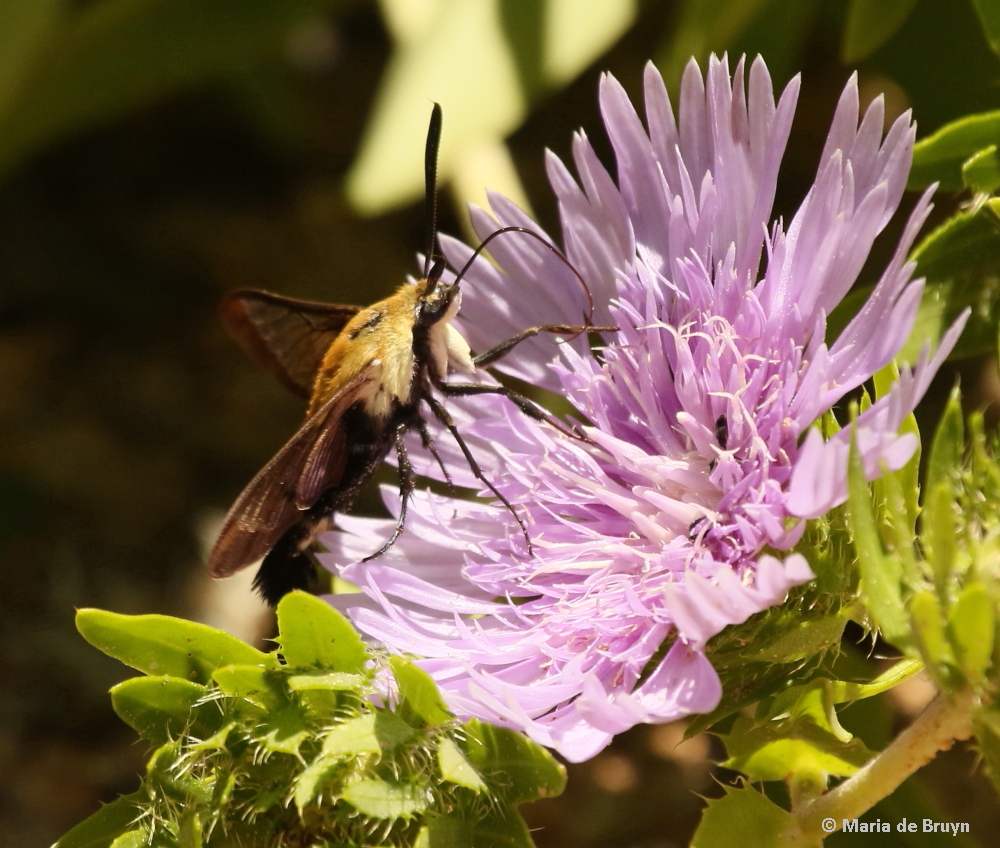
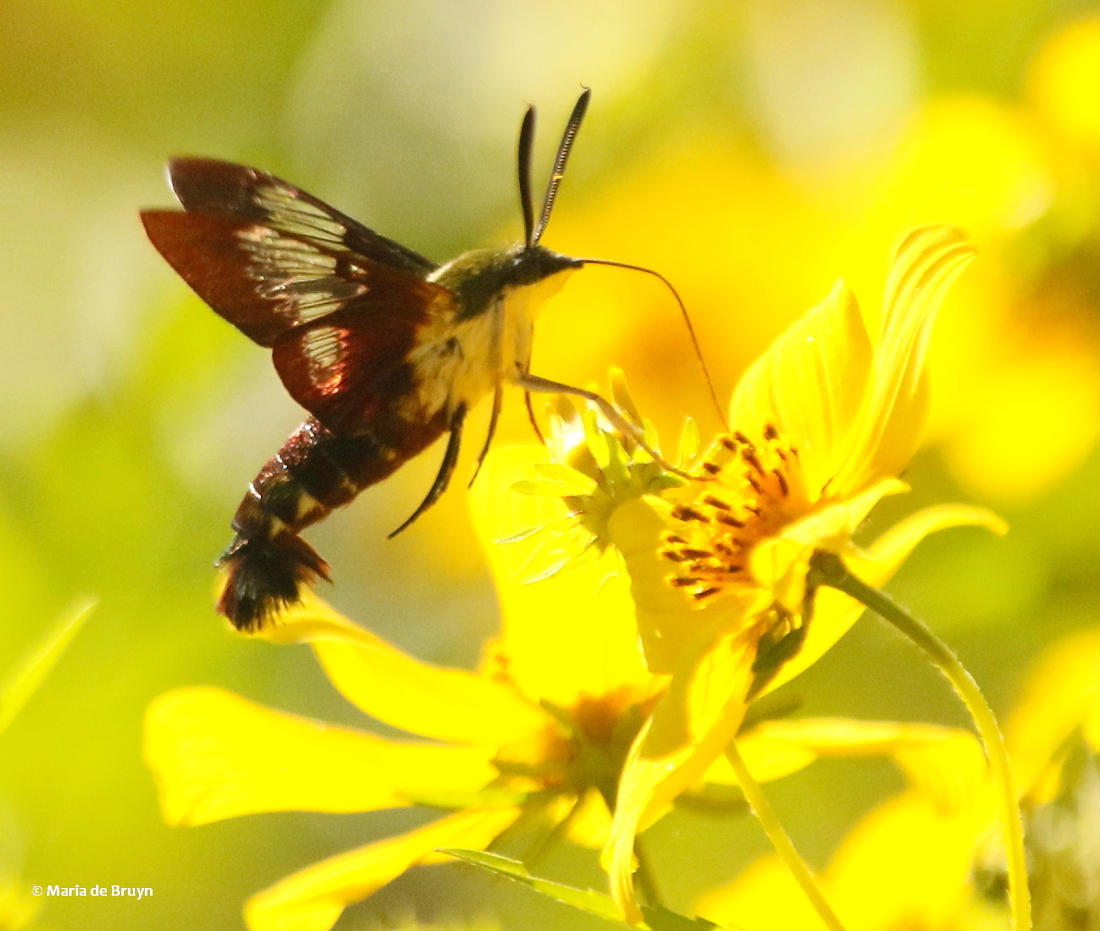
The snowberry (Hemaris diffinis) & hummingbird clearwing moths (Hemaris thysbe) are delightful.

snowberry-clearwing-moth-i77a5324-maria-de-bruyn-res   clearwing-hummingbird-moth-i77a7002-maria-de-bruyn-res

great-crested-flycatcher-i77a6714-maria-de-bruyn-res


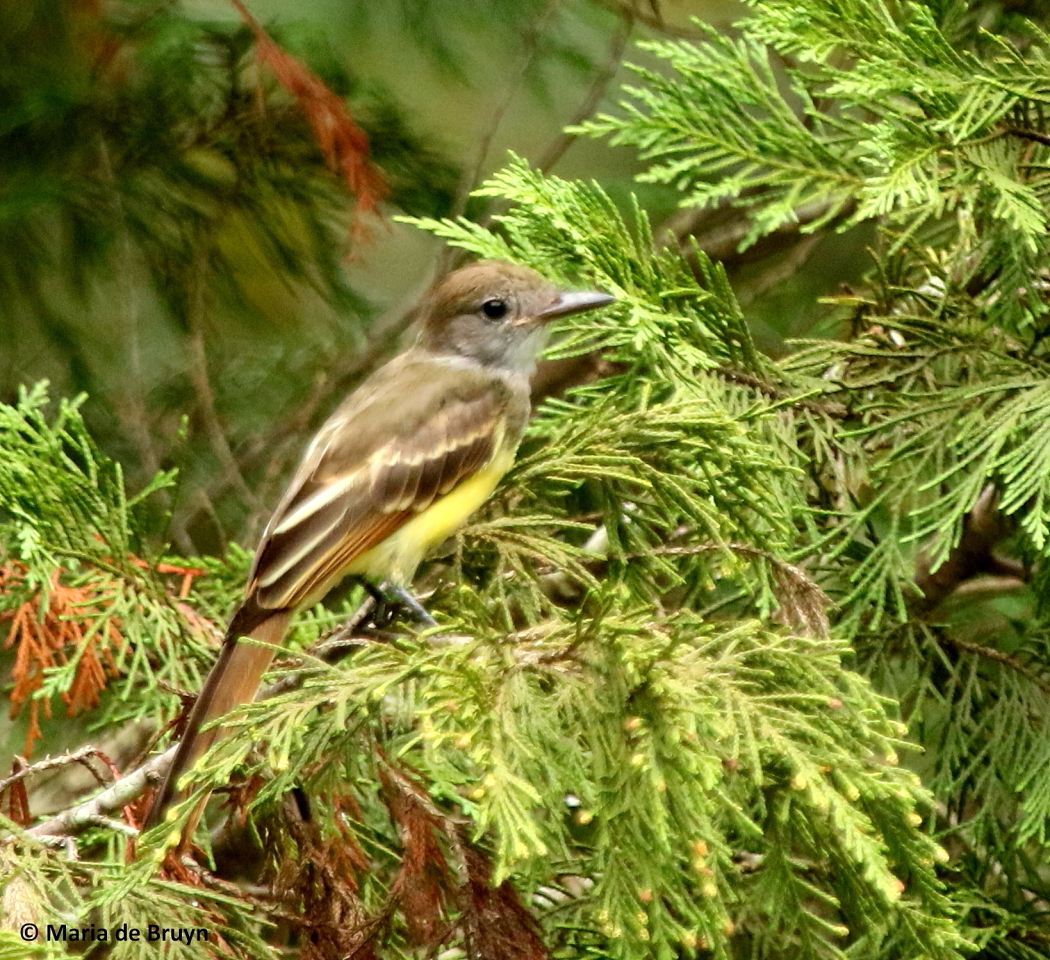
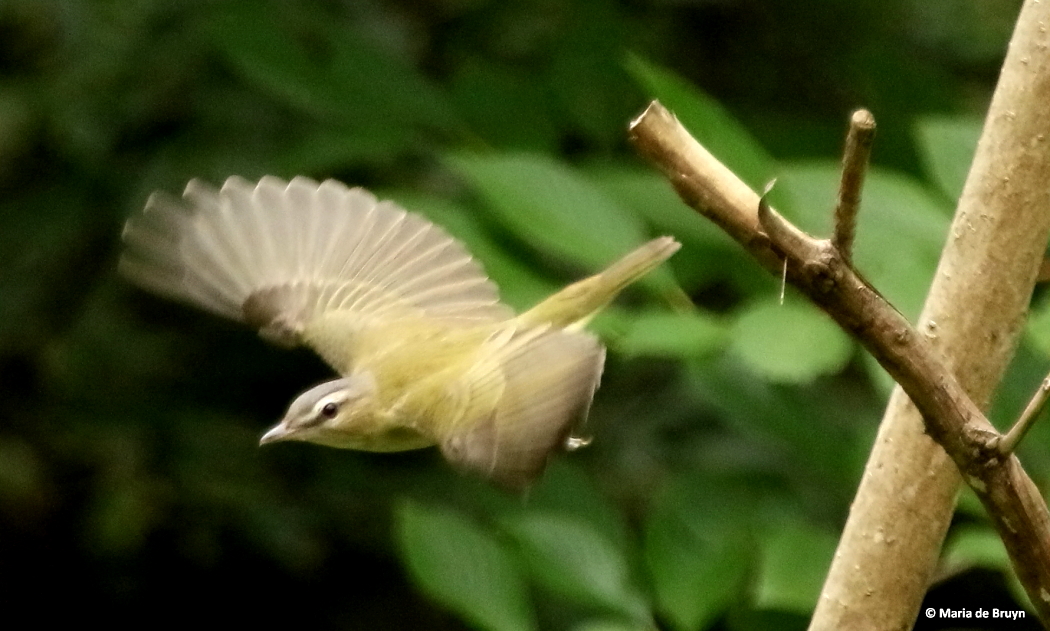
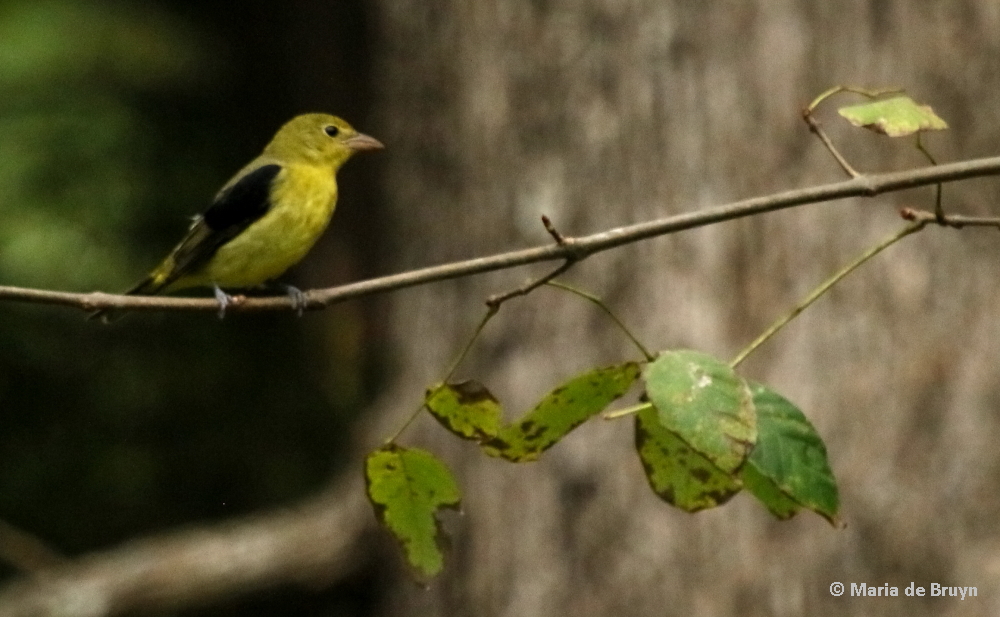
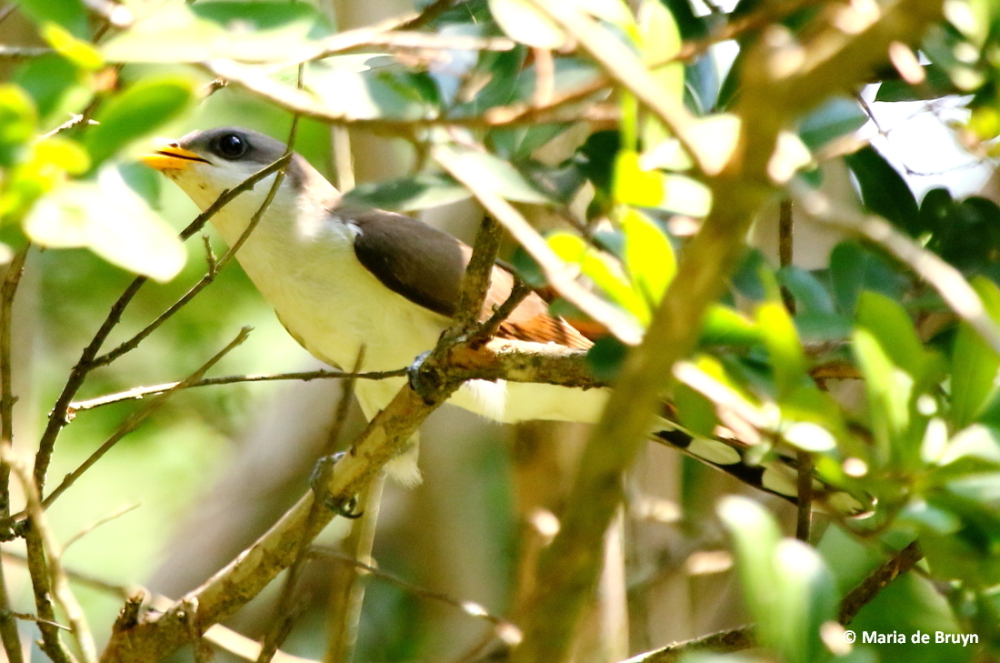
And so were various birds that visited my yard for the first time this year (or at least as far as I had noticed)! They included the black and white warbler, chestnut-sided warbler and Northern parula. Here are three more, plus the beautiful great crested flycatcher (Myiarchus crinitus, left), which I’d seen before but not well.


red-eyed-vireo-i77a6755-maria-de-bruyn-res

Red-eyed vireo (Vireo olivaceus)

scarlet-tanager-i77a0102-maria-de-bruyn-res

Scarlet tanager (Piranga olivacea)

yellow-billed-cuckoo-i77a1564-maria-de-bruyn-res

Yellow-billed cuckoo (Coccyzus americanus)

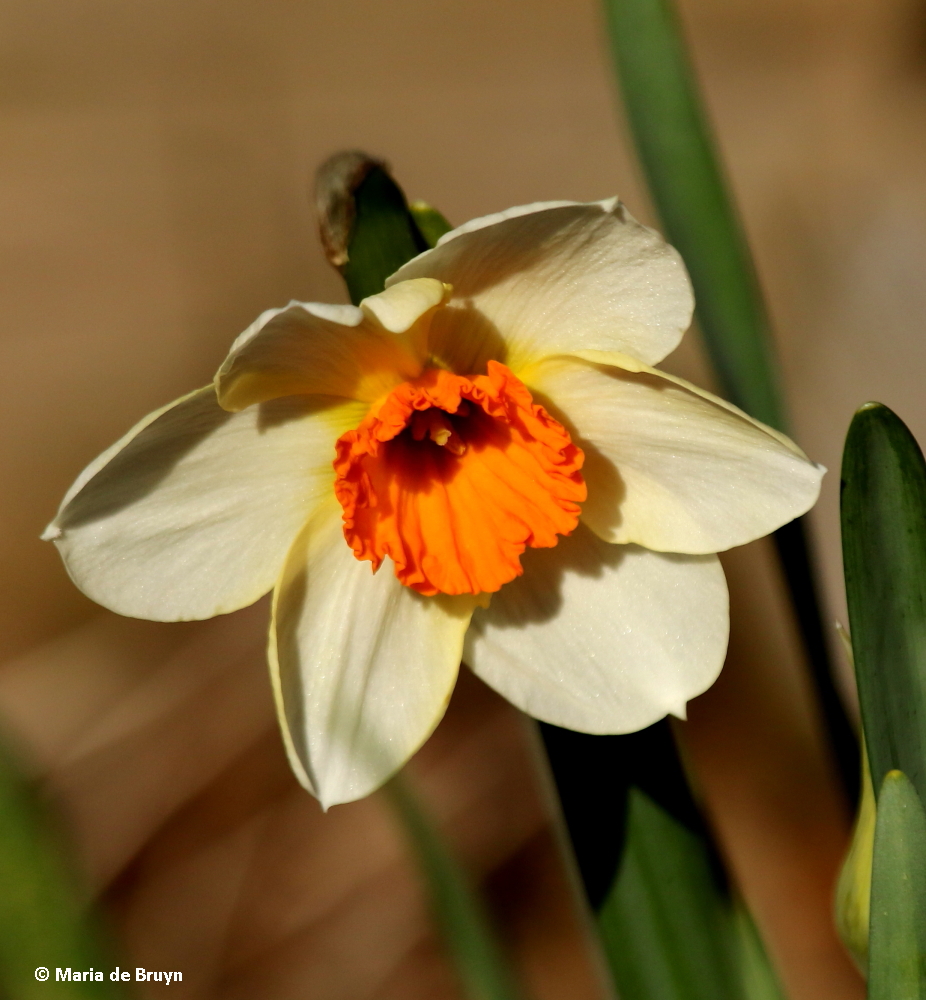
daffodil-i77a8465-maria-de-bruyn-res


I’m so pleased to begin this year in my home and really hope that circumstances in 2017 will allow me to continue enjoying nature, especially in my yard as I work to make it ever more welcoming to the local wildlife. And I hope all of you who read my blog will have many opportunities to get out and appreciate our beautiful natural world, too! Happy New Year to you!


Humankind has not woven the web of life.
We are but one thread within it.
Whatever we do to the web, we do to ourselves.
All things are bound together.
All things connect.

~ Chief Seattle, 1854 ~

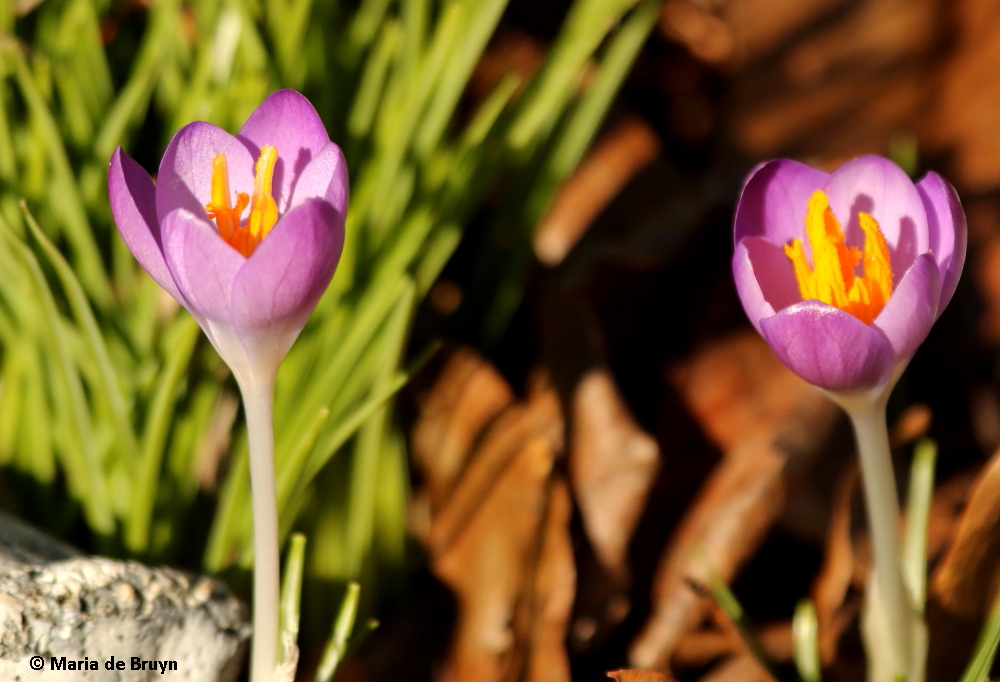
crocus-i77a6296-maria-de-bruyn-res

My nemesis birds!

european-starling-dk7a5386-maria-de-bruyn-resIn the birding world, a “nemesis bird” often refers to a species of bird that is eluding a birder intent on adding to their life list of bird species seen in person. For me, however, a nemesis bird is one that is emptying my feeders and depriving other birds of their bit of nutritional goodness because it descends in such great numbers that no one else has a chance. Which bird is this? It’s the European starling (Sturnus vulgaris), a bird which I admittedly find visually beautiful but rather unattractive as far as temperament goes.

northern-mockingbird-i77a9648-maria-de-bruyn-resOther birders who spend time attracting birds to their yards often comment on how Northern mockingbirds (Mimus polyglottos) chase other birds away – those in my yard feed quite happily alongside other species, however, and even wait their turn for the suet feeders. Another large bird, the brown thrasher (Toxostoma rufum), does the same. In fact, most of the species that visit my yard are content to share feeder space and/or wait their turn.

brown-thrasher-img_9913-maria-de-bruyn-res     sharing-feeders-i77a9154-maria-de-bruyn-res

american-crow-dk7a2281-maria-de-bruyn-resOther species that are called “bully birds” include common grackles (Quiscalus quiscula, below), who can look quite beautiful with iridescent feathers, blackbird species and house sparrows. The grackles and red-winged blackbirds (Agelaius phoeniceus) in my yard have not been too dominant; they do sometimes come in numbers but let other birds near. I haven’t had crowds of grackles lately and when they’ve come, their main concern was to attempt to drive away the American crows (Corvus brachyrhynchos, above), so my main foe has been the starlings.

common-grackle-dk7a2236-maria-de-bruyn-res   common-grackle-i77a1447-maria-de-bruyn-res

They discovered my yard as a buffet about a year ago and introduced their young to the feasting area this past summer.

european-starling-dk7a3396-maria-de-bruyn-res  european-starling-dk7a3404-maria-de-bruyn-res


european-starling-dk7a5233-maria-de-bruyn-res


What is striking to me is the fact that they not only will “yell” at other species to go away but also compete vigorously with one another for a spot at the platform and other feeders, indicating a rather nasty disposition.

european-starling-dk7a5130-maria-de-bruyn-res   european-starling-dk7a0871-maria-de-bruyn-res

european-starling-i77a7396-maria-de-bruyn-res

The young starlings pick up on this behavior quickly.

If I come outside, they quickly fly off and roost high up in the tallest trees; sometimes, they will actually fly off to another place in the neighborhood. Clapping my hands and banging on the window will also get them to leave. However, they stick around to assess whether I will appear and if I don’t come out, they are back in short order.

european-starling-i77a1048maria-de-bruyn-res

pine-warbler-dk7a0358-maria-de-bruyn-res


Their first love turned out to be the dried mealworms, which are a big hit with the Eastern bluebirds (Sialia sialis), tufted titmice (Baeolophus bicolor), Carolina chickadees (Poecile carolinensis), Carolina wrens (Thryothorus ludovicianus) and pine warblers (Setophaga pinus, left) among other species.

eastern-bluebird-i77a6862-maria-de-bruyn-res  eastern-bluebird-i77a9596-maria-de-bruyn-res

tufted-titmouse-img_4143-maria-de-bruyn-res   tufted-titmouse-i77a9678-maria-de-bruyn-res

carolina-chickadee-i77a9738-maria-de-bruyn-res   carolina-wren-i77a7312-maria-de-bruyn-res

It’s always a pleasure to see the banded birds return, like the Carolina wren below.

carolina-wren-i77a9548-maria-de-bruyn-res   carolina-wren-i77a9547-maria-de-bruyn-res

When five or more starlings gather around a feeder, they literally gulp the mealworms down, making short shrift of a good-sized supply.

european-starling-dk7a0937-maria-de-bruyn-res   european-starling-dk7a2433-maria-de-bruyn-res

northern-cardinal-i77a2061-maria-de-bruyn-resI began putting out only mixed seed, sunflower seeds (Helianthus annuus) and my home-made vegetarian suet, the latter being a favorite for many species: the bluebirds, chickadees, wrens, titmice, yellow-rumped warblers (Setophaga coronata), brown-headed nuthatches (Sitta pusilla), Northern cardinals (Cardinalis cardinalis, left), and downy and red-bellied woodpeckers (Picoides pubescens and Melanerpes carolinus).

yellow-rumped-warbler-i77a9778-maria-de-bruyn-res

brown-headed-nuthatch-i77a6423-maria-de-bruyn-res

downy-woodpecker-dk7a1967-maria-de-bruyn-res   downy-woodpecker-dk7a1961-maria-de-bruyn-res

red-bellied-woodpecker-i77a4258maria-de-bruyn-res red-bellied-woodpecker-dk7a0440-maria-de-bruyn-res

My resident ruby-crowned kinglet (Regulus calendula) hasn’t returned this winter (though I hope he is just late), so he doesn’t have to compete with the much, much larger starlings for his beloved meals.

ruby-crowned-kinglet-img_1776-maria-de-bruyn-res  ruby-crowned-kinglet-dk7a0538-maria-de-bruyn-res

european-starling-dk7a5647-maria-de-bruyn-resTo my dismay, when the starlings discovered no mealworms were available, they decided that suet could be a nice substitute. Oy vey! They manage to empty the suet holders in record time.

I waited to put out the suet until I saw no starlings in any of the tall trees surrounding the yard.

european-starling-img_0035-maria-de-bruyn-res

european-starling-i77a7189-maria-de-bruyn-resThe smaller birds came but this lasted only a little while. Soon the starlings showed up, leading me to think that either “scout” or “watch birds” were left behind to warn the flock when preferred food arrived, or they had a tremendous sense of smell that led them to my yard. It does turn out that starlings use their sense of smell to identify plants for their nests, so who’s to say they don’t use it to find food, too?


red-bellied-woodpecker-dk7a1833-maria-de-bruyn-resOne bird advice website recommends avoiding sunflower seeds as “bully birds” prefer them. Well, so far, the starlings have assiduously avoided any seeds. So a couple days ago, I filled all the feeders with seed except for the suet feeders – and I stood outside next to them so that the songbirds could have a go at the suet without their bigger avian neighbors chasing them away. It was gratifying to see the little ones enjoy a bit of suet while the starlings perched high above, unwilling to come down in my presence. Today, it was raining persistently but the songbirds were flying to and fro among the feeders so I put suet in three holders and some mealworms in one.

For an hour or so, they had the dried worms and peanut butter-based treat to themselves; then a starling appeared. I went outside but this particular bird didn’t seem to mind. When three of its compatriots arrived and saw me, they swooped away so the little birds still could grab some suet and mealworms.

european-starling-i77a9669-maria-de-bruyn-res

Now I’ll wait to see if the starlings begin eating the seed or finally move on or stay away for longer periods. I’m guessing as long as there is occasional suet, they will leave their scouts in place to warn them when a tasty meal is available. And I do want to put out some mealworms now and again so I don’t disappoint the chickadees and wrens who greet me with loud twittering when I approach empty feeders. Non-birders probably think that’s silly (to put it mildly) but I think bird lovers will understand….

Busy as a bee is no joke! Our hardworking pollinators – pretty and persevering!

honey-bee-brazilian-sage-i77a1269-maria-de-bruyn-resHere it is, 7 November, and the honey bees were still busily working over the Brazilian sage, lantana and chrysanthemums in my garden. The Eastern carpenter bees were absent today, perhaps because of the cold night we had, but a few butterflies were flying among the flowers. We know that some of our pollinators are in serious trouble, but my garden has nevertheless been blessed this year with a steady stream of pollinating visitors who were to be seen on the varied blooms morning, noon and almost night.

bees02fin02



I’d enjoyed seeing the bees, butterflies and syrphid flies in the past, but started paying even more attention to them as pollinators this year as I worked on the “Healthy Bee, Healthy Me” project initiated by the non-profit organization Keep Durham Healthy.


eastern-tiger-swallowtail-i77a8131-maria-de-bruyn-res


The project expresses its goal as follows: “…to establish educational pollinator gardens in proximity to pre-existing community gardens to ensure the sustainability of nectar and pollen sources for our honey bees, native bees, butterflies and other pollinators throughout the year, and to increase the yield of the food crops grown within the community gardens.” Some of my photos were used in one of their interpretive garden signs and next year more community gardens will join the project.

hummingbird-clearwing-moth-i77a3130maria-de-bruyn-res

Science knows that more than 250,000 plants are pollinated by over 100,000 different types of animals, but not all plants require assistance from pollinators for fertilization. In abiotic pollination, fertilization occurs without another organism as an intermediary – for example, through movement of pollen from male vegetative anthers to female stigma by the wind (called anemophily) or water (called hydrophily). However, much fertilization occurs with assistance from biotic vectors, which not only include bees, butterflies and flies but also moths, birds and mammals (e.g., lemurs, squirrels, opossums, monkeys and bats; here you see a hummingbird clearwing moth – Hemaris thysbe – getting nectar.) How cool is that!

honey-bee-i77a5677-maria-de-bruyn-res


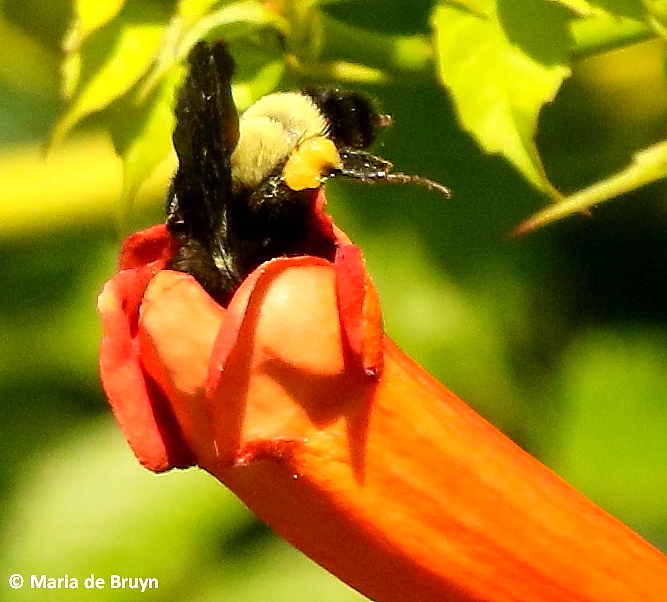
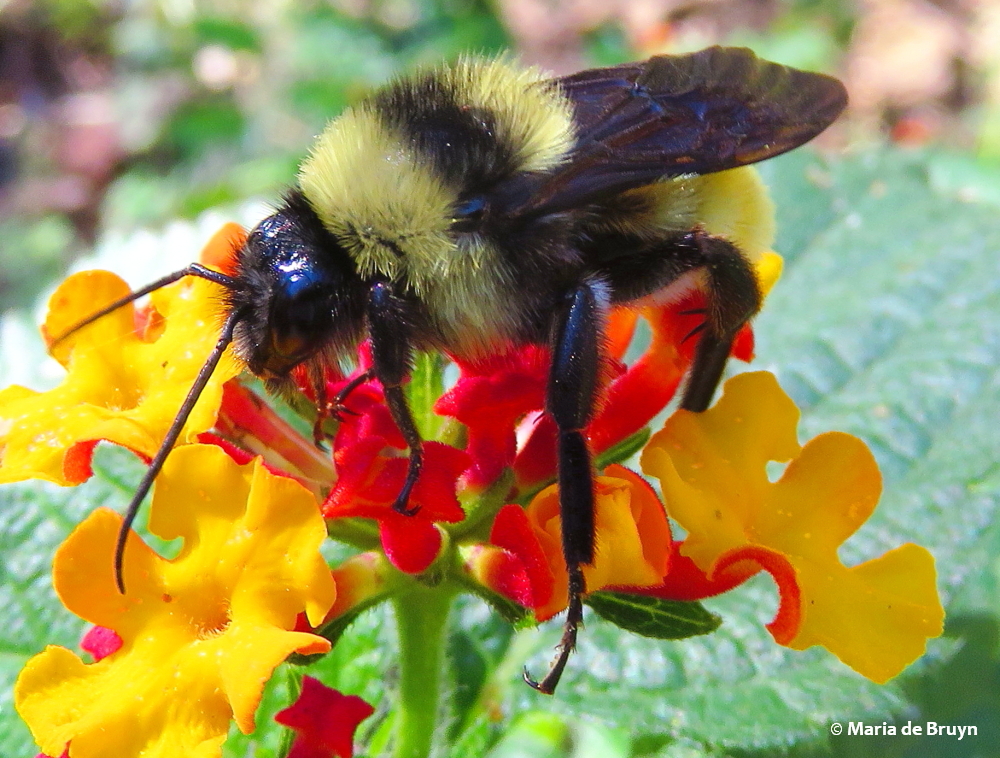
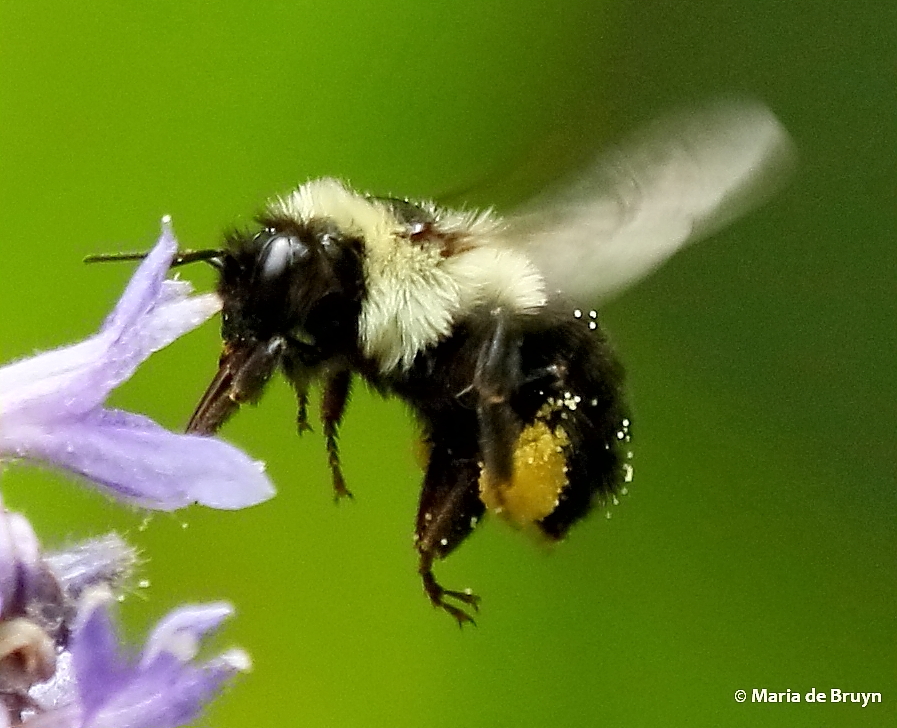
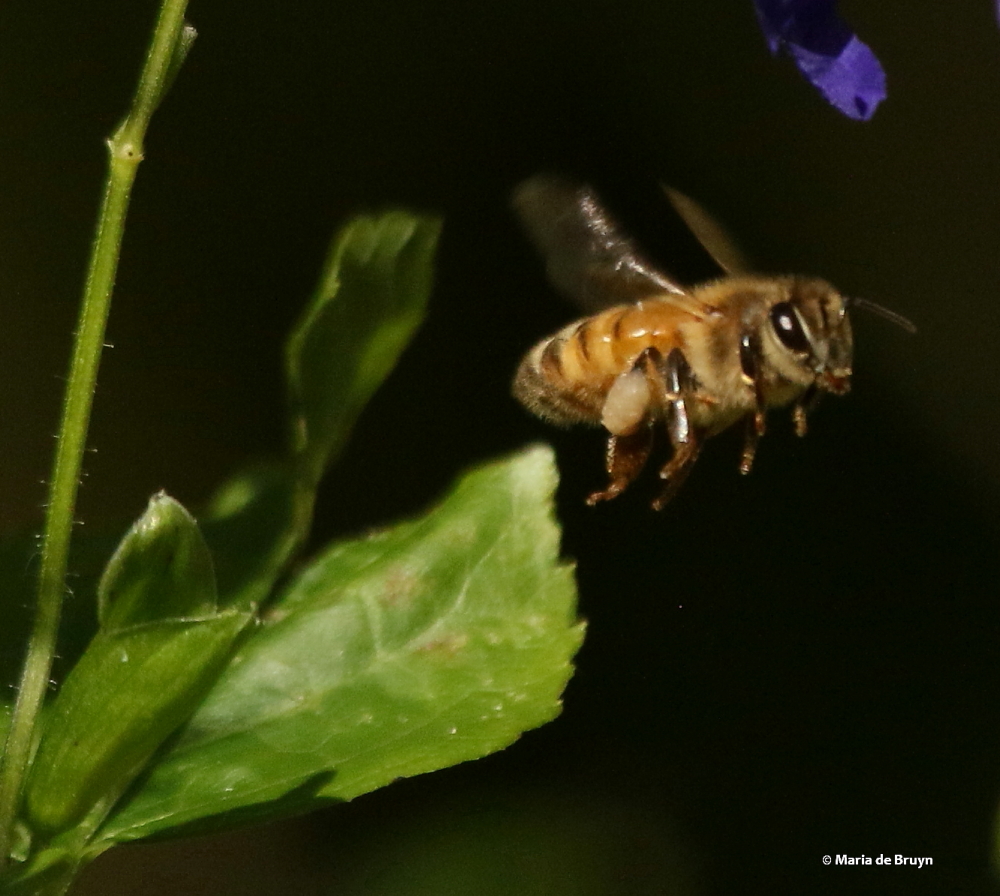
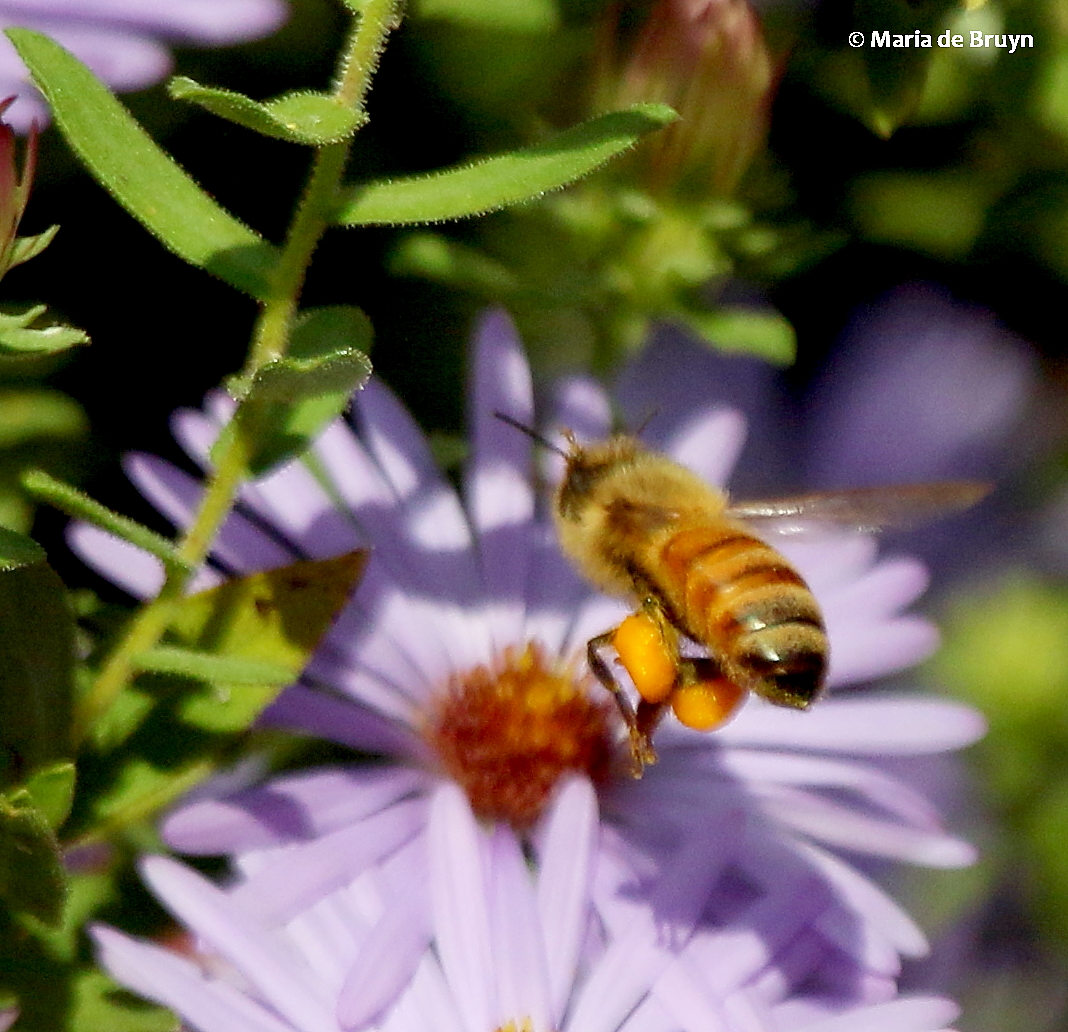
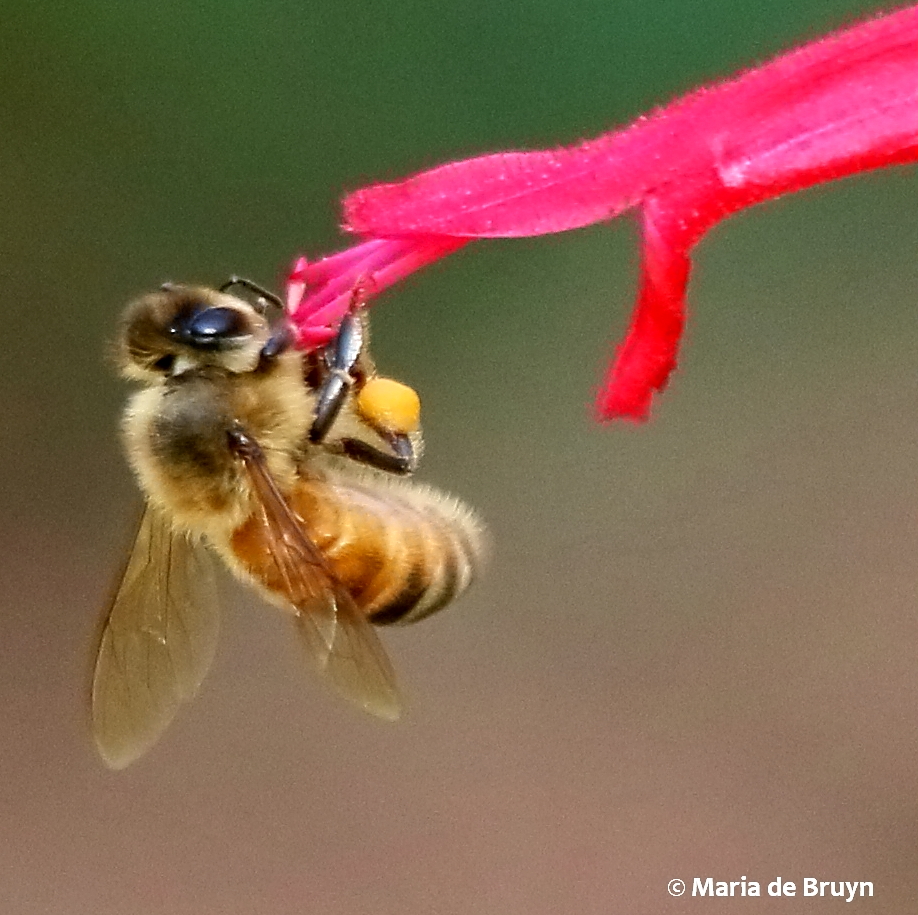
The most efficient pollinators are the bees. Some species like honey bees (Apis mellifera) and bumble bees have pollen baskets (corbiculae) on their legs – a concave portion of their hind leg in which pollen can be stored as a ball. It starts out small but eventually gets fairly big so their little tibia begin to look like barbells. The color of the pollen can differ from bright yellow to brown to red to white, depending on the pollen of the flowers visited most often.


american-bumble-bee-i77a0763-maria-de-bruyn2-res    american-bumble-bee-male-img_5492-maria-de-bruyn-bg

American bumble bee (Bombus pensylvanicus)

common-eastern-bumble-bee-bombus-impatiens-i77a9625-maria-de-bruyn-bg

Common Eastern bumble bee (Bombus impatiens)

honey-bee-i77a8142-maria-de-bruyn-res      honey-bee-i77a2099-maria-de-bruyn

Honey bees

The attractive little honey bees, which vary in their coloring, are known to pollinate about one-third of the popular foods eaten by humans, including items such as tomatoes, peas, beans and other fruit.

honey-bee-i77a7652-maria-de-bruyn-res    honey-bee-i77a6542-maria-de-bruyn-res

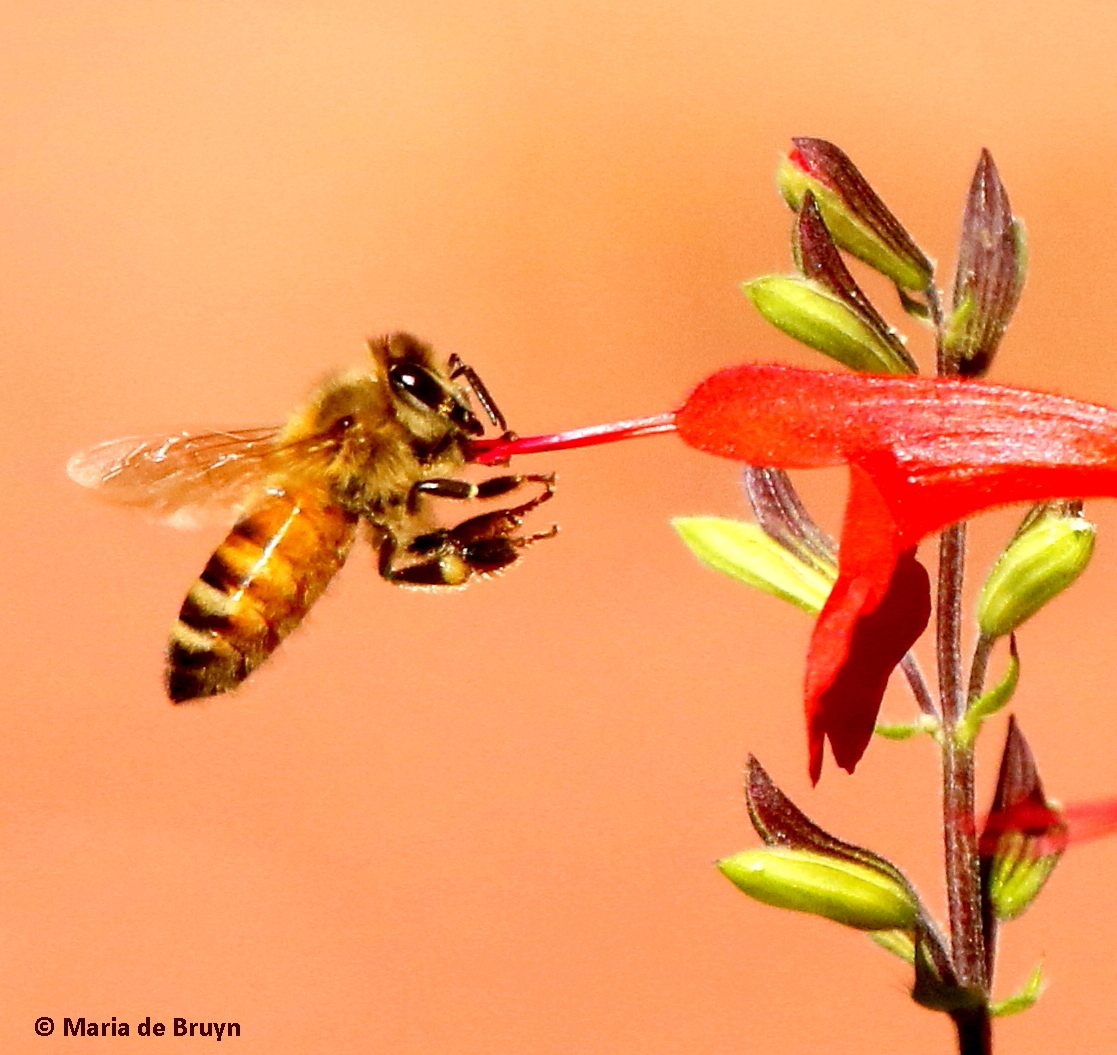
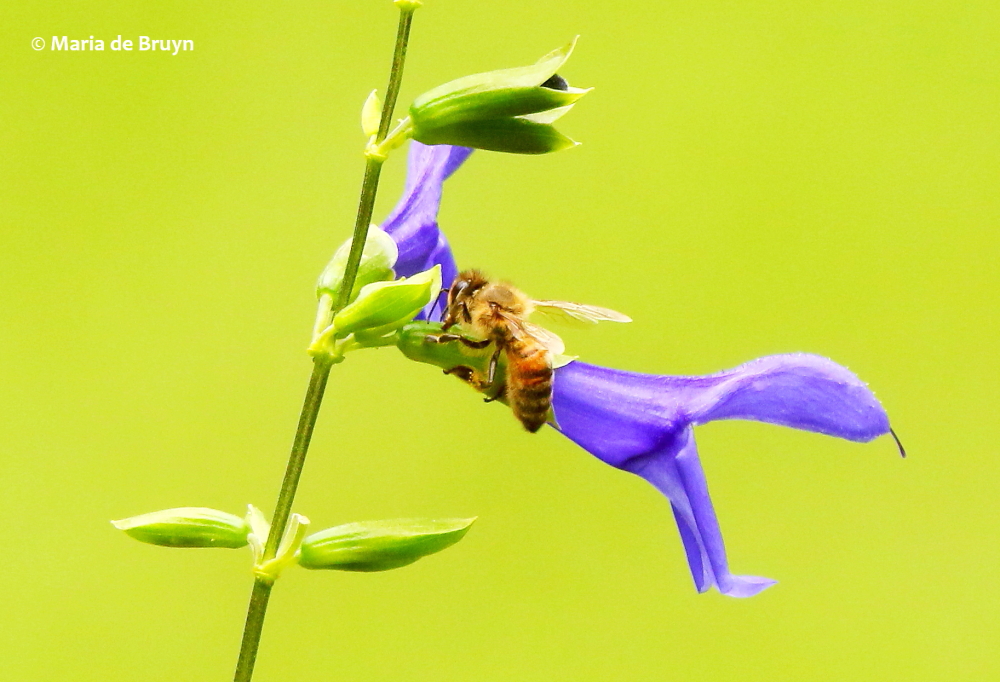
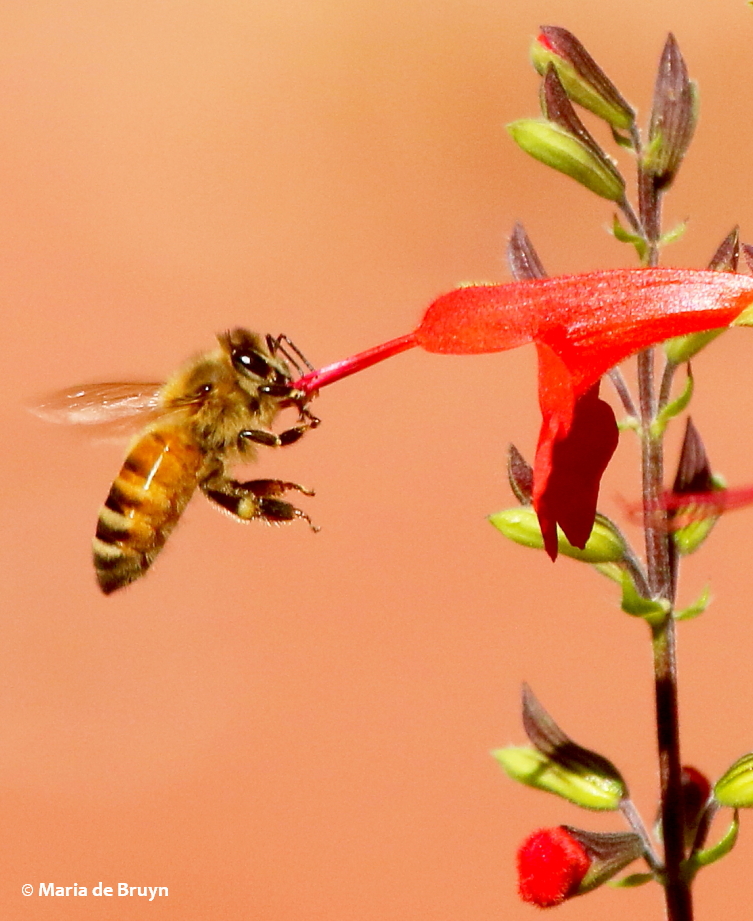
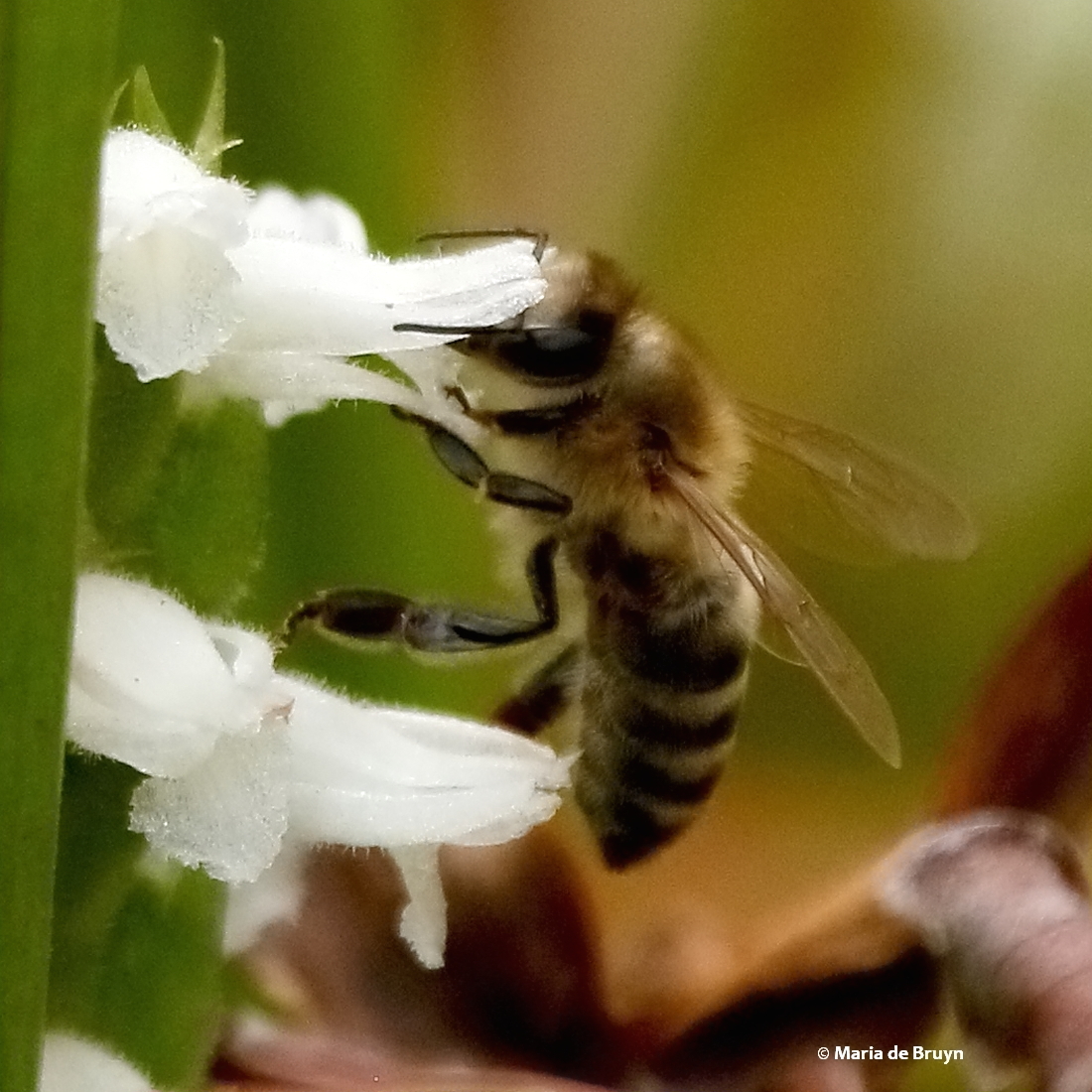
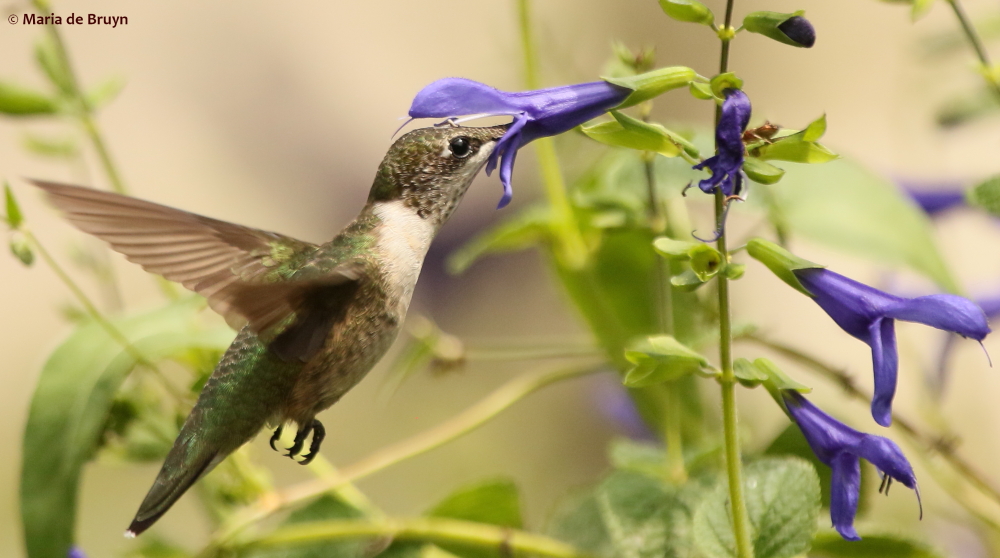
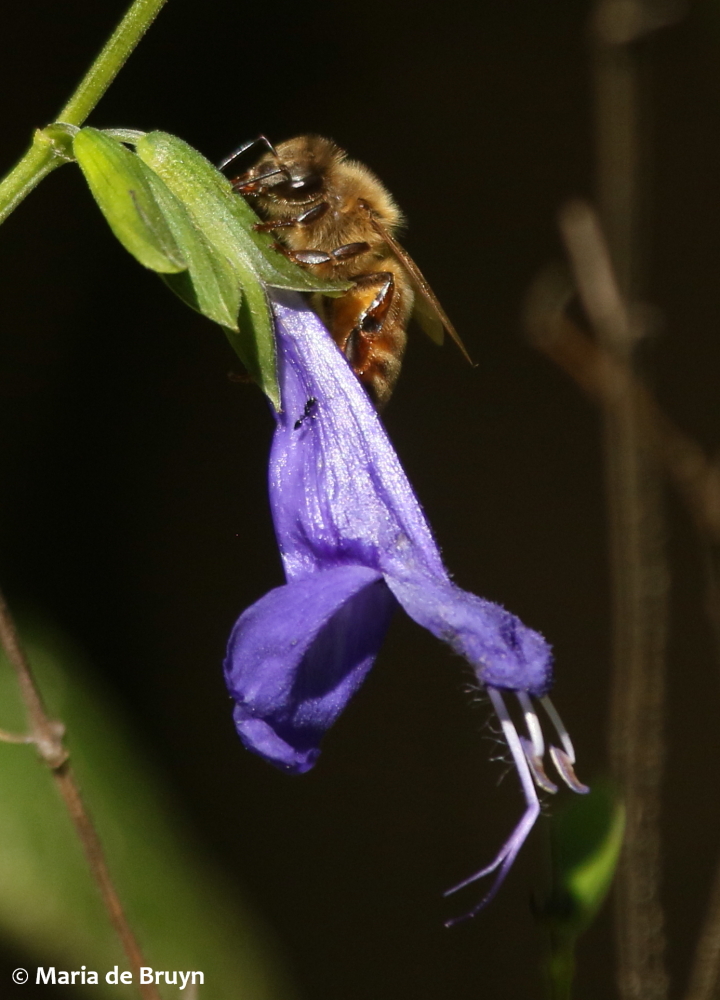
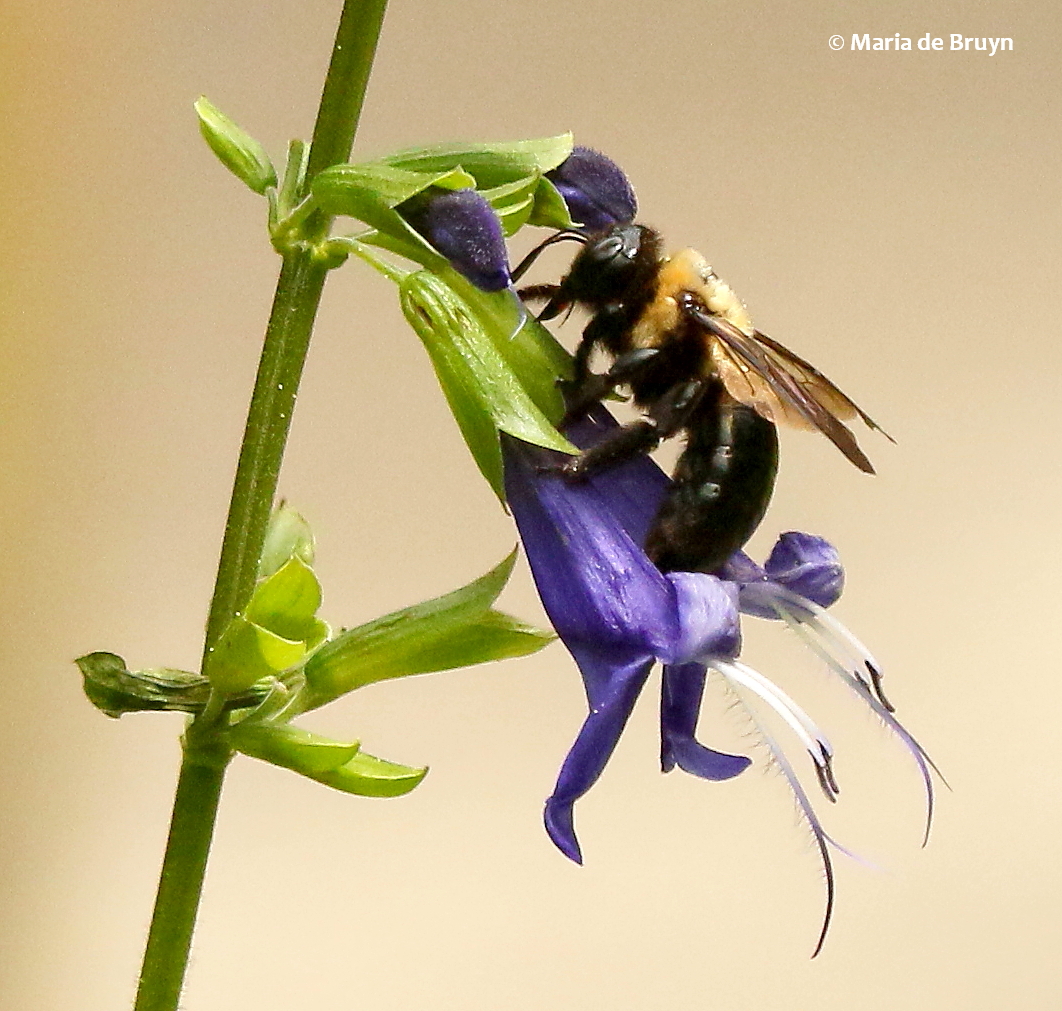
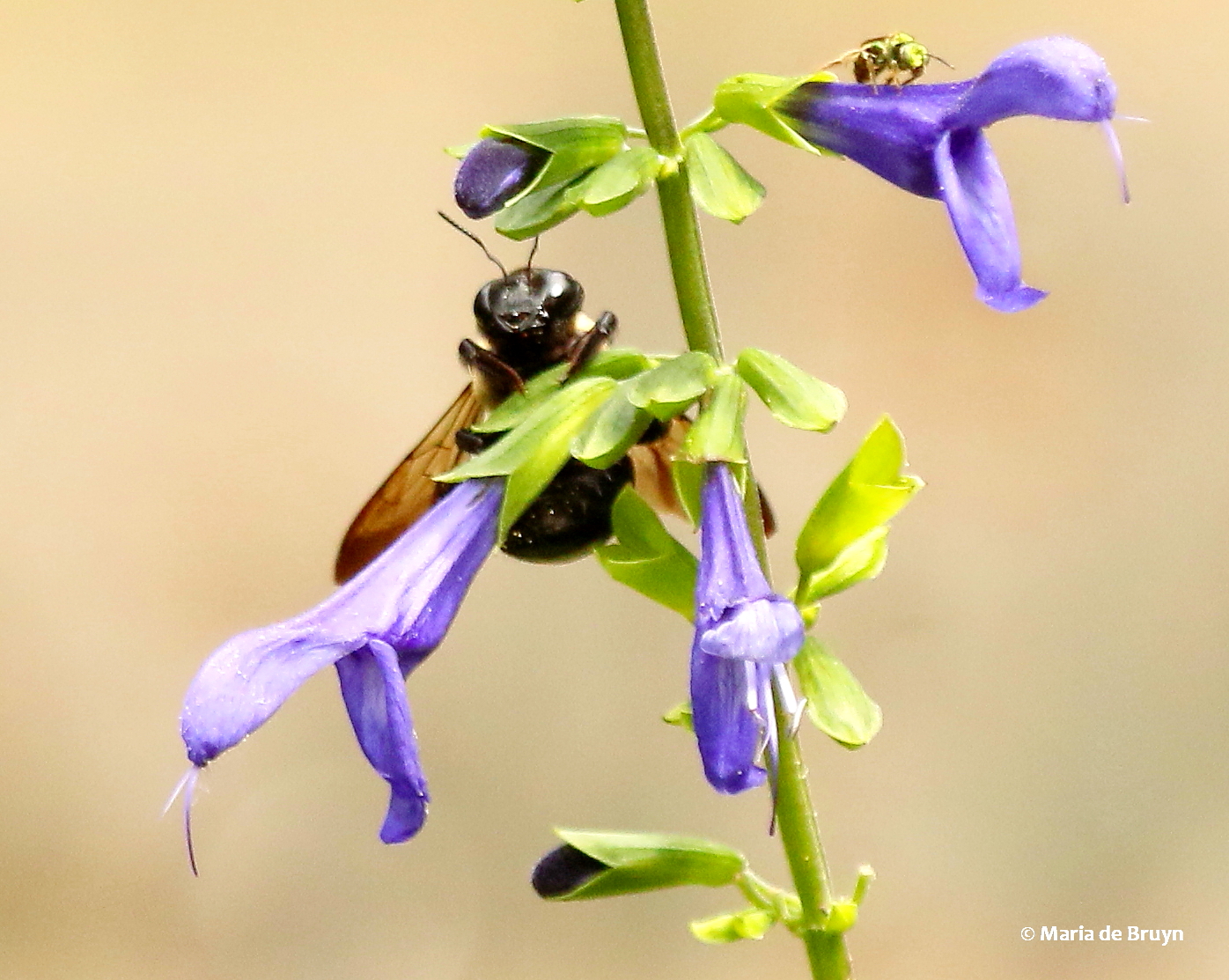
ruby-throated-hummingbird-i77a1315-maria-de-bruyn-resWhen visiting tubular flowers, like the Brazilian sage (Salvia guaranitica), the bees don’t look for nectar by entering the flower as do the ruby-throated hummingbirds (Archilochus colubris) with their long bills. Rather, they alight on the base of the corolla tube so that they can drill down into the flower to extract the nectar at the source.

honey-bee-i77a7849-maria-de-bruyn-res       de-bruyn-maria-carpenter-bee-brazilian-sage-2-i77a7250

Honey bee                                                  Eastern carpenter bee (Xylocopa virginica)

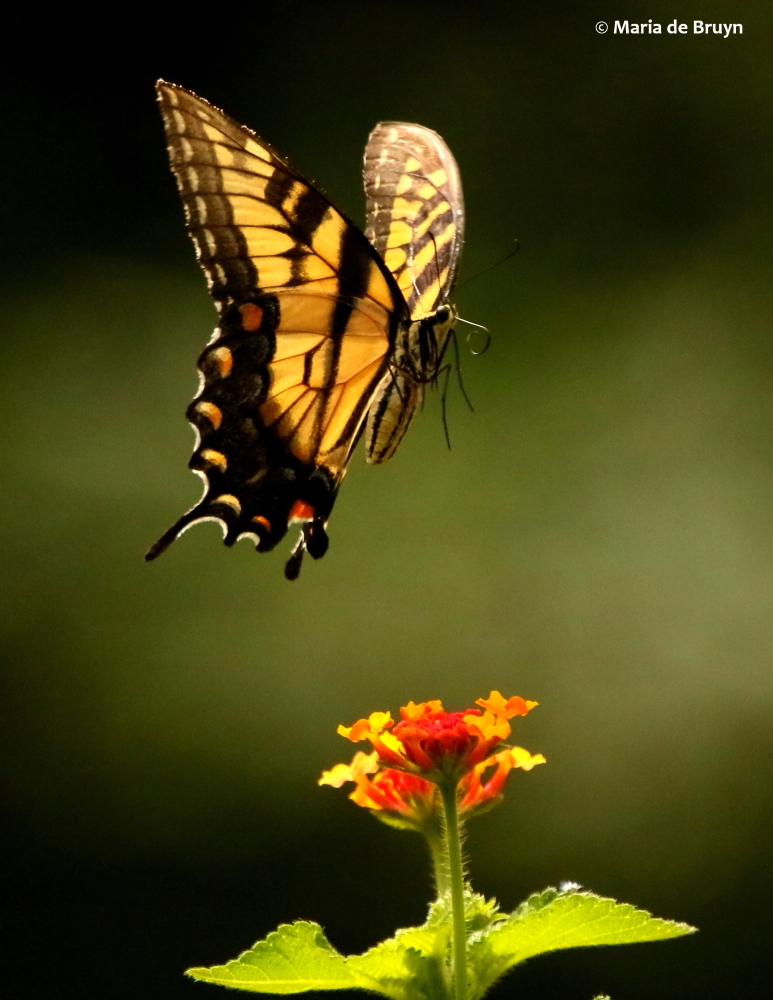
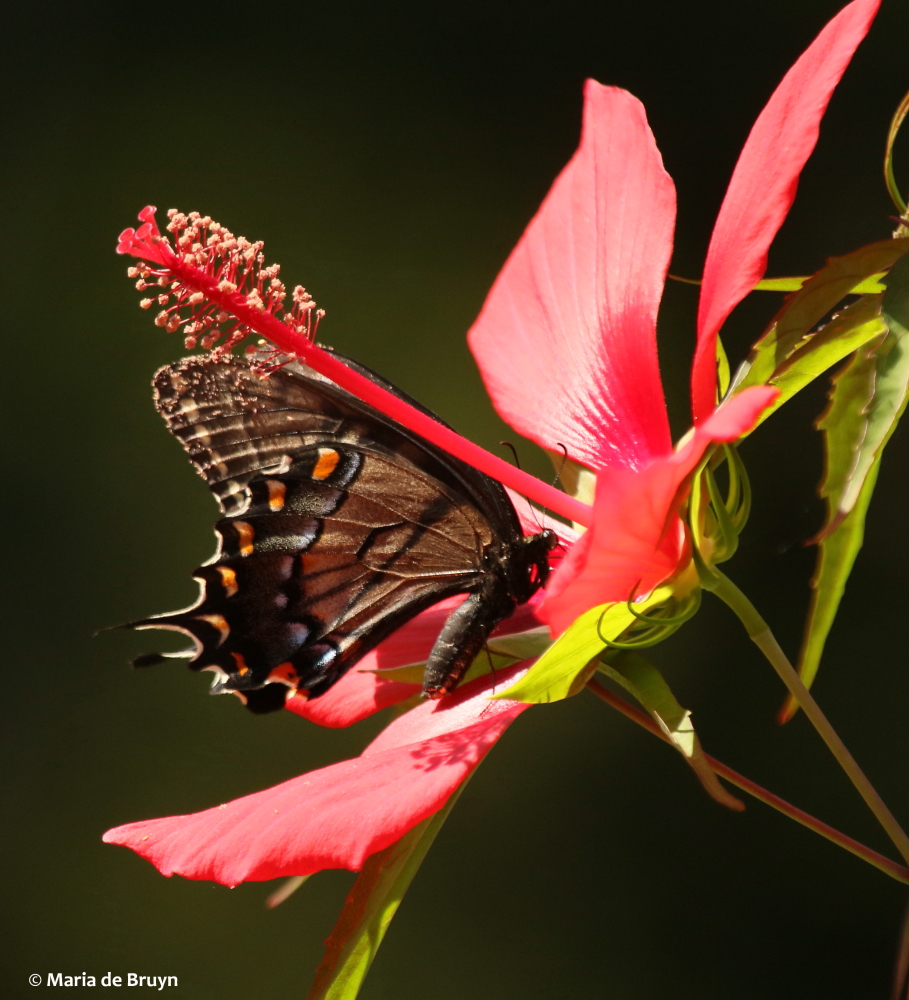
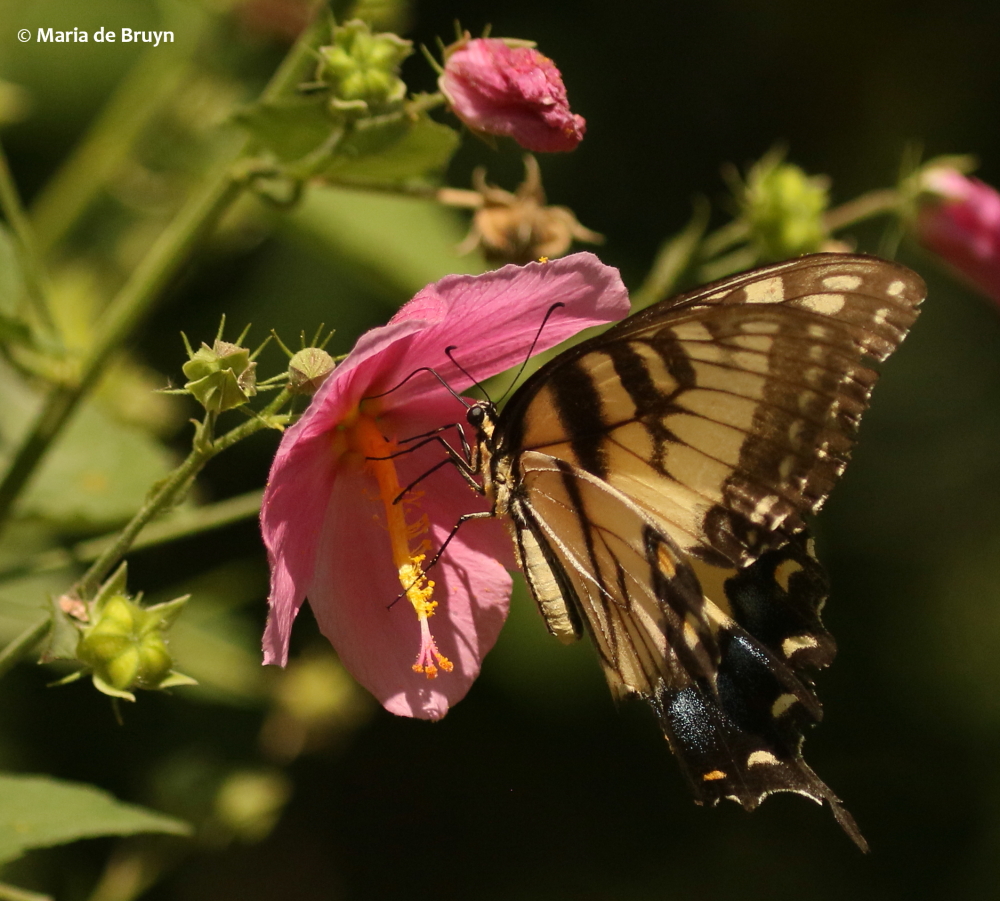
The clearwing moths and butterflies, like the Eastern tiger swallowtails (Papilio glaucus), have long tongues that they use to probe the flowers as they hover. Nevertheless, they can get pollen on their legs or bodies and transport it to another plant, although they are not as efficient at this as, for example, the sweat bees and carpenter bees.

eastern-tiger-swallowtail-pollen-i77a5259-maria-de-bruyn-res    eastern-tiger-swallowtail-i77a3693maria-de-bruyn-res

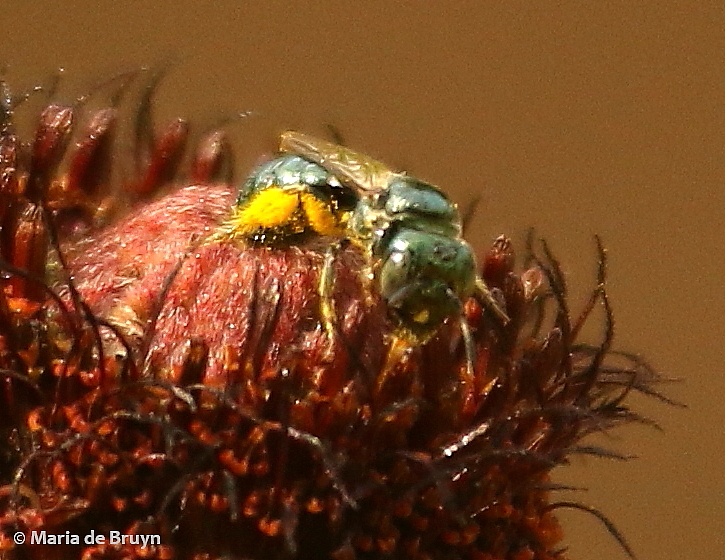
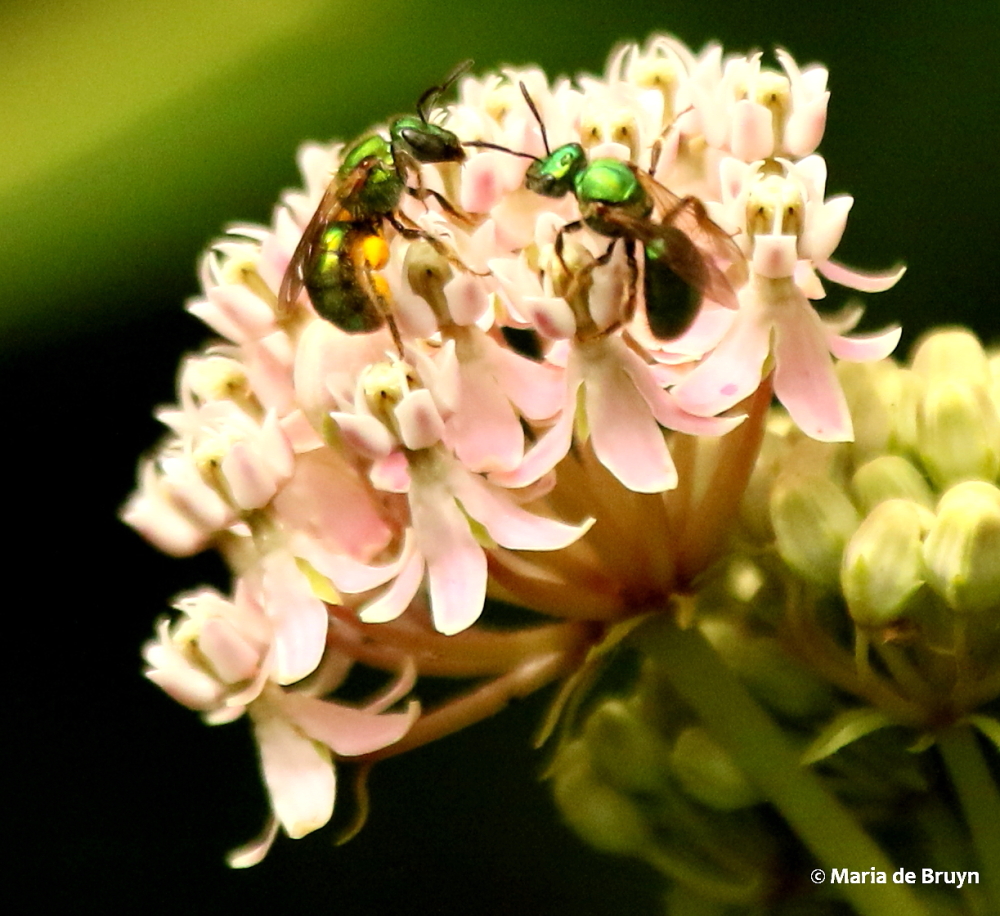
These bees have scopae rather than pollen baskets on their legs, i.e., structures comprising dense masses of compressed hairs into which pollen grains are pressed.

small-carpenter-bee-ceratina-dk7a0015-maria-de-bruyn-res-signed

Small carpenter bee (Ceratina)

sweat-bee-on-milkweed-i77a7861-maria-de-bruyn-res

Female sweat bees (Augochlorella)

long-horned-bee-melissodes-i77a3343-maria-de-bruyn-res   long-horned-bee-melissodes-i77a3428-maria-de-bruyn-res

Long-horned bee (Melissodes)

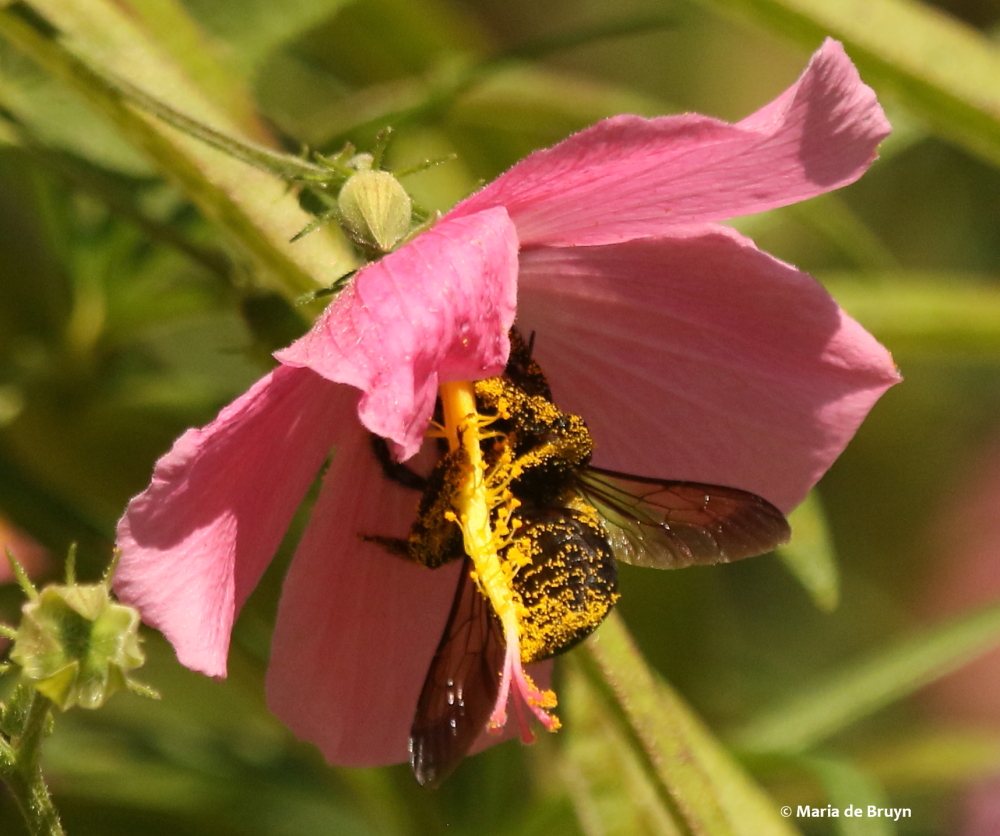
Sometimes the bees manage to get their whole bodies covered with pollen, which can make species identification more difficult but creates some interesting views.

eastern-carpenter-bee-i77a2601-maria-de-bruyn-res    eastern-carpenter-bee-i77a3750maria-de-bruyn-res

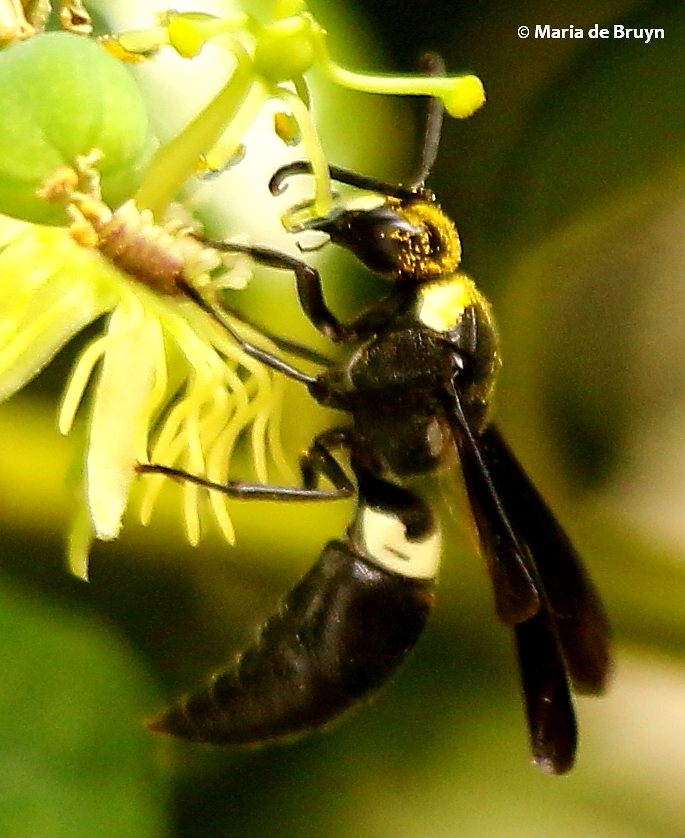
four-toothed-mason-wasp-monobia-quadridens-i77a2039-maria-de-bruyn-bgWasps can carry pollen as I saw almost daily when the four-toothed mason wasps (Monobia quadridens) visited my yellow passionflowers (Passiflora lutea). Here you can see the pollen collecting on the head of a male, whose sex can be determined by the fact he has 7 abdominal segments and curved antennae (females have straight antennae and 6 abdominal segments). How’s that for a bit of obscure information for the non-entomologist?

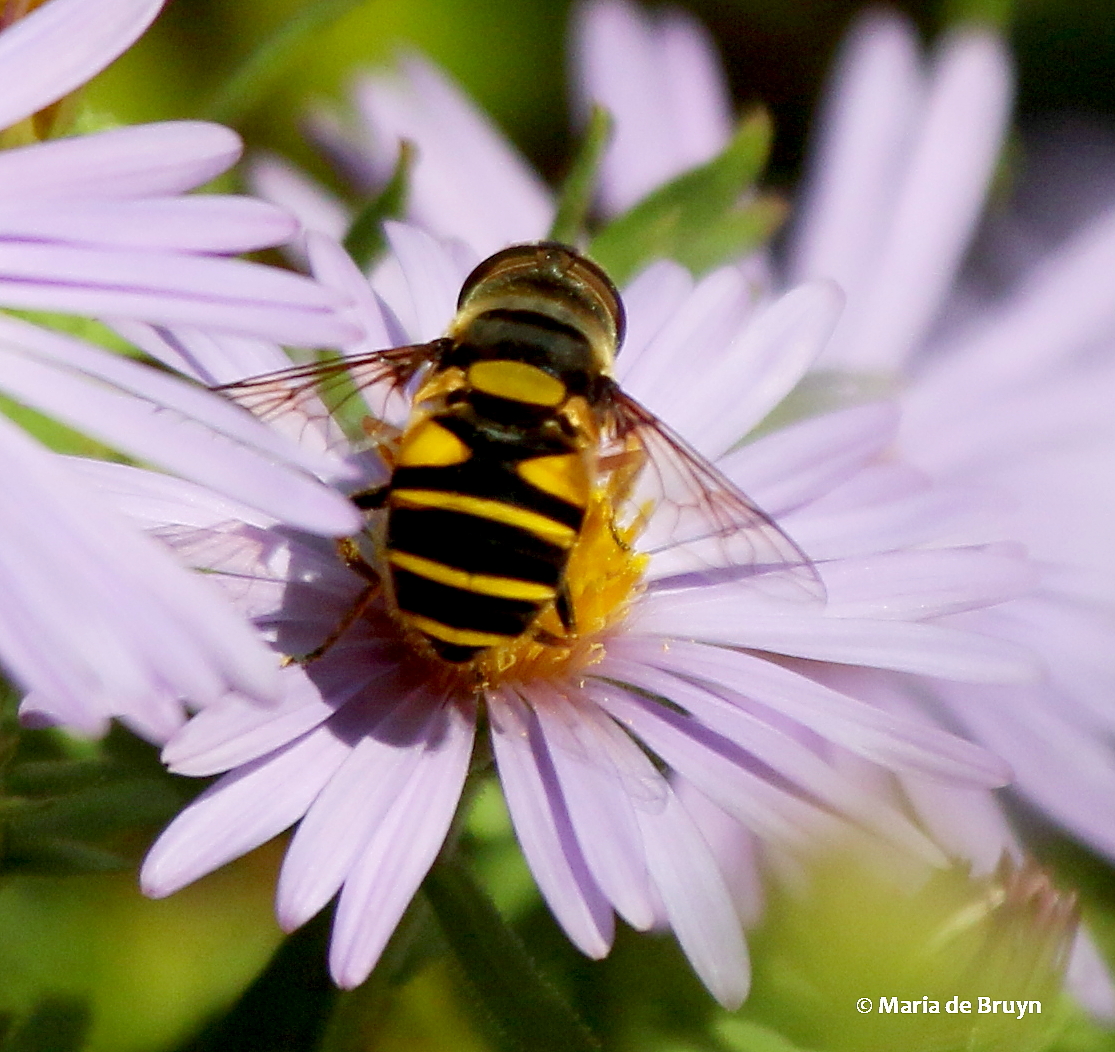
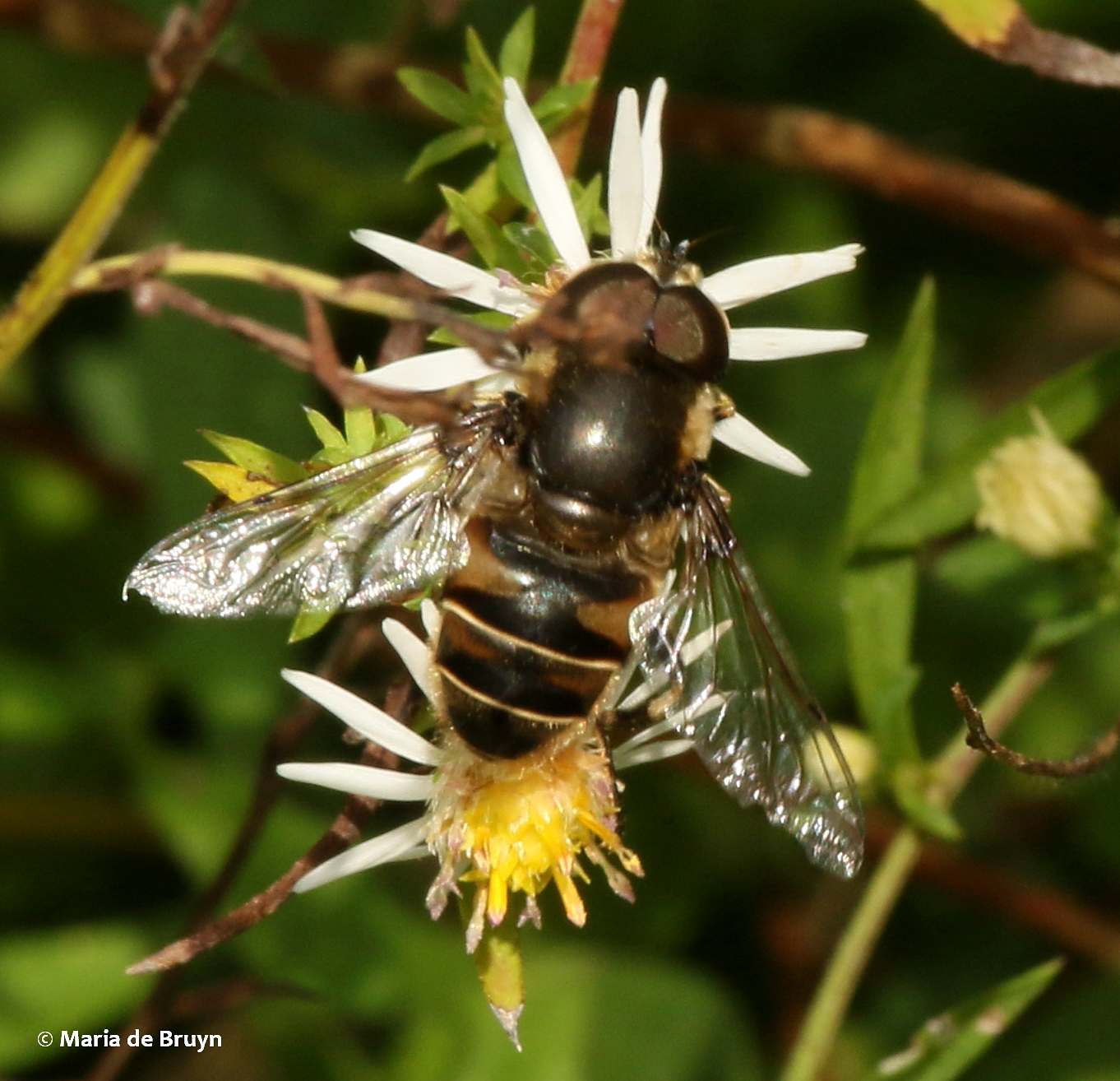
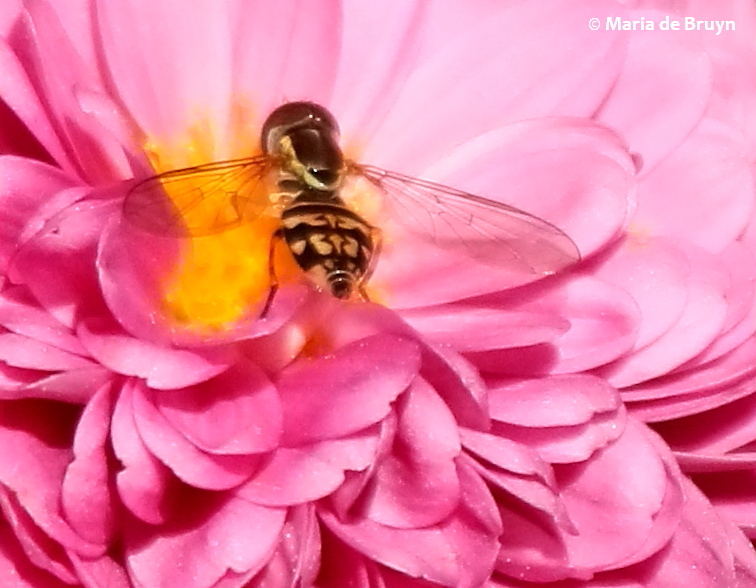
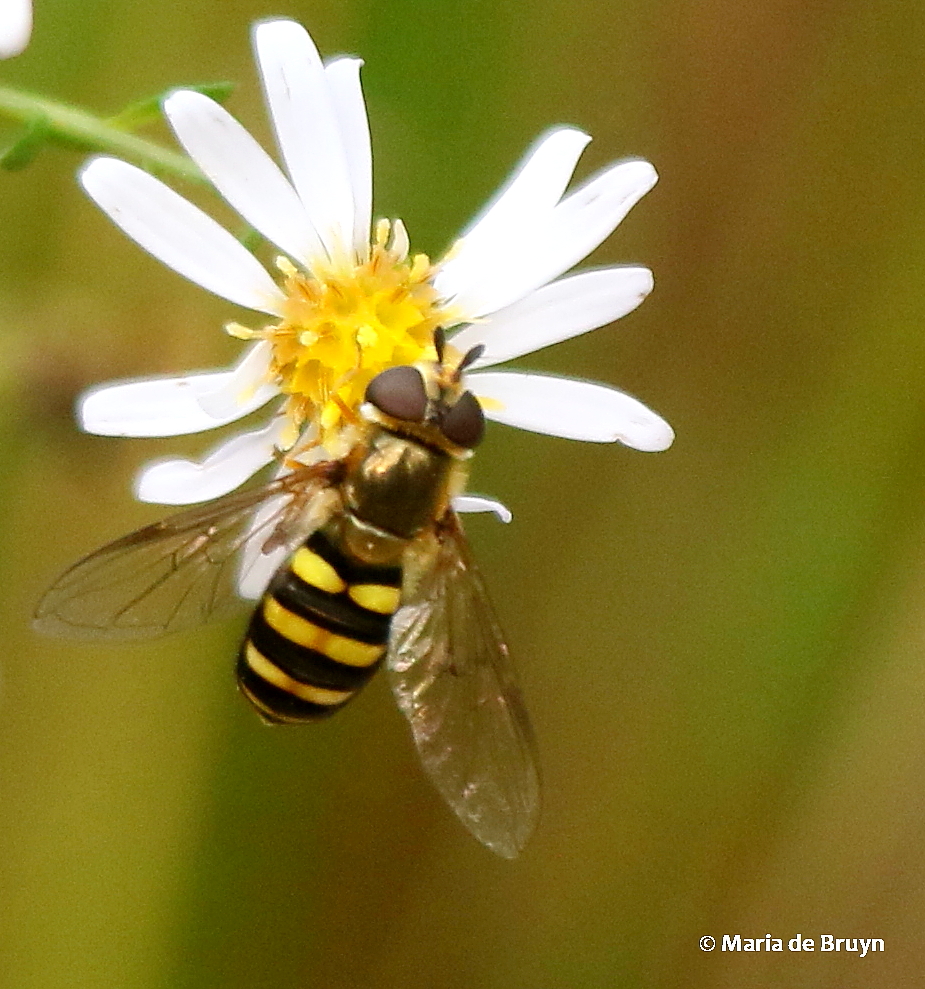
The syrphid flies, often known as bee mimics, help pollinate, too. A number of these flies are honey-bee size and can be confused with the bees easily.

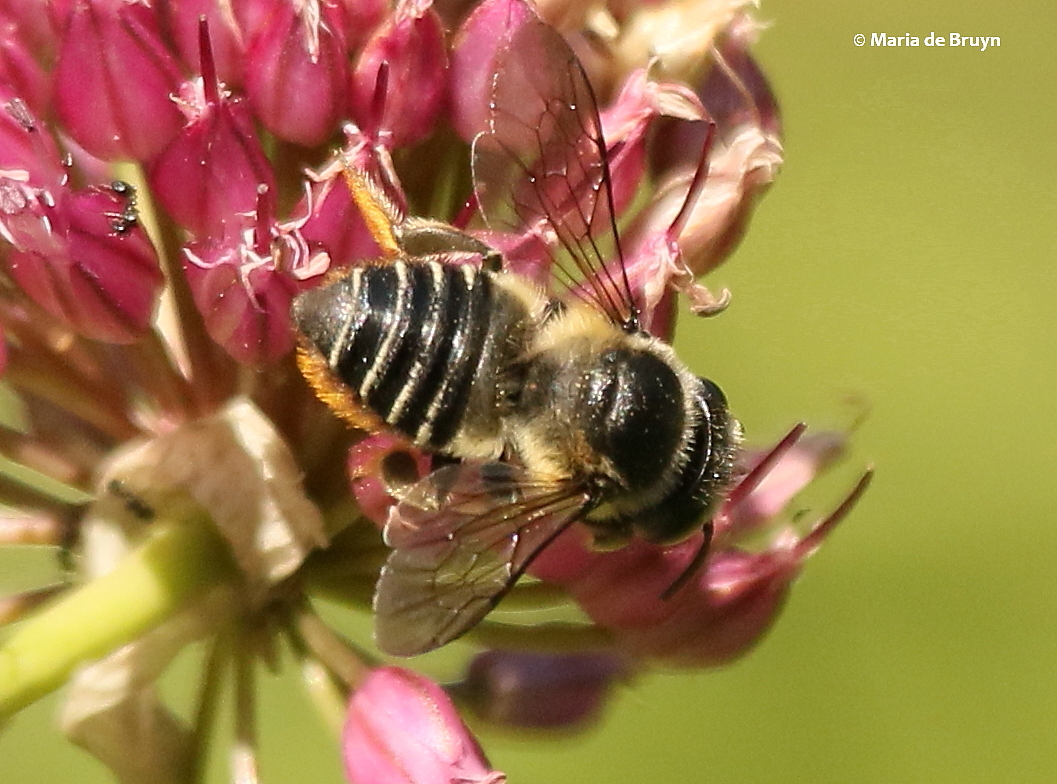
flat-tailed-leaf-cutter-bee-i77a4043-maria-de-bruyn-res

Flat-tailed leaf-cutter bee (Megachile mendica)

transverse-flower-fly-eristalis-transversa-i77a2116-maria-de-bruyn

Transverse flower fly (Eristalis transversa)

syrphid-fly-eristalis-dimidiata-i77a2060-maria-de-bruyn

Syrphid fly (Eristalis dimidiata)

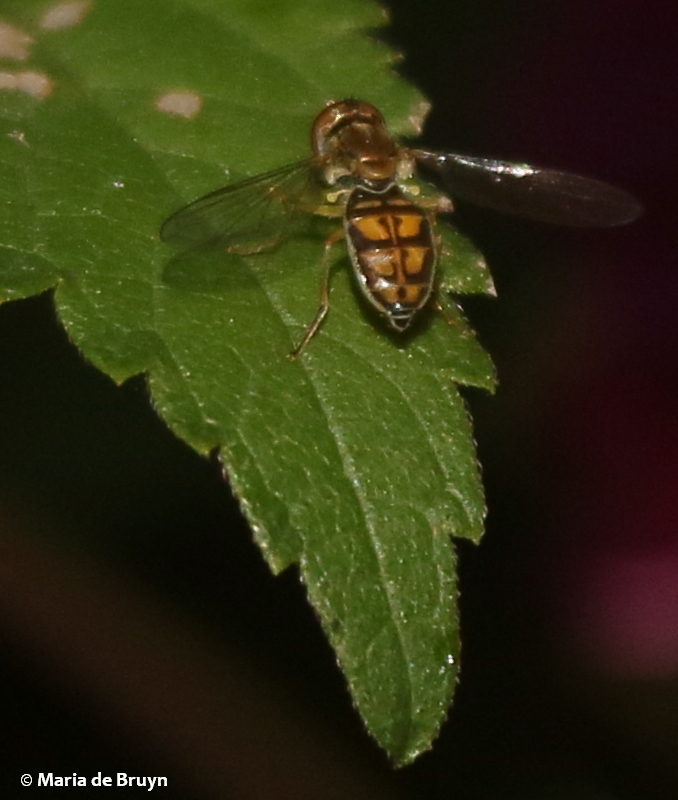
Others are itsy bitsy, tiny flyers that can have pretty interesting abdominal patterns. I couldn’t see the patterns even with my glasses on; enlarging the photos revealed their beauty, which could make for interesting fabric patterns in my opinion.

syrphid-fly-toxomerus-marginatus-i77a5952-maria-de-bruyn-res   syrphid-fly-toxomerus-geminatus-i77a5943-maria-de-bruyn-res

Syrphid fly (Toxomerus marginatus)                      Syrphid fly (Toxomerus geminatus)

syrphid-fly-eupeodes-subgenus-metasyrphus-i77a6061-maria-de-bruyn

Syrphid fly with a lovely golden sheen (Eupeodes subgenus Metasyrphus)

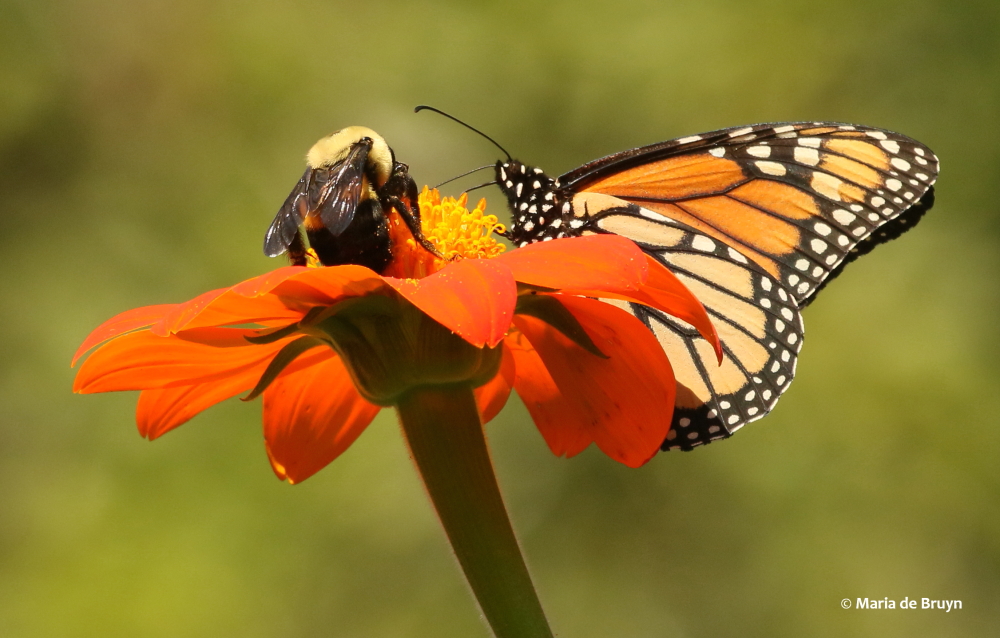
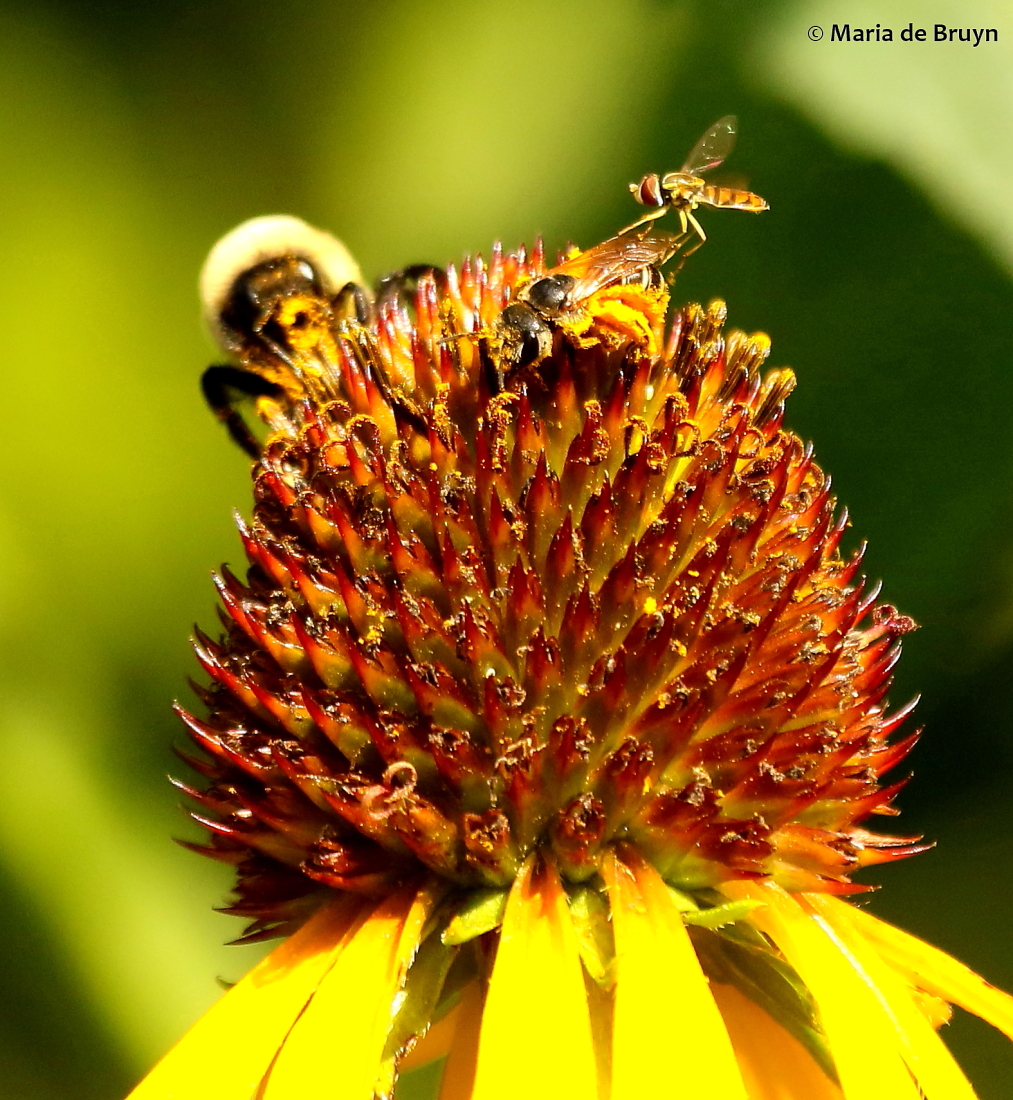
The pollinators don’t appear to begrudge one another nectar – different species will share space on particularly popular plants.

monarch-and-eastern-carpenter-bee-i77a4010maria-de-bruyn-res

Eastern carpenter bee and monarch butterfly (Danaus plexippus)

bumble-bee-brazilian-sage-i77a7263-maria-de-bruyn-res

Eastern carpenter bee and sweat bee

bumble-bee-halictus-sweat-bee-toxomerus-marginatus-i77a6296-maria-de-bruyn-res

Eastern carpenter bee, sweat bee and syrphid fly

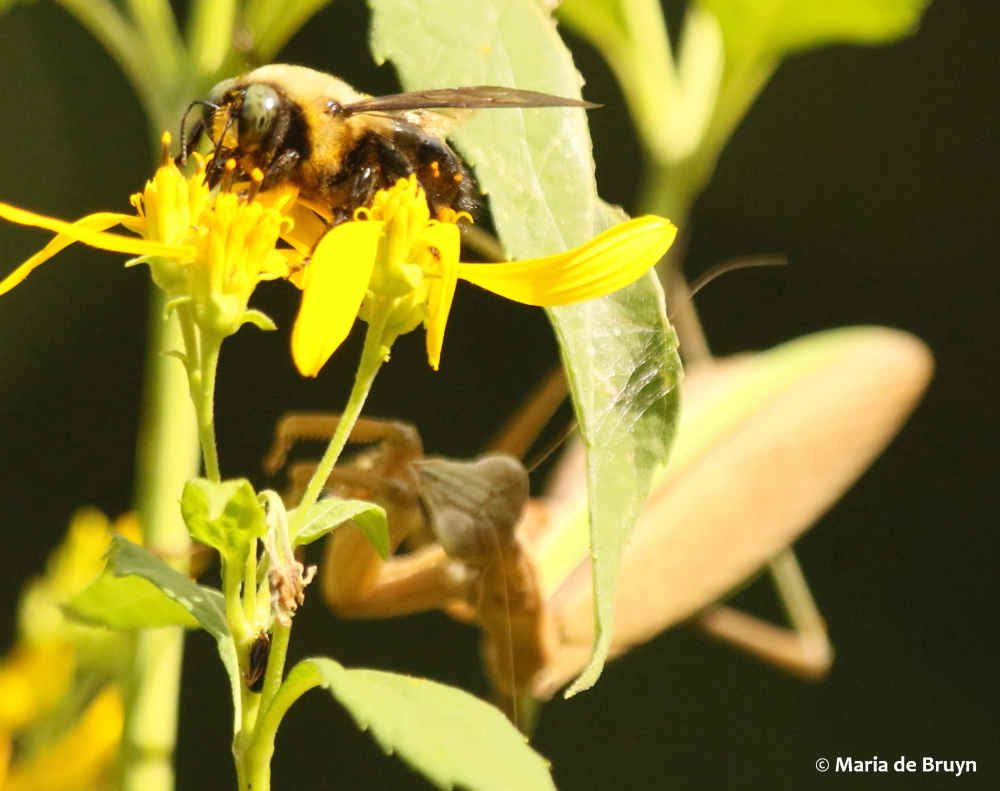
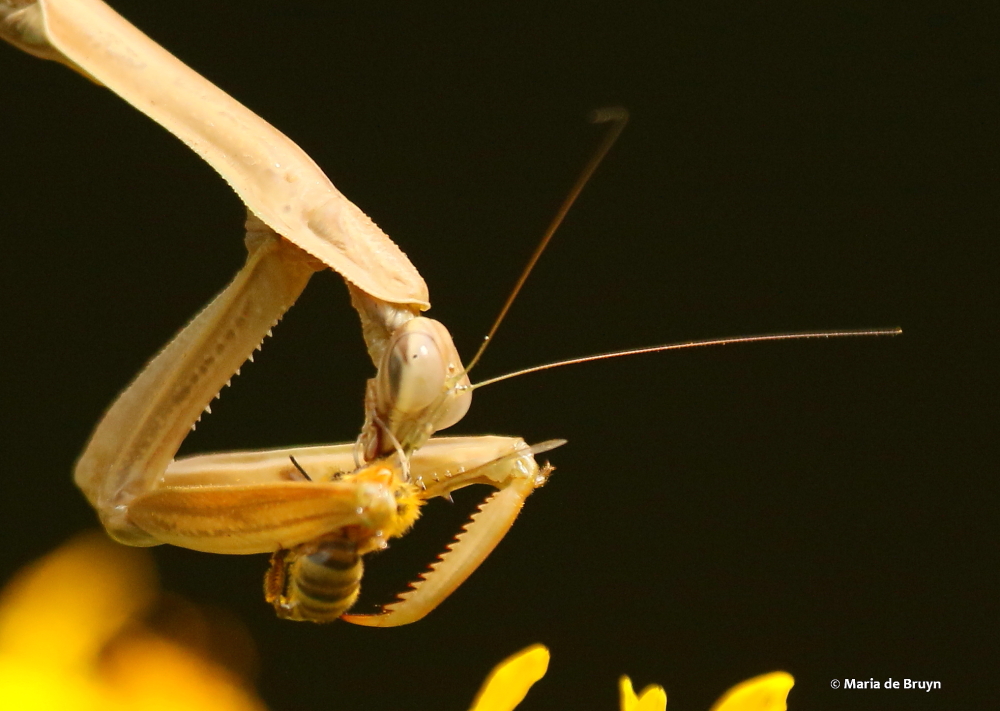
Occasionally, the pollinators do not live out their usual short lifespans as predators catch them for food. This Chinese mantis (Tenodera sinensis) had been eyeing a bumble bee and was slowly moving toward it but the bee flew off before the mantis could complete its lunge. Later the mantis managed to snag a honey bee, however.

chinese-mantis-eastern-carpenter-bee-i77a4937maria-de-bruyn-res   chinese-mantis-and-honey-bee-i77a4795maria-de-bruyn-res

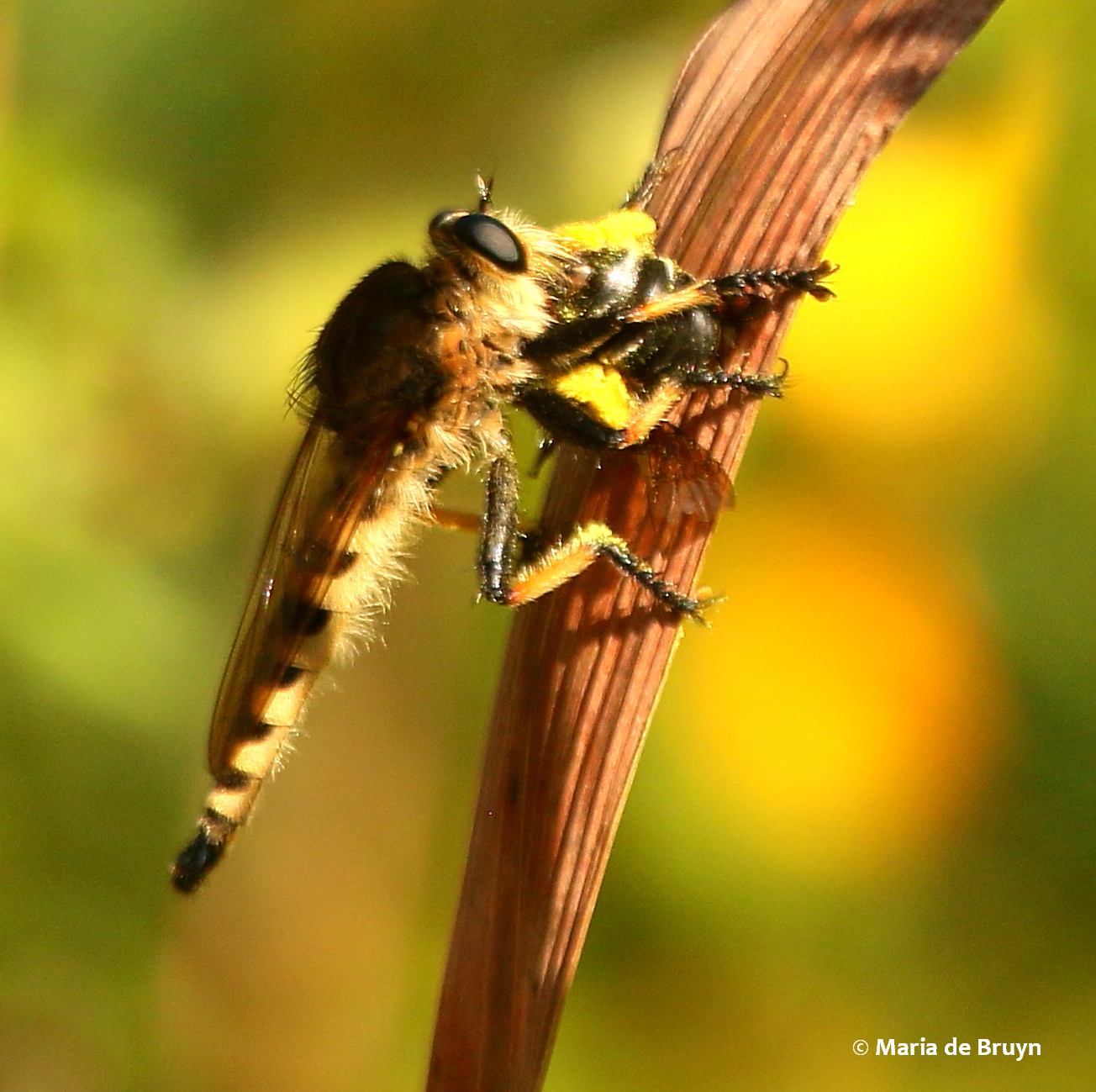
robber-fly-bumblebee-77a2813maria-de-bruyn


While on a walk one day, I suddenly was startled by the loudest buzzing I had ever heard, coming up behind me. It sounded angry, intense and was rather piercing for a buzz. I turned just in time to witness a giant robber fly (Promachus) settle on a grass stem with a bumble bee that it had just caught. The buzzing stopped fairly quickly as the fly proceeded to ingest its meal.


eastern-carpenter-bee-i77a7906-maria-de-bruyn-signed-res

Various organizations and agencies, including the US Fish and Wildlife Service, are drawing attention to the endangerment of pollinator species. The main threats include loss and degradation of habitat as we pave over an increasing amount of natural space and plant lawns instead of native plants in yards. Using pesticides in landscaping areas is further threatening many of the insects on which pollination depends.

eastern-carpenter-bee-i77a6424-maria-de-bruyn-res3


Planting pollinator gardens is a way in which we all can contribute to saving our pollinators; if you don’t have your own yard, you can volunteer with a project to create a community garden. And then you can watch these fascinating insects with appreciation for their contributions to us!

Warbler watching and migration – a shared pleasure for birders!

black-and-white-warbler-i77a3458-maria-de-bruynAutumn migration in North America has been underway for some weeks and our bird populations in North Carolina are changing in composition. Some birds stay year-round – for example, I see robins, blue jays, Carolina wrens, Carolina chickadees and tufted titmice in all seasons to my great delight. However, other birds who have been here since spring are now getting ready to leave for a southerly jaunt to a place that will be warmer for them in winter – most of the ruby-throated hummingbirds and some gray catbirds have departed already. (I have had a catbird stay year-round but others leave.) Many black and white warblers (Mniotilta varia) will be leaving, too.

american-redstart-i77a4367maria-de-bruyn-resThe Nature Conservancy has noted that the autumn songbird migration is one of the top four migrations in this state. The Audubon Society has even published a guide to this migration and when certain species usually begin their travels. (Left: American redstart male)


This seasonal event means that dedicated birders make special efforts to visit places where it’s likely we’ll see warblers. Many of North America’s 50 species don’t eat seed or suet, so you won’t find them visiting your feeders often. I have found, however, that pine warblers (Setophaga pinus) and yellow-rumped warblers (Setophaga coronata) are pretty social and those who are here for the winter are already joining my “regular” birds at feeding stations. The pine warblers especially like suet (female left, male right below).

pine-warbler-i77a0184-maria-de-bruyn-res        pine-warbler-i77a0409-maria-de-bruyn-8-x-10

The yellow rumps are still looking around a lot for insects; this one snagged a skipper butterfly.

yellow-rumped-warbler-i77a5552-maria-de-bruyn-res

In the autumn, many of these songbirds no longer have their beautiful breeding plumage, which is often so distinctive that you can identify them easily, especially the males. I was lucky enough to see some of those beauties during spring migration as well as in the summer for the ones that spend the warmer months here.

prothonotary-warbler-i77a2854-maria-de-bruyn-res   prothonotary-warbler-i77a9933-maria-de-bruyn-res

Prothonotary warbler male (Protonotaria citrea)

yellow-throated-warbler-img_0418-maria-de-bruyn        prairie-warbler-i77a1622-maria-de-bruyn-res

Yellow-throated (Setophaga dominica) & prairie warblers (Setophaga discolor)

american-redstart-i77a7811-maria-de-bruyn-res


The warblers’ non-breeding coloration is frequently duller and drabber than their breeding plumage. Often only experienced birders can tell some species apart on first sight. Added to that is the fact that young birds don’t yet have their adult plumage and the immature males often look just like adult females. So it is a challenging time for identification, especially for me, but an exciting time for discoveries.


blackpoll-warbler-i77a1289-maria-de-bruyn-resGetting photos of these lovely birds can be tricky since they move about a lot in search of their insect meals. It is ultimately the pursuit of those culinary delights that leads the warblers to migrate South, since the insect population declines dramatically in areas with cold weather.

Nature photographer Mary had discovered a spot where the warblers could bathe in a relatively protected fashion; she kindly shared the location with some of us and a number of avid birders sat with her for hours waiting for the birds to appear. Some of our more “common” avian friends used the site, too, including a gray catbird (Dumetella carolinensis) and a brown thrasher (Toxostoma rufum).

gray-catbird-i77a4922maria-de-bruyn-res    brown-thrasher-i77a4880maria-de-bruyn-res

northern-waterthrush-i77a5013maria-de-bruyn-res


A Northern waterthrush (also a warbler, Parkesia noveboracensis) found the spot enticing.

The trees around the water hosted birds as they looked for insects, like the black-throated blue warblers below (Setophaga caerulescens), seen a few weeks apart.


black-throated-blue-warbler-i77a8117-maria-de-bruyn-res  black-throated-blue-i77a4426maria-de-bruyn-res

A female American redstart (Setophaga ruticilla) spent time working the shrubs surrounding the creek with some success.

american-redstart-i77a4981maria-de-bruyn-res    american-redstart-i77a4996maria-de-bruyn-res

The male redstarts hopped about the branches and rocks hanging over the creek for a while before venturing below to bathe.

american-redstart-i77a7628-maria-de-bruyn-res american-redstart-i77a4217-maria-de-bruyn-res

american-redstart-i77a4477maria-de-bruyn-res  american-redstart-i77a4480maria-de-bruyn-res

The birds appeared to enjoy their bathing spot immensely, sometimes dipping under water over and over again.

american-redstart-i77a4685-maria-de-bruyn-res  american-redstart-i77a4693-maria-de-bruyn-res

american-redstart-i77a4658-maria-de-bruyn   american-redstart-i77a4629-maria-de-bruyn-res

american-redstart-i77a4710-maria-de-bruyn-res


They also didn’t mind sharing the space with each other (or sometimes other species)..

magnolia-warbler-i77a2250-maria-de-bruyn-res


The Magnolia warblers (Setophaga magnolia) did the same, giving me some good looks and making my first in-person sighting of this species (lifer!) quite special.


magnolia-warbler-i77a5161-maria-de-bruyn-res    magnolia-warbler-i77a5184-maria-de-bruyn-res

chestnut-sided-warbler-i77a5210-maria-de-bruyn-res


The chestnut-sided warbler (Setophaga pensylvanica)was a very vigorous bather!

chestnut-sided-warbler-i77a5230-maria-de-bruyn-res

chestnut-sided-warbler-i77a5207-maria-de-bruyn-res    chestnut-sided-warbler-i77a5203-maria-de-bruyn-res

hooded-warbler-i77a4728-maria-de-bruyn-res


A male hooded warbler (Setophaga citrina) made a brief appearance one day, followed by some female and male common yellowthroats (Geothlypis trichas).


common-yellowthroat-i77a4431maria-de-bruyn-2common-yellowthroat-i77a4316maria-de-bruyn-res

Another water body that provided me with some excellent views of warblers was the Haw River. In the small town of Bynum, a bridge crosses the river and gives birders a great vantage point to see birds in the tree canopy close to eye level. There I was able to see two more lifers a couple weeks ago – the first was a bay-breasted warbler (Setophaga castanea).

bay-breasted-warbler-i77a1004-maria-de-bruyn-res    bay-breasted-warbler-i77a1003-maria-de-bruyn-res

blackpoll-warbler-i77a1315-maria-de-bruyn-resThis beauty was followed by another that had me confused. At first, I thought I was seeing a kinglet but this bird was a bit large and then as I got closer looks, I realized it looked like a bay-breasted warbler but had yellow feet. A search on the Internet showed I had seen a blackpoll warbler (Setophaga striata), likely a non-breeding male. Experts on an American Birding Association Internet site confirmed the ID for me.

blackpoll-warbler-i77a1320-maria-de-bruyn-res    blackpoll-warbler-i77a1329-maria-de-bruyn-res

black-and-white-warbler-i77a7204-maria-de-bruyn-resMy migration warbler watching culminated with some exciting finds in my own yard. I was surprised by several I hadn’t seen at home before, including common yellowthroats, a black and white warbler looking for insects in my willow oak and a gorgeous Northern parula (Setophaga americana), who even came to my feeders before pursuing a caterpillar in a Rose of Sharon nearby.
northern-parula-i77a7131-maria-de-bruyn-res   northern-parula-i77a7117-maria-de-bruyn-res

northern-parula-i77a7076-maria-de-bruyn-res


I’m now hoping to see some birds that breed further North during the summer arrive here for their late fall/winter/early spring sojourn, such as a ruby-crowned kinglet who has spent time with me each winter for the last three years. Next time I’ll share some of my pollinator sightings with you, in the hope you find them as fascinating as me. Have a nice day!