Flying rays of sunshine, spirits on the wing – part 1

Fiery and dun skippers IMG_7262© Maria de Bruyn resIt is now early December and late autumn in the Northern hemisphere, so why a blog about butterflies? When I was writing this on the last day of November, I had still seen a few of these beauties a couple days previously, and in the Southern hemisphere it is late spring, so it seems fine as a topic for a nature blog. Also, three weeks ago, my mother passed away, while in two weeks the anniversary of my father’s death comes again — I like to think of butterflies as nature’s emissaries for spirits on the wing. They allow me to think of my parents in somewhat lighter terms than the sadness that predominated during their dying processes. Because there are so many butterflies to highlight, this will be a two-part blog.

This past spring, summer and fall gifted me with a large variety of butterflies – a boon compared to last year when there seemed to be a dearth of them. I had some new butterflies to my garden, like the tawny emperor (Asterocampa clyton clyton), which I also saw at the Mason Farm Biological Reserve when one landed on my arm.

Tawny emperor DK7A2536© Maria de Bruyn resTawny emperor IMG_4926© Maria de Bruyn (2)

juniper hairstreak DK7A1677© Maria de BruynThe juniper hairstreak (Callophrys gryneus) was another new visitor that at first made me think it was covered in pollen.

A second-time visitor to my yard was the American snout (Libytheana carinenta), which looks quite distinctive with the long protrusion from its face.

American snout butterfly IMG_0257© Maria de Bruyn res

It was a good year for the little skipper butterflies, of which there are many. Quite a few look similar to one another and pose difficulties in identification; fortunately, BugGuide helps me figure out which ones I have been seeing.


Common checkered skipper DK7A8473©Maria de BruynCommon checkered skipper DK7A8483©Maria de Bruyn

Common checkered skipper (Pyrgus communis)

silver-spotted skipper IMG_0885© Maria de Bruyn Fiery skipper DK7A3463© Maria de Bruyn

Silver-spotted skipper (Epargyreus clarus) & Fiery skipper (Hylephila phyleus)

Zabulon skipper female DK7A8091© Maria de Bruyn Zabulon skipper DK7A2945© Maria de Bruyn res

Zabulon skipper (Poanes zabulon), female on the left and male on the right

sachem skipper DK7A6355© Maria de BruynSachem skipper male DK7A7657©Maria de Bruyn res Sachem skipper DK7A1271© Maria de Bruyn bg

The Sachem skipper (Atalopedes campestris) also illustrates how males (top) and females can differ.

A few skippers were new for me this year, like the little glassywing skipper (Pompeius verna) and the somewhat drabber dun skipper (Euphyes vestris) and Ocola skipper (Panoquina ocola).

Little glassywing skipper DK7A2843© Maria de Bruyn  Dun skipper DK7A3364© Maria de BruynOcola skipper IMG_4247©Maria de Bruyn

Even though dark in color, the Horace’s duskywing (Erynnis horatius) and the Juvenal’s duskywing (Erynnis juvenalis) have beautiful dorsal patterns.

Horace's duskywing DK7A3695© Maria de Bruyn

Juvenal's duskywing DK7A9907© Maria de Bruyn res

It’s always fascinating to see how different the butterflies’ color patterns can be on the upper and undersides of their wings, as shown here by the American lady (Vanessa virginiensis).

American Lady DK7A2242© Maria de Bruyn res American Lady DK7A2292© Maria de Bruyn res

The red admiral (Vanessa atalanta) is a gorgeous butterfly; a somewhat tattered individual rode along on me and my camera for a while at Mason Farm.

Red Admiral DK7A6667©Maria de Bruyn (2) res

red admiral IMG_4769© Maria de Bruyn red admiral IMG_4767© Maria de Bruyn res

A group that can sometimes be challenging to identify are the sulphurs. Distinguishing the sleepy orange (Abaeis nicippe, top) and the orange sulphur (Colias eurytheme) is no easy task. Both are quite lovely and a delight in flight when they reveal their brightly colored dorsal pattern.

Sleepy orange DK7A8367© Maria de Bruyn Sleepy orange DK7A8263© Maria de Bruyn

Orange sulphur DK7A0410© Maria de Bruyn resOrange sulphur DK7A0476© Maria de Bruyn res

Cloudless sulphur DK7A2774© Maria de Bruyn res

The larger yellow butterflies like the cloudless sulphur (Phoebis sennae) are great to see, especially when they frequent the brightly colored blooms such as the red cardinal flower (Lobelia cardinalis).

cloudless sulphur DK7A8466©Maria de Bruyn resCloudless sulphur DK7A0063© Maria de Bruyn res

Clouded sulphur DK7A0269© Maria de Bruyn

The clouded sulphur (Colias philodice) may be a bit harder to see when it feeds on clover in the grass.

Stay tuned for more butterflies to admire in part 2 of this blog!


A varied palate – hummingbirds’ choice of foods

DK7A2925© Maria de Bruyn res

As promised, one more blog on hummingbirds before I move to another topic; their presence always brings me enjoyment and I know other people who are enamored with these tiny birds, too. Also, although autumn has come, I still have a couple ruby-throated hummingbirds (Archilochus colubris) at my feeders. And a couple days ago I had the privilege of seeing a species new to me, the buff-bellied hummingbird (Amazilia yucatanensis), which has only visited the state of North Carolina once before (at least as far as human witnesses are concerned)!

DK7A2528© Maria de Bruyn resThe hummers have a varied diet, including mainly insects (mosquitoes, gnats, fruit flies, small bees), spiders, tree sap and sweet nectar (or sugar water). They tend to feed about 5-10 times per hour during the day and need about 10 calories of nutrition each day.


It is a lot easier to catch them drinking nectar than catching insects (apologies for the blurred photos)!

DK7A0749© Maria de Bruyn (2) res

DK7A7171© Maria de BruynDK7A2814© Maria de Bruyn

DK7A7808© Maria de Bruyn


Hummingbirds use their long tubular tongues as elastic micro-pumps to obtain nectar. This enables them to lick a flower up to 20 times per second as they gather food. And although we can’t see it when just looking at them, they have forked tongues (like snakes)!


DK7A0391© Maria de Bruyn res ruby-throated hummingbird DK7A1076© Maria de Bruyn res

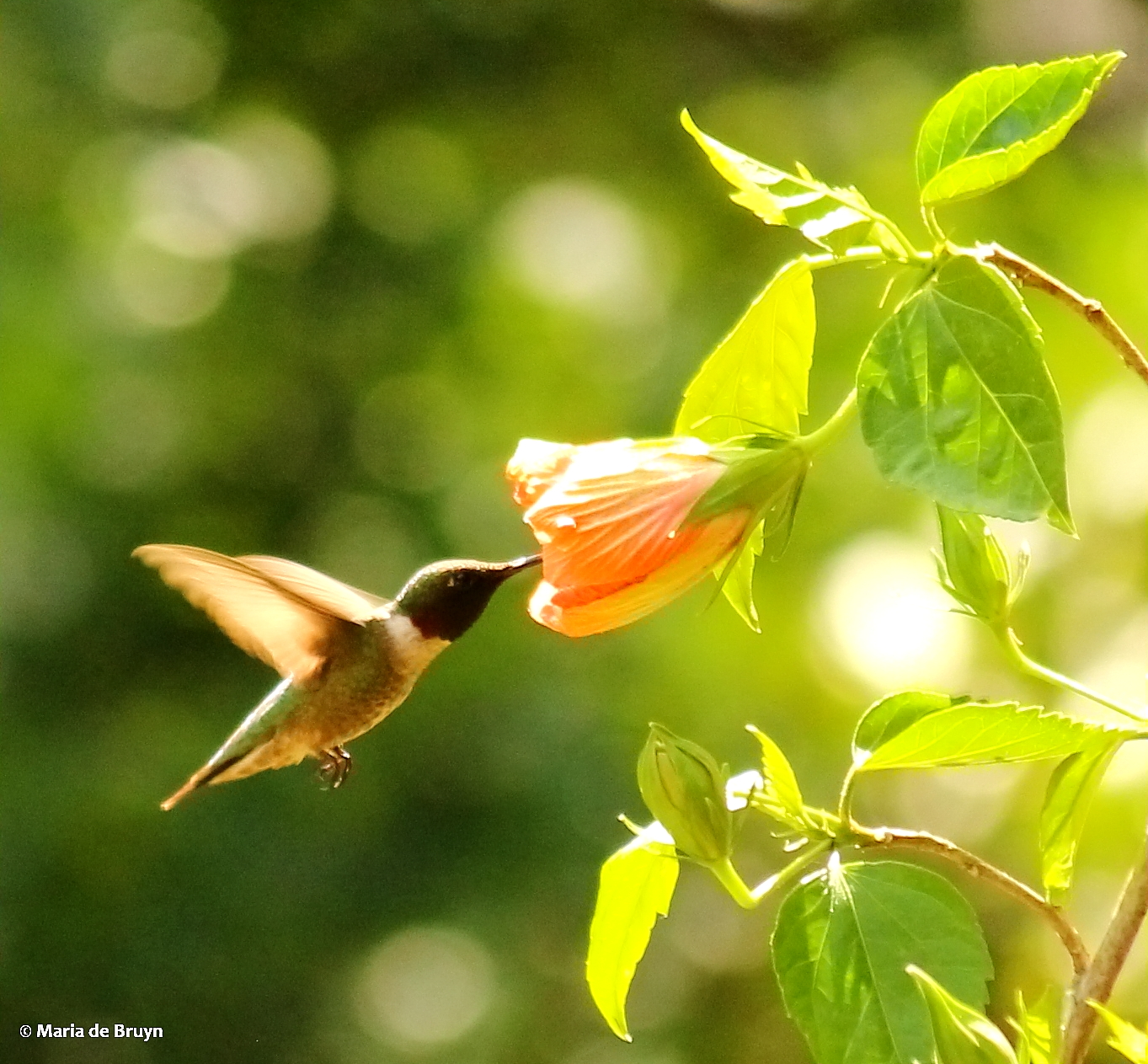
DK7A4497© Maria de Bruyn2The hummers visit a variety of flowers to drink their sweet nectar, often preferring orange or red flowers but certainly not avoiding others.In my garden, this includes cardinal flowers (Lobelia cardinalis), hollyhocks (Alcea), yellow passionflower (Passiflora lutea) and lantana (Lantana).

ruby-throated hummingbird DK7A0820© Maria de BruynDK7A0555© Maria de Bruyn res

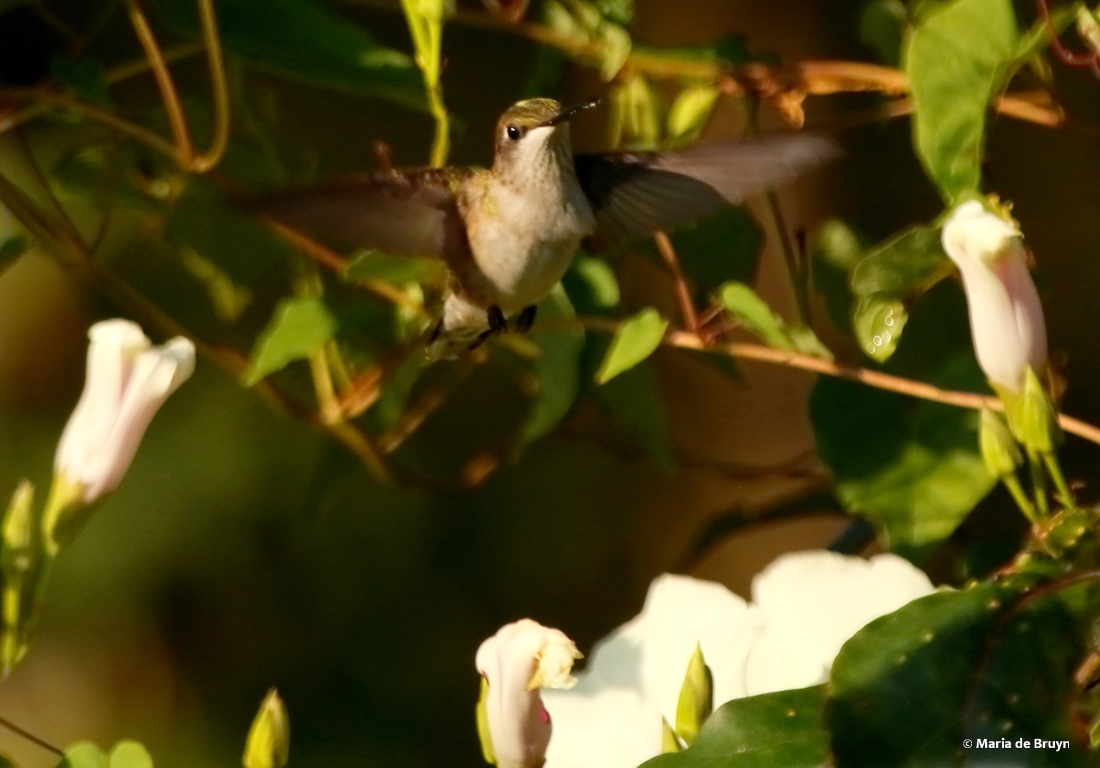
In nature reserves, I’ve seen them visiting morning glories (Ipomoea), ironweed (Vernonia) and trumpet vines (Campsis radicans).

DK7A2213© Maria de Bruyn resDK7A3392© Maria de Bruyn res

DK7A2289© Maria de Bruyn res


Their long bills, tubular tongues and slim bodies make it easy for them to drink from long flowers, but sometimes they will simply pierce the base of a flower to obtain nectar, or use a hole already made there by an insect.

DK7A2915© Maria de Bruyn resDK7A2428© Maria de Bruyn res

Light-colored flowers are not shunned as food sources, however!

DK7A7178© Maria de Bruyn (2) resDK7A7142© Maria de Bruyn res

DK7A7165© Maria de Bruyn res

Bean plants and gerbera daisies (Gerbera)  were on the menu at the Translating Traditions farm.

DK7A7360© Maria de Bruyn resDK7A7381© Maria de Bruyn res

At my house, the hummers visit the nectar feeders with great regularity, presumably because the food is very easily available there. A little known fact about the hummingbirds is that, compared to all other birds, their brains are the largest in comparison to body size. They remember where feeders are from year to year and also can recognize the people who fill the feeders. When the nectar is low and I appear, a hummer will sometimes hover and chitter in my direction at length; I really do think it is warning me that it’s time to prepare another serving.

ruby-throated hummingbird DK7A8190© Maria de Bruyn res

The buff-bellied hummingbird breeds in Mexico and south Texas. When they migrate, it is in a north-eastern direction, but the only previous recorded visit of one to North Carolina was in 2007. Now there is one hanging out at a couple’s home in the town of Winston-Salem, so I accompanied three fellow birders to go see it. Our 90-minute drive there was rewarded by a view of the bird within about 15 minutes and we stayed for almost two hours watching it come and go along with some ruby-throated hummingbirds.

buff-bellied hummingbird DK7A1131© Maria de Bruynbuff-bellied hummingbird DK7A1171© Maria de Bruyn

These hummingbirds have bellies with a light orange-yellow hue, brighter orange tail feathers and a bright green back and head. In contrast to the ruby-throated hummingbird’s straight dark bill, they have a reddish, curved bill. These lovely little birds appear to be the least studied species among the hummingbirds in the USA.

rufous hummingbird IMG_1789 M de Bruyn


Two years ago, I had a rufous hummingbird (Selasphorus rufus) visit my nectar feeder after he had migrated here in winter from the far North. This year, I’ll leave at least one feeder up again after the ruby-throats take off for warmer climes in case some wintering hummers need food. And I’ll look forward to seeing my regular residents again next summer!


More information:

http://www.livescience.com/51904-hummingbird-tongue-pump.html

http://www.nytimes.com/2015/09/08/science/the-hummingbirds-tongue-how-it-works.html?_r=0

Birdie beauty – hummingbird preening and grooming

ruby-throated hummingbird DK7A6865© Maria de Bruyn res

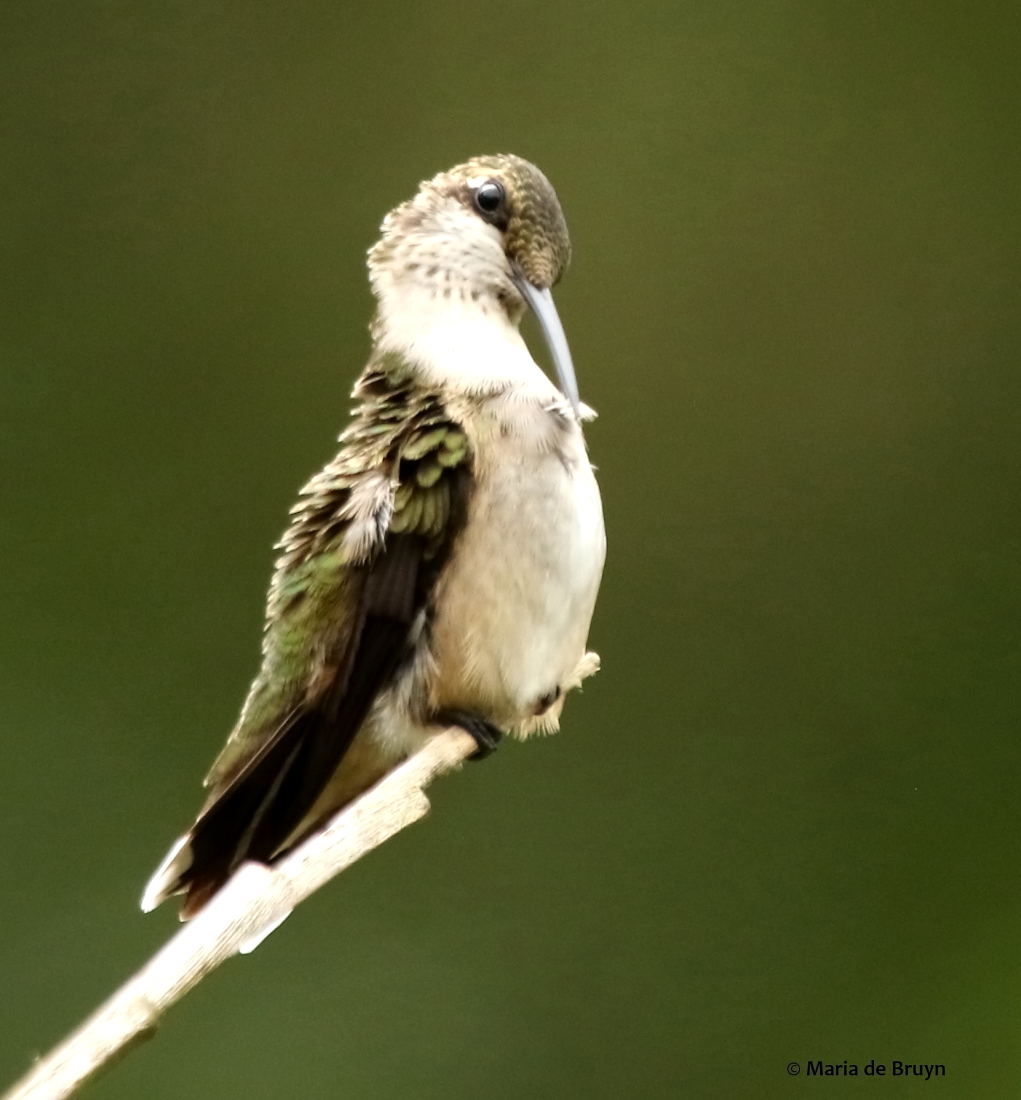
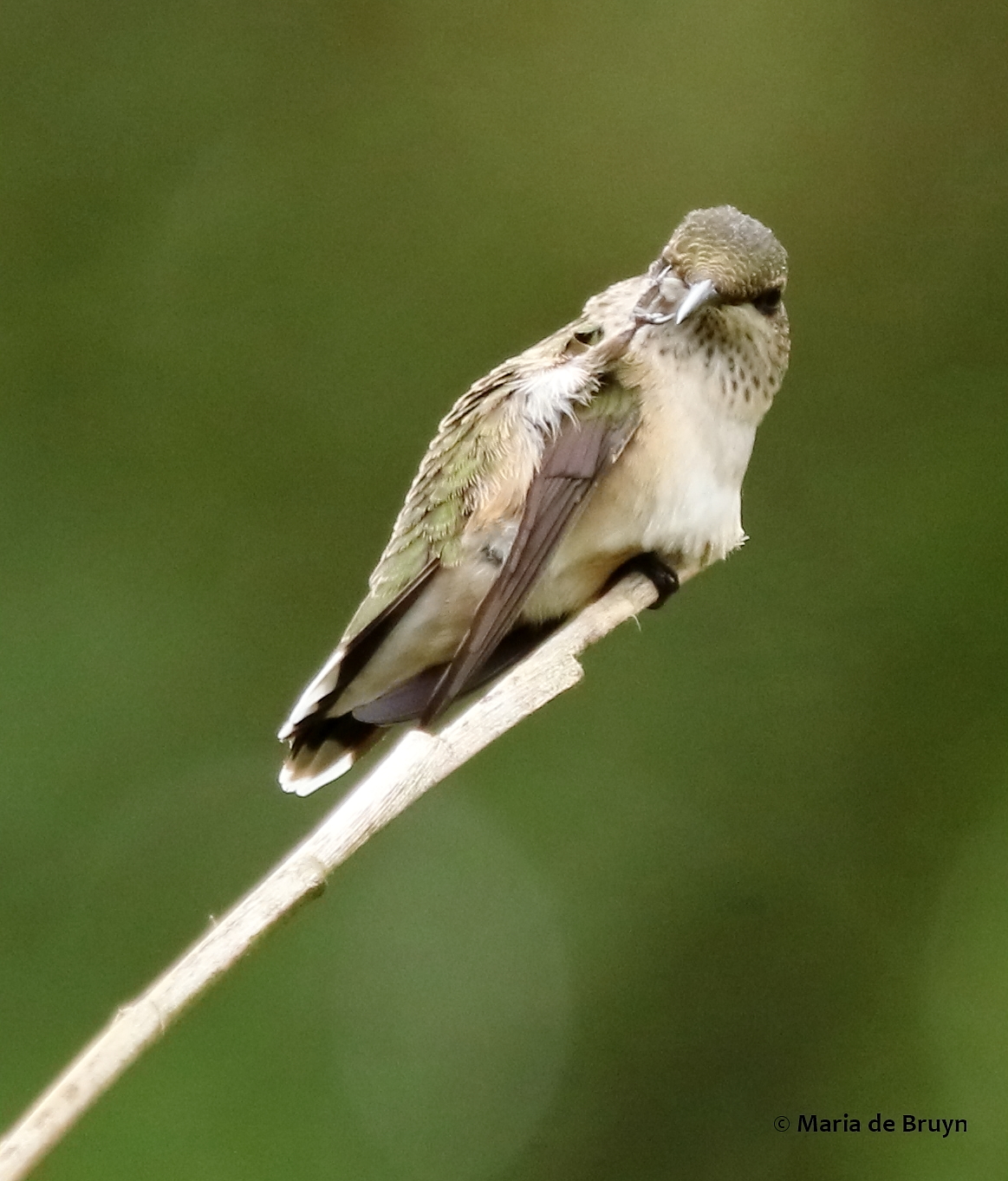
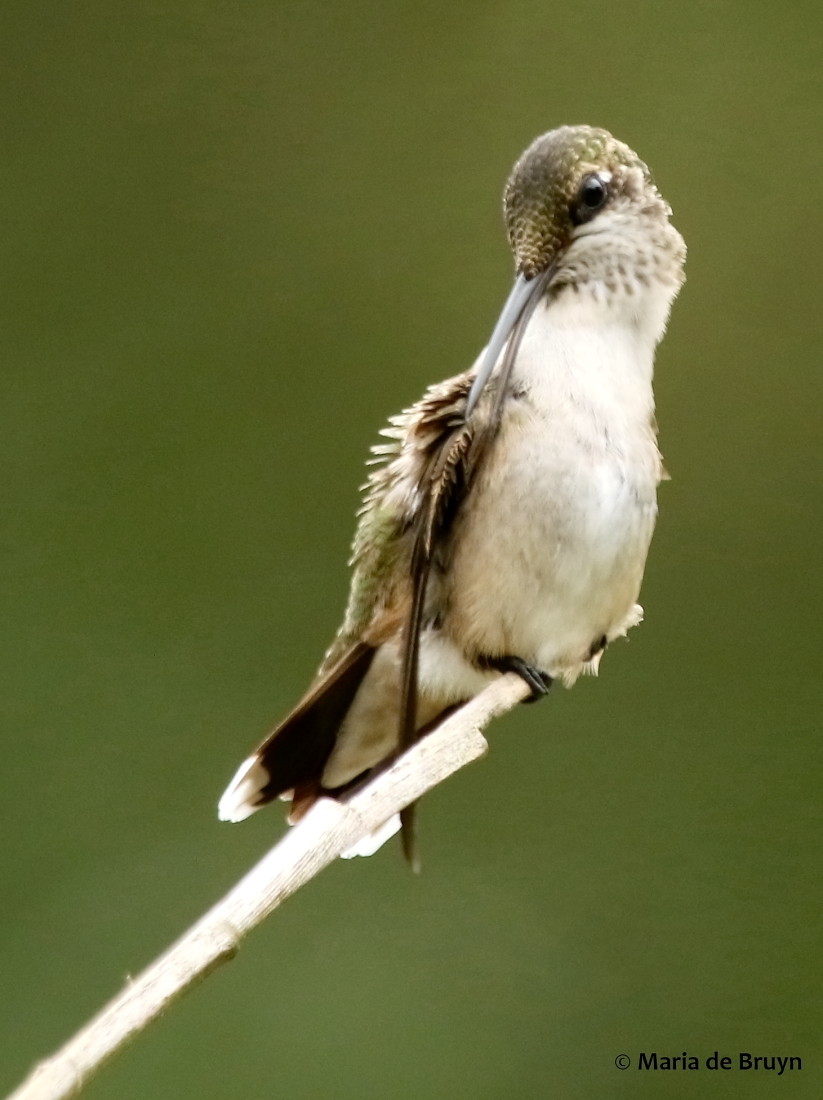
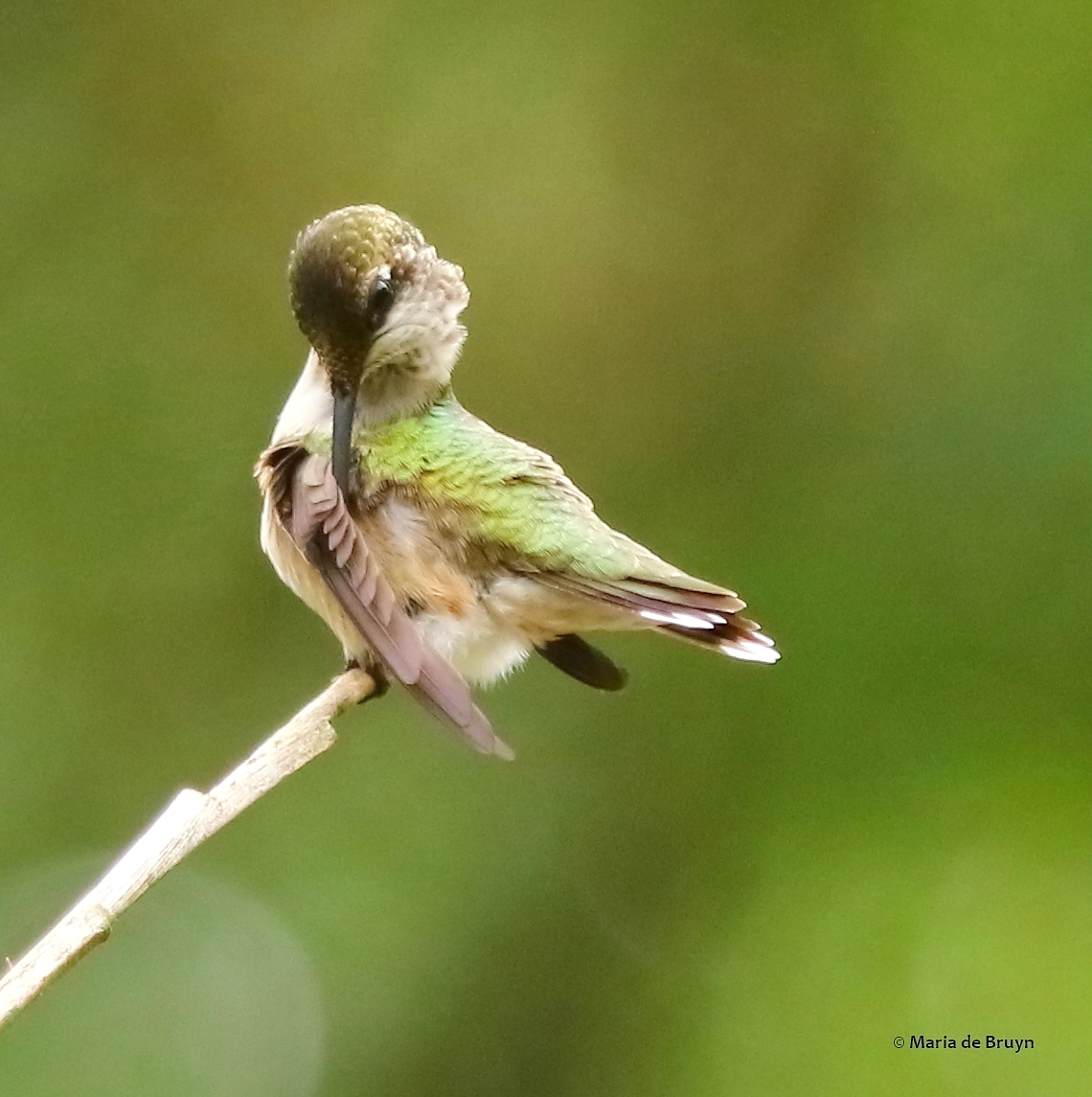
ruby-throated hummingbird DK7A1226© Maria de Bruyn resIt has been great to welcome back the sun and dispel some of the gloom resulting from the record number of rainy days we’ve had. Watching the ruby-throated hummingbirds (Archilochus colubris) in my yard and at nature reserves is also a day brightener and has taught me that these tiny avians are quite fastidious, grooming often and at length.


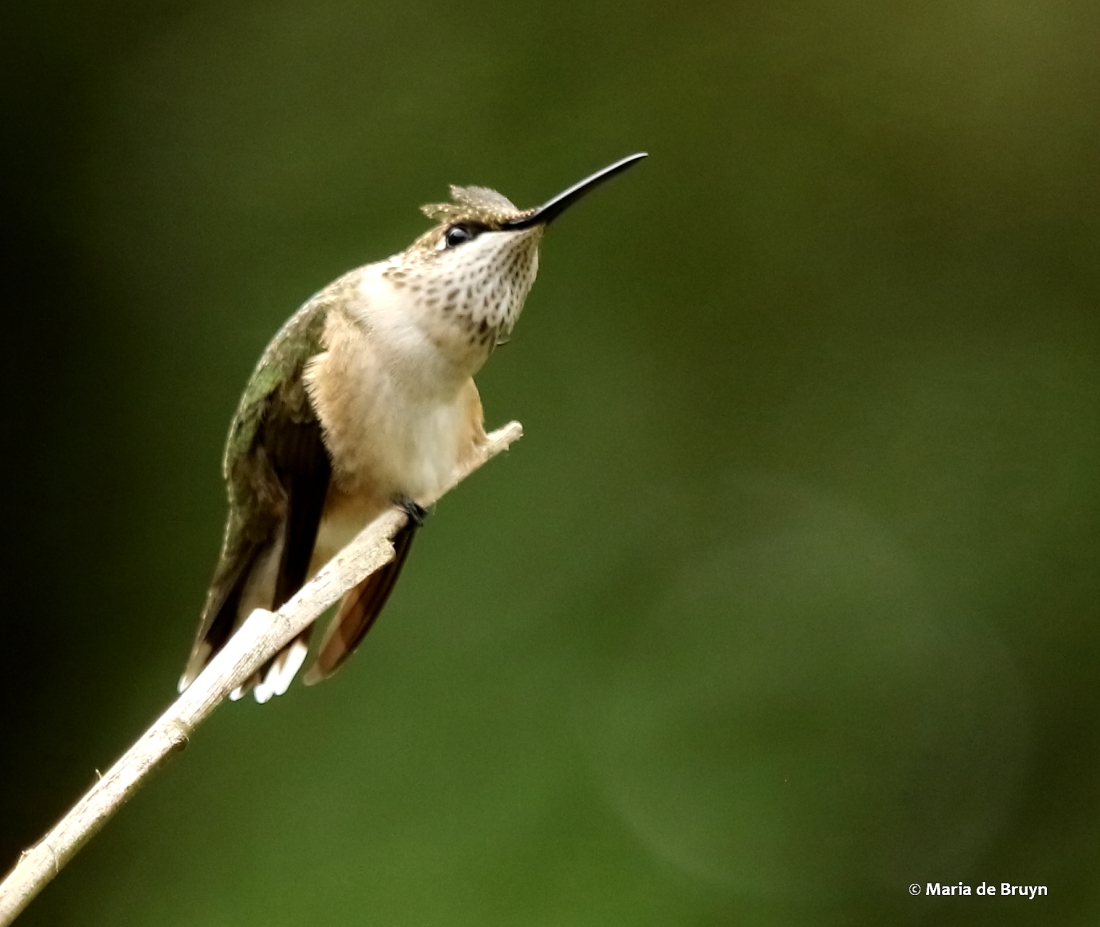
They cannot use their feet to hop or walk; they only cling to perches and shuffle a bit.

ruby-throated hummingbird DK7A0497© Maria de Bruyn resruby-throated hummingbird DK7A0499© Maria de Bruyn (2) res

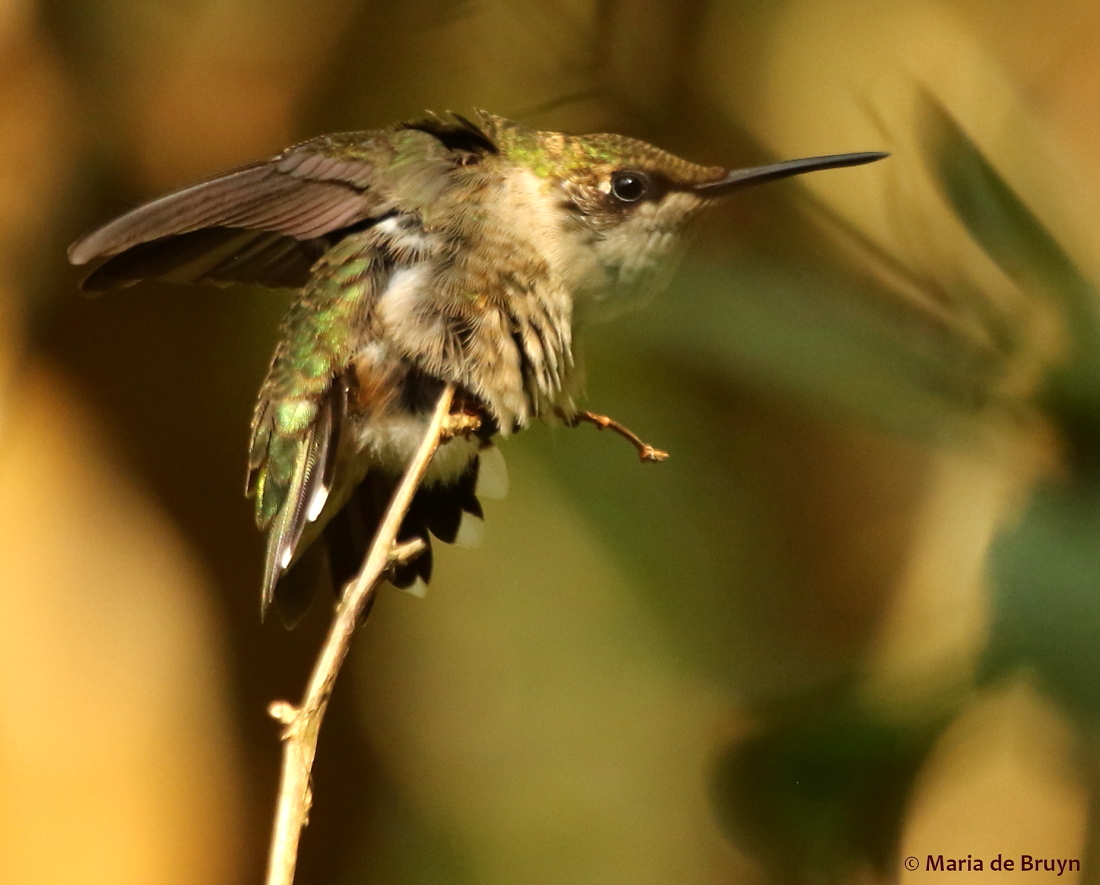
They do use their claws as a “comb” to groom their heads and necks and to scratch itches.

ruby-throated hummingbird DK7A7454© Maria de Bruyn resruby-throated hummingbird DK7A1811© Maria de Bruyn res

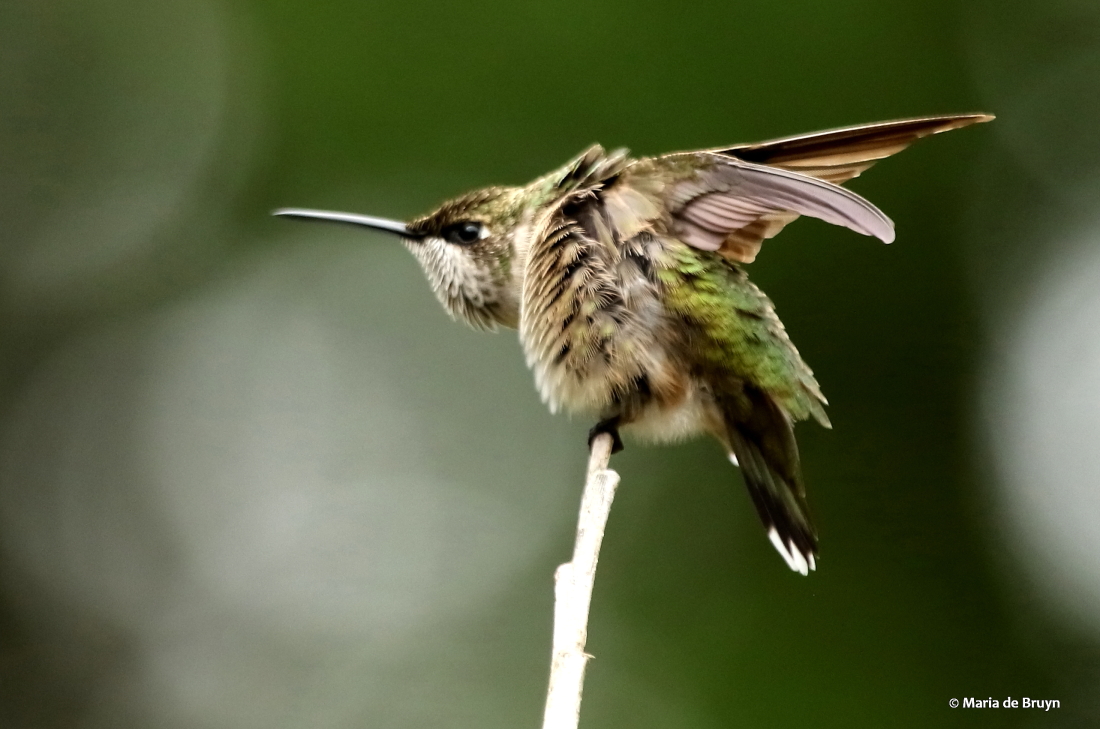
Using oil from a gland near their tail, they cover their iridescent feathers with the oil to help clean them.

ruby-throated hummingbird DK7A1112© Maria de Bruyn resruby-throated hummingbird DK7A1230© Maria de Bruyn res

ruby-throated hummingbird DK7A1754© Maria de Bruyn res ruby-throated hummingbird DK7A1756© Maria de Bruyn res

When you see them rubbing their long beaks on a twig, they are wiping off debris and pollen.

ruby-throated hummingbird DK7A7094© Maria de Bruyn res

The youngest birds have a groove in their beak but this smooths out by the winter.

ruby-throated hummingbird DK7A5627© Maria de Bruyn res ruby-throated hummingbird DK7A7105© Maria de Bruyn res

When the hummers look up in the sky, while sitting all puffed up on a branch, they may be taking a sun bath.

ruby-throated hummingbird DK7A7969© Maria de Bruyn res ruby-throated hummingbird DK7A7804© Maria de Bruyn res

A tiny catnap – or hummer nap – can also be observed now and then. This is understandable since their little hearts beat at 1220 times per minute while they fly; this lessens to about 250 times per minute when they are at rest.

ruby-throated hummingbird DK7A0060© Maria de Bruyn resruby-throated hummingbird DK7A7319© Maria de Bruyn res

ruby-throated hummingbird DK7A0389© Maria de Bruyn res

ruby-throated hummingbird DK7A7355© Maria de Bruyn res


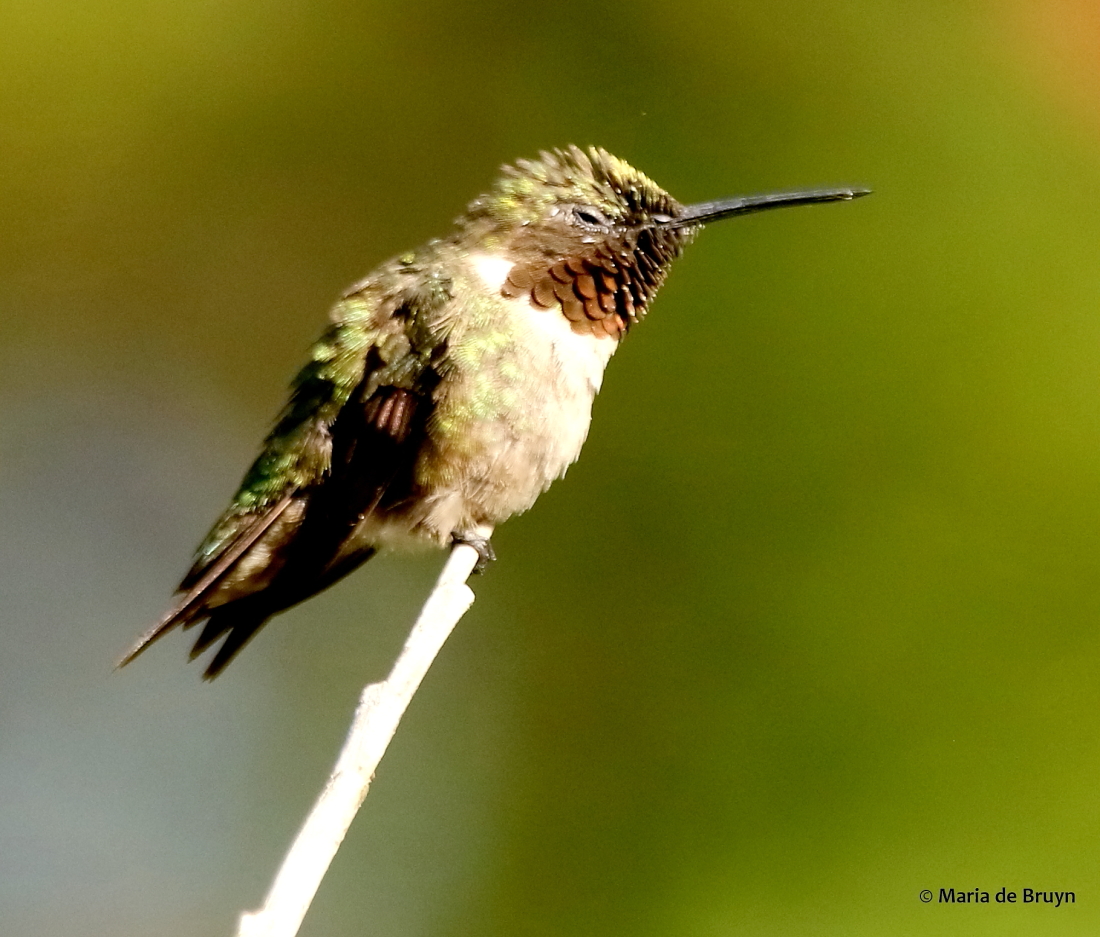
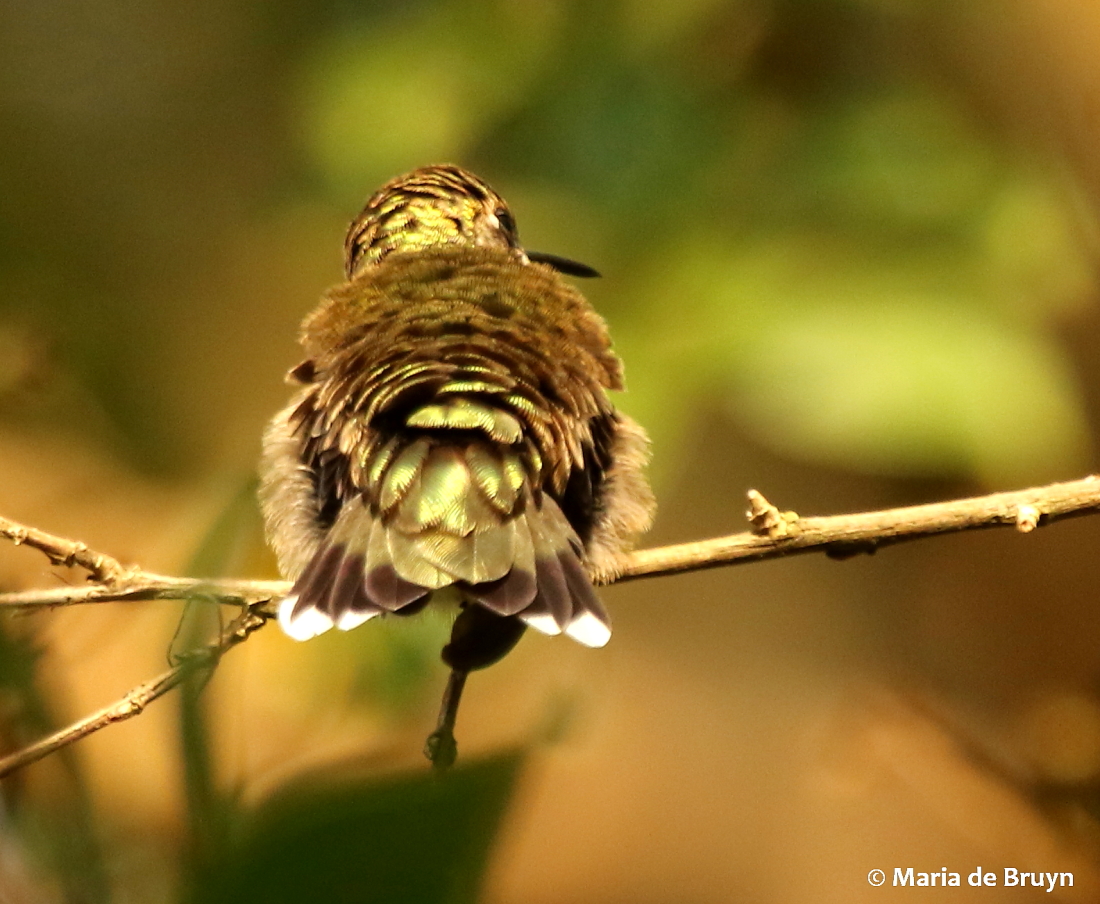
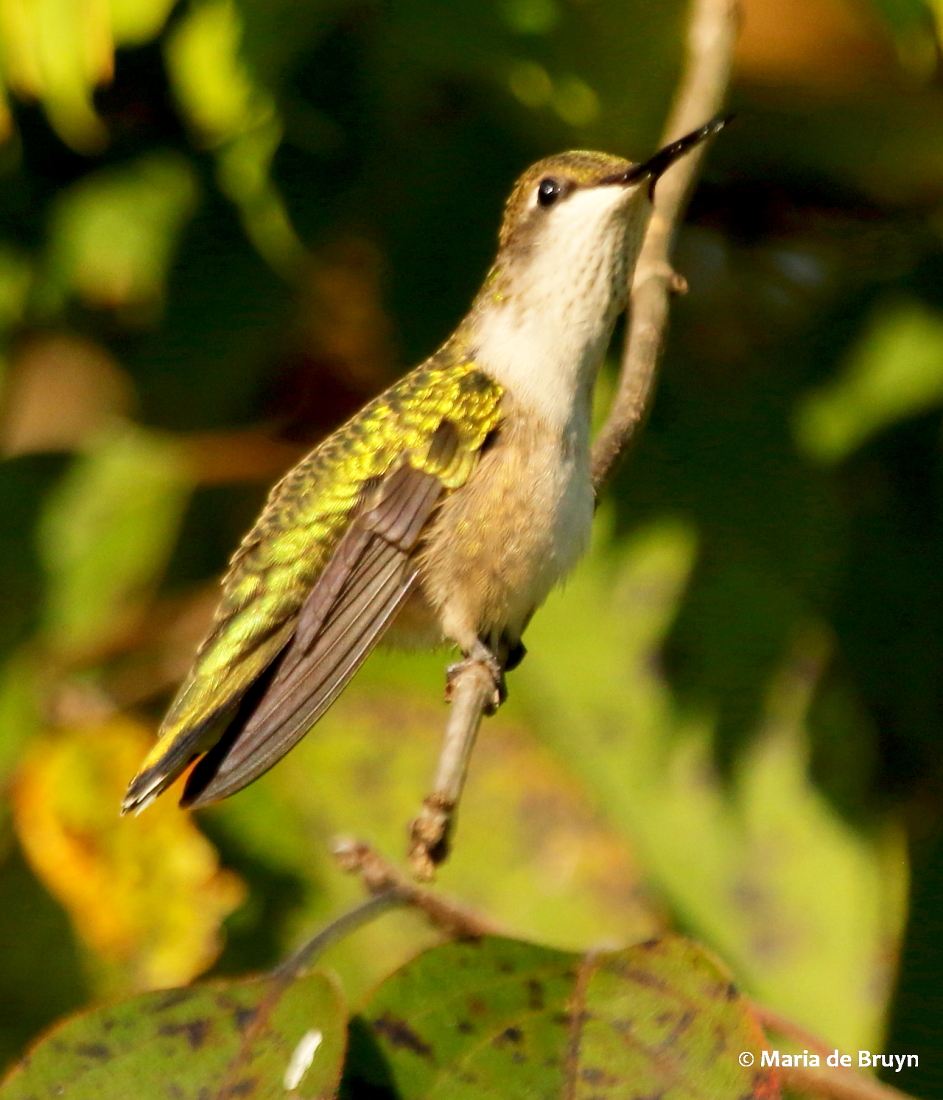
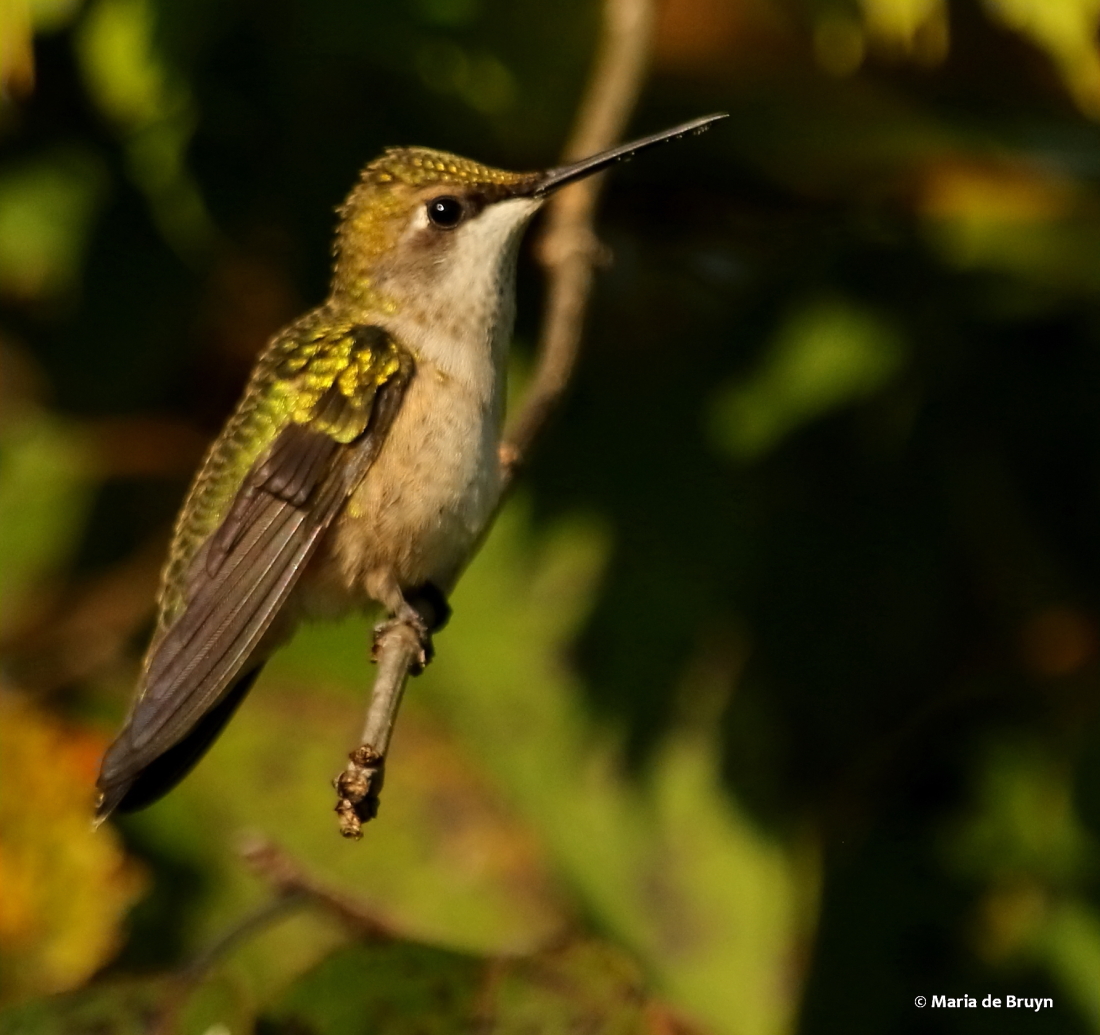
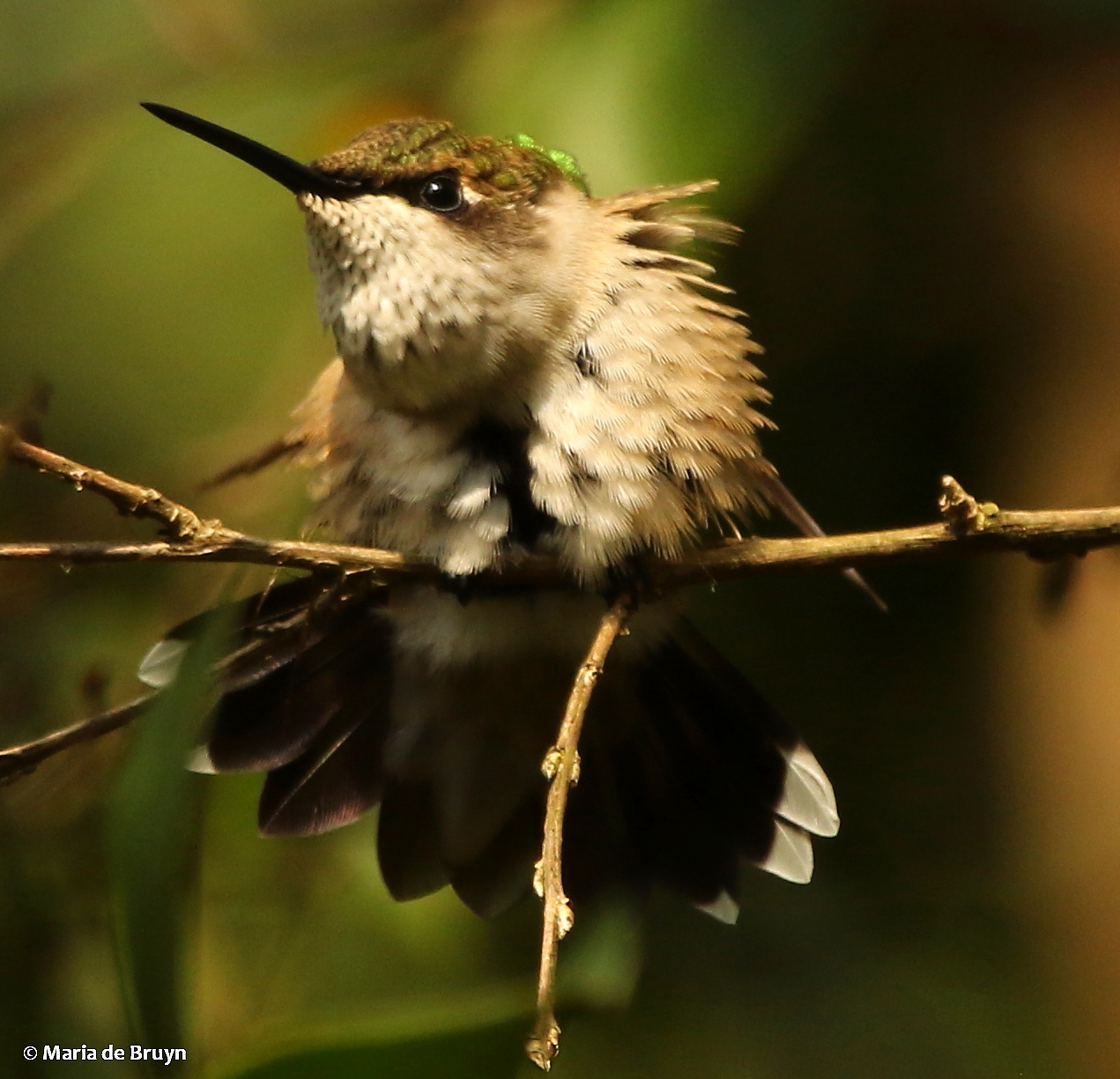
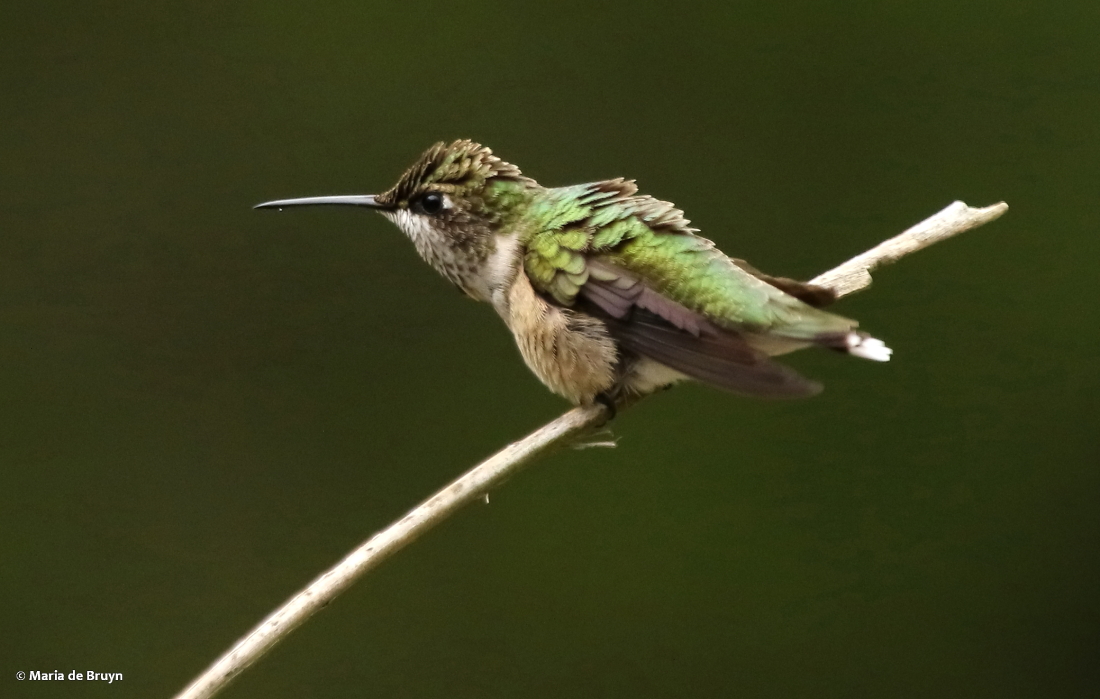
You can sometimes tell the sex of the hummingbird by its tail feathers. The tips are white and rounded in both females and first-year males, who do not yet have fully colored throats

.
ruby-throated hummingbird DK7A2031© Maria de Bruyn


In the adult males, the tail feathers have sharp black points.

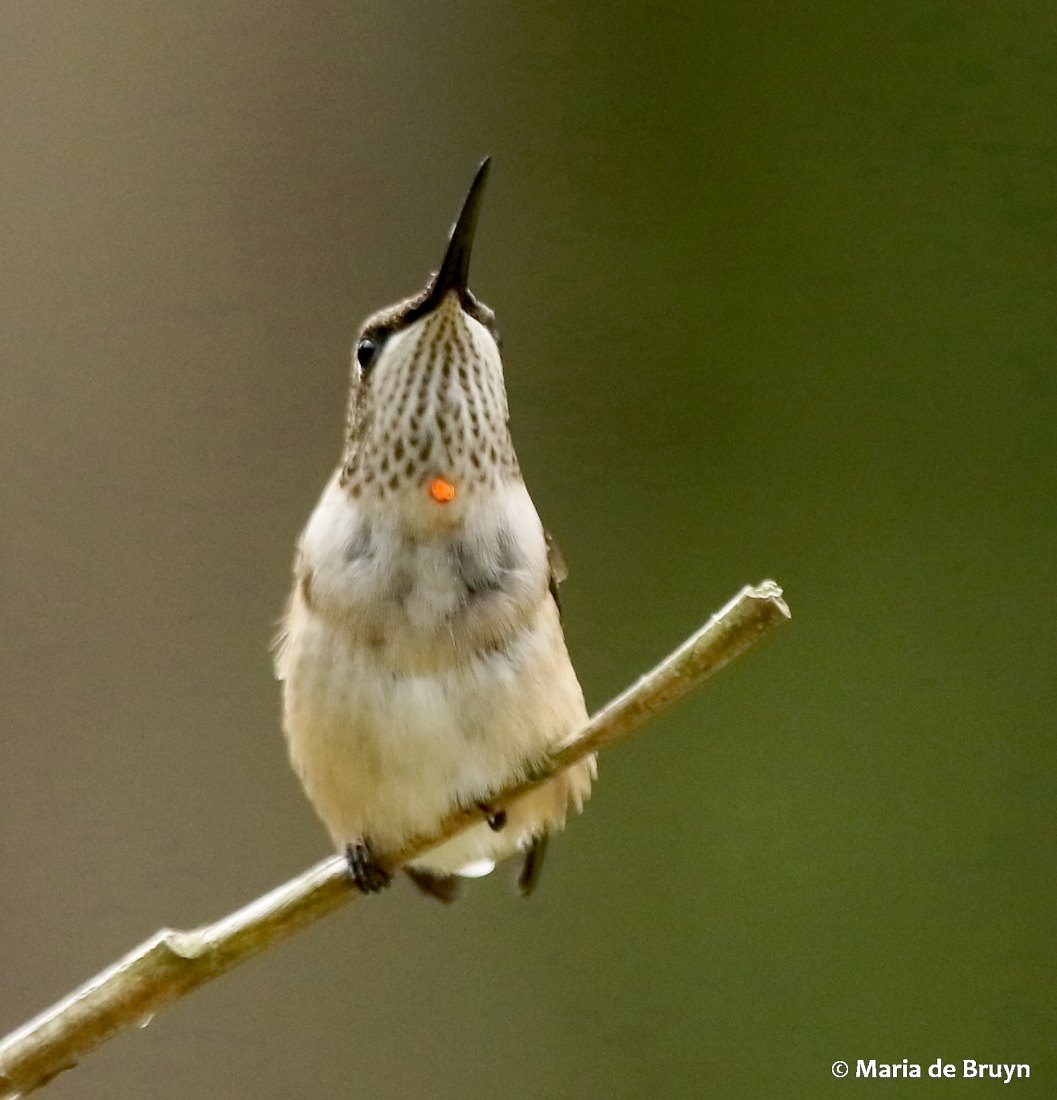
The red gorget (throat) feathers that give this species its common name are seen in the adult males. Very occasionally, a female will have one or two black or one red feather there, but it is generally a young male that has one red throat feather.

ruby-throated hummingbird DK7A6577© Maria de Bruynruby-throated hummingbird DK7A0610© Maria de Bruyn res

ruby-throated hummingbird DK7A2084© Maria de Bruyn res


After nesting, females may look somewhat tattered and molt their feathers, like this one in July. The regular molting period is autumn through about March and that is when the juvenile males develop their their red throats.


Both female and male ruby-throated hummers have a small patch of white feathers behind their dark eyes.

ruby-throated hummingbird DK7A8123© Maria de Bruynruby-throated hummingbird DK7A2409© Maria de Bruyn res

One thing is for sure – all these little avians are beautiful to see and watch!

More information:

http://www.hummingbirdworld.com/h/behavior.htm

Hummers haranguing – feistiness in small packages!

ruby-throated hummingbird DK7A0498© Maria de Bruyn (2) resAt times, we may see on Facebook or the Internet a photo or video of hummingbird nectar feeders surrounded by at least 6 and sometimes dozens of these small birds, sharing space as they take turns at imbibing some of the sweet water. Here in my part of North Carolina, however, it seems that the ruby-throated hummingbirds (Archilochus colubris) are just NOT interested in having their territory host family members or neighbors. This species is known for being territorial and those in my vicinity live up to that reputation for sure.

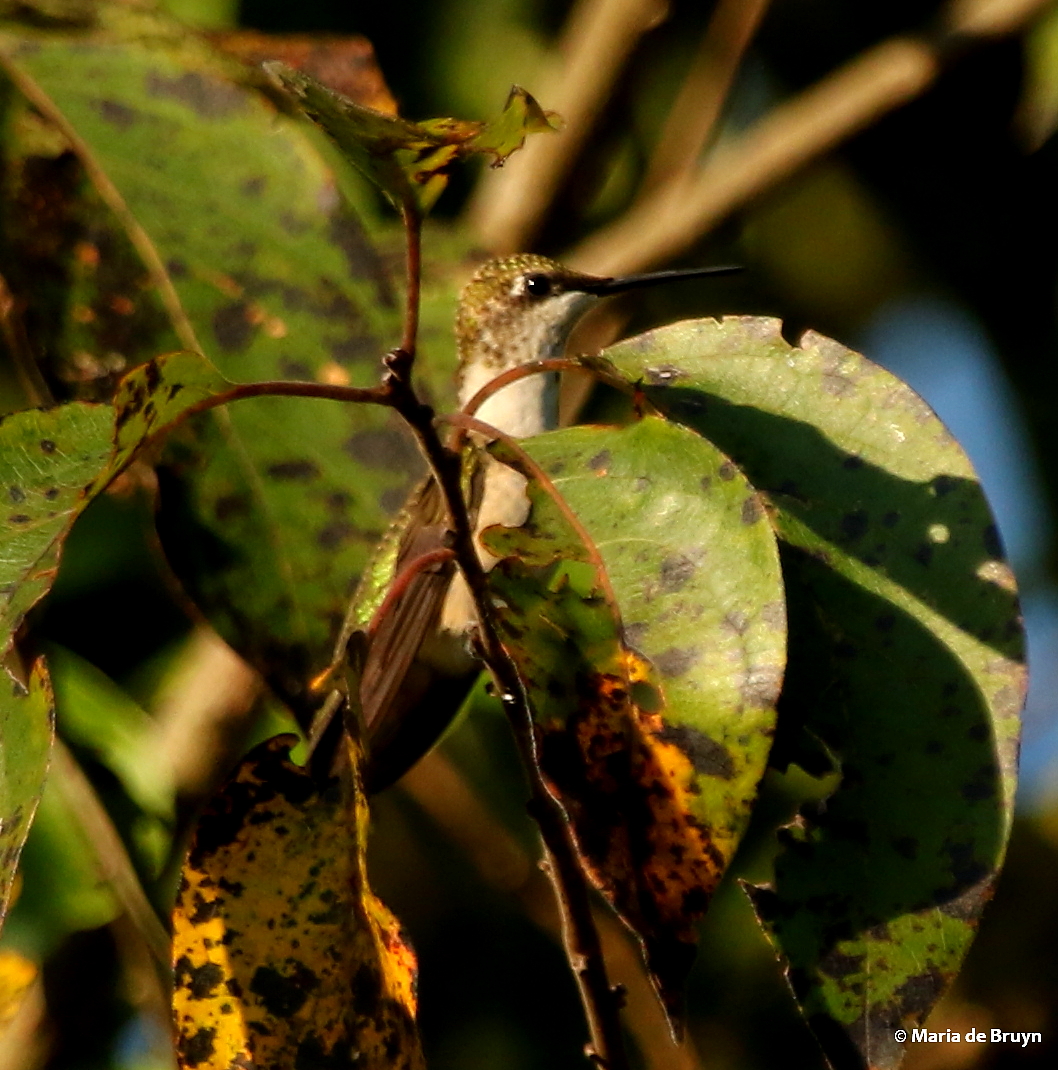
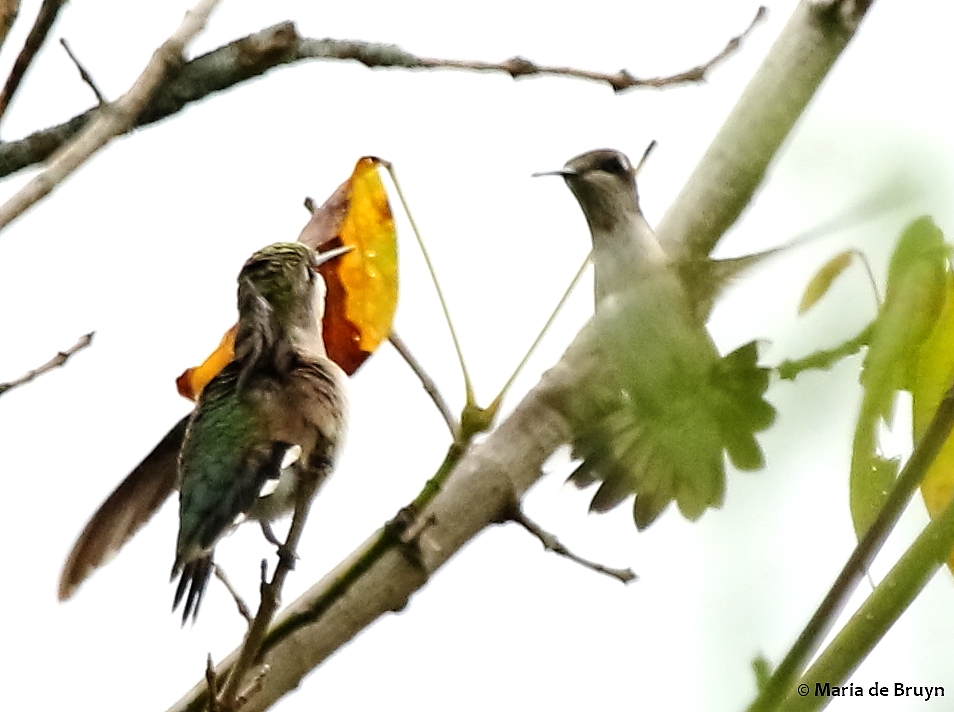
Both at home and in nature reserves, I’ve watched these tiny birds stake out a claim to a feeder or some choice blooms. They drink a little and then will take up a post on a vantage point where they can keep an eye out for other birds. Occasionally, the waiting spot is out in the open and often it is in a nearby shrub or tree.

ruby-throated hummingbird DK7A2402© Maria de Bruyn res ruby-throated hummingbird DK7A2298© Maria de Bruyn

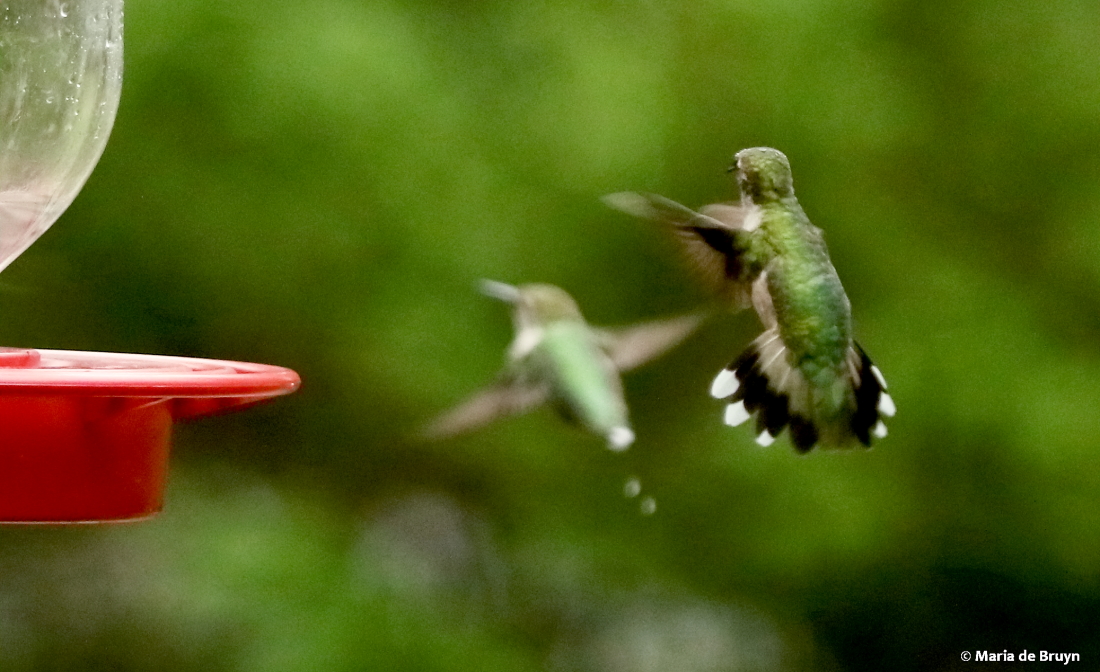
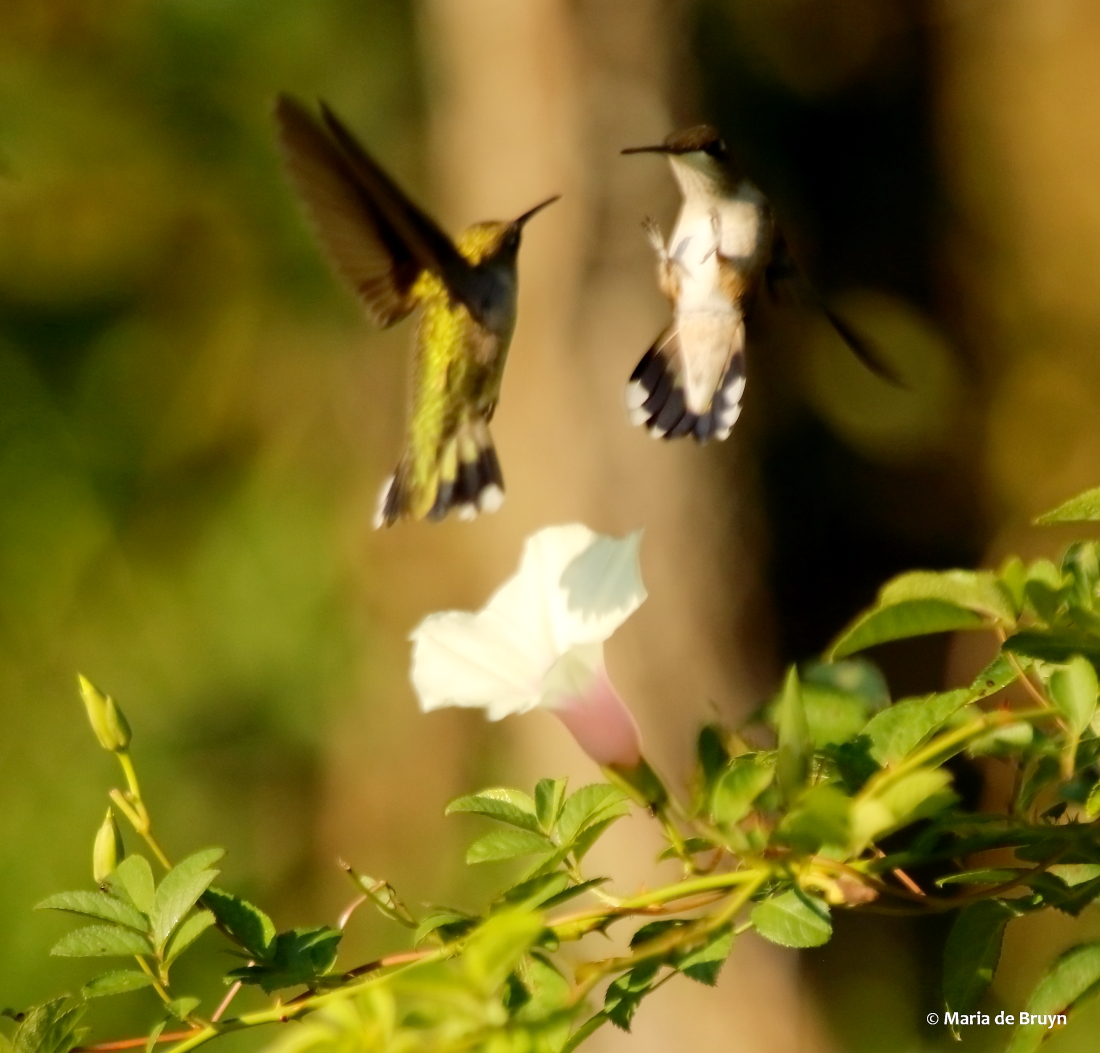
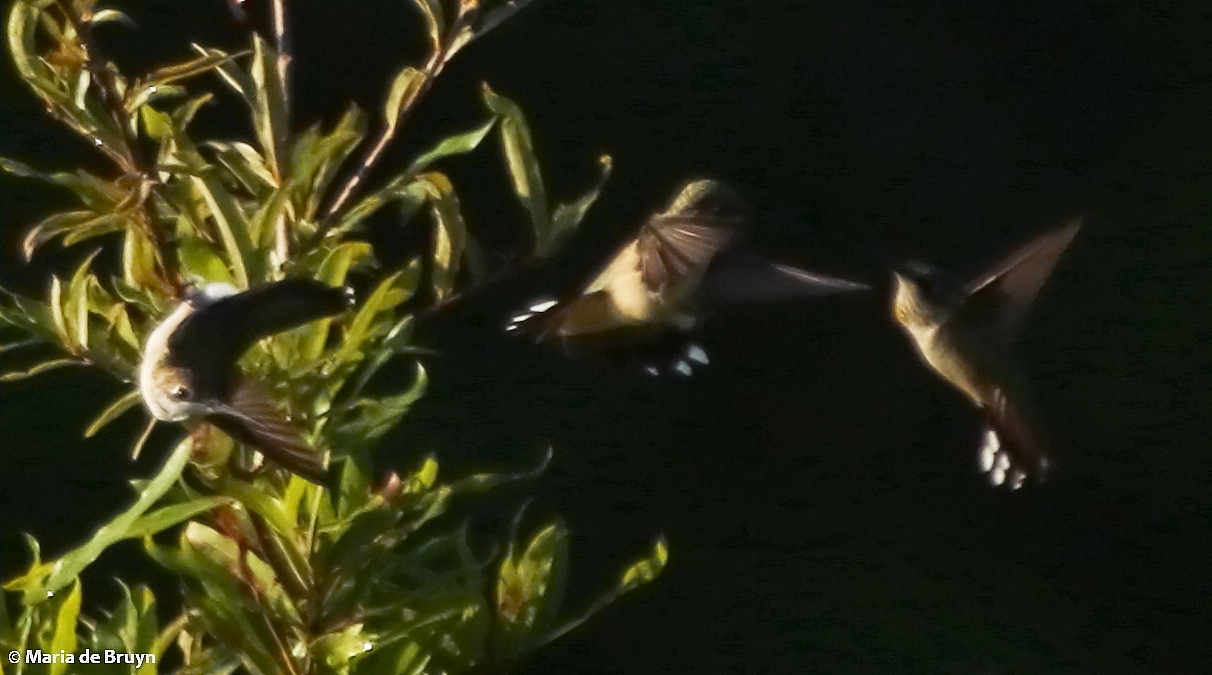
When they spot a rival approaching the food source, they may either immediately give chase or first engage in a threat display.

ruby-throated hummingbird DK7A2376© Maria de Bruyn resruby-throated hummingbird DK7A1568© Maria de Bruyn res

Their displays include both posturing and sound. To warn off other birds, they may chirp both quickly and loudly. Their threat postures aim to frighten away intruders by displaying size and strength and include pointing their long bills at the other bird(s), puffing up their throats, spreading and raising their wings, and flaring their tail feathers, .

ruby-throated hummingbird DK7A0712© Maria de Bruyn resruby-throated hummingbird DK7A0492© Maria de Bruyn res


ruby-throated hummingbird DK7A7307© Maria de Bruyn resruby-throated hummingbird DK7A0499© Maria de Bruyn res

ruby-throated hummingbird DK7A7353© Maria de Bruyn resruby-throated hummingbird DK7A7928© Maria de Bruyn

ruby-throated hummingbird DK7A2247© Maria de Bruyn resThey don’t really use their bills to battle as they need to protect this body part but they can fly into each other. On one occasion, in my front yard, I heard a loud thump when the two birds actually collided during a high-speed chase.

The drive to protect territory is not for lack of food. My yard has three nectar feeders out back and one in the front and three of them have at least four feeding holes. This year, a brightly colored male laid claim to the yard while the female was caring for her brood. When the female and young birds began coming to the feeders, “Red” was not pleased. Later, the young males also vied with one another.

ruby-throated hummingbird DK7A1562© Maria de Bruyn res

Chittering loudly, they sweep in to make the other birds take off; occasionally they do get a chance to have a short drink before another hummer shows up. At my house, the birds can feed because they have to patrol both the front and back yards and can’t be in two places at once.

ruby-throated hummingbird IMG_0379© Maria de Bruynruby-throated hummingbird DK7A0866© Maria de Bruyn res

I witnessed a similar scenario at the Mason Farm Biological Reserve. There was a spot with plenty of blooming trumpet vines (Campsis radicans) and morning glories (Ipomoea pandurata), which were attracting a variety of pollinators. Three hummingbirds were also visiting and, again, chasing one another from the site as soon as they caught sight of their rivals.

ruby-throated hummingbird DK7A2117© Maria de Bruyn

ruby-throated hummingbird DK7A2116© Maria de Bruyn

In an area near the Haw River where many wildflowers bloom, a similar scenario took place.

ruby-throated hummingbird DK7A9401© Maria de Bruynruby-throated hummingbird DK7A9403© Maria de Bruyn

This is the time of year when the ruby-throated hummingbirds undertake their migration to Central America, a distance of at least 1000 miles. They need to store energy for this and may double their body mass while feeding during the preparatory phase. However, it seems to me that chasing away other birds from their preferred feeding sites must take an enormous amount of energy and it seems to be an endless activity. In my yard, it goes on all day long!

ruby-throated hummingbird DK7A1828© Maria de Bruyn resThese birds’ flight muscles take up 25% of their weight; when they rest, their hearts beat at a rate of 250 beats per minute but during flight, their hearts speed up to 1220, so the zipping back and forth and up and down in hot pursuits must use lots of calories and energy. They also may hover mid-air for a while rather than sitting on an outpost twig; the other day, one of Red’s rivals spent a quarter minute suspended about 18 inches from my face, looking me over until Red dive-bombed him.

ruby-throated hummingbird DK7A2213© Maria de Bruyn resThis summer I’ve been lucky to see the hummers in several places, including Sandy Creek Park, near the Haw River and a farm cultivated by refugees from Myanmar. In all cases, the birds appeared unwilling to share their dining areas. Once in a while, though, one would have the space to him- or herself for a while and I could watch them feed, afterwards flicking out their long tongues.


ruby-throated hummingbird DK7A7940© Maria de Bruyn resruby-throated hummingbird DK7A0181© Maria de Bruyn res

When they return next year, I hope to learn more about these wonderful little birds through daily observation in my garden habitat.

ruby-throated hummingbird DK7A1673© Maria de Bruyn (2) res

More interesting information on ruby-throated hummingbirds can be found here:

http://www.rubythroat.org/rthufactsmain.html

http://www.allaboutbirds.org/guide/ruby-throated_hummingbird/lifehistory

http://www.worldofhummingbirds.com/behavior.php

Delight in small packages

ruby-throated hummingbird M de Bruyn signed (2) res

Ruby-throated hummingbird IMG_6085©Maria de BruynOne bird that seems to almost universally delight people and bring smiles to their days are the hummingbirds. These wonderful little fliers now only live in the Western hemisphere of our earth, but two 30-million-year-old hummingbird fossils were discovered in Germany so they did live elsewhere.

There are more than 300 species – some very, very colorful and some with gorgeous long tails or long curved beaks. Central and South America have spectacular species and one of the Nazca line drawings in Peru depicts a hummingbird. Only eight species breed in the United States.

Here in Chapel Hill, I’ve had the pleasure to see two species – the ruby-throated hummingbird (Archilochus colubris) and the rufous hummingbird (Selasphorus rufus). The ruby-throated (named for the male’s brilliant neck feathers) are here in spring, summer and fall and then they migrate further south, crossing the 500 miles (800 km) of the Gulf of Mexico in one non-stop flight!

Ruby-throated hummingbird IMG_8991©Maria de Bruyn resRuby-throated hummingbird IMG_4837©Maria de Bruyn

The rufous species migrates here from further up north in the wintertime; they will go as far as Alaska to spend the winter and can tolerate below freezing temperatures.rufous hummingbird IMG_1789 M de Bruynrufous hummingbird IMG_2022 MdB

Ruby-throated hummingbird IMG_7541©Maria de BruynRESThe smallest bird species is the Bee hummingbird, which weighs less than a cent coin. On average, the ruby-throated hummingbird weighs less than a US five-cent coin.

They flap their little wings about 50 times per second but increase this to as much as 200 wing beats per second. This rapid motion makes a humming sound, which varies according to the species. Their quick flight allows them to hover as well as fly backwards and upside down.


ruby-throated hummingbird IMG_3498Ruby-throated hummingbird male IMG_5433©Maria de Bruyn res


ruby-throated hummingbird IMG_3293 MdBTheir little feet help them perch but they cannot hop or walk on them.

These little birds need to eat about half their weight in sugar every day, which is why you see them returning to feeders quite often. When there is not enough food, they can go into a hibernation-like state, slowing their metabolism to 1/15th of its normal rate.

Their hearts can beat as quickly as 1260 beats per minute and they take 250 breaths per minute, even when they are sitting still!

Ruby-throated hummingbird IMG_1482©Maria de Bruynres


Hummingbirds do not suck up nectar but quickly lap it up with tIMG_5526©Maria de Bruynheir tongues, which have tubes running down their lengths.

To ensure they have enough food, they can sometimes defend their feeding areas vigorously against other hummers that they consider intruders. This happens a lot at my feeders but they are so fast that it’s very difficult to get good shots of it.


ruby-throated hummingbirds IMG_0729 MdB resRuby-throated hummingbird IMG_2379©Maria de Bruynres2

ruby-throated hummingbirds IMG_0728 MdB res

They eventually will tolerate others in their vicinity (sometimes). They live 3-12 years and perhaps the ones they don’t mind having around are related.

Ruby-throated hummingbird IMG_2742©Maria de Bruynres

It is better not to put food dyes into nectar and brown or raw sugar should not be used to prepare it as these types of sugar contain iron, which can kill hummingbirds if they get too much over a certain period of time. They like sugar water with 25% sugar, although apparently nectar with 35% sugar is even more to their liking.

Ruby-throated hummingbird IMG_7711©Maria de Bruyn resRuby-throated hummingbird IMG_5921©Maria de Bruyn res2

I have yet to find a hummingbird nest made with spider silk and lichens in my yard but hope to see one in the future so that I can say I’ve not only seen the biggest bird egg (ostrich) but also the smallest!

Ruby-throated hummingbird IMG_5925©Maria de Bruyn (2) res