Nesting perils – or not?

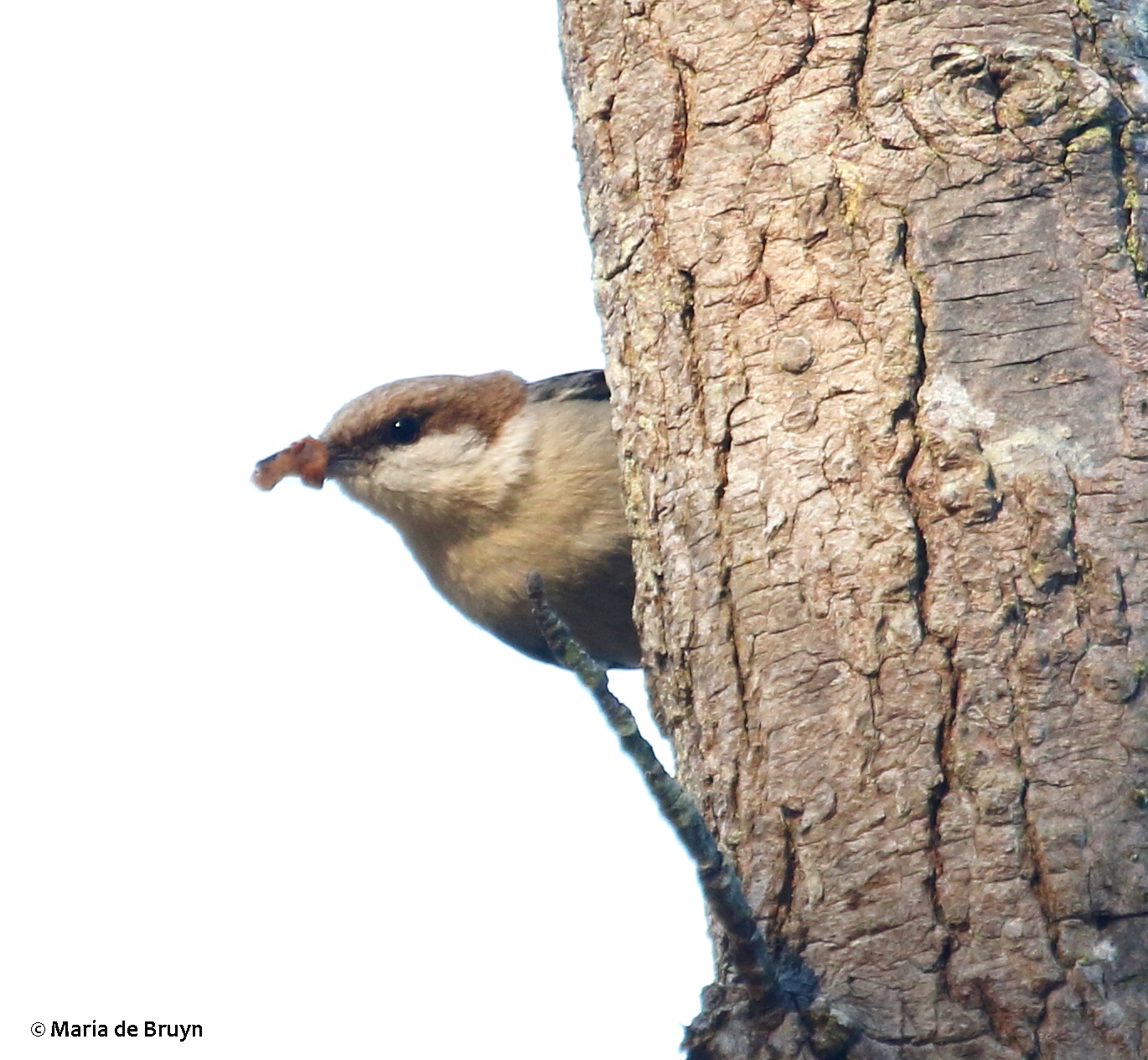
brown-headed nuthatch DK7A5128© Maria de Bruyn resLast year, I had the good fortune to come upon a snag (a dead standing tree) near the shore of Jordan Lake in which brown-headed nuthatches (Sitta pusilla) were tending a nest. This year, thinking back to those delightful visits, I decided to go investigate the tree again. My first visit revealed no nuthatches in the vicinity, but a second visit a few days later on 15 March revealed they had a nest in the same place again. As these birds may keep mates for several years, I just assumed it was the same pair as in 2014, so it was like seeing old friends!
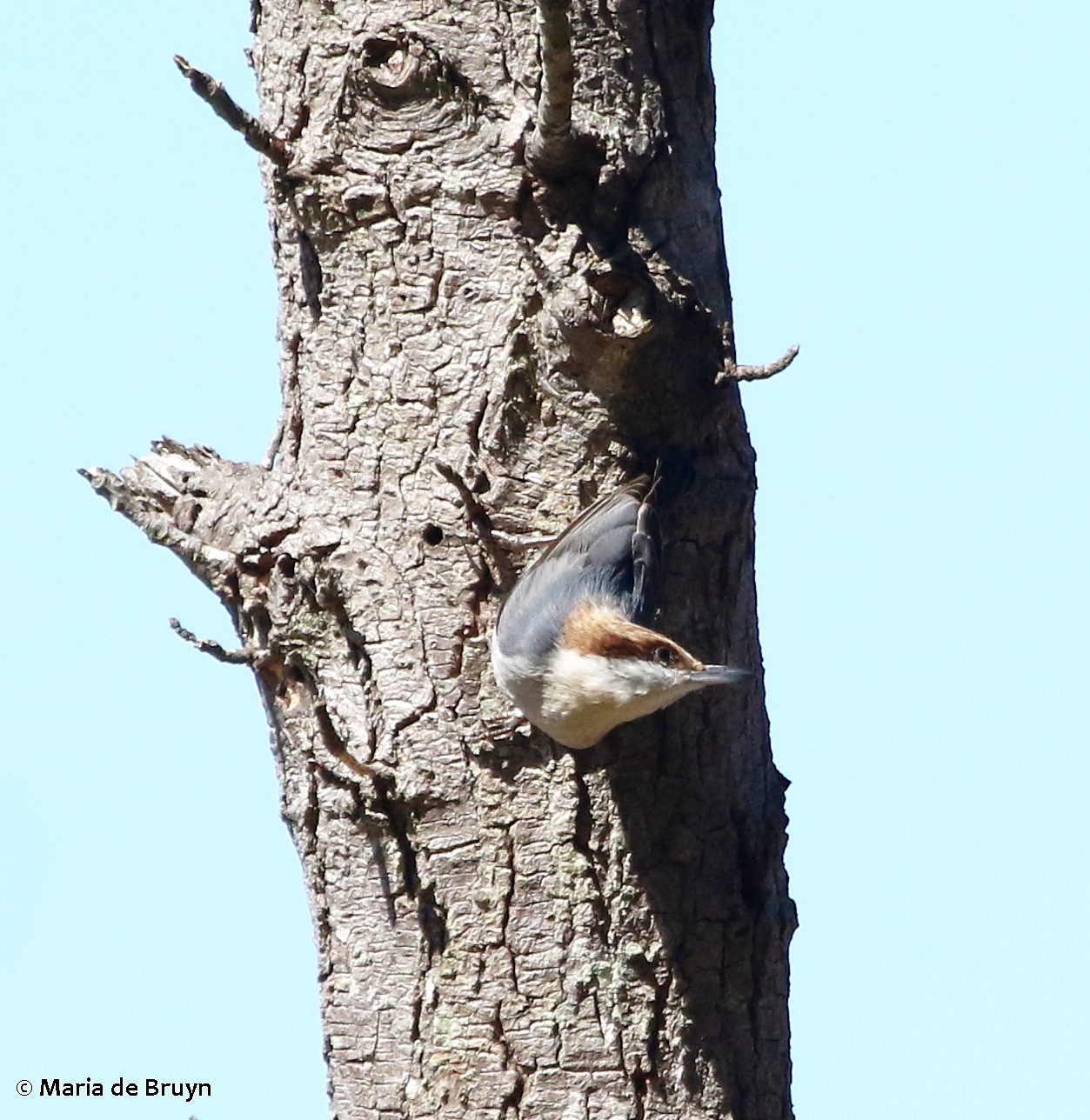


brown-headed nuthatch DK7A0438© Maria de Bruyn brown-headed nuthatch DK7A0467© Maria de Bruyn

brown-headed nuthatch DK7A9987©Maria de BruynOn 29 March, it looked like the birds were bringing food to the nest. One might also have had a piece of bark in its mouth; these nuthatches may use bark pieces as tools to help dig for insects. If the female had by chance laid her eggs around 15 March, the eggs would have just been hatching now. Usually, it then takes 18-19 days for the babies to fledge, so they could have been ready to fly around 15 April, but the egg-laying and hatching could have been earlier.

brown-headed nuthatch DK7A9990©Maria de Bruyn resbrown-headed nuthatch DK7A9994©Maria de Bruyn res

On 4 April, the birds were still bringing food to the nest.

brown-headed nuthatch DK7A4943© Maria de Bruynbrown-headed nuthatch DK7A5264© Maria de Bruyn

brown-headed nuthatch DK7A4649© Maria de Bruyn res

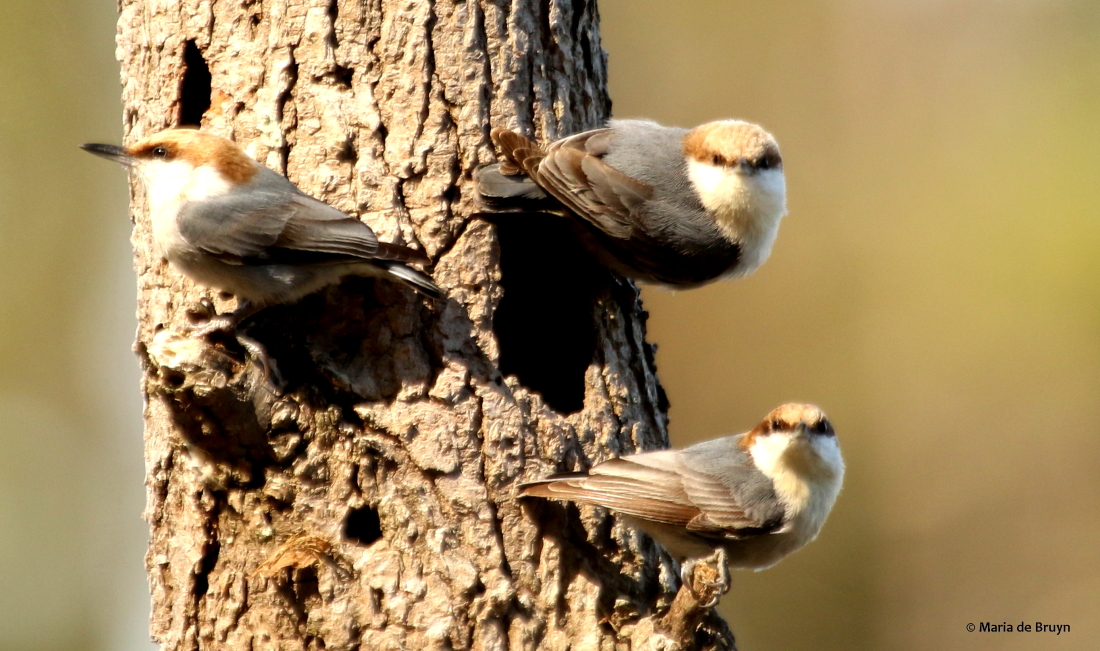
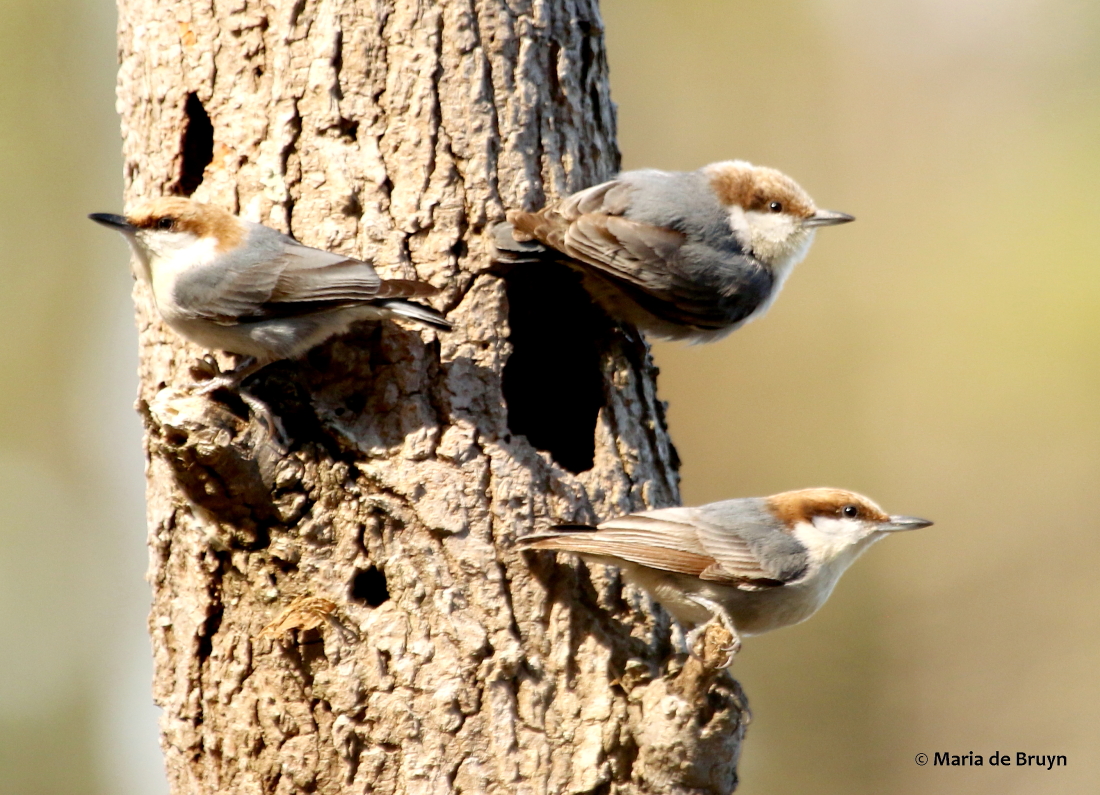
brown-headed nuthatch DK7A5331© Maria de Bruyn resI was photographing the birds and wondering which one might be the male and which the female. Suddenly, I was surprised to see three birds, all about the same size.

Reading up on the species taught me that not only the mating pair but also other individuals, usually young males, help attend the nests. Scientists don’t yet know whether these helpers are older offspring, but it seems to me that it might be similar to the older son helpmates among the American crows.

brown-headed nuthatch DK7A5353© Maria de Bruyn resbrown-headed nuthatch DK7A5351© Maria de Bruyn res

brown-headed nuthatch DK7A5366© Maria de Bruyn res brown-headed nuthatch DK7A5364© Maria de Bruyn res

brown-headed nuthatch DK7A8333© Maria de BruynOn the other hand, perhaps the rather fuzzy bird was a baby, which lacks the white neck spot seen in the adults. The babies also tend to have more gray and less brown coloring than adults. On 12 April, I didn’t see any nuthatches, but on 27 April, I saw a bird peeping out of the nest, well past the fledging period I think.

As I mentioned in a previous blog, since 1966, the population of brown-headed nuthatches has declined by 45% because they are losing nesting habitats (dead and pine trees) to deforestation and urbanization. Apparently, they also lose nests to predation.

brown-headed nuthatch 2 DK7A5128© Maria de Bruynbrown-headed nuthatch DK7A9709© Maria de Bruyn res

brown-headed nuthatch DK7A9827© Maria de Bruyn resOn 9 May, when I returned to Jordan Lake to see if nuthatches were still around the nest, I found their home tree decapitated, precisely at the spot where the hole had been for their nest. I imagine that a raccoon might have gotten up there, although I suppose some other predator could have wreaked havoc as well. In any event, it means I won’t be able to count on visiting the nuthatches there next spring.

The mysteries of the third bird’s identity and what took down the nest will likely remain unknowns. But at least I have my photos of the lovely little birds’ last nest at that site!

The banded birds are back!

gray catbird DK7A2255© Maria de Bruyn resIn a previous blog, I described how six birds were banded in my backyard so I could track them over time. Bird banding has been done for decades, indicating that it is a practice that truly works for monitoring lifespans and locations of individual birds. But it still seemed to me that being caught in a net, having someone hold you as they extricated your legs and wings from the clinging threads, then putting rings on your legs and sticking you into a container (for weighing) would be a traumatic enough experience for you to decide that this geographical area was not where you wanted to be. Anthropomorphizing the banded birds’ reactions meant that I wouldn’t have been surprised (albeit very disappointed) if I had not seen the six birds again.

gray catbird DK7A2210© Maria de Bruyn resMy expectation was almost immediately proved wrong, however, confirming that birds do not stay away from sites where they were given their ankle bracelets. Corey, my tail-less gray catbird (Dumetella carolinensis) was the first one I spotted again, the very next day after the banding. He has an aluminum band on one leg and 2 red bands on the other.

Since the bands are such different colors, I decided to name the birds as that is easier to note down for sightings. The gray catbird with an aluminum band (they all have this color as it contains their registration number) and white and purple bands became Camden. The catbird with the lovely yellow and green bands was dubbed Clarissa. All three have been very regular visitors to the feeders, proving that a little discomfort was not enough to dissuade them from visiting the always available buffet of mealworms and other delights.

gray catbird Camden DK7A2085© Maria de Bruyn res gray catbird Clarissa DK7A2091© Maria de Bruyn res

The catbirds have a fondness for sweets and like both apples and blueberries. Grape jelly is a real treat, for which they will return again and again.

gray catbird Clarissa DK7A2647© Maria de Bruyn resgray catbird Camden DK7A2198© Maria de Bruy resn gray catbird Camden DK7A1965© Maria de Bruyn resCorey’s return visits have shown how his tail feathers grew in again nicely over time. gray catbird Corey DK7A2472© Maria de Bruyn resI named the Northern cardinal (Cardinalis cardinalis) Clancy and I first spotted him again 2 days after the banding. He has not been a regular visitor, however – or I just haven’t caught sight of him among the bevy of other male cardinals that flit around the trees. However, a few days ago he turned up among the apples!

Northern cardinal Clancy  DK7A7771© Maria de Bruyn res northern cardinal Clancy  DK7A7753© Maria de Bruyn res

Carolina wren Willow DK7A2608© Maria de Bruyn resWillow, the Carolina wren (Thryothorus ludovicianus), has been a very infrequent returnee. When he comes, he tries to stay out of sight, choosing the side of the feeder away from me and only lingering a short while in plain sight. At least I know he is ok.

The one bird I have not yet seen is Rusty, the American robin (Turdus migratorius). I’ve been staring at the legs of every robin that hops around the yard but have yet to see one with leg jewelry. Perhaps he was just a stray visitor the day of the banding? I will certainly keep a look-out for him.

My first re-sighting data were entered into the Nestwatch site on 1 June 2015; it will be interesting to see how long I can maintain this input. Clarissa is a very frequent visitor so I think she will be in many entries. Or perhaps she is just busy right now feeding young ones.

gray catbird Clarissa DK7A2504© Maria de Bruyn res gray catbird Clarissa DK7A2503© Maria de Bruyn res gray catbird Clarissa DK7A2498© Maria de BruynEastern bluebird IMG_3881© Maria de Bruyn resIn the meantime, I am monitoring two nests for data entry; one for Eastern bluebirds (Sialia sialis), who have babies in a nest box, and one for gray catbirds, who have a nest in the middle of a shrub next to my carport.

The catbird parents are ever so vigilant and call out warnings to me whenever I approach the shrub. They hesitate to go into the shrub with food when I am near, even though those babies must be hungry. I finally got a view of them through the twigs when they were close to fledging. They are now hopping around on twigs in the shrub near the nest. Yesterday, when I came too close, Mama catbird dive-bombed, actually grazing my head!

Gray catbird IMG_3887© Maria de Bruyn res gray catbird IMG_3873© Maria de Bruyn

The parents in both pairs are very diligent about bringing the babies meals, working as a team. One catbird parent seems to be good at collecting a variety of foods, in one case bringing three different insects at once (presumably one for each baby). I will look forward to seeing the young ones out and about and sincerely hope my neighbor’s cat doesn’t get them.

gray catbird DK7A2939© Maria de Bruyn res gray catbird DK7A2937© Maria de Bruyn res

Bird watching is an enjoyable way to spend time; doing it and contributing to scientific data collection is even cooler!

The squatter family: those cute – and seemingly precocious – little Carolina chickadees!

Carolina chickadee IMG_3138©Maria de BruynresI have two bird boxes in my yard designed to attract brown-headed nuthatches (Sitta pusilla). While I do have these birds at my feeders, they have not deigned to create nests in the boxes; one is still empty and the other was occupied by a family of squatters – darling little Carolina chickadees (Poecile carolinensis). I don’t know if this pair had had kids together before, but sometimes these birds retain their bonds for several years.

In addition to the nuthatch boxes, I have five bluebird boxes and cCarolina chickadee eggs IMG_4429©Maria de Bruynhickadees had begun nests in two others. It is not uncommon for them to begin a couple nests and then finally settle on one. On 12 April, I discovered that Mom had laid five white with brown-specked eggs in a nice soft nest made of moss, soft grasses and some down, even using a bit of pillow stuffing I had left out for interested nest-builders.

Ten days later, 22 April, I opened the box to see if everything was ok and surprised her sitting on the nest. (I had tapped on the box beforehand in case she would want to leave for a bit; didn’t happen!) She gazed at me in alarm and then began dipping her head and beating her wings against the nest; this is called a snake display to warn off predators.

Carolina chickadee IMG_4623©Maria de BruynCarolina chickadee IMG_4624©Maria de Bruynres

Carolina chickadee nestlings IMG_4680©Maria de BruynresTwo days later, I opened the box and discovered the eggs had hatched – I think she had been brooding them two days earlier since the babies didn’t seem quite as naked as I expected. That would mean they hatched after only about 10 days (and the average seems to be 12-15 days of incubation according to websites).

Both parents take on feeding their offspring. In warmer weather, they search for insects among foliage and under tree bark, sometimes hanging upside down to get a meal. This pair also visited the nearby feeders, obviously intent on teaching their young that suet, dried meal worms and seeds are also good to eat.

carolina chickadee IMG_6507©Maria de BruynCarolina chickadee IMG_3021©Maria de Bruyncarolina chickadee IMG_6378©Maria de Bruyn

Carolina chickadee IMG_3129©Maria de Bruyncarolina chickadee IMG_6702©Maria de Bruyn

Like the nuthatches and robins, the parents were also fastidious about cleaning the nest; and these almost full-grown young seemed to be pooping a lot!

Carolina chickadee IMG_6420©Maria de BruynCarolina chickadee IMG_6430©Maria de Bruynrescarolina chickadee IMG_6380©Maria de Bruyn
The young usually fledge about 16-19 days after hatching. If these birdlets had hatched on 22 April, I figured they would be ready to leave the nest around 7 May. Despite being sick with an infection that was keeping me mostly supine, I couldn’t let the opportunity for observation go by. So on the 5th of May, I roused myself for a sit-down in the yard in the early afternoon. I first waited until the parents had both left and carefully lifted the bird box door to see a bright-eyed, pretty much full-grown chick staring at me. S/he scooted back and it looked like there were only two others – so the other two siblings had already fledged. This did seem to be a very precocious family!

Carolina chickadee nestling IMG_4820©Maria de BruynresCarolina chickadee nestling IMG_4824©Maria de Bruynres

Carolina chickadee IMG_6407©Maria de BruynThis might be one of the chicks that fledged earlier. When a fledgling is begging for food, it quivers its wings rapidly. Females also do this before the young leave the nest when they want the male to feed them.

Because I was feeling fairly ill, I had to stop watching the parents go to and fro after a couple hours. On 6 May, I ventured outside in the early afternoon, hoping against hope that I might just be lucky enough to see the last chicks fledge. And I did!

Each chickcarolina chickadee IMG_6817©Maria de Bruyn spent time looking out of the box before venturing out. One took a flying leap and swerved up into a tree.


No. 2 spent some time calling (the parents were still coming in regularly with meals!), then launched itself and landed on some nearby branches.

carolina chickadee IMG_6810©Maria de Bruyncarolina chickadee IMG_6831©Maria de Bruyn

No. 3 spent time flexing its wings before venturing forth.

carolina chickadee IMG_6894©Maria de Bruyncarolina chickadee IMG_6939©Maria de Bruyn
I did check the box to be sure they were all out and then watched as the parents called to them as they flitted about the various trees behind the nest box. If I’d felt better, I would have stayed to observe a bit longer but I was pretty satisfied with having seen the fledging!.

carolina chickadee IMG_6951©Maria de Bruynres

The next morning, a pair of Carolina wrens was already bringing in twigs and placing them atop the chicarolina chickadee IMG_7357©Maria de Bruynresckadees’ nest (after removing some remaining fecal matter). One chickadee ventured back to peer into the box but the wren pair loudly chased the original owner away.


All in all, some very cool days, with some mental delight balancing out the physical distress for me.

If you liked this blog, please let me know by liking or leaving a comment here on the blog page. Thanks!

And for those who want more details on chickadees’ lives, see:
http://animaldiversity.ummz.umich.edu/accounts/Parus_carolinensis/