Two “otterly” fun months — otters at three ponds

The past two months brought me some really rewarding wildlife sightings. While birding, I learned new things about a couple avian species (see The Wild Side). But my main wildlife entertainment came from discovering and watching otters at three ponds. (A reminder: if you click on a photo, it enlarges; to get back to the blog, back space.)

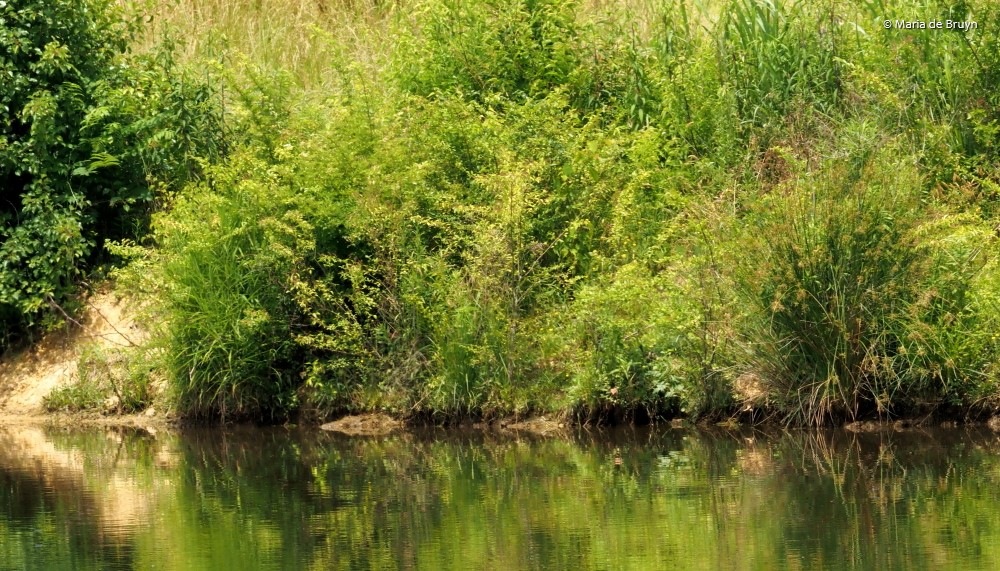
My first sighting came on 29 November 2024 at a pond near a large housing development. I’d been looking to see if the beavers were at their lodge when I suddenly spotted some movement low in the water. To my amazement, four beautiful otters came swimming by, heading in the direction of the beaver lodge (photo above). They kept themselves fairly hidden behind vegetation and then went to sit and play on the lodge behind some brush and small trees growing on the beavers’ home.

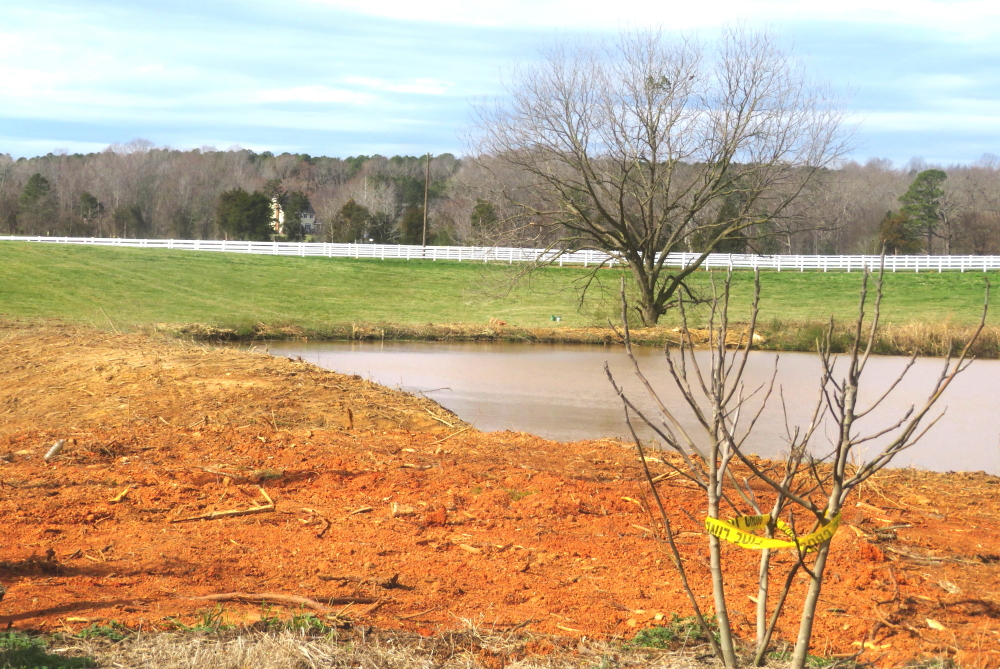
My next sighting was very unexpected, at a pond that had lost a lot of wildlife because the vineyard owner who purchased the surrounding farmland had cut down almost all the trees, shrubs and vegetation for miles around.

Because some migrating waterfowl still occasionally show up at the formerly lively pond, I visited there hoping to spot at least a few ducks. I was surprised to see a round head and sinuous body emerging from the water.

To my delight, I got to watch not just one but two otters swimming about and successfully nabbing fishy meals. One seemed to be less wary of people watching; the other would only stay in sight for a short time and then head to the pond bank underneath a lone standing tree as long as people were around.

I’m not sure what kind of fish they were catching, but they seemed to be enjoying good meals.

My next sighting was at the Sandy Creek Park in a nearby town. An otter suddenly popped up and began swimming low in the water among the vegetation. Then it swam across the pond to a beaver lodge and there caught some animal for a meal.

The mammal was quite far away and my camera lens wasn’t strong enough to get good views. In the end, I figured that it had caught a crayfish or something similar.

My best views of otters came when I returned to the pond where I had first spotted the quartet. Despite repeated visits, I didn’t see four of them anymore but only a trio.

It might be that the fourth one was a male who went off on his own. When winter comes and food is less accessible, otter groups tend to disperse so that each family member has access to food and food stores are not depleted.

River otters tend to roam over a specific territory, staying in one spot for one to four weeks. In the summertime, they may travel within an area of 20 square miles, but in winter they expand their territory upwards to about 60 square miles to maximize their success in finding food.

Fish are a dietary staple, especially in winter, but they also eat crayfish, crabs, turtles, amphibians, reptiles, insects, and even occasionally birds or small mammals. Besides the otter at Sandy Creek Park, I only saw them eating fish, but it was amazing how many fish they could catch and eat in quick succession.

In fact, their ability to almost always come up with a fish after going under water or dunking their head into the pond must account for the fact that the resident great blue heron tended to stick close to them. The heron would watch intently where they were fishing and when they moved to another area of the pond, the large bird would follow.

At one point, the heron stayed so close to a fishing otter that I wondered if the large bird was going to attempt to snatch a fish away, but that didn’t happen!

The hungry avian finally did catch fish, too.

In my next blog, I’ll show you some of the otters’ successful winter fishing forays, let you know how they manage to keep swimming in icy waters and outside temperatures of 15-30°F, and let you see how the otters were playing.


A cold but rewarding day at the pond!

On 29 November our area had its first really cold morning of the season, dawning at 25°F (-3.88°C). I fortunately had gotten my spring bulbs and seeds in the ground a few days earlier, so I was mostly ok with it except feeling bad for the outside critters having to deal with morning frost in the coming weeks.

There were still a few very hardy flowers blooming in the yard; a few were eaten by the deer, which was ok with me. However, the neighborhood honeybees had slim pickings, which may be why I suddenly found them swarming the nectar feeder which I’ve left in place in case a winter hummer shows up!

So before doing needed grocery shopping, I stopped at a local pond. The parking area near the path to the water is in an area usually filled with birds but scarcely any wildlife was to be seen. A song sparrow briefly popped up, but it was very quiet. Finally, I heard some pecking and there was a yellow-bellied sapsucker working on a new row of sap holes in a nearby tree.


Walking towards the pond, I crossed a bridge over the feeder creek. Usually, this area has numerous birds but not a sound or movement was present. When I started nearing the pond, I finally spotted mallard ducks — 16 as far as my count through the trees could tell.

A pair of geese was perched on a stump, and they seemed to be just chilling out, preening, paddling and resting.
Scarcely any other birds were around; a few sparrows popped up quickly and some turkey vultures were parked in area trees.


Finally, I noticed the great blue heron perched on the beaver lodge, not moving a muscle or feather. Its statue imitation was impressive. I began walking back and forth along the shore, hoping to spot wildlife but the cold even had the bugs laying low.

After a while, I figured it was cold enough to make the visit shorter than usual when I was stopped by the sight of a couple new dark lumps on the beaver lodge behind dried vegetation..

It turned out to be a couple of otters — a delightful sighting to be sure even if not clear as they were far away behind dried vegetation.

After waiting to see if the otters would leave their resting spot, I decided they had settled down for a lengthy nap. As I turned to leave, I suddenly saw movement and the two otters slipped into the water, with me turning and trying to get a few quick photos.

They swam quickly to the beaver dam, crossed and dropped down to the lower swamp on the other side.

I counted myself lucky to have seen them and was pleased with this unexpected encounter. I stared at the dam hoping for some movement, saw nothing and again began to leave when suddenly a head popped up again.

To my astonishment, not one, not two, but four otters came over the dam and swam over to the far shore behind the beaver lodge. They were going fast and I only got glimpses, but it was still so rewarding to see them.

They were underwater much of the time but finally popped into view at the edge of the pond vegetation behind the lodge.

They were obviously feeding on something, but it wasn’t possible to see what they were catching.
They moved along the shoreline, swimming together and alone.

The otters must have been having considerable feeding success because the heron left the beaver lodge and began following them along the shoreline.

I tried to follow along on the other side of the pond and caught glimpses of them until they disappeared into a vegetation-heavy area of the pond. The heron kept following them so they must have been good guides to where the foraging was rewarding.

It finally became time to really call an end to my pond visit, so I left along the path which was still almost wholly silent without bird song. Back near my car, the sapsucker was still busy in the same tree working on the same line of new sap holes. The woodpecker had obviously found itself a good feeding spot and I felt fortunate, too, to have had a surprise encounter with those beautiful sleek water mammals at the pond.


This sighting was indeed something to be thankful for the day after Thanksgiving. It followed my chance a few days earlier to see our county’s first tundra swan on record. A friend alerted me to its presence and many people went to our county’s water reservoir, where the bird was hanging out far across the lake. Some very cool sightings to mark a holiday week! 😊

(Apologies for the somewhat blurry photos but the wildlife was fairly distant and my camera lens is no longer working optimally. But I still wanted to share the good fortune of these wildlife sightings!)

An hour at a local pond

There is a pond in the county where I live that used to be a real hot spot for birds and other wildlife. The dairy farm fields around it had lots of native vegetation, which was very welcoming to avian wildlife.

A couple years ago, the farmers retired, and the property was purchased by a vineyard owner to expand his holdings. He cut down most of the vegetation around the pond and along the road bordering the fields. He has turned most of the fields into vineyards, keeping only small portions untouched where birds can still find some refuge.

I used to see a yellow-billed cuckoo return from migration to a small patch of trees there every spring. This now is a thing of the past. However, some pond-edge vegetation had been regenerated, and a little bit was planted, so some birds are hanging in there. They still make for some interesting birding. Here is what I saw on a recent visit.
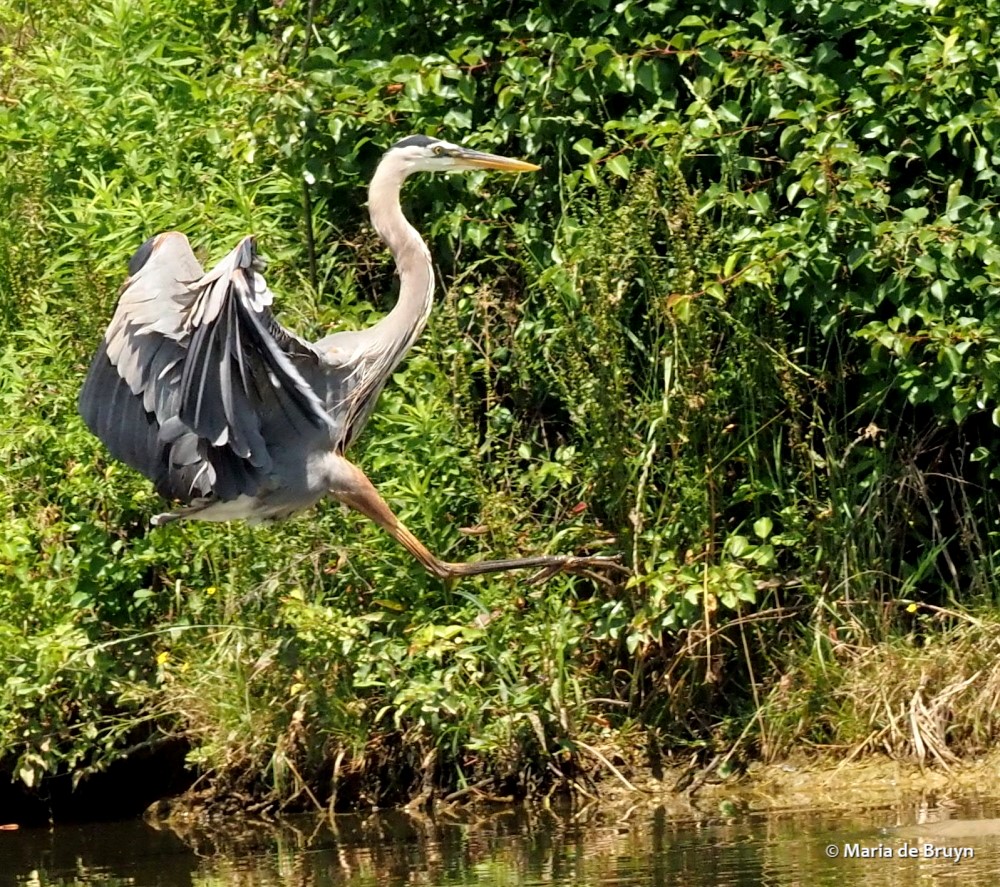
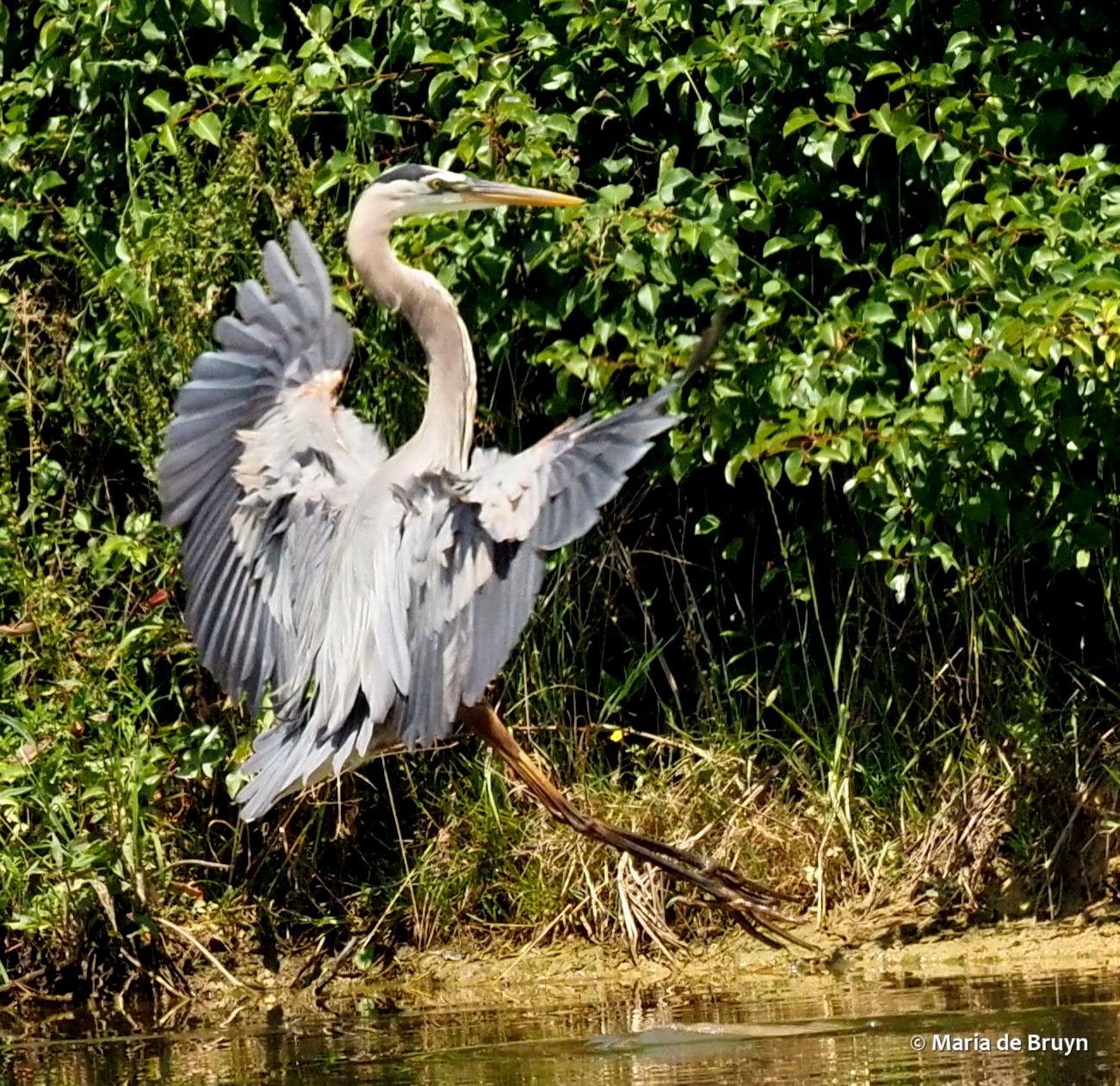
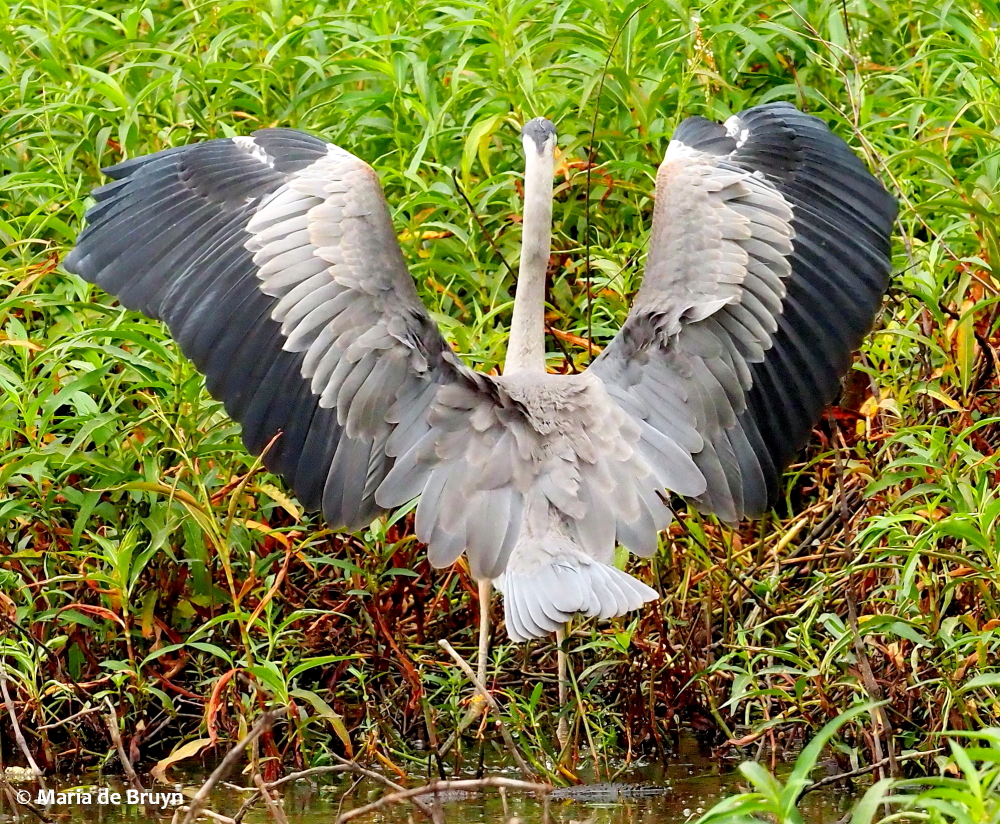
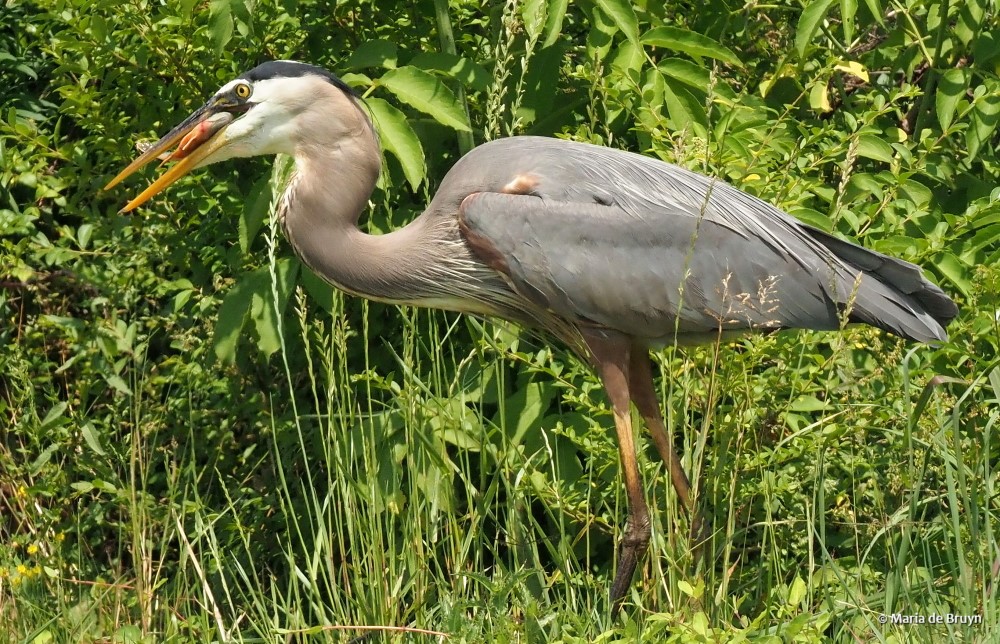
The largest birds that keep returning to the pond are the great blue herons. Sometimes there is one; other times there are two or three. Occasionally a green heron flies in or over but none stopped by on this occasion.

The heron often has good days fishing there. I often see him/her snag at least one fish and often more than one.

The heron stalks along the pond and frequently flies across to the other side for a change of venue. Perhaps the fish manage to hide well once they realize s/he is stalking them.

It’s wonderful to see the heron’s wings spread as the bird alights and then begins stalking again.

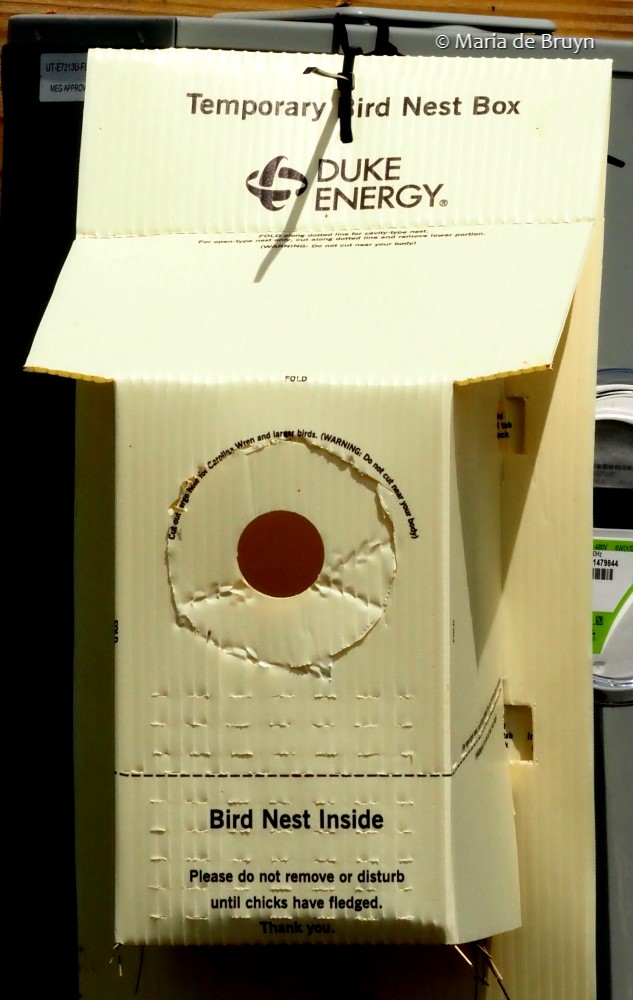
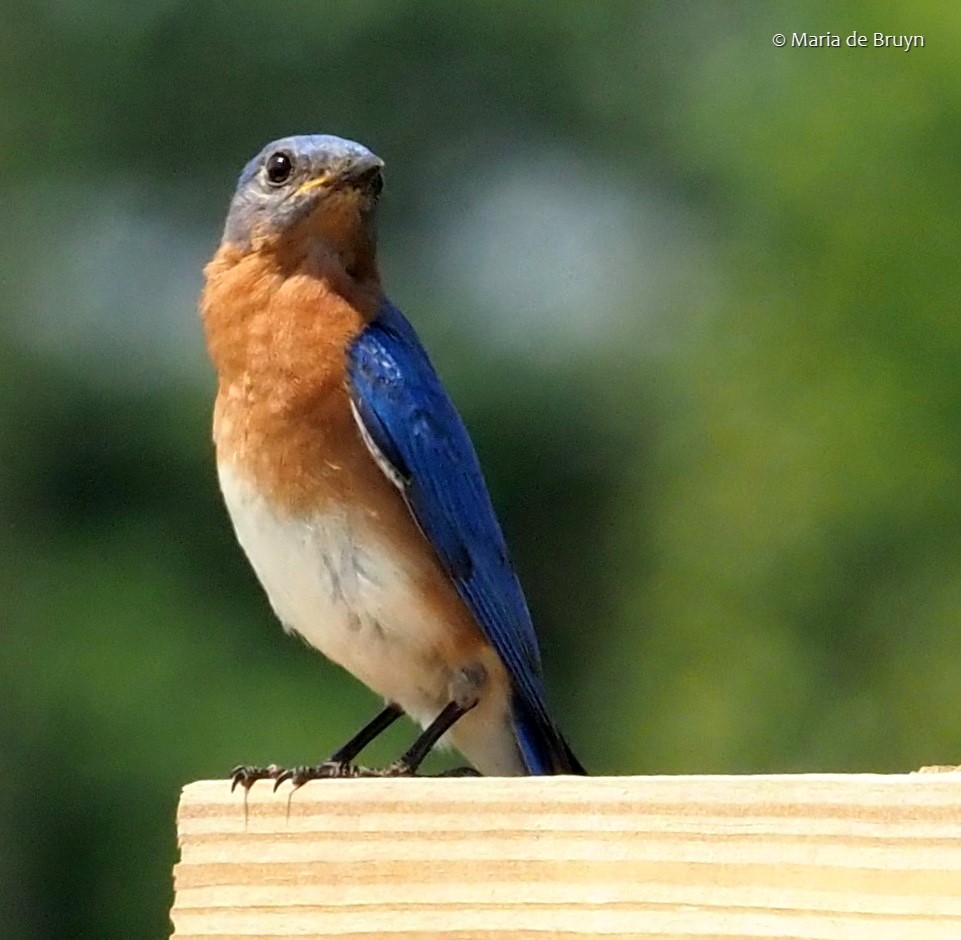
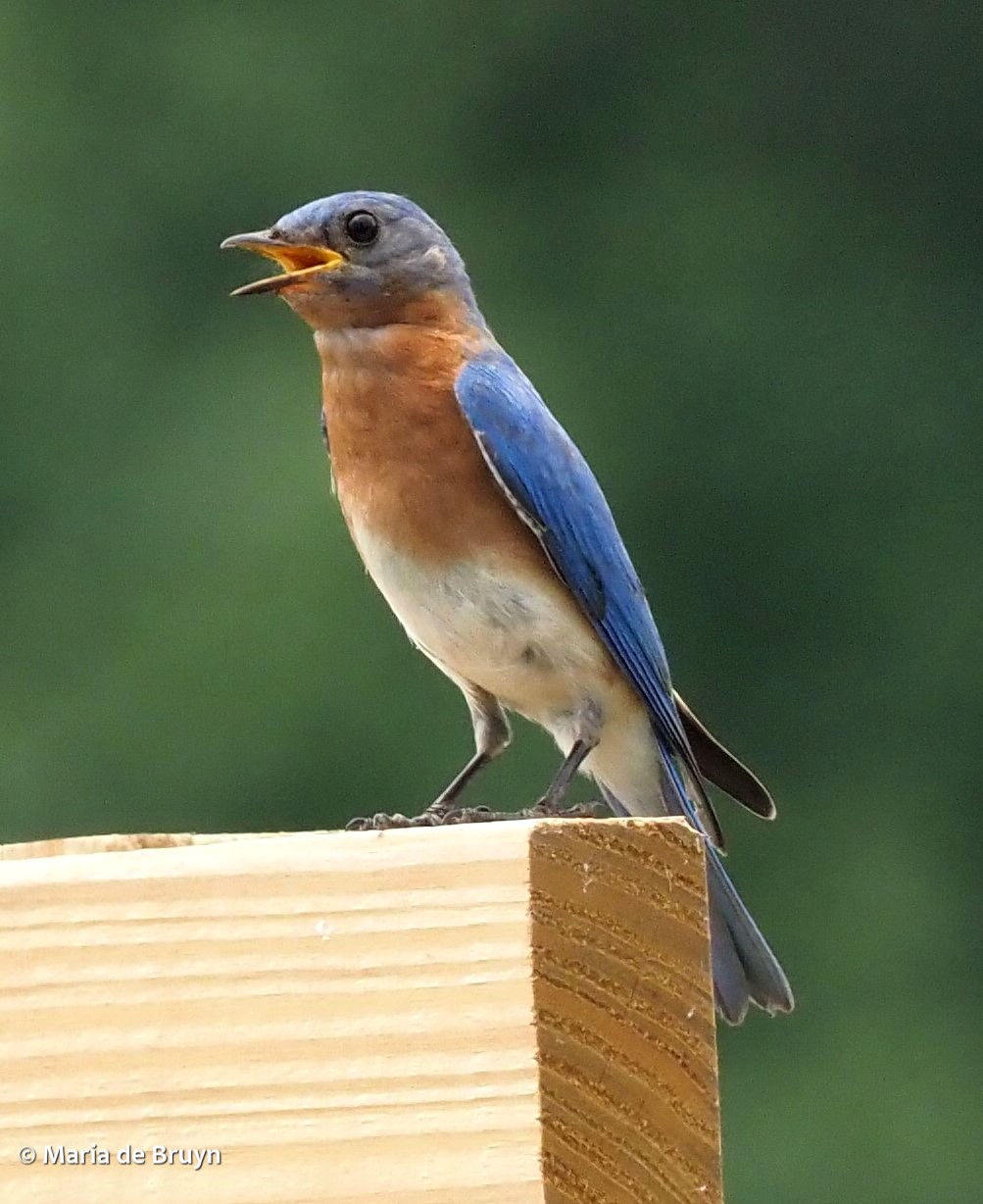
Eastern bluebirds had taken advantage of an electrical installation next to the pond (which also serves as a resource for the local fire department as needed). They not only used it as a perch for bug seeking but also built a nest inside it. I wondered what the new owner would do.


To my great surprise, his problem was solved by the local electricity company. They removed the birds’ original nest and put it into a temporary nest box!


Mom and Dad bluebird were guarding the nest space, but it looked like they were still getting used to the new digs.

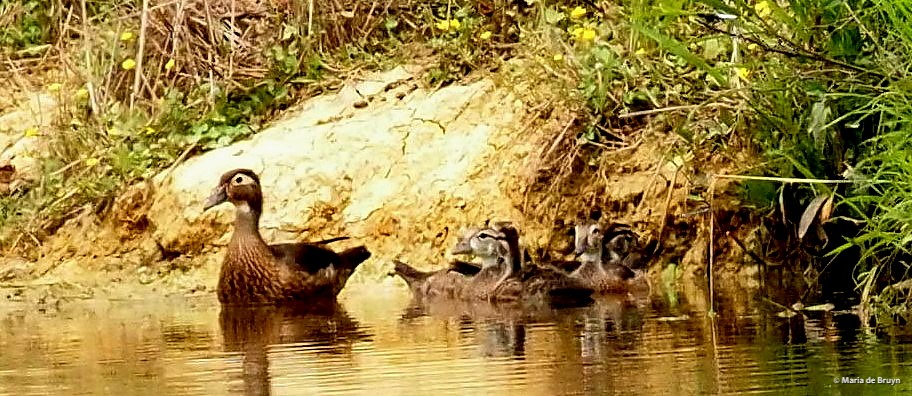
While watching the bluebirds, I suddenly heard a commotion in front of me, but I couldn’t see what was happening behind the bushes at the pond’s edge (I’m short!). However, I could tell that a bird was in distress. I wondered if one of the huge snapping turtles had caught a duckling. I walked further along and saw one of the two resident female wood ducks (above) swimming away from the area.

No ducklings followed and I feared the worst. One mother had five ducklings (above) while the one swimming away had lost one a few weeks before. Now I wondered if she had lost others, too. Luckily, I later saw her return to the area and shepherd four ducklings across the water to the other side.


In the small bit of meadow immediately adjacent to the pond, red-winged blackbirds are now nesting. One pair has a nest close to the road and they are warning visitors away with constant flights along the pond’s edge, while the male calls repeatedly.


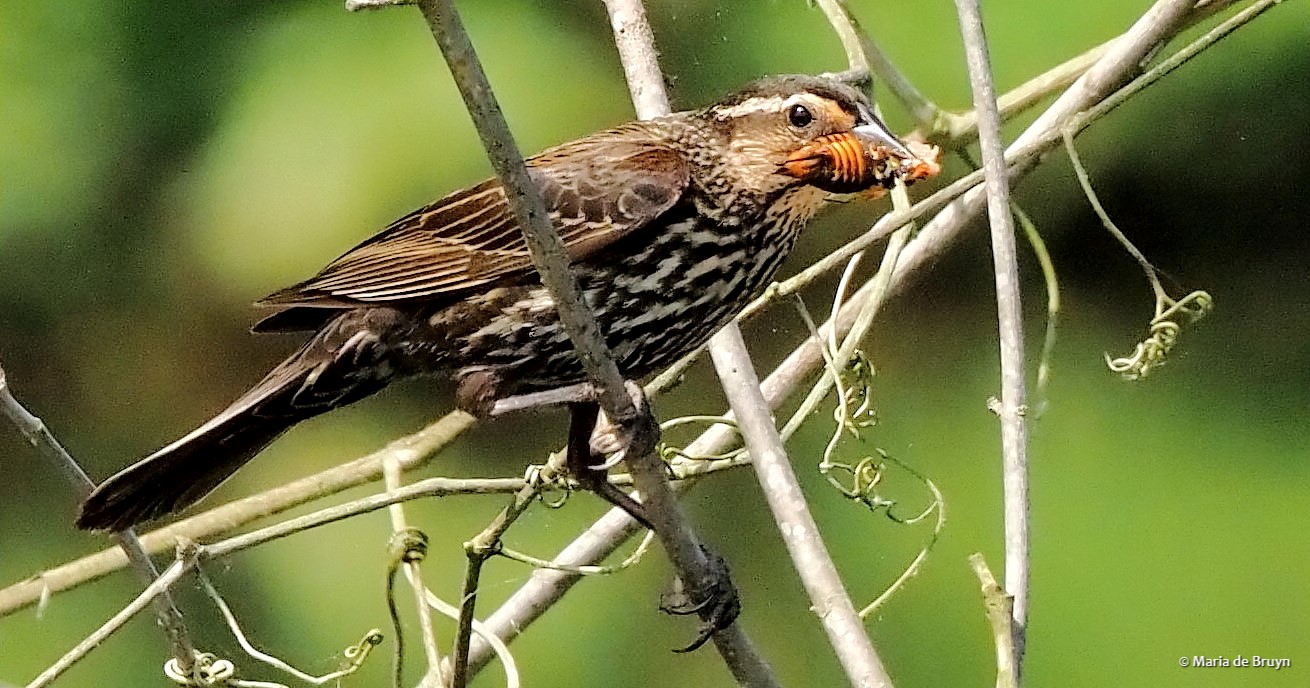
The female was taking breaks from warning-off flights to enjoy an occasional meal, at this time consisting of one of the remaining periodical cicadas that emerged recently.

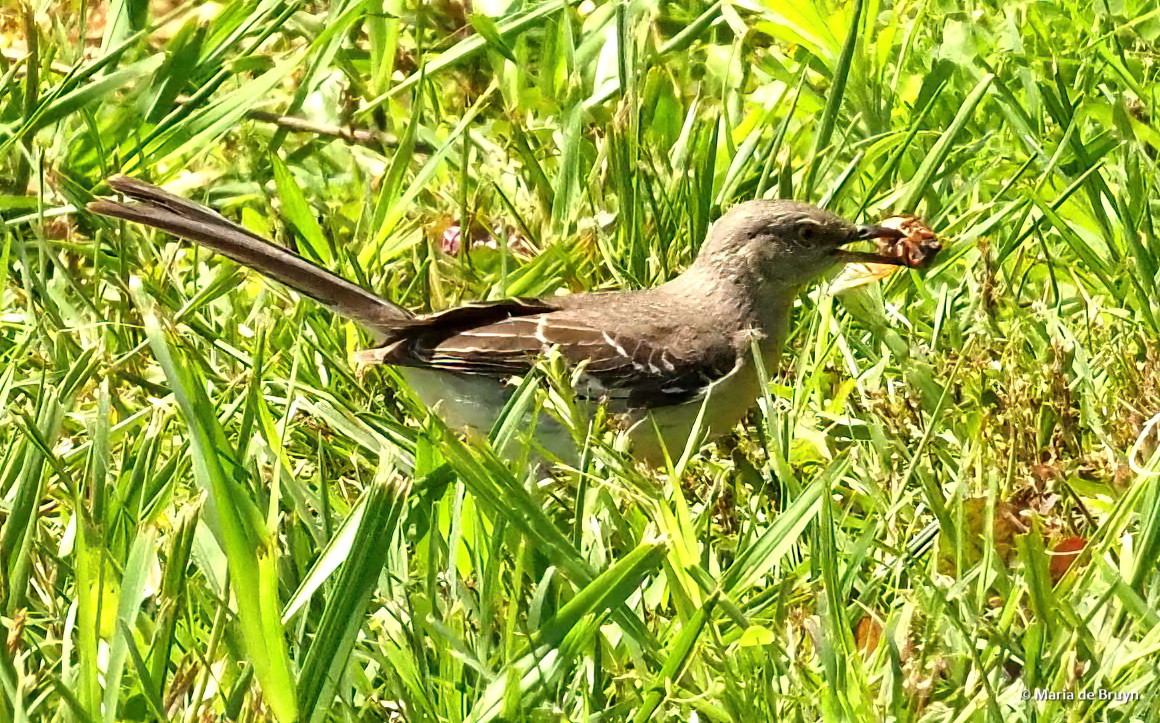
She wasn’t the only one seeking these insect delicacies. Two Northern mockingbirds were also intently examining the area under a tree for them. One finally had success in snagging a cicada. (For more about the cicadas, see my previous two blogs!)


The male red-winged blackbird was very busy keeping “intruders” as far as away as possible from their nest. He warned off the great blue heron, who was actually pretty far away. (He is flying away from the heron on the left side of the photo.)

He also went after a red-tailed hawk, who appeared soaring overhead.

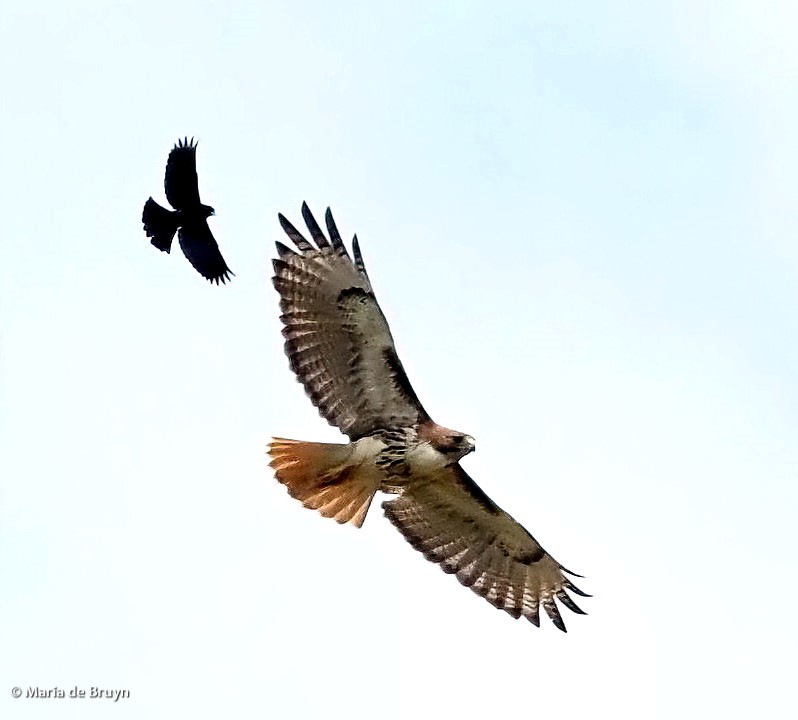
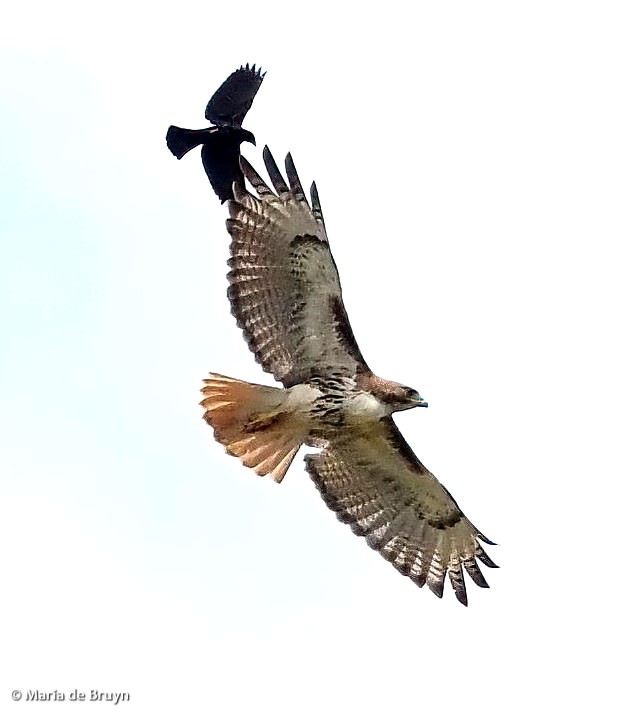
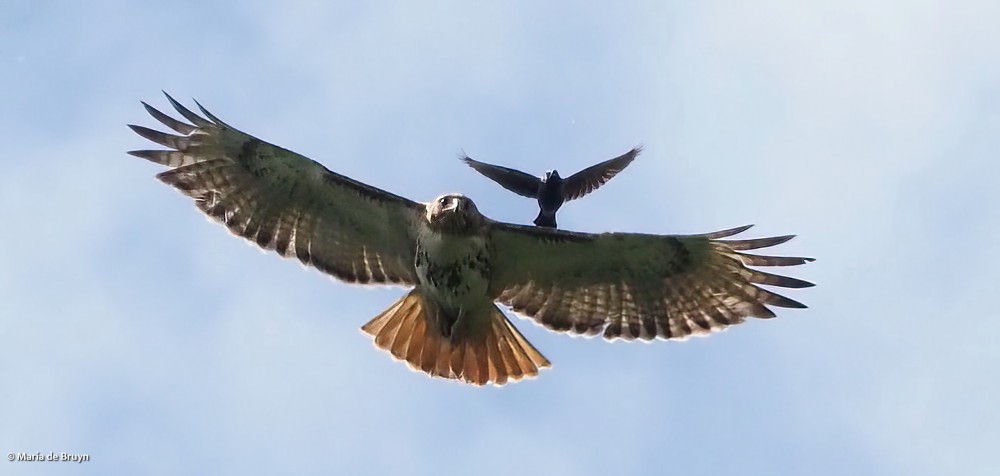
Common grackles, often present at this pond, will also chase away these hawks. There weren’t any around to join in the foray this time, but the photos below taken at another pond show how they go after the red-tails.

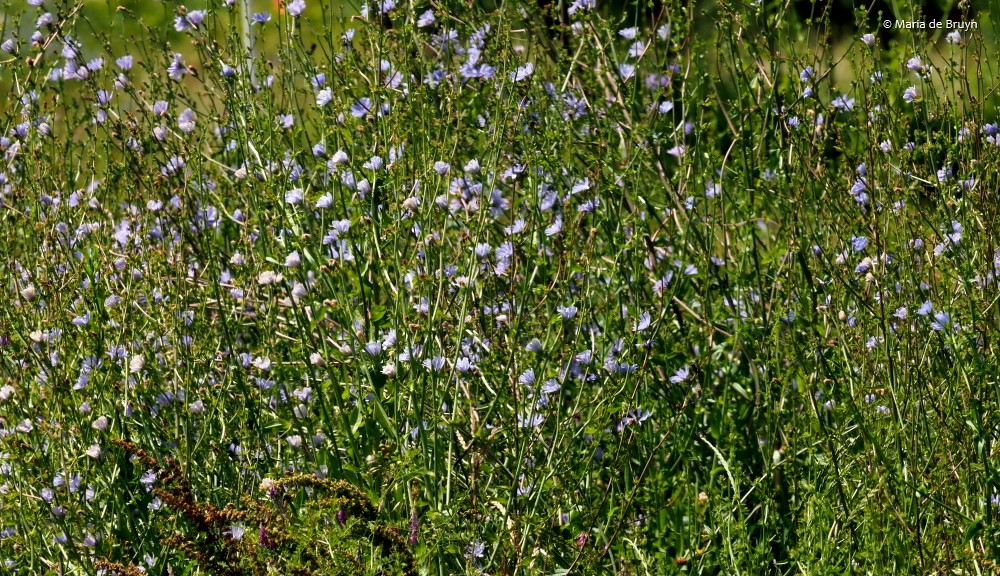
I looked at a small patch of chicory across the road to see if any bobolinks, grosbeaks or meadowlarks were around. I love this plant and planted some seeds in my own yard, hoping to attract more pollinators and birds. So far, they have not sprouted.


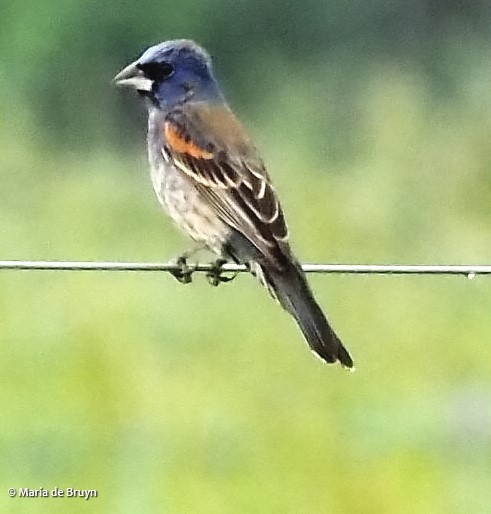
Below you see a young blue grosbeak and a pair of Eastern meadowlarks who were in the patchy field spots another time.


Usually, several types of swallows frequent the pond, including purple martins, tree swallows, barn swallows and Northern rough-winged swallows. I only saw a couple of the latter this day and only got poor flight photos as my camera began acting up, refusing to focus.

Staring hard across the pond, I did manage to spot three killdeer, four least sandpipers and a couple other sandpipers that I couldn’t immediately identify. I later learned that they were semipalmated sandpipers, which I hadn’t seen there yet. (If you click on the photo, you see it larger; then go back to the blog.)

That hour at the pond didn’t turn out to be a super one for capturing stellar photos, but it was definitely a great one for relaxing, observing the action and appreciating nature again!

Sometimes feared but with an endearing side – Sweet Tooth and Swayback

Today, I’d like to entertain you with a tale of two wild creatures that I’ve come to know a bit. I always enjoy learning about animals, even more so when I get to know something about their lives first-hand. Before getting to a description of Sweet Tooth and Swayback (two snapping turtles), I’ll share some interesting life facts about this reptilian species.

While box turtles often garner remarks of “how sweet,” “how cute,” and “let’s help it cross the road,” the appearance of a snapping turtle (Chelydra serpentina) can arouse fear and dislike. Many people don’t consider them “beautiful,” and they have a reputation for being dangerous because they can cause injuries.

That is such a shame because this species doesn’t always live up to its “combative disposition when out of the water with its powerful beak-like jaws, and highly mobile head and neck” (according to Wikipedia). It’s true that they don’t want to be picked up and will react very differently from the docile box turtle, who generally pulls in its head and legs and just waits for you to leave it alone.

Unlike the box turtle, the snapper cannot withdraw its head and limbs into its shell, so its main defense is to use powerful jaws to snap and bite when feeling threatened. The North Carolina Wildlife Resources Commission (NCWRC) notes that: “they are normally inoffensive underwater and pose little if any danger to swimmers or waders.”

Snapping turtles spend most of their time in the water and tend not to bask like other turtles. Instead, they swim near the surface and enjoy the sun’s rays from there.

They mate in the spring; this pair was engaged in a fairly sedate encounter at an urban park.

The NCWRC notes that it’s not uncommon for the pair to snap “savagely” at one another during mating (another instance of negative language to characterize them; they could have said “vigorously”!). This pair opened their jaws to one another but were not biting.

Females can conserve sperm for several seasons so that there is some on hand when needed. So this female may have wanted to use that as she pushed the male away.

This pair of turtles, whom I saw at an Orange County pond, did seem to be having a tussle, but they also might have been contesting territory or engaging in some other behavior.

The females come out of the water to lay their eggs (about 25); you may only see their tracks in the mud and never know where they buried the clutch. The eggs have a great chance of ending up as food for other animals, such as skunks, minks, raccoons, foxes, crows, and eastern kingsnakes.

Newborn and juvenile snappers often fall prey to large fish, mammals, birds (e.g., bitterns, hawks, owls), American bullfrogs, and alligators. This great blue heron (Ardea herodias) had a small turtle for a snack and spent quite a long time trying to crush it before swallowing it. (This was not a snapper but shows how the birds eat young turtles.)

Perhaps the high newborn mortality rate accounts for the fact that a female may lay a second clutch as well (laying 11-83 eggs in total in a breeding season). An interesting fact about the hatching snappers is that the little ones make a noise before they dig themselves out of the earth. To us, these sounds mimic clicks, creaks or what sounds like someone rubbing their finger over a fine-toothed comb.

The snapping turtles’ diet comprises quite a lot of vegetation, carrion and small animals. The latter are swallowed whole or bitten into pieces — young ducklings in a pond with snappers need to stay alert to avoid being caught. The snappers who survive to adulthood may reach a considerable age if they live in an undisturbed area, e.g., up to some 40 years.

And now we finally get back to Sweet Tooth and Swayback in particular. I’ve had the good fortune to become familiar with this pair at a local pond alongside a public road where I’ve photographed wildlife for many years. It has been designated as a “hot spot” for local and other birders on eBird. As my friend Lucretia has said: “birders and nature lovers have always enjoyed the beauty of the pond and surrounding meadows and fields and the wildlife that lives there. It is a special place.” Unfortunately, it’s now uncertain what will be happening to Sweet Tooth’s and Swayback’s longtime home.

I had seen these turtles swimming around in the pond frequently and admired their size. I’m guessing they might be a few decades old.

Last fall when a persimmon tree at the edge of the pond began dropping its ripe fruit, I was surprised to see one of the turtles up on the surrounding lawn on a rainy day— s/he saw me and quickly trundled off to the water’s edge.

On subsequent visits, I approached carefully and not too closely. By moving only a few steps to get in position for some photos and then standing still (although I did talk to the turtle, I admit), the animal decided to stay put. The temptation to eat some of the ripe persimmons was just too great and helped him/her overcome any fears.

I was very surprised as I had no idea that snapping turtles are fond of this fruit. On subsequent visits to the pond, however, I learned that it must be a real delicacy for them. This turtle seemed to recognize me after a few visits and didn’t hurry away. When Lucretia visited, Sweet Tooth (a name we decided to use for him/her) also stayed put.

Sweet Tooth is a bit of a messy eater, but then s/he doesn’t have teeth or any way to get the dripping persimmon flesh off her/his chin.

One day, I was surprised to see that Sweet Tooth had been joined by a companion, whom I called Swayback. I don’t know if this turtle had been injured at some point to cause the dent in its carapace.

Swayback didn’t seem quite as enamored with the persimmons as Sweet Tooth but did seem to enjoy eating some fruit from time to time.

Recently, the property on which the pond is located was sold. I’ve been told by people who pass by daily that the pond may be dredged and deepened so that it can be used for irrigation. Much of the surrounding vegetation, which made it a delightful spot with many hiding and perching places for migrating and resident birds was bulldozed.

I and others are worried about what could happen to the pond’s inhabitants. We hope that Sweet Tooth, Swayback and any other wildlife who call the pond home can be rescued, rehabbed if necessary, and eventually returned to their longtime home. Keep your fingers crossed along with me that we might enjoy seeing this pair of snappers relishing persimmon treats in the future!

One last note: if you want to rescue a snapper from a busy road, only pick it up at the back of its carapace above the hind legs. If you have your hands any further forward, the turtle can use its long and flexible neck to reach you for a bite. You can also move it with a square shovel (be prepared for a heavy load) or by having it on a tarp or blanket to carry it along.

Craving crawdads in Carolina – a buffet for night herons

Many people in the USA, especially but not only in the South, grow up knowing what crawdads (Cambarus bartoni) are. This was not the case for me. My immigrant family pretty much stuck to the dietary customs of their own and their friends’ home countries (The Netherlands, Belgium, Germany). Like pumpkin pie, sweet potatoes and okra, crawdads were not on those menus and so it was only recently that I actually learned that these crustaceans are the same thing as crayfish, of which I had heard as a child.

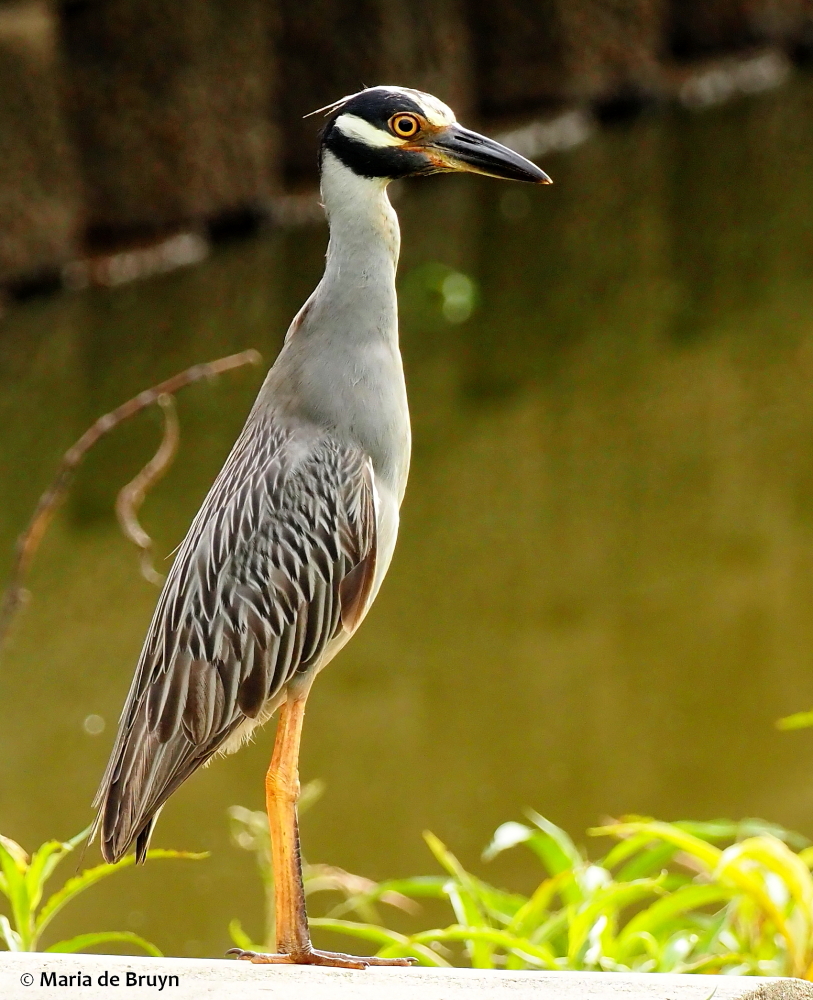
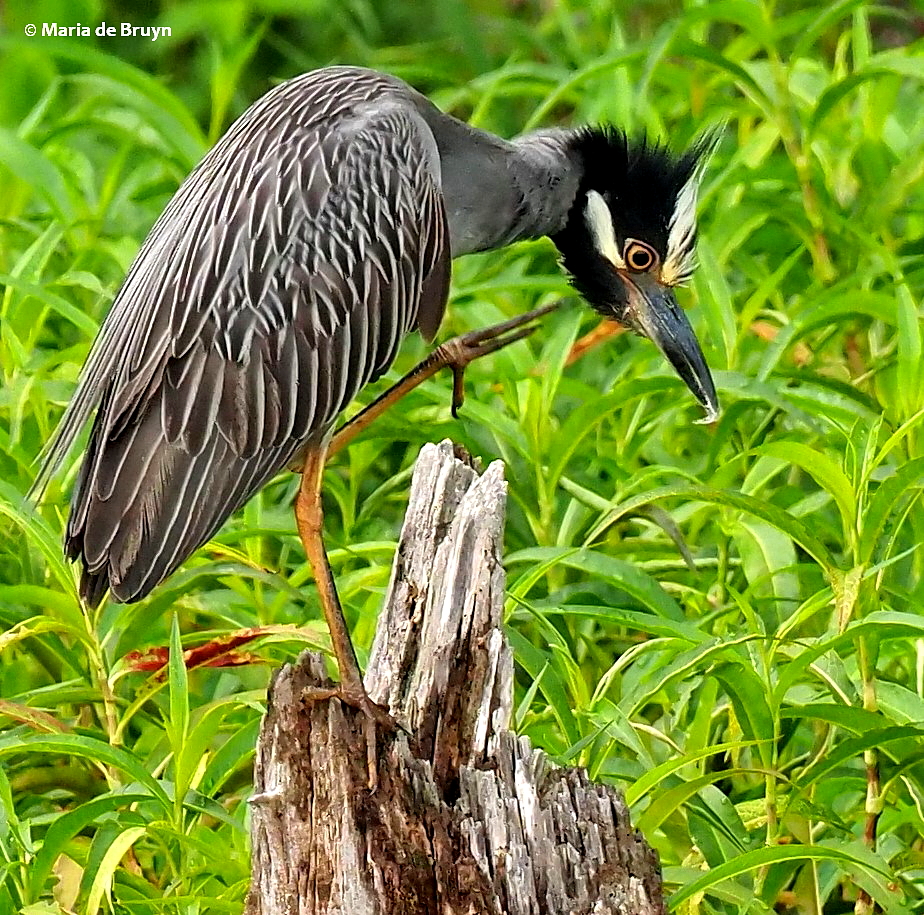
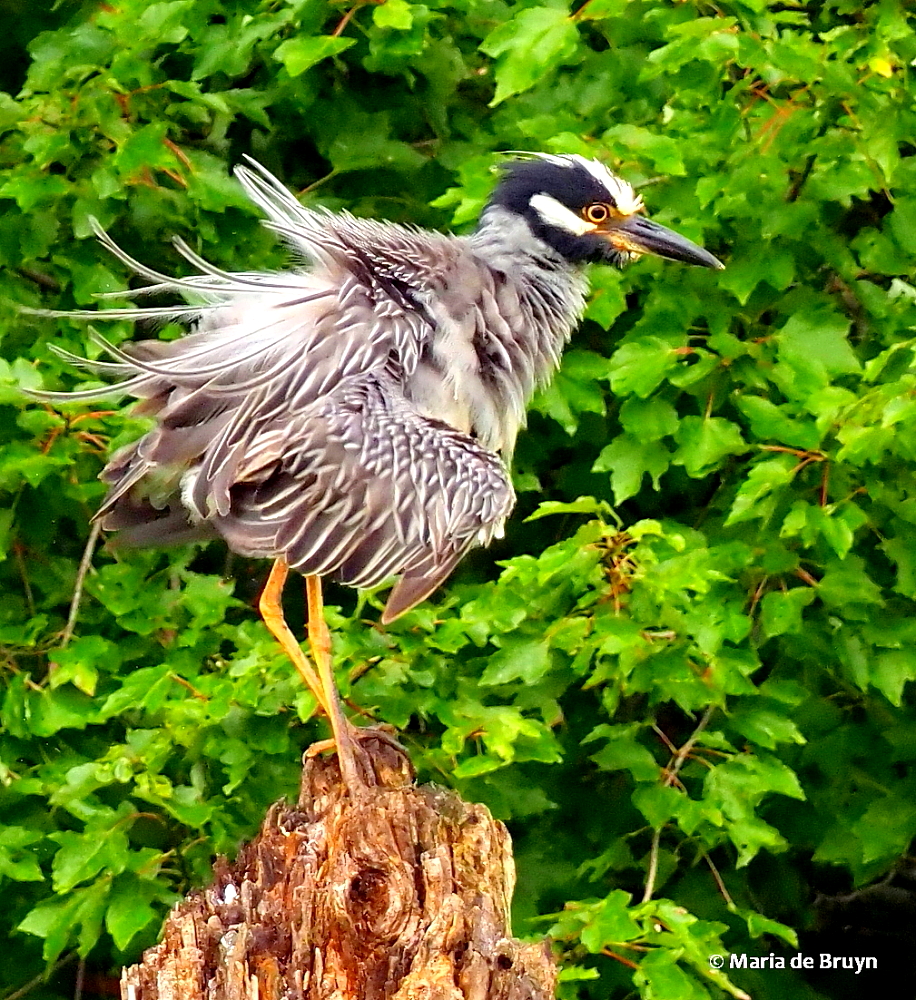
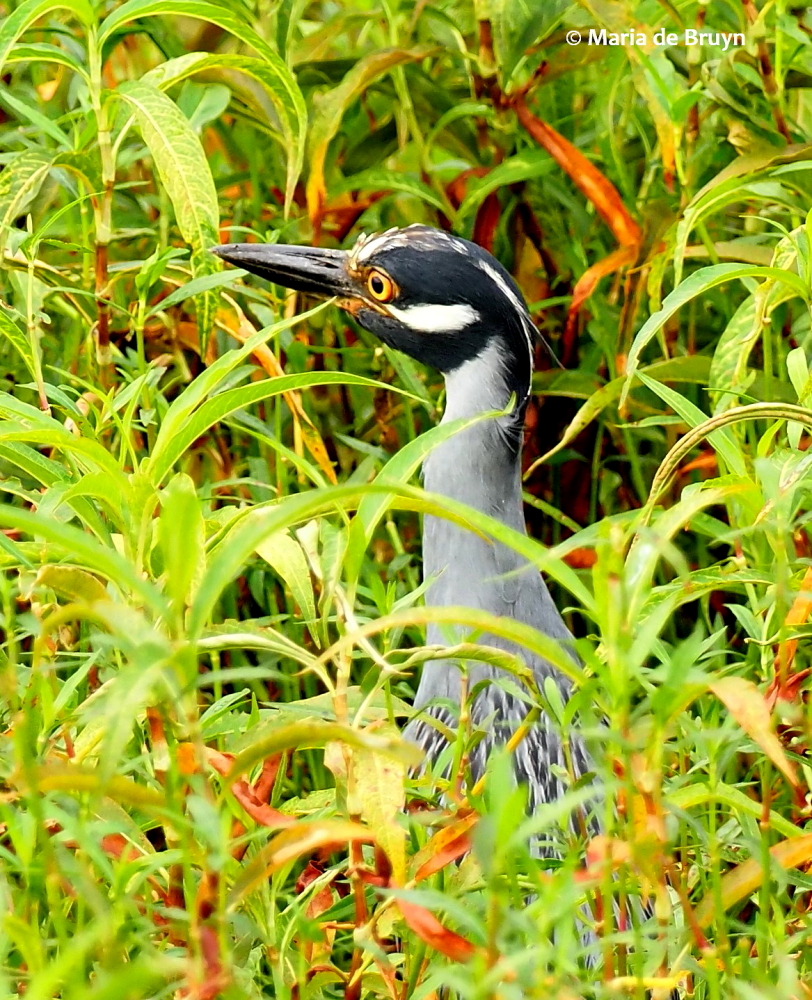
This year was my time to learn more about these members of the arthropod family who are related to lobsters – it turned out they were thriving in a pond created through a man-made wetlands installed between a shopping mall and several apartment complexes. I learned about their presence when local birders alerted one another that the crawdads were attracting a family of yellow-crowned night herons (Nyctanassa violacea).

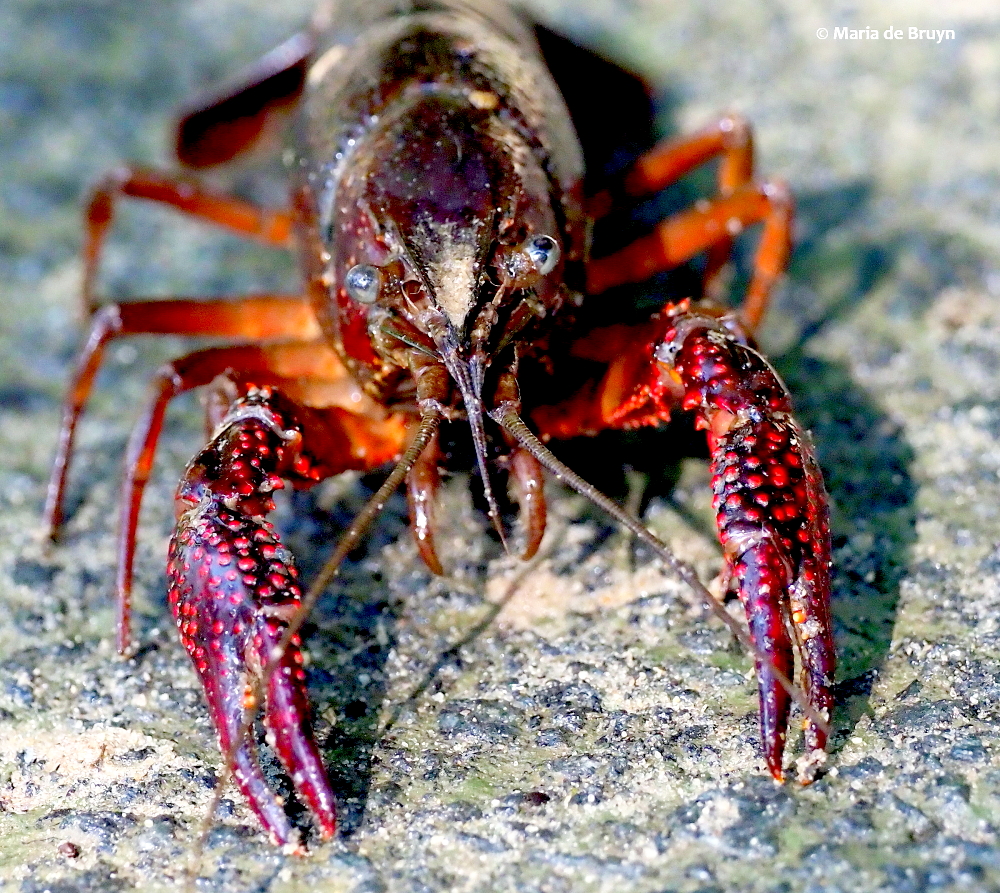
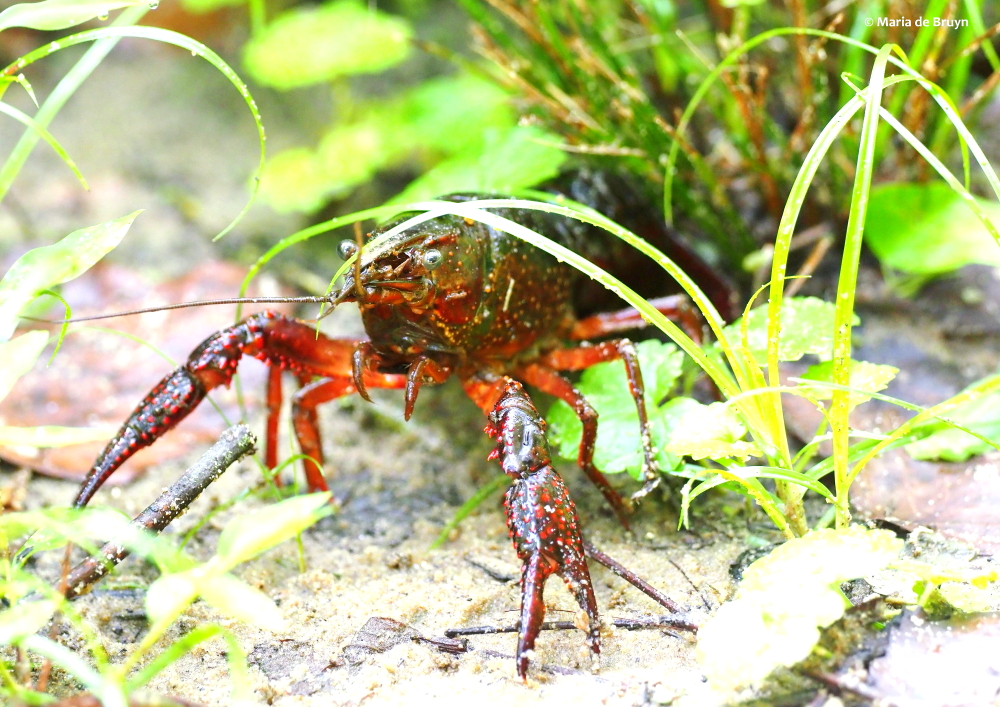
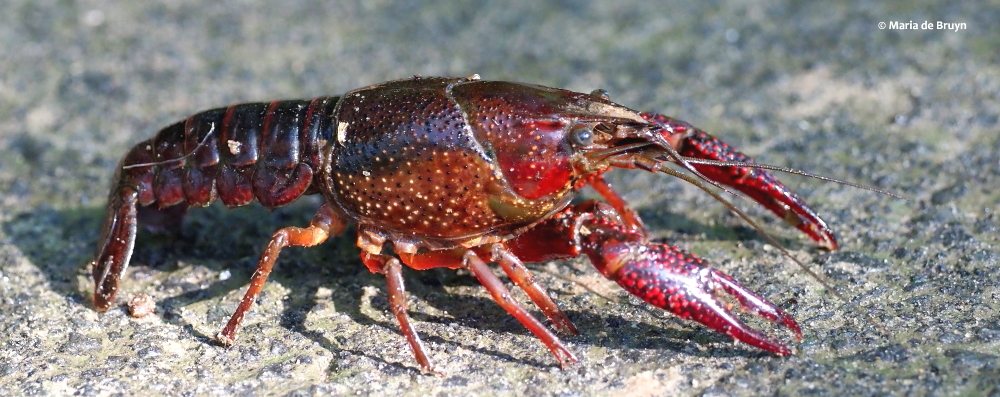
Hoping to spot the herons, I also visited the wetlands and first noted the crayfish remains scattered around near the pond. Shortly thereafter, I came across one crossing a path in another local nature park (photos above and below). It was interesting to see how the crawdad first stayed stock still as I neared and then stood tall on its legs as its tail propelled it backwards while it made a dash for the nearby pond.

The crawdad females lay hundreds of eggs; scientists do not yet know how long they incubate before birth but estimate it takes somewhat longer than a month before they hatch. In North Carolina, there are almost 50 species of these animals and several species are found only in this state.

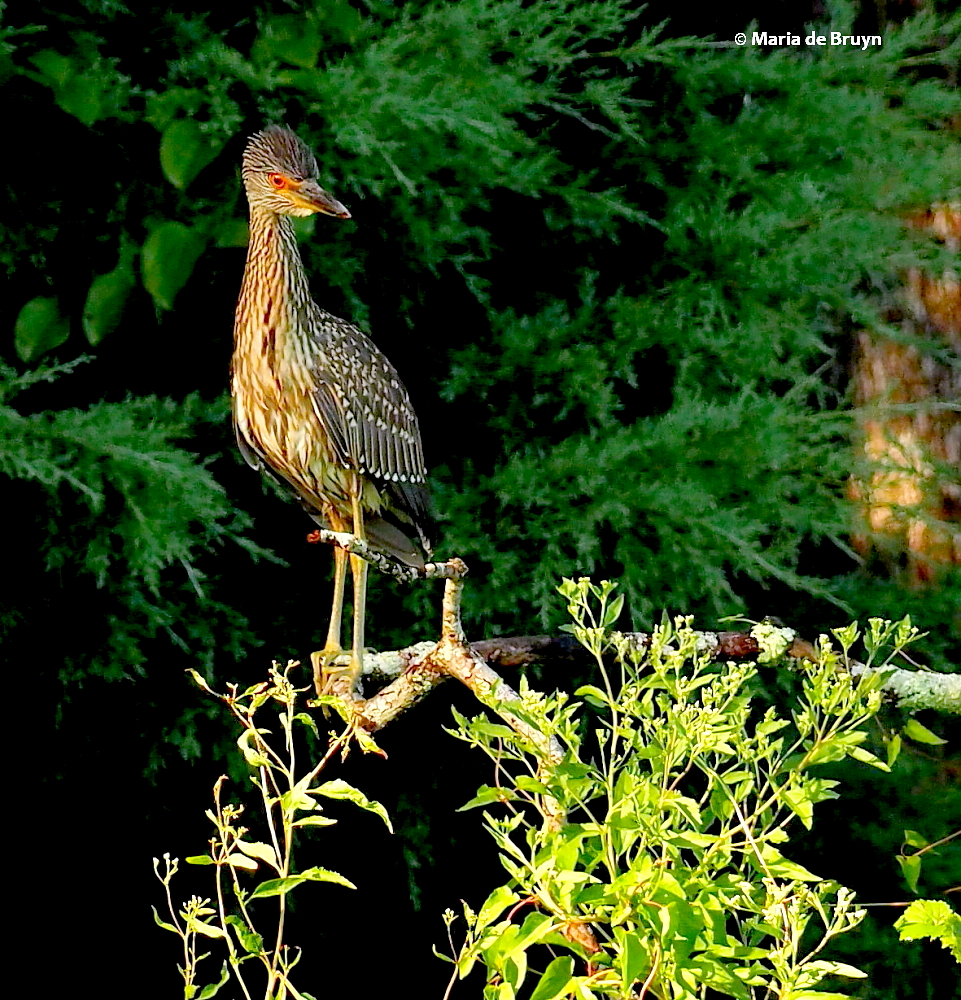
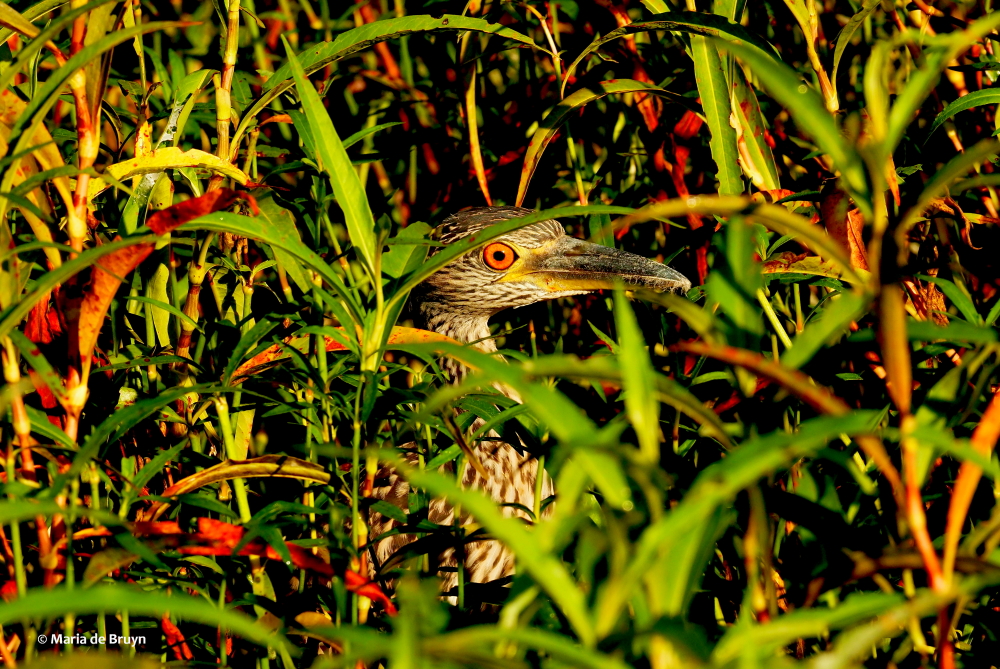
The crayfish at the wetlands must have had a successful year because the place became a real buffet for various birds. Both adult and young night herons stayed near this pond for quite a long time before leaving to migrate to more southerly climes for the winter.

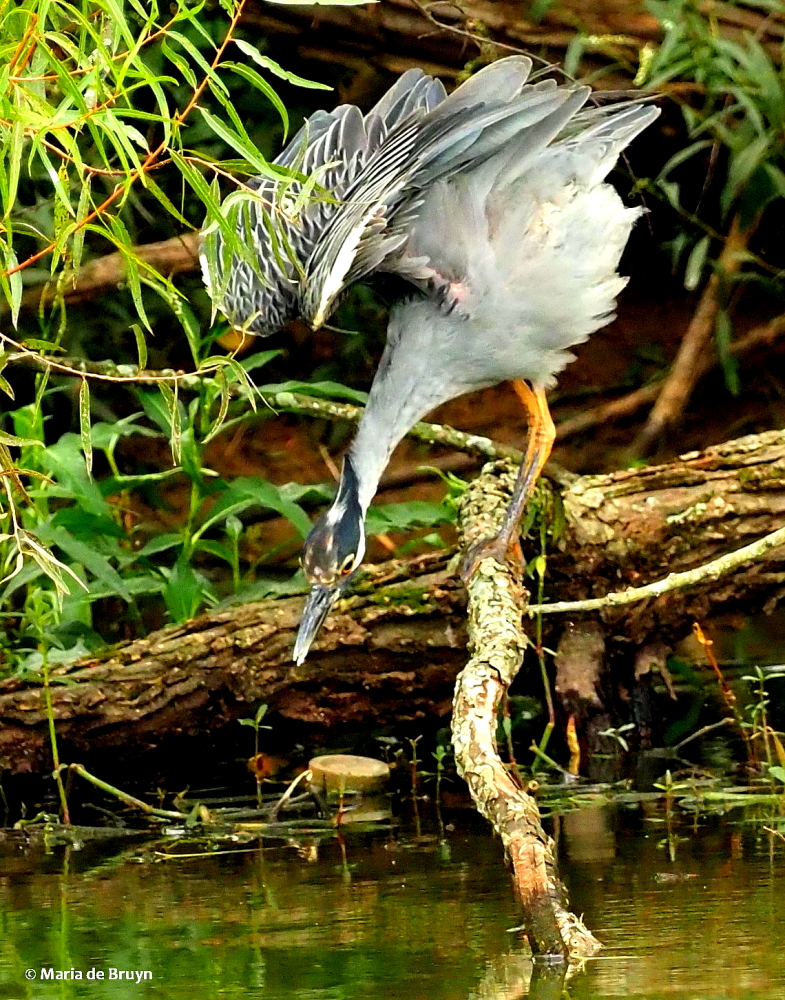
The adult herons were attractive with their boldly patterned heads.


They kept up their looks through regular preening.


Sometimes, they emerged from the pond weeds to perch on a snag while peering into the water on the lookout for a meal.


It was interesting to learn that while the adults have yellow legs most of the year, their legs can turn red or pink during breeding season.


In my experience, the younger herons were a bit less shy and didn’t fly off so quickly when I neared.


One in particular decided to take the sun in mid-August, adopting a pose that I more often see taken by great blue herons and which I’ve nicknamed the “flasher stance.”


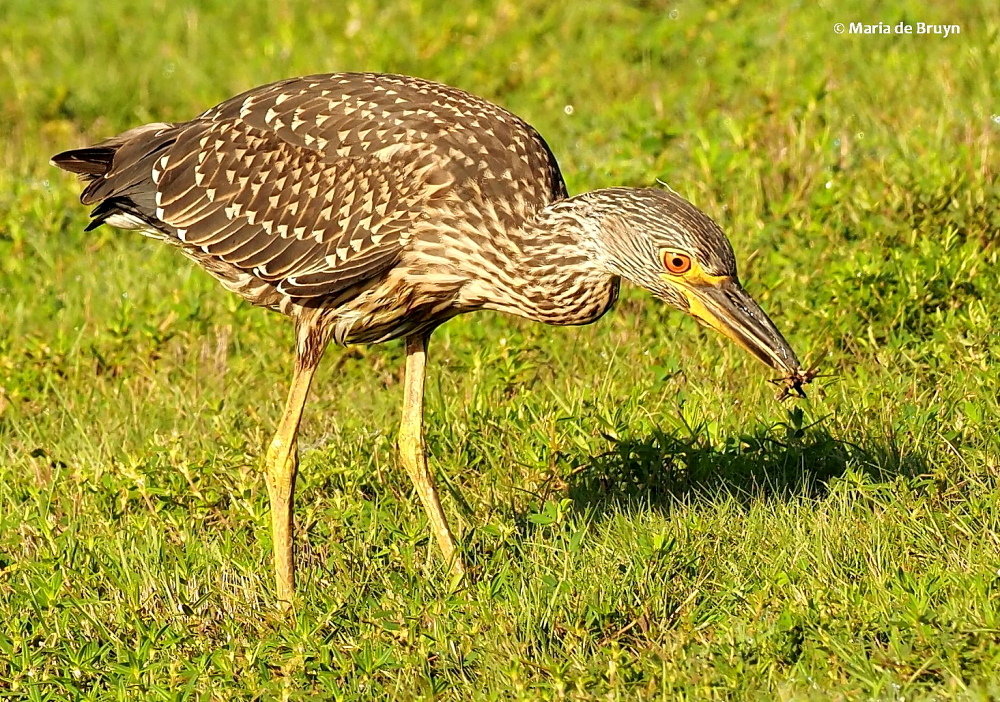
The young birds, like their parents, stalked the pond vegetation on the lookout for crawdad snacks.

They also showed the herons’ taste for other food such as snails, earthworms and insects.


The night herons, for which most birders visited the wetlands, weren’t the only birds at the buffet, however. Red-shouldered hawks (Buteo lineatus) also showed a fondness for the crustaceans.


The herons weren’t always alert to their presence. One adult, for example, decide to fly to a low perch when chased away from a tall snag by a hawk. S/he settled in for a bit of preening but was then rudely chased off by the same hawk. (That hawk was later harassed by a group of crows, who chased it away in turn.)

Other herons who were interested in outdoor crayfish dining during the humans’ Covid epidemic, included the great blue herons (Ardea herodias).


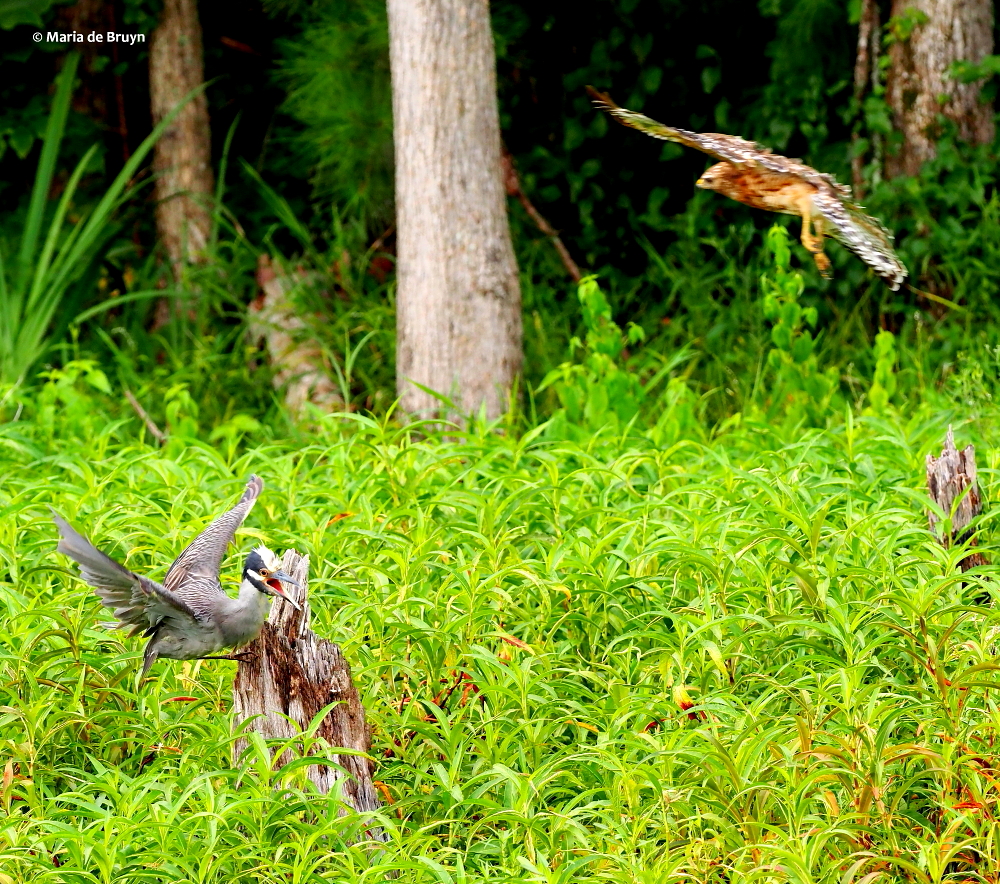
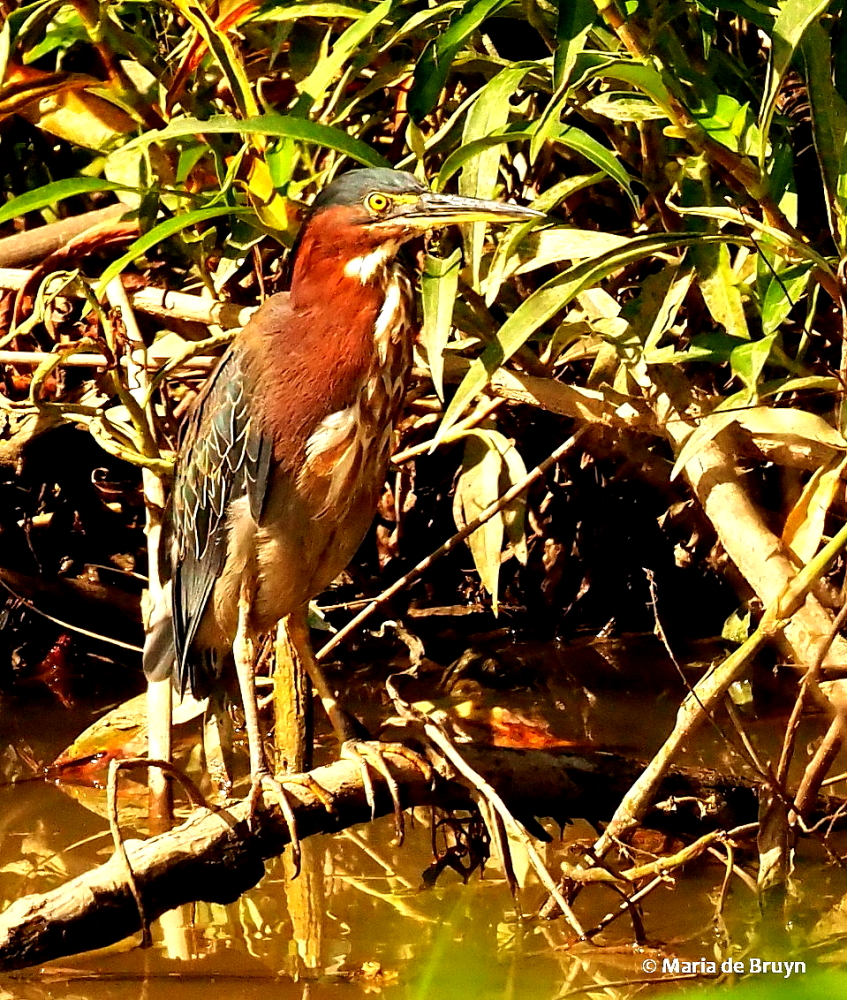
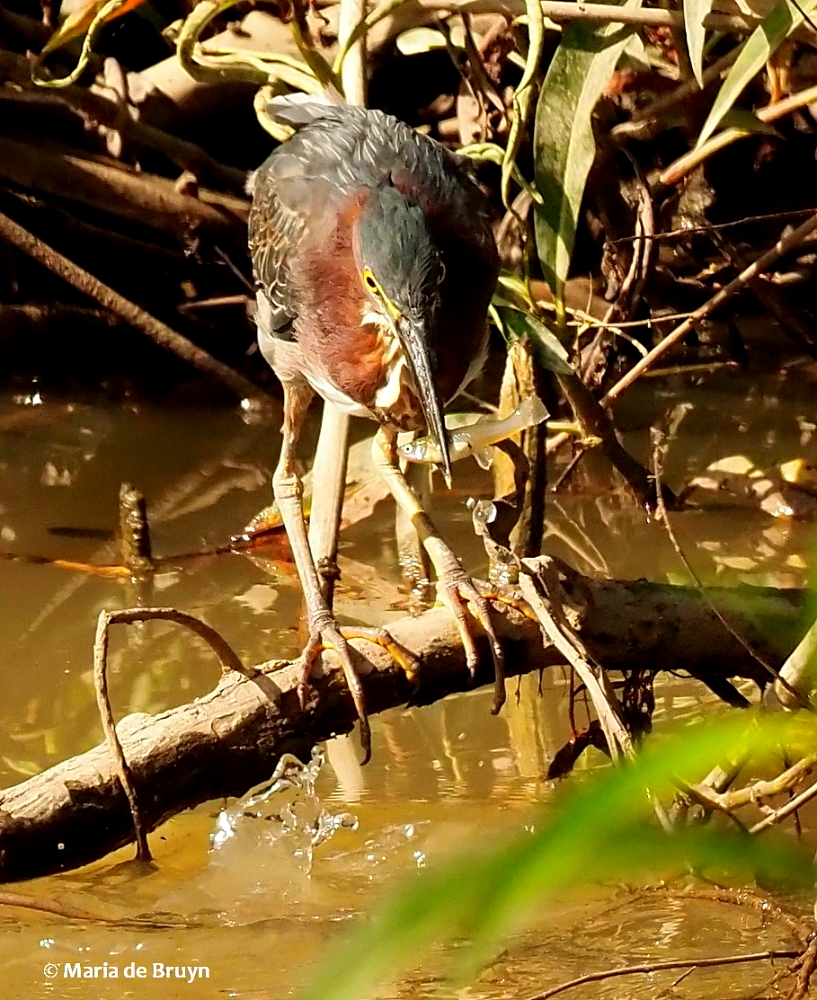
Green herons (Butorides virescens) visited the pond regularly as well, eating small fish in addition to the other wetland delicacies.


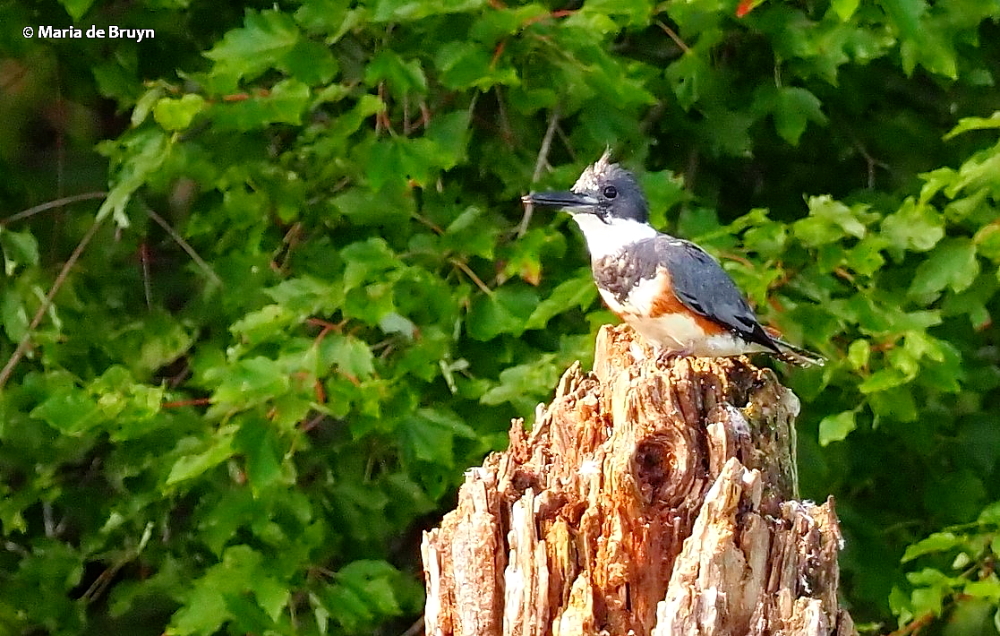
Belted kingfishers (Megaceryle alcyon) were busy flying to and fro over the length of the pond, but I didn’t see them carry off any crayfish so they must have been focused on fish.


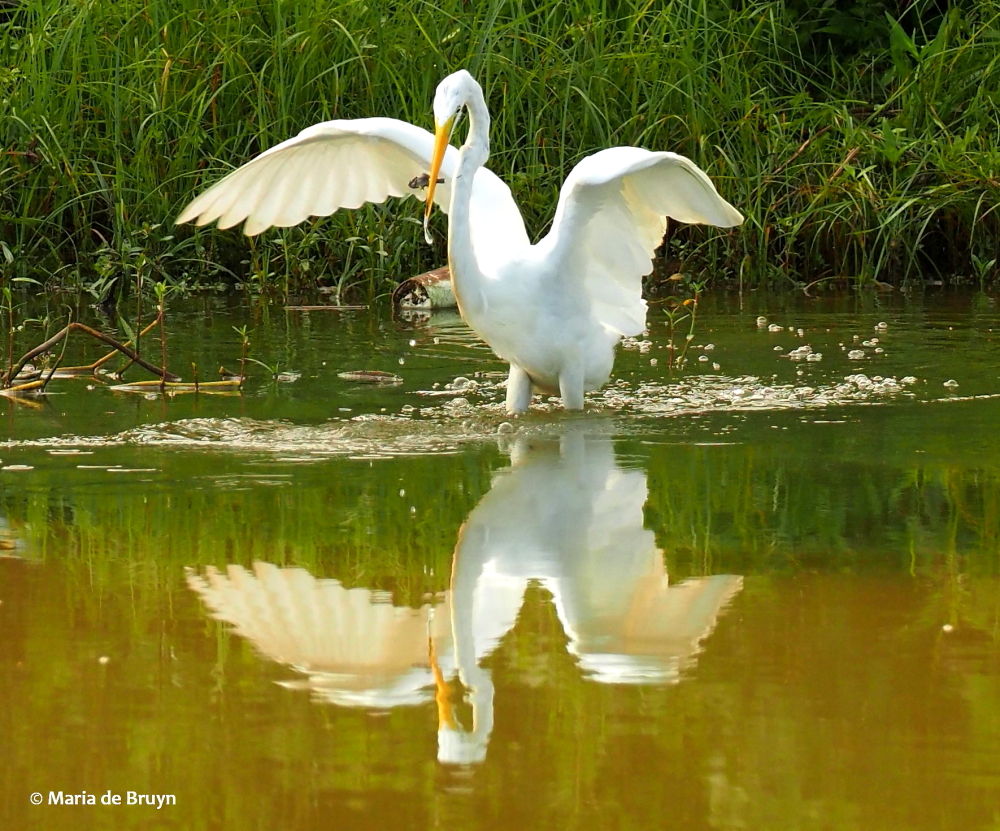
A great egret (Ardea alba) was a regular visitor, too, stalking different areas of the pond.

The adult night herons obviously thought it was interesting to watch the egret’s foraging technique.

Other regular visitors to the wetlands included a flock of Canada geese, American and fish crows, Northern mockingbirds and wandering glider dragonflies (Pantala flavescens).


There were so many animals feeding on the crawdads this summer that the female crayfish must have had a lot of success with their offspring reaching maturity. The last reported sighting of the yellow-crowned night herons at the wetland was 24 October, but I’m guessing that they will be leaving soon and the pond will not be so busy this autumn. The crayfish population had to have been reduced mightily over the summer season, so it will be interesting to see whether it rebounds and attracts crowds of birds — and birders — next year!