As I continue to go through my photos from Yellowstone National Park (a lengthy process!), I will post on a few other topics that you will hopefully enjoy. 😊

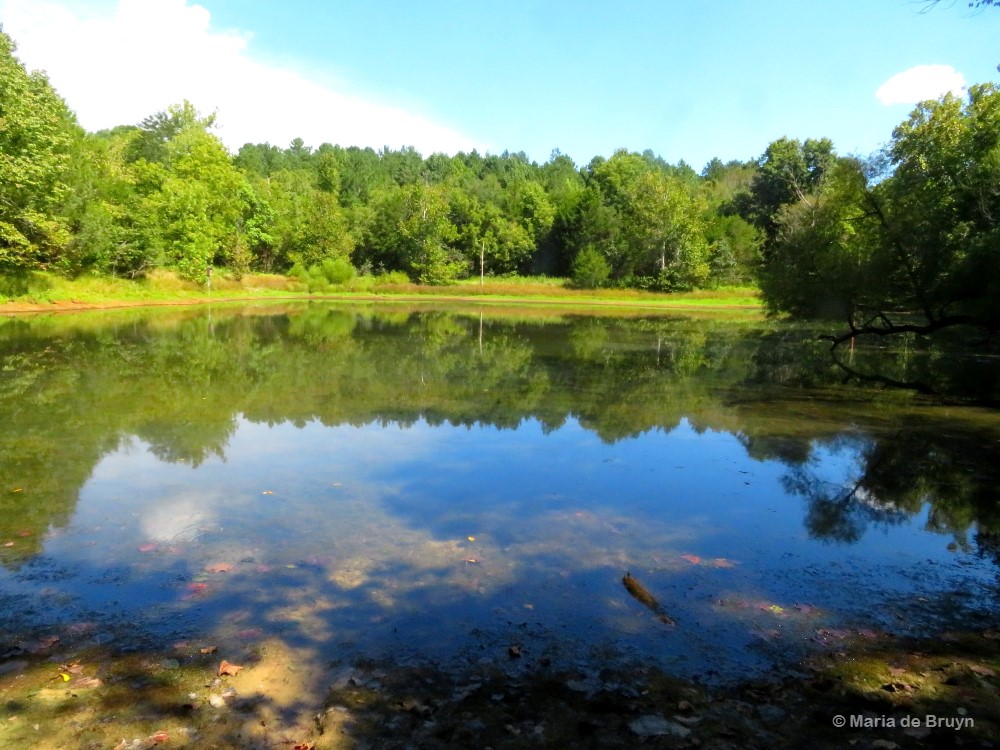
I just wrote a column for a local newspaper about climate and water. All life on our earth needs water to exist — plants, animals, and humans. Water contributes to respiration, processing nutrition, photosynthesis, regulating temperature and providing a living environment for many organisms. Scientific studies are documenting the benefits for our well-being of spending time in natural areas and beautiful places for this include nature reserves and parks with ponds, wetlands, lakeshores, creeks, and rivers.
 The diversity of wildlife around ponds can be delightful, especially in the summertime. You may be lucky to see mammals coming to the shoreline or pond’s edge to get a drink or have the good luck to catch sight of beavers, muskrats, minks, or otters.
 Or perhaps there will be a yellow-crowned night heron (Nyctanassa violacea) standing atop a beaver lodge, surveying its surroundings, and taking time to preen.


Reptiles and amphibians clamber onto rocks, snags, branches, and boardwalks to sun. Turtles lay their eggs close to ponds and rivers. At this the time of year, you may come across the remains of leathery eggshells left by hatched turtles (or dug up by predators).


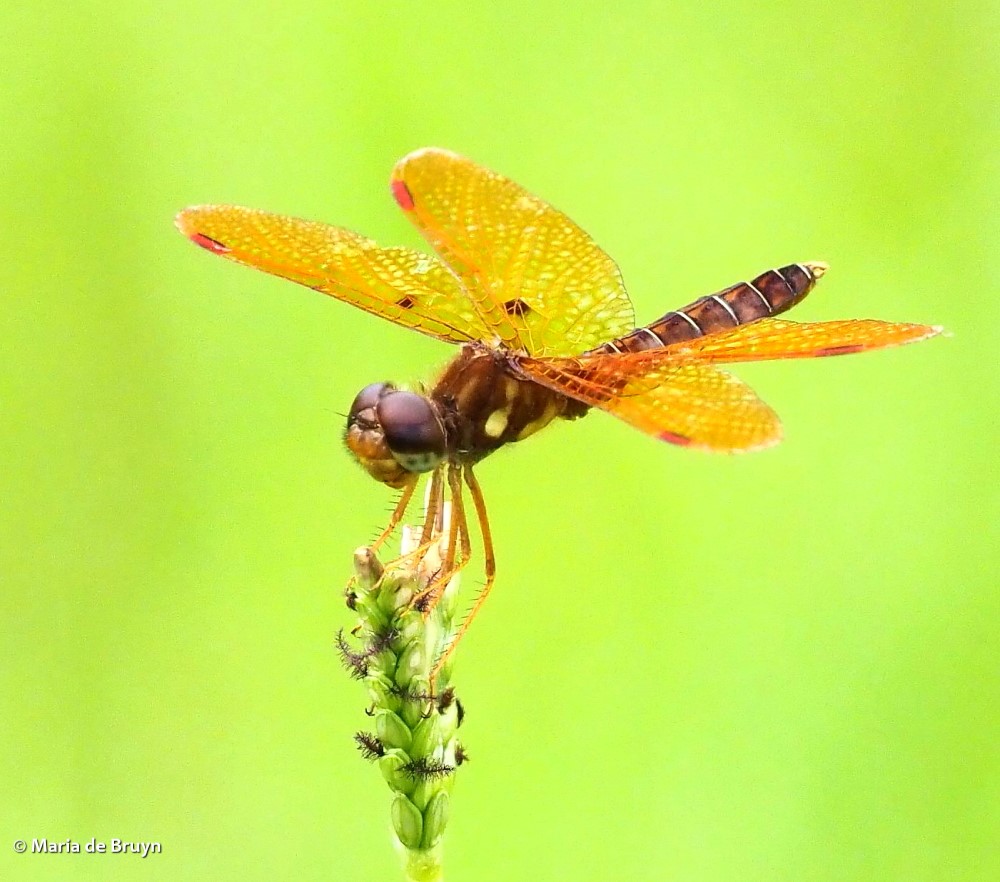 Damsel- and dragonflies, like these amber-winged dragonflies (Perithemis tenera), are interesting to watch; they don’t even need natural water sources but will come to tubs of water containing plants like pickerelweed. Butterflies, such as these cabbage whites (Pieris rapae), “puddle” in mud, carrion and dung alongside creek and pond banks to obtain amino acids and salts in the fluids they suck up.


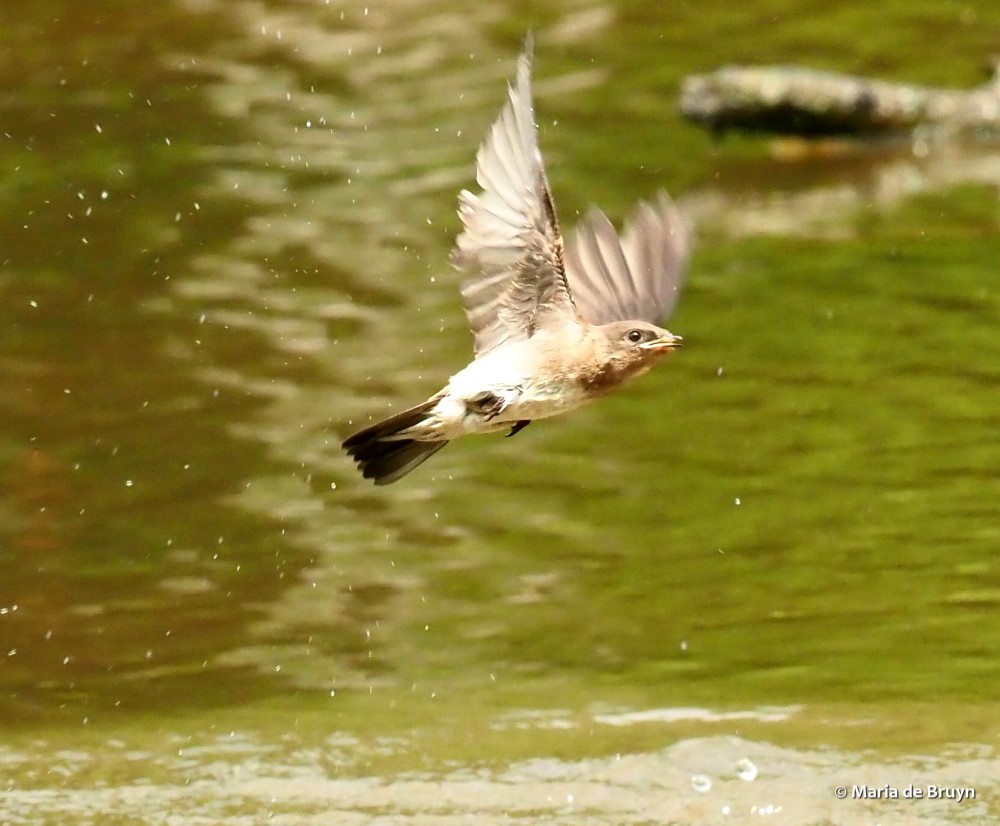
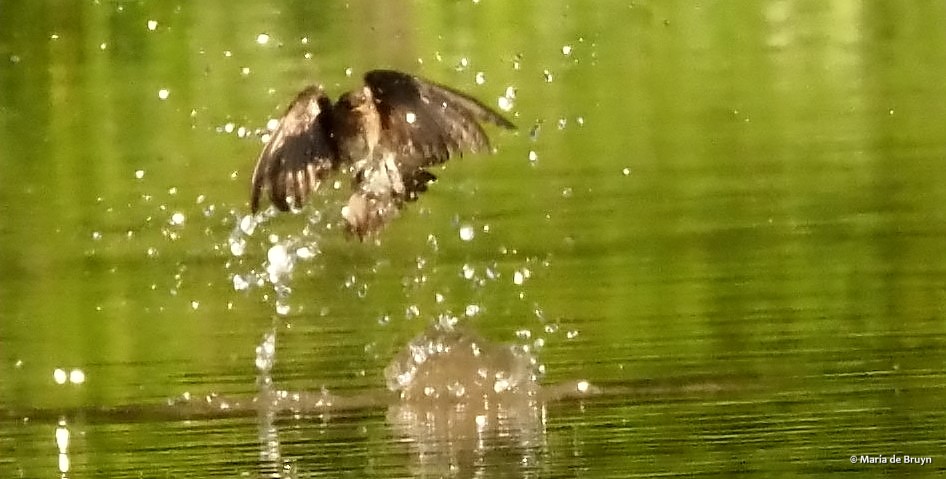
The bugs do risk ending up as bird food. Northern rough-winged swallows (Stelgidopteryx serripennis) and purple martins (Progne subis) skim above and over the water, snapping up insects as they swoop and soar.
 The tiny insects on vegetation near water can be remarkably interesting, so taking along a magnifier can increase what you see. Most leaf- and planthoppers are quite small but the glassy-winged sharpshooters (Homalodisca vitripennis) are about fingernail-sized. They consume the fluids in water-carrying tubes in plants, called xylem, and then need to expel excess water from their bodies by shooting out fluid droplets into the air.


 The vegetation near water can also be fascinating. Indian pipes, also known as ghost plants (Monotropa uniflora), are saprophytes (not fungi) with no chlorophyll. These white, leafless plants obtain their nutrients by tapping into other plants’ resources through mycorrhizal fungi. They usually grow in clusters but can still be difficult to see. My friend Ace spotted one and introduced me to the species, for which I was quite grateful!
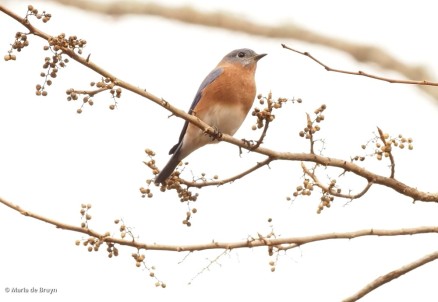
Many birds nest near water. Eastern bluebirds (Sialia sialis) and brown-headed nuthatches (Sitta pusilla) will raise young in boxes we put out for them, but they and other birds also like to use holes in snags near or in water. Those nests are much more difficult for predators to reach.


Birds also like to nest near water because they’re primarily insectivores in the spring and summer and there are plenty of bugs in such areas. The only hummingbird nests that I’ve been able to find were all near water; up to 60-80% of their diet comprises spiders and other bugs.

This year, I had the good fortune to see a female ruby-throated hummingbird building her nest and raising her young (previous blog). The first time I visited this wetland after the babies fledged, mama hummer came and hovered about 2 feet in front of me, as if she were greeting me. I’ve seen her on subsequent days as well.
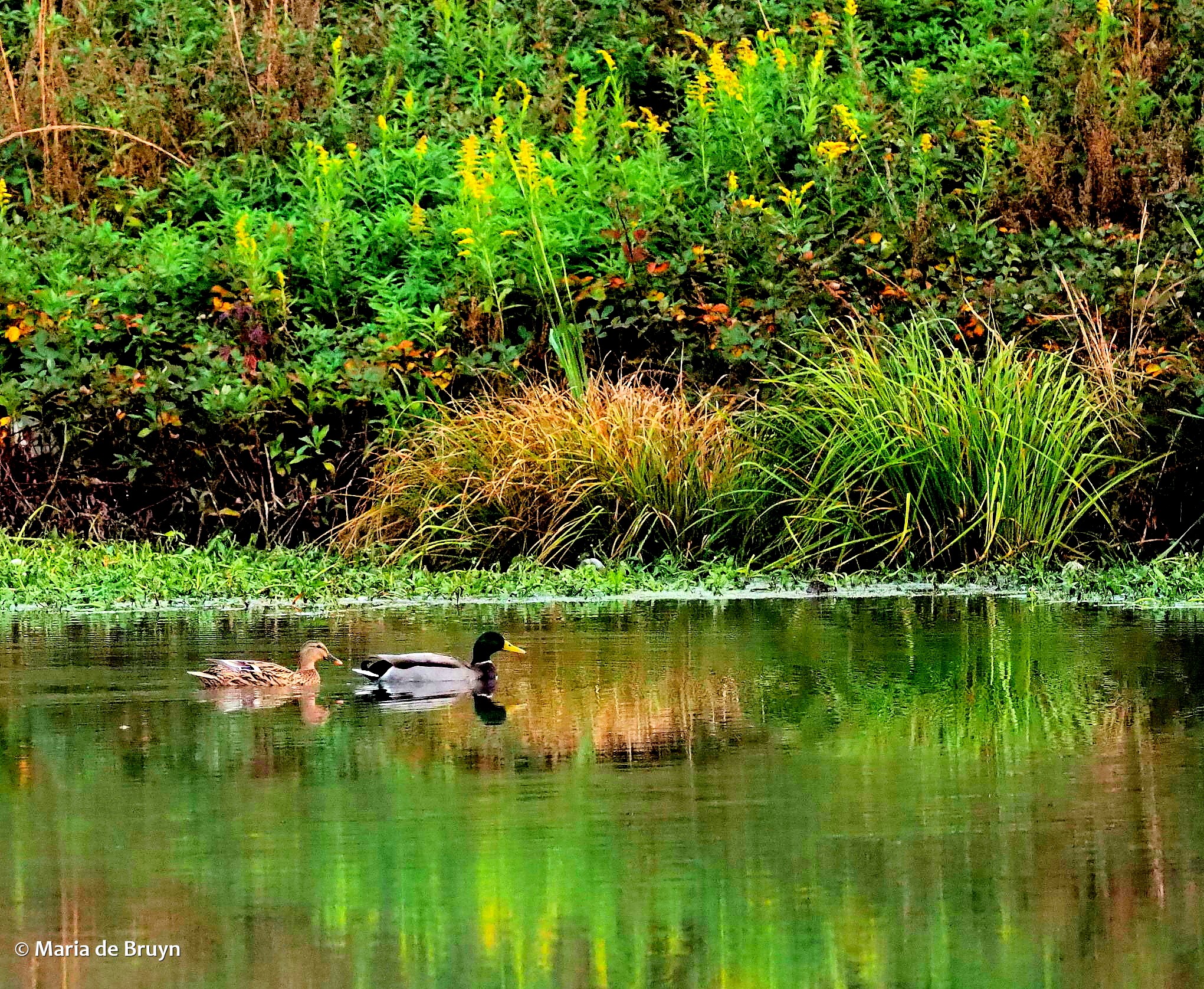
The larger water birds, such as geese and ducks, like to bathe in ponds and rivers.
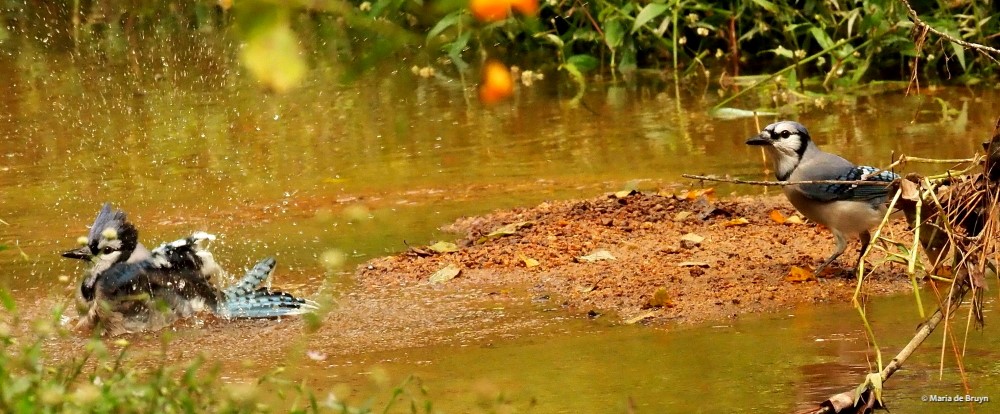
 Other birds enjoy taking a bath in streams and creeks. American goldfinches (Spinus tristis) and house finches (Haemorhous mexicanus) enjoy company with other species. Blue jays (Cyanocitta cristata) like some solitude or sharing space with a fellow jay.


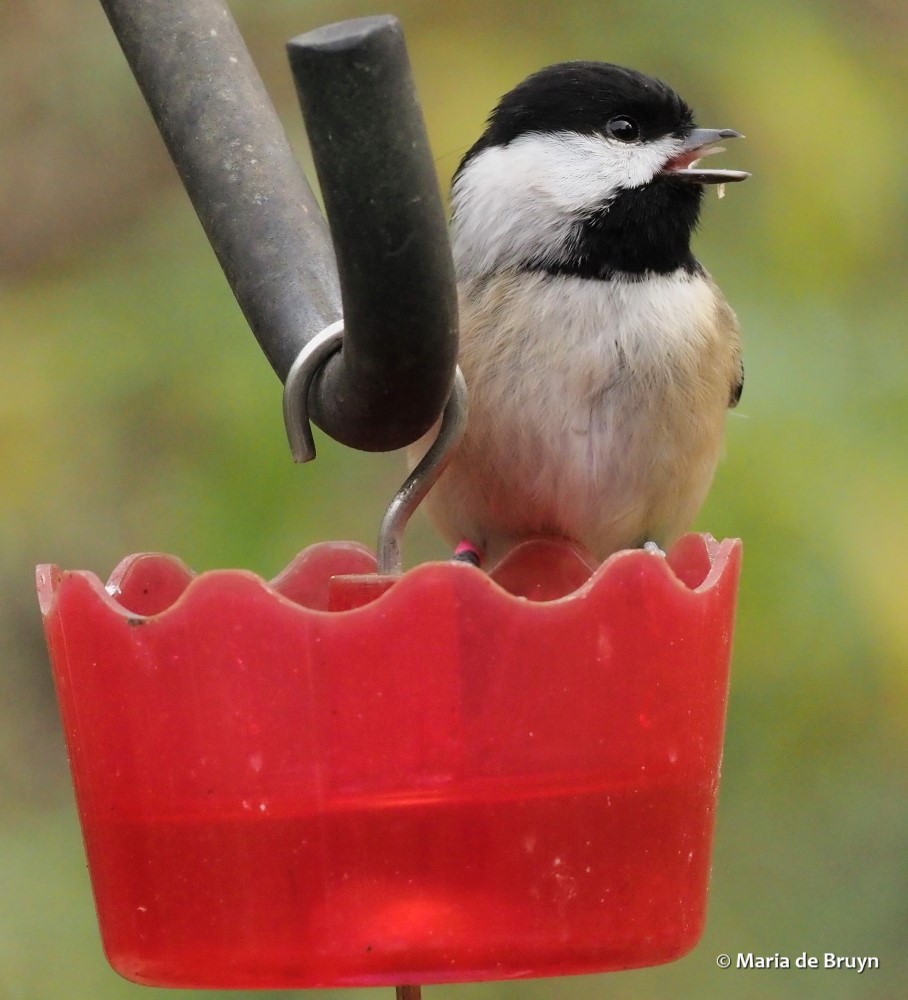
 Birds living further away from natural water resources also need to drink and bathe and that is where we can help them out. Small birds like Carolina chickadees and brown-headed nuthatches like to drink from the ant guards on which hummingbird feeders are hung.
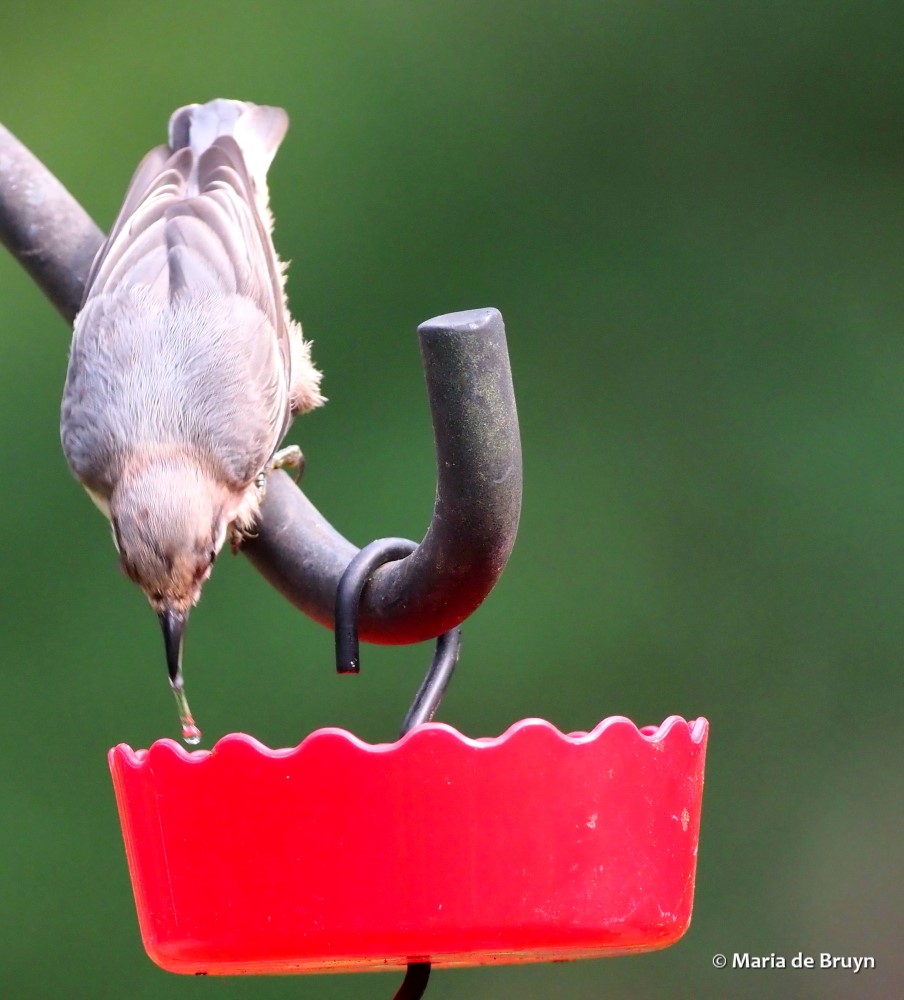
Bird baths can become very popular. Eastern bluebirds and European starlings (Sturnus vulgaris) very much enjoy two of mine in the front yard.


 House finches, American robins, cedar waxwings, Carolina chickadees and gray catbirds (Dumetella carolinensis) tend to like my backyard baths. And then they appreciate branches and nest boxes as platforms to shake out those water-laden feathers. Birding friend Ylva commented that the vigorous fluttering of this catbird would be worthy of an audition for the musical Cats!

 Even if you don’t have a yard, you can put out shallow dishes or plant pot saucers in your outdoor space (steps or patio) as a place for birds to drink and cool off. If you have a balcony, it might take a while for birds to find your water source, but if you stay inside, you may see them come to sip and splash.
 If you are luckily mobile, I encourage you to take some outings near waterways. The wildlife and plant diversity can be wonderful and entertaining. And in the meantime, we can all take action to conserve and preserve water:
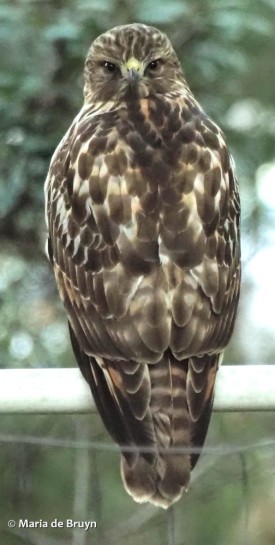
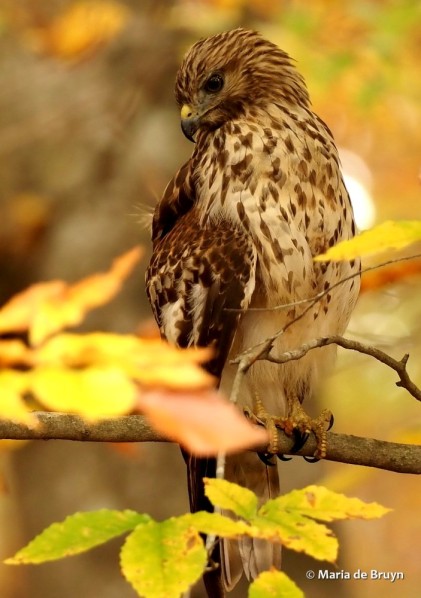
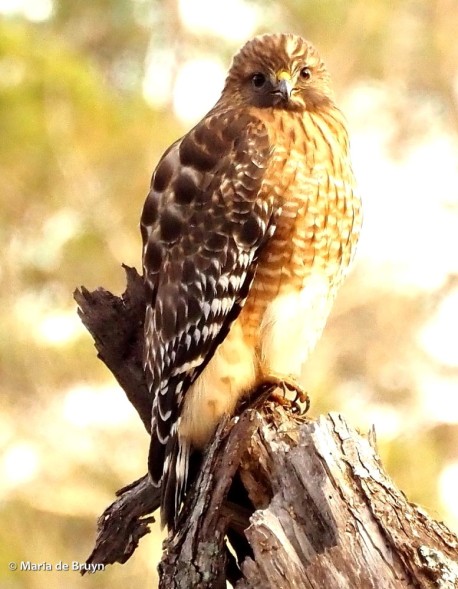
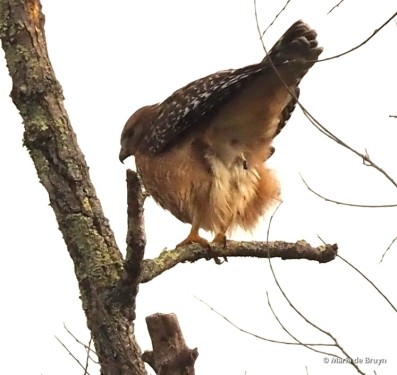 When facing unpleasant challenges, it’s helpful to have an interest to help put them mentally aside while you find enjoyment doing something else. Observing and connecting with wildlife and plant life does that for me. For at least a while, I can think, “I don’t give a shit,” and instead focus on what’s going on immediately around me, like the red-shouldered hawk (Buteo lineatus) above actually giving a shit. 😊
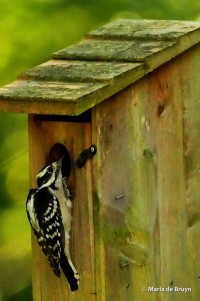 It’s my good fortune to live in a home with sizeable front and backyards where I can entice birds to spend time. Nest boxes border the yards and nesting gourds hang on the front porch, so that attracts pairs who raise young ones here in the spring. They also use these nesting sites to spend the night during cold autumn and winter nights. Downy woodpeckers (Dryobates pubescens) seem especially fond of one nest box next to the driveway.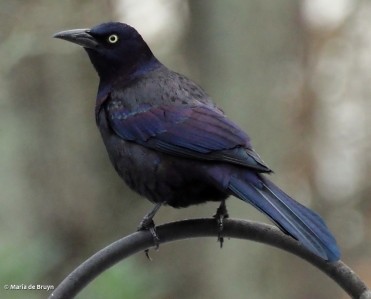
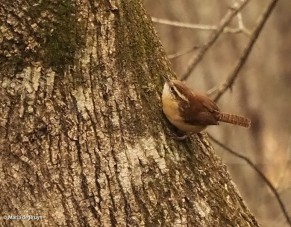 Since converting much of my front yard lawn into flower gardens (and I’m working on that in the back, although there I’ve planted more flowering and berry-bearing trees), the insect population has increased. That has helped the pollination of my flowers and provided the resident birds with meals, like one of the 6 or so Carolina wrens (Thryothorus ludovicianus) who occupy specific niches. One pair hangs out near a water-filled tub; another pair hangs out near a brush pile out back and the third pair hops in and out of a brush pile in the front yard.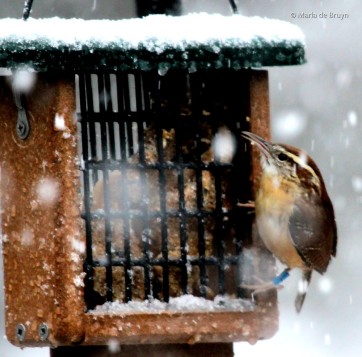
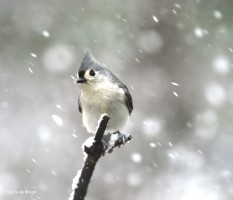
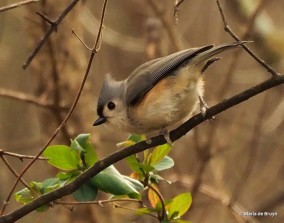
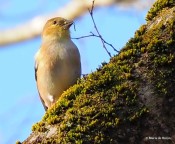
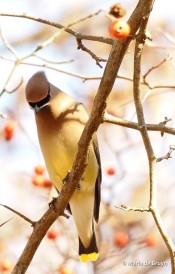 The cedar waxwings (Bombycilla cedrorum) are picky eaters. The American robins in my yard ate a lot of the juniper berries they prefer and there weren’t many other berries around (as was the case at the local arboretum). At my house, they’ve mostly been using the small ponds to drink and bathe.
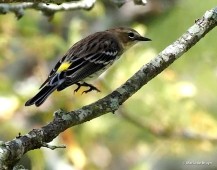
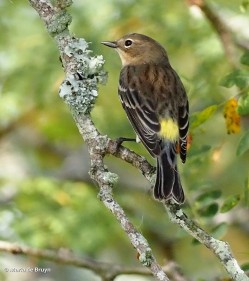
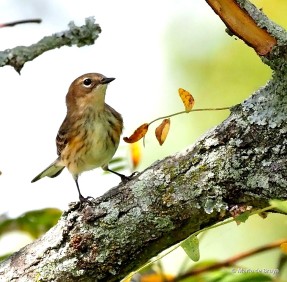 In past years, the visiting yellow-rumped warblers (Setophaga coronata) have lived peacefully with one another. This year, however, I have two birds who seem to be quite incensed when they spy each other. If one is at a feeder, the other zooms in to chase it off and often they flutter upward in a tangle with wings spread. So far, I’ve always been a couple seconds too late to capture the mid-air tussle – it is one of my goals for yard birding this year.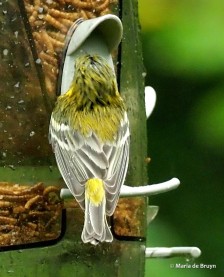
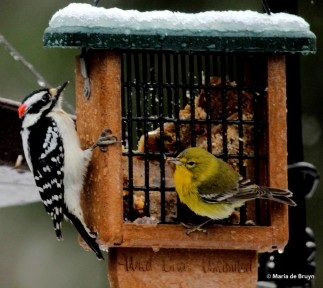 The pine warblers (Setophaga pinus) in my yard are quite tolerant and polite.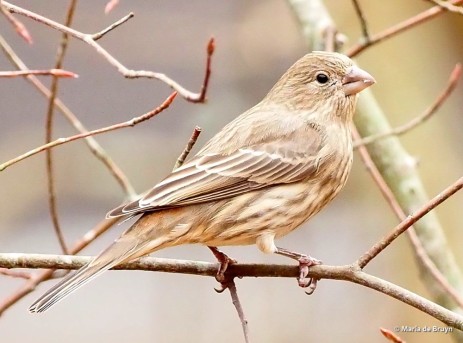
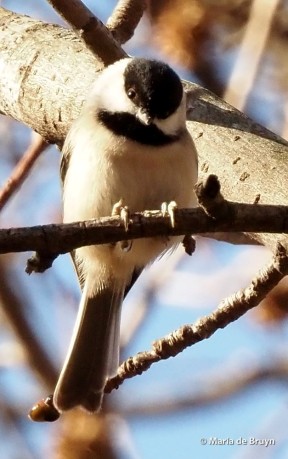
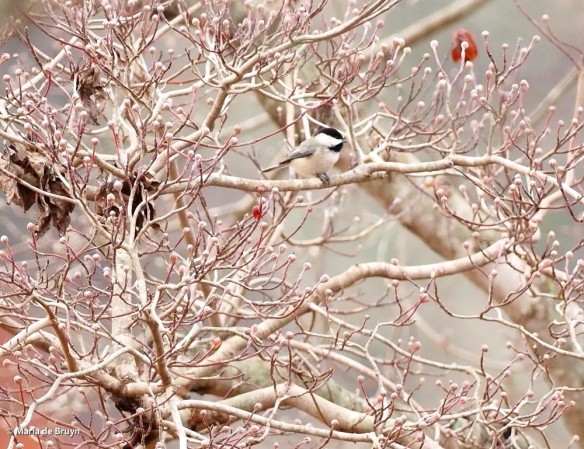
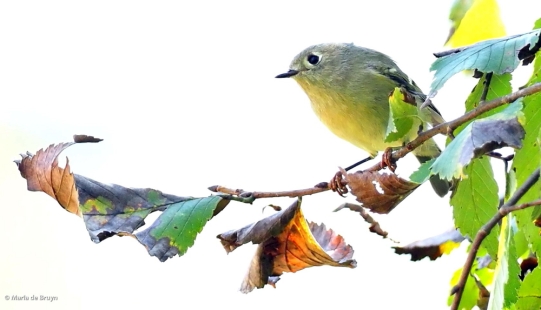
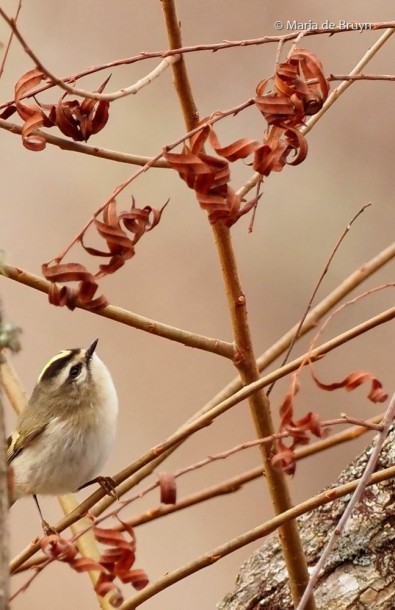
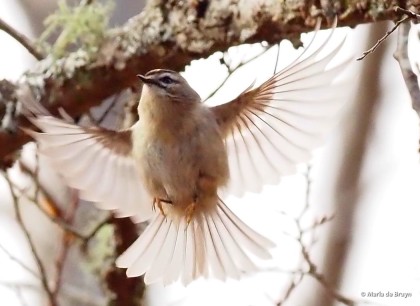
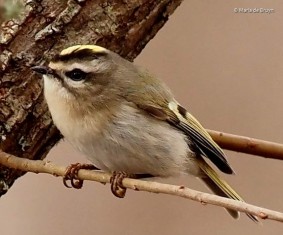 I hadn’t had golden-crowned kinglets (Regulus satrapa) in my yard much before this year; now I have at least one living here but s/he never comes to the feeders. Because this bird stays very high and I haven’t had access to my long camera lens for some time, it’s been difficult to get photos at home. I’ve had somewhat more success on walks.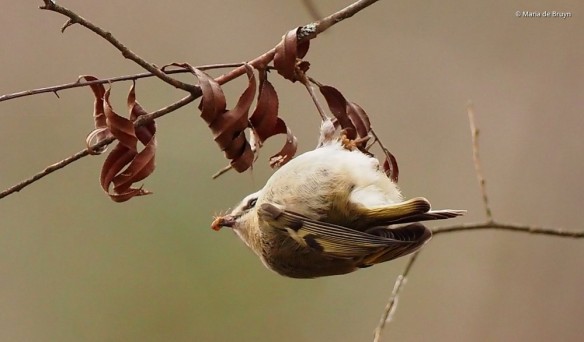


 My beautiful world