 Much of the insect world consists of animals that we usually don’t even see or notice because: a) we don’t know they exist and therefore don’t look for them and b) they are tiny and only well visible with an enlarging lens. But once you get a good look at them, they turn out to be fascinating and sometimes quite attractive. One group of these insects is the hoppers – leaf- and planthoppers, that is, like the gray lawn leafhopper (Exitianus exitiosus) to the left.
As their name indicates, leaf- and planthoppers jump to get around, but they also move by flying, scuttling sideways like crabs, or walking slowly or quickly along plant stems and leaves. Both juveniles and adults are very aware of what is around them and if you do manage to spot one, you’ll see that they are watching you and, for example, may move underneath a leaf to get away from you.This broad-headed sharpshooter (Oncometopia orbona) stayed still for a moment.

 Leafhoppers are only 1/16 to 5/8 of an inch (2-15 mm) long. About 20,000 different leafhoppers have been described around the world; they feed by sucking plant sap from grass, shrubs, or trees. Planthoppers, some of which look like leaves and may be a bit bigger, also feed on plants.The nymphs (juveniles) are tiny, too, as seen in this photo where you see my fingertip above the nymph of an Acanaloid planthopper .
Leafhoppers, such as the speckled sharpshooter (Paraulacizes irrorata) below generally have wide, flattened and pointy heads with large eyes.

Planthoppers come in different forms and, in tropical countries, some of them are quite unique. While many keep their wings flat against their bodies, the derbid planthopper (Mysidia mississippiensis) looks like  a delicate little fly while resting.
Leafhoppers’ hind legs are covered with hairs that help them spread a secretion over their body which is water repellant. Some planthopper nymphs’ back legs have gears that help them jump away in the blink of an eye.
 Versute sharpshooters (Graphocephala versuta) in love
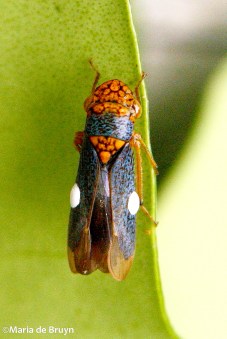
The female broad- headed sharpshooter (Oncometopia orbona) develops white spots on her wings, which are egg brochosomes; these indicate she is ready to oviposit (lay eggs). These spots are made of a white waxy secretion that she places there; they dry to look like “chalky” spots. After she inserts her eggs into a plant, she uses her hind legs to scrape off the brochosomes onto the oviposition site as a way of hiding the eggs from predators.
Leaf- and planthopper nymphs can look as if they are completely different insects from the adult forms. As they mature, they begin to look similar to adults but are often of a different color and don’t yet have full wings. Below you see the colorful adult glassy-winged sharpshooter (Homalodisca vitripennis) and below that some nymphs of this leafhopper.


As juveniles, hoppers go through a process called ecdysis. They pass through several stages to reach adulthood, molting and leaving behind their old exoskeleton in order to grow. They are called instars during these stages.


 The instar stages of the same hopper can look very different from one another, including color changes. Some of the nymphs, with their striped faces and big eyes, look to me as if they’d be great models for cartoon characters or Halloween masks like these coppery leafhopper juveniles (Coelidia olitoria).


 Planthopper nymphs, like the two-striped planthopper (Acanalonia bivittata) and the Acanalonia servillei below, are known for producing waxy strands from their bodies which repel water. These strands also help protect them from predators, who might grab onto the showy white hairs, which break off so that the hopper can escape. The nymphs can ultimately be entirely covered in white wax.


The colors and patterns on the adults can be quite beautiful, especially on the leafhoppers in the area where I live. The planthoppers tend to be white, gray or green. The colors on the coppery leafhopper are wonderful and varied.


Citrus flatid planthopper (Metcalfa pruinosa) and flatid planthopper (Acanalonia conica)


Sharpshooter (Sibovia occatoria), Red-banded sharpshooter (Graphocephala coccinea) and leafhopper (Texananus)


Leafhopper (Chlorotettix), leafhopper (Coelidia) and leafhopper (unidentified species)
As tiny as these insects are, they can be parasitized and play host to even smaller insects. This flatid planthopper (Ormenoides venusta), for example, was carrying red mites that weren’t harming it but hitching a ride. It must be annoying though.


 I imagine there are many more interesting behaviors to observe with the hoppers. Maybe one day I will get a macro lens so that I can really get some good photos of these cute little insects. In the meantime, as there are several thousand species in North America, I can look forward to finding new ones – with my camera in hand as I wouldn’t be able to see anything but specks on plants without it!
 So, in honor of International Cat Day 2014, a departure from wildlife to celebrate my family cats. My household is currently graced with three feline companions, two males and a female. Jonahay, the senior cat, is 15.5 years old and the only one allowed to go outside now and again. According to my vet, he is the strongest cat and most stubborn cat he has met – it has taken two guys over 6 feet tall to try and hold him down to get a pill into him. In the end, they gave him a shot while he was immobilized.
 thing but to bring interesting, living and moving “toys” inside. Over time, I had to remove birds, a baby rabbit, chipmunks, garter snake and field mouse from inside the house. During that time, only a couple birds and a couple mice did not survive when he clamped down a bit hard to prevent them from getting away or me taking them from him. Now, he will sit in the yard or rest on the front porch rocker with a squirrel or bird two feet away and just cast them a glance. The only creature that will rouse him for a chase is a chipmunk – for some reason, he still finds them too cool to leave alone.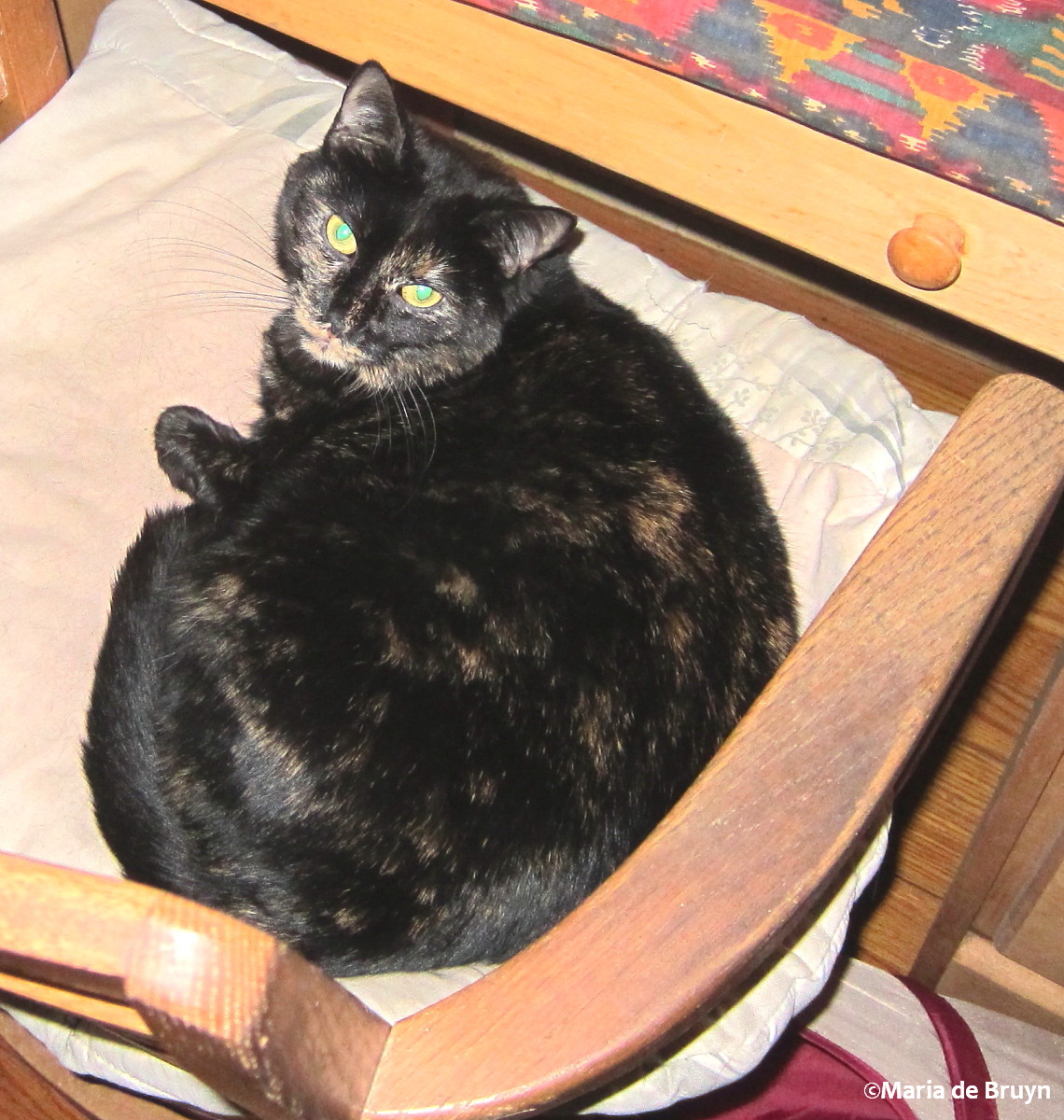
 he mouth and in obvious distress – she had likely eaten a stink bug, which is not a good thing for cats. About a week ago, she yelped with an open mouth and had some pain; a wasp that had gotten into the porch was gone.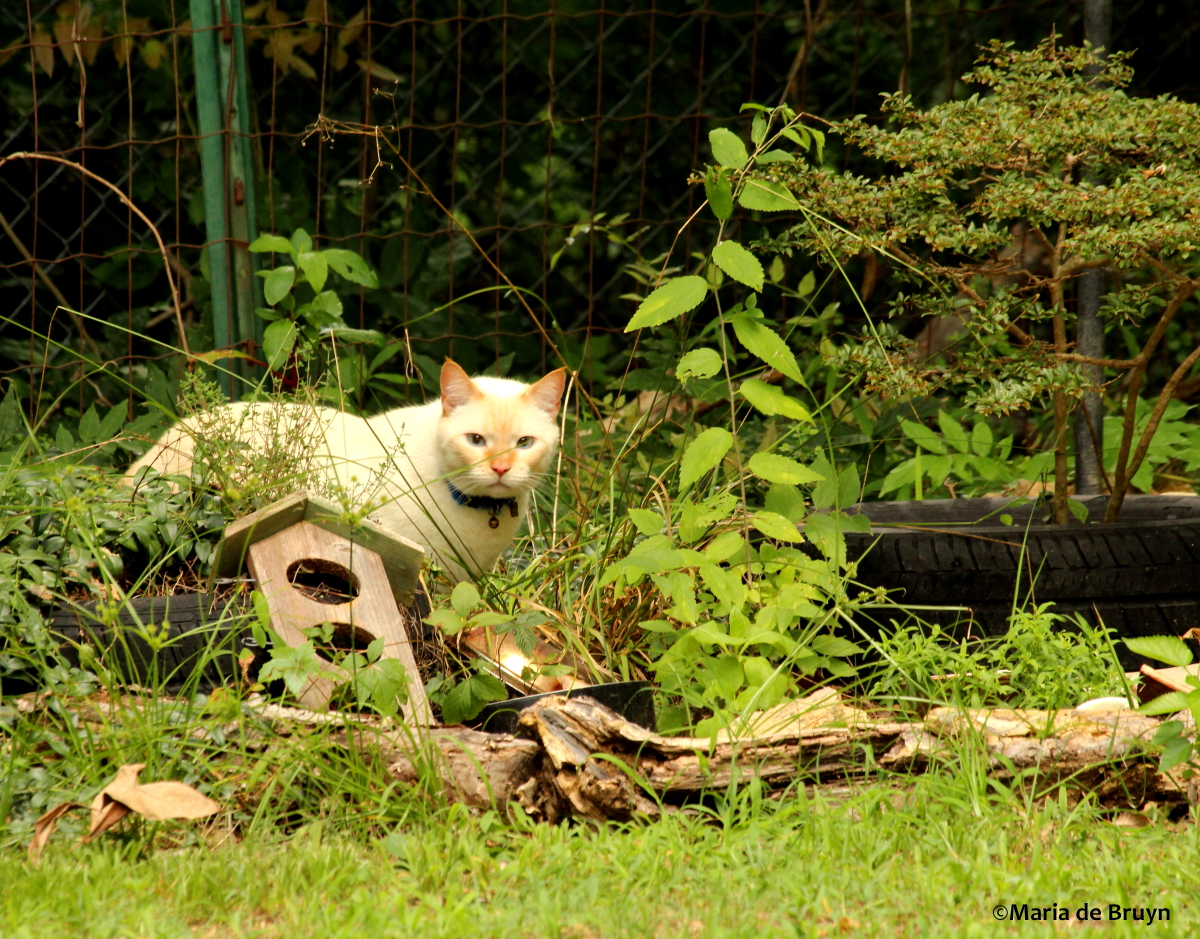
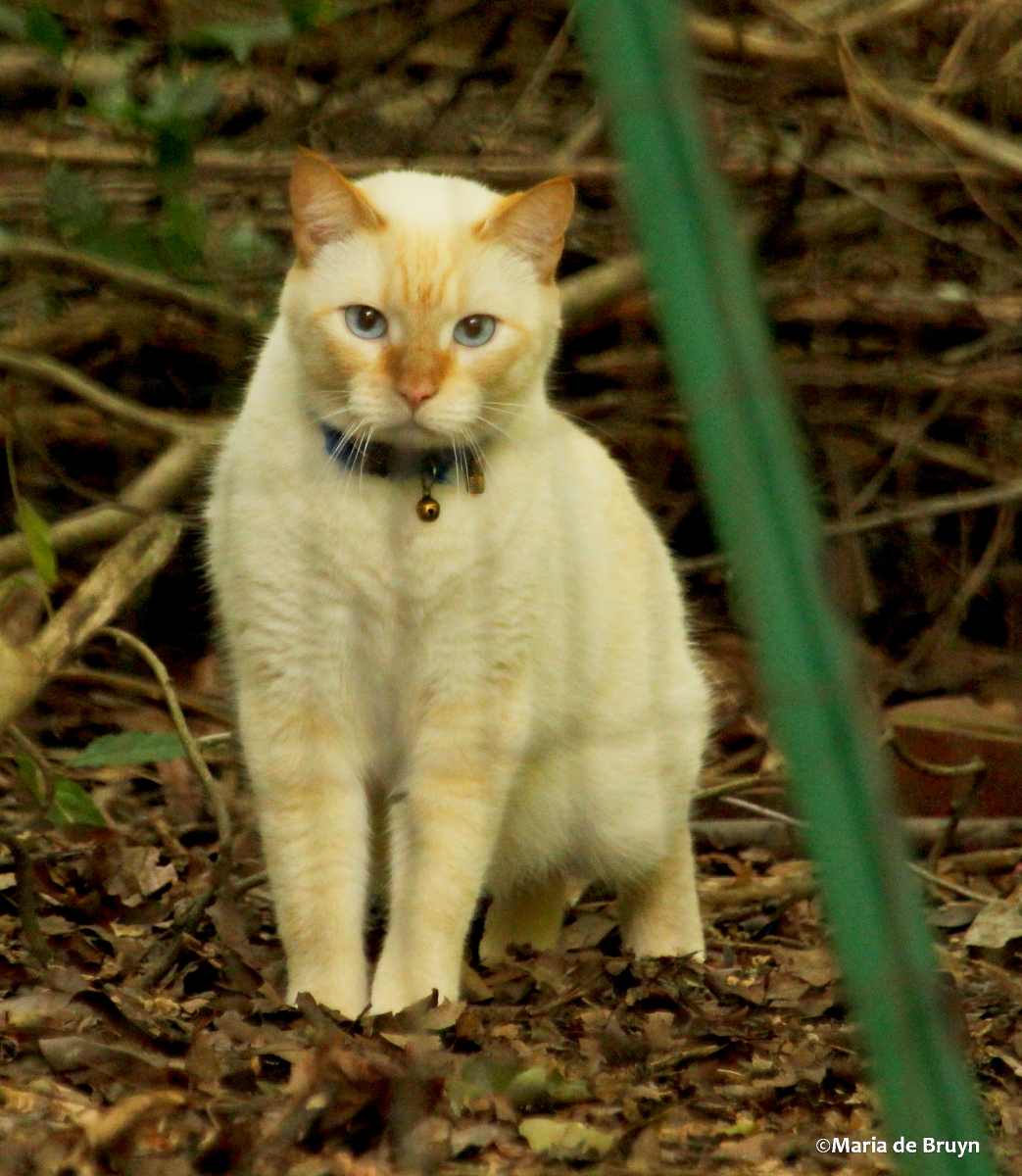


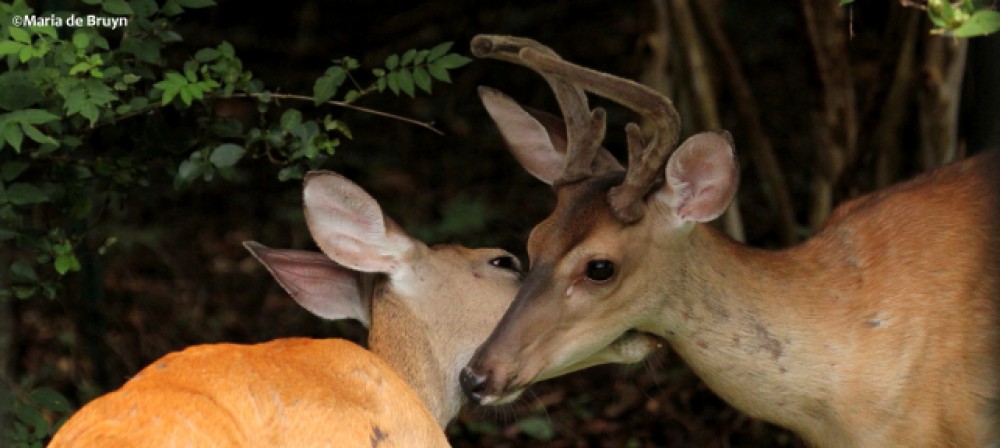
 ther day, Ogi made another great escape. He hung out by the ground feeding station and stayed put until one deer came too close.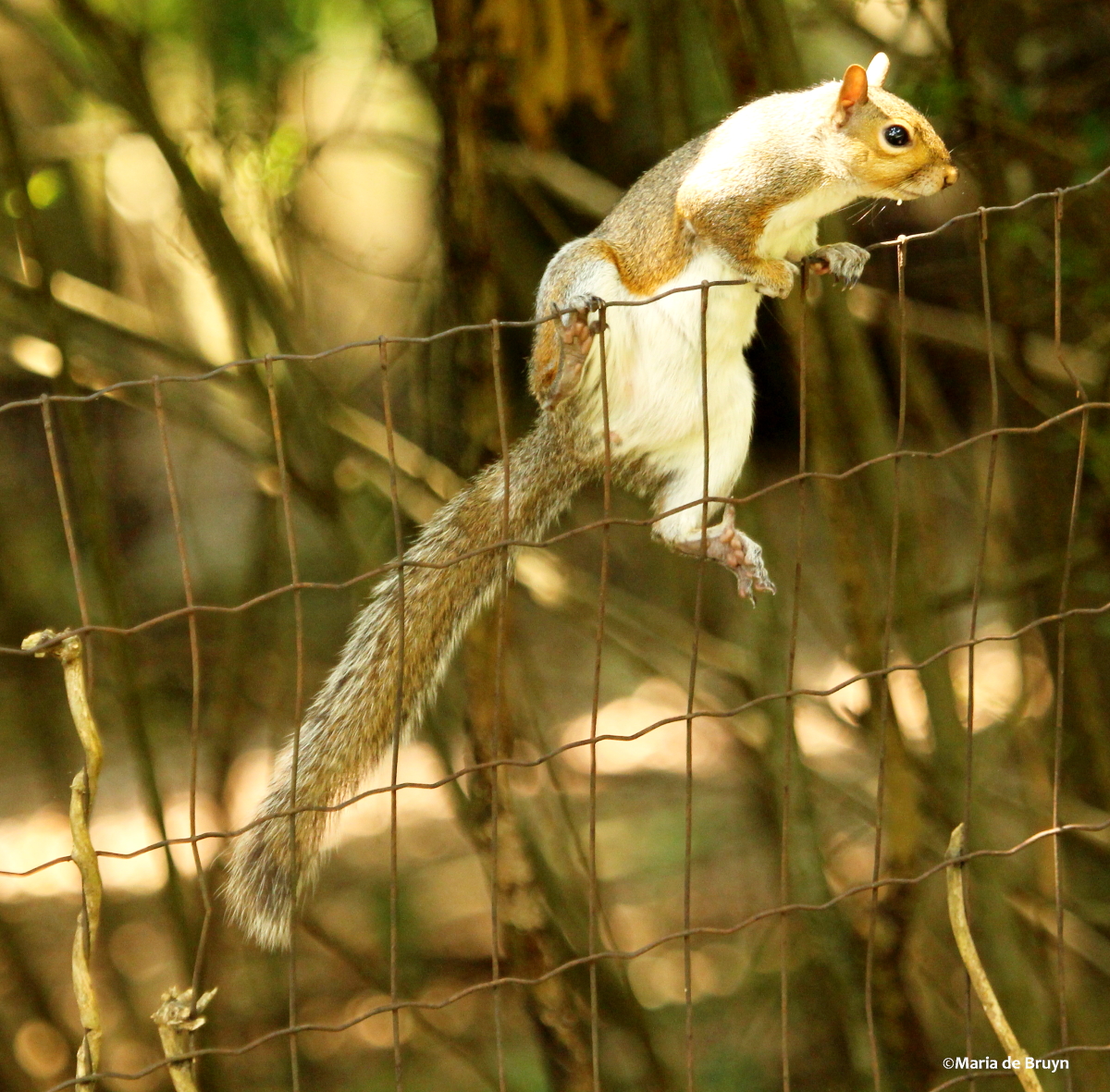


 One bird that seems to almost universally delight people and bring smiles to their days are the hummingbirds. These wonderful little fliers now only live in the Western hemisphere of our earth, but two 30-million-year-old hummingbird fossils were discovered in Germany so they did live elsewhere.


 heir tongues, which have tubes running down their lengths.


 pring, undoubtedly adjusting to the urban environment. We have had very little rain this summer and their food supplies have dwindled way down. The ground-feeding birds do not always get to the seed first.


 My beautiful world