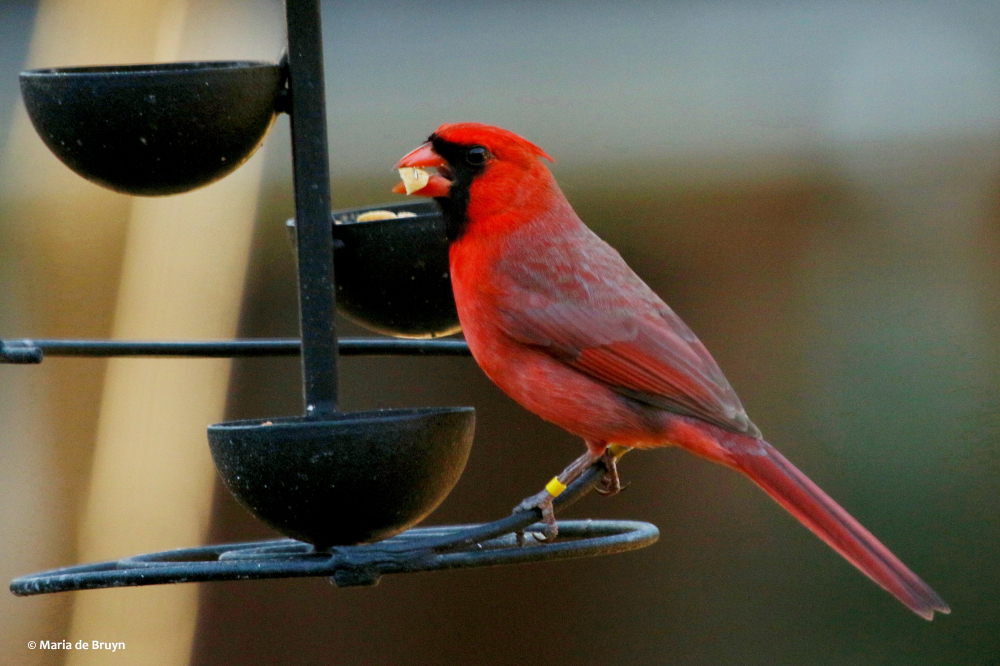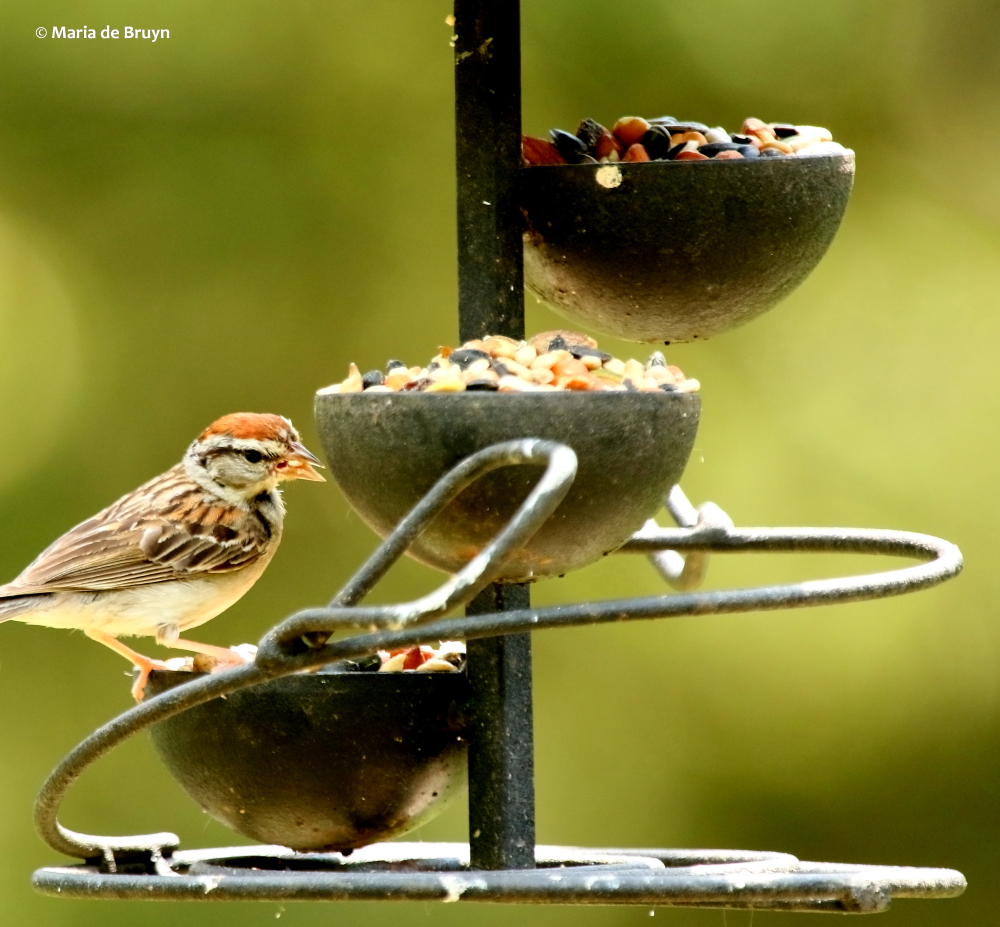
Winter wonderland – sparrows and warblers

Yesterday, as I walked through my yard, I was surprised to see groups of daffodils sticking up their heads; it seemed rather early to me but last year we had early signs of spring as well. It is a big contrast to our weather conditions less than a month ago, though. On the 17th of January, our town was surprised by 11-12 inches of beautiful, powdery snow.


While our southern area often has a couple instances of (light) snow and/or an ice storm in the winter, our climate is generally fairly mild and temperatures in the 50s and 60s Farenheit are not uncommon during winter. So the brief but heavy snowfall was quite an event; our streets were empty of traffic as everyone stayed home and watched the falling flakes.

Some people built snowmen, others went sledding and walking, and some of us spent hours filling our bird feeders and watching the birds. I also made an attempt to photograph some frozen bubbles, which was very challenging since it was windy during the entire winter weather event.


The snow began slowly melting a bit the next day, which made some of the icicles on the house elongate to a length of almost 3-4 feet, but it wasn’t until Friday and Saturday that the snow and ice really started disappearing.

My yard looked beautiful, but I spent time on the 17th repeatedly knocking snow off the bird feeders and heated birth bath so that the birds could reach the food and water.


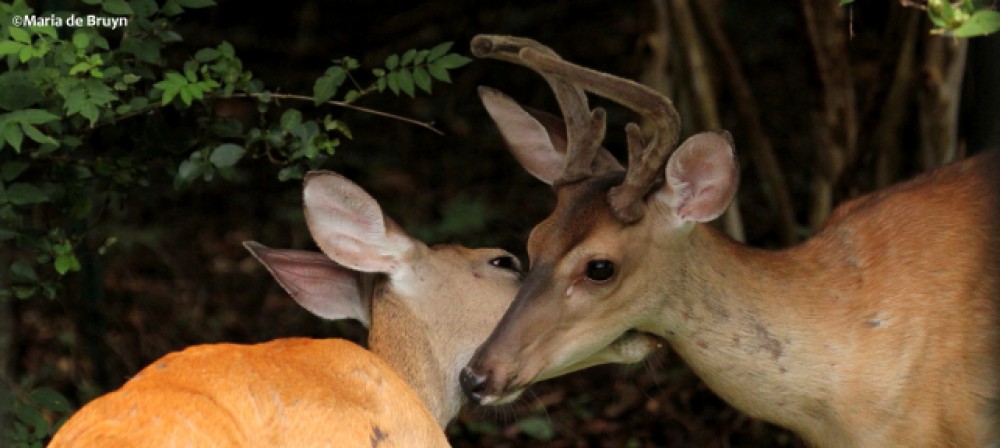
Although I saw a couple squirrels and the white-tailed deer (Odocoileus virginianus) also came by, I didn’t see other mammals like chipmunks, raccoons, opossums. But I had 25 different bird species come by on Wednesday and Thursday; on Friday and Saturday, two more species came by. I’d like to share some snow day photos of them all in this and the next few blogs.

First up are the sparrows and warblers. The chipping sparrows (Spizella passerina) usually get their seed from the hanging feeders in the front and back yards but now they were looking everywhere for a bite to eat. I had strewn some seed on the ground and they began looking there.

One found a trove of food and another came by asking to be fed, a request the first sparrow accommodated quite sweetly.


The white-throated sparrows (Zonotrichia albicollis) have an opposite feeding strategy, usually feeding on the ground and occasionally venturing up to a feeder. They, too, searched under the snow for some food.


The pine warblers (Setophaga pinus) tend to be rather shy; only very rarely does a pair visit together. Mostly, one shows up at a time; their beautiful yellow color was really highlighted against the white background.


The pine warblers did have to brave a bad-tempered bird to get to the feeders. One of the six resident yellow-rumped warblers (Setophaga coronata) has become very territorial, chasing away some other yellow-rumped warblers, the ruby-crowned kinglets and the pine warbler – in other words, the birds his size or smaller. He allows a couple other yellow-rumps to feed peacefully and I think perhaps they are his family members so that he tolerates them. He didn’t stop the other small birds from coming around, however, as we’ll see in the next blog.


An under-appreciated bird?

In the area where I live, many birders are thrilled when spring migration begins and the wood thrush (Hylocichla mustelina) arrives. They find its song especially appealing and exclaim over the fact that they had the privilege of hearing the wood thrush in their yard or in the woods.


While it’s a nice song, however, I find that I’m more attracted to our winter visitor, the hermit thrush (Catharus guttatus), perhaps because this species seems less afraid to emerge from the vegetation when people are around. I find its song quite nice as well, even though it doesn’t seem to have as many trills in it as the wood thrush.


The past couple years, I seem to have been seeing the hermit thrush more and more often. Presumably, this is not because there are more of them but because I have grown a little more adept at spotting and identifying birds as time has passed. The past six weeks, I’ve seen them in various places and have very much enjoyed each spotting.
On the 15th of December, during a walk at Mason Farm Biological Reserve, I spotted one eating berries with gusto.


Ten days later, birds in different parts of the reserve came out on twigs, observing me as much as I was observing them. On the 2nd of January, one caught my eye when s/he was bobbing its reddish tail up and down. It gave me a good view of the bird’s underside, which looked nicely cushioned. That part of the tail is the most colorful part of the bird, which otherwise is a rather muted light brown with a cream-colored, lightly spotted breast.


On the 4th of January, we had a light smattering of snow and I saw a hermit thrush in a crepe myrtle tree, an unusual sight in my yard as their visits are usually few and far between. The next day, the bird returned to the red cedar trees (Juniperus virginiana) to make a few meals of the nicely ripe juniper berries.


The snow melted quickly but the bird was back the next day for more berries; fortunately, the American robins and cedar waxwings had not eaten them all.


In the spring and summer, the hermit thrush’s diet consists mainly of insects and sometimes small reptiles and amphibians. In the winter, they turn to eating berries and fruit. Here, a thrush at the Brumley Forest Preserve had been foraging on the ground and found a seed or fruit.

Back at Mason Farm, the 21st of January was a stellar day for seeing hermit thrushes; I must have seen at least six in different parts of the woods. At one point, I had stopped to listen to a downy woodpecker (Picoides pubescens) calling and then noted a thrush sitting on a sapling branch near the walking trail. S/he flew down to the path to forage and suddenly another one flew in landing atop the first thrush! The attacked bird spread its tail feathers on the ground while the other one glared at it.

The Cornell Lab of Ornithology notes that hermit thrushes may respond to predators by crouching and pulling in their heads; perhaps this was an adaptation of that response.

I always think of these little beauties as being peaceful birds so seeing one challenge the other in such a physical way was a real surprise. Then as suddenly as the attack had happened, all was sweetness and light as the two birds began foraging on the path about 2-3 feet from one another. The downy woodpecker even joined them on the ground for a little while.


The oldest recorded hermit thrush was almost 11 years old. Perhaps their generally sweet disposition helps them survive.


Depending on whether these birds are fluffing their feathers against the cold, they can either look like a sleek and slender avian or a puffy little ball of feathers. In both cases, I think they look quite appealing.


Whatever shape they take, I do look forward to seeing more of these lovely, usually demure and delightful thrushes!


“Nuts” for nuts!

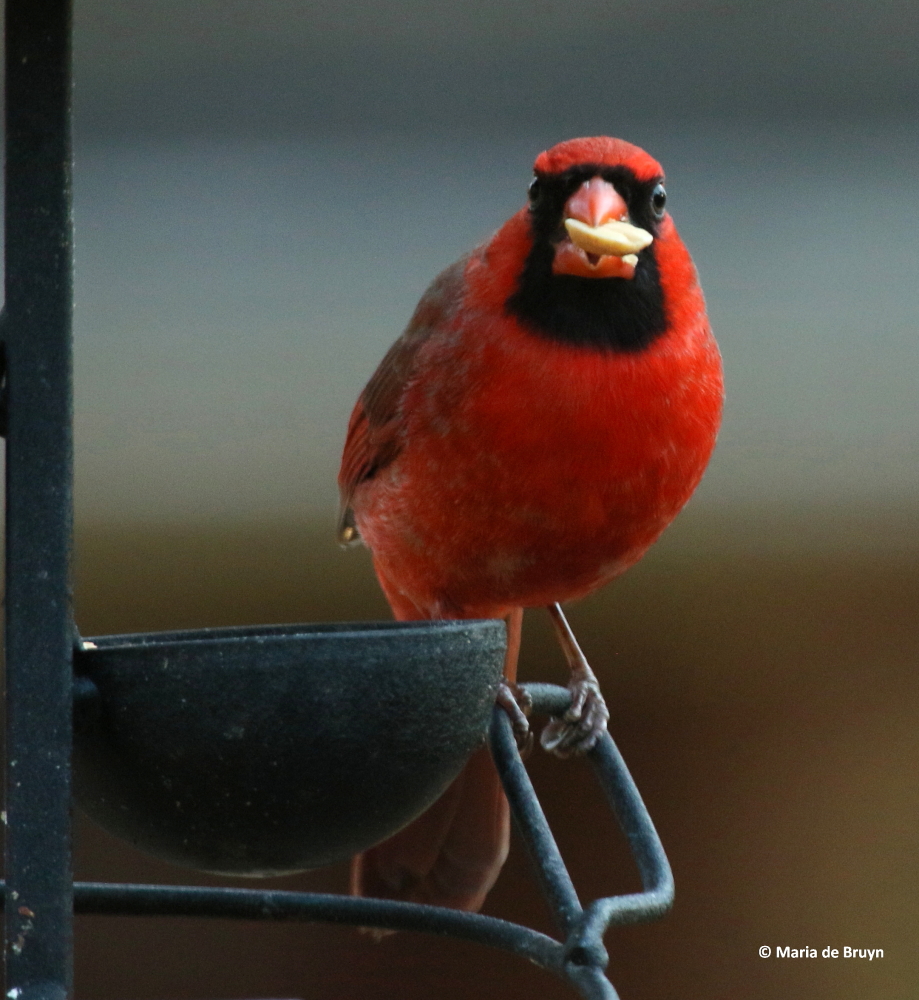
A primary source of nutrition for many birds is nuts.This high-calorie food provides them with dietary fat, which can be especially welcome during the colder months. As nuts ripen, you can see the birds flying by, carrying acorns and beechnuts, as well as seeds of various kinds. Some birds are especially suited to eating nuts with their thicker, cone-shaped bills, which are shaped to help them crack open pods and seed cases. Northern cardinals (Cardinalis cardinalis), sparrows, grosbeaks, finches and woodpeckers are seed and nut lovers.
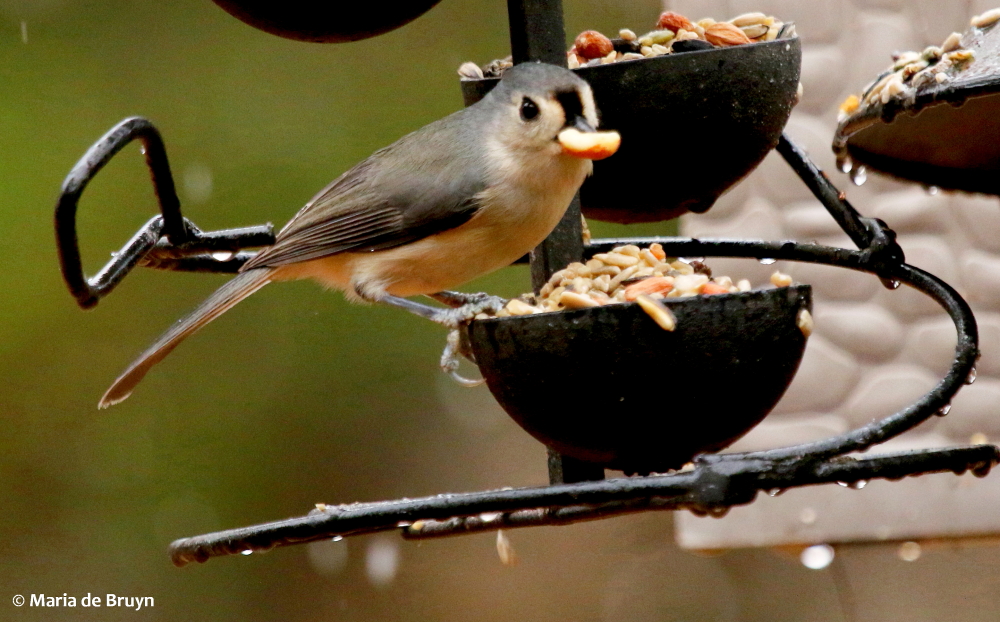
I had been lax in providing my yard birds with these culinary treats except for sunflower seeds and the seed pods in my yard trees. So one day early last year, I purchased a nut and seed holder and proceeded to give them peanuts, which are not actually nuts but the seed of a legume (Arachis hypogaea). This makes no difference to the birds like the Carolina wren (Thryothorus ludovicianus) of course.

I first tried peanuts in the shell and an occasional blue jay and tufted titmouse would stop by. However, they didn’t seem to want to put much time into removing the nuts from the shells and I didn’t really want the shells littering the ground either.

Then in the spring I put out some shelled peanuts from a container I’d bought for my own consumption and the avian visitors were delighted. Reading about peanut feeding informed me that I should avoid giving salted peanuts. I couldn’t readily find unsalted ones at the grocery store, so I began removing the salt, either by shaking the nuts in a paper bag or by washing off the salt.


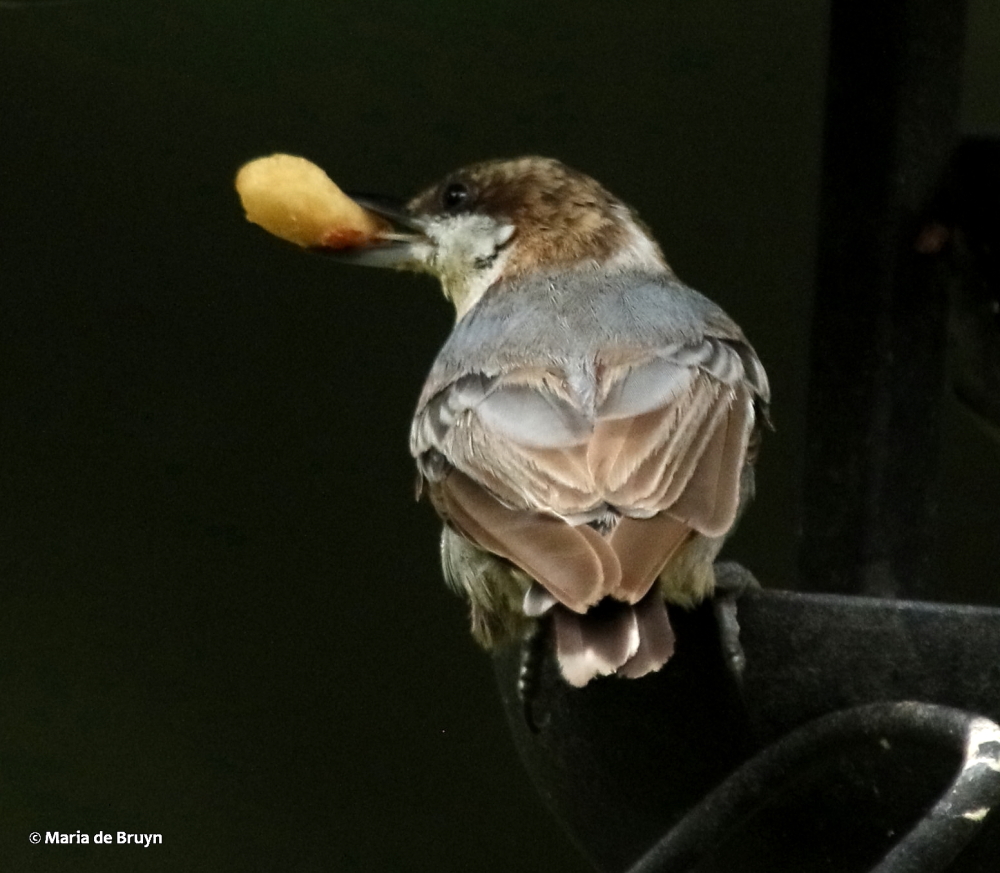
Northern cardinal                                            Brown-headed nuthatch (Sitta pusilla)

Before they left for the summer, the yellow-rumped warbler (Setophaga coronata) and ruby-crowned kinglet (Regulus calendula) tried the peanuts, too. Sometimes I wondered if the kinglet was also not looking for insects around the peanut feeder.


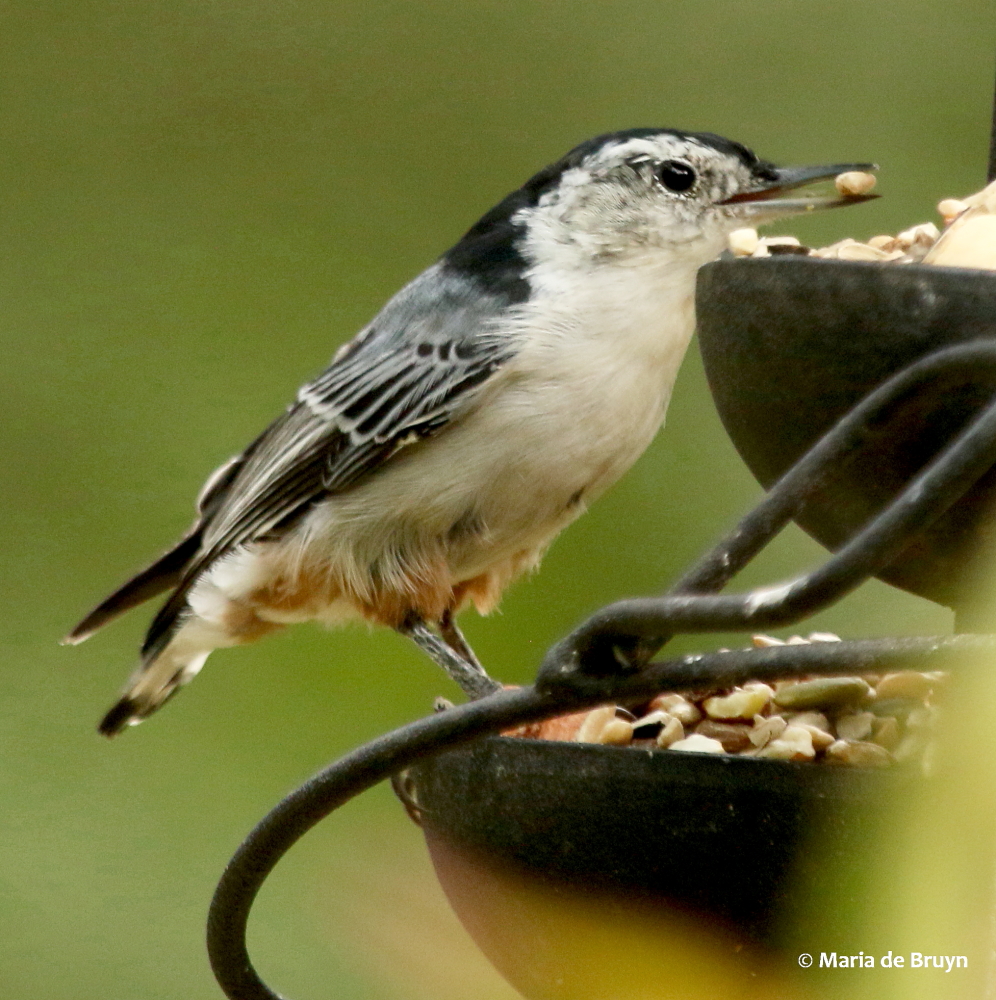
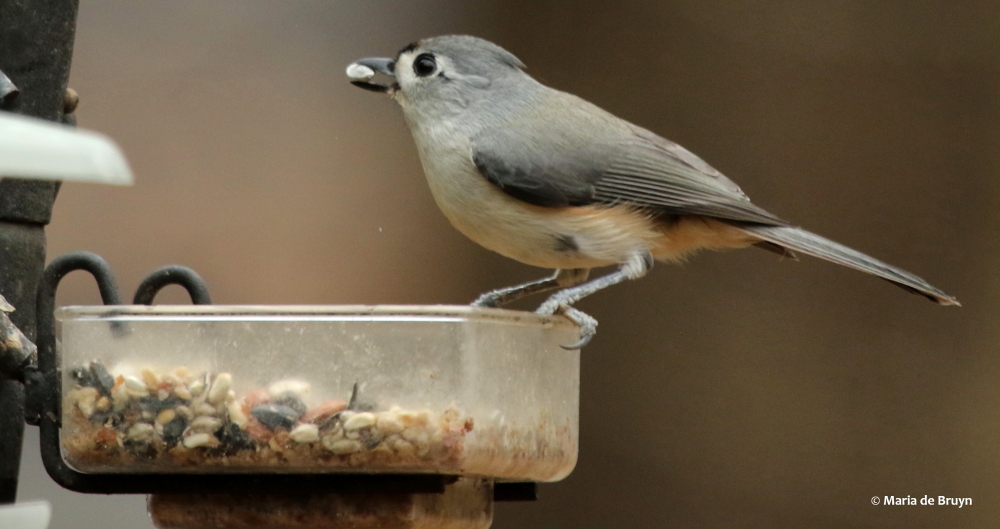
My choice to provide nuts was a big hit; I was rewarded with a procession of individuals of varied species who came by to quickly gulp or carry off a tasty nut. Some are pictured below – they came at different times of the day.


White-breasted nuthatch (Sitta carolinensis)     Tufted titmouse (Baeolophus bicolor)


Tufted titmouse                                                       Pine warbler (Setophaga pinus)


Red-bellied woodpecker (Melanerpes carolinus)      Northern cardinal


Gray catbird (Dumetella carolinensis)        Eastern bluebird (Sialia sialis)


Chipping sparrow (Spizella passerina)         Brown thrasher (Toxostoma rufum)

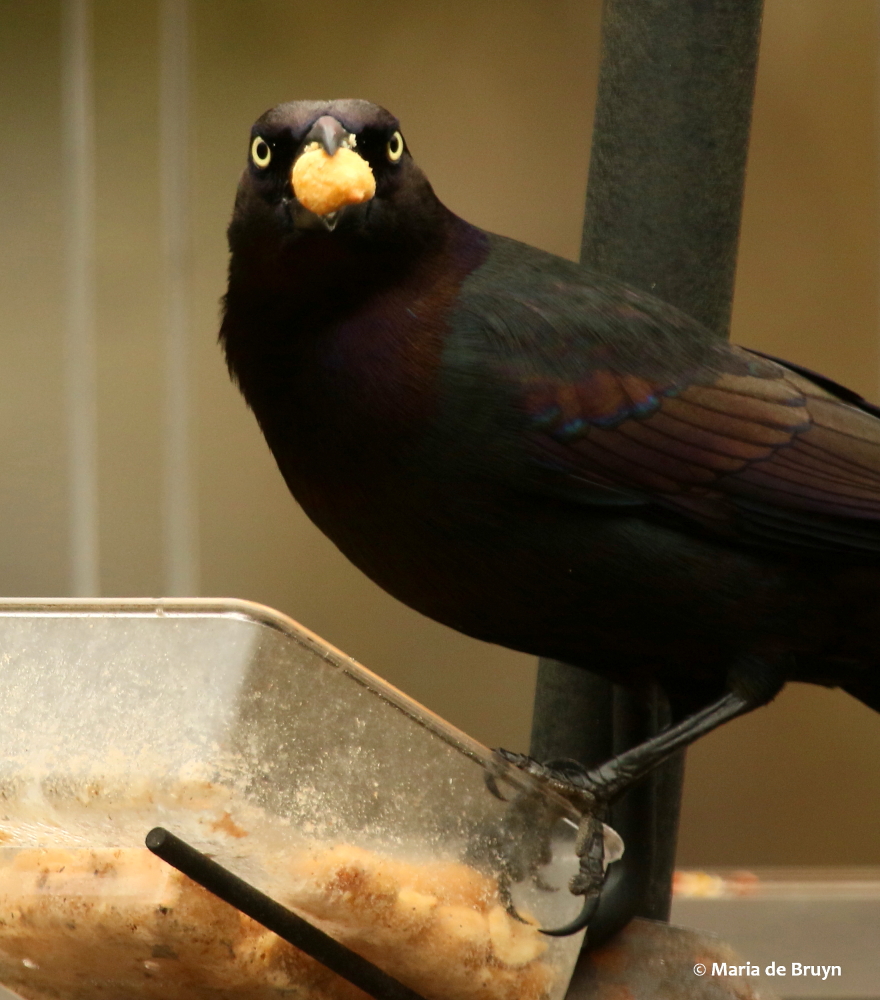
The common grackles (Quiscalus quiscula) will sometimes break down the nuts (and are quite messy about it, compared to the chickadees and titmice), but they will also swallow the treats whole.


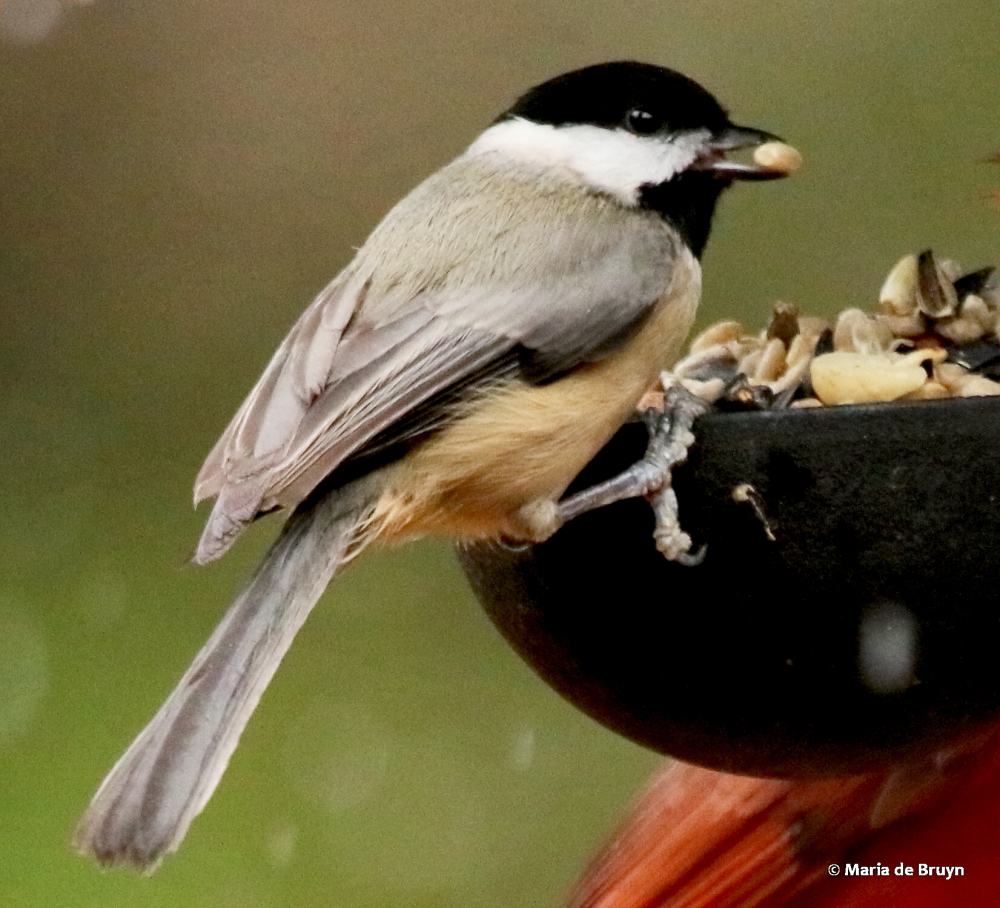
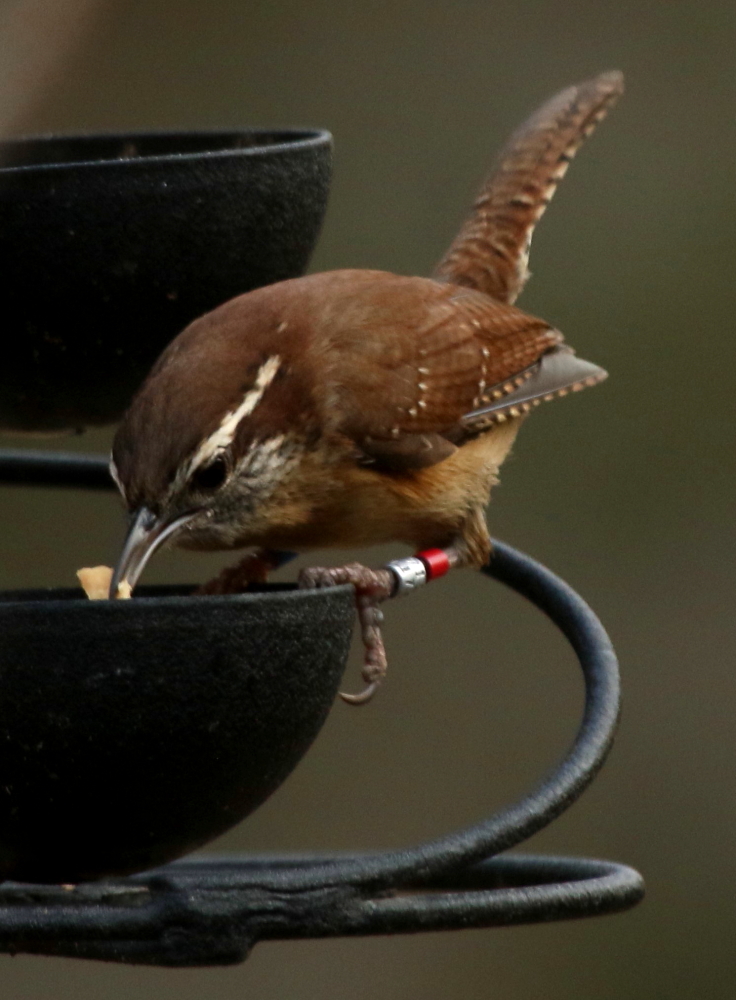
Others are intent on breaking the peanuts into smaller pieces that are easier to get down; this seems especially true for the smaller birds like the Carolina chickadee (Poecile carolinensis) below. Here we also see Riley, my banded Carolina wren, enjoying a treat.


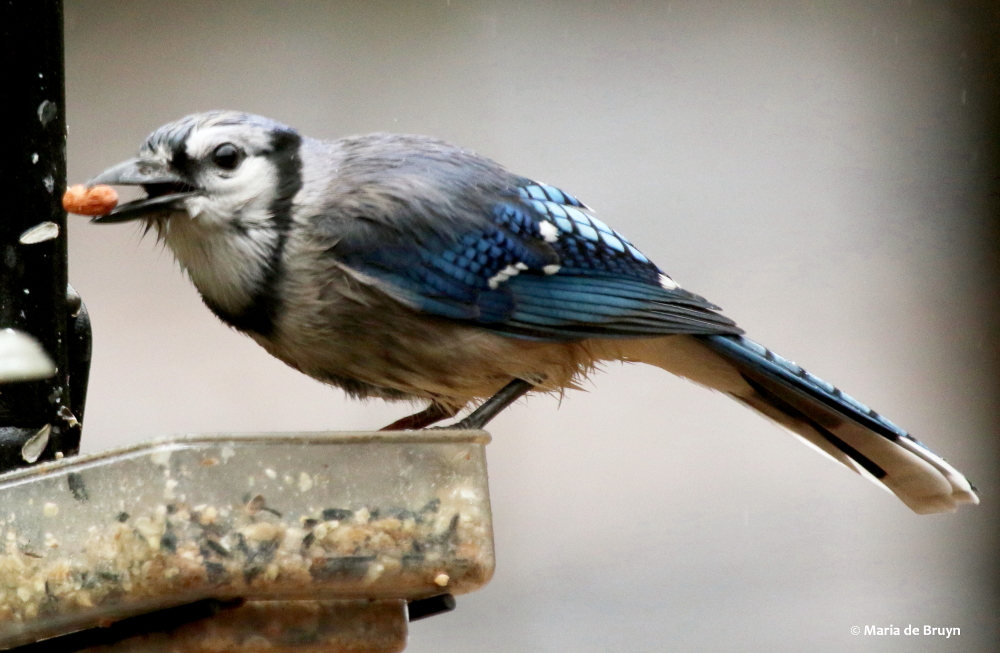
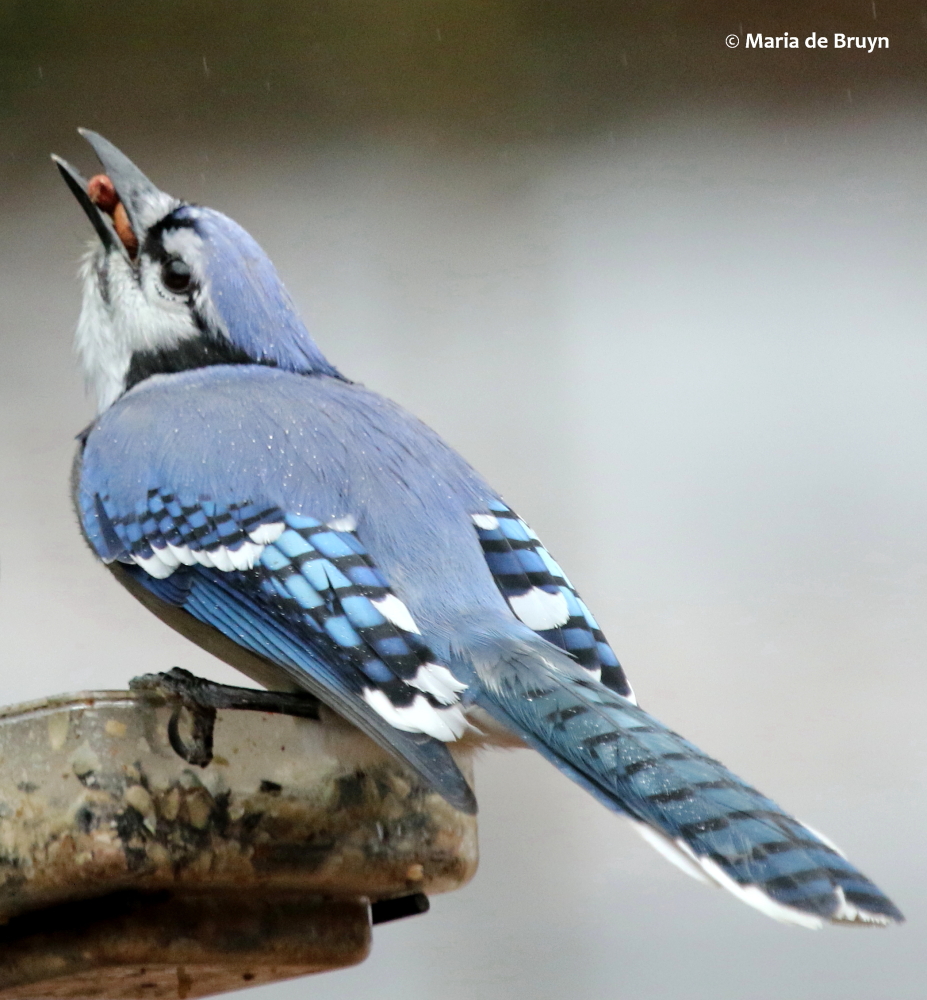
The blue jays (Cyanocitta cristata) often gulp down some nuts quickly and then try to carry off several nuts at a time.

One good thing about the peanuts is that thankfully the starlings (Sturnus vulgaris) and brown-headed cowbirds (Molothrus ater) don’t appear fond of them (they gulp down the dried mealworms, however, as if that food is going out of style). One will occasionally sample a nut, but they never seem to want a second.

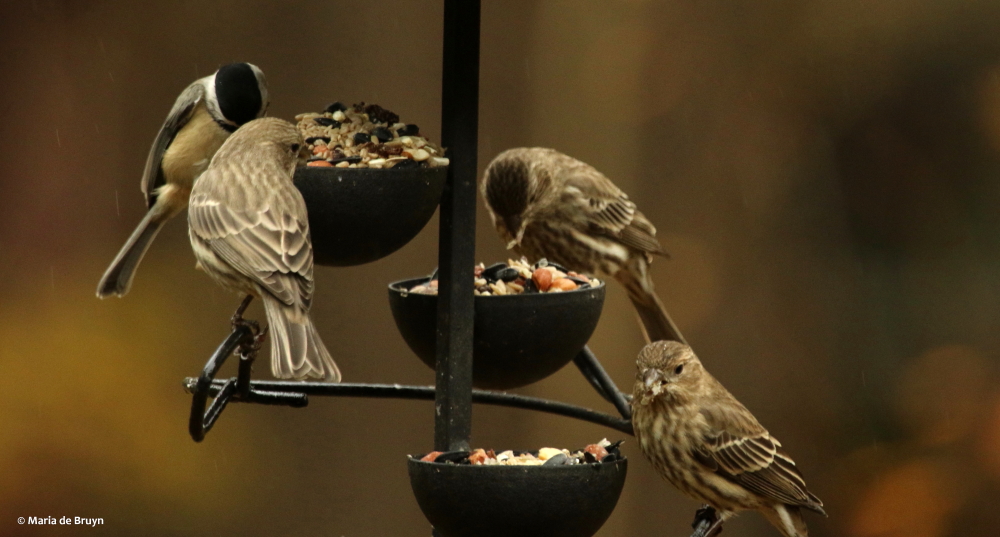
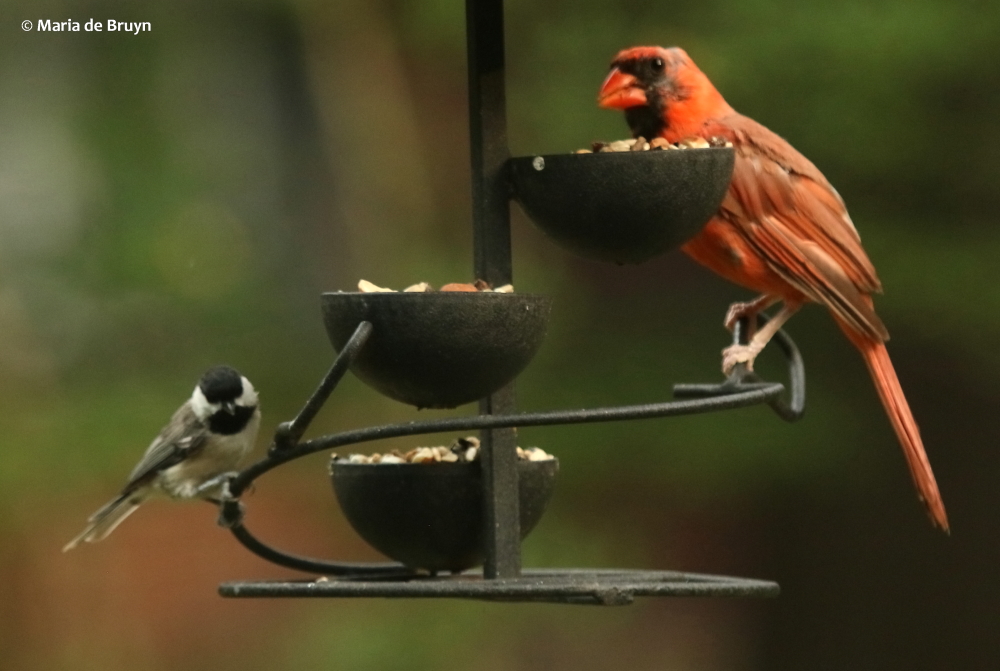
As time passed, I realized that the peanut feeding strategy was rewarding me with frequent avian visitors, but was also rather costly. In the autumn, I began putting out a less expensive fruit and nut mix. This has also proved very popular and various species of birds are willing to share space at the feeders. The chickadees especially will feed alongside others, like the house finches and Northern cardinal below.

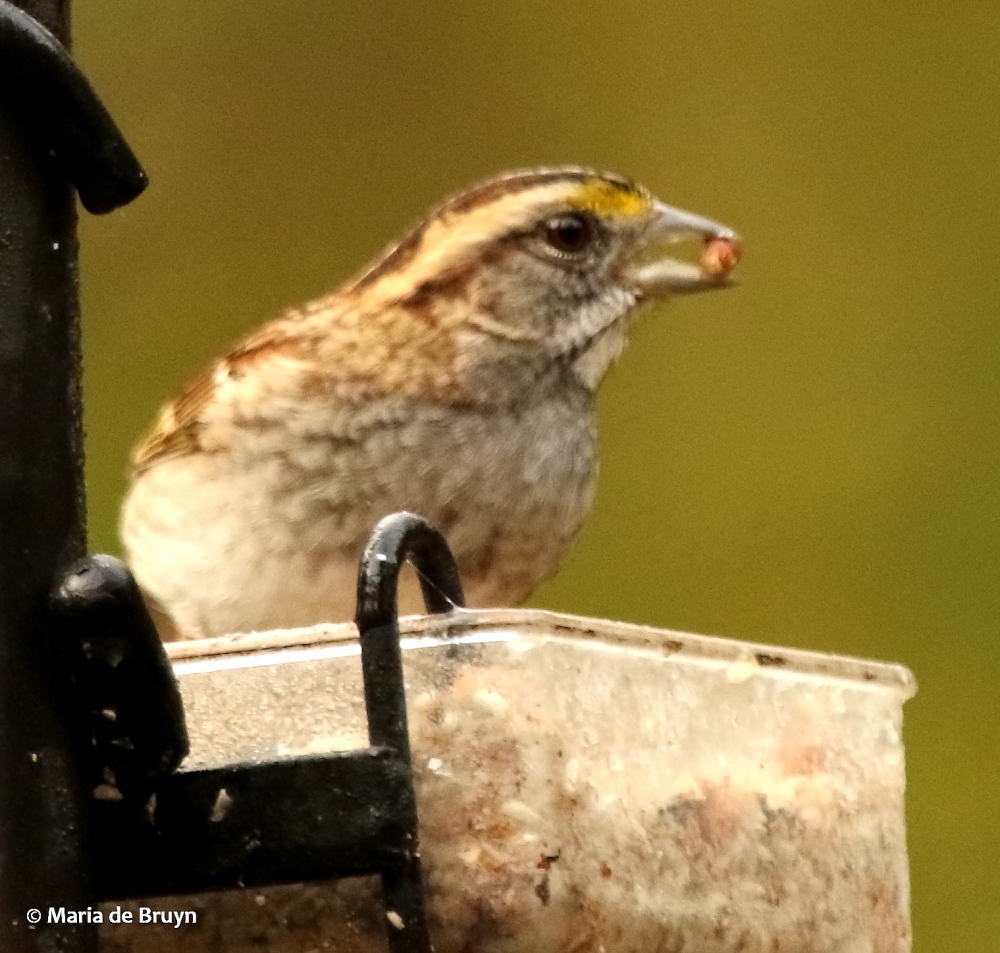
Species that usually forage on the ground, like the white-throated sparrows (Zonotrichia albicollis), also make occasional forays to the nut feeder.

When the nut feeders are empty, it’s not uncommon to see birds sitting atop them; when they see me, some will call out, as if saying, “Hey, fill up that feeder, please!” And I usually accommodate them, especially when it is very cold, as has been the case the first days of 2018 – we have had a record-breaking stretch of days in which the temperature did not rise above freezing, an unusual occurrence for our southern state of North Carolina.


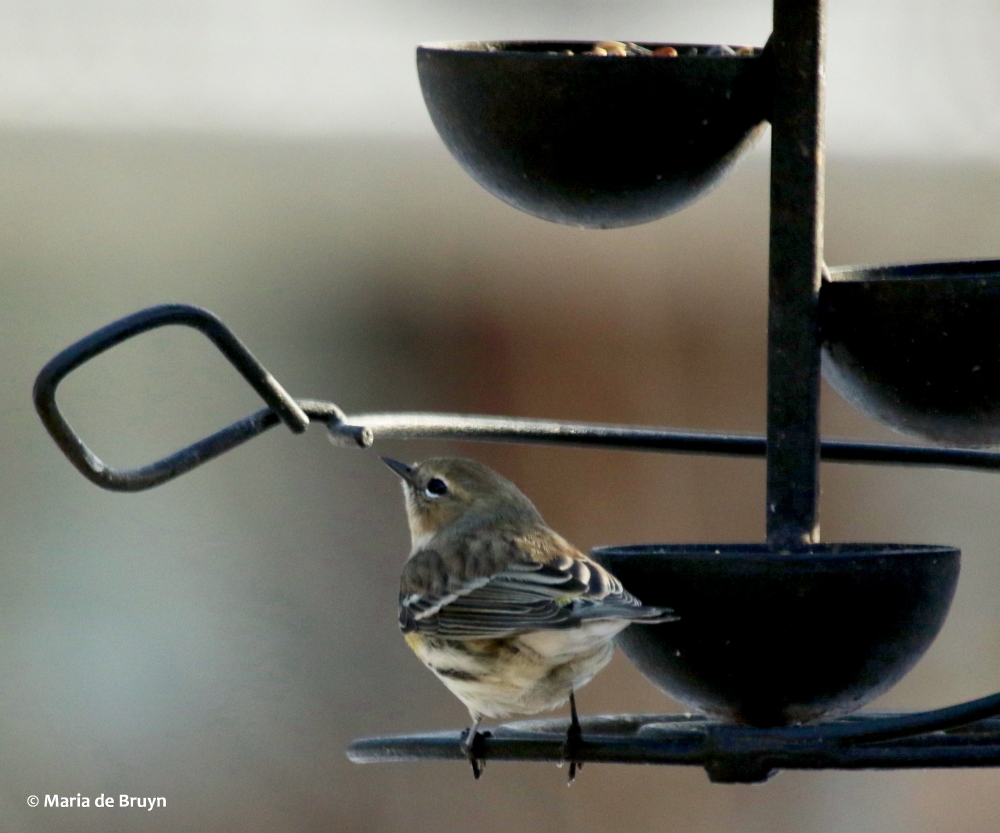
Yellow-rumped warbler  (Setophaga coronata)  House finch (Haemorhous mexicanus)

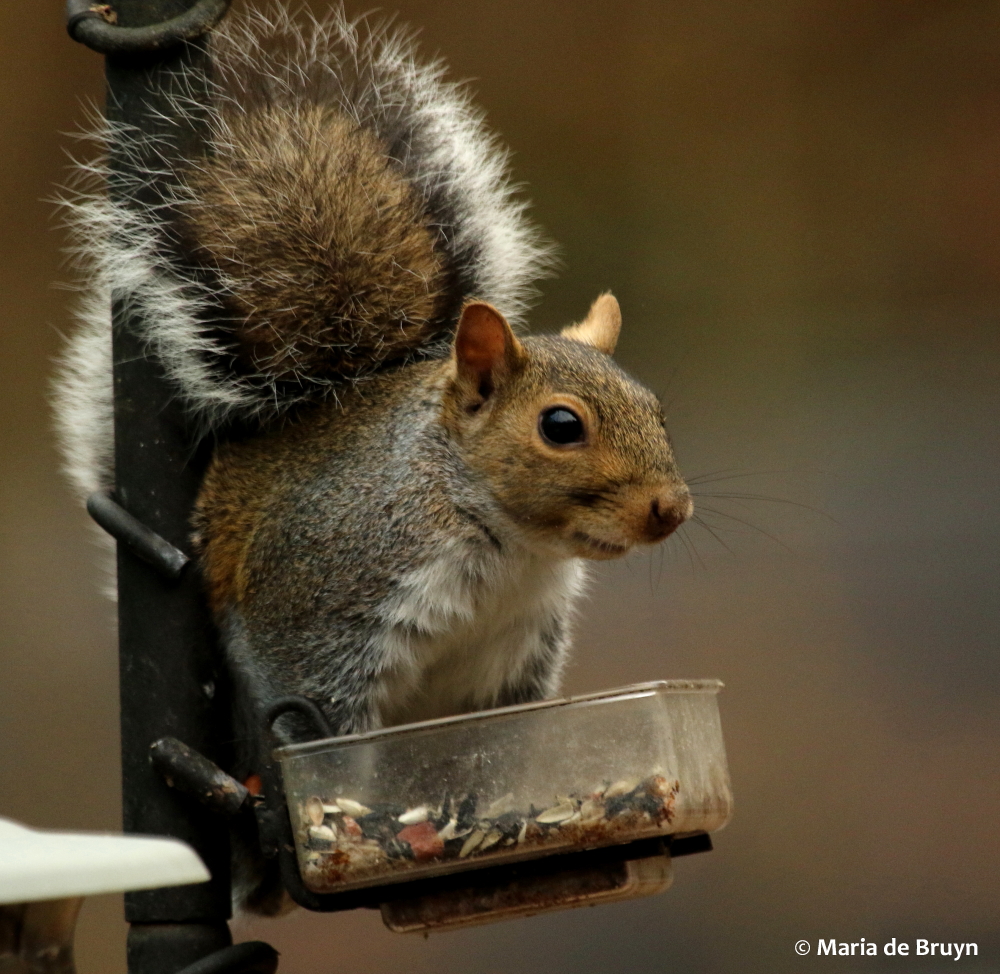
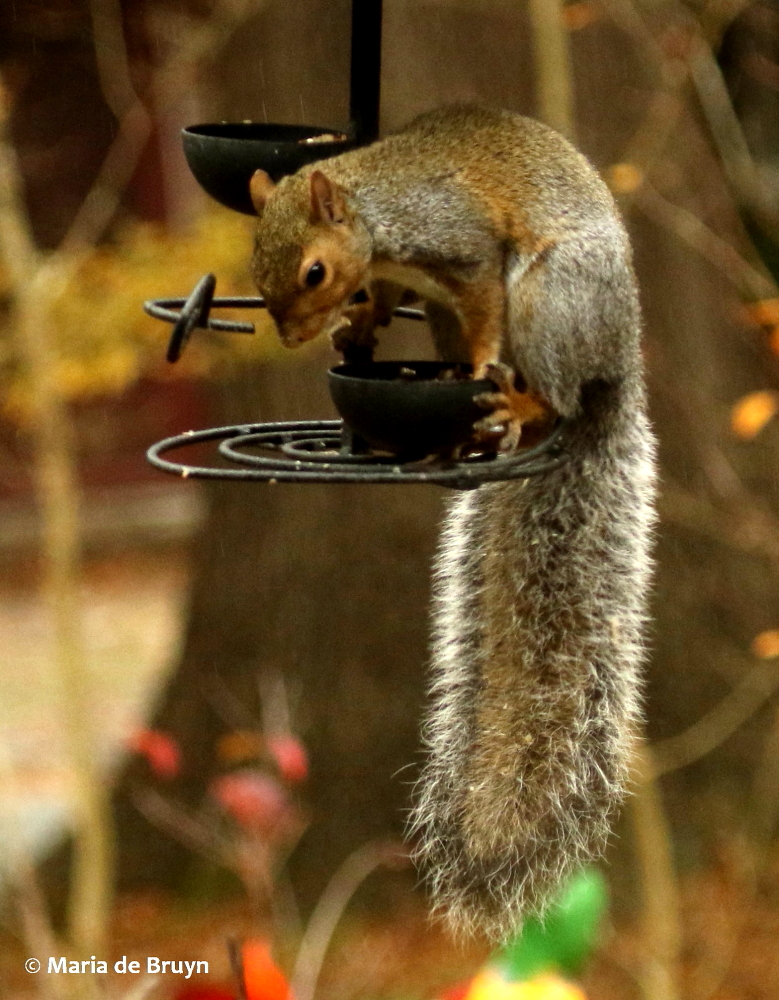
The nut feeders have also been very attractive to the resident Eastern gray squirrels (Sciurus carolinensis), one of whom has been VERY persistent in devising ways to get onto the feeders. Each time s/he succeeds, I change the position of the feeders or stumps and branches nearby. Currently, that clever rodent hasn’t been able to get up there. In compensation, I occasionally throw a handful of nuts on the ground.


So, not all the birds are “nuts” for nuts, but plenty of species think they’re mighty fine! They are definitely a worthwhile addition to the birders’ array of feeder offerings.

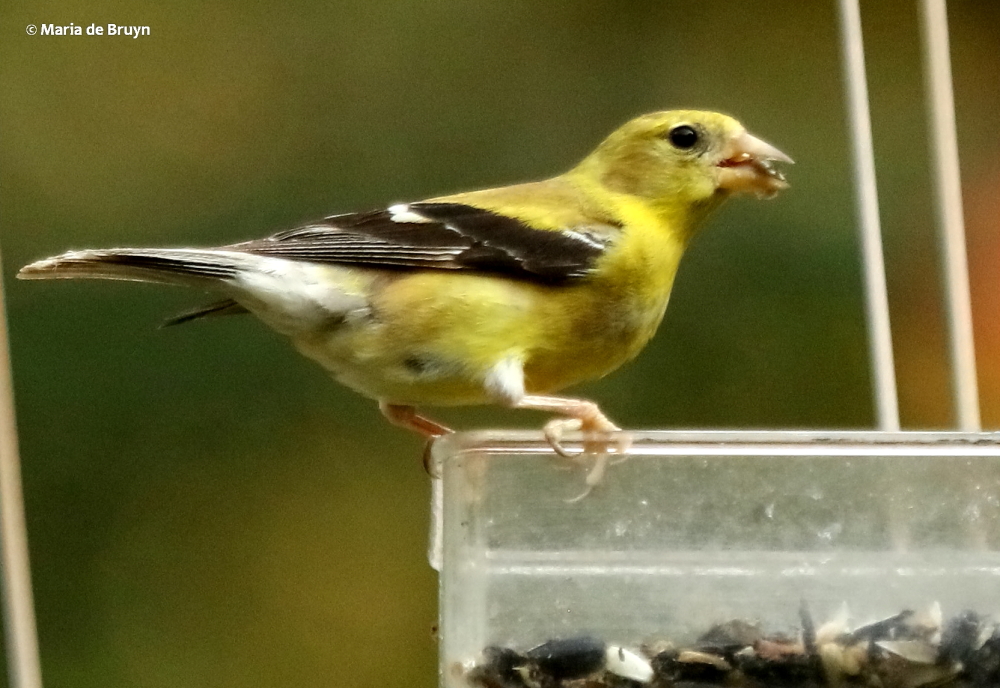
American goldfinch (Spinus tristis)


My pond and the cycle of life

Undergoing cardiology exams can bring up thoughts of mortality and a life lived; perhaps they also made me more attentive to the cycle of life in my yard, particularly in the vicinity of my backyard pond.

Several years ago, a local garden center went out of business and they had a 175-gallon black plastic pond for sale. It was a good deal, so I invested in it and then had to dig a large hole in the rocky Piedmont clay ground of my backyard (with a bit of help from a neighbor teen). At a certain point, the ground was so hard we couldn’t penetrate it with shovels so the pond now sits a bit above ground level; the rocks I piled up around it have offered a home to Eastern chipmunks (Tamias striatus).


I transferred some of my beautiful koi and goldfish from a smaller pond, only to have a great blue heron (Ardea herodias) come by to clean them all out.

On the recommendation of the garden center staff, I had positioned a heron statue by the pond – they said herons don’t like competition, so the intruder would keep flying when s/he saw the one by the pond. It didn’t take long for the bird to figure out the stationary bird was not real, however.

After the heron had eaten all the koi and goldfish, I still had some tiny baby fish. At first, I thought they were from my now deceased koi but apparently the intruder heron had had fish eggs on its feet from a nearby natural pond and left them behind. So for a time, I had unidentified native fish in the pond. They were extremely shy, however, and I only got a brief look at them when they surfaced early in the morning; as soon as I came near, they dove down under the water plants (no good photos).

Then some green frogs (Lithobates clamitus) moved in this past summer and ended up being extremely prolific reproducers. Before I realized it, there were at least 500 tadpoles in the pond!! They were eating the fish food and at the same time I noticed that I wasn’t seeing the fish at all anymore. Going online, I found out that tadpoles will eat fish – their sheer numbers had to have spelled doom for the fish.


I collected lots of the tadpoles, gave some to a friend for her water feature and released hundreds into the local creek (they are native animals after all). A few of the tadpoles grew into frogs and the pond became a residence for some very loud croakers.


The next chapter in the story came a couple days ago. I had seen a pair of red-shouldered hawks (Buteo lineatus) visiting my yard recently. I thought they were after the chipmunks, numerous squirrels and songbirds populating the area. The other day, however, one hawk took up a position in the crepe myrtle tree next to the pond and just sat there calmly not bothering with any of those creatures. Numerous Northern cardinals (Cardinalis cardinalis) perched in the tree above her and many other species of birds were at the nearby feeders;  none of them were concerned at all with the hawk’s presence. The squirrels didn’t seem perturbed either.

She sat fairly still and I took some photos through my kitchen window. Then I ventured out into the backyard, sure she would take off as I left the porch steps. But Ms. Hawk just sat there, sometimes stretching a leg or engaging in a little grooming.


Occasionally, she looked up but often her gaze was fixed on the area around the pond.

She would stare intently down at the ground – I thought she might have spotted one of the pond chipmunks.

Then after a while, I noticed her shifting her stance – suddenly she plopped down into the pond with spread wings. It happened too fast for me to get out from behind dried plants to get a good photo, so I watched as she climbed out of the pond. Then it became apparent what she had been hunting – she had caught one of the green frogs.


It looked like she bit its head to kill it as soon as she got on dry land; the frog wasn’t moving.

Then she spent time ruffling and shaking out her feathers which had gotten a good soaking.

She spent a little time looking around and then abruptly took off with her prize, closely followed by another red-shouldered hawk who suddenly swooped in.

He chased her but she got away with her meal and he ended up sitting in a neighbor’s tree, somewhat disgruntled with his failed thievery attempt.


Ms. Hawk returned yesterday and spent quite a bit of time in a high tree surveying the yard and gazing down at the ground. Red-shouldered hawks sometimes eat birds, such as sparrows, doves and starlings (which are all numerous around my feeders) but more often they go after snakes, mice, toads, frogs, lizards and small mammals such as voles and chipmunks. They will also eat insects and earthworms. Since I’m leaving the leaf litter, there are undoubtedly more insects hiding there than in neighboring yards. I’m not sure what Ms. Hawk is seeking in my yard, but I hope she doesn’t get all the pond frogs. In any event, I’m sure new ones will find the water in the spring and in the meantime, I have a beautiful bird of prey to watch this winter.

Finding fungal friends!

Although I find mushrooms interesting, they honestly are not especially favorite members of the plant kingdom for me. However, they do attract my attention when they are unusual or unusually abundant after rainfall. And I do find them a tasty addition to a meal for sure. So when the non-profit Friends of Bolin Creek sent out an invitation for a mushroom walk, it seemed like a nice way to take an outdoor break from my numerous tasks and chores.


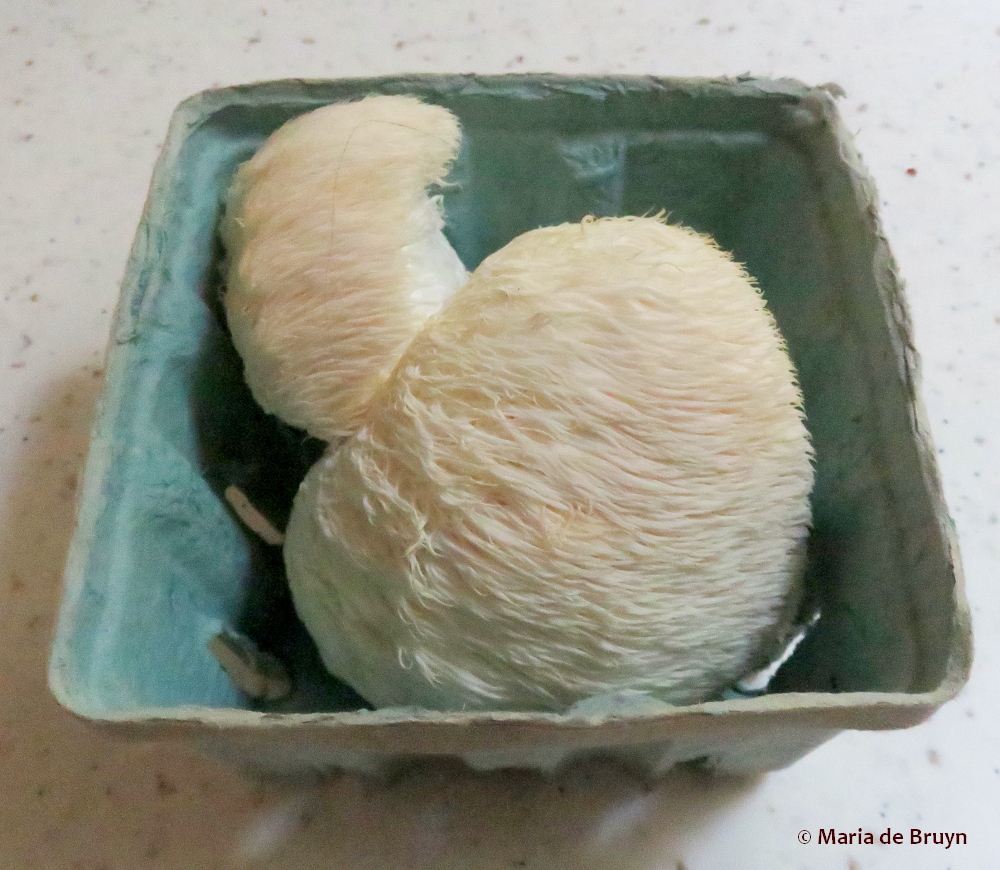
I was hoping to see a lion’s mane mushroom (Hericium erinaceus) on the walk – mushroom enthusiast friends had recommended this one to me and I happened to have purchased one from a fungus grower at the farmers’ market the previous day.

The walk was organized by the Association’s nature walk coordinator, Salli Benedict, and led by Van Cotter, a retired mycologist and volunteer with the University of North Carolina’s Herbarium in Chapel Hill. He still mentors students involved with environmental studies and our group included several students who were intent on adding to their collection of 25 species for a class assignment. So, the walk participants included people of various ages and degrees of fungal knowledge.*


We divided into two sub-groups and our group set off into the woods. Our first spotting was a Suillis mushroom. This type is associated with pine trees and we did indeed find three growing at the base of a tree. A mycologist in our group pointed out the veil, a membranous tissue covering the cap, and she cut it length-wise so we could see the inside. These mushrooms are also called butter mushrooms.


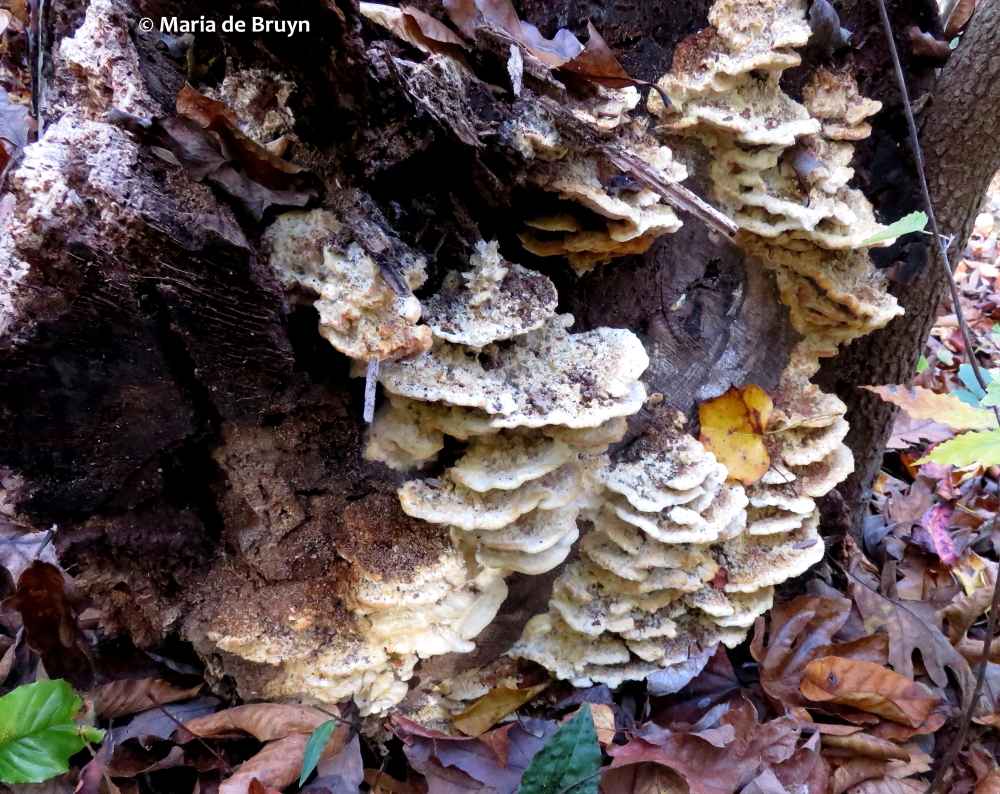
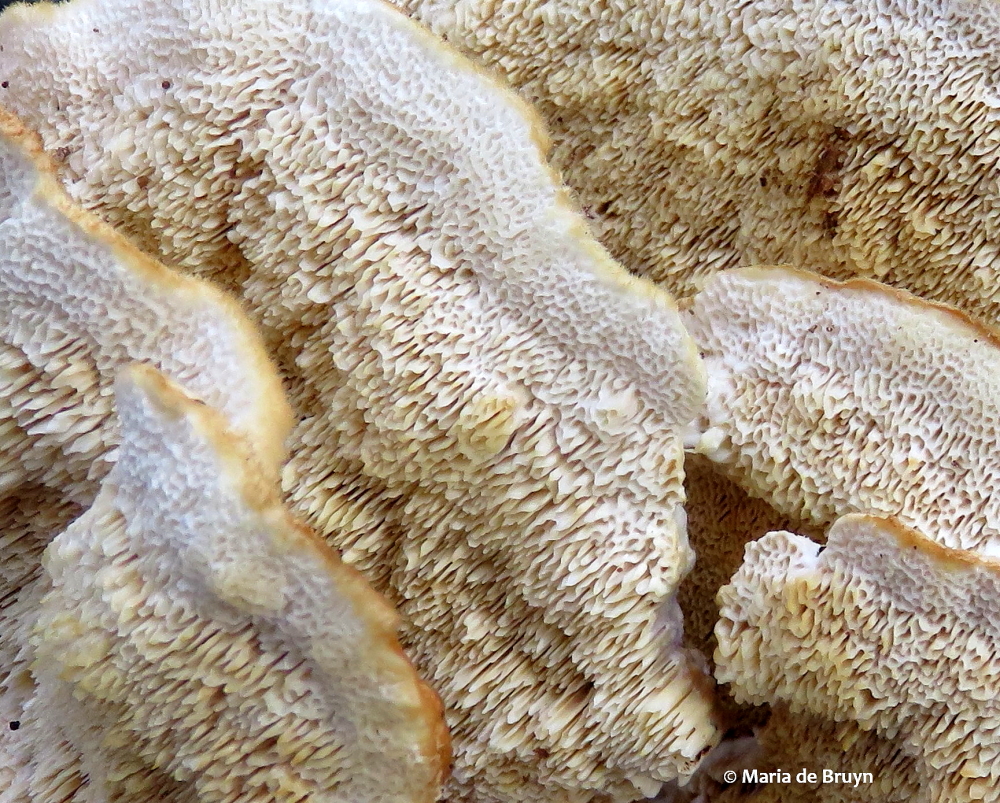
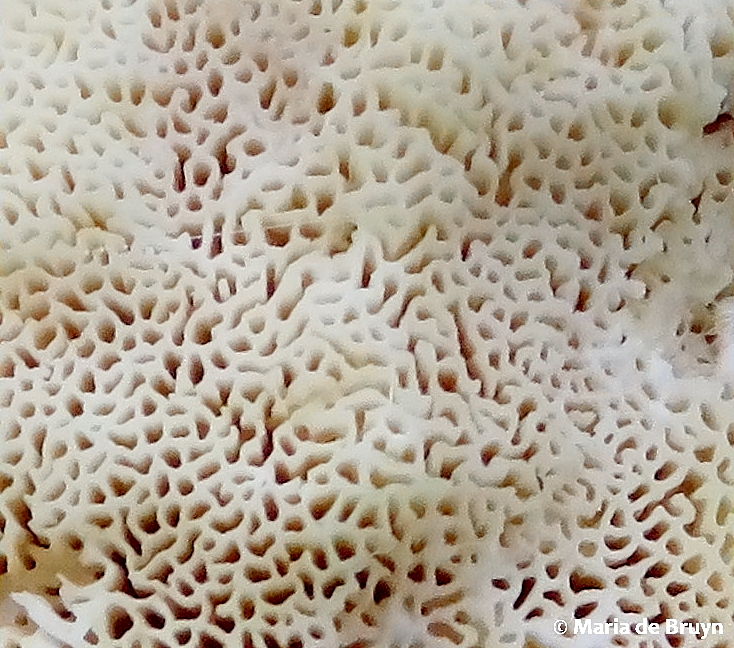
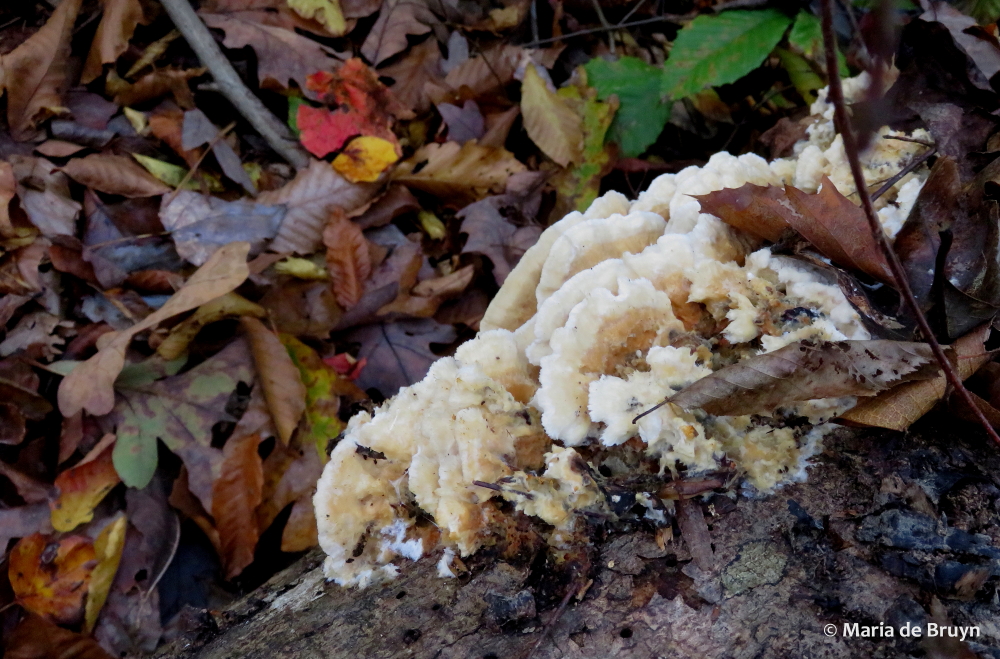
As we walked on, we came across a few species of fungi growing on fallen and rotting logs. A few were polypores, which are mushrooms with pores or tubes on the underside of the cap. Some of them were shelf or bracket mushrooms.


Some species look as if they have a maze of tubes underneath the fruiting body. The polypores are important in furthering wood decay, which in turn is important for cycling of nutrients and production of carbon dioxide in forests.


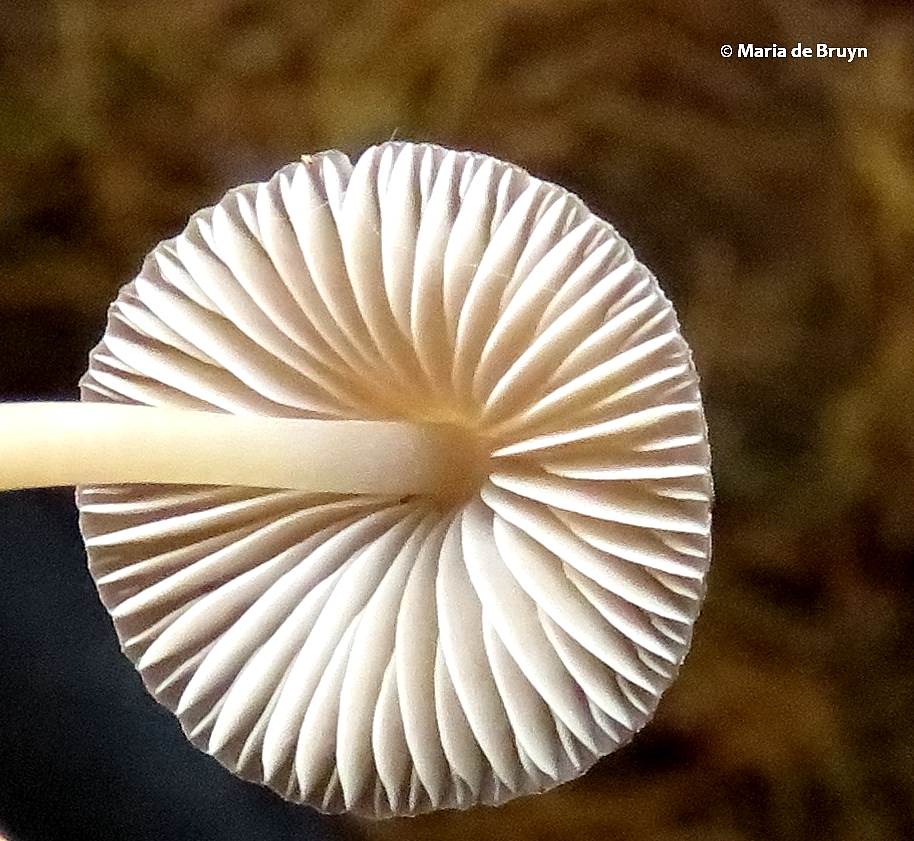
The tiny Mycena mushrooms have conical caps with gills and fragile thin stems. Some species are edible, but others contain toxins.


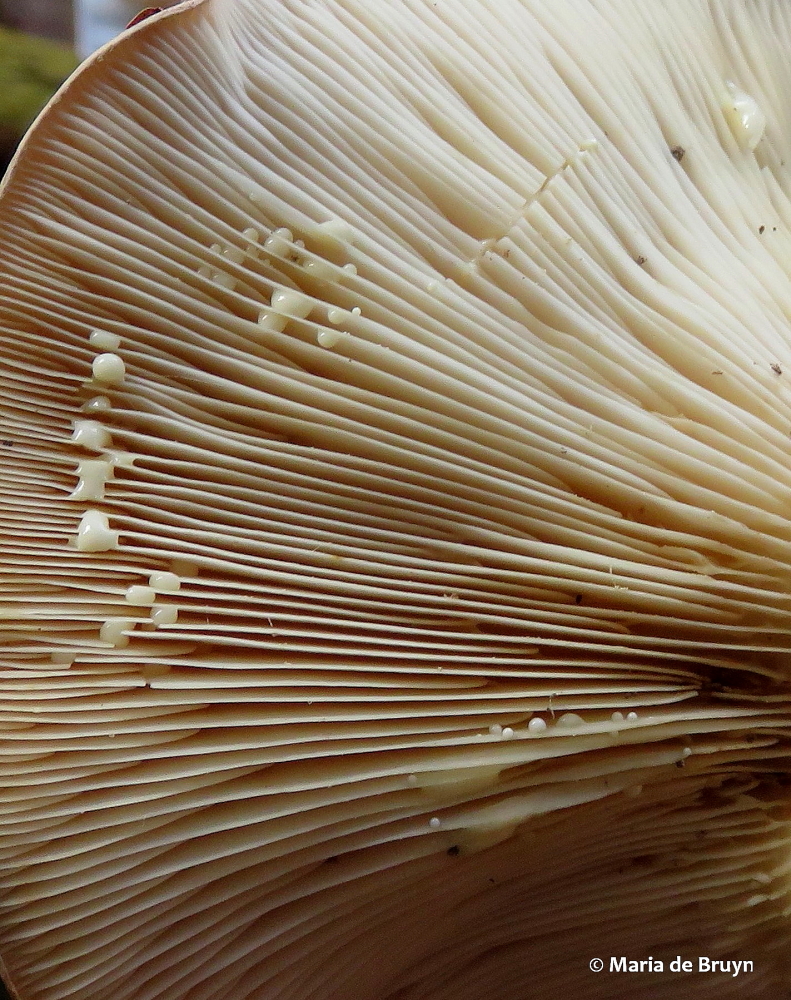
The Lactarius mushrooms, known as milk-caps, release a milky substance when the cap is cut or damaged. The undersides of the caps are gilled.

Armillaria fungi are also known as honey fungus; these mushrooms grow on rotting wood in clusters and can eventually become quite large. In fact, it is thought by some that an Armillaria in Oregon’s Malheur National Forest is the largest living organism on earth – it now covers about 2470 acres and may be about 8650 years old!


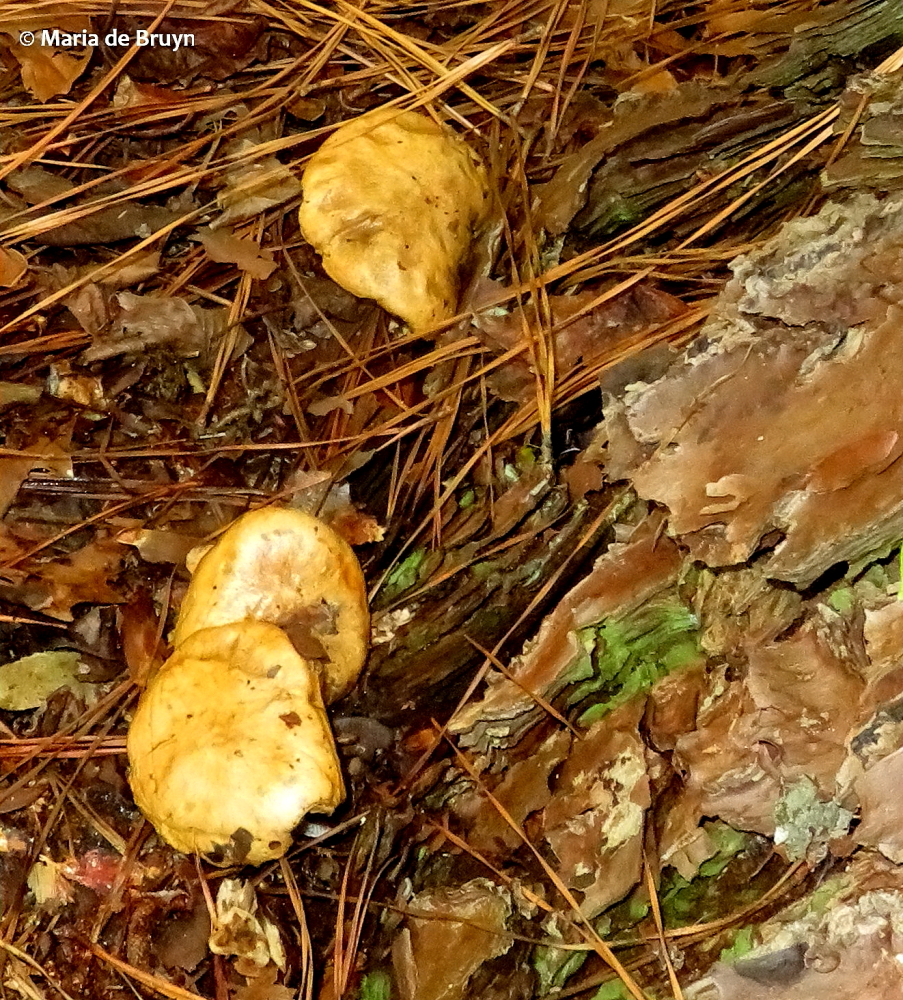
When I spotted these brightly colored Pholiota mushrooms, they were greeted with enthusiasm both by the non-mycologists and the student collectors. They only took a few and left the rest for other walkers to admire.


When we returned to our starting point, the two sub-groups laid out all their specimens and Van told us interesting facts about them. The Lepiota mushrooms are often poisonous. Because edible and poisonous mushrooms can look very similar, people without in-depth knowledge of fungi should not eat mushrooms they find growing outside. In North Carolina, for example, only about 200 of the more than 3000 identified mushrooms are common edible ones.

Few people die from eating poisonous mushrooms (7 deaths were reported in 2012), but people are hospitalized because they don’t recognize unsafe species. Some mushrooms need to be prepared for consumption in a special way to make them safe; some should not be consumed while drinking alcohol and some individuals may have personal problems with particular species.

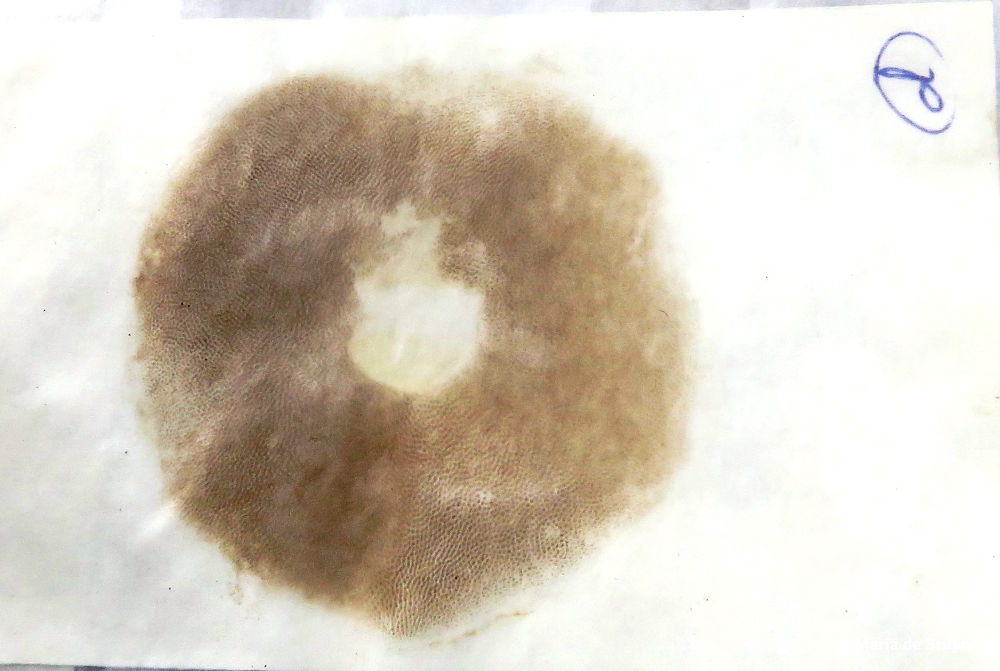
Van also pointed out that mycologists use spore prints in identifying fungal species. The color of spore prints is particularly important.


When I returned home, I prepared the lion’s mane as recommended by those who eat them regularly (sautéing or grilling; I sautéd it). It was with great anticipation that I took my first bite, remembering how much I loved oyster mushrooms when I first tried those. Sad to say, I found the lion’s mane bland and rather tasteless, but at least I had tried it. And I did have an enjoyable time on the mushroom walk, thanks to Friends of Bolin Creek!

** Thanks to Salli Benedict for providing the group photo!