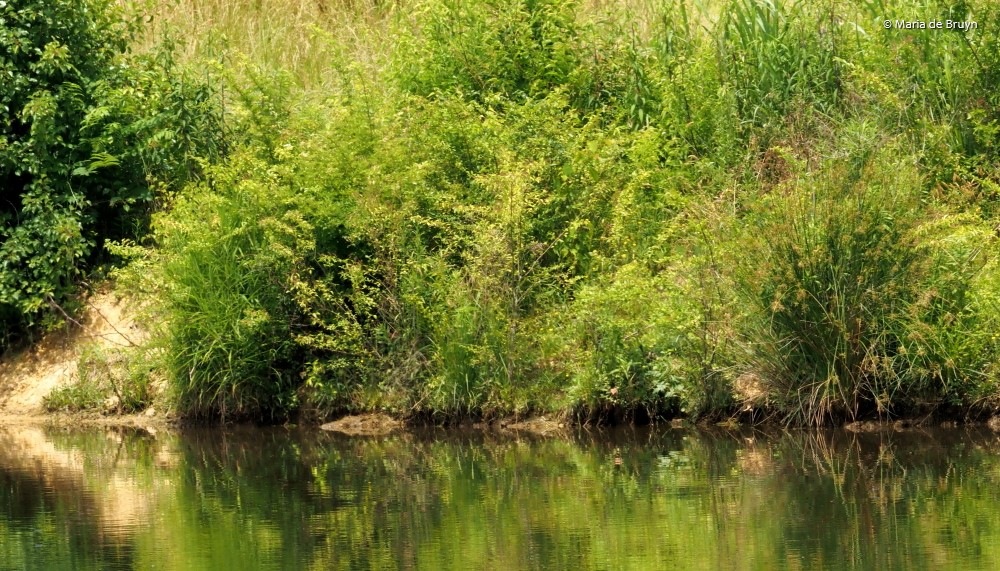
An hour at a local pond

There is a pond in the county where I live that used to be a real hot spot for birds and other wildlife. The dairy farm fields around it had lots of native vegetation, which was very welcoming to avian wildlife.

A couple years ago, the farmers retired, and the property was purchased by a vineyard owner to expand his holdings. He cut down most of the vegetation around the pond and along the road bordering the fields. He has turned most of the fields into vineyards, keeping only small portions untouched where birds can still find some refuge.
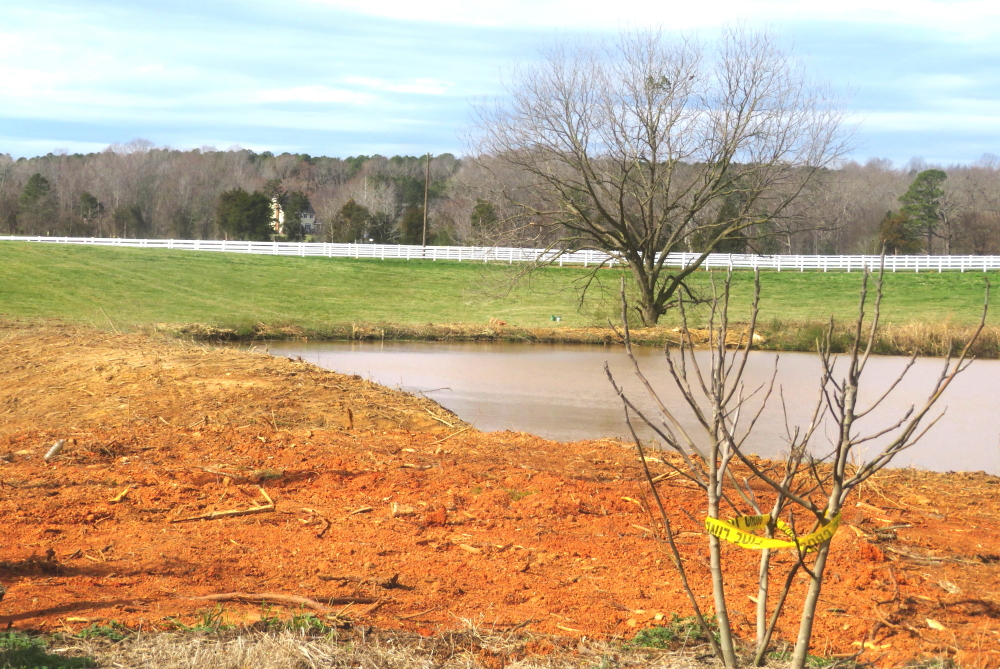
I used to see a yellow-billed cuckoo return from migration to a small patch of trees there every spring. This now is a thing of the past. However, some pond-edge vegetation had been regenerated, and a little bit was planted, so some birds are hanging in there. They still make for some interesting birding. Here is what I saw on a recent visit.
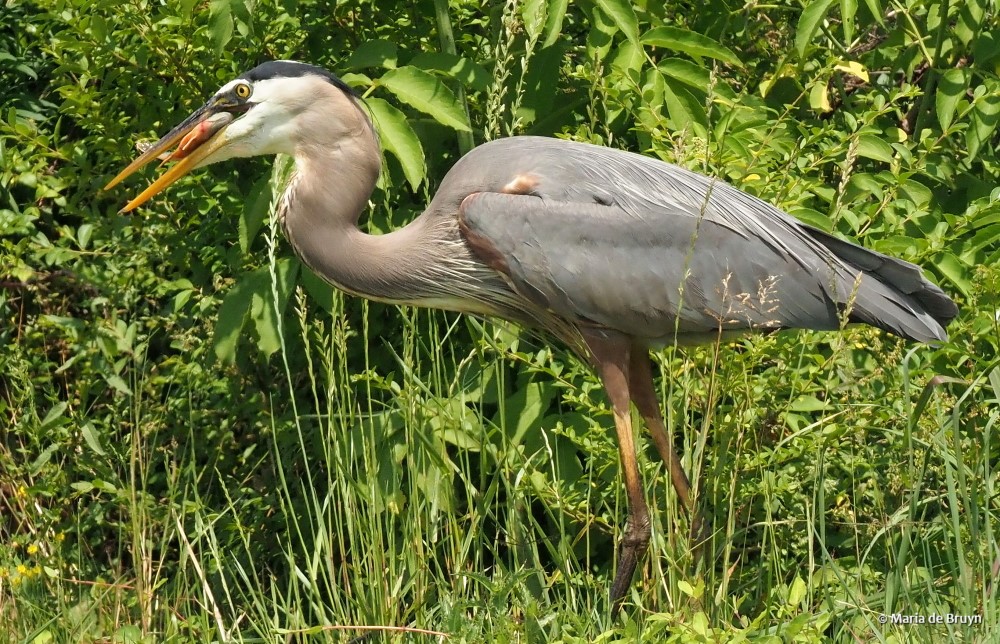
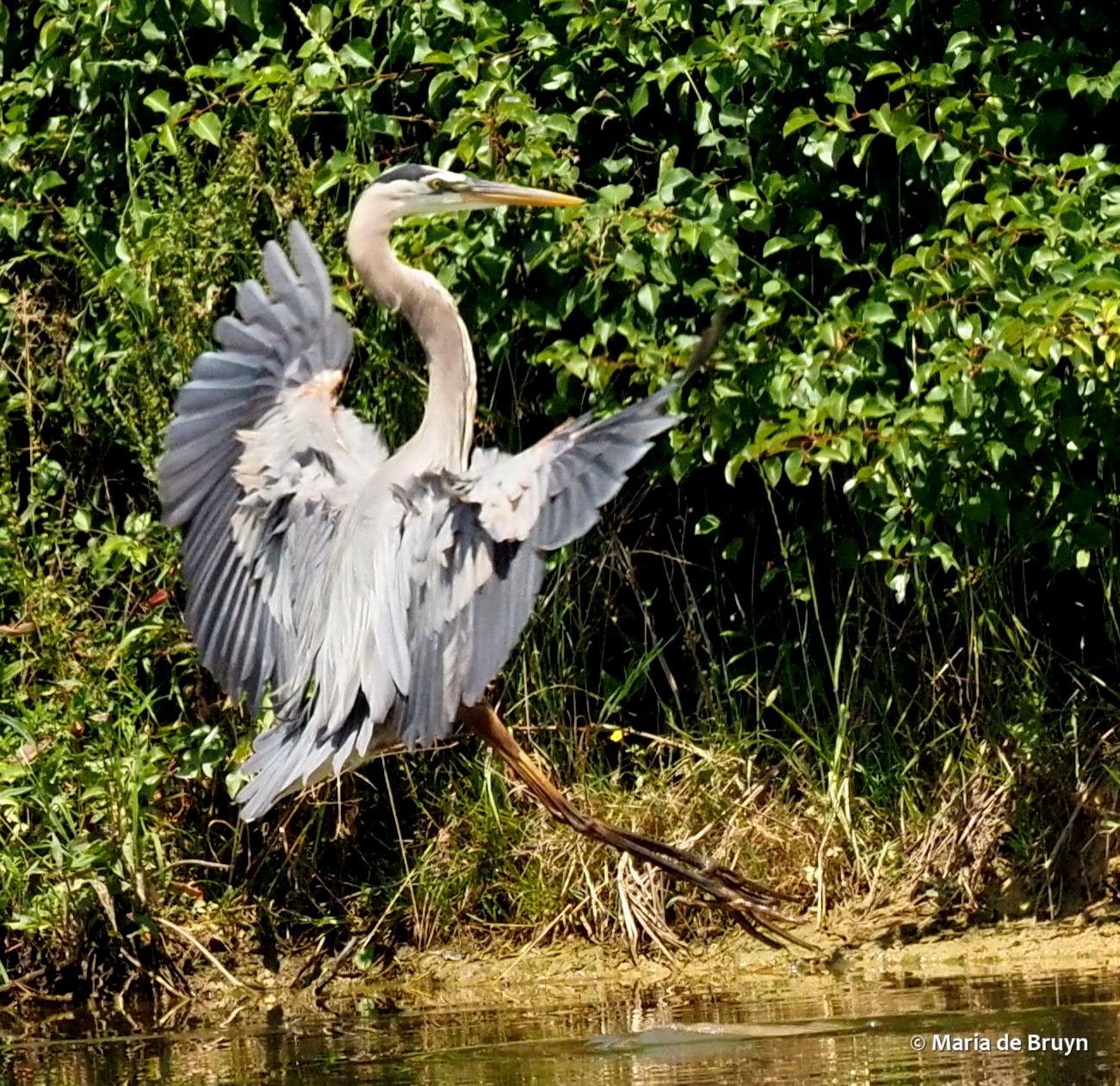
The largest birds that keep returning to the pond are the great blue herons. Sometimes there is one; other times there are two or three. Occasionally a green heron flies in or over but none stopped by on this occasion.

The heron often has good days fishing there. I often see him/her snag at least one fish and often more than one.

The heron stalks along the pond and frequently flies across to the other side for a change of venue. Perhaps the fish manage to hide well once they realize s/he is stalking them.
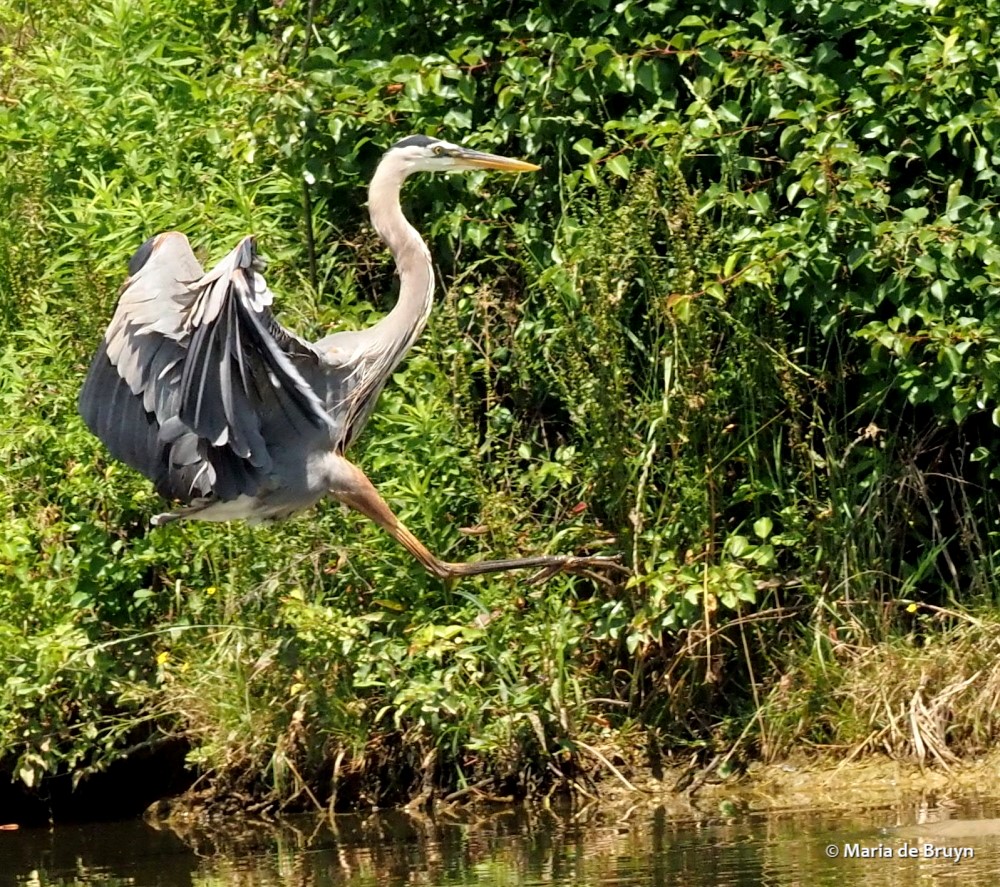
It’s wonderful to see the heron’s wings spread as the bird alights and then begins stalking again.

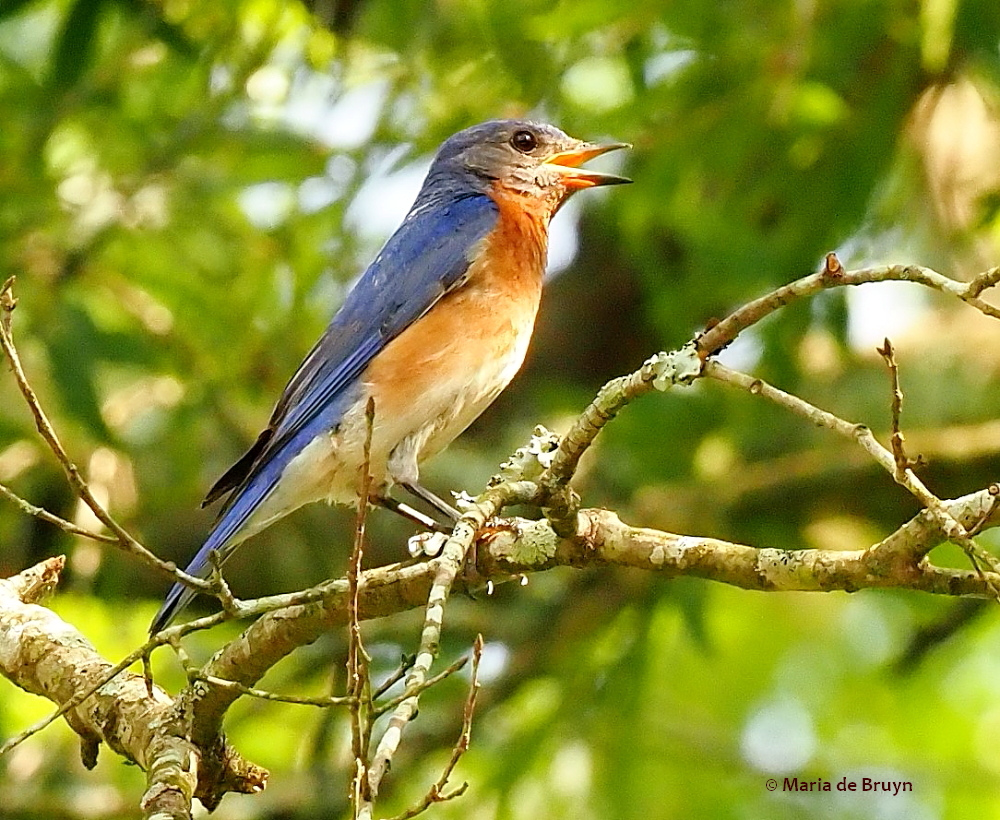
Eastern bluebirds had taken advantage of an electrical installation next to the pond (which also serves as a resource for the local fire department as needed). They not only used it as a perch for bug seeking but also built a nest inside it. I wondered what the new owner would do.
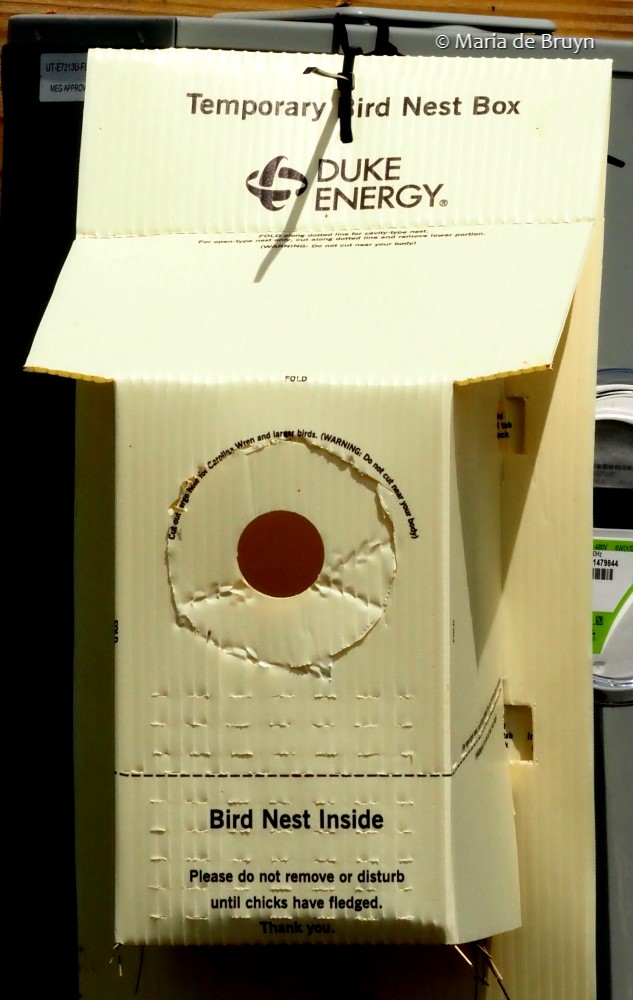


To my great surprise, his problem was solved by the local electricity company. They removed the birds’ original nest and put it into a temporary nest box!
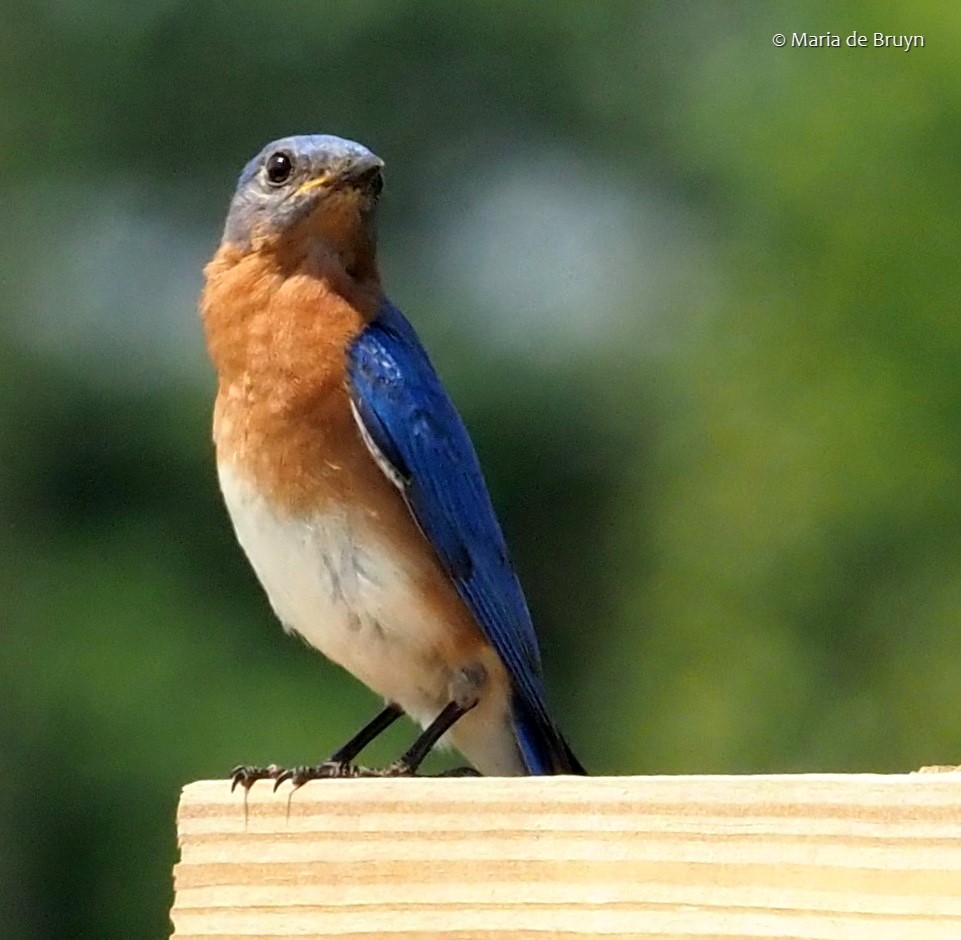
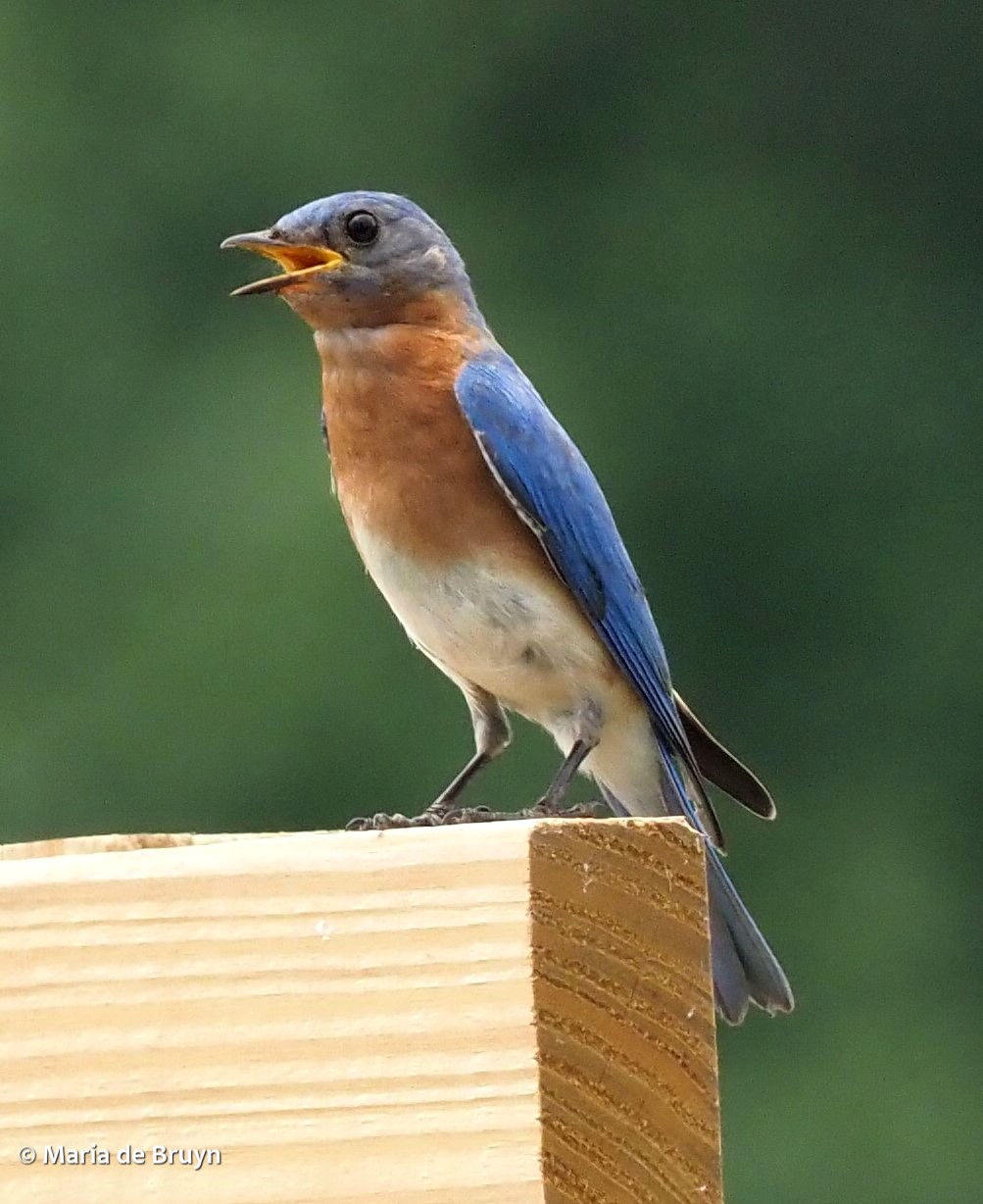
    

Mom and Dad bluebird were guarding the nest space, but it looked like they were still getting used to the new digs.

While watching the bluebirds, I suddenly heard a commotion in front of me, but I couldn’t see what was happening behind the bushes at the pond’s edge (I’m short!). However, I could tell that a bird was in distress. I wondered if one of the huge snapping turtles had caught a duckling. I walked further along and saw one of the two resident female wood ducks (above) swimming away from the area.
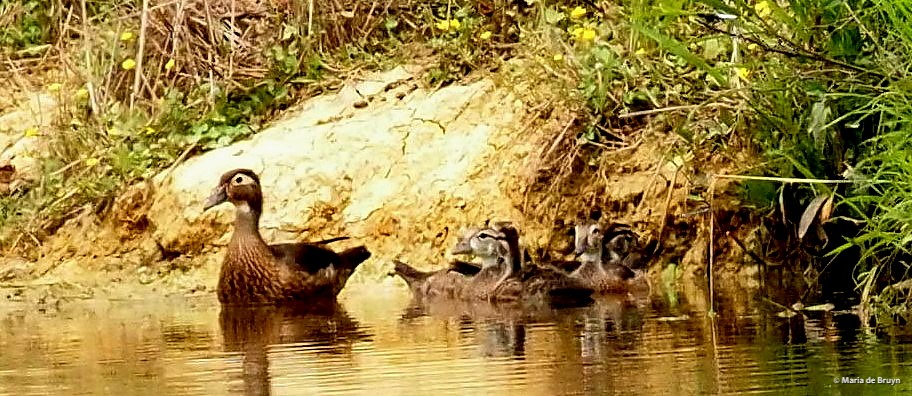
No ducklings followed and I feared the worst. One mother had five ducklings (above) while the one swimming away had lost one a few weeks before. Now I wondered if she had lost others, too. Luckily, I later saw her return to the area and shepherd four ducklings across the water to the other side.


In the small bit of meadow immediately adjacent to the pond, red-winged blackbirds are now nesting. One pair has a nest close to the road and they are warning visitors away with constant flights along the pond’s edge, while the male calls repeatedly.


The female was taking breaks from warning-off flights to enjoy an occasional meal, at this time consisting of one of the remaining periodical cicadas that emerged recently.

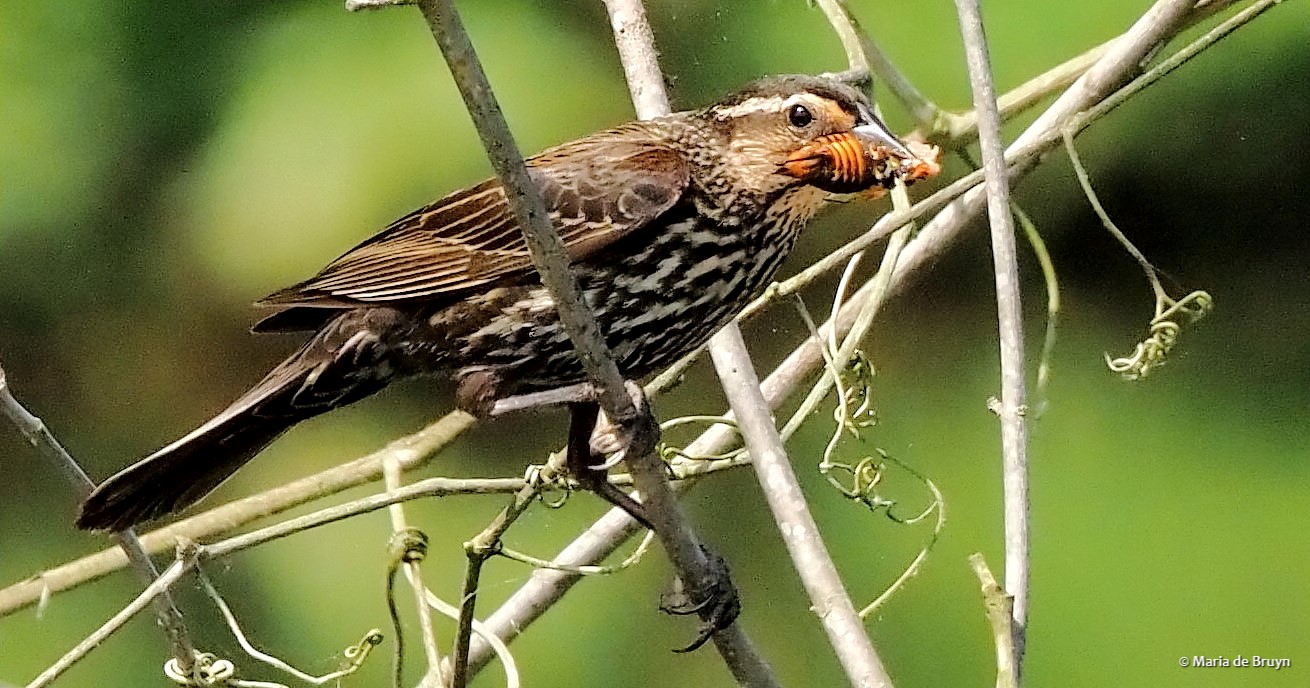
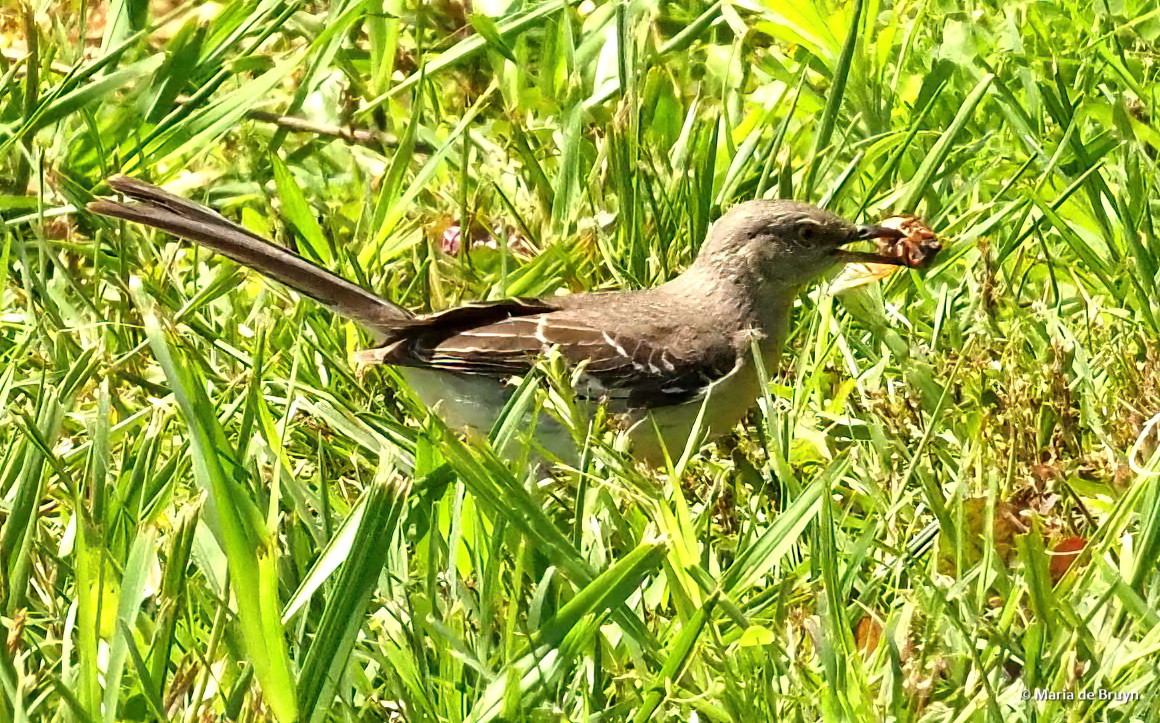
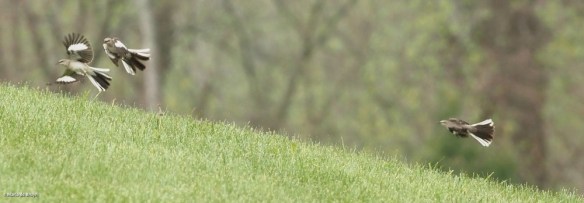
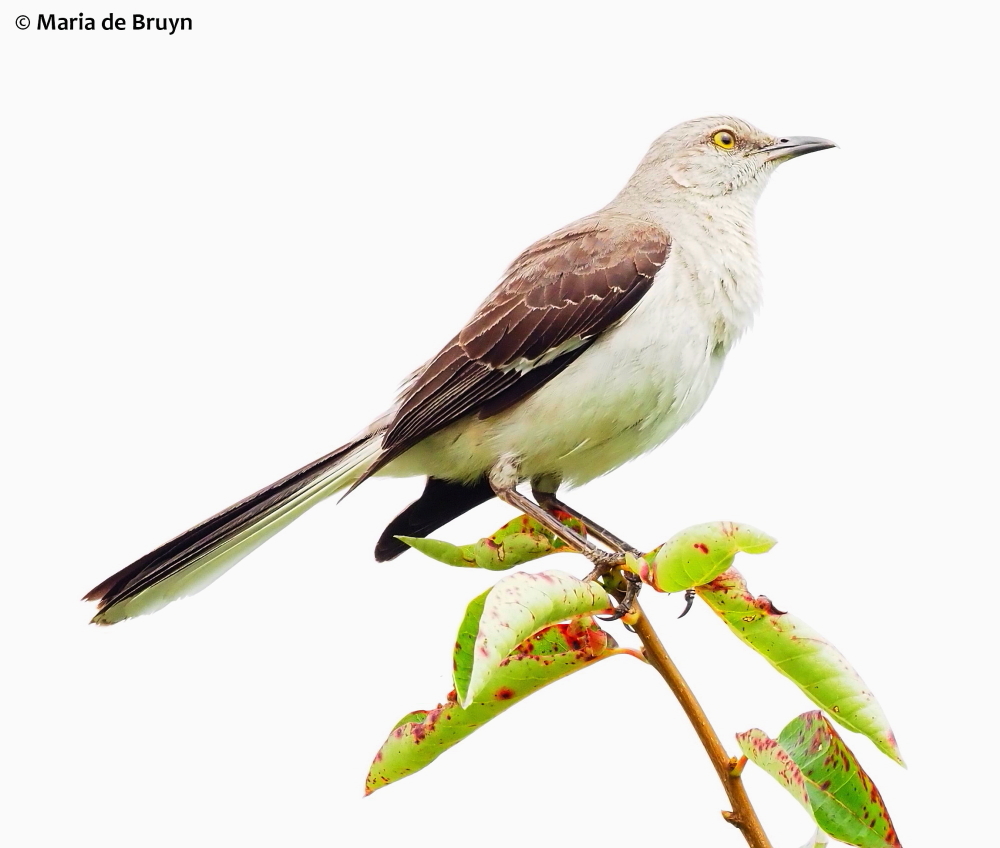
She wasn’t the only one seeking these insect delicacies. Two Northern mockingbirds were also intently examining the area under a tree for them. One finally had success in snagging a cicada. (For more about the cicadas, see my previous two blogs!)


The male red-winged blackbird was very busy keeping “intruders” as far as away as possible from their nest. He warned off the great blue heron, who was actually pretty far away. (He is flying away from the heron on the left side of the photo.)

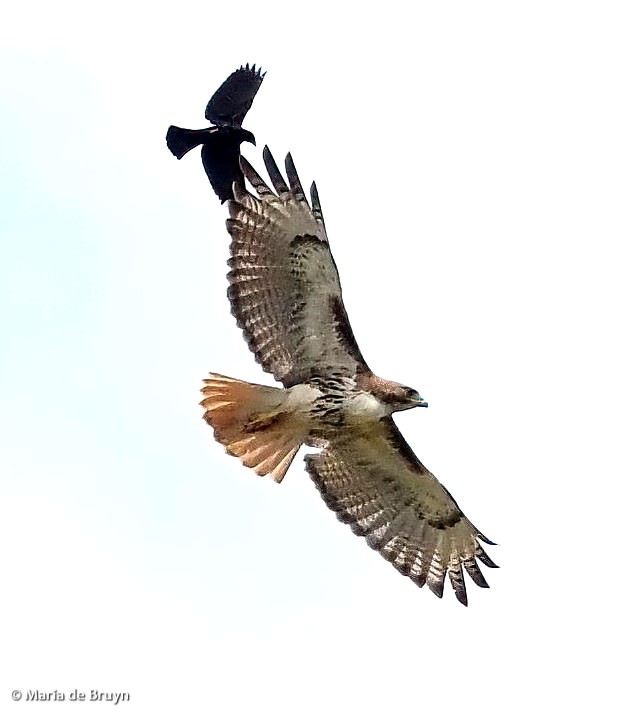
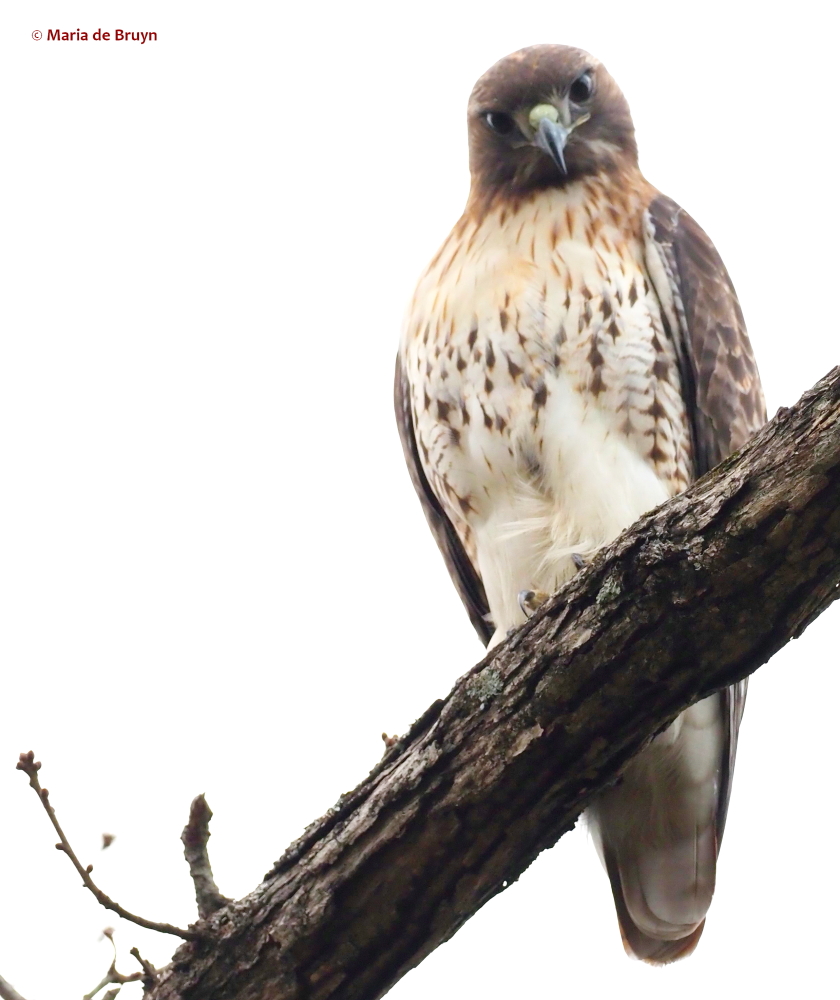
He also went after a red-tailed hawk, who appeared soaring overhead.
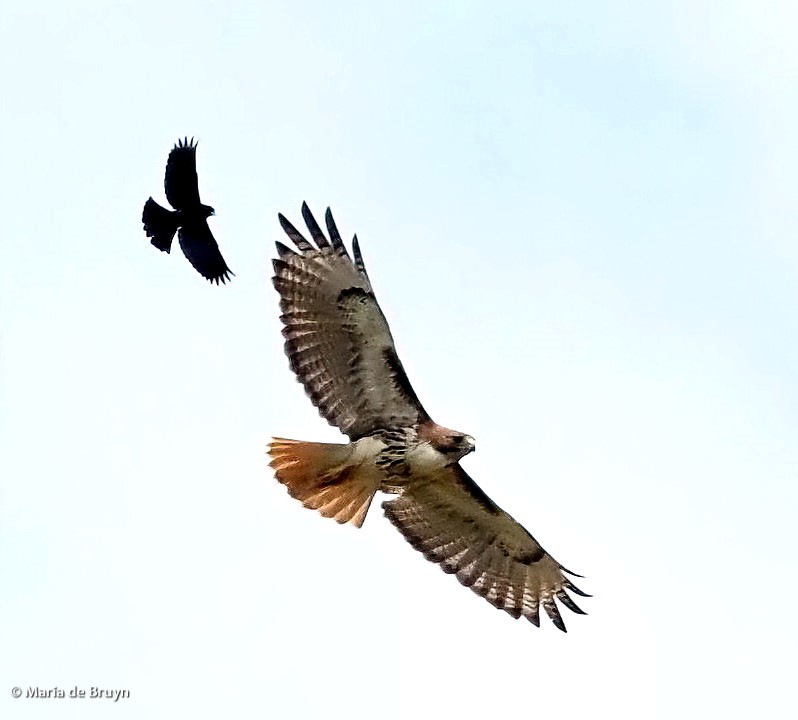
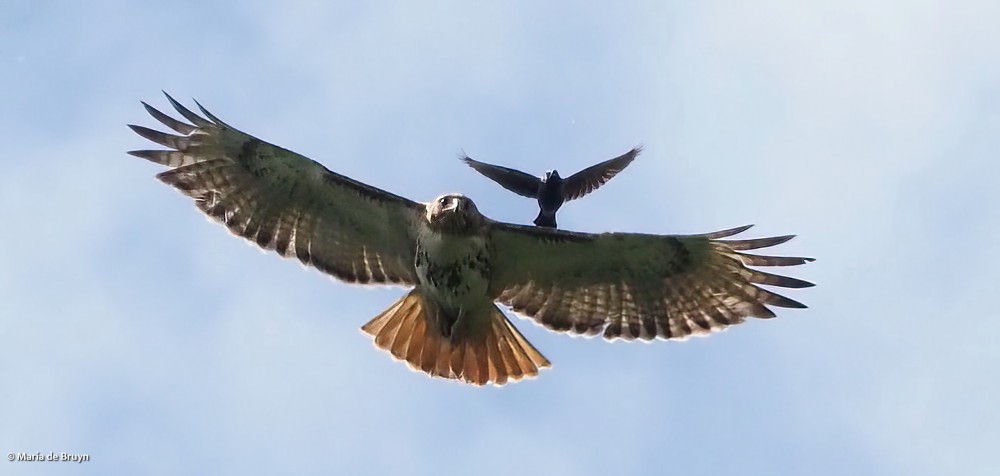
Common grackles, often present at this pond, will also chase away these hawks. There weren’t any around to join in the foray this time, but the photos below taken at another pond show how they go after the red-tails.

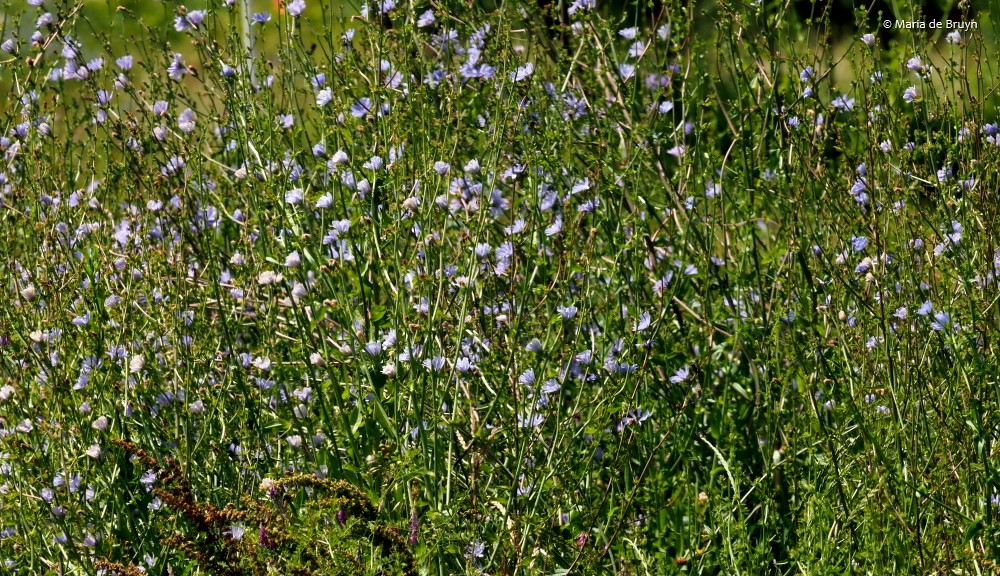
I looked at a small patch of chicory across the road to see if any bobolinks, grosbeaks or meadowlarks were around. I love this plant and planted some seeds in my own yard, hoping to attract more pollinators and birds. So far, they have not sprouted.
 

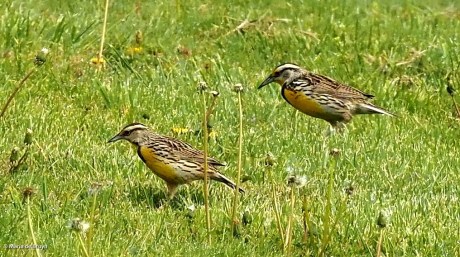
Below you see a young blue grosbeak and a pair of Eastern meadowlarks who were in the patchy field spots another time.
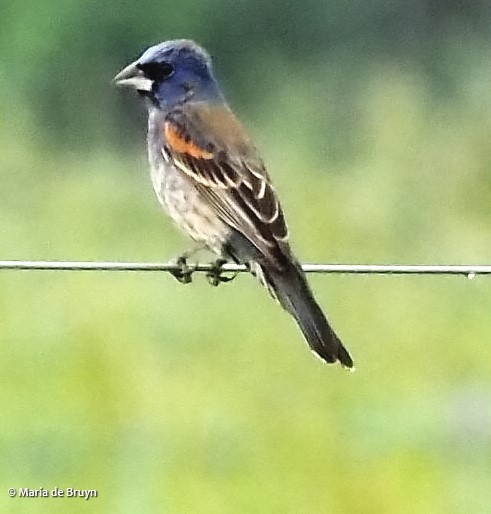
 

Usually, several types of swallows frequent the pond, including purple martins, tree swallows, barn swallows and Northern rough-winged swallows. I only saw a couple of the latter this day and only got poor flight photos as my camera began acting up, refusing to focus.

Staring hard across the pond, I did manage to spot three killdeer, four least sandpipers and a couple other sandpipers that I couldn’t immediately identify. I later learned that they were semipalmated sandpipers, which I hadn’t seen there yet. (If you click on the photo, you see it larger; then go back to the blog.)

That hour at the pond didn’t turn out to be a super one for capturing stellar photos, but it was definitely a great one for relaxing, observing the action and appreciating nature again!
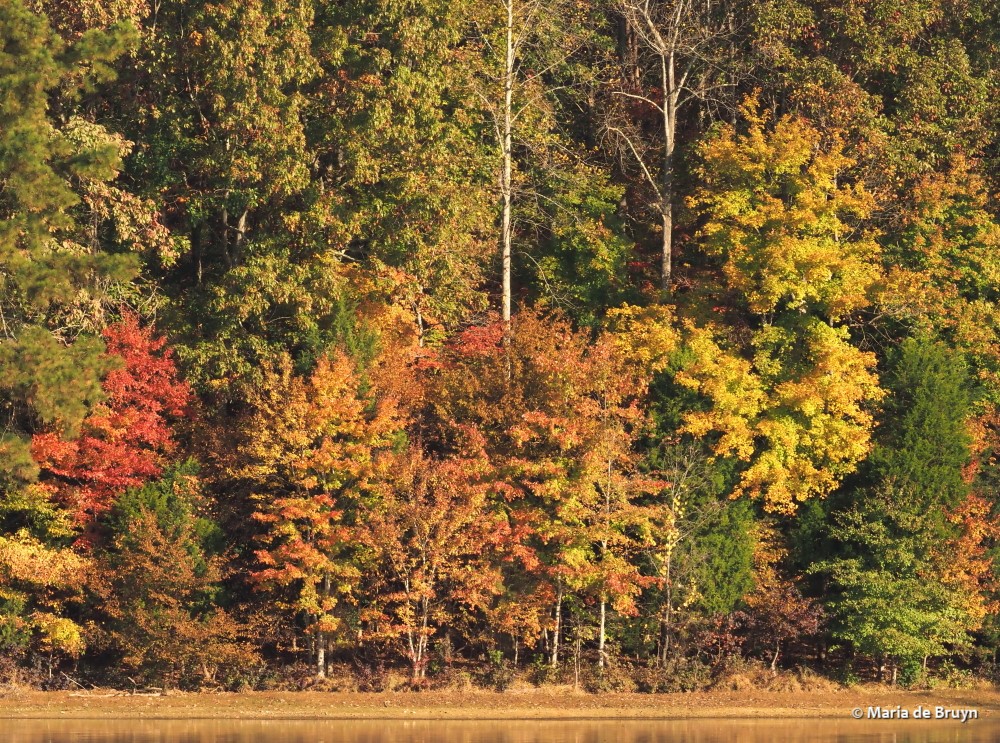
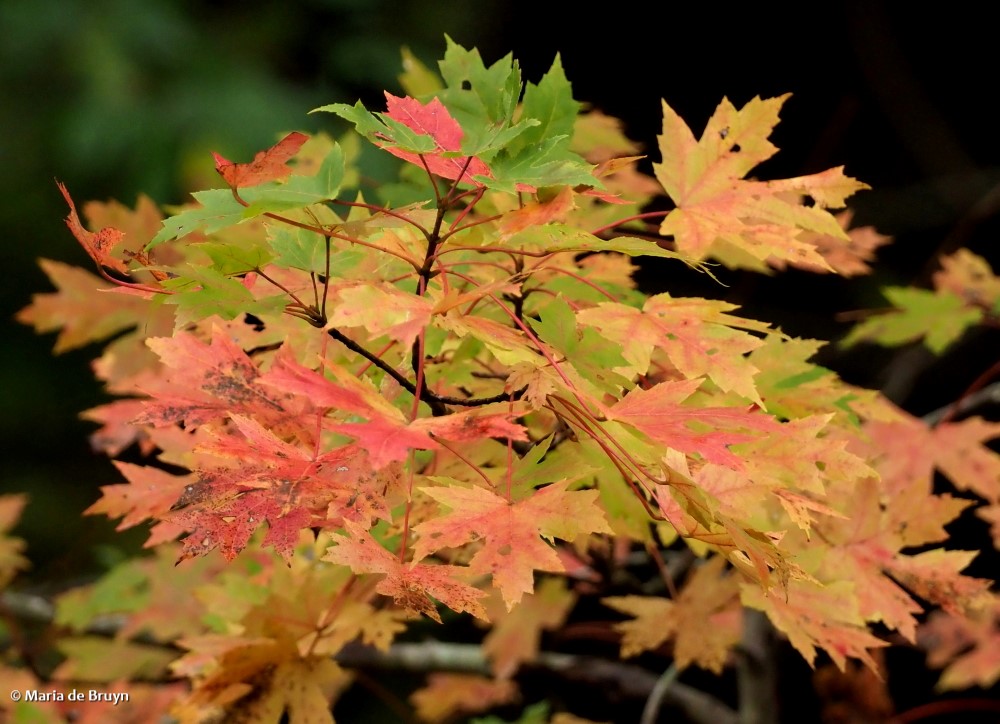
Nature Photo Challenge – Autumn Colors, part 1: trees and lakeshores

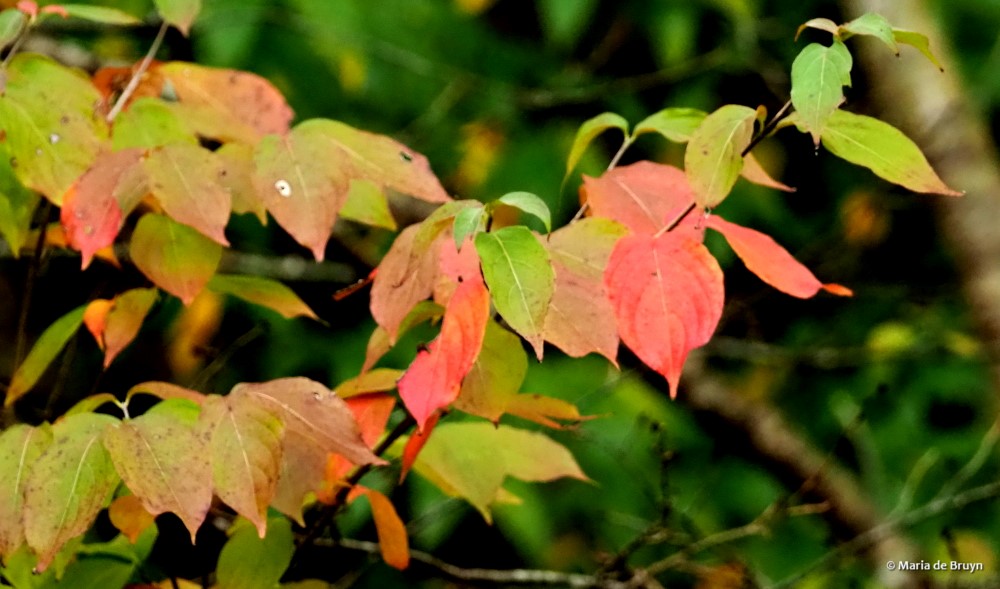
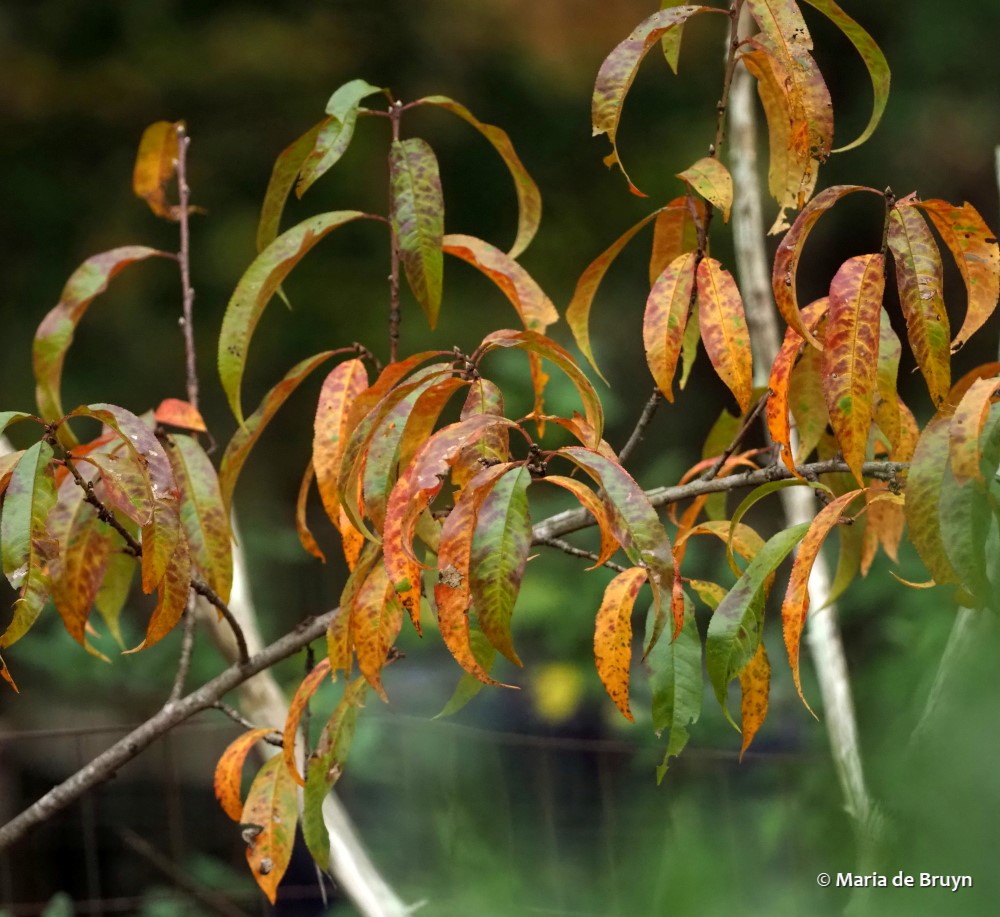
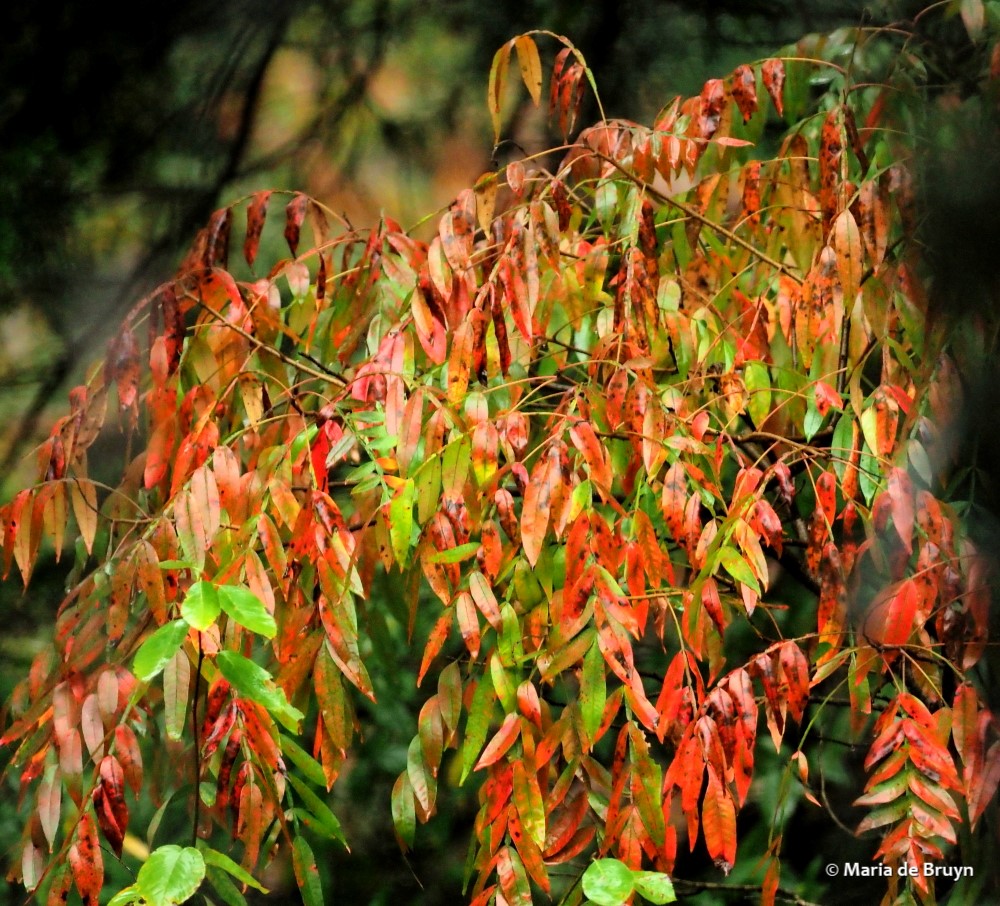
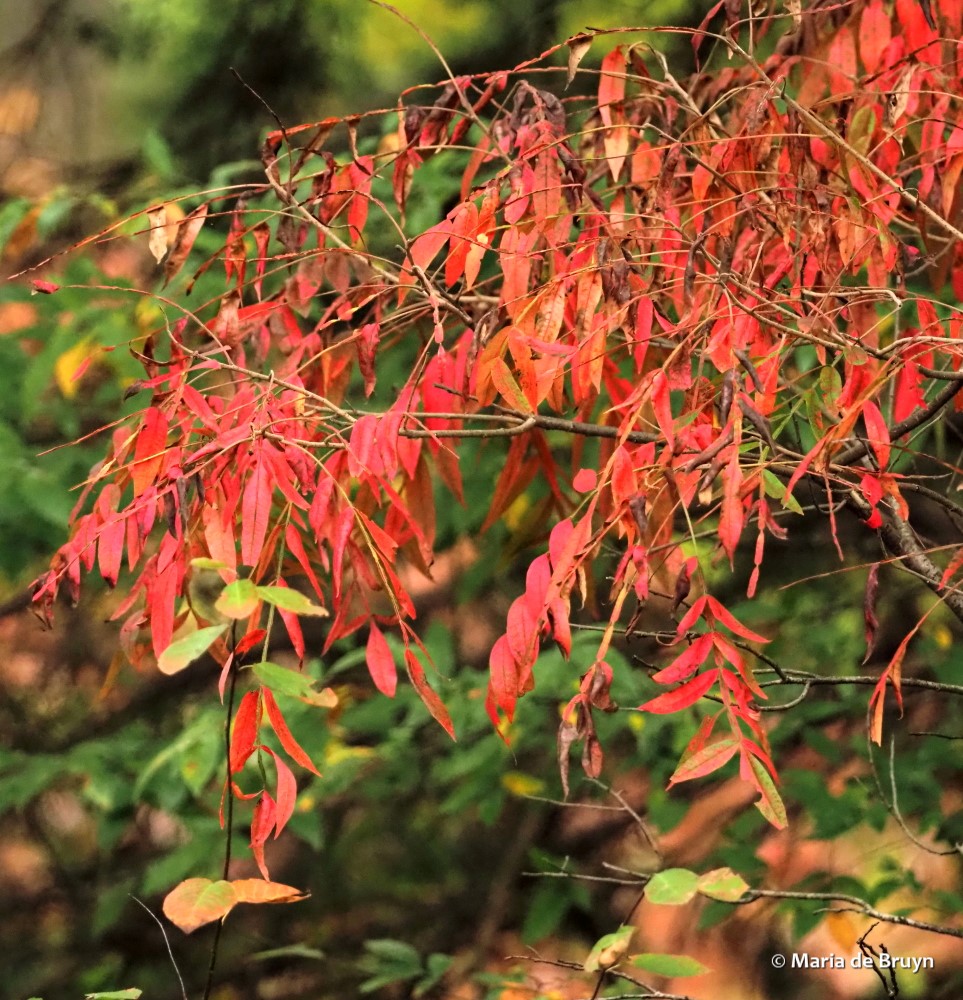
A bit late to fellow blogger Denzil’s latest challenge, I still wanted to post some photos of the beautiful autumn colors we are seeing in the Southeast USA. I ended up saving many photos for this, so this will be a 3-part blog: colorful trees, fungi and some autumn creatures and blooms.


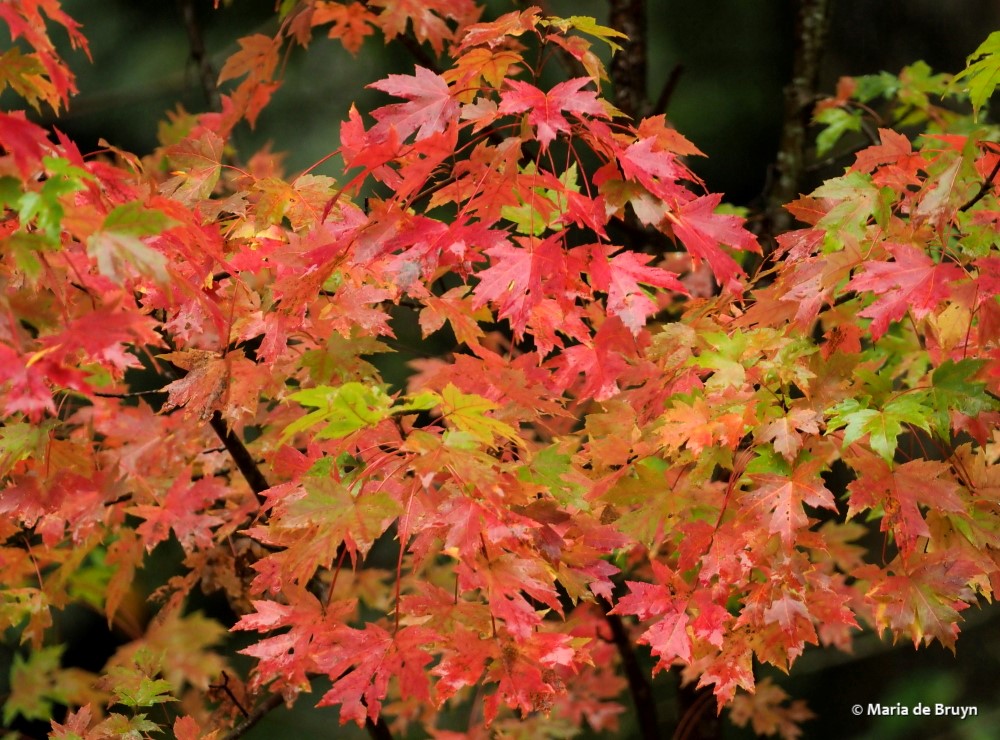
Several trees and shrubs I’ve planted in my yard are quite colorful in autumn to my delight.


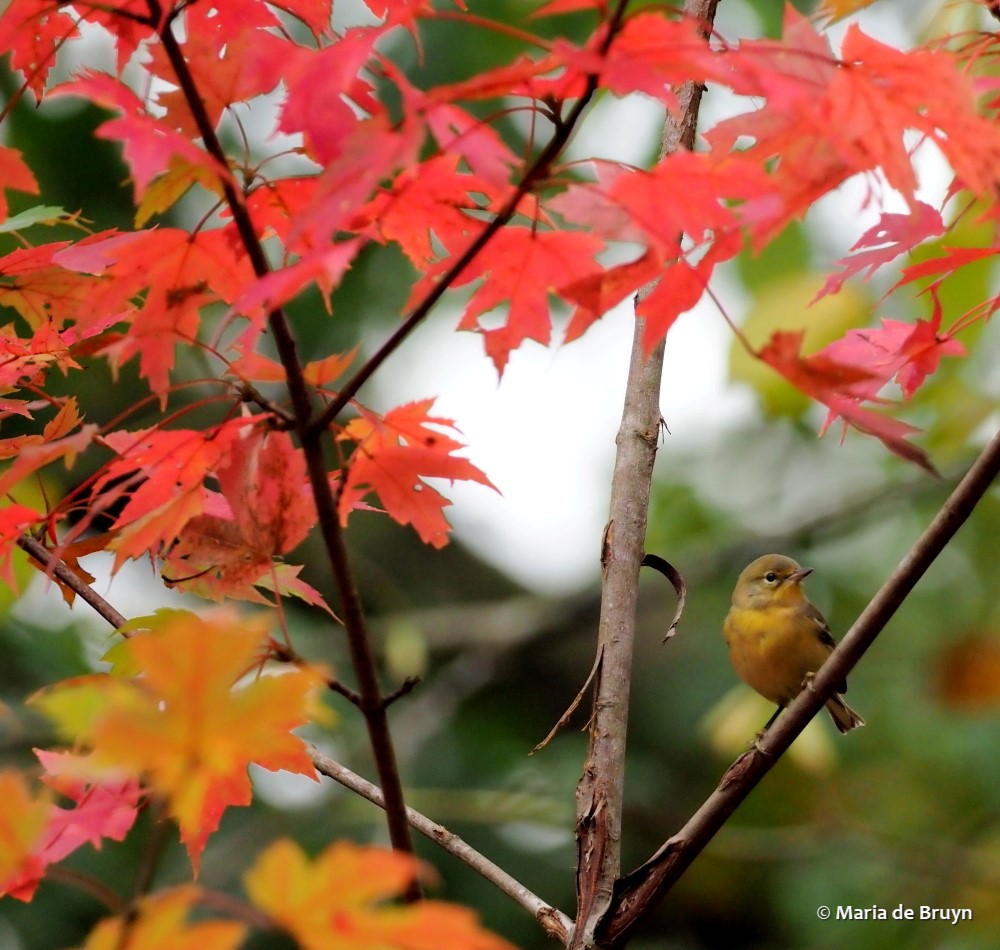
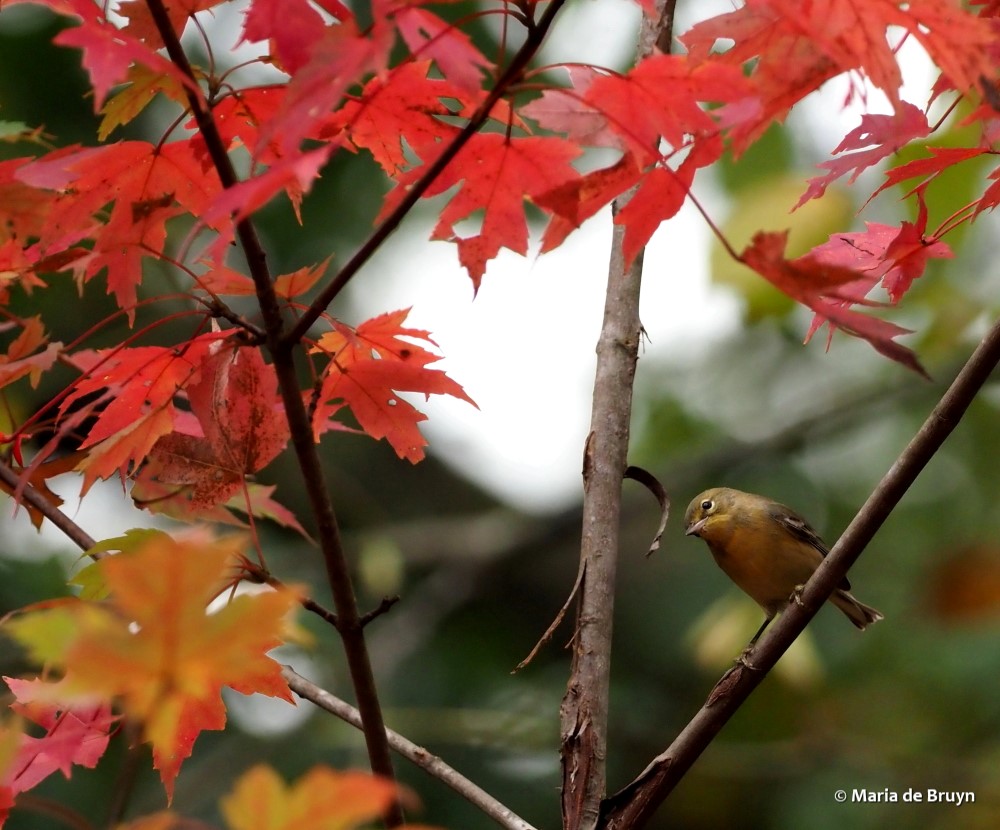
The birds (like the pine warbler above) look lovely in the maples.

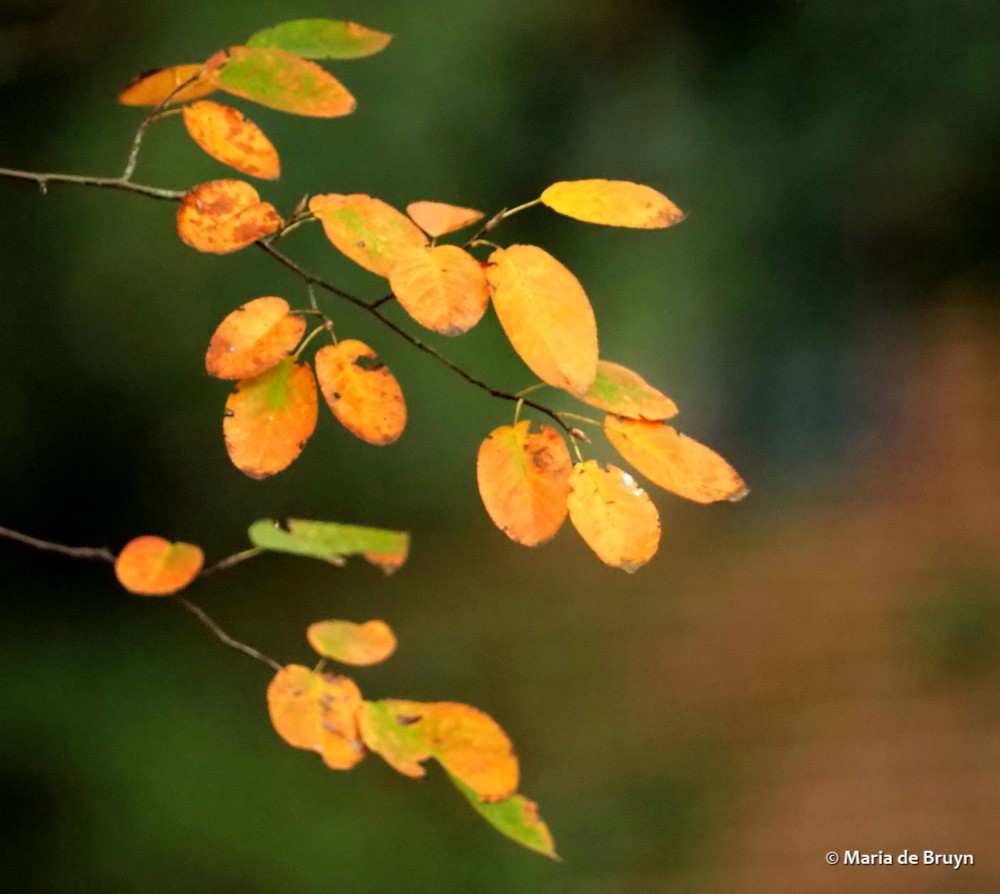
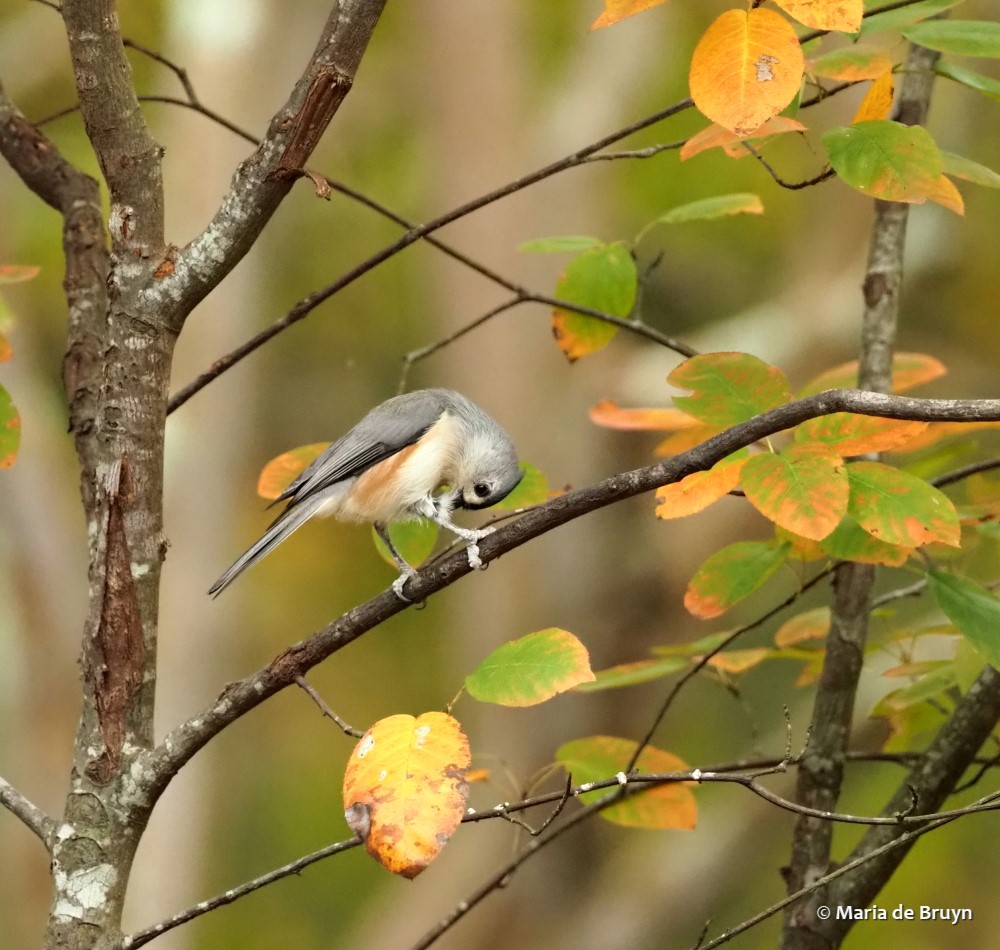
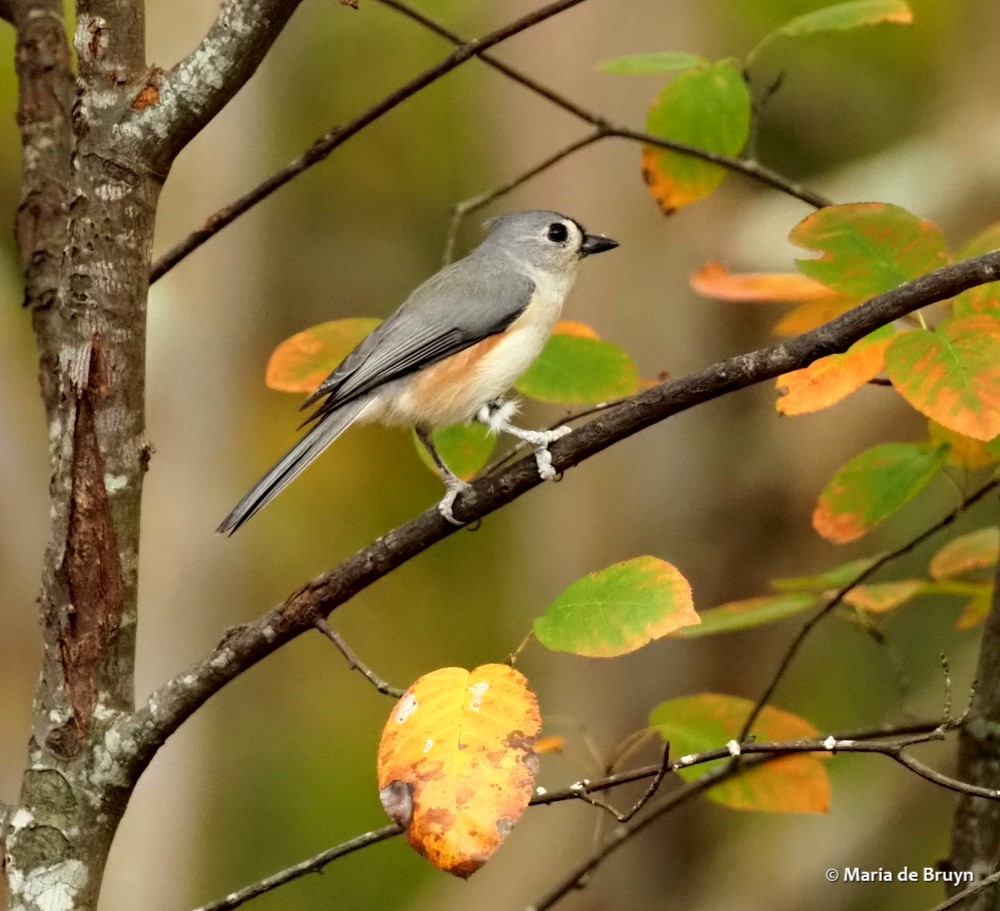
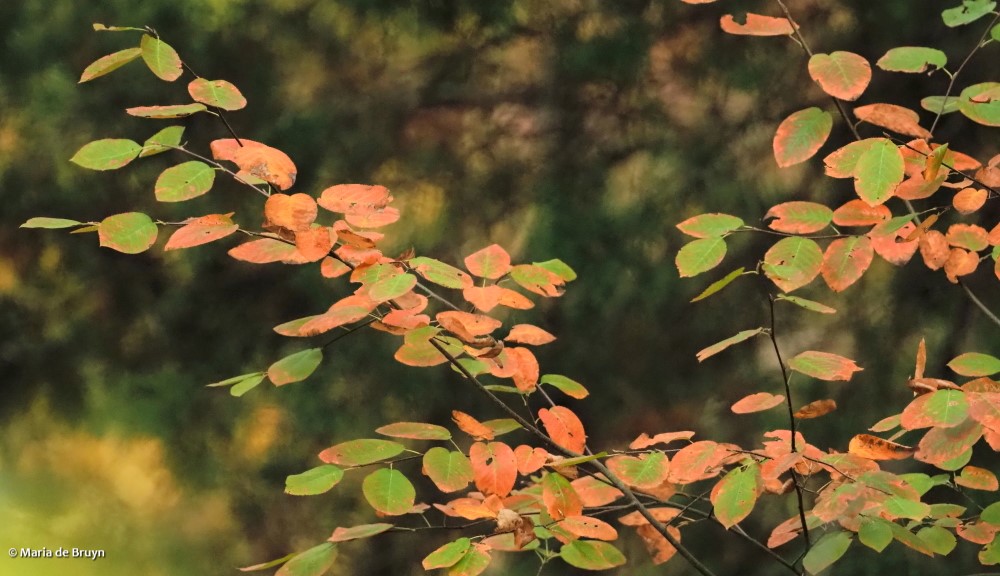
The serviceberries have different hues in their ready-to-fall leaves. The largest one is a favorite spot for birds to perch while deciding whether to visit the feeders or not. (One of the tufted titmice who enjoy the feeders also takes time to preen in this tree.)


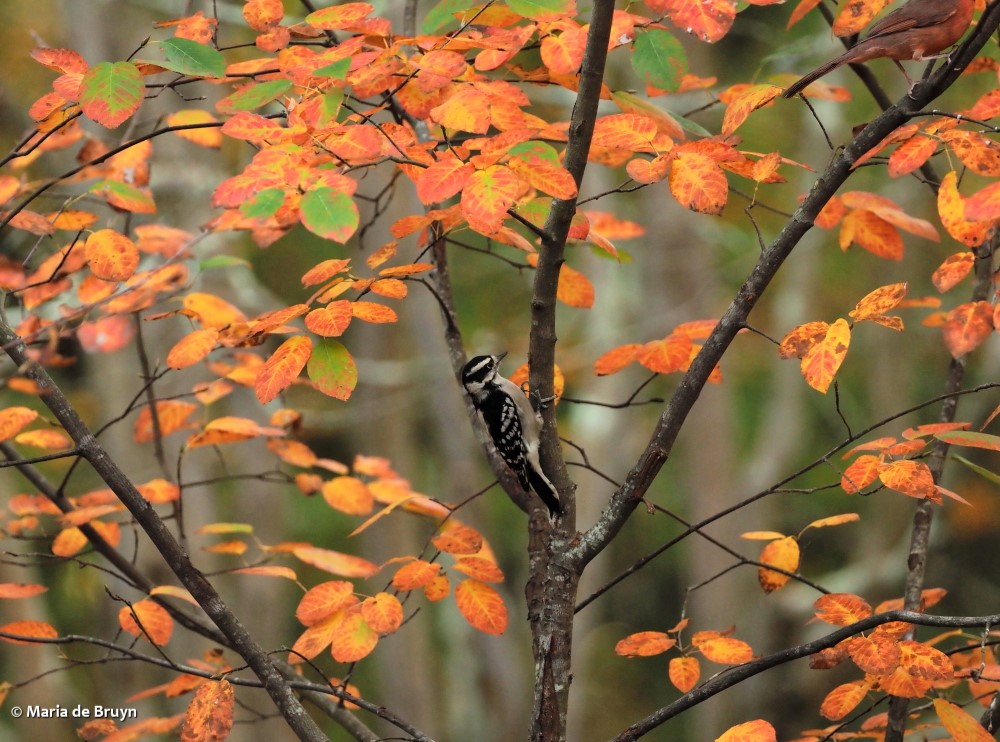
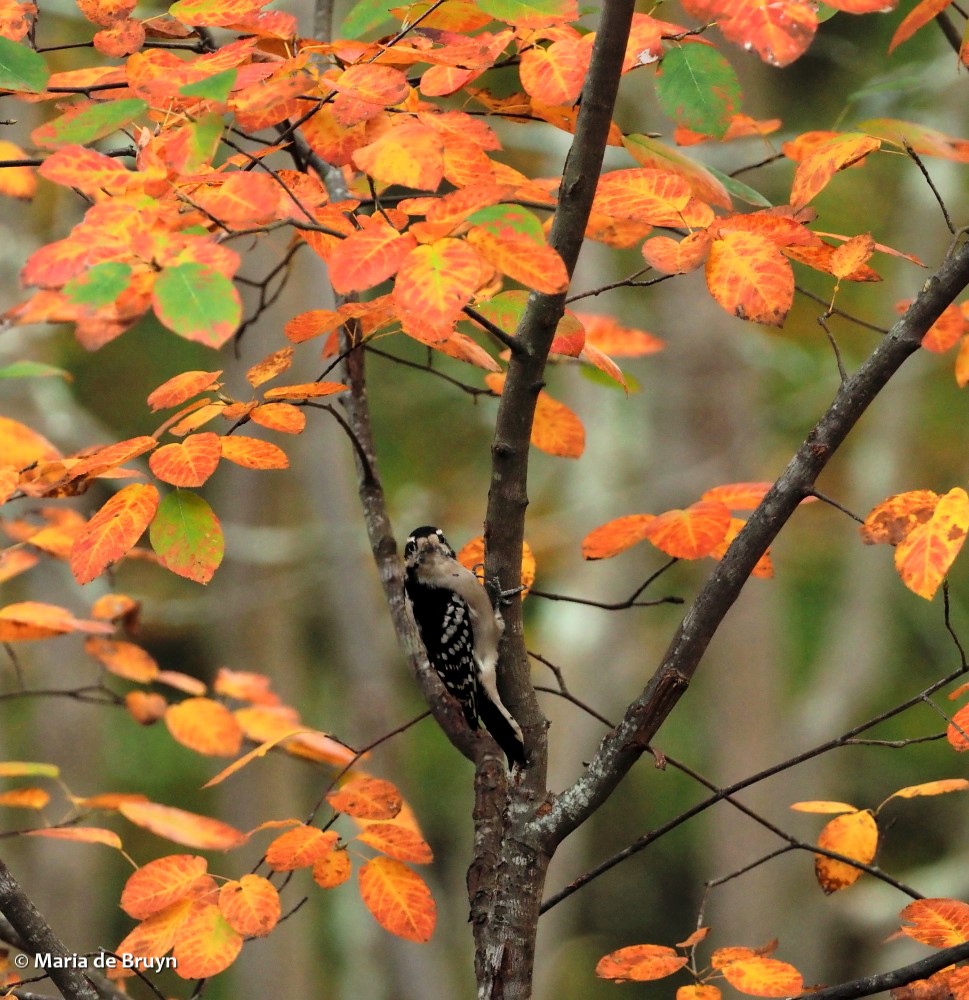
They also just like to stop there to rest, like this downy woodpecker.


The kousa dogwood is a loner (so far) and not producing berries but it is a favorite perching tree for birds.


A couple more colorful shrubs and trees in my yard.


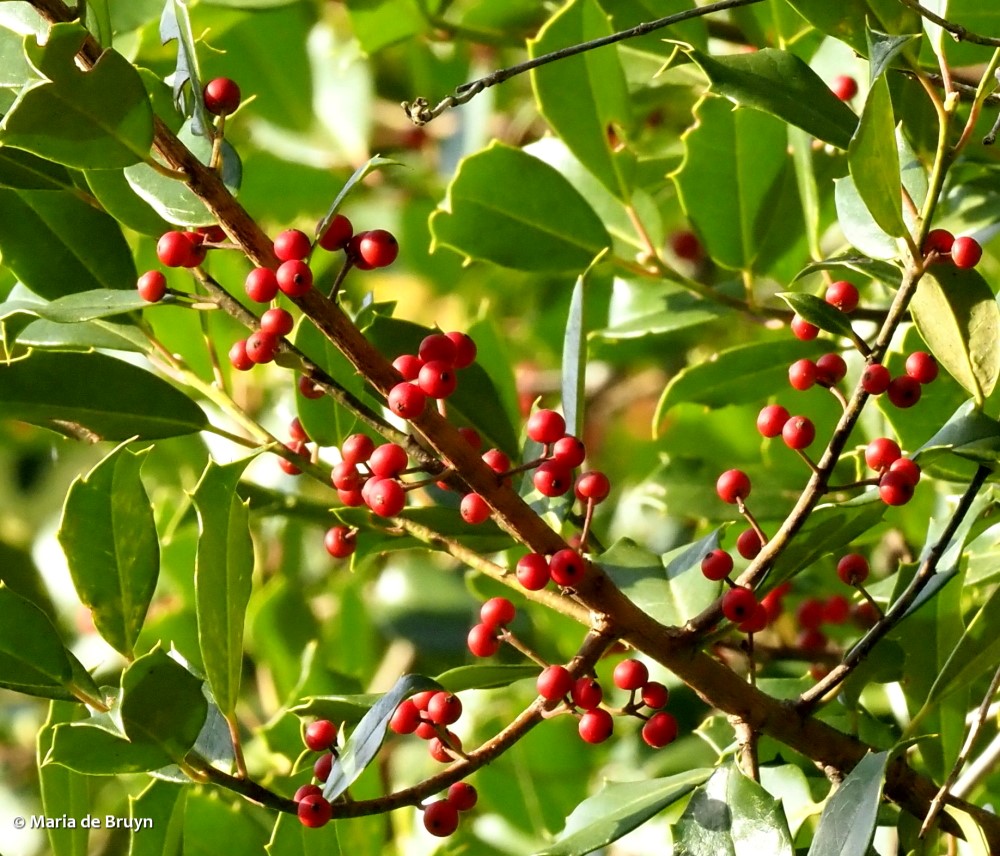
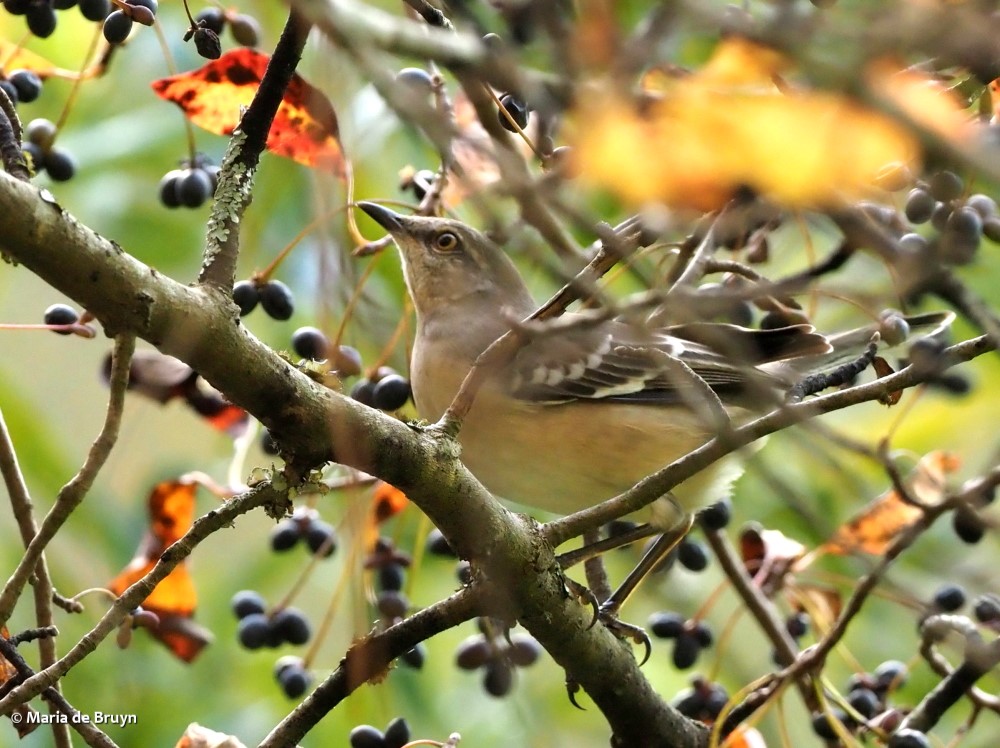
On walks in various parks and nature reserves, the berries on trees and vines have become quite noticeable and the birds are really enjoying them.


When they finish with the red and black berries, they will be going for the white ones provided by poison ivy – a real favorite of theirs. Below a Northern mockingbird.


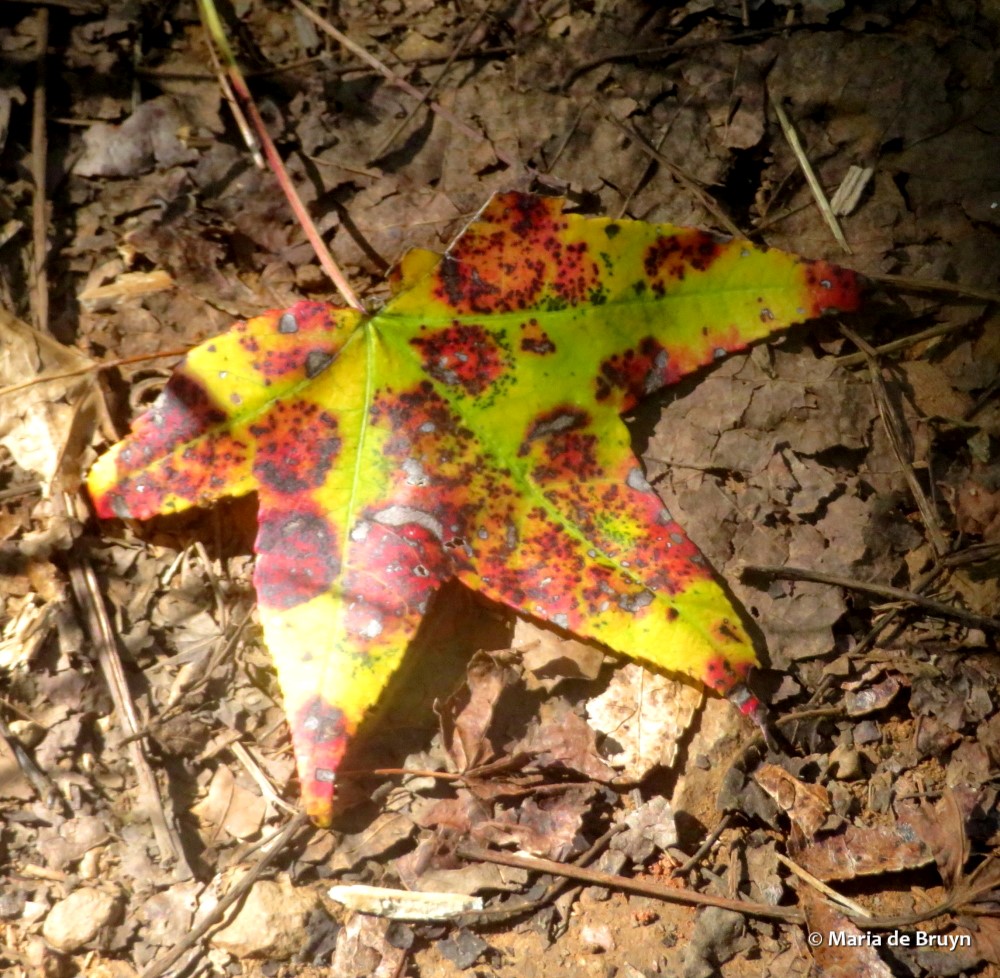
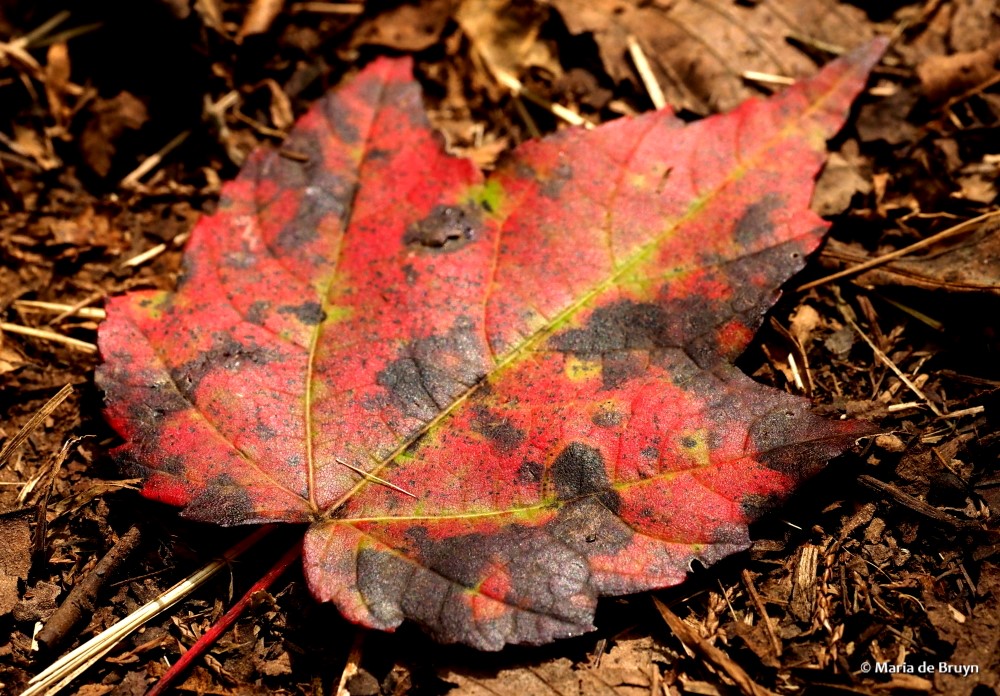
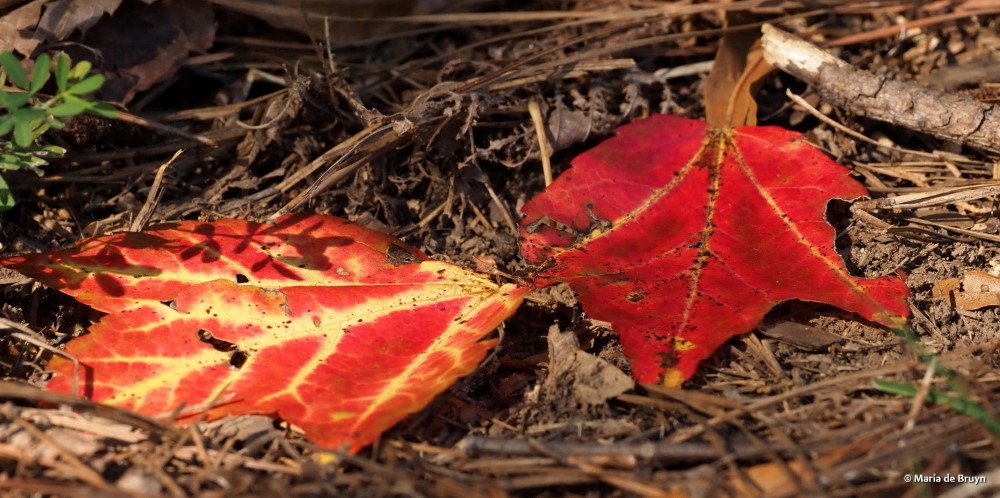
The color patterns on fallen leaves catch your eye when you look down while walking.


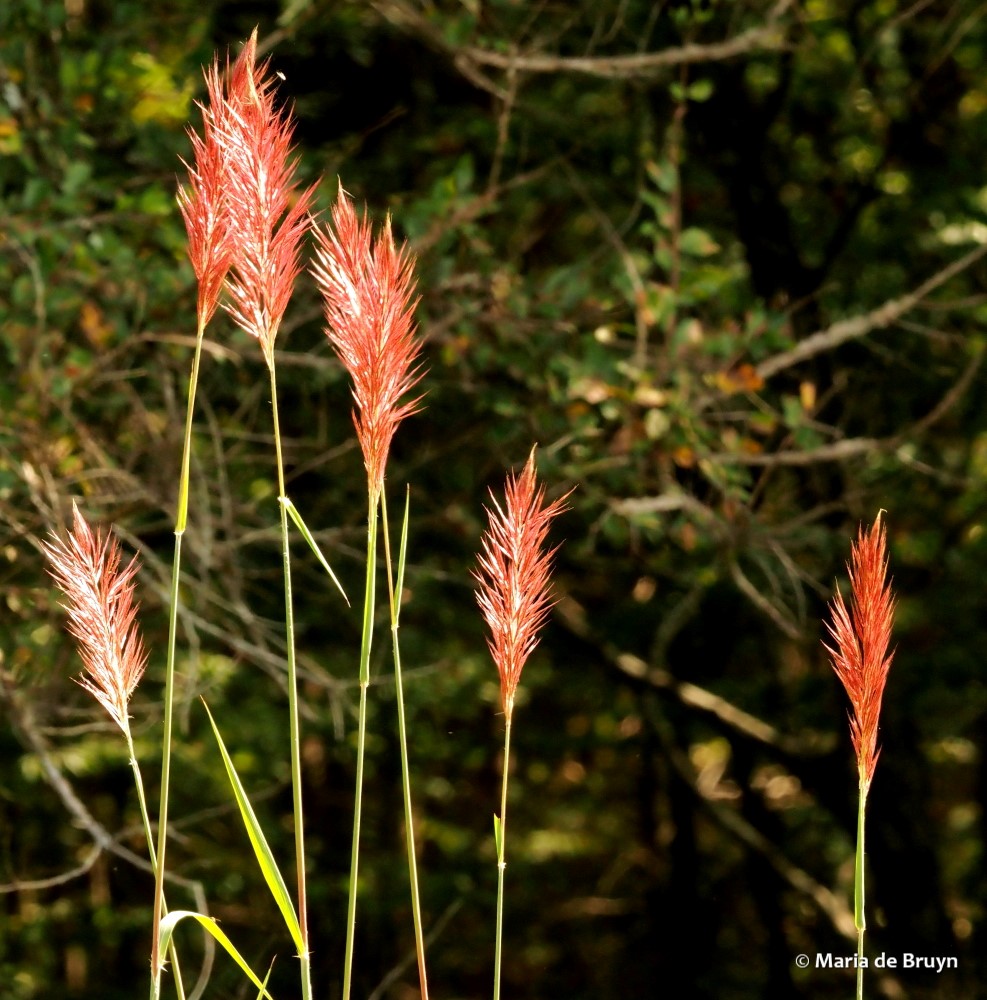
And the plumed plants waving in the wind get your attention, too.

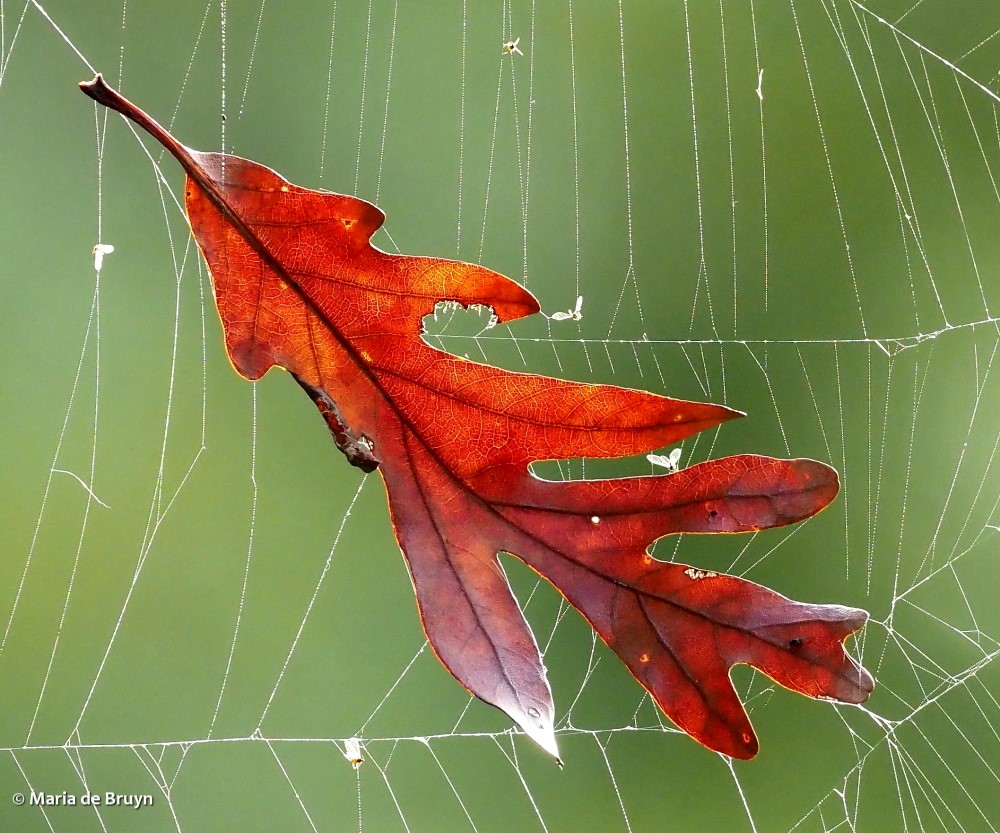
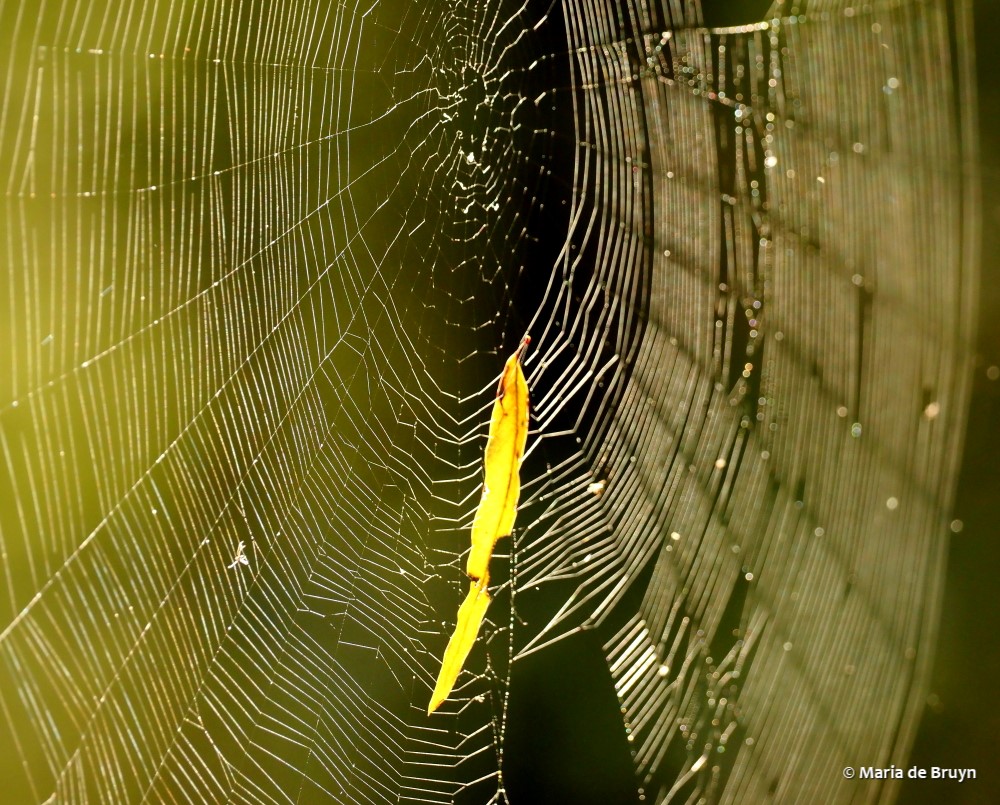
Some falling leaves end up adorning spider webs.


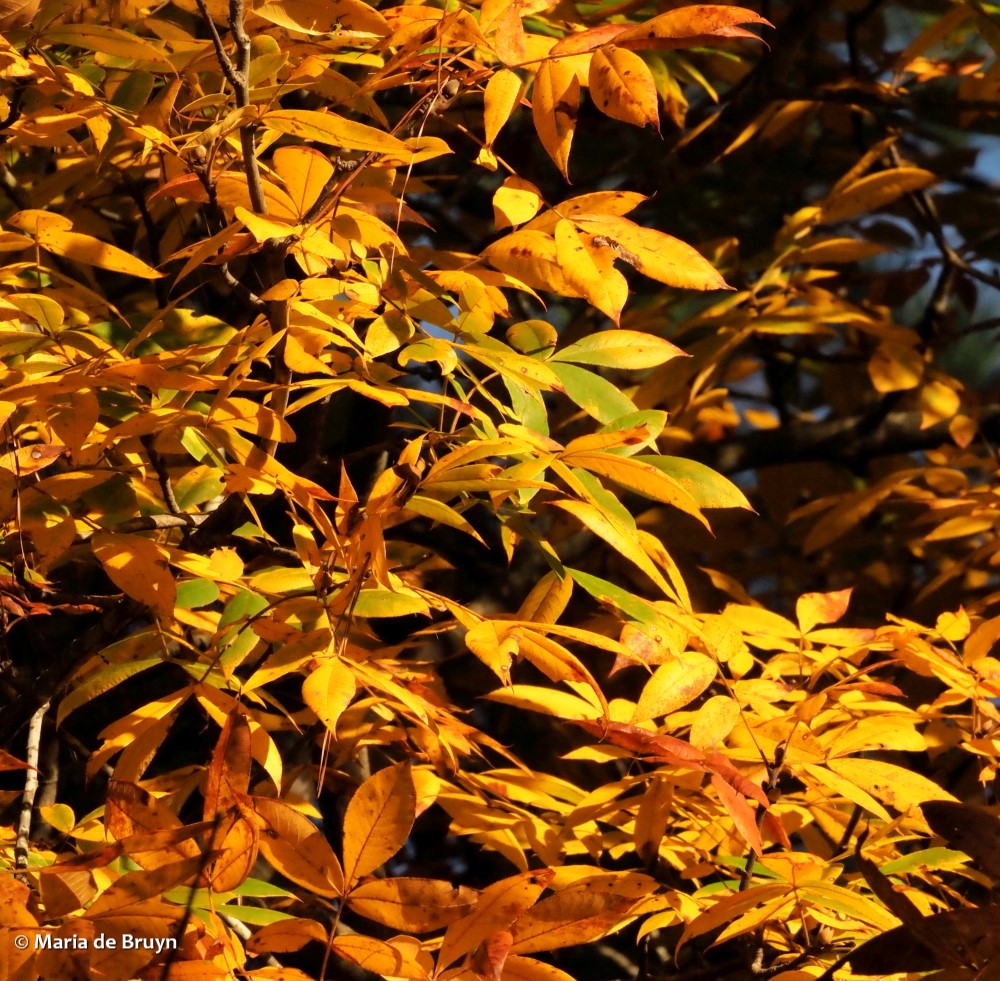
The yellow-colored shrubs are also eye-catching.

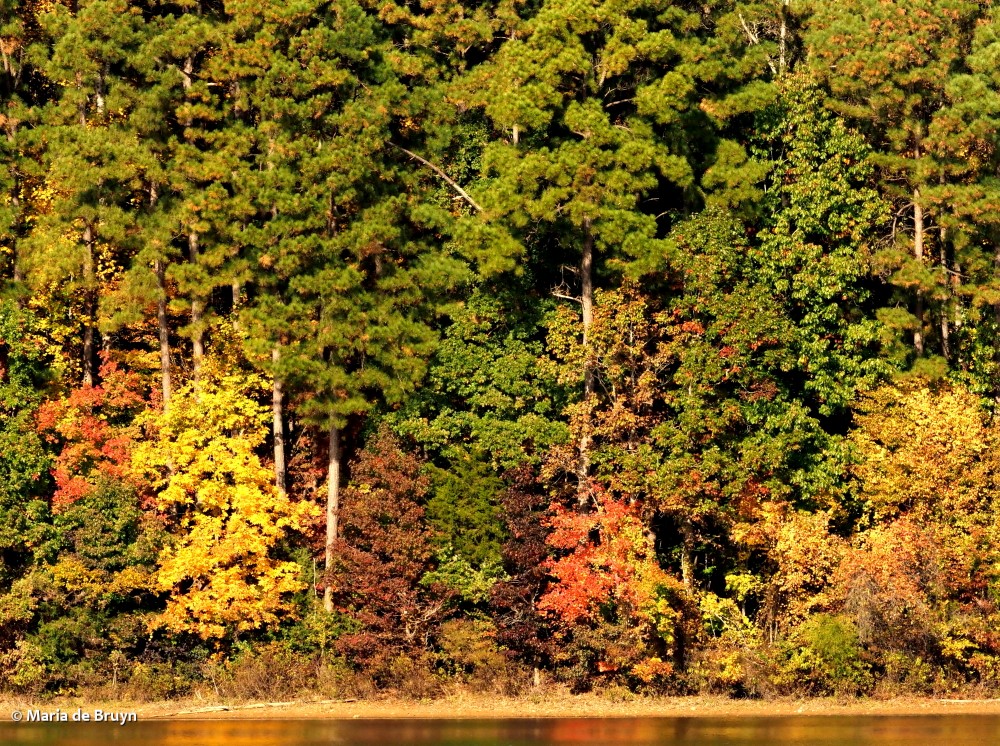
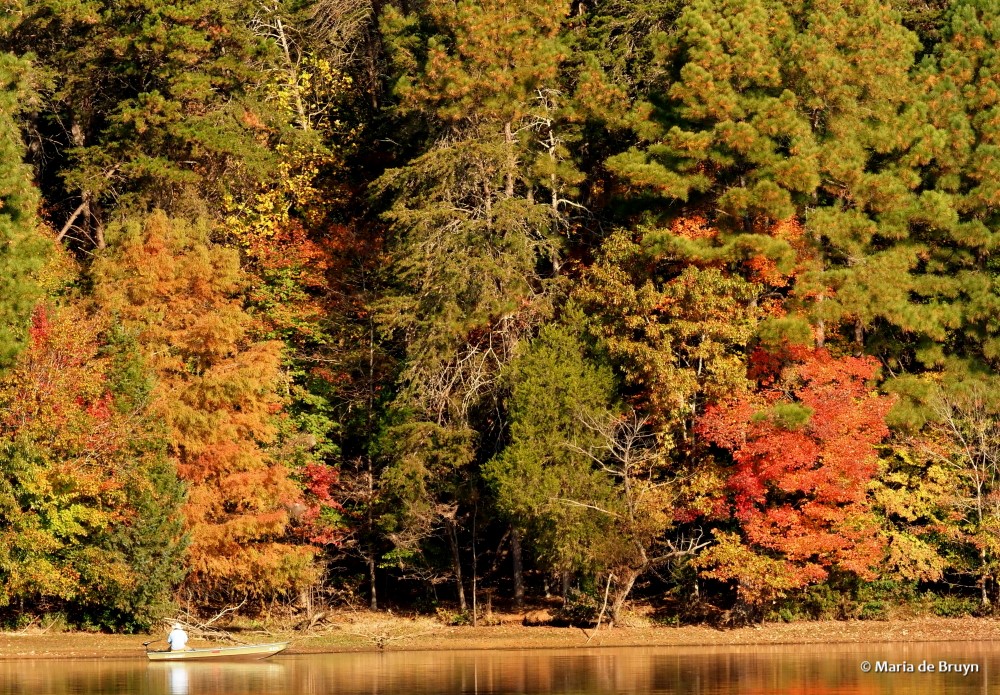
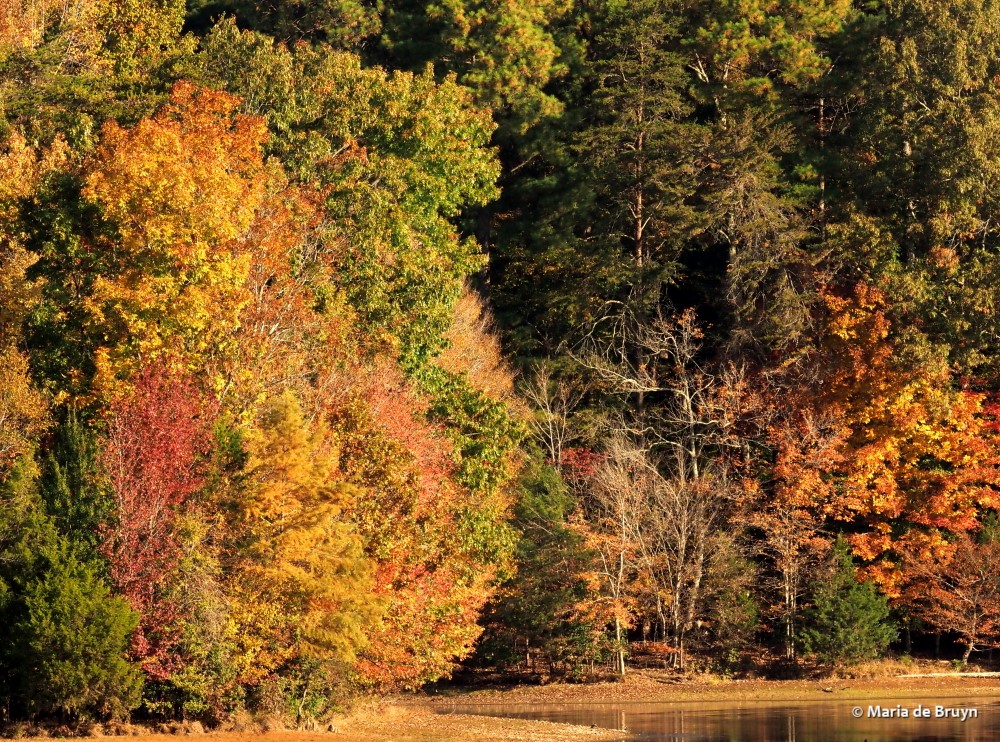
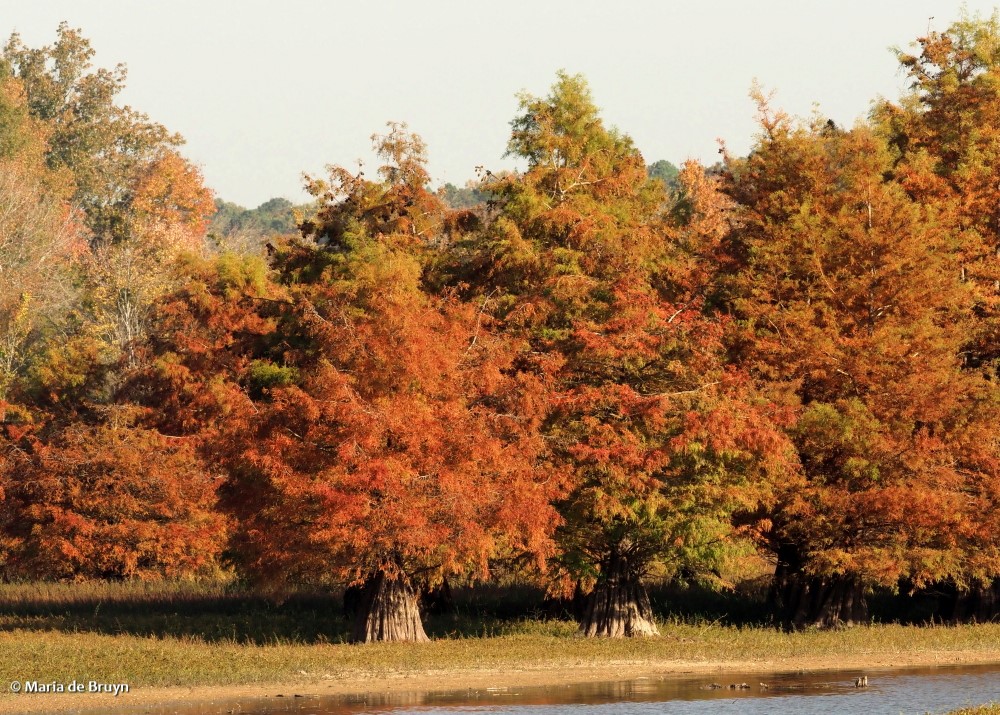
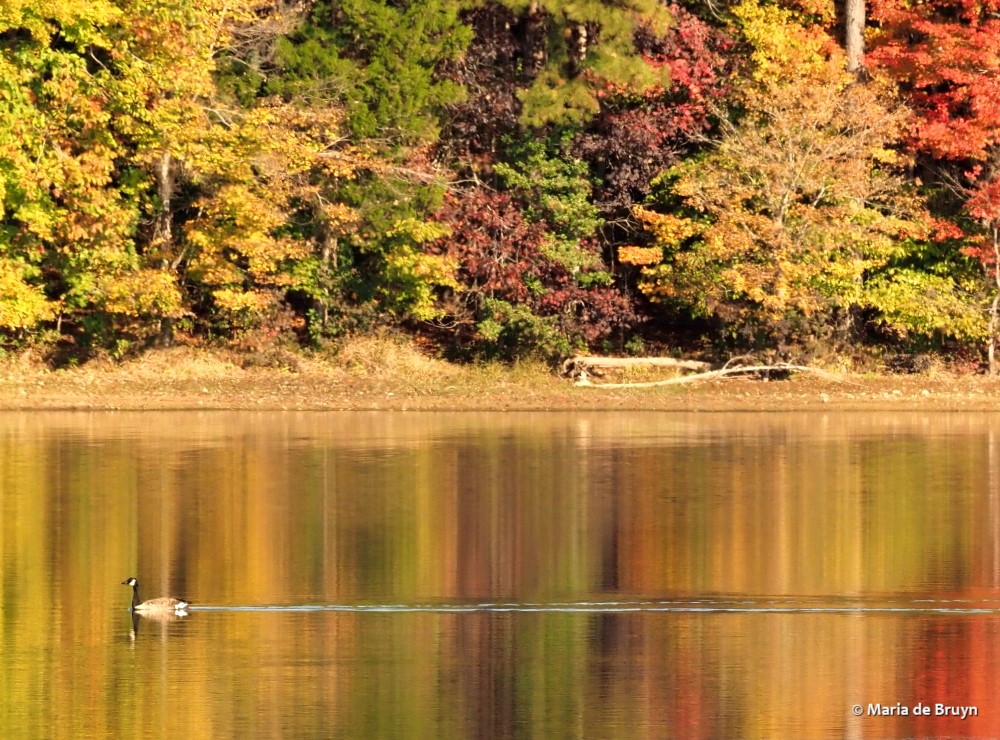
I’ll leave you for now with some views of trees presenting gorgeous vistas along lakes and ponds.(Next instalment: colorful fungi!)


Springtime spat?

Eastern meadowlark P4075310© Maria de Bruyn res

Well, maybe “spat” is too mild a word for what I witnessed a few days ago when out birding. It was a gloomy, heavily clouded day and my expectations of seeing something unusual were low.

Eastern meadowlark P4075316 © Maria de Bruyn res

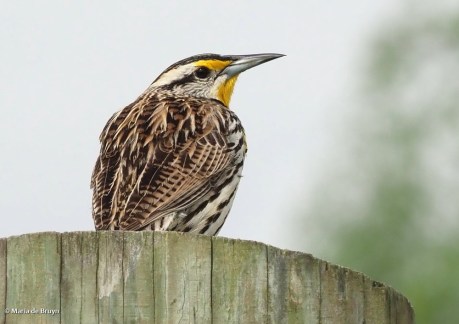
A male meadowlark (Sturnella magna, above) greeted me and his sweet song and subsequent foraging with his partner was a definite bright spot in the field.

Eastern meadowlark P4074595© Maria de Bruyn

His little concert was delightful. But then I thought perhaps he was asking me to go away and leave him and his partner to forage without spectators, so I did get ready to leave.

Eastern meadowlark P4074980© Maria de Bruyn

Before I left the area, however, my eyes were drawn to a spectacle further away.

Northern mockingbird P4074757© Maria de Bruyn res

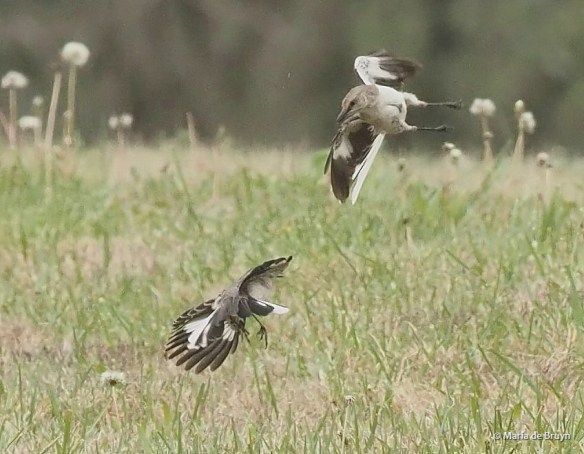
There were flashes of gray and white erupting up from the ground, into the air and back down again. Before putting up my long-lensed camera (which serves as substitute binoculars for me), I figured the wing patterns were showing Northern mockingbirds (Mimus polyglottos). My first photos confirmed it.

Northern mockingbird P40748280© Maria de Bruyn res

Northern mockingbird P4074786 © Maria de Bruyn res

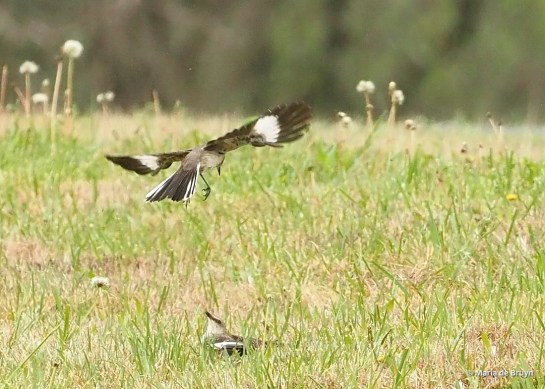
But then I watched with fascination and growing consternation as the two birds tackled one another in what was an actual knock-down, drag-out fight. I’d seen mockingbirds having territorial disputes before, but those spats only lasted a couple minutes and were mostly threat displays. This was a real battle.

Northern mockingbird P4074818© Maria de Bruyn

Northern mockingbird P4074819© Maria de Bruyn res

I don’t know if they were arguing over a third (female) bird or if it was mostly a territorial dispute. Perhaps it was both.

Northern mockingbird P4074864© Maria de Bruyn res

They ascended, facing off angrily.

Northern mockingbird P4074825 © Maria de Bruyn

They attacked one another mid-air.

Northern mockingbird P4074819© Maria de Bruyn res

And while descending to the ground.

Northern mockingbird P4074841© Maria de Bruyn

Northern mockingbird P4074834© Maria de Bruyn res

They pummeled one another.

Northern mockingbird P4074826 © Maria de Bruyn res

Northern mockingbird P4074833© Maria de Bruyn res

Flying to the ground, one would sit atop the other and seemed to be pecking at it once in a while. After getting off its opponent, the pair faced off again and started the fight anew.

Northern mockingbird P4074851© Maria de Bruyn

Northern mockingbird P4074835© Maria de Bruyn res

They were at it for at least 5 minutes and perhaps longer as I’d spotted them once the dispute was underway.

Northern mockingbird P4074831 © Maria de Bruyn

Northern mockingbird P4074839© Maria de Bruyn

Northern mockingbird P4074840© Maria de Bruyn res

As they continued fighting, I wondered if one of them might be hurt or wounded.

Northern mockingbird P4074832 © Maria de Bruyn. res

Neither one of them appeared to show any wounds (but then I was not really close enough to tell for sure).

Northern mockingbird P4074842 © Maria de Bruyn

Northern mockingbird P4074821© Maria de Bruyn res

At last one of them decided he’d had enough. The other two birds were chasing him, but he got away and flew to a tree. The fight ended and no one seemed to have been irreparably harmed. But it was a real lesson for me in realizing how territorial the mockingbirds can get. I’d seen some short-lived spats before, but now I know more serious fights occur as well. I don’t know if they ever lead to one of the opponents being mortally wounded. Hopefully not!

Northern mockingbird P4074866© Maria de Bruyn res

Next up – a story of my own close call with a hawk!

The birdy breeding cycle 2020 – 4: growing into adult plumage

As mentioned in a previous blog, when young birds are ready to leave the nest, they don’t necessarily look like their parents. Many of the altricial birds (ready to move about and forage on their own) may resemble fluffy versions of the adults, as is the case with these hooded merganser ducklings (Lophodytes cucullatus) following their mother.

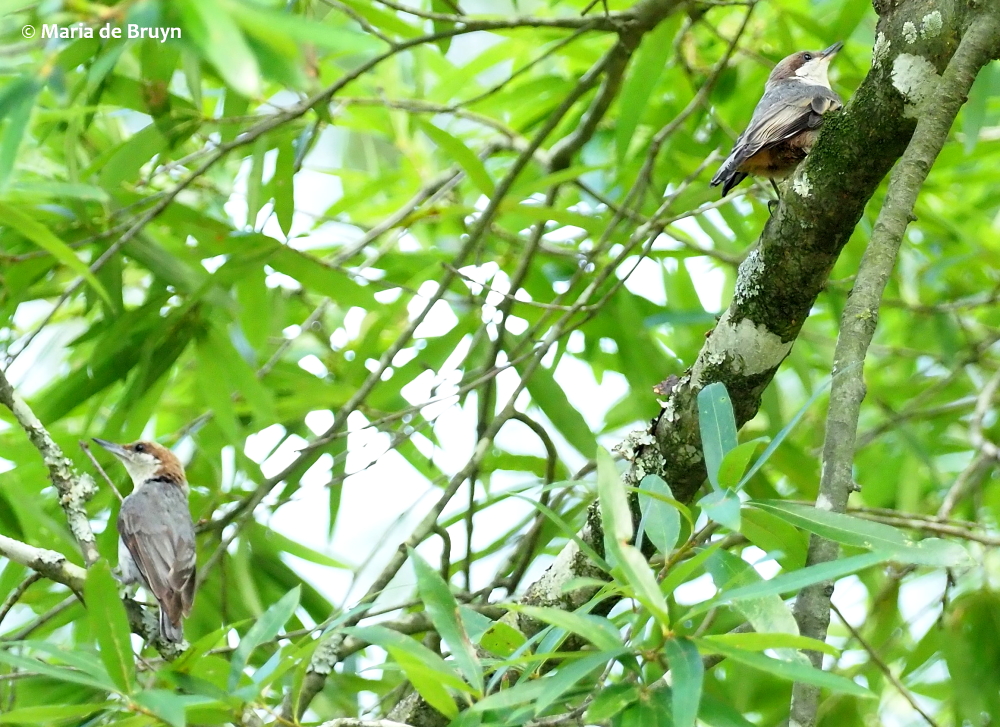
The brown-headed nuthatch babies (Sitta pusilla) look very much like their parents. Sharp-eyed observers might notice that the tops of their heads are not as brown as those of their parents.

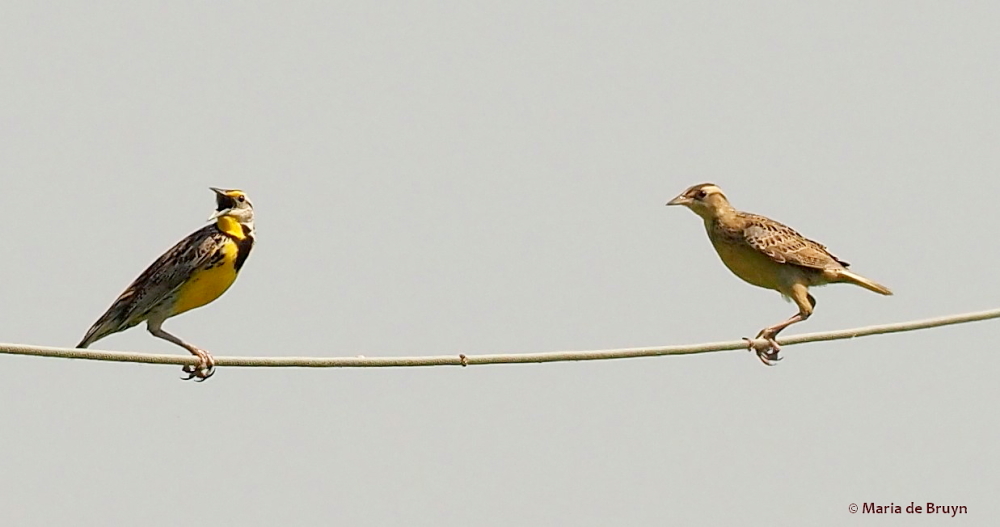
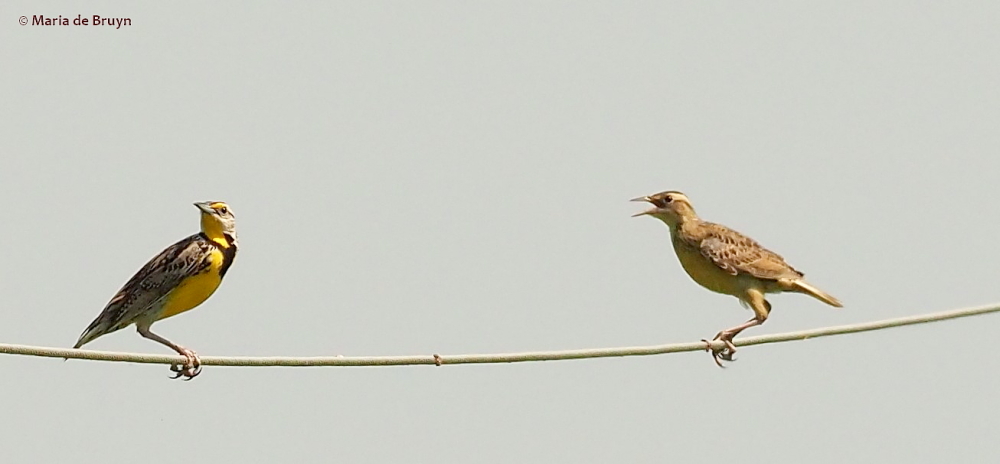
The Eastern meadowlark juveniles (Sturnella magna) resemble their parents but lack the bright yellow and black coloring on the throat and breast.


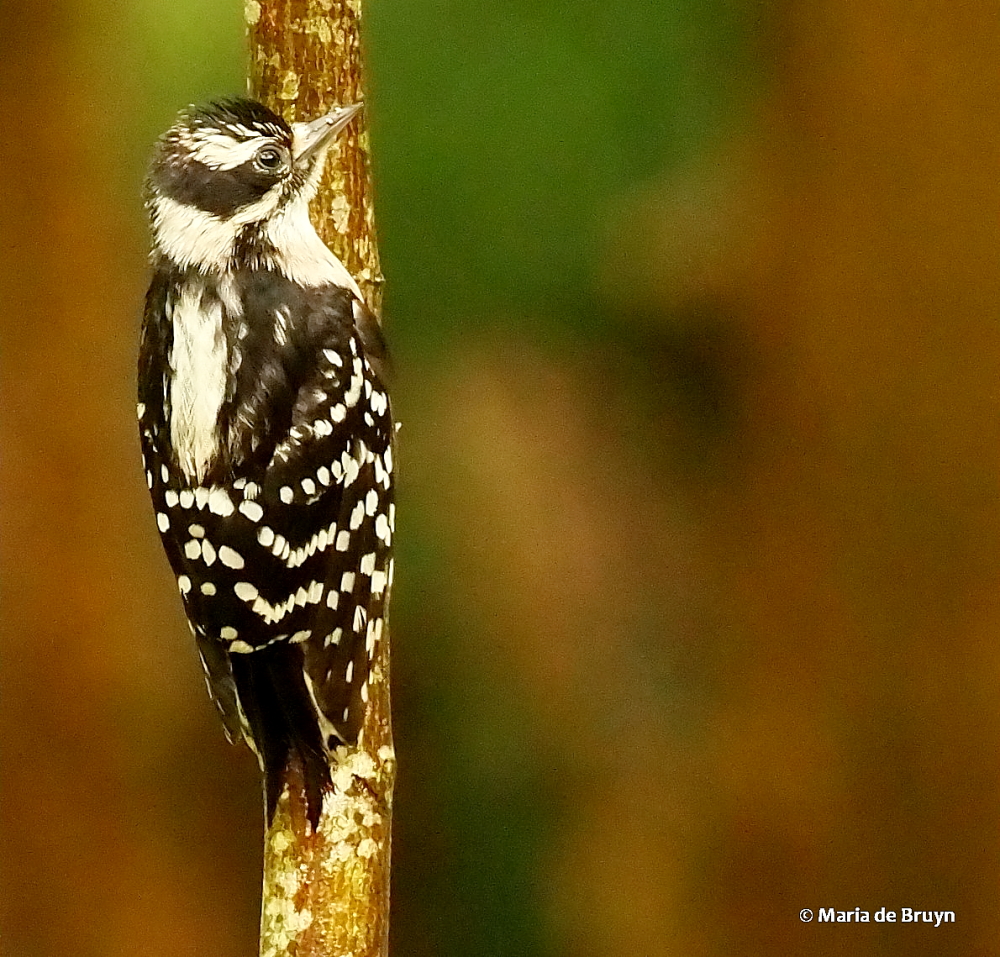
The difference between adult and juvenile downy woodpeckers (Picoides pubescens) is subtle. The female woodpecker has no coloring on the top of her head, which is simply bedecked with the white and black feathers that cover the rest of her body.

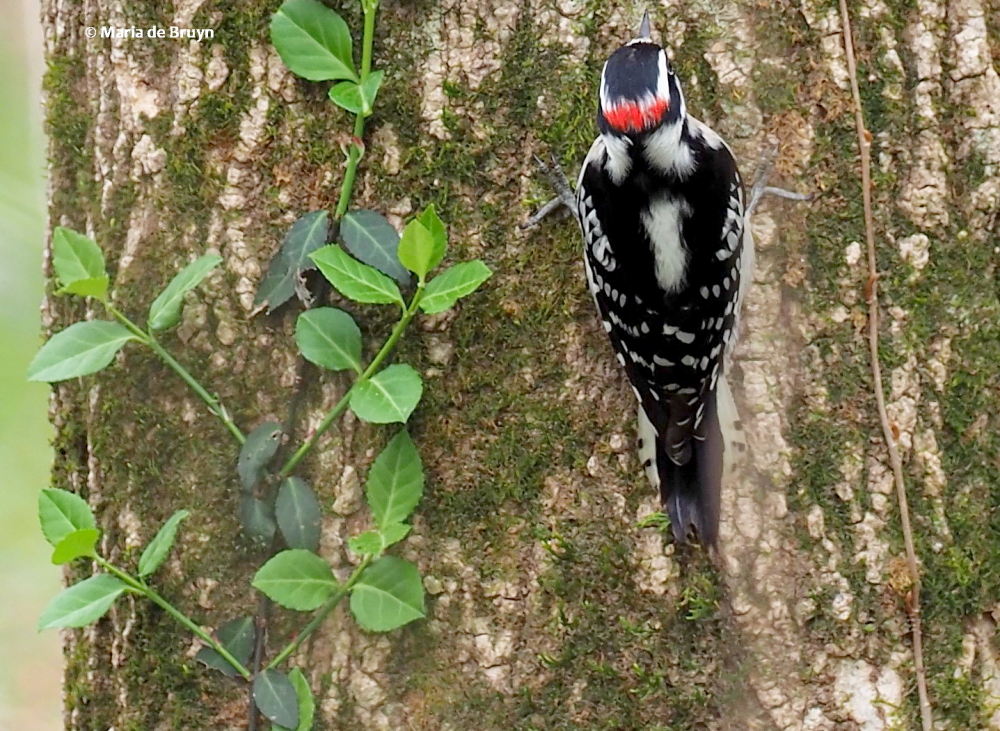
The male woodpecker has a red patch on the back of his head.

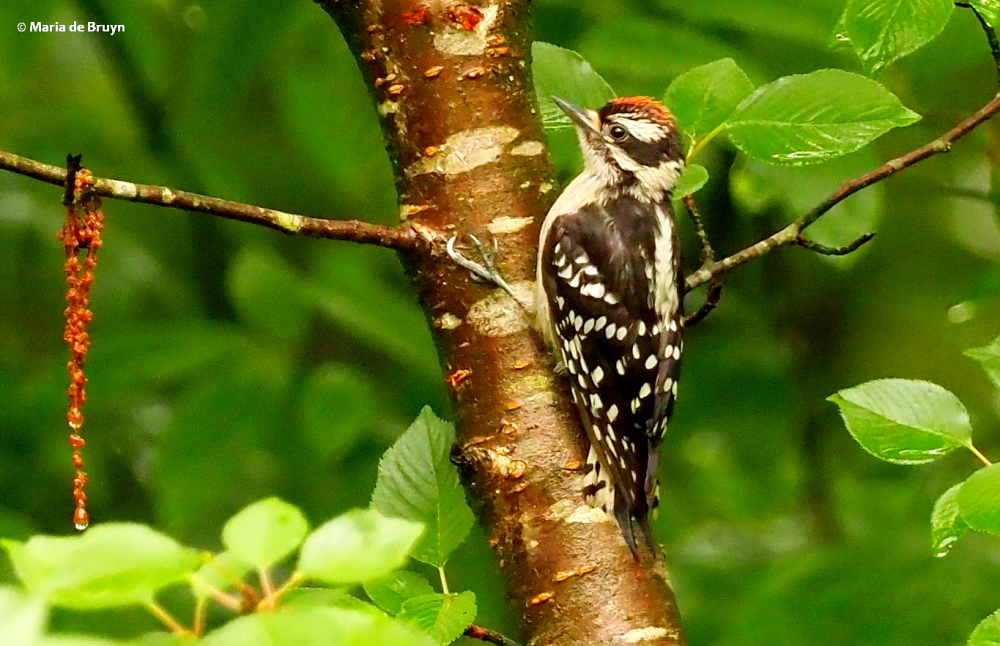
The immature woodpecker has a red patch on top if the head and this is lost as the bird reaches adulthood.

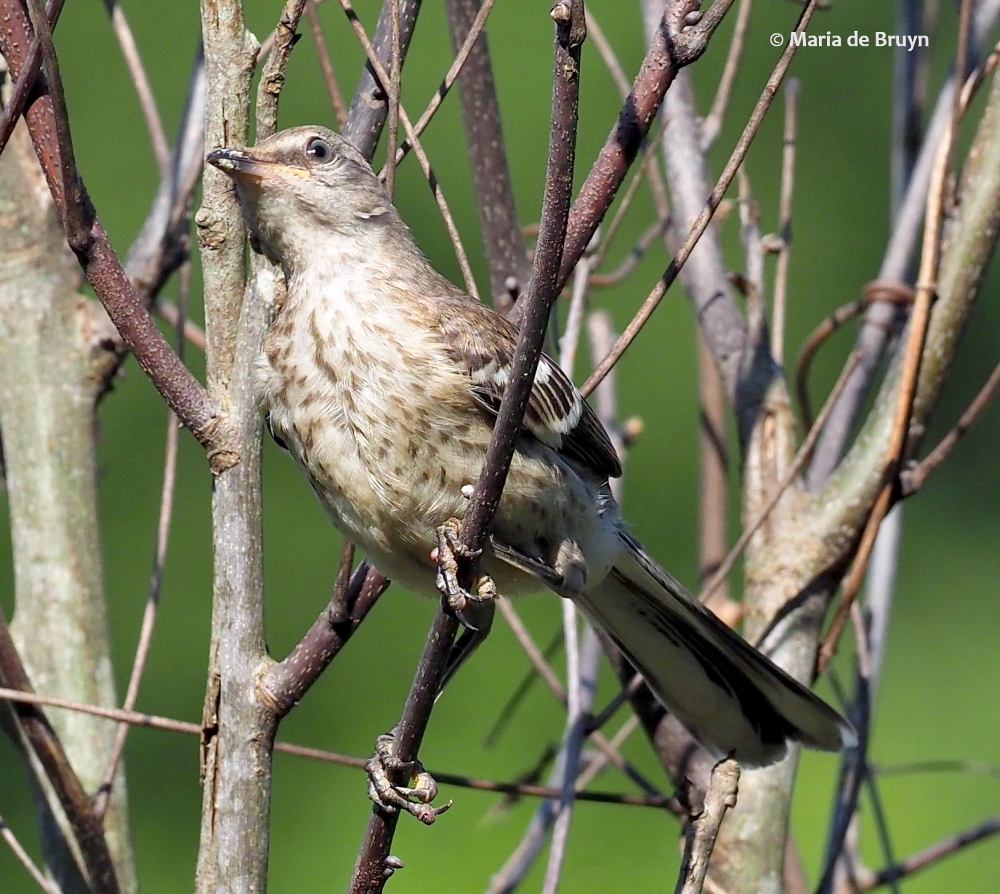
The Northern mockingbird youngling (Mimus polyglottos) resembles mom and dad quite a bit except for some spotty streaking on the chest.

In other species, the babies start out looking quite different from their parents. Spots characterize many members of the thrush family, with birds like wood thrushes (Hylocichla mustelina) and hermit thrushes (Catharus guttatus) retaining the spots in adulthood.


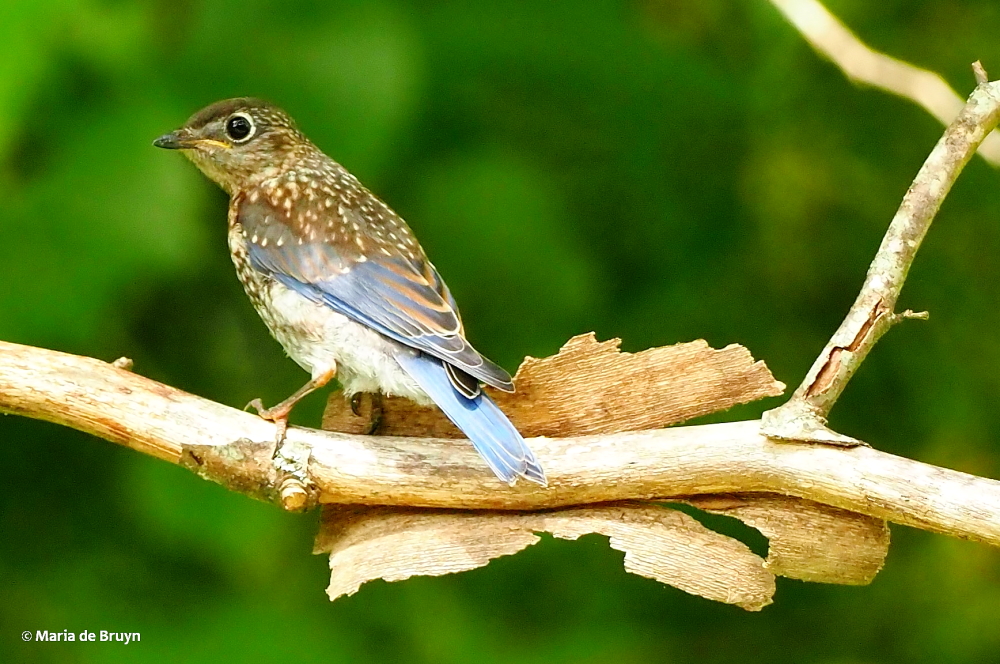
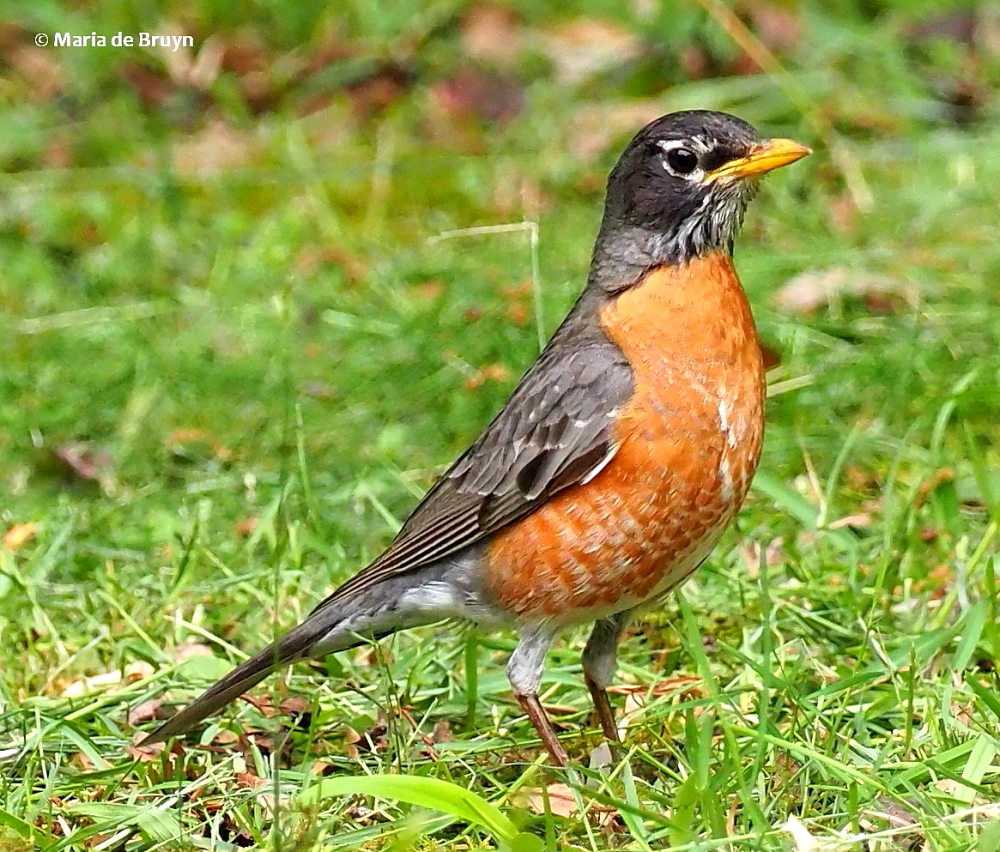
The Eastern bluebirds (Sialia sialis) and American robins (Turdus migratorius), on the other hand, are only strongly speckled as immature birds, losing their spots as they mature.

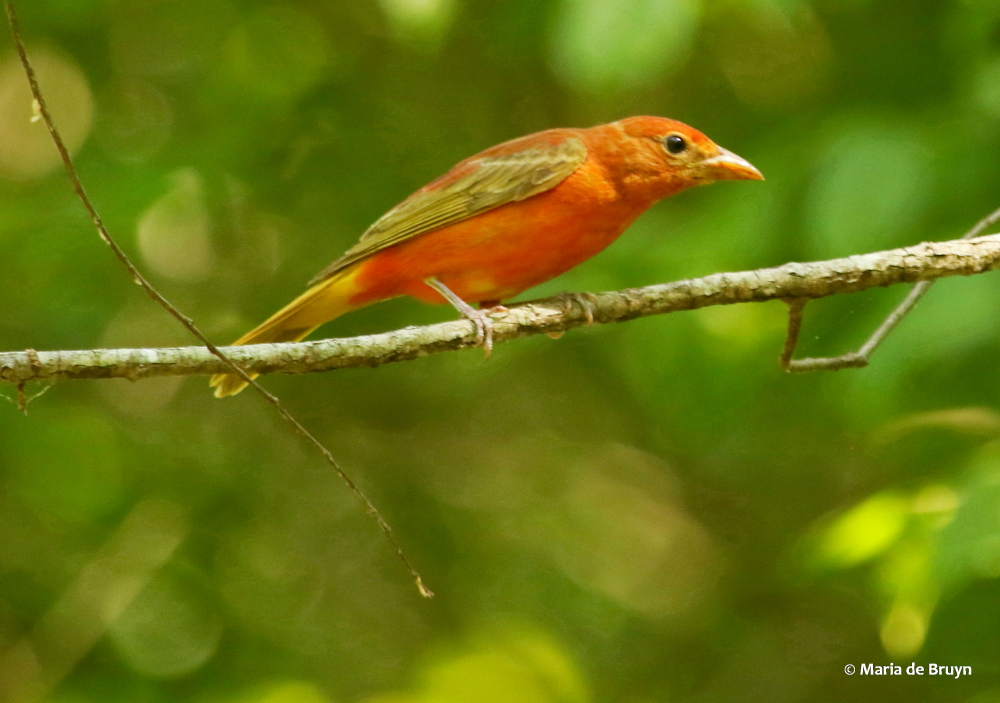
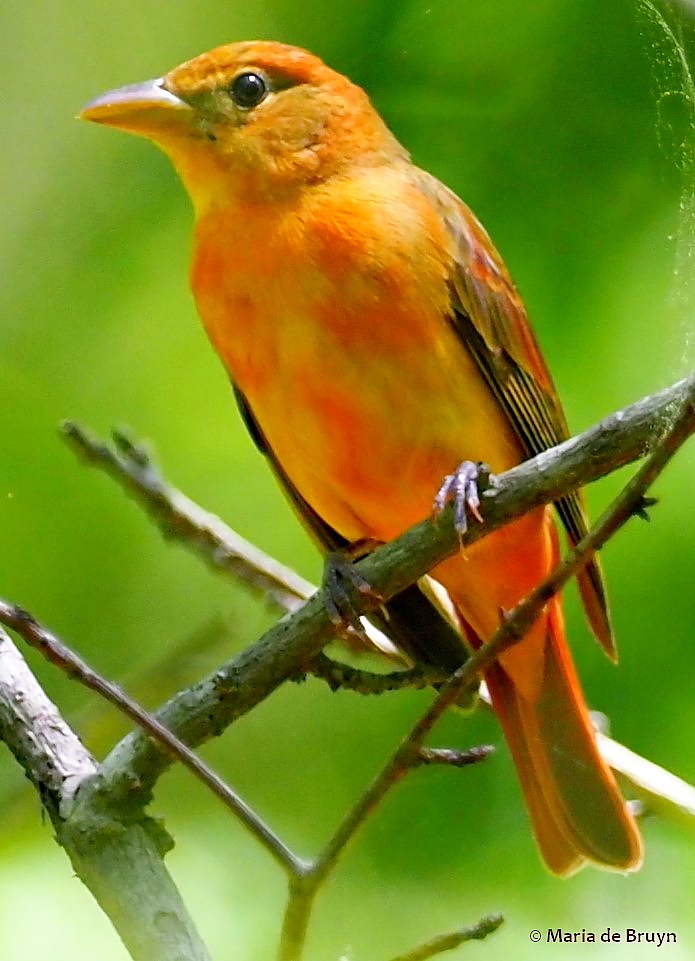
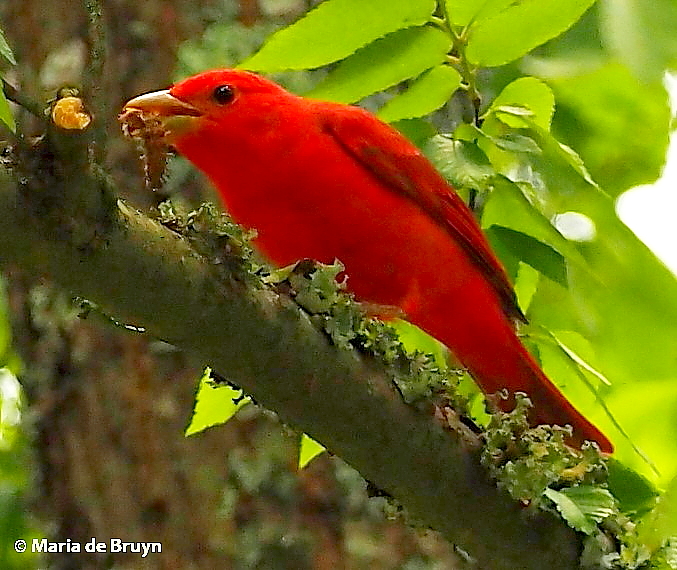
In some cases, the birds undergo color changes. Male summer tanagers (Piranga rubra) start out yellow-orange with their reddish coloring appearing in patches until they finally achieve their very bright adult red hue. Some of the immature birds are really quite beautiful with their mottled colors.


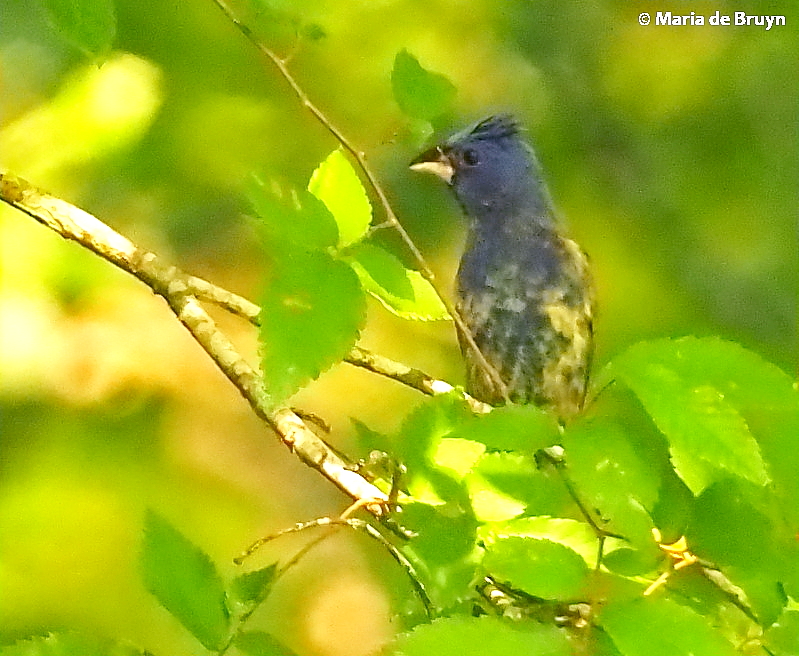
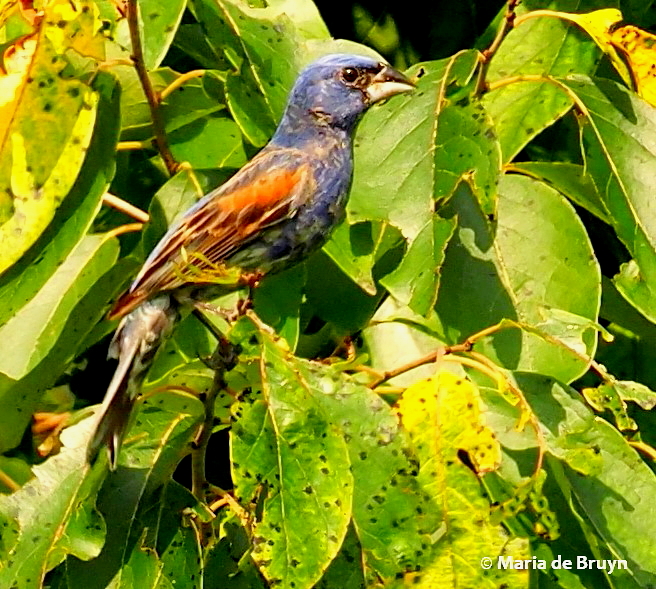
The male blue grosbeaks (Passerina caerulea) start out brown and gradually achieve their dark blue feathers with some reddish/brown wing accents.


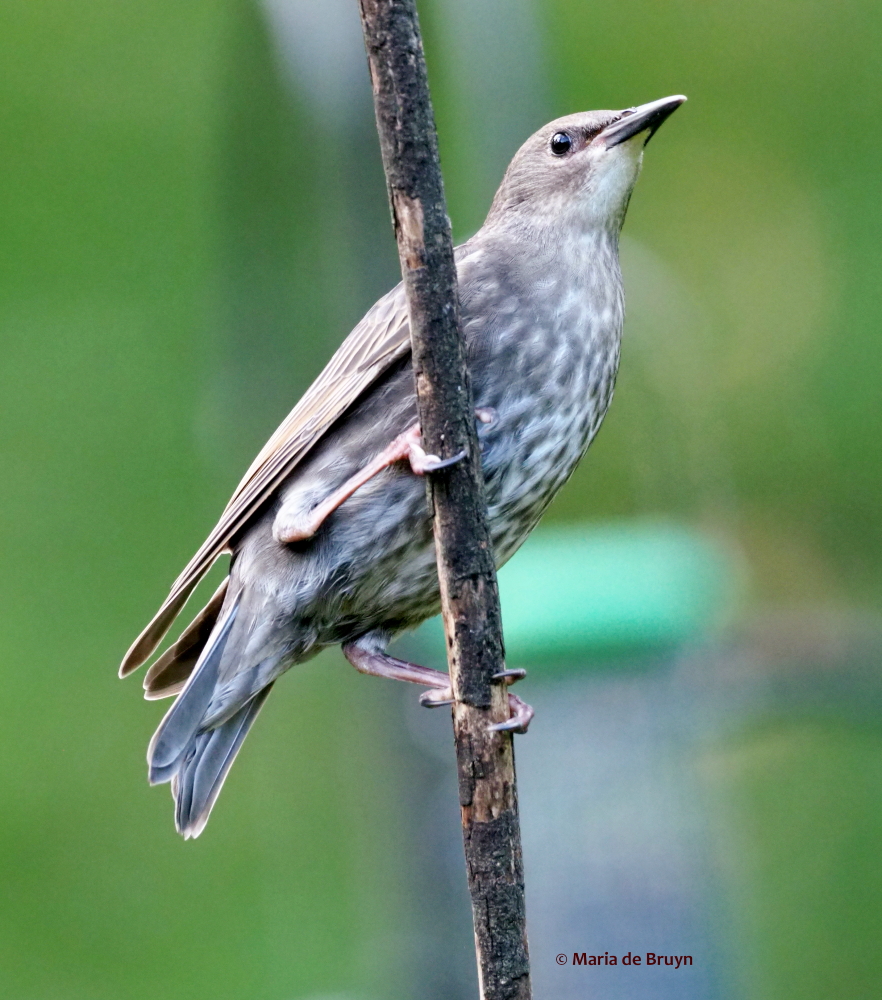
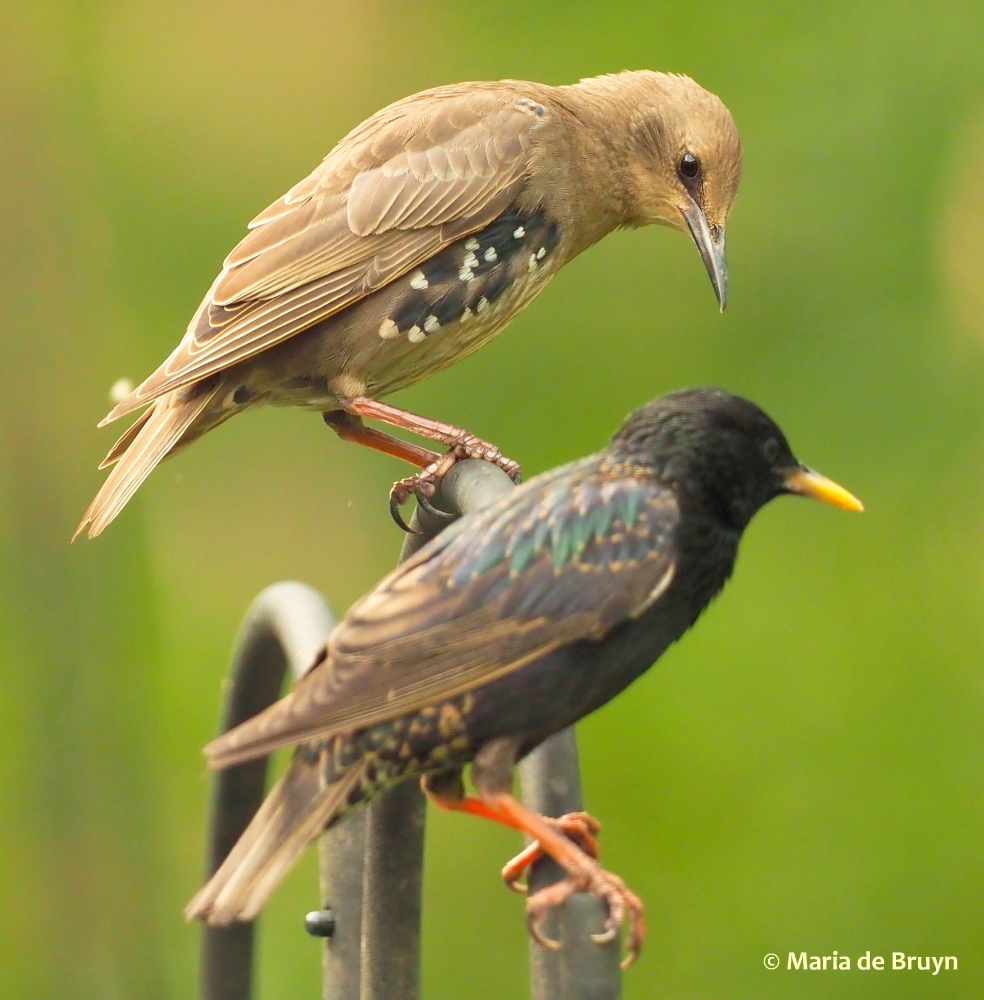
Among the birds that undergo a major change are the European starlings (Sturnis vulgaris). The young birds start out with dullish brown or gray hues with some streaking. Eventually, they begin to develop some spotting and then ultimately achieve the beautiful adult summer glossy feathering with green and purple hues mixed in.


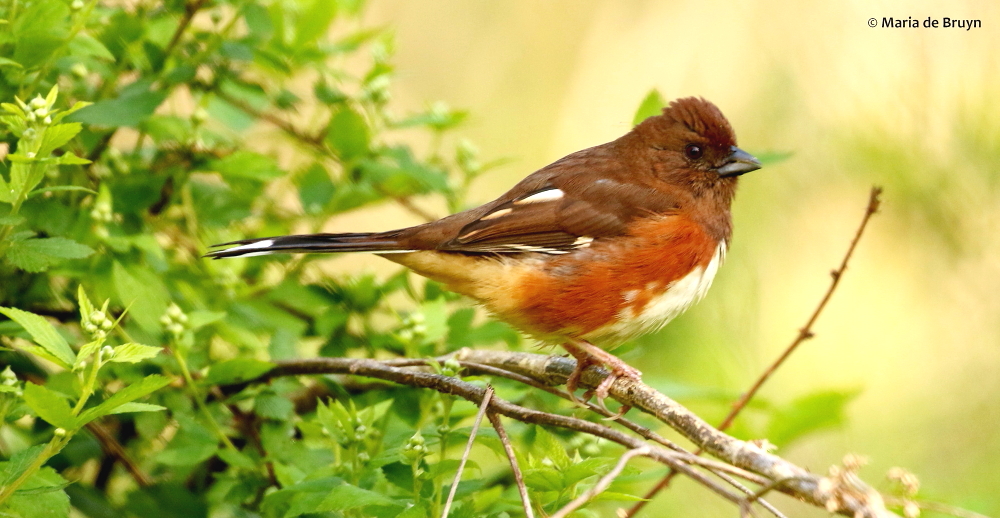
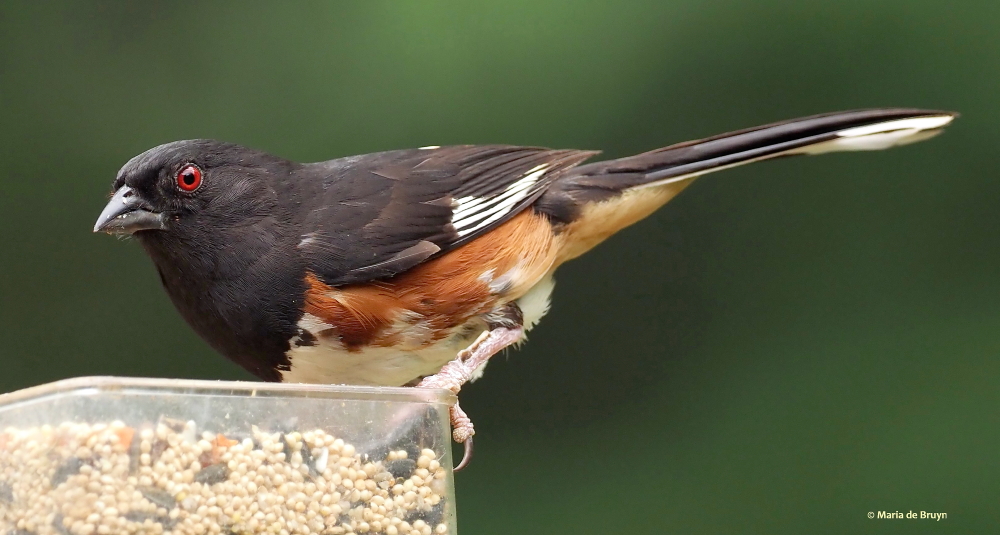
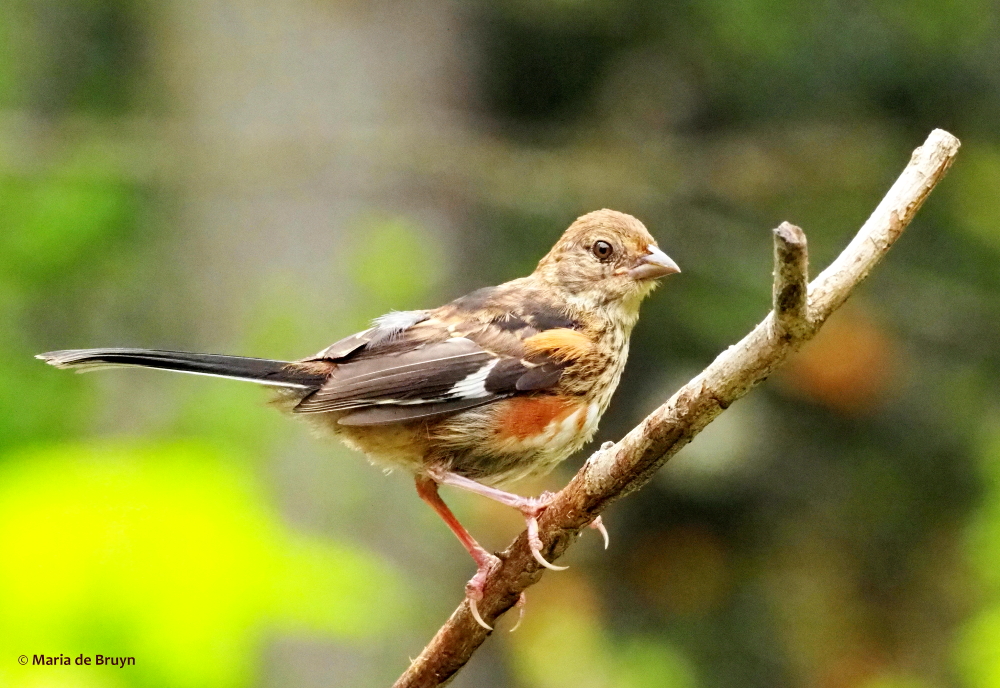
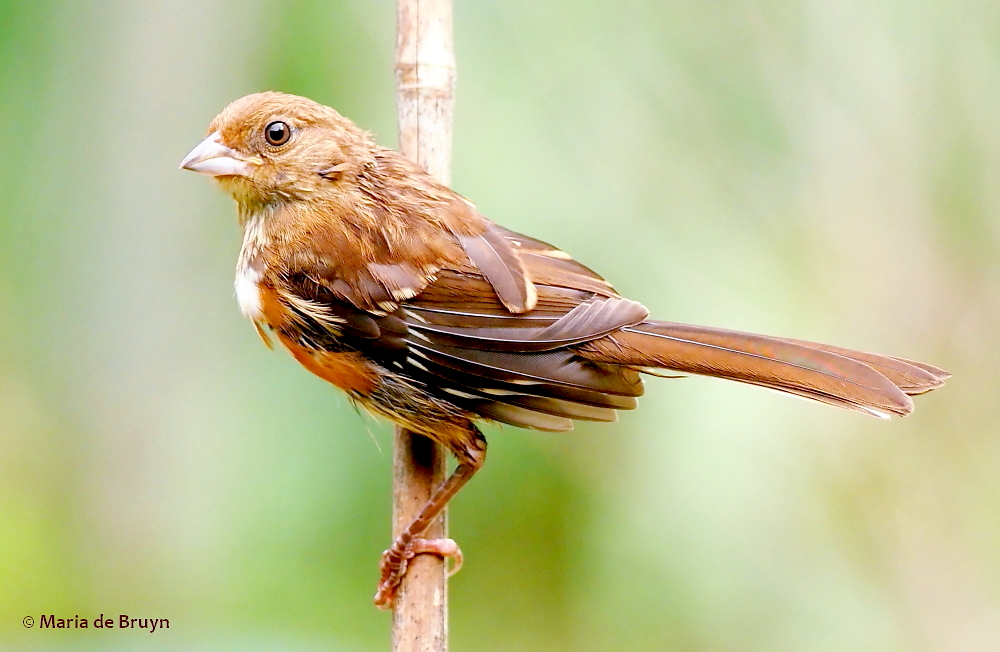
The females of the Eastern towhee species (Pipilo erythrophthalmus) have a brown back above a white breast with reddish sides, while the males have black backs.

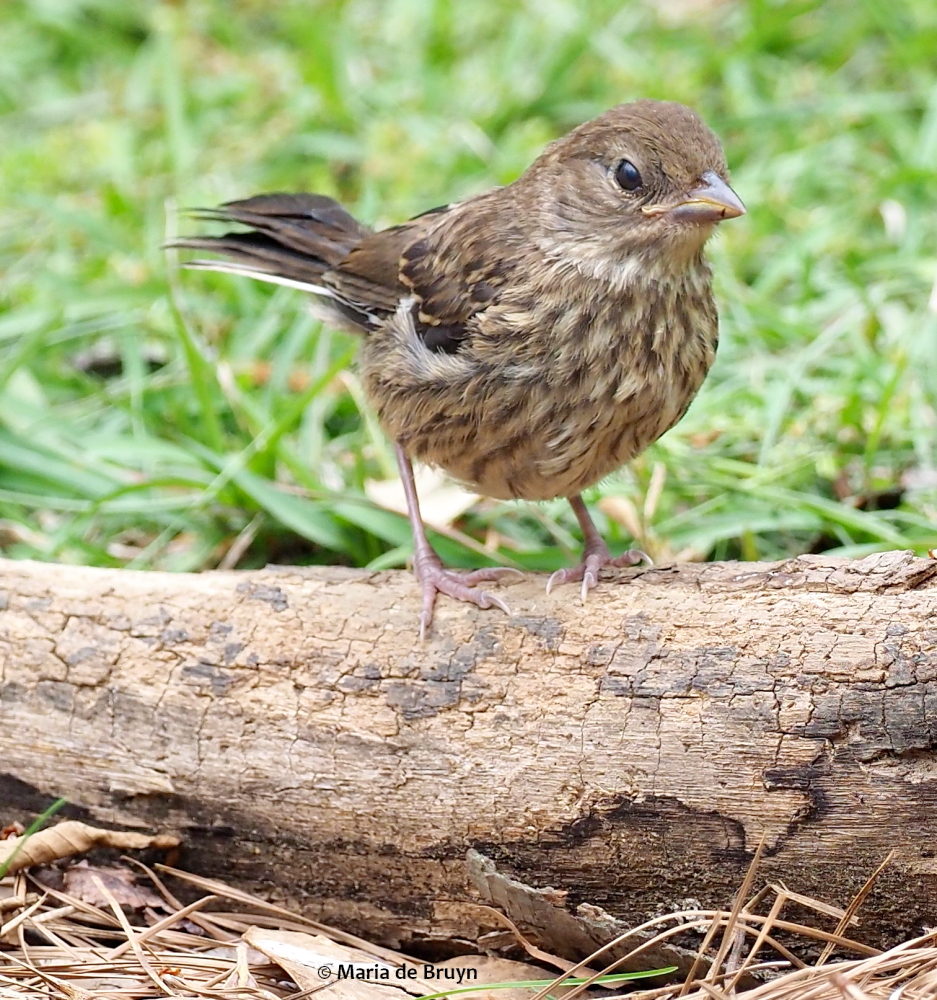
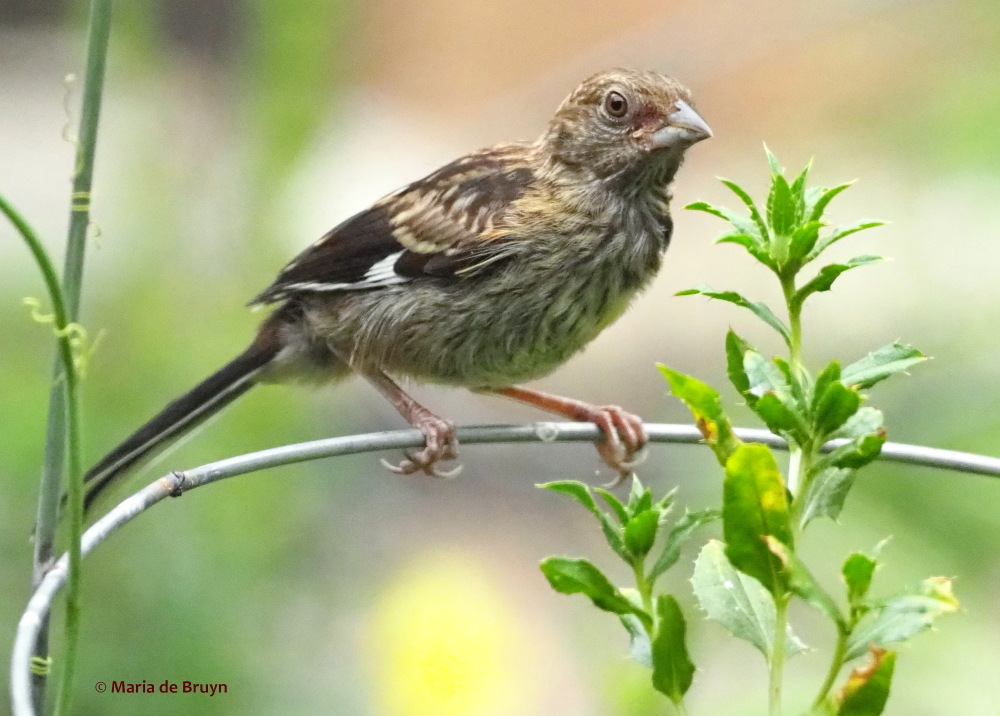
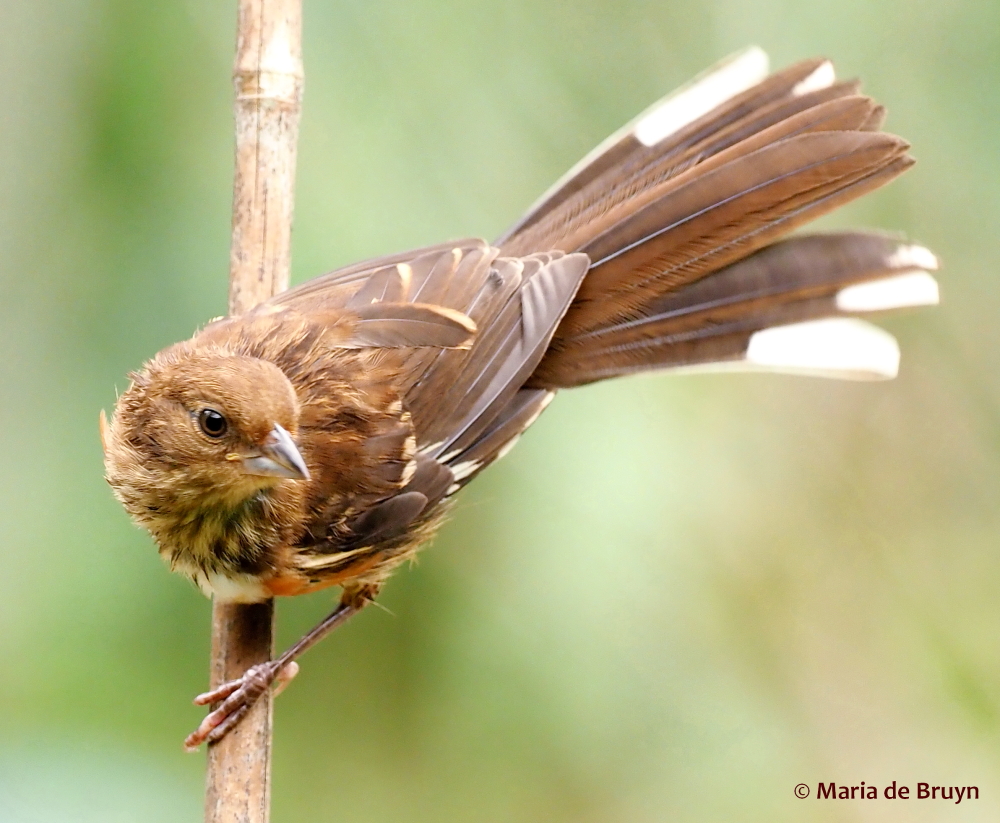
The young developing towhees keep you guessing as to their sex since they undergo quite a lot of color changes as they develop. They do have the white in their tails, which helps you identify them as to species.


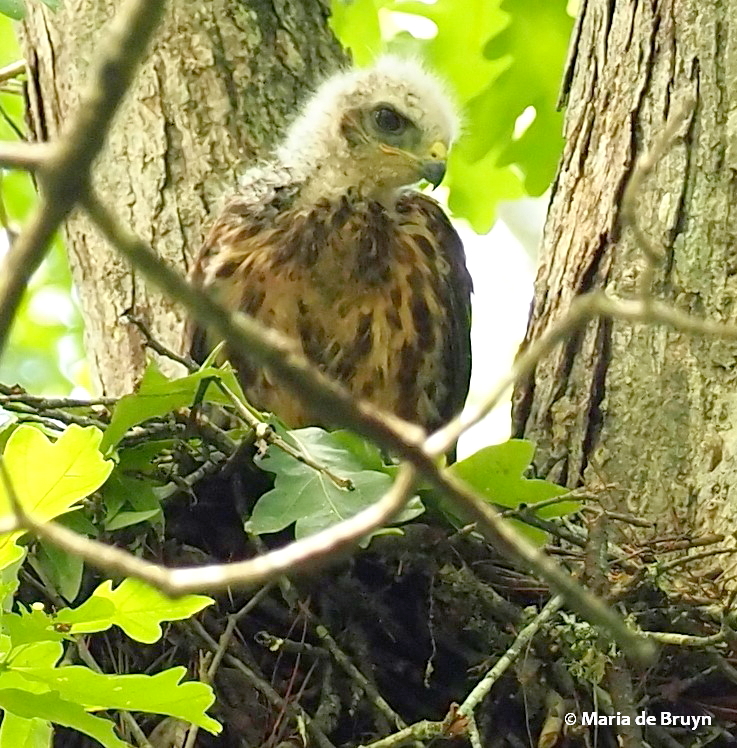
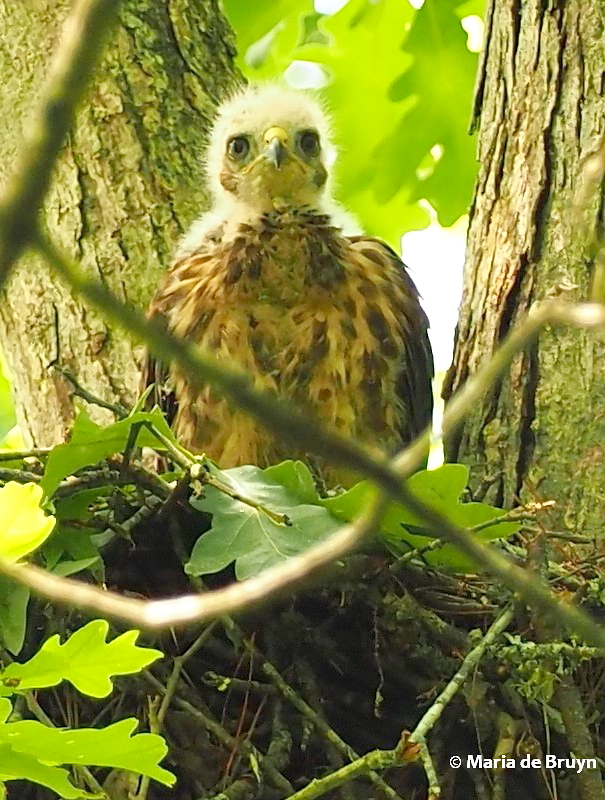
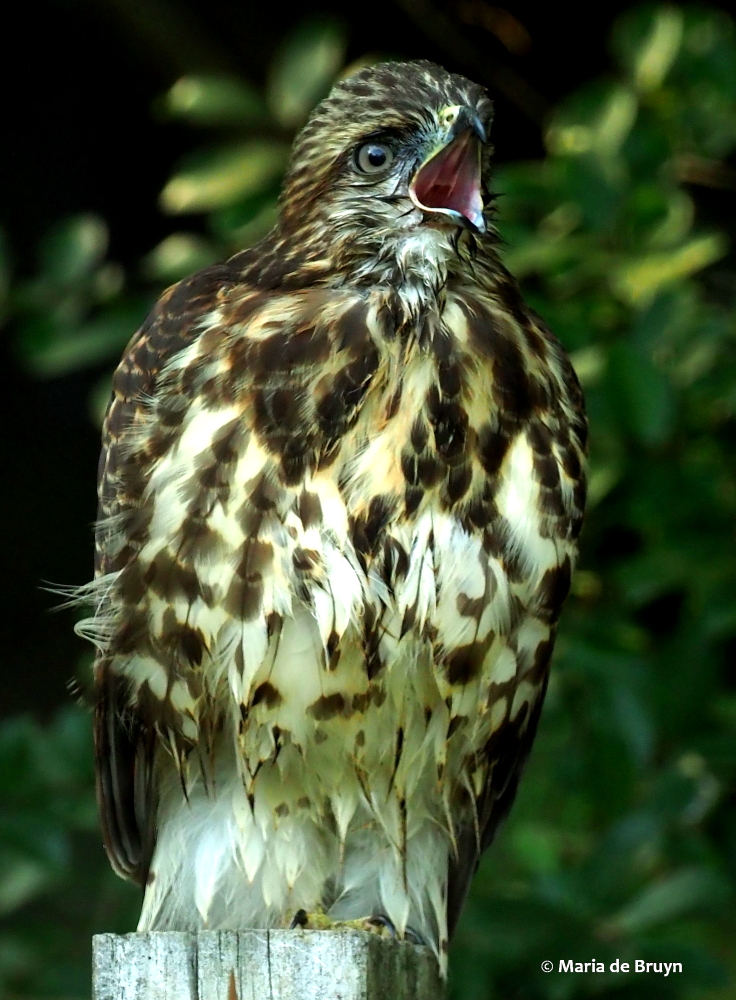
  And then we come to the hawks and owls. It is not unusual for the young raptors to look nothing at all like their parents. The red-shouldered hawks (Buteo lineatus) start out looking like fluffy and then becoming gradually kind of scruffy looking.


As they get a little older and leave the nest, they start to resemble their parents more but have more streaking on the breast. As they near adulthood, they look much more like mom and dad.


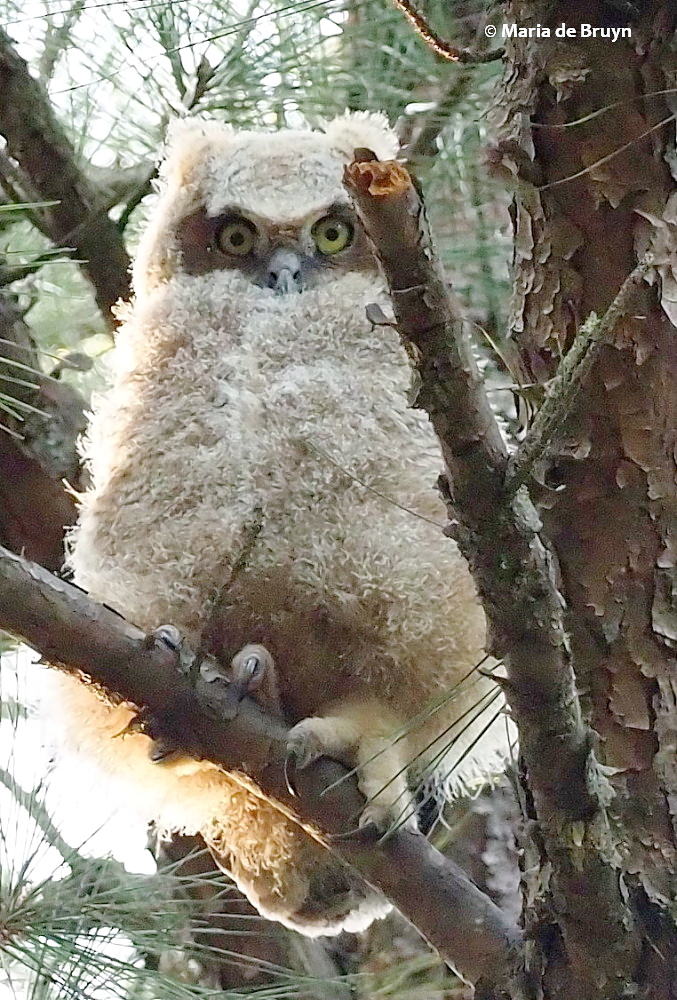
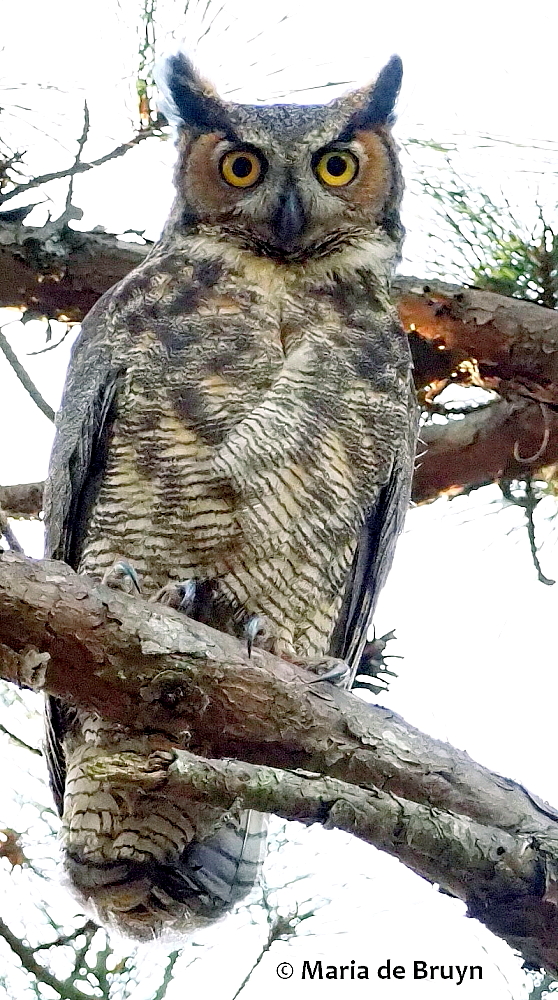
And we end with an example of another raptor. There is a real difference between the baby great horned owl (Bubo virginianus) and its parent as you can see. Many birds are impressed by the adults but ooh and aah over the nestlings. It must be the combination of those big eyes and fluffy feathers that take away attention from the already formidable claws!


Next up – a foray into the world of amphibians and reptiles!

The Northern mockingbird boundary dance

In between searching the web and bird guides for plant and other IDs for my (long-time coming, I know!) next Costa Rica blogs, I’ve taken time for nature walks so that I can continue to see lovely wildlife and plants here in my home area. A recent discovery came up unexpectedly when I was with a couple friends looking for migrating warblers at a local lake.

Previously, I’ve written about how Northern mockingbirds (Mimus polyglottos) engage in wing-flashing behavior, which scientists continue to study in an effort to pinpoint its various functions. I’ve seen the wing-flashing every year since I began watching the mockingbirds, but a few days ago I saw a pair of mockers exhibiting a different type of behavior that was very interesting to watch. (If you click on a photo, you can see it larger.)

The two birds landed on a section of parking lot and proceeded to face off against one another.

They slowly drew closer.

Then they stretched to stand very erect.


They confronted each other face to face.

 A little hop by one or the other followed. A shifting from side to side ensued.

Occasionally, they flew up with flapping wings to confront one another in the air (I tried to video this but obviously don’t know yet how to take proper videos with my new camera). According to research, they might actually have an airborne physical tussle but that didn’t really happen with this pair.

So why do the mockingbirds do this? These displays are called boundary dances, where male birds go to the edge of the territory they claim to ensure that another male does not encroach on their domain.

After several confrontations, this pair eventually decided that they had made their point. It has been reported that they stop when one dominates but these males seemed evenly matched. Or perhaps they were not feeling very aggressive. Each one flew off and presumably they settled in to patrol the areas that they had claimed as their own. It was nice that there was a peaceful end to the show of masculine bravado!

Going out in nature is such a delight – you never know when you will discover something new (at least to yourself!)