An hour at a local pond

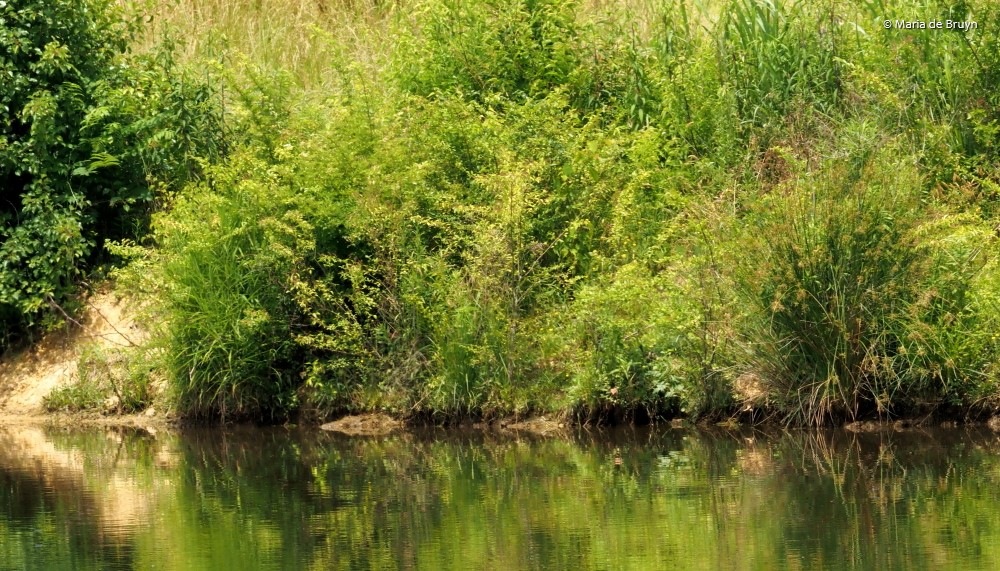
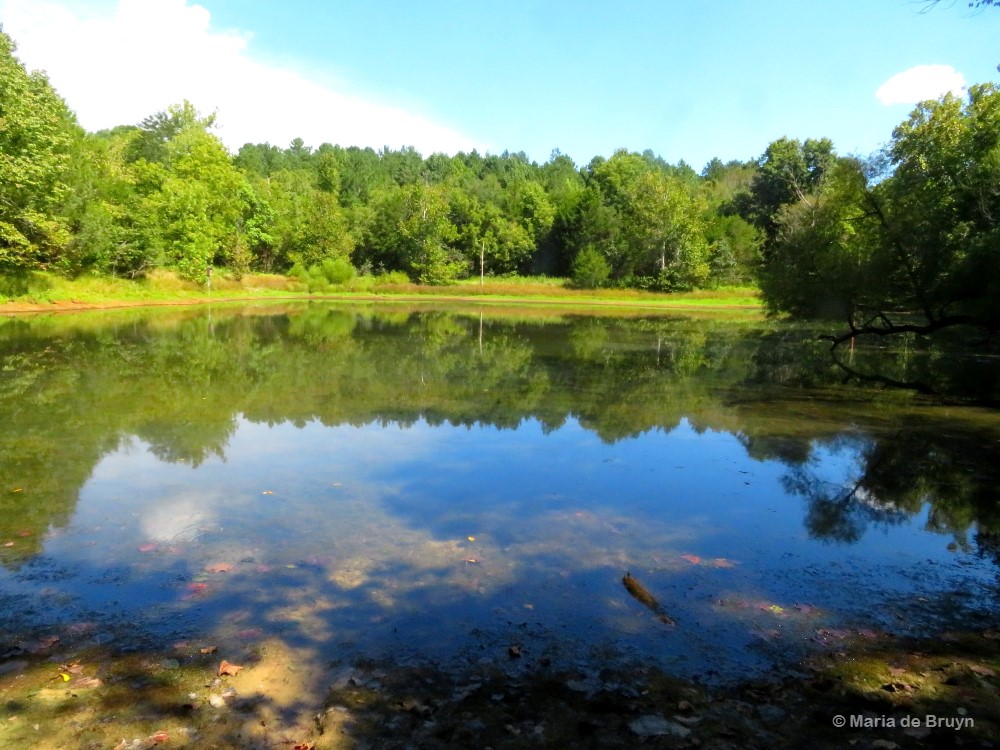
There is a pond in the county where I live that used to be a real hot spot for birds and other wildlife. The dairy farm fields around it had lots of native vegetation, which was very welcoming to avian wildlife.

A couple years ago, the farmers retired, and the property was purchased by a vineyard owner to expand his holdings. He cut down most of the vegetation around the pond and along the road bordering the fields. He has turned most of the fields into vineyards, keeping only small portions untouched where birds can still find some refuge.
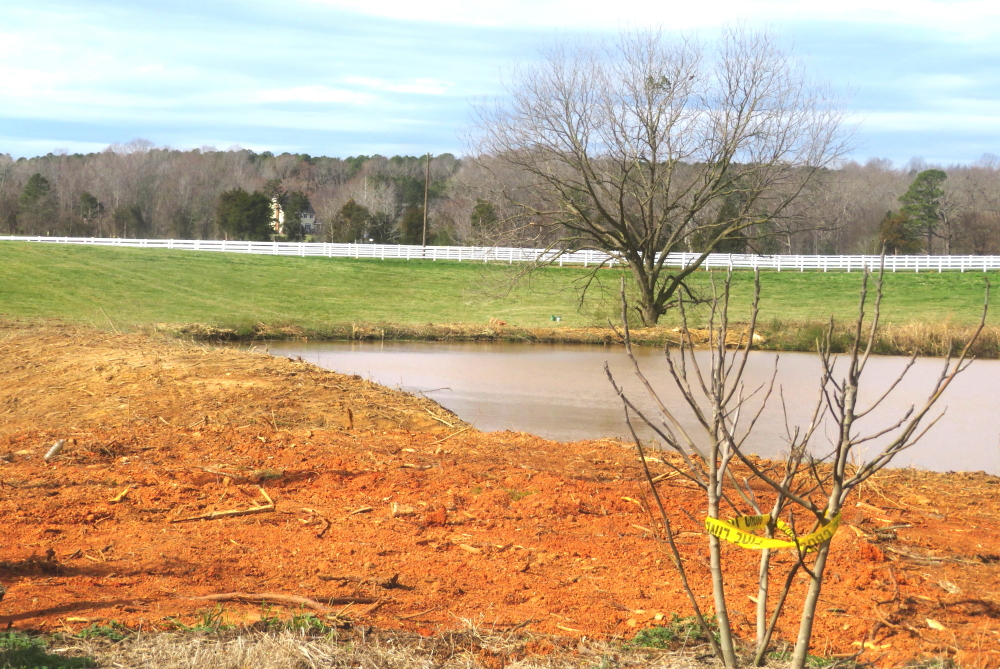
I used to see a yellow-billed cuckoo return from migration to a small patch of trees there every spring. This now is a thing of the past. However, some pond-edge vegetation had been regenerated, and a little bit was planted, so some birds are hanging in there. They still make for some interesting birding. Here is what I saw on a recent visit.
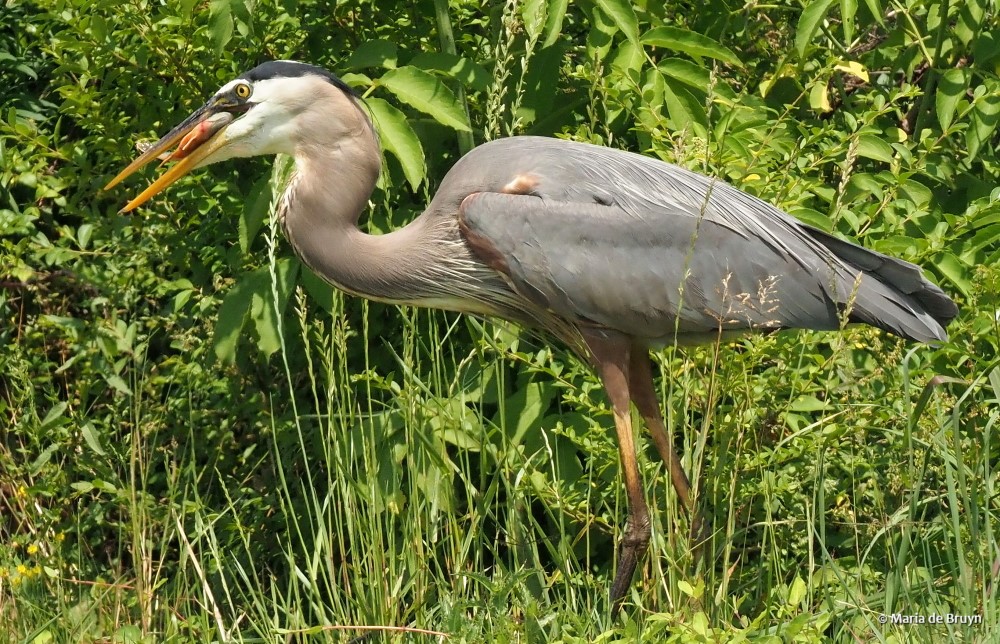
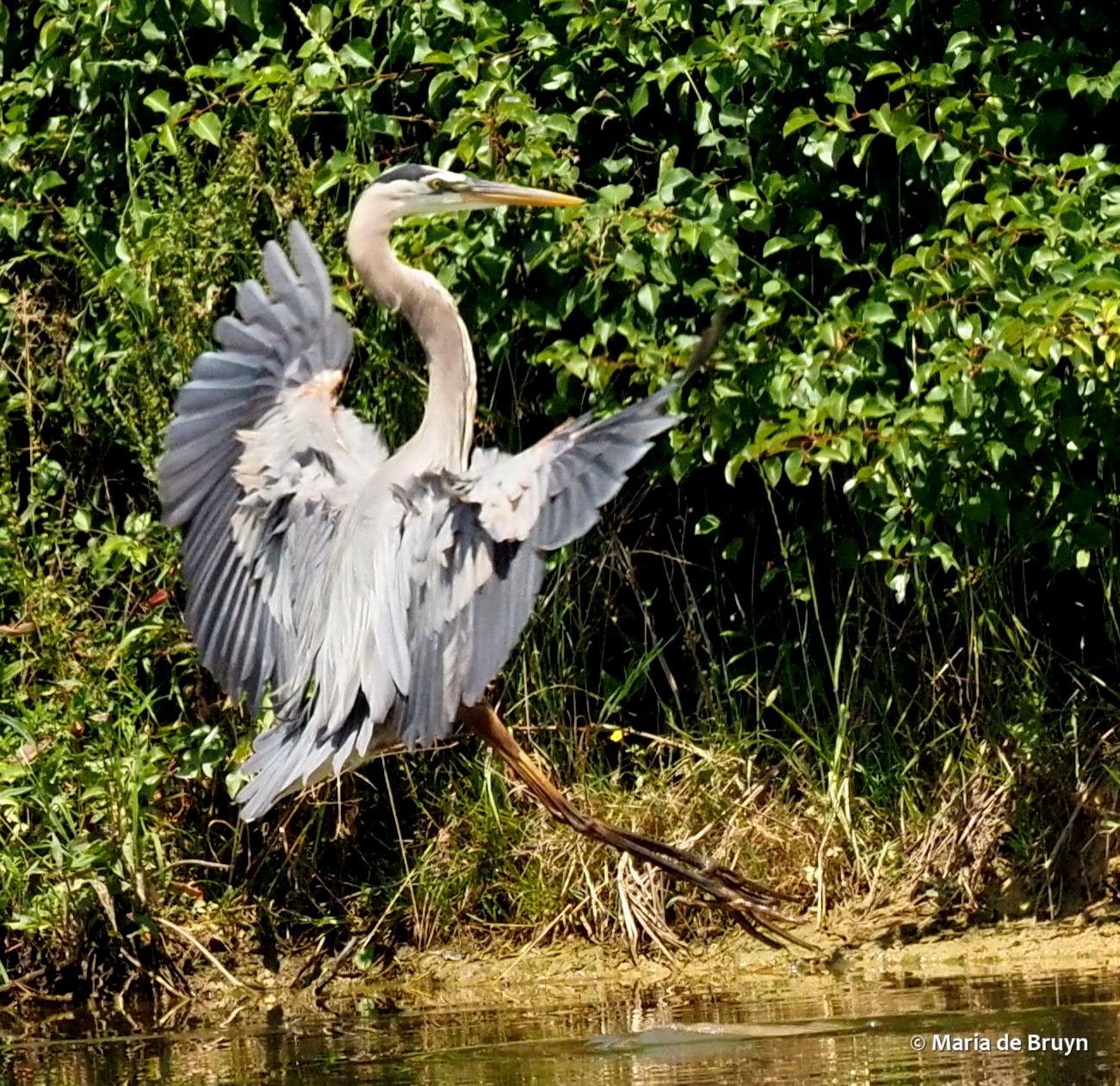
The largest birds that keep returning to the pond are the great blue herons. Sometimes there is one; other times there are two or three. Occasionally a green heron flies in or over but none stopped by on this occasion.

The heron often has good days fishing there. I often see him/her snag at least one fish and often more than one.

The heron stalks along the pond and frequently flies across to the other side for a change of venue. Perhaps the fish manage to hide well once they realize s/he is stalking them.
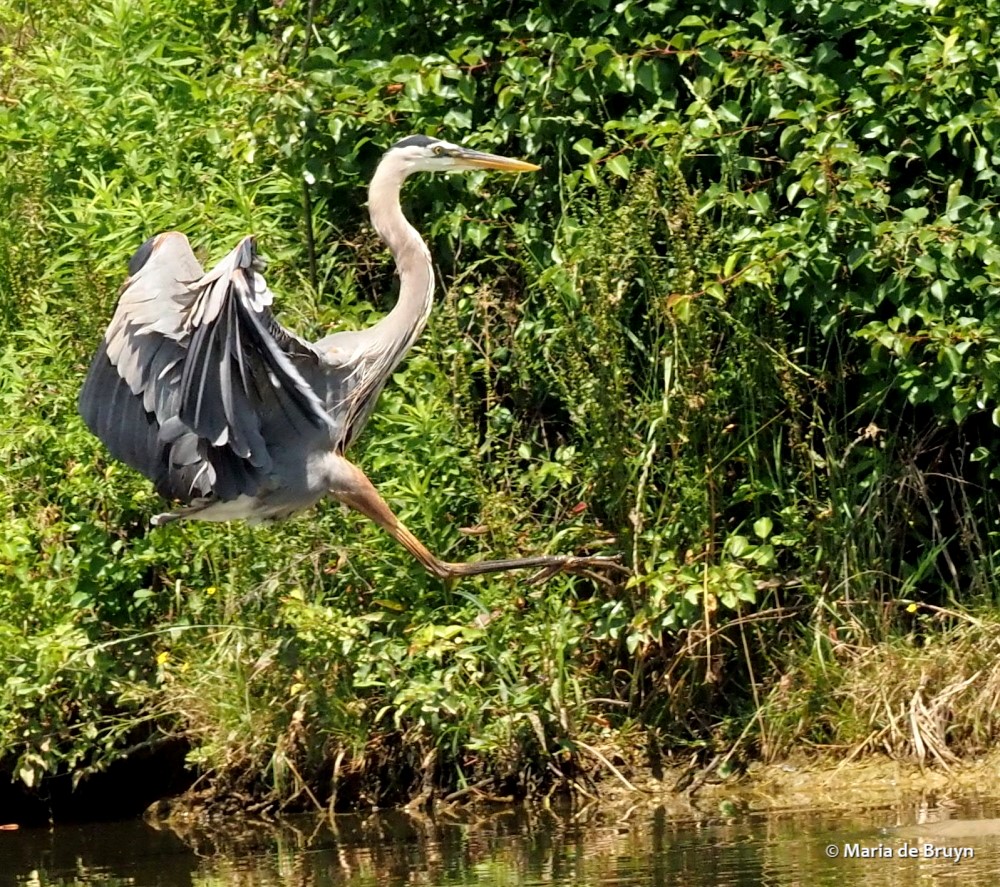
It’s wonderful to see the heron’s wings spread as the bird alights and then begins stalking again.

Eastern bluebirds had taken advantage of an electrical installation next to the pond (which also serves as a resource for the local fire department as needed). They not only used it as a perch for bug seeking but also built a nest inside it. I wondered what the new owner would do.
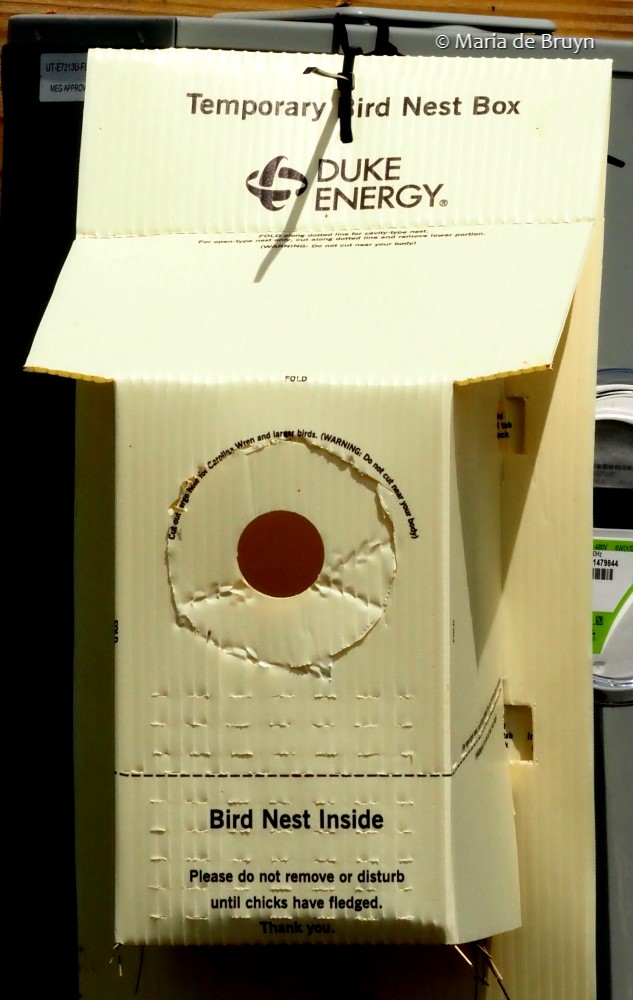


To my great surprise, his problem was solved by the local electricity company. They removed the birds’ original nest and put it into a temporary nest box!
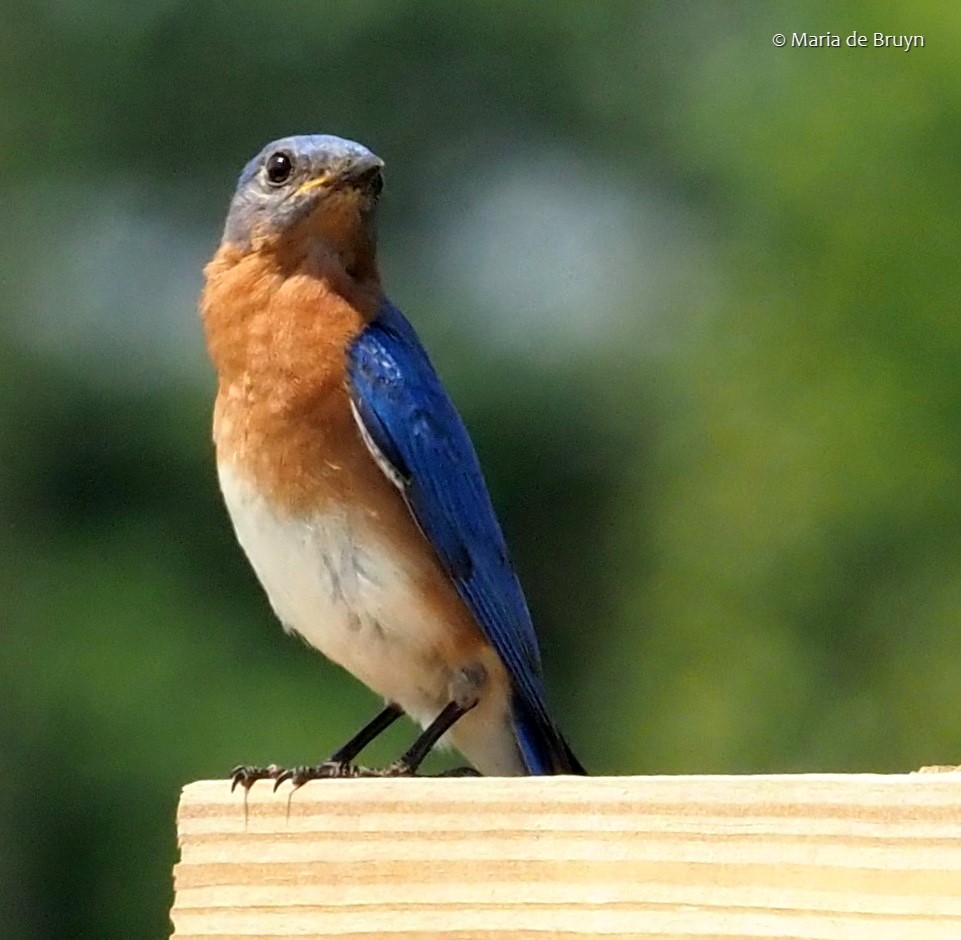
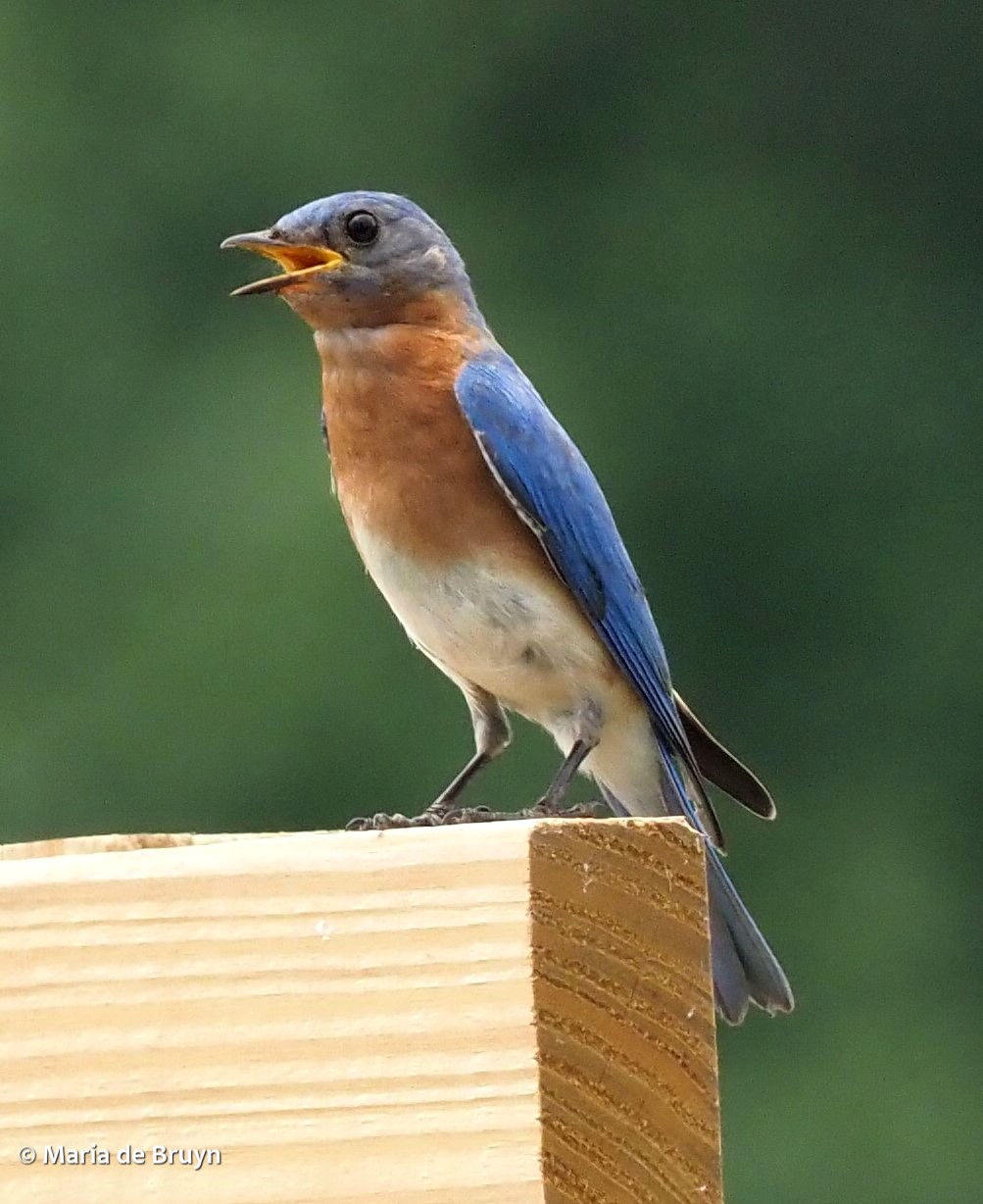
    

Mom and Dad bluebird were guarding the nest space, but it looked like they were still getting used to the new digs.

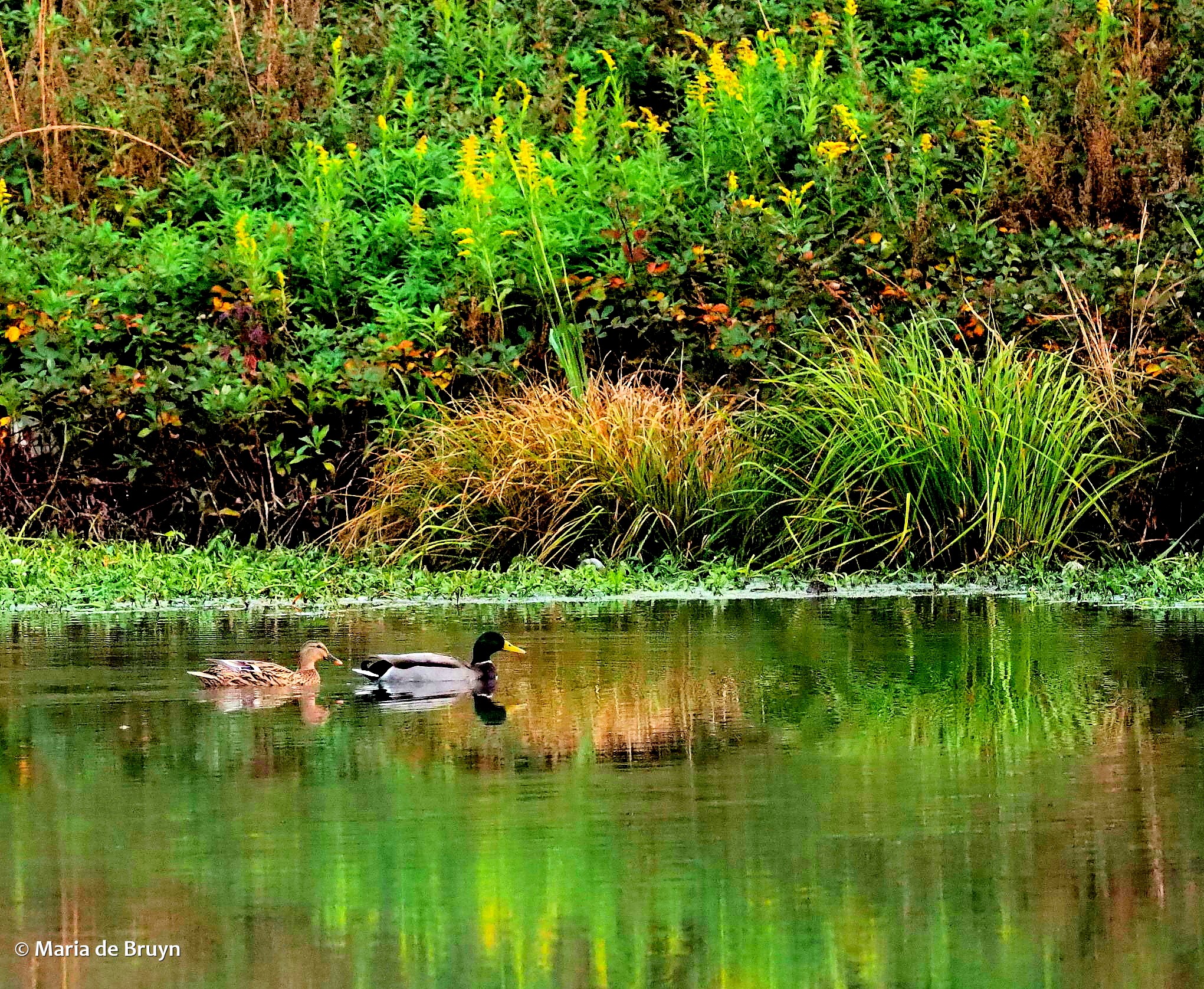
While watching the bluebirds, I suddenly heard a commotion in front of me, but I couldn’t see what was happening behind the bushes at the pond’s edge (I’m short!). However, I could tell that a bird was in distress. I wondered if one of the huge snapping turtles had caught a duckling. I walked further along and saw one of the two resident female wood ducks (above) swimming away from the area.
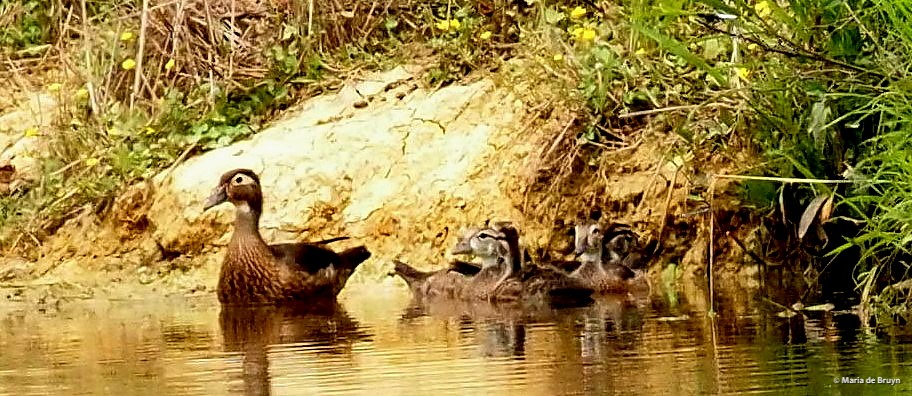
No ducklings followed and I feared the worst. One mother had five ducklings (above) while the one swimming away had lost one a few weeks before. Now I wondered if she had lost others, too. Luckily, I later saw her return to the area and shepherd four ducklings across the water to the other side.


In the small bit of meadow immediately adjacent to the pond, red-winged blackbirds are now nesting. One pair has a nest close to the road and they are warning visitors away with constant flights along the pond’s edge, while the male calls repeatedly.


The female was taking breaks from warning-off flights to enjoy an occasional meal, at this time consisting of one of the remaining periodical cicadas that emerged recently.

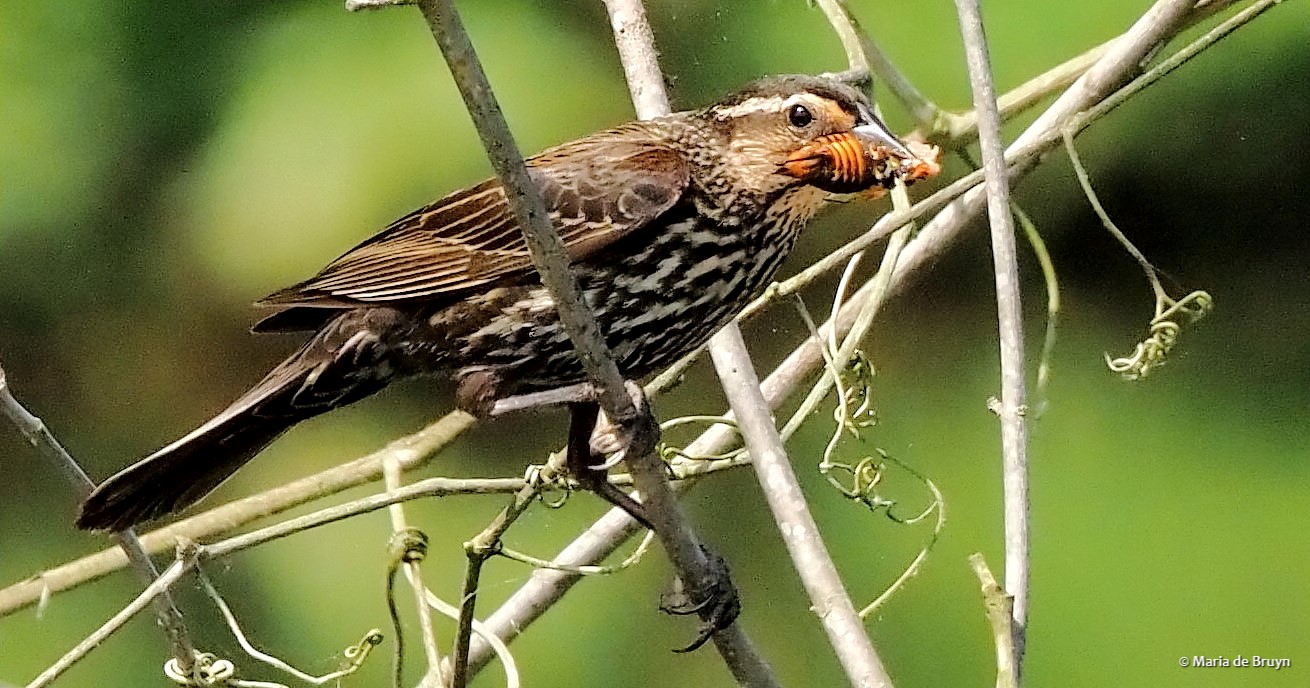
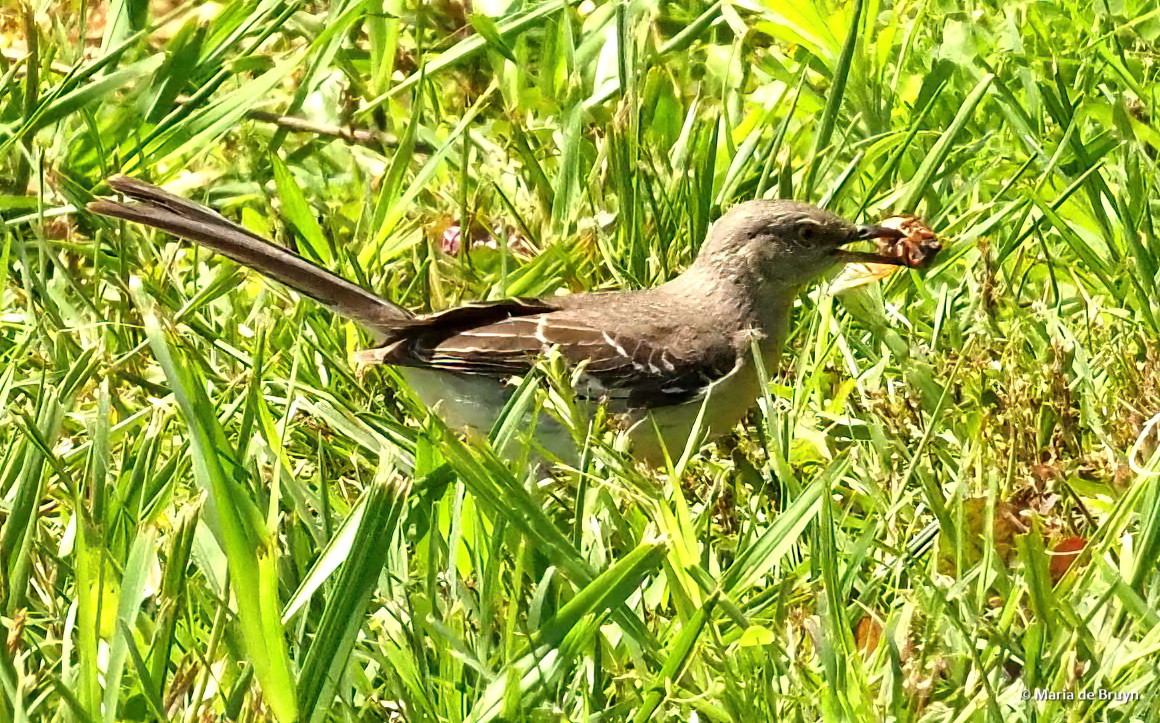
She wasn’t the only one seeking these insect delicacies. Two Northern mockingbirds were also intently examining the area under a tree for them. One finally had success in snagging a cicada. (For more about the cicadas, see my previous two blogs!)


The male red-winged blackbird was very busy keeping “intruders” as far as away as possible from their nest. He warned off the great blue heron, who was actually pretty far away. (He is flying away from the heron on the left side of the photo.)

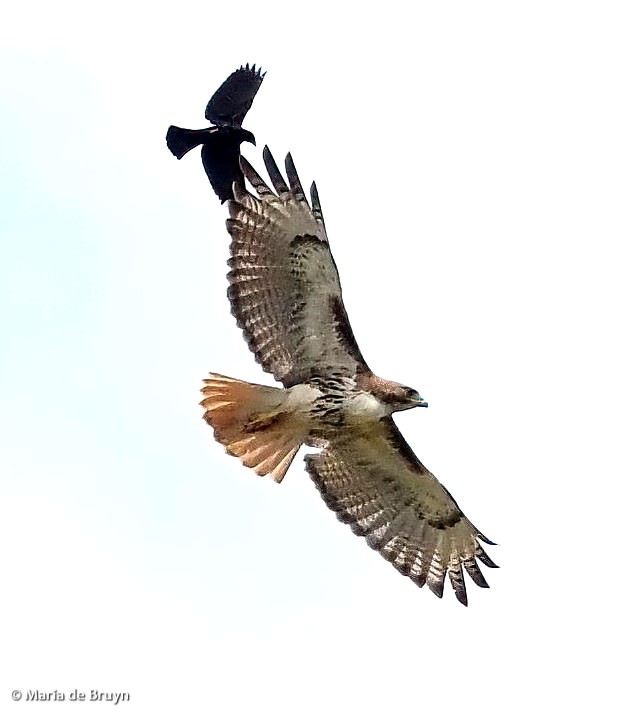
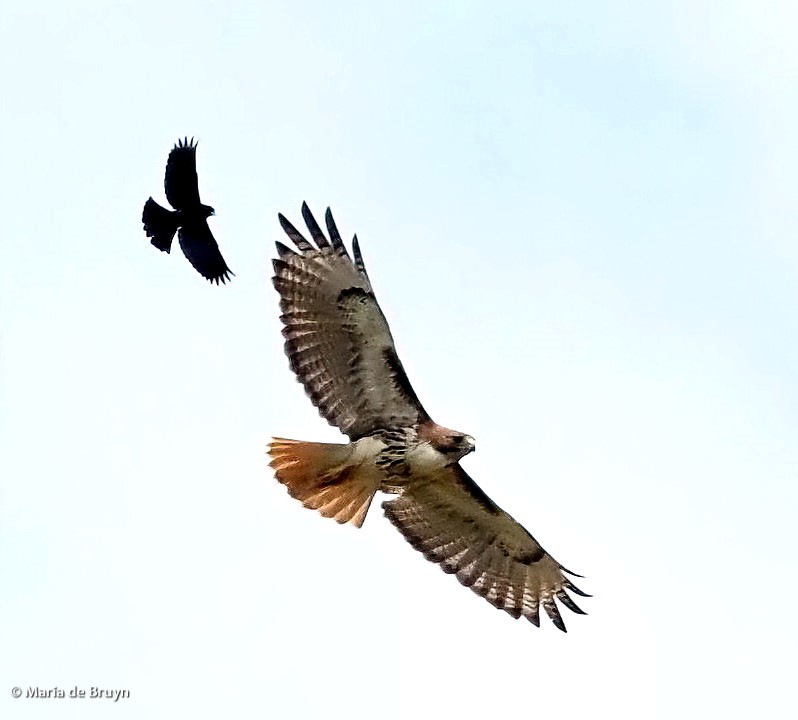
He also went after a red-tailed hawk, who appeared soaring overhead.
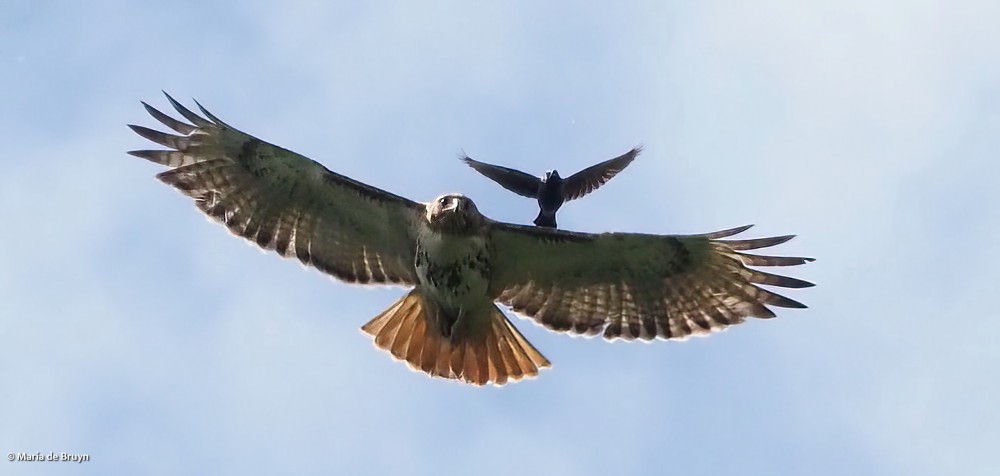
Common grackles, often present at this pond, will also chase away these hawks. There weren’t any around to join in the foray this time, but the photos below taken at another pond show how they go after the red-tails.

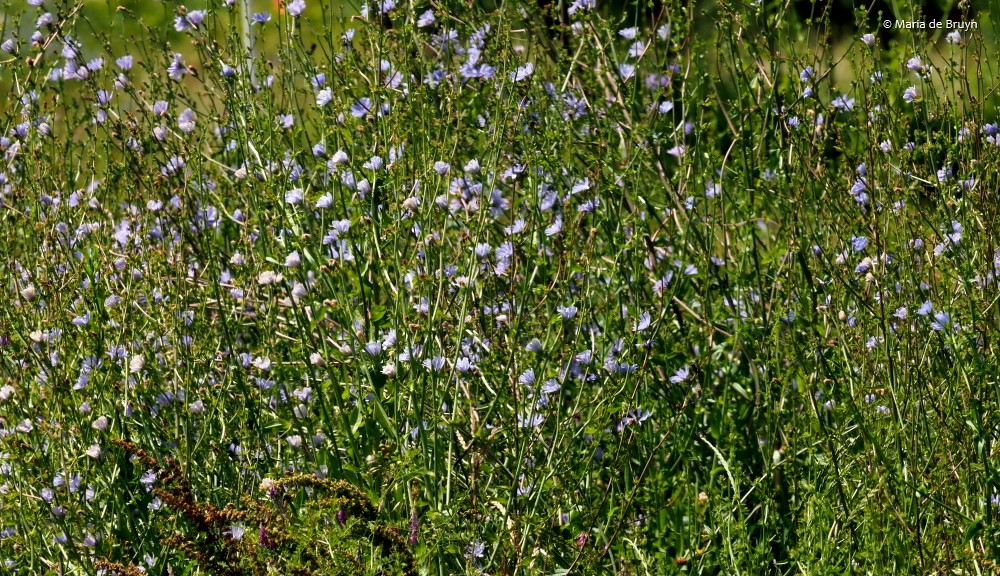
I looked at a small patch of chicory across the road to see if any bobolinks, grosbeaks or meadowlarks were around. I love this plant and planted some seeds in my own yard, hoping to attract more pollinators and birds. So far, they have not sprouted.
 

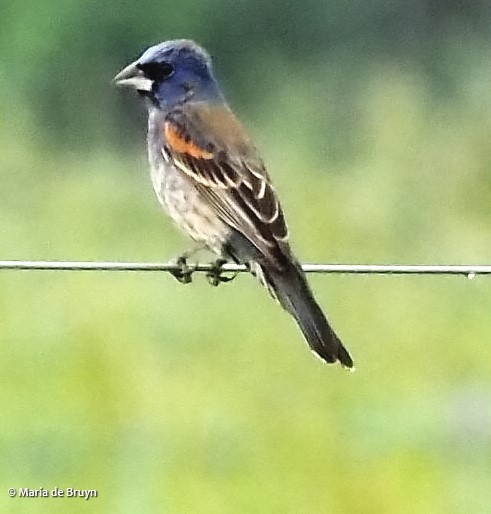
Below you see a young blue grosbeak and a pair of Eastern meadowlarks who were in the patchy field spots another time.
 

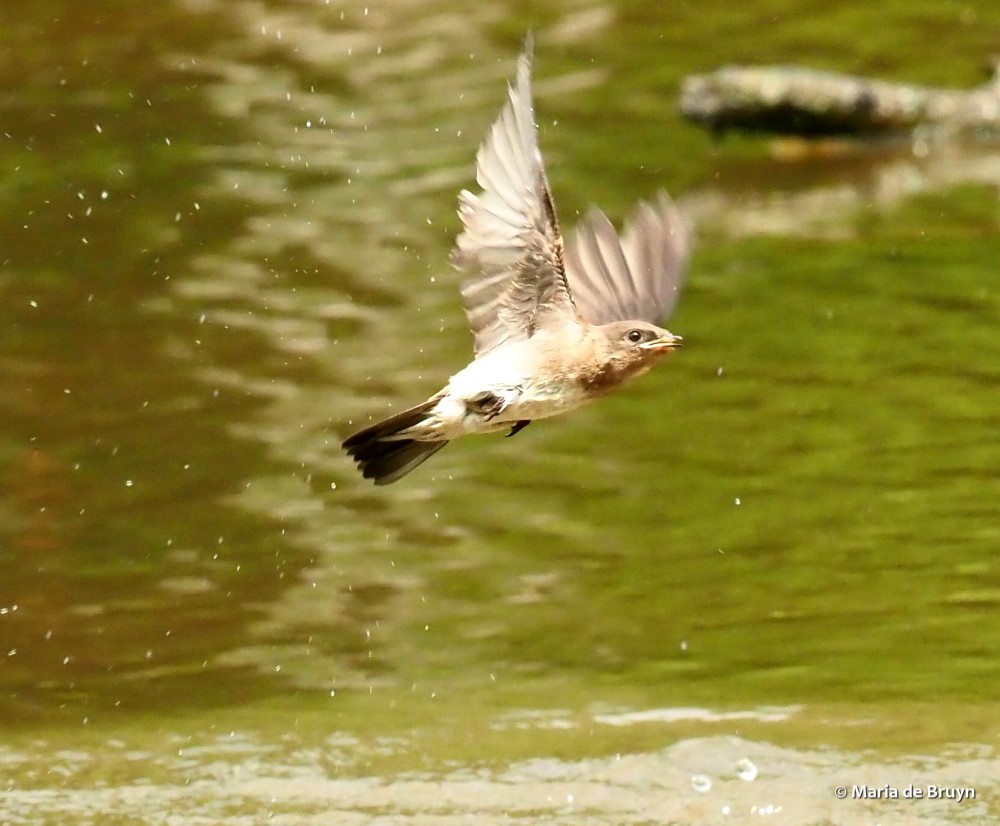
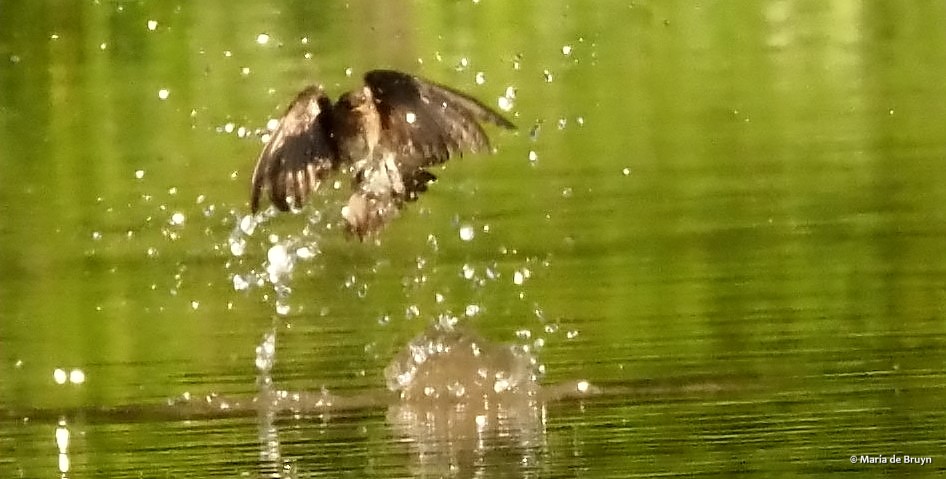
Usually, several types of swallows frequent the pond, including purple martins, tree swallows, barn swallows and Northern rough-winged swallows. I only saw a couple of the latter this day and only got poor flight photos as my camera began acting up, refusing to focus.

Staring hard across the pond, I did manage to spot three killdeer, four least sandpipers and a couple other sandpipers that I couldn’t immediately identify. I later learned that they were semipalmated sandpipers, which I hadn’t seen there yet. (If you click on the photo, you see it larger; then go back to the blog.)

That hour at the pond didn’t turn out to be a super one for capturing stellar photos, but it was definitely a great one for relaxing, observing the action and appreciating nature again!
Weather, water, wildlife, and well-being

As I continue to go through my photos from Yellowstone National Park (a lengthy process!), I will post on a few other topics that you will hopefully enjoy. 😊

I just wrote a column for a local newspaper about climate and water. All life on our earth needs water to exist — plants, animals, and humans. Water contributes to respiration, processing nutrition, photosynthesis, regulating temperature and providing a living environment for many organisms. Scientific studies are documenting the benefits for our well-being of spending time in natural areas and beautiful places for this include nature reserves and parks with ponds, wetlands, lakeshores, creeks, and rivers.

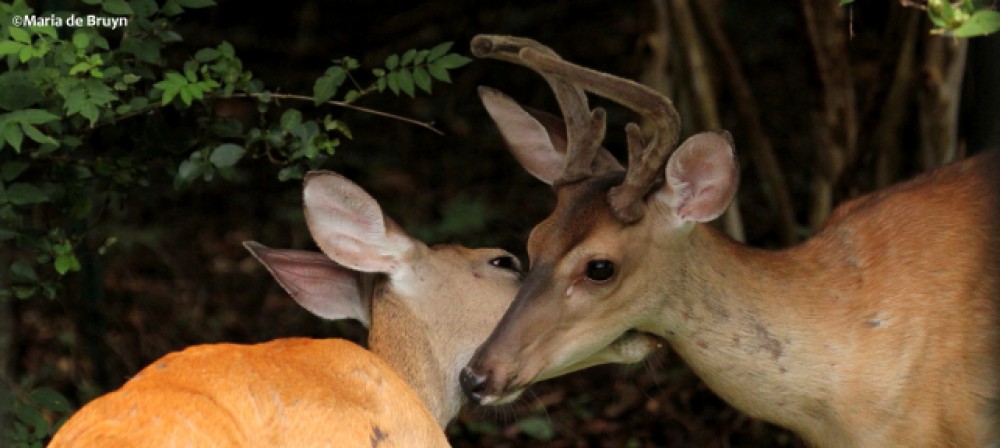
The diversity of wildlife around ponds can be delightful, especially in the summertime. You may be lucky to see mammals coming to the shoreline or pond’s edge to get a drink or have the good luck to catch sight of beavers, muskrats, minks, or otters.

Or perhaps there will be a yellow-crowned night heron (Nyctanassa violacea) standing atop a beaver lodge, surveying its surroundings, and taking time to preen.

Reptiles and amphibians clamber onto rocks, snags, branches, and boardwalks to sun. Turtles lay their eggs close to ponds and rivers. At this the time of year, you may come across the remains of leathery eggshells left by hatched turtles (or dug up by predators).

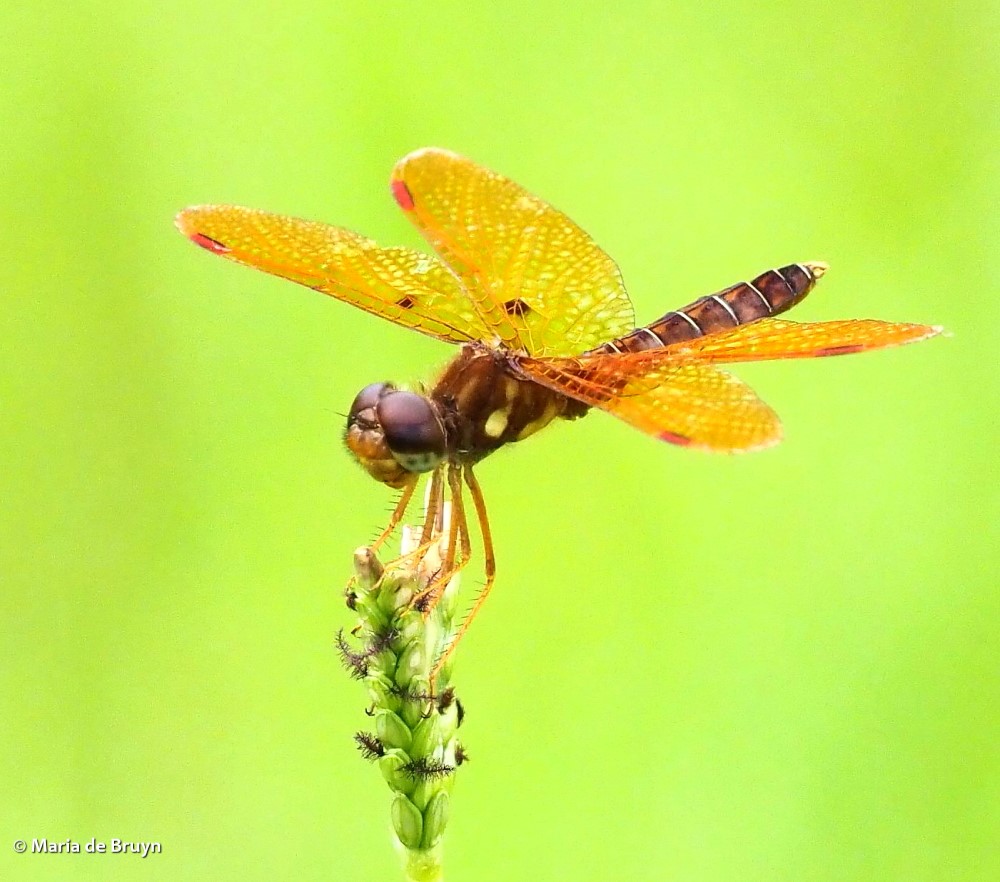
Damsel- and dragonflies, like these amber-winged dragonflies (Perithemis tenera), are interesting to watch; they don’t even need natural water sources but will come to tubs of water containing plants like pickerelweed. Butterflies, such as these cabbage whites (Pieris rapae), “puddle” in mud, carrion and dung alongside creek and pond banks to obtain amino acids and salts in the fluids they suck up.


The bugs do risk ending up as bird food. Northern rough-winged swallows (Stelgidopteryx serripennis) and purple martins (Progne subis) skim above and over the water, snapping up insects as they swoop and soar.


The tiny insects on vegetation near water can be remarkably interesting, so taking along a magnifier can increase what you see. Most leaf- and planthoppers are quite small but the glassy-winged sharpshooters (Homalodisca vitripennis) are about fingernail-sized. They consume the fluids in water-carrying tubes in plants, called xylem, and then need to expel excess water from their bodies by shooting out fluid droplets into the air.


The vegetation near water can also be fascinating. Indian pipes, also known as ghost plants (Monotropa uniflora), are saprophytes (not fungi) with no chlorophyll. These white, leafless plants obtain their nutrients by tapping into other plants’ resources through mycorrhizal fungi. They usually grow in clusters but can still be difficult to see. My friend Ace spotted one and introduced me to the species, for which I was quite grateful!

Many birds nest near water. Eastern bluebirds (Sialia sialis) and brown-headed nuthatches (Sitta pusilla) will raise young in boxes we put out for them, but they and other birds also like to use holes in snags near or in water. Those nests are much more difficult for predators to reach.

Birds also like to nest near water because they’re primarily insectivores in the spring and summer and there are plenty of bugs in such areas. The only hummingbird nests that I’ve been able to find were all near water; up to 60-80% of their diet comprises spiders and other bugs.

This year, I had the good fortune to see a female ruby-throated hummingbird building her nest and raising her young (previous blog). The first time I visited this wetland after the babies fledged, mama hummer came and hovered about 2 feet in front of me, as if she were greeting me. I’ve seen her on subsequent days as well.

The larger water birds, such as geese and ducks, like to bathe in ponds and rivers.

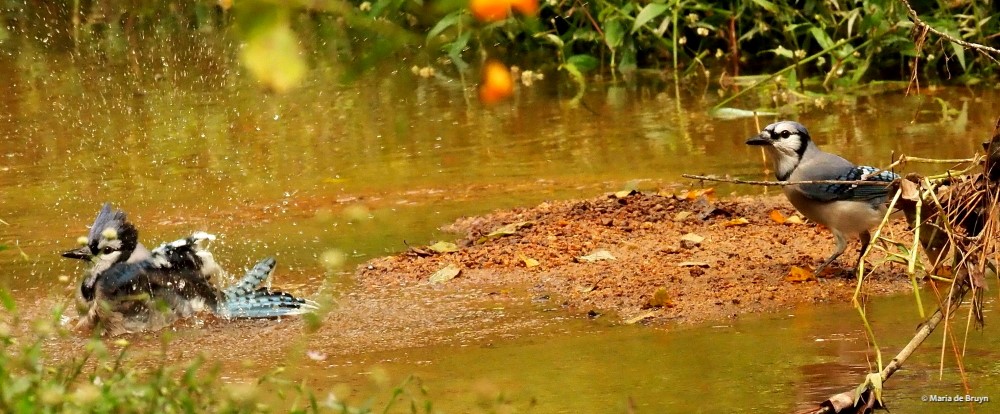
Other birds enjoy taking a bath in streams and creeks. American goldfinches (Spinus tristis) and house finches (Haemorhous mexicanus) enjoy company with other species. Blue jays (Cyanocitta cristata) like some solitude or sharing space with a fellow jay.


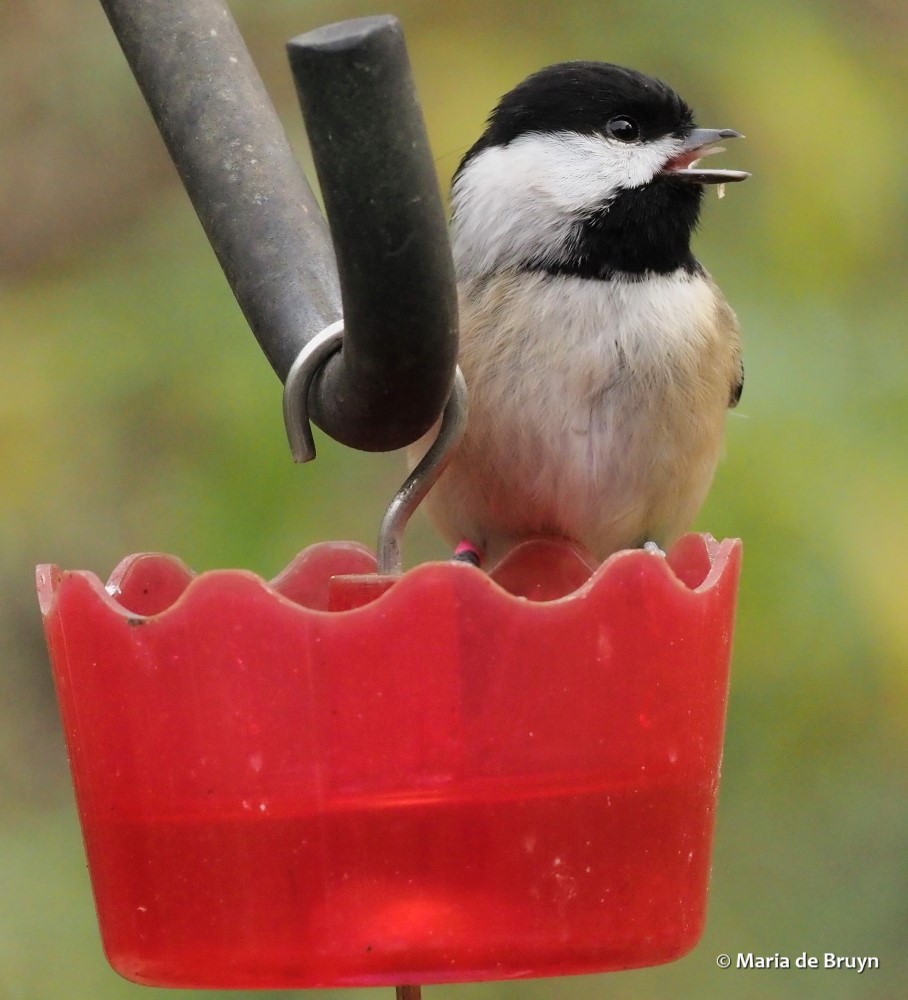
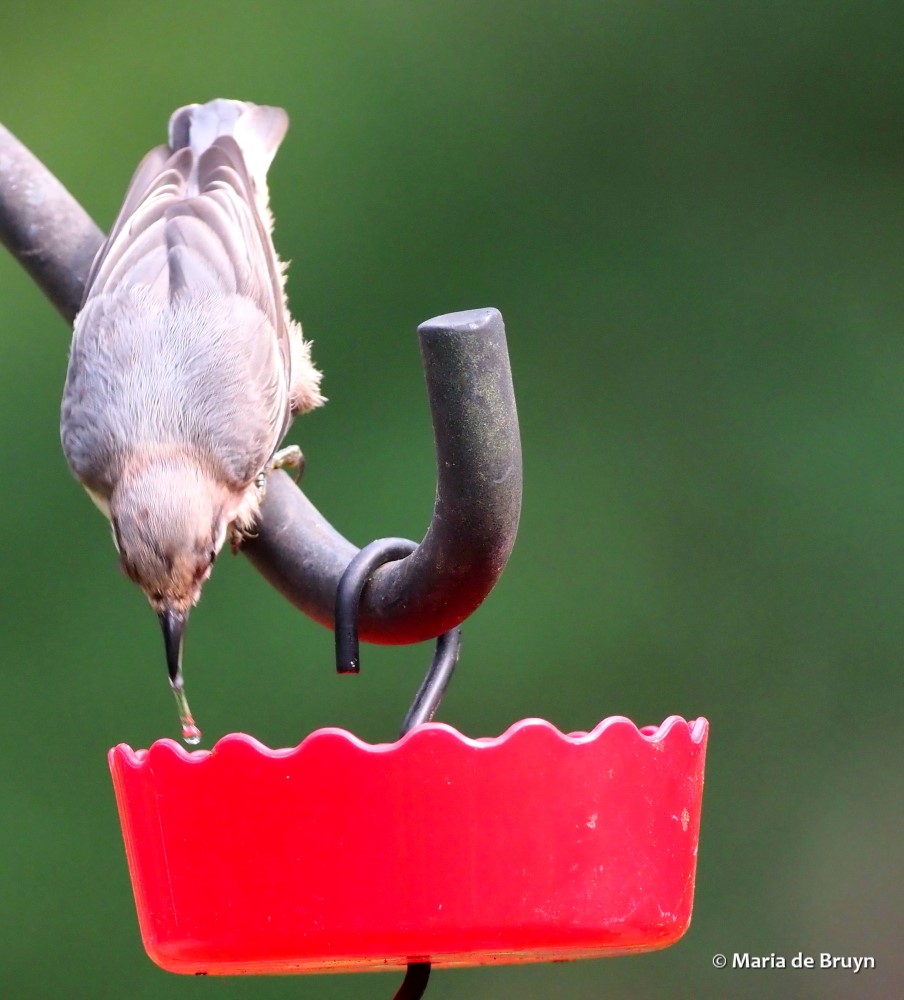
Birds living further away from natural water resources also need to drink and bathe and that is where we can help them out. Small birds like Carolina chickadees and brown-headed nuthatches like to drink from the ant guards on which hummingbird feeders are hung.


Bird baths can become very popular. Eastern bluebirds and European starlings (Sturnus vulgaris) very much enjoy two of mine in the front yard.


House finches, American robins, cedar waxwings, Carolina chickadees and gray catbirds (Dumetella carolinensis) tend to like my backyard baths. And then they appreciate branches and nest boxes as platforms to shake out those water-laden feathers. Birding friend Ylva commented that the vigorous fluttering of this catbird would be worthy of an audition for the musical Cats!

Even if you don’t have a yard, you can put out shallow dishes or plant pot saucers in your outdoor space (steps or patio) as a place for birds to drink and cool off. If you have a balcony, it might take a while for birds to find your water source, but if you stay inside, you may see them come to sip and splash.

If you are luckily mobile, I encourage you to take some outings near waterways. The wildlife and plant diversity can be wonderful and entertaining. And in the meantime, we can all take action to conserve and preserve water:

Birds and blooms at Sandy Creek Park – more of the “good ones”

moon I77A9993© Maria de Bruyn res

Birds are a favorite photographic subject of mine, even though catching them in late spring and summer is challenging when the lush foliage offers them many places to hide. Their songs and calls and warbles tell me that they are there, but often I need to wait quite a while until I finally catch a flutter of movement out of the corner of my eye to locate them.


white-eyed vireo I77A0007©Maria de Bruyn

One early morning, when the moon was still in the sky, I was fortunate enough to see a lot of fluttering in trees near the park’s parking lot – and I discovered an immature white-eyed vireo (Vireo griseus) with a parent who looked as if she or he was really practicing forbearance.

white-eyed vireo I77A0010©Maria de Bruyn      white-eyed vireo I77A0006©Maria de Bruyn

Carolina wren I77A0188©Maria de Bruyn res

Nearby, a Carolina wren (Thryothorus ludovicianus) was singing loudly; these little avians have an outsized voice so that you can hardly miss them even when they are hidden behind leaves.

A handsome male goldfinch (Spinus tristis) was in a field, while a female was visiting the coneflowers (Echinacea), of which there were various species in the cultivated butterfly garden.


American goldfinch I77A0382©Maria de Bruyn res American goldfinch I77A0177©Maria de Bruyn res

coneflower I77A7325© Maria de Bruyn res      coneflower I77A6365© Maria de Bruyn res   coneflower I77A6250© Maria de Bruyn res

Eastern bluebird I77A6188© Maria de Bruyn res


Other birds were busy finding insect meals, like the male, female and immature Eastern bluebirds (Sialia sialis).


Eastern bluebird I77A6022© Maria de Bruyn res    Eastern bluebird I77A5558© Maria de Bruyn res

Common grackle I77A6377© Maria de Bruyn res


The common grackle (Quiscalus quiscula) scored a meal, while the pine warbler (Setophaga pinus) and blue-gray gnatcatcher (Polioptila caerulea) were busy in the trees searching for caterpillars and insects.

Other birds (and mammals, I think) had been getting crayfish from the ponds but I guess there were so many that they only ate the tastiest parts.

Pine warbler I77A5605© Maria de Bruyn res   Pine warbler I77A5598© Maria de Bruyn


blue-gray gnatcatcher I77A0302©Maria de Bruyn res     crayfish IMG_4926©Maria de Bruyn res

The American robins (Turdus migratorius) were looking for earthworms on the ground, and the song sparrows (Melospiza melodia) alternated between the ground and shrubs in their search for food.

American robin IMG_0550© Maria de Bruyn res     song sparrow I77A6195© Maria de Bruyn

The male red-winged blackbirds (Agelaius phoeniceus) were calling and flying from shrub to shrub, showing off their handsome black plumage with a red highlight.

red-winged blackbird I77A6090© Maria de Bruyn res  red-winged blackbird I77A6126© Maria de Bruyn res

Over at a nearby pond, the Northern rough-winged swallows (Stelgidopteryx serripennis) were swooping over the water and then sharing space on a snag; meanwhile, a mother wood duck (Aix sponsa) led her brood along the shoreline.

rough-winged swallow I77A0234© Maria de Bruyn res    wood duck I77A7225© Maria de Bruyn

In a tree beside another pond, the immature great blue herons (Ardea herodias) were still at their nest at the start of June; later in the month, they were no longer hanging out there.

great blue heron IMG_0430© Maria de Bruyn res   great blue heron IMG_0402© Maria de Bruyn res

milkweed I77A0079©Maria de Bruyn res


Botanists can have a great time at Sandy Creek, too. The milkweed plants in the butterfly garden attract both butterflies and bees.

Carolina horsenettles (Solanum carolinense) are common but pretty little plants, while the orange jewelweed (Impatiens capensis) enjoys a good reputation as having stem juice that relieves the pain caused by poison ivy for many people.

Carolina horsenettle I77A5581© Maria de Bruyn res      orange jewelweed I77A0511© Maria de Bruyn res

The fairywand (Chamaelirium luteum) grows profusely on the edges of Sandy Creek ponds and the swamp rose (Rosa palustris) sprouts near them as well.

fairywand I77A7293© Maria de Bruyn res      swamp rose Rosa palustris I77A5621© Maria de Bruyn res

Japanese honeysuckle I77A5711© Maria de Bruyn res


Japanese honeysuckle (Lonicera japonica), an invasive plant, attracts pollinators but so does the more vibrant and native coral honeysuckle (Lonicera sempervirens L.).


coral honeysuckle I77A0159© Maria de Bruyn res      coral honeysuckle I77A0127© Maria de Bruyn 2 res

In the fields, you can see lovely brown-eyed Susans (Rudbeckia) and coreopsis.

Brown-eyed Susan IMG_0504© Maria de Bruyn res  brown-eyed Susan IMG_0497© Maria de Bruyn res


coreopsis flower IMG_0494© Maria de Bruyn res   coreopsis flower IMG_0486© Maria de Bruyn res

Stoke's aster I77A6353© Maria de Bruyn resThe cultivated garden in the park gets plenty of color from the Stoke’s asters (Stokesia laevis) and red bee balm (Monarda didyma), which is a real magnet for hummingbirds. I recently bought a couple for my home garden and was rewarded with seeing the hummers visit them within 2 days.


red bee balm I77A7307© Maria de Bruyn res    red bee balm I77A6390© Maria de Bruyn res

What makes my walks so interesting is discovering new species. A native grass (Bromus) was lovely; helpful facebook group members gave me suggestions for possible species but we couldn’t narrow it down. The group also helped me identify a plant that I hadn’t seen before, a Germander (Teucrium canadense).

grass Bromus IMG_4811© Maria de Bruyn res   Germander Teucrium canadense I77A0544© Maria de Bruyn res

I managed to find an ID myself for a common flower that seems to grow all over the place – the Asiatic dayflower (Commelina communis). It is considered an invasive plant and is on the watch list for North Carolina, but I have to say that I find it quite attractive. Each flower blooms for only one day and to me they look like little faces and make me smile. And so I continue learning as each new walk invariably ends up teaching me something new. Enjoy your day!

Asiatic dayflower Commelina communis I77A0667© Maria de Bruyn res    Asiatic dayflower I77A0677© Maria de Bruyn res